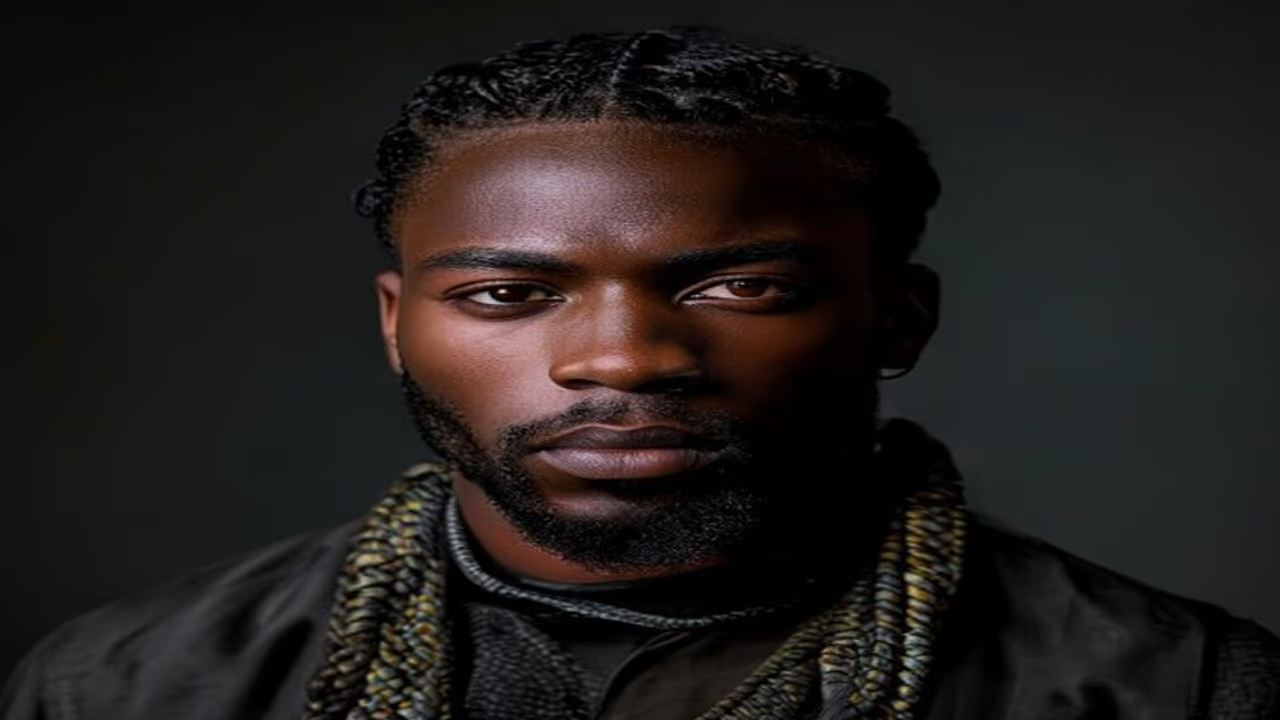
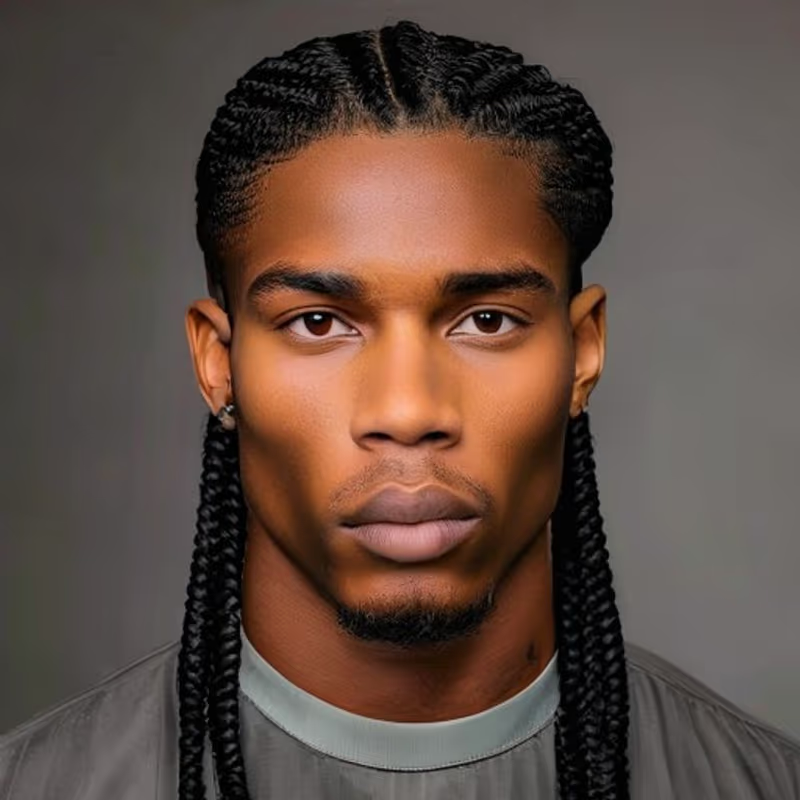
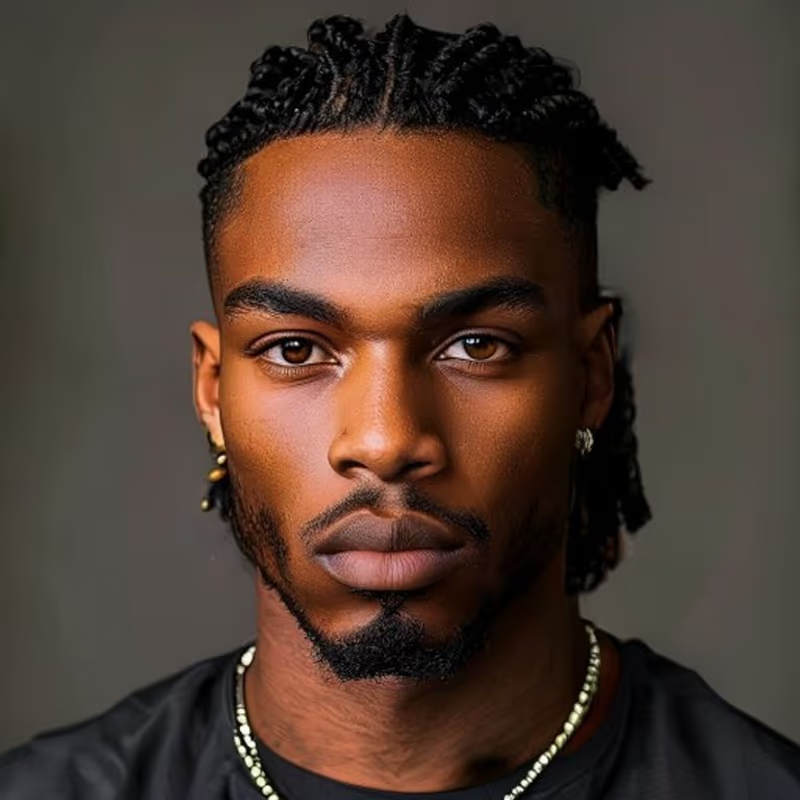
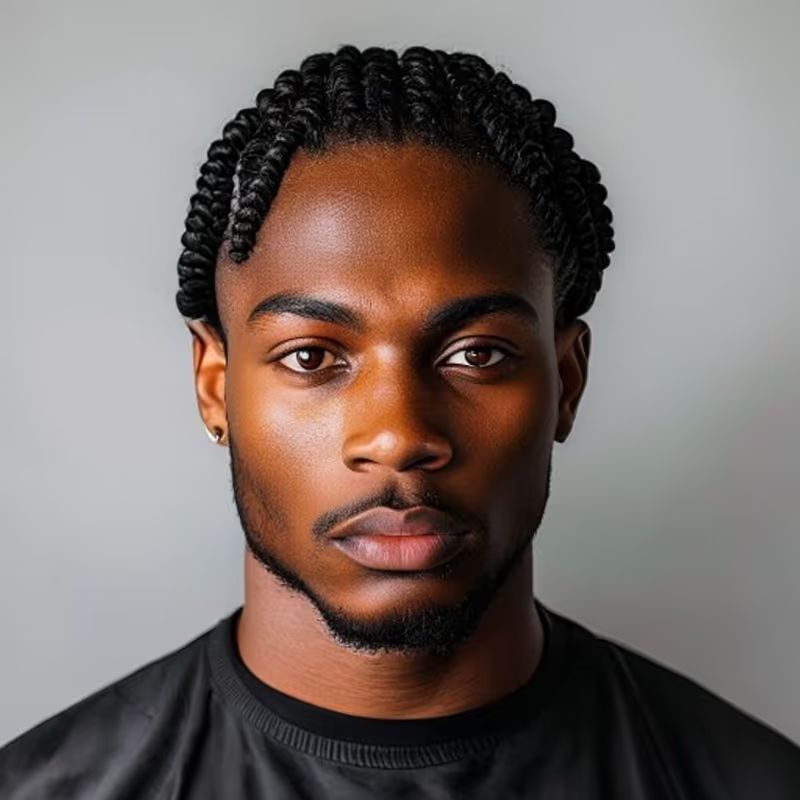
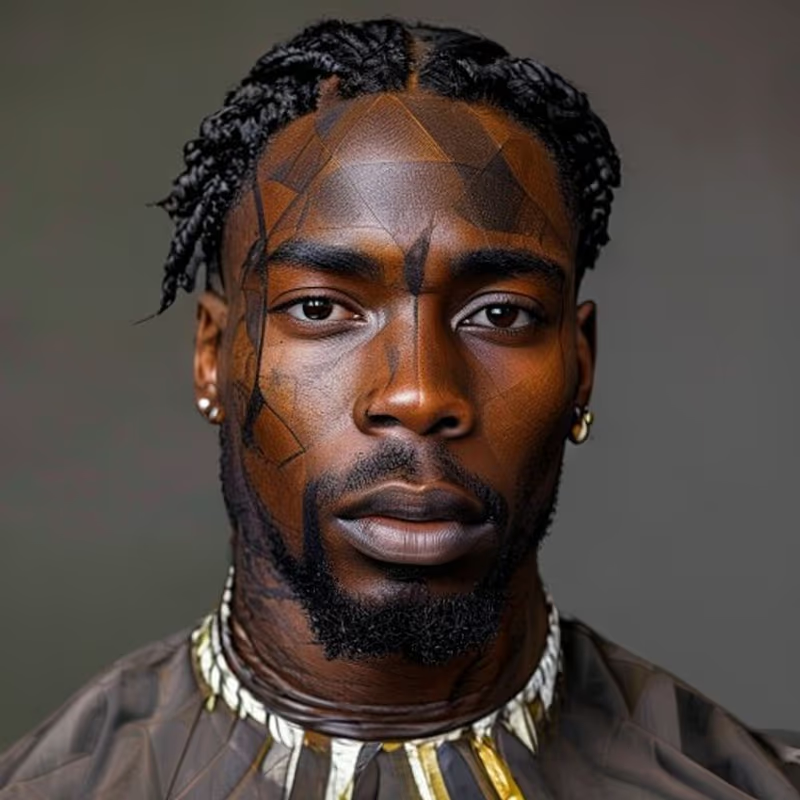
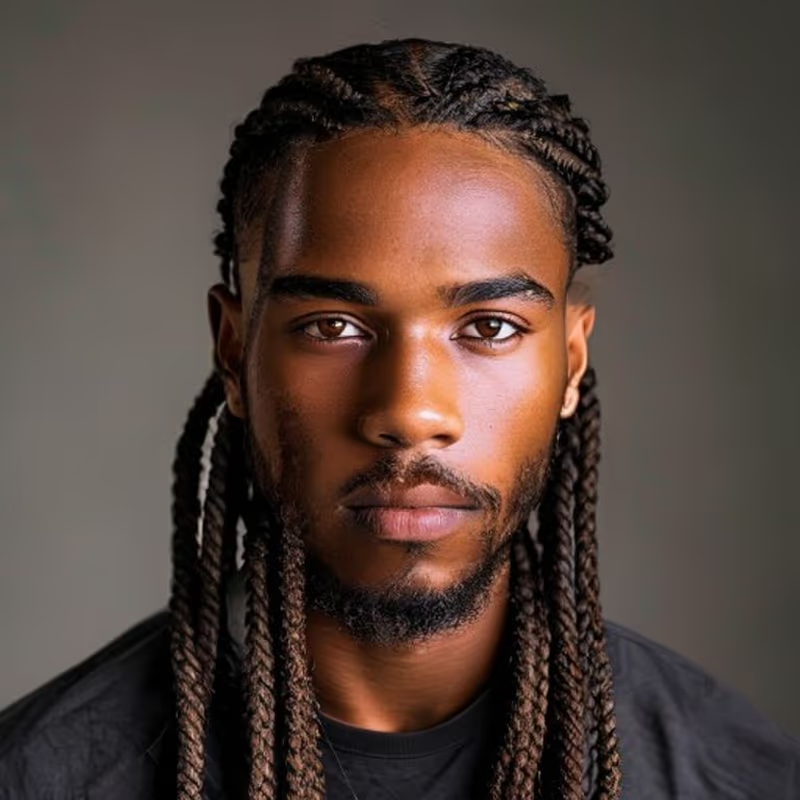
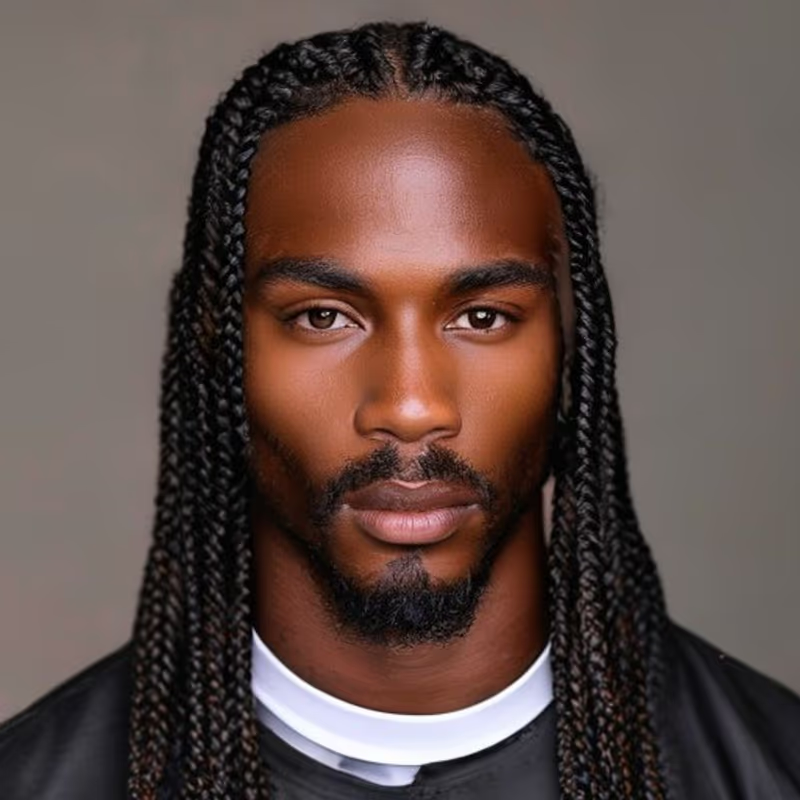
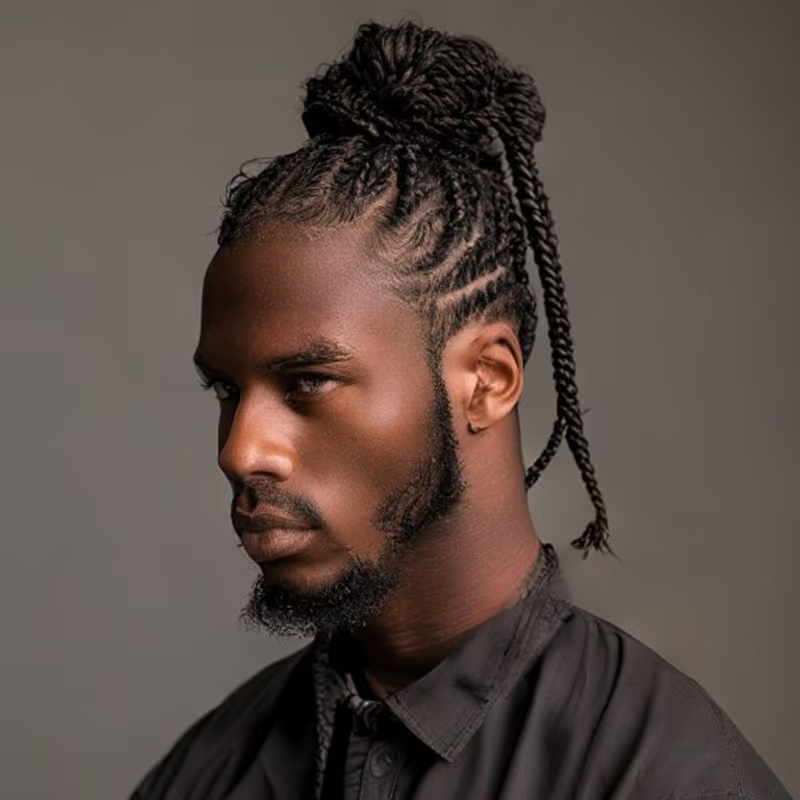
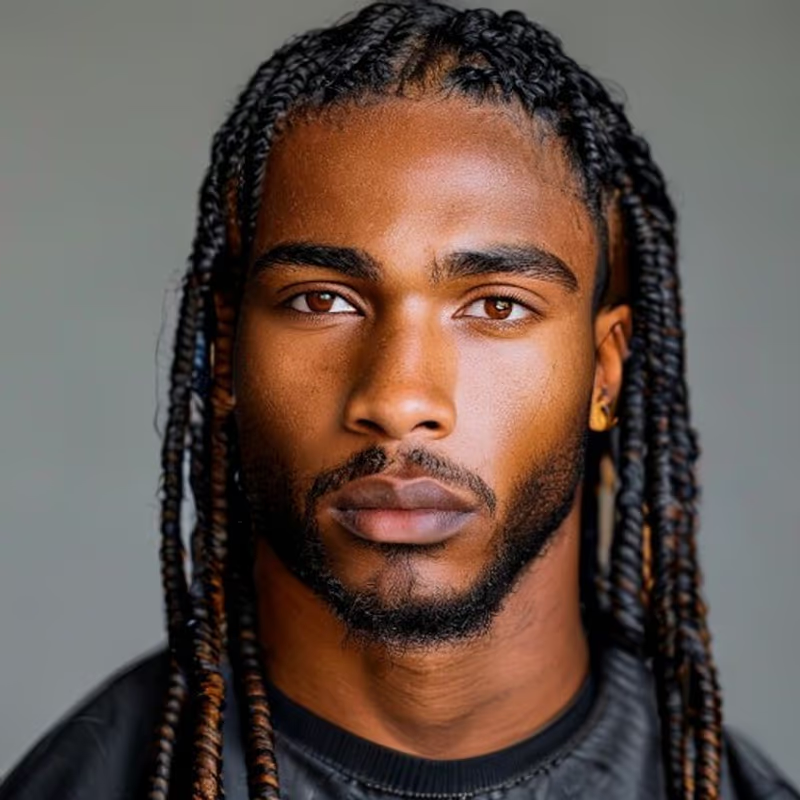
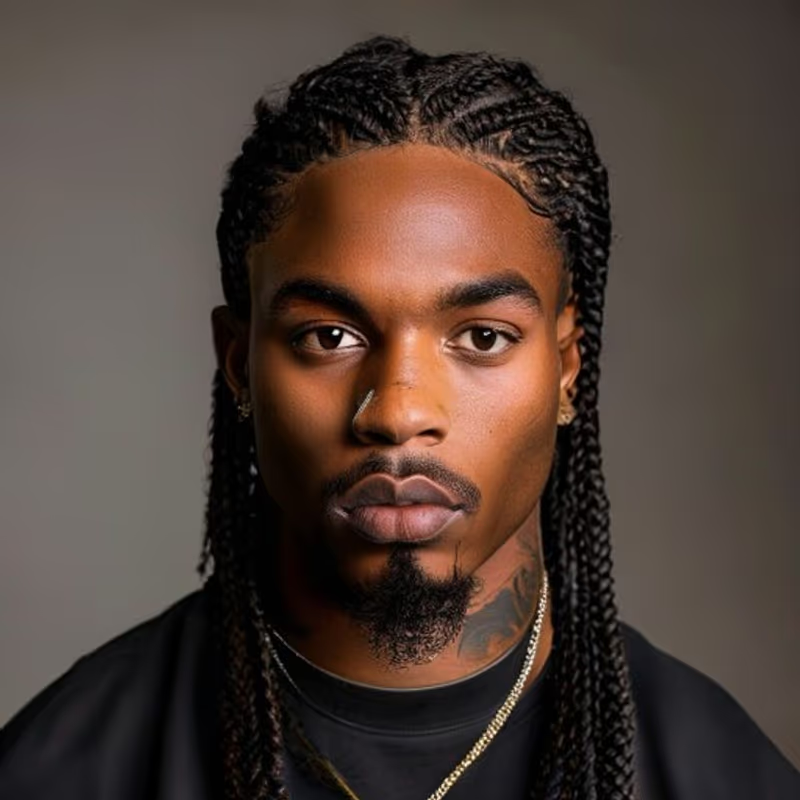
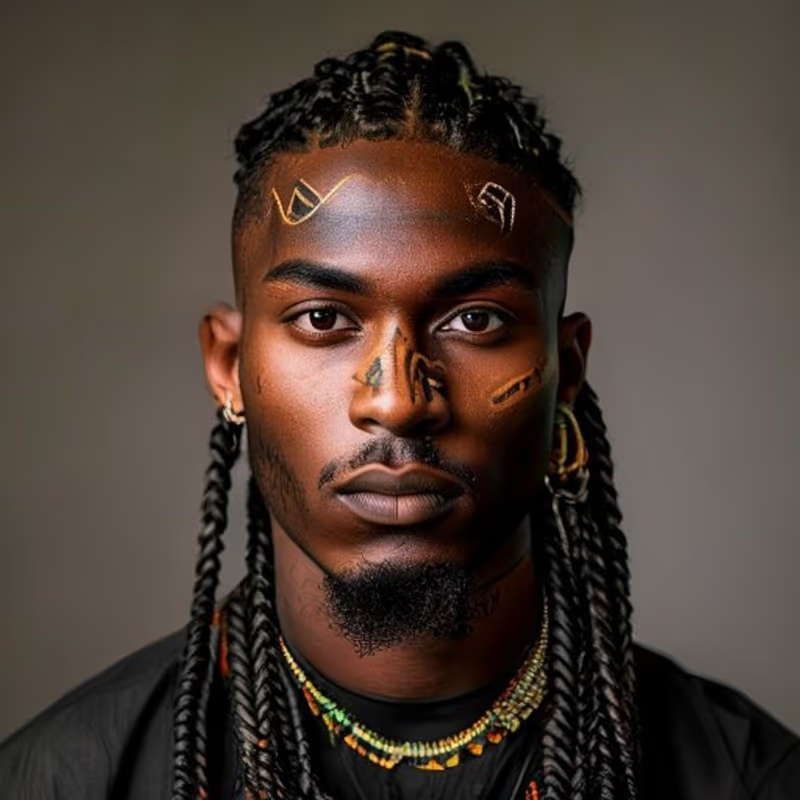
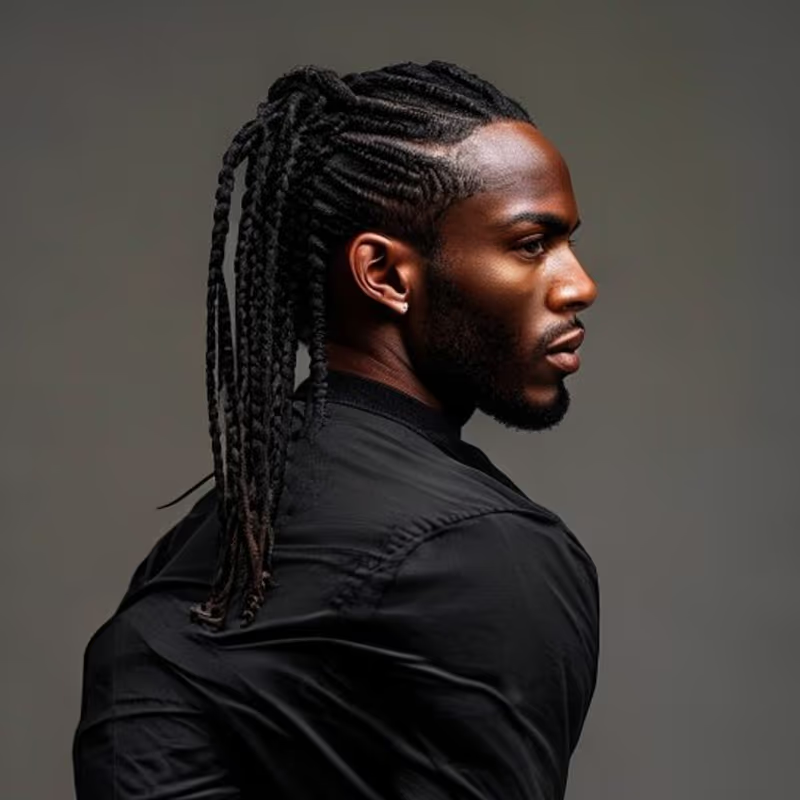
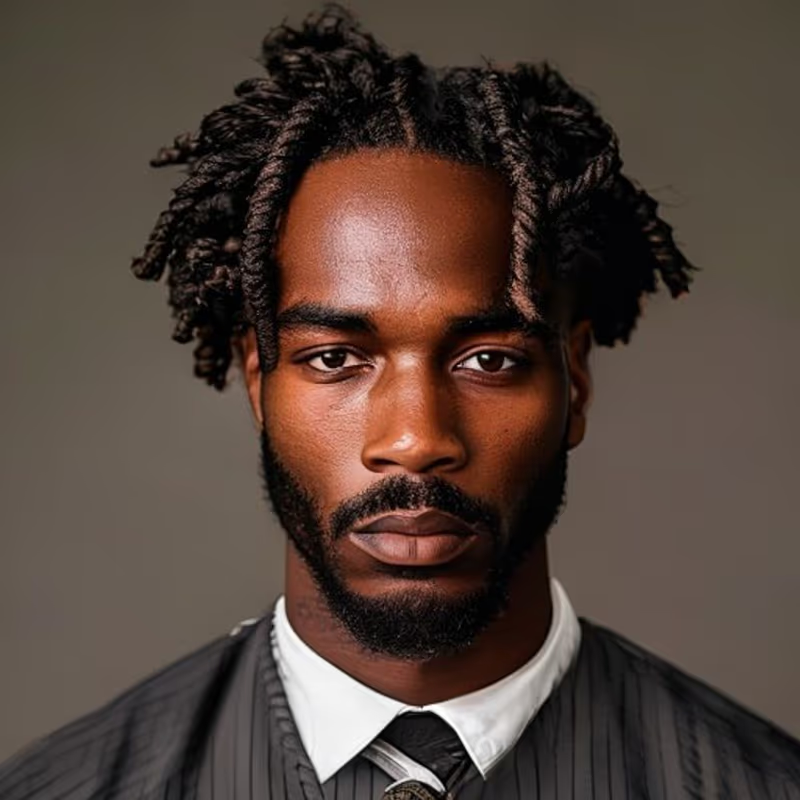
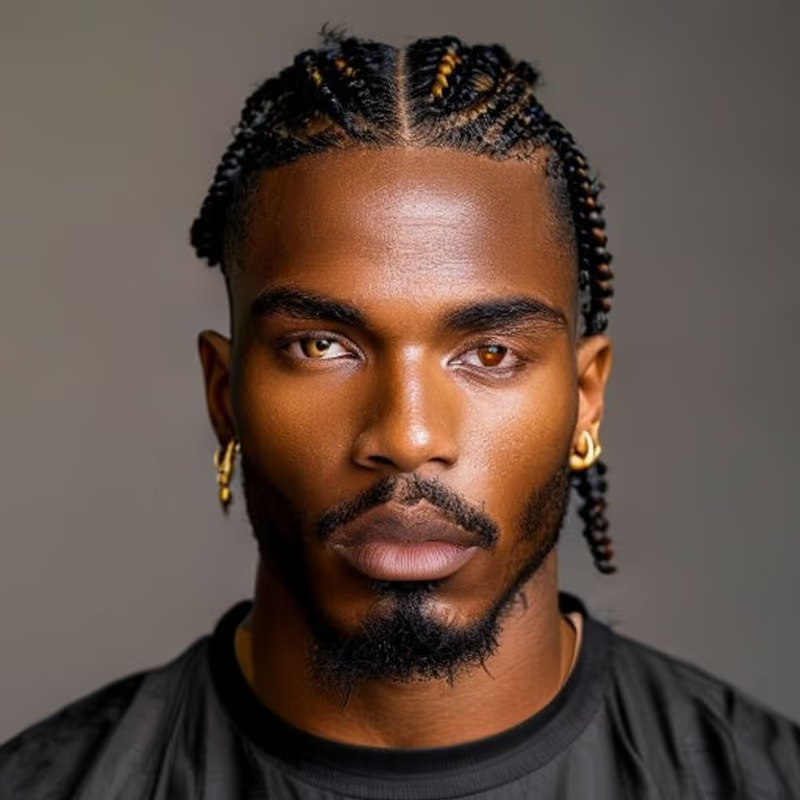
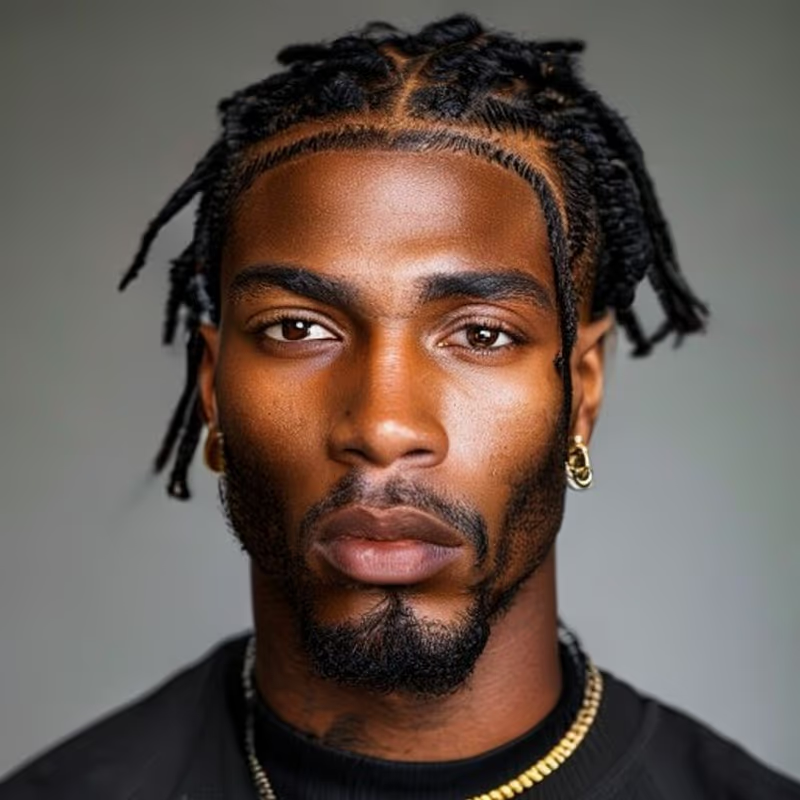
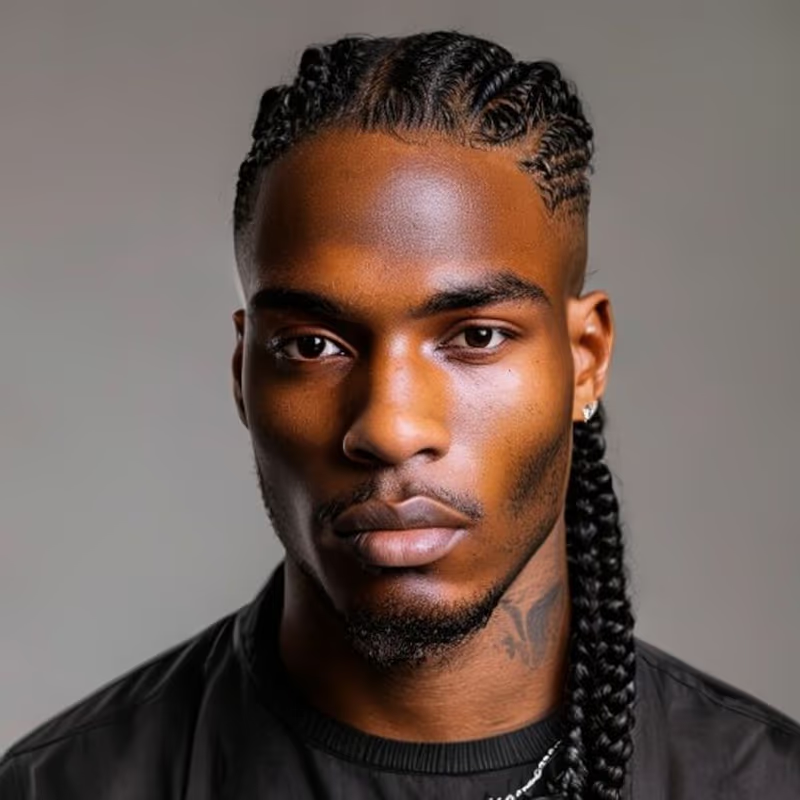
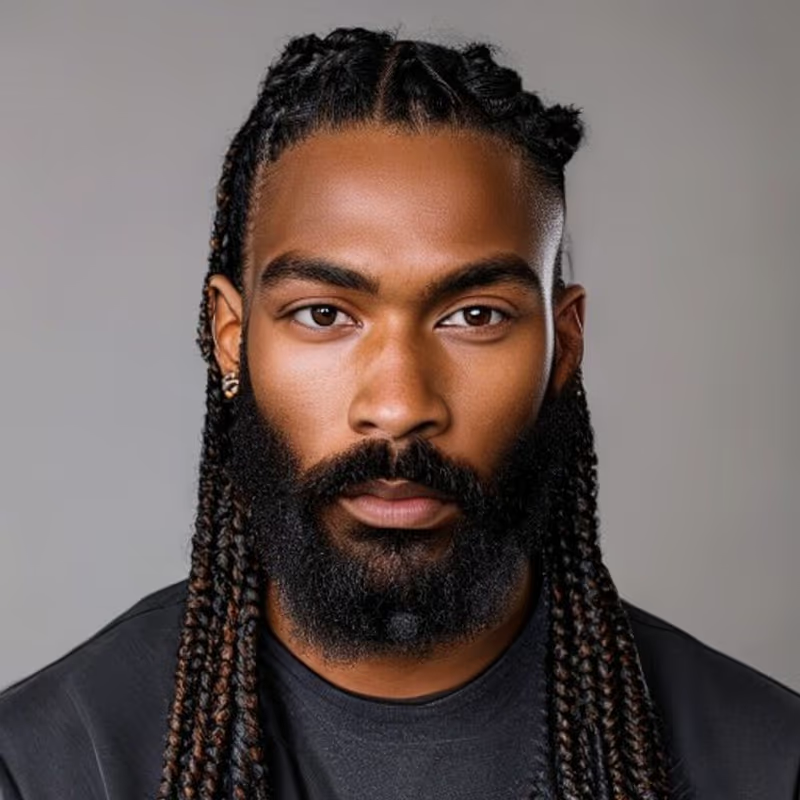
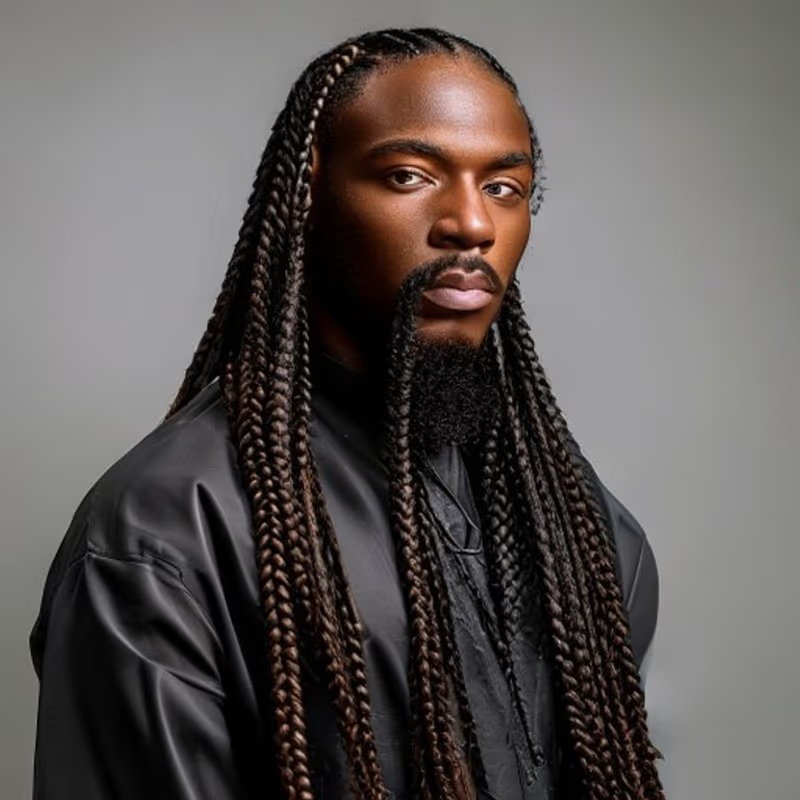
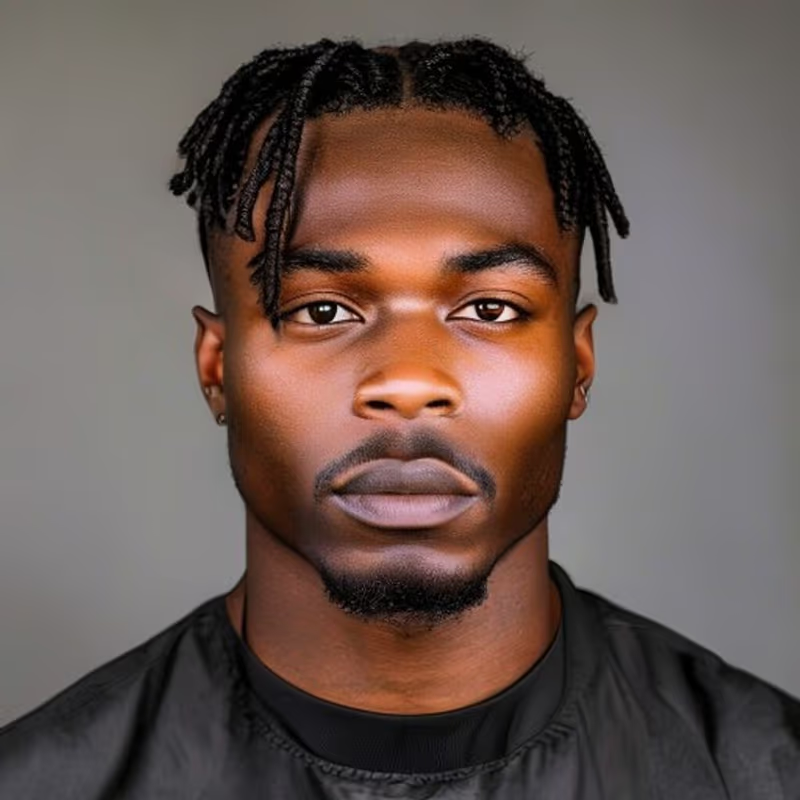
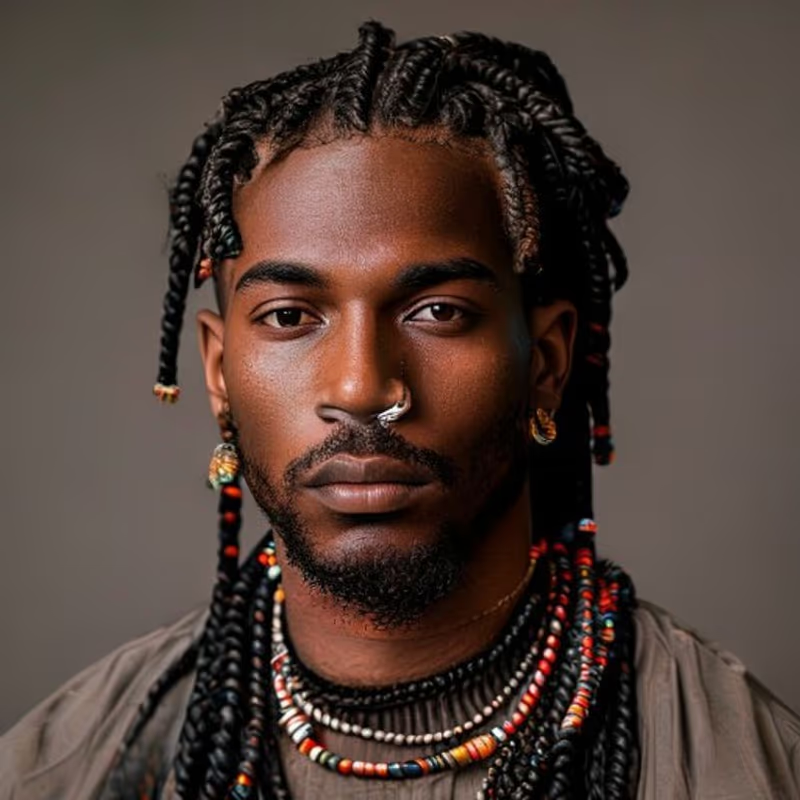
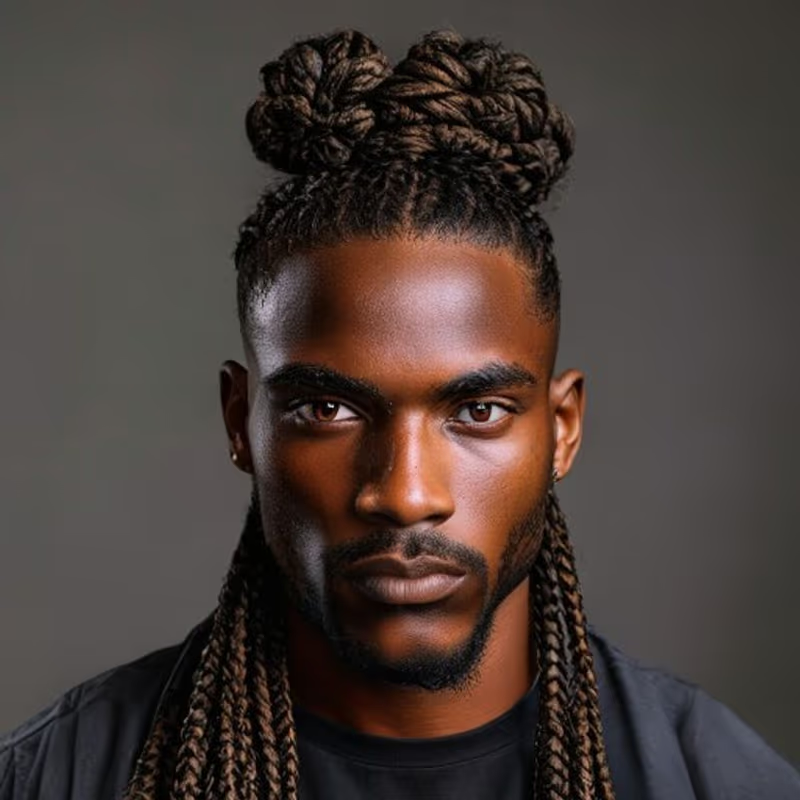
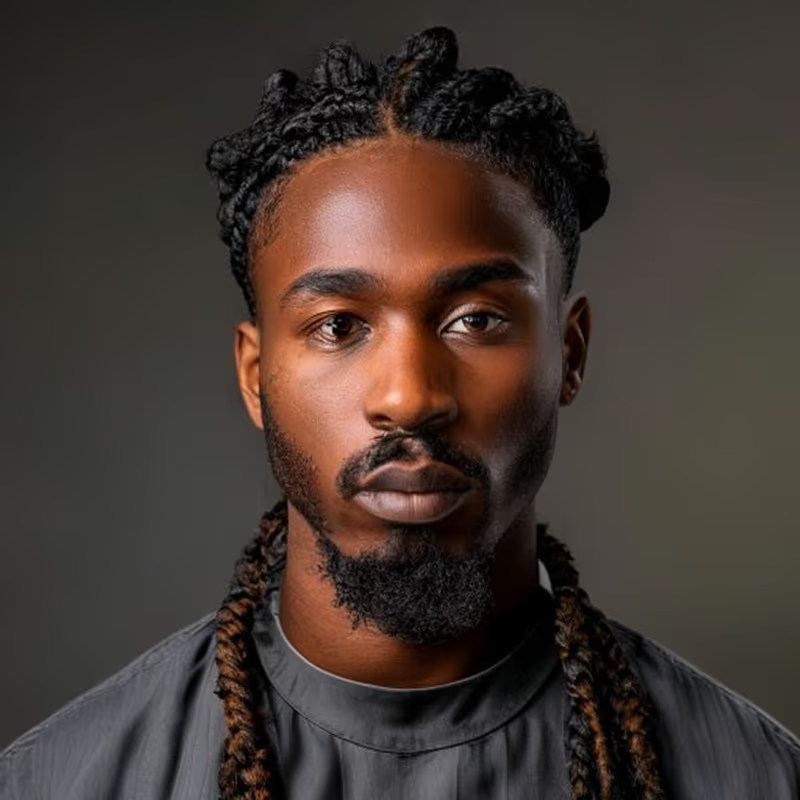
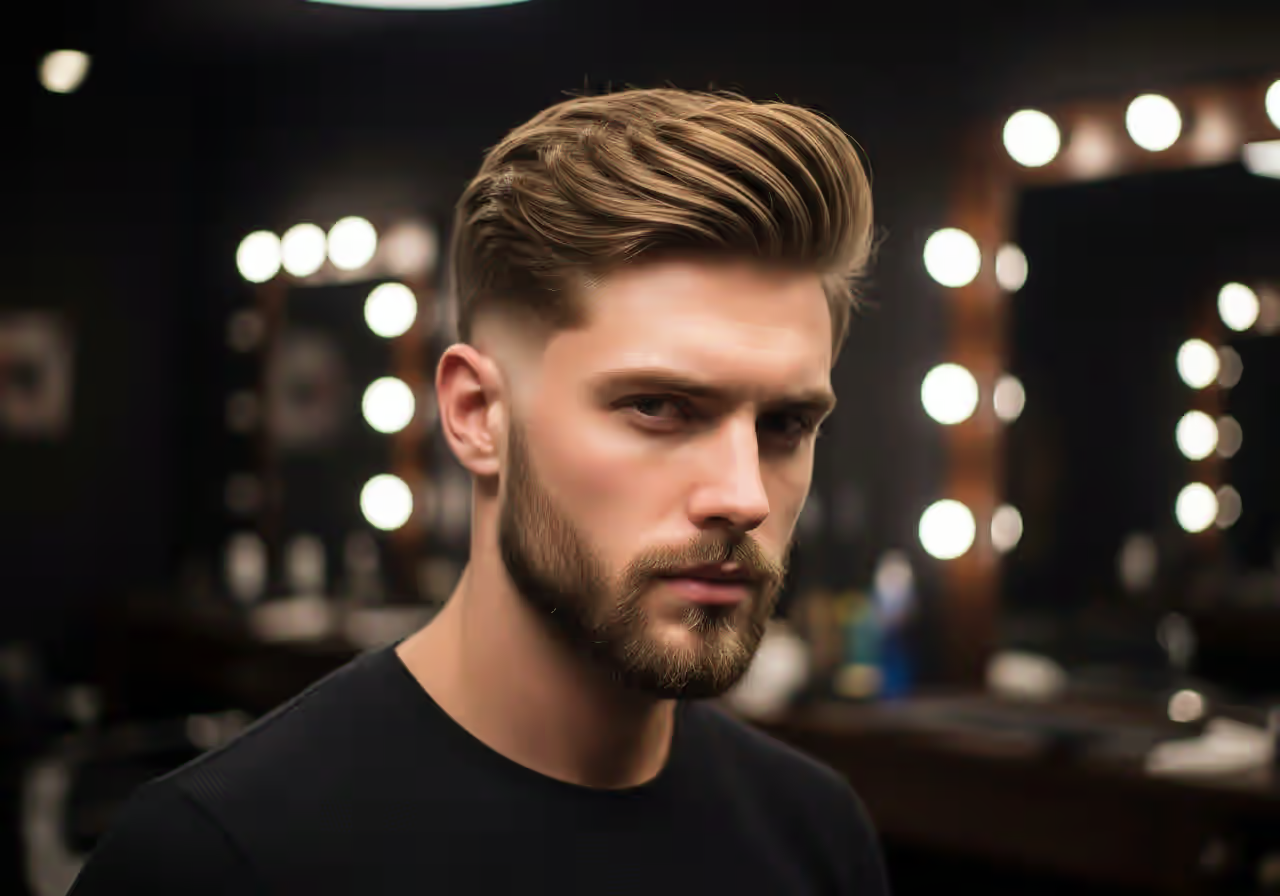
Braids for Men haircut for men: 24 best styles

Braids for Men:
24 Best Styles 2026

The most complete men's braids guide: 24 styles from cornrows and box braids to feed-ins, pop smoke braids, tribal patterns, and braids with a fade.

By Jessica Hamilton — Master Stylist & Creative Director

Braids for Men: The 2026 Guide

Braids are one of the richest, most expressive ways for men to wear their hair: with deep cultural roots in African and Black communities and a huge presence in modern style. From clean cornrows and box braids to feed-ins, pop smoke braids, tribal patterns, and braids paired with a fade, they are protective, long-lasting, and endlessly customisable. They work best on natural coily and curly hair, often with extensions for length. Below are 24 braid styles for 2026, with the care and redo schedule each one needs.

What Is a Braids for Men?

Braids are a protective hairstyle for men where the hair is sectioned and interlaced into rows or individual plaits: either close to the scalp (cornrows, feed-ins, French braids) or hanging free (box braids). They carry deep cultural significance in African and Black communities. Braids work best on natural coily or curly hair and often use added extensions for length and fullness. They are long-lasting and low-daily-effort once done, but need a skilled braider, scalp moisture, and a redo every few weeks to stay neat and protect the hair.

Why Braids Endure in 2026

  • ✓Deep cultural roots and one of the most expressive men's styles
  • ✓Protective: keeps natural hair tucked away and healthy
  • ✓Long-lasting and low daily effort once braided
  • ✓Endlessly customisable: patterns, lengths, fades, and beads
  • ✓Braids-with-a-fade is one of the defining men's looks of 2026

Quick Face Shape Guide

  • Oval: Any braid style: the most versatile face shape for the look.
  • Square: Cornrows straight back, complements a strong jaw.
  • Round: Braids with height or a high fade — adds length.
  • Heart: Braids with a beard, balances a narrow chin.
  • Oblong: Braids kept lower and wider, avoid adding height.

How to Get the Perfect Braids (2026 Guide)

Pro 2026 tip: braids are a two-person job done right: a skilled braider for clean, even parts and gentle tension, and a barber for the fade and line-up around them. And gentle tension matters: too tight is what damages your hairline.

  1. 1

    Prep

    Wash, moisturise, and detangle the natural hair.

  2. 2

    Choose the Style

    Cornrows, box braids, feed-ins, pop smoke, and so on: and whether to add extensions.

  3. 3

    Sides Decision

    Braids all over, or braids on top with a fade or undercut.

  4. 4

    Part & Section

    A skilled braider sections clean, even parts: the parting is half the look.

  5. 5

    Braid

    Braid with consistent, gentle tension: too tight at the hairline causes traction alopecia.

  6. 6

    The Fade (optional)

    A barber clippers the fade or line-up around the braids.

  7. 7

    Finish & Protect

    Moisturise the scalp; a durag or bonnet at night keeps them neat.

Universal Barber Script 2026

"[Cornrows / box braids / feed-ins / pop smoke braids] — clean even parts, not too tight, and [braid all over / braid the top with a low, mid, or skin fade on the sides]."

Cornrows vs Box Braids: What is the Difference?

Two short, classic cuts that get confused: here is how they actually differ.

CornrowsBox Braids
TechniqueBraided flat to the scalpIndividual braids in square sections
MovementFixed, close to the headHang freely, can be tied up
How long they last2–4 weeks6–8 weeks
ExtensionsOptionalUsually added
Best forSharp, low-profile, athleticLength, versatility, a statement
StylingPatterns and fadesBun, ponytail, or loose

Cornrows

Classic, fade, zig-zag, and design cornrows: braided flat to the scalp, the foundation of men's braids.

Man with a Classic Cornrows, best for natural coily hair, low daily effort

Classic Cornrows

Maintenance:
Low
Redo:Redo every 2–4 weeks.
Best For:Natural coily hair, low daily effort.

About This Style

Hair is sectioned into straight, even rows and braided flat against the scalp from the hairline to the nape, leaving a smooth, uniform pattern with no loose ends on top. It works best on natural coily or kinky hair that holds a tight braid without slipping. The style suits men who want a low-effort daily routine, though the scalp needs regular oiling so it does not dry out between sessions.

How to Style at Home

  1. Ask your braider to part rows in a straight, evenly spaced pattern before braiding.
  2. Rub a light scalp oil between the rows every other day to prevent dryness.
  3. Tie a silk or satin durag before bed to stop the rows from frizzing.

Ask Your Barber

"Keep the rows straight and close to the scalp, front to back, with a sharp hairline so the pattern stays clean for several weeks."

Recommended Products

Scalp Oil
Durag
Man with a Cornrows with Fade, suited to A sharp, modern braided look

Cornrows with Fade

Maintenance:
Medium
Redo:Redo every 2–4 weeks.
Best For:A sharp, modern braided look.

About This Style

Straight cornrows run across the top while the sides and back are cut down to a fade, so the braided pattern sits above a bare, tapered edge instead of blending into longer hair underneath. The contrast between the tight rows and the skin gives the cut a sharper, more finished look than braids alone. It suits men who want a modern, groomed style and are comfortable getting the fade touched up between full re-braids.

How to Style at Home

  1. Book a fade refresh every one to two weeks so the sides stay crisp under the braids.
  2. Oil the exposed scalp along the fade line to stop flaking against the dark braids.
  3. Wrap the crown with a durag at night while leaving the faded sides uncovered.

Ask Your Barber

"Take the sides and back down to a fade that meets the cornrows cleanly, and keep the fade line sharp between full redos."

Recommended Products

Scalp Oil
Man with a Zig, best for creative, eye-catching patterns hairstyle

Zig-Zag Cornrows

Maintenance:
Low
Redo:Redo every 2–4 weeks.
Best For:Creative, eye-catching patterns.

About This Style

Instead of running straight back, the rows curve and cross in a zigzag pattern across the scalp, turning a basic braid into a visible design. It takes a steadier hand and more time at the chair than straight rows, since each bend has to line up with the others. The style works on any coily hair type and suits men who want their braids to double as a statement rather than a plain background style.

How to Style at Home

  1. Have the braider draw the zigzag pattern with a comb before parting the rows.
  2. Moisturise the scalp along each bend, since curved partings expose more skin than straight ones.
  3. Sleep in a durag or bonnet so the crossing points do not loosen out of shape.

Ask Your Barber

"Braid the rows in a zigzag pattern rather than straight lines, keeping the curves even and tight against the scalp."

Recommended Products

Scalp Oil
Durag
Man with a Cornrow Designs, best for artistic, statement patterns

Cornrow Designs

Maintenance:
Low
Redo:Redo every 2–4 weeks.
Best For:Artistic, statement patterns.

About This Style

Rows are parted into shapes, curves, initials, or geometric patterns rather than the usual front-to-back lines, turning the braid itself into artwork. This takes longer in the chair and relies heavily on the braider's skill with parting, so it is worth choosing someone with a strong portfolio of pattern work. It suits men who want a one-off look for an event or simply enjoy standing out with their hair.

How to Style at Home

  1. Bring a reference photo of the pattern so the braider can plan the parting first.
  2. Keep the scalp lightly oiled to highlight the parting lines and prevent dryness.
  3. Avoid tight hats that flatten the design while the braids are still fresh.

Ask Your Barber

"Part the design as symmetrically as the reference allows, and keep the lines thin enough that the pattern reads clearly from a distance."

Recommended Products

Scalp Oil

Box Braids

Box, knotless, short, and bun box braids: individual braids that hang free and last for weeks.

Man with a Box Braids, best for versatile, long-lasting braids

Box Braids

Maintenance:
Low
Redo:Redo every 6–8 weeks.
Best For:Versatile, long-lasting braids.

About This Style

Square-shaped sections are braided individually down the full length, using added extensions to reach the desired length and thickness. The uniform square parting is what separates box braids from cornrows, giving each braid room to hang loose rather than lying flat. They suit men who want longer styling options without daily upkeep, though the scalp needs consistent moisture since the braids stay in for weeks at a time.

How to Style at Home

  1. Ask for medium-sized square sections so the braids are not too tight on the hairline.
  2. Apply scalp oil directly to the parting lines two to three times a week.
  3. Cover the braids with a durag or bonnet overnight to reduce frizz and friction.

Ask Your Barber

"Keep the square parts consistent in size down the whole head, and do not braid the hairline too tight so it stays comfortable for weeks."

Recommended Products

Scalp Oil
Durag
Man with a Knotless Box Braids, best for comfort and a gentler hairline

Knotless Box Braids

Maintenance:
Low
Redo:Redo every 6–8 weeks.
Best For:Comfort and a gentler hairline.

About This Style

Hair is fed in gradually with the extension added as the braid grows, rather than knotted at the base, which removes the bump and tension that come with traditional box braids. The result looks and feels lighter on the scalp and is noticeably gentler on the hairline over time. It suits men prone to tension headaches or thinning edges who still want the length and versatility of box braids.

How to Style at Home

  1. Ask the braider to feed the extension in slowly rather than starting with a knot.
  2. Keep the parting lines oiled since knotless braids expose slightly more scalp at the start.
  3. Wear a satin bonnet at night to protect the lighter, less tightly bound roots.

Ask Your Barber

"Feed the hair in gradually with no knot at the base, and keep the tension light near the hairline so the edges are not pulled."

Recommended Products

Scalp Oil
Bonnet
Man with a Short Box Braids, best for a lower-maintenance box braid

Short Box Braids

Maintenance:
Low
Redo:Redo every 6–8 weeks.
Best For:A lower-maintenance box braid.

About This Style

The same square-sectioned braiding as standard box braids, but kept at a shorter length, usually shoulder length or above, which cuts down both the sitting time and the daily weight on the scalp. Shorter braids also dry faster and tangle less, making the style easier to manage for men who are new to braids. It works well on most hair textures and suits a more understated, low-key look.

How to Style at Home

  1. Ask for a shorter braid length so the ends sit above the shoulder.
  2. Rinse and dry braids fully after washing to avoid a damp, heavy feel.
  3. Trim any frizzy ends with sharp shears rather than pulling them loose.

Ask Your Barber

"Keep the braids at a shorter, manageable length and use a finer section size so the ends stay neat rather than bulky."

Recommended Products

Scalp Oil
Man with a Box Braids Man Bun, best for box braids tied up and off the face

Box Braids Man Bun

Maintenance:
Low
Redo:Redo every 6–8 weeks.
Best For:Box braids tied up and off the face.

About This Style

Full-length box braids are gathered and tied up into a bun, taking the weight off the shoulders and keeping the hair off the face and neck. It is less a separate style than a way of wearing box braids day to day, useful for work, sport, or hot weather. The style suits anyone already wearing box braids who wants a change from having them hang loose.

How to Style at Home

  1. Gather the braids loosely at the crown before tying to avoid pulling the hairline.
  2. Use a soft, seamless hair tie rather than a rubber band that snags the braids.
  3. Let the bun down at night so the roots are not under constant tension.

Ask Your Barber

"Leave enough length in the braids to gather comfortably into a bun without pulling tight at the hairline."

Recommended Products

Scalp Oil

Specialty Braids

Feed-in, pop smoke, tribal, French braids, and two-strand twists — the most distinctive braid techniques.

Man with a Feed, best for fuller braids, less tension

Feed-In Braids

Maintenance:
Low
Redo:Redo every 2–4 weeks.
Best For:Fuller braids, less tension.

About This Style

Extensions are fed into the natural hair gradually from the root rather than attached all at once, which spreads the tension across the row and gives a fuller, more natural-looking braid. This method places less strain on any single point of the scalp compared to standard cornrows. It suits men who want thicker-looking rows or who have had scalp sensitivity with tighter braiding methods before.

How to Style at Home

  1. Ask the braider to feed extensions in gradually rather than knotting them at the start.
  2. Massage the scalp with oil between rows to ease any tightness after the appointment.
  3. Avoid restyling the rows for the first few days while the braids settle.

Ask Your Barber

"Feed the extensions in slowly along each row so the braids look full without pulling tightly at the roots."

Recommended Products

Scalp Oil
Man with a Pop Smoke Braids, best for a bold, masculine statement

Pop Smoke Braids

Maintenance:
Low
Redo:Redo every 2–4 weeks.
Best For:A bold, masculine statement.

About This Style

Medium to thick individual braids, usually left a bit looser and less uniform than classic cornrows, styled to sit forward or to the side rather than straight back. The slightly undone finish is part of the look, so precision matters less here than the overall shape and volume. It suits men who want a bold, current style with some visible texture rather than a perfectly tidy pattern.

How to Style at Home

  1. Ask for medium-thick braids with a looser, less rigid parting than classic cornrows.
  2. Scrunch a light oil through the ends to keep them defined rather than flat.
  3. Reshape the direction of the braids by hand each morning rather than re-braiding.

Ask Your Barber

"Keep the braids medium in thickness with a slightly looser finish, styled forward rather than in a strict straight-back pattern."

Recommended Products

Scalp Oil
Durag
Man with a Tribal Braids, best for cultural, statement patterns

Tribal Braids

Maintenance:
Low
Redo:Redo every 3–5 weeks.
Best For:Cultural, statement patterns.

About This Style

Thick, often patterned rows inspired by traditional African braiding, usually featuring bold curves or geometric shapes rather than simple straight lines. The larger braid size means fewer individual rows, which can shorten the time in the chair compared to finer patterns. It suits men who want their braids to carry visible cultural or artistic meaning rather than a purely functional style.

How to Style at Home

  1. Discuss the specific pattern with your braider before they start parting the rows.
  2. Keep the scalp moisturised along the thicker parts, since less hair covers the skin.
  3. Avoid sleeping on the pattern side to keep the shape from flattening.

Ask Your Barber

"Part the rows in the requested tribal pattern using thicker sections, and keep the design symmetrical across the crown."

Recommended Products

Scalp Oil
Man with a French Braids, best for neat, intricate, classy

French Braids

Maintenance:
Low
Redo:Redo every 2–3 weeks.
Best For:Neat, intricate, classy.

About This Style

A more intricate braiding technique where new hair is woven in as the braid progresses down the head, giving a raised, textured look rather than the flat finish of cornrows. It takes practice to get the tension even, so it is best left to an experienced braider. The style suits men with straighter or wavy hair who want a neat, slightly formal braided look.

How to Style at Home

  1. Ask the braider to keep tension even as new sections are woven in.
  2. Smooth any flyaways with a small amount of pomade rather than water alone.
  3. Redo the style before it loosens noticeably, since French braids hold less tightly than cornrows.

Ask Your Barber

"Weave the braids with even tension all the way down so the plaits stay raised and neat rather than flattening out."

Recommended Products

Scalp Oil
Men's Two, best for shorter hair; a braid alternative hairstyle

Two-Strand Twists

Maintenance:
Low
Redo:Redo every 2–4 weeks.
Best For:Shorter hair; a braid alternative.

About This Style

Two sections of hair are twisted around each other rather than braided in three strands, which suits shorter natural hair that is not quite long enough for cornrows or box braids. The twists are simpler to install and remove than braids, making them a good entry point for men new to protective styling. They work best on coily or curly textures with enough length to hold a twist.

How to Style at Home

  1. Apply a leave-in conditioner before twisting to keep the strands from drying out.
  2. Twist small, even sections for a cleaner, more defined finish.
  3. Refresh the twist ends with curl cream every few days to prevent unraveling.

Ask Your Barber

"Twist small, even sections rather than large ones, and use a leave-in product first so the twists stay defined without drying out."

Recommended Products

Leave-In
Curl Cream

Braids with a Fade & Beard

Braids paired with low, high, and skin fades, plus a beard — the sharp, high-contrast 2026 look.

Man with a Braids with Low Fade, best for a clean, professional braided look

Braids with Low Fade

Maintenance:
Medium
Redo:Redo every 2–4 weeks.
Best For:A clean, professional braided look.

About This Style

Braids on top are paired with a low fade that starts just above the ear, keeping most of the length on the sides intact while still trimming the perimeter. The subtler fade suits work environments or anyone who wants a braided style without a dramatic contrast at the sides. It is a good middle ground for men easing into braid and fade combinations for the first time.

How to Style at Home

  1. Ask the barber to start the fade low, just above the ear line.
  2. Keep the fade edges trimmed every two weeks so they do not grow out shaggy.
  3. Oil the scalp along the faded section separately from the braided top.

Ask Your Barber

"Start the fade low above the ear and keep it subtle, so the braids on top remain the main focus of the style."

Recommended Products

Scalp Oil
Man with a Braids with High Fade, best for bold, high-contrast looks

Braids with High Fade

Maintenance:
Medium
Redo:Redo every 2–4 weeks.
Best For:Bold, high-contrast looks.

About This Style

Braids sit on top of a fade that climbs much higher up the sides and back, creating a sharper line between the braided section and the skin. The higher the fade, the more often it needs a touch-up to stay crisp, since regrowth shows faster near the top. This combination suits men who want a bold, high-contrast look and are comfortable with more frequent barber visits.

How to Style at Home

  1. Ask the barber to take the fade high, close to the top of the head.
  2. Book fade touch-ups roughly every one to two weeks to keep the line sharp.
  3. Keep braided sections oiled separately from the faded skin to avoid buildup.

Ask Your Barber

"Take the fade up high on the sides and back so there is strong contrast against the braided top, and keep the line crisp."

Recommended Products

Scalp Oil
Man with a Braids with Skin Fade, best for the sharpest braided contrast

Braids with Skin Fade

Maintenance:
High
Redo:Redo every 2–4 weeks.
Best For:The sharpest braided contrast.

About This Style

The sides and back are taken down to bare skin rather than left with a short fade, giving the sharpest possible contrast against the braids on top. This is the most maintenance-heavy fade option, since any regrowth shows immediately against smooth skin. It suits men who want maximum definition and are prepared for weekly or near-weekly fade upkeep between braid sessions.

How to Style at Home

  1. Ask the barber to shave the sides and back down to bare skin.
  2. Plan for a fade touch-up roughly once a week to keep the skin clean.
  3. Moisturise the shaved skin daily since it dries out faster than faded hair.

Ask Your Barber

"Take the sides and back all the way down to skin for the sharpest possible line against the braided top."

Recommended Products

Scalp Oil
Man with a Braids with Beard, best for a fuller, masculine combination

Braids with Beard

Maintenance:
Medium
Redo:Redo every 2–4 weeks.
Best For:A fuller, masculine combination.

About This Style

Braids on top are paired with a maintained beard, so the fullness of the facial hair balances the volume of the braided section rather than leaving the jaw looking bare by comparison. This works especially well on men with a stronger jawline or a naturally fuller beard. It suits anyone who wants a complete, cohesive look rather than treating the hair and beard as separate styles.

How to Style at Home

  1. Trim the beard to a consistent length that matches the fullness of the braids.
  2. Apply beard oil daily to keep the facial hair soft alongside the braided scalp routine.
  3. Line up the beard edges with clippers every one to two weeks.

Ask Your Barber

"Keep the beard full and well-shaped so it balances the braided hair on top rather than leaving the face looking sparse by comparison."

Recommended Products

Scalp Oil
Beard Oil

Length, Beads & Styling

Long, short, beaded, and bunned braids: every length and finishing touch.

Man with a Long Braids, best for bold, full-length braids

Long Braids

Maintenance:
Low
Redo:Redo every 6–8 weeks.
Best For:Bold, full-length braids.

About This Style

Box braids or cornrows grown out and worn at full length, typically past the shoulders, which gives the most styling versatility but also the most weight to manage day to day. Longer braids take noticeably more time to install and dry after washing than shorter versions. The style suits men who are committed to the upkeep and want the option to tie the length back when needed.

How to Style at Home

  1. Wash braids less frequently than loose hair, since long braids take longer to dry fully.
  2. Sleep with a bonnet or wrap to protect the length from friction overnight.
  3. Tie the braids back during exercise to reduce pulling at the roots.

Ask Your Barber

"Keep the braids at full length past the shoulders, with even thickness throughout so the ends do not look thin."

Recommended Products

Scalp Oil
Bonnet
Man with a Short Braids, best for low-effort, tidy braids

Short Braids

Maintenance:
Low
Redo:Redo every 4–6 weeks.
Best For:Low-effort, tidy braids.

About This Style

Cornrows or small braids kept close to the head at a shorter length, giving a tidy, low-profile look that needs less daily attention than longer styles. Because there is less length to manage, drying time after washing is quick and the style holds its shape well under hats. It suits men who want the look of braids without the extra weight or sitting time of a longer install.

How to Style at Home

  1. Keep the rows or braids close to the scalp for a tidy, compact finish.
  2. Oil the scalp every two to three days since shorter braids expose more skin.
  3. Trim any loose ends promptly so the shorter length stays neat.

Ask Your Barber

"Keep the braids short and close to the scalp for a low-profile finish that holds up well under hats."

Recommended Products

Scalp Oil
Man with a Braids with Beads, best for decorative, personal style

Braids with Beads

Maintenance:
Low
Redo:Redo every 4–6 weeks.
Best For:Decorative, personal style.

About This Style

Beads are threaded onto the ends of individual braids or twists, adding colour and movement without changing the underlying braid pattern. The extra weight from the beads means the ends need to be secured well so they do not slip off during the day. This style suits men who want a personal, decorative touch and do not mind the light clicking sound the beads make when they move.

How to Style at Home

  1. Ask the braider to secure each bead tightly so it does not slide off the end.
  2. Check bead placement daily and reseat any that have worked loose.
  3. Remove beads gently before sleeping if they feel uncomfortable against the pillow.

Ask Your Barber

"Secure the beads firmly on the ends of the braids and space them evenly so the decorative pattern looks intentional."

Recommended Products

Scalp Oil
Man with a Braided Man Bun, best for braids tied up and off the face

Braided Man Bun

Maintenance:
Low
Redo:Redo every 4–6 weeks.
Best For:Braids tied up and off the face.

About This Style

Braids, whether cornrows or box braids, are gathered up and tied into a bun at the crown, keeping the length off the neck and face for a cleaner, more formal presentation. It is a styling choice rather than a separate braid pattern, so it works with almost any existing braid style that has enough length to gather. The look suits work settings or warmer weather when loose braids feel like too much.

How to Style at Home

  1. Gather the braids loosely at the crown to avoid strain on the hairline.
  2. Secure with a soft tie rather than a tight rubber band that can snap braids.
  3. Release the bun at night to let the roots rest without constant tension.

Ask Your Barber

"Leave enough length to gather the braids into a secure bun without pulling tightly at the hairline or temples."

Recommended Products

Scalp Oil

Cultural & Everyday Braids

Viking braids, half-up braids, and a tidy professional version.

Man with a Viking Braids, best for rugged, warrior-inspired looks

Viking Braids

Maintenance:
Medium
Redo:Redo every 4–6 weeks.
Best For:Rugged, warrior-inspired looks.

About This Style

Thicker braids, often combined with an undercut or shaved sides, styled in a rugged pattern reminiscent of historical Norse hairstyles. The look typically pairs longer braided sections on top with much shorter or shaved sides for contrast. It suits men who want a distinctive, statement style and are comfortable maintaining both a beard and a more involved braid pattern together.

How to Style at Home

  1. Ask the barber to keep the sides short or shaved to contrast with the braids.
  2. Oil the beard alongside the scalp, since this style is usually paired with facial hair.
  3. Rebraid the top sections before they loosen to keep the pattern sharp.

Ask Your Barber

"Keep the sides short or shaved and the top braided in thicker sections for a bold, rugged contrast."

Recommended Products

Beard Oil
Scalp Oil
Half, best for length on show, face kept clear hairstyle on a man

Half-Up Braids

Maintenance:
Low
Redo:Redo every 4–6 weeks.
Best For:Length on show, face kept clear.

About This Style

The top section of braided or twisted hair is gathered and tied back while the rest is left hanging loose, keeping hair off the face without committing to a full bun. It works well on longer braids or twists that already have enough length to divide. The style suits men who want the practicality of tying hair back for part of the day while still showing off length.

How to Style at Home

  1. Gather only the top section, leaving the lower braids to hang loose.
  2. Use a soft tie to avoid snapping the gathered braids at the crown.
  3. Reposition the tie throughout the day if it slides back with movement.

Ask Your Barber

"Tie back only the top section of braids, leaving the rest down, so the hairline stays clear without hiding the full length."

Recommended Products

Scalp Oil
Man with a Professional Braids, best for office and formal settings

Professional Braids

Maintenance:
Low
Redo:Redo every 3–4 weeks.
Best For:Office and formal settings.

About This Style

A neat, understated braid pattern, usually straight cornrows or fine box braids, kept close to the scalp and free of decorative extras so the style reads as polished in an office setting. The focus is on clean parting and consistent tension rather than any bold pattern work. It suits men who want the practicality of braids without drawing attention away from a formal or corporate appearance.

How to Style at Home

  1. Ask for straight, even rows with a clean, sharp hairline.
  2. Keep the braids free of beads or bright accessories for a formal look.
  3. Touch up the edges with a light gel to keep flyaways under control.

Ask Your Barber

"Keep the pattern simple and straight with a sharp hairline, avoiding any decorative extras so the style stays office-appropriate."

Recommended Products

Scalp Oil

Maintenance Tips for Braids for Men 2026

  • →Redo on schedule: cornrows every 2–4 weeks, box braids every 6–8 weeks: leaving them in too long causes matting and breakage.
  • →Moisturise the scalp every few days with a light oil, and don't let the braids dry out.
  • →Wear a durag or satin bonnet at night to keep braids neat and reduce frizz.
  • →Don't braid too tight: tension at the hairline causes traction alopecia. A little tenderness is normal; sharp pain is not.
  • →If you have a fade with your braids, touch up the fade every 1–2 weeks, more often than the braids need redoing.

Best Products for Braids for Men 2026

→

Scalp Oil / Moisturiser (everyday)

Keeps the scalp and braids hydrated: the key to healthy braids and a healthy scalp.

→

Durag / Satin Bonnet

Keeps braids neat and reduces frizz overnight.

→

Leave-In Conditioner

For the natural hair underneath, and for twists.

→

Edge Control

Keeps the hairline and baby hairs neat and laid.

→

Braid Spray / Mousse

Refreshes braids and reduces frizz between redos.

→

Beard Oil

For the braids-and-beard look, keeps the beard groomed.

Braids for Men FAQ 2026

Q1: What are braids for men?+
Braids are a protective hairstyle where the hair is sectioned and interlaced into rows or individual plaits: either close to the scalp (cornrows) or hanging free (box braids). They have deep cultural roots in African and Black communities, work best on natural coily or curly hair, and often use extensions for length. They are long-lasting and protective.
Q2: What is the difference between cornrows and box braids?+
Cornrows are braided flat against the scalp in rows and stay close to the head. Box braids are individual braids sectioned in square parts that hang freely and can be tied into a bun or ponytail. Cornrows last 2–4 weeks; box braids last 6–8 weeks and usually use extensions. Cornrows are sharper and lower-profile; box braids offer length and versatility.
Q3: Do braids damage your hair or hairline?+
Only if they are braided too tight or left in too long. Constant tension at the hairline causes traction alopecia — gradual thinning at the temples and edges. The fixes: don't let a braider braid so tight it hurts (a little tenderness is normal, sharp pain is not), choose knotless styles, moisturise, and redo them on schedule rather than leaving them in for months.
Q4: How long do men's braids last?+
It depends on the style. Cornrows and feed-ins last 2–4 weeks before they need redoing. Box braids and long braids with extensions can last 6–8 weeks. Leaving any braids in much longer than that risks matting, breakage, and scalp build-up, so a timely redo protects your hair.
Q5: What hair type do you need for braids?+
Braids work best on natural coily or curly hair (types 3C–4C), which grips and holds the braid. You generally need a couple of inches of length for cornrows, and extensions can add length and fullness for box braids or long styles. Straighter hair is harder to braid and holds it less securely.
Q6: Do I need extensions for braids?+
Not always. Cornrows, feed-ins, and French braids can be done on your own hair if it's long enough. Box braids, long braids, and fuller styles usually add extensions (braiding hair) for length and thickness. Knotless styles feed the extensions in gradually for comfort and a gentler hairline.
Q7: How do I find a good braider?+
Braiding is a skilled craft, so go to a specialist braider rather than a standard barber for the braids themselves: many barbershops have one, or work alongside one for the fade. Check their portfolio for clean, even parts and neat tension. A barber handles the fade and line-up around the braids; the braider handles the braiding.
Q8: How do I keep braids and my scalp healthy?+
Moisturise the scalp every few days with a light oil so it doesn't dry out or flake, and don't skip washing: use a diluted shampoo or a cleanser made for braids. Wear a durag or satin bonnet at night to reduce frizz and keep them neat, and redo them on schedule rather than stretching them too long.
Q9: What are knotless box braids?+
Knotless box braids start with your own natural hair at the root before the extension hair is fed in gradually, instead of anchoring with a knot at the base. This removes the tension and the little bump a traditional knot creates, making them far more comfortable and much gentler on the hairline: which is why they are the most-requested box braid.
Q10: Do braids work with a fade?+
Braids paired with a fade is arguably the defining men's braid look of 2026. The braids are kept on top while a barber fades the sides: low, mid, high, or skin: creating a sharp contrast between the detailed braided texture and the clean shaved sides. Just remember the fade needs touching up every week or two, more often than the braids need redoing.
Q11: What are pop smoke braids?+
Pop smoke braids: named after the late rapper Pop Smoke — are thick, symmetrical braids parted cleanly down the middle and braided straight back. The clean centre part and the bold, even braids give the style its structured, masculine, instantly recognisable look. They've become one of the most iconic men's braid styles in recent years.
Q12: How much do men's braids cost and do they hurt?+
Cost varies widely by style, length, and region: simple cornrows are the most affordable, while long knotless box braids with extensions cost more and take several hours. As for pain, some tenderness during and just after braiding is normal, especially around the hairline, but sharp pain means the braids are too tight: speak up, since over-tight braids damage your edges.
Written & Reviewed by
Jessica Hamilton. Master Stylist and men's hairstyle expert✓
Jessica HamiltonVerified Expert

Master Stylist & Creative Director

15+ Years ExperienceLicensed CosmetologistMen's Hairstyle Specialist

Jessica Hamilton is a Master Stylist and Creative Director with over 15 years of professional hairstyling experience, specialising in precision cutting, advanced colour theory, and trend-forward men's styles. She shares expert guidance at menhaircuts.net to help every man walk out of the barber chair with confidence.

Read Full Bio

Final Takeaway

Braids are one of the most expressive, protective, and culturally rich ways for men to wear their hair: and in 2026 they are sharper than ever, especially paired with a clean fade. With 24 styles: from classic cornrows and box braids to feed-ins, pop smoke braids, tribal patterns, beads, and braided buns: there is a braid for every length, texture, and setting. Find a skilled braider, keep the scalp moisturised, braid gently, and redo on schedule.

Braided. Protective. Expressive. Twenty-four ways to wear braids in 2026.

Make us a Preferred Source on Google

See our latest articles first in your Google Search & AI Overviews.

Add as Preferred Source