
Men's Hair Guide Hubs
Every guide on menhaircuts.net, organized into complete hubs: fades, face shapes, hair types, thinning hair, barbering basics, and styling. Start with a hub and go deep.
By Jessica Hamilton, Editor · Updated
Quick answer: Guide hubs group every guide on menhaircuts.net by topic. There are eight: Barbering Basics (18 guides), Fades & Tapers (20), Hair Type & Texture (15), Face Shape & Features (13), Styling & Products (16), Thinning & Balding (11), Beard Grooming (11) and Haircut Problems & Fixes (9). Start with the hub that matches your question.
Style images are AI-generated illustrations.
How These Guides Are Organized
menhaircuts.net has two kinds of pages. Style galleries, listed on the haircuts page, show many versions of one cut, each with barber instructions and styling steps. Practical guides answer a single question, such as what a number 2 guard leaves behind or how to fix a fade that came out patchy.
The eight hubs below pull both kinds together by the problem you are trying to solve. A few guides appear in two hubs because they answer two questions. If you already know the cut you want, go straight to its gallery. If you are still deciding, start with the face shape or hair type hub, then use barbering basics to learn how to ask for it.
Figures on haircut habits live in our haircut statistics reports.
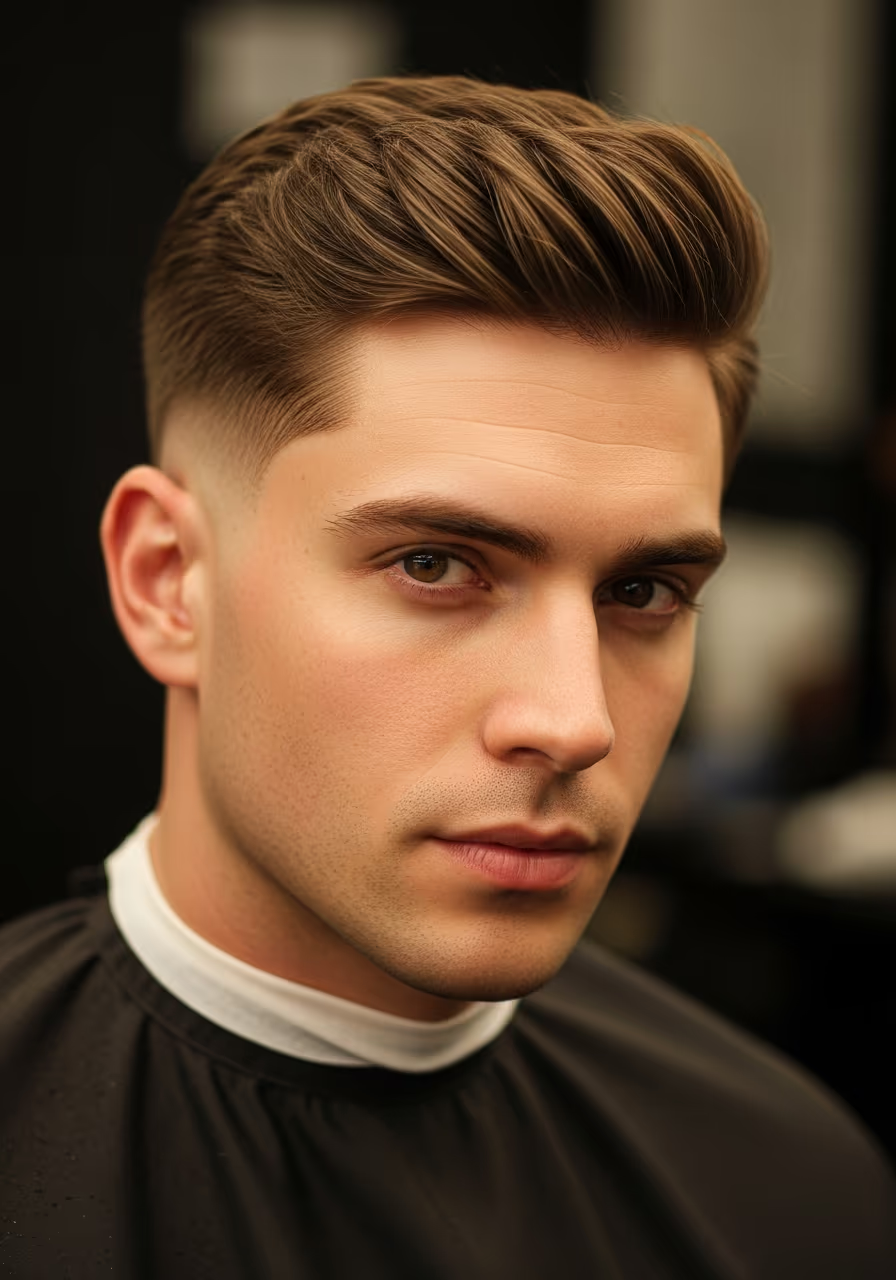
Barbering Basics: Terminology, Costs & Etiquette
Guard numbers, fade names, prices, tipping and shop etiquette: what to know before you sit in the chair.
18 guides →
The Complete Guide to Fades & Tapers for Men
Every fade and taper in one place, from low, mid and high to skin, drop and burst, and how to ask for each.
20 guides →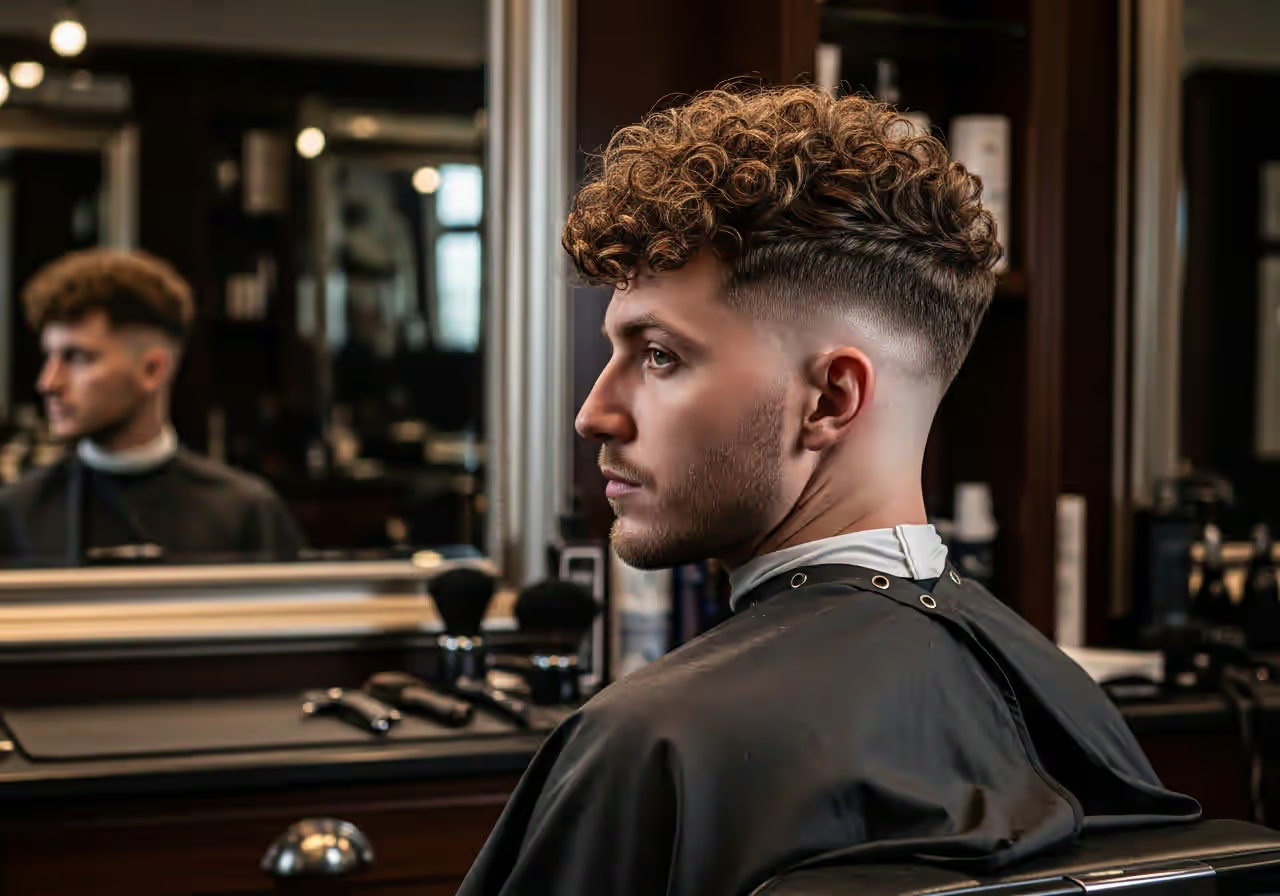
Best Haircuts by Hair Type & Texture
Cuts grouped by hair type: curly, wavy, straight, thick, fine and coily, with what each texture needs.
15 guides →
Best Haircuts by Face Shape & Features
Find your face shape, then the cuts that balance it, plus guides for big ears, high foreheads and more.
13 guides →
Styling, Products & Cutting Your Own Hair
Products, daily styling and cutting your own hair between visits, from pomade vs clay to a home buzz cut.
16 guides →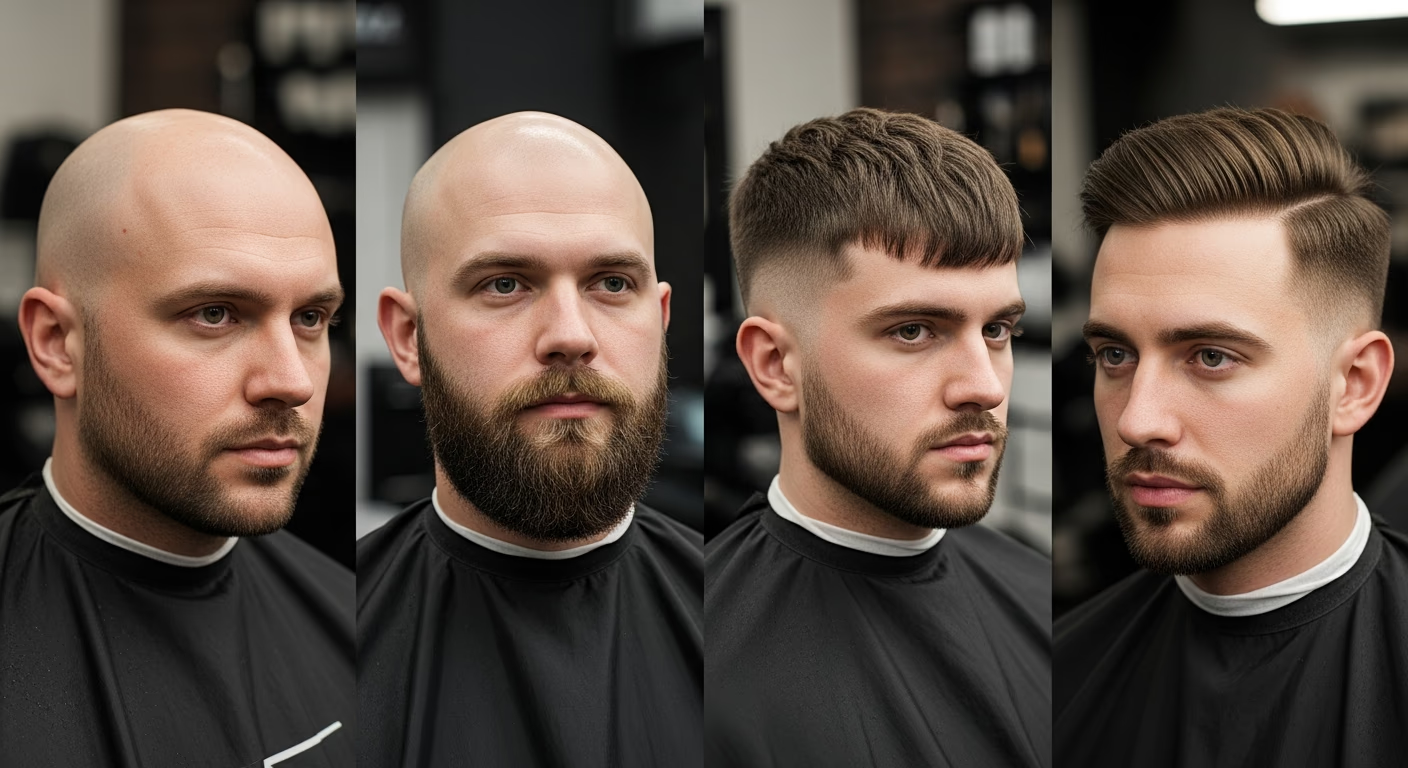
Haircuts for Thinning & Balding Hair
Cuts and styling for thinning hair, a receding hairline or a balding crown, and when to shave it all off.
11 guides →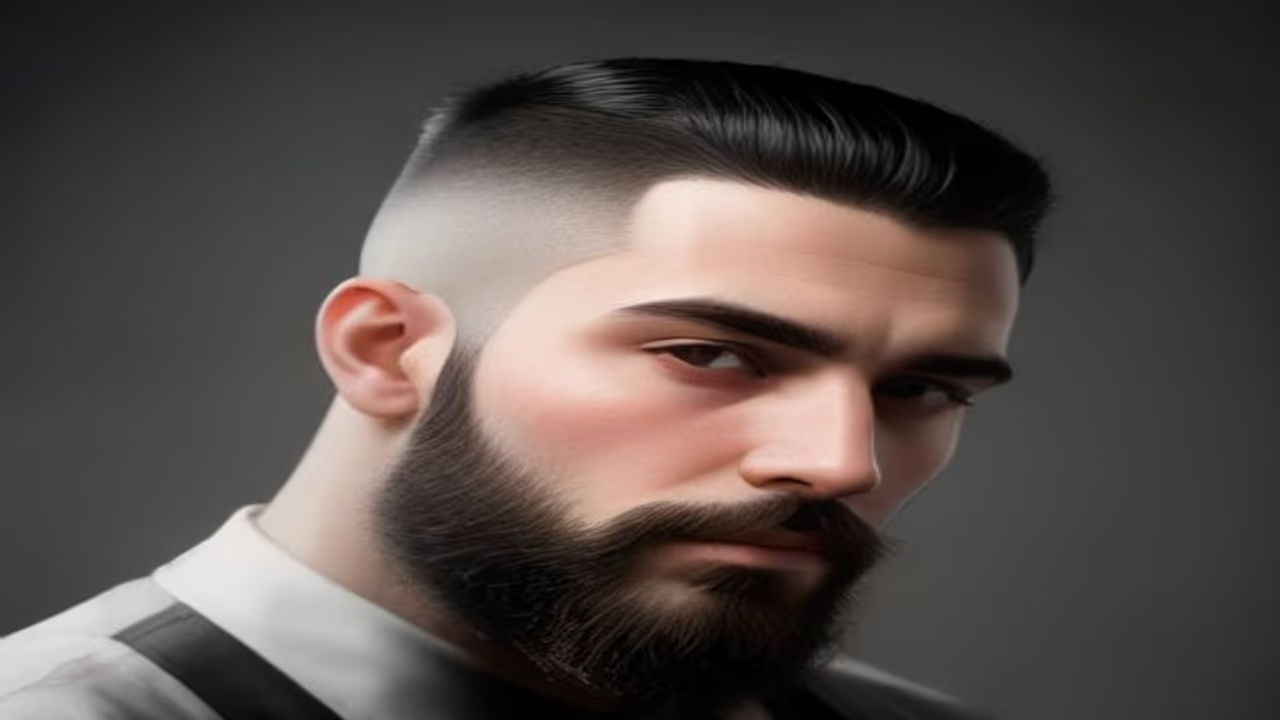
Men's Beard Grooming: The Complete Hub
Beard styles matched to your face and haircut, plus trimming, necklines, growth stages and products.
11 guides →
Haircut Problems & Fixes: The Troubleshooting Hub
What to do when a cut goes wrong or grows out badly, from an uneven fade to a line-up pushed too high.
9 guides →What Each Hub Covers and Who It Is For
Barbering Basics
This is the hub for anyone who freezes when the barber asks what they want. It explains the vocabulary: guard numbers and what length each one leaves, the difference between a blend, a fade and a taper, and why a line-up and an edge-up are not quite the same thing. It also covers the money side, with US price and tipping guides, plus how often to book a cut for your hair type. It is written for first-time clients and anyone switching barbers.
Fades and Tapers
Fade names cause plenty of confusion. This hub separates them by height (low, mid, high), by how short they go (skin or a guard length) and by shape (drop, burst, temple). Each gallery shows the fade on different tops and hair textures, and the supporting guides cover what to say, what a skin fade costs and how coily hair takes a taper. Read it if you like short sides but are not sure which version suits your head shape or job.
Hair Type and Texture
A cut that looks right on straight, fine hair can fall apart on thick waves or tight coils. This hub starts from the hair you actually have. It groups cuts for curly, wavy, straight, thick and coily hair, along with long and medium lengths that depend heavily on texture. There are also guides for dry or damaged hair and for an oily scalp, where the right cut can reduce daily effort. It suits men who have been fighting their hair rather than working with it.
Face Shape and Features
Start with the mirror method guide to work out whether your face reads as oval, round, square, long, heart or diamond. Each shape then has its own page of cuts that add height, width or softness where it helps. The hub also handles single features that people worry about, including big ears, a high forehead, a prominent nose, a double chin, glasses and a flat back of the head. It is the best starting point if you have no fixed style in mind and want a shortlist that fits.
Styling, Products and DIY
A good cut still needs the right product and a few minutes in the morning. This hub compares pomade, clay and wax, matte and shine finishes, and the comb or diffuser that suits your texture. It covers humidity, hat hair and product buildup. The second half is for cutting at home: buzzing your own head, fading with clippers, tidying the neckline between visits and keeping clippers oiled. It is aimed at men who want their hair to look the same at home as it did leaving the shop.
Thinning and Balding
Hair loss changes which cuts work, and this hub deals with it plainly. Guides cover a receding hairline, an M-shaped hairline, a widow's peak, thinning on top and a balding crown, with cuts chosen to reduce contrast between thin and full areas. There are honest comparisons of a buzz cut against a full shave and advice on when shaving it all off makes sense. Medical questions about the causes of hair loss are pointed to dermatology sources rather than answered here.
Beard Grooming
Facial hair and the haircut above it should be planned together. This hub covers named beard styles such as the boxed beard, anchor, balbo and Van Dyke, plus moustache styles like the handlebar and chevron. Practical guides explain where a neckline should sit, which beard shapes suit different jawlines, how a beard pairs with a skin fade and what to expect at each stage of growth. Men growing a first beard will find the growth timeline most useful.
Haircut Problems and Fixes
Sometimes a cut goes wrong. This hub is for the days after: a barber who took too much off, a fade with uneven or patchy lines, a line-up pushed too far back, or a parting that shows more scalp than you would like. Each guide explains what probably caused the problem, what a barber can still correct and how long to wait for the rest to grow in. There is also a buzz cut regrowth timeline and advice on preventing razor bumps at the neckline.