
Number 2 Buzz Cut
An even #2 guard all over, about a quarter inch, with a light fade at the edges and nothing to style.
Best for: Oval faces and gym schedules, trims every 3 to 4 weeks
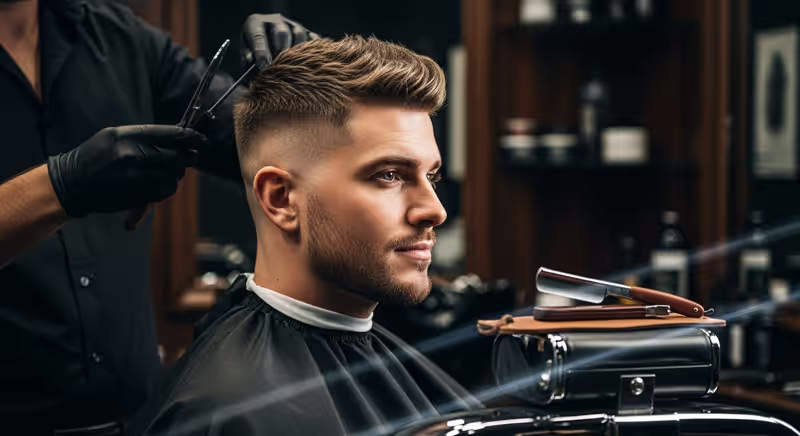
Fades, crops, quiffs, flows and curls, each with the clipper guard, the length on top and the exact words to say in the chair.
100 styles260 guides46 data reports
Style images are AI-generated illustrations.
This page collects 100 men's haircuts and hairstyles for men that barbers cut every week in 2026, sorted by length, fade, texture, face shape and age. Each card gives the clipper guard or top length, how often it needs a trim and who it suits, then links to the full gallery with the barber script.
Most popular men's haircuts in 2026: the fade leads, picked by 14% of 7,100 US adults in a January 2025 survey, with the buzz cut second at 12%. The low taper fade, buzz cut, textured crop and French crop are the everyday picks, while the Korean two block and wolf cut are among the top search risers.
Filter the 100 styles
Showing 100 of 100 styles
Short haircuts for men run from a #1 buzz to about two inches on top. In the UK and India the same cuts often go by gents' haircuts. Barbers name most of them by guard length and shape, so the clipper guard numbers guide and the men's haircut names list help you ask for the right one. There are more cuts in short haircuts for men.
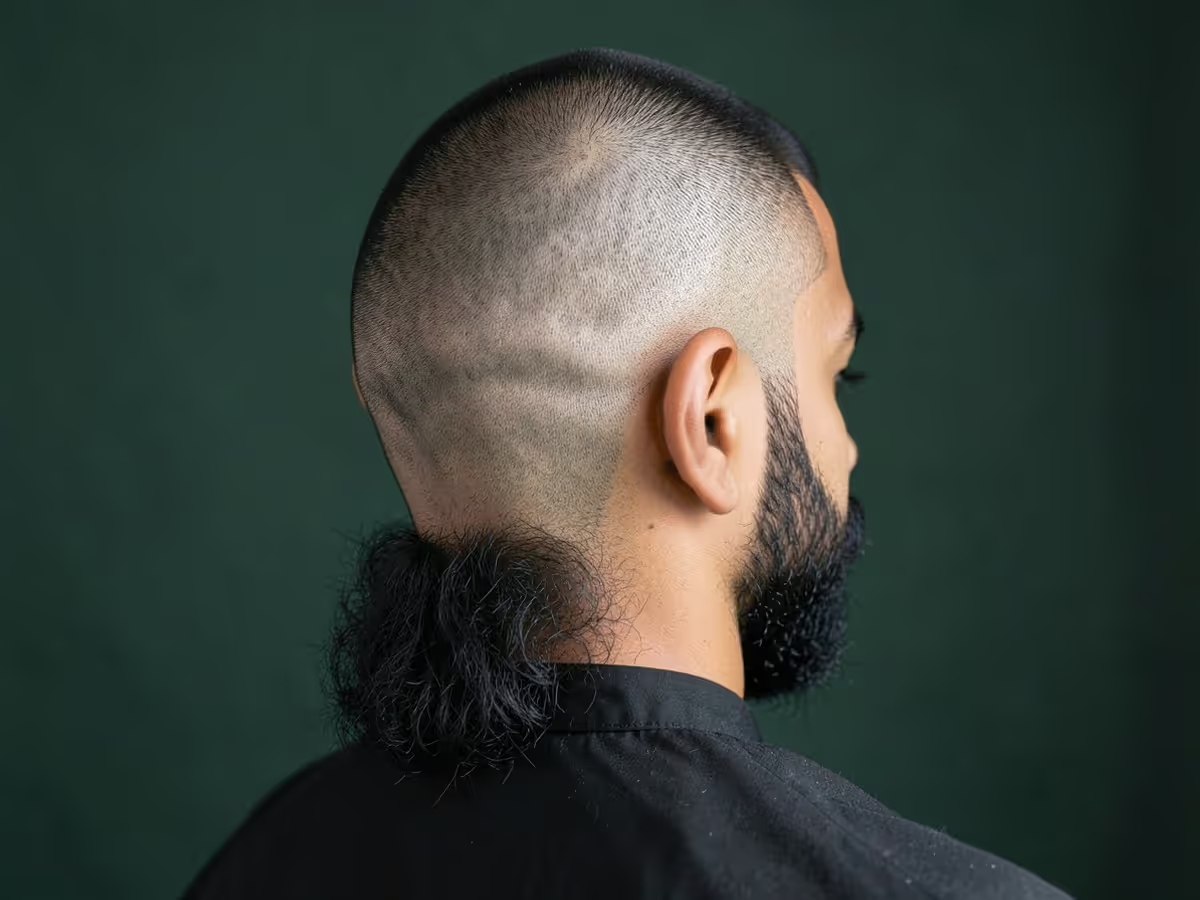
An even #2 guard all over, about a quarter inch, with a light fade at the edges and nothing to style.
Best for: Oval faces and gym schedules, trims every 3 to 4 weeks
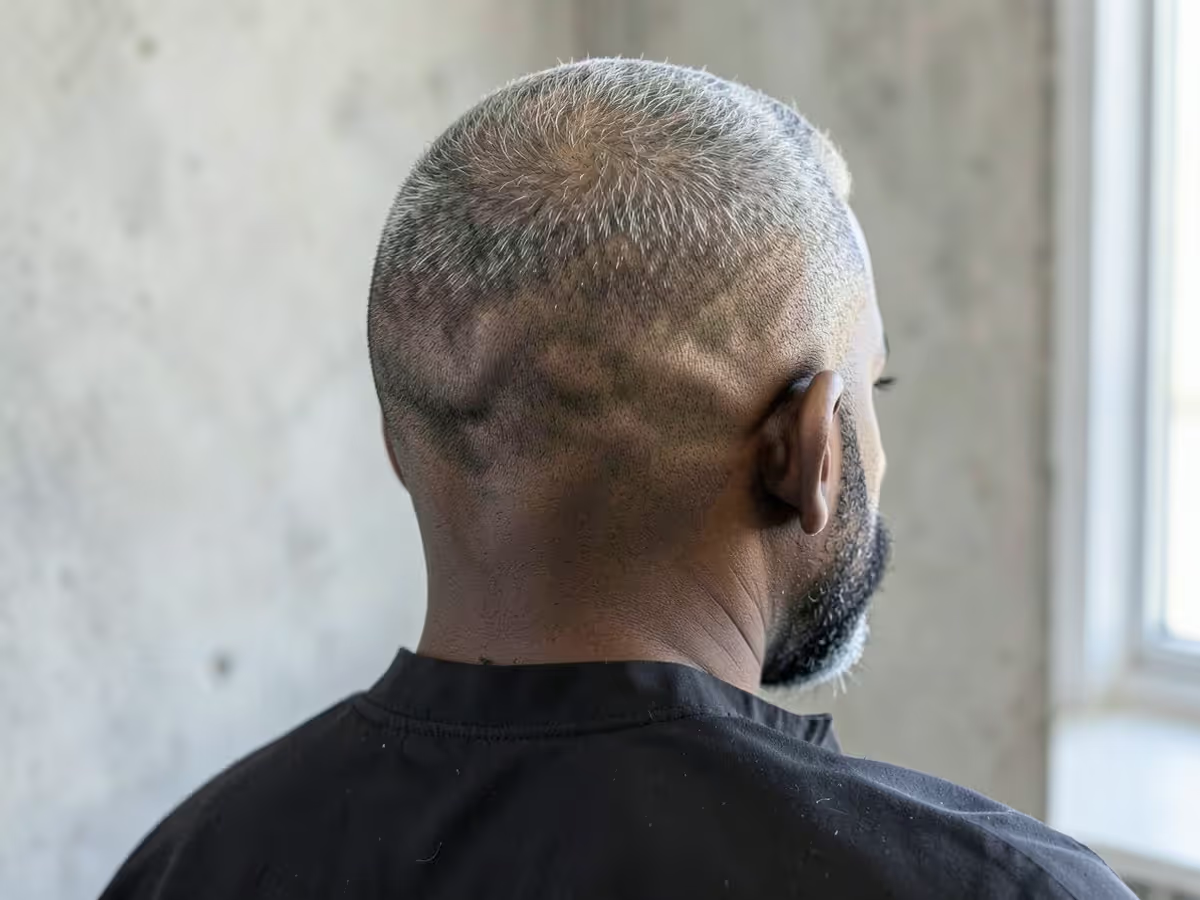
A #3 on top with the sideburns blended down into the beard, so hair and face read as one shape.
Best for: Full beards, with hair and beard trimmed on the same day
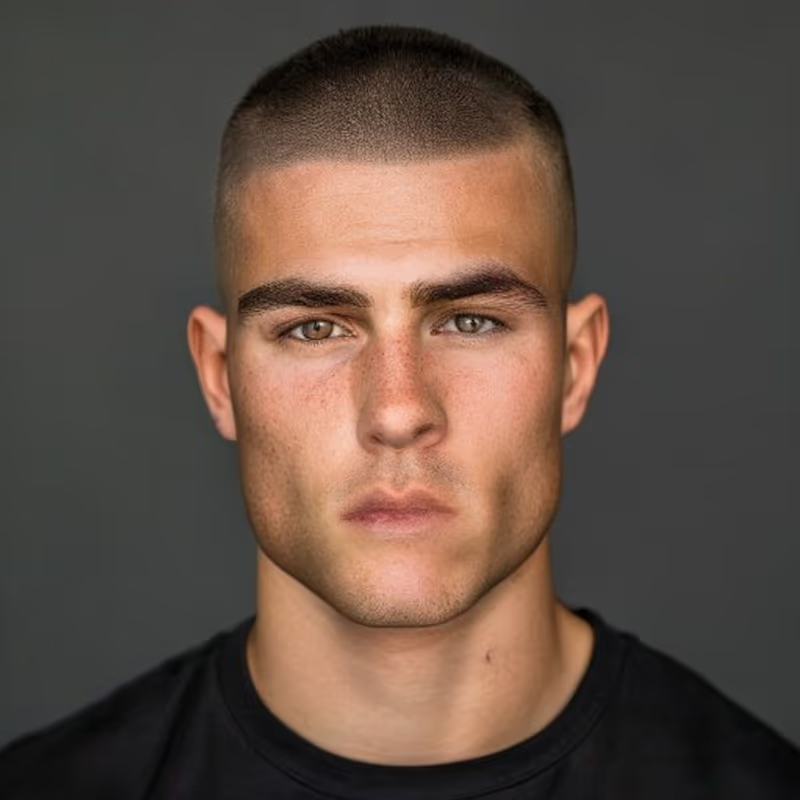
Clippers with no guard over the whole head, leaving only a shadow of hair that dries in seconds.
Best for: Minimum effort or thinning hair, trims every 1 to 2 weeks
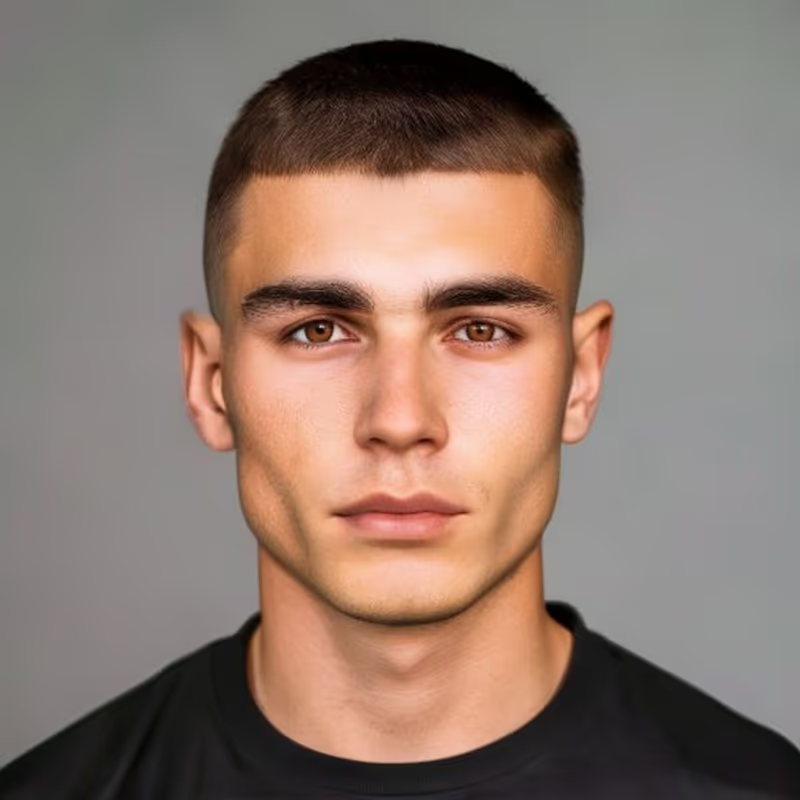
About an inch on top, slightly longer at the front than the crown, with clipper-tapered sides and back.
Best for: Almost every face shape and hair type
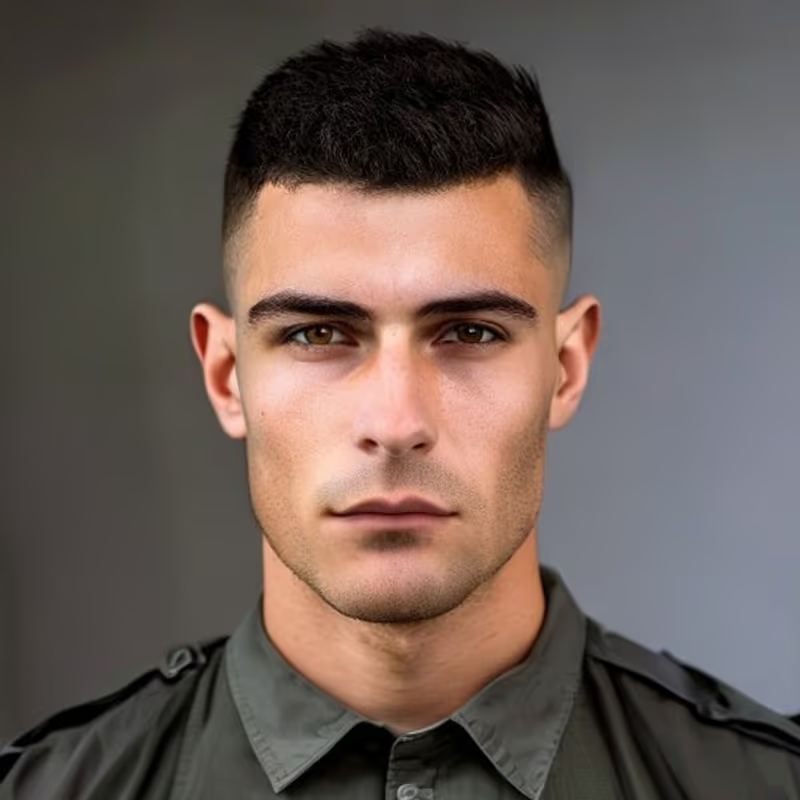
One even clipper length across the whole top, a little longer than a buzz, with the sides matched or slightly shorter.
Best for: Men who want a buzz with a bit more shape
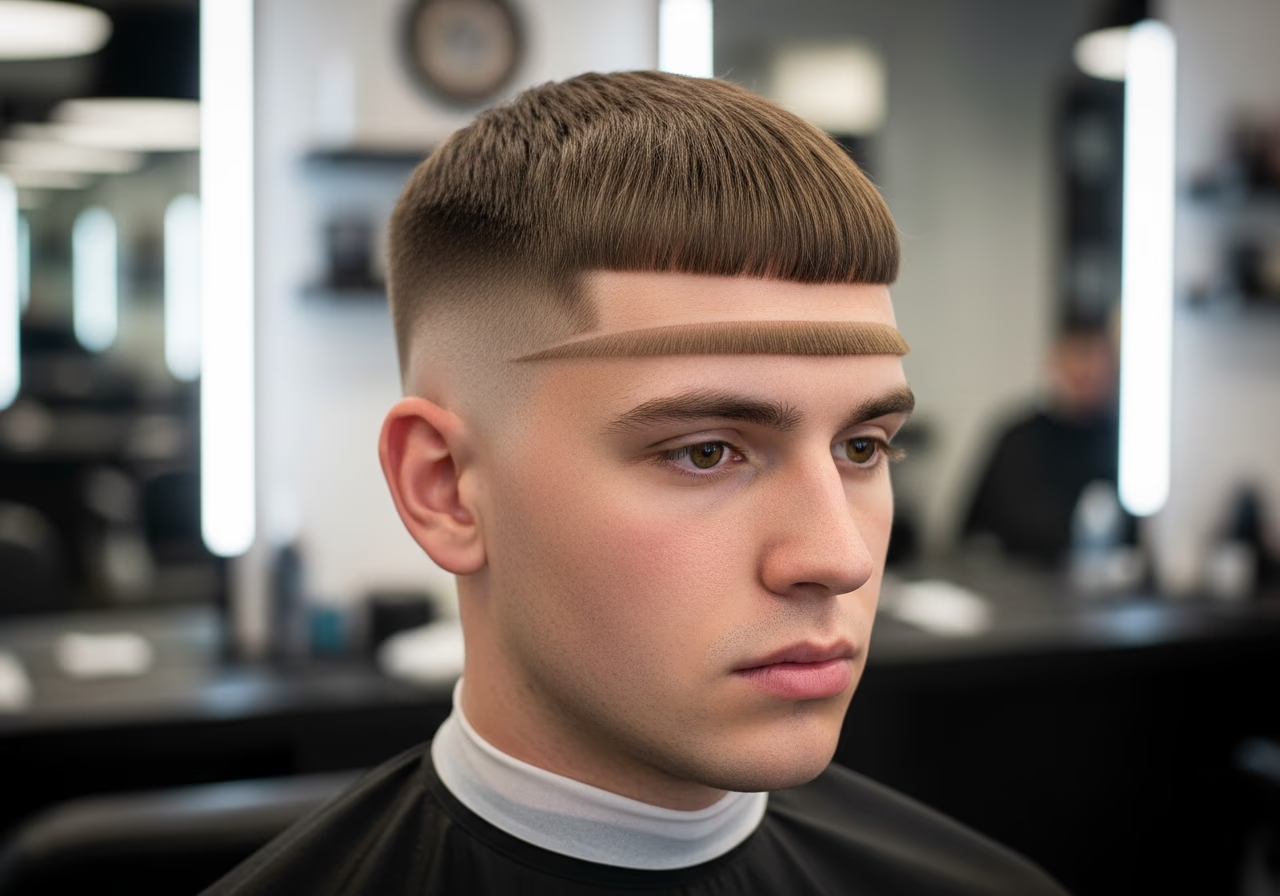
One to two inches all over with a short fringe cut bluntly straight across the forehead and no fade.
Best for: Oval and square faces, low upkeep
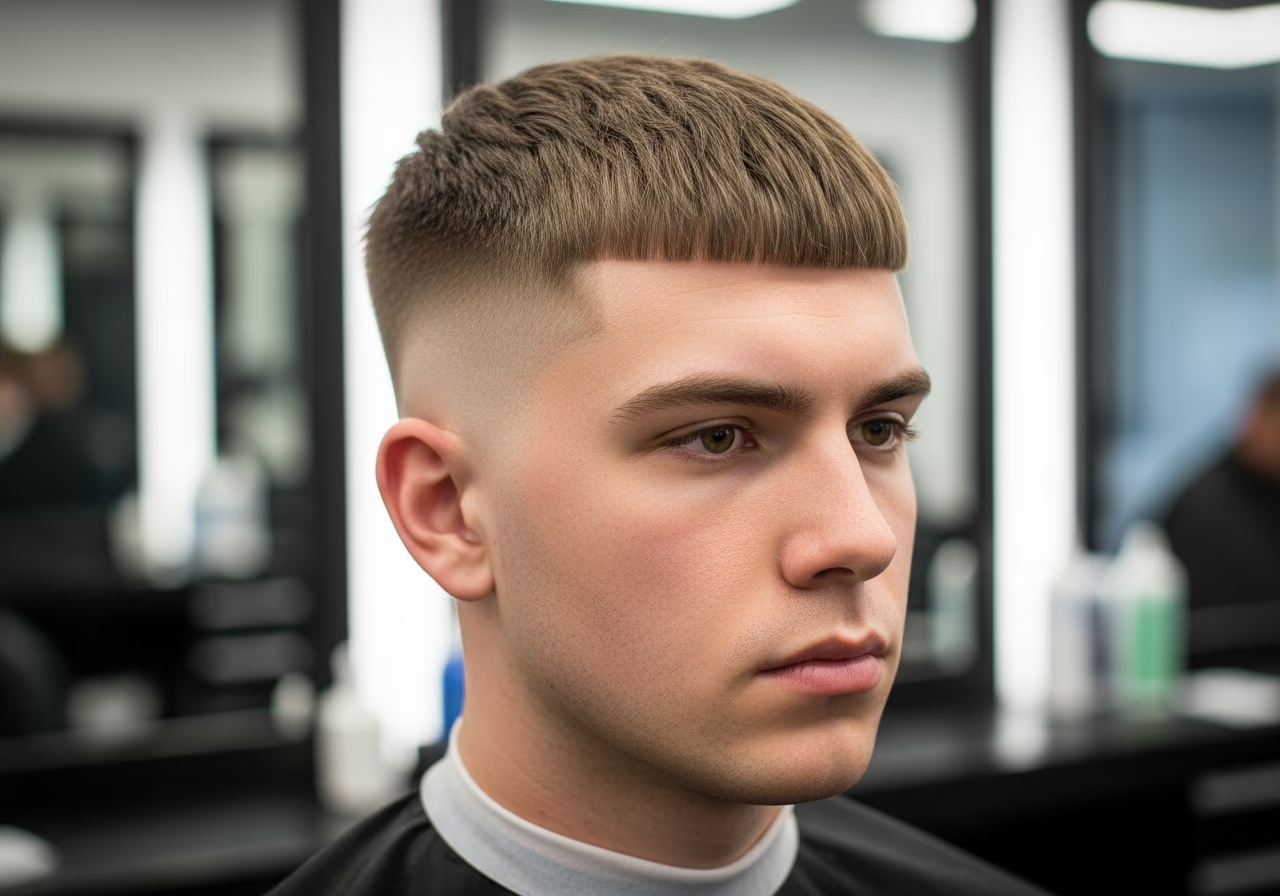
The Caesar shape with a choppy, razor-cut fringe instead of one solid line, so it grows out more gracefully.
Best for: Men who want a softer Caesar

About an inch on top, a very short choppy fringe and sides at a #2 blended up so there is almost no bulk.
Best for: Fine or straight hair, men who train often
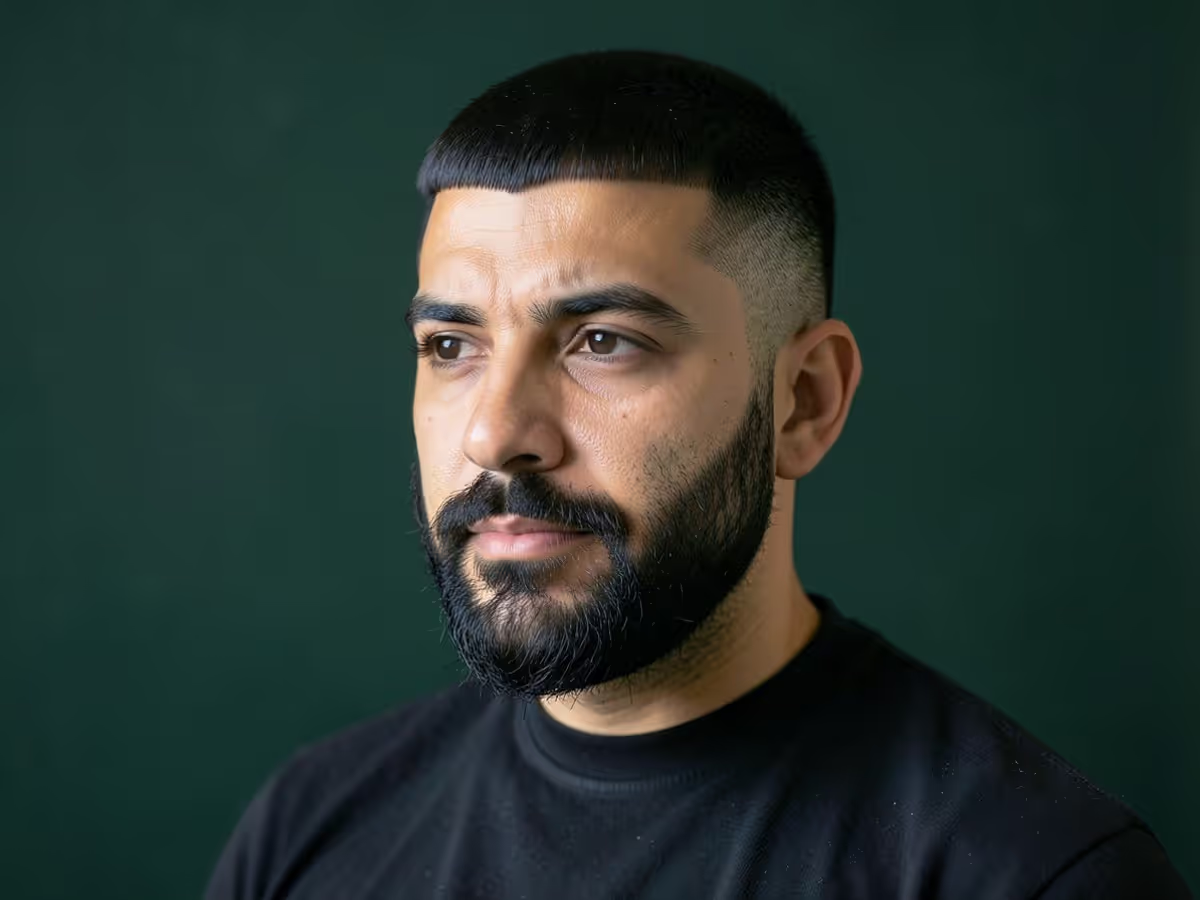
A short, dense fringe cut straight across, about an inch on top, with tapered sides and no hard fade line.
Best for: All face shapes, straight or wavy hair
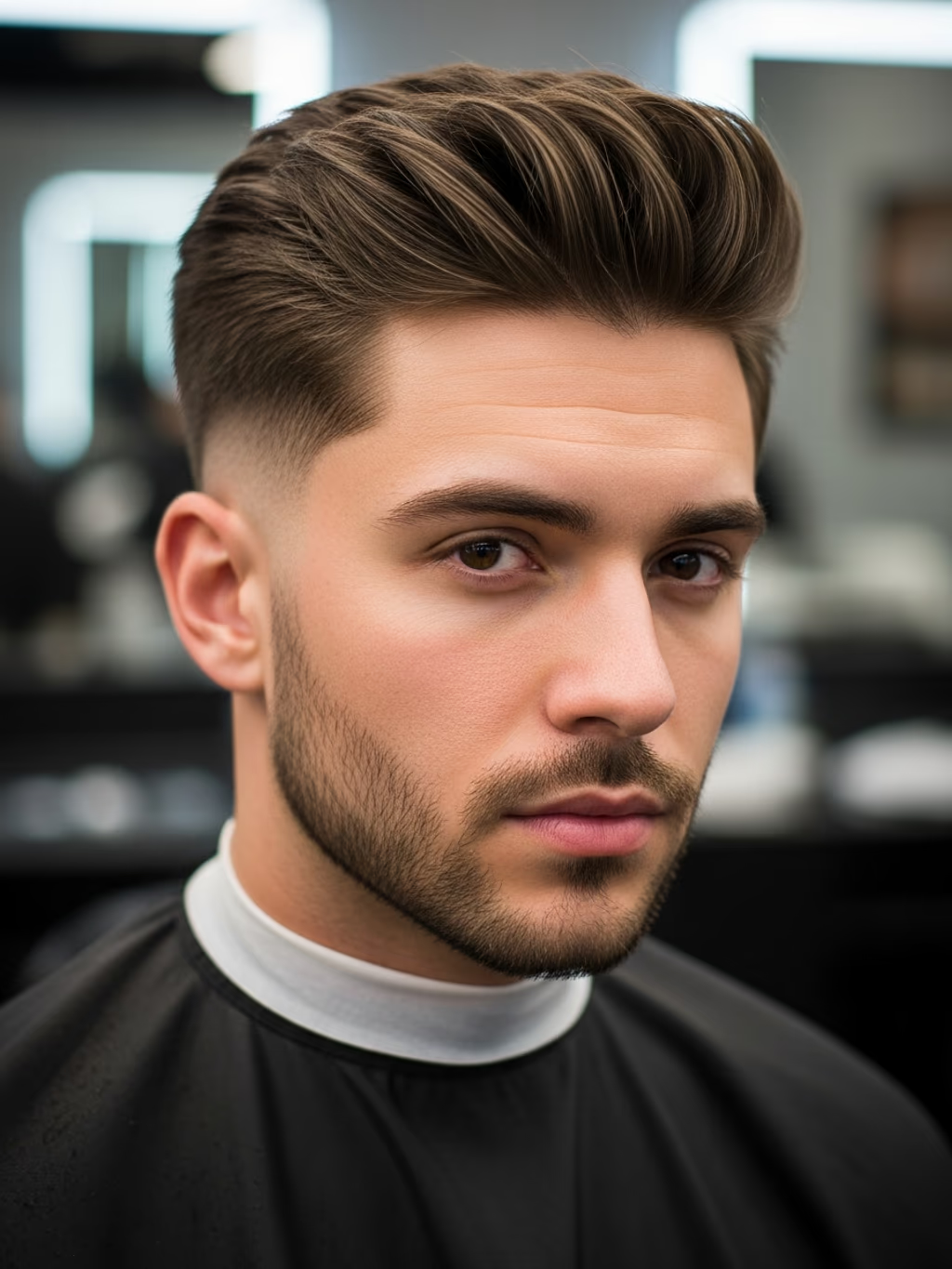
Sides and back taken to skin or a #0 up past the temples, with a flat #3 or #4 on top.
Best for: Oval and oblong faces, military-short taste
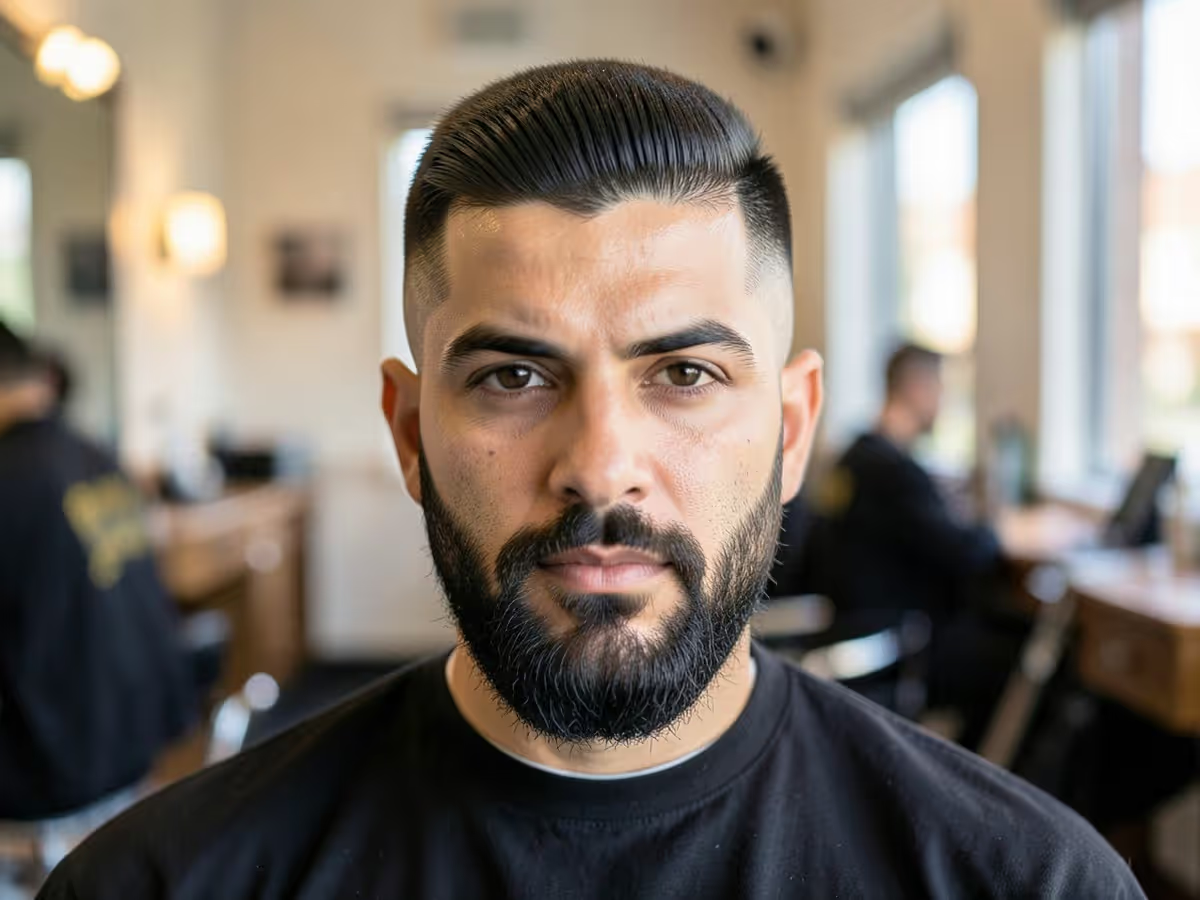
Half an inch on top cut flat over sides at a #0 to #1, a shape that holds through sweat and training.
Best for: Straight hair and athletes, trims every 2 weeks
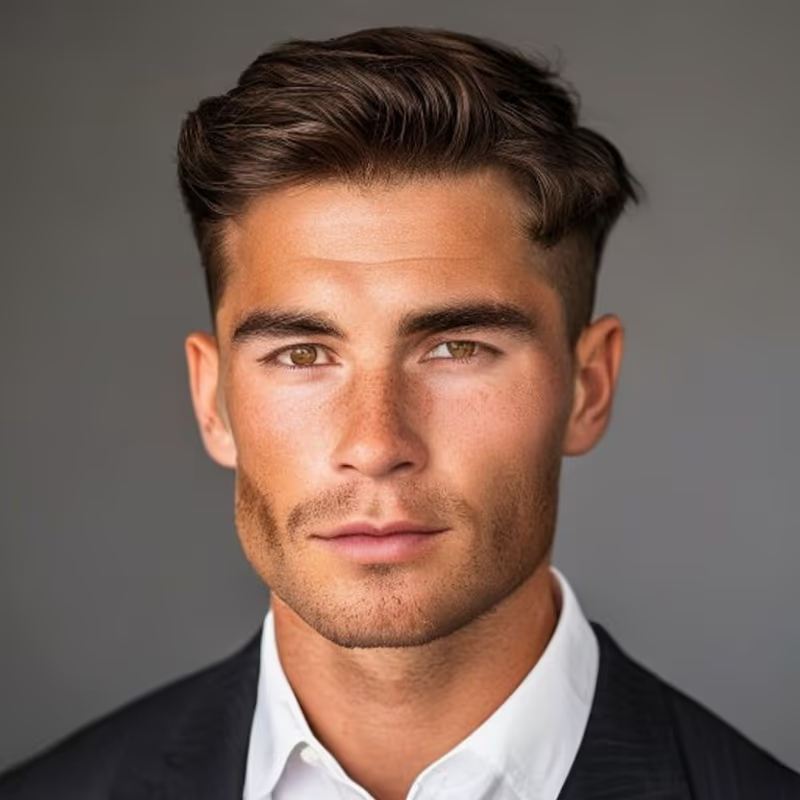
Short tapered sides with two to three inches on top, long enough to part and comb forward neatly.
Best for: Office dress codes, almost any face shape
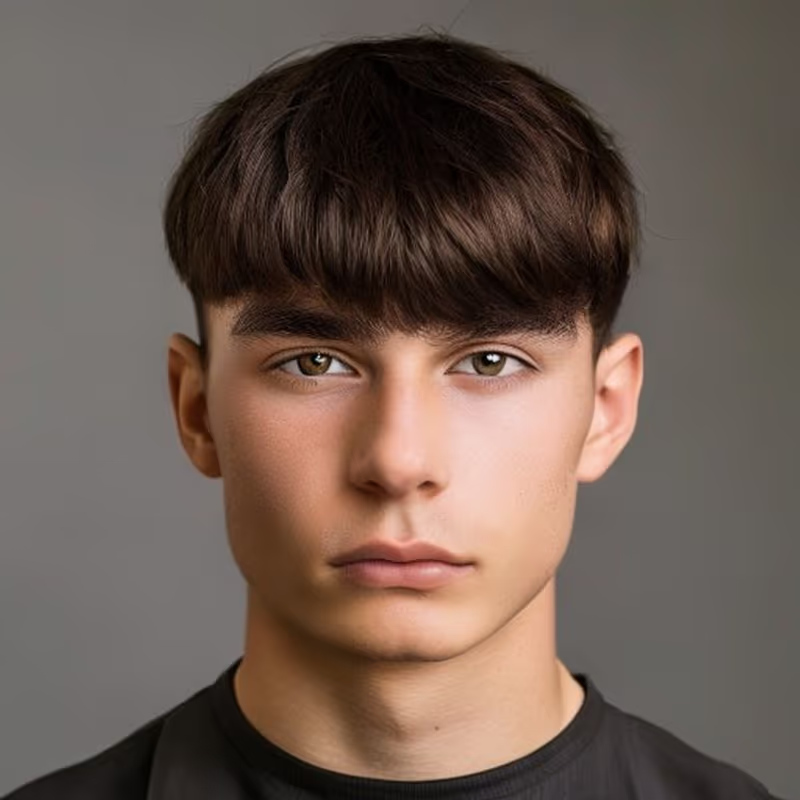
A thick fringe cut in one blunt, straight line across the forehead, over a tight mid fade for contrast.
Best for: Straight or slightly wavy hair
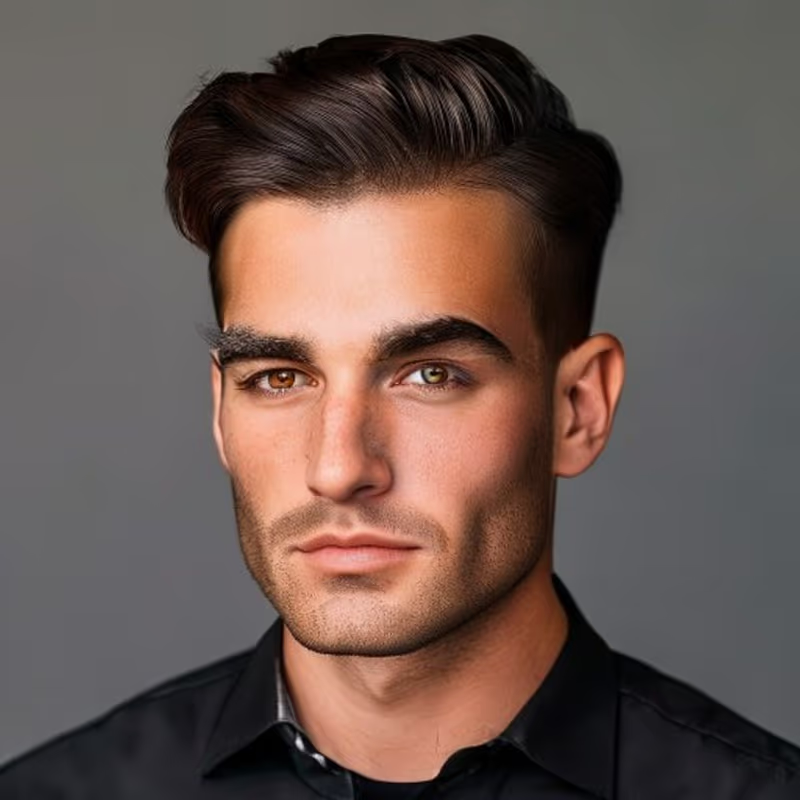
The top left long enough to sweep across a defined side part, with the sides tapered shorter and no fade.
Best for: Most face shapes, professional settings
Fade haircuts for men differ by where the blend starts and how short it ends. A taper fade only touches the sideburns and neckline, a low fade starts just above the ear, a mid fade at the temple, and a skin fade finishes at bare skin and needs a cleanup every week or two.
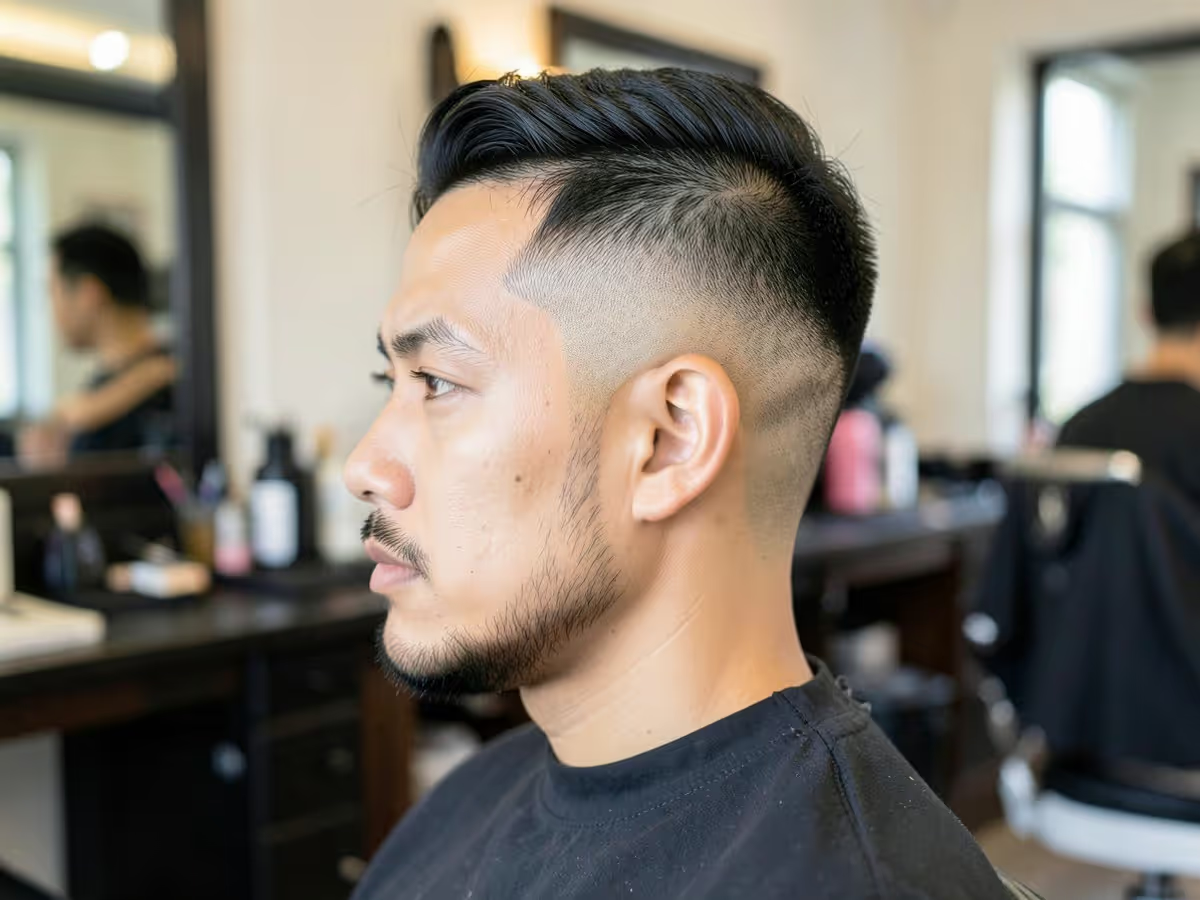
The blend starts about an inch above the ear at a #1 or #2, with two to four inches left on top.
Best for: Any face shape and a first fade, trims every 3 to 4 weeks
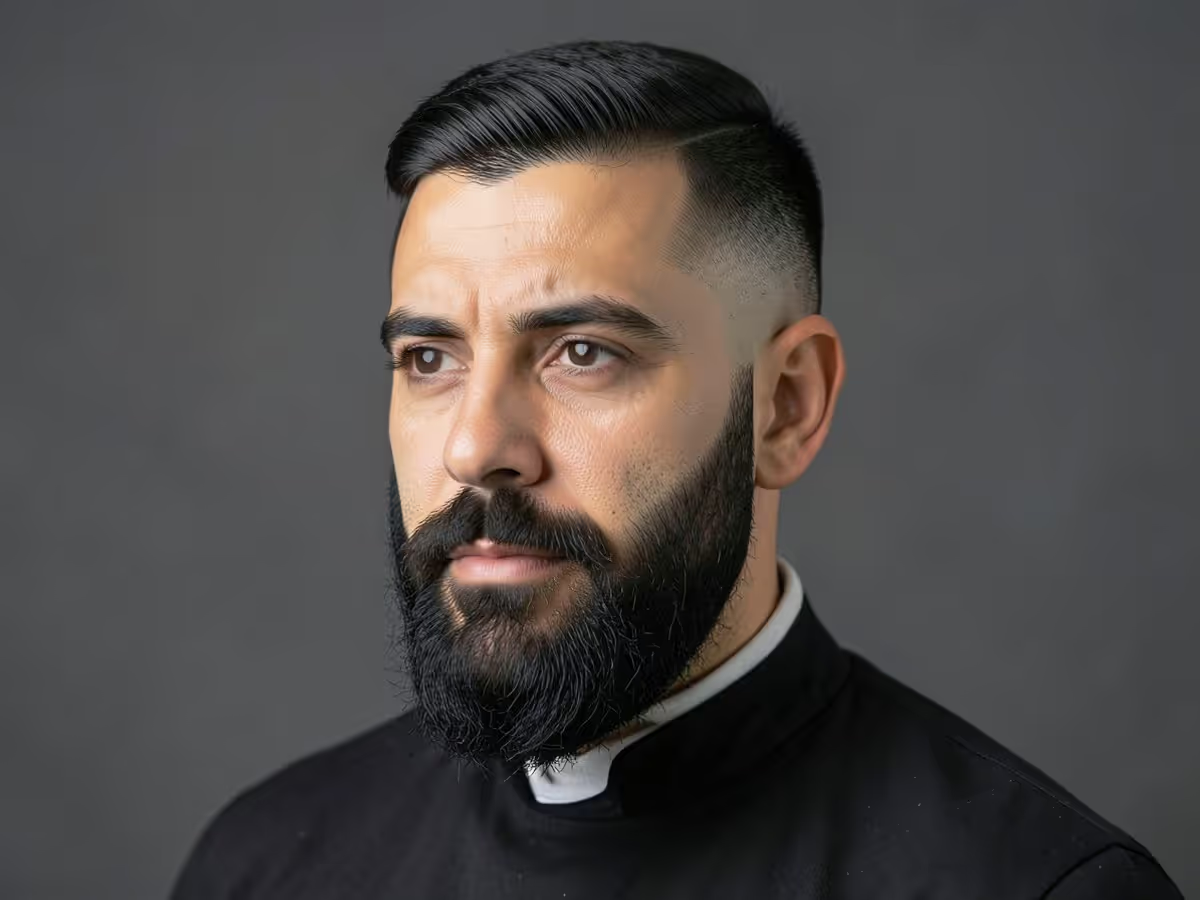
The fade starts at the midpoint of the side and blends up into a few inches on top, with no skin showing.
Best for: Oval and square faces, straight or thick hair
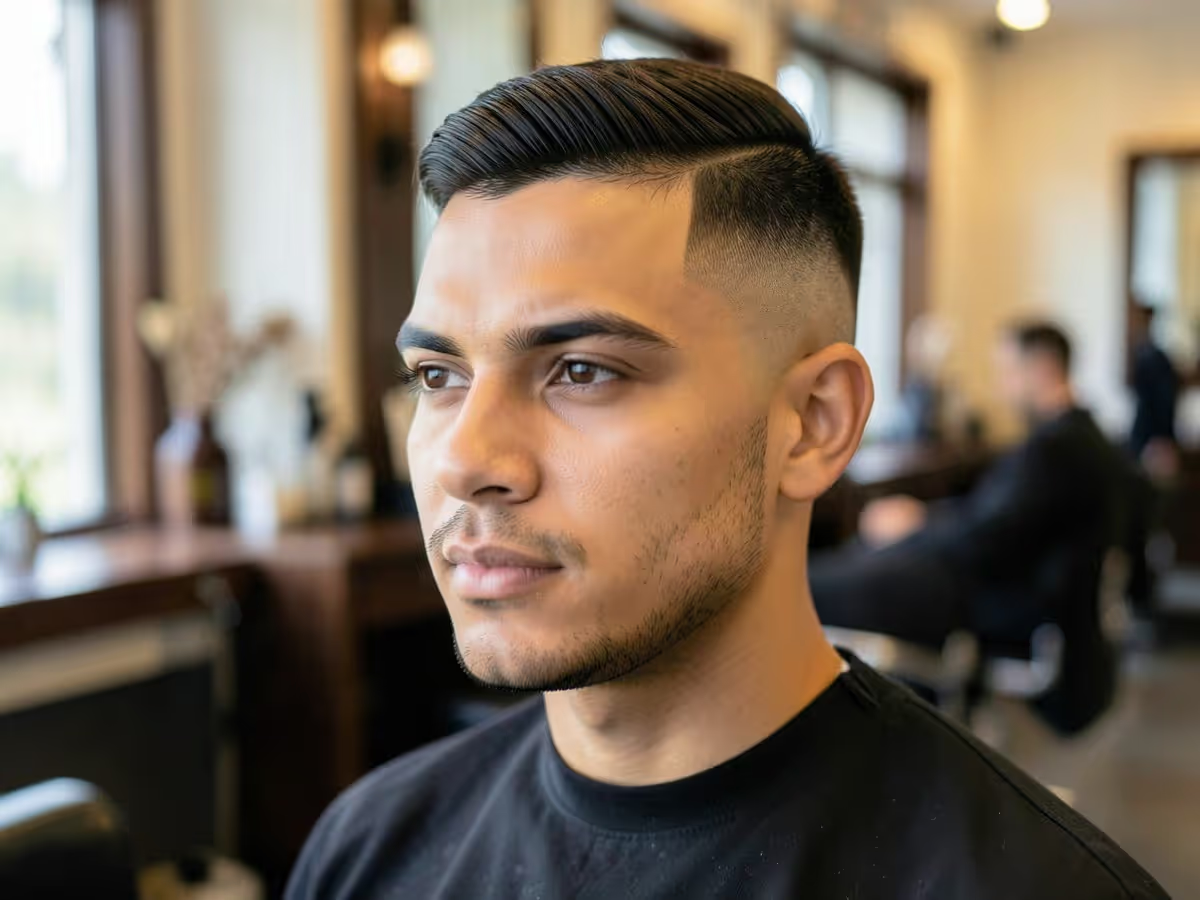
The taper starts above the temples and blends tight to the skin, with a fuller natural top brushed forward.
Best for: Straight or thick hair, trims every 1 to 2 weeks
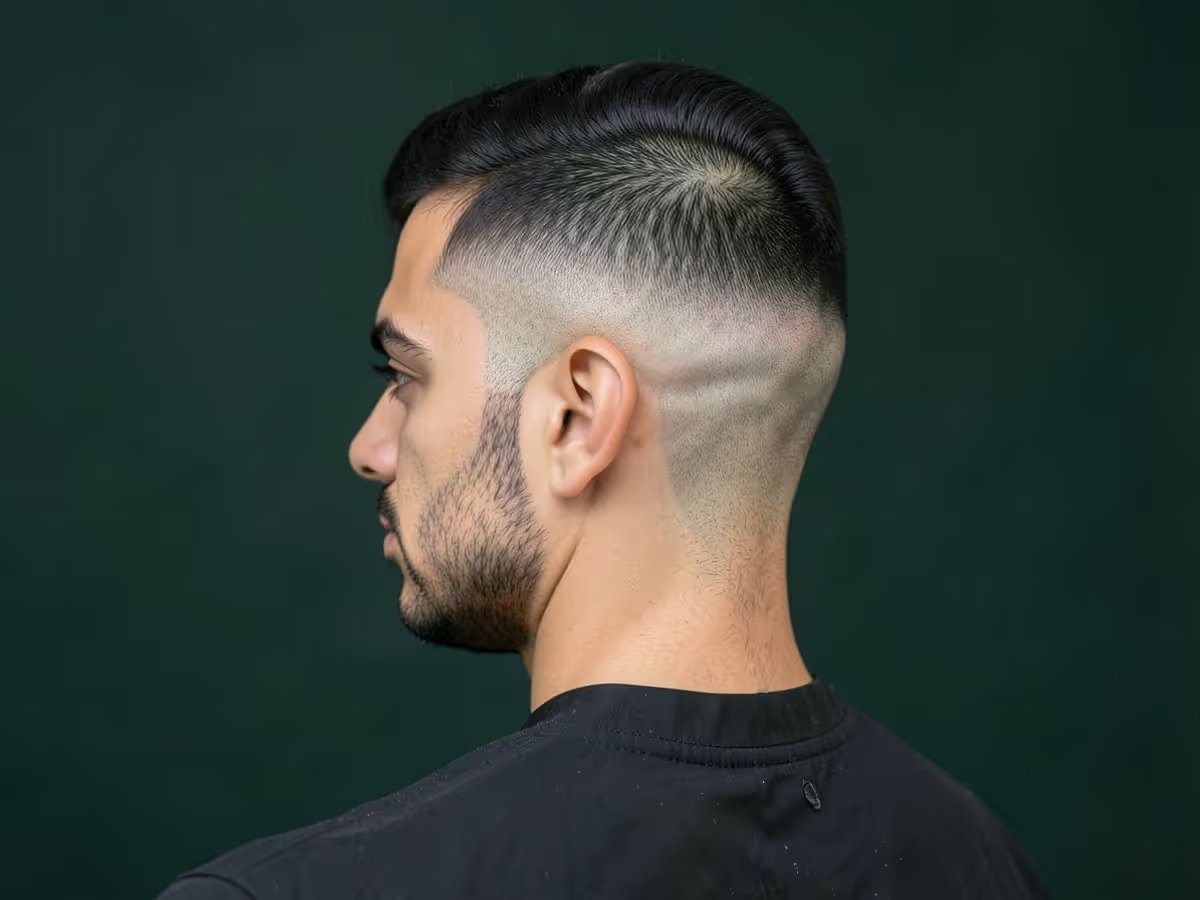
Bare skin at the bottom of the sides, climbing through a #0.5, #1 and #2 into about three inches on top.
Best for: Dense straight or thick hair that shows every step
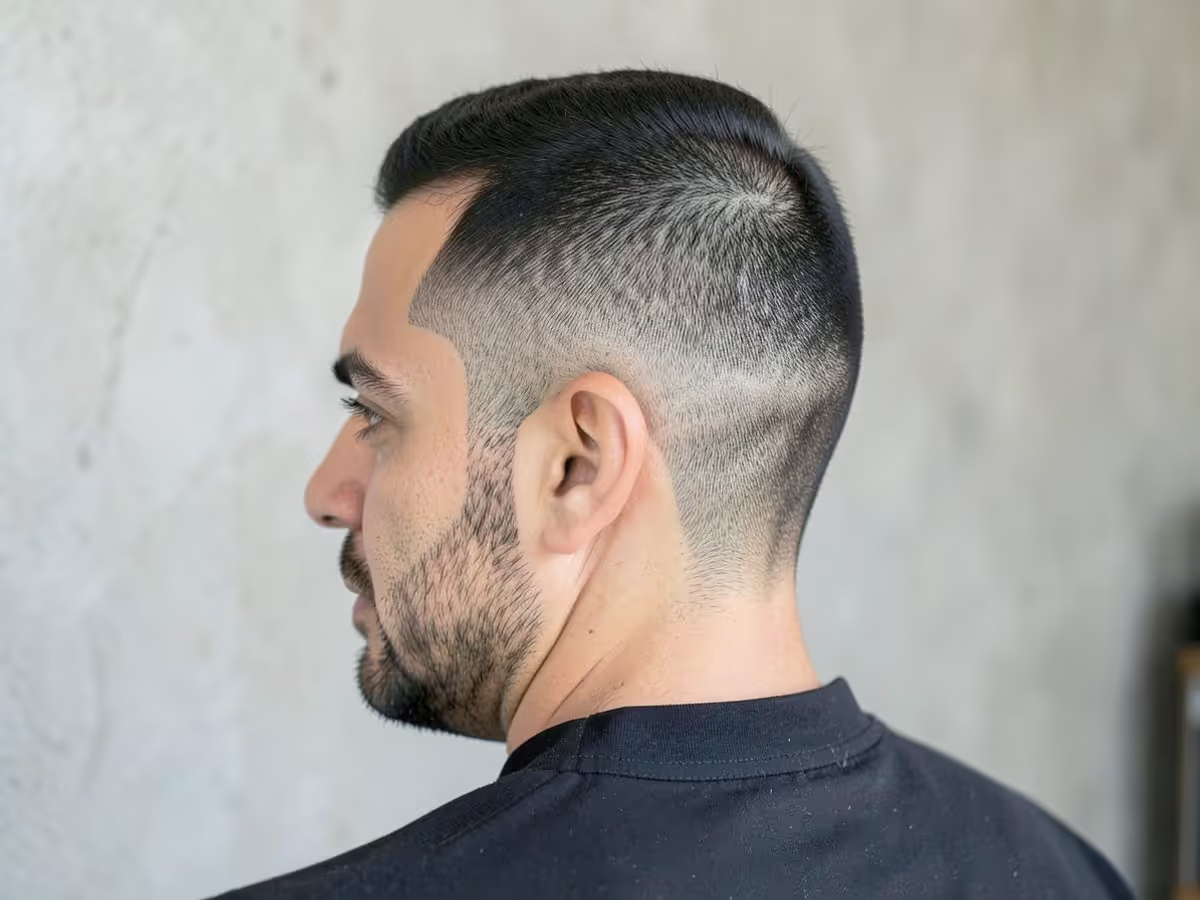
The fade line dips behind the ear toward the nape, running a #1 to #3 under about three inches on top.
Best for: Oval and round faces
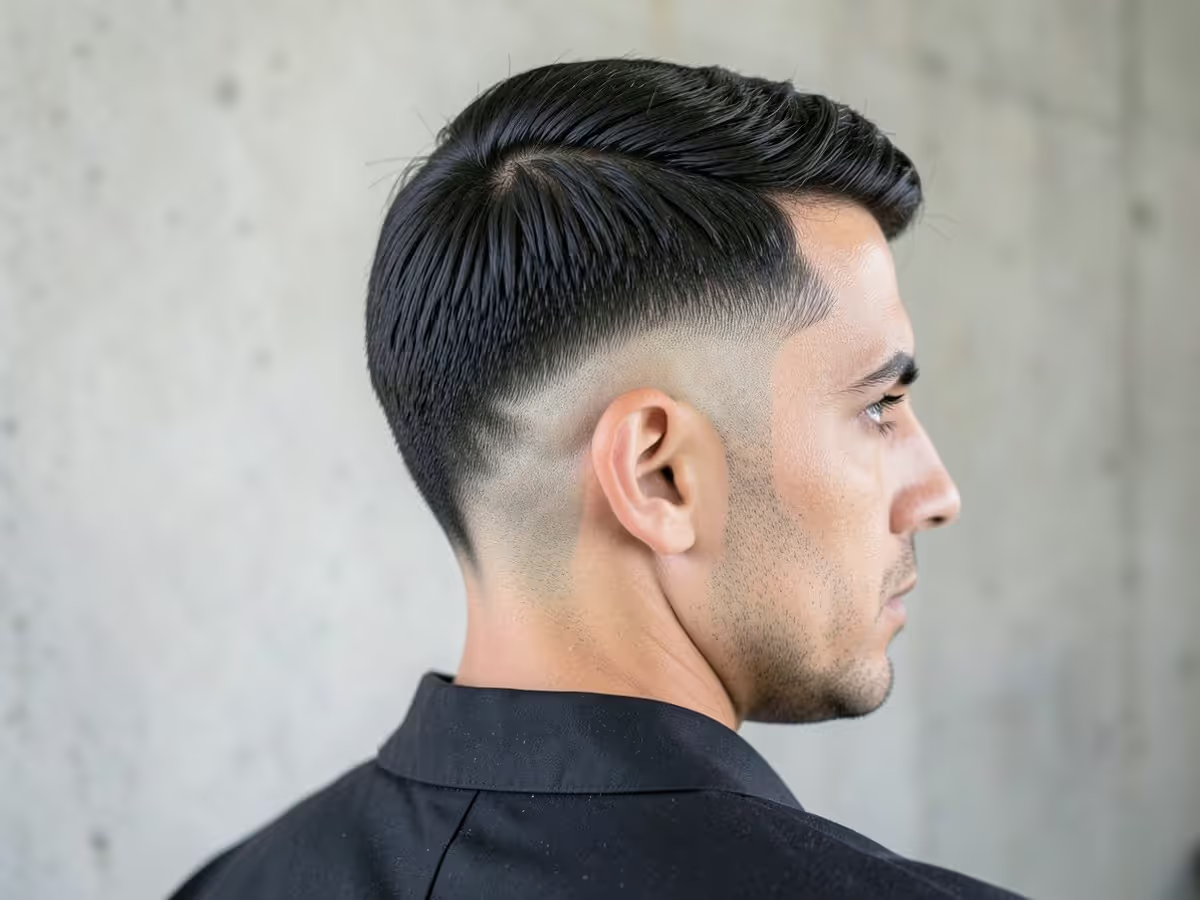
A half circle faded around each ear down to a #0.5, leaving the neckline longer and the top full.
Best for: All face shapes, straight or thick hair
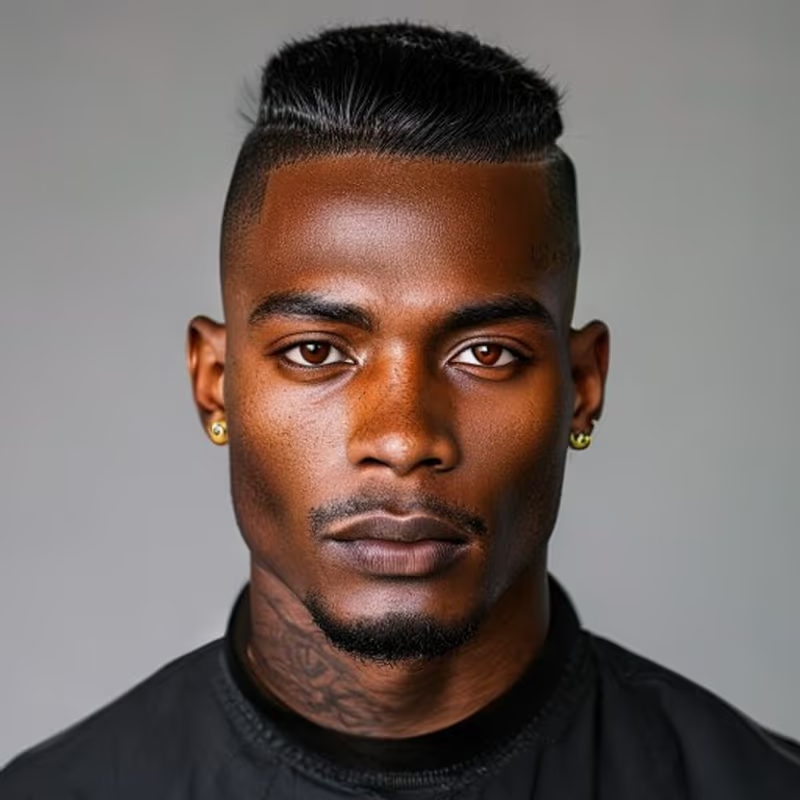
Only the temples and sideburns are taken down to skin, leaving the rest of the sides fuller than a standard fade.
Best for: All hair types, short or grown-out tops
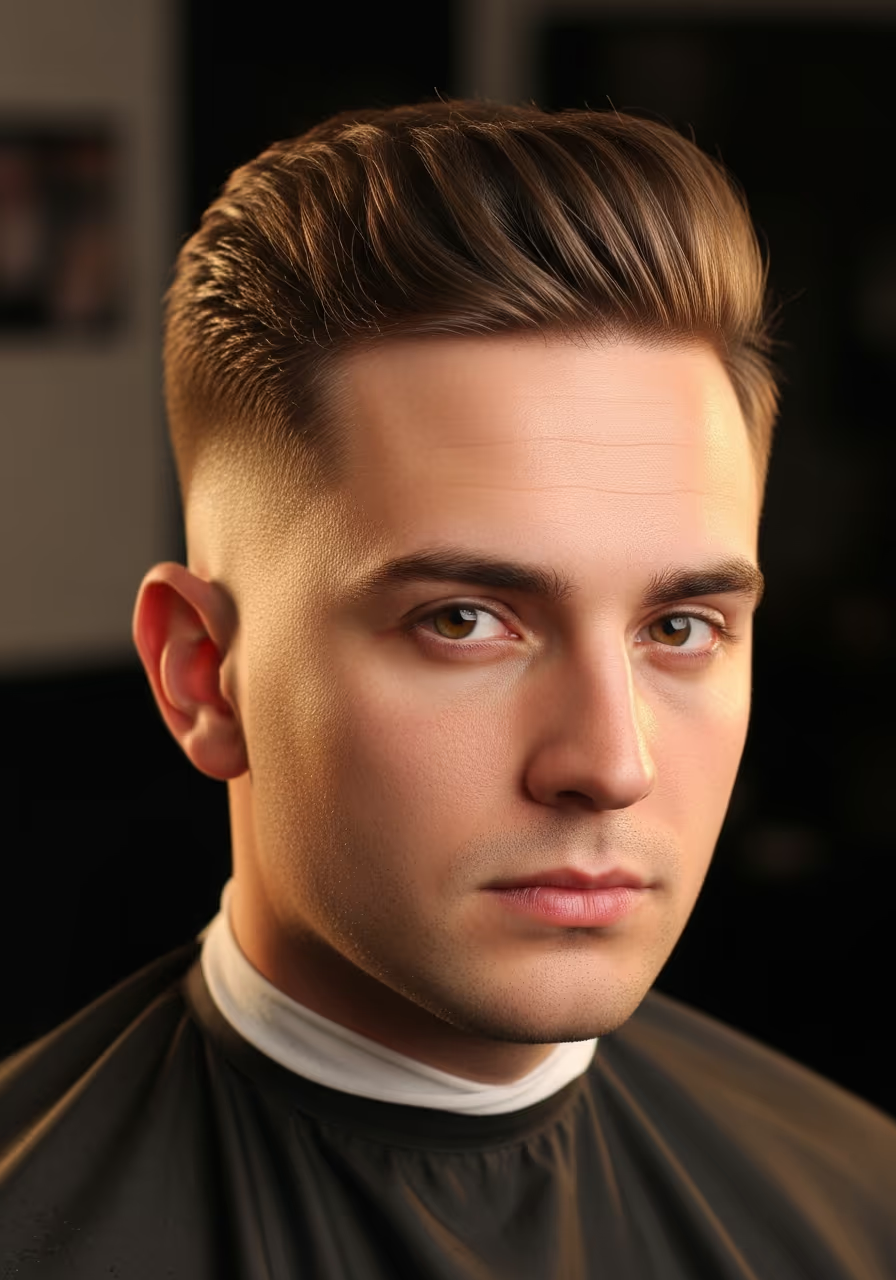
The bottom of the taper goes all the way to skin before blending up, for harder contrast than a standard low taper.
Best for: Thick hair, round and square faces
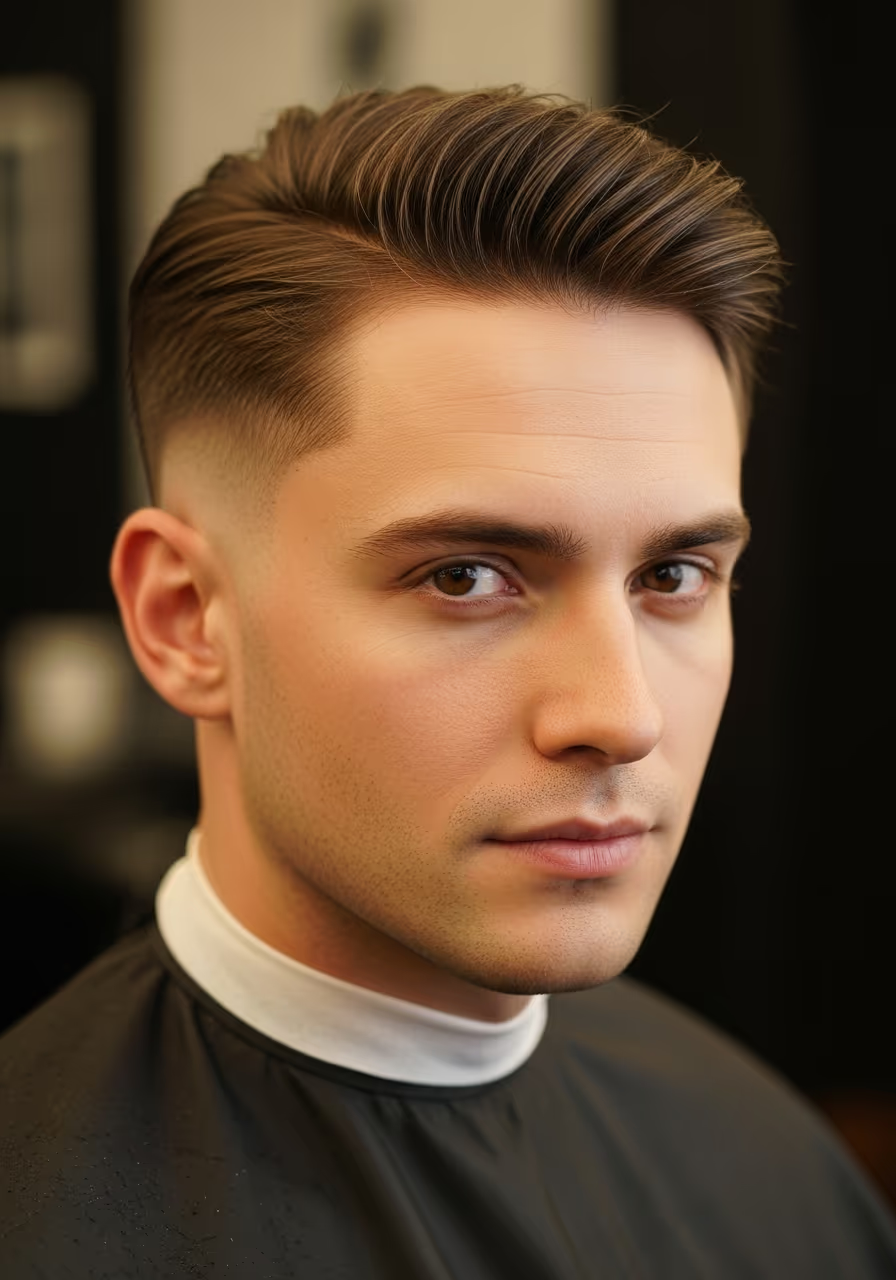
A low fade that stops at a shadow of hair instead of skin, so regrowth stays hidden for weeks.
Best for: Fine hair and tight curls, low upkeep
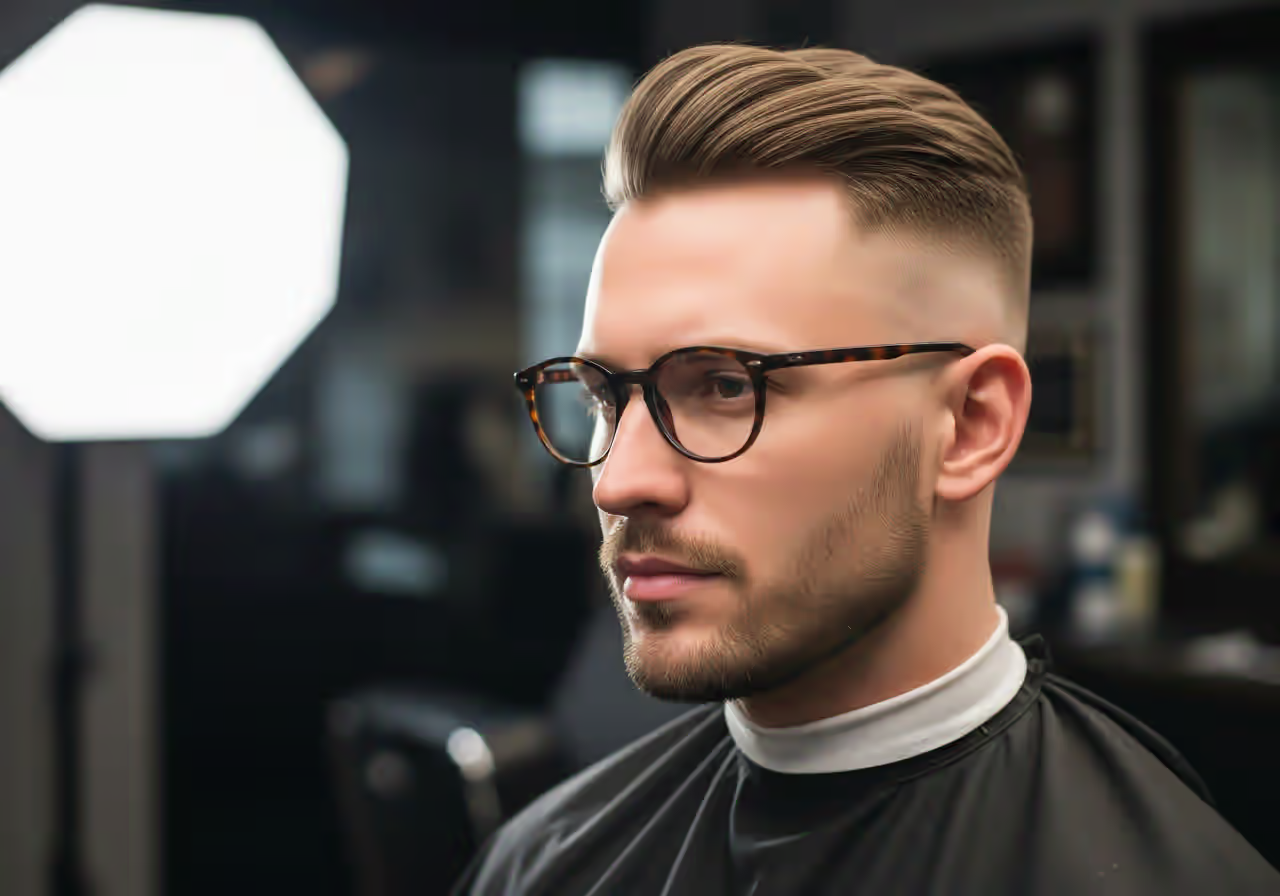
A mid-height skin fade under about three inches of lightly textured top that can go back, sideways or forward.
Best for: All face shapes and hair types
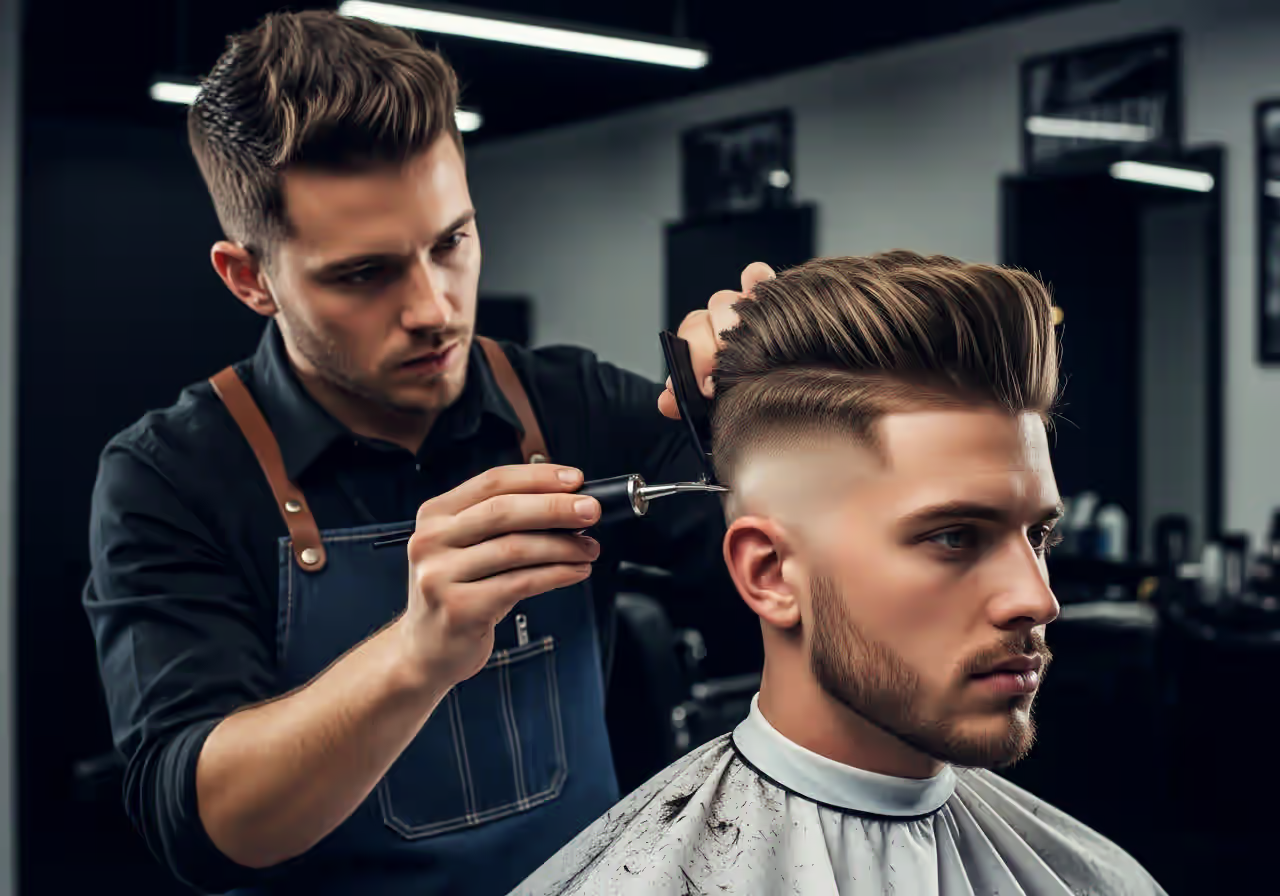
Skin from high on the sides, near the top of the head, with two to three inches of choppy, point-cut hair on top.
Best for: Square and diamond faces, thick or wavy hair
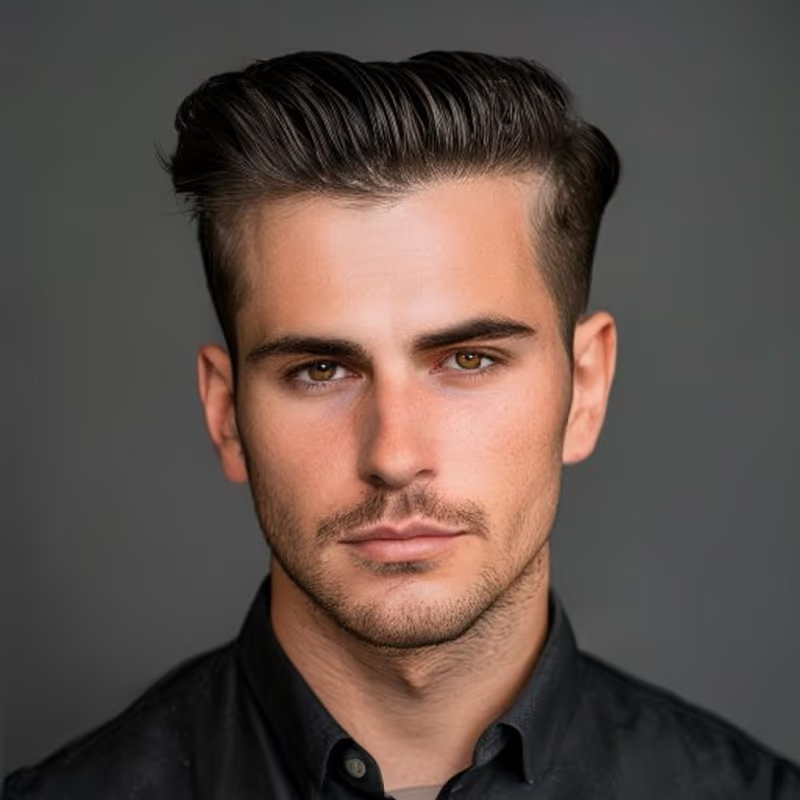
A comb over on top with the sides fading low, just above the ears, to a short length rather than skin.
Best for: Conservative offices that still allow a fade
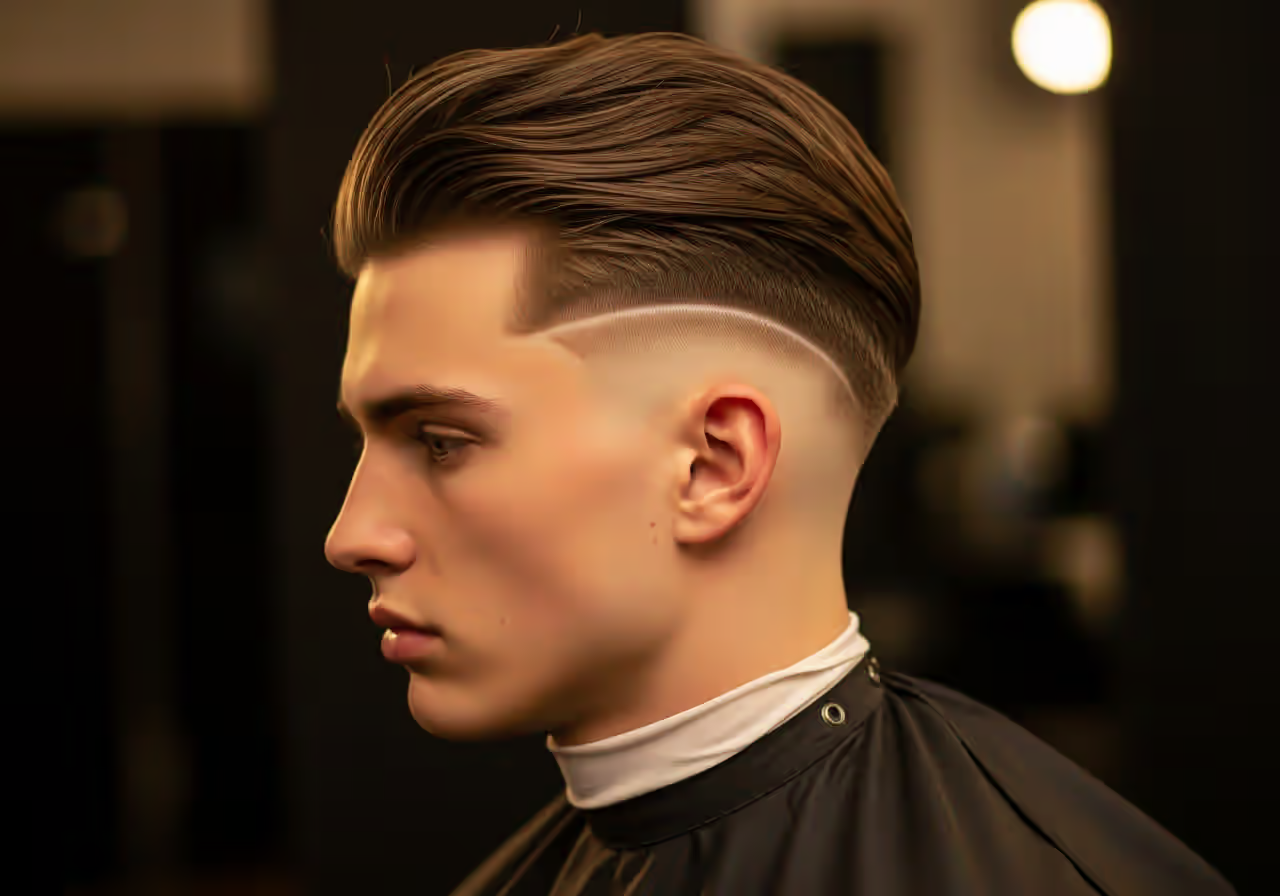
A disconnected top of three to four inches over sides that fade low, starting just above the ear.
Best for: A first undercut, most face shapes
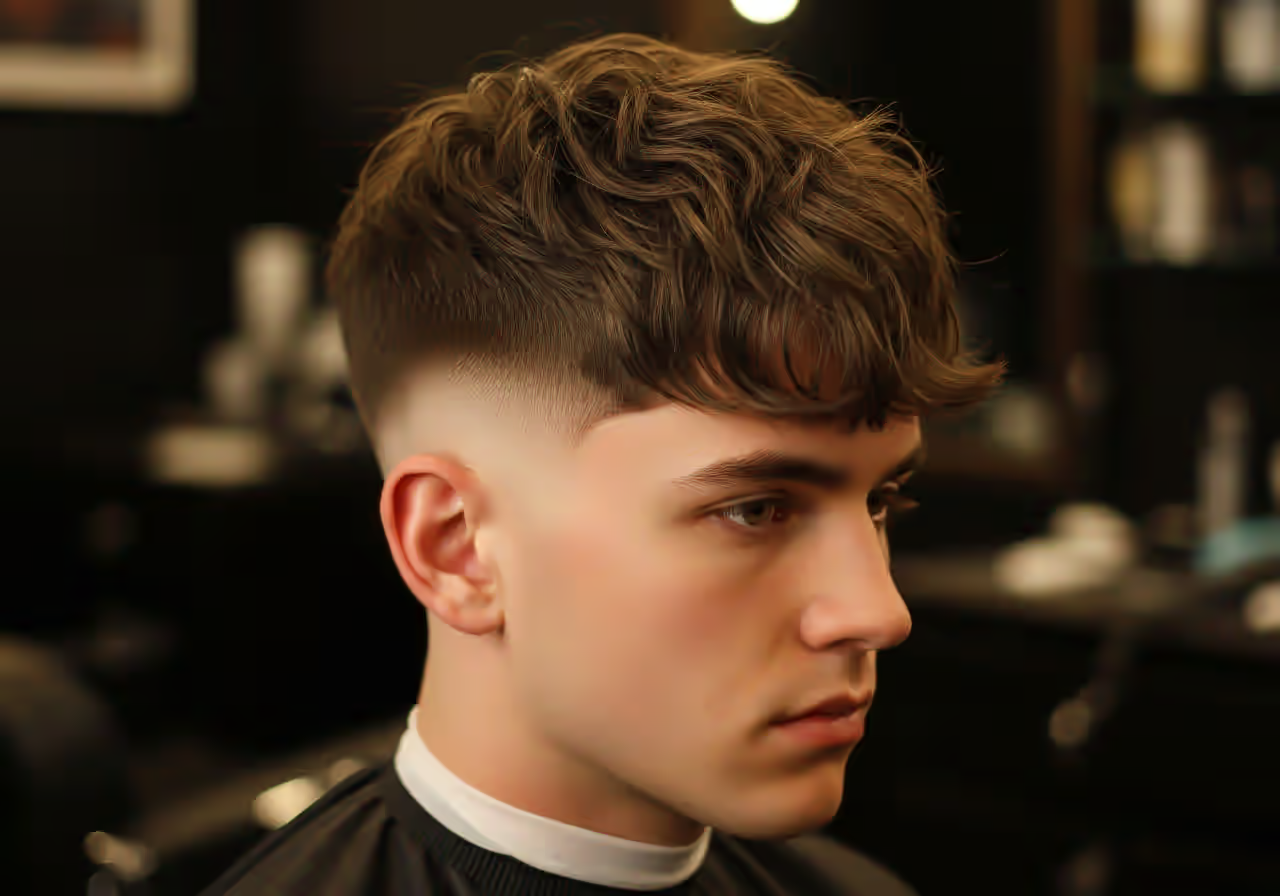
A mid fade from the temples into about two and a half inches of choppy crop with the bulk taken out.
Best for: Square faces, medium to thick hair
Medium length hairstyles for men keep two to five inches on top, enough to quiff, part, slick back or wear as a fringe. These cuts lean on the blow dry and the product as much as the scissor work, and most want a trim every two to three weeks. Every variation sits in the full haircut library.
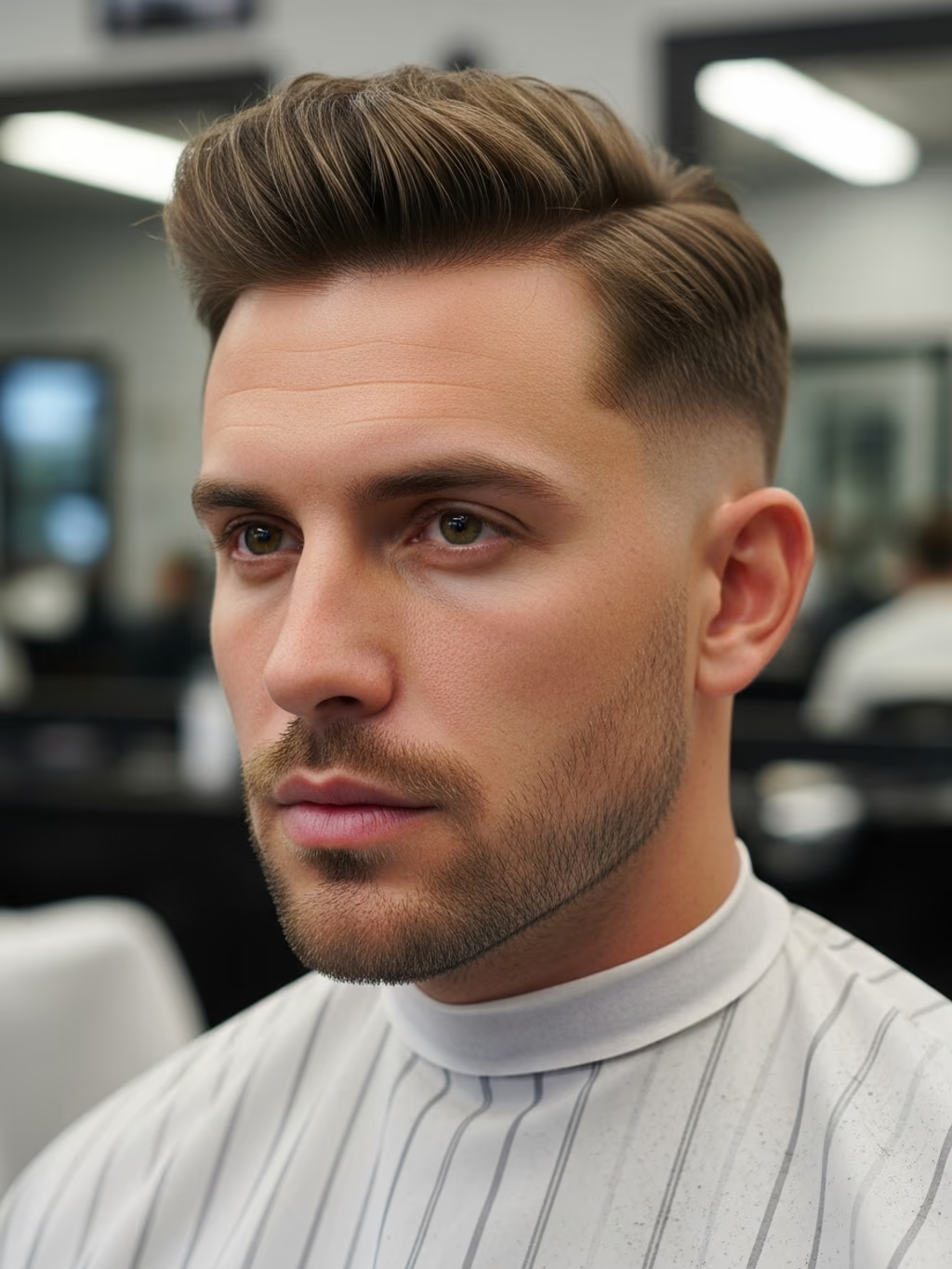
Three to four inches on top brushed up at the hairline then back, over scissor-tapered sides finishing near a #3.
Best for: Oval and oblong faces
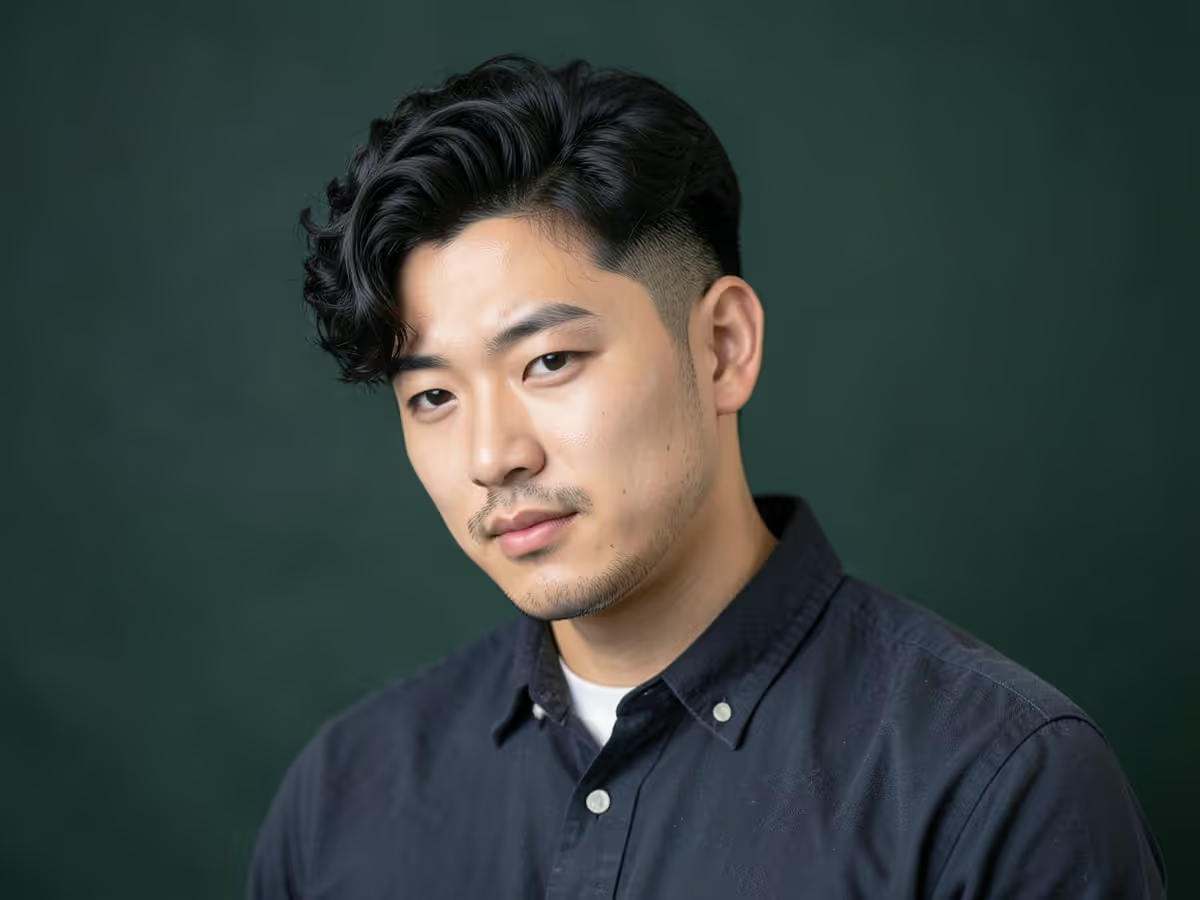
About three inches of natural curl pushed up loosely, over short #3 sides with soft edges and no fade.
Best for: Curly 3A to 3C hair
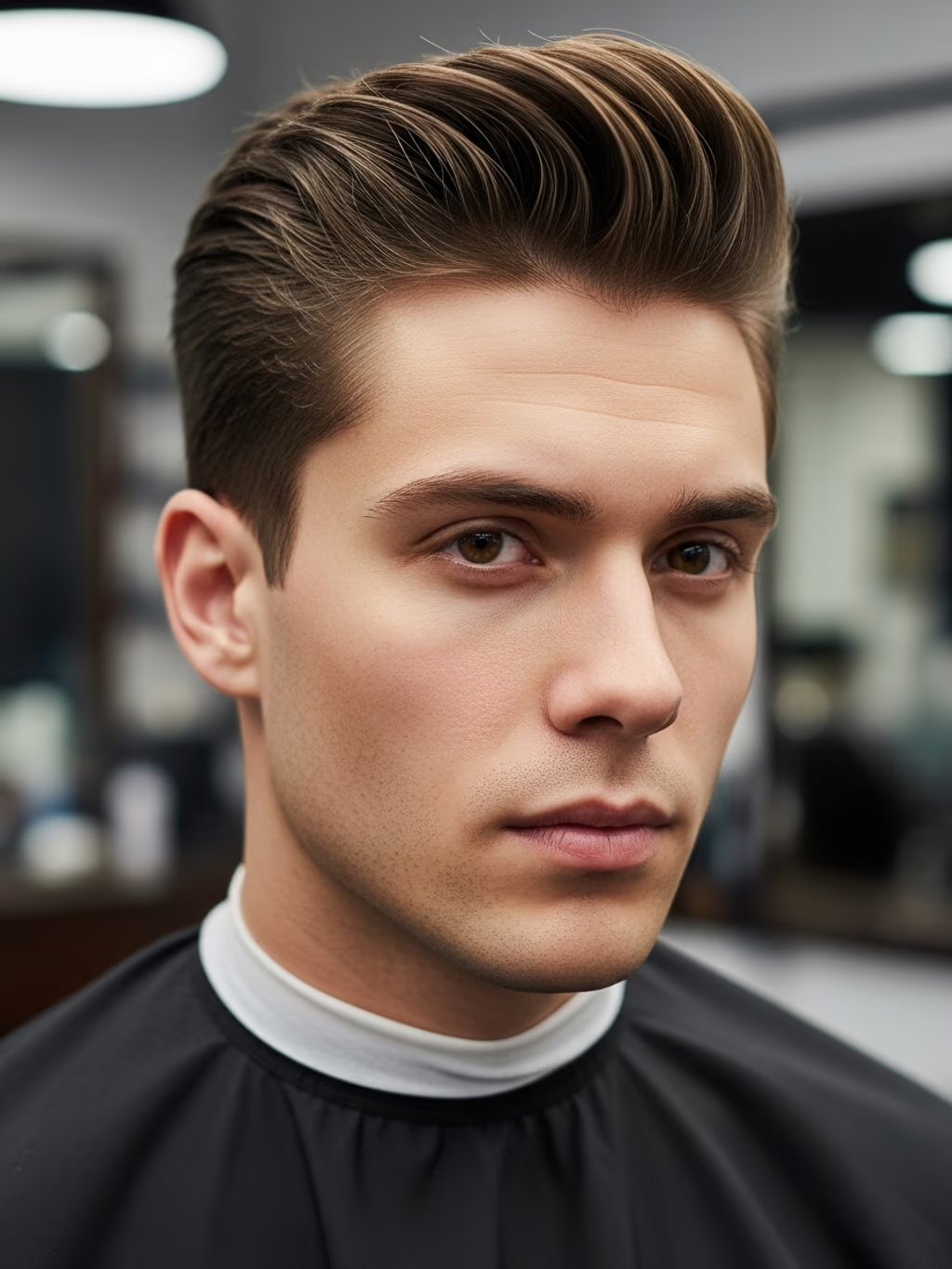
Three to four inches at the front with a softer, lower roll and a low taper fade from a #1 up to a #3.
Best for: Square jaws, light pomade instead of grease
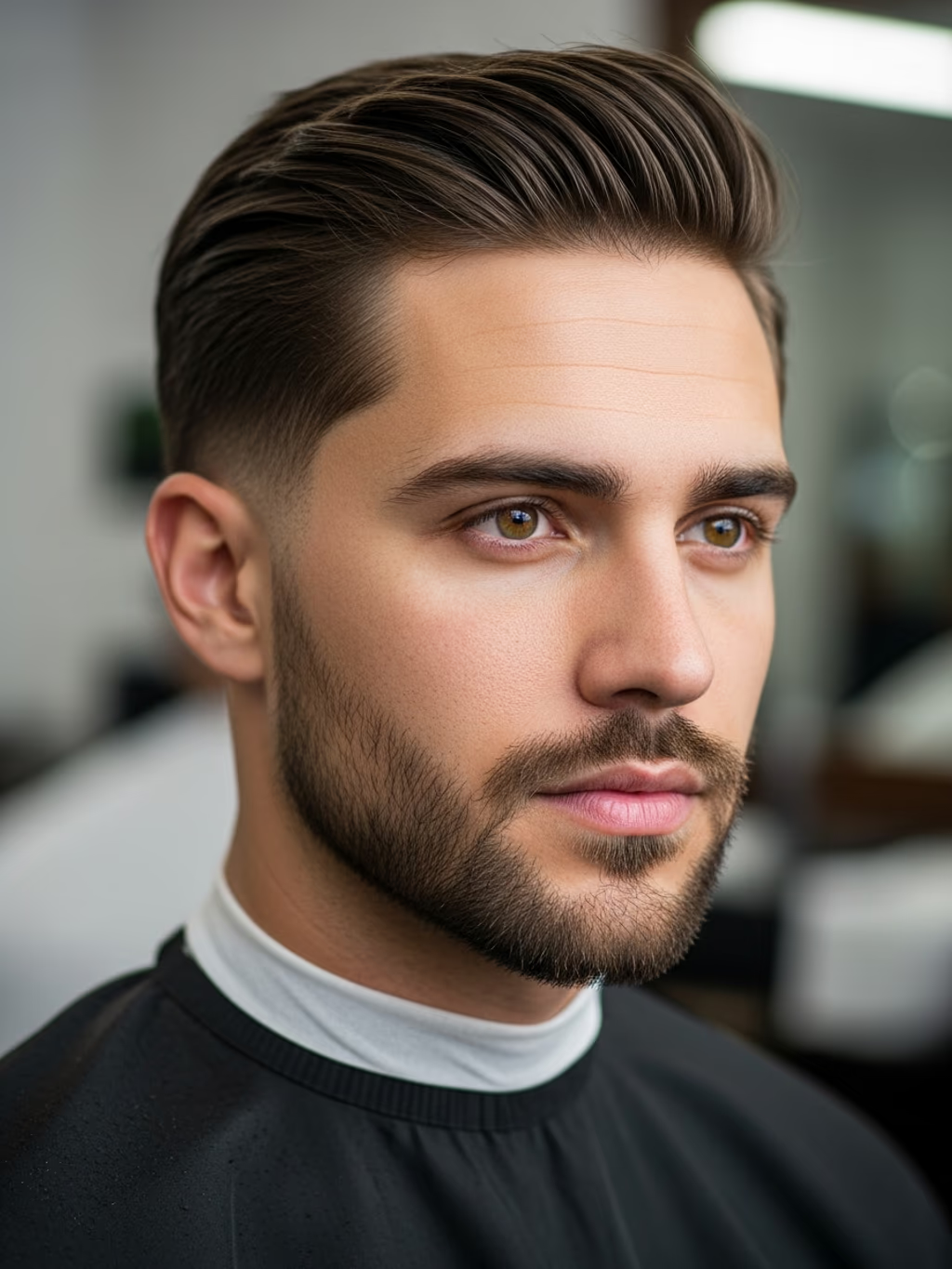
Three to four inches combed across from a part above the outer corner of the eye, with neat tapered sides.
Best for: Oval and oblong faces, office wear
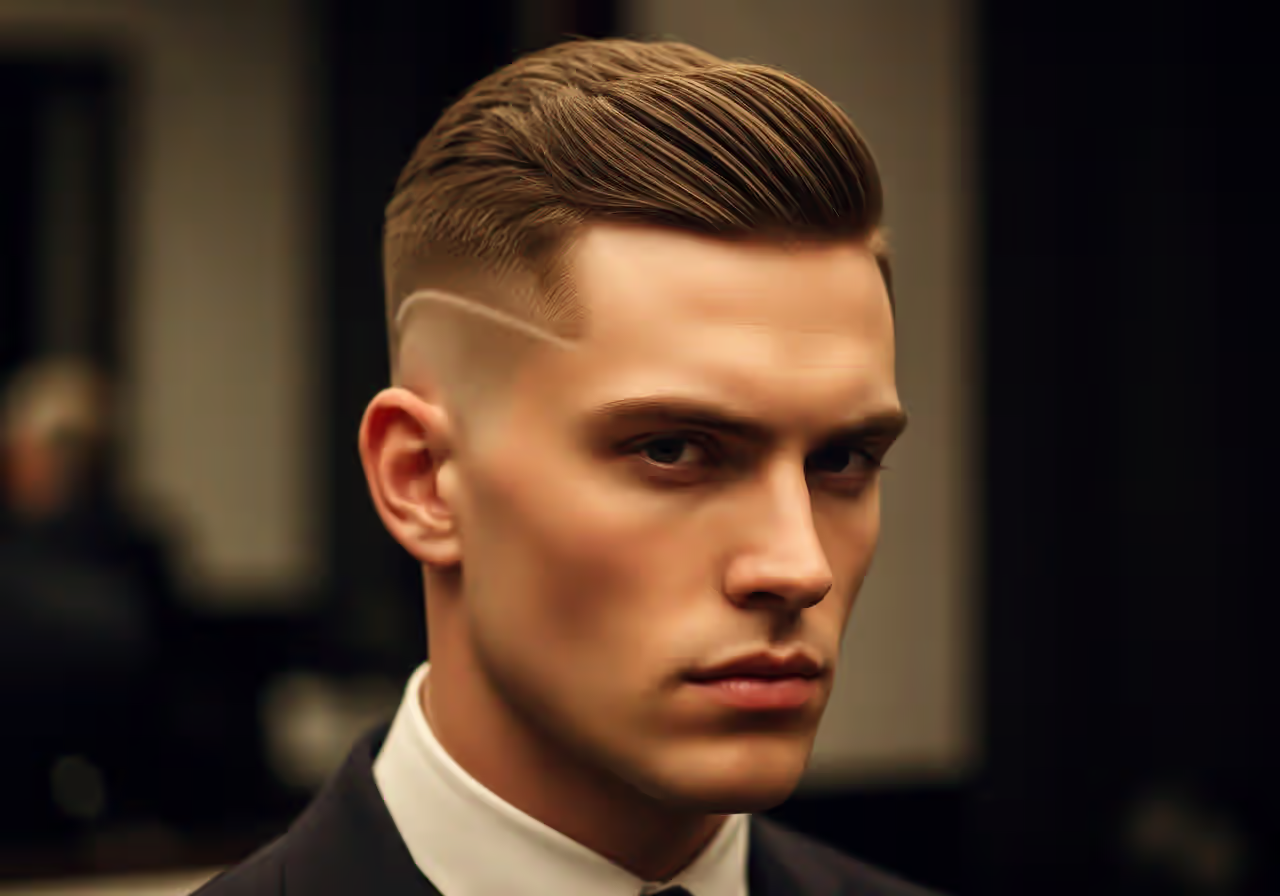
Sides and back shaved with a #0 under a long top, leaving a hard shelf where the two lengths meet.
Best for: Any face shape, men who want strong contrast
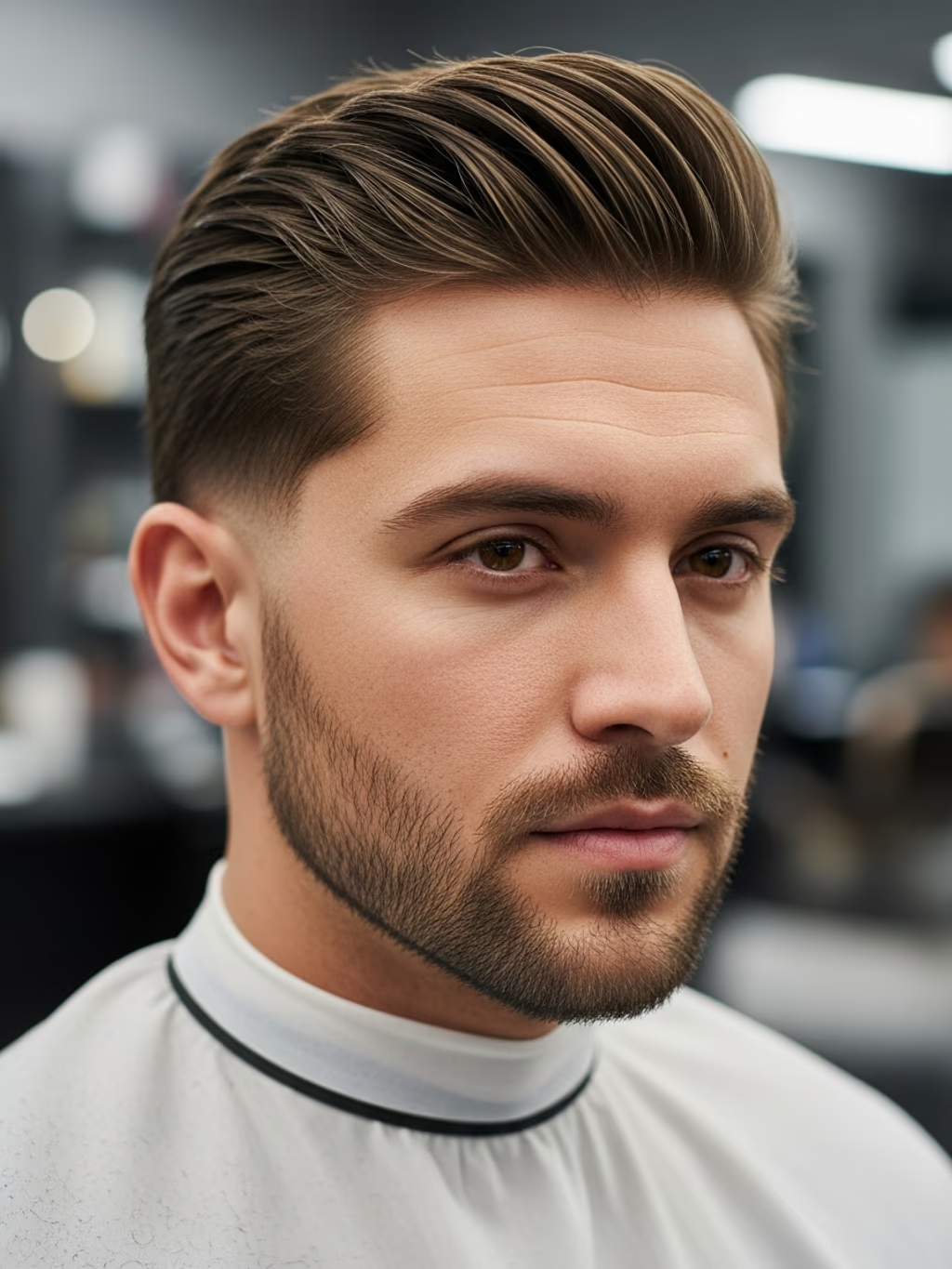
Four to six inches combed flat from hairline to crown with no part, over a low fade that starts at skin.
Best for: Oval and oblong faces, straight hair
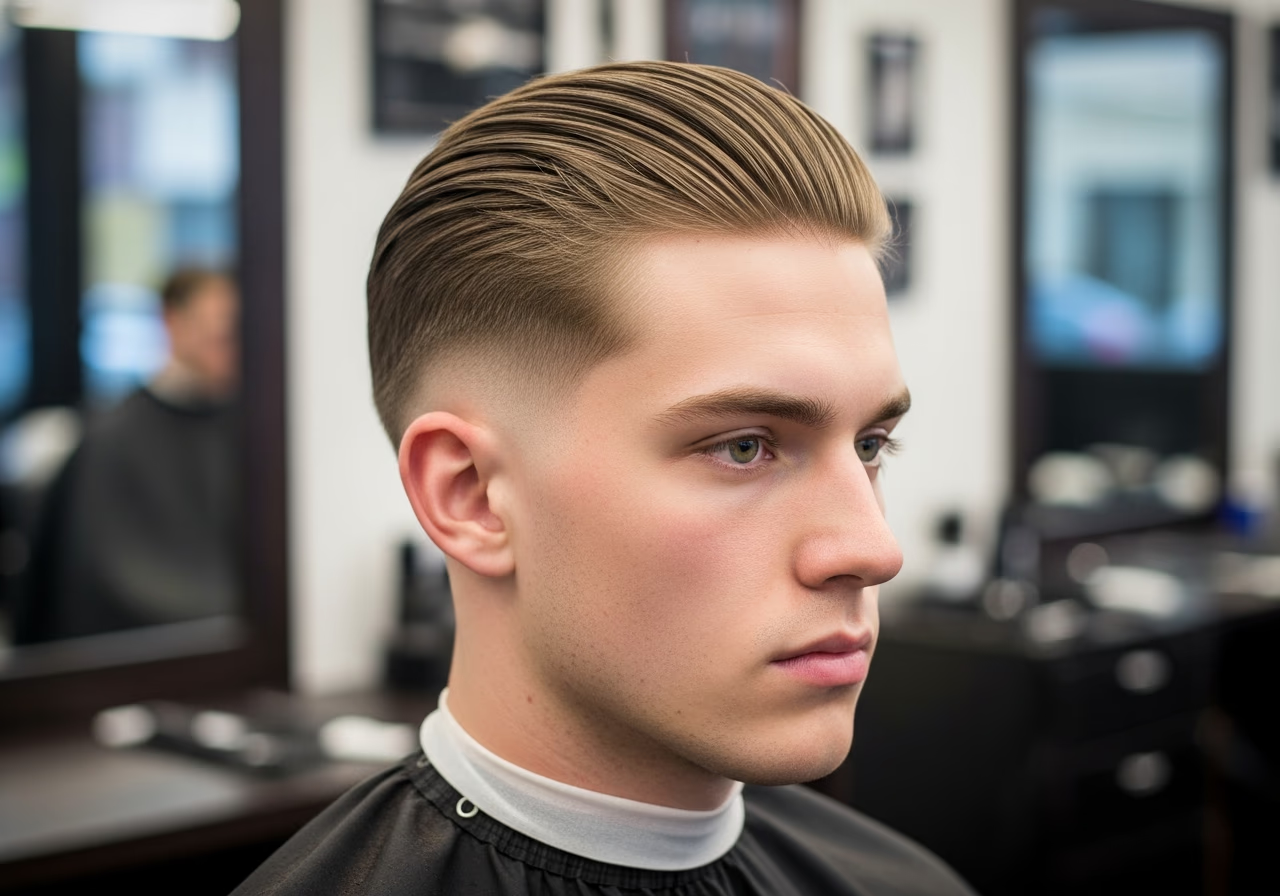
Three to five inches combed straight back over sides cut to a #1 with a hard disconnect and no blend.
Best for: Oval and square faces
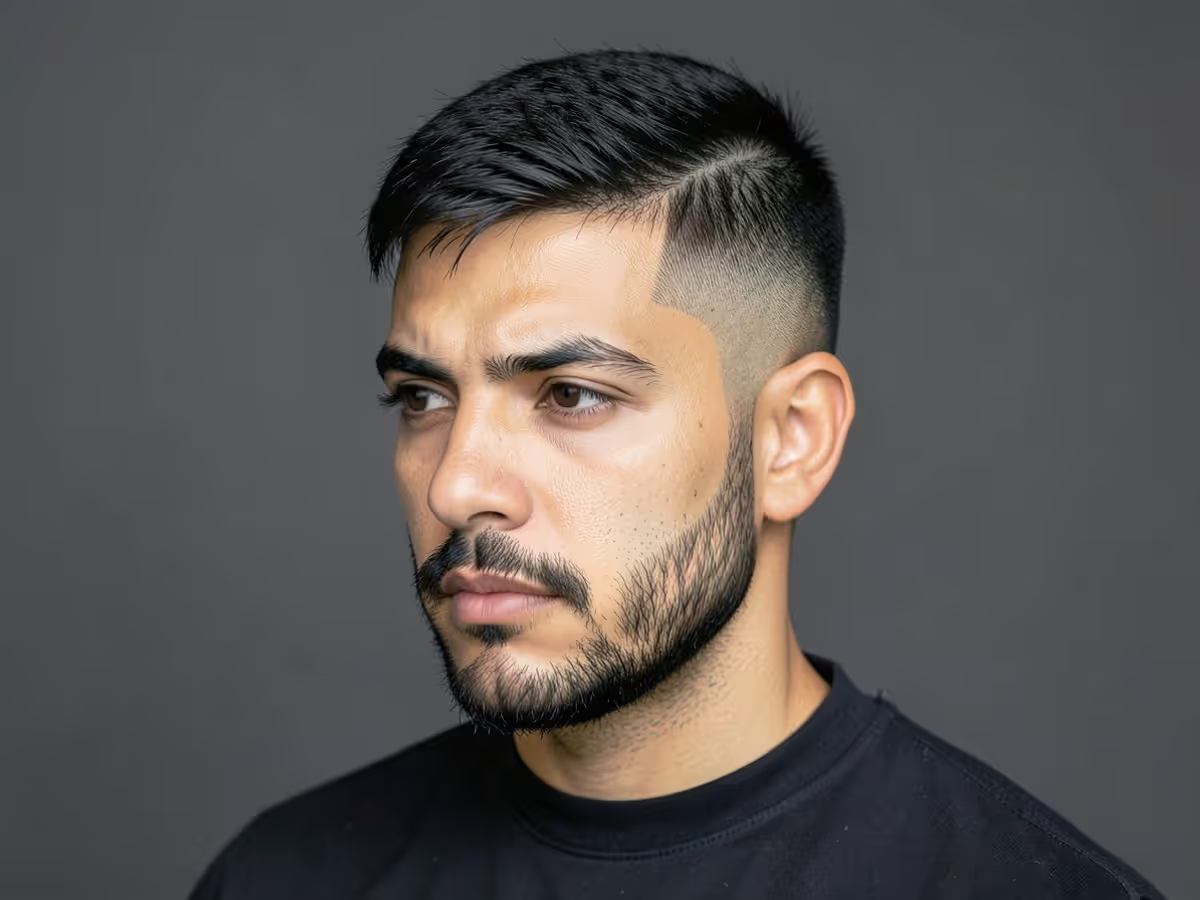
A piecey fringe about an inch and a half long over a #0 to #2 fade that hugs the temples.
Best for: Diamond faces with wide cheekbones
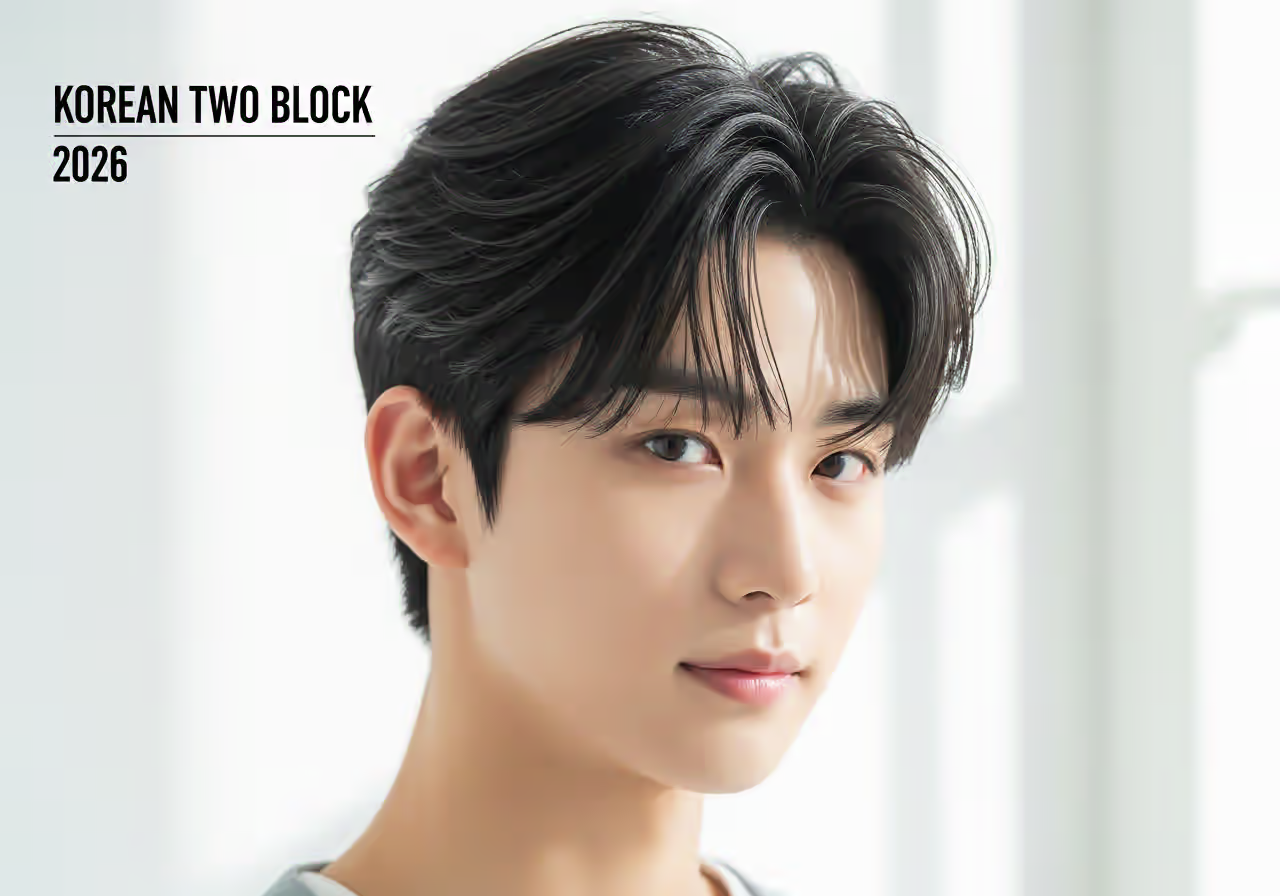
Sides tapered close under a longer top that is blow-dried to lift at the root and then fall forward.
Best for: Straight hair, any face shape
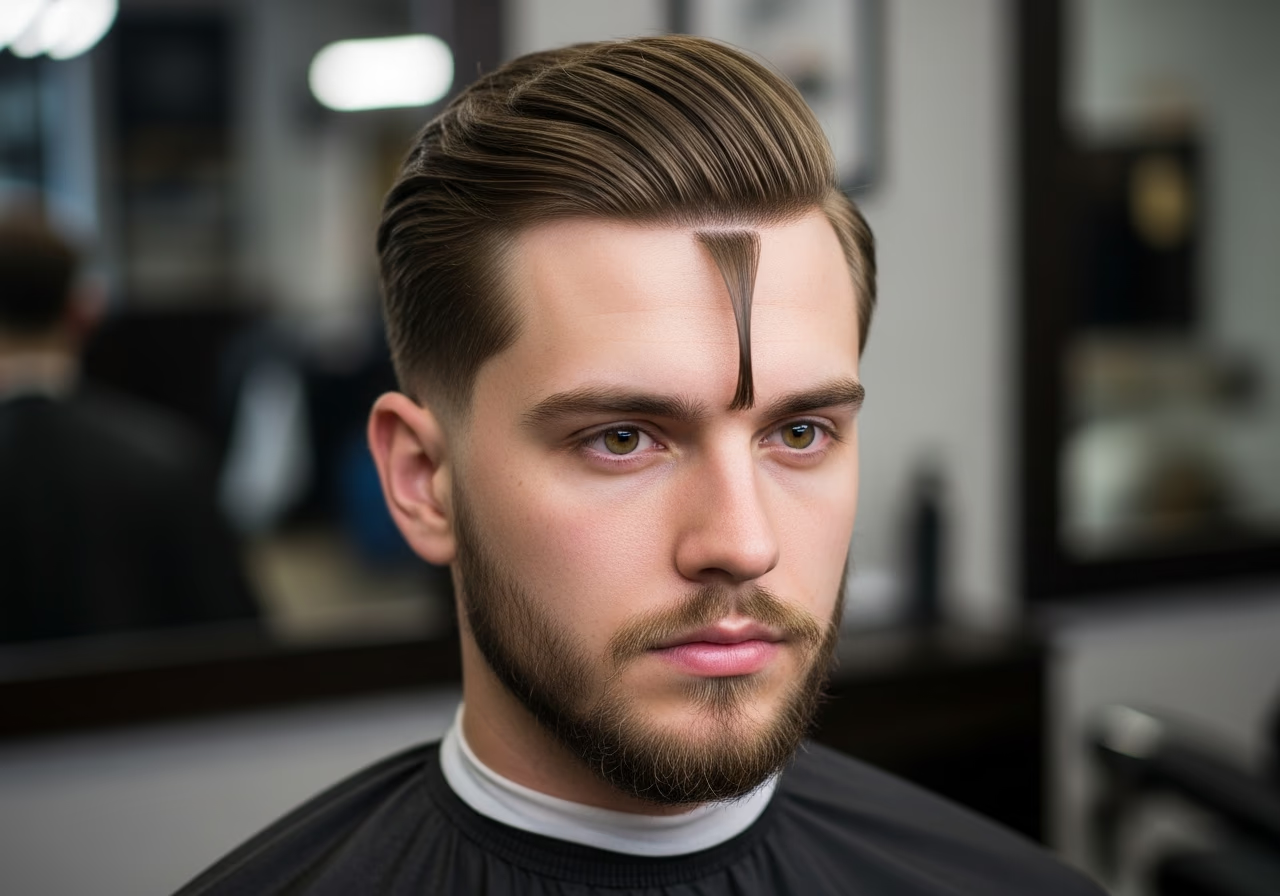
A dead-center part with each side falling toward the eyebrows, the 90s shape that needs a trim only every five to six weeks.
Best for: Oval and heart faces
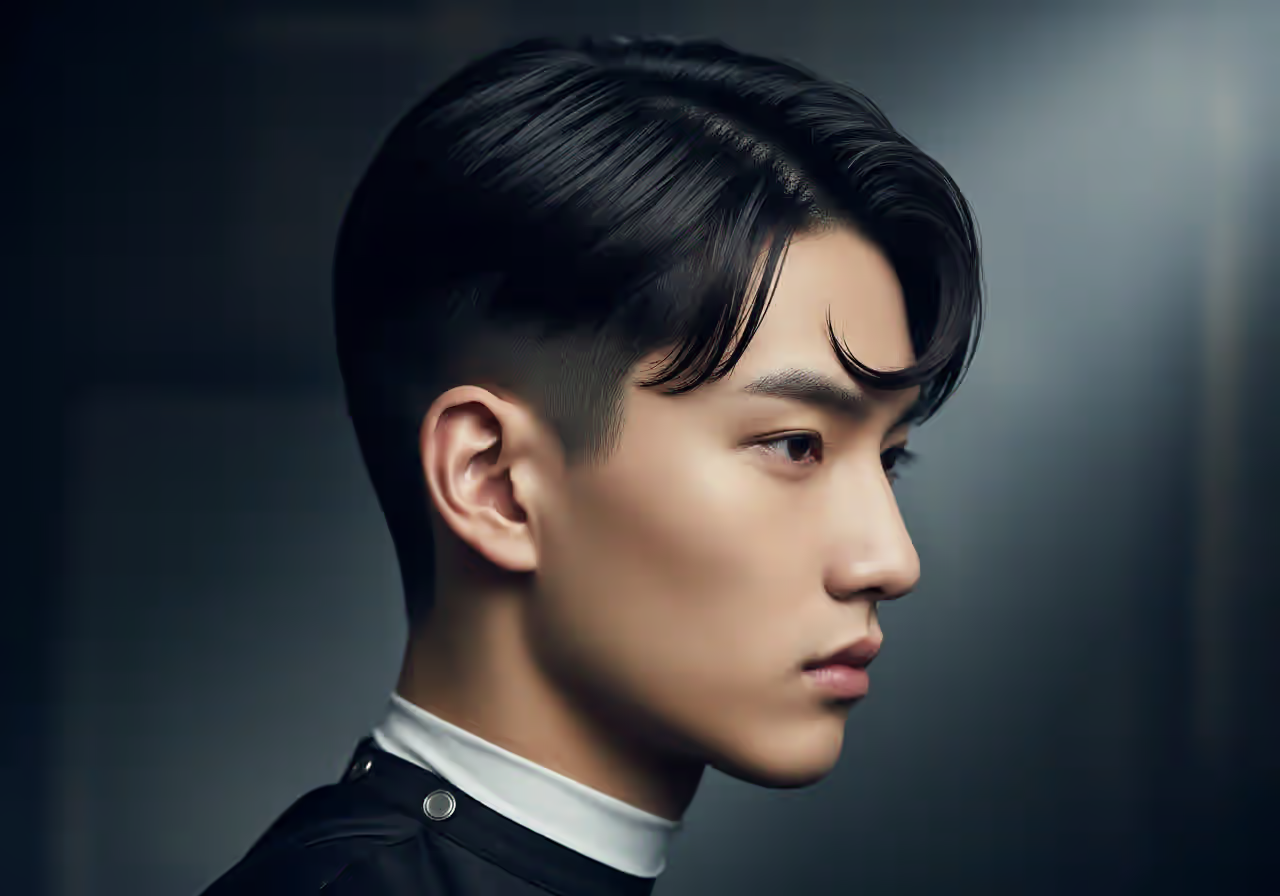
A soft medium-length fringe curved to hook gently to one side, the Korean shape held with a little light product.
Best for: Straight or lightly wavy hair, oval and heart faces
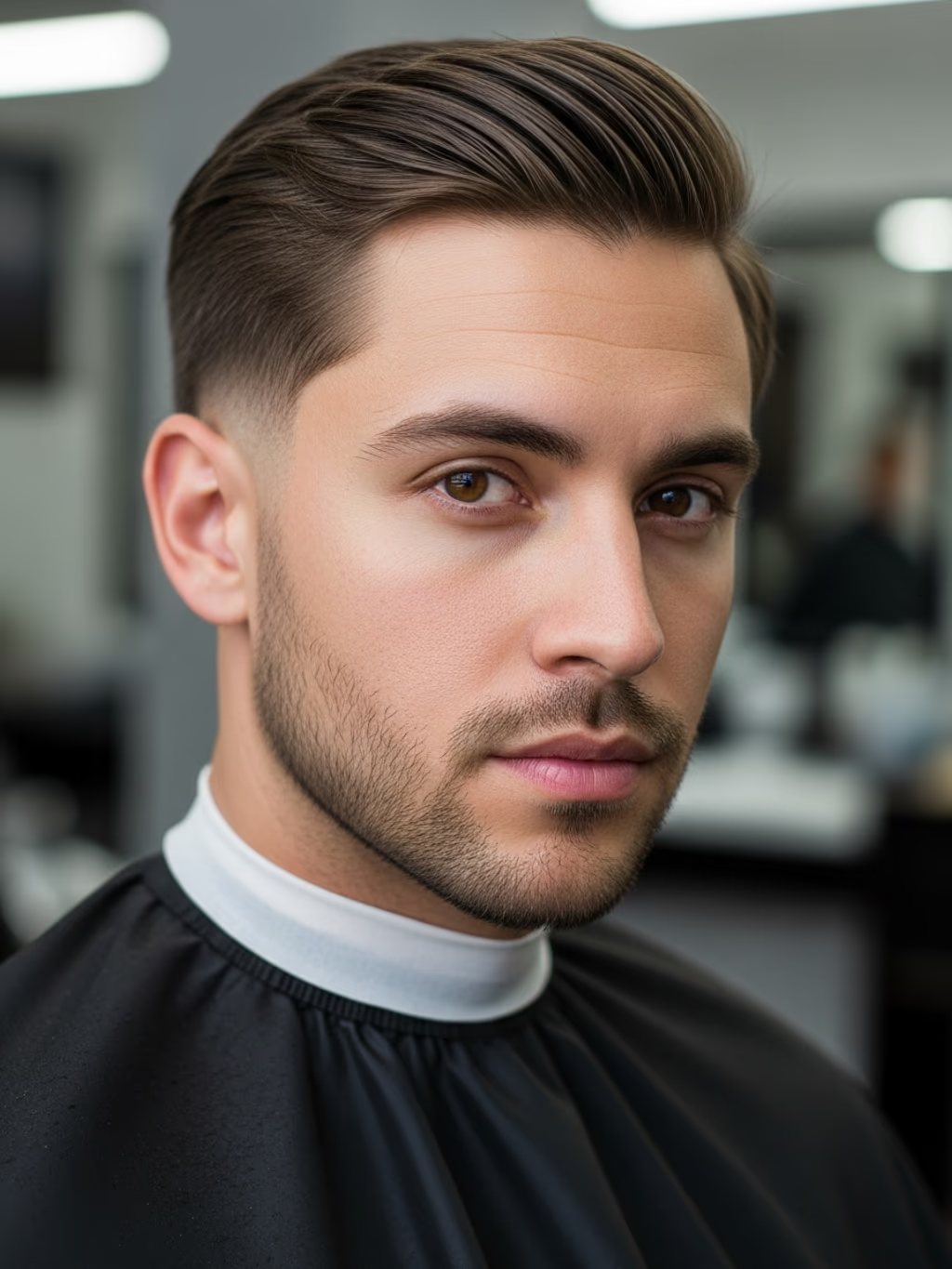
About four inches at the front split down the middle so each side falls to the brow, with #3 sides.
Best for: Oval and oblong faces
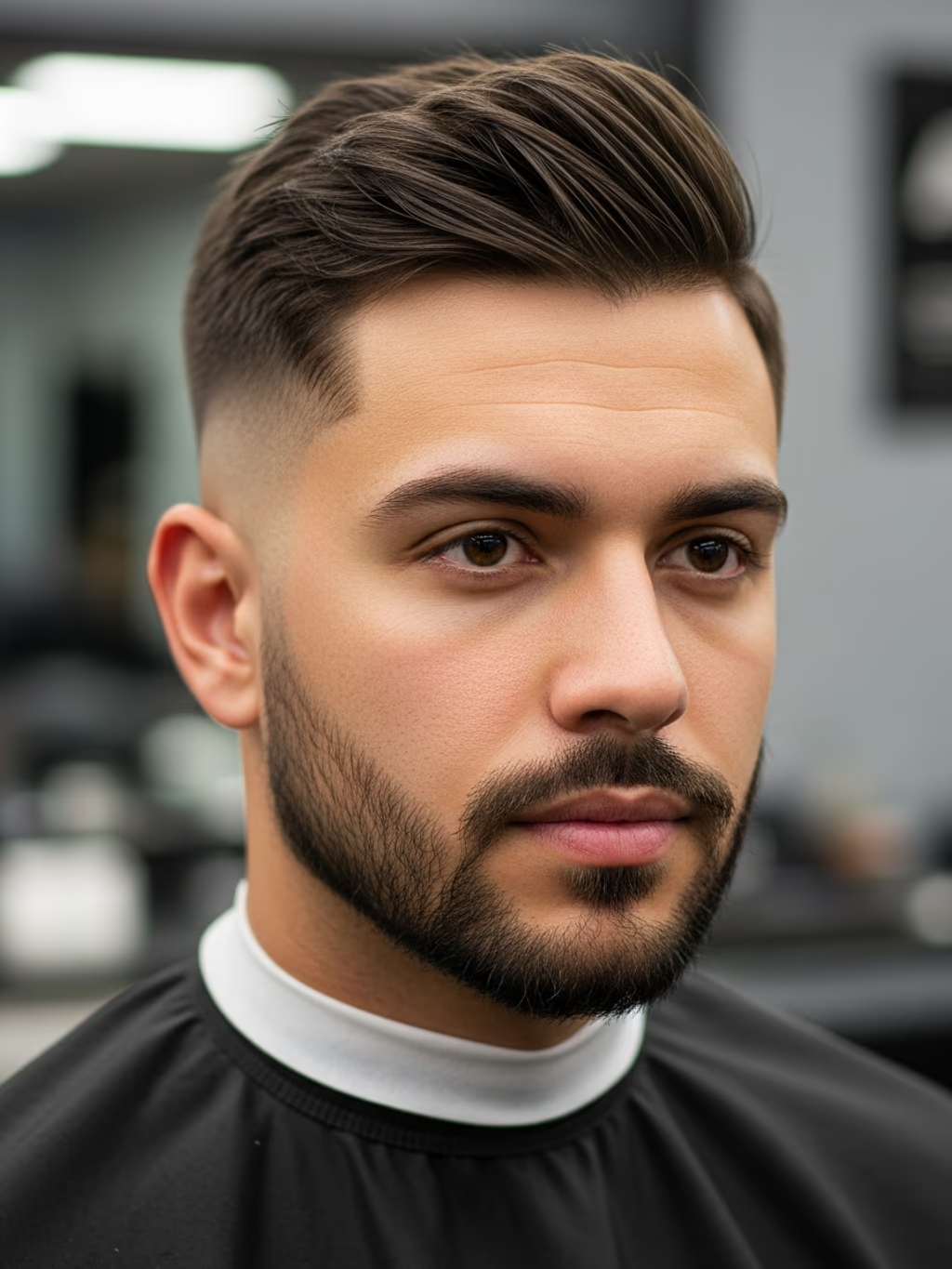
A two to three inch strip pushed up through the center, with the sides left at a #4 instead of shaved.
Best for: Oval faces and offices that rule out a mohawk
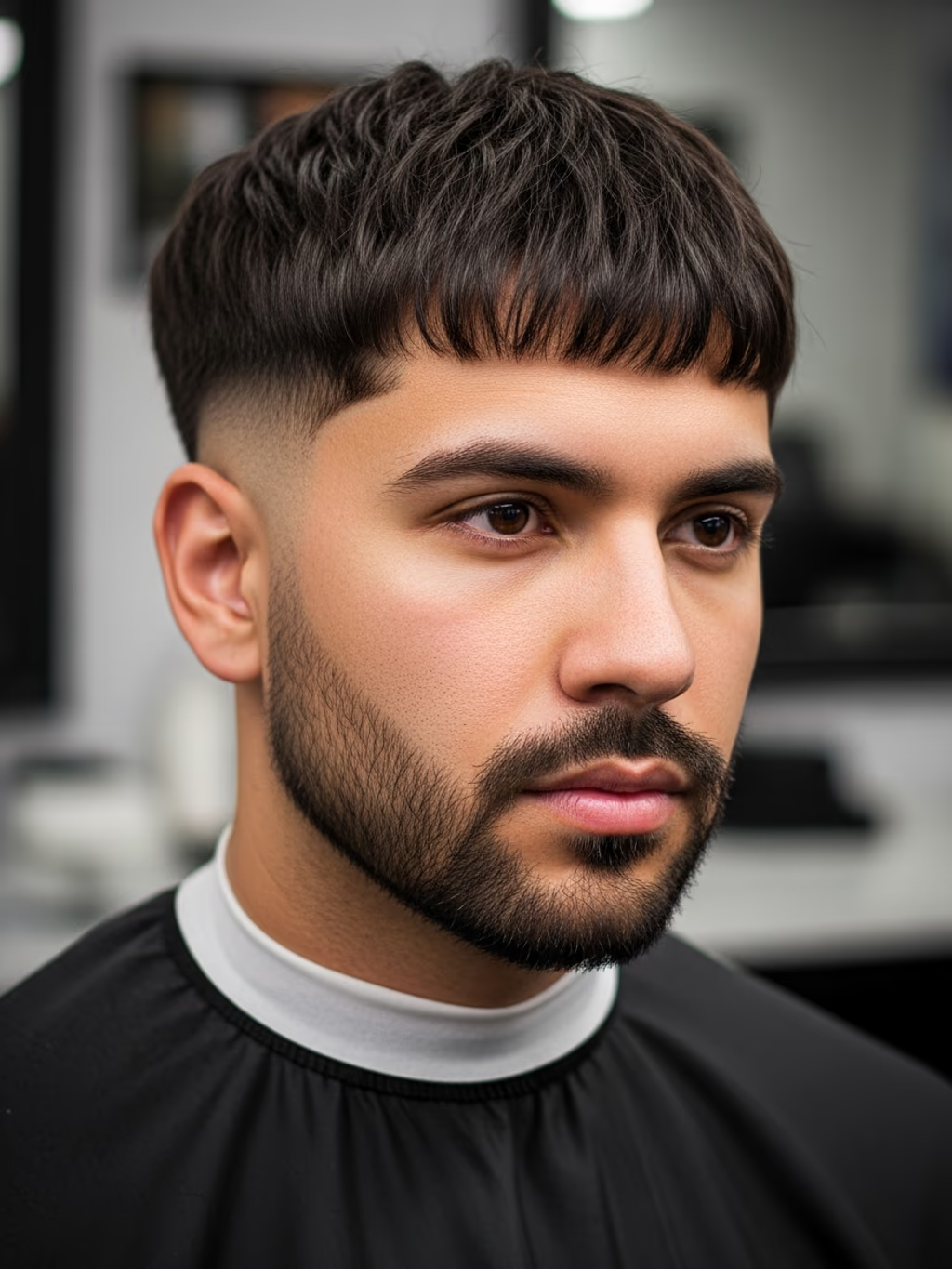
A rounded crown of about two and a half inches over a tapered fade, shorter and sportier than the retro bowl.
Best for: Square jaws, helmet and cap wearers
Long hairstyles for men take months to grow, and the awkward middle stage is where most men give up. Ask for the ends dusted and the sides shaped rather than a full cut. Bro flows, man buns, shags, wolf cuts and mullets all start from the same grow-out plan, with more in the guides.
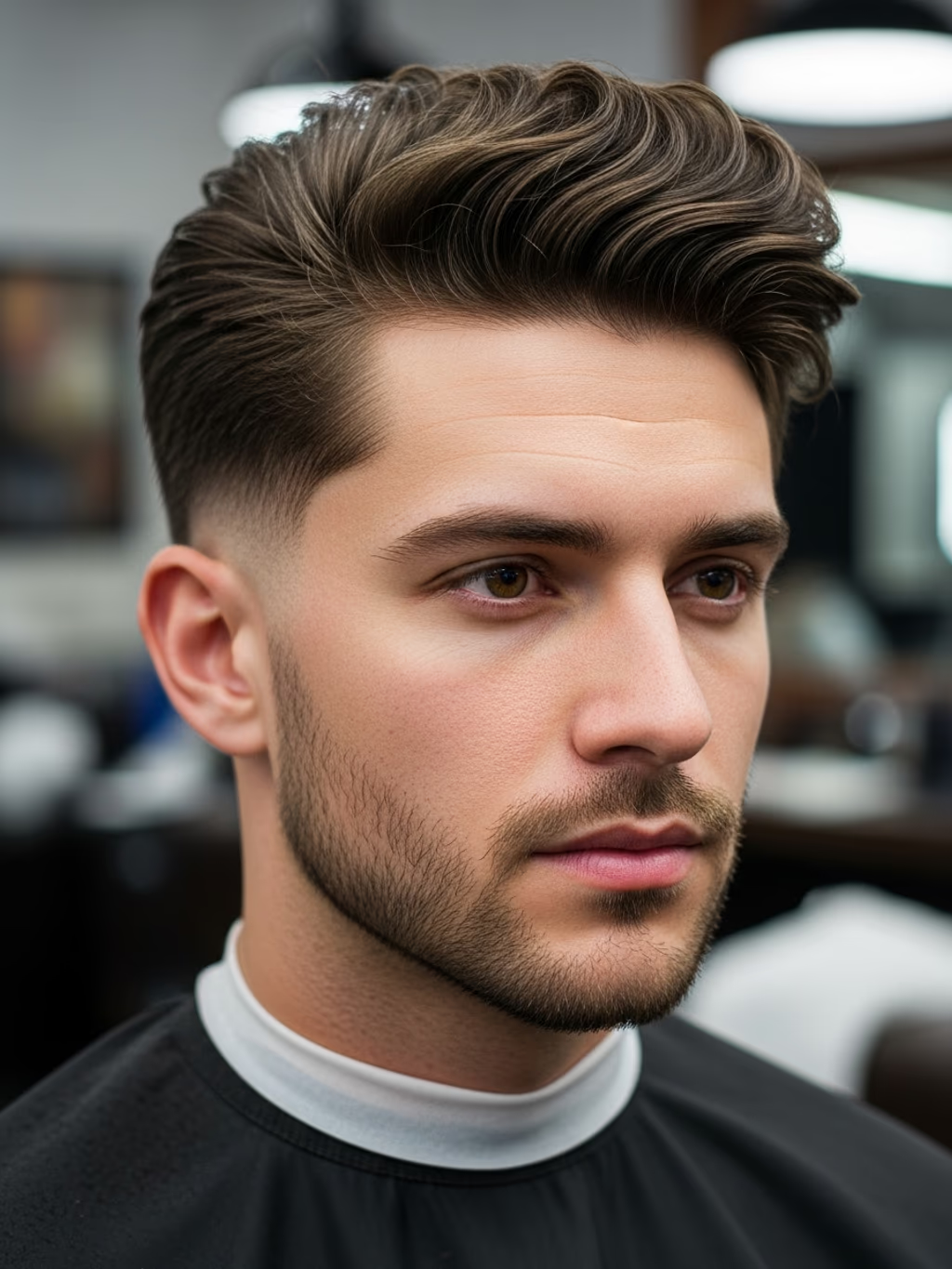
Five to seven inches on top pushed straight back with no part, so the ends flip out at the neck.
Best for: Oval and oblong faces, patient growers
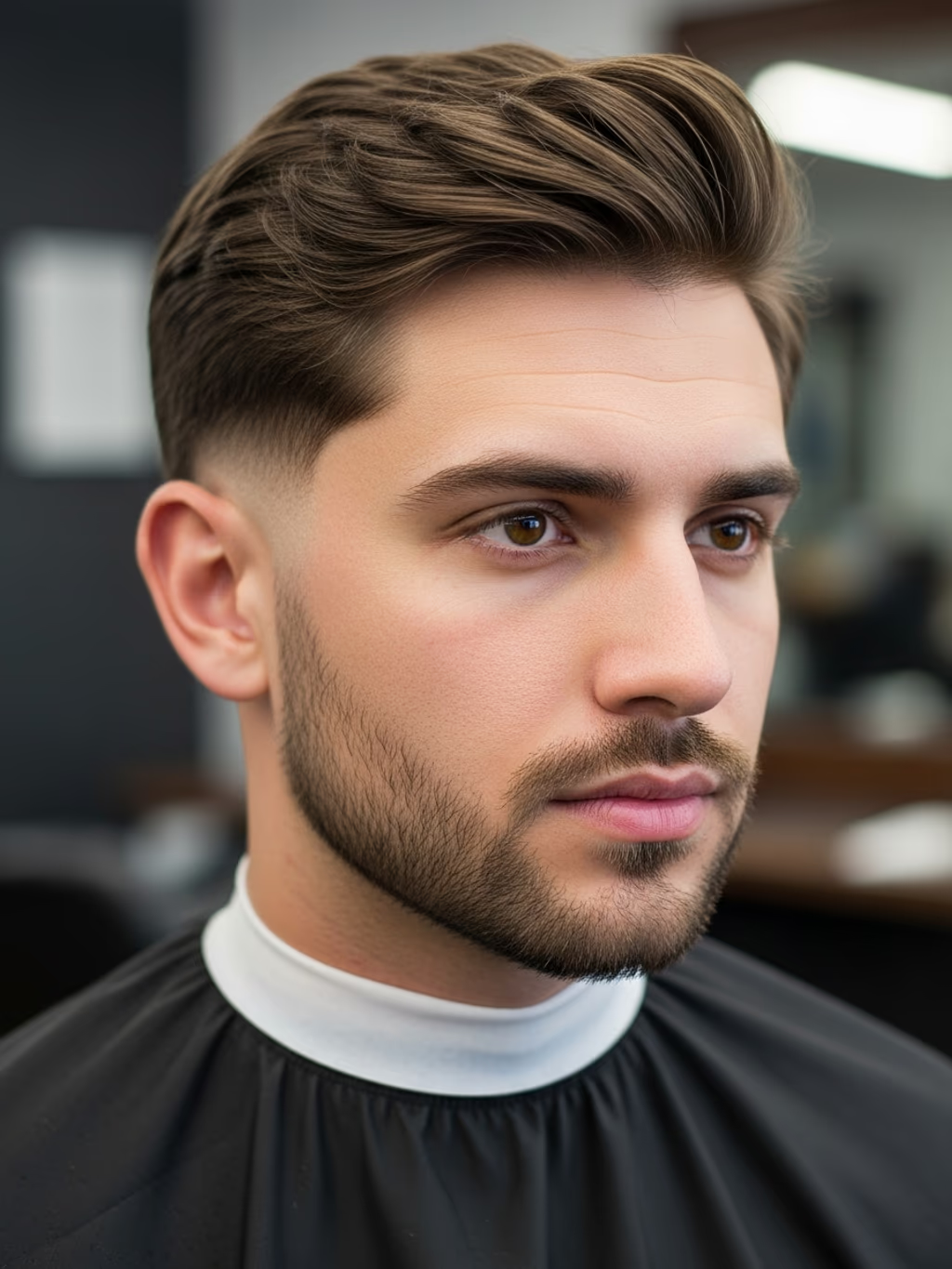
Three to four inches swept back in one line, with short blended sides and a rounded back that grows into a flow.
Best for: Men growing out to shoulder length
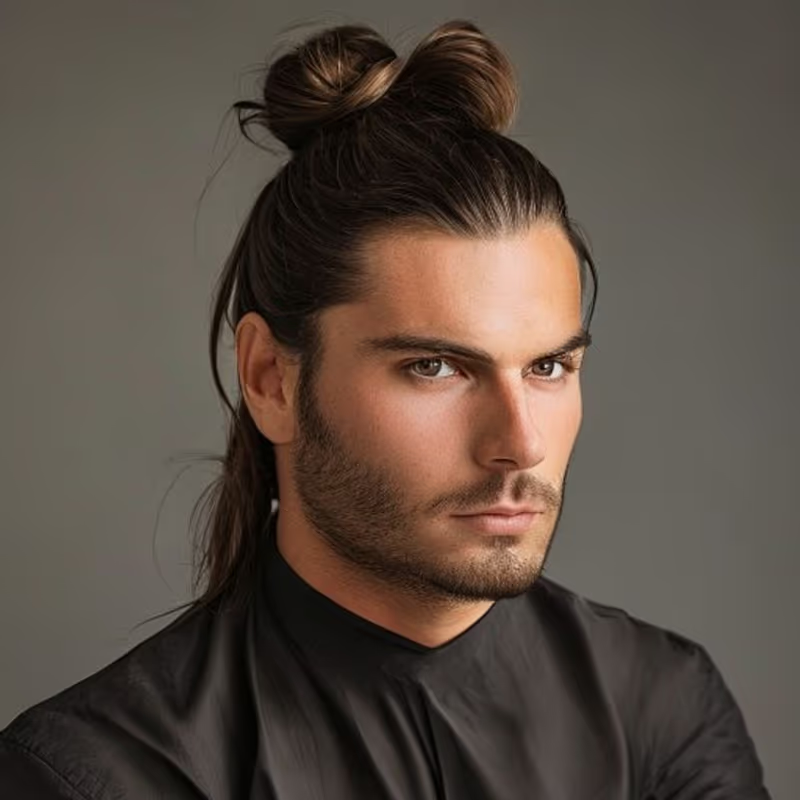
Even length past the chin, gathered at the back of the head and twisted into a loose knot.
Best for: Healthy long hair, ends dusted every 6 to 8 weeks
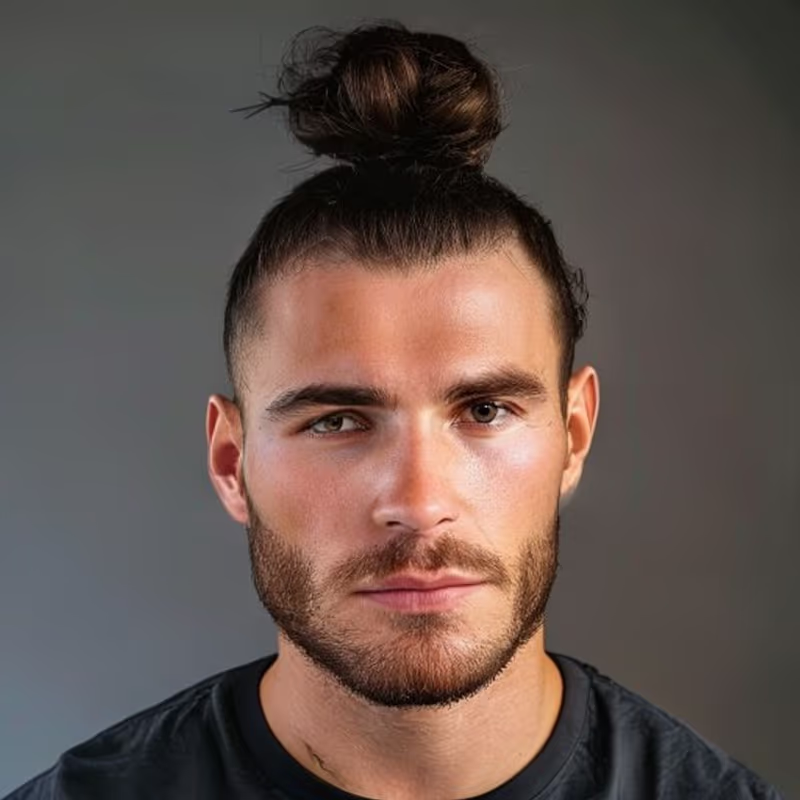
Long hair kept only on top and tied high, with the sides and back clipped to about a #2.
Best for: A sharper bun with short sides
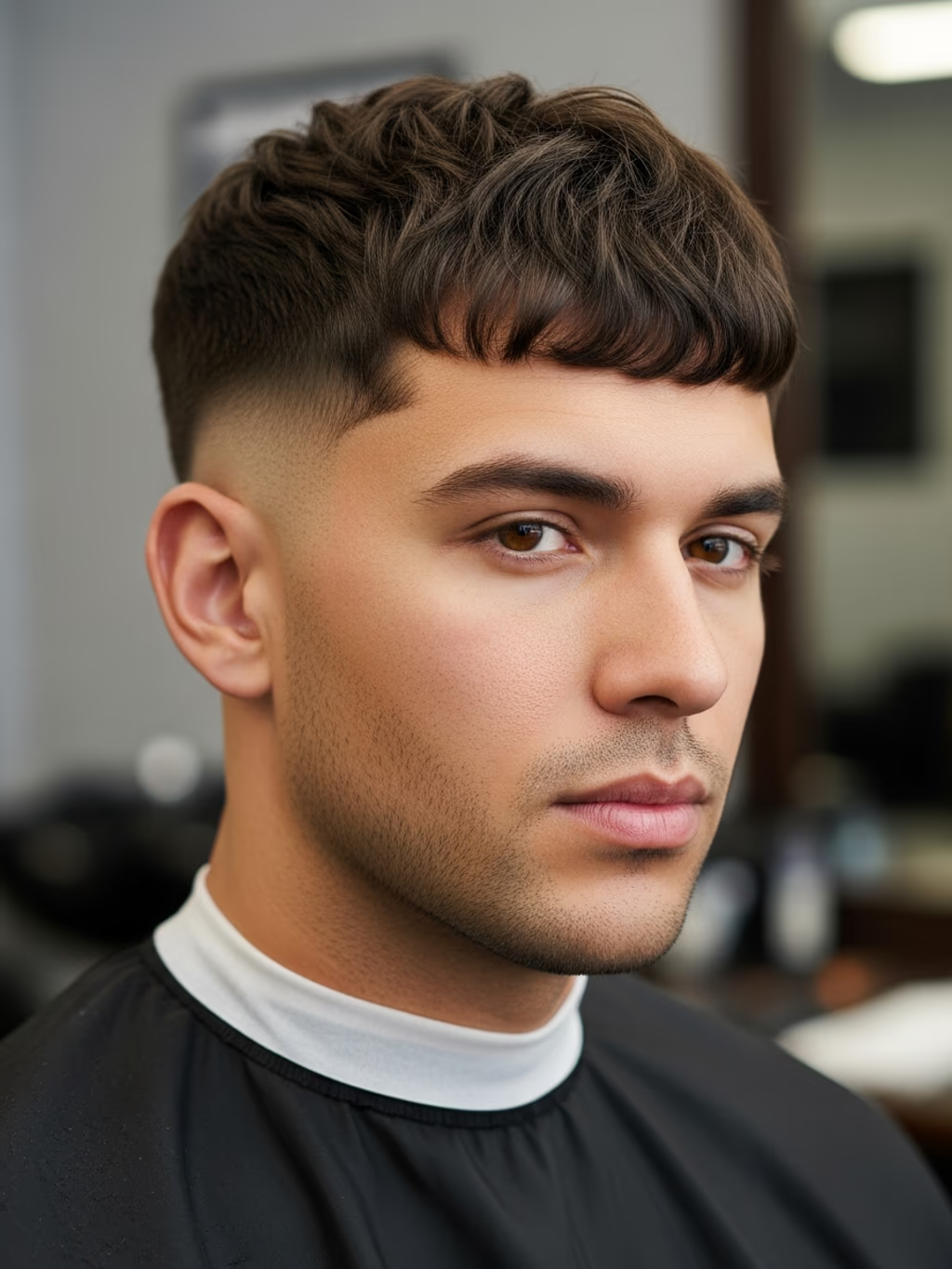
Shorter crown layers for lift, a soft curtain fringe split in the middle and a back that sits just above the collar.
Best for: Square jaws, men willing to round-brush dry
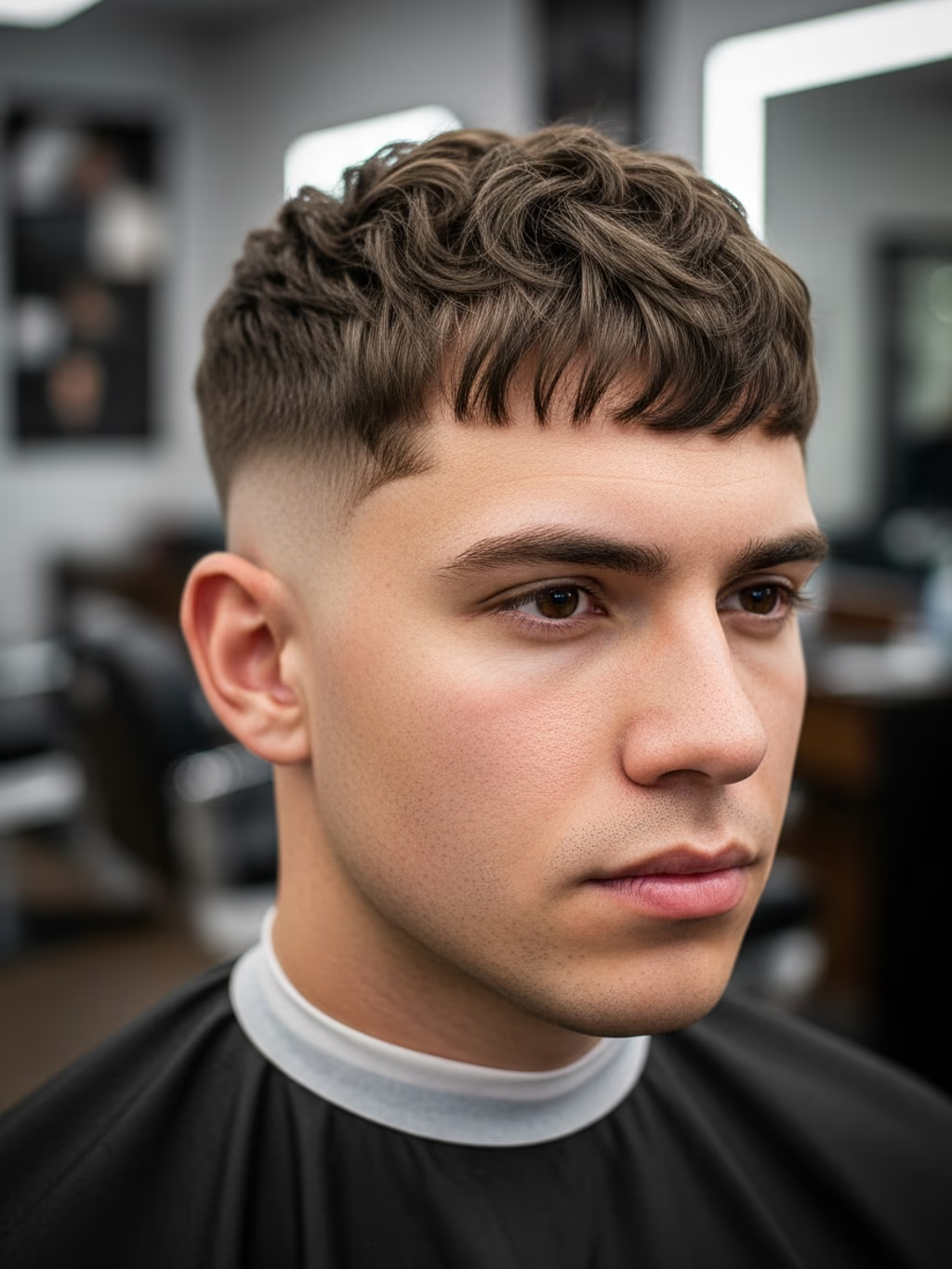
Four to five inches of choppy, uneven layers on top with a gradual scissor taper so nothing looks shaved.
Best for: Oval and oblong faces
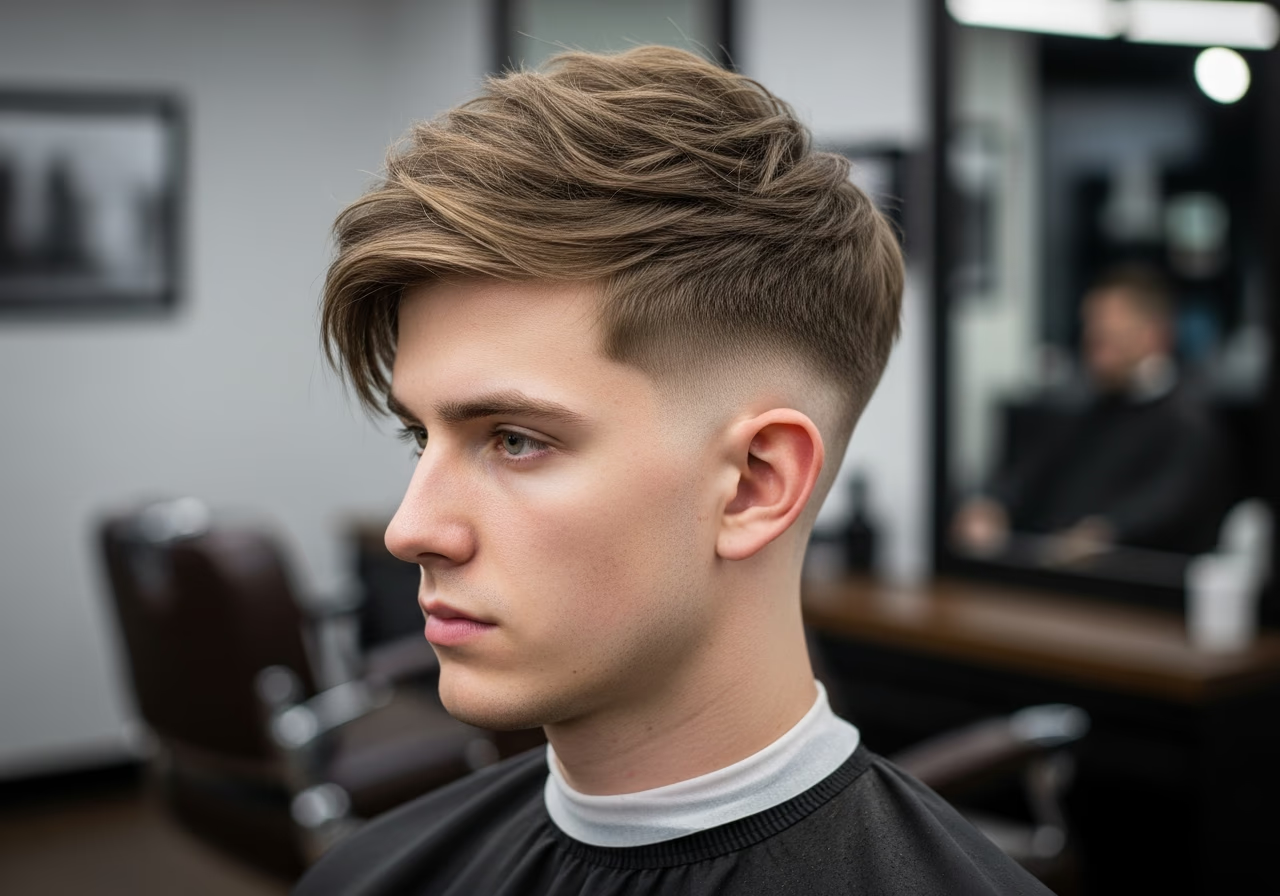
Length kept at the crown and back, choppy stacked layers on top and razor-thinned sides with no fade.
Best for: Wavy or thick hair, oval and square faces
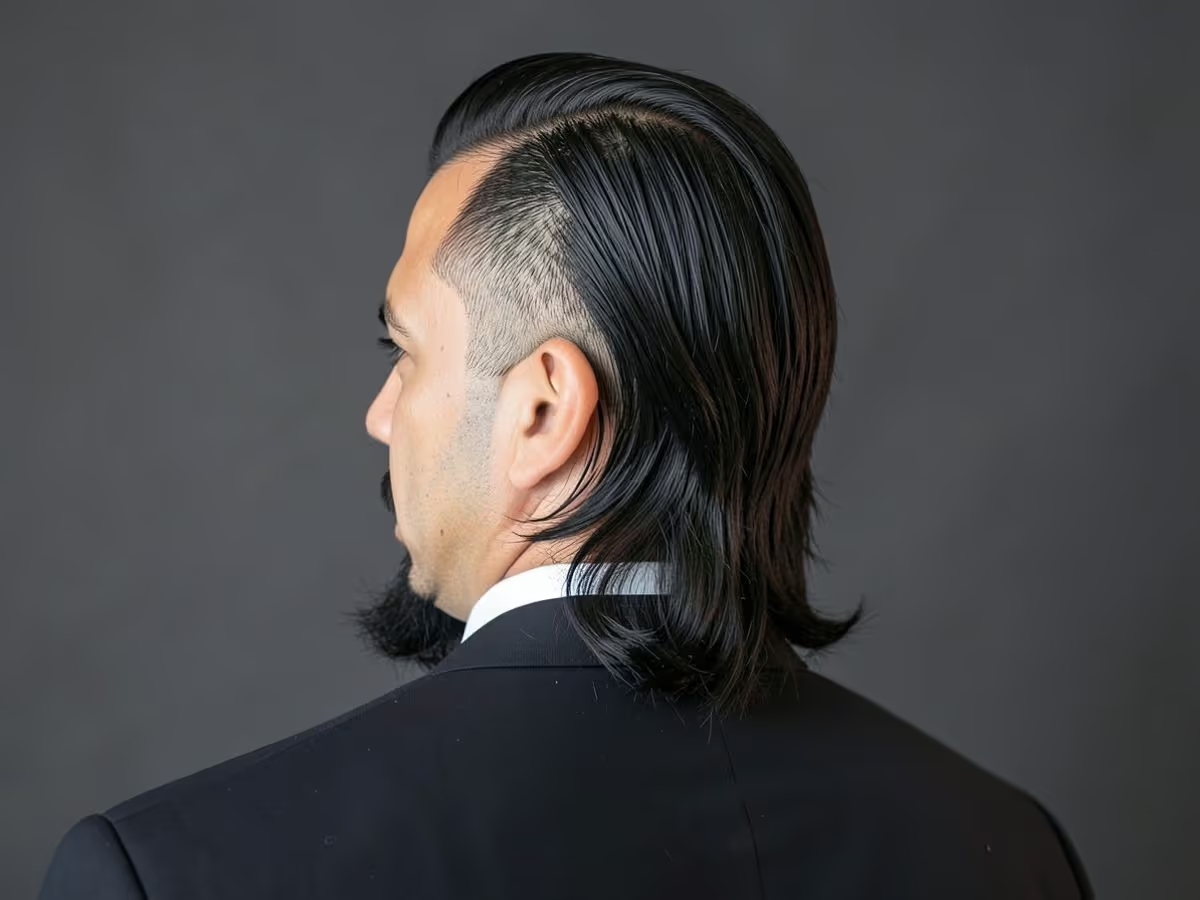
Short top and sides with the back grown past the collar, blended so it reads as one haircut.
Best for: Oval and round faces, straight or wavy hair
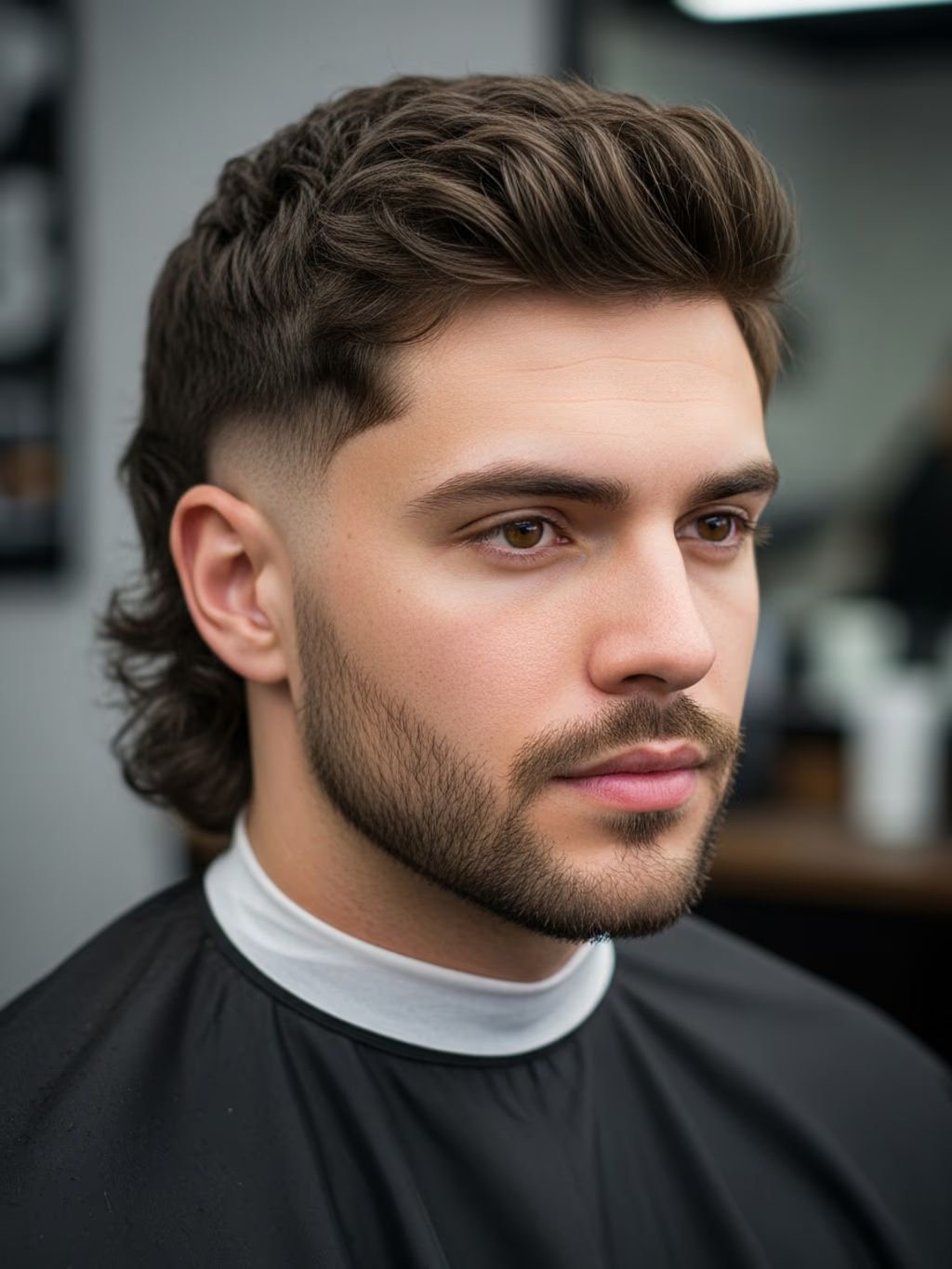
About two inches on top, sides tapered from a #3 to a #2 and an extra inch left at the nape.
Best for: Trying a mullet without the full commitment
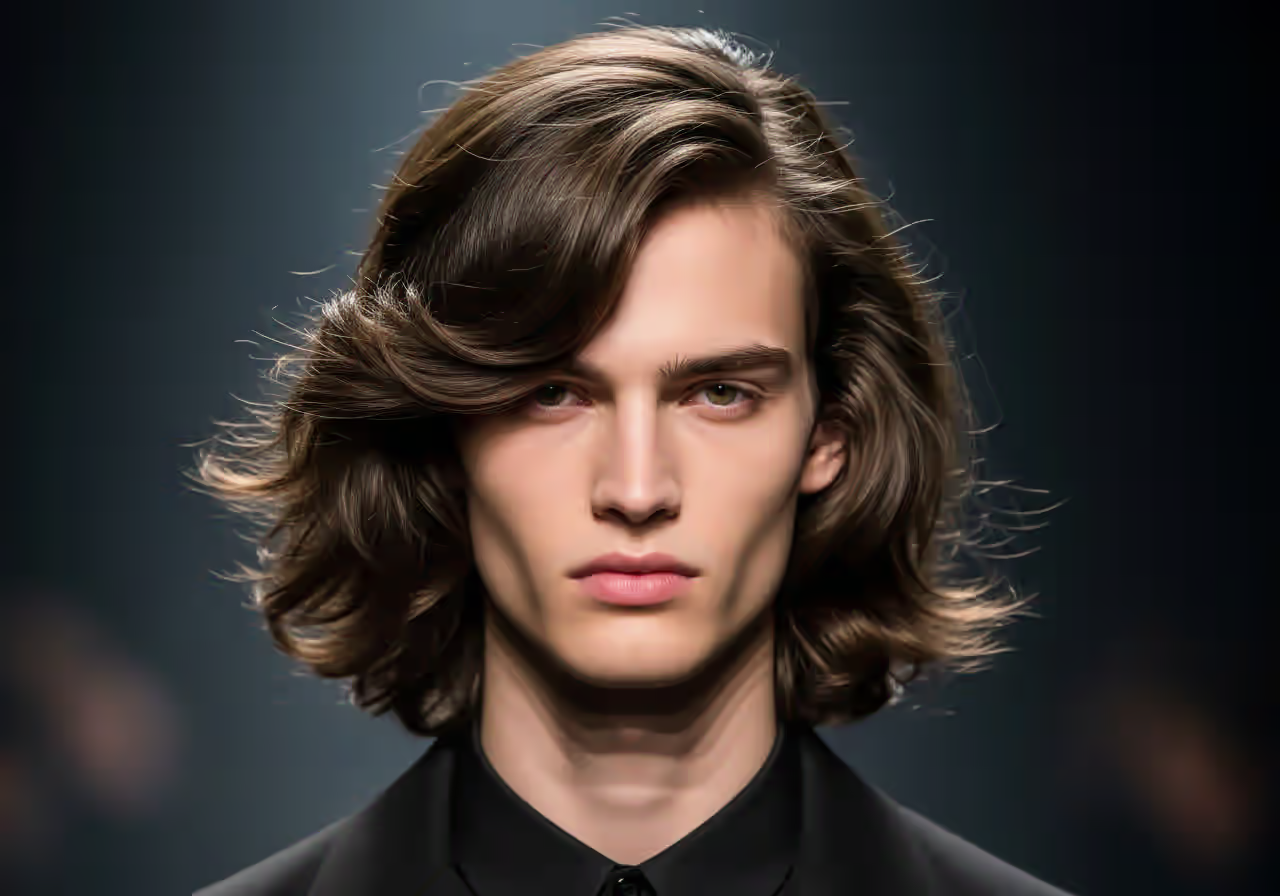
Layers cut through shoulder-length hair to remove weight, so it moves instead of hanging in one flat sheet.
Best for: Wavy or thick hair, most face shapes
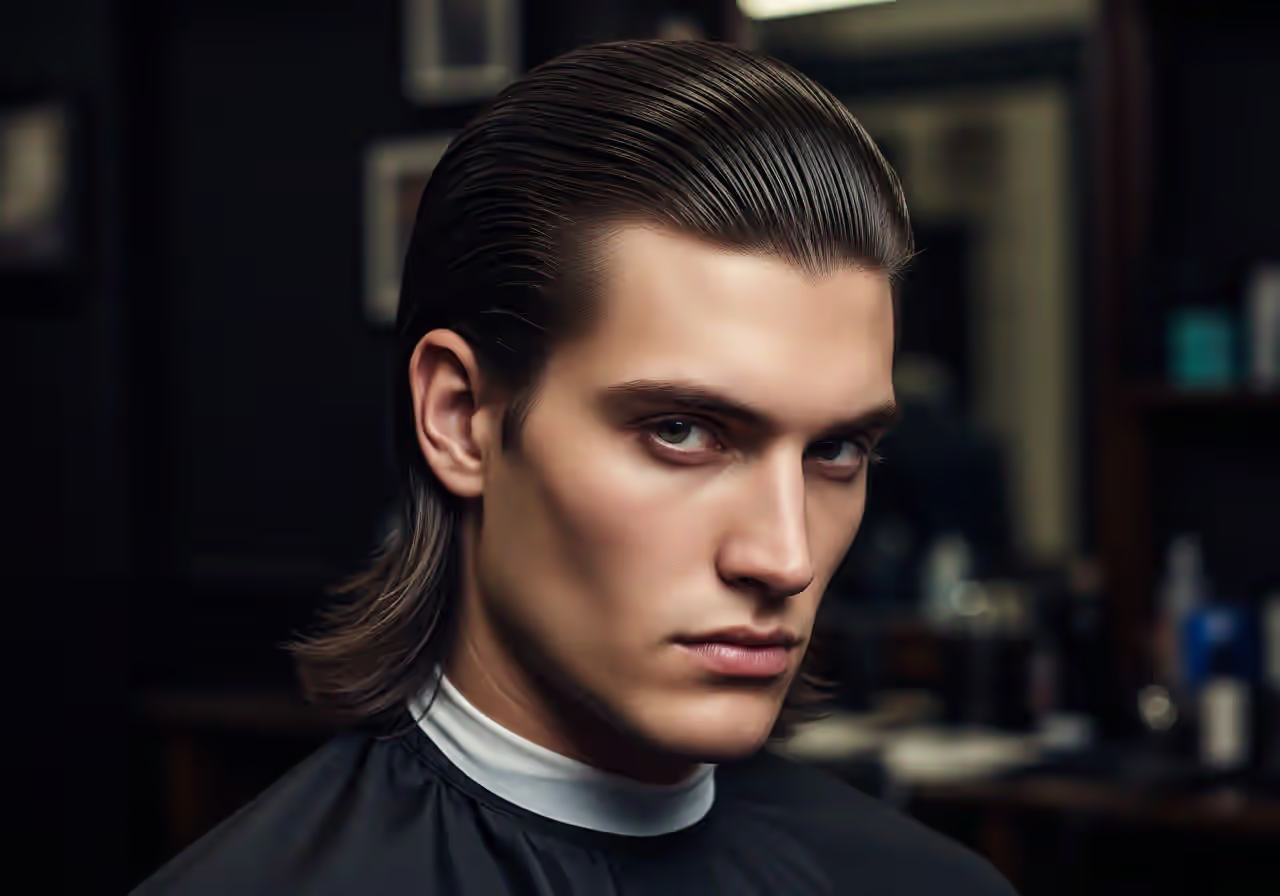
Collar-length hair combed straight back with strong pomade, weight taken out underneath so it lies flat to the head.
Best for: Straight hair, oval faces
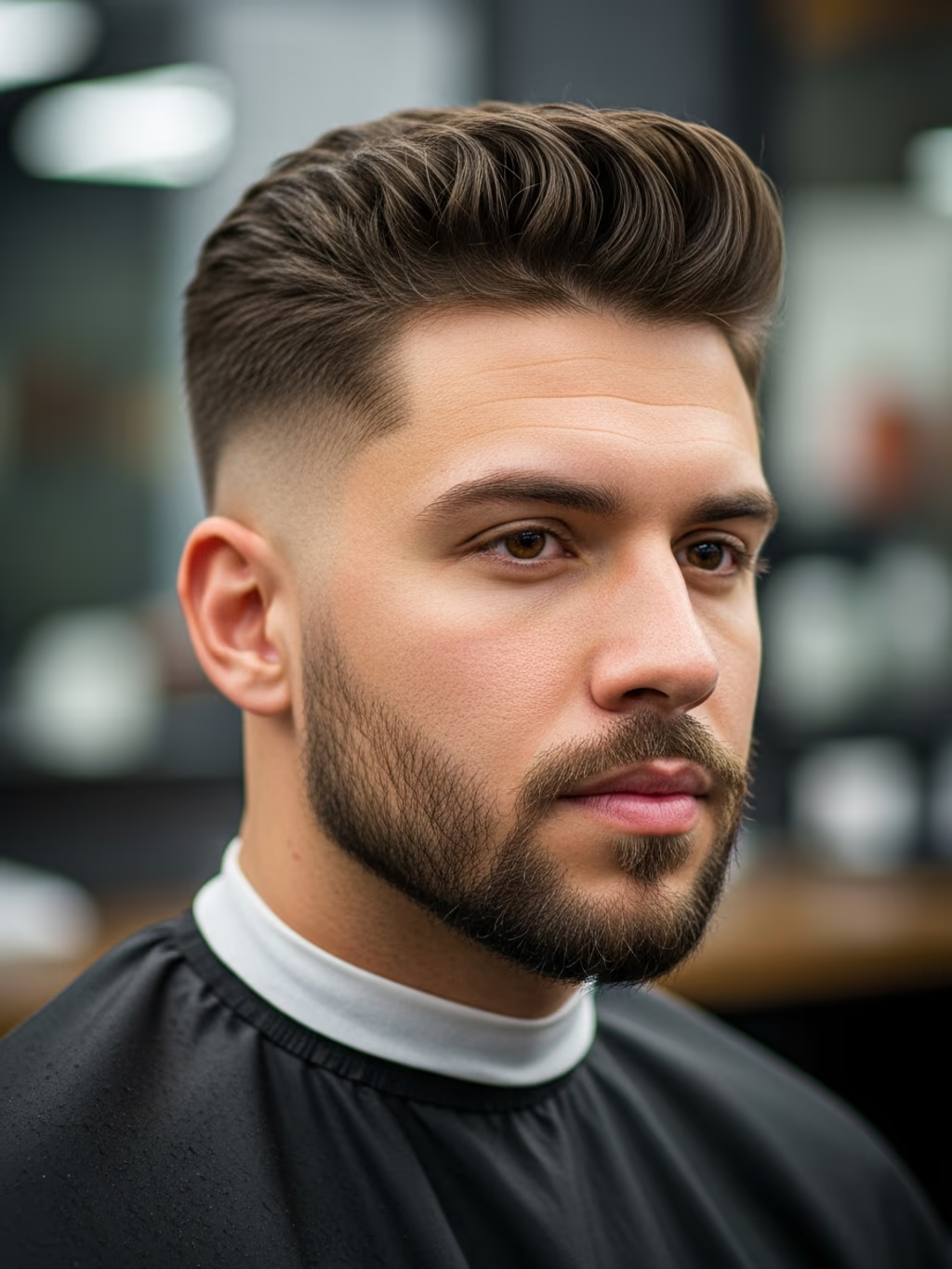
About 1.5 to 2 inches of piecey hair with a blunt, low fringe over a low skin fade above the ear.
Best for: Oval and oblong faces, matte finishes
Curly and wavy hair shrinks as it dries, so a good barber takes off less than the wet length suggests. Ask for bulk removed, not length, and keep thinning shears away from tight curls. The hair type and texture guides cover every pattern from loose 2A waves to tight 4C coils.
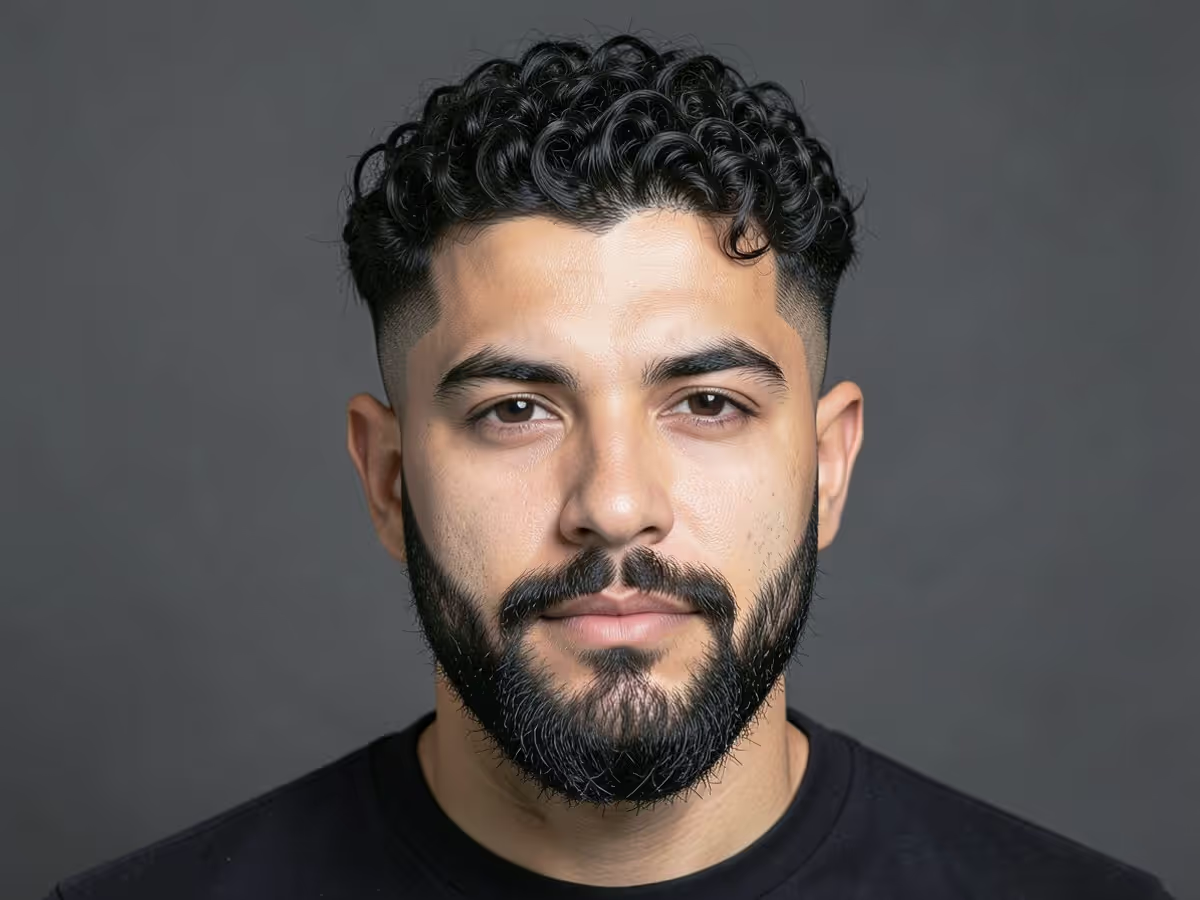
Sides step down from a #3 at the temple to a #1 at the nape, with 2 to 3 inches of curl on top.
Best for: 3B to 4A curls, oval and square faces
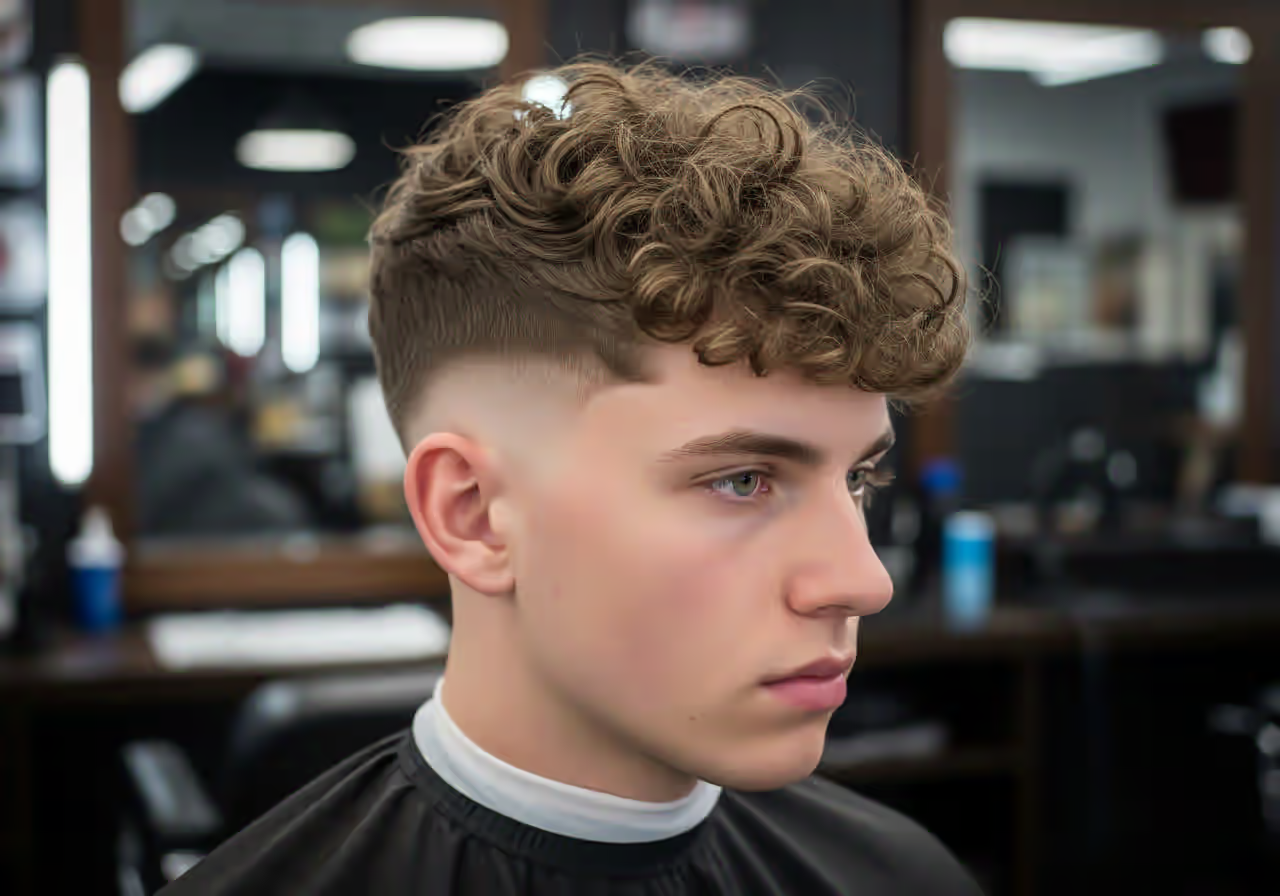
About two and a half inches of curl falling loosely onto the forehead, with sides tapered from a #3 to a #1.
Best for: Teens and 3A to 3C curls
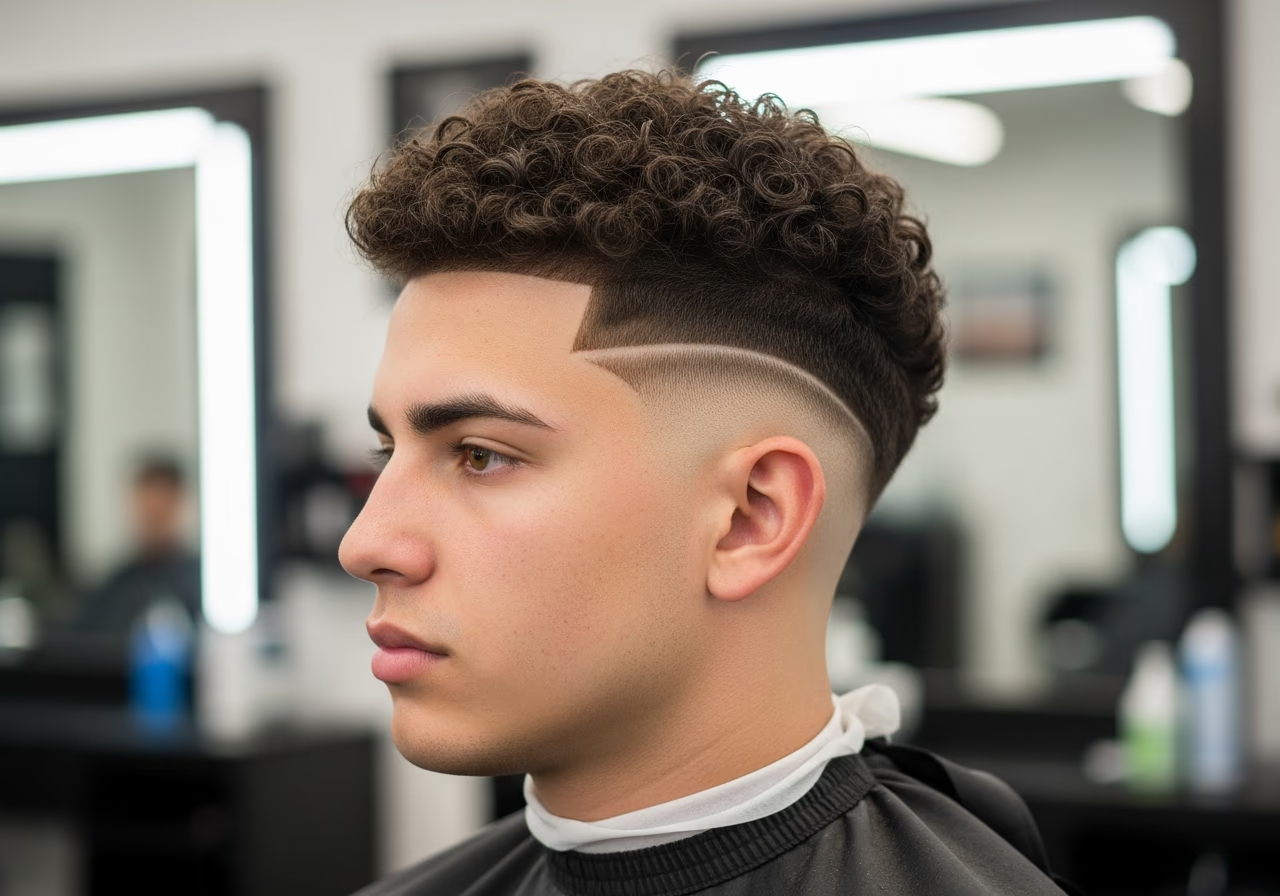
A rounded mass of tight curls on top with short, clean sides, built on natural curls or a perm.
Best for: Naturally curly or permed hair
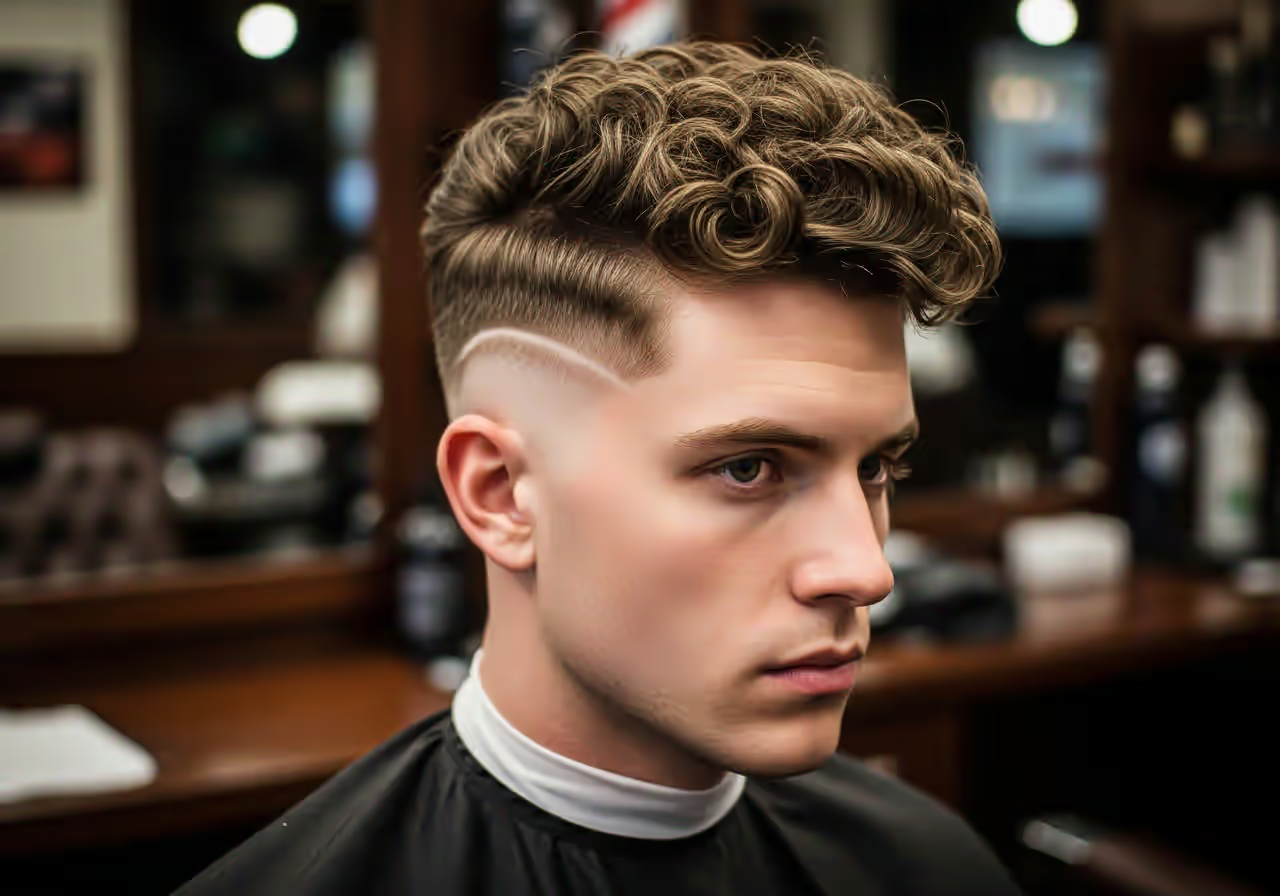
Sides clipped with a #1 and no blending under 3 to 4 inches of untouched curls on top.
Best for: Square and heart faces, 3B to 4A curls
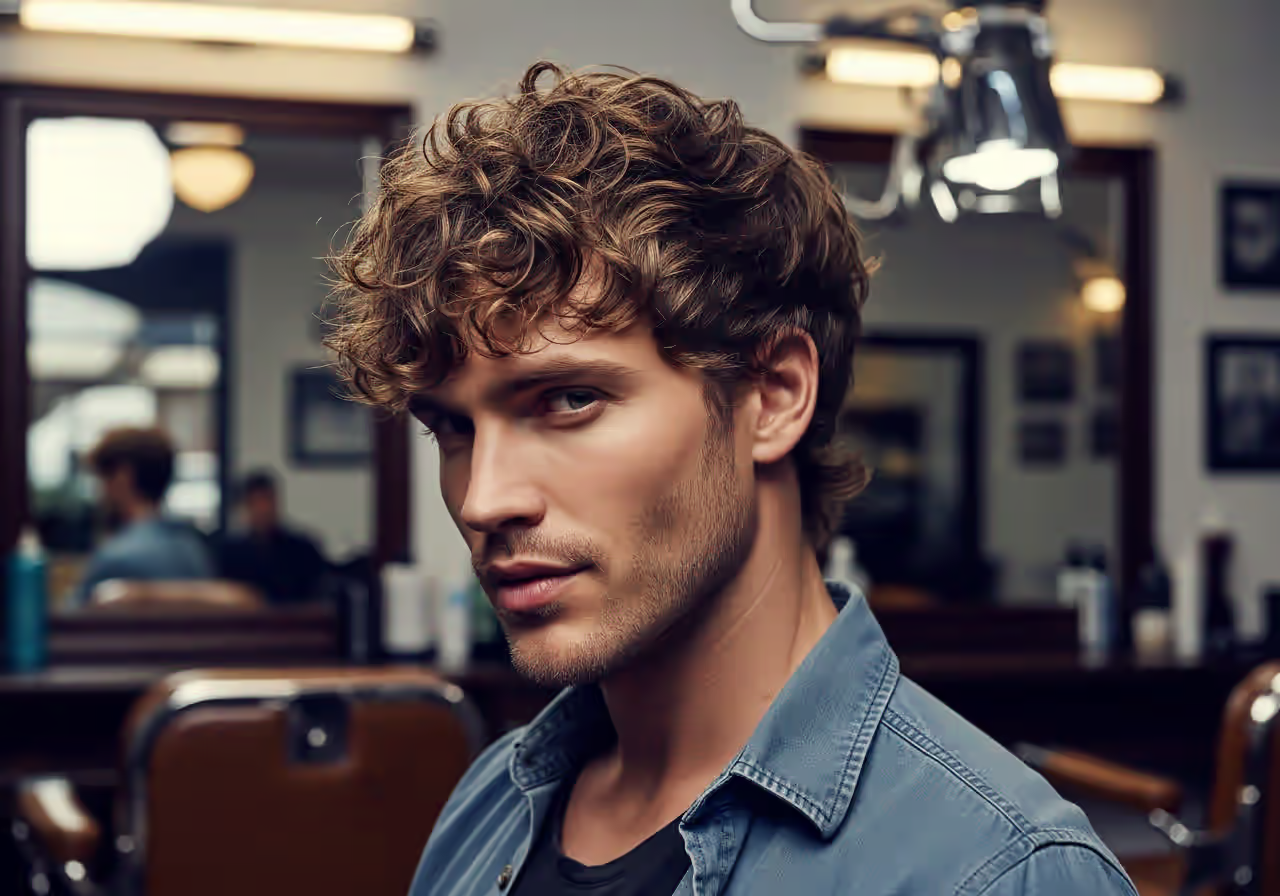
Layers through the whole head, about 3 inches at the crown to 5 at the back, so the curls separate.
Best for: Oval and heart faces, 3A to 3C curls
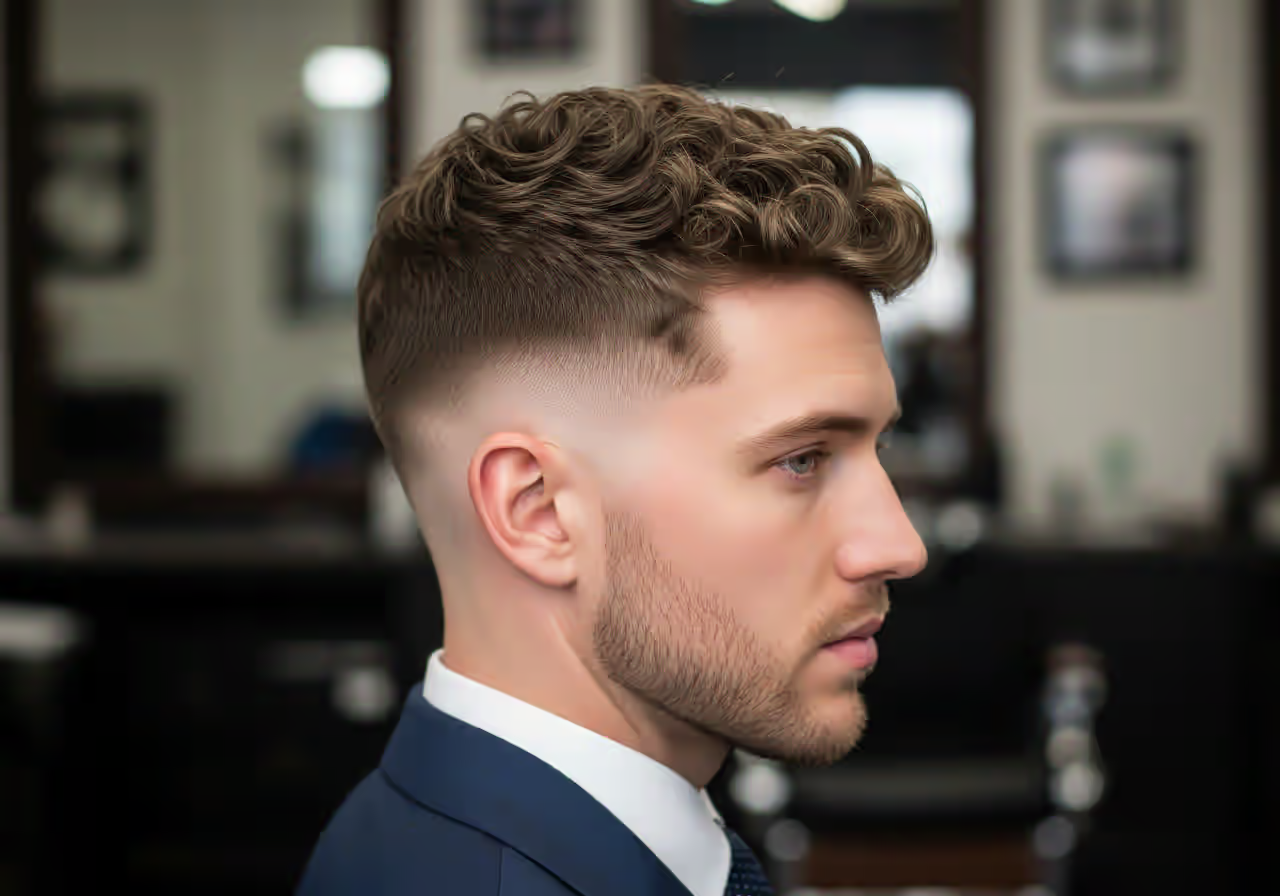
Two to three inches of curl on top with a conservative scissor taper, neat enough for an office.
Best for: 3A to 3C curls, any face shape
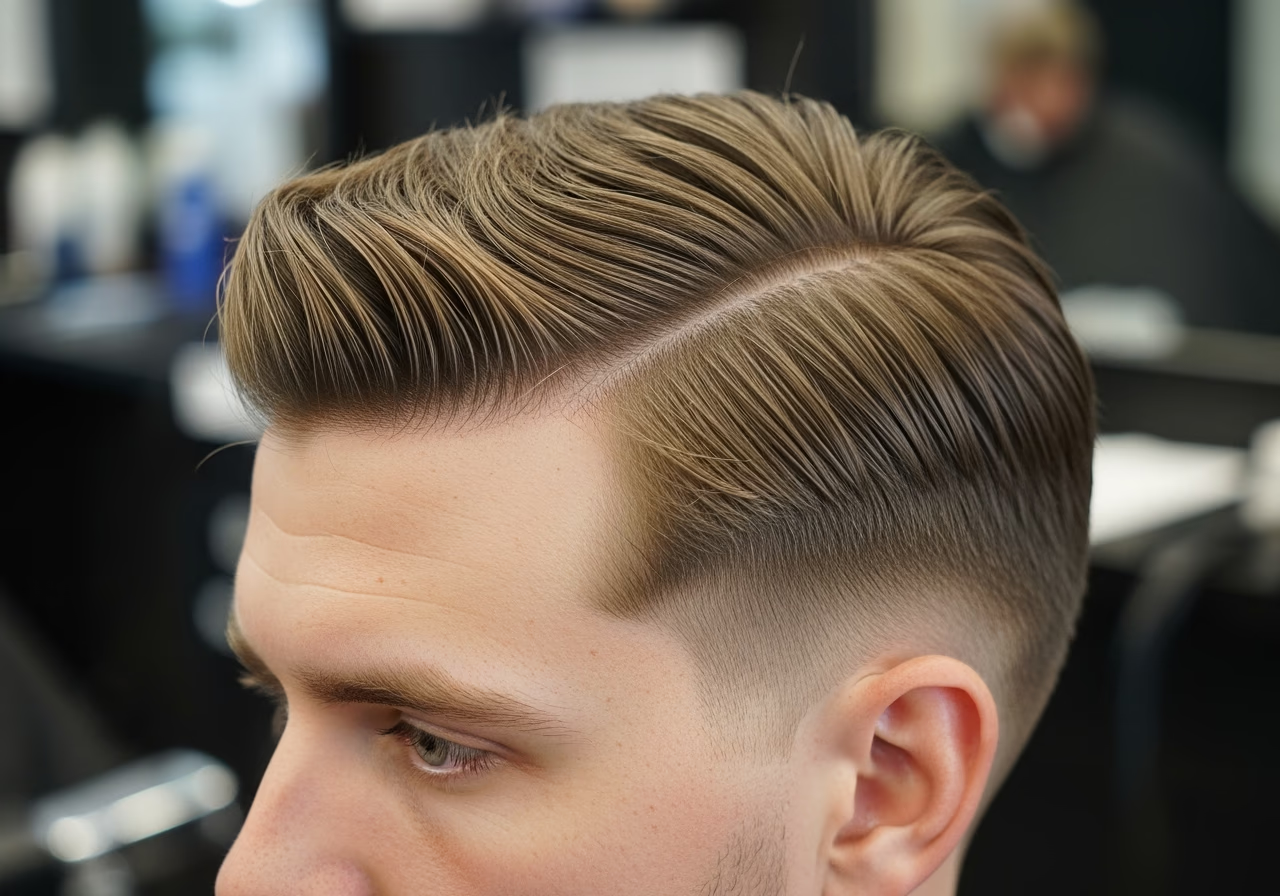
Three to four inches on top with a cut-in side part and a #2 taper, letting the wave show through.
Best for: Straight-to-wavy hair, office wear
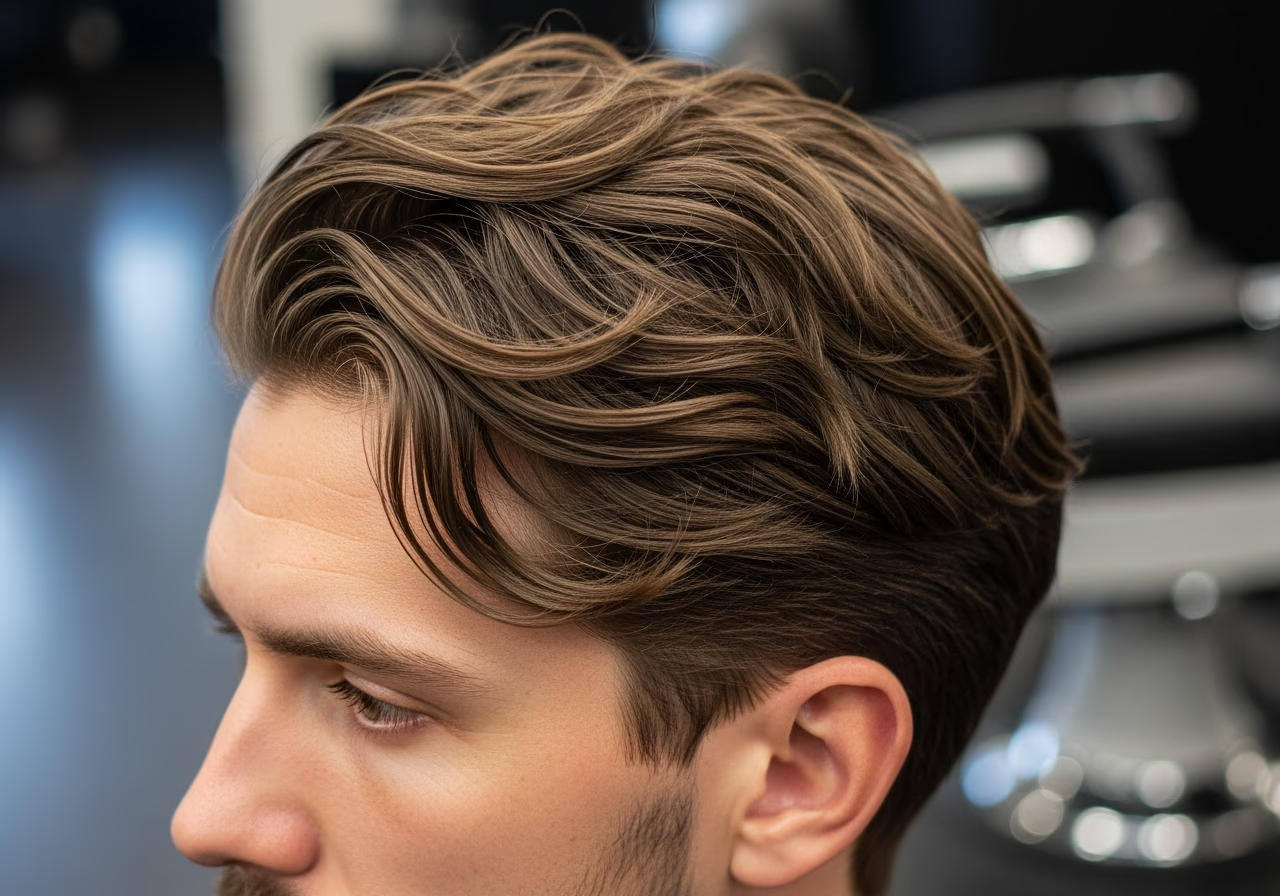
Four to five inches on top with light layering so 2A to 3C waves fall loose, sides scissor-cut and never clippered tight.
Best for: Real 2A to 3C waves, any face shape
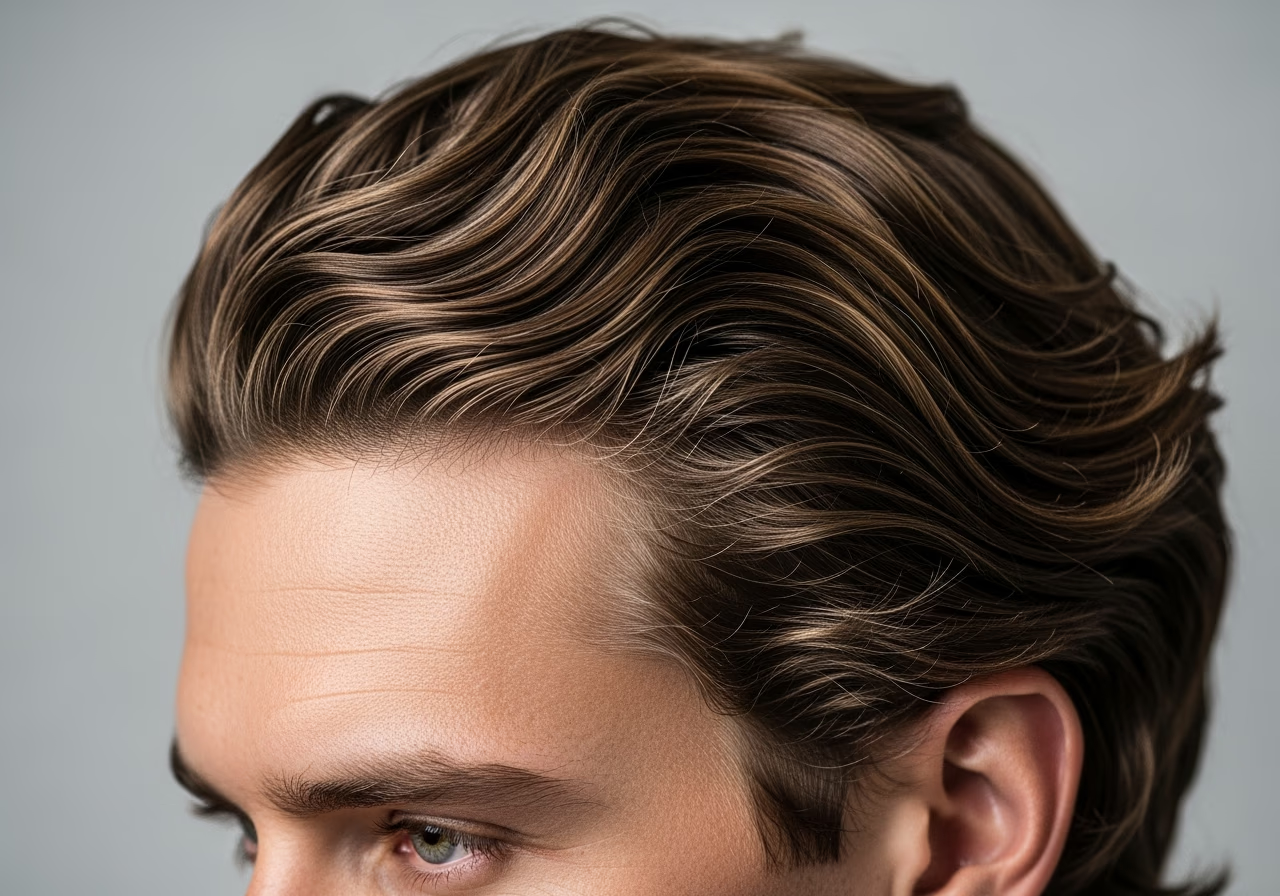
Five to seven inches swept back off the face, relying on the natural wave rather than product for its shape.
Best for: Wavy hair and patient growers
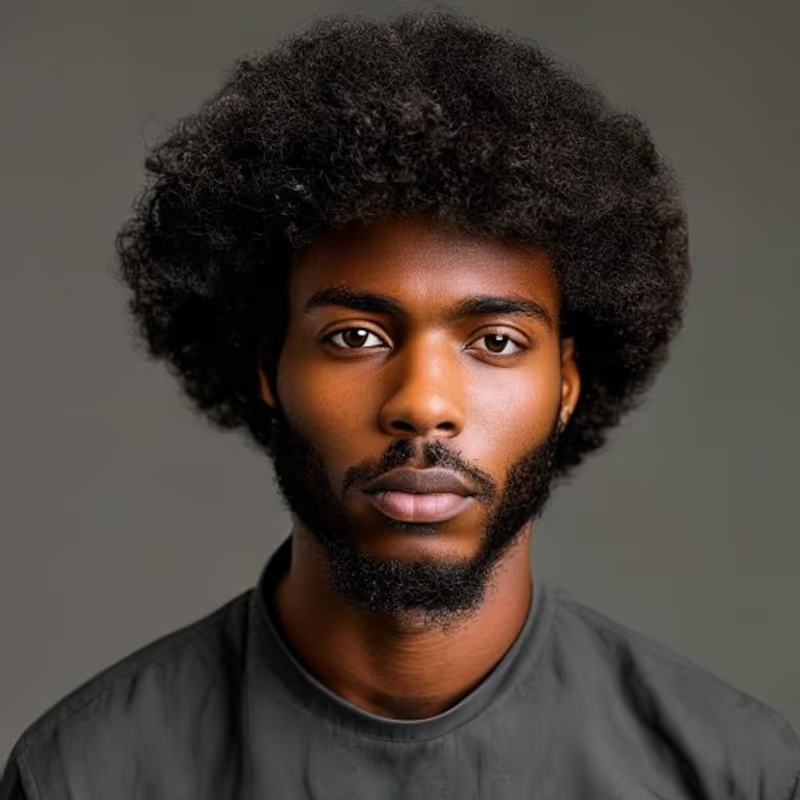
Even length all over shaped into a soft round outline, finished with a natural hairline and a light line up.
Best for: 4A to 4C coils, shape-ups every 2 to 3 weeks
Thick hair needs weight taken out through layering, point cutting or a tight fade, or it grows wide. Fine and thinning hair needs the reverse: a shorter top, very little texturizing and matte powder in place of heavy pomade. For hairline and crown questions, read thinning and balding.
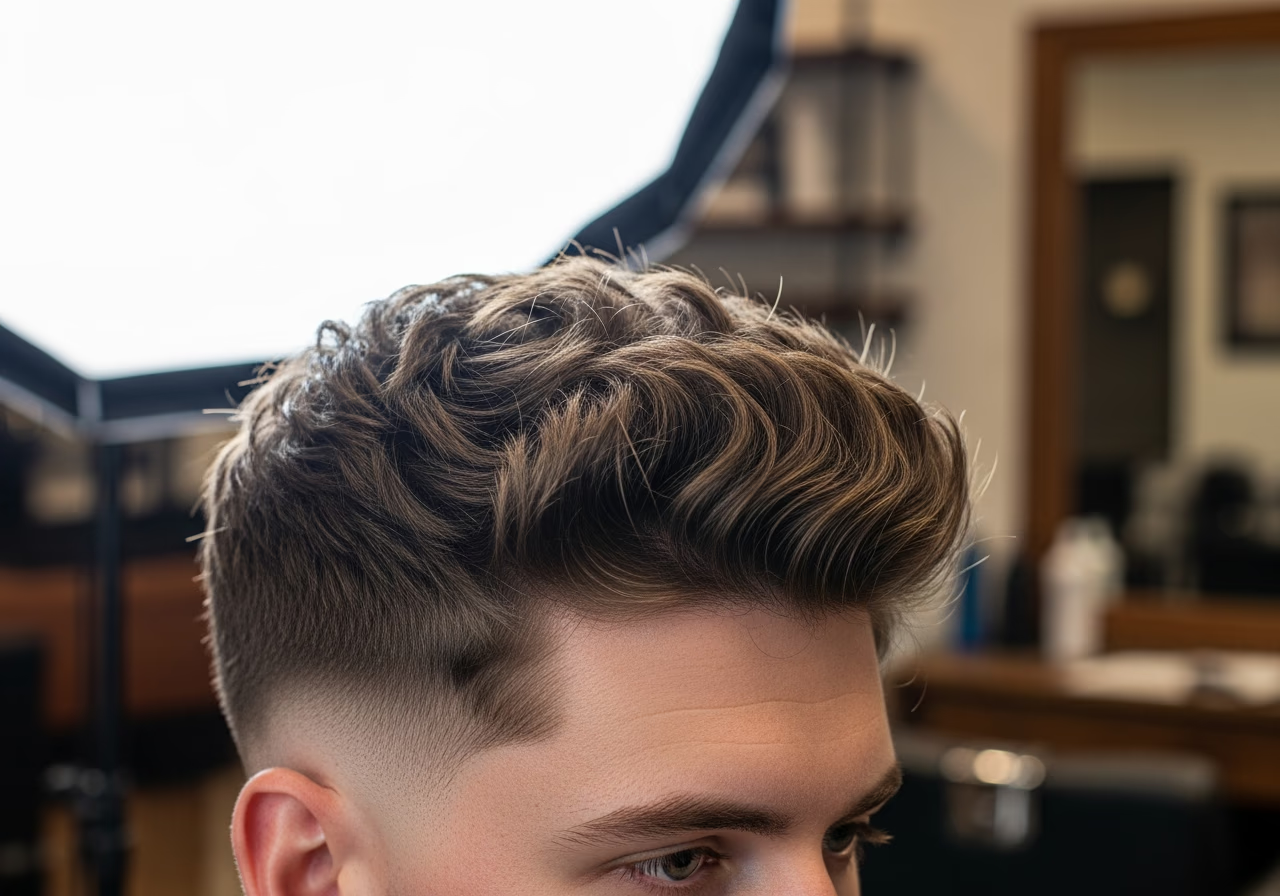
A compact crop that removes overall length, with a short textured fringe so thick hair never sits as one block.
Best for: Thick wavy hair, any face shape
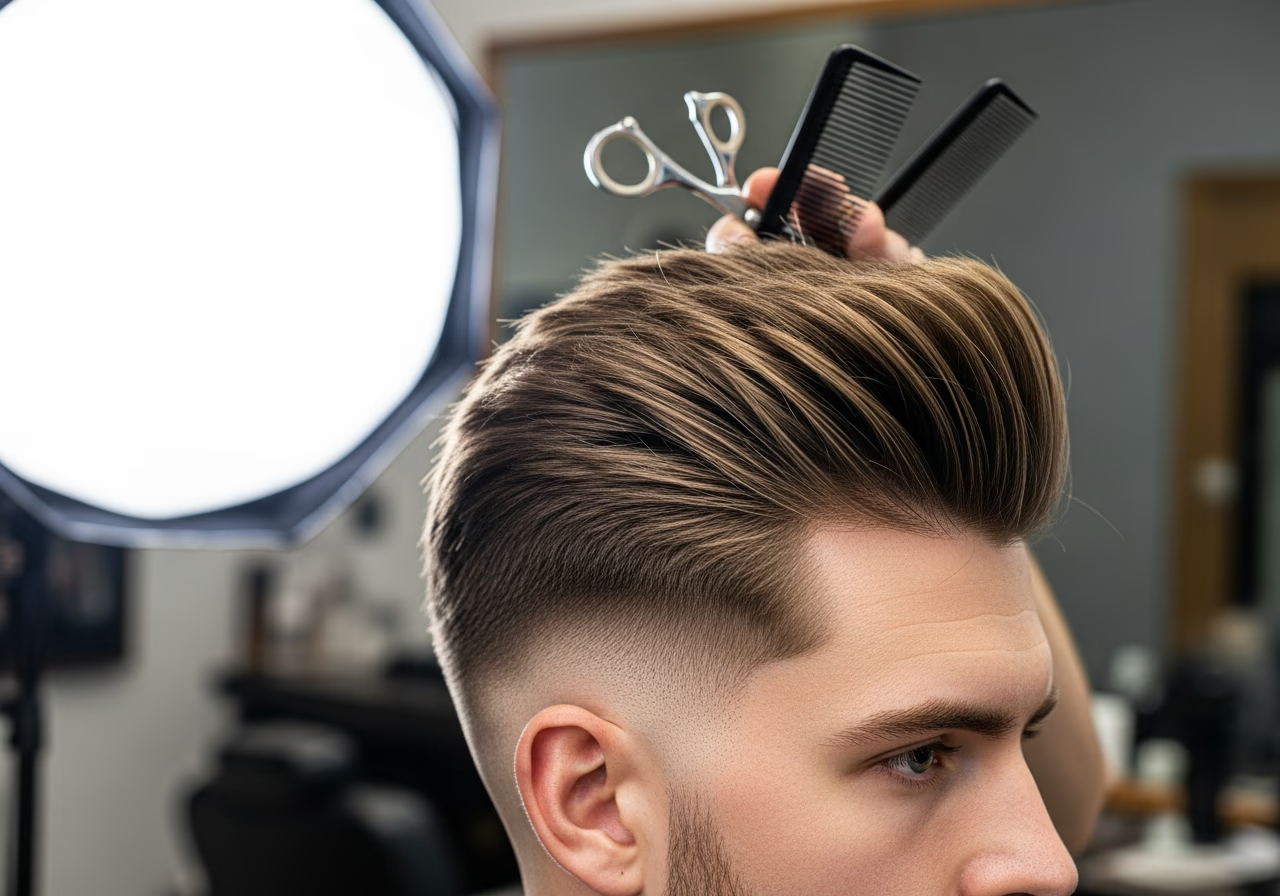
Layers cut through the crown take out bulk, so a thick quiff lifts up and back without going wide.
Best for: Thick straight hair, oval and square faces
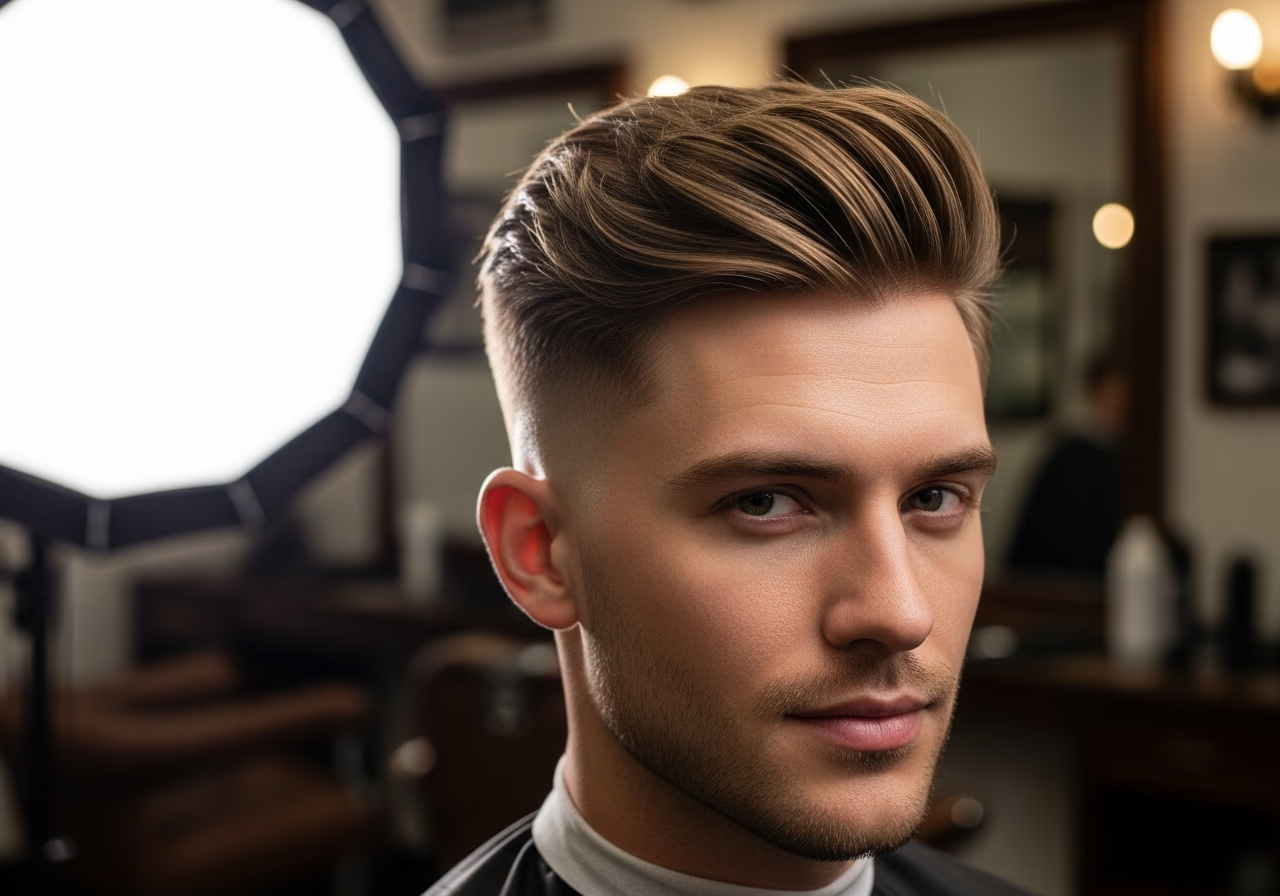
Noticeably short sides under a wide, heavily layered top that adds width to the face rather than height.
Best for: Thick hair, long faces
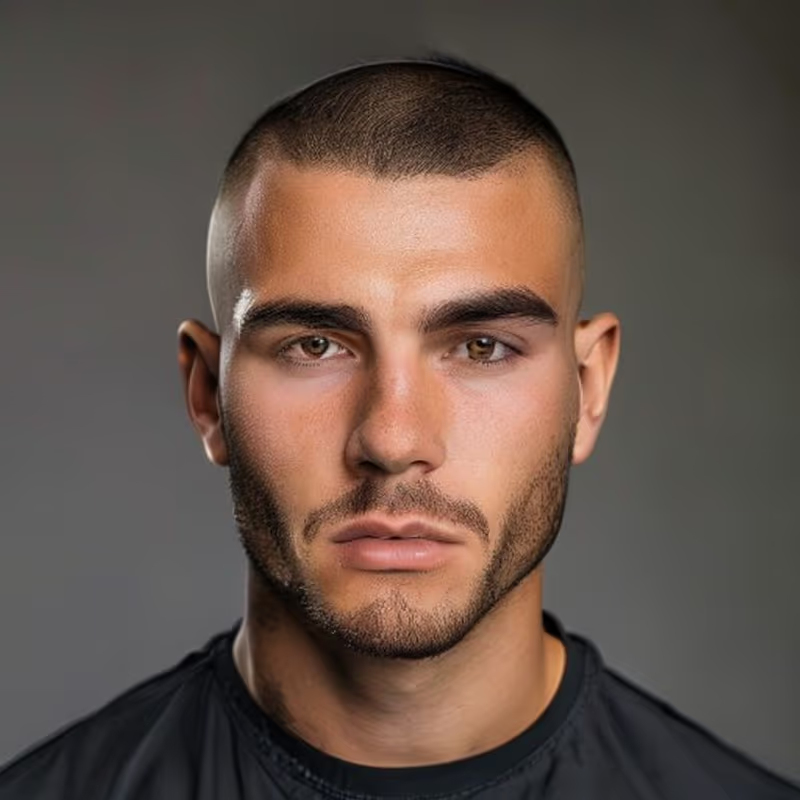
About an inch on top thinned slightly with texturizing shears, over a skin fade that keeps the head from looking wide.
Best for: Dense hair that puffs out at the sides
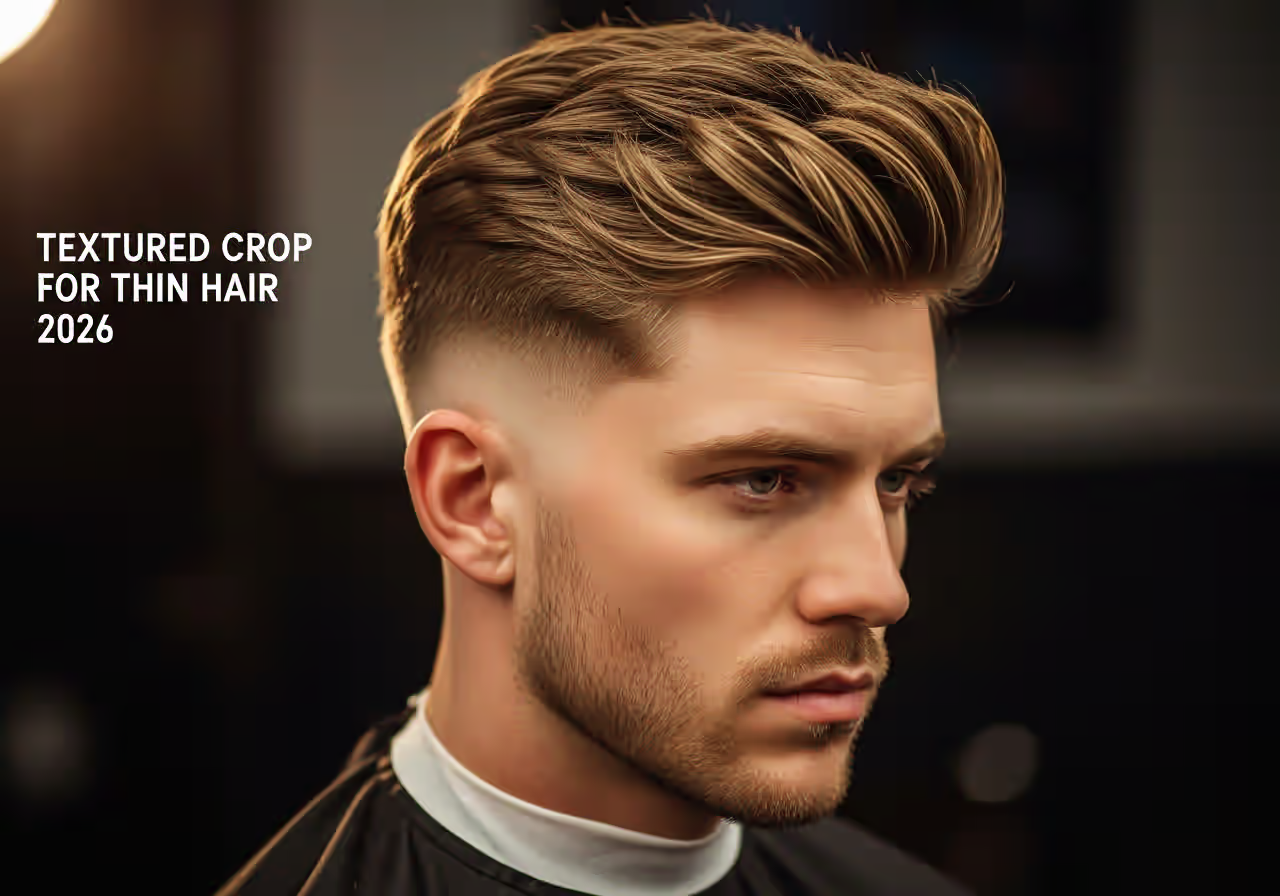
A short top point-cut without thinning shears so fine hair clumps into denser-looking pieces, with tight sides.
Best for: Fine or thinning hair, styled with powder

The Ivy League top combed to one side for coverage, over short, simple tapered sides and a lightweight product.
Best for: Fine or thinning hair at the front
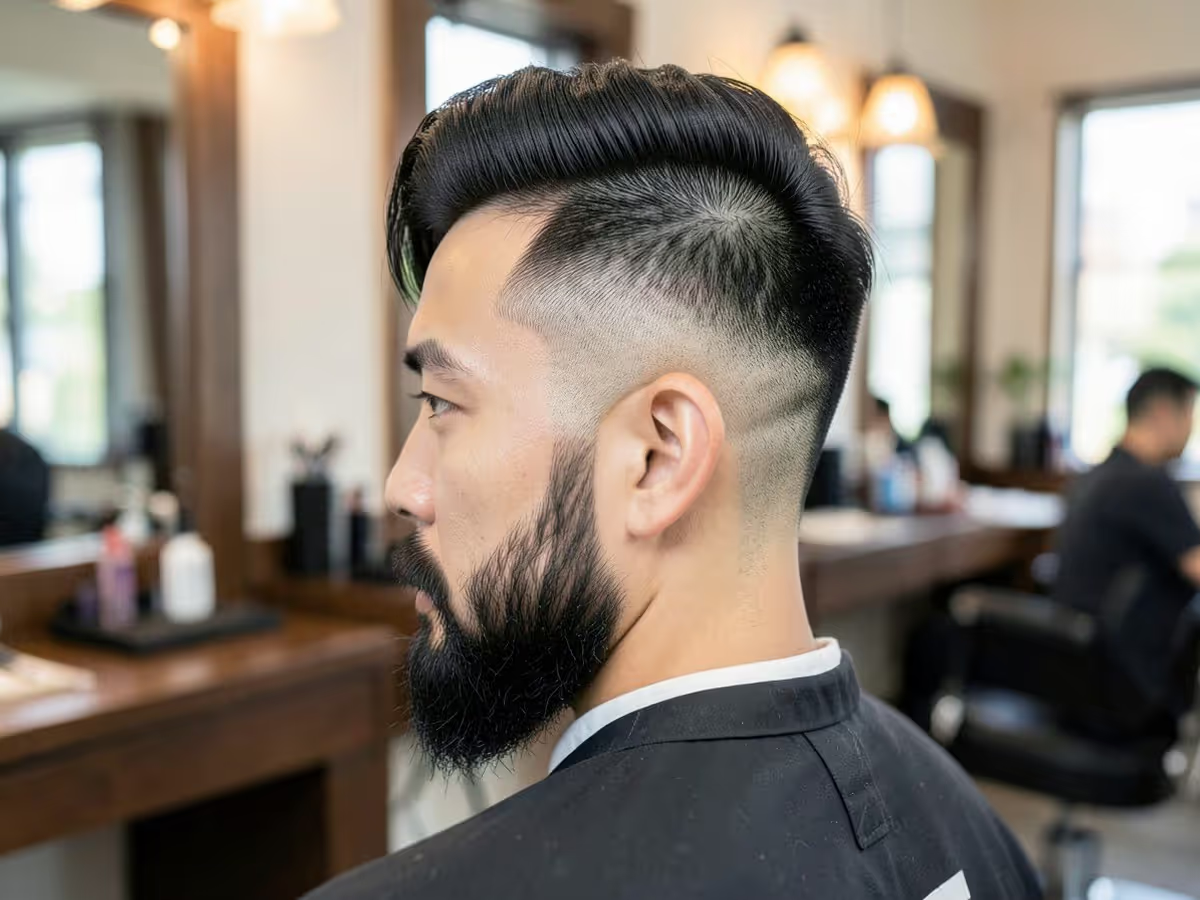
A longer crown and softer sides from a #2 fill out a thinning crown, with conservative trims on top.
Best for: Thinning crowns, men with beards
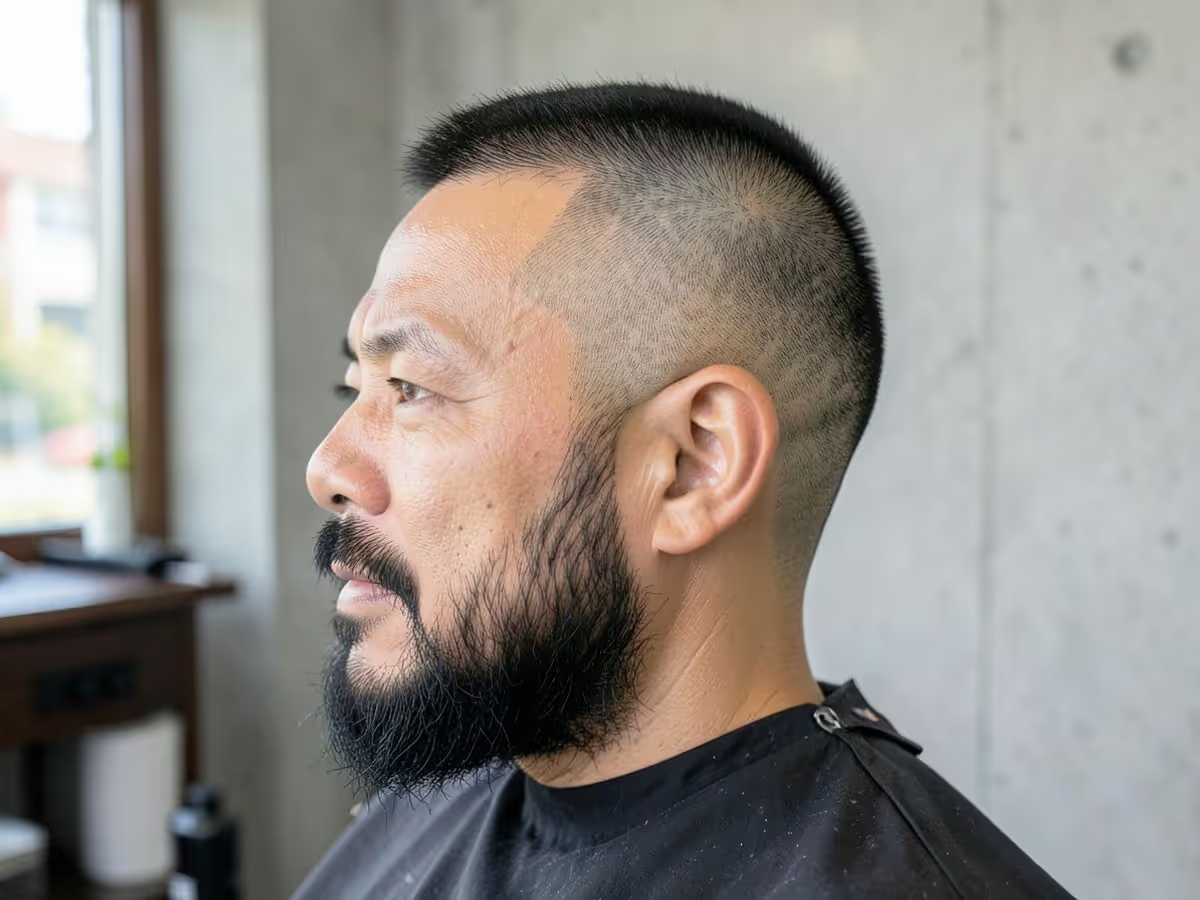
A #4 to #5 on top, about half an inch, tapered into the beard line so a sparse crown looks even.
Best for: Thinning crowns and full beards
Haircuts by face shape follow one rule: add what the face lacks. Round faces want height, long faces want width at the sides, square faces take texture well, and heart and diamond faces need fullness lower down or at the temples. Treat it as a guideline, then use the face shape guide to measure yours.
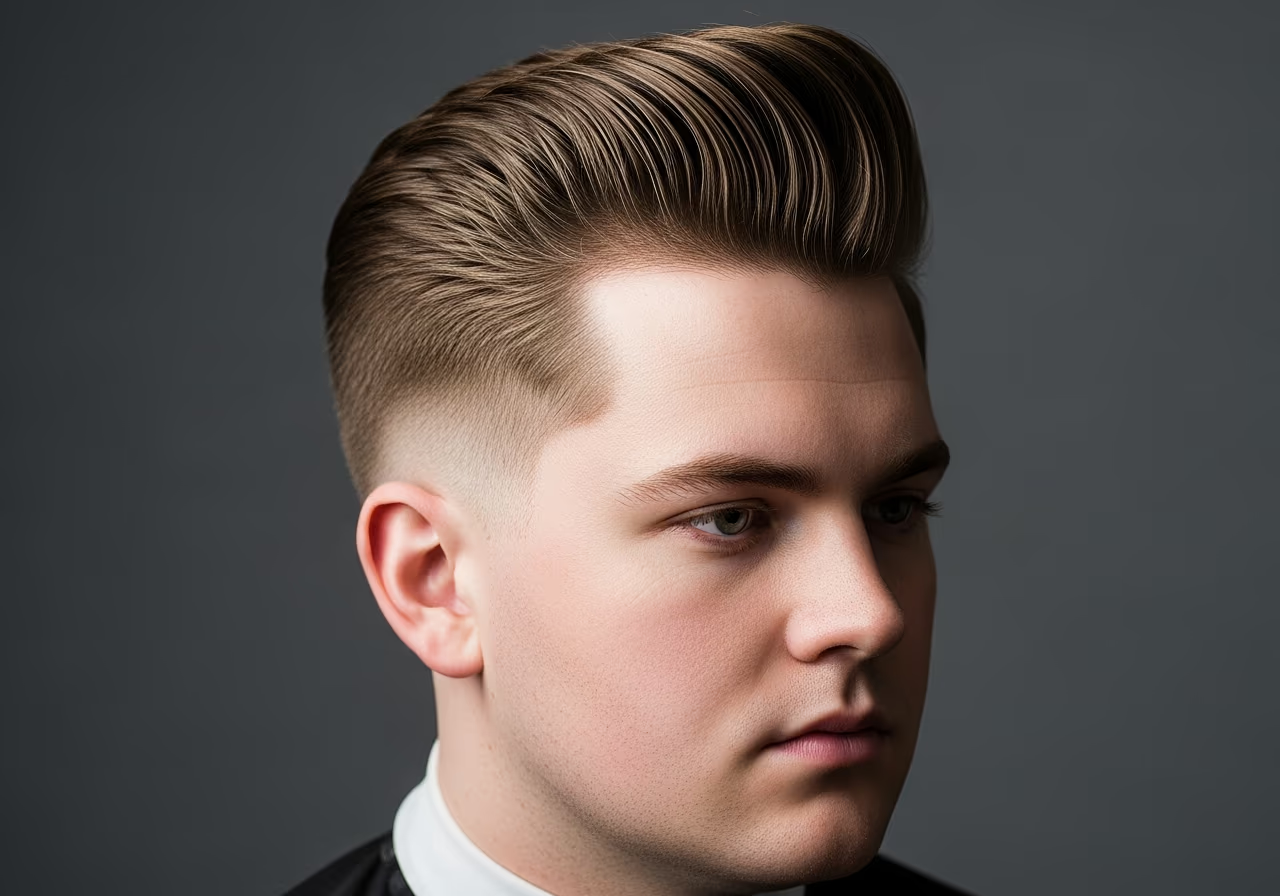
Hair swept up and back into a high, rounded front over short tapered sides, adding height that lengthens a round face.
Best for: Round faces, thick or wavy hair
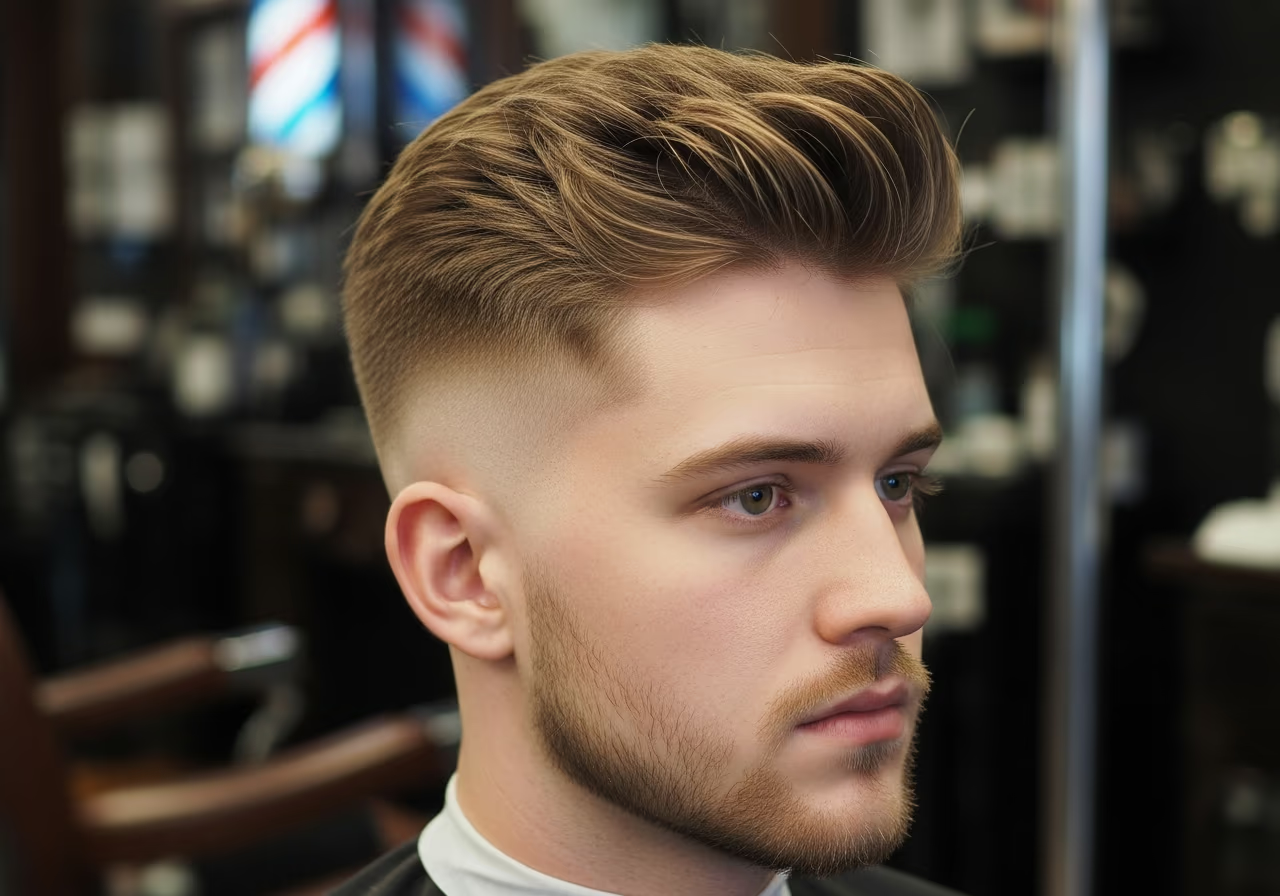
A fade taken up past the temple under a choppy, texturized top, tight sides set against loose height.
Best for: Round faces, any straight or wavy hair
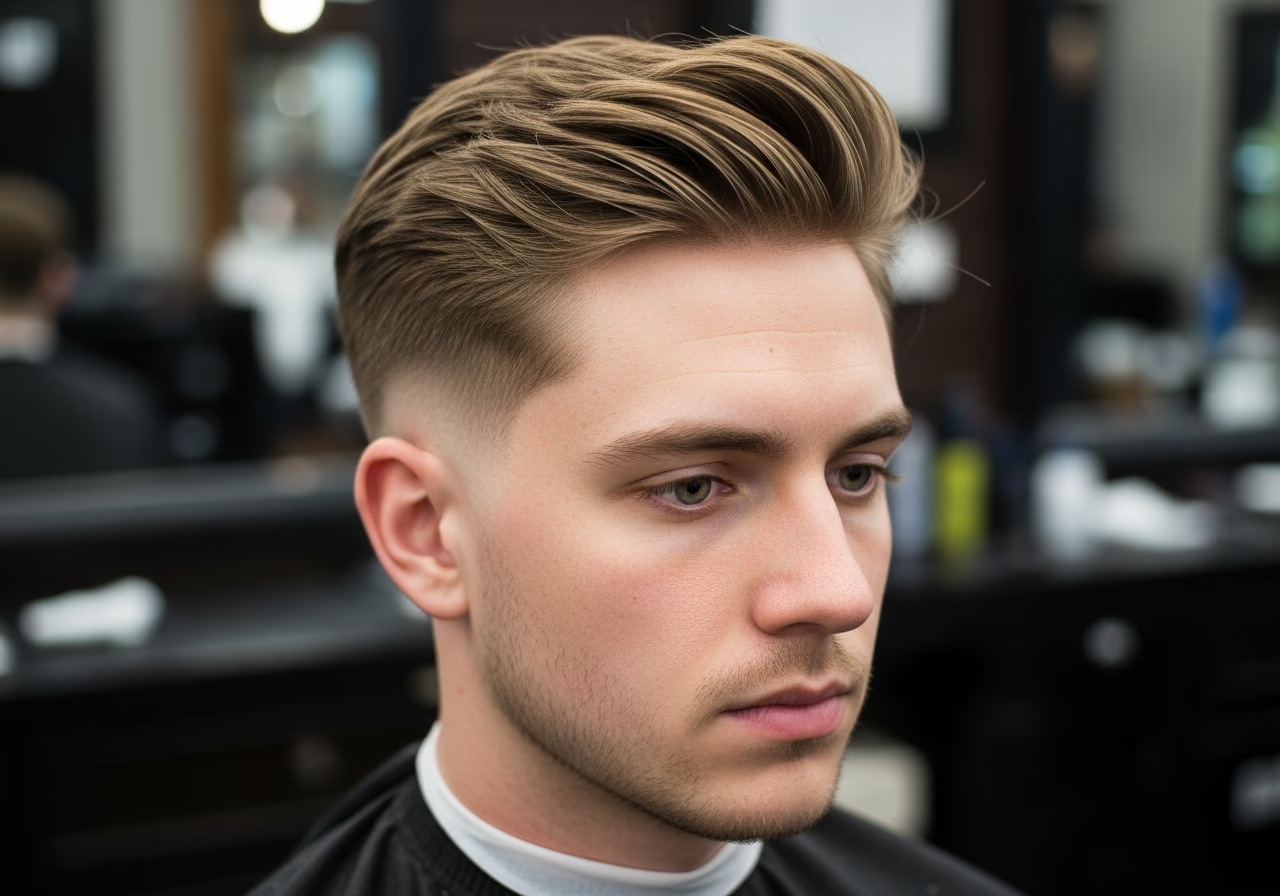
A clean tapered blend on the sides with about two inches of textured length on top and nothing dramatic.
Best for: Oval faces, straight or wavy hair
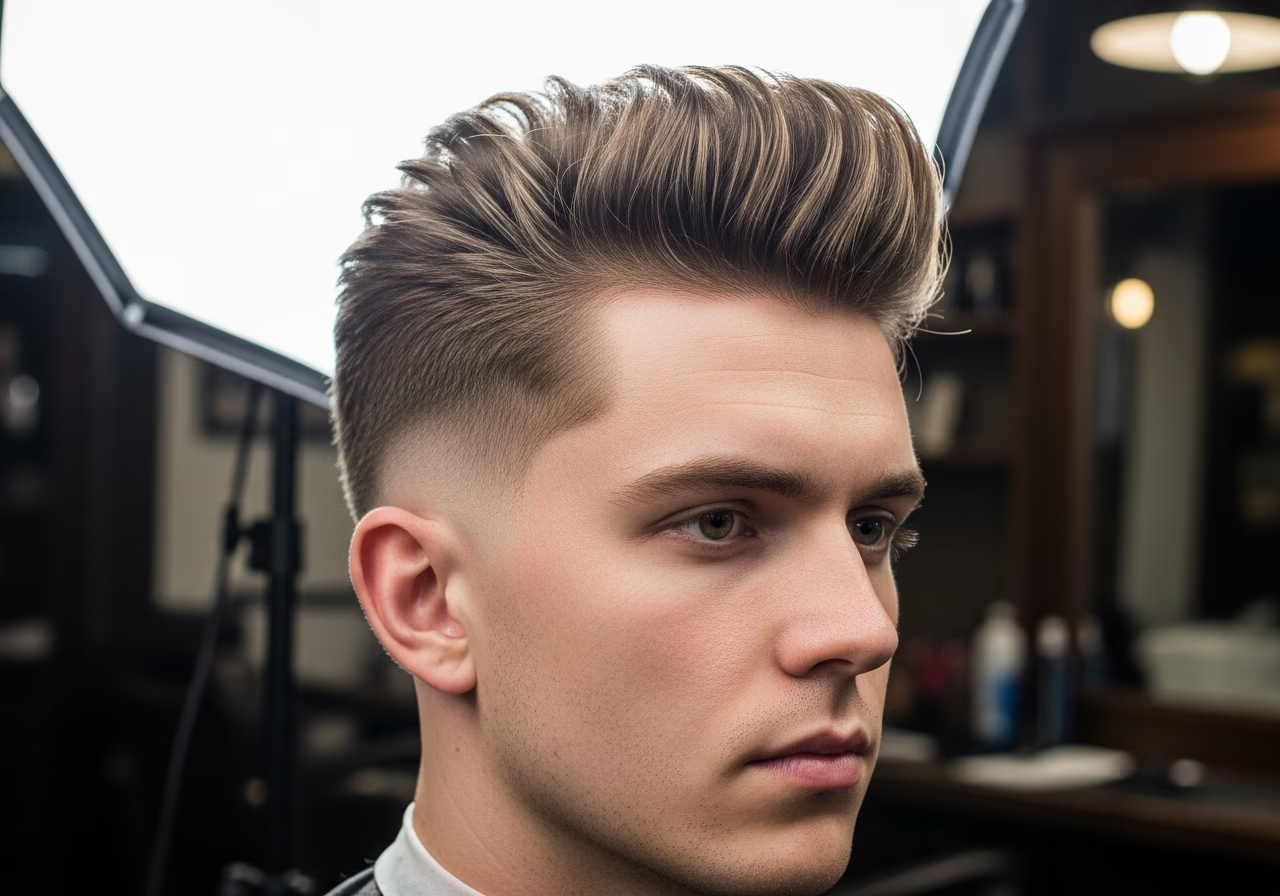
The front lifted up and slightly forward with a blow dryer, over tapered sides, for height without bulk.
Best for: Oval faces, straight or medium-thick hair
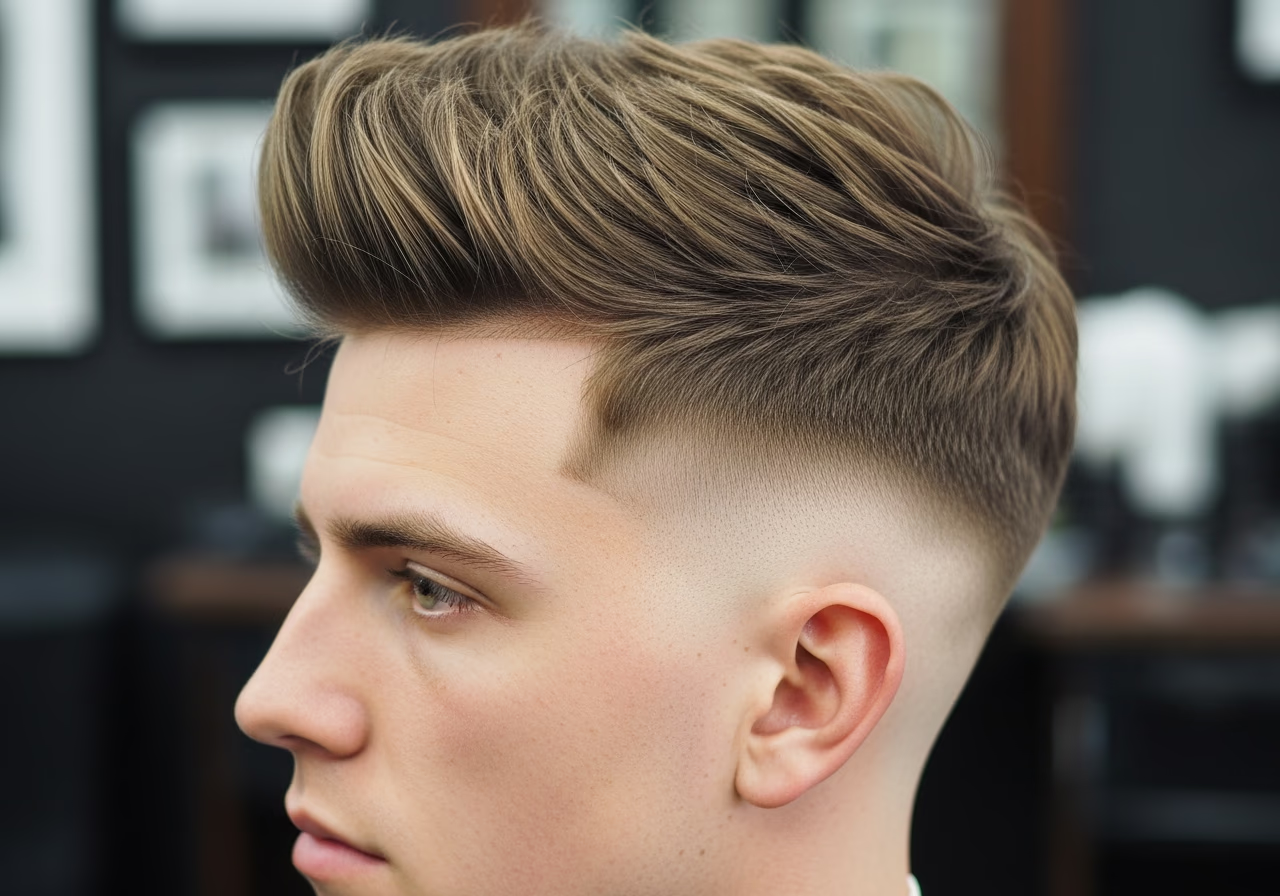
A textured peak pushed up and forward over a high fade that strips the bulk from the sides.
Best for: Square faces, straight or wavy hair
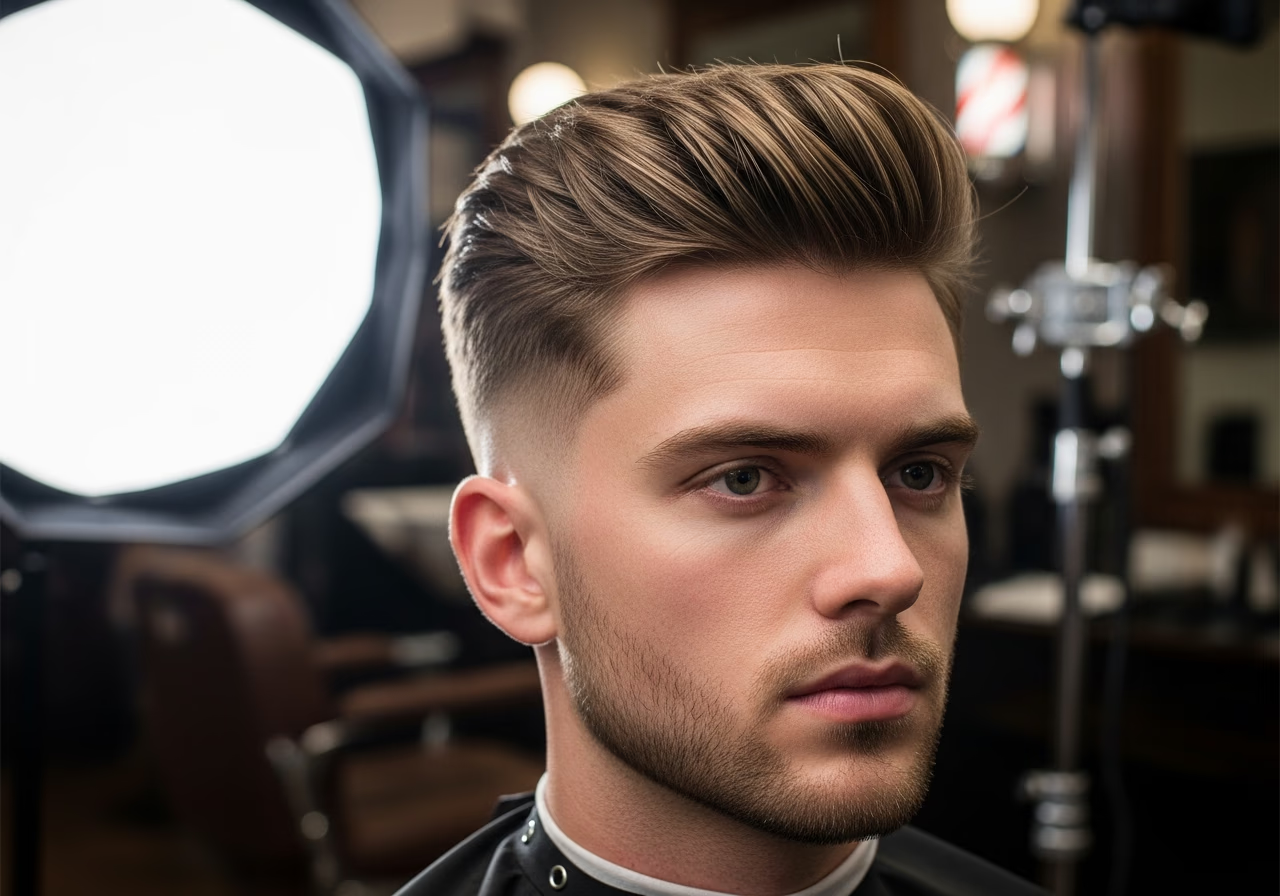
Sides and back clipped close under a longer, texturized top that adds movement above a square jaw.
Best for: Square faces, thick hair
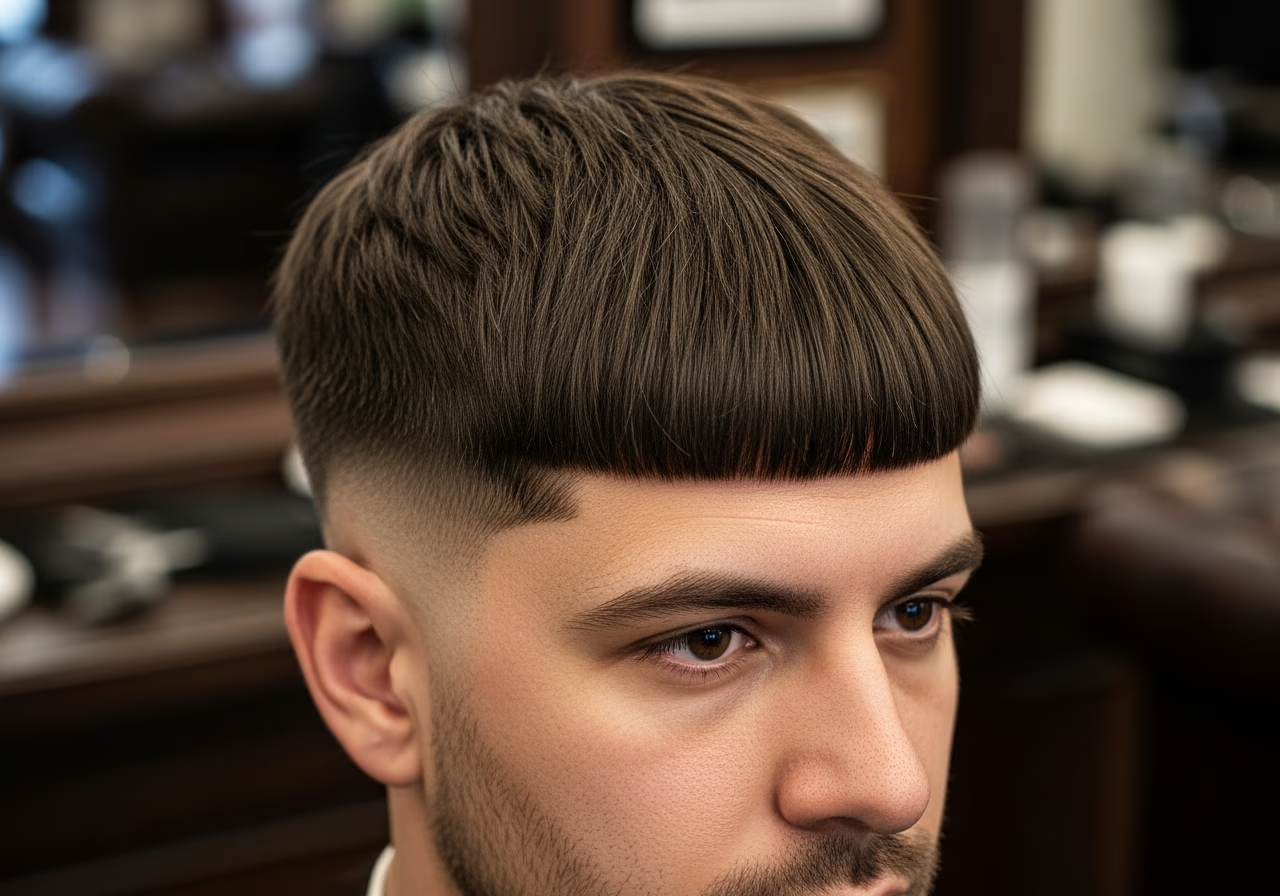
A heavier medium fringe dried out toward the sides instead of down, adding width across the upper face.
Best for: Long faces, straight hair
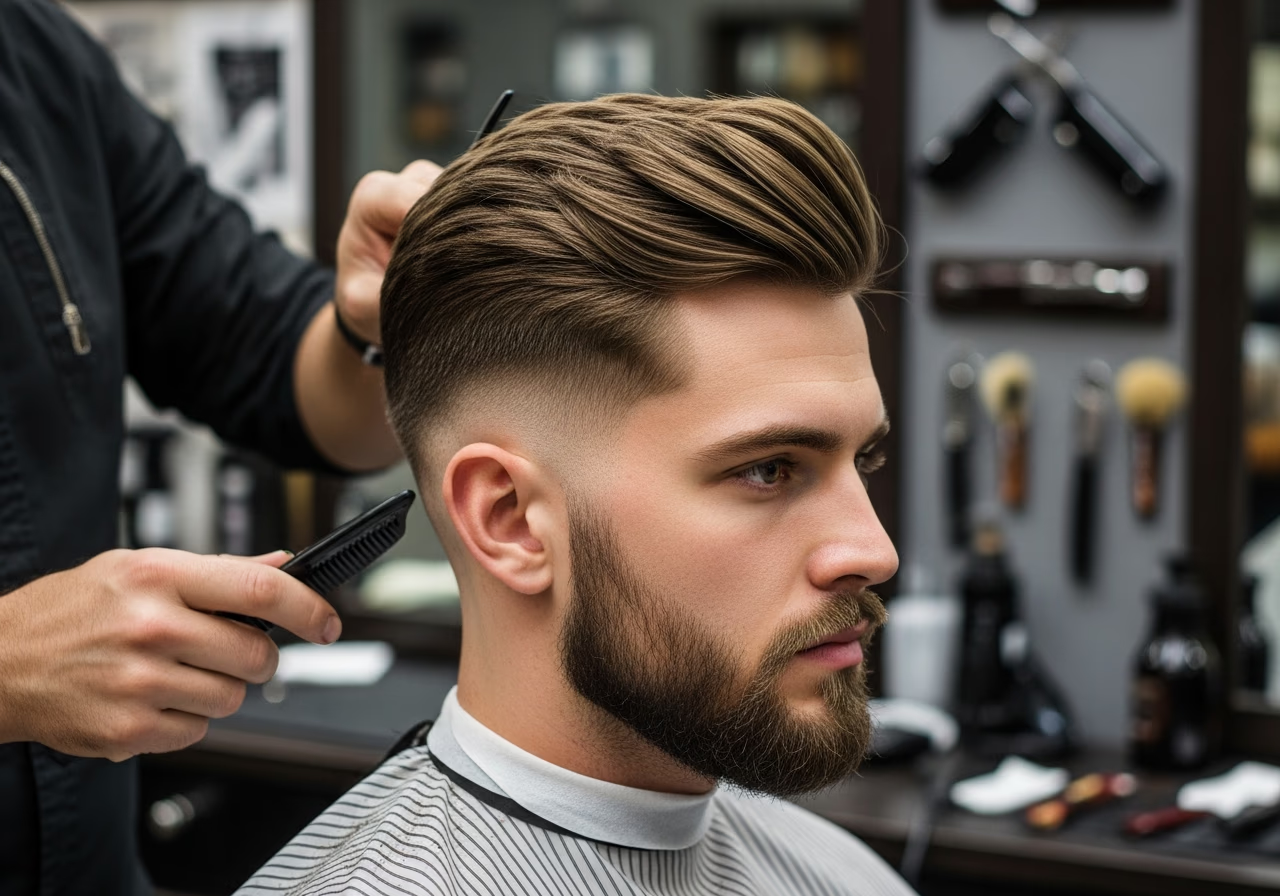
A side-swept crop with volume built in, so the sweep adds width to the face instead of more length.
Best for: Long faces, straight hair
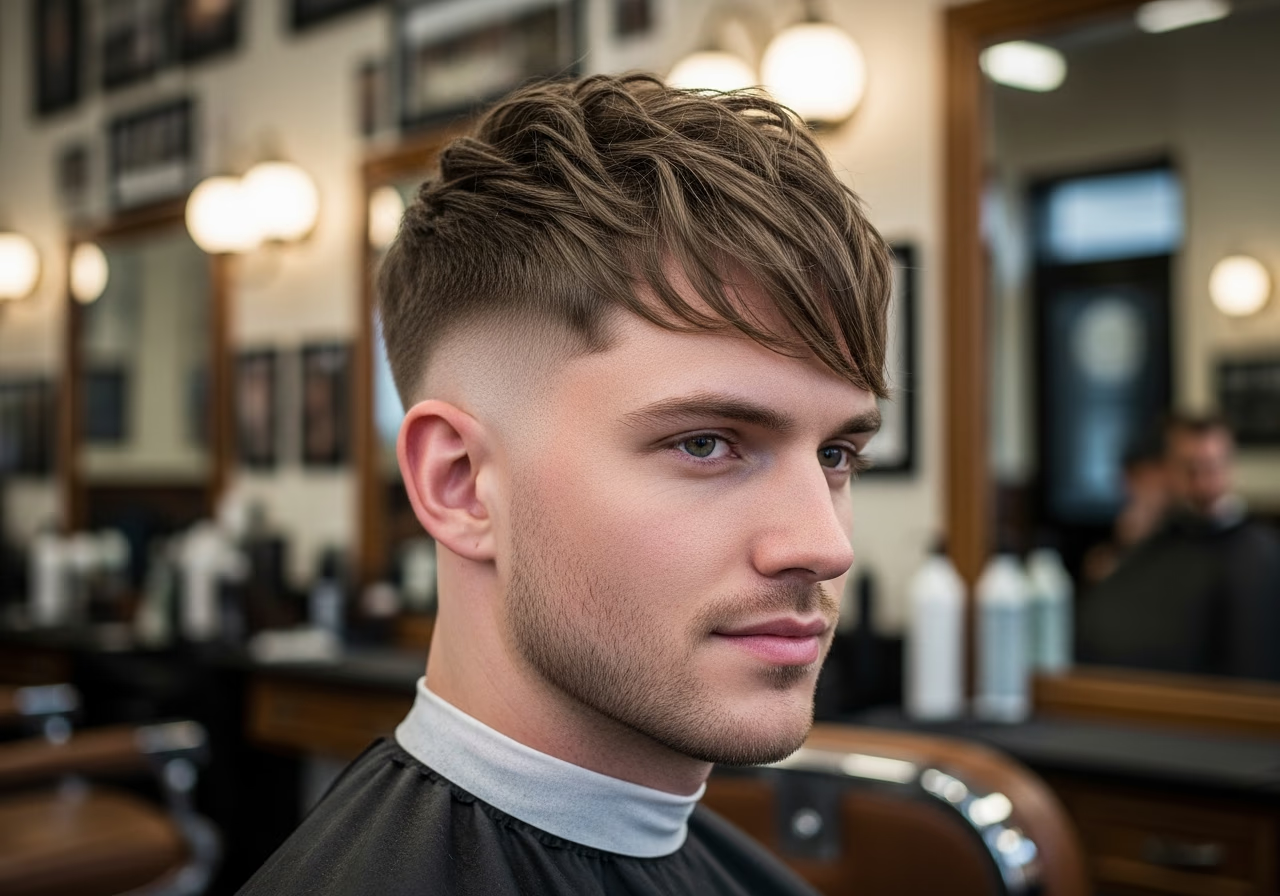
A short textured crop finished with a side-swept fringe that softens a wide forehead, over close tapered sides.
Best for: Heart-shaped faces, straight or wavy hair
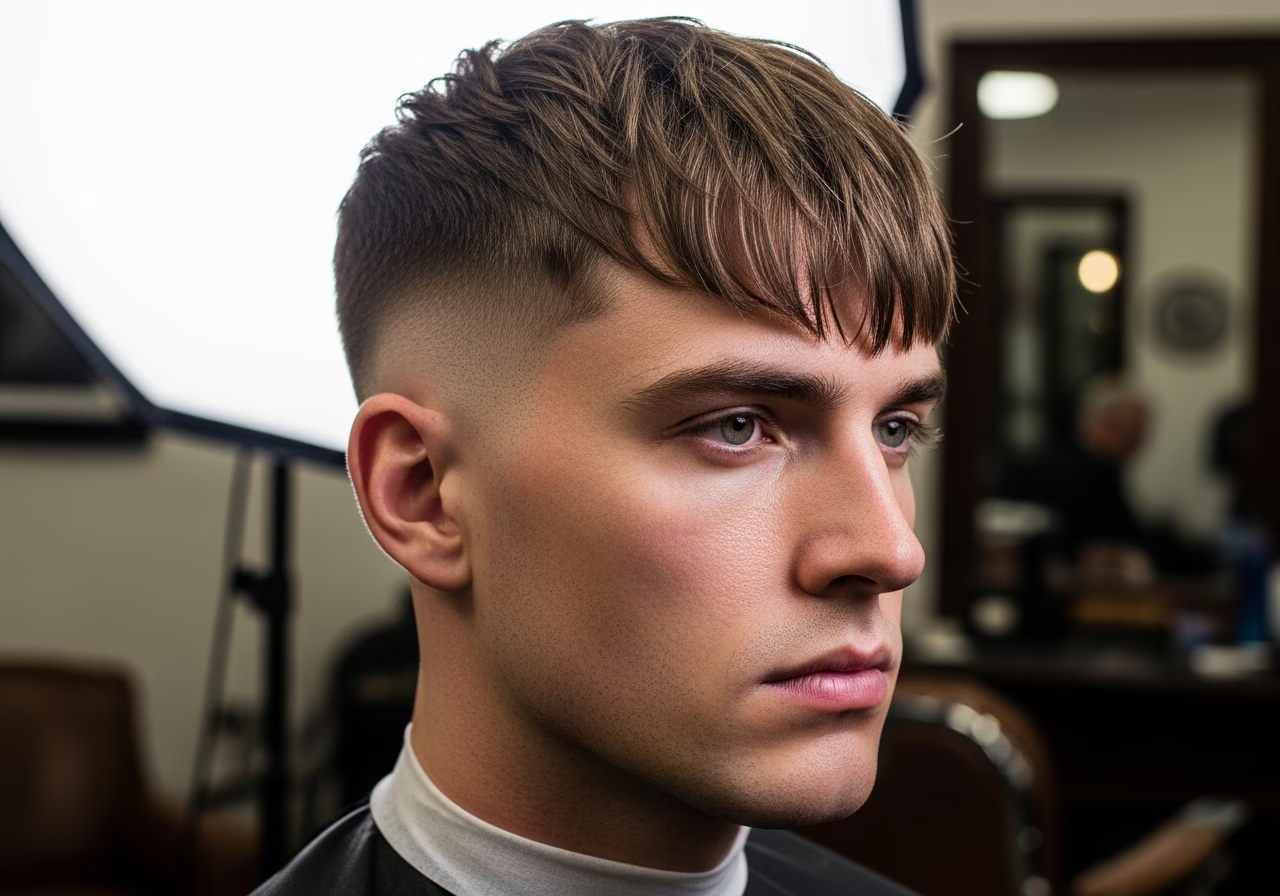
Short undercut sides under a longer top grown into a curtain fringe with a defined center part.
Best for: Heart-shaped faces, thick hair
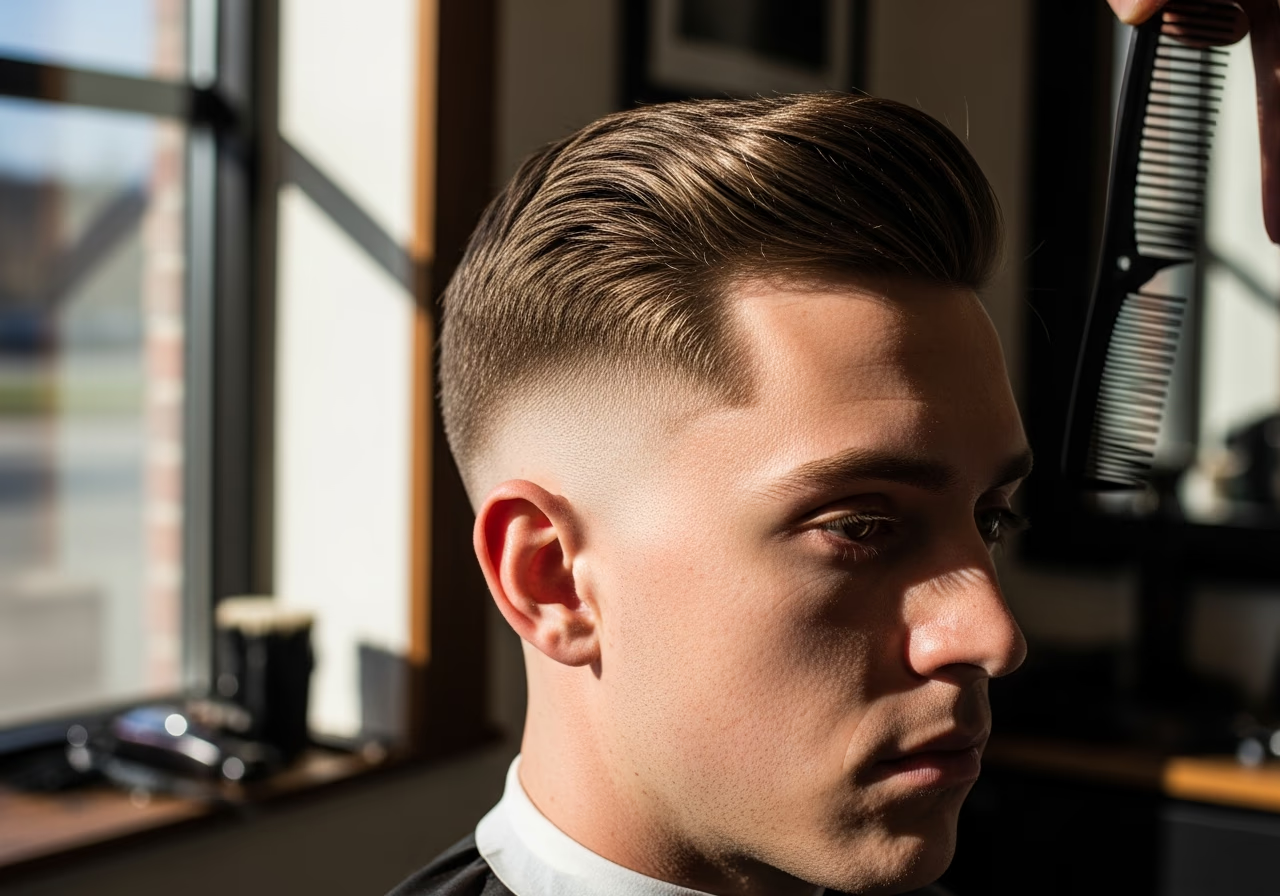
A soft low taper that leaves extra hair at the temples to fill the narrow spot above the cheekbones.
Best for: Diamond faces, straight or wavy hair
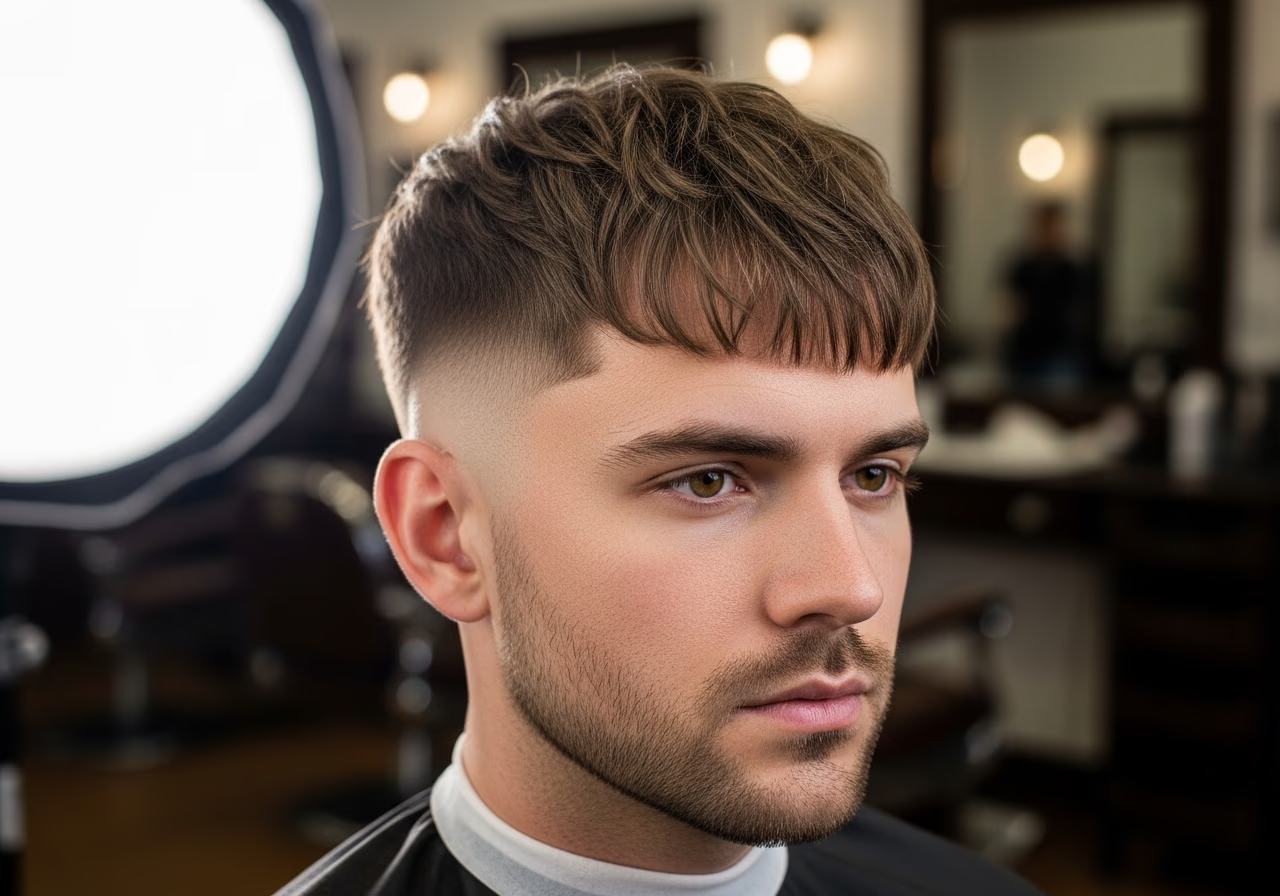
A center-parted curtain fringe swept outward over a low fade, adding width across a narrow forehead.
Best for: Diamond faces
These picks are about how hair behaves, not labels. Coily hair holds height, waves and designs, straight Asian hair needs lift at the root, gray hair turns coarser, and kids need cuts that grow out cleanly. See haircuts for Black men, Asian men, older men and boys.
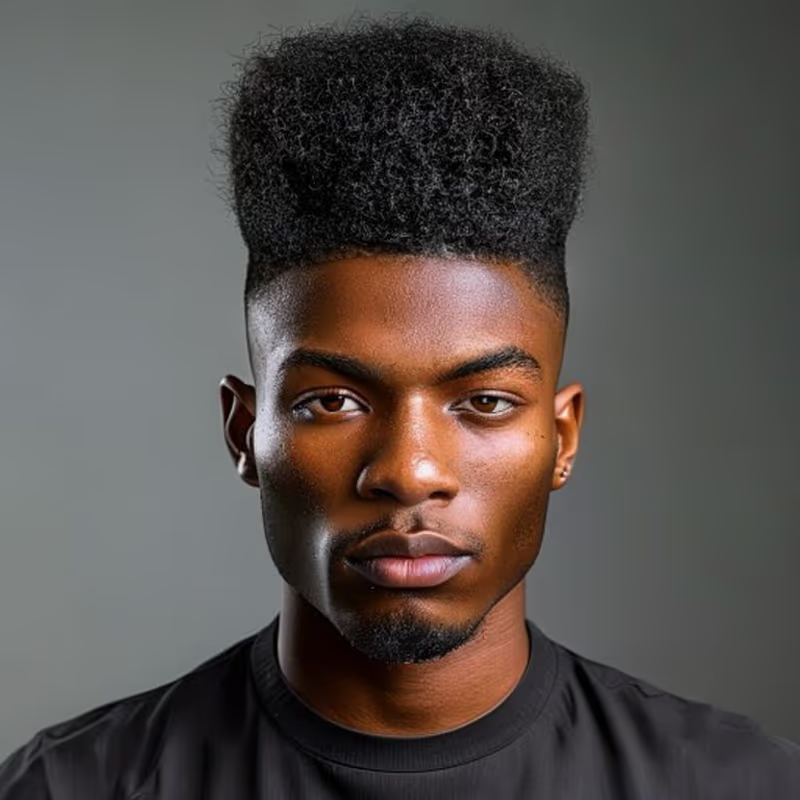
Sides faded close to the skin with the top picked tall and boxy, finished with a flat, geometric edge.
Best for: Thick, dense coily hair
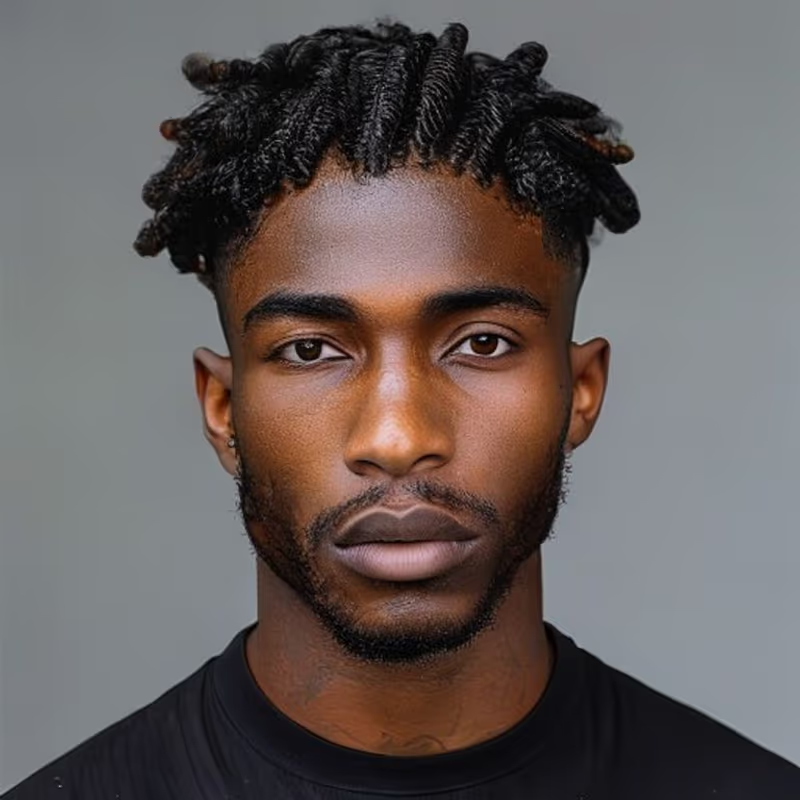
A curl sponge brushed in small circles turns short coily hair into even twists across the whole head.
Best for: Short coily or curly hair
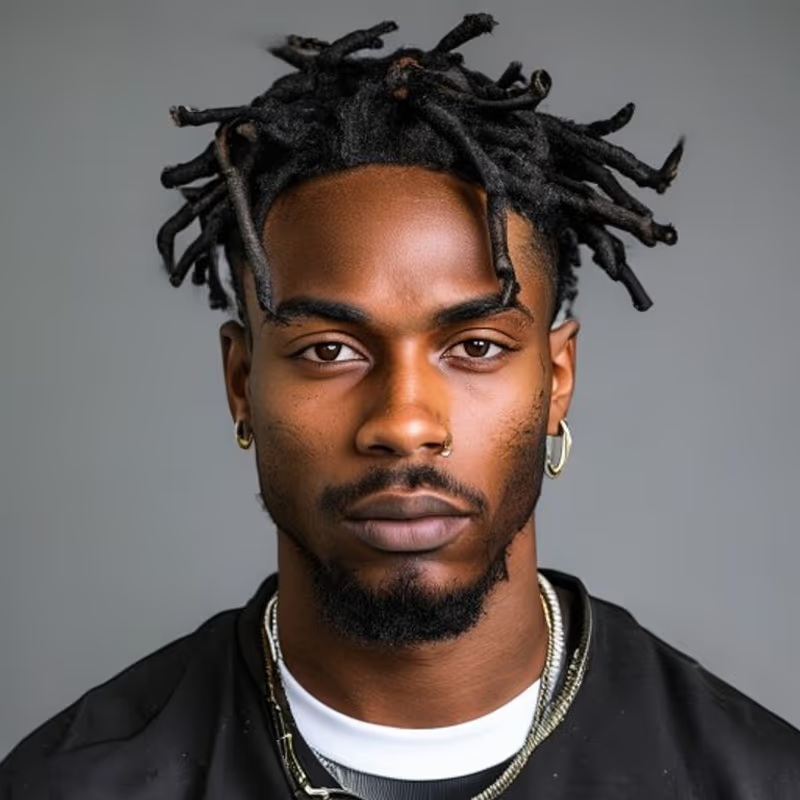
Small, even sections coaxed into the first coil stage of locs, the patient early months before the hair locks up.
Best for: Men starting locs
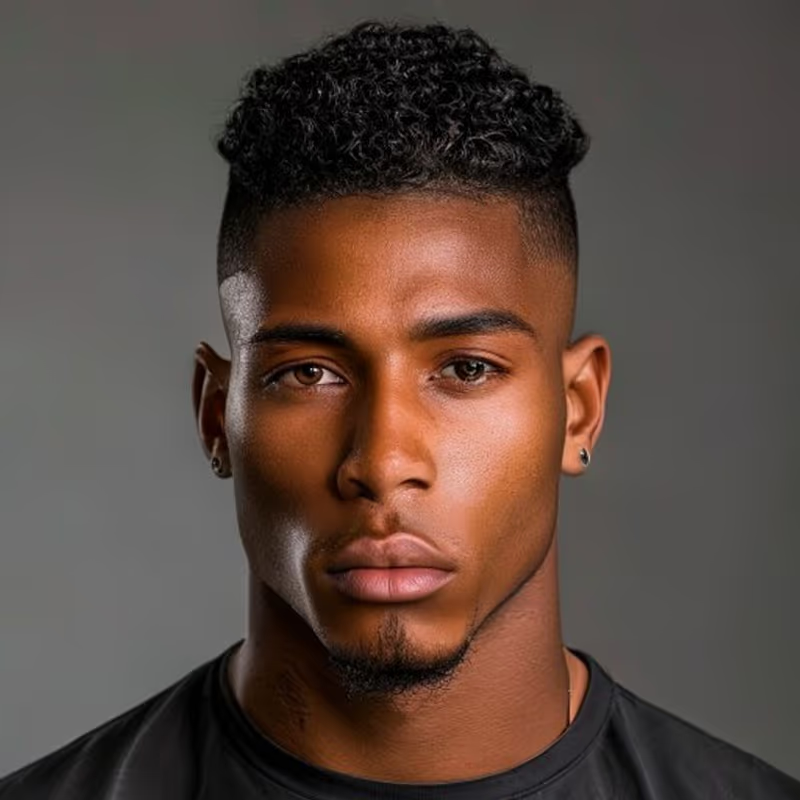
Tight temples and sideburns under a short top, so a brushed 360 wave pattern reads cleanly from every side.
Best for: Wavers with coarse coily hair
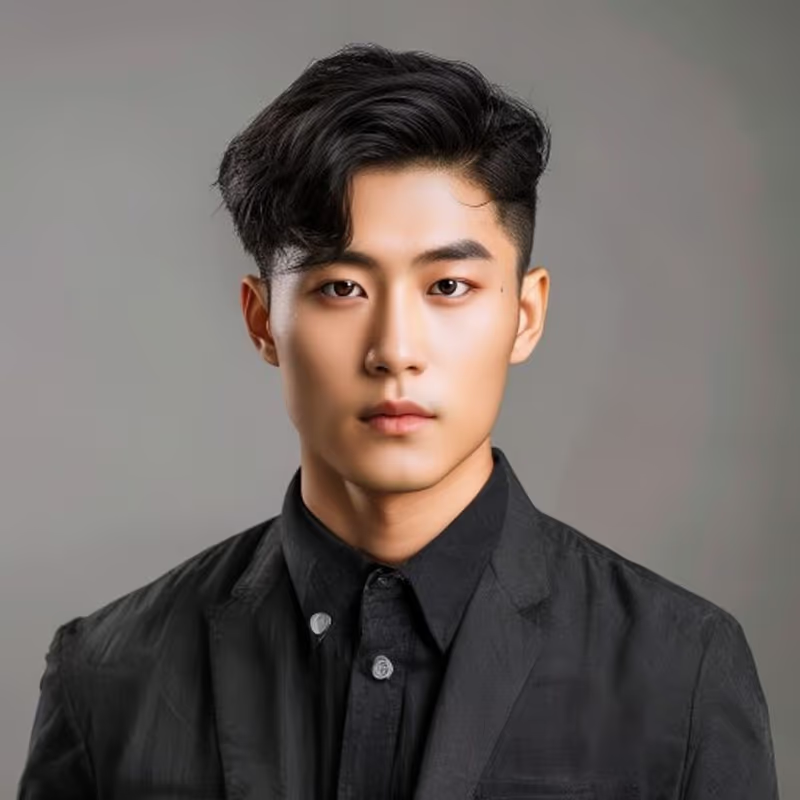
A tidy Korean cut with about three inches on top swept to one side and scissor-cut sides over the ears.
Best for: Office and formal wear
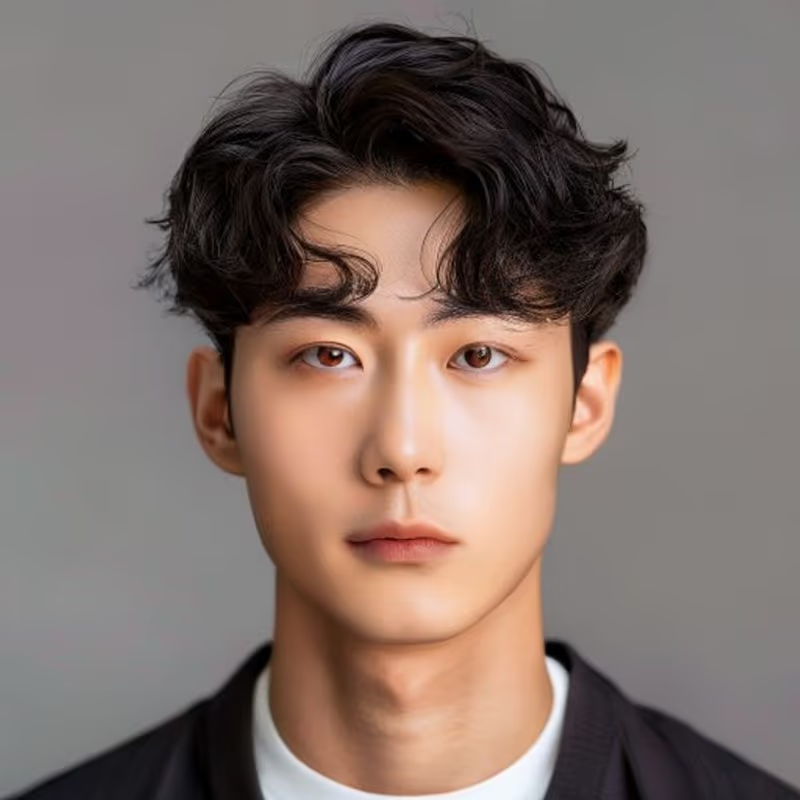
A gentle perm on the top only, adding loose waves to straight hair on a two block base with flat sides.
Best for: Straight hair that falls flat
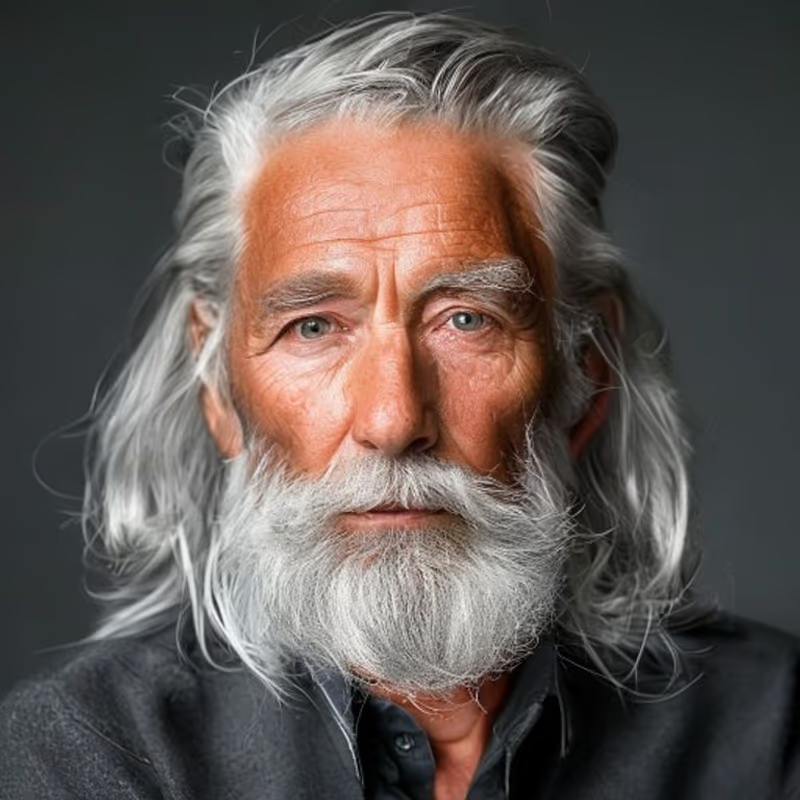
A classic-length side part with a sharp part line, since fully silver hair can look flat without one.
Best for: Older men with silver or white hair
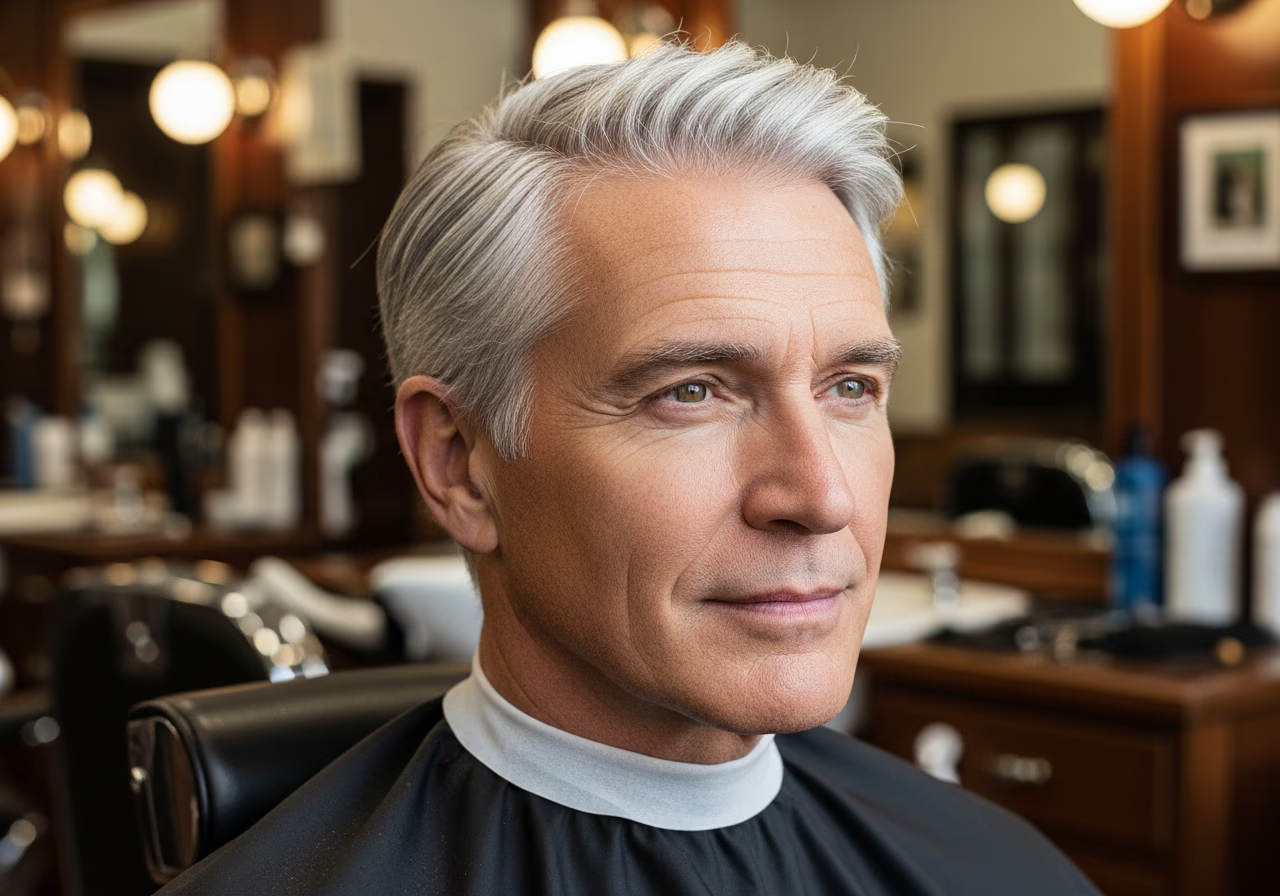
Clean graduated sides with enough length left on top to show the gray, held with a slightly heavier product.
Best for: Gray straight or wavy hair, any face shape
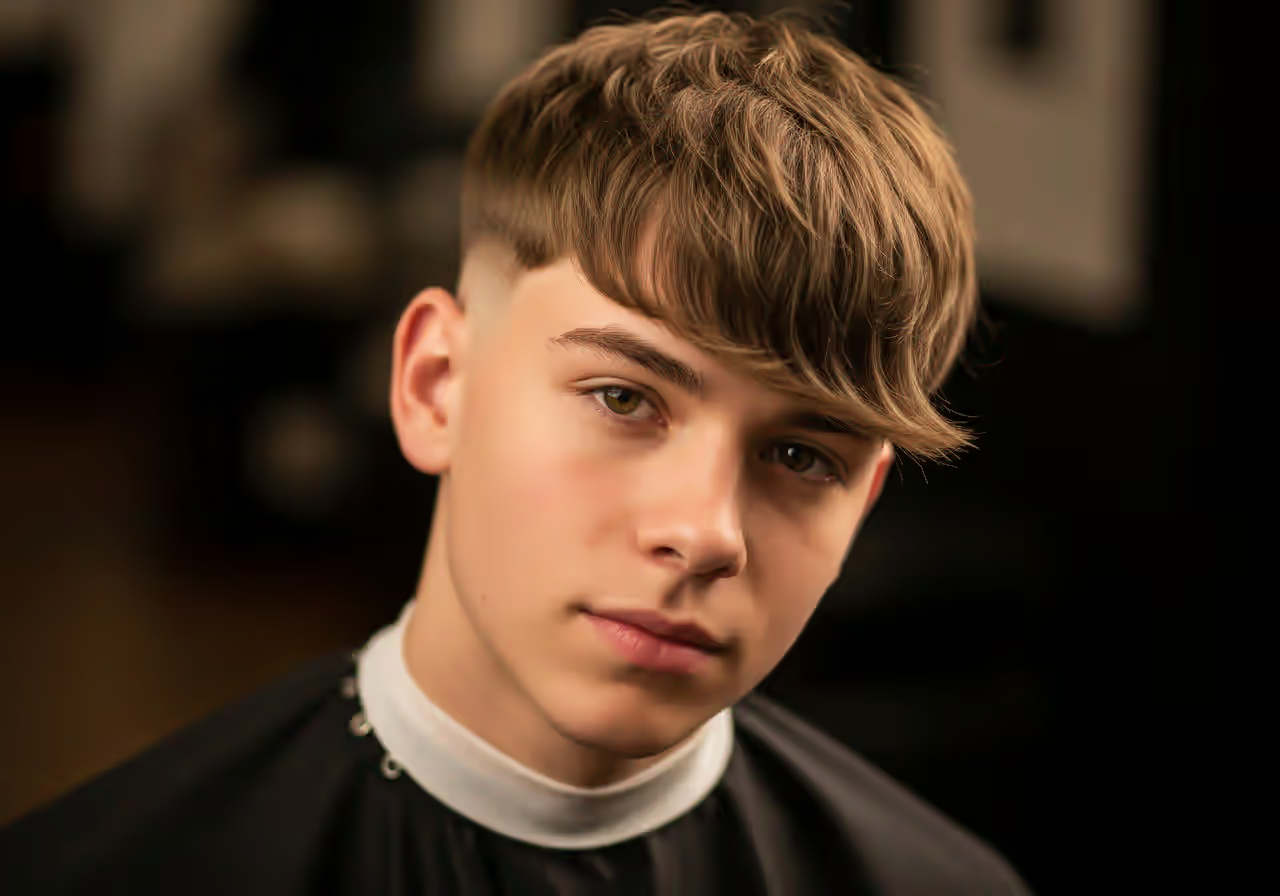
A short fringe and tapered sides that need no daily product and only a trim about every three weeks.
Best for: Boys and teens, straight or wavy hair
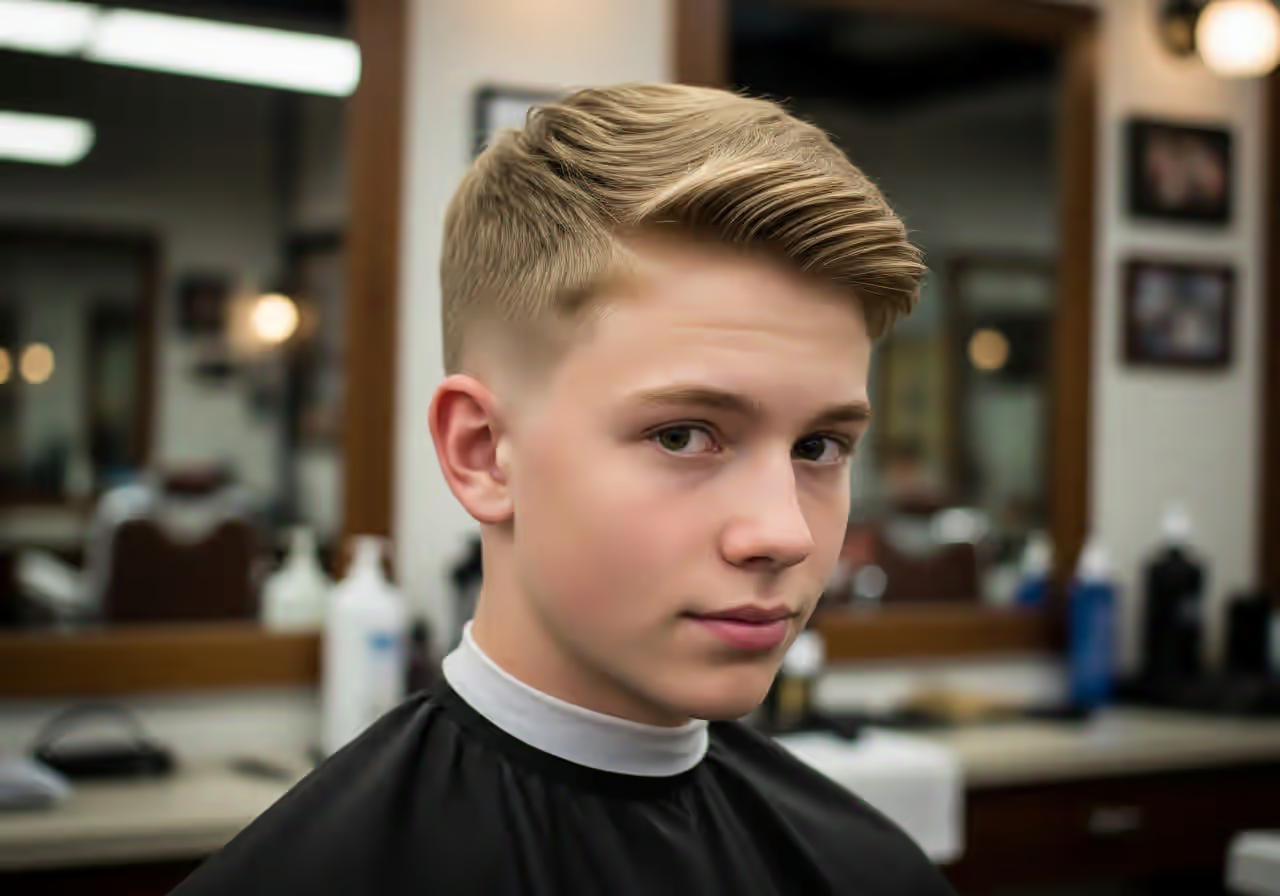
A gentle burst curve around the ear with a soft, fluffy top of about two inches, neat for school photos.
Best for: Boys with fine or straight hair
Hair designs are cut with a trimmer or razor into the shortest part of a fade, and they are a big part of urban haircuts paired with a skin fade and a line-up, and most blur after about two weeks. Color works the other way: bleach shows regrowth fastest on short dark hair, so plan the root touch-ups before the first appointment. Browse hair designs and hair colors for men.
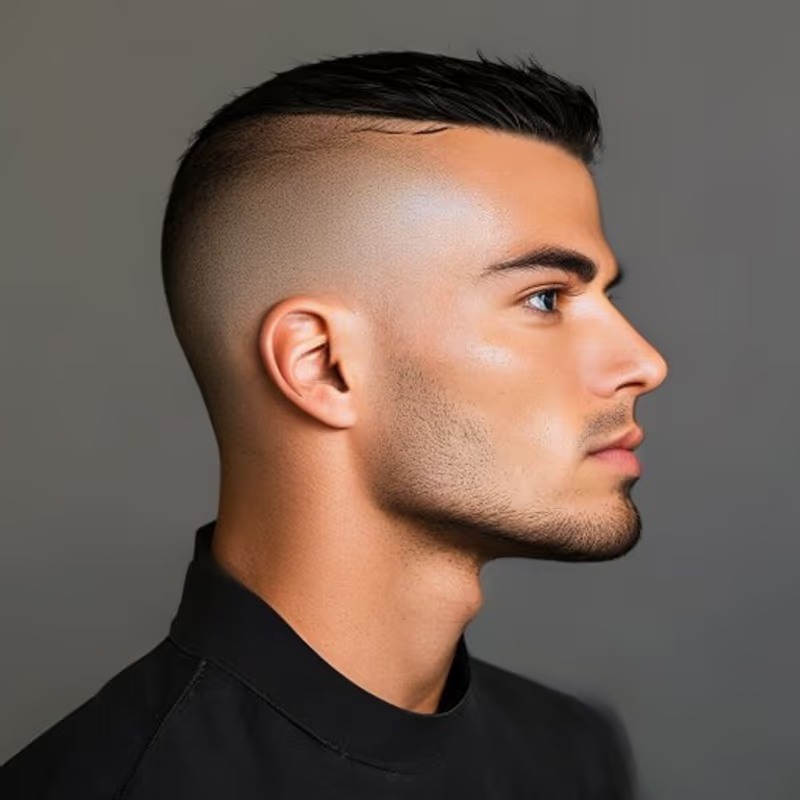
One shaved line running from the temple back above the ear, set in the shortest part of the fade.
Best for: A first design, grows out in about 2 weeks
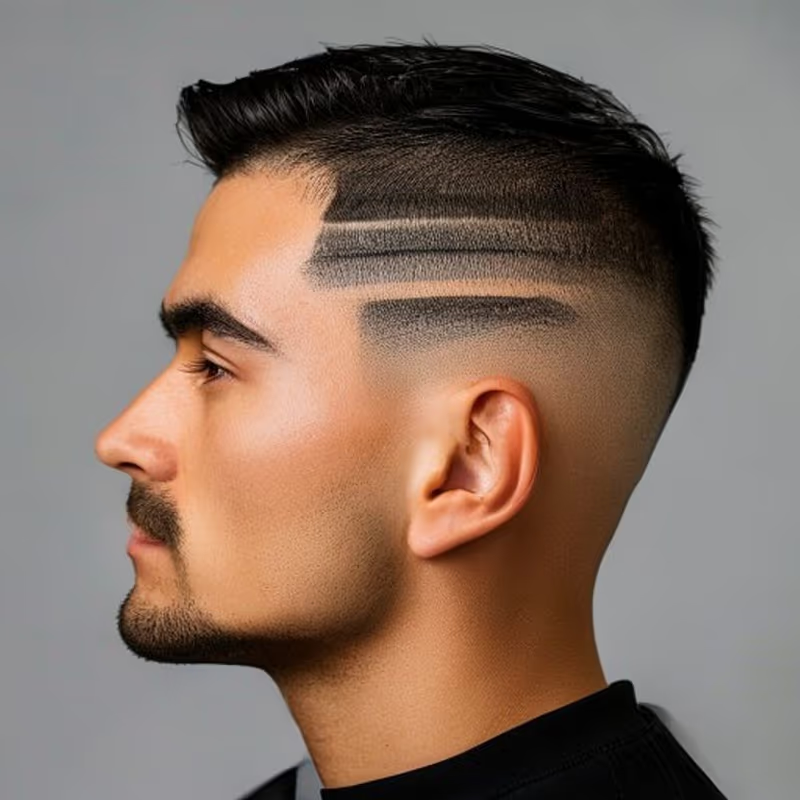
Sharp alternating points cut low on the side of a mid skin fade, running from the temple toward the back.
Best for: Men who want a playful design
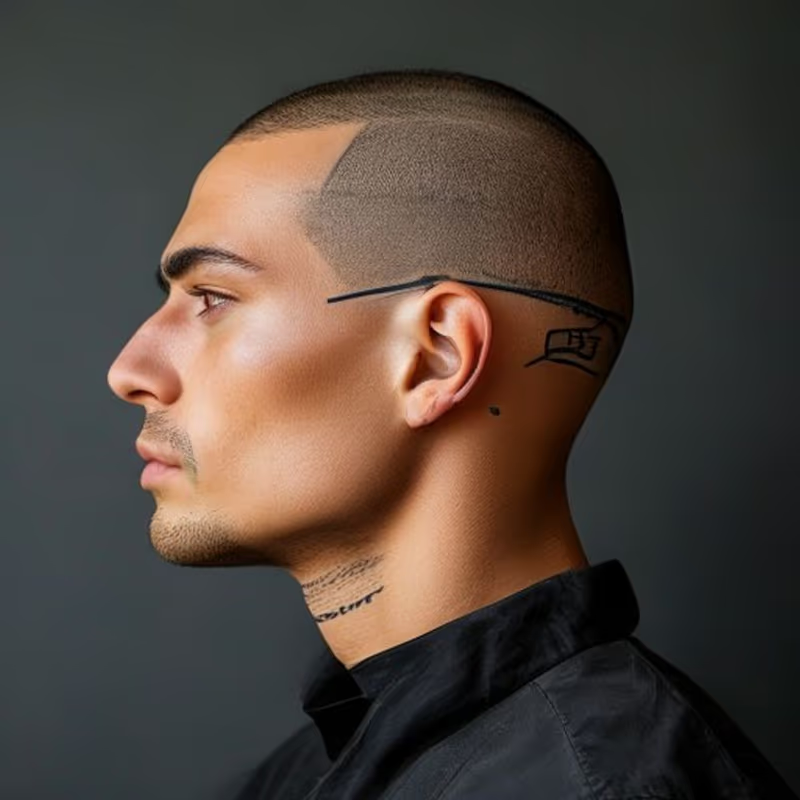
An even buzz used as a canvas, with clean lines running across the sides, the back and even the top.
Best for: The most space for a pattern
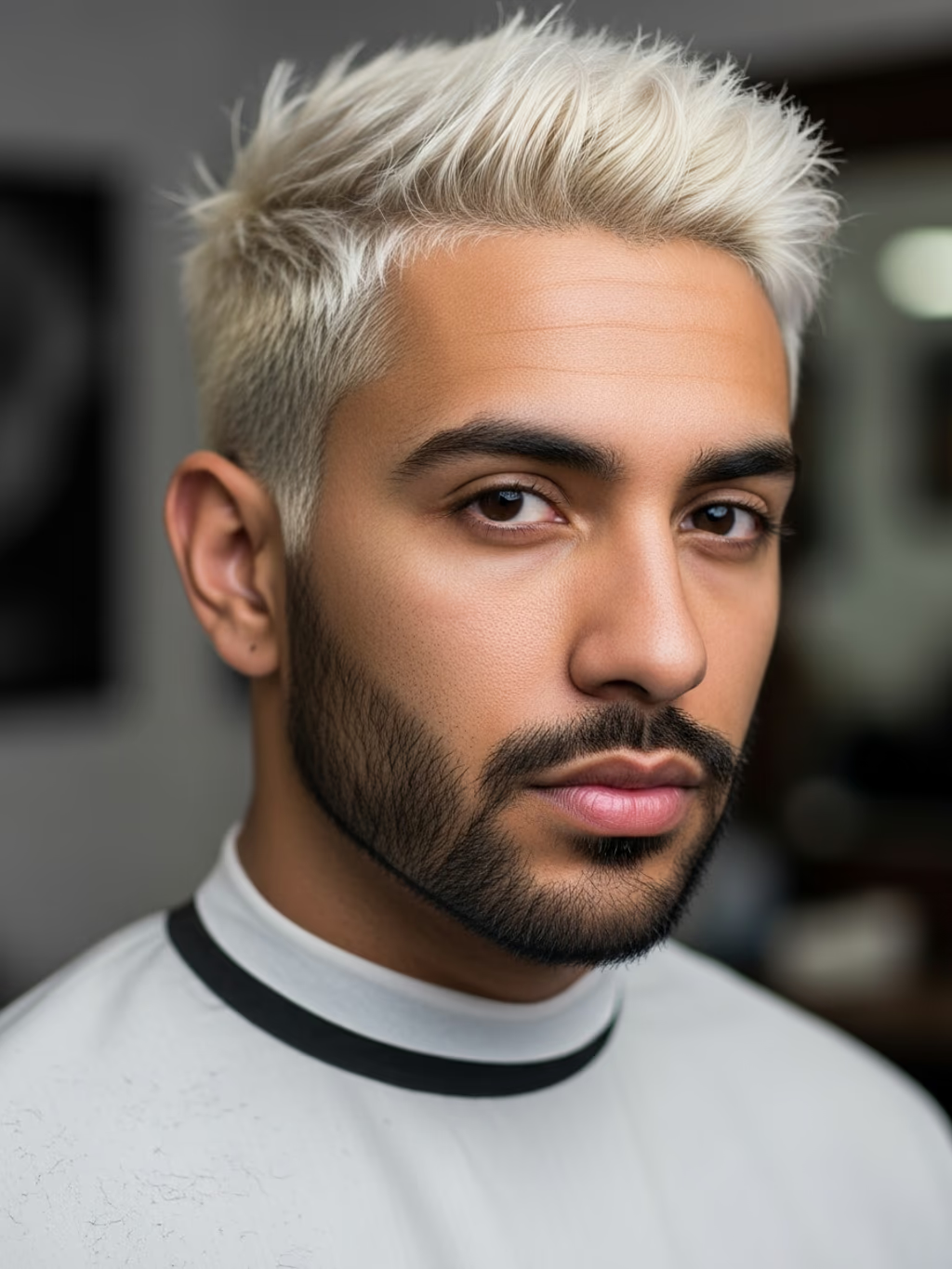
About an inch and a half of squared crop, bleached heaviest at the ends, over a #0.5 to #2 fade.
Best for: A first bleach with easy regrowth
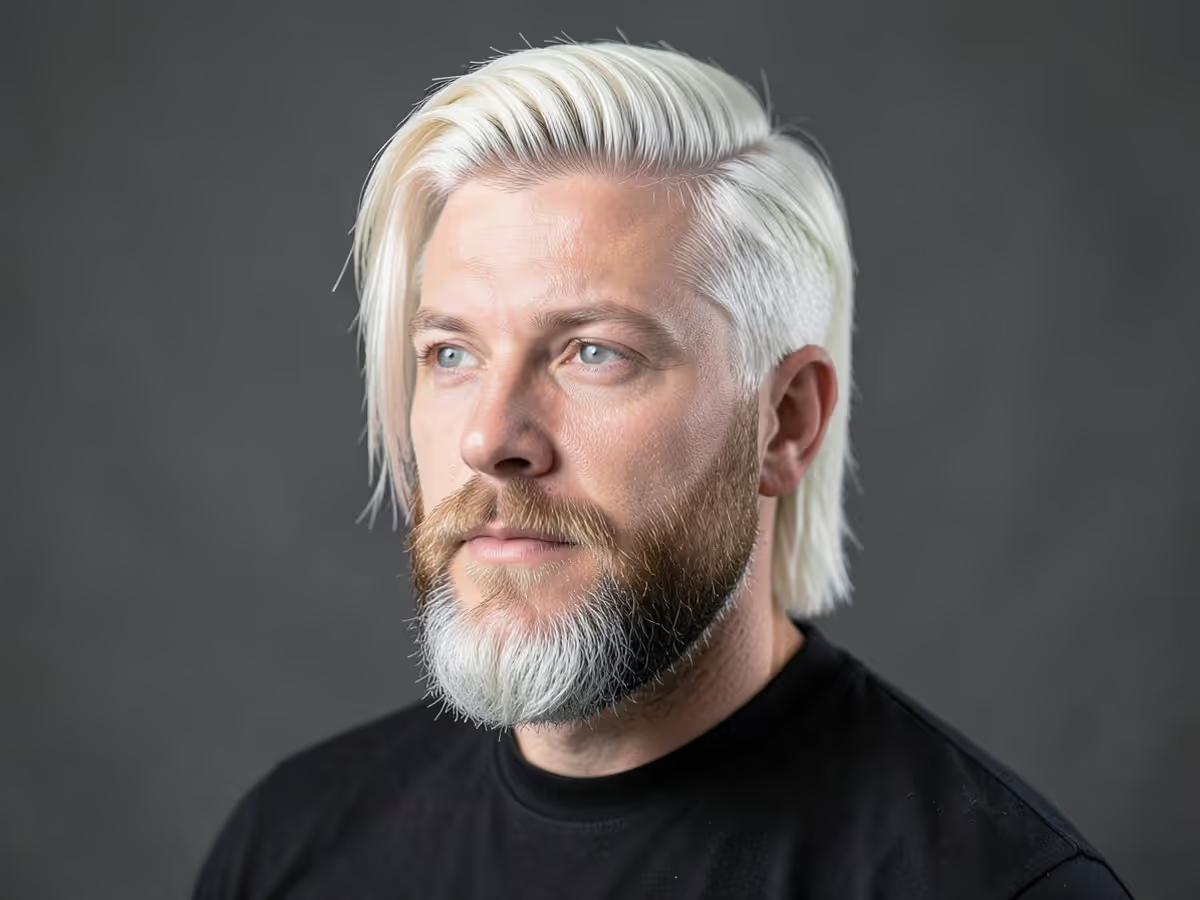
Four inches of platinum on top over #1 sides, with a root touch-up schedule set from day one.
Best for: Straight hair, men ready for root upkeep
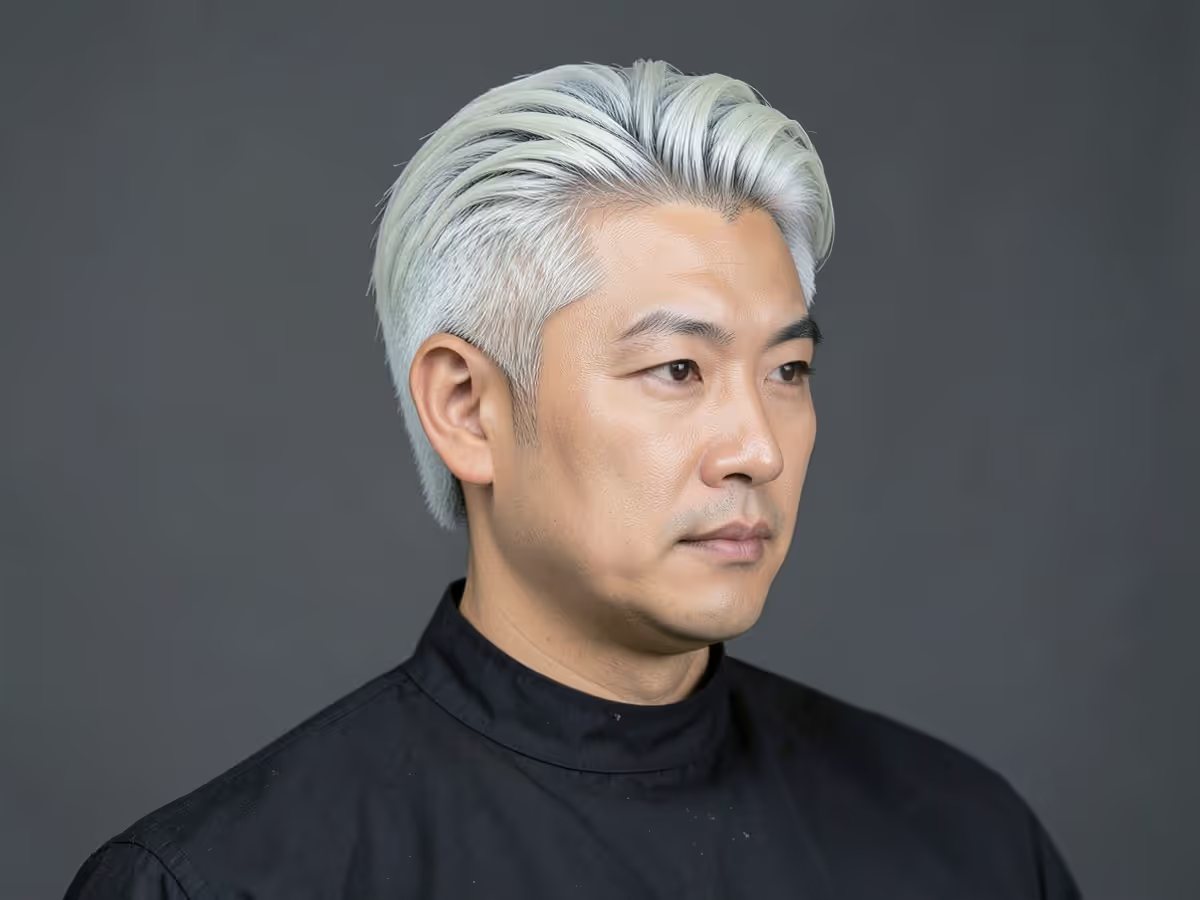
Bleach through the top layers of a four-inch swept-back top with #3 sides, so the color moves with the hair.
Best for: Long faces, lower-commitment color
If you need a new hairstyle and want haircut ideas that fit your face, hair and routine, four questions settle most decisions before you sit down in the chair. For a step-by-step version, use what haircut should I get.
Pull your hair back and find the widest point: forehead, cheekbones or jaw. Round faces want height on top, long faces want width at the sides. Find your face shape.
Straight hair holds parts and clean lines, wavy hair suits texture and flow, curls need bulk removed rather than length, and fine hair looks thicker kept short. Haircuts by hair type.
A skin fade looks sharp for about a week. Tapers, crops and longer cuts stretch to four or six weeks. Pick a cut that matches how often you will really book. How often to get a haircut.
Bring a photo of the back and sides, then give the guard number for the sides, the inches you want on top and where the fade starts. How to talk to your barber.
Every style above links to a full gallery, so this page works as a list of haircuts for men and a quick haircut catalog of the best haircuts for men, sorted by length, fade, texture and face shape. For the questions that come before and after the cut, start with one of these topic hubs or the most-read guides below.
Keep exploring
163
Haircut galleries and grooming guides
Pull up any style in the chair and show your barber its Ask Your Barber line. For the numbers behind the trends, from prices to the most requested cuts, see the men's hair statistics.
Back to Top