Low Fade Haircut:
What It Is and How to Ask for It
The lowest, most subtle fade height, explained: what it looks like, who it suits and the exact request to make.
By Jessica Hamilton · Updated
Quick answer: A low fade starts the short-to-long transition just above the ears and close to the neckline. Below that line the hair is clipped to a #0 or #0.5, or to skin, and the sides blend up into the longer top. It shows less contrast than a mid or high fade and usually needs a trim every 2 to 3 weeks.
Style images are AI-generated illustrations.
📚 Part of our Fades & Tapers guide hub, explore every related guide in one place.
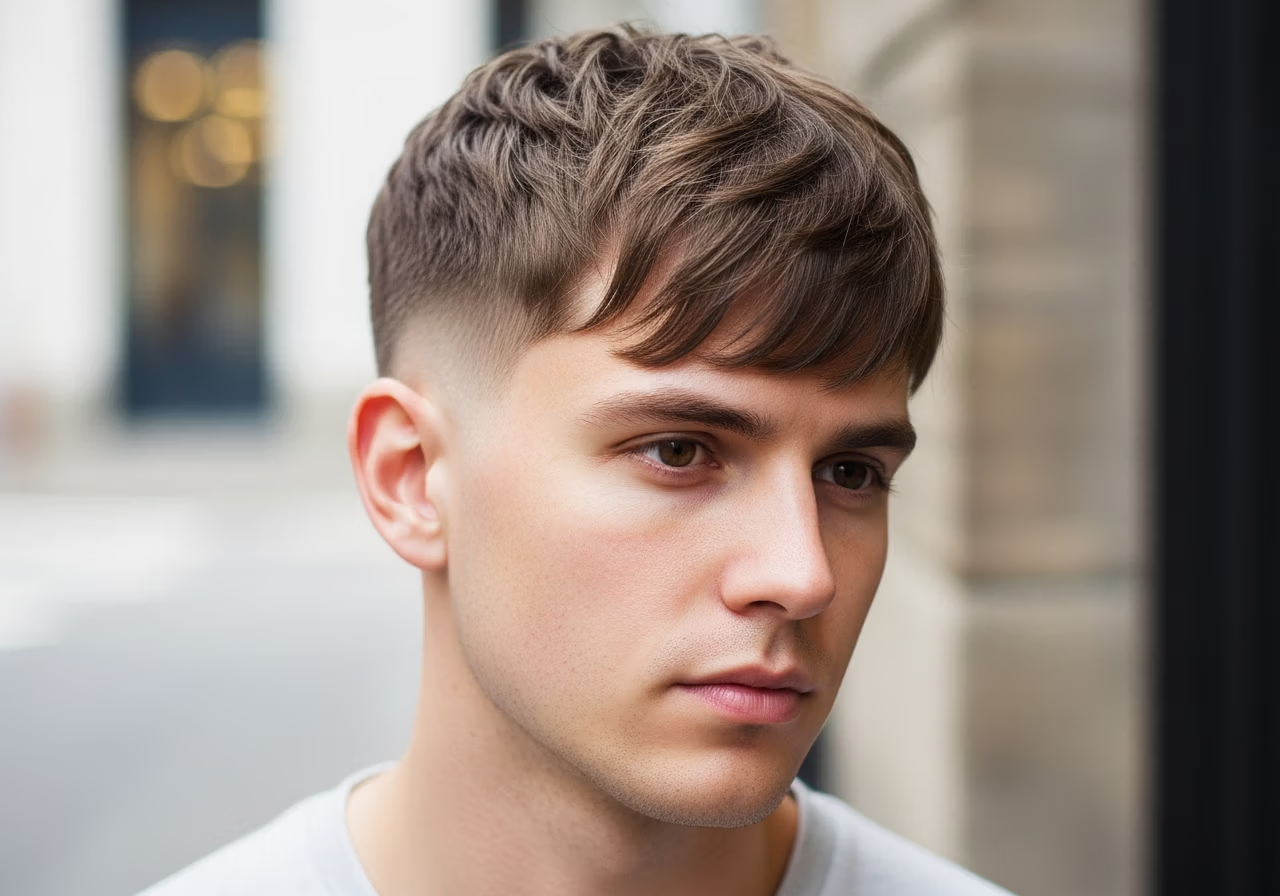
A low fade is a fade haircut where the short-to-long transition starts low on the head, just above the ears and close to the neckline. Below that line the hair is clipped very short, often to a #0.5 or down to skin, and above it the sides blend gradually into the longer top. Because the shortest section is small and sits near the hairline, a low fade gives a clean, sharp finish with less contrast than a mid or high fade, which makes it one of the easiest fades to wear every day.
What a Low Fade Looks Like
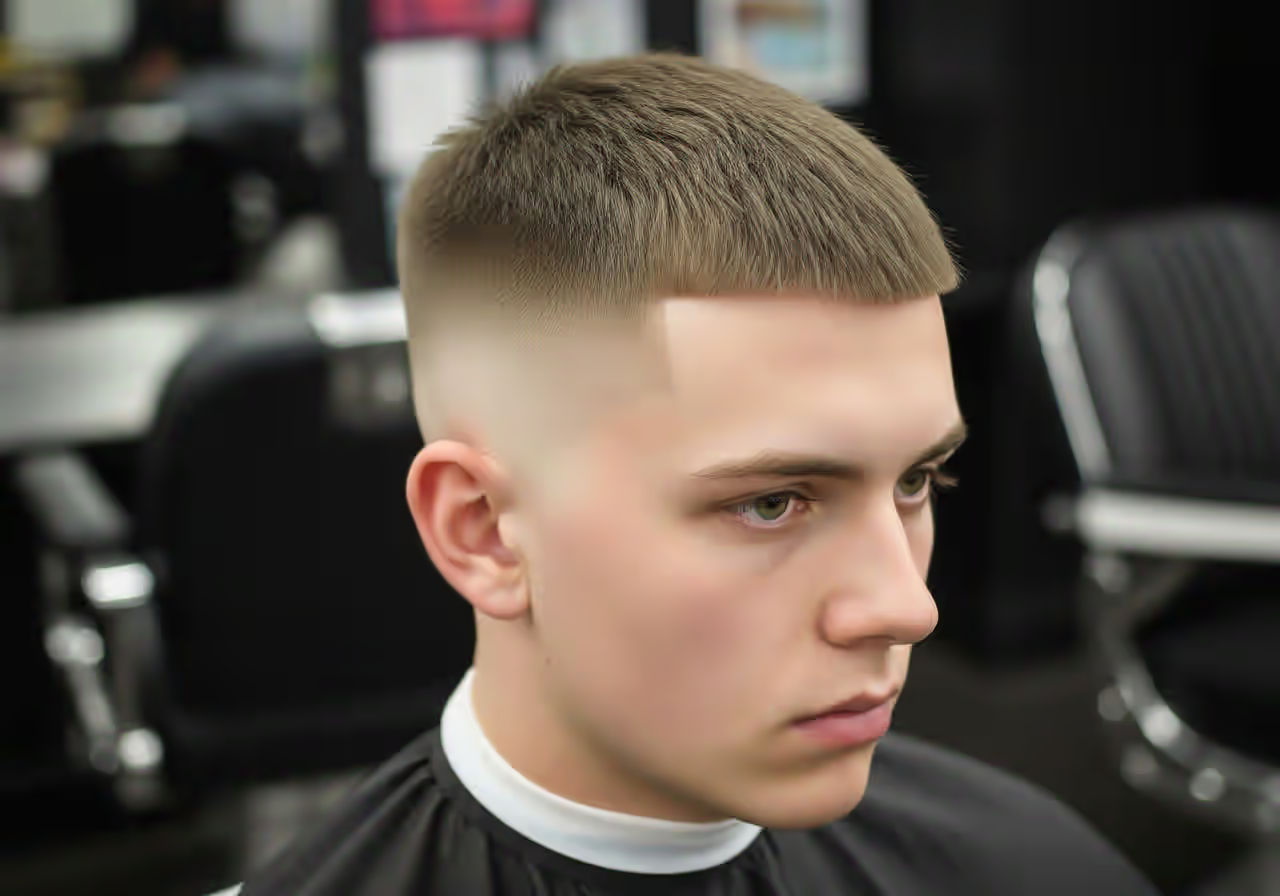
From the side, the bottom inch or so of hair around the ear and along the nape is very short, and the hair gets gradually longer as it moves up. Most of the sides keep visible length, usually what a #3 or #4 guard leaves. From the front, you may barely notice the fade at all; it shows mainly in profile and from behind. That is the appeal: the haircut looks finished and deliberate without the bold, shaved look of a high fade.
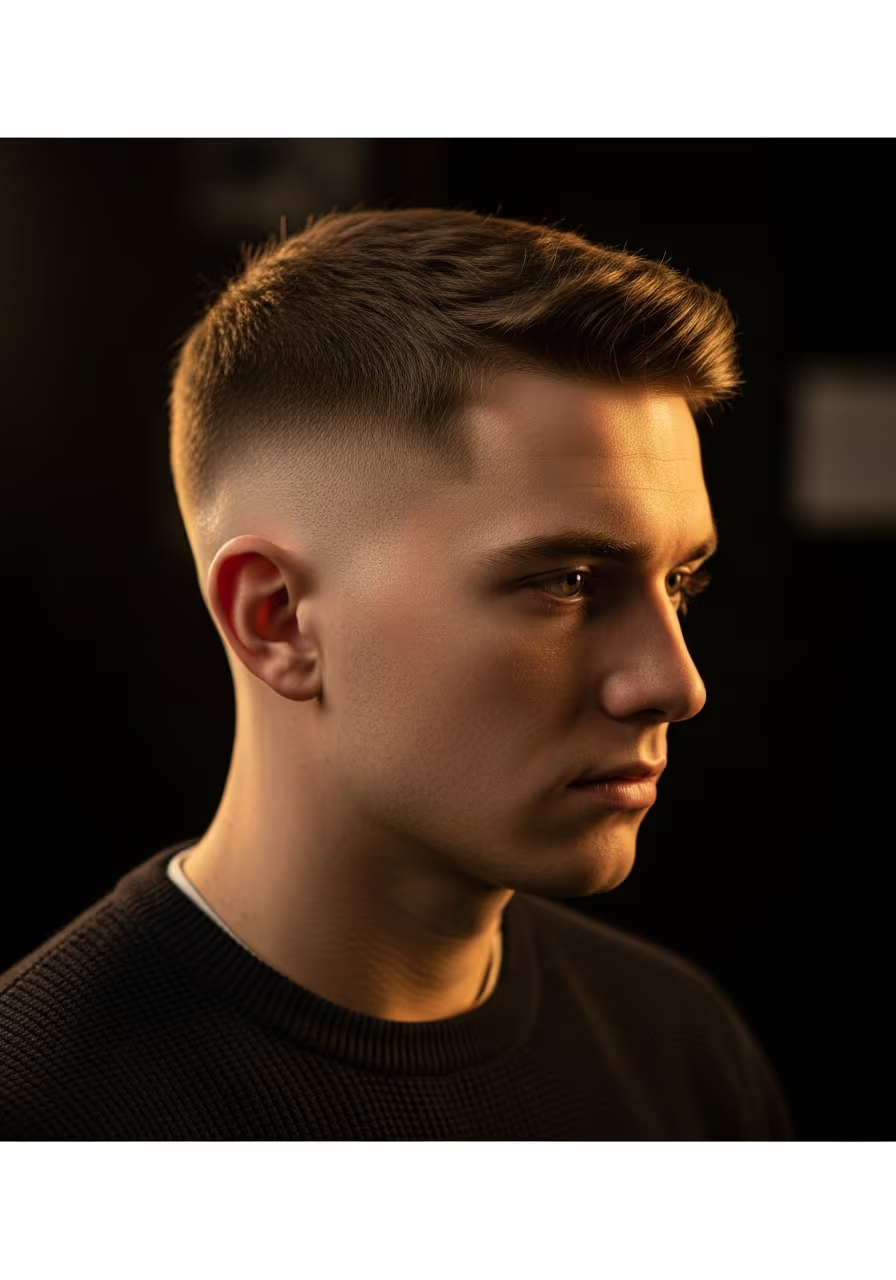
The fade follows a line around the head. On a standard low fade that line is roughly level all the way round. On a drop fade it curves down behind the ear toward the nape, and on a burst fade it fans out in a half circle around the ear only. All three can be done low.
Low Fade vs Low Taper vs Mid Fade
The terms are close, so here is how they compare. A low taper only shortens the outline (sideburns and nape) and keeps more length on the sides. A low fade carries the short section around the whole head at a low height and often goes shorter. A mid fade moves the starting point up to the temple, which shows more contrast. Our taper fade overview and fade types explained go into more detail.
| Cut | Where it starts | Shortest length | Contrast | Typical trim interval |
|---|---|---|---|---|
| Low taper fade | Edges only, above ear and nape | #0.5 to #1 | Very low | 3 to 4 weeks |
| Low fade | Just above the ear, all the way round | #0 to #0.5, or skin | Low | 2 to 3 weeks |
| Mid fade | Around the temple | #0 to #0.5, or skin | Medium | 2 to 3 weeks |
| High fade | Near the top of the sides | #0 or skin | High | 1 to 2 weeks |
Low Fade Variations
Low skin fade
The same height, but the bottom is taken down to bare skin with a foil shaver or trimmer. It is the sharpest version of a low fade and the one that shows regrowth soonest, often within a week. Our skin fade guide covers skin fades at every height, and low skin fade with side part shows a popular office-friendly version.
Low drop fade
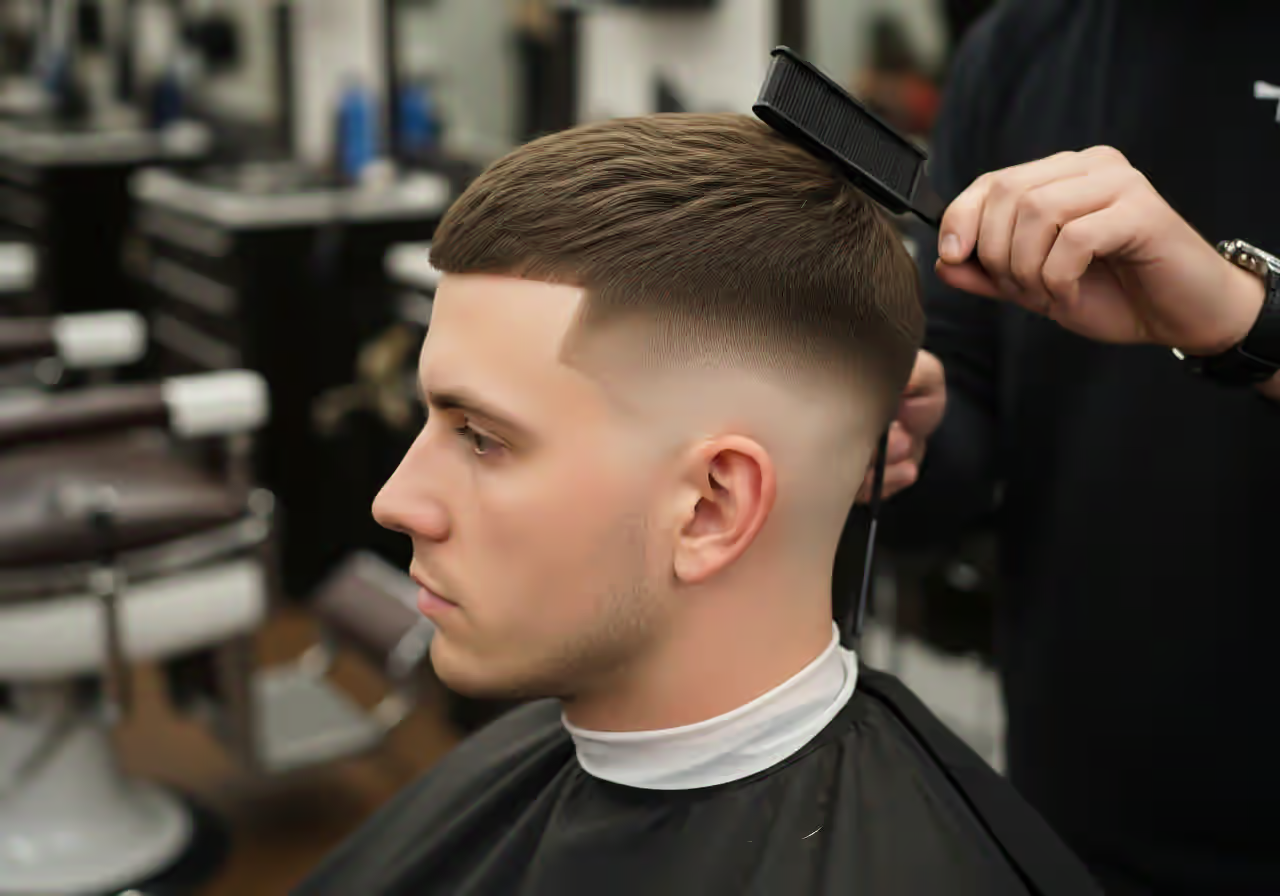
The fade line dips down behind the ear, following the curve of the head. It looks good from the back and suits curly and textured tops. See the drop fade guide.
Low burst fade
The fade arcs around the ear and leaves length at the nape. It is often paired with a mohawk, a faux hawk or a modern mullet. See the burst fade guide.
Low temple fade
The fade sits at the temples and sideburns only, often with a sharp line-up. It is common on short natural hair and waves. See the temple fade guide.
Low fade with a curly or coily top
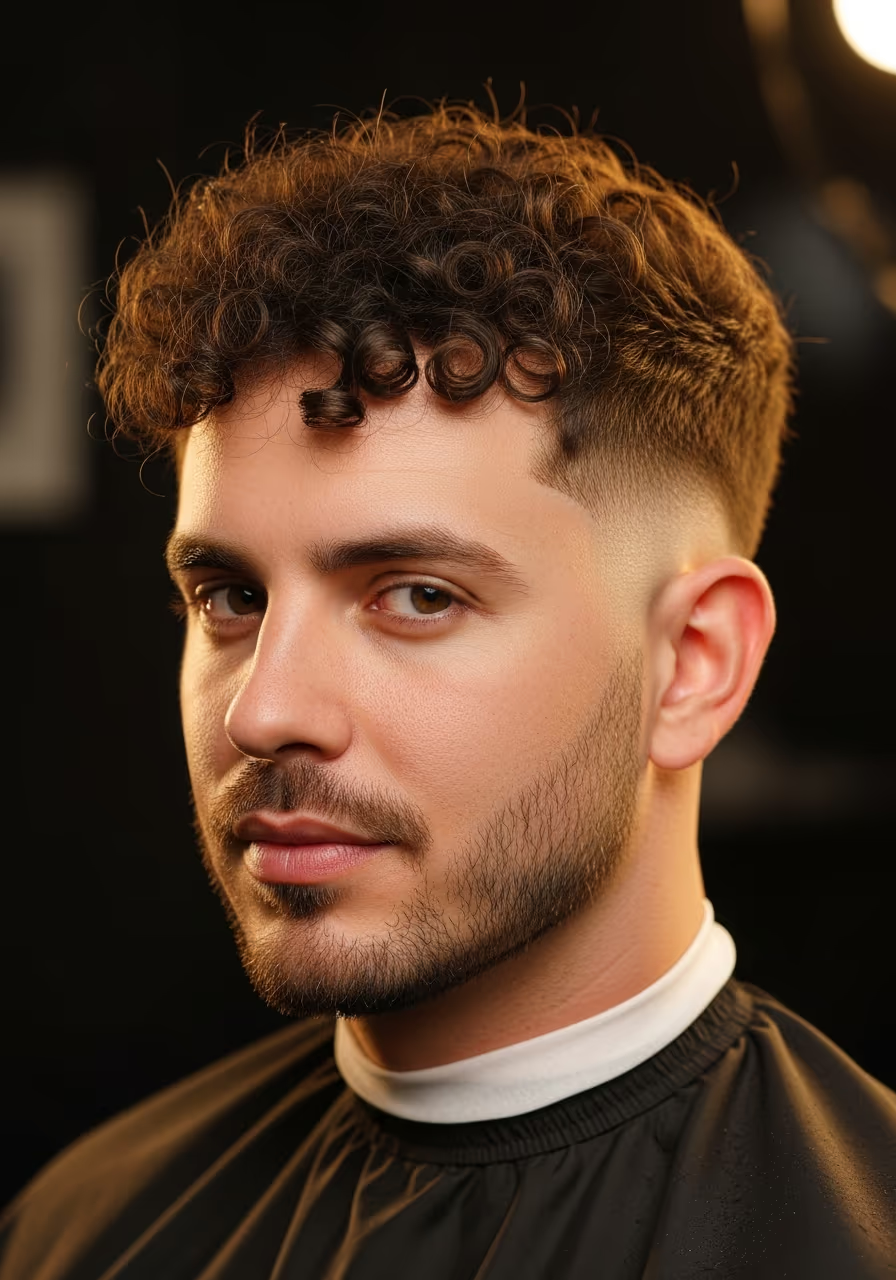
A low fade keeps curly hair tidy at the edges without taking away the volume that gives curls their shape. It is a strong choice for curly hair, afros and coily hair.
Best Styles to Wear on Top
Almost any short or medium top works with a low fade. The fade is quiet, so the top is what people notice. Good pairings include:
- Textured crop and French crop: short and forward, very little styling.
- Crew cut and Ivy League: classic short cuts that stay smart for longer.
- Side part and comb over: the most work-friendly options.
- Quiff and pompadour: more height on top; a low fade keeps the look grown-up.
- Buzz cut: a low fade adds shape to an otherwise uniform length.
- Curtains and textured fringe: longer fronts that look cleaner with tight edges.
Who a Low Fade Suits
Face shape
A low fade leaves width on the sides, so it suits faces that do not need extra length. It works especially well for long, oval, heart and diamond faces. Men with round faces can wear it too but usually look better with some height on top, and a mid fade is often the better fit. Our face shape guides hub links to advice for each shape, starting with how to figure out your face shape.
Hair type
- Straight hair: the blend is very visible, so the barber needs to be precise. A low fade is the most forgiving height for straight hair because the transition is short.
- Thick hair: a low fade removes bulk at the bottom so the sides do not puff out as they grow. See haircuts for thick hair.
- Wavy and curly hair: the texture softens the blend and hides small imperfections. See wavy hair styles.
- Fine or thinning hair: a low fade tends to look fuller than a high fade because less scalp shows on the sides. See styling thinning hair.
Lifestyle
If you work somewhere with a conservative dress code, a low fade is usually the safest fade to choose; our guide to professional office haircuts has more ideas. It is also a good first fade if you have never had one, because the result is not dramatic and grows out gradually.
Exactly What to Ask Your Barber
Use a height, a bottom guard, the guard on the sides and a top length. These numbers follow the standard clipper guard chart, where a #1 leaves about 3 mm and a #3 about 10 mm.
| Version | Bottom | Blend | Sides | Top |
|---|---|---|---|---|
| Classic low fade | #0.5 | #1 to #2 | #3 or #4 | Scissors, 2 to 4 inches |
| Low skin fade | Skin (foil or razor) | #0.5 to #2 | #3 | Scissors or clipper over comb |
| Low fade with buzz top | #0 or #0.5 | #1 | #2 | #2 to #4 all over |
| Low drop fade | #0.5 or skin | #1 to #2, curving behind ear | #3 | Scissors, any length |
Example request
"Low fade, starting just above the ear and staying low at the back. Half guard at the bottom, blend through a #1 and #2 into a #3 on the sides. Scissors on top, about three inches, so I can style it into a textured crop. Natural neckline, no hard line."
Bring a photo taken from the side and back, not just the front, because that is where a low fade shows. If you want a sharp hairline, ask for a line-up; if not, say "keep the hairline natural". Our guides on how to talk to your barber and line-up vs edge-up cover both.
How to Style a Low Fade
The fade itself needs no product. Style the top according to its length:
- Start with clean, towel-dried hair.
- For short textured tops, rub a pea-sized amount of matte clay between your palms and work it in from the back to the front.
- For longer tops (quiffs, pompadours, side parts), blow-dry in the direction you want the hair to sit before adding product.
- For curls, apply a curl cream or leave-in conditioner to wet hair, scrunch and let it dry without touching it.
- Finish by checking the sides in a mirror. If the top is pushing down over the fade, use a little less product so the hair sits higher.
Read pomade vs clay vs wax if you are choosing a product for the first time.
Maintenance and Cost
A low fade usually looks neat for two to three weeks, a little longer than a mid or high fade because the short section is small. A low skin fade shows regrowth sooner, often after about a week. Keeping the neckline tidy at home stretches the time between visits; see how to trim your own neckline.
Most shops price a low fade as a standard cut or slightly above. Our haircut cost guide puts a typical neighborhood barbershop cut in the $25 to $45 range, with location being the biggest factor. A skin finish usually costs a little more; see skin fade cost.
If the fade comes out uneven or with visible lines, see how to fix an uneven fade and why a fade looks patchy.
Frequently Asked Questions
Q1: What is a low fade haircut?+
Q2: What is the difference between a low fade and a low taper?+
Q3: What number is a low fade?+
Q4: Is a low fade good for a round face?+
Q5: How long does a low fade last?+
Q6: Is a low fade professional?+
Make us a Preferred Source on Google
See our latest articles first in your Google Search & AI Overviews.