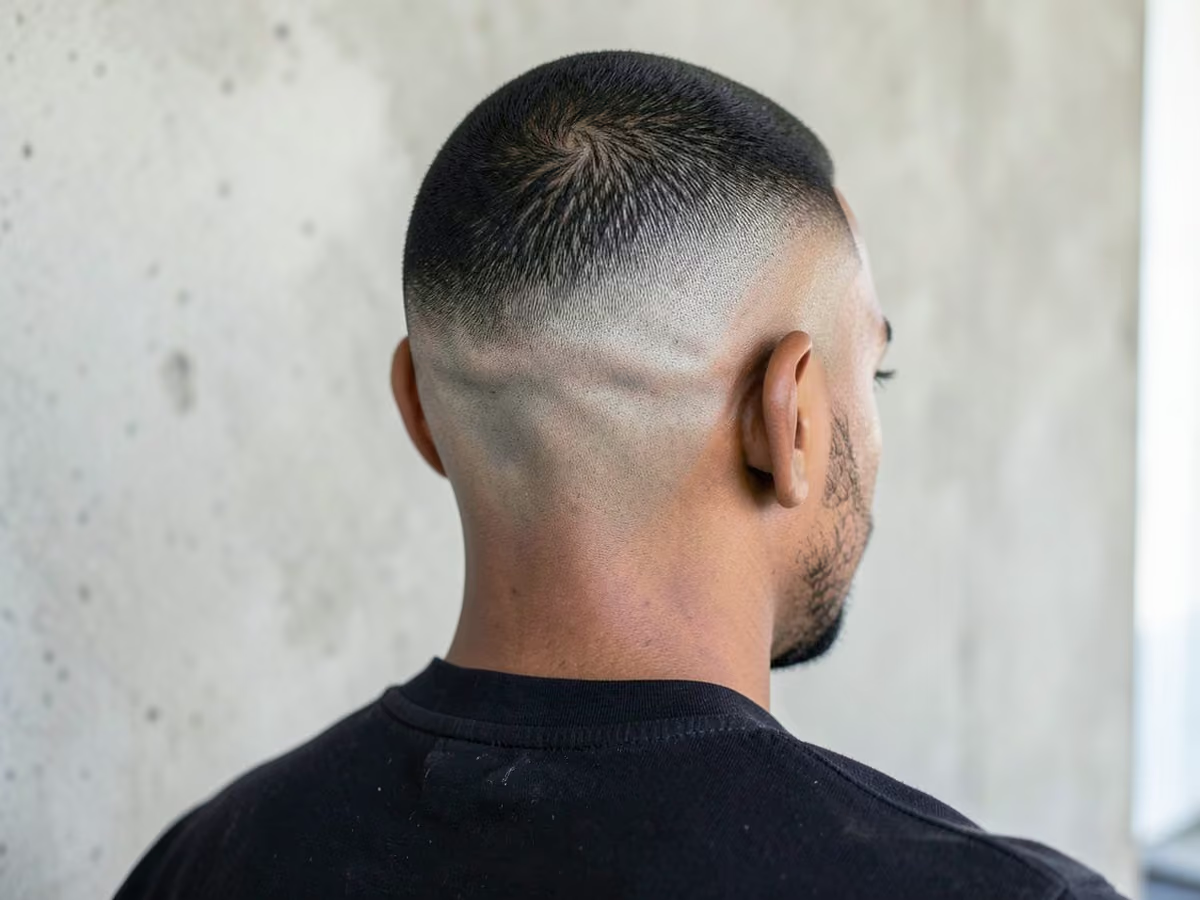
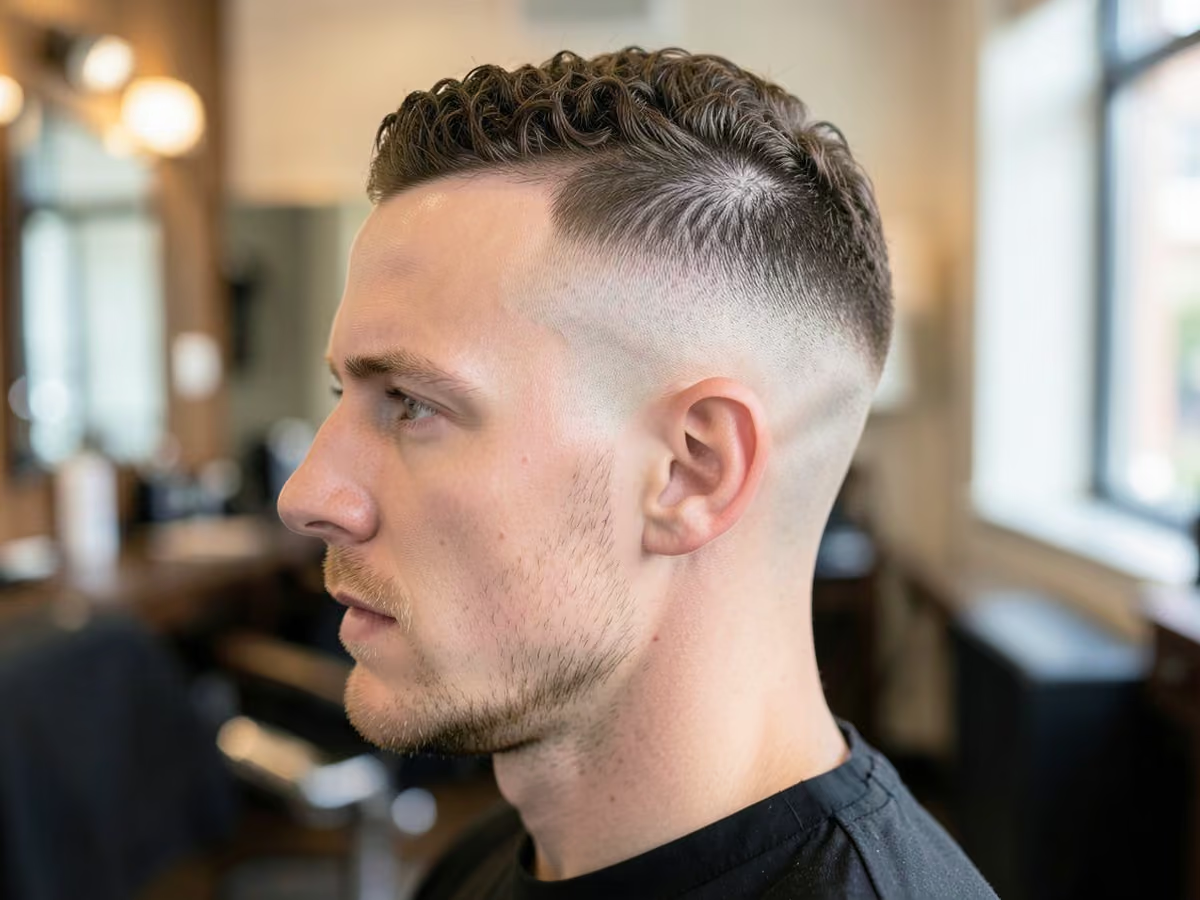
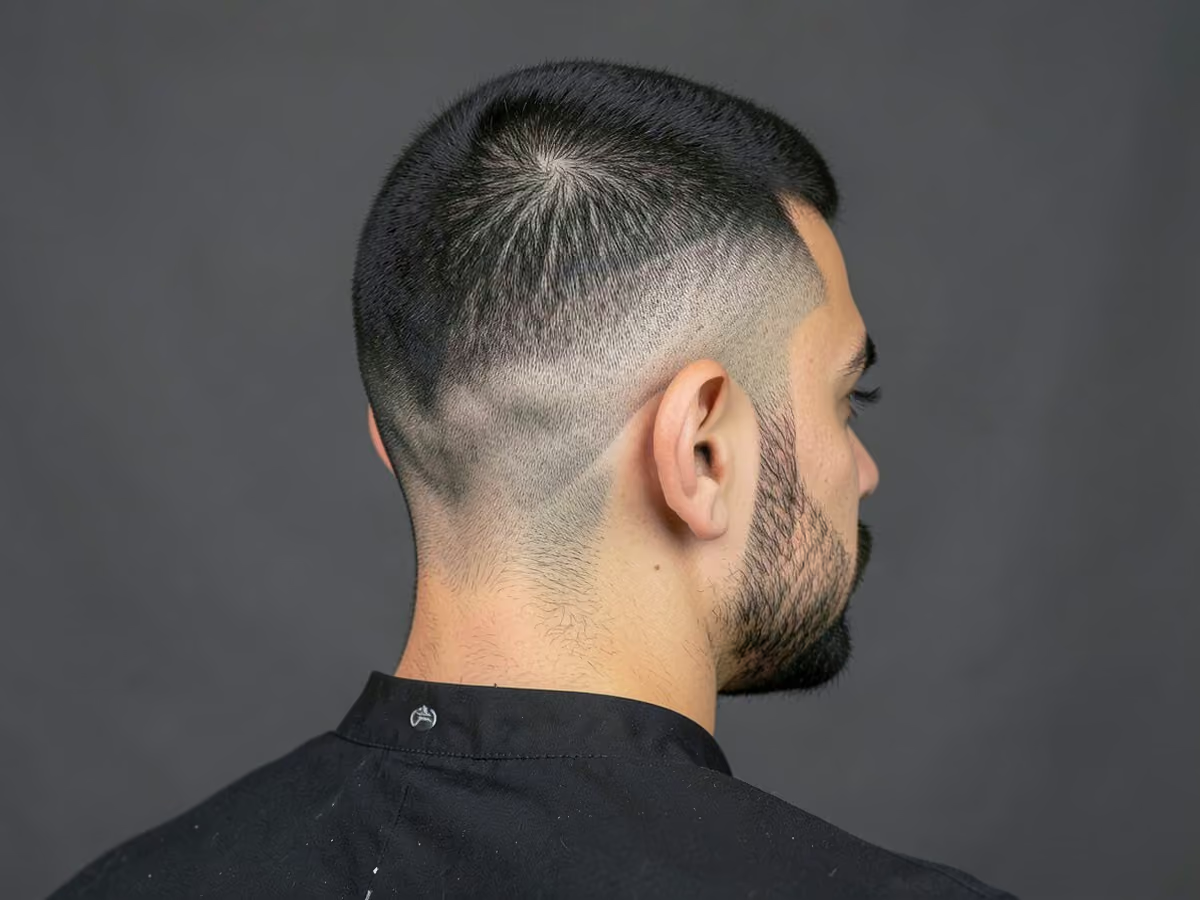
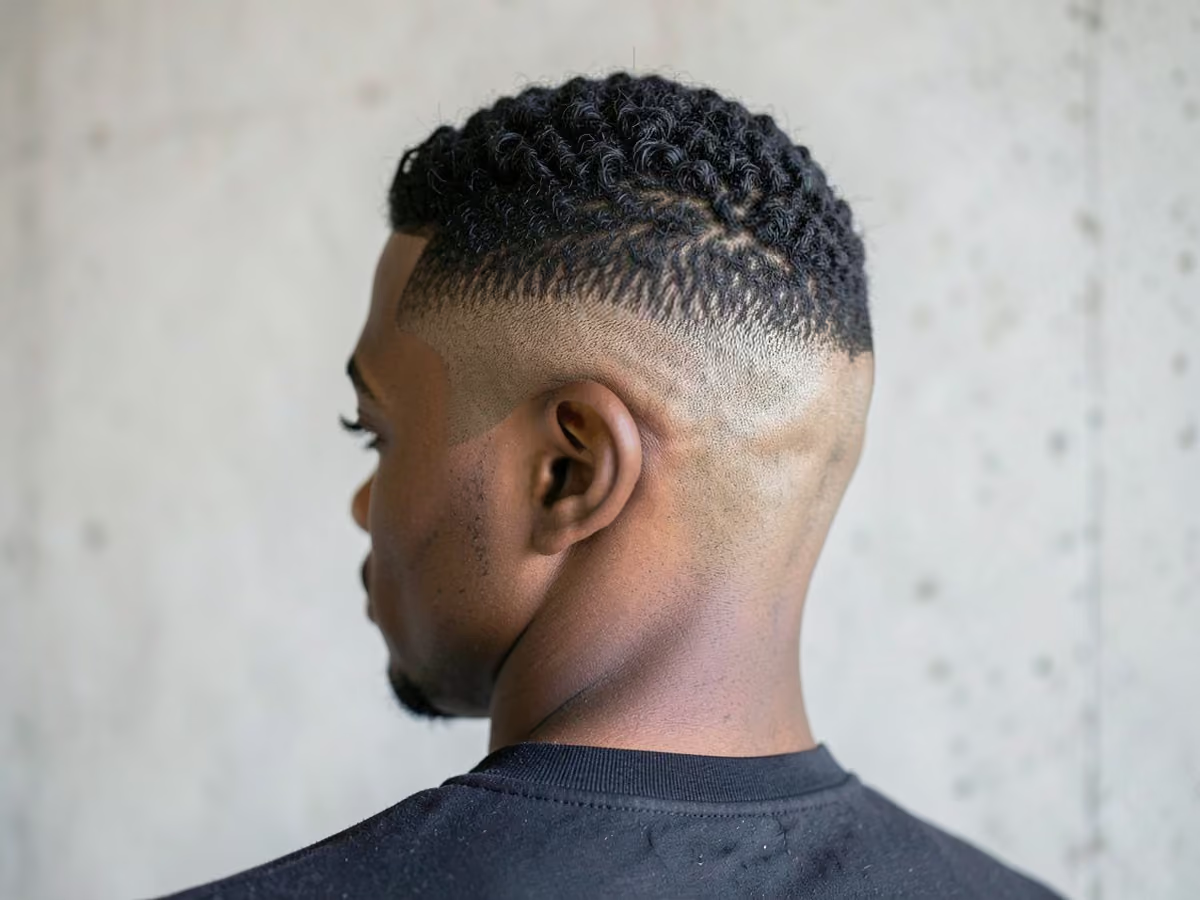
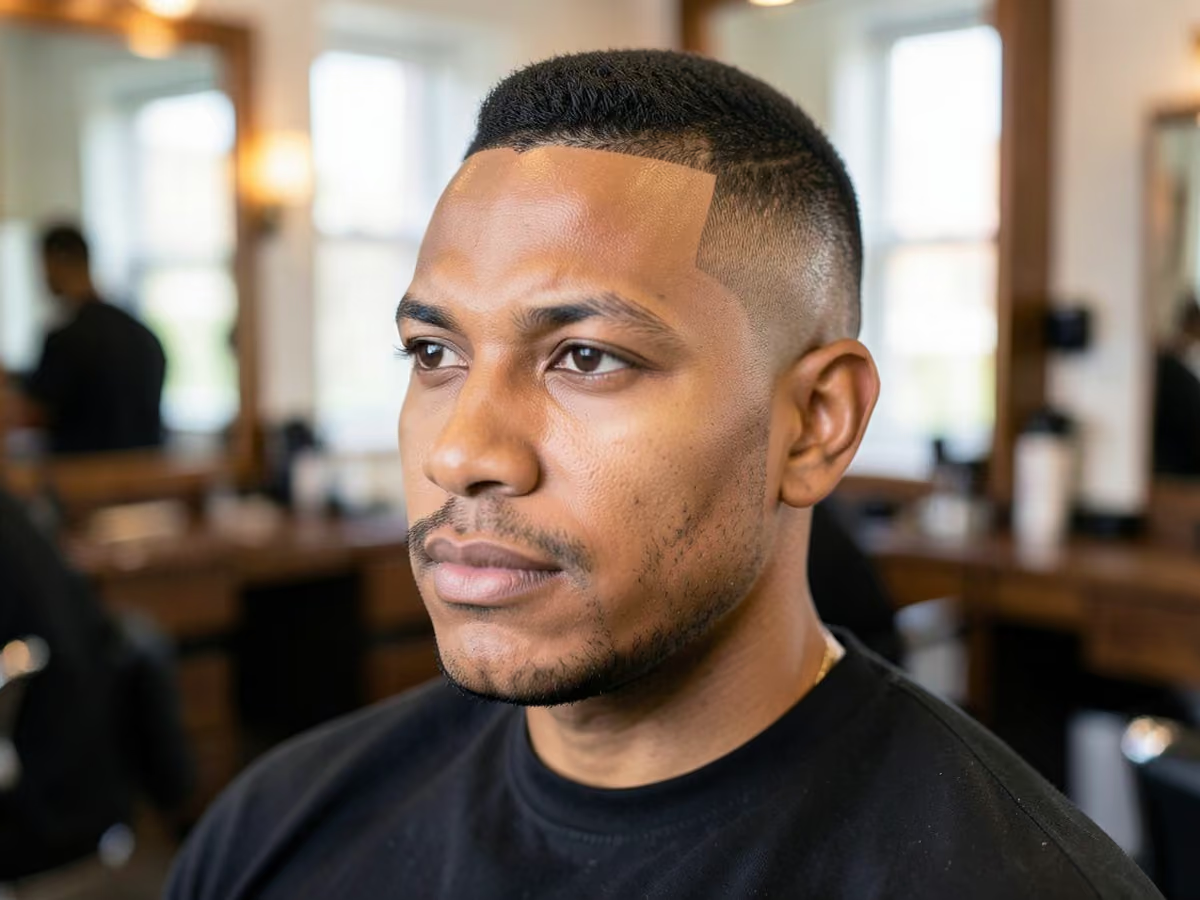
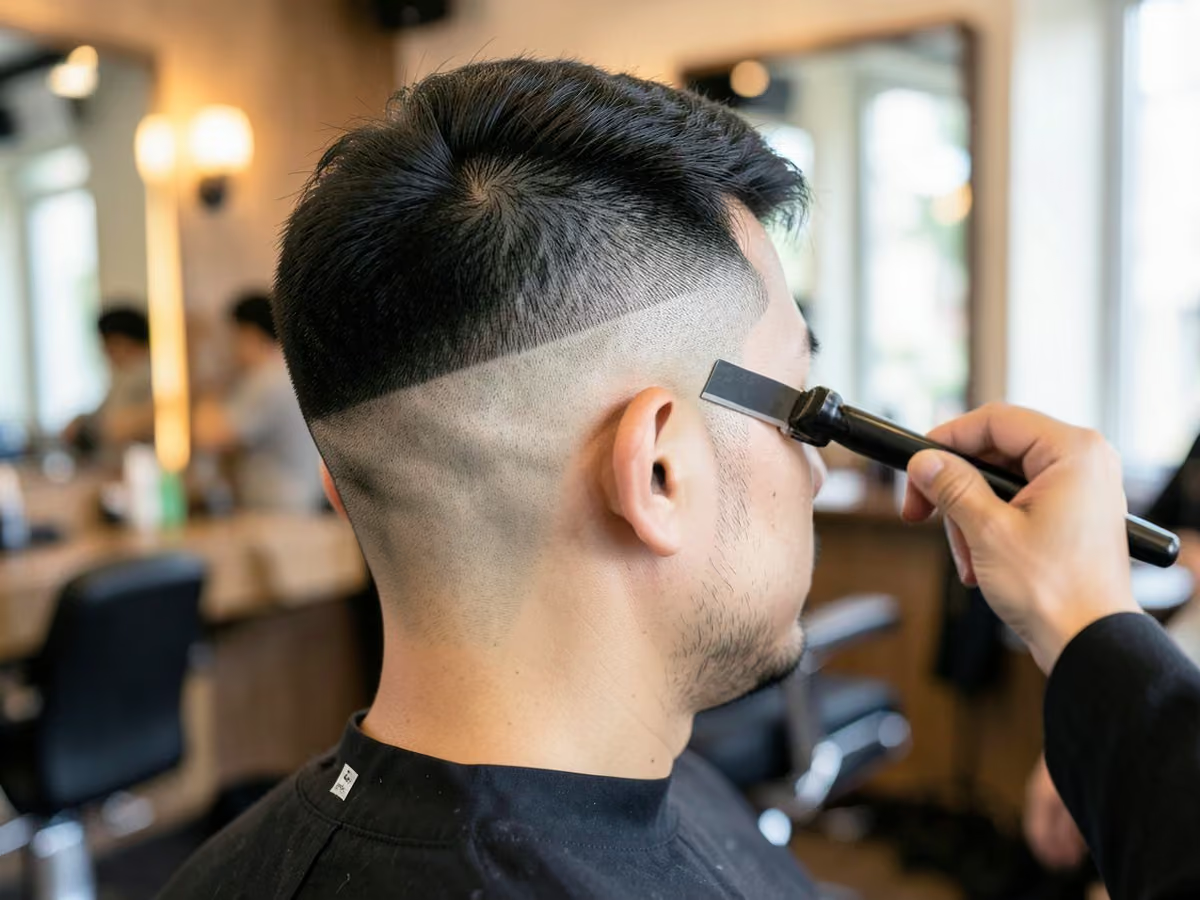
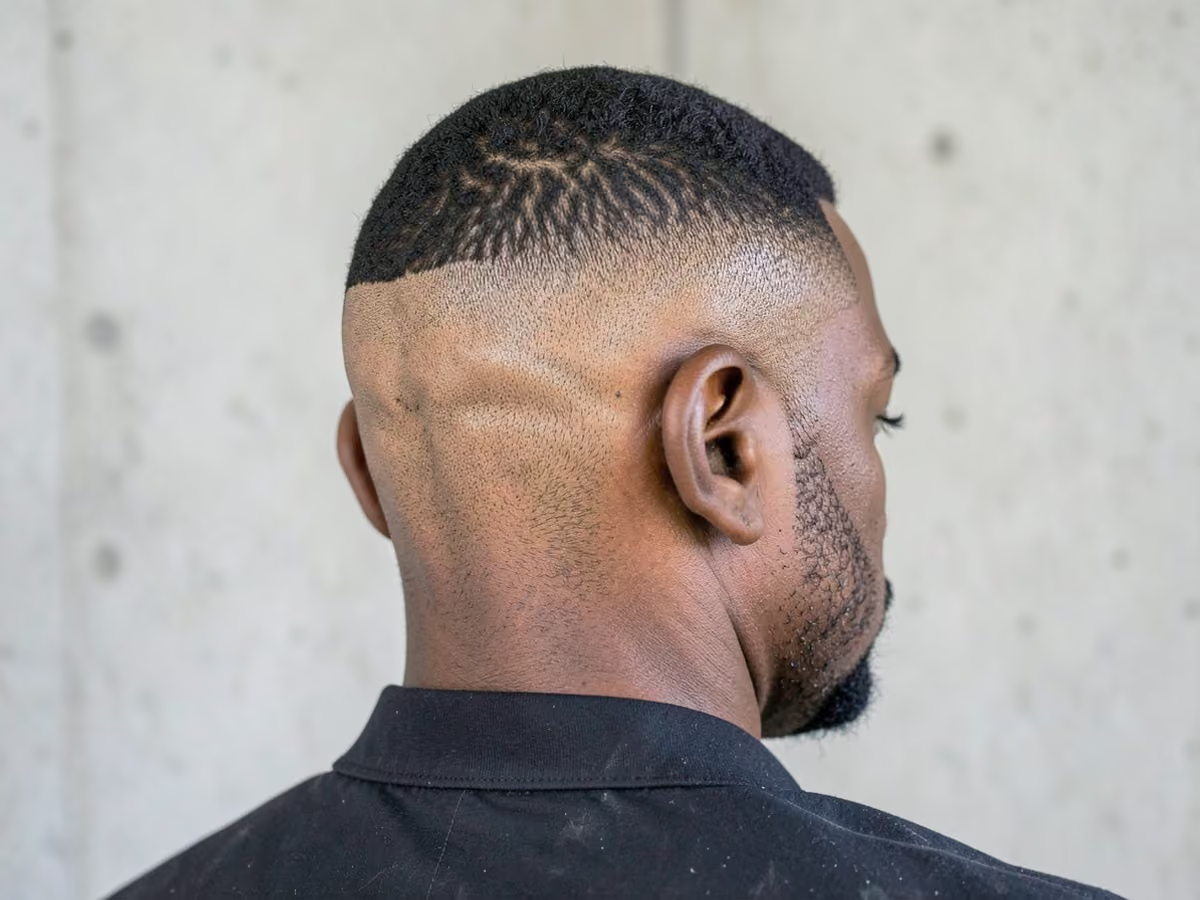
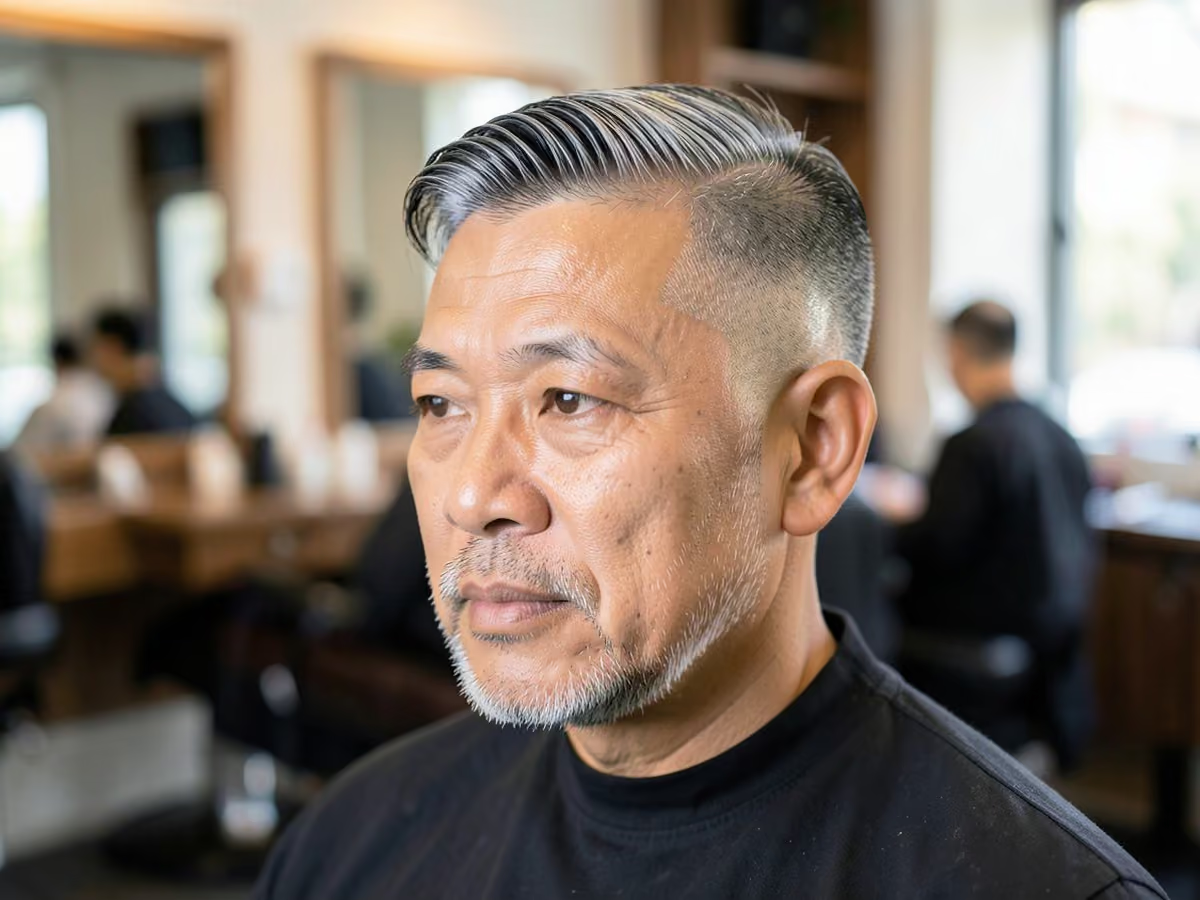
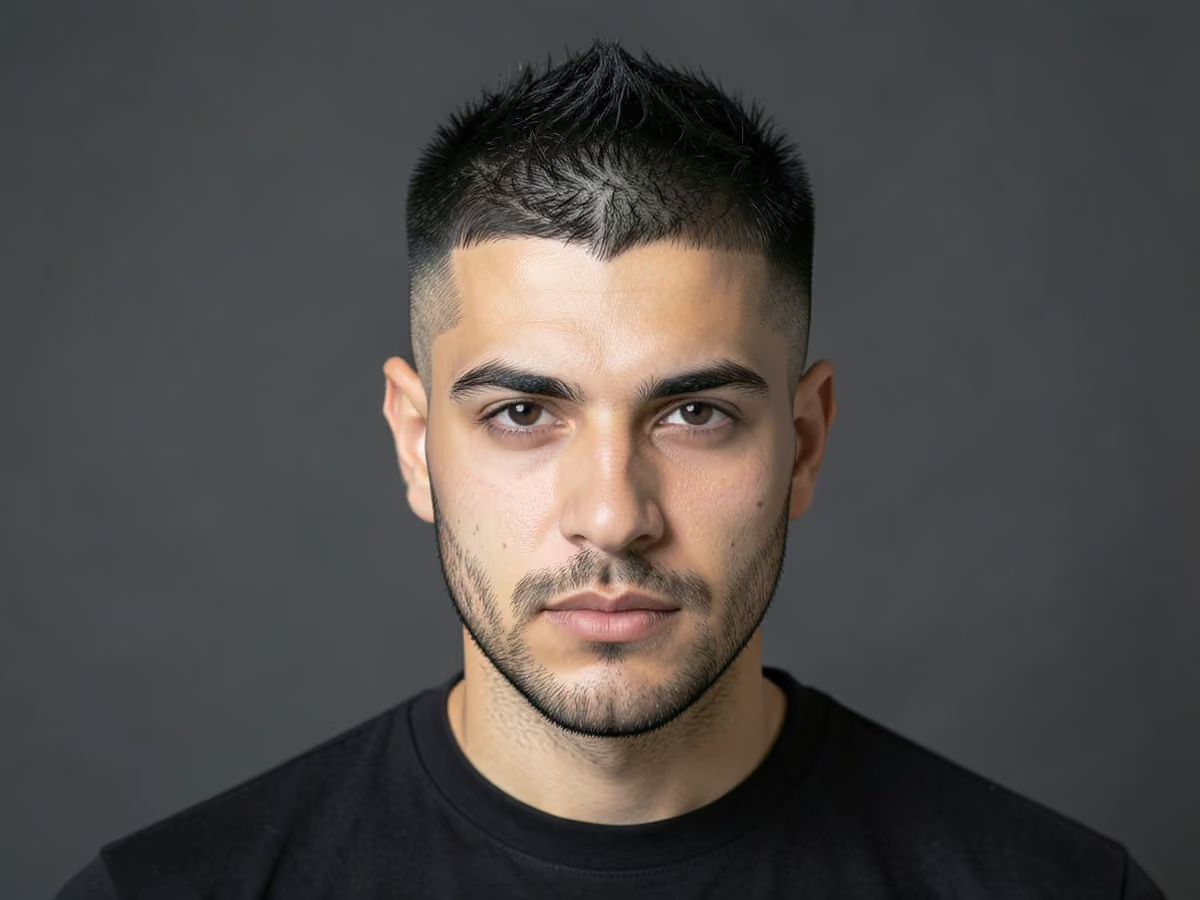
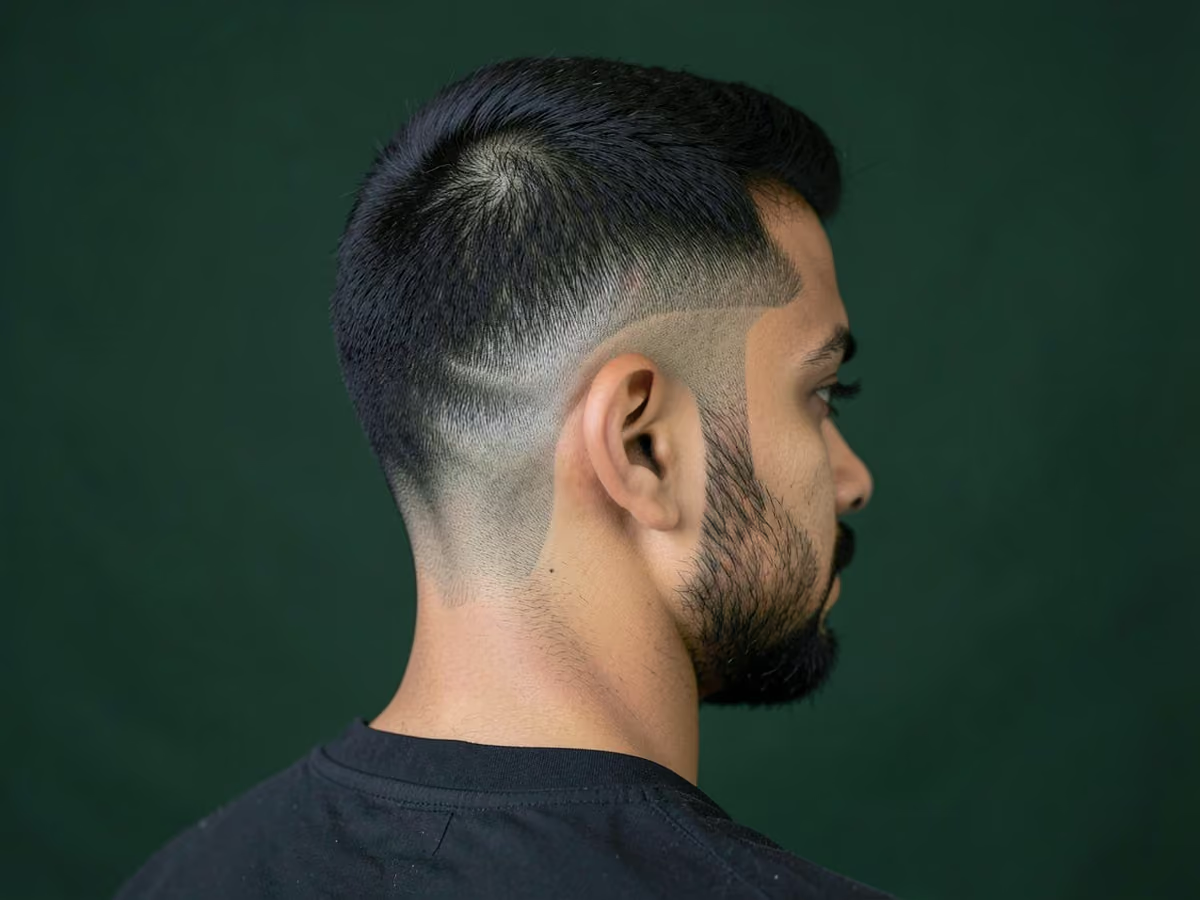
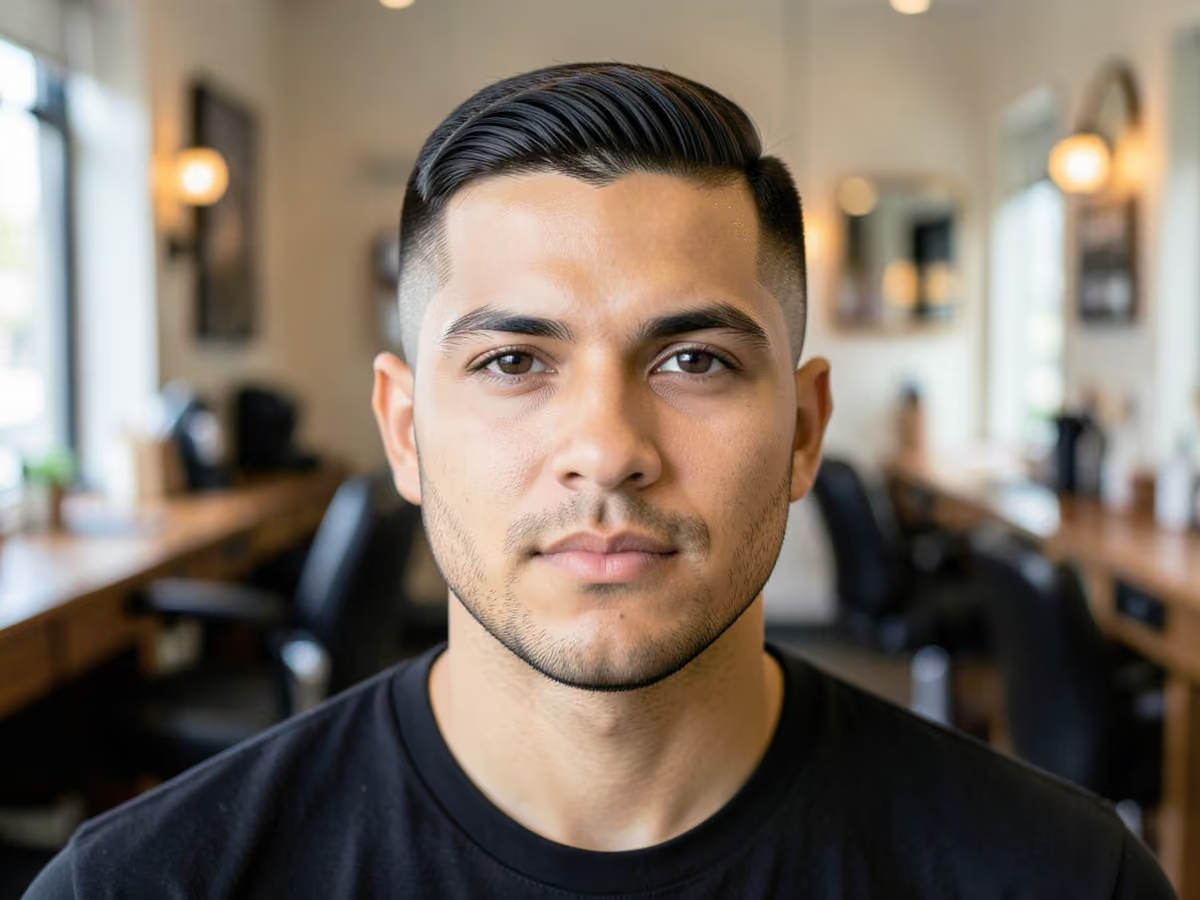
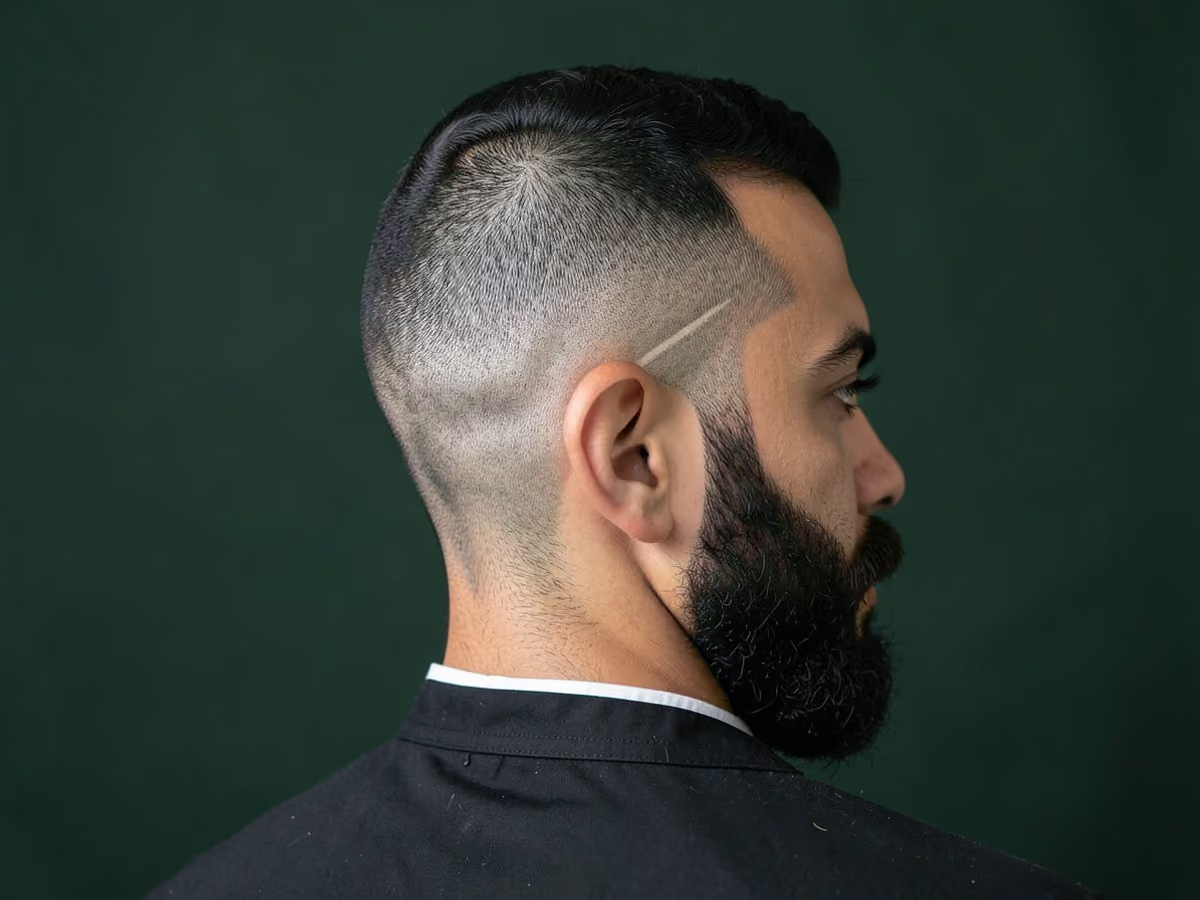
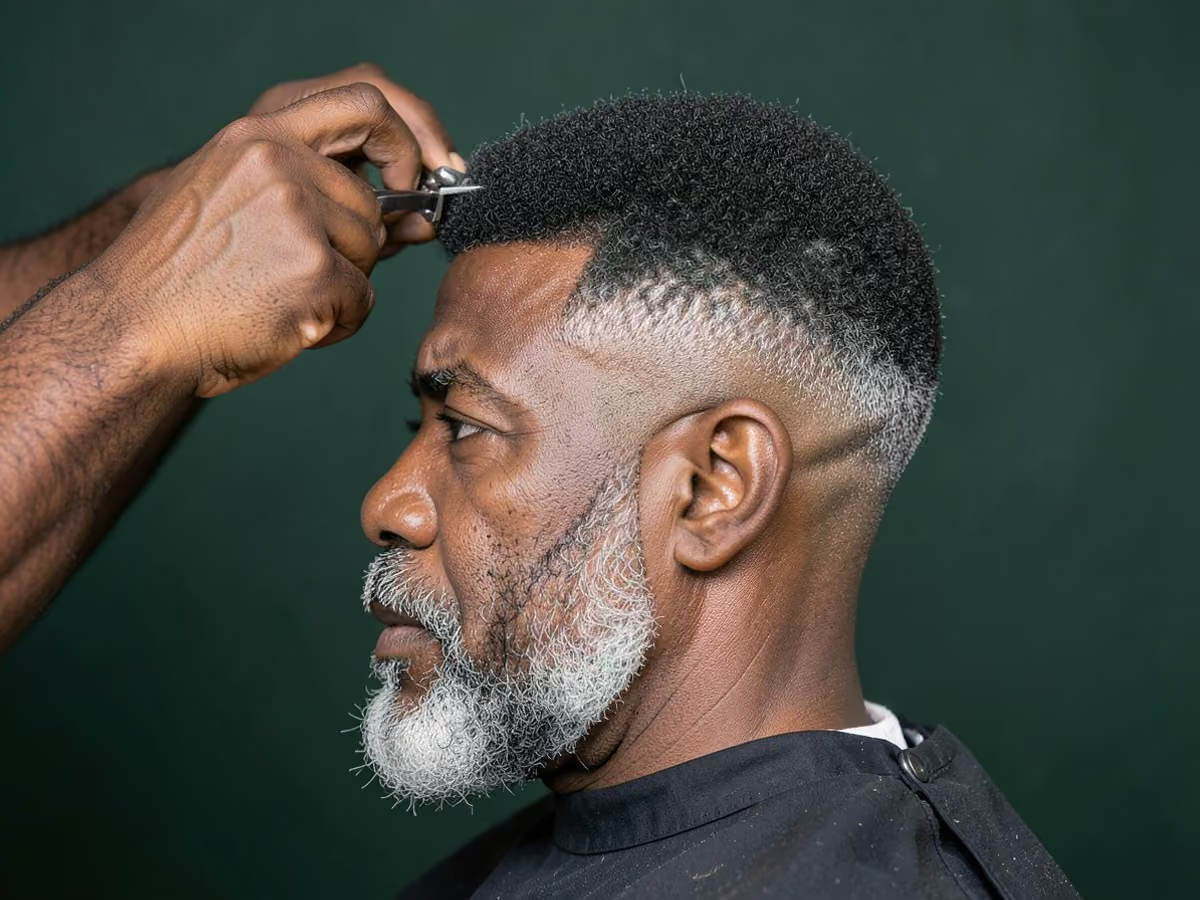
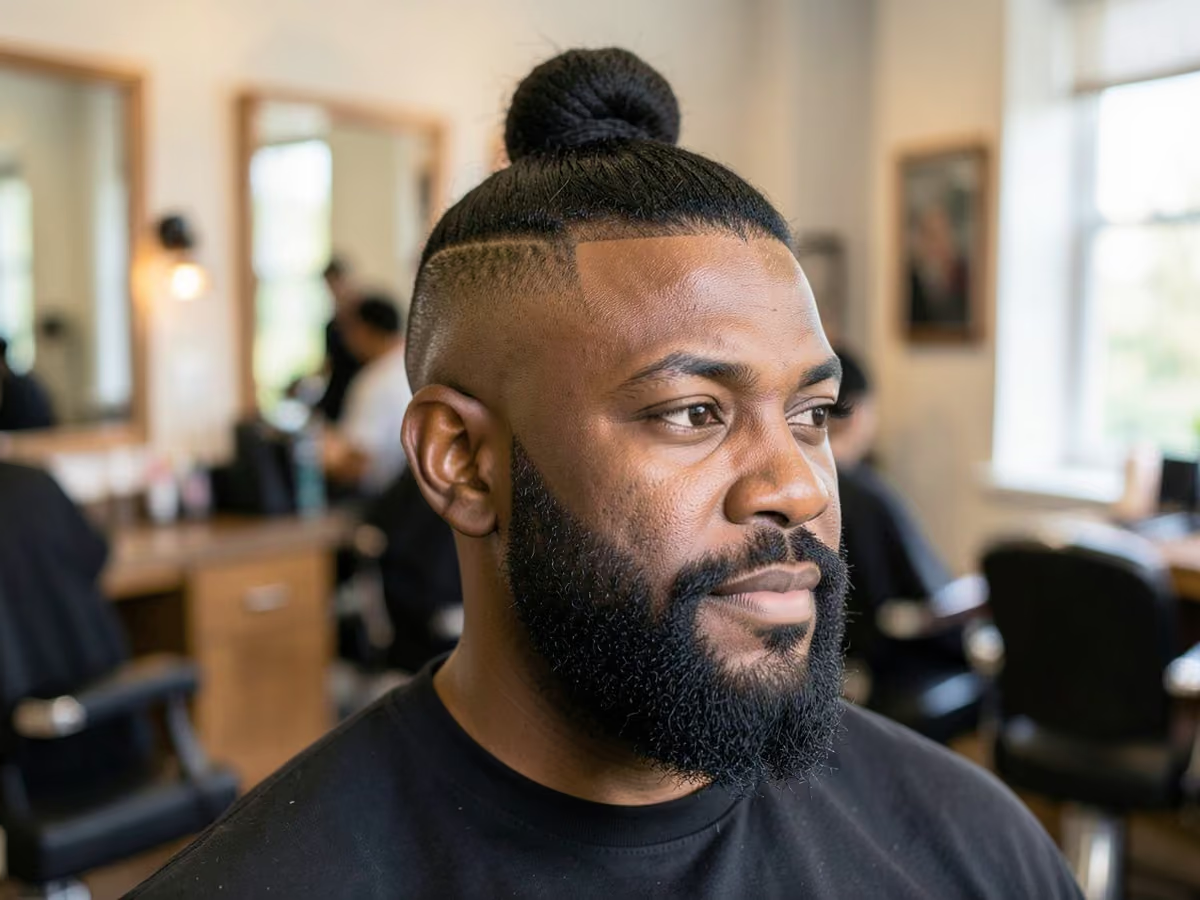
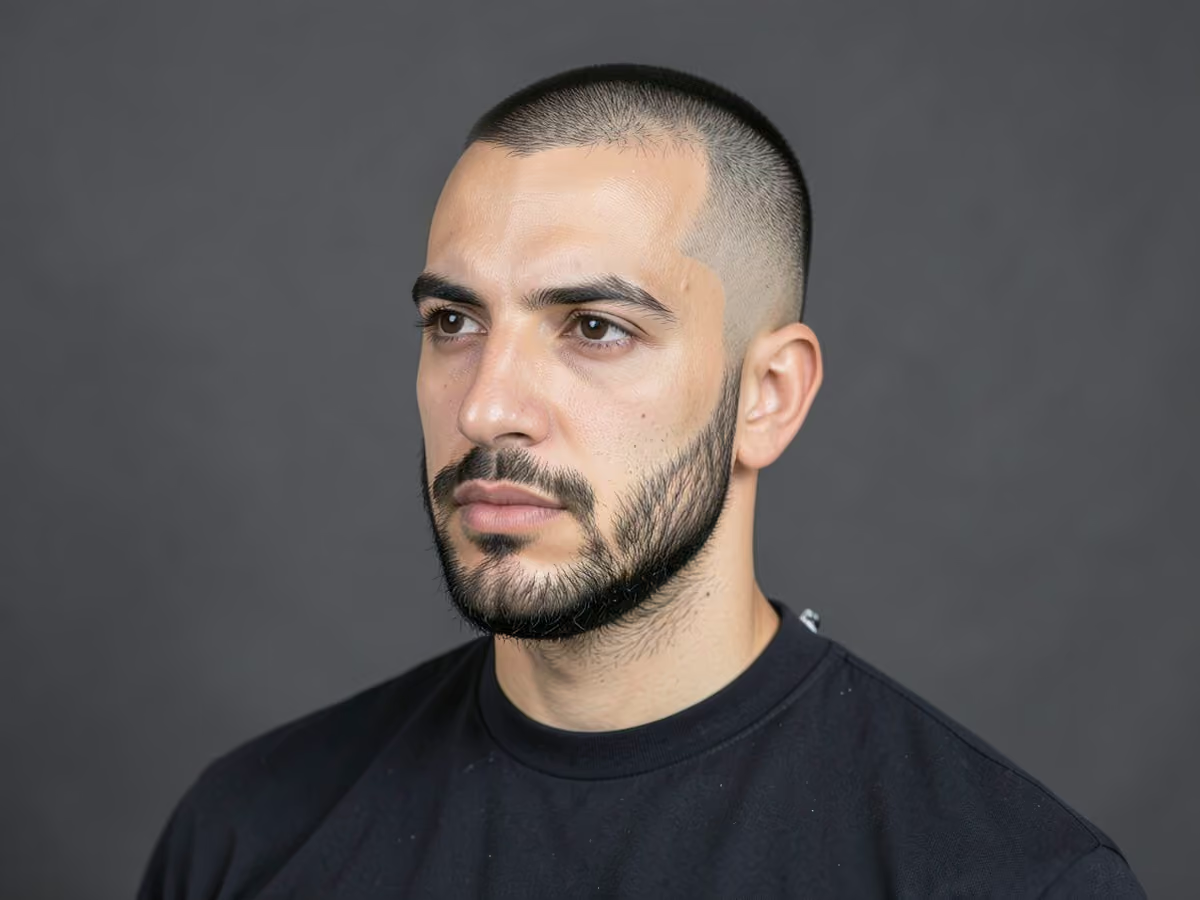
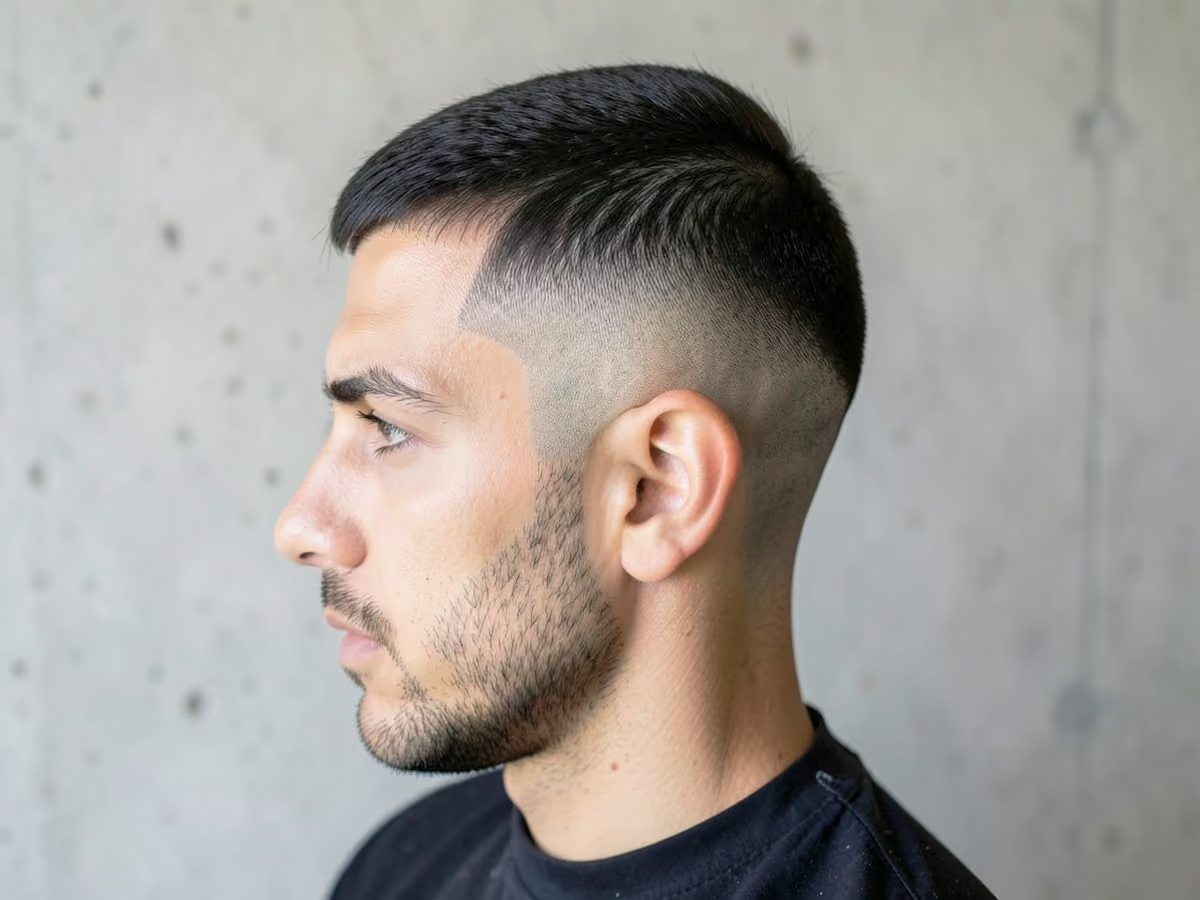
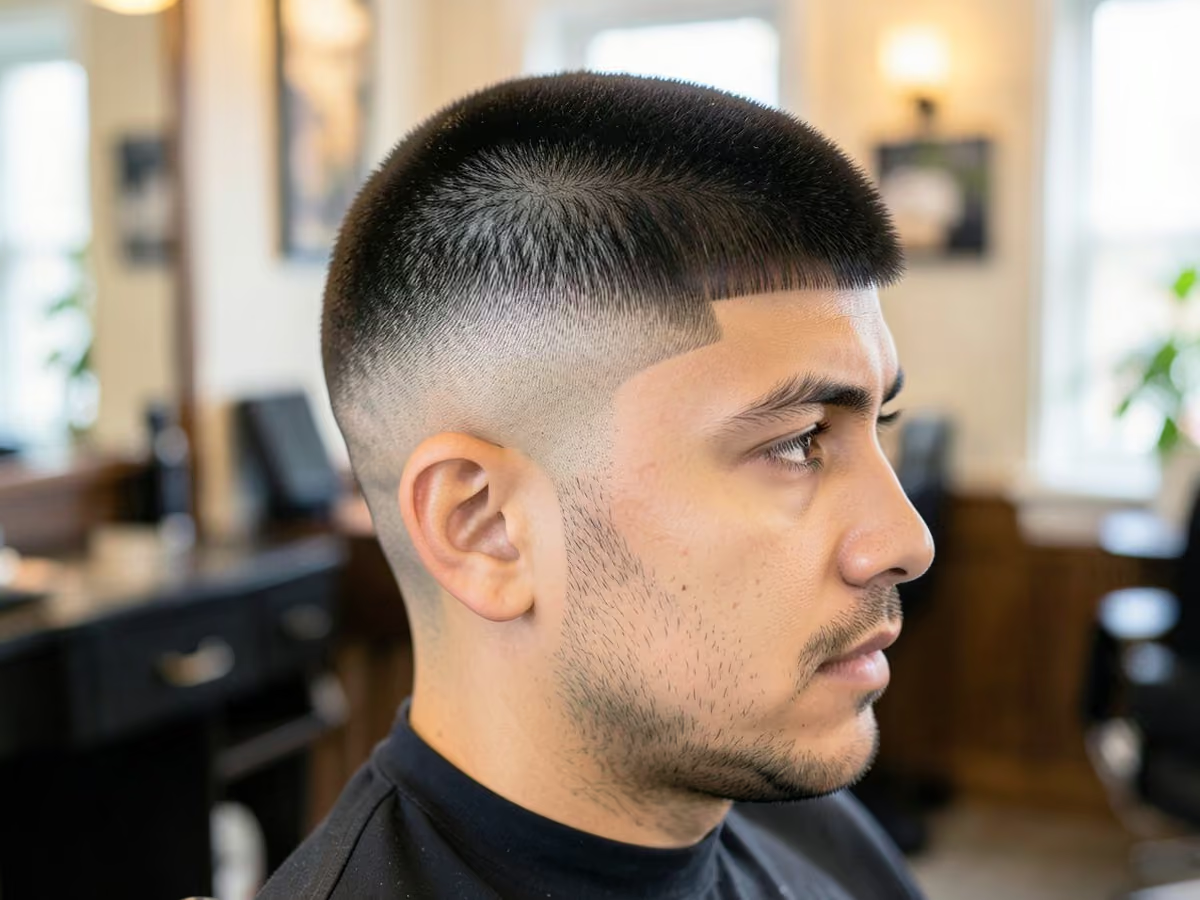
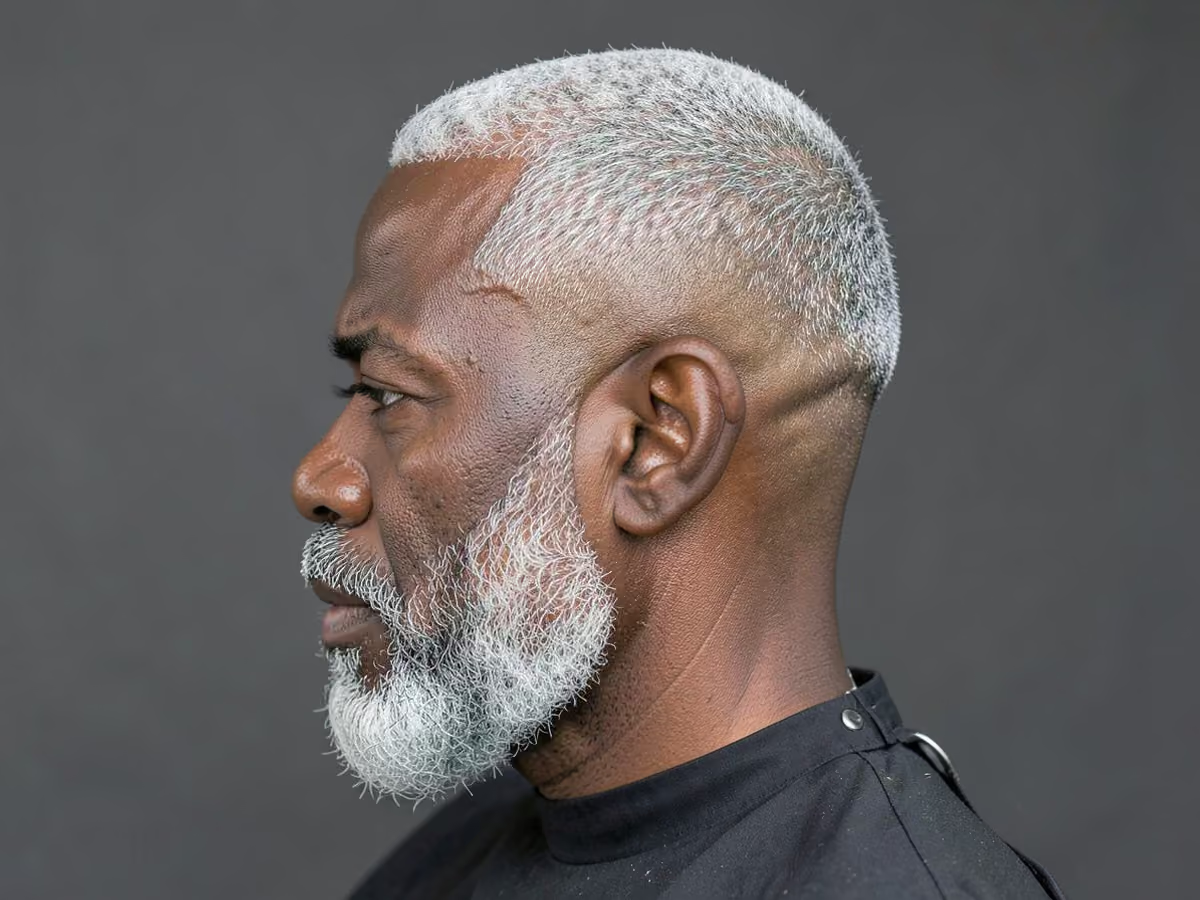
Quick answer: A razor fade is a fade haircut where the barber finishes the shortest section with a straight razor or shavette after clipping, so the skin is completely smooth. It blends up through clipper guards into the top. It looks the sharpest of any fade but shows stubble in three to five days and can irritate sensitive skin.
Razor Fade Styles at a Glance
Every style on this page with its clipper guard, top length and trim interval. Tap a name to jump to that card.
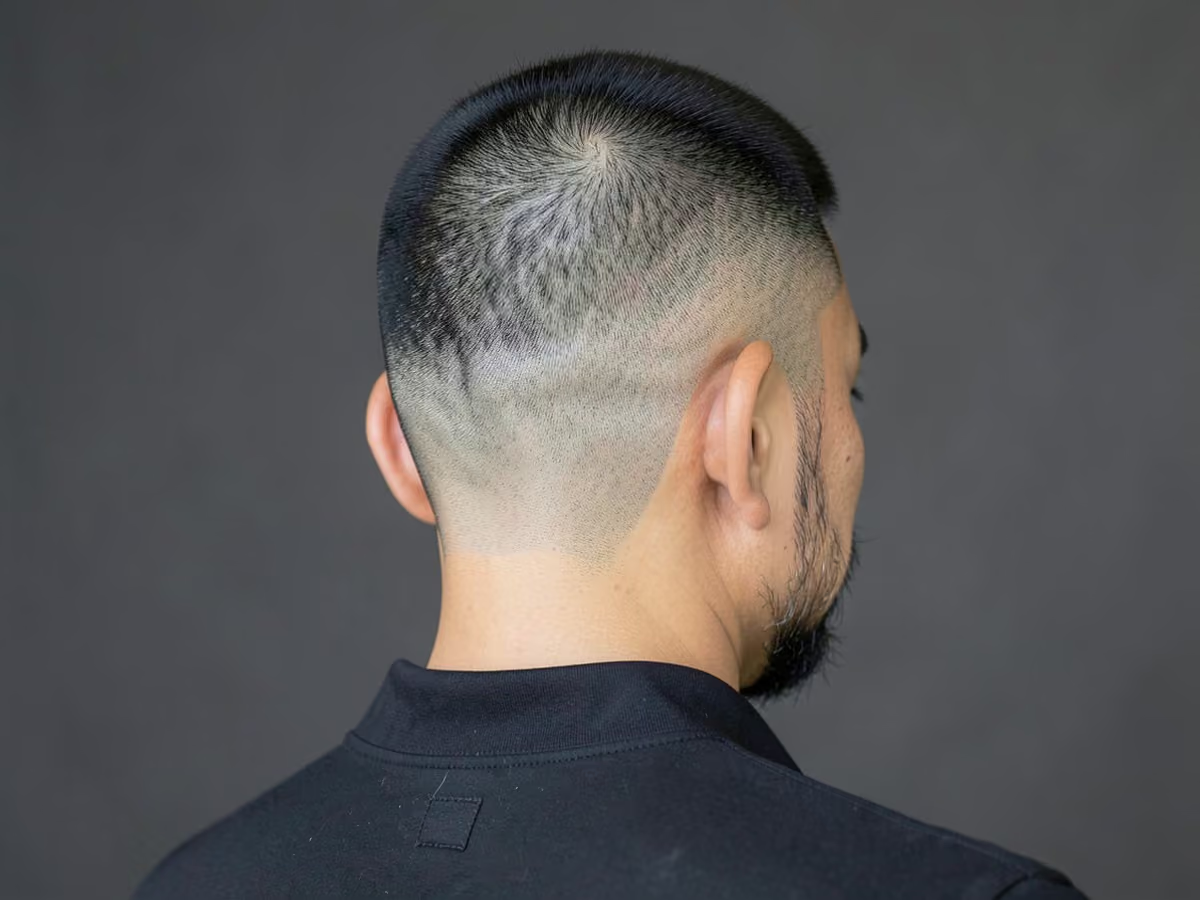
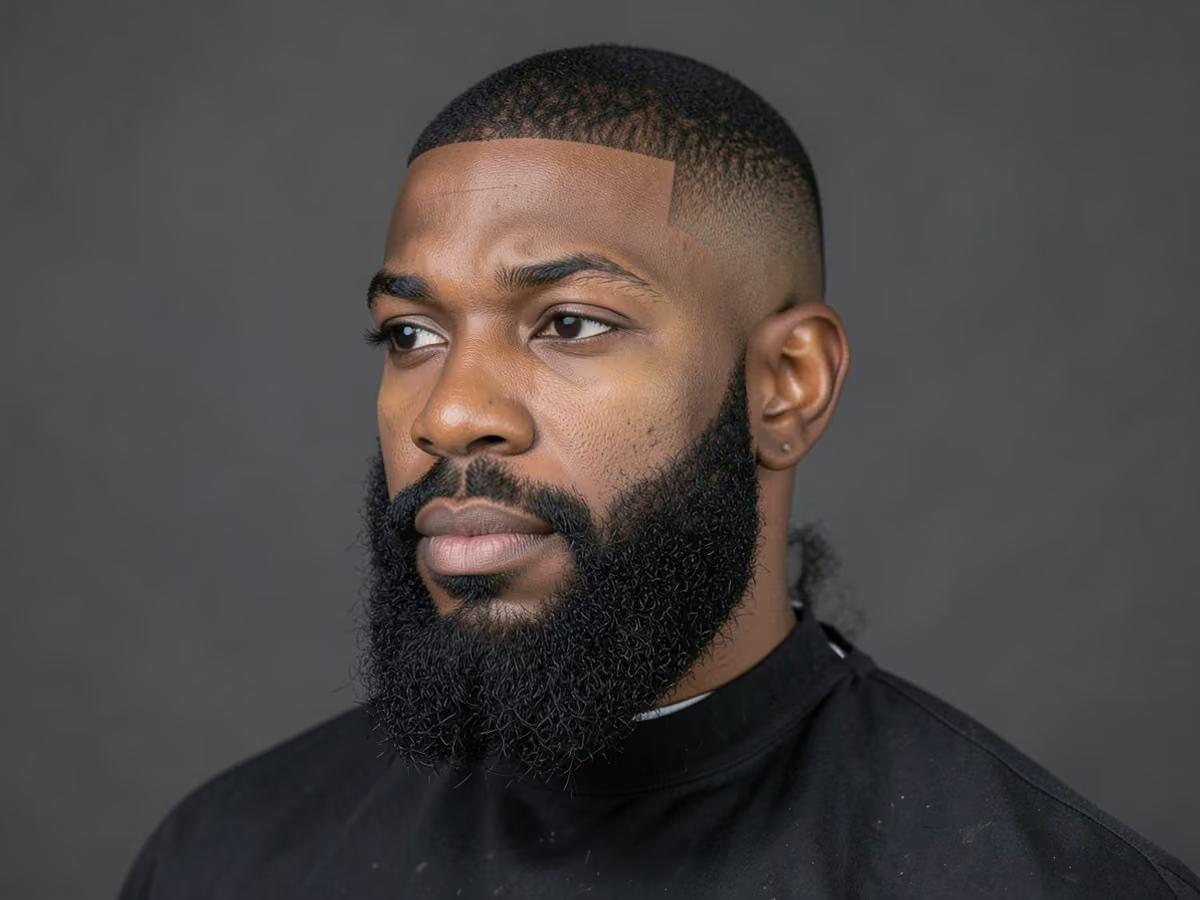
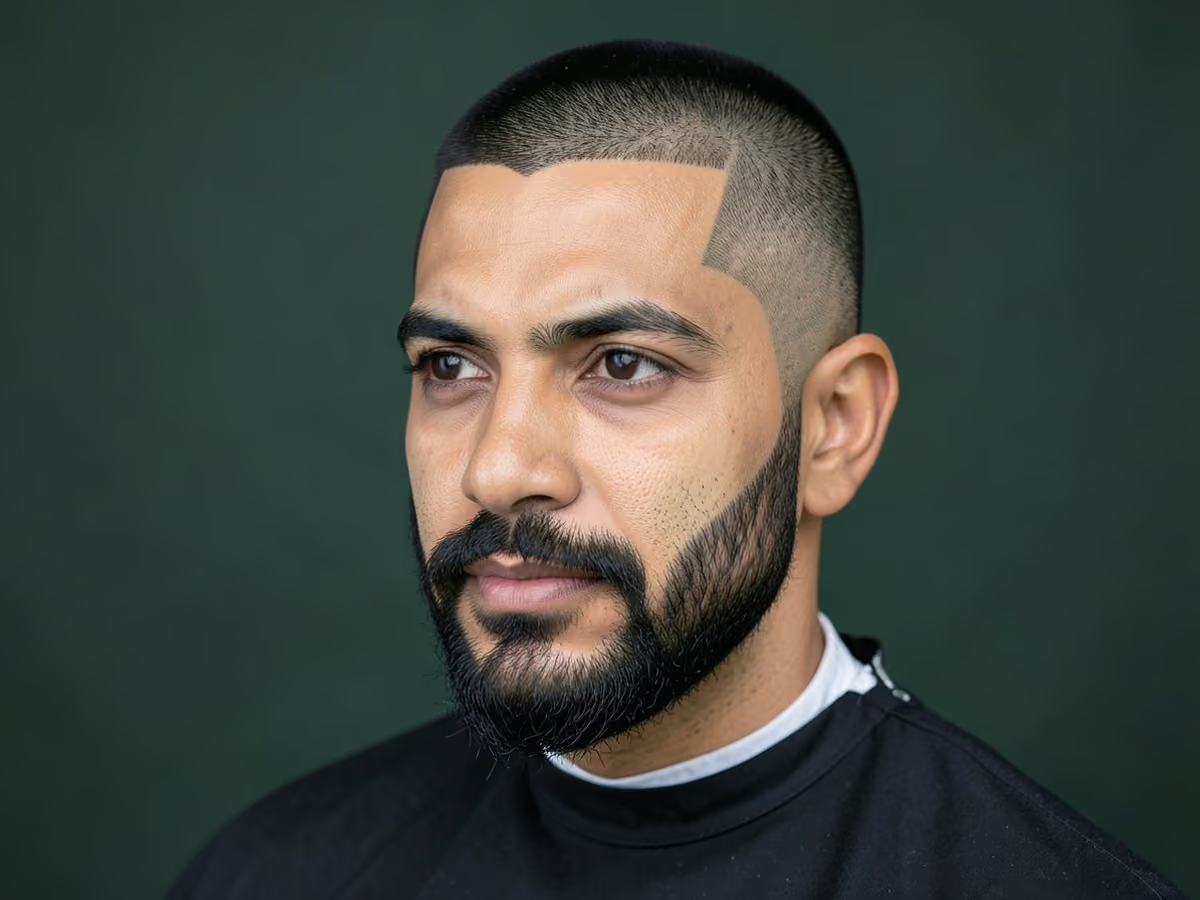
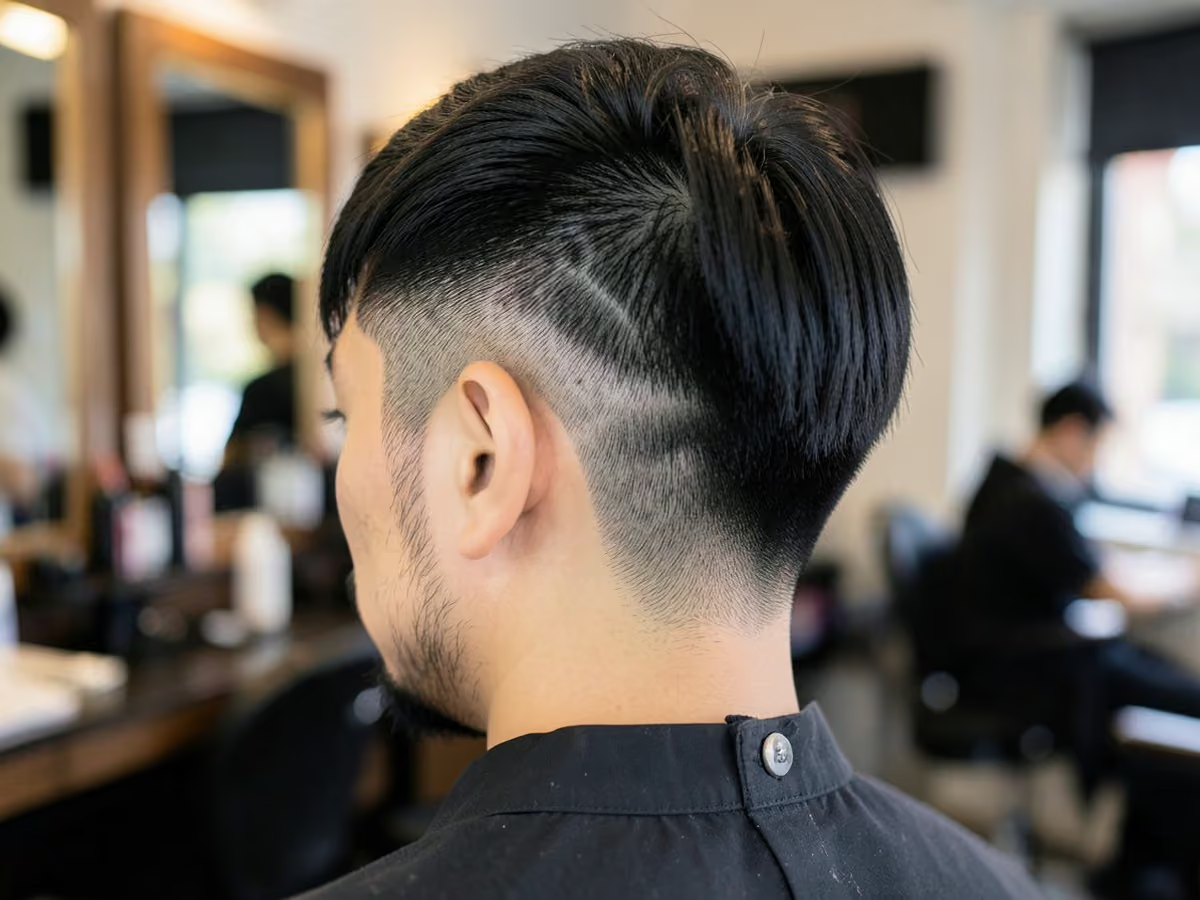
A razor fade takes a skin or bald fade one step further: after the clippers and foil shaver, the barber shaves the bottom of the fade with a straight razor and lather. The result is skin smooth to the touch, with the blend climbing from there. Below are 44 versions by height, top style, finish and beard, with the trade-offs on upkeep and skin.
What Is a Razor Fade?
A razor fade is a fade where the shortest part is shaved with a blade rather than left at clipper length. The barber cuts the fade as usual with clippers, blending from a #0 up through a #1 and #2, then applies lather or gel to the lowest band and shaves it with a straight razor or a shavette, a straight razor that takes disposable blades. The fade can start at any height, from just above the ear to the parietal ridge.
Some barbers also use the term for a fade blended partly with a razor, using the blade to soften lines between guard lengths. Most clients, though, mean the first version: a bald fade finished with a razor. Ask your barber which they mean before the cut starts, since the second version may leave a guard length at the bottom and look closer to a regular skin fade.
How Is a Razor Fade Different From a Skin or Bald Fade?
The three names overlap, and shops use them loosely. A skin fade usually means the bottom reaches skin through a zero-gapped clipper or a foil shaver, which leaves a faint shadow on dark hair. A bald fade is often used as a synonym. A razor fade guarantees the closest finish, since the blade cuts at skin level, so the bottom looks lighter and feels smooth. The difference is most visible on dark, dense hair.
The trade-offs are time, skin and regrowth. A razor adds a few minutes and more risk of nicks, bumps and irritation, especially on curly and coily hair that can curl back into the skin. Regrowth also starts from zero, so the razor finish lasts only a few days longer than the cut itself. The table below compares the three finishes by tool, look and how long the smooth effect holds.
How Is a Razor Fade Different From a Skin or Bald Fade?
Dark, dense hair shows the biggest difference, since a razor removes the shadow a foil shaver leaves behind. Men with even skin on the sides and back of the head, and no history of razor bumps, are the best candidates. Round and square faces suit mid and high razor fades, which narrow the sides; long faces do better with a low version that keeps width above the ear.
Men with curly or coily hair who get bumps along the nape or beard should be cautious. Ask for a foil shaver finish instead, or try a razor on the nape only first. People who visit the barber less than every two weeks may also find the razor finish wasted, since the smooth look fades within days. The razor bumps on the neckline guide covers prevention.
Filter the styles
Showing all 44 styles
Fade
Hair
Length
Razor Fade by Height
The razor finish works at any height. These eight cuts differ in where the shaved band starts, how it curves around the ear and how it shapes the back. See fade types for the full height chart.
Trim:Every 2 weeks. Only a narrow band above the ear regrows.
Best For:Long, oval faces + straight, wavy or curly hair.
About This Style
The shaved band sits just above the ear and across the nape, blending through a #0.5 and #1 within the first inch or two. Little skin shows, so the razor finish reads as a clean line rather than bare sides. It suits offices and long faces, since the sides above the ear keep their width. The narrow band also limits the area exposed to irritation.
How to Style at Home
Pat a light scalp oil on the shaved band after washing.
Style the top with a small amount of matte clay.
Check the nape with a hand mirror after about a week.
Ask Your Barber
"Low razor fade, shaved smooth just above the ear and at the nape, blended through a #1 into a #3 on the sides."
Trim:Every 1–2 weeks. Shaved temples show stubble in days.
Best For:Round, oval faces + thick, coarse or coily hair.
About This Style
Starting at the temple, the shaved band covers the lower half of the head all the way around before blending through a #1 and #2. The razor finish makes the gradient look lighter at the bottom than a foil shaver would, which is most visible on dark hair. Tops of one to three inches suit it. Most wearers return every ten days or so.
How to Style at Home
Rinse the sides with cool water and pat them dry.
Apply unscented scalp oil to the shaved area.
Shape the top with a small amount of matte paste.
Ask Your Barber
"Mid razor fade starting at the temple, shaved with a razor at the bottom, blended through a #1 and #2, two inches on top."
Trim:Every week. Most of the sides are bare and regrow fast.
Best For:Round, square faces + coily or thick dark hair.
About This Style
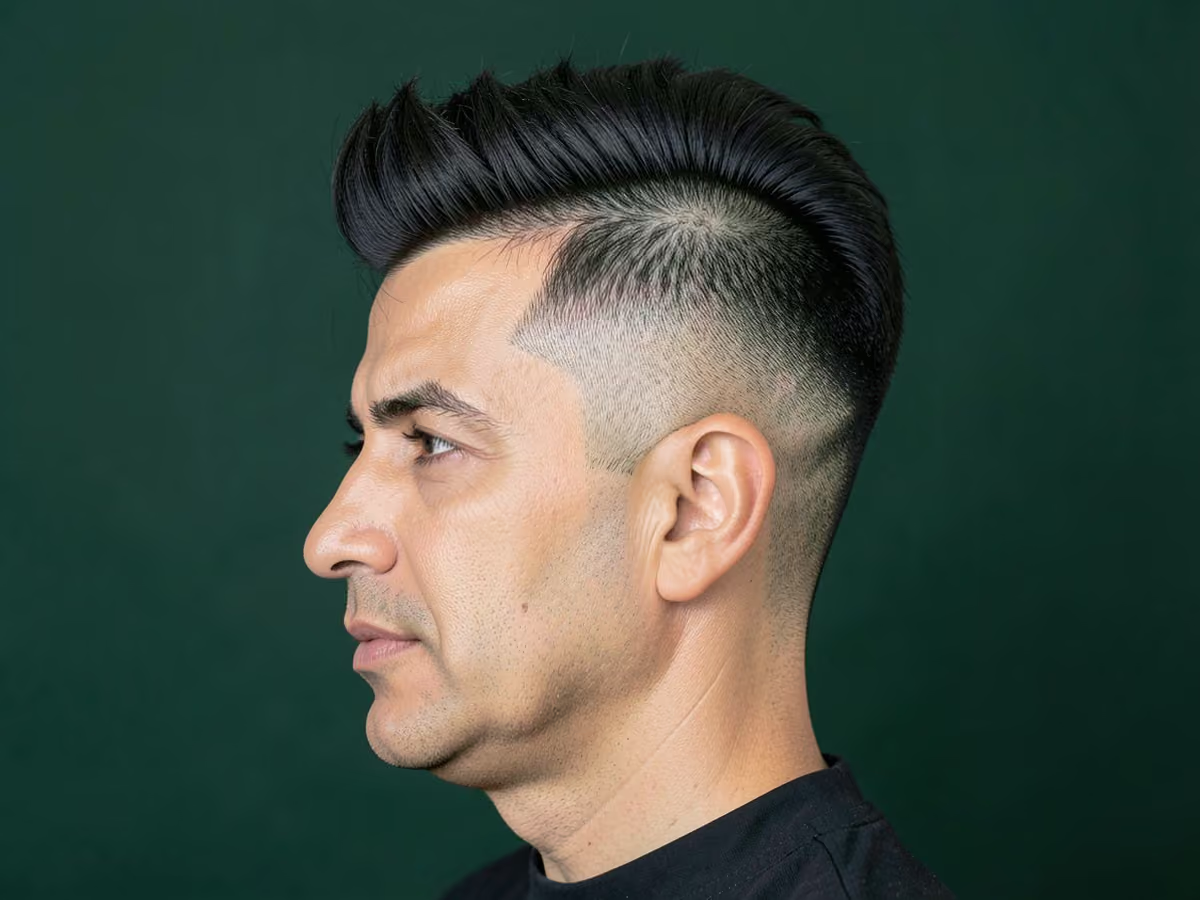
Razor-smooth skin runs up to the parietal ridge, so the lower two-thirds of the sides and back are bare. The top, often short coils or a textured crop, carries the whole shape. The look is stark and athletic. It needs weekly visits and sunscreen, since the scalp is exposed. See the high fade guide for blending details.
How to Style at Home
Apply sunscreen to the shaved sides before going outside.
Moisturize the scalp each night with scalp oil.
Brush the short top with a soft brush in one direction.
Ask Your Barber
"High razor fade up to the parietal ridge, razor smooth at the bottom, blended with a #1 and #2. One inch on top."
Trim:Every 2 weeks. The curve behind the ear loses its shape.
Best For:Oval, heart faces + thick or curly hair.
About This Style
Behind the ear, the shaved line arcs down toward the nape, so more hair stays at the occipital bone. The razor finish sharpens the curve from the side. A drop shape suits a flat back of the head, since the weight sits low. Pair it with a curly top or a textured crop. The drop fade guide covers the curve.
How to Style at Home
Define the top with curl cream while the hair is damp.
Oil the shaved area behind the ears after washing.
Keep the back clear of tight collars for a day after the cut.
Ask Your Barber
"Razor drop fade, shaved smooth at the bottom and curving down behind the ear, blended into three inches on top."
Trim:Every 2 weeks. The half circle around the ear blurs.
Best For:Oval, round faces + curly or coily hair.
About This Style
A shaved half circle wraps around each ear, leaving the nape longer, so the razor finish frames the ear rather than the whole side. It is popular with mohawks, frohawks and curly mullets. The rounded shape keeps length at the back, which suits men growing out. Compare it with the clipper version in the burst fade guide.
How to Style at Home
Pick the top or mohawk strip upward with an afro pick.
Apply a little scalp oil to the shaved arc around the ears.
Brush the front and temple edges with an edge brush.
Ask Your Barber
"Razor burst fade around the ears, shaved smooth in the arc, leave the nape long and the top at three inches."
Trim:Every 2 weeks. Small shaved corners blur within ten days.
Best For:Oval, square faces + straight or wavy hair.
About This Style
Only the temples and the sideburn area are taken to clipper-short and then shaved with a razor, so a small smooth patch sits at each corner of the hairline. Everything above and behind it stays at a #2 or longer. Because so little skin is shaved, irritation is limited and the cut grows out quietly. It pairs well with a line-up and a short textured top.
How to Style at Home
Rub a drop of scalp oil into the shaved corners after washing.
Push the top forward or up with matte clay.
Book a quick temple cleanup at the two-week mark.
Ask Your Barber
"Can you do a razor temple fade, shaving just the temples and sideburns, then blending into a #2 on the sides with an inch on top?"
Trim:Every 2–3 weeks. The V point at the nape loses definition.
Best For:Oval, long faces + straight, wavy or curly hair.
About This Style
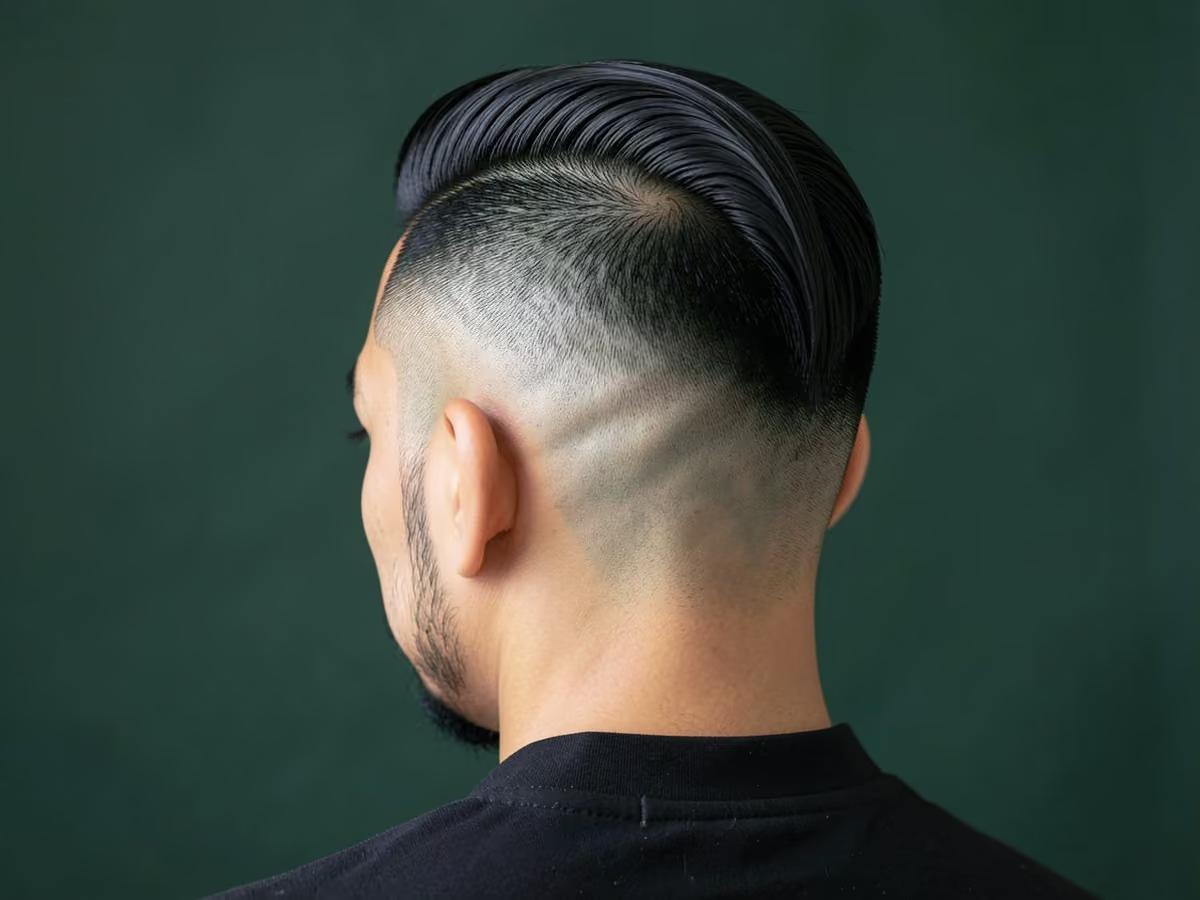
Seen from behind, the fade line rises from each ear and dips to a point at the center of the nape, forming a V. The barber clippers the shape, then shaves the lowest band and the V edges with a razor so the point is crisp. From the front it looks like a mid fade. The shape adds interest at the back without a design.
How to Style at Home
Use a hand mirror to check the V point every week.
Style the top back or to the side with pomade.
Keep the neck below the V shaved clean with a trimmer.
Ask Your Barber
"I'd like a razor V fade, a mid fade that points down at the center of my nape, razor-shaved at the bottom and along the V edges."
Trim:Every 1–2 weeks. A tall shaved area regrows visibly fast.
Best For:Square, oval faces + straight or coarse hair.
About This Style
Rooted in the military high and tight, this version clips the sides to skin up to the parietal ridge and then shaves them with a razor, leaving a short patch of half an inch to an inch on top. The blend between the bare sides and the top is short and tight. It looks very clean and needs almost no styling, but the shaved area is large, so it needs frequent upkeep.
How to Style at Home
Towel the top dry and leave it unstyled or add a pinch of matte paste.
Apply scalp oil or a fragrance-free moisturizer to the shaved sides.
Watch for bumps and skip the razor if they appear.
Ask Your Barber
"Give me a high and tight razor fade, shaved smooth up to the ridge with a tight blend into about an inch on top."
Recommended Products
Matte Paste
Scalp Oil
Razor Fade with Different Top Styles
The bare sides make the top the focus. These eight cards pair a razor finish with a comb over, French crop, curly top, waves, a buzz cut, a pompadour, a quiff and a textured crop.
Trim:Every 2 weeks. Smooth sides and a combed top lose contrast together.
Best For:Square, oval faces + straight or wavy hair.
About This Style
Three to four inches on top are combed to one side with shine, above a mid razor fade. The contrast between the smooth sides and the glossy comb over is the main appeal. Straight and wavy hair hold the comb lines. A hard part adds structure if your natural part is weak. See comb over styles for more.
How to Style at Home
Blow-dry the top over to one side with a vent brush.
Comb pomade through the top from the part outward.
Smooth any stray hairs with a fine-tooth comb.
Ask Your Barber
"I'd like a mid razor fade, shaved at the bottom, blended to three and a half inches on top for a comb over on my natural side."
Trim:Every 2–3 weeks. The fringe line grows out first.
Best For:Round, oval faces + thick straight or wavy hair.
About This Style
One to two inches of textured hair are pushed forward to a short, blunt fringe, with a low or mid razor fade below. It is a short, low-effort top that contrasts with the smooth sides. Thick hair gives the crop texture. A blunt fringe also hides a high forehead. The French crop guide covers fringe lengths.
How to Style at Home
Rub texture powder or matte clay into dry hair.
Push the top forward with your fingertips toward the brow.
Leave the fringe slightly messy rather than combed flat.
Ask Your Barber
"Can you do a mid razor fade, smooth at the bottom, French crop with an inch and a half on top and a blunt fringe."
Trim:Every 2 weeks. Curls cover the blend as they grow.
Best For:Oval, long faces + 3A to 4A curly hair.
About This Style
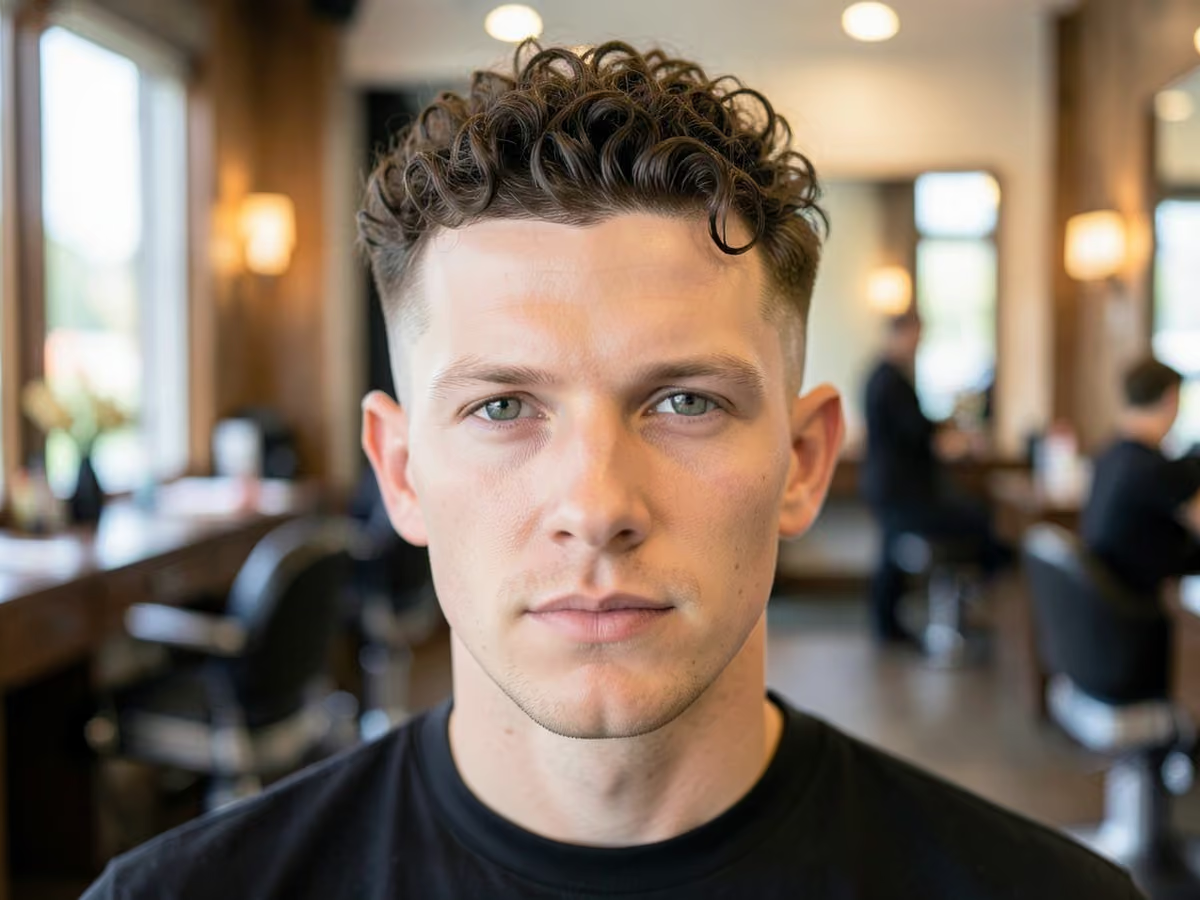
Defined curls of two to four inches sit above a low or drop razor fade. The smooth band makes the curls look fuller by contrast. Curly hair is prone to bumps, so a razor on the nape only, with a foil shaver elsewhere, is a sensible compromise. Moisture keeps the curls defined between wash days.
How to Style at Home
Apply curl cream and leave-in to soaking wet hair.
Scrunch the curls and diffuse on low heat until dry.
Oil the shaved area with scalp oil once the curls are set.
Ask Your Barber
"Low razor fade, razor only at the nape since my skin bumps, foil shaver elsewhere, and leave three inches of curls on top."
Trim:Every 1–2 weeks. Waves need a tight, fresh frame.
Best For:Oval, square faces + coily hair trained for waves.
About This Style
A 360 wave pattern of about half an inch on top meets a razor-smooth low or mid fade. The bare band shows where the waves end, so the pattern looks sharper. Daily brushing and a durag keep the waves tight. Ask the barber to shave with the grain to avoid bumps along the nape. A low height keeps more of the pattern visible.
How to Style at Home
Apply wave pomade and brush from the crown outward.
Wear a durag overnight to keep the pattern pressed flat.
Moisturize the shaved sides with a few drops of scalp oil.
Ask Your Barber
"Low razor fade, shaved with the grain, line-up at my natural hairline, and keep my waves at about half an inch on top."
Trim:Every 2 weeks. The buzz stays neat; the shaved band fades.
Best For:Round, square faces + any hair type.
About This Style
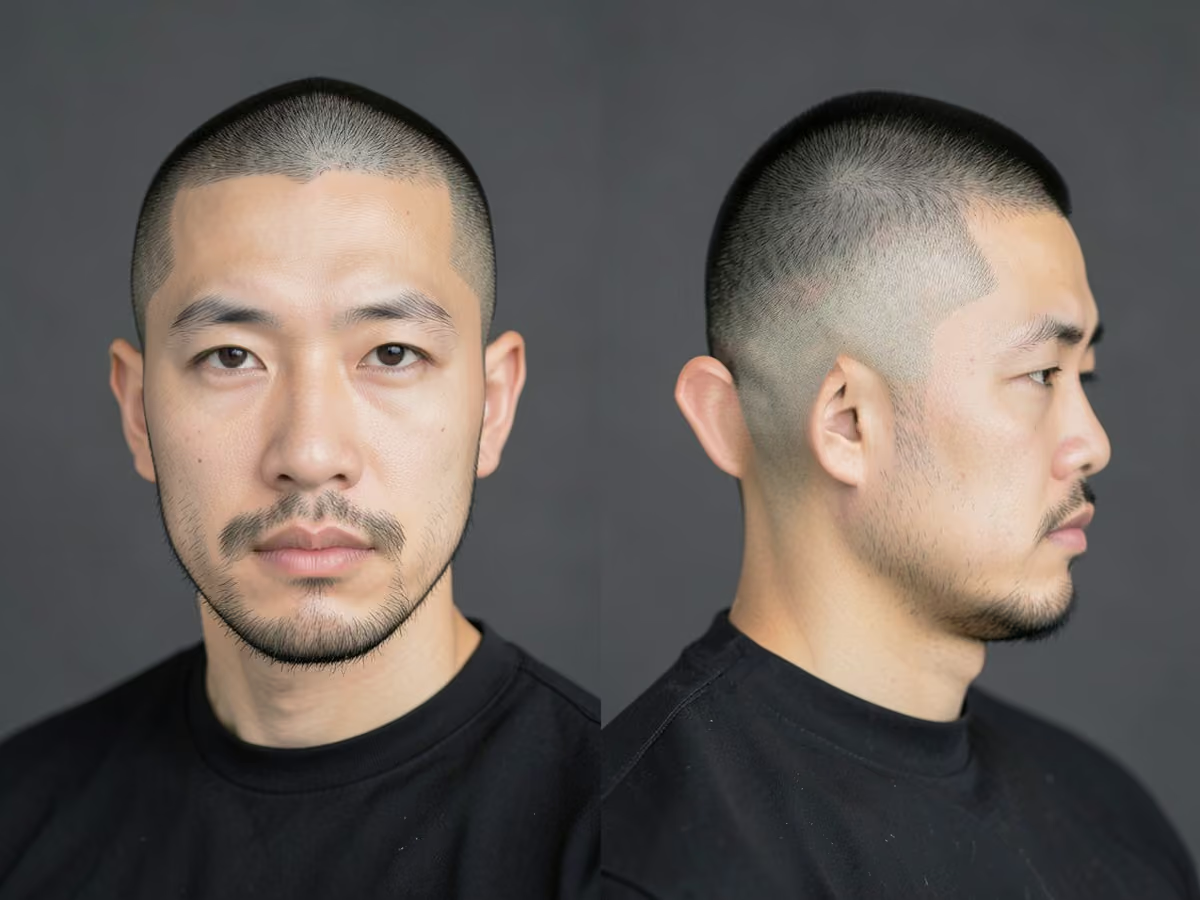
Uniform on top at a #2 or #3, the buzz blends down to a razor-smooth band at the sides and nape. It gives a buzz cut a finished outline without much styling. The short top shows head shape, so check for bumps or scars first. See buzz cut styles for guard lengths. Sunscreen on the shaved band prevents burn lines.
How to Style at Home
Rub scalp oil over the whole head after washing.
Apply sunscreen to the shaved band before going outdoors.
Brush the buzz with a soft brush to settle the hair.
Ask Your Barber
"Buzz the top with a #3, mid fade down to a razor finish at the bottom, and line up the front."
Trim:Every 2–3 weeks. Height on top needs regular shape cuts.
Best For:Round, oval faces + thick, straight or wavy hair.
About This Style
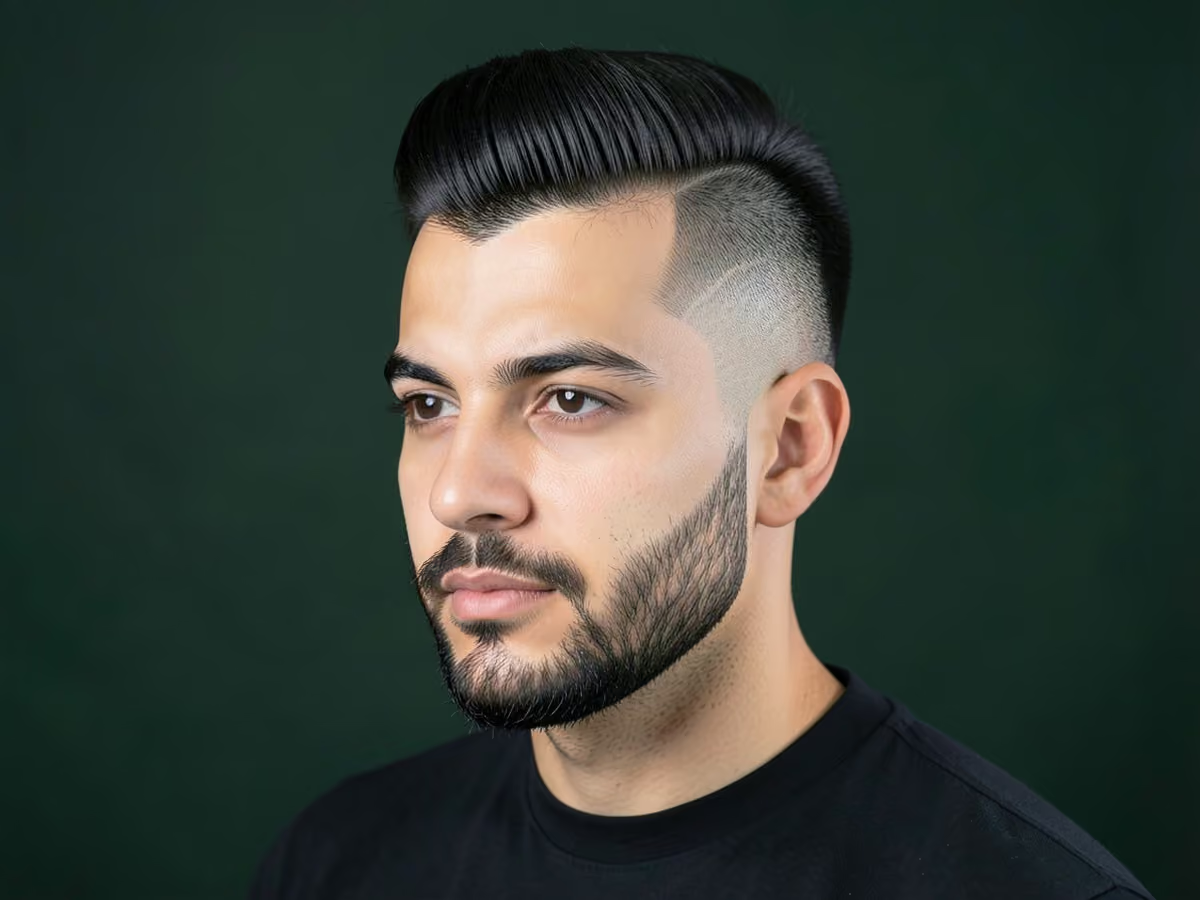
Four to five inches at the front is blow-dried up and back into a rounded pompadour, shortening toward the crown. Under it, a mid razor fade gives a sharp contrast between smooth sides and a tall, shiny top. Pomade keeps the classic shine, while clay gives a more modern matte finish. The look needs a hair dryer and a few minutes each morning.
How to Style at Home
Blow-dry the front up and back with a round brush.
Work pomade through from the back toward the front.
Comb the sides of the top inward to build the round shape.
Ask Your Barber
"Please do a mid razor fade, shaved smooth at the temple, with about five inches at the front for a pompadour that shortens toward the crown."
Trim:Every 3 weeks. The front loses lift as it grows heavy.
Best For:Round, square faces + thick or wavy hair.
About This Style
Less formal than a pompadour, the quiff lifts the front two to three inches up and slightly forward with a messy finish. A low or mid razor fade keeps the sides minimal, so the height at the front reads clearly. Texture clay works better than shiny products for this. The quiff adds height that lengthens rounder faces.
How to Style at Home
Blow-dry the front up with your fingers, not a brush.
Twist small pieces of the front with texture clay.
Leave the back of the top flatter than the front.
Ask Your Barber
"Low razor fade, smooth at the bottom, with three inches at the front for a messy quiff and shorter toward the back."
Trim:Every 3 weeks. The crop stays neat for a while.
Best For:Oval, round faces + thick, straight or wavy hair.
About This Style
An inch to an inch and a half on top is point cut for a choppy surface and pushed forward, with a short fringe. Below it, a high razor fade gives strong contrast. The crop takes thirty seconds to style with a pinch of powder or clay. Unlike the French crop, the fringe here is uneven and messy rather than blunt.
How to Style at Home
Rub a pinch of texture powder into the dry roots.
Push the top forward with your fingertips, leaving it uneven.
Leave the fringe ragged instead of combing it flat across the forehead.
Ask Your Barber
"High razor fade into an inch and a half of choppy texture on top. Leave the fringe uneven and messy, not blunt."
Recommended Products
Texture Powder
Matte Clay
Razor Fade with Line-Up, Part or Design
Because the barber already has a razor out, sharp details are easy to add. These eight cards cover a line-up, side part, design, surgical line, natural hairline, tapered neckline, a razor taper and a mohawk.
Trim:Every 1–2 weeks. The front line and bare sides regrow together.
Best For:Oval, round faces + coily, curly or thick hair.
About This Style
The same razor that finishes the fade sharpens the front hairline and temples, so every edge has the same smooth finish. Set the line at your natural hairline; pushing it back makes it creep up over time. The line-up vs edge-up guide explains the difference between the two terms. A low or mid height suits most faces, and the top can be anything from waves to a curly crop of two inches.
How to Style at Home
Brush the hairline with an edge brush each morning.
Oil the shaved edges and sides after washing.
Keep the top brushed or picked into its usual shape.
Ask Your Barber
"Mid razor fade and a razor line-up at my natural hairline, not pushed back. Keep an inch and a half on top."
Trim:Every 1–2 weeks. The part line and fade both need a razor.
Best For:Square, oval faces + thick straight or coily hair.
About This Style
Matching the smooth bottom of the fade, a razor-shaved part line on one side gives the cut two bare lines that frame the top. Keep the part thin, about 1/16 inch, and on your natural side. Tops of two to three inches combed over suit it. The hard part haircut guide covers widths and placement.
How to Style at Home
Comb the top away from the part with light pomade.
Press the short side flat with your palm.
Oil the part line and sides after showering.
Ask Your Barber
"Mid razor fade and a thin razor hard part on my natural side, three inches on top for a comb over."
Trim:Every week. Design lines lose detail within days.
Best For:Teens, young men + dark coily or thick hair.
About This Style
Lines, slashes or a geometric pattern are cut into the blended section above the shaved band, where there is still enough hair to show the contrast. Designs cut into fully bare skin disappear, so the barber places them in the #1 to #2 zone. Expect weekly touch-ups. See hair designs for patterns. Simple lines last longer than detailed shapes.
How to Style at Home
Brush the top hair away from the design each morning.
Apply a drop of scalp oil to the shaved lines.
Avoid tight hats that press regrowth over the lines.
Ask Your Barber
"High razor fade with two curved lines cut into the blend above the ear on the left. One inch on top."
Trim:Every 2 weeks. Only the sideburns and nape regrow.
Best For:Office workers + straight, wavy or curly hair.
About This Style
Only the sideburns and nape are shaved smooth with the razor, then blended into longer sides, so the cut stays conservative while the edges look sharp. It is gentler on skin than a full razor fade, since less area is shaved. Long and short tops both suit it. For a clipper-only finish, see the taper fade guide.
How to Style at Home
Oil the nape and sideburns after washing your hair.
Style the top with a small amount of styling cream.
Check the neckline in a hand mirror after about a week.
Ask Your Barber
"Razor taper at the sideburns and nape only, blended into a #3 on the sides, and leave the top as it is."
Trim:Every 1–2 weeks. The strip edges blur as sides regrow.
Best For:Oval, long faces + thick, curly or coily hair.
About This Style
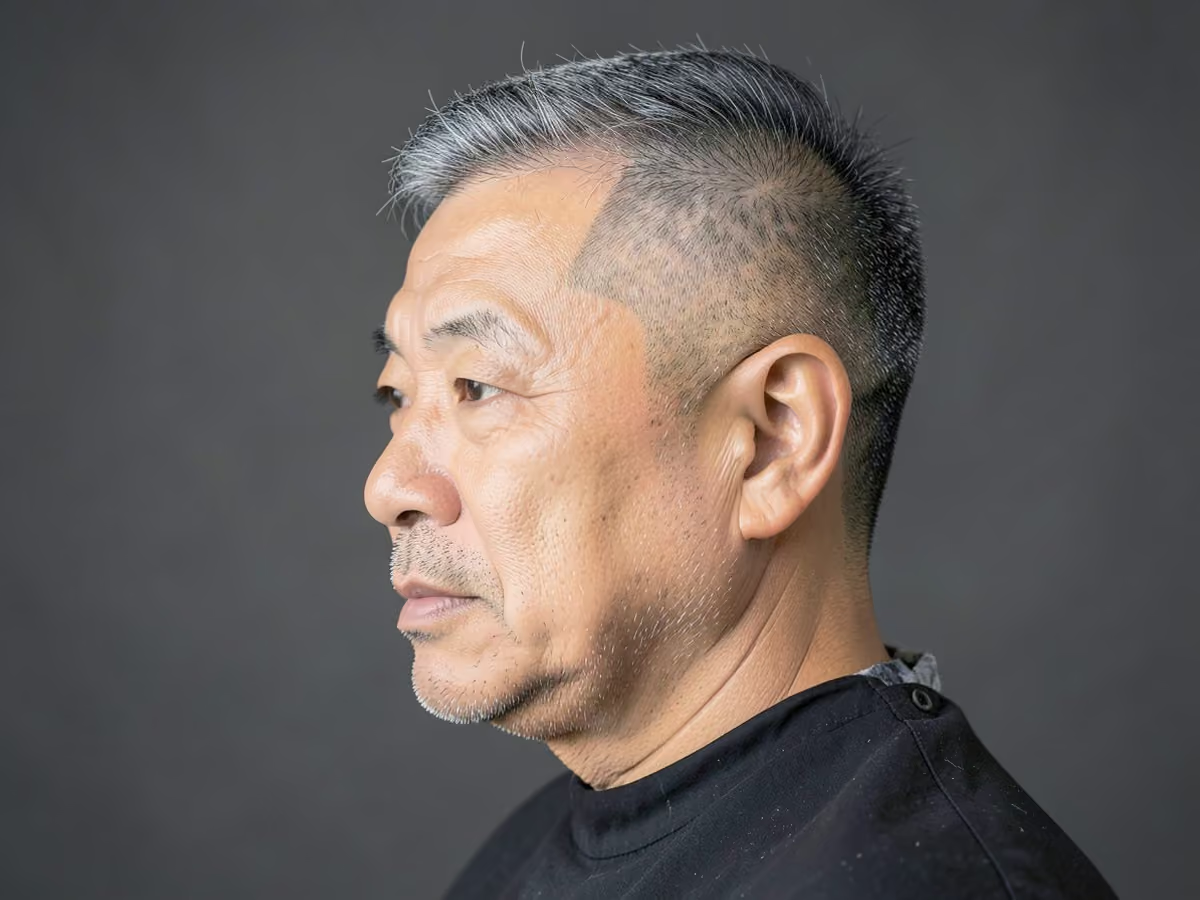
Shaved sides run up to a strip of hair two to three inches wide down the center. The razor finish gives the strip more contrast than a clipper fade would. Curly and coily tops hold height without much product. The faux hawk and mohawk guide has softer versions. Keep the strip edges straight and book every week or two, since the sides blur the outline as they regrow.
How to Style at Home
Push the strip upward with texture clay or an afro pick.
Apply sunscreen to the shaved sides before going outside.
Moisturize the scalp at night with a little scalp oil.
Ask Your Barber
"Razor fade on the sides up to a mohawk strip about two inches wide, top at three inches, razor smooth at the bottom."
Trim:Every 2 weeks. The thin line fills in within days.
Best For:Oval, square faces + coily, curly or straight hair.
About This Style
Instead of a full design, one narrow line is shaved into the side of the fade at an angle, usually above the temple. Barbers often call it a surgical line or a slit. Combining it with a razor fade gives two sharp details for a little effort. Coily hair shows the line best because of the contrast with dark, dense hair.
How to Style at Home
Keep the line clean with a detail trimmer between visits.
Brush the sides lightly so the line stays visible.
Style the top with a small amount of matte cream.
Ask Your Barber
"Fade me with a mid razor fade, smooth at the bottom, and shave one thin surgical line at an angle above my left temple."
Trim:Every 3 weeks. No crisp edges to lose between visits.
Best For:Sensitive skin + curly, wavy or coily hair.
About This Style
Here the razor is used only at the bottom of the fade, while the front hairline and temples are left natural rather than shaved into sharp corners. That keeps the shape soft at the forehead and reduces the amount of skin shaved near the face. It suits men who get irritation from line-ups or whose hairline is starting to recede.
How to Style at Home
Leave the hairline alone between visits; skip the trimmer.
Moisturize the shaved band with a fragrance-free scalp oil.
Style the top to fall forward slightly with a little curl cream.
Ask Your Barber
"Could I get a razor fade at the bottom only? Please leave my front hairline and temples natural, no line-up."
Trim:Every 2–3 weeks. The tapered nape grows out softly.
Best For:Long, oval faces + straight or wavy hair.
About This Style
At the back, the hair is tapered to nothing at the nape instead of cut into a block or rounded line. The barber shaves the very bottom with a razor so the neck looks bare, with no edge. A tapered neckline grows out without a visible line, which helps the cut last a few more days than a blocked nape.
How to Style at Home
Avoid shaving the nape yourself between visits, since it creates a line.
Use a hand mirror to spot regrowth at the neck.
Keep the top styled with a light pomade.
Ask Your Barber
"Shave the bottom of the fade with a razor, keep the sides blended, and taper my neckline to nothing with no block line at the nape."
Recommended Products
Light Pomade
Razor Fade with Beard and by Hair Type
A razor fade can connect into a beard or stop at clean cheeks. These eight cards cover a full beard, a goatee, stubble and a boxed beard, plus versions for coily, straight, thick and Asian hair.
Trim:Every 1–2 weeks. The beard connection needs regular blending.
Best For:Round, oval faces + thick hair and dense beards.
About This Style
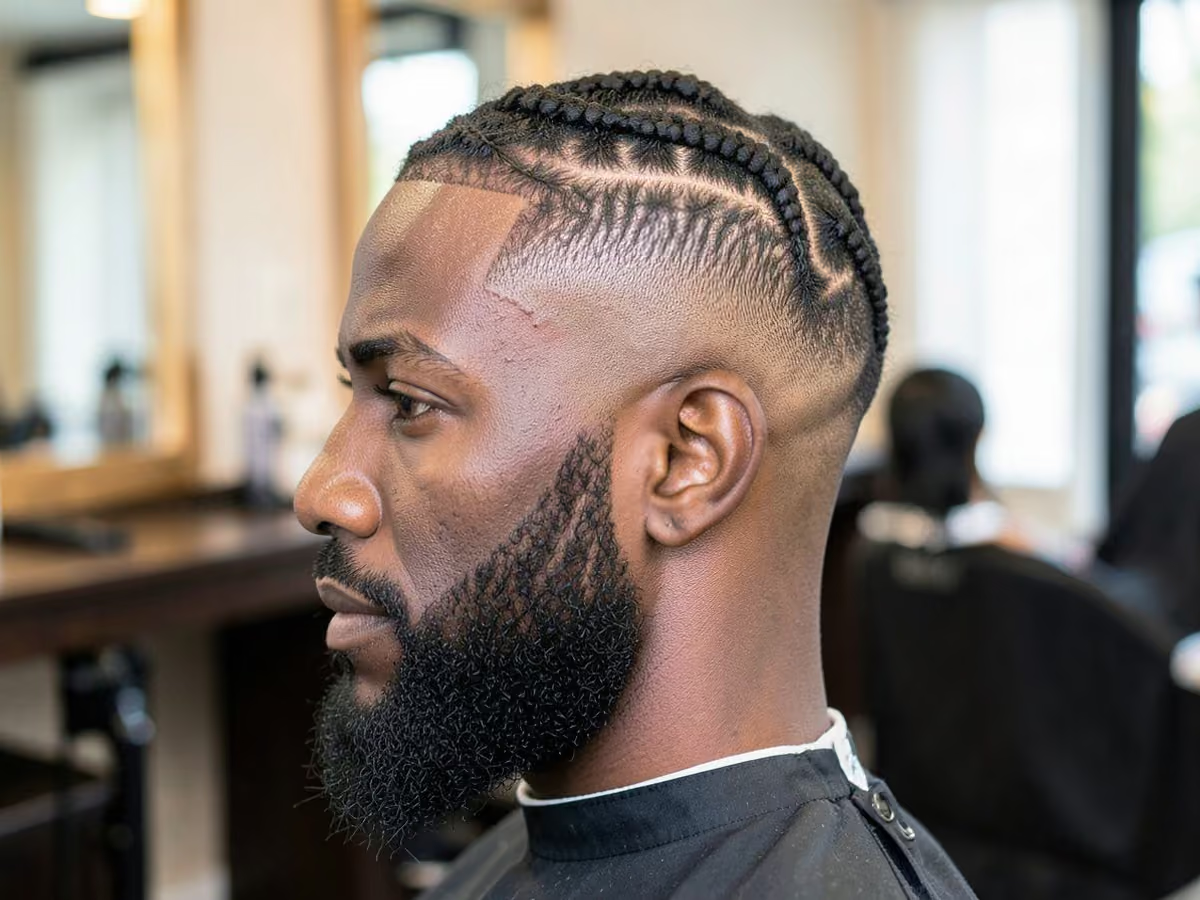
From smooth skin at the temple, the fade blends down through the sideburns into a full beard, so the bare band sits between the top and the beard. The razor also cleans the cheek and neck lines. The contrast between bare sides and a dense beard is strong. Keep the beard moisturized to avoid itching near the shaved area.
How to Style at Home
Rub beard oil into the beard and the shaved band.
Brush the beard down with a beard brush to set its shape.
Style the top with a small amount of matte clay.
Ask Your Barber
"Mid razor fade blended into my full beard at the sideburns, razor line on the cheeks and neck, two inches on top."
Trim:Every 1–2 weeks. Cheeks and sides both need shaving.
Best For:Round, square faces + coily or straight hair.
About This Style
The cheeks are shaved clean to match the smooth sides, leaving only a goatee on the chin. With no beard connection, the head and face read as separate clean surfaces with one point of hair below. A goatee lengthens a round face. Shave the cheeks every day or two. Coily beard hair may need a trimmer instead of a razor on the cheeks.
How to Style at Home
Shave the cheeks around the goatee every day or two.
Trim the goatee with a guard and apply beard balm.
Oil the shaved sides of the head after washing.
Ask Your Barber
"High razor fade, shave my cheeks clean with the razor, and shape my goatee. Keep about an inch on top, brushed down."
Trim:Every 2 weeks. Stubble and side regrowth match by day five.
Best For:Oval, square faces + straight or wavy hair.
About This Style
Low on the sides, this razor fade sits above a few days of facial stubble at about 3 mm. As the sides regrow, they match the stubble, so the cut still looks deliberate in week two. It suits men who do not want a full beard. Clean the neckline just above the Adam's apple to keep the stubble neat.
How to Style at Home
Trim the stubble with a 3 mm guard every few days.
Clean the neckline with a trimmer above the Adam's apple.
Style the top with sea salt spray and a little matte clay.
Ask Your Barber
"Low razor fade, blend the sideburns into my stubble, clean up my neckline, and leave three inches on top with texture."
Trim:Every 1–2 weeks. Coily regrowth shows as a dark shadow fast.
Best For:Round, oval faces + coily or 4C hair.
About This Style
On coily hair, the razor removes the dark shadow a foil shaver leaves, so the gradient looks smoother. Coily hair is also more likely to form bumps, so shaving with the grain, a fresh blade and an oil afterward matter. A line-up and a short top are the usual partners. See black men haircuts for more.
How to Style at Home
Apply scalp oil to the shaved area right after washing.
Brush the top with a soft brush in one direction.
Use an edge brush on the hairline each morning.
Ask Your Barber
"I'm after a mid razor fade, shave with the grain because I get bumps, line-up at my natural hairline, and keep an inch on top."
Trim:Every 2 weeks. Light regrowth shows less than on dark hair.
Best For:Oval, square faces + straight or fine hair.
About This Style
Straight hair rarely curls back into the skin, so razor bumps are less common. The visual gain over a foil shaver is smaller on light or fine hair, but dark straight hair still shows a clear smooth band. Keep the fade low or mid so pale skin does not dominate. A textured crop or side part on top works well.
How to Style at Home
Apply matte clay to the top for light texture.
Push the top forward or to the side with your fingers.
Moisturize the shaved band to stop it flaking.
Ask Your Barber
"Low razor fade for straight hair, smooth at the bottom, blended into a #3, and three inches on top with texture."
Trim:Every 2–3 weeks. Fade and boxed beard lines both soften.
Best For:Round, oval faces + straight or coily hair.
About This Style
Smooth skin at the temple fades through a #1 and #2 into the sideburn, which then joins a boxed beard about half an inch long with a razor-shaved cheek line and neckline. Using a razor on the beard lines matches the finish of the fade. The squared outline adds structure to round or soft jawlines. Men prone to bumps can ask for a trimmer instead of the razor on the beard.
How to Style at Home
Trim the beard with a #4 guard every week.
Shave the cheek line after a warm shower.
Apply two or three drops of beard oil after each trim.
Ask Your Barber
"Shave my fade at the temple, blend it into a #3 sideburn, then a boxed beard at a #4 with razor lines on the cheek and neck."
Trim:Every 2–3 weeks. Thick straight hair shows regrowth as dark shadow.
Best For:Oval, square faces + thick, straight East Asian hair.
About This Style
Thick, straight East Asian hair is dark and dense, so a fade shows a strong shadow as it regrows. Finishing the bottom with a razor makes the light-to-dark transition cleaner and sharper. A mid razor fade with two to three inches on top, worn in a textured crop, side part or comb over, suits it well. The top often needs thinning to lie flat.
How to Style at Home
Use a blow dryer to direct the top before adding product.
Apply matte clay to control the thick hair.
Ask for weight removed on top every visit.
Ask Your Barber
"Let's do a mid razor fade, smooth at the bottom, with three inches on top thinned out for a textured crop."
Trim:Every 2 weeks. Dense hair makes the fade line darken quickly.
Best For:Square, round faces + thick or coarse hair.
About This Style
Very thick hair creates a heavy line between the fade and the top if the barber does not remove weight. A razor fade on dense hair needs more time spent blending through a #1, #1.5 and #2. Taking bulk out with thinning shears or a razor on the top keeps the shape from puffing out. The smooth base contrasts strongly with dense hair above.
How to Style at Home
Use a strong matte clay on dry hair.
Blow-dry the top in the direction you want it to sit.
Ask for the top thinned at every visit.
Ask Your Barber
"Fade my thick hair with a razor finish, blended slowly through a #1 and #2, with the top thinned out so it does not puff out."
Recommended Products
Matte Clay
Texture Clay
Razor Fade with Longer Tops
Leaving more length on top makes the razor-smooth sides even more noticeable. These six keep three inches or more on top, from a slick back to twists and a man bun. See the undercut gallery for disconnected versions.
Trim:Every 3 weeks. The fade softens before the top needs cutting.
Best For:Oval, square faces + straight or wavy hair.
About This Style
Four to six inches on top is combed straight back from the forehead, held with pomade or a light gel. Smooth sides from a mid razor fade make the top look even longer. Using a fine-tooth comb gives a wet, defined finish, while fingers give a looser version. Straight and wavy hair hold the backward direction more easily than curly.
How to Style at Home
Comb pomade through damp hair from front to back.
Use a fine-tooth comb for a defined finish.
Blow-dry the top backward first if it tends to fall forward.
Ask Your Barber
"Slick back with five inches on top, kept a single length, over a mid razor fade smooth at the temple."
Trim:Every 3 weeks. The fade grows quickly while the back stays long.
Best For:Oval, heart faces + wavy or curly hair.
About This Style
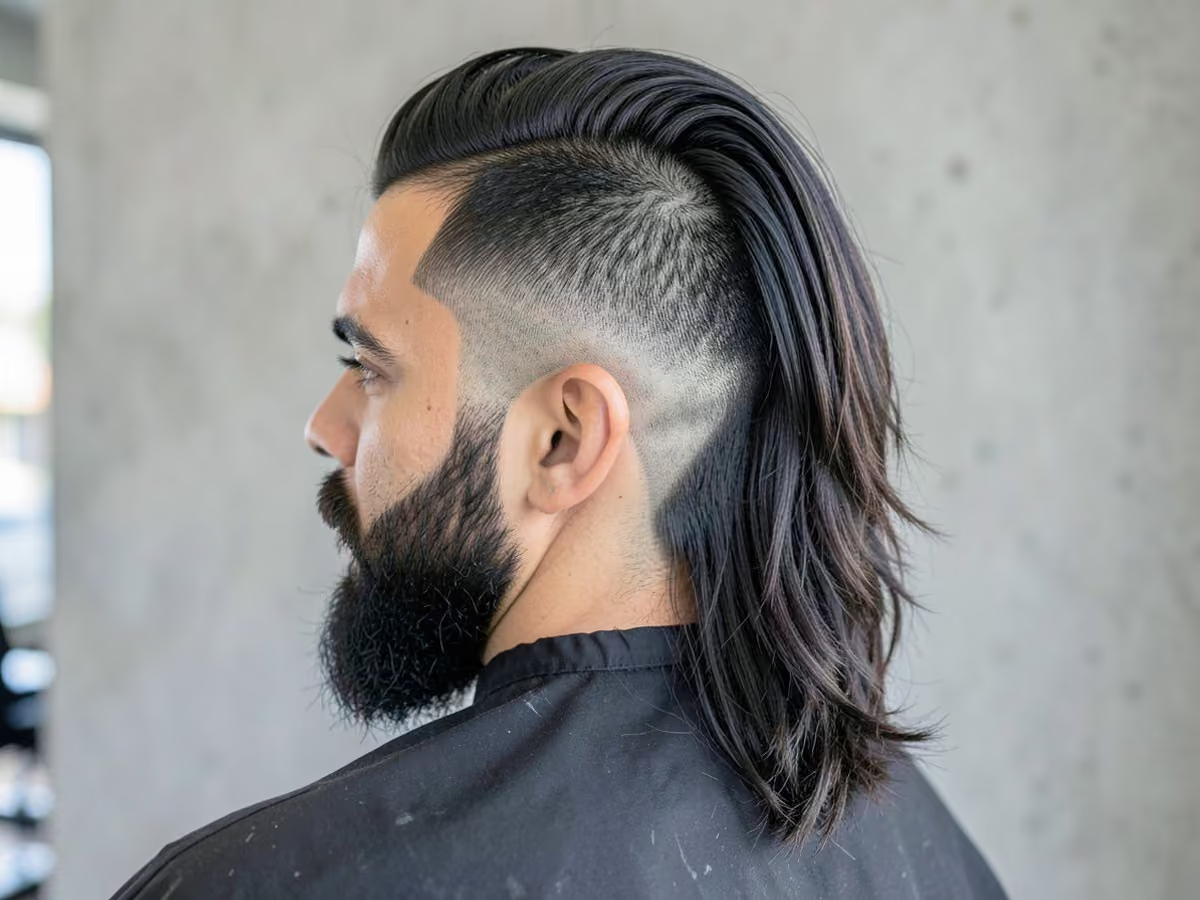
The razor fade wraps around the ear in a burst shape, smooth at the bottom, while the back is left long, falling past the collar. On top, two to three inches of texture connect the front to the back. The shaved area near the ear makes the long back look intentional. Wavy and curly hair give the back natural movement.
How to Style at Home
Scrunch sea salt spray into the back while damp.
Leave the back loose rather than combing it flat.
Trim the back every six weeks to stop it looking shaggy.
Ask Your Barber
"Give me a razor fade around the ears in a burst, three inches on top, and leave the back long past the collar."
Trim:Every 2–3 weeks. The center strip needs shape each visit.
Best For:Round, oval faces + thick or straight hair.
About This Style
Two to three inches through the center of the top is pushed into a ridge, and the hair at the sides of the top is cut shorter to help it point upward. A mid razor fade under it leaves smooth sides. Unlike a mohawk, the sides are not fully bare on top; the strip simply blends down. It suits thick hair that holds height with clay.
How to Style at Home
Blow-dry the center of the top upward on medium heat.
Pinch the hair toward the middle with texture clay.
Set the ridge with a small amount of hair spray if needed.
Ask Your Barber
"Could you do a mid razor fade and leave three inches through the middle of the top for a faux hawk, cut shorter at the edges?"
Trim:Every 2 weeks. The fade needs touching up more than the twists.
Best For:Oval, square faces + coily or tightly curled hair.
About This Style
Two-strand twists or coil twists of two to four inches sit on top, while the sides are razor-faded from skin at the bottom. The smooth sides make the twists look neater and more defined. Twists are retwisted every two to four weeks and need moisture. Ask the barber to leave a little margin above the fade so the outer twists are not too short.
How to Style at Home
Spray leave-in on the twists every two days.
Retwist roots with a light loc gel every two to four weeks.
Wrap the hair in a durag or satin cap at night.
Ask Your Barber
"Keep my twists on top, mid razor fade on the sides, smooth at the bottom, with a margin of hair left around the twist line."
Trim:Every 2–3 weeks. The fade needs care more than the afro.
Best For:Oval, long faces + coily or kinky hair.
About This Style
A rounded afro of two to four inches on top is picked out and shaped by the barber with clippers or shears, while the sides are faded to skin and razor-finished. Shaving the bottom gives a sharp base under the soft afro. The round shape suits oval and long faces. Coily hair needs moisture to keep the afro soft and to avoid breakage.
How to Style at Home
Pick the afro out from the roots with an afro pick.
Apply leave-in conditioner to damp hair before picking it out.
Pat the round outline into shape with your palms after picking.
Ask Your Barber
"Shape my afro round, about three inches, and give me a razor fade on the sides, smooth at the bottom."
Trim:Every 3–4 weeks. The faded sides need cleanup, not the bun.
Best For:Oval, long faces + straight or wavy hair.
About This Style
Long hair on top, six inches or more, is tied back into a bun, while the sides and back are razor-faded from skin. The fade keeps the look neat, and the bun keeps the top out of the face. Ask the barber to fade the sides up to the area where the hair is gathered, so no stray hair falls under the bun.
How to Style at Home
Tie the hair loosely to avoid pulling at the roots.
Smooth the gathered hair with a bit of styling cream.
Let the hair down at night to rest the scalp.
Ask Your Barber
"Razor fade on the sides and back up to my bun line. Leave the top long, at least six inches, for a man bun."
Recommended Products
Styling Cream
Argan Oil
Short Razor Fades, Teens and Gray Hair
Shorter tops keep the razor finish the focus. These six cover classic short cuts, a teen version and a version for gray hair. See the crew cut page for more short tops.
Trim:Every 2–3 weeks. The fade softens, the top stays tidy.
Best For:Square, oval faces + straight or wavy hair.
About This Style
Slightly longer at the front, about an inch, and shorter toward the crown, the crew cut sits over a razor fade. It needs very little styling and looks neat for work and casual settings. Bringing the fade higher makes it more modern, while keeping it low makes it more traditional. Straight and wavy hair hold the slight forward slope.
How to Style at Home
Comb the front slightly up with a little matte cream.
Leave the crown short and flat, without product.
Book a fade cleanup at the two-week mark.
Ask Your Barber
"Crew cut, an inch at the front tapering shorter to the crown, with a mid razor fade on the sides."
Trim:Every 2 weeks. The short fringe loses its straight line.
Best For:Round, oval faces + coily, curly or straight hair.
About This Style
Cut to half an inch to an inch on top with a short, straight fringe brushed forward, the Caesar is simple and quick to style. A razor fade on the sides gives sharp contrast and a clean outline. Coily hair often gets waves on top of a Caesar with brushing. The fringe shortens the forehead slightly, which helps long faces.
How to Style at Home
Brush the top forward each morning with a soft brush.
Use a light pomade for a soft shine.
Keep the fringe line straight with a trimmer.
Ask Your Barber
"I want a Caesar cut with a short straight fringe brushed forward and a high razor fade, smooth at the bottom."
Trim:Every 1–2 weeks. Both the line and the fade need upkeep.
Best For:Oval, square faces + thick, straight or coarse hair.
About This Style
Thick, straight hair is cut into a blunt Edgar fringe straight across the forehead, with a short textured top. A high razor fade under it makes the fringe line and the bare sides the two sharpest parts of the look. It needs frequent visits to keep both edges crisp. The style is closely tied to Latino barbershop culture.
How to Style at Home
Push the fringe flat with a matte paste.
Clean the fringe line at home only with a light trimmer touch.
Moisturize the shaved sides daily to help prevent razor bumps.
Ask Your Barber
"Edgar cut with a straight blunt fringe line, a high razor fade on the sides and short choppy texture on top, about an inch."
Trim:Every 3–4 weeks. Longer top length grows out slowly.
Best For:Oval, square faces + straight or wavy hair.
About This Style
Longer than a crew cut, the Ivy League keeps about two inches at the front, enough to part and comb to the side. Pairing it with a low razor fade gives a cleaner, more modern finish than a classic scissor taper. It works for offices and formal settings. Straight and wavy hair part neatly; thick hair may need weight taken out.
How to Style at Home
Part the top at the side with a fine-tooth comb.
Comb a light pomade through for a soft hold.
Push the front up slightly for a bit of lift.
Ask Your Barber
"Ivy League with two inches at the front for a side part, shorter at the crown, and a low razor fade on the sides."
Trim:Every 2–3 weeks. Teen hair grows fast and fades quickly.
Best For:Teens + straight, wavy, curly or coily hair.
About This Style
Teen hair grows quickly, so the razor-smooth bottom softens within a week or two. A low or mid razor fade with a textured top of one to three inches is a common request, often with a line-up. Skin can be more sensitive during puberty, so ask the barber to use a fresh blade and an alcohol-free aftershave. Parents may want a shadow fade instead for school dress codes.
How to Style at Home
Wash the shaved area gently and avoid scratching.
Style the top with a matte clay or curl cream.
Book barber visits every two to three weeks to keep it sharp.
Ask Your Barber
"He wants a mid razor fade done with a fresh blade, a textured top of about two inches and a light line-up at the front."
Trim:Every 3 weeks. Gray hair shows the fade softly.
Best For:Older men + gray, white or salt and pepper hair.
About This Style
Gray and white hair have less contrast with the scalp, so a razor fade looks softer than on dark hair. A low razor fade with a short side part or a neat crop on top keeps the cut tidy. Older skin can be thinner and more prone to nicks, so a foil shaver may be a gentler substitute. A purple shampoo can keep white hair bright.
How to Style at Home
Use a fragrance-free moisturizer on the shaved area.
Style the top with a light matte cream.
Ask for a foil shaver if the razor irritates.
Ask Your Barber
"Start with a low razor fade, or a foil shaver if my skin reacts, and give me a short side part on top."
Recommended Products
Matte Cream
Scalp Oil
How Do You Ask for a Razor Fade?
Name the height, say you want the bottom finished with a razor, and give the top length. For example: mid razor fade, shaved smooth at the bottom with a razor, blended through a #1 and #2 into three inches on top. Mention any sensitivity to razors so the barber can use a fresh blade, pre-shave oil or gel, and shave with the grain rather than against it.
Ask if the shop uses a new blade for each client; licensed shops typically do. If you want the razor used only for the line-up or the nape, say so, since some barbers shave the whole lower band by default. The skin fade cost guide explains why a razor finish can add to the price, and a photo of the height you want removes most guessing.
Clipper Guards Used in Razor Fade Styles
A clipper guard is the plastic comb that clips onto the blade and sets how much hair is left: a #1 leaves 3 mm (1/8 inch), each step up adds about 3 mm. The right column lists the cards on this page that call for each guard. See the full clipper guard numbers guide for the complete chart.
The shaved skin needs the same care as a freshly shaved face. Rinse with cool water, avoid scratching, and apply a light, unscented scalp oil or moisturizer for the first day or two. Sunscreen matters because skin that was covered by hair burns quickly, especially on the crown side of a high fade. Avoid tight hats and helmets for a day if you see redness or small bumps.
Expect the smooth finish to last two to four days before dark stubble returns, and the blend to soften in one to two weeks. Most razor fade wearers book every one to two weeks. If bumps appear, skip the razor at the next visit and ask for a foil shaver or a #0 finish while the skin settles, then try the razor again on a smaller area.
Which Razor Fade Is Right for You?
Pick your hair type and how much upkeep you will put in. The matches below come from the Best For and Maintenance notes on each card. Upkeep follows the Maintenance badge: low means a cut every 3 to 6 weeks and almost no daily styling, high means weekly line-ups or daily product.
A razor fade is a fade haircut where the shortest section is shaved with a straight razor or shavette after clipping, so the skin is completely smooth. It then blends up through clipper guards into the top. It can start low, mid or high on the head and works under any top style.
Q2: Is a razor fade the same as a bald fade?+
Often, yes. Many shops use bald fade for a fade that reaches skin, whether with a foil shaver or a razor. A razor fade specifies the blade, so the bottom is smooth rather than very short. Ask your barber which tool they use if the difference matters to you.
Q3: How long does a razor fade last?+
The smooth finish lasts about two to four days before stubble shows. The blend still looks clean for about a week and starts to soften in the second week. Most men with a razor fade book every one to two weeks to keep the contrast.
Q4: Does a razor fade cause razor bumps?+
It can, especially on curly or coily hair that tends to grow back into the skin. A fresh blade, shaving with the grain, lather or gel and a calming oil afterward reduce the risk. If bumps keep coming back, switch to a foil shaver or #0 finish.
Q5: Is a razor fade more expensive?+
Some shops charge extra for razor work because it takes more time and uses a new blade. Others include it in a skin fade price. Ask when booking, and see our skin fade cost guide for what affects the price at most barbershops.
Q6: Can you get a razor fade on straight hair?+
Yes. Straight hair grows out without curling into the skin, so bumps are less common. The visual difference from a foil shaver finish is smaller on light or fine hair, though, since there is less shadow to remove. Dark straight hair still shows a clear contrast.