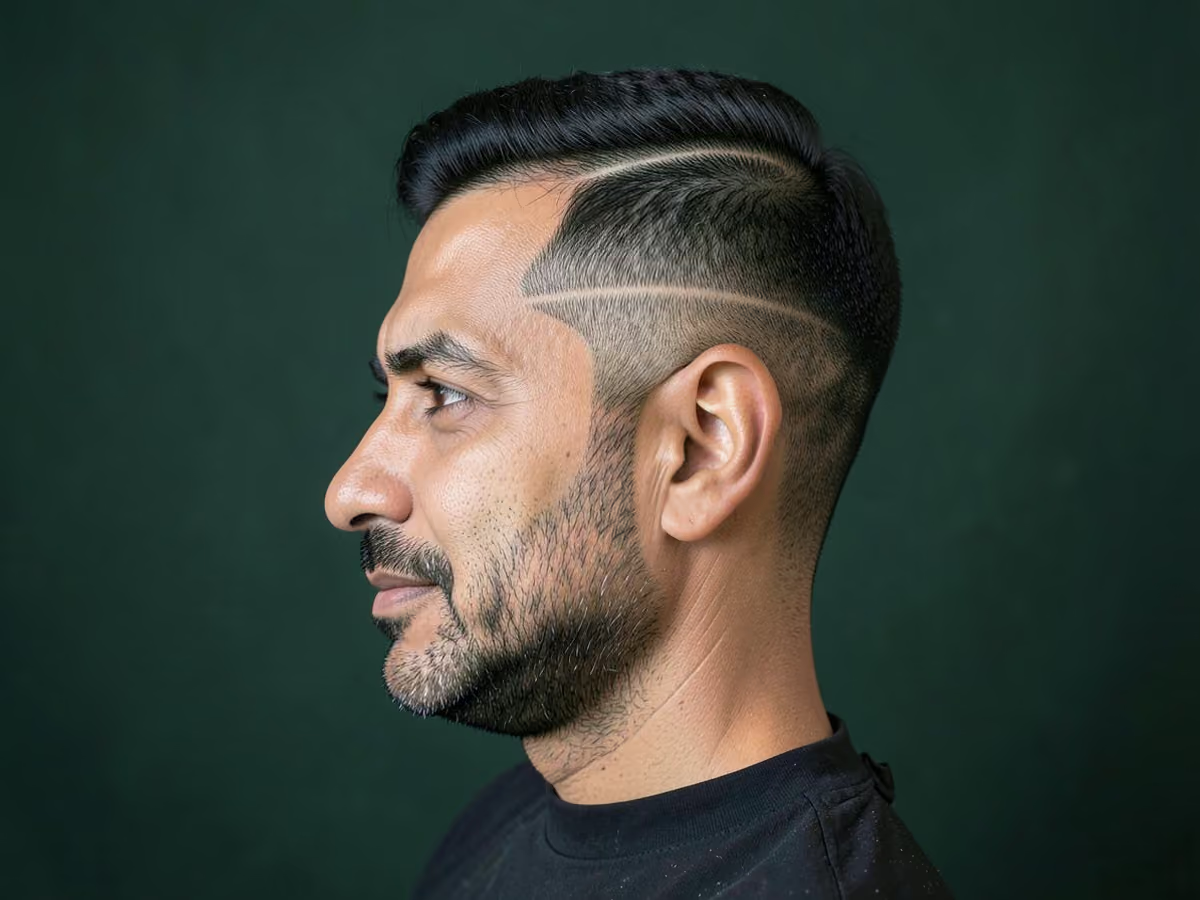
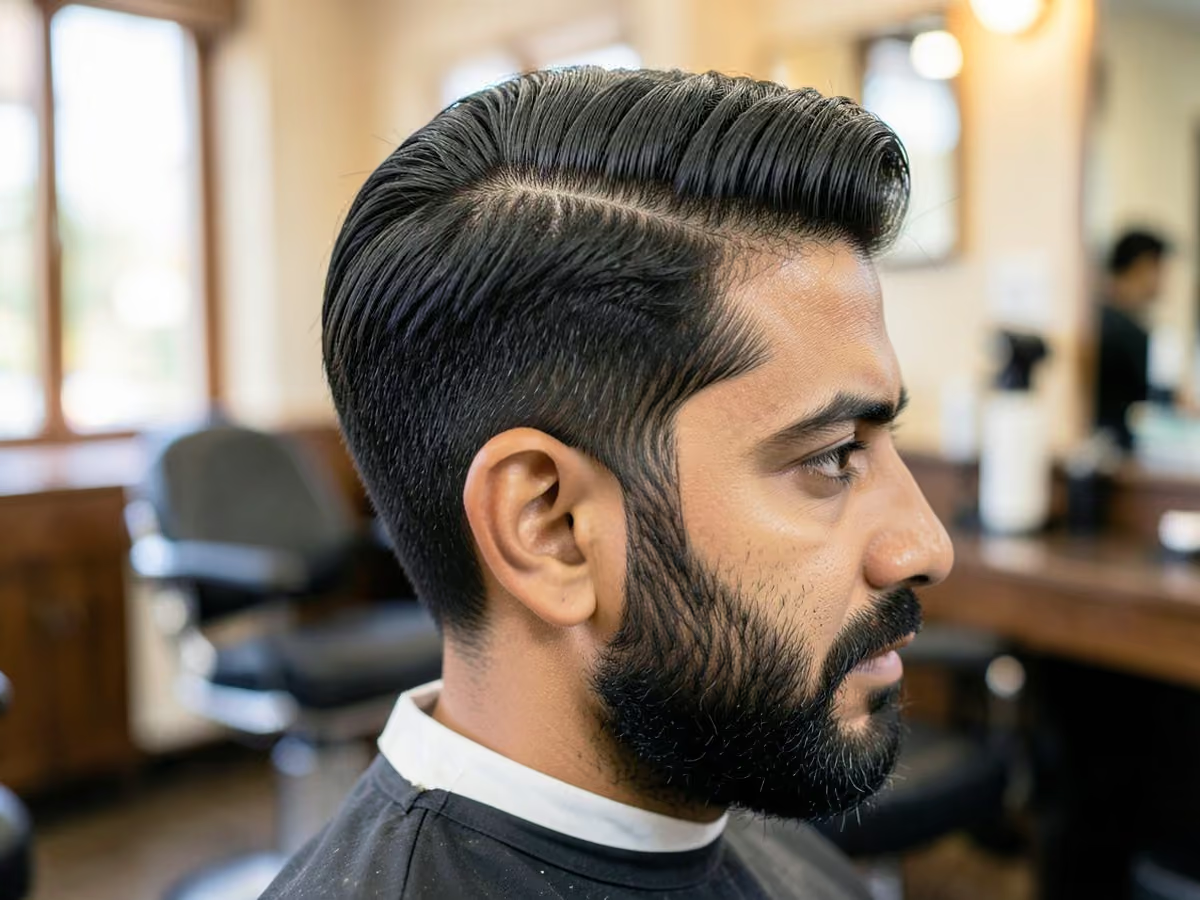
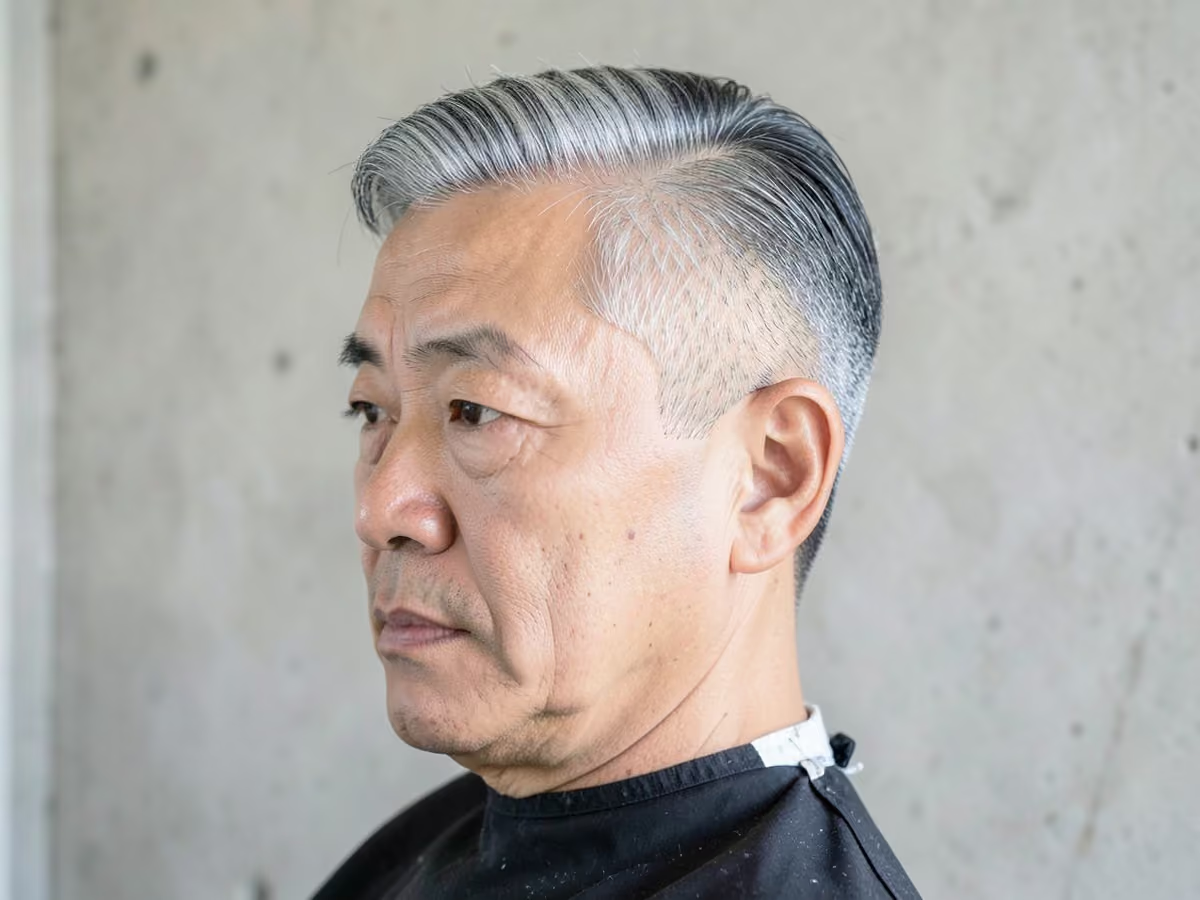
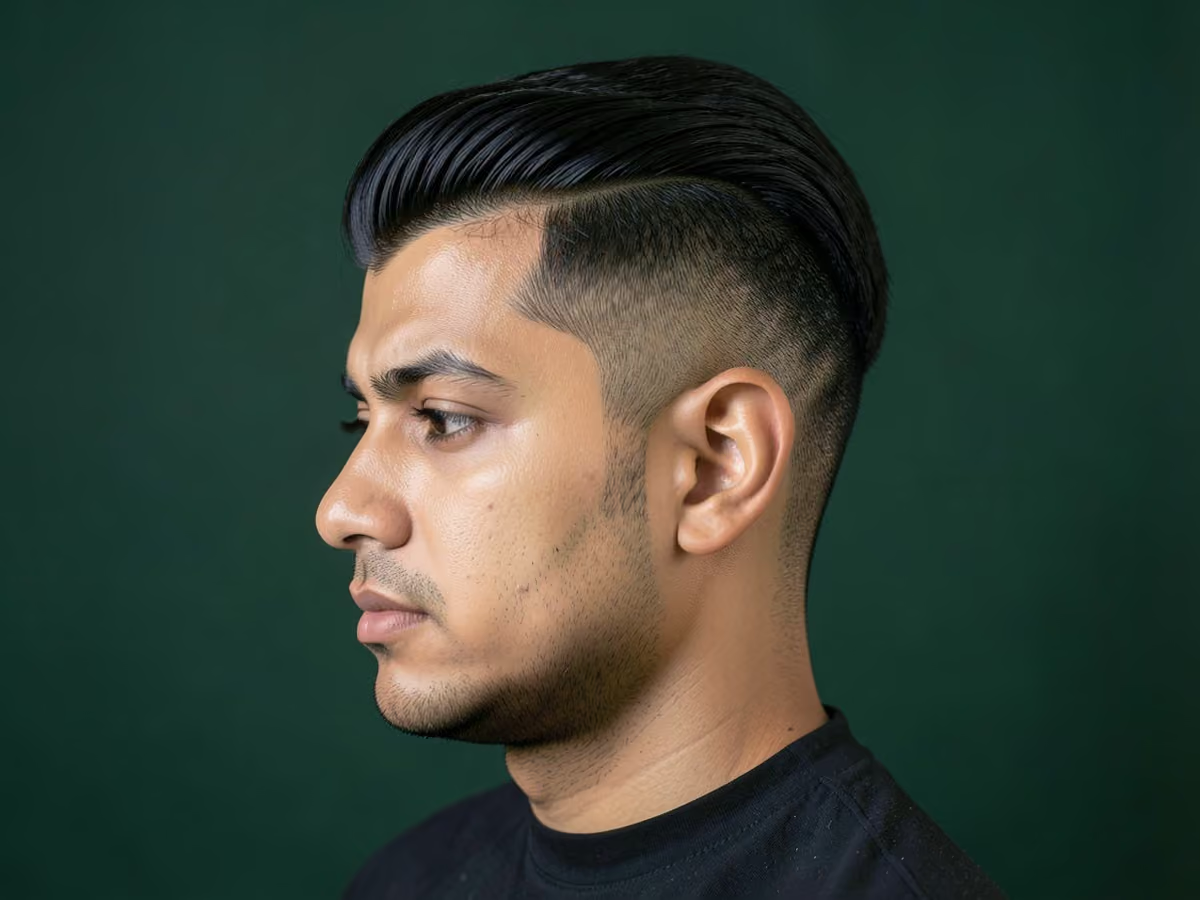
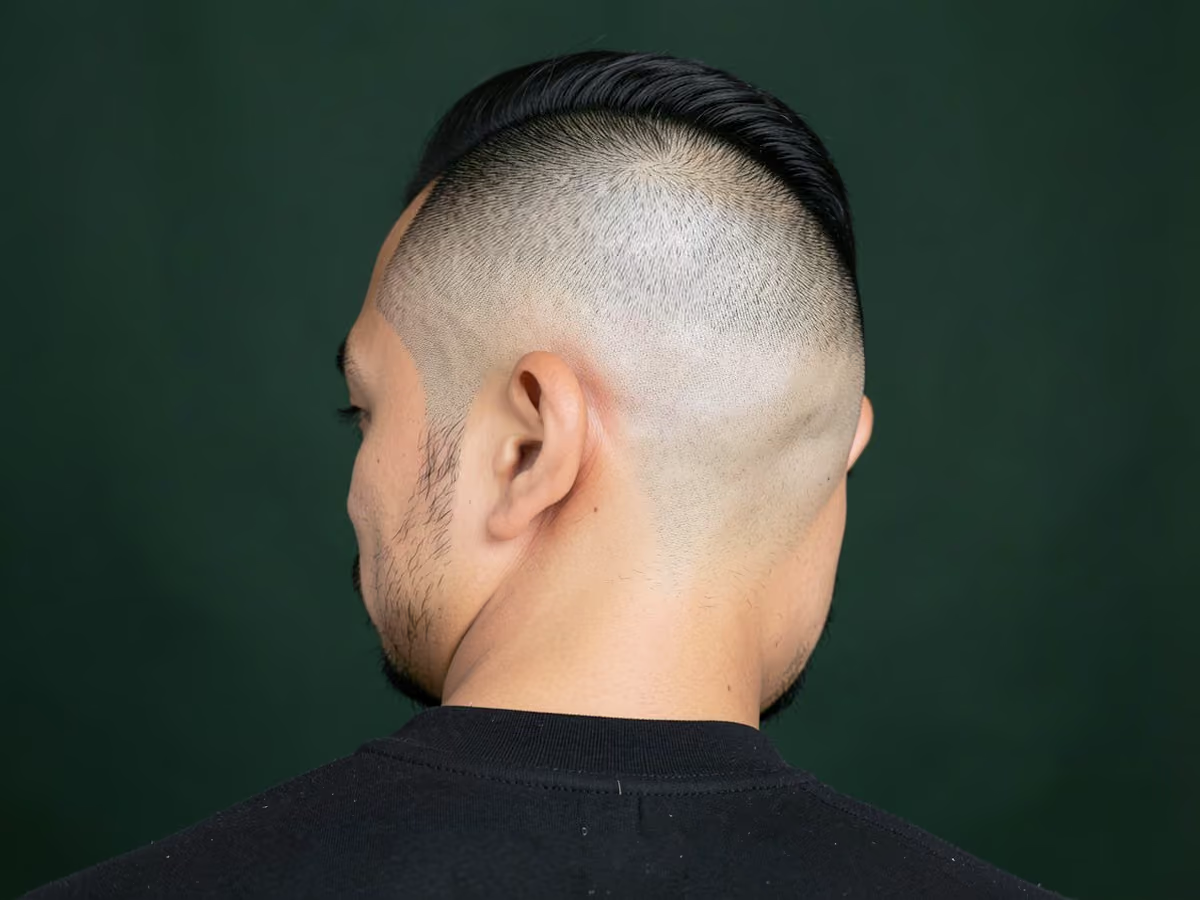
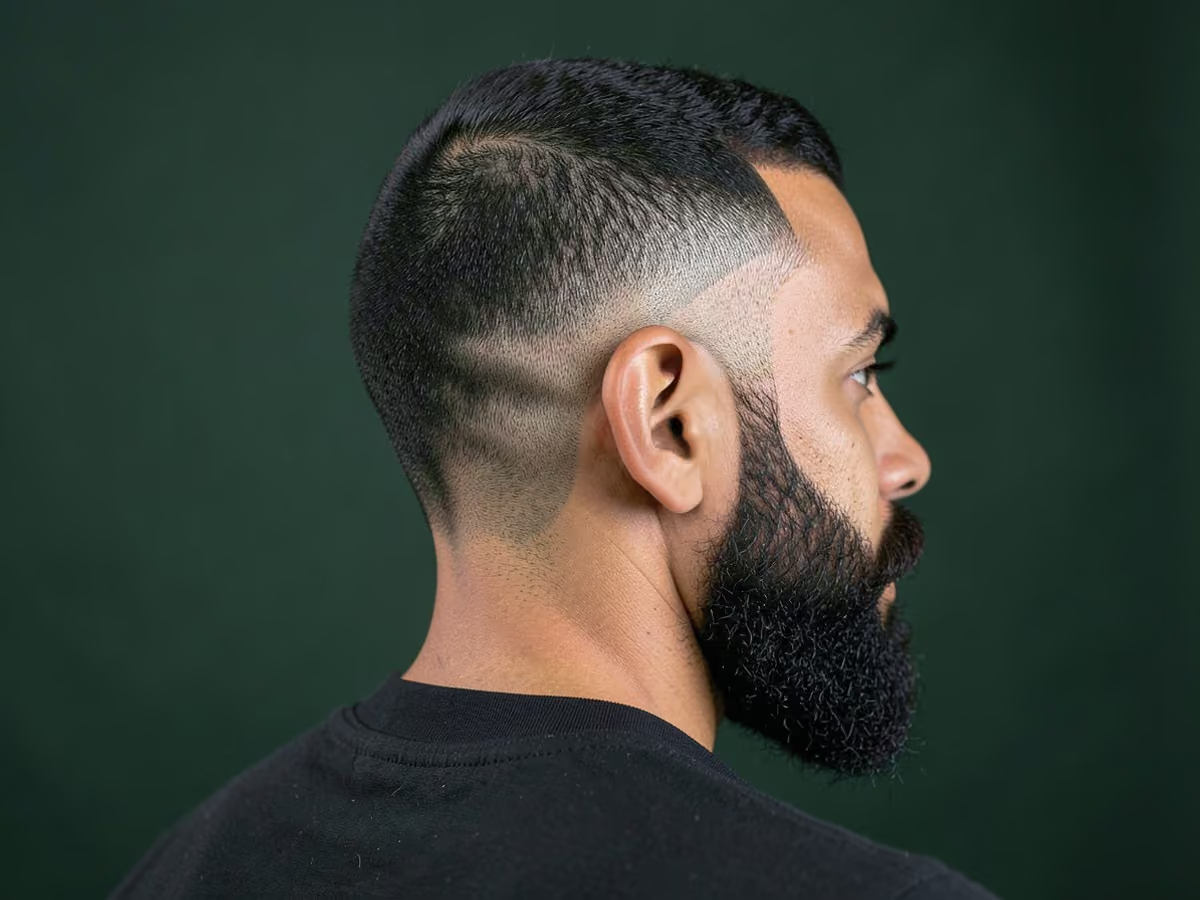
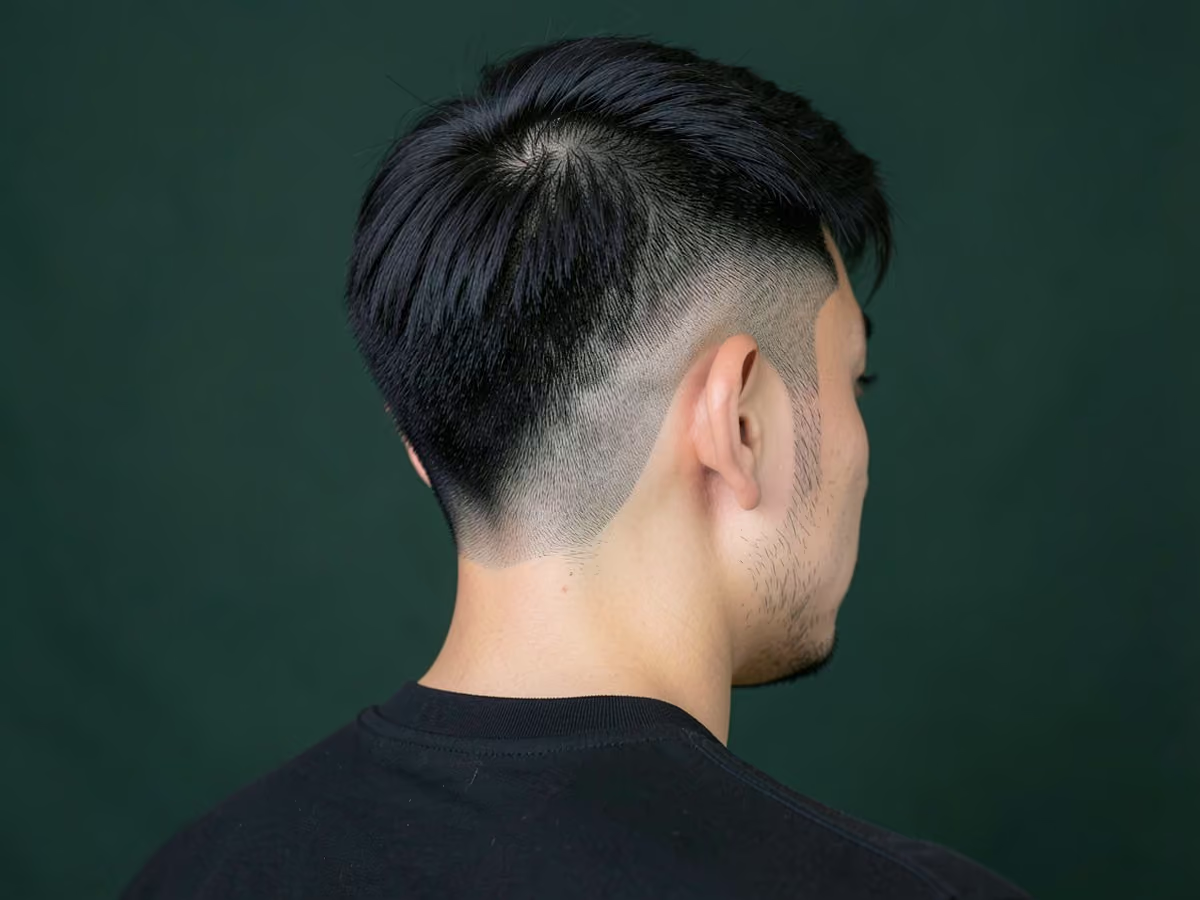
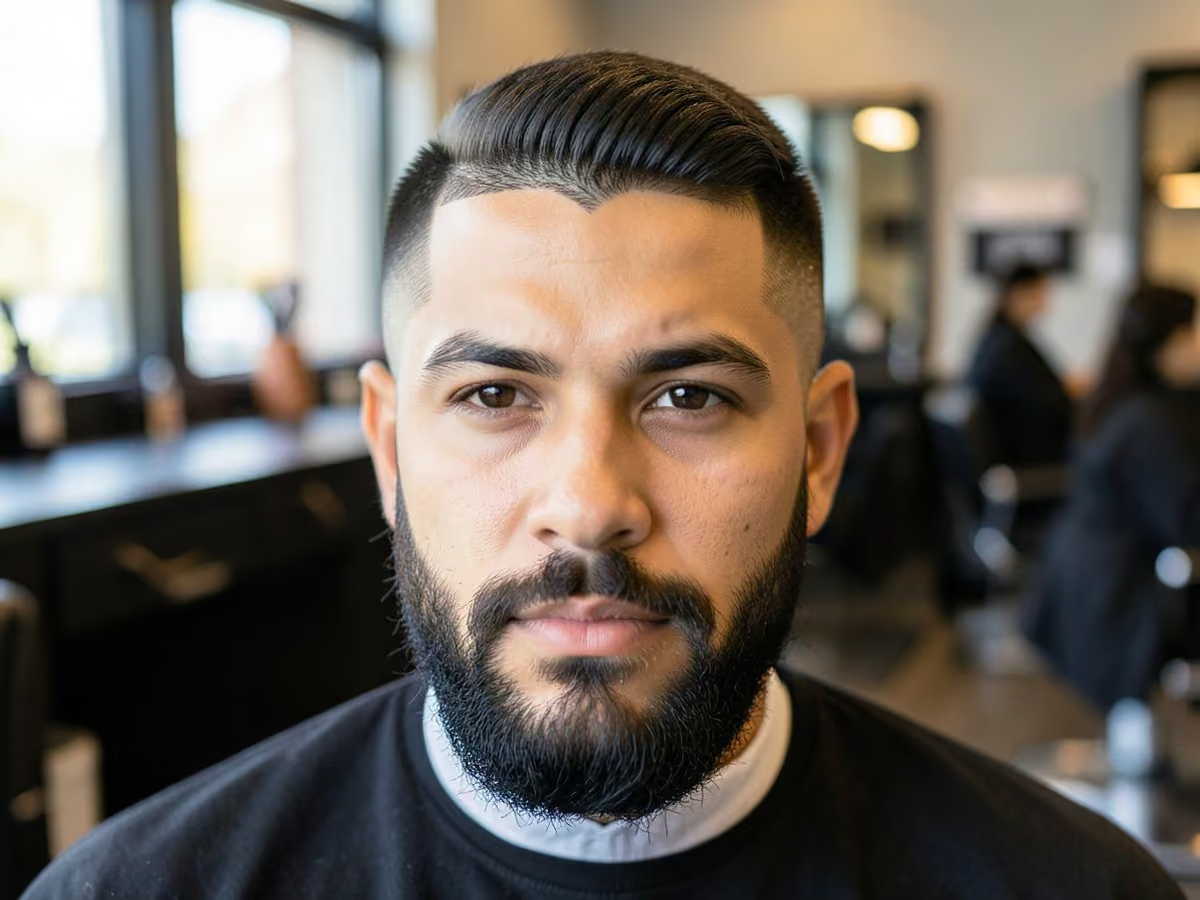
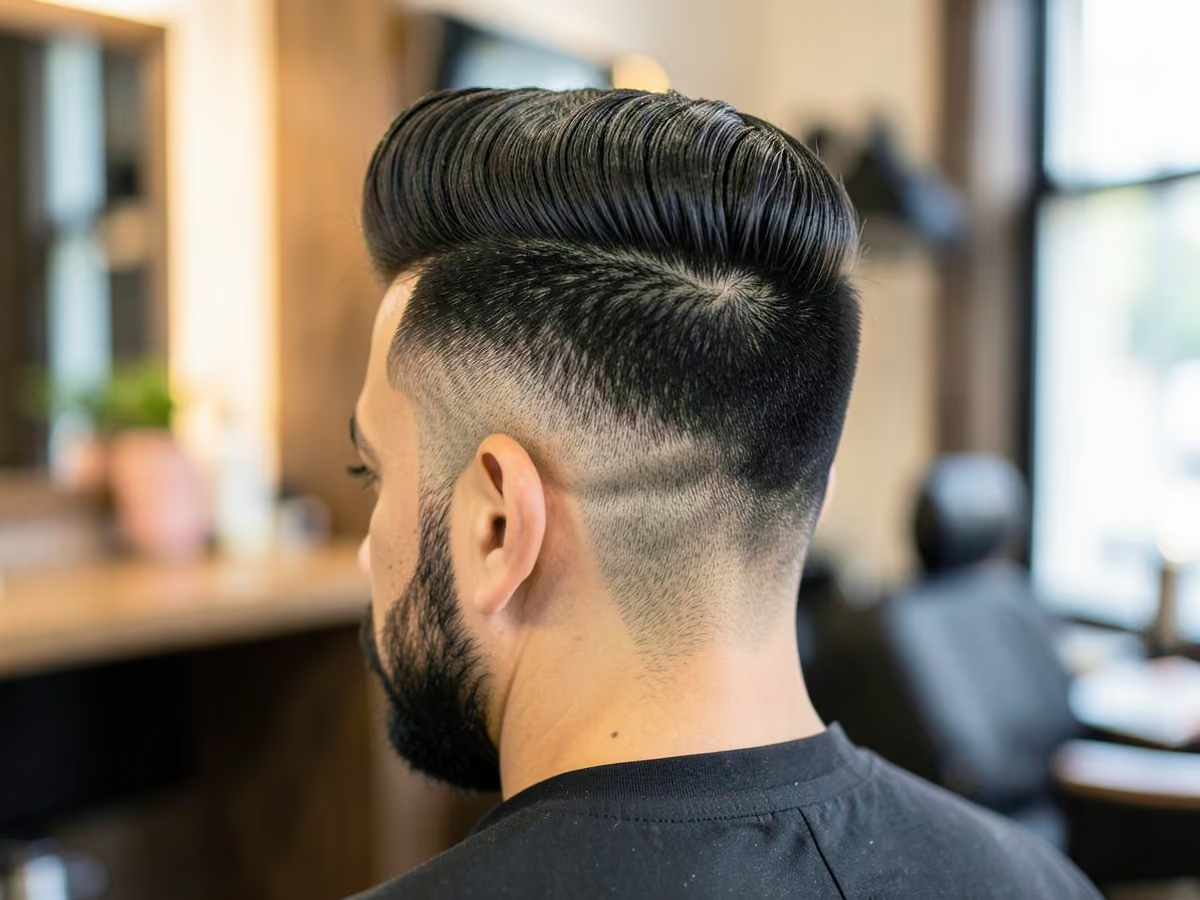
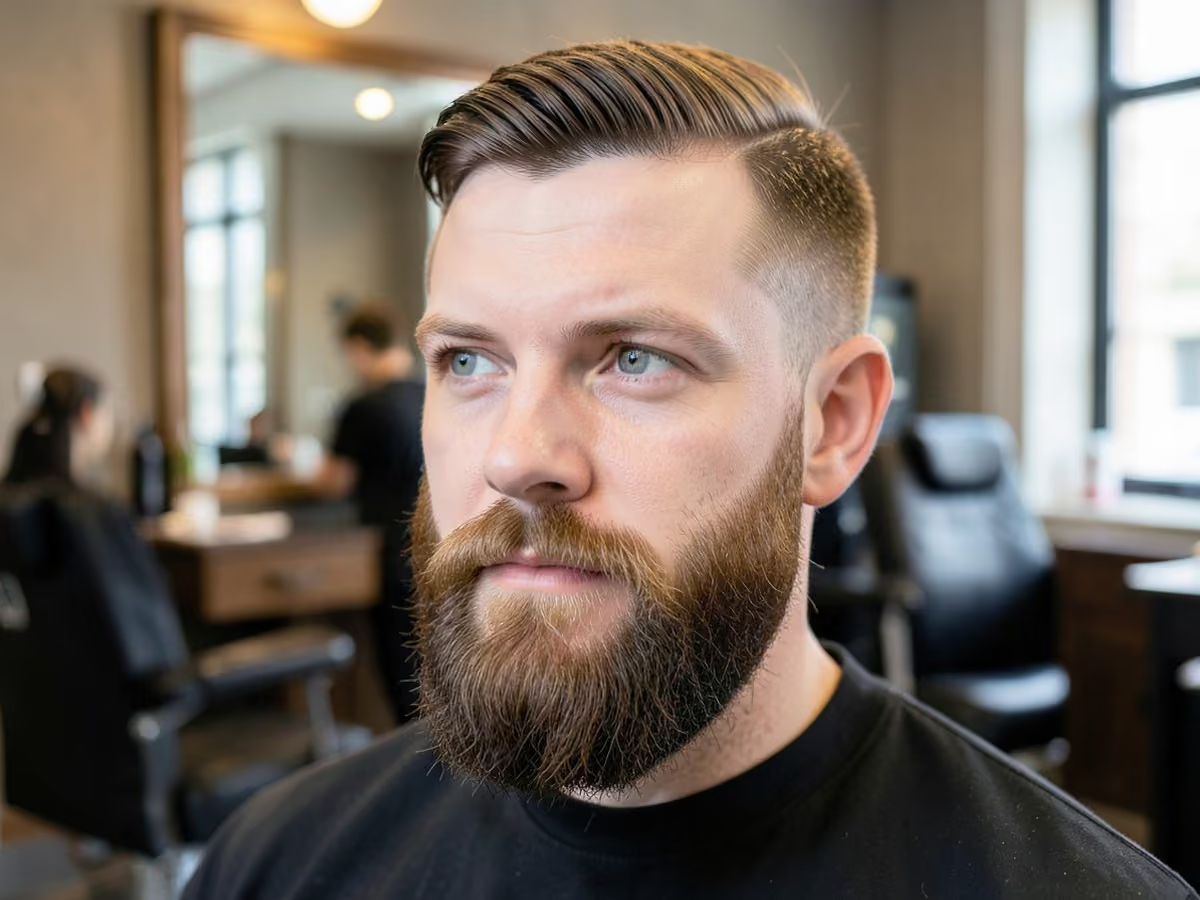
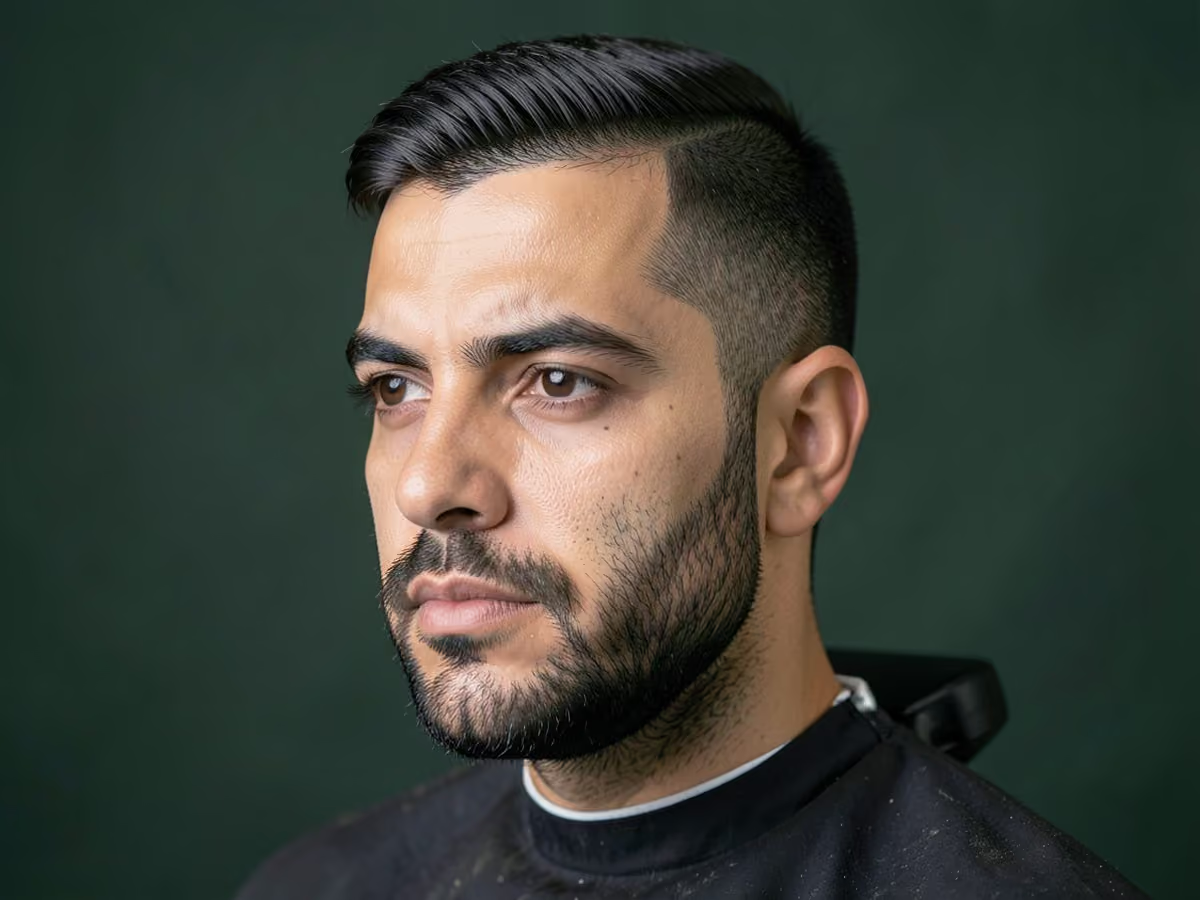
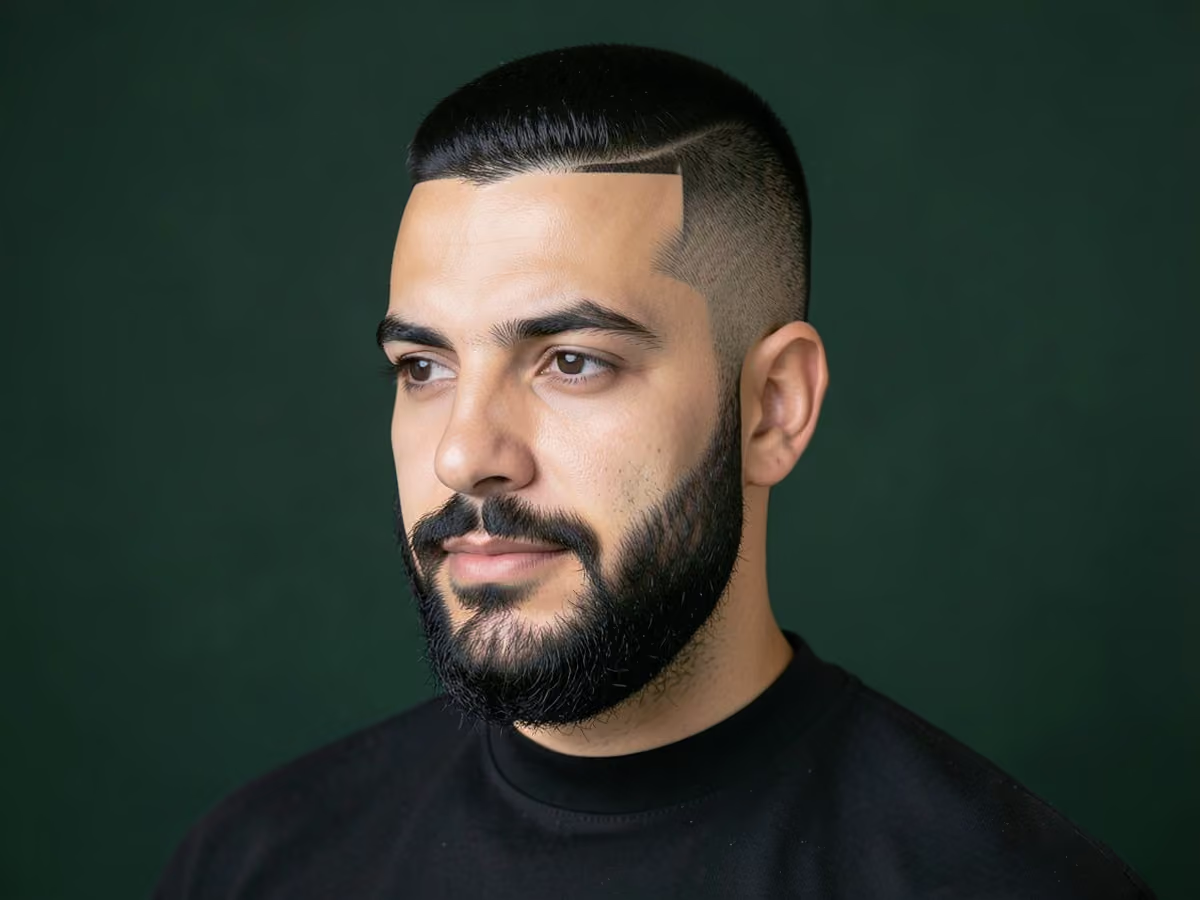
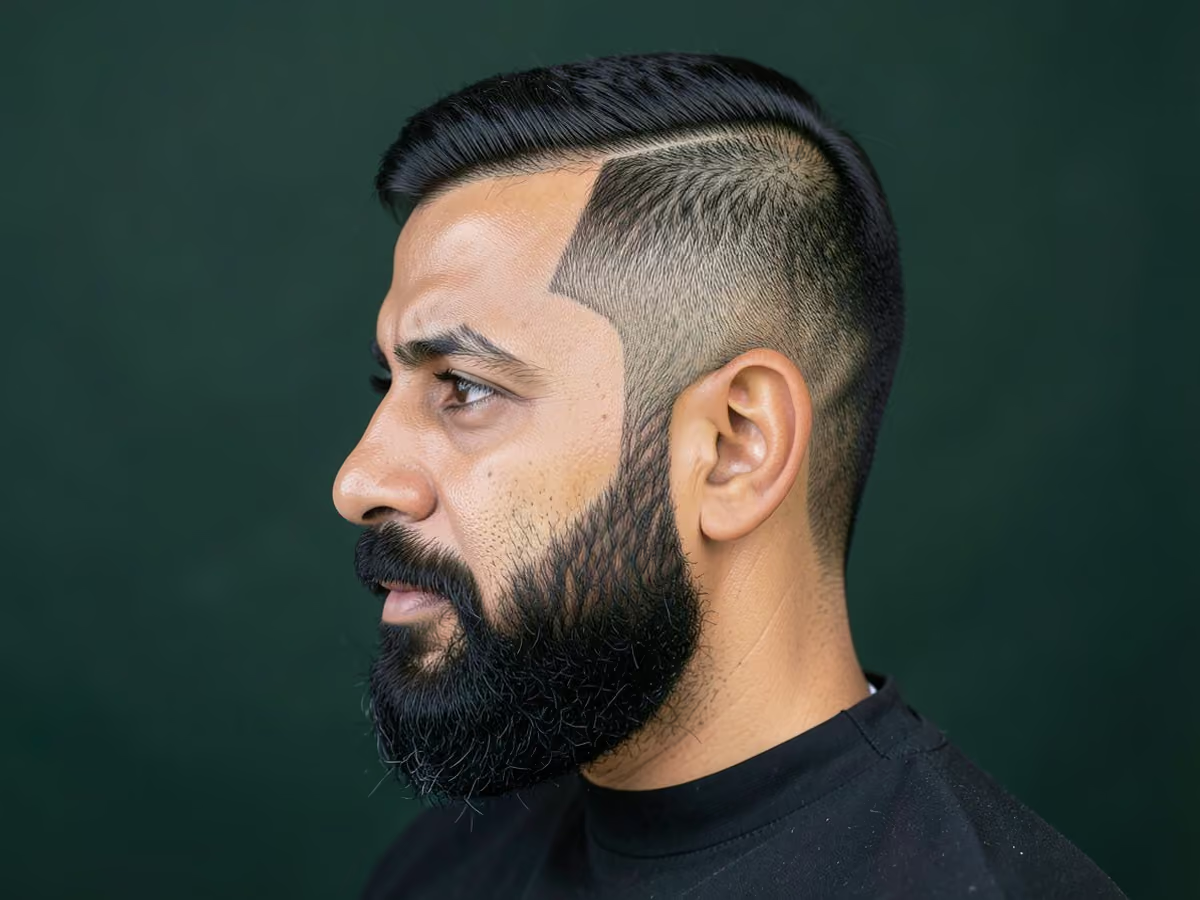
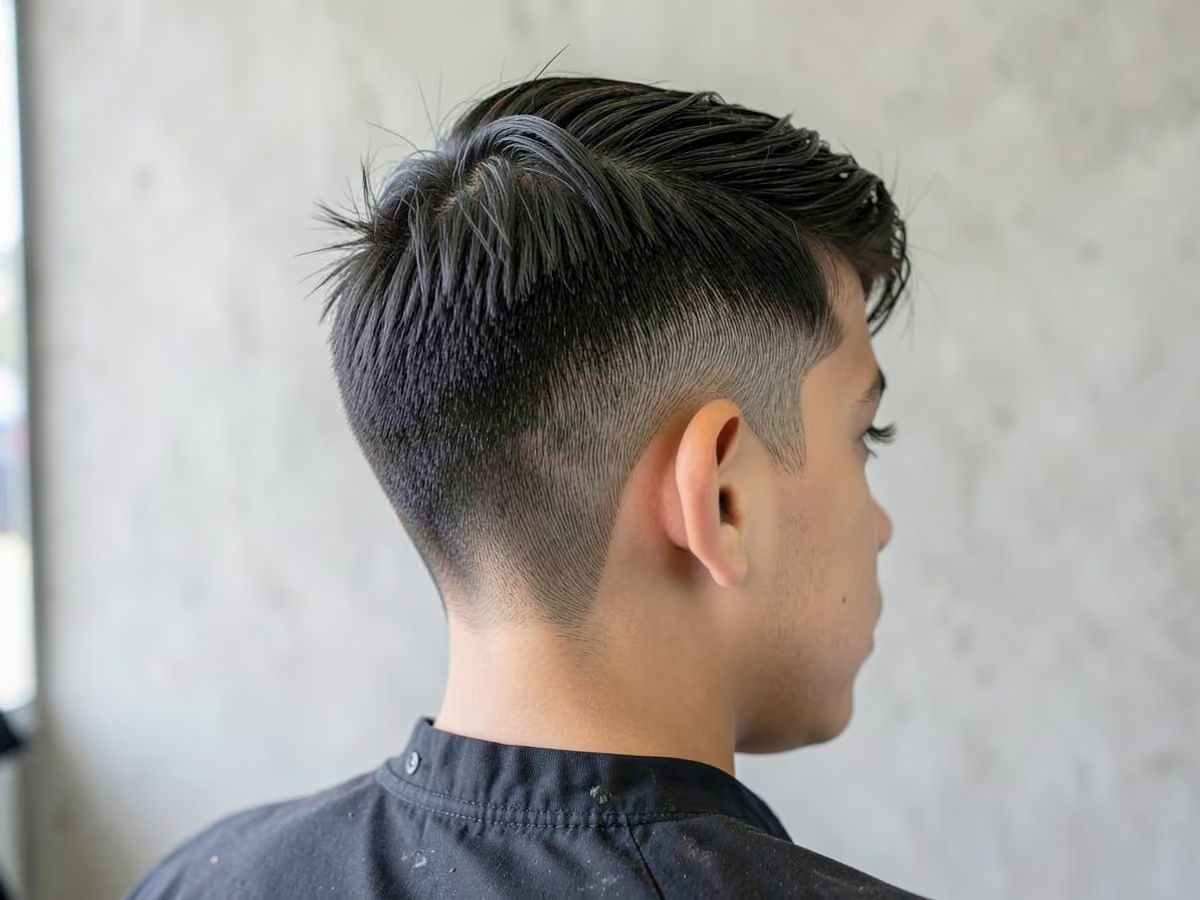
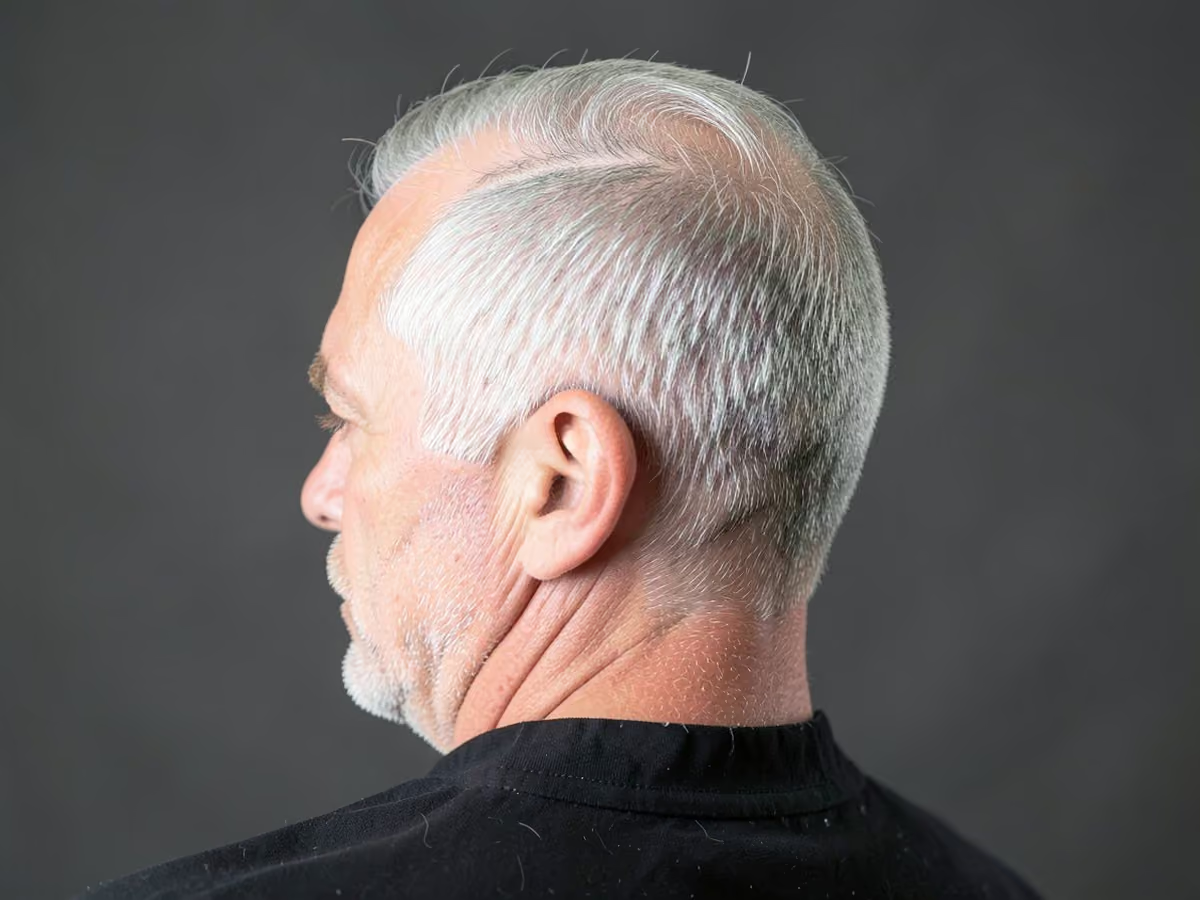
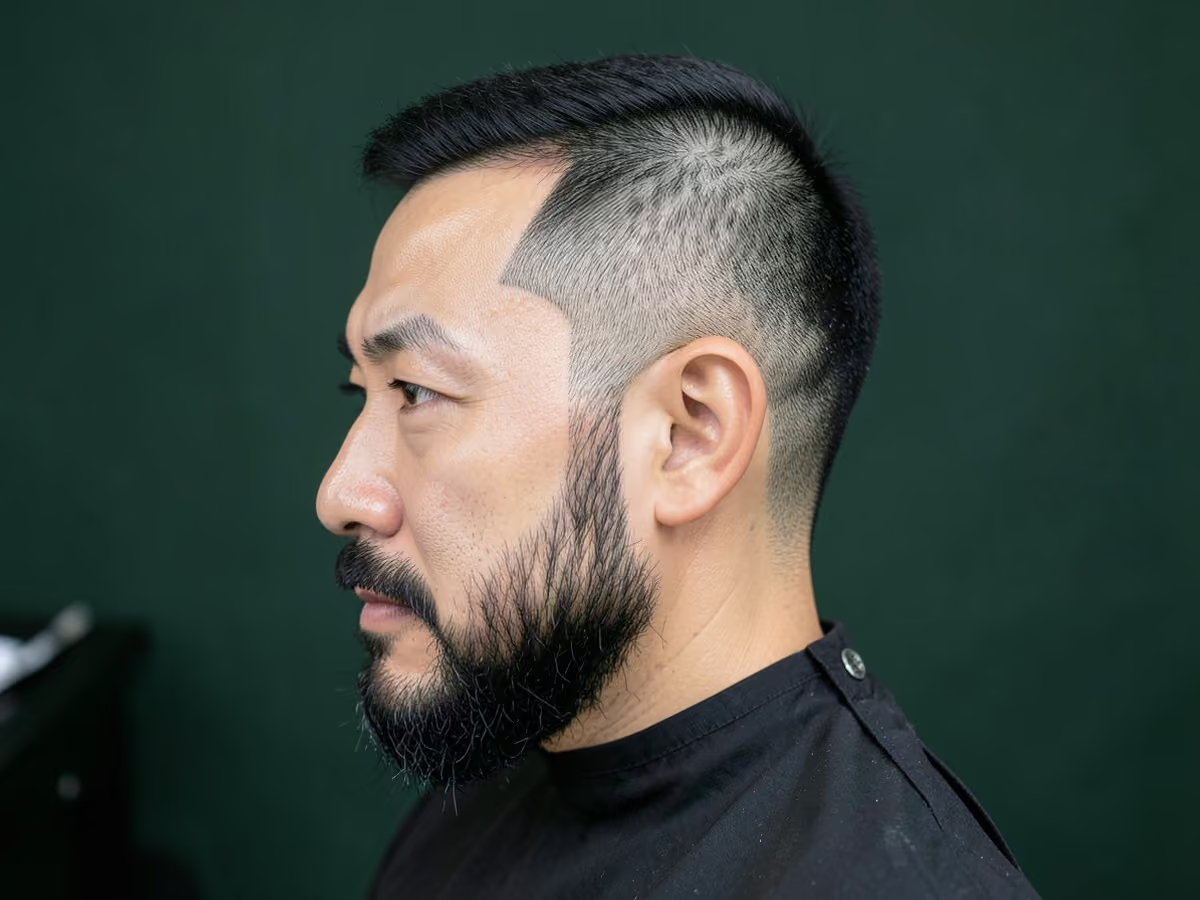
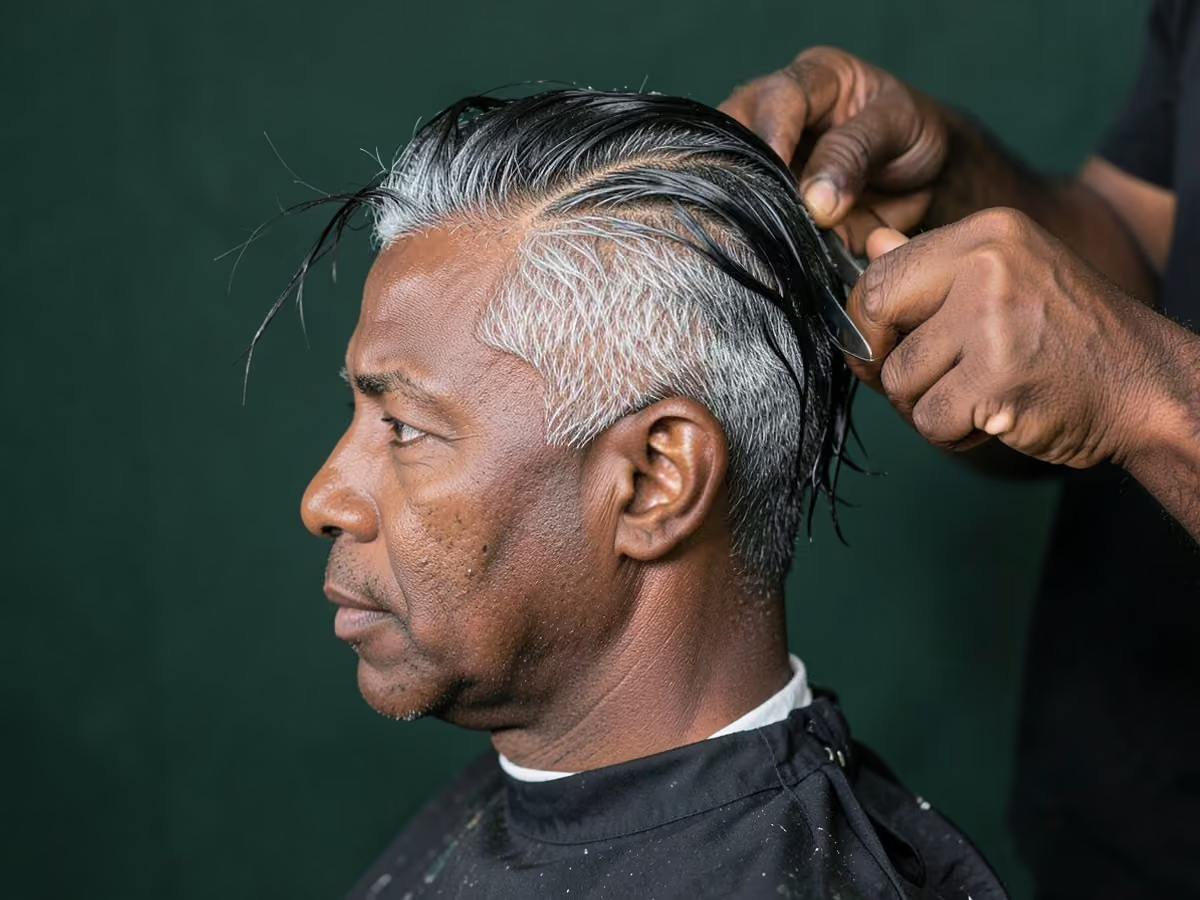
Quick answer: A hard part haircut is a side part that the barber shaves into the hair with trimmers or a razor instead of combing it in. The result is a thin line of bare skin, usually 1/16 to 1/8 inch wide, that keeps the top divided. It lasts about one to two weeks before stubble softens it.
Hard Part Haircut Styles at a Glance
Every style on this page with its clipper guard, top length and trim interval. Tap a name to jump to that card.
A hard part haircut takes the classic side part and fixes the line in place for a week or two by cutting it into the scalp. It usually sits on a fade, a taper or scissor-cut sides, with the top combed over, swept back or pushed up. Below are 50 versions grouped by line shape, fade, top style, hair type and beard, each with a trim schedule and barber wording.
What Is a Hard Part Haircut?
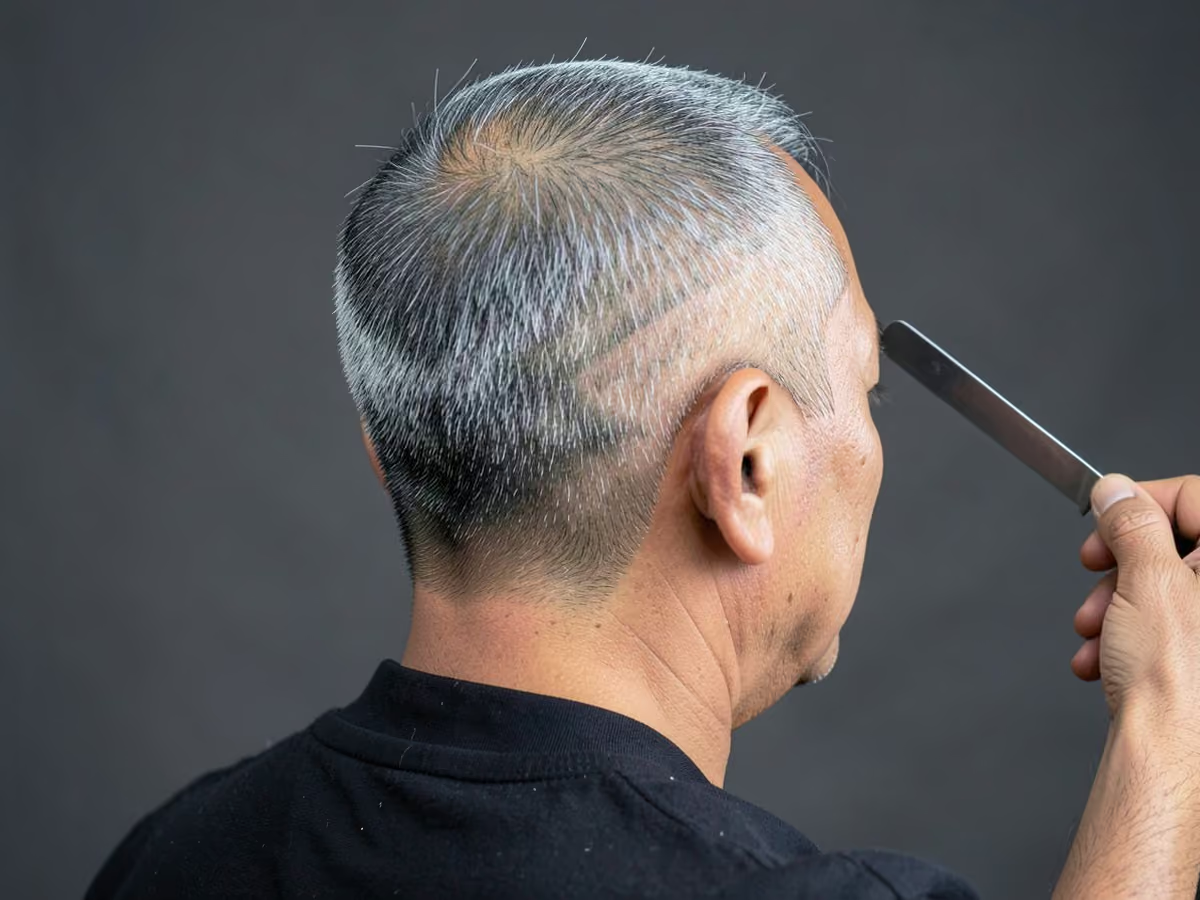
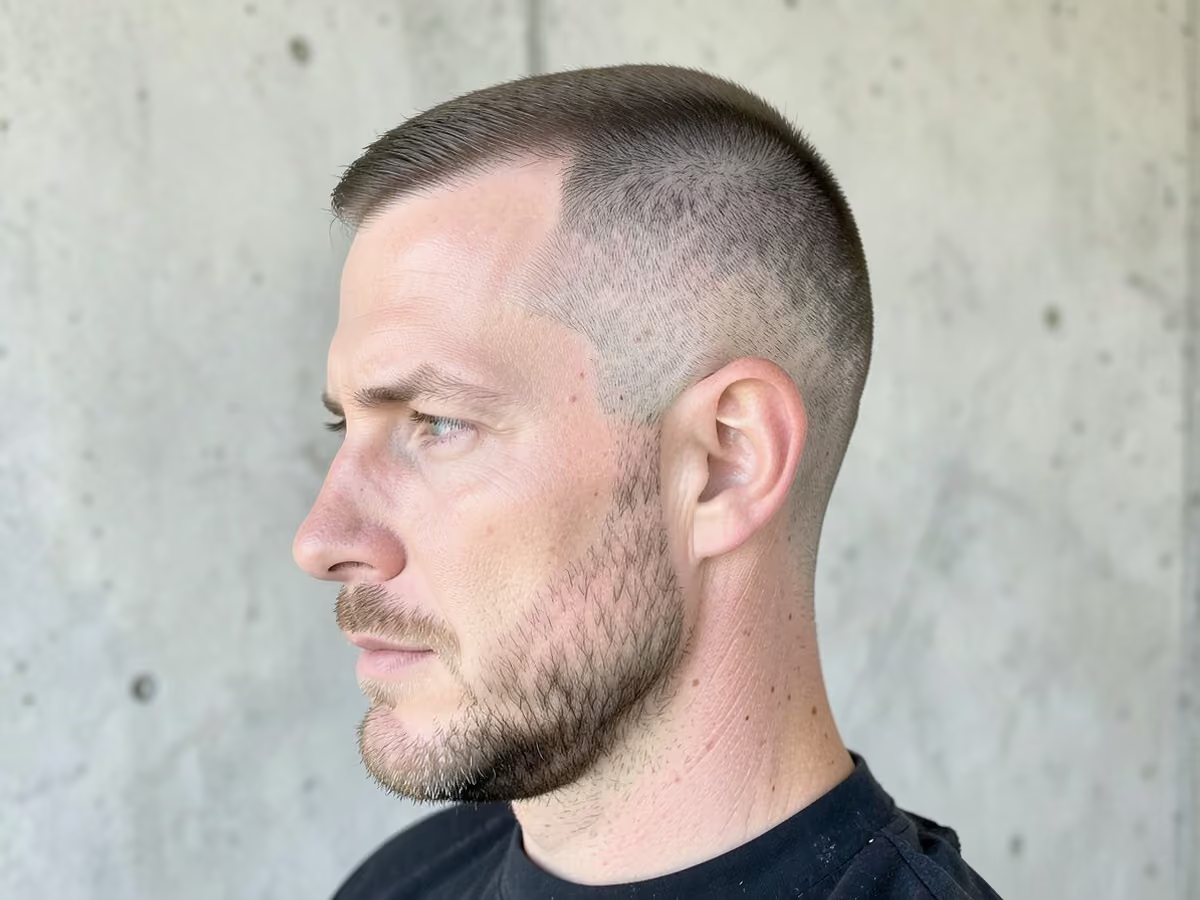
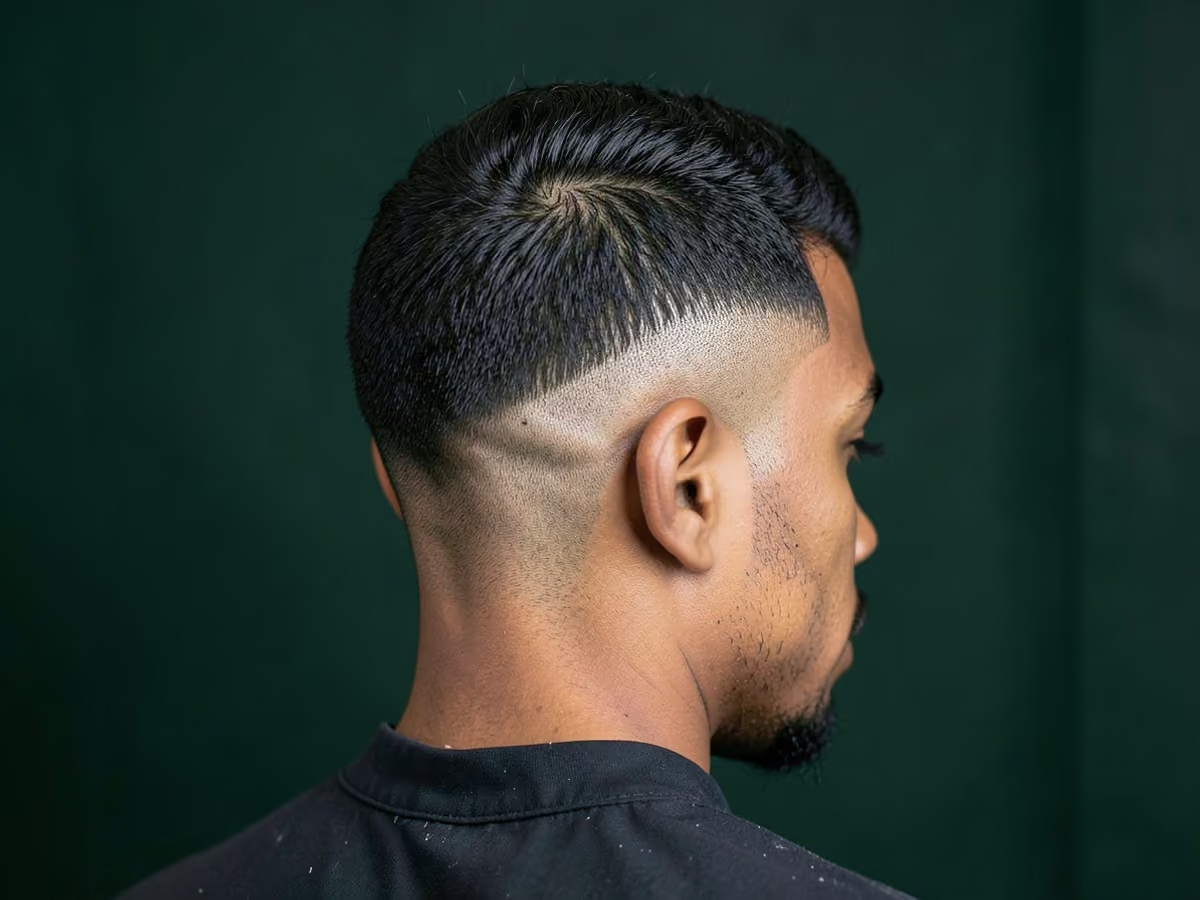
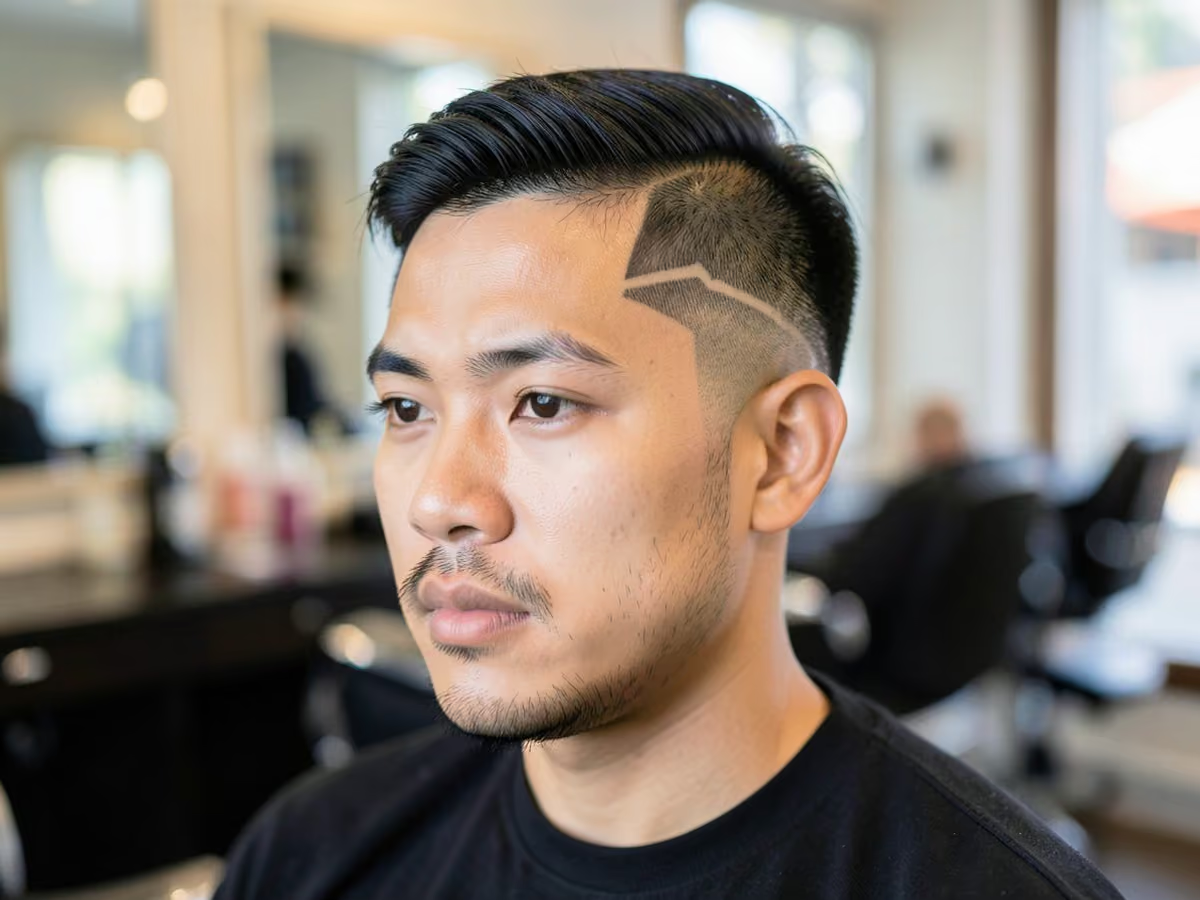
A hard part is a part line that has been cut into the hair instead of combed into it. The barber finds where your hair naturally splits, usually above the outer corner of one eyebrow, then removes a narrow strip with the corner of a trimmer blade. Some barbers stop there; others follow with a razor so the line is smooth to the touch. The top is then combed away from the line on both sides, so the part shows even when the hair is messy.
Most hard parts run from the hairline back to somewhere between the crown and the point where the head starts to curve down. The width ranges from a pencil line to about 1/4 inch. Because the line is bare skin, it grows back fast: within four or five days it shows as dark stubble, and by week two it starts to blur into the surrounding hair.
How Is a Hard Part Different From a Regular Side Part?
Both put the split in the same place. The difference is how the line is made and how long it holds. A combed side part relies on the comb, product and the way the hair grows, so it can shift by afternoon or disappear after a hat. A hard part is a cut line, so it holds through wind, sweat and sleep. The trade-off is upkeep, because it needs a touch-up every one to two weeks to look sharp. Our classic side part guide covers the combed version.
Hard parts also suit shorter tops better. A combed part needs about two inches of hair to fall cleanly, while a hard part can define a top as short as one inch. That makes it a common way to add structure to a crew cut, a short brush up or a wave top, where a comb alone would not leave a visible split. The table below sums up the practical differences.
How Is a Hard Part Different From a Regular Side Part?
Hair that is thick, straight or wavy shows the line most clearly, because dense hair on both sides frames the bare strip. Coily and tightly curled hair also holds a crisp hard part, especially on short tops with waves or a brush cut. Round and square faces benefit from a part set slightly higher on the head, which adds length. Long faces do better with the part at the usual eyebrow position and some volume on the side away from it.
Fine or thinning hair is the hardest case. Removing a strip next to already visible scalp can make the part look wider, so ask for the thinnest line possible or keep a combed part instead; our hair parting shows too much scalp guide covers that problem. A cowlick or double crown near the part line can also fight the direction, so point it out before the barber starts.
Filter the styles
Showing all 50 styles
Fade
Hair
Length
Hard Part Styles by Line Shape
These eight cuts differ in how the part itself is cut: its width, length, curve and finish. The sides and top can be adjusted on any of them, so pick the line first.
Trim:Every 1–2 weeks. Razor-smooth skin shows stubble within five days.
Best For:Oval, square faces + thick straight or wavy hair.
About This Style
After the trimmer opens the line, the barber runs a straight razor or shavette along it so the strip is smooth rather than just short. The finish is the sharpest a part can get and photographs cleanly. Width stays near 1/16 inch. The cost is skin sensitivity: men prone to bumps often see redness along the line, and the smooth finish lasts less than a week before dark regrowth appears.
How to Style at Home
Pat a drop of scalp oil along the line after showering to calm the skin.
Comb the top away from the part on both sides while damp.
Set the heavy side with light pomade so the line stays exposed.
Ask Your Barber
"Razor hard part on my natural side, as thin as you can make it, running back to the crown. Low skin fade on the sides and three inches on top."
Trim:Every 2 weeks. A trimmed line blurs more slowly than a shaved one.
Best For:Office workers + straight, medium or fine hair.
About This Style
Only the corner of a trimmer touches this line; no razor follows. That leaves a faint stubble-length strip instead of bare skin, so the split is clear from a few feet away but quiet up close. It irritates the scalp less, grows out without a harsh stripe and works for workplaces that frown on visible shaved lines. Ask for it the first time you try a hard part.
How to Style at Home
Blow-dry the top in the direction of the part using a vent brush.
Rub styling cream between your palms and smooth it over the heavy side.
Leave the short side flat so the faint line still reads.
Ask Your Barber
"Hard part with trimmers only, no razor, just enough to mark the line. Scissor taper on the sides with about two and a half inches on top."
Trim:Every 1–2 weeks. The arc loses its shape once stubble fills it.
Best For:Round, square faces + thick straight or coarse hair.
About This Style
Instead of running straight back, the line bends down toward the crown or hooks toward the back of the head, following the curve of the skull. The arc softens a square jaw and adds movement to a short comb over. It takes a steady hand, so ask the barber how often they cut it. Plan the curve where the fade meets the top, usually around the parietal ridge.
How to Style at Home
Comb the long side over and slightly back so it follows the arc.
Work matte clay through the tips for a dry finish.
Use a fine-tooth comb to keep the hair off the curved line.
Ask Your Barber
"Curved hard part that starts at my natural part and bends down toward the crown. Mid fade from a #1, three inches on top for a comb over."
Trim:Every 1–2 weeks. Two lines double the touch-up work.
Best For:Teens, young men + thick or coily hair.
About This Style
Two parallel lines sit about 1/4 to 1/2 inch apart on the same side, with a thin ridge of hair between them. It reads more like a design than a part, so it suits short tops, high fades and casual settings. Coarse, dark hair shows the gap clearly. Keep the lines short, stopping before the crown, so they stay straight and the barber can match them.
How to Style at Home
Brush the top flat with a soft brush to keep both lines clear.
Dab a little scalp oil on the shaved strips if they feel dry.
Check both lines in a hand mirror and book a touch-up when one blurs.
Ask Your Barber
"Two parallel hard parts on my left side, about a quarter inch apart, ending halfway back. High skin fade and one inch on top."
Trim:Every 2 weeks. The rear section blurs first where hair swirls.
Best For:Long, oval faces + thick straight or wavy hair.
About This Style
A long hard part runs from the front hairline all the way to the crown swirl, which gives the cut a clear front-to-back division seen from above. It pairs with longer tops of three to five inches swept to one side. On men with a strong crown cowlick, the last inch can fight the direction, so the barber may stop just short of it.
How to Style at Home
Blow-dry the long side over and back with a round brush.
Comb pomade through for shine and keep the teeth parallel to the line.
Press the short side flat with your palm before the product sets.
Ask Your Barber
"Long hard part from the hairline back to the crown, thin and straight. Low taper on the sides and four inches on top to sweep across."
Trim:Every week. A wide bare strip shows regrowth quickly.
Best For:Square, oval faces + dense, dark or coily hair.
About This Style
At about 1/4 inch, this line is cut deliberately thick and shaved smooth, so it is visible across a room. Wide lines need dense hair on both sides or they look like a bald stripe, which is why they are most common on coily hair and thick dark hair. Short tops of one to two inches keep the line from being covered. It suits casual settings more than offices.
How to Style at Home
Moisturize the shaved strip with scalp oil each morning.
Brush the top away from the line so no hairs fall into it.
Book a line touch-up weekly to keep the edges parallel.
Ask Your Barber
"Wide hard part, about a quarter inch, razor finished, on my natural side. Mid skin fade and keep an inch and a half on top."
Trim:Every 2–3 weeks. The shaved line fills in after about ten days.
Best For:Oval, square faces + straight or wavy thick hair.
About This Style
Set much lower than a natural part, roughly in line with the outer corner of the eyebrow, this line pushes most of the top hair across to the other side. The result is a strong sweep with more volume over one eye. It needs at least two and a half inches on top so the long side covers the crown. Thick hair holds the sweep well; fine hair may show scalp along the line.
How to Style at Home
Blow-dry the top across from the low part toward the far side.
Comb pomade through so the sweep holds its direction.
Brush the short side down flat toward the ear.
Ask Your Barber
"Cut the part low, in line with the outer corner of my eyebrow, about 1/8 inch wide. Keep two and a half inches on top and taper the sides to a #2."
Trim:Every 2 weeks. The diagonal blurs as the stubble grows.
Best For:Oval, diamond faces + straight or wavy hair.
About This Style
Rising from the temple toward the crown at a slight upward angle, this line breaks from the usual parallel placement. That diagonal adds movement to a side part and suits a top swept back as well as across. Barbers usually pair it with a mid fade so the start of the line meets the faded area cleanly. Ask to see the angle in the mirror before the trimmer goes in.
How to Style at Home
Blow-dry the top back and across, following the angle of the line.
Work light pomade through the top for a soft shine.
Use a fine comb to keep hair from falling over the line.
Ask Your Barber
"Angled part from the temple rising toward the crown, thin trimmer line. Mid fade from a #1 to a #3, three inches on top swept back and across."
Recommended Products
Light Pomade
Hard Part with a Fade or Taper
The sides decide how loud the line looks. A skin fade pushes contrast to the maximum, while a scissor taper keeps the part as the only sharp edge. Compare heights in the fade types guide.
Trim:Every 2 weeks. Skin at the temples and part regrow together.
Best For:Round, oval faces + straight or thick hair.
About This Style
Skin at the temple level, blended through a #0.5, #1 and #2 up to the part line, puts the whole cut into one sharp frame. The hard part usually sits where the fade ends, so the shaved line and the top edge of the blend meet. Tops of two to three inches combed over keep the contrast. Book the fade and the part together so both stay crisp.
How to Style at Home
Comb the top over with light pomade while the hair is damp.
Lift the front slightly with your fingers for a small quiff.
Leave the faded sides free of product so the blend stays matte.
Ask Your Barber
"Mid skin fade starting at the temple, blended up to a hard part on my natural side. Leave three inches on top for a comb over."
Trim:Every 2–3 weeks. A #1 bottom hides regrowth longer than skin.
Best For:Office workers + straight, fine or light hair.
About This Style
No skin shows anywhere on the sides here: the shortest point is a #1, which leaves a faint shadow, blended up through a #2 and #3. The hard part becomes the only bare skin on the head, so it draws the eye without looking severe. Light-colored and fine hair suit this better than a skin fade, because the scalp does not flash through the blend.
How to Style at Home
Apply styling cream to damp hair and comb the top to one side.
Smooth the short side down with the flat of the comb.
Finish with a quick blast of cool air to set it.
Ask Your Barber
"Shadow fade with a #1 at the bottom, no skin, blended up through a #2 and #3. Thin trimmer hard part and two and a half inches on top."
Trim:Every 1–2 weeks. Bald sides and part need matching touch-ups.
Best For:Square, oval faces + coarse, coily or thick hair.
About This Style
A razor finishes both the lower sides and the part line, so the bald section and the shaved part match in tone. The fade usually starts high, above the temples, and blends into a short top of about one inch. This combination is common in Black barbershops with a line-up at the front. It needs weekly or fortnightly visits, since two shaved areas regrow at once.
How to Style at Home
Brush the short top in one direction with a soft brush.
Rub scalp oil over the shaved sides and part after washing.
Use an edge brush to keep the front hairline neat between visits.
Ask Your Barber
"High bald fade with a razor, hard part on my right side to match, and a line-up. Keep about an inch on top."
Trim:Every 2–3 weeks. Only the temples and part show regrowth.
Best For:Oval, long faces + straight, wavy or curly hair.
About This Style
Here the fading stays at the temples and sideburns, a small area that keeps most of the side hair intact. The hard part above it gives the cut structure without taking much length off. Men who want a clean finish but dislike short sides tend to like it. It grows out evenly, so a three-week schedule works. See the temple fade page for the fade itself.
How to Style at Home
Scrunch a small amount of curl cream or styling cream into the top.
Comb the front away from the part and let the rest fall naturally.
Tidy the temples with your fingers so they sit flat.
Ask Your Barber
"Temple fade only, the rest of the sides at a #4, with a thin hard part on my natural side. Three inches on top."
Trim:Every 3 weeks. Scissor-cut sides grow out softly.
Best For:Older men, office workers + straight or wavy hair.
About This Style
No clippers above the ears: the sides are cut with scissors over comb and tapered only at the sideburns and nape, leaving them about an inch long. A thin hard part adds a crisp line to an otherwise traditional cut. This is the version most suited to formal workplaces and men who want a classic gentleman's cut that holds its part through the day.
How to Style at Home
Comb light pomade through damp hair from the part outward.
Run a fine-tooth comb along the line to keep it clear.
Smooth the sides down with your palms so they sit close.
Ask Your Barber
"Scissor cut sides, about an inch, tapered at the sideburns and nape only. Thin hard part and three inches on top, combed over."
Trim:Every 2 weeks. The curve behind the ear shows regrowth first.
Best For:Round, heart faces + thick or wavy hair.
About This Style
The fade line arcs down behind the ear toward the nape, so from the side the shape follows the skull rather than running straight. Pairing that curve with a straight hard part on top gives two different lines that frame the head. Keep the top at two to four inches. This version flatters a flat back of the head, since the drop leaves more hair at the occipital bone.
How to Style at Home
Blow-dry the top over with a vent brush for lift at the front.
Work matte paste through the ends for separation.
Leave the back untouched so the drop curve reads clearly.
Ask Your Barber
"Drop skin fade that curves down behind the ear, straight hard part on my left, and three inches on top styled over and up."
Trim:Every 2–3 weeks. Skin at the ear shows regrowth by week two.
Best For:Oval, round, square faces + straight or wavy hair.
About This Style
Here the fade drops to bare skin just above the ear and climbs to a #2 by the temple, leaving more hair on the upper sides than a mid or high fade. That extra weight keeps the area under the part line full, so the shaved line looks like a clean break rather than a gap. Two to three inches on top combed across completes it. Office workers who want a fade without much exposed skin often choose it.
How to Style at Home
Comb damp hair across from the part with a fine comb.
Blow-dry on medium heat to set the direction of the top.
Finish with a small amount of light pomade.
Ask Your Barber
"Skin fade starting low above the ear, blended up to a #2 by the temple, part line on my natural part, three inches on top combed across."
Trim:Every 3–4 weeks. Only the edges fade, so growth is gradual.
Best For:Oval, long faces + straight, wavy or curly hair.
About This Style
Only the sideburns and nape are faded down in a taper, while the rest of the sides stay at a #3 or longer. That leaves a fuller shape around the head, with the shaved part running along the top of the side hair. It suits men who want the part line but find full fades too short for work. Because only the edges grow out, the cut looks tidy for three to four weeks.
How to Style at Home
Towel-dry and comb the top across from the line.
Smooth the top with styling cream for a natural finish.
Brush the tapered edges down with your palm after styling.
Ask Your Barber
"Taper only the sideburns and nape down to a #1, keep the sides at a #3, then cut a thin part on my natural line with two inches on top."
Recommended Products
Styling Cream
Hard Part with Different Top Styles
The part line works with almost any top that can be combed away from it. These eight top styles cover short, medium and longer lengths, from a brush up to a pompadour.
Trim:Every 2–3 weeks. Height at the front needs regular reshaping.
Best For:Round, square faces + thick straight or wavy hair.
About This Style
Four to five inches at the front are blow-dried up and back into a rolled pompadour, while the hard part separates it from short sides. The line gives the volume a clear edge, which keeps the pompadour from looking puffy. Thick hair holds the roll best. Expect five to ten minutes of styling each morning with a dryer. The modern pompadour guide covers the technique.
How to Style at Home
Blow-dry the front up and back with a round brush.
Warm pomade between your hands and comb it through the front.
Shape the roll with your fingers and press the sides down.
Ask Your Barber
"Hard part on my natural side, low skin fade, and leave four to five inches at the front for a pompadour, shorter toward the crown."
Trim:Every 2–3 weeks. Short spiky tops lose shape after three weeks.
Best For:Oval, long faces + thick, coarse or straight hair.
About This Style
Two inches of hair on top get brushed straight up and slightly back, rather than combed over, with the hard part marking where the top meets the sides. The look is short and quick to style. Coarse hair stands up with little product. A long face can look longer with too much height, so keep the brush up under two inches if that applies.
How to Style at Home
Towel-dry and spray sea salt spray at the roots.
Blow-dry upward while brushing the hair straight up.
Pinch texture clay into the tips to separate them.
Ask Your Barber
"Hard part on the left, mid fade from a #1, and two inches on top cut with texture so I can brush it up."
Trim:Every 3 weeks. The fringe length drifts into the eyes.
Best For:Long, heart faces + straight or fine hair.
About This Style
Rather than being combed back, the front falls forward and across the forehead in a fringe that sweeps away from the part. That covers part of the forehead, which shortens a long face and hides a higher hairline. Fine straight hair lies best. Keep the fringe at eyebrow length and the part thin, since a wide line competes with the soft front.
How to Style at Home
Blow-dry the fringe forward and across with low heat.
Rub a little matte cream through the ends.
Use fingers, not a comb, to keep the fringe loose.
Ask Your Barber
"Thin trimmer hard part, low taper on the sides, and a fringe left at eyebrow length that sweeps across away from the part."
Trim:Every 3–4 weeks. Clipper-guard sides grow out evenly.
Best For:Oval, square faces + straight, medium-density hair.
About This Style
Clipped at a #2 or #3 on the back and sides, with no fade, this cut keeps the blend simple and adds a hard part for definition. The top runs about two inches and is combed to one side. It is the lowest-effort way to wear a part line, since the sides do not need a weekly clean-up. Good for men who visit once a month.
How to Style at Home
Comb a dab of styling cream through damp hair.
Part along the line and comb the top across.
Run your hand over the sides to flatten any lift.
Ask Your Barber
"Short back and sides with a #3, no fade, just tidy the neckline. Hard part on my right and two inches on top."
Trim:Every 3 weeks. Point-cut texture loses shape as it lengthens.
Best For:Square, oval faces + thick or wavy hair.
About This Style
Point cutting on the top breaks up the weight so the side part has a messy, piece-y surface rather than a smooth comb line. The hard part keeps the structure while the texture keeps it casual. Wavy hair works especially well because the waves add movement. A medium taper or low fade on the sides keeps it balanced.
How to Style at Home
Spray sea salt spray into damp hair and rough-dry with fingers.
Rub matte clay between your palms and push it through the top.
Twist a few pieces at the front for separation.
Ask Your Barber
"Hard part on my natural side, low fade, and three inches on top point cut for texture, not thinned out."
Trim:Every 3 weeks. The contour softens around the temples.
Best For:Older men + straight, thinning or receding hair.
About This Style
An executive contour is a businessman's cut that follows a receding hairline, with the corners at the temples left natural instead of squared. Adding a thin hard part gives a top with less density a clear structure. Keep the part trimmer-only and narrow, since a razor line on thinning hair can widen the visible scalp. The top stays at two to three inches.
How to Style at Home
Apply thickening spray at the roots and blow-dry over.
Comb a small amount of light pomade through the top.
Avoid pressing the top flat, which shows more scalp.
Ask Your Barber
"Executive contour, leave the temples natural, scissor taper on the sides, and a very thin trimmer hard part. Two and a half inches on top."
Trim:Every 2–3 weeks. The glossy finish shows uneven growth quickly.
Best For:Oval, square faces + straight or wavy hair.
About This Style
Combed with a water-based pomade or light gel, the top dries glossy and stays in tight comb lines that run away from the part. Three inches on top is the minimum for the comb to leave visible furrows. The sides are usually a mid fade so the shine on top contrasts with the short sides. It washes out with one shampoo, unlike the oil-based greases of older versions.
How to Style at Home
Apply light gel to damp hair from roots to ends.
Comb the top across from the part in clean, even lines.
Leave it to set without touching for about ten minutes.
Ask Your Barber
"Mid fade from a #1, thin part line on my natural side, three inches on top so I can comb it into a glossy wet look."
Trim:Every 3–4 weeks. The clipped underlayer needs regular trimming.
Best For:Oval, long faces + thick, straight Asian hair.
About This Style
Korean two block cuts clip the sides underneath with no blending while the top hangs over them. Adding a hard part splits that longer top, about four inches, so one side sweeps across and the other falls toward the ear, covering the clipped layer. The shaved line is kept fine, around 1/16 inch, because the long top already makes a strong contrast. Thick straight hair hides the underlayer best.
How to Style at Home
Blow-dry the top away from the part with a round brush.
Rub a little styling cream through to soften the ends.
Let the long side fall over the clipped area naturally.
Ask Your Barber
"Two block with the underneath clipped to a #2, no blend, four inches on top. Add a thin 1/16 inch part so the top splits over the sides."
Recommended Products
Styling Cream
Round Brush
Hard Part Styles by Hair Type and Age
Texture changes how the line reads and how long it lasts. These cards cover coily, wavy, twisted, thick straight and fine hair, plus a version for boys.
Trim:Every 1–2 weeks. Coily regrowth fills the line fast.
Best For:Round, oval faces + coily or 4C hair.
About This Style
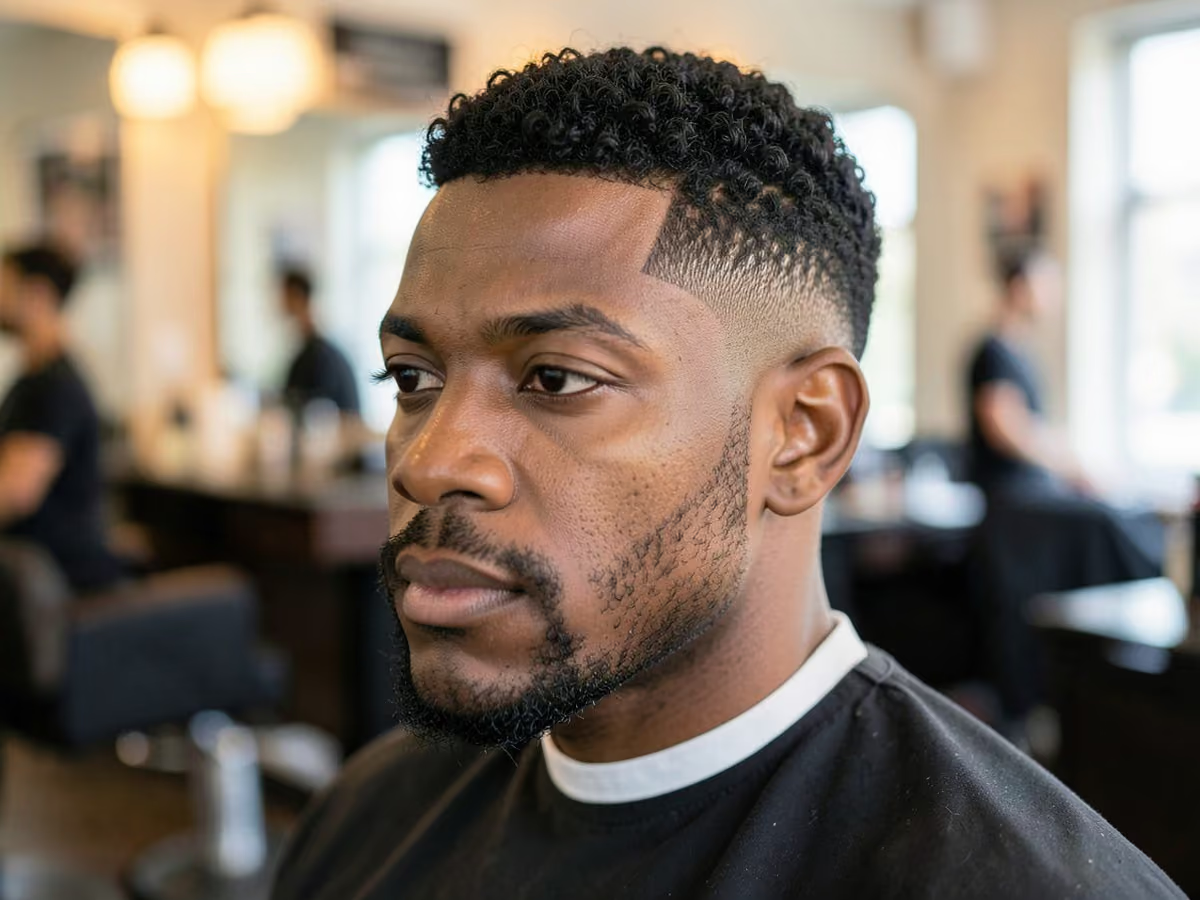
Short coily hair at about an inch on top, a low or mid skin fade and a razor-sharp part with a line-up form a combination common in Black barbershops. Dense coils on both sides frame the bare strip clearly. The part often sits a little higher than on straight hair, roughly in line with the arch of the eyebrow. See black men haircuts for related styles.
How to Style at Home
Moisturize the top with leave-in and brush it flat in one direction.
Brush the edges with an edge brush to keep the line-up clean.
Rub scalp oil on the part and sides.
Ask Your Barber
"Low skin fade, razor hard part on my left, line-up at the front, and keep an inch on top brushed down."
Trim:Every 2 weeks. A longer gap breaks the wave pattern.
Best For:Oval, square faces + coily hair trained for waves.
About This Style
A thin hard part cuts across a 360 or 180 wave pattern on the side, with the waves brushed toward and away from it. The line gives the waves a clear border at the front. Keep the top at about half an inch so the pattern stays tight, and brush daily with a medium bristle brush. Pair it with a low taper so the waves on the sides stay visible.
How to Style at Home
Apply wave pomade and brush from the crown outward.
Brush the front waves toward the part line.
Wear a durag overnight to keep the pattern flat.
Ask Your Barber
"Low taper, thin hard part on my natural side, line-up, and keep my waves at about a half inch on top."
Trim:Every 2–3 weeks. Twists last longer than the shaved line.
Best For:Teens, young men + coily or kinky hair.
About This Style
Two-strand or sponge twists of two to three inches sit on top, with a hard part cut on one side and a mid or high fade below it. The line separates the twists from the faded side, so the top reads as a block. Re-twist every week or two; the part and fade can be touched up between full twist sessions.
How to Style at Home
Spray leave-in onto the twists and pat them with a curl sponge.
Rub loc gel on any loose roots near the part.
Oil the scalp along the line with scalp oil.
Ask Your Barber
"Mid fade, hard part on the left, and leave my twists at about two and a half inches. Clean the edges up."
Trim:Every 2–3 weeks. Thick straight hair pushes off the part.
Best For:Oval, round faces + thick straight Asian hair.
About This Style
Thick, straight, coarse hair tends to stand up and fight a combed part, which is why a hard part holds so well on it. The usual pairing is a #2 or #3 on the sides with a soft two-block or low fade, and three to four inches on top blow-dried to one side. Keep the line thin; dark thick hair shows even a pencil line clearly.
How to Style at Home
Blow-dry the top down and to the side with a round brush.
Apply a small amount of light gel at the roots near the part.
Smooth the top with a comb to settle the cowlick.
Ask Your Barber
"Thin hard part on my natural side, low fade from a #2, and four inches on top for a side swept look."
Trim:Every 2 weeks. Fine hair shows a widening line quickly.
Best For:Oval, long faces + fine or thin straight hair.
About This Style
Fine hair needs the narrowest possible line, cut with the corner of the trimmer and no razor, so the part adds structure without exposing extra scalp. A shadow fade or #2 sides avoid adding more bare skin. Thickening spray and a blow-dry give the top the body to fall cleanly away from the line. Stop the cut before the crown, where fine hair often thins first.
How to Style at Home
Spray thickening spray at the roots while damp.
Blow-dry against the part, then flip it over for lift.
Dust texture powder at the roots to hold the volume.
Ask Your Barber
"Very thin trimmer hard part, no razor, ending before the crown. #2 on the sides and three inches on top."
Trim:Every 3 weeks. Kids' hair grows fast and covers the line.
Best For:Ages 6–12 + straight, wavy or thick hair.
About This Style
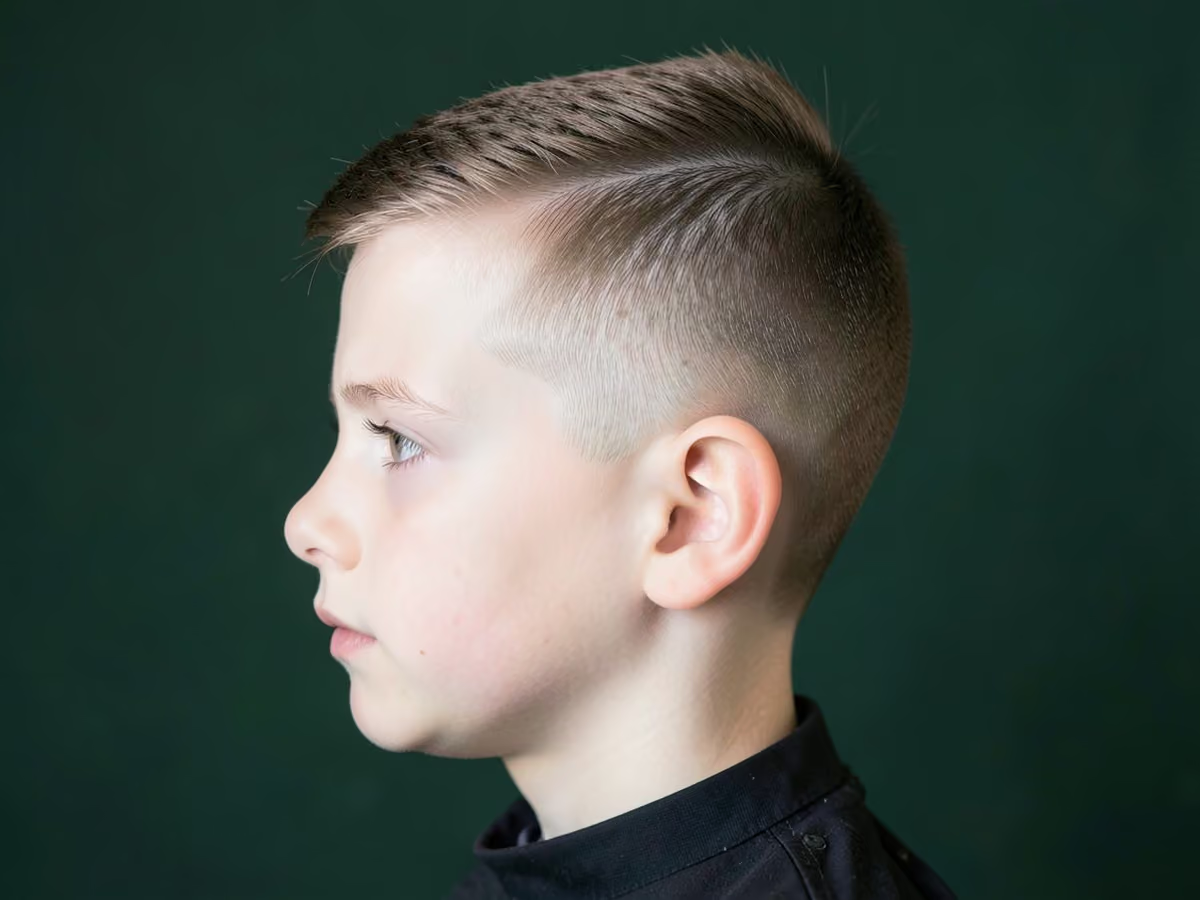
For school-age boys, a trimmer-only part and a gentle taper keep the cut neat without a razor near young skin. Leave two inches on top so it can be combed over for school photos or pushed forward on weekends. Many schools allow it, but check any uniform policy first. Kids squirm, so a thin, short line is easier for the barber to keep straight.
How to Style at Home
Comb the top over with a little water and kids' styling cream.
Wash out any product nightly with kids shampoo.
Brush the line gently so hair does not fall across it.
Ask Your Barber
"Short taper on the sides, trimmer hard part only, no razor, and two inches on top that he can comb over."
Trim:Every 2–3 weeks. Dense regrowth hides the line quickly.
Best For:Oval, square faces + thick or coarse straight hair.
About This Style
Dense hair is the easiest to wear with a shaved part because it holds a sharp edge on both sides of the line. The barber thins the top slightly so the long side does not puff up and bury the part, and keeps the sides short with a mid fade. Two and a half to three inches on top is plenty. Thick hair also grows back over the line fast, so plan a touch-up every two weeks.
How to Style at Home
Blow-dry the top across with a round brush to control bulk.
Apply matte paste for strong hold without shine.
Comb the short side down toward the ear.
Ask Your Barber
"My hair is thick, so thin the top a bit so it lies flat. Mid fade from a #1, three inches on top, part line about 1/8 inch wide."
Trim:Every 2 weeks. A crisp line and fade need frequent touch-ups.
Best For:Oval, round faces + thick, straight or wavy hair.
About This Style
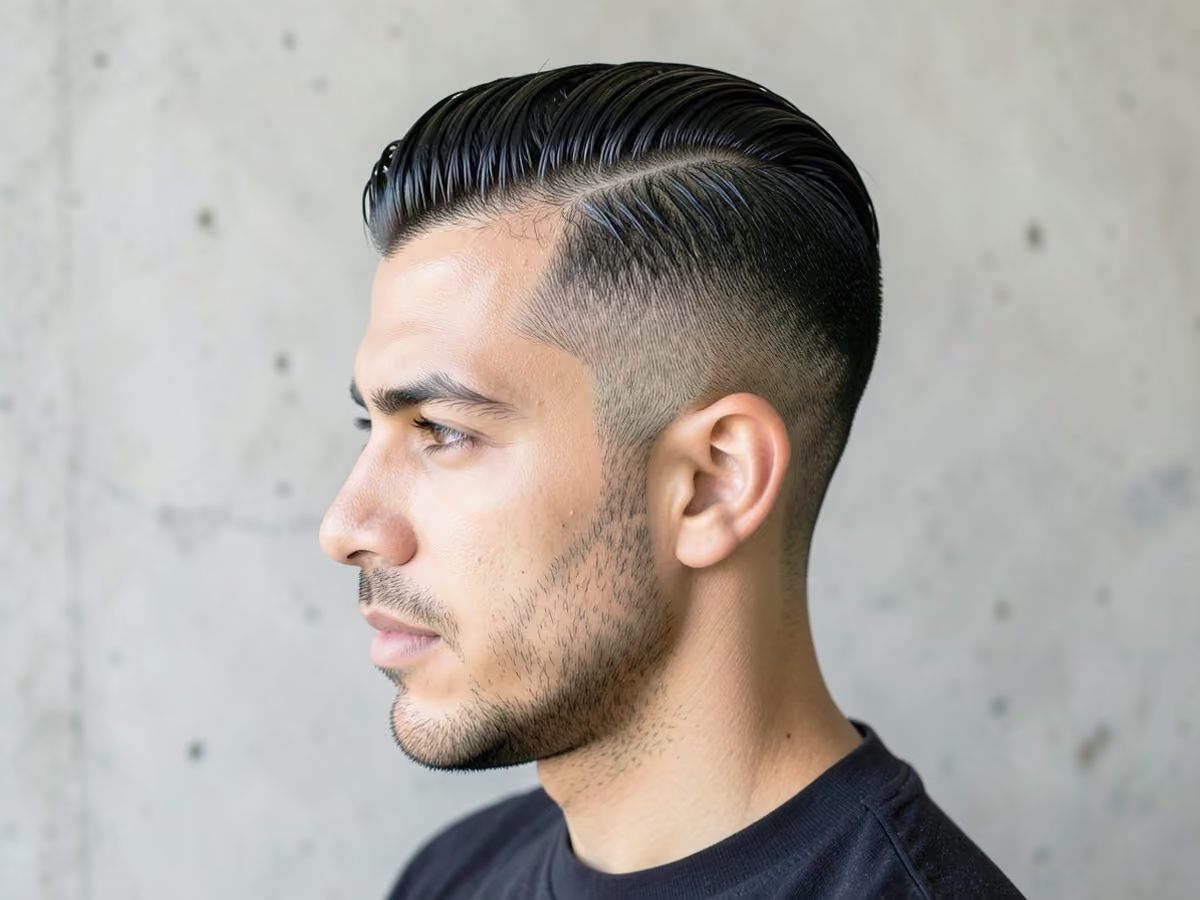
Popular in Mexican-American and Latino barbershops, this version pairs a mid or high skin fade with a longer top, three to four inches, slicked or brushed back from a razor part. A line-up at the hairline and sideburns is part of the package, so the whole outline is sharp. The cut is usually touched up every two weeks to keep the skin fade and the part clean together.
How to Style at Home
Comb pomade through damp hair and brush it back from the part.
Smooth the long side over with a fine comb.
Wipe any shine off the faded sides with a towel.
Ask Your Barber
"Mid skin fade, razor hard part on the left, line-up at the hairline and sideburns, three to four inches on top that I brush back."
Recommended Products
Pomade
Light Gel
Hard Part with Beard, Line-Up or Design
A beard balances the part line on the lower half of the face, and a line-up or extra design ties the edges together. Pair these with a fade height from the cards above.
Trim:Every 2 weeks. The beard and part both need edging.
Best For:Round, oval faces + thick hair and full beards.
About This Style
A full beard of half an inch to an inch connects to the sides through a gradual taper at the sideburns, so the hair flows from the beard up to the hard part. The beard adds weight to the jaw while the line adds sharpness up top. Round faces benefit when the beard is kept shorter at the cheeks and longer at the chin.
How to Style at Home
Rub beard oil into the beard after washing.
Brush the beard down with a beard brush to shape it.
Comb the top away from the part with matte cream.
Ask Your Barber
"Low fade connected into my full beard at the sideburns, beard kept at about an inch, and a hard part on my natural side."
Trim:Every 2 weeks. Stubble and part grow at matching rates.
Best For:Oval, square faces + straight or wavy hair.
About This Style
Three to five days of growth on the face, kept even with a trimmer at about 3 mm, gives a rougher frame that offsets the precise part. It suits men who cannot or prefer not to grow a full beard. Keep the neckline clean just above the Adam's apple so the stubble does not look neglected.
How to Style at Home
Trim the stubble with a 3 mm guard every few days.
Clean the neckline with a trimmer just above the Adam's apple.
Comb the top over with light pomade, keeping the part clear.
Ask Your Barber
"Mid fade with a hard part on the right and three inches on top. Clean up my neckline and keep the stubble short."
Trim:Every 1–2 weeks. Boxed cheek lines need frequent edging.
Best For:Round, oval faces + thick hair and dense beards.
About This Style
A boxed beard has straight lines at the cheeks and a squared neckline, kept short at about a quarter inch. Those straight edges echo the straight hard part, so the whole head looks cut to a plan. A skin fade that connects into the beard at the sideburns keeps the outline continuous. This needs a barber visit or a careful trim at home weekly.
How to Style at Home
Edge the cheek lines with a trimmer following the existing shape.
Apply beard balm to keep stray hairs down.
Comb the top across the part with pomade.
Ask Your Barber
"Skin fade connected to a short boxed beard, sharp cheek lines, and a straight hard part on my natural side with three inches on top."
Trim:Every 2–3 weeks. The goatee shape holds longer than the line.
Best For:Round, square faces + straight or coarse hair.
About This Style
Hair stays only on the chin and around the mouth here, which lengthens a round face by drawing the eye downward. With clean-shaven cheeks, the hard part and goatee become the two main lines on the head. A low taper keeps the sides tidy without adding a third strong line. Shave the cheeks every day or two and trim the goatee weekly.
How to Style at Home
Shave the cheeks and neck, leaving the goatee shape.
Trim the goatee with a guard and brush it down.
Comb the top over with matte clay and keep it off the line.
Ask Your Barber
"Low taper, hard part on the left, and two and a half inches on top. Tidy my goatee and leave the cheeks clean."
Trim:Every 1–2 weeks. The front line and part blur together.
Best For:Oval, square faces + coily, curly or thick hair.
About This Style
Sharp corners at the temples and a straight front hairline meet the start of the part, so the front edge and the line look cut as one shape. Set the line-up at your natural hairline; pushing it back to look sharper makes the hairline creep up over time. The line-up vs edge-up guide explains the difference.
How to Style at Home
Brush the front edge with an edge brush and a little light gel.
Brush the top flat or comb it over.
Rub scalp oil on the shaved edges after washing.
Ask Your Barber
"Line-up at my natural hairline, not pushed back, joined to a razor hard part. Low skin fade and an inch and a half on top."
Trim:Every week. Design lines lose detail in days.
Best For:Teens, young men + thick, dark or coily hair.
About This Style
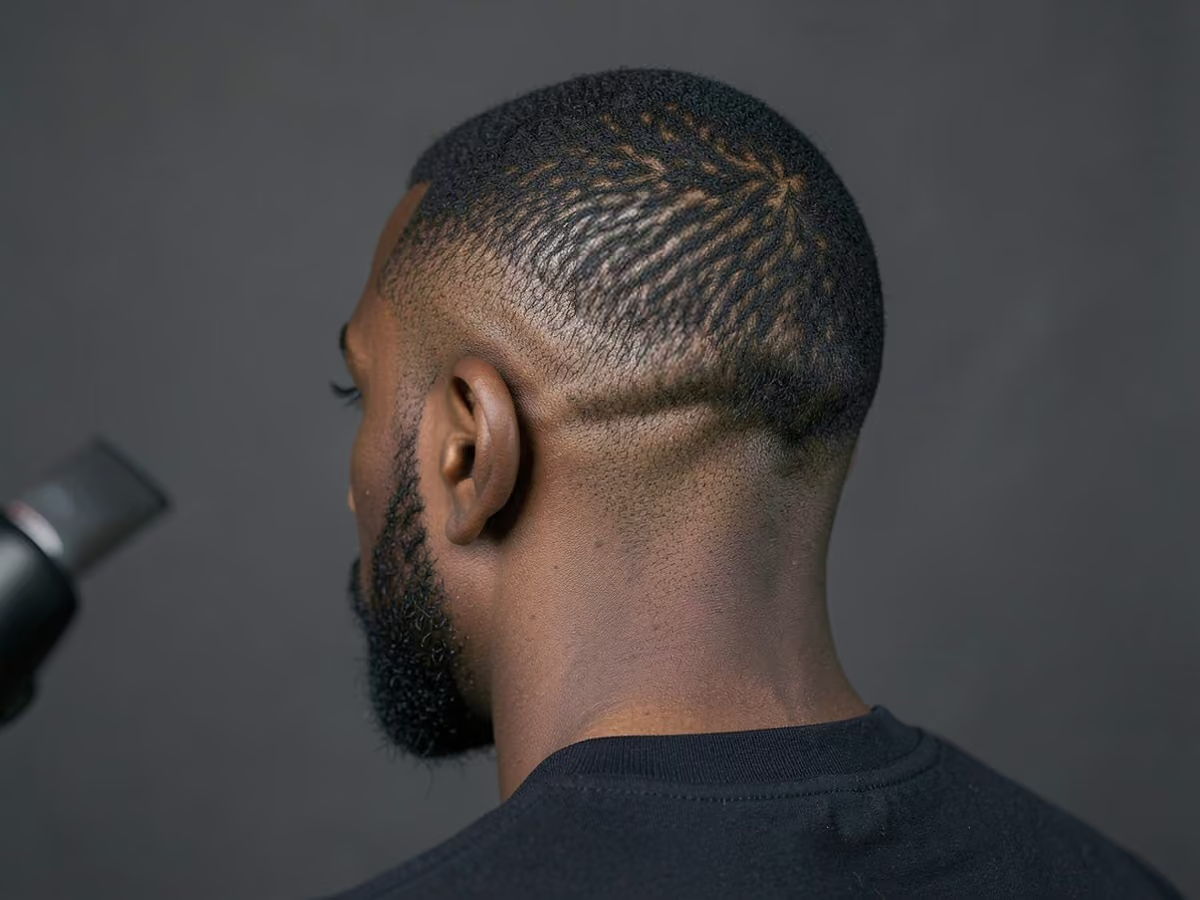
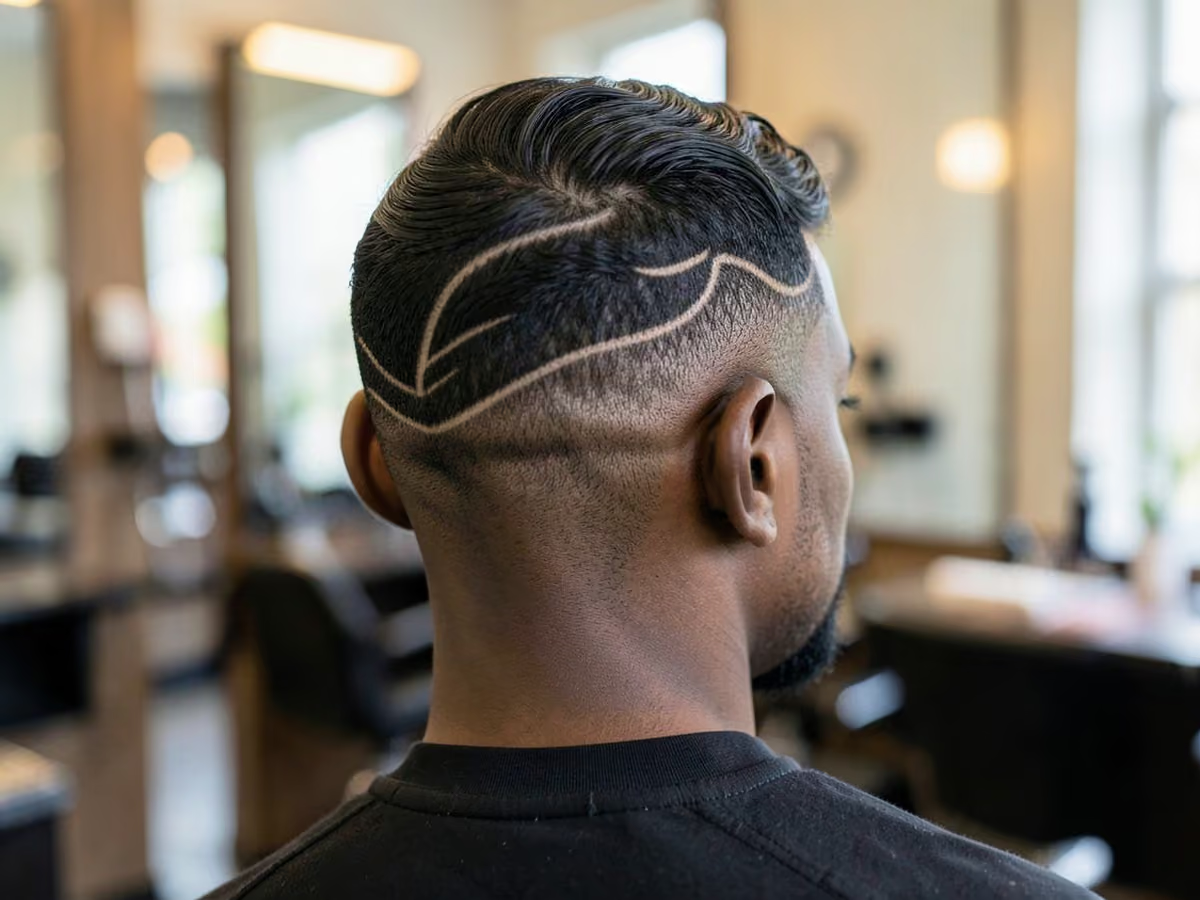
Toward the back of the head, the part breaks into a zigzag that runs down into the fade, cut freehand with a T-blade trimmer. It turns a simple part into a design, so it reads as casual. Dark, dense hair shows the angles best. Plan to redo it every week; check the hair designs gallery for other patterns.
How to Style at Home
Brush the top so nothing covers the zigzag.
Moisturize the design lines with a few drops of scalp oil.
Avoid tight hats that press regrowth over the pattern lines.
Ask Your Barber
"Hard part on the right that turns into a zigzag at the back and runs down into a high skin fade. One inch on top."
Trim:Every 2–3 weeks. Part and mustache trims fall on the same visit.
Best For:Oval, long faces + straight or wavy hair.
About This Style
Taking cues from 1940s grooming, the face is shaved except for a trimmed mustache kept inside the corners of the mouth, and the hair is a short side part with a crisp shaved line. A scissor taper on the sides keeps the overall look old-fashioned rather than modern. Comb the mustache down and trim it off the lip weekly so it matches the precision of the part.
How to Style at Home
Comb the top across with a fine comb and pomade.
Trim the mustache along the lip line with small scissors.
Brush a drop of beard oil through the mustache.
Ask Your Barber
"Scissor taper on the sides, two inches on top, hard part on my natural side. Trim my mustache off the lip and inside the corners of the mouth."
Trim:Every 2–3 weeks. Shaved cheeks and the part both need upkeep.
Best For:Round, oval faces + straight or wavy hair.
About This Style
Van Dyke beards combine a pointed chin beard with a separate mustache and clean-shaven cheeks. With a hard part above, the sharp lines of the beard echo the shaved line on the head. A low fade keeps the sides neat without competing with the facial hair, and the chin point adds length to round faces. Expect to shave the cheeks every two or three days to keep the gaps clean.
How to Style at Home
Shave the cheeks and the gap between mustache and beard.
Shape the chin point with a trimmer every few days.
Comb the hair across from the part with light pomade.
Ask Your Barber
"Low fade from a #1, thin part on my right, two and a half inches on top. Shape my Van Dyke to a point and clean up the cheeks."
Recommended Products
Beard Balm
Light Pomade
Hard Part with Short and Textured Tops
A hard part does not have to sit under a long comb over. These shorter and messier tops, from butch cuts to sponge curls, keep the shaved line as a small detail on a low-effort cut.
Trim:Every 2–3 weeks. A short top hides the line fastest.
Best For:Oval, square faces + thick, coarse or straight hair.
About This Style
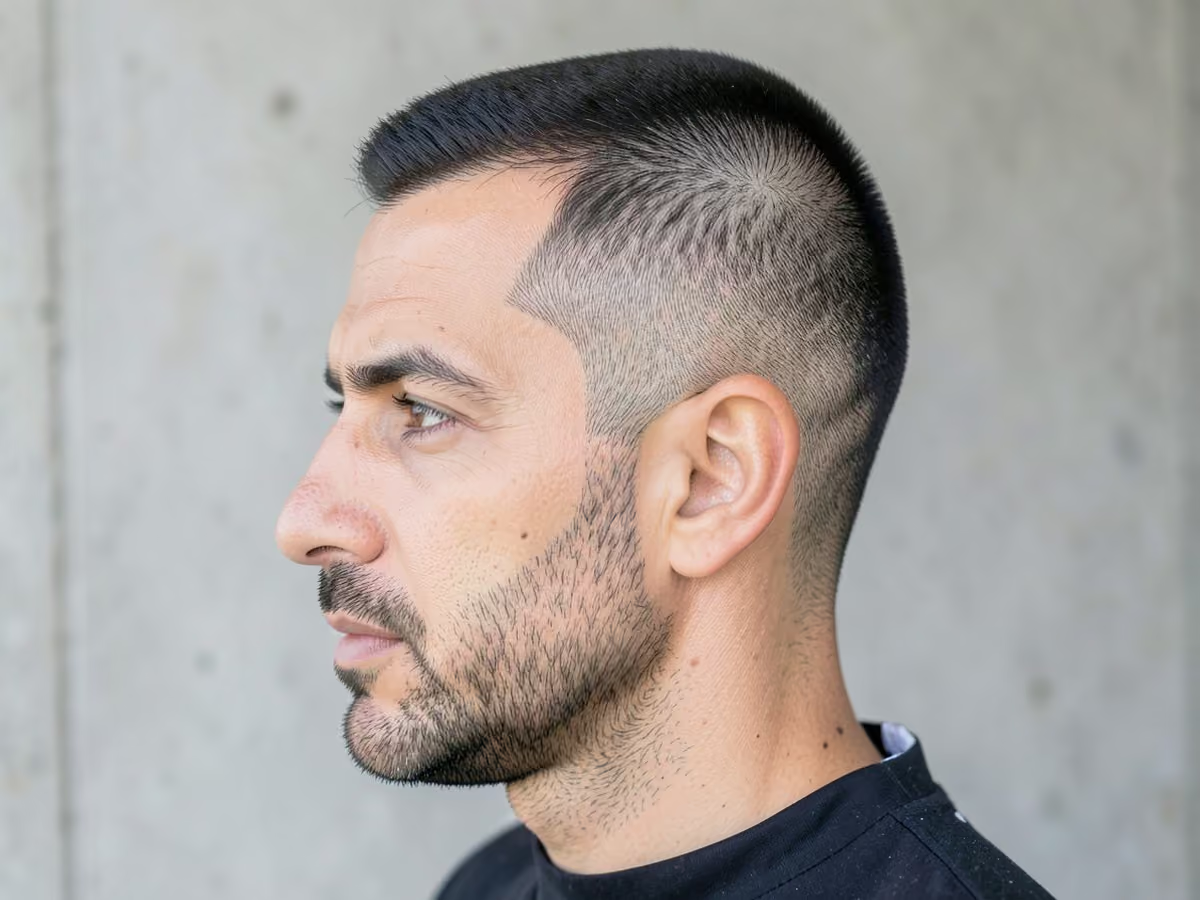
Very short all over, with a #3 or #4 on top and a #2 on the sides, the butch cut has no length to comb, so the hard part becomes a pure line detail rather than a divider. It is cut a little deeper into the hair, about 1/8 inch wide, so it still shows against the short top. There is no styling at all. Regrowth softens the line after about ten days.
How to Style at Home
Towel-dry and run a hand over the top once.
Rub a small amount of matte cream on top if it sticks up.
Book a quick line touch-up between cuts if you want it sharp.
Ask Your Barber
"Butch cut, #4 on top and #2 on the sides, blended. Add a 1/8 inch part line on my natural side so it shows through the short hair."
Trim:Every 3–4 weeks. Messy texture forgives a softer line.
Best For:Oval, round faces + wavy or thick hair.
About This Style
Instead of combing the top flat, three inches of point-cut hair is roughed up with clay so the part line sits under loose, uneven texture. The contrast between a clean shaved line and messy hair is the whole idea. Sides are a mid fade or taper. Wavy hair gives the top natural movement, and the part does not need to stay crisp, so it can go three weeks between visits.
How to Style at Home
Rough-dry the hair with a towel or your fingers.
Work matte clay through the top and twist a few pieces.
Push most of the hair loosely away from the part.
Ask Your Barber
"Three inches on top point cut for texture, mid fade from a #1, thin part line on my natural side. I will style it messy, not combed."
Trim:Every 3 weeks. Spikes lose shape as the top passes two inches.
Best For:Oval, long faces + thick, straight hair.
About This Style
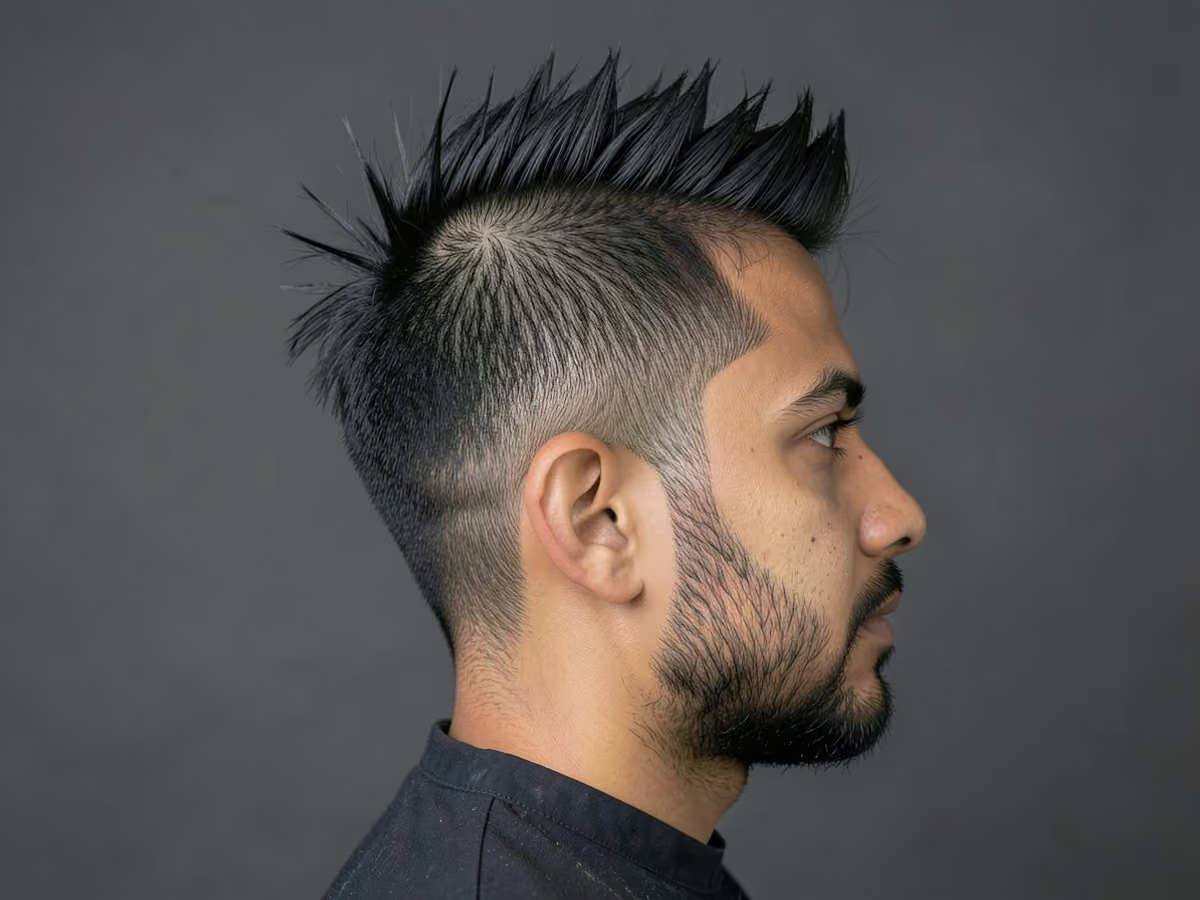
Short spikes of one and a half to two inches sit on one side of the line and lean away from it, giving an early-2000s look with a cleaner outline. The barber uses point cutting so each spike has a narrow tip. A high fade or taper keeps the sides short. Stiff hair holds spikes well; fine hair needs a strong gel or paste to keep them up through the day.
How to Style at Home
Apply matte paste to dry hair from roots to tips.
Pinch small sections into points that lean away from the part.
Set the spikes with a short blast of cool air.
Ask Your Barber
"Inch and a half to two inches on top, point cut for spikes, high fade from a #0.5, part line on the left so the spikes lean away from it."
Trim:Every 2–3 weeks. Coily regrowth fills the line within two weeks.
Best For:Oval, round, long faces + coily or 4C hair.
About This Style
Coily hair holds a shaved part line well because the curls stop right at the edge. Here two inches of afro is shaped round on top with a taper or low fade, and the part runs from the front hairline back toward the crown. Picking the top out gives volume on both sides of the line. A matching line-up at the hairline keeps the front as sharp as the part.
How to Style at Home
Mist the hair with leave-in conditioner each morning.
Lift the afro with a pick, working away from the part.
Pat the outline into a round shape with your palms.
Ask Your Barber
"Two inches of afro shaped round, low taper on the sides, part line from the front back toward the crown and a line-up at the hairline."
Trim:Every 2–3 weeks. Curls and line both need regular refreshing.
Best For:Oval, square faces + coily or tightly curled hair.
About This Style
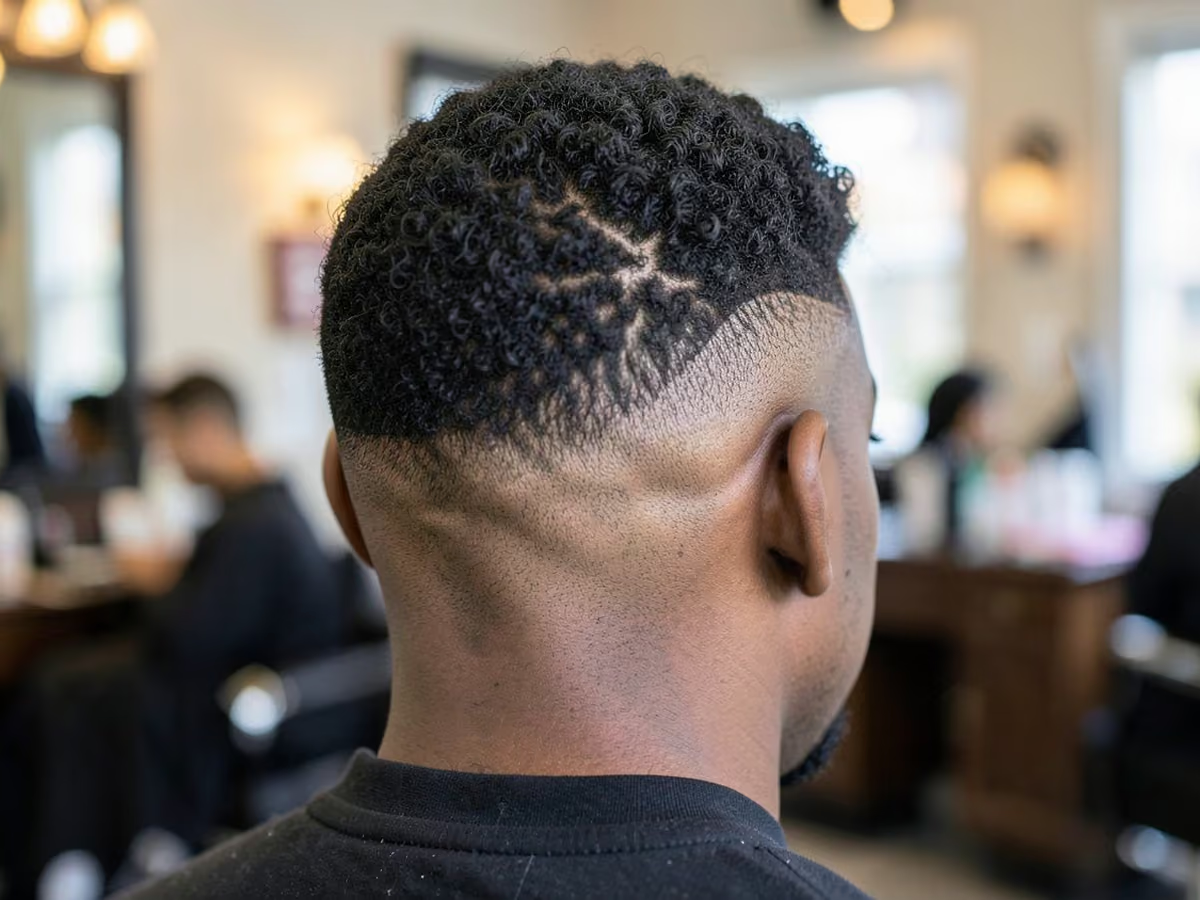
Using a curl sponge on an inch to an inch and a half of coily hair creates small, defined coils across the top. A hard part on one side breaks that texture into two areas, and a drop fade or burst fade finishes the sides. The sponge work takes about five minutes each morning. Sponge in circles on the long side only, so the coils do not spread over the line.
How to Style at Home
Apply curl cream to damp hair across the top.
Rub a curl sponge in small circles to form coils.
Keep the sponge away from the part line so it stays clear.
Ask Your Barber
"Drop fade from a #0 behind the ear, an inch and a half on top for sponge curls, and a part on my left, about 1/8 inch wide."
Recommended Products
Curl Cream
Curl Sponge
Hard Part by Age, Hairline and Occasion
A shaved part reads differently on a teenager, a groom or a man with a receding hairline. These versions change the line length, width and placement to fit the wearer and the event.
Trim:Every 3–4 weeks. Teens can skip the line touch-up between cuts.
Best For:Teens + straight, wavy or thick hair.
About This Style
Many schools allow a simple hard part but not designs, so this version keeps one thin straight line and a scissor taper rather than a skin fade. Two to three inches on top is combed across or left slightly messy. Parents booking for a teen should confirm the school's rules first; a trimmer line grows back within two weeks if it causes a problem.
How to Style at Home
Towel-dry and comb the top across from the part.
Use a pea-sized amount of styling cream for light hold.
Rinse and restyle after sports instead of adding more product.
Ask Your Barber
"He wants a hard part that passes school rules: one thin straight line, scissor taper on the sides, two to three inches on top, no designs."
Trim:Every 3–4 weeks. A subtle line grows out softly.
Best For:Oval, square faces + gray, straight or wavy hair.
About This Style
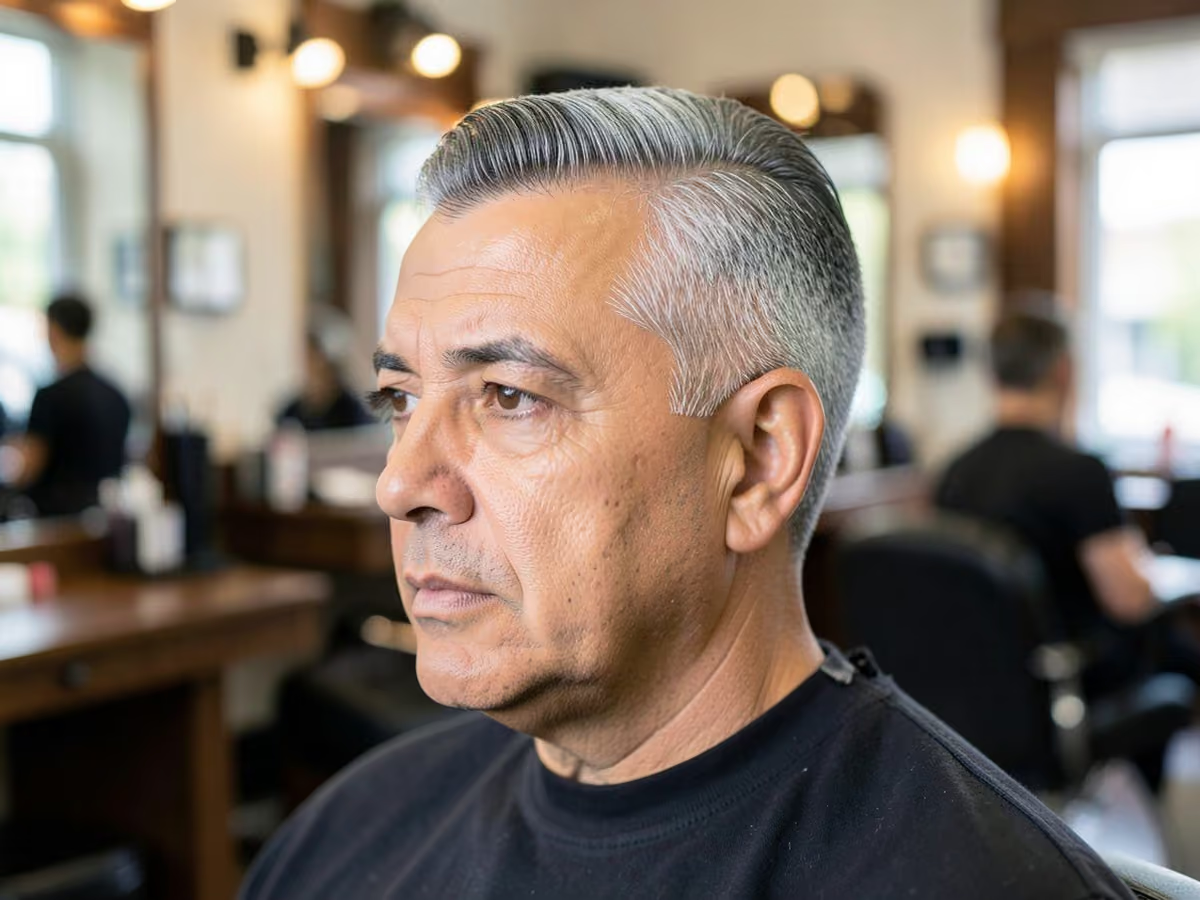
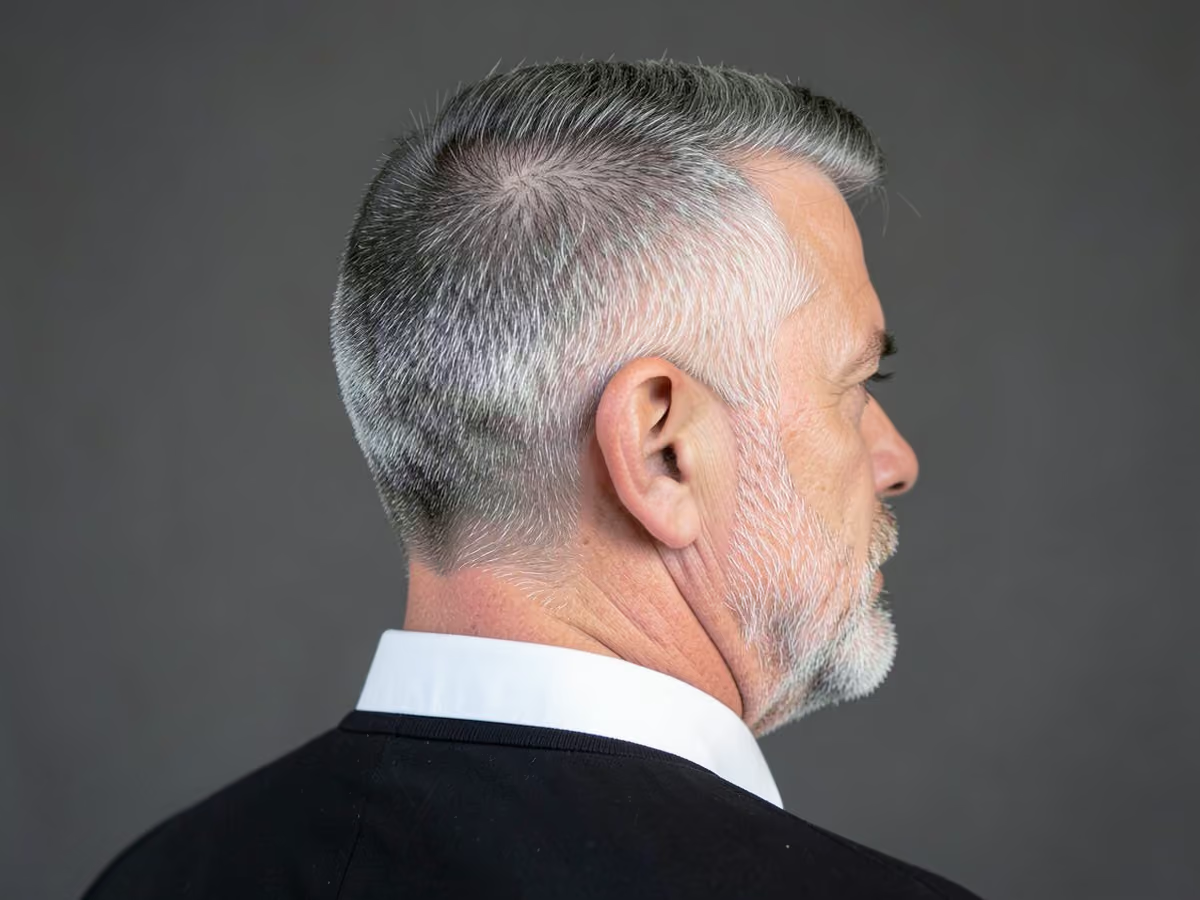
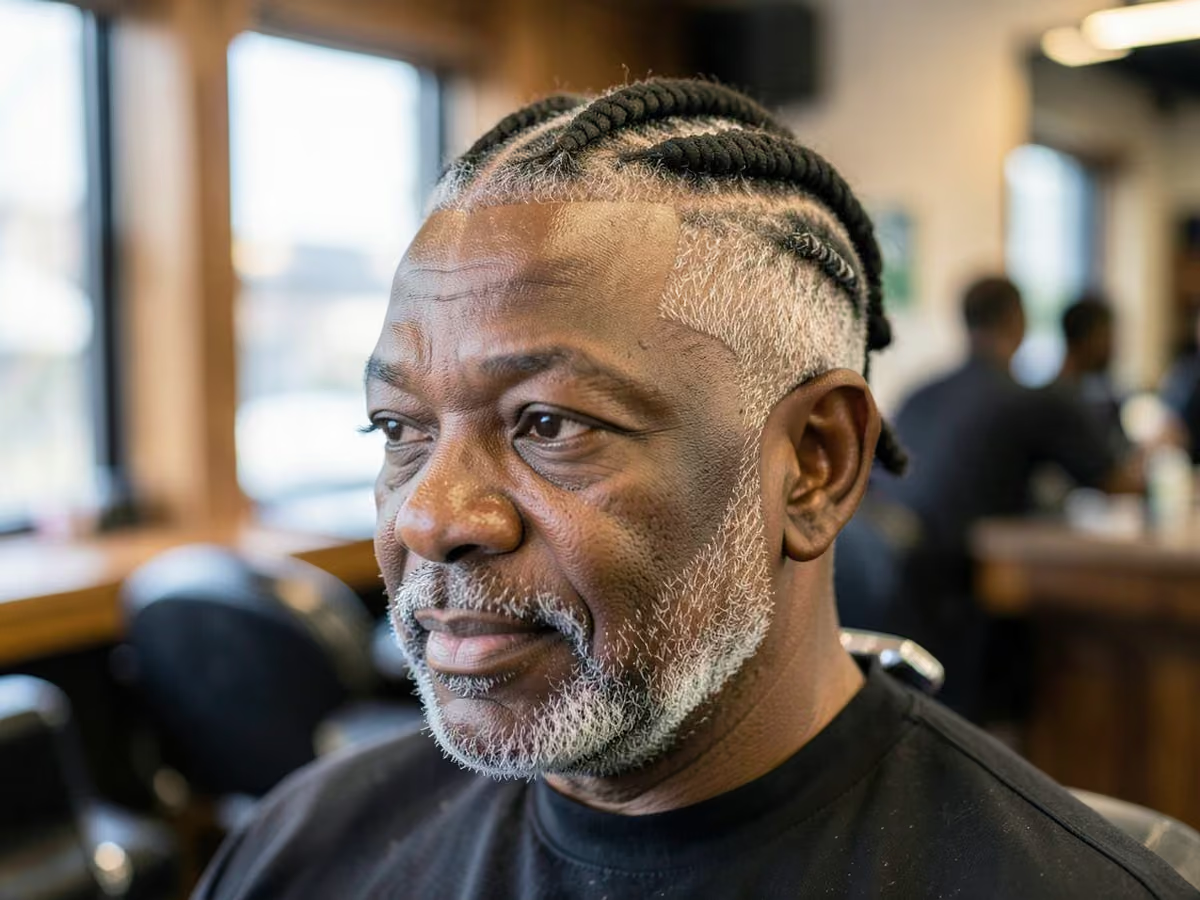
Older men often find a deep razor line too strong, so barbers cut a short, shallow part, about two inches long, with trimmers only. It reads as a tidy side part rather than a design. Sides are tapered with a #2 to a #3 and the top is kept at two inches so it combs over easily. Gray and white hair show the scalp more, which makes even a fine line visible.
How to Style at Home
Comb damp hair across from the part with a fine comb.
Add a small amount of light pomade for a soft shine.
Brush the sides down flat with your hand.
Ask Your Barber
"Please make it a short, shallow part with the trimmer only, nothing razored. Taper the sides #2 to #3, two inches on top combed across."
Trim:Every 2–3 weeks. Short tops need regular trims to hide recession.
Best For:Oval, square faces + straight or wavy hair with recession.
About This Style
Cutting the part line right into a receded temple draws attention to it, so barbers start the line about an inch back from the hairline. The top is kept short, two inches, and pushed slightly forward and across so the front covers the recession. A mid fade keeps the sides tight. If the hairline is still moving, ask a dermatologist about options before committing to a style that highlights the temples.
How to Style at Home
Comb the front slightly forward and across from the part.
Use matte paste for hold without shine at the hairline.
Keep the front low rather than lifting it into a quiff.
Ask Your Barber
"Start the part line about an inch back from my hairline, not into the temple. Mid fade from a #1, two inches on top pushed forward and across."
Trim:Every 3 weeks. The cowlick lifts again as the top grows.
Best For:Oval, round faces + straight hair with a front cowlick.
About This Style
When a cowlick at the front or crown pushes hair in one direction, placing the part where the hair naturally splits lets the cowlick work for the style instead of against it. The barber checks the growth pattern on wet hair before cutting the line. Keeping the top at two to three inches gives enough weight to hold the comb over. A part on the wrong side usually fails by midday.
How to Style at Home
Blow-dry the cowlick area first in its natural direction.
Comb the top across from the part with styling cream.
Set the front with a quick blast of cool air.
Ask Your Barber
"Check my cowlick while my hair is wet and put the part where it splits naturally. Two to three inches on top, taper on the sides."
Trim:Every 2 weeks. Book the final cut three to five days before.
Best For:Grooms, wedding guests + straight or wavy hair.
About This Style
For a wedding, barbers usually cut the hard part three to five days before the date so the line has softened slightly and any redness has gone. The rest of the cut is a classic side part with a low taper and two to three inches on top, combed with a medium-shine pomade that holds through photos and dancing. Bring a photo of the suit so the length suits the collar.
How to Style at Home
Blow-dry the top across with a round brush on the wedding morning.
Comb medium-shine pomade through the top for hold.
Carry a small comb to fix the sweep between photos.
Ask Your Barber
"This is for my wedding on Saturday. Classic side part with a low taper, two to three inches on top, and a fine hard part on my natural line."
Recommended Products
Pomade
Round Brush
How Do You Ask Your Barber for a Hard Part?
Name four things: which side, how wide, how far back, and how sharp. Say you want a hard part on your natural part side, as thin as possible or about 1/8 inch, running back to the crown or stopping halfway, and if you want it razor finished or just trimmed. Then describe the sides, such as a #1 skin fade or a scissor taper, and the top length in inches.
If you have never worn one, ask the barber to comb your hair wet first and show you where it splits naturally. A part cut against your growth pattern will fight you every morning. A photo of the line from above helps, since the angle is hard to describe. Ask for a thin line the first time; a wider one can always be added at the next visit.
Clipper Guards Used in Hard Part Haircut Styles
A clipper guard is the plastic comb that clips onto the blade and sets how much hair is left: a #1 leaves 3 mm (1/8 inch), each step up adds about 3 mm. The right column lists the cards on this page that call for each guard. See the full clipper guard numbers guide for the complete chart.
Comb the top away from the line while the hair is damp. Use pomade for a shiny comb over, matte clay for a textured finish or a curl cream on curly tops. Pressing the hair on the short side down flat, and lifting the long side slightly, makes the part read more clearly. The pomade vs clay vs wax guide explains which hold suits each top.
Plan on a touch-up every one to two weeks; many shops do a part and edge clean-up between full cuts. Do not shave the line yourself with a disposable razor, since it is easy to drift and widen it. If you want to grow it out, stop the touch-ups and comb a regular side part over the stubble; after three or four weeks the line is gone.
What Hard Part Mistakes Should You Avoid?
The most common mistake is placing the part too low, close to the ear, which creates a thin flap of hair that will not lie flat. Another is asking for a wide line on fine hair, which reads as a bald stripe. Cutting a curved or double line on a first visit is also risky, since you cannot undo it for two weeks.
Razor irritation is the other issue. If you get bumps along the line, ask for a trimmer-only part with no razor, use a clean blade every visit and keep the scalp moisturized. The razor bumps on the neckline guide applies to the part line too. Finally, keep the line straight on a straight top style; a crooked hard part is the first thing people notice.
Which Hard Part Haircut Is Right for You?
Pick your hair type and how much upkeep you will put in. The matches below come from the Best For and Maintenance notes on each card. Upkeep follows the Maintenance badge: low means a cut every 3 to 6 weeks and almost no daily styling, high means weekly line-ups or daily product.
A hard part looks sharp for about five to seven days. After that, stubble shows along the line, and by the end of the second week the edges blur into the surrounding hair. Most men book a touch-up every one to two weeks, and the line fully grows back in three to four weeks if left alone.
Q2: Does a hard part damage your hair or scalp?+
Clipping or shaving a part line does not stop hair from growing back, since only the hair above the skin is removed. The main risk is irritation, razor bumps or ingrown hairs where a razor is used. A trimmer-only part, a clean blade and some scalp oil afterward reduce that risk.
Q3: Which side should a hard part go on?+
Put it where your hair already splits. Comb your hair back while wet and see where it falls apart naturally, usually above the outer corner of one eyebrow. A part on that side lies flat with little product, while a part on the other side fights the growth direction every day.
Q4: Can you get a hard part with short hair?+
Yes. A hard part needs only about an inch on top to show, which is less than a combed part needs. It works on crew cuts, short brush ups and wave tops. On very short tops, ask for a thin line so the cut does not look like a design.
Q5: Is a hard part unprofessional?+
A thin, straight hard part on a neat side part or comb over reads as tidy in most offices. Wide lines, curved lines and added slashes look more casual. If your workplace is strict, choose a thin trimmer line and a scissor taper rather than a high skin fade.
Q6: Can you do a hard part at home?+
It is possible with a T-blade trimmer and a second mirror, but the line is easy to place too low or cut crooked, and you cannot fix it for two weeks. A safer home routine is to keep an existing line clean by following it lightly every few days.