
When Your Parting Shows
Too Much Scalp
A widening part is one of the first things men notice. Here's how to style around it, and what actually makes it worse.
By Jessica Hamilton, Editor · Updated
Quick answer: A part shows more scalp over time because parting the same way daily trains hair to fall away from that line, and any drop in density makes it more visible. The quickest fix is to part on the other side. Otherwise, drop the part for a forward textured crop and switch to matte products instead of shiny ones.
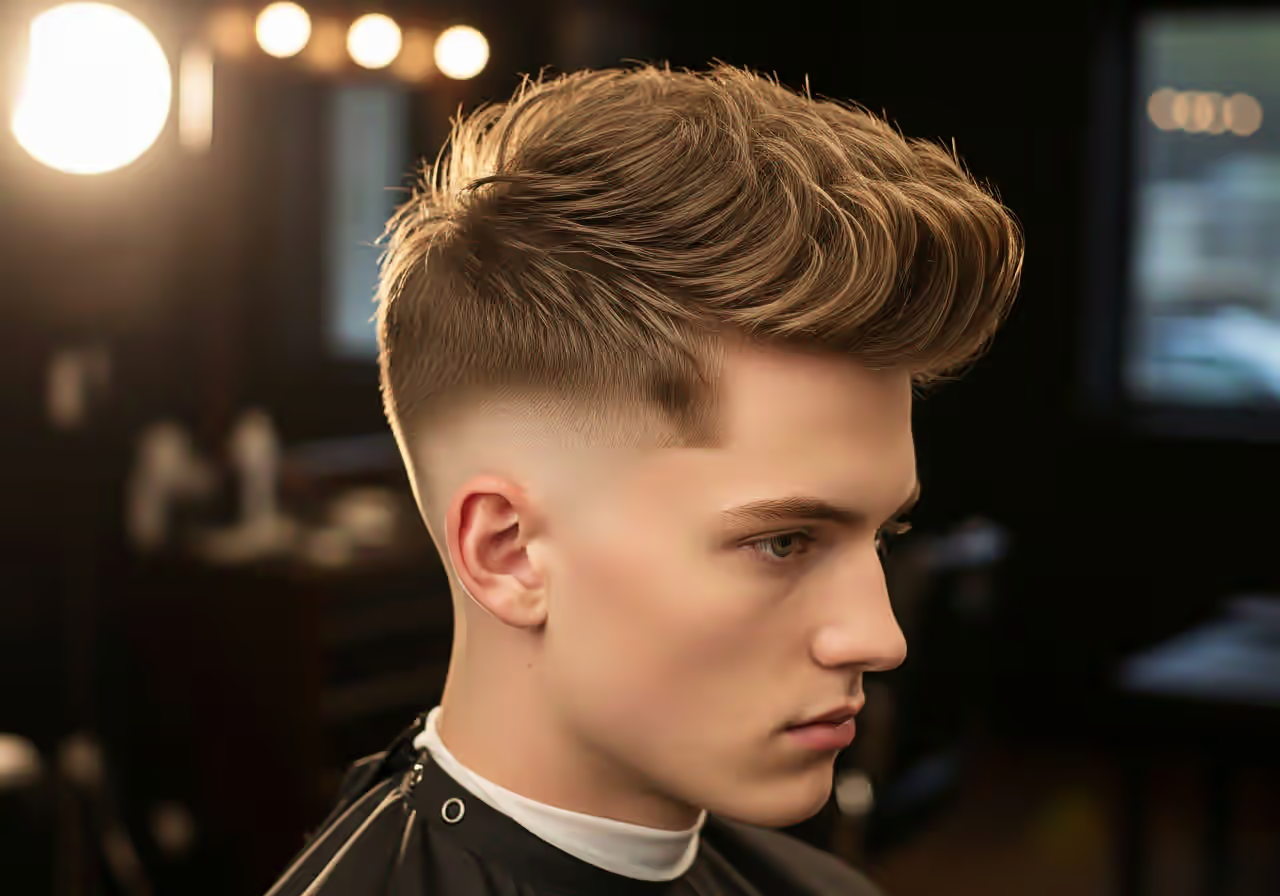
Style images are AI-generated illustrations.
📚 Part of our Thinning & Balding guide hub, where the related guides are listed together.
A parting is a deliberate line of exposed scalp, so if your density has dropped even slightly, the part is where you notice first. The good news: this is one of the most fixable appearance problems, because the part is a styling choice, not a fixed feature. Change how you wear it and the scalp line largely disappears.
Why Does My Hair Part Show So Much Scalp?
A hair part shows too much scalp when hair is combed to the same line every day, density drops, or shiny product reflects light off the skin. Switching sides, going matte and adding root volume usually narrow it within one to two weeks. A part that widens fast alongside shedding needs a dermatologist.
Combing to the same part every day trains hair to fall away from that line, and over time the exposed strip gets wider. Add any drop in density and it becomes obvious. Flat, shiny styling makes it worse because light reflects off the exposed scalp. Nothing here is irreversible. It's mostly training and light.
What Causes a Wide Part and Which Fix Matches It?
| Cause | Sign | Fastest fix |
|---|---|---|
| Same part every day | Strip of scalp is straight and sharp | Part on the other side |
| Shiny product | Part looks wider in bright light | Switch to a matte clay or paste |
| Flat roots | Hair lies in a flat sheet either side | Blow-dry roots against the part |
| Cut too short at the part line | Hair stands away from the line | Grow the part line longer by about half an inch |
| General thinning | Crown and temples also look thinner | Shorter textured cut; see a dermatologist |
Most men have more than one cause at once, usually a fixed part plus a shiny product. Work down the table from the top; the first three fixes cost nothing.
How Do You Fix a Part That Shows Too Much Scalp?
- Switch the side you part on: it instantly lifts hair over the old line. Feels odd for a week, then normal.
- Ditch the part entirely, wearing it forward or textured; no part, no exposed line.
- Go matte (matte over shine): shine reflects off scalp and highlights the part.
- Add root volume, blow-drying the roots in the opposite direction so hair stands over the line.
- Get a textured cut: texture breaks the light and hides any single line.
- Style with fingers, not a comb: combing re-creates the exact part every time.
What Haircut Hides a Hair Part That Shows Scalp?
If switching sides and going matte isn't enough, the cut is doing you no favours. Move away from part-dependent styles (side parts, slick backs) toward forward textured styles: a textured crop or French crop. They don't rely on a part at all, so there's no line to widen. See also our thinning on top guide.
What Mistakes Make a Hair Part Look Wider?
- Parting hair while it is wet with a fine comb. It creates the sharpest possible line. Part with fingers while damp so the edge is soft.
- Using heavy oil or gel at the roots. Heavy products make hair clump into strands and separate at the part.
- Pressing hair down with a hat or helmet while damp. Hair dries flat and splits open along the part.
- Moving the part further and further over to cover an area. This turns into a comb-over and draws more attention.
- Over-washing with harsh shampoo. Dry, brittle hair has less body and falls flat more easily.
Which Products Help Hide a Wide Part?
The right product adds grip and diffuses light; the wrong one clumps hair into strands that split at the part. Our pomade vs clay vs wax guide compares the main types.
- Matte clay: firm hold with no shine, so hair stays lifted over the line.
- Texture powder: adds lift at the roots on fine hair; a small amount goes a long way.
- Sea salt spray: used on damp hair before blow-drying, it gives grip and body.
- Light styling cream: soft control for wavy hair without the wet look.
- Skip high-shine pomade and wet-look gel, which reflect light off the scalp. See matte vs shine products.
What Should You Ask Your Barber to Hide a Wide Part?
Tell the barber directly that your part is showing more scalp than you would like. They can adjust the cut in a few specific ways:
- Leave the hair along the part slightly longer so it falls over the line instead of away from it.
- Add texture through the top with point cutting, which helps hair stand and overlap rather than sit in a flat sheet.
- Change the direction of the fringe or top so it falls forward or to the other side.
- Keep the sides shorter so the top looks fuller by contrast.
What to say in the chair
“My part is showing more scalp than I would like. Leave the hair along the part line a little longer, point-cut the top for texture, and keep the sides at a #2 so the top looks fuller.”
How Long Does It Take to Retrain a Hair Part?
If you switch sides or drop the part, expect a week or two where hair keeps trying to fall back into the old line. Directing it while damp each morning trains it to sit the new way. If the part is widening because of general thinning rather than styling, it will likely keep changing, and a shorter textured style is more reliable in the long run. A widening part that appears quickly or comes with shedding is worth checking with a dermatologist.
How Often Should You Get a Haircut If Your Part Shows?
Keep the sides tight and the top fresh. A cut every 3 to 4 weeks stops the sides from bulking out and making the top look flat by contrast; our guide to how often you should get a haircut has intervals by style. Most barbershops charge $25 to $45 for a standard cut, as listed in our haircut cost guide.
A guard is the plastic comb on the clippers that sets the length. A #2 or #3 on the sides works for most men; our clipper guard numbers chart shows each size. For the wording at the chair, see how to talk to your barber.
| Time | What happens |
|---|---|
| Days 1 to 3 | Hair keeps falling back to the old line. Direct it while damp each morning. |
| Week 1 | New direction holds most of the day with a little product. |
| Week 2 | New part or no-part style feels normal and holds on its own. |
| Week 4 | Hair grows about half an inch a month, so the part line now has more length to cover with. |
| 3 months | If the part still widens, thinning is the likely cause. Check with a dermatologist. |
Our male hair loss statistics report covers how common thinning is by age.
Frequently Asked Questions
Q1: Why does my hair part show so much scalp?+
Q2: How do I hide a widening hair part?+
Q3: Does changing my parting side help?+
Q4: What haircut hides a visible parting?+
Q5: Should I use matte or shiny product if my part shows?+
Q6: Does a wide part mean I am going bald?+
Medical & Dermatology Sources
A cut can make thinning less noticeable, but it won't stop or reverse hair loss. The sources below cover causes, diagnosis and treatment, and a dermatologist can advise on your own hair.
- Male pattern hair loss: diagnosis and treatment, American Academy of Dermatology
- Hair loss: Tips for managing, American Academy of Dermatology
Related Haircut Guides
Make us a Preferred Source on Google
See our latest articles first in your Google Search & AI Overviews.