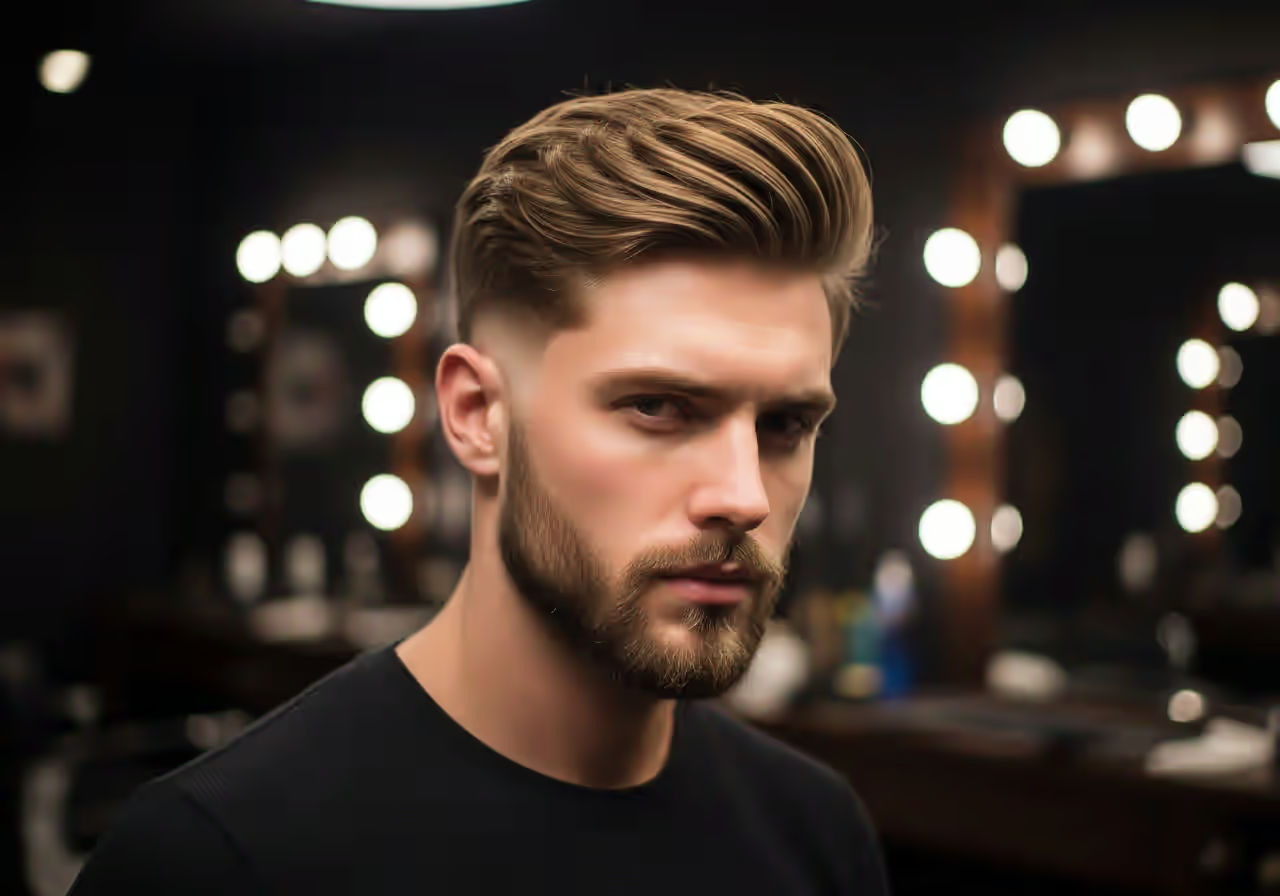
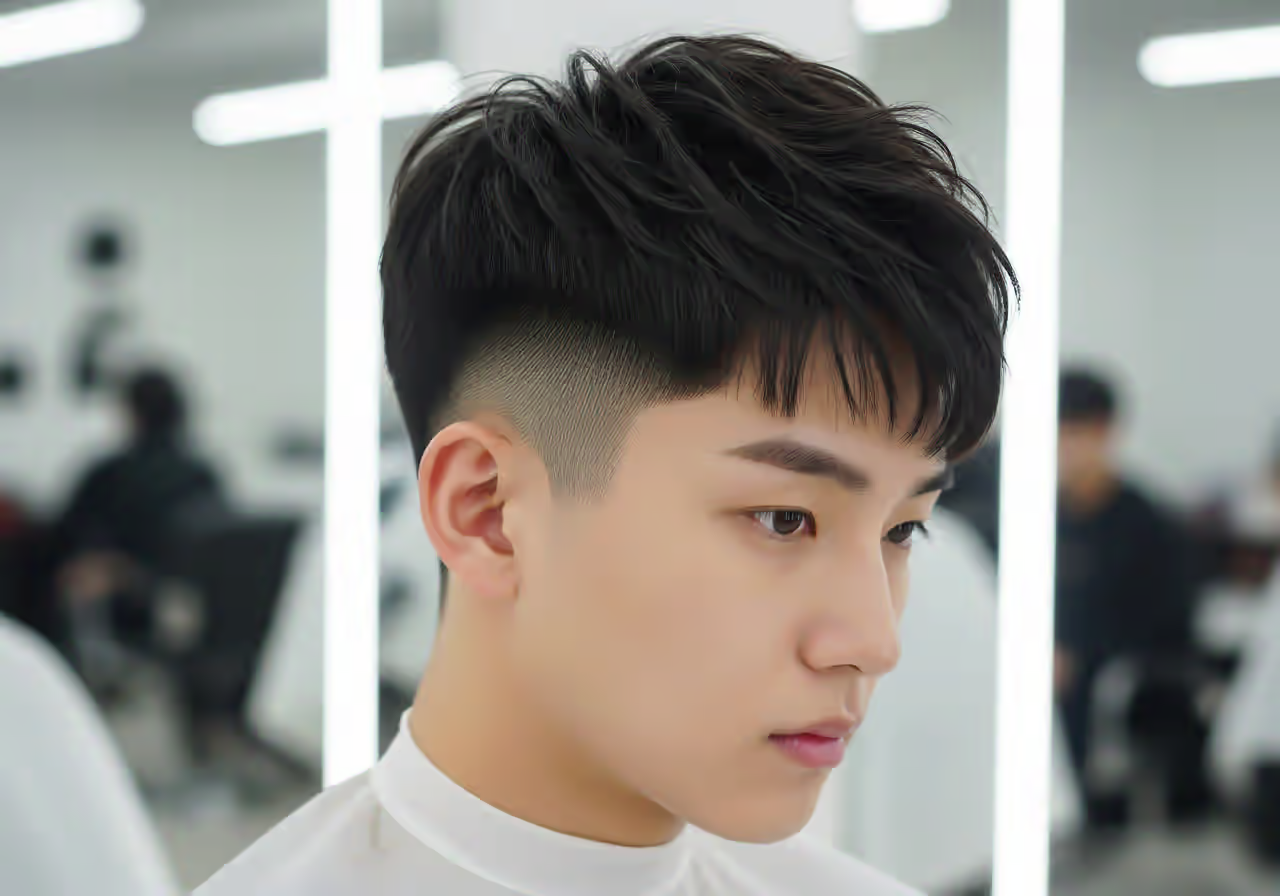
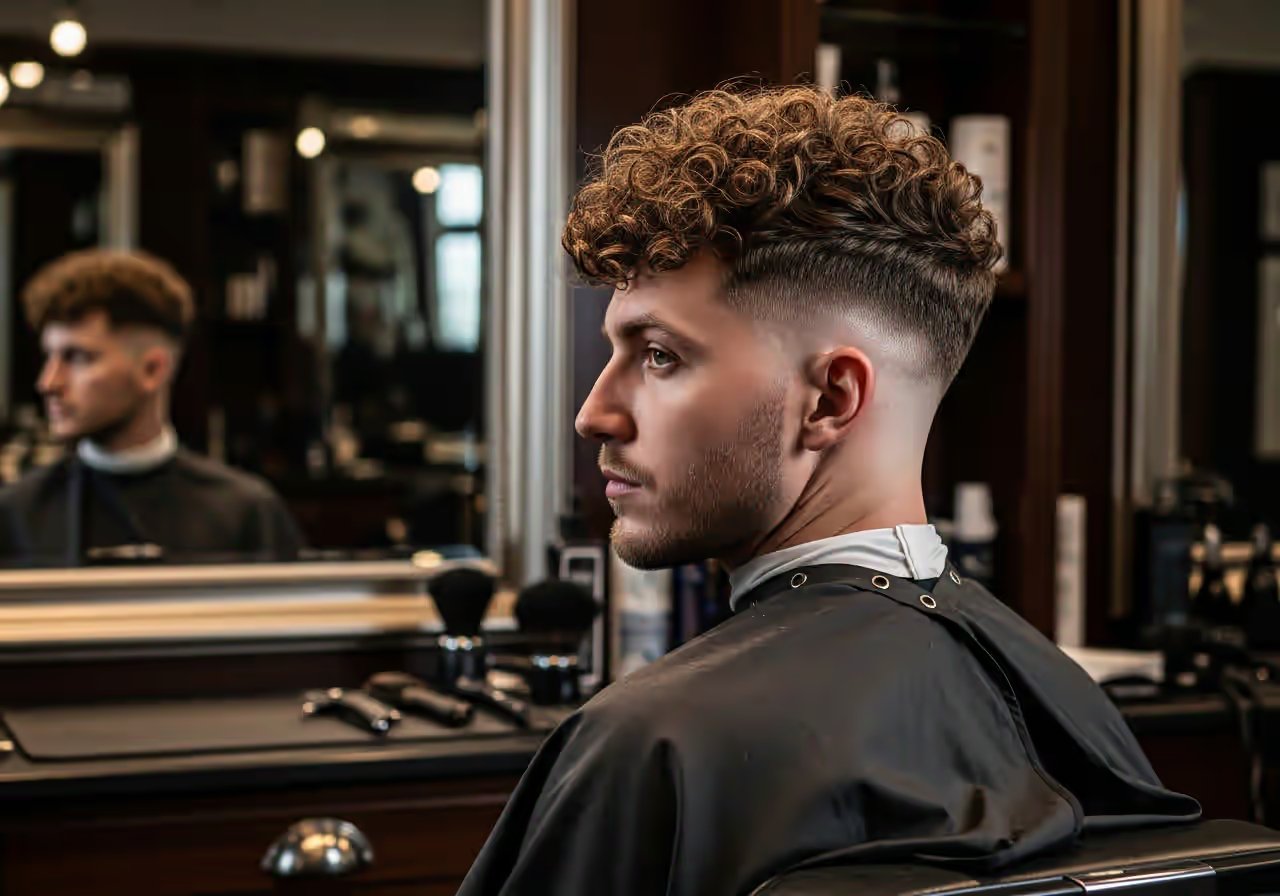
Quick answer: A textured crop is a short cut with a forward fringe and a top thinned out so the pieces separate and move, and it suits every hair type, wavy and thick hair most of all. Expect skin to a #3 on the sides, 2 to 3 inches on top and a trim every 2 to 3 weeks.
Textured Crop Haircut Styles at a Glance
Every style on this page with its clipper guard, top length and trim interval. Tap a name to jump to that card.
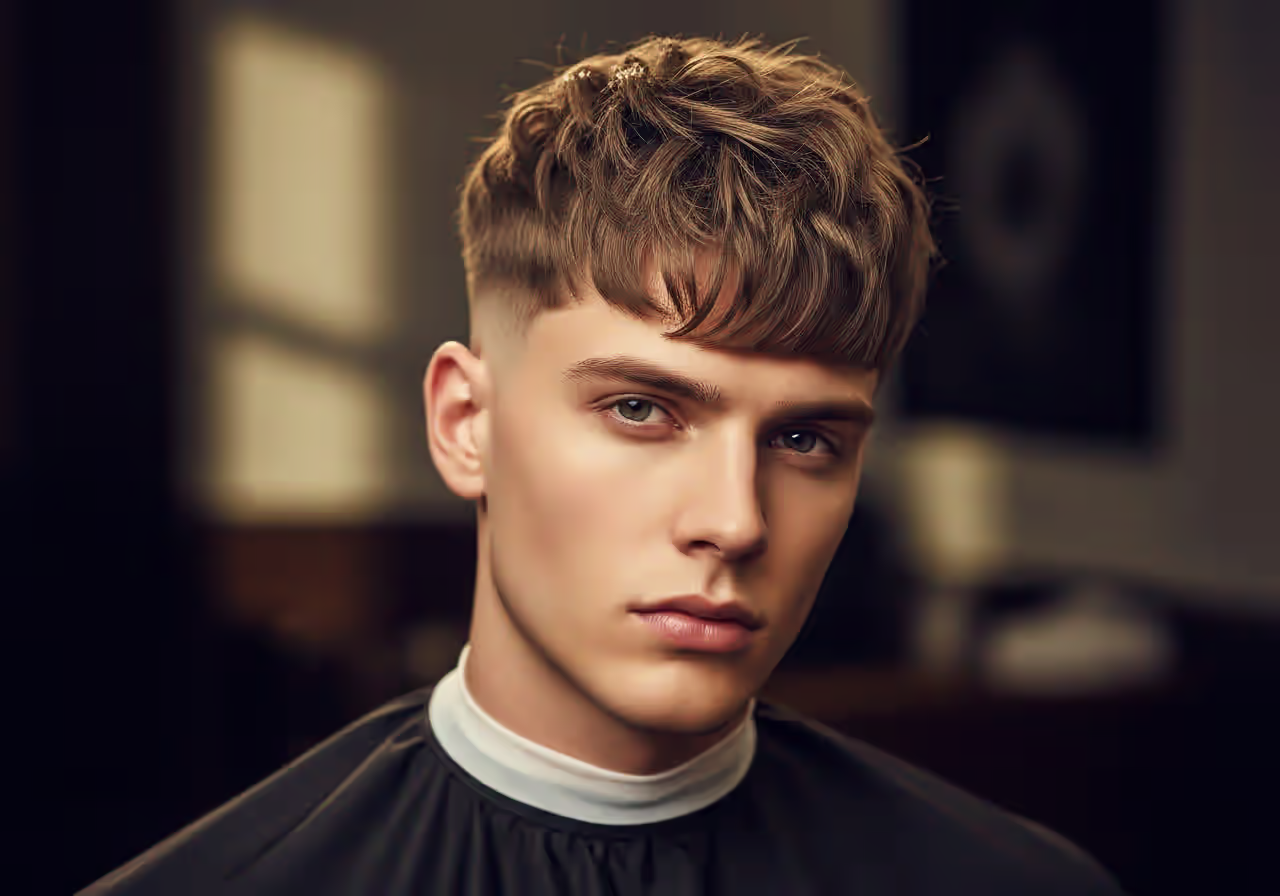
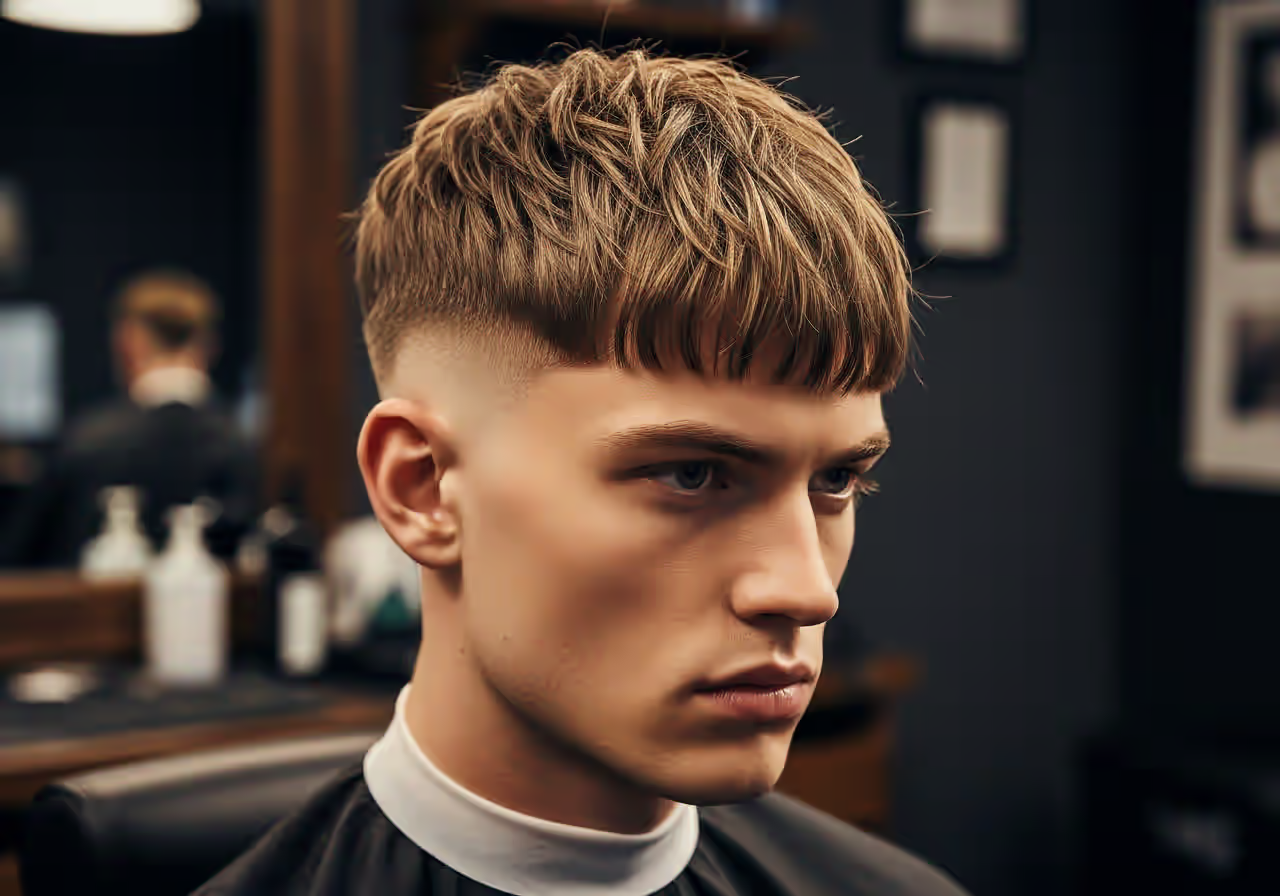
A textured crop is a short cut with a forward-falling fringe, where the barber removes internal weight from the top with a razor or texturizing scissors so the pieces separate and move. That texture work is what separates it from the cleaner, blunter French crop. The sides are usually a taper or fade, and the top is left two to four inches with a fringe of about one and a half to three inches. It works on every hair type and is especially good on wavy or thick hair. Round faces suit a high fade or volume version, square faces a messy or shaggy one, and oval faces can wear any style. In the chair, describe a choppy, textured top with a forward fringe, name your side detail, such as a mid fade or low taper, and ask for lots of piecey movement. Style it forward with a pea of matte clay in two to five minutes, and refresh the sides every two to three weeks.
If you prefer to wear the fringe pushed up rather than down, our spiky hairstyles for men gallery shows how the same short, textured top turns into points.
A quick test tells you whether the texture work was done: run your fingers through the top. The hair should separate into pieces rather than clump, and if it sits flat and heavy, ask for more weight to come out rather than adding more matte clay.
Comparing crops with other short styles? Our guide to short haircuts for men puts them side by side with buzz cuts, crew cuts and quiffs.
Textured Crop: Strengths at a Glance
✓Ultra low-maintenance: 2–5 minutes daily styling
✓Works with straight, wavy, curly, thick, fine, and thinning hair
✓Pairs perfectly with fades, tapers, undercuts, bursts, and beards
✓Looks modern and relaxed every day with little work
Textured Crop: Quick Face Shape Guide
Round: High Fade or Volume styles: add height and elongate the face.
Square: Messy or Shaggy: soften the jaw with natural movement.
Oval: Any style. The face shape with the most options for textured crops.
Heart: Curtain Fringe or Low Taper, balance the forehead width.
Oblong: Long or Side Swept, add visual width without height.
How to Cut the Perfect Textured Crop (Barber Instructions)
Pro tip: always cut and texturize the top and fringe dry so the client can see the exact choppy movement and forward fall they want.
1
Prep
Dampen hair or cut dry for precision. Section top hair away from the sides.
2
Sides & Back
Use clippers for low, mid, high, or skin fade, or taper depending on the chosen style.
3
Top Length
Leave 2–4 inches on top with heavy layering throughout for maximum texture.
4
Fringe
Cut a short-to-medium choppy fringe (1.5–3 inches) that falls forward naturally.
5
Texturing
Heavy point-cutting and thinning shears for piecey, messy movement. This is the most important step.
6
Blend
Soft transition or disconnected line depending on desired contrast level.
7
Finish
Clean neckline, sideburns, and around ears. Style dry to show the client the final forward fringe.
Universal Barber Script
"I want a [Style Name] textured crop, [top detail, e.g. 2–4 inch heavily choppy and textured top with forward fringe], [side detail, e.g. mid fade or low taper], with lots of piecey movement and no heavy blend."
Textured Crop vs French Crop: Which is Right for You?
The most common question in 2026 barbershops. Both are choppy crops, but they deliver very different results.
Textured Crop vs French Crop: Which is Right for You?
Textured Crop 2026
French Crop
Fringe
Piecey, uneven, forward (messy)
Clean, choppy, forward (uniform)
Top texture
Heavy all-over layering and movement
Choppy but more defined
Look
Lived-in, natural, relaxed
Directional, defined, deliberate
Maintenance
Every 3–4 weeks top, 2–3 weeks sides
Every 2–3 weeks
Best for
All hair types, especially wavy/thick
Straight and wavy: cleaner look
Styling time
2–5 minutes max
2–5 minutes max
Filter the styles
Showing all 28 styles
Fade
Hair
Length
French Crop, Short Crop, Crop Fade and Side Swept Crop
Five everyday textured crops, from the textured French crop to a side-swept version for oval faces. Each needs a trim every two to three weeks.
A French crop keeps two to three inches on top, cut with point-cutting so the fringe falls forward in short, choppy pieces that stop well above the brows. The sides are tapered with scissors or a longer guard, so the shape stays soft rather than stark. It flatters most face shapes and suits straight or wavy hair. Get the fringe line refreshed every few weeks, because it creeps into the eyes quickly.
How to Style at Home
Comb the damp two to three inch top straight forward, then dry it on medium heat while pinching the fringe ends apart.
Press a pea of texture clay through the top from the roots.
Twist a few fringe pieces with a dab of pomade so the edge stays choppy above the brows.
Ask Your Barber
"French crop, please: about two and a half inches on top, point-cut so the fringe breaks up above my brows, and a soft scissor taper on the sides."
This is the tightest version of the crop, with roughly an inch on top and a very short fringe that barely reaches the hairline. The sides are clipped short and blended upward so there is almost no bulk anywhere. Because there is so little length, fine or straight hair looks denser and needs almost no styling time, which suits men who train often. It does lose its shape quickly, so keep regular trims.
How to Style at Home
Wait until the inch-long top is completely dry; powder grips nothing on damp hair.
Dust texture powder at the crown and front roots, then rub in small circles with your fingertips.
Nudge the short fringe slightly forward and leave the rest undone.
Ask Your Barber
"A short textured crop with about an inch on top, a very short choppy fringe, and the sides taken down with a number two blended up. Keep plenty of texture in the top. Use a #2 on the sides, scissors on top."
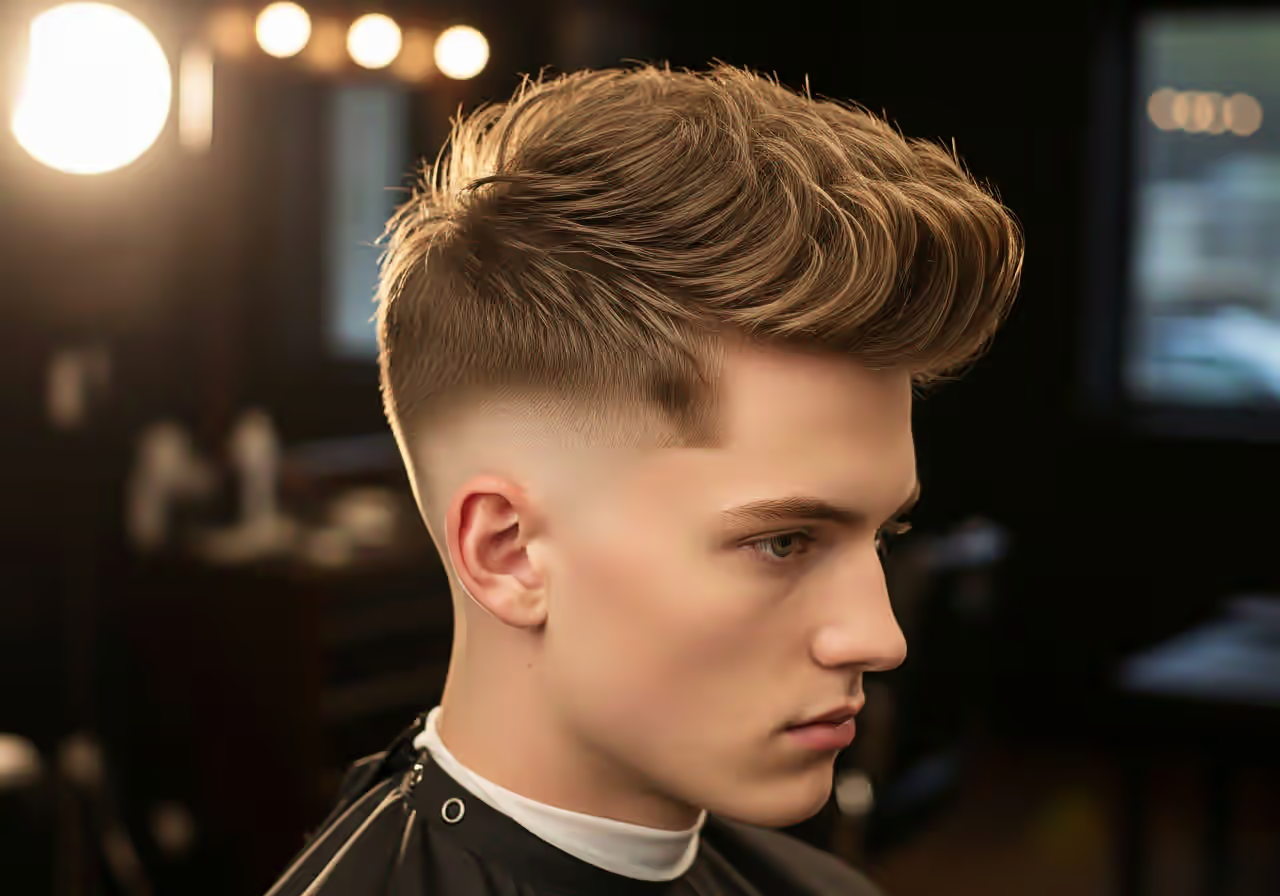
Here the choppy crop on top sits over a clean fade, so the contrast between the textured top and the short sides does most of the work. Length on top is usually two to three inches with a forward fringe, and the fade is often placed mid-height. It sits well on oval and square faces with straight or wavy hair. A fade loses definition first, so book around every two to three weeks.
How to Style at Home
Lift the damp top at the roots with your fingers as you blow it forward.
Rake a small amount of warmed matte cream or clay through the top.
Pinch the fringe into uneven points and leave the mid fade bare.
Ask Your Barber
"Textured crop with a mid fade: keep two to three inches on top, cut choppy with a forward fringe, and blend the fade cleanly into the top without a hard line. Use a #1 to #2 on the sides."
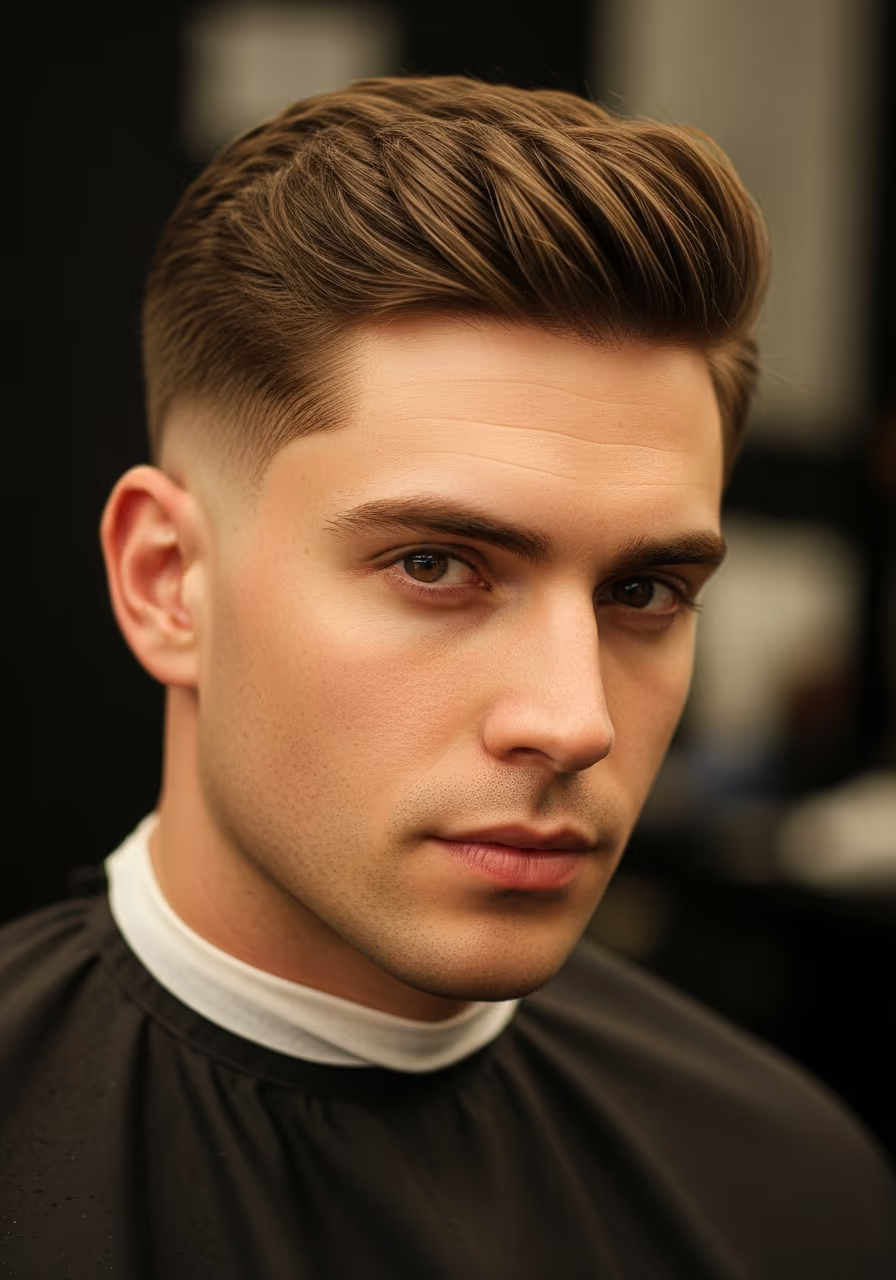
Instead of falling straight down, the fringe on this crop is cut slightly longer on one side so it can be pushed across the forehead. The top keeps light texture, while the sides are tapered neatly for a tidier overall look. It suits oval faces and straight hair, which holds the sweep without fighting it. If the fringe starts closing over one eye, it is time for a trim.
How to Style at Home
Brush the fringe diagonally toward its long side while blow-drying.
Smooth a fingertip of light pomade through the front section only.
Pinch the ends with a touch of regular pomade, checking the long side clears your eyebrow.
Ask Your Barber
"Side-swept textured crop, please. Leave the fringe a little longer on the left so it sweeps across, keep the top textured, and taper the sides neatly with a clean neckline. Use a #1 at the sideburns and nape, #2 above."
This is a slightly more restrained crop that works in an office as well as on a weekend. The top is layered for texture but not chopped aggressively, the fringe is short and even, and the sides are faded or tapered cleanly. It works across hair types because the barber adjusts the weight to your density. Matte finishing keeps it looking deliberate rather than messy, and a trim every few weeks keeps it sharp.
How to Style at Home
Dry the top almost fully, aiming it forward and slightly up at the front.
Emulsify matte clay in your palms and press it through from roots to ends.
Define a few fringe pieces but keep the line fairly even, and smooth strays above the ears.
Ask Your Barber
"A modern textured crop that still looks professional: layered texture on top, a short even fringe, and a clean fade on the sides that I can keep neat every three weeks. Use a #1 at the sideburns and nape, #2 above."
Recommended Products
Matte Clay
Textured Crop Fades & Tapers
Low fades and low tapers keep the crop easy at three weeks between cuts; go high or add a burst and the visits move to every two weeks.
The burst fade curves around the ear and drops toward the nape, so the sides look rounded while the back keeps a little length. On top, a dense textured crop adds height and angles that help a round face look longer. Thick hair works best, since it gives the top enough volume to balance the curved fade. The burst shape blurs within about two weeks, so frequent clean-ups are part of the deal.
How to Style at Home
Blow-dry the dense top upward and forward to build height at the crown.
Work a small scoop of matte clay into the roots.
Twist sections at the front for height and keep the clay away from the burst.
Ask Your Barber
"Burst fade around the ears, dropping toward the back, with a thick textured crop on top. Keep the top at about three inches and cut it choppy so it has height. Use a #1 to #2 following the curve."
Best For:Oval and heart faces + straight/wavy hair.
About This Style
A low fade starts just above the ear and neckline, so most of the side length stays in place and the crop reads softer. The top is cut with texture and a short forward fringe. This gentler contrast suits oval and heart faces with straight or wavy hair and grows out gracefully, which is why three weeks between trims is realistic. Men wanting a quieter first fade often start here.
How to Style at Home
Slightly damp hair takes texture clay.
Air-dry or blow it forward, scrunching lightly.
Pull the fringe into short, uneven pieces; the low fade needs nothing.
Ask Your Barber
"Textured crop with a low fade starting just above the ears, so most of the sides stay. Keep about two inches on top with a short choppy fringe. Use a #1 to #2 on the sides."
The fade here begins around the temple, halfway up the sides, giving clear contrast without the starkness of a high fade. On top, medium to thick hair is layered and chopped so it sits with movement rather than as a solid block. Square faces benefit because the crop softens a strong jaw. Book trims every two to three weeks, before the mid line blurs into the top.
How to Style at Home
Rough up the top with your fingers as you dry it forward.
Warm a pea of matte clay and push it from the back of the crown toward the fringe.
Break up any clumps so the layers look separated.
Ask Your Barber
"Mid fade starting at the temples, blended into a textured crop with around two and a half inches on top. Take out bulk so it does not sit heavy. Use a #1 to #3 on the sides."
The fade climbs high, often close to the top of the head, leaving a compact block of textured hair that shows strongly against almost bare sides. It is a bold look that works on most face shapes, and the high contrast makes the crop look sharper and more deliberate. Expect to visit the barber every two weeks, since the skin at the top of the fade grows in quickly.
How to Style at Home
Tap texture powder onto the roots of completely dry hair.
Massage it in, pushing the compact top slightly forward and up.
Pinch the blunt fringe once and leave the shape rough.
Ask Your Barber
"High fade taken right up near the corners of my head, with a short, heavily textured crop on top and a blunt, choppy fringe at the front. Use a #0.5 or #1 up high into a #2."
This version skips a fade entirely and uses a low taper, which only shortens the hair around the ears and neckline. That leaves weight on the sides, which helps heart and oblong faces avoid looking narrow at the temples. Light texturing on top keeps fine hair from lying flat. It is one of the easiest crops to live with, and it grows out without an awkward stage.
How to Style at Home
Blow-dry fine hair with a little lift at the roots.
Use only a tiny amount of a light matte cream; anything heavy flattens it.
Finger the top forward and ruffle the fringe for a soft edge.
Ask Your Barber
"Textured crop with a low taper only around the ears and neckline. Keep weight on the sides, point-cut the top for texture, and leave the fringe short and soft. Use a #1 at the sideburns and nape, #2 above."
Messy & Casual Textured Crop
The undone side of the crop: messy, shaggy and long versions, plus a curtain fringe for heart and oval faces. Wavy or thick hair suits most of them.
The messy crop leaves more length and irregular layering on top so the hair falls in random directions instead of forming a neat fringe. Sides are usually faded or tapered to keep it from looking overgrown. Wavy or thick hair is ideal, because its natural bend creates the disorder for you. The trick is to look undone while still being cut precisely, so avoid combing it flat.
How to Style at Home
Spray sea salt through the damp top.
Rough-dry while scrunching the hair in your fist.
Rub texture clay through the dry top and push pieces in different directions, stopping before it looks arranged.
Ask Your Barber
"Messy textured crop: leave around three inches on top with deep, uneven layering, a rough forward fringe, and a mid taper on the sides so it still looks intentional. Use a #1 to #3 on the sides."
This crop keeps noticeably more length on top, often three to four inches, so the fringe can reach the brow and the layers have room to move. The sides are tapered rather than faded short, which keeps the silhouette balanced. Heart and oblong faces benefit from the extra fringe coverage, and wavy or thick hair gives it body. It can also serve as a stage when growing into a longer style.
How to Style at Home
Smooth a light styling cream through the damp, longer lengths to control frizz.
Finger-dry the fringe forward and slightly to one side.
Twist a few top sections once dry to show the layering.
Ask Your Barber
"Longer textured crop: keep three to four inches on top with a fringe that reaches my brows, layer it for movement, and give me a scissor taper on the sides."
Shaggy crops borrow the choppy, layered feel of a shag and compress it into a shorter shape. The top has deep, uneven layers that frame the face, and the sides are left fuller than on a faded crop. Wavy or thick hair suits it best across all face shapes. It is forgiving to grow out, though the layers need reshaping every few weeks.
How to Style at Home
Mist sea salt over damp hair from about a hand's length away.
Scrunch upward to encourage the bend, then diffuse or air-dry without brushing.
Separate a few face-framing pieces with your fingertips once dry.
Ask Your Barber
"Shaggy textured crop, please. Deep choppy layers through the top, fuller sides with just a light taper at the ears, and a messy fringe that frames my face. Use a #1 at the sideburns and nape, #2 above."
Instead of a short forward fringe, this crop parts the front down the middle so two soft panels fall to either side like curtains. The top is textured and the sides tapered, which keeps it from looking like a long cut. Heart and oval faces with wavy hair suit it well. It needs at least three to four inches at the front, so it takes a little growth to get there.
How to Style at Home
Blow the front backward, then let it fall into a middle part.
Work a small amount of styling cream through the two front panels.
Tuck each side outward with your fingers so it frames the face.
Ask Your Barber
"Textured crop with a curtain fringe: keep enough length at the front to part down the middle, texture through the top, and a soft taper on the sides. Use a #1 at the sideburns and nape, #2 above."
This extended crop is basically a crop left to grow, with longer choppy layers on top and sides that are tapered only lightly. The result is relaxed and suits casual everyday wear, especially on thick hair that holds its own shape. Trims every three to four weeks remove weight rather than length. Be careful with heavy products, which can make the extra length look greasy.
How to Style at Home
Spritz sea salt into damp hair, lifting sections at the roots.
Dry on low or air-dry, scrunching the top.
Shake it out once dry and keep product light so the length does not look greasy.
Ask Your Barber
"I want a longer textured crop for everyday wear: choppy layers with around four inches on top, a light taper on the sides, and weight removed so thick hair does not puff out. Use a #1 at the sideburns and nape, #2 above."
Recommended Products
Sea Salt Spray
Textured Crop Undercut, Spiky, Shaved Sides and Hard Part
An undercut, shaved sides, spiky texture and a hard part push the crop toward contrast, and four of the five need a visit every two weeks. The Edgar crop is the easier one.
With an undercut, the sides and back are clipped short in one length and not blended into the top, leaving a visible step. The textured crop sits on top like a separate block. Square faces with thick hair wear it well, as the disconnection handles bulk that would otherwise push outward. The undercut edge grows fuzzy fast, so it needs attention roughly every two weeks.
How to Style at Home
Blow the top forward and slightly up using your fingers, not a brush.
Matte clay goes on the top only, roots first.
Shape the fringe into chunky pieces that contrast with the clipped sides.
Ask Your Barber
"Textured crop with a disconnected undercut: clip the sides and back to a number two, no blending, and keep the top two to three inches with a choppy fringe. Use a #1 or #2 on the sides, scissors on top."
Spiky crops push the textured top upward into short, separated points rather than letting it fall forward. The top is kept around one and a half to two inches, and the sides are faded short to emphasize height. Thick hair and square faces handle it best. Stiff, shiny gels tend to date the look, so a dry matte hold keeps the spikes looking current.
How to Style at Home
Blow-dry upward, brushing against the direction of growth.
Twist small sections into points with a firm matte product on the tips.
Keep the front spikes a little taller than the crown for balance.
Ask Your Barber
"Spiky textured crop: about one and a half inches on top, cut so it stands up easily, and a high skin fade on the sides to keep the focus on the height. Take the bottom to skin (#0), blended into a #1 then a #2."
The sides are shaved very short, sometimes to the skin, so the textured top sits like a crown above a clean base. That vertical emphasis helps round faces look longer, and the style suits men who like a bold, graphic silhouette. The shaved sections show regrowth within days, so plan on a barber visit every two weeks or a careful home touch-up.
How to Style at Home
Blow-dry the top upward for height.
Work matte clay from roots to tips.
Pinch the top into loose chunks and push the fringe slightly up.
Ask Your Barber
"Shaved sides, down to the skin or a zero, with a tall textured crop on top. Keep the top around two and a half inches and texture it heavily. Take the bottom to skin (#0), blended into a #1 then a #2."
The Edgar is recognizable by its blunt, straight-across fringe line and very short, often faded sides. This textured version softens the fringe edge so it looks less severe than the classic helmet shape. Square and oval faces with straight hair wear it best, since the fringe lies flat naturally. Keep the line crisp with trims every few weeks, as a grown-out Edgar loses its look quickly.
How to Style at Home
Comb damp hair straight forward so the fringe lies evenly.
Blow-dry with the brush flat against the head to avoid lift.
Smooth a little pomade over the top and break the fringe edge slightly.
Ask Your Barber
"Textured Edgar: a straight fringe line cut just above the brows but slightly point-cut so it is not blunt, with a high fade on the sides and a sharp line-up. Use a #0.5 or #1 up high into a #2."
A hard part is a thin line shaved into the side, marking the parting permanently. Paired with a textured crop, it adds a sharp, deliberate detail to an otherwise casual cut. It suits straight hair and men who want something both professional and bold. The shaved line grows back in about a week or two, so it needs regular re-cutting to stay sharp.
How to Style at Home
Dry the top so it falls away from the shaved line.
Rub matte clay through the top from the part outward.
Keep the clay off the part itself so the line stays visible.
Ask Your Barber
"Textured crop with a hard part shaved on my natural parting side, a mid skin fade, and the top cut with texture so it falls away from the part. Take the bottom to skin (#0), blended into a #1 then a #2."
Recommended Products
Matte Clay
Curly, Natural & Fine Hair Textured Crop
Versions for thin hair and for 3A to 4C curls, plus a blowout and a highlighted crop. The curly cards need weekly deep conditioning; the highlights version can go three weeks.
On thin or fine hair, a crop is cut with minimal thinning and a fairly short top so the hair clumps into pieces that look denser than they are. The fringe is kept short and the sides tight, which reduces contrast with a sparse crown. Heavy creams tend to separate fine hair and show the scalp, so powder or light matte products work better here.
How to Style at Home
Style only once fine hair is completely dry, since damp strands clump and show scalp.
Shake a little texture powder onto the crown and front roots.
Ruffle with your fingertips for lift and skip the comb.
Ask Your Barber
"Textured crop for thin hair: keep the top fairly short, point-cut lightly without thinning shears, and keep the sides tight so the top looks thicker. Use a #2 on the sides, scissors on top."
On curls, the crop keeps natural coils on top while the sides are faded or tapered short. The barber shapes the top dry or damp to follow curl pattern, so each curl sits evenly and the fringe forms from the curls themselves. Round and oval faces with curls from 3A to 4C suit it. Weekly deep conditioning keeps the curls defined and prevents frizz.
How to Style at Home
Rake curl cream through soaking wet hair in sections.
Scrunch upward for tight clumps, then diffuse on low heat and low speed.
Once dry, separate the larger curls gently, and deep condition weekly.
Ask Your Barber
"Curly textured crop: shape the top dry to follow my curls, about two inches, with a low to mid fade on the sides. Please avoid thinning shears. Use a #1 to #3 on the sides."
The cut itself is a classic textured crop, but lightened pieces through the top make the choppy layering far more visible. Color lands on the ends of the texture, so the fringe and top look dimensional. It works on most face shapes with straight or wavy hair. Lightened hair can be drier, so use gentle cleansing and trim every few weeks to remove brittle ends.
How to Style at Home
Use only a pea of texture clay on dry hair so the color does not look dull.
Twist pieces forward so the lighter ends catch the light.
Keep the fringe loose and uneven to show off the tones.
Ask Your Barber
"Textured crop with plenty of texture on top so highlights show up, about two inches long, choppy fringe, and a low taper on the sides. Use a #1 at the sideburns and nape, #2 above."
A blowout crop is dried with a round brush to lift the roots, so the top looks bigger and softer than a standard crop. The fringe is pushed slightly up and forward rather than lying flat. It is a good choice for fine or thin hair and oval faces, because the blow-dry creates volume that the hair would not have naturally. It does require a few minutes with a dryer each day.
How to Style at Home
Dry the damp top section by section with a round brush, rolling under at the roots.
Direct the fringe up and forward and cool it with the cold shot.
Break up the top lightly with your fingers.
Ask Your Barber
"Blowout textured crop: leave about three inches on top so I can blow-dry for volume, keep a soft forward fringe, and taper the sides with a low fade. Use a #1 to #2 on the sides."
This cut is designed around curly hair, with the barber leaving enough length on top for curls to form a textured crown and keeping the sides tight. Curls handle weight differently, so the cut should be shaped rather than heavily thinned. Round and oval faces with 3A to 4C curls suit it. Moisture is essential, which is why a weekly deep condition is part of the upkeep.
How to Style at Home
Coat wet curls evenly with curl cream, section by section.
Shake your head gently to separate them, then scrunch without rubbing.
Diffuse at low speed, lifting from underneath, and never brush once dry.
Ask Your Barber
"A textured crop cut for my curls: leave around two inches on top shaped to the curl pattern, a mid fade on the sides, and keep the edge at the front soft. Use a #1 to #3 on the sides."
Recommended Products
Curl Cream
Diffuser
Textured Crop with Beard Taper and Burst Fade
Two textured crops paired with a beard, and one with a burst fade for round faces and thick hair.
A textured crop pairs naturally with a beard, since the choppy top and the facial hair balance each other. The key detail is how the sides blend into the beard, typically through a taper that connects smoothly at the sideburns. It works with square and oval faces across hair types. Keep the beard and hair on a similar trim schedule so neither looks overgrown.
How to Style at Home
On dry hair, work a small amount of texture clay through the top.
Push the top forward and break the fringe into short pieces.
Comb the beard in its growth direction so it matches the neat side taper.
Ask Your Barber
"Textured crop with a beard blend: taper the sides down into my sideburns so they connect with the beard, and keep the top about two inches with a textured fringe. Use a #1 at the sideburns and nape, #2 above."
This version of the burst crop is aimed specifically at round faces, keeping extra height on top while the burst fade curves low around the ear. The fade's rounded shape follows the head and removes width at the sides, drawing the eye upward. Thick hair provides the volume that makes this work. The curve of the burst needs tidying about every two weeks.
How to Style at Home
Blow-dry the damp top upward to build crown height.
Warm texture clay and work it in from the roots up.
Push the fringe up and slightly forward to lengthen the face.
Ask Your Barber
"Burst fade curving around my ears with extra height left on top, around three inches. Texture it choppy so it lifts and keep the sides tight to slim my face. Use a #1 to #2 following the curve."
Rather than a stark fade, this crop uses a gradual taper through the temples and sideburns that flows into the beard without a visible break. The top keeps a textured, forward-falling fringe. Because the transition is soft, it suits any face shape and hair type. It looks best when the beard is kept at a length that matches the taper at the sideburns.
How to Style at Home
Rub texture clay through the towel-dried top.
Rough-dry forward with your fingers.
Brush the beard so the sideburn area looks as tidy as the taper.
Ask Your Barber
"Textured crop, please, with a gradual taper at the temples that blends into my beard with no line. Keep the top about two inches and choppy at the front. Use a #1 at the sideburns and nape, #2 above."
Recommended Products
Texture Clay
How Do You Maintain a Textured Crop?
→Sides and back: every 2–3 weeks to keep the fade or taper fresh and contrast sharp.
→Top and fringe: every 3–4 weeks. You can let it grow slightly for more styling options.
→Daily styling: 2–5 minutes. Super low-maintenance once you learn the routine.
→Grows out well: transitions naturally into a messy fringe or short textured crop with almost no awkward phase.
→Use a blow-dryer with a concentrator nozzle for volume, or style with just your fingers for the most natural look.
Best Products for Textured Crop
→
Matte Texture / Everyday Clay
Blumaan Cavalier Clay, Hanz de Fuko Claymation, or Forte Series. The #1 textured crop products in 2026.
→
Sea Salt Spray + Fiber Paste
For messy and shaggy textured crops, Baxter of California or Evo for natural lived-in texture.
→
Texture Powder / Volumizing Mousse
For thin and fine hair textured crops: adds volume and definition without weight.
→
Curl Cream + Leave-In Conditioner
For curly textured crops (3A–4C): Cantu or SheaMoisture with a diffuser.
→
Lightweight Cream / Argan Oil
For longer textured crops and curtain fringe styles, natural hold and shine.
→
Strong Hold Wax or Gel
For spiky textured crops: spike and define without the wet look.
Which Textured Crop Haircut Is Right for You?
Pick your hair type and how much upkeep you will put in. The matches below come from the Best For and Maintenance notes on each card. Upkeep follows the Maintenance badge: low means a cut every 3 to 6 weeks and almost no daily styling, high means weekly line-ups or daily product.
Clipper Guards Used in Textured Crop Haircut Styles
A clipper guard is the plastic comb that clips onto the blade and sets how much hair is left: a #1 leaves 3 mm (1/8 inch), each step up adds about 3 mm. The right column lists the cards on this page that call for each guard. See the full clipper guard numbers guide for the complete chart.
Clipper guard sizes for textured crop haircut styles
Q1: What's the difference between a textured crop and a French crop?+
The textured crop has heavier, more piecey layering and natural movement throughout the entire top. The French crop is cleaner and more uniform with a specific forward fringe as the focal point. The textured crop is messier and more forgiving; the French crop is more directional and defined.
Q2: Is the textured crop good for thin or fine hair?+
Yes, the Textured Crop for Thin Hair and Blowout Textured Crop are designed to add volume and fullness. The right texturing technique and products like texture powder and volumizing mousse make fine hair appear noticeably thicker.
Q3: Can I get a textured crop with curly or coily hair?+
Absolutely. The Curly Textured Crop and Curly Crop are made for 3A–4C hair types. Use curl cream and a diffuser. The faded sides make the curls on top pop beautifully.
Q4: How long does the textured crop take to grow out?+
4–6 weeks until the sides start losing shape. It grows out more forgivingly than an undercut or skin fade. It transitions naturally into a messy fringe or short textured cut with almost no awkward phase.
Q5: Should I pair my textured crop with a beard?+
Yes. The Textured Crop with Beard Taper styles are extremely popular in 2026. Ask for a clean beard lineup with the fade line. The choppy texture on top contrasts beautifully with a well-groomed beard.
Q6: Is the textured crop low-maintenance?+
Very. Most men style it in 2–5 minutes. A quick finger tousle with matte clay or sea salt spray is all it takes. The choppy texture hides any unevenness, making it one of the most forgiving daily styles.
Q7: What face shape does the textured crop NOT work for?+
Almost none. It flatters every face shape when the fringe length and texture are chosen correctly. Round faces benefit from more volume and height on top. Square faces soften with longer, messier variations. Oval faces can pull off any textured crop style.
Q8: Can I add highlights or color to a textured crop?+
Yes. The Textured Crop with Highlights makes the choppy texture pop even more with dimension. Sun-kissed highlights or balayage work best since they follow the natural layers and movement of the cut.
9. Is a textured crop good for straight hair?+
Straight hair is exactly what point-cutting was made for. Left blunt, straight hair on top falls flat: so barbers texturise the ends with a razor or shears to create separation and movement. That is the piece-y, lived-in look that defines the cut. Work a pea-sized amount of matte clay through dry hair and push it forward; that is all it needs.
10. Should I get my textured crop with a low fade or a skin fade?+
Depends how much contrast you want. A low fade keeps it office-safe and grows out softer: a good choice for most guys. A skin fade strips the sides to bare skin for a sharper, modern edge, but it needs a touch-up every two weeks to stay crisp. If this is your first crop, start with a low or mid fade and go skin next time if you want more punch.
Editor Jessica Hamilton researches and fact-checks every guide on the site. Guides are drafted with AI assistance; gallery images are AI-generated illustrations.
The 28 Textured Crop styles above run from the Textured French Crop to the Tapered Textured Crop with Beard, each with its own barber script and upkeep notes. Most of them run skin to a #3 on the sides and need a trim every 2 to 3 weeks, so pick the card closest to your hair type and show your barber its script.
You've explored all
28
Textured Crop Hairstyles 2026
Open this page in the chair and let the barber read the script. Show the barber script from any style card to get the exact cut.