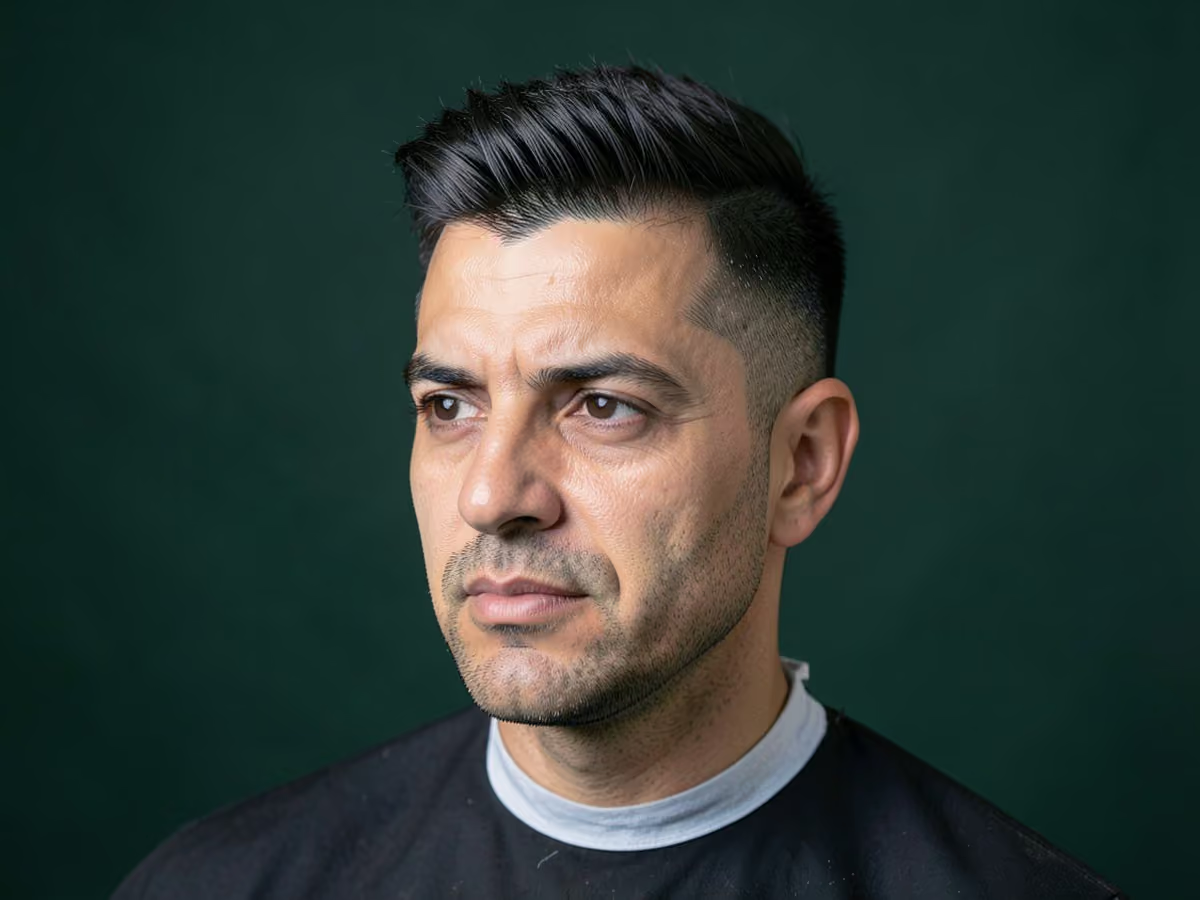
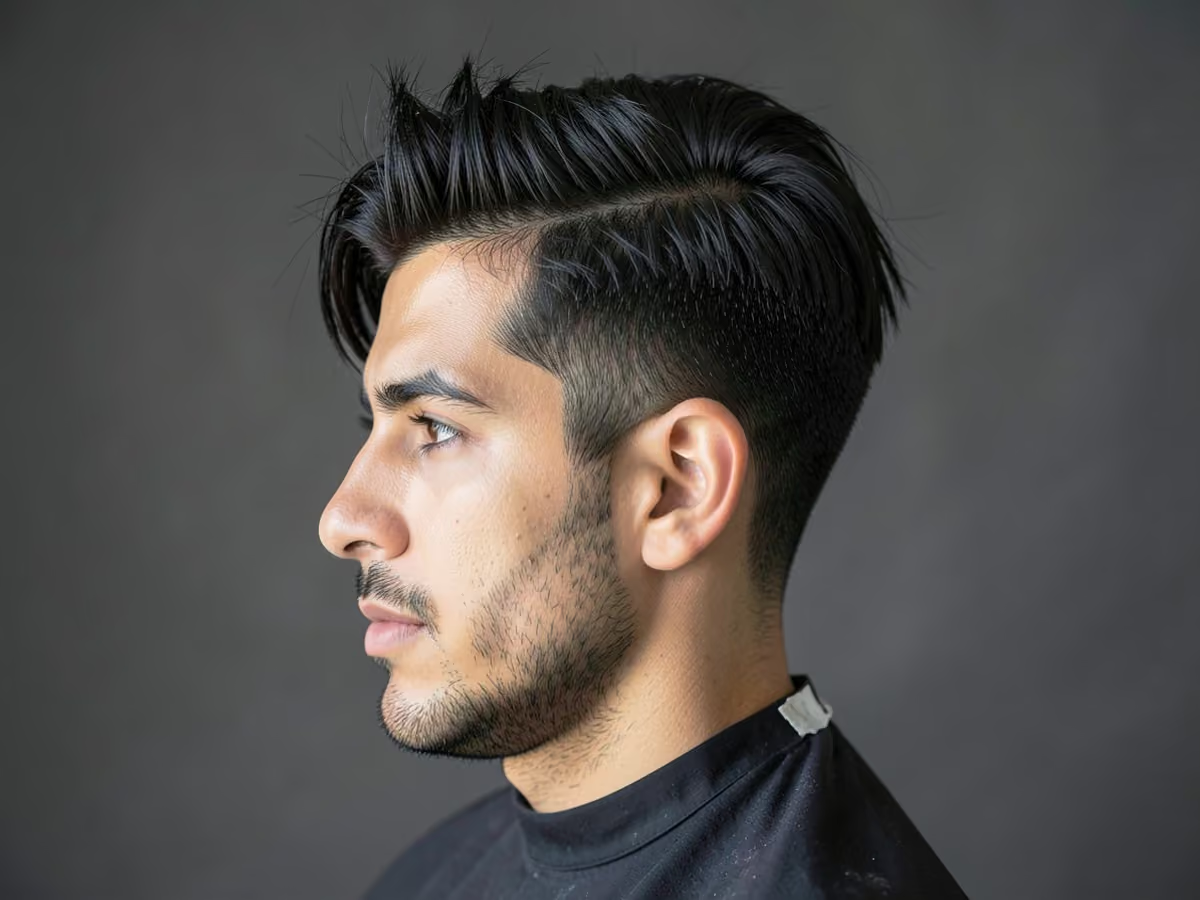
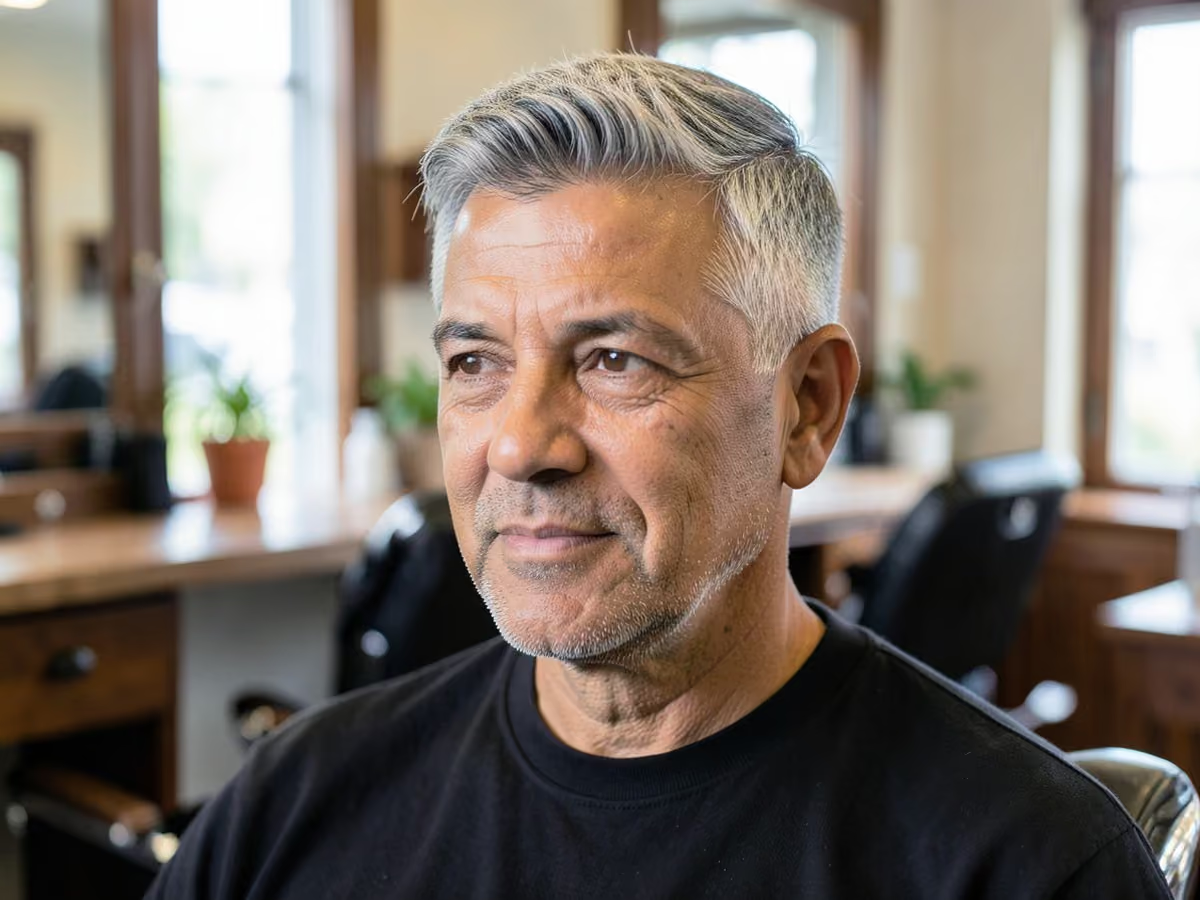
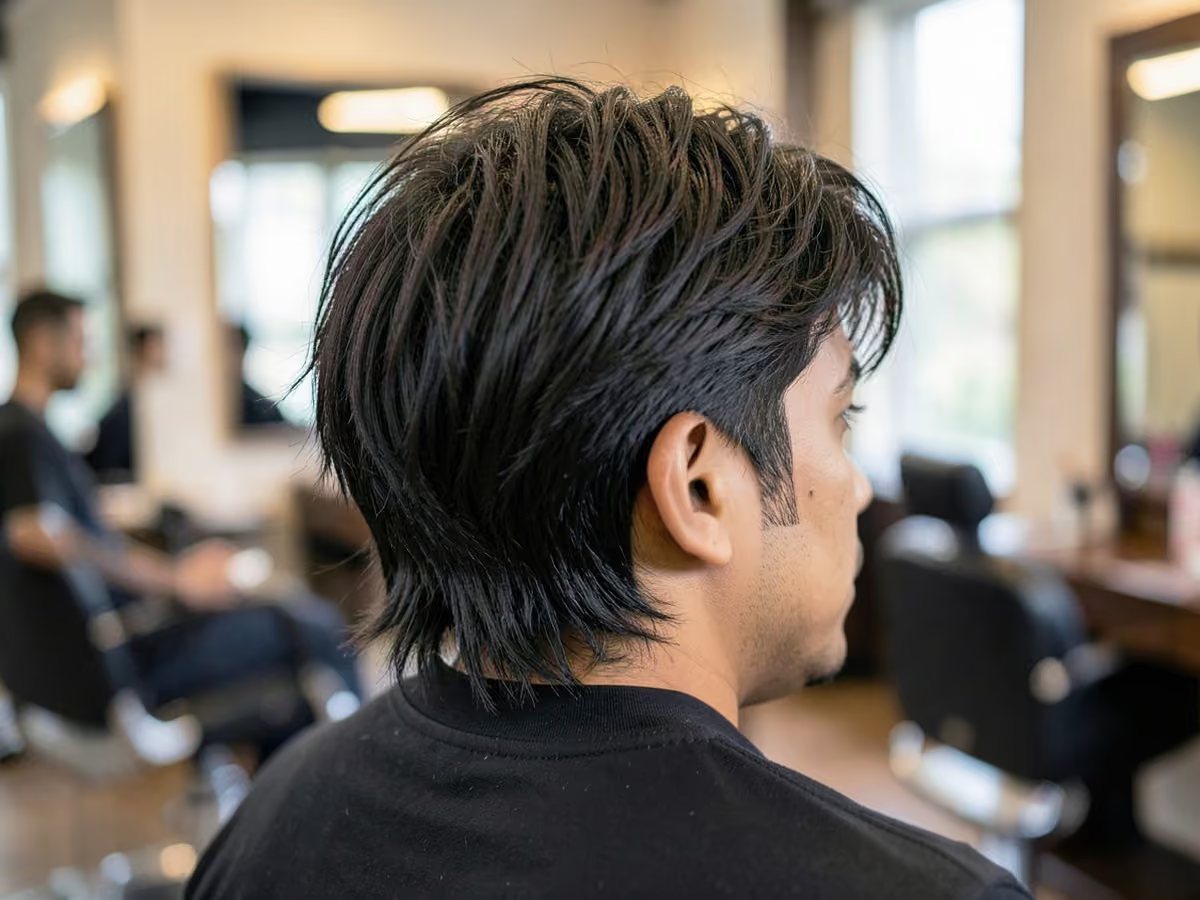
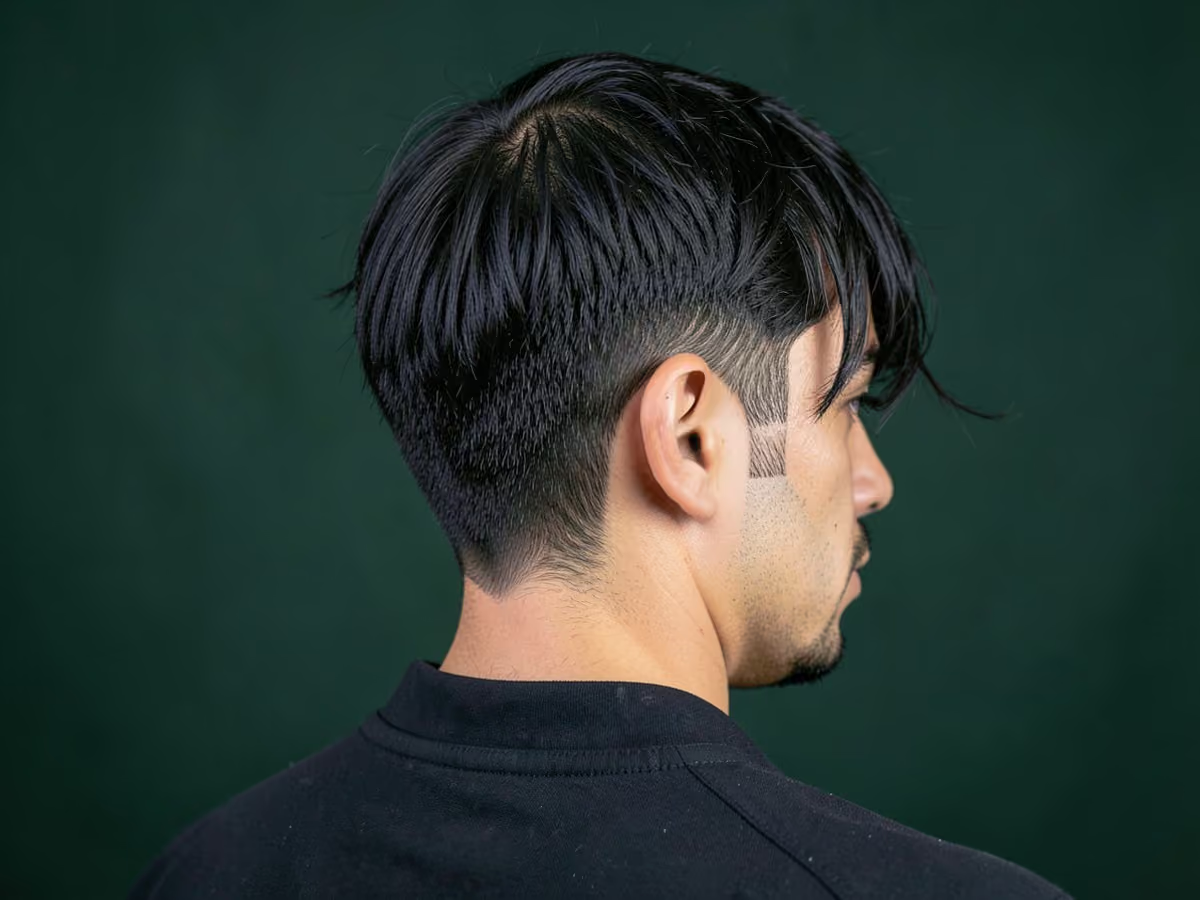
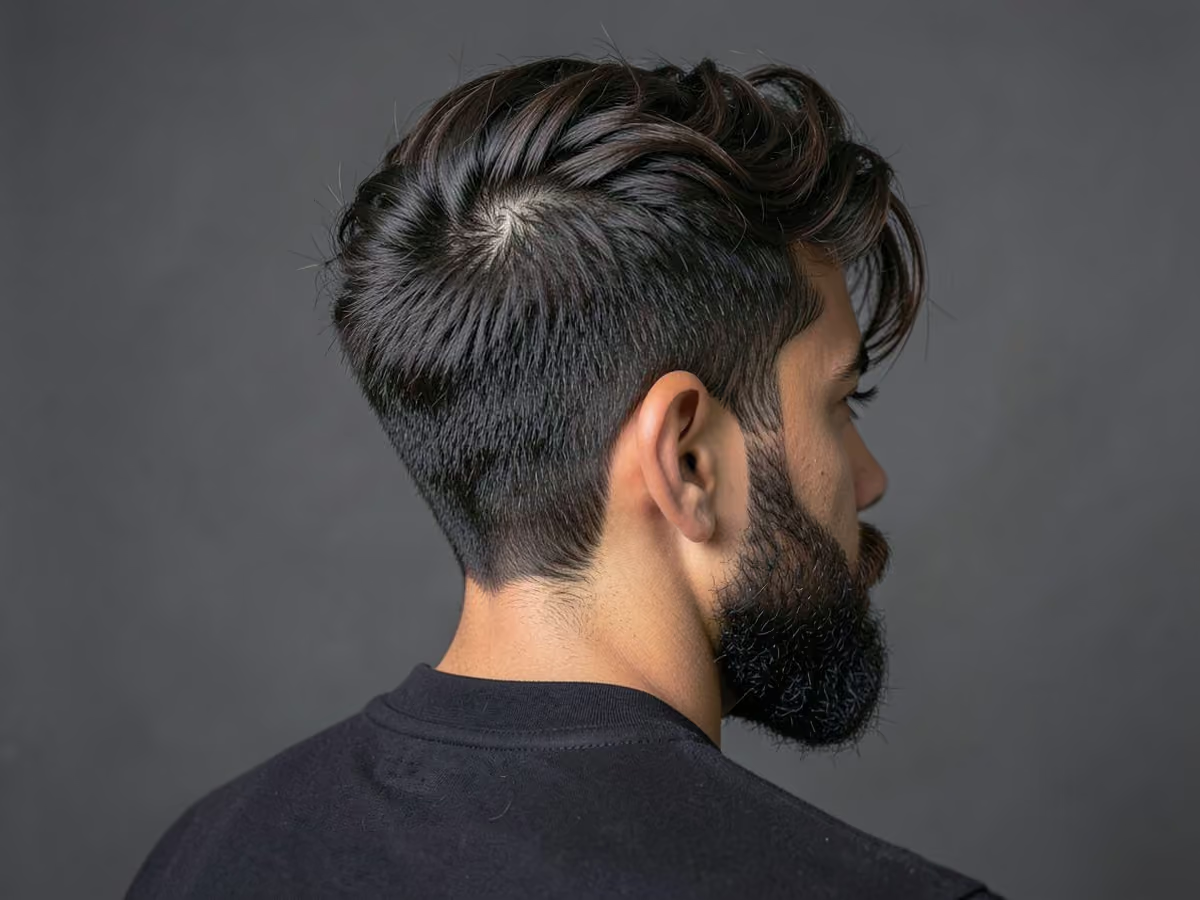
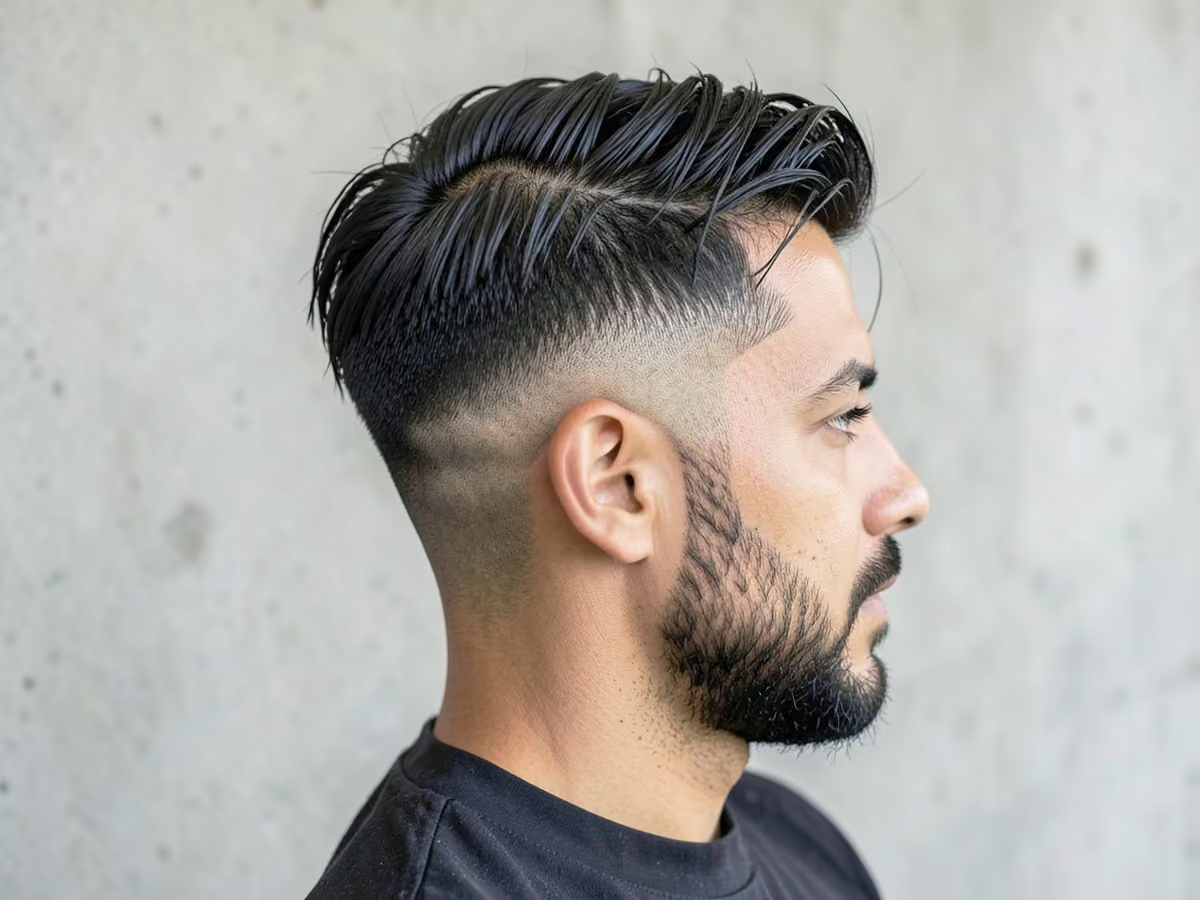
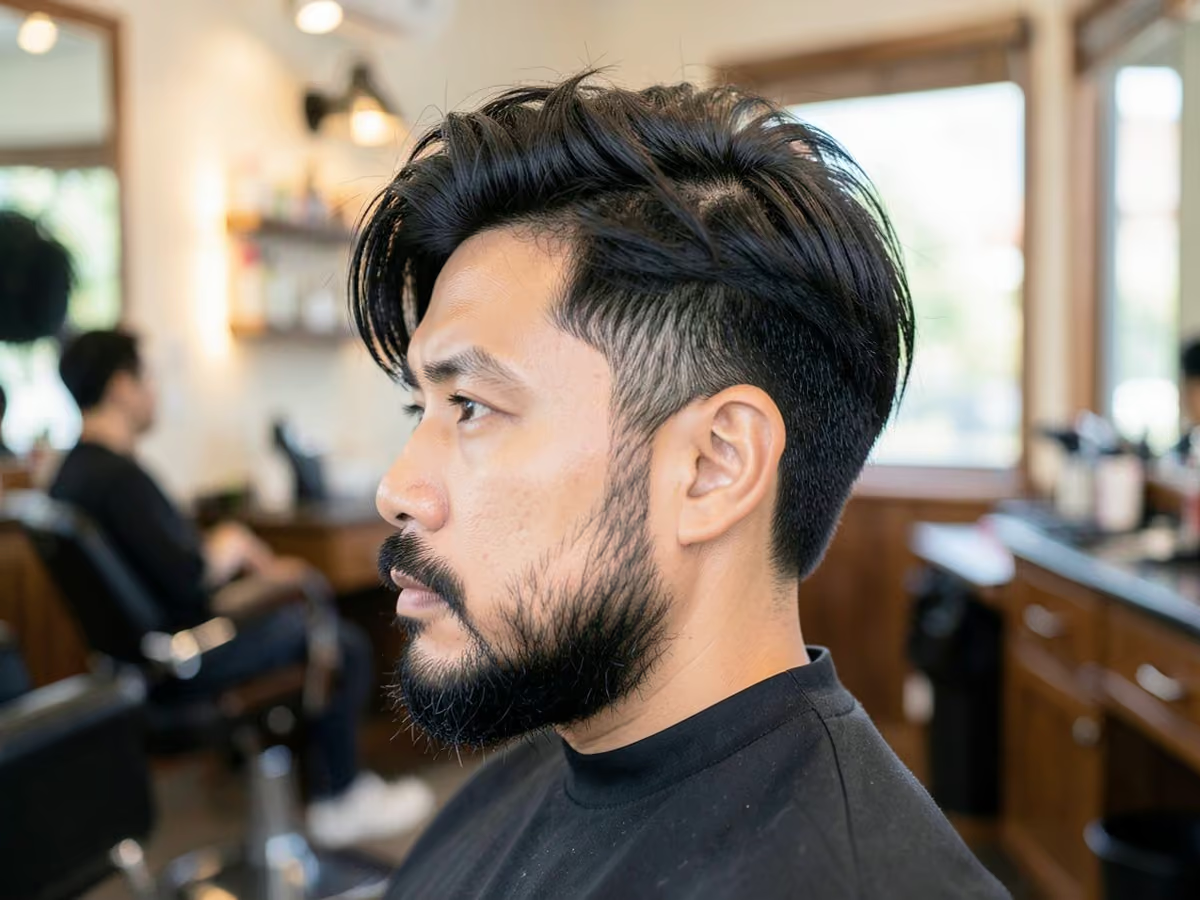
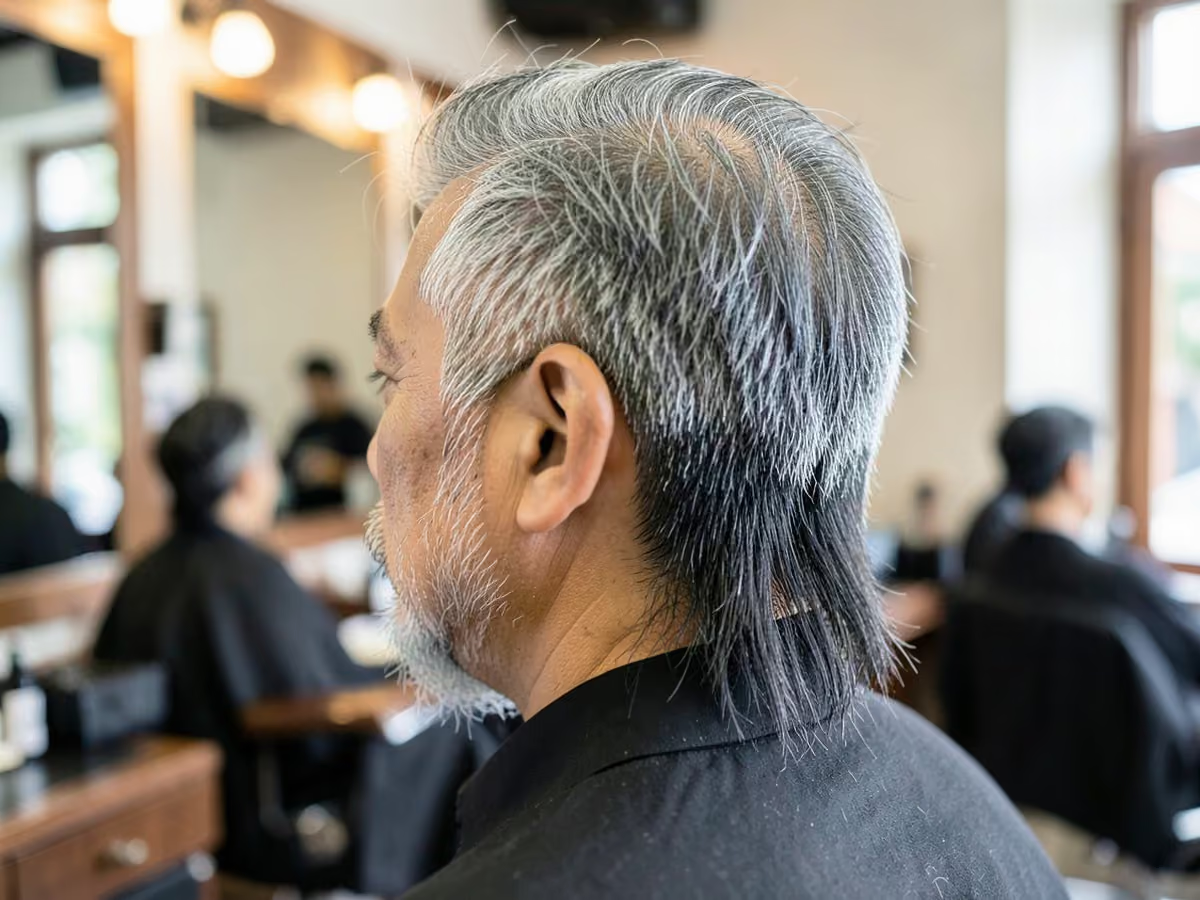
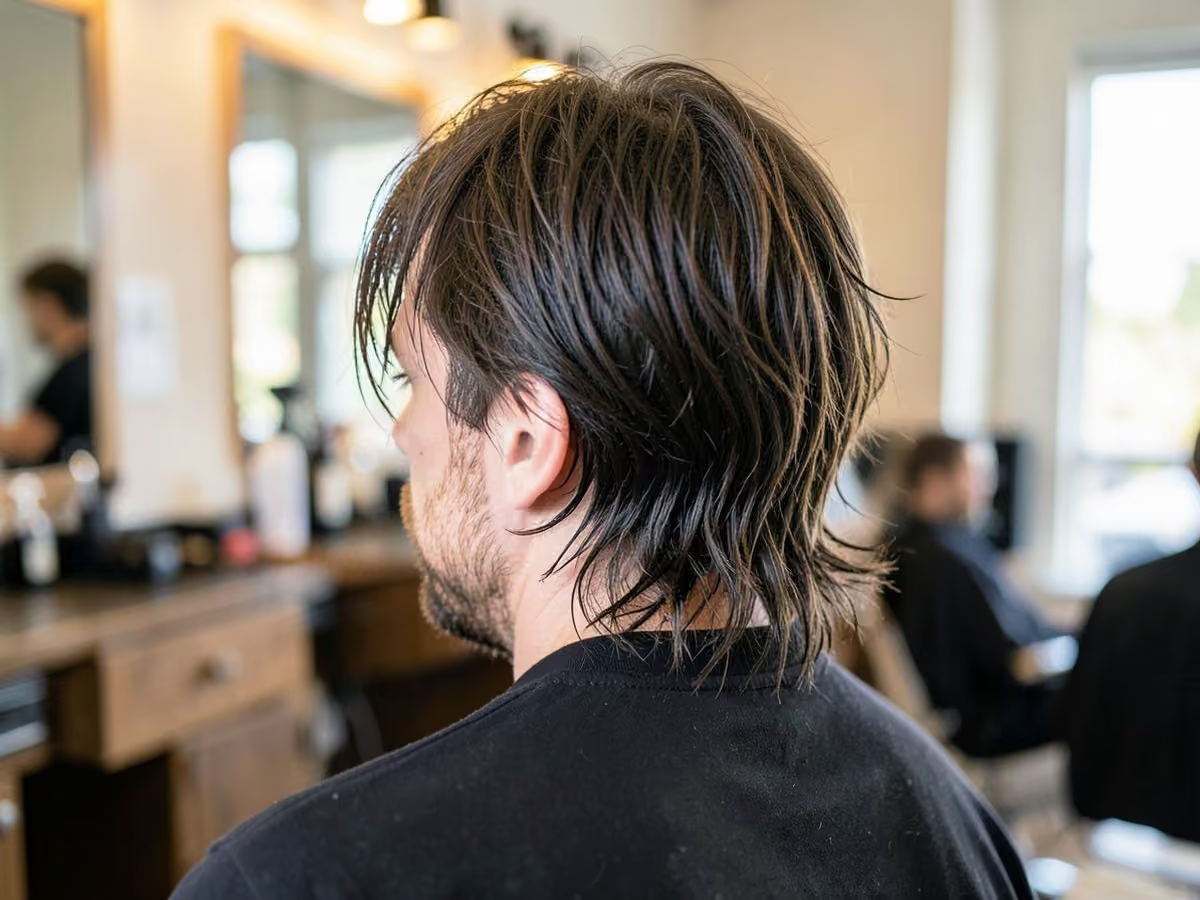
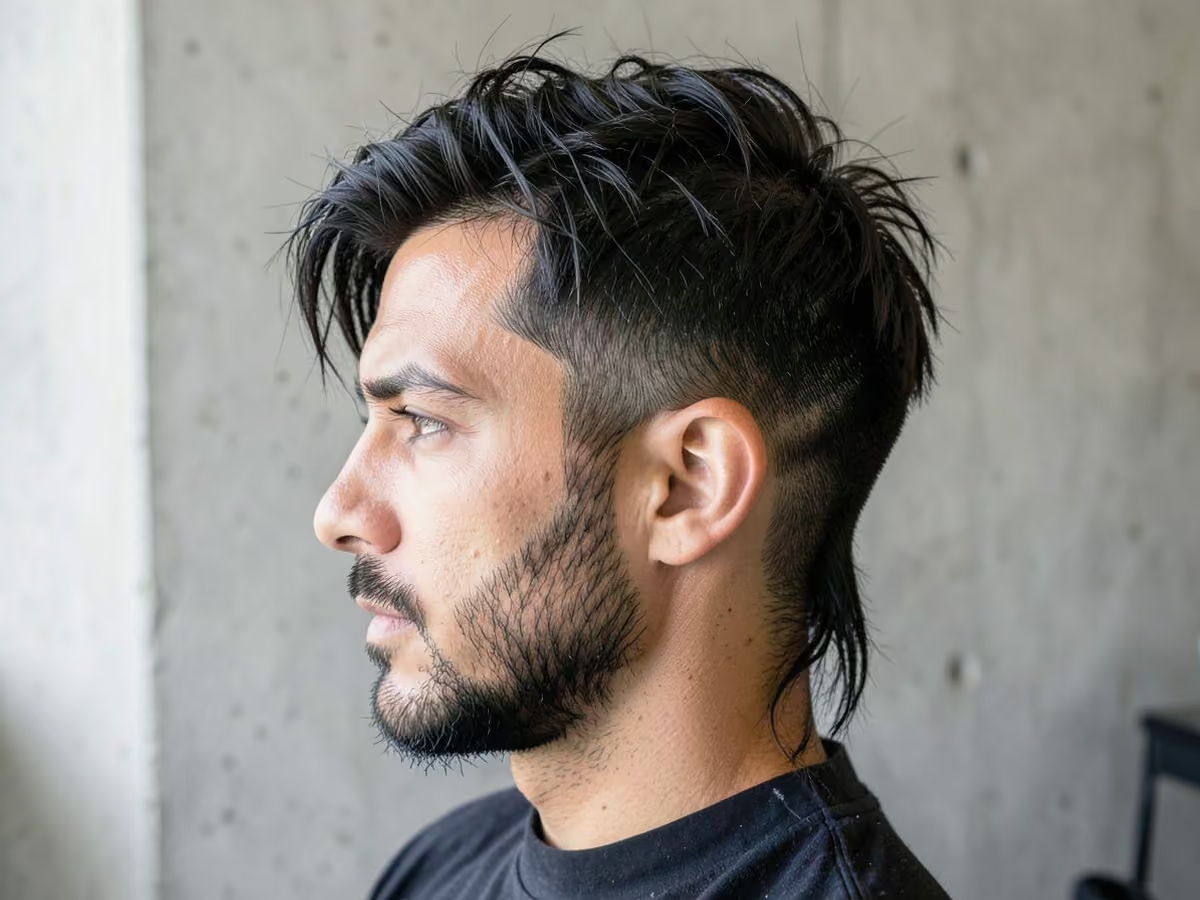
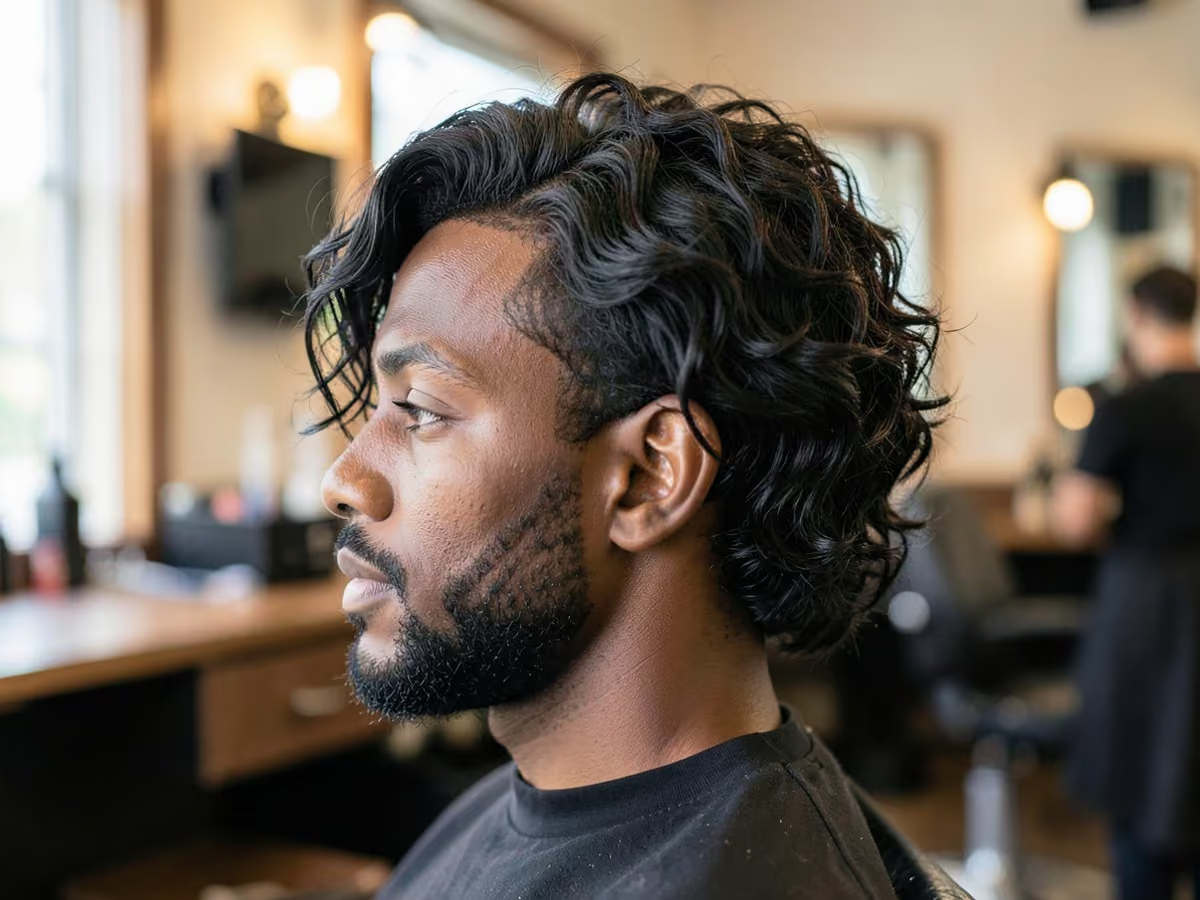
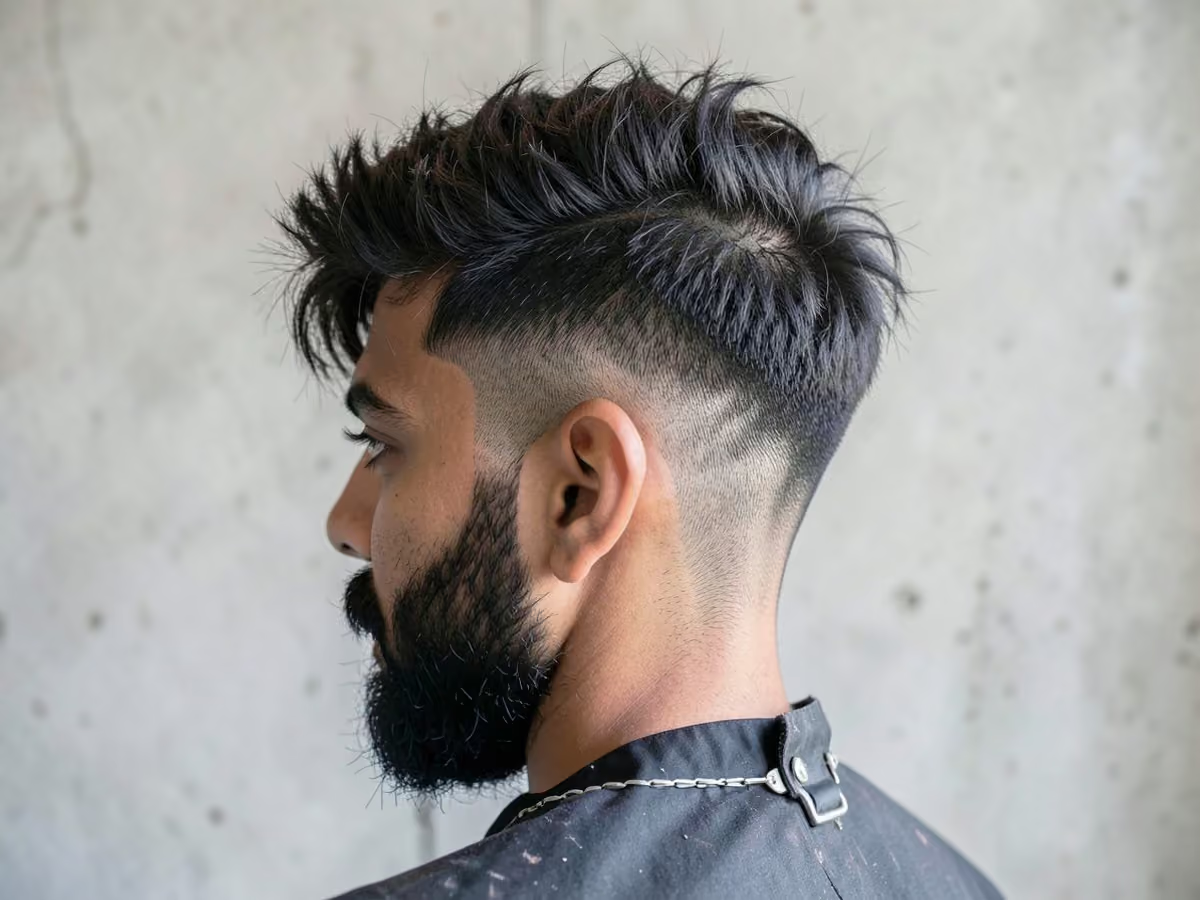
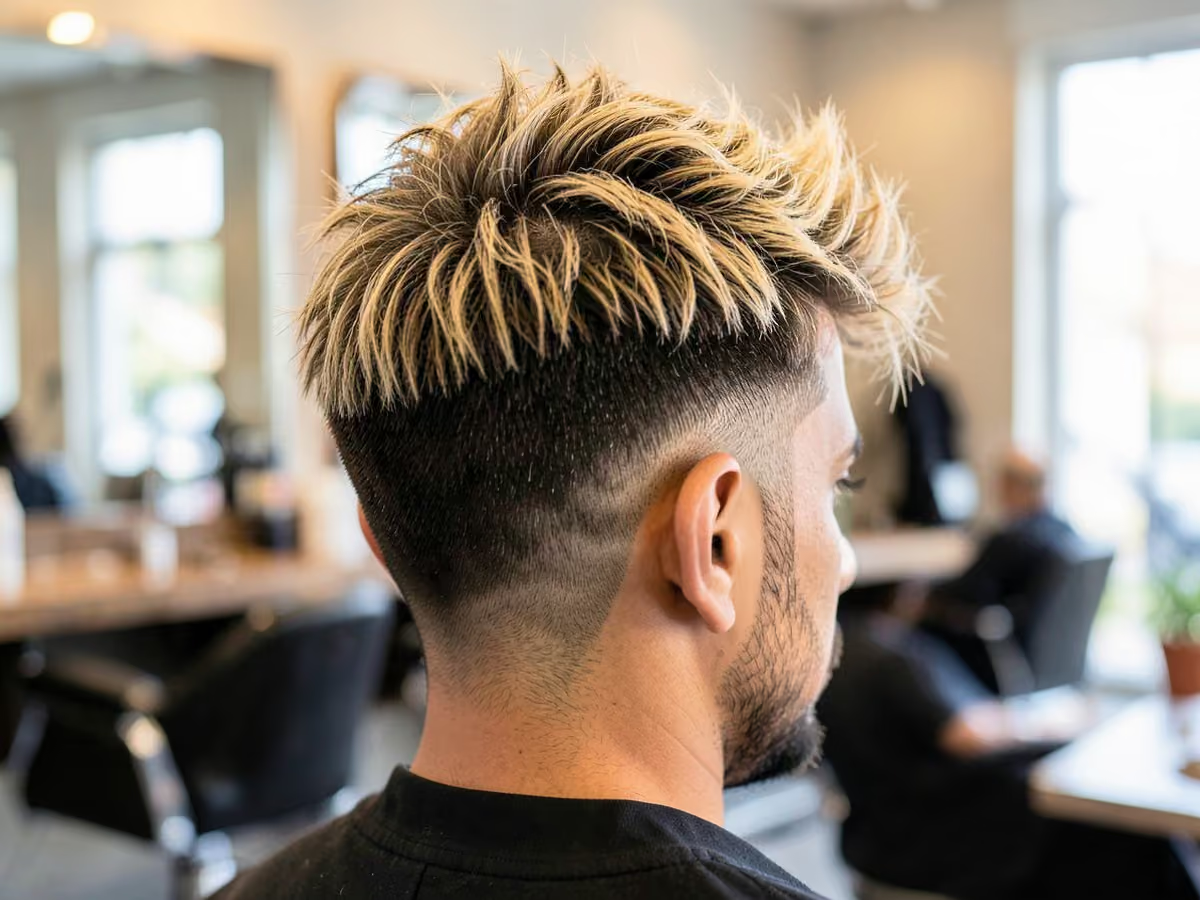
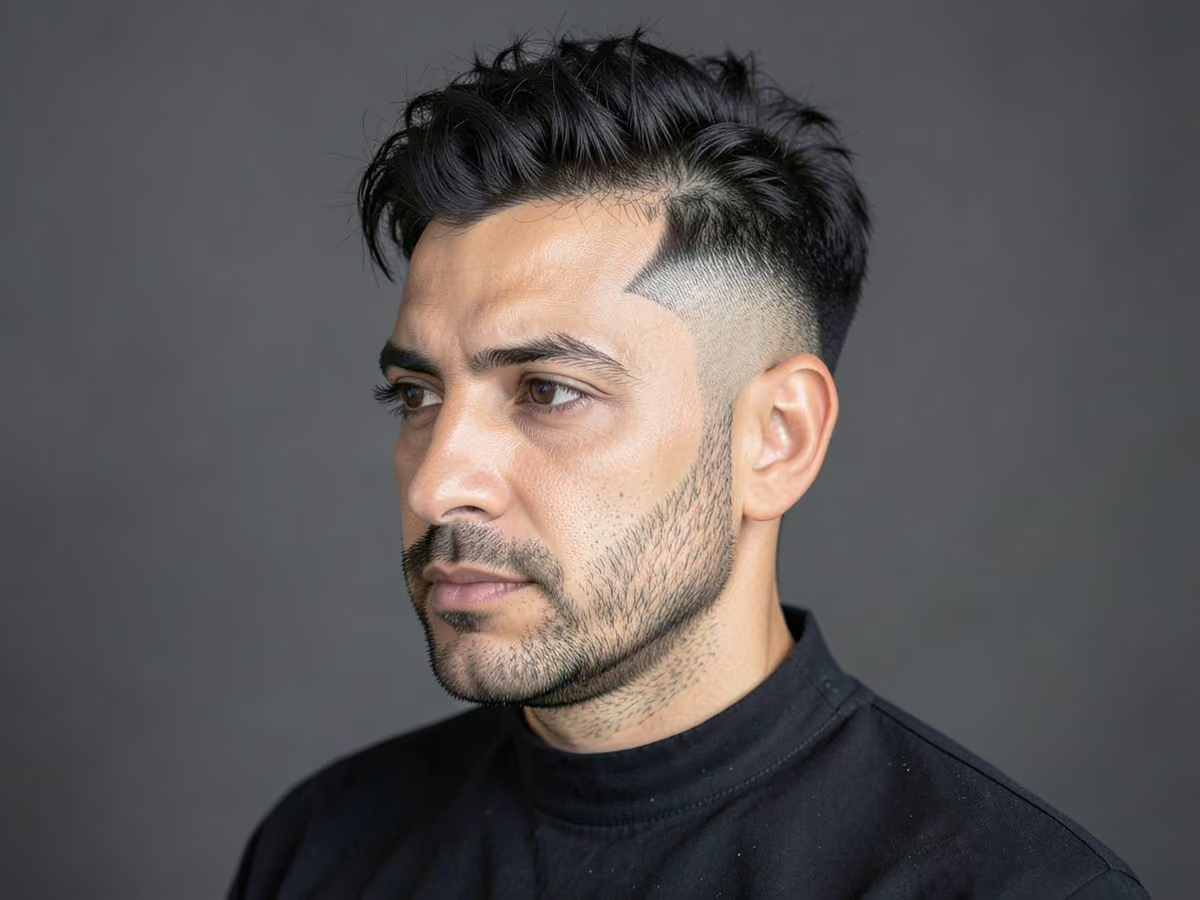
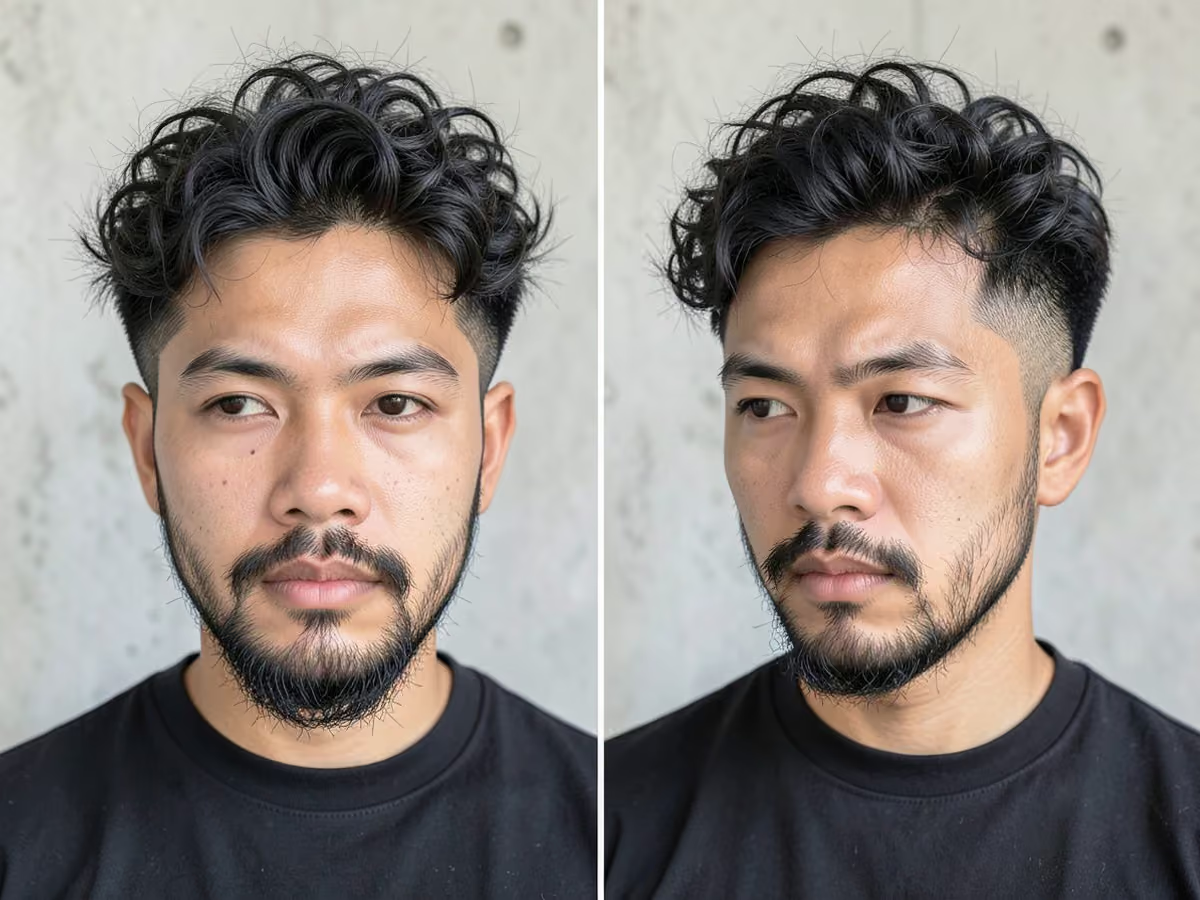
Quick answer: Messy hairstyles for men are cuts with layered, textured ends that are styled loosely with fingers instead of a comb, so the hair falls in mixed directions. They work from two inches up to shoulder length. The look depends on the cut more than the product: ask for point-cut texture, then use sea salt spray or a matte clay.
Messy Hairstyles for Men Styles at a Glance
Every style on this page with its clipper guard, top length and trim interval. Tap a name to jump to that card.
Messy hairstyles for men look relaxed, but the good ones start with a deliberate cut. This gallery covers 35 versions by length, hair type, side cut, color, age and beard, each with the top length, guard numbers, trim schedule, products and a barber script. Messy quiffs have their own gallery, so this page covers everything else.
What Makes a Hairstyle Look Messy?
A messy hairstyle is a finish, not a fixed haircut. The barber cuts layers and texture into the top so the ends sit at different lengths, and you style the hair with your fingers so it falls in several directions at once. The result looks unplanned, yet the shape still follows the head and the outline at the sides and neck stays clean. That contrast between a loose top and neat edges is what separates messy from simply overgrown.
Most messy styles leave two to six inches on top. Short versions read as tousled crops, medium lengths fall across the forehead or to the sides, and long versions add waves and movement around the ears and collar. The messy quiff gallery covers the swept-up variant on its own, with 36 more examples, from short textured versions to long, curly and gray ones.
How Is Messy Hair Different from Spiky or Fluffy Hair?
The three are close cousins, and the same cut can produce all of them depending on product and drying. Spiky hair pinches the ends into defined upright points. Fluffy hair is blow-dried for soft volume and kept mostly product-free so it looks airy. Messy hair sits between them: some separation, some volume and no set direction, usually held with a little matte product so it lasts the day.
How Is Messy Hair Different from Spiky or Fluffy Hair?
Messy styles flatter most face shapes because the texture softens hard angles. Square faces gain the most, since loose ends break up a strong jaw. Round faces should keep some height and avoid heavy fringes that add width. Long faces suit messy fringes that fall forward and cut the length. Hair type matters more than face shape: thick, wavy and loosely curly hair looks messy with almost no work, while very straight, fine hair needs texture spray and a cut with plenty of layers.
The look also suits men who want low upkeep. A textured cut grows out without losing its shape, so many messy styles stretch to five or six weeks between visits. Most offices accept a tidy version with clean sides and a matte finish. For a stricter dress code, keep the top shorter, push the front to one side and use a styling cream rather than clay so the shape stays compact.
Filter the styles
Showing all 35 styles
Fade
Hair
Length
Short Messy Hairstyles
Short messy styles keep two to three inches on top over a fade or taper, so they take a minute to style and stay tidy at the edges. Six cuts, from bedhead to the Ivy League.
Trim:Every 4–5 weeks. Rough texture hides early regrowth.
Best For:Oval, square faces + thick, wavy or straight hair.
About This Style
Just-woken-up texture is the whole idea: about two and a half inches on top, layered so it sticks out a little at the crown and front, over a #3 taper. No blow-drying is needed. You rough up towel-dried hair, add a small amount of paste and leave it. It works best on hair with some natural wave, since straight hair tends to lie flat.
How to Style at Home
Towel-dry roughly so the hair stays tangled and slightly damp.
Work a pea-size amount of matte paste through with your fingertips.
Push a few pieces at the crown and front in opposite directions.
Ask Your Barber
"Number 3 taper on the sides, about two and a half inches on top with choppy layers so it sticks out a bit when I just towel it dry."
Trim:Every 3–4 weeks. Height drops once the top gets heavy.
Best For:Round, oval faces + straight or thick hair.
About This Style
Hair at the front is pushed up and slightly back, but pieces are left loose instead of brushed into a smooth wall. Two to three inches on top, slightly longer at the front, gives the lift. A mid fade with a #1 adds contrast. Blow-dry with fingers, not a brush, and finish with clay so the pieces separate. It reads cleaner than bedhead but still relaxed.
How to Style at Home
Blow-dry the front up and back using only your fingers.
Rub matte clay through the top and lift the roots at the front.
Pull a few pieces forward or sideways so the shape looks loose.
Ask Your Barber
"Mid fade from a #1, two to three inches on top with the front slightly longer, textured so I can push it up loosely without a brush."
Best For:Oval, long faces + straight or wavy hair.
About This Style
Built on an Ivy League cut, this version keeps about two inches at the front and an inch at the crown, then styles the front loosely to one side rather than parting it. Scissor-tapered sides around a #3 keep it office friendly. A light styling cream gives control without stiffness. It suits men who need a neat cut on Monday and a relaxed one on Saturday.
How to Style at Home
Apply styling cream to damp hair, focusing on the front.
Push the front to one side with your fingers, leaving the part undefined.
Ruffle the front lightly so a few pieces fall loose.
Ask Your Barber
"Ivy League cut, scissor taper around a #3 on the sides, two inches at the front to an inch at the crown, textured so it sits loose to one side."
Trim:Every 3–4 weeks. The low fade softens without looking untidy.
Best For:Oval, square faces + wavy, straight or thick hair.
About This Style
Fading from a #0.5 just above the ear to a #3, the sides stay full enough that the messy top does not look disconnected. A layered top of about three inches lets the hair fall forward and sideways. This is the easiest messy cut to wear at work and one of the slower ones to grow out. Sea salt spray and fingers are all most men need.
How to Style at Home
Spray sea salt spray through damp hair from roots to ends.
Rough-dry it forward and to the sides with your fingers.
Twist a few front pieces and leave the rest as it falls.
Ask Your Barber
"Low fade starting at a #0.5 above the ear, blended to a #3, about three inches on top cut in layers so it falls messy."
Trim:Every 2 weeks. The bare sides show regrowth fast.
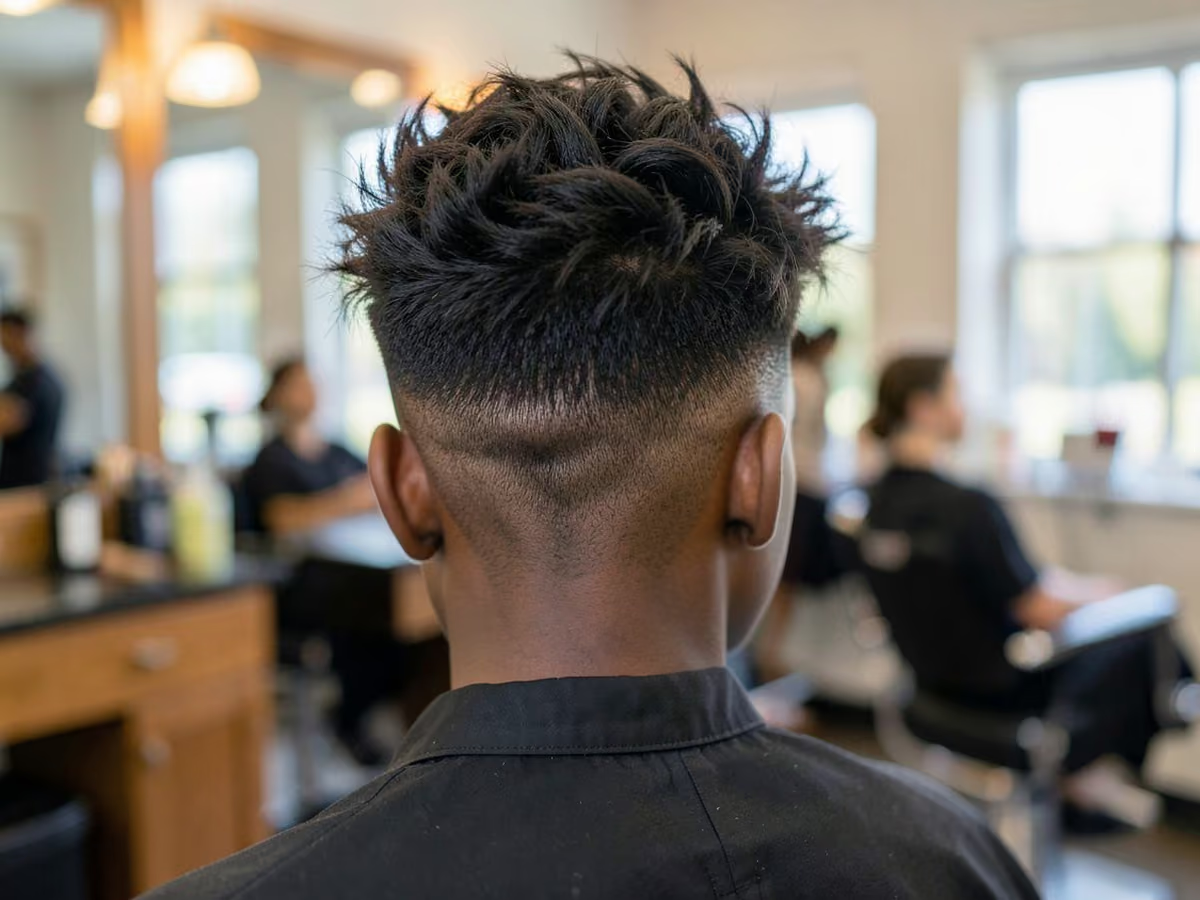
Best For:Round, oval faces + thick, coarse or curly hair.
About This Style
Very short sides up to the parietal ridge make the loose top look fuller and taller. Leave two to three inches of choppy hair above, and the contrast does most of the work. This suits round faces because the narrow sides cut width. The trade-off is upkeep: a high fade needs cleaning up every two weeks, while the top can go longer.
How to Style at Home
Dry the top upward and forward on medium heat.
Work texture clay in with your fingers, lifting at the roots.
Push the ends in random directions so the top looks full.
Ask Your Barber
"High fade from skin at the bottom to a #2 at the parietal ridge, two to three inches of choppy texture on top for a messy finish."
Trim:Every 5–6 weeks. Only the nape and sideburns grow out.
Best For:Oval, long faces + straight, wavy or fine hair.
About This Style
Clean edges at the nape and sideburns are the only short parts, since a taper leaves the rest of the sides at scissor length. Three to four inches on top fall loosely in every direction. It is the most relaxed option in this section and stretches furthest between cuts. Fine straight hair can go limp at this length, so texture powder helps.
How to Style at Home
Shake texture powder into dry roots across the top.
Massage it in and push the hair in different directions.
Tuck or push the sides back so the taper shows at the edges.
Ask Your Barber
"Low taper at the sideburns and nape only, scissor-cut sides, three to four inches on top with layers so it falls messy in every direction."
Recommended Products
Texture Powder
Medium Length Messy Hairstyles
Between three and six inches, hair can fall across the forehead, sweep back or part in the middle. These seven styles use that length for movement; medium length hairstyles covers neater options.
Trim:Every 5–6 weeks. Heavy ends flatten the loose shape.
Best For:Oval, square faces + wavy or thick hair.
About This Style
Four to five inches all over, with long layers cut through the top and sides, give this style its loose, swingy shape. There is no fade; the sides are scissor cut to sit over the top of the ears. Sea salt spray and air-drying bring out movement, and a little cream tames frizz. It is the familiar messy look from surf and music culture.
How to Style at Home
Apply sea salt spray to damp hair and scrunch with your hands.
Let it air-dry or use a diffuser on low heat.
Smooth a small amount of styling cream over the ends.
Ask Your Barber
"Four to five inches all over with long layers, scissor-cut sides over the tops of the ears, no clippers, texture through the ends."
Trim:Every 4–6 weeks. Bangs need trimming before they cover the eyes.
Best For:Oval, long, heart faces + straight or wavy hair.
About This Style
Parted roughly in the middle, the front falls in two loose sections that are flicked out rather than combed flat. The bangs reach about the cheekbones, around four to five inches long, with a low taper or scissor-cut sides. Messiness comes from texture in the ends and a soft, uneven part. The curtains haircut page has neater versions.
How to Style at Home
Blow-dry the front back and away from the middle with your fingers.
Rub a little matte cream through the ends of the bangs.
Push the part slightly off center so it looks unplanned.
Ask Your Barber
"Curtain bangs to the cheekbones, about four to five inches at the front, textured ends, scissor-cut sides with a low taper at the nape."
Trim:Every 4–5 weeks. The front needs length to keep its sweep.
Best For:Round, square faces + straight or wavy hair.
About This Style
Everything on top is swept to one side, but loosely, so pieces fall over the forehead and lift at the crown. Around four inches at the front and three at the back gives the right amount of drop. A #2 mid taper keeps the sides short. Round faces benefit, since the diagonal line breaks up width. Blow-dry it across, then finish by hand.
How to Style at Home
Blow-dry the top across to one side, lifting at the roots.
Apply a little matte clay and push the front over loosely.
Let a few pieces fall onto the forehead instead of tucking them.
Ask Your Barber
"Mid taper with a #2, about four inches at the front and three at the back, textured so it sweeps loosely to one side."
Trim:Every 4–6 weeks. Longer tops stay back better with weight.
Best For:Oval, square faces + thick or wavy hair.
About This Style
Instead of a slick, wet finish, the hair is pushed back with the fingers and left with visible gaps and texture. Four to five inches on top is needed so it reaches the crown, with a #3 taper or undercut below. A matte cream keeps it back without shine. Compare it with the smoother versions in the slick back gallery.
How to Style at Home
Blow-dry the hair straight back using your fingers as a comb.
Work matte cream through from the roots to the ends.
Rake your fingers back once more and leave the gaps.
Ask Your Barber
"Number 3 taper on the sides, four to five inches on top cut so it can push straight back with my fingers and keep some texture."
Trim:Every 5–6 weeks. Layers need refreshing to keep their lift.
Best For:Oval, round faces + thick straight or wavy hair.
About This Style
Short layers through the crown and longer ones at the front and sides create lift and movement on hair that would otherwise lie heavy. The longest pieces reach about five inches, the shortest about two. It is close to a shag haircut but with less contrast between layers. Texture powder at the crown gives the height a round face needs.
How to Style at Home
Dry the hair with your head tipped forward to lift the layers.
Shake texture powder into the crown roots and massage it in.
Flip the layers in different directions with your fingers.
Ask Your Barber
"Layered cut, short layers at the crown around two inches, longer layers to about five inches at the front and sides, textured ends."
Trim:Every 6–8 weeks. Loose lengths grow without losing the look.
Best For:Oval, square faces + wavy or sun-lightened hair.
About This Style
Sun, salt water and air-drying shaped the original version, and sea salt spray recreates it. Hair runs five to six inches on top and covers the ears, cut with long layers and no clippers. Waves give it body, and the ends are left slightly uneven. It needs little styling, but dry ends should get a few drops of argan oil after a day at the beach.
How to Style at Home
Mist sea salt spray through damp hair and twist a few sections.
Let it air-dry fully in the sun or indoors without touching it.
Smooth a few drops of argan oil onto dry ends.
Ask Your Barber
"Long layers with five to six inches on top, scissor cut over the ears, uneven ends, no clippers anywhere, and enough length to air-dry wavy."
Trim:Every 4–6 weeks. The sides need tidying to keep the shape.
Best For:Oval, heart faces + wavy, curly or thick hair.
About This Style
Mullet basics stay the same, short sides and a longer back, but here the top and back are left choppy and loose instead of neat. The back reaches the collar, the top sits around three inches, and a low taper or fade on the sides keeps the outline clear. Curly and wavy hair suits it best. The modern mullet gallery shows tidier cuts.
How to Style at Home
Scrunch curl cream or sea salt spray into damp hair.
Rough-dry the back and top with your fingers.
Twist a few pieces at the back so they flick out.
Ask Your Barber
"Mullet with a low taper on the sides, about three inches on top, choppy length at the back down to the collar, loose and textured."
Recommended Products
Sea Salt Spray
Curl Cream
Long Messy Hairstyles
At shoulder length, hair gets messy on its own; the cut decides whether it looks deliberate. These five styles cover loose, tied-up and grunge finishes, with notes on keeping long hair healthy.
Trim:Every 8–10 weeks. Split ends make long hair look neglected.
Best For:Oval, long faces + wavy, thick or straight hair.
About This Style
Shoulder-length hair with long face-framing layers, left to dry naturally, gives the most basic long messy look. The ends should be trimmed every couple of months so the hair looks lived in rather than damaged. A center or side part, loosely set, keeps it off the face. See long hairstyles for neater long cuts and growing-out advice.
How to Style at Home
Apply leave-in to damp hair and comb it through with your fingers.
Let it air-dry with a loose part in the middle or side.
Scrunch the ends once dry so the waves break apart.
Ask Your Barber
"Keep the length at my shoulders, long face-framing layers, take a half inch off the ends, texture so it falls loose."
Trim:Every 8–10 weeks. Front length matters more than the ends.
Best For:Oval, square faces + long straight or wavy hair.
About This Style
Top-section hair is pulled back into a small, loose knot at the crown while the rest hangs down, so the face stays clear and the length still shows. It needs at least five inches at the front to reach the bun. Leave a few strands out at the front for the messy finish. It works on wavy hair especially, and a man bun is the next step.
How to Style at Home
Gather the top section from the temples back with your fingers.
Twist it into a loose knot at the crown and secure with a band.
Pull a few strands loose around the face and at the knot.
Ask Your Barber
"Long layers with at least five inches at the front so it reaches a half up bun, ends trimmed, no short layers on top."
Trim:Every 8–12 weeks. Uneven ends are part of the look.
Best For:Oval, long faces + straight, wavy or fine hair.
About This Style
Chin to shoulder length, with a deep side or middle part and uneven, razor-cut ends, this style takes its cue from 1990s grunge bands. Second-day hair works better than freshly washed, since natural oils add grit. A little texture powder stands in for that. It is low effort, but it looks best on hair that is healthy at the ends.
How to Style at Home
Skip washing for a day so the hair has some grip.
Dust texture powder at the roots and rough it up.
Push the part to one side and let the front fall over an eye.
Ask Your Barber
"Chin to shoulder length, razor-cut uneven ends, deep side part on my left, texture through the lengths so it looks undone and loose."
Trim:Every 6–8 weeks. Layers keep the waves from turning bulky.
Best For:Oval, square faces + wavy or loosely curly hair.
About This Style
Waves of chin length or longer, shaped with layers so they do not form a triangle, are scrunched rather than brushed. A curl cream or leave-in keeps frizz down, and diffusing on low heat adds lift at the roots. Brushing dry wavy hair turns it into frizz, so only use fingers. The wavy hair styles gallery covers shorter options.
How to Style at Home
Apply curl cream to soaking wet hair and scrunch upward.
Diffuse on low heat until the roots are dry.
Break the waves apart with your fingers once fully dry.
Ask Your Barber
"Layers through chin-length waves so they do not get triangular, long enough to tuck behind my ears, light texture on the ends."
Trim:Every 8–12 weeks. Only split ends need regular attention.
Best For:Oval, long faces + long straight, wavy or curly hair.
About This Style
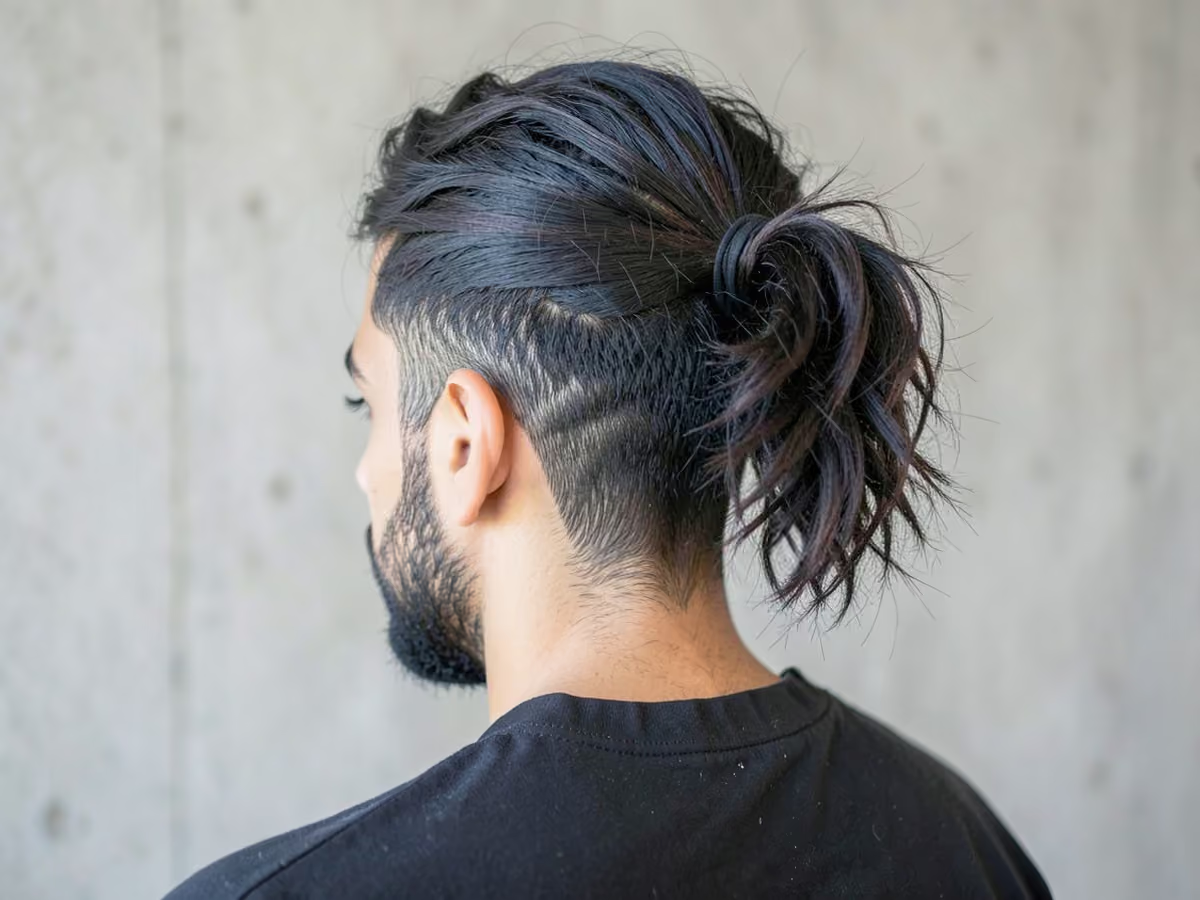
Gathered at the nape with a loose band, all the hair is pulled back with the fingers, leaving bumps and loose strands rather than a tight finish. The hair needs to be at least shoulder length. It is useful for sport, work and hot weather. Avoid pulling it tight every day in the same spot, as constant tension can stress the hairline over time.
How to Style at Home
Rake the hair back with your fingers instead of a brush.
Tie it loosely at the nape with a soft band.
Pull a few strands loose at the temples and crown.
Ask Your Barber
"Keep it at least shoulder length, long layers, trim the ends, leave the front long enough to reach a low ponytail."
Recommended Products
Leave-In
Argan Oil
Messy Hair by Hair Type
Curly, wavy, straight, thick, thin and coily hair each need a different cut and product to look messy on purpose. Use these six cards to match the style to your texture.
Trim:Every 6–8 weeks. Curls hide growth and uneven ends.
Best For:Oval, square faces + curly or loosely coiled hair.
About This Style
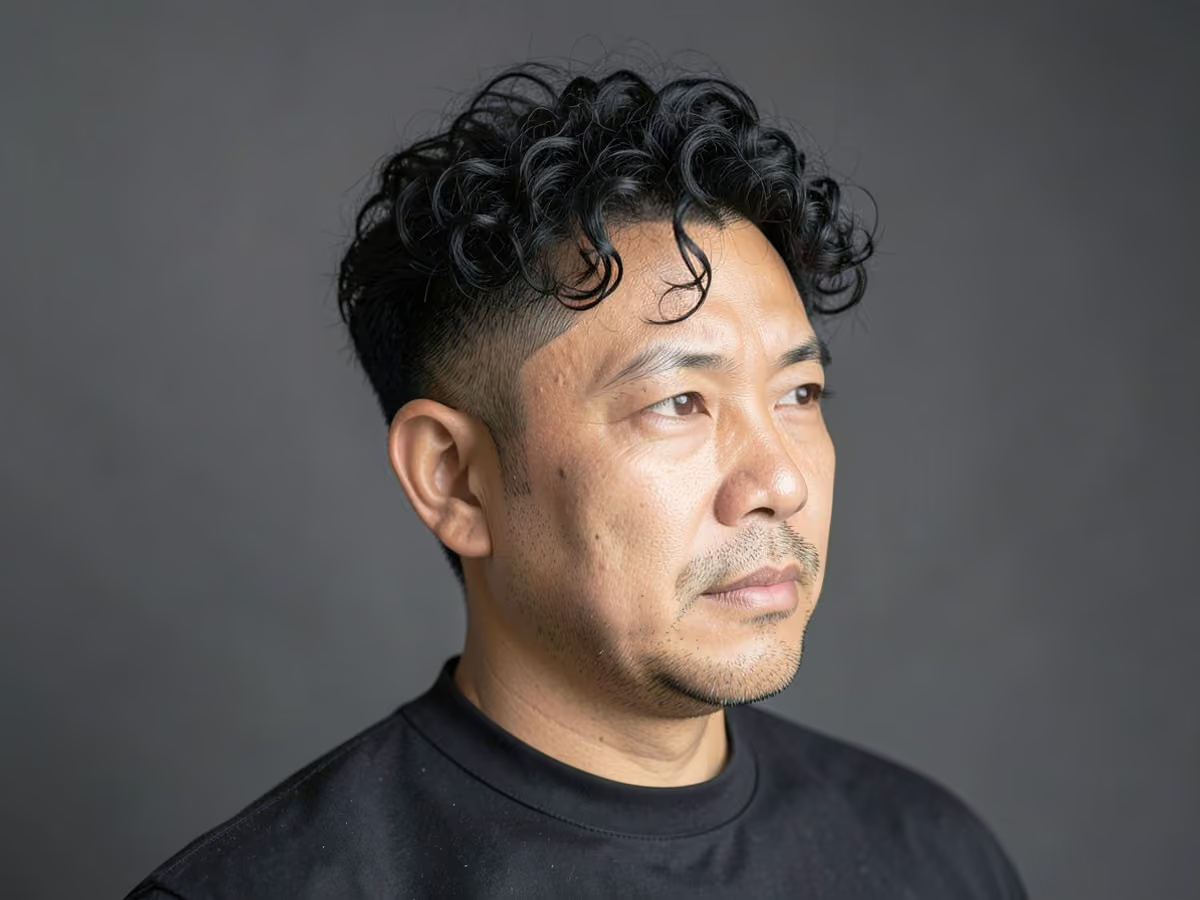
Curls look messy naturally, so the cut does the shaping: about three to four inches on top, dry cut curl by curl, with a low taper on the sides. Moisture matters more than hold, so curl cream goes in first. Scrunch, do not brush. Diffusing on low heat keeps volume without frizz. The curly hairstyles gallery covers defined and faded curls.
How to Style at Home
Apply curl cream to soaking wet hair and scrunch it upward.
Diffuse on low heat or let it air-dry without touching.
Shake the roots loose with your fingers once dry.
Ask Your Barber
"Low taper on the sides, three to four inches of curls on top, dry cut curl by curl so it sits messy but even."
Trim:Every 5–6 weeks. Waves lose shape once the top gets heavy.
Best For:Oval, round faces + wavy or slightly frizzy hair.
About This Style
Loose S-shaped waves only need light texture to look tousled. Keep three to four inches on top with layers and a #2 taper or scissor-cut sides. Sea salt spray strengthens the wave pattern without crunch. Round faces do well with the volume pushed up rather than out. Avoid heavy creams that pull the waves straight. On humid days, a dab of matte clay keeps the ends from puffing.
How to Style at Home
Spray sea salt spray through damp waves and twist sections.
Dry on low heat with a diffuser, pushing hair upward.
Scrunch a small amount of matte clay into the ends.
Ask Your Barber
"Number 2 taper on the sides, three to four inches on top layered for my waves, no heavy thinning so they keep their shape."
Trim:Every 3–4 weeks. Straight, thick hair outgrows its shape fast.
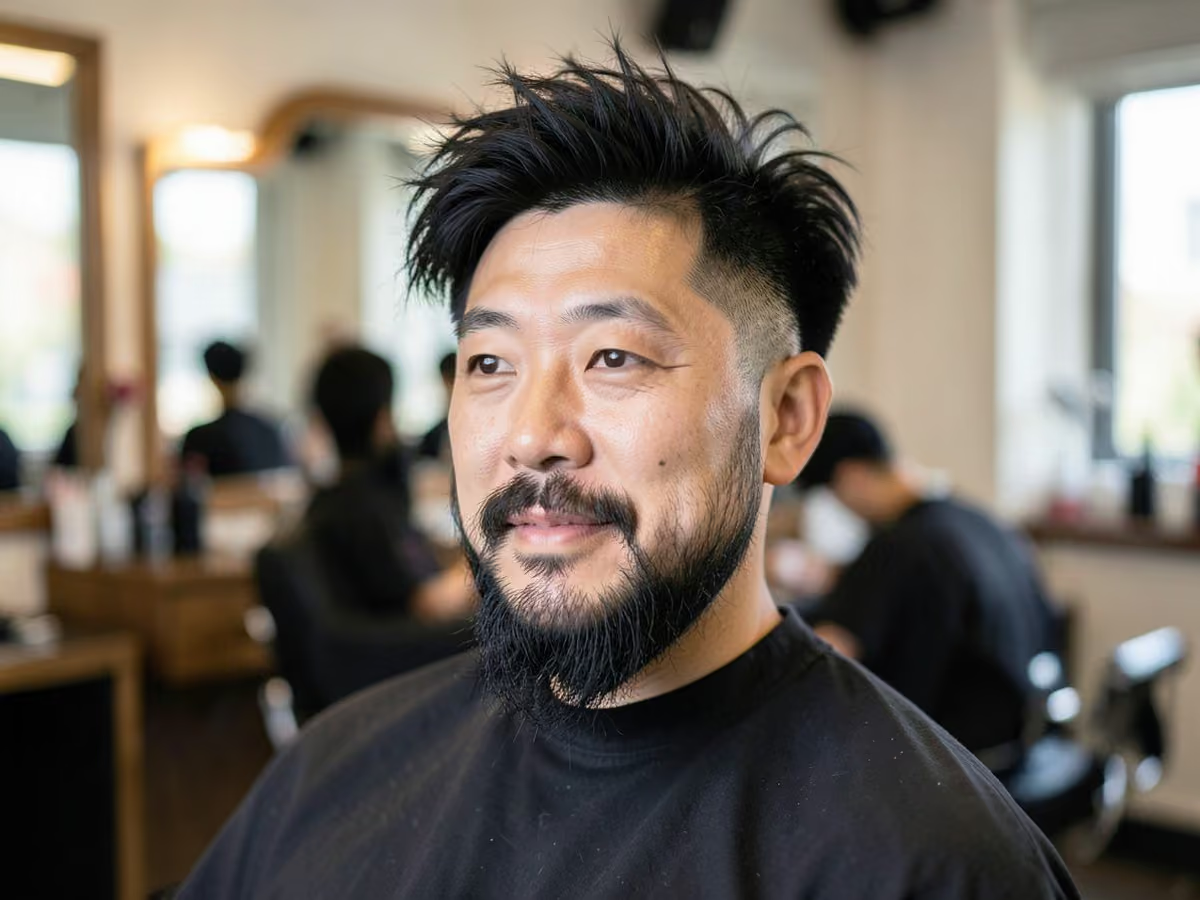
Best For:Oval, round faces + thick straight East Asian hair.
About This Style
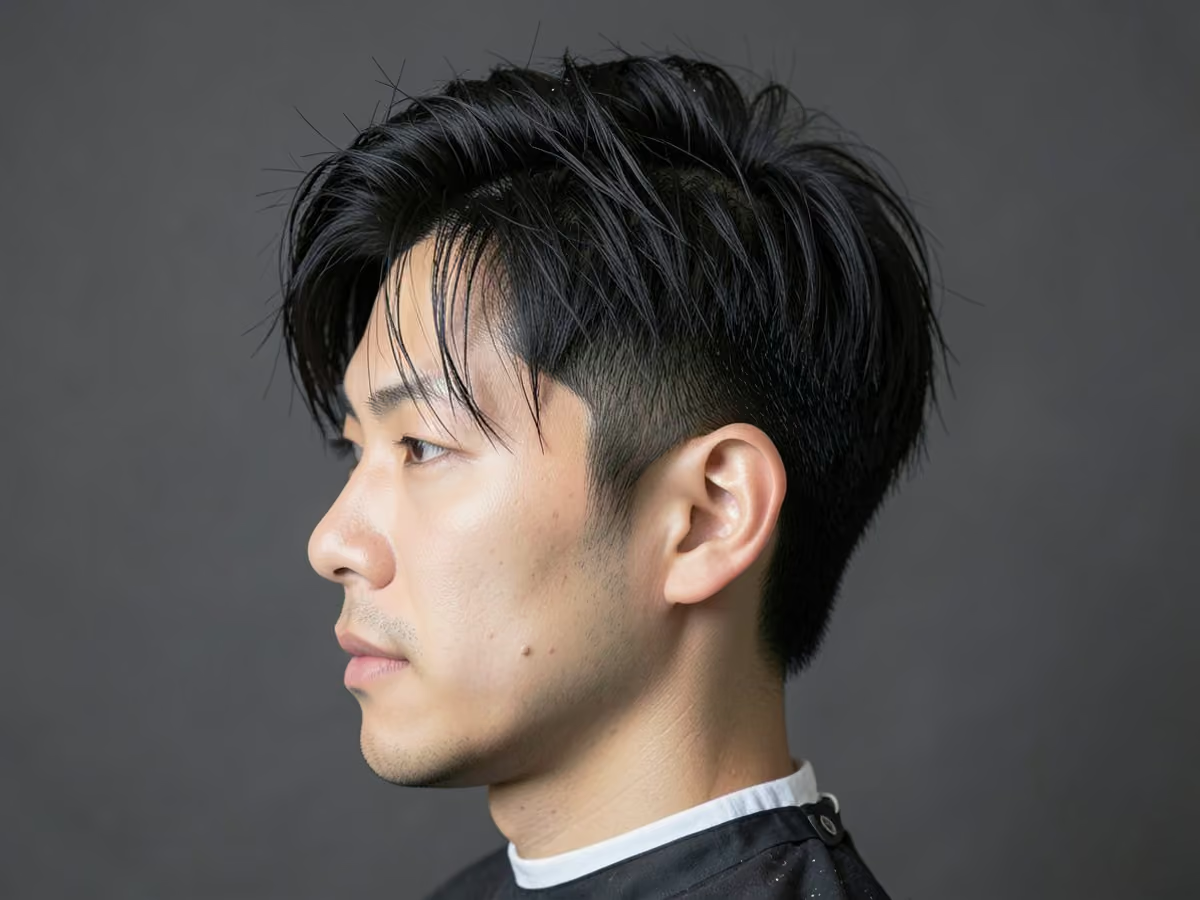
Thick, straight and dark hair tends to fall flat and stick out at the sides, so barbers remove bulk with deep point cutting and often use a two block under-section. About three inches on top is blow-dried with a round brush for lift, then broken up with matte paste. Korean salons often add a down perm on the sides to stop them flaring.
How to Style at Home
Blow-dry the top up and forward with a round brush.
Rub matte paste through and pull the front into loose pieces.
Press the sides flat with your palms so they do not flare.
Ask Your Barber
"Two block or #2 sides, three inches on top with deep point cutting to remove bulk, textured so it falls messy and forward."
Trim:Every 4–5 weeks. Bulk builds up and hides the texture.
Best For:Square, oval faces + thick or coarse hair.
About This Style
Dense hair already has volume, so the goal is to remove weight and create gaps. Barbers use point cutting or a razor to take out bulk from inside, leaving a three-inch top over a mid fade. A small amount of clay is enough; too much makes it stiff. The thick hair haircuts guide has more ways to manage density.
How to Style at Home
Air-dry or rough-dry without brushing to keep separation.
Rub a pea-size amount of texture clay into the ends only.
Pull out small gaps between sections with your fingertips.
Ask Your Barber
"Mid fade from a #1, three inches on top with lots of weight taken out from inside so it looks messy instead of bulky."
Trim:Every 3–4 weeks. Shorter lengths keep fine hair from going limp.
Best For:Oval, round faces + fine or thinning hair.
About This Style
Fine hair can wear a messy style well if the top stays short, two to two and a half inches, and gets lift from thickening spray and a blow-dry. Messy styles help thinning hair, since uneven texture hides scalp better than a neat part. Use texture powder rather than clay, and skip heavy conditioners on the top. A #2 taper keeps the sides in proportion.
How to Style at Home
Spray thickening spray at the damp roots before you dry.
Blow-dry upward on low heat, moving the hair in different directions.
Dust texture powder at the roots and ruffle with your fingers.
Ask Your Barber
"Number 2 taper on the sides, two to two and a half inches on top, light texture with scissors, no thinning shears."
Trim:Every 2–3 weeks. Coils stay, but the edges need cleaning.
Best For:Round, oval faces + coily or 4C hair.
About This Style
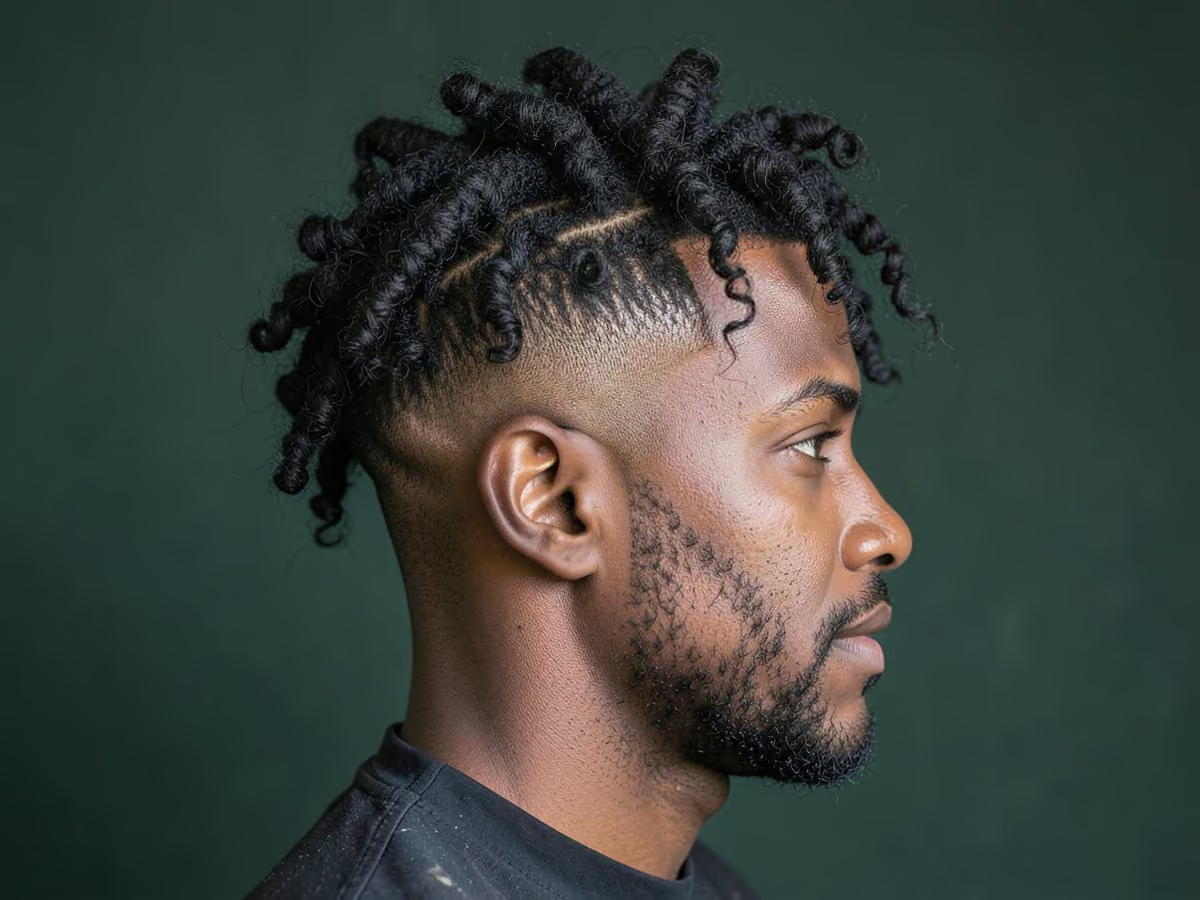
Coily hair turns messy with a curl sponge rubbed in uneven circles, which forms coils of different sizes that point in several directions. A low taper or burst fade suits it, with the top left at two or three inches. Leave-in keeps the coils soft and defined. Skipping the line-up, or keeping it soft, suits the relaxed look better than a sharp edge.
How to Style at Home
Mist the top with water and apply leave-in.
Rub a curl sponge in uneven circles to form mixed-size coils.
Separate a few coils with your fingers for a messier finish.
Ask Your Barber
"Low taper or burst fade, two to three inches on top left even so I can sponge it into loose, uneven twists. Soft edge, not a sharp line-up."
Recommended Products
Curl Sponge
Leave-In
Messy Hair with Undercuts, Color and Designs
Sharper sides and color make a messy top look planned. These five cards cover shaved sides, a disconnected undercut, highlights, a shaved design and a line-up, with how often each needs a visit.
Trim:Every 1–2 weeks. Bare sides show regrowth quickly.
Best For:Round, square faces + thick straight or wavy hair.
About This Style
Clippers with no guard take the sides to the skin all the way up to the parietal ridge, and the top stays three inches long and roughed up. The contrast between bare sides and loose texture is the point. Thick hair keeps its volume best. Use sunscreen on the shaved sides in summer, and moisturize them in winter so the skin does not flake.
How to Style at Home
Rough-dry the top in different directions on medium heat.
Work texture clay through and leave the ends uneven.
Rub a little scalp oil onto the shaved sides.
Ask Your Barber
"Sides and back shaved to skin up to the parietal ridge, three inches on top cut with choppy texture for a messy finish."
Trim:Every 2–3 weeks. The undercut step needs regular edging.
Best For:Oval, square faces + thick straight or wavy hair.
About This Style
Sides clipped to one length, usually a #1 or #2, meet a top of four to five inches with no blend in between. That long top falls over the step in loose, uneven pieces, which hides the line on some days and shows it on others. It is a good option for men who want length but cooler sides. The undercut gallery covers neater styling.
How to Style at Home
Blow-dry the top in the direction you want it to fall.
Rub matte paste through and flip some pieces over the step.
Leave the front loose so it falls across the forehead.
Ask Your Barber
"Disconnected undercut, #2 on the sides with no blend, four to five inches on top cut in loose layers so it falls messy over the line."
Trim:Every 4–6 weeks. Lightened ends need moisture between visits.
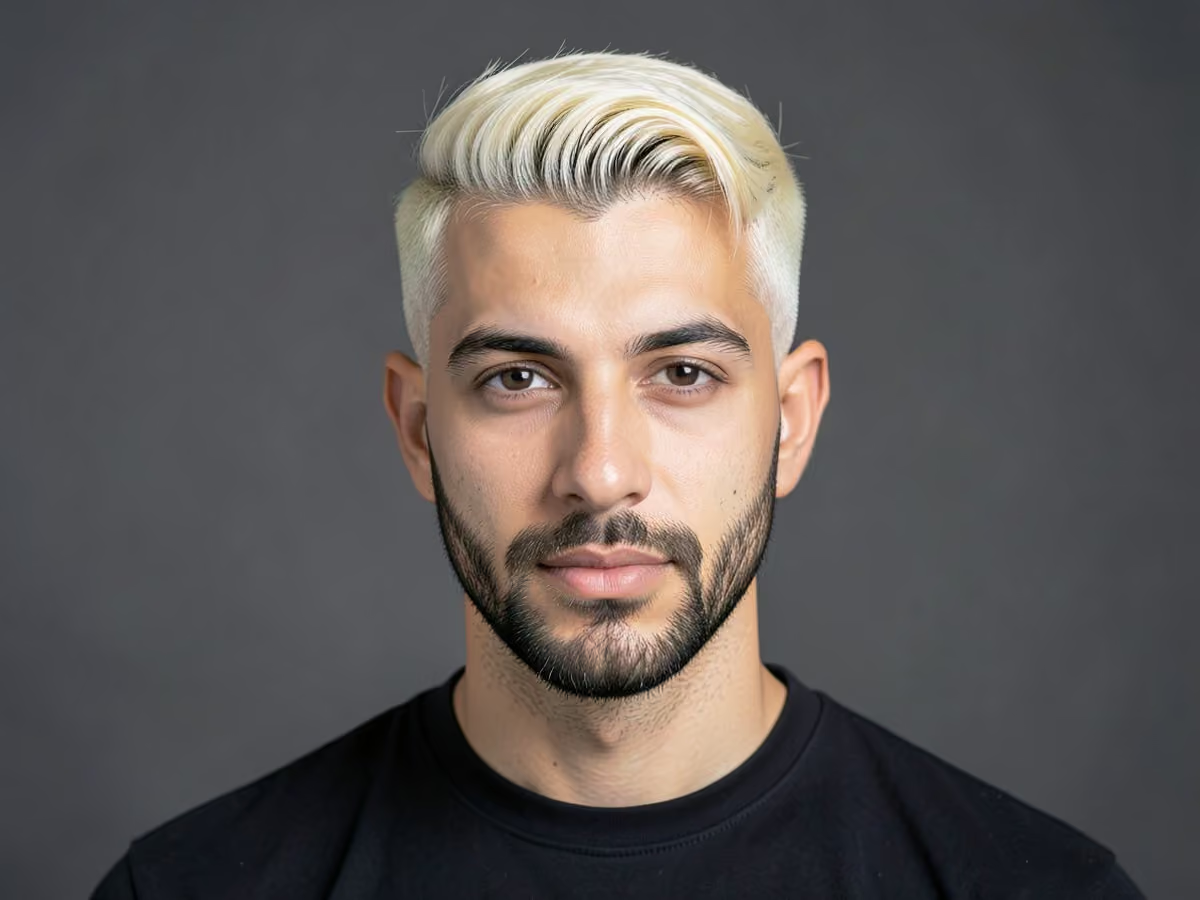
Best For:Oval, round faces + straight or wavy brown hair.
About This Style
Painted highlights, usually honey or ash blonde on brown hair, catch light on the tips of a messy top and make the texture easier to see. A low fade under a three-inch top gives the color room to show. Lightened hair is drier, so leave-in conditioner matters. Placing highlights at the ends rather than the roots makes regrowth far less obvious.
How to Style at Home
Apply leave-in to damp hair to protect the lightened ends.
Rough-dry the hair so the light pieces separate.
Twist a few highlighted pieces with a little matte clay.
Ask Your Barber
"Low fade, about three inches on top with choppy texture. Highlights painted on the ends only so the regrowth stays soft."
Trim:Every 2 weeks. Designs blur within ten to fourteen days.
Best For:Oval, round faces + coily, curly or straight hair.
About This Style
One or two lines shaved into a low or mid fade, often a curved part or a simple zigzag, add a sharp detail beside a loose top. The top stays around two to three inches and messy. Designs blur fast, so plan on a touch-up every two weeks. Ask to see examples first; the hair designs page shows common patterns.
How to Style at Home
Style the top with sea salt spray and your fingers.
Keep product away from the design so the lines stay clean.
Brush the faded sides lightly to keep the design visible.
Ask Your Barber
"Mid fade with a simple curved line design above the ear, two to three inches on top cut for a messy, textured finish."
Trim:Every 2 weeks. The hairline edges soften after ten days.
Best For:Oval, square faces + coily, curly or coarse hair.
About This Style
Crisp edges at the forehead and temples frame a messy top so the whole cut looks deliberate. It suits curly and coily hair worn two to three inches on top over a low or mid fade. Keep the line at your natural hairline; pushing it back to sharpen corners makes the hairline look higher as it grows. A soft edge brush keeps baby hairs neat.
How to Style at Home
Apply curl cream to the top and scrunch it loose.
Shape the top with your fingers in a few directions.
Use an edge brush along the hairline without touching the top.
Ask Your Barber
"Low fade with a line-up at my natural hairline, not pushed back, two to three inches of curly texture on top left messy."
Recommended Products
Curl Cream
Edge Brush
Messy Hair for Teens, Older Men and Beards
Age, workplace and facial hair all change how loose a messy style can go. These six cards cover three beard pairings, a teen cut, a tidy office version and a style for a receding hairline.
Trim:Every 3–4 weeks. Beard shape and sides need matching trims.
Best For:Round, oval faces + thick, wavy or straight hair.
About This Style
A full beard of half an inch or more adds weight at the jaw, so the messy top can carry more volume without making the head look top-heavy. Sides are faded from a #2 at the temple into the beard at the sideburn. Three to four inches on top works well. Shape the beard neckline and cheek line so the face still looks groomed.
How to Style at Home
Rough-dry the top with sea salt spray for volume.
Comb beard oil through the beard and shape it with a beard brush.
Push the top in loose sections with a little matte clay.
Ask Your Barber
"Taper from a #2 at the temple blended into my beard, three to four inches on top for a messy style. Tidy the beard neckline."
Trim:Every 4–5 weeks. Stubble is kept even at home.
Best For:Square, oval faces + wavy or straight hair.
About This Style
Stubble of three to five days matches the relaxed feel of a messy top and adds shadow along the jaw. Keep the stubble even with a trimmer guard, and clean the neckline under the jaw. A low taper and two to three inches on top suit the pairing. It looks relaxed without seeming unkempt, provided the edges stay tidy.
How to Style at Home
Trim the stubble to an even length every two or three days.
Rough-dry the top and add a small amount of matte paste.
Ruffle the front so it falls loosely over the forehead.
Ask Your Barber
"Low taper, two to three inches on top textured for a messy finish. Keep the sideburns long enough to blend into my stubble."
Trim:Every 4–5 weeks. Silver hair shows frizz more than dark hair.
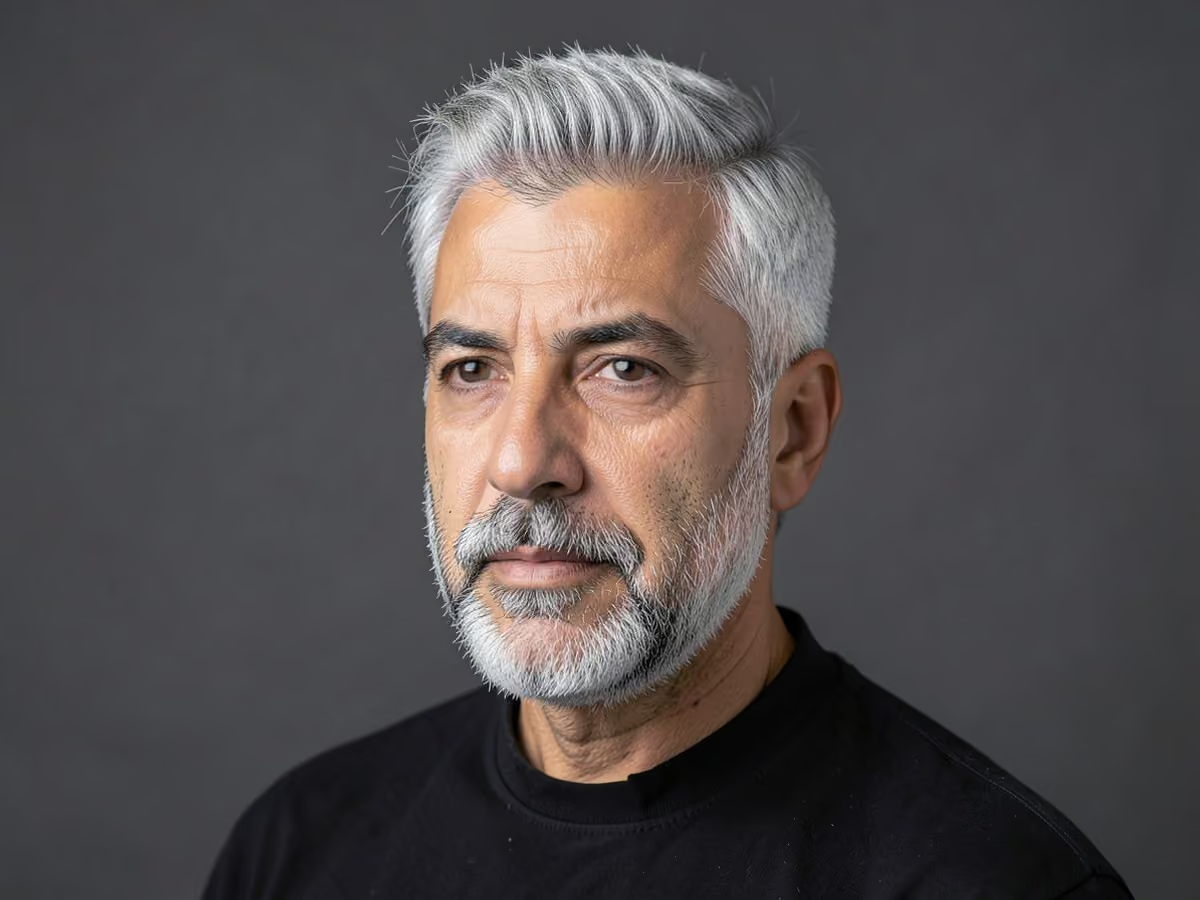
Best For:Oval, square faces + gray, coarse or thinning hair.
About This Style
Silver hair and a short gray beard look natural with a loose top, and the texture hides thinning at the crown better than a sharp part. Keep two to three inches on top, scissor-tapered sides and a beard trimmed to about a quarter inch. Gray hair can turn wiry, so a little argan oil softens it. Matte finishes suit gray better than shiny ones.
How to Style at Home
Smooth a drop of argan oil through dry hair to calm wiry strands.
Push the top loosely forward and to the side with your fingers.
Trim the beard to an even quarter inch and shape the neckline.
Ask Your Barber
"Scissor taper on the sides, two to three inches on top with loose texture, beard trimmed short to about a quarter inch."
Trim:Every 4–6 weeks. Loose texture hides growth between visits.
Best For:Teens 13–18 + straight, wavy or thick hair.
About This Style
Teenagers often want a messy top that takes seconds in the morning and still meets school rules. A low taper with a layered, three-inch top does both. A spray of sea salt and a quick finger-dry are enough, and it grows out without looking scruffy. Parents can ask the barber to keep the sides above the ears if the school has a length rule.
How to Style at Home
Spray sea salt spray onto damp hair after the morning shower.
Rough-dry with your fingers or a quick blast from a dryer.
Push the front forward or to the side and leave it.
Ask Your Barber
"Low taper, sides above the ears, three inches on top in layers so it looks messy with just sea salt spray and my fingers."
Trim:Every 3–4 weeks. Clean edges keep it office ready.
Best For:Oval, square, long faces + straight or wavy hair.
About This Style
Controlled texture is what makes this version work in an office: two to three inches on top, a clean #2 taper and a light cream instead of clay. The hair still falls in a few directions, but the front is pushed roughly to one side and the shape stays compact. It suits interviews and client meetings. For stricter settings, see professional office haircuts.
How to Style at Home
Smooth styling cream through damp hair from back to front.
Dry the front to one side with your fingers.
Ruffle the top lightly so it looks relaxed but compact.
Ask Your Barber
"Number 2 taper with a clean neckline, two to three inches on top, light texture so it sits slightly messy but neat enough for work."
Trim:Every 3–4 weeks. Short texture keeps the temples covered.
Best For:Men with receding temples + straight or wavy hair.
About This Style
Forward-falling, choppy texture blurs the temple corners, so recession is harder to spot than with a slicked or parted style. Keep the top short, two inches or a little less, over a #2 fade, and push it forward and slightly to one side. Avoid long fringes, which separate and show the scalp. More options are in haircuts for a receding hairline.
How to Style at Home
Dry the top forward with your fingers on low heat.
Work a small amount of matte clay through the front.
Push the front slightly to one side to cover the temple corners.
Ask Your Barber
"Number 2 fade, about two inches on top with choppy texture pushed forward, leave the hairline natural and do not line up the temples."
Recommended Products
Matte Clay
How Do You Ask Your Barber for Messy Hair?
Say how long you want the top, how short the sides should be and that you want texture for a messy finish. A good starting request is a #2 low taper on the sides, three inches on top, point cut and layered so it falls in different directions when styled with fingers. Ask the barber to leave the ends uneven instead of blunt; blunt ends sit flat and look heavy. If you want it to grow out well, ask for the sides no shorter than a #1.
Bring photos of the finished style and of your own hair after a few weeks without a cut, so the barber sees how it grows. Avoid heavy thinning on fine hair. The guide on how to ask for texture without thinning shears has wording that gets you movement without frizz. Barbers also need to know if you air-dry or blow-dry, since that changes how much weight they remove.
Clipper Guards Used in Messy Hairstyles for Men Styles
A clipper guard is the plastic comb that clips onto the blade and sets how much hair is left: a #1 leaves 3 mm (1/8 inch), each step up adds about 3 mm. The right column lists the cards on this page that call for each guard. See the full clipper guard numbers guide for the complete chart.
Clipper guard sizes for messy hairstyles for men styles
Start on damp, not wet, hair. Spray sea salt spray through the top, then rough-dry it with your fingers or a dryer on medium heat, pushing the hair in different directions instead of one. When it is about ninety percent dry, rub a pea-size amount of matte clay or paste between your palms and work it in from the roots. Grab small sections and twist or push them so they sit at slightly different angles.
Finish with your fingers, not a comb. If the style goes flat by afternoon, wet your hands and scrunch the top to reactivate the product. Matte finishes look more natural than shiny ones for this style; the matte vs shine hair products guide explains the difference. Wash product out every day or two to keep the hair light and easy to restyle.
What Messy Hair Mistakes Should You Avoid?
The biggest mistake is confusing messy with overgrown. If the sides cover the ears and the neckline is fuzzy, the style looks neglected rather than relaxed, so book a side and neck clean-up every three or four weeks even while the top grows. Too much product is the second: heavy clay clumps the hair into greasy strands. Shiny pomade or gel is another, as shine makes texture look wet and flat. Finally, avoid combing it, since combs undo the separation.
Which Messy Hairstyles for Men Is Right for You?
Pick your hair type and how much upkeep you will put in. The matches below come from the Best For and Maintenance notes on each card. Upkeep follows the Maintenance badge: low means a cut every 3 to 6 weeks and almost no daily styling, high means weekly line-ups or daily product.
Get a cut with layered, point-cut texture on top and two to six inches of length. Apply sea salt spray to damp hair, rough-dry it with your fingers in several directions, then work a small amount of matte clay through and twist a few pieces. Skip the comb entirely.
Q2: What is the best product for messy hair?+
Sea salt spray before drying and matte clay or texture paste after it suit most messy styles. Fine hair does better with texture powder, which adds grip without weight. Curly hair needs curl cream for moisture. Avoid gel and high-shine pomade, which make the hair look wet and stuck together.
Q3: Is messy hair professional?+
A tidy version is acceptable in most offices. Keep the sides short and clean, the top around two to three inches and the finish matte rather than wild. Neck and ear clean-ups between cuts help. Very long, tangled or uncombed styles may not suit strict dress codes, so check your workplace norms.
Q4: How long should hair be for a messy look?+
Two inches is the practical minimum, since shorter hair cannot fall in different directions. Three to four inches gives the most room to style. Longer hair, from five inches to the shoulders, can still look messy but relies on waves or layers rather than product to create movement.
Q5: Does messy hair work with straight hair?+
Yes, but it needs more help. Ask for plenty of layers and point cutting, then use sea salt spray or texture powder before drying. Straight hair tends to fall flat and back into its usual part, so blow-drying in the opposite direction first gives the roots lift that lasts.
Q6: How often should you cut messy hair?+
Every four to six weeks suits most messy styles, since loose texture hides small amounts of growth. Short versions with a skin or high fade need a visit every two to three weeks to keep the sides clean. Long messy hair can go eight weeks or more with a neck clean-up in between.