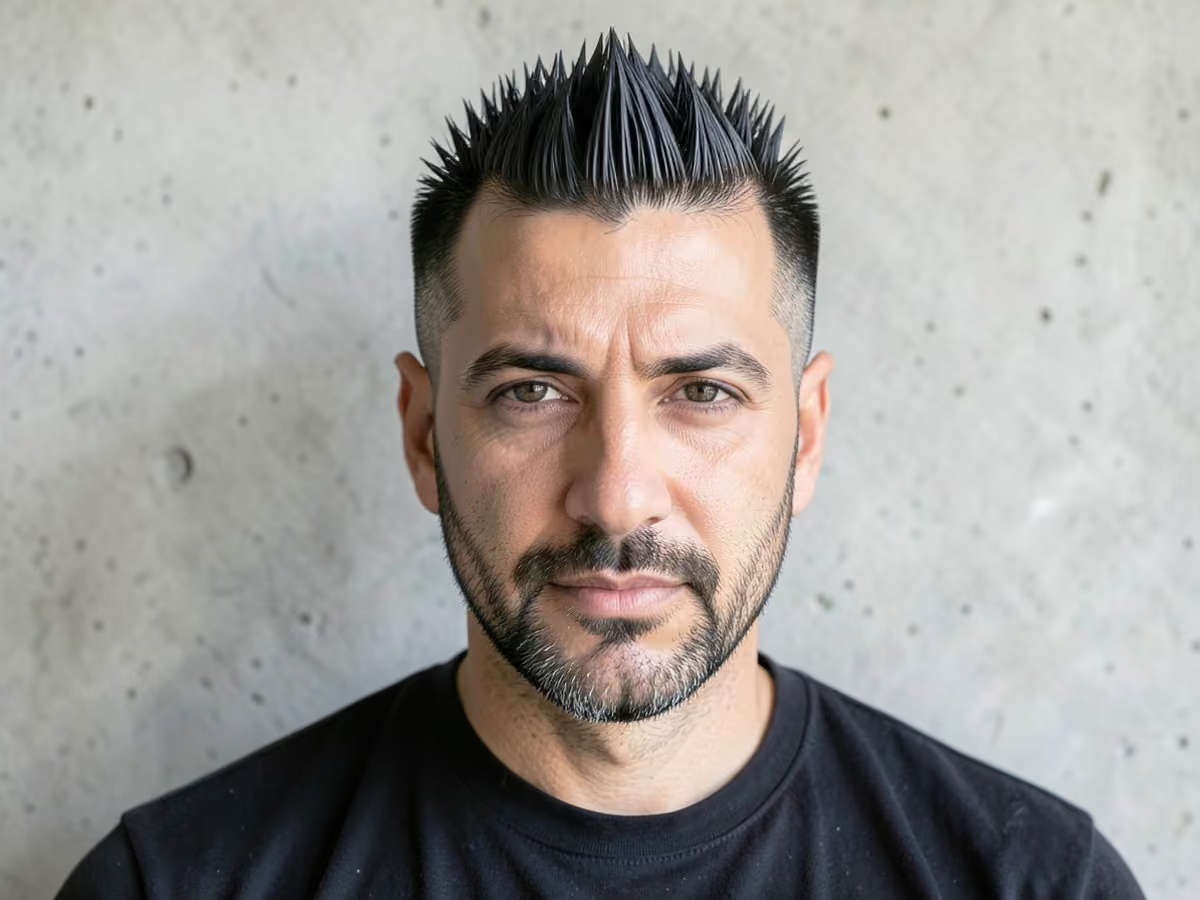
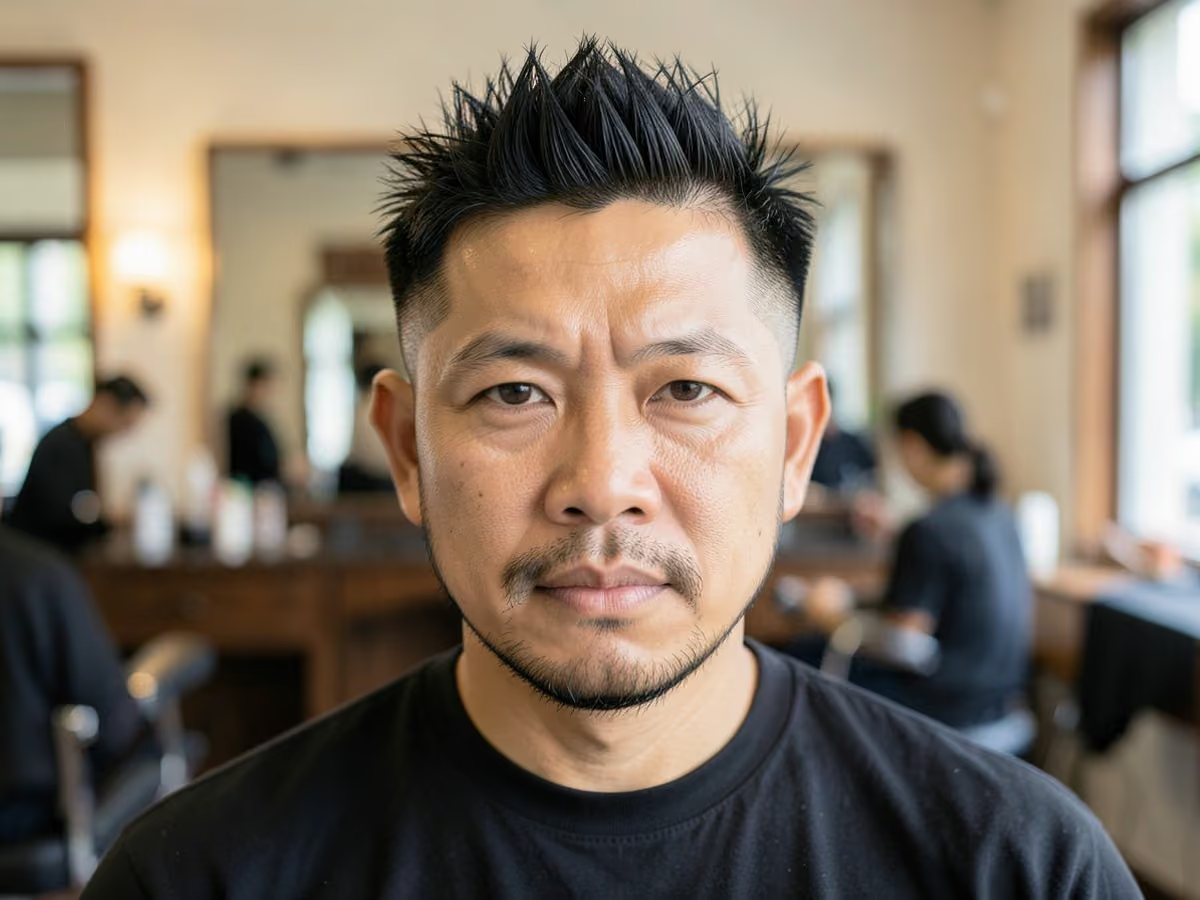
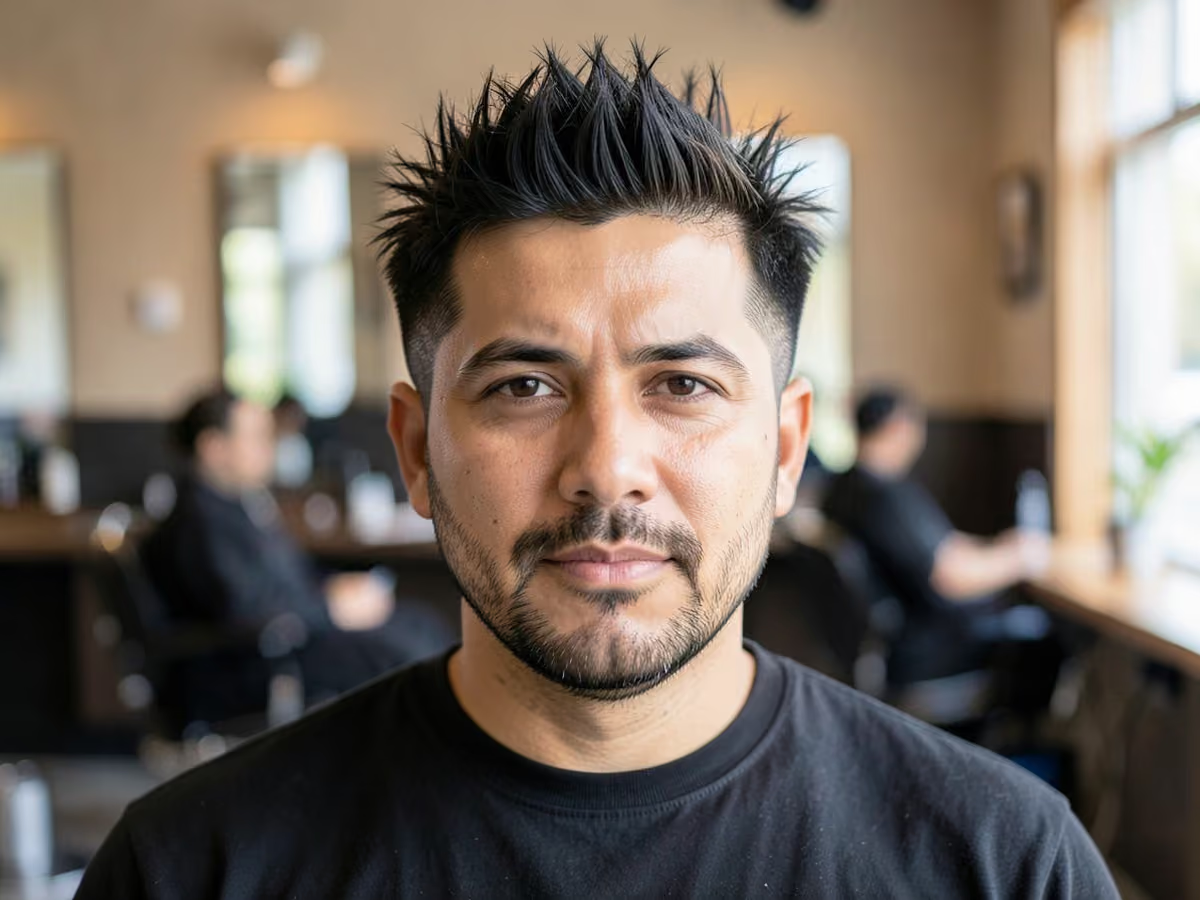
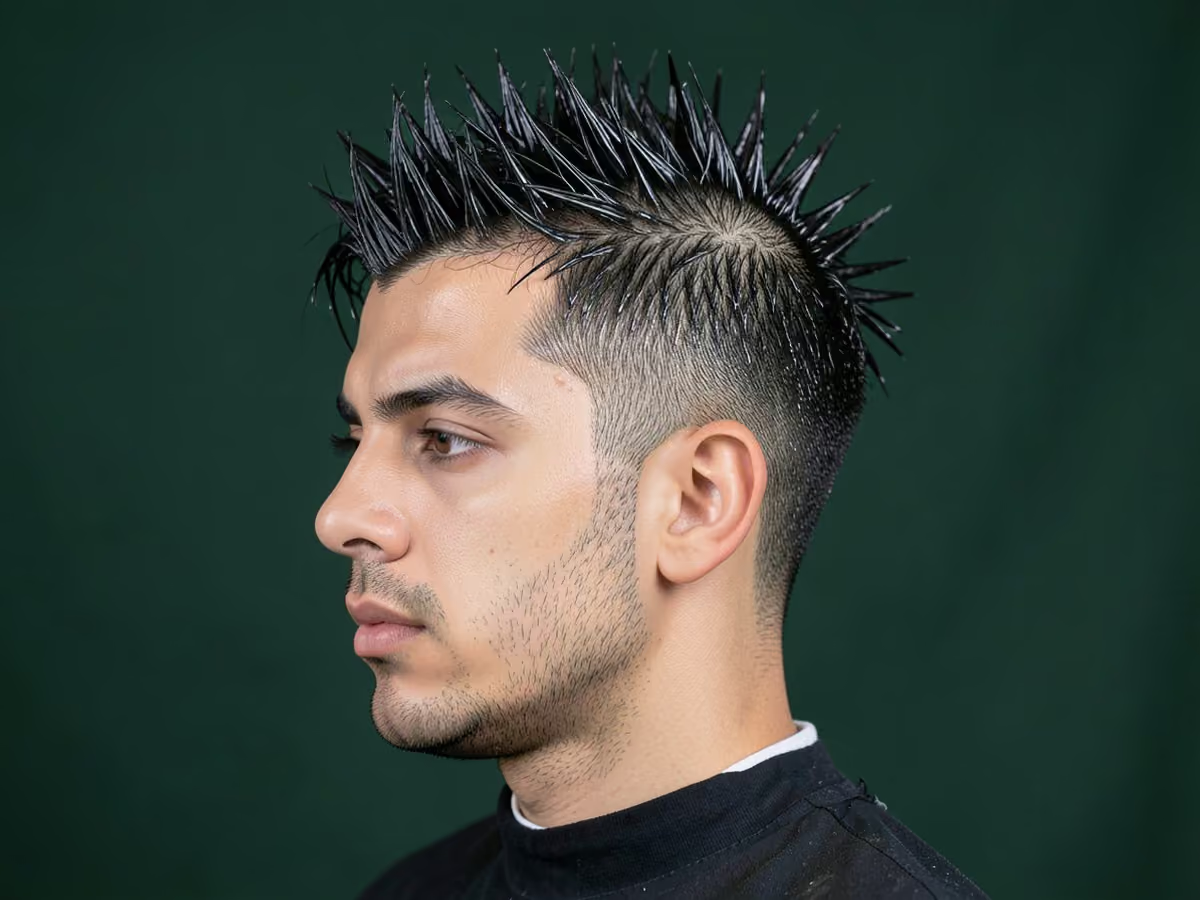
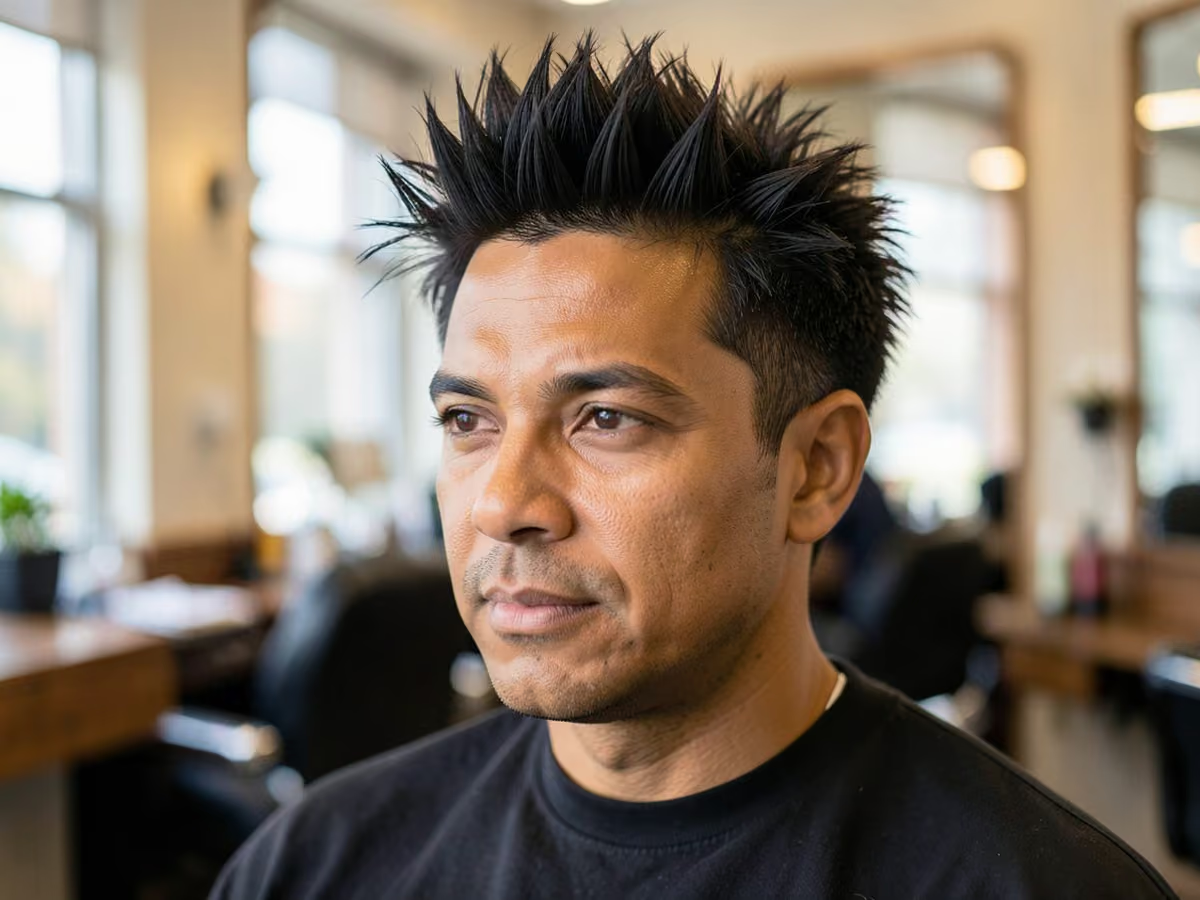
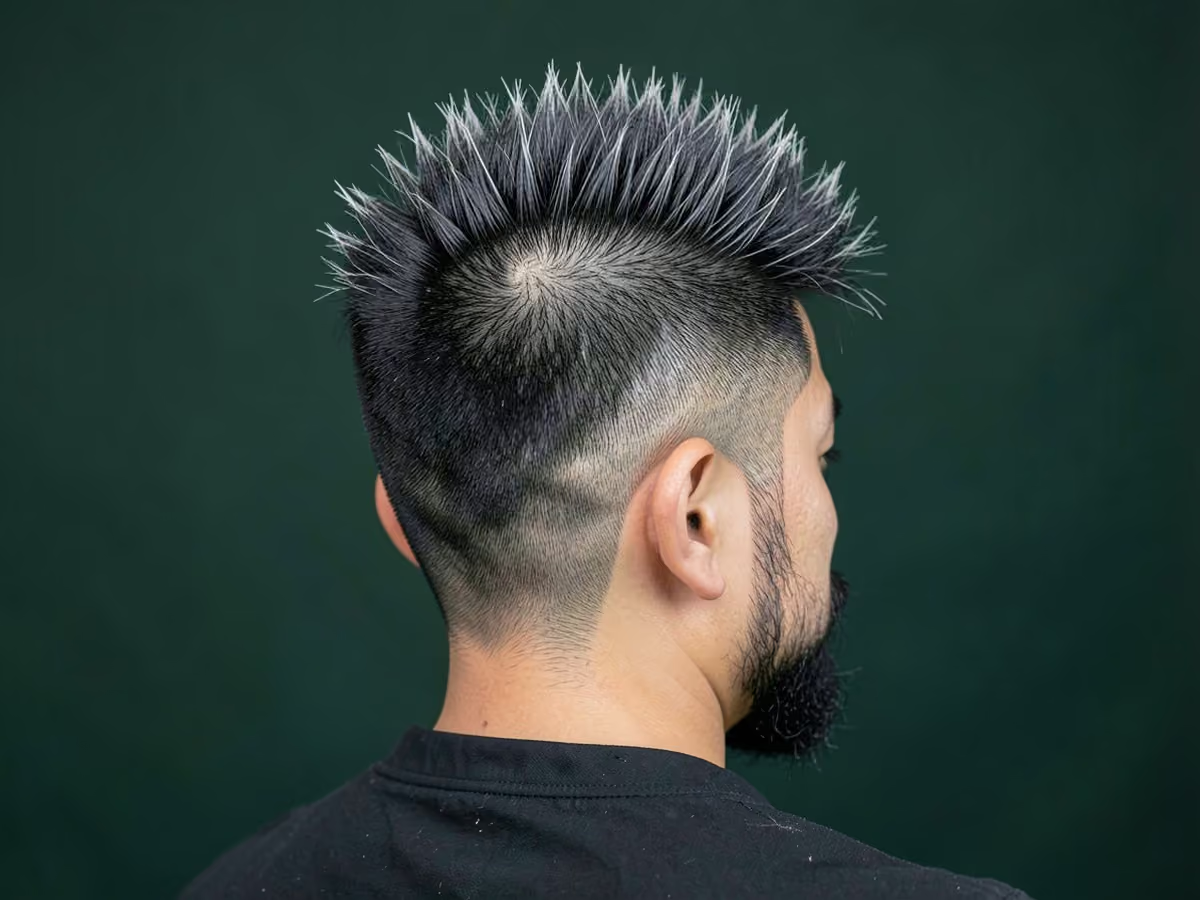
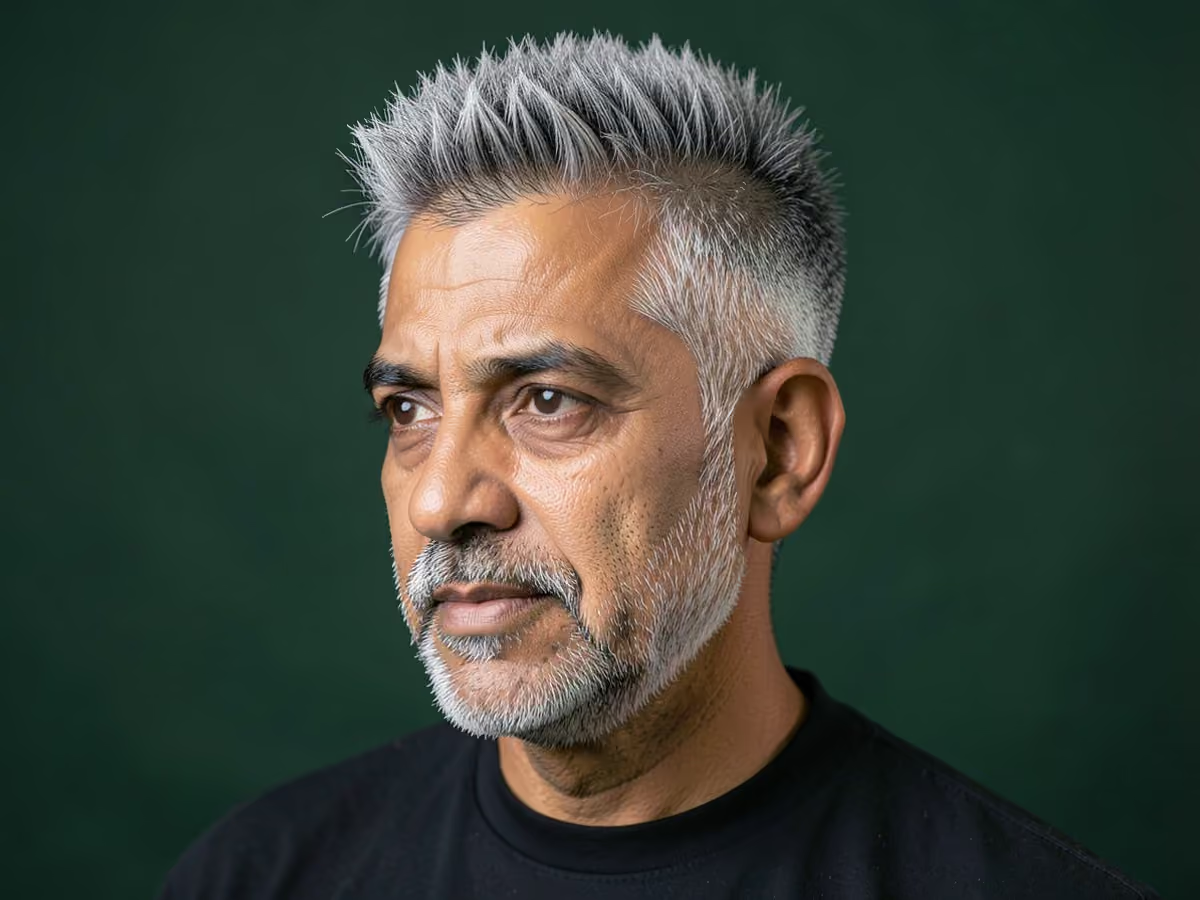
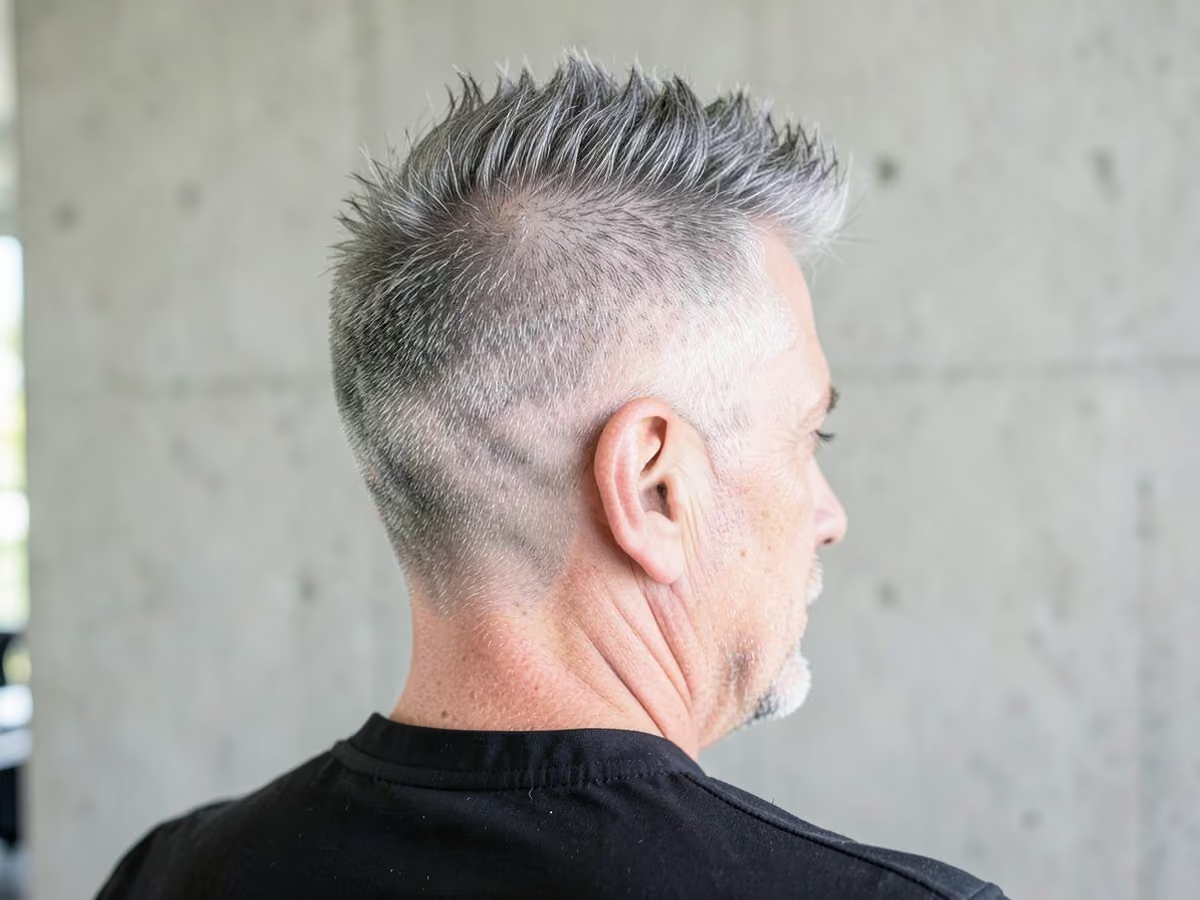
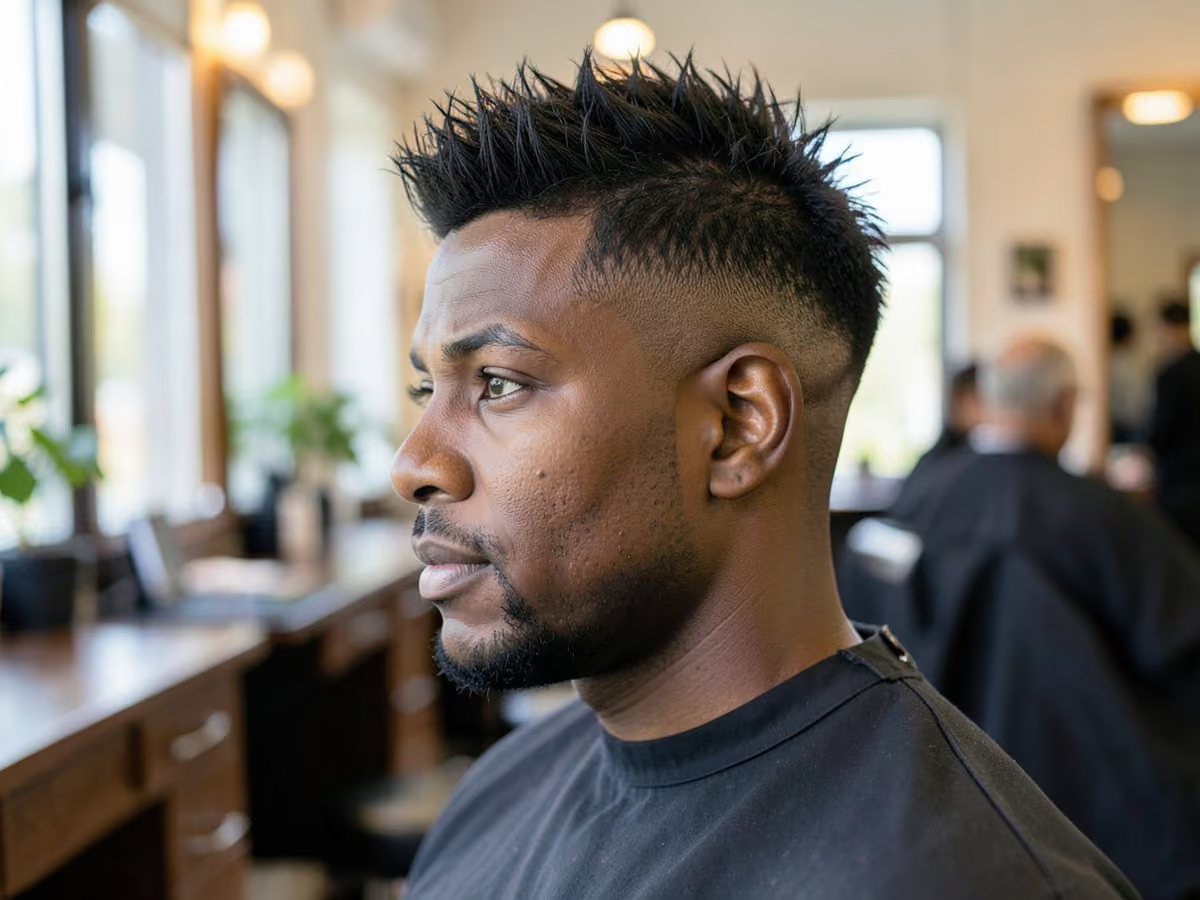
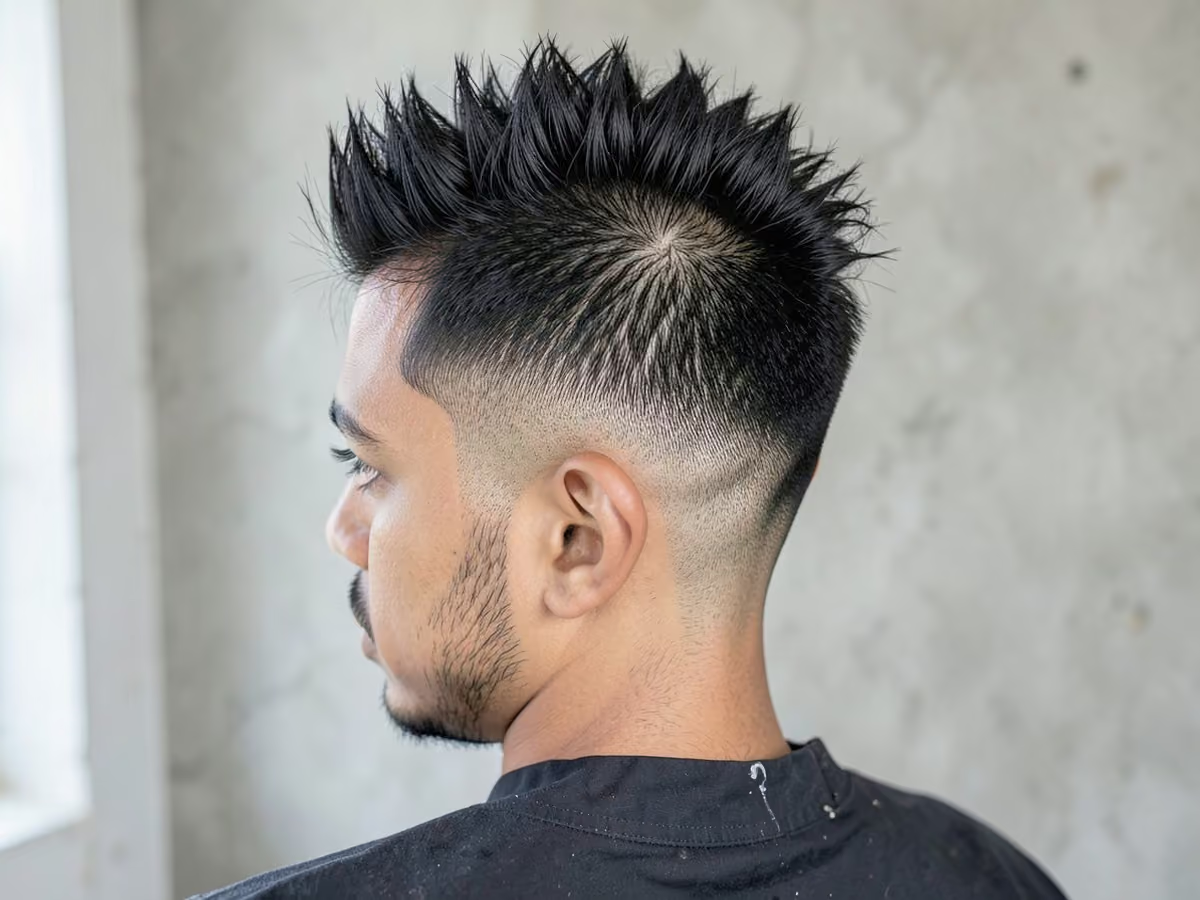
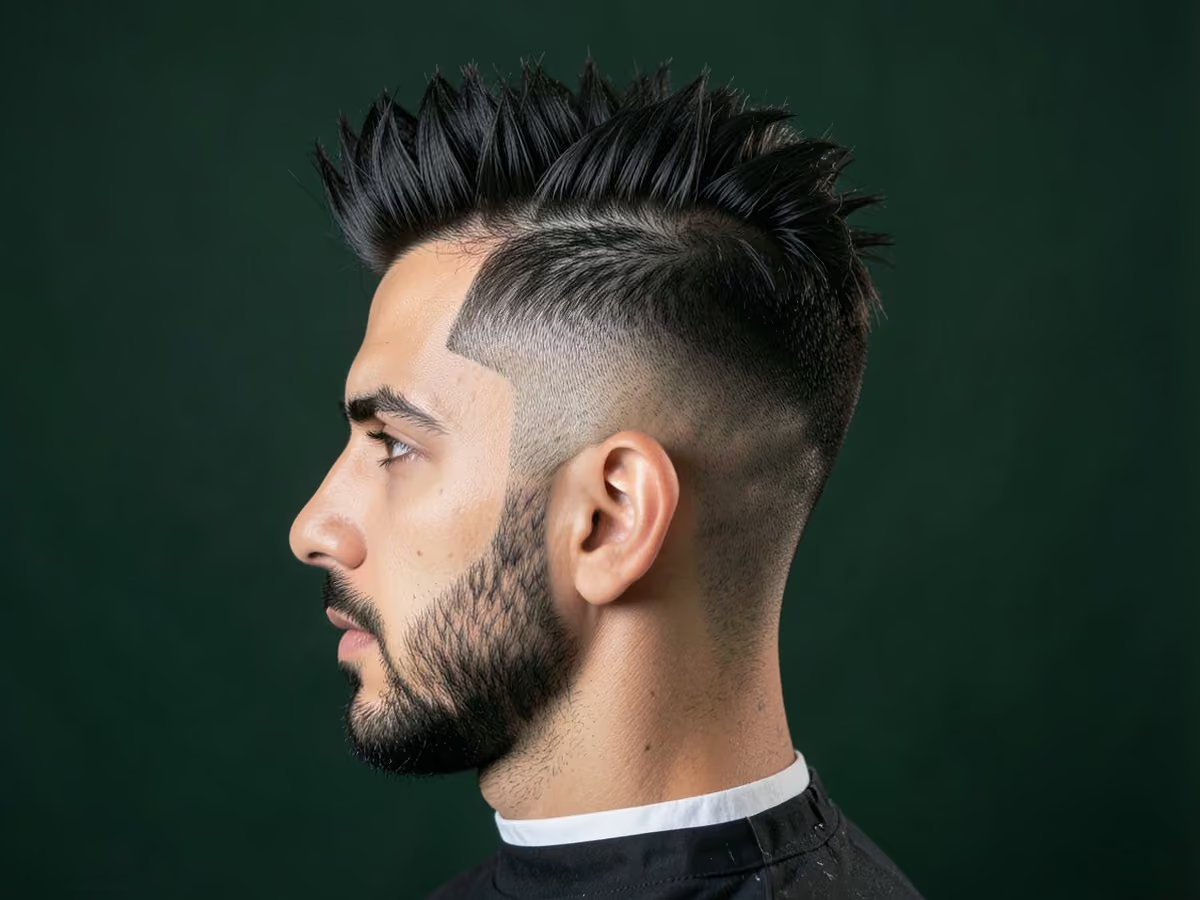
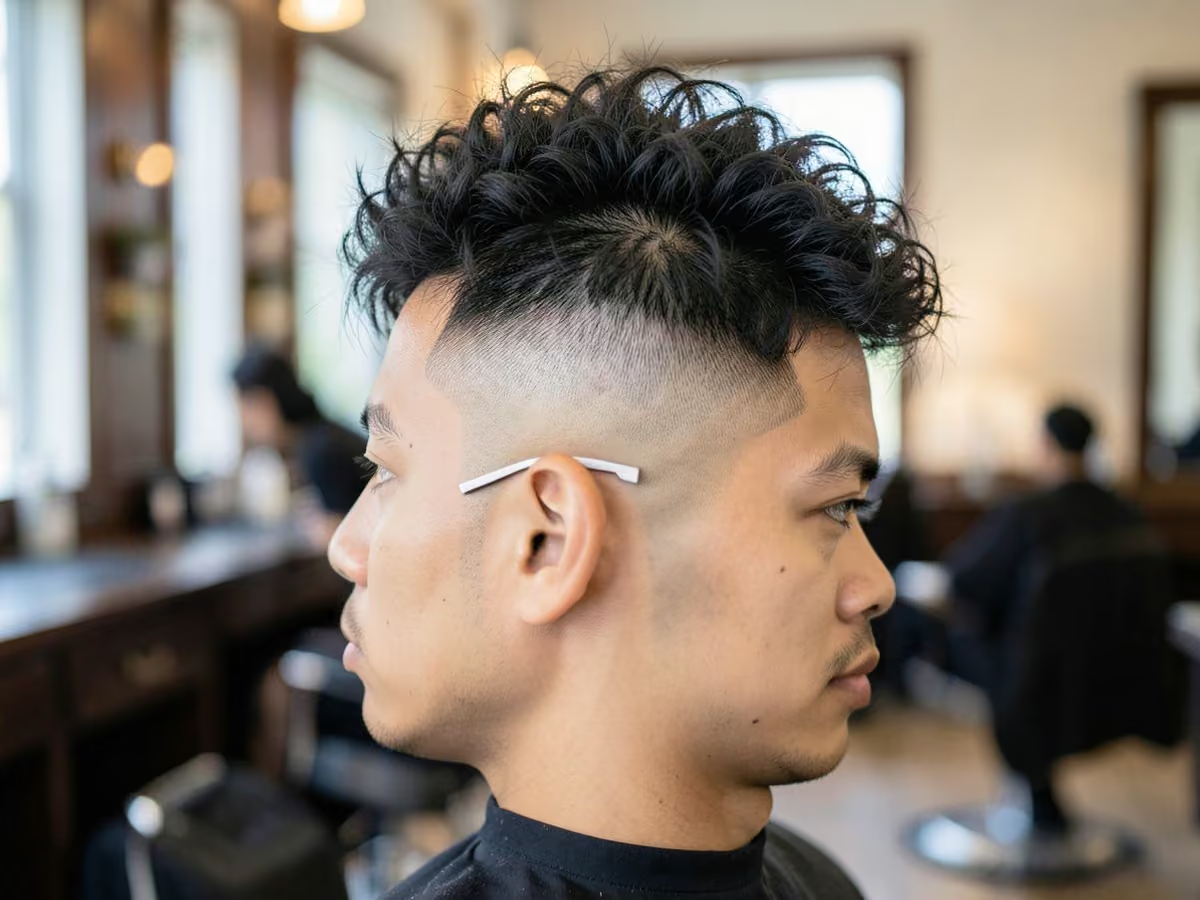
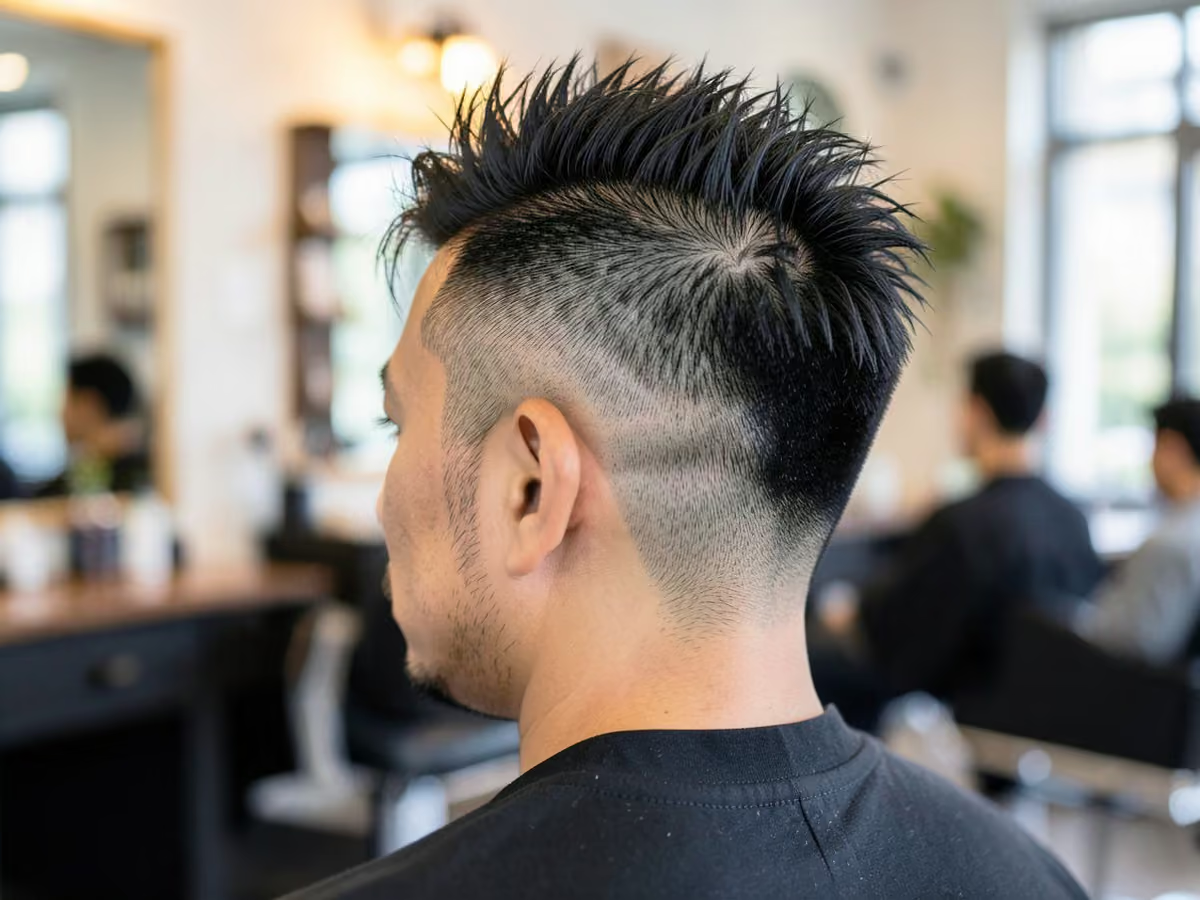
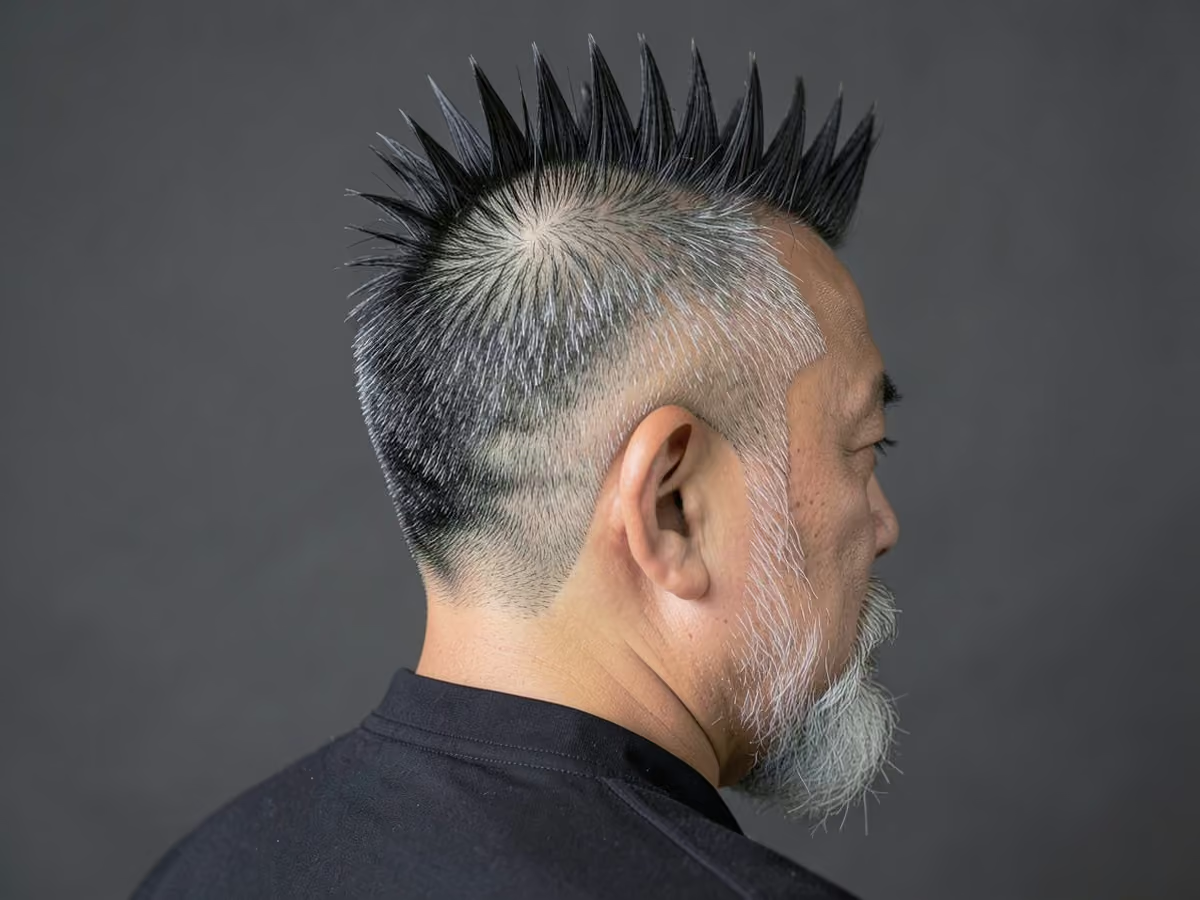
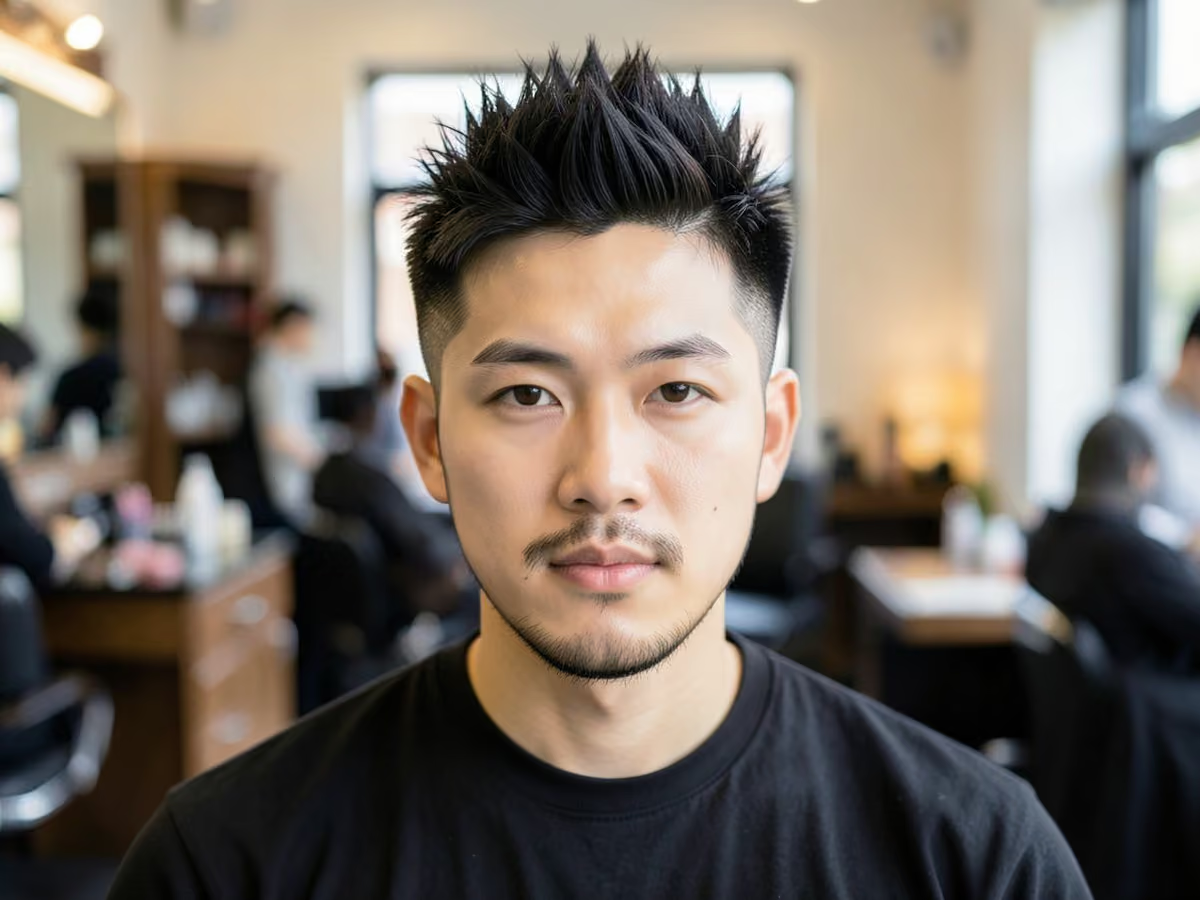
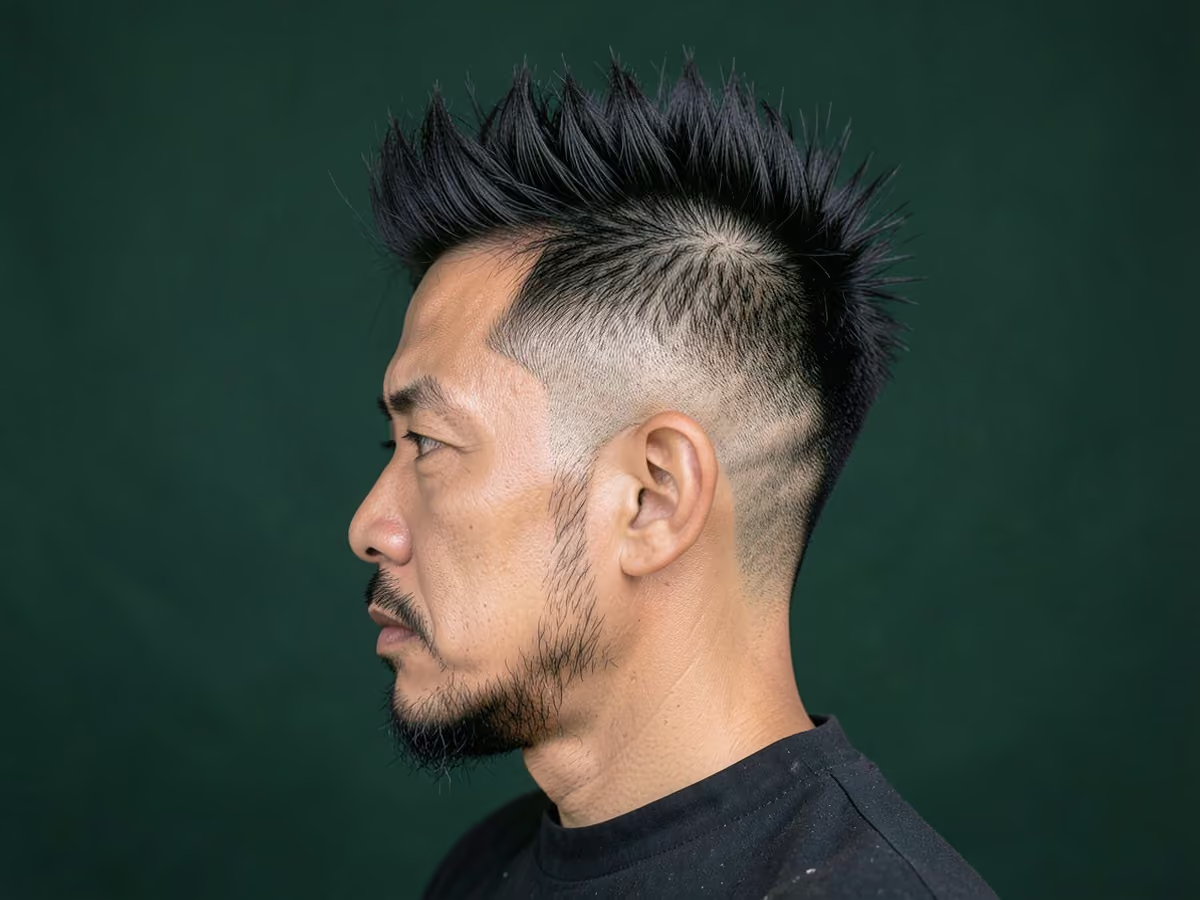
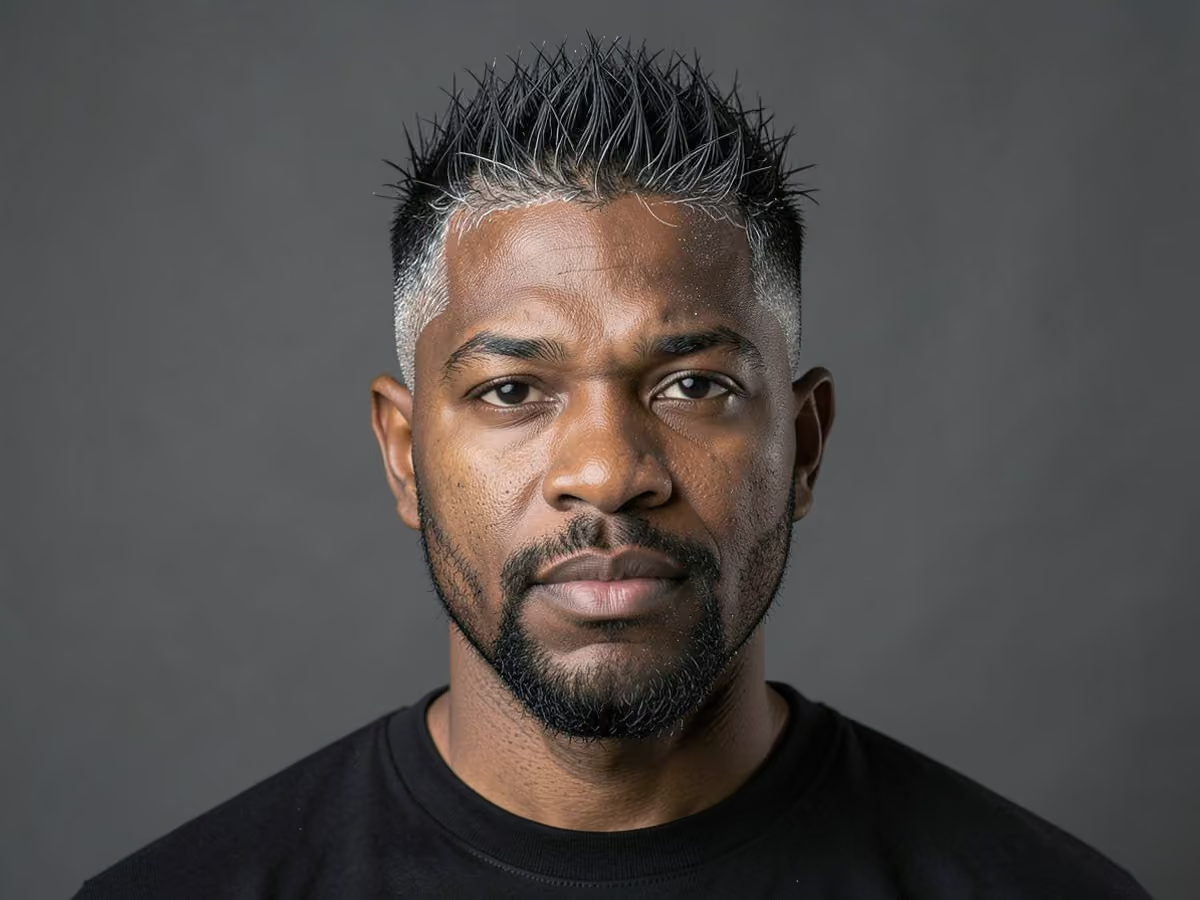
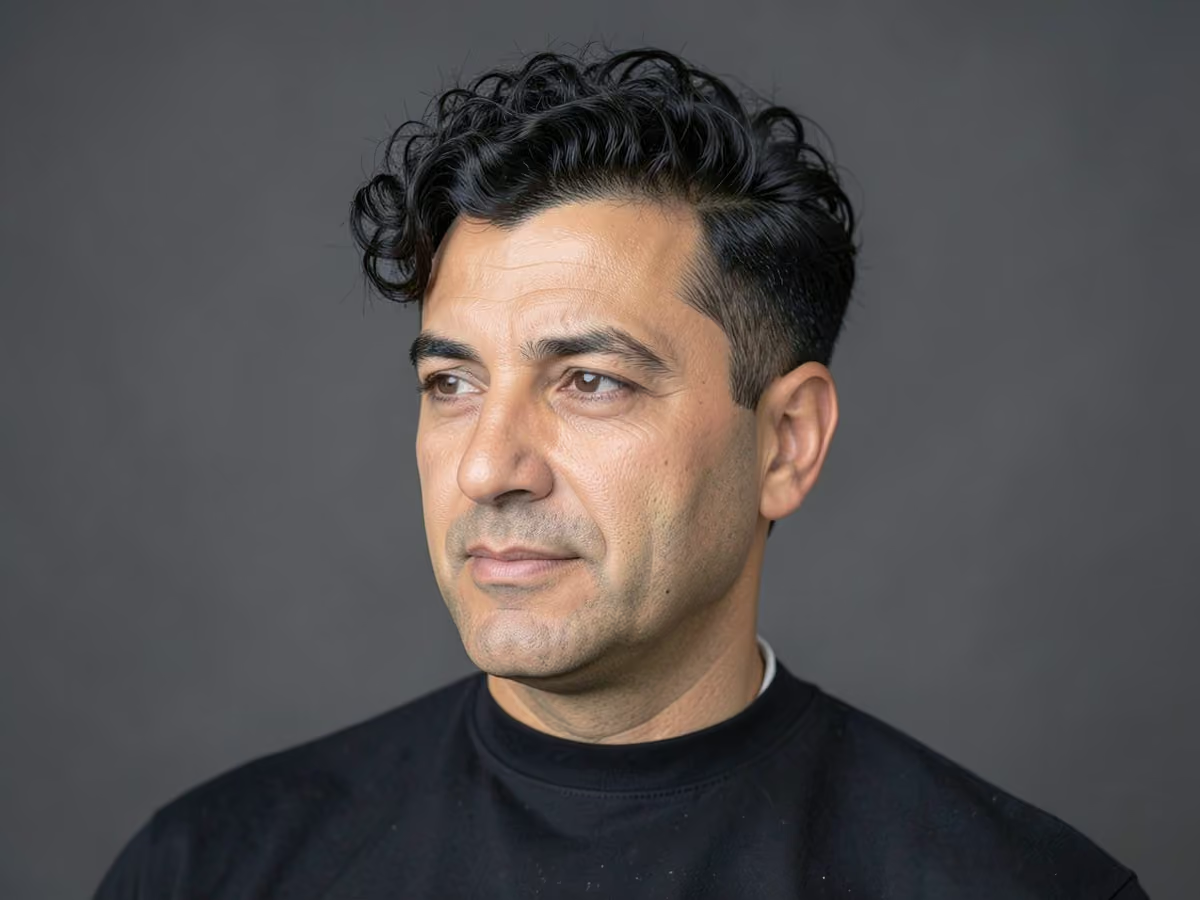
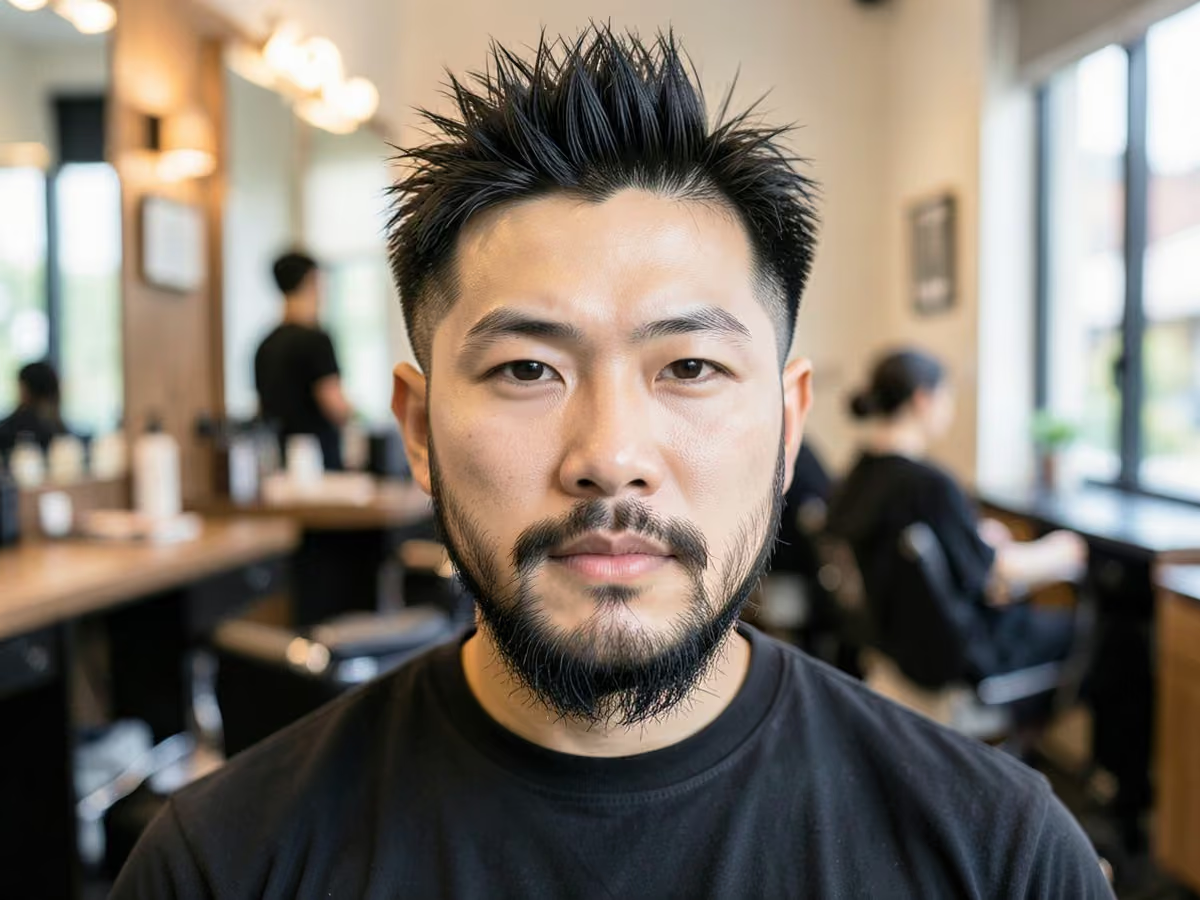
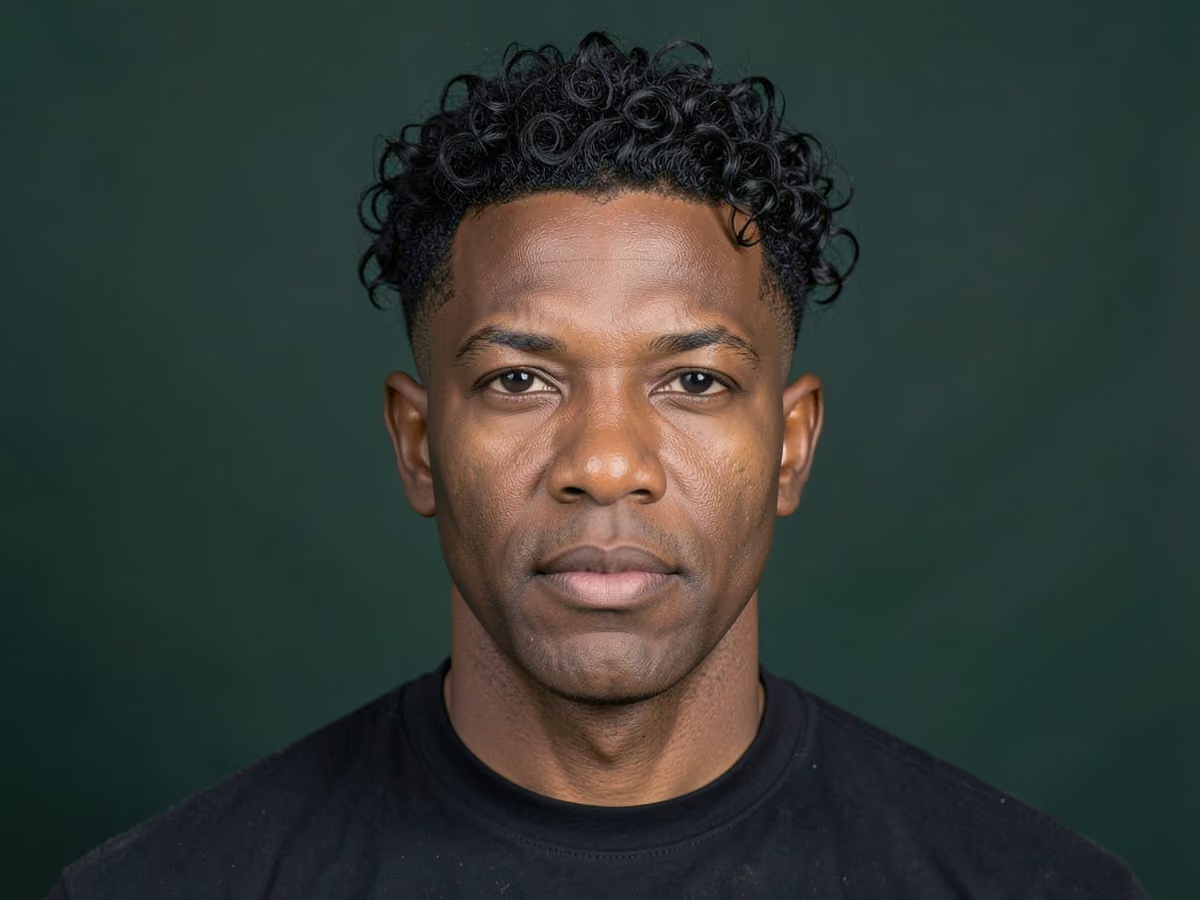
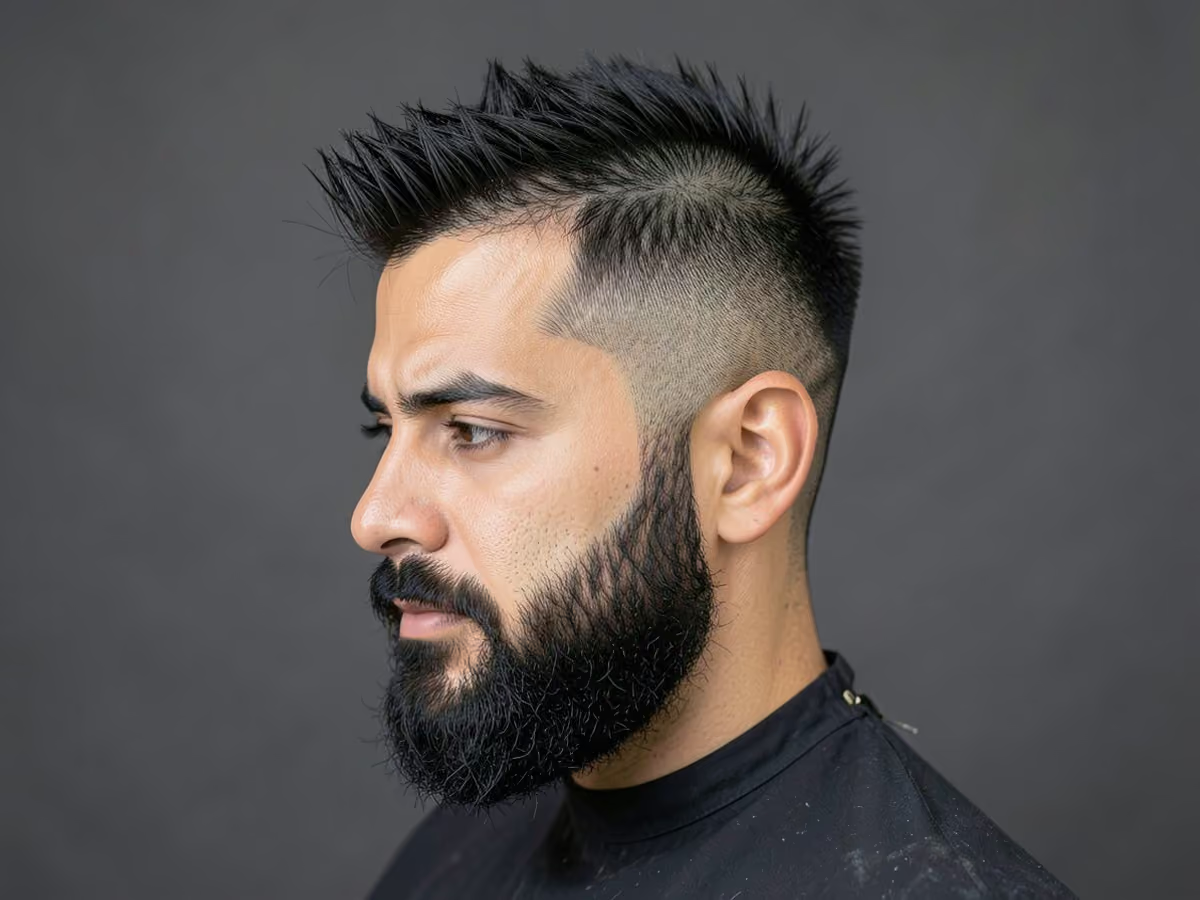
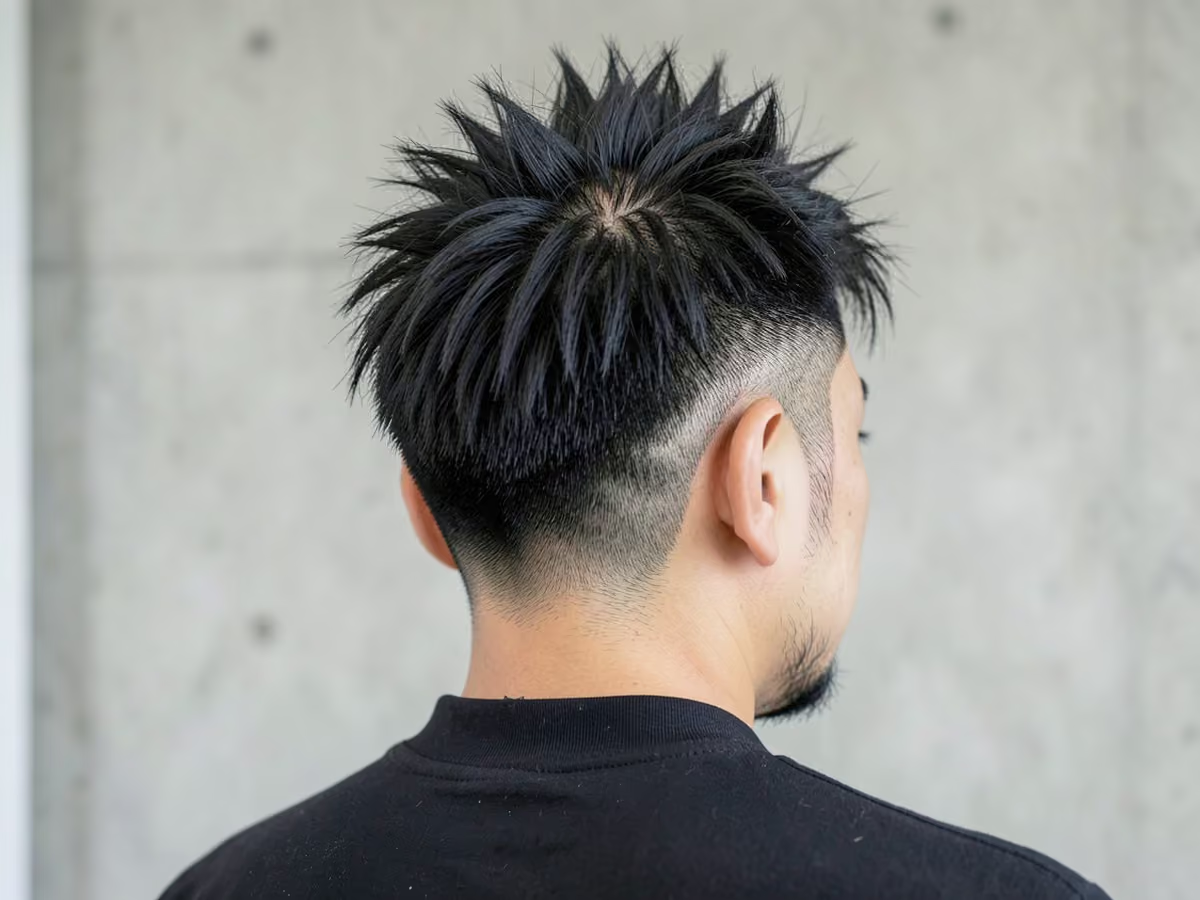
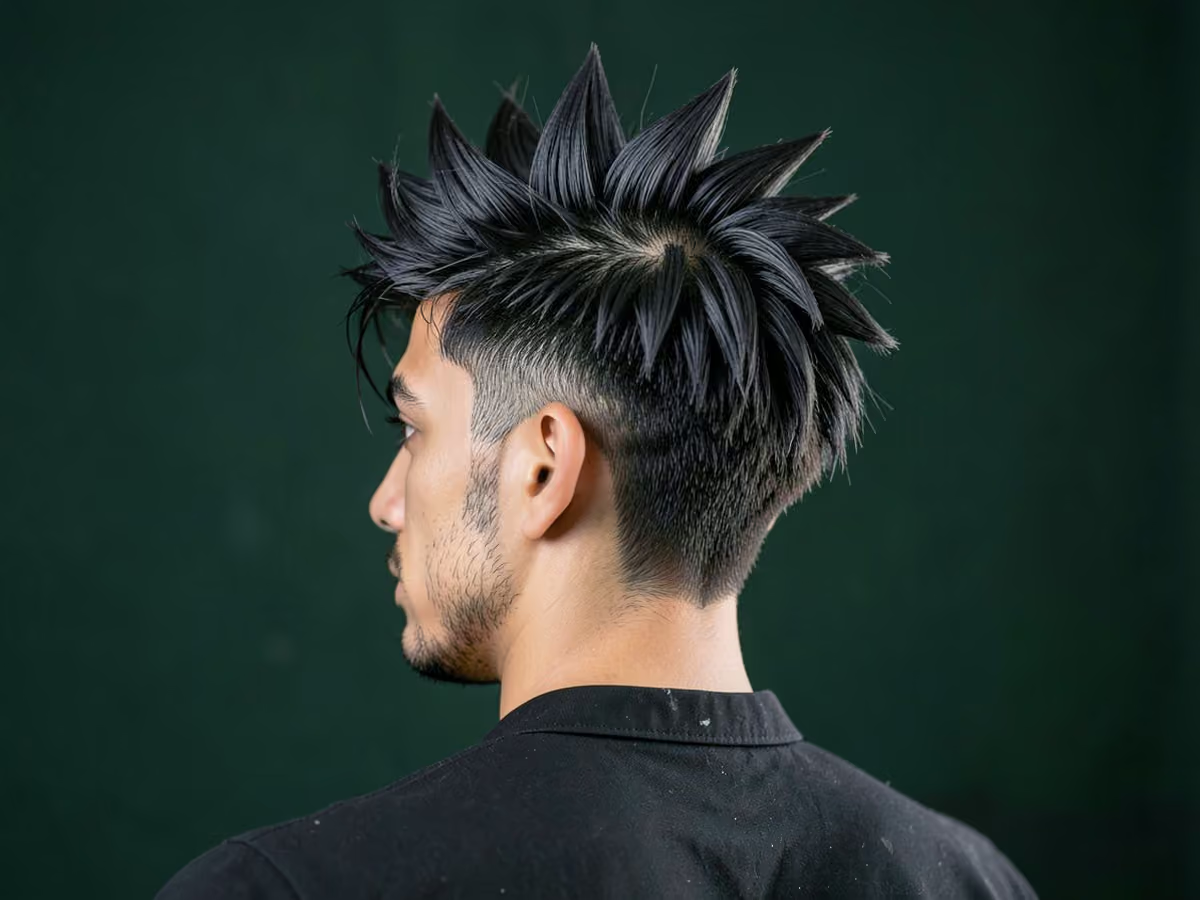
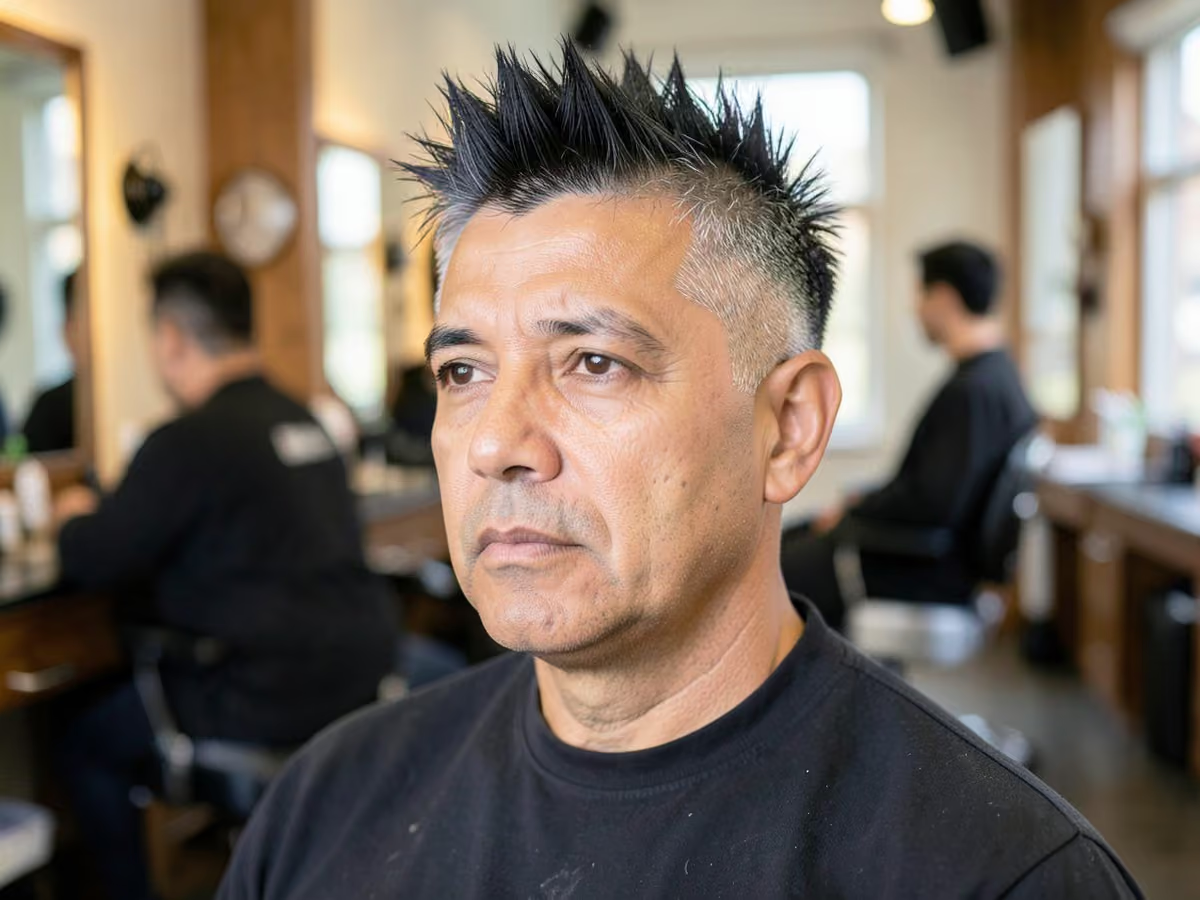
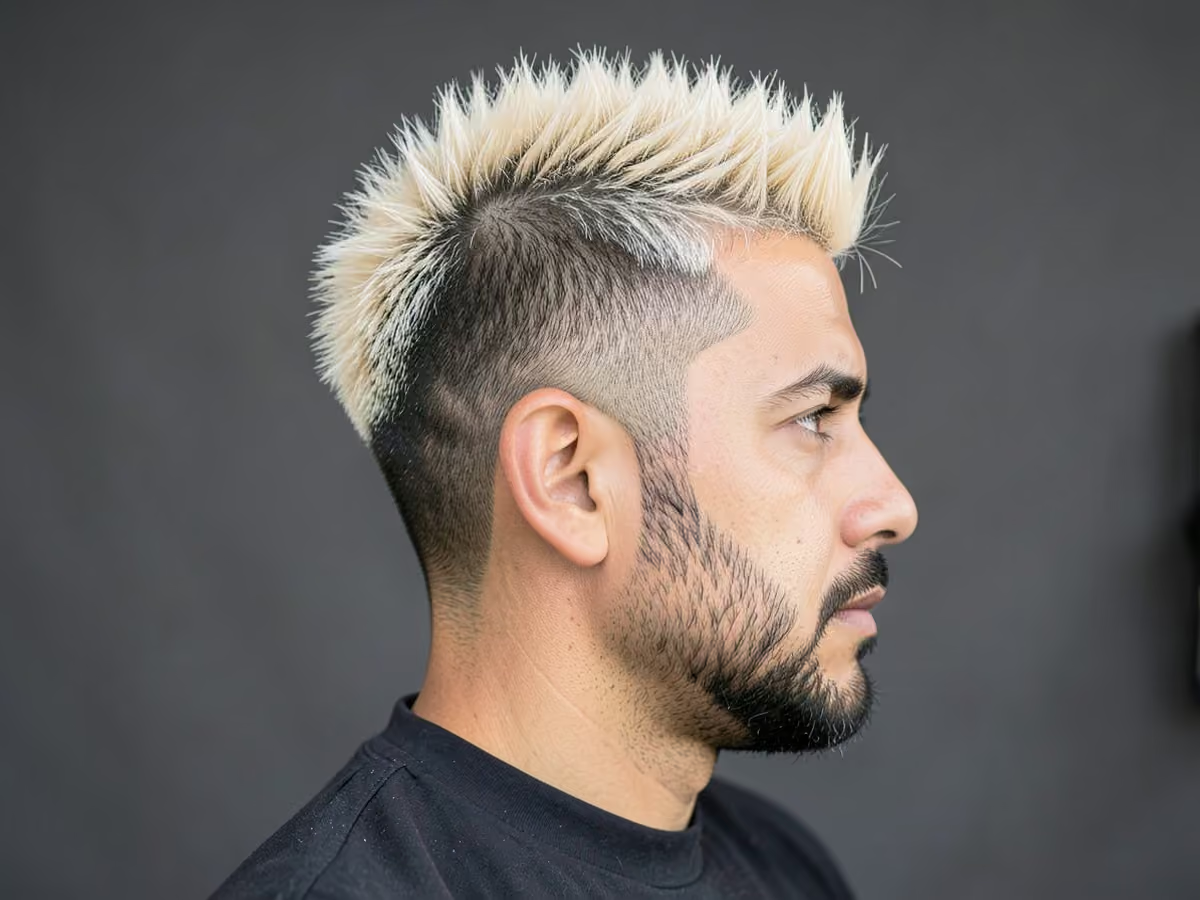
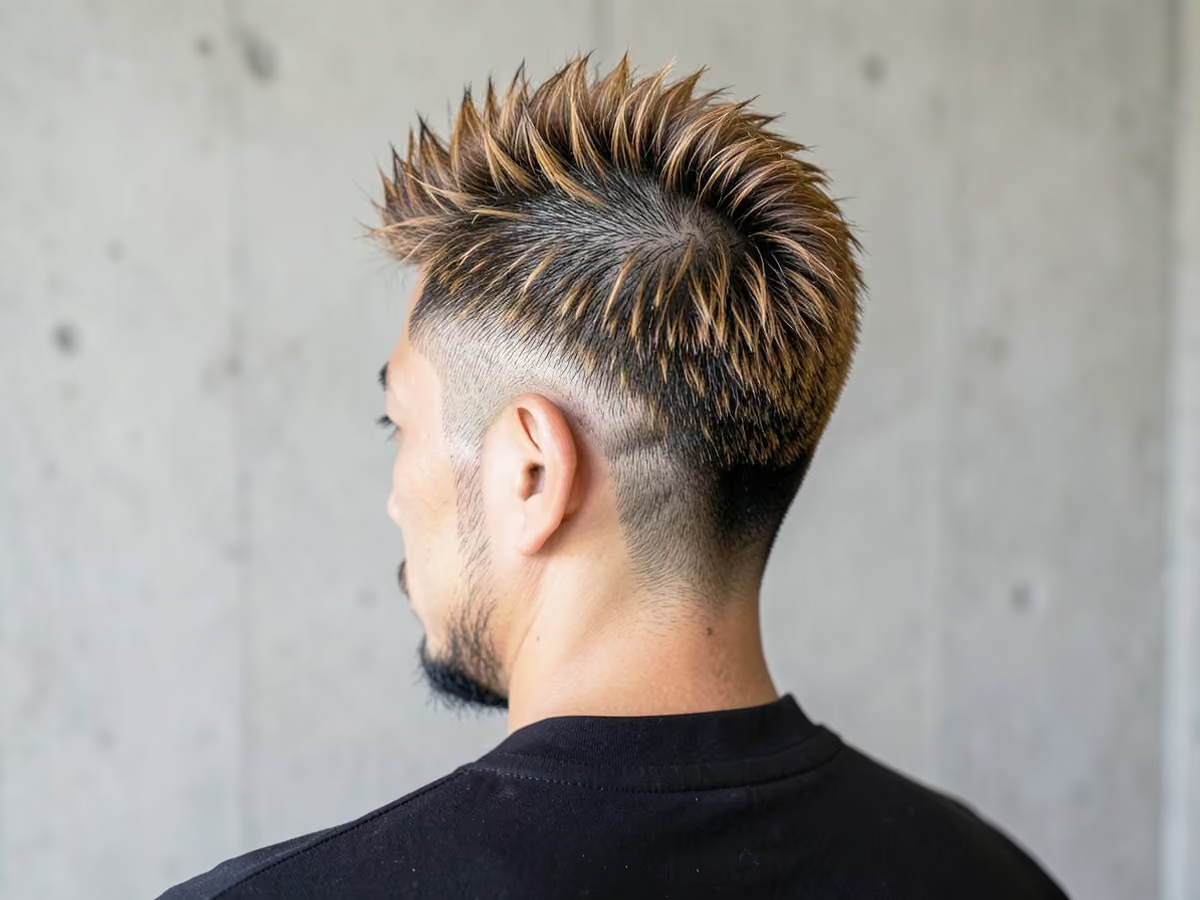
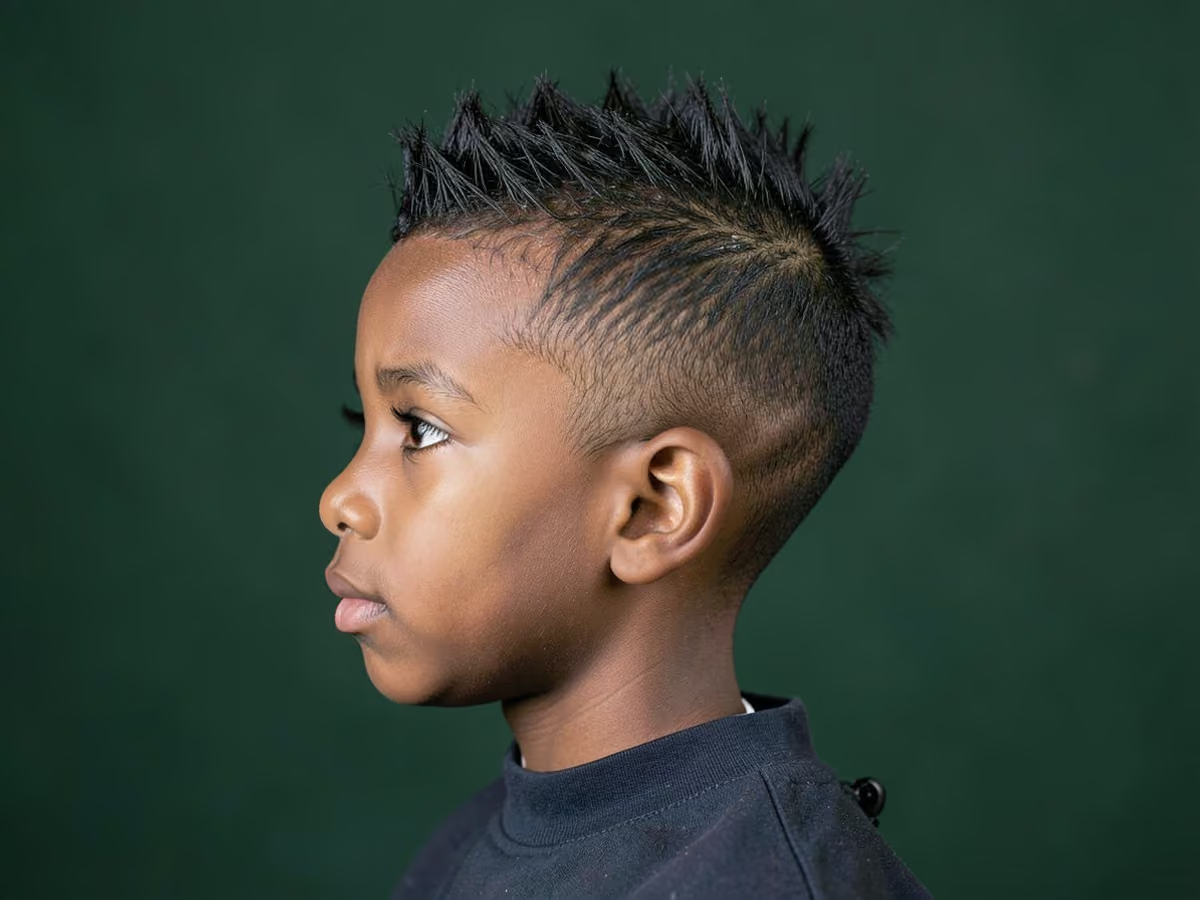
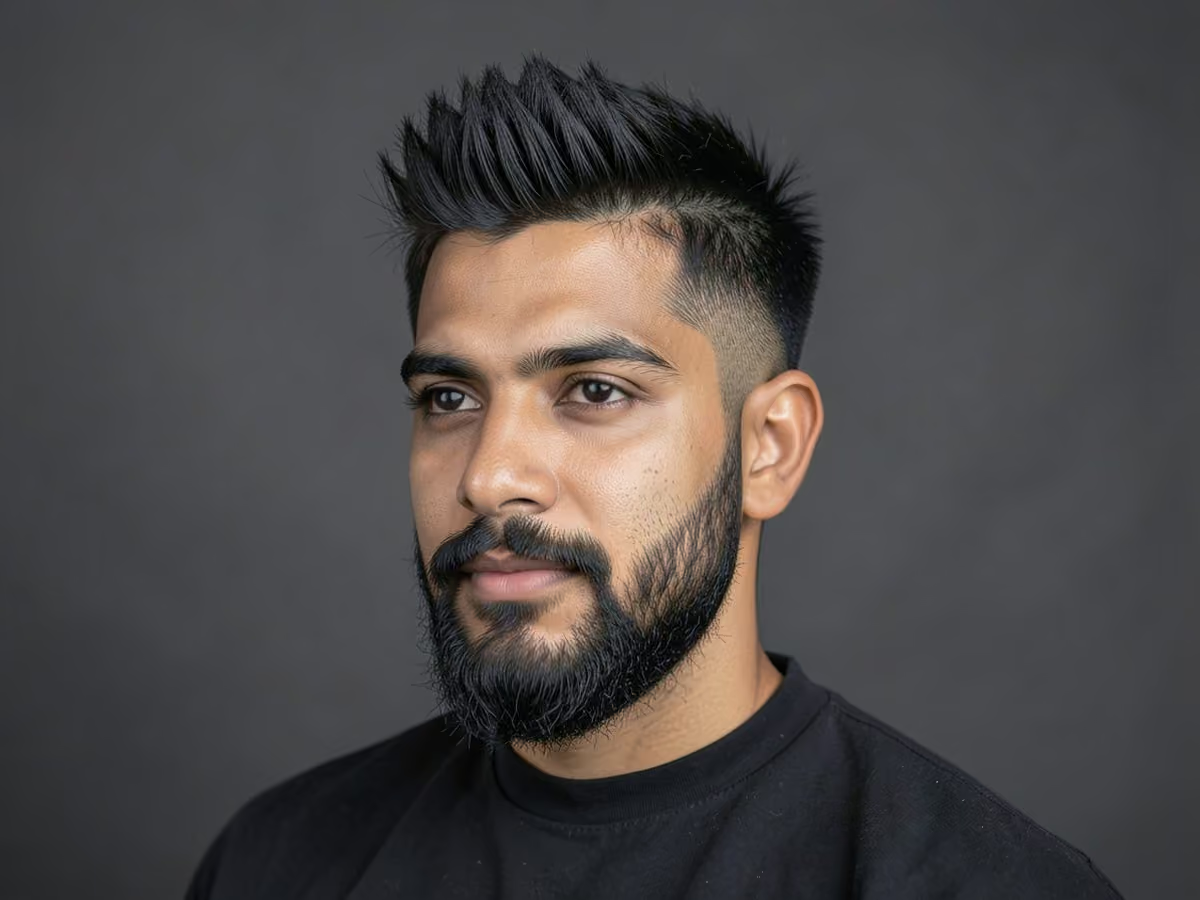
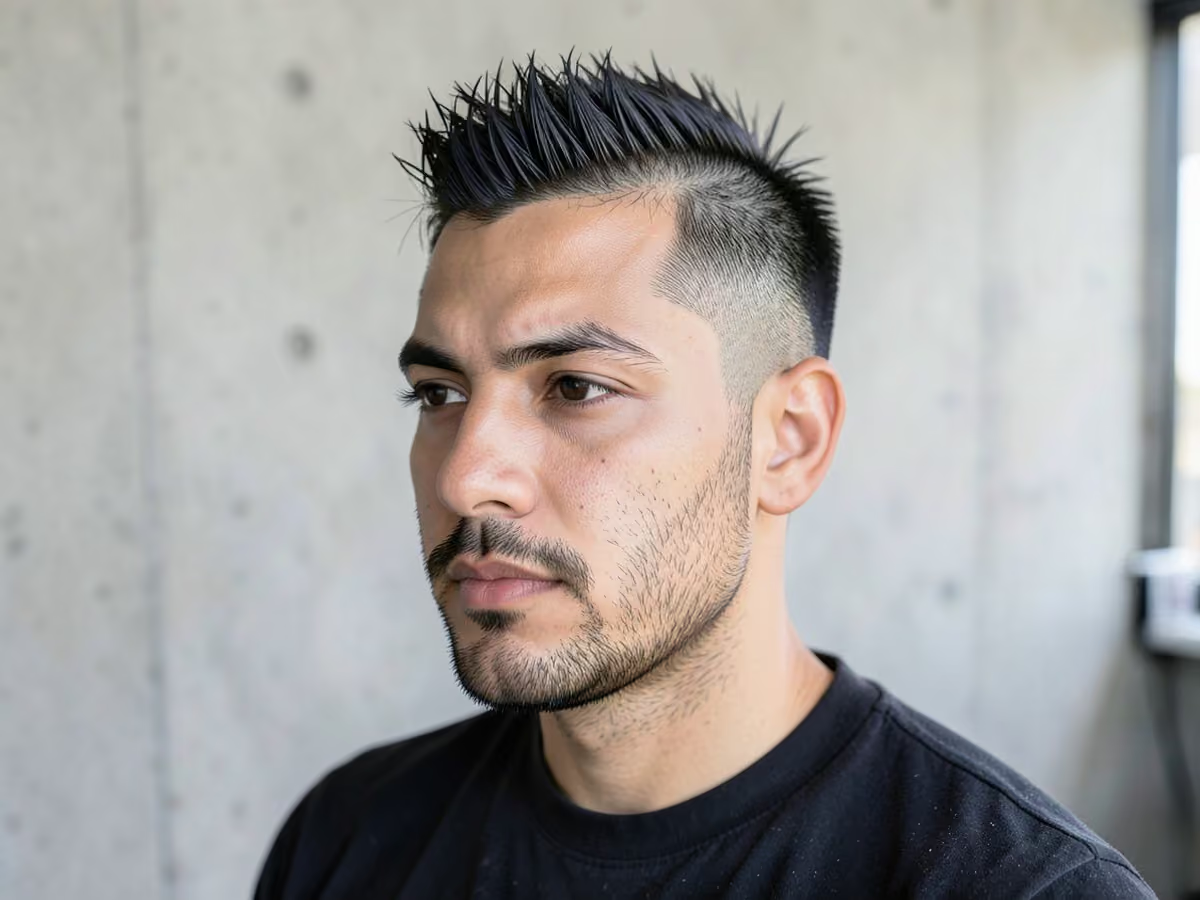
Quick answer: Spiky hairstyles for men lift a short top, usually one to three inches long, into upright points with gel, paste or clay. The sides are kept shorter with a fade, taper or undercut so the spikes read clearly. Matte products give a modern texture; gel gives the wet, defined spikes of the early 2000s.
Spiky Hairstyles for Men Styles at a Glance
Every style on this page with its clipper guard, top length and trim interval. Tap a name to jump to that card.
Spiky hairstyles for men work on almost any short cut with enough length on top to stand up. Below are 35 versions grouped by finish, fade, base cut, hair type, length and color, plus beards and kids. Each card lists the top length, guard numbers, trim schedule, the product that holds it and the words to use with your barber.
What Is Spiky Hair?
Spiky hair is a styling finish rather than a single haircut. The barber leaves the top short enough to stand on its own, roughly one to three inches, and cuts texture into the ends so the hair separates into points instead of lying as a flat mass. You then push those points upward and outward with a product that dries firm. The sides can be anything from a #4 scissor taper to bare skin; shorter sides make the spikes look taller.
The look peaked in the late 1990s and early 2000s with heavy gel and frosted tips. Current versions favor matte paste and clay, smaller and messier points and a clean fade underneath. Short textured crop and French crop cuts often turn spiky simply by styling the fringe up instead of forward, so one haircut can give you both looks on different days.
How Is Spiky Hair Different from a Faux Hawk or Brush Up?
All three push hair upward, so the difference lies in shape. Spikes spread evenly across the whole top, each point pulled in its own direction. A faux hawk gathers the top toward a central ridge that runs front to back, leaving the sides of the top lower. A brush up keeps the hair upright but smooth and connected, styled with a brush and blow-dryer rather than fingertips. A messy hairstyle lets the top fall in any direction with no defined points at all.
How Is Spiky Hair Different from a Faux Hawk or Brush Up?
Round and square faces gain the most from spikes, since the height on top adds length and the short sides cut width. Oval faces can wear any version. Long faces should keep the spikes short, under about 1.5 inches, and avoid very tight sides, or the head will look taller still. Thick, straight and coarse hair holds points with little product, and thick straight East Asian hair is a typical example of a texture that spikes easily.
Fine or thin hair can still spike if the top stays short and you use a thickening spray before a light paste; heavy gel clumps fine hair and shows the scalp. Curly hair spikes best when it is short or twisted into coils with a sponge. If your hairline is receding, short choppy spikes pushed slightly forward draw less attention to the temples than tall vertical points.
Filter the styles
Showing all 35 styles
Fade
Hair
Length
Classic and Textured Spiky Hairstyles
These six looks share a short top of one to three inches and differ mainly in finish, from wet gel points to dry, uneven texture. Most sit over a low fade or taper.
Trim:Every 3–4 weeks. Spikes lose height once the top passes three inches.
Best For:Round, square, oval faces + thick straight hair.
About This Style
Even, upright points across the whole top define this original version, with about two inches left on top and a #2 or #3 on the sides. Gel or firm paste sets each spike so it points straight up or slightly outward. It reads as a late-1990s cut when the points are uniform, so most barbers now cut the front a little shorter than the crown for a gentler shape.
How to Style at Home
Blow-dry the top straight up on medium heat, using your fingers to lift the roots.
Rub a dime-size amount of light gel between your palms and comb it through with your fingertips.
Pinch the ends into points and let the gel set for five minutes before touching.
Ask Your Barber
"Number 2 on the sides tapered at the neck, about two inches on top cut evenly so it stands straight up, point cut on the ends for spikes."
Trim:Every 3–4 weeks. Texture holds until the top grows past three inches.
Best For:Oval, round, square faces + straight or wavy hair.
About This Style
Matte, uneven points of different heights make this the version most barbers cut today. The top sits around two inches and is point cut deeply so pieces separate on their own, while a low fade with a #1 at the bottom keeps the sides clean. Clay gives grip without shine, and because the spikes are irregular, a little mess on day two still looks deliberate.
How to Style at Home
Spray a light mist of sea salt spray on damp hair and rough-dry with your hands.
Work texture clay through the top, pushing pieces up and in slightly different directions.
Leave some points shorter than others so the shape looks lived in.
Ask Your Barber
"Low fade starting at a #1, about two inches on top, heavily point cut for separation so I can push it up into uneven matte spikes."
Best For:Oval, heart faces + thick, wavy or coarse hair.
About This Style
Points here go every direction rather than straight up, so it sits between a spiky cut and a messy hairstyle. Two to three inches on top with layered ends gives the hair room to bend, and a #3 taper on the sides keeps the outline soft. Texture powder shaken into the roots lifts it, and fingers do the rest. It suits men who style in under a minute.
How to Style at Home
Shake a small amount of texture powder onto dry roots across the top.
Massage it in with your fingertips, pushing hair up, forward and to the sides.
Twist a few larger pieces at the front so the spikes look loose, not combed.
Ask Your Barber
"Number 3 taper on the sides, two to three inches on top with layered, choppy ends so it bends in different directions when I rough it up."
Trim:Every 2–3 weeks. Gel exaggerates uneven length as the top grows.
Best For:Oval, square faces + thick straight or coarse hair.
About This Style
Glossy, hard spikes held with gel bring back the early-2000s boy band finish. The top is cut shorter than other versions, about an inch and a half, because wet gel weighs hair down and shorter strands stay upright. Sides go to a #1 or #2. Expect shine and a crunchy feel; a light gel rather than a heavy one keeps the points from flaking by evening.
How to Style at Home
Apply light gel to damp hair, coating it from the roots to the very tips.
Comb the top straight up with a wide-tooth comb, then pinch the ends into points.
Let the gel dry fully without touching so it sets hard and shiny.
Ask Your Barber
"Number 1 or 2 on the sides, about an inch and a half on top cut evenly, with the ends point cut so gel spikes hold."
Trim:Every 3–4 weeks. Choppy ends lose their separation as they grow.
Best For:Round, square faces + thick or coarse straight hair.
About This Style
Deep, jagged cutting into the ends gives this style chunky, separated pieces that look thicker than a standard spike. The barber point cuts or slide cuts the top at two to two and a half inches, removing weight from inside each section. A mid fade starting at the temple adds height. Thick hair benefits most, since the cutting removes bulk that would otherwise make the top puff out.
How to Style at Home
Dry the top upward with a hair dryer and a round brush.
Rub matte paste through the hair, then grab chunky sections between two fingers.
Twist each section once so the jagged ends stay separated.
Ask Your Barber
"Mid fade from a #0.5 at the temple, two to two and a half inches on top, deep point cutting for chunky, separated spikes. Take weight out from inside."
Trim:Every 3–4 weeks. Brushed height needs the top kept even.
Best For:Round, oval faces + straight, medium or thick hair.
About This Style
Instead of separate points, the whole top is brushed upward into a connected, bristly wall that is spiky only at the tips. Hair is left at two to three inches and blow-dried vertically with a round brush, then finished with a light pomade. A #2 low taper suits it well. It is the most work-friendly spiky style here because the shape stays tidy all day.
How to Style at Home
Blow-dry the top upward with a round brush, working from the front to the crown.
Smooth a small amount of light pomade over the surface with flat palms.
Pinch only the front ends lightly so the tips look spiky but connected.
Ask Your Barber
"I'd like a low taper with a #2, two to three inches on top cut even all over so it brushes straight up, light texture at the ends only."
Recommended Products
Light Pomade
Round Brush
Spiky Hair with a Fade or Undercut
The side cut sets how tall the spikes look. Low fades and tapers keep the change gentle, while temple fades, shaved sides and undercuts give more contrast; see fade types explained for the full list.
Trim:Every 3–4 weeks. The low fade grows out softly around the ears.
Best For:Oval, square, long faces + straight or wavy hair.
About This Style
Starting just above the ear, the fade moves from a #0.5 to a #3, leaving most of the sides with some hair. That keeps the head shape natural and lets the spikes do the talking without much contrast. Two inches on top is typical. A low fade also grows out slowly, which makes this one of the easier spiky cuts to keep at four weeks.
How to Style at Home
Towel-dry, then mist thickening spray at the roots for extra lift.
Dry upward, then work matte clay through the top with your fingers.
Shape the front spikes slightly forward and the crown spikes straight up.
Ask Your Barber
"Can you do a low fade starting just above the ear, #0.5 blended up to a #3, two inches on top point cut for spikes."
Trim:Every 2–3 weeks. The temple blend softens within two weeks.
Best For:Round, oval faces + thick straight or coarse hair.
About This Style
Here the fade begins at the temple, so the gradient shows from the front and the top looks taller than over a low fade. Barbers usually take it from skin or a #0 up to a #2, then leave one and a half to two and a half inches above. It pairs well with round faces, since the shorter sides trim width at the cheekbones while the spikes add height.
How to Style at Home
Blow-dry the top vertically on medium heat for about thirty seconds.
Apply matte paste from the back of the head forward to avoid heavy front clumps.
Pinch the front into slightly taller points than the crown.
Ask Your Barber
"Mid fade from skin at the bottom up to a #2 at the temple line, about two inches on top, textured for spikes."
Trim:Every 4–5 weeks. Regrowth shows mainly at the nape.
Best For:Oval, long faces + straight, wavy or fine hair.
About This Style
Only the sideburns and nape are shortened in a low taper fade, so most of the side hair stays at a #3 or #4. Spikes on top look modest, which suits school, office and older clients. One and a half inches on top is enough. Because the taper touches so little hair, this is the slowest-growing spiky cut in this gallery.
How to Style at Home
Rub a pea-size amount of styling cream through damp hair for control.
Dry the top upward with your fingers, then add a little matte clay.
Keep the spikes short and close together for a neat outline.
Ask Your Barber
"Give me a low taper at the sideburns and nape only, #3 on the sides, about an inch and a half on top cut for short spikes."
Trim:Every 2 weeks. The temple and nape lines blur quickly.
Best For:Oval, square faces + coily, curly or straight hair.
About This Style
Sometimes called a temp fade, this cut fades only at the temples and the nape, usually down to skin, with a crisp line-up at the front. It frames spikes on short curly or straight tops of around an inch and a half. The rest of the sides stay at a #2. Lines sharpen the outline, so it needs a quick clean-up every two weeks.
How to Style at Home
Apply a light gel to the top while it is still damp.
Twist small sections upward with your fingertips to form short spikes.
Brush the edges and line-up gently with an edge brush to finish.
Ask Your Barber
"Temple fade to skin at the temples and nape, #2 on the rest of the sides, crisp line-up, about an inch and a half on top for spikes."
Trim:Every 1–2 weeks. Bare skin on the sides darkens within days.
Best For:Round, square faces + thick straight or coarse hair.
About This Style
Clippers with no guard, or a foil shaver, take the sides to bare skin with no blend at all, so the spikes sit on top like a crest. Two to three inches of hair stays on top. The contrast is the strongest of any version here and makes thick hair look even denser. Head shape matters, since scars or bumps on the sides will show.
How to Style at Home
Dry the top straight up using high heat and a round brush.
Work texture clay through the top, focusing on the roots.
Rub scalp oil onto the shaved sides if the skin feels dry.
Ask Your Barber
"Shave the sides and back to skin up to the top of the head, leave two to three inches on top cut for tall spikes."
Trim:Every 2–3 weeks. The hard step needs regular edging.
Best For:Oval, square faces + thick, straight or wavy hair.
About This Style
Sides are clipped to a single #1 or #2 with no fade, and the top length drops sharply at a visible step where it meets them. Leaving three inches up top lets the spikes stand higher than in a blended cut. The line where the two lengths meet is the feature, so ask for it straight and even. Check the undercut gallery for longer-top versions.
How to Style at Home
Blow-dry the top upward and slightly back from the hairline.
Coat the hair with matte paste and lift it into tall, separate spikes.
Keep product off the clipped sides so the step stays clean.
Ask Your Barber
"Disconnected undercut, sides and back at a #2 with no blending, hard step at the parietal ridge, three inches on top cut for spikes."
Trim:Every 2 weeks. A sharp hairline softens after about ten days.
Best For:Oval, round faces + coily, curly or coarse hair.
About This Style
Trimmer work along the front hairline and temples squares off the outline, so the short spikes on top have a clean frame. It works with any fade but is most common over a low or mid fade on curly or coily hair. Keep the line natural rather than pushed back, which avoids a receding look as it grows; line-up vs edge-up explains the options.
How to Style at Home
Apply curl cream or light gel to the top while damp.
Twist small sections between your fingers into short, upright spikes.
Avoid rubbing the hairline so the line-up stays crisp.
Ask Your Barber
"Low fade from a #0.5, natural line-up at the front and temples without pushing it back, about an inch and a half on top for spikes."
Recommended Products
Light Gel
Curl Cream
Spiky Versions of Popular Cuts
Many classic cuts take a spiky finish once the top is pushed up. These six start from a named cut, from the crew cut to the mohawk; the faux hawk page covers center-ridge styles.
Trim:Every 3–4 weeks. A short top keeps its shape for a month.
Best For:Oval, square faces + thick straight or coarse hair.
About This Style
Short crew cut lengths of about an inch are just long enough to spike if the front is left slightly longer than the crown. The sides taper from a #2 to a #3, and a dab of paste pushes the top into short, firm bristles. Little styling time is needed, and it meets most school and workplace rules. Athletes like it because sweat does not flatten it much.
How to Style at Home
Rub a small amount of matte paste between your palms until warm.
Brush your palms backward against the grain so the top stands up.
Pinch a few front pieces into points and leave the rest bristly.
Ask Your Barber
"Crew cut with a #2 to #3 taper on the sides, about an inch on top with the front a little longer, textured so it spikes."
Trim:Every 3–4 weeks. Front length controls the shape.
Best For:Oval, long faces + straight or wavy hair.
About This Style
An Ivy League cut leaves enough length at the front, around two inches, to push into a short row of spikes while the back stays closer to an inch. Sides are tapered with scissors or a #3. The result looks neater than other spiky cuts and can be combed into a side part on formal days. It is a good bridge for men moving away from a classic office cut.
How to Style at Home
Blow-dry the front upward and slightly to one side.
Apply light pomade and pinch the front into small, neat points.
Comb the sides flat so only the fringe area looks spiky.
Ask Your Barber
"Ivy League cut, scissor taper or #3 on the sides, two inches at the front graduating to an inch at the crown, textured front for spikes."
Trim:Every 3–4 weeks. Fringe length decides how high it lifts.
Best For:Heart, oval faces + straight or thick hair.
About This Style
Just the fringe is spiked here: the front two inches are lifted into forward-angled points while the rest of the top lies shorter and flatter. It mixes a textured fringe with the spiky look and hides a high forehead. A mid taper keeps the sides tidy. Pieces should point forward and up, not straight vertical, or the face looks longer.
How to Style at Home
Dry the fringe forward first, then lift the ends upward with your fingers.
Work a little texture clay into the front two inches only.
Twist the front ends into forward-angled points of different lengths.
Ask Your Barber
"Mid taper on the sides, crown about an inch, fringe left at two inches with deep point cutting so it lifts into forward spikes."
Trim:Every 3–4 weeks. The part line fades as hair grows.
Best For:Oval, square faces + straight or wavy hair.
About This Style
Combed to one side from a clipper-cut part, the top here is then roughed up so the ends spike instead of lying flat. Around three inches at the front tapering to two at the crown gives enough length for direction and lift. A low skin fade or #1 on the sides keeps it modern. It is a halfway point between a neat comb over and full spikes.
How to Style at Home
Blow-dry the hair over to one side, lifting the roots as you go.
Run matte paste through, then pinch the ends into short points.
Leave the part line visible and the side spikes angled away from it.
Ask Your Barber
"Let's go with a low skin fade, hard part on my left, three inches at the front down to two at the crown, textured ends so the comb over can spike."
Trim:Every 1–2 weeks. Shaved sides show regrowth within days.
Best For:Oval, long faces + thick straight or coarse hair.
About This Style
Unlike a faux hawk, a true mohawk shaves or fades the sides to skin, leaving a strip about two to three inches wide down the middle. Here that strip is cut to two or three inches long and twisted into a row of separate spikes. Taller punk versions with gelled cones need far more length and product. Keep the strip narrower on a round face.
How to Style at Home
Blow-dry the center strip straight up, keeping heat off the shaved sides.
Work matte paste through the strip from back to front.
Twist the hair into a row of separate spikes along the middle.
Ask Your Barber
"Mohawk with the sides shaved to skin, a strip about two and a half inches wide down the middle, two to three inches long, cut for spikes."
Trim:Every 3–4 weeks. The under-section shows growth first.
Best For:Oval, heart faces + thick straight hair.
About This Style
Korean barbers cut the sides and back to a #2 or #3 under a longer top that is not blended in, then style that top into soft, piecey spikes. The top stays around three inches, so the spikes lean rather than stand rigid. The under-section is short enough to stay tidy as it grows. See the full two block gallery for parted and fringe versions.
How to Style at Home
Blow-dry the top up and slightly forward with a round brush.
Apply a small amount of matte cream and separate the hair into pieces.
Let the longer pieces lean outward so the top covers the under-section.
Ask Your Barber
"Two block cut, #2 on the sides and back with no blend, about three inches on top point cut so it spikes softly and covers the step."
Recommended Products
Matte Cream
Round Brush
Spiky Hair by Hair Type
Hair thickness and texture change how much length and product a spike needs. These six cards cover thick, thin, wavy, coily and straight East Asian hair, plus a version for a receding hairline.
Trim:Every 3 weeks. Bulk returns quickly and makes spikes puff out.
Best For:Round, square faces + thick or coarse straight hair.
About This Style
Dense hair holds a spike with almost no product, but it also puffs into a helmet if the barber leaves the weight in. Ask for heavy texturizing with scissors, two inches on top and a mid fade so the sides lie flat. A small amount of clay is enough. The thick hair haircuts guide covers other ways to manage the bulk.
How to Style at Home
Air-dry or rough-dry the top with your fingers rather than a brush.
Use only a pea-size amount of matte clay across the whole top.
Pull out small sections into points and leave gaps between them.
Ask Your Barber
"Mid fade from a #1, two inches on top with lots of weight taken out with point cutting so it spikes instead of puffing up."
Trim:Every 3–4 weeks. Keeping the top short hides more scalp.
Best For:Oval, round faces + fine or thinning straight hair.
About This Style
Fine strands collapse under heavy gel, so this version keeps the top short, about an inch and a quarter, and relies on thickening spray and texture powder. Small, close spikes cover more scalp than tall, spread-out ones. A #2 taper on the sides avoids too much contrast with the top. Blow-drying for lift matters more than product on fine hair.
How to Style at Home
Spray thickening spray at the roots of damp hair before drying.
Blow-dry upward on low heat until the hair is fully dry.
Dust texture powder on the roots and pinch into small, close spikes.
Ask Your Barber
"Number 2 taper on the sides, about an inch and a quarter on top, light point cutting only, no thinning shears."
Trim:Every 3–4 weeks. Waves start to curl the spikes sideways.
Best For:Oval, square faces + wavy or loosely curly hair.
About This Style
Natural waves give spikes a slight bend, so the points curve instead of standing straight. Keep the top at about two inches; longer wavy hair turns into loose curls that will not spike. A low fade with a #1 keeps the sides from frizzing. Sea salt spray boosts the wave, then clay holds the shape. This version looks good on day two with no restyling.
How to Style at Home
Mist sea salt spray onto damp hair and scrunch the top.
Dry it upward with a diffuser or on low heat.
Add a little texture clay and twist the waves into bent spikes.
Ask Your Barber
"I'm after a low fade from a #1, about two inches on top, textured for my waves so I can twist them into short bent spikes."
Best For:Oval, round faces + thick straight East Asian hair.
About This Style
Thick, straight and coarse hair, common among East Asian men, holds vertical spikes better than most types. The catch is that it also sticks out at the sides, so barbers often fade the sides from a #1 and thin the top with point cutting. One and a half to two inches on top works well. Matte paste keeps the finish dry, as shine shows strongly on dark hair.
How to Style at Home
Blow-dry the top upward on medium heat while pulling the roots up.
Rub matte paste into the hair, starting at the crown and moving forward.
Separate the hair into thin, sharp points using your fingertips.
Ask Your Barber
"Could I get a low fade from a #1, one and a half to two inches on top, point cut to thin out the weight so the spikes stand up."
Trim:Every 2–3 weeks. The fade and line need regular sharpening.
Best For:Round, oval faces + coily or 4C hair.
About This Style
Coily hair is twisted rather than gelled into spikes: a curl sponge rubbed in circles over one to two inches of hair forms small, springy coils that point outward. It is usually paired with a low or burst fade and a line-up. Moisture keeps the twists defined, so leave-in comes first. The coils can be re-sponged each morning in a couple of minutes.
How to Style at Home
Spray water and leave-in on the top, then add a little curl cream.
Rub a curl sponge in small circles until the coils twist up.
Pinch the tallest coils upward so the top looks spiky.
Ask Your Barber
"Low fade from a #0.5 with a line-up, one to two inches on top left even so I can sponge it into twists."
Trim:Every 3–4 weeks. Short spikes hide temple recession best.
Best For:Men with receding temples + straight hair.
About This Style
Forward-leaning, choppy spikes break up the hairline so receding temples are less obvious. The top stays at one to one and a half inches, and the corners are not lined up or pushed back. Pair it with a #2 taper or low fade. Tall vertical spikes have the opposite effect, so the front should angle down a little. For more ideas read haircuts for a receding hairline.
How to Style at Home
Dry the top forward with your fingers instead of straight up.
Work matte clay in and lift only the ends into short points.
Angle the front spikes down toward the forehead to soften the temples.
Ask Your Barber
"Number 2 low fade, one to one and a half inches on top, choppy texture, front left natural without lining up the temples."
Recommended Products
Matte Clay
Long, Anime and Colored Spiky Hair
Longer tops, dyed tips and anime-inspired shapes need more product and more upkeep than a short spike. These five cards list the length and hold each one takes; the bleached hair gallery covers color care.
Trim:Every 4–6 weeks. Long layers need shaping to keep their lift.
Best For:Oval, square faces + thick straight or coarse hair.
About This Style
Layers of four to six inches can still spike if they are cut shorter underneath and longer on the surface, so the top pieces rest on a support of shorter hair. Points here fan outward and down more than up. Scissor-cut sides of about two inches complete the shape. Firm paste and a blow-dryer are needed, and humidity flattens it quickly.
How to Style at Home
Blow-dry with your head tipped forward to lift the roots.
Apply firm matte paste through the mid-lengths and ends.
Twist long pieces into points that fan outward from the crown.
Ask Your Barber
"Layered cut with four to six inches on top, shorter layers underneath for support, scissor-cut sides at about two inches, texture on the ends."
Trim:Every 3–4 weeks. Exaggerated points need even layers to hold.
Best For:Oval, heart faces + thick straight hair.
About This Style
Big, sharp points in several directions copy the drawn hair of anime and manga characters. Real hair needs three to four inches of layers, cut into separate sections, plus gel or a mix of gel and paste. Most men wear a toned-down version: front spikes swept to one side and points around the crown. It takes ten minutes to style and suits events more than daily wear.
How to Style at Home
Blow-dry each section in the direction you want its spike to point.
Coat small sections with light gel and twist them into sharp points.
Let it set, then add matte paste on top to remove some shine.
Ask Your Barber
"Three to four inches on top in separate layers, point cut so each section forms a sharp spike, low taper with a #2 on the sides."
Trim:Every 3–4 weeks. Uneven ends lose their shape slowly.
Best For:Oval, long faces + thick, coarse or straight hair.
About This Style
Rough, jagged points of two to three inches over shaved or very short sides give this style a punk look without the commitment of a mohawk. The ends are razor cut for a frayed finish, and dark or bright dye is common. Matte clay keeps it dry and gritty. It ages better if the spikes stay uneven and slightly messy rather than uniform.
How to Style at Home
Rough-dry the top with your fingers, lifting from the roots.
Push texture clay through and pull out uneven, jagged points.
Leave a few strands bent to keep the finish rough.
Ask Your Barber
"Skin fade on the sides, two to three inches on top razor cut for a jagged, frayed finish that spikes in different directions."
Trim:Every 3–4 weeks. Dark roots push the blonde tips higher each month.
Best For:Oval, round faces + thick straight or wavy hair.
About This Style
Bleached only on the last half inch, frosted tips highlight each spike so the points look sharper. The trend from around 2000 has returned among younger clients, now with softer blonde and textured rather than gelled spikes. Cut the top to two inches before coloring. Bleach dries hair, so a leave-in matters, and the tips move up as the hair grows.
How to Style at Home
Apply a small amount of leave-in to the bleached ends after washing.
Dry upward, then work matte paste through the roots only.
Pinch the ends into points so the light tips separate.
Ask Your Barber
"Two inches on top cut for textured spikes, mid fade on the sides, bleach only the last half inch of the spikes for frosted tips."
Trim:Every 4–6 weeks. Highlights grow out more softly than solid tips.
Best For:Oval, square faces + straight or wavy brown hair.
About This Style
Thin streaks of a lighter shade, painted through the top rather than only on the tips, add depth to textured spikes. Caramel or ash tones over brown hair look the most natural. Two inches of hair with a low fade gives enough surface to show the color. Regrowth is less obvious than with frosted tips, so recoloring can wait six to eight weeks.
How to Style at Home
Wash with a gentle shampoo and apply leave-in to protect the color.
Blow-dry the top upward to show the lighter streaks.
Use a small amount of matte clay and twist into loose spikes.
Ask Your Barber
"I'd like a low fade from a #1, two inches on top cut for textured spikes. Fine highlights painted through the top, not just the ends."
Recommended Products
Leave-In
Matte Clay
Spiky Hair for Kids, Older Men and Beards
Spikes work at any age with small changes in length and product. These cards cover a child's version, a silver-haired version and three beard pairings, from light stubble to a full beard.
Trim:Every 4–6 weeks. Short tops stay neat between visits.
Best For:Ages 5–12 + straight, thick or wavy hair.
About This Style
Parents usually ask for about an inch and a half on top and a #3 on the sides, which gives a child enough length to spike for school and to wear flat on lazy days. Light gel washes out easily. Skip skin fades on young kids, since some children find close clippers uncomfortable. A short taper at the neck keeps the outline neat for weeks.
How to Style at Home
Wash with kids shampoo and towel-dry the hair.
Rub a small amount of light gel between your palms and lift the top.
Shape a few spikes at the front and leave the rest soft.
Ask Your Barber
"Number 3 on the sides with a short taper at the neck, about an inch and a half on top textured so it can spike or lie flat."
Trim:Every 3–4 weeks. Silver hair shows unevenness more than dark hair.
Best For:Oval, square faces + gray, fine or thinning hair.
About This Style
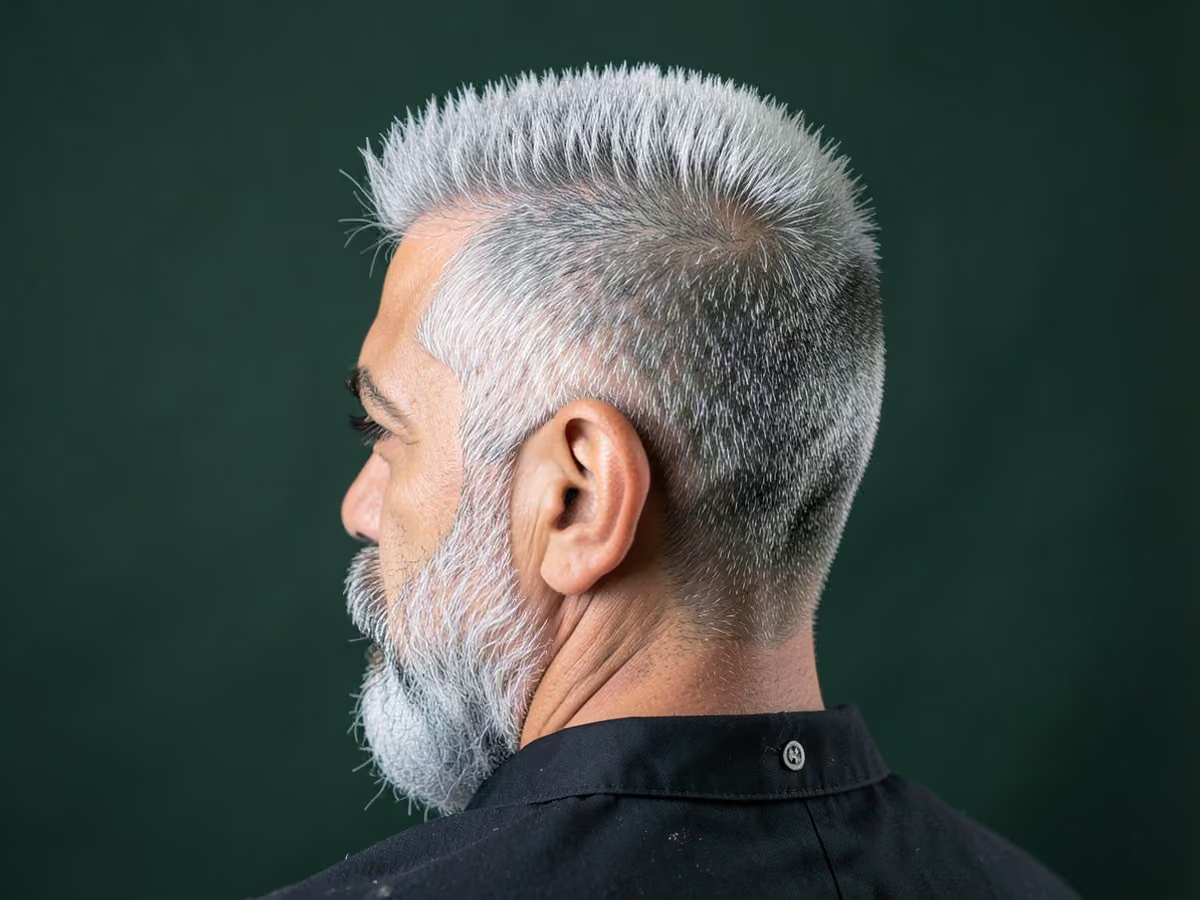
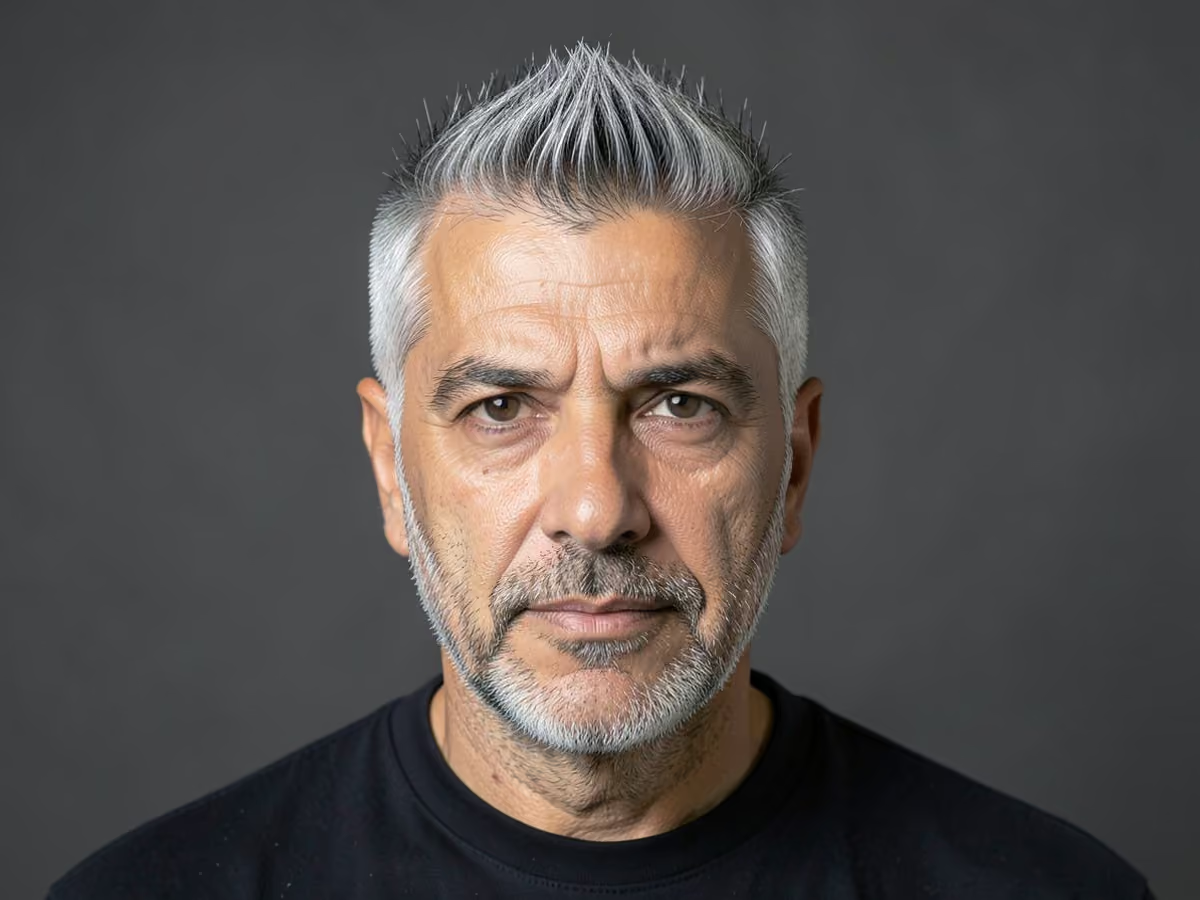
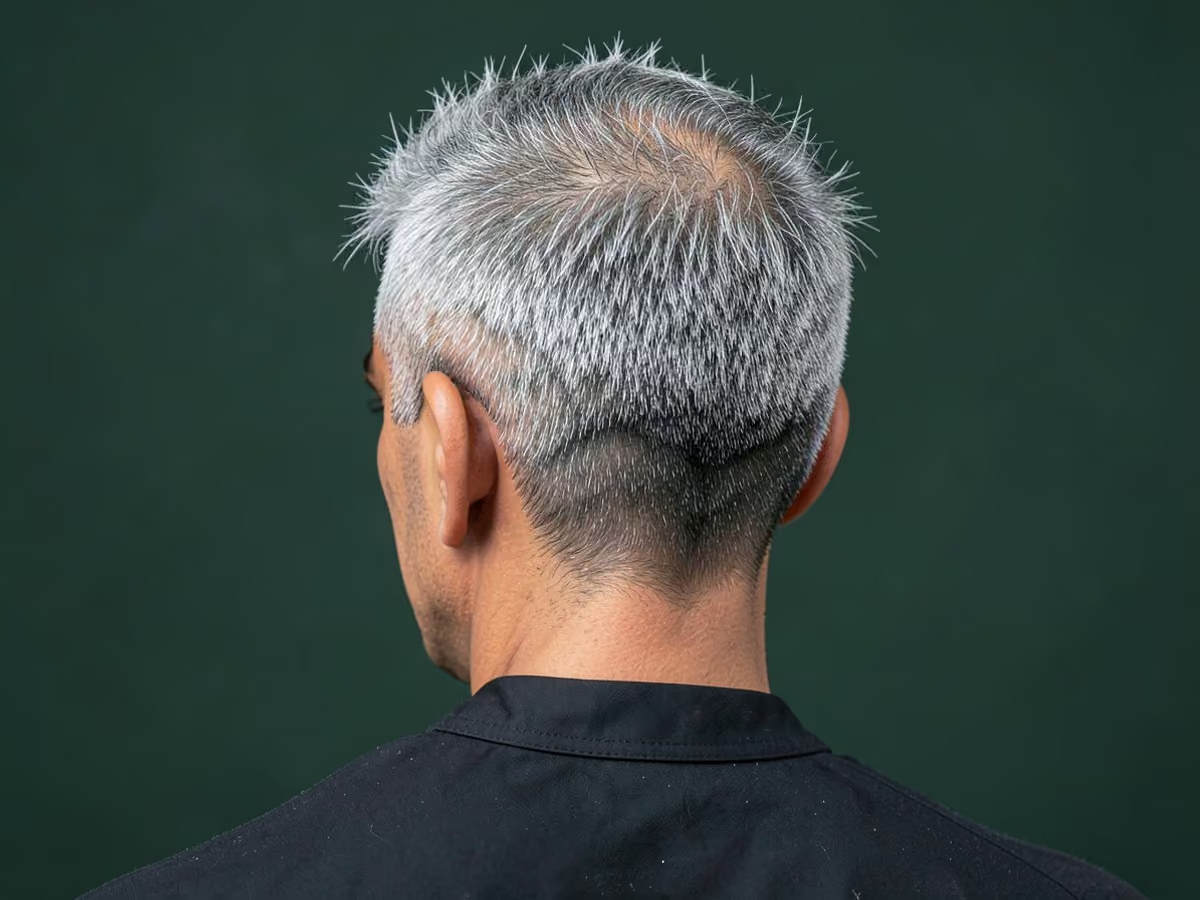
Gray and silver hair often feels coarser and drier, which helps a short spike hold. Keep the top around an inch, with the sides at a #3 or a scissor taper rather than skin. Matte products stop gray hair from looking yellow under shine. Small, low spikes look grown up, while tall points can look forced. The silver fox gallery shows more gray styles.
How to Style at Home
Apply a drop of argan oil to dry hair to calm wiry grays.
Work a small amount of matte paste into the top.
Push the hair up and pinch only the front into short spikes.
Ask Your Barber
"Scissor taper or #3 on the sides, about an inch on top with light texture so it sits in short, low spikes. Keep it natural, not tall."
Trim:Every 2–3 weeks. Beard and fade need blending as both grow.
Best For:Round, oval faces + thick straight or coarse hair.
About This Style
A full or short boxed beard balances spiky hair by adding weight at the jaw to match the height on top. Barbers fade the sides into the beard, usually from a #1 at the temple to a #3 at the sideburn, so the two connect. The top works best at about two inches. This pairing lengthens round faces from both ends, top and chin.
How to Style at Home
Style the top with matte clay into short, textured spikes.
Brush beard oil through the beard and shape it with a beard brush.
Check that the sideburns blend into the beard without a gap.
Ask Your Barber
"Mid fade from a #1 blended into my beard at the sideburns, two inches on top for spikes, beard trimmed to a short box shape."
Trim:Every 3–4 weeks. Stubble is trimmed at home every few days.
Best For:Square, oval faces + straight or wavy hair.
About This Style
Three to five days of growth, kept even with a trimmer on a short setting, adds shadow to the jaw without the upkeep of a full beard. With spikes on top, stubble keeps the face from looking too young. A low taper on the sides suits this softer pairing, and the top can stay at one and a half to two inches. Trim the neckline so the stubble does not look unkempt.
How to Style at Home
Trim the stubble to an even length with a beard trimmer.
Apply matte paste to the top and push it into short spikes.
Clean up the neckline under the jaw with the trimmer.
Ask Your Barber
"Can you do a low taper on the sides, one and a half to two inches on top for short spikes. Leave the sideburns long enough to meet my stubble."
Trim:Every 2–3 weeks. Shaved cheeks make side regrowth obvious.
Best For:Round, square faces + straight or coarse hair.
About This Style
Shaved cheeks with a goatee around the chin and mouth give a narrow, vertical shape to the lower face, which echoes the upward lines of the spikes. That combination lengthens round faces in particular. A high fade suits it, since there is no beard to connect to. Keep the top at around two inches and the goatee trimmed short and tight to the chin.
How to Style at Home
Shave the cheeks and trim the goatee to a short, even length.
Blow-dry the top upward, then add texture clay.
Twist the top into separate spikes, slightly taller at the front.
Ask Your Barber
"High fade from skin, about two inches on top cut for spikes, sideburns taken short since I wear a goatee and shave my cheeks."
Recommended Products
Texture Clay
Beard Balm
How Do You Ask Your Barber for Spiky Hair?
Name three things: the top length, the side length and the texture. A typical request is a #2 low fade on the sides, about two inches on top, point cut so it separates when pushed up. Ask the barber to keep the top a little longer at the front than the crown if you want the spikes to angle forward, or even all over for a vertical look. Our clipper guard numbers chart converts guards into inches.
Avoid asking for thinning shears on fine hair, since they leave short broken pieces that frizz rather than spike. Point cutting and slide cutting with scissors remove weight while keeping the ends strong. If you are unsure how to phrase it, how to ask for texture without thinning shears gives exact wording. Bring a photo from the front as well, because spike size varies a lot from one cut to the next.
Clipper Guards Used in Spiky Hairstyles for Men Styles
A clipper guard is the plastic comb that clips onto the blade and sets how much hair is left: a #1 leaves 3 mm (1/8 inch), each step up adds about 3 mm. The right column lists the cards on this page that call for each guard. See the full clipper guard numbers guide for the complete chart.
Clipper guard sizes for spiky hairstyles for men styles
Start with towel-dried hair, not soaking wet, so product grips the strands. Blow-dry the top upward with your fingers or a brush for thirty seconds; heat sets the roots vertical and does half the work. Warm a pea-size amount of matte paste or clay between your palms until it looks clear, then rake it through from the roots to the ends. Pinch small sections between thumb and forefinger and twist the tips to form points.
Use gel only if you want the wet, hard finish; apply it to damp hair and shape the points before it dries. Texture powder works on short, fine hair because it adds grip without weight. The pomade vs clay vs wax guide compares hold and shine, and for a looser, softer version of a short textured top see the fluffy hair gallery.
What Spiky Hair Mistakes Should You Avoid?
Too much product is the most common problem. A thick layer of gel or wax weighs the points down by midday and makes them look greasy; start with less than you think and add more. Growing the top too long is the second: past about three inches, most hair folds over under its own weight. Uniform, evenly spaced spikes can also look dated, so vary the size and direction a little. Wash product out each night, as dried gel flakes and dulls the hair.
Which Spiky Hairstyles for Men Is Right for You?
Pick your hair type and how much upkeep you will put in. The matches below come from the Best For and Maintenance notes on each card. Upkeep follows the Maintenance badge: low means a cut every 3 to 6 weeks and almost no daily styling, high means weekly line-ups or daily product.
Between one and three inches on top works for most men. Under an inch, the hair is too short to form points and reads as a crew cut. Past three inches, straight hair folds under its own weight unless you use strong gel. Coarse hair can spike at the longer end of that range.
Q2: What is the best product for spiky hair?+
Matte paste or texture clay suits most modern spiky styles, since they hold firm without shine and wash out easily. Light gel gives the wet, defined spikes of the early 2000s. Fine hair does better with texture powder or a thickening spray first, because heavy products pull thin strands flat.
Q3: Can you get spiky hair with curly hair?+
Yes, in two ways. Keep loose curls short, around an inch, then blow-dry them straight upward and finish with a firm matte paste. Tight curls and coils can be twisted into small spikes with a curl sponge or by hand, then held with a light gel. Longer curls rarely hold a vertical spike.
Q4: Are spiky hairstyles still in style?+
Spiky hair has returned in a softer form. Heavy, uniform gel spikes look dated, but short, matte, uneven points over a fade are common barbershop requests, and anime-inspired and frosted-tip versions show up among younger clients. The textured version fits most offices and schools.
Q5: How do you keep spikes up all day?+
Blow-dry the roots upward first, since a set root holds better than any product. Use a firm-hold paste or clay, work it into the roots as well as the tips, and avoid touching your hair afterward. In humid weather, a light gel underneath a matte product helps the points resist moisture.
Q6: What fade goes with spiky hair?+
A low or mid fade suits most spiky cuts and grows out gently. A high or skin fade makes the spikes look taller and gives more contrast, but needs a trim every two weeks. A scissor taper or a #3 on the sides suits offices and older men who want a softer outline.