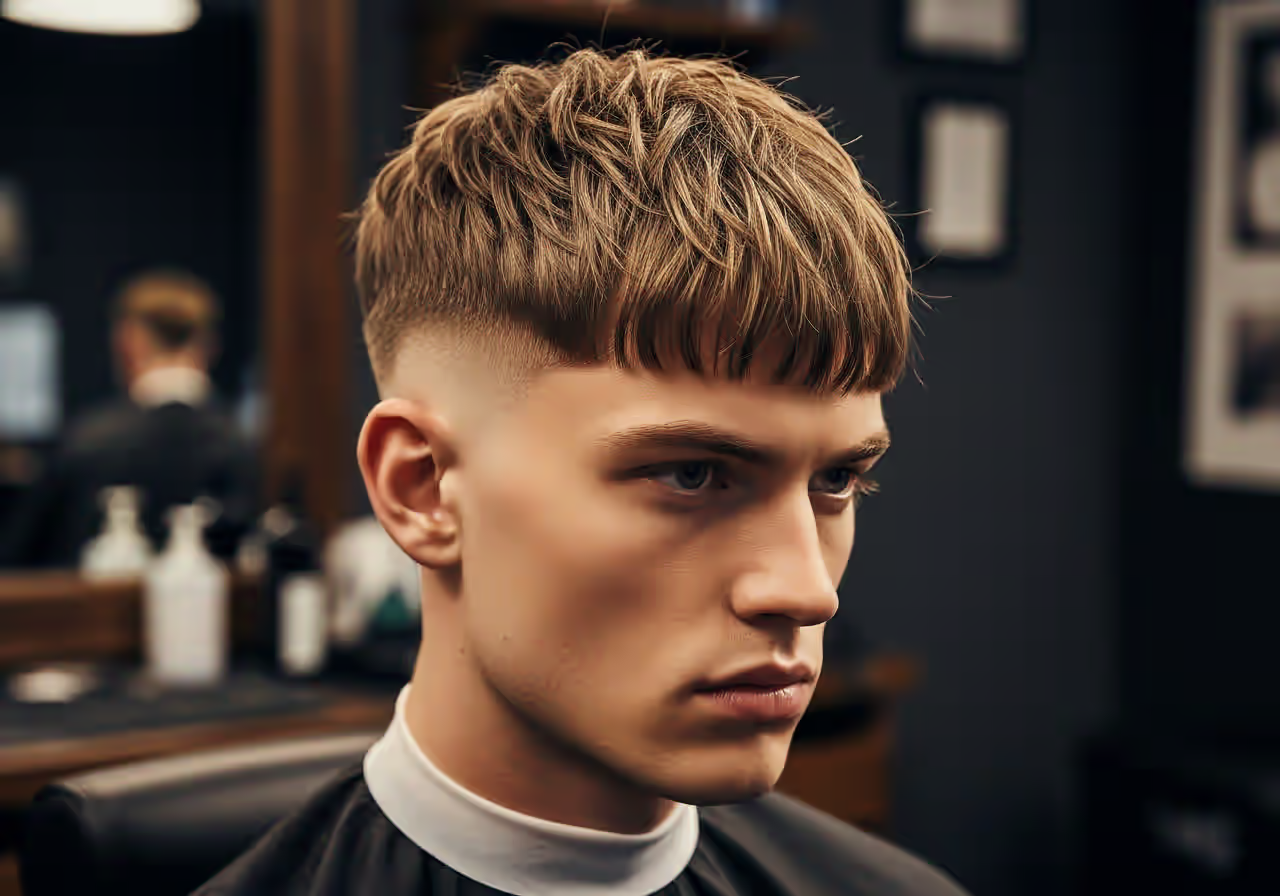
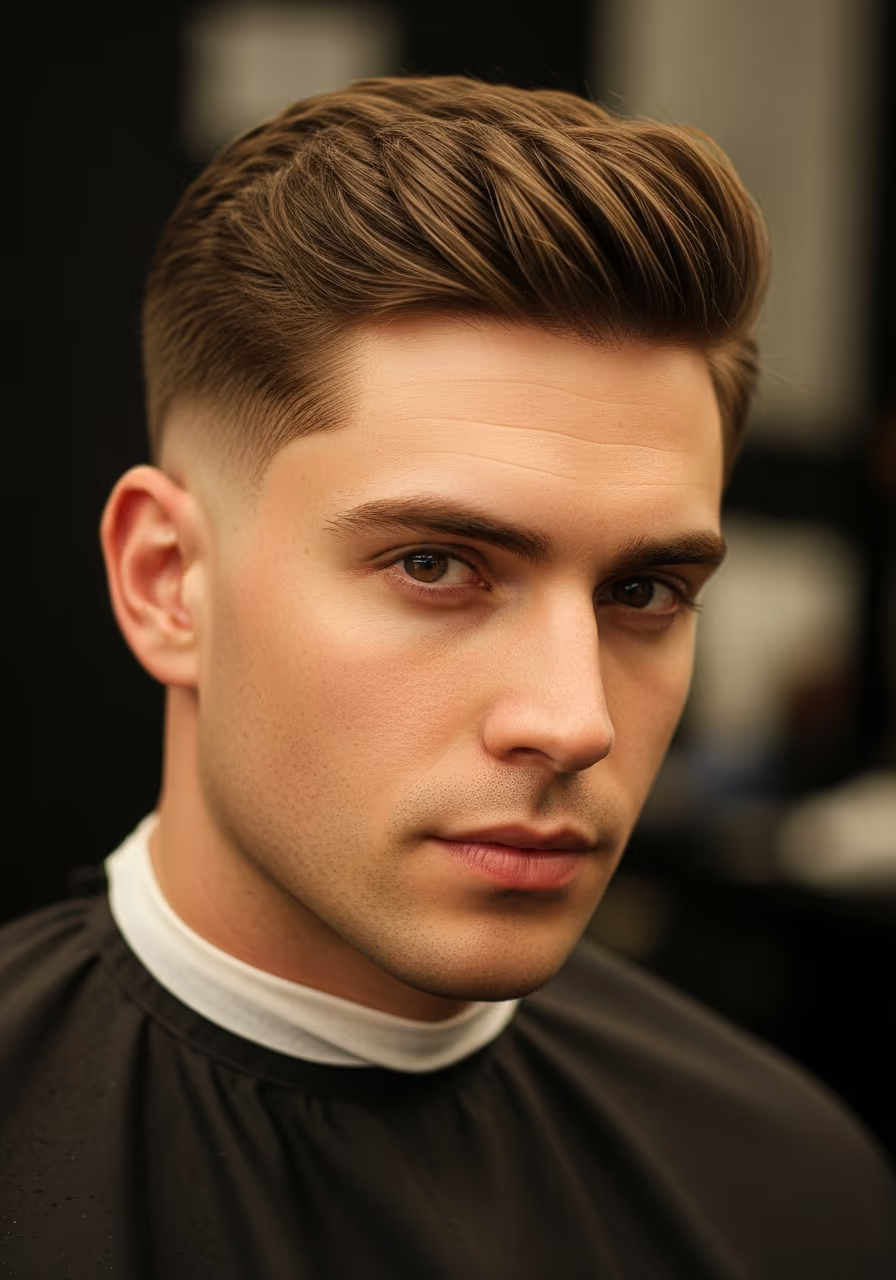
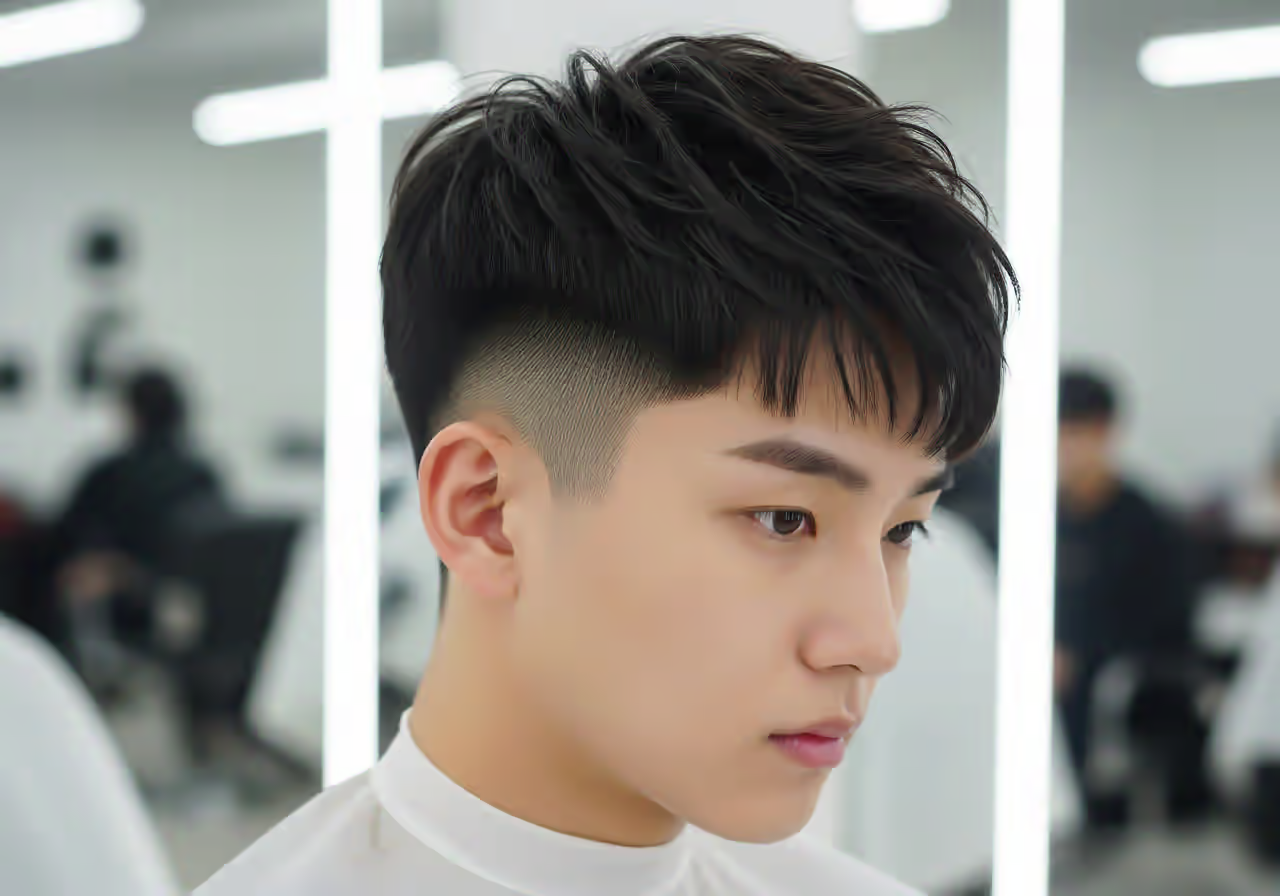
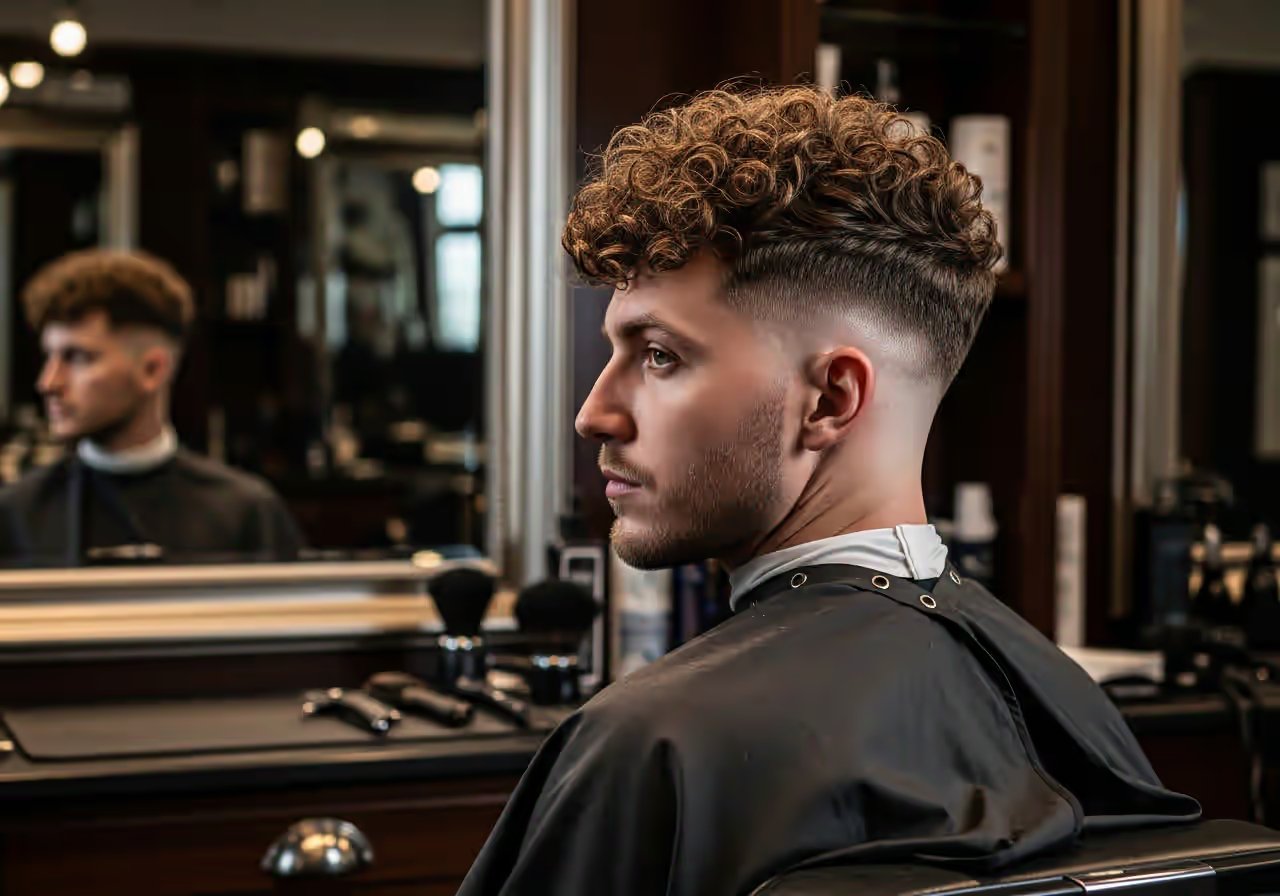
Ivy League haircut for men

Ivy League Haircut:
24 Best Styles 2026

Also called the Harvard clip or Princeton, it is a crew cut grown long enough to take a side part.

By Jessica Hamilton, Editor · Updated

Quick answer: An Ivy League is a longer crew cut. The sides and back are tapered or faded short, and the top is left about 1.5 to 2 inches long, longest at the front, so it can be parted and combed to the side. Expect skin to a #3 on the sides and a trim every 2 to 3 weeks.

Ivy League Haircut Styles at a Glance

Every style on this page with its clipper guard, top length and trim interval. Tap a name to jump to that card.

24 styles compared
Ivy League Haircut styles compared
StyleSides (guard)TopTrim everyBest for
Classic Ivy League#1 to #22 to 3 in3 to 4 weeksProfessional and refined settings
Ivy League Side Part#1 to #2–3 to 4 weeksRefined, formal, professional looks
Short Ivy League#1 to #2–2 to 3 weeksLow-effort, easy upkeep
Long Ivy League#2–4 to 6 weeksMore volume and movement on top
Ivy League Low Taper#1 to #2–2 to 3 weeksProfessional, everyday wear
Ivy League Mid Fade#1 to #3–2 to 3 weeksThe balanced modern all-rounder
Ivy League High Fade#0.5 to #2–2 weeksBold, sharp, high-contrast
Ivy League Skin Fadeskin to #2–2 weeksSharp, modern, clean-cut wearers
Ivy League Taper#1 to #2–3 to 4 weeksClassic, understated, classic
Ivy League Burst Fade#1 to #2–2 to 3 weeksTrend-forward, modern looks
Textured Ivy League#1 to #2–3 weeksAdding movement; thicker hair
Ivy League Comb Over#1 to #2–3 weeksA sharp, classic crossover
Ivy League Quiff#1 to #2–2 to 3 weeksA little height and flexibility
Modern Ivy League#1 to #2–2 to 3 weeksA current, sharp everyday look
Curly Ivy League#1 to #2–3 weeksNatural curls (3A–3C)
Wavy Ivy Leaguescissor cut–3 weeksWavy hair, natural texture
Ivy League for Thick Hairskin to #2–3 weeksThick, dense hair
Ivy League for Thin Hair#1 to #2–3 weeksThinning or fine hair
Ivy League Hard Part#1 to #2–2 weeksAdding razor-sharp definition
Ivy League Undercut#1 to #2–2 to 3 weeksBold, high-contrast statement
Ivy League Crew Cut#2–2 to 3 weeksYouthful, clean, low-effort
Ivy League with Beard#1 to #2–3 weeksA fuller, more mature look
Professional Ivy League#1 to #2–3 to 4 weeksOffice and formal settings
Princeton Cut#1 to #2–3 to 4 weeksA slightly longer collegiate classic

Ivy League Haircut: What to Know

The Ivy League (also called the Harvard clip or Princeton) is the groomed, preppy cousin of the crew cut: short tapered or faded sides with the top left just long enough to part and sweep to one side. Born on Ivy League campuses in the early twentieth century, it is one of the most refined, practical cuts in barbering, sharp enough for the boardroom, easy enough for every day. Below are 24 ways to wear it in 2026, from the classic taper to skin fades, textured tops, and beard pairings.

The Ivy League is one of several preppy cuts covered in our frat haircuts gallery, which also includes swoops, crew cuts and longer flows.

What Is an Ivy League?

An Ivy League is a men's haircut (also known as the Harvard clip or Princeton cut) that is essentially a longer crew cut: the sides and back are tapered or faded short, while the top, especially at the front, is left long enough (usually 1.5 to 2 inches) to part and comb to the side. It originated on elite US college campuses in the early 1900s, and it is one of the most professional, flexible cuts there is, worn with a soft taper for a classic look or a skin fade for a modern edge.

Ivy League: Quick Face Shape Guide

  • Oval: Any Ivy League. The most balanced face shape for the look.
  • Square: Classic side part: complements a strong jaw.
  • Round: Ivy League with a high fade and a little volume. Adds length.
  • Heart: Textured Ivy League. Softens a wider forehead.
  • Oblong: Low-fade Ivy League, keep the height down: avoid stretching the face.

How to Cut the Perfect Ivy League (Barber Instructions)

Pro tip: the whole cut hinges on the front. Leave the top longest at the hairline so it can take a clean part, graduating shorter toward the crown. Too short at the front and it is just a crew cut.

  1. 1

    Prep

    Wash and towel-dry; find the natural part.

  2. 2

    Sides & Back

    Clipper a taper or a low, mid, high, or skin fade.

  3. 3

    Top Length

    Leave 1.5 to 2 inches on top (more for a long Ivy League), longest at the front.

  4. 4

    Graduation

    Scissor the top so the front is long enough to part, graduating shorter toward the crown.

  5. 5

    The Part

    Set a defined side part, natural or razor-shaved.

  6. 6

    The Sweep

    Comb the top across from the part to one side.

  7. 7

    Finish

    Set with a blow-dry and pomade or clay; clean the neckline and edges.

Universal Barber Script

"I want an Ivy League, [taper / low / mid / high / skin] fade on the sides, 1.5 to 2 inches on top, longest at the front so I can part it and comb it to the side."

Ivy League vs Crew Cut: What is the Difference?

Two short, classic cuts that get confused: here is how they actually differ.

Ivy League vs Crew Cut: What is the Difference?
Ivy League 2026Crew Cut
TopLonger (1.5–2 inches), enough to partShorter, brushed forward
StylingParted and combed to the sideMinimal: a quick brush
FlexibilityMore: part, comb over, add volumeSimpler, more uniform
FormalityDressier, boardroom-readyCasual to smart
Length needed1.5 inches or more on topHalf an inch to an inch
MaintenanceEvery 3–4 weeksEvery 3–4 weeks

Classic, Side Part, Short and Long Ivy League

The Classic, Side Part, Short, and Long Ivy League, the classic collegiate foundations of the cut.

Style images are AI-generated illustrations.

Classic Ivy League

Sides
#1 to #2
Top
2 to 3 in
Trim
3 to 4 weeks
Maintenance:
Medium
Trim:Every 3–4 weeks.
Best For:Professional and refined settings.

About This Style

The classic Ivy League keeps the sides short and tapered while leaving the top long enough, usually two to three inches, to comb into a neat, forward-brushed shape. It is one of the most useful professional cuts because the proportions work on almost any face shape without adjustment. Growing it out simply means combing the top a little further forward before the next trim.

How to Style at Home

  1. Comb a little Pomade through the two to three inch top while it is damp.
  2. Brush the top forward and slightly to one side with the comb.
  3. Smooth flyaways at the edges with a fine-tooth comb.

Ask Your Barber

"Classic Ivy League, short tapered sides, top long enough to comb forward neatly, nothing too dramatic. Use a #1 at the sideburns and nape, #2 above."

Recommended Products

Pomade

Ivy League Side Part

Sides
#1 to #2
Trim
3 to 4 weeks
Maintenance:
Medium
Trim:Every 3–4 weeks.
Best For:Refined, formal, professional looks.

About This Style

Adding a defined side part turns the classic Ivy League into a more formal, structured style, with the part combed in sharply rather than left loose. This suits put-together, professional settings where precision matters more than texture. The taper on the sides stays subtle, keeping attention on the clean part line rather than any contrast at the sides.

How to Style at Home

  1. Run a pomade-coated comb through damp hair before parting.
  2. Draw the side part along a straight line with the fine-tooth end.
  3. Sweep the longer side across and smooth it flat with your palm.

Ask Your Barber

"Ivy League with a sharp side part, swept across neatly, tapered sides, and a dapper, professional finish. Use a #1 at the sideburns and nape, #2 above."

Recommended Products

Pomade

Short Ivy League

Sides
#1 to #2
Trim
2 to 3 weeks
Maintenance:
Low
Trim:Every 2–3 weeks.
Best For:Low-effort, easy upkeep.

About This Style

Trimming the top down to just enough length to hold a part makes this the lowest-maintenance version of the Ivy League, ideal for anyone who wants a low-effort style that still looks put together. The sides stay tapered short as well, so the whole cut reads as tidy without needing much daily attention. It holds its shape well for two to three weeks between trims.

How to Style at Home

  1. Rub a small amount of matte paste into dry hair.
  2. Comb the short top to one side so the part shows.
  3. That is it; once the part is set, no more styling is needed.

Ask Your Barber

"Short Ivy League, keep it short on top, just enough length to part, and easy to manage day to day. Use a #1 at the sideburns and nape, #2 above."

Recommended Products

Matte Paste

Long Ivy League

Sides
#2
Trim
4 to 6 weeks
Maintenance:
Medium
Trim:Every 4–6 weeks.
Best For:More volume and movement on top.

About This Style

Leaving more length on top than the classic version gives this cut extra volume and movement while the sides stay short in contrast, which suits anyone wanting a fuller silhouette without leaving the Ivy League family entirely. The longer top needs more product and drying time than the shorter versions. It can go longer between trims since the extra length has more room to grow before looking unkempt.

How to Style at Home

  1. The longer top needs a generous amount of pomade worked into damp hair.
  2. Blow-dry it forward, lifting at the roots to build volume.
  3. When mostly dry, comb it into a swept shape.

Ask Your Barber

"Long Ivy League, leave more length on top for volume, short sides, swept forward once styled. Use a #2 on the sides, scissors on top."

Recommended Products

Pomade

Ivy League Fades & Tapers

Low, mid, high, and skin fades plus the classic taper and a modern burst: every way to set the sides.

Ivy League Low Taper

Sides
#1 to #2
Trim
2 to 3 weeks
Maintenance:
Low
Trim:Every 2–3 weeks.
Best For:Professional, everyday wear.

About This Style

A low taper keeps the gradual shortening close to the hairline rather than climbing further up the head, giving a subtle, understated finish suited to everyday professional wear. The top keeps its usual Ivy League length and forward-combed shape. Because the taper is gentle, it grows out gracefully without leaving an obvious line to maintain.

How to Style at Home

  1. Pomade through damp hair, then part the top with a fine-tooth comb.
  2. Comb the top forward and across from the part.
  3. Leave the low taper untouched; it grows out softly on its own.

Ask Your Barber

"Ivy League with a low taper, part the top neatly, taper the sides low and subtle for everyday wear. Use a #1 at the sideburns and nape, #2 above."

Recommended Products

Pomade

Ivy League Mid Fade

Sides
#1 to #3
Trim
2 to 3 weeks
Maintenance:
Low
Trim:Every 2–3 weeks.
Best For:The balanced modern all-rounder.

About This Style

Pairing the Ivy League with a mid fade brings a bit more contrast to the sides than a taper does, without going as sharp as a high fade, making it a balanced, modern all-rounder. The top keeps its classic length and part. This version needs slightly more frequent barber visits than a taper to keep the fade line crisp.

How to Style at Home

  1. Set a defined part in damp hair after combing pomade through.
  2. Comb the top across so it sits neatly over the mid fade.
  3. Check both sides of the fade in the mirror between visits.

Ask Your Barber

"Ivy League with a mid fade, part the top, mid fade the sides for a modern but balanced look. Use a #1 to #3 on the sides."

Recommended Products

Pomade

Ivy League High Fade

Sides
#0.5 to #2
Trim
2 weeks
Maintenance:
Medium
Trim:Every 2 weeks.
Best For:Bold, sharp, high-contrast.

About This Style

A high fade climbs further up the head than a mid or low fade, creating bold, sharp contrast between the close sides and the classic Ivy League top. This suits anyone wanting a more current, high-impact version of the cut rather than a traditional, understated one. Because the fade sits higher, it needs trimming more often to avoid growing into a blurred line.

How to Style at Home

  1. Pomade into damp hair, then a clear part with the comb.
  2. Keep the top neat so it contrasts cleanly with the high sides.
  3. Book every two weeks; the high line blurs quickly.

Ask Your Barber

"Ivy League with a high fade, part the top, high fade the sides for a sharp, high-contrast look. Use a #0.5 or #1 up high into a #2."

Recommended Products

Pomade

Ivy League Skin Fade

Sides
skin to #2
Trim
2 weeks
Maintenance:
High
Trim:Every 2 weeks.
Best For:Sharp, modern, clean-cut wearers.

About This Style

Taking the sides all the way down to bare skin gives the Ivy League its sharpest possible contrast, suited to clean-cut wearers who want a modern, striking finish. The top keeps its traditional length and part, so the style stays recognizably Ivy League despite the dramatic sides. This is the highest-maintenance version, needing fade touch-ups roughly every two weeks.

How to Style at Home

  1. Comb pomade into damp hair and part the top cleanly.
  2. Pat down stray hairs above the bald section with your palm.
  3. Moisturize the bare skin if it feels tight after the fade.

Ask Your Barber

"Ivy League with a skin fade, part the top, bald fade the sides for maximum contrast. Take the bottom to skin (#0), blended into a #1 then a #2."

Recommended Products

Pomade

Ivy League Taper

Sides
#1 to #2
Trim
3 to 4 weeks
Maintenance:
Low
Trim:Every 3–4 weeks.
Best For:Classic, understated, classic.

About This Style

The classic taper version favors a gradual, even shortening down the sides rather than a hard fade line, giving the cut a classic, understated feel that has held up for decades. It suits anyone who prefers a traditional look over a trend-driven one. The lack of a sharp line also means it grows out more gracefully than a fade would.

How to Style at Home

  1. Pomade into damp hair, then comb a classic part.
  2. Brush the top over neatly from the part.
  3. Let the tapered sides be; they need no product.

Ask Your Barber

"Ivy League with a classic taper, part the top, taper the sides gradually for a classic look. Use a #1 at the sideburns and nape, #2 above."

Recommended Products

Pomade

Ivy League Burst Fade

Sides
#1 to #2
Trim
2 to 3 weeks
Hair
straight
Maintenance:
Medium
Trim:Every 2–3 weeks.
Best For:Trend-forward, modern looks.

About This Style

A burst fade curves around the ear instead of cutting a straight line, giving this version of the Ivy League a trend-forward, modern edge while the top keeps its familiar part and length. It suits anyone wanting a current twist on a traditional style. The curved fade needs slightly more frequent maintenance than a straight taper since the shape grows out unevenly.

How to Style at Home

  1. Matte clay on dry hair keeps the finish shine-free before you part it.
  2. Comb the top into shape with a clearly defined part.
  3. Keep the clay clear of the burst so the curve around the ear stays clean.

Ask Your Barber

"Ivy League with a burst fade, part the top, burst around the ear for a modern touch. Use a #1 to #2 following the curve."

Recommended Products

Matte Clay

Textured Ivy League, Comb Over and Quiff

Textured, comb-over, quiff, and modern versions, from relaxed and matte to volumised and sharp.

Textured Ivy League

Sides
#1 to #2
Trim
3 weeks
Maintenance:
Medium
Trim:Every 3 weeks.
Best For:Adding movement; thicker hair.

About This Style

Adding texture to the top breaks up the traditionally smooth, combed finish of the Ivy League, giving it more movement and a slightly looser look that suits thicker hair wanting some added visual interest. The sides stay tapered as usual. This version needs a bit more product than the classic combed style to keep the texture defined through the day.

How to Style at Home

  1. Dust texture powder into damp roots for lift.
  2. Work matte clay through the top to define pieces.
  3. Comb loosely to the side instead of smoothing it flat.

Ask Your Barber

"Textured Ivy League, texture the top for movement, comb it loosely to the side rather than smoothing it flat. Use a #1 at the sideburns and nape, #2 above."

Recommended Products

Texture Powder
Matte Clay

Ivy League Comb Over

Sides
#1 to #2
Trim
3 weeks
Maintenance:
Medium
Trim:Every 3 weeks.
Best For:A sharp, classic crossover.

About This Style

A comb over crossed with the Ivy League brings a longer top combed fully to one side over a tapered base, giving a clean-cut, classic finish that reads as slightly more formal than the standard version. It suits settings that call for a deliberate, controlled look. The longer top needs daily restyling, though the underlying taper holds its shape for weeks.

How to Style at Home

  1. Damp hair gets a comb-through of pomade.
  2. Follow the part and comb the longer top firmly to one side.
  3. Finish the edges with a fine-tooth comb.

Ask Your Barber

"Ivy League comb over, longer top combed over a side part, tapered sides for a put-together look. Use a #1 at the sideburns and nape, #2 above."

Recommended Products

Pomade

Ivy League Quiff

Sides
#1 to #2
Trim
2 to 3 weeks
Maintenance:
Medium
Trim:Every 2–3 weeks.
Best For:A little height and flexibility.

About This Style

Lifting the front section into a quiff gives the Ivy League a bit of height and flexibility that the classic combed-forward version does not have, suited to anyone wanting a slightly more dynamic finish. The sides stay tapered as usual, keeping the base of the cut recognizable. The quiff needs daily blow-drying to hold its lift.

How to Style at Home

  1. Concentrate matte clay at the front of damp hair.
  2. Blow-dry that section upward and back for height.
  3. Once mostly dry, sweep the lifted front to one side.

Ask Your Barber

"Ivy League quiff, lift the front a little for height, sweep to the side, tapered sides underneath. Use a #1 at the sideburns and nape, #2 above."

Recommended Products

Matte Clay

Modern Ivy League

Sides
#1 to #2
Trim
2 to 3 weeks
Maintenance:
Medium
Trim:Every 2–3 weeks.
Best For:A current, sharp everyday look.

About This Style

This current take on the Ivy League fades the sides instead of tapering them and adds a little more volume on top than the classic version, giving it a sharper, more everyday-current look while keeping the same basic proportions. It suits anyone wanting a fresh update on a traditional style. Regular trims keep the fade and the top volume in balance.

How to Style at Home

  1. Matte clay into damp hair before styling.
  2. Blow-dry the top for volume, lifting at the roots.
  3. Sweep it to one side once dry, keeping the faded sides clean.

Ask Your Barber

"Modern Ivy League, fade the sides, a little more volume on top, swept to the side. Use a #1 to #2 on the sides."

Recommended Products

Matte Clay

Ivy League by Hair Type

The cut tuned for curly, wavy, thick, and thinning hair, the same neat finish, adapted to your texture.

Curly Ivy League

Sides
#1 to #2
Trim
3 weeks
Hair
curly
Maintenance:
Medium
Trim:Every 3 weeks.
Best For:Natural curls (3A–3C).

About This Style

For natural curls in the 3A to 3C range, the Ivy League is cut with enough length on top to let the curl pattern show rather than forcing it flat, while the sides stay tapered to keep things tidy. This suits anyone who wants to keep their natural texture rather than straightening it for a traditional part. Curl definition needs a specific routine separate from the taper maintenance.

How to Style at Home

  1. Scrunch curl cream into damp 3A to 3C curls from ends to roots.
  2. Let them air-dry without brushing.
  3. Gently separate any clumped curls with your fingertips once dry.

Ask Your Barber

"Curly Ivy League, keep some length and curl on top, taper the sides to keep it neat. Use a #1 at the sideburns and nape, #2 above."

Recommended Products

Curl Cream

Wavy Ivy League

Sides
scissor cut
Trim
3 weeks
Hair
wavy
Maintenance:
Medium
Trim:Every 3 weeks.
Best For:Wavy hair, natural texture.

About This Style

Wavy hair holds the Ivy League's shape with natural movement instead of a stiff, combed part, which suits anyone wanting the style to look a little more relaxed. The sides stay tapered while the top is combed loosely rather than pressed flat. Minimal product is needed since the natural wave does most of the styling work.

How to Style at Home

  1. Before combing, spray sea salt into damp hair.
  2. Comb the top loosely to the side, following the wave.
  3. Let the ends fall naturally instead of flattening them.

Ask Your Barber

"Wavy Ivy League, work with my waves, comb to the side loosely, tapered sides. Scissor cut, no clipper."

Recommended Products

Sea Salt Spray

Ivy League for Thick Hair

Sides
skin to #2
Trim
3 weeks
Maintenance:
Medium
Trim:Every 3 weeks.
Best For:Thick, dense hair.

About This Style

Thick, dense hair carries a full Ivy League top without looking sparse, and this version pairs it with a skin fade on the sides to offset the weight and keep the whole head in proportion. It suits anyone whose hair holds shape naturally with minimal product. The skin fade needs more frequent upkeep than a taper since thick hair grows out visibly fast at the sides.

How to Style at Home

  1. Thick hair holds well with a modest amount of pomade worked evenly through damp hair.
  2. Comb the full top over into a defined part.
  3. Check that the skin fade line still looks sharp against the dense top.

Ask Your Barber

"Ivy League for thick hair, full top combed over, skin fade taper on the sides. Take the bottom to skin (#0), blended into a #1 then a #2."

Recommended Products

Pomade

Ivy League for Thin Hair

Sides
#1 to #2
Trim
3 weeks
Maintenance:
Low
Trim:Every 3 weeks.
Best For:Thinning or fine hair.

About This Style

For thinning or fine hair, the Ivy League is cut with the top combed to one side for coverage rather than left loose, which helps create the appearance of more density than a center-fallen style would. The sides stay tapered short and simple. Lightweight product is essential here since heavier pomades can make fine hair look flat and reveal the scalp.

How to Style at Home

  1. Tap texture powder into the roots for lift and grip.
  2. Comb the top to one side for coverage.
  3. Skip heavy pomades that flatten fine strands and show scalp.

Ask Your Barber

"Ivy League for thin hair, comb the top to one side for coverage, tapered sides kept simple. Use a #1 at the sideburns and nape, #2 above."

Recommended Products

Texture Powder

Specialty & Crossover Ivy League

Hard part, undercut, and crew-cut crossover versions for the sharpest and most specific takes.

Ivy League Hard Part

Sides
#1 to #2
Trim
2 weeks
Maintenance:
Medium
Trim:Every 2 weeks.
Best For:Adding razor-sharp definition.

About This Style

A hard part shaves a thin line into the side to make the part permanent between washes, giving the Ivy League a sharper, more razor-defined edge than a combed part alone. It suits anyone wanting a more graphic, deliberate finish. The shaved line needs refreshing every couple of weeks alongside the rest of the cut to stay crisp.

How to Style at Home

  1. Pomade into damp hair, then comb firmly along the shaved line.
  2. Sweep the top over neatly once the part is set.
  3. Refresh the shaved part every couple of weeks to keep it crisp.

Ask Your Barber

"Ivy League with a hard part, shaved part line, swept top, tapered sides. Use a #1 at the sideburns and nape, #2 above."

Recommended Products

Pomade

Ivy League Undercut

Sides
#1 to #2
Trim
2 to 3 weeks
Maintenance:
Medium
Trim:Every 2–3 weeks.
Best For:Bold, high-contrast statement.

About This Style

An undercut disconnects the sides sharply from the top instead of blending them gradually, giving the Ivy League a bold, high-contrast look rather than a traditional, gradual taper. The top is combed over the disconnected line for a striking effect. This version needs consistent upkeep on both the undercut and the top styling to stay sharp.

How to Style at Home

  1. Start with pomade combed through damp hair.
  2. Bring the top over the disconnected line to show off the contrast.
  3. Watch for the undercut blurring into the top; that is when the sides need clipping.

Ask Your Barber

"Ivy League undercut, disconnect the sides sharply, part the top over the undercut line. Use a #1 or #2 on the sides, scissors on top."

Recommended Products

Pomade

Ivy League Crew Cut

Sides
#2
Trim
2 to 3 weeks
Maintenance:
Low
Trim:Every 2–3 weeks.
Best For:Youthful, clean, low-effort.

About This Style

Crossing the Ivy League with a crew cut keeps the top short, just enough to hold a part, paired with tapered sides for a youthful, clean, low-effort look. This suits anyone wanting the shortest practical version of the style without going all the way to a buzz cut. It holds its shape well for two to three weeks with minimal daily styling.

How to Style at Home

  1. A small amount of matte paste goes into dry hair.
  2. Comb the short top to one side with minimal effort.
  3. No further product is needed once the part sits right.

Ask Your Barber

"Ivy League crew cut, short top with enough to part, tapered sides for an easy, clean look. Use a #2 on the sides, scissors over comb on top."

Recommended Products

Matte Paste

Ivy League with Beard, Office & Princeton

A beard pairing, the boardroom professional cut, and the slightly longer Princeton.

Ivy League with Beard

Sides
#1 to #2
Trim
3 weeks
Maintenance:
Medium
Trim:Every 3 weeks.
Best For:A fuller, more mature look.

About This Style

Pairing the Ivy League with a full beard gives a fuller, more mature overall look, with the taper on the sides carried down into the beard line so the two elements connect rather than reading as separate features. This suits anyone growing out facial hair alongside a classic top. Both the taper and the beard line need trimming on a similar schedule to stay aligned.

How to Style at Home

  1. Pomade the hair and beard oil the beard, separately.
  2. Comb the top into its usual part.
  3. Look at the sideburns in the mirror to confirm the taper still flows into the beard.

Ask Your Barber

"Ivy League with a beard, part the top, taper into the beard line so they connect. Use a #1 at the sideburns and nape, #2 above."

Recommended Products

Pomade
Beard Oil

Professional Ivy League

Sides
#1 to #2
Trim
3 to 4 weeks
Maintenance:
Low
Trim:Every 3–4 weeks.
Best For:Office and formal settings.

About This Style

Built specifically for office and formal settings, this version keeps everything understated: a neat side part, a low taper on the sides, and a clean, controlled finish overall rather than added texture or volume. It is one of the most conservative options in the Ivy League family. Low daily maintenance makes it practical for anyone who wants a dapper look without much morning effort.

How to Style at Home

  1. Comb pomade into damp hair, keeping the amount small.
  2. Set a neat side part with a fine-tooth comb.
  3. Smooth flyaways for a controlled finish before work.

Ask Your Barber

"Professional Ivy League, neat side part, low taper, clean and controlled for the office. Use a #1 at the sideburns and nape, #2 above."

Recommended Products

Pomade

Princeton Cut

Sides
#1 to #2
Trim
3 to 4 weeks
Maintenance:
Medium
Trim:Every 3–4 weeks.
Best For:A slightly longer collegiate classic.

About This Style

The Princeton cut is a slightly longer take on the Ivy League, leaving a bit more length on top than the classic version while keeping the same short, tapered sides underneath. This gives it a touch more flexibility for styling, since the extra length can be combed over or swept back depending on the occasion. It suits anyone who wants the Ivy League's structure with a bit more room to work with.

How to Style at Home

  1. Damp hair takes pomade before the top is combed into a classic part.
  2. Leave a little extra length at the front for flexibility.
  3. On dressier days, sweep the longer sections back instead of over.

Ask Your Barber

"Princeton cut, a bit more length than an Ivy League, combed over with short tapered sides. Use a #1 at the sideburns and nape, #2 above."

Recommended Products

Pomade

Maintenance Tips for Ivy League

  • →Sides and fade: every 2–3 weeks (every 2 for a skin fade) to keep the contrast crisp.
  • →Top: every 3–4 weeks, you need the front length to part, so don't let it get cut too short.
  • →Daily styling: 2 minutes. Comb the top to the side and set with pomade or clay and a quick blow-dry.
  • →The part: re-comb with a little water any time it breaks; a razored hard part holds the line longer.
  • →Grows out well into a longer side part or comb over, with no awkward phase.

Best Products for Ivy League

→

Pomade (everyday)

The classic Ivy League product, control and a clean side part, shiny or matte depending on the formula.

→

Matte Clay

For textured and modern Ivy Leagues: hold and movement without shine.

→

Texture Powder

For fine and thinning-hair versions: volume and the look of fullness.

→

Sea Salt Spray

For wavy Ivy Leagues: natural movement and grip.

→

Curl Cream

For curly Ivy Leagues (3A–3C): define the curl on top.

→

Beard Oil

For the Ivy-League-with-beard look, keeps the beard neat against the taper.

Which Ivy League Haircut Is Right for You?

Pick your hair type and how much upkeep you will put in. The matches below come from the Best For and Maintenance notes on each card. Upkeep follows the Maintenance badge: low means a cut every 3 to 6 weeks and almost no daily styling, high means weekly line-ups or daily product.

Ivy League Haircut by hair type and upkeep
Hair typeLow upkeepMedium upkeepHigh upkeep
Straight–Ivy League Burst Fade–
Wavy–Wavy Ivy League–
Curly–Curly Ivy League–
Coily–––

Clipper Guards Used in Ivy League Haircut Styles

A clipper guard is the plastic comb that clips onto the blade and sets how much hair is left: a #1 leaves 3 mm (1/8 inch), each step up adds about 3 mm. The right column lists the cards on this page that call for each guard. See the full clipper guard numbers guide for the complete chart.

Clipper guard sizes for ivy league haircut styles
GuardmminchWhere it goes on this cut
#0.51.5 mm1/16 inIvy League High Fade
#13 mm1/8 inClassic Ivy League, Ivy League Side Part, Short Ivy League and 18 more
#26 mm1/4 inClassic Ivy League, Ivy League Side Part, Short Ivy League and 19 more
#310 mm3/8 inIvy League Mid Fade

Ivy League FAQ

Q1: What is an Ivy League haircut?+
An Ivy League is a men's haircut (also called the Harvard clip or Princeton) that is essentially a longer crew cut. The sides and back are tapered or faded short, while the top is left long enough (1.5 to 2 inches), especially at the front, to part and comb to the side. It originated on elite US college campuses in the early 1900s.
Q2: What is the difference between an Ivy League and a crew cut?+
The length on top. A crew cut is shorter and brushed forward with little styling. An Ivy League leaves the top: especially the front, long enough to part and comb to the side, making it dressier and more forgiving. The Ivy League is the styleable, boardroom-ready upgrade of the crew cut.
Q3: What is the difference between an Ivy League, a Princeton, and a Harvard clip?+
They are essentially the same cut under different names. Harvard clip and Princeton are older, regional names for the Ivy League. In practice, a Princeton is sometimes cut a touch longer on top than a standard Ivy League, but barbers use the three names more or less interchangeably for the short-sides, partable-top collegiate look.
Q4: How long does the top need to be for an Ivy League?+
Usually 1.5 to 2 inches on top, longest at the front so it can be parted and combed to the side. A long Ivy League can run 4 to 6 inches for more volume, while a short one keeps just enough length to part, close to a crew cut. The front length is the key; it has to be enough to take a part.
Q5: Is an Ivy League good for thin or receding hair?+
Yes, it's a smart choice. Combing the top to the side gives natural coverage at the front, and tapered or faded sides minimise the contrast at the temples so thinning is less obvious. Keep it matte rather than shiny, and don't leave the top too long, since excess length can expose thin areas.
Q6: What face shape suits an Ivy League?+
Almost all of them. Oval faces wear any version. Square faces suit the classic side part. Round faces do best with a high fade and a little volume to add length. For a long face, keep it a low fade with the height down. The Ivy League's balanced proportions flatter most shapes.
Q7: How do I ask my barber for an Ivy League?+
Say: 'Ivy League, [taper / low / mid / high / skin] fade on the sides, leave about 1.5 to 2 inches on top, longest at the front so I can part it and comb it to the side.' Mention if you want it classic and combed or textured and matte so they finish it to suit.
Q8: How often should you get an Ivy League?+
Every 3 to 4 weeks to keep it sharp, or every 2 weeks if you have a skin fade, since the faded sides lose their crispness fastest. The top can ride a little longer because you need the front length to part, so don't let it get cut too short.
Q9: Does an Ivy League work with curly or thick hair?+
Both. For curls, the top is kept 1.5 to 2 inches so the curl shows with control while the sides are tapered. For thick hair, a full top combed to the side with a skin fade strips the bulk from the sides and keeps the whole thing slick, thick hair actually holds the parted top beautifully.
Q10: Should I get an Ivy League with a fade or a taper?+
A taper keeps it classic and is the most professional choice, the traditional Ivy League. A fade (low, mid, high or skin) gives a sharper, more modern contrast. Low and mid fades suit most workplaces; high and skin fades are bolder. For the textbook collegiate look, go with a taper or low fade.
Q11: What products work best for an Ivy League?+
Pomade is the classic, control and a clean side part, shiny or matte depending on the formula. Use a matte clay for the textured and modern versions, texture powder to add fullness for thin hair, and a quick blow-dry to set the part before product. Keep the finish appropriate to the occasion.
Q12: Is the Ivy League professional?+
It's one of the most professional cuts there is, the textbook boardroom haircut. The classic taper and low-fade versions read as clean, sharp, and conservative in any office, which is exactly why it has been a go-to for businessmen and professionals for a century.
Edited by
Jessica Hamilton

Editor

As editor, Jessica Hamilton checks every guide against barber, stylist and dermatology sources. Guides are drafted with AI assistance; gallery images are AI-generated illustrations.

Read Full Bio

Ivy League: Final Takeaway

The 24 Ivy League styles above run from the Classic Ivy League to the Princeton Cut, each with its own barber script and upkeep notes. Most of them run skin to a #3 on the sides and need a trim every 2 to 3 weeks, so pick the card closest to your hair type and show your barber its script.

Make us a Preferred Source on Google

See our latest articles first in your Google Search & AI Overviews.

Add as Preferred Source