
How to Talk to Your Barber:
The Complete Guide
Most bad haircuts are communication failures, not skill failures. Learn the exact language that gets you the cut in your head, every time.
By Jessica Hamilton, Editor · Updated
Quick answer: To talk to your barber well, give three specifics: the sides and back, the top, and the finish. Most bad haircuts come from vague requests, so describe what you want in guard numbers and inches instead of words like 'short,' and bring a photo of hair like yours.
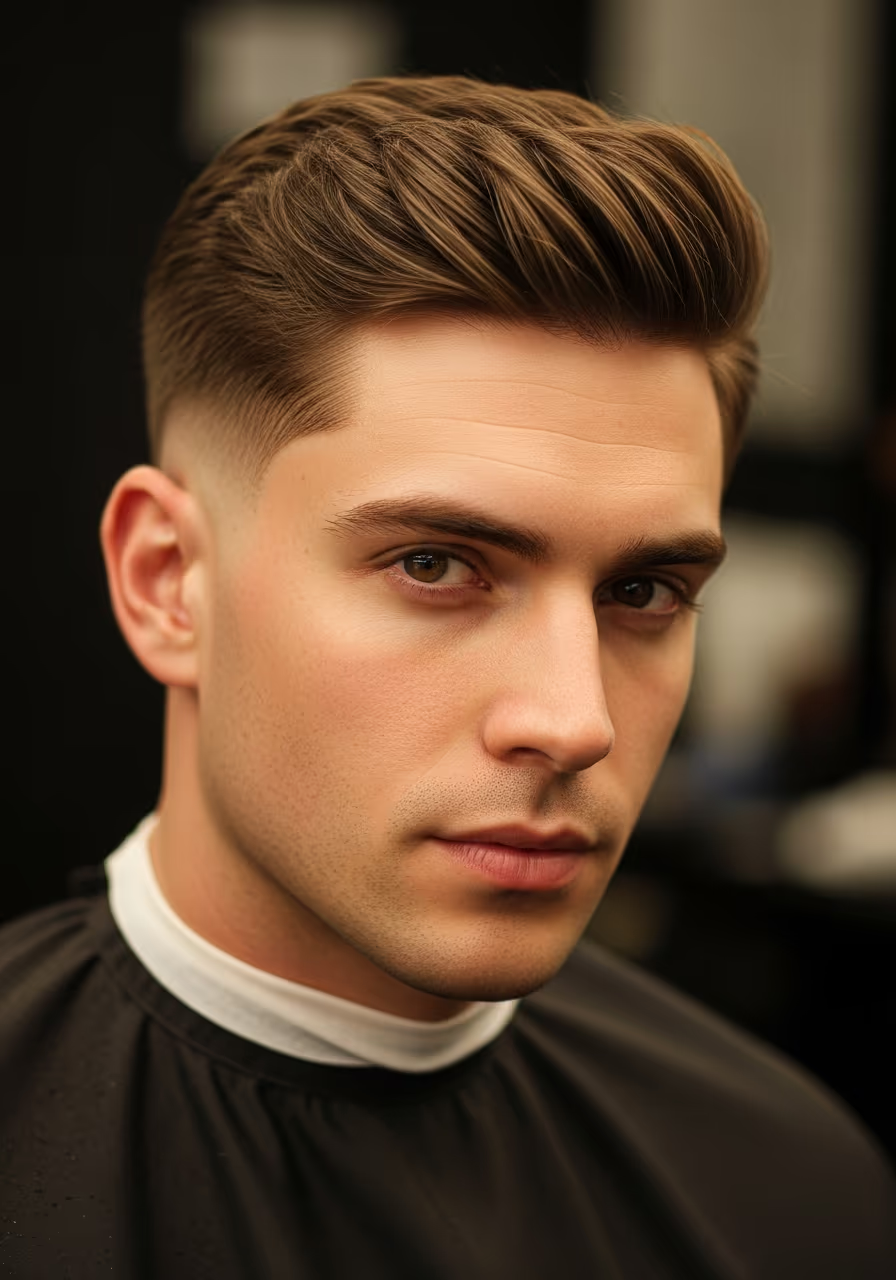
Style images are AI-generated illustrations.
📚 Part of our Barbering Basics guide hub. Explore every related guide in one place.
Knowing how to talk to your barber closes the gap between the haircut you want and the one you get, because that gap is almost always language. Barbers aren't mind-readers, and words like "short" or "not too much" mean different things to different people. This guide gives you the vocabulary and the structure to describe any cut precisely, so you walk out with what you pictured. If a cut has already gone wrong, the haircut problems and fixes hub explains how to describe the problem and get it corrected.
What Should You Tell Your Barber?
Give your barber three specifics, in this order. First, the sides and back: name a fade or a taper, say how short it should go and how high it should start, using guard numbers such as a #1 (1/8 inch) or a #2 (1/4 inch). Second, the top: say how much length to remove in inches or fingers, such as "take off about an inch" or "leave two fingers of length," and the shape you want.
If your barber suggests a change to your request, our list of the worst haircuts for men shows the cuts most often adjusted and why.
If you plan to bring a famous photo, our celebrity haircuts hub shows how to translate each look into barber language before you sit down.
Third, the finish: a line-up or a natural hairline, a tapered or squared neckline, and whether the beard connects.
Bring a clear photo, ideally of hair similar to yours, and show the front and back. Mention how you style it day to day and any cowlicks, and if something looks off during the cut, speak up straight away. With a regular barber, keep a note of the guard numbers and top length used so the next cut starts from the same point.
Before you sit down, check you can answer each of these:
- The sides & back: fade or taper? How short, and how high? (Guard numbers help; see below.)
- The top: how much length to remove (in inches or fingers), and the shape/style you want.
- The finish: line-up or natural hairline? Neckline tapered or squared? Beard connected or separate?
Example: a full request
"Mid taper fade starting at the temple, a #1 at the bottom blended to a #3 on the sides. Take about an inch off the top and leave it textured so I can push it forward. Natural hairline, tapered neckline, and please don't connect the beard."
Why Use Numbers Instead of Words Like Short?
"Short" is the most dangerous word in the barbershop. Words like "short," "a little" or "not too much" mean different amounts to different people, so the barber is left to guess. A guard number or a measurement in inches removes the guess, and a reference point tells them where the fade should begin. Replace vague terms with specifics:
- Clipper guard numbers for the sides (#1 = 1/8", #2 = 1/4", and up).
- Inches or fingers for the top: "take off about an inch," "leave two fingers of length."
- Reference points: "fade starting around the temple," "keep the length above my ears."
| Vague phrase | Say this instead |
|---|---|
| "Short on the sides" | "A #2 on the sides, tapered to a #1 at the neckline" |
| "Just a trim" | "Take half an inch off the top, keep the same shape" |
| "Not too short" | "Nothing shorter than a #3 anywhere" |
| "Tidy it up" | "Clean the neckline and around the ears only" |
| "Fade it" | "Low fade starting just above the ear, down to a #0.5" |
Our clipper guard numbers chart lists the length each guard leaves.
What Kind of Photo Should You Bring?
A single clear photo communicates more than a paragraph of description, and ideally bring one on hair similar to yours. Show the front and back if you can. Say "something like this, adapted for my hair" so the barber can tell you honestly what will and won't work for your texture and face shape.
Three angles help most: front, side and back. Pick photos without heavy filters, and if you can, save one of your own hair from a cut you liked, taken about a week after the visit. That shows the barber how the cut looks once it has settled, not just fresh out of the chair.
Which Phrases Prevent a Bad Haircut?
- "Can you show me the length before you commit to the sides?"
- "I'd rather go too long than too short. I can always come back."
- "Follow my natural hairline, don't raise it."
- "What would you suggest for my hair type and face shape?" Good barbers love this.
How Do You Build a Relationship With a Regular Barber?
The biggest advantage of seeing the same barber repeatedly is that you stop having to explain everything from scratch. After a visit or two, keep a simple note of the exact guard numbers and length used on top so both of you have something concrete to reference, rather than relying on memory of "what we did last time."
If your hair or face has changed since your last few visits, whether from weight change, thinning, or simply wanting something different, say so directly rather than expecting the barber to notice and suggest it themselves. Barbers generally default to repeating a client's usual cut unless told otherwise.
Regular visits at a neighborhood shop usually cost about $25 to $45 a cut (see our haircut cost guide), plus a 15 to 20 percent tip. Tipping consistently is part of being a regular; our guide on how much to tip your barber covers the details.
What Mistakes Lead to Miscommunication?
- Describing length only in vague terms: words like "a little" or "not much" mean different amounts to different people. A guard number or a measurement in inches removes the ambiguity.
- Not mentioning how you style it day to day: a barber cutting hair that will be blow-dried and styled with product needs to know that, since it affects how much length and texture they leave.
- Staying silent during the cut: if something feels off partway through, such as the sideburns coming in shorter than expected, speak up immediately rather than waiting until the end.
- Forgetting to mention cowlicks or growth patterns: a stubborn cowlick or a section that grows against the rest of the hair changes how a style should be cut, and the barber cannot always see this from a first glance.
What Should You Say If You Don't Like the Result?
Speak up before leaving the chair whenever possible, since most issues, such as an uneven line or a length that is shorter than expected on one side, are much easier to correct on the spot than after you have gone home and the hair has settled. Describe the specific problem rather than a general complaint: point to the exact area and say what looks wrong to you.
If you only notice the issue later, most barbershops are happy to have you back for a quick, free adjustment within a week or two of the original cut. Being specific and calm about what you would like changed gets a better result than a vague complaint.
Frequently Asked Questions
Q1: What should I tell my barber for a haircut?+
Q2: How do I describe how short I want my hair?+
Q3: Should I bring a photo to the barber?+
Q4: What do I say if I don't know what haircut I want?+
Q5: How do I avoid a bad haircut from miscommunication?+
Q6: Do I have to make small talk with my barber?+
Related Haircut Guides
Make us a Preferred Source on Google
See our latest articles first in your Google Search & AI Overviews.