
Barbershop Etiquette:
What First-Timers Should Know
Walking into a barbershop for the first time? A few simple unwritten rules make it smooth for you and the barber.
By Jessica Hamilton, Editor · Updated
Quick answer: Barbershop etiquette comes down to being clear and respecting the barber's time. Find out whether the shop takes walk-ins or appointments, arrive with clean, dry hair, and describe the cut before the clippers start. Keep your phone down so your head stays still, speak up early if something looks wrong, and tip 15–20% in the US.
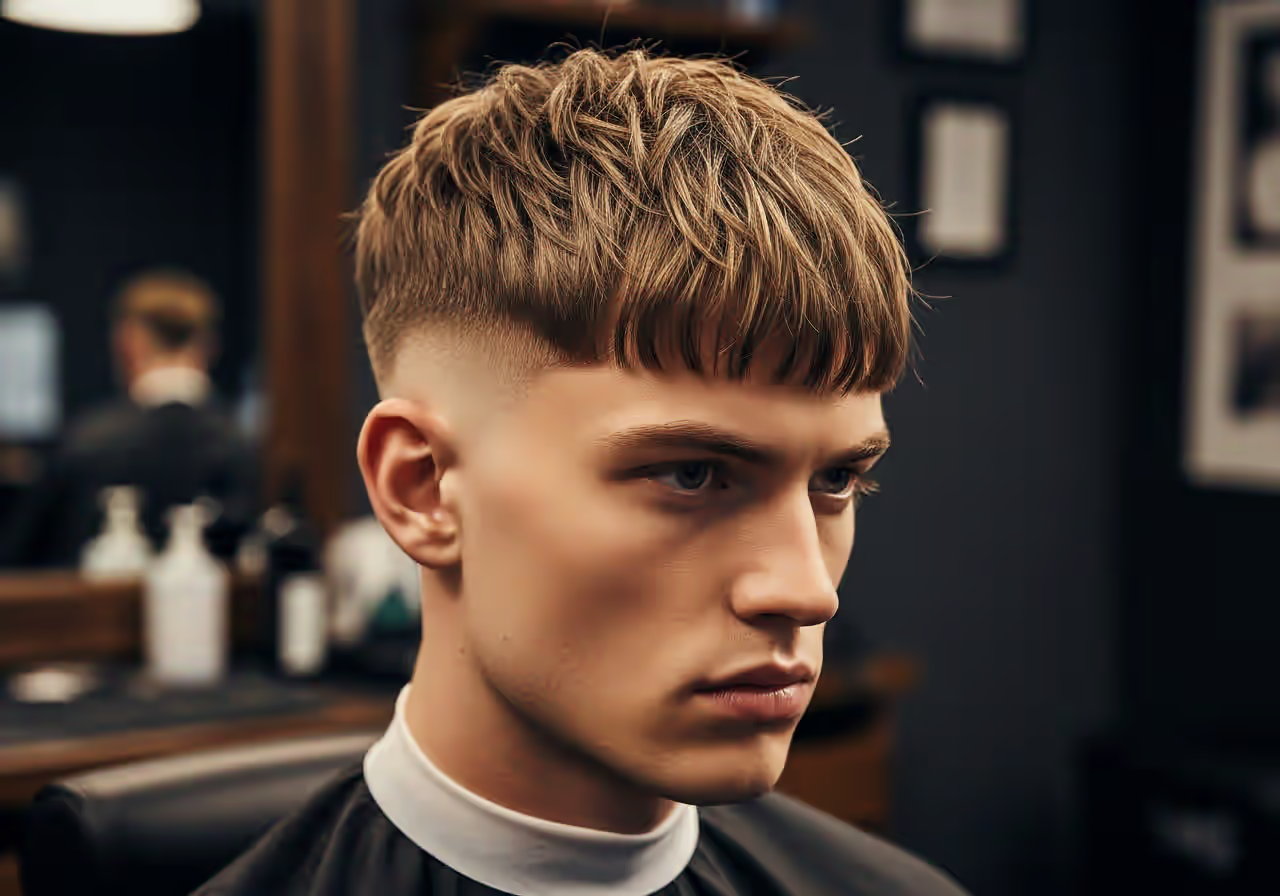
Style images are AI-generated illustrations.
📚 Part of our Barbering Basics guide hub. Explore every related guide in one place.
Barbershops run on a few unwritten courtesies, and knowing them makes your first visit (and every one after) smoother. None of it is complicated: it's mostly about being clear, being present, and respecting the barber's time and craft.
What Is Basic Barbershop Etiquette Before and During a Cut?
Basic barbershop etiquette before and during a cut comes down to five habits: book or check walk-in rules, arrive 5 to 10 minutes early with clean, product-free hair, explain the cut before the clippers start, keep your head still and your phone down, and tip 15 to 20 percent when you pay.
| Stage | What to do | What to skip |
|---|---|---|
| Booking | Check if the shop takes walk-ins or app bookings only | Showing up 5 minutes before closing |
| Arriving | Come 5 to 10 minutes early, hair clean and dry | Heavy gel or paste in your hair |
| In the chair | Describe the cut first, then hold still | Scrolling with your head down |
| Mirror check | Ask for small tweaks right then | Saying "it's fine" when it isn't |
| Paying | Tip 15 to 20 percent, book the next visit | Leaving without a word if you are unhappy |
- Check how the shop works: walk-in or appointment? Some are first-come, some app-only.
- Arrive with clean, dry hair if you can, and know roughly what you want.
- Do the talking up front, then let them work. Describe the cut clearly before the clippers start.
- Keep your head still and follow their nudges ('chin down,' 'turn this way'). It helps them and you.
- Speak up early if something's off, not at the end. It's much easier to adjust mid-cut.
Is It Rude to Talk or Use Your Phone in the Barber Chair?
- Keep phone use minimal: constant looking-down makes the cut harder and reads as rude.
- Match the shop's energy: some are chatty and social, some quiet and focused. Follow the barber's lead.
- Don't micromanage every snip. You hired the expert, so give clear direction then trust it.
- Take calls outside if you must, at a natural pause.
How Much Should You Tip, and How Do You Become a Regular?
- Tip 15–20%. It's expected, and it's how you build the relationship.
- Book your next visit or ask for the barber by name next time, since regulars get consistency.
- Be on time; if you're running late, call the shop.
- A little loyalty goes a long way. A good barber-client relationship is worth cultivating.
Most US men pay $25 to $45 for a standard cut at a neighborhood shop, so the tip usually lands between $5 and $9. Our 2026 haircut cost guide breaks down each price tier, how much to tip your barber covers owners, chains and add-ons, and the barber tipping statistics report shows what men actually leave.
Regulars also keep a steady schedule. A fade needs a cleanup every 2 to 3 weeks, while a longer scissor cut can go 6 to 8 weeks; how often you should get a haircut lists each style. Booking that rhythm in advance is the easiest way to get the same chair every time, and the barbershop booking statistics show how many men now book online.
How Do You Describe the Haircut You Want to a Barber?
- Use reference photos, ideally two or three of the same style on hair similar to yours. A photo of straight hair will not translate exactly onto curly hair, and a good barber will tell you what to expect.
- Describe the sides and the top separately. For example: low taper on the sides, about two inches left on top, scissor cut, textured finish.
- Mention the edges: natural or squared neckline, and if you want the hairline lined up or left soft.
- Say how you style it at home, and how much time you spend. A barber cuts differently for someone who uses product every day than for someone who just towels off.
- Flag anything tricky before they start: a cowlick at the crown, a scar, thinning at the temples, or a hairline you do not want pushed back.
If you do not know the terms, start with the guard number. A guard is the plastic comb that clips onto the clippers and sets the length: a #1 leaves about 3 mm and a #3 about 10 mm. The clipper guard numbers guide has the full chart, and how to talk to your barber has more phrasing.
What to say in the chair
"Low taper on the sides with a #2, leaving about two inches on top cut with scissors. Natural neckline, and please don't push my hairline back. I style it with a bit of clay most days."
Swap in your own numbers. Looking at a low taper fade gallery with the barber before you sit down also helps you point to the exact height you want.
What Barbershop Etiquette Mistakes Do First-Timers Make?
- Asking for just a trim. It means something different at every shop. Say how much to take off, or point to where you want it to sit.
- Staying quiet when the mirror comes out. The mirror check at the end is your chance to ask for small tweaks, such as a bit more off the top or a softer neckline. That is expected, not rude.
- Booking a big change right before an event. Try a new style a week or two ahead so it has time to settle and any adjustment can be made.
- Arriving with heavy product in. Thick paste or gel makes hair clump and hides how it naturally falls, which makes the cut harder to judge.
- Bringing a crowd. A friend waiting is fine; several people and children roaming the shop make it hard for others to work.
What Should You Do If You Are Not Happy With the Cut?
Say so calmly and specifically while you are still in the chair. Something like the left side feels heavier than the right is easy to act on. If you only notice after you get home, contact the shop within a few days, explain what is wrong, and ask whether they can take a look. Many shops will make a small correction for free. Avoid posting complaints before giving the barber a chance to fix it, and never try to correct a fade or neckline yourself in the meantime.
Many shops will fix a problem for free if you come back within about a week, so name the exact issue. These guides cover the most common ones problem by problem:
- One side of the fade is higher or darker: see how to fix an uneven fade.
- The line-up was pushed back too far: read how to fix a line-up that's too high.
- They took off much more than you asked: my barber cut too much off covers grow-out and cover-ups.
- Blotchy or see-through spots in the fade: why does my fade look patchy explains the causes and fixes.
What to say when you go back
"The left side is sitting higher than the right. Can you even it up to the shorter side without taking more off the top?"
What Is the Etiquette for Bringing Kids or Asking for a Specific Barber?
If you bring a child, book them their own slot rather than asking the barber to squeeze one in after your cut. Keep kids seated and away from the stations, since clippers and razors sit within reach. For a toddler's first visit, say so when you book; many barbers prefer a quiet morning time.
Asking for one barber by name is normal and not a slight to the others. If your usual barber is booked, it is fine to wait or come back another day. Switching barbers inside the same shop is also fine. Just say what you want this time, and skip comparing their work out loud.
Frequently Asked Questions
Q1: What are the basic barbershop etiquette rules?+
Q2: Should I talk during a haircut?+
Q3: Is it rude to use my phone at the barber?+
Q4: How much do I tip at a barbershop?+
Q5: How do I become a regular at a barbershop?+
Q6: Should you wash your hair before going to the barber?+
Related Haircut Guides
Make us a Preferred Source on Google
See our latest articles first in your Google Search & AI Overviews.