
How to Fix an Uneven Fade:
Causes and Corrections
An uneven fade is one of the most fixable haircut problems, if you know what caused it. Here's how to spot the issue and get it corrected cleanly.
By Jessica Hamilton, Editor · Updated
Quick answer: An uneven fade, whether it has a hard line, mismatched sides or a missed patch, can almost always be fixed. The barber corrects it by blending downward, which may leave the fade sitting slightly higher. Common causes are unblended guard steps, uneven starting heights, dull blades and cowlicks. Leave anything beyond a stray neckline line to a barber.
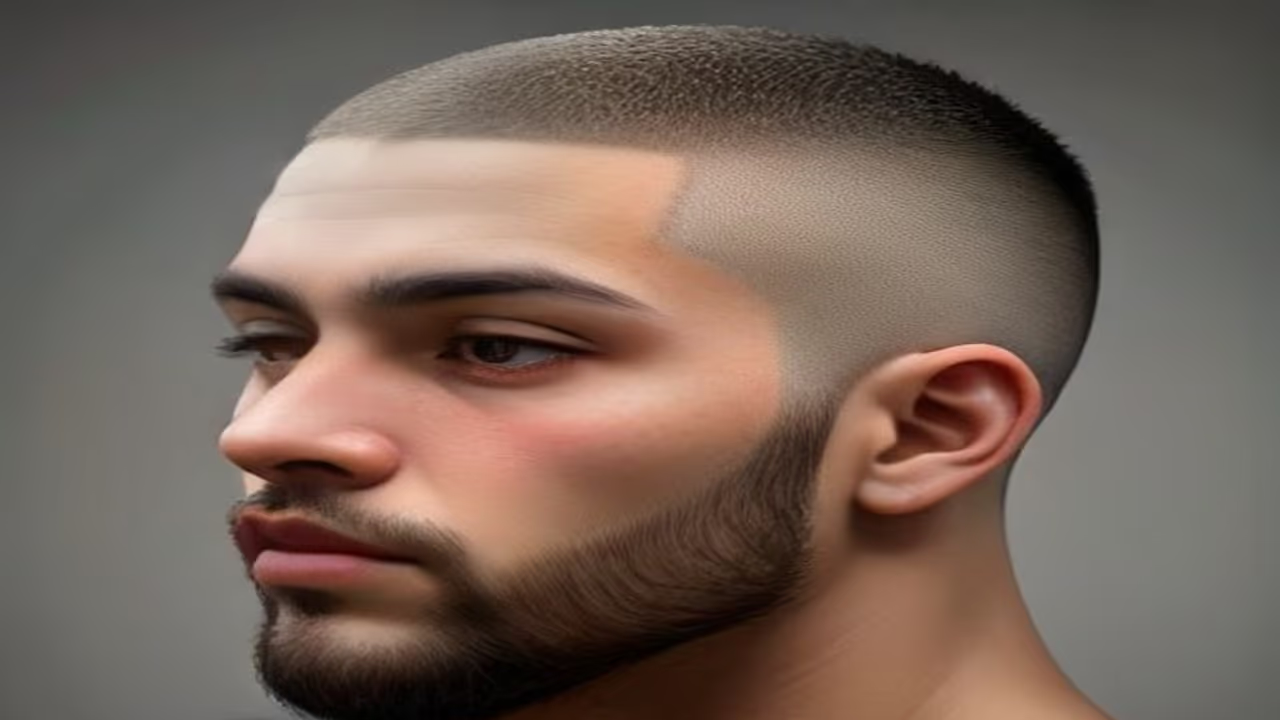
Style images are AI-generated illustrations.
A fade is just a smooth gradient from short to long, and "uneven" means that gradient broke down somewhere: a hard line where there should be a blend, one side higher than the other, or a patch that didn't catch. The upside: unlike a too-short cut, an uneven fade is almost always correctable, because fixing it means blending down, which there's always room to do.
The key is identifying which kind of unevenness you have. Other common cut problems, from a line-up taken too high to a cut that went too short, are covered in the haircut problems and fixes hub.
What Kind of Uneven Fade Do You Have?
Look in a hand mirror and match yours to one of these, each has a different fix:
| What you see | Likely cause | Fix |
|---|---|---|
| A hard line / shelf | A guard step wasn't blended out | Re-blend the transition zone with a longer guard |
| One side higher | Fade started at different heights | Bring the lower side up to match, or both to a new line |
| Patchy spots mid-fade | Dull blades or a quick pass | Go back over the patch; sometimes a fresh blade fixes it |
| Blend fine but looks off | A cowlick or whorl distorts the gradient | Barber works with the growth pattern, not against it |
Can You Fix It Yourself?
Honestly, usually not well. Fading is the hardest clipper skill there is, and self-correcting a blend on the back of your own head is how a small problem becomes a big one. The exceptions are minor:
- A slightly heavy neckline or edge you can tidy with a trimmer and a steady hand.
- Softening a single hard line with a guard one size up than the longer section, carefully, with a mirror.
- Anything on the crown or a two-sided mismatch: leave it to a barber. You can't see the angles you need to.
How Does a Barber Correct an Uneven Fade?
Book with a barber known for fades (check their Instagram for clean blends) and be specific:
- Say "the fade has a hard line here" or "the left is higher than the right" and point to it.
- Ask them to re-blend rather than reset shorter if there's enough length, since you don't want to lose height unnecessarily.
- If it's badly uneven, accept that the fix line may sit a little higher than the original. That's the cost of evening it out.
- A good correction takes 15–20 minutes and most barbers won't charge much (or anything) for a fade touch-up.
What Should You Say When You Go Back?
Go back within a few days, while the problem is easy to see and before the whole fade grows soft. Point to the spot instead of describing the cut in general. A barber can fix a specific line fast; a vague complaint leads to guesswork and often a shorter fade than you need.
What to say in the chair
"The fade on the left starts higher than on the right, and there's a hard line just above my ear. Can you blend that out and match the sides without taking the top any shorter?"
If the original barber did the cut in the last week or two, most will touch it up for free. A correction at a new shop usually costs the same as a regular cut, about $25 to $45 at a neighborhood barbershop. Our haircut cost guide breaks down prices by shop type.
What Causes an Uneven Fade in the First Place?
Most uneven fades trace back to one of a few habits rather than bad luck. Rushed appointments encourage a barber to skip guard sizes instead of stepping down gradually, which leaves visible bands instead of a smooth gradient. Cutting hair that is even slightly damp can also throw off the guide, since wet hair sits closer to the head and springs up differently once dry, especially with wavy or curly texture.
- Skipping guard sizes to save time is the single most common cause of a hard, visible line instead of a blend.
- Cutting damp hair can make a fade look clean in the chair and uneven once it dries and the curl or wave returns.
- Moving your head during the cut shifts the reference points a barber is using, throwing off symmetry between the two sides.
How Long Until an Uneven Fade Grows Out?
Hair grows about half an inch a month, roughly 1/8 inch a week. That is the length of a #1 guard every seven days, which is why a fade blurs so quickly and why small faults fade with it.
| Time after the cut | What you'll notice |
|---|---|
| Week 1 | Hard lines soften; a band from a skipped guard is still visible up close |
| Week 2 | Short areas grow about 1/4 inch; minor lines are hard to spot |
| Week 4 | The fade has grown into a short, even taper; most faults are gone |
| Week 6 | Time for a fresh fade; a side that was set higher is back to normal length |
If one side was faded much higher, waiting does not fully solve it. The top of the fade line stays higher on that side until the next cut resets both.
How Long Until an Uneven Fade Grows Out?
Hair grows about half an inch a month, roughly 1/8 inch a week. That is the length of a #1 guard every seven days, which is why a fade blurs so quickly and why small faults fade with it.
| Time after the cut | What you'll notice |
|---|---|
| Week 1 | Hard lines soften; a band from a skipped guard is still visible up close |
| Week 2 | Short areas grow about 1/4 inch; minor lines are hard to spot |
| Week 4 | The fade has grown into a short, even taper; most faults are gone |
| Week 6 | Time for a fresh fade; a side that was set higher is back to normal length |
If one side was faded much higher, waiting does not fully solve it. The top of the fade line stays higher on that side until the next cut resets both.
Which products help hide a fade line while it grows?
Product cannot move a fade line, but it can change where people look. These types help while you wait for a fix (see pomade vs clay vs wax for the differences):
- Matte clay: adds texture on top so the eye goes up, away from the sides.
- Light cream: keeps curly or wavy hair defined, which makes small steps in the blend harder to see.
- Scalp moisturizer: dry, flaky skin on a short fade makes it look patchier than it is.
Avoid shiny products near the sides. Shine catches light along any step in the blend.
How Do You Prevent an Uneven Fade Next Time?
- Sit still and let the barber reposition your head rather than adjusting it yourself mid-cut.
- Ask for the fade to be checked with a mirror before you leave the chair, front, back, and both sides.
- Book with the same barber for fades once you find one who blends well, since consistency across visits matters more than trying a new shop each time.
- Avoid appointments right before closing at a busy shop, when rushed guard-skipping is most likely.
What Mistakes Make an Uneven Fade Worse?
- Chasing the line at home with the same guard. Going over a hard line with the guard that made it just moves the line up.
- Taking both sides higher to match. Raising the fade is the last option, not the first. A re-blend usually fixes it with less hair lost.
- Judging it while wet. Wait until your hair is dry and styled, since damp hair lies flat and shows lines that disappear later.
- Waiting three weeks to go back. By then the barber cannot see what went wrong, and a free fix becomes a full cut.
What If the Problem Is Something Else?
Not every bad fade is an uneven one. If the issue looks more like one of these, the matching guide has the specific fix:
- Scalp showing through in spots: why does my fade look patchy covers blade skips and natural density.
- Hairline pushed back by the line-up: how to fix a line-up that's too high.
- Everything is much shorter than you asked for: my barber cut too much off.
- Several things went wrong at once: how to fix a bad haircut.
Frequently Asked Questions
Q1: Can an uneven fade be fixed?+
Q2: What causes an uneven fade?+
Q3: Can I fix an uneven fade myself?+
Q4: Will fixing an uneven fade make it shorter?+
Q5: How much does it cost to fix a fade?+
Q6: Should I go back to the same barber to fix an uneven fade?+
Make us a Preferred Source on Google
See our latest articles first in your Google Search & AI Overviews.