
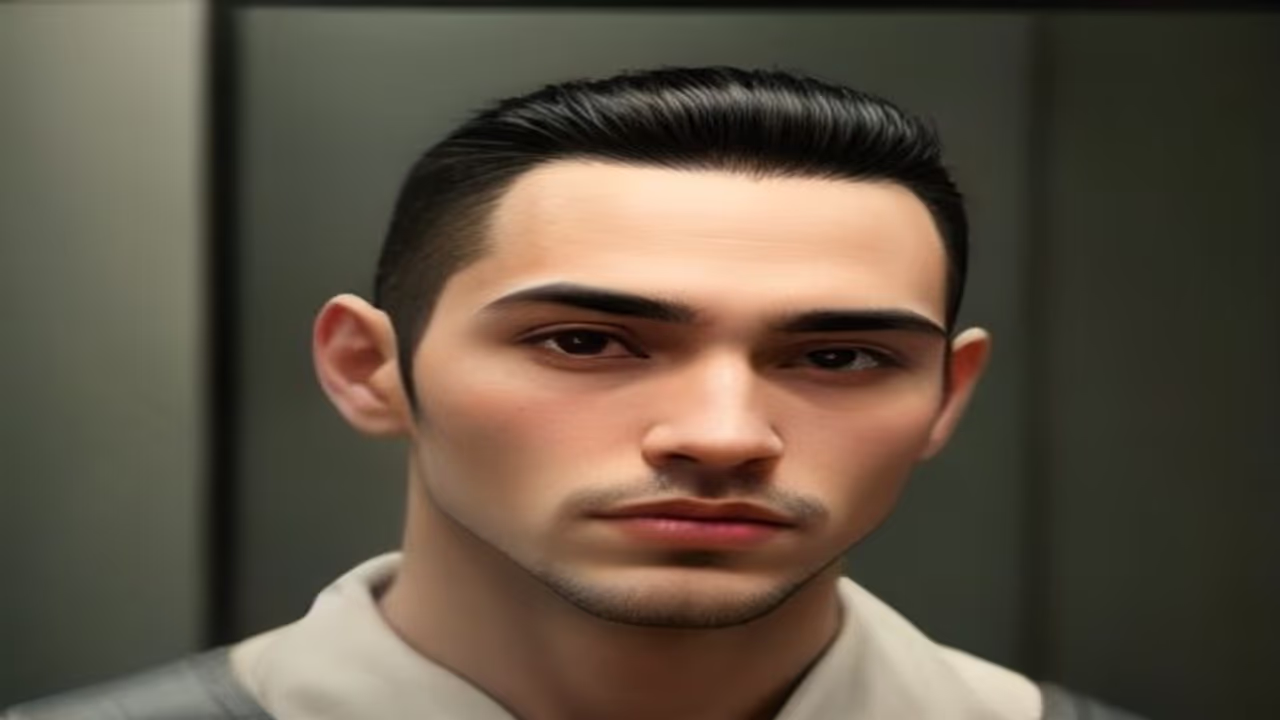
How to Fix a Line-Up
That's Too High
A line-up that's pushed your hairline back looks dramatic today but recovers faster than you think. Here's how to manage it and prevent the next one.
By Jessica Hamilton — Master Stylist & Creative Director
A line-up (or edge-up) is the crisp border a barber shaves along your hairline. When it's taken too high or too deep, it can look like your hairline receded overnight. The reassuring part: a line-up only removes the small fringe of hair at the very edge (it doesn't touch the follicles), so it grows back completely, usually faster than a full haircut recovers, because you're only waiting on a thin border of hair.
First, Don't Re-Line It
The instinct is to "balance" a high line-up by cleaning it up again. Resist it. Every re-line pushes the border back further, and chasing symmetry this way is exactly how people end up with a permanently high, over-shaved hairline. Let the natural hairline grow back in and reset the border where it belongs. A good barber will actually decline to re-line a fresh, too-high hairline for this reason.
Recovery Timeline
Because a line-up only cuts the edge hairs, it comes back quickly:
| Timeframe | What happens |
|---|---|
| 3–5 days | Fine hairs start filling the shaved border; the hard edge softens |
| 1–2 weeks | The gap between the line and your natural hairline closes noticeably |
| 3–4 weeks | Hairline looks natural again; ready for a conservative line-up |
How to Soften It in the Meantime
- Grow a little length at the front and wear it slightly forward to visually lower the hairline.
- Skip further edging until the border fills back in.
- A tiny amount of a brow/hairline pencil or fibre can soften a stark line for an event, used lightly.
- Keep the rest of the cut styled and sharp so the high line reads less obviously.
Prevent It Next Time
Line-ups go too high for two reasons: chasing an uneven hairline, or an aggressive barber. Next time:
- Ask for a "natural" or "soft" line-up: say you want to keep every bit of the hairline.
- Tell them "follow my natural hairline, don't raise it" before they start.
- If your hairline is naturally uneven, ask them to work to the lowest point, not shave everything up to the highest.
- Consider skipping the razor line entirely and asking for a softer, grown-in edge if you're prone to recession.
Why Hairlines Get Pushed Back
A single high line-up is temporary, but repeated ones can gradually wear the hairline back. Constant razor contact along the edge irritates the skin, and tight lines at the temples are often pushed a little further each visit to keep them sharp. Over months, the line creeps back without anyone noticing. Traction from tight hairstyles combined with frequent edge shaving can add further stress. Keeping line-ups less frequent and less aggressive protects the natural edge.
How to Talk to Your Barber
- Point to where your natural hairline is, including the temples, before they begin.
- Ask them to use a trimmer instead of a razor if you get irritation or bumps along the edge.
- Say how sharp you want it: natural, soft, or squared. The softer the line, the less hairline gets removed.
- Speak up during the line-up if it looks like it is being taken higher than you want. Mid-cut is the only time you can stop it.
Frequently Asked Questions
Q1: Does a line-up that's too high grow back?+
Q2: Should I re-line a hairline that was cut too high?+
Q3: How long does a high line-up take to grow back?+
Q4: How do I hide a line-up that's too high?+
Q5: How do I ask for a line-up that isn't too high?+
Make us a Preferred Source on Google
See our latest articles first in your Google Search & AI Overviews.