
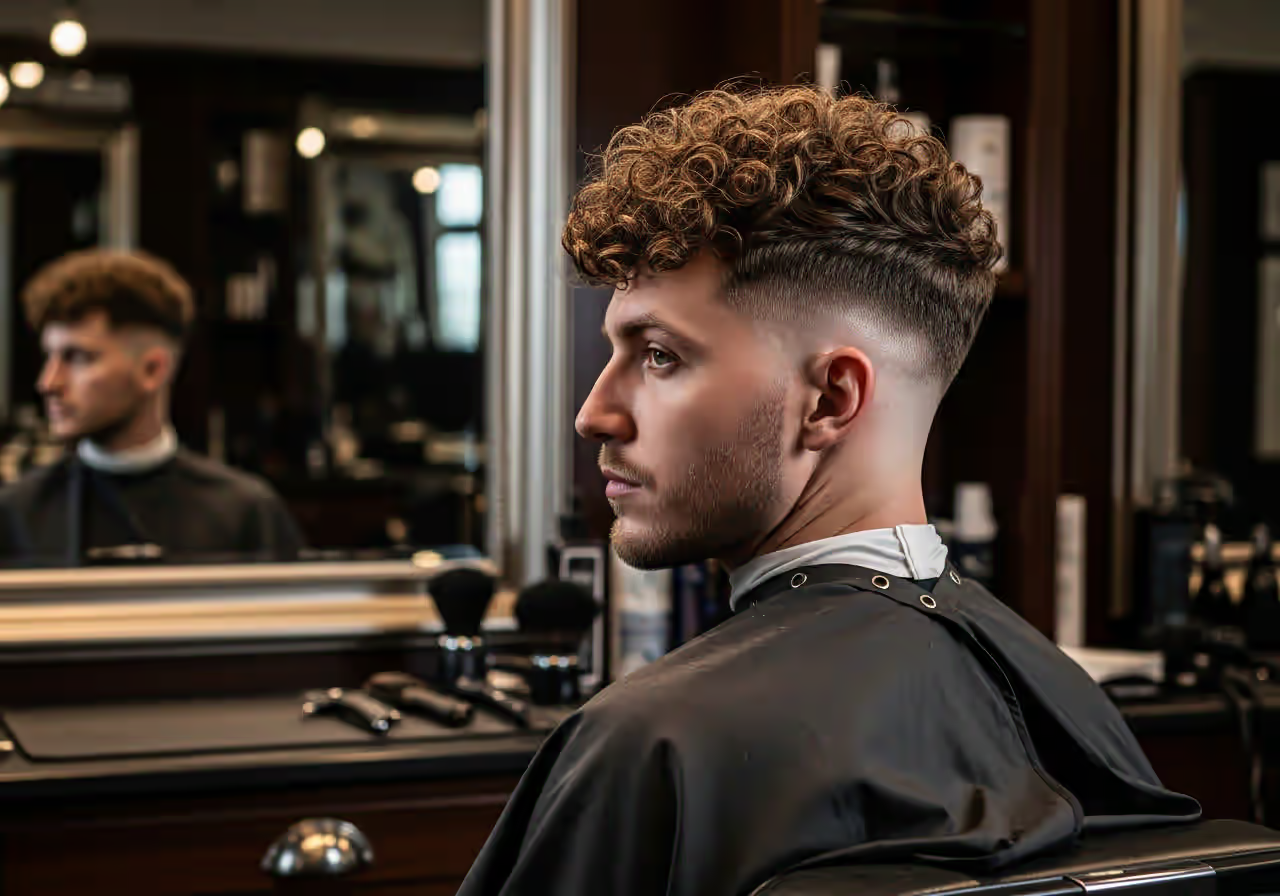
Men's Hair in High Humidity:
Frizz Control That Works
Humidity turns styled hair into a cloud. Here's why it happens and the products and cuts that actually hold up.
By Jessica Hamilton, Editor · Updated
Quick answer: Humidity causes frizz because dry hair absorbs moisture from the air, swells and lifts its cuticle. Keep hair well-conditioned so it isn't thirsty, use a cream or leave-in instead of dry clay, and seal the ends with a light oil. Apply to damp hair and let it dry undisturbed. Short cuts and defined curls cope best.
Style images are AI-generated illustrations.
📚 Part of our Styling, Products & DIY guide hub, with the rest of the related guides in one list.
Frizz in humidity isn't random: dry or damaged hair absorbs moisture from the air, and as each strand swells it lifts the cuticle and pushes hair apart. That's the puff. Two things fix it, keeping hair well-moisturised so it isn't thirsty, and sealing the surface so it can't take on more.
Why Does Humidity Make Hair Frizz?
Hair is porous. When it's dry or damaged, it pulls moisture out of humid air, and the swelling lifts the outer cuticle layer so strands no longer lie smoothly together. Curly and coarse hair frizzes most because it's naturally drier and the cuticle is already more raised. Well-conditioned hair has less capacity to absorb and a smoother surface, so it holds its shape.
If humidity is worst for you in July and August, our gallery of summer haircuts lists cuts that hold their shape in heat and sweat.
How much you need to do depends on your hair:
| Hair type | How it frizzes | Main fix |
|---|---|---|
| Straight, fine | A halo of flyaways on top | Light anti-humidity spray or a little cream |
| Wavy | Waves turn into puff | Leave-in plus cream, dried without touching |
| Curly | Curls lose shape and expand | Leave-in, curl cream and a light gel |
| Coily | Dryness and shrinkage | Rich leave-in, cream, then seal with oil |
| Very short | Little to none | Nothing beyond a normal routine |
What Actually Stops Frizz in Humidity?
- Condition properly: hydrated hair absorbs less from the air. This is the foundation, not an optional extra.
- Use a cream or leave-in (not a dry clay): creams coat and seal; dry clays leave hair thirsty.
- A light oil or serum on the ends seals the cuticle.
- Apply to damp hair and let it dry in place; disturbing it while drying creates frizz.
- Don't towel-rough your hair. Squeeze with a microfibre towel or t-shirt.
- Diffuse rather than blast if you blow-dry textured hair.
Which products fight frizz best?
- Leave-in conditioner: the base for any hair with wave or curl; it keeps strands from soaking up moisture from the air.
- Styling cream: smooths and coats each strand while giving soft hold.
- Anti-humidity spray: a light film on top for straight and wavy hair.
- Light gel: holds curls in clumps so humidity has less room to split them.
- Hair oil or serum: a few drops on the ends to seal them, applied last.
A simple morning routine
Shower, then squeeze out water with a T-shirt. Apply leave-in and cream to soaking-wet hair, add gel if you have curls, and let it dry without touching it or diffuse on low. Seal the ends with a drop of oil once dry. The whole thing takes about five minutes plus drying time.
What helps overnight?
Frizz often starts on the pillow. A cotton pillowcase pulls moisture out of hair and roughs it up as you move. A satin or silk pillowcase reduces both. Do not go to bed with wet hair, which dries in a frizzy, flattened shape. On longer curly hair, gather it loosely on top of your head before you sleep.
Which Haircuts Hold Up in Humidity?
- Short textured cuts: not enough length to puff dramatically.
- Buzz and crew cuts: immune.
- Defined curly styles: work with the texture instead of fighting it, often the smartest move in a humid climate.
- Tight sides with a taper keep the widest part controlled.
- Avoid styles that depend on perfectly smooth, straight hair: humidity will win.
The hardest length in humid weather is usually 2 to 4 inches on top. It is long enough to puff out but too short to have the weight that pulls longer hair down. If you are growing your hair out in summer, expect that stage to be the frizziest and lean on cream and a slightly shorter back and sides to get through it.
What Mistakes Make Frizz Worse?
- Towel-drying by rubbing vigorously. This roughs up the outer layer of the hair shaft and makes it grab more moisture from humid air. Blot instead of rubbing.
- Overwashing with a stripping shampoo. Hair that is dried out from harsh cleansing pulls in moisture from the air faster, which is a main driver of frizz in humid weather.
- Skipping a leave-in or anti-frizz product on humid days specifically because hair "feels fine" in the morning. Humidity often builds through the day, so preventive product matters even when hair looks fine at first.
- Touching hair repeatedly through the day. Constant handling disrupts the cuticle and encourages flyaways, especially once humidity has already softened the hair's hold.
One more: blow-drying on high heat with a bare nozzle. It roughs up the cuticle and leaves hair dry, which is exactly what makes it soak up moisture later. Use low heat, point the nozzle down the hair, or use a diffuser if you have any curl.
How Does Frizz Control Change by Hair Type?
Straight and wavy hair typically frizzes as flyaways at the surface, which a lightweight anti-humidity spray or a small amount of pomade smoothed over the top handles well. Curly and coily hair frizzes because the curl pattern itself absorbs moisture unevenly, so heavier creams or leave-in conditioners that coat each strand tend to work better than light sprays, which are not enough to control the shaft.
Very short cuts are naturally more humidity-resistant than longer styles simply because there is less length for moisture to affect, which is one reason cropped and buzzed styles hold up well in humid climates.
What Should You Tell Your Barber About Humidity?
If you live somewhere humid, mention it when discussing a new style, since some cuts that look sharp in a dry studio can behave very differently once you step outside. Ask specifically whether the style you want holds its shape in humidity or needs a change in length or layering to manage frizz better. A barber familiar with your local climate can suggest a slightly shorter length on top or a texture-friendly cut designed to work with frizz rather than fight it all day.
What to say in the chair
"It's really humid where I live and my hair puffs up by lunch. Can you take some bulk out of the sides and back, and keep the top a length that clumps instead of frizzing?"
In a humid climate, shorter cuts with tight sides need a trim about every three to four weeks, at roughly $25 to $45 a visit at a neighborhood shop. See our haircut cost guide.
How Do You Fix Frizz Halfway Through the Day?
- Do not brush it. Brushing dry, frizzy hair breaks up curls and adds more puff.
- Wet your hands, then add a little cream. Rub them together and smooth over the top in the direction the hair falls.
- Scrunch curls, smooth straight hair. Curly hair needs pressure upward; straight hair needs a light hand pressing down.
- Keep a small product with you. A travel-size cream or a few drops of oil fixes most of it in under a minute.
Frequently Asked Questions
Q1: Why does humidity make my hair frizzy?+
Q2: How do men stop frizzy hair in humidity?+
Q3: What haircut is best for humid weather?+
Q4: Does conditioner help with frizz?+
Q5: Should I use clay or cream in humidity?+
Q6: Do anti-humidity sprays work on short men's hair?+
Make us a Preferred Source on Google
See our latest articles first in your Google Search & AI Overviews.