
How to Use a Diffuser Attachment
for Curly Hair
A diffuser turns a frizzy blow-dry into defined, voluminous curls. Here's the technique men actually need, no salon training required.
By Jessica Hamilton — Master Stylist & Creative Director
📚 Part of our Styling, Products & DIY guide hub. Explore every related guide in one place.
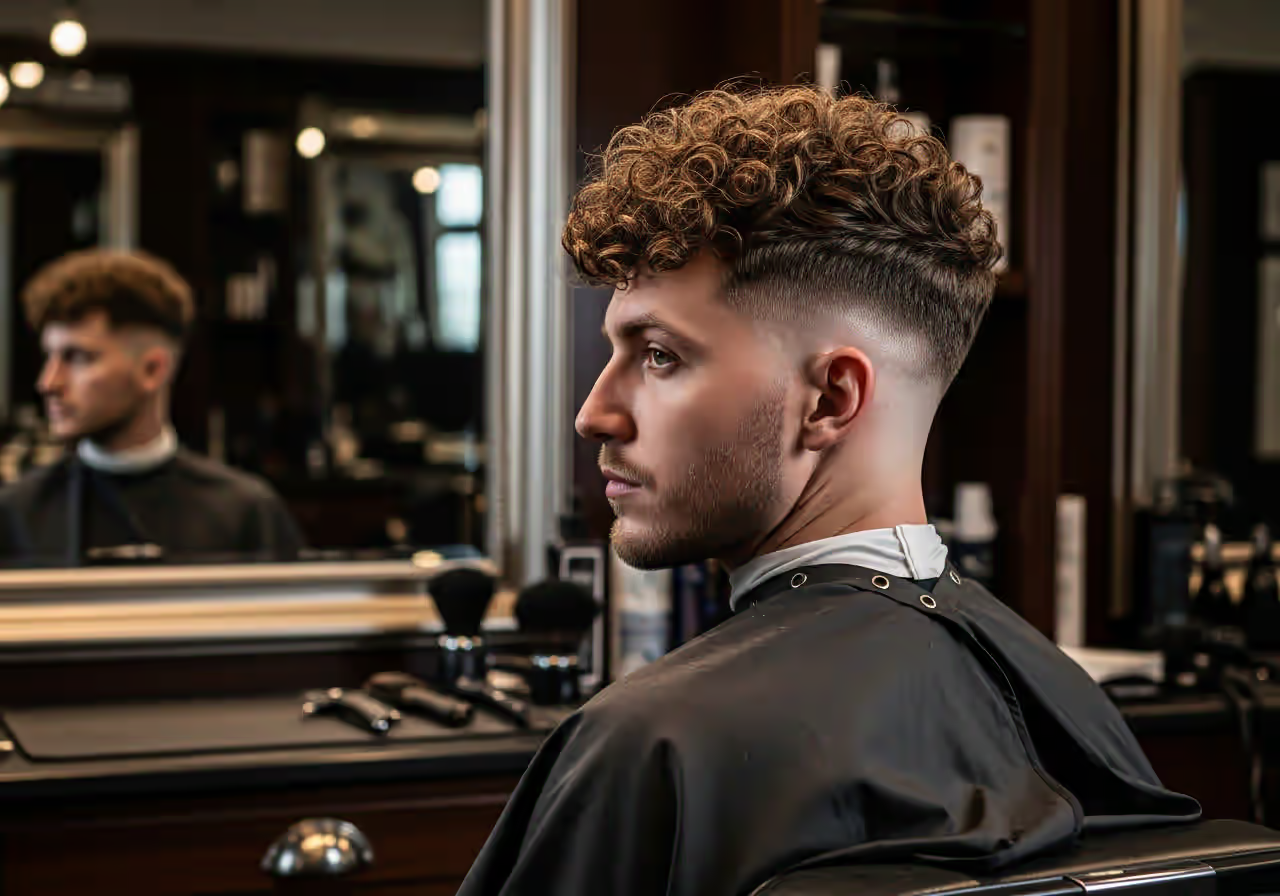
A diffuser is the bowl-shaped attachment with prongs that clips onto a hair dryer. For curly and wavy hair it changes everything: instead of a concentrated blast that blows curls apart into frizz, it spreads the airflow gently so curls dry in their natural clumps: defined, bouncy, and voluminous. Here's how to use one properly.
Why a Diffuser Works
Regular blow-drying forces fast, concentrated air through the hair, which separates the curl pattern and roughs up the cuticle. That's frizz. A diffuser disperses the same air over a wider area at lower force, so curls keep their shape as they dry and the cuticle stays smoother. It also lets you dry at the root for volume without disturbing the curl.
The Technique
- 1
Start with damp, product-in hair
Apply your curl cream or gel to soaking-wet hair first, then towel to just-damp.
- 2
Set the dryer low
Low heat, low speed: high force is the enemy of definition.
- 3
Cup and lift
Place sections of curls into the diffuser bowl, lift toward your scalp, and hold.
- 4
Hold, don't move
Keep the diffuser still against each section for 15–20 seconds rather than moving it around.
- 5
Work in sections
Move around the head, cupping and holding each section until mostly dry.
- 6
Don't touch until dry
Let it finish, then gently break up any cast with your fingers, since touching wet curls causes frizz.
Common Mistakes
- Too much heat or speed — blows curls apart. Keep it low.
- Moving the diffuser constantly — hold it still to set the curl.
- Touching curls while wet: the fastest route to frizz.
- Skipping product — curl cream or gel gives the hold the diffuser sets.
- Over-drying — stop at 90% dry to keep curls soft, not crunchy.
Adjusting for Your Curl Pattern
Looser waves and loose curls tend to need the least diffuser time and the lightest product, since heavy cream can weigh the curl down until it drops out entirely. A light mousse or a small amount of curl cream, worked through and left mostly alone during drying, keeps the wave pattern without flattening it.
Tighter curls and coils generally hold up to more product and benefit from a longer hold time in the diffuser bowl per section, since the curl needs more support to clump and set before it dries. These textures also shrink more as they dry, so it helps to check the length while the hair is fully dry rather than judging it while it's still damp and stretched out in the diffuser.
Diffusing Short Hair vs Longer Hair
On shorter curly cuts, the diffuser bowl often can't hold much hair at once, so the technique shifts toward gently scrunching upward with the dryer close to the scalp rather than fully cupping large sections. This still slows the airflow enough to prevent frizz, even without filling the bowl the way you could with longer hair.
Longer curly hair takes noticeably more total drying time and benefits from being sectioned with clips so each part gets even airflow, since curls at the bottom layers often stay damp long after the top layer feels dry. Flipping your head upside down for part of the process also adds volume at the root on longer hair, which tends to fall flatter under its own weight than shorter curls do.
Frequently Asked Questions
Q1: How do I use a diffuser on curly hair?+
Q2: Why should men use a diffuser for curly hair?+
Q3: Should curly hair be wet or damp before diffusing?+
Q4: Why is my hair still frizzy after using a diffuser?+
Q5: How long does it take to diffuse men's curly hair?+
Related Haircut Guides
Make us a Preferred Source on Google
See our latest articles first in your Google Search & AI Overviews.