
Best Hair Clippers for Men:
7 Picks by Use
Seven clippers for buzz cuts, fades and home trims, compared on blade, motor, run time and guards.
By Jessica Hamilton · Updated
Quick answer: The best hair clippers for men depend on the job. For home buzz cuts, a kit with many guards such as the Wahl Color Pro Cordless is easy to use. For fades, an adjustable blade like the Andis Master Cordless or Wahl Magic Clip helps blending. For a single all-day corded tool, the Oster Classic 76 fits.
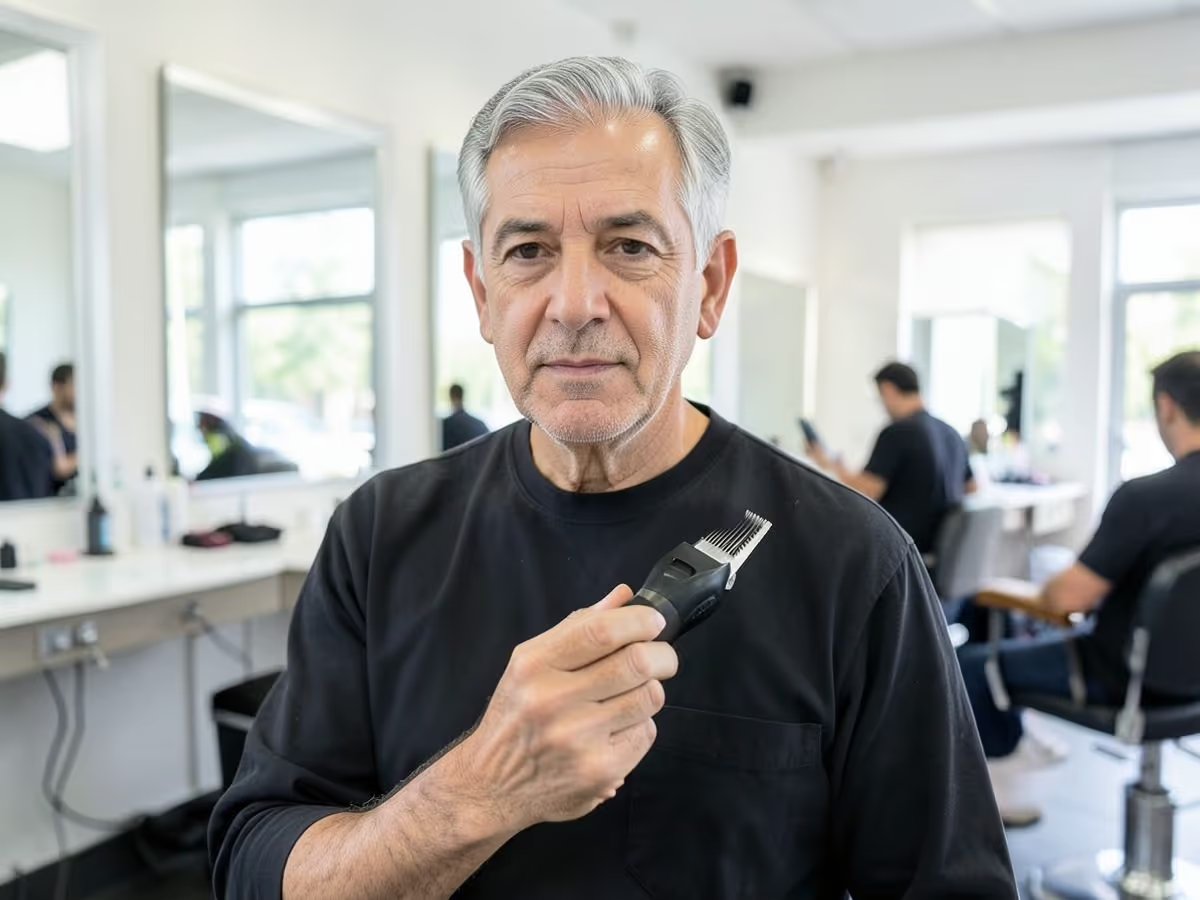
Style images are AI-generated illustrations.
📚 Part of our Styling, Products & DIY guide hub; start there for the rest of the topic.
The best hair clippers for men are the ones built for the haircut you actually give. A buzz cut needs reliable guards and a strong battery; a fade needs an adjustable blade that blends between guard lengths; a barber needs a motor that runs all day. This guide compares seven clippers by use, with the specs makers publish and the trade-offs worth knowing.
Are These Clippers Tested or Chosen From Specs?
These picks are based on published specs and features from the makers and major retailers, not on hands-on testing. We did not cut hair with these clippers for this guide. Every model listed was confirmed as currently sold on the maker's site or a large retailer, and specs that differed between sources were left out rather than guessed.
The list is grouped by use: home buzz cuts, blending fades, barber-grade cordless work, corded power and self-cutting. If you are still choosing between a clipper and a trimmer, read clippers vs trimmers vs shavers first, since a clipper alone will not give you a crisp line-up.
How We Chose
Each clipper had to do one job clearly well on paper and come from a maker with spare blades, guards and support available. We weighed five things from the published specs.
Where regional versions of the same clipper publish different run times or accessories, we used the figure from the maker's page for that market or left the spec out. Kit contents change between model years, so check the box list before you buy.
Blade type
Adjustable blades (a lever that moves the cutting blade between roughly #000 and #1) make blending easier. Fixed or detachable blades need more guards or blade changes.
Motor
Rotary, magnetic, brushless and universal motors behave differently on thick hair. Stated strokes or rotations per minute were used only where the maker lists them.
Run time and cord
Cordless run time was taken from the maker's page. Corded models were judged on whether they can run a full session without stopping to charge.
Guards
The number and range of guards matter for home users who rely on them. See clipper guard numbers explained for what each length leaves.
Upkeep
Clippers that take standard blade oil and have replaceable blades last longer. Our guide on how to clean and oil hair clippers covers the routine.
How Do These Clippers Compare?
The table lists each clipper with its type, the job it suits and one key spec published by the maker or a major retailer.
| Product | Type | Best for | Key spec |
|---|---|---|---|
| Wahl 5 Star Cordless Magic Clip | Cordless, adjustable blade | Fades and skin fades | Up to 100 minutes run time |
| Andis Master Cordless | Cordless, adjustable blade | Tapers and blending | Blade adjusts #000 to #1 |
| BaBylissPRO LoPROFX Clipper (FX825) | Cordless, low profile | Close detail work | Brushless motor |
| Oster Classic 76 | Corded, detachable blade | Thick hair, long sessions | Universal motor, #000 and #1 blades |
| Wahl Color Pro Cordless Clipper Kit | Cordless, guard kit | Home buzz cuts | Color-coded guide combs |
| Andis Cordless Envy Li Adjustable Blade Clipper | Cordless, adjustable blade | Lighter all-round use | Up to 2 hours run time |
| Philips Norelco Hairclipper Series 9000 | Cordless, motorized comb | Cutting your own hair | Dial-set length comb |
Which Clipper Suits Which Haircut?
Each entry covers who the clipper suits, the specs the maker publishes and one limitation.
Wahl 5 Star Cordless Magic Clip
A common choice for fades. The stagger-tooth blade is made to cut through textured and thick hair, and the taper lever helps blend between guards. Wahl Professional lists up to 100 minutes of cordless run time and includes eight cutting guides from 1/16 to 1 inch.
Limitation: the stagger-tooth blade leaves a slightly uneven edge by design, so you still need a trimmer for line-ups.
Andis Master Cordless
Suits anyone who wants the long-running Andis Master feel without a cord. The carbon-steel blade adjusts from #000 to #1 and can be zero-gapped, and Andis lists about 90 minutes of run time per charge.
Limitation: the metal housing is on the heavy side for small hands, and guards are sold separately in most packs.
BaBylissPRO LoPROFX Clipper (FX825)
Built for barbers and confident home users who do close work. The low-profile body sits near the scalp, the blade can be zero-gapped, and the maker lists a brushless motor with more than two hours of run time.
Limitation: the low-profile head means it is better at short lengths than bulk removal on long, heavy hair.
Oster Classic 76
A corded workhorse for thick or coarse hair and long sessions. It uses a single-speed universal motor and detachable blades, and ships with #000 and #1 blades plus a 9-foot cord according to retailer listings.
Limitation: it is heavy and has no cordless option, and changing length means swapping blades or buying guards.
Wahl Color Pro Cordless Clipper Kit
Aimed at beginners giving buzz cuts at home. Each guide comb has its own color matched to a key, so it is hard to grab the wrong length. Wahl lists up to 60 minutes of cordless use for the 9649 kit.
Limitation: shorter run time than the pro models, and it is not designed for tight skin fades.
Andis Cordless Envy Li Adjustable Blade Clipper
A lighter cordless option for all-round home cutting. Andis lists a carbon-steel blade that adjusts from 000 to 1, a rotary motor, about 2 hours of run time and a set of attachment combs from 1/16 to 1 inch.
Limitation: the motor is rated slower than the Andis Master, so dense hair may need extra passes.
Philips Norelco Hairclipper Series 9000
Suits men who cut their own hair and want length set by a dial rather than swapping guards. The motorized comb moves to the chosen length, and Philips lists hundreds of length settings in small steps.
Limitation: the bulky comb head is less suited to detailed fades and line work than a barber clipper.
What Should You Look for When Buying Clippers?
Start with the haircut, not the brand. A buzz cut at one length all over needs a sturdy guard and a decent battery. A fade needs an adjustable blade and guards in half steps. A barber who cuts all day needs a motor that will not slow on thick hair and a cord or quick charge as backup.
Check that replacement blades and guards are sold separately, because guards crack and blades dull. Look at the weight if you will cut your own hair with your arms raised. If you are weighing home cutting against shop visits, our breakdown of barbershop vs at-home grooming cost shows where a clipper pays for itself.
Adjustable blade vs fixed blade
An adjustable lever lets you cut between guard lengths, which is what makes a fade blend. Fixed-blade kits are simpler for single-length cuts.
Cordless vs corded
Cordless is easier to move around the head. Corded models never run flat, which matters for back-to-back cuts.
Guard material and range
Look for guards from 1/16 inch up to at least 1 inch. Metal-clip or magnetic guards stay on better than thin push-fit ones.
Upkeep
Look for a blade that comes off without tools, so you can brush out trapped hair and oil the teeth after each cut.
Which Clipper Is Right for Cutting Your Own Hair?
For a single-length buzz, any guard kit works; our guide on how to buzz cut your own hair walks through the passes. For a fade on your own head, an adjustable blade clipper paired with a mirror setup is the usual route, and how to fade your own hair explains the guard order.
A lighter cordless body helps when working behind your head. Pair it with a trimmer for the neckline; how to trim your own neckline covers that step.
What Mistakes Do People Make With New Clippers?
Most home haircut problems come from technique and setup rather than the clipper itself. A few habits make a big difference to how even the result looks, especially on a first cut.
Starting too short
Begin with a longer guard than you want. You can always go shorter on a second pass, but you cannot add length back. A #4 or #3 is a safe first pass for most buzz cuts.
Cutting with a dry blade
A blade without oil heats up and pulls hair. A drop of oil across the teeth before each cut keeps it running smoothly and cooler against the scalp.
Moving too fast
Slow, steady passes against the direction of growth cut more evenly than quick strokes. Thick hair may need two passes in different directions.
Ignoring the guard clip
Guards that are not fully seated can slip mid-pass and leave a short patch. Press the guard on firmly and check it before every section.
Skipping the blend
A fade needs an in-between length where two guards meet. Use the adjustable lever or a half-size guard and flick out at the end of each pass, as described in how to fix an uneven fade.
How Do Guard Sizes Match Common Haircuts?
Clipper guards follow a standard numbering on most brands: #0 leaves about 1/16 inch, #1 about 1/8 inch, #2 about 1/4 inch, #3 about 3/8 inch and #4 about 1/2 inch. Our clipper guard sizes mm conversion chart lists the metric figures.
A short buzz cut is often a #2 or #3 all over. A crew cut keeps a #2 or #3 on the sides with longer hair on top cut by scissors or a #6 to #8 guard. A low fade usually runs from #0 or a skin finish near the ear up to a #2 or #3, with the adjustable blade used for the blend. Check that the clipper you buy includes the guard range your usual cut needs, since some kits stop at #4 and others go up to 1 inch.
Frequently Asked Questions
Q1: What clippers do barbers use most?+
Q2: Are cordless clippers as strong as corded clippers?+
Q3: What is the difference between an adjustable blade and guards?+
Q4: Which clipper is easiest for a beginner?+
Q5: How long do hair clippers last?+
Q6: Can I use hair clippers on my beard?+
Related Haircut Guides
Make us a Preferred Source on Google
See our latest articles first in your Google Search & AI Overviews.