
Best Haircuts for
Biracial Curly Hair Men
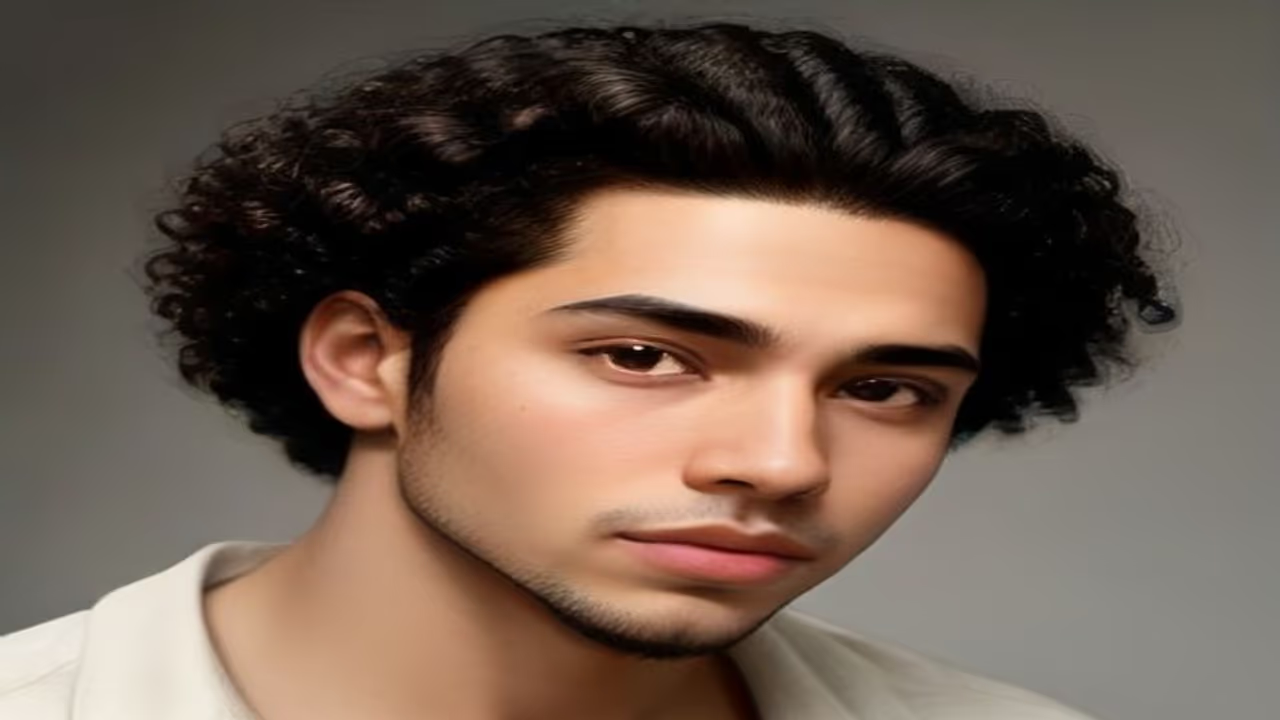
Mixed-texture hair doesn't fit neatly into one category — here's how to work with looser curls that behave differently across your head.
By Jessica Hamilton — Master Stylist & Creative Director
Biracial and mixed-texture hair often means more than one curl pattern on the same head — looser waves at the front, tighter coils at the crown, different density at the nape. That's the real challenge, and it's why generic "curly hair" advice often falls short. The approach is to cut and style for the dominant pattern while accommodating the others.
Know Your Pattern(s)
Mixed hair commonly falls in the 3A–4A range — springy loose curls through tight coils — and frequently varies by section. Identify where each pattern sits: many men have looser curl at the hairline and tighter at the crown. Tell your barber this explicitly, because it changes how they cut and blend. See our curly hair guide for pattern basics.
The Best Cuts
- Taper fade + natural curly top: the most flexible — controls the sides, lets the curls do their thing.
- Curly high top: if your curl has volume and you want to show it.
- Shorter textured crop: minimises pattern differences by keeping everything short.
- Rounded afro shape: works beautifully if your texture is on the tighter end.
- Avoid ultra-short skin fades if your patterns differ a lot — very short lengths expose the inconsistency.
Styling Mixed Textures
- Style damp, always — mixed curls need moisture to clump into a consistent pattern.
- Curl cream + a little leave-in beats gel for evening out different textures.
- Section-style if needed — apply more product where the curl is tighter.
- Find a barber who cuts curly hair dry or understands mixed texture — this matters more than anything else.
Common Mistakes With Mixed Texture
- Cutting to one length all over. Since curl patterns often differ by section, an identical length at crown and hairline can leave one area looking noticeably fuller than the other.
- Using the same product on every section. Tighter coils usually need more moisture and hold than looser waves, so a single product amount rarely suits the whole head.
- Cutting curly hair wet without a dry check. Curls sit differently once they dry and shrink, so a cut that looks even wet can come out uneven once it springs back into pattern.
- Over-thinning with shears. Removing too much bulk from mixed hair can make the looser sections look thin while the tighter sections still look full, exaggerating the contrast.
Accounting for Shrinkage
Curl pattern affects how much length a section appears to lose once it dries, and mixed-texture hair often shrinks unevenly across the head. A section with tighter coils can appear noticeably shorter than a section with looser waves even when both were cut to the same length while wet. A barber working with mixed texture needs to account for this by leaving extra length in the tighter sections so the finished, dry result reads as balanced rather than lopsided. If you cut your own hair between visits, always check length and shape once it has fully dried and sprung back, not right after a wash. Photographing the cut from the front and sides once it dries is a simple way to catch an imbalance before it becomes the pattern you keep repeating at every trim.
Frequently Asked Questions
Q1: What haircut is best for biracial curly hair?+
Q2: Why does my hair have different curl patterns?+
Q3: How do I style hair with different curl textures?+
Q4: Should I get a skin fade with mixed-texture hair?+
Q5: How do I find a barber for biracial hair?+
Related Haircut Guides
Make us a Preferred Source on Google
See our latest articles first in your Google Search & AI Overviews.