
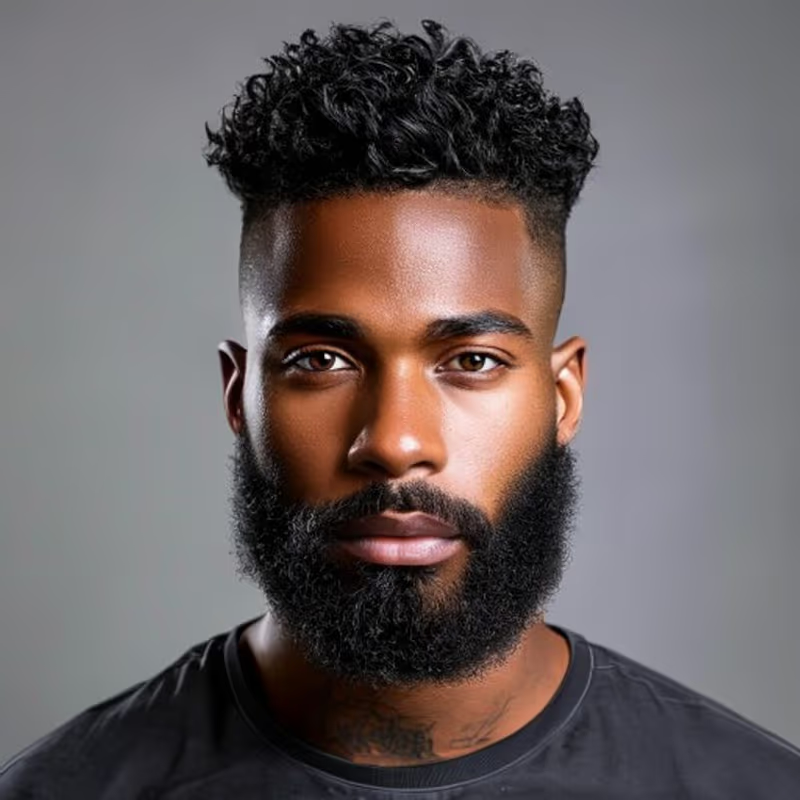
Taper Fades That Work Best
on Coily Hair
Coily 4C hair fades differently than any other texture. Here's which tapers hold up, and what to tell your barber.
By Jessica Hamilton — Master Stylist & Creative Director
📚 Part of our Fades & Tapers guide hub: explore every related guide in one place.
Coily (4B–4C) hair behaves differently in a fade than any other texture: it grows outward rather than down, packs densely, and shows scalp contrast quickly at very short lengths. That means some fades hold up beautifully and others expose density gaps within days. Here's what actually works.
Why Coily Hair Fades Differently
Because coily hair springs outward, the visual jump between a short fade and a fuller top is much sharper than on straight hair, which is great for contrast but unforgiving of an uneven blend. And at the shortest lengths, natural density variation shows as patchiness. The sweet spot is a fade that's clean but not scraped to nothing.
The Tapers That Hold Up Best
- Low taper: the most forgiving — keeps length through the sides, minimal scalp exposure.
- Temple fade: fades only the temples and nape, preserving maximum coily volume on top.
- Burst fade: fans around the ear, brilliant with a coily top or frohawk.
- Mid taper: a balanced everyday option if your density is even.
- Approach skin fades carefully. Stunning contrast, but they expose any density variation.
Keeping It Sharp
- Moisturise daily, coily hair dries fast, and dry hair looks dull and less defined in a fade.
- Line-up every 1–2 weeks — the crisp hairline is what makes the fade read as sharp.
- Ask for the blend to follow your growth pattern, especially around cowlicks.
- Sponge or brush the top to keep texture even and defined against the fade.
Common Mistakes With Coily Fades
- Cutting the fade dry when the barber is used to straight hair techniques. Coily hair shrinks as it dries, so cutting it stretched or slightly damp gives a more accurate sense of true length.
- Shaving too close at the neckline without checking for bumps first. Coily and curly hair is more prone to ingrown hairs at the nape, and a razor-sharp neckline can aggravate that area.
- Skipping regular maintenance between visits. A coily taper grows out unevenly at the fade line faster than a straight-hair fade because new growth curls immediately, making the line blurry sooner.
- Using a comb-out mid-cut without checking curl pattern first. Combing coily hair straight out before cutting can lead to an uneven result once the curl relaxes back into place.
Product Choices That Support the Cut
A defined taper on coily hair looks sharpest when the top curls are healthy and well-moisturized, since dry, brittle curls lose their shape and make the contrast with the faded sides look messy rather than clean. A leave-in conditioner followed by a curl-defining cream on damp hair helps individual curls hold their pattern through the day, which keeps the line between top and fade looking deliberate. Avoid heavy oils applied directly to the faded sides, since they can make short hair look patchy rather than sleek.
Finding a Barber Experienced With Coily Hair
Not every barber has equal experience fading coily and tightly curled hair, since the shrinkage and density require different clipper-over-comb technique than straight hair. When booking with someone new, ask directly whether they regularly cut coily or Afro-textured hair, and look at their portfolio for similar hair types rather than assuming general fade experience transfers automatically. A barber confident with coily hair will usually ask about your curl pattern and preferred length before starting, rather than jumping straight to a standard guard size.
Frequently Asked Questions
Q1: What taper fade is best for coily 4C hair?+
Q2: Why does my fade look patchy on coily hair?+
Q3: Should I get a skin fade with 4C hair?+
Q4: How do I keep a fade sharp on coily hair?+
Q5: Should the fade follow my hair's growth pattern?+
Related Haircut Guides
Make us a Preferred Source on Google
See our latest articles first in your Google Search & AI Overviews.