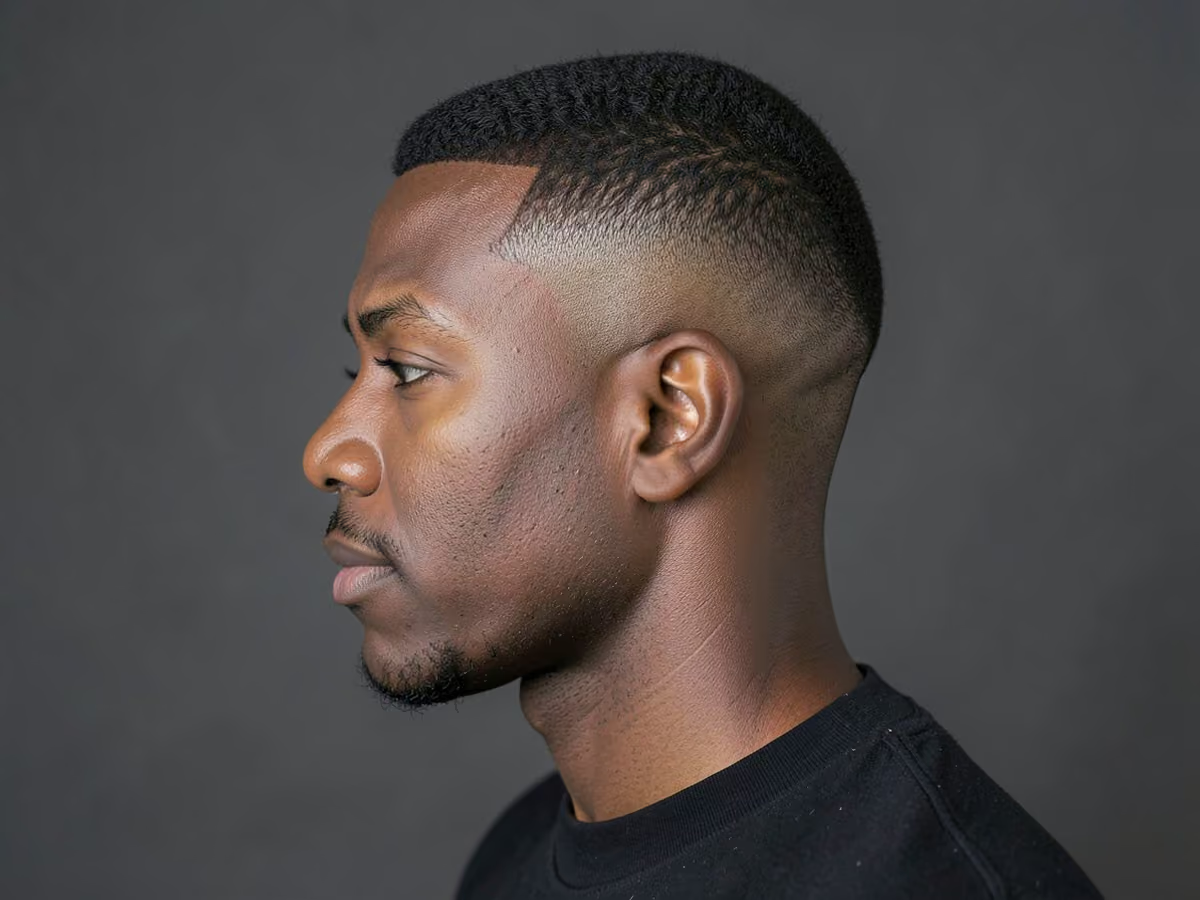
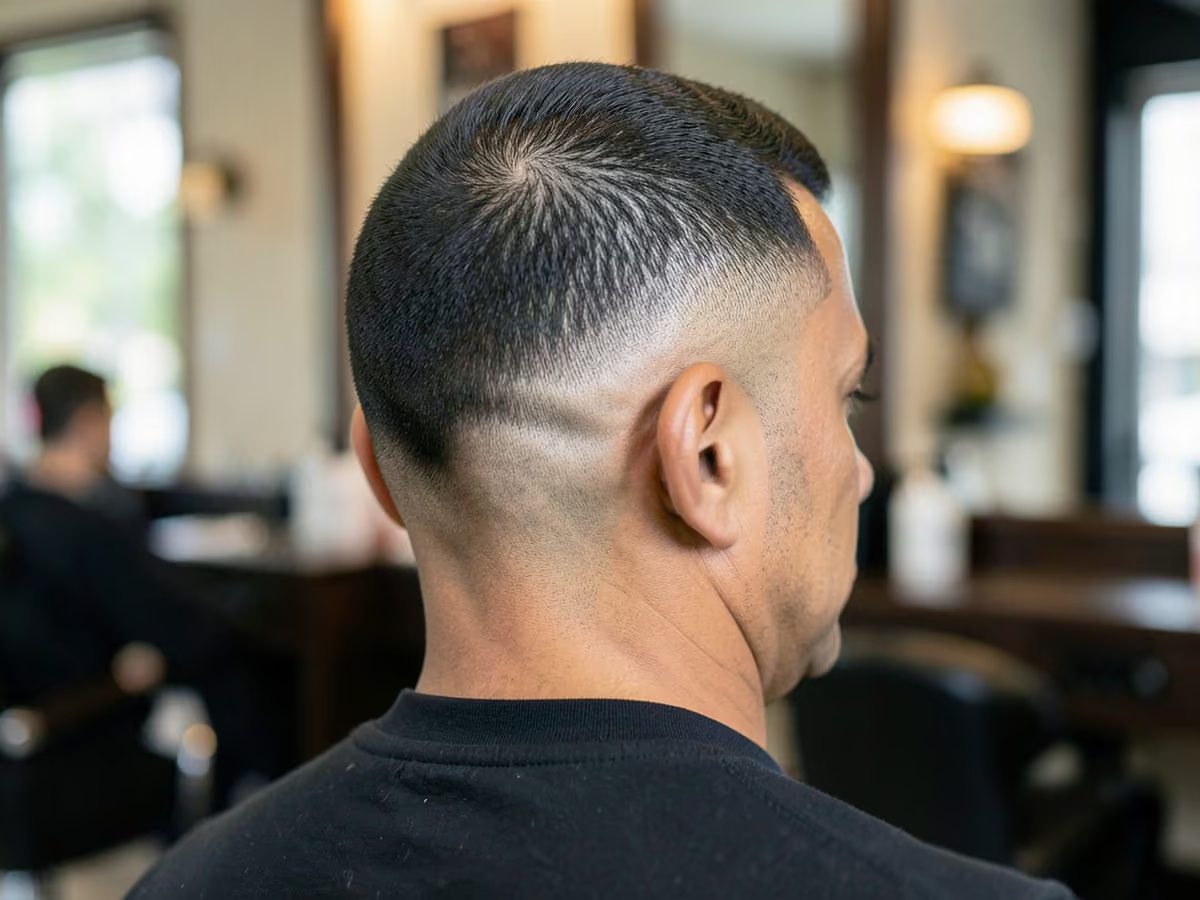
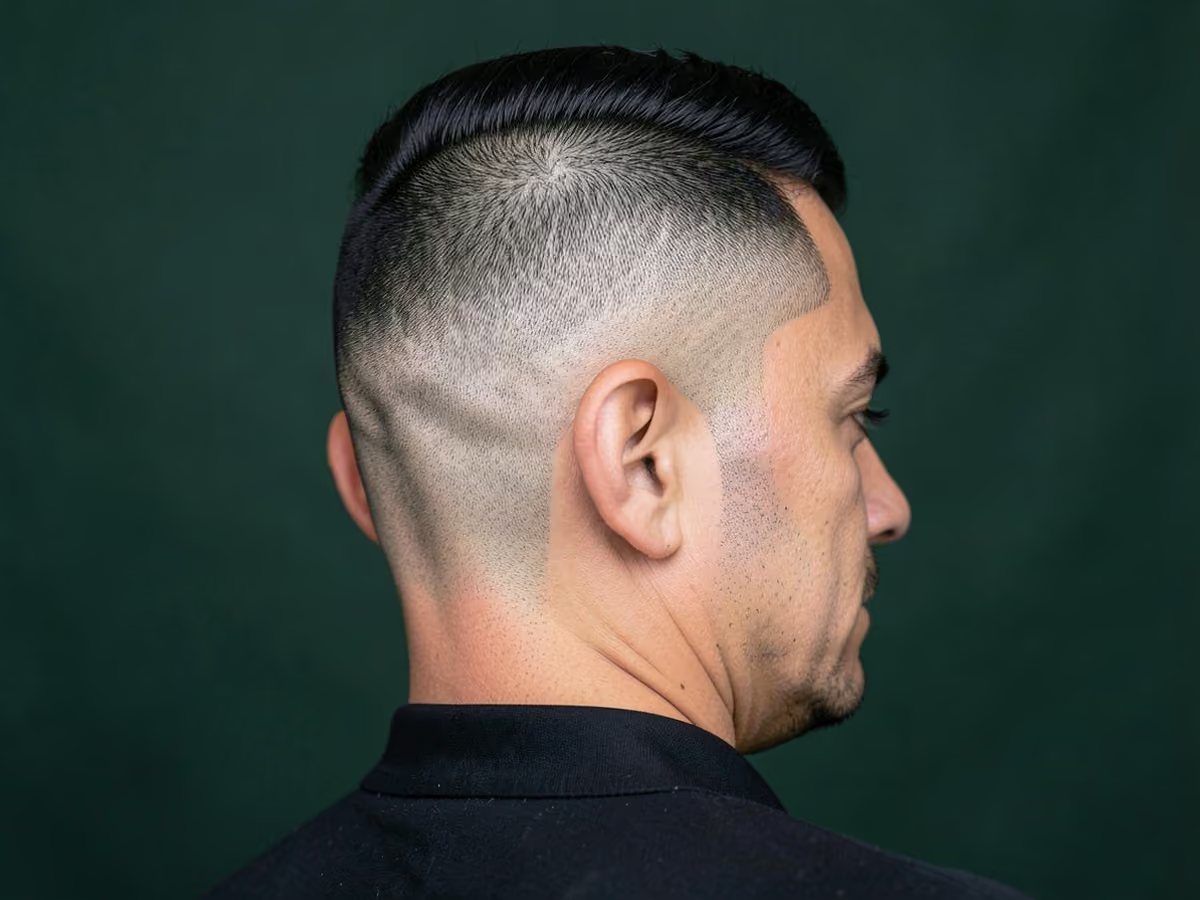
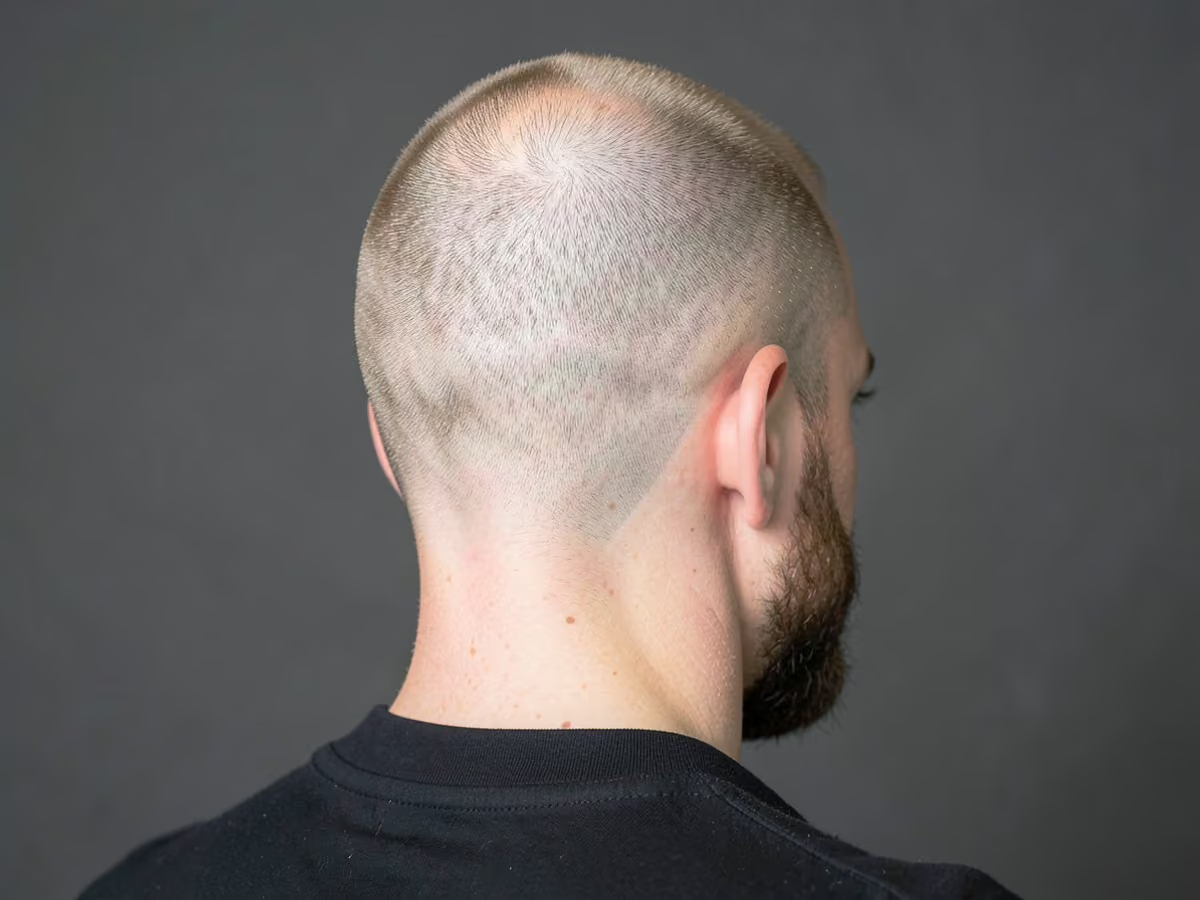
Quick answer: Taper vs fade comes down to how much of the head the short hair covers. A taper shortens only the sideburns and nape, usually to a #1, and keeps length over the ears. A fade wraps a short gradient around the whole head at a set height, often down to skin. Tapers grow out slower; fades give more contrast.
Taper vs Fade Styles at a Glance
Every style on this page with its clipper guard, top length and trim interval. Tap a name to jump to that card.
Taper vs fade comes down to coverage: a taper shortens only the sideburns and nape, while a fade wraps short hair around the whole head. The two words get swapped so often that many men end up with the wrong cut. This page gives one table of differences, a way to tell them apart in a photo, eight examples, and the wording that gets you one and not the other.
What Is the Difference Between a Taper and a Fade?
The difference is coverage. A taper works only on the outline of the haircut: the sideburns and the nape, the two places where hair meets skin. Everything between them, including the hair sitting over the ear, keeps a guard length such as a #3 or #4. A fade takes a short gradient right around the head at one height, so the band of short hair passes over the ear and across the back in a continuous line. A taper is a finishing detail; a fade changes the shape of the whole side.
Depth is the second difference. Tapers usually stop at a #1 (1/8 inch) or a #0.5, so a little hair still covers the skin at the edges. Fades often go to a #0 (1/16 inch) or bare skin at the bottom. The hybrid most shops call a taper fade sits between the two, which is why the names get blurred. The table below separates the pure versions.
What Is the Difference Between a Taper and a Fade?
Feature
Taper
Fade
Where the short hair sits
Sideburns and nape only
A full band around the head
Hair over the ear
Keeps a #3 or #4
Cut to the same short length as the band
Shortest length
#1 or #0.5, rarely skin
#0, foil shaver or bare skin is common
How it reads from the front
Barely visible; looks like a neat haircut
Clear gradient on both sides
Looks fresh for
About 3 to 5 weeks
About 1 to 3 weeks
Typical trim schedule
Every 3 to 5 weeks
Every 2 to 3 weeks; skin fades every 1 to 2
Strict dress codes
Usually accepted
Low fades usually fine; high skin fades sometimes questioned
Reference photos cause most of the mix-ups, because a fresh taper on dark, thick hair can pass for a fade and a grown-out fade can pass for a taper. Four checks settle it in a few seconds, and they work on any photo taken from the side or the back. Save a photo that passes all four before you book, and show it at the start of the appointment rather than halfway through.
Look directly above the ear
If there is visible hair sitting on top of the ear with a rounded outline, it is a taper. If the area above the ear is as short as the sideburn, the cut is a fade.
Follow the short hair around the back
On a fade, the short band runs across the back of the head in one level line. On a taper, the short hair only appears at the neckline and fades out within an inch or so.
Check for skin
Bare skin showing at the temple or behind the ear almost always means a fade. A taper keeps a light shadow of hair at the edges.
Look at the corner where the sideburn meets the neck
Tapers keep that corner soft and rounded. Fades usually leave it sharp because the band is cut at a set height before it is blended up.
Should You Get a Taper or a Fade?
Choose by upkeep first, then by contrast. If you can only see a barber once a month, a taper is the safer choice because nothing on the sides is short enough to look shaggy within two weeks. If you book every two or three weeks and want the haircut to look obviously fresh, a fade gives more for the money. Hair color and texture shift the decision too: dark, coarse hair on light skin makes any fade read stronger, while fine or blond hair makes a taper almost invisible.
Pick a taper if
you work somewhere conservative, stretch visits past four weeks, have thinning hair at the temples that skin would expose, or want a classic side part, comb over or longer top to stay the focus.
Pick a fade if
you want visible contrast, wear a short crop, buzz, waves or a high curly top, have very thick hair that bulks out over the ears, or like the clean outline right after a cut.
Pick a taper fade if
you cannot decide. It blends a little higher than a taper without wrapping as far as a full fade, and our taper fade gallery shows how that middle ground looks at each height.
Filter the styles
Showing all 8 styles
Fade
Hair
Length
Taper vs Fade at Each Height
Each card below puts a taper and a fade at the same height so you can see what changes when the short hair stays at the edges versus wrapping the head. Guard numbers follow our clipper guard chart.
Trim:Every 3–4 weeks. The taper side holds its shape longer.
Best For:Office jobs, oval faces + straight or wavy hair.
About This Style
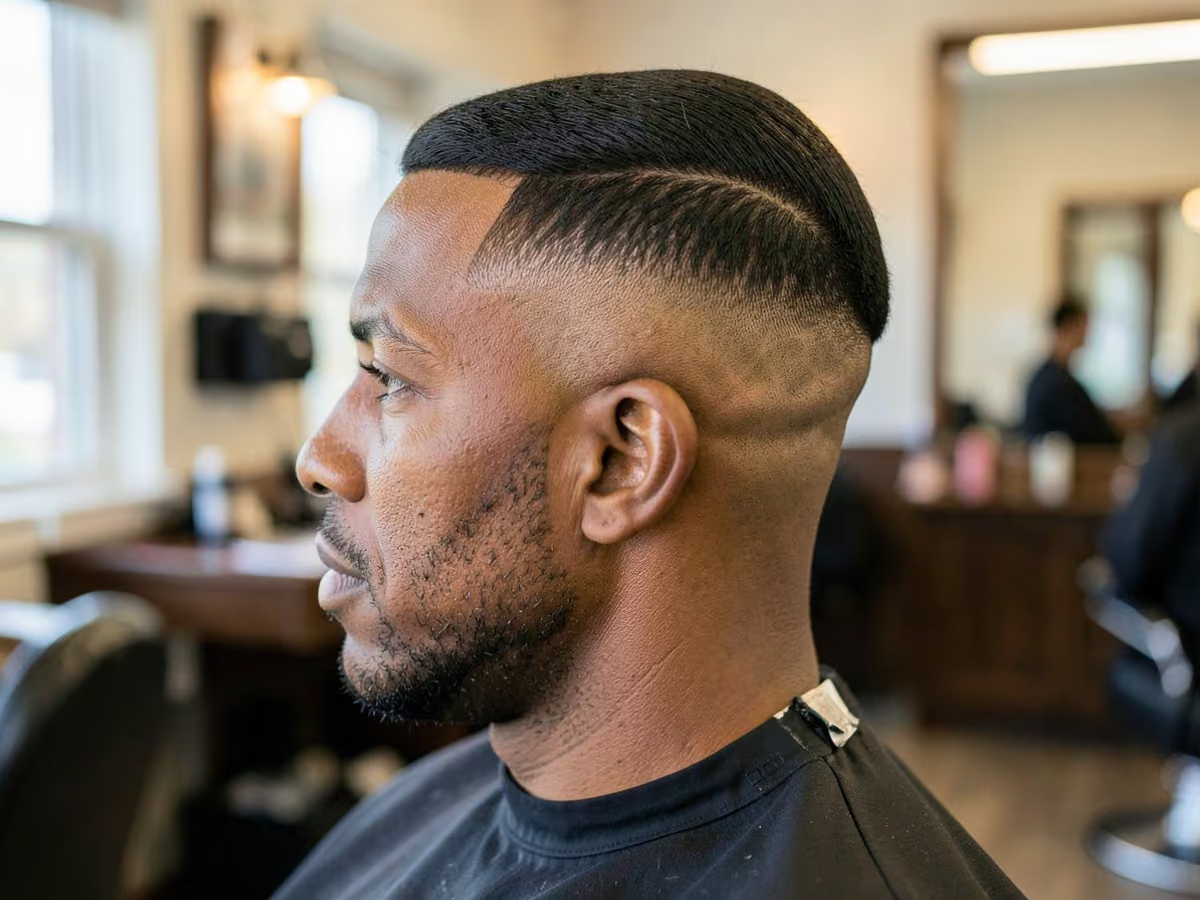
Both start just above the ear, but they treat that area differently. The low taper shortens only the sideburns and nape corners to a #1 and leaves a #3 or #4 sitting over the ear. The low fade carries a #0 or #1 band right around the head at the same height, so the gradient shows from every angle. Choose the taper for the quietest grow-out, or the fade for a crisper outline that still passes in an office.
How to Style at Home
Check the back in a hand mirror to see whether the short hair wraps around.
Work a pea-sized amount of matte clay through the top only.
Leave the sides untouched; product on short sides makes them look greasy.
Ask Your Barber
"Low taper, a #1 at the sideburns and nape only, keep a #3 over the ears. For the fade version, take a #1 around the whole head just above the ear."
Trim:Every 2–4 weeks. The fade side blurs first at the temple.
Best For:Round, oval faces + medium to thick hair.
About This Style
Here the blend climbs to the temple. On the mid taper, the sideburn and the nape rise to that height while the hair directly over the ear stays at a #2 or #3, giving a rounded side profile. A mid fade runs a level band at temple height around the head, usually from a #0 into a #2, so the change is obvious from the front. The taper adds less width; the fade takes more bulk out of thick sides.
How to Style at Home
Blow-dry the top back and slightly up to balance the tighter temples.
Rub a small amount of styling cream between palms and press it in.
Comb the hair over the ears down so the taper outline stays soft.
Ask Your Barber
"Mid taper: bring the sideburns and nape up to temple height but leave a #3 over the ears. If I say mid fade, run a #0 band all the way round instead."
Trim:Every 1–2 weeks. Most of the sides are short either way.
Best For:Round, square faces + thick or curly hair.
About This Style
At this height the two cuts come closest together. A high taper lifts the temple and nape blend toward the parietal ridge but keeps a slightly fuller patch around the ear, so the outline curves instead of running straight. A high fade takes skin or a #0 all the way up to that ridge in one level band. Both make the top look taller and the face narrower, so they suit a pompadour, quiff or high curly top on a round face.
How to Style at Home
Dry the top upward with a round brush to match the high blend.
Set the shape with light pomade for shine or matte paste for none.
Book the next visit before you leave; regrowth shows within ten days.
Ask Your Barber
"High taper, blend the temples and nape up toward the ridge but leave a little more over the ears; for a high fade, take a #0 straight round at ridge height."
Trim:Every 1–2 weeks. Skin turns to stubble within days.
Best For:Square, oval faces + coarse, dark or coily hair.
About This Style
Bare skin shows on each, but the amount differs a lot. A bald taper shaves only a small patch at the bottom of the sideburn and the nape corners, then blends up through a #1 to a #2 within an inch. A bald fade, also called a skin fade, wraps that bare band around the whole head before blending up. The taper suits men who want a sharp edge without much scalp showing; the fade gives maximum contrast and the shortest life.
How to Style at Home
Apply a few drops of scalp oil to the shaved areas after showering.
Use SPF on exposed skin if you spend time outdoors.
Avoid heavy product on top so the clean edge does the work.
Ask Your Barber
"Bald taper only: foil or razor to skin at the sideburns and nape corners, up to a #2 within an inch. A bald fade would mean skin all the way round."
Recommended Products
Scalp Oil
Matte Clay
Taper vs Fade by Hair Type and Style
Texture changes how both cuts read. Curly and coily hair softens a fade line, straight hair sharpens it, and a beard decides where the sideburn should end. These four cards compare the two cuts on those heads.
Trim:Every 3–5 weeks. Curls hide the edge growth for a while.
Best For:Oval, long faces + loose to tight curls.
About This Style
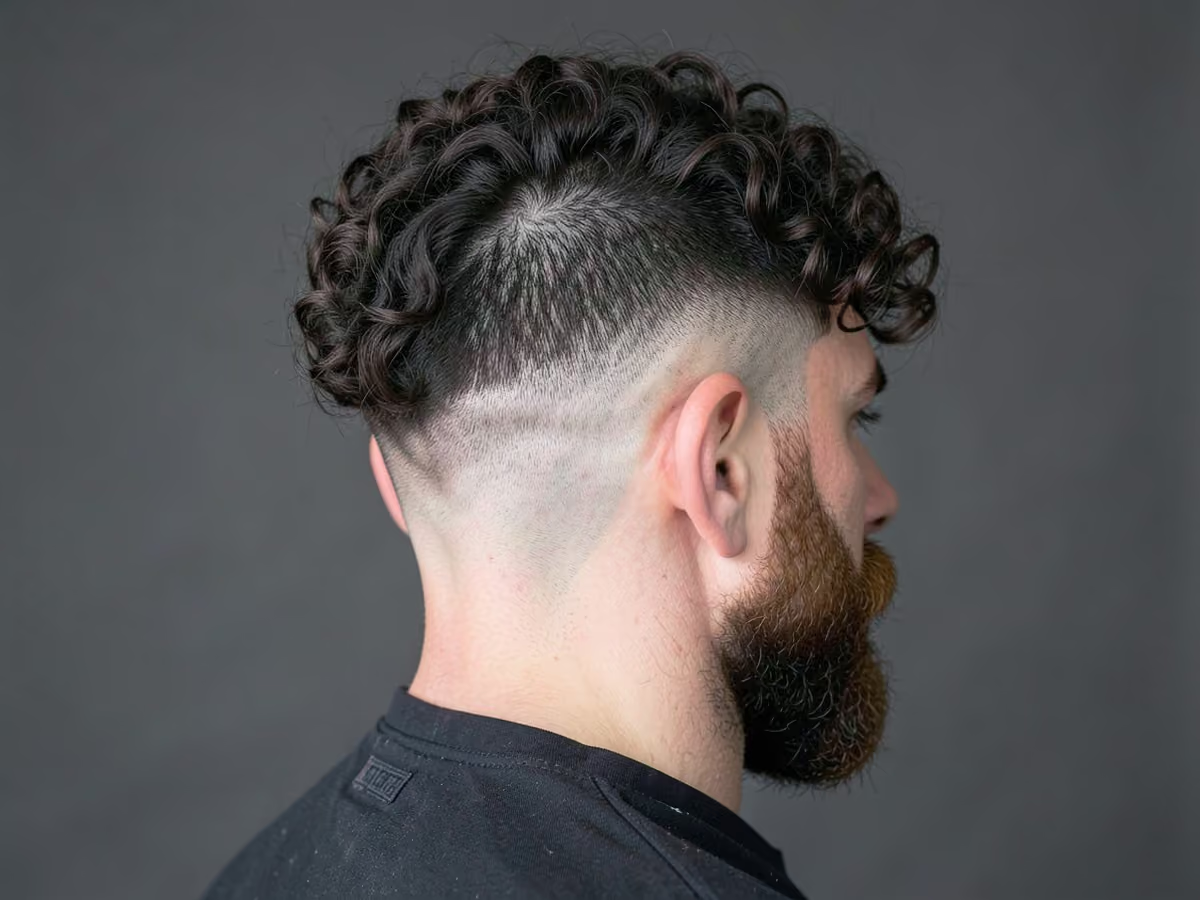
Curly hair puffs out over the ears as it grows, which is what usually decides this one. A taper keeps a #3 there, so the curls on top flow down into a rounded side and the head shape stays full. A fade removes that bulk to a #0 or #1 in a band, giving the curls a clear platform. Hate the shaggy stage? Choose the fade. Want curls framing the face? Choose the taper, or a drop fade behind the ear.
How to Style at Home
Apply curl cream to soaking wet hair and scrunch upward.
Air dry or diffuse on low heat without touching the curls.
Scrunch out any crunch once fully dry, leaving the sides alone.
Ask Your Barber
"Keep it a taper so the curls blend down over the ears, #1 at the neckline and sideburns only, and cut the top dry so I can see the curl shape."
Trim:Every 2–3 weeks. Line-up regrowth shows before the blend does.
Best For:Most face shapes + coily or 4C hair.
About This Style
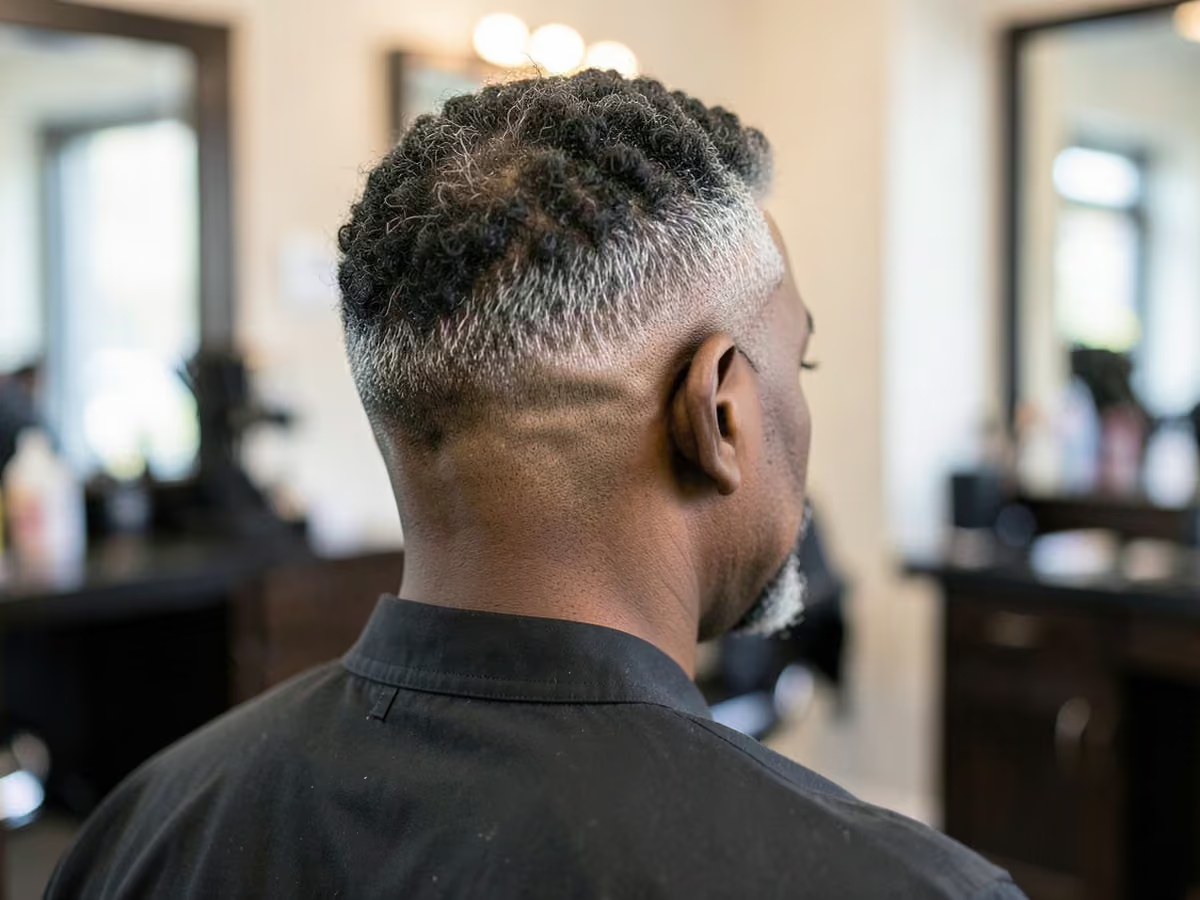
On coily hair, a taper is often ordered as a temple taper or neck taper paired with a line-up, keeping a short afro, sponge curls or twists full at the sides. A fade on the same hair usually goes to skin or a #0 and pairs with waves or a short brushed top. Coily texture makes both blends look smooth, so the choice is mostly about how much skin you want showing. Our taper fades for coily hair guide covers the edge-up details.
How to Style at Home
Brush or pick the top into shape while the hair is slightly damp.
Use a soft edge brush along the line-up after the barber visit.
Wear a durag or wave cap overnight if you are training waves.
Ask Your Barber
"Temple and neck taper with a line-up, keep the sides full at a #2 above the ear. For the fade, take it to skin all round and blend into a #1."
Trim:Every 2–4 weeks. Straight hair shows a blend line early.
Best For:Oval, heart faces + fine or medium straight hair.
About This Style
Straight hair is the least forgiving texture for either cut, because every guard step shows. A taper is safer on fine straight hair: it keeps cover over the ears and does not expose pale scalp next to the temple. A fade looks very clean for the first week on thick straight hair, especially Asian or dark hair, but any uneven step shows. Ask for a scissor-over-comb finish on the taper or an extra guard step on the fade.
How to Style at Home
Towel dry and apply a little thickening spray at the roots.
Blow-dry the top in the direction it will sit.
Finish with a small amount of texture powder for grip without shine.
Ask Your Barber
"Scissor-over-comb taper at the sideburns and nape, keep the sides at a #3, and use a half guard between each step if you take it into a fade."
Trim:Every 2–3 weeks. The sideburn join needs regular attention.
Best For:Round, square faces + any hair with a full beard.
About This Style
A beard changes where the sideburn should stop. With a taper, the sideburn stays at a #2 or #3 and runs straight into the beard, so hair and beard read as one shape. With a fade, the sideburn is taken short and the barber ramps the beard back up through the cheeks, often called a beard fade. The taper suits fuller, darker beards; the fade suits shorter beards and men who want a gap of contrast between hair and face.
How to Style at Home
Brush the beard down after a few drops of beard oil.
Trim stray hairs at the sideburn join with a small trimmer.
Keep the beard length matched to the top, not the shortest guard.
Ask Your Barber
"Taper the hair into the beard so the sideburn stays at a #3 and connects. For the fade option, take the sideburn down and blend the beard back up."
Recommended Products
Beard Oil
Beard Brush
How Do You Ask for a Taper or a Fade Without a Mix-Up?
Say what you want the area over the ear to look like. That single detail separates the two cuts better than the names do, because it is where they differ most. Then give a height, the shortest guard and the top length. Barbers read guard numbers more reliably than adjectives, and our clipper guard numbers chart converts them to inches if you are unsure. If the terms still feel unfamiliar, the guide on asking for a fade without the terminology has plain descriptions that work.
For a taper
Just a taper at the sideburns and neckline, down to a #1, keep a #3 over the ears, about two inches on top.
For a fade
Low fade all the way around starting just above the ear, #0 at the bottom blended into a #3, about two inches on top.
For the hybrid
Low taper fade: blend the sideburns and nape from a #1 up into a #3, let it come slightly above the ear but do not wrap it to skin.
Clipper Guards Used in Taper vs Fade Styles
A clipper guard is the plastic comb that clips onto the blade and sets how much hair is left: a #1 leaves 3 mm (1/8 inch), each step up adds about 3 mm. The right column lists the cards on this page that call for each guard. See the full clipper guard numbers guide for the complete chart.
Hair grows roughly half an inch a month, and the shortest hair shows that growth first. A fade has far more short hair, so it changes faster. A taper has only a small area of short hair, and that area sits at the edges where growth looks like a softer outline rather than a lost shape. That is the practical reason tapers suit long gaps between visits and fades suit regular ones.
How Do a Taper and a Fade Grow Out Differently?
After
Taper
Fade
1 week
Looks the same as day one
Skin turns to stubble; still sharp
2 weeks
Edges slightly softer
Gradient blurring; touch-up due for skin fades
4 weeks
Neckline fuzzy; shape still holds
Fade line mostly gone; sides look bulky
6 weeks
Needs a recut, but reads as a longer haircut
Reads as an overgrown cut, not a fade
Can You Switch From a Fade to a Taper, or Back?
Going from a fade to a taper takes patience, because the barber cannot add length. Expect two to three weeks of growth before the hair over the ear is long enough to leave at a #3, and ask for only a neckline cleanup in between. Going from a taper to a fade can happen in a single visit, since the barber is only taking more off. If you are unsure, try a low fade first: it covers the least of the head, so it grows back into a taper fastest.
Which Taper vs Fade Is Right for You?
Pick your hair type and how much upkeep you will put in. The matches below come from the Best For and Maintenance notes on each card. Upkeep follows the Maintenance badge: low means a cut every 3 to 6 weeks and almost no daily styling, high means weekly line-ups or daily product.
A taper is usually the safer choice for conservative offices, because it only tidies the edges and the sides keep some length. A low fade with a guard at the bottom also reads as professional. High skin fades show the most scalp and are the cut most likely to look casual in a formal setting.
Q2: Which lasts longer, a taper or a fade?+
A taper lasts longer between cuts. It has a small area of short hair at the edges, so regrowth only softens the outline. Most tapers look fine for three to five weeks. A fade has a full band of short hair, so it starts to blur after one to two weeks for skin fades and two to three for guard fades.
Q3: Is a taper fade a taper or a fade?+
It is a hybrid. A taper fade blends the sideburns and nape further up than a classic taper, so the gradient is visible, but it usually stops short of wrapping a skin band around the whole head. Barbers use the term differently, so describe the area over the ear and give guard numbers when you order.
Q4: Can you get a taper on curly or coily hair?+
Yes. A taper suits curly and coily hair well because it keeps density over the ears and lets the curls carry the shape. Many barbers pair it with a line-up at the temples. A fade gives more contrast against a curly top, and a drop fade follows the curve behind the ear.
Q5: Does a taper or a fade suit thinning hair better?+
A taper is often kinder to thinning hair at the temples, because a skin fade exposes the scalp next to the thin area and makes it more noticeable. A low fade with a #1 or #2 at the bottom can work too. For overall thinning, very short all over may suit better than either.
Q6: What do I say if I just want my edges cleaned up?+
Ask for a taper at the sideburns and neckline only, and say you want to keep the length over the ears. Name the guard for the bottom, usually a #1, and tell the barber not to change the top. That gets a clean outline without the sides becoming a fade.