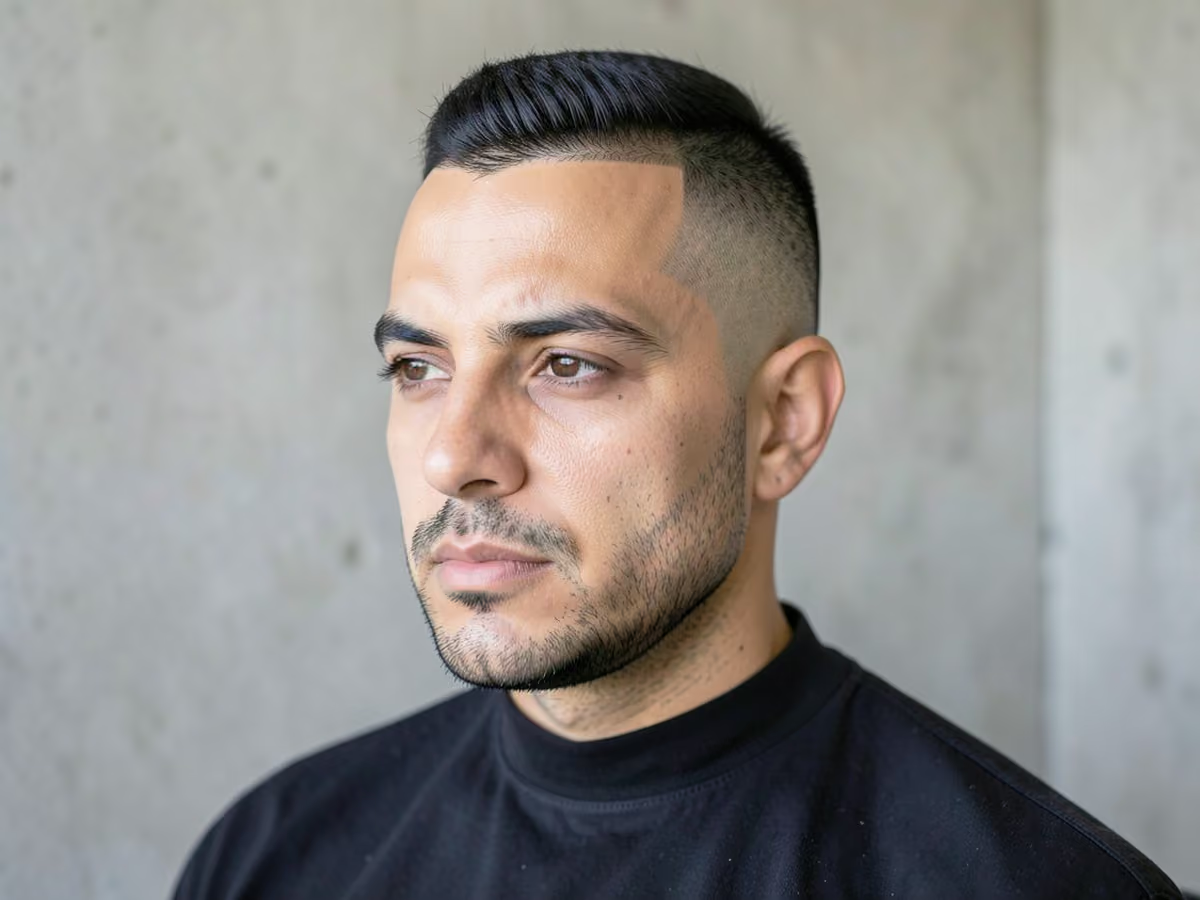
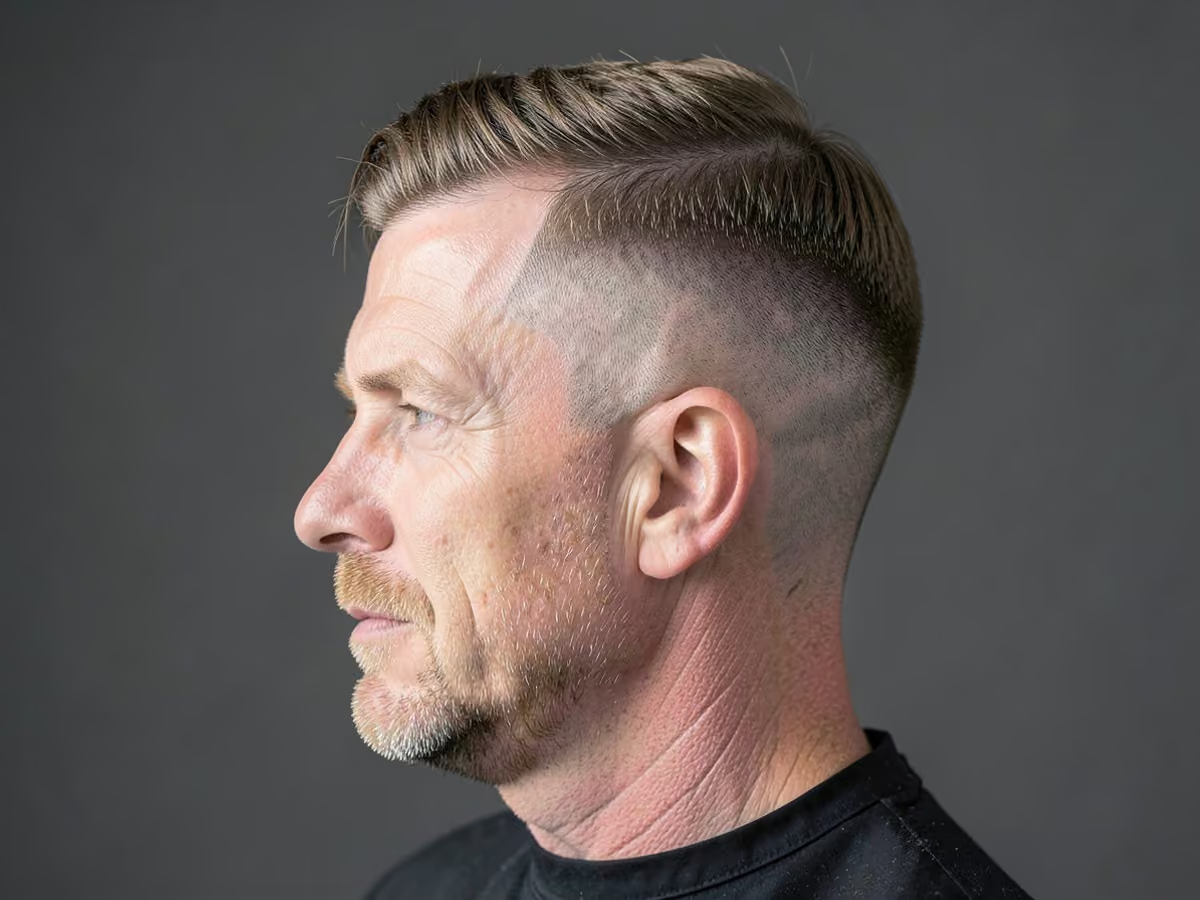
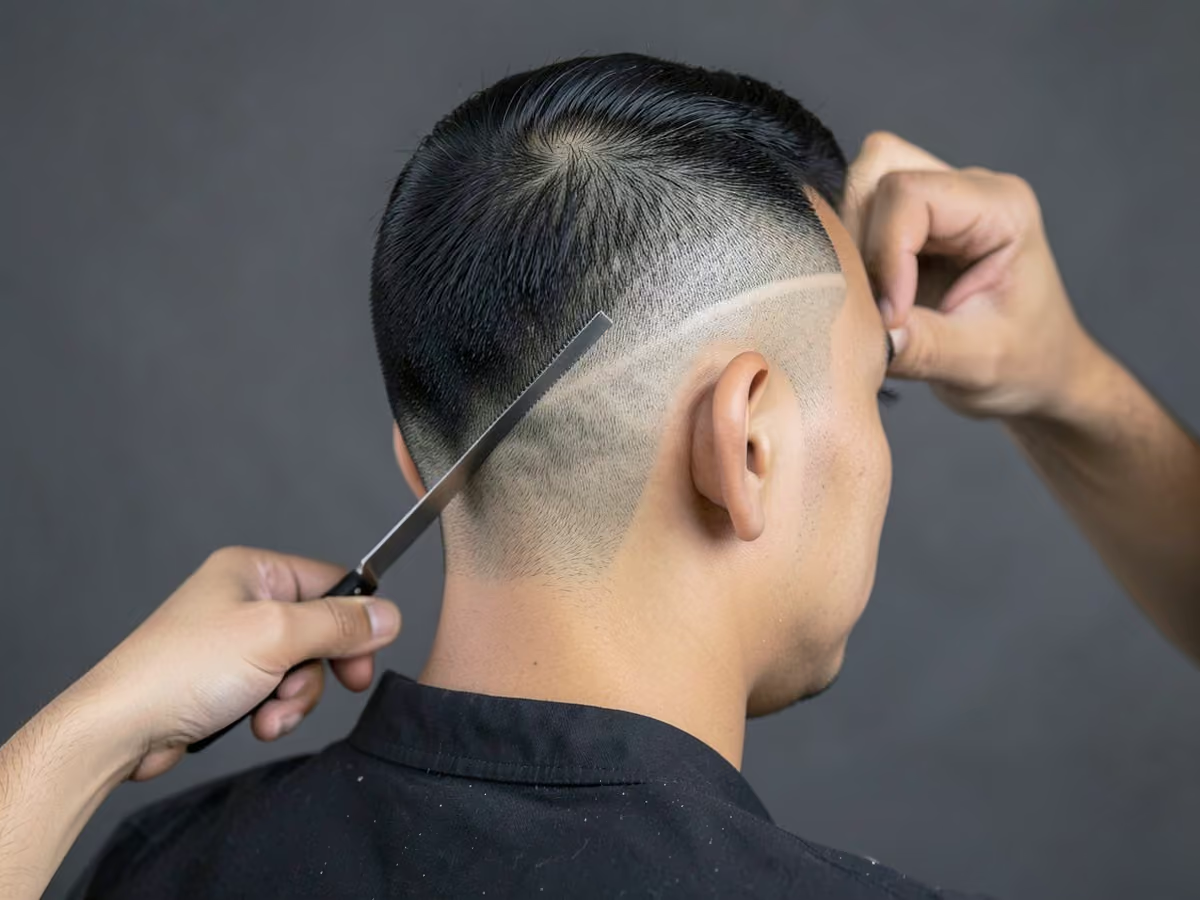
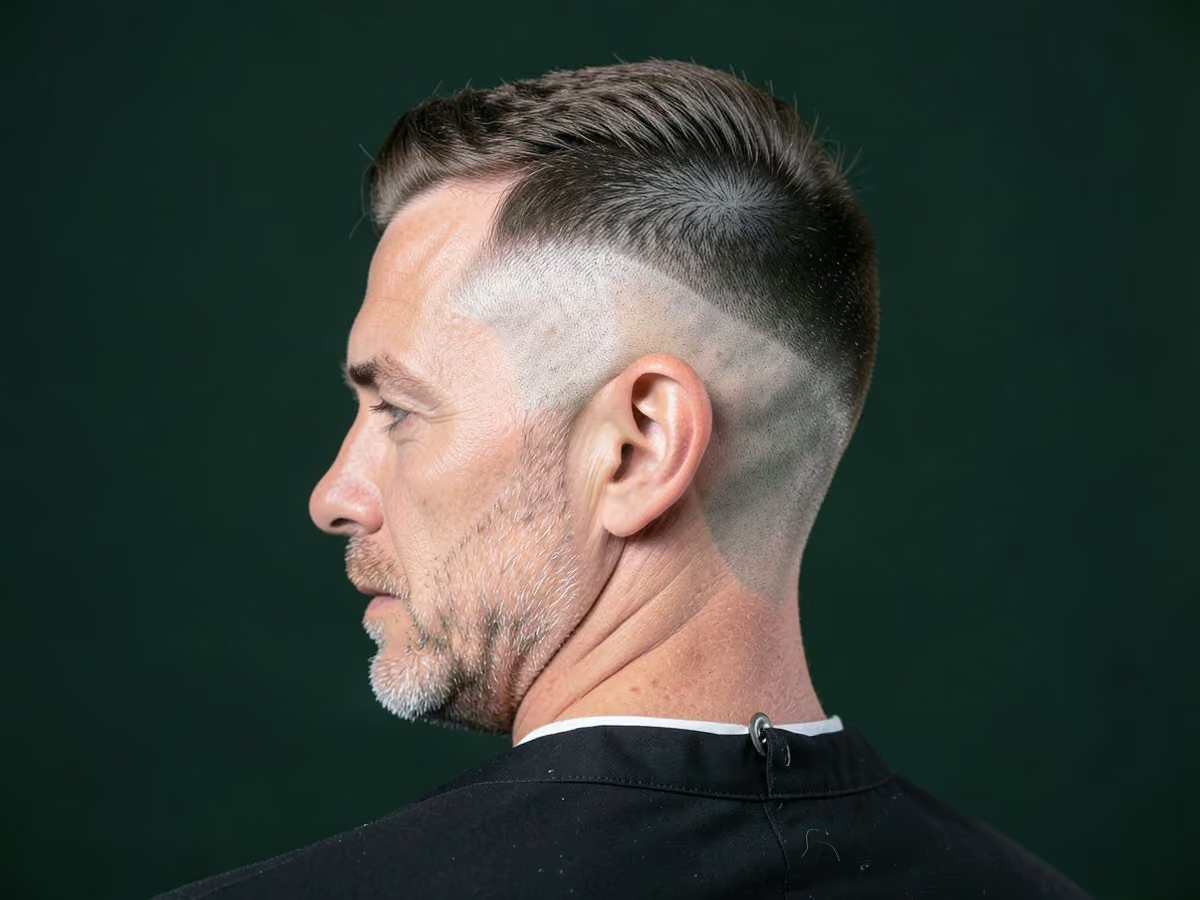
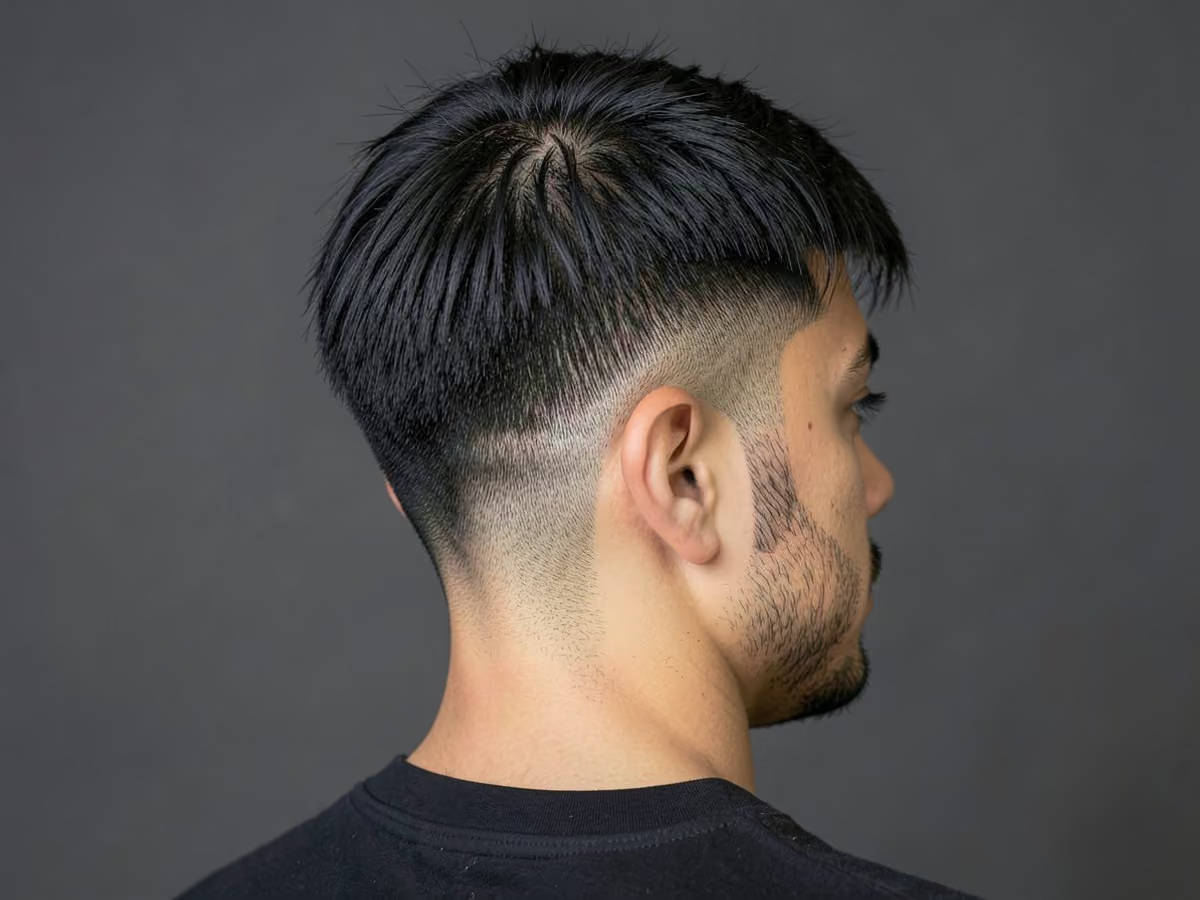
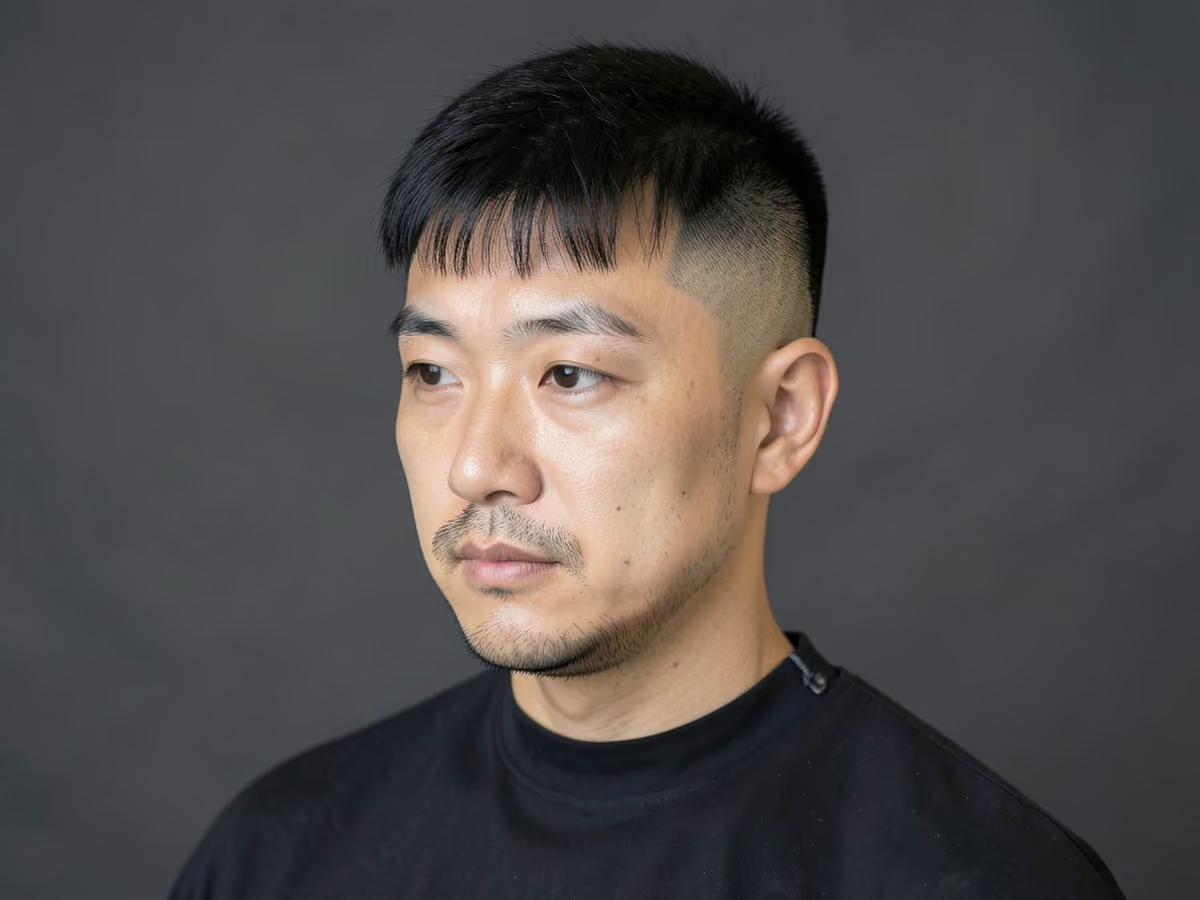
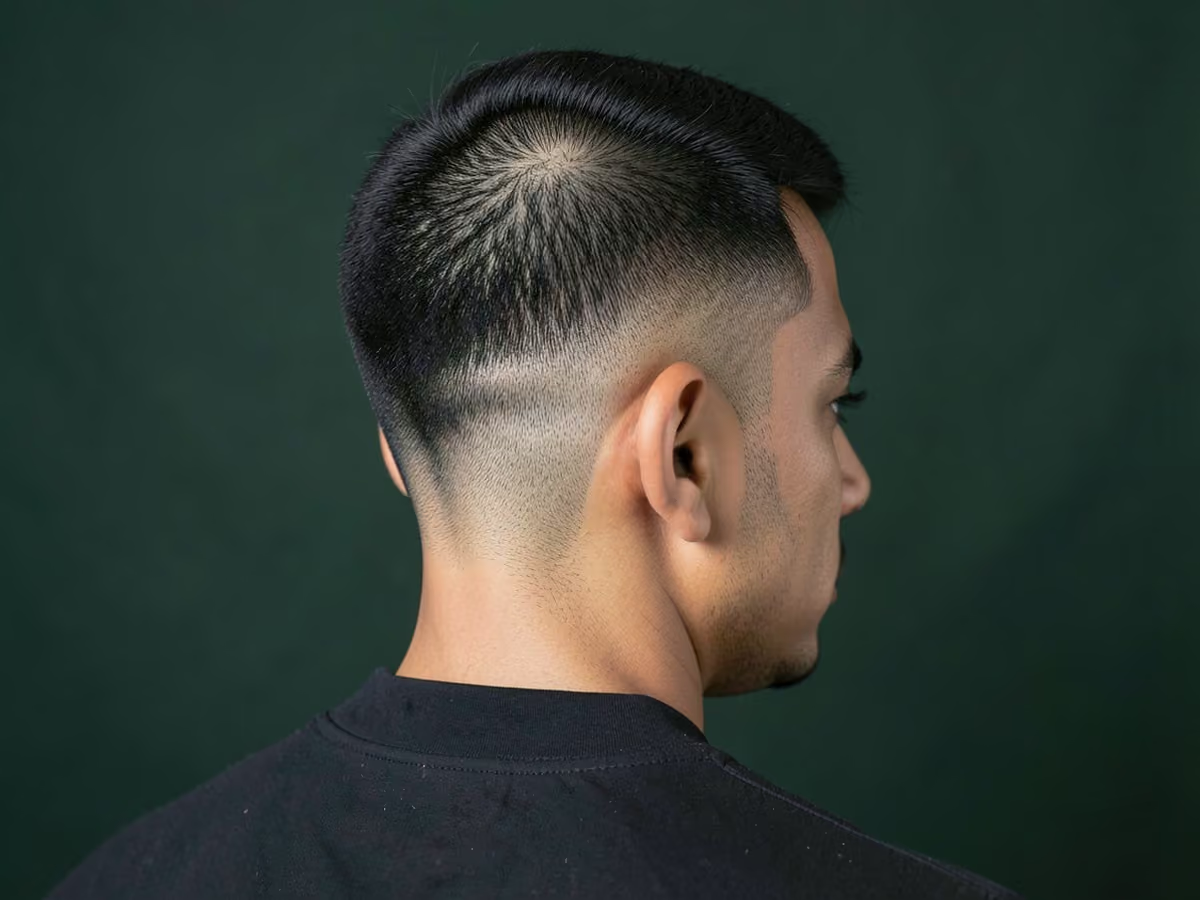
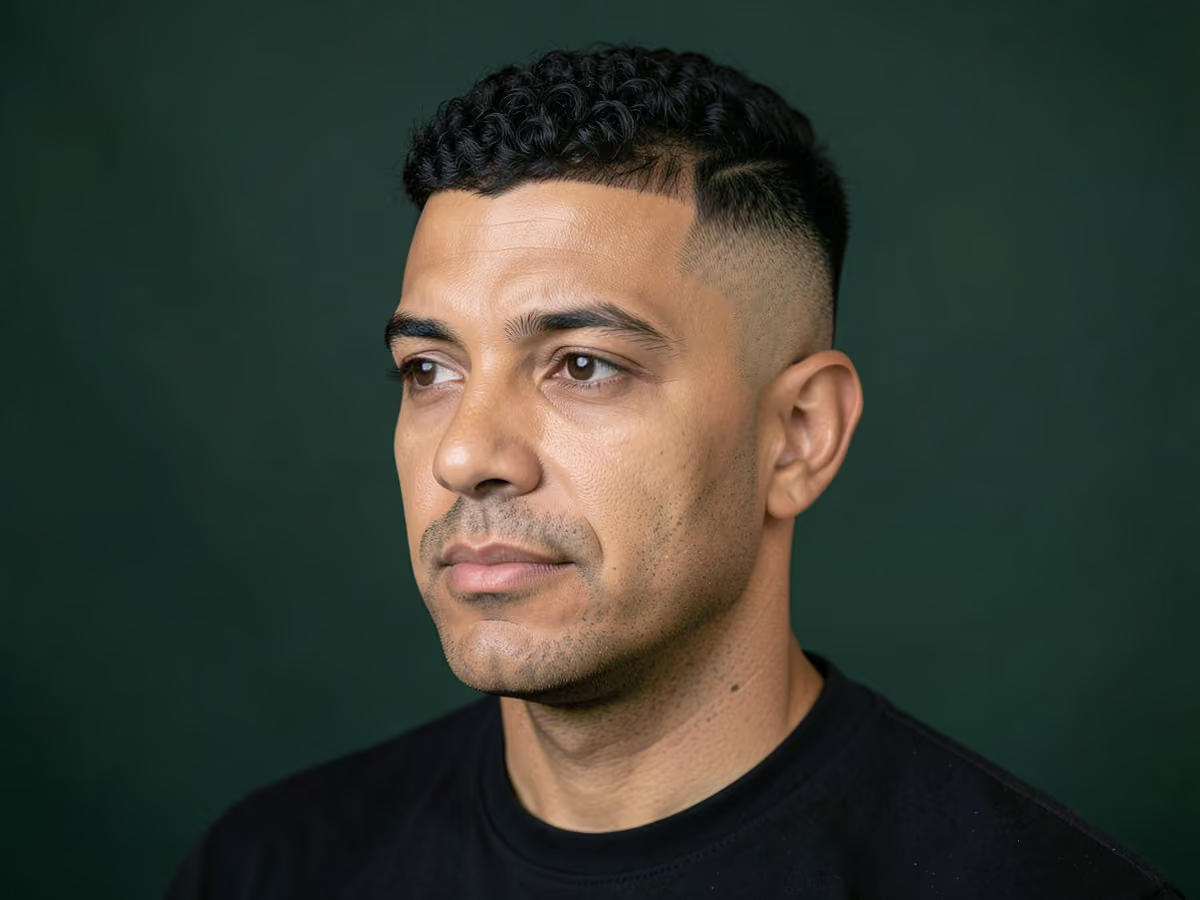
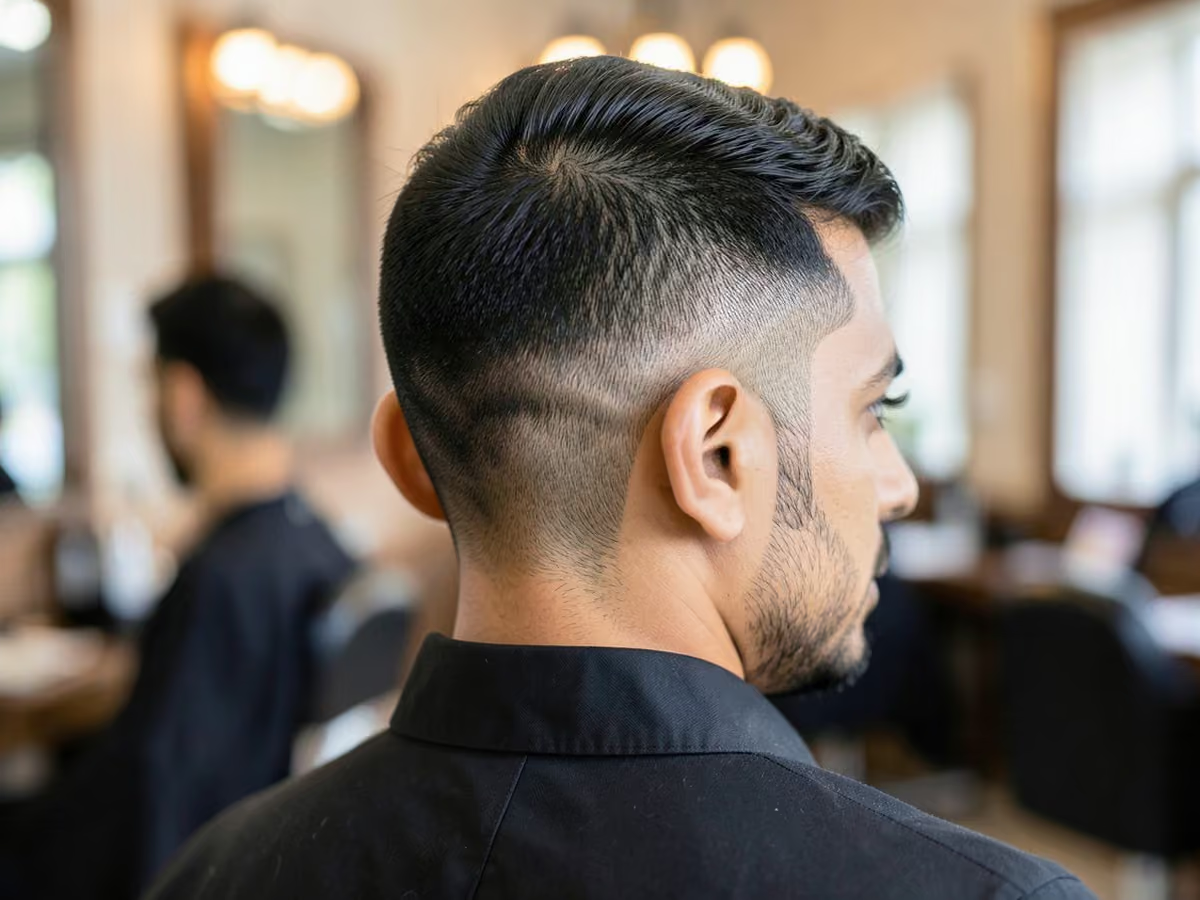
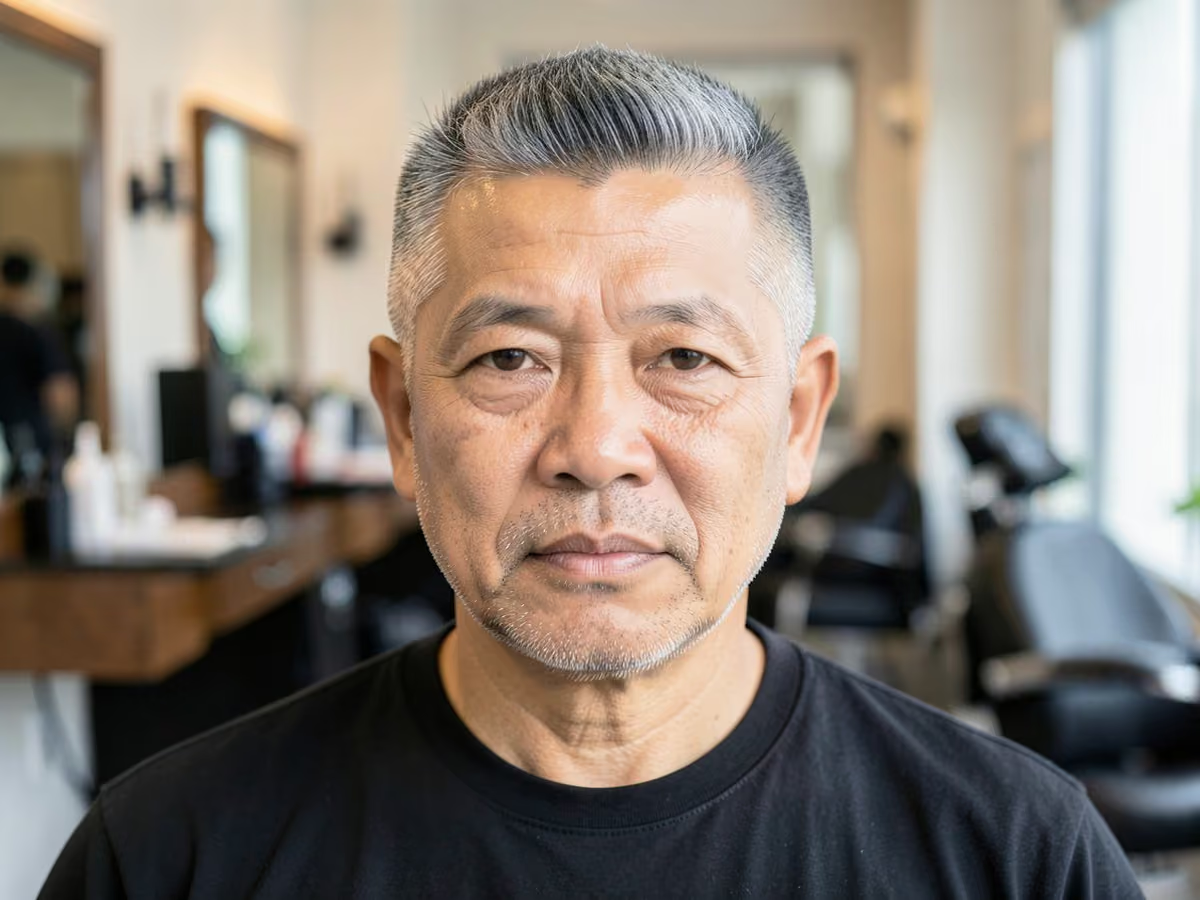
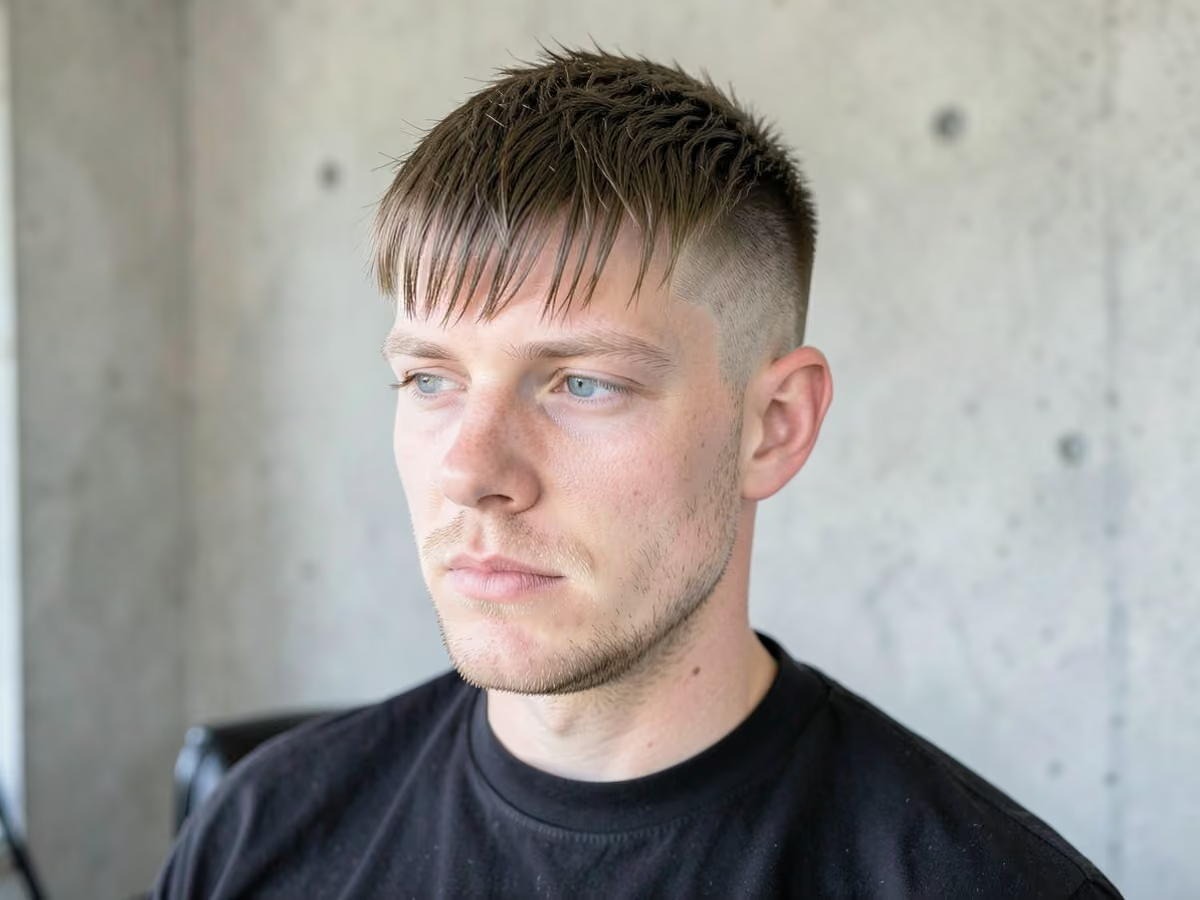
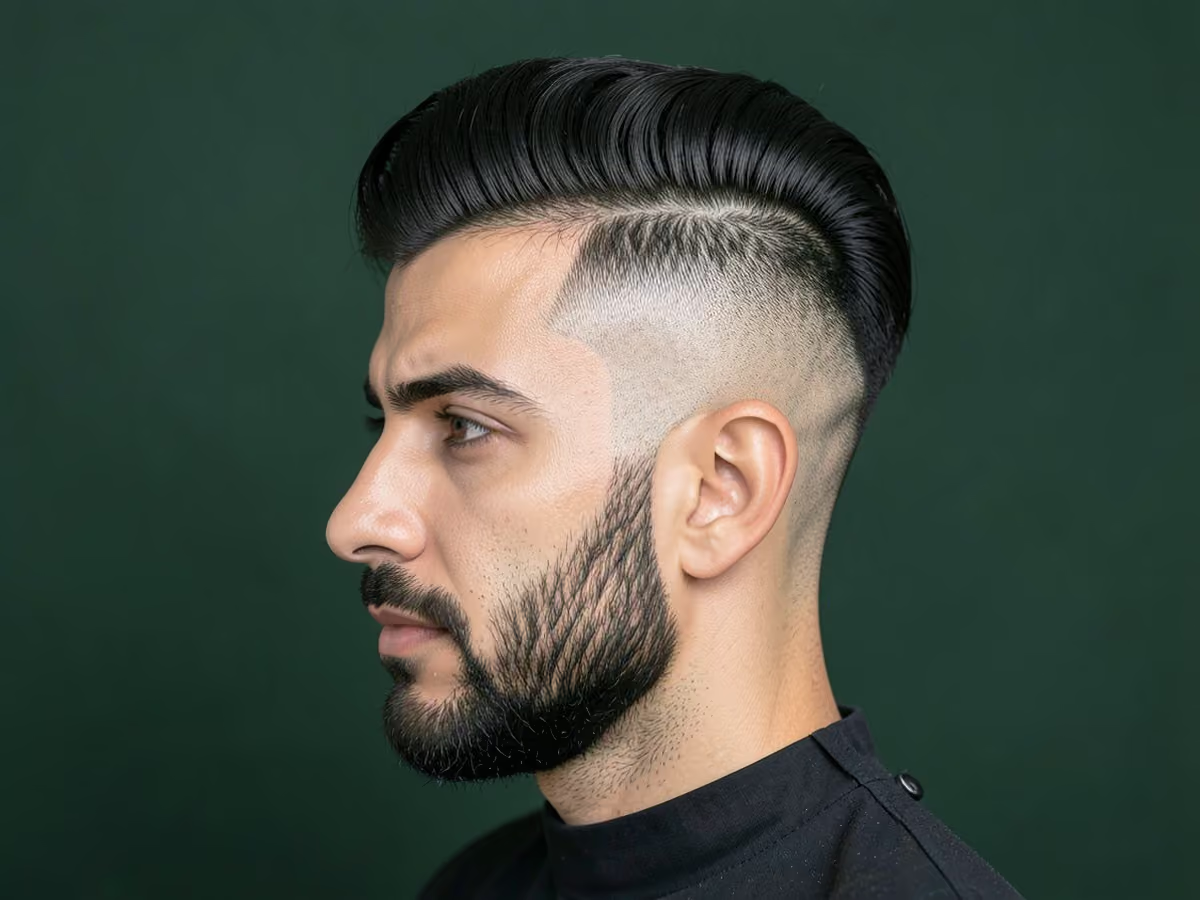
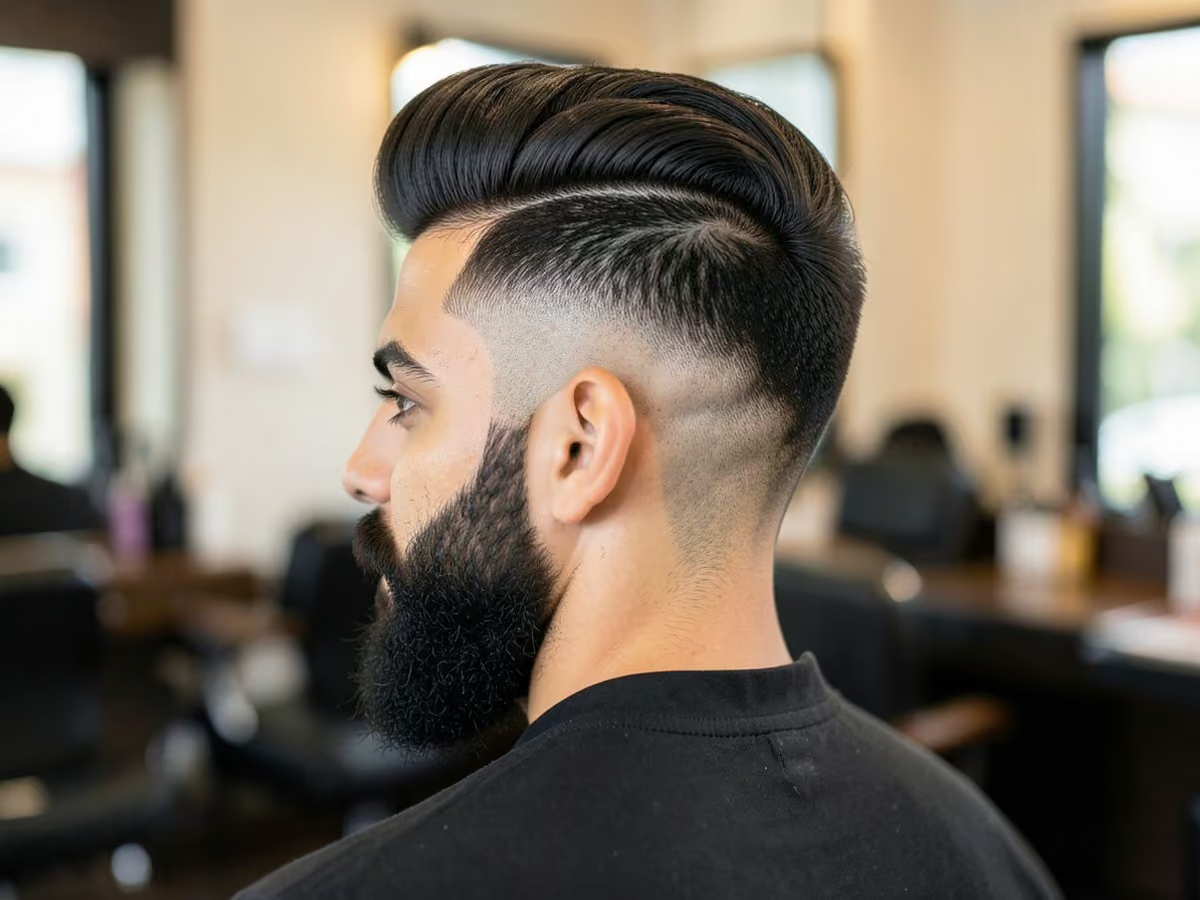
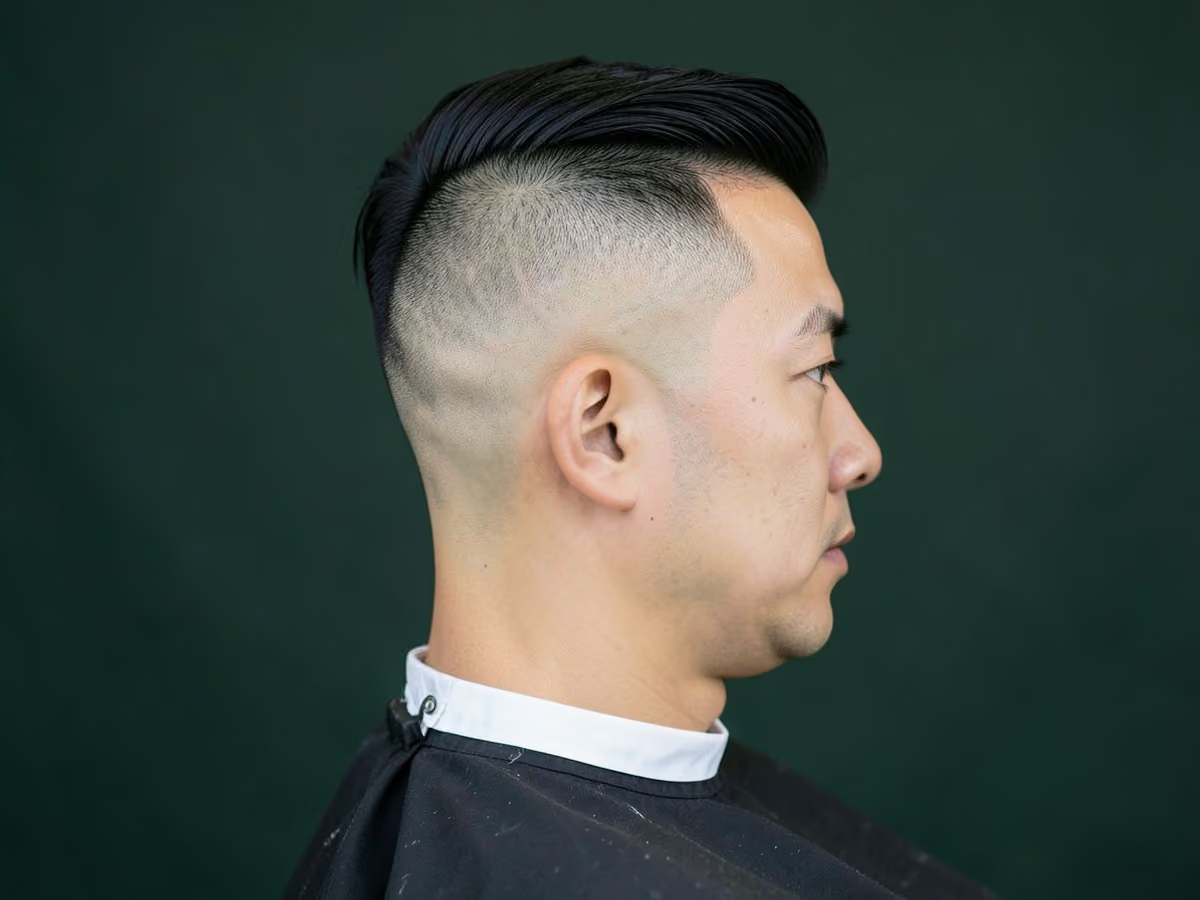
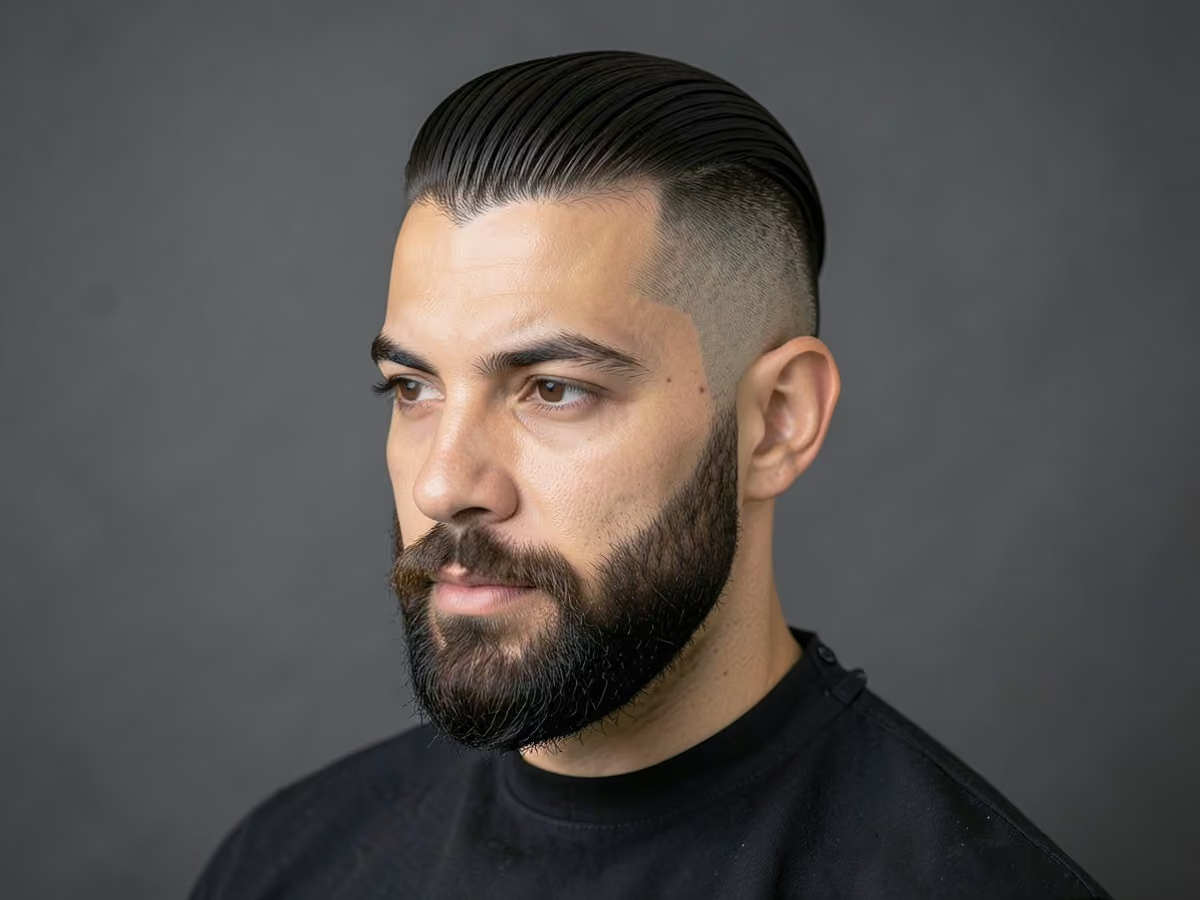
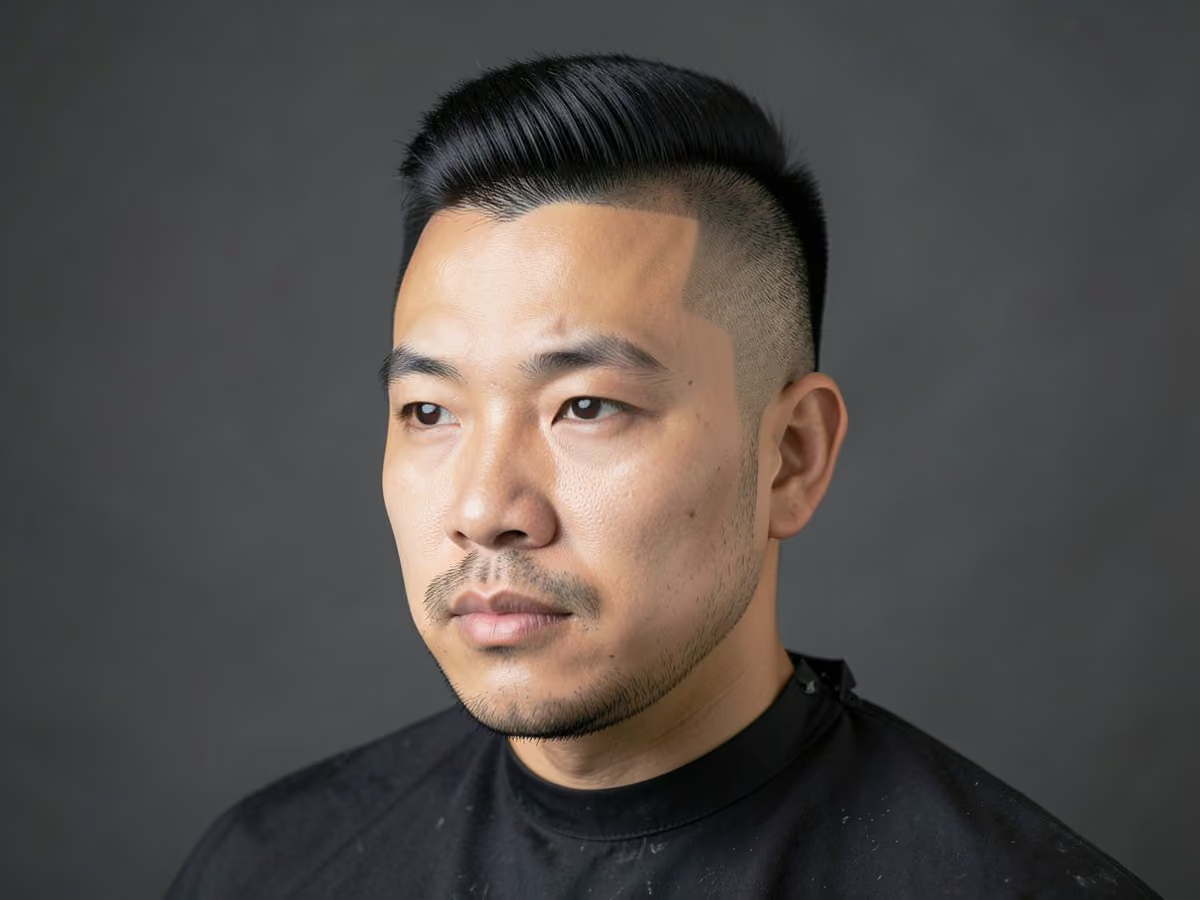
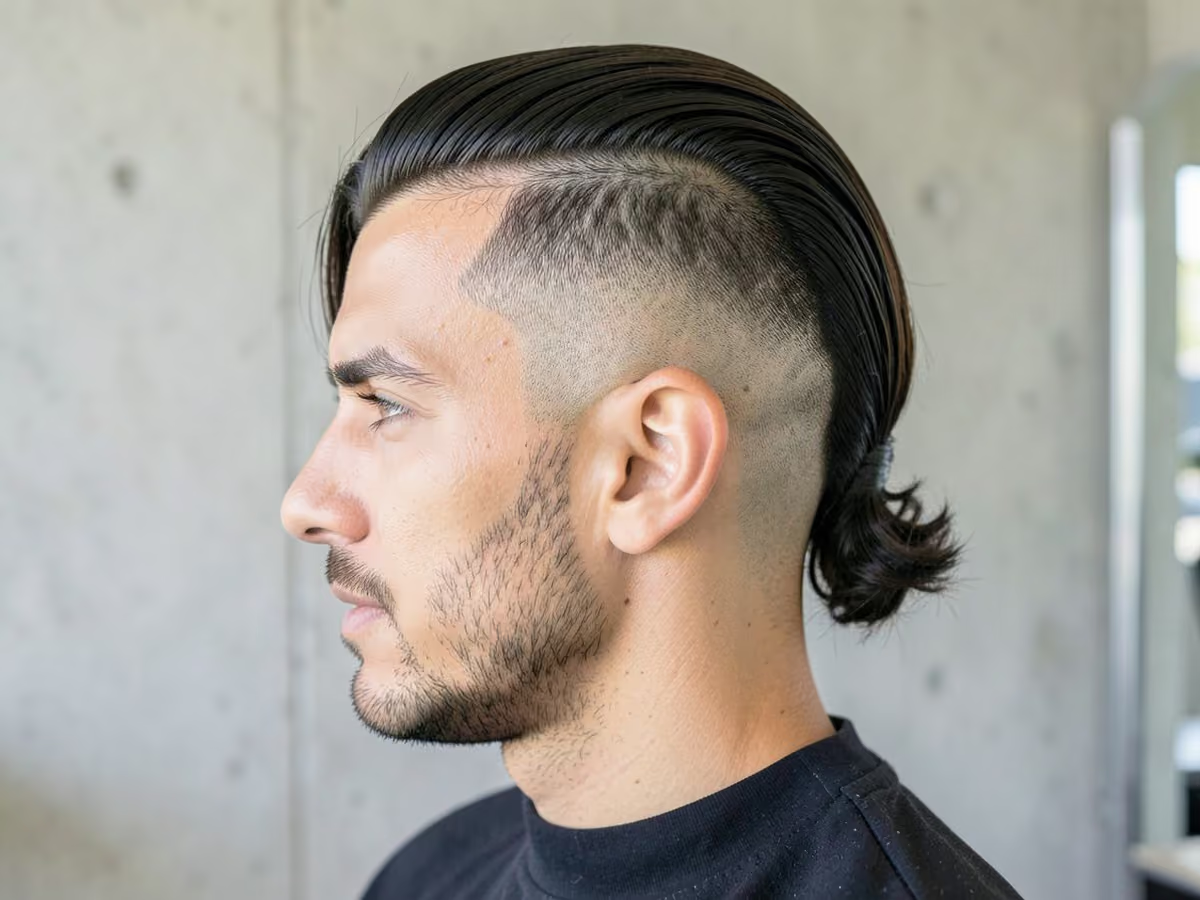
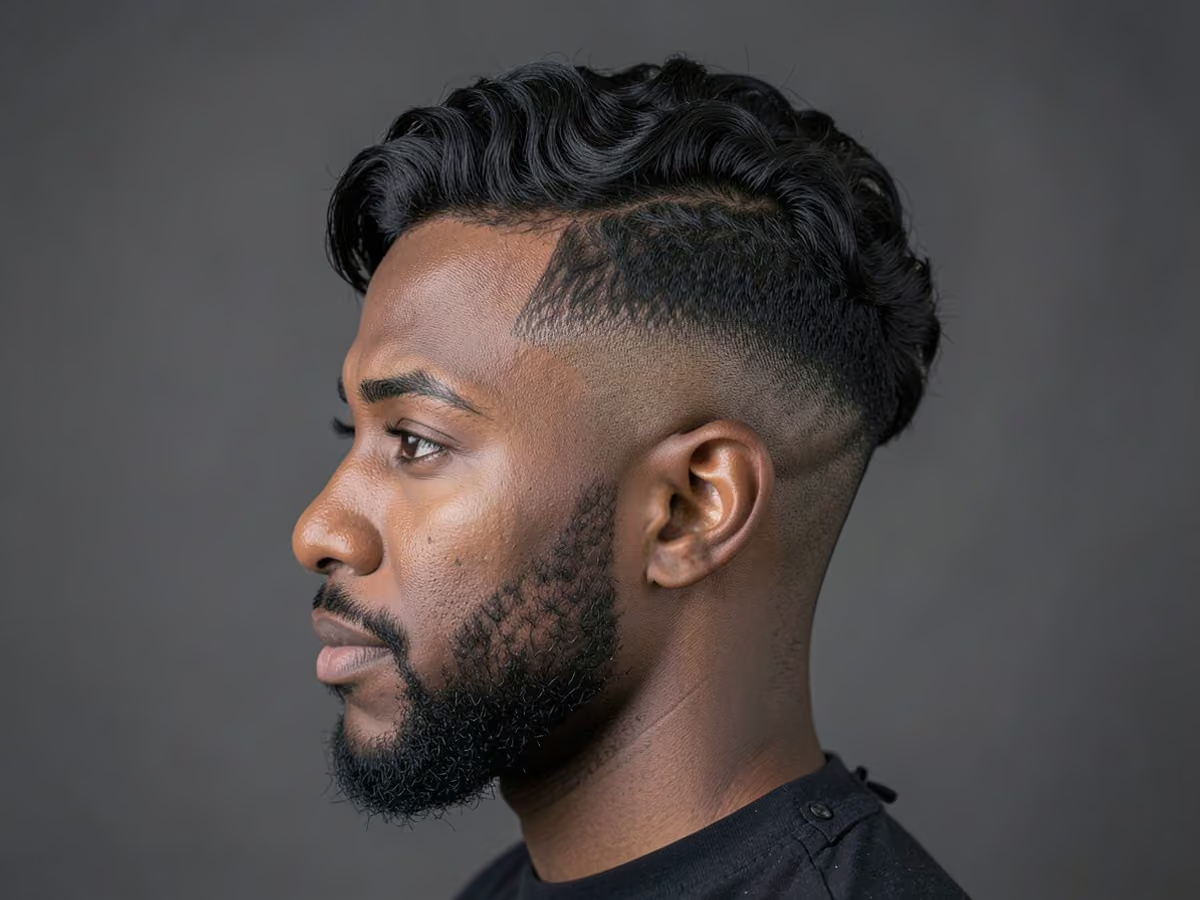
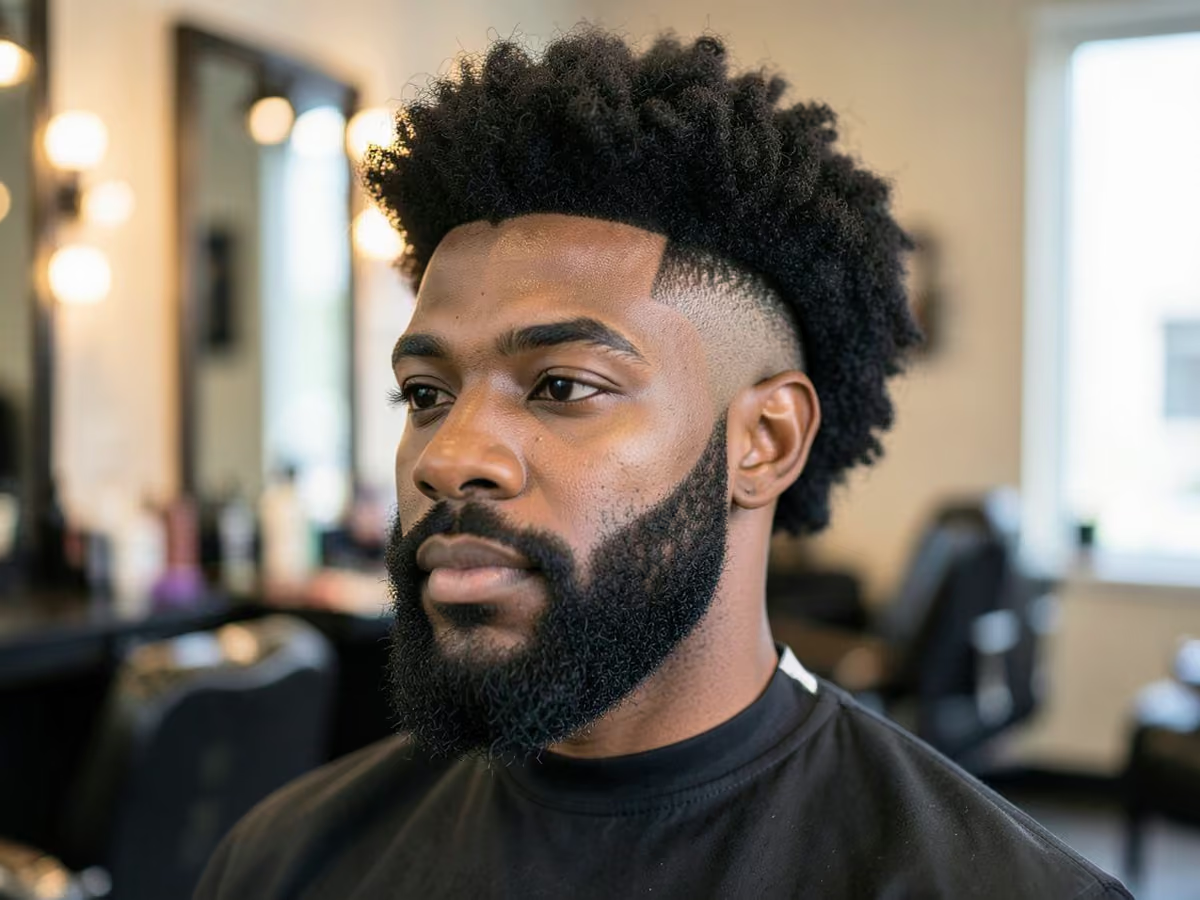
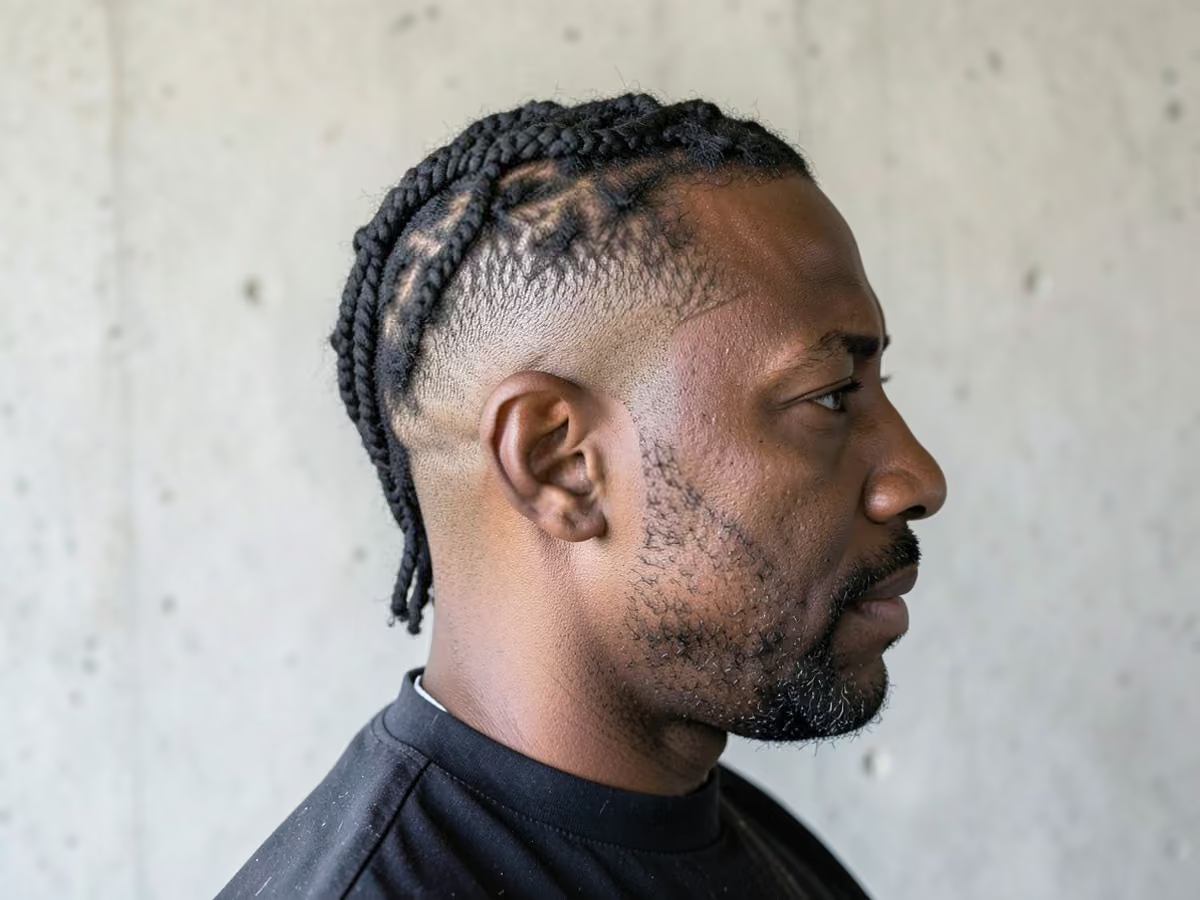
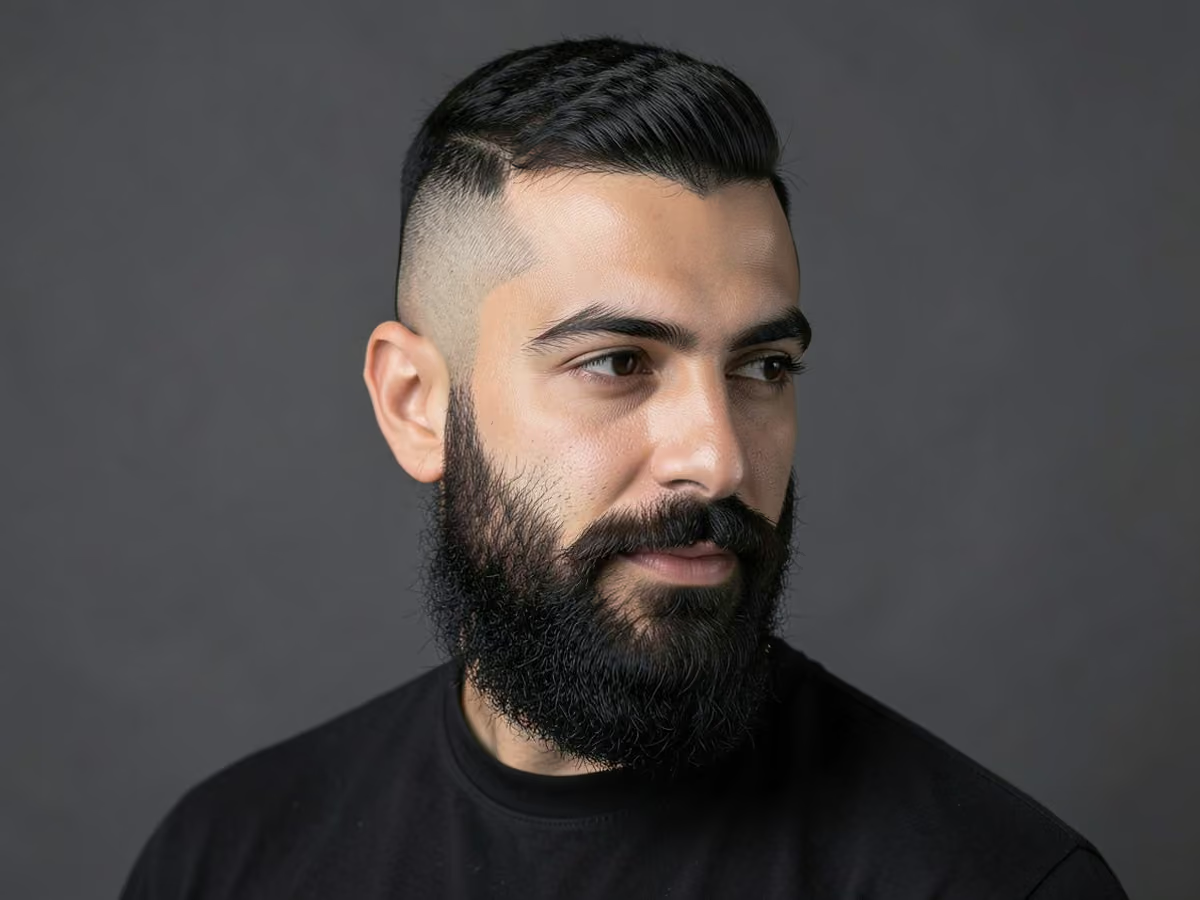
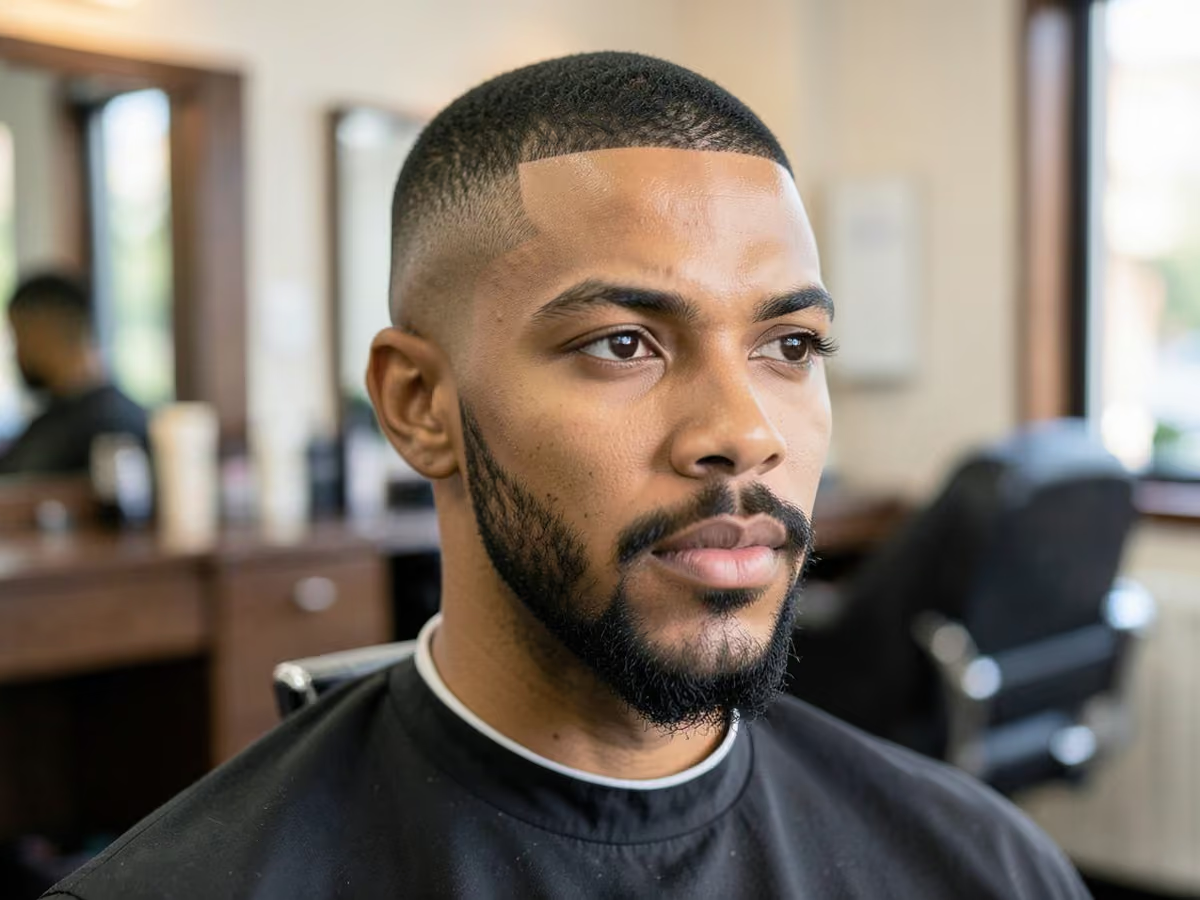
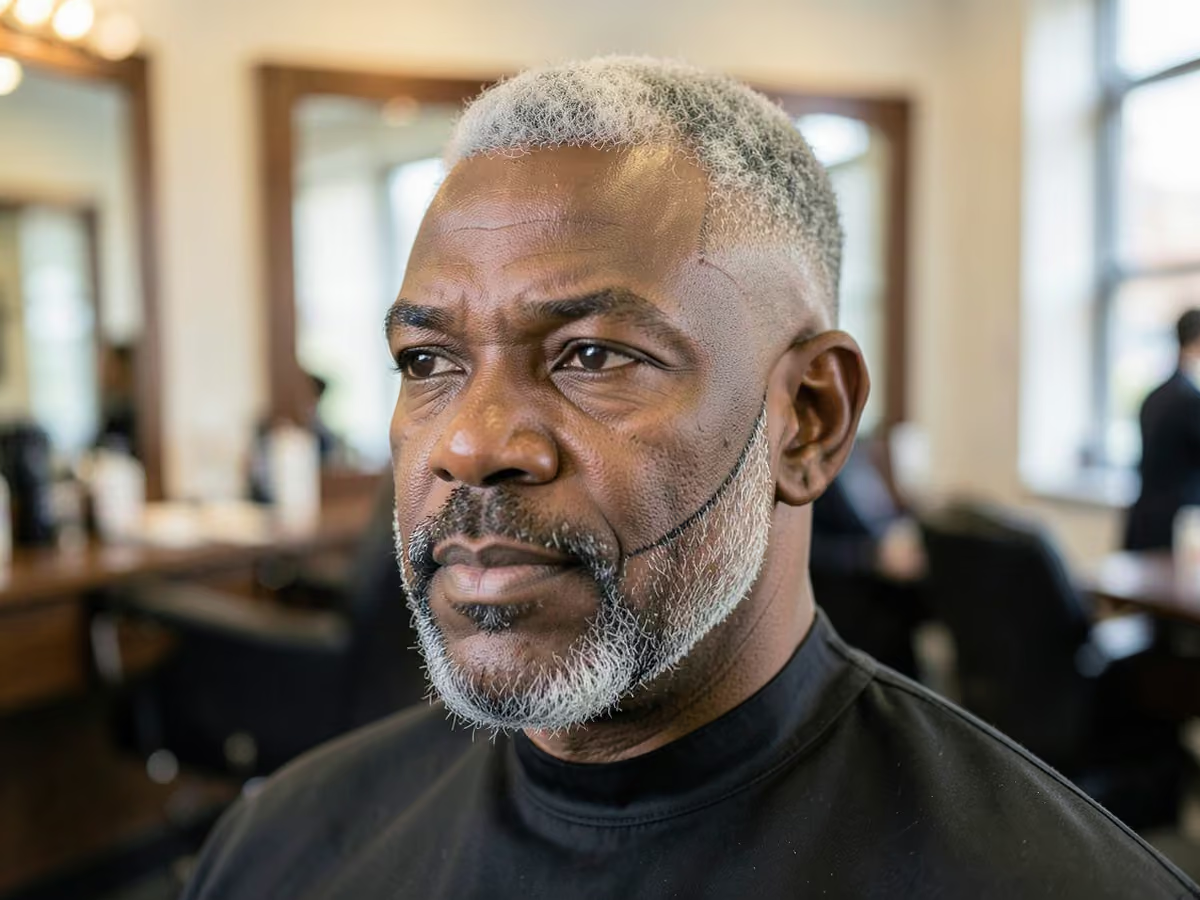
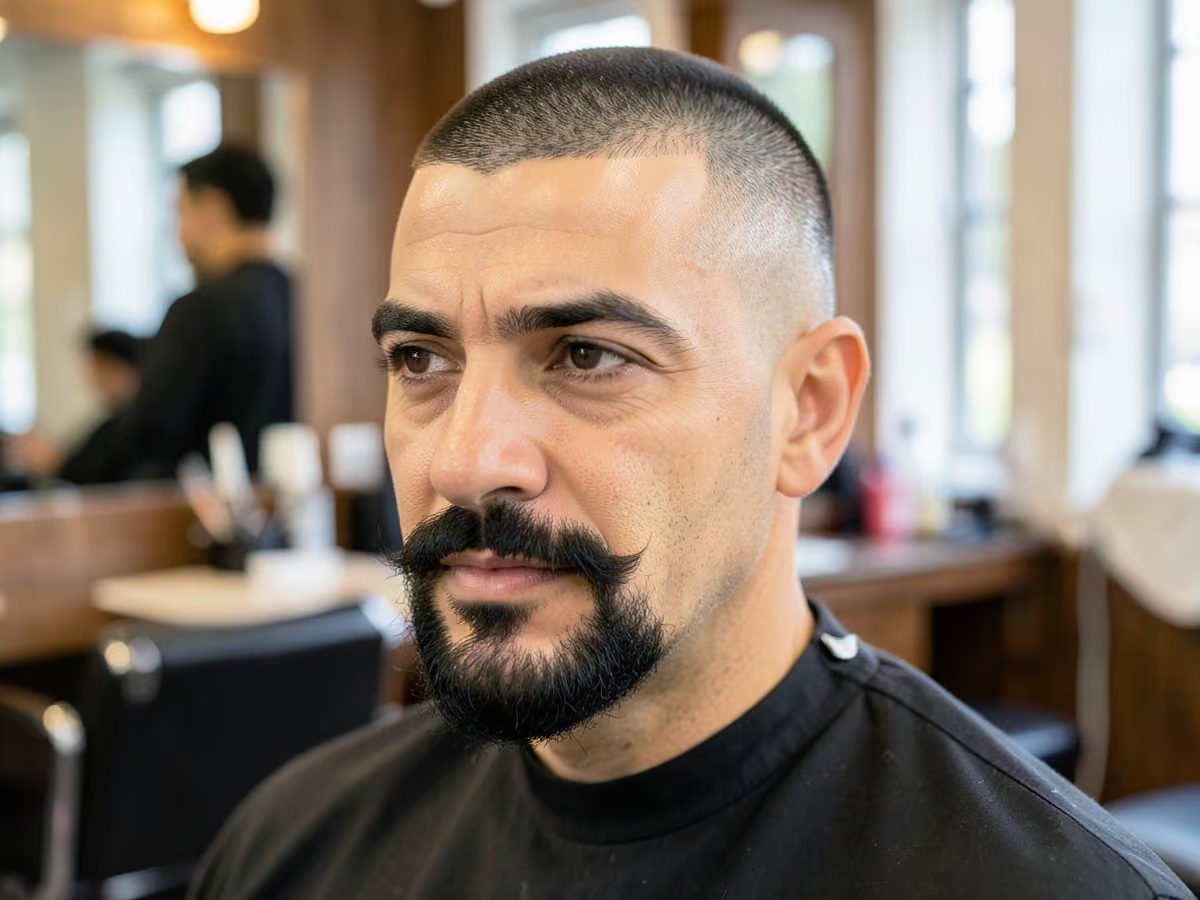
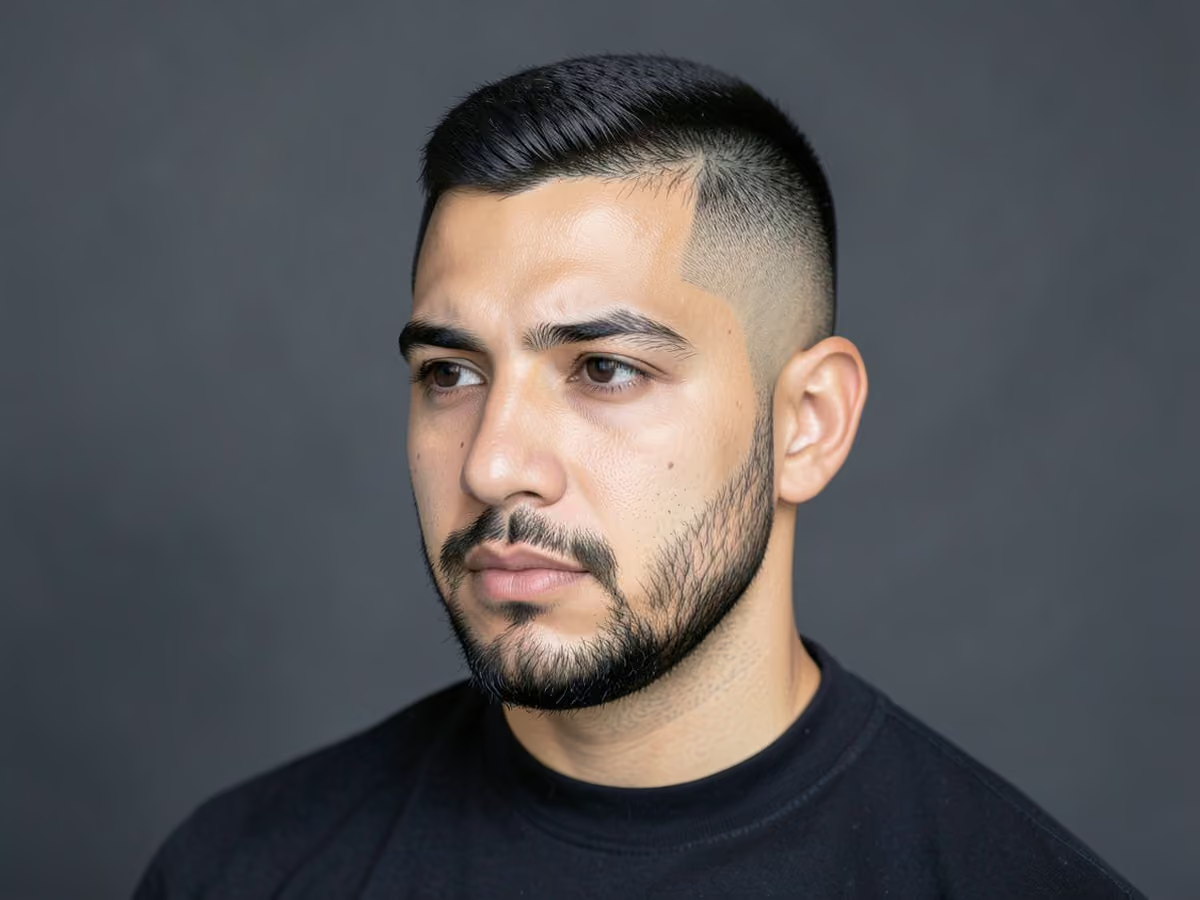
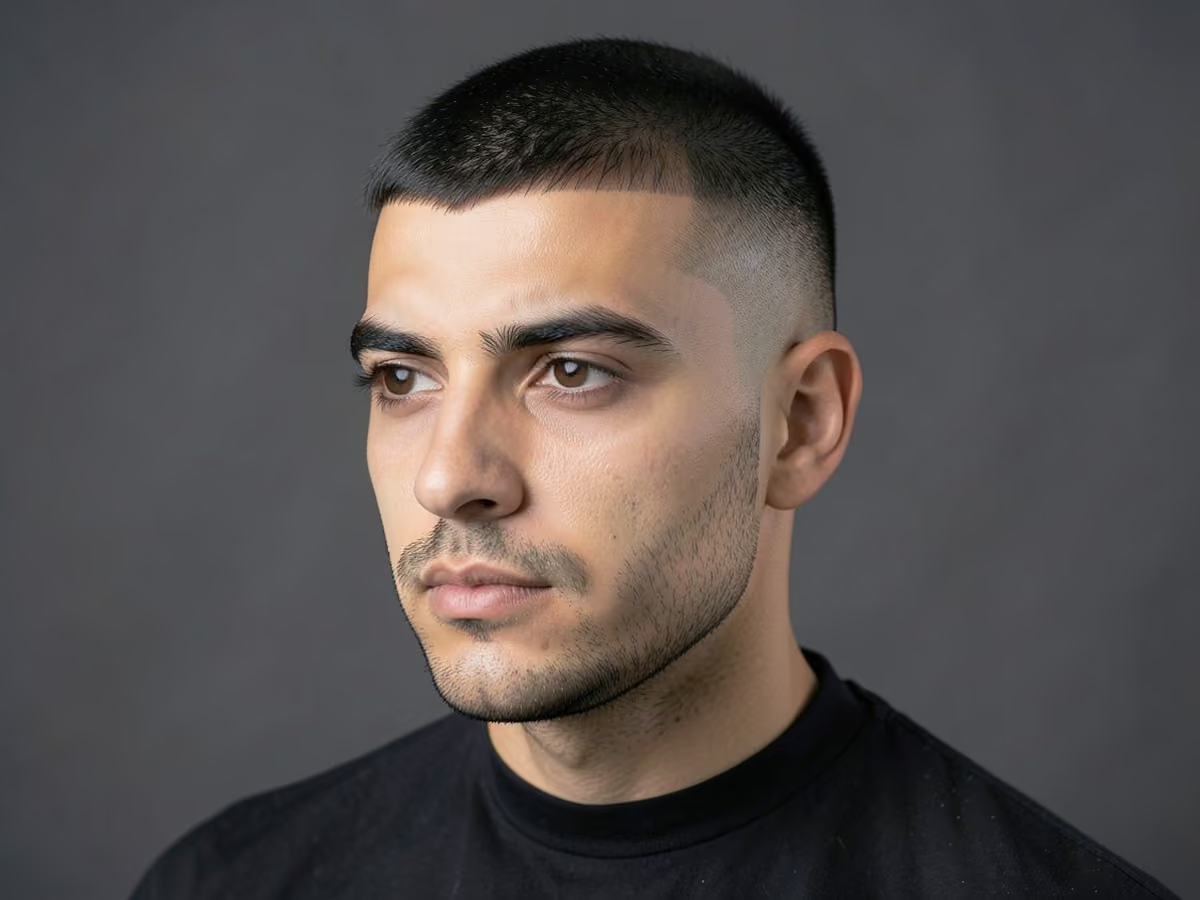
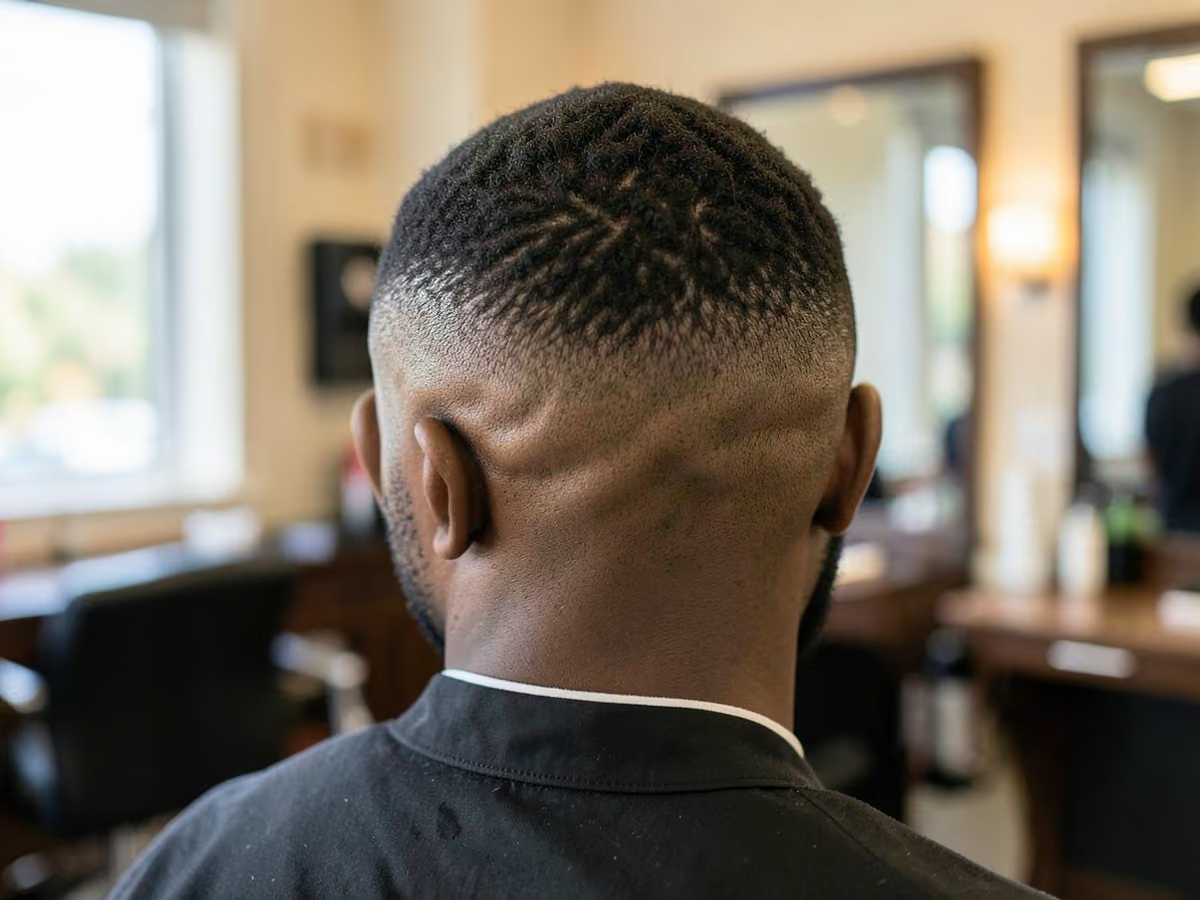
Quick answer: A shaved sides haircut takes the hair on the sides of the head down to bare skin or a very short buzz, usually a #0 or #1, while the top stays noticeably longer. It can be razor shaved, clipped to one length or faded, and most versions need a clean-up every one to three weeks.
Shaved Sides Haircut Styles at a Glance
Every style on this page with its clipper guard, top length and trim interval. Tap a name to jump to that card.
Shaved sides haircuts remove almost everything below the parietal ridge and leave the top to do the talking. The sides can be razor smooth, buzzed to a #1, faded from skin or shaved on one side only. Below are 61 versions grouped by side finish, top length, hair texture, beard, age and face shape, each with guard numbers, a trim schedule and words to use in the chair.
What Counts as a Shaved Sides Haircut?
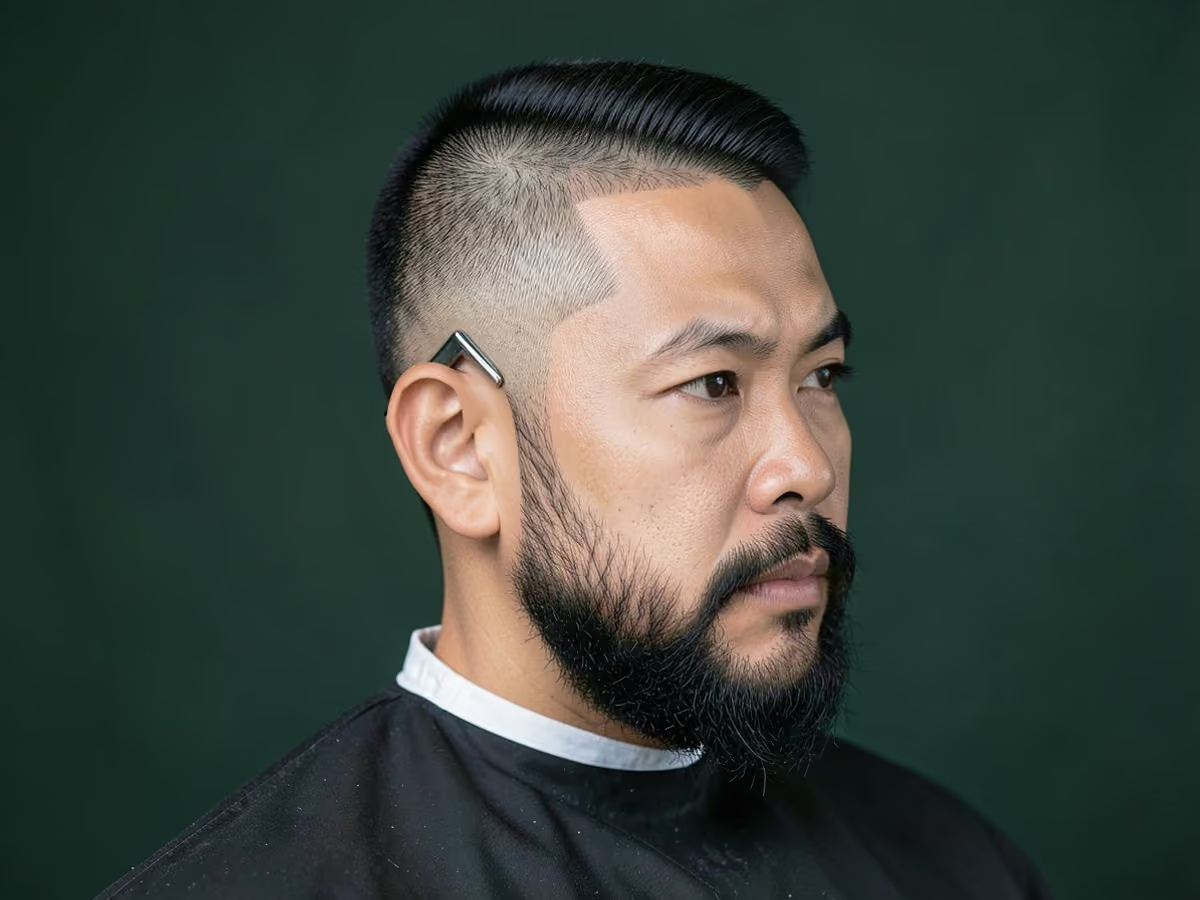
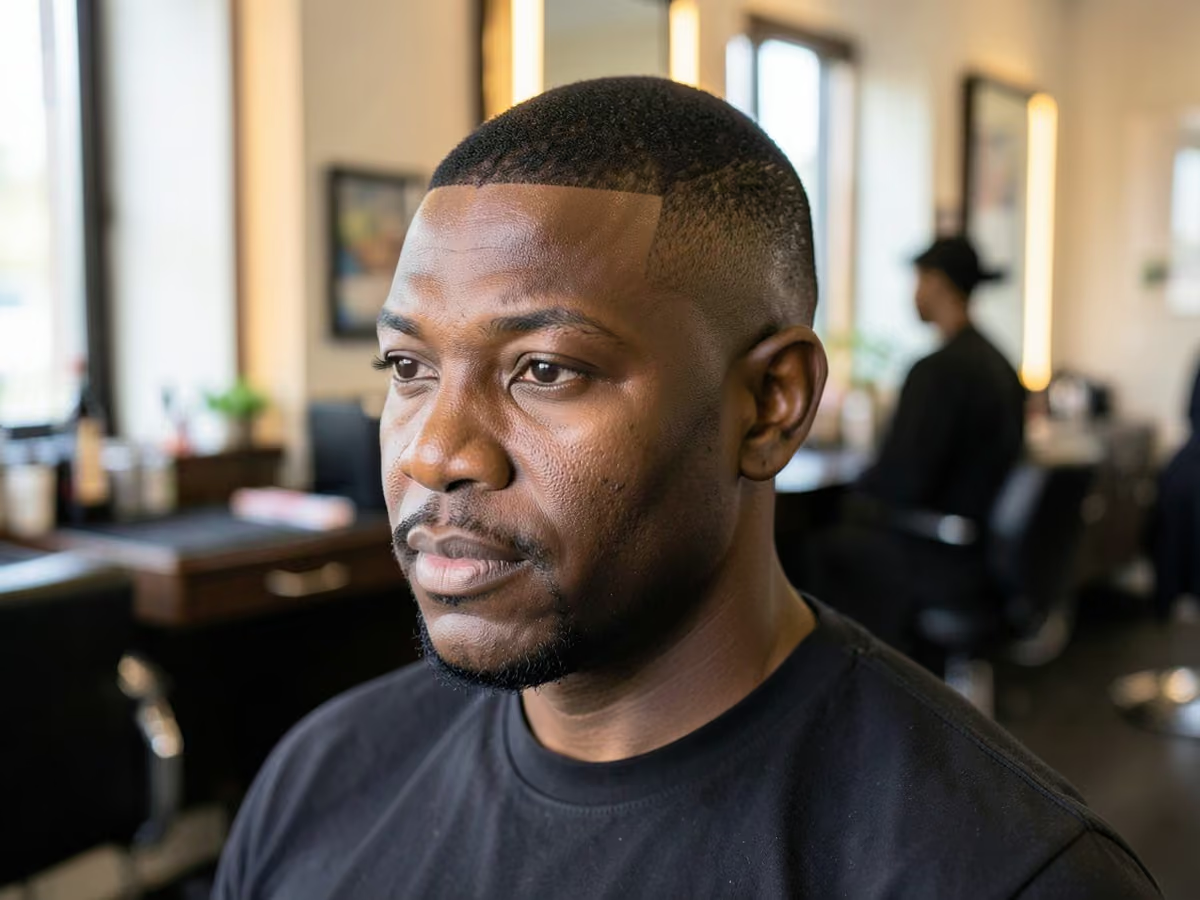
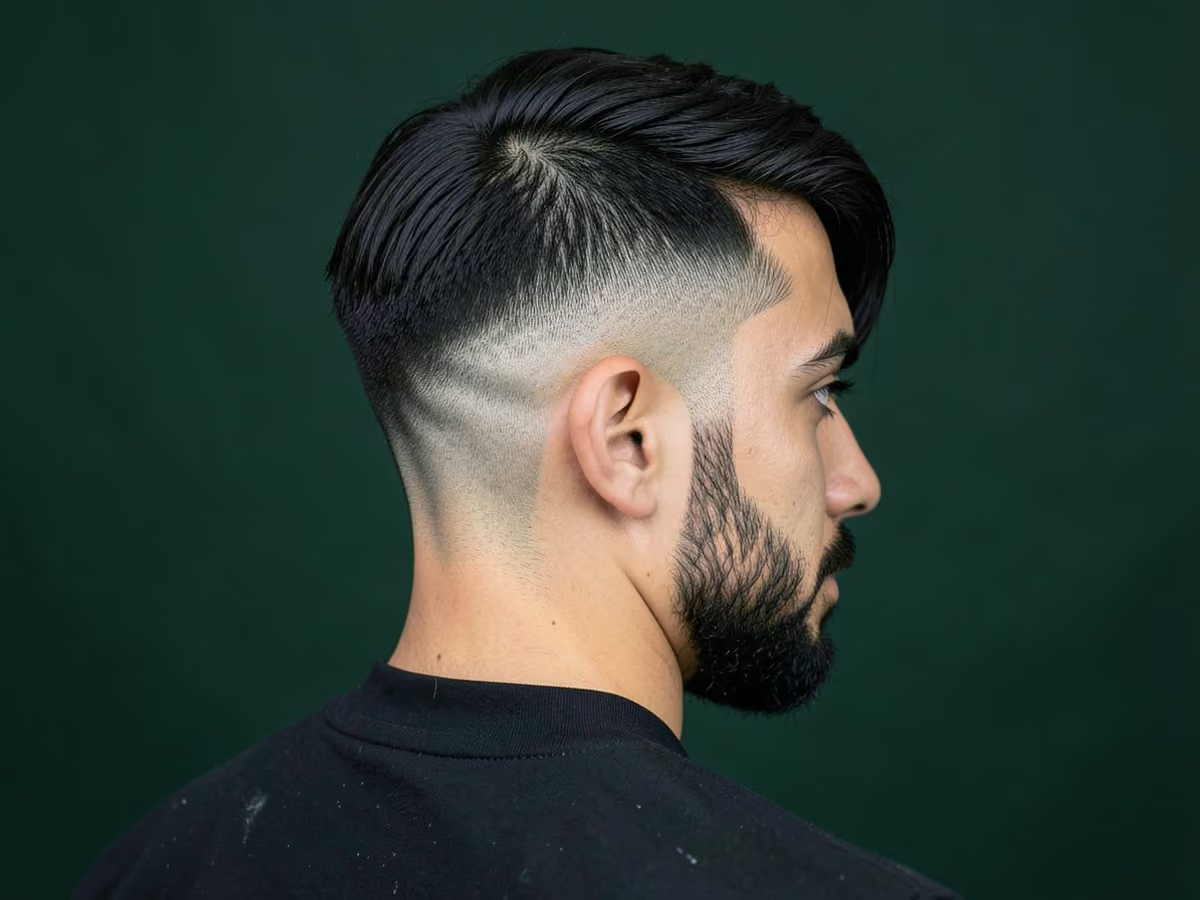
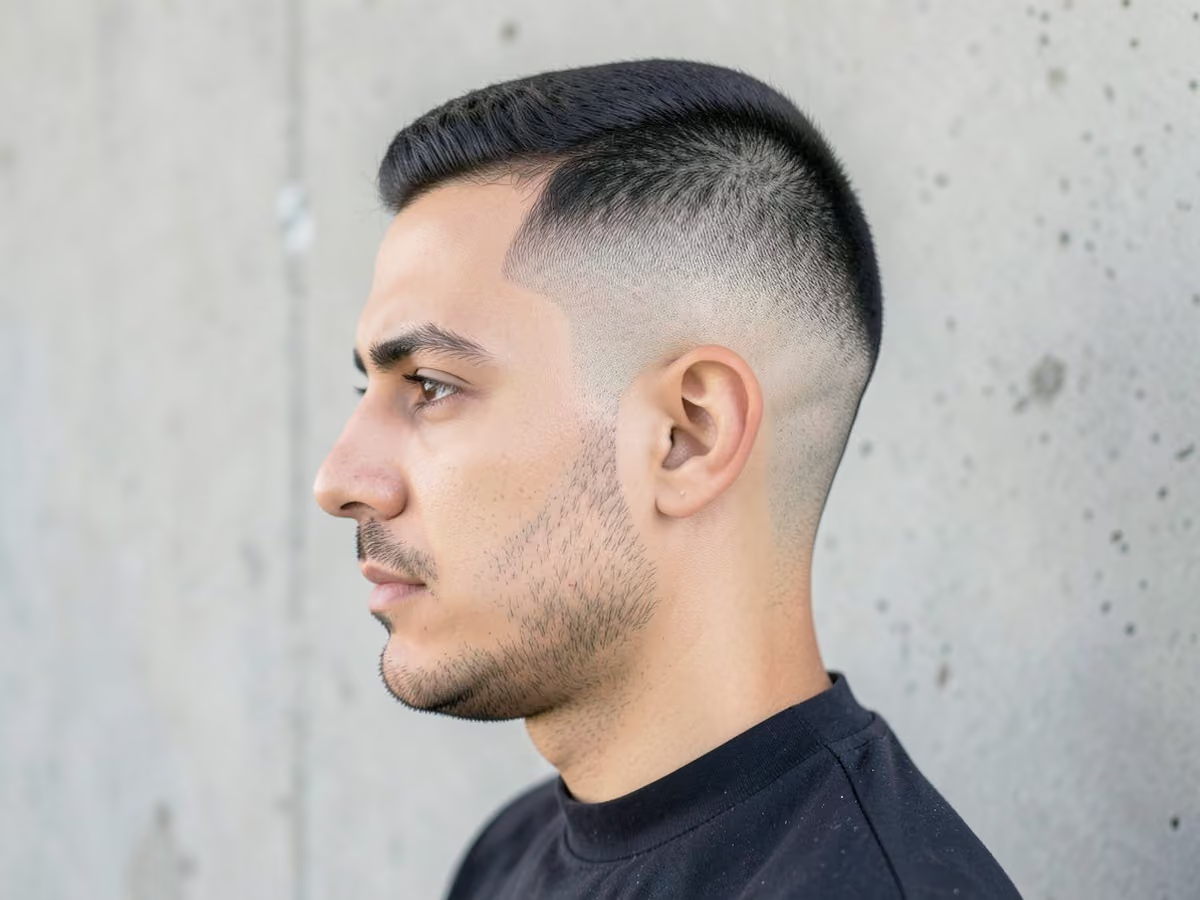
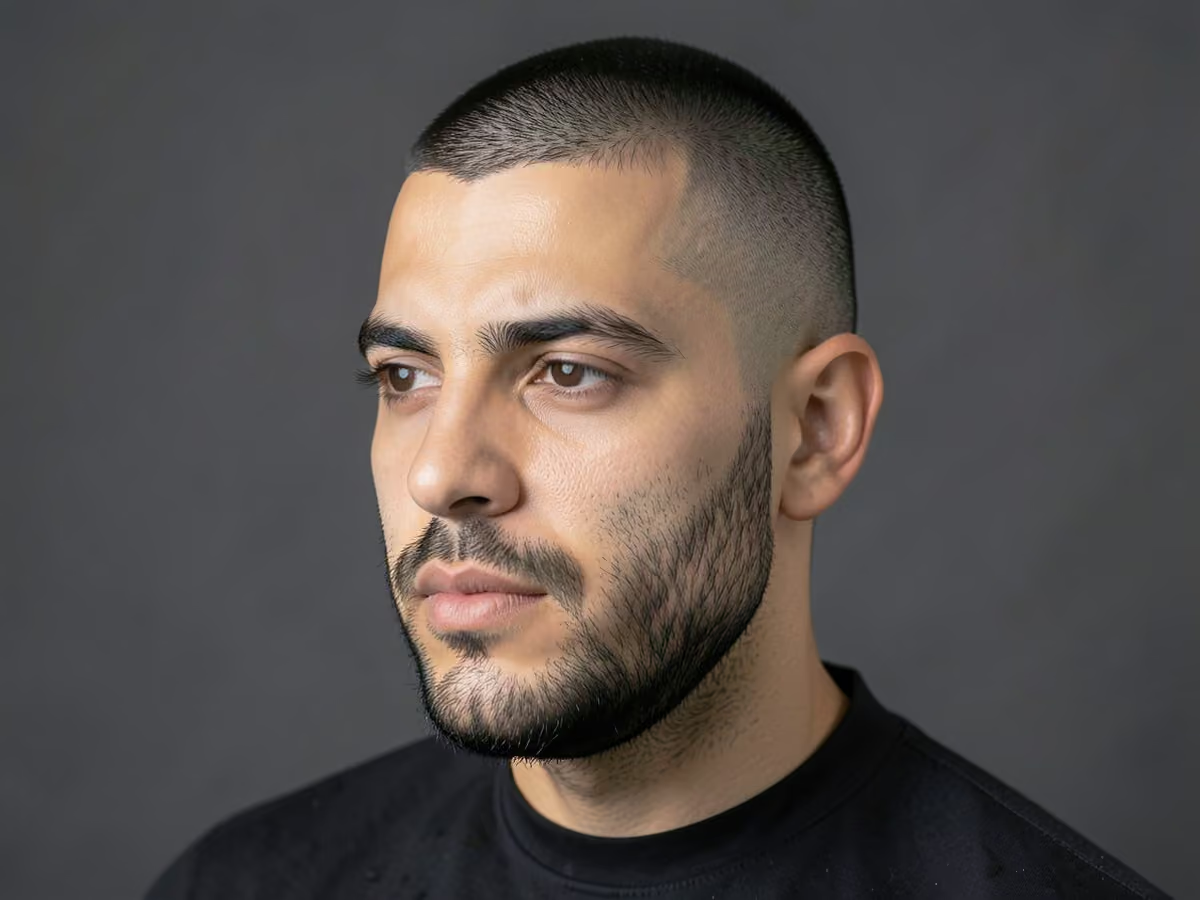
Any cut where the sides go to skin or close to it, with the top kept longer, sits in this family. Barbers usually mean one of three things: razor or foil shaved sides with no hair at all, a buzz with a #0 or #1 guard that leaves 1/16 to 1/8 inch, or a skin fade that starts bare and blends upward. The back can match the sides or keep a little more length at the crown and nape.
The line where the short sides meet the top decides the character of the cut. A soft blend reads like a skin fade. A hard step with no blend is a disconnected undercut. A narrow strip left on top turns it into a mohawk, and shaving only one side gives an asymmetric shape that suits longer hair swept across. Because the term covers so much, the photos you bring to the barber matter more than the name you use for the cut.
How Are Shaved Sides Different from an Undercut or a Fade?
The three overlap, so the clearest way to compare them is by side length and how the sides join the top. An undercut can leave the sides at a #2 or #3, which is not shaved at all. A fade always blends, but it may stop at a #1 rather than skin. Shaved sides describe the length, not the join, so you still need to tell the barber if you want a blend or a hard line.
Use the table to pick the term that matches the picture you have in mind, then add the top length and how you style it. Side length also sets your trim schedule: the closer to skin, the sooner regrowth shows, so bare sides suit men who already visit a barber every week or two. Our fade types guide covers the blended options in more depth.
How Are Shaved Sides Different from an Undercut or a Fade?
Cut
Side length
Join to the top
Typical trim
Razor shaved sides
Bare skin
Hard line or short blend
Every 1 week
Buzzed sides
#0 to #1 (1/16 to 1/8 in)
Hard line or blend
Every 2–3 weeks
Skin fade
Skin rising to #2 or #3
Gradual blend
Every 2 weeks
Undercut
#1 to #3, one length
Hard line, no blend
Every 3–4 weeks
Disconnected undercut
Skin to #2
Visible step or shelf
Every 2–3 weeks
Who Suits Shaved Sides?
Round and square faces benefit most, because removing width at the temples and cheeks makes the head look longer and narrower. Oval faces can wear any version. Long or narrow faces should keep some length or volume at the sides of the top, or pick a buzzed #1 over bare skin, so the face does not look stretched. Thick, coarse and coily hair gives the strongest contrast, while very fine hair can make the top look sparse next to bare sides.
Check your head shape and skin before going to skin. Bumps, scars and a flat back of the head show more once the hair is gone, and sensitive skin can react to a razor. A #1 buzz hides most of that and still reads as shaved from a few feet away. Lifestyle counts as well: bare sides are cooler under helmets and in hot weather, but they need sunscreen and more frequent visits than a longer side.
Filter the styles
Showing all 61 styles
Fade
Hair
Length
Shaved Sides Types by Finish
These five cuts differ in how bare the sides go and where the short area stops. Pick the finish first, then choose a top from the sections below or compare with the skin fade.
Trim:Every week. Stubble shows on bare skin within days.
Best For:Round, square faces + thick or coarse hair.
About This Style
A straight razor or foil shaver takes the sides and back to bare skin from the ear up to the parietal ridge, with no guard length left at all. The top usually keeps three to five inches so the contrast is obvious. Because there is no hair to soften the head shape, it reads cleanest on smooth scalps. Expect a gray shadow by day four and a short buzz by week two.
How to Style at Home
Rub a few drops of scalp oil into the shaved sides after every shower.
Rough-dry the top and work matte clay through it for loose texture.
Apply sunscreen to the bare sides before spending time outside.
Ask Your Barber
"Razor shave the sides and back to skin up to the parietal ridge, hard line where it meets the top, and leave about four inches on top."
Trim:Every 3 weeks. A #1 grows out evenly and hides regrowth.
Best For:Oval, long faces + straight, wavy or fine hair.
About This Style
Instead of skin, the sides are clipped with a #1 guard, leaving 1/8 inch that still shows scalp from a short distance. It looks shaved in photos but hides scars, bumps and sensitive skin. The back usually matches the sides, and the top can be anything from two inches up. Most men stretch it to three weeks and buzz the sides at home in between.
How to Style at Home
Run a trimmer with a #1 guard over the sides once a week if you cut at home.
Blow-dry the top with your fingers for light lift at the front.
Finish with a small amount of styling cream for a natural hold.
Ask Your Barber
"Number one on the sides and back, one length, no fade. Square the line where it meets the top and leave about three inches up there."
Trim:Every 2–3 weeks. The shaved side needs a clean edge.
Best For:Oval, heart faces + straight or wavy hair.
About This Style
Only one side is taken to skin or a #0, usually the side opposite your natural part, while the other side and the top stay long enough to sweep across. The long side needs at least four inches to cover the ear on the opposite side. It suits musicians and creative workplaces more than formal offices, and it grows out unevenly, so regular clean-ups matter.
How to Style at Home
Part the hair deep on the shaved side with a fine comb while damp.
Sweep the long top across with a round brush and a hair dryer.
Hold the shape with light pomade worked through the ends.
Ask Your Barber
"Shave the left side only to skin from the ear to the part line, keep the right side and top at about five inches and sweep it across."
Trim:Every 2 weeks. The blend softens once the skin grows back.
Best For:Round, oval faces + thick, straight or coily hair.
About This Style
Bare skin at the bottom blends up through a #0.5, #1 and #2 so there is no hard line between the shaved area and the top. It keeps the shaved look near the ears but softens the transition at the temple, which suits workplaces that dislike hard edges. The fade can start low, mid or high; mid is a common choice under a three-inch top.
How to Style at Home
Brush the faded sides with a soft brush to keep regrowth lying flat.
Push the top forward or up with a pinch of texture powder.
Keep the skin moisturized with a light scalp oil.
Ask Your Barber
"Mid skin fade, foil shaved at the bottom and blended through a #1 and #2 into the top. Leave around three inches on top for texture."
Trim:Every 2 weeks. Small shaved areas lose their shape fast.
Best For:Square, oval faces + thick or wavy hair.
About This Style
Rather than the full sides, only a patch above and in front of each ear is shaved, roughly the area a temple fade covers. The rest of the sides stay at a #2 or #3 and the back stays fuller. It gives a hint of the shaved look with less scalp on show, and it pairs well with a crop or short quiff. Thick hair makes the shaved patch read most clearly.
How to Style at Home
Comb the hair around the shaved temples down so the edges stay crisp.
Style the top forward with a little matte paste.
Tidy stray hairs at the temple edge with a trimmer between visits.
Ask Your Barber
"Please shave a small patch at each temple to skin, keep the rest of the sides at a number three and leave about two and a half inches on top."
Trim:Every 2–3 weeks. The disconnection line blurs as the sides regrow.
Best For:Oval, square faces + thick straight or wavy hair.
About This Style
Disconnected from the top by a hard step, the sides here are clipped or shaved to skin in a straight band that ends in a level line at the parietal ridge, unblended. The top keeps four to six inches so it can hang over the line or be pushed back. Grown out, the band fills in evenly and still reads as an undercut for about three weeks, so it is the easiest shaved style to stretch between visits.
How to Style at Home
Blow-dry the top back or to one side so it clears the shaved band.
Work a small amount of pomade through the length from roots to ends.
Check the hard line in a mirror and comb any stray hairs over it.
Ask Your Barber
"Skin on the sides and back up to the parietal ridge, no blend, a clean disconnection. Keep five inches on top and just tidy the ends."
Trim:Every 2–3 weeks. The razor part softens within two weeks.
Best For:Oval, oblong faces + straight or slightly wavy hair.
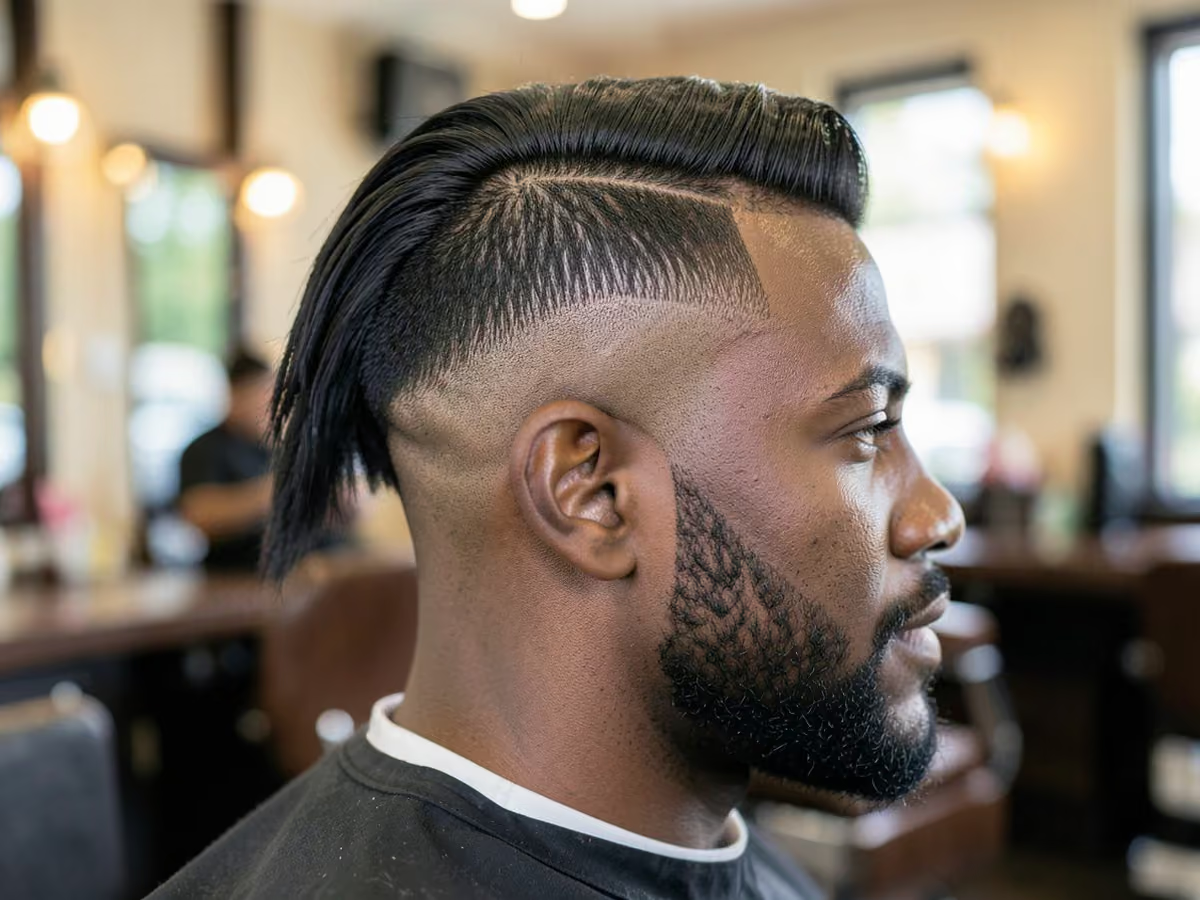
About This Style
Cutting a razor line through the part adds a second hard edge to a head that already has bare sides. The barber shaves the sides to a #0, then trims a thin parting line where your natural part falls, usually above the outer corner of one eye. Three inches on top comb neatly away from the line. A shaved part cannot be moved later, and it widens slightly each time it is redone.
How to Style at Home
Comb the top away from the shaved line while the hair is still damp.
Set the side sweep with a light pomade for a soft shine.
Use a wide comb near the part so you do not scratch the skin.
Ask Your Barber
"#0 on the sides, three inches on top, and a thin razor part on my natural part line above the left eye. Keep the part short, not past the crown."
Trim:Every 2–3 weeks. The curve around the ear grows out first.
Best For:Oval, heart faces + curly or coily hair.
About This Style
Curving around the ear in a half circle, the shaved area in this version stops short of the nape, so the back keeps its length. The skin sits just above and behind the ear, then the barber blends a #1 and #2 outward in a burst shape. It pairs naturally with a mohawk strip, curls or a mullet tail, and it is a gentler way to try bare sides because only a small patch goes to skin.
How to Style at Home
Shape the top with curl cream while the hair is still wet from the shower.
Leave the back long and let it fall loosely over the collar.
Rub a few drops of scalp oil into the bare patch behind each ear.
Ask Your Barber
"Burst fade around the ears, skin at the center, blended out with a #1 and #2. Leave the back long and do not fade the nape."
Recommended Products
Curl Cream
Scalp Oil
Shaved Sides with a Short Top
Short tops of one to three inches keep the whole cut quick to style. With bare sides they need some texture or a clear shape so the haircut does not read as a plain buzz. See the textured crop guide for more crop shapes.
Trim:Every 2–3 weeks. Shaved sides lose contrast as the crop grows.
Best For:Round, square faces + thick, straight or wavy hair.
About This Style
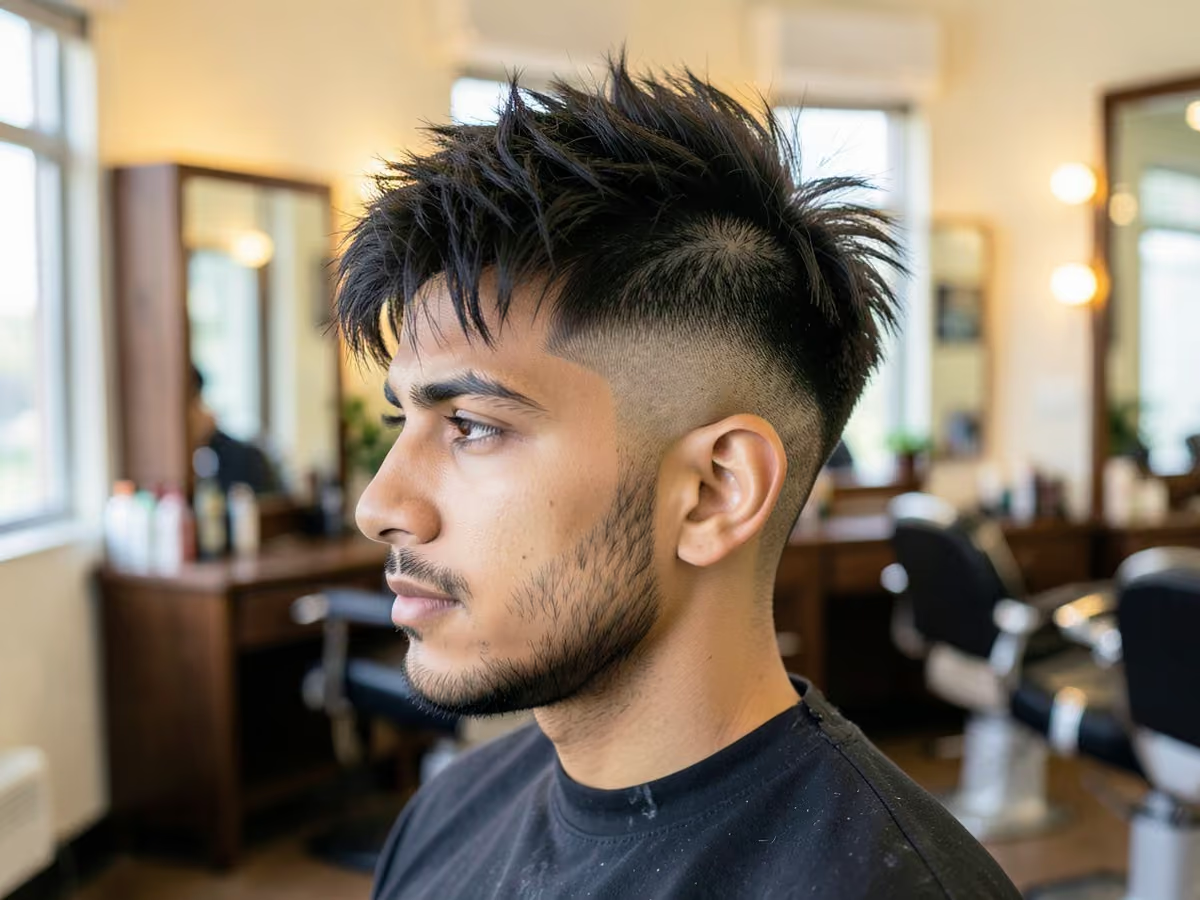
Two inches of point-cut texture on top fall forward into a short fringe, while the sides are taken to skin or a #0 up to the temple. The choppy top hides cowlicks and thinning at the front, and the bare sides make it look sharper than a crop on longer sides. It needs almost no styling time, so it suits men who want a fast morning routine.
How to Style at Home
Towel-dry and work a pinch of matte clay into the top from the roots.
Push the fringe forward and twist small sections for separation.
Leave the sides alone apart from a little scalp oil.
Ask Your Barber
"Skin on the sides up to the temple, hard part optional. Two inches of point-cut texture on top pushed forward into a short fringe."
Trim:Every 2–3 weeks. The straight fringe needs regular reshaping.
Best For:Oval, long faces + straight or thick hair.
About This Style
A French crop keeps a blunt, straight fringe across the forehead with an inch or two of hair on top. Pairing it with shaved sides puts all the weight on the fringe line and none at the ears. The forward fringe shortens a long face, and the bare sides keep a round face from looking wider. Ask for the fringe cut straight rather than choppy if you want the classic shape; the French crop guide covers both.
How to Style at Home
Comb the top forward while damp so the fringe sits flat.
Work a small amount of matte paste through the fringe for hold.
Press the fringe line straight with your fingertips.
Ask Your Barber
"French crop with a blunt fringe about an inch above the brows, an inch and a half on top, and the sides buzzed with a number zero."
Trim:Every 3 weeks. Crew length tops hold shape longer than most.
Best For:Square, oval faces + coarse or straight hair.
About This Style
The front of the top stays about an inch long and tapers shorter toward the crown, while the sides drop to a #0 or skin. It keeps the clean, sporty shape of a standard crew cut but with more contrast, and it fits most dress codes once the edges are tidy. It needs nothing more than a towel-dry, which makes it popular with athletes and men who wear helmets.
How to Style at Home
Towel-dry the top and brush the front up slightly with your fingers.
Add a small amount of matte cream if the front falls flat.
Wipe the sides with a damp cloth to remove clippings or sweat.
Ask Your Barber
"Crew cut with an inch at the front tapering to half an inch at the crown, sides and back at a number zero with a soft edge where they meet."
Trim:Every 2 weeks. Bare sides blur into the buzz as they regrow.
Best For:Oval, square faces + thick hair or receding hairlines.
About This Style
A #3 or #4 buzz on top sits over sides shaved to skin, so the only styling is the contrast between the two lengths. It is the simplest cut in this list and can be kept up at home with clippers. Receding temples are less noticeable because the sides are already bare. Go for a #4 on top if you want the shape of the head to look fuller.
How to Style at Home
Buzz the top with the same guard every two weeks at home.
Run a foil shaver over the sides to keep them bare.
Moisturize the scalp after washing to avoid flaking.
Ask Your Barber
"Number four buzz on top, foil shaved sides and back to skin, and a soft blend at the corner so it does not look like a step."
Trim:Every 2–3 weeks. The short fringe needs a straight edge.
Best For:Oval, heart faces + coarse, wavy or coily hair.
About This Style
Short top hair about an inch long is brushed forward into a straight, very short fringe, and the sides are shaved or buzzed with a #0. It works well on coarse and coily hair, where the top lies close and dense. The low front suits men with a high forehead or receding hairline. The Caesar cut guide explains the fringe line in more detail.
How to Style at Home
Brush the top forward with a soft brush while damp.
Use a little styling cream to hold the fringe down.
Clean up the fringe line with a trimmer if it starts to wander.
Ask Your Barber
"Caesar cut, one inch on top brushed forward, straight fringe line just below the hairline, sides and back at a number zero."
Trim:Every 3–4 weeks. The side part needs regular trimming to stay neat.
Best For:Oval, oblong faces + straight or wavy hair.
About This Style
Longer than a crew cut at the front, the Ivy League keeps about an inch and a half at the hairline and shortens to half an inch at the crown. Swapping its usual #2 sides for a #0 makes the old campus cut look current. Side-parted and brushed over, it works for offices and interviews, and you can comb the front up for a casual weekend version.
How to Style at Home
Comb a side part in line with the whorl at your crown.
Brush the front across and slightly up using a little light pomade.
Smooth the crown flat with damp fingers so it does not stick up.
Ask Your Barber
"Ivy League on top, an inch and a half at the front down to half an inch at the crown. Sides shaved to a #0, side part on the left."
Trim:Every 2–3 weeks. A flat top loses its level surface quickly.
Best For:Round, oval faces + thick, coarse or coily hair.
About This Style
Standing hair is cut level with clippers over a comb, leaving a square platform one to two inches high, over sides taken down to bare skin. The sharp corners between the flat surface and the bare sides define the shape. Coarse and coily hair holds it without product; finer hair needs a firm hold to stay upright. The extra height balances round faces.
How to Style at Home
Brush the top straight up with a stiff brush while the hair is damp.
Blow-dry upward on low heat to lock the standing shape in place.
Press a little matte paste over the surface to keep it level.
Ask Your Barber
"Flat top cut level at about an inch and a half, corners squared off. Sides and back shaved to skin with no fade."
Trim:Every 3–4 weeks. The fringe reaches the eyebrows after a month.
Best For:Oval, long faces + straight or fine hair.
About This Style
Pushed forward, two to three inches on top are cut into a ragged fringe that sits halfway down the forehead. Unlike a French crop, the fringe is long enough to move, and the barber points into it so it breaks up. Bare sides hold the outline narrow. On a long face the fringe shortens the forehead, and fine hair looks fuller when it falls forward.
How to Style at Home
Dry the top forward with your fingers instead of using a brush.
Twist a little texture powder into the fringe for separation.
Push the ends slightly to one side so the fringe does not look blunt.
Ask Your Barber
"Sides shaved to skin. Two to three inches on top pushed forward into a choppy fringe, point cut, sitting mid-forehead."
Recommended Products
Texture Powder
Shaved Sides with a Styled Top
These six tops need three to five inches and a few minutes with a dryer and product each morning. The bare sides keep the silhouette narrow so the styled shape on top is the focus.
Trim:Every 2 weeks. The front loses lift as the sides regrow.
Best For:Round, square faces + thick, straight or wavy hair.
About This Style
Four inches at the front are blow-dried up and back into a loose quiff, with the length dropping toward the crown. The sides are shaved to skin up to the temple, which makes the height at the front look taller. Barbers describe it as a commonly requested shaved sides styles because it works for both office and evening. Fine hair needs thickening spray to hold the shape.
How to Style at Home
Spray thickening spray at the roots while the hair is damp.
Blow-dry the front up and back over a round brush for height.
Finish with matte clay pinched through the front for hold.
Ask Your Barber
"Could you shave the sides to skin up to the temple. Four inches at the front for a quiff, tapering to two at the crown, textured so it stands up."
Trim:Every 2 weeks. Bare sides make the pompadour look fullest.
Best For:Oval, round faces + thick or straight hair.
About This Style
A pompadour sweeps the whole top up and back in one smooth roll, so it needs five inches or more at the front. With the sides shaved high to the parietal ridge, the roll sits on a narrow base and looks taller. A shiny pomade gives the classic finish, and a matte cream gives a softer, modern one. Expect ten minutes of styling with a dryer each morning.
How to Style at Home
Blow-dry the top straight back with a round brush to build the roll at the front.
Comb pomade through the top from the front hairline to the back.
Push the front forward slightly with your palm to set the height.
Ask Your Barber
"Pompadour with five inches at the front and four at the crown. Shave the sides to skin up to the parietal ridge with a hard line."
Trim:Every 2–3 weeks. The part side shows regrowth first.
Best For:Oval, square faces + straight or fine hair.
About This Style
Three to four inches on top are combed from a side part across to the other side, while both sides are taken to a #0 or skin. It is a conservative top on an aggressive base, which is why it shows up in offices and weddings. Fine hair lies flat and neat in this shape. Ask for a shaved part line if you want the part to stay visible between visits.
How to Style at Home
Comb the top across from the part while it is damp.
Work light pomade through with the comb for a neat finish.
Press any lifting pieces at the crown flat with your palm.
Ask Your Barber
"Side part on the left, three and a half inches on top combed over, sides and back shaved to skin with a hard line along the part."
Trim:Every 3 weeks. The long top hides some side regrowth.
Best For:Oval, long faces + straight or wavy hair.
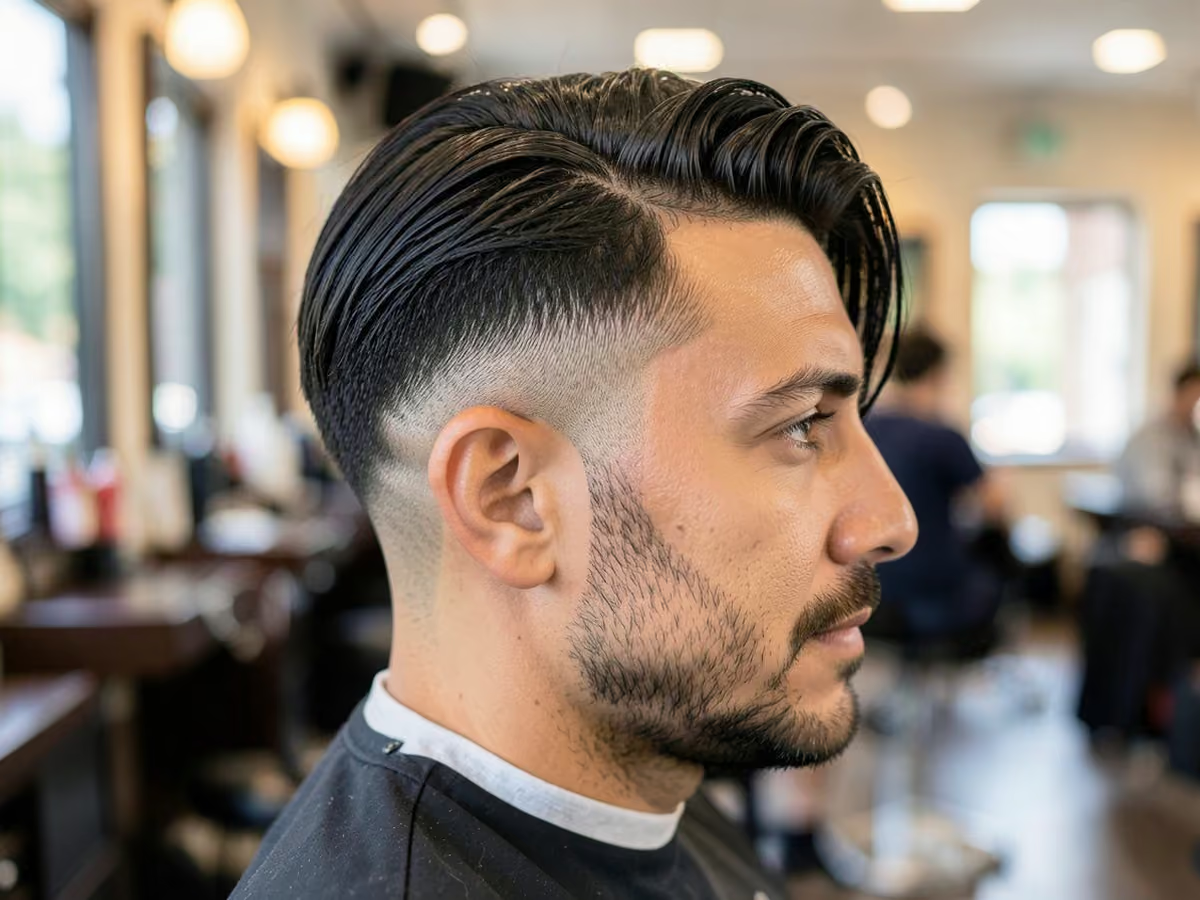
About This Style
Five inches or more on top are combed straight back with no part, sitting over sides shaved to skin. Unlike a slick back undercut, which often keeps a #1 or #2, this one goes fully bare, so the top looks heavier and the head narrower. A wet-look pomade gives shine, while a matte cream gives a softer, brushed-back finish. Wavy hair adds movement at the crown.
How to Style at Home
Comb pomade through damp hair from the hairline to the nape.
Blow-dry straight back with the comb following the dryer.
Add a touch more pomade on top for shine once dry.
Ask Your Barber
"Please shave the sides and back to skin with a clean line, leave five to six inches on top and keep it long enough to slick straight back."
Trim:Every 2 weeks. The ridge shape needs bare sides to read.
Best For:Round, square faces + thick or straight hair.
About This Style
On top, the hair is pushed toward the center to form a ridge, with three inches in the middle and less toward the edges of the top. Shaving the sides makes the ridge obvious without the commitment of a full mohawk. It wears down for work if you push the top forward. The faux hawk guide lists other ridge heights and widths.
How to Style at Home
Work texture clay through dry hair from roots to ends.
Push both sides of the top in toward the center line.
Pinch the ridge into points with your fingertips.
Ask Your Barber
"Faux hawk with three inches in the center and two at the edges of the top, sides shaved to skin up to the parietal ridge."
Trim:Every 1–2 weeks. A narrow strip loses its edges fast.
Best For:Oval, long faces + thick, coarse or coily hair.
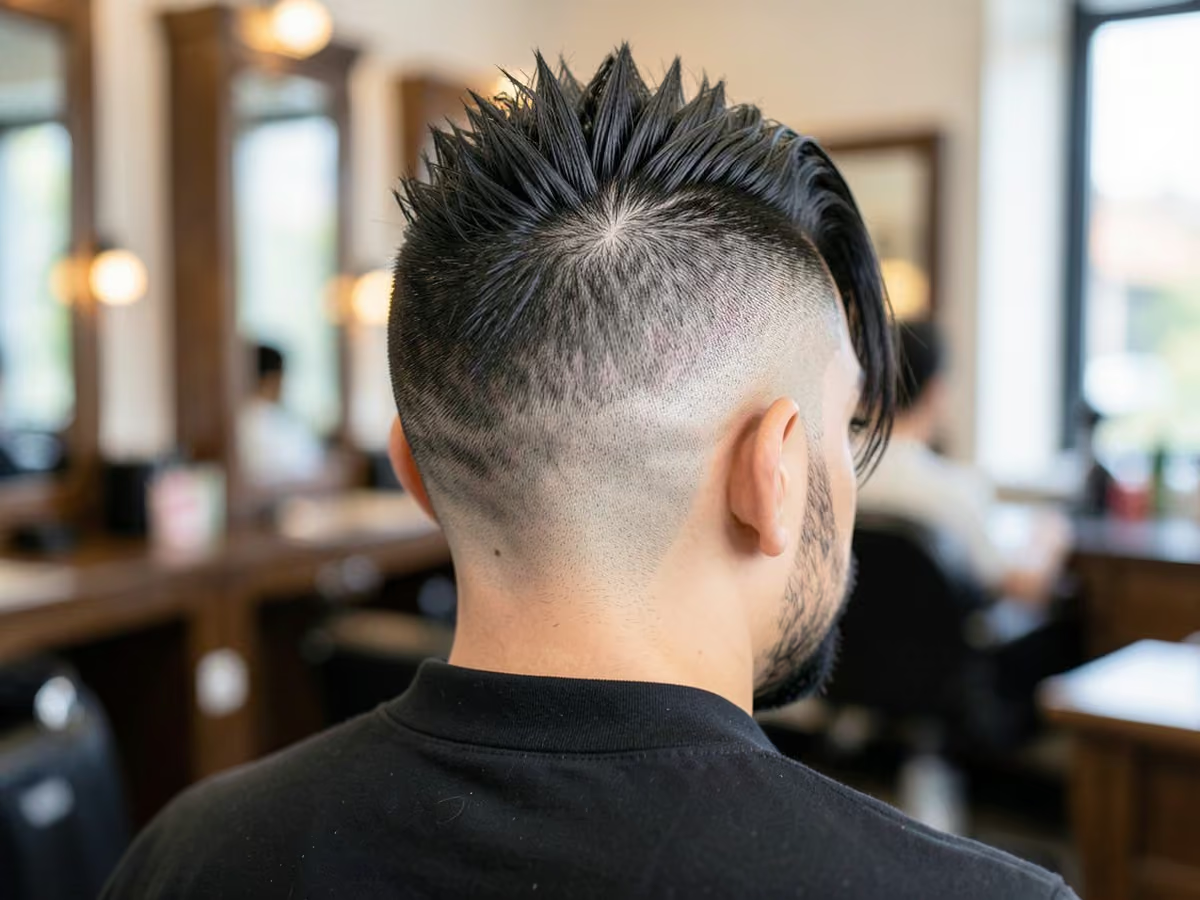
About This Style
Everything outside a strip two to three inches wide down the center of the head is shaved to skin, from the forehead to the nape. The strip can be worn short and textured, spiked, or long enough to fall to one side. It is the strongest contrast in this gallery and needs the sides re-shaved weekly to keep the strip edges sharp. Coarse hair holds spikes without much product.
How to Style at Home
Apply light gel to damp hair along the strip.
Blow-dry upward with a diffuser or your fingers.
Shape the strip into spikes or a ridge before the gel sets.
Ask Your Barber
"Mohawk strip about two and a half inches wide from the forehead to the nape, three inches long, everything else shaved to skin."
Trim:Every 3–4 weeks. The swept-back length needs shaping to keep the point.
Best For:Oval, square faces + thick straight or wavy hair.
About This Style
Borrowed from 1950s greaser style, the ducktail combs the side hair back until it meets at the nape in a vertical seam. Here the barber keeps that swept-back top and upper back length but shaves the lower sides to a #0, so only the upper hair travels back to form the point. Four inches on top and a firm pomade hold it through the day.
How to Style at Home
Comb pomade through damp hair, working from the front to the back.
Sweep each side backward so the ends meet in a line at the nape.
Push the front up into a small wave with the teeth of the comb.
Ask Your Barber
"Lower sides to a #0 below the parietal ridge. Keep four inches on top and enough at the upper back to comb into a ducktail point."
Trim:Every 3–5 weeks. A swept top hides early regrowth on the sides.
Best For:Round, heart faces + straight or fine hair.
About This Style
Roughly four inches on top fall diagonally across the forehead and over one shaved side, so from the front the head looks asymmetric. The sweep covers part of the bare skin, which softens the contrast for a first-time shave. Straight and fine hair sit flat in this direction without fighting a cowlick, and the angled line narrows a round face.
How to Style at Home
Blow-dry the top across the head in the direction of the sweep.
Comb a light styling cream through the ends to keep them soft.
Let the longest front pieces drop down over the shaved side.
Ask Your Barber
"Both sides shaved to a #0. Four inches on top, longer at the front, cut so it sweeps across to the right over the shaved side."
Recommended Products
Styling Cream
Shaved Sides with Long Hair on Top
Long hair over bare sides keeps the length you want while cutting the weight and heat at the ears. These styles need six inches or more on top; see how to grow your hair out if you are not there yet.
Trim:Every 3–4 weeks. Only the sides need cutting.
Best For:Oval, square faces + straight, wavy or thick hair.
About This Style
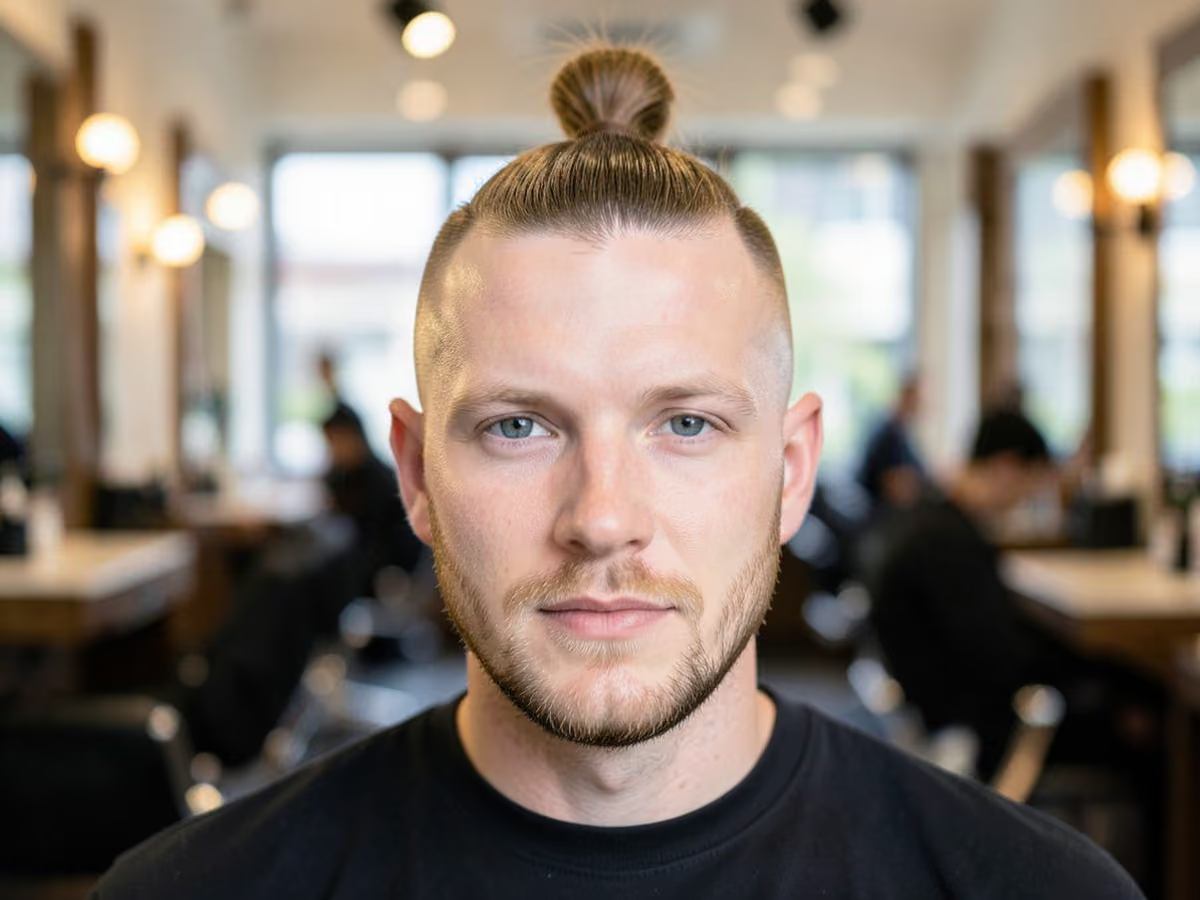
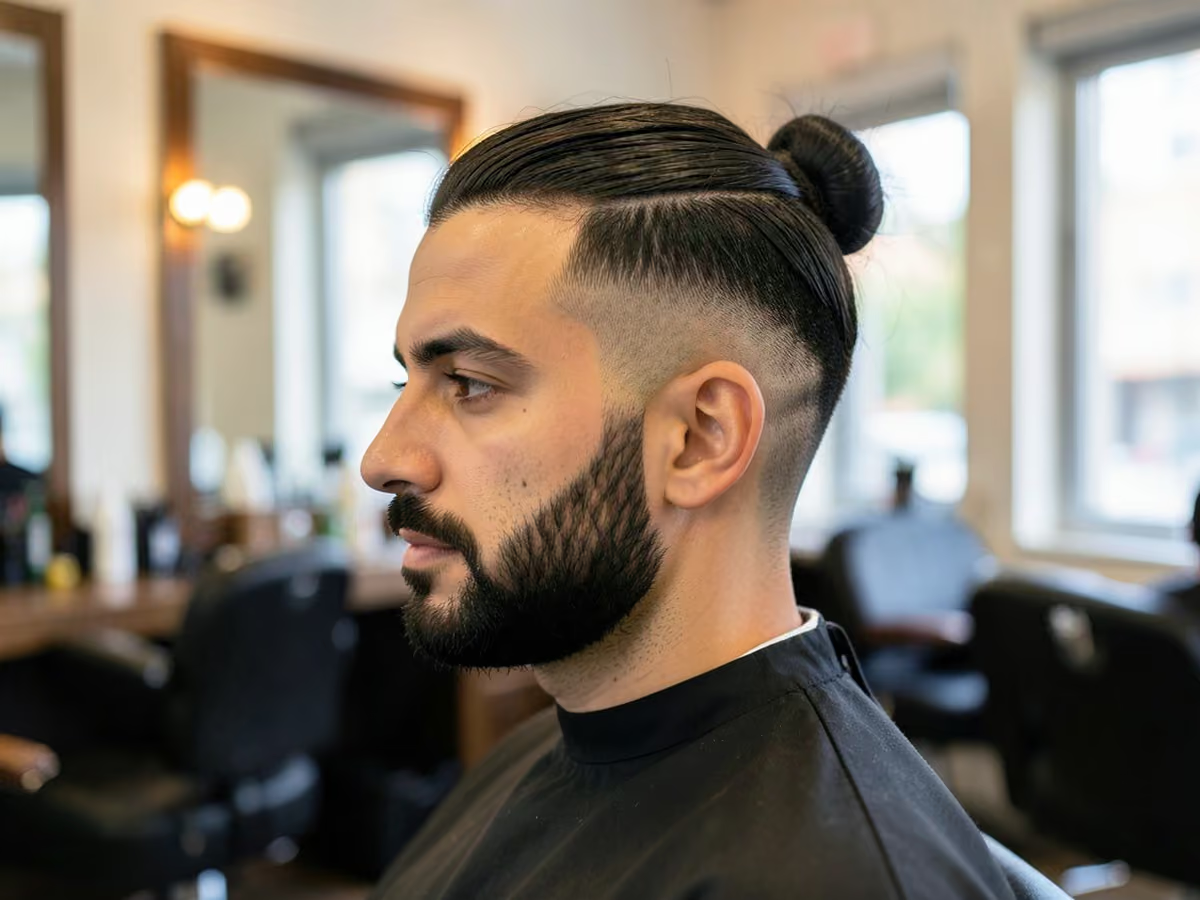
Hair on top grows to eight inches or more and is tied into a bun at the crown, while the sides and back are shaved below the bun line. Removing the side hair means the bun is smaller and lighter, and the shaved band shows clearly when the hair is up. Only the sides need regular cuts, so the long top can keep growing. The man bun guide covers bun height options.
How to Style at Home
Brush the long top back toward the crown with a detangling spray.
Tie it into a bun with a soft elastic, leaving it slightly loose.
Smooth flyaways at the front with a little argan oil.
Ask Your Barber
"Keep all the length on top for a bun. Shave the sides and back to skin up to the parietal ridge so the shaved band shows when it is tied up."
Trim:Every 3 weeks. The shaved base keeps the knot tidy.
Best For:Long, oval faces + straight or thick hair.
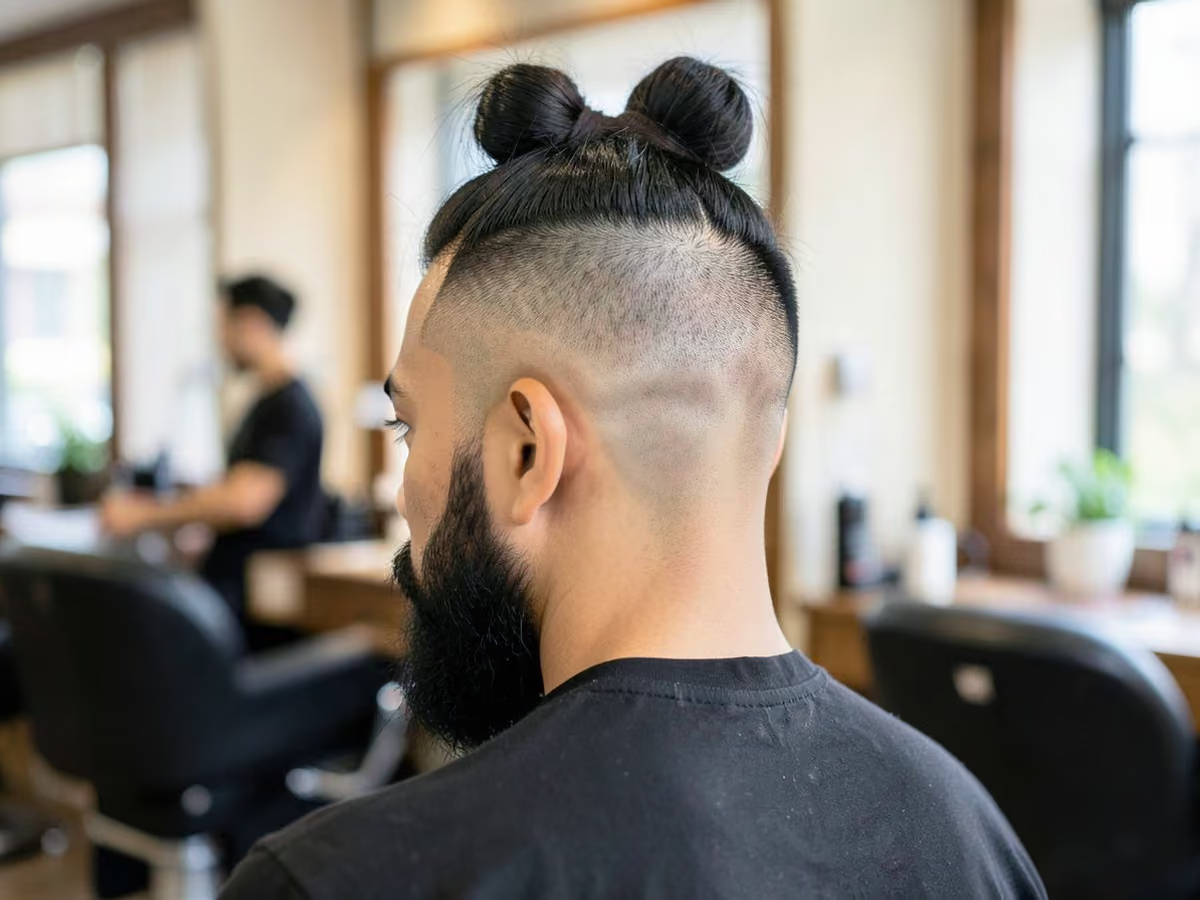
About This Style
Higher and tighter than a bun, the top knot usually sits at the top of the head rather than the crown. Shaving the sides and back up to the knot line means only the top section is grown out, often six to eight inches is enough. The bare sides make the knot look neat even on hot days or at the gym, which is why many athletes choose it.
How to Style at Home
Gather the top hair straight up into a high ponytail.
Twist it and wrap it into a small knot, then secure with an elastic.
Run scalp oil over the bare sides to keep them soft.
Ask Your Barber
"Shave everything below the parietal ridge to skin, leave six to eight inches on top so I can tie a high knot."
Trim:Every 3 weeks. Sides need re-shaving while the back grows.
Best For:Oval, heart faces + wavy, straight or thick hair.
About This Style
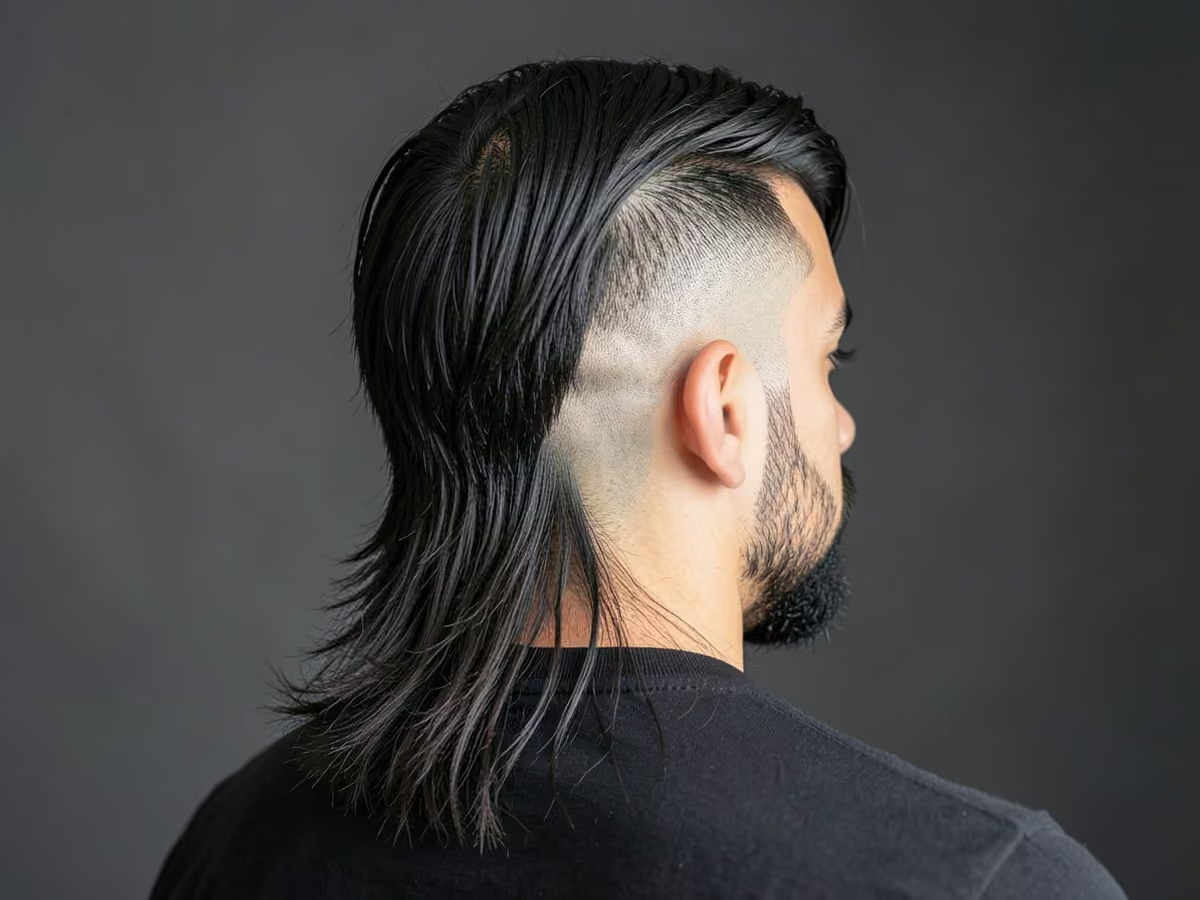
Two to three inches stay on the front and top while the back hangs past the collar, with the sides shaved to skin above the ears. Bare sides give the mullet a cleaner separation between front and back than a tapered version. It works best with some wave or texture at the back. The modern mullet guide covers how much length to leave at the nape.
How to Style at Home
Spray sea salt spray through the hair at the back while it is still damp.
Rough-dry with your fingers to give the back a loose, messy texture.
Push the front forward with a little matte clay.
Ask Your Barber
"Mullet with two to three inches on top, length past the collar at the back, and the sides shaved to skin above the ears."
Trim:Every 4 weeks. The long top only needs dusting of ends.
Best For:Oval, long faces + straight or wavy long hair.
About This Style
Shoulder-length hair on top is tied at the back of the head, while the sides are shaved or buzzed with a #1 underneath. With the hair down, the shaved sides are mostly covered; tied back, they show clearly. This makes it a practical choice for men who want long hair that can look neat or relaxed. Ask the barber to dust the ends every two months.
How to Style at Home
Detangle the long top with a wide-tooth comb and leave-in.
Pull it back into a low ponytail at the nape.
Smooth the front with a small amount of styling cream.
Ask Your Barber
"Keep the top at shoulder length, dust the ends only, and buzz the sides and back with a number one up to where the ponytail starts."
Trim:Every 3–4 weeks. The layers lose shape after a month.
Best For:Oval, square faces + wavy or thick hair.
About This Style
Layered on top and back so it looks shaggy, the wolf cut keeps a choppy fringe at the front. Shaving the sides removes the bulk that makes thick hair puff out at the ears, so the shag shape sits on top and at the nape. Wavy hair gives the most natural texture. It grows into a full shag if you stop shaving the sides. See the wolf cut guide for layer lengths.
How to Style at Home
Spray sea salt spray into damp hair from the roots.
Scrunch the layers while drying with a diffuser.
Separate the fringe with a little texture clay.
Ask Your Barber
"Wolf cut with choppy layers on top and at the back, fringe to the brows, and the sides shaved to skin above the ears."
Trim:Every 3–4 weeks. Only the bare sides need regular clipper work.
Best For:Oval, long faces + straight, wavy or curly long hair.
About This Style
Shoulder-length hair is split horizontally: the top half is twisted into a small bun at the crown, and the hair at the back hangs to the collar. Shaved sides remove the bulk at the temples so the bun sits neatly and the loose hair falls in a narrower line. The skin above the ears shows clearly, and you can let the bun down when you want more coverage.
How to Style at Home
Gather the hair above the temples into one section at the crown.
Twist it into a small bun and secure it with a soft elastic.
Leave the back loose and smooth it with a drop of argan oil.
Ask Your Barber
"Sides to skin from above the ears, but keep the back and top long. Just dust the ends, I wear it as a half-up bun."
Trim:Every 3–4 weeks. Long lengths need a dusting every second visit.
Best For:Round, oval faces + thick straight or wavy hair.
About This Style
Grown to six inches or more, the top is pulled back from the hairline in one direction and left to fall past the crown toward the nape. Unlike the shorter slick back, the ends move and curl slightly at the back, and the bare sides trim the silhouette. Round faces get length without width. It needs a medium-hold product and about five minutes in the morning.
How to Style at Home
Apply pomade to damp hair, working it from the roots to the ends.
Comb everything straight back with a wide-tooth comb and no part.
Let the ends dry naturally so they curl a little at the back.
Ask Your Barber
"Sides shaved to skin, no fade. Leave six inches or more on top so it slicks straight back past the crown, just trim the ends."
Trim:Every 4–6 weeks. The top grows into the curtains without reshaping.
Best For:Oval, diamond faces + straight or wavy hair.
About This Style
Curtains of four to five inches split down the center and fall on either side of the forehead, reaching about the cheekbones. Shaved sides underneath make the hair hang flatter and clear the ears. As it grows, the curtains lengthen without losing shape, so the top is low maintenance. A center part suits even proportions; a strong cowlick at the front makes it hard to hold.
How to Style at Home
Part the hair down the center with a comb while it is wet.
Blow-dry each side down and out using a round brush.
Finish with a light mist of sea salt spray for soft hold.
Ask Your Barber
"Sides shaved to a #0 under the top. Keep four to five inches on top for a middle part, curtains falling to the cheekbones."
Recommended Products
Sea Salt Spray
Round Brush
Shaved Sides for Curly, Wavy and Coily Hair
Curly and coily hair gains the most from shaved sides, because the sides are where curls add width. These six styles keep the curl on top and take the volume off at the ears. See curly hairstyles for more curl shapes.
Trim:Every 3 weeks. Curls hide regrowth at the edge of the top.
Best For:Round, oval faces + 3A to 3C curly hair.
About This Style
Curls of three to four inches stay on top and fall forward or to one side, while the sides are shaved to skin with a hard line. Removing side volume stops curly hair from looking round or bushy. The curls themselves cover the line between top and sides, so it grows out more gently than straight hair. A curl cream and a diffuser give the best definition.
How to Style at Home
Apply curl cream to soaking wet hair and scrunch it in.
Dry with a diffuser on low heat without touching the curls.
Break up any stiffness by scrunching once fully dry.
Ask Your Barber
"Could you shave the sides and back to skin up to the temple. Keep three to four inches of curls on top and shape them dry so they sit round, not flat."
Trim:Every 3 weeks. The top keeps its shape longer than curls.
Best For:Oval, square faces + 2A to 2C wavy hair.
About This Style
Wavy hair on top, usually four inches, is pushed back or to one side to show its bend, while the sides are buzzed with a #0. Waves look flat when they are heavy, so a little layering on top lets them spring up. It suits men who want texture without a full curl routine. A sea salt spray and air drying are often enough on most days.
How to Style at Home
Mist sea salt spray evenly through damp hair from the roots to the ends.
Push the top back or to the side with your fingers and let it air-dry.
Add a small amount of styling cream to define the waves.
Ask Your Barber
"Number zero on the sides and back, four inches on top with light layers so the waves lift, pushed back or to the side."
Trim:Every 2–3 weeks. The rounded top needs shaping.
Best For:Long, oval faces + 4A to 4C coily hair.
About This Style
Rounded on top at three to five inches, the afro sits over sides shaved to skin with a crisp line-up at the front. The bare sides make the afro look taller and more sculpted than a full round afro. Barbers shape the top with scissors or clippers and a pick to keep it even. It suits long faces less, since the height adds length; a lower top balances that.
How to Style at Home
Moisturize the top with leave-in and curl cream.
Pick the afro out from the roots to the shape you want.
Pat the surface with your palms to even it out.
Ask Your Barber
"Please shave the sides to skin with a line-up at the front. Shape the afro on top to about four inches, rounded and even when picked out."
Trim:Every 2–3 weeks. Retwist the top every week or two.
Best For:Oval, square faces + 4A to 4C coily hair.
About This Style
Two-strand or sponge twists on top, two to four inches long, sit over sides taken to skin or a #0. The shaved sides keep the twists from crowding the face and make them look neater as they lengthen. Twists need retwisting every week or two, and a sponge speeds up short ones. The sides can be faded or left one length.
How to Style at Home
Moisturize the top with a leave-in conditioner before you start twisting.
Rub a curl sponge in small circles over the top to form short twists.
Seal the ends with a small amount of curl cream.
Ask Your Barber
"Skin on the sides and back with a sharp line-up, three inches on top shaped so I can sponge it into twists."
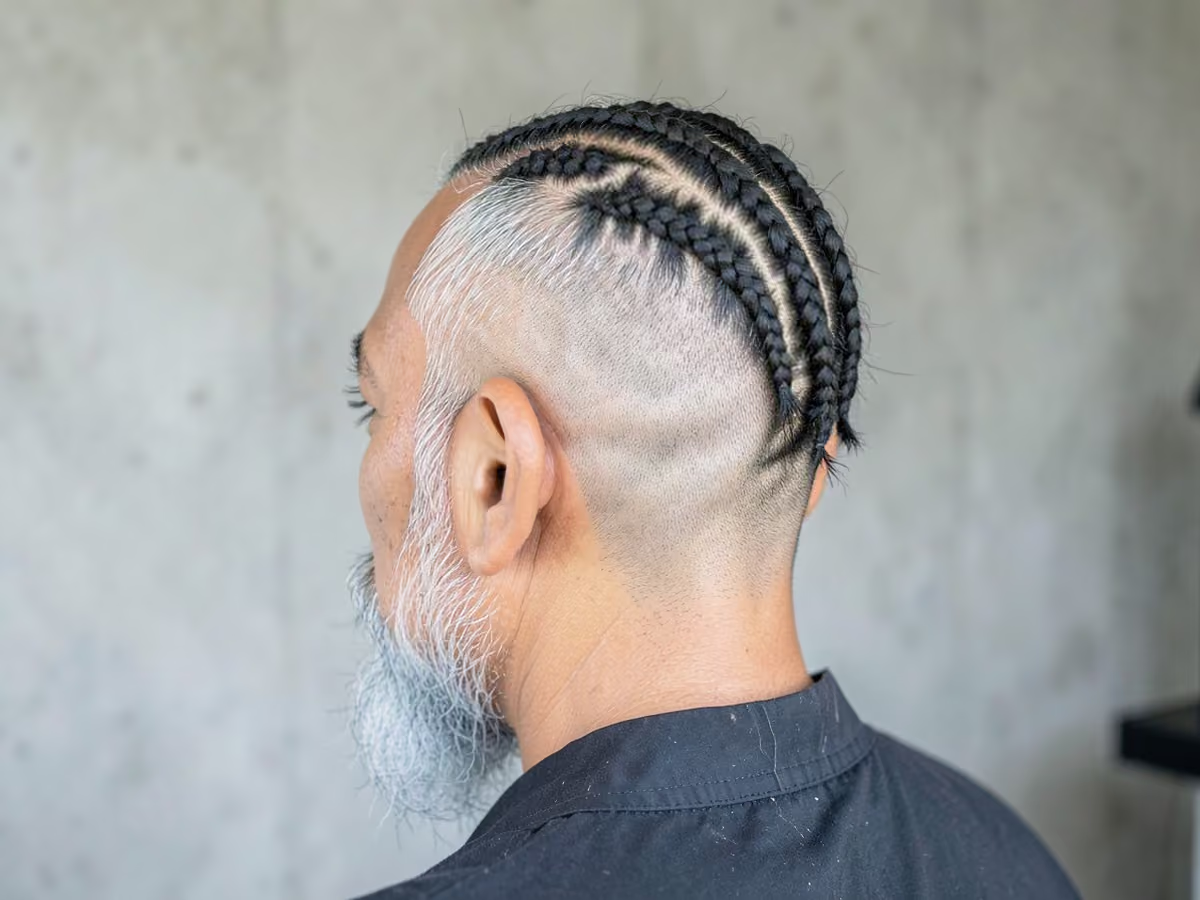
Trim:Every 2 weeks. Re-shave the sides while braids stay in.
Best For:Oval, long faces + coily, curly or thick hair.
About This Style
Cornrows or box braids run along the top of the head from the hairline toward the nape, while the sides are shaved to skin. The bare sides keep the braids neat for longer and show off the braid pattern. Braids last two to four weeks, but the sides need re-shaving every two weeks. See braids for men for braid styles and length needs.
How to Style at Home
Apply a light scalp oil along the braid partings.
Wrap the braids at night with a durag or silk scarf.
Keep the shaved sides clean with a foil shaver.
Ask Your Barber
"Could you shave the sides to skin up to where the braids start, line up the front, and keep enough length on top for cornrows."
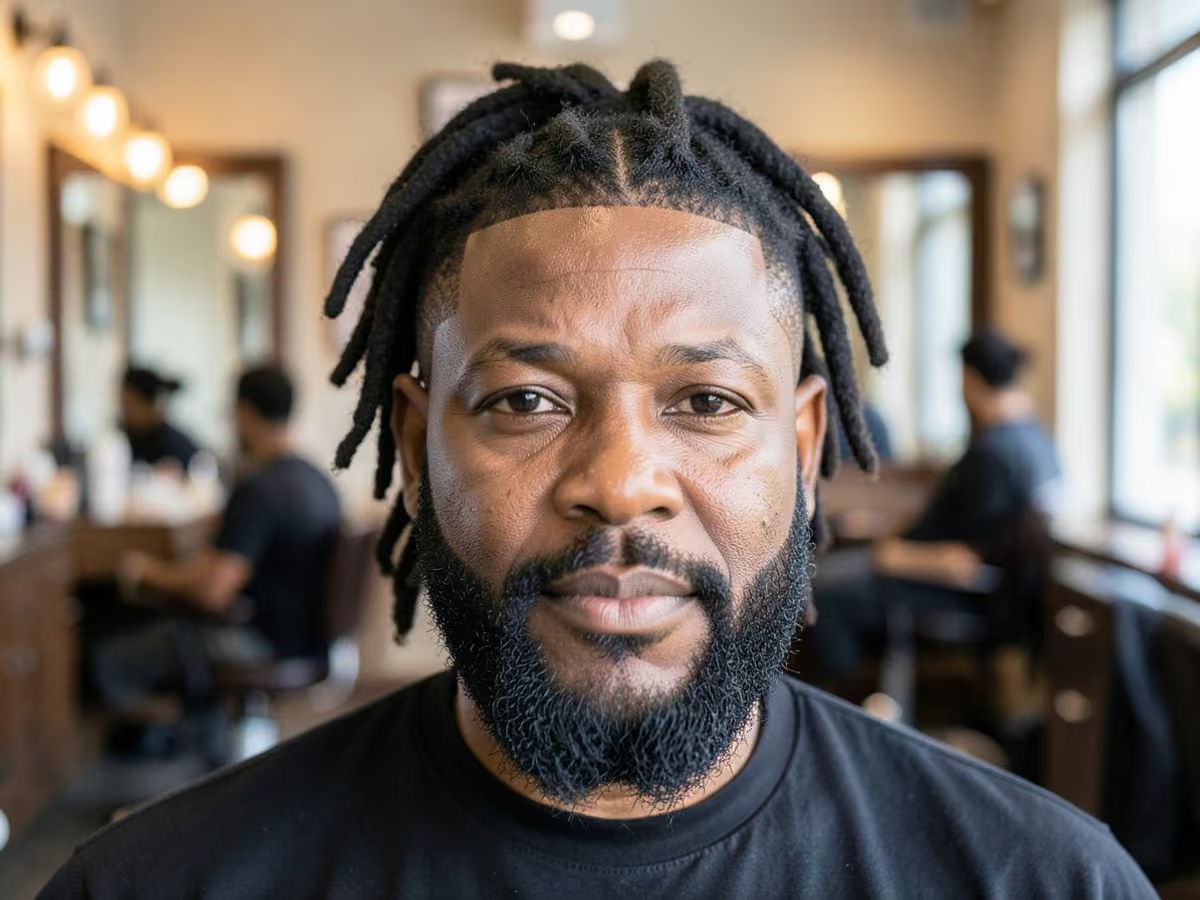
Best For:Oval, square faces + 4A to 4C coily hair.
About This Style
Starter or mature locs on top sit above sides shaved to skin, often called a loc undercut. The bare sides keep the look tidy as locs grow, and they make a ponytail or bun of locs easier to wear. Retwist the roots every four to six weeks and touch up the shaved sides more often. It works for short starter locs and long ones alike.
How to Style at Home
Retwist new growth at the roots with loc gel every few weeks.
Tie longer locs back or up to show the sides.
Moisturize the scalp with a light oil between washes.
Ask Your Barber
"Shave the sides and back to skin below the locs, line up the hairline, and leave all loc length on top."
Trim:Every 2–3 weeks. Bare sides show curl regrowth quickly.
Best For:Oval, long faces + coily or tight curly hair.
About This Style
Coily hair picked up into a strip two to four inches wide runs from forehead to nape, and both sides are razored clean. The frohawk is softer than a spiked mohawk because the curls form a rounded crest instead of points. The barber shapes the strip with scissors so it peaks at the crown. Moisture matters, since bare sides next to a dry top look patchy.
How to Style at Home
Spray leave-in onto the strip and pick it up from the roots.
Pat the outline round with your palms so it peaks at the crown.
Moisturize the shaved sides with a few drops of scalp oil.
Ask Your Barber
"Bare skin on both sides. Leave a strip about three inches wide, shaped round with scissors, highest at the crown."
Trim:Every 3–4 weeks. Curls shrink, so fringe length changes fast.
Best For:Oval, square faces + loose or medium curls.
About This Style
Loose curls on top are cut to fall forward over the forehead, with up to four inches of stretched length that shrinks to about two. Sides go to a #0 so the curls look denser by contrast. The barber cuts the fringe dry, curl by curl, so it does not spring up too short. It suits curl patterns from 2C to 3B and hides a high hairline.
How to Style at Home
Rake curl cream through soaking wet hair with your fingers.
Scrunch the fringe forward and leave it to air-dry without touching it.
Separate the curls gently with your fingers once they are fully dry.
Ask Your Barber
"#0 on the sides. Curly fringe on top, cut dry, three to four inches stretched so it falls onto my forehead."
Recommended Products
Curl Cream
Shaved Sides with Beard
Bare sides make a beard the main feature of the lower face. These four pairings differ in beard length and whether the sideburns connect to the shaved area.
Trim:Every 2–3 weeks. Trim the stubble every few days.
Best For:Round, oval faces + thick or straight hair.
About This Style
Short stubble around a few millimetres covers the jaw and cheeks, while the sides are buzzed with a #0 so the two lengths almost match at the sideburns. The result is an even shadow from the temple down to the chin. It adds definition to the jaw without the upkeep of a full beard, and it suits most offices.
How to Style at Home
Trim the stubble with a short guard every three or four days.
Keep the neckline clean just above the Adam's apple.
Finish the top with a small amount of matte clay pushed forward.
Ask Your Barber
"Number zero on the sides and blend into my stubble at the sideburns. Two inches of texture on top, and clean up my neckline."
Trim:Every 2 weeks. Beard lines and sides both need edging.
Best For:Round, square faces + straight or wavy hair.
About This Style
Half an inch of boxed beard with sharp cheek lines and a clean neckline frames the lower face under shaved sides. The fade at the sideburns connects the shaved area to the beard so there is no gap. The box shape adds structure to round faces. It suits a quiff or comb over on top.
How to Style at Home
Brush the beard down with a beard brush after washing.
Work beard balm into the beard to hold the shape.
Edge the cheek lines with a trimmer between barber visits.
Ask Your Barber
"Please shave the sides to skin and fade into my beard at the sideburns. Box the beard at half an inch with sharp cheek and neck lines."
Trim:Every 2–3 weeks. The beard needs shaping every month.
Best For:Oval, long faces + thick or coarse hair.
About This Style
Bare sides get their balance from a full beard of an inch or more, which moves the weight of the head down to the jaw. The shaved area usually stops at the sideburns, where the beard starts at full length, giving a clear contrast. Long faces benefit because the beard adds width at the bottom. It pairs well with a slick back or long top.
How to Style at Home
Comb beard oil through the full beard every morning.
Brush the beard into shape with a boar bristle brush.
Slick or push back the top with pomade.
Ask Your Barber
"Could you shave the sides to skin and stop at the sideburns. Shape the full beard at about an inch and a half, rounded at the chin."
Trim:Every 2 weeks. Clean cheeks keep the goatee shape clear.
Best For:Round, heart faces + straight or thick hair.
About This Style
Chin and often mustache carry the goatee, while the cheeks and sides of the head are shaved clean. There is no connection between the goatee and the shaved sides, so the face reads lean and long. It suits round faces that need length. Keep the goatee short and squared, or round for a softer finish.
How to Style at Home
Keep the cheeks smooth with a razor every two or three days.
Trim the goatee to the same length with a guard.
Apply a little beard balm to keep the goatee neat.
Ask Your Barber
"Please shave the sides of the head to skin, trim my goatee to a quarter inch, and shave the cheeks clean so nothing connects."
Trim:Every 2–3 weeks. The cheeks need shaving every two days.
Best For:Round, oval faces + straight or wavy hair.
About This Style
Combining a pointed chin beard with a separate mustache, the Van Dyke leaves the cheeks bare, which echoes the shaved sides above. Hair and beard never connect, so the face reads as three distinct shapes: bare sides, bare cheeks and a focused chin. It lengthens round faces. Keep the chin beard an inch or two long and the top short to hold the proportions.
How to Style at Home
Shave the cheeks and sideburn area clean every second day.
Trim the chin beard into a point with small scissors.
Brush a little beard balm through the mustache and chin hair.
Ask Your Barber
"Sides shaved to skin, two inches on top. Shape my Van Dyke with a pointed chin beard, separate mustache and clean cheeks."
Trim:Every 2–3 weeks. The strap line blurs after a week.
Best For:Round, square faces + straight or coarse hair.
About This Style
Running from the sideburn along the jawline, a chin strap is a narrow band of beard about half an inch wide. With shaved sides, the barber fades the sideburn down into the strap so the line flows from temple to chin. The bare cheeks keep it defined, and the band sharpens a soft jaw. Expect to redraw the edges with a trimmer at home weekly.
How to Style at Home
Trim the strap with a #2 guard to keep the width even.
Shave above and below the band with a razor every few days.
Rub a drop of beard oil into the strap after shaving.
Ask Your Barber
"Sides to skin, and fade my sideburns into a half-inch chin strap along the jaw. Clean cheeks and a clean neck."
Trim:Every 4–6 weeks. A long beard only needs its shape refreshed monthly.
Best For:Oval, round faces + straight, wavy or coarse hair.
About This Style
With four inches or more of beard below the chin, the volume shifts down while shaved sides take it away at the temples. The contrast between bare scalp and long beard is strong, so the top usually stays short, around one to two inches. The barber shapes the beard into a rounded or squared point. Daily oil and brushing keep a long beard from looking dry next to the bare sides.
How to Style at Home
Brush the beard downward with a boar bristle brush each morning.
Work beard oil into the length while the beard is still damp.
Push the short top up with a small amount of matte clay.
Ask Your Barber
"Razor the sides clean. One and a half inches on top. Shape my long beard to a rounded point but leave the length."
Trim:Every 3–4 weeks. Trim the mustache lip line each week.
Best For:Oval, long faces + straight or wavy hair.
About This Style
Clean-shaven except for a full mustache, this pairing puts all the facial hair above the lip. A chevron or walrus shape covering the upper lip works best, because a thin pencil line gets lost against bare scalp. Long faces benefit since the mustache breaks the vertical line. Shaved sides with a textured two-inch top keep it casual rather than retro.
How to Style at Home
Comb the mustache downward and trim along the lip line with scissors.
Shave the cheeks and chin every day or two.
Texture the top with a little matte clay rubbed between your palms.
Ask Your Barber
"Sides shaved to a #0, two inches of texture on top. Tidy my chevron mustache along the lip, the rest of my face clean."
Recommended Products
Beard Balm
Matte Clay
Shaved Sides by Hair Type and Design
These four cuts adjust shaved sides for a specific hair type, for thinning on top or for a design cut into the side. For more patterns and placement ideas, see our hair designs gallery.
Trim:Every 2 weeks. Line-ups and bare sides need fresh edges.
Best For:Oval, square faces + 4A to 4C coily hair.
About This Style
Sides are shaved to skin with a crisp line-up at the forehead, temples and nape, while the top is cut short and even, often an inch or less. The sharp edges on dark coily hair give clear definition. Brushing the top with a soft brush daily helps waves form if you want them. Razor bumps are common on shaved sides; see our black men haircuts guide for more.
How to Style at Home
Brush the top in one direction every morning.
Apply wave pomade or a light oil to the top.
Use an aftershave balm on the sides after a fresh shave.
Ask Your Barber
"Shave the sides and back to skin, sharp line-up front and temples, and keep the top at about an inch, brushed and even."
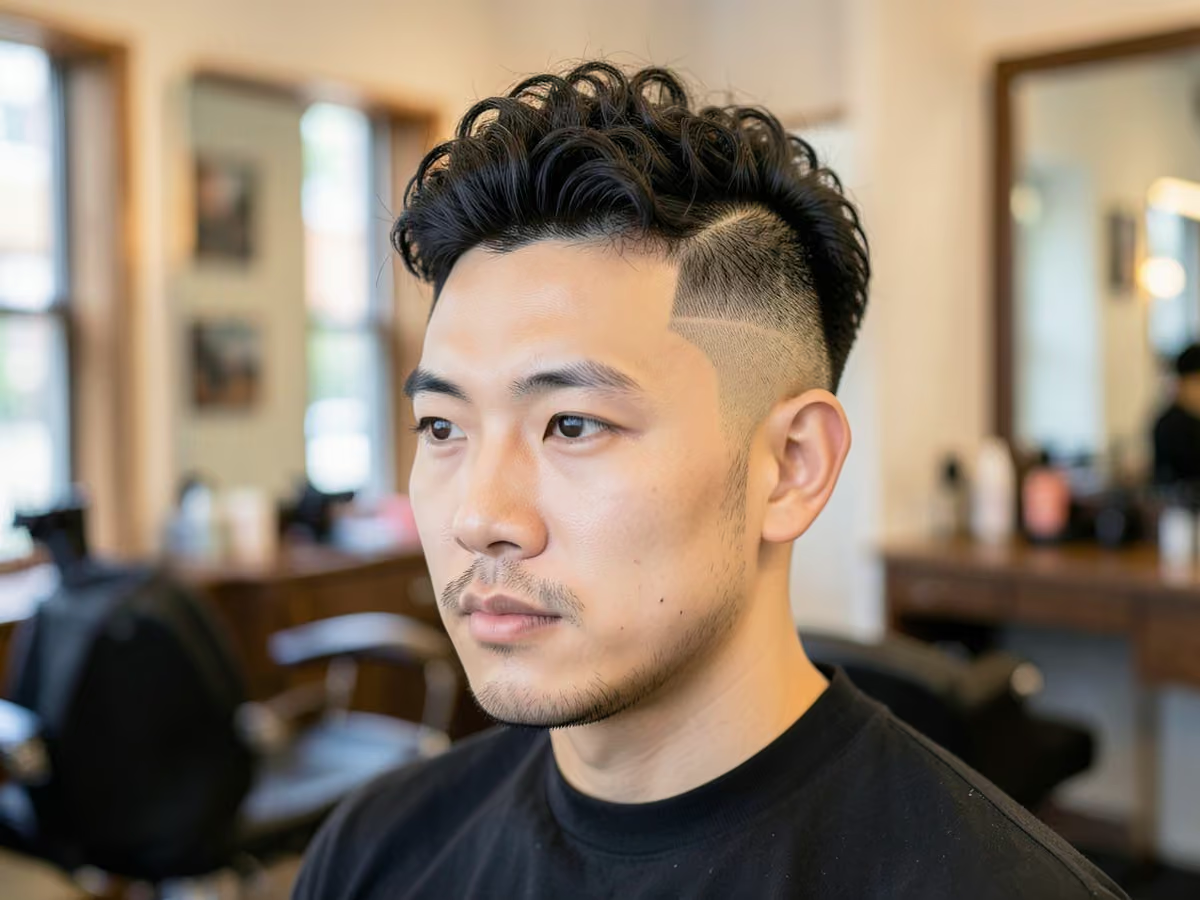
Best For:Oval, round faces + straight, thick Asian hair.
About This Style
Thick, straight hair on top is cut to three or four inches and worn as a side-swept fringe or brushed up, with the sides shaved or buzzed to a #0. Straight Asian hair tends to stick out at the sides as it grows, so shaving them keeps the shape neat. It is close to a two block cut but with bare sides instead of a longer layer covering them.
How to Style at Home
Blow-dry the top toward the side you want the fringe to fall.
Work a small amount of matte paste through the top.
Spray thickening spray at the roots if the top falls flat.
Ask Your Barber
"Buzz the sides with a number zero, keep three and a half inches on top, and texturize it so it falls to one side."
Trim:Every 2–3 weeks. Short tops make thinning less visible.
Best For:Oval, square faces + fine or thinning hair.
About This Style
Shaving the sides reduces contrast between the thinning top and the denser sides, so the top looks fuller. The top is kept short, about an inch, and pushed forward with texture. It works well for men with receding temples or a thin crown. Avoid a long top, which can show scalp through the strands. Texture powder adds grip and volume.
How to Style at Home
Dust texture powder into dry hair at the roots across the whole top.
Push the top forward with your fingertips to cover the thinner areas.
Avoid heavy pomades and gels that weigh fine hair down and show scalp.
Ask Your Barber
"Could you shave the sides and back to a number zero, keep about an inch on top, and texturize it forward to cover the thinning areas."
Trim:Every 1–2 weeks. Designs fade quickly as hair regrows.
Best For:Oval, square faces + coily, thick or straight hair.
About This Style
Cut into a #1 or #2 buzzed side with a trimmer, the lines usually curve back from the temple toward the crown. The buzz has to keep some length so the lines show as bare channels; on skin they would disappear. Straight or thick hair gives the clearest contrast, while coily hair shows a softer edge. Plan on a touch-up every week or two if you want the design kept.
How to Style at Home
Avoid scratching or rubbing the design while it is fresh.
Keep the buzzed sides moisturized with a few drops of scalp oil daily.
Book a quick touch-up after a week if you want the design kept.
Ask Your Barber
"Number one on the sides with two curved lines cut from the temple back toward the crown, two inches of texture on top."
Trim:Every 3–4 weeks. Dark roots show on the top quickly.
Best For:Oval, square faces + straight, wavy or curly hair.
About This Style
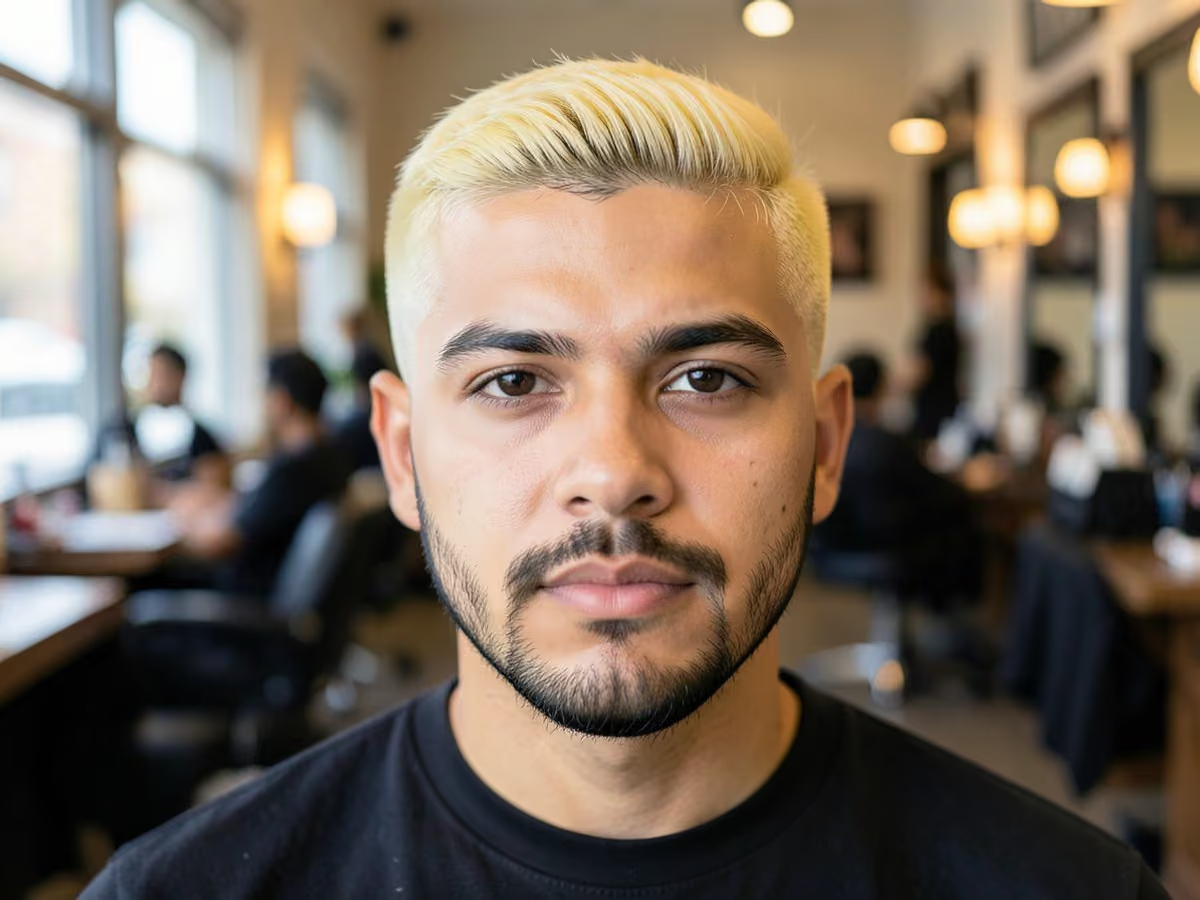
Bleaching only the top while the sides stay shaved creates a two-tone contrast: bare skin with dark stubble below, blonde texture above. The colorist lifts two to three inches of hair to a light yellow or pale blonde and tones it. Because the sides are shaved, there is no grow-out band to color there. Lightened hair is drier, so a leave-in conditioner becomes part of the routine.
How to Style at Home
Use a purple shampoo once a week to stop brassy tones.
Apply leave-in conditioner to damp hair before any styling.
Rough-dry the top and twist it with a little matte clay.
Ask Your Barber
"Sides shaved to skin. Two to three inches on top, textured so it looks messy, and I am having it bleached to a light blonde."
Trim:Every 2–3 weeks. Short platinum shows dark roots within weeks.
Best For:Oval, heart faces + thick straight or wavy hair.
About This Style
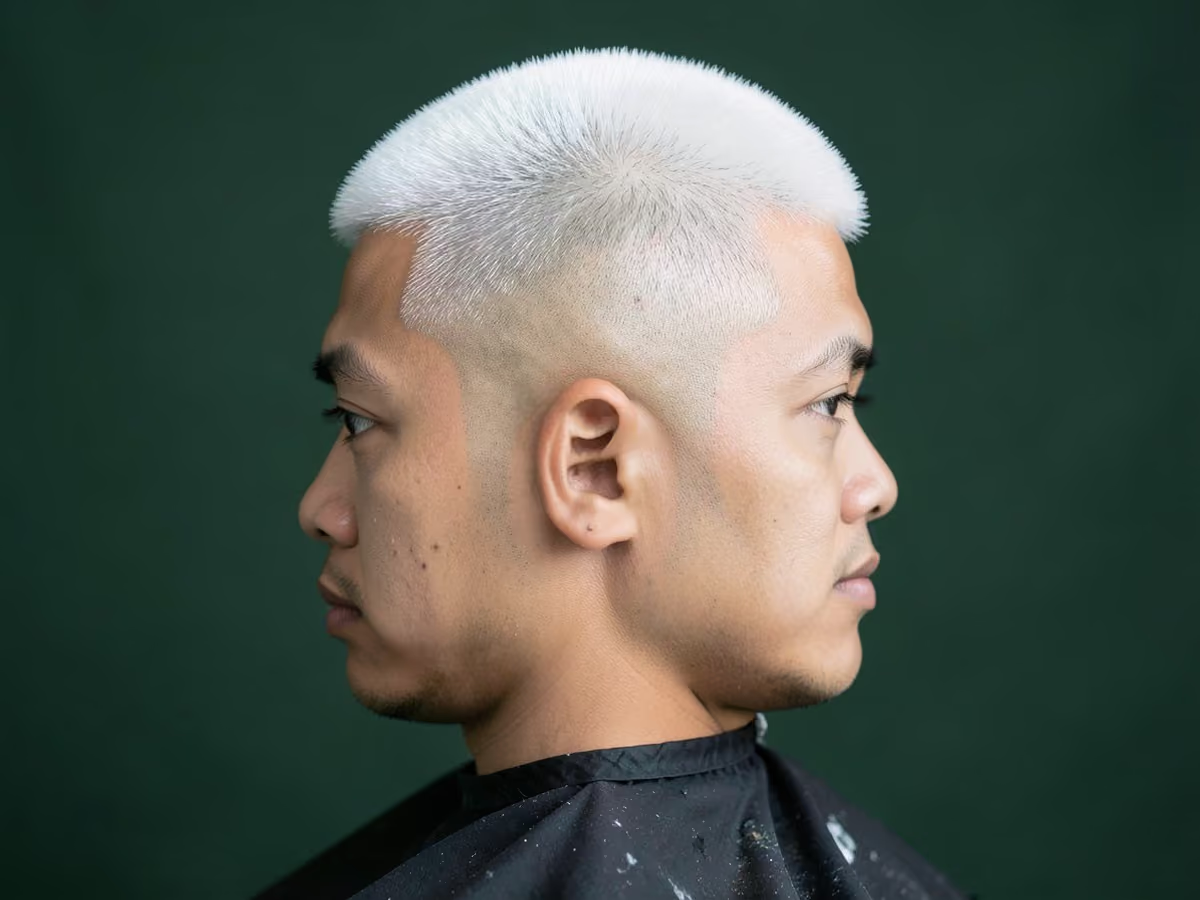
Icy white hair on a short crop, set against bare skin at the sides, means the head looks almost one tone from a distance. Lifting to platinum takes several bleach stages and a silver toner. The top is kept to an inch or less, which means damaged ends are cut away at each visit. Roots show within three weeks and toner fades, so expect regular salon time.
How to Style at Home
Wash with a silver shampoo twice a week to keep the white tone.
Towel-dry gently and add a leave-in conditioner before styling.
Push the crop forward with a pinch of texture powder.
Ask Your Barber
"Platinum crop, one inch on top pushed forward with a short fringe. Sides shaved to skin. The color is being done separately."
Trim:Every 1–2 weeks. Designs vanish as the stubble grows.
Best For:Oval, square faces + straight, wavy or coily hair.
About This Style
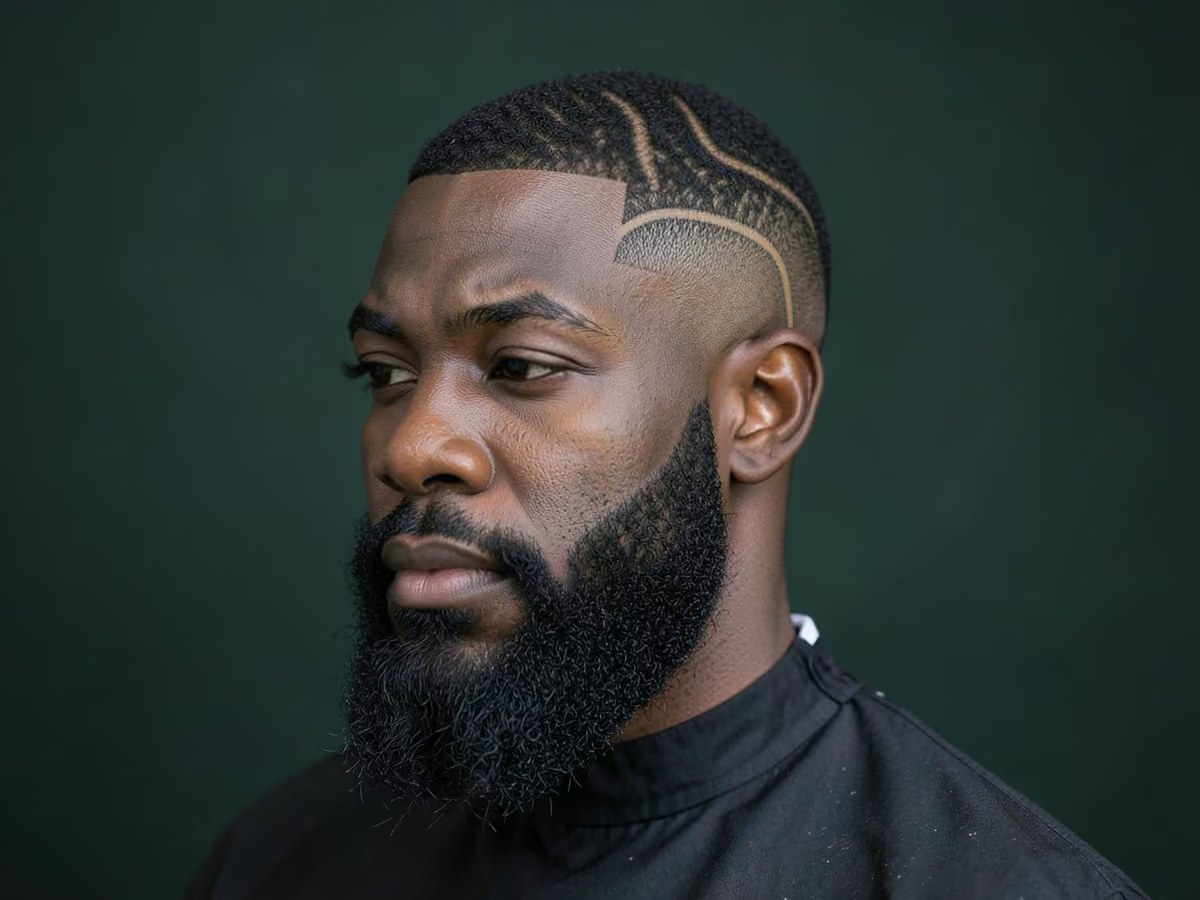
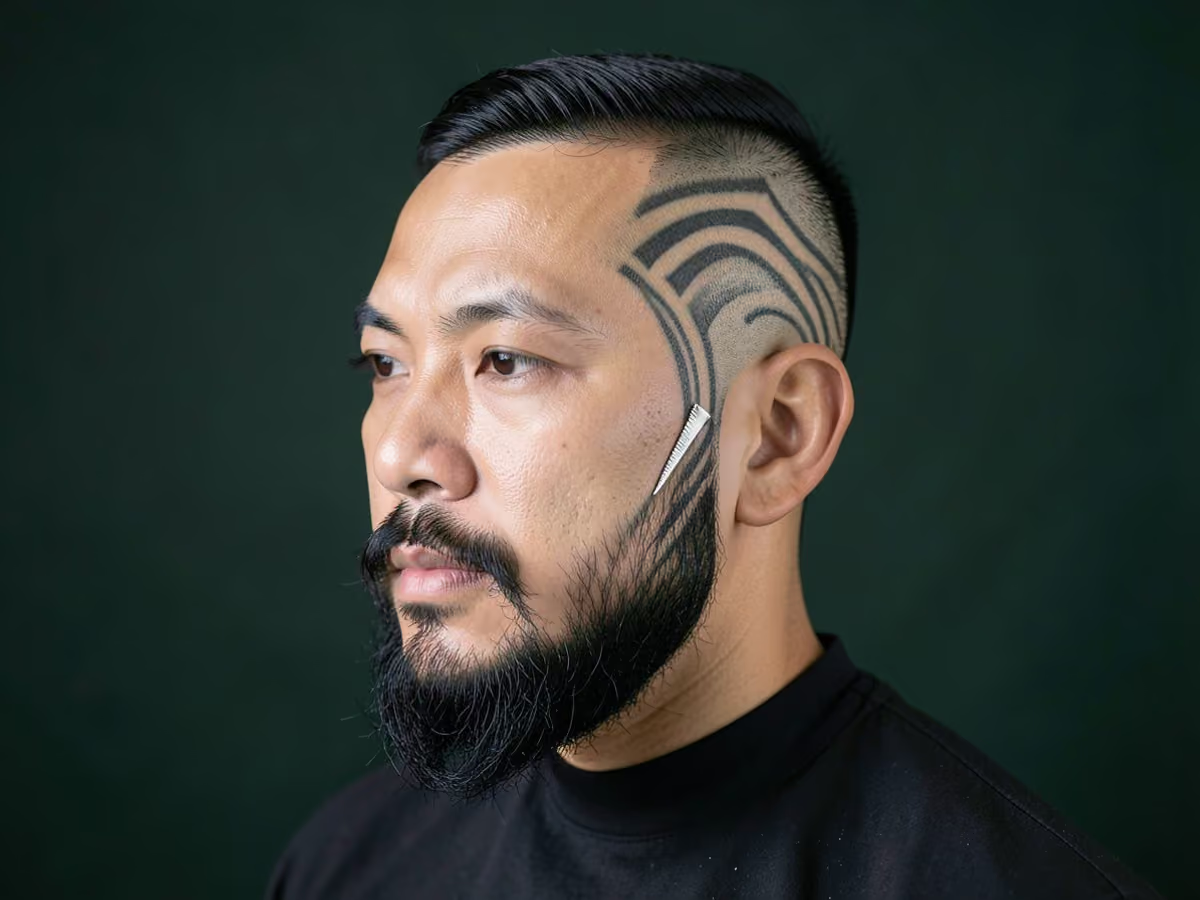
Curved, interlocking lines cut into one or both sides with a trimmer and a straight razor give the head a tattoo-like pattern. The design needs a #0 or #1 base so the lines read clearly; on bare skin they disappear. Barbers usually draw it freehand from the temple back toward the occipital bone. It lasts about a week, so most men book a quick redraw between full cuts.
How to Style at Home
Keep the design area moisturized with a little scalp oil.
Avoid going over the sides with clippers at home between visits.
Book a five-minute redraw as soon as the lines start to blur.
Ask Your Barber
"Sides at a #1 so the lines show. Cut a curved tribal design on the right side, from the temple back to the occipital bone."
Recommended Products
Scalp Oil
Shaved Sides by Age, Face Shape and Hairline
These versions adjust the shave height, top length and finish for a specific age, face or hairline. Parents should check school rules first, and men with thinning hair can compare options on thinning hair haircuts.
Trim:Every 3–4 weeks. Kids' hair grows fast around the ears.
Best For:Ages 6–12 + straight, wavy or thick hair.
About This Style
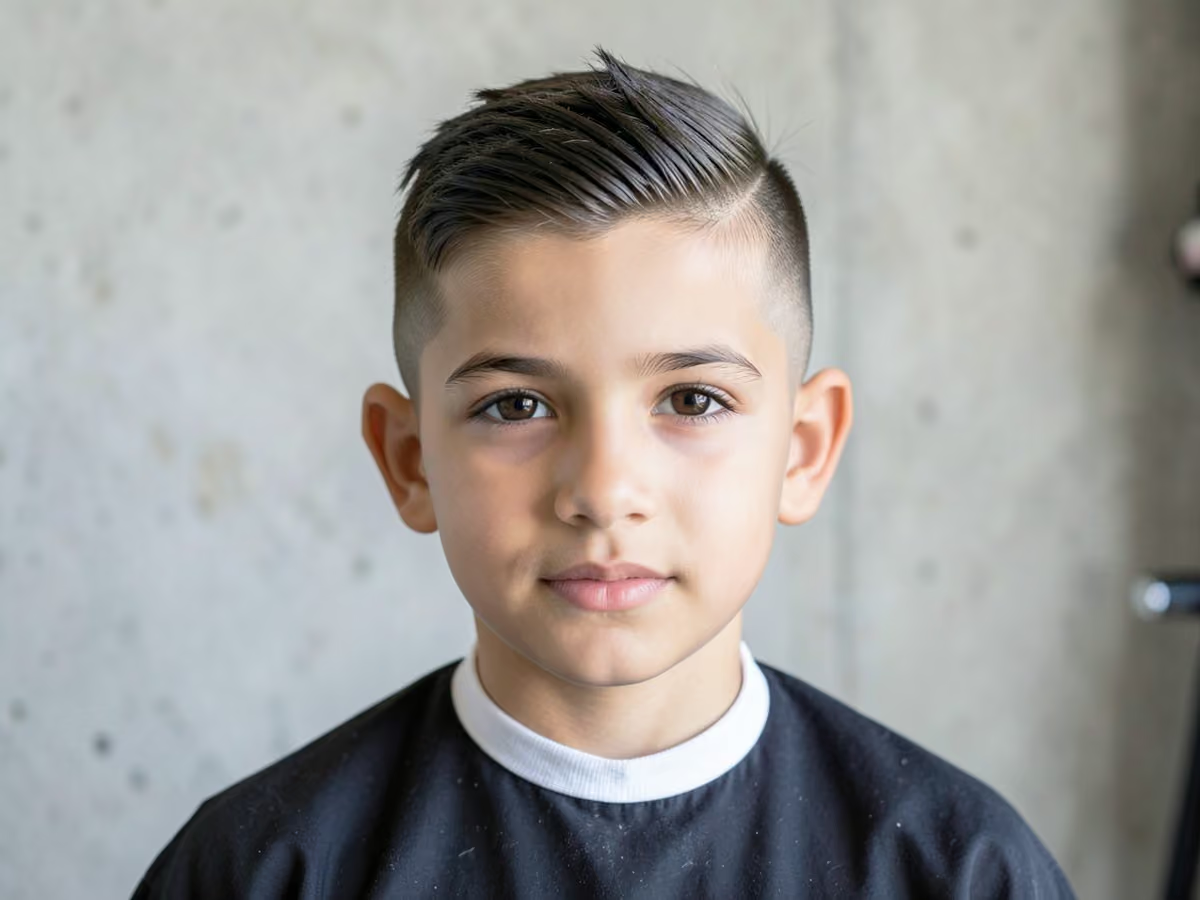
For children, barbers usually clip the sides to a #1 rather than shaving to skin, which is gentler on young scalps and avoids razor nicks. The top stays two to three inches so it can be combed to the side for school or spiked for weekends. It keeps hair off the ears during sports. Some schools restrict visible shaved areas, so check the uniform policy first.
How to Style at Home
Comb a pea-sized amount of styling cream through the top.
Part the top to one side with a comb on school days.
Wash the sides daily with kids shampoo during sports season.
Ask Your Barber
"Please do a #1 on his sides, no razor. Leave two to three inches on top so he can comb it to the side for school."
Trim:Every 2–3 weeks. Teens usually want the sides kept fresh.
Best For:Ages 13–17 + straight, wavy or curly hair.
About This Style
Teenagers tend to ask for a high-contrast version: skin on the sides and a few inches of messy texture on top, often worn forward. The shape resembles a modern crop but longer, so it can be pushed up or flopped forward. Breakouts along the hairline and sideburns are common at this age, so a clipper cut at a #0 is gentler than a razor shave.
How to Style at Home
Spray sea salt into towel-dried hair from roots to ends.
Rough-dry the top forward using only your hands.
Shape a few front pieces with a small amount of matte clay.
Ask Your Barber
"Skin on the sides with clippers, not a razor. Three to four inches of texture on top, messy and pushed forward."
Trim:Every 3–4 weeks. Gray stubble on the sides blends with skin.
Best For:Oval, square faces + gray, thinning or straight hair.
About This Style
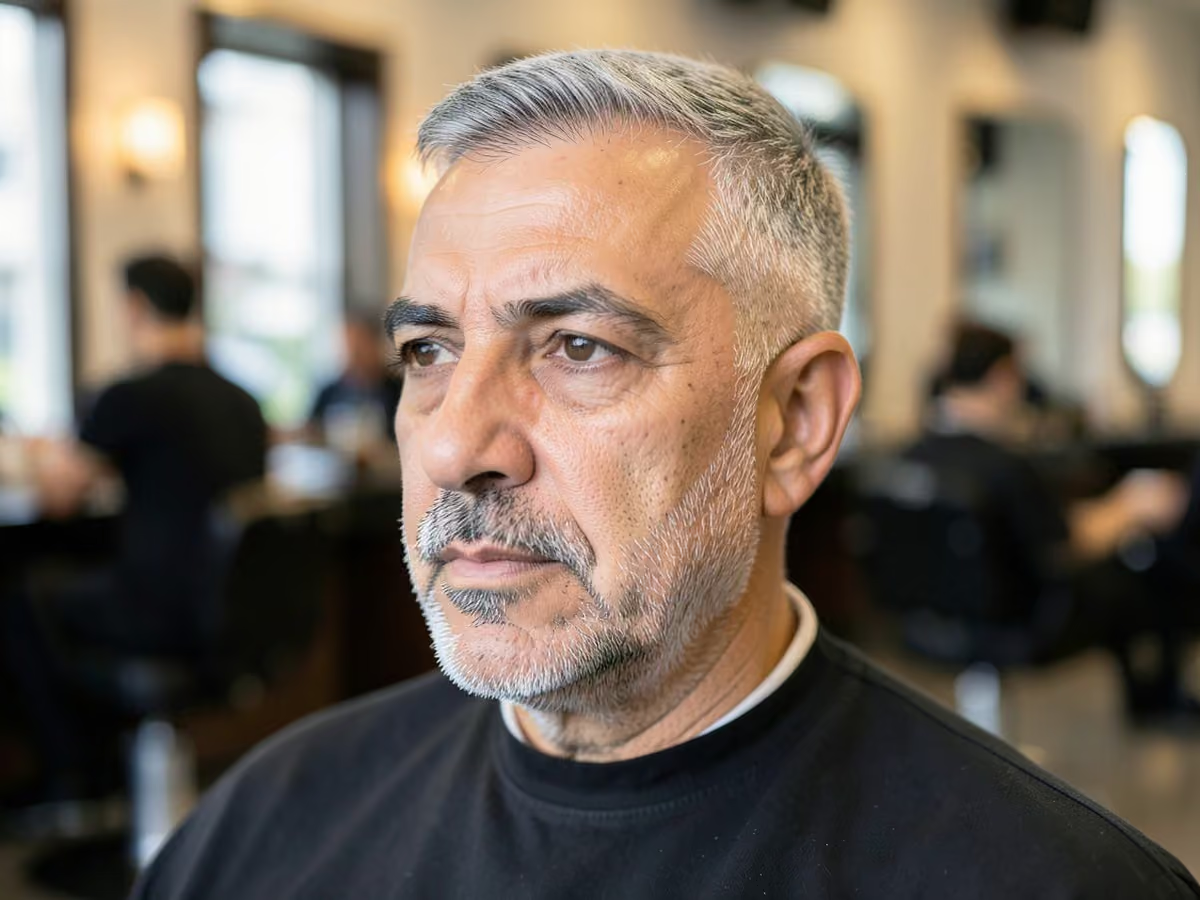
Gray and white hair has less pigment against the scalp, so shaved sides look softer on older men than on dark hair. A #1 rather than skin keeps a little shadow. Keeping roughly an inch on top, combed neatly to the side, avoids a look that tries too hard. It also disguises thinning around the temples, which is common after fifty.
How to Style at Home
Use a purple shampoo weekly to stop gray hair turning yellow.
Comb a little matte cream through the top while it is damp.
Part the top to one side with a fine comb.
Ask Your Barber
"#1 on the sides, no skin. An inch and a half on top, tidy and combed to the side, and keep it neat around the ears."
Trim:Every 2–3 weeks. Short contrast keeps the temples less obvious.
Best For:Oval, square faces + thinning or receding hair.
About This Style
Deep temple recession looks less obvious when the sides are shaved, because the bare corners at the front merge with the bare sides. An inch of length on top goes forward into a slight fringe that covers the front corners. Long tops draw attention to the gaps, so the barber keeps the front choppy instead. It works best in the early and middle stages of recession.
How to Style at Home
Push the top forward with a light dusting of texture powder.
Leave the front choppy so it partly covers the corners.
Skip heavy creams, which clump thin hair and show the scalp.
Ask Your Barber
"Shave the sides to skin. One inch on top pushed forward, choppy at the front to cover the corners of my hairline."
Trim:Every 2–3 weeks. Width returns as the sides regrow.
Best For:Round, full faces + thick straight or wavy hair.
About This Style
Round faces look slimmer when width at the sides is removed and height is added on top. Shaving the sides takes away almost all side volume, and a brush-up of about four inches adds the vertical line. The barber keeps the corners of the top square, not rounded, to add angles. Avoid blunt fringes, which cut the face horizontally and make it look wider.
How to Style at Home
Blow-dry the front upward with a round brush on medium heat.
Work matte clay through the top and lift it at the roots.
Pinch the corners square with your fingertips to add angles.
Ask Your Barber
"Skin on the sides, no fade. Three to four inches on top styled up, with the corners kept square to add height."
Trim:Every 3–4 weeks. Fresh stubble under the frames can itch.
Best For:Oval, square faces + straight, wavy or thin hair.
About This Style
Glasses arms rest on the side of the head, so fully bare sides show a line where the frames meet the skin and can rub on fresh stubble. Barbers usually leave a #1 around the ears for comfort and shave above it. The top is a neat two-inch textured cut, so frames and hair do not compete. Thick frames suit this best.
How to Style at Home
Push the top up and slightly back with a little matte paste.
Wipe the sides with a damp cloth after shaving days.
Put your glasses on after styling so the arms do not flatten the hair.
Ask Your Barber
"Leave a #1 around the ears where my glasses sit and skin above it. Two inches of texture on top."
Recommended Products
Matte Paste
How Do You Ask Your Barber for Shaved Sides?
Name four things: how short the sides go (razor, skin, #0 or #1), how high the short area climbs (just above the ear, the temple or the parietal ridge), whether it blends into the top or stops at a hard line, and how much length stays on top. Add whether the back matches the sides. A #0 leaves about 1/16 inch and a #1 leaves 1/8 inch; the clipper guard numbers chart lists the rest.
Bring front and side photos and point to where the line should sit. If you only want one side shaved, say which side and where your part falls, since the long side covers the parting. If the barber suggests a slightly longer guard for your hair type or skin, it is usually worth trying once. Our guide on how to talk to your barber covers the rest of the conversation.
Clipper Guards Used in Shaved Sides Haircut Styles
A clipper guard is the plastic comb that clips onto the blade and sets how much hair is left: a #1 leaves 3 mm (1/8 inch), each step up adds about 3 mm. The right column lists the cards on this page that call for each guard. See the full clipper guard numbers guide for the complete chart.
Clipper guard sizes for shaved sides haircut styles
Bare skin on the sides dries out and burns faster than skin under hair. Use a light moisturizer or a few drops of scalp oil after washing and put sunscreen on the sides when you are outdoors. If you get bumps where the razor went, read how to prevent razor bumps on the neckline; the same advice applies above the ears.
Hair grows about half an inch a month, so razor shaved sides show stubble within three or four days and look like a short buzz by the second week. A #1 buzz holds its look for two to three weeks. Between visits you can run a trimmer with the same guard over the sides yourself, but leave the blend and the line to the barber.
What Mistakes Should You Avoid with Shaved Sides?
Taking the shaved area too high on a long face is the most common one, since it adds height without adding width. Another is leaving the top too short; under about two inches, shaved sides plus a short top just reads as a buzz cut. Fine hair needs a little extra length or texture on top so it does not look thin next to bare skin.
Book visits around the finish you chose. Razor sides booked once a month will look grown out for most of that month. Ask for a #1 instead if you can only visit every three or four weeks. Finally, do not shave the sides at home with a dry razor; use a foil shaver or clippers on clean, dry skin, and leave the line between the sides and the top to the barber.
Which Shaved Sides Haircut Is Right for You?
Pick your hair type and how much upkeep you will put in. The matches below come from the Best For and Maintenance notes on each card. Upkeep follows the Maintenance badge: low means a cut every 3 to 6 weeks and almost no daily styling, high means weekly line-ups or daily product.
Most barbers use a razor or foil shaver for true skin, a #0 for about 1/16 inch or a #1 for 1/8 inch. Anything from a #2 up reads as short sides rather than shaved. Coily hair often needs a touch longer than straight hair to show the same amount of scalp.
Q2: How often do shaved sides need touching up?+
Razor shaved sides need a touch-up every week to stay bare, because stubble shows within a few days. A #0 or #1 buzz lasts two to three weeks before the edges blur. You can extend the time between full cuts by buzzing the sides at home with the same guard and leaving the top to the barber.
Q3: Is it better to shave one side or both?+
Both sides shaved gives a balanced shape that suits short and medium tops and most face shapes. One side shaved works best with longer hair swept across from a deep part, so the long side drops over the opposite ear. It grows out less evenly, so plan on a barber visit every two to three weeks.
Q4: Do shaved sides suit a round face?+
Yes. Taking the sides down to skin removes width at the cheeks and temples, and a top with some height makes the face look longer. Pair the shaved sides with a quiff, faux hawk or textured crop rather than a flat fringe that adds width across the forehead.
Q5: Are shaved sides allowed at work?+
Most offices accept shaved sides when the top is neat and the edges are clean. A buzzed #1 with a side part or comb over reads more conservative than razor sides with a design. If your workplace has a written grooming policy, check it first, especially for designs or one-side shaves.
Q6: How long do shaved sides take to grow out?+
At about half an inch a month, bare sides reach a #4 length of 1/2 inch in roughly a month and blend with a short top in two to three months. Ask your barber to tidy the edges every few weeks while it grows so the sides and top meet evenly.