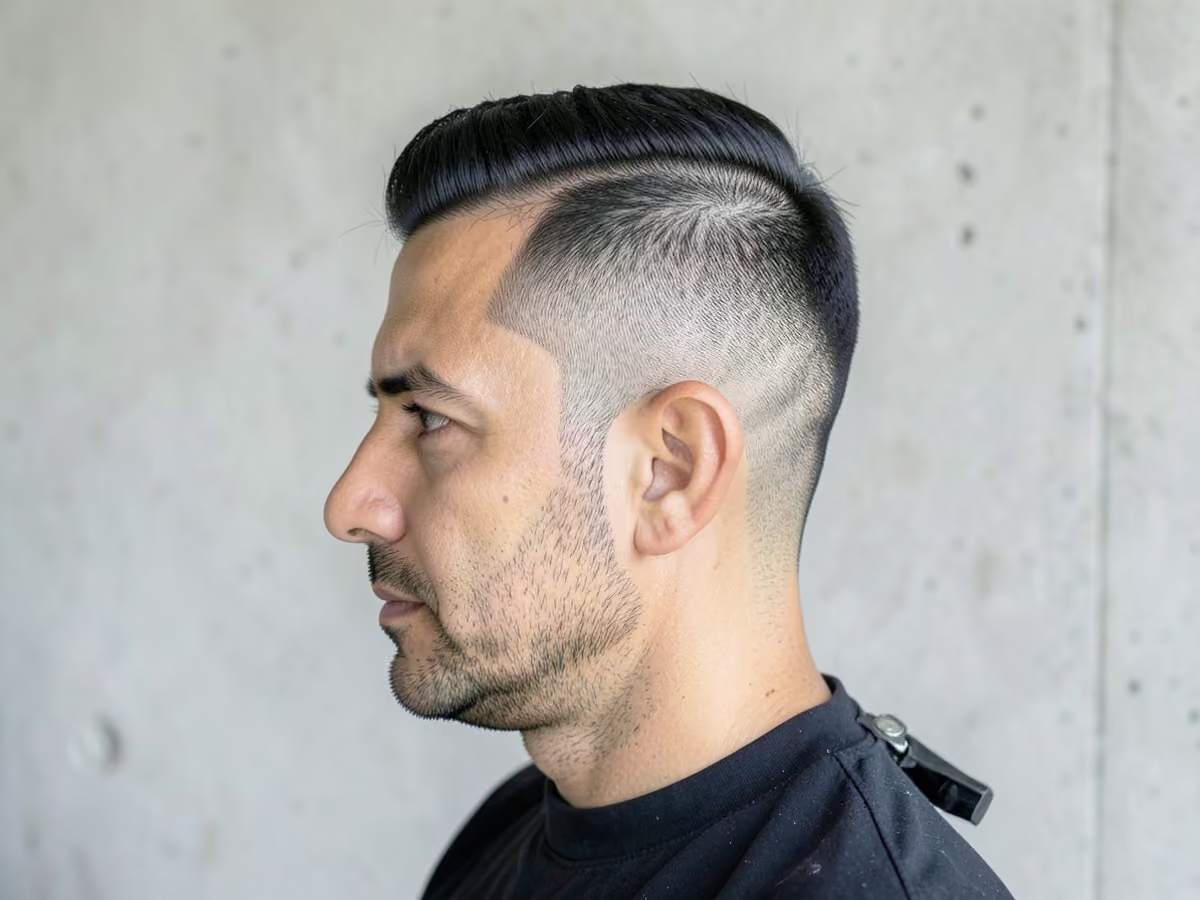
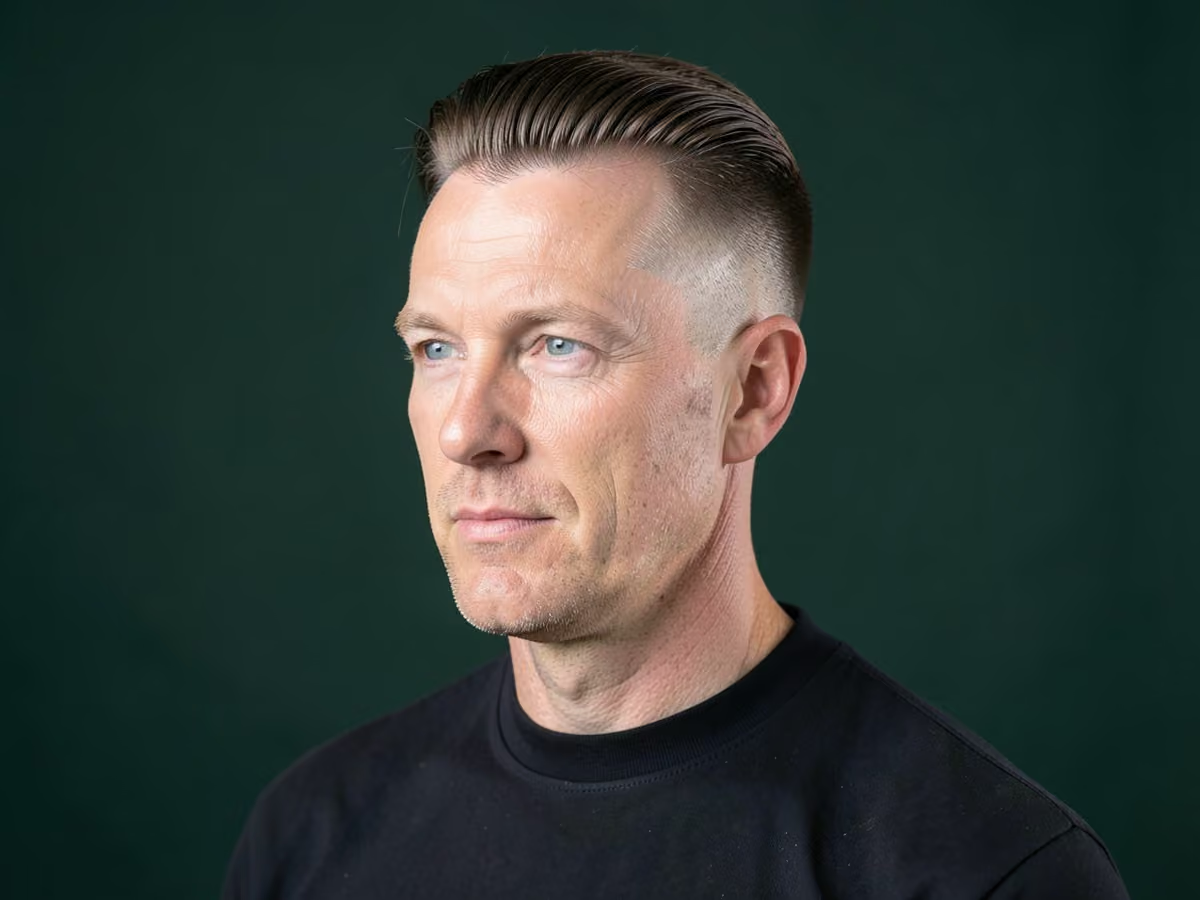
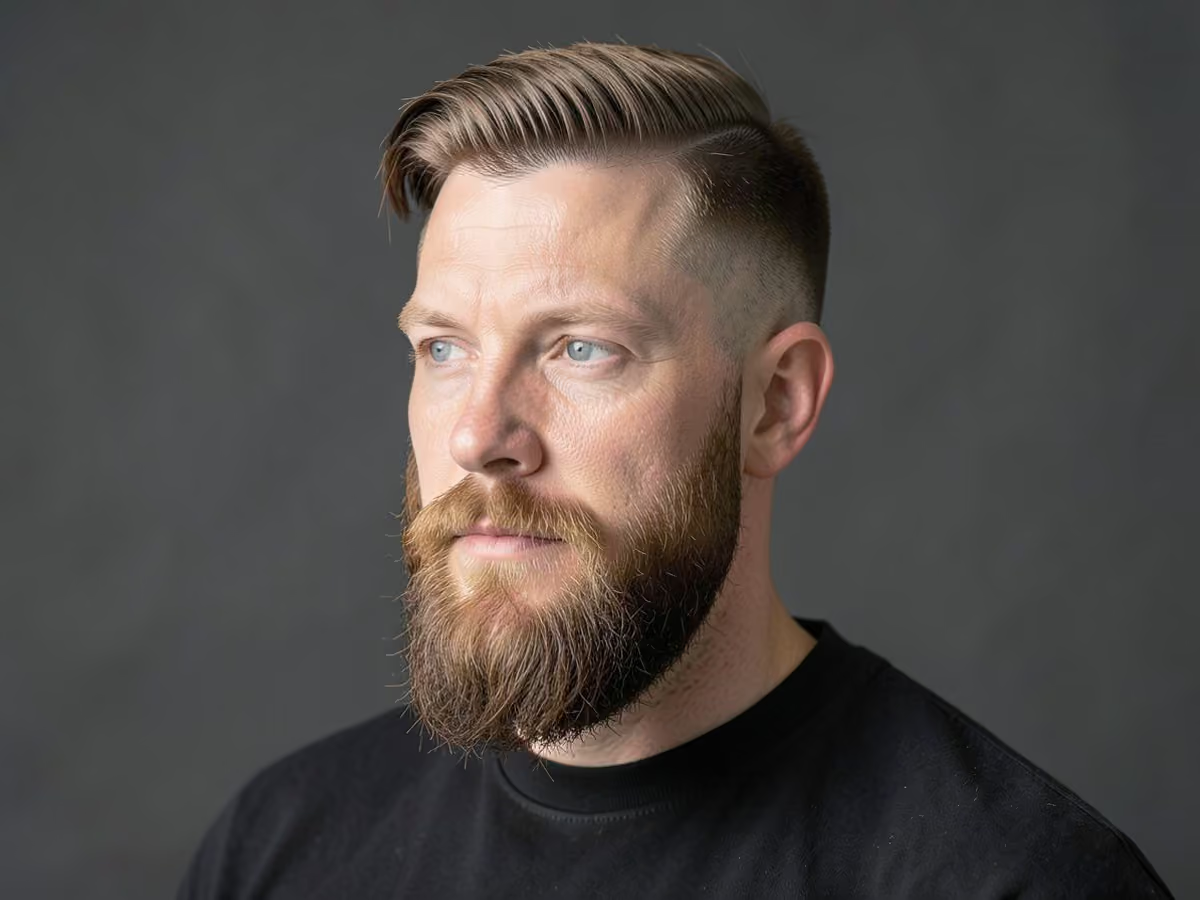
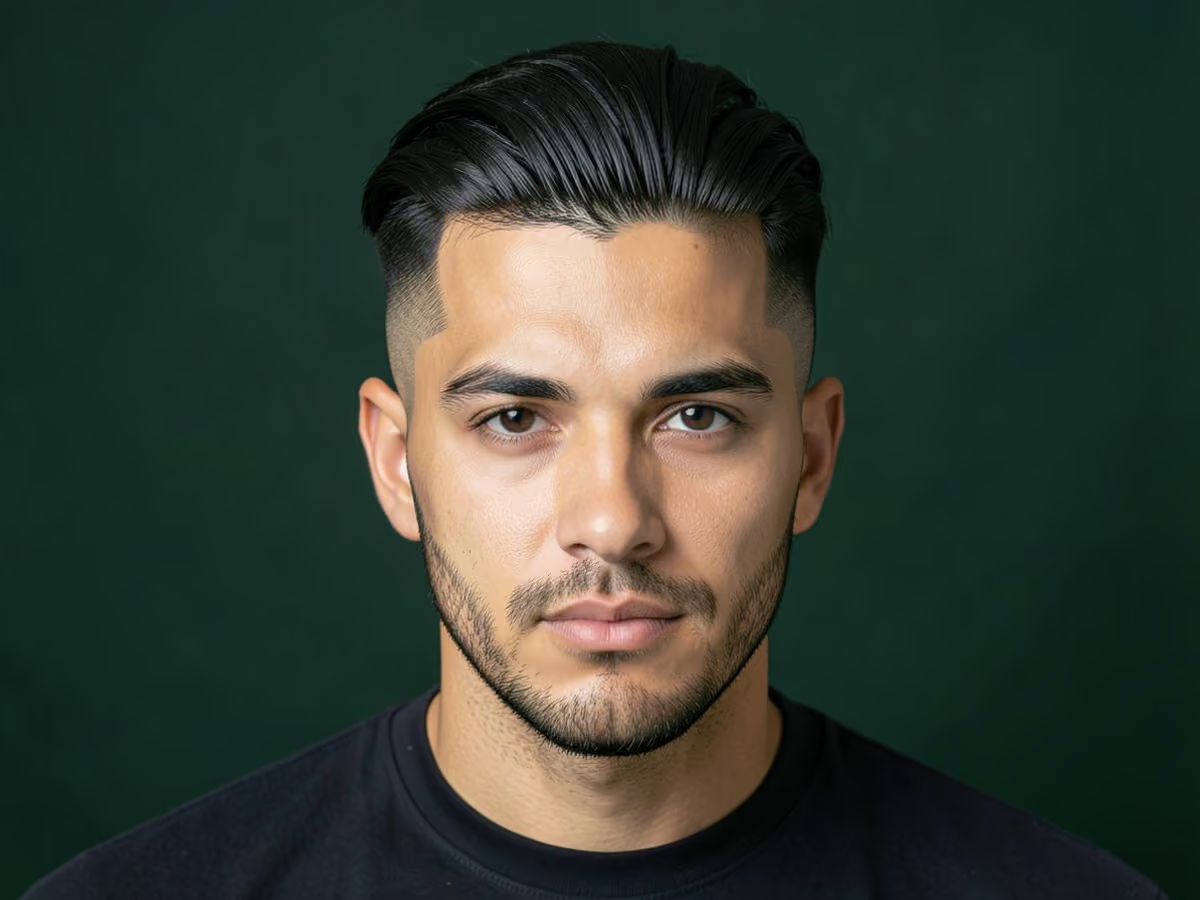
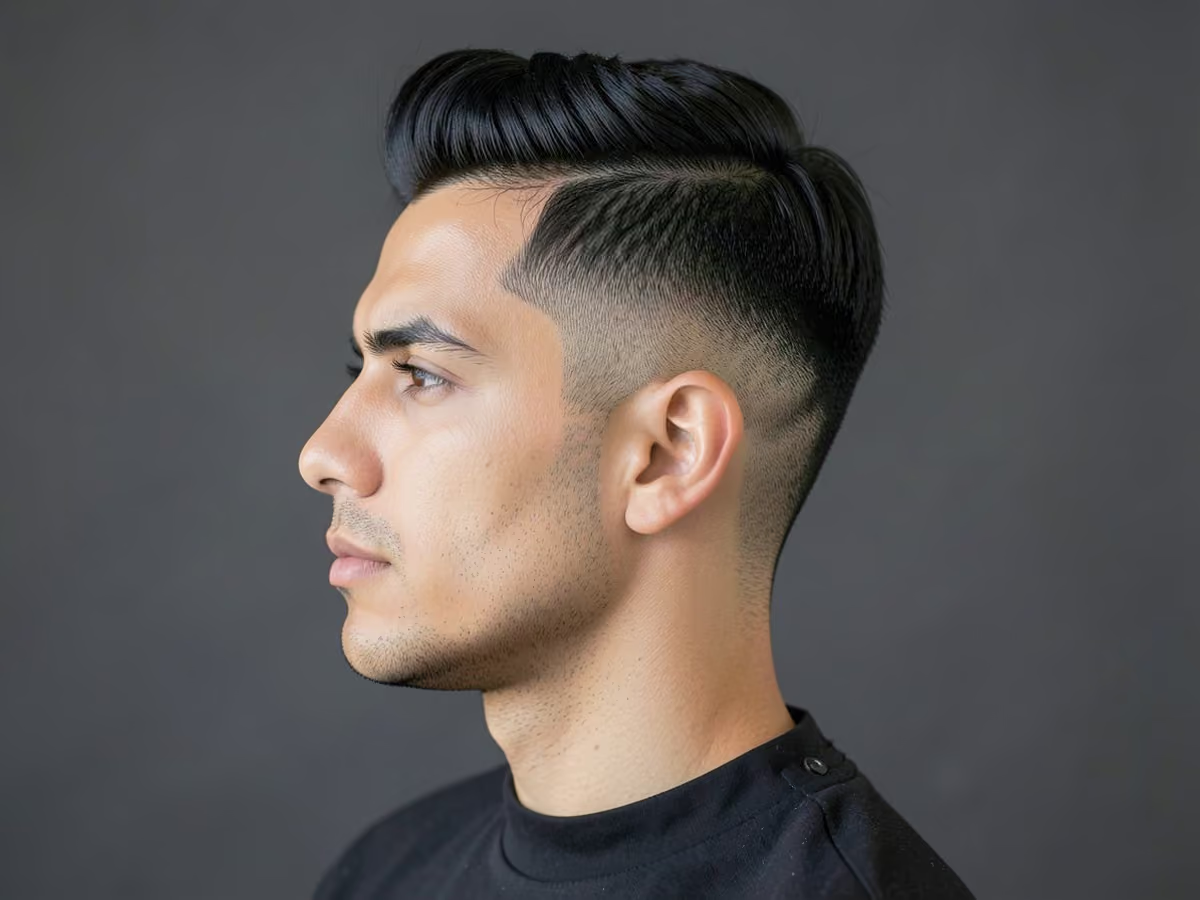
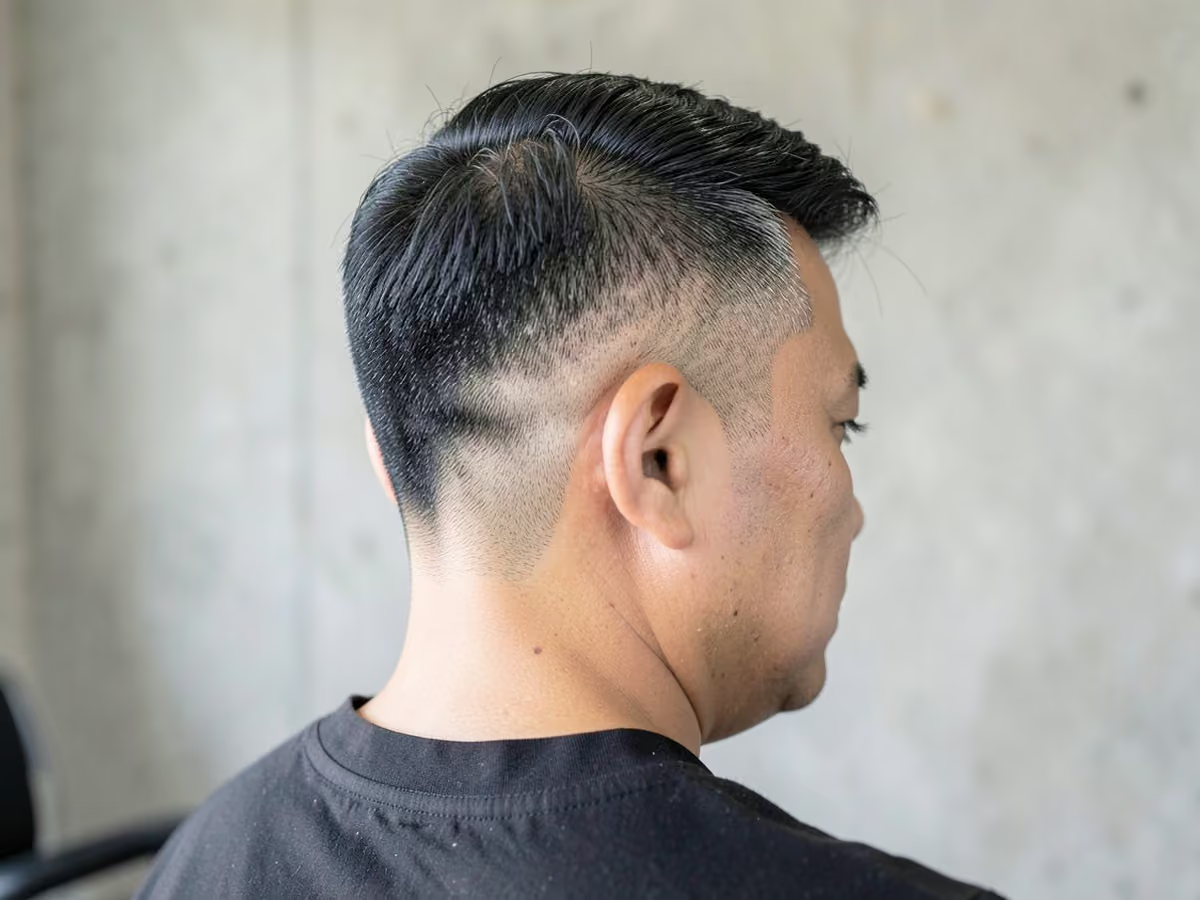
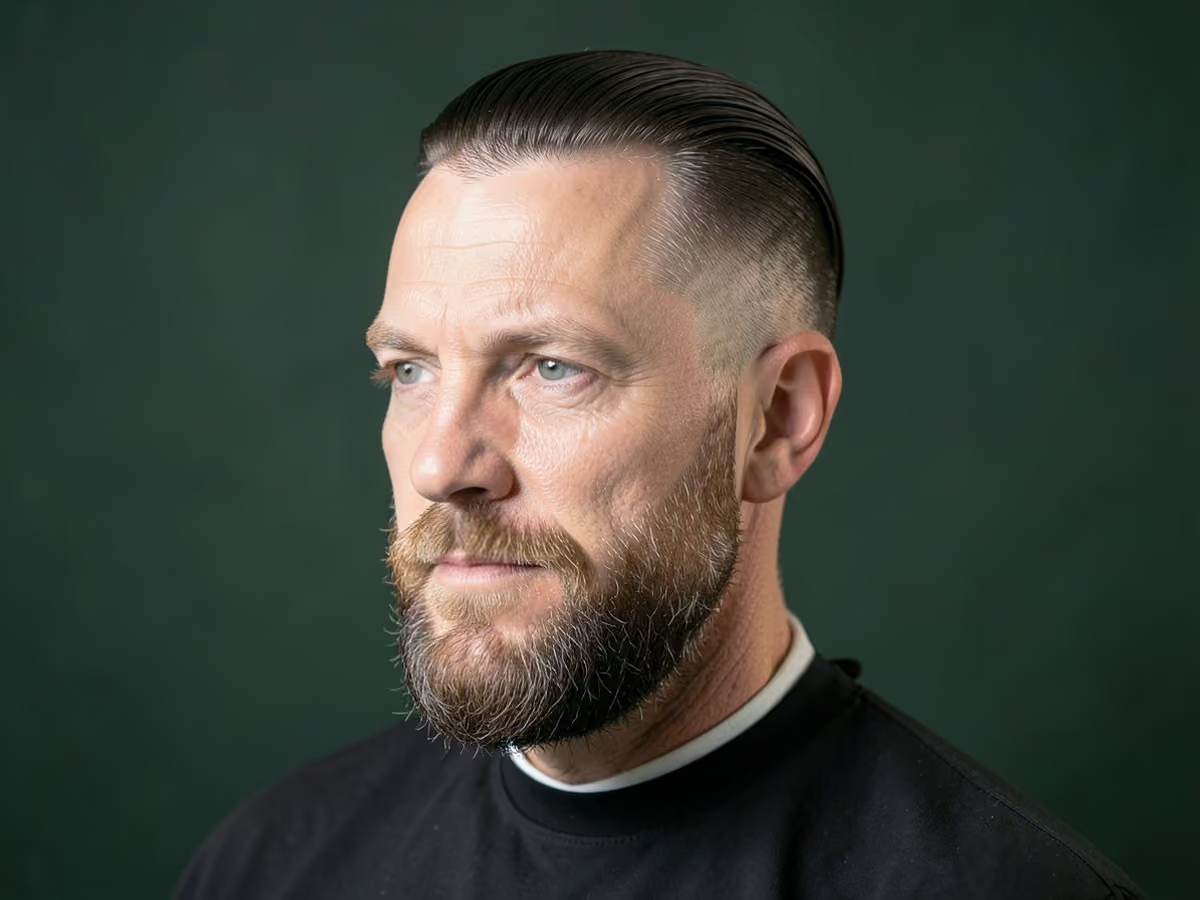
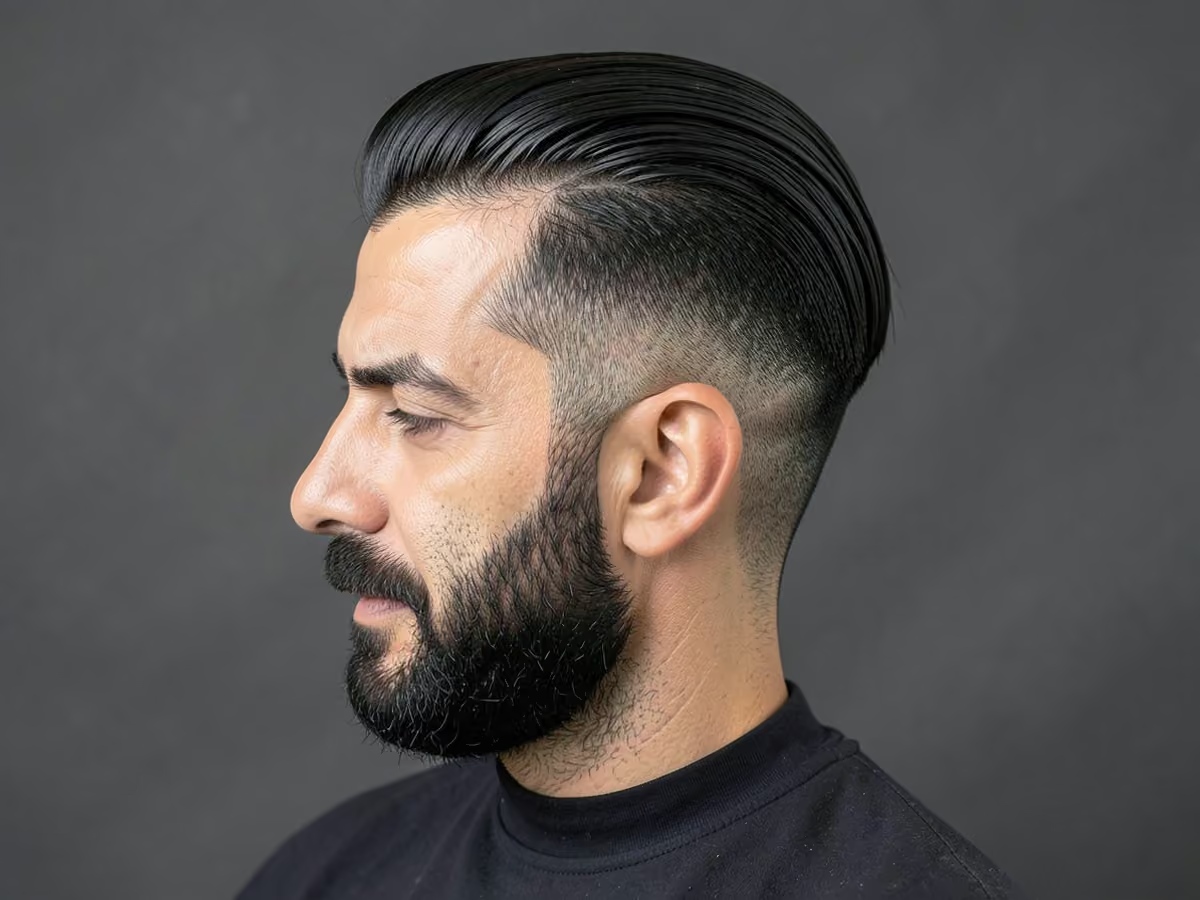
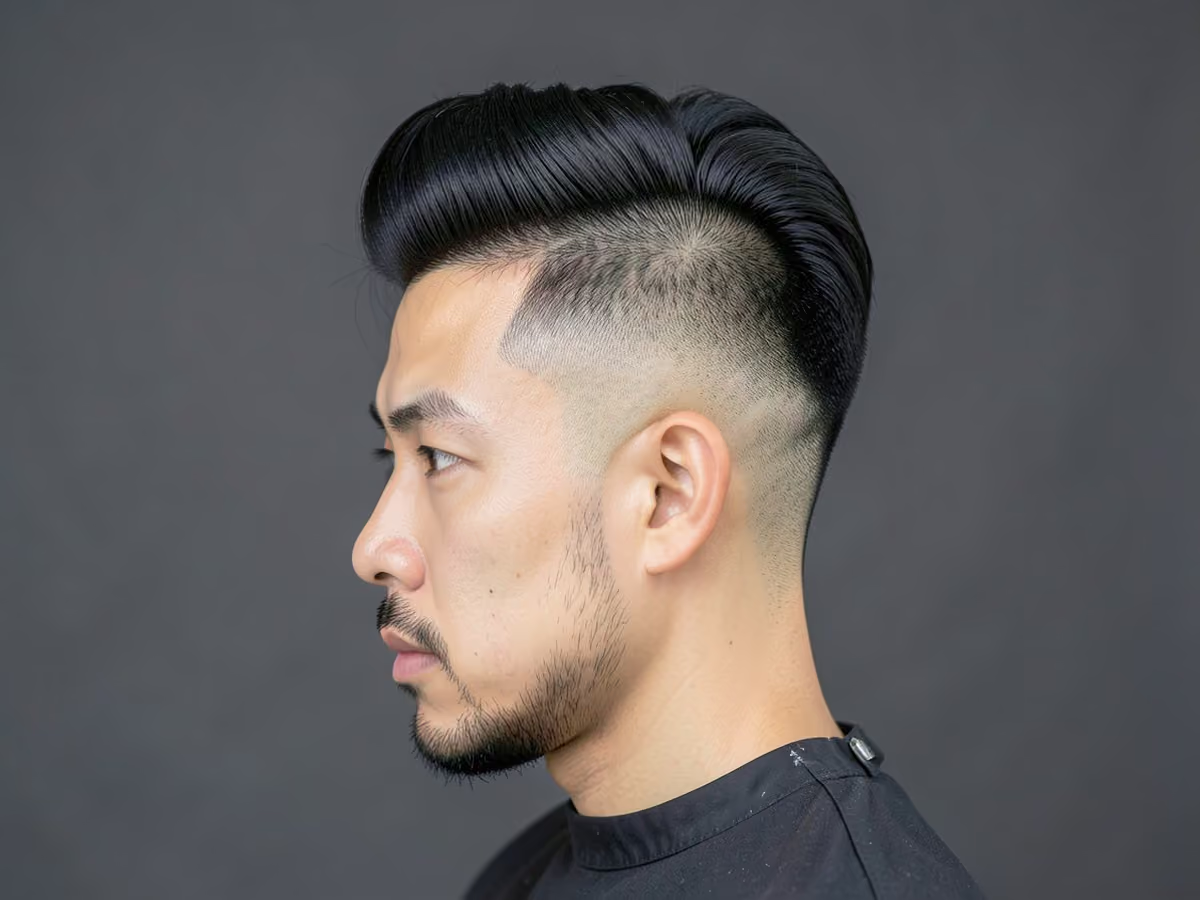
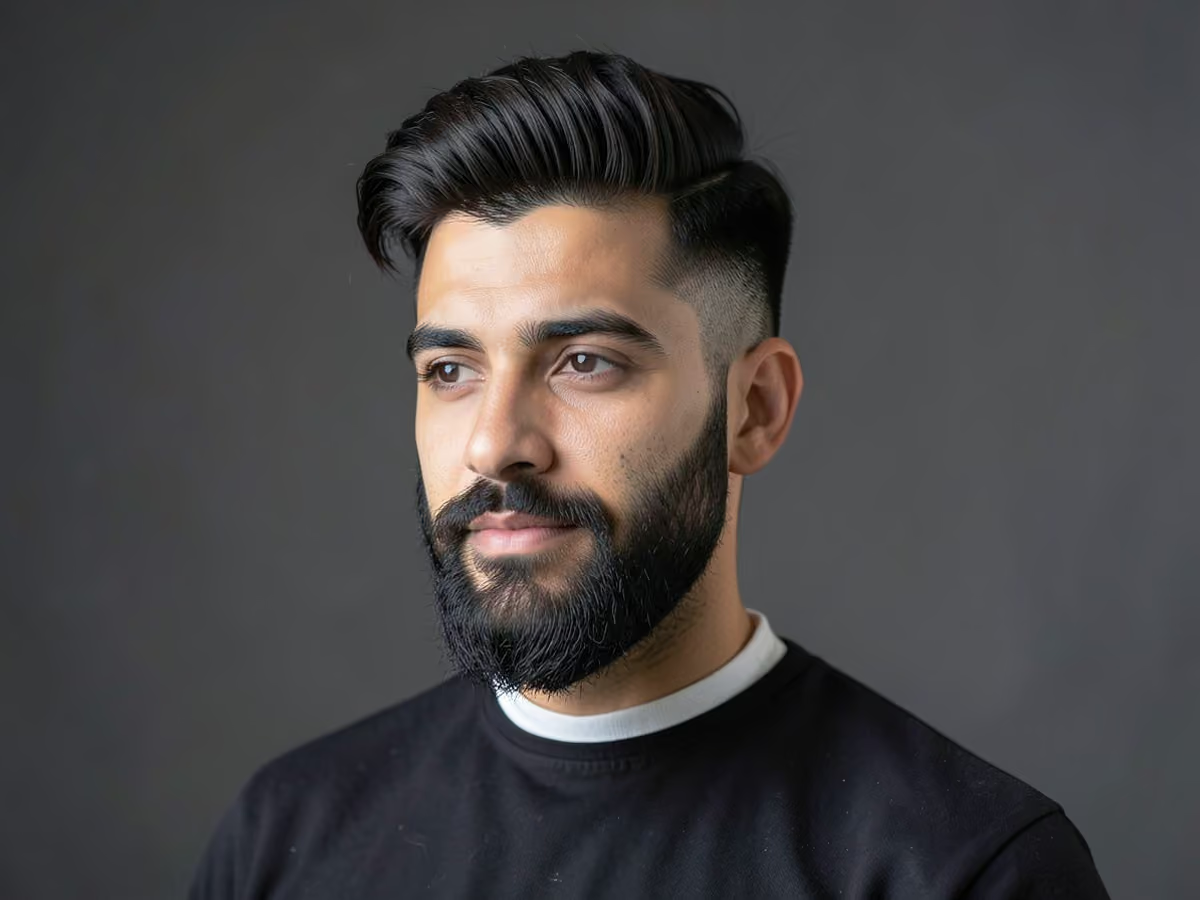
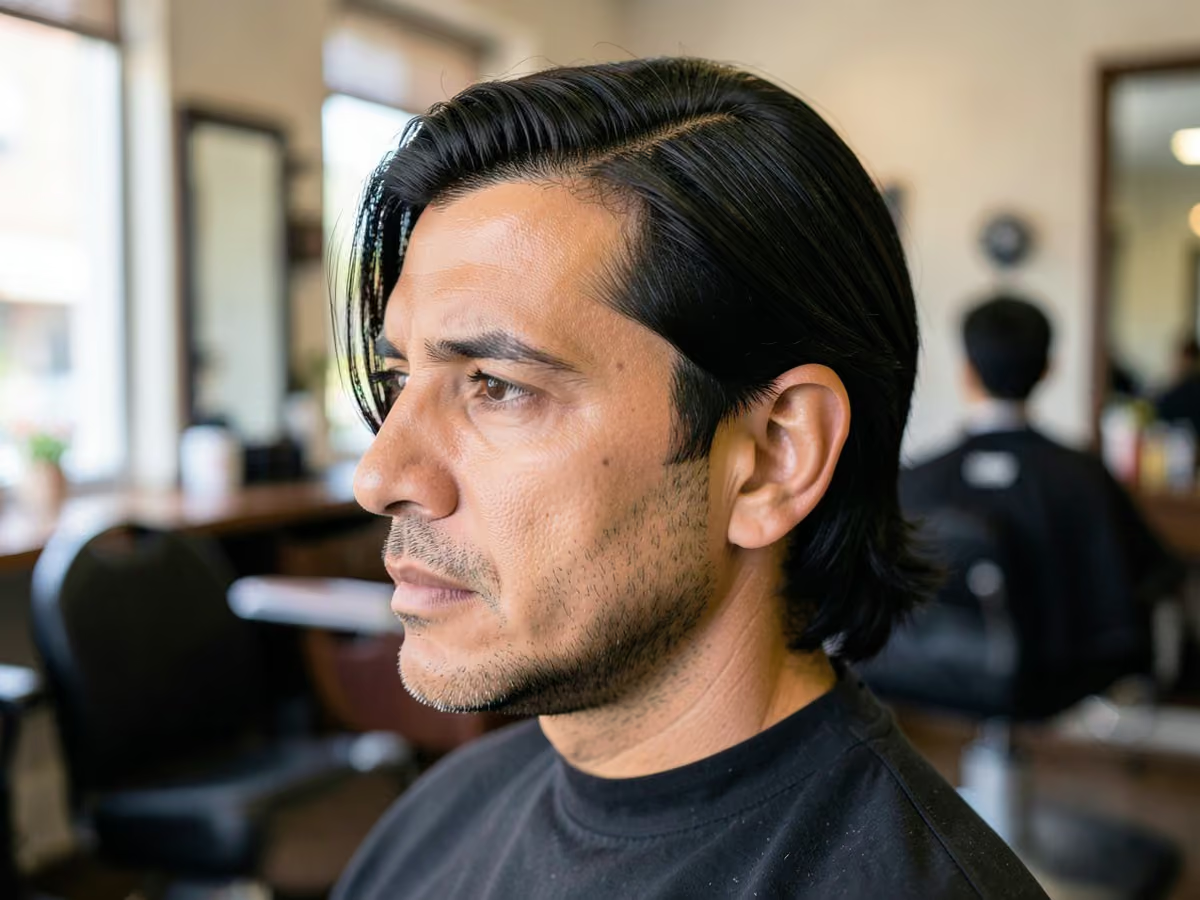
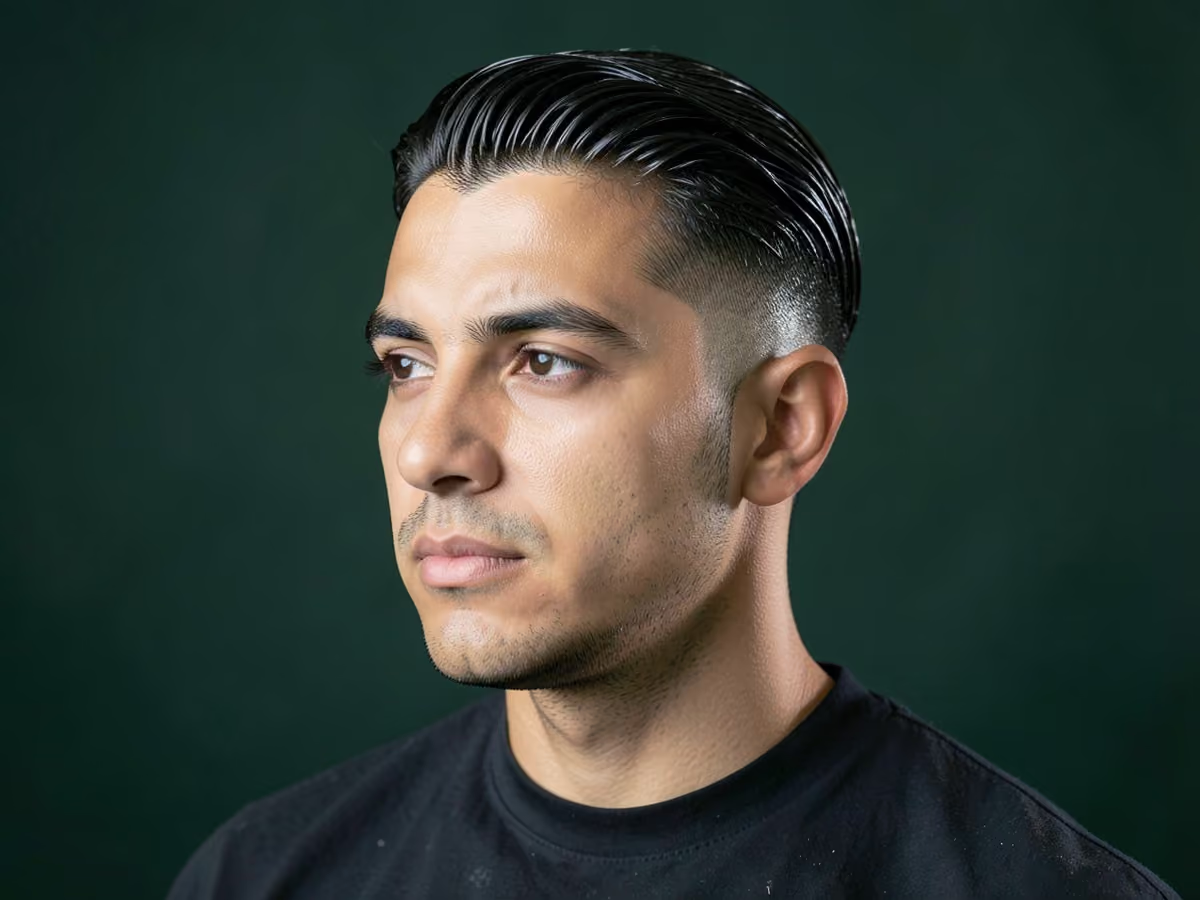
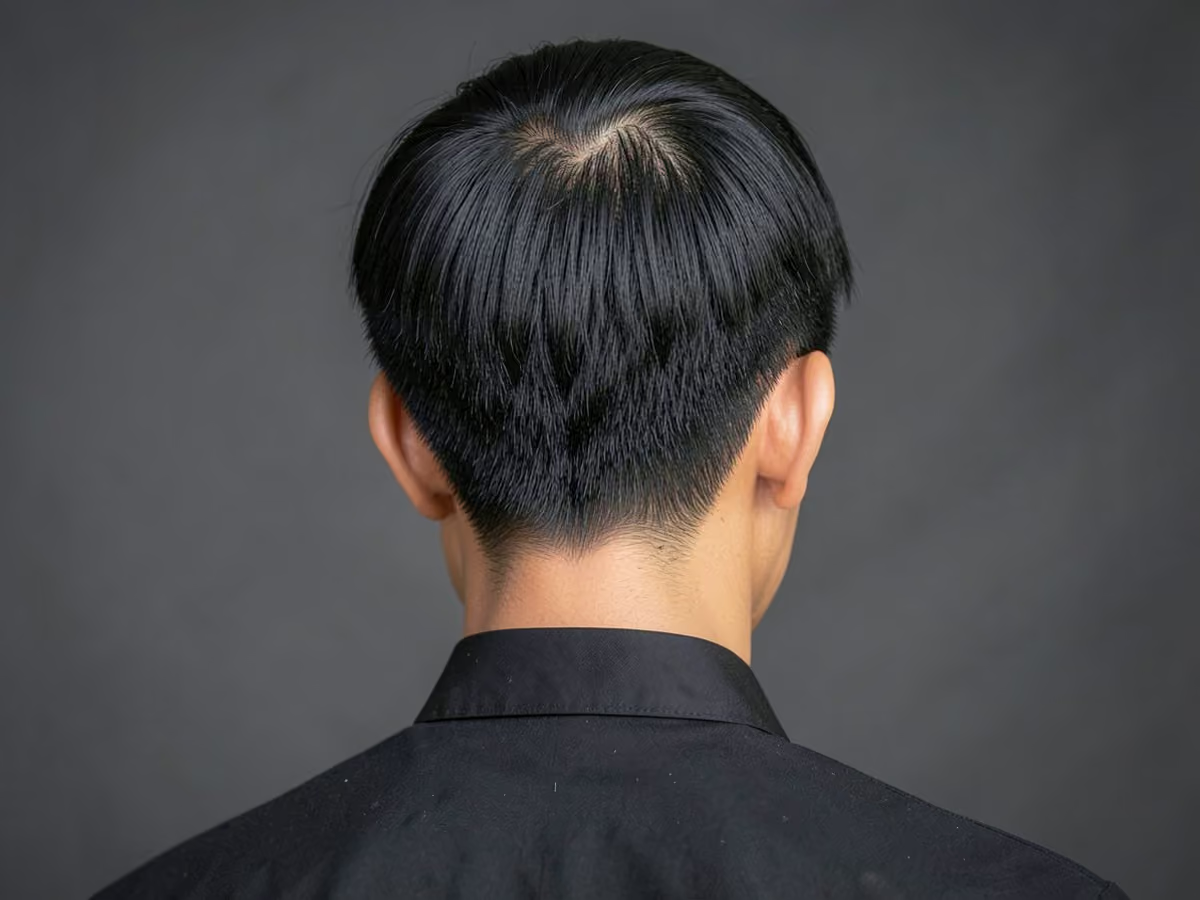
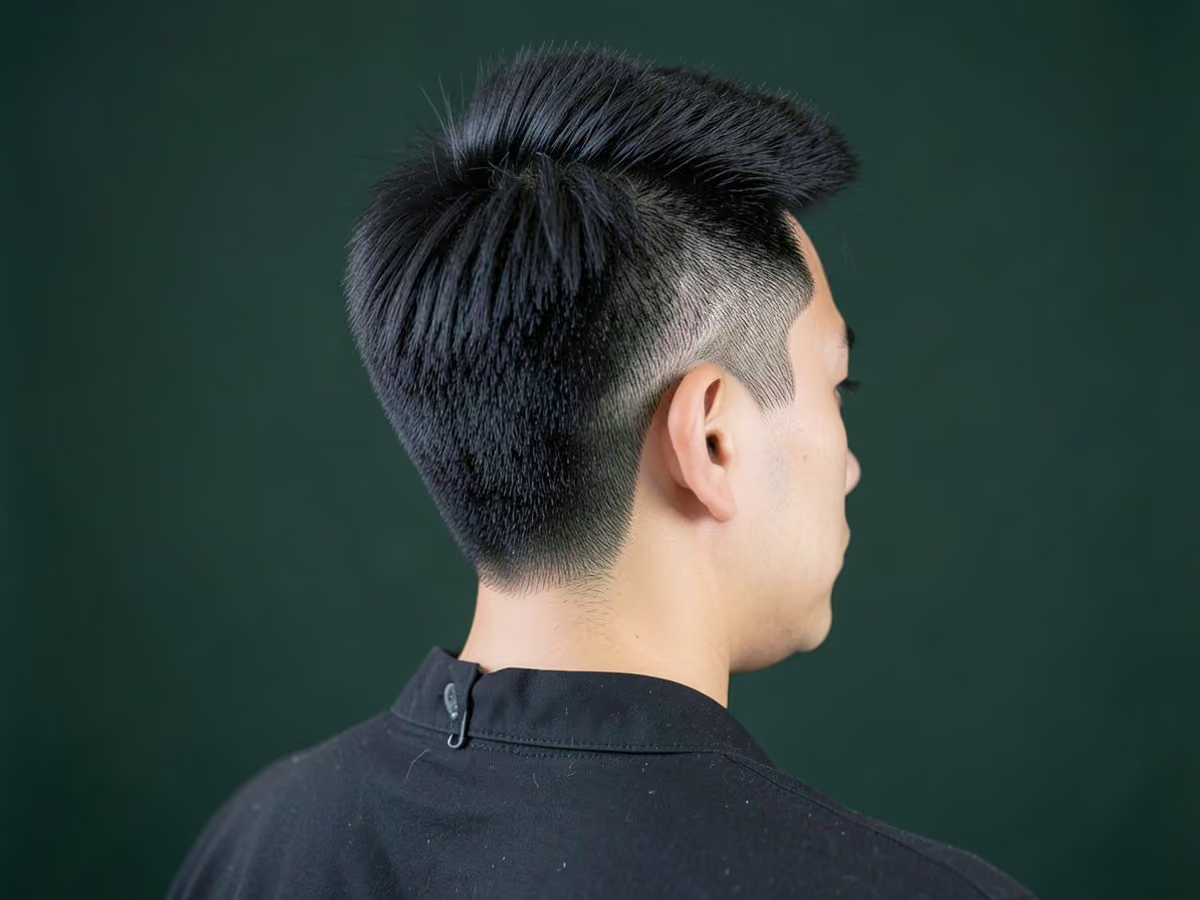
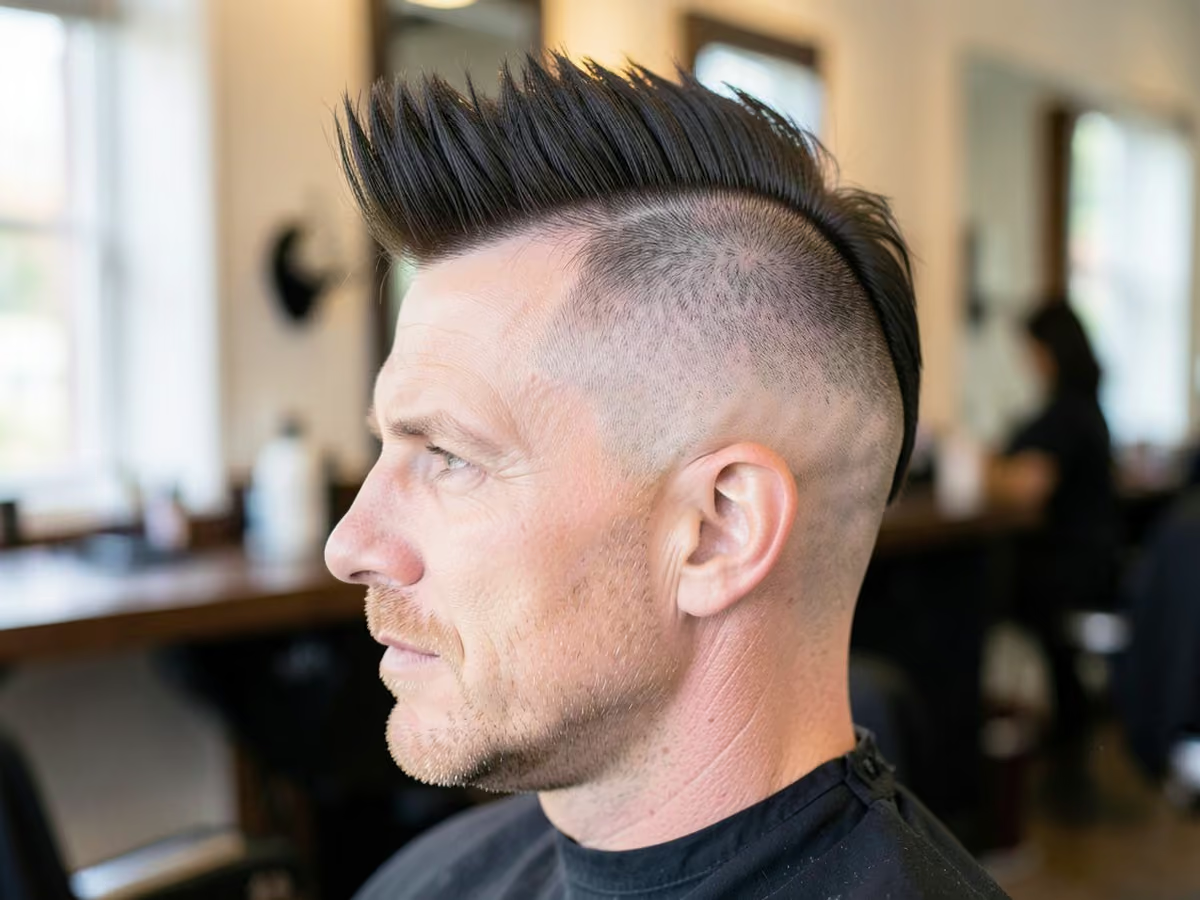
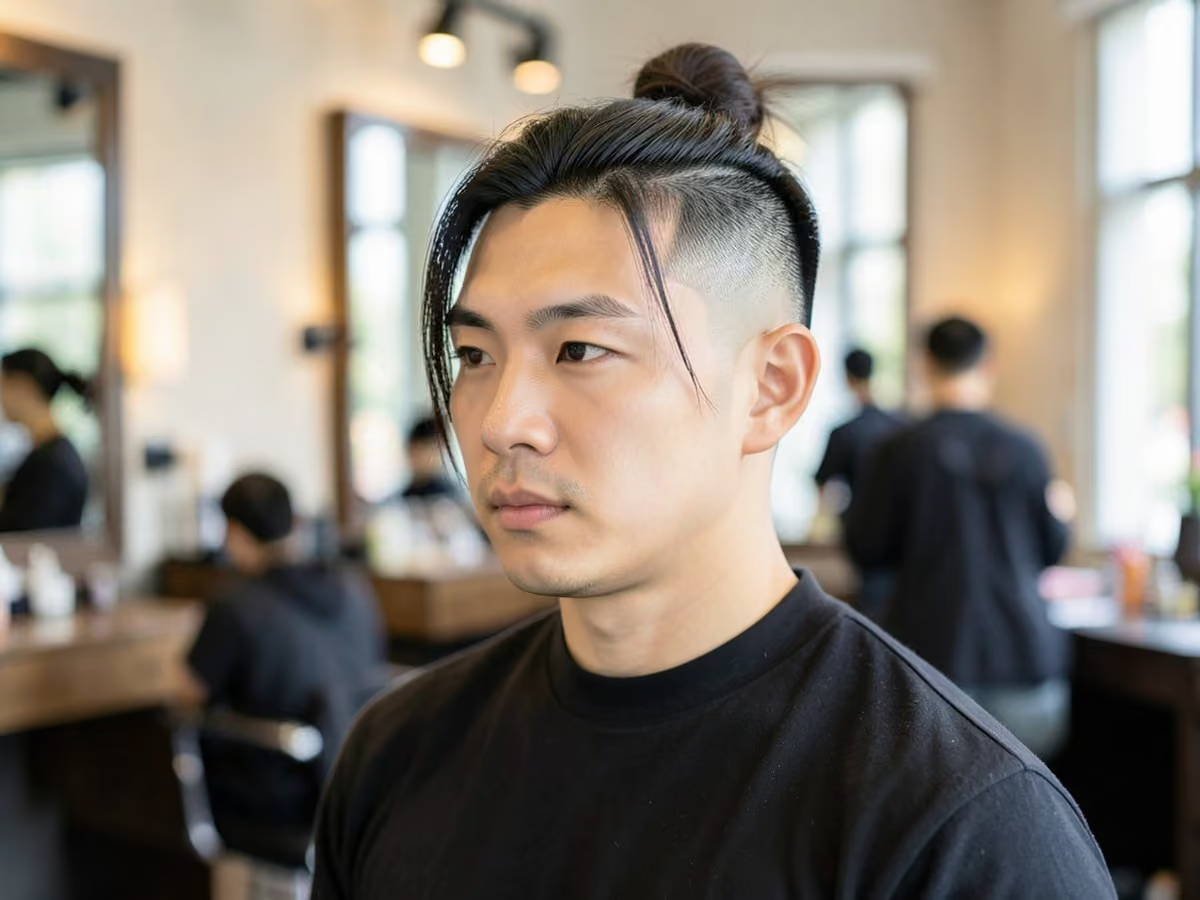
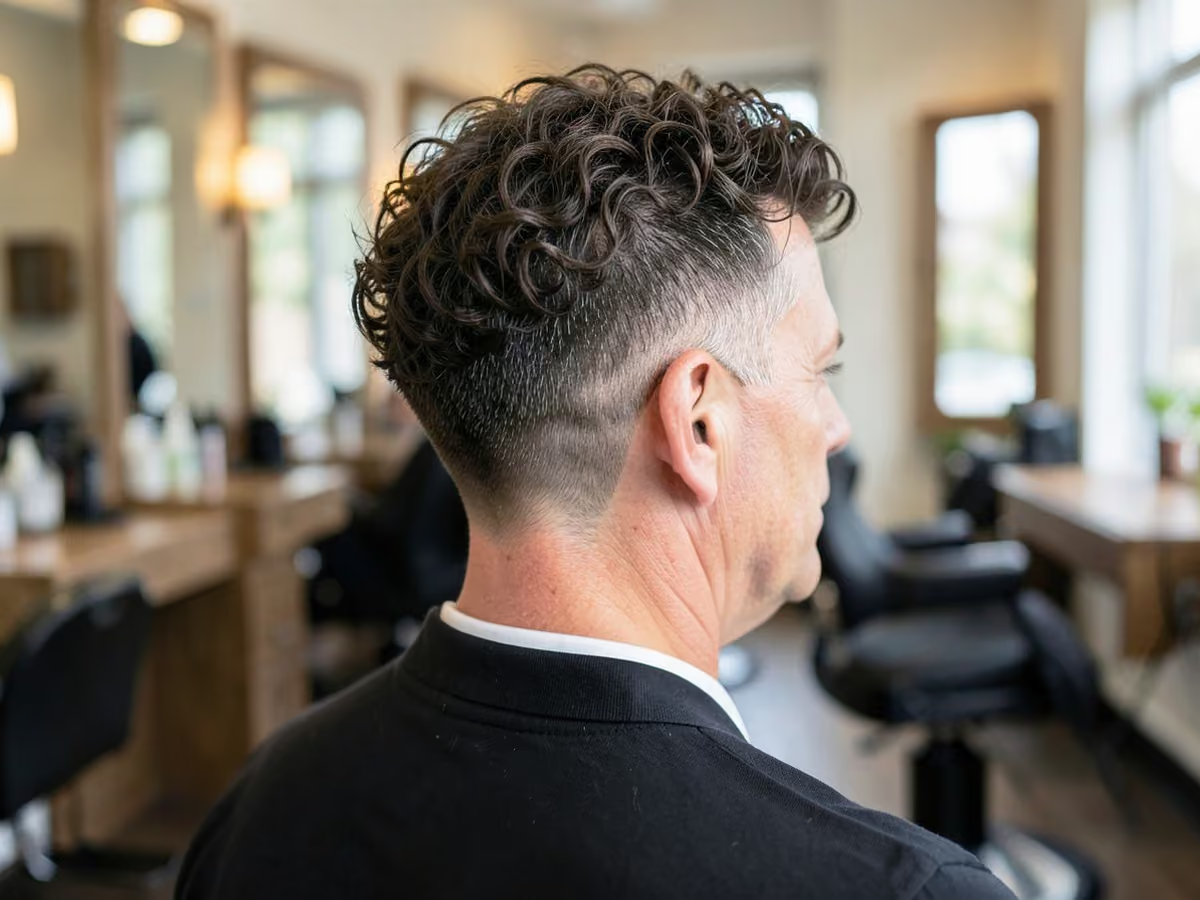
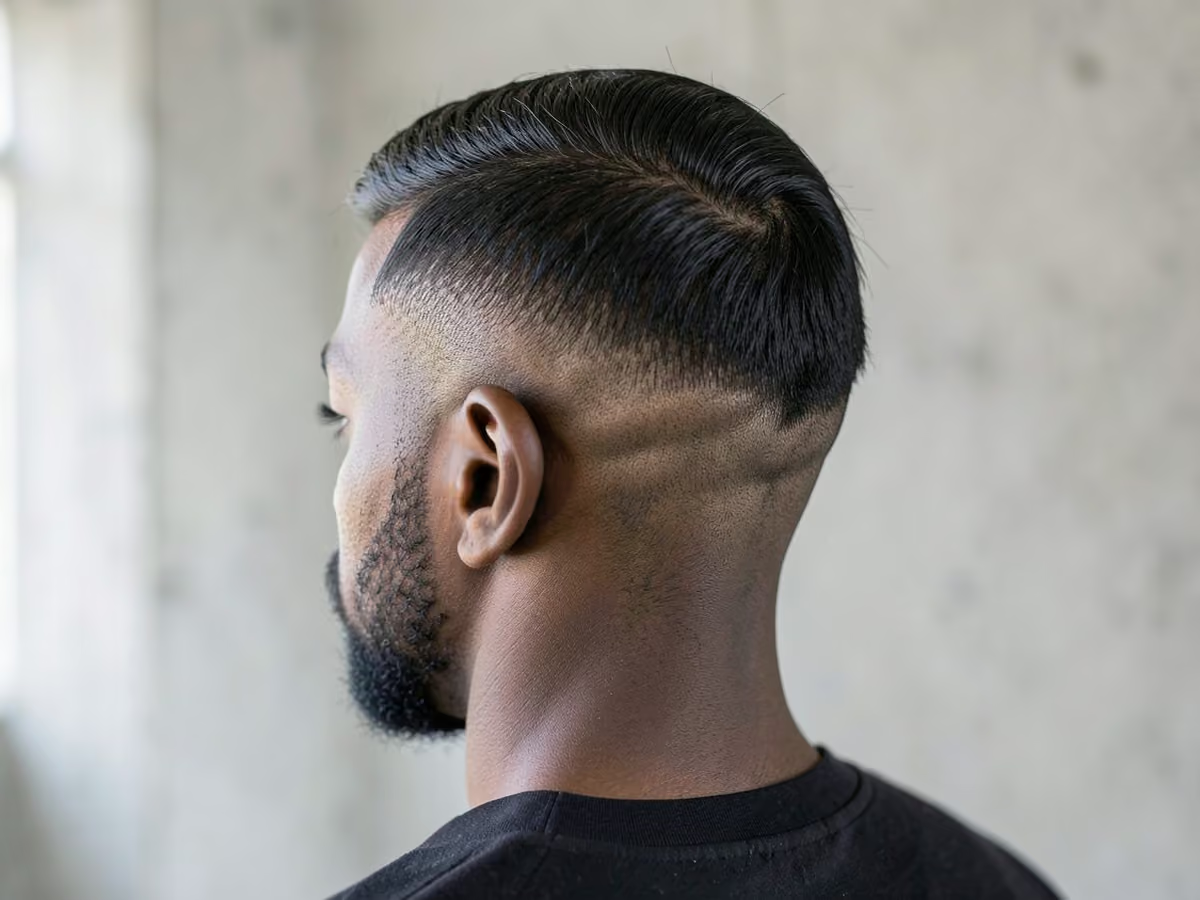
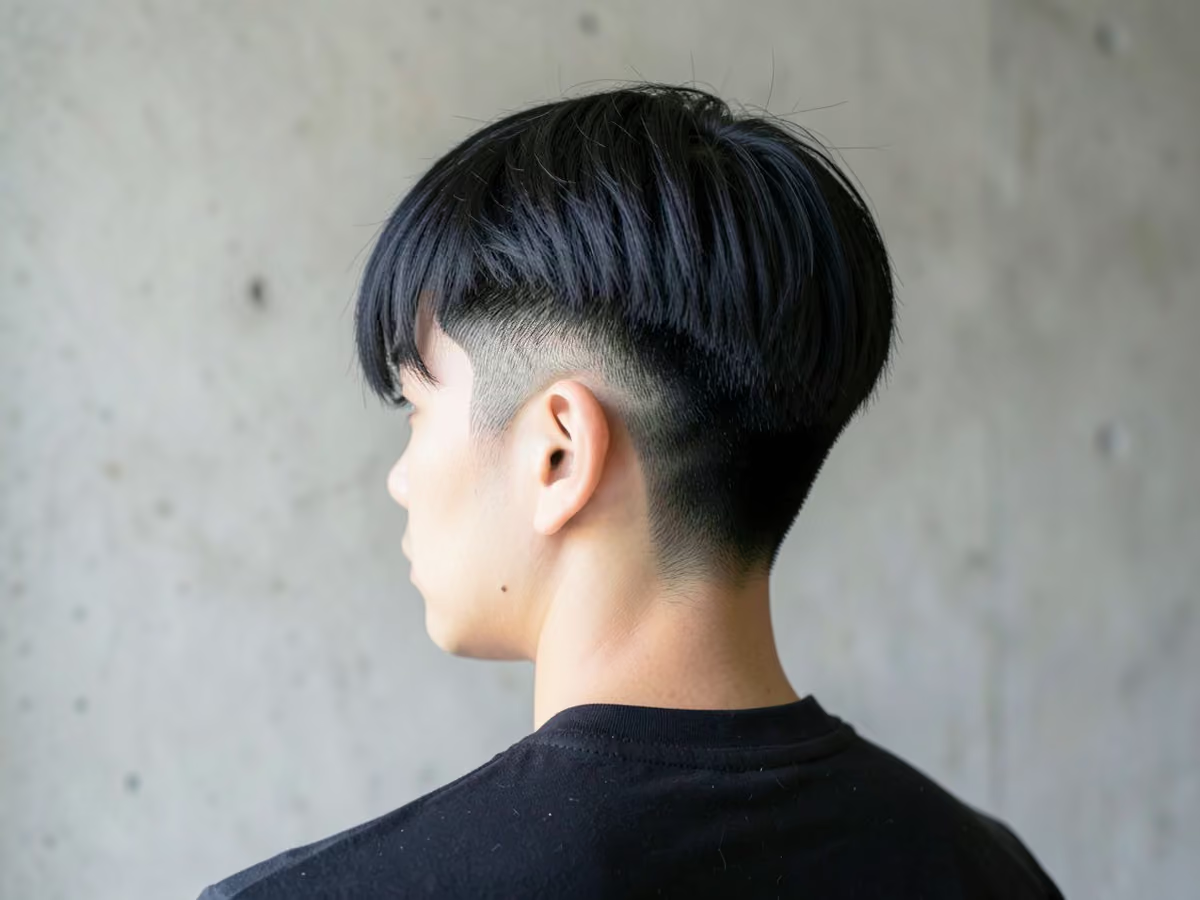
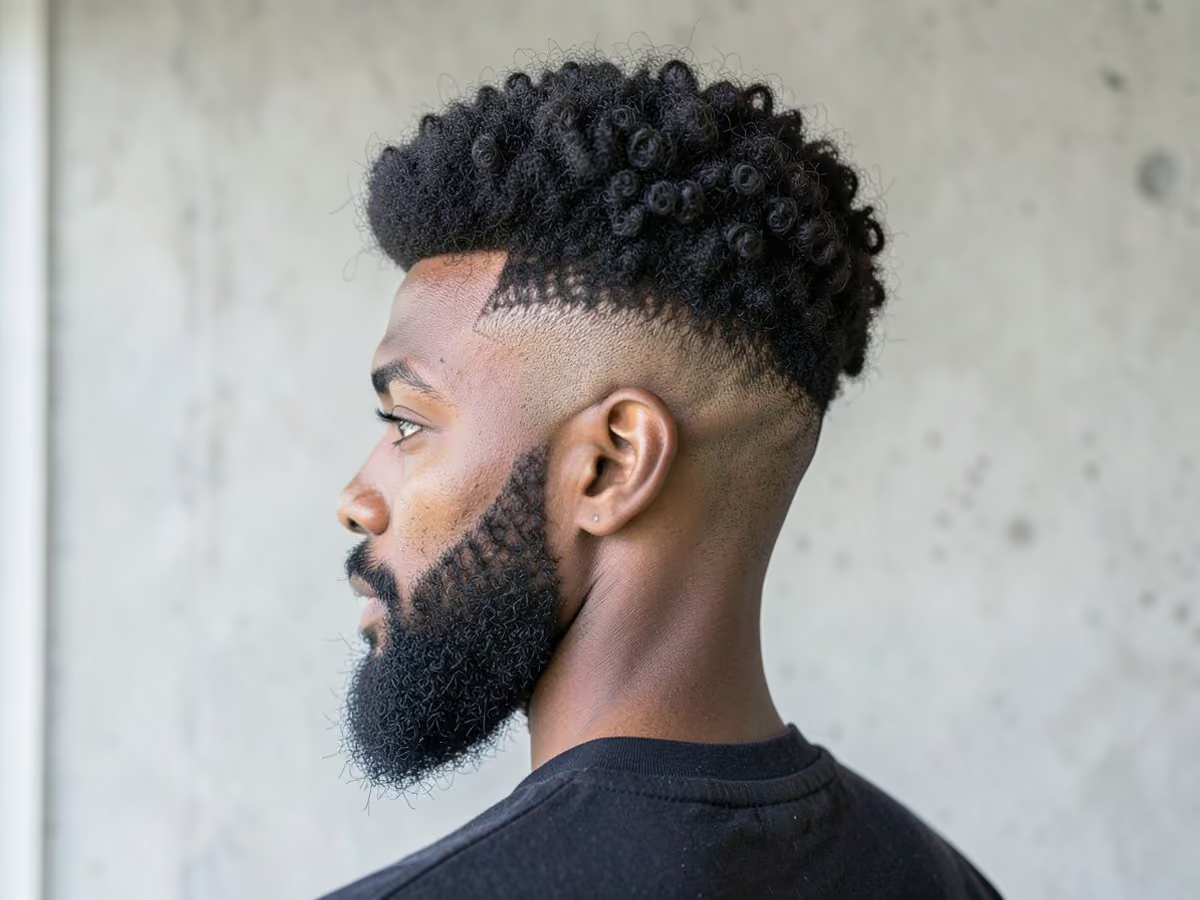
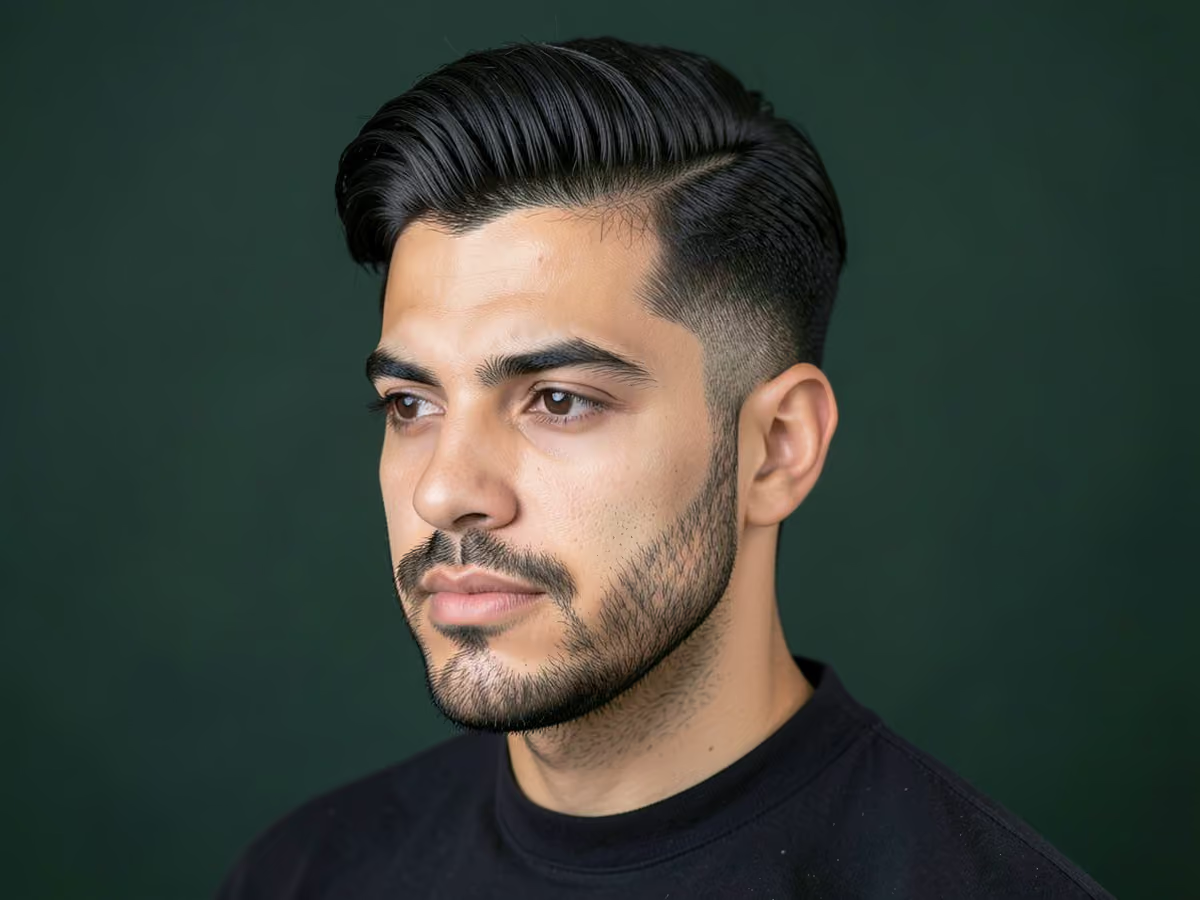
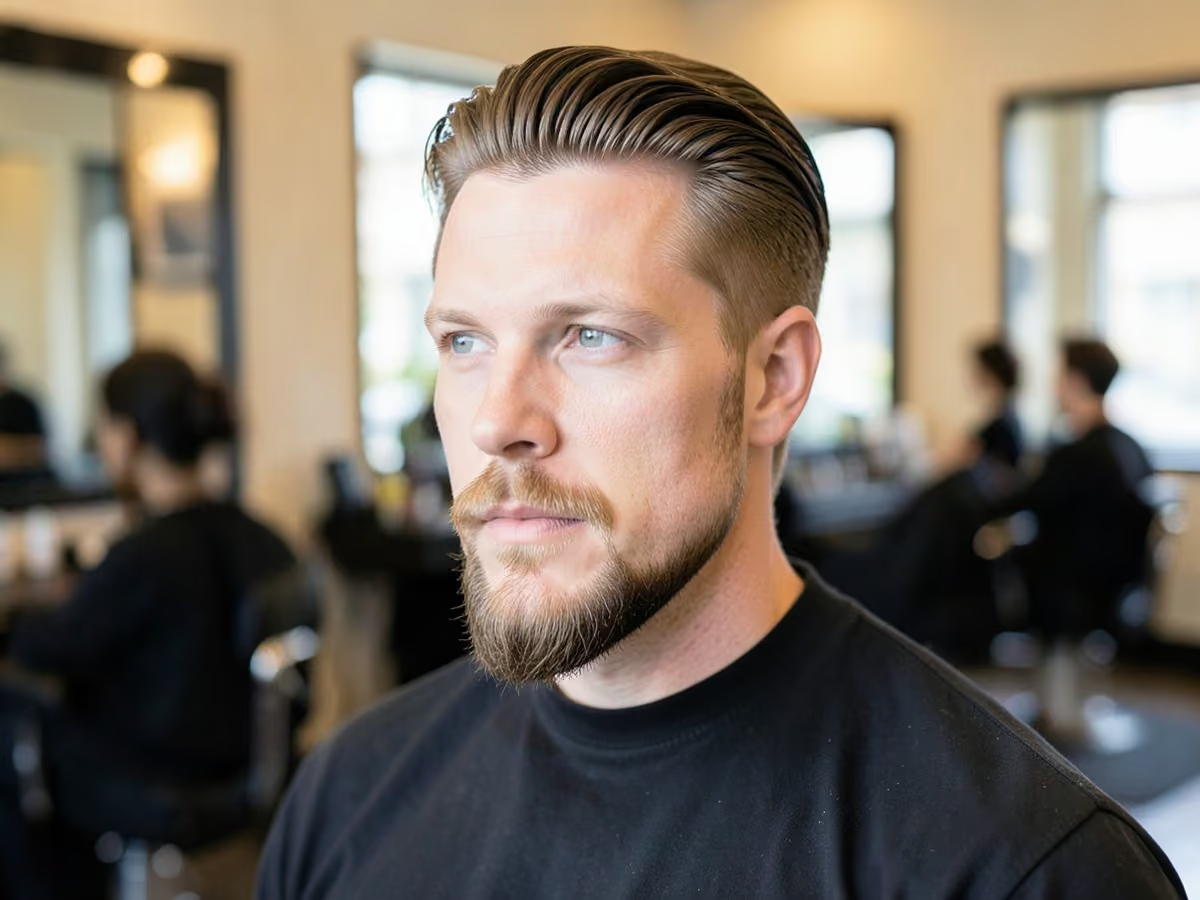
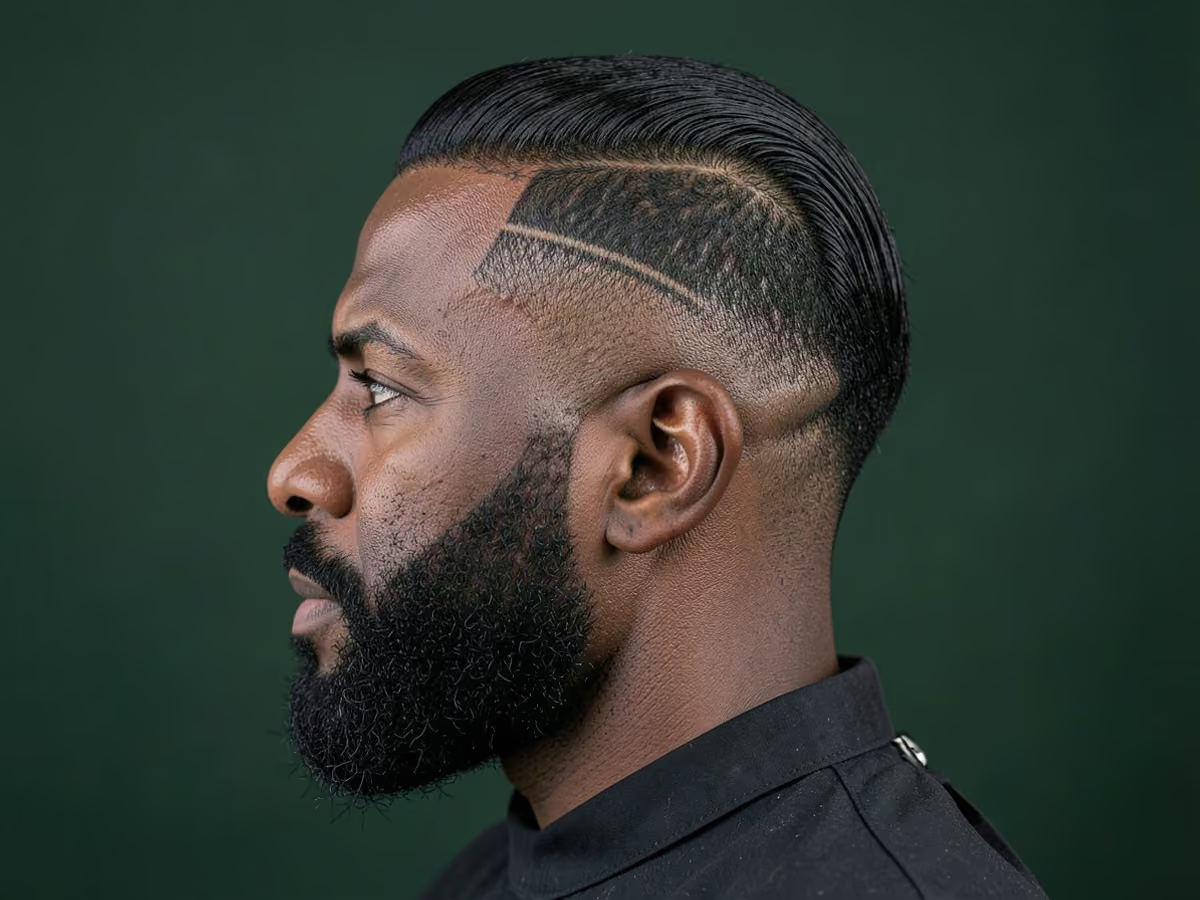
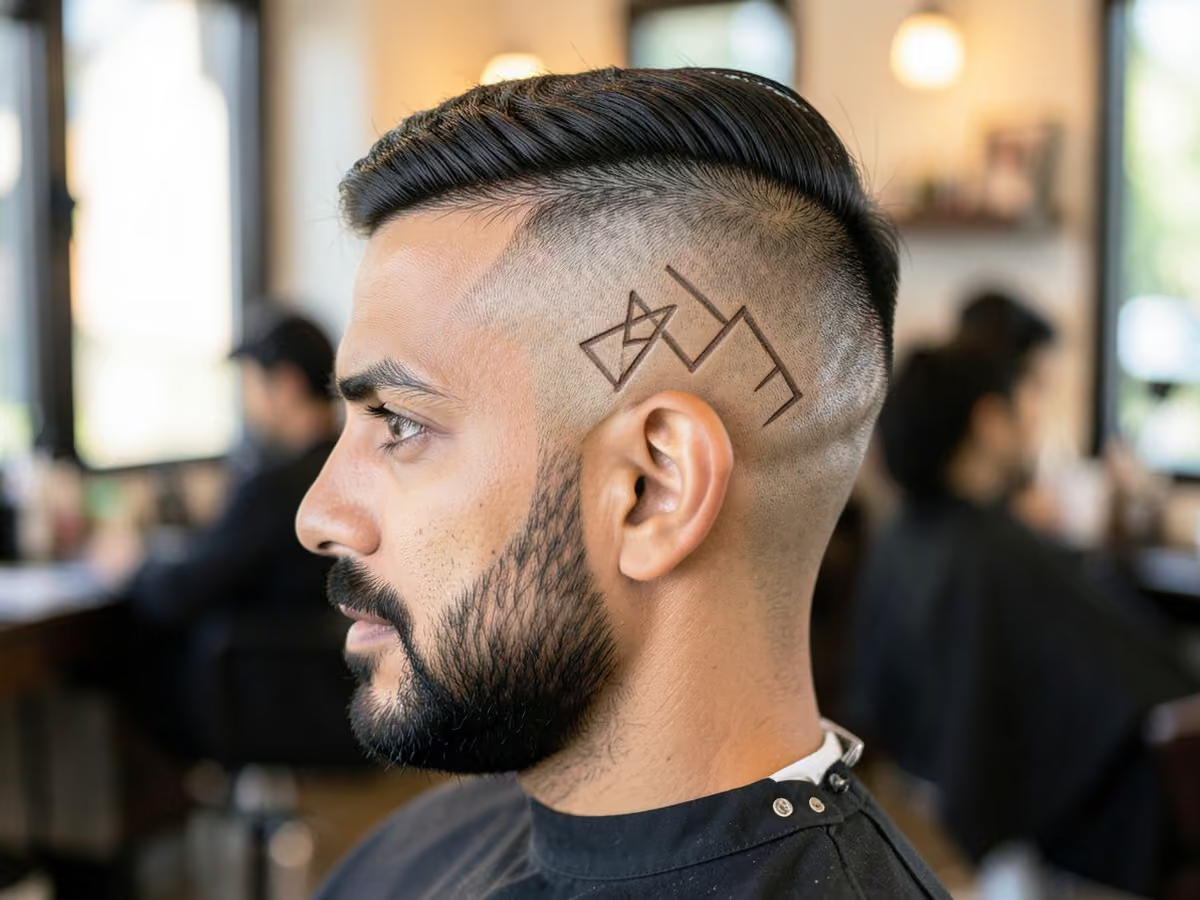
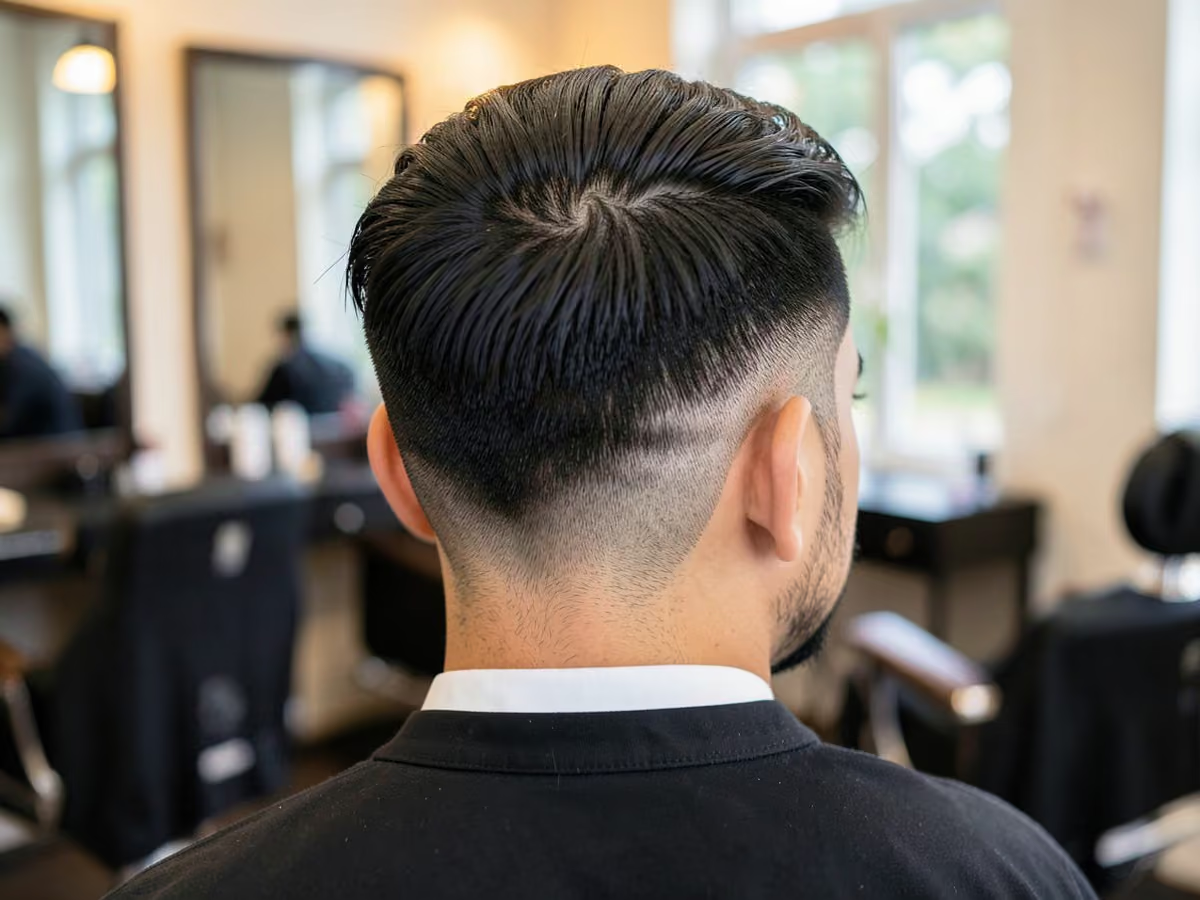
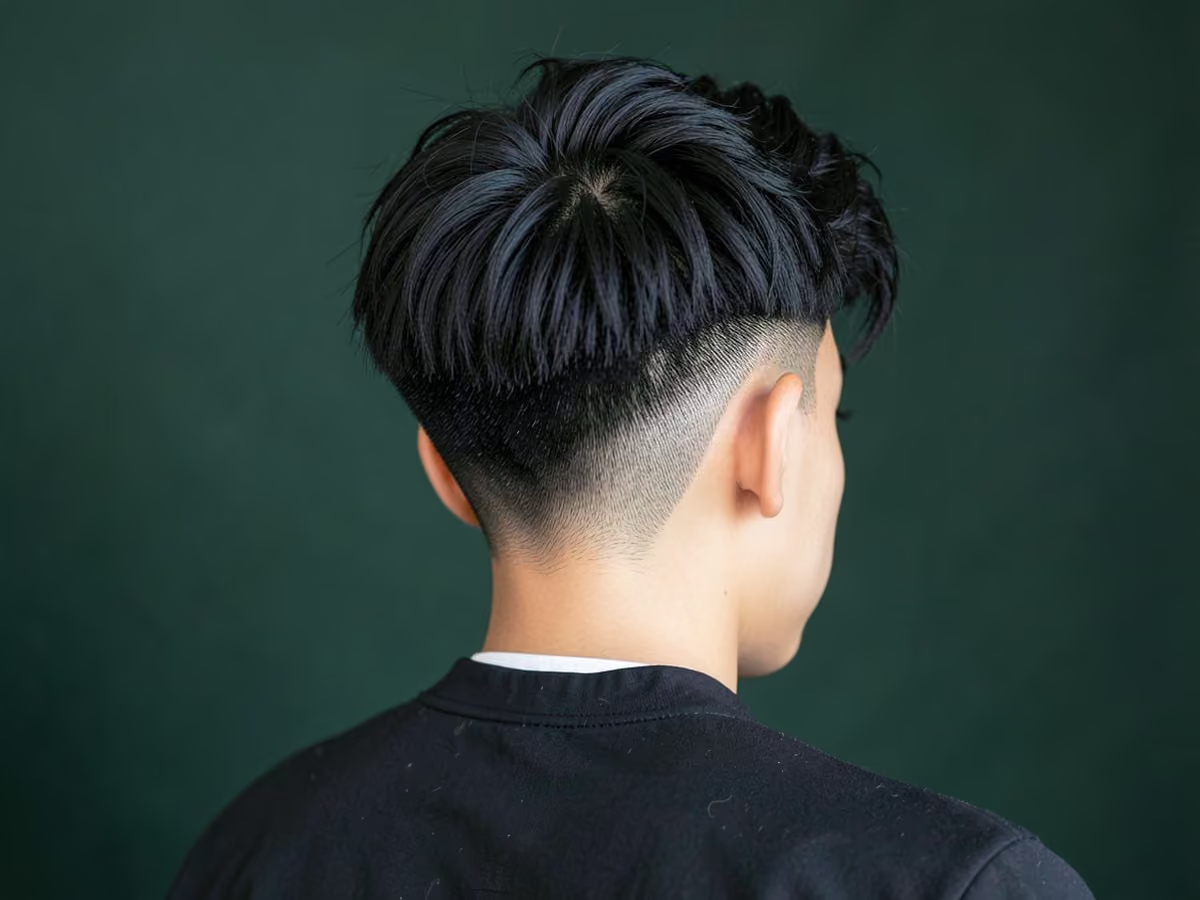
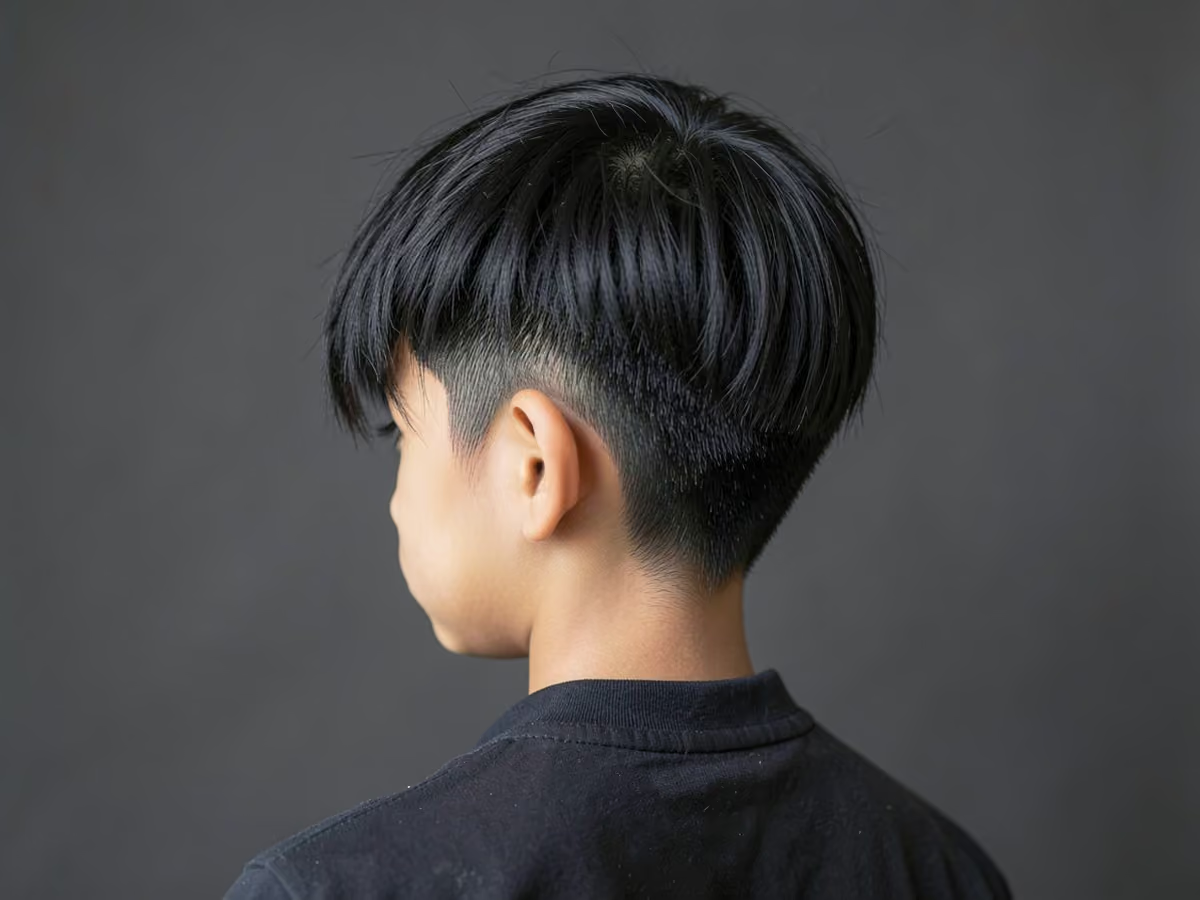
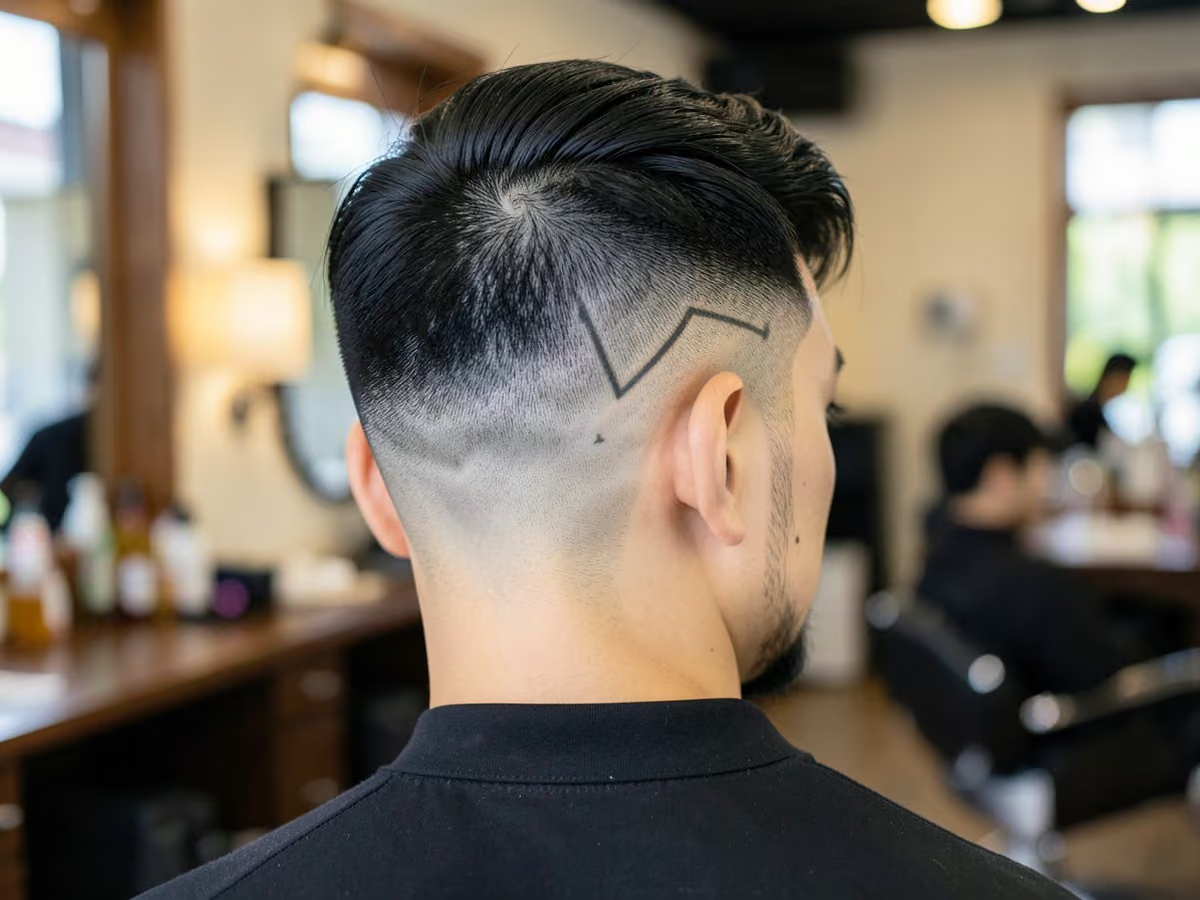
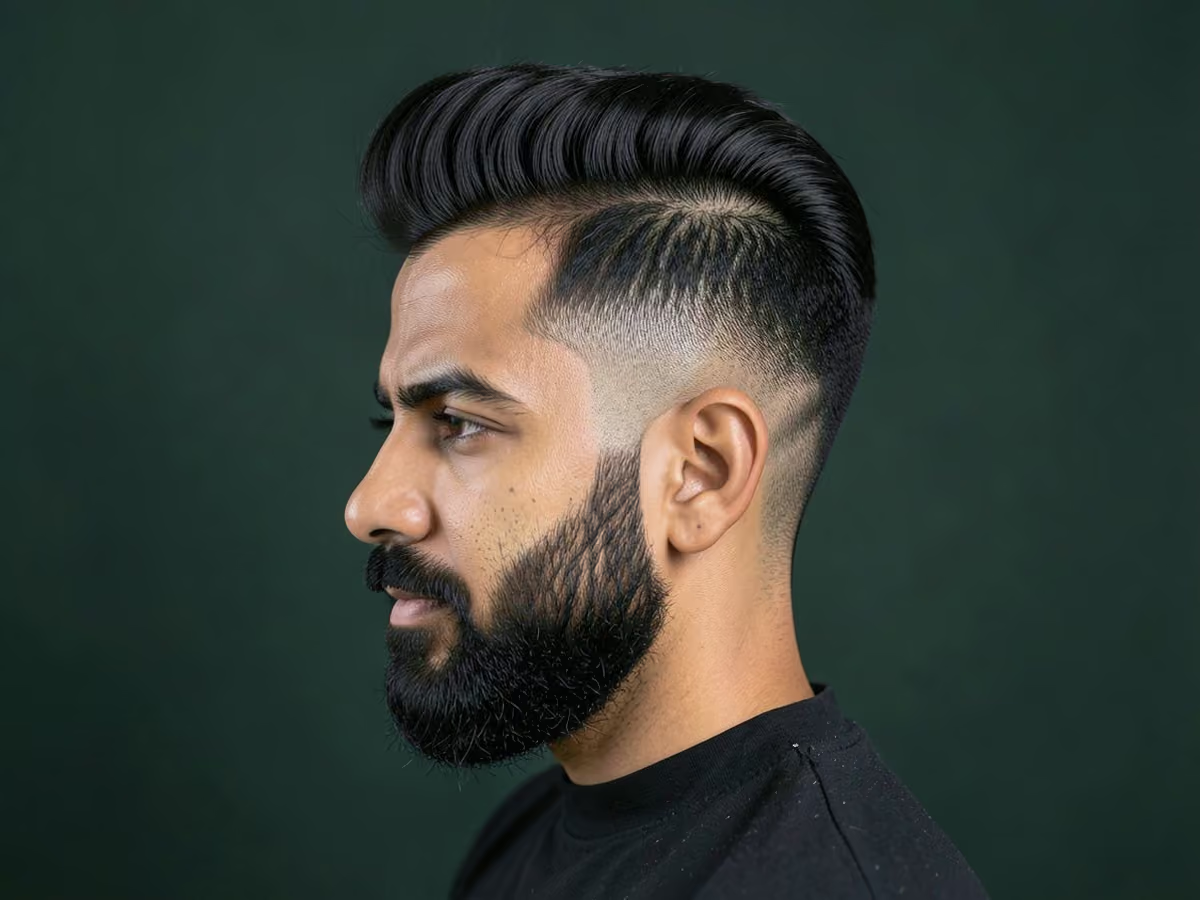
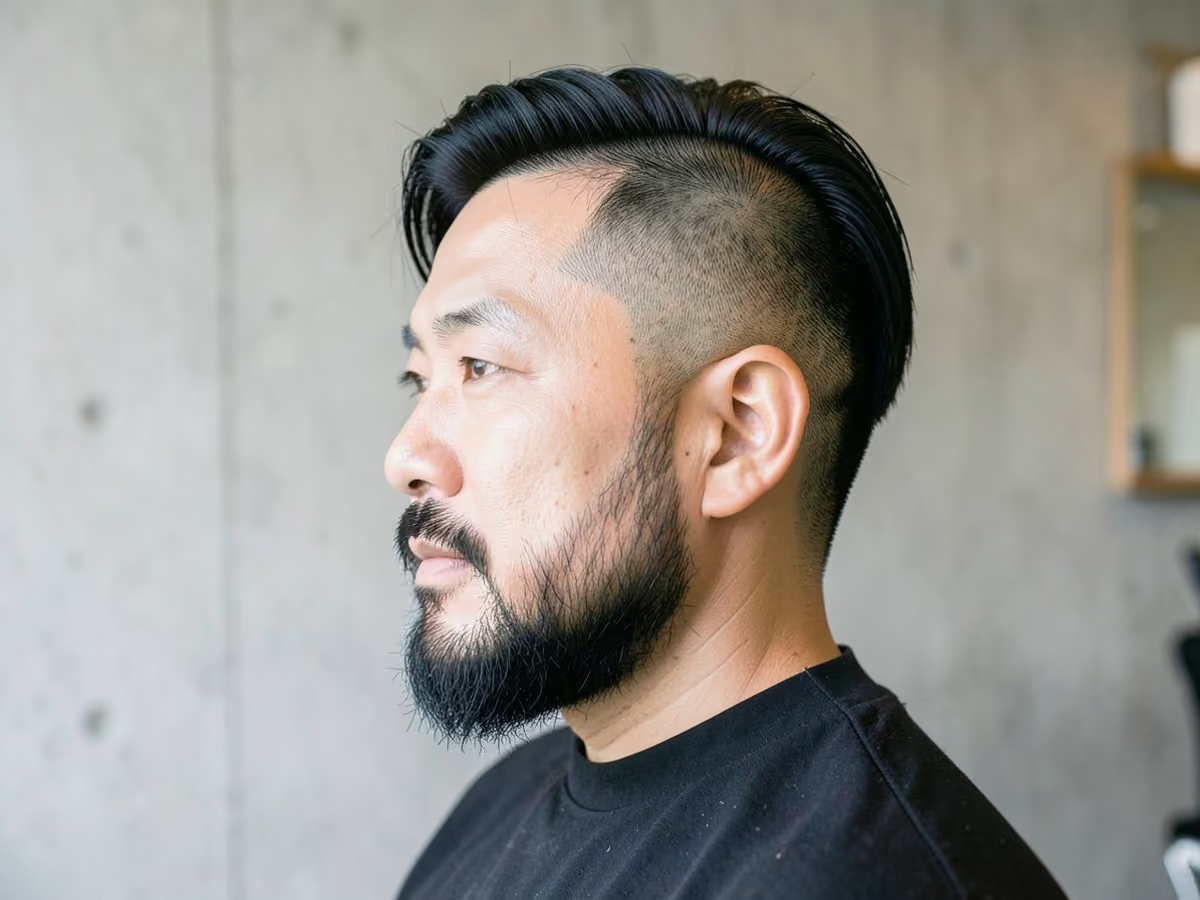
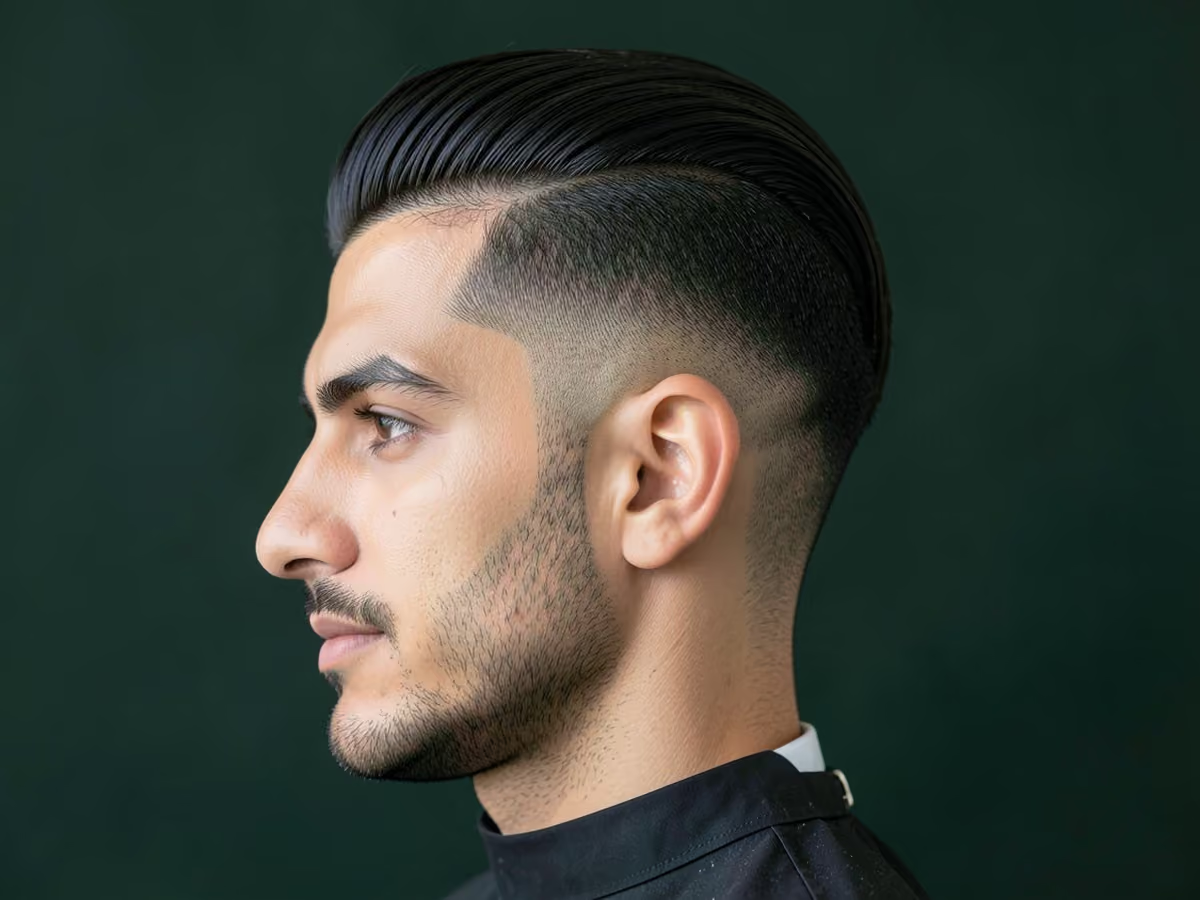
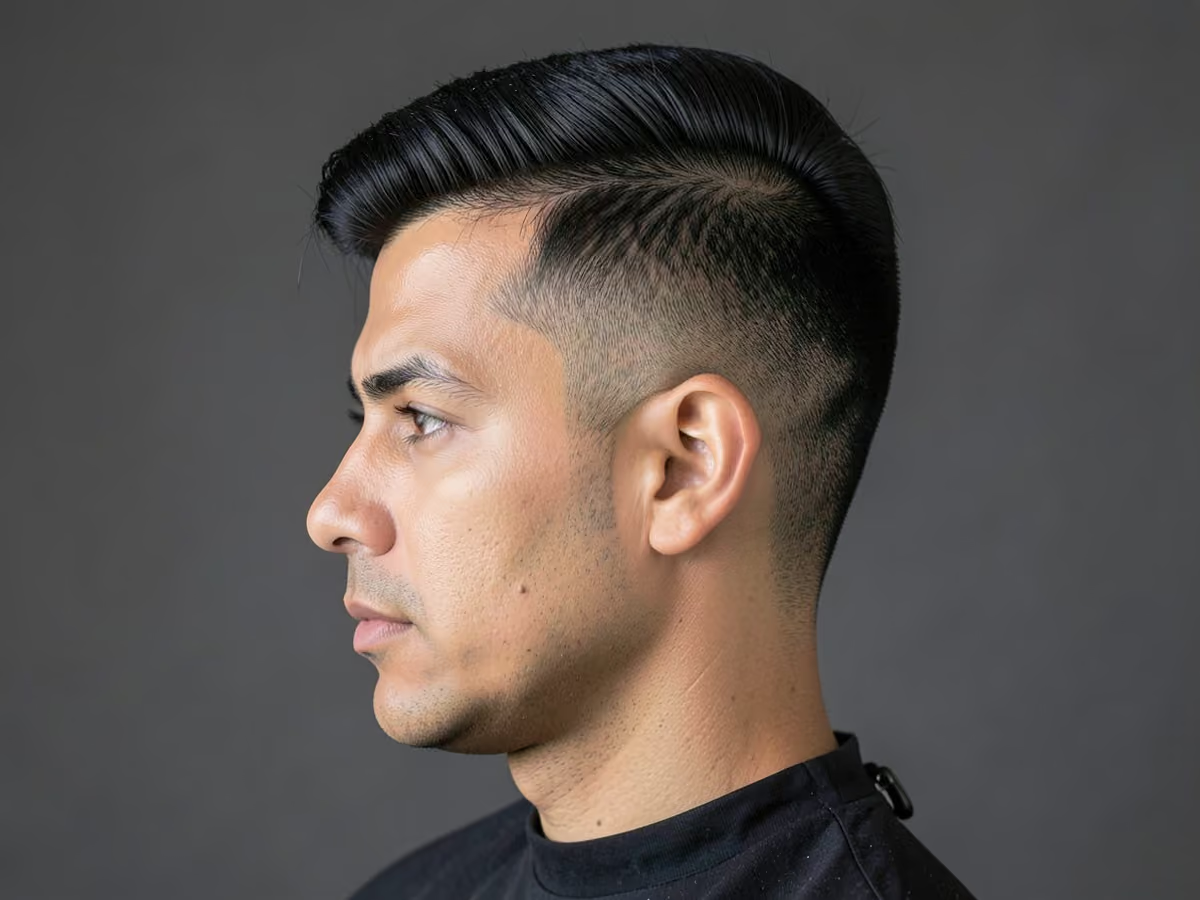
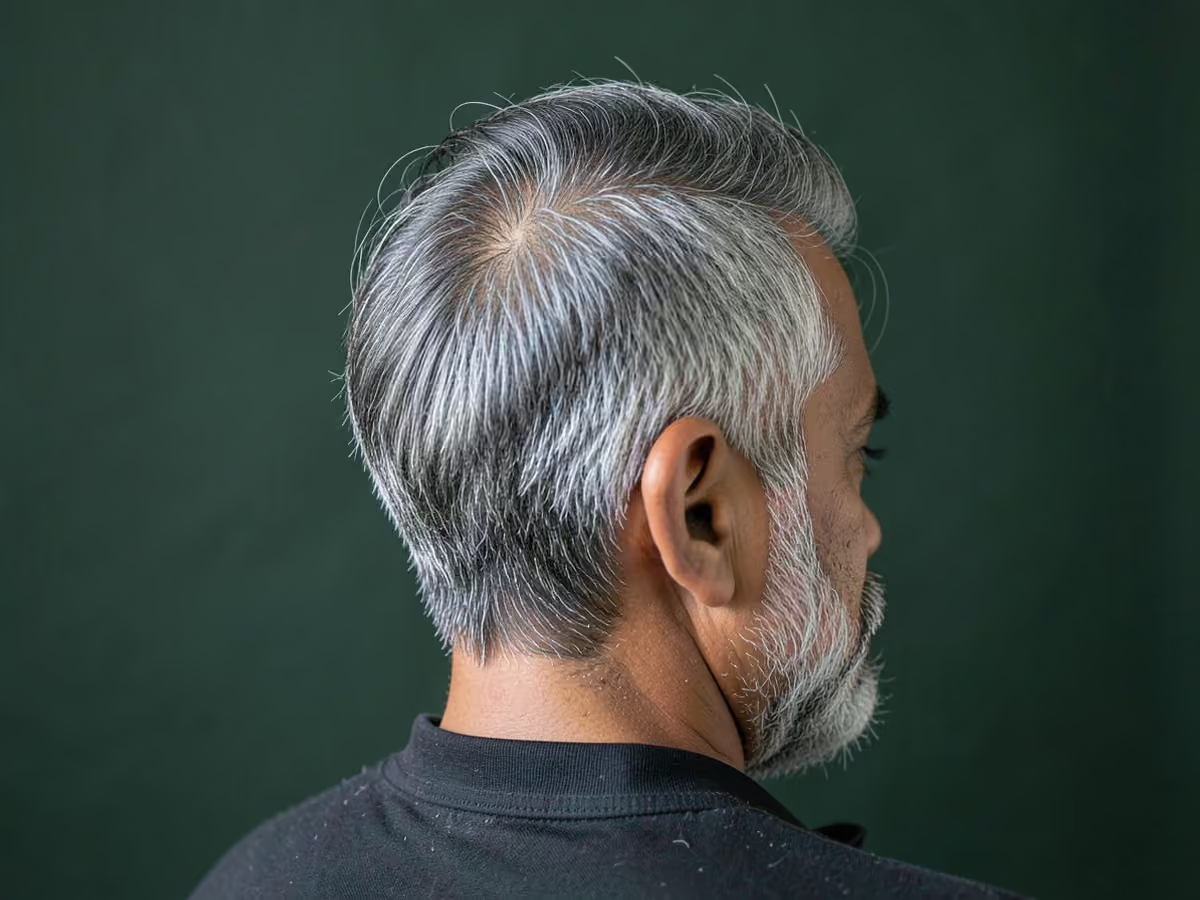
Quick answer: Short sides long top is a haircut where the sides and back are clipped short, usually with a fade, taper, undercut or a #1 to #3 guard, while the top is left three to seven inches long. The length contrast lets you slick, sweep, tie or texture the top. Most versions need a trim every three to five weeks.
Short Sides Long Top Styles at a Glance
Every style on this page with its clipper guard, top length and trim interval. Tap a name to jump to that card.
Short sides long top haircuts all share one idea: keep the sides and back tight and leave enough length on top to style it several ways. Below are 76 versions grouped by how the sides are cut, slicked and textured tops, tied-up lengths, hair texture, beard pairings and edge work, each with guard numbers, trim timing and the words to use with your barber.
What Is a Short Sides Long Top Haircut?
It is less a single cut than a structure. The sides and back are cut short with clippers, anywhere from bare skin to a #3, and the top is left at three inches or more so it can be pushed back, swept to one side, parted or tied. The contrast between the two lengths is the point: from the front, the top looks fuller and the face looks longer and narrower.
Many named cuts belong to this family. The undercut, the modern pompadour, the quiff, the slick back and the man bun with shaved sides are all short sides long top cuts with a specific top style. Asking for short sides and a long top gives you a base you can change from day to day without a new haircut. It also lets you change the side treatment later while keeping the same top.
How Short Should the Sides Be and How Long Should the Top Be?
Pick the sides first, because they set the upkeep. A fade or taper blends gradually from short at the bottom to longer near the top and suits offices and older clients. An undercut cuts the sides to one length with a clear line where the top begins. A one-length buzz around the sides, usually a #2, is the easiest to maintain. The top length then decides the style, as the table shows.
If you are not sure, start at four inches on top. That length slicks back, sweeps over, lifts into a quiff or falls into a fringe, so you can try several styles before choosing one.
How Short Should the Sides Be and How Long Should the Top Be?
Top length
What it allows
Example styles
3 inches
Texture, short quiff, comb over
Textured Long Top, Long Top Comb Over
4 to 5 inches
Slick back, pompadour, side sweep, curtains
Long Slick Back with Short Sides, Long Top Pompadour
6 to 7 inches
Fringe to the chin, flow, short ponytail
Long Fringe with Short Sides, Long Top Ponytail
8 inches or more
Man bun, top knot, braids
Man Bun with Short Sides, Viking Undercut with Braids
Who Suits Short Sides and a Long Top?
Round and square faces gain the most, since narrow sides and height on top add length to the face. Oval faces can wear any version. Long and oblong faces should avoid tall styles and keep the top swept to the side or forward, with the sides at a #3 or #4 rather than skin, so the head does not look taller and narrower still. Men with large ears may prefer a taper over a skin fade, which leaves some hair over the top of the ear.
Thick and wavy hair is the easiest to style long on top. Fine hair works if the top stays under four inches and is styled with volume products. Curly and coily hair suits the cut well and often needs less product than straight hair, as long as it is kept moisturized. Coily hair can be worn long on top as twists, locs or a picked-out shape over a faded side.
Filter the styles
Showing all 76 styles
Fade
Hair
Length
Short Sides Long Top by How the Sides Are Cut
The side treatment sets the upkeep and the tone of the cut. These seven run from a soft taper and low fade to skin, shaved and buzzed sides, a disconnected line and a scissor-only finish.
Trim:Every 4–5 weeks. A taper grows out without a visible line.
Best For:Oval, long faces + straight or wavy hair.
About This Style
Only the sideburns and nape are clipped short here, from a #3 down to a #1, while the rest of the sides stay at scissor length under four to five inches on top. The result is the most conservative way to wear a long top and the one that survives longest between visits. It suits long faces, since the sides keep some width.
How to Style at Home
Blow-dry the top in the direction you will style it, usually back or to the side.
Comb a small amount of styling cream through for a soft, natural hold.
Leave the tapered edges alone; they need no product.
Ask Your Barber
"Long top with a taper fade, taper the sideburns and nape from a #3 to a #1, keep the upper sides at scissor length and leave five inches on top."
Trim:Every 3–4 weeks. The fade band blurs by week three.
Best For:Oval, square faces + thick straight or wavy hair.
About This Style
Starting just above the ear, the fade wraps around the back from a #1 to a #3 and meets a top of four to six inches. Because the fade sits low, most of the side length stays, so the long top looks like a natural extension rather than a separate block. The look works for offices and grows out evenly for about a month.
How to Style at Home
Apply matte clay to dry hair, working it from the roots to the ends.
Push the top back or to one side with your fingers for a relaxed shape.
Smooth the area where the top meets the fade so no ends stick out.
Ask Your Barber
"Long top with a low fade starting just above the ear, #1 at the bottom to a #3, blended into about five inches on top."
Trim:Every 2–3 weeks. Skin at the temples shows stubble fast.
Best For:Round, square faces + thick or coarse hair.
About This Style
Bare skin at the bottom climbs to the temple before blending through a #1 and #2 into the long top, so the sides look nearly shaved from the front. Contrast is strong, which makes four or five inches of hair look heavier. Round faces gain length. The skin shows regrowth within a week, so plan on a cleanup every two to three weeks.
How to Style at Home
Blow-dry the top up and back on medium heat for height.
Shape it with pomade if you want shine or matte paste if you do not.
Moisturize the skin-faded sides with a drop of scalp oil.
Ask Your Barber
"Can you do a long top with a mid skin fade, foil shaved at the bottom, blended through a #1 and #2 to the temples, and five inches on top left alone."
Trim:Every 1–2 weeks. Shaved sides need constant upkeep.
Best For:Oval, round faces + thick straight or wavy hair.
About This Style
Both sides and the back are shaved down to skin or a #0 with no blend, leaving a sharp edge under six or more inches of hair on top. The top often falls over the shaved area when worn down, then reveals it when slicked back or tied. It is a high-contrast choice that needs a razor or clipper pass every week or two.
How to Style at Home
Shave or clip the sides with a #0 at home between visits if you can.
Slick the top back with pomade to show the shaved sides.
Wear it down and to one side for a softer look on other days.
Ask Your Barber
"Give me a long top with shaved sides, sides and back clipped to a #0 or shaved with no fade, and six inches on top kept heavy."
Trim:Every 4 weeks. A one-length buzz grows out evenly.
Best For:Oval, square faces + straight, wavy or thick hair.
About This Style
A single #2 guard runs over the sides and back with no fade, leaving about a quarter inch of hair that looks even as it grows. It is the simplest version to keep up, since you or a friend can redo the sides at home. Four inches on top falls naturally with this look. The flat edge where the guard stops is softened with scissors.
How to Style at Home
Run a #2 guard over the sides at home between visits.
Towel-dry the top and comb it into place with your fingers.
Use a small amount of matte cream to tame flyaways.
Ask Your Barber
"Long top with buzzed sides, #2 all over the sides and back with no fade, blend the edge with scissors, and four inches on top."
Trim:Every 3 weeks. The line between lengths softens as sides grow.
Best For:Oval, round faces + thick straight hair.
About This Style
No blending connects the two lengths: the sides are clipped to a #1 or #2 and the top hangs over them with a clear step where they meet. That hard line is what separates this cut from a fade. It shows best with a slick back or a side sweep and on thick hair that drops cleanly over the edge.
How to Style at Home
Comb the top back or to one side while damp so it drapes over the line.
Dry with a brush in the same direction.
Finish with pomade for shine or matte clay for a dry look.
Ask Your Barber
"Disconnected long top, sides and back at a #2 with no blending, a clear line at the parietal ridge, and five inches on top that hangs over it."
Trim:Every 4–6 weeks. Scissor-cut sides grow out softly.
Best For:Long, oval faces + fine or wavy hair.
About This Style
Rather than clippers, the barber uses scissor over comb to take the sides to about half an inch, then tapers them toward the top. The finish is softer and more classic than any clipper version, and the sides keep a little volume, which helps long faces and fine hair. It costs a bit more and takes longer because every section is cut by hand.
How to Style at Home
Brush the sides down and back with a comb after drying.
Style the top with styling cream for a soft, movable finish.
Ask for the same scissor technique at every visit so the shape stays consistent.
Ask Your Barber
"Let's go with a long top with scissor-cut sides, no clippers, about half an inch on the sides tapered by hand up into four inches on top."
Recommended Products
Styling Cream
Short Sides Long Top with Other Fade and Taper Heights
These versions change only how the sides blend. A high skin fade shows the most scalp, a drop fade curves behind the ear, and a low or mid taper keeps the sideburns and nape soft for offices and schools.
Trim:Every 2–3 weeks. Bare skin up high shows regrowth within days.
Best For:Round, square faces + thick straight or wavy hair.
About This Style
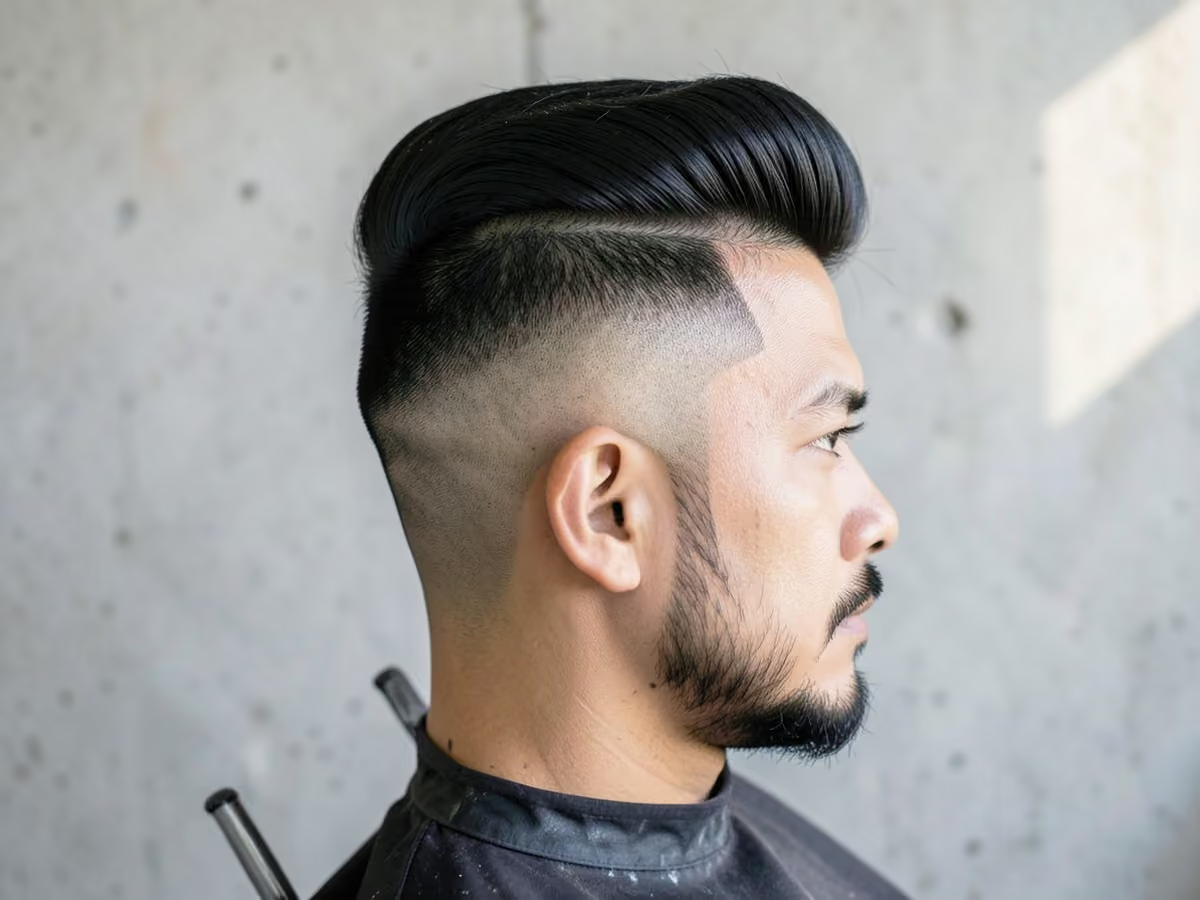
Clippers take the sides to bare skin up to the parietal ridge, so almost the whole side of the head is bald or close to it before the top begins. Above that the hair stays four to six inches long, which gives the sharpest contrast in this gallery. Round faces look longer because nothing adds width at the temples. Expect a ring of dark stubble within a week as the skin grows back.
How to Style at Home
Blow-dry the top straight up with a vent brush to set the height.
Work a pea-sized amount of matte clay through dry hair from the roots.
Push the front back and slightly to one side with your fingers.
Ask Your Barber
"High skin fade, foiled to skin up to the curve of my head, blended to a #2 into five inches on top, point-cut, not thinned."
Trim:Every 3 weeks. The curve behind the ear blurs as it grows.
Best For:Oval, heart faces + straight or wavy hair.
About This Style
Curving downward behind the ear, the drop fade sits higher at the temple and lower at the nape, so the outline follows the skull instead of running in a flat ring. Most barbers start it at a #0 or #1 and blend through a #2 and #3. The long top falls back over that curve, which suits hair worn slicked or brushed back. Trims stay simple because the arc is easy to retrace.
How to Style at Home
Comb a light pomade through damp hair from front to crown.
Brush the top straight back so it follows the curve of the fade.
Leave a few strands loose at the front for a softer finish.
Ask Your Barber
"Mid drop fade, #1 at the bottom curving down behind the ear to the nape, blended to a #3, five inches left on top to brush back."
Trim:Every 3 weeks. The arc around the ear needs crisp edges.
Best For:Oval, long faces + wavy or curly hair.
About This Style
Here the fade fans out in a half circle around each ear while the hair at the nape stays longer, so the back keeps some weight. It works with a long top pushed up and back, or with curls lifted at the roots. Because the back is not cut short, the shape reads more casual than a full fade and grows out evenly. Ask for a defined edge around the ear so the rounded outline is clear.
How to Style at Home
Scrunch curl cream into damp hair and let it air-dry.
Lift the top at the roots with your fingertips once dry.
Keep loose strands away from the faded ear area so the arc shows.
Ask Your Barber
"Burst fade around each ear from a #0 to a #3, nape left at a #4, four to five inches on top, edges cleaned around the ear."
Best For:Oval, long faces + straight, fine or wavy hair.
About This Style
Only the sideburns and the nape get the clippers, so the sides look full and neat rather than shaved. A #2 blends down to a #1 at the edges, and the hair above the ear can be left at a #3 or scissor length. Paired with four inches on top worn loose and slightly tousled, it is the gentlest way into the short sides long top shape and passes most dress codes. Regrowth barely shows for a month.
How to Style at Home
Towel-dry, then rake styling cream through the top with your fingers.
Let the top fall loosely to one side without a hard part.
Smooth the sides flat with your palms before the cream sets.
Ask Your Barber
"Low taper at the sideburns and nape only, #1 at the edge into a #3 on the sides, four inches on top, scissor-blended, natural neckline."
Trim:Every 3–4 weeks. The temple blend softens after a month.
Best For:Oval, square faces + straight or thick hair.
About This Style
Sitting at temple height, a mid taper cleans the sideburns and nape higher than a low taper, while the area over the ear stays fuller than any fade. You get a clear outline around the ear without a band of skin. The top is usually left at three to five inches and suits quiffs or messy textured shapes. It is a middle ground for anyone who finds a full fade too harsh.
How to Style at Home
Spray sea salt into damp hair and blow-dry upward.
Twist small sections of the top with clay for texture.
Comb the tapered edges down so they lie flat.
Ask Your Barber
"Mid taper at the temples and nape, #0.5 at the edges into a #2 and #3, sides scissor-blended, four inches of textured length on top."
Trim:Every 3–4 weeks. No skin line means slow, even regrowth.
Best For:Oval, round faces + thick hair and sensitive scalp.
About This Style
Instead of skin, the shortest guard is a #1, so the sides keep a gray shadow of hair and never look bare. Men with razor bumps, scars or very pale scalps often prefer it, since no razor touches the skin. The blend climbs through a #2 and a #3 into five inches of length on top. Growth is gentle too; the sides turn fuzzy slowly rather than darkening overnight.
How to Style at Home
Apply argan oil to the ends of the top while damp.
Rough-dry the top and push it back loosely.
Finish with a small amount of matte cream to hold the shape.
Ask Your Barber
"Shadow fade from a #1 at the bottom, no skin, blended through a #2 to a #3, five inches on top kept heavy, square neckline."
Recommended Products
Matte Cream
Argan Oil
Slicked, Swept and Parted Long Tops
Directed styles show the length on top most clearly. These seven cover slick backs, brushed backs, comb overs, hard parts, pompadours, quiffs and side sweeps; the slick back undercut guide has more slicked options.
Trim:Every 3–4 weeks. Side regrowth breaks the clean outline.
Best For:Oval, square faces + thick straight or wavy hair.
About This Style
Five to six inches on top are combed straight back with a shiny pomade, so the hair reaches the crown and sometimes the nape. A mid fade or taper keeps the sides flat beside it. Fine-tooth combing gives a wet, groomed finish; finger-combing looks looser. Thick hair holds the shape longest, while very fine hair can split and show scalp.
How to Style at Home
Apply pomade to damp hair from front to back.
Comb the top straight back with a fine-tooth comb.
Blow-dry on low heat in the same direction to set it.
Ask Your Barber
"I'm after a long slick back with short sides, mid taper from a #2 to a #1, six inches on top cut to fall straight back without splitting at the crown."
Trim:Every 4 weeks. The front starts to fall forward after a month.
Best For:Oval, round faces + medium to thick straight hair.
About This Style
Swept back like a slick back but dry and matte, this version has visible volume at the front and a natural texture. A round brush and dryer lift the roots before matte cream holds the shape. It looks less formal than a wet slick back and is easier to restyle during the day. Four to five inches gives the front room to lift.
How to Style at Home
Lift the front with a round brush while drying it back.
Work matte cream through with your fingers, not a comb.
Push the sides of the top back toward the crown.
Ask Your Barber
"Brushed back long top, low fade from a #1 to a #3, four to five inches on top cut to lift at the front and go back without a part."
Trim:Every 3–4 weeks. The part side grows bulky first.
Best For:Oval, square faces + straight or wavy hair.
About This Style
Combed from a natural part across to the other side, the top covers most of the head in one smooth sweep. Four inches is a good length, since longer hair flops back over the part. A low fade under the part side keeps that area flat. This is a classic office style, and light pomade gives it a neat finish without a hard wet look.
How to Style at Home
Comb a part above the outer corner of one eyebrow while the hair is damp.
Dry the top across to the other side with a brush.
Smooth the surface with a thin layer of light pomade for a neat finish.
Ask Your Barber
"Could I get a long top comb over, low fade from a #1 on the part side, four inches on top with my natural part on the left, cut to lie flat across."
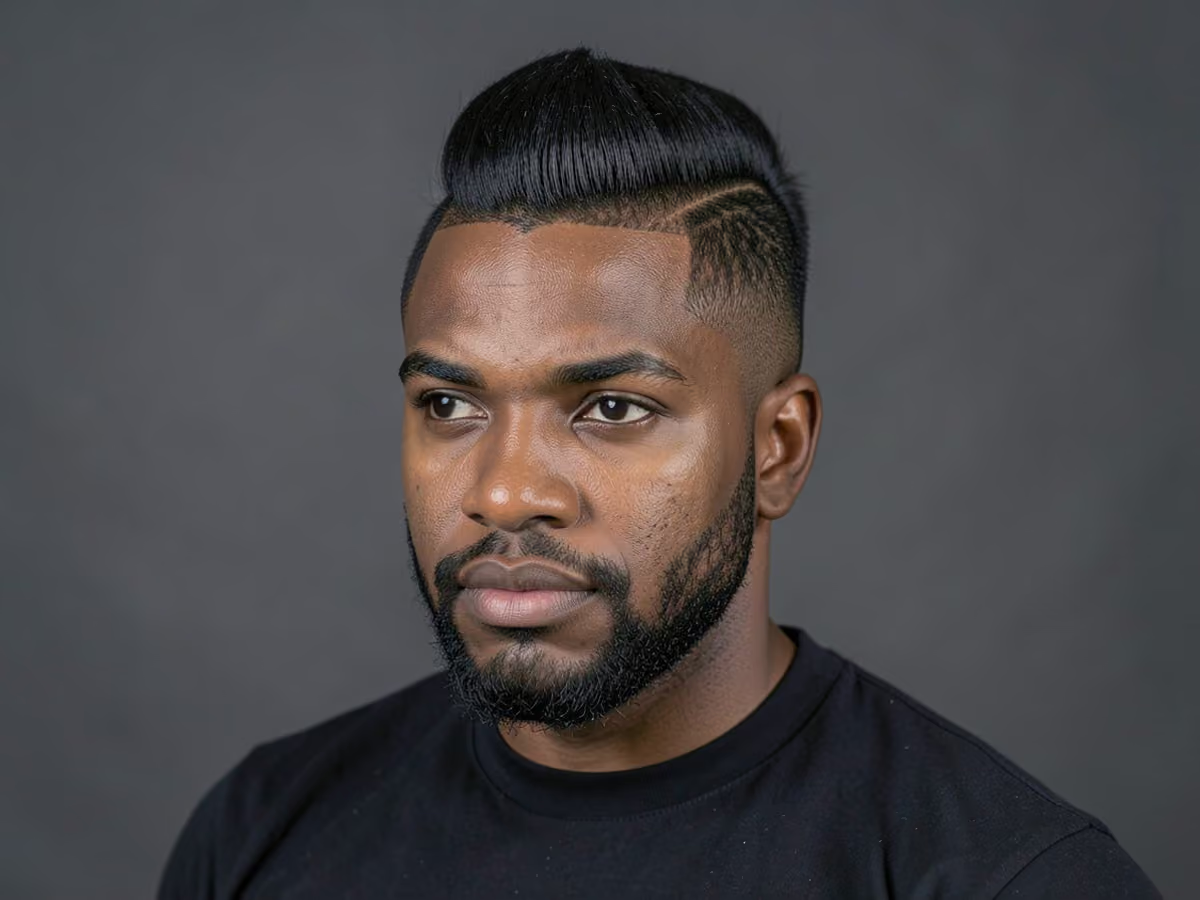
Trim:Every 2–3 weeks. The shaved part line closes quickly.
Best For:Oval, square faces + thick straight hair.
About This Style
A thin line shaved into the part side separates the long top from the faded side. The hair above the line is combed over, and the line keeps the part fixed even in wind. It needs a skin or #0.5 fade to look clean below it. Keep the line short, ending at the crown, since a line that runs the full length looks heavier.
How to Style at Home
Comb the top away from the shaved line while damp.
Dry it across with a brush and add pomade for shine.
Brush the faded side down with an edge brush.
Ask Your Barber
"Hard part long top, shave a short part line on the left, mid skin fade below it, and four to five inches on top combed across."
Trim:Every 3 weeks. Front height drops as the sides grow.
Best For:Round, square faces + thick straight or wavy hair.
About This Style
Lifting the front into a tall roll and sweeping it back over the crown takes five to six inches at the hairline, tapering shorter toward the back. A mid or high fade keeps the sides close so the height reads clearly. Blow-drying is required every morning. For more pompadour options, see the modern pompadour guide.
How to Style at Home
Wrap the front over a round brush and dry it up and back.
Comb pomade through and push the front forward slightly to form a roll.
Set with the cool setting on the dryer.
Ask Your Barber
"Long top pompadour, mid fade from a #1, six inches at the front tapering to four at the crown, cut for height at the hairline."
Trim:Every 3–4 weeks. Long quiffs lose lift as they get heavy.
Best For:Round, oval faces + thick or wavy hair.
About This Style
Unlike a pompadour, the quiff lifts the front up and slightly forward with a messier, matte finish. The front needs four to five inches. A low or mid fade keeps the sides short. The quiff suits round faces because the height adds length, and it holds best on thick or wavy hair that has natural body.
How to Style at Home
Lift the front with a round brush while blow-drying.
Twist small sections at the front with matte clay.
Push the front slightly forward so it sits above the forehead.
Ask Your Barber
"I'd like a long quiff with short sides, low to mid fade from a #1 to a #3, five inches at the front, textured so it lifts and moves."
Trim:Every 4–5 weeks. A swept top hides uneven growth well.
Best For:Long, heart faces + straight or wavy hair.
About This Style
With no part and no height, the top simply falls to one side across the forehead, covering part of it. This low-effort version suits long faces and high foreheads because it shortens the face. Four to six inches works, and the sides can be a #2 taper. Air-drying with a little sea salt spray often gives enough shape.
How to Style at Home
Towel-dry and push the top to one side with your fingers.
Spray sea salt spray and let it air-dry in place.
Pinch a few pieces at the front for texture.
Ask Your Barber
"Side swept long top, #2 taper on the sides and back, five inches on top cut to fall to the right across my forehead."
Trim:Every 3 weeks. Shine highlights any uneven blend.
Best For:Oval, square faces + straight or wavy hair.
About This Style
Light gel combed through soaked hair gives a glossy finish that dries firm, the opposite of the matte styles elsewhere in this gallery. Sides are best cut tight, usually a mid fade or a #1 undercut, so the shine on top is the focus. Four to five inches gives enough length to comb straight back with visible tooth lines. Wash it out daily, since gel left in for days flakes and dulls.
How to Style at Home
Comb light gel through soaking-wet hair from roots to ends.
Rake a fine comb straight back to leave clear lines.
Let it dry untouched so the gel sets without frizz.
Ask Your Barber
"Mid skin fade to a #2, four to five inches on top kept one length with no texture, so it combs flat for a wet-look gel finish."
Recommended Products
Light Gel
Messy and Textured Long Tops
Texture breaks up a long top so it looks lived-in instead of styled. These six cover messy, textured and spiky tops, a long faux hawk, a fringe and curtains, all over short faded or tapered sides.
Point-cut ends and a few random layers let the top fall in different directions on purpose. Rough-drying with fingers and a small amount of matte paste is all the styling it needs. Around four inches on top works. The relaxed shape pairs with a low taper and suits men who would rather not style their hair carefully every day.
How to Style at Home
Rough-dry the top with your fingers moving in all directions.
Rub matte paste between your palms and scrunch it in.
Leave the shape uneven and avoid combing it once the paste is in.
Ask Your Barber
"Messy long top, low taper from a #3 to a #1, four inches on top point cut with random layers so it falls messy."
Trim:Every 3–4 weeks. Texture gets heavy as length grows.
Best For:Oval, square faces + thick straight hair.
About This Style
Choppy layers and texturizing shears break up the bulk of thick straight hair so the top separates into defined pieces. It differs from the messy version by having a clear direction, usually up and slightly back. Three to four inches works well. A mid fade from a #1 gives contrast against the pieces. Texture powder adds grip without making the hair stiff.
How to Style at Home
Blow-dry up and back to build some height.
Sprinkle texture powder at the roots and rough it in.
Twist a few pieces with matte clay for definition.
Ask Your Barber
"Textured long top, mid fade from a #1 to a #3, three to four inches on top with choppy layers and texturizing to remove bulk."
Trim:Every 3 weeks. Spikes droop once they pass four inches.
Best For:Round, oval faces + thick straight hair.
About This Style
Pointed spikes at three to four inches are pulled up and out with a strong product, a style common in the early 2000s that has returned in a softer form. A high fade gives the most contrast. Straight, thick hair holds spikes best; fine hair needs a short length. The modern version uses matte clay rather than wet gel.
How to Style at Home
Dry the top straight up with a dryer.
Rub matte clay through your fingertips and pull small sections into points.
Hold each spike for a few seconds while the clay sets.
Ask Your Barber
"Can you do a long spiky top, high fade from a #0.5 to a #2, three to four inches on top point cut so it can spike up."
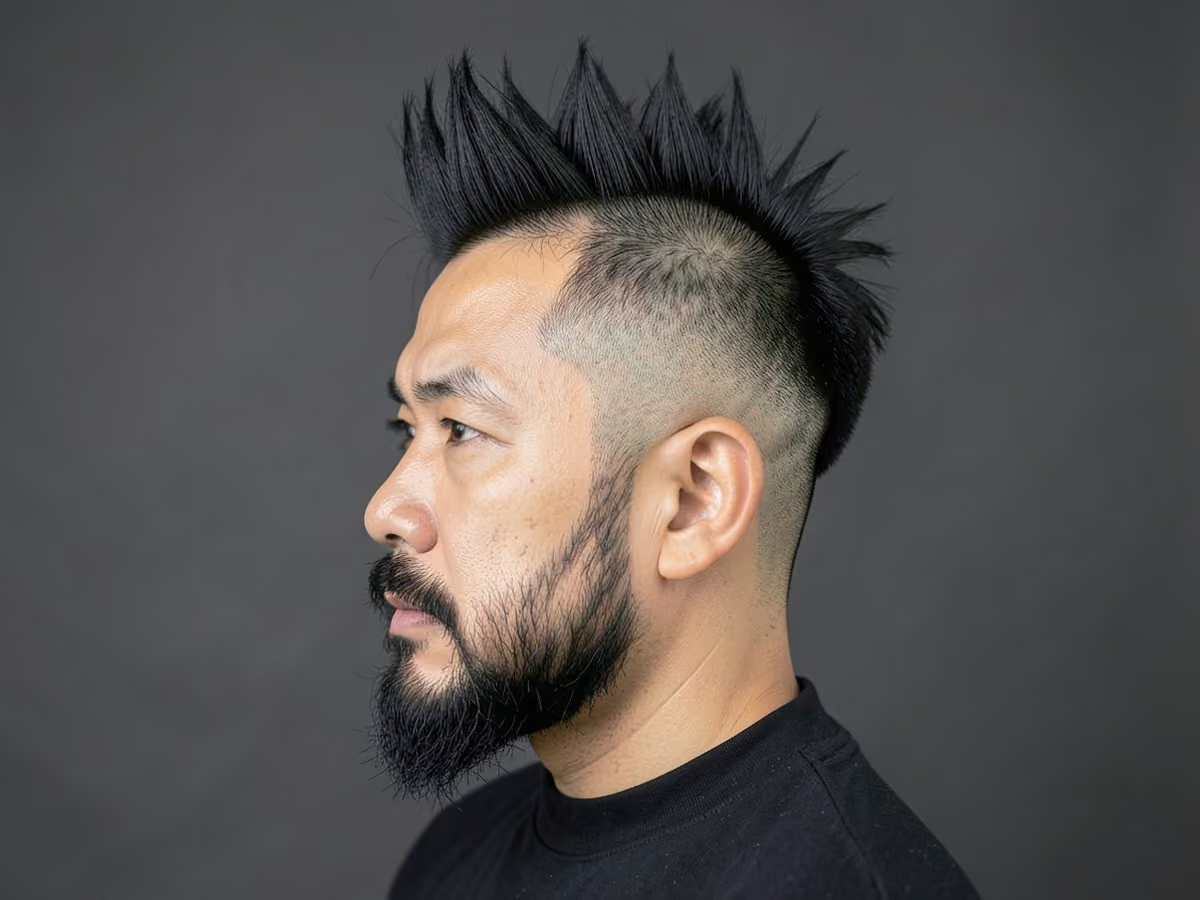
Trim:Every 3 weeks. The center ridge needs reshaping.
Best For:Round, oval faces + thick or wavy hair.
About This Style
Both halves of the top are swept toward the middle into a raised ridge, while the sides stay clipped rather than shaved like a true mohawk. Four inches in the middle and shorter sides on top make the ridge stand. A mid fade below helps. It is a playful choice that still tames down for work by combing the top back.
How to Style at Home
Dry the top upward, pushing the sides toward the center.
Pinch matte clay along the middle to form the ridge.
Comb it flat and back on days you need a quieter look.
Ask Your Barber
"Give me a long top faux hawk, mid fade from a #1, four inches down the center and slightly shorter on either side of the top so it ridges."
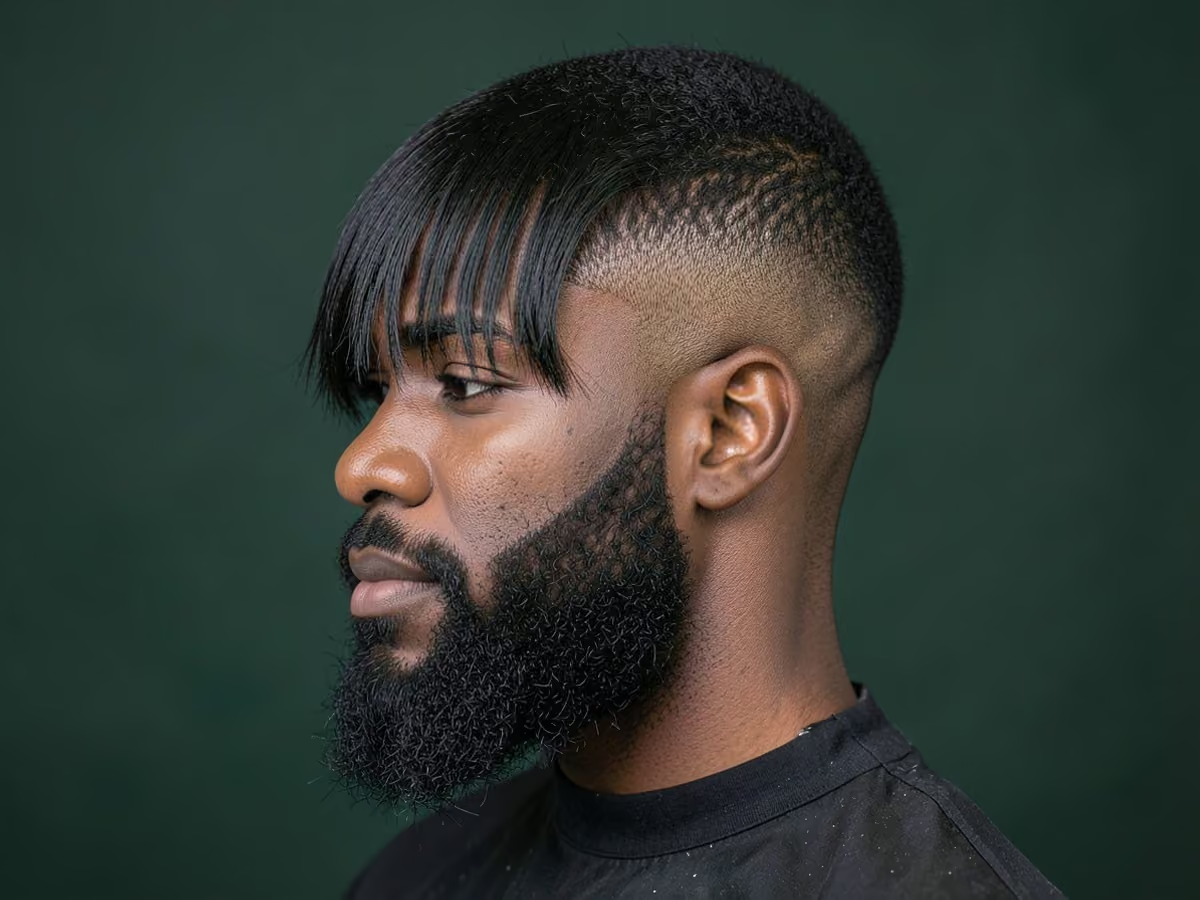
Trim:Every 4–5 weeks. The fringe reaches the eyes after a month.
Best For:Long, heart faces + straight or wavy hair.
About This Style
Four to five inches at the front falls forward over the forehead to the eyebrows, while a #2 taper keeps the sides short. A heavy fringe hides a high forehead and makes long faces look shorter. Once it passes the brows, the length can be swept aside when it gets in your eyes. Fine hair holds a fringe better with a little texture powder.
How to Style at Home
Dry the fringe forward and down with your fingers.
Separate it into pieces with a small amount of texture powder.
Sweep it to one side when you need it off your face.
Ask Your Barber
"Long fringe with short sides, #2 taper on the sides and back, about four and a half inches at the front falling to my eyebrows, layered so it moves."
Trim:Every 4 weeks. Curtains lose their shape as they lengthen.
Best For:Oval, long faces + straight or wavy hair.
About This Style
A center part splits the long top into two curtains that fall toward each temple, framing the face. The front needs about five inches before the curtains reach the brow. Short sides, usually a low taper, keep the shape from widening. Wavy hair gives curtains natural movement; straight hair needs a quick blow-dry outward. See curtains haircut for more versions.
How to Style at Home
Comb a center part while the hair is wet.
Blow-dry each side down and outward from the part.
Finish with a light layer of styling cream.
Ask Your Barber
"Let's go with a long top curtains, low taper from a #3 to a #1, five to six inches at the front cut for a middle part falling to the temples."
Trim:Every 3–4 weeks. Too much length stops it standing.
Best For:Round, square faces + thick straight hair.
About This Style
Brushed straight up from the hairline, the front stands vertical and the rest of the top follows, giving height without the rounded roll of a pompadour. Three to five inches works; past that the hair folds over. Sides can be a low fade or a #2 taper. A round brush and a dryer do most of the work, with matte paste only holding the lift. Fine hair benefits from a thickening spray first.
How to Style at Home
Spray thickening spray at the roots of damp hair.
Blow-dry upward over a round brush, front section first.
Rub matte paste between your palms and pull it up through the ends.
Ask Your Barber
"Low fade to a #2, top three to four inches cut slightly shorter toward the crown so it brushes straight up, front point-cut."
Best For:Round, oval faces + thick straight or coarse hair.
About This Style
Only a strip about two to three inches wide runs from forehead to nape, while everything either side is shaved or faded to a #0. The strip can be left five inches or longer and spiked, swept to one side or brushed back. It is a stronger version of the faux hawk, since the sides are bare all the way round the back. Shaving the sides weekly keeps the strip sharp.
How to Style at Home
Blow-dry the strip upward with a vent brush.
Pinch clay into sections to form points or a single ridge.
Use a stronger hold if the strip stands taller than three inches.
Ask Your Barber
"Mohawk strip about two and a half inches wide, five inches long, sides shaved to skin all the way to the nape, no blend into the strip."
Recommended Products
Texture Clay
Man Buns, Top Knots and Long Hair with Short Sides
With eight inches or more on top, the hair can be tied while the sides stay clipped. These five cover buns, top knots, braids, ponytails and loose long hair over shaved or faded sides; see the man bun guide for more.
Trim:Every 4–6 weeks. Only the sides need regular clipping.
Best For:Oval, square faces + thick straight or wavy hair.
About This Style
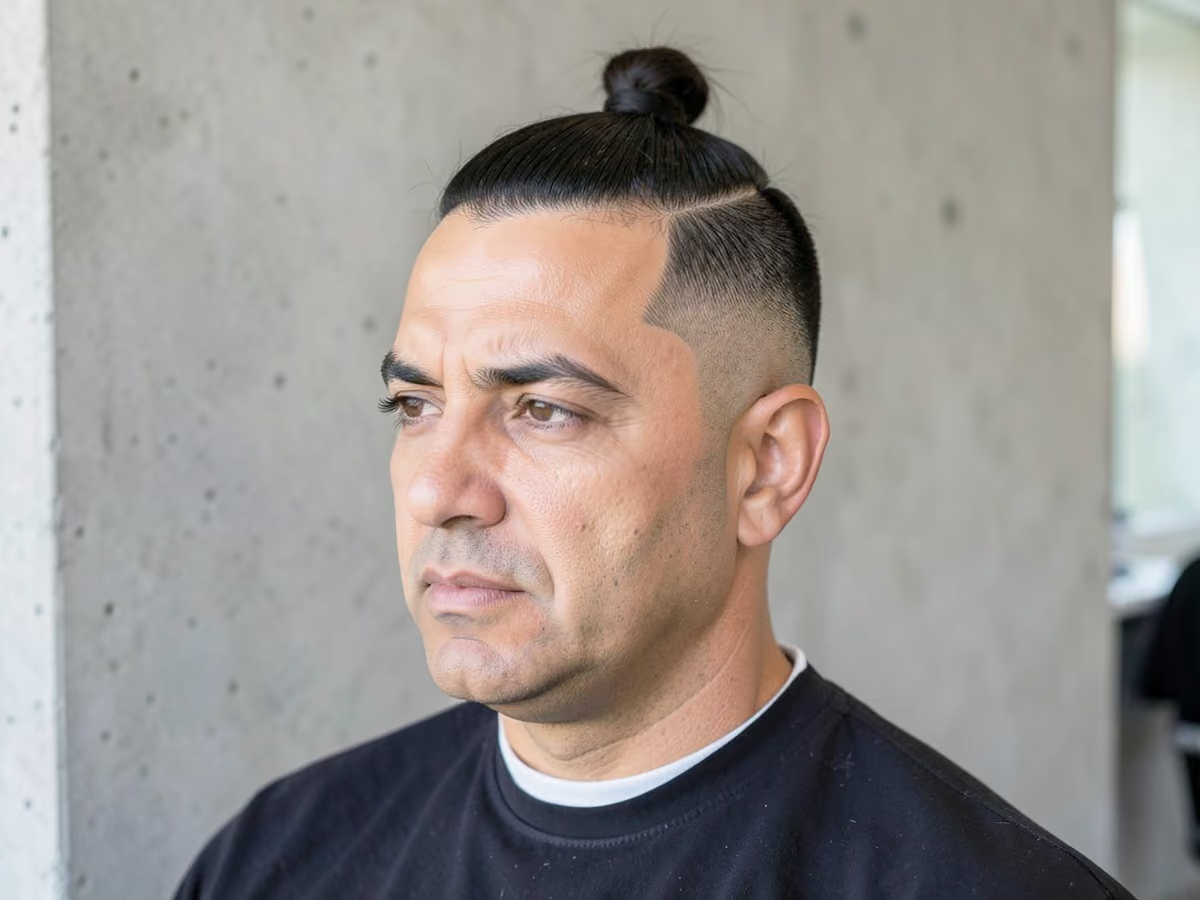
A bun at the crown needs eight or more inches of hair on top, with the sides faded or clipped to a #2 underneath. When untied, the long hair falls over the short sides. Thick and wavy hair makes a fuller bun. Rotating the bun position avoids strain on the hairline, which can cause thinning over time.
How to Style at Home
Gather the top at the crown and twist it into a bun.
Secure with a soft elastic, leaving some slack at the roots.
Rub a drop of argan oil into the ends when they look dry.
Ask Your Barber
"Man bun with short sides, low fade from a #1 to a #3 on the sides and back, leave all the length on top and just dust the ends."
Trim:Every 3 weeks. The undercut line needs regular clipping.
Best For:Oval, round faces + thick straight hair.
About This Style
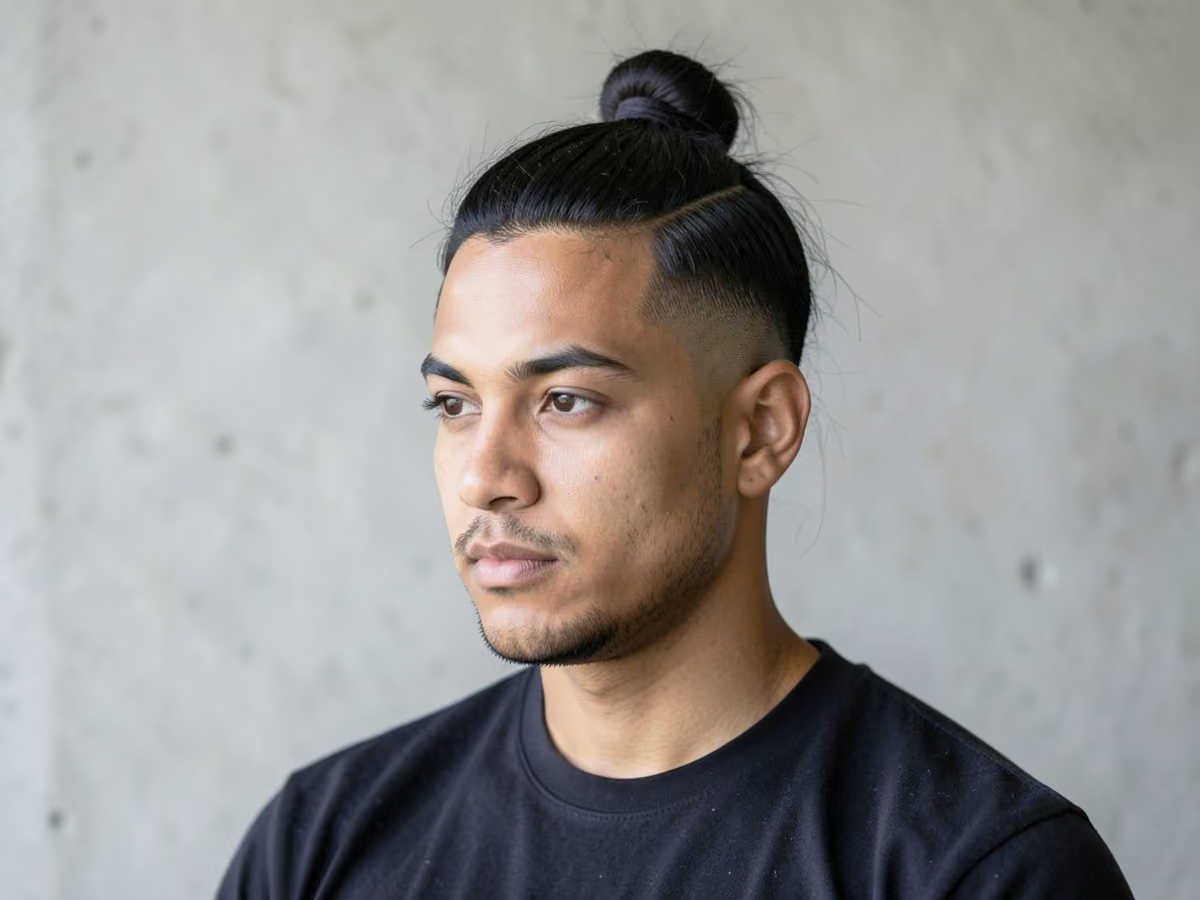
A smaller, tighter knot sits high on the head over an undercut clipped to a #1 or #2 with a hard line. Less length is needed than for a full bun, usually six to eight inches. The high position adds height for round faces. When the knot is out, the top falls over the undercut, hiding the short sides.
How to Style at Home
Pull the top hair up to the highest point of the head.
Twist it into a small knot and secure it tightly.
Smooth flyaways at the hairline with a little light gel.
Ask Your Barber
"Top knot undercut, sides and back at a #1 with a hard line at the parietal ridge, six to eight inches on top left for a knot."
Trim:Every 2–3 weeks. Shaved areas grow back quickly.
Best For:Oval, square faces + thick straight or wavy hair.
About This Style
Shoulder-length hair on top hangs loose over sides shaved to skin, which shows only when the hair is pushed back or tucked behind the ear. Hiding the short sides on most days is part of the appeal. Thick hair covers them best. The shaved area needs a clipper pass every two or three weeks to stay sharp.
How to Style at Home
Wash the long top two or three times a week, not daily.
Comb leave-in through the lengths to prevent tangles.
Tuck one side behind the ear to show the shaved section.
Ask Your Barber
"I'm after a long hair with shaved sides, sides shaved to skin up to the temples, keep the top at shoulder length and only trim split ends."
Trim:Every 2–3 weeks. Shaved sides and braids both need upkeep.
Best For:Oval, square faces + thick straight or wavy hair.
About This Style
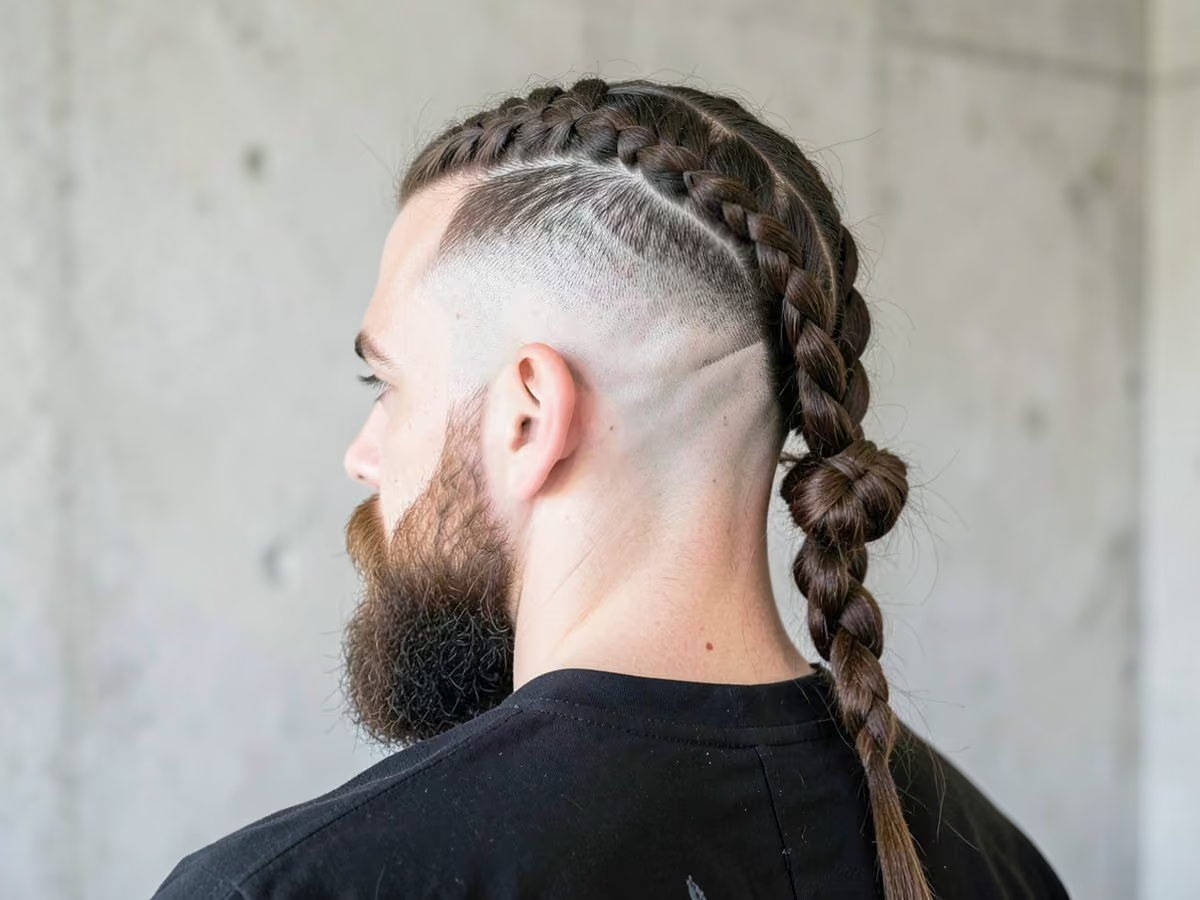
Long hair on top is braided back from the hairline into one or more braids, while the sides are shaved or clipped very short. The braids can be tied into a bun at the back. Thick hair holds braids best. Braiding takes 15 to 30 minutes, so many men keep them in for several days at a time.
How to Style at Home
Detangle the top fully with detangling spray before braiding.
Braid back from the front hairline toward the crown.
Secure the end and tuck it into a low bun if you like.
Ask Your Barber
"Viking undercut with braids, sides and back clipped to a #0 or #1, leave the top long and only trim the ends so I can braid it."
Trim:Every 4–6 weeks. Only the sides need clipping.
Best For:Oval, square faces + straight or wavy hair.
About This Style
Seven or more inches on top are pulled back into a short ponytail at the crown or back of the head, with the sides tapered or clipped short. It works during the stage when hair is too short for a bun. Wavy and straight hair tie easily. Let the hair down and push it back for a looser look on other days.
How to Style at Home
Pull the top back with your fingers rather than a brush.
Tie it at the back of the crown with a soft elastic.
Leave a few strands loose at the front for a relaxed look.
Ask Your Barber
"Could I get a long top ponytail, #2 taper on the sides and back, leave seven inches on top and keep it all one length so it ties back."
Trim:Every 5–6 weeks. Only the sides need regular clipping.
Best For:Oval, long faces + straight or wavy hair, six inches up.
About This Style
Just the front and crown are gathered into a small knot, and the rest of the long top hangs loose behind it. Sides stay at a #2 or a low fade so the tied section looks deliberate. It needs about six inches on top, so it suits men growing toward a full man bun who want something tidy on the way. Untied, the hair drops into a long swept style.
How to Style at Home
Rake the front and crown back with your fingers.
Tie the section into a small knot at the crown with a soft elastic.
Smooth flyaways with a drop of argan oil.
Ask Your Barber
"I'd like a low fade to a #2, with six inches or more on top left uncut except for a dusting, so I can tie the front half into a bun."
Trim:Every 2 weeks. Fades and braids both need refreshing.
Best For:Oval, long faces + 4A to 4C coily hair, three inches up.
About This Style
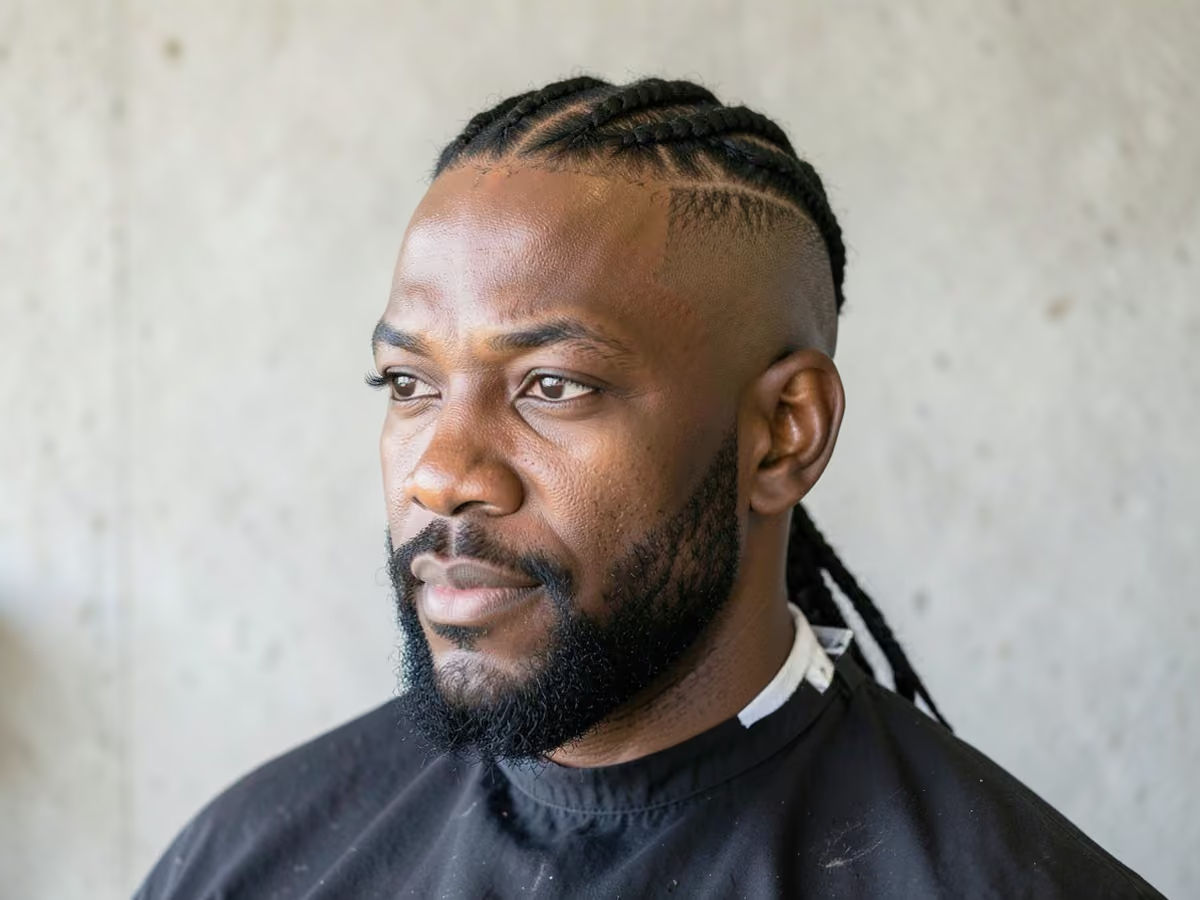
Four to six straight-back cornrows run along the top, with a bald fade or a shave on each side so the braids sit in a neat band. You need at least two inches on top for small braids, more for thick ones. Braids last one to two weeks, and the faded sides can be touched up in between without undoing them. Scalp oil along the parts stops itching as the braids age.
How to Style at Home
Wash and detangle, then stretch the top with a blow-dryer.
Braid four to six straight-back rows from front to nape.
Rub scalp oil along the parts every two days.
Ask Your Barber
"Bald fade on the sides up to the temple, top left three inches for straight-back cornrows, sharp line up and a clean nape."
Trim:Every 2–3 weeks. Only the hidden undercut needs clipping.
Best For:Oval, heart faces + thick straight or wavy hair.
About This Style
Chin-length or longer hair on top is tucked behind the ears to show a disconnected undercut at a #1 or #2 beneath it. Worn down, the undercut is hidden and the hair simply looks long; tucked or tied back, the clipped sides appear. That hidden-or-visible choice is the reason to get it. Re-clip the undercut every two to three weeks; the top only needs a trim every few months.
How to Style at Home
Work leave-in through damp lengths and comb out tangles.
Tuck the sides behind your ears and let them air-dry.
Wear it down over the undercut when you want it hidden.
Ask Your Barber
"Hidden undercut at a #2 up to the temple, disconnected, with the top left chin-length and only dusted at the ends."
Recommended Products
Leave-In
Short Sides Long Top by Hair Type
Texture decides how much length the top needs and which product holds it. These seven cover curly, wavy, thick, fine and East Asian straight hair, plus twists and locs over short sides.
Trim:Every 4 weeks. Curls grow wider and need reshaping.
Best For:Oval, round faces + 2C to 3C curly hair.
About This Style
Left at three to five inches and cut dry, natural curls stand up and out against a low or mid taper. Curls shrink when dry, so the barber judges length as they sit, not when wet. Curl cream or leave-in defines the curls without crunch. This gives volume without blow-drying and suits round faces because of the added height.
How to Style at Home
Rake curl cream through soaking wet hair with your fingers, section by section.
Scrunch upward and let it air-dry without touching.
Fluff the roots with an afro pick once dry.
Ask Your Barber
"Curly long top, low to mid taper from a #2 to a #0.5, curls cut dry to about four inches, shaped round so it does not go wide."
Loose waves on a long top fall naturally in a relaxed shape that needs little styling. Four to five inches lets the waves form fully. A taper or #2 on the sides keeps the outline tidy. Sea salt spray and air-drying enhance the waves. It is one of the easiest long-top styles for men with naturally wavy hair.
How to Style at Home
Mist sea salt spray evenly through damp hair from roots to ends.
Scrunch the top gently with your hands and air-dry.
Rake through with fingers once dry to loosen the waves.
Ask Your Barber
"Wavy long top, #2 taper on the sides and back, five inches on top cut so the waves fall naturally to one side."
Trim:Every 3–4 weeks. Bulk builds up quickly on thick hair.
Best For:Round, square faces + very thick or coarse hair.
About This Style
Heavy hair on a long top tends to puff out, so the barber removes weight from underneath and through the middle with point cutting or thinning shears. The outer layer stays intact for a smooth surface. A mid fade takes bulk off the sides. Matte clay or pomade controls the volume, and a blow-dry directs it.
How to Style at Home
Dry the top in sections so the inside dries fully.
Apply matte clay throughout to control the bulk.
Push the top back or to the side and set it.
Ask Your Barber
"Thick hair long top, mid fade from a #1, remove weight from underneath and through the middle, four to five inches on top."
Trim:Every 3–4 weeks. Fine ends look limp once they grow long.
Best For:Oval, long faces + fine or thinning hair.
About This Style
Fine hair looks thinner when left too long, so this version stops at three to four inches with blunt ends that make it look denser. Thickening spray and a blow-dry add lift. A low taper with some length on the sides avoids high contrast that would show scalp. Brushing the top forward or to the side covers thinning spots.
How to Style at Home
Spray thickening spray at the roots of damp hair.
Blow-dry the front over a round brush on medium heat for lift.
Finish with thickening powder on any visible scalp.
Ask Your Barber
"Thin hair long top, low taper from a #3, three to four inches on top with blunt ends, no thinning shears."
Trim:Every 3–4 weeks. Straight hair sticks out on the sides fast.
Best For:Oval, round faces + thick straight East Asian hair.
About This Style
Thick, straight East Asian hair tends to stick out at the sides as it grows, so a clipped side is the base, often a #1 to #2 undercut as in the two block cut. The top is left four to five inches and styled forward, as a fringe or comma, or pushed back. Texture lotion or sea salt spray adds movement.
How to Style at Home
Spray sea salt spray and blow-dry the top in your chosen direction.
Curve the front into a comma or push it back with clay.
Keep the sides flat; no product is needed there.
Ask Your Barber
"Asian short sides long top, sides and back at a #2 undercut, four to five inches on top with texture, for a fringe or push back."
Trim:Every 3 weeks. The fade and edges need clipping.
Best For:Oval, square faces + 4A to 4C coily hair.
About This Style
Two-strand or comb twists on top, three to six inches long, stand up over a low or mid fade. The twists are retwisted every few weeks; the fade needs clipping more often. Scalp oil and a satin cap at night keep them neat. Loose twists can be untwisted for a twist-out on top, and the short sides keep the head looking neat while the twists are fresh or grown in.
How to Style at Home
Apply leave-in and twist the top in small sections.
Retwist new growth at the roots every two to three weeks.
Sleep with a satin cap to prevent frizz.
Ask Your Barber
"Long twists with short sides, low fade from a #1 to a #0.5 with a line-up, leave the top at about five inches for twists."
Trim:Every 2–3 weeks. Fade and edges need regular cleanup.
Best For:Oval, long faces + coily hair with locs.
About This Style
Locs on top stay long and can be tied up or worn loose over a faded or tapered side and back. The locs can be any length, from short starter locs to shoulder length. Retwisting at the roots every four to six weeks keeps them neat. Loc gel holds the roots, and scalp oil prevents dryness.
How to Style at Home
Retwist the roots with loc gel every four to six weeks.
Oil the scalp between locs once or twice a week.
Tie the locs up when you want the sides to show.
Ask Your Barber
"Locs with short sides, low taper fade from a #1 at the sides and nape, line up the edges and do not touch the locs."
Trim:Every 2–3 weeks. The fade shows growth before the afro does.
Best For:Oval, long faces + 4B or 4C coily hair.
About This Style
Three to five inches of coily hair is picked out on top into a rounded block, while the sides drop to a mid bald fade. The height on top and the bare sides give the 4B or 4C version of the short sides long top shape. A pick lifts it daily, and a twist-out every week or two adds definition. Moisture matters more than hold, since dry coils shrink and break.
How to Style at Home
Spray a leave-in on damp hair and stretch the coils with your fingers.
Lift the top from the roots with an afro pick.
Pat the outline into a round shape with the flat of your palms.
Ask Your Barber
"Mid bald fade, top left four inches and shaped round with the trimmer, line up at the front, tapered nape."
Recommended Products
Afro Pick
Leave-In
Short Sides Long Top with Beard
Beards balance the height on top and change how the faded sides look. These four pair a long top with a full beard, stubble, a boxed beard and a goatee.
Trim:Every 3–4 weeks. Beard and fade need to stay blended.
Best For:Round, oval faces + thick hair and a full beard.
About This Style
A full beard of an inch or more connects to the hair through a taper at the sideburns, so the short sides flow into the beard. The long top on one end and the beard on the other balance each other, which is why the pairing works on round and oval faces. Keep the beard neckline and cheek line clean every week.
How to Style at Home
Oil the beard daily and brush it into shape.
Trim the neckline and cheek line every week.
Style the top back or to the side after drying.
Ask Your Barber
"I'd like a long top with a full beard, taper the sideburns with a #2 into the beard, mid fade on the sides, five inches on top."
Trim:Every 4 weeks. Stubble only needs a weekly trimmer.
Best For:Oval, square faces + straight or wavy hair.
About This Style
Short stubble of 3 to 5 mm adds edge to the jaw without competing with the volume of the long top. A #1 at the sideburns matches the stubble length, so the face and the sides look connected. Keep the stubble consistent with a trimmer on a fixed setting every few days. It suits almost any long top style.
How to Style at Home
Trim the stubble with a 3 mm guard every three days.
Clean up the neckline below the jaw with the bare trimmer blade.
Push the top back or to the side with a small amount of matte cream.
Ask Your Barber
"Can you do a long top with stubble, taper the sideburns down to a #1 to match my stubble, low fade on the sides, four to five inches on top."
Trim:Every 3 weeks. The beard's sharp outline needs regular trimming.
Best For:Round, oval faces + thick hair and dense beard.
About This Style
A short, neatly shaped beard with defined lines along the cheeks and neck pairs with a slicked or brushed-back long top for a groomed, office-friendly look. The beard is kept about half an inch long. A mid fade connects into it through the sideburns. Dense beards hold the boxed outline best; patchy growth shows through the hard lines. See the boxed beard guide for shaping details.
How to Style at Home
Outline the cheek and neck lines with a trimmer every few days.
Warm a little beard balm in your palms and brush the beard down.
Slick or brush the top back with a comb.
Ask Your Barber
"Give me a long top with a boxed beard, mid fade from a #1 into the beard, beard at half an inch with sharp lines, five inches on top for a slick back."
Trim:Every 3 weeks. The goatee edges need a weekly cleanup.
Best For:Round, square faces + straight or wavy hair.
About This Style
Clean-shaven cheeks with a goatee on the chin lengthen the face from below, while the long top adds height above. The sides can go to skin since there is no beard to connect. A goatee kept narrower than the mouth makes the chin look longer. It works especially well with a quiff or faux hawk on round faces.
How to Style at Home
Shave the cheeks and outline the goatee every few days.
Rub two drops of beard oil into the goatee to soften the hair.
Dry the top up and back, then shape the front with matte clay.
Ask Your Barber
"Long top with a goatee, mid skin fade since my cheeks are shaved, four to five inches on top for a quiff."
Trim:Every 3 weeks. Fade and beard both need tidy edges.
Best For:Round, oval faces + straight hair and full chin growth.
About This Style
Cheeks are shaved clean and only a pointed chin beard and a separate mustache remain, which echoes the sharp contrast of short sides and a long top. A low skin fade keeps the sides clean without adding visual noise near the face. The top can be swept back or slicked to suit the angular beard. Trim the beard point every week so the tip stays defined.
How to Style at Home
Slick the top back with light pomade on damp hair.
Comb the chin beard down and trim the point with scissors.
Shave the cheeks and the gap between mustache and beard.
Ask Your Barber
"Low skin fade into a #3, five inches on top for a slick back, cheeks shaved, Van Dyke shaped with a pointed chin."
Trim:Every 3–4 weeks. The beard point needs reshaping monthly.
Best For:Round, square faces + thick hair and dense beard.
About This Style
Full on the cheeks and tapering to a point below the chin, the ducktail adds length to the lower face while the faded sides keep the overall shape lean. Sides are usually a mid fade that blends into a short beard at the sideburn, then grows longer toward the chin. A long, swept top balances the weight of the beard. Brushing and balm keep the point neat.
How to Style at Home
Brush beard balm through the beard toward the point.
Sweep the top back or to the side with styling cream.
Shape the ducktail point with scissors every few weeks.
Ask Your Barber
"Mid fade to a #3, blended into the beard at the sideburn, long top swept back, beard tapered to a ducktail point below the chin."
Trim:Every 4 weeks. Low taper and short beard grow out quietly.
Best For:Oval, long faces + straight or wavy hair and full beard.
About This Style
Neat, short and even, the corporate beard is kept at about half an inch with a clean neckline and cheek line. It pairs with a long top combed into a side part or a soft quiff and a low taper on the sides, so the whole look stays office-appropriate. Weekly trimming with a guard keeps the length uniform. This is facial hair that never reads as scruffy.
How to Style at Home
Comb a side part into damp hair and set it with light pomade.
Trim the beard with a #4 guard once a week.
Rub a few drops of beard oil in after trimming.
Ask Your Barber
"Could you do a low taper to a #2 on the sides, four inches on top for a side part, and blend my beard into the sideburn at half an inch."
Trim:Every 2 weeks. The strap and high fade both need sharp edges.
Best For:Round, oval faces + thick hair and even jaw growth.
About This Style
Thin and following the jawline from ear to ear, a chin strap frames the jaw without covering the cheeks. A high fade on the sides makes the strap look like a continuation of the outline. The long top is often textured or brushed up so it does not compete with the fine beard line. Trimming the strap every few days keeps its width the same on both sides.
How to Style at Home
Trim the strap to the same width on both sides with a detailer.
Brush the top up and back with a little matte clay.
Clean up the neckline below the strap with a razor.
Ask Your Barber
"High fade to a #2, blended down into a chin strap at the sideburn, four inches on top textured, line up at the temples."
Recommended Products
Matte Clay
Beard Oil
Short Sides Long Top with Line-Ups, Designs and Gray Hair
Small details change the character of a long top. These four add a line-up or a shaved design, and adjust the cut for gray hair and a receding hairline; see hair designs for more patterns.
Trim:Every 2 weeks. Lined edges blur within ten days.
Best For:Oval, square faces + coarse, wavy or coily hair.
About This Style
A trimmer outlines the forehead, temples and sideburns in sharp lines, giving the short sides a crisp border against the long top. The line should follow your natural hairline. It pairs with a skin or low fade and works best on coarse or coily hair where the edges show clearly. An edge cleanup every ten days keeps it sharp.
How to Style at Home
Brush the edges flat with an edge brush daily.
Keep heavy products away from the hairline so the line stays crisp.
Book a quick edge cleanup at the shop between full cuts.
Ask Your Barber
"Long top with a line-up that follows my natural hairline, low skin fade from a #0.5 on the sides and back, and about four inches on top."
Trim:Every 2 weeks. Designs fade quickly as hair grows.
Best For:Oval, round faces + thick dark or coarse hair.
About This Style
One or more lines, a geometric shape or a small symbol are carved into the short sides with a trimmer. Designs read best on dark, coarse hair, where the skin lines contrast most. The long top can be styled back so the design is visible. Designs last about a week before blurring, so they suit men who visit the barber often or want a look for an event.
How to Style at Home
Slick or push the top back to keep the design visible.
Avoid rubbing the design area with a towel.
Refresh the design every seven to ten days.
Ask Your Barber
"I'm after a long top with a shaved design, two parallel lines on the left side, mid skin fade below, five inches on top for a slick back."
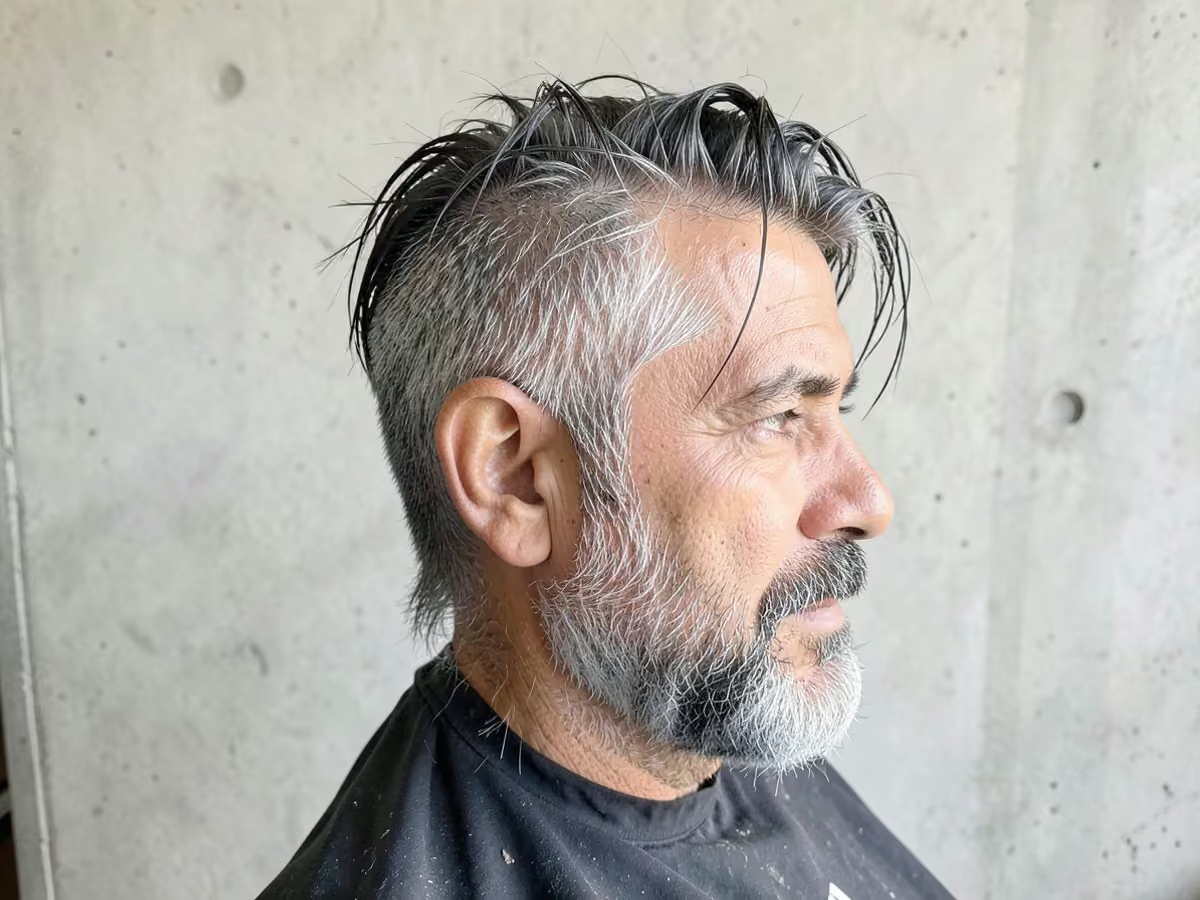
Best For:Oval, square faces + gray or silver straight hair.
About This Style
Gray and silver hair looks best with clean, defined short sides, since soft edges can look untidy against the lighter color. Three to four inches on top, brushed back or to the side, gives the hair body. A low taper suits most older men. A matte cream keeps gray hair from looking yellow or greasy. See gray hair styles for more.
How to Style at Home
Wash with a purple shampoo once a week to keep gray bright.
Apply matte cream to damp hair and comb it back.
Air-dry, or blow-dry on low heat in the direction you comb it.
Ask Your Barber
"Gray hair long top, low taper with a #2 on the sides and back, three to four inches on top cut to brush back, and a clean, squared neckline."
Trim:Every 3–4 weeks. Long hair separates at the temples.
Best For:Oval, long faces + straight hair with receding temples.
About This Style
Too much length on top can separate and show receding temples, so this cut keeps the top at three to four inches and styles it forward or to the side to cover the corners. The sides stay short to reduce contrast with the thinning front. Matte products help, since shine highlights thin areas. See best haircuts for a receding hairline for more.
How to Style at Home
Style the front forward or to one side, not straight back.
Press a little matte clay into the front corners to hold them in place.
Avoid a hard line-up, which outlines the receded areas.
Ask Your Barber
"Could I get a long top for a receding hairline, low fade from a #1, three to four inches on top styled forward, no line-up."
Best For:Ages 13–18 + straight, wavy or thick hair.
About This Style
Teenagers often want enough length on top to change the look day to day, with sides short enough to pass a school dress code. A mid taper at a #2 with four inches on top does that: messy for school, swept for photos, pushed back for sport. Sea salt spray is easy for a beginner and washes out. Plan on a trim every month during growth spurts.
How to Style at Home
Spray sea salt through towel-dried hair from roots to ends.
Rough-dry it with your fingers for a messy, separated texture.
Push the front up or to the side as the day needs.
Ask Your Barber
"Mid taper to a #2 on the sides, four inches on top with texture, nothing too short for school rules, natural neckline."
Trim:Every 4–6 weeks. A soft taper grows out without lines.
Best For:Ages 6–12 + straight, wavy or thick hair.
About This Style
For boys from about six to twelve, a #3 on the sides with two to three inches on top gives the long top shape without needing styling skills. Parents can comb it to the side for school and let it fall messy on weekends. Keep the sides tapered rather than shaved, which is gentler on young skin and grows out without an obvious line. Water and a quick comb are usually enough.
How to Style at Home
Wet the top and comb it to one side.
Smooth a small amount of styling cream over the top.
Let it air-dry on its own; there is no need for a blow-dryer.
Ask Your Barber
"Scissor-over-comb sides at a #3, tapered at the nape, two and a half inches on top, easy for him to comb to the side."
Best For:Oval, square faces + thick dark straight or coarse hair.
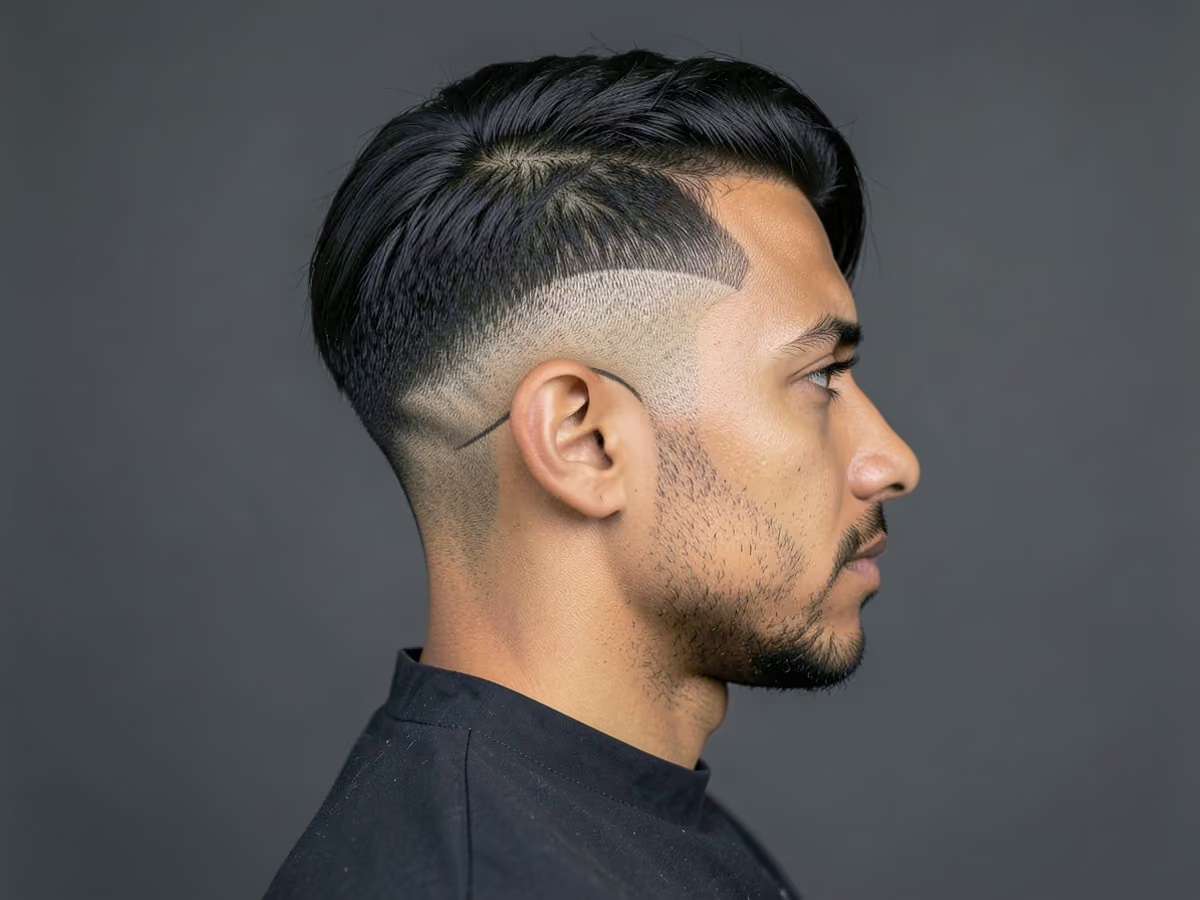
About This Style
Hidden from the front, a shaved design sits in the faded hair at the back of the head, such as a single curved line, a V shape or a small geometric block. It needs a fade or a #1 at the nape so the lines show. With a long top falling back, the design peeks out when the hair moves. Lines fade in about ten days, so most men touch them up at each trim.
How to Style at Home
Brush the top back with pomade so it ends just above the design.
Trim stray hairs around the lines between visits.
Ask for the same pattern each time so it stays consistent.
Ask Your Barber
"Can I get a low fade at the nape to a #0.5 with a simple V design shaved at the back, and five inches on top to slick back."
Trim:Every 3–4 weeks. Long crown hair splits over the thin spot.
Best For:Oval, round faces + straight hair thinning at the crown.
About This Style
Leaving the front long and cutting the crown slightly shorter stops the top separating at the thin spot. Sides are kept at a #2 taper rather than skin, which would make the crown look thinner by contrast. Style the front forward or messy so hair falls over the crown area, and use thickening powder at the roots. If thinning continues, a dermatologist can explain the options.
How to Style at Home
Dust thickening powder at the crown roots on dry hair.
Rough the top forward with a small amount of matte paste.
Avoid parting the hair at the crown, which shows the scalp.
Ask Your Barber
"Taper to a #2 on the sides, not skin, three and a half inches at the front, crown cut to two inches and textured to hide the thin area."
Recommended Products
Thickening Powder
Matte Paste
Colored, Retro and Trend Short Sides Long Top Cuts
Color, retro shapes and current trends all use the same tight sides and long top. Bleach shows best on longer lengths, while cuts like the Peaky Blinders or the wolf cut reshape the back and fringe.
Trim:Every 3 weeks. Dark sides need a fade refresh.
Best For:Oval, square faces + thick dark straight hair.
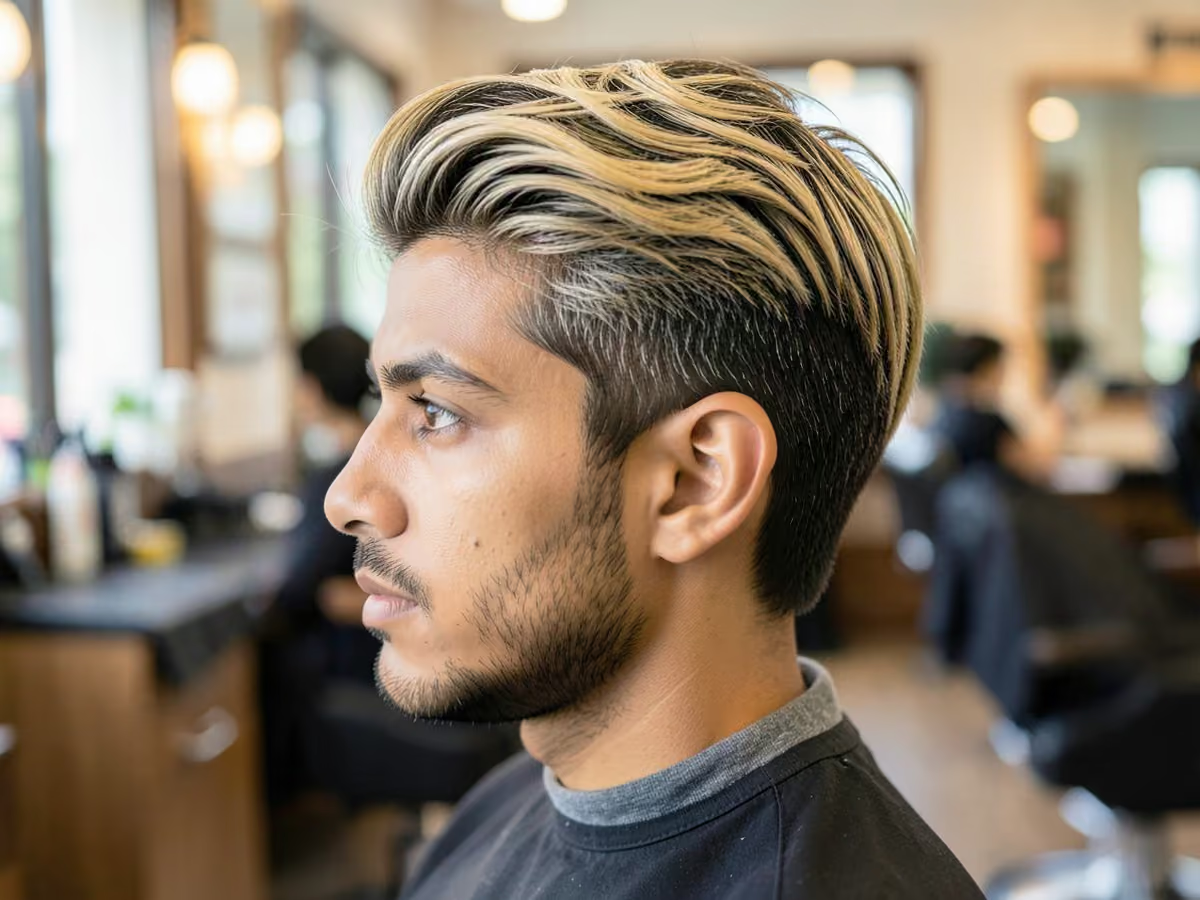
About This Style
Bleach is applied only to the top, so the faded dark sides act like a frame for the lightened length. Most men go to a golden or pale blonde, then use a purple shampoo to keep brassiness down. Since the sides are clipped every few weeks anyway, only the top needs color upkeep, roughly every six to eight weeks for roots. Have the color done by a stylist to protect the scalp.
How to Style at Home
Use a purple shampoo once a week to tone down brassiness.
Apply leave-in after every wash, as bleached hair dries out.
Style the top with matte clay rather than heavy gel.
Ask Your Barber
"Mid skin fade on the sides left dark, top four to five inches lightened to pale blonde, roots touched up every eight weeks."
Trim:Every 4 weeks. Highlights last longer than the side fade.
Best For:Oval, long faces + light brown or dark blonde hair.
About This Style
Fine streaks of lighter color woven through the top add depth without the commitment of full bleach. They look natural on brown or dark blonde hair and grow out softly, so a refresh every three months is enough. Tight sides keep the color concentrated on top. A textured or messy style shows the highlights best because the strands separate and catch light.
How to Style at Home
Scrunch sea salt spray through damp hair from roots to ends.
Air-dry or rough-dry with your fingers for separated texture.
Twist a few strands with clay to show the lighter streaks.
Ask Your Barber
"Keep a low fade to a #2 on the sides, four inches on top with choppy point-cut texture so the highlights separate."
Trim:Every 3–4 weeks. Toner and fade both need refreshing.
Best For:Oval, square faces + straight hair at least three inches.
About This Style
Ash gray or silver dye needs the hair lifted to a very pale blonde first, then toned cool. It is a fashion color, unlike natural gray, and drifts toward yellow in two to four weeks without a toning shampoo. Very short sides keep the silver top crisp. Expect to retone monthly and use a deep conditioner, since double processing dries the hair.
How to Style at Home
Wash with a silver or purple shampoo twice a week.
Comb a leave-in through damp hair to reduce breakage.
Blow-dry on low heat and finish with matte cream.
Ask Your Barber
"High fade to a #1, four inches on top, color lifted to pale blonde and toned ash gray, no thinning shears on the processed hair."
Trim:Every 4 weeks. The faded sides need regular blending.
Best For:Oval, heart faces + wavy or thick straight hair.
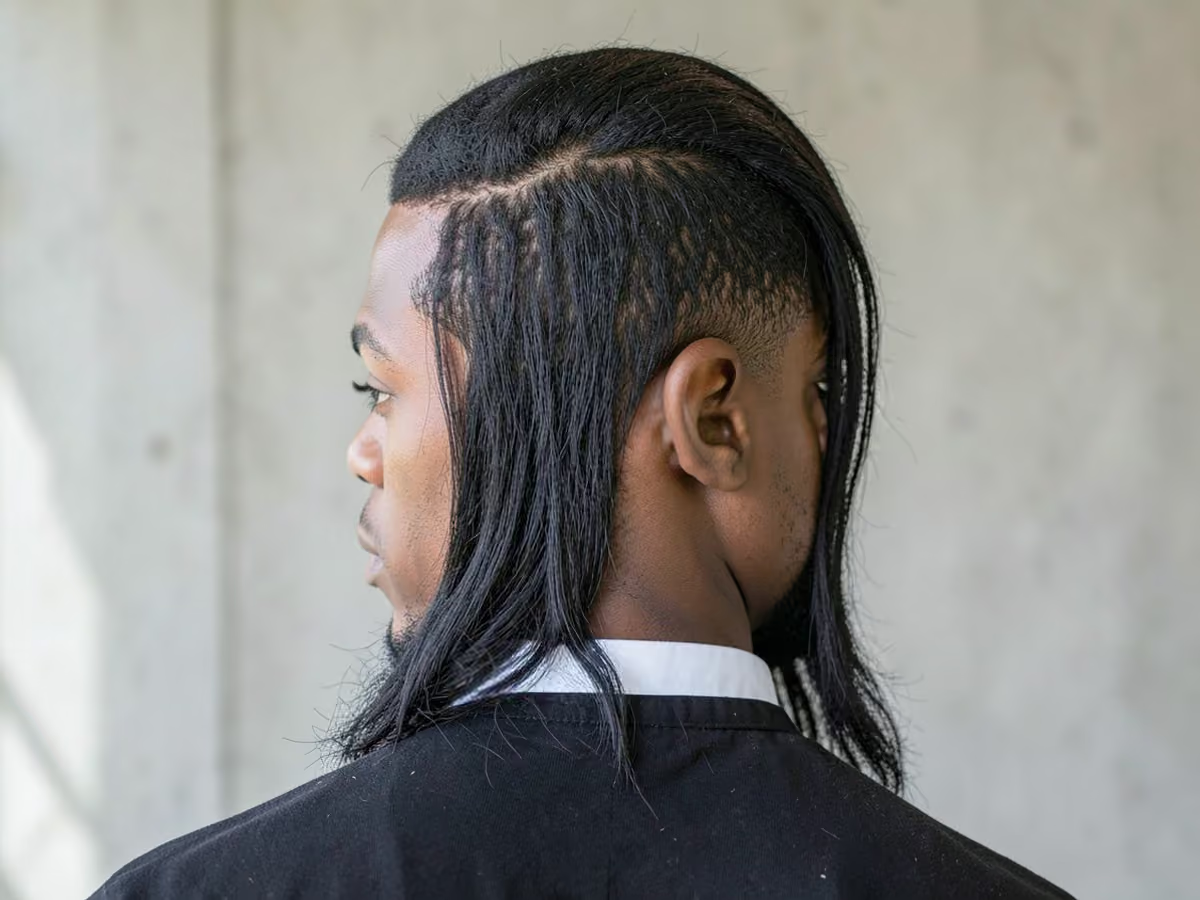
About This Style
Short sides and a long top continue into extra length at the nape, so the back falls to the collar while the hair over the ears is faded. The modern mullet keeps the top textured at around three inches, with the back left a little longer. A burst or temple fade usually separates the sides. Trim the back every six weeks so it does not turn stringy.
How to Style at Home
Spray sea salt through damp hair, including the back.
Scrunch the length at the back to encourage movement and wave.
Push the top forward with your fingers for a textured fringe.
Ask Your Barber
"Burst fade around the ears to a #1, top three to four inches textured, back left at collar length and point-cut."
Trim:Every 5 weeks. Layers lose shape as they lengthen.
Best For:Oval, long faces + wavy or thick hair.
About This Style
Choppy layers on top and through the back give the shaggy outline of a wolf cut, while a low fade takes the bulk off the sides. Compared with a classic wolf cut, the faded sides make it tidier and easier to keep in shape. It works best on wavy or thick hair that holds layered texture. Use curl cream or sea salt spray and let it air-dry for a deliberate messy finish.
How to Style at Home
Scrunch curl cream through the damp layers from mid-length down.
Let it air-dry without touching it for defined texture.
Pull the fringe forward and split it slightly at the center.
Ask Your Barber
"Wolf cut with a low fade to a #2 on the sides, heavy choppy layers on top and back, four-inch fringe, back a little longer."
Trim:Every 4–5 weeks. The hidden sides grow out unnoticed.
Best For:Oval, heart faces + thick straight East Asian hair.
About This Style
Popular in Korea, the two block cuts the sides and back to a #2 or #3 without blending and lets the long top hang over them. Unlike a fade, there is no gradient; the top simply covers the shorter section. Around four and a half inches on top falls into a soft fringe or curtain part. It suits thick straight hair, and the sides stay hidden as they grow.
How to Style at Home
Blow-dry the top down and slightly forward with a round brush.
Apply a little styling cream to the ends for softness.
Part the fringe slightly off center with your fingers once dry.
Ask Your Barber
"Two block, sides and back at a #3 with no fade, top four and a half inches layered to fall over, soft fringe."
Trim:Every 2–3 weeks. High bare sides show regrowth fast.
Best For:Oval, square faces + thick straight hair.
About This Style
Inspired by 1920s working-class cuts, this version skin-fades or shaves the sides very high and leaves a heavy top that is brushed forward or combed across. The line between sides and top is hard, with little or no blending. Brushed forward, it gives a cropped fringe; combed to one side, it reads more formal. A matte pomade keeps the finish period-accurate.
How to Style at Home
Comb a matte pomade through damp hair from roots to ends.
Brush the top forward or across to one side.
Keep the sides clean-shaven between visits with a foil shaver.
Ask Your Barber
"Very high disconnected skin fade on the sides and back, a heavy four-inch top with no blending, combed over to the side."
Trim:Every 4 weeks. The taper keeps a neat vintage outline.
Best For:Oval, long faces + thick straight or wavy hair.
About This Style
Borrowed from 1950s greaser styles, the long top is combed back and up into a high front roll, with the sides combed close to the head using pomade. Sides are often a #2 taper rather than a fade to match the period. Five to six inches on top gives enough length for the roll. A high-shine pomade holds the shape and gives the classic wet finish.
How to Style at Home
Comb pomade through damp hair from roots to ends.
Roll the front up and back with a comb.
Comb the sides back flat toward the crown.
Ask Your Barber
"Classic taper to a #2, sides scissor-cut to comb back, top five inches, front left longest for a high roll."
Recommended Products
Pomade
Short Sides Long Top by Face Shape, Occasion and Upkeep
Small changes in fade height and top length can balance proportions or fit a dress code. These cards pair the cut with round and narrow faces, glasses, a big forehead, a crown cowlick and a wedding, plus one version that needs almost no styling.
Trim:Every 3 weeks. High fades lose their slimming effect as they grow.
Best For:Round, full faces + thick straight or wavy hair.
About This Style
Round faces look longer when the sides are kept very short and the top is styled upward. A high fade to a #1 and a brushed-up or quiff top of four inches add vertical height without width. Avoid a center part or a heavy fringe, which round off the face further. A light pomade adds hold and keeps the height through the day.
How to Style at Home
Blow-dry the top upward with a round brush.
Shape the front into a short quiff with light pomade.
Keep hair off the forehead to show more length.
Ask Your Barber
"High fade to a #1, four inches on top cut shorter at the back, front left longest for a brushed-up quiff."
Trim:Every 4–5 weeks. Fuller sides grow out evenly.
Best For:Long, narrow faces + straight or wavy hair.
About This Style
For narrow or long faces, the goal is to add width at the sides rather than height. That means a soft taper at a #3 or #4 instead of a skin fade, and a long top that falls forward or to the side. A side-swept fringe shortens the face visually. Skip big pompadours, which make a long face look longer still.
How to Style at Home
Comb styling cream into damp hair and part to the side.
Let the front fall across the forehead as a fringe.
Keep the volume low and the sides slightly full.
Ask Your Barber
"Scissor taper to a #4 on the sides, no skin, four inches on top with a side-swept fringe and a flat finish."
Trim:Every 3 weeks. Hair over the ear pushes against the frames.
Best For:Oval, square faces + straight or wavy hair, wearing glasses.
About This Style
Glasses arms sit right over the ear, so the fade or taper there should be tight enough that hair is not pushed out sideways. A low skin fade around the ear with a #2 above keeps it clean. On top, three to four inches combed back or to the side stays clear of the lenses. Thicker frames pair well with a fuller top, thin wire frames with a flatter one.
How to Style at Home
Comb the top back with light pomade, away from the lenses.
Check the hair around the arms of the glasses after styling.
Ask for the ear area to be cleaned at every trim.
Ask Your Barber
"Low skin fade around the ears with a clean outline where my glasses sit, #2 above, four inches on top swept back."
Trim:Every 4 weeks. Book the final trim days before the event.
Best For:Oval, square faces + straight or wavy hair.
About This Style
For a wedding or formal event, the long top is swept to one side over a soft parting with a medium-hold cream, and the sides get a fresh taper a few days before. Booking the cut three to five days ahead lets the sharp edges soften for photos. A light shine reads well in pictures, while very matte products can look flat under flash.
How to Style at Home
Blow-dry the top to the side with a round brush.
Comb a medium-hold cream through and define the part.
Finish with a tiny amount of pomade for light shine.
Ask Your Barber
"Mid taper to a #2, four inches on top, a soft side part and cleaned-up edges for a wedding in four days."
Trim:Every 6 weeks. Soft tapers and layers hide growth.
Best For:Oval, round faces + straight or wavy hair.
About This Style
Designed for minimal effort, this version keeps the sides at a #3 taper and the top at three inches, cut with layers so it falls into place after towel-drying. There is no hard part, no skin fade and no product required. It holds its shape for about six weeks. Pick it for short sides and some length on top with no daily routine.
How to Style at Home
Towel-dry and push the top back with your fingers.
Let it air-dry; the layers settle on their own.
Ask Your Barber
"Scissor taper to a #3, three inches on top layered so it falls into place without product, no part, natural neckline."
Trim:Every 4 weeks. A grown fringe falls into the eyes.
Best For:Oval, long faces + straight or wavy hair, high forehead.
About This Style
A long top brushed forward or swept across covers part of a large forehead, while short sides keep the overall shape neat. Leave three to four inches at the front, cut as a textured fringe or a side sweep. Avoid slicked-back styles, which expose the whole forehead. A low fade keeps the sides tidy without pulling the eye upward.
How to Style at Home
Blow-dry the front forward and slightly to one side.
Rub matte paste through the fringe to separate it.
Leave the hairline covered rather than pushed back.
Ask Your Barber
"Give me a low fade to a #2, top four inches, with the front left longest for a side-swept fringe that covers my forehead."
Trim:Every 3–4 weeks. Short crown hair stands up quickly.
Best For:Oval, round faces + straight hair with a crown swirl.
About This Style
A cowlick at the crown makes long hair stick up or split. Barbers handle it by leaving more weight at the crown so the hair lies down, and by cutting the top to follow the direction of growth. Styled back in the direction of the swirl, the hair sits flat. Sides at a #2 fade keep the outline neat around it.
How to Style at Home
Blow-dry the crown in the direction of the swirl first.
Comb the rest of the top back to match.
Press a little pomade into the crown to keep it flat.
Ask Your Barber
"Mid fade to a #2, top four inches, crown left heavier so my cowlick lies down, cut following the growth direction."
Recommended Products
Pomade
How Do You Ask Your Barber for Short Sides and a Long Top?
Give the side treatment, the shortest guard and the top length in inches. For example: a low taper from a #3 to a #1 on the sides and back, five inches on top, cut so it can be slicked back or swept to the side. If you want an undercut, say so and ask whether the line should be connected or disconnected. The clipper guard numbers chart explains what each guard leaves.
Tell the barber how you style the top, since the cut changes with direction. Hair that goes back needs length at the front; hair that goes forward needs weight at the crown removed. If you are growing your top out, ask the barber to only trim the sides until the top reaches your goal length. Mention any cowlick or double crown, since those spots decide where a long top wants to fall.
Clipper Guards Used in Short Sides Long Top Styles
A clipper guard is the plastic comb that clips onto the blade and sets how much hair is left: a #1 leaves 3 mm (1/8 inch), each step up adds about 3 mm. The right column lists the cards on this page that call for each guard. See the full clipper guard numbers guide for the complete chart.
Clipper guard sizes for short sides long top styles
The pomade vs clay vs wax guide compares hold and shine if you are not sure which product fits your style. Most long tops look best with a dryer, but curly hair often looks better left to air-dry.
Slicked or brushed back
Apply pomade or styling cream to damp hair, comb it straight back and blow-dry in that direction. Use pomade for shine and matte cream for a natural finish.
Swept, parted or quiffed
Blow-dry the front up and to the side with a round brush, then shape it with matte clay. A side part sits best when the part is combed in while the hair is wet.
Textured or curly
Use sea salt spray on straight hair or curl cream on curly hair, dry with your fingers and twist a few pieces. Avoid combing, which flattens texture.
Tied up
Gather the top at the crown with a soft elastic and leave a little slack at the roots. Rotate the bun position now and then to avoid tension at the hairline.
How Do You Keep Short Sides Long Top Looking Fresh?
The sides grow out first. A skin fade looks grown in after about two weeks and a #2 taper after three or four, while the top can go six to eight weeks between trims. Many men book a sides-only cleanup between full cuts, which is quicker and usually costs less. See how often you should get a haircut for planning visits.
Wash the top two or three times a week rather than every day, since daily washing dries out long hair and strips the oils that help it hold a shape. Use a light conditioner on the top only. If you use heavy pomade, a weekly clarifying wash prevents buildup that weighs the top down. Trim the ends of the top every six to eight weeks to remove split ends, even when you are growing it.
Which Short Sides Long Top Is Right for You?
Pick your hair type and how much upkeep you will put in. The matches below come from the Best For and Maintenance notes on each card. Upkeep follows the Maintenance badge: low means a cut every 3 to 6 weeks and almost no daily styling, high means weekly line-ups or daily product.
Q1: What is the haircut with short sides and a long top called?+
There is no single name. Short sides long top is the general description, and specific versions have their own names: undercut, slick back undercut, pompadour, quiff, comb over, faux hawk and man bun with shaved sides. Naming the top style and the side treatment tells the barber exactly what you want.
Q2: How long should the top be for a short sides long top cut?+
Three inches is the minimum for the top to look long against short sides. Four to five inches allows a slick back, pompadour or side sweep. Six to seven inches gives a fringe or a short ponytail, and eight inches or more is needed for a man bun or top knot.
Q3: Is short sides long top the same as an undercut?+
An undercut is one type of short sides long top. It cuts the sides to one short length with a visible line where the longer top begins. Other versions blend the sides with a fade or taper instead, which gives a softer change from short to long and grows out more gradually.
Q4: Does short sides long top work for curly hair?+
Yes. Curly hair often suits it better than straight hair, because curls add volume on top without much product. Ask for the curls to be cut dry so the length is judged as it sits, keep the sides at a taper or low fade, and use curl cream or leave-in rather than pomade.
Q5: How do you grow out the top while keeping the sides short?+
Keep booking cuts every three to four weeks but ask the barber to trim only the sides and back. Leave the top alone except for a light dusting of split ends every two months. At about half an inch of growth a month, adding three inches to the top takes around six months.
Q6: Is short sides long top professional?+
Most versions are accepted in offices, especially with a taper or low fade, a side part, a comb over or a brushed-back finish. Very high skin fades, shaved designs and messy textured tops read more casual. A matte or low-shine product looks more conservative than a wet-look pomade.