
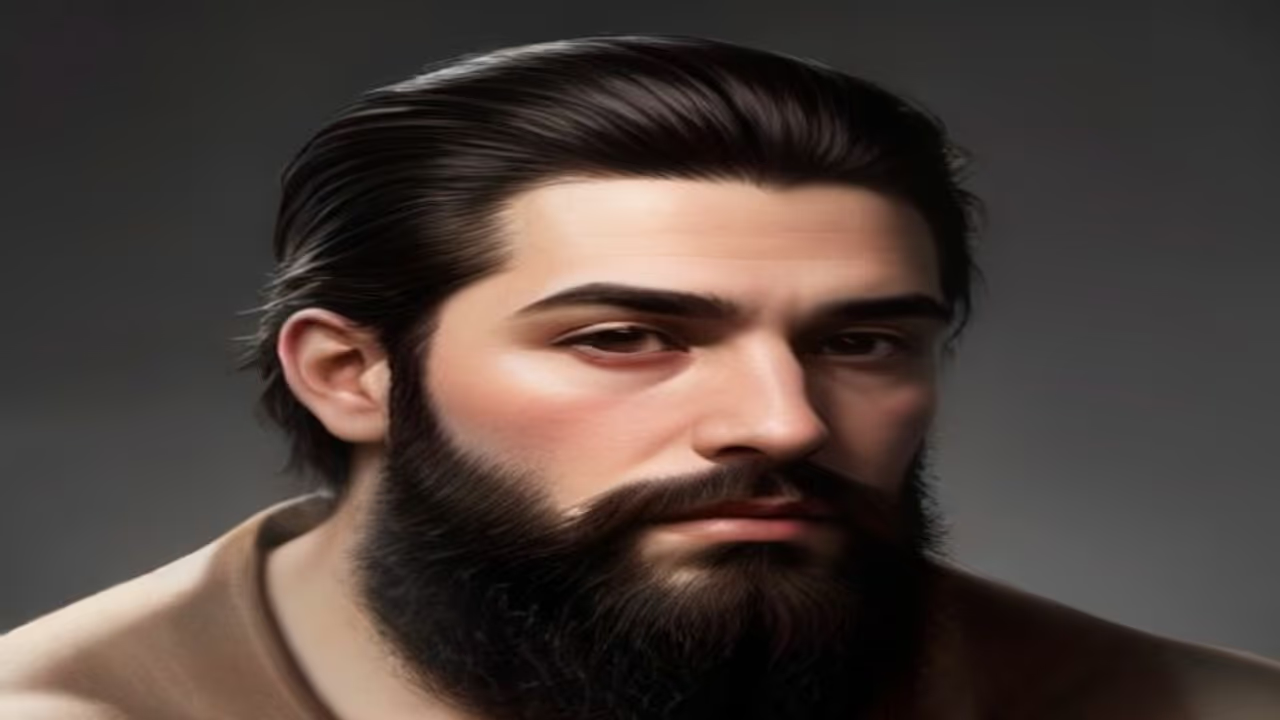
The Boxed Beard:
Complete Styling & Shaping Guide
A short, sharply defined full beard with clean edges: the most office-friendly way to wear a real beard.
By Jessica Hamilton — Master Stylist & Creative Director
The boxed beard is a short full beard with deliberately defined edges: the cheek line, the neckline, and the moustache are all cleanly delineated rather than left to grow naturally. It's the beard equivalent of a sharp haircut: same coverage as a full beard, but groomed into a defined rectangle around the jaw.
What Makes It a Boxed Beard
Three things: short, even length (usually 1/2 inch or under), a defined cheek line rather than a natural fade upward, and a sharp neckline just above the Adam's apple. The result is a rectangular, contained shape, hence 'boxed.' It reads deliberate and professional, which is why it's the go-to full beard for office environments.
Who It Suits
- Fuller, even beard growth: the defined edges expose patchiness, so this needs decent coverage.
- Round or oval faces: the angular box adds structure and definition.
- Professional settings: the sharpest, tidiest way to wear a real beard.
- Less ideal if your growth is patchy along the cheeks, where the defined line will highlight gaps.
Shaping and Maintaining
- 1
Grow to an even length
Let it come in for 2-4 weeks so you have material to shape.
- 2
Set the length
Trim all over with a guard, typically 3-8 mm for a true boxed look.
- 3
Define the cheek line
Draw a clean line from sideburn to moustache; keep it natural-height, don't over-lower it.
- 4
Set the neckline
Two fingers above the Adam's apple, curving up toward the ears. Never at the jawline.
- 5
Square the edges
Straighten the sides so the beard reads rectangular rather than rounded.
- 6
Maintain every 3-5 days
The defined edges blur fast — that's the trade-off for the sharp look.
Common Boxed Beard Mistakes
The most common error is setting the cheek line too low in an attempt to hide sparse growth higher up. This usually backfires, since a cheek line set well below your natural hairline reads as an obvious grooming choice rather than a natural beard shape, and it needs constant upkeep to stay looking deliberate rather than patchy. It's generally better to follow your natural cheek line and simply trim any stray hairs above it.
Rounding off the sides instead of keeping them straight is the second common mistake, and it's what turns a boxed beard into a generic short beard. The straight vertical sides along the jaw are what give the style its name, so squaring them off with a trimmer guide or straightedge is worth the extra few minutes each time you shape it.
Trimming the whole beard down to one length without checking the neckline separately is the third issue. The neckline needs to sit higher and be shaped independently of the main beard length, since running a single guard over the entire area tends to leave neck hair growing too far down the throat.
Working With Patchy Growth
A boxed beard is one of the less forgiving styles for uneven growth, since the crisp lines draw attention to any thin spots rather than blending them away. If your cheeks or the area under your lower lip grow in thinner than the rest, keeping the overall length a little longer (closer to 8-10mm than 3mm) usually helps the thinner patches read as intentional texture instead of visible gaps. Trimming everything shorter tends to make sparse areas more obvious, not less.
If patchiness is only along the very edges of the cheek line, setting that line slightly higher, closer to where growth is naturally fuller, usually solves the problem without changing the beard's overall shape or length.
Frequently Asked Questions
Q1: What is a boxed beard?+
Q2: Who does a boxed beard suit?+
Q3: How often do I need to trim a boxed beard?+
Q4: Where should the neckline of a boxed beard sit?+
Q5: What length should a boxed beard be?+
Make us a Preferred Source on Google
See our latest articles first in your Google Search & AI Overviews.