
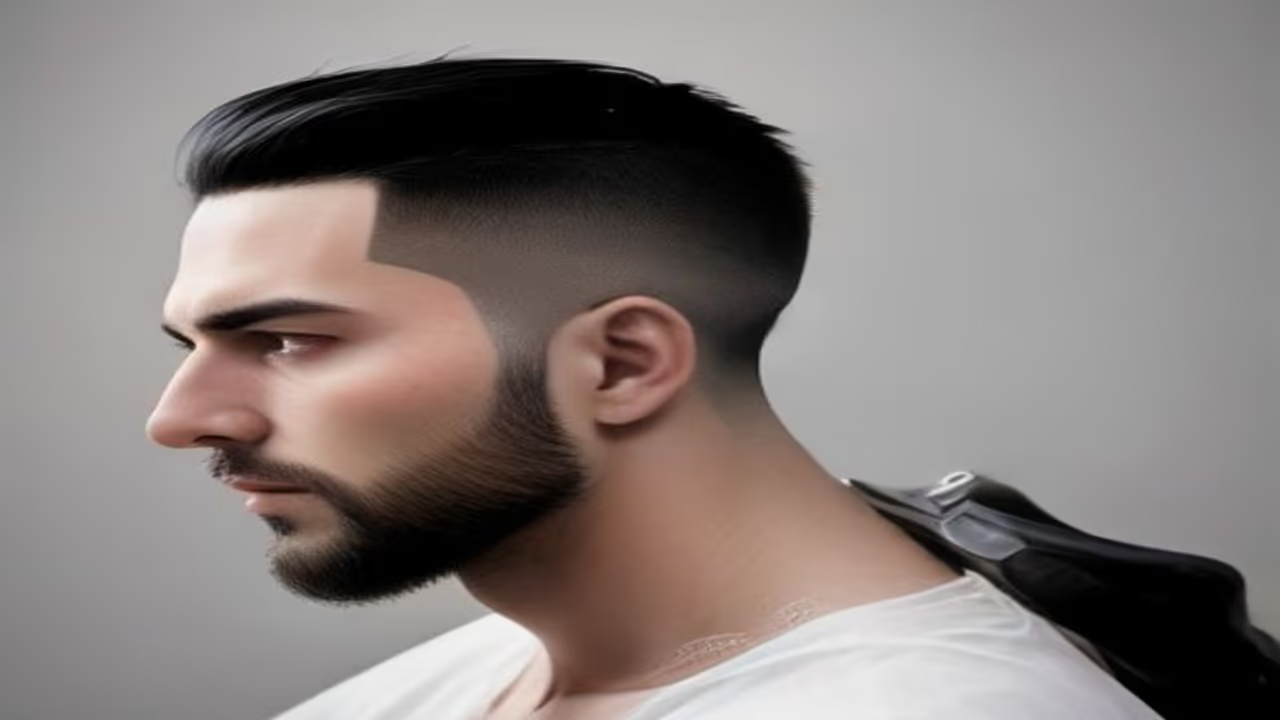
How to Shape a Beard Neckline
Properly (Visual Guide)
The single most common beard mistake is shaving the neckline at the jaw. Here's where it actually belongs.
By Jessica Hamilton — Master Stylist & Creative Director
If a beard looks "off" and you can't say why, the neckline is usually the reason. One mistake causes most of it: shaving along the jawline. That removes the very hair giving your jaw definition, and leaves you looking weak-chinned. Don't do it. The correct neckline sits noticeably lower, on the neck itself.
The Two-Finger Rule
Place two fingers horizontally directly above your Adam's apple. The top of your upper finger is roughly where your neckline should sit. From that central point, the line curves upward on both sides toward the back of your jaw, finishing just behind the earlobe. Think of a smile-shaped curve. Not a straight horizontal line. And definitely not the jawline.
Why the Jawline Is Wrong
Shaving to the jawline removes the shadow and bulk under the jaw that creates definition. The result is a beard that looks like it's floating on your face, and, counterintuitively, a weaker-looking jaw. Keeping hair below the jawline down to the proper neckline is what makes a beard sharpen your jaw rather than flatten it.
How to Do It
- 1
Find the point
Two fingers above the Adam's apple, centre of the neck.
- 2
Mark the curve mentally
From that centre point, curve up toward a point just behind each earlobe.
- 3
Shave below the line only
Everything under the curve comes off; everything above stays.
- 4
Soften the edge
Fade or blur the line slightly rather than leaving a razor-hard edge, since it looks more natural and grows out better.
- 5
Check both sides
Symmetry matters; check in a mirror from each angle.
- 6
Maintain weekly
Neck stubble below the line grows back fast.
If You've Shaved It Too High
There's no quick fix: you have to let it grow back, which takes 1-3 weeks depending on your growth rate. In the meantime, keep the rest of the beard tidy and resist "evening it up," which only takes more. Same principle as a line-up cut too high: stop cutting and let it recover.
Neckline by Beard Style
The two-finger rule is a starting point, and the right height changes a little with the beard.
- Stubble: a softer, faded neckline often looks better than a hard line, because the contrast between skin and short hair is small.
- Short boxed beard: a slightly more defined line, still curved and following the rule.
- Full or long beard: the neckline can sit a little lower, since longer hair falls and covers it. Trim with the head in a neutral position, not tilted back.
- Heavier or softer jaw: keep the line at the lower end of the range to add definition under the jaw.
Common Mistakes
- Tilting your head far back. It stretches the neck and moves the line upward, so the neckline ends up too high when you look straight ahead.
- Using a straight line from ear to ear. The line should curve up behind the jaw.
- Going too far back behind the ear. The line should end just behind the earlobe, not wrap around the back of the neck.
- Trimming a little higher each week. Keep to the same line rather than tidying it up a little more each time.
- Shaving right after a hot shower with a blunt blade. Warm skin is softer, but a dull blade causes irritation and bumps along the neckline.
Tools That Help
A trimmer with a guard is the easiest way to keep the neckline even. Use it without a guard to define the line, then a guard setting to blend just below it for a softer edge. A razor gives the cleanest result but needs a steady hand and can irritate skin prone to razor bumps. Good light and a hand mirror to check the side profile make a big difference.
Frequently Asked Questions
Q1: Where should a beard neckline be?+
Q2: Why shouldn't I shave my beard neckline at the jawline?+
Q3: What is the two-finger rule for beard necklines?+
Q4: Should a beard neckline be a straight line or curved?+
Q5: How do I fix a beard neckline I shaved too high?+
Related Haircut Guides
Make us a Preferred Source on Google
See our latest articles first in your Google Search & AI Overviews.