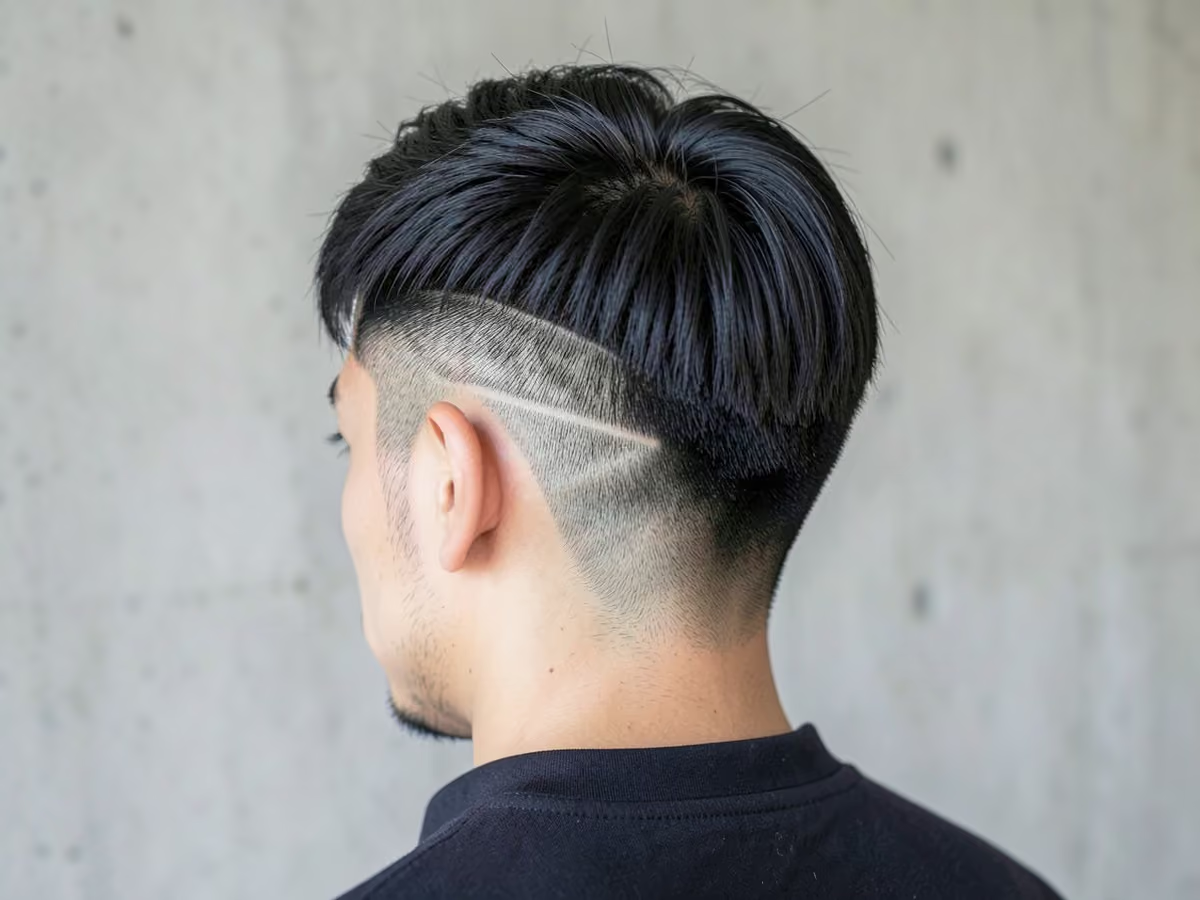
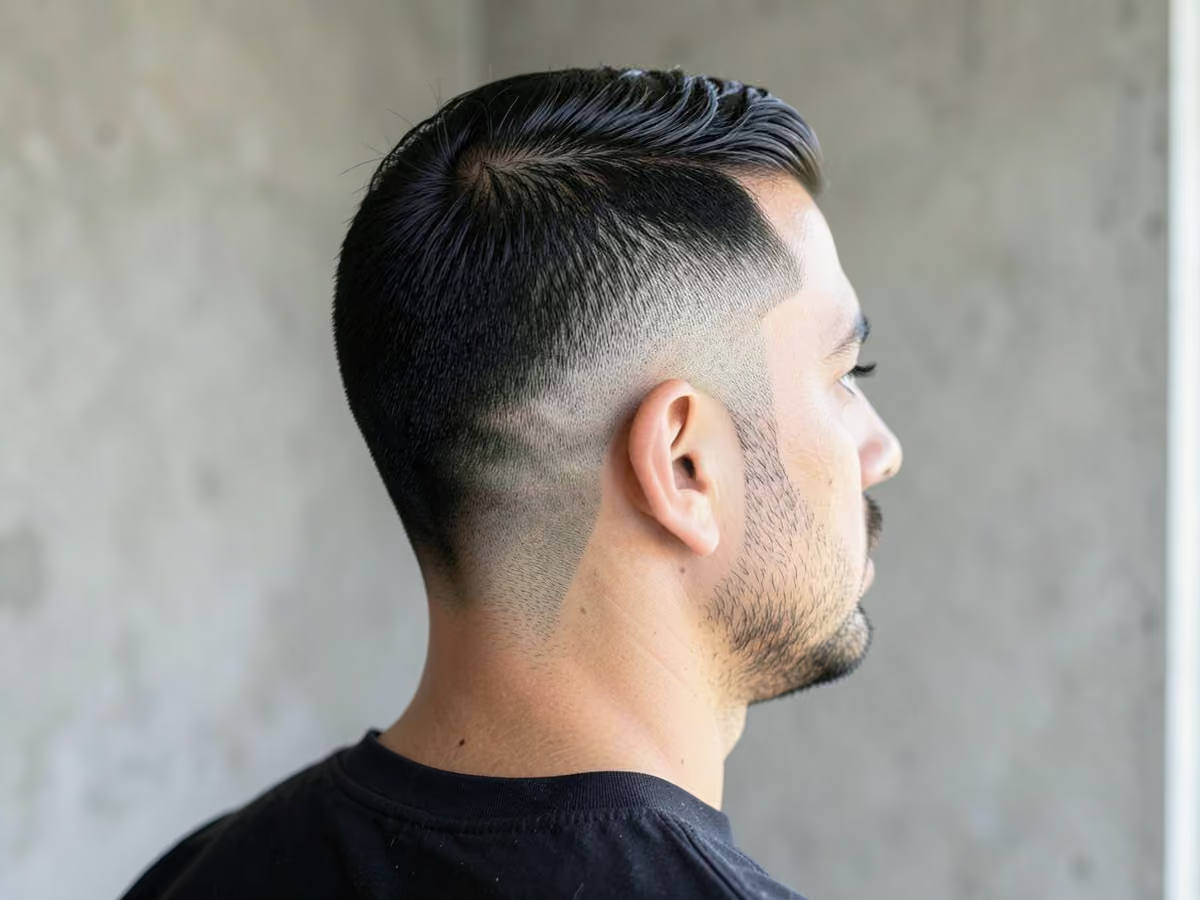
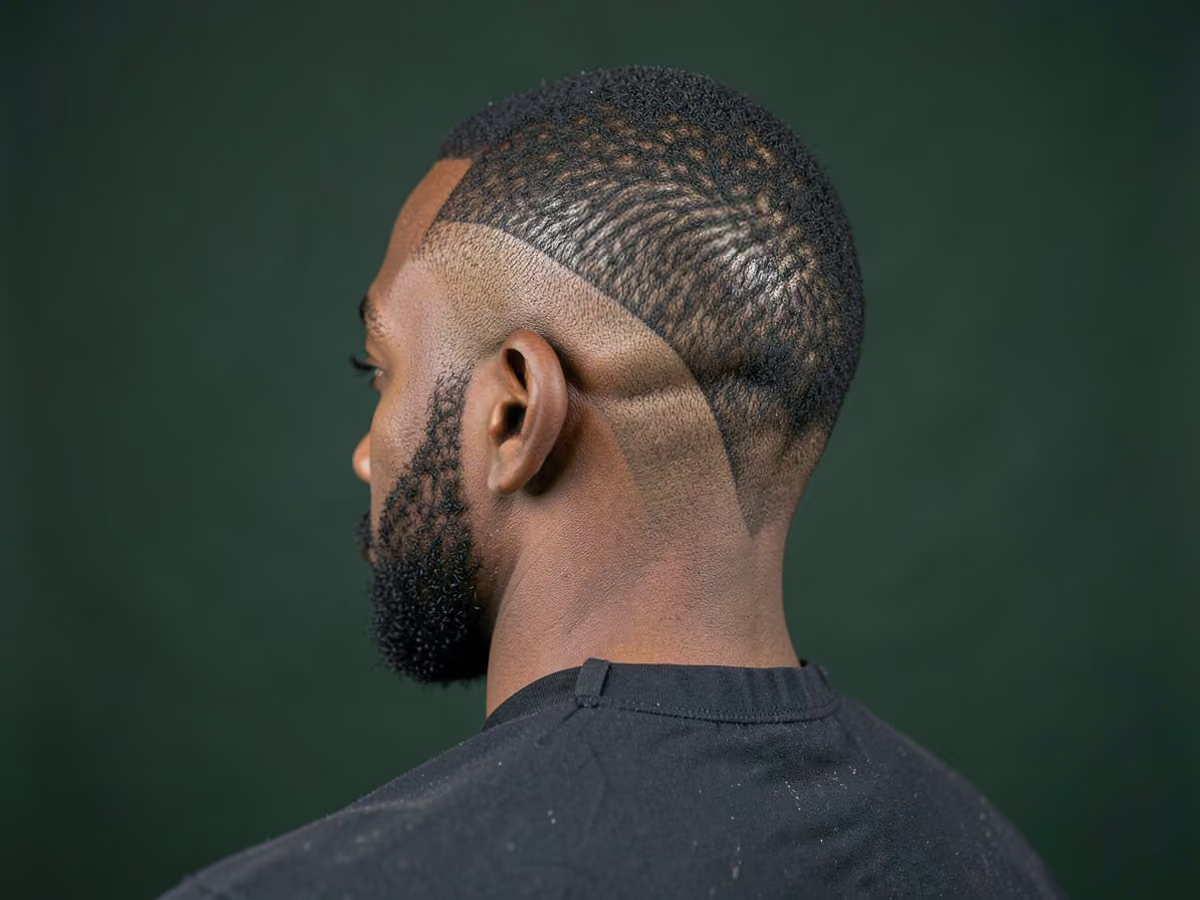
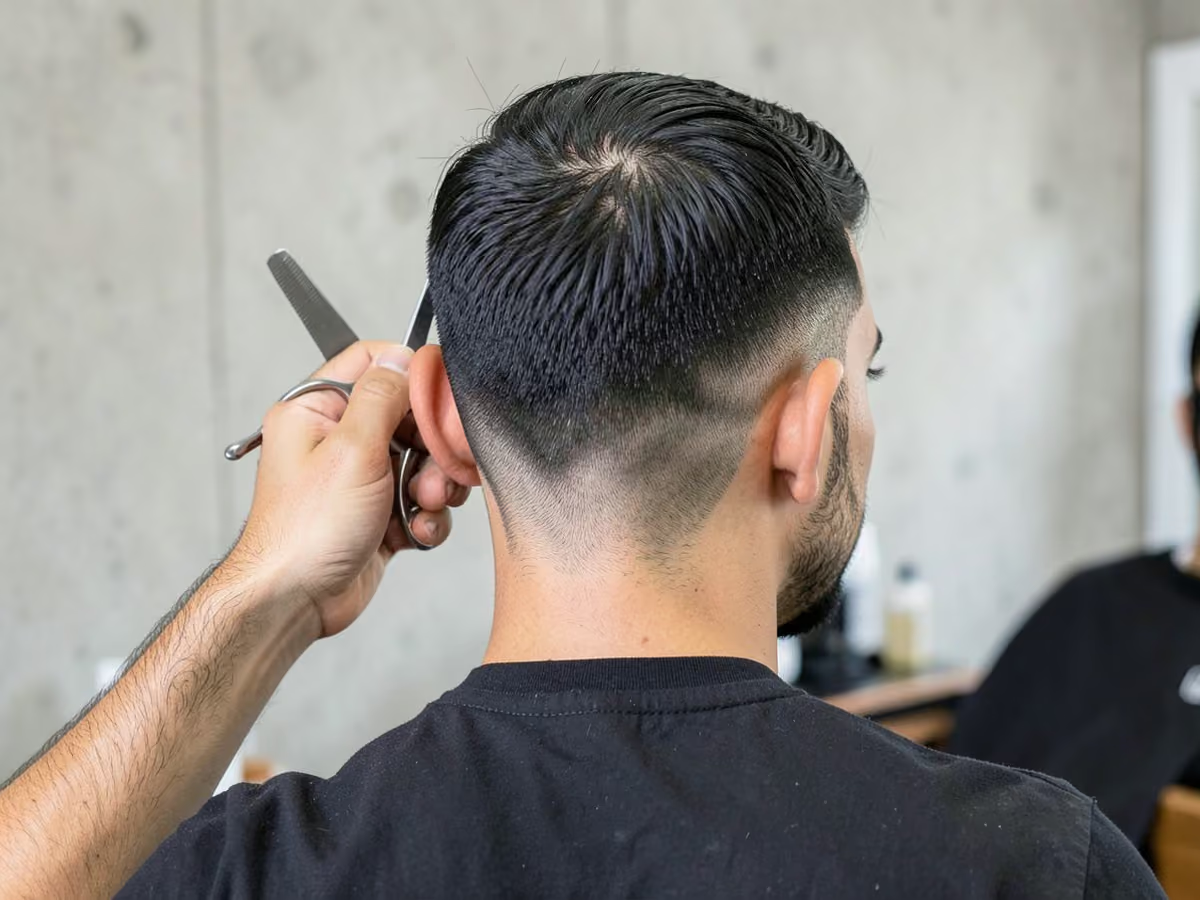
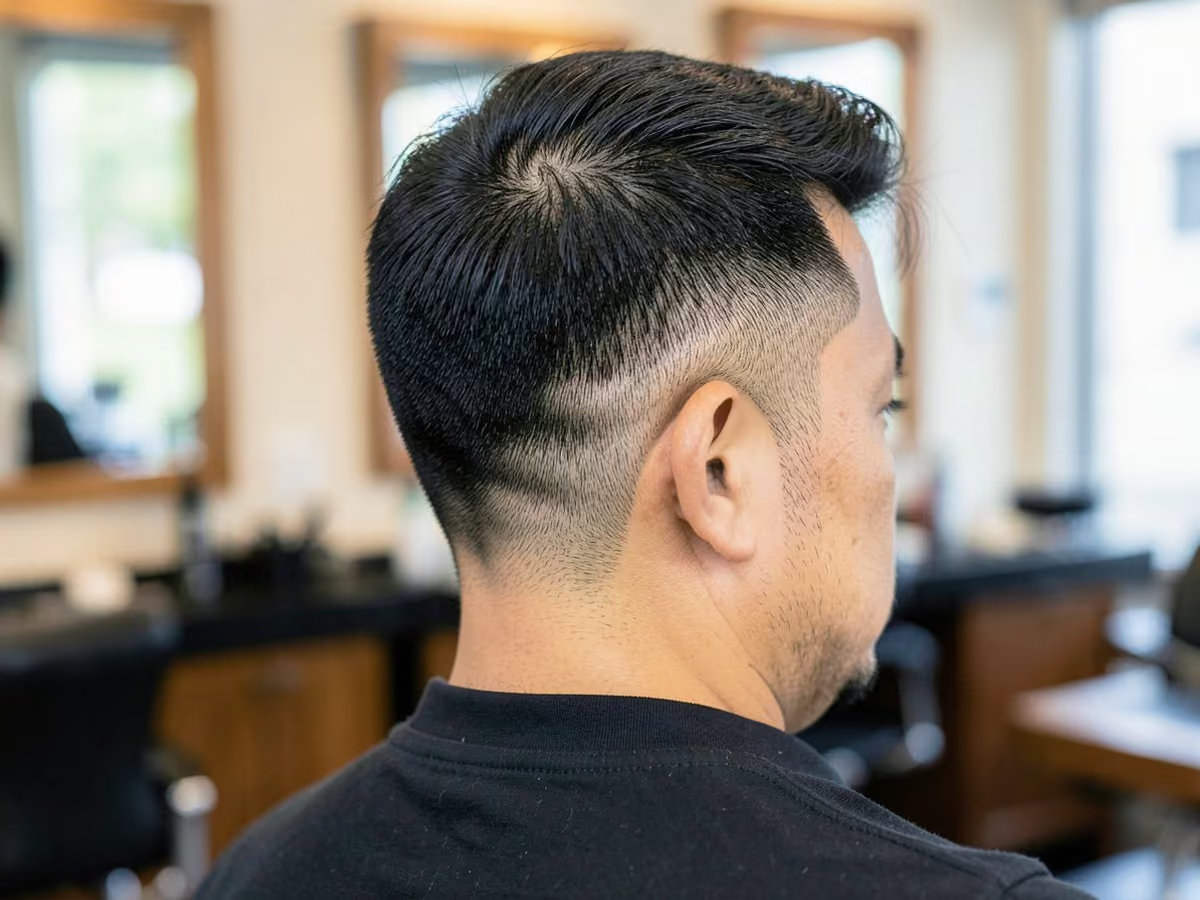
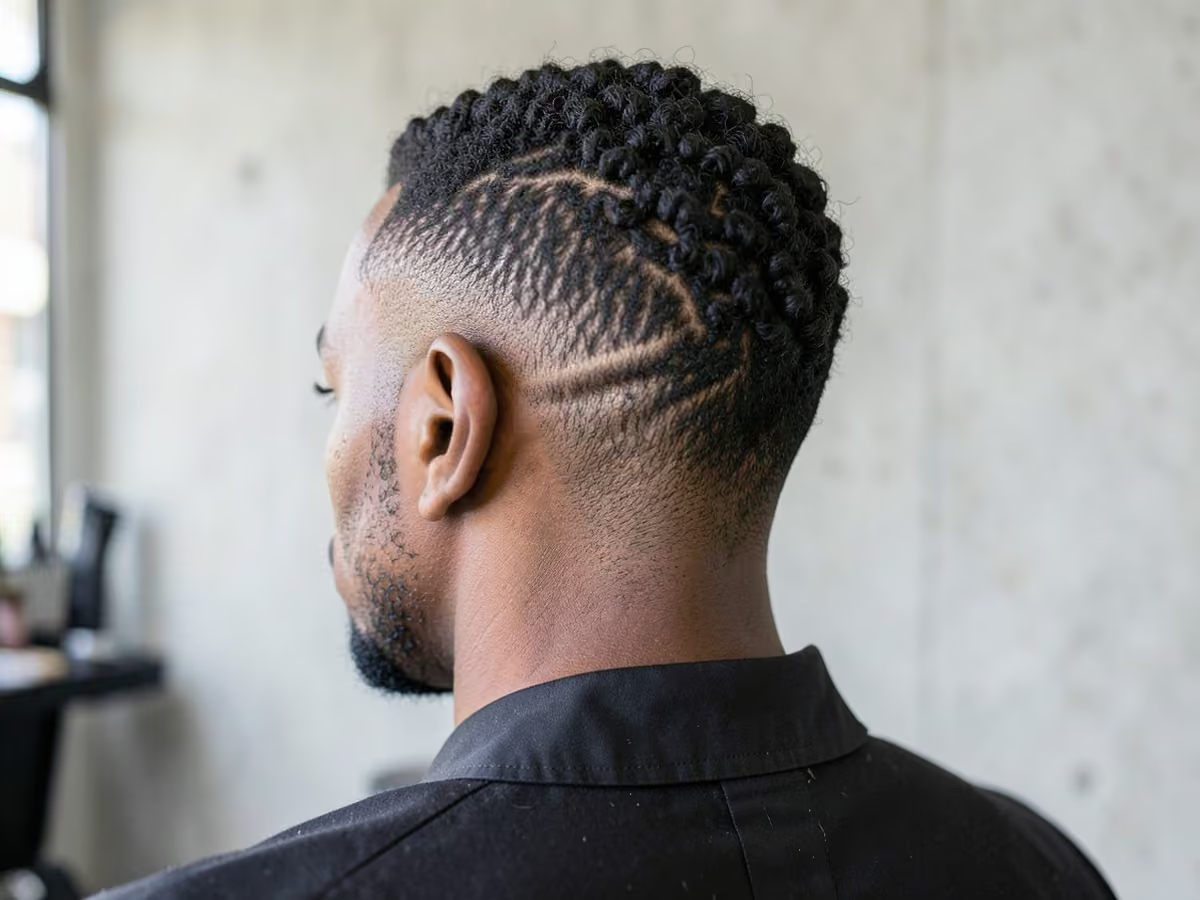
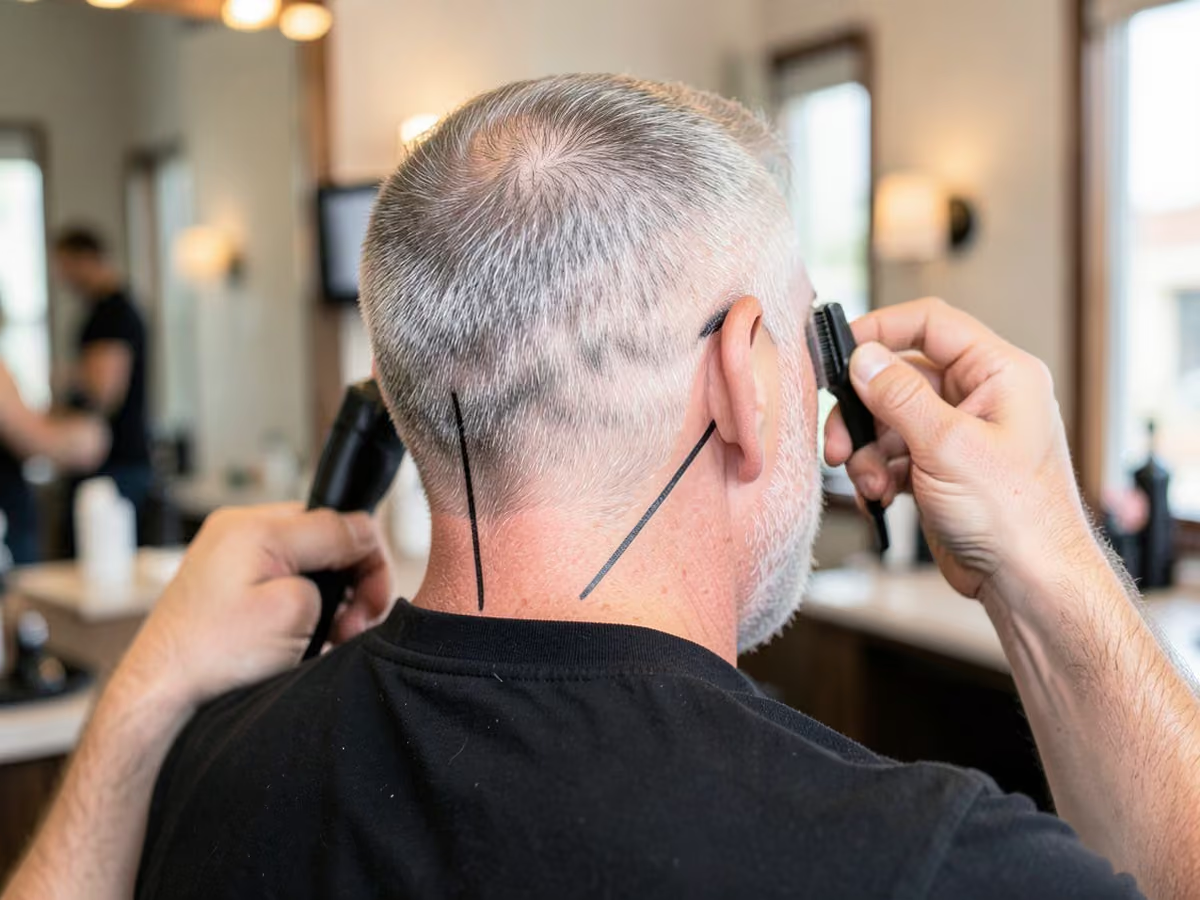
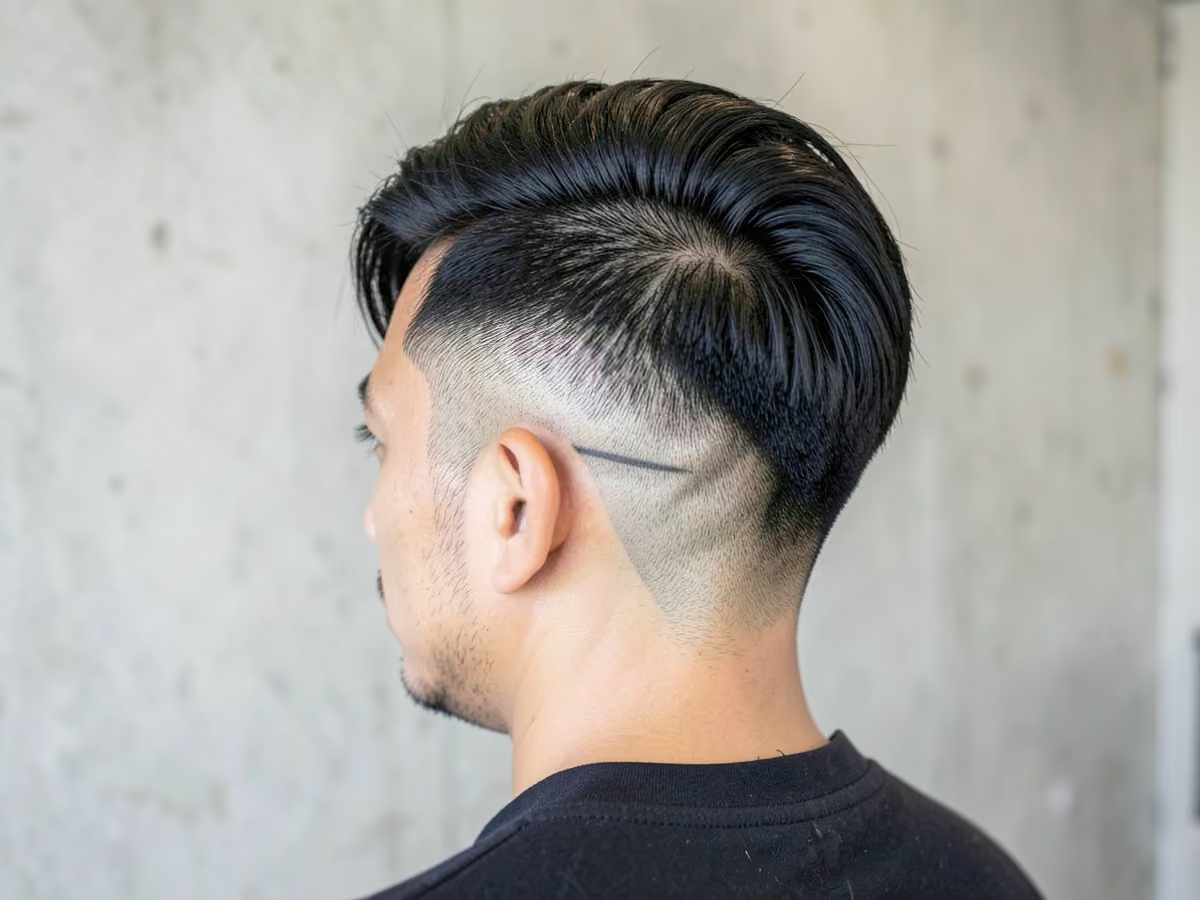
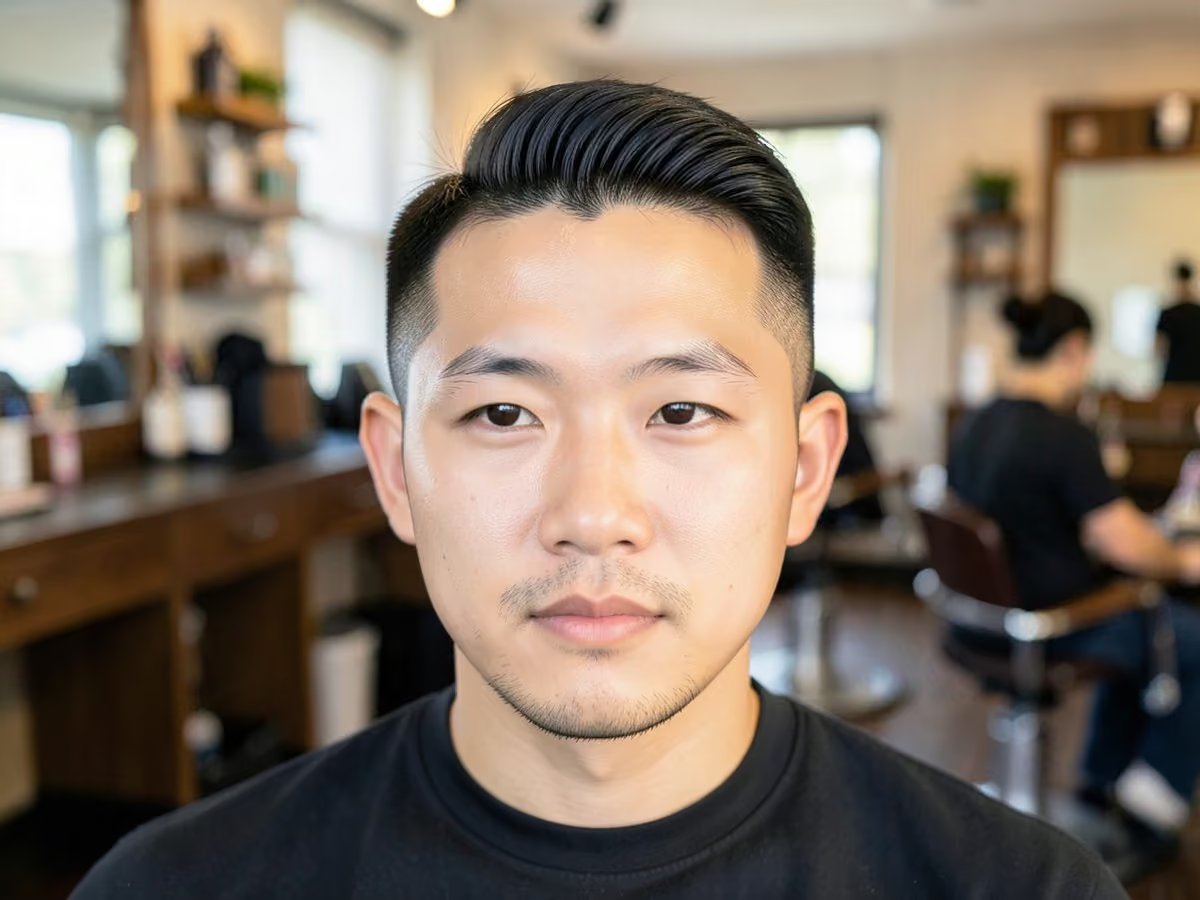
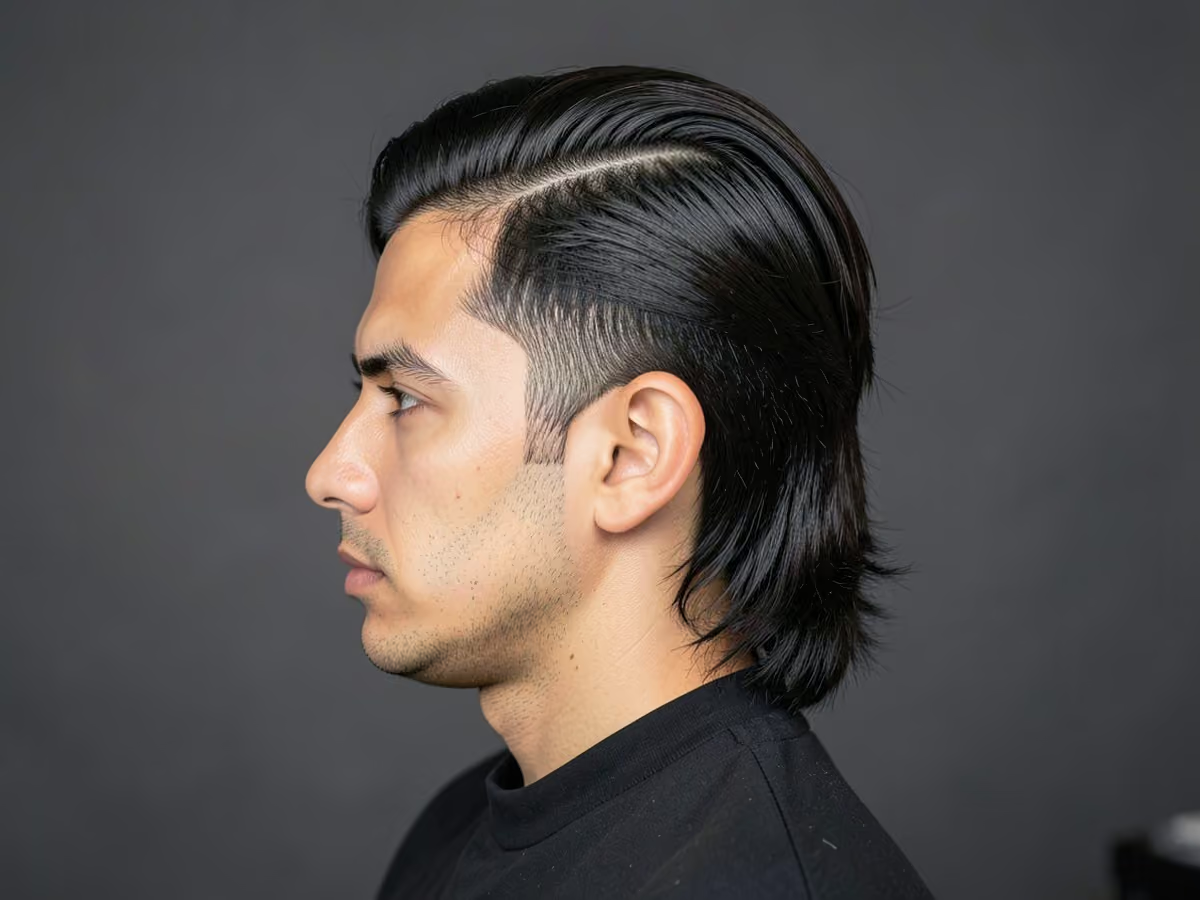
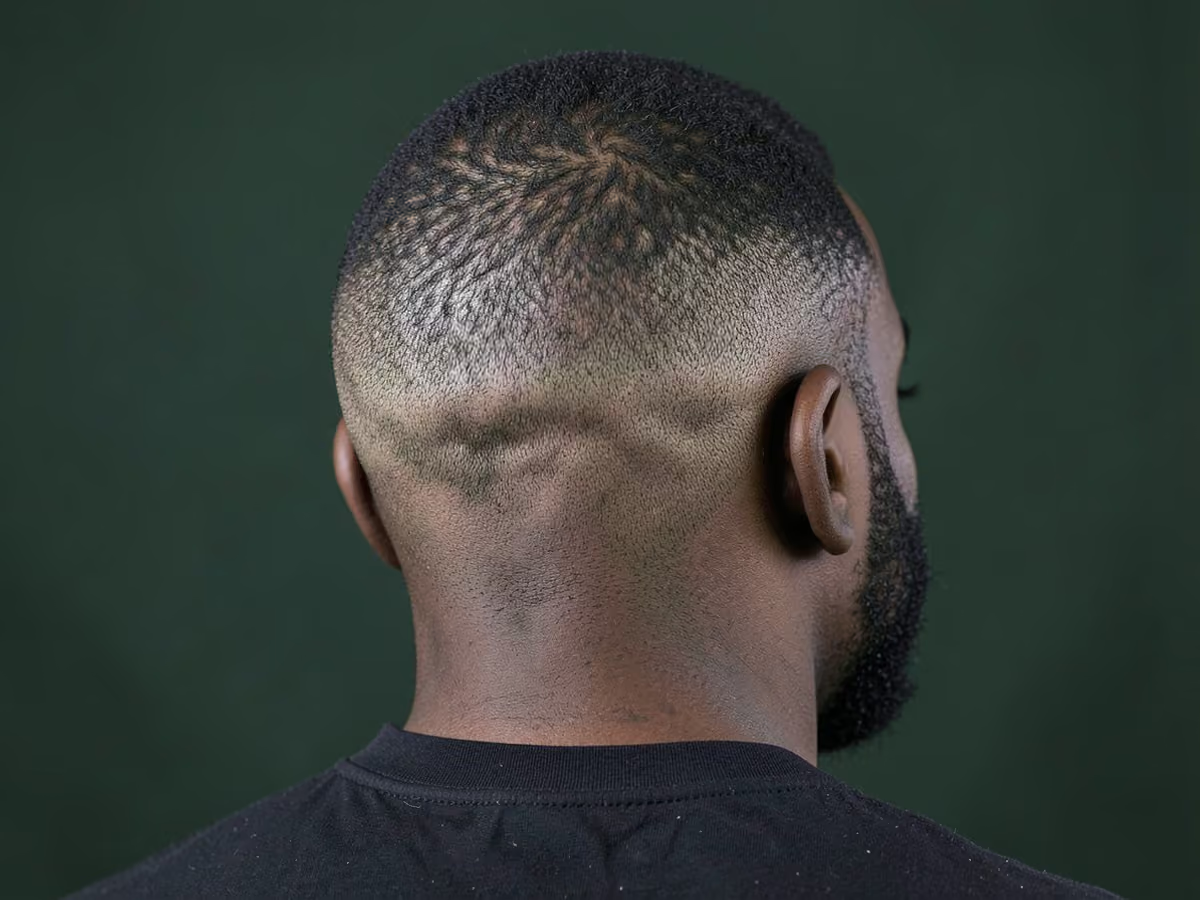
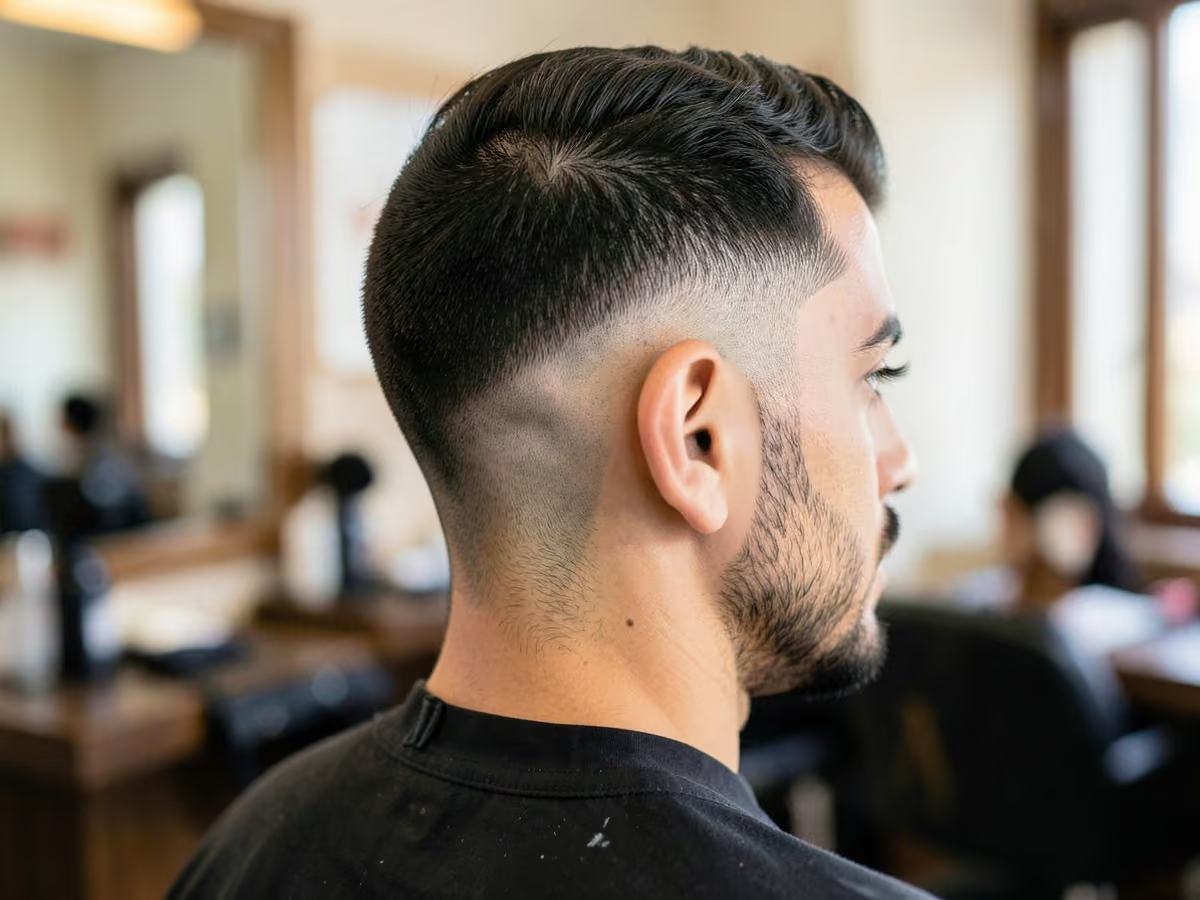
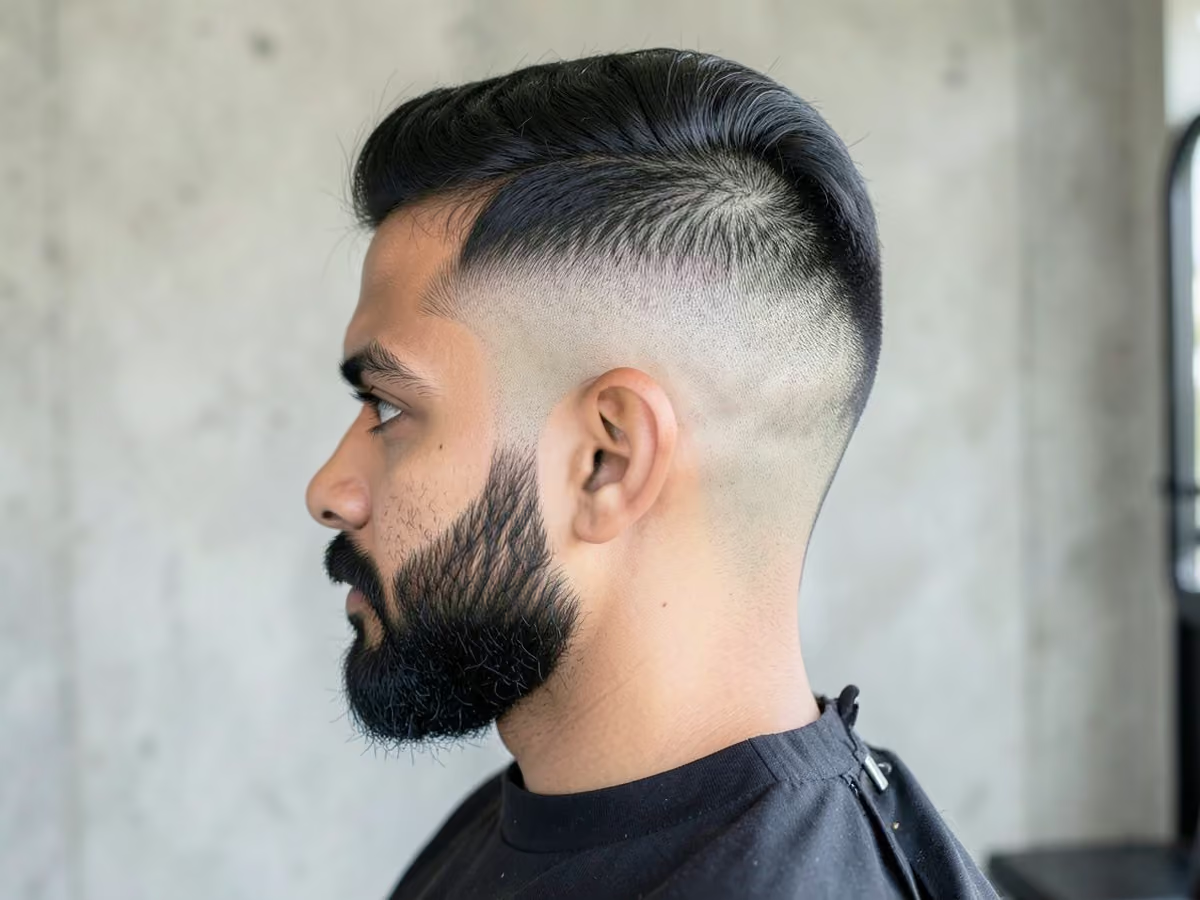
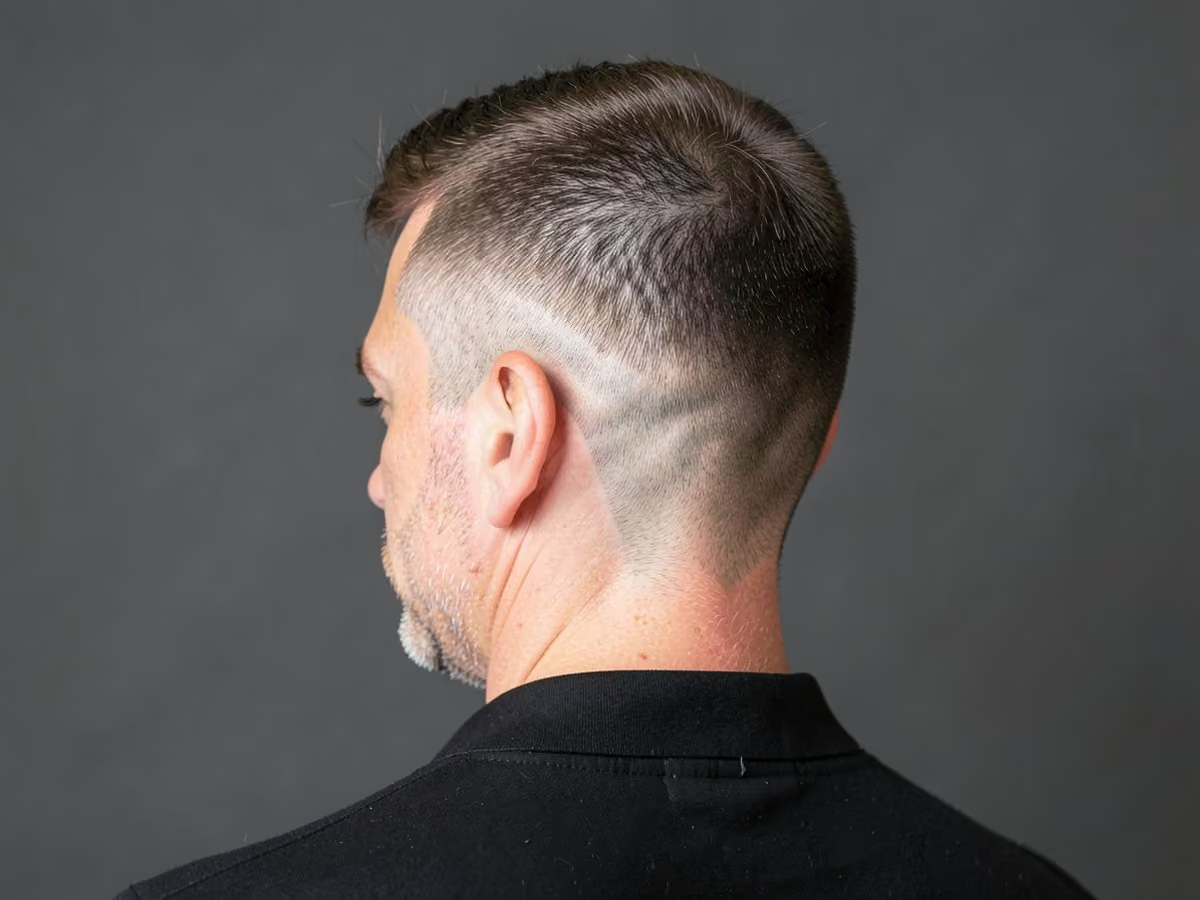
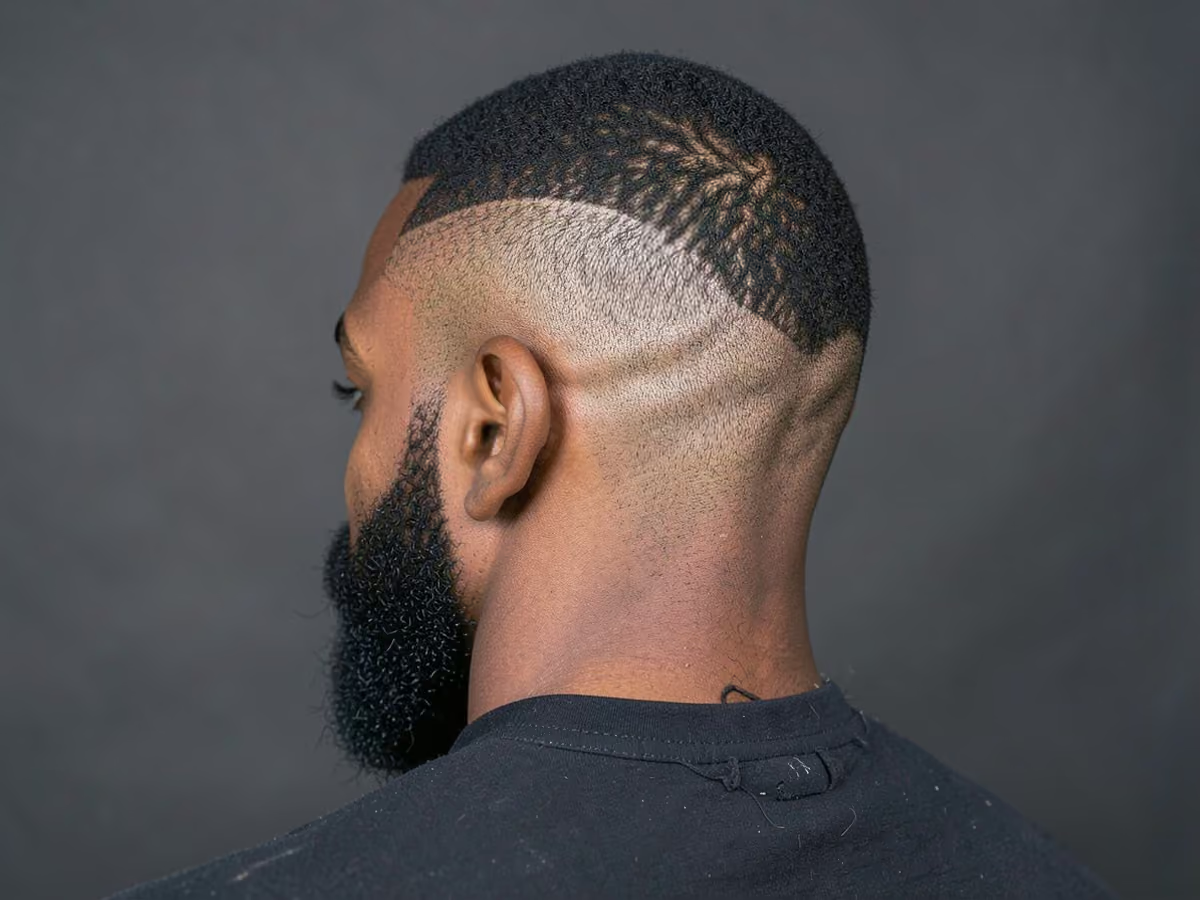
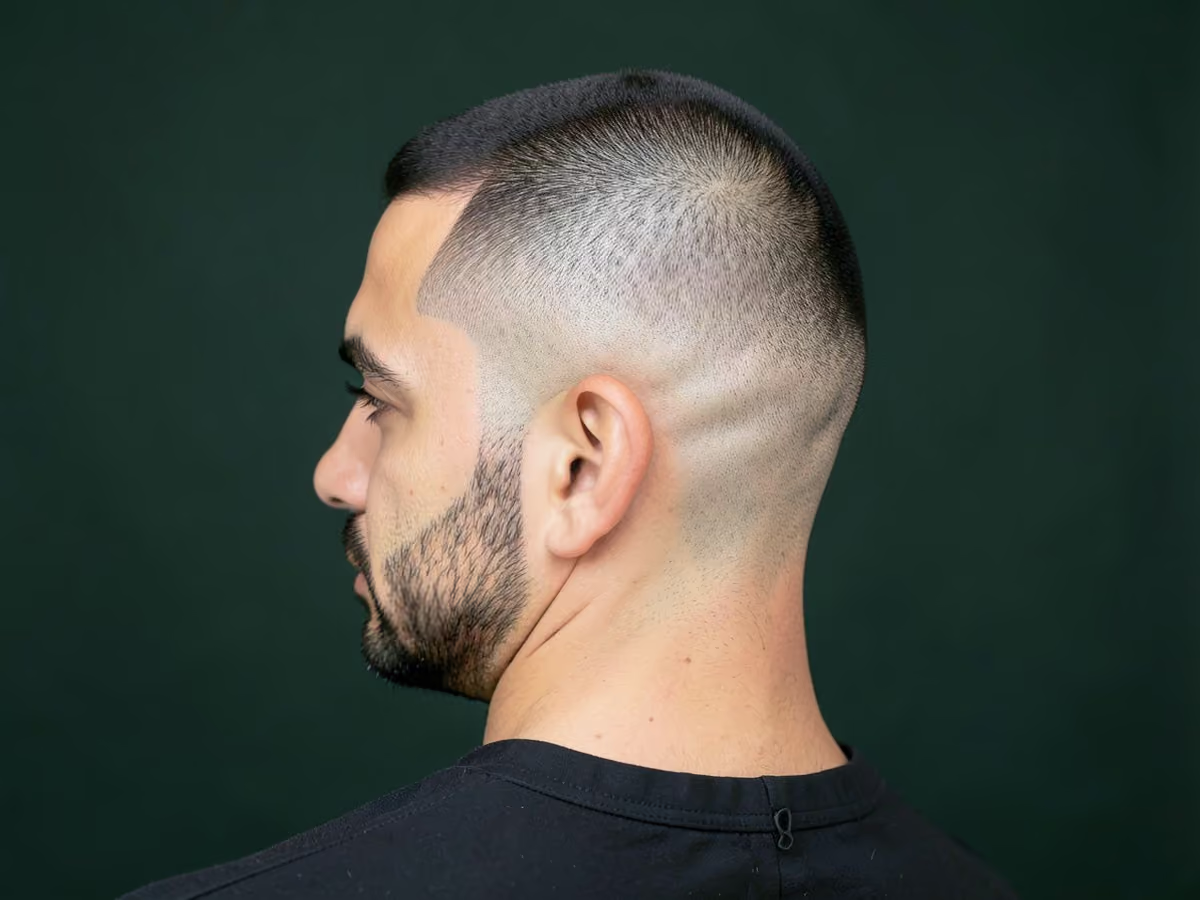
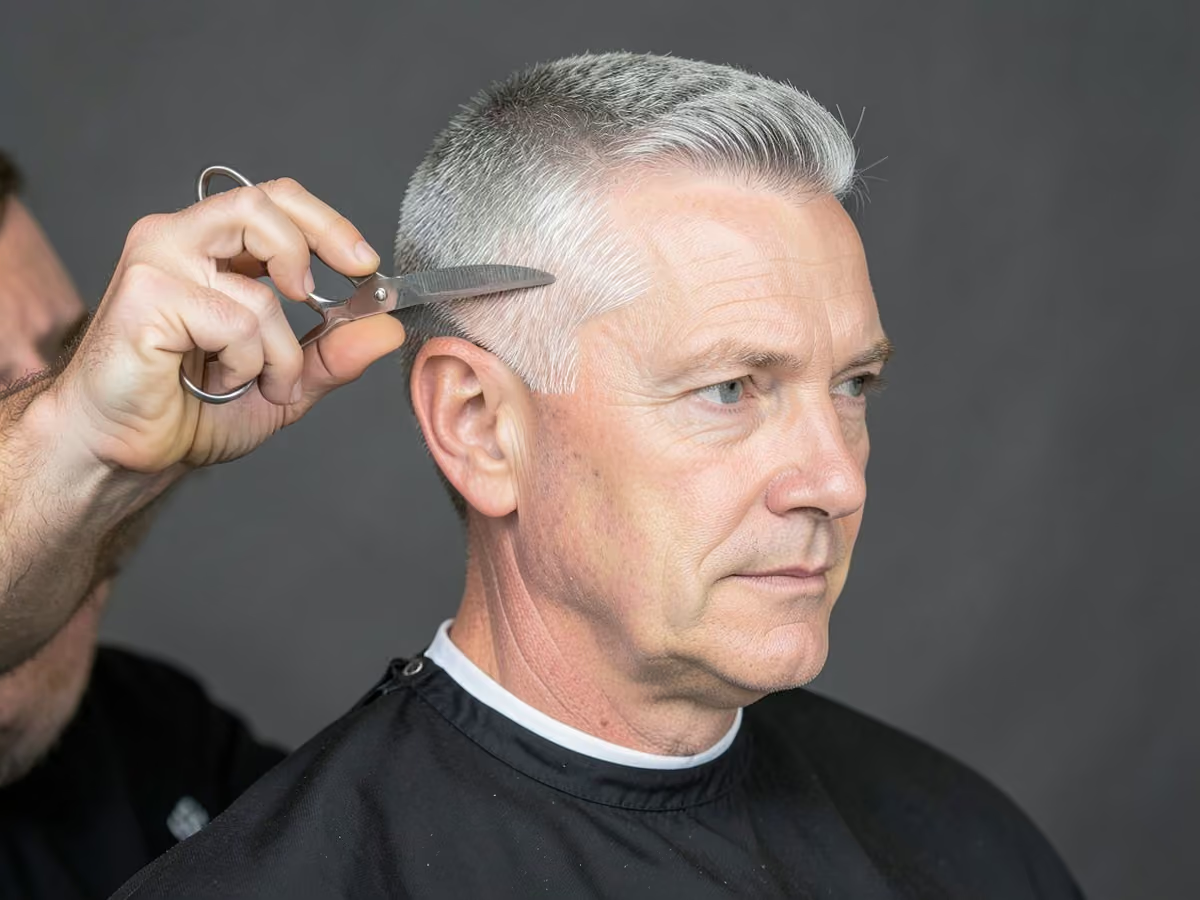
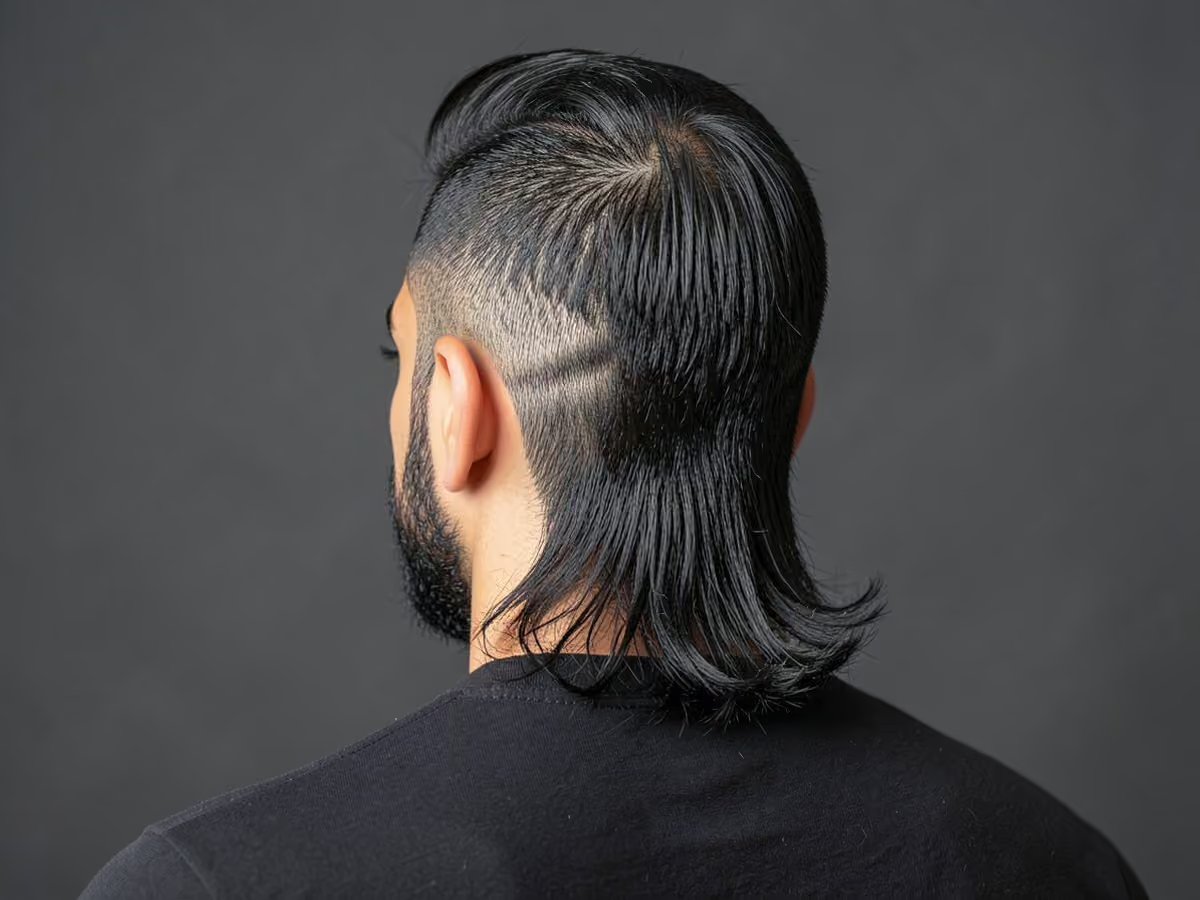
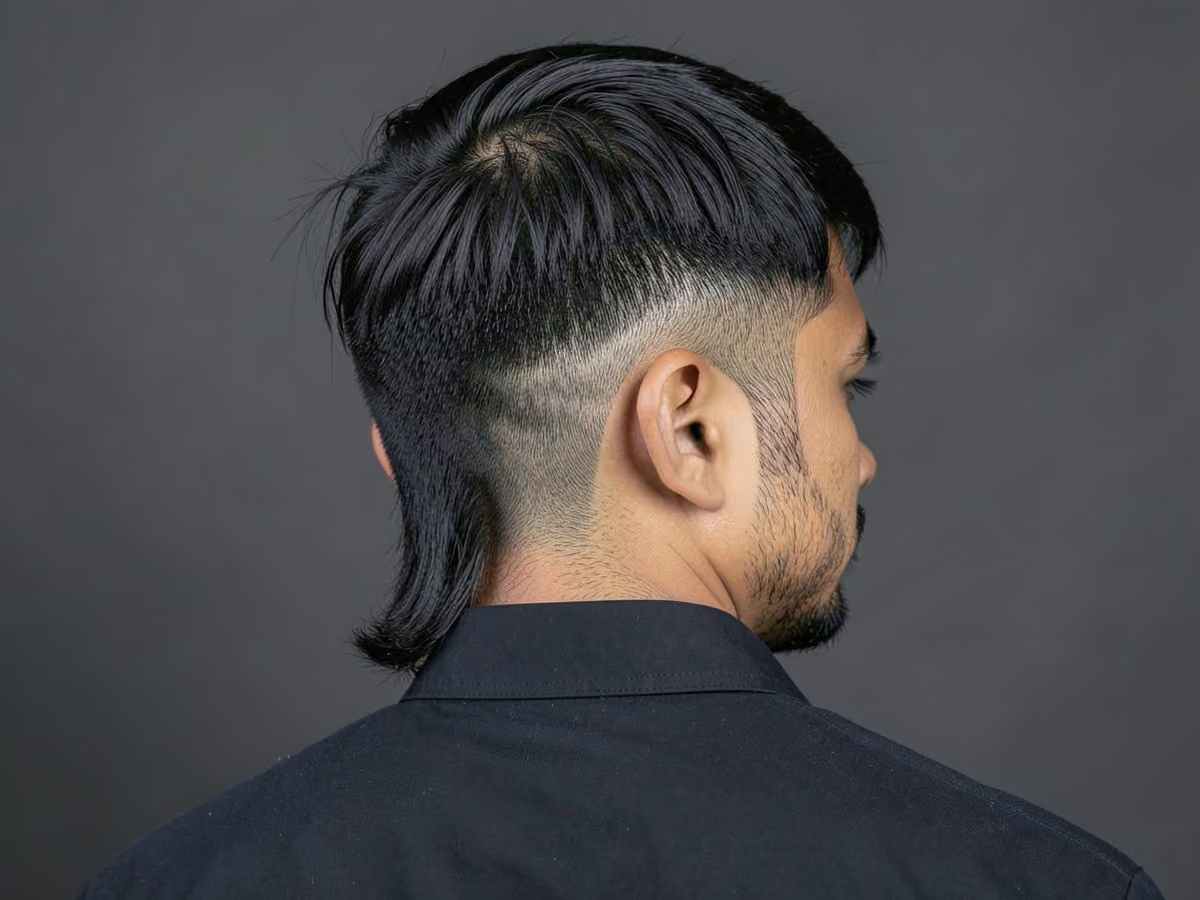
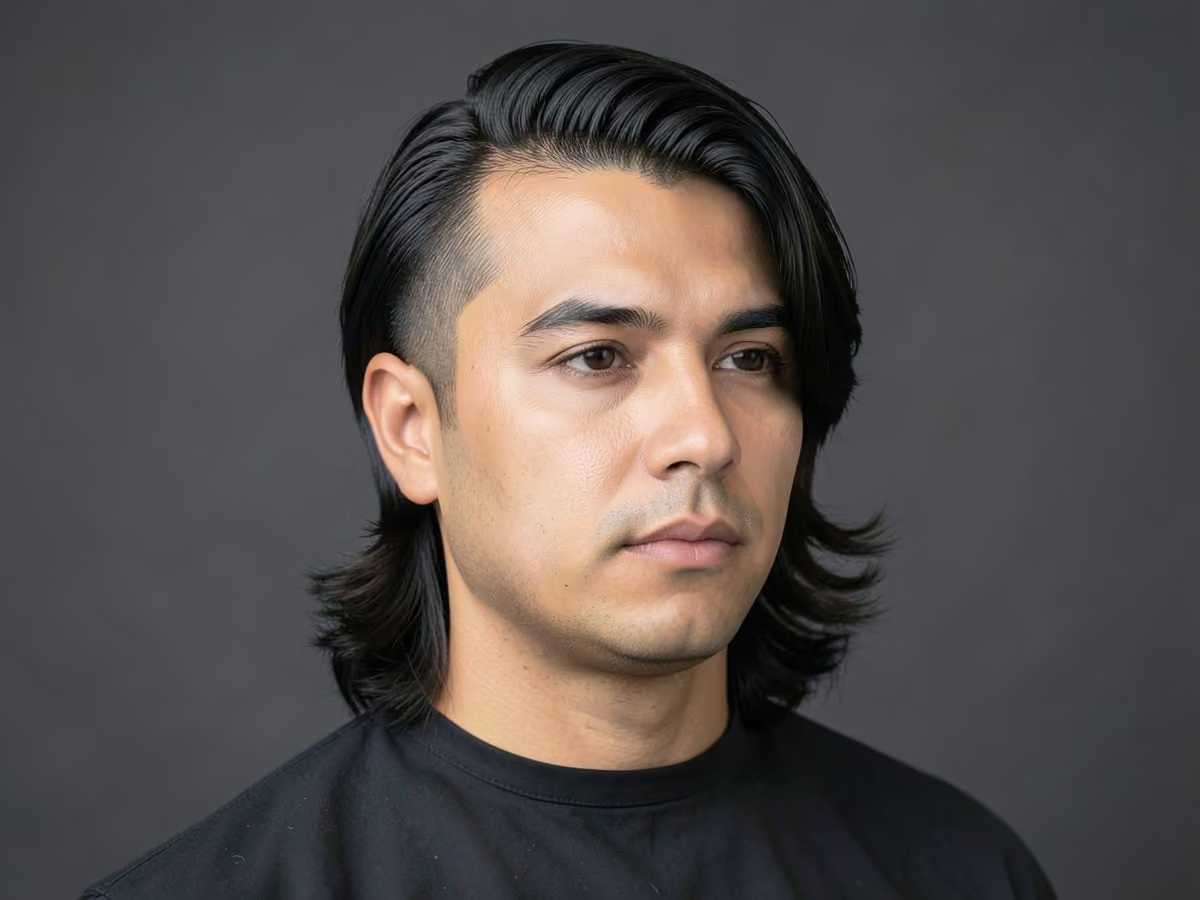
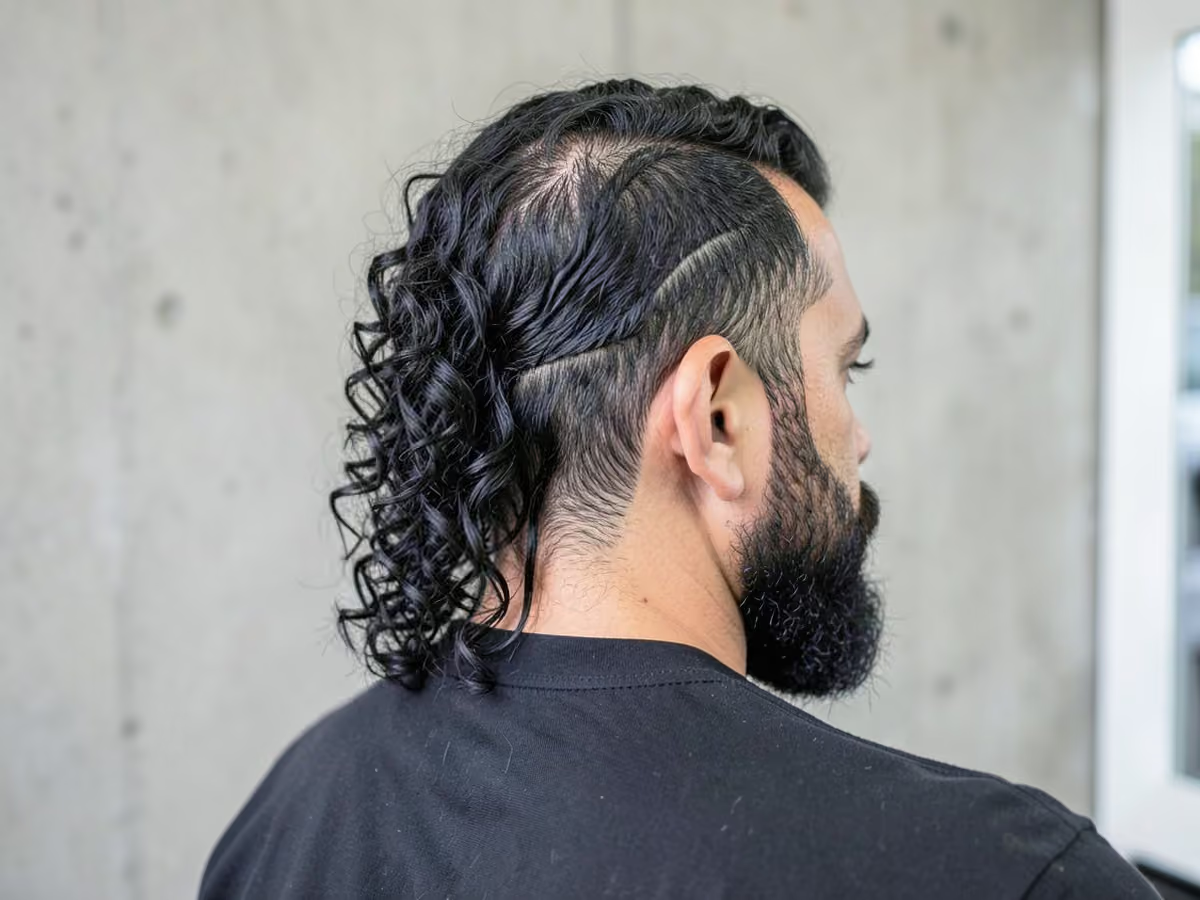
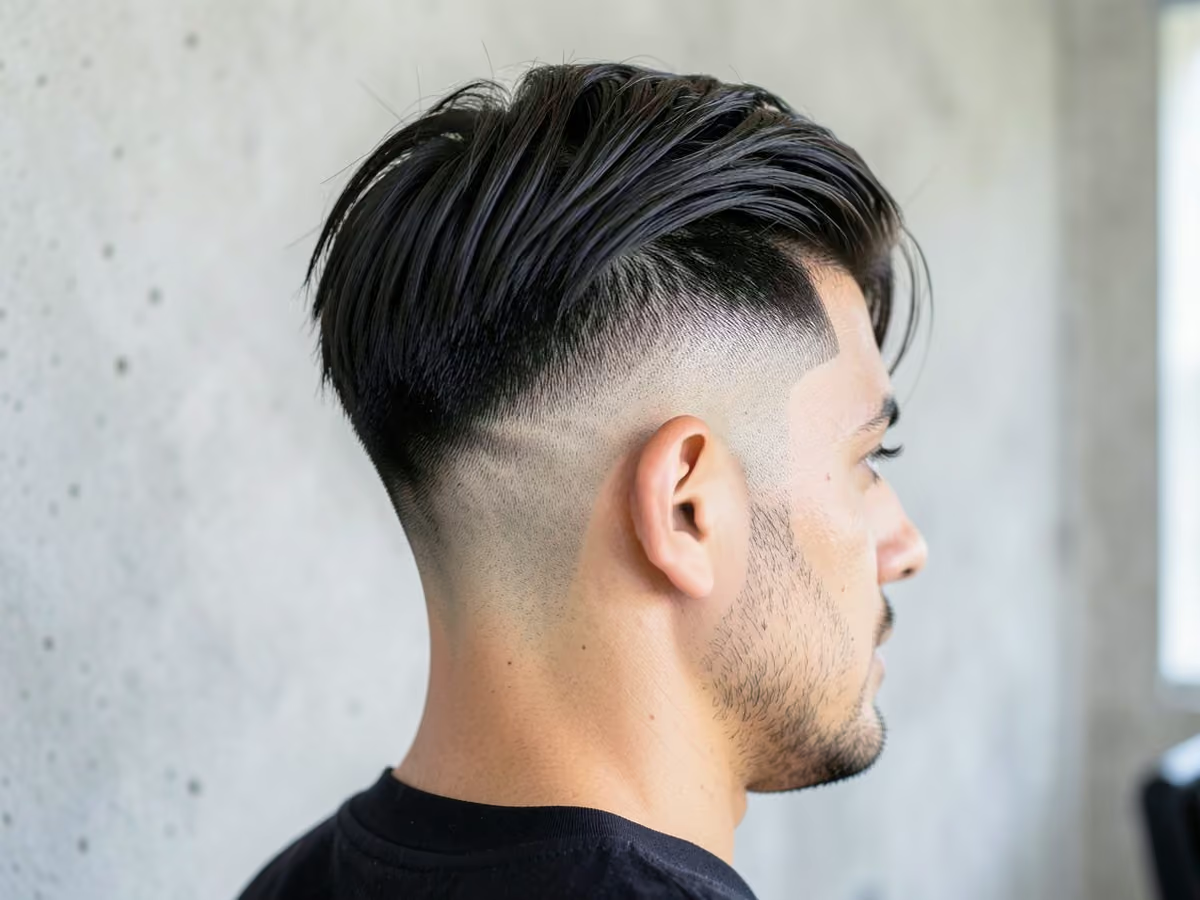
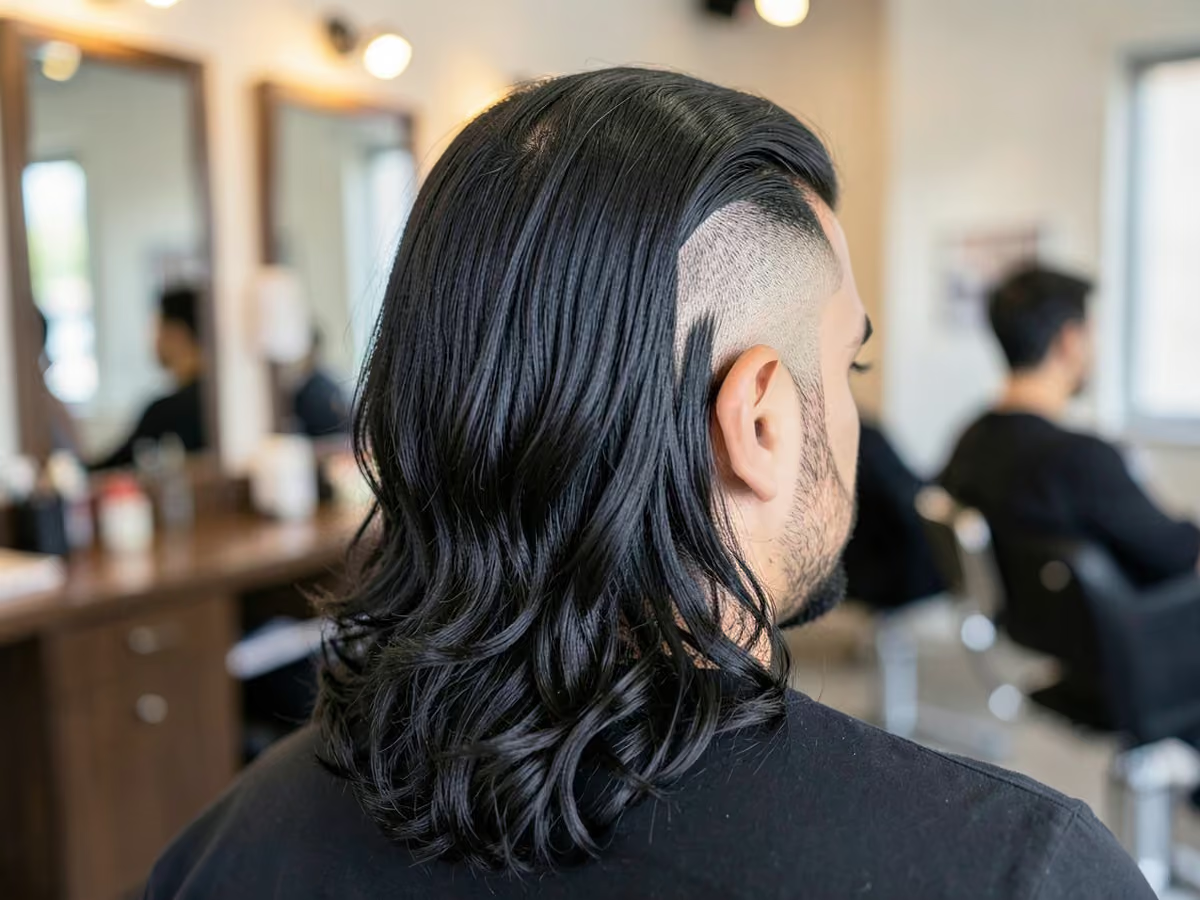
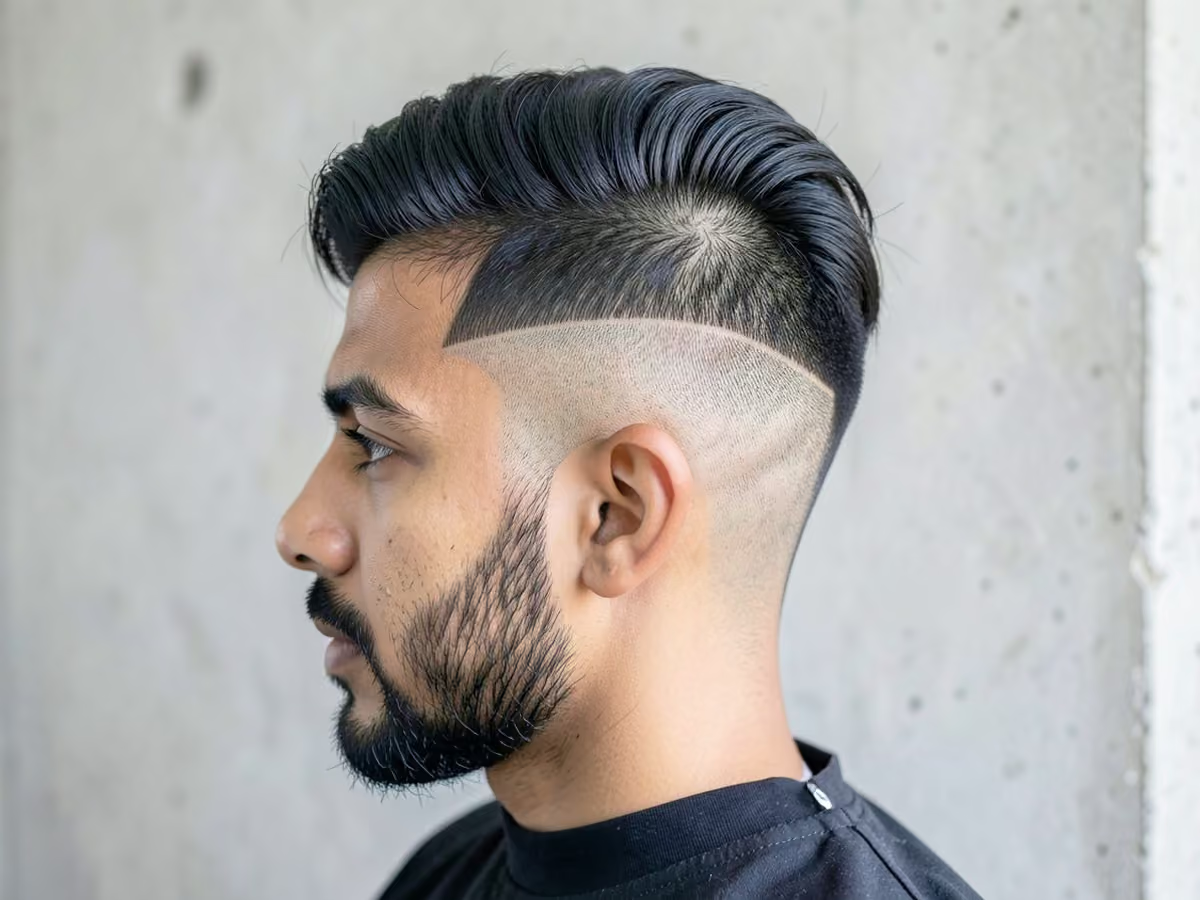
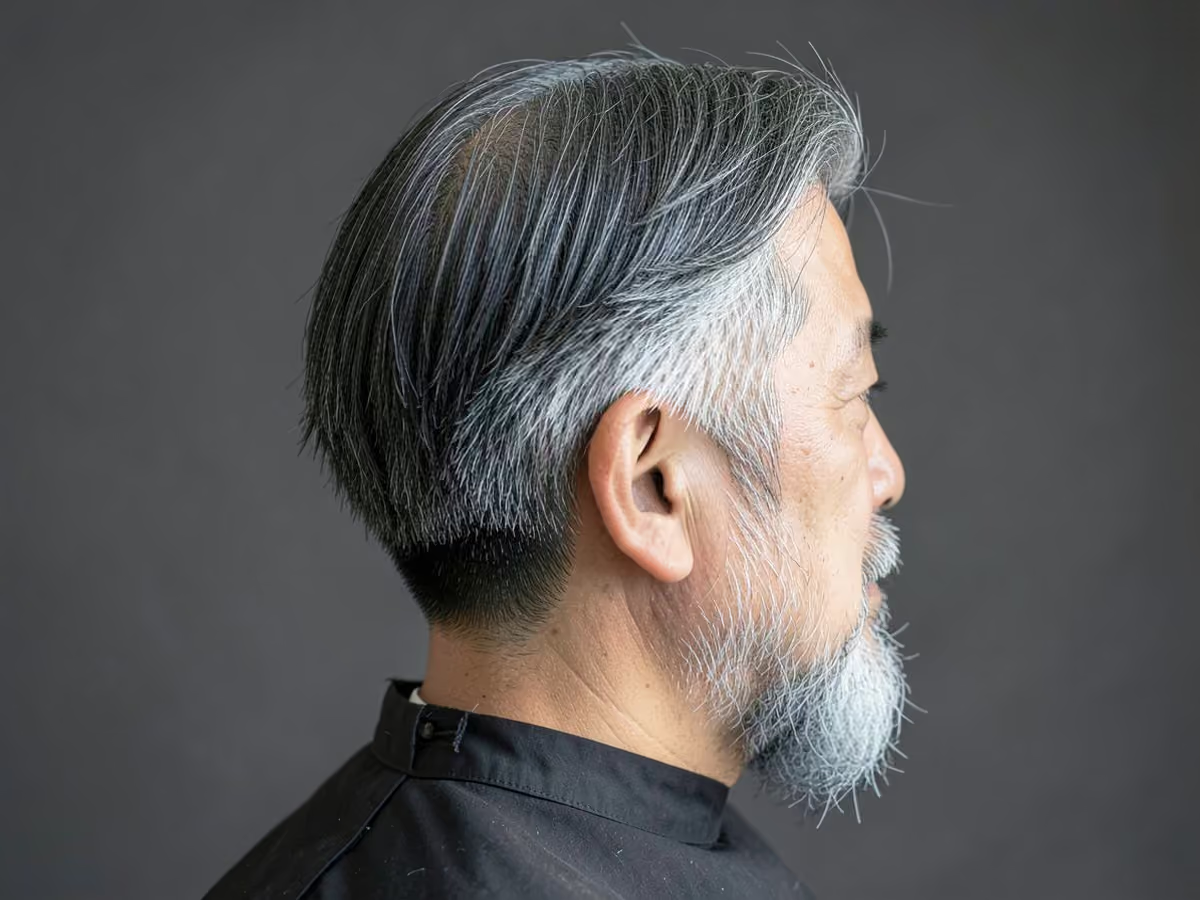
Quick answer: Back of head haircuts come down to the neckline shape and how the hair above it is cut. The three standard napes are blocked (a straight line), tapered (fading into skin) and rounded (a curved line). On top of that, the back can be faded, shaped into a V, left long as a mullet or shaved under longer hair.
Back of Head Haircut Styles at a Glance
Every style on this page with its clipper guard, top length and trim interval. Tap a name to jump to that card.
Back of head haircuts get less attention than the fringe, yet the nape is what everyone behind you sees in a queue, on a video call or in a photo. Below are 30 ways to finish the back, grouped by neckline shape, V-shapes, faded backs, nape designs, long backs and undercuts, with the guard numbers, trim schedule and words to use in the chair.
What Counts as the Back of a Haircut?
The back of a haircut runs from the crown, where the hair swirls at the top of the head, down over the occipital bone, the bump at the base of the skull, to the nape, the strip of hair just above the neck. Barbers treat these as three zones. The crown decides how the top falls, the occipital area decides whether the back looks rounded or flat, and the nape decides how the cut grows out. Most men only think about the last one, and usually only when it starts to look fuzzy.
The neckline is the edge where the hair stops. It can be cut as a hard line, faded into the skin, or left natural with scissors. Above it, the hair can be clipped short, graduated with scissors to build weight, faded at any height, or left long. Each choice changes the side profile as much as the back view, which is why barbers ask about the nape even on a simple trim.
How Do Blocked, Tapered and Rounded Necklines Differ?
A blocked neckline is a straight horizontal line with square corners. A tapered neckline has no line at all: the hair gets shorter toward the skin until it disappears. A rounded neckline is a line with curved corners that follows the shape of the neck. The full comparison, with a week-by-week grow-out timeline, is in our block vs tapered vs rounded nape guide.
The table below adds the shaped and faded options covered in this gallery, so you can compare them on the two things that matter most: how fresh they look and how long they stay that way. Shapes with a drawn edge, such as blocked, rounded and V-shaped napes, always need more frequent visits than shapes that fade into skin or hang long, because any line shows regrowth within days while a gradient or a length simply gets a little longer.
How Do Blocked, Tapered and Rounded Necklines Differ?
Back finish
What it looks like
Grows out
Typical trim
Blocked
Straight line, square corners
Fast: strays show within a week
Every 1–2 weeks
Tapered
Hair fades into skin, no line
Slowly: neat for weeks
Every 3–4 weeks
Rounded
Curved line following the neck
Medium: line softens by week two
Every 2–3 weeks
V-shape
Line or taper meeting in a point
Fast: the point blurs first
Every 1–2 weeks
Faded nape
Skin or #0 rising into guard length
Medium: blend softens in a week
Every 2–3 weeks
Long back or mullet
Hair left over the collar
Slowly: shape holds for a month or more
Every 4–8 weeks
Which Back of Head Haircut Suits Your Neck and Head Shape?
Neck length and thickness change how each line reads. A blocked neckline makes a neck look wider and a little shorter, so it suits long, slim necks. A tapered neckline makes the neck look longer and slimmer, which helps short or thick necks. Rounded sits between the two. If you get razor bumps or ingrown hairs, a taper avoids shaving a hard line across irritated skin; see how to prevent razor bumps on the neckline.
Head shape matters higher up. A flat back of the head looks rounder when the barber leaves extra length over the occipital bone and avoids a high skin fade that exposes the flat area; our guide to haircuts for a flat back of the head covers that in detail. A strong cowlick or whorl at the nape also pushes the choice toward a taper, since a hard line drawn through a whorl rarely stays clean.
Filter the styles
Showing all 30 styles
Fade
Hair
Length
Classic Neckline Shapes
These are the edges barbers cut by default, plus two variations for softer corners and coily hair. The block vs tapered vs rounded nape guide explains how each one grows out week by week.
Trim:Every 1–2 weeks. Strays below the straight line show within days.
Best For:Long, slim necks + straight or thick hair.
About This Style
A straight horizontal line is cut across the nape with the trimmer, and the corners are left square where the line meets the sides. Above it the hair can be any length, from a #3 on a short back to scissor length on a classic taper. Fresh out of the chair it looks the sharpest of the three standard shapes, but it also shows regrowth first, so it suits men who book a cleanup every week or two.
How to Style at Home
Keep the collar area dry after showering so stray hairs lie flat.
Check the line with a hand mirror and clip only hairs that fall below it.
Book a neck cleanup between full cuts to keep the corners square.
Ask Your Barber
"Block the back with square corners, set the line at my natural hairline and not any higher. Keep the back at a #3 above the line."
Trim:Every 3–4 weeks. No hard line, so regrowth blends in.
Best For:Short or thick necks + all hair types.
About This Style
Instead of a drawn edge, the nape is clipped progressively shorter until the hair disappears into the skin. Barbers usually work from a #2 or #1 at the bottom of the back down to a #0 or bare skin at the edge, then soften any shelf with clipper-over-comb. With no line to blur, this nape still looks tidy three or four weeks later, which is why most barbers recommend it to anyone who does not visit weekly.
How to Style at Home
Wash the nape daily to keep the short hair from looking dull.
Leave the edge alone at home; regrowth follows the taper on its own.
Moisturize the skin at the collar if your shirt rubs it.
Ask Your Barber
"Tapered neckline, please, fading from a #2 down to skin with no hard line. I go about four weeks between cuts."
Trim:Every 2–3 weeks. The curved line softens by week two.
Best For:Narrow necks + straight, wavy or fine hair.
About This Style
The barber cuts a defined line across the nape but curves both corners so the edge follows the natural shape of the neck. It reads cleaner than a taper and less severe than a block, and the curve makes a narrow neck look a little fuller. The soft corners also hide uneven growth at the sides of the nape, so it stays acceptable for two or three weeks before strays break the curve.
How to Style at Home
Run a comb down the back after styling so the hair sits inside the curve.
Trim only the stray hairs below the line, never the curve itself.
Ask for a cleanup at two weeks if the corners lose their shape.
Ask Your Barber
"Rounded neckline with soft curved corners, set at my natural hairline. Scissor-cut the back to about an inch above it."
Trim:Every 5–6 weeks. The edge follows your hairline, not a shaved line.
Best For:Oval, long faces + wavy, straight or longer hair.
About This Style
No clipper touches the nape here. The barber cuts the back with scissors over a comb, leaving the hair to end where it naturally grows, then thins any bulk so it lies against the neck. It suits medium-length cuts, grown-out crops and men who want to skip cleanups. Because nothing is shaved, there is no line to grow out and no stubble on the neck, only gradual length.
How to Style at Home
Let the back air-dry flat against the neck instead of blow-drying it up.
Smooth a small amount of cream over the nape to stop it flicking out.
Get the nape cleaned up once the hair touches your collar.
Ask Your Barber
"Natural neckline, scissors only, no clippers or shaved edge at the back. Leave about two inches at the nape and thin it so it lies flat."
Trim:Every 2 weeks. The straight base blurs before the corners do.
Best For:Medium necks + thick, straight or coarse hair.
About This Style
A hybrid of the two lined shapes: the bottom edge stays straight like a block, but the corners are clipped at a slight angle instead of a hard right angle. The result keeps the squared look in back photos while avoiding the sharp points that make a neck look wide. It works well on thick hair, where square corners can look heavy, and holds its shape a few days longer than a full block.
How to Style at Home
Brush the back down while the hair is damp so it settles evenly.
Use a trimmer only on hairs growing well below the line.
Keep a quick cleanup appointment booked for every second week.
Ask Your Barber
"Block the back with a straight line, but take the corners off at a soft angle, not square. Back at a #3 blended into the top."
Trim:Every 1–2 weeks. Coily regrowth softens the line quickly.
Best For:Round, oval faces + coily or 4C hair.
About This Style
Tight coils give a lined nape very crisp contrast, so many barbers pair a blocked back with a short even cut, often a #1 or #2 all over or a low taper. The line is set with a trimmer and finished with a razor or foil shaver at the edge. Because coily hair can curl back into the skin, the barber should avoid shaving against the grain, which lowers the risk of bumps along the line.
How to Style at Home
Brush the back with a soft brush each morning to lay the coils down.
Apply a light oil to the skin under the line after showering.
Avoid scratching or picking at any bumps that form along the edge.
Ask Your Barber
"Block the back with a sharp line, edge it with the trimmer and shave with the grain only. Keep everything at a #2 with a low taper."
Recommended Products
Scalp Oil
Edge Brush
V-Shape and Pointed Backs
A V at the nape turns the neckline into a detail people notice in profile and back photos. It needs regular cleanups, because the point is always the first part to soften.
Trim:Every 1–2 weeks. The point of the V blurs first.
Best For:Long, slim necks + straight or thick hair.
About This Style
Two angled lines are cut from the outer corners of the nape down to a single point at the center of the neck. Barbers mark it with the trimmer, check symmetry in the mirror, then shave just below it for a clean edge. The rest of the back is usually a short guard length or a low fade. It draws the eye downward and makes the neck look longer, which is why it often appears on undercuts and short crops.
How to Style at Home
Check the point weekly with a hand mirror for stray hairs.
Clip only hairs below the V; never reshape the angle yourself.
Keep the back short so the shape stays visible.
Ask Your Barber
"V-shaped neckline, angled lines meeting at the center of the neck, not too deep. Back at a #2 blended into a low fade."
Trim:Every 2 weeks. The shaved V needs reclipping to stay crisp.
Best For:Oval, square faces + thick hair worn medium or long.
About This Style
Here the V is not just the edge; a triangle of hair is clipped to a #0 or #1 up into the back of the head, under longer hair that falls over it. With the hair down, it hides. Tied in a bun or swept up, the shaved V shows at the nape. It removes a lot of weight on thick hair, keeps the neck cooler, and lets a long cut look tidy from behind without losing length on top.
How to Style at Home
Tie the hair up to show the V, or wear it down to cover it.
Brush the long hair over the shaved area when you want it hidden.
Rinse the shaved patch well so product does not build up there.
Ask Your Barber
"Undercut a deep V at the nape with a #1, about two inches up the back, and leave the hair above it long enough to cover it when down."
Trim:Every 2–3 weeks. The tapered edge softens instead of breaking.
Best For:Most face shapes + straight, wavy or fine hair.
About This Style
Rather than a drawn line, the barber shapes the nape into a point by tapering the hair shorter toward the center of the neck. The V shape is clear in photos but has no hard edge, so it grows out more gently than a lined V. It suits men who like the pointed look but cannot get to the shop every week, and it hides uneven growth patterns at the nape.
How to Style at Home
Comb the back downward after showering to keep the point centered.
Let the taper grow without trimming the edge at home.
Ask the barber to recheck the point if it drifts off center.
Ask Your Barber
"Taper the back into a soft V at the center of the nape, no hard line. #1 at the bottom blending to a #3."
Trim:Every 6–8 weeks. Long layers keep the point visible for weeks.
Best For:Oval, long faces + straight or wavy long hair.
About This Style
On shoulder-length hair, the V is cut into the length itself. The barber holds the back in sections and cuts each one at an angle so the center hangs lowest and the sides rise toward the ears. Worn down, the hair falls in a point between the shoulder blades or at the collar. It removes the blunt, heavy look that long hair can get at the back and works on surfer cuts and flows.
How to Style at Home
Apply leave-in to damp hair and comb it straight down at the back.
Air-dry or diffuse so the angled ends keep their shape.
Trim the ends every two months to keep the point defined.
Ask Your Barber
"Cut a V into the back of my long hair, longest at the center, rising toward the ears. Keep my length at the collar and just remove the bulk."
Recommended Products
Leave-In
Sea Salt Spray
Faded Backs and Napes
A fade at the back follows the same height as the sides, so the back view shows where the shortest hair starts. See fade types explained for how each height is measured.
Trim:Every 2–3 weeks. Only the bottom inch needs tidying.
Best For:Oval, round faces + straight, wavy or curly hair.
About This Style
Only the nape is faded here, the bottom inch or two of hair at the back, while the sides keep their normal length. It sits between a tapered neckline and a full fade: skin or a #0 at the edge rising through a #1 to a #2 or #3. The front view barely changes, but the back looks deliberate. It suits office haircuts and men who want a cleaner back without short sides.
How to Style at Home
Style the top as usual; the nape needs no product.
Keep the faded strip clean and moisturized after showering.
Book a quick nape fade between full cuts if regrowth bothers you.
Ask Your Barber
"Fade only the nape, skin at the bottom into a #2 about two inches up. Leave the sides at their usual length."
Trim:Every 2–3 weeks. A low line takes longest to lose its blend.
Best For:Oval, long faces + straight, wavy or thin hair.
About This Style
From behind, a low fade starts about level with the bottom of the ears and wraps around the nape at that height, so most of the back stays at a #3 or #4. The short band sits close to the neck and keeps the occipital area full, which helps flat or narrow head shapes. It is the gentlest fade from the back view and fits workplaces with conservative dress codes.
How to Style at Home
Brush the back down after drying to keep the length above the fade even.
Use a light product on the top only and leave the back bare.
Look at the back in two mirrors before your next booking.
Ask Your Barber
"Low fade starting just above the ears and kept at the same height around the back. Skin to a #1, then a #3 over the rest of the back."
Trim:Every 1–2 weeks. Bare skin at the back shows stubble fast.
Best For:Round, oval faces + thick or coarse hair.
About This Style
The back is shaved to bare skin at the bottom and blended upward through a #0.5, #1 and #2, usually to the occipital bone for a mid skin fade. From behind, there is a clear band of skin at the nape that turns into a smooth gradient. It shows the shape of the skull more than any other back, so check for bumps or a flat area before asking for it.
How to Style at Home
Apply sunscreen to the bare back of the neck when outdoors.
Use a drop of scalp oil if the shaved skin feels tight.
Book every one to two weeks to keep the skin band clean.
Ask Your Barber
"Mid skin fade around the back, foil shaved at the nape and blended up to a #2 at the occipital bone. Even height on both sides."
Trim:Every 2–3 weeks. The arc around the ear needs reshaping.
Best For:Oval, heart faces + curly, coily or wavy hair.
About This Style
A burst fade curves in a half circle around each ear and then drops away, so the back of the head is left longer instead of faded. From behind you see two faded arcs at the sides and a full back that often falls to the collar. That longer back is what makes the burst the usual base for mohawks and mullets. It suits textured hair, where the length at the back shows curl pattern.
How to Style at Home
Define the curls at the back with curl cream on damp hair.
Pick or scrunch the back to keep it from flattening.
Keep the arcs symmetrical by booking the same barber.
Ask Your Barber
"Burst fade around both ears, skin to a #2, and leave the back long down to the collar. No fade across the nape."
Trim:Every 2–3 weeks. The dropped curve softens behind the ear.
Best For:Square, oval faces + coily, wavy or straight hair.
About This Style
Starting at temple or mid height, the fade line runs along the sides and then curves down behind the ear, so at the back it sits low near the nape. The result is an arc that follows the occipital bone and leaves more hair in the middle of the back. It flatters men whose back of head is flat, since the curve adds a rounded outline. It pairs well with waves, twists and crops.
How to Style at Home
Brush waves or crops toward the nape so the arc reads clearly.
Moisturize the faded skin behind the ears after every shower.
Check the drop is even on both sides before leaving the chair.
Ask Your Barber
"Drop fade, mid at the sides curving down behind the ears to a low point at the nape. Skin to a #1, then a #3 above."
Trim:Every 1–2 weeks. Little hair is left to hide regrowth.
Best For:Round, square faces + thick or coily hair.
About This Style
The fade climbs to the parietal ridge at the sides and runs around the back at the same height, which leaves the whole back of the head clipped short below the crown. From behind, it looks almost buzzed, with a narrow band of length at the top. It makes the head look narrower and the top taller. Men with a strong occipital bone or scars should ask for a mid height instead.
How to Style at Home
Style the top only; the back needs nothing beyond washing.
Protect the bare scalp with sunscreen in strong sun.
Book every one to two weeks so the back stays crisp.
Ask Your Barber
"High fade carried around the back at the parietal ridge, skin to a #2. Keep the line even with the sides all the way round."
Recommended Products
Texture Powder
Scalp Oil
Nape Designs and Lines
A design at the nape is easy to hide under a collar and easy to show off with hair up. Wider patterns live on our hair designs page.
Trim:Every 2 weeks. A shaved line fills in within about ten days.
Best For:Most face shapes + short straight or coily hair.
About This Style
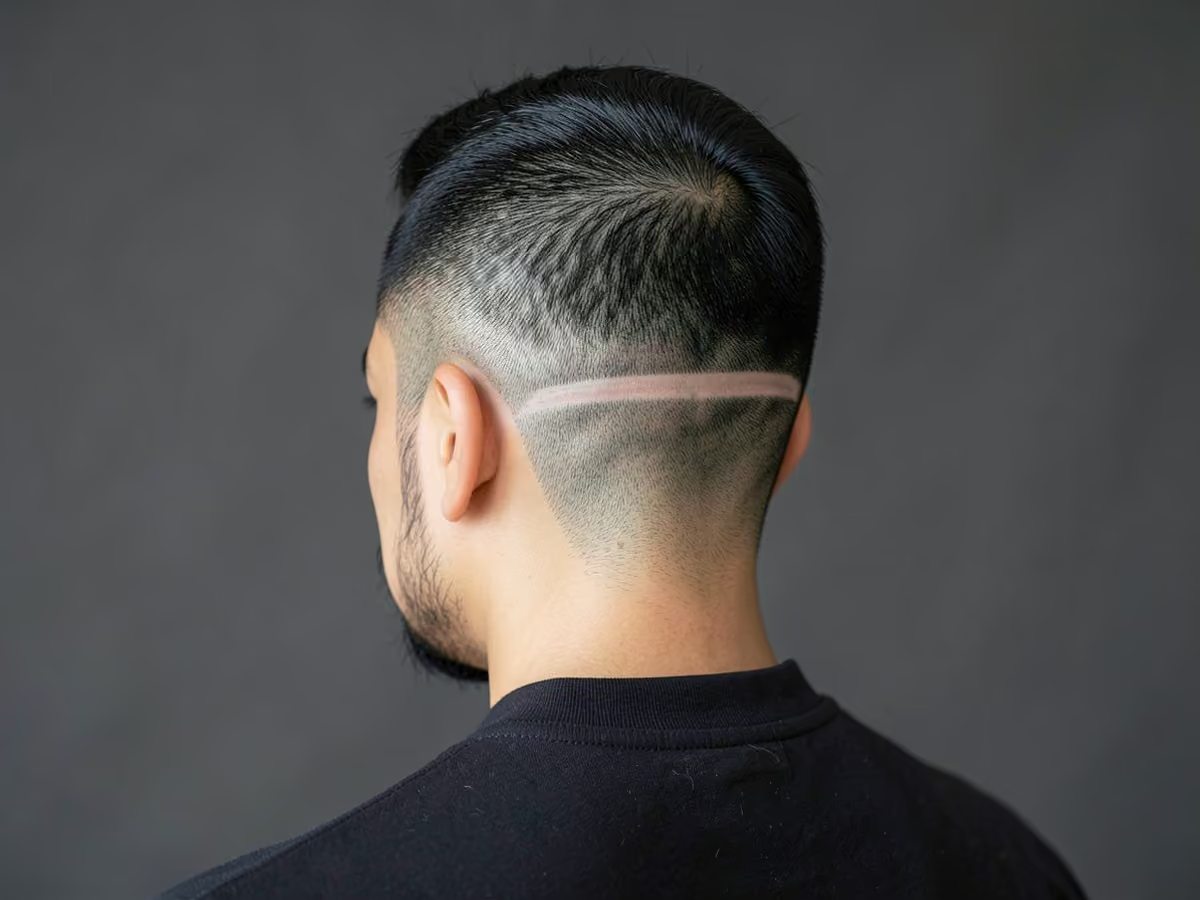
One clean line is shaved horizontally or at a slight angle across the faded nape, usually with a detailer or the corner of a trimmer. It is the simplest design to ask for and the easiest to keep, since the barber can retrace it in a minute at a cleanup. It reads well on a low or mid fade, where the line sits on skin or a #0.5 and contrasts with the hair above.
How to Style at Home
Keep the area clean and avoid heavy products near the line.
Moisturize lightly so the shaved skin does not flake.
Ask for the line to be retraced at each cleanup.
Ask Your Barber
"Mid fade at the back with one straight line shaved across the nape, about an inch above the neckline, angled slightly up toward the left."
Trim:Every 1–2 weeks. Zigzag points lose their angles quickly.
Best For:Oval, round faces + coily, 4C or thick hair.
About This Style
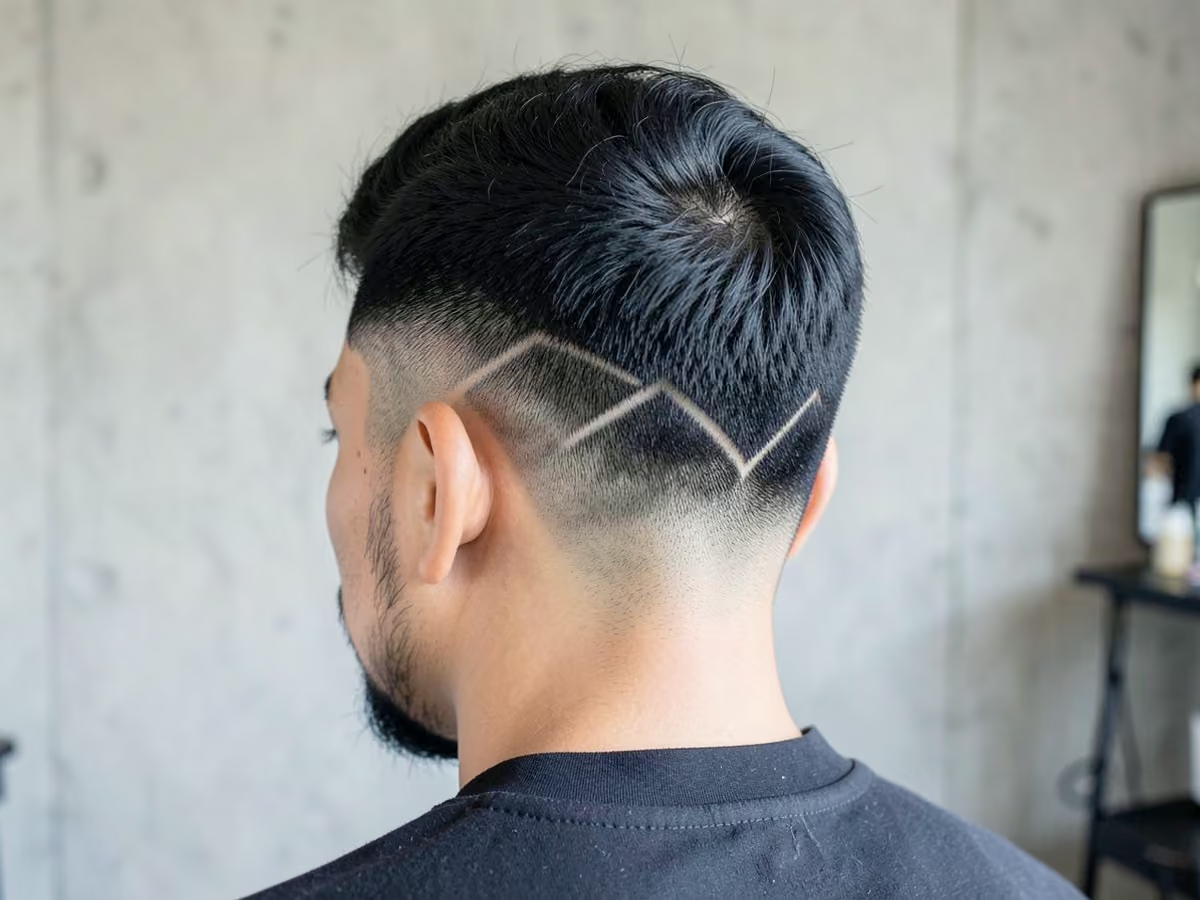
A zigzag runs across the back of the head just above the neckline, cut freehand with a detailer into a fade or short even length. Thick, dark or coily hair gives the strongest contrast, so the zigzag stays visible from a distance. The sharp points need retracing every week or two. Many barbers suggest it as a first design because it is easy to reshape if one angle comes out uneven.
How to Style at Home
Brush the hair around the design toward the nape to keep edges flat.
Avoid scratching the skin along the shaved lines.
Book the design retrace with your regular fade.
Ask Your Barber
"Zigzag design across the back about two inches above the neckline, five or six points, on a #1 all over the back."
Trim:Every 1–2 weeks. Corners and parallel lines must stay sharp.
Best For:Square, oval faces + coily, thick or dark hair.
About This Style
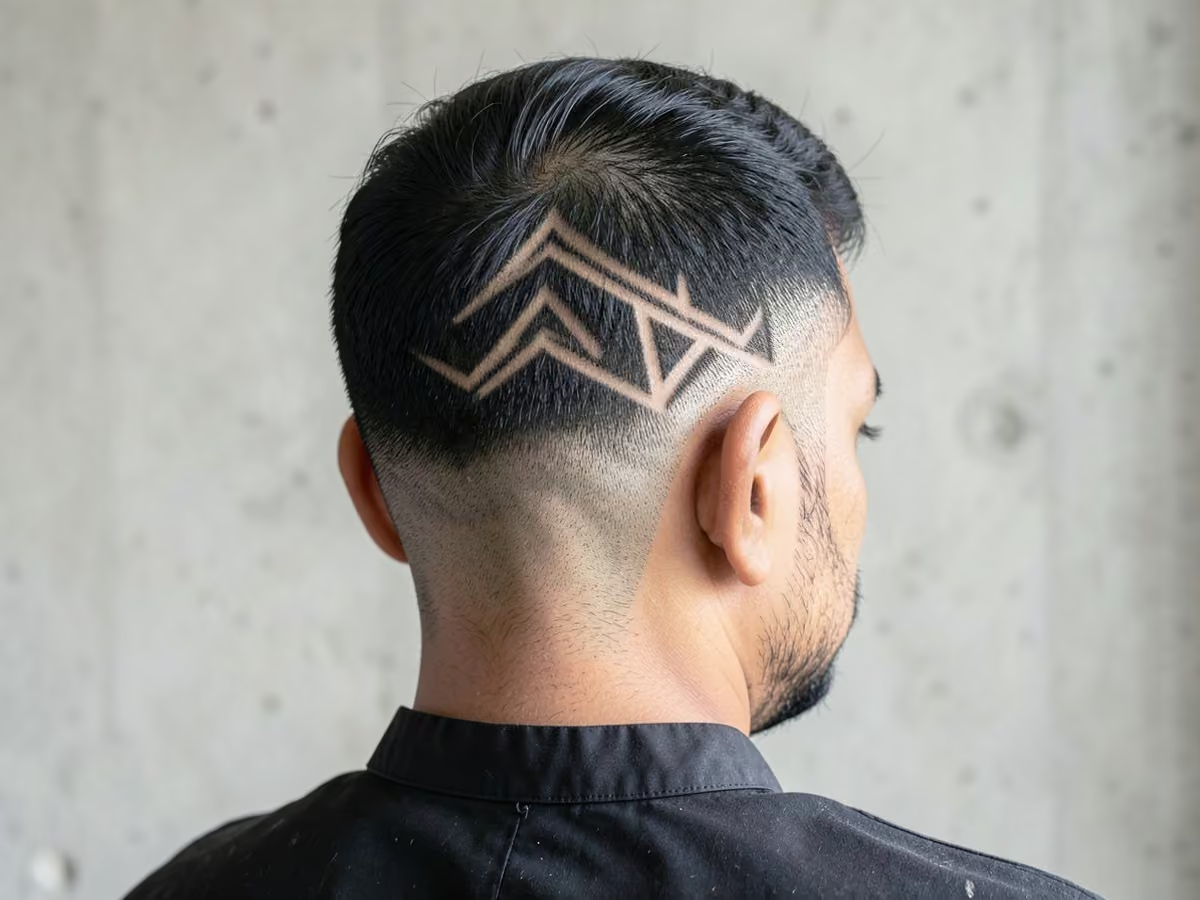
Triangles, stacked chevrons or interlocking boxes are shaved into the nape area, usually on a skin or #0 fade so the shapes stand on bare skin. The design should start from the neckline and follow the curve of the head, otherwise it looks tilted from behind. It takes longer than a single line, often fifteen minutes or more, and suits men happy to book weekly retouches.
How to Style at Home
Take a photo of the fresh design to show at the retouch.
Keep collars and hoodies from rubbing the skin raw.
Moisturize the shaved areas each evening with a light, unscented lotion.
Ask Your Barber
"Geometric design at the nape, stacked triangles starting at the neckline, on a skin fade. Keep it centered and symmetrical."
Trim:Every 2 weeks. Curves forgive small regrowth better than angles.
Best For:Most face shapes + wavy, curly or coily hair.
About This Style
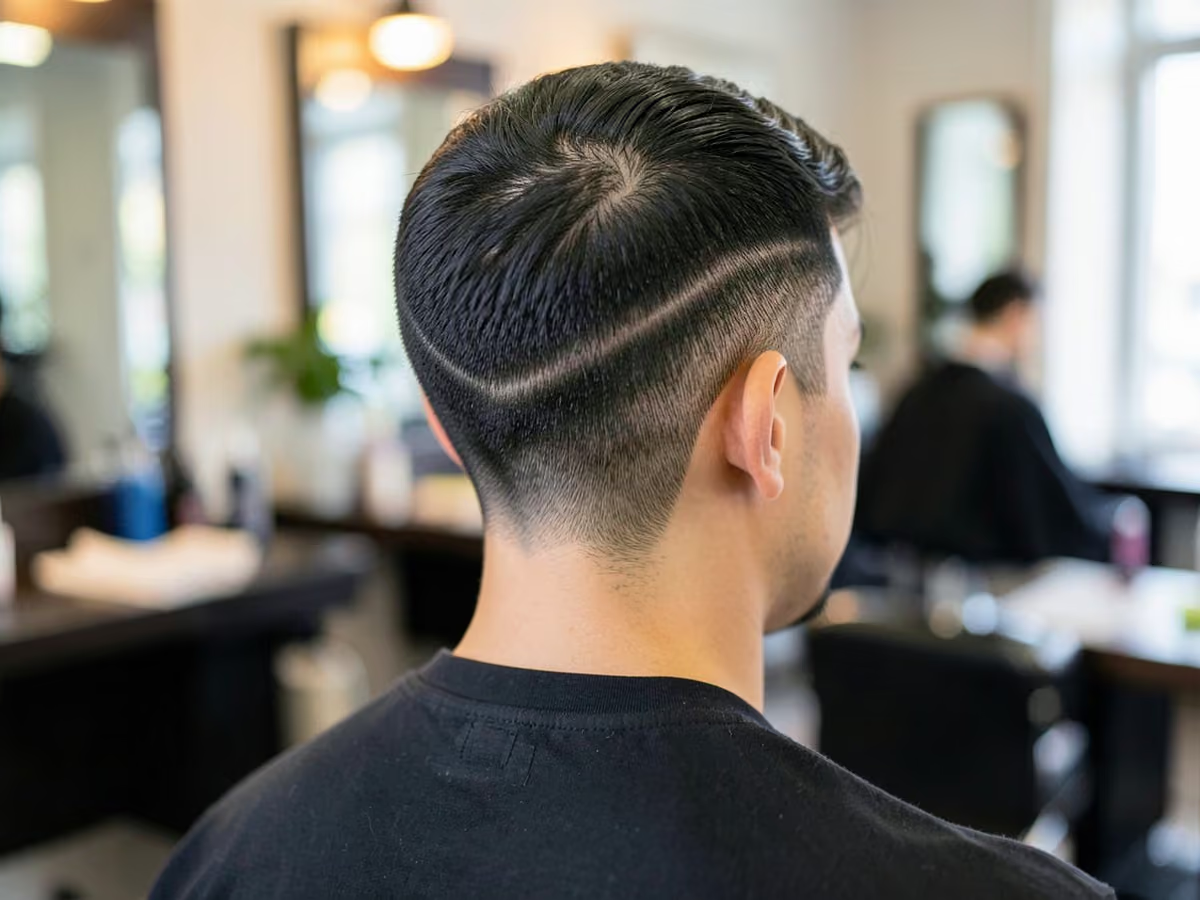
One or two curved lines sweep across the back of the head, often following the arc of a drop fade or the curve of the occipital bone. Because curves have no sharp corners, regrowth softens them evenly instead of breaking the shape, so they look acceptable for longer than geometric patterns. It is a good choice on a burst or drop fade, where the line can echo the fade outline.
How to Style at Home
Brush waves or curls around the design so the curve stays visible.
Avoid tight hats that press the hair over the lines.
Have the curves retraced at each fade touch-up.
Ask Your Barber
"Two curved lines on the back following the arc of my drop fade, cut into a #1 and ending just behind each ear on both sides."
Recommended Products
Wave Pomade
Graduated, Mullet and Long Backs
Leaving length at the back changes the side profile more than any neckline. These styles range from a scissor-built occipital to a full modern mullet and shoulder-length flow.
Trim:Every 4–5 weeks. Built weight grows down, not out.
Best For:Flat back of head + straight, fine or wavy hair.
About This Style
Graduation is a scissor technique: the barber holds each section at an angle and cuts it slightly longer than the one below, which stacks weight over the occipital bone. The back looks rounder from the side, which flatters men with a flat back of the head. The nape is usually tapered or natural. It is the classic back on scissor cuts, side parts and longer crops.
How to Style at Home
Blow-dry the back with a round brush, lifting at the occipital area.
Work a little cream through to keep the stacked shape soft.
Avoid pressing the back flat against a pillow while damp.
Ask Your Barber
"Scissor-graduate the back to build weight over the occipital bone, tapered at the nape. Keep about two inches at the crown."
Trim:Every 4–6 weeks. The sides need cutting before the back.
Best For:Oval, long faces + wavy, curly or thick hair.
About This Style
Length is grown below the collar at the back while the sides are kept short, often with a taper or burst around the ears. From behind, the length runs as a single panel from the crown to the neck, and its width depends on how far the side fade wraps around. A narrow panel reads modern, a wide one reads more 1980s. Most of the upkeep is on the sides, while the back is trimmed only at the ends.
How to Style at Home
Scrunch sea salt spray into the back to add texture.
Let the back dry naturally so it flips at the ends.
Trim the ends every second visit to keep them healthy.
Ask Your Barber
"Mullet with the back left to just below the collar, about three inches wide at the nape. Taper the sides to a #2 around the ears."
Trim:Every 3–4 weeks. The tapered edge keeps the length tidy.
Best For:Oval, heart faces + straight or wavy hair.
About This Style
A subtler mullet: the back is left longer than the sides but stops at the collar, and the hair at the very bottom is tapered so it does not hang in a blunt edge. From behind it looks neat and short enough for work, while the side view still shows the longer back. It suits men trying a mullet for the first time or those whose workplace frowns on hair touching the collar.
How to Style at Home
Comb the back down with a little cream while damp.
Push the top forward or to the side with clay.
Have the bottom edge tapered again when it reaches the collar.
Ask Your Barber
"Short mullet, back at about two inches ending at the collar with a tapered edge, and the sides at a #3."
Razor or point cutting layers the back so the ends look broken and uneven rather than blunt. It falls past the collar and blends into longer sides, which makes it a shag instead of a mullet. The layers remove bulk from thick hair and add movement from behind. It works on grown-out shag and wolf cuts and needs little more than a wash and texture spray.
How to Style at Home
Spray texture or sea salt into damp hair and scrunch the back.
Rough-dry the hair with your fingers instead of a brush.
Twist a few sections at the back for extra separation.
Ask Your Barber
"Shaggy layered back, razor-cut past the collar, with choppy ends. Blend it into the sides so there is no step."
Trim:Every 6–8 weeks. Only the ends and around the ears need trimming.
Best For:Oval, long faces + straight or wavy hair.
About This Style
In a flow, the hair at the back is grown to the collar or past it and allowed to flip outward naturally. The barber only shapes the ends and removes weight so the back curls away from the neck instead of lying flat. It is the hockey and lacrosse look, and it depends on hair with some bend in it. See our flow cut guide for growing one out.
How to Style at Home
Towel-dry gently and comb the hair straight back from the forehead.
Apply a light pomade and let the back dry without a brush.
Push the ends upward with your fingers to set the flip.
Ask Your Barber
"Flow cut, back at the collar with the ends shaped to flip out, weight removed so it does not sit flat. Leave the length on top."
Trim:Every 6–8 weeks. Curls need shaping so the back does not widen.
Best For:Oval, round faces + curly or loose coily hair.
About This Style
Curls left long at the back can spread sideways and form a triangle, so the barber cuts them dry, curl by curl, to keep the shape narrow at the nape and fuller at the crown. The neckline stays natural or lightly tapered to avoid a blunt edge. This back works with curly mullets and grown-out curly tops and needs moisture rather than hold.
How to Style at Home
Rake curl cream through soaking-wet hair at the back.
Diffuse on low heat or let it air-dry without touching.
Refresh second-day curls with a water and leave-in spray.
Ask Your Barber
"Dry-cut my curls at the back, keep them long to the collar but narrow at the nape, with a light taper at the edge."
Recommended Products
Curl Cream
Leave-In
Undercut and Shaved Backs
An undercut clips the back short under a longer top with no blend. These versions range from a full disconnected back to a hidden shaved strip under long hair.
Trim:Every 2–3 weeks. The short back grows into the long top.
Best For:Oval, square faces + straight or thick hair.
About This Style
Back and sides are clipped to a single guard, usually a #1 or #2, up to the occipital bone, and the top is left long enough to hang over the edge. Viewed from behind, a clear step separates the short back from the longer hair above it. It is the base for slicked-back and man bun styles, and the short back keeps the neck cool. Details on variations are in our undercut gallery.
How to Style at Home
Slick the top back with pomade so it falls over the short back.
Keep the clipped area clean with a weekly trim if needed.
Brush the edge of the long hair down to cover the step.
Ask Your Barber
"Undercut the back and sides at a #2 up to the occipital bone, no blend. Leave the top at five inches."
Trim:Every 3–4 weeks. Only the hidden strip needs reclipping.
Best For:Oval, long faces + very thick or long hair.
About This Style
A strip a few inches high is clipped to a #0 or #1 at the nape, hidden under shoulder-length or longer hair. Worn down, nobody can see it. Tied in a bun or ponytail, the clean nape shows. The main reason is comfort: it removes heat and bulk from thick long hair and makes buns sit flatter. It is one of the few undercuts that suits conservative workplaces.
How to Style at Home
Tie the hair up loosely to avoid tension on the hairline.
Let the long hair fall over the shaved strip when worn down.
Reclip the strip at home with a #1 guard between visits.
Ask Your Barber
"Shave a strip at the nape with a #1, about two inches high, so it hides under my long hair. Do not touch the length."
Trim:Every 1–2 weeks. The hard step shows regrowth fast.
Best For:Square, oval faces + thick straight hair.
About This Style
Very short clipping covers the back, often skin faded at the nape up to a #1, and the top is cut with a sharp, visible line separating it from the back. Sometimes the line is shaved as a hard part around the head. It is more dramatic than a classic undercut and looks best with heavy straight hair that drops cleanly over the step. Expect to visit often, because the contrast blurs quickly.
How to Style at Home
Comb the top back or to the side over the shelf.
Use pomade to keep the top weighted down.
Check the shaved line in a mirror every few days.
Ask Your Barber
"Disconnected undercut at the back, skin to a #1, with a hard line where the top starts. Leave about six inches on top."
Trim:Every 3–4 weeks. Top hair hides the short block as it grows.
Best For:Oval, long faces + straight or thick Asian hair.
About This Style
In the two-block cut, the lower back is clipped short, usually a #2 or #3, and the top is left long enough to fall over it like a curtain. From behind, the long top hair covers most of the short block, so only the bottom inch shows. It removes bulk from thick straight hair and keeps the head shape round. See the two-block guide for top variations.
How to Style at Home
Blow-dry the top down and slightly forward over the block.
Finish with a small amount of matte paste for separation.
Avoid pushing the top up so the short block stays covered.
Ask Your Barber
"Two-block back, a #3 up to the occipital bone with no fade, and the top long enough to cover it. Taper the very bottom edge."
Recommended Products
Matte Paste
Round Brush
How Do You Ask Your Barber for the Back You Want?
Name three things: the neckline shape, how high any fade or taper should go, and the length above it. A clear request sounds like this: tapered neckline, faded from skin at the nape up to a #2 at the occipital bone, scissor-cut to two inches over the crown. For a blocked or rounded nape, tell the barber if the corners should be square or soft, and ask the barber to set the line low, about level with the bottom of the earlobe, so it does not creep up the neck at every visit.
Take a photo of the back of a haircut you like, not just the front. Barbers rarely see the back of the reference picture, so the nape becomes guesswork. At the end of the cut, ask for the hand mirror and look at the back before you stand up; small fixes to the line or the blend take a minute in the chair but are awkward to request a day later. The how to talk to your barber guide and the clipper guard numbers chart help with the wording.
Clipper Guards Used in Back of Head Haircut Styles
A clipper guard is the plastic comb that clips onto the blade and sets how much hair is left: a #1 leaves 3 mm (1/8 inch), each step up adds about 3 mm. The right column lists the cards on this page that call for each guard. See the full clipper guard numbers guide for the complete chart.
Clipper guard sizes for back of head haircut styles
Blocked and rounded lines are the first part of a haircut to look overdue. You can tidy stray hairs below the line at home with a trimmer and a hand mirror, but redrawing the line itself is risky because it is easy to cut it higher than the barber did. Our step-by-step guide on how to trim your own neckline explains how to do only the safe part.
Many barbers offer a quick neck cleanup between full cuts, which is the simplest way to keep a blocked or V-shaped back fresh. Tapered and faded napes need less help, but the skin still benefits from an alcohol-free aftershave or a light moisturizer after any close clipper work, especially if your collar rubs. Long backs and mullets need the opposite kind of care: regular end trims every six to eight weeks and conditioner on the lengths, since the hair at the collar dries out from friction against shirts and jackets.
What Mistakes Make the Back of a Haircut Look Wrong?
The most common problem is a neckline set too high. Each time a barber cleans up below an existing line, it can move up a few millimeters, and after a year the hair can end well above where it naturally grows. Ask for the line at your natural hairline, or switch to a taper for a few months to let it reset. The second problem is a fade that is higher at the back than at the sides, which happens when the guide line is not carried around the head evenly; how to fix an uneven fade covers that.
A third mistake is ignoring the crown. A cowlick or double crown left too short sticks straight up, while one left with an extra half inch of weight lies flat. Barbers who cut the crown wet sometimes miss this, so ask them to check it dry before you leave. Our guide to cowlicks and double crowns explains how to cut and style around them.
Which Back of Head Haircut Is Right for You?
Pick your hair type and how much upkeep you will put in. The matches below come from the Best For and Maintenance notes on each card. Upkeep follows the Maintenance badge: low means a cut every 3 to 6 weeks and almost no daily styling, high means weekly line-ups or daily product.
The lowest part is the nape, and the edge where the hair stops is the neckline. Above the nape sits the occipital area, over the bump at the base of the skull, and the crown is the swirl at the top of the back. Barbers use all three terms when they describe how the back of a cut is shaped.
Q2: Which neckline grows out best?+
A tapered neckline grows out best. Because the hair fades into the skin with no hard line, regrowth blends in and the back stays neat for three to four weeks. Blocked necklines show stray hairs within a week, and rounded necklines sit in between, softening noticeably by the second week.
Q3: Is a V-shape neckline still worn?+
Yes. Clients commonly ask for a V or pointed nape on fades, undercuts and longer cuts, mostly as a detail that shows in back and side photos. It needs frequent cleanups, since the point is the first part to blur, so it suits men who visit the barber every one to two weeks.
Q4: Should the back of my haircut be shorter than the sides?+
On most fades and tapers the back is cut to the same guard as the sides at the same height, so the line wraps evenly around the head. The exception is a cut with weight left over the occipital bone, which keeps the back fuller to round out a flat head shape.
Q5: How do I see the back of my own haircut?+
Stand with your back to a bathroom mirror and hold a hand mirror in front of your face, angled so it reflects the large mirror. Many barbers also show you the back with a hand mirror at the end of the cut; that is the moment to ask for changes.
Q6: Can I fix a neckline that was cut too high?+
Only by letting it grow. Ask your barber to switch to a tapered nape for one or two visits so the natural hairline returns, then set a new line at the lowest clean point. Avoid shaving it again at home, since each pass tends to move the line higher.