
The Balbo Beard:
How to Cut, Style, and Wear It
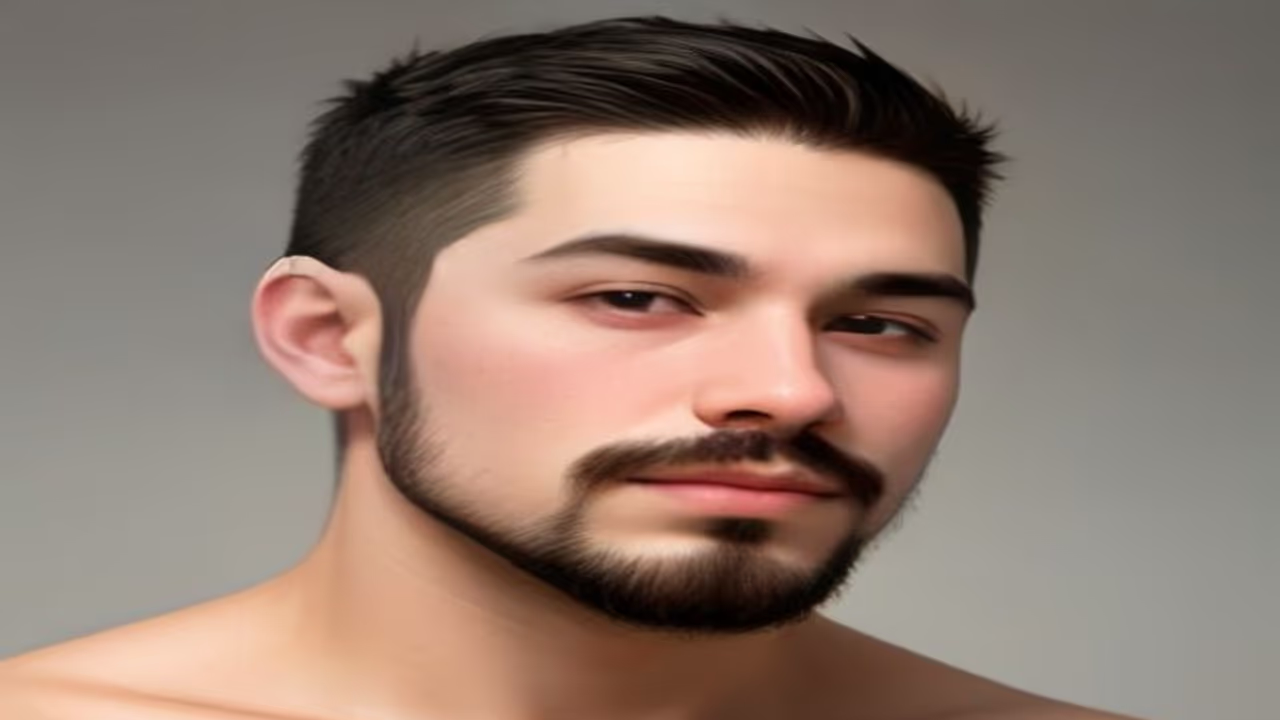
A disconnected moustache with a wide chin beard and no sideburns: the Tony Stark beard, essentially.
By Jessica Hamilton — Master Stylist & Creative Director
The Balbo is a disconnected moustache paired with a wider chin beard, with the sideburns and cheeks shaved clean. It's probably best known as the Tony Stark beard. It's broader under the chin than a Van Dyke. That extra width is what makes it flatter longer faces, where a narrow point would only stretch things further.
The Shape
Three components: a moustache that doesn't connect to the chin, a chin beard that's wider than a goatee and often extends slightly along the lower jaw, and completely clean cheeks and sideburns. The gap between moustache and chin beard is the defining feature. Lose the gap and it's just a short full beard.
Who It Suits
- Strong chin and moustache growth: like all disconnected styles, patchiness is exposed.
- Oval and oblong faces, since the wider chin section adds width where it helps.
- Men who want a beard with personality without a full beard's bulk.
- Less ideal for round faces, since the width can broaden the lower face further.
How to Trim It
- 1
Grow out 3-4 weeks
You need enough length on the chin and moustache to shape.
- 2
Shave the cheeks and sideburns clean
This is what creates the Balbo's distinct outline.
- 3
Create the gap
Shave a clear channel between the moustache and the chin beard, at the corners of the mouth.
- 4
Shape the chin section
Wider than a goatee, following your jaw slightly. Keep both sides symmetrical.
- 5
Set the neckline
Two fingers above the Adam's apple, as with any beard.
- 6
Trim to length
Keep it fairly short (5-15mm) so the shape reads clearly.
- 7
Maintain every 2-3 days
The clean-shaven areas need frequent attention.
Common Balbo Mistakes
The most common error is letting the gap between moustache and chin beard close up. Once stubble bridges that channel for even a few days, the Balbo reads as a plain short beard with a heavier moustache, not a Balbo. Shaving that gap needs to happen every time you touch up the rest of the beard, not just when you first shape it.
A second mistake is making the chin section too narrow. The Balbo is defined partly by width under the chin, and trimming it down to a thin goatee-like strip erases the difference between the two styles. Keep the chin patch as wide as your natural growth allows along the jawline, then square it off rather than tapering it to a point.
Uneven cheek lines are the third issue, especially on men shaping the beard themselves for the first time. Because both cheeks need to be completely bare, any stray patch or crooked edge is far more visible than it would be on a fuller beard style. Working with good side lighting and checking both profiles in a mirror before shaving catches most of these errors early.
How to Describe It to Your Barber
Because "Balbo" isn't always a familiar term, it helps to describe the three parts separately: a moustache that doesn't touch the chin beard, a wide chin patch rather than a narrow goatee, and completely shaved cheeks and sideburns. Mentioning "the Tony Stark beard" is usually enough to get the general idea across even if the barber hasn't heard the name Balbo before.
It also helps to say how much growth you currently have, since a barber shaping a Balbo from three weeks of stubble will approach it differently than one working with two months of beard. If you have a strong preference for how wide the chin section should sit relative to your jaw, point to it on your own face rather than relying on measurements, since jaw width varies enough that a fixed guard number doesn't translate well between men.
Balbo vs Van Dyke and Anchor Beards
The Balbo, Van Dyke, and anchor beard all share the disconnected-moustache idea, but the chin shape sets them apart. A Van Dyke keeps the chin beard narrow and often pointed, closer to a goatee with a separate moustache. An anchor beard follows the jawline in a narrow strip that meets a trimmed moustache, giving it a more angular, tapered outline than the Balbo's wider chin patch.
The Balbo is the widest and roundest of the three under the chin, which is exactly why it flatters longer, narrower faces better than the other two: the extra width adds visual weight that a pointed Van Dyke or a narrow anchor beard doesn't provide. Men with rounder faces generally get better results from the anchor beard's tapered lines, which add length rather than width.
Frequently Asked Questions
Q1: What is a Balbo beard?+
Q2: What's the difference between a Balbo and a Van Dyke?+
Q3: Who does a Balbo beard suit?+
Q4: How do I trim a Balbo beard?+
Q5: How often should I maintain a Balbo?+
Related Haircut Guides
Make us a Preferred Source on Google
See our latest articles first in your Google Search & AI Overviews.