
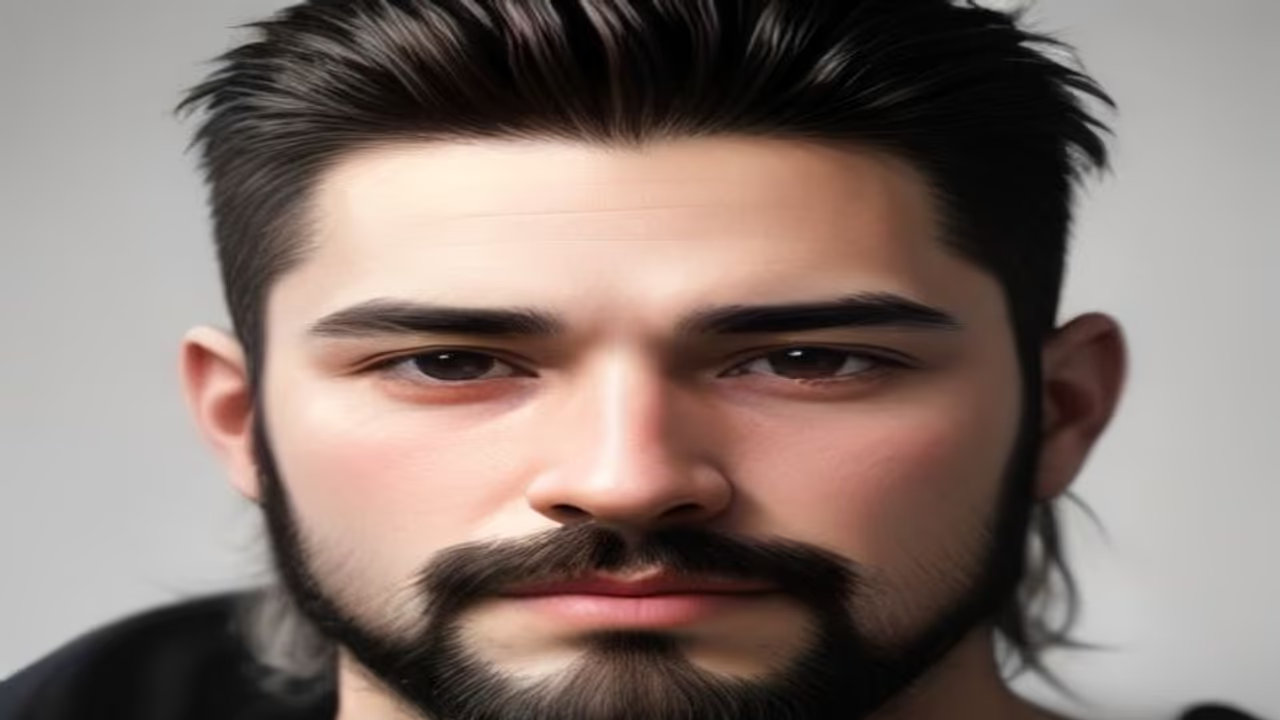
The Anchor Beard:
Styling and Maintenance Guide
A pointed chin beard plus a moustache, shaped like a ship's anchor: bold, precise, and not for the impatient.
By Jessica Hamilton — Master Stylist & Creative Director
The anchor beard is named for its shape: a pointed chin beard that follows the jawline, combined with a separate moustache, forming something like a ship's anchor. It's a precision style, every line is deliberate, which makes it striking but demanding to maintain.
The Shape, Defined
An anchor consists of a moustache (usually disconnected from the chin section), a chin beard that comes to a point below the lower lip, and a thin strip of beard tracing along the jawline. The jawline strip is what makes it an anchor rather than a Van Dyke. Everything else (cheeks, neck) is shaved clean.
Anchor vs Van Dyke vs Balbo
The jawline strip is the anchor's signature; without it you have a Van Dyke or Balbo.
| Style | Moustache | Chin | Jawline |
|---|---|---|---|
| Anchor | Yes, usually disconnected | Pointed | Thin strip along jaw |
| Van Dyke | Yes, disconnected | Pointed goatee | Clean shaven |
| Balbo | Yes, disconnected | Wider chin beard | Clean shaven |
Maintaining the Lines
- You need decent chin and moustache growth: patchiness shows badly in such a defined style.
- Trim every 2–3 days, since clean-shaven areas grow back fast and blur the shape.
- Use a detail trimmer for the jaw strip; a full-size trimmer is too wide.
- Keep the strip thin and even on both sides, since asymmetry is very visible here.
- Best suited to square and oval faces where the jawline strip has a clear line to follow.
Common Problems and Fixes
- Patchy jawline strip — if the connecting strip along the jaw grows in thin, keep it slightly wider until density fills in, then narrow it down once the patch has caught up. Trying to run a thin line through a patchy stretch just draws attention to it.
- Ingrown hairs on the shaved cheeks — the anchor's bare cheek areas are shaved close, which is the most common spot for ingrowns. Shave with the grain, not against it, and exfoliate the cheeks a couple of times a week to keep dead skin from trapping the hair as it grows back.
- Losing the shape between trims — the moustache and chin point grow faster than the jaw strip. Touch up just those two areas every couple of days instead of waiting to redo the whole outline at once.
- Uneven jaw strip width — check both sides in a mirror under even lighting, not the bathroom light alone, before you commit to a trim. Small width differences are far more visible on camera and in daylight than they look up close.
Timing the First Shape
Do not reach for the trimmer the day stubble appears. Let the beard grow untouched for three to four weeks so you can see where the hair actually sits and how thick it comes in along the jaw. Shaping too early means guessing at a line that has not filled in yet, and the strip usually ends up too thin or crooked once the rest of the beard catches up. Use that growing period to note any patchy spots on the jawline strip, since those areas decide how wide the connecting line needs to be. Once the moustache has enough length to hold a defined edge and the chin point has real bulk, mark the outline with a washable pencil before the first trim. Cut conservatively on that first pass, since it is far easier to narrow a strip or trim a point down later than to wait for a section you shaved too close to grow back.
Pairing It With a Haircut
The anchor beard carries a lot of visual weight along the jaw and chin, so it reads best next to a haircut that is not fighting for the same attention. A short crop, a low taper, or a textured fringe on top keeps the eye moving naturally from the hairline down to the point instead of competing with it. Avoid heavy volume or a long fringe that covers the jawline, since it hides the strip that makes the shape recognizable in the first place. Men with thicker or curlier hair on top usually get better results keeping the sides tighter than the beard, so the clean jaw strip and the clean sides read as one deliberate look rather than two separate decisions.
Frequently Asked Questions
Q1: What is an anchor beard?+
Q2: What's the difference between an anchor beard and a Van Dyke?+
Q3: How often do I need to trim an anchor beard?+
Q4: Who does an anchor beard suit?+
Q5: What tools do I need for an anchor beard?+
Make us a Preferred Source on Google
See our latest articles first in your Google Search & AI Overviews.