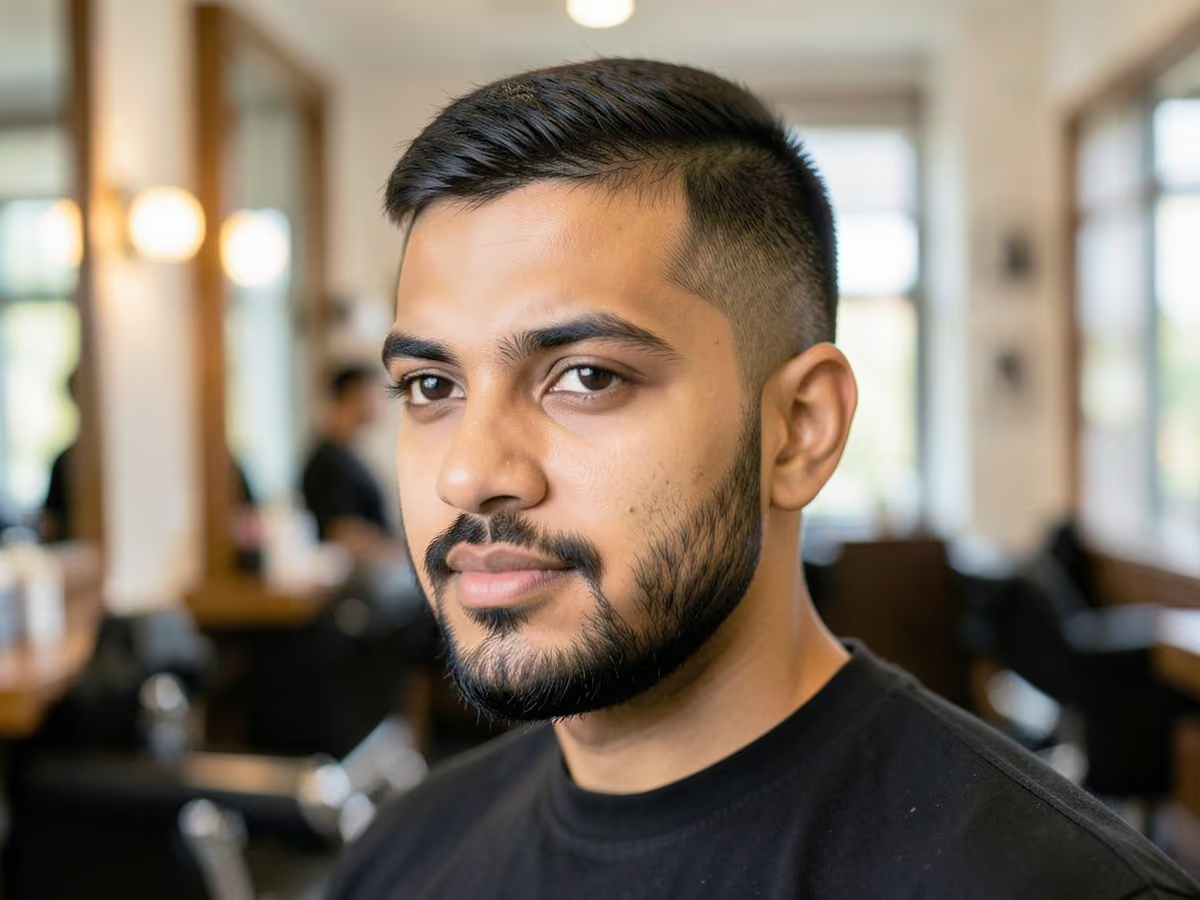
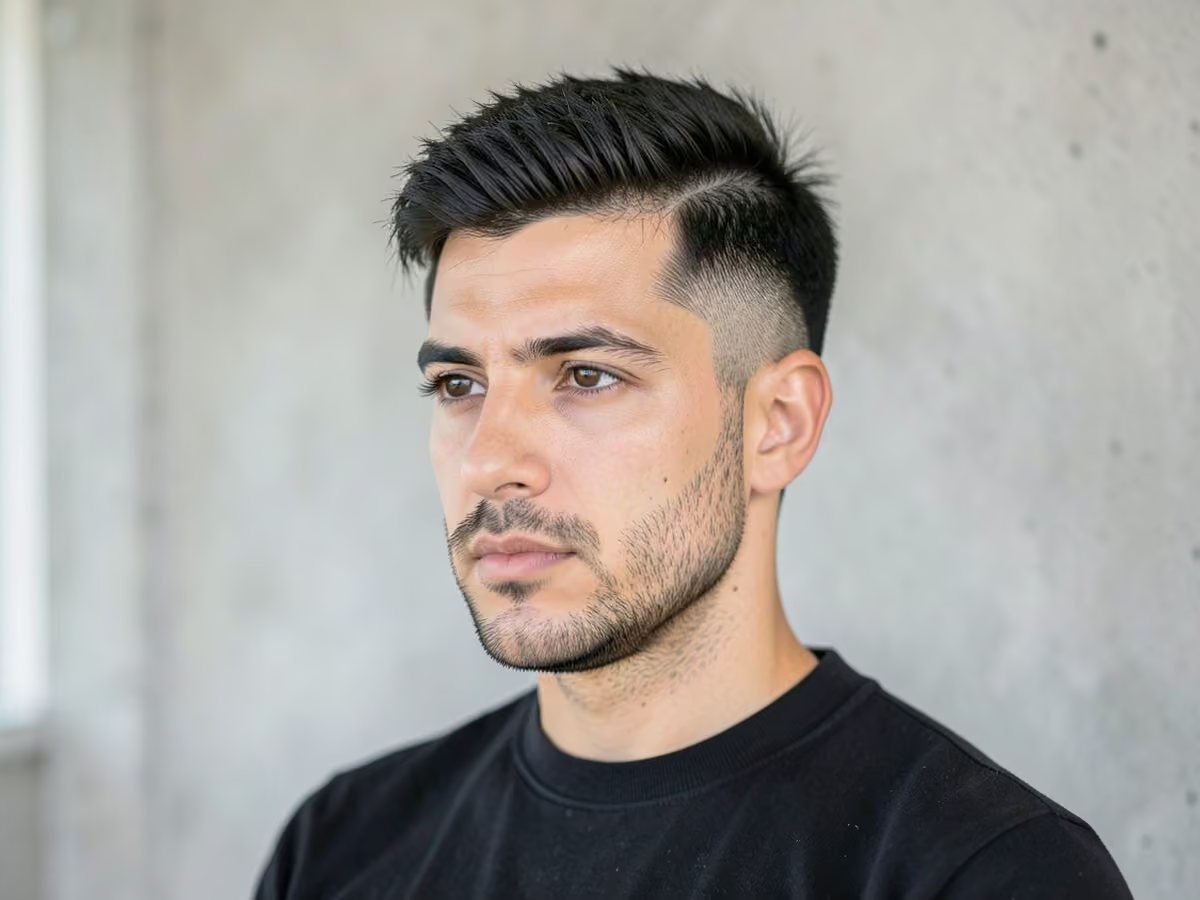
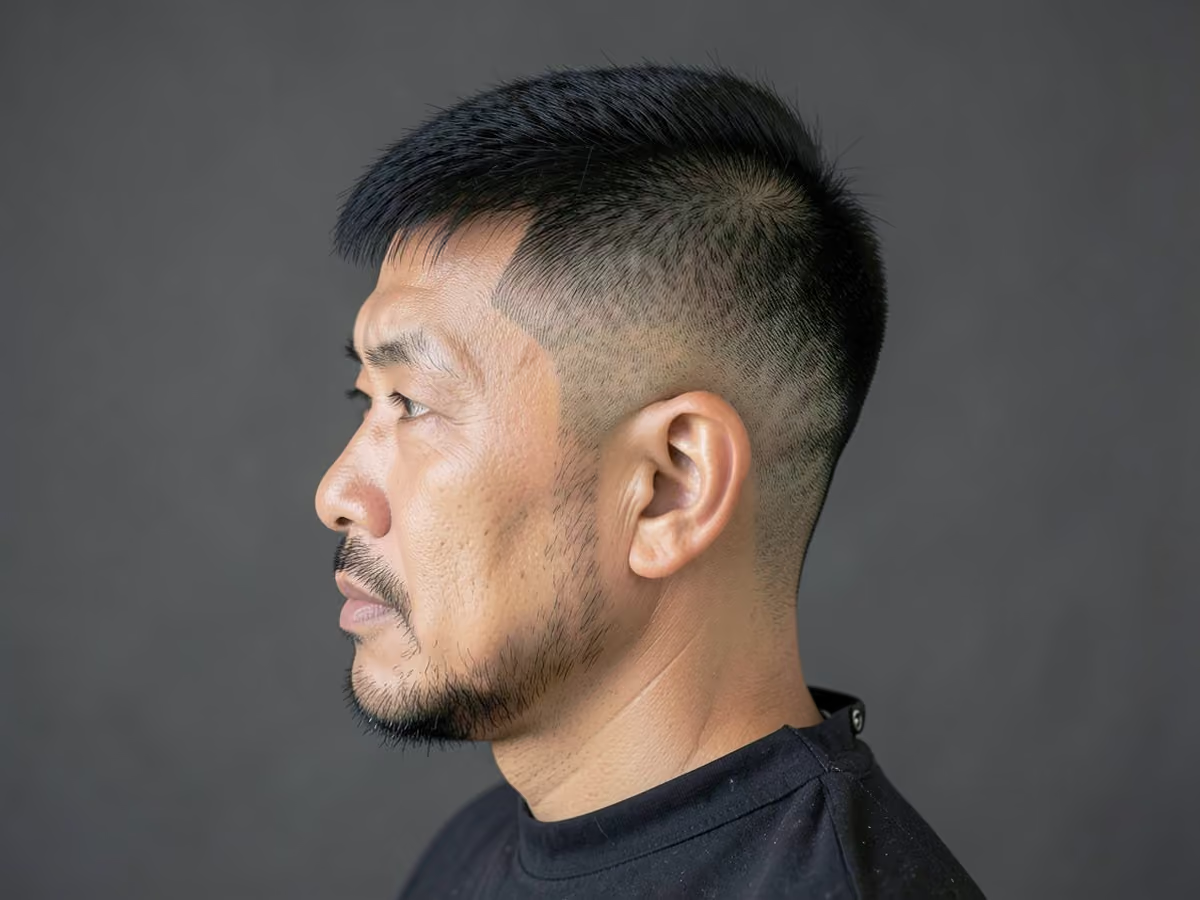
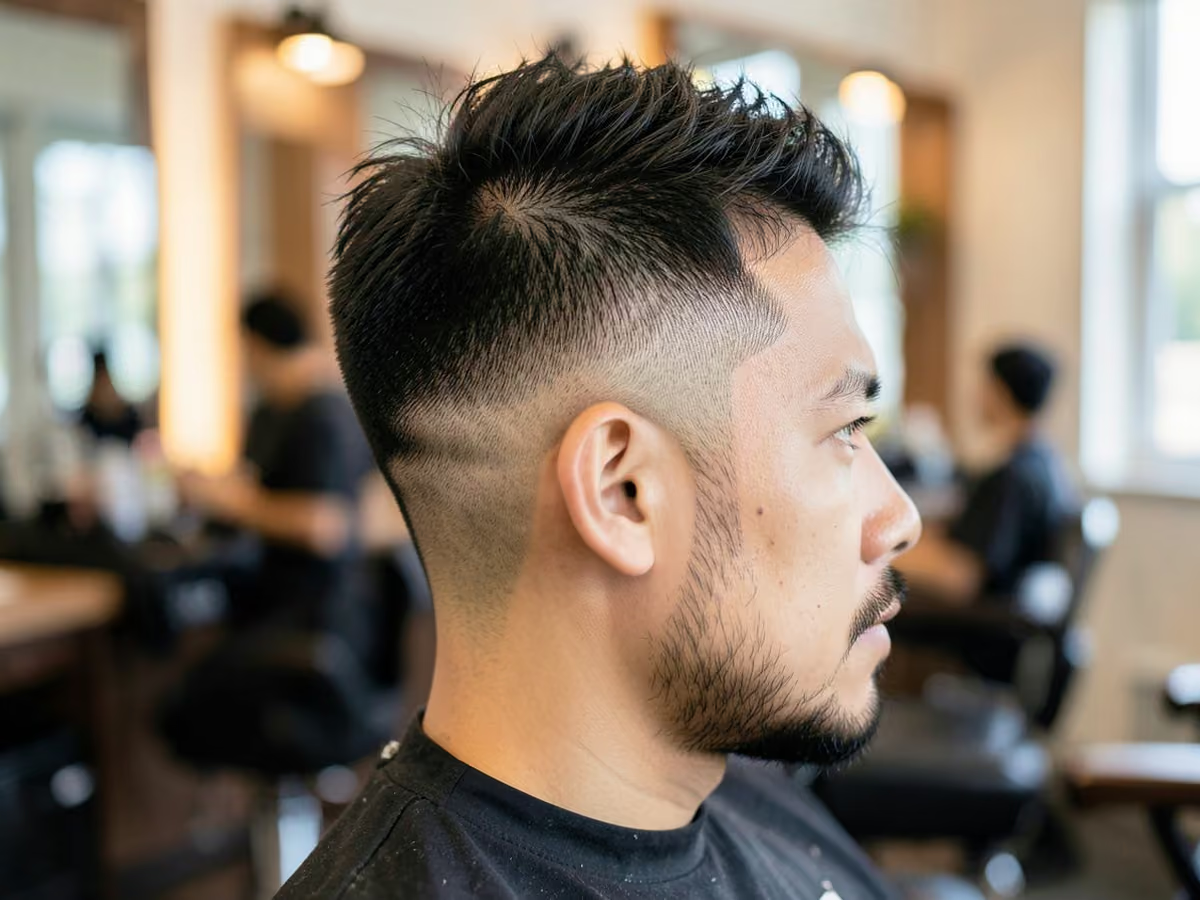
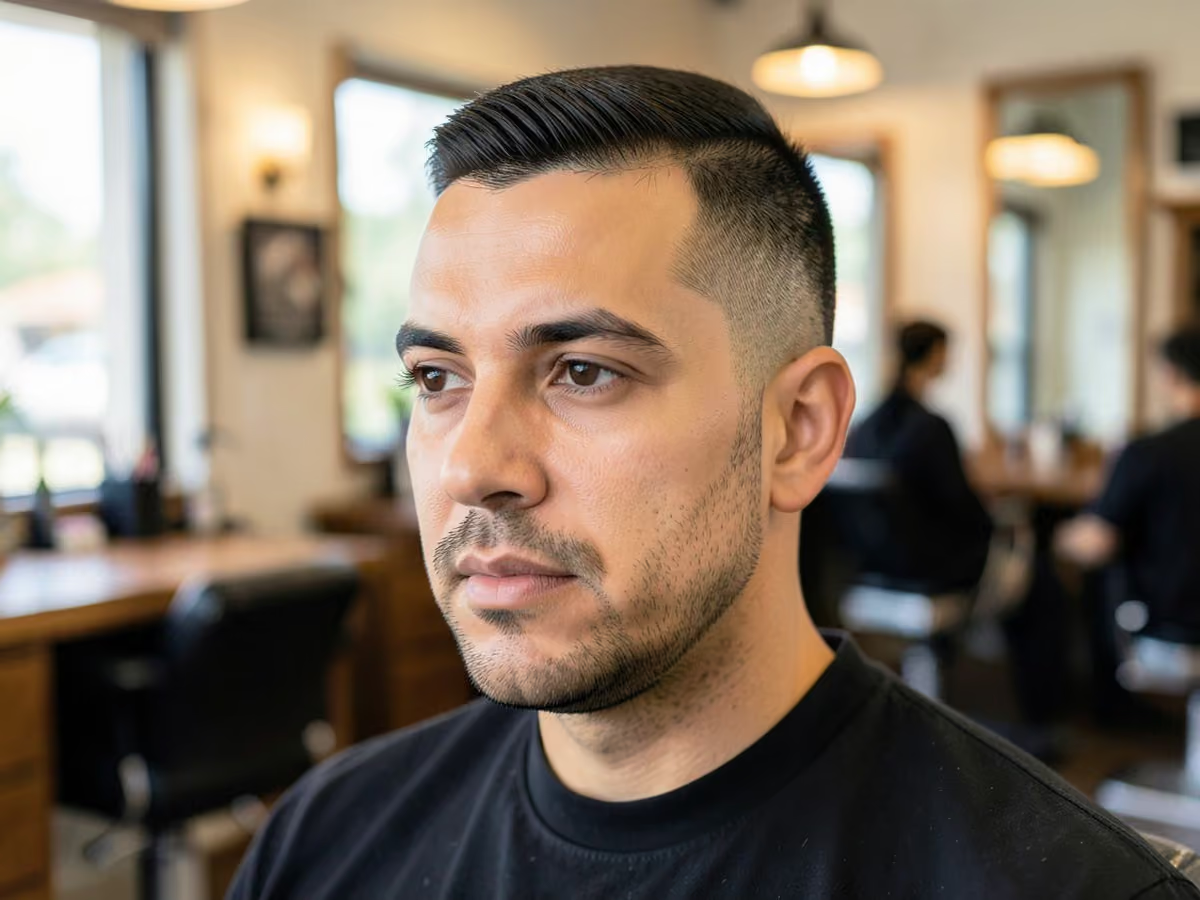
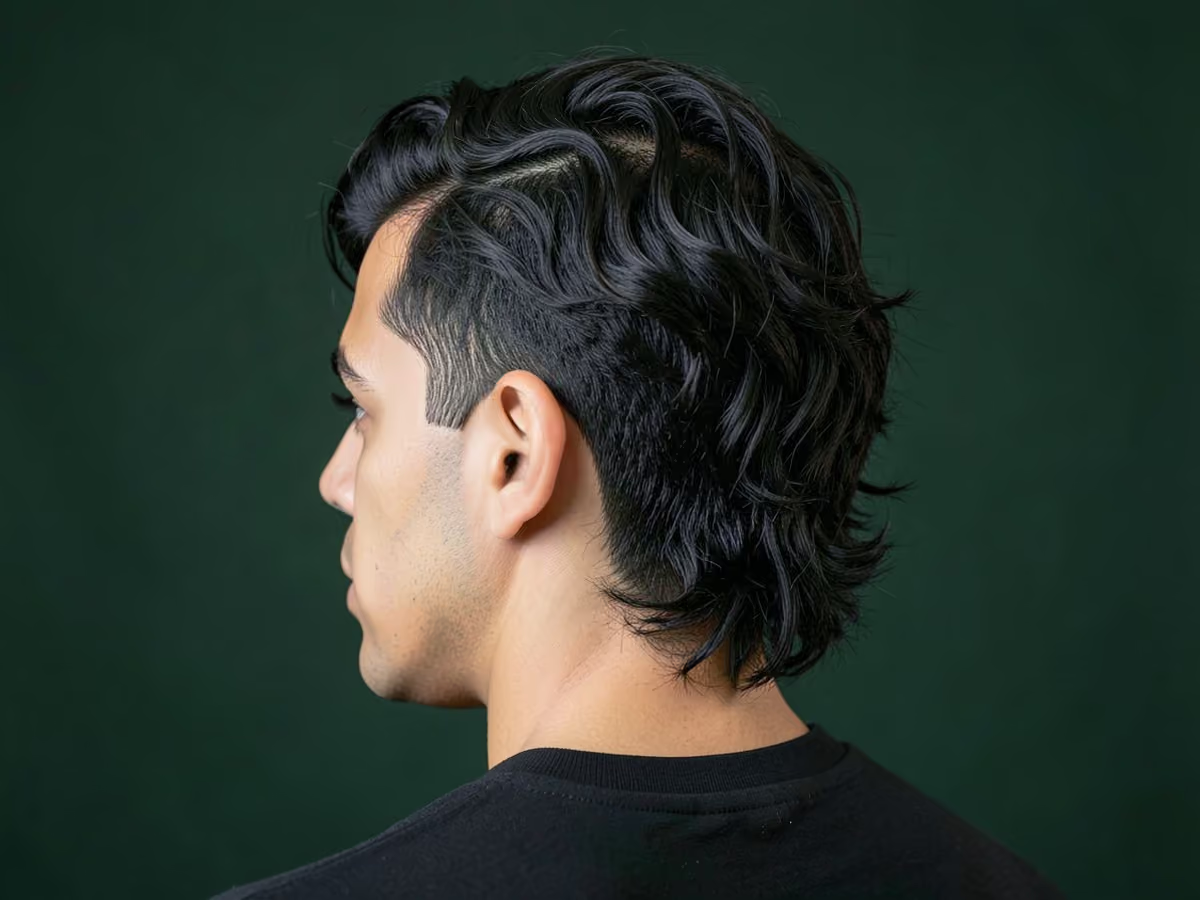
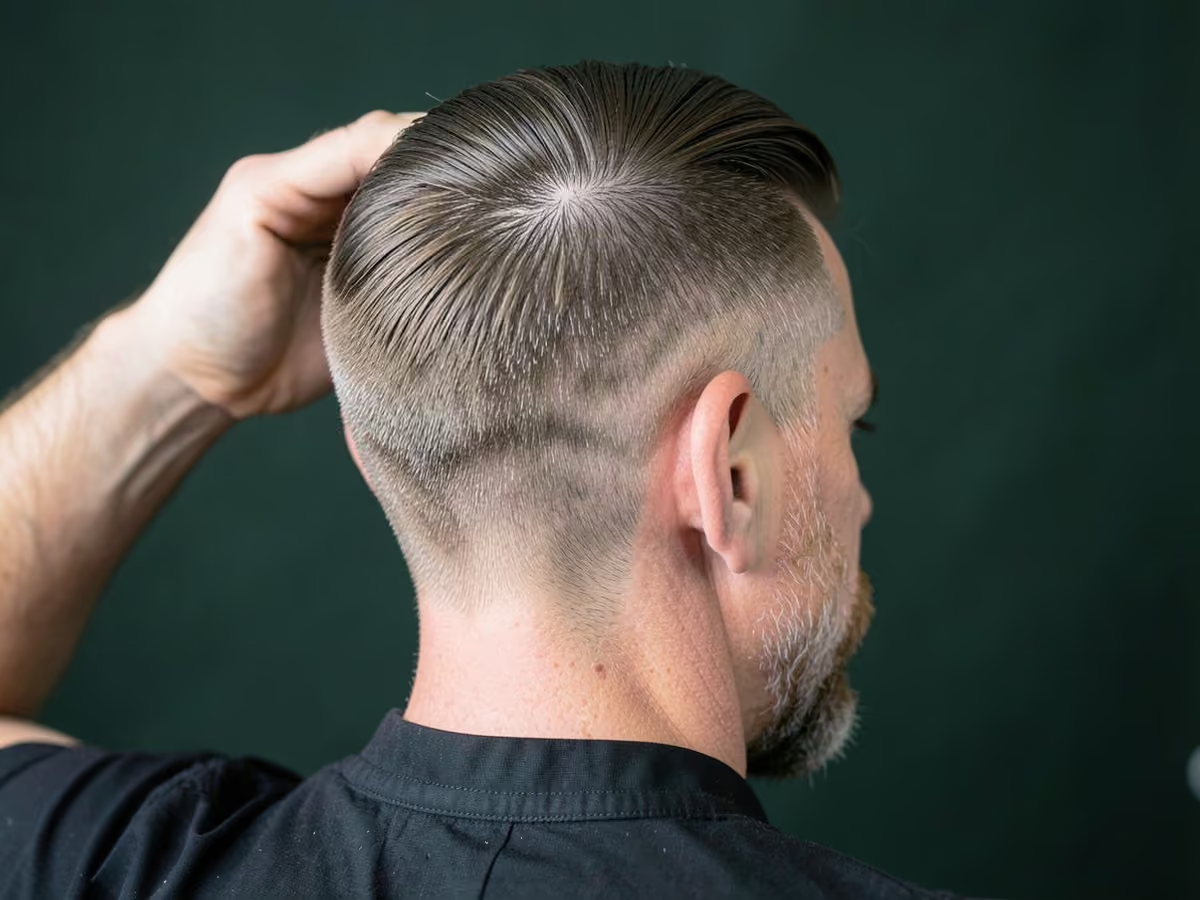
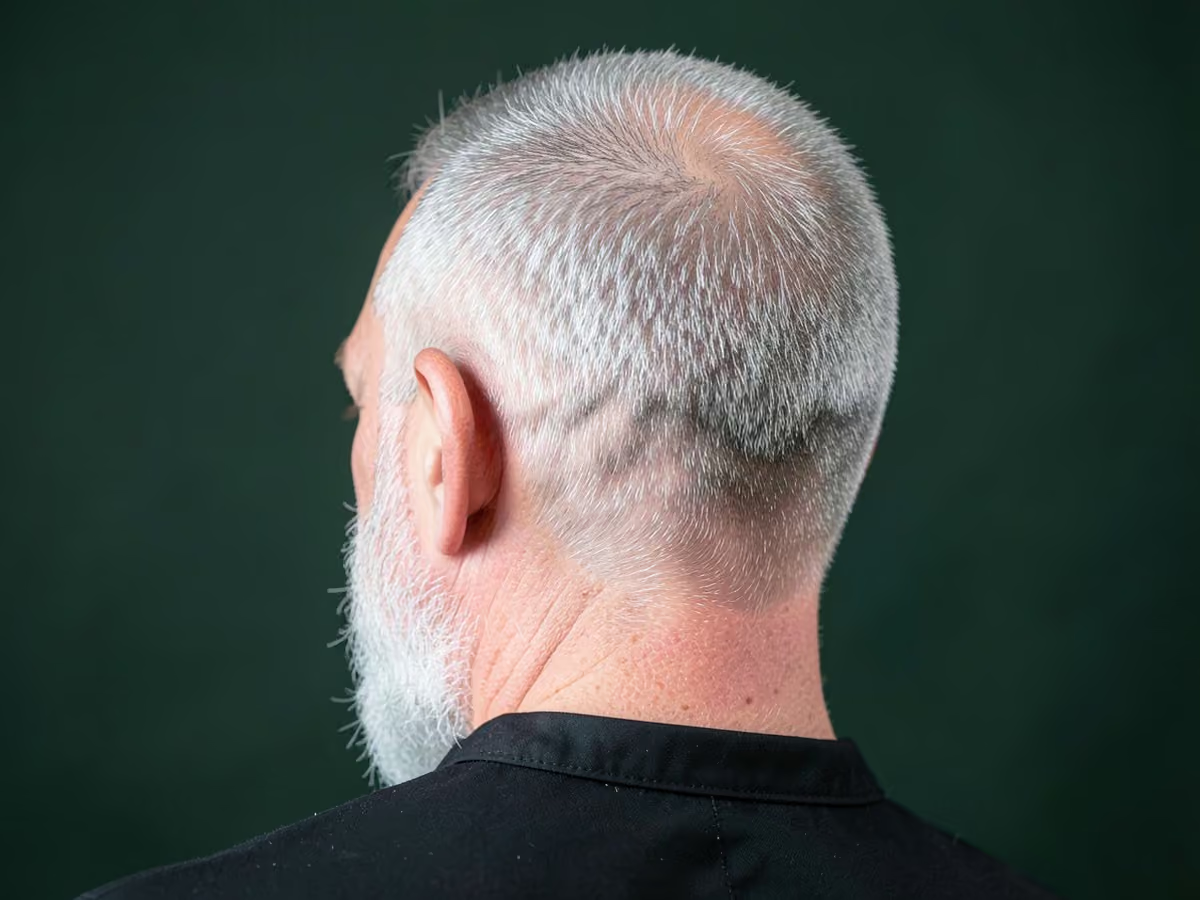
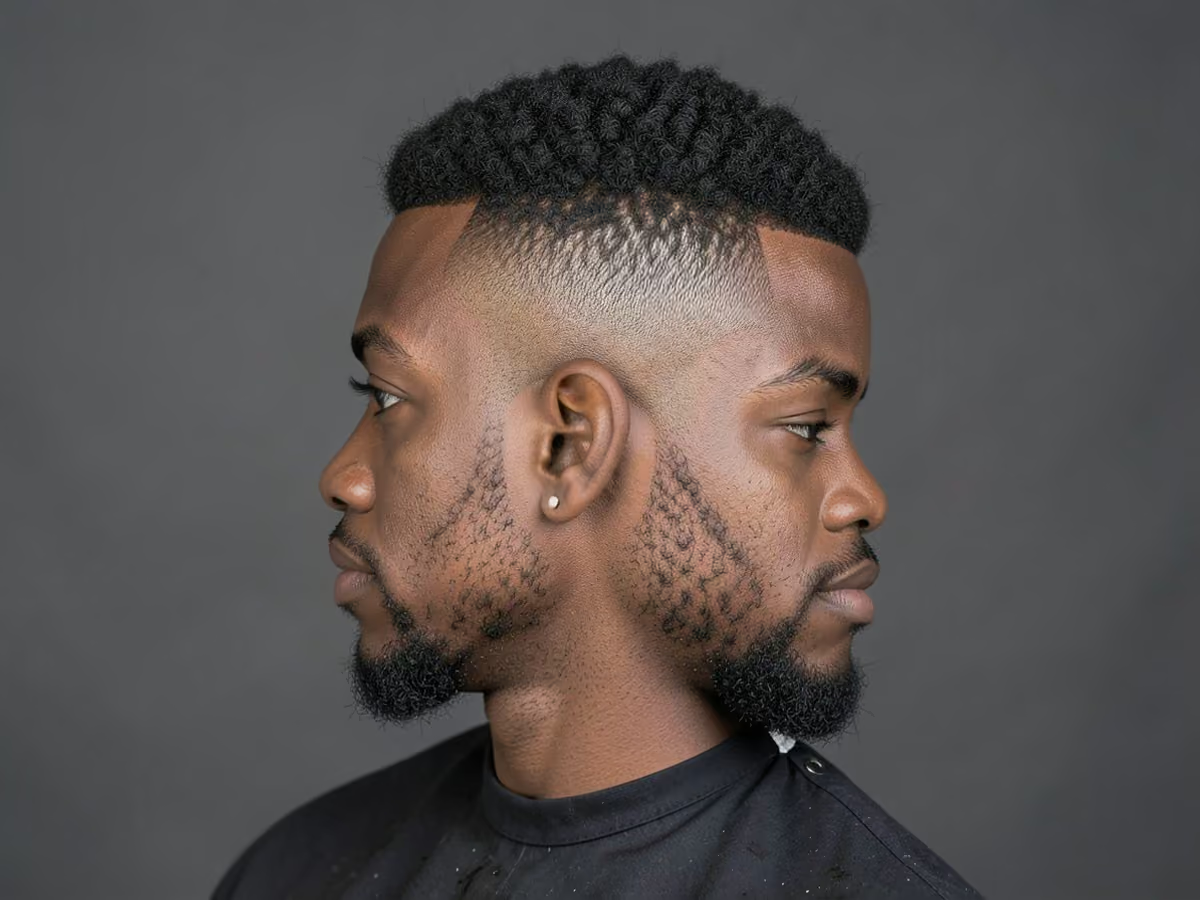
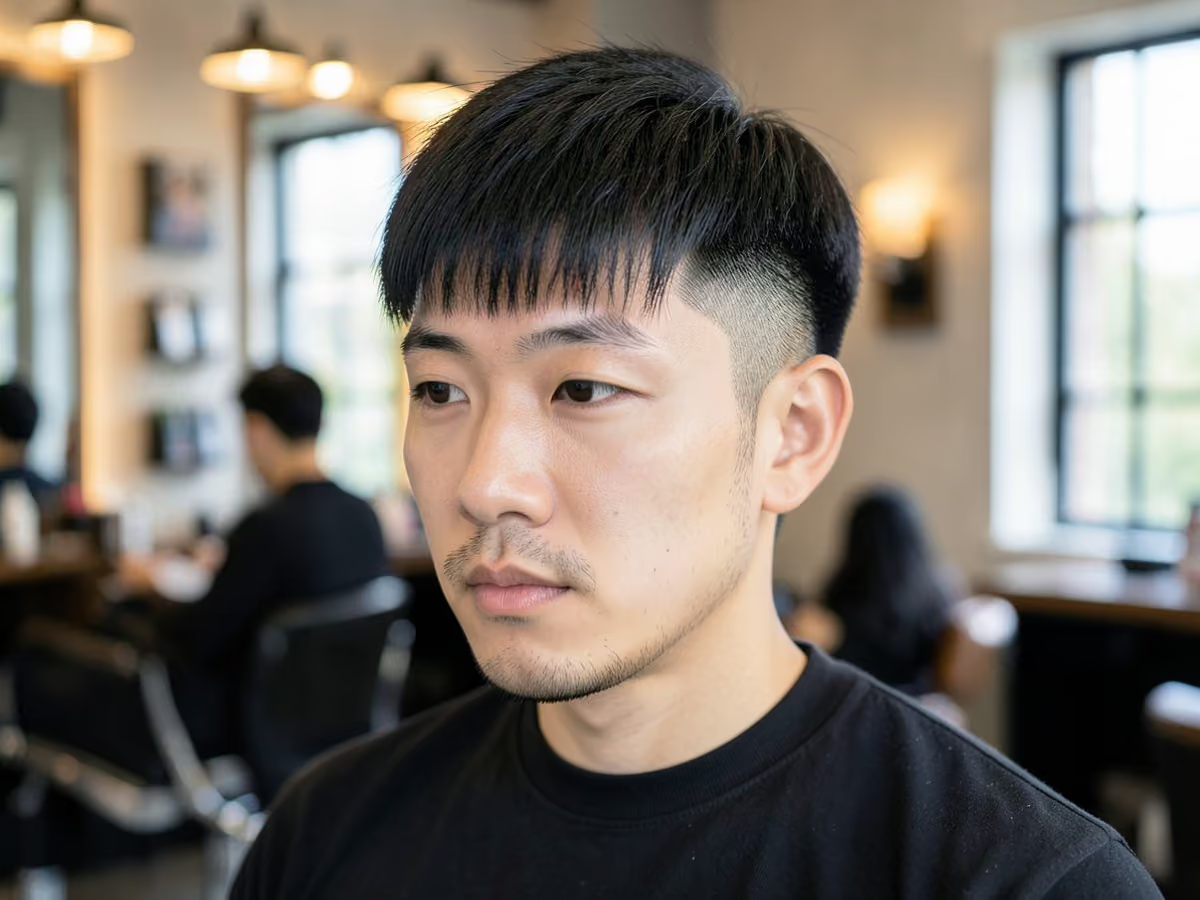
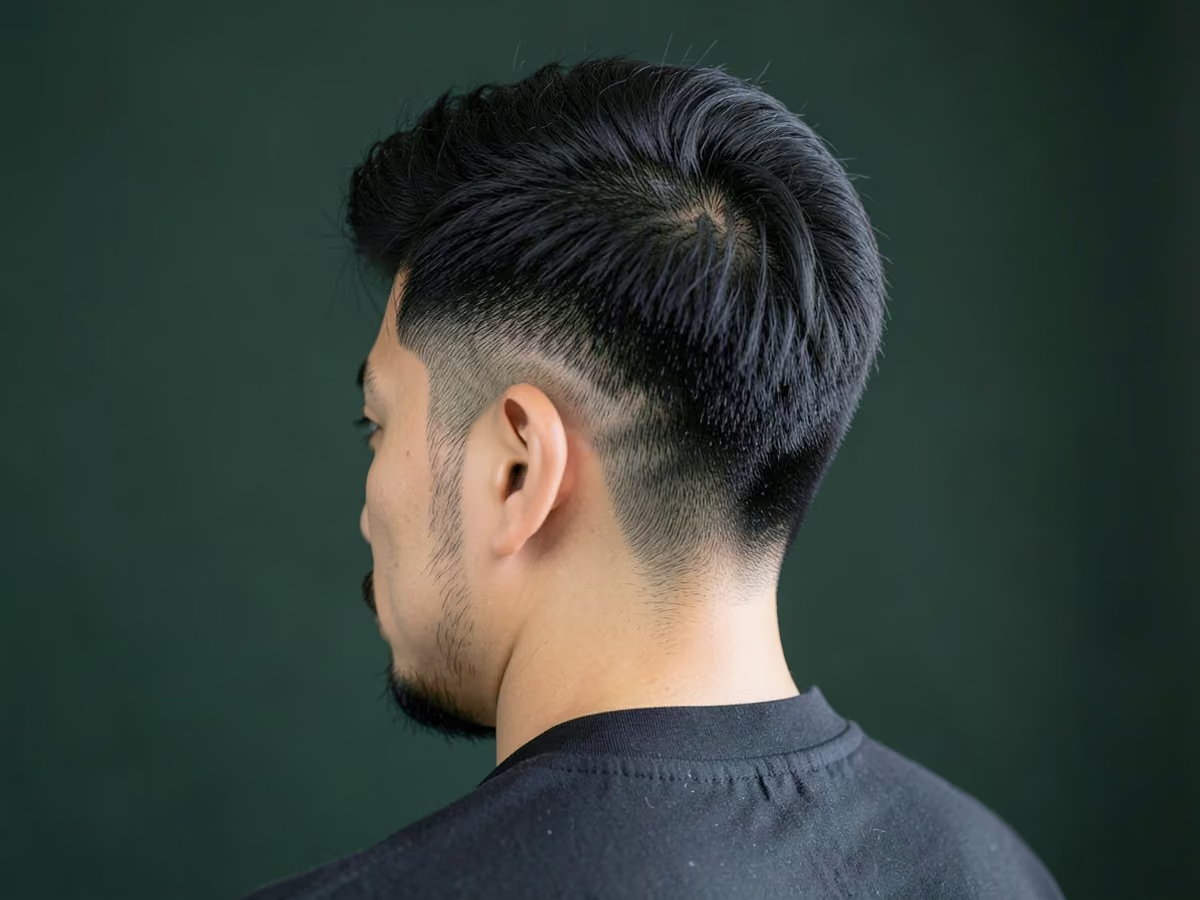
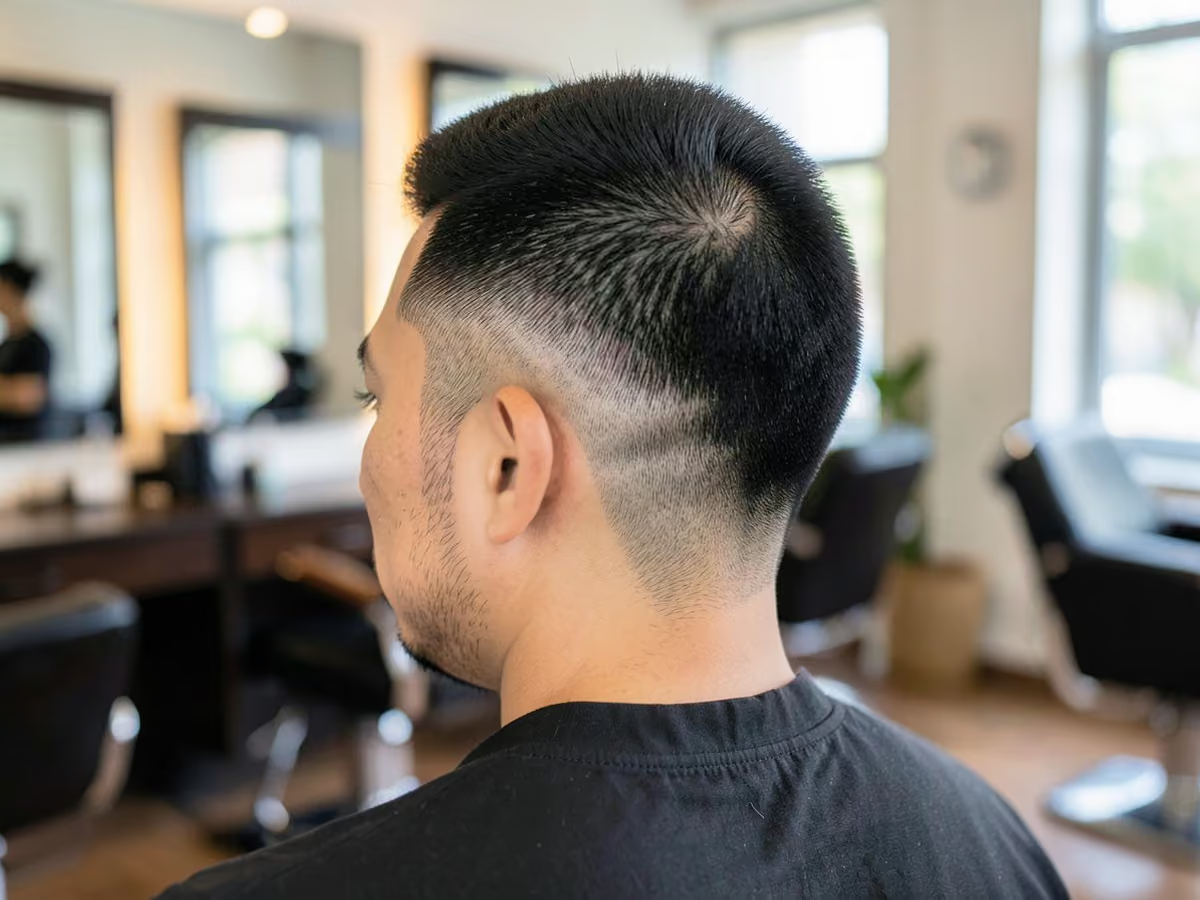
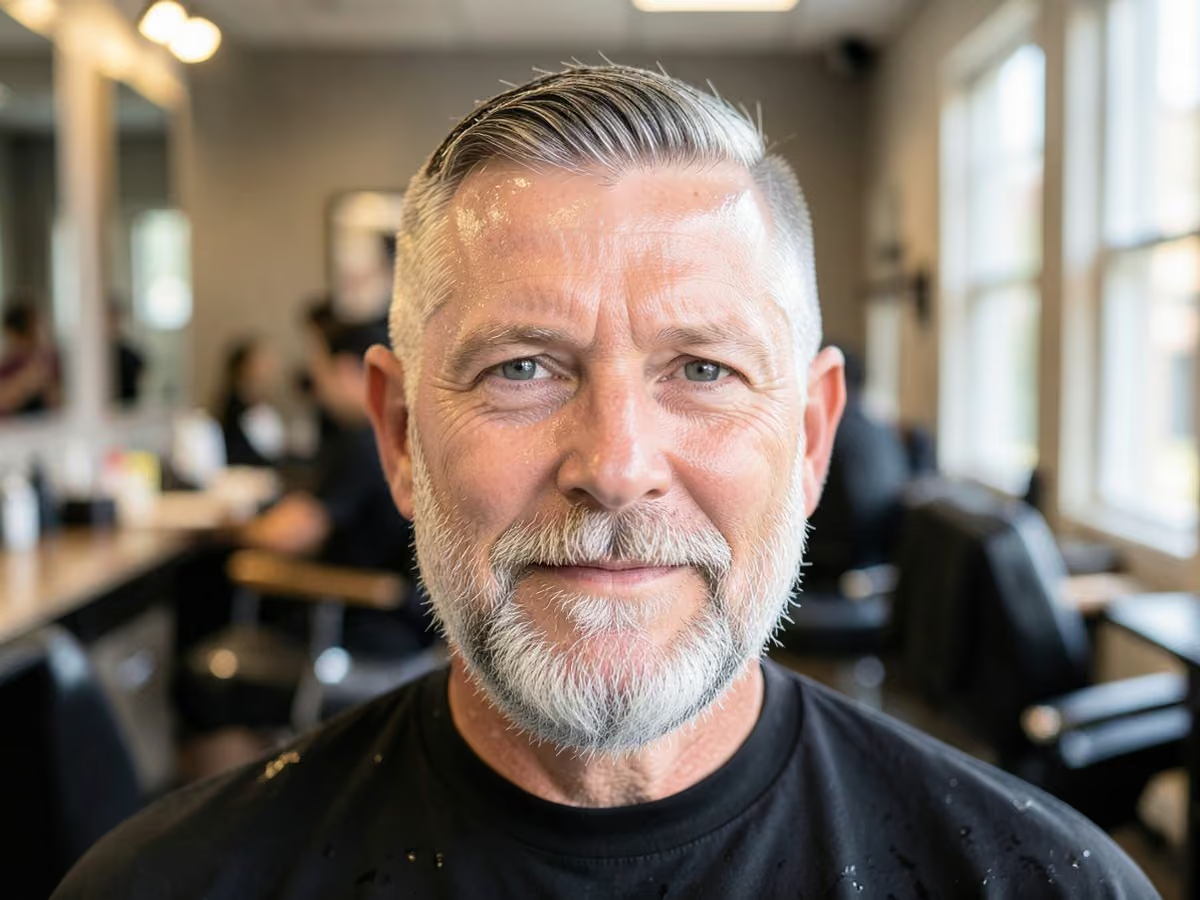
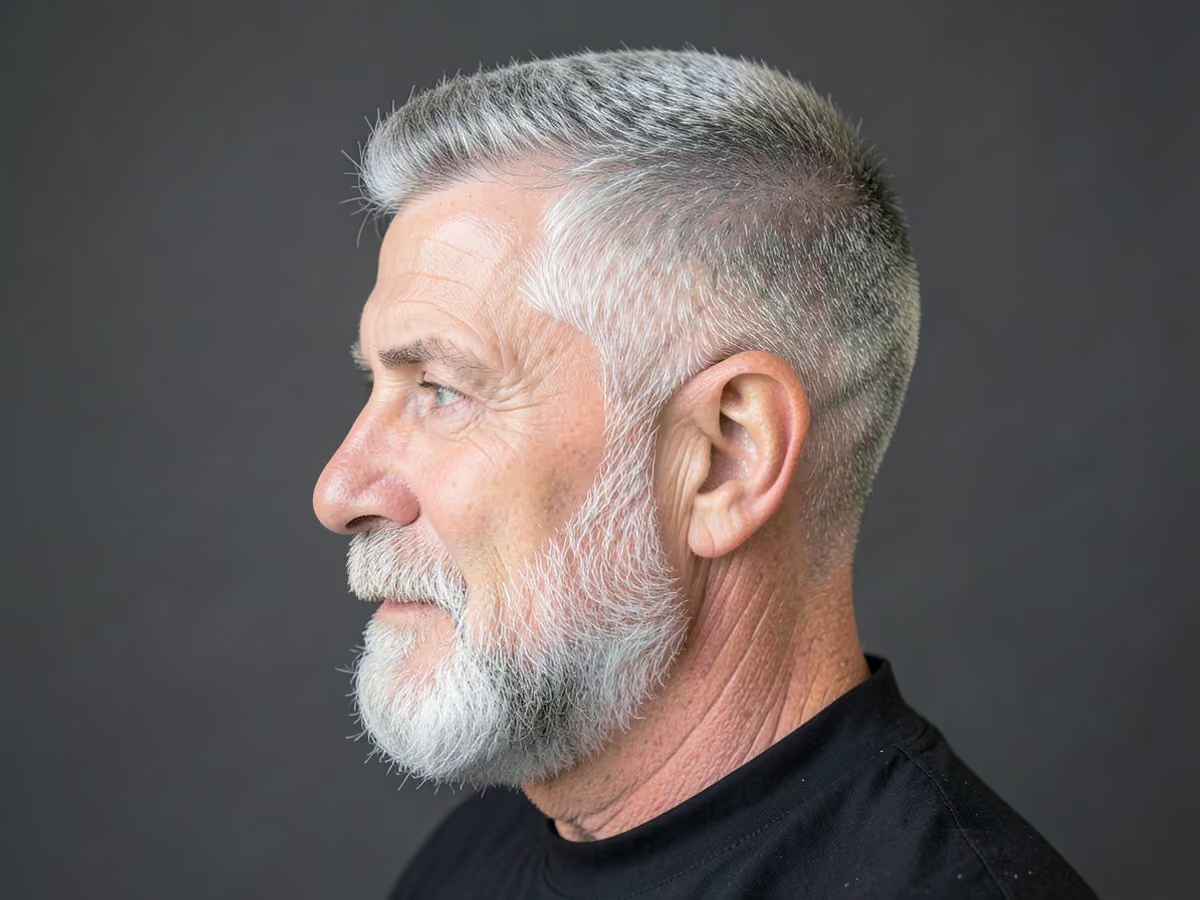
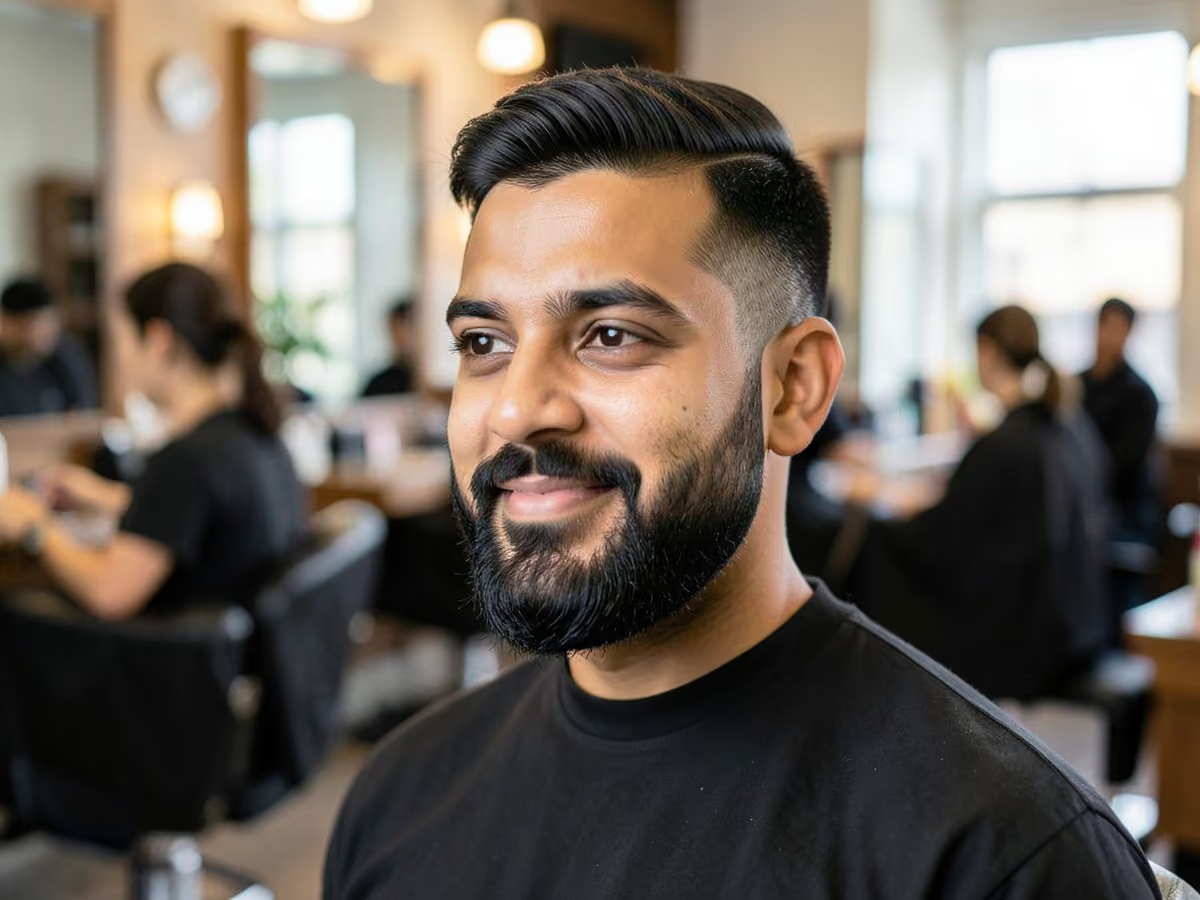
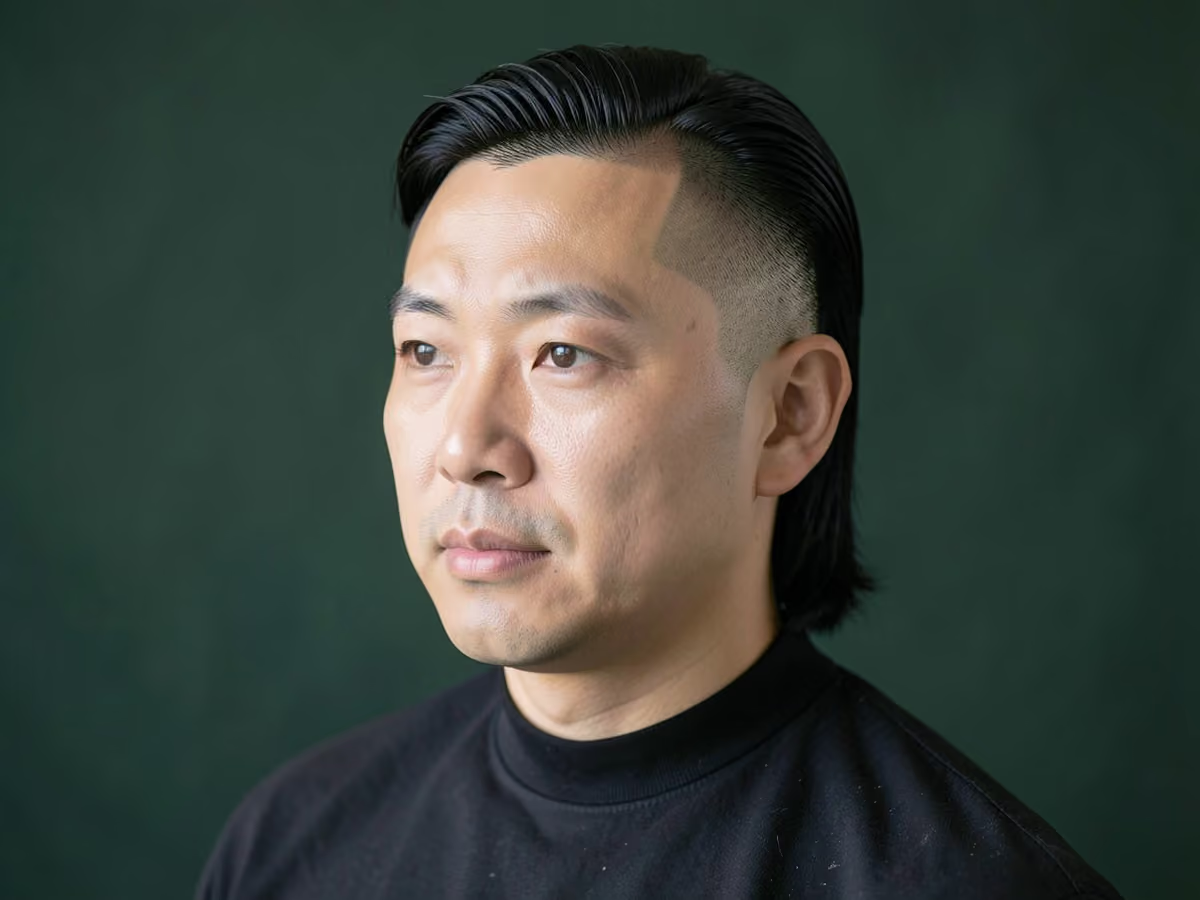
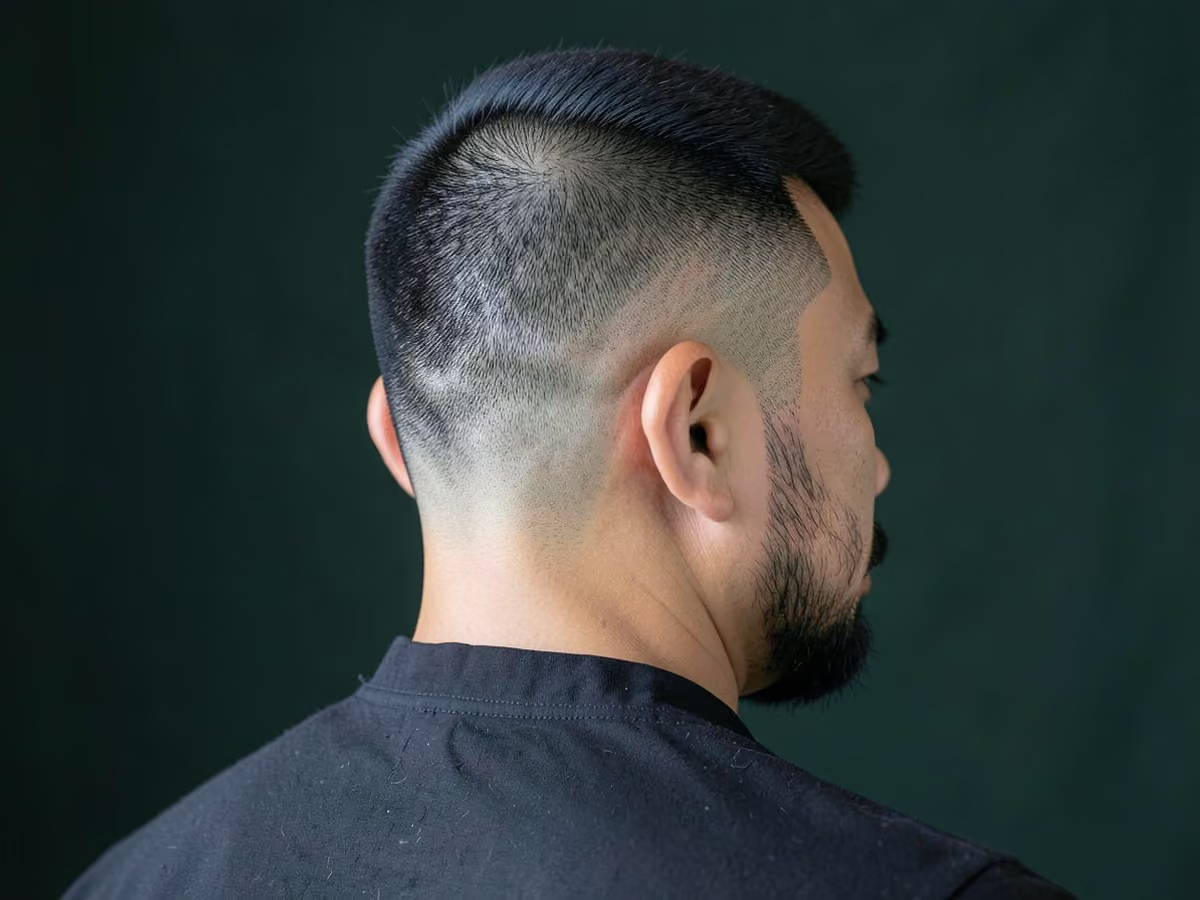
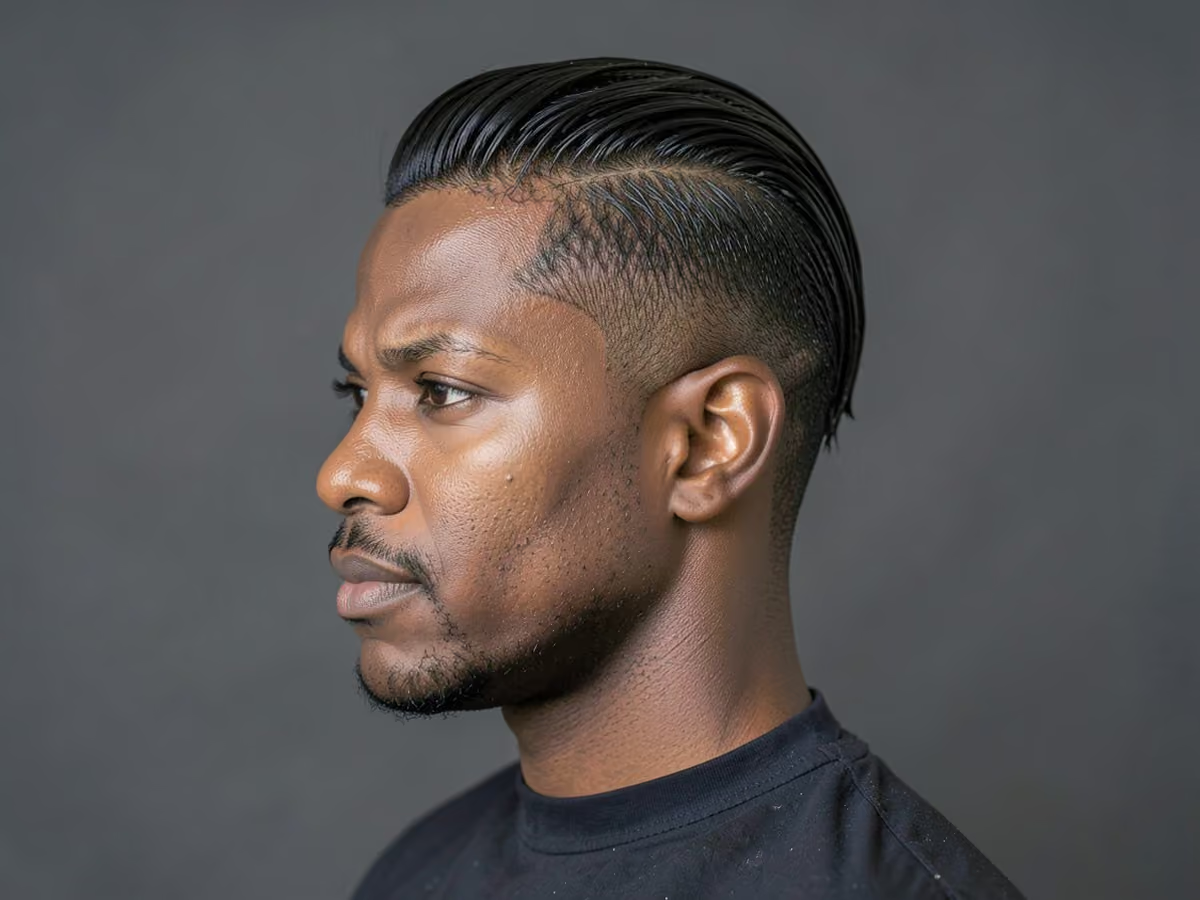
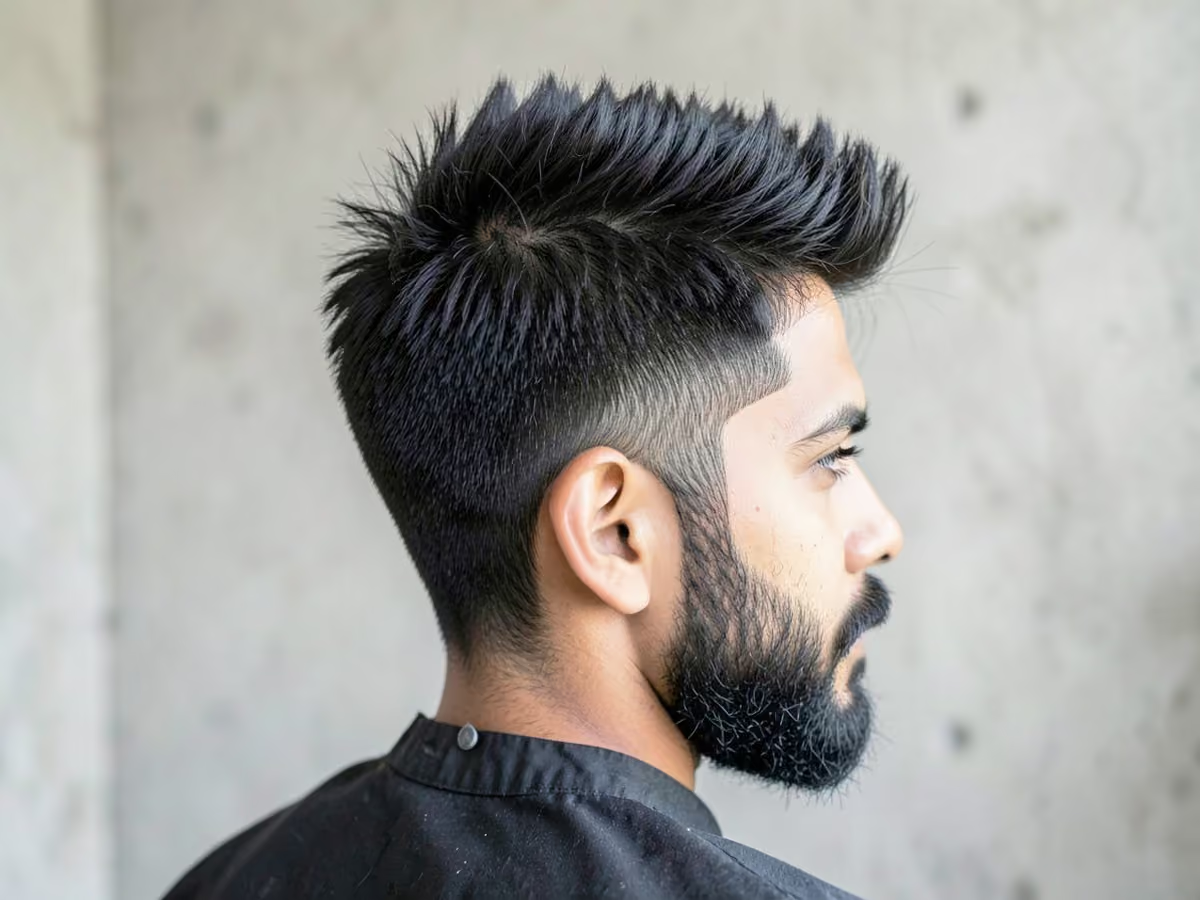
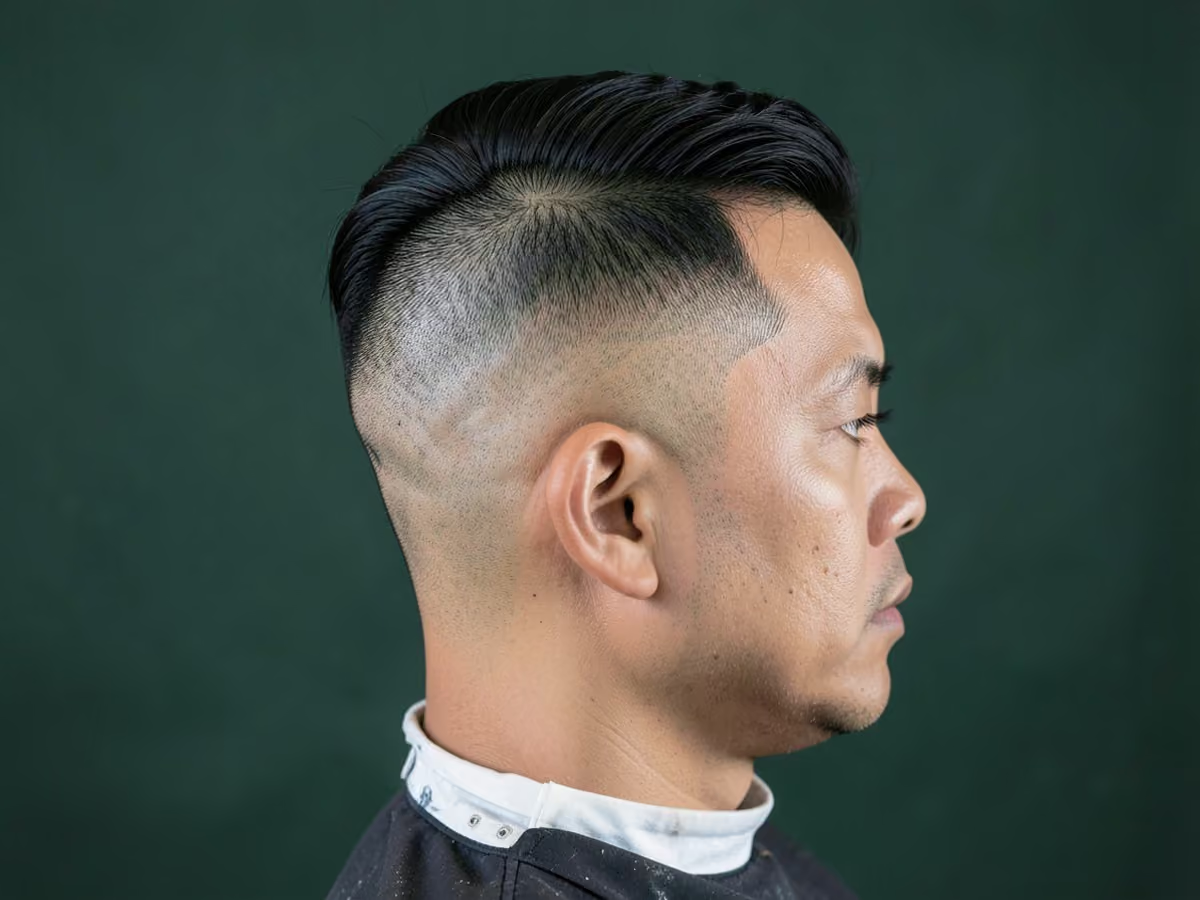
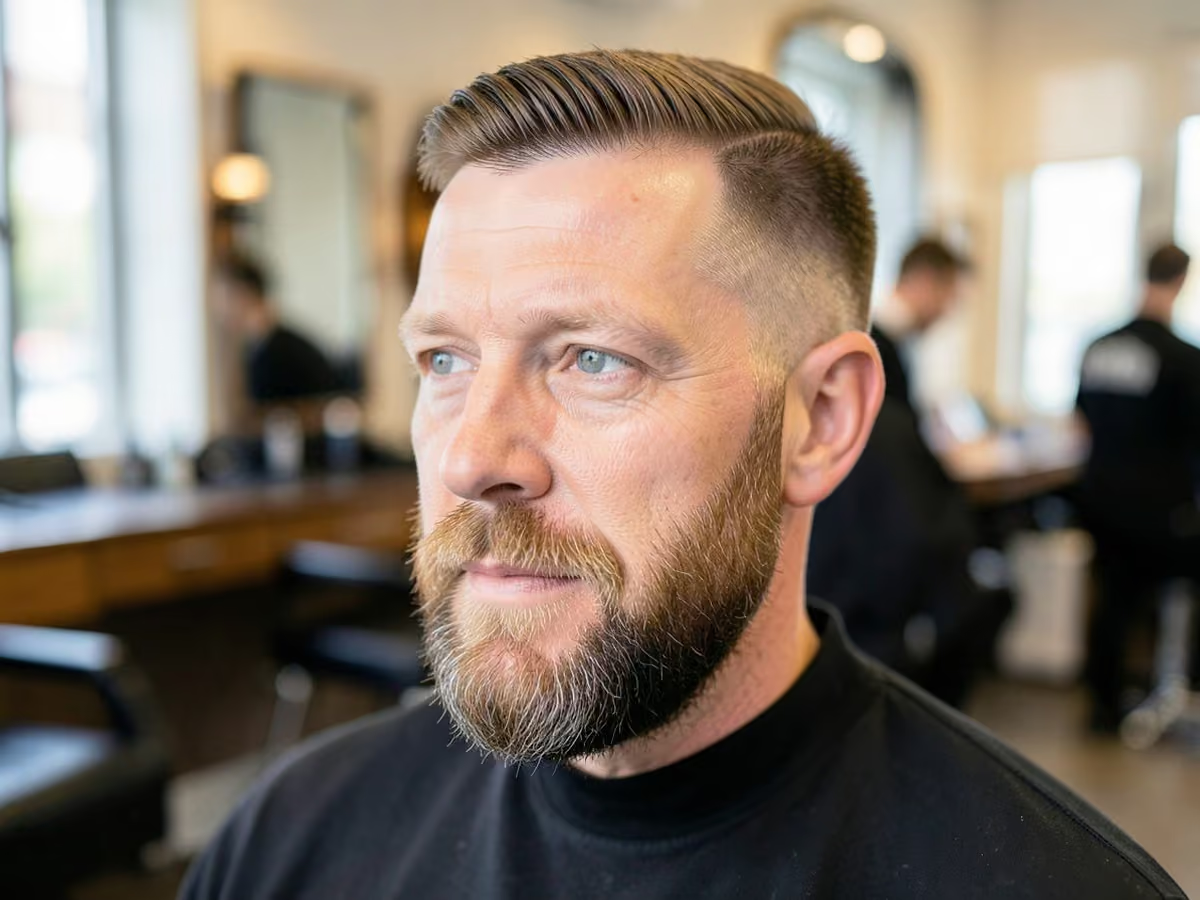
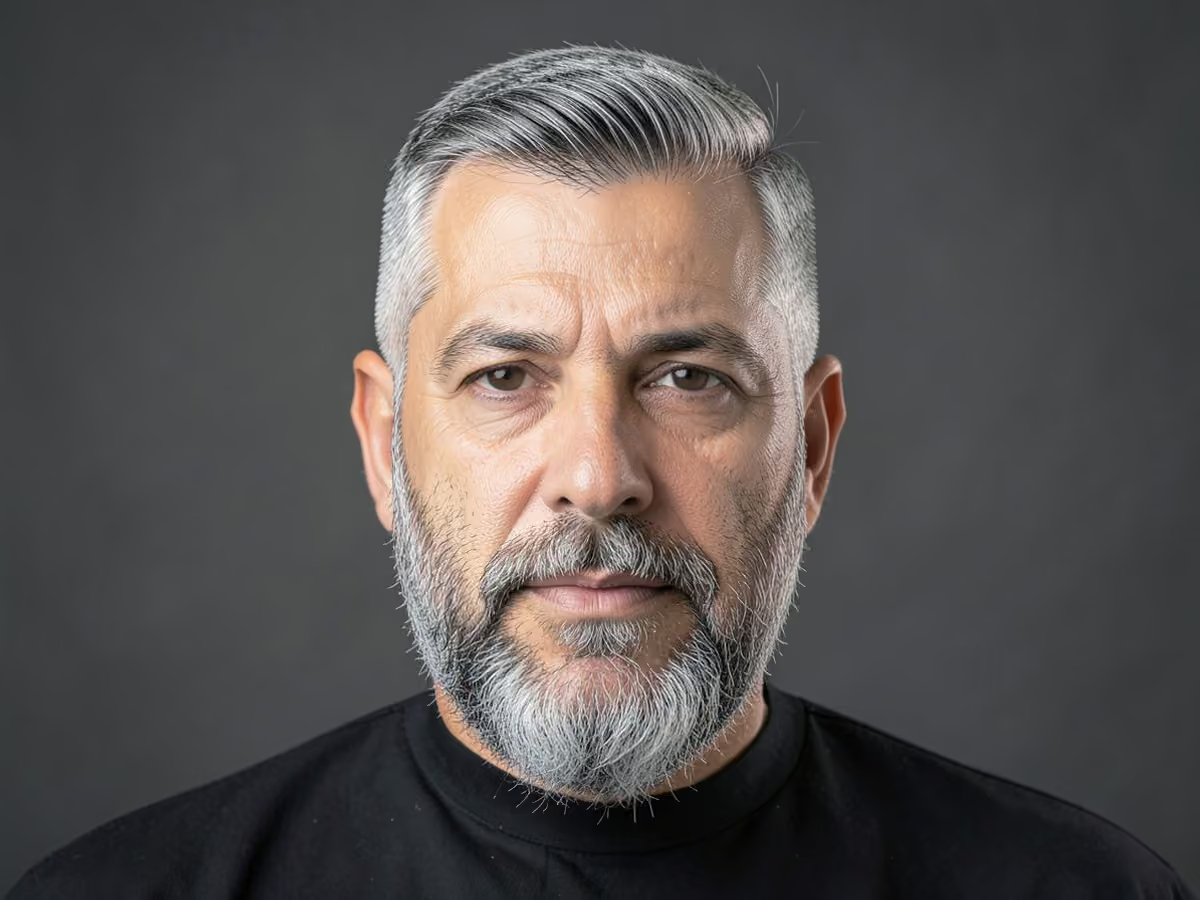
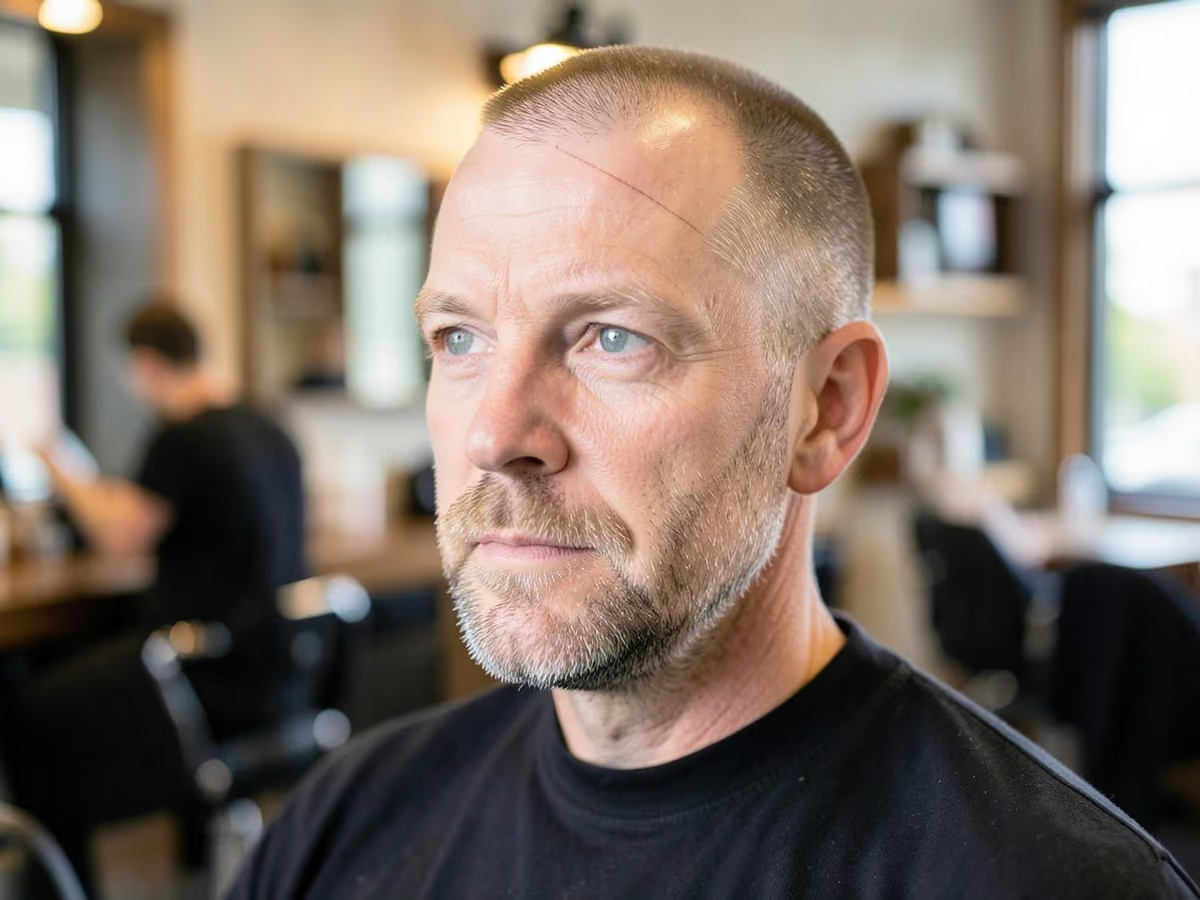
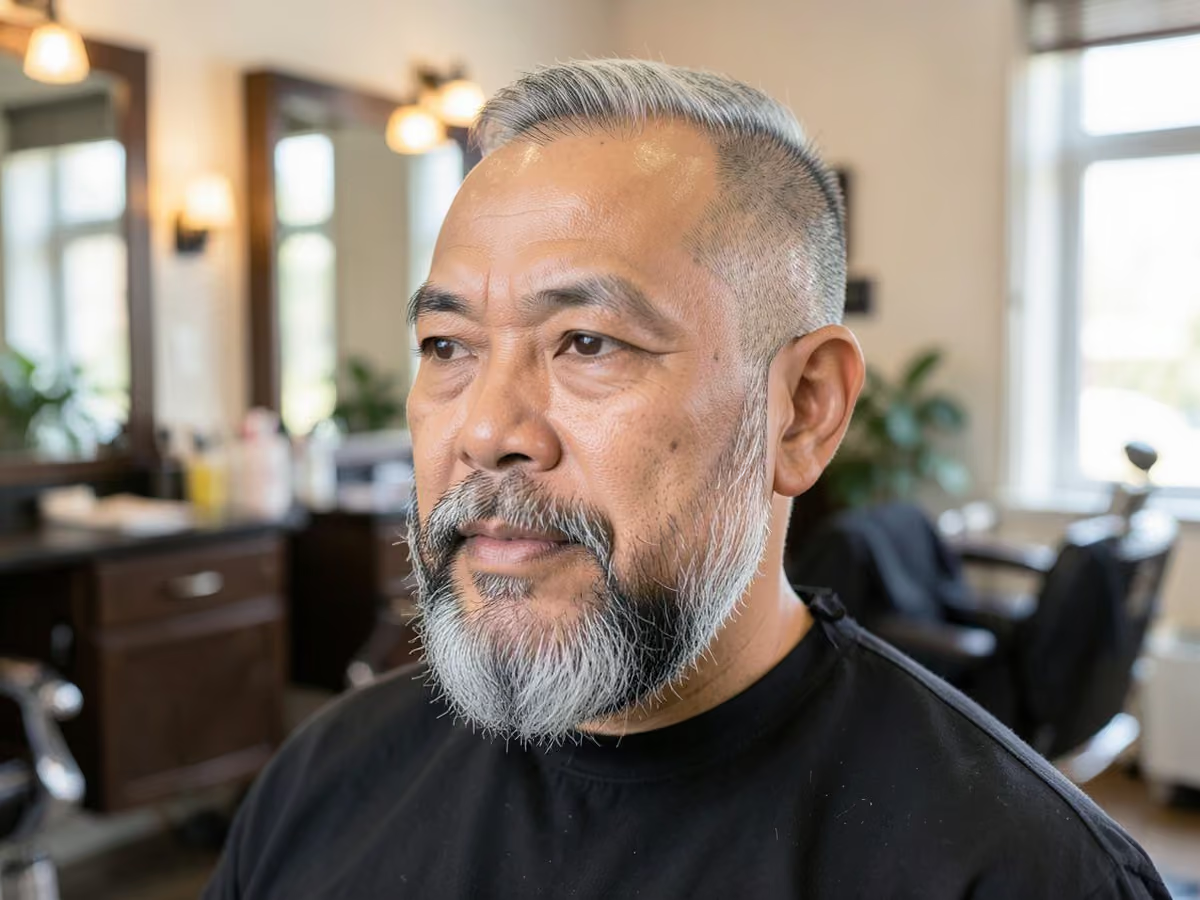
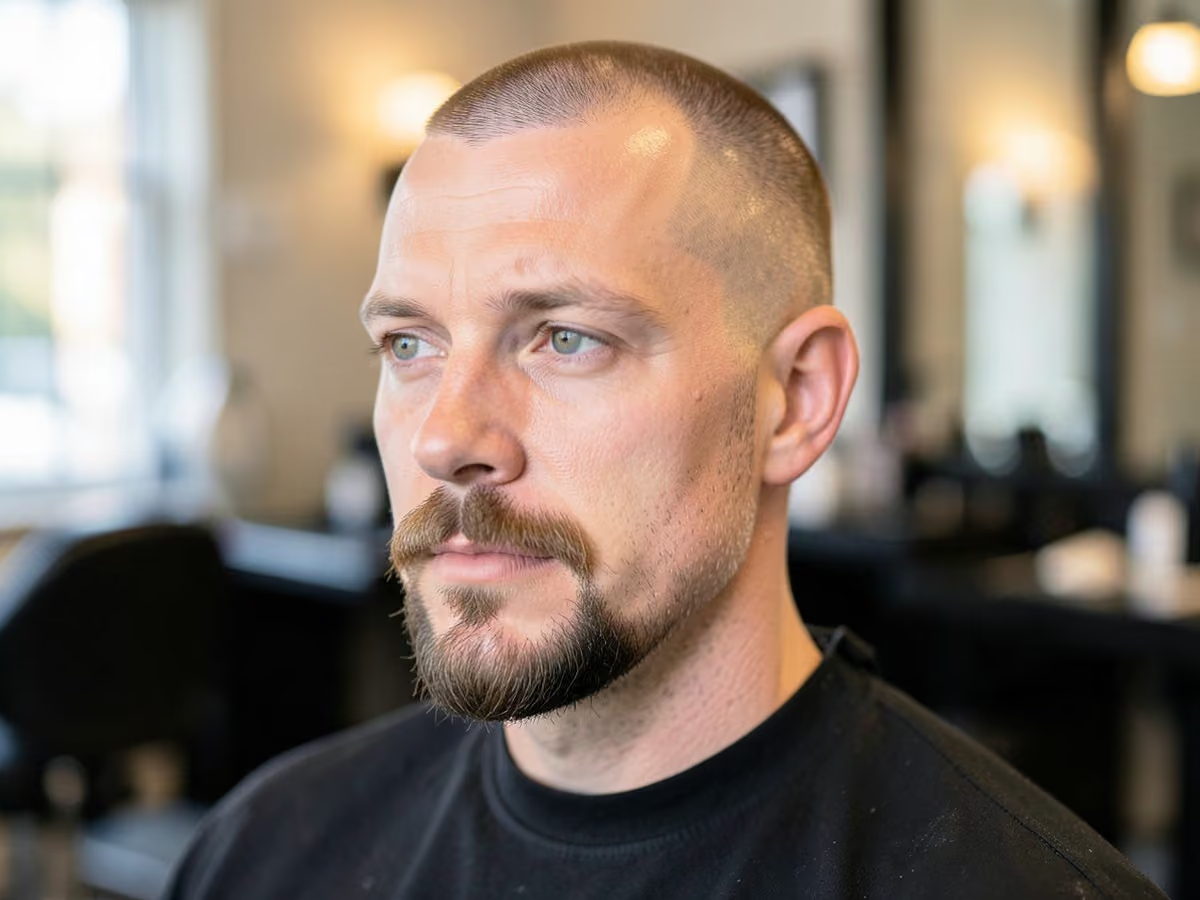
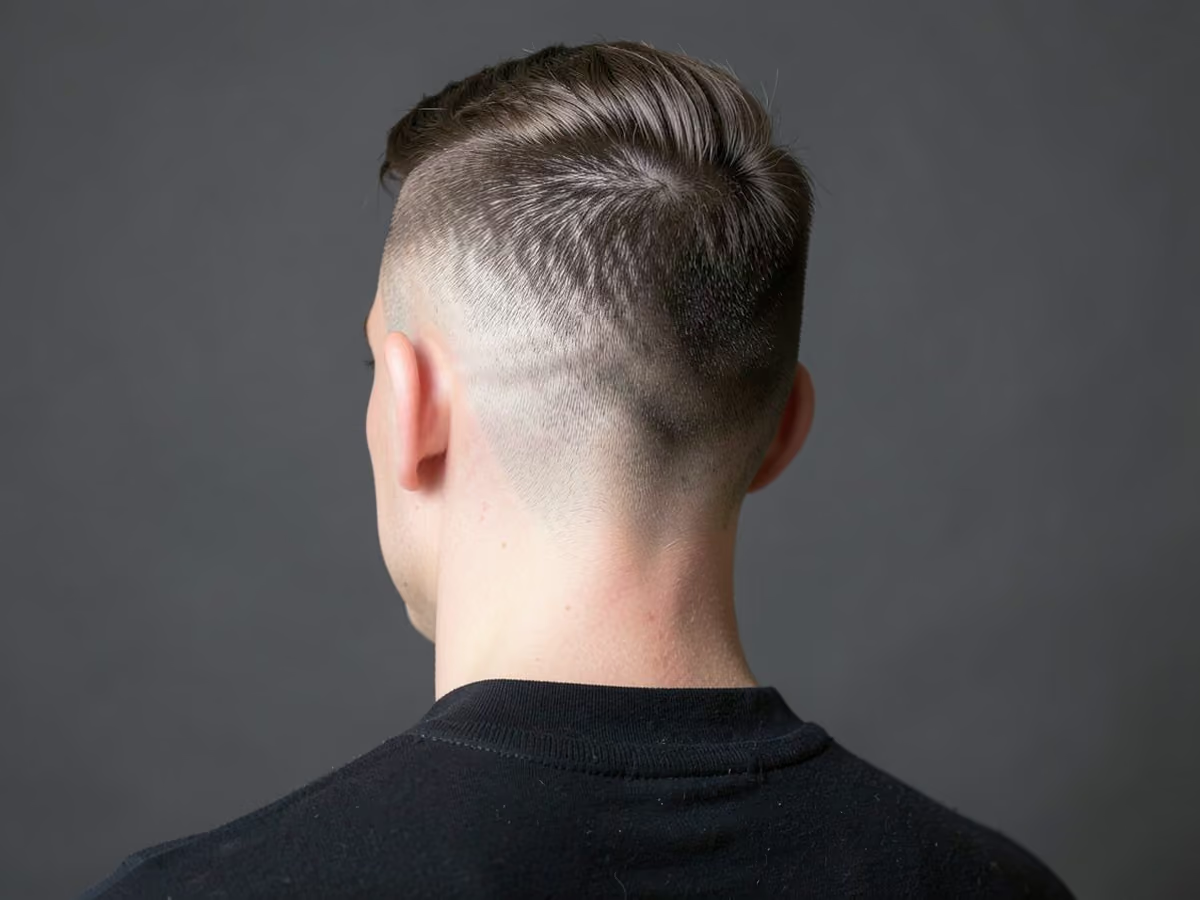
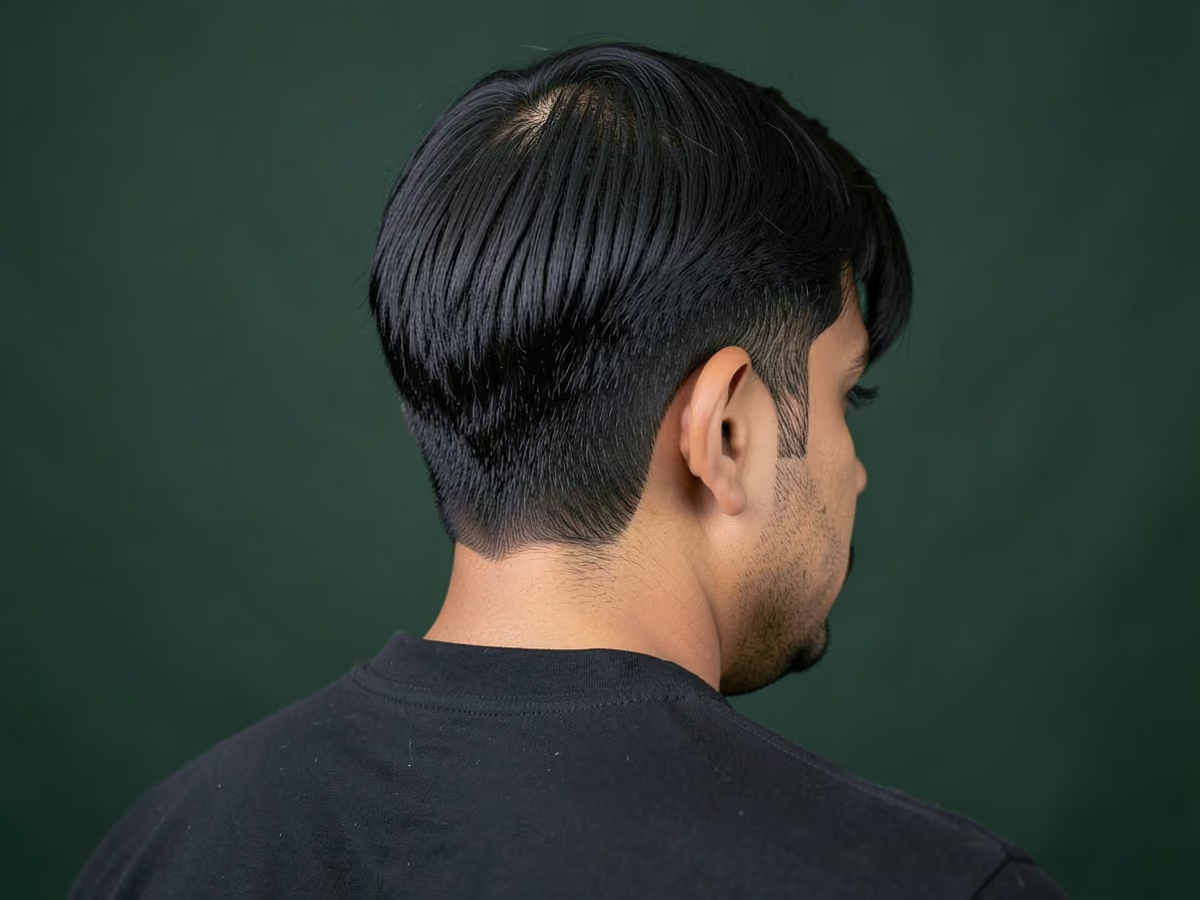
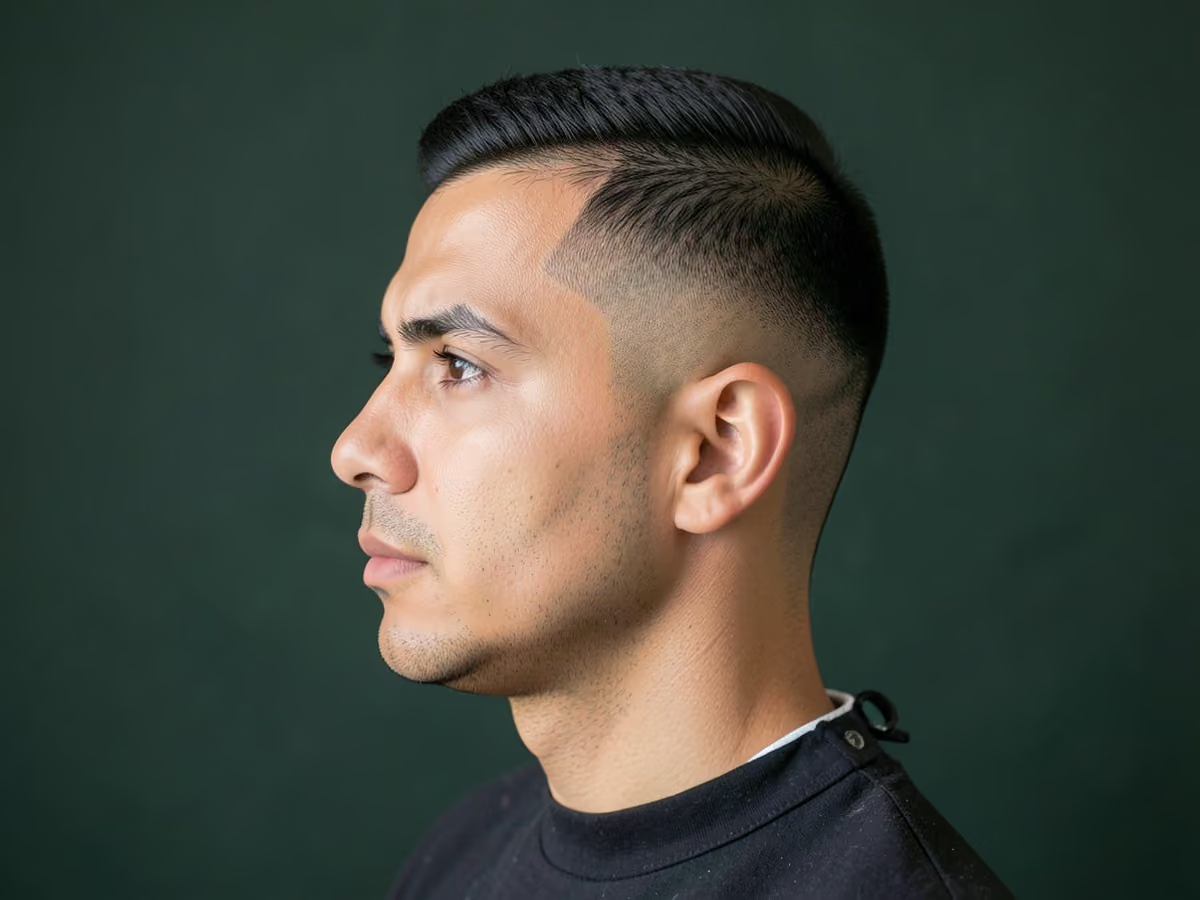
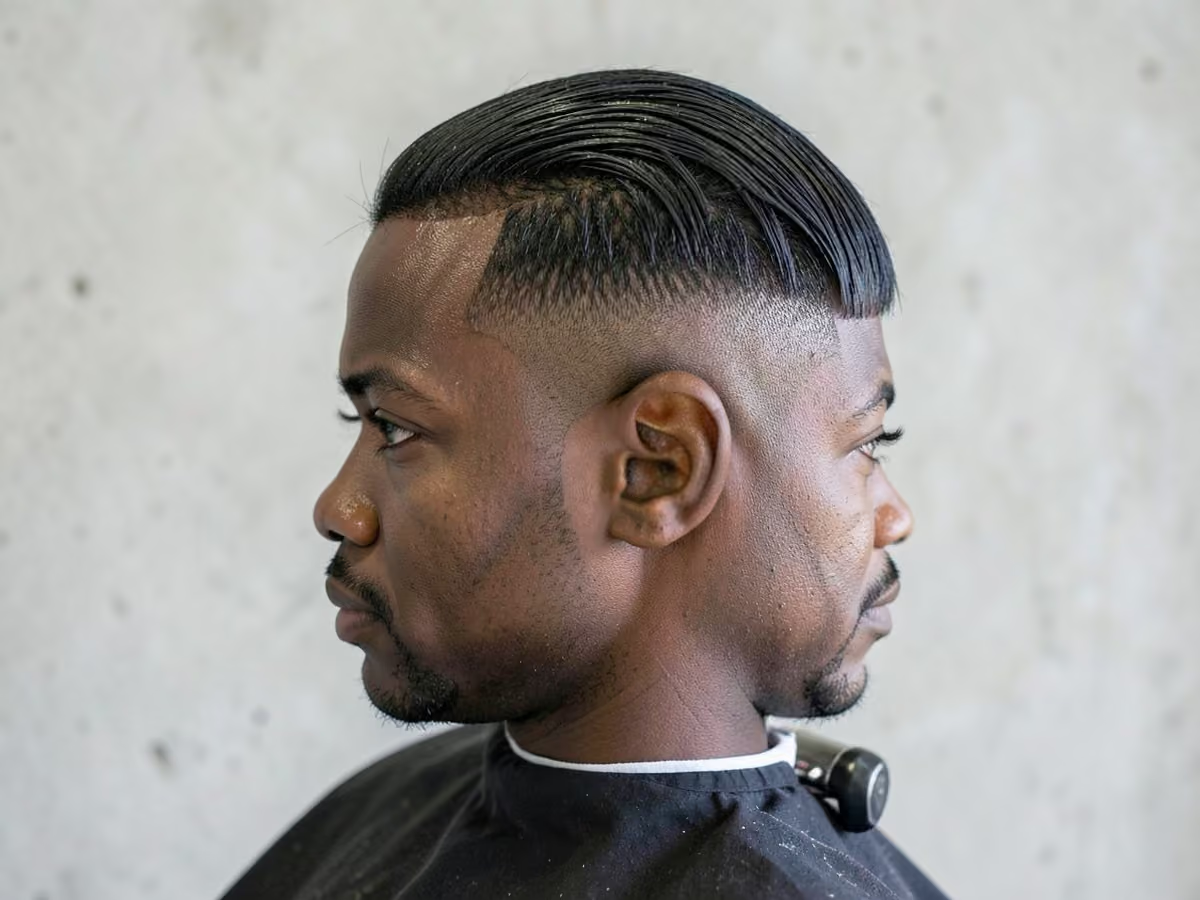
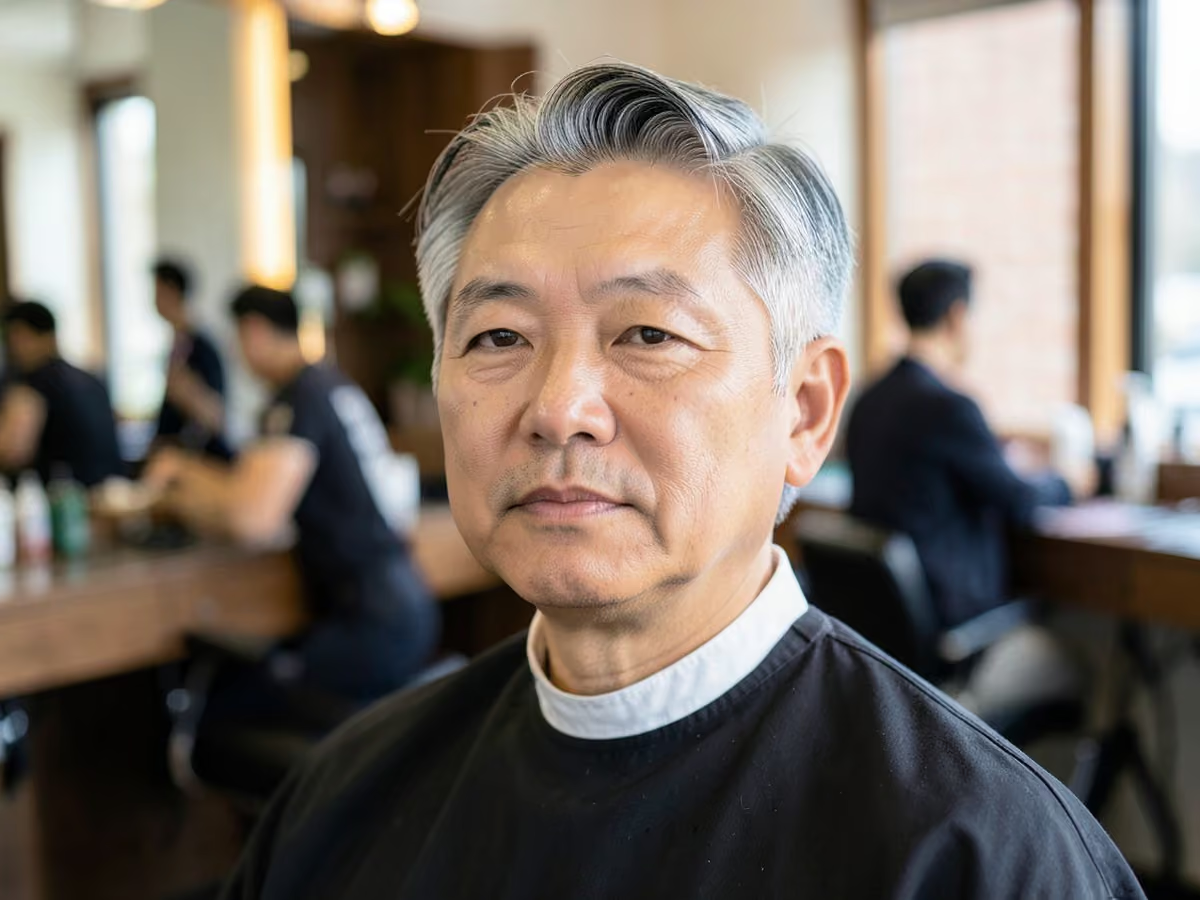
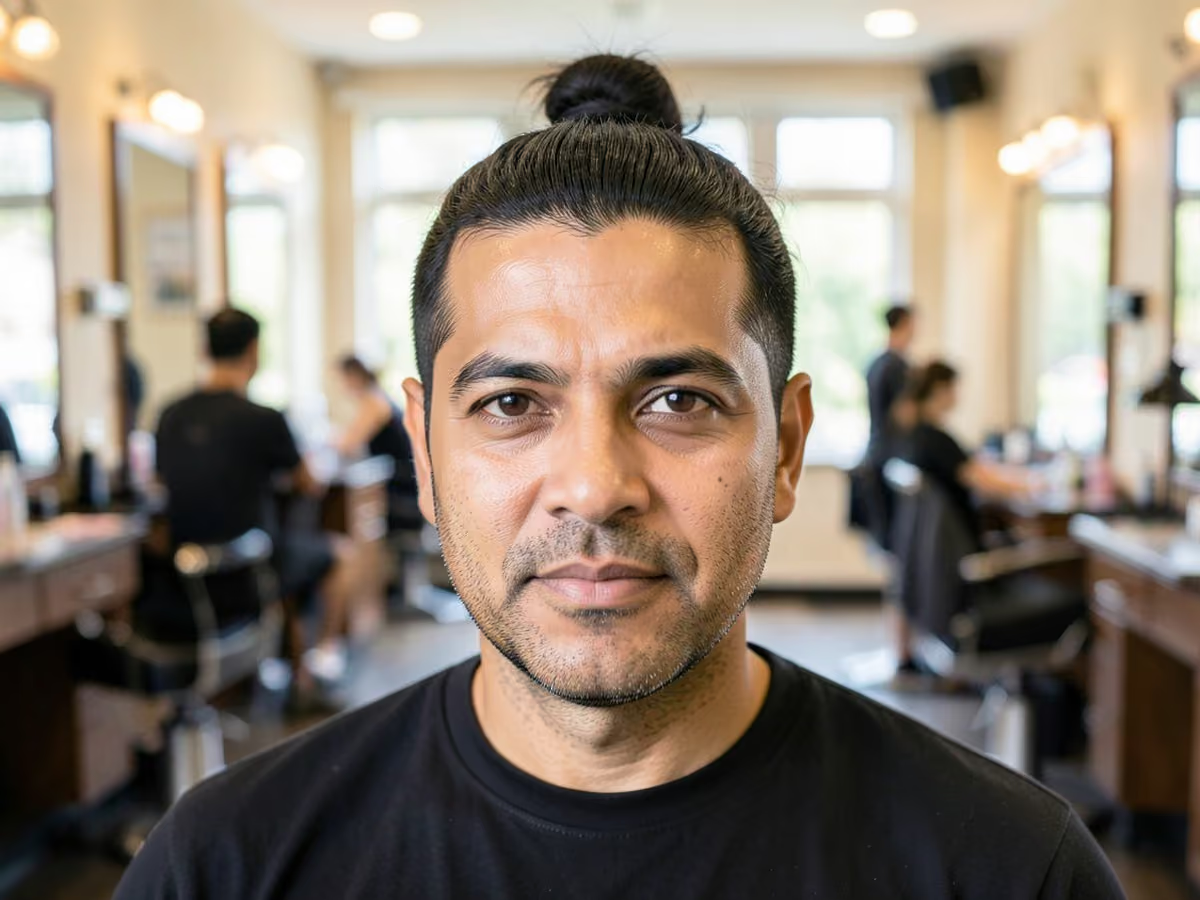
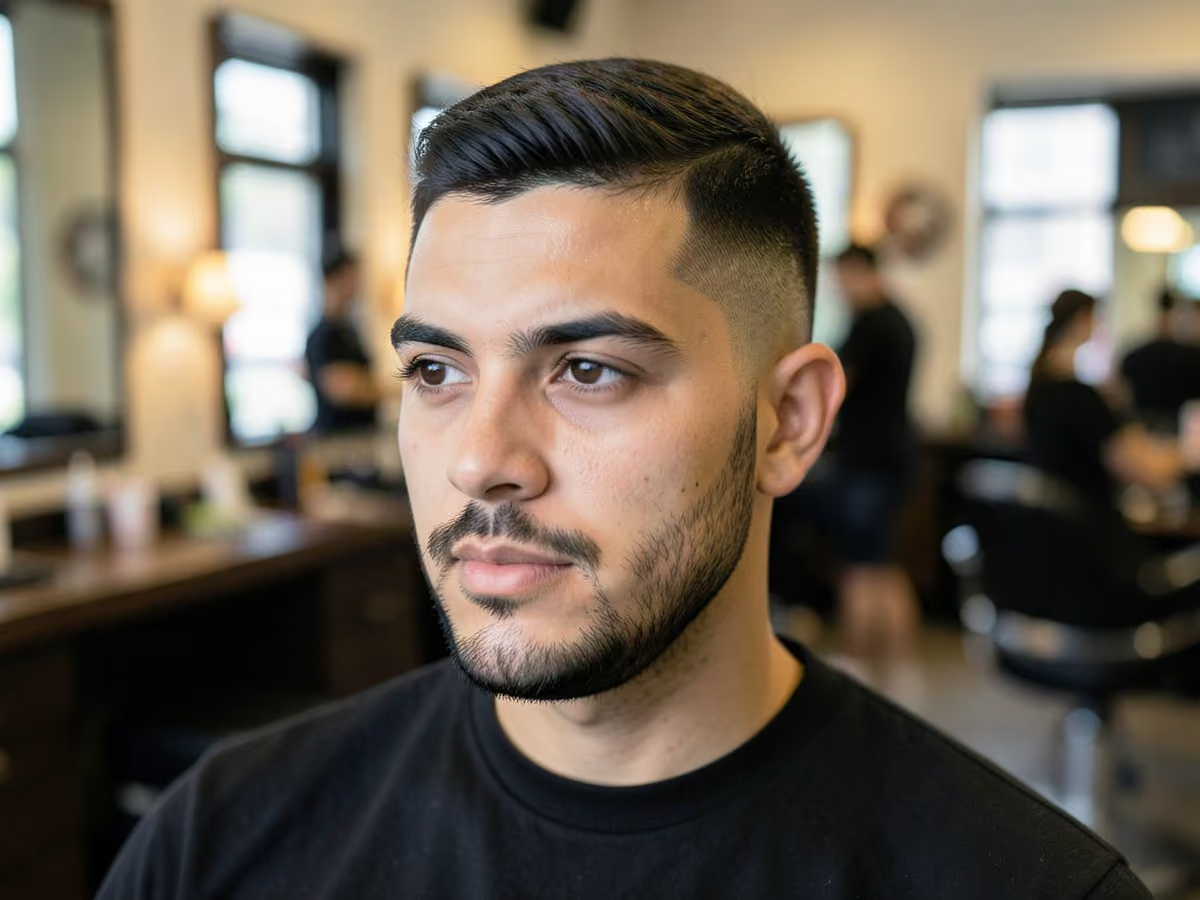
Quick answer: Low maintenance haircuts for men are cuts that look tidy with little or no product and grow out without an awkward stage, such as the buzz cut, crew cut, textured crop, taper and longer scissor cuts. The lowest-effort choices skip skin fades, which usually need a trim every two to three weeks.
Low Maintenance Haircuts for Men Styles at a Glance
Every style on this page with its clipper guard, top length and trim interval. Tap a name to jump to that card.
Low maintenance haircuts for men come in two kinds: very short cuts you never style, and longer cuts that grow out well enough to skip the barber for two months. Below are 55 options sorted by length, hair type, lifestyle and beard, each with a realistic trim schedule, the products it needs (often none) and what to tell the barber.
What Makes a Haircut Low Maintenance?
Three things decide how much work a haircut takes: daily styling time, product, and how often you need the barber. A cut is low maintenance when it scores well on at least two of them. A buzz cut needs no styling or product but a clipper pass every few weeks. A longer scissor cut needs a minute of styling but only a trim every eight to ten weeks. The right choice depends on which of those costs bothers you most.
The biggest hidden cost is the fade. Skin and high fades look sharp for about a week and blurred by week three, so they are high maintenance whatever sits on top. Tapers, scissor-cut sides and fades that stop at a #1 or #2 grow out softly and stretch the gap between visits. Working with your natural texture, rather than against it, removes most of the daily styling as well.
Which Low Maintenance Cuts Need the Fewest Barber Visits?
Hair grows roughly half an inch a month on average, so the shorter the cut, the sooner that growth changes its shape. Very short clipper cuts lose their outline fastest, while medium and long cuts can absorb a month or two of growth and still look the same. The table below compares common options; our guide to how often you should get a haircut covers schedules in more detail.
A cut you can keep yourself shortens the list further. Buzz cuts and clipper sides are easy to maintain with home clippers, and the how to buzz cut your own hair guide explains guards and technique. Longer cuts are harder to trim at home, but they need trims less often, so either route keeps time and cost down. Pick the route that matches how much you like handling clippers.
Which Low Maintenance Cuts Need the Fewest Barber Visits?
Cut
Daily styling
Product
Typical trim gap
Buzz cut
None
None
2 to 4 weeks, or trim at home
Crew cut
Under a minute
Optional
3 to 5 weeks
Textured crop
About a minute
A little clay
4 to 6 weeks
Taper with medium top
One to two minutes
Cream or none
4 to 6 weeks
Medium scissor cut
One to two minutes
Optional
6 to 8 weeks
Long hair
Air dry
Leave-in
8 to 12 weeks
Who Should Choose a Low Maintenance Haircut?
Men who sweat at the gym, wear helmets or hats, travel often or simply dislike styling gain the most. Parents and shift workers who cannot book regular appointments benefit from cuts that grow out softly. Low maintenance does not mean careless: a clean neckline and the right length for your hair type still matter, and most of these cuts look deliberate on the day they are cut and for weeks after.
Hair type sets limits. Thick straight hair can stick up when cut very short, so it often suits a textured crop or a longer scissor cut. Curly and coily hair looks after itself when the length suits the curl pattern, but it needs moisture. Fine or thinning hair suits shorter cuts, which hide low density. The straight hair haircuts that stay in place guide helps if your hair refuses to lie flat.
Filter the styles
Showing all 55 styles
Fade
Hair
Length
Short Low Maintenance Haircuts
Short clipper and scissor cuts need no styling and dry in minutes. They need trims more often, but many can be kept at home with clippers; the buzz cut styles guide covers guard choices in detail.
Trim:Every 2–4 weeks. A home clipper pass keeps it even.
Best For:Oval, square faces + any hair type, thinning hair.
About This Style
One guard length all over, usually a #2 to #4, is the simplest haircut there is: no styling, no product and a towel-dry in seconds. Coarse and dark hair shows the shape best, and thinning hair often looks fuller cut short. A #3 leaves 3/8 inch and hides scalp better than a #1 on light hair. Head shape and scars show, so check them first.
How to Style at Home
Wash with shampoo and towel-dry; no styling is needed afterward.
Run clippers with the same guard over the head every few weeks.
Rub a drop of scalp oil in if the skin feels dry or tight.
Ask Your Barber
"Buzz cut with a #3 all over, neckline tapered rather than squared. Square up the edges lightly around the ears."
Trim:Every 3–5 weeks. The front loses shape before the sides.
Best For:Square, oval faces + straight or coarse hair.
About This Style
About an inch on top, tapering shorter toward the crown, with #2 or #3 sides, gives a little shape to push up or forward without product. It is the step up from a buzz for men who want something to run a hand through. Tapered sides grow out softly, so a month between visits still looks neat.
How to Style at Home
Towel-dry and push the front up with your palm.
Use a pea-size amount of matte paste only on days the front falls flat.
Leave the sides alone, since they need no styling at all.
Ask Your Barber
"Crew cut with an inch at the front tapering shorter to the crown. Sides at a #3 tapered into the neck, no skin."
Trim:Every 2–3 weeks. An even short length needs regular clipping.
Best For:Round, square faces + thick, coarse hair.
About This Style
Slightly longer than a buzz on top, a butch cut keeps about a #4 to #6 across the top with shorter tapered sides, so the outline follows the head shape. It suits thick coarse hair that stands up awkwardly when cut to an inch. There is nothing to style, and home clippers can keep it if you match the guards each time.
How to Style at Home
Shampoo and towel-dry; the cut needs no styling product.
Clip the top with the same guard every two to three weeks.
Clean the neckline with a trimmer between full cuts.
Ask Your Barber
"Butch cut with a #5 on top and a #3 on the sides, tapered at the neck. Round the corners slightly so it follows my head shape."
Trim:Every 4–6 weeks. A longer front buys extra weeks.
Best For:Oval, long faces + straight or wavy hair.
About This Style
Leaving two inches at the front of a crew cut gives enough hair to part or push to the side, which looks professional with almost no effort. The sides stay at a #3 with a taper, so grow-out is soft. A finger comb with a drop of cream is enough on most days, which makes it a practical work cut.
How to Style at Home
Comb a side part with your fingers while the hair is damp.
Apply a small amount of styling cream to the front section.
Let it dry naturally without a blow-dryer or brush.
Ask Your Barber
"Ivy league with two inches at the front, shorter at the crown. Sides at a #3, tapered, no skin fade."
Trim:Every 4–5 weeks. The fringe grows into the eyes first.
Best For:Round, oval faces + thick or wavy hair.
About This Style
A short forward fringe and a textured top of about an inch and a half fall into place on their own, so the crop needs only a towel-dry and a push forward. Ask for a low taper instead of a high skin fade to stretch the gaps between visits. Thick and wavy hair suits it, since the weight keeps the fringe down.
How to Style at Home
Push the damp top forward with your fingers.
Rub a little matte clay into the fringe if it starts to lift.
Let it dry with no further styling or brushing.
Ask Your Barber
"French crop with an inch and a half on top and a short textured fringe. Low taper on the sides from a #2, not a skin fade."
Trim:Every 4–6 weeks. Texture on top hides early regrowth.
Best For:Oval, square faces + thick straight or wavy hair.
About This Style
Point-cut texture on a two-inch top means the hair looks deliberately messy, so a bad hair day barely shows. The sides sit on a #2 or #3 taper. It is one of the more forgiving short cuts for thick hair, because the texture absorbs a few weeks of growth. A small amount of powder, or nothing at all, is enough.
How to Style at Home
Towel-dry the top roughly so the hair separates.
Scrunch a pinch of texture powder into the roots.
Push the top forward and leave the ends messy.
Ask Your Barber
"Textured crop with two inches on top, point cut for texture so it looks messy on purpose. Sides at a #2 taper, no skin."
Trim:Every 5–7 weeks. Scissor sides grow out without lines.
Best For:Oval, long faces + straight, wavy or fine hair.
About This Style
No clippers are used: the sides and back are cut scissor over comb to about an inch, and the top to two or three inches. Without guard lines or a fade, regrowth blends evenly, so the cut still looks tidy at six weeks. It is a classic short back and sides finish and suits fine hair, which can look patchy under clippers.
How to Style at Home
Comb the hair into place while it is still damp.
Use a small amount of styling cream for light hold.
Let it air dry, then finger-comb it once more.
Ask Your Barber
"Scissor cut all over, no clippers. An inch on the sides and back, two and a half inches on top, tapered neckline."
Trim:Every 2–3 weeks. Clipping it at home takes five minutes.
Best For:Oval, square faces + any hair, even head shape.
About This Style
Named after the cut given to military recruits on arrival, this is one clipper guard run over the whole head, usually a #1 or a #0.5, with no blending at all. It shows the head shape clearly, so it suits even skulls and strong jawlines. Many men keep it up themselves with a home clipper every two weeks. Sun on the scalp is the main upkeep, so wear sunscreen or a cap outdoors.
How to Style at Home
Run a #1 guard over the whole head against the direction of growth.
Clean the neckline and around the ears with a trimmer.
Rub a little scalp oil in if the skin feels dry.
Ask Your Barber
"Induction cut with a #1 all over, no fade and no blending. Just tidy the neckline naturally and clean around the ears with the trimmer."
Recommended Products
Scalp Oil
Longer Cuts That Grow Out Well
Medium and long cuts need a minute of styling, but they absorb weeks of growth and can go eight weeks or more between trims. They suit men who would rather style briefly each morning than visit the barber often.
Trim:Every 5–6 weeks. A taper softens instead of blurring.
Best For:Oval, round faces + straight, wavy or curly hair.
About This Style
Only the sideburns and nape are tapered, so the rest of the sides keep a guard or scissor length and grow out without a visible line. Pair it with two to four inches on top worn naturally. It is the easiest way to keep short-looking sides while visiting the barber less, because the edges stay clean longer than any fade.
How to Style at Home
Work a small amount of matte cream through the damp top.
Push the top into place with your fingers.
Tidy the neckline with a trimmer every two weeks.
Ask Your Barber
"Low taper at the sideburns and nape only, from a #1 into a #3. Leave three inches on top to wear naturally."
Trim:Every 6–8 weeks. A trim removes bulk before it gets heavy.
Best For:Oval, square faces + wavy or thick straight hair.
About This Style
Three to five inches on top and over the ears, cut with light layers, can be pushed back, parted or left to fall, so one cut covers every kind of day. Wavy hair styles itself with air drying. The cut takes a month of growth without changing much, and you can tuck it behind the ears once it gets long.
How to Style at Home
Apply a little sea salt spray to damp hair.
Push it back or to one side with your fingers.
Air dry, then shake the roots once the hair is dry.
Ask Your Barber
"Medium length cut with light layers, four inches on top and over the ears. Scissor cut, keep the length, just remove bulk."
Trim:Every 8–12 weeks. Only the ends need dusting.
Best For:Long, oval faces + straight or wavy hair, past the ears.
About This Style
Shoulder-length hair tied back or left loose needs fewer cuts than any short style, since an extra inch barely changes it. Ask for a one-length or lightly layered cut so the ends stay even as it grows. Condition at every wash and air dry. A hair tie handles workouts and hot days. Expect an untidy middle stage while growing it out.
How to Style at Home
Condition and detangle in the shower with a wide comb.
Apply leave-in to the ends and let the hair air dry.
Tie it back loosely with a fabric tie when needed.
Ask Your Barber
"Long hair, keep the length. Dust the ends half an inch, light layers only, and tidy the neckline under the hair."
Choppy layers, a loose fringe and a messy outline mean the shag looks intentional even when overdue for a cut. It works best on wavy and thick hair dried with your fingers and a spray of salt. Ask for the layers to be point cut rather than razored if your hair frizzes. Uneven growth only adds to the look.
How to Style at Home
Scrunch sea salt spray through damp hair in small sections.
Rough-dry with your fingers or leave it to air dry.
Pull the fringe apart into pieces with your fingertips.
Ask Your Barber
"Low maintenance shag with choppy point-cut layers and a loose fringe. About four inches on top, longer at the back, no clippers."
Trim:Every 6–8 weeks. Sides need tidying before the back.
Best For:Oval, long faces + wavy or curly hair.
About This Style
A soft mullet with tapered rather than skin-faded sides keeps its shape without the fortnightly visits a burst fade mullet needs. The back stays three to five inches longer than the top, and wavy or curly hair gives it shape without product. Because the outline is meant to be loose, a few extra weeks of growth suit it.
How to Style at Home
Scrunch curl cream or salt spray into damp hair.
Push the top forward and let the back fall naturally.
Air dry without combing or brushing the curls.
Ask Your Barber
"Soft mullet with tapered sides at a #3, no skin fade. Three inches on top and the back left about five inches long."
Trim:Every 6–8 weeks. The back needs tidying as it grows.
Best For:Oval, square faces + straight, wavy or gray hair.
About This Style
Raking the hair straight back with your fingers, at three to five inches on top with scissor-cut sides, gives a neat shape without a blow-dryer. Unlike a slick back, it uses a light cream rather than shiny pomade and dries soft. It suits high foreheads and gray hair that frizzes when worn forward, and it grows out without a clear line.
How to Style at Home
Rake styling cream through damp hair from front to back.
Let it dry pushed back without using a dryer.
Run your fingers back through it once more when dry.
Ask Your Barber
"Brush back cut with four inches on top, sides scissor cut to tuck behind the ears. Tapered neckline, no fade."
Trim:Every 8–12 weeks. Salt and sun texture covers uneven ends.
Best For:Oval, square faces + wavy or straight thick hair.
About This Style
Chin-length, loosely layered and dried by the wind, surfer hair is designed to look right after salt water and a towel. The barber cuts long layers so the ends do not form a straight line, and leaves the fringe long enough to push back. Wavy hair suits it best. The main care is conditioner, since sun and salt dry the ends, plus a dusting cut every two or three months.
How to Style at Home
Rinse salt water out and apply leave-in conditioner.
Scrunch sea salt spray through the damp ends for texture.
Let it air-dry pushed back off the face.
Ask Your Barber
"Chin-length surfer layers, long and loose so the ends do not sit in one line. Leave the fringe long enough to push back and just dust the ends."
Trim:Every 6–8 weeks. Panels can grow to the jaw before needing a cut.
Best For:Oval, long, heart faces + straight or wavy hair.
About This Style
Center-parted curtains look best a little overgrown, so they suit men who skip barber visits. Four to five inches on top fall into two panels, and the sides are scissor cut over the ears. As it grows, the part simply moves the panels further out. Straight and wavy hair parts naturally; thick hair may need a short blow-dry to set the split.
How to Style at Home
Part damp hair down the center with your fingers.
Blow-dry each side outward for a minute to set the split.
Leave the ends to air-dry without any product.
Ask Your Barber
"Curtains with a center part, four to five inches on top, scissor cut over the ears, soft layers so it still looks right when it grows to my jaw."
Recommended Products
Sea Salt Spray
Low Maintenance Haircuts by Hair Type
The easiest cut for your hair is the one that works with its natural texture. Straight hair needs weight in the right places, curls need room to form, and coily hair needs moisture and a shape that grows out evenly.
Trim:Every 6–8 weeks. Curls need shaping as the outline widens.
Best For:Oval, round faces + curly hair, 3A to 3C.
About This Style
Two to four inches of curls on top with a low taper on the sides need only curl cream and air drying. A rounded shape cut dry, curl by curl, grows out evenly instead of turning triangular. Skip blow-dryers and brushes, which add frizz. Washing two or three times a week, not daily, keeps the curls hydrated.
How to Style at Home
Apply curl cream to soaking-wet hair with your fingers.
Scrunch upward and leave it to dry untouched.
Refresh with a mist of water on the second day.
Ask Your Barber
"Curly cut, dry cut curl by curl, three inches on top in a rounded shape. Low taper on the sides from a #2."
Trim:Every 6–8 weeks. Waves turn heavy when length builds.
Best For:Oval, square faces + wavy hair, 2A to 2C.
About This Style
Waves dry into shape with almost no help when the cut leaves three to four inches on top and removes weight from the sides. Sea salt spray is the only product most men need. A taper at the neckline keeps the back tidy. The cut forgives missed trims, because extra length just loosens the wave.
How to Style at Home
Spray sea salt spray evenly into towel-dried hair.
Scrunch once with both hands and leave it to air dry.
Shake the roots with your fingers when the hair is dry.
Ask Your Barber
"Cut for wavy hair, three and a half inches on top, weight taken out of the sides. Tapered neckline and scissor sides."
Best For:Square, oval faces + thick straight or coarse hair.
About This Style
Dense hair needs weight removed from inside the cut, or it sticks out at the sides and puffs on top within weeks. A textured top of about two inches with internal layering and #3 sides lies flatter without product. Ask the barber to remove bulk with point cutting rather than leave the hair long and heavy.
How to Style at Home
Towel-dry and push the top in the direction it falls.
Use a small amount of matte cream to calm any lift.
Smooth the sides flat with your palm as they dry.
Ask Your Barber
"Short cut for thick hair, two inches on top with internal layers to remove bulk. Sides at a #3, tapered."
Trim:Every 3–4 weeks. Short lengths keep density looking even.
Best For:Oval, round faces + fine or thinning hair.
About This Style
Short hair hides low density better than long, so a crop of about an inch on top with #2 sides keeps the scalp less visible. Forward styling covers a thinning front without combing. Heavy products clump fine hair, so use thickening powder or nothing. Thinning that is new or fast is worth checking with a doctor.
How to Style at Home
Towel-dry and push the top forward with your fingers.
Sprinkle a little thickening powder at the crown if needed.
Leave it to dry naturally without a blow-dryer.
Ask Your Barber
"Short crop with an inch on top pushed forward. Sides at a #2 tapered, no skin, and keep the front textured."
Trim:Every 2–4 weeks. Tapers and edges show growth first.
Best For:Oval, round, square faces + coily 4A to 4C hair.
About This Style
A short, even cut of a #1 to #3 on top with a low taper and a natural edge-up keeps coily hair neat with a brush and moisturizer. Choosing a natural hairline rather than a sharp line-up removes the weekly touch-up. Daily brushing with a light wave pomade or leave-in keeps the hair soft. Ask for a taper over a skin fade.
How to Style at Home
Apply a small amount of leave-in to damp hair.
Brush in one direction with a soft brush for a few minutes.
Wear a durag at night to keep the hair flat.
Ask Your Barber
"Even cut with a #2 on top, low taper at the sides and nape, natural edge-up following my hairline. No sharp line-up."
Trim:Every 4–6 weeks. Thick straight hair sticks out as it grows.
Best For:Oval, round faces + straight, thick Asian hair.
About This Style
Straight, thick Asian hair tends to stand up when short and puff at the sides when long. A two-inch textured top falling forward, with internal thinning and #3 sides, avoids both. Some men add a two-block so the top lies over the shorter sides. A towel-dry and fingers are enough on most days, with clay only for the fringe.
How to Style at Home
Push the damp top forward and down with your fingers.
Rub a little matte clay into the fringe.
Press the sides flat with your palms as they dry.
Ask Your Barber
"Short textured cut with two inches on top falling forward and internal thinning to remove bulk. Sides at a #3, tapered."
Trim:Every 4–6 weeks. Coarse hair widens as it grows.
Best For:Square, oval faces + coarse, wiry or gray hair.
About This Style
Coarse hair has a thick strand that resists lying flat, so a cut that works with its stiffness is easier than one that fights it. A one-inch crop with #3 sides lets the hair stand slightly and look intentional. Gray and wiry hair benefit from a drop of oil or cream to soften the ends. Skip slick styles that need strong pomade.
How to Style at Home
Rub a drop of argan oil between your palms.
Run it through damp hair to soften wiry strands.
Push the top forward or up with your fingers.
Ask Your Barber
"Short crop for coarse hair, an inch on top left to stand slightly. Sides at a #3, tapered at the neck."
Trim:Every 4–6 weeks. Retwist the roots and tidy the taper.
Best For:Oval, long, square faces + coily or 4C hair.
About This Style
Two-strand twists on two to four inches of coily hair hold their shape for weeks, so the daily routine is mainly moisture. A low taper at the sideburns and nape keeps the edges tidy without a sharp line-up that needs weekly touch-ups. Retwist the roots every few weeks, at home or in the shop. Sleeping on a satin pillowcase or durag stops frizz and keeps twists defined longer.
How to Style at Home
Mist the twists with leave-in conditioner each morning.
Seal the ends with a few drops of argan oil.
Cover the hair with a satin durag or pillowcase overnight.
Ask Your Barber
"Low taper at the sideburns and nape only, no sharp line-up. Leave three inches on top for two-strand twists and shape the outline round."
Recommended Products
Leave-In
Argan Oil
Low Maintenance Haircuts by Lifestyle and Age
Your routine matters as much as your hair. These cuts suit offices, gyms, hot weather, busy parents, teens and older men; for more work-ready options, see our professional office haircuts guide.
Trim:Every 4–5 weeks. A tidy neckline keeps it office ready.
Best For:Oval, square faces + straight or wavy hair.
About This Style
Two inches on top with a short side part and #3 tapered sides passes in any office and needs only a comb and a drop of cream. The taper keeps it neat for a month. Choosing a soft part instead of a shaved hard part avoids a line that blurs in a week. A neckline cleaned at home does most of the work between visits.
How to Style at Home
Comb a side part on your natural side while damp.
Apply a small amount of styling cream for light hold.
Smooth the sides down with the comb before you leave.
Ask Your Barber
"Short side part with two inches on top and no shaved part line. Sides at a #3 tapered into the neck."
Trim:Every 3–4 weeks. Short sides stay comfortable under sweat.
Best For:Any face shape + straight, wavy or coily hair.
About This Style
Sweat, showers and caps are easiest with a short crop of an inch on top and #2 sides, which dries in minutes and needs no product after a workout. Nothing falls into the eyes during training. Under a helmet or in contact sports, keep the top below two inches. Wash after each session and towel-dry; that is the whole routine.
How to Style at Home
Shampoo after training and towel-dry the hair firmly with a clean towel.
Finger-comb the top forward or up while it is still damp.
Add a dab of matte paste only on days off training.
Ask Your Barber
"Short crop for the gym, one inch on top, sides at a #2 tapered. Nothing long enough to fall in my eyes."
Trim:Every 3–4 weeks. Short hair stays cool through the heat.
Best For:Oval, square faces + thick or coarse hair.
About This Style
Hot weather calls for less hair: a #2 to #4 all over, or a short crop with tapered sides, dries fast after swimming and keeps the neck cool. Thick hair benefits most, since it holds heat and sweat. Protect the scalp under a short cut with sunscreen or a hat, because little hair is left to shade it. Let it grow back out in autumn.
How to Style at Home
Rinse after swimming to remove chlorine or salt.
Towel-dry and leave the hair to air dry in the shade.
Apply sunscreen to any exposed scalp before going out.
Ask Your Barber
"Short summer cut, a #3 all over with a tapered neckline. Square the edges lightly around the ears, no skin fade."
Trim:Every 5–6 weeks. Soft sides look fine when visits slip.
Best For:Oval, square faces + straight or wavy hair.
About This Style
Busy parents rarely get to the barber on schedule, so this cut is built for missed appointments: two to three inches on top, scissor-cut sides at about an inch, and a tapered neckline. It goes forward, to the side or back with fingers alone. At week eight it simply looks longer, not messy, which is the point.
How to Style at Home
Towel-dry and push the hair where it naturally wants to go.
Use a little matte cream if the front sticks up.
Trim the neckline at home when it starts to look fuzzy.
Ask Your Barber
"Easy cut I can leave for six weeks: three inches on top, scissor sides at about an inch, tapered neckline, no fade."
Trim:Every 4–6 weeks. Fast teen growth fills in the sides quickly.
Best For:Teens + straight, wavy or curly hair.
About This Style
Teenagers often want length on top but will not style it, so a textured top of three inches with a #3 taper and a loose fringe works well. It looks fine messy, dries with a quick rub of the towel, and the taper hides growth. Avoid skin fades and shaved parts, which need a barber every two weeks. Curly teens can let the top curl naturally.
How to Style at Home
Towel-dry the top and shake it out with your fingers.
Push the fringe forward or to one side.
Use a small amount of texture powder only if it falls flat.
Ask Your Barber
"Textured top of three inches with a loose fringe. Sides at a #3 taper, no skin fade or shaved part."
Trim:Every 4–6 weeks. Gray hair looks neater kept short and even.
Best For:Oval, square faces + gray or salt and pepper hair.
About This Style
Gray hair is often wiry and catches the light, so a short, even cut with a soft side part or a brushed-back top of two inches looks tidy with little work. Scissor-cut or #3 sides grow out gently. A purple shampoo once a week reduces yellow tones, and a drop of oil softens wiry strands.
How to Style at Home
Use purple shampoo once a week to neutralize yellow tones.
Rub a drop of argan oil through the damp hair.
Comb it to the side or back and let it dry.
Ask Your Barber
"Short gray cut with two inches on top and a soft side part. Sides at a #3 or scissor cut, tapered neckline."
Trim:Every 3–4 weeks. Short lengths keep the hairline less visible.
Best For:Receding or M-shaped hairlines + any hair type.
About This Style
Cutting the hair short all over makes the gap between the temples and the top less obvious, so a #2 buzz or a short crop with an inch on top pushed forward works well. Long hair combed back shows recession more. Avoid hard parts or a sharp line-up, which draw the eye to the hairline. A beard can also balance the face.
How to Style at Home
Push the top forward with your fingers after towel-drying.
Rub a small amount of matte clay into the front.
Leave the temples soft rather than lined up.
Ask Your Barber
"Short crop with an inch on top pushed forward, sides at a #2. Keep the hairline natural, no line-up at the temples."
Recommended Products
Matte Clay
Easy-Care Versions of Popular Cuts
Some popular cuts become much easier with small changes: a taper instead of a skin fade, a softer part, or a top length that falls into place. The low taper fade guide explains a common of those swaps.
Trim:Every 3–5 weeks. A #1 or #2 base hides regrowth longer.
Best For:Oval, round faces + straight, wavy or coily hair.
About This Style
A fade does not have to mean weekly visits: start it at a #1 or #2 instead of skin, keep it low, and the blend stays visible for about a month. Pair it with a short textured top that needs no styling. The trade-off is less contrast than a skin fade, but far fewer appointments. Ask the barber to leave the neckline tapered.
How to Style at Home
Towel-dry the top and push it forward with your fingers.
Apply a small amount of matte cream if the top needs control.
Tidy the neckline with a trimmer every week or two.
Ask Your Barber
"Low fade starting at a #1, not skin, blended into a #3. Short textured top of two inches, tapered neckline."
Trim:Every 4–6 weeks. The undercut sides need clipping every month.
Best For:Oval, square faces + thick straight or wavy hair.
About This Style
A disconnected undercut is easy to keep at home: clip the sides with one guard, often a #2 or #3, and leave the top alone. Keep four inches on top worn loose to the side or back with cream, not shiny pomade. Thick hair suits it, since the undercut removes the bulk at the sides that would otherwise puff out.
How to Style at Home
Clip the sides yourself with the same guard every few weeks.
Work styling cream through the top and push it back loosely.
Let the top dry naturally without a blow-dryer.
Ask Your Barber
"Disconnected undercut at a #3 on the sides, no fade, so I can clip it at home. Leave four inches on top."
Trim:Every 5–6 weeks. A longer top keeps falling back in place.
Best For:Oval, long faces + straight or wavy hair.
About This Style
Most slick backs need pomade and a comb, but a looser version with four to five inches on top and scissor-cut sides stays back on its own once trained. Comb it back wet for a few weeks and the hair learns to fall that way. A light cream gives a soft, matte finish rather than shine. Skipping the fade stretches the gap between visits.
How to Style at Home
Comb the hair straight back while it is wet.
Apply a little matte cream with your fingers.
Let it dry in place without a blow-dryer.
Ask Your Barber
"Loose slick back with five inches on top and scissor-cut sides to cover half the ear. No fade and a tapered neckline."
Trim:Every 3–4 weeks. Spikes droop once the top passes two inches.
Best For:Round, square faces + thick, straight or coarse hair.
About This Style
Thick straight hair cut to about an inch and a half on top stands up on its own, so a small amount of clay pinched into points is all the styling it needs. Short #2 sides keep the outline clean. The look needs regular trims to stay short enough to stand, but each styling session takes under a minute.
How to Style at Home
Towel-dry until the hair is almost completely dry.
Rub a pea-size amount of texture clay between your palms.
Pinch the top into loose spikes with your fingertips.
Ask Your Barber
"Short spiky top, an inch and a half long, point cut so it stands on its own. Sides at a #2 taper."
Trim:Every 4–6 weeks. The tapered sides soften but stay neat.
Best For:Oval, square, long faces + straight or wavy hair.
About This Style
Combing in a soft side part, rather than having one shaved, keeps this office favorite easy. The barber leaves two to three inches on top and tapers the sides with a #2 to a #3, with the part following the natural crown swirl so it falls into place. Light pomade or cream is enough. As it grows, the part just turns into a slightly longer sweep without needing a trim.
How to Style at Home
Find your natural part by combing wet hair straight back.
Comb the top across from that part line with a fine comb.
Use a pea-sized amount of light pomade to hold the sweep.
Ask Your Barber
"Soft side part on my natural part line, two to three inches on top, #2 to #3 taper on the sides, and no shaved line."
Trim:Every 5–7 weeks. Messy styles hide uneven growth for weeks.
Best For:Oval, round, square faces + thick or wavy hair.
About This Style
Messy textured hair is meant to look unplanned, so a week of growth or a bad pillow night simply adds to it. Three inches on top is cut with deep point cutting, the sides are tapered with a #3, and the finish is whatever happens after a towel rub. Thick and wavy hair suits it. Fine hair can do it too with a dusting of texture powder.
How to Style at Home
Rub the hair with a towel in all directions.
Work a little texture powder into the roots with your fingertips.
Run your fingers through once and leave it alone.
Ask Your Barber
"Three inches on top, deep point cut so it looks messy without styling, #3 taper on the sides and a soft neckline."
Trim:Every 3–4 weeks. The sides regrow before the top does.
Best For:Oval, square, long faces + thick or coarse hair.
About This Style
Sides and back are clipped very short, a #0 to a #1, up to just above the parietal ridge, and the top is left at a #3 to a #4 so a strip of even length runs front to back. Nothing needs styling. The tight sides do show regrowth after three weeks, but the top can go far longer, so some men buzz the sides at home between visits.
How to Style at Home
Towel-dry, then press a tiny amount of matte cream on top if it sticks up.
Touch up the sides at home with a #1 guard between visits.
Wash the scalp daily, since short hair shows oil faster.
Ask Your Barber
"High and tight, sides and back from a #0.5 blended to a #1 up to the top of the head, #4 on top, neckline tapered."
Trim:Every 4–6 weeks. Scissor-cut sides grow out without a visible line.
Best For:Oval, round, square faces + straight or wavy hair.
About This Style
Classic British barbershop shape: sides and back cut short with a #2 or by scissors over comb, tapered at the neck, with one to two inches on top that can be pushed to the side or forward. There is no skin fade, so the outline stays acceptable for six weeks. It suits offices, schools and older men who want neat hair without sharp edges or daily product.
How to Style at Home
Towel-dry and push the top to one side with your fingers.
Add a small amount of styling cream if the top sticks up.
Comb the side into place in the morning and leave it.
Ask Your Barber
"Classic short back and sides with a #2 or scissors over comb, tapered at the neck, one to two inches on top. No skin anywhere and a natural neckline."
Recommended Products
Styling Cream
Low Maintenance Haircuts with Beards
Pairing a short cut with a beard balances the face and keeps both simple to look after. Where possible, use one trimmer for hair and beard so a single ten-minute routine every couple of weeks handles both.
Trim:Every 2–4 weeks. Buzz and beard can be trimmed in one session.
Best For:Round, oval faces + any hair type, full beard growth.
About This Style
A #3 buzz on the head and a short boxed beard at about a quarter inch can be kept with one set of clippers. The beard adds shape at the jaw that a buzz alone lacks. Keep the neckline about a finger's width above the Adam's apple and the cheek line natural. Both take around ten minutes every couple of weeks.
How to Style at Home
Buzz the head with the same guard every two to three weeks.
Trim the beard with a longer guard and clean the neckline.
Rub beard oil into the beard and skin after trimming.
Ask Your Barber
"Buzz cut with a #3 all over. Short boxed beard at about a quarter inch, neckline a finger above the Adam's apple."
Trim:Every 3–5 weeks. Stubble needs a trim every few days.
Best For:Square, oval faces + straight or coarse hair, light beards.
About This Style
Stubble of a few millimeters adds definition to the jaw and pairs with a crew cut that needs no styling. Trimming it on a short guard every two or three days takes a minute. The crew cut sides can taper into the stubble at the sideburns so hair and face read as one. It suits patchy beards, since short stubble hides gaps.
How to Style at Home
Trim stubble with a short guard every two or three days.
Push the crew cut top up with your palm after washing.
Clean the neckline with the trimmer once a week.
Ask Your Barber
"Crew cut with an inch on top and #3 sides. Taper the sideburns down so they blend with my stubble."
Trim:Every 4–6 weeks. A barber beard shaping keeps the outline neat.
Best For:Oval, square faces + bald or thinning hair, full beards.
About This Style
Shaving the head removes all hair styling, and a full beard of an inch or more gives the face shape and a frame. Shave the head every two or three days with a head shaver or razor, and keep the beard rounded or squared at the jaw. Many thinning men choose it for a clean scalp. Sunscreen on the scalp is a must outdoors.
How to Style at Home
Shave the head with a foil shaver every two or three days.
Comb beard oil through the beard each morning.
Apply sunscreen to the scalp before going outdoors.
Ask Your Barber
"Clean head shave and a full beard shaped at about an inch. Keep the cheek line natural and the neckline above the Adam's apple."
Trim:Every 4–6 weeks. Crop and beard stay balanced for a month.
Best For:Round, oval faces + thick straight or wavy hair.
About This Style
A messy two-inch crop over #3 tapered sides and a short beard of about half an inch suit men who want a finished look without daily styling. The beard can connect to the sideburns with a taper. Pinch clay into the top on some days and leave it bare on others. Trim the beard at home weekly with a guard.
How to Style at Home
Rub a small amount of matte clay into the dry top.
Brush beard balm through the beard to keep it tidy.
Trim the beard with the same guard each week.
Ask Your Barber
"Textured crop with two inches on top, #3 taper on the sides connected to a short beard of about half an inch."
Trim:Every 2–3 weeks. Buzz and goatee are trimmed at home together.
Best For:Round, oval faces + any hair, dark beard growth.
About This Style
Both halves of this look are done with one clipper. The head is buzzed with a #2 or #3, and a goatee covering the chin and mustache is kept around a quarter inch while the cheeks are shaved or clipped to stubble. It helps round faces by adding length at the chin. Five minutes in front of a mirror every week or two replaces barber visits for most men.
How to Style at Home
Buzz the head with a #2 or #3 guard every two weeks.
Trim the goatee to a quarter inch with a #2 guard.
Shave or clip the cheeks so only the goatee stays.
Ask Your Barber
"Buzz cut with a #3 all over and a neat neckline. Square up my goatee at a quarter inch and clean up the cheeks."
Trim:Every 5–6 weeks. The beard needs a weekly trim; hair goes longer.
Best For:Oval, round, square faces + straight or wavy hair.
About This Style
Corporate beards are full but short, about half an inch, with a defined cheek line and neckline. Pairing one with a scissor cut of two inches on top and short, tapered sides keeps the whole look professional while needing only weekly beard tidying. The hair has no hard lines, so it can stretch to six weeks between cuts. It suits men with full beard growth.
How to Style at Home
Trim the beard to half an inch with a guarded trimmer weekly.
Comb beard balm through the beard after the shower.
Push the top to one side with a little styling cream.
Ask Your Barber
"Scissor cut, two inches on top, tapered sides, no fade. Trim my beard to half an inch with a clean cheek line and a neckline above the Adam's apple."
Recommended Products
Beard Balm
Styling Cream
Low Maintenance Haircuts by Face Shape and Hair Pattern
An easy cut still has to suit your face and the way your hair grows. These cards match the simplest length and outline to each face shape, plus straight hair and stubborn cowlicks.
Trim:Every 4–5 weeks. Side bulk widens a round face as it grows.
Best For:Round faces + straight, wavy or thick hair.
About This Style
Round faces look longer when the sides are kept tight and the top has a little height. A #2 taper on the sides with two to three inches on top, pushed up and slightly back, adds that height without needing a blow-dry. Avoid heavy fringes or full sides, which repeat the round outline. Matte clay worked in with your fingers is the only daily step.
How to Style at Home
Towel-dry and push the top up and back with your fingers.
Rub a little matte clay through the top for hold.
Keep the sides flat with no product on them at all.
Ask Your Barber
"Round face, so keep the sides tight with a #2 taper and leave two to three inches on top that I can push up a little."
Trim:Every 3–5 weeks. Short sides keep the jaw the focal point.
Best For:Square faces + straight, thick or coarse hair.
About This Style
Square faces already have strong angles, so they suit the plainest short cuts: a crew cut with a #2 or #3 on the sides and an inch or so on top. There is nothing to style, and the jawline does the work. Avoid very blunt, boxy outlines, which make the head look square too. A softly rounded top line balances the angles of the jaw.
How to Style at Home
Towel-dry and run your hand forward over the top once.
Apply a dab of matte cream if the top sticks up.
Trim the neckline at home between cuts if it gets fuzzy.
Ask Your Barber
"Square jaw, so a crew cut: #2 on the sides blended to about an inch on top, rounded off at the crown, no boxy corners."
Trim:Every 5–6 weeks. A grown-out fringe helps rather than hurts.
Best For:Long, oblong faces + straight or wavy hair.
About This Style
Long faces need width at the sides and less height on top. A forward-falling fringe of two to three inches and scissor-cut sides around a #4 length reduce the face's vertical line. Because the fringe can grow toward the brows without looking wrong, the cut lasts longer than taller styles. Skip quiffs and high fades, which add length that this face shape does not need.
How to Style at Home
Towel-dry the fringe forward so it falls over the forehead.
Leave the sides full and let them dry naturally.
Use sea salt spray for texture instead of height.
Ask Your Barber
"Long face, so no height please. Fringe forward at two to three inches, sides scissor cut to about a #4 length, nothing faded short."
Best For:Oval faces + straight, wavy or thick hair.
About This Style
Oval faces have balanced proportions, so the easiest cut is the one with the fewest parts. An even clipper cut with a #4 on top and a #3 on the sides keeps everything short without a fade line to grow out. It needs no product, survives a hat and looks much the same at week five as at week one. Men with oval faces can also wear most other cuts in this gallery.
How to Style at Home
Towel-dry and leave the hair as it falls.
Clip the neckline at home if it starts to look fuzzy.
Rub in scalp oil if the short hair leaves the skin dry.
Ask Your Barber
"My face is oval and I want zero styling, so a #4 on top, #3 on the sides, no fade, rounded natural neckline."
Best For:Oval, round, square faces + straight, fine or medium hair.
About This Style
Flat-lying straight hair shows every uneven length, so the easiest cut works with that weight instead of against it. A forward textured crop of two inches with a #2 taper on the sides falls back into place after a towel-dry. Point cutting the ends breaks up the blunt line that straight hair forms. Skip long fringes, which separate and need blow-drying every day.
How to Style at Home
Towel-dry and push everything forward with your hands.
Pinch the fringe with a little matte clay to break it up.
Leave the sides alone, since the taper sits flat by itself.
Ask Your Barber
"Two inch textured crop pushed forward, point cut so it does not look blunt, sides tapered with a #2. Nothing long enough that it needs blow-drying."
Trim:Every 4–5 weeks. A cowlick lifts once it passes two inches.
Best For:Oval, round faces + straight or fine hair with cowlicks.
About This Style
Cowlicks at the crown or hairline fight any cut that tries to lie against them. The easiest answer is to cut the area short enough to sit flat, about one inch, or to leave it long enough that the weight pulls it down. Most barbers go short at the crown with a #4 or scissors and leave the rest in a crop that falls the same direction as the swirl.
How to Style at Home
Dry the cowlick area first, brushing it in its natural direction.
Use a little matte cream to hold the crown down.
Push the rest of the top the same way as the swirl.
Ask Your Barber
"I have a cowlick at the crown, so keep it short there, about an inch, and cut the top so it falls in the same direction as the swirl."
Recommended Products
Matte Cream
Low Maintenance Haircuts for Travel, School and Long Gaps
These cuts are planned around long stretches without a barber: a trip abroad, a college term, a busy family schedule or hair grown long enough to tie back out of the way.
Best For:Oval, long, square faces + straight, wavy or curly hair.
About This Style
Once hair reaches about six inches at the crown, tying it back removes daily styling altogether. A hair tie and a quick twist handle bad hair days, gym sessions and helmets. Barber visits drop to dusting the ends every few months. Keep the tie loose and change the bun position so the hairline does not thin from constant pulling, a problem called traction alopecia.
How to Style at Home
Gather dry or damp hair at the crown with your hands.
Twist it once and wrap a fabric hair tie loosely around it.
Move the bun higher or lower on different days to spare the hairline.
Ask Your Barber
"I am keeping length for a man bun, so just dust the ends and take a little weight from the sides. No undercut, and keep the hairline natural."
Trim:Every 5–7 weeks. Kids' hair grows fast, but this shape forgives it.
Best For:Ages 4–12 + straight, wavy or thick hair.
About This Style
For parents who want to skip the morning battle, a short scissor crop with about two inches on top and a #3 on the sides is the simplest kids' cut. It dries in minutes after swimming or a bath and needs no product. Ask for the fringe above the eyebrows so it stays out of the eyes for a month or more. Keeping clippers at a longer guard avoids prickly regrowth.
How to Style at Home
Wash with kids shampoo and towel-dry the hair forward.
Comb the fringe once so it sits above the eyebrows.
Skip product, since the short top dries into shape.
Ask Your Barber
"Easy cut for my son, please: two inches on top, #3 on the sides, fringe above his eyebrows. Nothing that needs gel or blow-drying."
Trim:Every 6–8 weeks. Planned to last a long trip without a barber.
Best For:Oval, square faces + straight or wavy hair.
About This Style
Before a long trip, ask for a cut that grows out slowly: a #3 on the sides with a soft taper rather than a fade, and two to three inches on top so it can be pushed back or to the side as it lengthens. Hotel showers and towels are all it needs. Skip hard lines, designs or skin fades, which look untidy within two weeks away from a barber.
How to Style at Home
Pack one small tub of styling cream and nothing else.
Towel-dry and push the top to the side or straight back.
Let the hair air-dry instead of carrying a hair dryer.
Ask Your Barber
"Leaving for two months, so cut something that grows out well: #3 sides with a soft taper, no fade or hard line, two to three inches on top."
Best For:Oval, long, square faces + straight or wavy hair.
About This Style
Students who cannot pay for a barber every two weeks do well with a scissor-cut crop: three inches on top, sides cut to cover the top of the ear and a soft neckline. It survives early lectures, gym sessions and missed appointments. When it gets long it moves into a short flow instead of looking overgrown. Sea salt spray is the only product most guys keep in the dorm.
How to Style at Home
Spray sea salt spray into damp hair before class.
Rough-dry with a towel and push it back or forward.
Shake it out with your fingers when it flattens later in the day.
Ask Your Barber
"Scissor cut crop, three inches on top, sides just covering the top of my ears, soft neckline. It should grow into a flow if I skip a few cuts."
Recommended Products
Sea Salt Spray
How Do You Ask Your Barber for a Low Maintenance Haircut?
Tell the barber how often you plan to come back and how long you spend on your hair, then let them choose lengths that fit. Saying you come in every six weeks and want to wash and go gives them more to work with than a style name. Ask for a taper or a #2 at the bottom rather than skin, a tapered neckline instead of a squared one, and a top length that suits your natural texture.
Ask the barber to show you how to style it in the chair with your fingers and no tools. If a cut needs a blow-dryer to look right, it is not low maintenance for you. Also ask what it will look like in four weeks; a good barber can tell you where it will grow out first and how to tidy that area at home with a trimmer.
Clipper Guards Used in Low Maintenance Haircuts for Men Styles
A clipper guard is the plastic comb that clips onto the blade and sets how much hair is left: a #1 leaves 3 mm (1/8 inch), each step up adds about 3 mm. The right column lists the cards on this page that call for each guard. See the full clipper guard numbers guide for the complete chart.
Clipper guard sizes for low maintenance haircuts for men styles
What Products Does a Low Maintenance Haircut Need?
Often none. When you do use one, choose a single product that covers most days: a matte clay or cream for straight and wavy hair, a curl cream or leave-in for curls and coils. Use a pea-size amount on damp or dry hair and spread it with your fingers. Sea salt spray suits longer cuts that need texture without weight. See pomade vs clay vs wax if you are unsure which hold you need.
Shampoo two or three times a week rather than daily unless your scalp gets oily, since daily washing strips natural oils and can make hair harder to control. A good conditioner does more for curly and long hair than any styling product. Scalp care still matters on very short cuts, where skin is exposed; our scalp care basics guide covers dryness, flaking and sun protection.
How Do You Keep a Low Maintenance Cut Looking Fresh Between Trims?
Tidy the neckline at home every week or two with a trimmer, because the neck is where most cuts look grown out first. Keep the sideburns even and trim stray hairs around the ears. A quick clean-up at the barber, often cheaper and faster than a full cut, can stretch the time between proper haircuts. For buzz and crew cuts, a home clipper pass at the same guard every two to three weeks keeps the shape.
Let longer cuts grow with a plan: if you want more length, tell the barber to keep the top and only tidy the sides and neck. The overgrown buzz cut guide shows how short cuts can be styled as they grow out, so a missed appointment does not leave you with a shape that looks neglected or needs a full restart.
Which Low Maintenance Haircuts for Men Is Right for You?
Pick your hair type and how much upkeep you will put in. The matches below come from the Best For and Maintenance notes on each card. Upkeep follows the Maintenance badge: low means a cut every 3 to 6 weeks and almost no daily styling, high means weekly line-ups or daily product.
Low Maintenance Haircuts for Men by hair type and upkeep
Q1: What is the most low maintenance haircut for men?+
A buzz cut takes the least effort: no styling, no product and a clipper pass you can do at home every two to four weeks. If you want some length, a crew cut or textured crop with tapered sides comes next, needing about a minute of styling and a trim every four to six weeks.
Q2: Which haircut lasts longest between trims?+
Medium and long scissor cuts last longest, often eight to twelve weeks, because a month of growth barely changes their shape. Short cuts change faster relative to their length. Avoid skin fades and shaved hard parts if you want long gaps between visits, since both blur within two or three weeks.
Q3: What is a good low maintenance haircut for thick hair?+
Thick hair suits a textured crop, crew cut or medium scissor cut with weight removed, so it lies flat without product. Very short clipper cuts can stick up on thick hair, so ask for about an inch or more on top. Internal layering keeps a longer cut from turning bulky as it grows.
Q4: Are fades low maintenance?+
Most are not. A skin fade needs a trim every two to three weeks to stay sharp. A low taper, or a fade that stops at a #1 or #2, grows out more softly and can last four to five weeks. If you want short sides with little upkeep, ask for a taper rather than a full skin fade.
Q5: What low maintenance haircut suits curly hair?+
A short curly crop with a taper, a tapered afro or medium-length curls cut to suit the pattern all need little more than curl cream and air drying. Keep the shape rounded so it grows out evenly, and use a leave-in to limit frizz. Trims every six to eight weeks are usually enough.
Q6: How do you style a low maintenance haircut?+
Most need only a towel-dry and your fingers. For short cuts, push the hair into place with a small amount of matte cream or clay if needed. For curly hair, apply curl cream while wet and let it dry untouched. Longer cuts can be air dried with a little sea salt spray for texture.