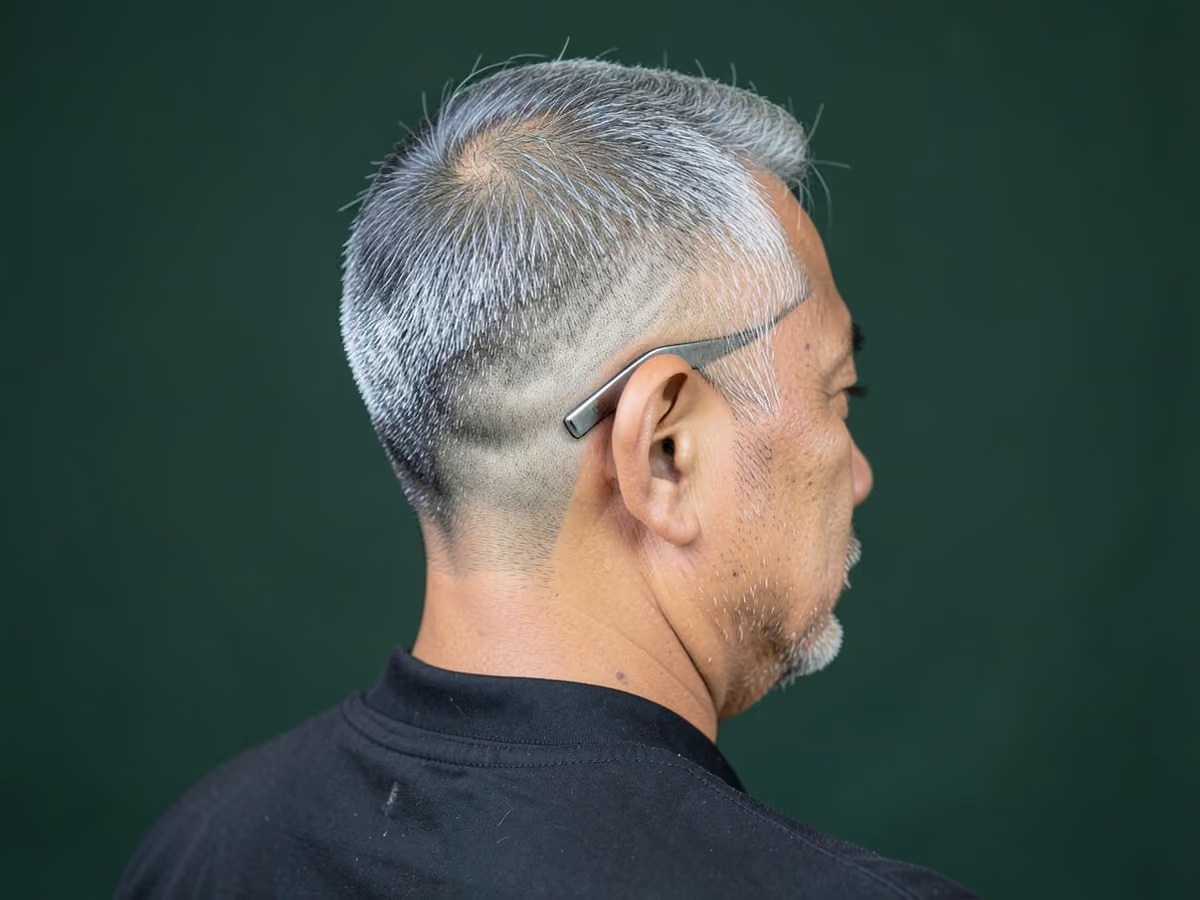
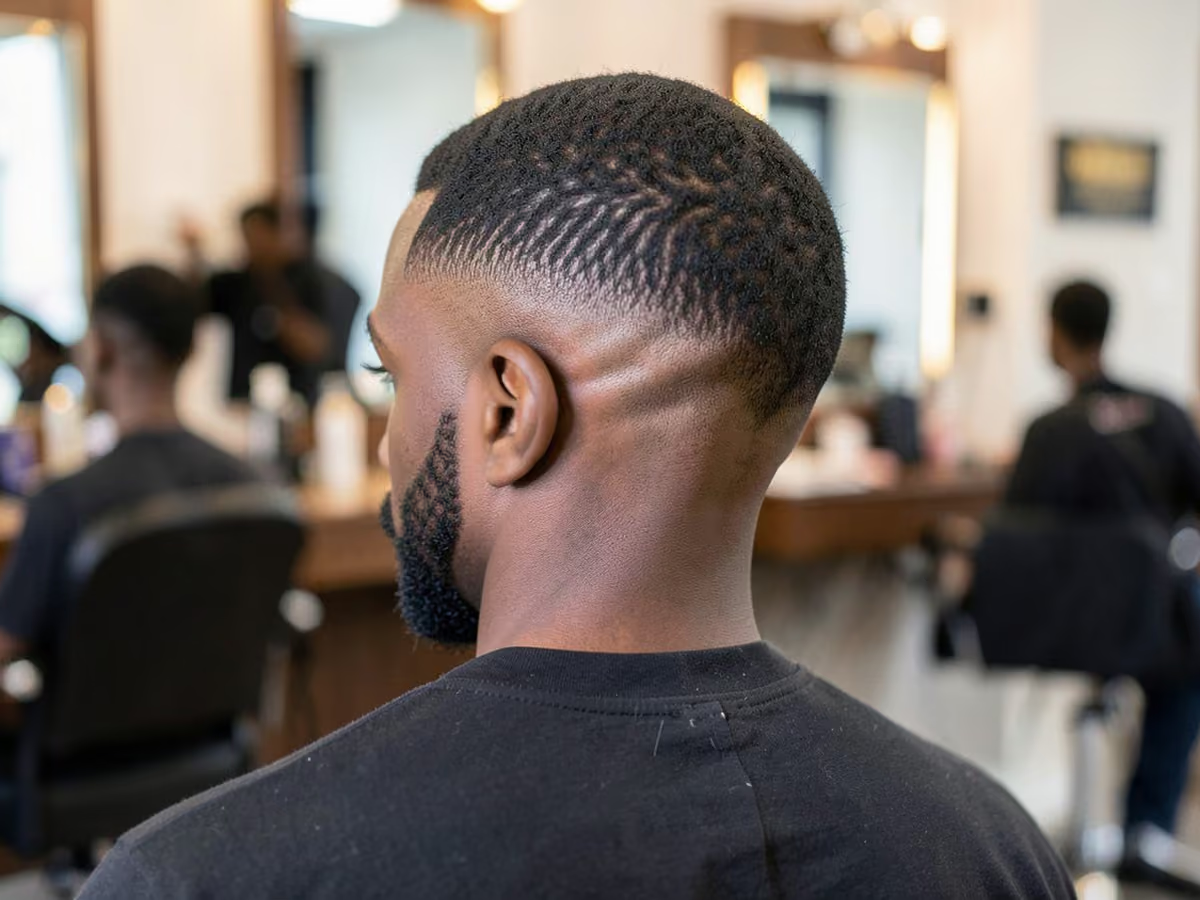
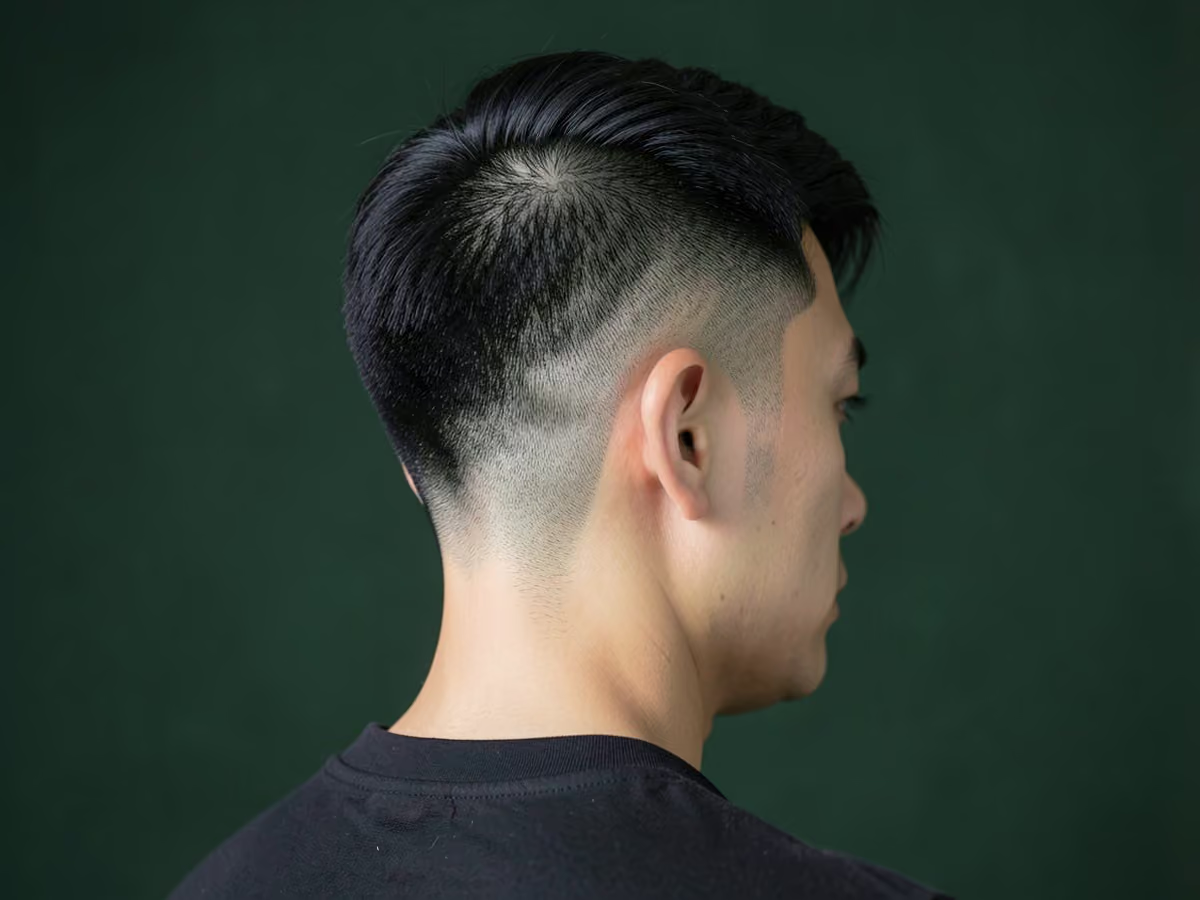
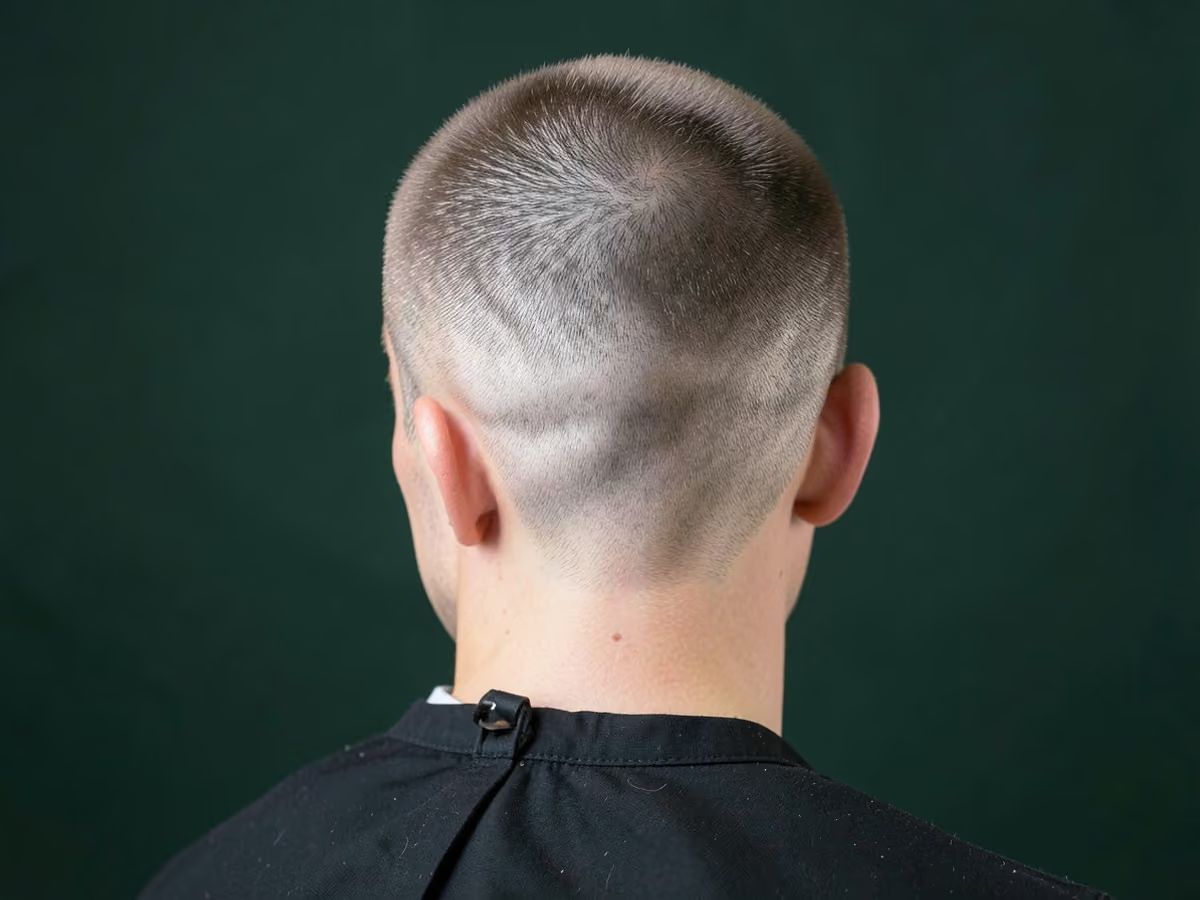
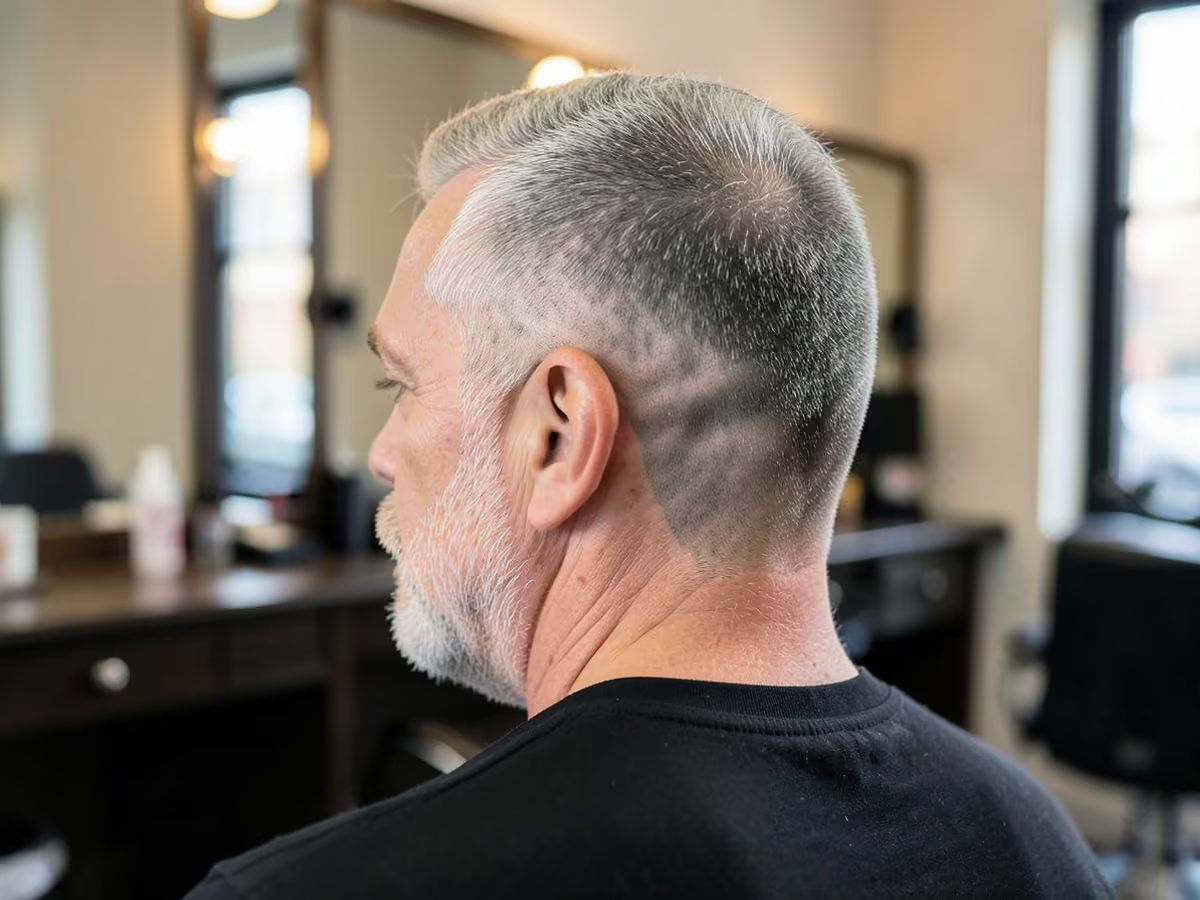
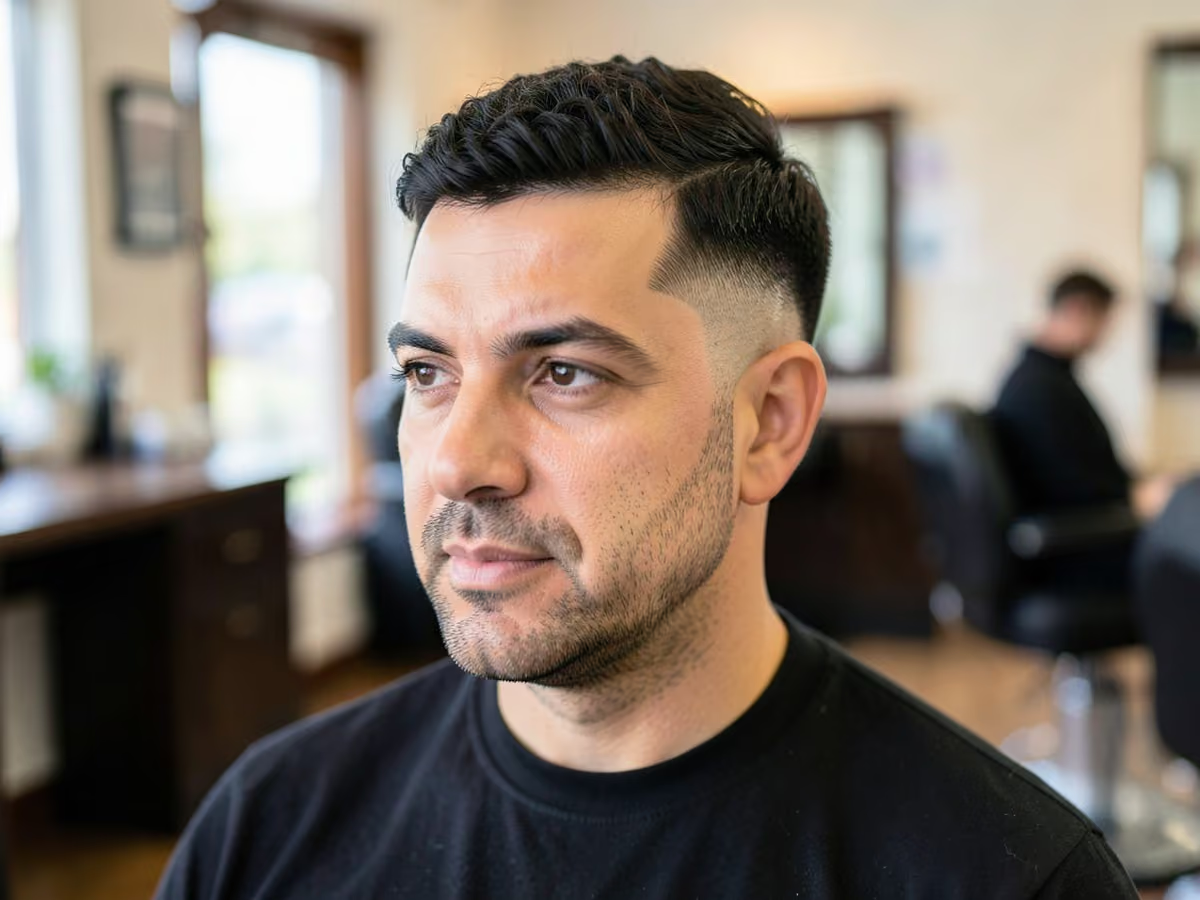
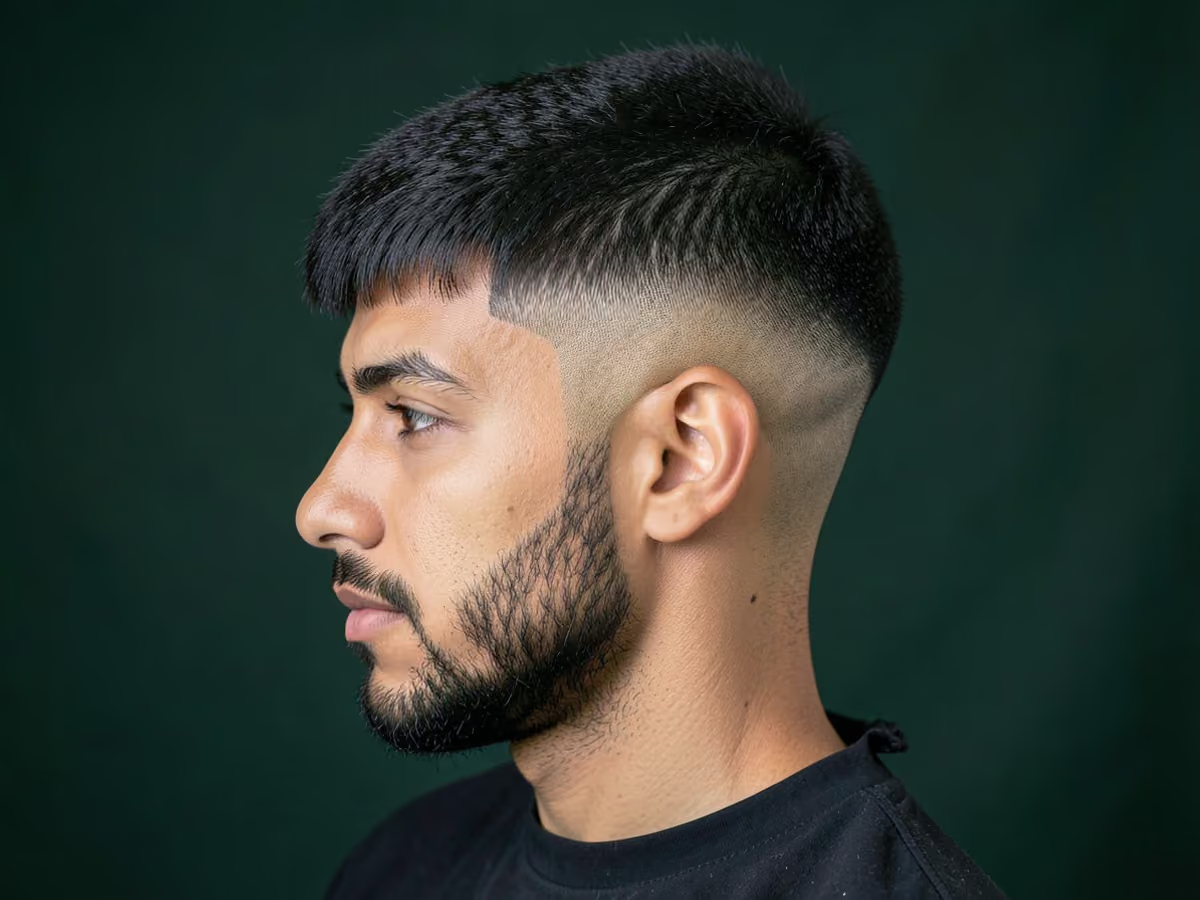
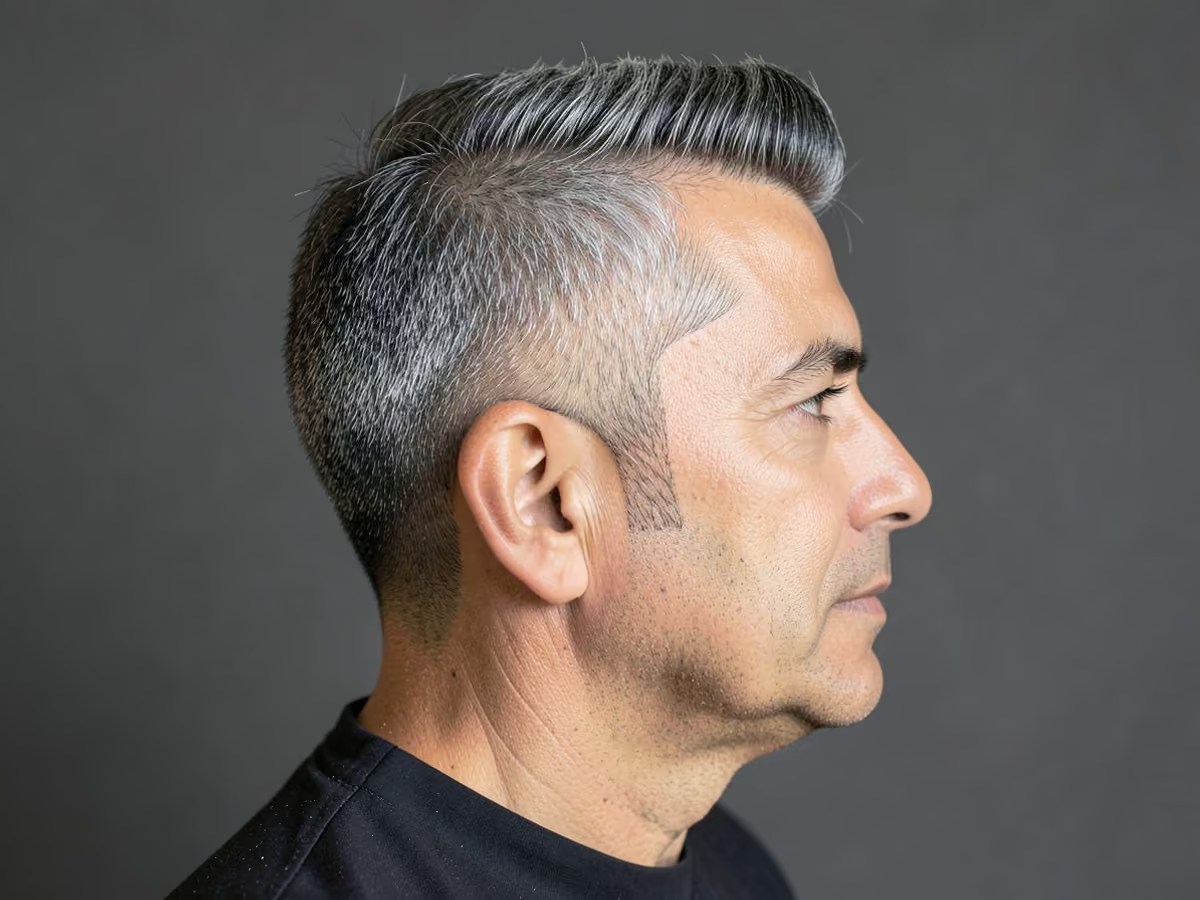
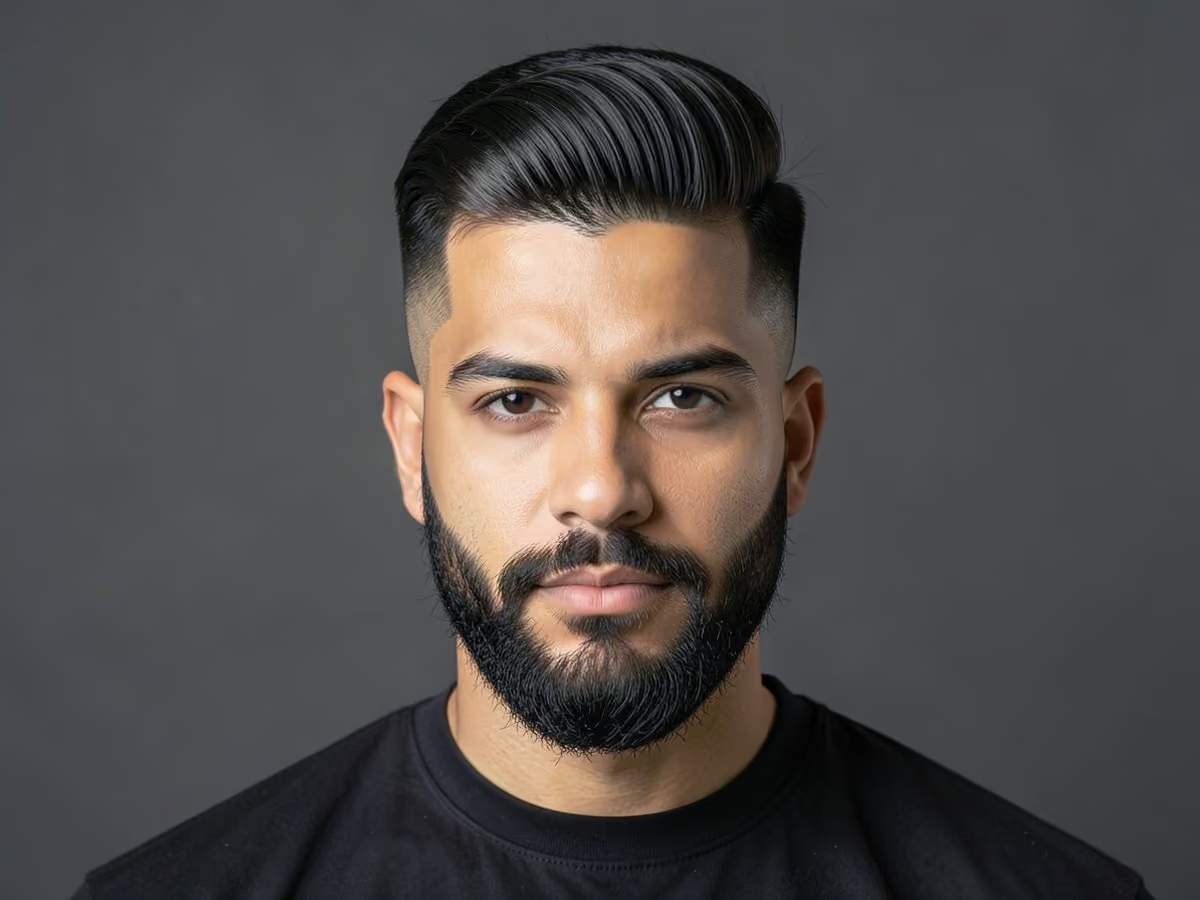
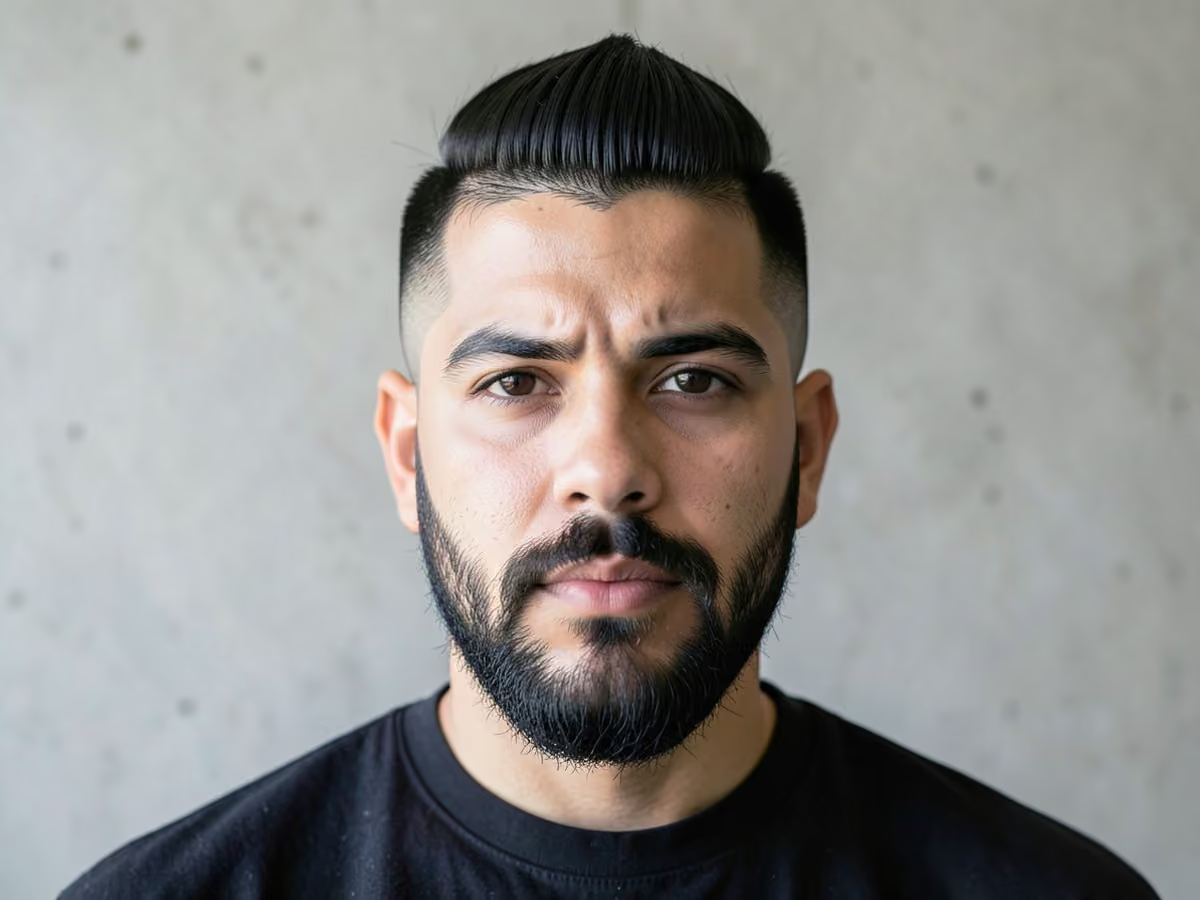
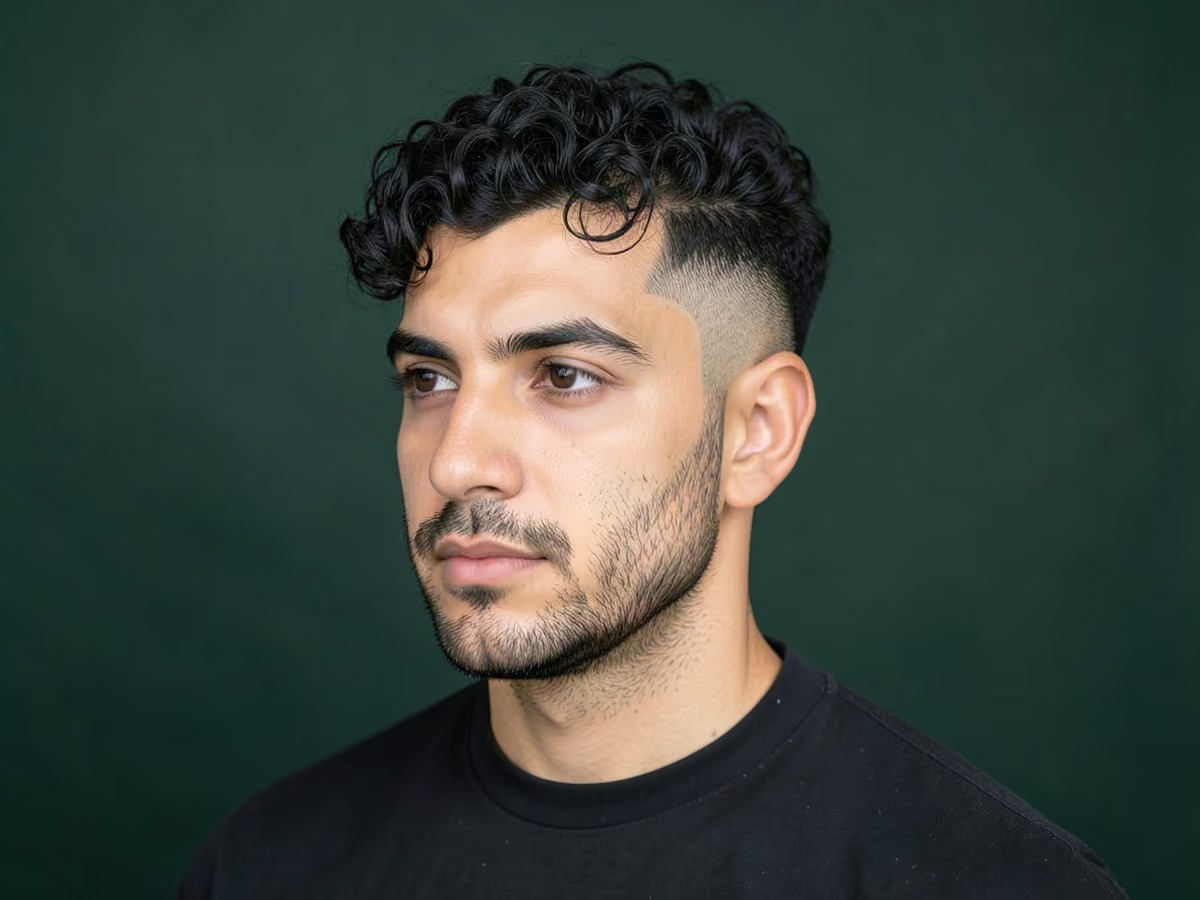
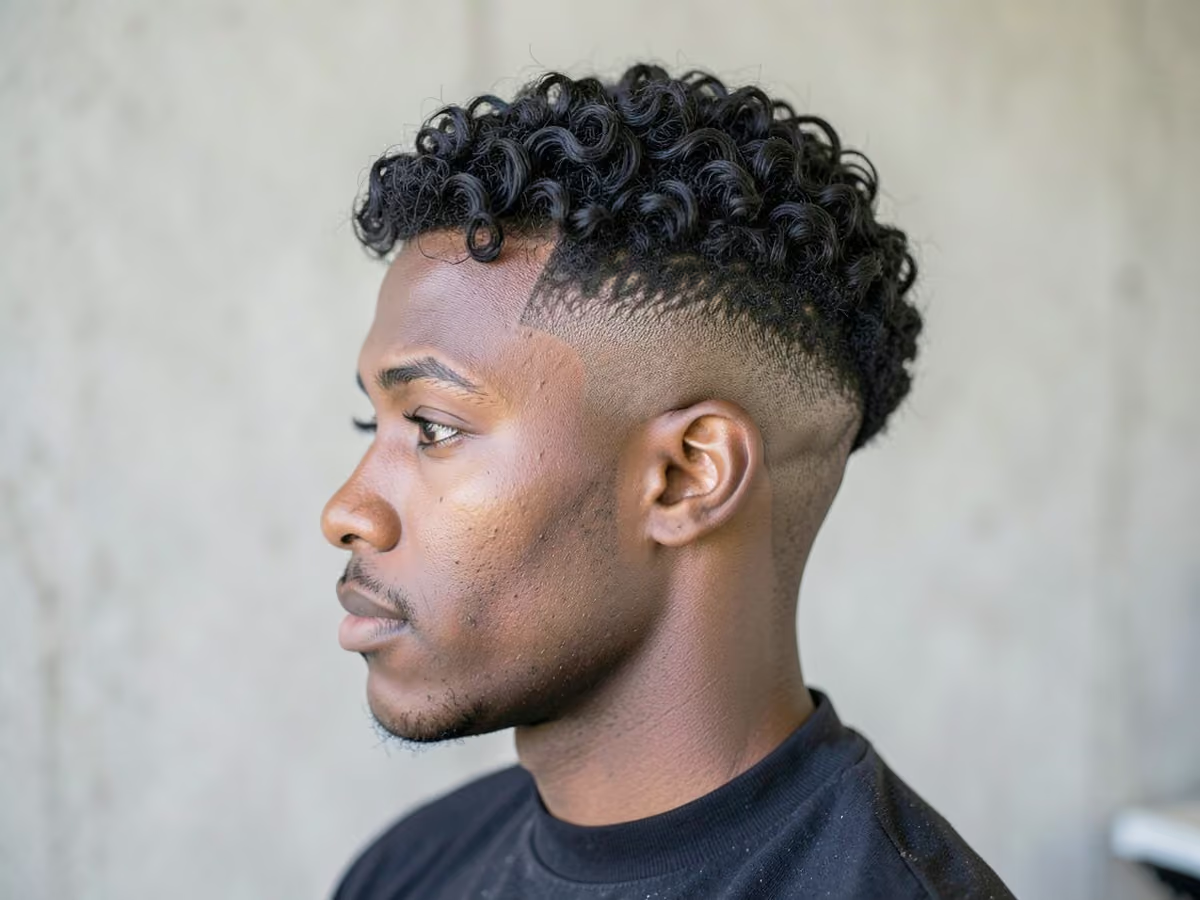
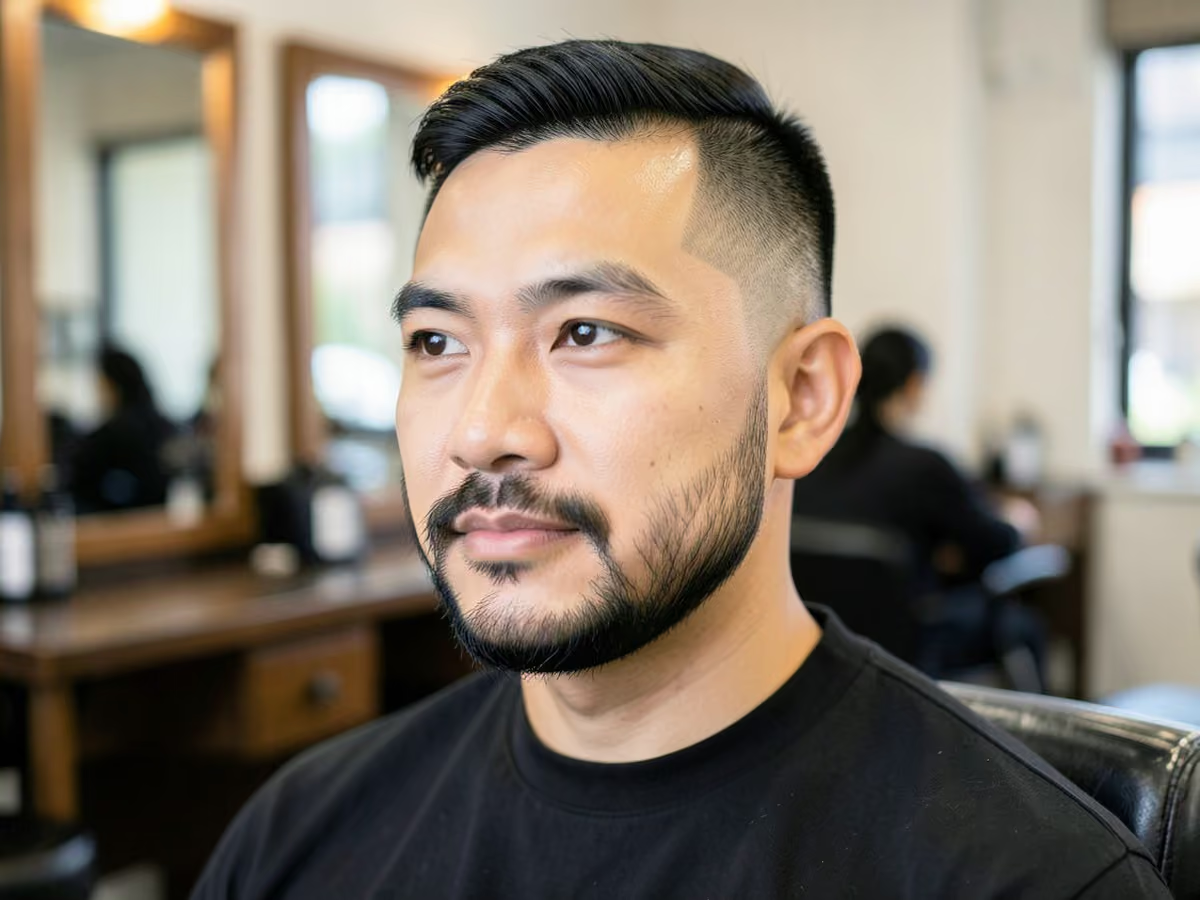
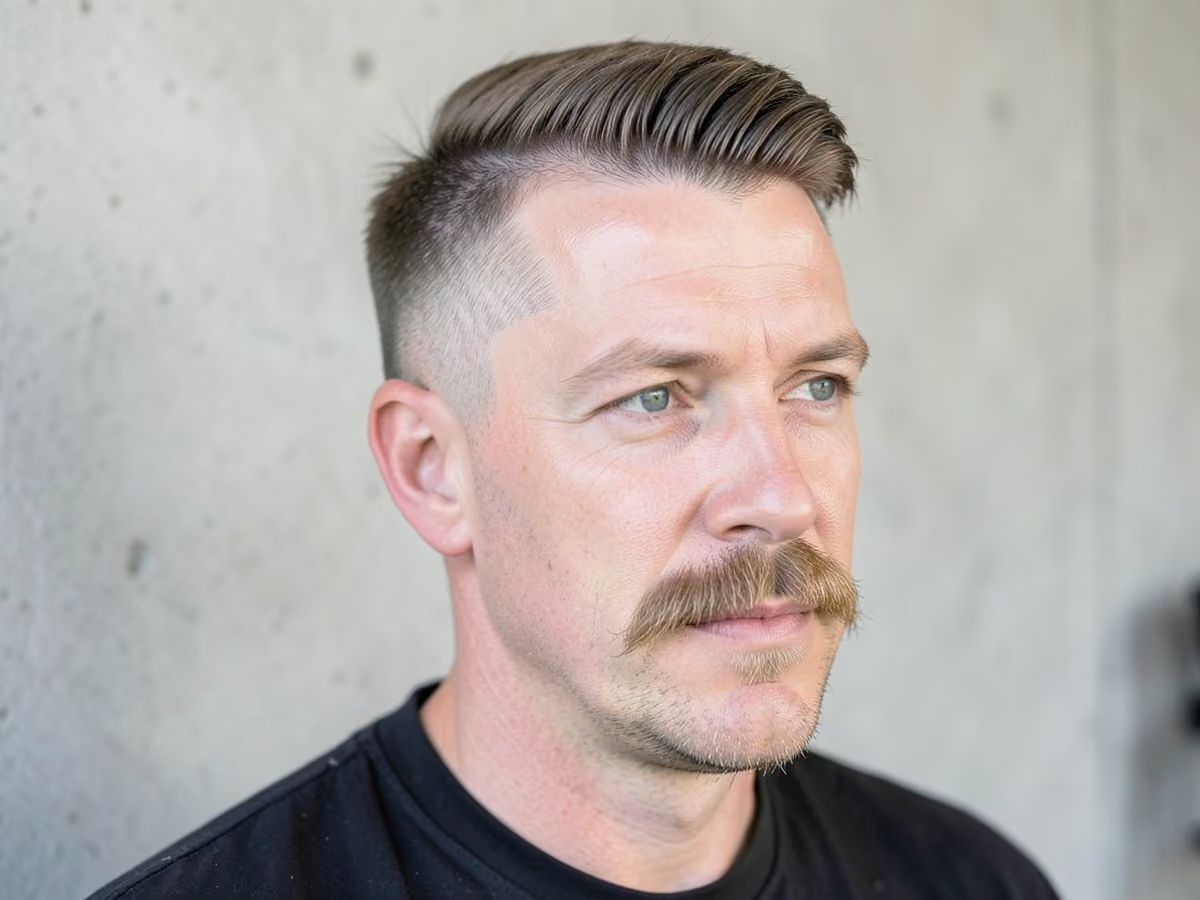
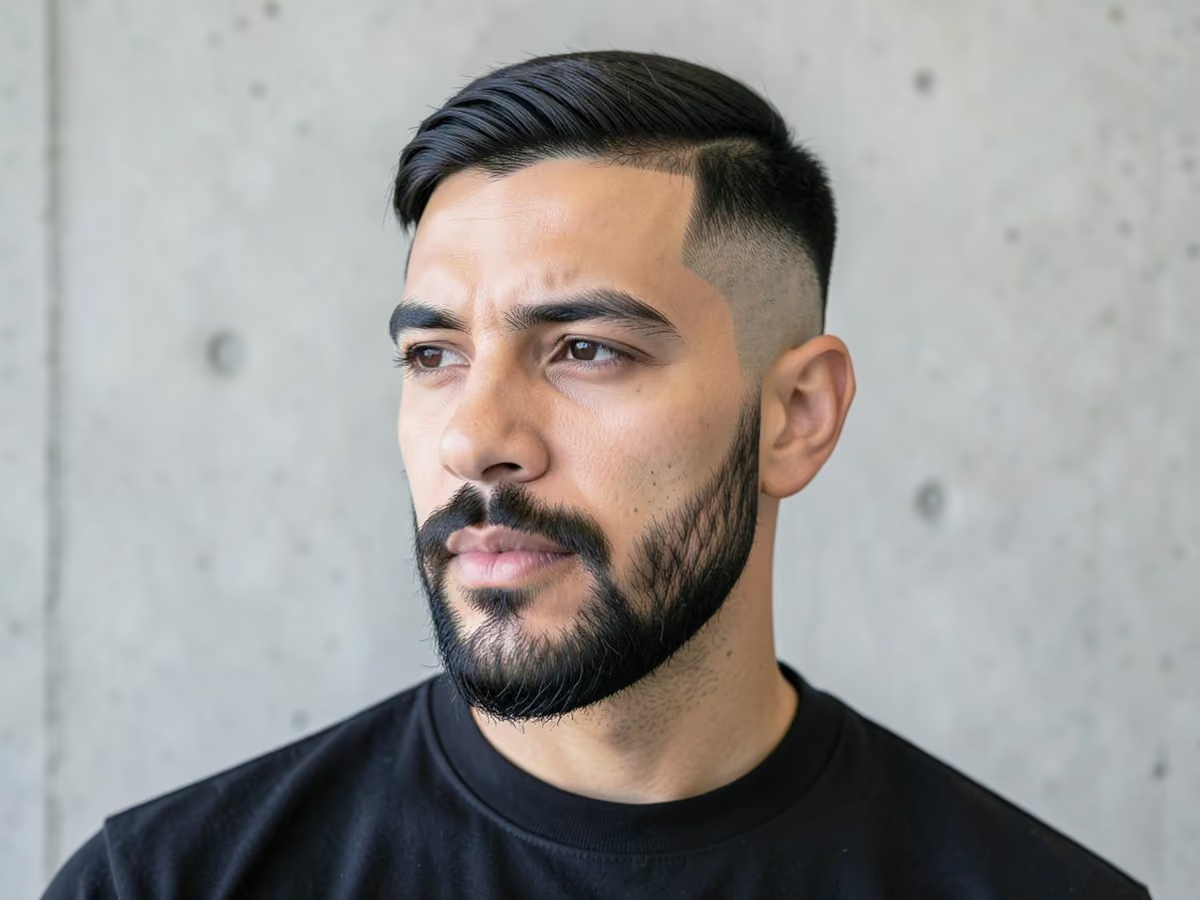
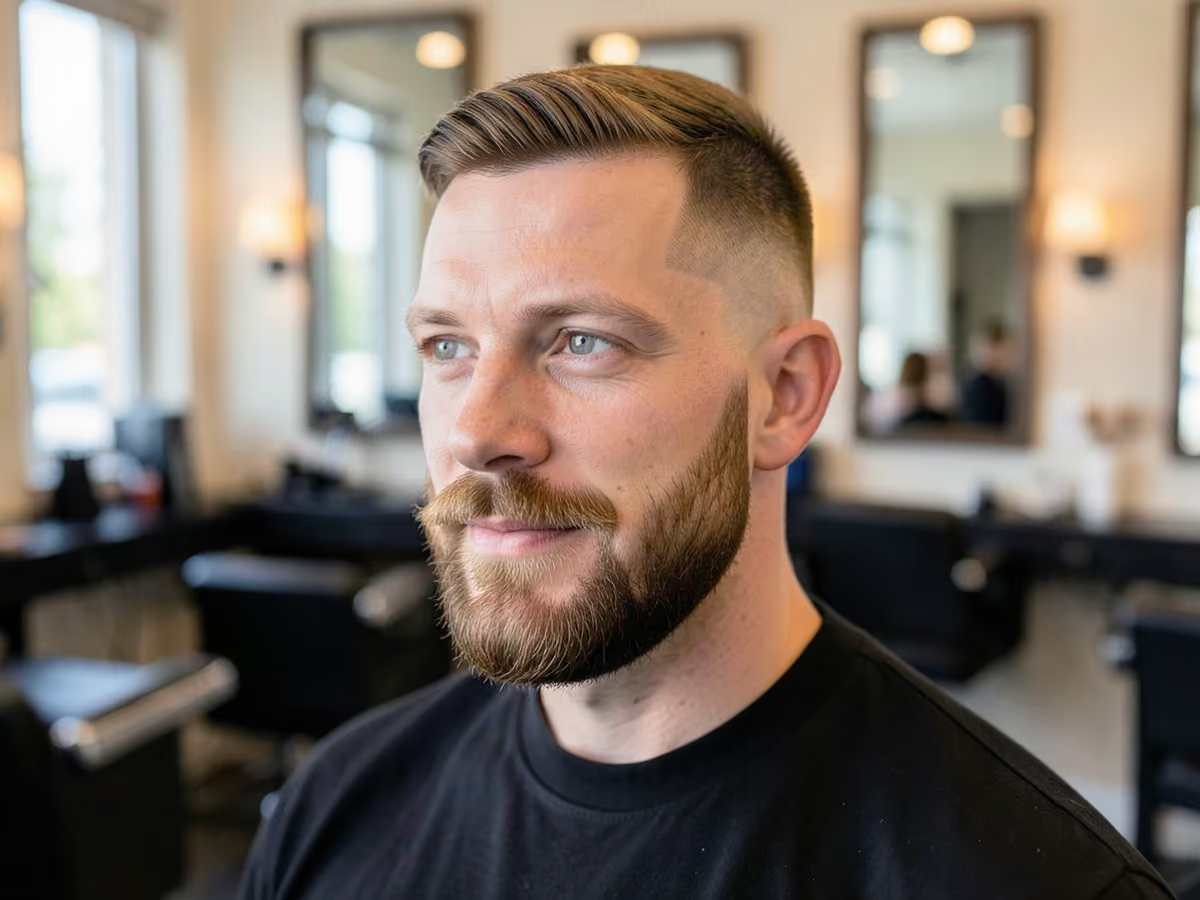
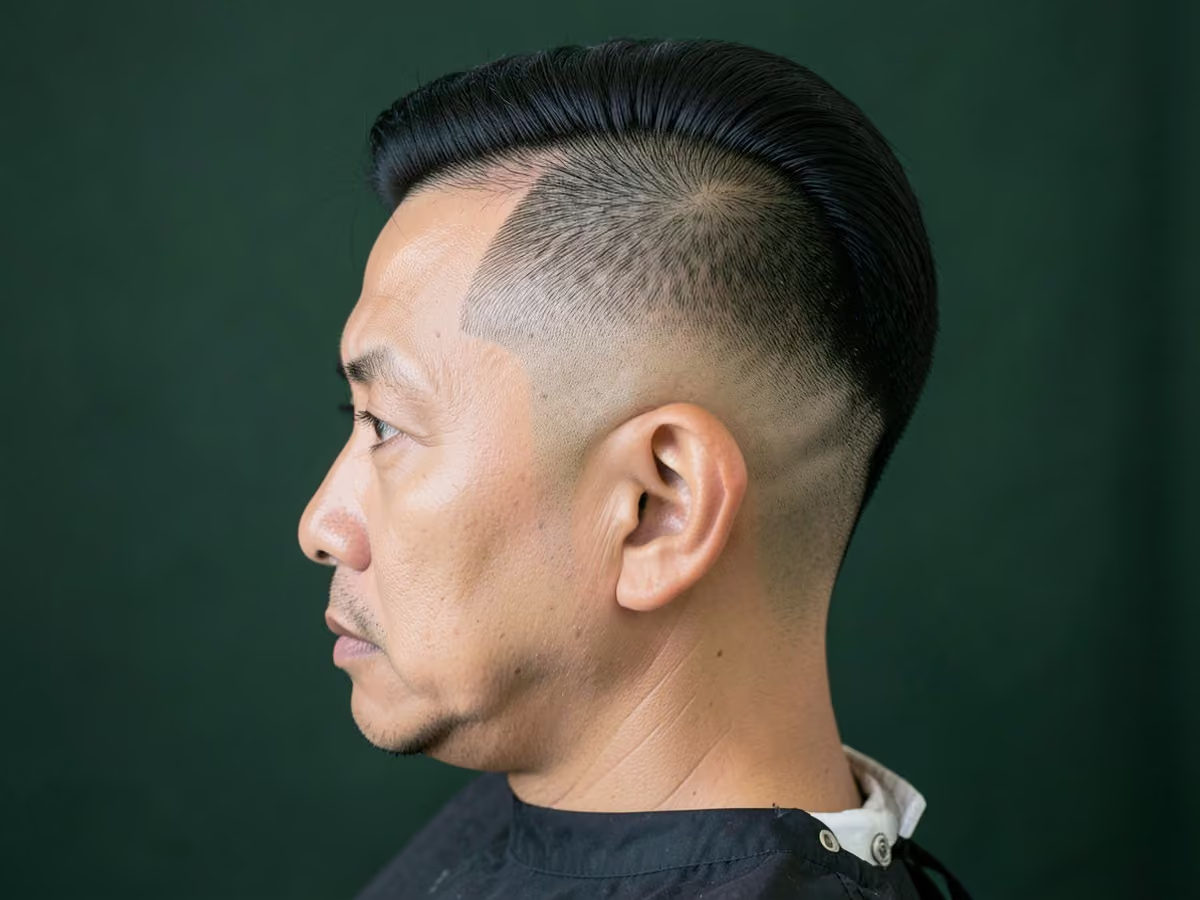
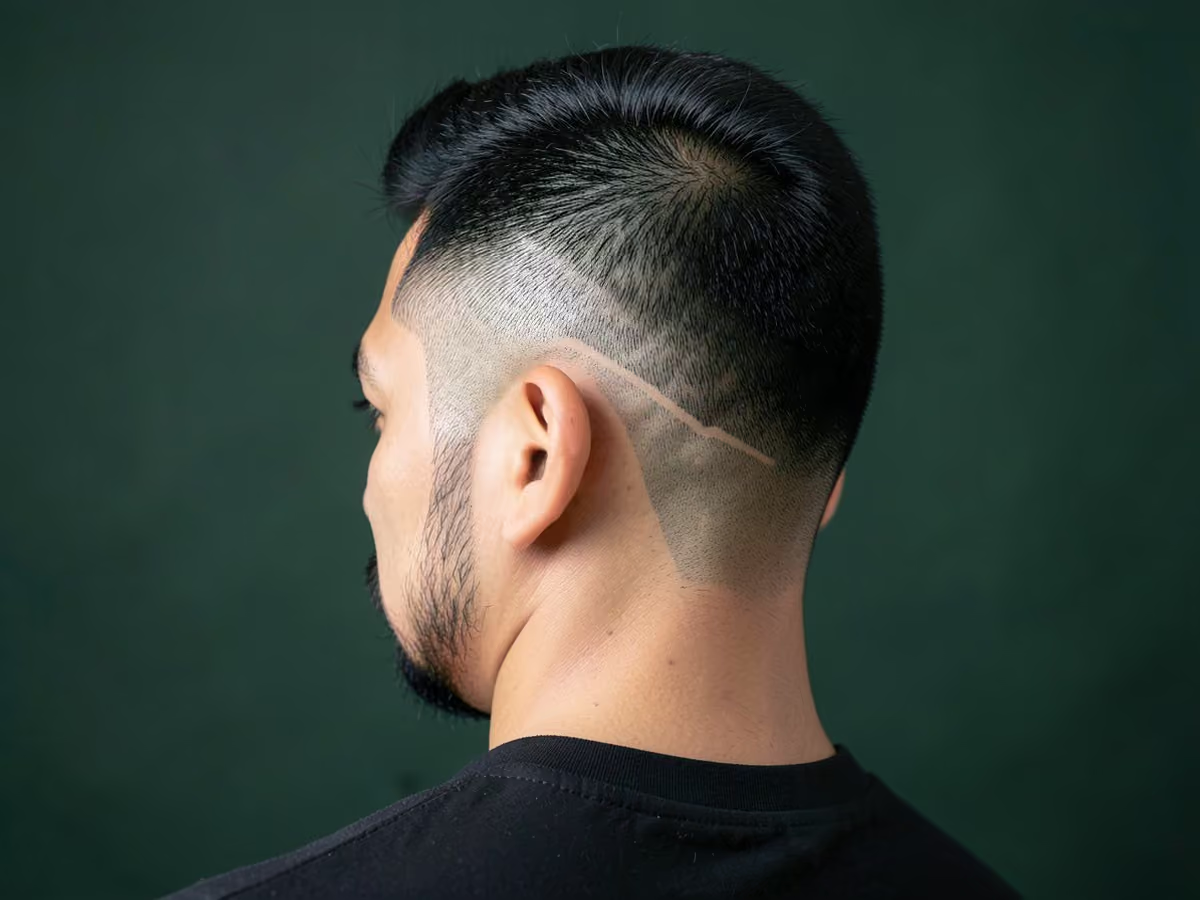
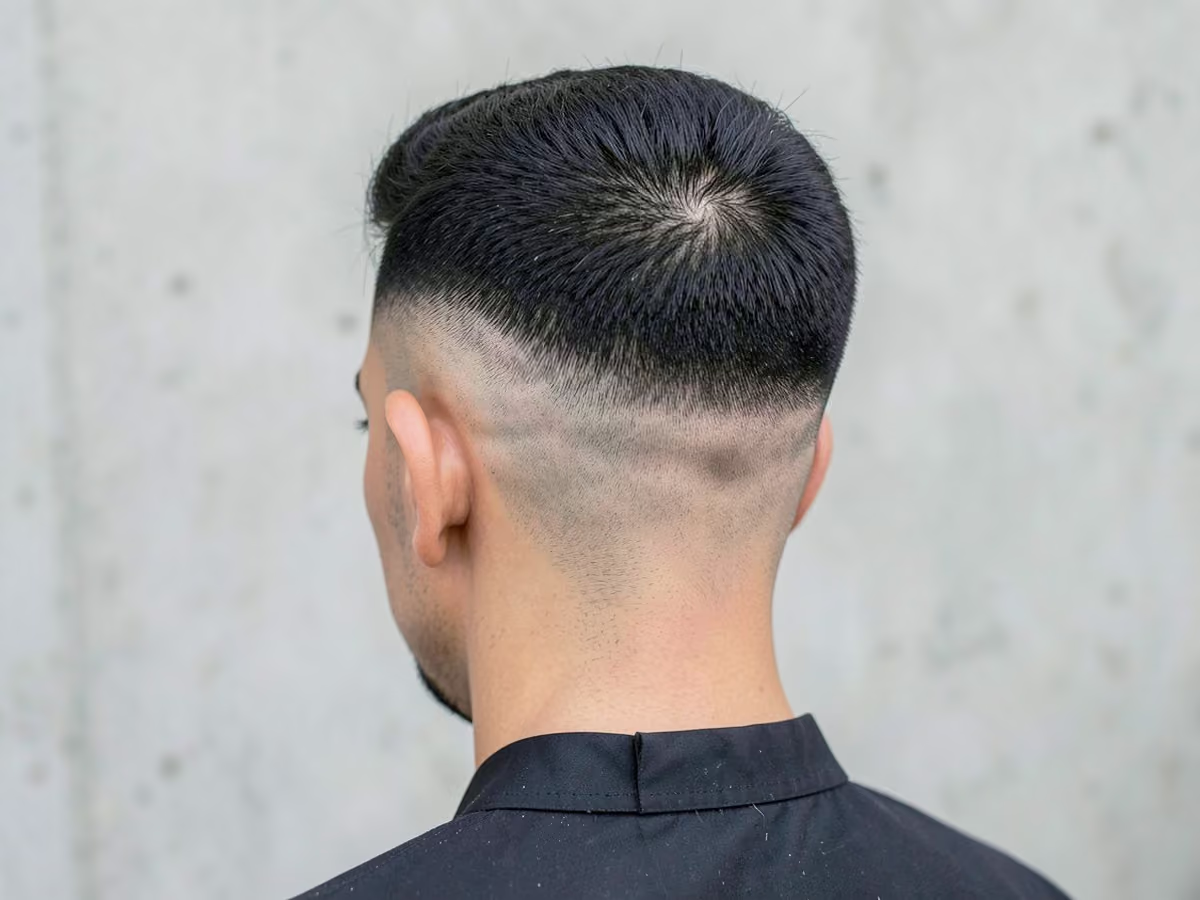
Quick answer: A low skin fade is a fade haircut that starts just above the ear and at the nape with bare skin, then blends up through a #0.5, #1 and #2 into the longer sides before the temple. Most of the side length stays, so it looks clean but not severe. Most men trim it every two to three weeks.
Low Skin Fade Haircut Styles at a Glance
Every style on this page with its clipper guard, top length and trim interval. Tap a name to jump to that card.
Low skin fade haircuts take the sides to bare skin only in a narrow band above the ear and around the neckline, so the cut looks sharp up close but conservative from across the room. Below are 30 versions grouped by fade finish, top length, styled tops, curly and coily hair, beard pairings and edge work, each with guard numbers, trim timing and the words to use with your barber.
What Is a Low Skin Fade?
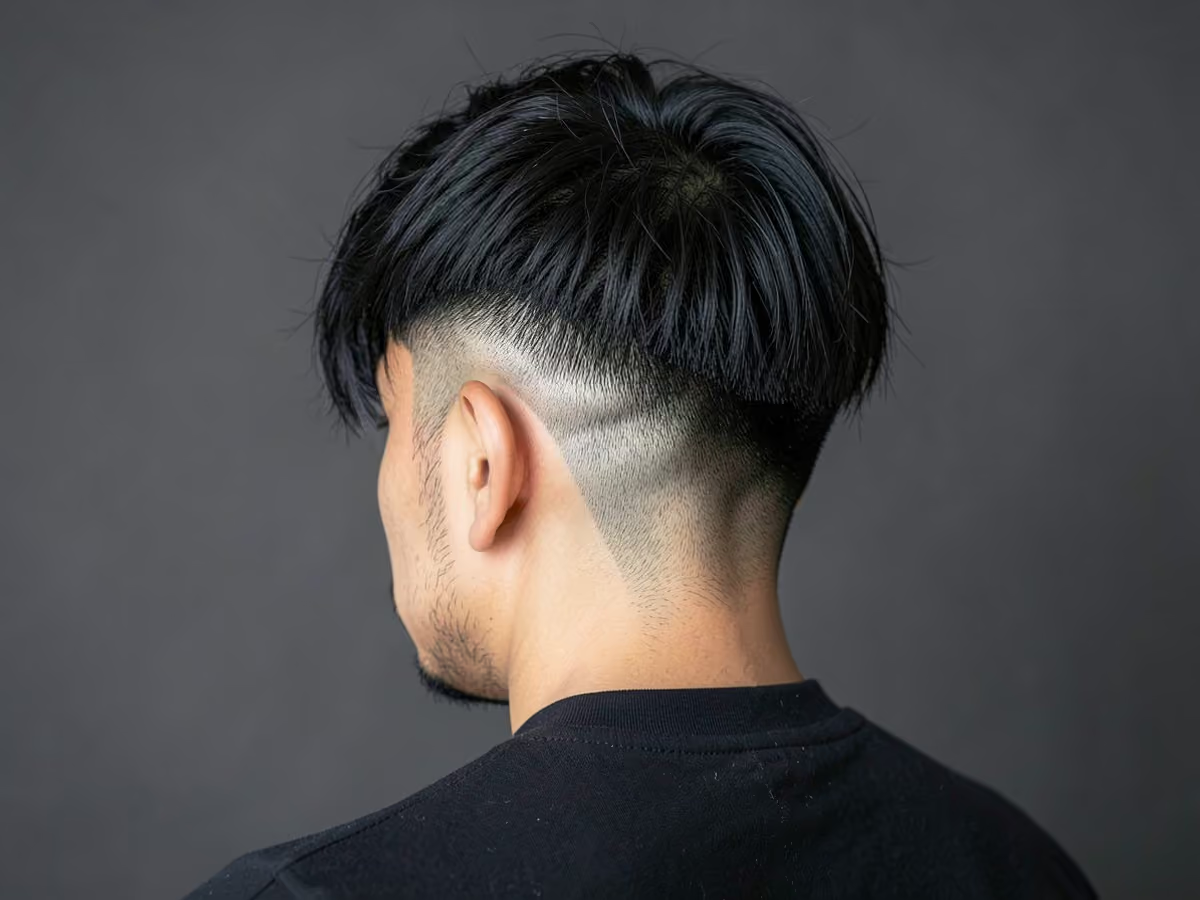
A low skin fade is a fade with two defining features: the shortest section is bare skin, cut with a foil shaver, a zero-gap trimmer or a razor, and that section sits low, starting just above the top of the ear and following the hairline around the back. From there the barber blends upward through a #0.5, #1 and #2, usually reaching a #3 or #4 an inch or two above the ear. Everything above that line keeps its length.
It belongs to the wider low fade family, which also includes versions that stop at a #1 instead of skin. Adding skin makes the blend sharper and the outline cleaner, but regrowth shows sooner. If you want the low skin fade with a combed side part specifically, our low skin fade with side part page covers that combination in depth.
How Does a Low Skin Fade Compare to a Low Taper and a Mid Skin Fade?
The three cuts differ in where the skin goes. A low taper fade takes only the sideburns and nape short and leaves the hair over and behind the ear longer. A low skin fade wraps the bare section all the way around the head just above the ear. A mid skin fade starts the bare section at the temple, so far more scalp shows from the front. The skin fade guide covers every height.
In practice, the low skin fade sits in the middle for upkeep: sharper than a taper, gentler than a mid or high skin fade. It is a common choice for men who want a clean fade at work without the sides looking shaved.
How Does a Low Skin Fade Compare to a Low Taper and a Mid Skin Fade?
Cut
Where skin shows
Side length kept
Typical trim
Low taper
Sideburns and nape only
Most of the sides
Every 3 to 4 weeks
Low skin fade
Band just above the ear and around the nape
Upper two-thirds of the sides
Every 2 to 3 weeks
Mid skin fade
Up to the temple
Upper third of the sides
Every 2 weeks
High skin fade
Up to the parietal ridge
Very little
Every 1 to 2 weeks
Who Suits a Low Skin Fade?
Most face shapes can wear it, because the bare section is small and the overall outline barely changes. Oval and square faces suit it with any top. Long faces benefit from the low height, since higher fades make the head look narrower and longer. Round faces can wear it too, but pair it with some height on top, such as a quiff or textured crop, to add length. Men with large ears often prefer it over a mid fade, as more hair stays around the ear.
Texture changes how it looks. Dark, coarse and coily hair shows the sharpest contrast between skin and hair. Light or fine hair blends more softly, and the skin band may barely show. Men prone to razor bumps should ask for a foil shaver or zero-gap trimmer finish rather than a straight razor. Curly hair suits a blend that climbs a little higher, so the curls do not sit on the fade as a separate block.
Filter the styles
Showing all 30 styles
Fade
Hair
Length
Low Skin Fade Types by Finish
The tool used for the bare section and the shape of the blend set the base for every style below. These four cover a standard foil finish, a razor finish, a taper version and a burst around the ear.
Trim:Every 2–3 weeks. Stubble shows on the bare band within a week.
Best For:Oval, square faces + straight, wavy or thick hair.
About This Style
A foil shaver takes a narrow band above the ear and around the nape to skin, then the barber blends up through a #0.5, #1 and #2 to a #3 about two inches above the ear. Tops on this version range from one and a half to three inches. From the front the sides look neat but full, which is why most barbers treat it as the default meaning of the name.
How to Style at Home
Towel-dry and work a small amount of matte clay through the top.
Push the top back or to one side with your fingers.
Rub a drop of scalp oil over the bare band after showering.
Ask Your Barber
"Classic low skin fade, foil shaved just above the ear and at the nape, blended through a #1 and #2 to a #3, and about two inches on top."
Trim:Every 2 weeks. Razor-smooth skin loses its finish within days.
Best For:Oval, square faces + coarse, coily or thick hair.
About This Style
After the clippers, a straight razor and shaving cream take the bottom band completely smooth, so it feels bare to the touch rather than just very short. The razor section is the same low height as a skin fade and blends through a #0.5 and #1 quickly. It gives the sharpest contrast on dark, coarse hair, though sensitive skin may react to the blade.
How to Style at Home
Apply a fragrance-free moisturizer to the razor area after each wash.
Avoid scratching or rubbing the bare skin while it settles.
Brush a short top in one direction with a soft brush.
Ask Your Barber
"Low bald fade, clipper then straight razor smooth just above the ear and at the nape, blended through a #0.5 and #1, and keep the top at about one inch."
Trim:Every 3–4 weeks. Only small areas of skin need refreshing.
Best For:Oval, long faces + straight or wavy hair.
About This Style
Skin appears at the sideburns and nape only, rather than in a band all the way around, so the hair over and behind the ear stays at a #3 or longer. It looks like a low skin fade from the back but softer from the side. Because so little skin is exposed, it grows out with less fuss and suits men who stretch visits to a month.
How to Style at Home
Style the top with a small amount of light pomade or cream.
Comb the sides down so they lie flat over the ear.
Clean the neckline with a trimmer after two weeks if needed.
Ask Your Barber
"I'd like a low skin taper, skin only at the sideburns and nape, blended to a #3 over and behind the ear, and two to three inches on top."
Trim:Every 2–3 weeks. The curve around the ear blurs first.
Best For:Oval, heart faces + curly, wavy or coily hair.
About This Style
Bare skin arcs around each ear like a horseshoe and stops before the back, leaving the nape longer. The outline looks like a sunburst from the side, which is where the name comes from. It suits curly tops and mohawk-style shapes, since the longer back supports volume. Ask for the curve to stay low so it sits under the temple.
How to Style at Home
Define curls or waves on top with a little curl cream.
Push the top toward the center to follow the curve.
Leave the longer back unstyled or lightly scrunched.
Ask Your Barber
"Can you do a low burst skin fade, skin in a curve around each ear only, keep the nape longer, blended to a #2 above the curve, curly top left about three inches."
Recommended Products
Curl Cream
Low Skin Fade with a Short Top
Short tops keep the whole cut easy to wear and quick to style. These six pair the low skin fade with a buzz, crew, Caesar, French crop, textured crop and flat top; compare them with the crew cut guide.
Trim:Every 2–3 weeks. The fade softens before the buzz grows out.
Best For:Oval, square faces + any texture, including thinning hair.
About This Style
One guard length, usually a #2 or #3, covers the whole top, and the low skin fade below it adds a clean edge to what would otherwise be a plain buzz. It takes no styling at all. Men with thinning crowns often choose it, since even short length hides the difference. The fade itself needs a cleanup more often than the buzz.
How to Style at Home
Wash and towel-dry; no product is needed on top.
Apply sunscreen to the scalp and faded sides in strong sun.
Clip the top yourself with the same guard between fades if you like.
Ask Your Barber
"Give me a low skin fade buzz cut, #2 all over the top, foil shaved low above the ear and at the nape, blended up into the #2."
Trim:Every 3 weeks. Crew length stays tidy longer than the fade.
Best For:Oval, square, round faces + straight or thick hair.
About This Style
Slightly longer at the front, around an inch, and shorter toward the crown, the crew cut top gives a little shape without products. The low skin fade underneath keeps the sides sharp. It is an easy office or military-style option, though skin fades may not meet every uniform rule, so check yours. Thick straight hair stands up best at the front.
How to Style at Home
Push the front up slightly with a pinch of texture powder.
Brush the rest of the top back with your palm.
Keep the neckline clean with a trimmer between cuts.
Ask Your Barber
"Low skin fade crew cut, skin just above the ear blended up, about an inch at the front tapering to half an inch at the crown."
Trim:Every 2 weeks. The straight fringe needs re-cutting often.
Best For:Oval, square faces + coarse, coily or straight hair.
About This Style
Short hair is brushed forward to a straight, horizontal fringe just above the forehead, with the low skin fade framing it below. On coily hair the top is often a #1 or #2 with a sharp line-up across the front. On straight hair it is closer to an inch long. Either way, it is a compact shape that lasts a few weeks. See the Caesar cut guide for more.
How to Style at Home
Brush the top forward in one direction with a soft brush.
Keep the fringe edge clean with a trimmer.
Moisturize the scalp with a little scalp oil.
Ask Your Barber
"Let's go with a low skin fade Caesar, top at a #2 brushed forward with a straight fringe line, skin low above the ear and at the nape."
Trim:Every 3 weeks. The fringe grows into the eyes.
Best For:Oval, long faces + straight or wavy hair.
About This Style
Two inches of textured hair on top falls forward to a short, blunt or choppy fringe, a shape that shortens long faces. Because the bare band sits so low, the head keeps its width at the temples instead of looking narrow. Matte clay worked through dry hair gives separation. The fringe should stop about a finger's width above the eyebrows so it clears your eyes.
How to Style at Home
Dry the top forward with your fingers on medium heat.
Separate the fringe into pieces with a little matte clay.
Keep the fringe off the brow so it does not hang in your eyes.
Ask Your Barber
"I'm after a low skin fade French crop, skin above the ear blended to a #3, two inches on top with a textured fringe stopping above my eyebrows."
Trim:Every 3 weeks. Texture gets heavy as the top grows.
Best For:Round, oval faces + thick straight or wavy hair.
About This Style
Point cutting and texturizing break the top into choppy pieces that lift slightly at the crown, so the crop has height rather than lying flat like a French crop. Two to three inches works. Round faces gain a little length from the lift. Texture powder gives grip without shine, and the choppy finish hides the first week of regrowth on top.
How to Style at Home
Sprinkle texture powder at the roots of dry hair.
Rough it up with your fingers to lift the crown.
Pinch the front into a few loose pieces.
Ask Your Barber
"Could I get a low skin fade textured crop, skin low above the ear blended to a #3, two to three inches on top point cut for choppy texture."
Trim:Every 2 weeks. The flat surface loses its level shape fast.
Best For:Oval, square faces + coarse or coily hair.
About This Style
The top is cut level across like a table, usually one and a half to two inches high, with sharp square corners. Coily and coarse hair stand up best for this shape. With bare skin only at the very bottom, the flat surface sits on a block of short hair that makes the outline look geometric. Frequent visits are needed because a few days of growth make the surface uneven.
How to Style at Home
Pick the top straight up with an afro pick.
Pat the surface flat with your palm, then check it in a mirror.
Moisturize with a light leave-in to keep coily hair soft.
Ask Your Barber
"Low skin fade flat top, top cut level at about two inches with square corners, skin low above the ear and at the nape."
Recommended Products
Afro Pick
Leave-In
Low Skin Fade with a Styled Top
Longer tops add height, direction or a fringe above the bare band. These six cover the quiff, pompadour, faux hawk, spiky hair, a textured fringe and curtains; for longer lengths see short sides long top.
Trim:Every 3 weeks. The front loses lift as the sides grow.
Best For:Round, oval faces + thick straight or wavy hair.
About This Style
Three to four inches at the front is blow-dried up and slightly back, then shaped into a soft peak with matte clay. Height at the hairline adds length to round faces. Since most of the side length survives the fade, the quiff looks balanced rather than top-heavy. Thick or wavy hair with natural body holds the peak through the day without much product.
How to Style at Home
Lift the front with a round brush while blow-drying.
Shape the front with matte clay, pushing it up and back.
Set it with the cool setting on the dryer.
Ask Your Barber
"I'd like a low skin fade quiff, skin above the ear blended to a #3, four inches at the front tapering shorter toward the crown."
Best For:Round, square faces + thick straight hair.
About This Style
Four to five inches at the front is swept up and back into a smooth roll, held with pomade for shine. Compared with an undercut pompadour, the sides here stay fuller, which suits men who want the classic shape without shaved sides. Daily blow-drying is needed to build the roll. Thick straight hair holds it best, while fine hair may need a thickening spray first.
How to Style at Home
Dry the front up and back over a round brush.
Comb pomade through and push the front forward slightly to form a roll.
Smooth the sides of the top back toward the crown.
Ask Your Barber
"Can you do a low skin fade pompadour, skin low above the ear blended to a #3, five inches at the front tapering to three at the crown."
Trim:Every 3 weeks. The center ridge needs reshaping.
Best For:Round, oval faces + thick or wavy hair.
About This Style
Hair from both sides of the top is brushed toward the middle to build a ridge, giving height without the fully shaved sides of a mohawk. Three inches through the center works. Only the bottom band is bare, so the sides stay short but not shaved and the ridge never looks extreme. On workdays it combs back flat into a plain short style.
How to Style at Home
Dry the top up and toward the center.
Pinch matte clay along the middle to form the ridge.
Comb it back flat on days you need a quieter look.
Ask Your Barber
"Give me a low skin fade faux hawk, skin above the ear blended to a #3, three inches down the center and shorter either side of the top."
Trim:Every 3 weeks. Spikes droop as they lengthen.
Best For:Round, oval faces + thick straight hair.
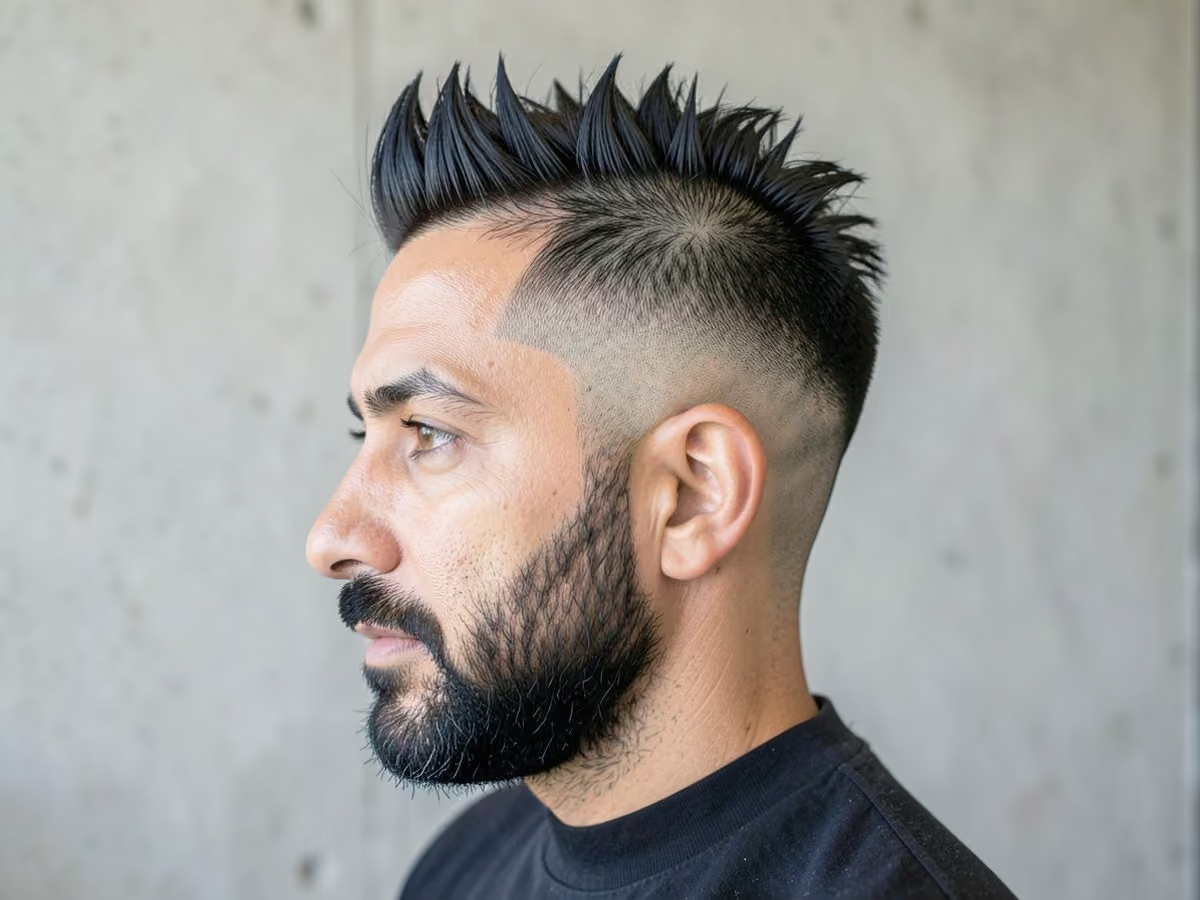
About This Style
Two to three inches on top is pulled up into short, pointed spikes with matte clay or a light gel. The modern version is softer and drier than the stiff, wet spikes common in the early 2000s. Thick straight hair holds spikes best, while fine hair droops. Clean, short sides help the spikes read clearly from the front and keep the shape compact.
How to Style at Home
Blow-dry the top straight up from the roots on medium heat.
Rub matte clay between your fingertips and pull sections into points.
Hold each point for a few seconds while the product sets.
Ask Your Barber
"Low skin fade spiky hair, skin low above the ear blended to a #2, two to three inches on top point cut so it spikes up."
Trim:Every 3 weeks. The fringe reaches the brow quickly.
Best For:Long, heart faces + straight or wavy hair.
About This Style
Three inches at the front fall forward over the forehead in loose, textured pieces, a longer and messier fringe than the French crop. It hides a high forehead and shortens long faces. Beneath the heavier front, the bare band keeps the outline tidy at the ears. Sea salt spray gives the fringe movement, and it can be pushed aside on hot days.
How to Style at Home
Mist sea salt spray through damp hair before drying.
Dry the fringe forward and down with your fingers.
Twist a few pieces at the front with matte paste.
Ask Your Barber
"Let's go with a low skin fade fringe, skin above the ear blended to a #3, three inches at the front falling forward with texture."
Trim:Every 3–4 weeks. Curtains lose shape as they grow.
Best For:Oval, long faces + straight or wavy hair.
About This Style
Parted down the center, four to five inches of hair split into two curtains that fall toward the temples. Tight, faded sides stop the curtains from looking heavy or wide. Wavy hair gives natural movement, and straight hair needs a short blow-dry outward from the part. See the curtains haircut guide for longer and shorter versions.
How to Style at Home
Comb a center part while the hair is wet.
Dry each side down and outward from the part.
Finish with a little styling cream for a soft hold.
Ask Your Barber
"I'm after a low skin fade curtains, skin above the ear blended to a #3, four to five inches at the front cut for a middle part."
Recommended Products
Styling Cream
Low Skin Fade for Curly, Wavy and Coily Hair
Bare skin at the bottom keeps textured hair from looking bulky above the ears. These six cover curls, waves, twists, an afro, sponge curls and dreads; see curly hairstyles for more curly options.
Trim:Every 3 weeks. Curls widen above the fade as they grow.
Best For:Oval, round faces + 2C to 3C curly hair.
About This Style
Natural curls on top, cut dry to two to three inches, finish a low skin fade that is blended a little higher than usual so the curls do not sit like a separate block. Curl cream defines them without crunch. Bare skin at the bottom stops the sides from puffing out, which is the main problem curly hair has when the sides are left long.
How to Style at Home
Rake curl cream through soaking wet hair, section by section.
Scrunch upward and let it air-dry without touching.
Lift the roots with an afro pick once dry.
Ask Your Barber
"Could I get a low skin fade with curly hair, skin above the ear blended up to a #3 a little higher than usual, curls cut dry to about three inches."
Trim:Every 1–2 weeks. Waves look best with a fresh edge.
Best For:Oval, round faces + 4A to 4C coily hair.
About This Style
Short coily hair brushed daily in one direction forms 360 waves on top, framed by a sharp line-up and a skin band at the bottom. The top is kept at a #1 or #2, short enough for the wave pattern to show. Wave pomade and a durag at night are part of the routine. Training new waves takes several weeks of consistent brushing.
How to Style at Home
Apply wave pomade and brush from the crown outward.
Brush several times a day to train the pattern.
Wear a durag at night to lay the waves flat.
Ask Your Barber
"Low skin fade with waves, top at a #1 with the grain, skin low above the ear and at the nape, sharp line-up at the front."
Trim:Every 2–3 weeks. The fade needs clipping before the twists need redoing.
Best For:Oval, square faces + 4A to 4C coily hair.
About This Style
Two-strand or comb twists of two to four inches stand on top, and the bare band below gives them a clean frame at the sides. Protected at night, the twists can last a few weeks. Leave-in and scalp oil keep the hair soft between washes. A line-up at the front sharpens the look. See the braids for men guide for related styles.
How to Style at Home
Apply leave-in and twist the top in small sections.
Retwist the roots every two to three weeks.
Sleep with a satin cap to keep twists neat.
Ask Your Barber
"I'd like a low skin fade with twists, skin above the ear blended to a #2, line-up at the front, leave the top for twists at about three inches."
Trim:Every 3 weeks. The afro shape needs rounding as it grows.
Best For:Oval, long faces + 4A to 4C coily hair.
About This Style
A rounded afro of two to three inches keeps a compact shape here, because the bare skin and short blend stop it widening at the ears. The barber picks the hair out and shapes it with shears. Moisture matters most: leave-in and detangling spray prevent breakage. Long faces benefit because the round shape adds width. See the afro guide for more.
How to Style at Home
Spray detangling spray and pick the hair out from the roots.
Pat the shape round with your palms and check both sides.
Moisturize daily with a light leave-in to prevent breakage.
Ask Your Barber
"Can you do a low skin fade afro, skin above the ear blended to a #2, shape the afro round at about three inches with a line-up."
Trim:Every 2–3 weeks. Edges need clipping as curls grow.
Best For:Oval, round faces + 4A to 4C coily hair.
About This Style
A curl sponge rubbed in circles over one to two inches of coily hair forms small, tight coils on top. Skin at the bottom and a short blend make the coils look denser by contrast. Styling takes about a minute once you learn the motion. Leave-in before sponging helps the coils hold, and teenagers and adults ask for it equally.
How to Style at Home
Apply leave-in to damp hair and let it absorb for a minute.
Rub a curl sponge in small circles over the top.
Pat any loose coils back into shape with your hand.
Ask Your Barber
"Give me a low skin fade with sponge curls, skin above the ear blended to a #2, top at about one and a half inches for sponging."
Trim:Every 2–3 weeks. Fade and edges need regular cleanup.
Best For:Oval, long faces + coily hair with locs.
About This Style
Starter locs or longer locs on top sit over a short, clean frame of bare skin and a blended side. Tying them up shows the fade; wearing them down hides most of it. Maintenance splits in two: the fade needs a barber every two to three weeks, while a loctician handles root maintenance on a slower schedule. Scalp oil between locs prevents itching and flakes.
How to Style at Home
Retwist the roots with loc gel every four to six weeks.
Oil the scalp between locs once or twice a week.
Tie the locs up to show the fade.
Ask Your Barber
"Low skin fade with dreads, skin above the ear and at the nape blended to a #2, line up the edges, do not touch the locs."
Recommended Products
Loc Gel
Scalp Oil
Low Skin Fade with Beard
A low skin fade has to bridge bare skin and facial hair at the sideburn. These four pair it with a boxed beard, mustache, Van Dyke and circle beard; see beard styles with skin fade for more.
Trim:Every 2–3 weeks. Fade and beard lines both need upkeep.
Best For:Round, oval faces + thick hair and dense beard.
About This Style
A short, neat beard with defined cheek and neck lines connects to the fade through the sideburn, which the barber blends from skin into the beard length. The boxed shape suits round faces by adding structure at the jaw. Half an inch of beard is the usual length. Dense growth holds the lines best. See the boxed beard guide for shaping.
How to Style at Home
Outline the cheek and neck lines with a trimmer every few days.
Warm a little beard balm and brush the beard down.
Push the top back or to the side with matte clay.
Ask Your Barber
"Let's go with a low skin fade with a boxed beard, blend the sideburn from skin into my beard, beard at half an inch with sharp lines, two inches on top."
Trim:Every 3 weeks. The mustache needs only a light trim.
Best For:Oval, long faces + straight or wavy hair.
About This Style
Pairing a full mustache with a clean-shaven jaw gives the fade a retro feel. With no beard to connect, the sideburn can go straight to skin without leaving a gap. The mustache breaks up the length of a long face. Trim along the lip line every few days and comb it down with a little balm so it stays neat between barber visits.
How to Style at Home
Comb the mustache down and trim along the lip line.
Shave the jaw and cheeks every day or two.
Style the top with a small amount of matte clay.
Ask Your Barber
"I'm after a low skin fade with a mustache, skin at the sideburns since my jaw is shaved, blended to a #3, two inches on top."
Trim:Every 2–3 weeks. The Van Dyke edges need regular trimming.
Best For:Round, square faces + straight or wavy hair.
About This Style
A pointed chin beard and a separate mustache, with bare cheeks between them, lengthen the face from below. Since the cheeks are shaved, the sideburns go to skin along with the fade. The Van Dyke needs careful outlining but no blending into the hair. It pairs well with a quiff or side part. See the Van Dyke beard guide for shaping.
How to Style at Home
Shave the cheeks and outline the chin beard and mustache.
Shape the chin beard to a point with a comb.
Soften both with a drop of beard oil.
Ask Your Barber
"Could I get a low skin fade with a Van Dyke, skin at the sideburns blended to a #3, two to three inches on top for a quiff."
Trim:Every 2–3 weeks. The circle shape blurs as the cheeks grow.
Best For:Square, oval faces + straight or wavy hair.
About This Style
Joined to a rounded chin beard, the mustache forms a circle around the mouth while the cheeks and sideburns stay shaved. The round outline softens a square jaw. Nothing needs blending at the sideburn, so the fade can run to skin there. Trim the outline every three or four days so the circle stays round and even on both sides.
How to Style at Home
Shave the cheeks and outline the circle with a trimmer.
Comb the circle beard down and trim stray hairs.
Texture the top with a pinch of texture powder.
Ask Your Barber
"Low skin fade with a circle beard, skin at the sideburns blended to a #3, two inches on top with texture."
Recommended Products
Beard Oil
Texture Powder
Low Skin Fade with Line-Ups, Designs and for Kids
Edge work and small changes for age or hairline finish the set. These four add a line-up and a shaved design, adjust the cut for children and suit a receding hairline; see line up vs edge up for edge styles.
Trim:Every 2 weeks. Lined edges blur in about ten days.
Best For:Oval, square faces + coarse, coily or wavy hair.
About This Style
Straight trimmer lines at the forehead, temple corners and sideburns pair naturally with the bare band of a low skin fade. Ask the barber to follow your natural hairline; pushing the line back for a crisper look makes the hairline look receded later. Coarse and coily hair show the line most clearly. A ten-day edge cleanup keeps it sharp between full cuts.
How to Style at Home
Brush the edges flat with an edge brush daily.
Keep heavy products away from the lined hairline.
Book an edge cleanup at the shop between full cuts.
Ask Your Barber
"Low skin fade with a line-up following my natural hairline, skin above the ear blended to a #2, one inch on top."
Trim:Every 2 weeks. Designs fade as the hair around them grows.
Best For:Oval, round faces + coarse or thick dark hair.
About This Style
Carved lines, a zigzag or a simple shape go just above the bare band, where the short blend gives the lines a clean background. On fair or fine hair the pattern looks faint, so darker, coarser hair suits it. Expect the detail to last about a week. A short top keeps the attention on the side, and simple curves age better than complex shapes. See hair designs for ideas.
How to Style at Home
Avoid rubbing the design area with a towel.
Keep the top short so the design stays the focus.
Refresh the design every seven to ten days.
Ask Your Barber
"Can you do a low skin fade with a design, two curved lines on the left side just above the fade, blended to a #2, one inch on top."
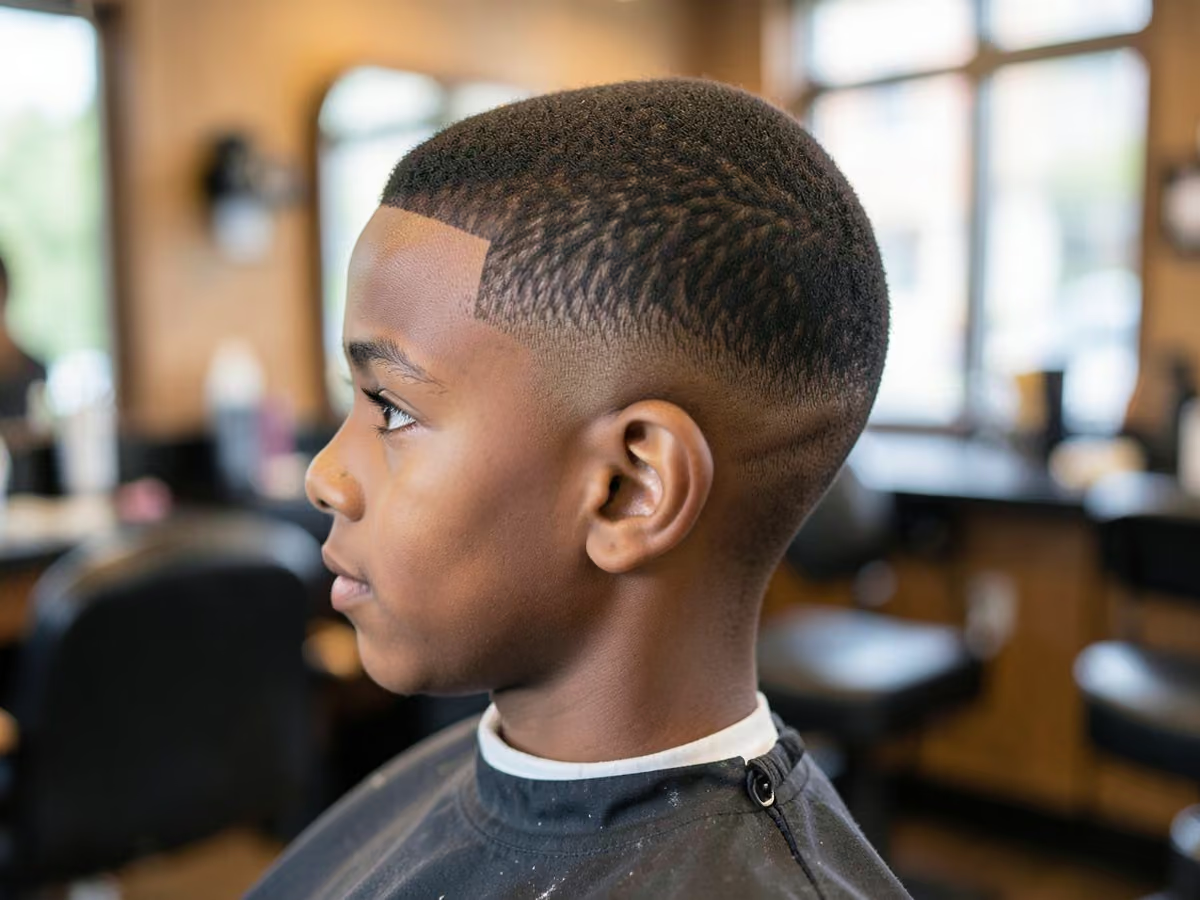
Trim:Every 3–4 weeks. Kids' hair grows quickly at the nape.
Best For:Ages 8–12 + straight, wavy or coily hair.
About This Style
For older children, barbers usually use a foil shaver or a #0.5 rather than a razor at the bottom, which is gentler on young skin. One to two inches on top means no styling on school mornings. Parents can ask for a softer blend if the school has dress rules. Watch for redness after the first skin fade; if it appears, ask for a #1 next time.
How to Style at Home
Wash your child's hair with kids shampoo two or three times a week.
Towel-dry and comb the top into place with your fingers.
Check the faded area for redness after the first few cuts.
Ask Your Barber
"My son would like a low skin fade. Please use a foil shaver, no razor, blend it softly to a #3, and keep about one and a half inches on top."
Trim:Every 2–3 weeks. Short sides keep the temples looking even.
Best For:Oval, long faces + straight hair with receding temples.
About This Style
Short, tidy sides reduce the contrast with thinning temples, so the receded corners draw less attention. One and a half to two inches on top, styled forward or textured, covers the corners. Skip the line-up, since a hard edge outlines receded areas. Matte products work best because shine highlights thin spots, and a short top looks denser than a long one.
How to Style at Home
Style the front forward or to one side.
Use matte clay to hold the front over the temples.
Avoid slicking the top straight back, which exposes the temples.
Ask Your Barber
"Give me a low skin fade for a receding hairline, skin above the ear blended to a #3, two inches on top styled forward, no line-up."
Recommended Products
Matte Clay
Thickening Spray
How Do You Ask Your Barber for a Low Skin Fade?
Say three things: low skin fade, how high the blend should go and what to do on top. For example: a low skin fade starting just above the ear, foil shaved at the bottom, blended through a #1 and #2 to a #3 by the temple, with about two inches on top cut for texture. Point to where you want the skin to stop, because low means different heights to different barbers. Our clipper guard numbers chart explains what each guard leaves.
Mention the neckline shape you want, whether rounded, squared or tapered, and say if you want a line-up at the front. If you have sensitive skin or get razor bumps, ask for a foil shaver finish with no razor, and say if your last fade left the bare band too tall. For more help with the words, read how to ask for a fade without knowing terminology before your visit.
Clipper Guards Used in Low Skin Fade Haircut Styles
A clipper guard is the plastic comb that clips onto the blade and sets how much hair is left: a #1 leaves 3 mm (1/8 inch), each step up adds about 3 mm. The right column lists the cards on this page that call for each guard. See the full clipper guard numbers guide for the complete chart.
Clipper guard sizes for low skin fade haircut styles
Hair grows about half an inch a month, so the bare band turns into visible stubble within five to seven days and the blend softens by the second week. Most men book every two to three weeks. A quick edge and neckline cleanup between full cuts extends the fresh look by about a week. If you can only visit once a month, ask for a #0.5 or #1 at the bottom instead of skin, which grows out more evenly.
Look after the skin as well as the hair. Shaved skin dries out, so a drop of scalp oil or a light moisturizer after washing helps, and sunscreen on the faded area prevents uneven tan lines in summer. Wash off sweat after the gym, since salt on freshly shaved skin can sting and cause bumps. Price varies by city and shop; the skin fade cost guide breaks down what to expect.
Which Low Skin Fade Haircut Is Right for You?
Pick your hair type and how much upkeep you will put in. The matches below come from the Best For and Maintenance notes on each card. Upkeep follows the Maintenance badge: low means a cut every 3 to 6 weeks and almost no daily styling, high means weekly line-ups or daily product.
It starts just above the top of the ear and follows the hairline around the back of the head to the nape. The skin section is usually about half an inch to an inch tall before the blend begins. Above it, the hair goes from a #0.5 to a #3 or #4 within another inch or two.
Q2: What is the difference between a low skin fade and a low bald fade?+
They are usually the same request. Some barbers use bald fade to mean the skin is finished with a straight razor for a completely smooth result, and skin fade to mean a foil shaver or zero-gap trimmer, which leaves a tiny trace of stubble. Ask which tool they use if the difference matters to you.
Q3: How long does a low skin fade last?+
It looks fresh for about one week and acceptable for two to three. Stubble shows on the bare band within five to seven days, and the blend softens in the second week. By week four, most low skin fades look like a short taper. A neckline cleanup can stretch the time between full cuts.
Q4: Is a low skin fade professional?+
Yes, it is one of the more office-friendly fades. The bare section is small and sits low, so from the front the sides look neat rather than shaved. Pair it with a side part, comb over or short crop for the most conservative look, and avoid designs or a very high line-up.
Q5: Does a low skin fade work on curly hair?+
It works well. The bare band at the bottom keeps curly hair from looking bulky above the ears, while the curls on top stay full. Ask for the blend to go a little higher than usual, to about a #3, so the curls do not sit on top of the fade as a separate block.
Q6: Can you get a low skin fade with sensitive skin?+
Usually, yes. Ask the barber to use a foil shaver or zero-gap trimmer instead of a razor, which reduces irritation and razor bumps. Clean clippers, a cold compress afterward and fragrance-free moisturizer help too. If bumps keep appearing, a #0.5 at the bottom gives a similar look with less contact.