
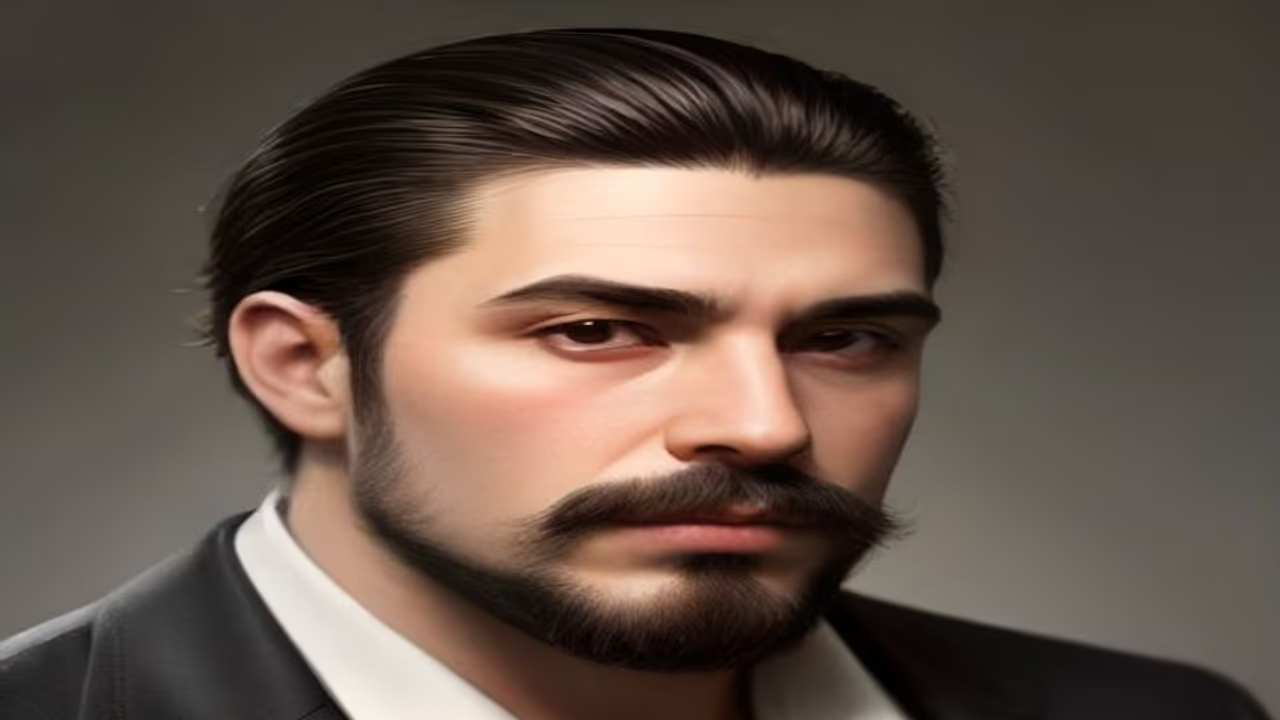
Van Dyke Beard Guide:
Trimming, Shaping & Face Types
A pointed goatee with a disconnected moustache, the most classic of the sculpted beard styles.
By Jessica Hamilton — Master Stylist & Creative Director
Named after the 17th-century painter Anthony van Dyck, the Van Dyke is a pointed goatee paired with a disconnected moustache, with everything else shaved clean. It's the most classical and sculpted of the disconnected beard styles — distinctive without being large.
The Shape
A Van Dyke is deliberately minimal: a moustache (often with a slight upward flair at the ends), a goatee that tapers to a point below the chin, and a clear gap between them. Cheeks, jawline, and neck are shaved. Because there's so little hair, precision matters enormously, every line is on display.
Face Types It Flatters
| Face shape | Verdict |
|---|---|
| Round | Excellent, the point adds length and definition |
| Square | Good, softens a heavy jaw while keeping structure |
| Oval | Good; most styles work; keep it neat |
| Oblong / long | Less ideal, the point elongates further; go wider (Balbo) |
| Heart | Good, adds visual weight to a narrow chin |
Trimming and Upkeep
- Keep it short and precise, 5–10mm reads sharpest; length blurs the shape.
- Symmetry is everything, work slowly, checking both sides constantly in good light.
- Maintain every 2–3 days; clean-shaven areas grow back fast.
- Define the point deliberately; that taper below the chin is the signature.
- Use beard oil even on a small beard (see oil vs balm); it keeps the skin under it comfortable.
Common Problems and Fixes
- Moustache and chin patch not connecting cleanly — the Van Dyke keeps the moustache and chin beard visually separate, but if they naturally grow toward each other, trim a slightly wider gap at the corners of the mouth to keep the two pieces distinct.
- Cheek stubble showing through — because the cheeks are shaved bare, fast regrowth can blur the clean line within a couple of days. Shave the cheeks on the same schedule as any touch-up trim, not just when it looks obviously overgrown.
- Chin point looks blunt instead of tapered, a common mistake is trimming the chin hair to one flat length. Taper it gradually toward a point using scissors or a comb-guided trim rather than cutting it straight across.
- Irritation on freshly shaved cheeks, use a sharp, clean razor and a moisturizing balm afterward; the cheeks on this style get shaved more often than on fuller beard styles, so skin care matters more here.
Growing It Out From Scratch
A Van Dyke needs the cheeks shaved clean while the mustache and chin patch are left to grow, so the first two to three weeks are mostly about patience rather than shaping. Shave the cheek area every two to three days from the start to keep a crisp separation between the beard section and bare skin as the rest fills in, rather than waiting until the end to define the shape.
Growth often looks patchy or uneven for the first few weeks, particularly around the chin, before it fills in more evenly. Resist trimming the patch itself during this stage. Only maintain the cheek line and let the length build until there is enough to actually shape.
How to Ask Your Barber to Shape It
Ask specifically for a "Van Dyke" by name, since it is a recognized style, but also describe it as a detached mustache with a pointed chin beard and clean-shaven cheeks in case the barber wants confirmation. Mention whether you want the mustache ends left long enough to twist or waxed into a slight curl, since that changes how much length the barber leaves above the lip.
If this is your first time wearing the style, ask the barber to keep the chin point slightly fuller than expected at first. It is easy to trim more off later, but impossible to add length back if it is shaped too narrow on the first visit.
Frequently Asked Questions
Q1: What is a Van Dyke beard?+
Q2: What face shape suits a Van Dyke beard?+
Q3: What's the difference between a Van Dyke and a goatee?+
Q4: How do I keep a Van Dyke symmetrical?+
Q5: How short should a Van Dyke be?+
Make us a Preferred Source on Google
See our latest articles first in your Google Search & AI Overviews.