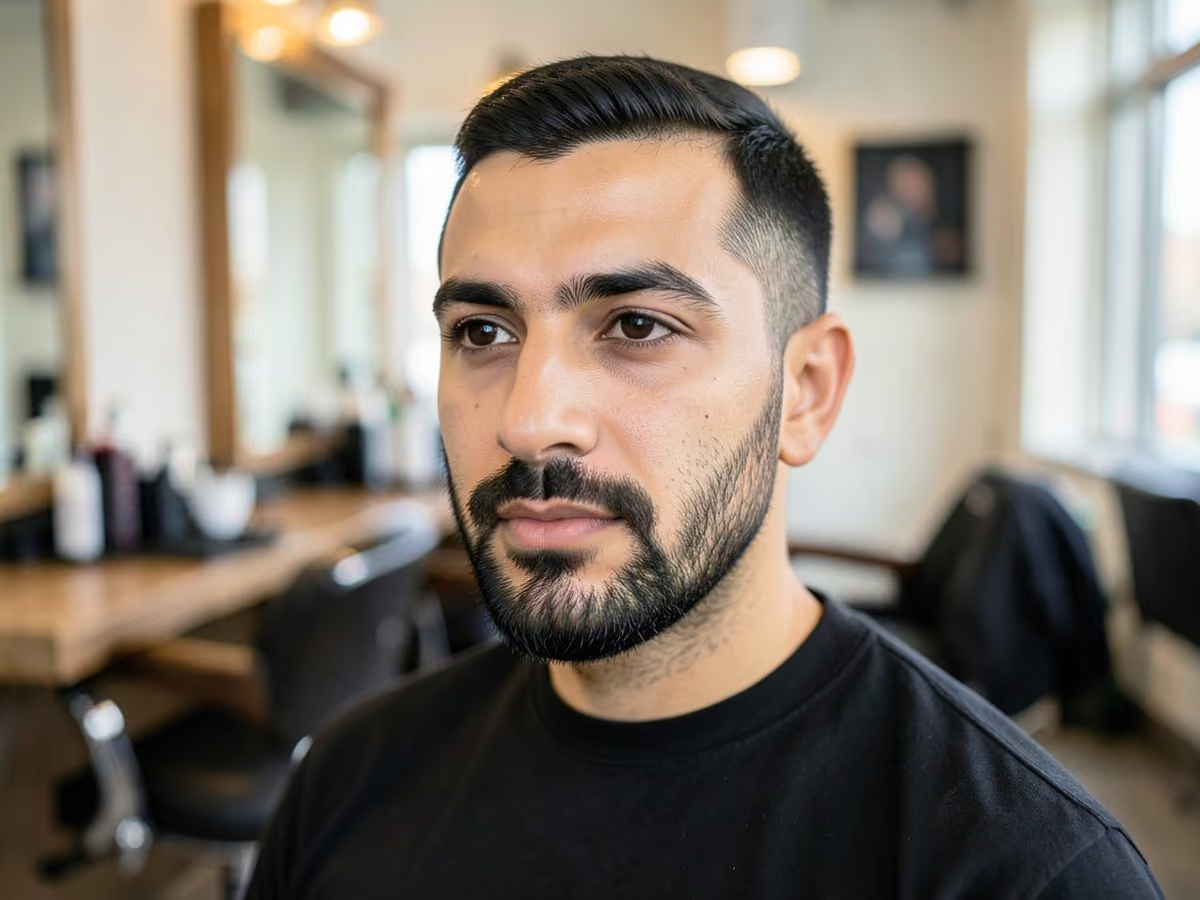
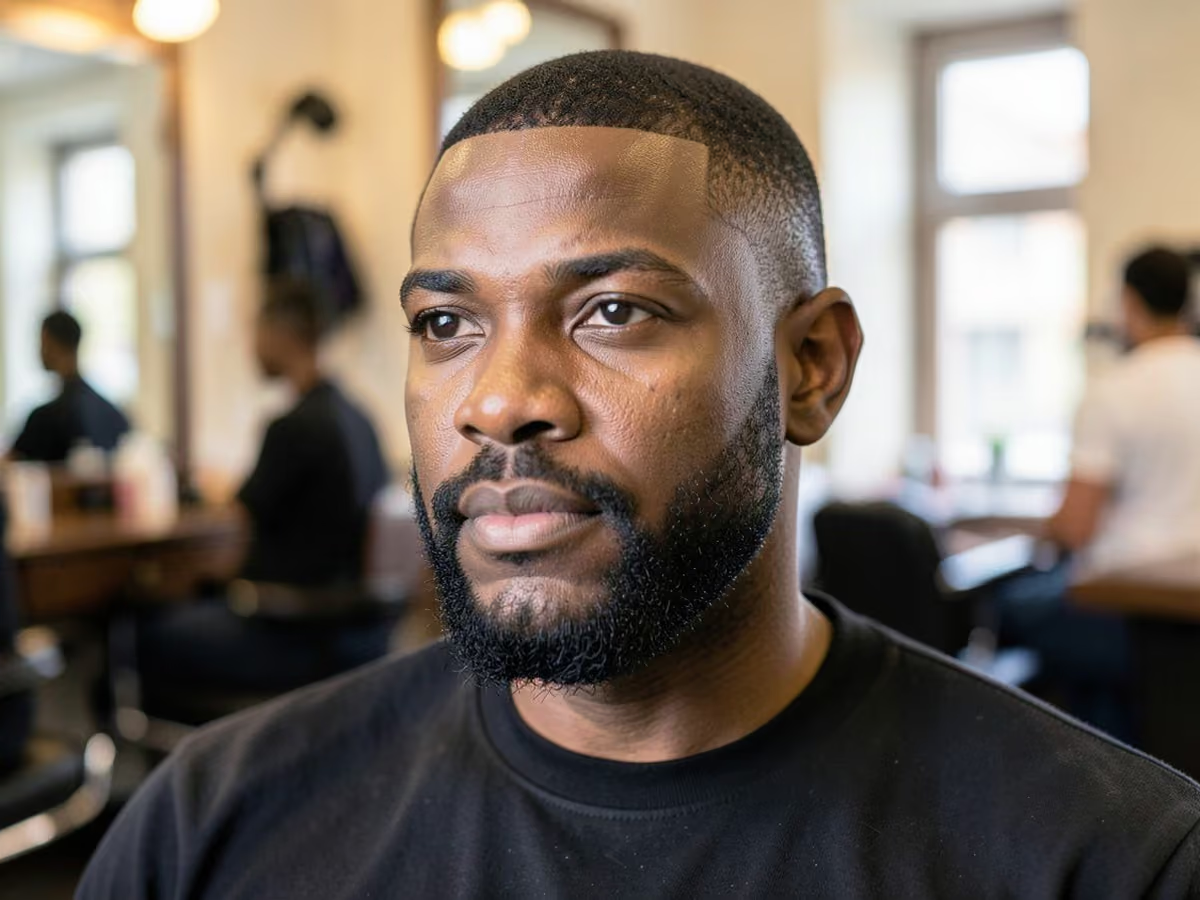
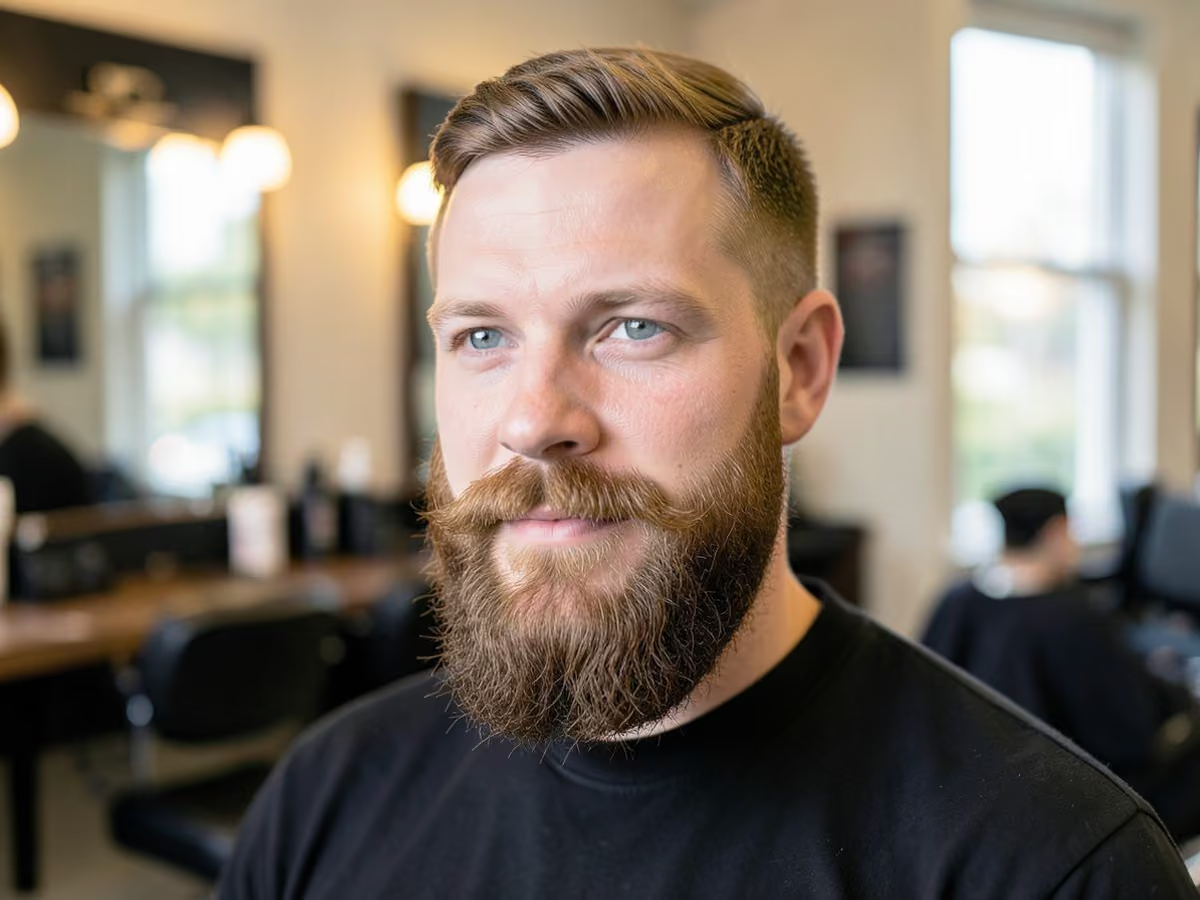
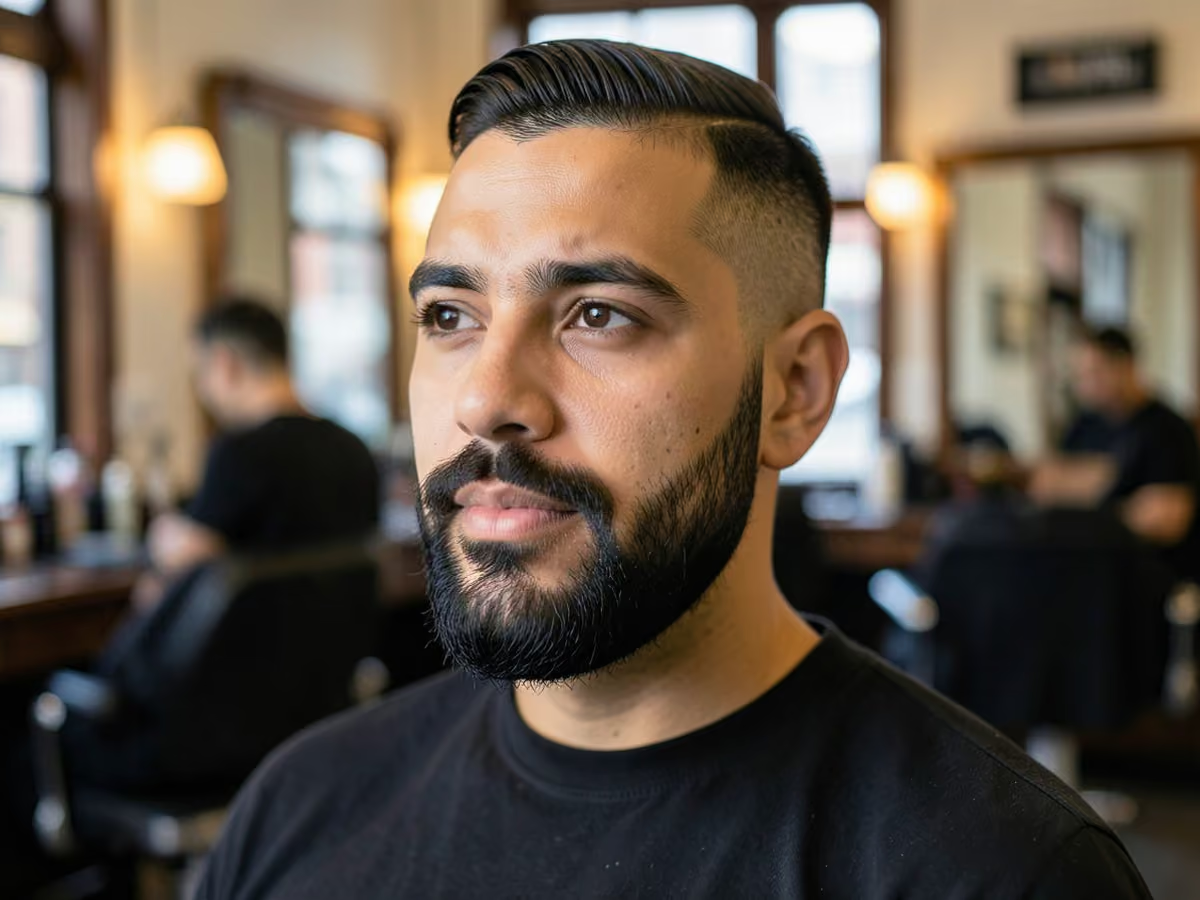
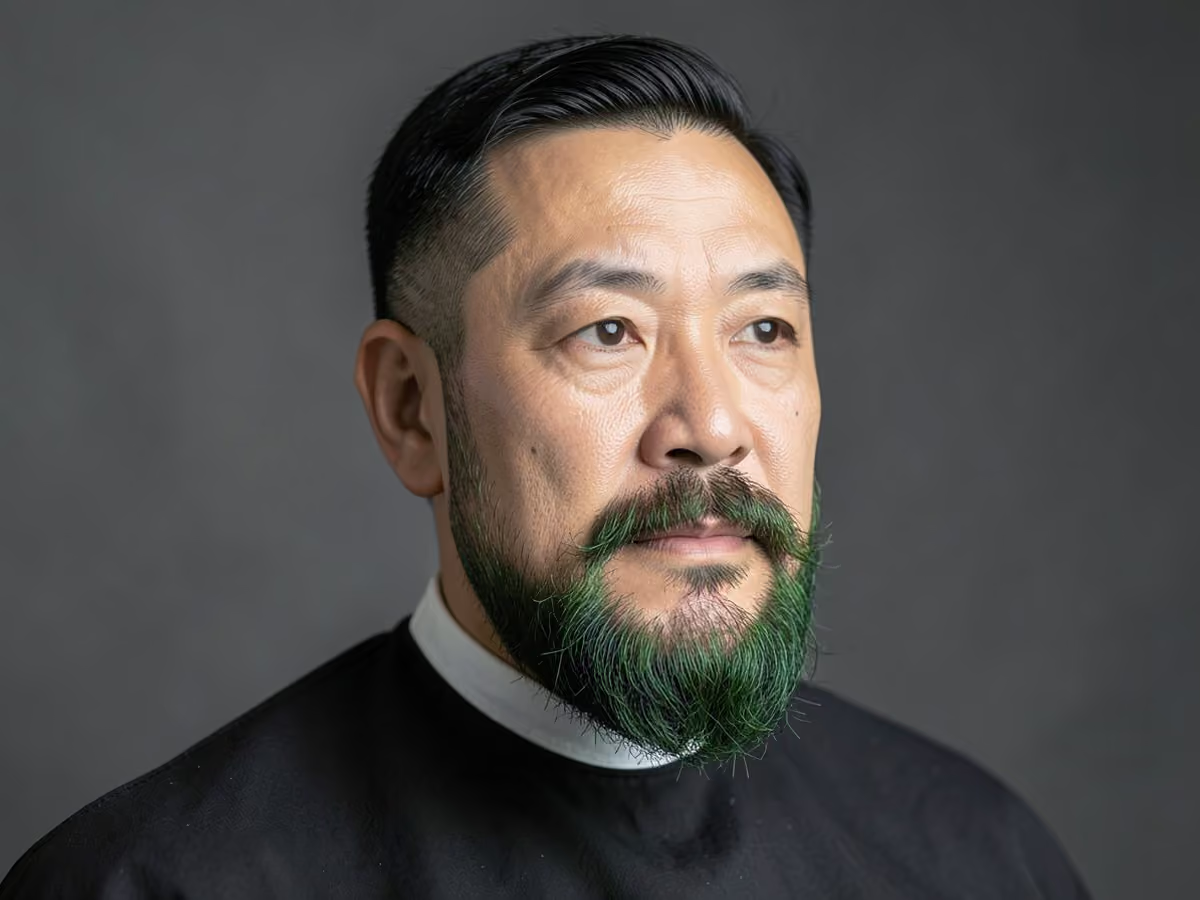
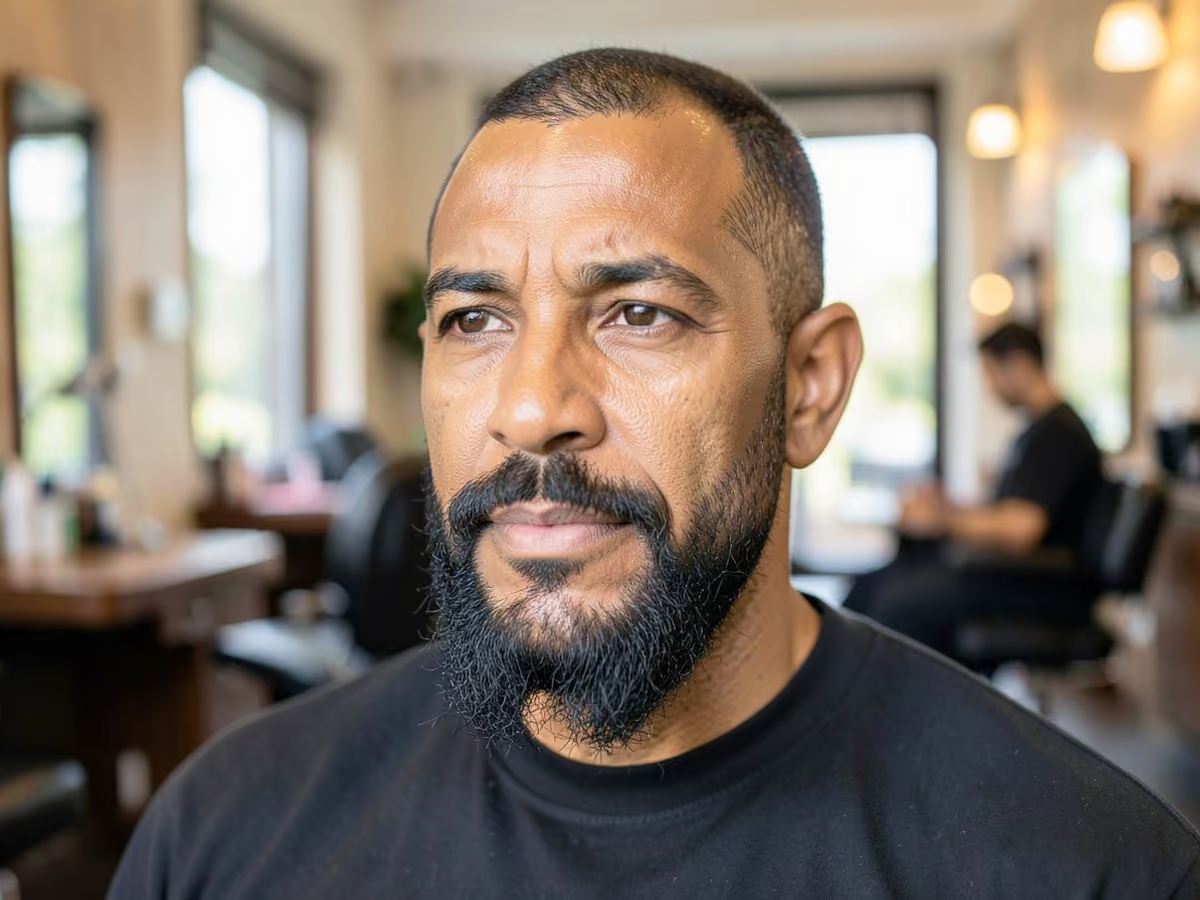
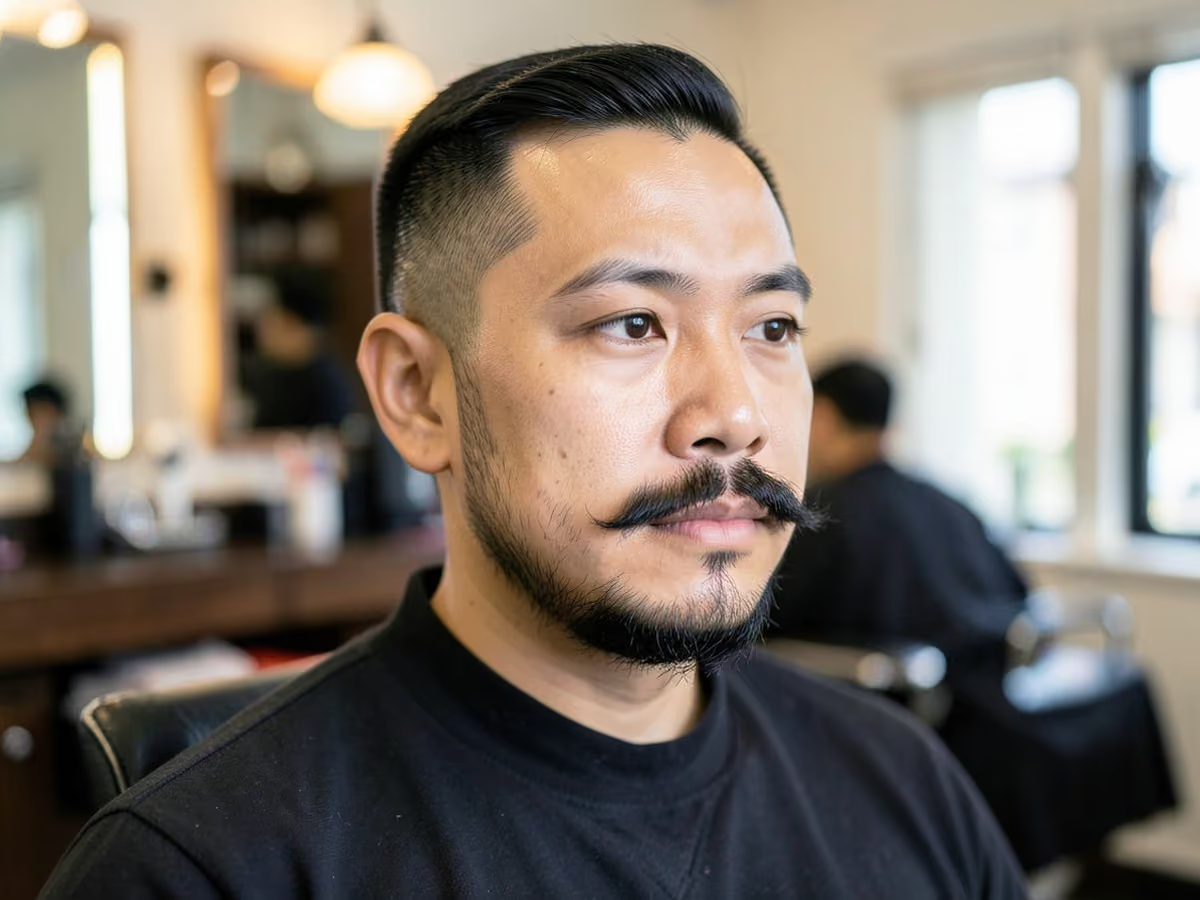
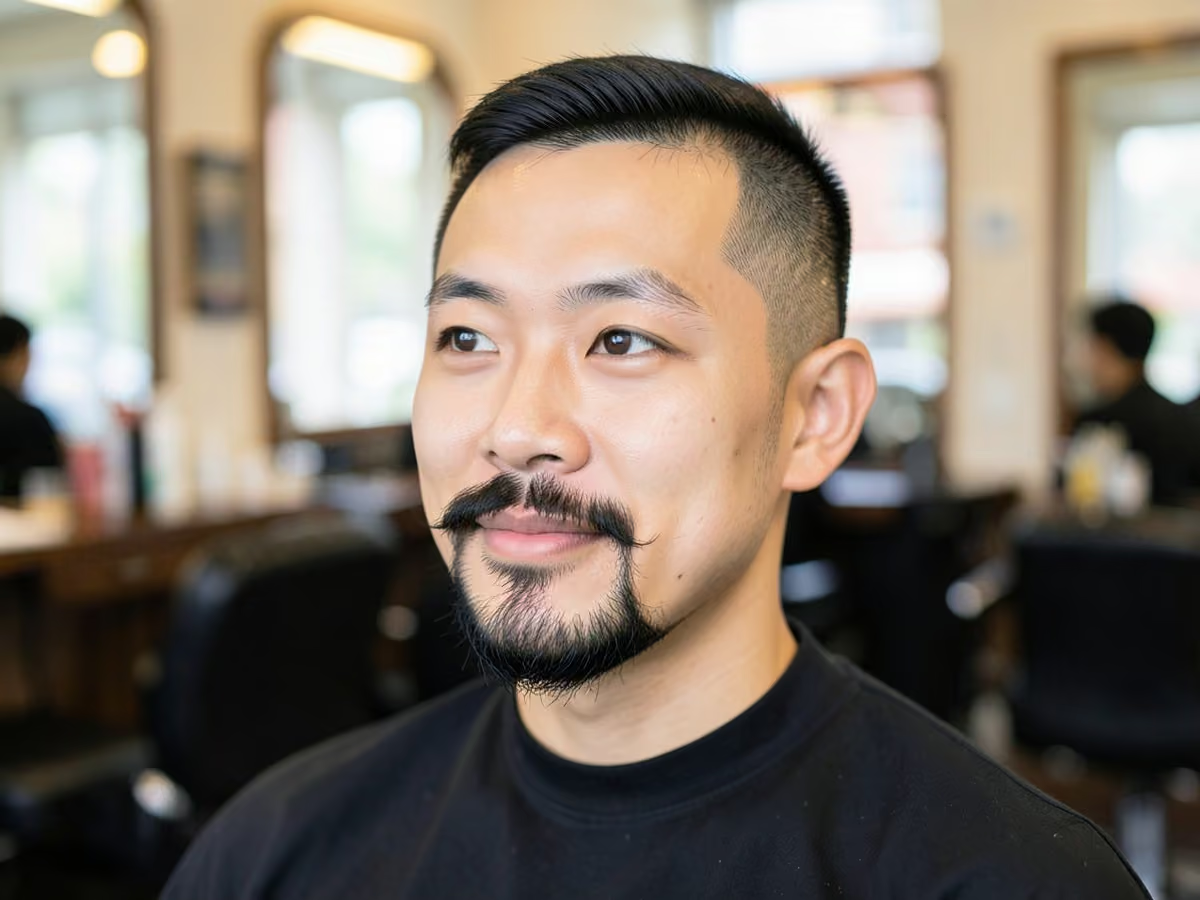
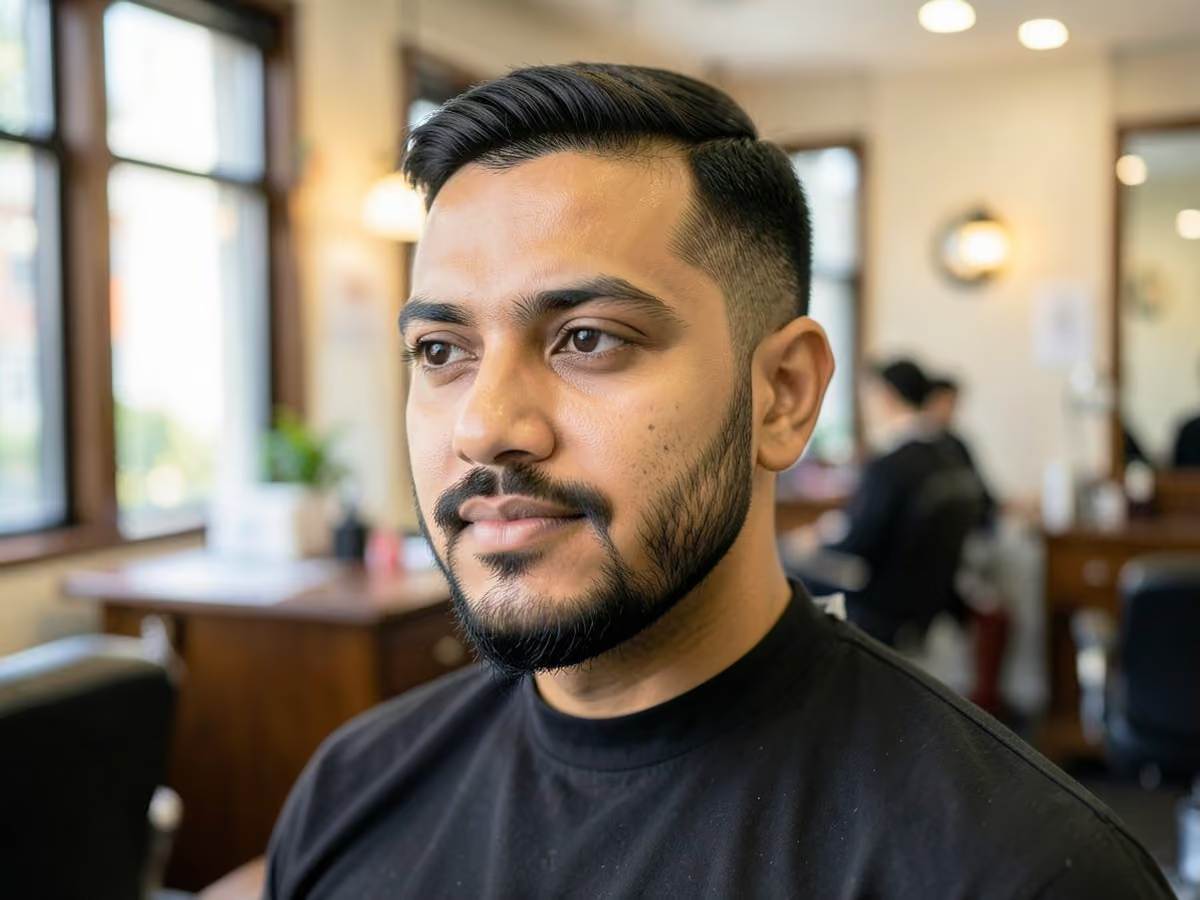
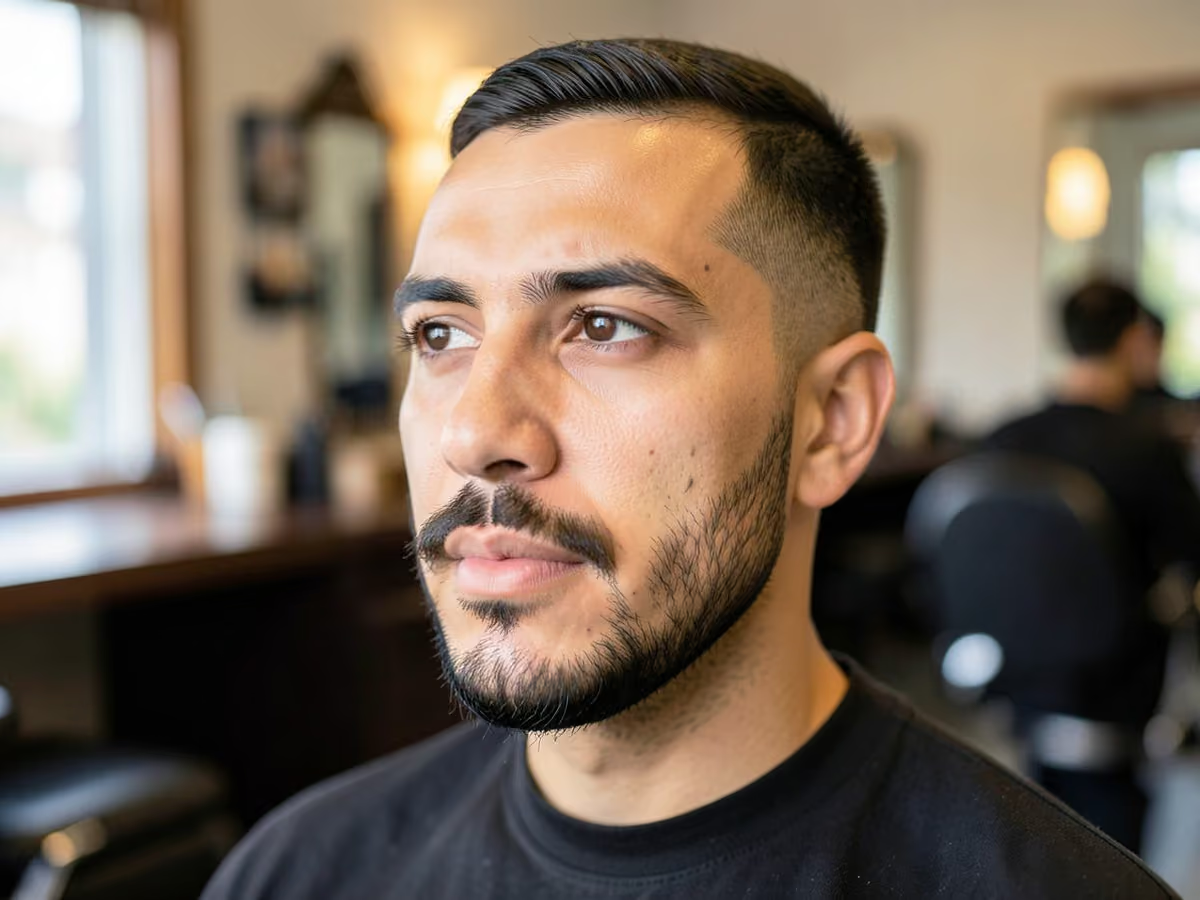
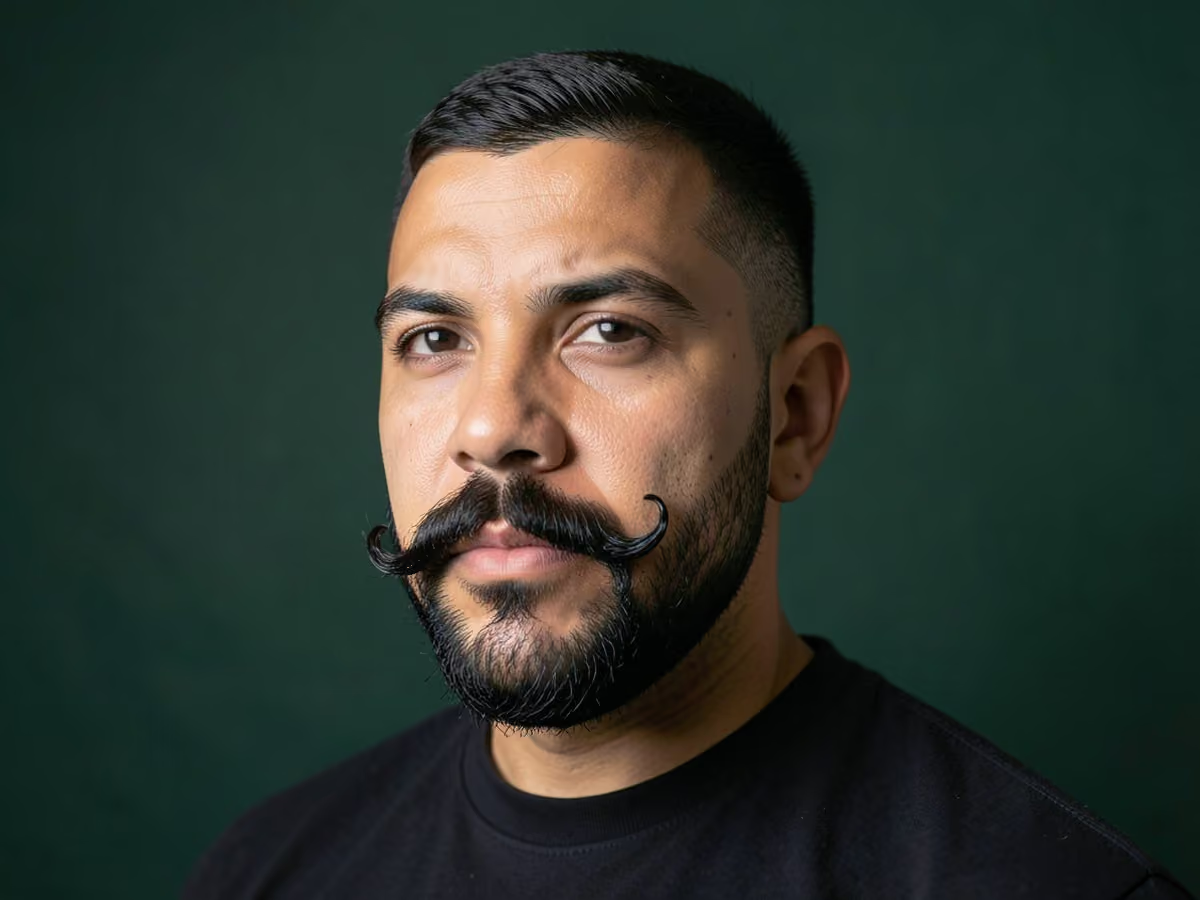
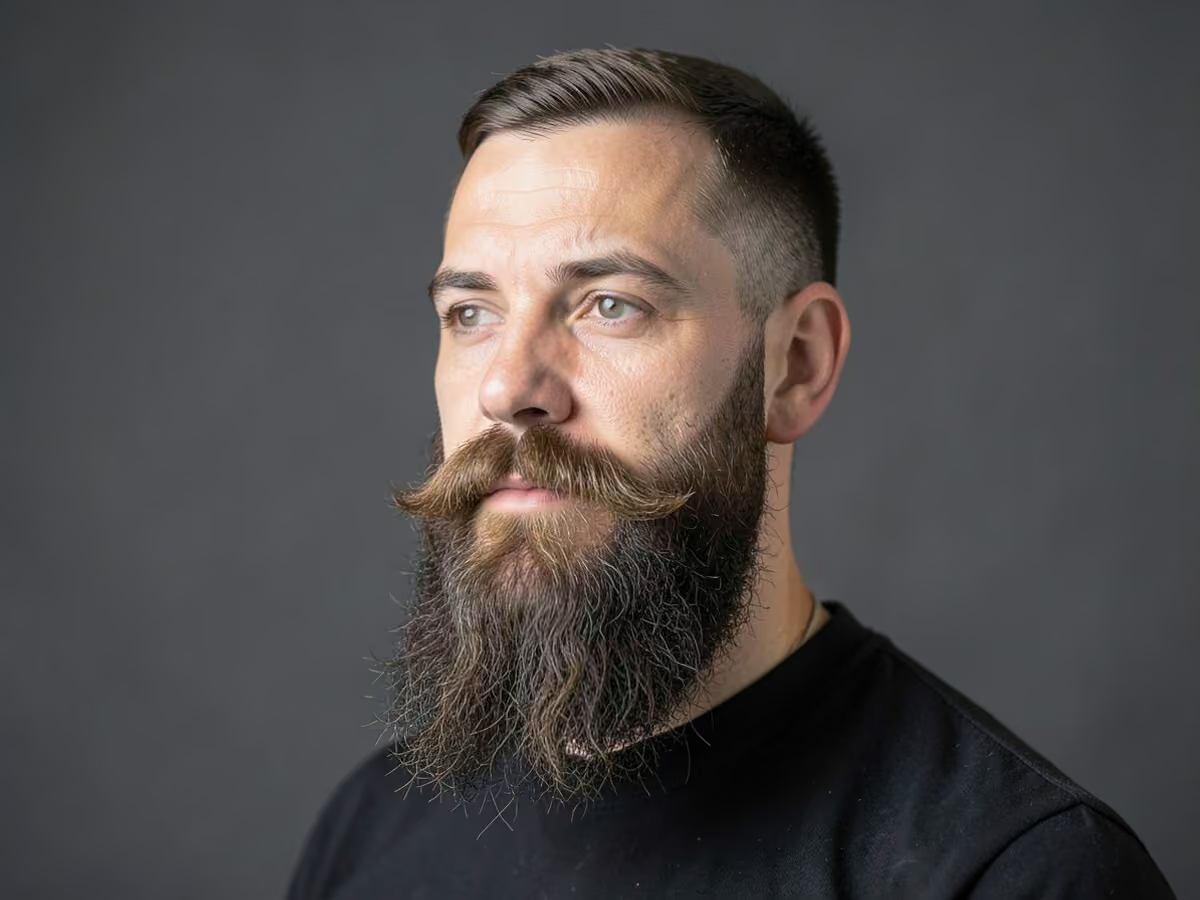
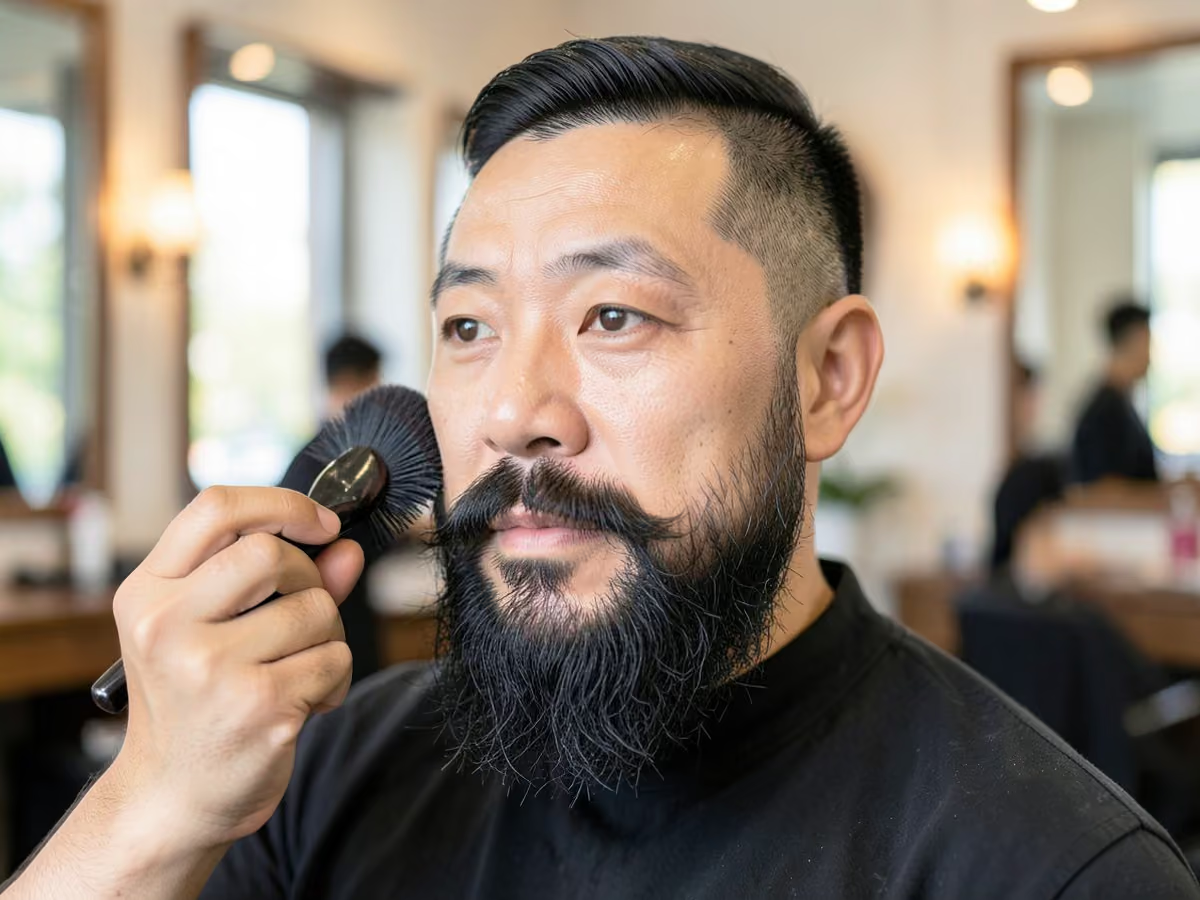
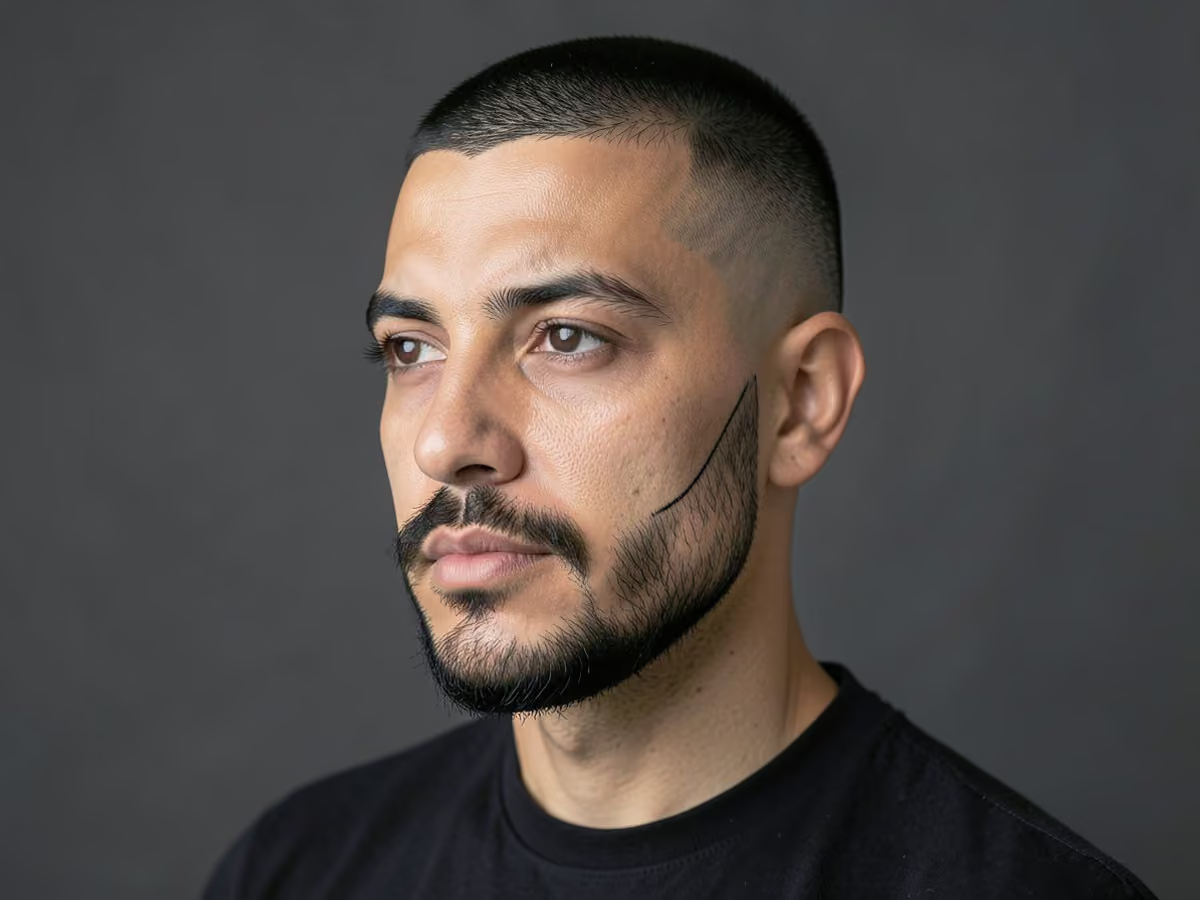
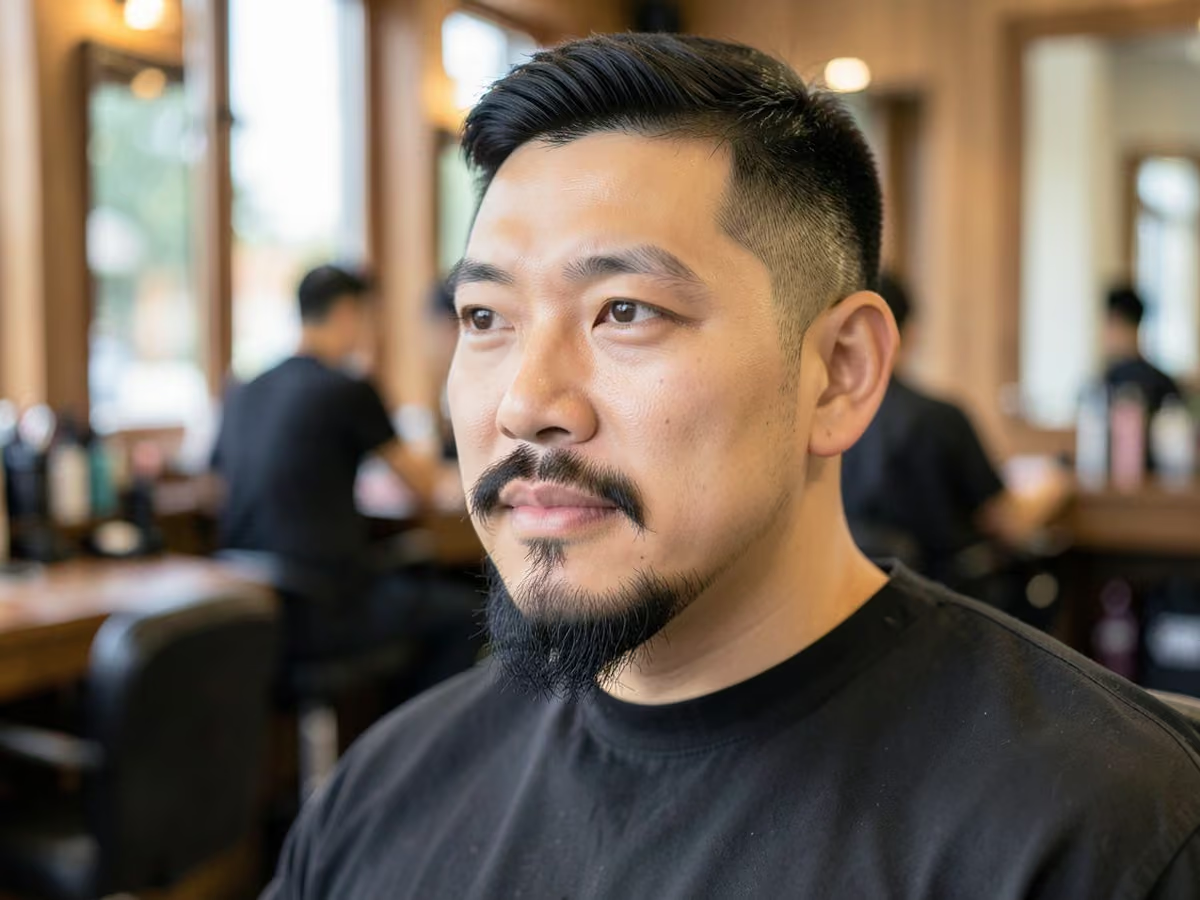
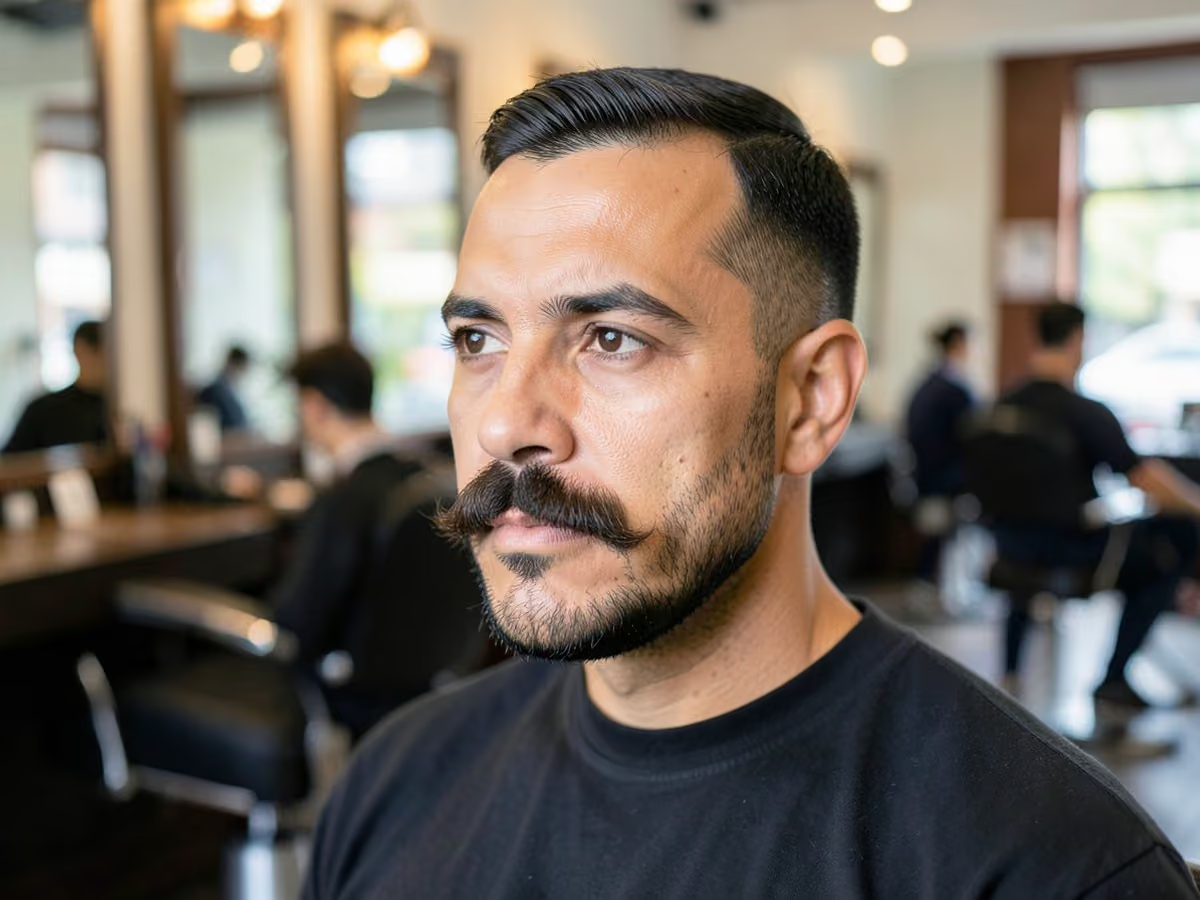
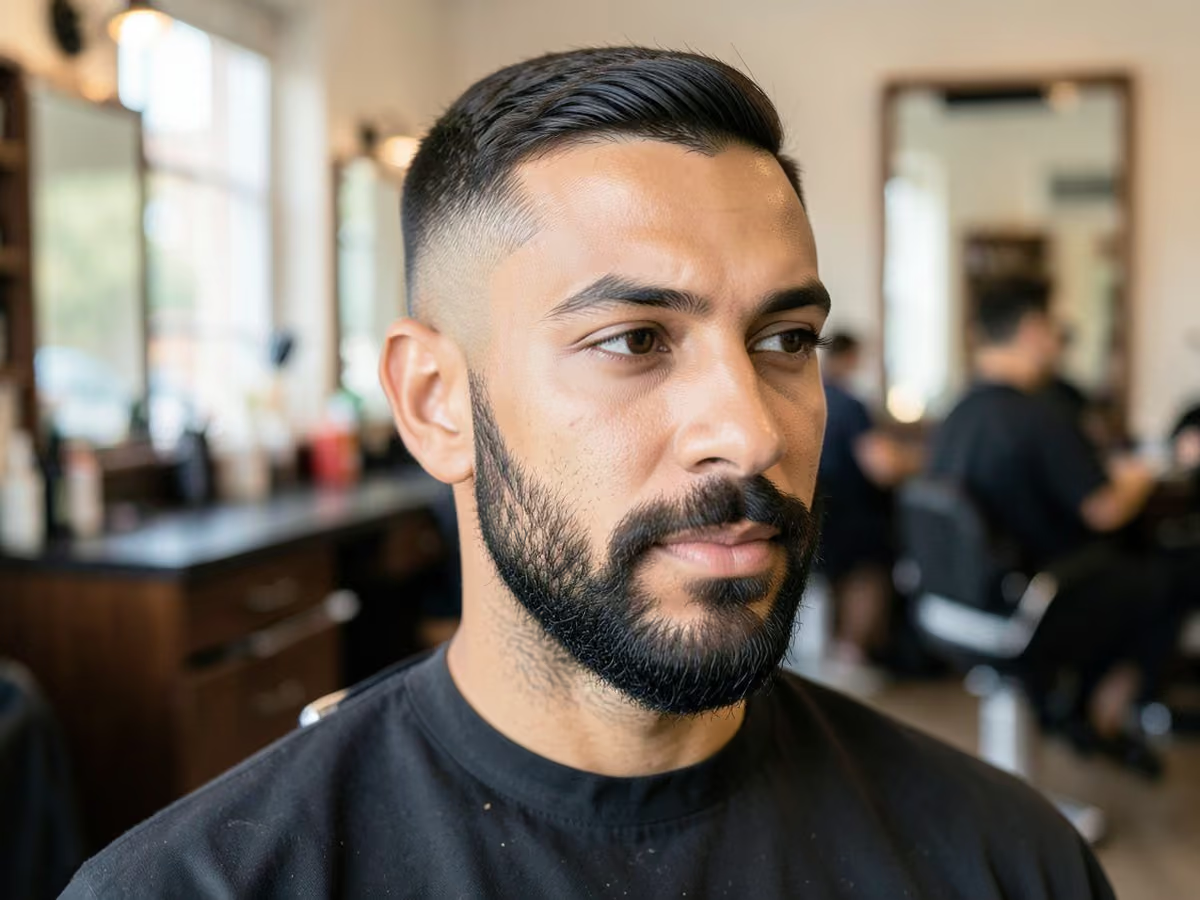
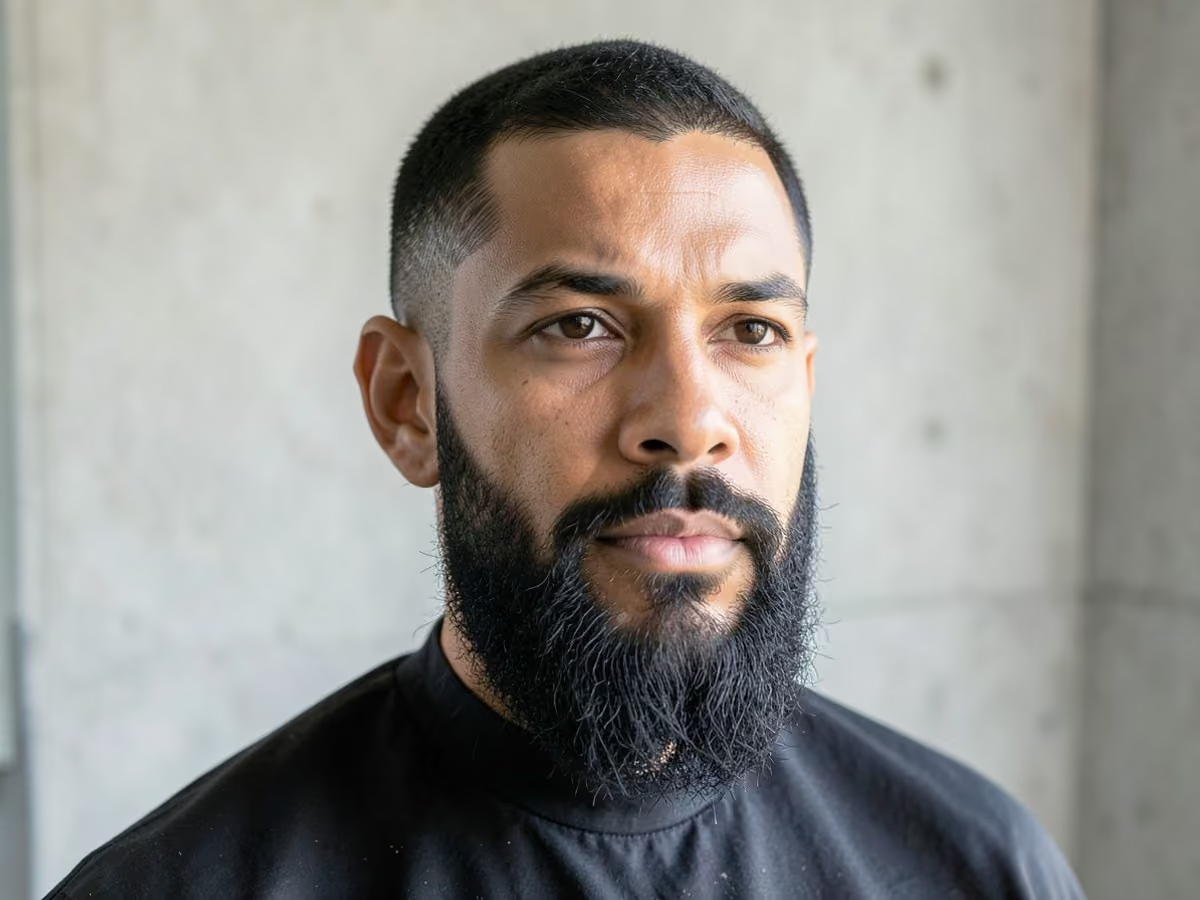
Quick answer: Beard styles fall into five families: stubble (under 5 mm), short beards such as the short boxed and corporate beard, full beards of one to three inches, long beards such as the Garibaldi and ducktail, and partial beards such as the Van Dyke, Balbo, anchor and chin strap. Pick by growth density, face shape and how often you can trim.
Beard Styles at a Glance
Every style on this page with its clipper guard, top length and trim interval. Tap a name to jump to that card.
Beard styles are defined by three choices: how long the hair is, where it grows (cheeks, jaw, chin, lip) and how sharp the edges are. Change one and you get a different beard. The 68 types below run from a day of shadow to a braided Viking beard, each with the guard or length, trim schedule and words to use with a barber.
What Are the Main Types of Beard Styles?
Most beard styles belong to one of five groups. Stubble covers everything from a day of shadow to about 5 mm and is shaped mainly by the neckline. Short beards run from a #3 guard to about 3/4 inch and are where boxed and corporate beards live. Full beards keep cheeks, jaw, chin and mustache at one to three inches. Long beards go past three inches and are named by the shape of the bottom: round for the Garibaldi, pointed for the ducktail, split for the French fork.
The fifth group is the partial beard, which shaves some areas on purpose. A goatee keeps only the chin, a Van Dyke adds a separate mustache, a Balbo drops the sideburns, and a chin strap keeps only a thin band along the jaw. These shapes suit men with patchy cheeks, since the gaps are shaved anyway. Our goatee styles and mustache styles galleries cover those two areas in more depth.
How Do Beard Styles Differ From Each Other?
Four details separate one beard from another: cheek coverage, whether the mustache connects, total length and the shape of the bottom edge. The table compares common types on those points so you can see which ones are close relatives and which are a different idea entirely. Trim intervals assume you also tidy the neckline at home between visits; the neckline guide shows where that line should sit.
A beard changes the outline of the lower face, so the rule is to add what the face lacks. Round faces need length at the chin and less width at the cheeks: a ducktail, spade, faded full beard or Van Dyke. Square faces with a heavy jaw look softer with rounded bottoms such as a short rounded beard or a circle beard. Long and oblong faces need width at the sides and little extra length, which suits mutton chops, a boxed beard with full cheeks or a chin curtain.
Oval faces can wear almost any shape. Diamond and heart-shaped faces with a narrow chin benefit from fullness at the jaw and chin, such as a full beard or Garibaldi. Growth matters as much as face shape: sparse cheeks point toward goatees, Balbos and stubble, while dense, even growth opens up the long and squared styles. The jawline guide goes deeper on matching shape to bone structure, and how to figure out your face shape helps if you are unsure where you fit.
Filter the styles
Showing all 68 styles
Fade
Hair
Length
Stubble and Short Beard Styles
These beards stay under about 3/4 inch, so the neckline and cheek line do most of the shaping. They suit offices, early growth and men who would rather trim often than style daily. See the neckline guide before your first trim.
Trim:Every week. Hold the length at home every two days.
Best For:Oval, square faces + dark, even facial hair.
About This Style
Named for the dark cast that shows late in the day after a morning shave, this is roughly 0.5 to 1 mm of growth. There is no shape to cut, only a clean neckline and a tidy cheek edge so it looks chosen rather than missed. It works in most offices. Lighter or sparse hair tends to look gray or blotchy at this length, so a slightly longer stubble hides gaps better.
How to Style at Home
Run a trimmer with no guard at its shortest setting over the whole face every two days.
Shave the neck below a line one finger above the Adam's apple.
Finish with two drops of beard oil to calm the skin after trimming.
Ask Your Barber
"Take everything down to about half a millimetre with the trimmer, no guard, and shave a clean neckline one finger above my Adam's apple. Leave the cheek line natural."
Trim:Every week. A 1 mm stubble doubles within days.
Best For:Round, oval faces + fair, red or light growth.
About This Style
Trimmed to 1 to 2 mm, light stubble adds shadow to the jaw without hiding the skin. Barbers set it with a 1 mm comb on the trimmer, then shave the neck and remove stray hairs high on the cheeks. Fair, red or patchy growth looks fuller here than when shaved, because every hair counts at an even length. It reaches 3 mm within a week, so a quick pass every few days keeps it light.
How to Style at Home
Set the trimmer comb to 1 or 1.5 mm and move against the grain on the cheeks.
Go with the grain on the neck to avoid irritation.
Wipe the jaw with a drop of beard oil to soften the regrowth.
Ask Your Barber
"Light stubble at about 1.5 mm all over, cheeks tidied but not lined, neckline shaved one finger above my Adam's apple. Keep the mustache the same length as the rest."
Trim:Every 1–2 weeks. The razor cheek line blurs after a week.
Best For:Round, oval, square faces + medium to dense growth.
About This Style
Designer stubble sits at 3 to 5 mm and is shaped, not just left to grow. The cheek line is cleaned with a razor, the neckline is set and the mustache is trimmed off the lip, so it looks groomed from across a room. It fills the jaw enough to sharpen a soft chin. Many men fade it slightly, with 3 mm at the sideburns and 5 mm at the chin, which adds length to the face.
How to Style at Home
Trim the chin at 5 mm and the sideburns at 3 mm, blending through the cheeks.
Shave below the neckline and above the cheek line with a razor or detailer.
Brush the stubble down and finish with oil.
Ask Your Barber
"Designer stubble, 5 mm on the chin and jaw fading to 3 mm at the sideburns, razor-clean cheek line, neckline one finger above my Adam's apple, mustache off the lip."
Trim:Every 2 weeks. Past 10 mm it turns into a short beard.
Best For:Round, oval faces + patchy or medium growth.
About This Style
Heavy stubble is the last stage before a short beard, around 6 to 10 mm, or a #2 to #3 guard. At this length it covers small patches and gives the jaw a squarer outline without any styling. Hair starts to feel soft rather than scratchy. Keep the cheek line natural and the neckline modest, since a hard razor edge on heavy stubble can look painted on.
How to Style at Home
Trim the whole beard with a #2 guard, then go over the chin with a #3.
Pick out any long strays on the cheekbones with small scissors.
Massage in beard oil or a small amount of balm to soften the hair.
Ask Your Barber
"Heavy stubble with a #2 guard all over and a #3 on the chin, natural cheek line with strays removed, neckline just above my Adam's apple and the mustache trimmed off the lip."
Trim:Every 2–3 weeks. Squared corners lose their edge first.
Best For:Round, oval faces + dense, even growth.
About This Style
With about half an inch on the jaw and slightly more at the chin, a short boxed beard has squared corners and crisp cheek and neck lines. A #3 or #4 guard sets the sides, and the chin is cut with scissors over comb into a flat bottom. It reads tidy at work and frames a round face with straighter lines. The boxed beard guide covers shaping it at home.
How to Style at Home
Brush the beard down before trimming so the length sits evenly.
Trim the sides with a #3 guard and leave the chin a little longer.
Square the bottom corners with small scissors and a comb.
Ask Your Barber
"Short boxed beard, #3 guard on the sides blending to a #4 on the chin, flat squared bottom, straight cheek line and the neckline set one finger above my Adam's apple."
Trim:Every 2–3 weeks. A soft outline hides small regrowth.
Best For:Most face shapes + medium to dense growth.
About This Style
Office dress codes are the reason this one exists: a full but short beard of about 1/2 to 3/4 inch, kept even all over with tidy edges. It differs from the boxed beard by keeping a softer, rounded chin and a natural cheek line that is only cleaned of strays. The mustache is trimmed so the top lip shows. Very few faces look wrong in it.
How to Style at Home
Comb the beard down and trim the sides and chin with a #6 guard.
Trim the mustache along the lip line with small scissors.
Smooth the surface with a little balm before work.
Ask Your Barber
"Corporate beard, about 3/4 inch, rounded at the chin, natural cheek line with strays cleaned, neckline one finger above my Adam's apple and the mustache clear of my top lip."
Trim:Every 2 weeks. The faded sideburns grow out first.
Best For:Round, square faces + straight or coily growth.
About This Style
Here the beard fades into the haircut: the sideburns blend from skin or a #0.5 up into a #1, then the jaw and chin sit at a #3. The fade removes the visible line where hair meets beard, so the face looks narrower at the ears and longer through the chin. It pairs with any fade haircut. More pairings sit on the beard styles with skin fade page.
How to Style at Home
Keep the chin and jaw at a #3 with the trimmer.
Tidy the faded sideburns with a #1 between barber visits.
Rub in a drop of beard oil where the skin shows on the fade.
Ask Your Barber
"Short beard at a #3 on the jaw and chin, sideburns faded from skin into a #1 to meet my haircut, razor-clean cheek line and neckline one finger above my Adam's apple."
Trim:Every 3–4 weeks. Curves still read round as they grow.
Best For:Square, diamond faces + wavy or curly growth.
About This Style
Soft curves define this short beard: roughly 1/2 inch along the sides, then a smooth U under the chin with no corners. Square and diamond faces already have sharp angles, so a rounded outline balances them where a box would add more. It is cut with a #4 guard and shaped at the chin with scissors. Growth is forgiving, and the shape still looks intentional after three or four weeks.
How to Style at Home
Trim the cheeks and jaw with a #4 guard.
Comb the chin hair down and snip it into a gentle curve.
Check the curve in a mirror from both sides before finishing.
Ask Your Barber
"Short rounded beard, #4 guard on the sides, scissor-curved under the chin with no corners, soft cheek line and the neckline one finger above my Adam's apple."
Recommended Products
Beard Oil
Beard Brush
Full and Medium Beard Styles
Full beards keep every area that grows hair at one to three inches, then change the outline at the chin and sides. Expect two to four months of growth; beard growth stages shows what each month looks like.
Trim:Every 3–4 weeks. The sides puff out before the chin does.
Best For:Oval, long, heart faces + dense, even growth.
About This Style
Cheeks, jaw, chin, mustache and neck down to just above the Adam's apple all stay. At one to two inches the jaw is fully covered, so the shape cut at the chin decides the face shape people see. It takes three to four months to grow from clean-shaven. Regular trims keep the sides from widening, which is what makes an untrimmed full beard look heavy.
How to Style at Home
Wash and towel-dry, then work beard oil down to the skin.
Brush the hair downward and slightly back toward the ears.
Snip any hairs that break the outline with small scissors.
Ask Your Barber
"Full beard, about 1.5 inches at the chin, sides trimmed slightly shorter so it does not look wide, natural cheek line, neckline above my Adam's apple and the mustache clear of my lip."
Trim:Every 3 weeks. Uneven growth shows at this length.
Best For:Oval, long faces + medium to dense growth.
About This Style
Sitting between a short beard and a full one, a medium beard runs about 3/4 inch to 1.5 inches. It is long enough to brush into shape and short enough to stay off the collar. Barbers usually use a #6 or #8 guard on the sides and scissors at the chin. Round faces need the sides kept noticeably shorter than the chin; oval and long faces can keep them fuller.
How to Style at Home
Trim the sides with a #6 or #8 guard depending on how full you want them.
Leave the chin longer and shape it with scissors.
Apply balm and brush it into place each morning.
Ask Your Barber
"Medium beard, #6 guard on the cheeks, about 1.5 inches at the chin, rounded bottom, natural cheek line cleaned up and a neckline one finger above my Adam's apple."
Trim:Every 3 weeks. Corners round off without scissor work.
Best For:Long, oval, narrow faces + dense, straight growth.
About This Style
Two firm corners under the jaw and a flat line across the bottom give this beard its shape. Length is 1 to 2 inches, longer than the short boxed version, and the sides drop straight from the cheekbone. The squared outline adds width at the jaw, which balances a long or narrow face. Round faces usually look wider in it. Straight, thick beard hair holds the corners best.
How to Style at Home
Comb the beard straight down and trim the bottom flat with scissors.
Cut the corners at a right angle below each jaw corner.
Set the sides with a little balm so they stay vertical.
Ask Your Barber
"Square full beard about 1.5 inches long, flat bottom with sharp corners under the jaw, sides straight down from the cheekbones, lined cheeks and the neckline above my Adam's apple."
Trim:Every 4 weeks. The round outline grows out evenly.
Best For:Square, diamond faces + curly or wavy growth.
About This Style
Grown to 1.5 to 3 inches, this full beard is trimmed into a wide U under the chin rather than a point or square. The curve softens a strong, square jaw and looks natural on curly or wavy beard hair, which bends into a round outline anyway. Keep the sides slightly tighter than the chin so the shape reads round from the front instead of wide.
How to Style at Home
Fluff the beard with fingers so curls sit at their natural length.
Trim the outline into a curve with scissors while the hair is dry.
Seal the ends with oil and a light layer of balm.
Ask Your Barber
"Rounded full beard about 2 inches at the chin, sides a little shorter, curved bottom with no corners, cut dry so the curl is accounted for, natural cheek line."
Trim:Every 6 weeks. Only the bottom and neck need tidying.
Best For:Oval, long faces + very dense, coarse growth.
About This Style
Thick and only lightly shaped, the lumberjack beard sits around 2 to 4 inches with full cheeks and a mustache that runs into the beard. Trimming is limited to evening out the bottom and cleaning the neck, so it looks grown rather than sculpted. It needs dense growth and a routine of oil and brushing. Short haircuts or an undercut keep the head from looking top-heavy above it.
How to Style at Home
Brush the beard daily with a boar-bristle brush to spread natural oils.
Work in beard oil after every wash to stop the ends drying out.
Trim only the hairs that hang below the general line.
Ask Your Barber
"Keep my full beard at around 3 inches, just even out the bottom and clear the neck one to two fingers above the Adam's apple. Leave the cheeks natural."
Trim:Every 2–3 weeks. The faded sides soften quickly.
Best For:Round, wide faces + dense straight or coily growth.
About This Style
Clipper-faded sides begin at the sideburns with a #1 and build to full length by the corner of the jaw, while the chin keeps two inches or more. This removes bulk from the cheeks, so a round or wide face looks longer, and it connects cleanly to a low or skin fade haircut. Barbers re-fade the sides every two to three weeks; the chin needs cutting less often.
How to Style at Home
Brush the chin hair down and forward to show the length.
Keep the faded sides tidy with a trimmer between visits.
Hold the longer chin hair with a small amount of balm.
Ask Your Barber
"Full beard about 2 inches at the chin, sides faded from a #1 at the sideburns into full length by the jaw corner, lined cheeks and a neckline above my Adam's apple."
Trim:Every 1–2 weeks. A crisp line blurs within days.
Best For:Oval, square faces + dark, coarse or coily growth.
About This Style
Instead of a natural edge, the top of this beard is cut into a straight, razor-defined line from the sideburn to the corner of the mustache. On dark or coarse hair, the contrast makes the beard look denser and the cheekbones more defined. The line should follow your growth and sit low; pushing it higher makes the face look wider. A weekly touch-up with a detailer keeps it crisp.
How to Style at Home
Find where the cheek hair naturally thins and mark that line with the trimmer.
Clean the skin above the line with a detailer, moving away from the beard.
Apply oil to the beard but keep it off the bare cheek.
Ask Your Barber
"Keep my full beard at its length, just razor-line the cheeks low, following my natural growth from sideburn to mustache corner, and set the neckline one finger above my Adam's apple."
Trim:Every 3–4 weeks. Neckline and cheek line need regular cleaning.
Best For:Oval, oblong faces + thick, even growth.
About This Style
Associated with Brooklyn and Shoreditch in the early 2010s, this full beard of two to three inches is groomed into a tidy, slightly squared outline with a defined cheek line and neckline. It is usually worn with an undercut or slicked-back hair. The difference from a lumberjack beard is grooming: the hipster version is combed, oiled and shaped, not left loose.
How to Style at Home
Comb the beard straight down after washing.
Shape the bottom edge with scissors to a slight square.
Work beard oil through, then balm to set the shape.
Ask Your Barber
"Leave two to three inches of length, square off the bottom lightly, define the cheek line and clean the neck one finger above the Adam's apple."
Recommended Products
Beard Oil
Beard Balm
Beard Brush
Long Beard Styles
Long beards are named by the shape of the bottom edge: round, pointed, spade-shaped or split. Most need six months or more of growth and a daily routine of oil and brushing to keep the ends healthy.
Trim:Every 6–8 weeks. Only the width and bottom need evening.
Best For:Long, oval, diamond faces + thick, even growth.
About This Style
Taking its name from the Italian general Giuseppe Garibaldi, this beard is wide and full with a rounded bottom and a mustache that blends into it. It is usually kept to about 8 inches or less. A Garibaldi is meant to look a little untamed, so trimming only rounds the bottom and evens the width. It takes six months or more to grow and needs thick growth on the cheeks.
How to Style at Home
Brush from the cheeks down and out to build the width.
Use balm to smooth the surface without flattening it.
Trim the bottom into a broad curve every couple of months.
Ask Your Barber
"Garibaldi, so keep the length and width, round off the bottom into a broad curve, trim the mustache just enough to clear my lip and clean up the neck."
Trim:Every 4 weeks. The groomed mustache needs regular shaping.
Best For:Oval, long faces + full growth with a strong mustache.
About This Style
Composer Giuseppe Verdi lends his name to a beard with a rounded bottom no longer than about 4 inches below the chin, paired with a groomed mustache that is kept distinct from the beard. The cheeks stay full. Compared with the Garibaldi it is shorter and neater, and the mustache tips are often lightly waxed. That tidiness makes it easier to wear at work than most long beards.
How to Style at Home
Comb the mustache out to the sides and twist a little balm into the tips.
Brush the beard down into its rounded shape.
Trim any hairs that let the mustache merge into the beard.
Ask Your Barber
"Verdi beard, round the bottom about 4 inches below my chin, keep the cheeks full and shape the mustache separately so it sits distinct from the beard."
Trim:Every 8 weeks. Natural shape, so only the neck is cleaned.
Best For:Oval, round faces + dense growth and patience.
About This Style
Credited to Beardbrand founder Eric Bandholz, this is a long, full beard grown with little shaping and a mustache left to merge into it. Getting there means many months of growth through uneven, awkward stages. Trimming is limited to the neckline and to strays so the outline stays natural. On a round face the extra length at the chin adds height, which balances width at the cheeks.
How to Style at Home
Wash only two or three times a week to keep natural oils in the hair.
Comb through with a wide-tooth comb before brushing to avoid snapping.
Finish with oil worked from roots to tips.
Ask Your Barber
"I am growing a Bandholz, so do not take any length. Just clean the neckline one to two fingers above my Adam's apple and remove stray hairs."
Trim:Every 3–4 weeks. The point loses shape as it grows.
Best For:Round, square faces + full, even growth.
About This Style
Full on the cheeks and jaw, the ducktail narrows from the jaw corners into a point at the chin, like the tail of a duck. Length runs 2 to 4 inches at the point and shorter on the sides. The taper adds length to round and square faces. Barbers cut it with scissors over comb, working from the sideburns down to the point.
How to Style at Home
Brush the beard straight down to find the point.
Twist a little balm into the chin hair to hold the taper.
Snip hairs on the sides that spoil the narrowing shape.
Ask Your Barber
"Ducktail beard, sides kept short and tapering from the jaw corners into a point about 3 inches below my chin, lined cheeks and a neckline above my Adam's apple."
Trim:Every 4 weeks. The corners round off over time.
Best For:Long, narrow, oval faces + thick, straight growth.
About This Style
Shaped like the spade on a playing card, this long beard is full at the sides and tapers to a flat or gently pointed bottom wider than a ducktail tip. It usually runs 3 to 5 inches. The broad base frames a narrow or long face and sits well under a side part or slick back. Corners need checking every few weeks or the outline turns into a plain rounded beard.
How to Style at Home
Comb the beard down and check the outline in a mirror from the front.
Trim the bottom into a short, flat edge with angled sides.
Press a little balm into the sides so they hang straight down.
Ask Your Barber
"Spade beard about 4 inches long, full sides angling in to a short flat bottom, wider than a ducktail point, lined cheeks and the neck cleaned one finger above my Adam's apple."
Trim:Every 4–6 weeks. Keep both prongs the same length.
Best For:Long faces with a strong chin + thick growth.
About This Style
Long chin hair is split into two prongs, either combed apart or trimmed with a small gap down the middle. A French fork needs at least four to six inches of length and thick growth to hold the split. Most wearers set it each morning with balm and a comb. It suits long faces with a strong chin and pairs with a medium-length or long haircut.
How to Style at Home
Part the chin hair down the middle with a fine comb.
Twist each half with a little balm to form two prongs.
Trim the tips so both prongs end at the same point.
Ask Your Barber
"French fork, keep at least 5 inches on the chin and shape it into two even prongs, trim the cheeks shorter, clean the neckline and keep the mustache off my lip."
Trim:Every 8 weeks. Split ends need trimming more than shape.
Best For:Oval, long faces + very dense, coarse growth.
About This Style
Very long and full, the Viking beard grows past the collarbone with the mustache running straight into it. Shaping is minimal: the barber evens the length and keeps the neck from going untidy, while the wearer may braid or bead sections. It needs six months to a year of growth and daily oil to stop the ends splitting. Long hair, braids or a shaved head all suit it.
How to Style at Home
Detangle with a wide-tooth comb from the ends upward.
Coat the lengths with oil and brush them smooth.
Braid a section at the chin if you want it out of the way.
Ask Your Barber
"Viking beard, keep all the length, just dust the ends to remove splits, even out the bottom and clean the neck one to two fingers above my Adam's apple."
Trim:Every 12 weeks. Only the neckline and mustache over the lip.
Best For:Oval, round faces + dense growth and patience.
About This Style
Also called a yeard, the year beard is grown for twelve months with no shaping beyond keeping the lip clear. Most reach four to six inches, depending on growth rate and curl. Growers often treat it as a challenge and photograph each month. The awkward phase arrives around month two to four, when the cheeks look uneven; keeping the neck tidy makes it easier to push through.
How to Style at Home
Wash the beard two or three times a week with beard wash.
Use beard oil daily to stop itching and dandruff.
Trim only the hairs that cover your top lip.
Ask Your Barber
"I am growing a yeard, so no length off. Tidy the neckline under the jaw and trim the mustache back off the lip, nothing more."
Recommended Products
Beard Oil
Beard Brush
Partial Beard Styles
Partial beards shave one area on purpose: the cheeks, the sideburns or the mustache. That makes them a good fit for patchy growth. The Van Dyke, Balbo and anchor beard guides cover three of them in full.
Trim:Every 2 weeks. Shaved gaps need a razor every few days.
Best For:Round, oval faces + patchy cheeks, strong chin growth.
About This Style
No sideburns and no cheeks: the Balbo is a floating mustache over a chin beard that extends along the lower jaw, with a soul patch joining the beard to the lip. It takes its name from Italian aviator Italo Balbo. The shape hides a weak chin and adds length to a round face. The cheeks and the gap between mustache and beard need shaving every few days to keep the parts separate.
How to Style at Home
Shave the cheeks and the gap at the mouth corners with a razor.
Trim the chin beard with a #3 and the mustache with small scissors.
Brush the soul patch down so it meets the chin beard.
Ask Your Barber
"Balbo, shave the sideburns and cheeks, keep a #3 chin beard along the lower jaw with a soul patch, and leave the mustache separate with a clear gap at each side."
Trim:Every 2 weeks. Narrow edges blur within days.
Best For:Round, square faces + good chin and lip growth.
About This Style
Pointed at the chin, the beard runs along the jawline, with a pencil-thin mustache that does not touch it, so the outline resembles a ship's anchor. There are no sideburns or cheeks. The point lengthens round and square faces and draws attention to the mouth and chin. Expect to use a detailer or razor every few days, since narrow lines go fuzzy fast.
How to Style at Home
Shave the cheeks, sideburns and upper neck clean.
Trim the chin beard into a point with scissors.
Keep the mustache thin with a detailer and leave a gap at the corners.
Ask Your Barber
"Anchor beard, shave the cheeks and sideburns, keep a chin beard along the jaw trimmed into a point, and a thin mustache that does not connect at the corners."
Trim:Every 2–3 weeks. Cheeks need shaving between visits.
Best For:Long, oval, round faces + strong lip and chin growth.
About This Style
The Van Dyke pairs a pointed goatee on the chin with a separate, often upturned mustache, named after the 17th-century Flemish painter Anthony van Dyck. Cheeks and jaw sides are shaved. The point adds length to round faces and suits long and oval ones too. Keep a clear gap between mustache and goatee; mustache ends are often styled with a touch of wax.
How to Style at Home
Shave the cheeks and jaw sides with a razor.
Trim the chin into a point with scissors over a comb.
Twist the mustache ends with a little balm or wax.
Ask Your Barber
"Van Dyke, pointed goatee about an inch below my chin, separate mustache with a clear gap at each corner, cheeks and jaw sides shaved clean."
Trim:Every 2 weeks. The shaved cheeks show regrowth first.
Best For:Square, oval faces + patchy cheeks, full lip growth.
About This Style
Linking a mustache to a rounded chin beard forms the circle beard, a closed ring around the mouth with the cheeks and jaw sides shaved. It is kept short, usually a #2 to #4 guard. The round outline softens a square jaw and fits most workplaces. Patchy cheeks do not matter here, which makes it a common choice for men whose growth is strongest around the mouth.
How to Style at Home
Trim the mustache and chin ring with a #3 guard all round.
Round the outline with a detailer where the mustache meets the chin.
Shave the cheeks and jaw sides every two or three days.
Ask Your Barber
"Circle beard with a #3 guard, mustache connected to a rounded chin beard, cheeks and jaw sides shaved, neckline just under the chin."
Trim:Every 2–3 weeks. Upper edge needs a weekly razor pass.
Best For:Oval, long faces + thin sideburns, full jaw growth.
About This Style
Covering the jaw, chin and mustache but leaving out the sideburns, the Hollywoodian stops short of the ears so the beard sits low on the face. Some call it a beard without sideburns. Men with weak sideburn growth or patchy upper cheeks use it to keep a full look along the jaw. Most keep it at 1/2 to 1 inch so the clean upper edge stays visible.
How to Style at Home
Shave the sideburns and upper cheeks down to where the jaw beard begins.
Trim the jaw and chin with a #4 or #5 guard.
Brush the mustache down to meet the beard at the corners.
Ask Your Barber
"Hollywoodian, shave the sideburns and upper cheeks, keep the jaw, chin and mustache at about 1/2 inch, connected at the mouth corners, and set the neckline above my Adam's apple."
Trim:Every 1–2 weeks. Both edges need a razor every few days.
Best For:Oval, long faces + even jawline growth.
About This Style
Only a thin band of hair, about 1/4 to 1/2 inch wide, follows the jaw from one sideburn to the other, with no mustache. Hair length is usually a #1 or #2. The line sharpens a soft jaw on oval and long faces. Any wobble in the band shows at once, so plan on shaving above and below it every two or three days.
How to Style at Home
Trim the band with a #1 or #2 guard.
Shave above and below the band, keeping the width the same on both sides.
Check symmetry in a mirror with your head tilted up.
Ask Your Barber
"Chin strap, about 1/2 inch wide along the jawline from sideburn to sideburn, #2 guard, no mustache, cheeks and neck shaved clean."
Trim:Every 3–4 weeks. The shaved lip needs daily attention.
Best For:Long, narrow faces + full jaw and chin growth.
About This Style
Wider than a chin strap, the chin curtain covers the jaw and chin at full beard length but leaves the upper lip and cheeks above the jaw shaved, much like the beard Abraham Lincoln wore. Length ranges from one inch to several. It frames the face without a mustache, which suits men who dislike hair on the lip. The hair adds width low on the face, so long faces carry it best.
How to Style at Home
Shave the upper lip and upper cheeks each morning.
Brush the jaw and chin hair down and slightly forward.
Trim the bottom into a gentle curve when it grows uneven.
Ask Your Barber
"Chin curtain, keep about 1.5 inches along the jaw and chin, shave my top lip and upper cheeks, and round the bottom with scissors."
Trim:Every 2 weeks. The gaps at the mouth fill in quickly.
Best For:Oval, round faces + gaps at the mouth corners.
About This Style
Growth is often weak where the mustache should meet the beard. This style makes that gap intentional: a short full beard on the cheeks, jaw and chin, a separate mustache, and a shaved strip at each corner of the mouth. It looks deliberate rather than patchy. Keep both parts at a similar length, around a #3, so they read as one style.
How to Style at Home
Shave a clean gap at each side of the mouth with a razor.
Trim the beard and mustache with the same guard.
Brush the mustache sideways away from the gap.
Ask Your Barber
"Short beard at a number three, keep the mustache separate and shave a clear gap at the mouth corners on both sides so it looks deliberate."
Recommended Products
Beard Oil
Sideburn and Mustache-Led Beard Styles
In these styles one feature leads: wide sideburns, a long mustache or no mustache at all. They suit men whose growth is uneven between the cheeks, chin and lip. Our handlebar moustache guide covers growing the mustache half of two of them.
Trim:Every 2–3 weeks. Shave the chin every day or two.
Best For:Long, narrow faces + strong sideburn growth.
About This Style
Extended sideburns that widen as they reach the corners of the mouth form mutton chops, with the chin and upper lip shaved clean. They are usually kept between a #3 and about an inch. The width at the cheeks makes a long or narrow face look broader. It is a retro choice tied to 19th-century portraits and 1970s rock, and the shaved chin needs a razor every day or two.
How to Style at Home
Shave the chin and upper lip clean with a fresh razor.
Trim the chops with a #4 guard, keeping both sides even.
Comb the chops down and back with a little balm.
Ask Your Barber
"Mutton chops at a #4, sideburns widening down to the corners of my mouth, chin and top lip shaved clean, lower edge of each chop lined."
Trim:Every 2–3 weeks. The join at the mouth needs tidying.
Best For:Long, oval faces + patchy chin, strong lip growth.
About This Style
Joining the chops with a mustache across the upper lip, while the chin stays shaved, turns plain mutton chops into the friendly version. The result frames the mouth from the cheeks in a wide arch. It works for men with strong sideburn and lip growth but a weak or patchy chin. Keep the chops and mustache at the same length so the join looks planned.
How to Style at Home
Shave the chin and the area under the lower lip.
Trim the chops and mustache with the same guard.
Brush the mustache sideways so it meets the chops evenly.
Ask Your Barber
"Friendly mutton chops at a #4, sideburns running down and joined by the mustache, chin shaved clean, same length throughout."
Trim:Every 2 weeks. Waxed tips need daily shaping.
Best For:Long, oval faces + full lip and chin growth.
About This Style
Historically linked with the French emperor Napoleon III, the Imperial combines a mustache whose ends are waxed upward with a narrow, long tuft on the chin. The rest of the face is shaved clean. The mustache needs about two inches before the ends will curl. Few men wear it day to day, but the vertical lines lengthen an oval or long face with good lip and chin growth.
How to Style at Home
Comb the mustache out to the sides and work in a stiff balm or wax.
Twist each end upward between finger and thumb.
Trim the chin tuft narrow and shave the cheeks.
Ask Your Barber
"Imperial style, keep my mustache long with the ends left for curling, shave the cheeks and jaw, and leave a narrow tuft on the chin about 2 inches long."
Trim:Every 1–2 weeks. Stubble needs a trimmer every few days.
Best For:Oval, long faces + strong mustache growth.
About This Style
Short stubble on the cheeks and chin under a much heavier mustache is the beardstache. The mustache is grown to cover the lip line, while the rest is held at about 4 mm. That contrast draws the eye to the mouth and adds character to an oval or long face. Trim the stubble every few days and comb the mustache down so it stays even.
How to Style at Home
Keep the beard at 3 to 5 mm with the trimmer.
Comb the mustache down and trim only hairs that fall into the mouth.
Shape the neckline lightly so the stubble does not creep down the neck.
Ask Your Barber
"Beardstache, stubble at 4 mm on the cheeks and chin, leave the mustache full to just over the lip line, natural cheek line and a neckline above my Adam's apple."
Trim:Every 3 weeks. Keep the beard shorter than the mustache.
Best For:Oval, square faces + full lip growth.
About This Style
Pairing a short or medium beard with a long mustache whose ends are twisted and waxed out to the sides gives you the handlebar beard. The mustache needs about 2 to 3 inches before the tips will hold a curl. The beard is kept shorter so it does not swallow the mustache, usually a #4 to 3/4 inch. Square and oval faces carry the horizontal line well.
How to Style at Home
Comb the mustache from the middle outward to separate the two halves.
Work a little stiff balm into each half and twist the ends up.
Brush the beard down so it stays below the mustache tips.
Ask Your Barber
"Short beard at about a #4, but leave my mustache alone apart from clearing the lip. I am growing the ends for a handlebar, so do not trim the corners."
Trim:Every 2–3 weeks. Shave the lip every day or two.
Best For:Oval, long faces + weak lip growth, full cheeks.
About This Style
Keeping cheeks, jaw and chin at short to medium length with the upper lip shaved, this beard suits men whose mustache grows thin or gets in the way of eating. Some call the longer version a Shenandoah or Amish-style beard. At 1/2 to 1 inch it looks neat and modern; past that it reads historic. Long and oval faces suit it best.
How to Style at Home
Shave the upper lip with the grain each morning.
Trim the beard with a #5 or #6 guard.
Round the corners of the mouth so the shaved area looks clean.
Ask Your Barber
"Beard at a #5 on the cheeks and chin, no mustache, shave the upper lip clean and round off the corners by my mouth. Neckline above my Adam's apple."
Trim:Every 6 weeks. Only the flare at the bottom needs cutting.
Best For:Long, narrow faces + thick, coarse growth.
About This Style
Long, wide and without a mustache, the Old Dutch flares out at the bottom so it is broader below the chin than at the cheeks. It needs several inches of growth and thick hair to hold the flare. The width low on the face suits long and narrow faces and looks out of proportion on round ones. Brush the hair outward and trim the bottom flat when it grows uneven.
How to Style at Home
Shave the upper lip and keep the cheek line natural.
Brush the lower beard outward to build the flare.
Trim the bottom edge straight across with scissors.
Ask Your Barber
"Old Dutch style, no mustache, keep the length and let the bottom flare wide, just trim it straight across and clean up the neckline."
Trim:Every 2 weeks. The vertical bars need sharp edges.
Best For:Square, oval faces + strong lip and chin growth.
About This Style
A horseshoe mustache runs down both sides of the mouth to the jawline, forming an upside-down U. In this beard version the cheeks and chin keep a light stubble of 1 to 2 mm rather than a clean shave, so the face does not look bare around the bars. The bars should be about half an inch wide and reach just past the bottom lip or to the jaw.
How to Style at Home
Trim the stubble on cheeks and chin with a 1 mm guard.
Leave the mustache and its two bars longer.
Define the inner and outer edges of the bars with a trimmer.
Ask Your Barber
"Horseshoe mustache with bars down to the jaw about half an inch wide, keep the cheeks and chin at a one millimetre stubble, and sharpen the edges."
Recommended Products
Beard Balm
Beard Styles by Hair Texture and Color
Curl, density and color change how a beard reads at the same length. Coily and curly beards shrink, light and red beards show less, and gray hair looks wiry. These cards adjust the cut for each.
Trim:Every 3–4 weeks. Curls hide uneven growth for a while.
Best For:Square, oval faces + curly or wavy beard hair.
About This Style
Curly beard hair shrinks as it dries, so the beard looks shorter than its stretched length. Barbers cut it dry with scissors, following each curl, rather than pulling it straight with a guard. A rounded outline suits the way curls grow and softens a square jaw. Moisture matters more than on straight hair, since curls lose oil along the bends and turn frizzy.
How to Style at Home
Apply oil to damp hair and scrunch it in rather than combing.
Use fingers to separate curls instead of a fine brush.
Smooth the outline with a small amount of balm.
Ask Your Barber
"Curly full beard, cut it dry with scissors so the curl shows its true length, about 1.5 inches at the chin, rounded shape and a natural cheek line."
Trim:Every 1–2 weeks. Lined edges fill in quickly on dense hair.
Best For:Round, oval, square faces + coily, dense growth.
About This Style
Tight coily beard hair grows dense and outward, which suits a crisp line up at the cheeks, mustache and neck. Barbers usually outline with a trimmer rather than shaving close with a razor, because coily hair is prone to ingrown hairs and razor bumps along the edges. Length is often a #2 to #4 with the edges sharp. A soft brush and oil keep the surface flat.
How to Style at Home
Brush the beard in one direction with a soft brush to lay it down.
Apply oil to the skin under the beard every day.
Use a trimmer, not a razor, to touch up the cheek line.
Ask Your Barber
"Coily beard at a #3, lined up at the cheeks and mustache with the trimmer, not a close razor, and a neckline one finger above my Adam's apple."
Trim:Every 2 weeks. Even length keeps gaps from showing.
Best For:Round, oval faces + patchy or sparse growth.
About This Style
Gaps on the cheeks or between mustache and chin show least when everything is cut to the same short length, around 3 to 6 mm. A hard cheek line draws attention to the patches, so this style keeps the outline natural and only cleans the neck. Many men find the cheeks fill in after another few months; until then, short and even looks fuller than long and uneven.
How to Style at Home
Trim the whole beard to the length of the shortest area.
Leave the cheek line soft and only remove obvious strays.
Brush against the grain lightly to make the stubble look denser.
Ask Your Barber
"Even stubble at 4 mm all over to hide patchy spots, no hard cheek line, just remove strays, and set the neckline one finger above my Adam's apple."
Best For:Oval, round faces + fine, light cheek growth.
About This Style
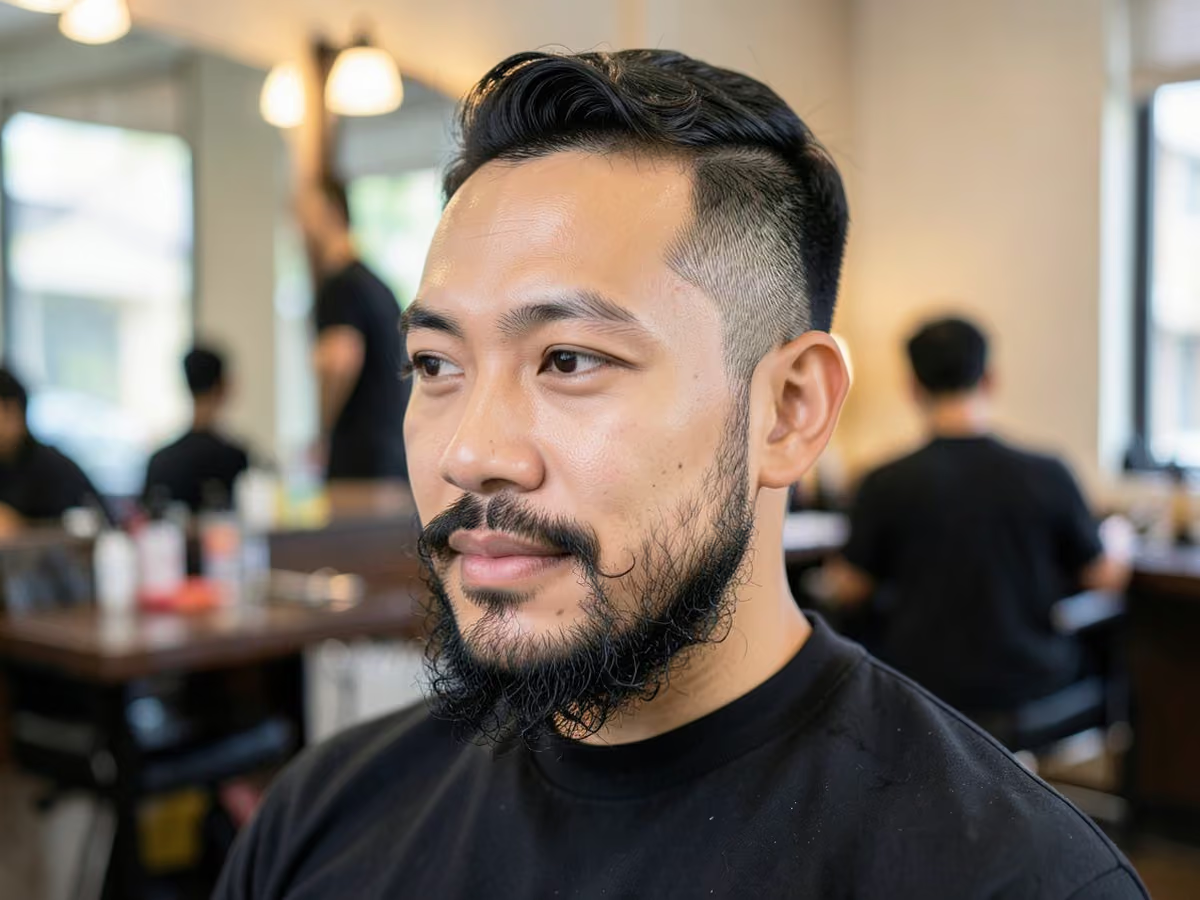
Many men of East Asian descent grow facial hair most densely on the upper lip and chin and more lightly on the cheeks. A beard built around that pattern keeps a short mustache and chin beard at a #2 to #3, with the jaw at light stubble and the cheeks shaved or left natural. The result looks full where growth is strongest instead of thin across the whole face.
How to Style at Home
Trim the mustache and chin with a #2 or #3 guard.
Keep the jaw at 1 to 2 mm so it links the chin to the sideburns.
Shave stray cheek hairs that do not join the rest.
Ask Your Barber
"Mustache and chin beard at a #3, jaw kept as light stubble to connect to the sideburns, stray cheek hairs shaved, neckline just under the jaw corner."
Trim:Every 3 weeks. Gray hairs grow wiry and stray out.
Best For:Most face shapes + mixed gray, coarse growth.
About This Style
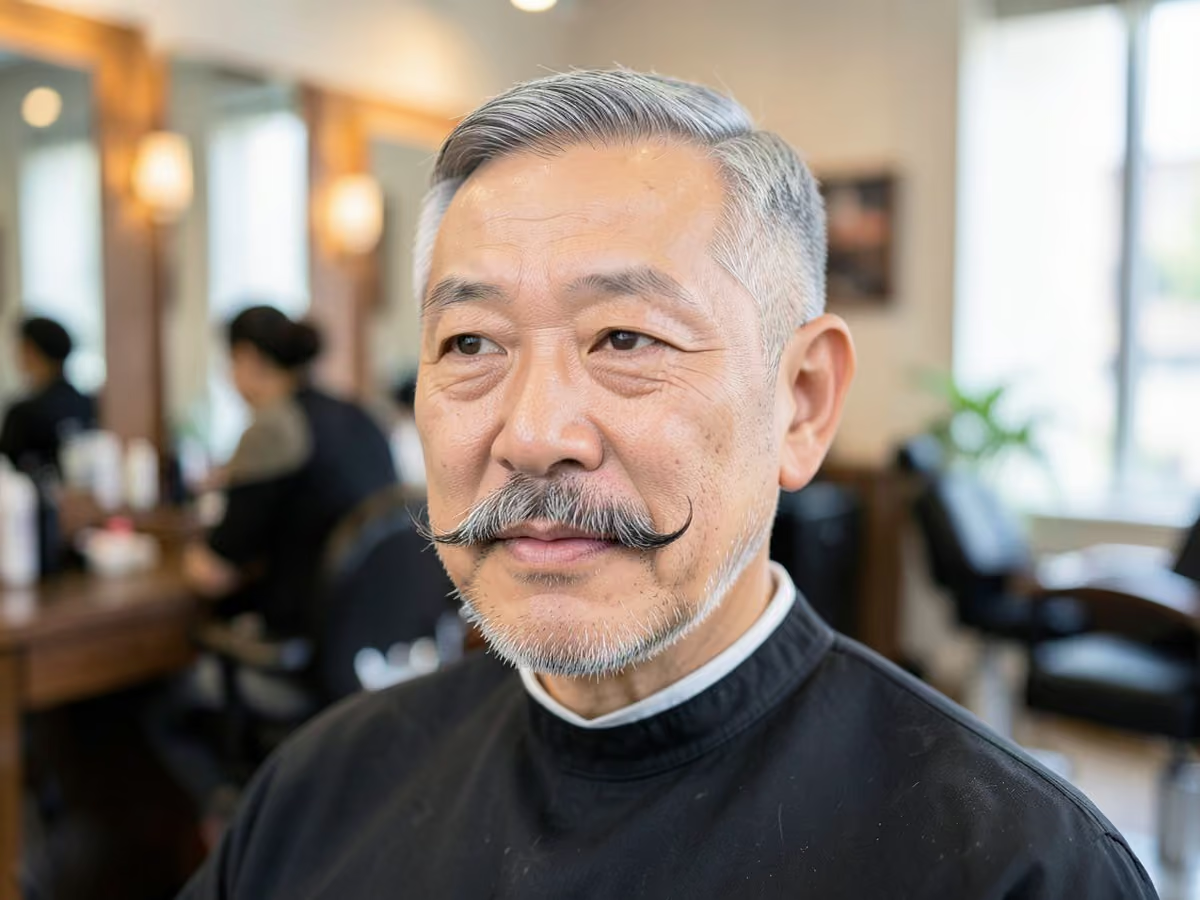
Mixed dark and gray hairs look best kept short to medium, about 1/2 to 1 inch, with clean lines that make the mix look deliberate. Gray hairs are often coarser and grow at odd angles, so regular trimming of strays matters more than length. Oil softens the wiry texture. It pairs with a short, tidy haircut; see the silver fox styles for options.
How to Style at Home
Brush the beard and snip any wiry hairs that stick out.
Work in oil daily to soften coarse gray hair.
Keep the neckline and cheek line tidy to frame the color.
Ask Your Barber
"Salt and pepper beard at about 3/4 inch, rounded at the chin, cheek line cleaned up, strays removed and the neckline one finger above my Adam's apple."
Trim:Every 2–3 weeks. Short gray hair looks tidy only when even.
Best For:Oval, square, round faces + fully gray or white growth.
About This Style
Fully gray or white beards read lighter than dark ones, so a short length of about 1/4 to 1/2 inch with sharp lines keeps the face defined instead of washed out. A #2 to #4 guard is typical. Yellowing from smoke or hard water shows on white hair, so gentle cleansing matters. It suits older men who want a groomed look that pairs with gray hair on top.
How to Style at Home
Wash with a gentle beard cleanser to keep the white bright.
Trim with a #3 guard every two weeks at home.
Line the cheeks and neck so the shape stays clear.
Ask Your Barber
"Short gray beard at a #3, clean cheek line and neckline, mustache off the lip, squared just slightly at the chin to keep my jaw defined."
Trim:Every 3–4 weeks. Light color hides small regrowth.
Best For:Oval, round faces + red or strawberry blond growth.
About This Style
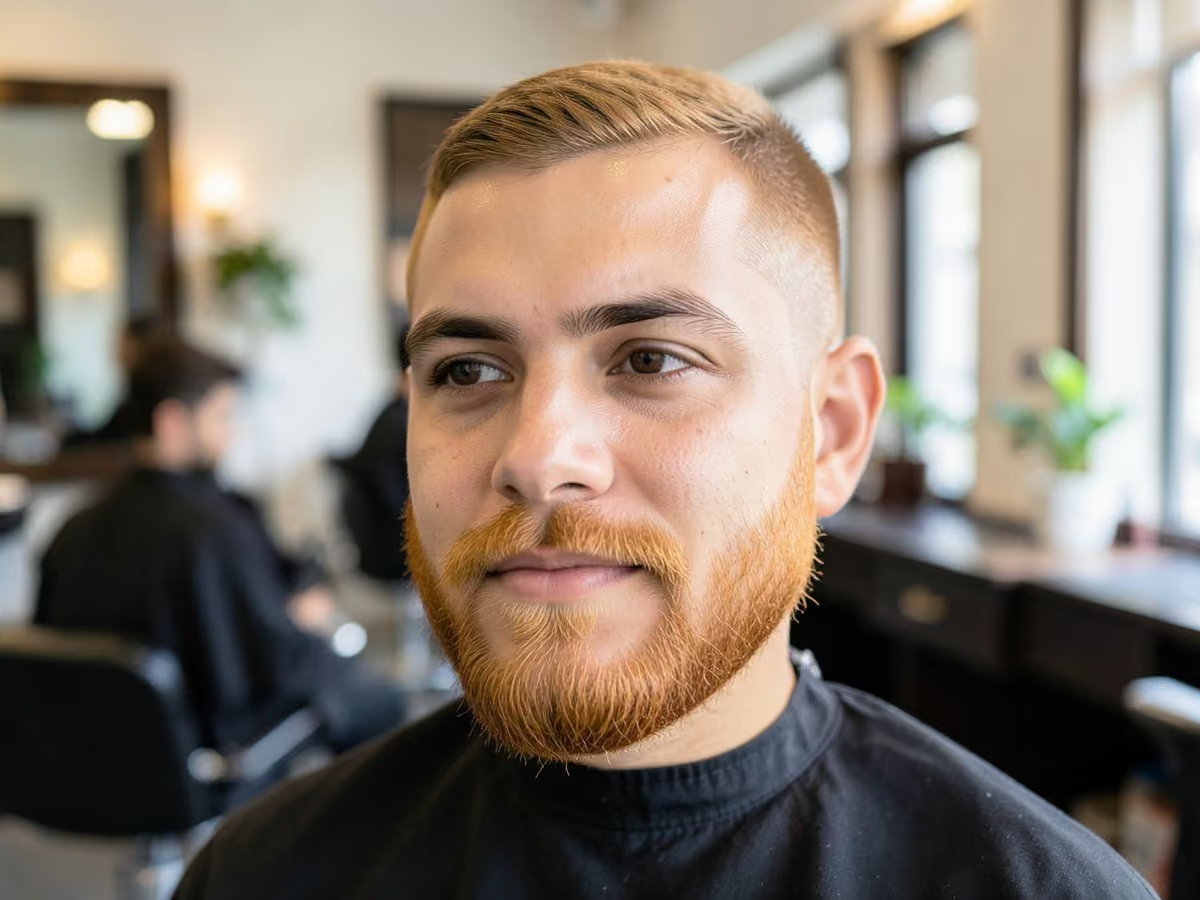
Red beard hair is often lighter at the root and can look sparse when very short, so most ginger beards look fuller at 1/2 inch or longer. A medium length with a rounded or squared bottom shows the color best. Some red beards are coarse and benefit from oil and balm. Cheek lines can stay natural, since a hard line on light hair shows little contrast.
How to Style at Home
Let the beard reach at least half an inch before shaping.
Brush with balm to smooth coarse red hair.
Trim only the outline at home; leave length to the barber.
Ask Your Barber
"Ginger beard about 3/4 inch, keep it full so it does not look thin, rounded bottom, natural cheek line with strays removed and a neckline above my Adam's apple."
Trim:Every 3–4 weeks. Light hair makes a soft outline easy to lose.
Best For:Oval, square faces + fair or light brown facial hair.
About This Style
Light beards look thinner than they are, because the skin shows through pale hair. Keeping more length, half an inch to an inch, and a defined edge makes a blonde beard read as full. Beard balm with a slight tint or a little matte product adds visual density. Sharp lines at the cheeks and neck help, since a soft blonde outline can look like no outline at all.
How to Style at Home
Use beard balm to lift and separate the hairs.
Brush against the grain then back down for volume.
Line the cheeks with a trimmer every week.
Ask Your Barber
"Keep it at half an inch, longer at the chin, with a sharp cheek line and neckline so the shape shows even with my light hair."
Recommended Products
Beard Balm
Beard Brush
Braided, Waxed and Styled Beards
These beards rely on styling as much as cutting: braids, waxed mustache tips, blow-dried volume, color or a shaved line. Most need balm and a few minutes each morning; the beard oil vs beard balm guide explains which hold suits each.
Trim:Every 6 weeks. Dust the ends so the braid tapers cleanly.
Best For:Oval, long faces + long, thick beard growth.
About This Style
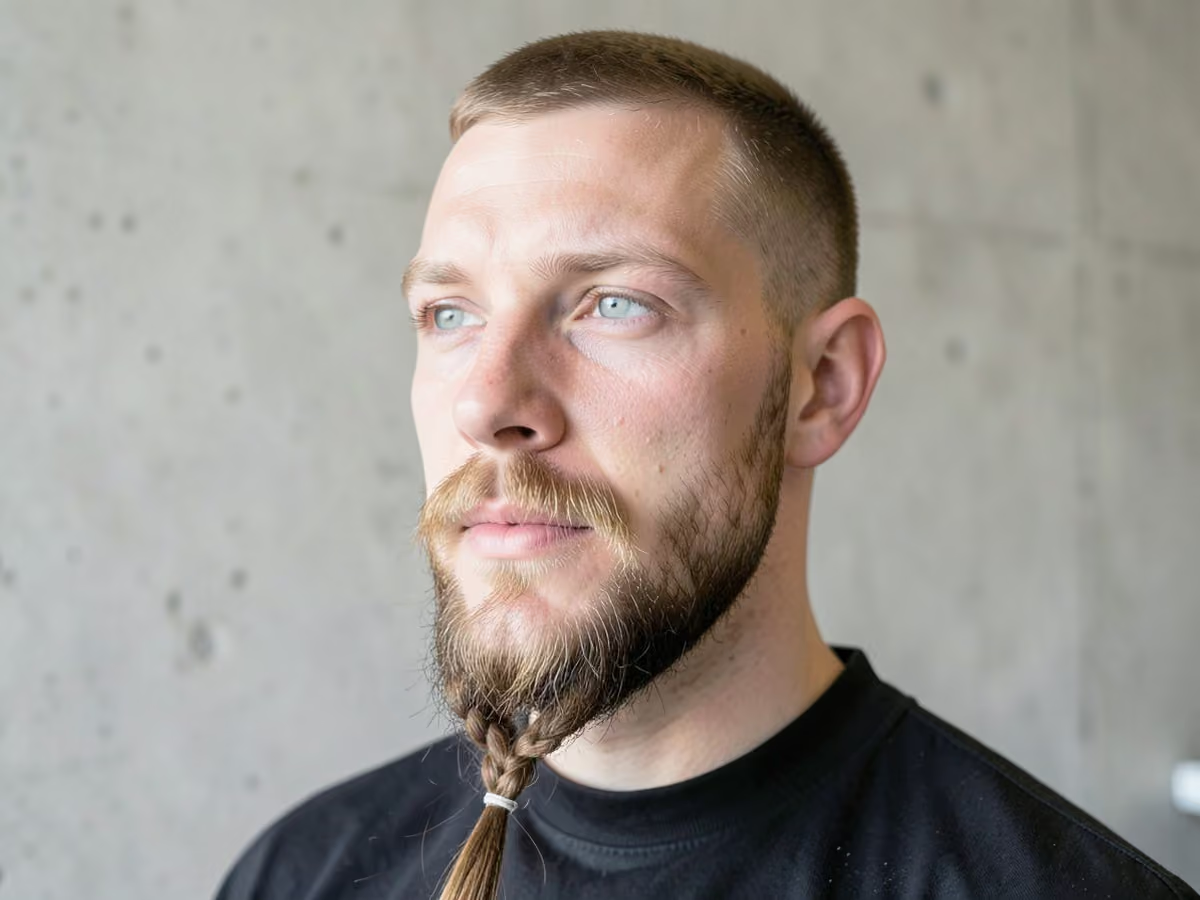
Braiding a single three-strand plait at the chin only holds once the beard reaches four inches or more. The cheeks and upper beard are brushed down and left loose, then the chin hair is braided and tied with a small band. It keeps a long beard tidy for work or sport. Braiding slightly damp hair with balm reduces frizz, and the braid should be loosened at night to avoid strain.
How to Style at Home
Brush the beard and work in balm so the strands grip.
Split the chin hair into three sections and braid down to the end.
Tie with a small elastic and trim any uneven ends.
Ask Your Barber
"I braid my beard at the chin, so keep at least 5 inches there, tidy the cheeks and neckline, and dust the ends so they are even."
Trim:Every 6–8 weeks. Both braids need the same length.
Best For:Long faces + very long, dense growth.
About This Style
Splitting a long beard into two braids, one under each corner of the mouth, creates a forked outline with more structure than a French fork. It needs six inches or more of even growth on both sides. The two braids add width below the chin, which suits long faces. Expect five to ten minutes of braiding each morning and a detangling routine at night.
How to Style at Home
Part the beard down the middle with a fine comb.
Braid each half separately, keeping the tension even from top to bottom.
Secure both with small elastics at the same height.
Ask Your Barber
"Keep all my length for two braids, just make sure both sides are even, clean up the cheeks and neck and remove any split ends."
Trim:Every 3 weeks. The beard needs shaping more than the lip.
Best For:Oval, square faces + full lip and beard growth.
About This Style
Pair a short to medium full beard with a mustache grown slightly longer and set with wax for a groomed, old-barbershop finish. Unlike the handlebar beard, the mustache tips are only lightly turned rather than curled. Keeping the beard between 1/2 and 1 inch leaves the shaped mustache visible. Oval and square faces suit the added horizontal line at the lip.
How to Style at Home
Comb the mustache out from the center toward each corner of the mouth.
Warm a little wax or balm and press it through each side.
Brush the beard down so it does not cover the mustache ends.
Ask Your Barber
"Full beard at about 3/4 inch, rounded bottom, and leave the mustache longer at the sides so I can wax it. Clear the lip line and clean the neck."
Best For:Long, narrow faces + wavy or coarse growth.
About This Style
Blowing a damp beard dry with a round brush or comb straightens kinks and adds volume, so a two- to three-inch beard looks fuller and more even. It suits long faces that need width and beards with wavy, unruly hair. Use low or medium heat to avoid drying the hair. Finish with balm to hold the shape once it cools.
How to Style at Home
Towel-dry the beard and apply a few drops of oil.
Blow-dry downward with a round brush on medium heat.
Set the shape with balm once the hair has cooled.
Ask Your Barber
"Full beard around 2.5 inches, even all over so it looks right when I blow it out, rounded bottom and a clean neckline."
Trim:Every 3 weeks. Dark roots show as the beard grows.
Best For:Oval, square faces + healthy, medium to dense growth.
About This Style
Lightening a beard to blond or platinum, often to match bleached hair, needs a colorist who knows facial skin is more sensitive than the scalp. Short to medium beards of 1/4 to 3/4 inch show the color evenly and make root regrowth easier to trim away. Bleach dries the hair, so daily oil is needed. A patch test before the first session is standard practice.
How to Style at Home
Apply oil daily to replace moisture lost to bleach.
Keep the beard short so dark roots can be trimmed off.
Use a gentle cleanser to slow color fade.
Ask Your Barber
"Short beard at a #4 to match my bleached hair, clean cheek line and neckline, and keep it even so the color looks uniform."
Trim:Every 1–2 weeks. Shaved lines fill in within days.
Best For:Round, oval faces + dense, dark or coily growth.
About This Style
One or two thin lines shaved into the beard, usually along the cheek or through the jaw near the sideburn, add a design to a short beard. Dense, dark or coily hair shows the lines most clearly. A #2 or #3 guard keeps the cut crisp. The design usually matches lines in the haircut; see hair designs for ideas. Lines fade within a week as hair grows in.
How to Style at Home
Keep the beard at an even short length so the line stays visible.
Avoid running the trimmer over the design when tidying at home.
Book quick line refreshes between full beard trims.
Ask Your Barber
"Short beard at a #3 with one thin line shaved through the cheek at an angle, matching the part in my haircut, sharp cheek line and neckline."
Trim:Every week. Thin lines need the most frequent work.
Best For:Oval, square faces + even jaw and lip growth.
About This Style
Thin lines of beard about 1/4 inch wide trace the jaw, run up to a narrow strip on the chin and join a thin mustache. Sometimes called a chiseled or pencil beard, it is one of the most precise shapes and is most often worn with a fresh fade. Every edge is detailed with a trimmer or razor. Uneven growth makes the lines hard to keep straight.
How to Style at Home
Outline every edge with a detailer before shaving the skin around it.
Trim the hair inside the lines with a #1 guard.
Check both sides match with a hand mirror.
Ask Your Barber
"Pencil line beard, 1/4 inch wide along the jaw and up the chin, joined to a thin mustache, #1 guard inside the lines and everything else shaved clean."
Trim:Every 6–8 weeks. The length needs regular end trims.
Best For:Oval, long faces + beards of four inches or more.
About This Style
Metal or wooden beads, or small rings, are threaded onto braided or twisted sections of a long beard, often near the chin. The look draws on Viking and Norse imagery and suits beards of at least four inches. Beads add weight, so keep to one to three per beard and remove them at night to avoid pulling. Oil the hair under each bead to prevent breakage.
How to Style at Home
Braid a small section of beard below the chin.
Slide a bead onto the braid and secure with a small band.
Remove the beads before sleeping so the braid can relax.
Ask Your Barber
"Keep the length below the chin for beads, shape the cheeks and neck, and leave the bottom long enough for a short braid."
Recommended Products
Beard Oil
Beard Balm
Goatee and Chin Beard Styles
These four styles keep hair on the chin and lip and shave the cheeks, so they suit men with strong chin growth and thin cheeks. The full goatee styles gallery covers more shapes and lengths.
Trim:Every 1–2 weeks. Shaved cheeks show regrowth within days.
Best For:Round, square faces + strong chin, weak cheek growth.
About This Style
In the strict sense, a goatee is hair on the chin only, but most people now use the word for chin hair joined to a mustache around the mouth. The cheeks and jaw sides are shaved. A goatee lengthens round faces and draws attention to the center of the face. Keep the width no wider than the corners of the mouth for a balanced look.
How to Style at Home
Shave cheeks and jaw every two or three days.
Trim the goatee with a #2 or #3 guard.
Line the outer edge with a trimmer.
Ask Your Barber
"Goatee with mustache connected around the mouth at a number two, no wider than my mouth, cheeks and jaw sides shaved clean."
Best For:Oval, heart faces + light or patchy growth.
About This Style
A smaller version of the goatee, the petite covers only the area below the lower lip and down the center of the chin, without a mustache. Its width sits inside the corners of the mouth. Because it needs little hair, it suits men whose beard grows mainly on the chin. Weekly edging keeps it from looking like an unfinished shave.
How to Style at Home
Shave around the goatee every other day.
Trim the hair with a 3 mm guard.
Mark the edges with the corner of the trimmer blade.
Ask Your Barber
"Petite goatee, chin and under the lip only, narrower than my mouth, at about three millimetres. Shave the mustache and cheeks."
Trim:Every week. Two separate shapes need regular lines.
Best For:Oblong, oval faces + full mustache and chin growth.
About This Style
The royale pairs a styled mustache with a rectangular chin beard that does not join it, and there is no soul patch between them. The chin beard is narrower than the mouth and runs down toward the jaw. The mustache is often waxed with upturned ends. It has a formal, 17th-century look and suits long faces, since the chin shape is squared rather than pointed.
How to Style at Home
Wax the mustache ends upward with a little balm.
Trim the chin beard straight across at the bottom.
Shave the gap between lip and chin beard.
Ask Your Barber
"Royale, chin beard squared off and narrower than my mouth, no soul patch, mustache left longer so I can wax the ends up."
Trim:Every 2 weeks. The mustache edges and patch get tidied.
Best For:Oval, long faces + thick mustache growth.
About This Style
Named after musician Frank Zappa, this style combines a thick mustache that droops slightly past the corners of the mouth with a small soul patch below the lower lip. Everything else is shaved. The mustache does most of the work, so it needs to be dense. The soul patch should be roughly the width of the lower lip's center so it stays proportionate.
How to Style at Home
Shave cheeks, chin and jaw every two or three days.
Comb the mustache down and trim over the lip edge.
Trim the soul patch into a small, neat rectangle.
Ask Your Barber
"Full mustache drooping just past my mouth corners, a small soul patch under the lip, and shave everything else clean."
Recommended Products
Beard Oil
Beard Balm
Beard Styles by Face Shape
The right beard adds length to a wide face, width to a narrow one or a stronger line to a soft jaw. These eight cards match a beard shape to each face type; see best beard shapes for jawlines for more.
Trim:Every 2–3 weeks. Width at the cheeks must stay short.
Best For:Round faces + medium to thick growth.
About This Style
A round face looks longer when the beard is short on the cheeks and longer at the chin. Keep the sides at a #2 or #3, let the chin grow to an inch or more, and taper the bottom into a soft point or square. Avoid bushy sideburns, which add width. Anchor beards, goatees and ducktails all work on the same principle.
How to Style at Home
Trim the cheeks shorter than the chin with two guard sizes.
Brush the chin hair down to show its length.
Keep the cheek line low and natural.
Ask Your Barber
"Sides at a number two, chin longer at about an inch, and shape the bottom into a soft point so my face looks longer."
Trim:Every 3 weeks. The chin must not get too long.
Best For:Oblong, long faces + full cheek growth.
About This Style
On a long face, extra chin length makes the face look even longer, so the beard is kept fuller at the sides and short at the bottom. A short boxed or rounded beard with full cheeks adds width. A mustache helps too, since it breaks up the vertical line. Avoid goatees and pointed shapes, which narrow the face further.
How to Style at Home
Keep the cheeks at the same length as the chin or longer.
Round the bottom edge with scissors.
Brush the cheek hair outward for width.
Ask Your Barber
"Keep the cheeks full at a number four, chin no longer than the sides, round the bottom, and keep a full mustache."
Trim:Every 3 weeks. Corners at the jaw must stay soft.
Best For:Square faces + medium or thick growth.
About This Style
Square faces already have a strong jaw, so the beard can soften the corners instead of adding to them. A rounded beard, a circle beard or a short beard with rounded jaw corners all work. Keep the sides shorter than the chin and avoid a boxed, straight bottom edge, which exaggerates the angles. Light stubble also suits, since it keeps the jaw visible.
How to Style at Home
Round the corners under the jaw with scissors.
Trim the sides a guard shorter than the chin.
Let the cheek line follow its natural curve.
Ask Your Barber
"Short beard with the jaw corners rounded off, sides a number shorter than the chin, and a natural cheek line, nothing boxed."
Trim:Every 3–4 weeks. An even outline only needs tidying.
Best For:Oval faces + any growth density or hair texture.
About This Style
Oval faces are balanced, so almost any beard works; the goal is to keep the existing proportions. A short boxed beard or medium full beard trimmed evenly all over is the safest choice. Keep the cheek line natural and the neckline one to two fingers above the Adam's apple. Extreme shapes like a long ducktail can work but will lengthen the face.
How to Style at Home
Trim everything with the same guard.
Clean the neckline every week with a trimmer.
Brush and apply beard oil every morning after washing.
Ask Your Barber
"Even all over at a number four with a natural cheek line, a slightly rounded chin, and a neckline two fingers above my Adam's apple."
A wide forehead and narrow chin are balanced by adding width and weight at the jaw. A full beard of medium length, kept fuller at the chin and lower jaw than the cheeks, fills out the lower face. Avoid very short stubble, which leaves the chin looking small. A Garibaldi or a full rounded beard also works for this shape.
How to Style at Home
Let the chin and lower jaw grow longer than the cheeks.
Brush downward to add bulk at the bottom.
Trim the upper cheeks a little shorter.
Ask Your Barber
"Medium full beard, keep the jaw and chin fuller at an inch, upper cheeks shorter, and a rounded bottom to widen my chin."
Trim:Every 2 weeks. The neckline placement is the key upkeep.
Best For:Round, oval faces + full neck and jaw growth.
About This Style
A full beard of at least half an inch, with the neckline set one finger above the Adam's apple rather than at the jaw, creates a firm new jawline over a soft neck. A beard trimmed too high shows the double chin; set too low, it looks unkempt. A slightly longer chin also adds definition. The neck below the line is shaved clean.
How to Style at Home
Tilt your head down and mark the neckline one finger above the Adam's apple.
Shave everything below that line with a razor.
Keep the chin a little longer than the jaw.
Ask Your Barber
"Full beard at half an inch, chin a bit longer, and set the neckline one finger above my Adam's apple, not at the jaw."
Trim:Every 2–3 weeks. Chin length needs to stay ahead of the cheeks.
Best For:Oval, round faces + receding or small chin.
About This Style
When the chin sits back from the face, extra length at the chin projects it forward. A goatee, anchor or full beard with an inch or more at the chin and shorter cheeks gives the profile a stronger outline. Squaring the bottom edge adds more structure. Keep the neckline crisp, since a soft neck line makes the chin vanish again.
How to Style at Home
Grow the chin longer than the cheeks.
Square the bottom edge with scissors.
Edge the neckline every week so it stays crisp.
Ask Your Barber
"Keep at least an inch on the chin, square it off, sides at a number three, and a sharp neckline to give my chin more shape."
Trim:Every 3 weeks. Cheek fullness must stay even.
Best For:Narrow, oblong faces + full cheek growth.
About This Style
Narrow faces and sunken cheeks gain width from fullness at the sides. A full beard of half an inch to an inch, kept as long on the cheeks as at the chin, adds width. Keep the cheek line natural and slightly high. Mutton chops or a full beard with bushy sideburns also widen the face. Avoid goatees, which leave the cheeks bare.
How to Style at Home
Brush the cheek hair outward to add width.
Trim the chin to the same length as the sides.
Use balm to hold the side volume.
Ask Your Barber
"Keep the cheeks and sides full at a number five, chin the same length, and a natural, slightly high cheek line."
Recommended Products
Beard Balm
Beard Brush
How Do You Ask a Barber for a Beard Style?
Name four things: the length on the sides, the length at the chin, the cheek line and the neckline. Lengths are easiest as guard numbers: a #2 leaves 1/4 inch, a #3 leaves 3/8 inch and a #4 leaves 1/2 inch, while longer beards are cut with scissors and measured in inches. Say if you want the cheek line natural, cleaned of strays or razor-lined, and point to where the neckline should sit, which for most men is one to two fingers above the Adam's apple.
A front and a side photo help, because names vary between shops. If you are growing a beard toward a shape, tell the barber the goal so they only shape the outline and leave length where it is needed. A first shaping after six to eight weeks of growth is usually the right time; beard growth stages explains why waiting helps.
Clipper Guards Used in Beard Styles
A clipper guard is the plastic comb that clips onto the blade and sets how much hair is left: a #1 leaves 3 mm (1/8 inch), each step up adds about 3 mm. The right column lists the cards on this page that call for each guard. See the full clipper guard numbers guide for the complete chart.
Most of the daily work is moisture and direction. Wash the beard two or three times a week with a gentle cleanser, pat it dry, then work in a few drops of beard oil to soften the hair and the skin underneath. Beards over an inch need balm or a light hold to set the shape, and a boar-bristle brush trains the hair to lie down. Our beard oil vs beard balm guide covers which one to use when.
Between barber visits, keep a trimmer for the neckline and for stubble lengths, and use small scissors for stray hairs that poke out of the outline. Trim with the beard dry, since wet hair stretches and you will cut more than you meant. The clippers vs trimmers vs shavers comparison explains which tool handles which job. A small pair of beard scissors and a fine comb are enough for most shapes.
What Beard Style Mistakes Should You Avoid?
The most common mistake is a neckline cut along the jaw instead of under it, which makes the beard look like a chin strap and doubles the chin. A close second is a cheek line pushed too high, which widens the face. Trimming too early also causes trouble: cutting a beard to even it out at three weeks often removes the length that would have filled the gaps by week eight.
Other problems come from mismatched choices. A sharp, squared beard under a soft, messy haircut looks disconnected, and a very long beard with a long, heavy haircut can swamp a small face. Coily beards trimmed with a close razor at the edges often develop bumps; how to prevent razor bumps on the neckline explains safer edge options. Match the edge style of the beard to the edges of your haircut.
Which Beard Style Is Right for You?
Pick your hair type and how much upkeep you will put in. The matches below come from the Best For and Maintenance notes on each card. Upkeep follows the Maintenance badge: low means a cut every 3 to 6 weeks and almost no daily styling, high means weekly line-ups or daily product.
There is no reliable count of barbershop requests, but short beards such as designer stubble, the short boxed beard and the corporate beard are common because they look groomed and suit most offices. In YouGov's 2023 data, a beard with a mustache was the most common facial hair look among British men, as our beard statistics report shows.
Q2: Which beard style is best for a patchy beard?+
Keep it short and skip hard cheek lines. Designer or heavy stubble at 3 to 8 mm blends small gaps, and partial styles such as a goatee, circle beard, Balbo or Van Dyke shave the areas that grow thin. Letting the beard grow for eight to twelve weeks before deciding also helps, since many patches fill in with time.
Q3: How long does it take to grow a full beard?+
Most men need two to six months to grow a full beard of about one to two inches, since facial hair typically grows about a third to half an inch a month. Long styles like the Garibaldi or Viking beard can take a year or more. Growth rate and density vary with genetics and age.
Q4: What beard style makes your face look thinner?+
Styles that add length at the chin and remove width at the cheeks: a ducktail, spade beard, faded full beard or Van Dyke. Keep the sides shorter than the chin and set the neckline below the jaw rather than on it. Avoid wide, round shapes such as mutton chops or a puffed-out full beard.
Q5: What is the difference between a boxed beard and a corporate beard?+
Both are short, full beards. A boxed beard has squared corners under the jaw, a flat bottom and a razor-sharp cheek line. A corporate beard keeps a softer, rounded chin and a natural cheek line that is only cleaned of strays, so it looks neat without looking sculpted.
Q6: How often should you trim a beard?+
Stubble needs a trimmer pass every two to four days to hold its length. Short beards look best with a barber shaping every two to three weeks, full beards every three to four weeks and long beards every six to eight weeks. Tidy the neckline at home once or twice a week.