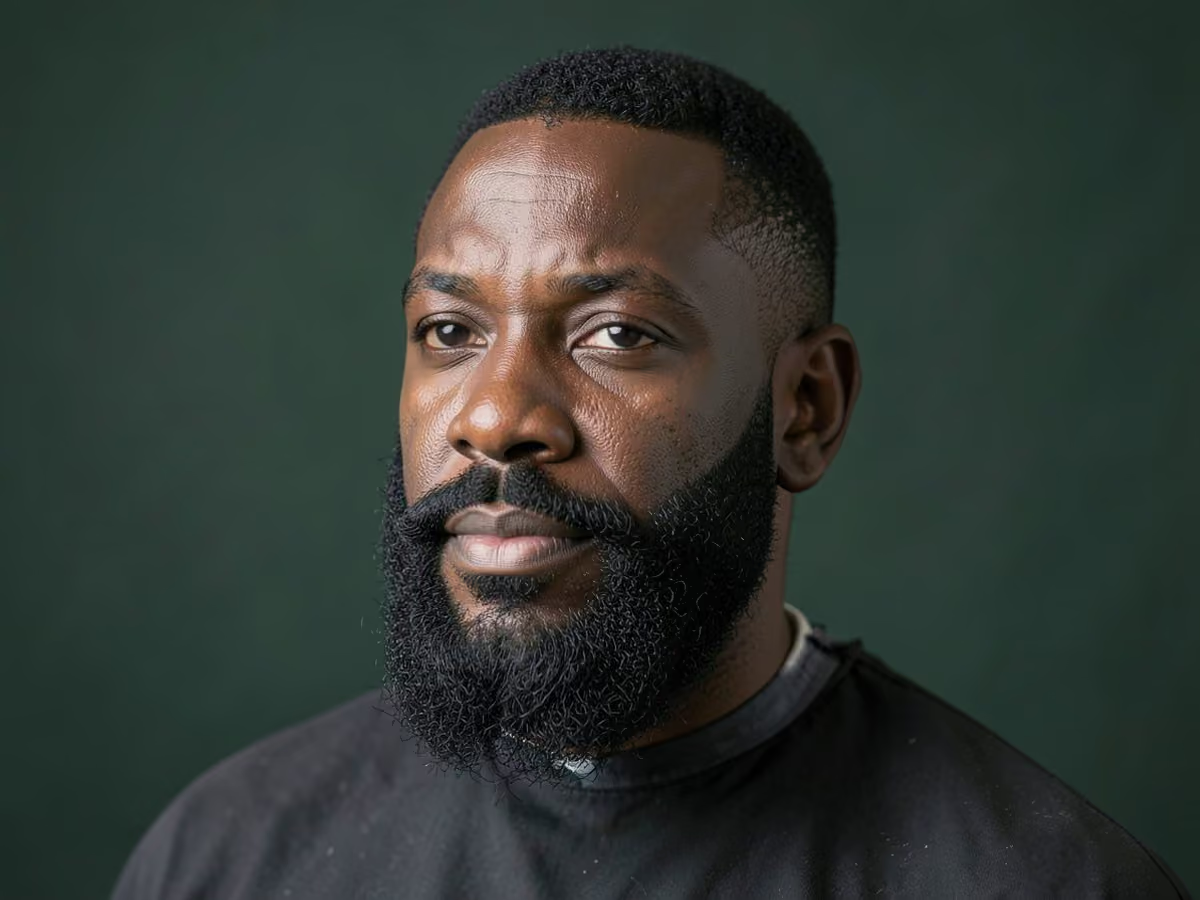
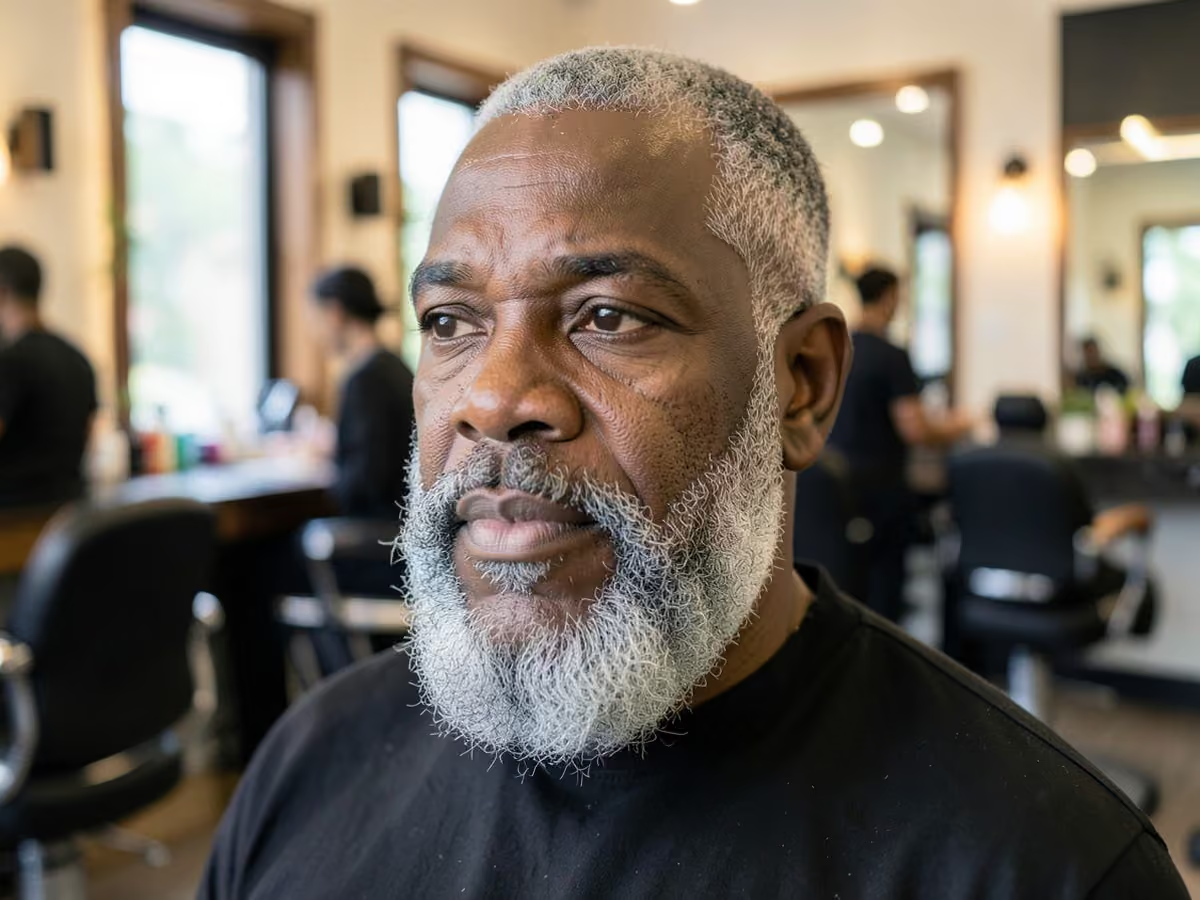
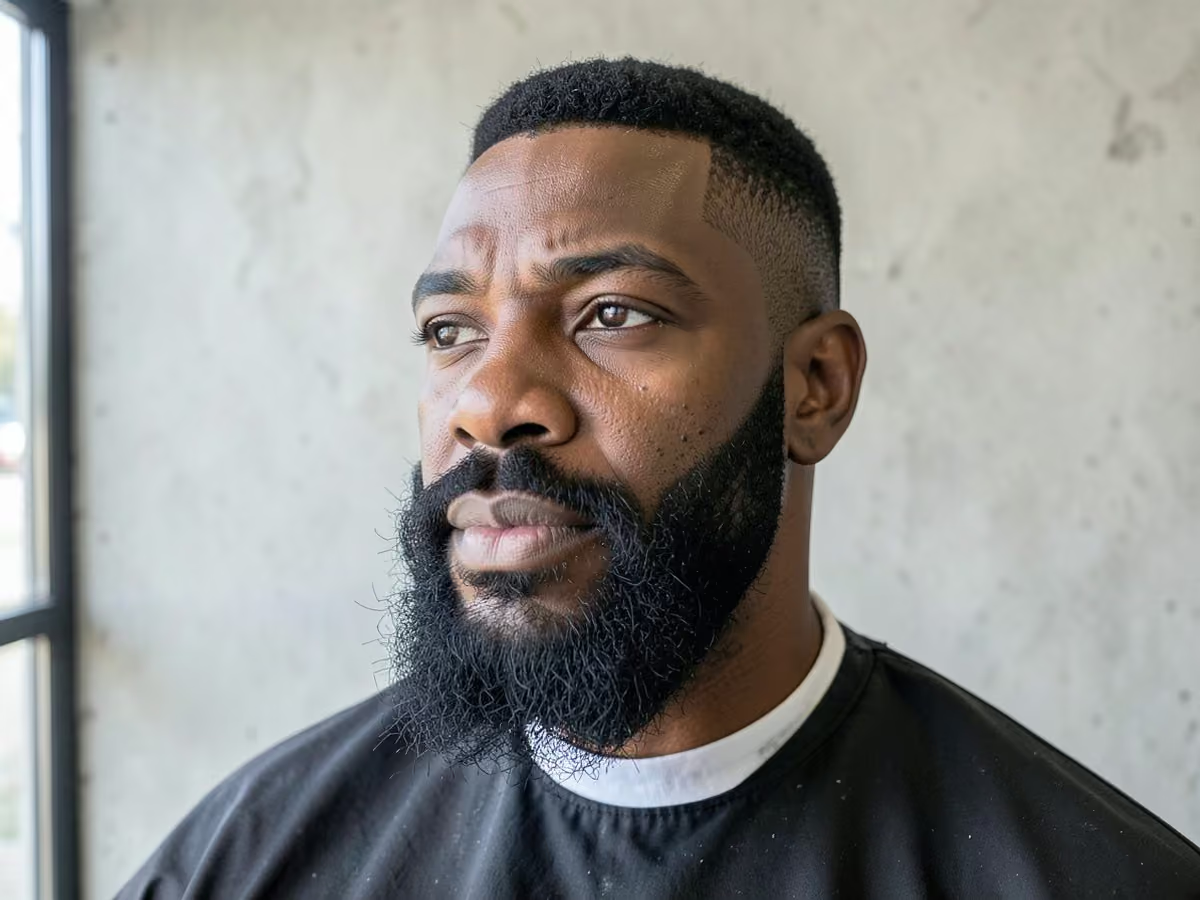
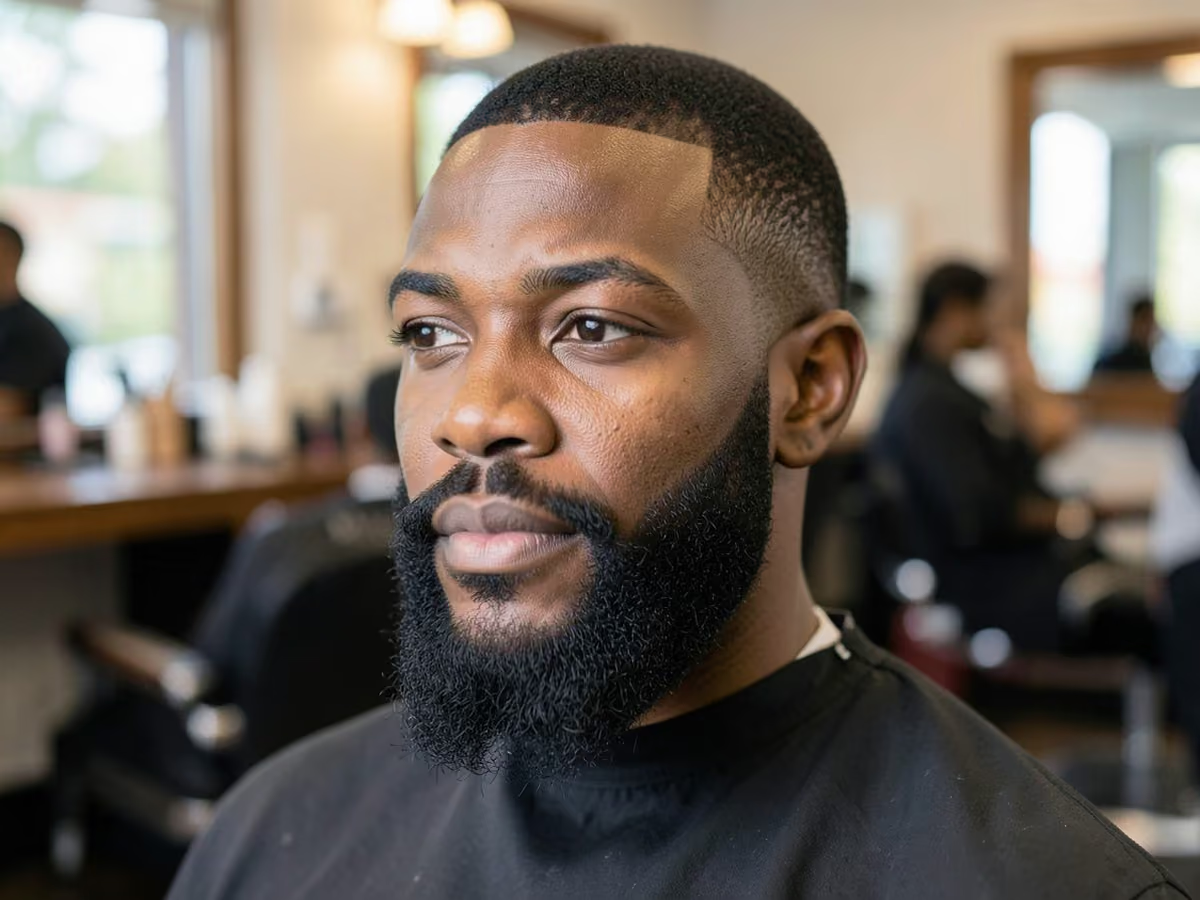
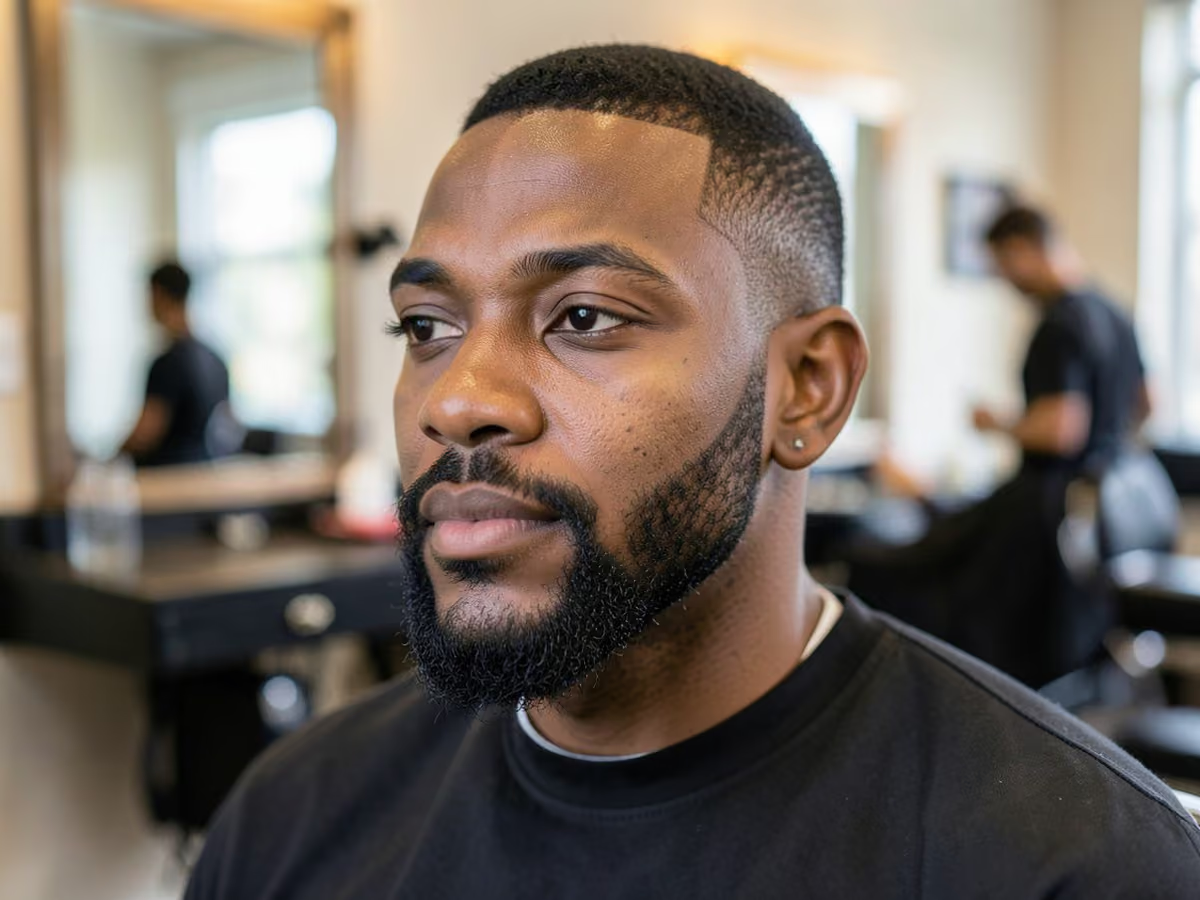
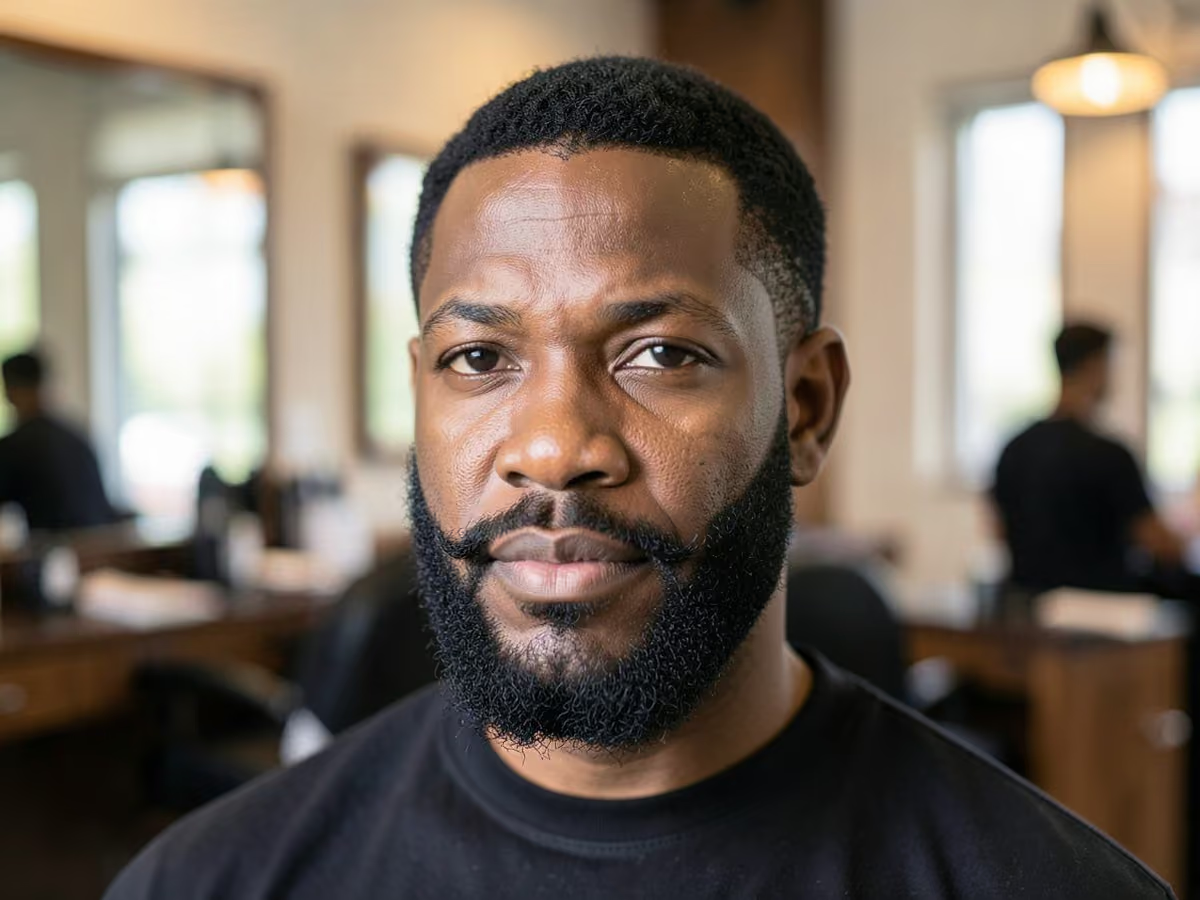
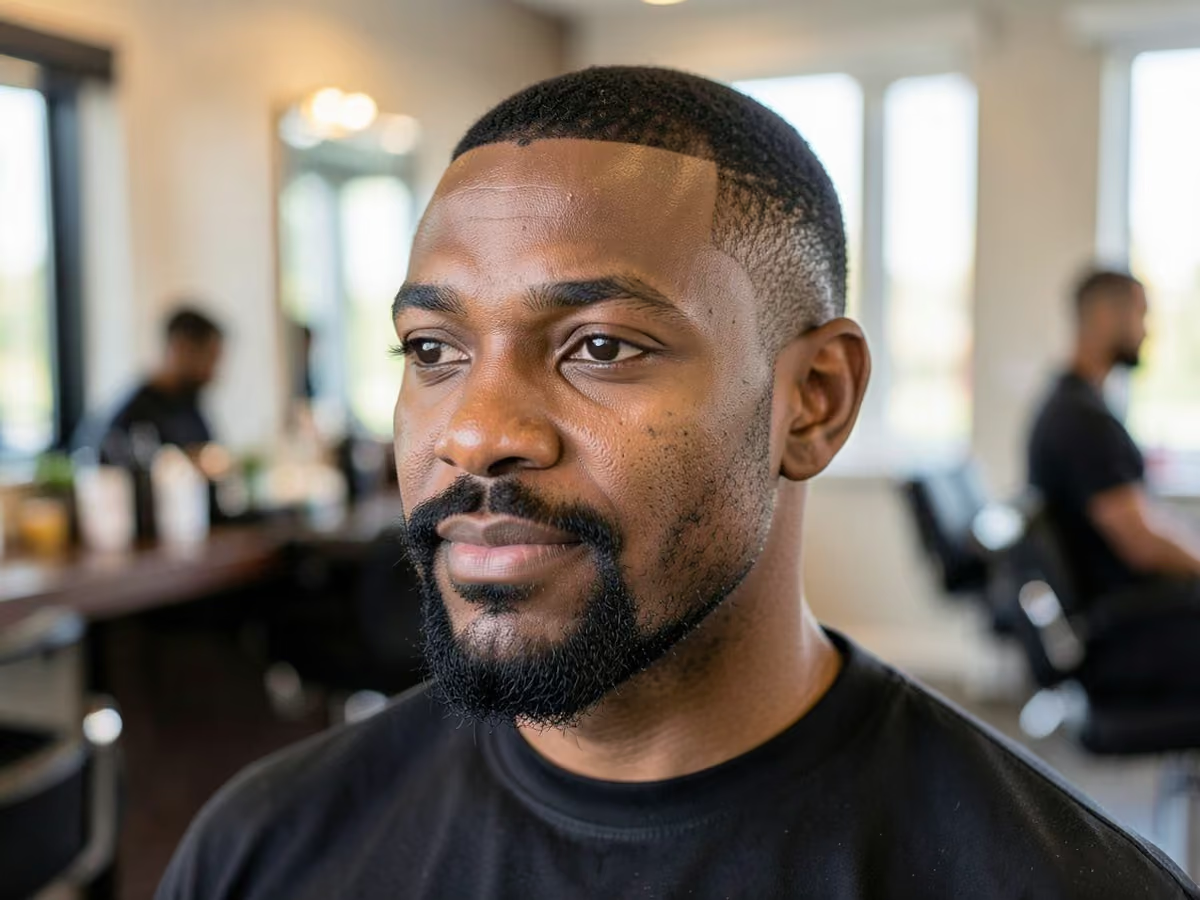
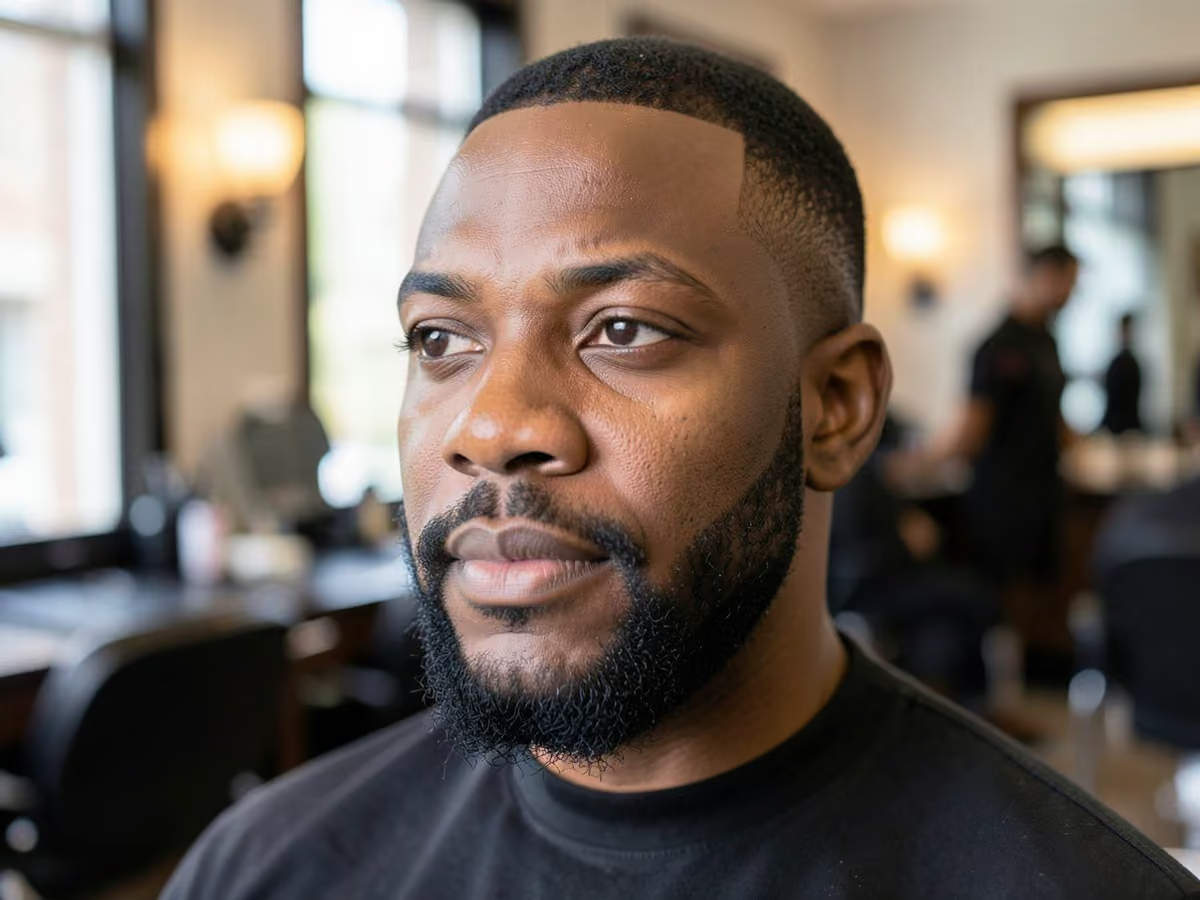
Quick answer: Beard styles for Black men include lined-up full beards, short boxed beards, faded beards, goatees and circle beards. Coily facial hair looks best when it is moisturized, brushed or picked, and lined with a trimmer. Men prone to razor bumps often keep a short guard on the neck and ask a dermatologist about persistent bumps.
Beard Styles for Black Men Styles at a Glance
Every style on this page with its clipper guard, top length and trim interval. Tap a name to jump to that card.
Beard styles for Black men start with the hair itself. Coily and tightly curled facial hair grows dense and holds a sharp line-up, but it also dries quickly and can curl back into the skin after a close shave. The 30 styles below are grouped by length, line-up, partial shapes, bump-friendly cuts and haircut pairings, each with trim timing and what to ask your barber.
How Is a Coily Beard Different to Care For?
Coily facial hair grows in tight spirals, so it looks shorter than it is and hides the true length until it is brushed or picked out. That shrinkage is why barbers often stretch the hair before cutting the outline. The spiral shape also makes it harder for natural skin oil to travel down each hair, so coily beards tend to feel dry and coarse unless you add moisture every day.
A simple routine covers most needs. Wash two or three times a week with a gentle cleanser rather than hair shampoo, apply beard oil to the skin while the beard is still slightly damp, and follow with a balm or leave-in once it passes about 2 cm. Brush daily with a soft or medium boar bristle brush. The beard oil vs beard balm guide explains when to use each.
How Can You Reduce Razor Bumps on a Beard?
Razor bumps happen when a cut hair curls back and grows into the skin, or when a close shave irritates the follicle. Tightly curled hair is more prone to it, which is why bumps are a common complaint among Black men who shave or line their beards with a razor. When bumps are persistent, a dermatologist may diagnose pseudofolliculitis barbae, a recognized skin condition, and recommend treatment. This guide covers grooming habits only and is not medical advice.
Grooming changes that many men find helpful are listed below. If bumps become painful, infected, leave dark marks or keep coming back despite these steps, see a dermatologist rather than trying stronger shaving methods. Our razor bump guide has more on neckline aftercare. Changes take time to show, so give a new routine a few weeks before judging whether it works for your skin.
Leave a little length
Trimming to 1 mm or longer with a guard keeps the hair above the skin. Many men with bumps stop shaving the neck to bare skin entirely.
Line with a trimmer, not a razor
A trimmer edge gives a crisp line without cutting below the surface. Ask your barber for a trimmer-only line-up.
Cut with the grain
Going against the direction of growth gives a closer cut but raises the risk of ingrown hairs, especially on the neck.
Use clean tools
Ask the barber to disinfect blades between clients, and clean your own trimmer after each use.
Do not pick or tweeze
Digging at ingrown hairs can scar or darken the skin. Leave it to a professional if a bump needs attention.
Which Beard Style Suits Your Face and Growth?
Face shape matters the same way it does for any beard. Round faces look longer with shorter cheeks and more length at the chin, as in a short boxed beard or a Van Dyke. Long faces suit fuller sides and a rounded bottom. Square faces can soften the jaw with a rounded or circle beard, and oval faces can wear any shape on this page. The haircuts by face shape and texture guide covers the hair side of the same question.
Growth pattern narrows the choice further. Dense, even growth can carry a sharp, low cheek line and a full shape. Growth that is patchy on the cheeks often looks best in a goatee, circle beard or Balbo, where the cheeks are shaved anyway, or in a full beard with a natural cheek line and a little extra length to cover gaps.
Filter the styles
Showing all 30 styles
Fade
Hair
Length
Full and Short Beard Styles for Black Men
These seven cover the core lengths, from a tight short beard to a picked-out full shape, with notes on shrinkage, moisture and how each one connects to a fade from the Black men haircuts guide.
Trim:Every 2 weeks. The line-up softens before the length changes.
Best For:Oval, round faces + dense coily growth.
About This Style
Kept at 2 to 4 cm and brushed flat, a full coily beard covers the cheeks, jaw and mustache with an even, dense surface. Barbers shape the outline round or slightly squared at the bottom, line the cheeks with a trimmer and leave a clean neckline two fingers above the Adam's apple. Shrinkage means it looks shorter than its true length. Daily oil keeps it soft, and a barber line-up every two weeks holds the edges.
How to Style at Home
Spray the beard lightly with water and massage in beard oil.
Brush downward and outward with a boar bristle brush to lay it flat.
Smooth a small amount of beard balm over the surface for shine.
Ask Your Barber
"Full beard at about 3 cm, rounded bottom, lined-up cheeks with the trimmer, neckline two fingers above my Adam's apple, blended into my low fade."
Trim:Every 1–2 weeks. Short coily hair loses its edge quickly.
Best For:Square, oval faces + medium or dense growth.
About This Style
At around 1 cm, a short coily beard sits close to the face and shows the jaw underneath. It is the easiest full-coverage beard for work and warm weather, and it dries fast after washing. A trimmer with a 6 to 10 mm comb sets the length; brushing before the trim lifts coils so the cut is even. Line-ups show clearly on short hair, so the cheek line and neckline set the whole look.
How to Style at Home
Brush the beard upward to lift the coils before trimming.
Trim with an 8 mm comb, then brush down again.
Massage a few drops of beard oil into the skin.
Ask Your Barber
"Short beard at about 8 mm all over, brushed out before cutting, cheeks and neckline lined up with the trimmer, sideburns blended into my fade."
Trim:Every 1–2 weeks. Corners and straight lines blur first.
Best For:Round, oval faces + dense, even coily growth.
About This Style
A squared outline with straight cheek lines and visible corners at the jaw gives the short boxed beard its tailored shape. Length is usually 1 to 2 cm, slightly longer at the chin. Coily hair holds the corners well, which is why it is a common barbershop request. Round faces pick up some angles from it, and it pairs with tapers, fades and waves. Our boxed beard guide covers the shape in detail.
How to Style at Home
Brush the beard flat and trim the sides at 12 mm.
Leave the chin at 18 mm and square the bottom with the trimmer.
Finish with oil and an edge brush along the lines.
Ask Your Barber
"Short boxed beard, 12 mm on the sides and 18 mm at the chin, squared bottom, straight lined-up cheeks and sharp corners at the jaw."
Trim:Every 2–3 weeks. Curves hold their shape longer than corners.
Best For:Square, diamond faces + dense coily growth.
About This Style
Curving the bottom of the beard from ear to ear softens a strong or angular jaw. Barbers cut the shape with the hair brushed out, then lay it flat so the curve reads from the front. The cheek line can follow the same curve rather than running straight. At 2 to 3 cm this shape grows out gracefully, because there are no corners to lose. It suits men who want fewer barber visits than a boxed beard needs.
How to Style at Home
Pick the beard out lightly to see the true shape.
Trim the outline in a smooth curve from ear to ear.
Brush the beard flat and seal the surface with beard balm.
Ask Your Barber
"Rounded beard about 2.5 cm, curved bottom from ear to ear, cheek line curved to match, neckline two fingers above my Adam's apple. Cut it picked out."
Trim:Every 3–4 weeks. Only the outline needs shaping.
Best For:Long, oval faces + long, dense coily growth.
About This Style
Instead of brushing it flat, this beard is lifted from the skin with a pick to show its full volume, much like an afro on the face. It needs 4 cm or more of length and dense growth. The shape is cut picked out, usually rounded, and the cheek and neck lines stay crisp so the volume looks intentional. Moisture is essential, since lifted coils dry and tangle more easily. It adds width, which balances long faces.
How to Style at Home
Apply a leave-in to slightly damp hair and work it to the roots.
Lift the beard from the skin outward with an afro pick.
Pat the surface lightly with your palm to even the shape.
Ask Your Barber
"Picked out beard at about 5 cm, rounded and full, shape cut while it is picked. Keep a sharp cheek line and neckline so the volume looks neat."
Trim:Every 4–6 weeks. Ends tangle and split as length builds.
Best For:Long, oval faces + thick coily growth.
About This Style
Past 8 cm, a coily beard can be worn picked out, brushed down or even twisted at the ends. Expect at least half a year of growth, and shrinkage means it often looks half its length. Detangling is the main job: work from the ends up with fingers or a wide-tooth comb, never dry. Barbers shape only the bottom and lines. A long beard needs the most moisture of any style here, with oil daily and balm or leave-in on top.
How to Style at Home
Spray with water and detangle from the ends upward with your fingers.
Work in a leave-in, then a layer of beard balm.
Shape the surface with a pick or brush, depending on the look.
Ask Your Barber
"Long beard, keep the length, just shape the bottom round and clean the cheek line and neckline. Trim split ends and do not thin it out."
Trim:Every 2 weeks. Gray hairs grow wiry and stray from the shape.
Best For:Older men + salt and pepper or white coily growth.
About This Style
Gray coils are often drier and wirier than the color they replace, and they show more clearly against darker skin. A tidy line-up and a short, even length keep the beard looking deliberate. A length of 1 to 2 cm with a rounded or boxed outline is the usual choice. Moisture matters more as hair grays, so oil and a light balm go on daily. Where dark and gray hairs mix, an extra few millimetres of length lets the contrast show.
How to Style at Home
Brush firmly to align wiry gray hairs before any trim.
Trim at 15 mm and snip any hairs that still stick out.
Rub in argan oil or beard oil, then a little balm.
Ask Your Barber
"Gray beard at about 15 mm, rounded outline, trimmer line-up on the cheeks and neck. Snip wiry strays and keep the mustache off my lip."
Recommended Products
Beard Oil
Argan Oil
Beard Brush
Beard Line-Ups and Sharp Edges
Coily hair holds a crisp edge, so the line-up often matters as much as the length. These six change the cheek line, the neckline and the finish, including softer trimmer-cut options for sensitive skin.
Trim:Every week. Sharp edges show regrowth within days.
Best For:Round, oval faces + dense, dark coily growth.
About This Style
Straight cheek lines, a crisp neckline and sideburns that connect to the hairline line-up define this beard. Length is usually 1.5 to 3 cm. Barbers cut the lines with a trimmer and many finish with a razor, which gives the sharpest edge but can cause bumps on some skin. Black barbershops cut this shape constantly, usually alongside a fade or taper. Weekly visits keep the edges looking fresh.
How to Style at Home
Brush the beard flat so the line-up is visible.
Apply beard oil to the skin, avoiding the freshly cut edges.
Brush the edges with an edge brush to keep them crisp.
Ask Your Barber
"Full beard at 2 cm, lined up sharp on the cheeks and neck, sideburns connected to my hairline line-up. Use the trimmer for the lines."
Trim:Every 1–2 weeks. The arc flattens as stubble fills in.
Best For:Square, diamond faces + dense coily growth.
About This Style
A cheek line that arcs from the sideburn down to the mustache corner, rather than running straight, softens an angular face. The curve follows the cheekbone and is cut with the corner of a trimmer. It suits square and diamond faces and pairs well with a rounded beard bottom. Keep the arc high, near the top of your growth, so the beard does not look thinner. Mirror both curves carefully, since small differences show.
How to Style at Home
Follow the existing curve with the trimmer corner held at an angle.
Work from the sideburn down toward the mustache on each side.
Check both curves face-on in a mirror before finishing.
Ask Your Barber
"Beard at 2 cm with a curved cheek line from the sideburn to the mustache corner, following my cheekbone. Keep the curve high and both sides even."
Trim:Every week. Color washes out and lines regrow.
Best For:Any face shape + thin or uneven line-up areas.
About This Style
After the line-up, some barbers apply a temporary color, called a beard enhancement, to fill thin spots and darken the edges. The result looks denser and sharper in photos and for the day of the cut. It washes out, often with the first wash, and can rub onto collars and pillows. Ask what product is used if you have sensitive skin, and do a patch test first. It suits events more than daily wear.
How to Style at Home
Avoid touching the beard for a few hours after the enhancement.
Pat, do not rub, the beard dry after washing.
Apply oil only to the skin under the beard, not the edges.
Ask Your Barber
"Lined-up beard at 1.5 cm with a light enhancement on the cheek line to fill the thin spots. Keep it natural, not painted, and tell me the product."
Trim:Every 2 weeks. Trimmer edges grow out more gently.
Best For:Oval, round faces + bump-prone or sensitive skin.
About This Style
Cutting the edges with only a trimmer, and leaving a hair's width of stubble above and below the lines, gives a clean outline without a razor. The line is slightly less sharp but far kinder to skin that bumps. It also grows out softly, so you can stretch visits to two weeks. Many barbers offer it on request. Pair it with a short guard on the neck for the lowest irritation.
How to Style at Home
Trim the beard to length with a comb attachment.
Edge the lines with the trimmer only, no razor.
Apply an alcohol-free balm to the edges afterward.
Ask Your Barber
"Soft line-up on my beard, trimmer only, no razor or foil. Leave a little stubble at the edges and a short guard on the neck."
Trim:Every week. Neck regrowth hides the curve quickly.
Best For:Round faces, soft jaws + dense coily growth.
About This Style
The neckline does more for a soft jaw than any cheek line. Set two fingers above the Adam's apple and curved back to the earlobes, a crisp neckline creates the shadow of a stronger jaw. Coily hair makes the edge very visible. If you shave the neck below it, go with the grain and moisturize after; if bumps appear, switch to a short guard below the line. Our neckline guide shows placement.
How to Style at Home
Find the point two fingers above your Adam's apple.
Trim a curved line from there to the back of each earlobe.
Clear the neck below with the grain and apply balm.
Ask Your Barber
"Sharp curved neckline two fingers above my Adam's apple running back to the earlobes. Beard at 2 cm. Trim the neck with the grain, no razor if possible."
Trim:Every 1–2 weeks. The beard fade and haircut regrow together.
Best For:Oval, round faces + coily growth with a skin fade.
About This Style
Here the beard steps down from full length at the chin to skin at the sideburns, matching a skin fade on the head. The cheeks are taken shorter than the jaw, which slims the face. On coily hair the blend shows clearly, so it needs an even gradient through several guards. Moisturize the faded skin to avoid ashy patches. The beard styles with skin fade guide shows other heights.
How to Style at Home
Trim the chin at 15 mm and the jaw at 10 mm.
Step down to 3 mm on the cheeks and skin at the sideburns.
Moisturize the faded skin with scalp oil or beard oil.
Ask Your Barber
"Faded beard: 15 mm at the chin, 10 mm on the jaw, down to skin at the sideburns, blended into my mid skin fade. Lined-up cheeks and neck."
Recommended Products
Beard Oil
Scalp Oil
Goatees and Partial Beards for Black Men
Partial beards keep hair where growth is densest and shave the rest, which suits men whose cheeks fill in slowly. These five cover the Van Dyke, circle beard, Balbo, anchor and beardstache.
Trim:Every week. Shaved cheeks and the gap need cleaning often.
Best For:Round, square faces + dense chin and lip growth.
About This Style
A pointed or squared chin beard with a separate mustache and bare cheeks makes up the Van Dyke. Coily hair at the chin can be kept short and lined or grown to 3 cm and shaped to a soft point. The vertical shape lengthens round faces. With the cheeks and the gap below the mustache shaved, dense chin growth matters far more than cheek coverage. Use a trimmer finish if shaving causes bumps.
How to Style at Home
Trim the chin beard to 15 mm and shape the bottom to a soft point.
Clean the gap between the mustache and chin with the trimmer.
Apply a little beard balm to keep the chin hair in shape.
Ask Your Barber
"Van Dyke with a 15 mm chin beard shaped to a soft point, separate mustache off the lip, cheeks cleaned with the trimmer. Short guard on the neck."
Trim:Every week. The round outline loses shape fast.
Best For:Square, oval faces + patchy cheeks, dense chin growth.
About This Style
Connecting the mustache to the chin beard in a rounded ring around the mouth, the circle beard ranks among the most frequent partial styles on coily hair. It is kept short, usually 6 to 10 mm, with a crisp outline. The round shape softens a square jaw. It hides patchy cheeks entirely, since they are shaved or trimmed close. Line it with a trimmer and keep the curve even on both sides of the mouth.
How to Style at Home
Trim the circle at 8 mm with a comb attachment.
Outline the ring with the trimmer corner in a smooth curve.
Clean the cheeks and neck, then apply beard oil.
Ask Your Barber
"Circle beard at 8 mm, round connected mustache and chin, crisp trimmer outline. Cheeks cleaned close and a short guard left on the neck."
Trim:Every week. Three separate pieces need edging.
Best For:Round, square faces + dense chin, thin cheek growth.
About This Style
The Balbo combines a floating mustache, a soul patch and a chin beard that extends along the lower jaw, with no sideburns. On coily hair it reads as a sharp, geometric style. Round faces gain structure from it, and attention moves away from thin cheek growth. Each piece needs its own edges, so it takes more trimming time than most partial beards. Our Balbo guide details the proportions.
How to Style at Home
Trim the chin and jaw section at 8 mm, mustache at 6 mm.
Shave or trim the gaps between the three sections.
Edge each piece and apply a light balm.
Ask Your Barber
"Balbo beard, 8 mm chin and jaw piece, separate mustache at 6 mm, soul patch, no sideburns. Trimmer line-up on every edge."
Trim:Every week. The anchor point blurs as regrowth fills in.
Best For:Round, square faces + dense chin growth.
About This Style
Shaped like a ship's anchor, this beard runs along the jaw to a point at the chin, joined by a soul patch and paired with a separate mustache. It needs dense chin growth but no cheek coverage. The pointed bottom lengthens round faces, and the jawline strip adds structure. On coily hair the point holds well with a little balm. The anchor beard guide covers how the pieces connect.
How to Style at Home
Trim the anchor section at 8 mm and point the chin with the trimmer.
Shape the mustache separately and clean the cheeks.
Twist the point lightly with balm to hold its shape.
Ask Your Barber
"Anchor beard, jawline strip to a point at the chin with a soul patch, separate mustache. Hair at 8 mm, cheeks cleaned with the trimmer, no razor."
Trim:Every 1–2 weeks. The mustache outgrows the stubble around it.
Best For:Long, oval faces + thick mustache growth.
About This Style
Men whose upper lip fills in faster than the rest suit this style, where a full mustache sits over short stubble on the cheeks and chin. The stubble stays at 2 to 3 mm, which treats bump-prone skin more gently than a razor would, while the mustache grows to 1 cm or more and is trimmed at the lip line. The horizontal emphasis widens a long face. Keep the mustache moisturized, since coily hair there dries quickly.
How to Style at Home
Trim the cheeks and chin at 3 mm with the grain.
Comb the mustache down and trim along the lip line.
Work a small amount of balm into the mustache.
Ask Your Barber
"Beardstache: full mustache trimmed off the lip, stubble at 3 mm everywhere else, trimmer line-up on the cheeks, short guard on the neck."
Recommended Products
Beard Balm
Beard Oil
Bump-Friendly Beard Styles
These five avoid cutting hair below the skin, which many men with razor bumps find helps. They are grooming options, not treatment; persistent or painful bumps call for a dermatologist's advice, as our razor bump guide explains.
Trim:Every 2 weeks. A guarded trim grows out without sharp regrowth.
Best For:Any face shape + bump-prone coily growth.
About This Style
No razor touches the skin with this approach. The beard is kept at 6 mm or longer all over, the edges are cut with a trimmer, and the neck is cleaned with a #0.5 or #1 guard rather than shaved. Hair stays above the skin, which gives it less chance to curl back in. The outline is softer than a razor line-up but neat. Many men with recurring bumps start here, alongside advice from a dermatologist.
How to Style at Home
Trim the beard at 6 mm with the grain.
Clean the neck below the line with a #0.5 guard.
Apply an alcohol-free balm or beard oil to the skin.
Ask Your Barber
"No razor at all. Beard at 6 mm, edges with the trimmer only, neck cleaned with a #0.5 guard, everything cut with the grain."
Trim:Every 1–2 weeks. Neck regrowth softens the line below the jaw.
Best For:Round, oval faces + bumps mainly on the neck.
About This Style
Bumps cluster on the neck for many men, since growth there twists in several directions and the skin is thin. This style keeps a sharp beard outline above the jaw but leaves the neck below the line at a #1, about 3 mm, instead of bare skin. From the front it still reads as a clean neckline. The cheeks can be lined as sharply as you like if they do not bump. It is a simple change to ask for at any barbershop.
How to Style at Home
Set the neckline two fingers above the Adam's apple.
Trim everything below it with a #1 guard, with the grain.
Moisturize the neck daily with an alcohol-free product.
Ask Your Barber
"Normal line-up on my cheeks, but leave the neck below my neckline at a #1 guard instead of shaving it. Cut the neck with the grain."
Trim:Every week. A 1 mm length grows past stubble quickly.
Best For:Square, oval faces + men who prefer a near-shaved look.
About This Style
For a look close to clean-shaven without cutting below the skin, the whole beard is trimmed to about 1 mm with a guard. A close trim leaves enough length that the hair does not retract under the surface. It suits men who need a near-shaven look for work but get bumps from razors. Some men use a foil shaver set to its longest setting instead; ask a dermatologist which option suits your skin if bumps persist.
How to Style at Home
Trim the whole face at 1 mm with the grain.
Rinse the face with cool water and gently pat the skin dry.
Finish with an alcohol-free moisturizer or a few drops of beard oil.
Ask Your Barber
"Close trim at 1 mm all over with a guard, no razor and no foil. Cut with the grain and leave the cheek line natural."
Trim:Every 2–3 weeks. Without a hard line, regrowth is less visible.
Best For:Long, oval faces + bump-prone neck skin.
About This Style
Rather than ending at a defined neckline, the beard fades gradually into the neck with clipper guards, from beard length down to a #1. Nothing is shaved, so there is no edge to bump and no line to redo every few days. The soft transition suits men who want a tidy beard with fewer visits. It works best on fuller beards of 1.5 cm or more, where the fade has room to blend, and on longer faces that do not need a sharp jaw shadow.
How to Style at Home
Trim the beard to length and brush it down.
Fade the neck from beard length down to a #1, flicking outward.
Moisturize the neck and brush the beard flat.
Ask Your Barber
"Fade my beard into the neck with guards, from 15 mm down to a #1. No hard neckline and no razor anywhere."
Trim:Every 2 weeks. Line-ups help most just after the cut.
Best For:Any face shape + uneven or slow cheek growth.
About This Style
Uneven cheek growth is common and often fills in over time. Meanwhile, a short, even length of 3 to 6 mm makes gaps less obvious, and a cheek line set slightly higher than where thin areas start keeps the outline clean. Some men add a beard enhancement for events. Dense chin and mustache areas can be left a little longer. For realistic options, see our patchy beard guide.
How to Style at Home
Trim the cheeks at 4 mm and the chin and mustache at 6 mm.
Line the cheeks just above where thin areas begin.
Brush the hair toward gaps and apply beard oil.
Ask Your Barber
"Keep my beard short and even, about 4 mm on the cheeks, 6 mm on the chin, with a cheek line that hides the thin spots. Trimmer only."
Recommended Products
Beard Oil
Beard Brush
Beards with Popular Black Haircuts
The beard should connect to the haircut through the sideburns. These seven pair beard shapes with waves, low cuts, twists, locs, sponge curls, cornrows and a Caesar cut.
Trim:Every 1–2 weeks. Waves and beard edges both need a line-up.
Best For:Round, oval faces + coarse hair trained for waves.
About This Style
Brushed waves on a short top meet a squared beard through faded or lined sideburns in this pairing. The beard's straight edges mirror the line-up on the hairline, and both stay at a short length, usually a #1 or #2 on top and 1 to 2 cm on the face. Durags keep the waves set overnight and also protect the beard shape. Book line-ups weekly or every two weeks to keep both crisp.
How to Style at Home
Brush the waves from the crown outward with wave pomade.
Brush the beard flat and apply a few drops of oil.
Tie a durag on at night to hold the waves.
Ask Your Barber
"Waves with a #1.5 on top and a low taper, sharp line-up, sideburns connected to a short boxed beard at 15 mm with straight cheek lines."
Trim:Every 2 weeks. Line-ups on hair and beard soften together.
Best For:Oval, square faces + coily hair and dense growth.
About This Style
Keeping the hair one short guard length all over, often a #1 or #2, the low cut gets a line-up at the front. Paired with a full beard, the face becomes the focus and the head stays simple. The sideburns blend straight from the hair length into the beard. Effort stays low, since the hair needs no styling, and it suits men with a full, even beard to show off.
How to Style at Home
Brush the scalp hair in one direction with a soft brush.
Massage beard oil into the beard and the scalp.
Brush the beard down and edge the line-up with an edge brush.
Ask Your Barber
"Low cut with a #2 all over and a line-up, sideburns blended into a full beard at 2.5 cm with lined cheeks and neckline."
Trim:Every 2–3 weeks. The taper and beard lines grow in together.
Best For:Long, oval faces + coily hair that holds twists.
About This Style
Two-strand twists or coil twists on top give volume, so a short beard of about 1 cm keeps the face from looking crowded. The sides are often tapered, and the sideburns step down into the beard. The pairing suits men who want texture on top without a big beard to maintain. Retwist the hair every few weeks and keep the beard lined between visits. Moisturize both, since twists and short coils dry quickly.
How to Style at Home
Spray the twists with water and apply a light leave-in.
Brush the short beard flat and apply beard oil.
Wrap the twists in a satin scarf or durag at night.
Ask Your Barber
"Keep my twists on top, low taper on the sides, sideburns blended into a short beard at 1 cm with a trimmer line-up."
Trim:Every 2–3 weeks. Beard corners blur before the locs need work.
Best For:Round, oval faces + established locs and dense growth.
About This Style
Long or medium locs carry a lot of volume, so a neat, squared beard at 1 to 2 cm adds structure to the face without competing. The straight cheek lines and corners frame the jaw under the hair. Many men tie the locs up for a barber visit so the sideburns can be blended into the beard cleanly. Retwist the roots on your usual schedule, and keep the beard on a two- to three-week line-up cycle.
How to Style at Home
Tie the locs back to keep them off the beard.
Brush the beard flat and edge the corners with an edge brush.
Oil the scalp and the beard skin each morning.
Ask Your Barber
"Short boxed beard at 15 mm with straight cheek lines and sharp jaw corners. Blend the sideburns into the beard and tidy my loc hairline."
Trim:Every 2 weeks. The fade and beard line both grow out.
Best For:Oval, square faces + short coily hair.
About This Style
Short coils twisted with a curl sponge sit on top, usually over a low or mid fade, while a full beard covers the jaw. The curls add texture that balances a fuller beard, and the fade links them through the sideburns. Keep the beard at 2 to 3 cm with a rounded bottom so it echoes the soft shapes on top. Sponging takes a few minutes each morning; moisturize first to avoid frizz.
How to Style at Home
Apply curl cream to damp hair, then twist with a curl sponge.
Brush the beard down and apply oil to the skin.
Smooth a small amount of balm over the beard surface.
Ask Your Barber
"Sponge curls on top at about 1.5 inches, mid fade on the sides blended into a full beard at 2.5 cm, rounded bottom, lined cheeks."
Trim:Every 1–2 weeks. The shaved cheeks and gap regrow fast.
Best For:Round, square faces + braidable hair and dense chin.
About This Style
Straight-back or patterned cornrows keep the head neat and close, and a Van Dyke adds a vertical shape at the chin. Together they lengthen a round or square face. Bare cheeks make it a good option when cheek growth is thin. Cornrows usually last two to four weeks before a redo, while the Van Dyke needs edging weekly. Moisturize the scalp between braids and the skin under the chin beard.
How to Style at Home
Apply a light scalp oil along the parts between cornrows.
Trim the chin beard and clean the cheeks with the trimmer.
Shape the chin point with a small amount of beard balm.
Ask Your Barber
"Tidy the edges around my cornrows and give me a Van Dyke: chin beard at 15 mm to a soft point, separate mustache, cheeks cleaned with the trimmer."
Trim:Every 1–2 weeks. Fringe line and beard corners lose shape.
Best For:Round, oval faces + coily or coarse hair.
About This Style
Horizontal lines at the brow come from a short Caesar with a straight fringe and faded sides, and a squared beard repeats them at the jaw. The geometry suits round faces. The fringe is lined up straight across, the sides faded, and the sideburns blended into a beard of 1 to 2 cm with sharp corners. Expect weekly or biweekly visits, since both the fringe and the beard corners are crisp edges.
How to Style at Home
Brush the Caesar top forward with a soft brush.
Apply oil to the beard and brush it flat.
Edge the fringe line and beard corners with an edge brush.
Ask Your Barber
"Caesar cut with a #2 on top, straight lined-up fringe and a mid fade, sideburns into a boxed beard at 15 mm with sharp corners."
Recommended Products
Beard Oil
Edge Brush
Beard Brush
How Do You Ask Your Barber for a Beard Line-Up?
Name the length, the shape and the edges in that order. A clear request sounds like this: keep the beard at about 2 cm, rounded at the chin, cheek line straight from the sideburn to the corner of the mustache, neckline two fingers above the Adam's apple, connected to my low fade. If you get bumps, add that you want a trimmer-only line-up and a short guard left on the neck instead of a razor finish.
Tell the barber where your natural cheek line sits and ask them not to push it far below it. Lowering the line every visit is the most common way a beard shrinks over time. If you want a beard enhancement, the temporary color some barbers use to sharpen lines, ask what product they use and how it washes out. The line-up vs edge-up guide explains the difference between the two finishes.
Clipper Guards Used in Beard Styles for Black Men Styles
A clipper guard is the plastic comb that clips onto the blade and sets how much hair is left: a #1 leaves 3 mm (1/8 inch), each step up adds about 3 mm. The right column lists the cards on this page that call for each guard. See the full clipper guard numbers guide for the complete chart.
Clipper guard sizes for beard styles for black men styles
How Do You Keep a Coily Beard in Shape Between Cuts?
A good shape lasts two to three weeks if you look after it at home. The skin under the beard is the priority, because dryness and irritation show first. Keep the routine short and consistent rather than adding many products; the steps below are enough for most beards. A quick check in the mirror each morning also catches stray hairs and dry patches before they spoil the outline you paid for.
Moisturize daily
Massage beard oil into the skin each morning, then add a leave-in or balm on longer beards to keep the coils soft.
Brush or pick
Brush short beards in one direction to lay the hair flat. Pick out beards longer than about 3 cm from the skin outward to show the full shape.
Tidy the neck weekly
Use a trimmer with a short guard below your neckline. Skip the razor if you get bumps.
Protect it at night
A satin pillowcase reduces friction and dryness, which helps both the beard and any line-up hold its shape.
Which Beard Styles for Black Men Is Right for You?
Pick your hair type and how much upkeep you will put in. The matches below come from the Best For and Maintenance notes on each card. Upkeep follows the Maintenance badge: low means a cut every 3 to 6 weeks and almost no daily styling, high means weekly line-ups or daily product.
Beard Styles for Black Men by hair type and upkeep
There is no single best style; it depends on face shape, growth and how often you see a barber. Lined-up full beards and short boxed beards are the most common requests in barbershops because coily hair holds a sharp edge well. Men with patchy cheeks often prefer a goatee, circle beard or Balbo.
Q2: How do Black men stop razor bumps on the beard?+
Many men reduce bumps by leaving a short length instead of shaving to skin, lining with a trimmer rather than a razor, cutting with the grain and keeping tools clean. Persistent or painful bumps can be pseudofolliculitis barbae, so a dermatologist is the right person to diagnose and treat them.
Q3: How do you make a coily beard softer?+
Moisture is the main fix. Apply beard oil to the skin daily while the beard is slightly damp, add a balm or leave-in once the beard is longer than about 2 cm, and wash with a gentle cleanser two or three times a week instead of daily. Brushing helps spread the oil.
Q4: How often should you get a beard line-up?+
Every one to two weeks keeps a sharp line-up crisp, since coily regrowth softens the edges within days. Men with softer, trimmer-cut lines can stretch to two or three weeks. Many book the beard line-up with their haircut so the sideburns and fade match.
Q5: What is a beard enhancement at the barbershop?+
A beard enhancement is a temporary color, usually a spray, powder or pencil, that a barber applies to fill thin spots and sharpen the line-up. It washes out, often with the first shampoo, and can transfer to collars and pillows. Ask what product is used if you have sensitive skin.
Q6: Should Black men shave the neckline to skin?+
Not necessarily. Shaving the neck to bare skin gives the cleanest look but is also where bumps appear most. Many men keep a #0.5 or #1 guard length on the neck, or have the barber blend it with a trimmer. If you shave, go with the grain and use an alcohol-free balm afterward.