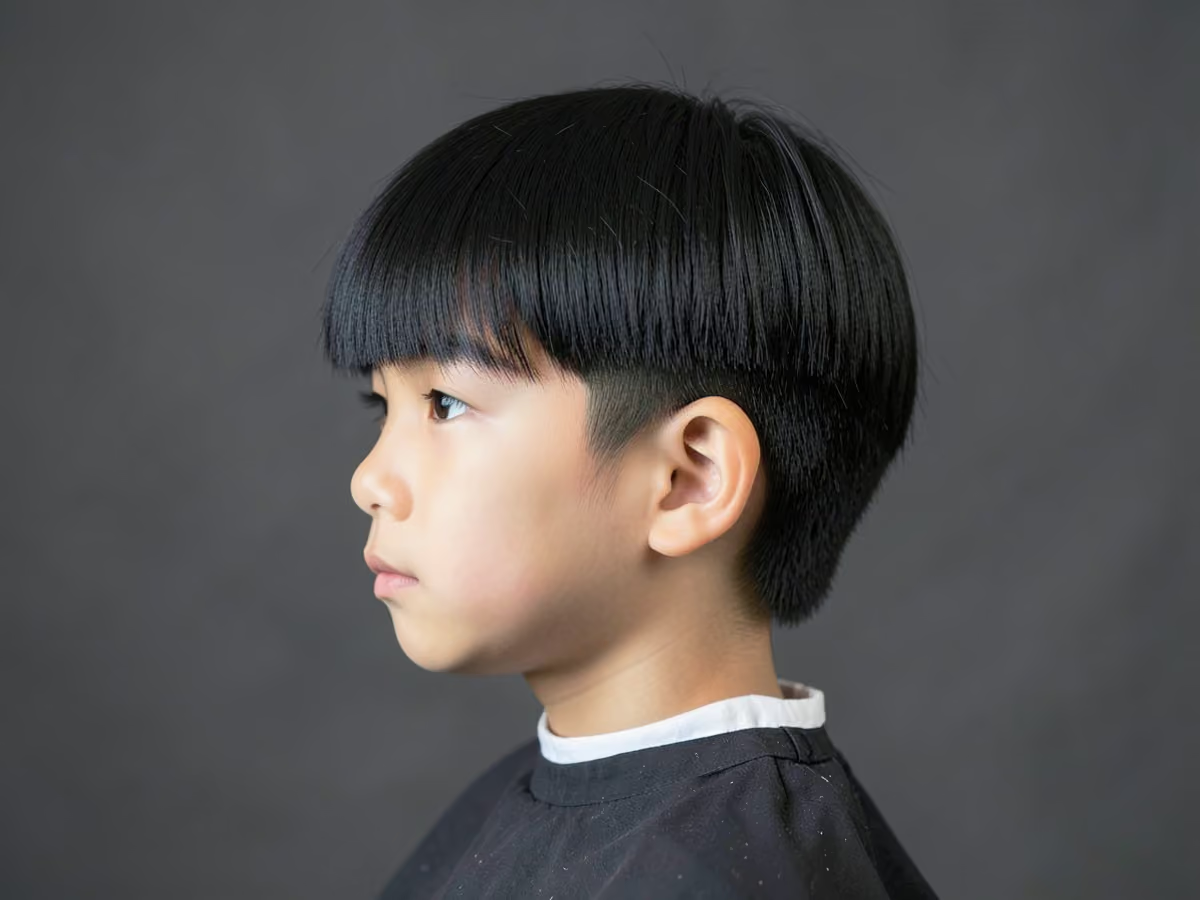
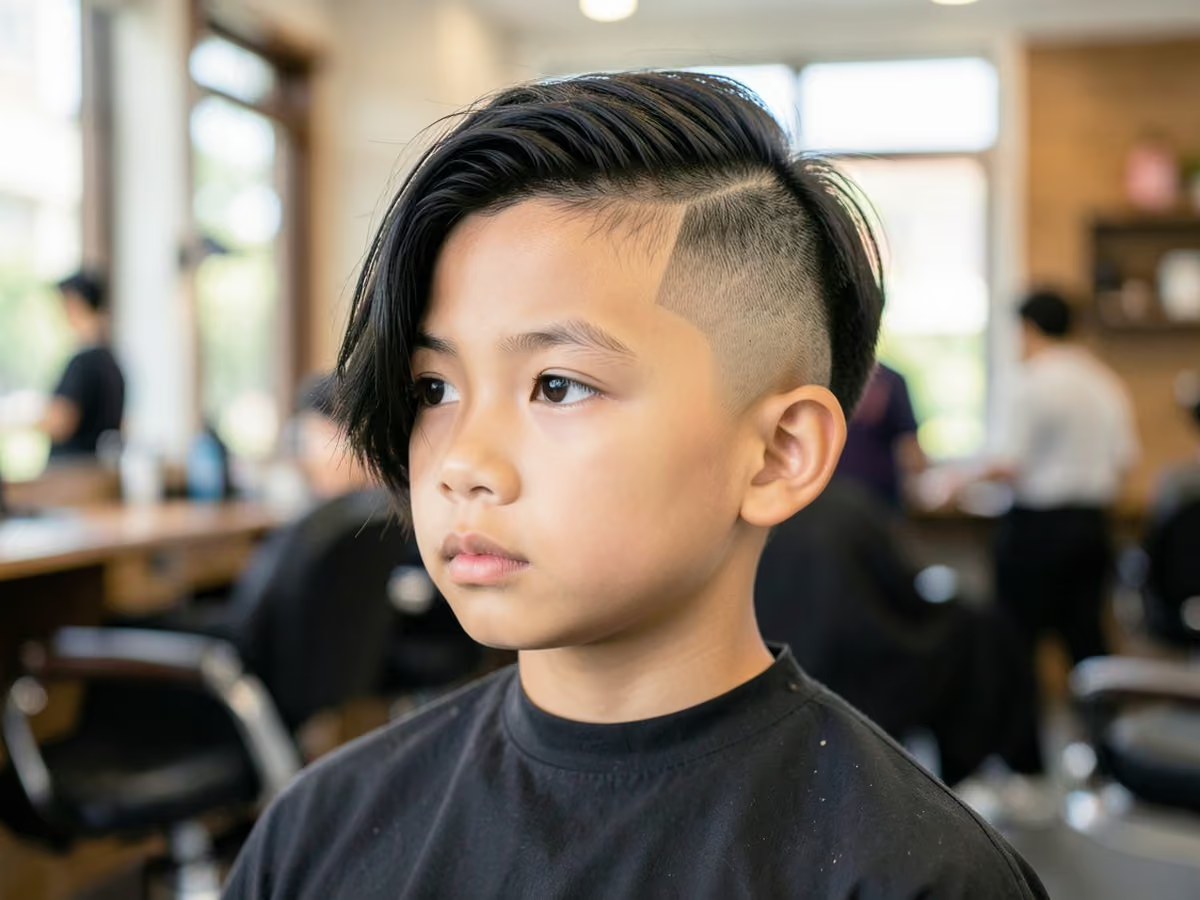
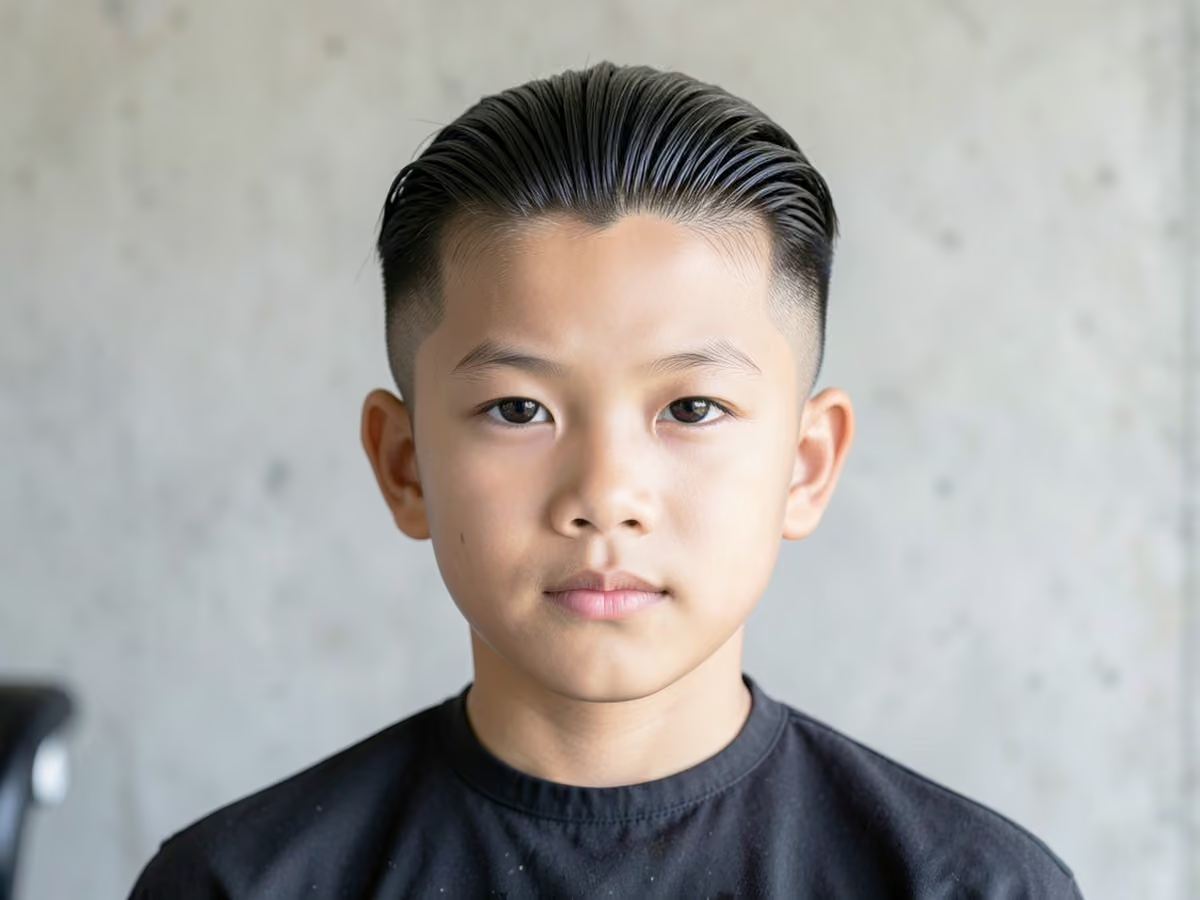
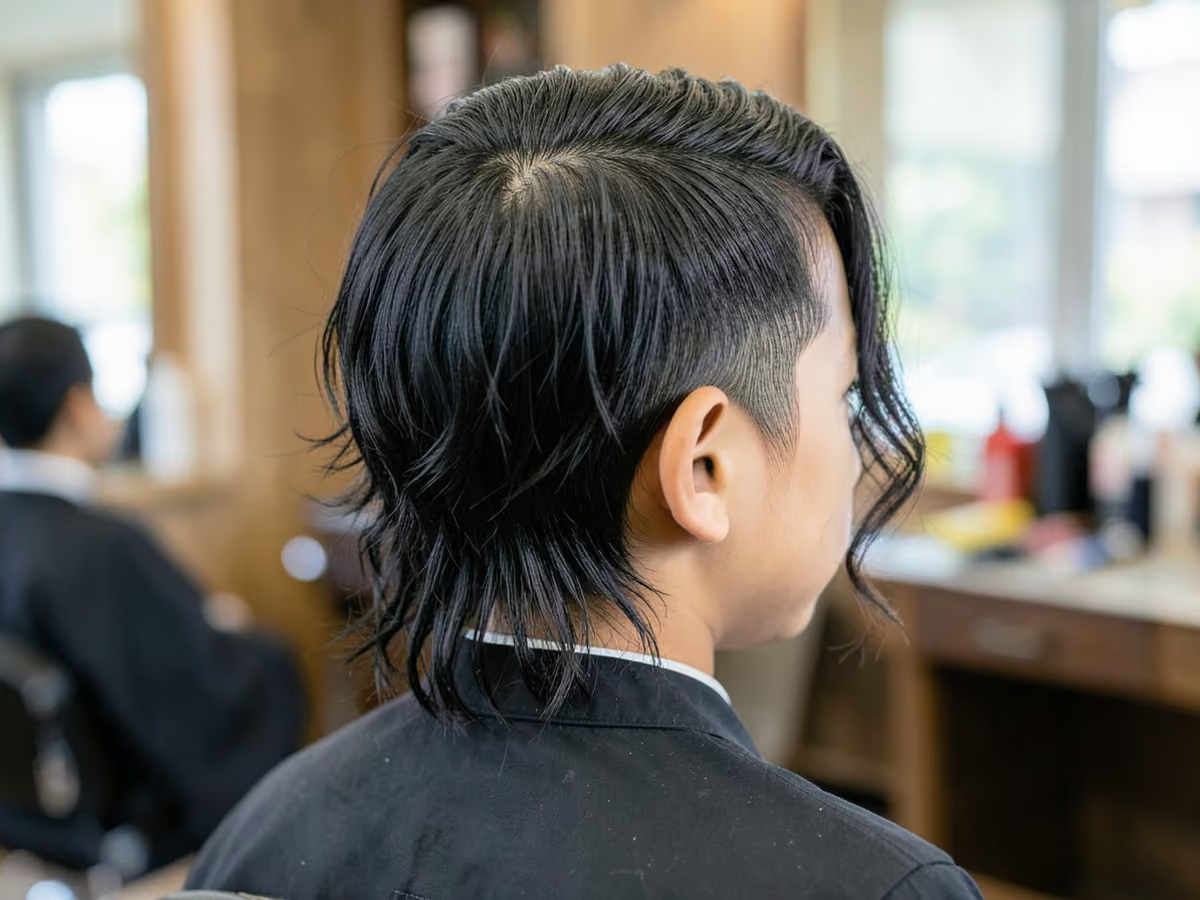
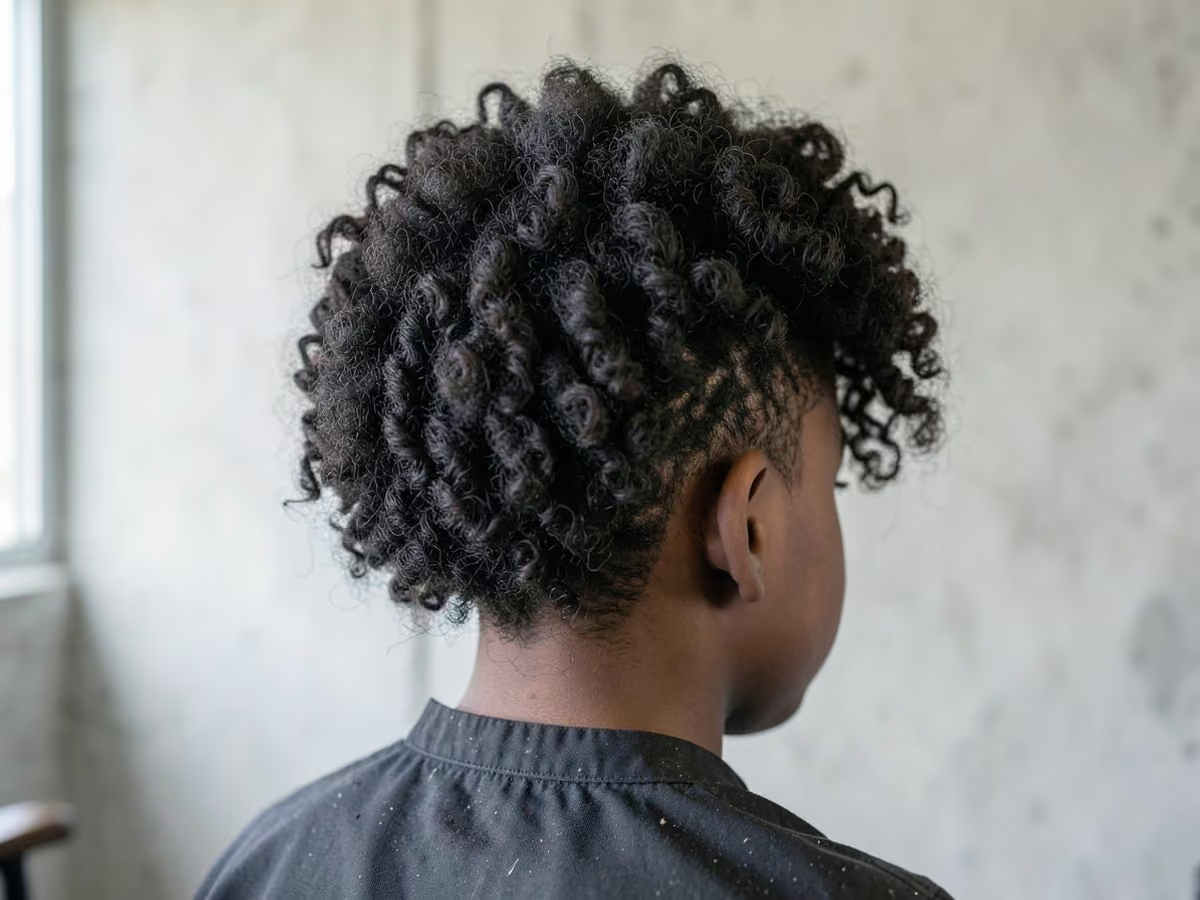
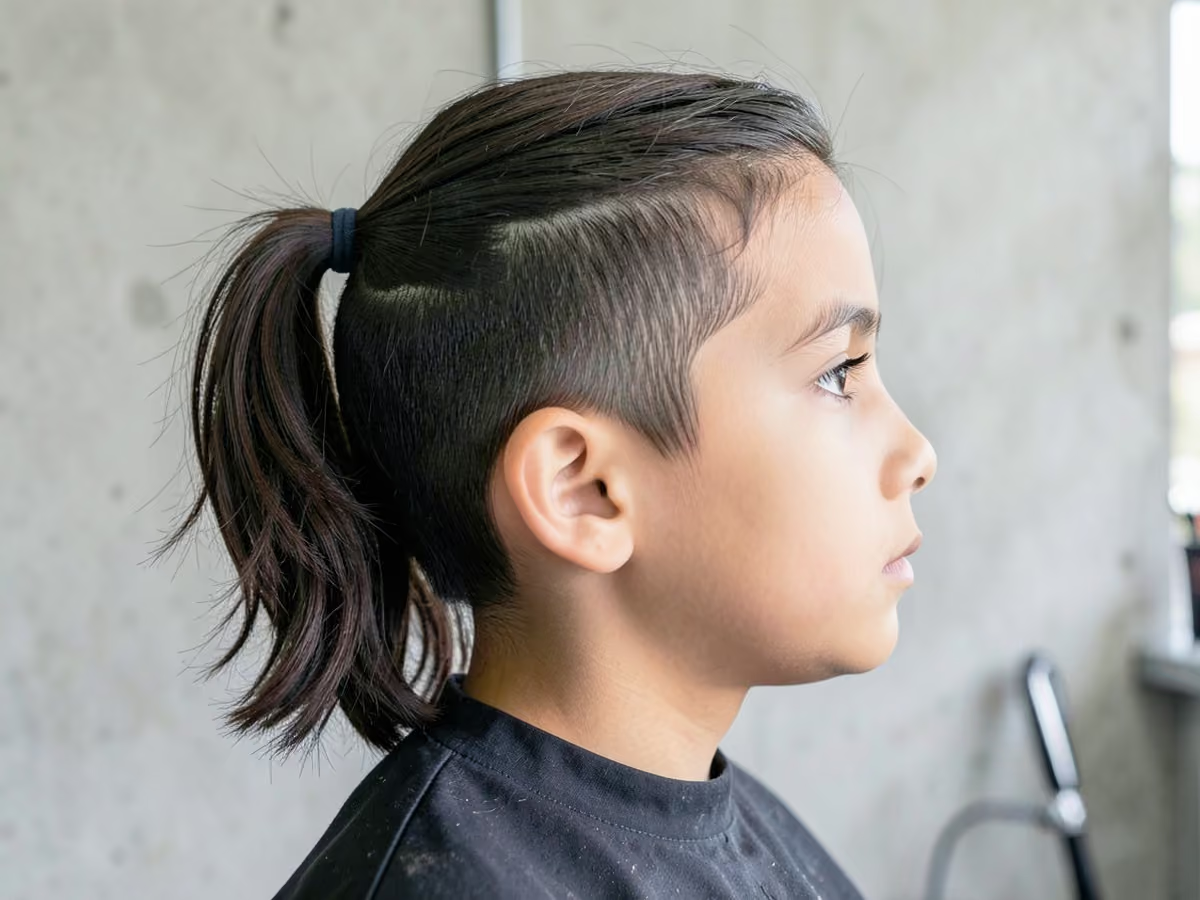
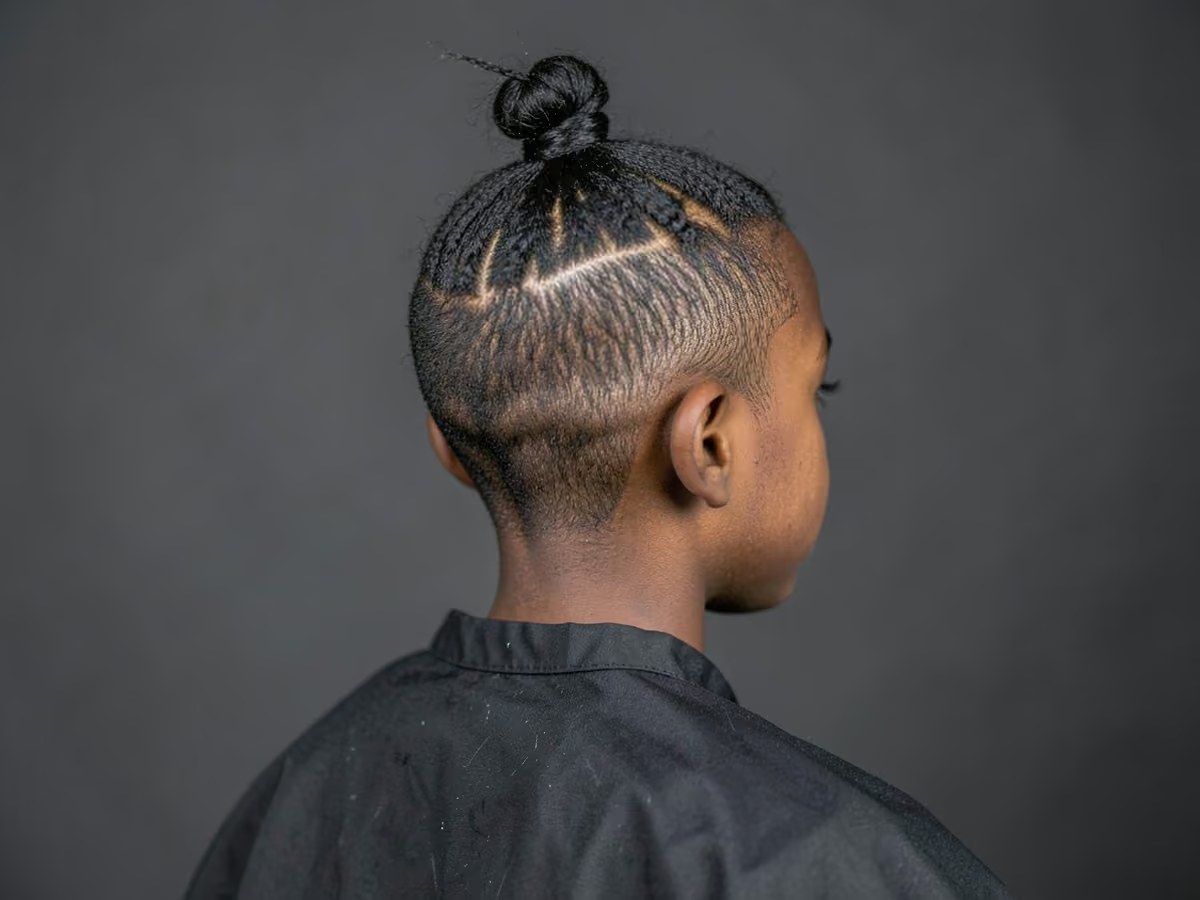
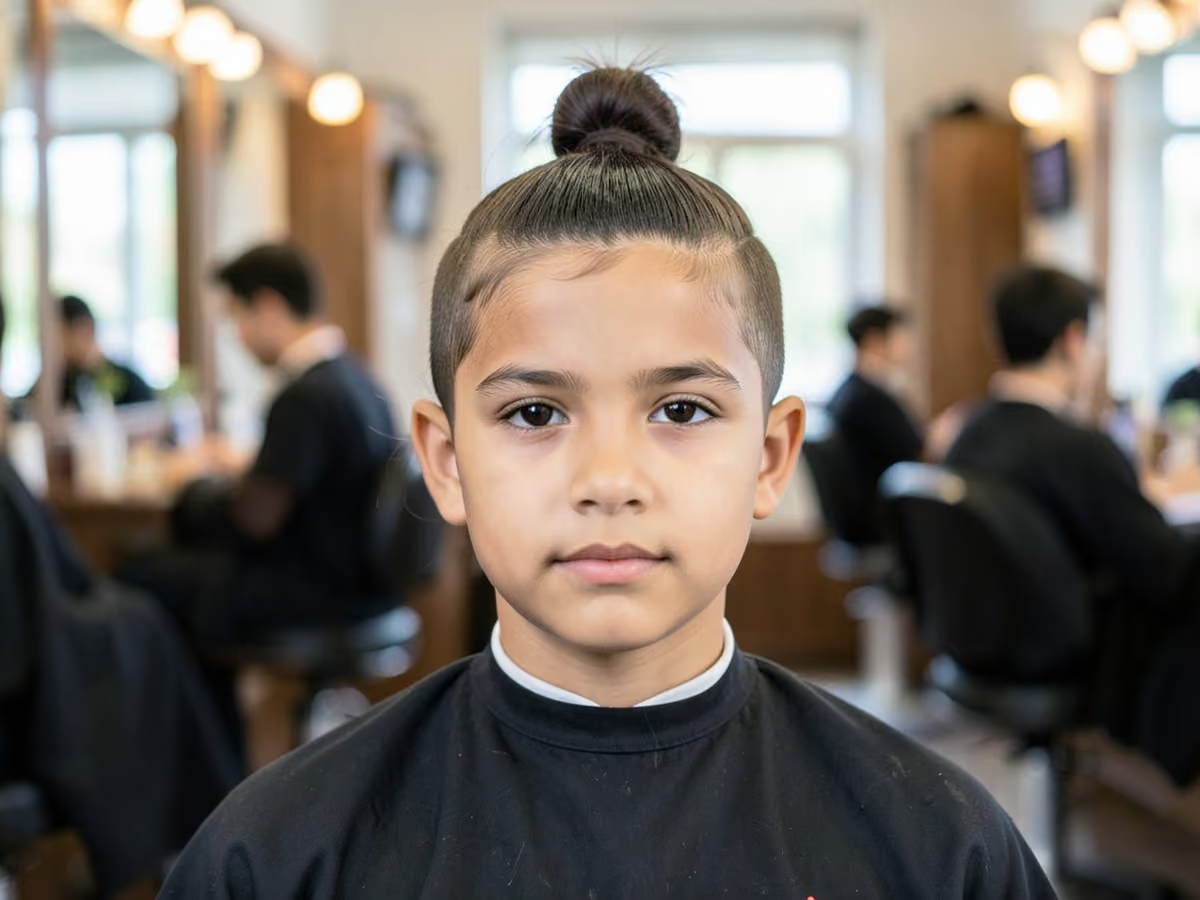
Quick answer: Long haircuts for boys that are easiest to live with are the shaggy layered cut, the skater cut, curtains, the long bob and a low ponytail. Ask for layers so the hair moves instead of sitting flat, keep it out of his eyes and book a shape-up every six to ten weeks.
Long Haircuts for Boys Styles at a Glance
Every style on this page with its clipper guard, top length and trim interval. Tap a name to jump to that card.
Long haircuts for boys suit kids who hate clippers, want to grow their hair or simply like how it moves. They take more washing and detangling than short cuts but far fewer barber visits. The 25 styles below cover shaggy and layered cuts, parts and fringes, long tops with tidy sides, each hair texture and ways to tie it back for sports and school.
What Counts as a Long Haircut for a Boy?
For boys, long usually means hair that covers the ears and reaches at least the collar at the back, often three to six inches on top. Some cuts stop at the chin, like a bob or skater cut, while others grow past the shoulders and can be tied back. What makes a long cut work is shape: layers to stop it sitting flat, a fringe kept out of the eyes and a tidy outline around the ears and neck. Without those, long hair on a child tends to look like a skipped appointment rather than a chosen style.
Longer hair is a natural choice for boys who dislike the buzz of clippers or sit badly in the chair, since most long cuts are done with scissors only. It is also simple to change later, because a long cut can be taken short at any visit. Families who swim often or live in hot climates may find it harder work, since long hair takes longer to dry and tangles more after chlorine or salt water.
How Do You Grow Out a Boy's Hair Without an Awkward Stage?
Every grow-out passes through a stage where the hair covers the ears, puffs at the sides and falls into the eyes. The way through is regular small trims rather than no trims. Every six to eight weeks, ask the barber to shape the sides and back while leaving the top alone, and to cut the fringe above the eyebrows. That keeps the outline tidy as the top catches up.
Headbands, clips and a little styling cream help through the middle months. Most boys reach chin length in about a year from a short cut, since hair grows roughly half an inch a month. Our how to grow your hair out guide has a month-by-month plan. The table below shows roughly what to ask for at each stage, though curly hair will look shorter at every step because of shrinkage.
How Do You Grow Out a Boy's Hair Without an Awkward Stage?
Stage
Typical length
What to ask for
Months 1–3
Over the ears
Trim around the ears and neck only, leave the top
Months 4–6
Covering the ears
Add layers so the sides do not puff out
Months 7–9
Near the chin
Shape the back and keep the fringe out of the eyes
Months 10–12
Chin to collar
Light dusting of the ends every 8–10 weeks
Which Boys Suit Long Hair?
Almost any boy can wear long hair, but texture decides how it behaves. Thick straight hair hangs heavily and needs layers to avoid a helmet shape. Wavy and curly hair looks fuller at the same length and benefits from cuts that leave room for curl. Fine hair tangles more easily and looks best at chin length or shorter. Coily hair is often grown into an afro, twists or locs rather than a hanging length.
Long hair also needs a child who will tolerate brushing. If daily detangling ends in tears, choose a shorter long cut like a skater or bob and add detangling spray. Many schools allow long hair on boys, but some uniform and sports rules require it tied back, so check the current policy. Boys who swim or play contact sports often prefer a length that ties back easily.
Filter the styles
Showing all 25 styles
Fade
Hair
Length
Shaggy and Layered Long Haircuts for Boys
Layers are what make long hair on a boy look like a style rather than a missed appointment. These cuts move when he runs, dry with natural texture and need a trim only every six to ten weeks.
Best For:Ages 6–14, oval or long faces + thick or wavy hair.
About This Style
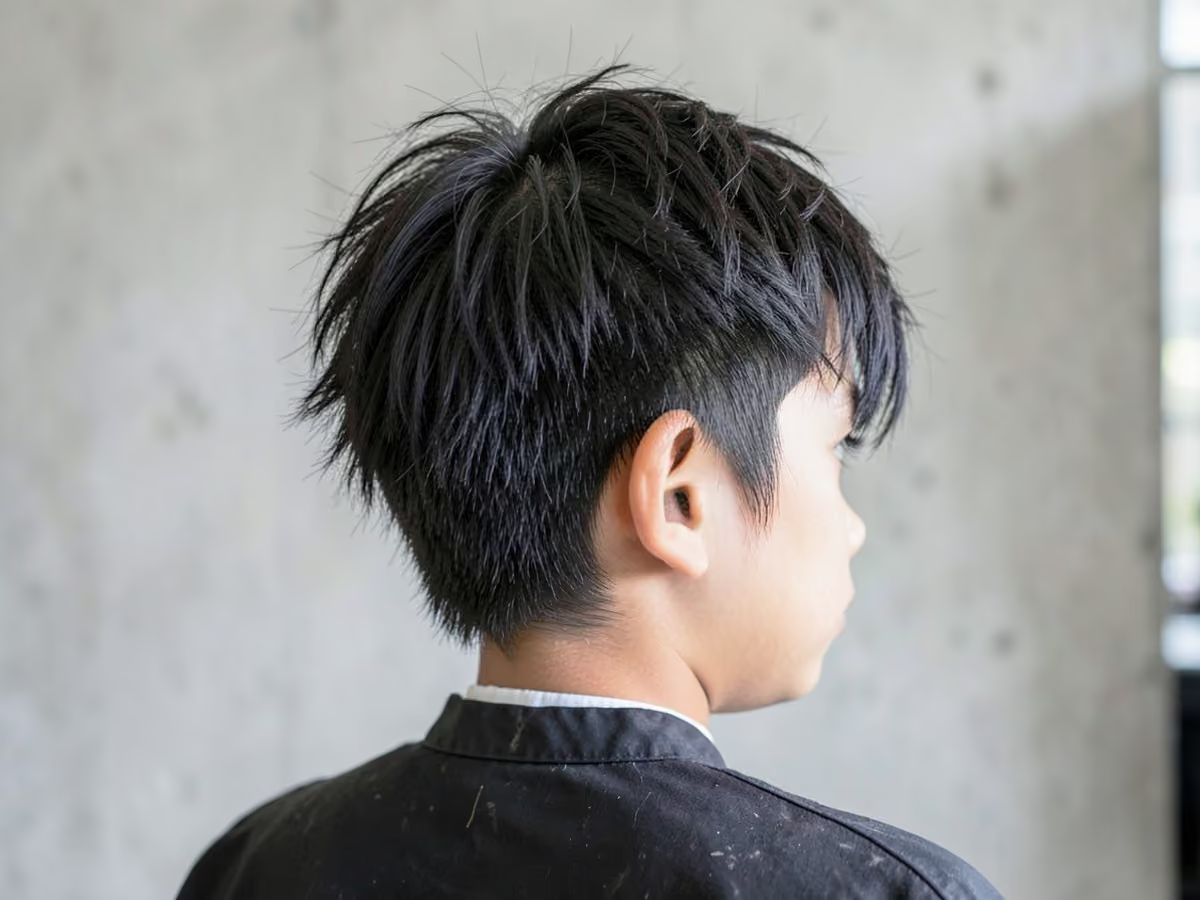
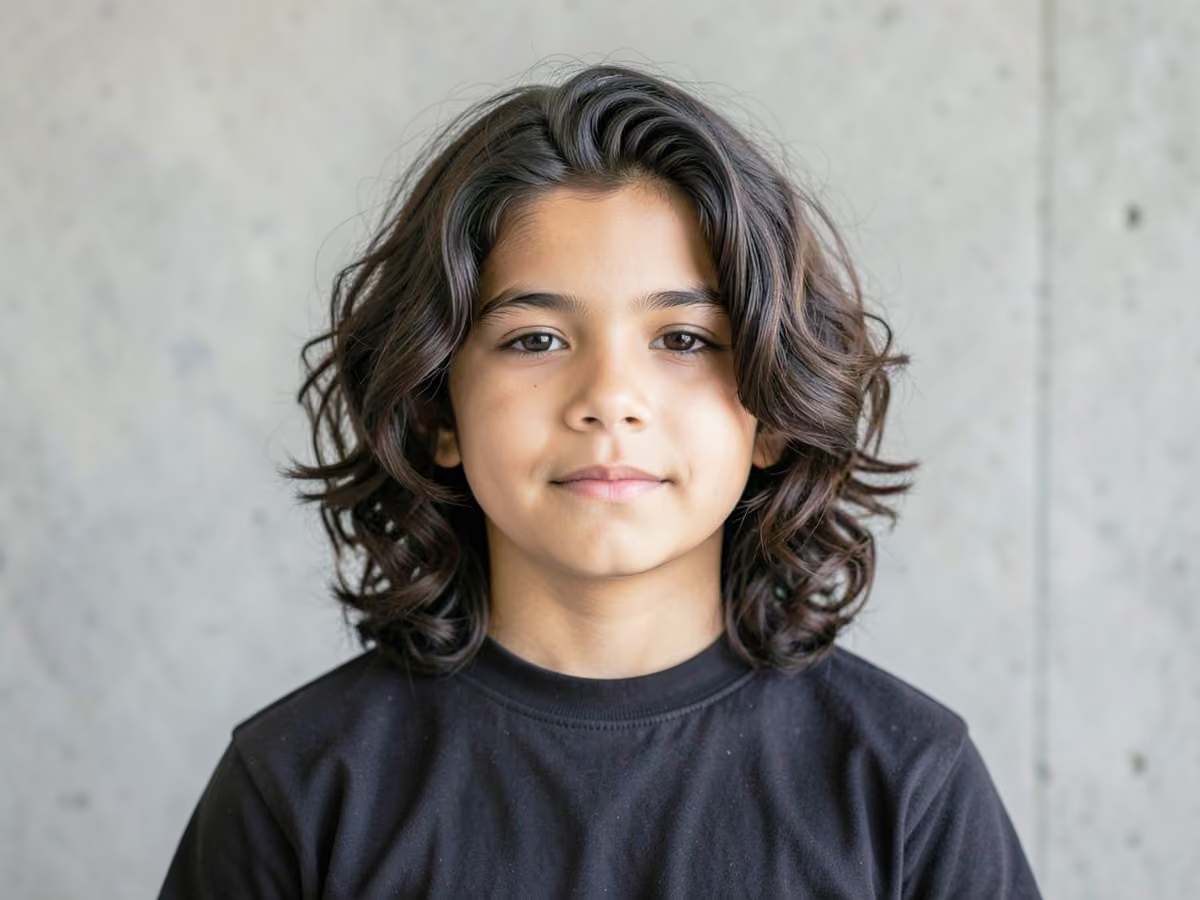
Choppy layers run through the top, sides and back, with lengths from about three inches at the crown to the collar at the nape. A messy fringe falls across the forehead. Because the layers are uneven on purpose, growing out barely changes the look, so families can stretch visits. Thick and wavy hair get the most movement; very fine hair can look thin.
How to Style at Home
Spray sea salt spray into damp hair from roots to ends.
Scrunch the hair with your hands and let it air-dry.
Shake the layers loose with your fingers once dry.
Ask Your Barber
"Shaggy cut for my son, keep the length at the collar, add choppy layers all over and a messy fringe above his eyes."
Trim:Every 6–8 weeks. The fringe gets long before the sides.
Best For:Ages 7–14, oval or heart faces + straight or wavy hair.
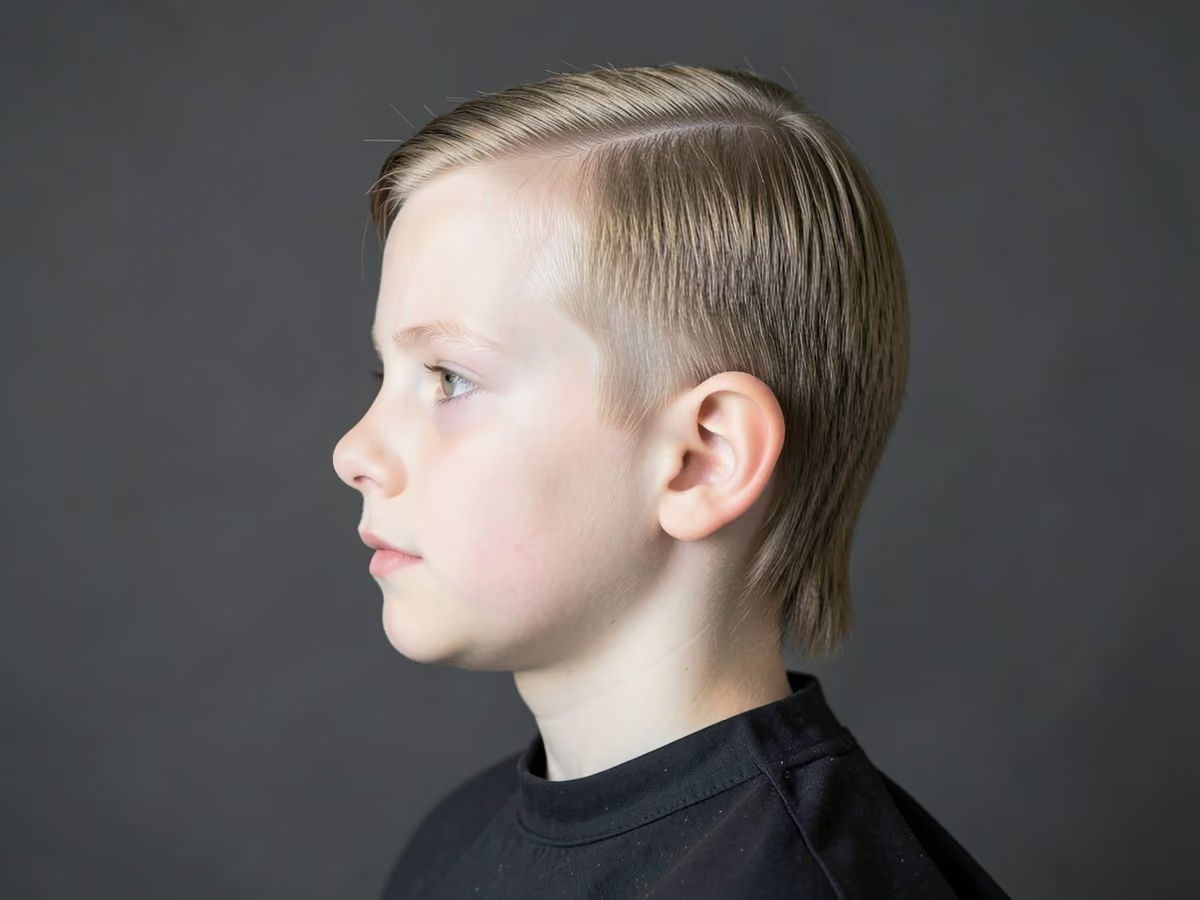
About This Style
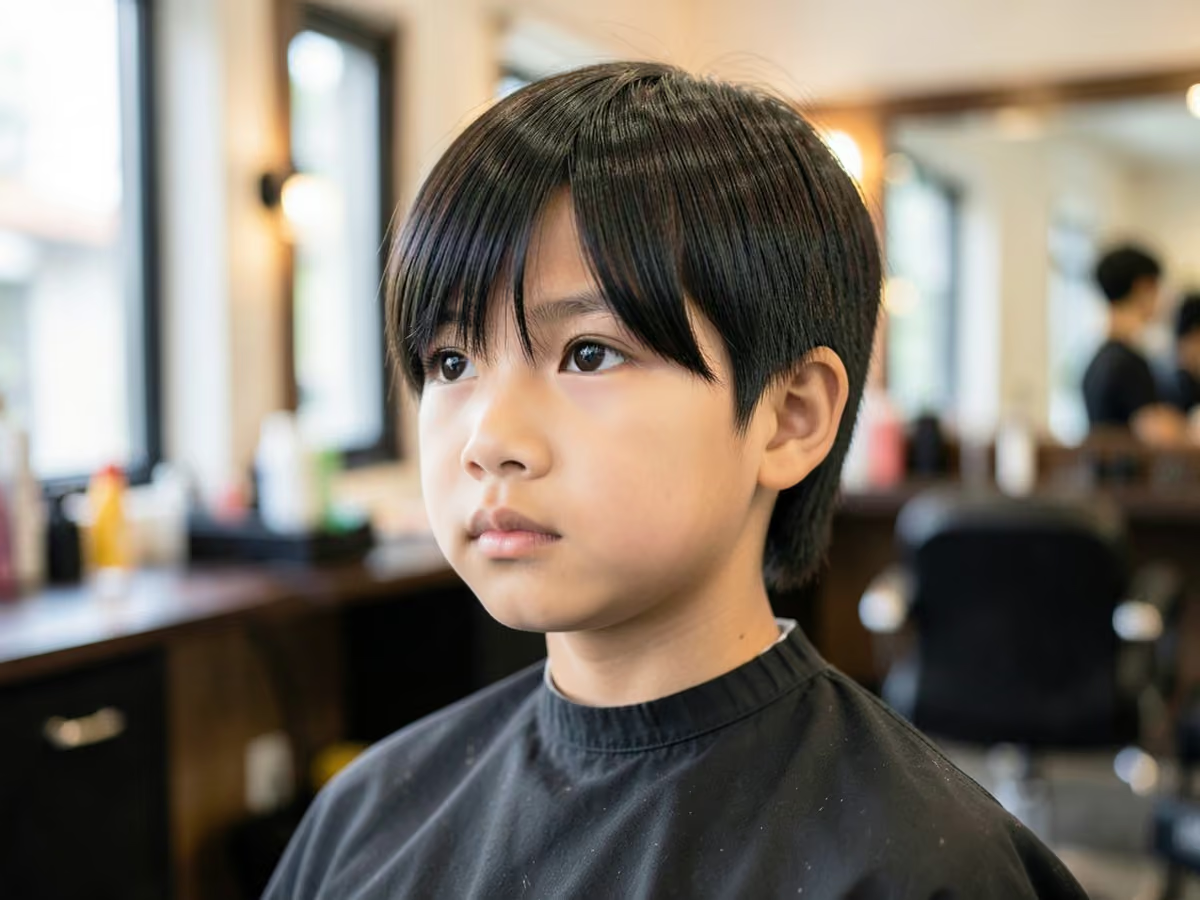
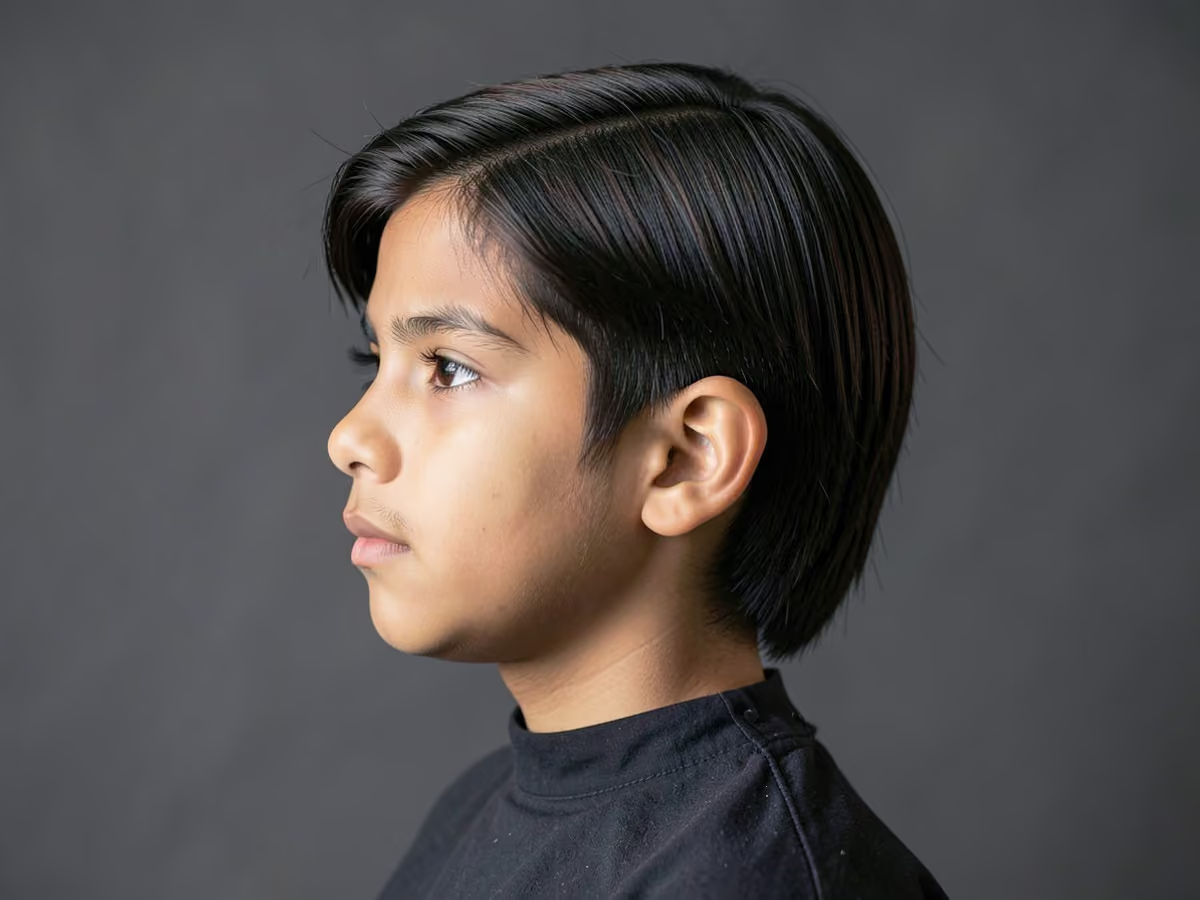
Hair falls straight down to cover the ears and the top of the collar, with a long, side-swept fringe that often brushes the eyebrows. Light layers keep it from looking blocky. Skaters and surfers popularized the shape, and it still suits boys who want hair in their eyes a little. A quick head flick puts it back in place, so it needs almost no styling.
How to Style at Home
Towel-dry and comb the fringe to one side.
Let the hair air-dry so it falls naturally over the ears.
Push the fringe aside with your fingers if it covers his eyes.
Ask Your Barber
"Skater cut, keep it covering the ears and touching the collar, light layers, long side-swept fringe trimmed to his eyebrows."
Best For:Ages 5–14, round or square faces + thick straight hair.
About This Style
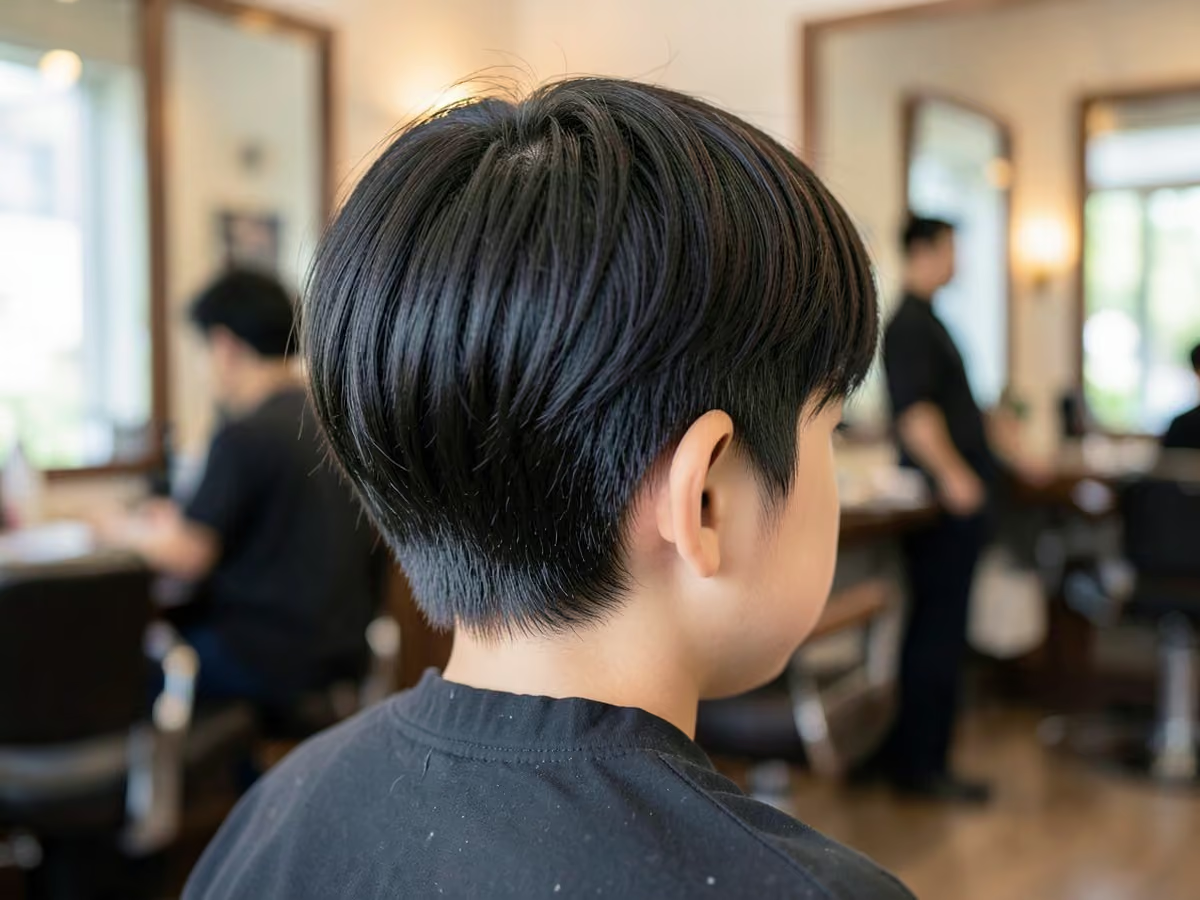
Softer than a shag, this cut uses long, smooth layers so the hair falls in a rounded shape around the head, usually ending between the ears and the chin. Round and square faces look longer when the layers start below the cheekbones. It is the easiest long cut to maintain, since it simply grows longer while keeping its outline.
How to Style at Home
Comb conditioner through wet hair to remove tangles.
Blow-dry on low heat while brushing the hair downward.
Smooth the ends with a small amount of styling cream.
Ask Your Barber
"Long layered cut, keep it between his ears and chin, smooth layers starting below the cheekbones, fringe above the eyebrows."
Trim:Every 6 weeks. The straight hemline grows uneven.
Best For:Ages 2–8, round or oval faces + straight or fine hair.
About This Style
One even length falls around the head to about chin level, with or without a fringe. Fine straight hair looks thicker with the blunt hemline than it would in layers. It is cut with scissors only and grows out simply, which makes it popular with younger boys. A fringe keeps hair out of the eyes, and tucking the sides behind the ears works for meals and play.
How to Style at Home
Brush the hair straight down from the crown after washing.
Tuck the sides behind the ears for school or meals.
Spray detangler on the ends before brushing dry hair.
Ask Your Barber
"Bob for my son, one length at his chin with scissors only, a soft straight fringe just above the eyebrows, and no layers."
Trim:Every 8–10 weeks. Only the ends and edges need tidying.
Best For:Ages 8–14, oval or square faces + wavy or thick hair.
About This Style
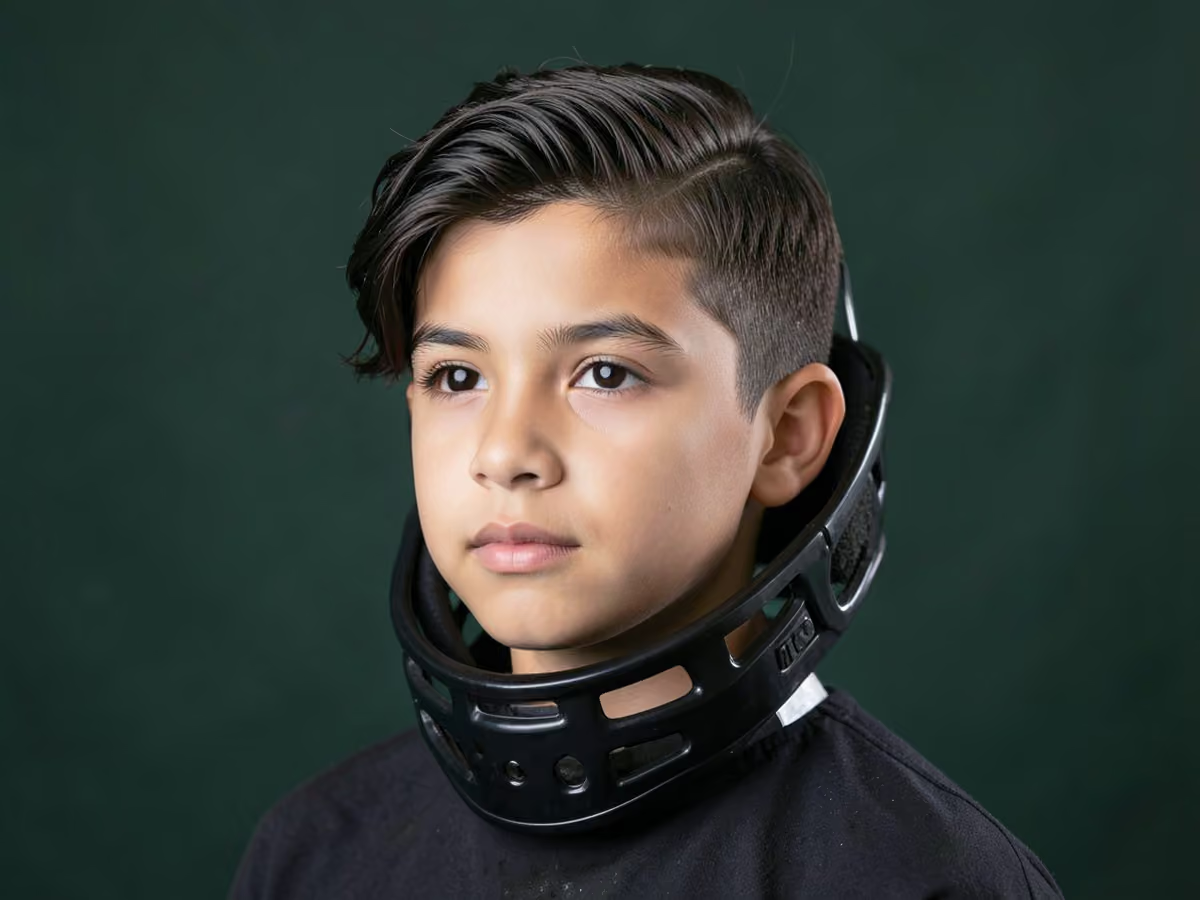
Pushed back off the face, the top flows behind the ears and curls out at the neck below a helmet, which is where the nickname comes from. Most boys grow it to collar length or a little past. Wavy hair forms the flicks at the back naturally. It needs layers so the back does not hang flat, and it suits active kids who wear helmets.
How to Style at Home
Comb the hair back with your fingers after washing.
Scrunch the ends at the neck so they flip outward.
Let it dry under a cap or helmet if he wants it flatter.
Ask Your Barber
"Hockey hair, keep the length to the collar, layer the back so the ends flip out, keep the top long enough to push back."
Best For:Ages 10–14, oval or heart faces + wavy or thick hair.
About This Style
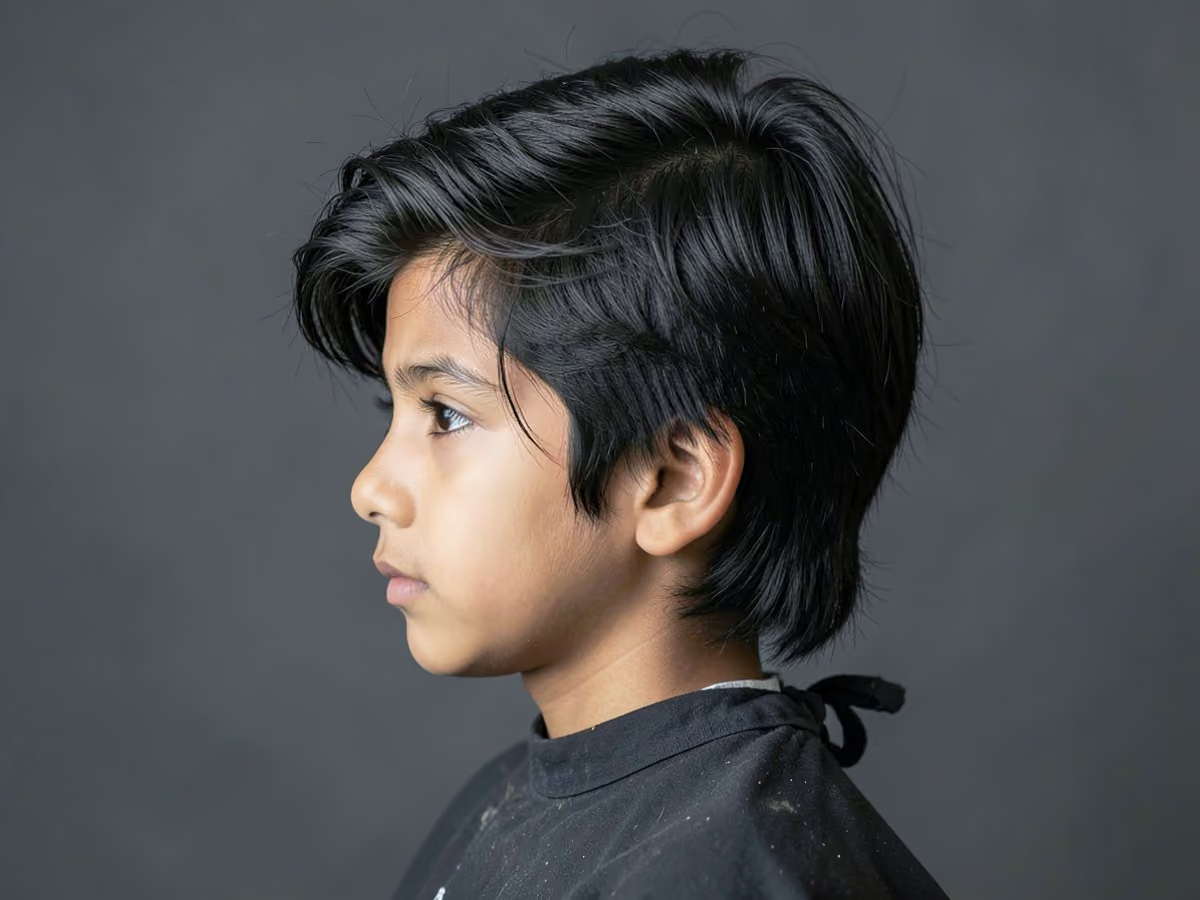
Short choppy layers sit at the crown and longer, wispy pieces hang down at the back and sides, blending a shag and a mullet. A heavy fringe usually covers the forehead. Older boys ask for it after seeing it online. It looks best on wavy or thick hair with natural texture, and texture spray helps straight hair hold the piecey shape.
How to Style at Home
Spray texture spray into damp hair at the crown.
Rough-dry with a dryer while ruffling with your fingers.
Twist a few longer pieces at the back for definition.
Ask Your Barber
"Wolf cut for my son, short choppy layers at the crown, longer wispy back to the collar, heavy fringe above his eyes."
Recommended Products
Sea Salt Spray
Texture Powder
Long Boys Haircuts with Parts and Fringes
How the front falls decides most of the look on a long cut. A center part, a side part and a fringe each frame the face differently. See curtains haircut for grown-up versions of the parted styles.
Trim:Every 8 weeks. Length at the front keeps the part falling well.
Best For:Ages 8–14, oval or long faces + straight hair.
About This Style
A straight center part splits hair of four inches or more evenly down each side, falling to around the cheekbones or chin. It is the plainest long style and needs only a comb. Straight hair lies flat on either side; wavy hair may lift at the roots. A long face looks shorter when the hair falls to the jaw.
How to Style at Home
Part damp hair down the middle with a fine-tooth comb.
Blow-dry each side down toward the jaw on low heat.
Smooth the lengths with a drop of argan oil.
Ask Your Barber
"Middle part for my son, keep about five inches at the front so it falls to his chin, light layers so it is not flat."
Trim:Every 6 weeks. Curtains need the fringe kept at the eyes.
Best For:Ages 9–14, oval or diamond faces + straight or wavy hair.
About This Style
Shorter than a full middle part, curtains keep about three to four inches at the front parted in the center so each side curves outward like an open curtain. The back and sides stay just over the ears. It frames the eyes and is a commonly requested cuts for tweens. Wavy hair curves outward on its own; straight hair needs a dryer.
How to Style at Home
Part the hair in the center while it is damp.
Blow-dry each side outward away from the face with a round brush.
Set the curve with a small amount of styling cream.
Ask Your Barber
"Curtains, about four inches at the front parted in the middle, sides just over the ears, layer the front so it curves out."
Best For:Ages 6–14, round or square faces + straight or wavy hair.
About This Style
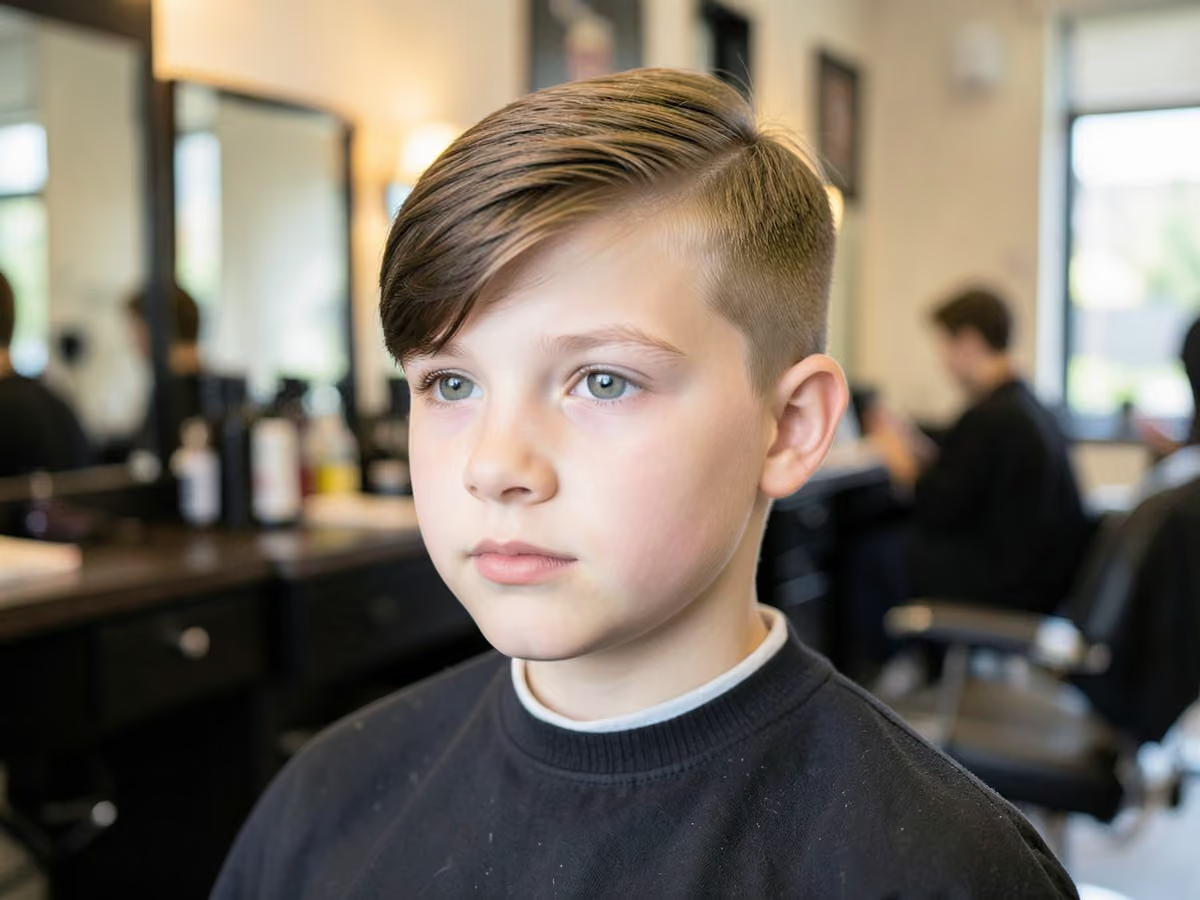
Swept across from a deep side part, the top hair of four to five inches falls over one side of the forehead and tucks behind the ear on the other. Round faces look narrower with the diagonal line. It dresses up easily for events with a comb and a little cream, then relaxes for weekends. A natural parting point keeps it lying flat.
How to Style at Home
Comb damp hair straight back to find his natural parting point.
Sweep the top across to the heavier side.
Tuck the shorter side neatly behind the ear to finish.
Ask Your Barber
"Long side part on his natural side, keep four to five inches on top so it sweeps across, sides covering the ears."
Trim:Every 4–6 weeks. The fringe needs trimming between full cuts.
Best For:Ages 5–12, long or oval faces + straight or fine hair.
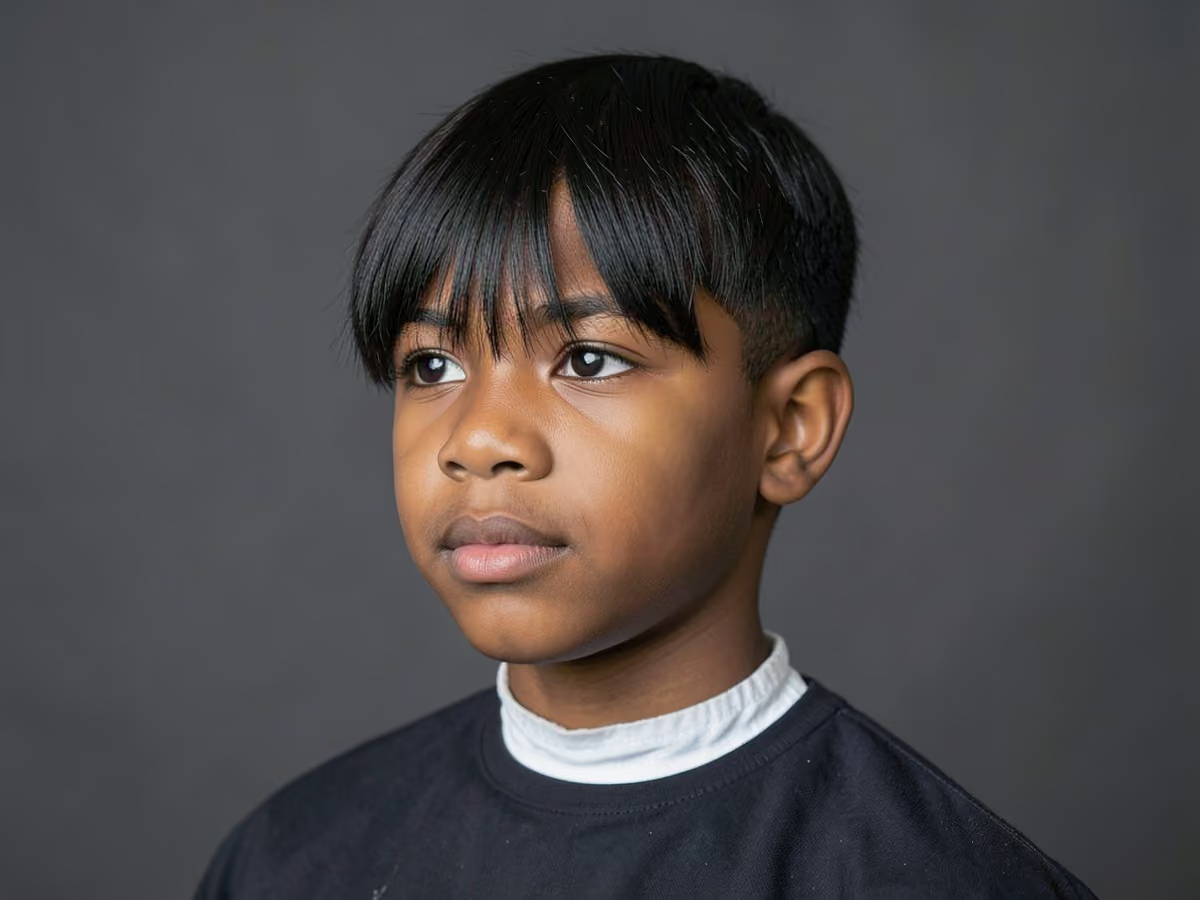
About This Style
A heavy fringe falls forward over the forehead to just above the eyes, while the sides and back grow over the ears. It shortens a long face and hides a high hairline or cowlick at the front. The fringe is the only part that needs frequent cuts, and many barbers offer a quick fringe trim between full appointments for little or no charge.
How to Style at Home
Comb the fringe straight down while the hair is damp.
Dry the fringe flat with a dryer on low heat pointing downward.
Separate it slightly with your fingertips so it is not solid.
Ask Your Barber
"Keep the length over his ears, heavy fringe cut just above his eyes, soft texture through the ends of the fringe."
Trim:Every 6 weeks. The rounded hemline needs a reshape.
Best For:Ages 2–9, round or oval faces + straight thick hair.
About This Style
Longer than a classic bowl, this version keeps a rounded outline that reaches the earlobes and the nape, with a full fringe. Thick straight hair holds the round shape best. Since it is all scissor work, toddlers and young boys sit through it easily. Ask for soft texture at the ends so it does not look like a helmet.
How to Style at Home
Brush the hair down and around the head after washing.
Trim nothing at home; leave the outline to the barber.
Use a little detangling spray before brushing dry hair.
Ask Your Barber
"Long bowl cut, rounded outline to the bottom of his ears, full fringe above the eyebrows, softened ends, scissors only."
Recommended Products
Detangling Spray
Kids Shampoo
Long Boys Hair with Tidy Sides
These cuts keep length on top or at the back but clear the sides with a taper or undercut. They suit boys who want long hair but feel hot, or schools that prefer a neat outline around the ears.
Trim:Every 3–4 weeks. Short sides show regrowth before the top.
Best For:Ages 9–14, oval or round faces + thick straight hair.
About This Style
Long hair on top, often four to six inches, falls over sides that have been clipped short with a #2 or #3 and no blend. The top can be pushed back, parted or tied. Removing the bulk underneath helps thick hair feel lighter and cooler. When the top is down, the clipped area is mostly hidden, which helps with school rules.
How to Style at Home
Comb the top back or to one side while damp.
Work a little matte paste through the ends for hold.
Brush the clipped sides down with a soft brush after styling.
Ask Your Barber
"Undercut, clip the sides and back with a #3 to the top of the ears, keep five inches on top, no fade."
Trim:Every 4–6 weeks. The taper softens before the length changes.
Best For:Ages 7–14, oval or square faces + wavy or curly hair.
About This Style
Most of the hair stays long, three to five inches through the top and sides, and only the sideburns and nape are tapered short with a #2. That small change makes long hair look intentional and keeps the neck cool. Wavy and curly hair benefit most, because the taper stops the outline from looking puffy at the bottom.
How to Style at Home
Apply leave-in or curl cream to damp hair.
Scrunch the top and sides, then let it air-dry.
Brush the tapered nape down with a soft brush.
Ask Your Barber
"Please keep the length on top and sides, just a low taper at the sideburns and back of the neck with a #2."
Trim:Every 6 weeks. The back needs shaping to sit flat.
Best For:Ages 9–14, oval or long faces + straight hair.
About This Style
Four or more inches of top hair is combed straight back with a light pomade, ending at the collar, while the sides are tapered close. It keeps long hair out of the face for sports and events without tying it. Straight hair stays back most easily. Water-based pomade washes out with one shampoo, which suits kids.
How to Style at Home
Apply water-based pomade to damp hair from roots to ends.
Comb the hair straight back from the forehead.
Smooth the sides behind the ears with your palms.
Ask Your Barber
"Could you keep four to five inches on top so it can be combed back to the collar, taper the sides with a #3."
Trim:Every 6 weeks. Sides need clearing as the back grows.
Best For:Ages 8–14, oval or heart faces + wavy or curly hair.
About This Style
Hair at the back grows past the collar, often to the shoulders, while the top is textured at two to three inches and the sides are kept short above the ears. Waves and curls give the back natural movement. It is a sports-season favorite for older boys. Ask for the sides to be scissor-cut or tapered rather than faded if school rules are strict.
How to Style at Home
Scrunch sea salt spray into the back and top.
Let the back air-dry so the waves form.
Push the top forward with your fingertips once it is dry.
Ask Your Barber
"Long mullet for my son, leave the back past the collar, short tapered sides above the ears and a textured top about three inches."
Recommended Products
Sea Salt Spray
Curl Cream
Long Hair for Boys by Hair Type
Texture changes how long hair hangs, tangles and dries. Choose the routine for his hair type rather than the length alone. Curly and coily hair need moisture most, while straight hair needs layers to avoid looking flat.
Best For:Ages 4–14, oval or round faces + loose or tight curls.
About This Style
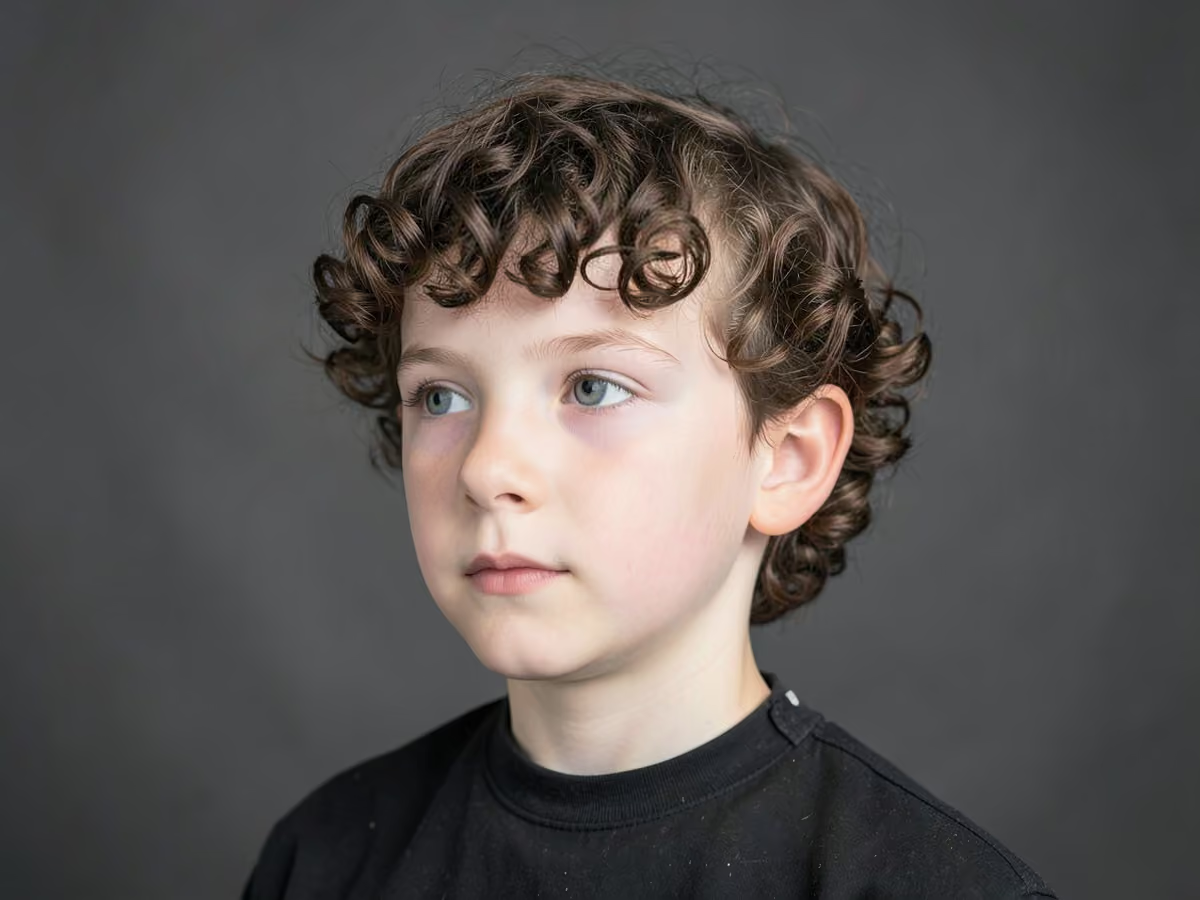
Curls are left to grow into a rounded shape that sits around the ears or chin, cut dry so each curl falls naturally. Shrinkage means the hair looks much shorter than it is stretched. Wet styling is key: brushing dry curls turns them to frizz. A wash-day routine of conditioner, a wide-tooth comb and curl cream keeps them defined.
How to Style at Home
Detangle only when wet and coated in conditioner.
Apply curl cream to soaking wet hair and scrunch upward.
Air-dry or diffuse, then avoid brushing until the next wash.
Ask Your Barber
"Cut his curls dry please, keep the length around the chin, a round shape with light layers and no thinning shears at all."
Trim:Every 8 weeks. Waves get heavy and flat when too long.
Best For:Ages 6–14, oval or square faces + wavy hair.
About This Style
Loose waves of four to six inches get long layers so they bend and move rather than pulling straight under their own weight. It is the classic beach look and the easiest long texture to manage. Sea salt spray brings out the bend after swimming. Too much conditioner can weigh the waves down, so keep it to the ends.
How to Style at Home
Mist sea salt spray evenly through towel-dried hair.
Twist a few sections around your finger to start waves.
Let it air-dry and try not to touch it too much.
Ask Your Barber
"Please keep his waves about chin length, long layers so they bend instead of hanging flat, fringe kept off his eyes."
Trim:Every 6–8 weeks. Straight ends show splits and unevenness.
Best For:Ages 5–14, round or square faces + straight or fine hair.
About This Style
Straight hair shows every line, so the cut relies on precise ends and light layering to avoid a flat, heavy look. Ear to chin length works best for fine straight hair; thicker straight hair can go to the collar. A volumizing spray at the roots adds lift. Expect static in winter, which a drop of argan oil smooths.
How to Style at Home
Spray thickening spray at the roots before drying.
Blow-dry upward at the roots on low heat for lift.
Smooth static with a drop of argan oil on the ends.
Ask Your Barber
"Keep his straight hair at chin length, light layers so it does not hang flat, clean ends and a soft fringe above his eyebrows."
Trim:Every 6–8 weeks. Bulk builds up at the sides.
Best For:Ages 7–14, oval or long faces + very thick hair.
About This Style
Thick hair grows out as well as down, so long thick hair needs weight taken out from underneath and through the middle. Barbers use internal layers or point cutting rather than thinning shears, which can leave frizz. The result is a shape that sits close to the head. Drying takes longer, so wash in the evening.
How to Style at Home
Wash in the evening so it has time to dry.
Comb a little styling cream through the lengths.
Tie it in a loose low ponytail for sleep.
Ask Your Barber
"Take weight out of his thick hair with internal layers, keep the length at the collar, and please use no thinning shears."
Trim:Every 8 weeks. A shape-up keeps the round outline.
Best For:Ages 4–14, oval or long faces + coily or 4C hair.
About This Style
Coily hair grown out to three inches or more is picked into a large, round shape and shaped with scissors every couple of months. It can also be stretched in twists or puffs between washes. Moisture is the main job: coily hair dries out fast and breaks if picked dry. The Black boys haircuts page has shorter coily styles.
How to Style at Home
Spray the hair with water and leave-in before picking.
Pick from the roots outward in small sections.
Cover with a satin bonnet at night to prevent breakage.
Ask Your Barber
"Shape his afro round and even, keep the length, only take off dry ends, tidy around the neck and ears with scissors."
Recommended Products
Afro Pick
Leave-In
Scalp Oil
Tied-Back Long Hair for Boys
Tying long hair back keeps it out of the way for sports, school and hot days. Use soft fabric ties instead of rubber bands, and change the position every few days to protect the hairline from pulling.
Trim:Every 8–10 weeks. Ends need dusting to remove splits.
Best For:Ages 6–14, oval or long faces + shoulder-length hair.
About This Style
Shoulder-length hair is gathered loosely at the nape with a soft tie, leaving a few shorter pieces free at the front. It meets most school and sports tie-back rules. The hair needs to reach at least the bottom of the neck to stay in. Keep the tie loose and below the crown to avoid pulling at the temples.
How to Style at Home
Brush the hair back smoothly from the forehead.
Gather it at the nape and tie loosely with a fabric band.
Pull a few front pieces loose so it does not look tight.
Ask Your Barber
"Could you keep the length past his shoulders for a ponytail, even out the ends, light layers at the front for loose pieces."
Trim:Every 8–10 weeks. Only the ends and outline need cutting.
Best For:Ages 8–14, oval or square faces + thick or wavy hair.
About This Style
Hair from the top is twisted into a small bun at the crown, often with the sides kept shorter or tapered. It keeps long hair off the neck in summer and out of the face for martial arts and gym. The top needs about five inches. Avoid wearing it tight every day, since repeated pulling at one spot can thin the hair there.
How to Style at Home
Gather the top hair at the crown with your hands.
Twist it into a small bun and secure with a soft tie.
Leave the bun loose enough that it does not pull.
Ask Your Barber
"Please keep five inches or more on top for a top knot, taper the sides and back with a #3, tidy the neckline."
Trim:Every 8 weeks. The lower layer needs trimming to stay even.
Best For:Ages 7–14, oval or heart faces + wavy or straight long hair.
About This Style
Only the top section is tied into a small bun, while the rest falls loose to the collar or shoulders. It keeps hair out of his eyes during class while leaving the length visible. Wavy hair looks fuller in this style. It needs the top to reach at least the crown when pulled back, so it suits boys well into a grow-out.
How to Style at Home
Section the hair from the temples to the crown.
Tie that section into a small bun with a soft band.
Let the rest hang loose and scrunch in a little spray.
Ask Your Barber
"Could you keep the length to his shoulders, long enough on top to pull into a half-up bun, with light layers underneath for movement."
Best For:Ages 6–14, oval or long faces + 4C or coily hair.
About This Style
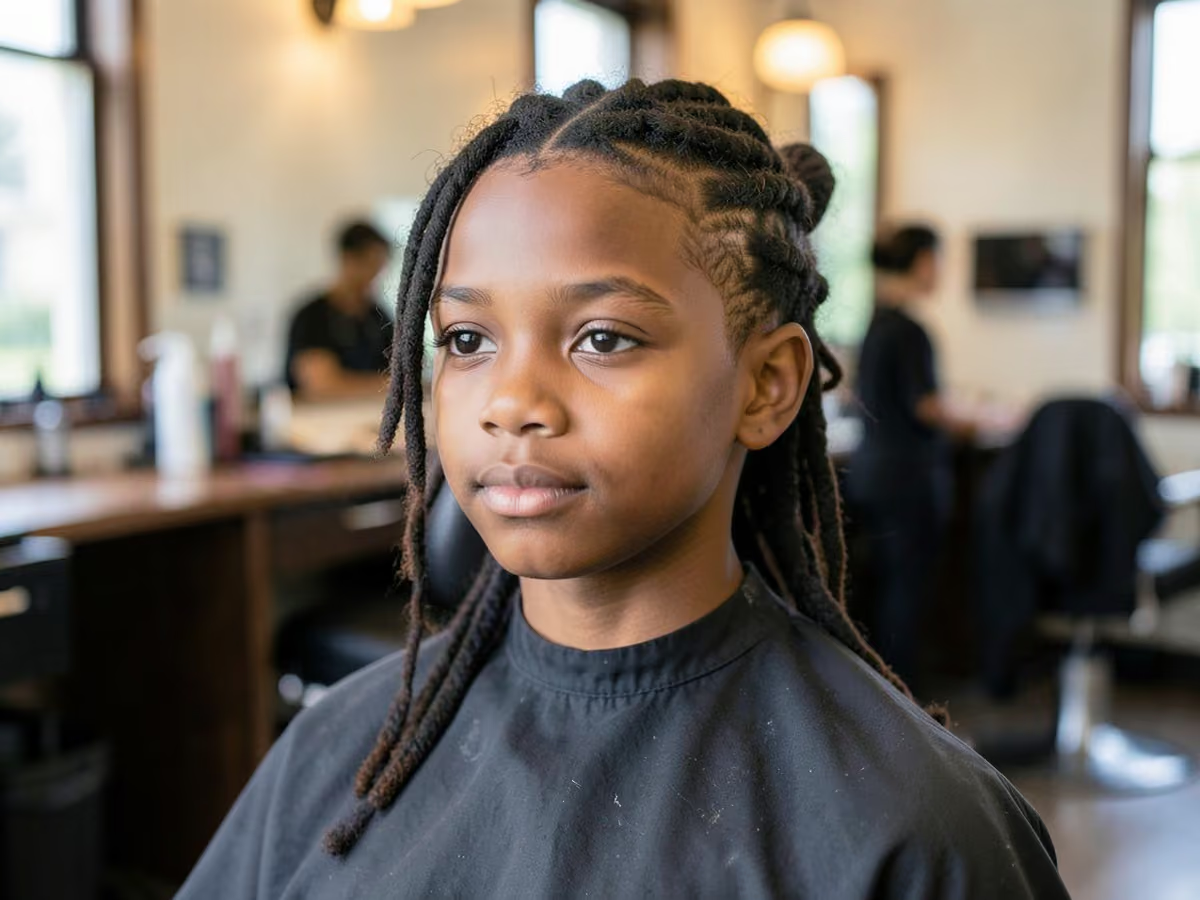
Mature locs that reach the collar or shoulders can be worn down, tied back or gathered in a loose bun. Retwisting the roots every four to six weeks keeps them neat. Avoid tight retwists and heavy buns, since the weight of long locs can pull on young hairlines. A taper around the edges keeps the outline clean.
How to Style at Home
Wash locs with a residue-free shampoo every one to two weeks.
Squeeze locs dry with a towel and let them air-dry fully.
Tie them back loosely for sports with a fabric band.
Ask Your Barber
"Retwist his locs gently at the roots, not too tight, taper the edges with a #2, trim any thin ends."
Trim:Every 8–10 weeks. A headband hides a grown fringe.
Best For:Ages 6–14, oval or long faces + any long hair type.
About This Style
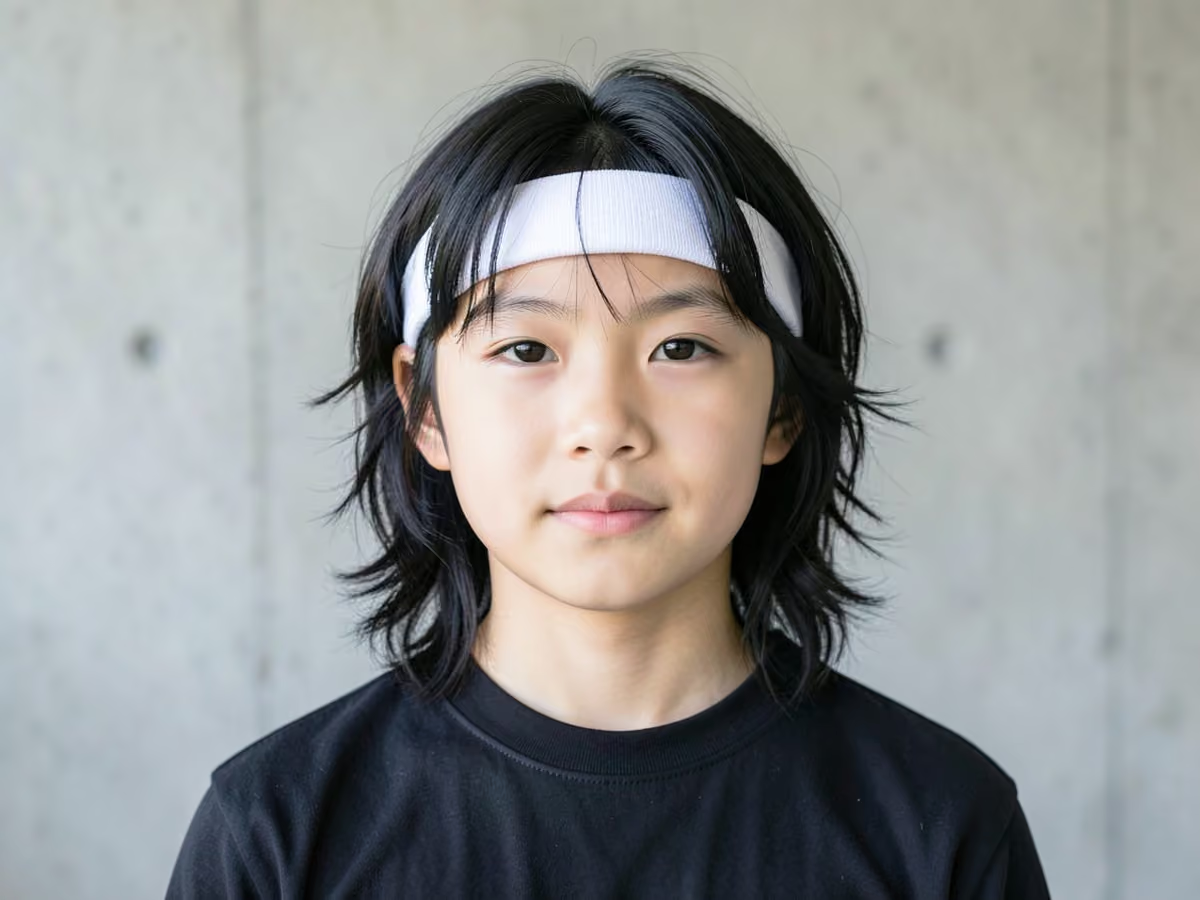
A soft sports headband pushes the hair back off the forehead while the length hangs free behind it. Soccer, basketball and tennis players often wear long hair this way. It also gets boys through the awkward grow-out phase when the fringe sits in their eyes. Choose a wide, soft band so it does not rub the hairline.
How to Style at Home
Brush the hair back off the forehead with a paddle brush.
Slide a soft headband on from the back of the neck upward.
Pull a few strands forward if he wants a looser look.
Ask Your Barber
"Keep the length for my son, light layers through the back, and leave the front long enough to sit back under a headband."
Recommended Products
Detangling Spray
Sea Salt Spray
How Do You Ask the Barber for a Long Boys Haircut?
Start by saying you want to keep the length, then name what to change. For example, keep it at the chin, add layers through the sides and back, and cut the fringe so it sits above the eyebrows. Say scissors only if you want to avoid clippers. Bring a photo of the shape you want, because words like shaggy and layered mean different things to different stylists, and show where you want the shortest pieces to fall.
Some barbershops rarely cut long hair, so check photos of their work first or try a stylist who cuts long hair on adults. Ask for the hair to be cut dry or checked dry if it is wavy or curly, since wet curls look much longer than they dry. The long hairstyles guide shows grown-up versions of these cuts. Tell the barber how much time you spend on his hair in the morning, since some shapes need a dryer and others only need a towel.
Clipper Guards Used in Long Haircuts for Boys Styles
A clipper guard is the plastic comb that clips onto the blade and sets how much hair is left: a #1 leaves 3 mm (1/8 inch), each step up adds about 3 mm. The right column lists the cards on this page that call for each guard. See the full clipper guard numbers guide for the complete chart.
Clipper guard sizes for long haircuts for boys styles
Wash two or three times a week with a gentle kids shampoo and always use conditioner on the lengths. Detangle from the ends up with a wide-tooth comb while the hair is damp and coated in conditioner or detangling spray. Brush dry hair once in the morning and once before bed, and tie long hair back loosely at night or for sports to cut down on knots.
Avoid tight elastics and the same ponytail spot every day, since steady pulling can thin the hair at the hairline. Use soft fabric ties instead of rubber bands. Trim the ends every eight to ten weeks to remove split ends. If you see itching, flakes or nits, deal with the scalp first; long hair is easier to check under good light with a fine comb.
Which Long Haircuts for Boys Is Right for You?
Pick your hair type and how much upkeep you will put in. The matches below come from the Best For and Maintenance notes on each card. Upkeep follows the Maintenance badge: low means a cut every 3 to 6 weeks and almost no daily styling, high means weekly line-ups or daily product.
Q1: How often should a boy with long hair get a haircut?+
Every six to ten weeks is typical. Shorter long cuts like the skater or bob need a shape-up closer to six weeks, while shoulder-length hair can go ten weeks with only the ends dusted. Book sooner if the fringe reaches the eyes, since that is usually the first thing to bother him at school.
Q2: How long does it take to grow a boy's hair to his chin?+
Hair grows roughly half an inch a month, so going from a short crop to chin length takes about ten to twelve months. Small trims along the way slow it slightly but keep the shape tidy. Curly hair looks shorter than it is because of shrinkage, so it may take longer to look long.
Q3: What is the best long haircut for a boy with thick hair?+
A layered or shaggy cut works best on thick hair because the layers remove weight and stop the sides puffing out. Ask the barber to cut internal layers rather than thinning the ends with thinning shears, which can create frizz. Chin length is easier to manage than shoulder length for most families.
Q4: How do you stop long hair tangling on a boy?+
Detangle from the ends upward while the hair is wet and full of conditioner, using a wide-tooth comb. Use detangling spray on dry hair, brush before bed and tie the hair loosely in a low ponytail or braid for sleep and sports. Regular trims also stop split ends from catching.
Q5: Can boys with long hair wear it to school?+
In most schools yes, though rules vary and some uniform, private or sports programs ask boys to tie long hair back or keep it above the collar. Read the current dress code or ask the school office. A low ponytail, half-up bun or headband usually meets tie-back rules.
Q6: What should I ask for if my son's long hair is growing out awkwardly?+
Ask the barber to tidy the outline and add light layers at the sides and back while leaving the top length alone. Cutting the fringe just above the eyebrows makes the biggest difference. A side part or tucking the hair behind the ears also helps until the length evens out.