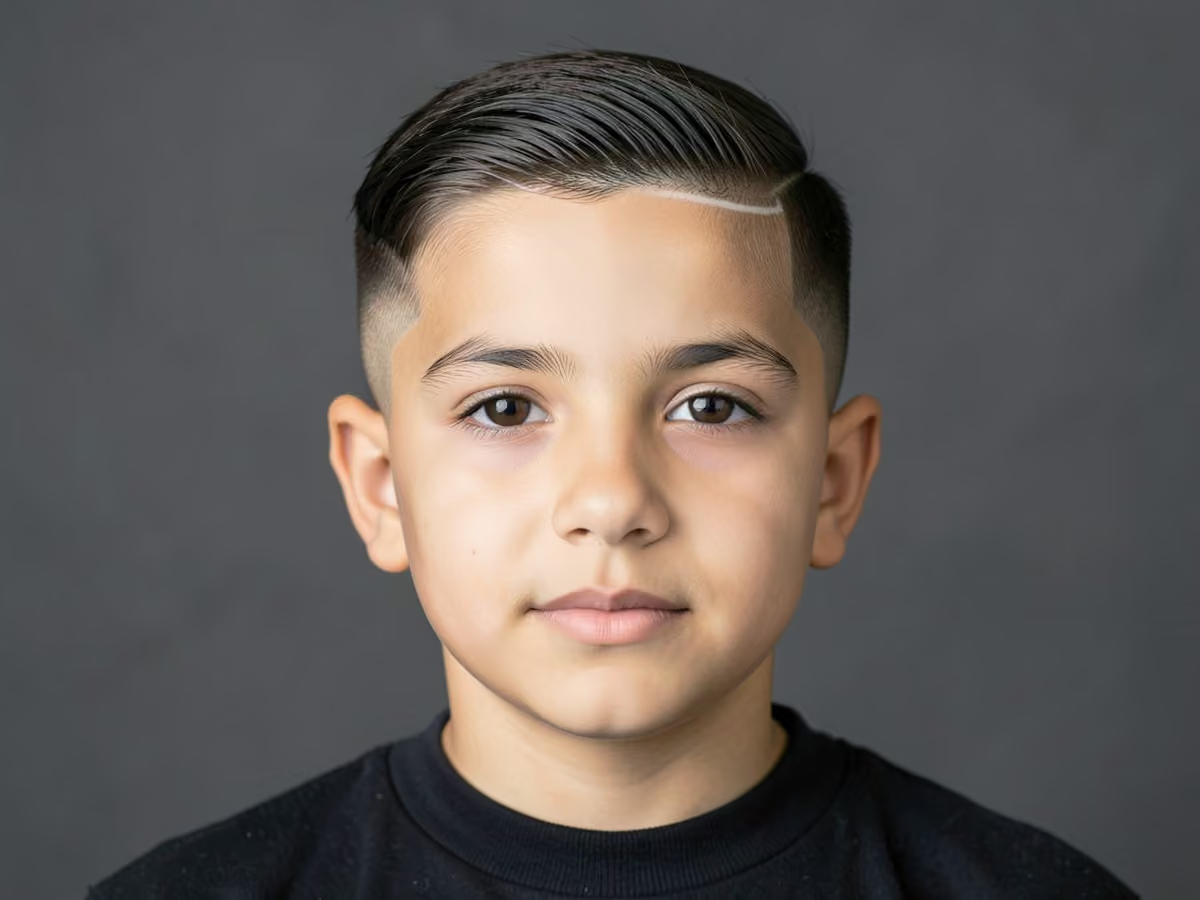
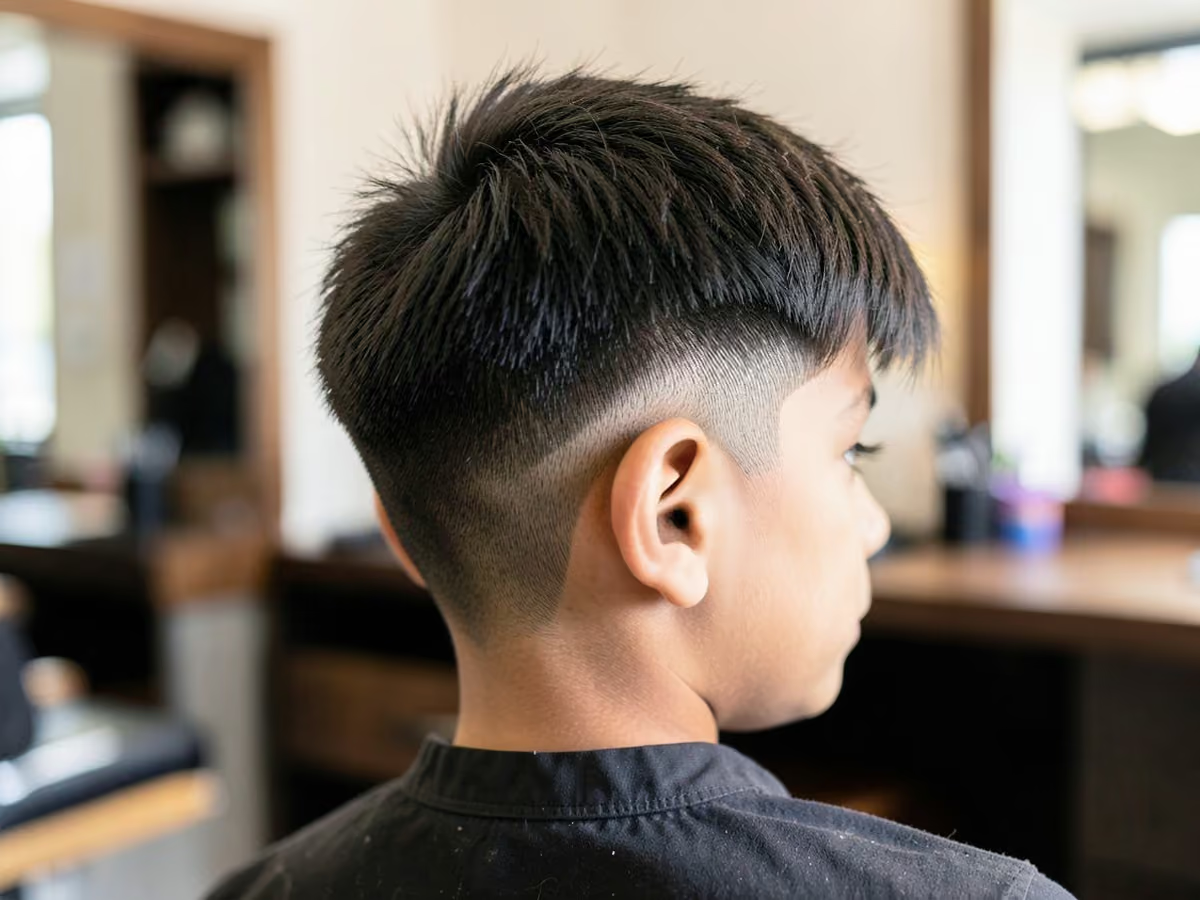
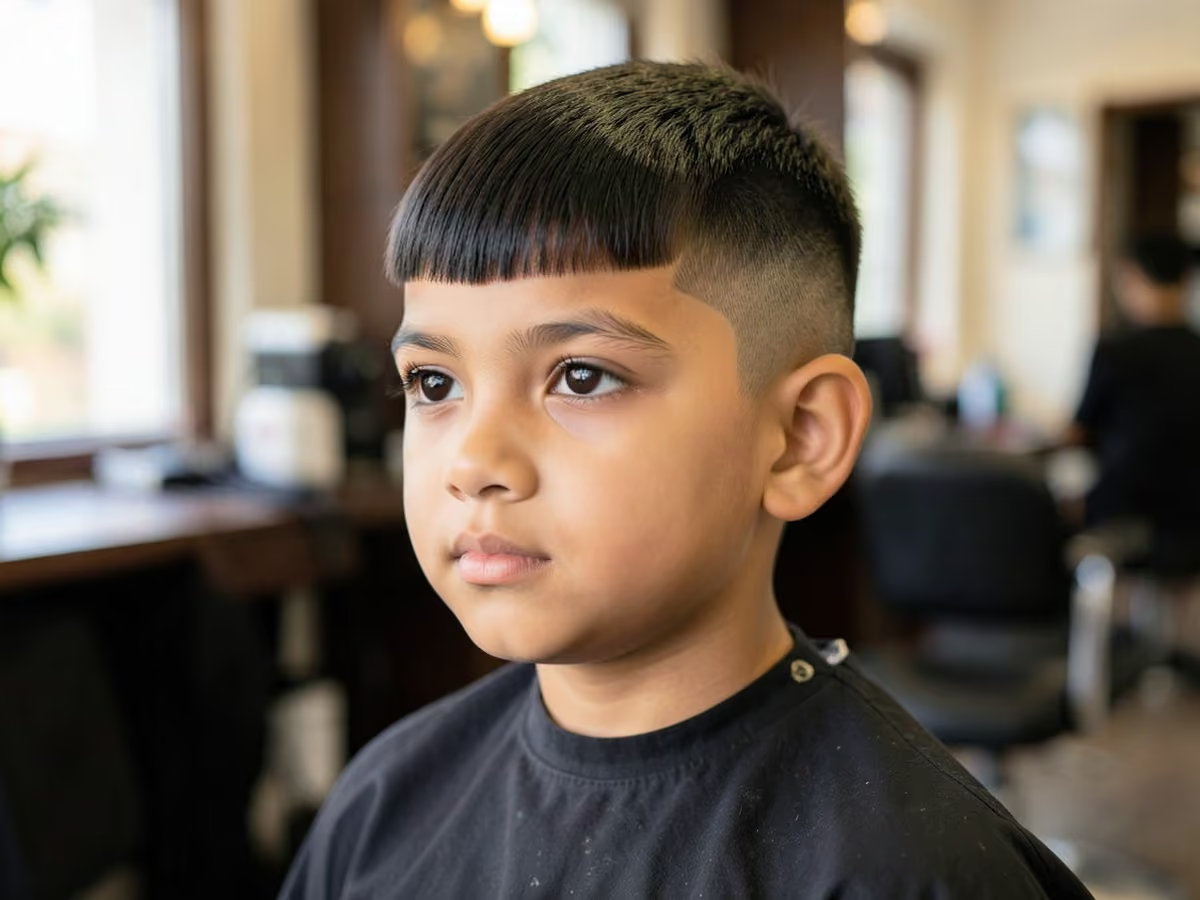
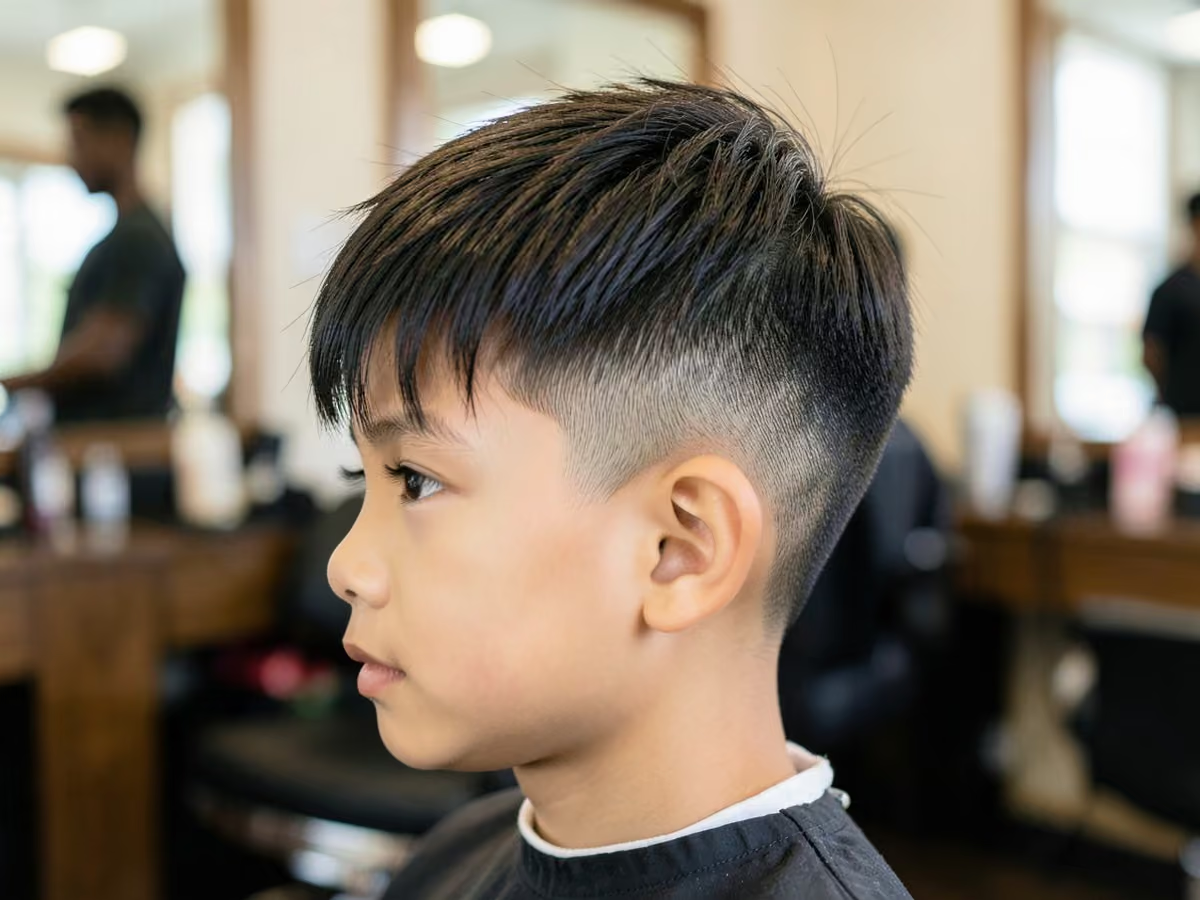
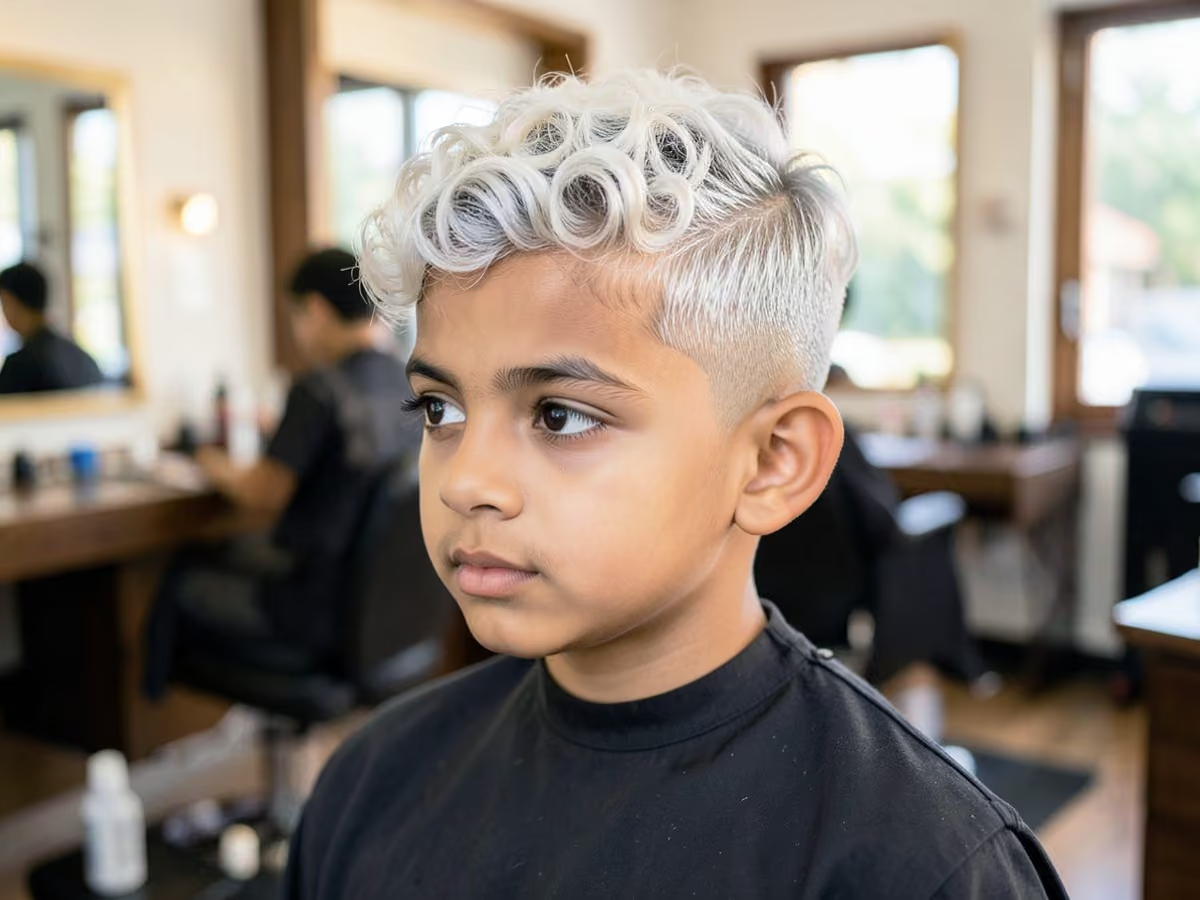
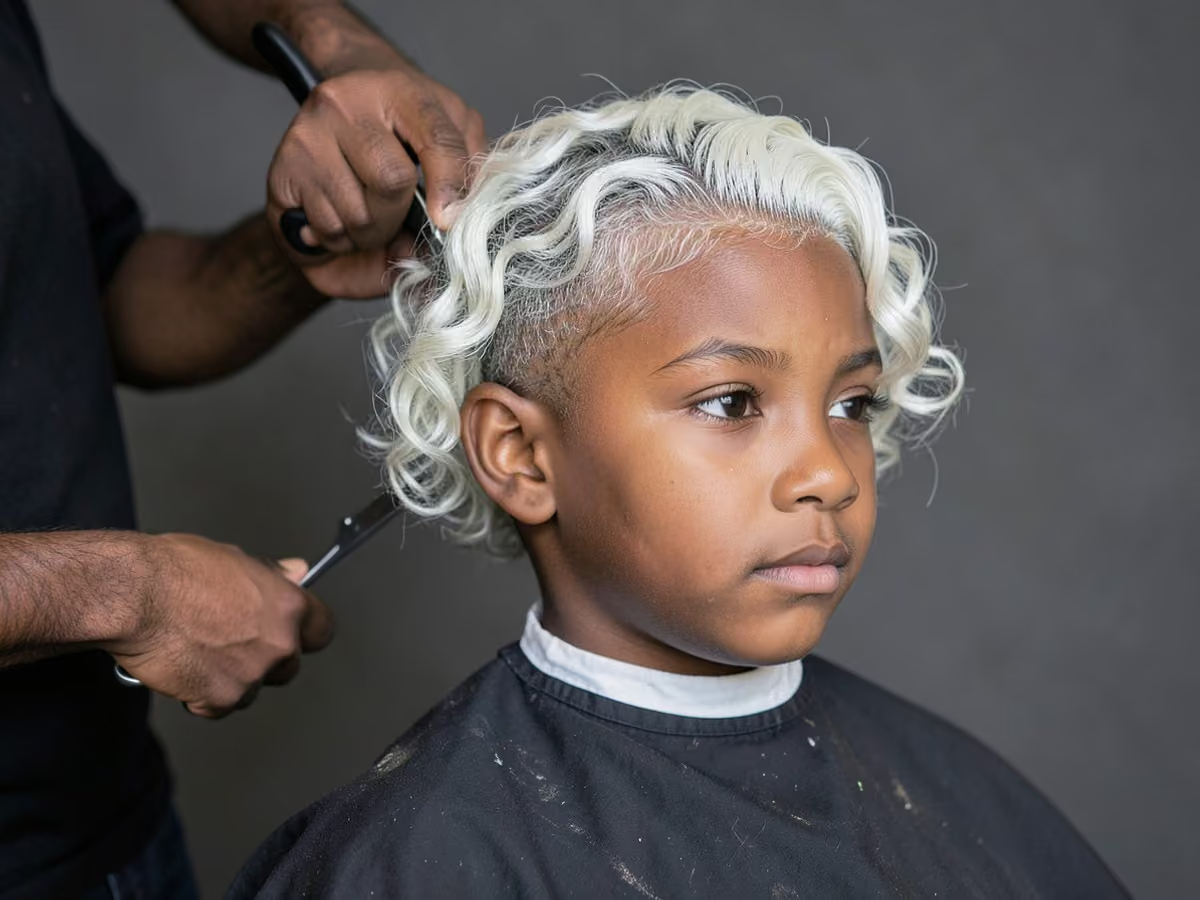
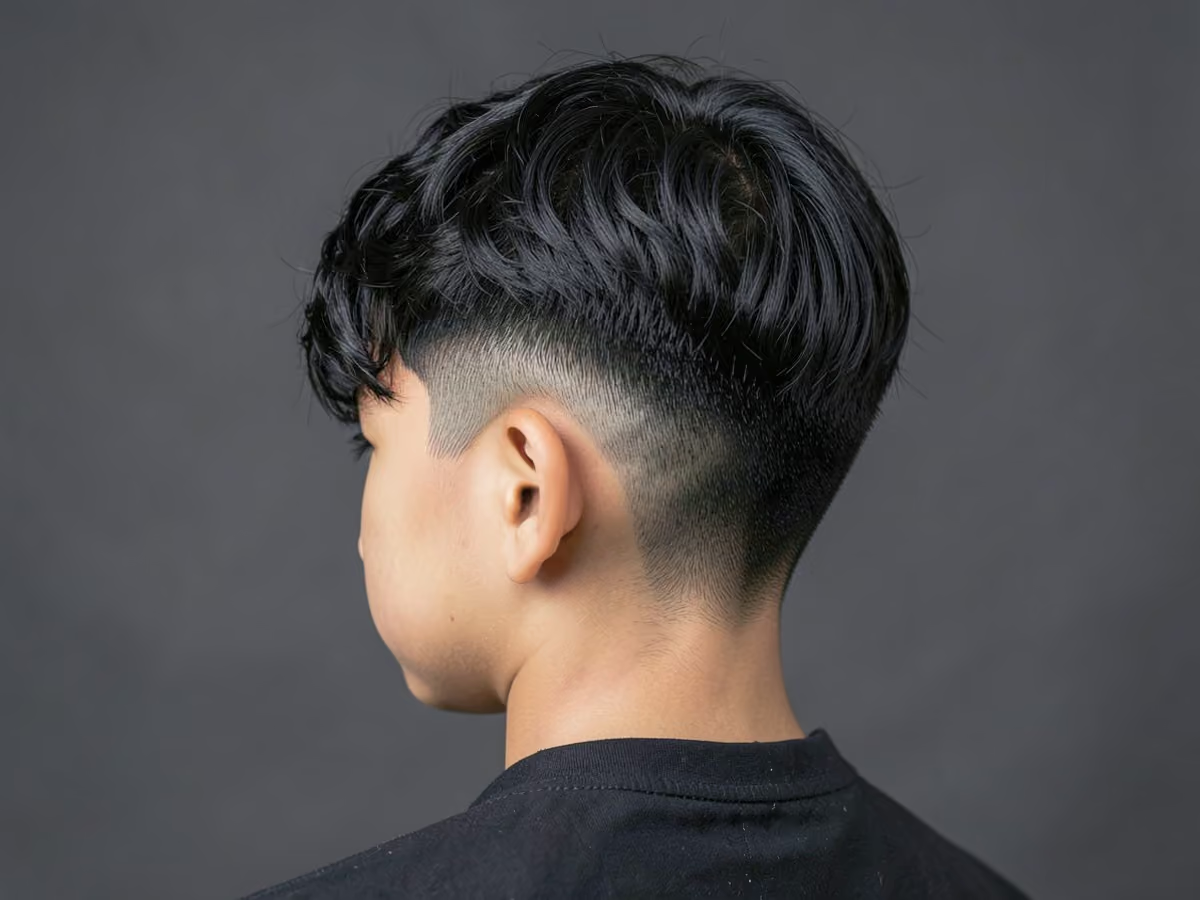
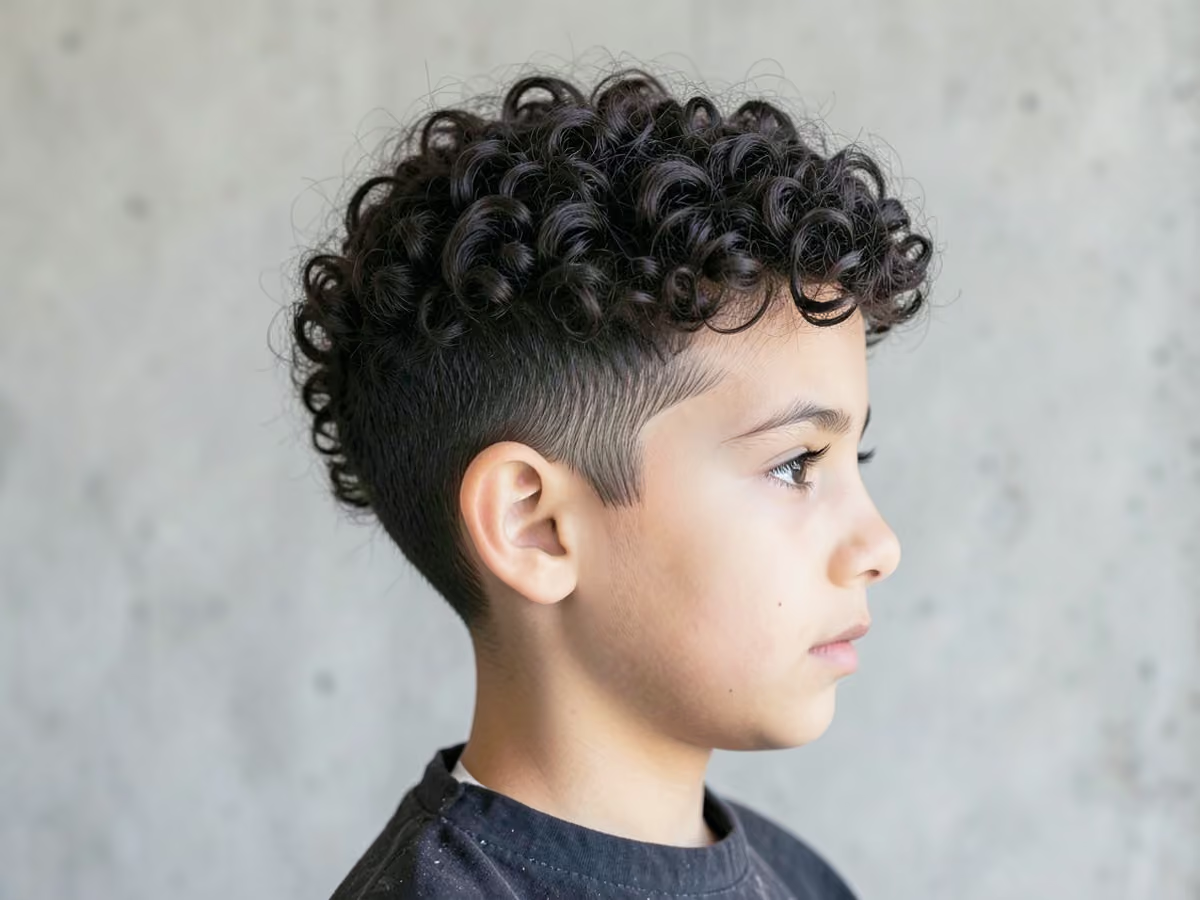
Quick answer: White boy haircuts is the search phrase for cuts popular with white men and teens, most of whom have straight or wavy hair. Common examples are the low taper with a textured fringe, the flow, the modern mullet, the perm with a taper and the short crop. Each suits hair that lies flat or bends rather than coils.
White Boy Haircut Styles at a Glance
Every style on this page with its clipper guard, top length and trim interval. Tap a name to jump to that card.
White boy haircuts is a phrase people type into search bars when they want the cuts they see on white guys at school, on social media or in sports. Underneath the label it is mostly about hair texture: straight and wavy hair behave in particular ways. The 30 styles below are grouped by length and texture, each with guard numbers, a trim schedule and a barber script.
What Are White Boy Haircuts?
The term describes trends, not rules. Searches for white boy haircuts usually mean cuts popular with white men and teenagers in North America, Europe and Australia: the low taper with a fluffy or textured fringe, the hockey-style flow, the modern mullet, the perm with short sides and classic short cuts like the crew cut or side part. What ties them together is hair that is straight, wavy or loosely curled, which lies down or bends rather than standing up in coils.
None of these cuts belong to one group. Many Asian, Latino and mixed-race men have similar hair and wear the same styles, and plenty of white men have curly hair that suits other cuts. Read this page as a guide to cuts for straight and wavy hair under the name people search for, and pick by texture, face shape and how much time you want to spend styling.
How Does Straight or Wavy Hair Change the Cut?
Straight hair shows every cutting line, lies flat without product and can stick out at the sides as it grows. Wavy hair hides uneven lines, gives natural volume and frizzes in humidity. Fine hair of either type looks thinner when long. Those traits decide which of the styles below will be easy to live with. The table gives a rough match; our straight hair and wavy hair guides go deeper.
Face shape narrows the list. Round faces look longer with height on top and short sides, so a quiff, spiky crop or textured fringe with a mid taper suits them. Square faces carry almost anything. Long faces need width and a fringe rather than height, which makes the flow, curtains and messy fringe good fits. Heart-shaped faces do well with some length at the sides, as in a mullet or flow.
Then think about upkeep and setting. Fades and tapers look sharp for two to three weeks and need regular visits. Flows and mullets take months to grow but then need only a trim every six weeks or so. School and work dress codes may rule out some styles, so check before going for a bleached perm or a long mullet.
Filter the styles
Showing all 30 styles
Fade
Hair
Length
Short White Boy Haircuts
Short cuts suit fine straight hair, sports and anyone who wants a two-minute morning. These six keep the top at two inches or less, from a buzz to a spiky crop; see the textured crop guide for more.
Trim:Every 2–3 weeks. Straight hair shows the fade line fast.
Best For:Oval, round faces + straight, medium-thick hair.
About This Style
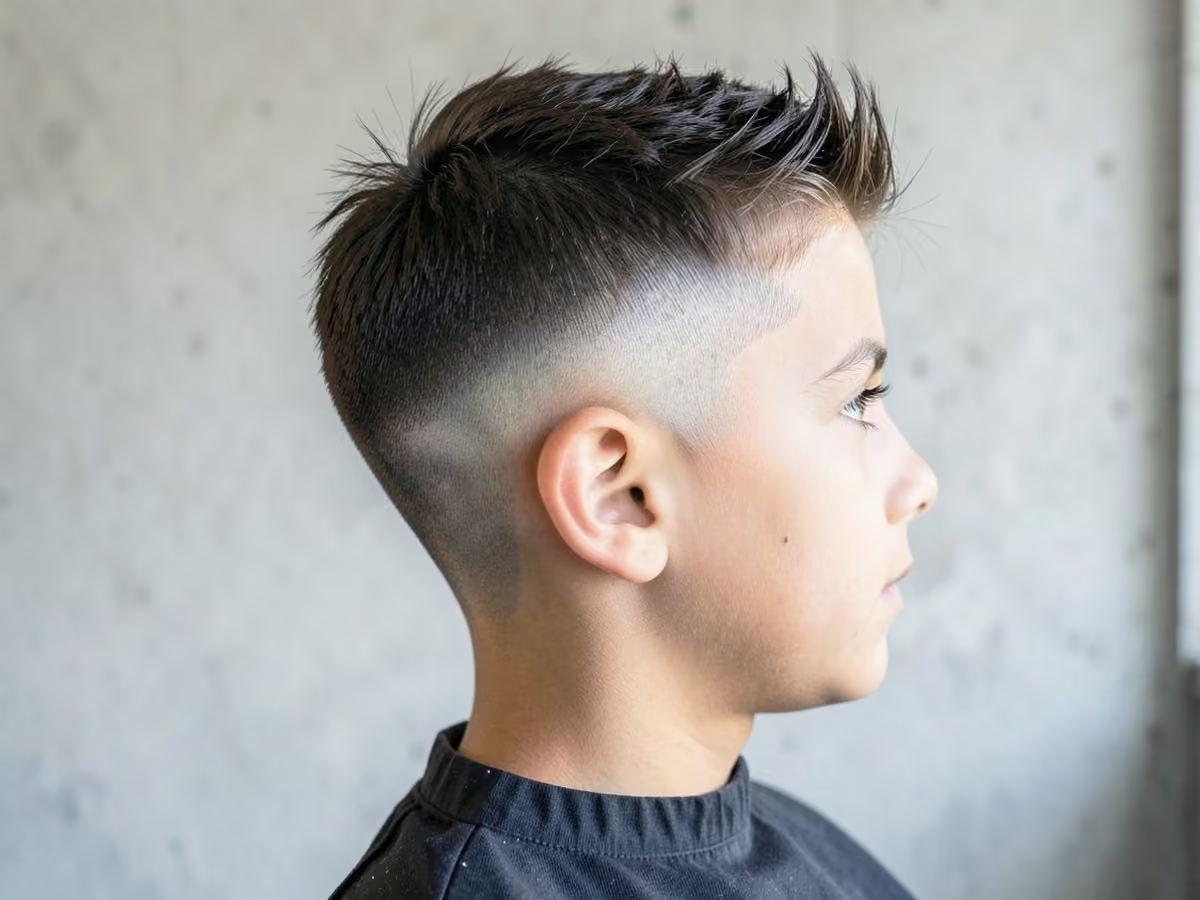
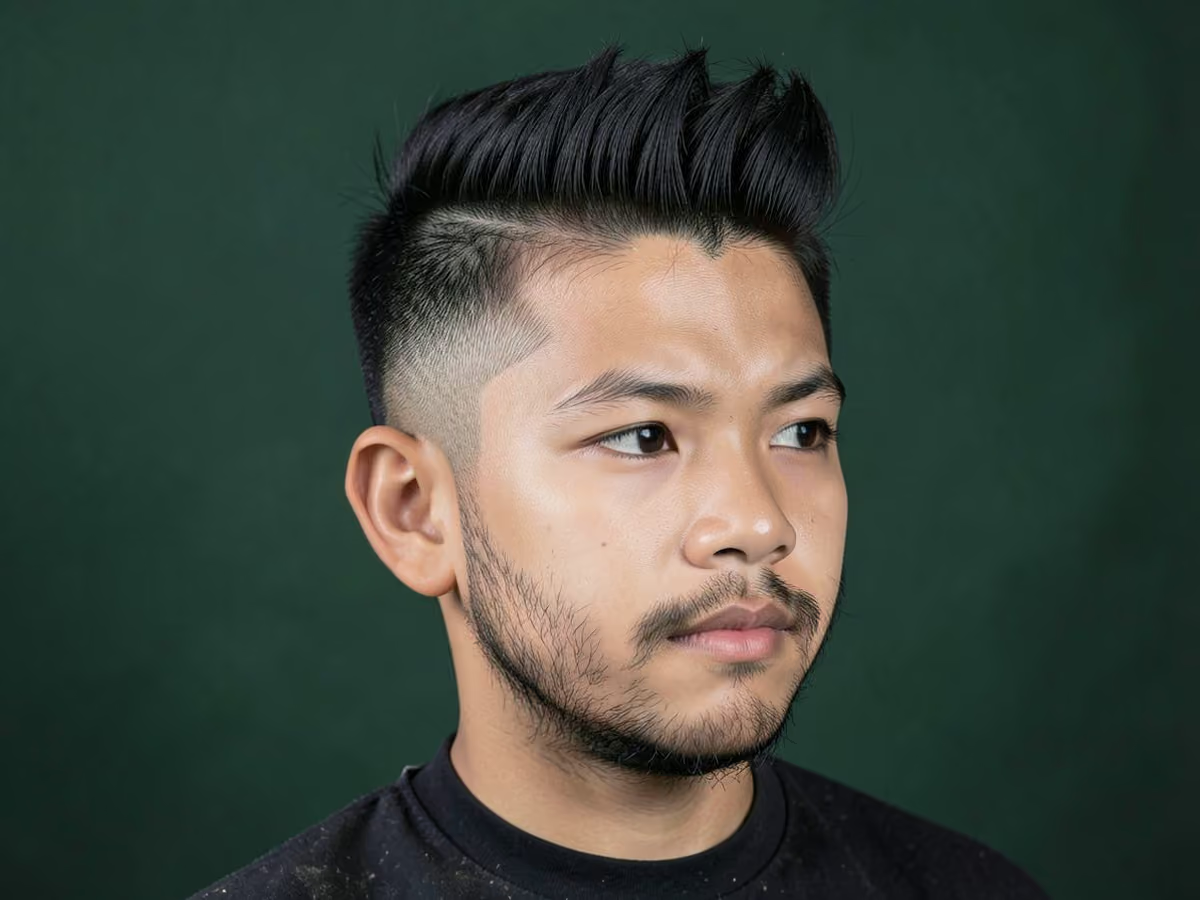
Most people searching this mean a low fade from a #0.5 at the bottom to a #3 above the ear, under about two inches of messy, pushed-forward texture. Straight hair shows a clean gradient, so the fade looks crisp for the first week. The top is point cut so it falls in uneven pieces rather than a solid line. It is a common request from high school and college students.
How to Style at Home
Spray sea salt spray into damp hair and rough-dry with fingers.
Rub a pea-size amount of matte clay between your palms.
Push the top forward and pinch a few pieces apart.
Ask Your Barber
"Low fade from a #0.5 to a #3 just above the ear. Leave about two inches on top, point cut and messy, pushed forward."
Trim:Every 2–3 weeks. Even short regrowth looks fuzzy on straight hair.
Best For:Oval, square faces + straight or fine hair.
About This Style
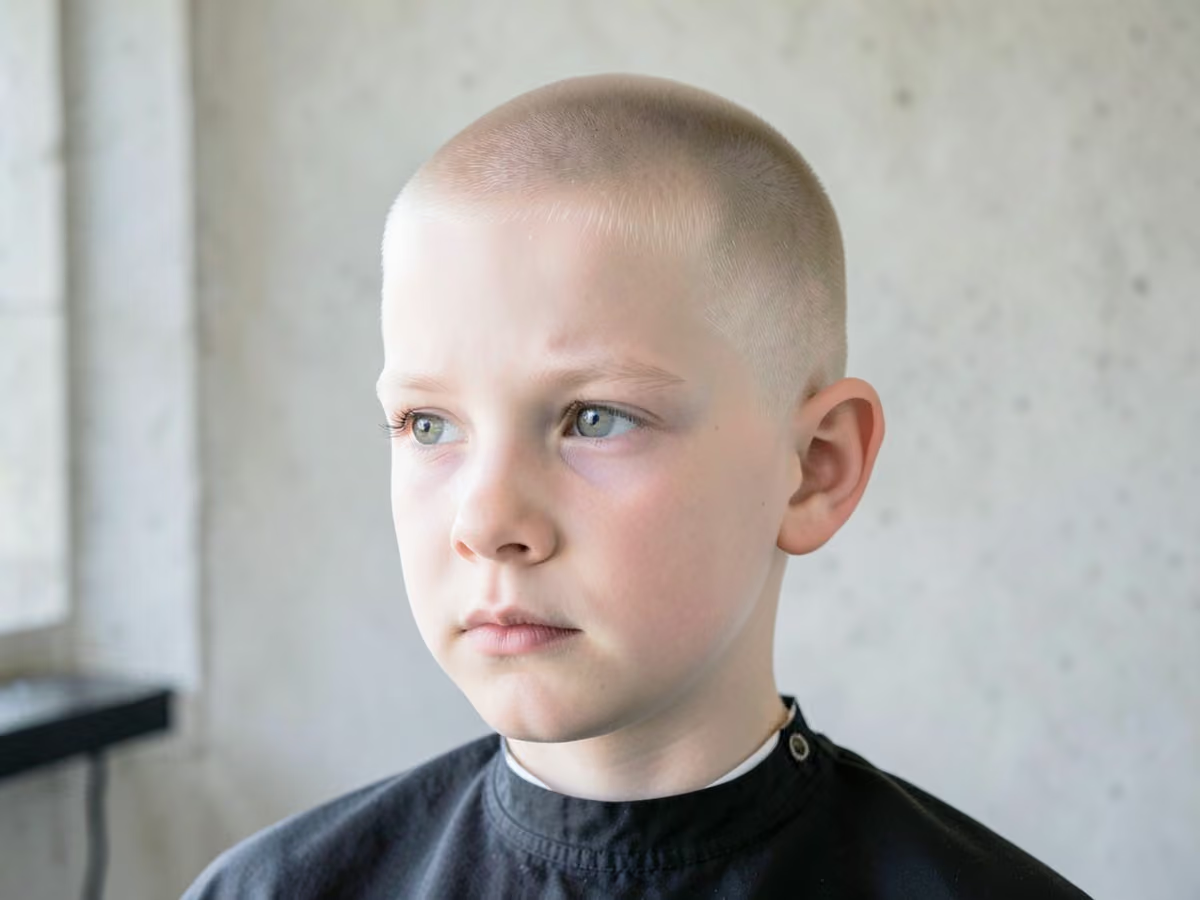
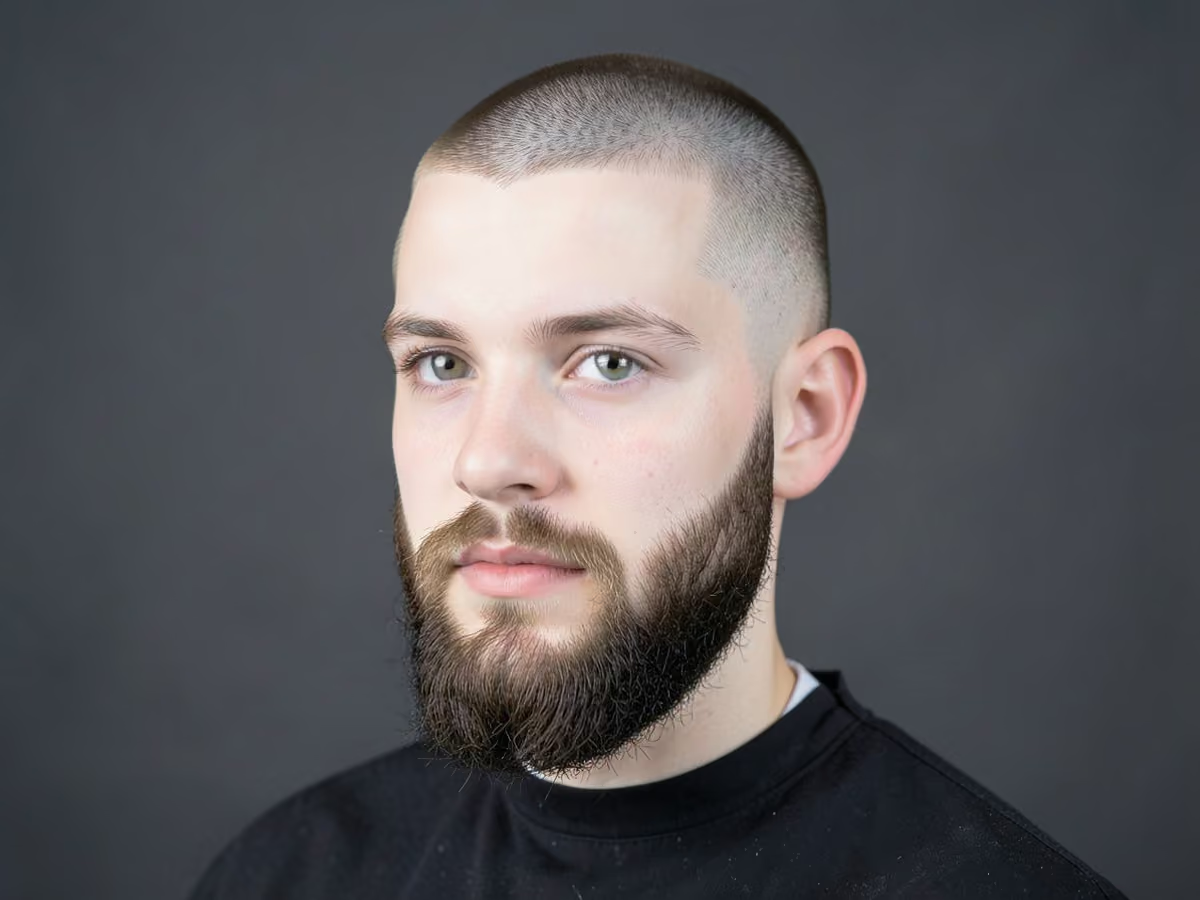
Straight hair stands up at a #2 or #3, which gives this buzz a soft, fuzzy surface rather than the flat look it has on coarser textures. A light taper at the neckline from a #2 to a #1 keeps the back tidy. Fine or light-colored hair can show scalp at a #1 or below, so many men stop at a #3. It costs little and needs no styling at all.
How to Style at Home
Wash with a gentle shampoo every second day.
Rub sunscreen into the scalp before long days outside.
Run clippers around the neckline at home between cuts.
Ask Your Barber
"Buzz cut with a #3 all over, taper the neckline from a #2 to a #1. Keep the corners natural, not squared."
Trim:Every 3–4 weeks. The top needs shaping to keep its lift.
Best For:Oval, square faces + thick, straight or wavy hair.
About This Style
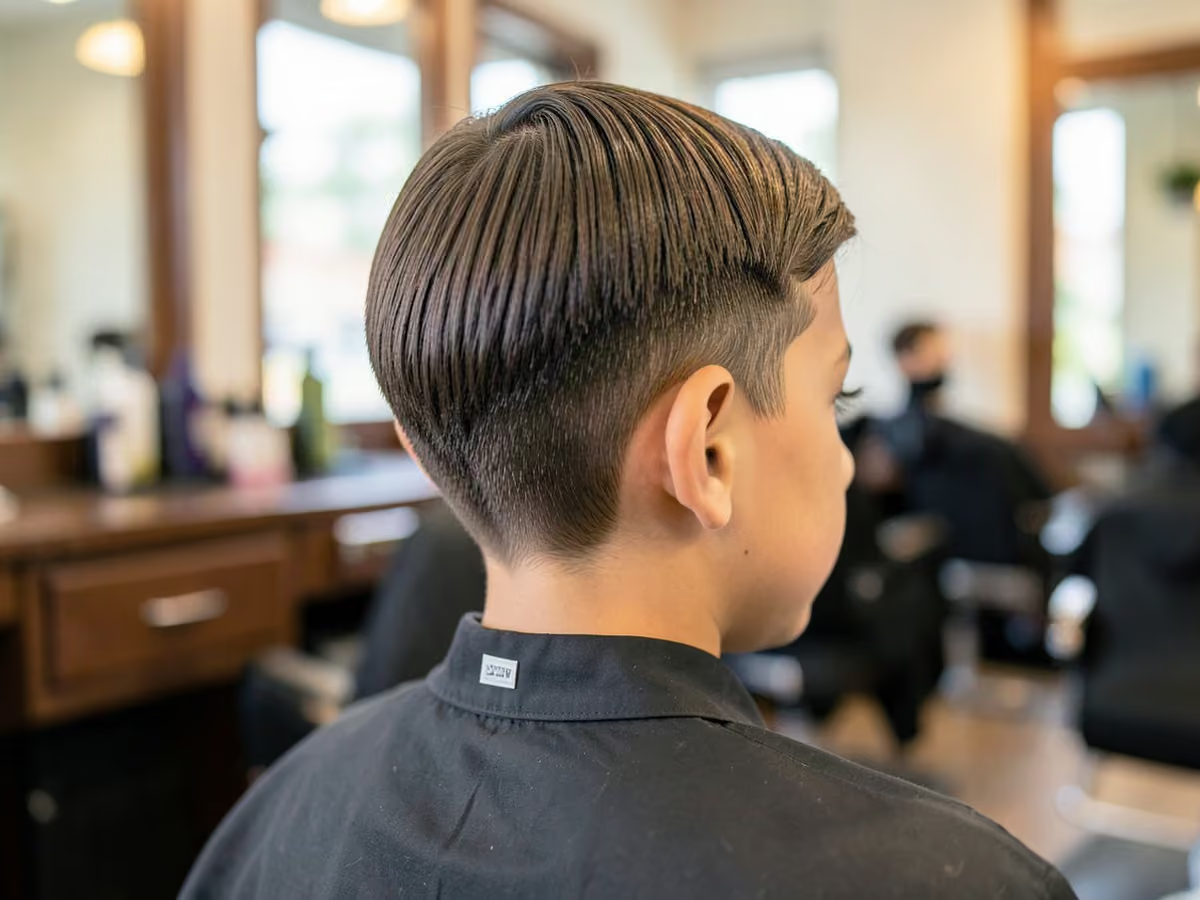
Named after the college look, this is a short back and sides with a #3 taper and two to three inches on top pushed up and to the side. It sits between a side part and a quiff, with no hard line. Thick hair holds the swoop on its own after a quick blow-dry. Fine hair needs a texture powder for the same height. It pairs well with a cap pushed back.
How to Style at Home
Blow-dry the front up and to the side for about a minute.
Work a little matte paste through with your fingers.
Leave a few pieces loose at the front for a casual finish.
Ask Your Barber
"Short back and sides with a #3 taper, two to three inches on top pushed up and to the side, no part line."
Trim:Every 3 weeks. Fringe grows into the eyes in about a month.
Best For:Long, oval faces + straight, thick hair.
About This Style
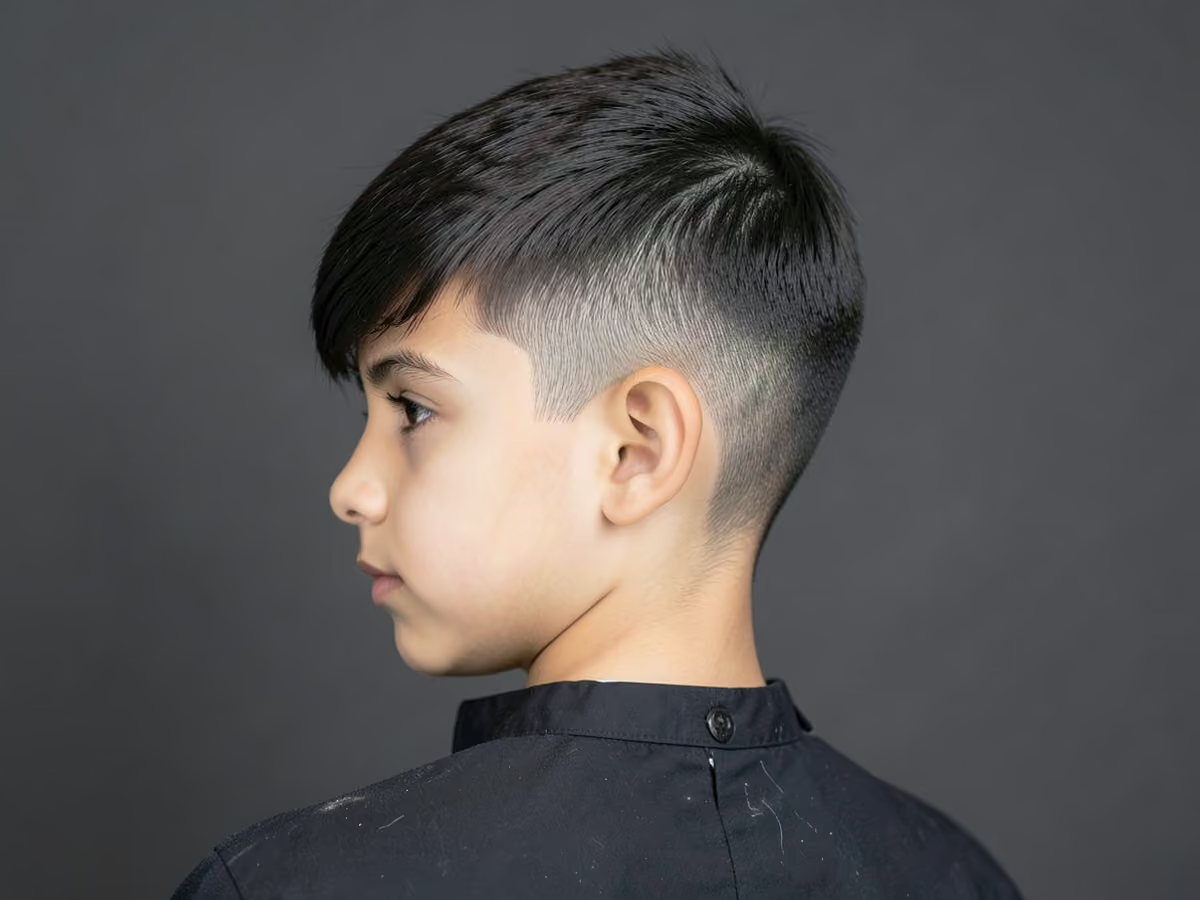
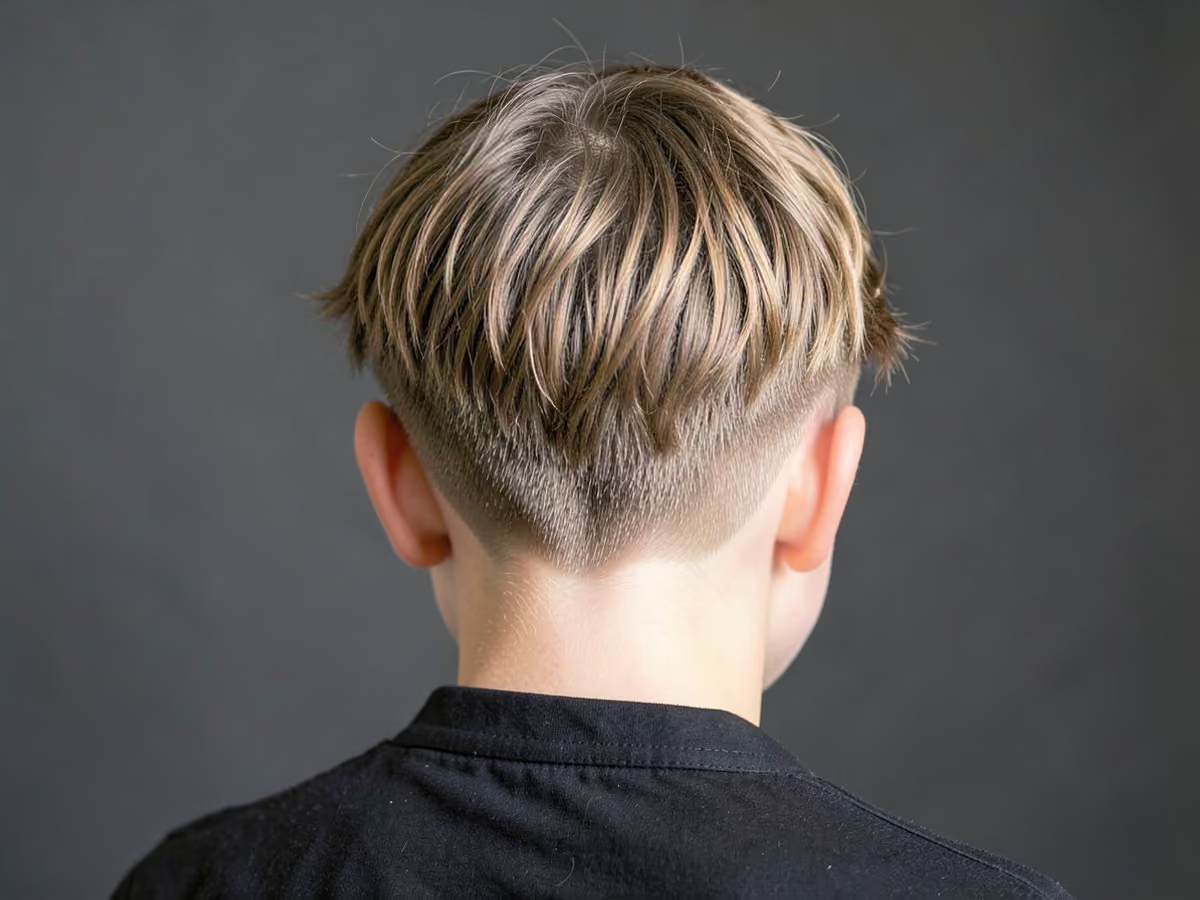
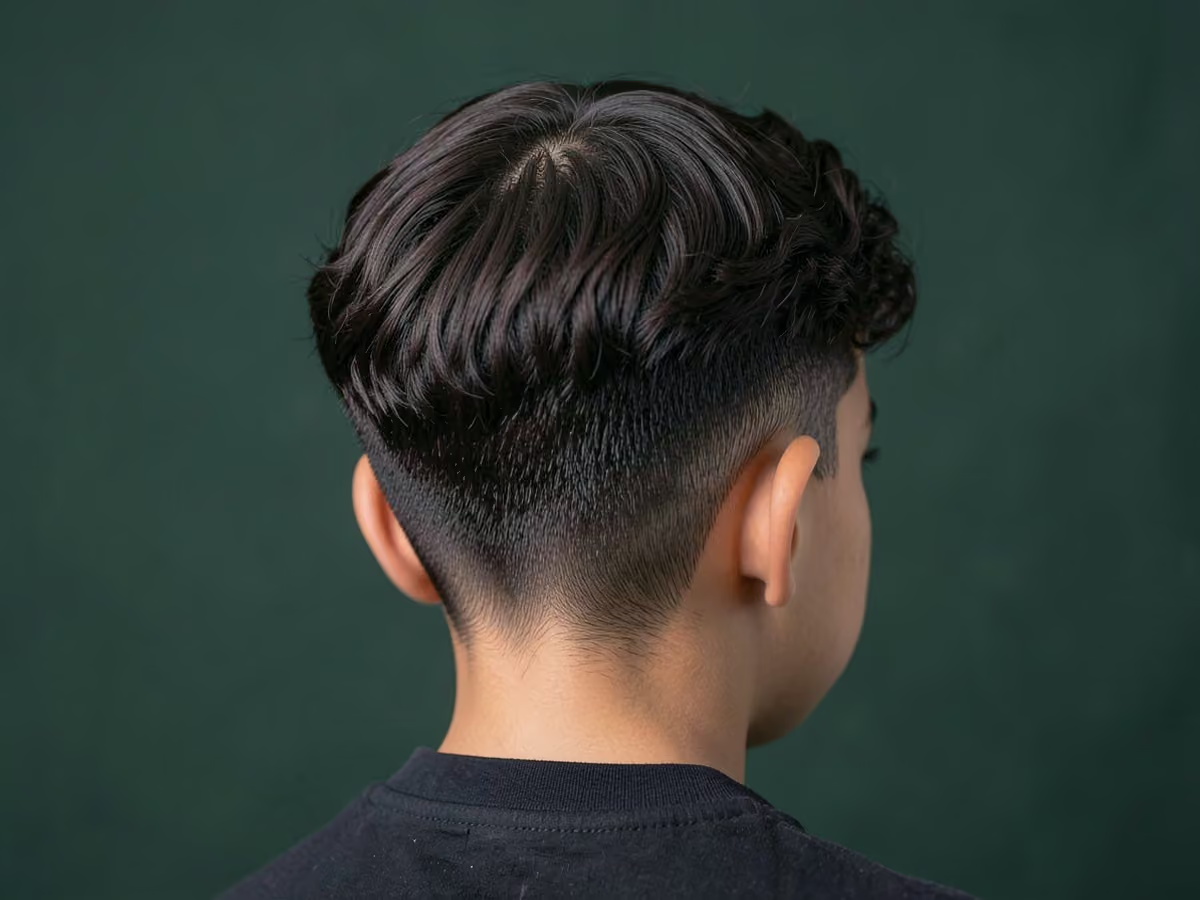
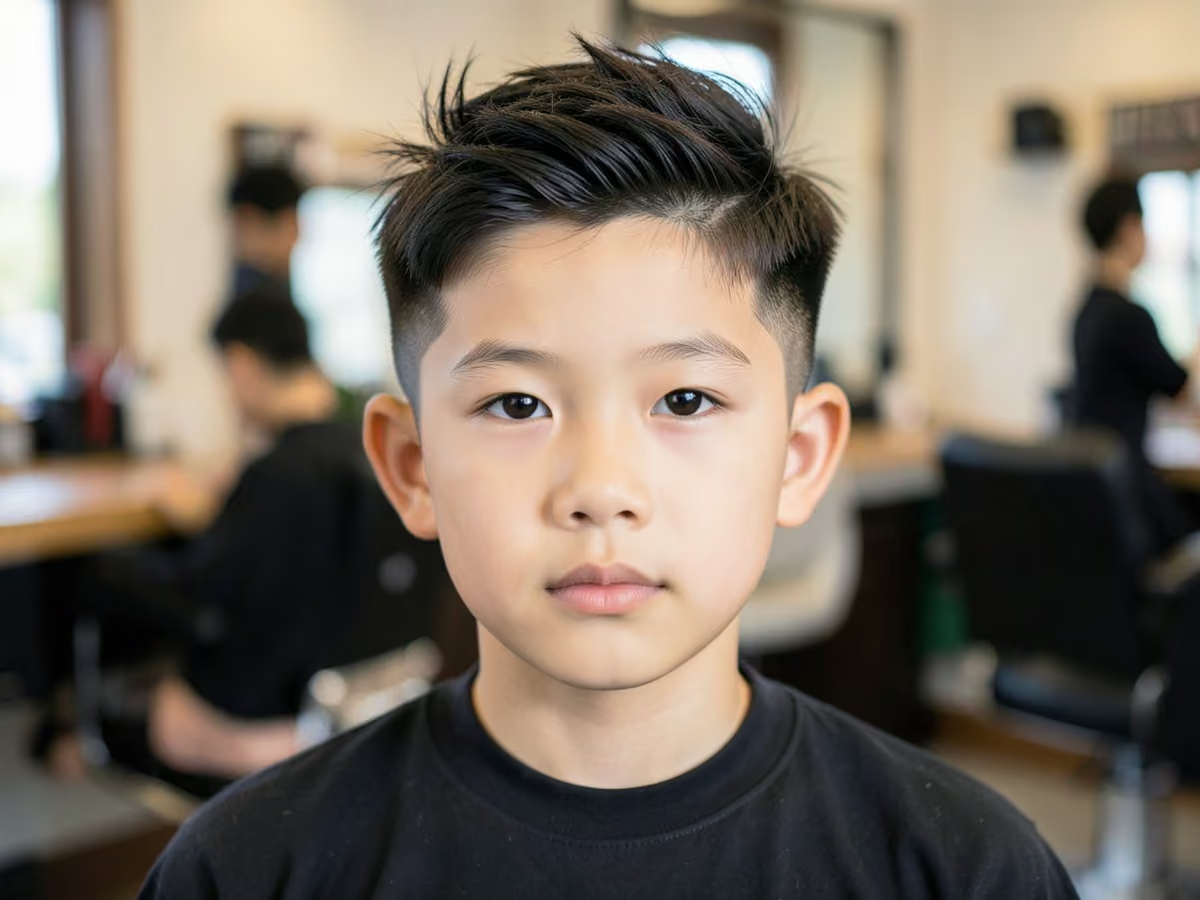
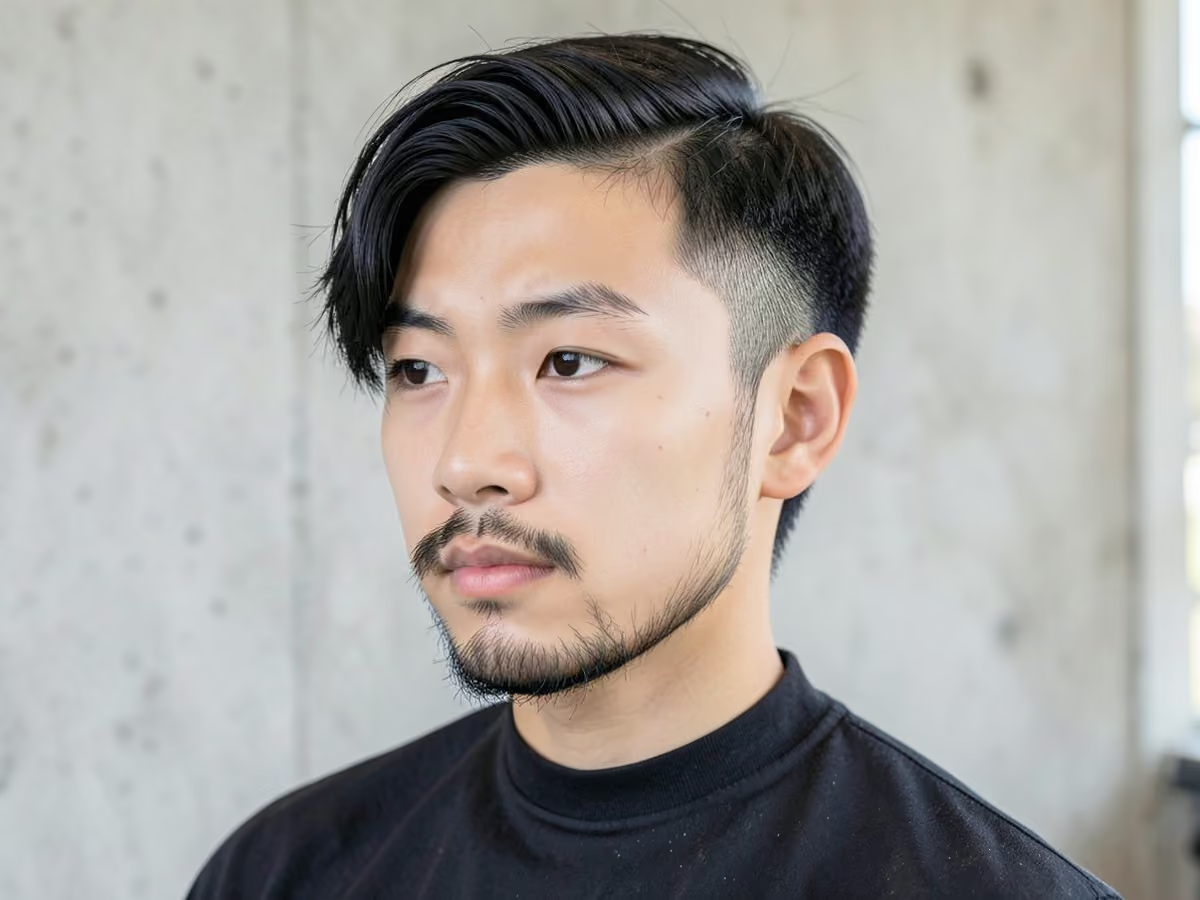
Point-cut texture on a two-inch fringe falls forward just above the eyebrows, while a low taper shortens only the sideburns and nape from a #2 to a #0.5. Because the taper leaves the sides fuller than a fade, the shape looks softer from the front. Barbers describe it as a commonly requested cuts among teens with straight hair. Pushing the fringe slightly to one side keeps it out of the eyes.
How to Style at Home
Blow-dry the fringe forward while combing it through with your fingers.
Press texture powder into the roots for separation.
Twist the ends of the fringe with a little matte clay.
Ask Your Barber
"Low taper from a #2 to a #0.5 at the sideburns and nape only. Two inches on top, point cut into a textured fringe just above the eyebrows."
Trim:Every 3 weeks. Spikes lose shape as length builds.
Best For:Round, oval faces + straight, coarse or thick hair.
About This Style
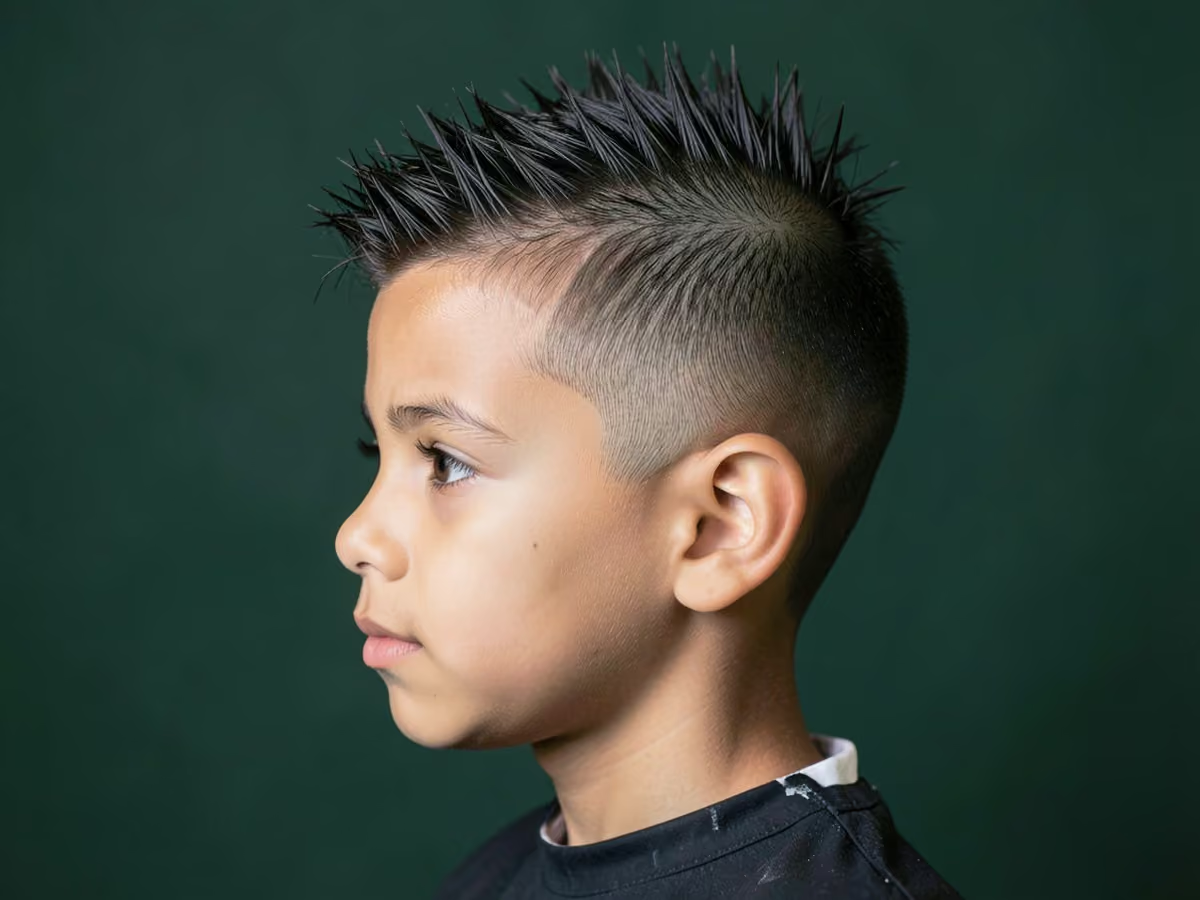
Spikes need hair that stands up, so this cut keeps an inch and a half on top, cut choppy, with a mid taper from a #3 to a #1 below. A strong matte product lifts the pieces into small, separated points. The 2000s look has returned in a softer version with less gel shine. Round faces benefit from the height, which makes them look longer.
How to Style at Home
Towel-dry the hair until it is only slightly damp.
Warm texture clay in your fingertips and pull the hair upward.
Pinch the ends into spikes and set them with a cool blast of air.
Ask Your Barber
"Mid taper from a #3 to a #1, an inch and a half on top cut choppy so I can spike it. Keep it messy, not uniform."
Trim:Every 2 weeks. The shaved line fades within ten days.
Best For:Oval, square faces + straight or wavy hair.
About This Style
A single shaved line, usually just above the ear or through the fade, is added with a trimmer or straight razor to a mid fade from a #0 to a #2. The top stays at about two inches, swept to the opposite side of the line. It gives a short cut some detail without a full hair design. The line needs refreshing every couple of weeks, so it suits regular shop visitors.
How to Style at Home
Sweep the top away from the line with a comb and light pomade.
Avoid scratching the shaved line, which can irritate the skin.
Book a quick touch-up when the line begins to blur.
Ask Your Barber
"Mid fade from a #0 to a #2 with a single razor line above my left ear. Two inches on top, swept to the right."
Recommended Products
Light Pomade
Fringe and Crop Styles
Fringes are the defining look of recent years for straight and wavy hair. These six vary the fringe shape and the fade beneath it. The textured fringe guide compares more fringe cuts.
Trim:Every 2 weeks. The burst curve around the ear softens fast.
Best For:Oval, heart faces + wavy or thick straight hair.
About This Style
A burst fade curves around the ear from a #0 and leaves the back longer, while two and a half inches on top are blow-dried into a soft, airy fringe. The contrast between the tight curve and the full top makes the fringe look bigger. Wavy hair puffs up on its own, while a straight-haired client will be reaching for the dryer every morning. It suits teens who visit the barber often.
How to Style at Home
Blow-dry the fringe forward while shaking it with your fingers.
Mist a light hold sea salt spray into the roots first.
Leave product off the ends so they stay airy.
Ask Your Barber
"Burst fade around the ear from a #0, longer at the back. Leave two and a half inches on top for a fluffy fringe."
Trim:Every 2–3 weeks. Fade softens while the fringe gets long.
Best For:Square, long faces + straight, thick hair.
About This Style
Unlike textured fringes, this one is cut in a nearly straight line across the forehead, with only light point cutting at the ends. A mid fade runs from a #0.5 at the temples to a #3, so the fringe looks like a solid block on top. It is close to a French crop but longer. Straight, dense hair keeps the line neat; wavy hair can make it look uneven.
How to Style at Home
Comb the fringe straight forward with a fine comb while damp.
Blow-dry downward to keep it flat and even.
Smooth the surface with a small amount of matte cream.
Ask Your Barber
"Mid fade from a #0.5 to a #3. Leave two inches on top cut into a straight fringe across my forehead, lightly point cut."
Trim:Every 3 weeks. Uneven pieces lose definition as they grow.
Best For:Round, oval faces + fine straight hair.
About This Style
Deep point cutting leaves the fringe in short and long pieces of uneven length, which adds movement to fine hair that would otherwise lie flat. Sides are kept at a #2 with a low taper to a #1. The choppy finish hides cowlicks and makes the top look thicker than it is. It works well on younger teens and anyone who wants an easy, messy look.
How to Style at Home
Shake a little texture powder into the dry roots across the top.
Ruffle the top with your fingers and push it forward.
Pinch a few longer pieces together with matte paste.
Ask Your Barber
"Choppy fringe with deep point cutting, one and a half to two inches on top. Sides at a #2 with a low taper to a #1."
Best For:Long, heart faces + straight or slightly wavy hair.
About This Style
Three inches at the front are swept diagonally across the forehead toward one temple, with a mid taper from a #3 to a #1 at the sides. The angle covers part of the forehead, which shortens a long face. It is the grown-up cousin of the 2000s emo fringe, cut softer and shorter. Straight hair sweeps easily; wavy hair may need a dryer to point the right way.
How to Style at Home
Blow-dry the front diagonally with a round brush.
Add a little styling cream to keep the sweep in place.
Tuck the ends slightly at the temple with your fingers.
Ask Your Barber
"Side swept fringe with three inches at the front going to the left. Mid taper on the sides from a #3 to a #1."
Trim:Every 3 weeks. Taper loses its edge after about three weeks.
Best For:Oval, square faces + wavy, thick hair.
About This Style
Wavy hair falls naturally into this fringe once it is cut to about two and a half inches and left to dry in its own direction. A mid taper from a #2 to a #0.5 keeps the sides clean without the high contrast of a fade. The result looks like you rolled out of bed, which is the point. It needs very little product, so it suits busy mornings.
How to Style at Home
Scrunch a light leave-in into damp hair from the ends upward.
Let it air-dry, scrunching once more halfway through drying.
Shake the fringe loose with your fingertips when dry.
Ask Your Barber
"Messy fringe with two and a half inches on top, cut to follow my wave. Mid taper from a #2 to a #0.5."
Trim:Every 2 weeks. Skin at the bottom regrows within days.
Best For:Round, oval faces + thick straight hair.
About This Style
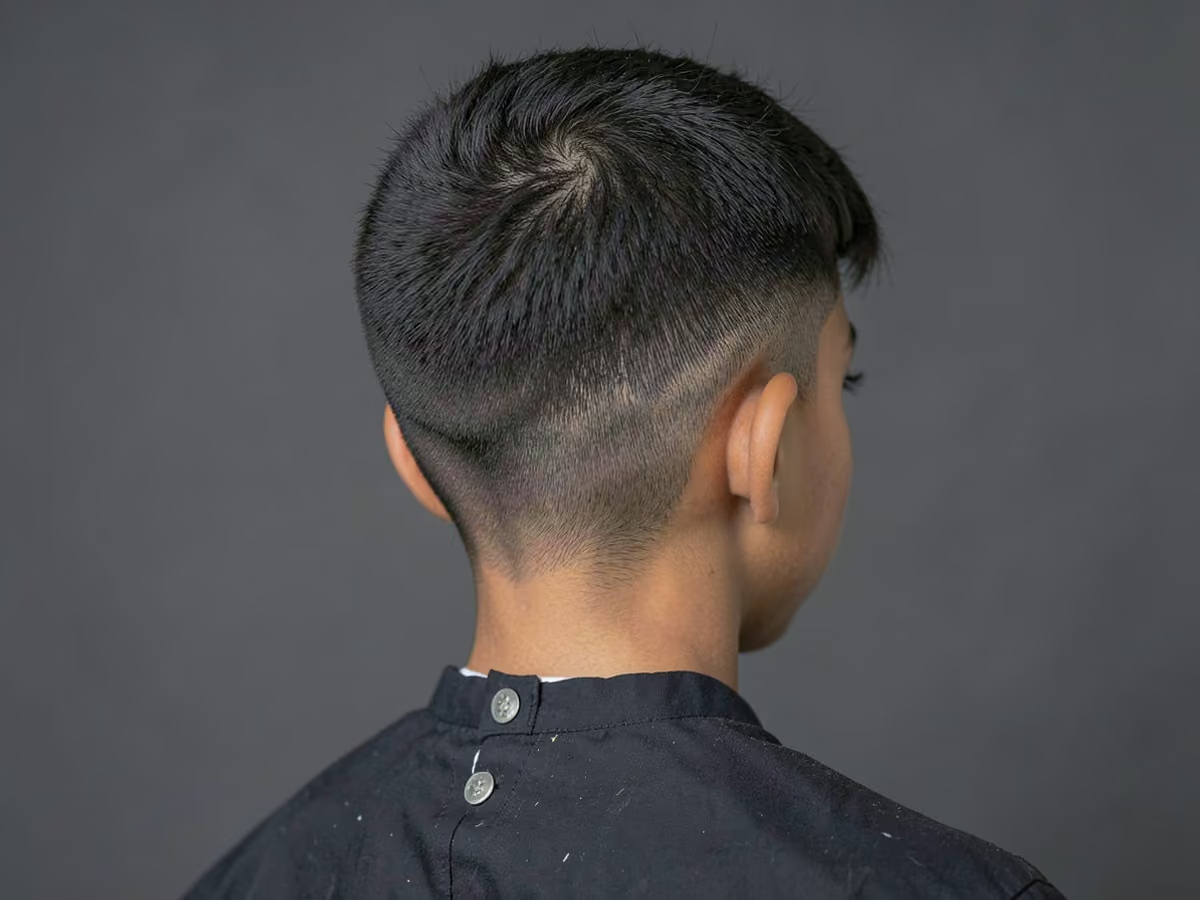
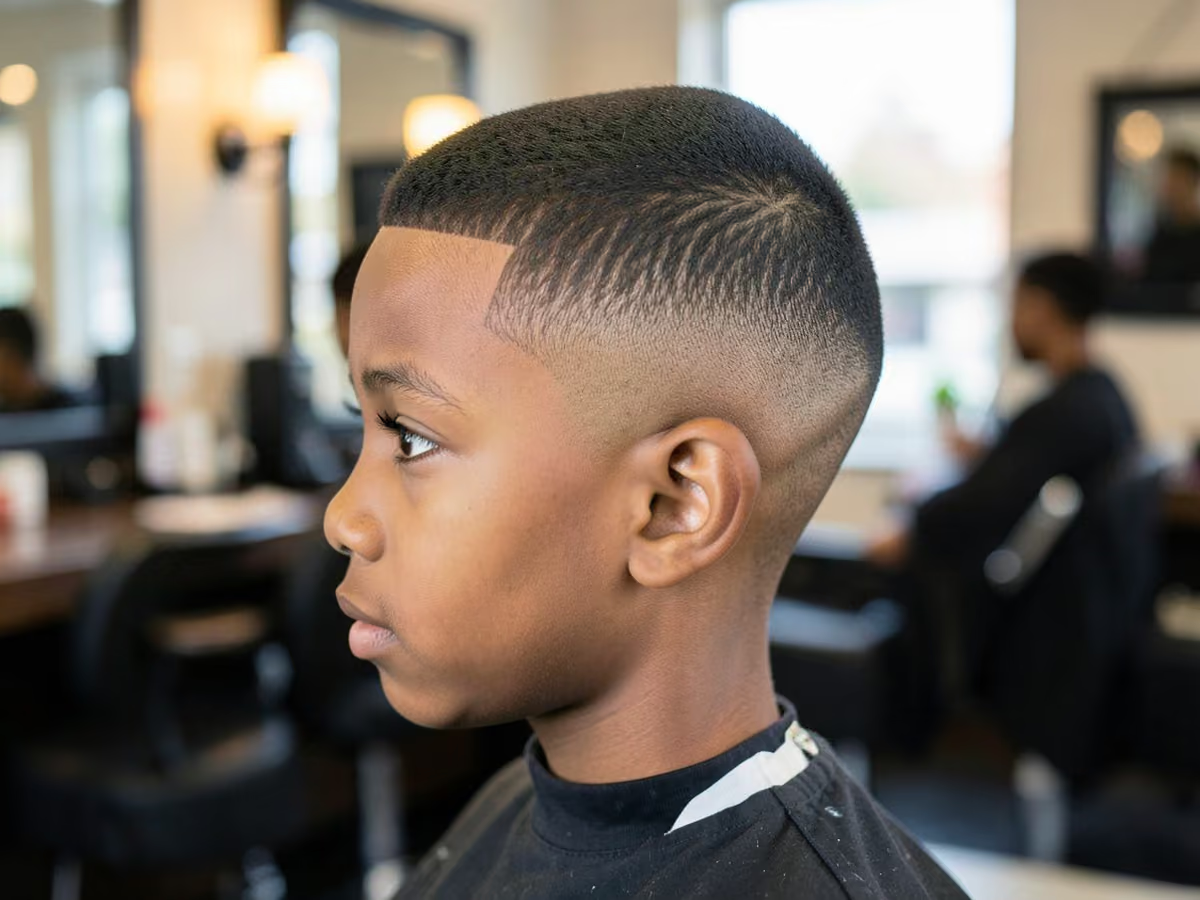
A high skin fade takes the sides to bare skin up to the parietal ridge, and an inch of hair on top is cut into a short crop with a blunt front line. Straight hair keeps that line crisp. The look is close to the French crop worn across Europe. It is short enough to need almost no styling, but the fade needs a visit every two weeks.
How to Style at Home
Push the top forward with a fingertip of matte clay.
Keep the front line straight with a fine comb.
Moisturize the faded skin if it feels tight.
Ask Your Barber
"High skin fade up to the parietal ridge, an inch on top cut into a crop with a blunt front line."
Recommended Products
Matte Clay
Scalp Oil
Medium and Long White Boy Hairstyles
These six need months of growth but then ask for little upkeep. They suit wavy hair best, though thick straight hair works too. The flow cut guide covers the growing stage.
Best For:Oval, square faces + wavy or thick straight hair.
About This Style
Known in hockey and lacrosse as flow, this style keeps the hair at chin to shoulder length, pushed back off the face and flicking out at the neck. A barber adds long layers so the back curls up rather than lying flat. It takes about six months to grow from a short cut. Wavy hair gives the flicked ends naturally; straight hair needs a little sea salt spray.
How to Style at Home
Push the hair back with your fingers while it is damp.
Spray sea salt spray into the back to encourage the flick.
Let it air-dry and tuck the sides behind your ears.
Ask Your Barber
"Keep the length, just add long layers so the back flips up at the neck. Clean the ends and leave the sides long enough to tuck."
Trim:Every 4–6 weeks. Taper and top need shaping; back grows freely.
Best For:Oval, heart faces + wavy or straight hair.
About This Style
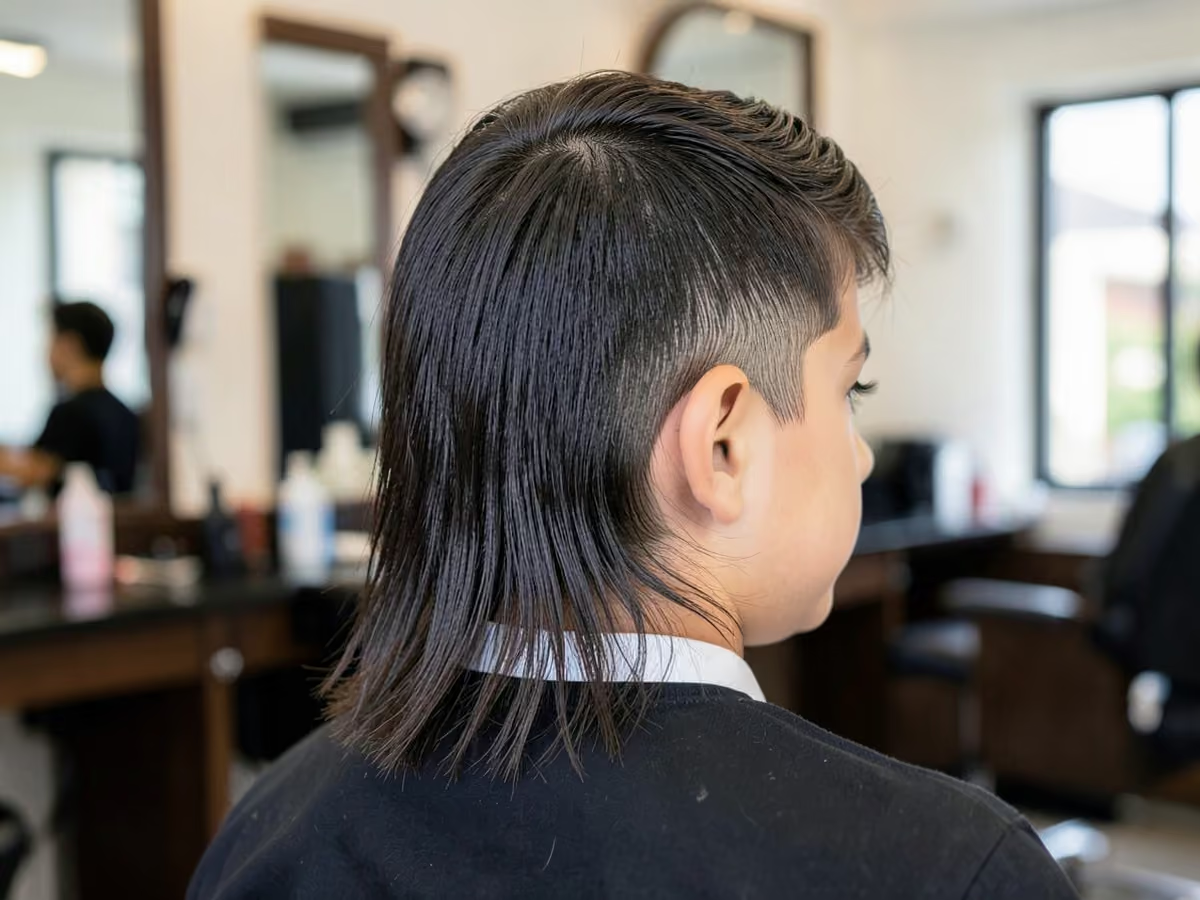
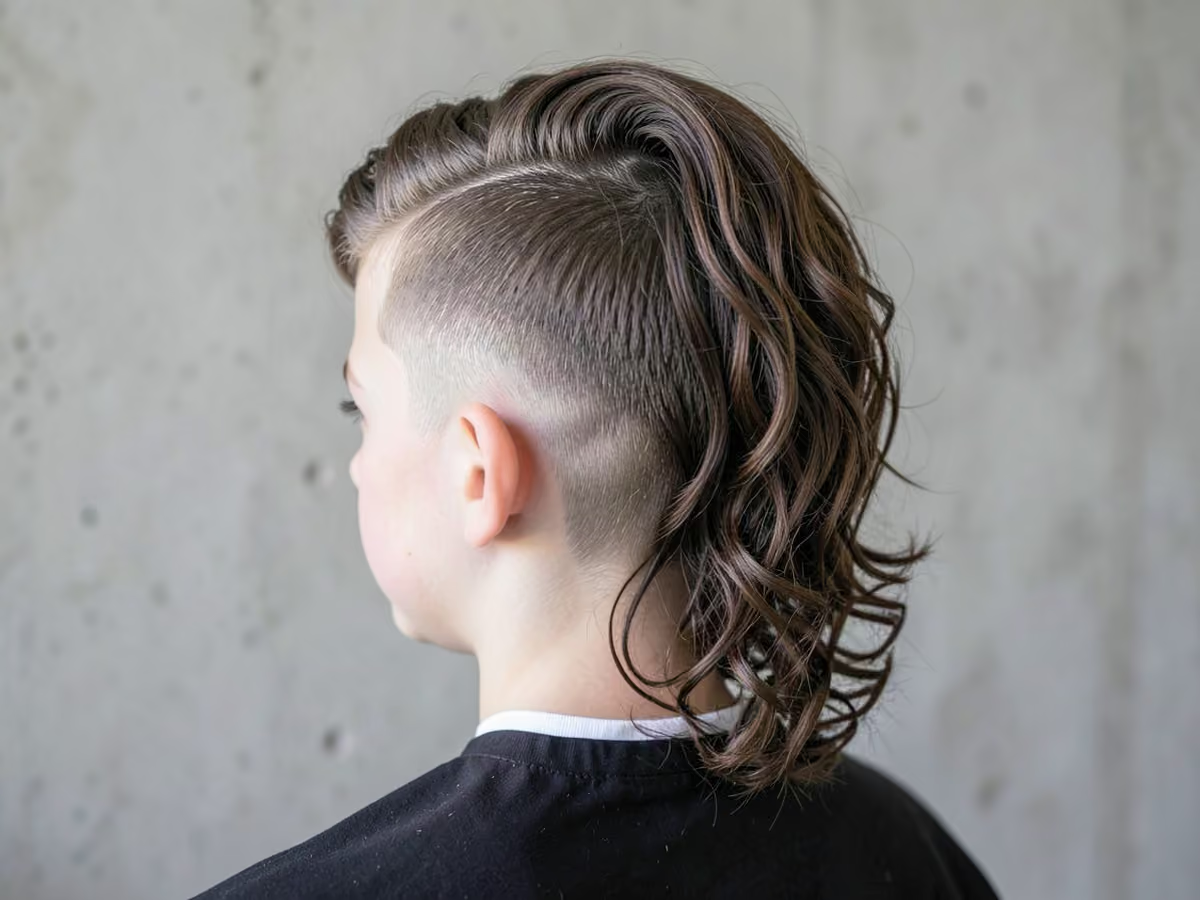
Short at the front and sides, long at the back is the formula, with a burst or low taper around the ear from a #1 and about three inches of textured hair on top. The back is left to fall two to four inches past the neck. It is popular with teens and in country and surf scenes. Wavy hair keeps the back from looking stringy.
How to Style at Home
Scrunch sea salt spray into the back while damp.
Push the top forward with a little matte paste.
Let the back air-dry so it keeps its wave.
Ask Your Barber
"Mullet with a low taper around the ear from a #1, three inches on top textured. Leave the back long, two to four inches past the neckline."
Trim:Every 4 weeks. Front pieces need trimming to fall evenly.
Best For:Oval, long faces + wavy, medium-thick hair.
About This Style
Four inches on top are split down the middle so the front waves fall to each side of the forehead, while a low taper from a #3 to a #1 keeps the sides short. It is a 90s curtains revival, cut shorter at the sides. Wavy hair keeps the halves full; straight hair can look flat and may need a round brush. It suits narrow and long faces.
How to Style at Home
Part the hair down the middle while damp.
Scrunch a little curl cream into the waves.
Diffuse on low heat or let it air-dry.
Ask Your Barber
"Middle part with four inches on top, wavy texture kept. Low taper from a #3 to a #1 on the sides and back."
Trim:Every 6 weeks. Only the ends need trimming as it grows.
Best For:Square, oval faces + straight, thick hair.
About This Style
Once it reaches past the ears, straight hair looks neat when tucked behind them, which is the defining move of this mid-length cut. The hair is about five inches on top and three at the sides, all scissor cut with no clippers. Long layers stop it from looking heavy. It is a halfway point for men growing toward shoulder length and works with glasses.
How to Style at Home
Comb the hair back while damp with a wide-tooth comb.
Tuck the sides behind your ears once dry.
Smooth flyaways with a drop of argan oil.
Ask Your Barber
"Scissor cut only, about five inches on top and three on the sides so it tucks behind my ears. Long layers to remove bulk."
Trim:Every 8 weeks. Sun and salt dry the ends over time.
Best For:Oval, long faces + wavy, sun-lightened hair.
About This Style
Loose waves to the shoulders, a rough middle or side part and dry, salty texture define this beach look. The barber layers the ends so they fall in separate pieces instead of a solid edge. Sun exposure often lightens the ends naturally. It suits men who swim or surf, and it needs conditioning to avoid straw-like ends. Long, narrow faces carry it best.
How to Style at Home
Use a leave-in conditioner after every swim in salt or pool water.
Scrunch sea salt spray through the damp ends to separate them.
Let it air-dry outdoors and skip the comb so waves hold.
Ask Your Barber
"Keep it at shoulder length with long, choppy layers at the ends. Do not thin the top; I want it to fall in loose pieces."
Trim:Every 6–8 weeks. Shaping trims stop the sides puffing out.
Best For:Heart, oval faces + wavy or loosely curly hair.
About This Style
Chin-length waves are layered so the volume sits on top and the sides lie closer to the head, which stops the triangle shape wavy hair often takes as it grows. The front is pushed back loosely, and the ends curl up behind the ears. It is a common midpoint for guys growing a full flow. A light curl cream keeps frizz down in humid weather.
How to Style at Home
Apply curl cream to damp hair and scrunch it up.
Push the front back with your fingers and leave it.
Refresh the waves with a water spray the next day.
Ask Your Barber
"Grow out cut for my waves, chin length, layered so the sides sit close and the top keeps volume. Clean the neck but keep the length."
Recommended Products
Curl Cream
Wavy, Curly and Permed Styles
Perms and loose curls have become a common request among teens with straight hair. These six cover natural waves, loose curls and permed tops, with the taper that suits each. The wavy hair guide adds more.
Trim:Every 3–4 weeks. The taper softens; the perm lasts months.
Best For:Oval, long faces + fine or straight hair.
About This Style
A chemical perm turns straight hair into loose curls on a two to three inch top, usually paired with a low taper from a #2 to a #0.5. Barbers cut the sides after the perm so the curls sit on top. A perm typically lasts a few months before it relaxes. Hair that is already bleached or damaged may not take it well, so a stylist should check first.
How to Style at Home
Wash only two or three times a week with a sulfate-free shampoo.
Scrunch curl cream into soaking-wet hair, focusing on the ends.
Air-dry or diffuse, and do not brush the curls once dry.
Ask Your Barber
"I have a fresh perm. Low taper from a #2 to a #0.5, keep two to three inches of curls on top and shape them dry."
Trim:Every 2 weeks. Pattern needs a short, even cut to show.
Best For:Oval, round faces + wavy or loosely curly hair.
About This Style
Cut to about half an inch, brushed in one direction many times a day and covered with a durag at night, wavy hair can form a loose ripple pattern similar to 360 waves. The barber cuts with the grain and keeps a low taper at the sides. Results vary with texture, and fully straight hair will not hold it. It takes several weeks of daily brushing to see the pattern.
How to Style at Home
Apply wave pomade to damp hair and brush from the crown outward.
Brush in the same pattern several times a day.
Wear a durag at night to press the pattern in.
Ask Your Barber
"Cut with the grain to about half an inch on top for waves, low taper on the sides. Do not go against the grain."
Trim:Every 3 weeks. Drop curve behind the ear grows out first.
Best For:Oval, heart faces + wavy, medium-thick hair.
About This Style
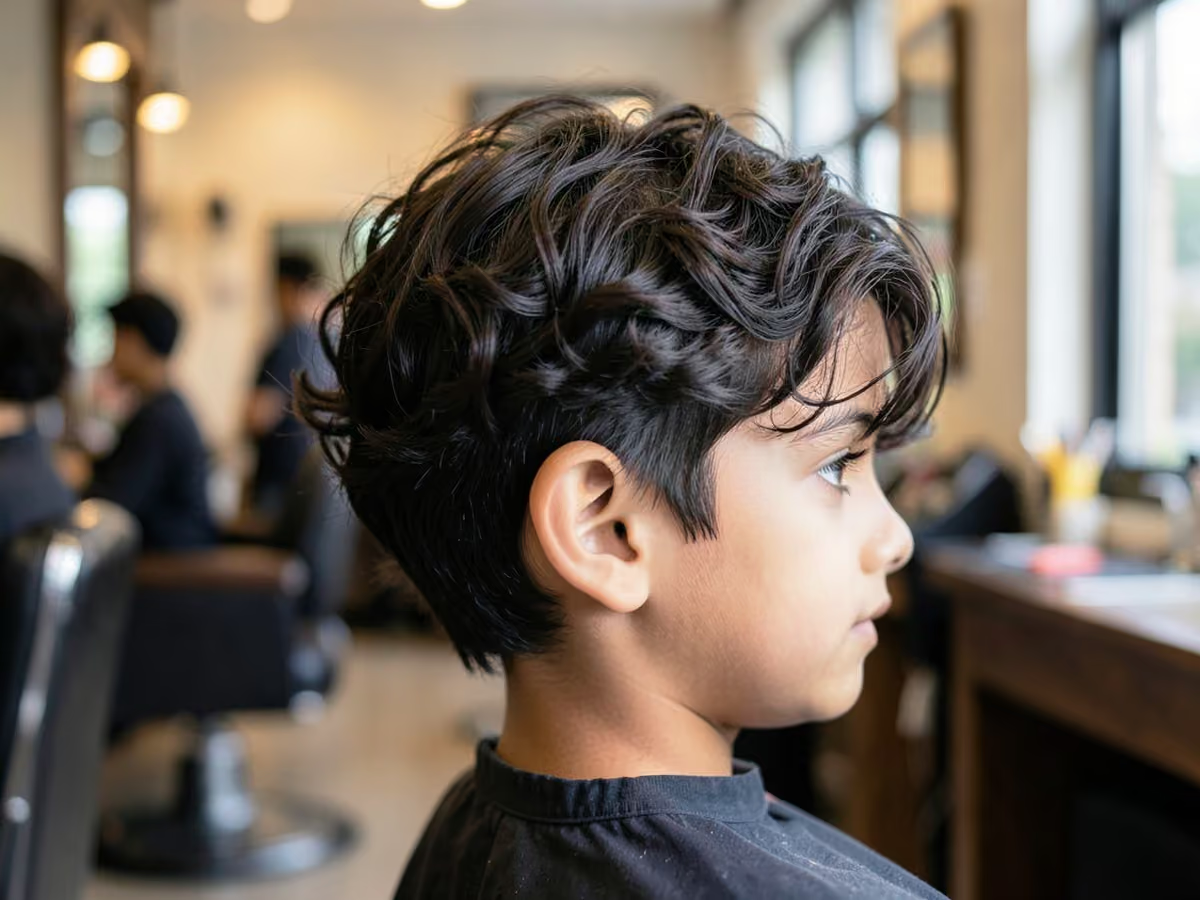
A drop taper dips behind the ear toward the nape from a #1, and the wavy fringe on top is cut to two and a half inches so the waves fall forward over the forehead. The curve behind the ear frames the back of the head. Wavy hair adds bulk to the fringe without product. It is a common mid-teen look that is easy to style.
How to Style at Home
Scrunch a little sea salt spray into the damp waves on top.
Push the fringe forward and let it dry in place.
Separate a few front pieces with a little matte paste.
Ask Your Barber
"Drop taper behind the ear from a #1, two and a half inches on top for a wavy fringe falling forward."
Trim:Every 3–4 weeks. Curls need shaping before they widen.
Best For:Round, oval faces + loosely curly hair.
About This Style
Natural loose curls are cut to about three inches and shaped round, so the top looks full and soft. The sides take a mid taper from a #2 to a #0.5 to keep the shape from going wide. It is the natural-curl version of the broccoli cut. Curl cream on wet hair and no brushing keep the curls defined. It suits men whose curls frizz when longer.
How to Style at Home
Rake curl cream through wet hair with your fingers.
Scrunch upward and diffuse on low heat until almost dry.
Fluff the roots gently with a pick once the curls are dry.
Ask Your Barber
"Fluffy curly top, about three inches, shaped round and cut dry so I can see the curl. Mid taper from a #2 to a #0.5."
Trim:Every 4 weeks. Taper and top need regular shaping.
Best For:Oval, heart faces + straight or fine hair.
About This Style
Here a perm on the top and back gives a mullet curls it would not have naturally. A low taper around the ears from a #1 keeps the sides short, while the back hangs curly to the base of the neck. It combines two trends and suits teens who want maximum texture. The perm needs gentle care, and the back should be trimmed lightly to keep curls healthy.
How to Style at Home
Scrunch curl cream through the top and back while wet.
Diffuse the top for volume and let the back air-dry.
Refresh curls with water and a little leave-in the next day.
Ask Your Barber
"Mullet on permed hair, low taper around the ears from a #1, curly top about three inches, back to the base of the neck."
Trim:Every 3–4 weeks. The front needs enough length to lift.
Best For:Round, square faces + wavy, medium-thick hair.
About This Style
Pushed up and back, three inches of wavy hair at the front form a loose quiff, and the waves give it a soft, uneven crest. The sides take a low taper from a #3 to a #1. The waves hold height without a lot of product. Round faces look longer with the lift, and the shape works for school, work and nights out.
How to Style at Home
Blow-dry the front up and back on medium heat.
Work matte clay through the front with your fingers.
Let a few waves fall loose for texture.
Ask Your Barber
"Loose wavy quiff with three inches at the front, low taper from a #3 to a #1. Keep the waves, no heavy thinning."
Recommended Products
Matte Clay
Clean-Cut and Beard Styles
Classic cuts and beard pairings suit older guys, work and formal events. These six include side parts, a slick back and three cuts built around facial hair. See the side part guide for more.
Trim:Every 3 weeks. Part line and taper need regular cleanup.
Best For:Oval, oblong faces + straight, thick hair.
About This Style
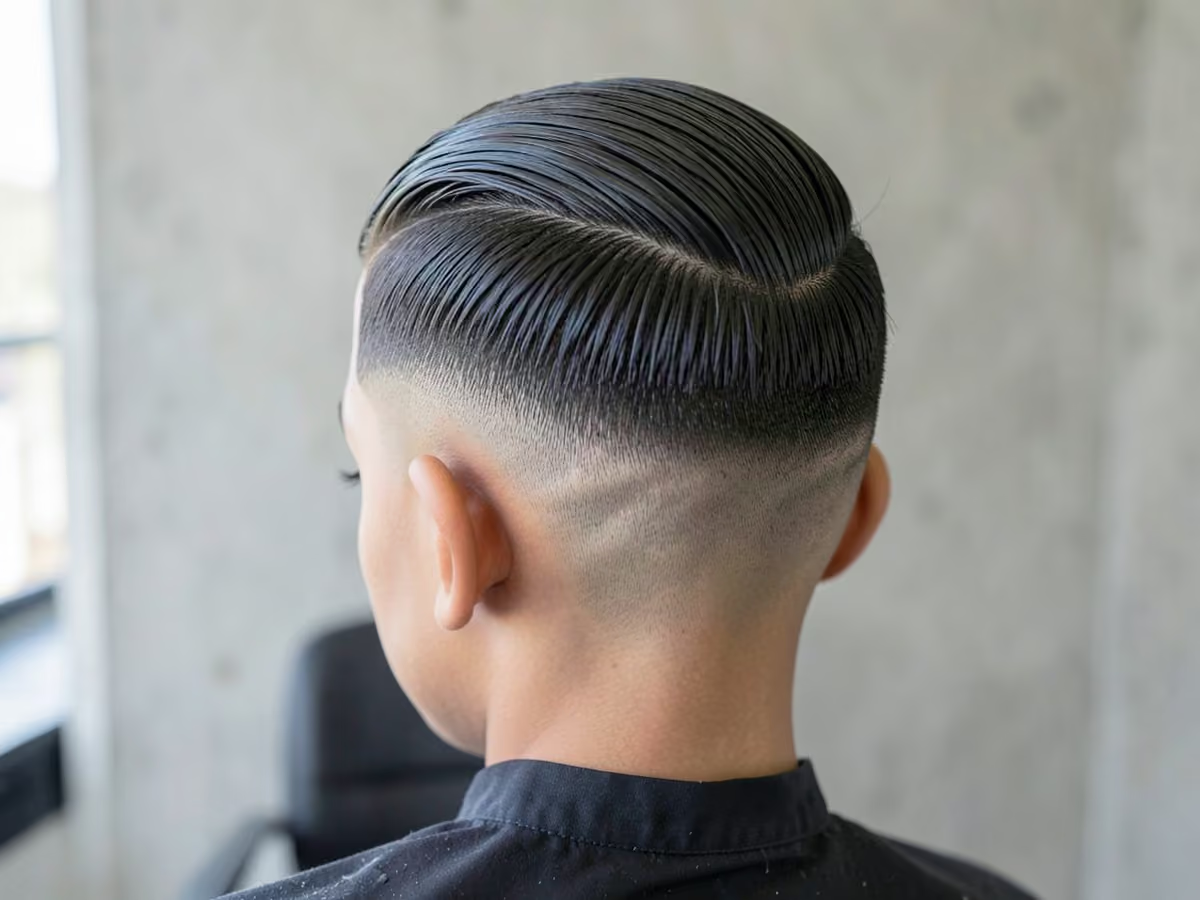
Two and a half inches on top are combed into a clean side part and pushed slightly up at the front, while the sides take a scissor-over-comb taper to a #2 at the neck. The look comes from private school and college campuses. Straight hair keeps the part sharp all day. A light pomade adds a soft sheen without looking wet.
How to Style at Home
Comb a part on your natural side while the hair is damp.
Blow-dry the front up and over with a brush.
Comb a little light pomade through for a soft finish.
Ask Your Barber
"Side part with two and a half inches on top, front lifted. Scissor over comb on the sides tapering to a #2 at the neck."
Trim:Every 3–4 weeks. Top length must stay long enough to comb.
Best For:Oval, square faces + thick straight hair.
About This Style
Combed straight back with pomade, three inches on top lie flat and smooth over a mid taper from a #2 to a #0.5. The short sides keep the slick back looking modern rather than retro. Straight, dense hair holds the comb lines best. It suits formal events and dressy offices, and looks good with a suit.
How to Style at Home
Work pomade through damp hair from roots to ends.
Comb the hair straight back with a fine-tooth comb.
Smooth the sides flat with your palms to finish the shape.
Ask Your Barber
"Slick back with three inches on top, mid taper from a #2 to a #0.5. Leave enough length at the front to comb back."
Best For:Square, oval faces + straight or wavy hair.
About This Style
Cap-friendly and practical, this cut keeps about two inches on top that can be pushed back or left messy, with the sides at a #3 and enough length at the back to curl slightly out from under a hat. There is no fade line to grow out. It is popular in rural areas and with men who work outdoors. A little sea salt spray adds texture after the cap comes off.
How to Style at Home
Spray sea salt spray into dry hair after taking off your cap.
Push the top back with your fingers and leave it loose.
Let the back flip out naturally under the hat line.
Ask Your Barber
"Two inches on top I can push back, #3 on the sides, no fade. Leave some length at the back to curl out under a cap."
Trim:Every 3 weeks. Trim stubble every few days at home.
Best For:Round, oval faces + straight hair and patchy beard.
About This Style
Heavy stubble at three to five millimeters hides a patchy beard while adding an edge to the jaw. On top, three inches of point-cut hair are pushed up into a messy quiff over a mid fade from a #1 to a #3. The fade stops at the sideburns, where it meets the stubble. It suits men in their twenties who cannot grow a full beard yet.
How to Style at Home
Blow-dry the front upward while lifting it with your fingers.
Twist the top with matte clay for a messy finish.
Trim stubble to the same length every three days.
Ask Your Barber
"Mid fade from a #1 to a #3, blended into my stubble at the sideburns. Three inches on top, point cut for a messy quiff."
Trim:Every 2–3 weeks. Fade grows out before the beard needs shaping.
Best For:Oval, long faces + any hair, full beard growth.
About This Style
A #2 buzz on top fades down to a #0 at the temples and connects through the sideburns into a full beard of about an inch. The short hair puts all the weight on the lower face, which balances a long face. Lighter or ginger beards show best against the short top. The beard needs oil and a weekly shape-up to keep its outline neat.
How to Style at Home
Brush beard oil through the beard every morning.
Shape the beard edges with a trimmer once a week.
Run your palm over the buzz with scalp oil if it feels dry.
Ask Your Barber
"Buzz with a #2 on top fading to a #0 at the temples, connected into my beard. Shape the beard to about an inch, neat cheek line."
Trim:Every 6 weeks. Beard needs a trim every two weeks.
Best For:Round, square faces + wavy hair and dense beard.
About This Style
Chin-length flow paired with a short boxed beard at half an inch gives a rugged look common in hockey and outdoor circles. The hair is pushed back and left to flick behind the ears, and the beard edges are kept tidy so the overall shape does not look unkempt. On a round face, the beard adds length at the chin. Trims are infrequent, but the beard line needs regular attention.
How to Style at Home
Push the hair back with sea salt spray and let it air-dry.
Apply beard balm and brush the beard downward.
Tidy the cheek and neck lines with a trimmer every week.
Ask Your Barber
"Keep my flow, just clean the ends and add layers. Shape my beard short and boxed, about half an inch, neat lines."
Recommended Products
Sea Salt Spray
Beard Balm
How Do You Ask Your Barber for These Haircuts?
Name the style, then give three numbers: the shortest guard on the sides, where the fade or taper starts and how long the top should be. A #1 leaves 1/8 inch, a #2 leaves 1/4 inch and a #3 leaves 3/8 inch. A low taper touches only the sideburns and neckline, while a fade wraps the sides. If the terms are new, read how to ask for a fade without knowing terminology before you go.
Pick a front and a side photo of someone whose hair texture looks like yours. A wavy-haired model will not help if your hair is fine and straight. Say how you style it each morning, because a barber cuts a messy fringe differently from one you plan to blow-dry. Mention any cowlicks or a double crown too, since they decide where the hair will fall no matter what the photo shows.
Clipper Guards Used in White Boy Haircut Styles
A clipper guard is the plastic comb that clips onto the blade and sets how much hair is left: a #1 leaves 3 mm (1/8 inch), each step up adds about 3 mm. The right column lists the cards on this page that call for each guard. See the full clipper guard numbers guide for the complete chart.
Straight hair needs grip, so prep it with sea salt spray or texture powder before adding a matte clay or paste. Blow-drying for a minute in the direction you want the hair to go makes a bigger difference than any product. Wavy hair needs the opposite approach: a little leave-in or light cream on damp hair, then air-drying or a diffuser, so the waves clump instead of frizzing. Our heatless styling guide covers the no-dryer route.
Use less product than you think. A pea-size amount is enough for most short cuts, and too much makes fine hair look greasy and flat by lunchtime. Wash every second or third day to keep the scalp clean without stripping natural oils. If your hair goes limp by the afternoon, switch from paste to a powder, which adds grip without weight.
What Mistakes Should You Avoid With These Cuts?
Copying a photo from someone with a different hair type is the most common mistake; a fluffy fringe on thick wavy hair will look flat and thin on fine straight hair. Asking for a skin fade without planning return visits is another, as it looks grown out in two weeks. Cutting too much off the top of a flow or mullet in the growing phase can also set you back months.
Over-thinning is a quieter problem. Texture shears used heavily on straight hair can leave short pieces that stick up as they grow. If that has happened before, read how to ask for texture without thinning shears and ask for point cutting instead. Point cutting removes weight at the ends only, so the hair keeps its length at the roots and grows out evenly between visits.
Which White Boy Haircut Is Right for You?
Pick your hair type and how much upkeep you will put in. The matches below come from the Best For and Maintenance notes on each card. Upkeep follows the Maintenance badge: low means a cut every 3 to 6 weeks and almost no daily styling, high means weekly line-ups or daily product.
It is a search phrase for haircuts popular with white men and teens, most of whom have straight or wavy hair. Common examples are the low taper with a textured fringe, the flow, the modern mullet and the perm with short sides. Anyone with similar hair texture can wear these cuts; the label describes trends, not rules.
Q2: What is the most popular haircut for white guys right now?+
There is no reliable count, but common requests include a low taper with a textured or fluffy fringe, often called the low taper fade with fringe. The flow, modern mullet and perm with a taper are also common among teens. Short crops and crew cuts stay popular with older men and anyone who wants little upkeep.
Q3: Can white guys get waves?+
Men with wavy or loosely curly hair can get a version of 360 waves by keeping the hair short, brushing it in a set pattern and wearing a durag. Straight hair cannot hold the pattern. Results depend on texture, and the waves are usually looser than on coily hair. A wave pomade helps hold the pattern.
Q4: What haircut should a white guy with straight hair get?+
Straight hair suits cuts with texture or clean lines. A textured crop, side part, short quiff or crew cut holds well. Ask for point cutting on top so the hair does not lie flat, and keep the sides shorter if they tend to stick out as they grow.
Q5: How do you get the flow haircut?+
Grow the hair to at least the bottom of the ears, then ask a barber to shape it with layers so it falls back behind the ears and flips at the neck. Avoid cutting the top while it grows. Hair grows roughly half an inch a month, so most men need six months to a year from a short cut, depending on starting length.
Q6: Is a perm a good idea for straight hair?+
A perm adds curl or wave to straight hair and is popular with teens who want a fluffy or broccoli-style top. It lasts several months and needs a gentle shampoo and curl cream. Very fine or damaged hair can react badly, so ask a stylist to check your hair before booking.