Quick answer: The worst haircuts for men are usually not ugly cuts but mismatched ones: a comb over on a thinning crown, a skin fade on very fine light hair, a tall pompadour on a long face, or heavy thinning on straight hair. Each fails because it fights the hair or face shape, and each has a simple fix.
Worst Haircuts for Men Styles at a Glance
Every style on this page with its clipper guard, top length and trim interval. Tap a name to jump to that card.
Worst haircuts for men are the cuts barbers regularly adjust or talk clients out of, because they fight hair density, growth pattern, face shape or upkeep. Every cut below can look fine on the right head. For each, you get the reason it tends to fail and the exact request to make instead.
What Makes a Haircut One of the Worst?
A haircut fails when it ignores the hair you actually have. Fine hair cut very short shows scalp; thick straight hair thinned too much sticks out; a cowlick cut too short stands up; a high line-up pushed back makes the forehead look larger. None of these is a failure of taste. They are mismatches between the request and the head, and a good barber will point them out before picking up the clippers. Telling the barber about your hair before the cut starts prevents most of these.
The other common cause is upkeep. Some cuts look sharp for three days and awkward for three weeks, which is a poor fit for someone who visits once a month. A haircut that suits you is one that still looks intentional on the day before your next appointment, and not just on the day you leave the chair. Ask how the cut will look in three weeks as well as today.
Why Do Barbers Talk Clients Out of Certain Cuts?
Barbers see the same problems every week: a photo taken from a man with twice the hair density, a request for skin on a scalp with razor bumps, or a fade asked for by someone who cannot return for a month. Saying no, or suggesting a change, saves the client from a cut that grows out badly. It is not about refusing a style; it is about adjusting it so it works. The best barbers will offer a version of your photo that suits your density, growth pattern and schedule.
If a barber pushes back, ask why. Most will explain the issue in a sentence: your crown is thin, your hair grows forward, your neckline has a cowlick. Our guide on how to talk to your barber covers how to bring a photo and agree on a version that suits your hair. A two-minute talk saves a month of growing out a cut you dislike.
Which Haircut Problems Are Most Common?
The problems fall into three groups, which is how the cards below are arranged. The first is thinning hair, where cover-up styles and heavy products draw attention to the scalp instead of hiding it. The second is mismatches with face shape or hair type. The third is cuts that grow out poorly or that go wrong when done at home or rushed. The table below matches each problem with the cut that usually works better.
If you already have one of these cuts, do not panic. Most can be corrected at the next visit or simply grown out. Our page on how to fix a bad haircut covers the options, and what to do if you hate your new haircut explains how to ask for a free correction. A calm, specific request gets the best result.
Cover-up cuts and heavy products often draw attention to thinning instead of hiding it. These five are a common, each with a shorter or lighter alternative. See best haircuts for balding men for more.
Trim:Every 3–4 weeks. Long strands need constant reshaping.
Best For:Not advised for thinning crowns + fine hair.
About This Style
Growing one side long and combing it across a thin crown is the classic cover-up, and it rarely works for long. The strands separate in wind, rain or bright light, which shows more scalp than a short cut would. Ask instead for a short textured crop: a #2 taper on the sides and about an inch on top, pushed forward with matte powder so the density looks even.
How to Style at Home
Towel-dry hair and sprinkle texture powder at the roots on top.
Push the short top forward with your fingertips, not a comb.
Leave it slightly messy so no single line of scalp shows.
Ask Your Barber
"Instead of a comb over, I want a short textured crop: #2 taper on the sides, about an inch on top, point cut and pushed forward."
Trim:Every 6–8 weeks. Ends split and look wispy without trims.
Best For:Not advised for receding temples + fine hair.
About This Style
Shoulder-length hair on a thinning top tends to hang flat and stringy, and the contrast between thick ends and a sparse crown makes the thinning more obvious. Barbers usually suggest cutting it shorter, with the sides tidy and the top at two inches or less. If you want to keep length, a medium cut to the jaw with layers reads fuller than long, one-length hair.
How to Style at Home
Use thickening spray at the roots after every wash.
Blow-dry the hair forward and up to lift it off the scalp.
Finish with a light matte paste so the hair does not clump.
Ask Your Barber
"My hair is thinning on top, so take the length up to the jaw with layers, or shorter. Tidy the sides with a #3 and keep the top textured, not heavy."
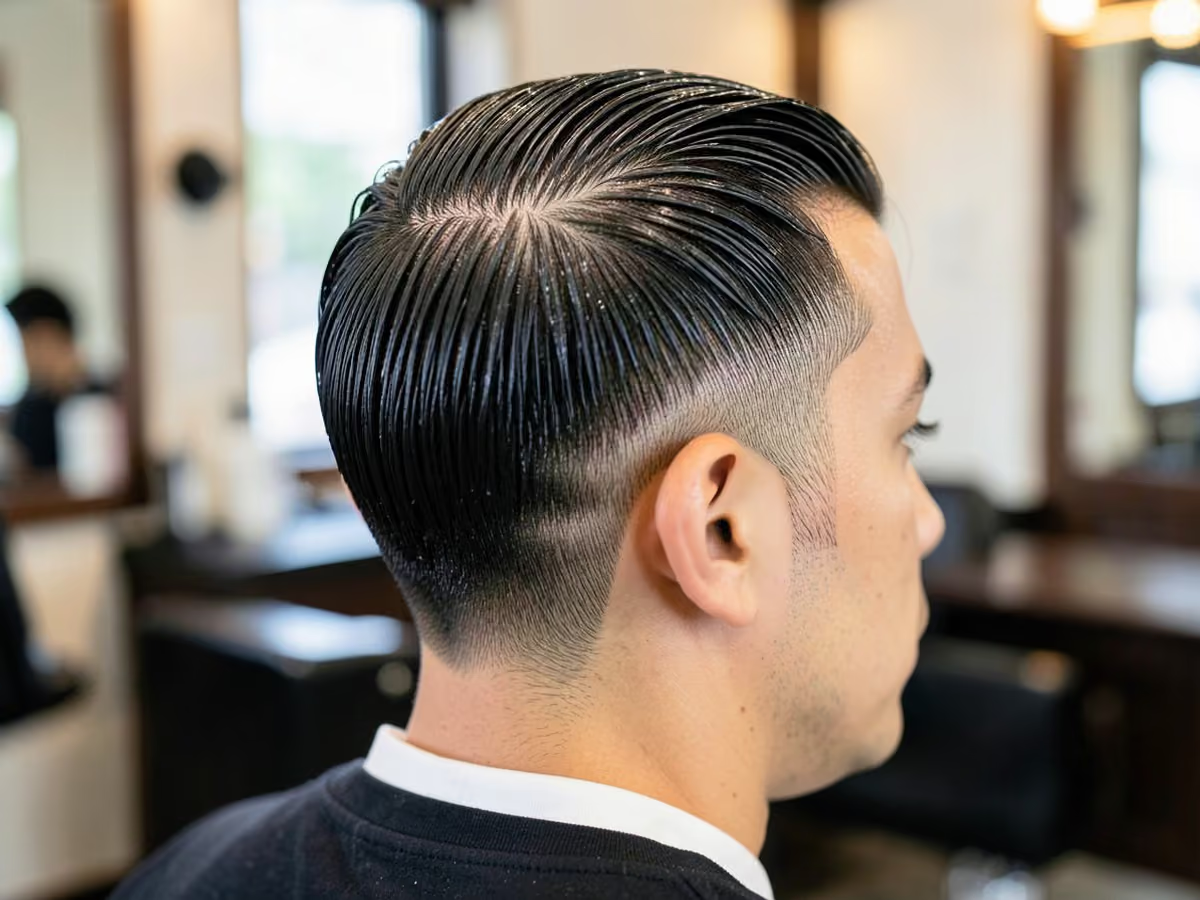
Trim:Every 4 weeks. The sides lose shape around the ears.
Best For:Not advised for thin tops + fine straight hair.
About This Style
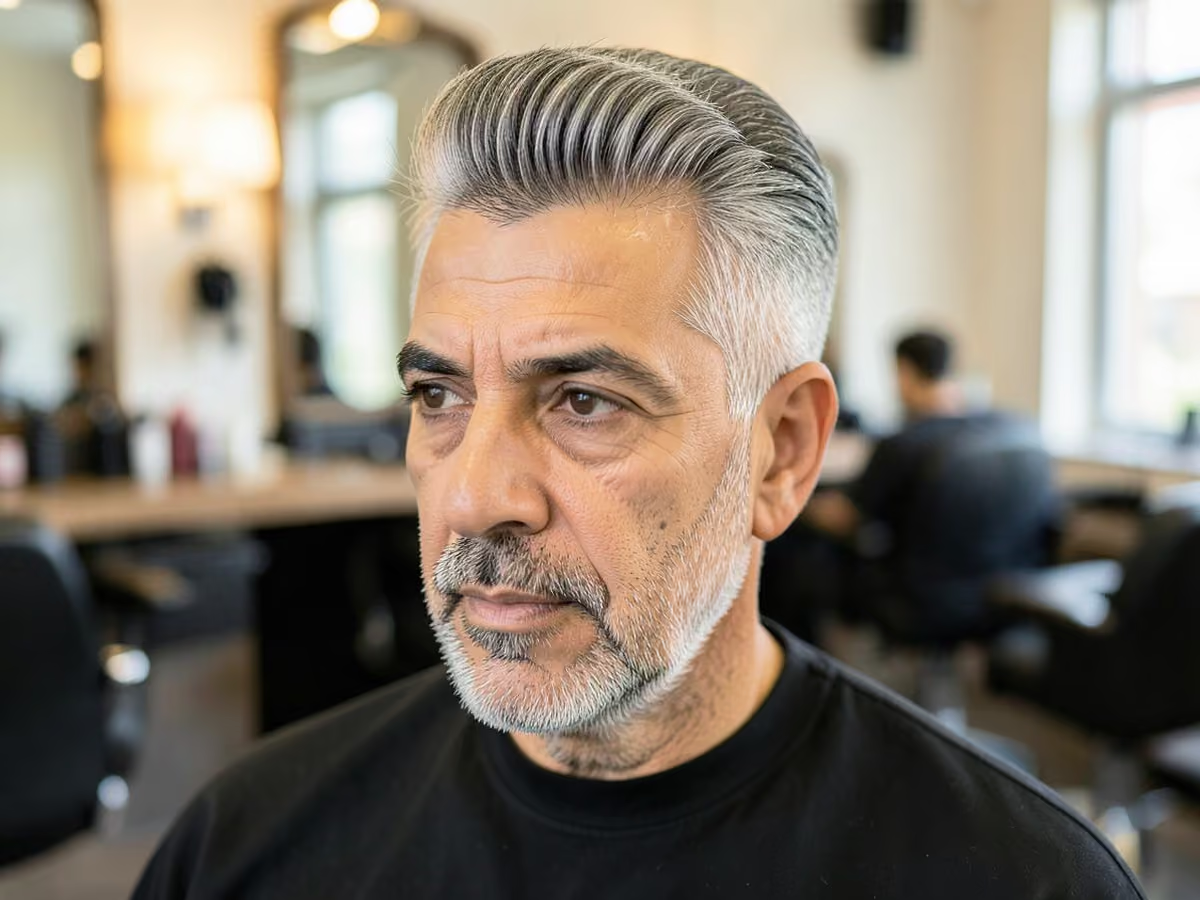
Shiny gel or high-shine pomade bunches fine hair into separate stripes, and slicking those stripes straight back lines them up with the scalp. The result shows more skin between each row of hair. A dry, matte finish does the opposite. Ask for a shorter brushed-back cut, around two inches, and style it with a matte cream so the hair separates less and looks thicker.
How to Style at Home
Blow-dry the top back with a brush to add volume at the roots.
Rub a small amount of matte cream through the hair, not onto the scalp.
Rough the front slightly with your fingers to break up the lines.
Ask Your Barber
"Brushed-back cut, about two inches on top, #3 on the sides. My hair is fine, so keep it blunt and avoid thinning so it stays thick."
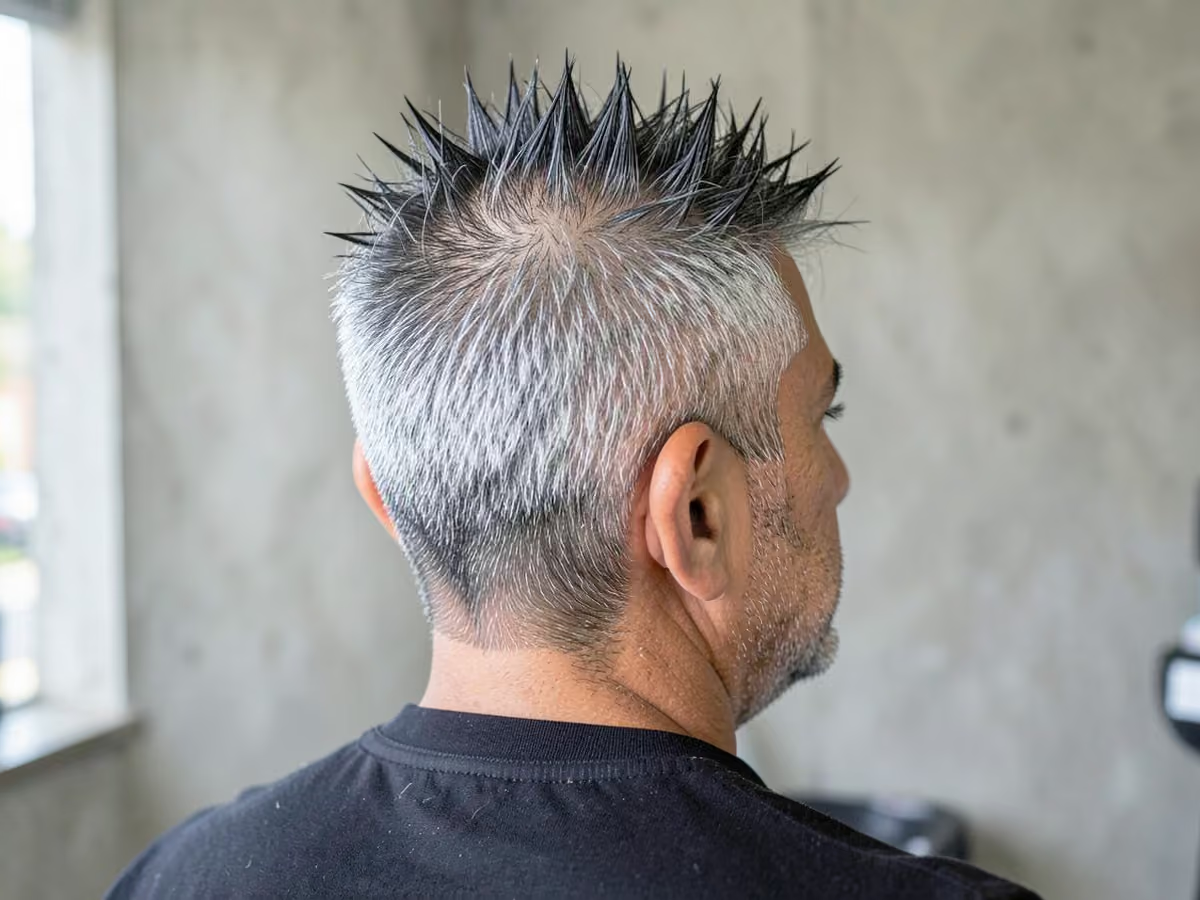
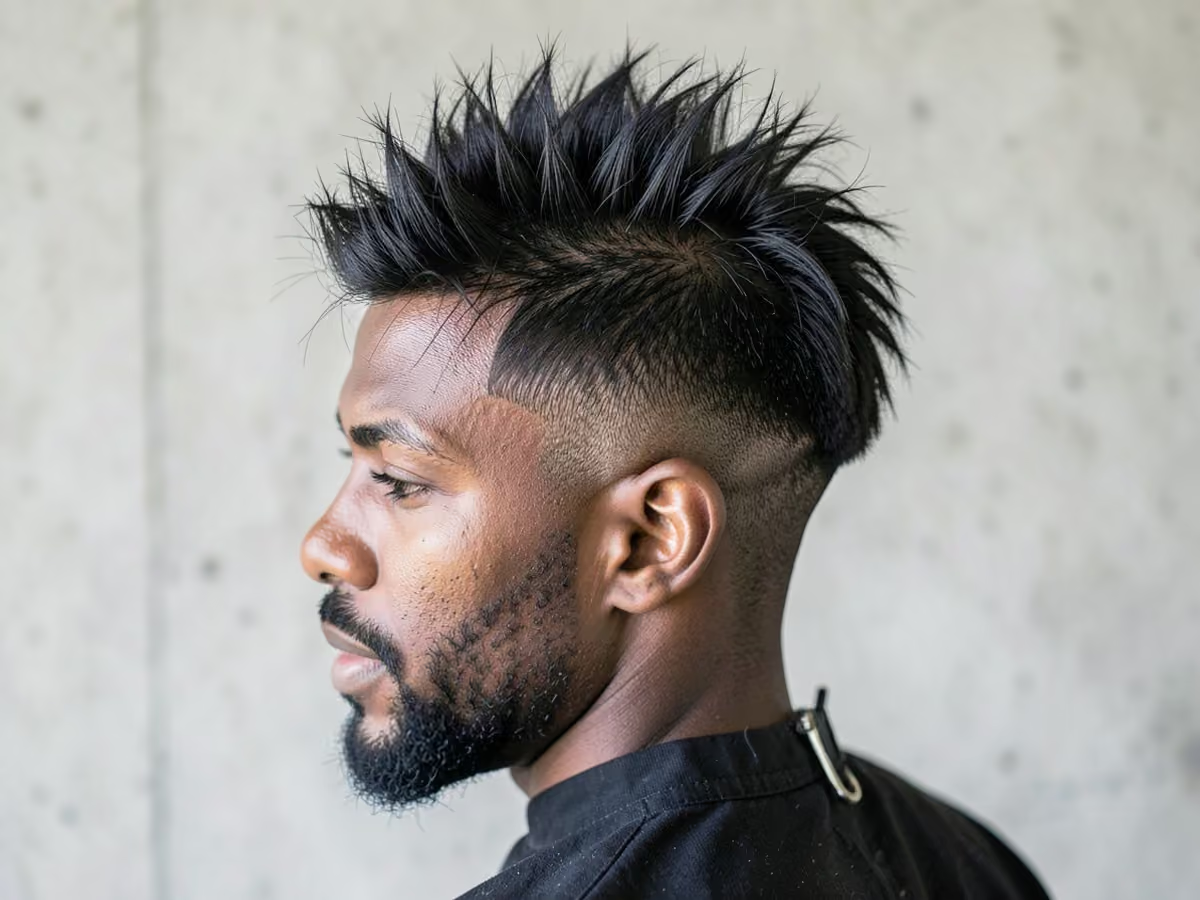
Trim:Every 3–4 weeks. Spikes flop once the top grows past two inches.
Best For:Not advised for thinning tops + fine or thin hair.
About This Style
Crunchy gel spikes were a fixture of the early 2000s, and on thin or fine hair they still fail the same way: gel groups the hair into points, and the gaps between points show scalp from above. Stiff spikes also look dated next to softer, textured finishes. Ask for a textured crop or messy quiff with the same short length, styled with clay for separation without the hard shell.
How to Style at Home
Warm a pea-size amount of texture clay between your palms.
Run your fingers up through the top so pieces separate loosely.
Pinch a few ends to define them without forming hard points.
Ask Your Barber
"Short textured top, about an inch and a half, point cut so it sits messy. #2 on the sides. I want texture with clay, not gel spikes."
Trim:Every 4–6 weeks. Short thinned hairs grow back as spikes.
Best For:Not advised for thick straight hair + cowlicks.
About This Style
Heavy use of thinning shears removes bulk by cutting random hairs short. On thick straight hair, those short hairs then push up the longer ones, so the top looks puffy and spiky as it grows. Thin hair simply looks thinner. Ask for point cutting or slide cutting instead, which removes weight from the ends and keeps the inner hairs long enough to lie flat.
How to Style at Home
Comb styling cream through damp hair to weigh down short hairs.
Blow-dry in the direction the hair grows, not against it.
Press the top down with flat palms once it is fully dry.
Ask Your Barber
"Please do not use thinning shears. Point cut or slide cut the top to take out weight, and keep the inside layers long so it lies flat."
Recommended Products
Styling Cream
Light Pomade
Haircuts That Fight Your Face or Hair Type
These cuts can look good on some heads and wrong on others. Each card names the hair or face where it tends to fail and the small change that fixes it, often just a different height or guard.
Trim:Every 2–3 weeks. Tight sides grow out and widen the base.
Best For:Not advised for long, oblong faces + any hair.
About This Style
Four or five inches of lift on top, over tight sides, adds height to a face that is already long. The forehead and chin seem further apart, and the head looks narrow. A lower quiff or a side part with a little volume keeps the style without the extra length. Leaving the sides a guard or two longer, a #3 or #4, also adds width where a long face needs it.
How to Style at Home
Blow-dry the front up only an inch, then back and to the side.
Comb pomade through and flatten the crown so height stays at the front.
Leave the sides fuller rather than pressing them tight to the head.
Ask Your Barber
"Instead of a tall pompadour, a low quiff with about an inch of lift. Leave the sides at a #4 tapering to a #3 so the face looks wider."
Trim:Every 3–4 weeks. The fringe line goes crooked quickly.
Best For:Not advised for front cowlicks + straight hair.
About This Style
A straight, heavy fringe needs hair that falls forward evenly. A cowlick at the front hairline lifts one patch of that fringe and splits it, and cutting the fringe shorter makes the split stand up more. Barbers usually suggest leaving the front longer and texturing it, or sweeping it to the side the cowlick already pushes toward, so the growth pattern works with the style.
How to Style at Home
Blow-dry the fringe in the direction the cowlick grows, using a nozzle.
Brush it down flat while the hair is still warm, then let it cool.
Set it with a little styling cream rather than a stiff product.
Ask Your Barber
"I have a cowlick at the front, so leave the fringe longer, about three inches, textured, and sweep it toward the side it naturally goes."
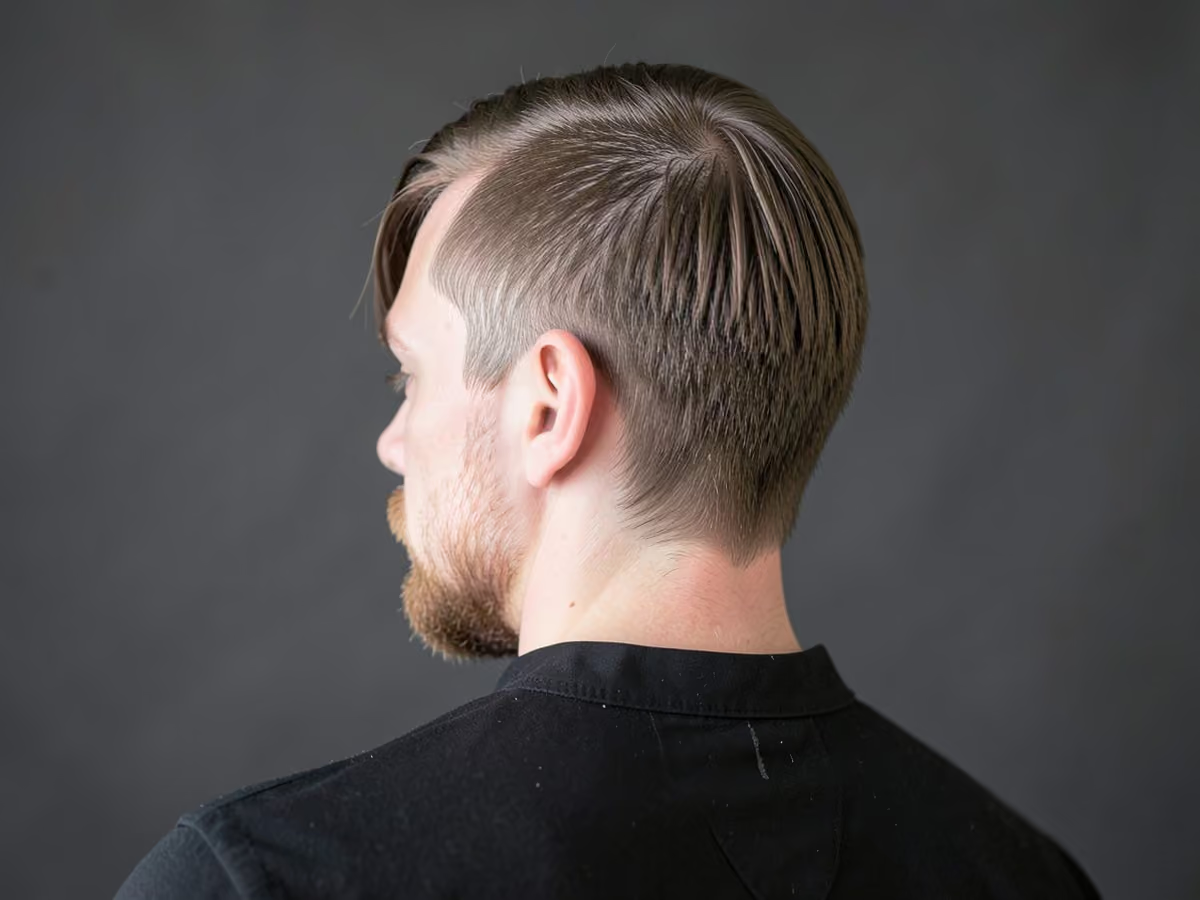
Trim:Every 2 weeks. Blends blur fast on light, fine hair.
Best For:Not advised for fine, light hair + pale scalp.
About This Style
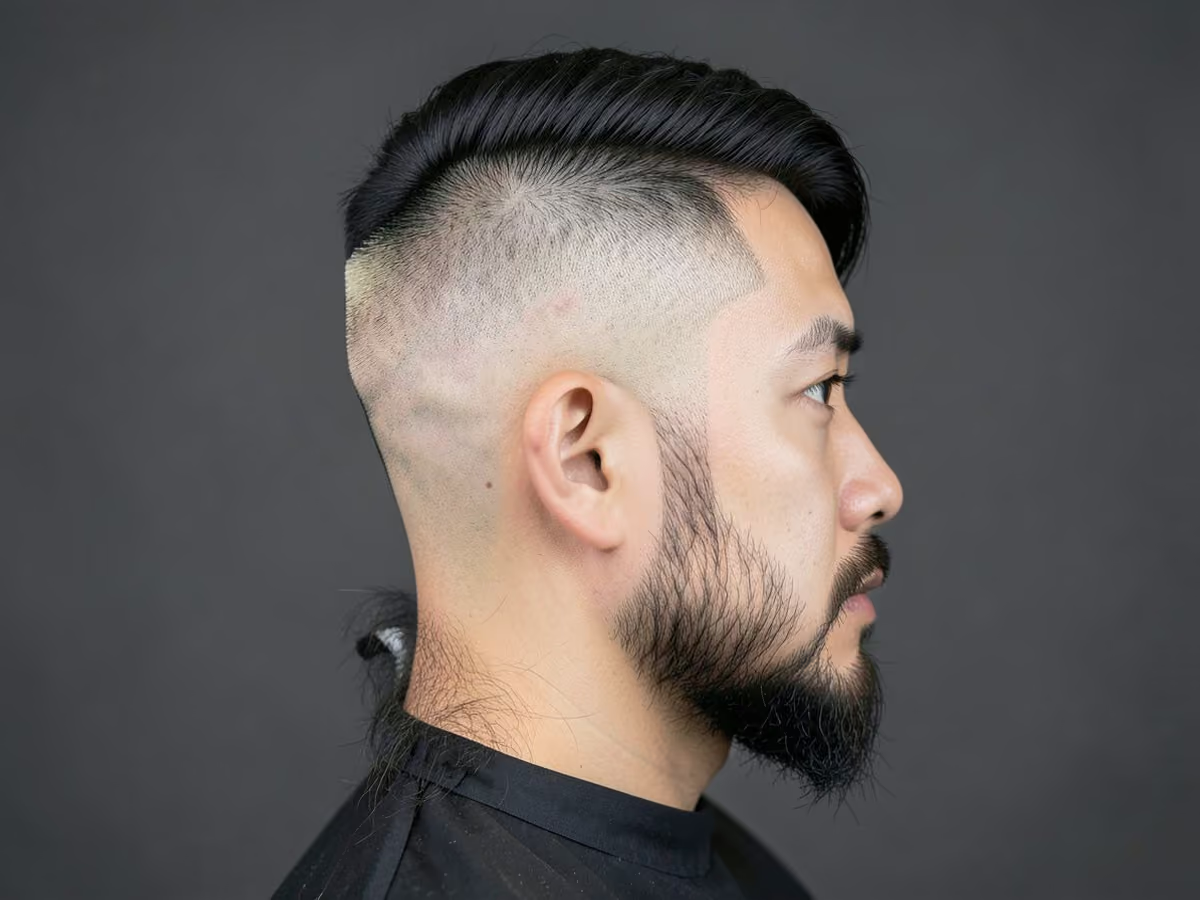
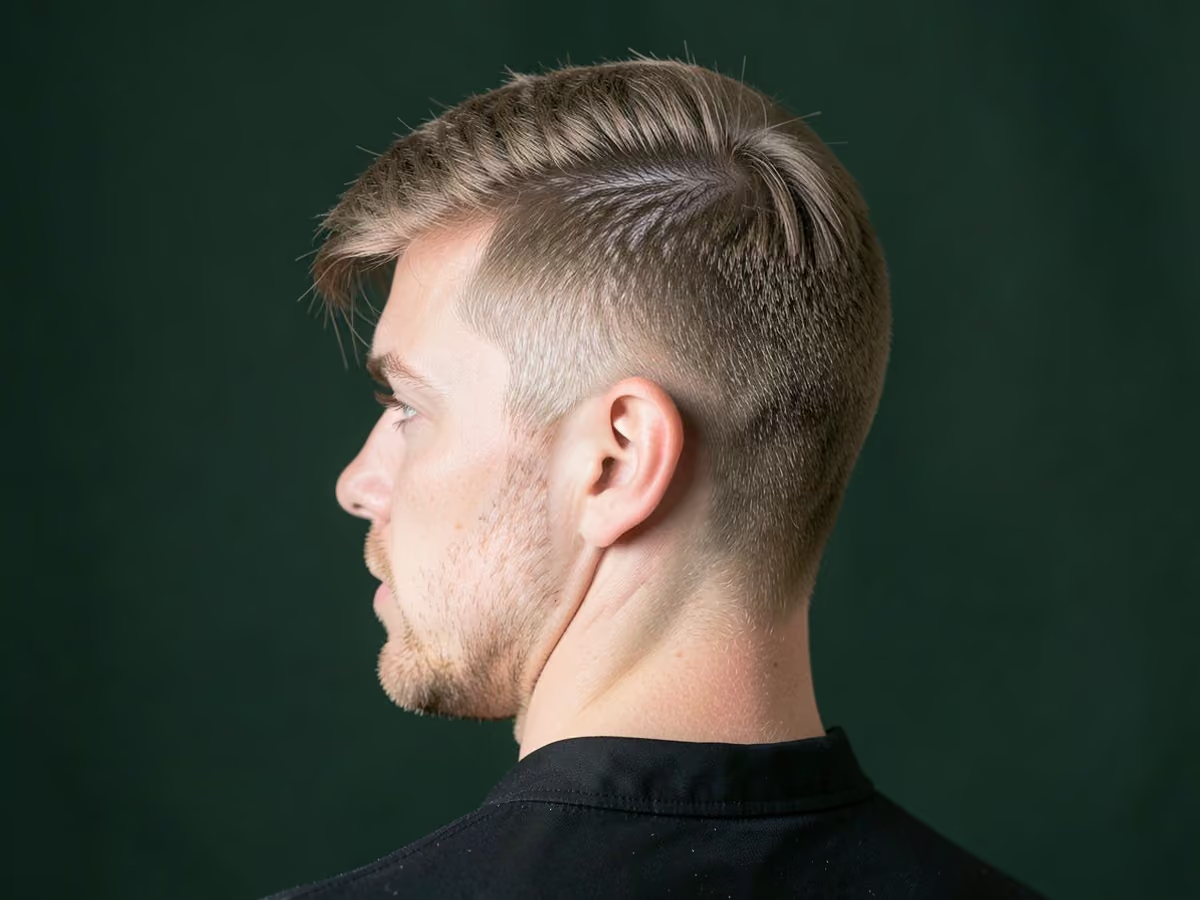
Light, fine hair shows the scalp at every guard length, so a skin fade climbing high on the head can look patchy or bare rather than blended. Dark, thick hair hides those transitions; fair hair does not. A low taper starting at a #1 or #2, or a scissor taper, gives a cleaner gradient. Keep at least an inch and a half on top so the contrast does not look severe.
How to Style at Home
Use a small amount of thickening powder on the top for density.
Push the top up and to the side with your fingers.
Check the sides in good light; they need no product.
Ask Your Barber
"Low taper, not a skin fade. Start with a #1 at the neckline and blend to a #3 above the ears. Inch and a half on top, textured."
Trim:Every 2 weeks. Bumps flare as shaved hair regrows.
Best For:Not advised for bump-prone skin + curly or coily hair.
About This Style
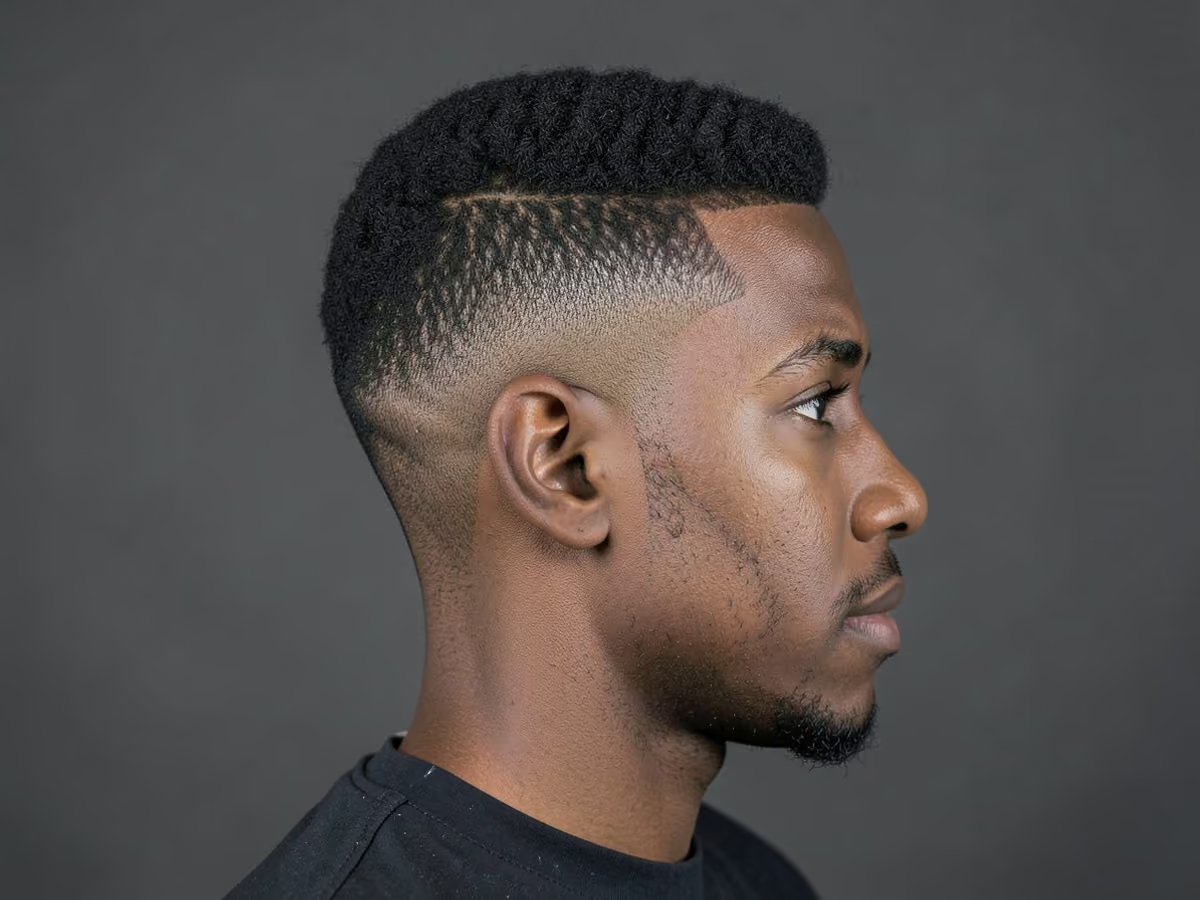
Shaving the sides and neckline to bare skin is a common trigger for razor bumps, where curly hairs curve back into the skin as they grow. Each fresh skin fade can restart the irritation. Leaving a #0.5 or #1 at the bottom keeps the hair above the skin and still looks clean. If bumps persist, a dermatologist can suggest treatment; see how to prevent razor bumps on the neckline.
How to Style at Home
Wash the neckline with a gentle cleanser after each cut.
Apply a light scalp oil to the faded area to calm the skin.
Avoid picking at bumps or shaving the neckline yourself between cuts.
Ask Your Barber
"Low fade but no skin; start at a #1 at the bottom because I get razor bumps. Clean the neckline with clippers, not a razor."
Trim:Every 4–5 weeks. Curtains drift wider as they grow.
Best For:Not advised for round faces + very straight hair.
About This Style
Two flat curtains hanging straight down either side of the face frame the cheeks and make a round face look wider. The problem is volume, not the part itself. Adding lift at the roots and cutting the curtains shorter, so they end at the cheekbones and flick outward, lengthens the face. Shorter sides, a #3 taper, also take width away at the ears.
How to Style at Home
Blow-dry the roots up at the part before splitting the hair.
Push each side back and out with a round brush.
Finish with sea salt spray so the curtains keep a slight wave.
Ask Your Barber
"Middle part with curtains ending at the cheekbones, not the jaw. Add layers for lift at the roots and taper the sides with a #3."
Recommended Products
Sea Salt Spray
Round Brush
Haircuts That Grow Out Badly or Go Wrong at Home
Some cuts look fine on day one and awkward by week three. Others go wrong because the work was rushed or done at home. Here is what to ask for so the cut still looks deliberate later on.
Trim:Every 3–4 weeks. The strip grows uneven quickly.
Best For:Not advised for office jobs + fine hair.
About This Style
A rat tail leaves one thin strip of long hair at the nape while the rest of the head is short. The strip tends to grow thin and uneven, and it looks untidy against a fresh fade within a few weeks. If the goal is length at the back, a short mullet or a modern mullet keeps the back longer across its full width and blends it into the sides.
How to Style at Home
Run a little sea salt spray through the back for texture.
Scrunch the longer back hair so it sits in loose pieces.
Keep the top and sides short and lightly styled with clay.
Ask Your Barber
"Instead of a rat tail, give me a short mullet: mid taper on the sides, an inch and a half on top, and the back left two inches longer across."
Trim:Every 1–2 weeks. Sharp edges need frequent touch-ups.
Best For:Not advised for receding hairlines + coily hair.
About This Style
Moving the front edge back a little each visit to get a sharp, straight line slowly raises the hairline. The forehead looks larger and the temples deeper, and the hair cut away can take weeks to grow back. A natural edge-up that follows your own hairline looks just as clean. Our guide on fixing a line-up that is too high covers recovery.
How to Style at Home
Brush the front edge forward daily with a soft edge brush.
Let the hairline grow for three to four weeks without lining it.
Keep the scalp at the hairline moisturized with a light oil.
Ask Your Barber
"Edge-up following my natural hairline, please. Do not push it back. Just clean the stray hairs and keep the corners where they are."
Trim:Every 4 weeks. Damaged ends need cutting and roots show.
Best For:Not advised for dark hair + home bleaching.
About This Style
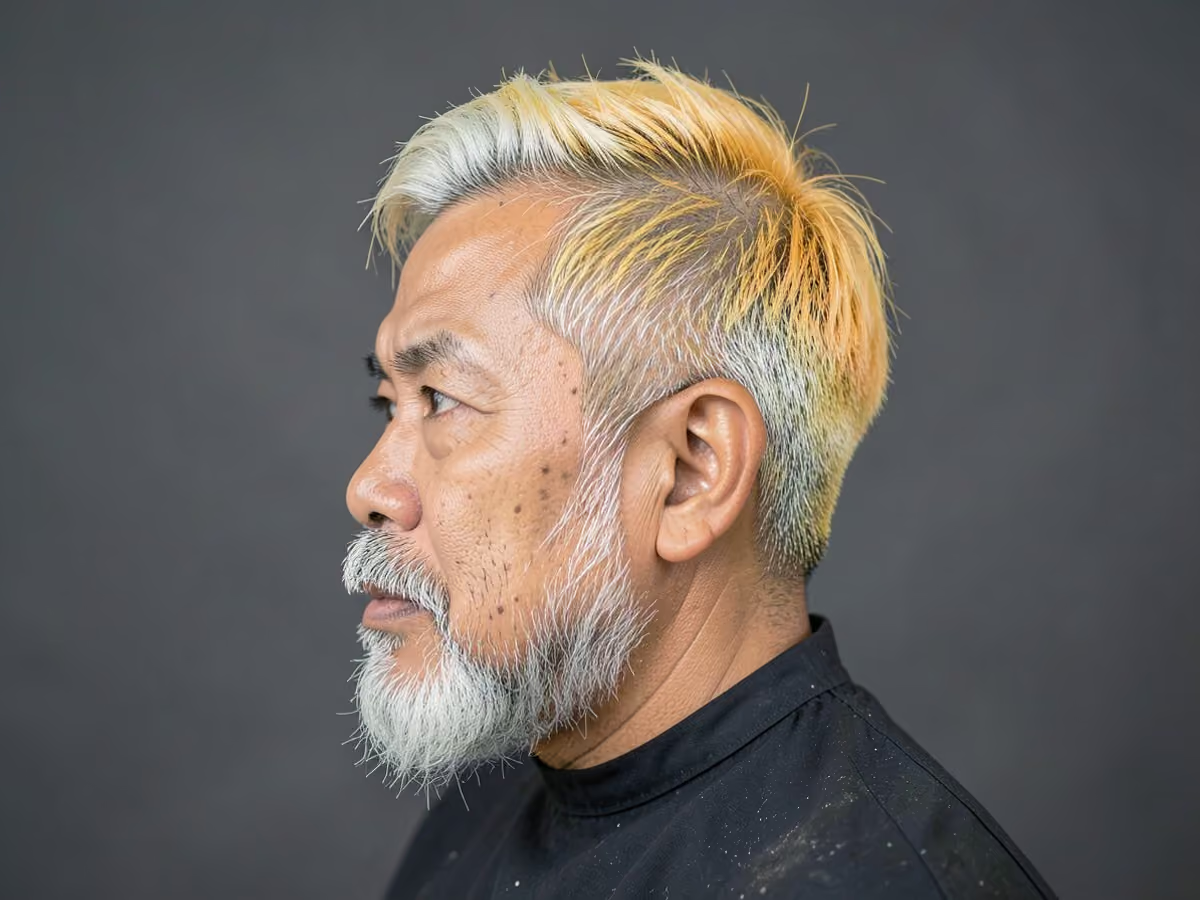
Bleaching dark hair at home often stops at an orange or yellow stage, because lifting it to blond takes careful timing, the right developer and usually toner. Uneven application leaves patches, and overprocessing makes the hair brittle. A colorist can lift it in stages and tone it. If you want a lighter look cheaply, a buzz cut bleached by a professional is the simplest version to keep healthy.
How to Style at Home
Use a leave-in conditioner after every wash on bleached hair.
Rinse with cool water and skip daily shampoo to limit dryness.
Book a toner refresh when brassy tones start to show.
Ask Your Barber
"I want my hair lighter but do not want to do it at home. Short textured crop with a #2 on the sides, and I will book color with a colorist."
Trim:Every 2–3 weeks. Disconnected sides fuzz up fast.
Best For:Not advised for monthly visits + thick hair.
About This Style
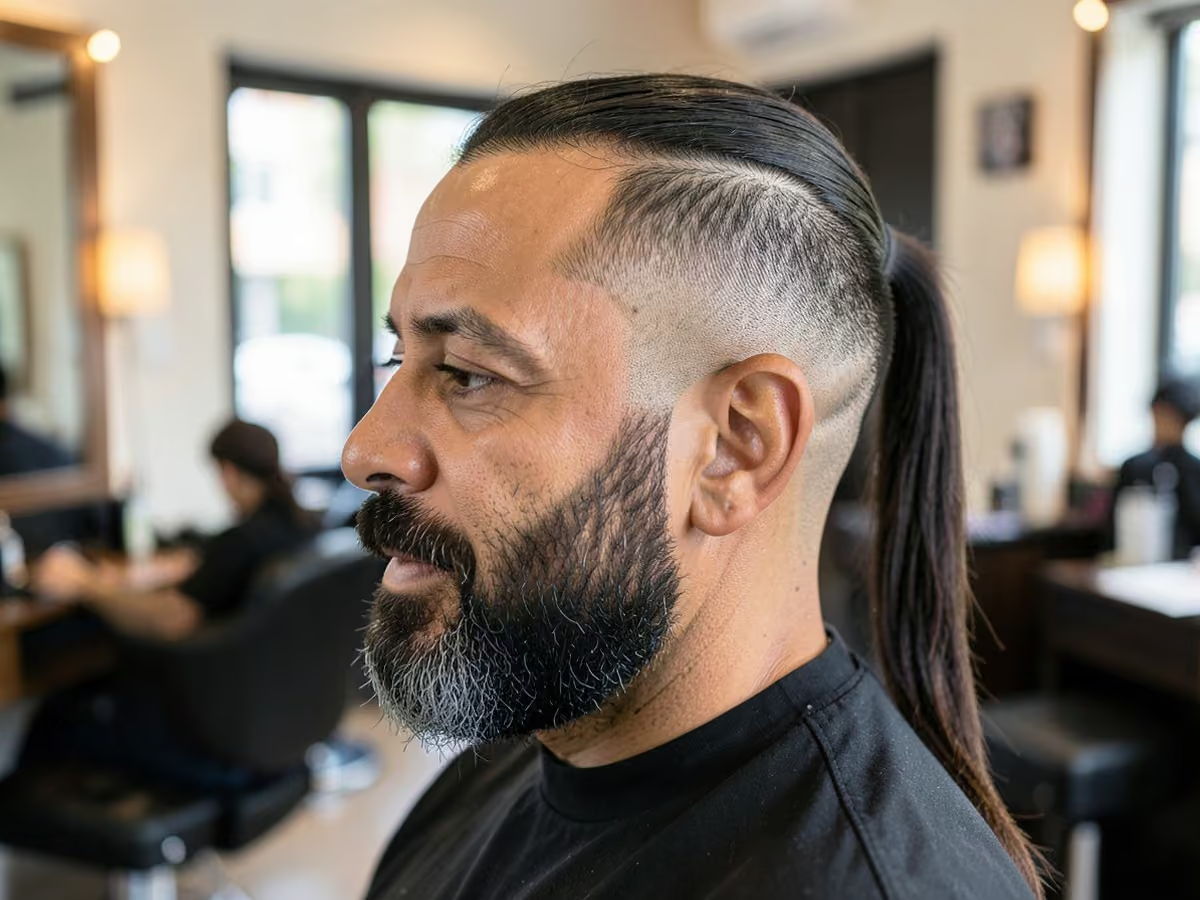
An undercut relies on a crisp line between short sides and a long top. After four or five weeks the sides grow into a fuzzy shelf that pushes the top out, and it is the stage most men dislike. If you can only visit monthly, ask for a tapered cut with the same top length: the sides blend from a #2 up to scissor length, so regrowth looks gradual.
How to Style at Home
Comb the top back with pomade so it covers the side regrowth.
Smooth the side hair down with a little styling cream.
Book a side clean-up at week three if a full cut is not due.
Ask Your Barber
"I only come in monthly, so taper the sides from a #2 into the top instead of a disconnected undercut. Keep four inches on top."
Trim:Every 3–4 weeks. Blend softens the shelf as it grows.
Best For:Not advised for home cuts + thick straight hair.
About This Style
A shelf is the hard ledge left where the clipper sides stop and the longer top begins, without anything blending the two. It is common with home cuts and with one-guard sides under a longer top. On thick hair it sticks out like a ring around the head. A barber can fix it by blending with a #3 or #4 and scissor-over-comb, or by fading below it.
How to Style at Home
Comb the top down over the shelf until it can be blended.
Use a light styling cream to weigh the top hair over the ledge.
Avoid cutting more at home; let a barber blend it.
Ask Your Barber
"There is a hard line where the sides meet the top. Please blend it with a #3 and #4 and scissor-over-comb so it looks gradual."
Recommended Products
Styling Cream
How Do You Avoid Getting a Bad Haircut?
Take a couple of reference photos
Show the front and the back of the style, ideally on someone with hair like yours. A photo of a thick-haired model will not translate to fine hair.
Name the numbers
Say the guard on the sides, the length on top in inches and where the fade or taper should start. Our clipper guard numbers chart helps.
Mention your problem areas
Point out cowlicks, a thin crown, a receding hairline or bumps on the scalp before the cut starts, not after.
Be honest about upkeep
Tell the barber how often you will come back. A cut designed for a two-week visit looks wrong at week five.
Ask to stop and check
Ask the barber to pause after the sides so you can see the height of the fade before the top is cut.
What Should You Do If You Already Have One?
First, wait two or three days before deciding. Hair settles after the first wash, and a cut that looks stiff in the chair often looks better once styled at home. If it is still wrong, go back to the same shop within a week and explain calmly what you want changed; many shops will correct their own work at no charge, so ask about the policy. Be specific: name the area, such as the fade height or the fringe length.
Some mistakes need time, not more cutting. A line-up pushed too far back has to grow forward, and our page on fixing a line-up that is too high covers how long that takes. A patchy fade can often be blended at the next visit; see why a fade looks patchy. Until then, a little product and a hat on bad days help.
Which Worst Haircuts for Men Is Right for You?
Pick your hair type and how much upkeep you will put in. The matches below come from the Best For and Maintenance notes on each card. Upkeep follows the Maintenance badge: low means a cut every 3 to 6 weeks and almost no daily styling, high means weekly line-ups or daily product.
Clipper Guards Used in Worst Haircuts for Men Styles
A clipper guard is the plastic comb that clips onto the blade and sets how much hair is left: a #1 leaves 3 mm (1/8 inch), each step up adds about 3 mm. The right column lists the cards on this page that call for each guard. See the full clipper guard numbers guide for the complete chart.
Clipper guard sizes for worst haircuts for men styles
A long comb over is usually the least successful, because the combed strands separate and show more scalp in wind, rain or bright light. A short textured crop, a buzz cut or a shaved head tends to look fuller and more deliberate. Ask a barber to keep the top short and the sides shorter still.
Q2: Is a skin fade bad for fine hair?+
Not always, but a high skin fade on fine or light-colored hair often looks patchy because scalp shows through each guard length. Starting with a #1 or #2 at the bottom and keeping the fade low gives a smoother blend. Very dark, thick hair hides the transitions much better.
Q3: Why do barbers refuse to cut certain styles?+
Most barbers do not refuse outright; they suggest changes when a style will not suit the hair, scalp or upkeep. A bald fade on a scalp prone to razor bumps or a tight fade for someone who visits monthly are common examples. Ask for the reason, then agree on a version that works.
Q4: Can a bad haircut be fixed in one visit?+
Often, yes, if there is length to work with. Uneven fades, a crooked neckline or a heavy fringe can be corrected the same week. A line-up cut too far back or a top cut too short needs to grow, which can take two to six weeks depending on the area.
Q5: Is a rat tail haircut bad?+
It is a matter of taste, but most barbers advise against it for adults who want a cut that suits work and formal settings. The thin strip at the nape grows unevenly and can look untidy within weeks. A short mullet keeps the longer back in a more blended, wearable shape.
Q6: How do I stop over-thinning?+
Tell the barber you do not want thinning shears used, or only on the very ends. Ask for point cutting or slide cutting instead, which removes bulk without creating short, spiky hairs underneath. This matters most on straight, thick hair, where thinned hair tends to stick out as it grows.