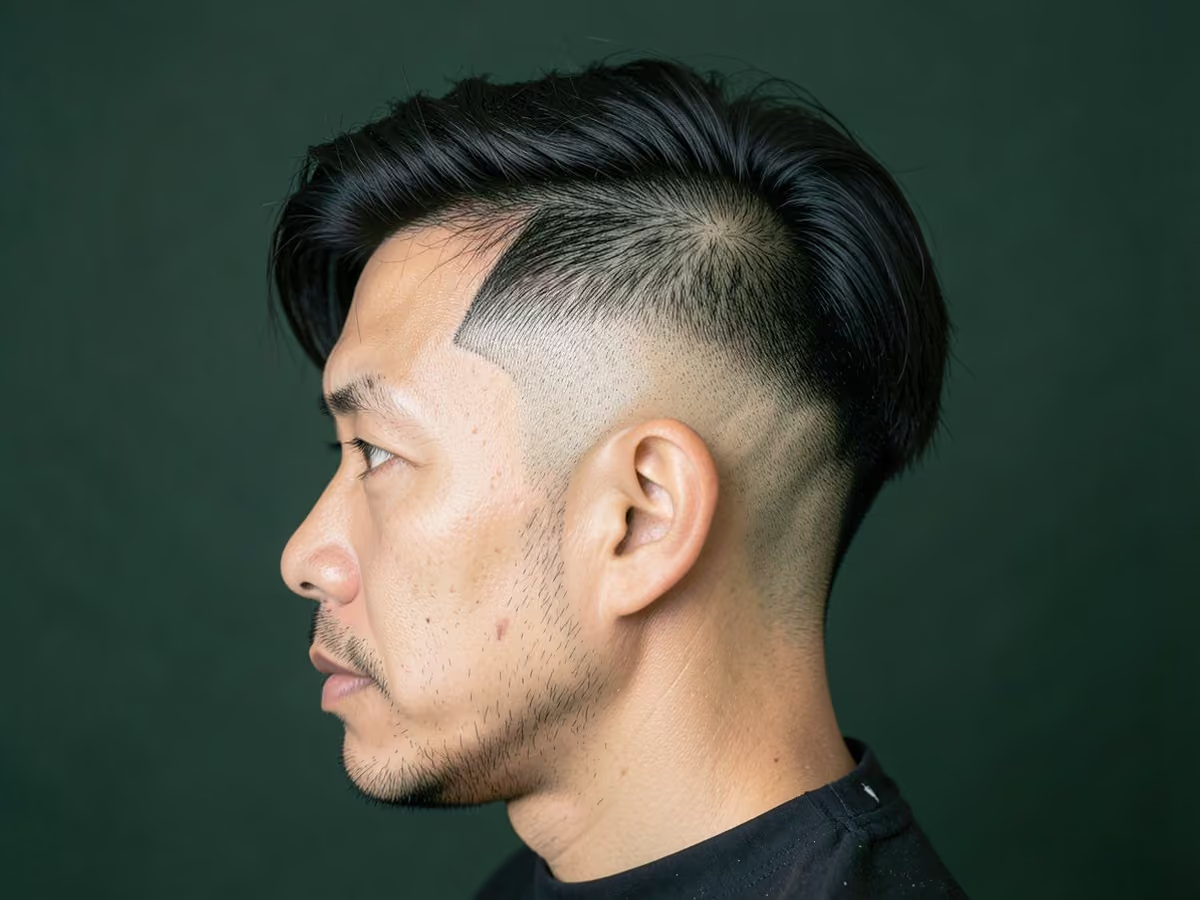
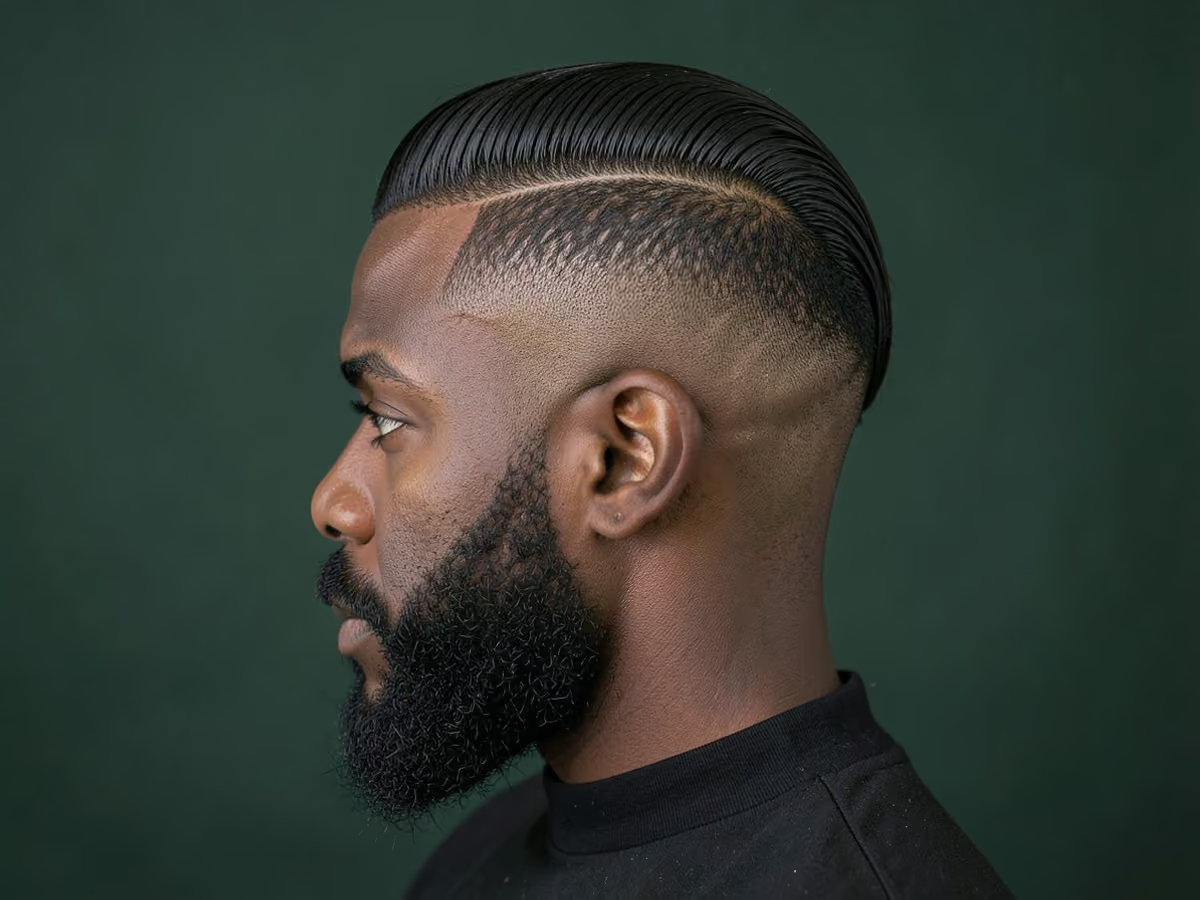
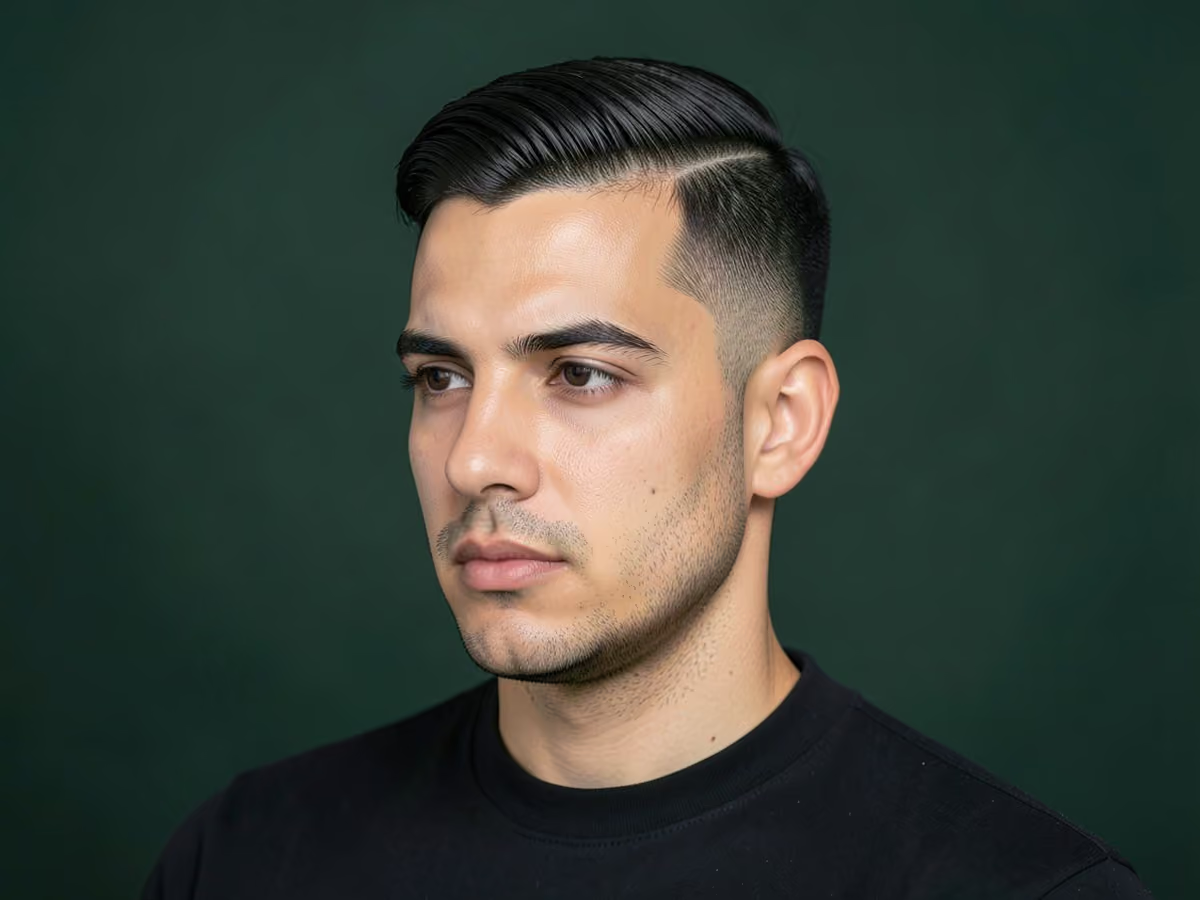
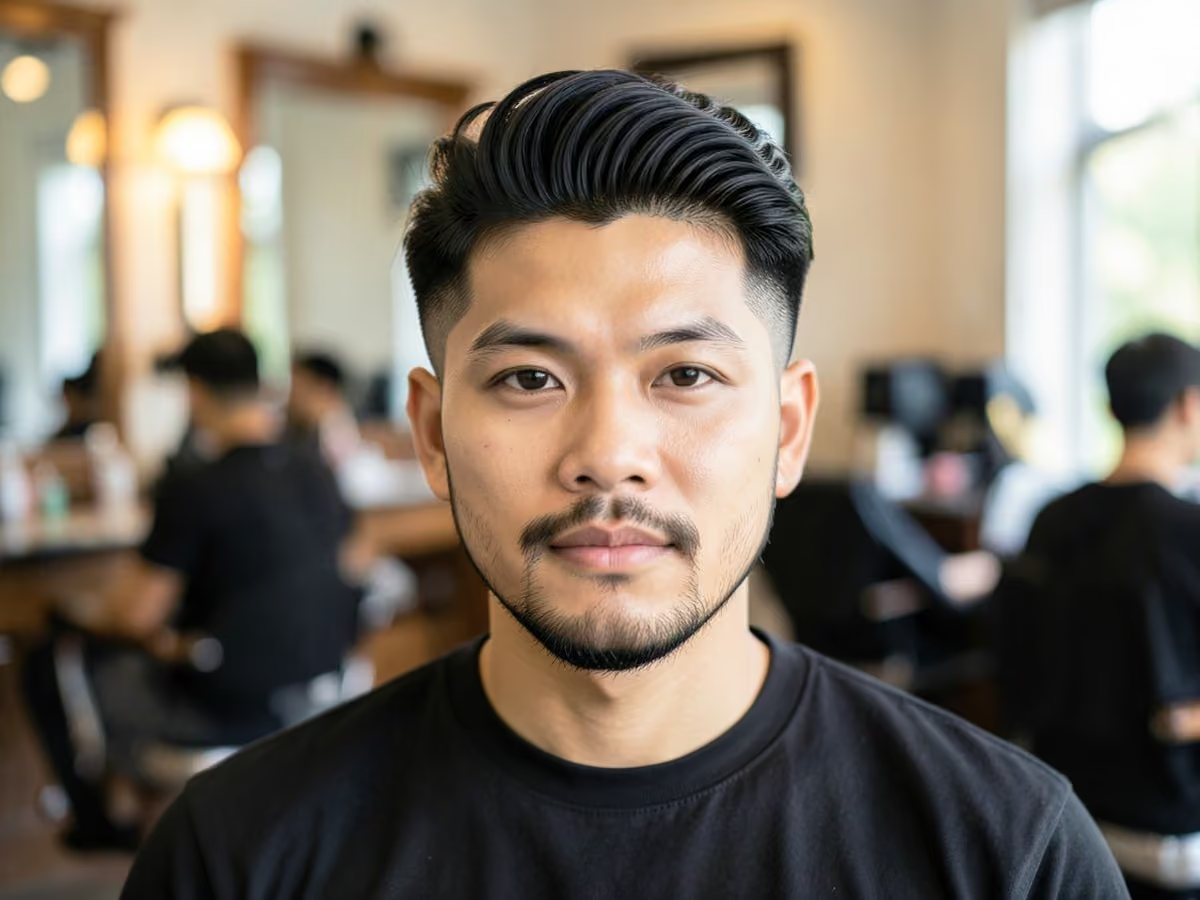
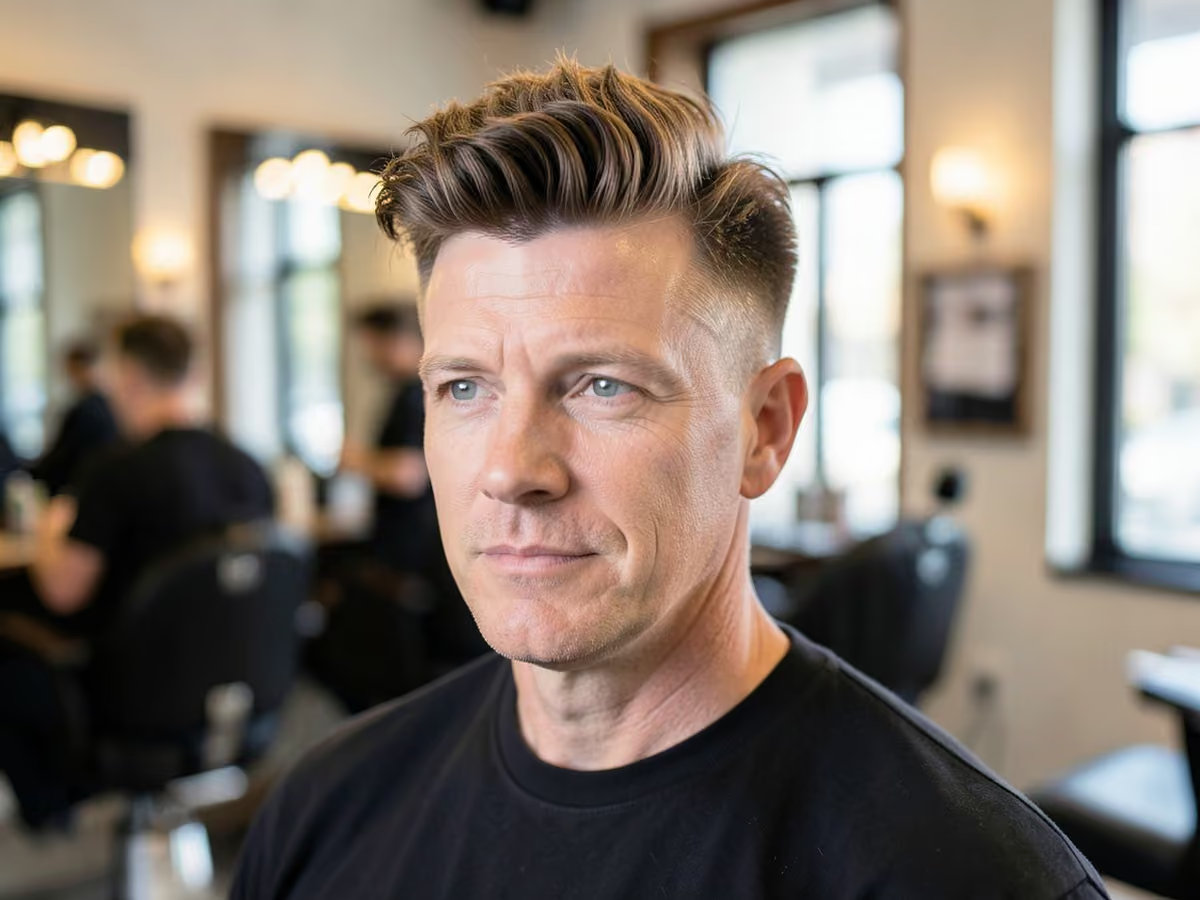
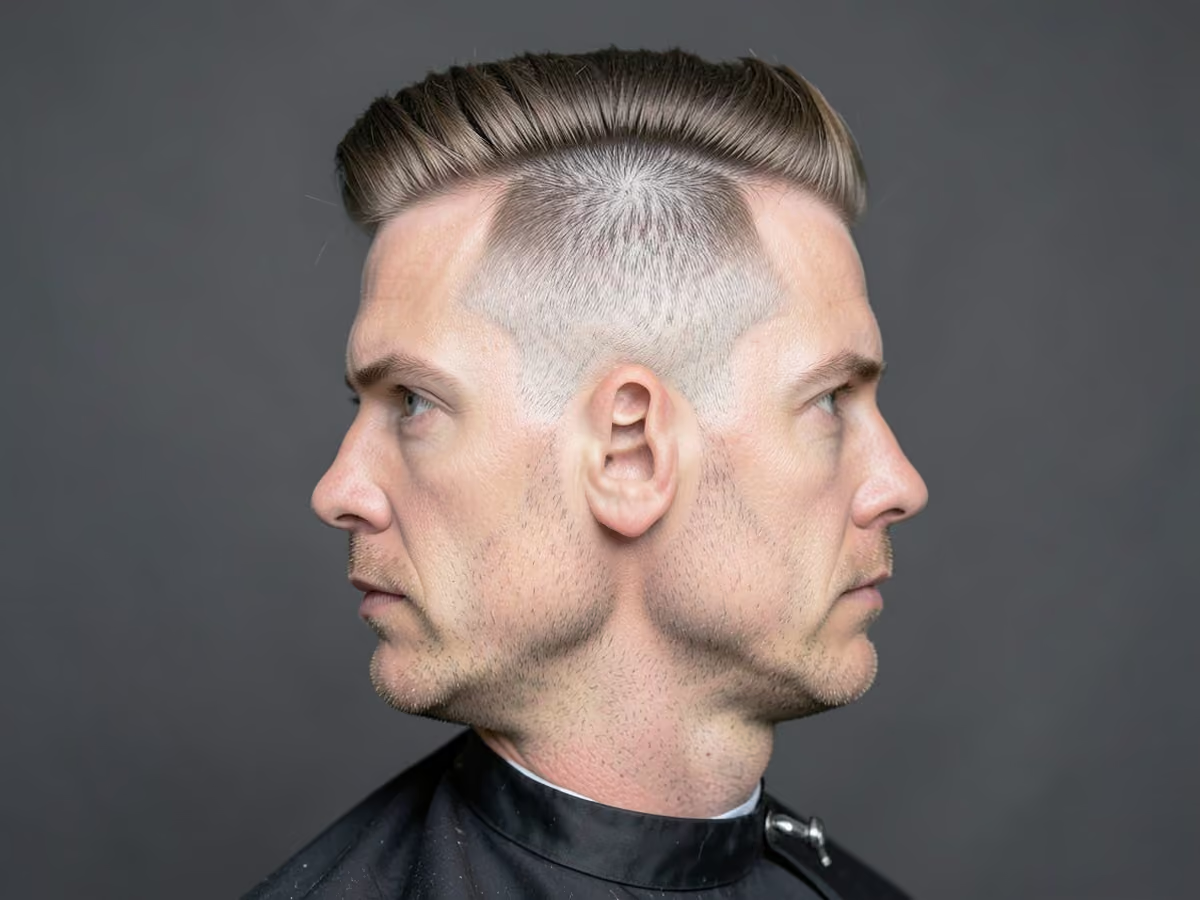
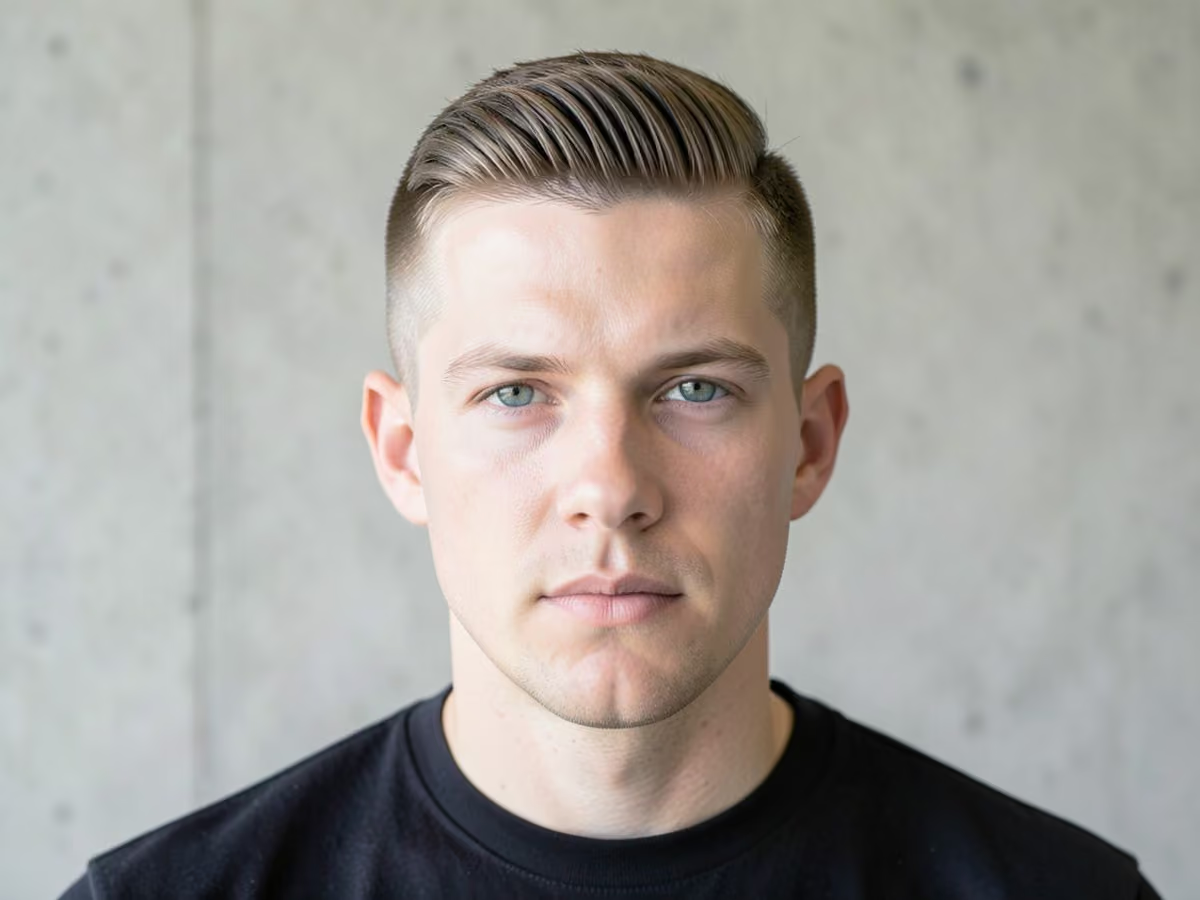
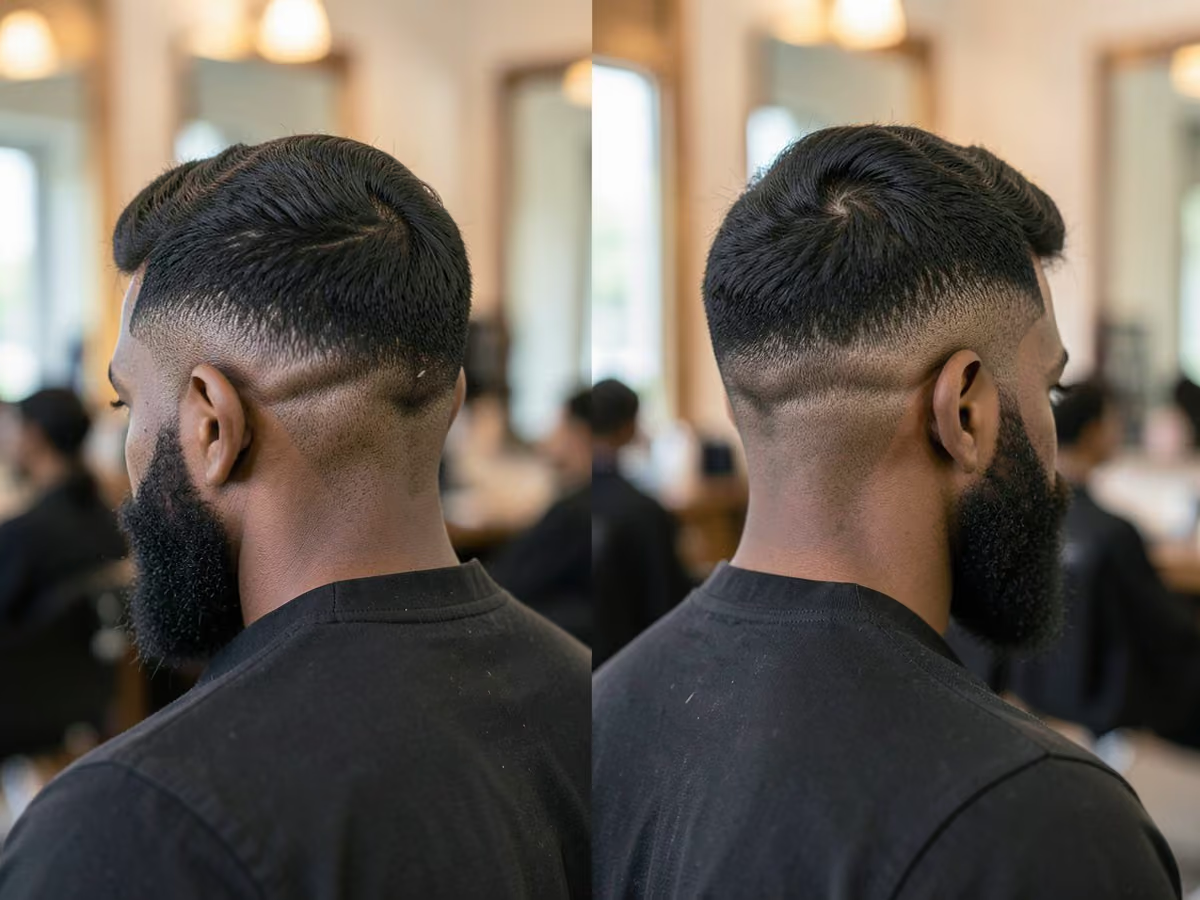
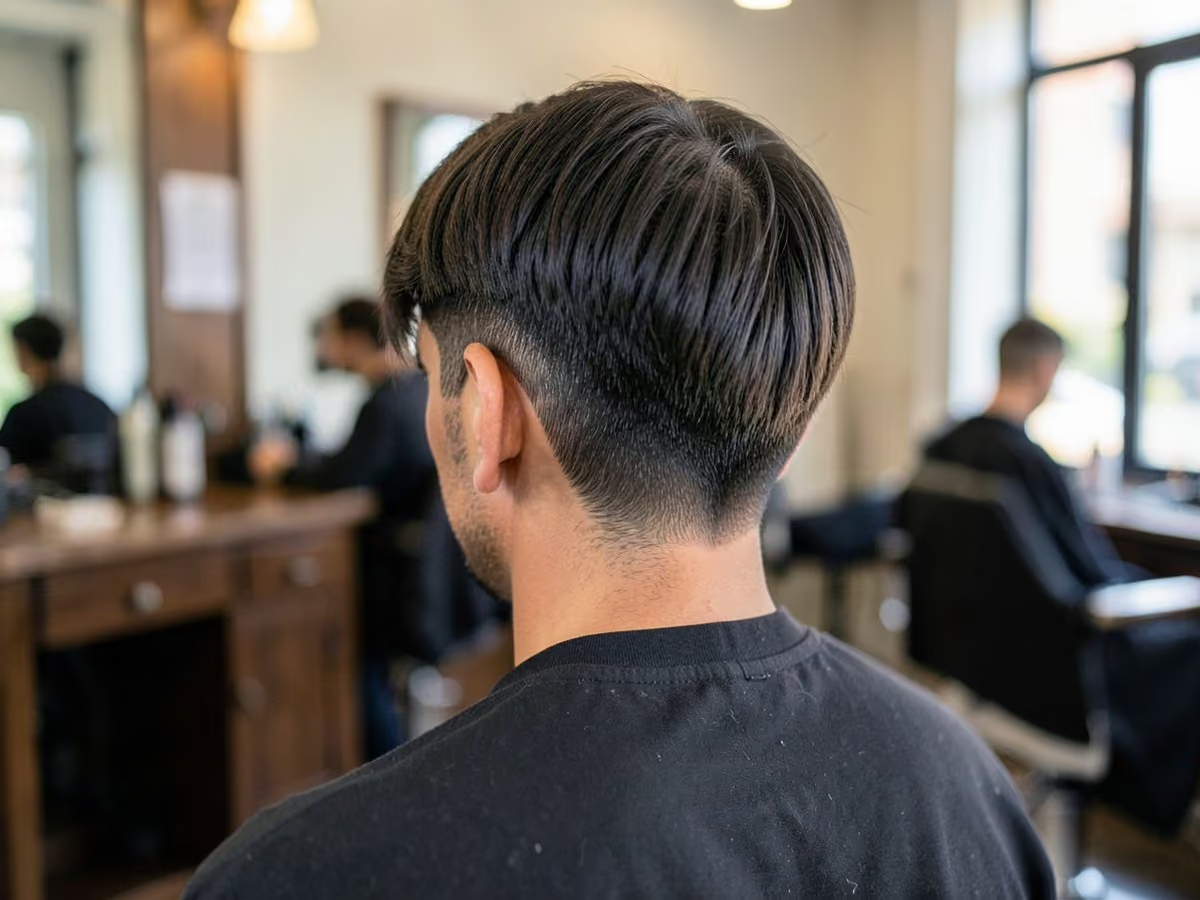
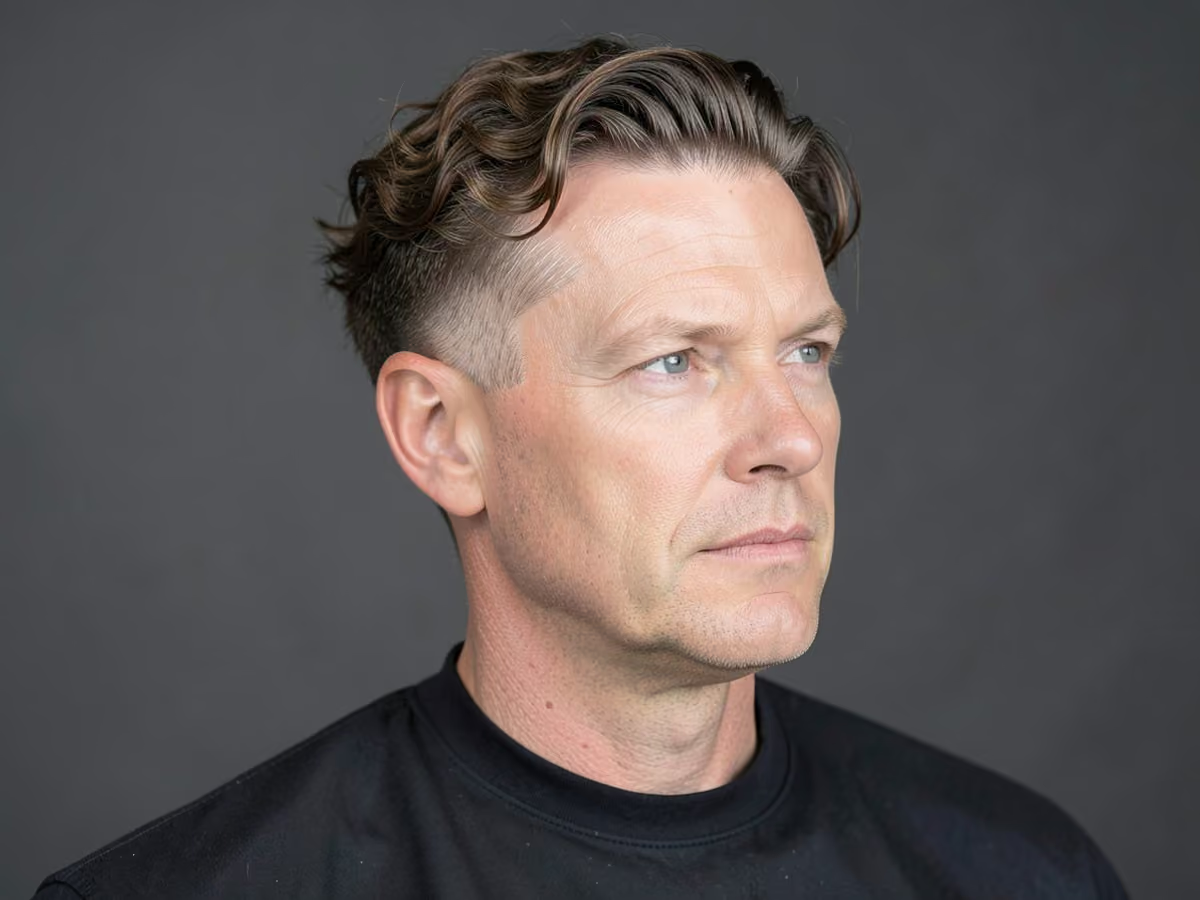
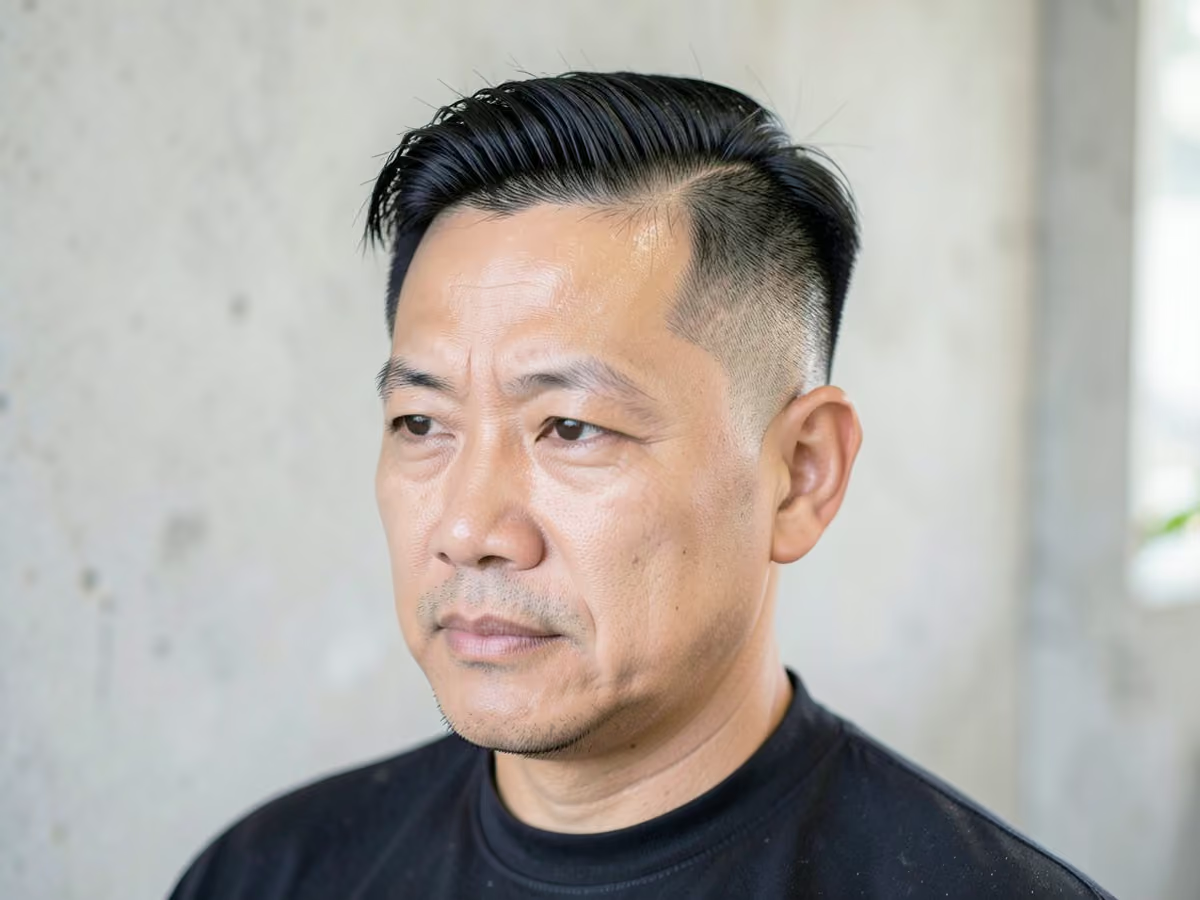
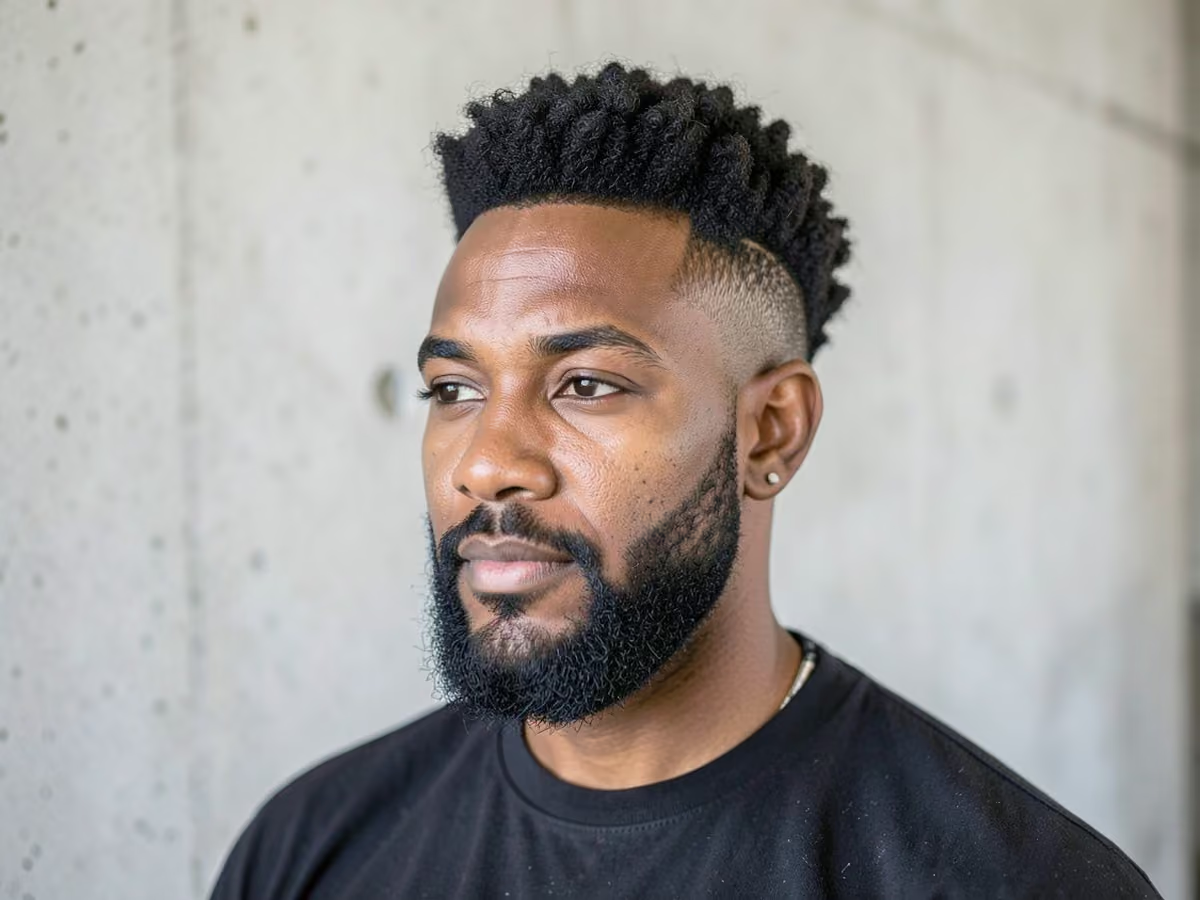
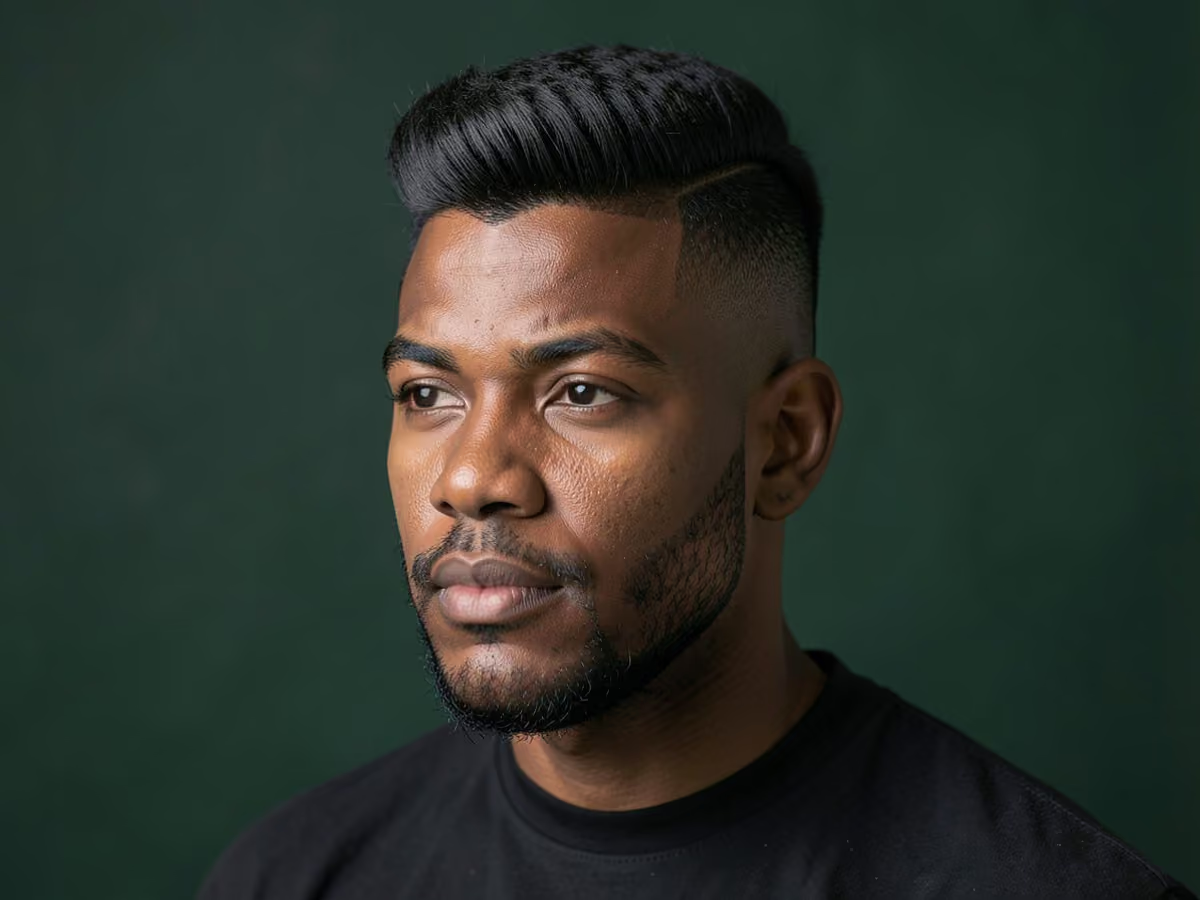
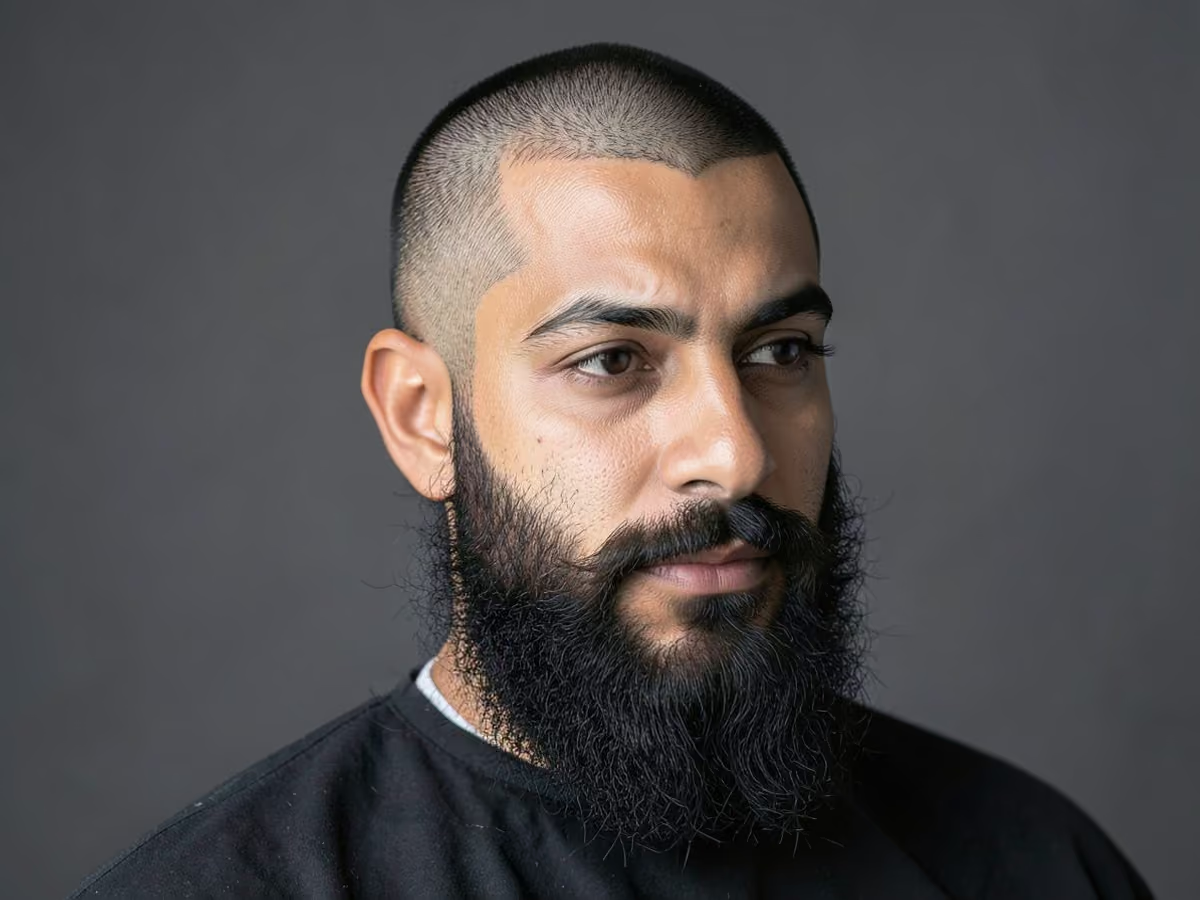
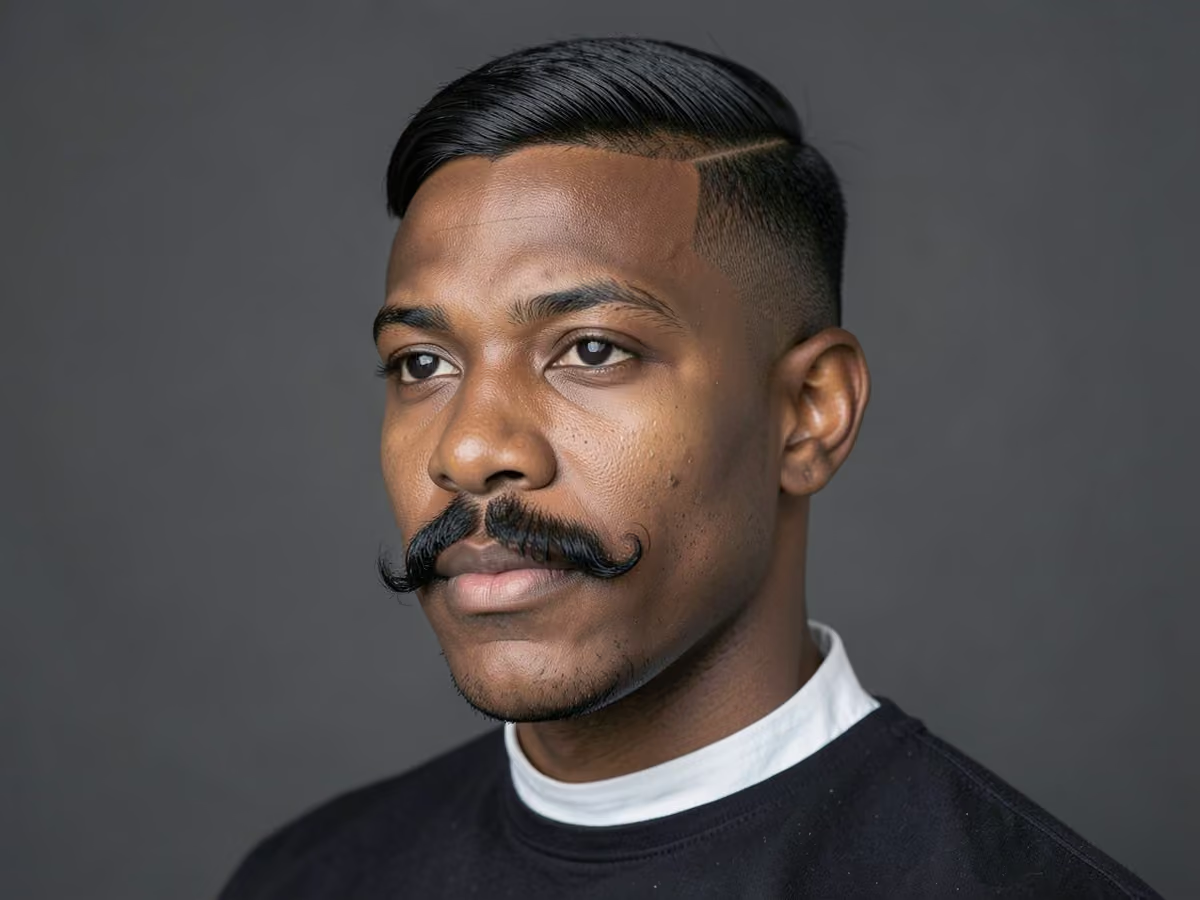
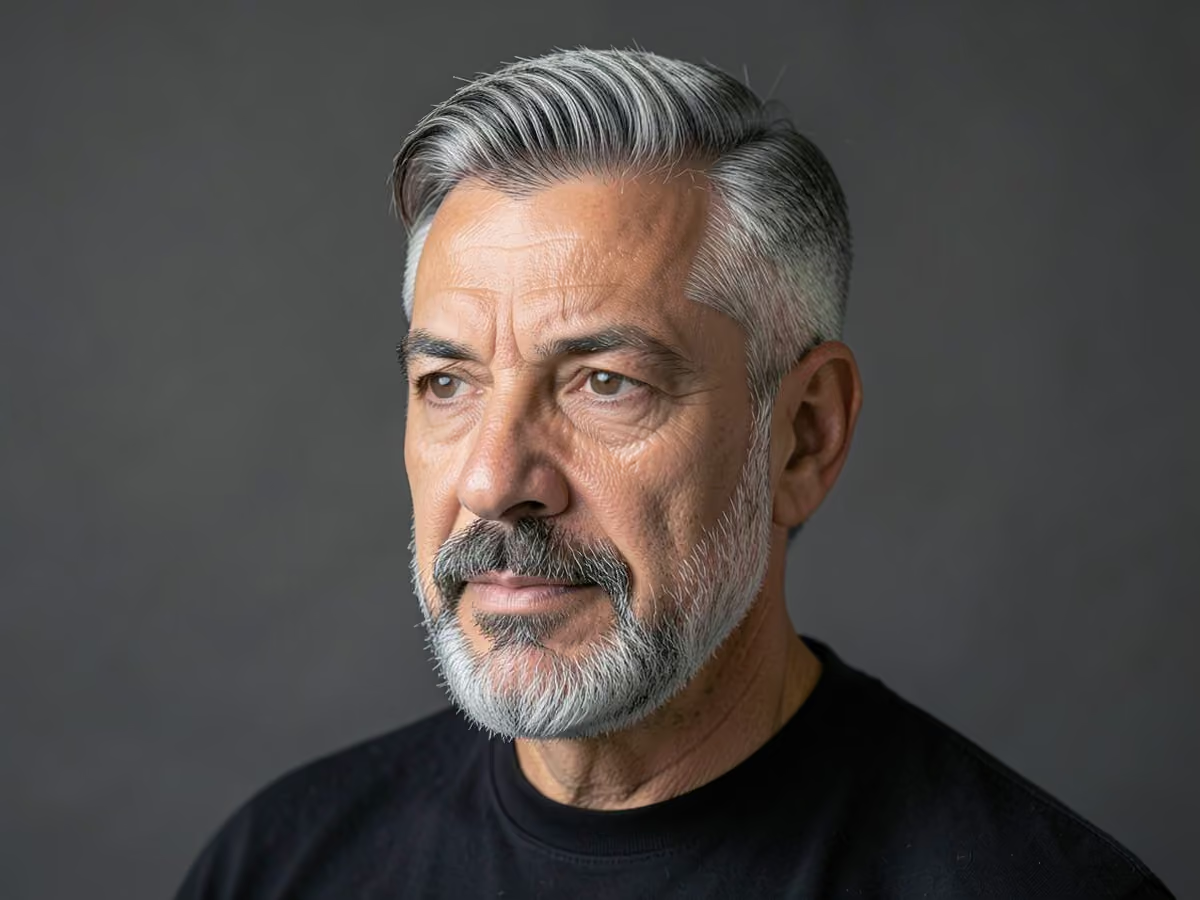
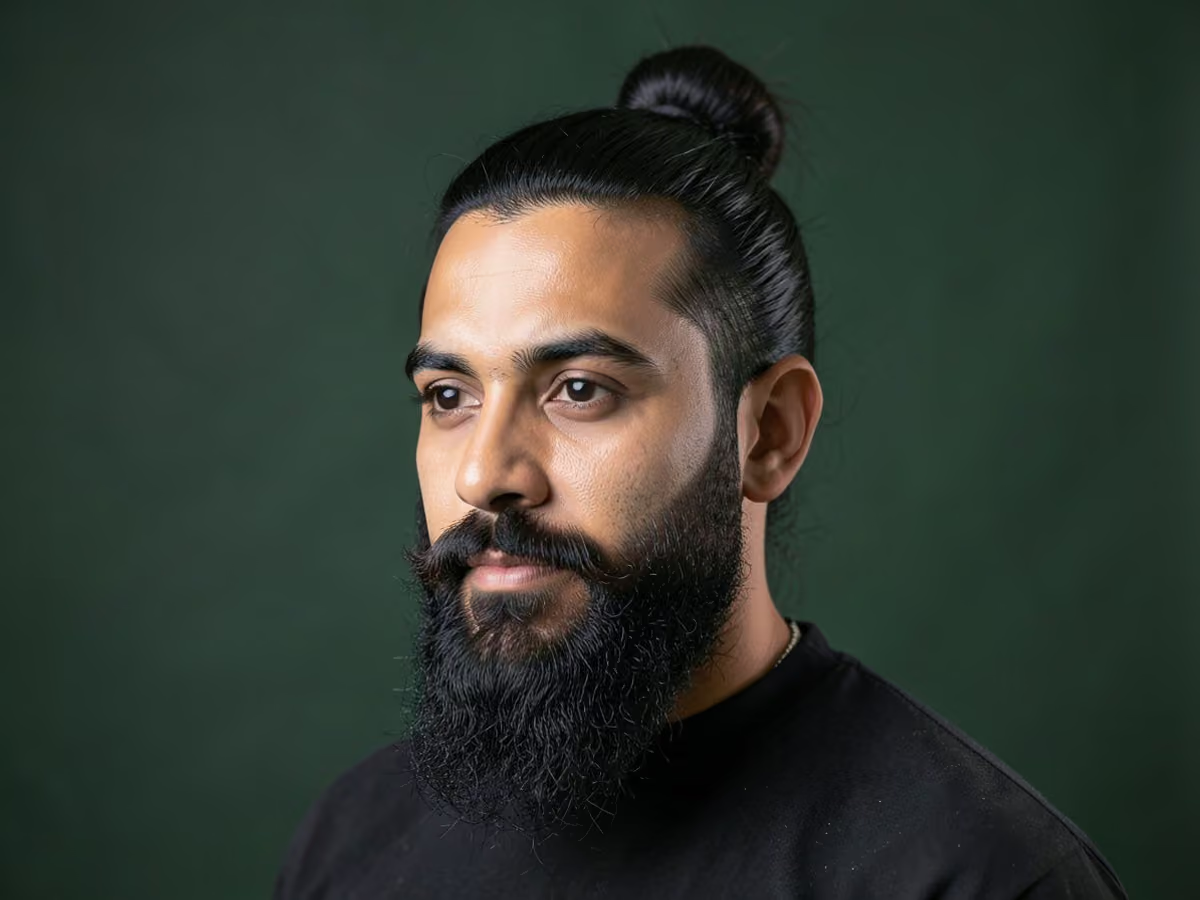
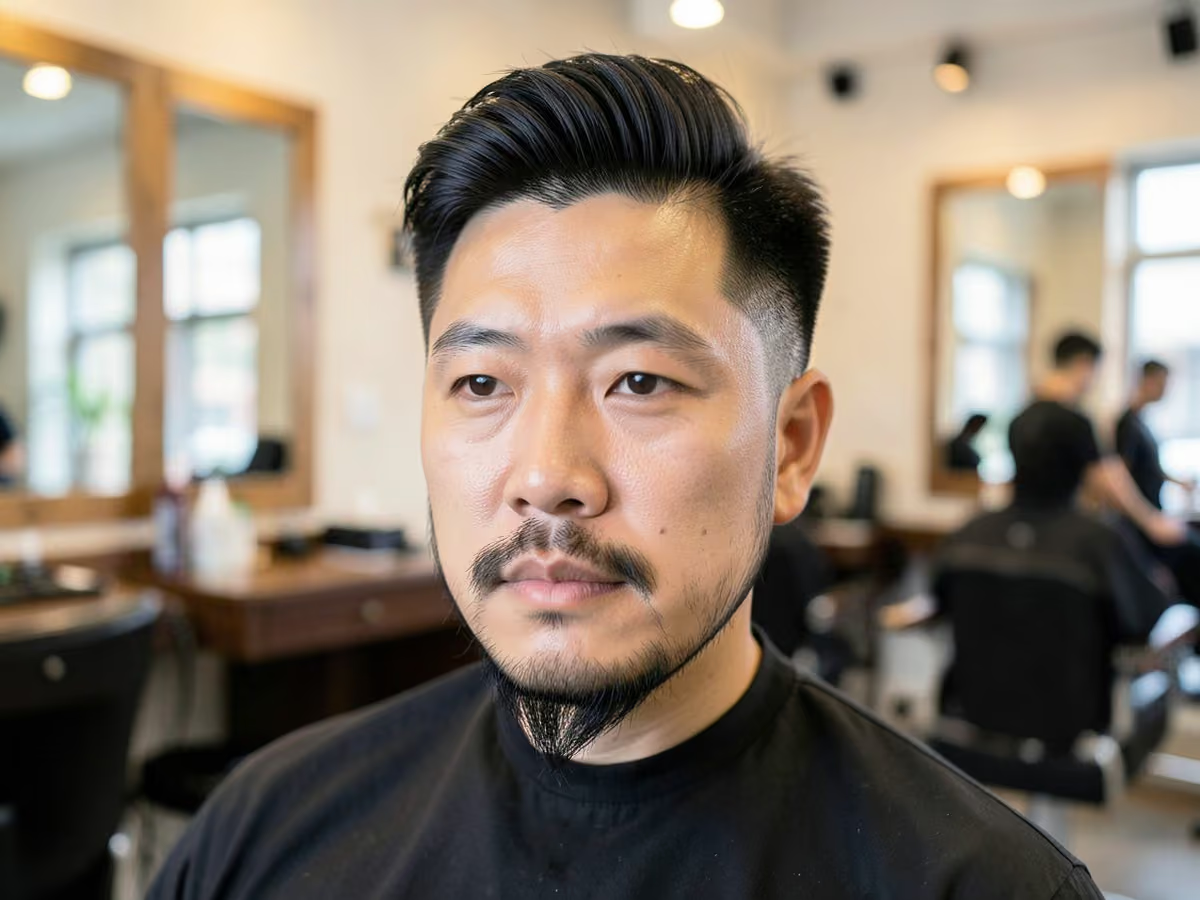
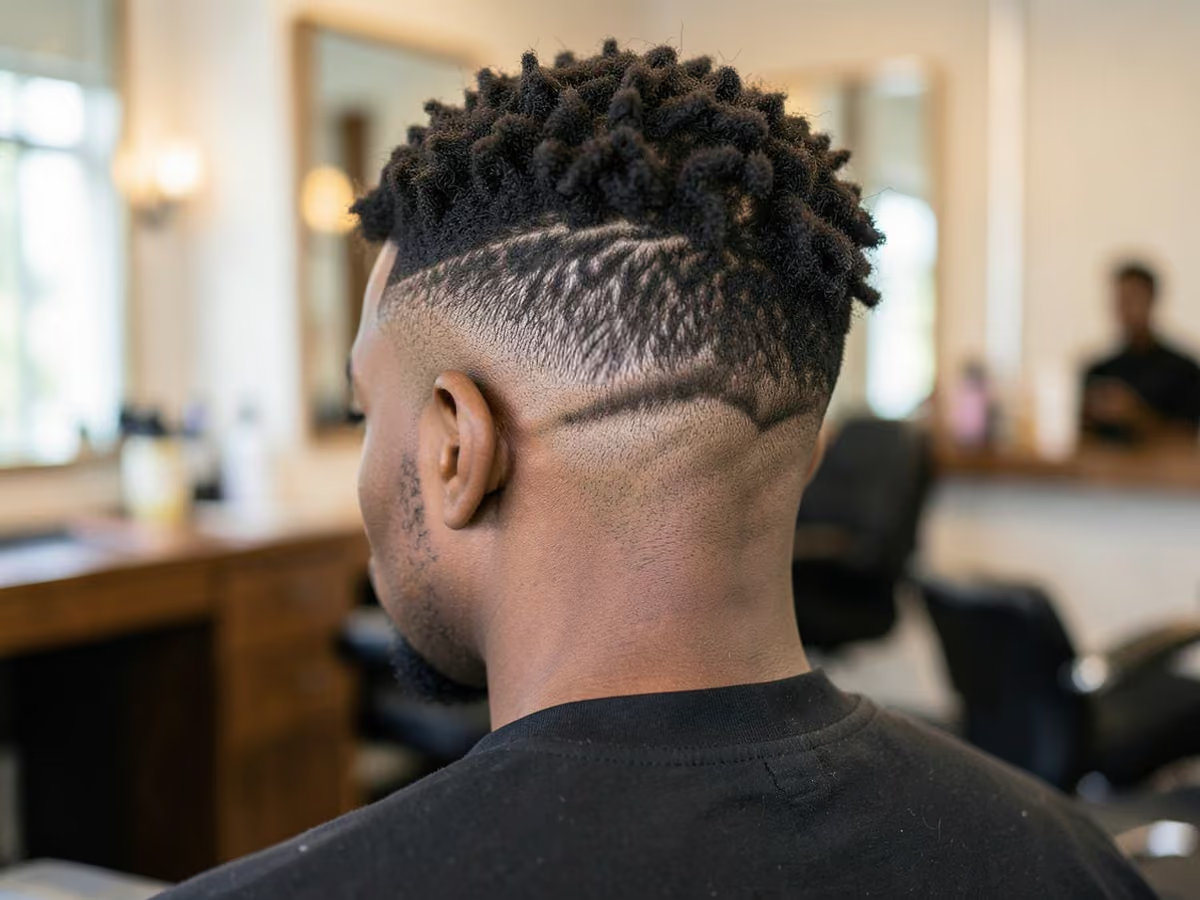
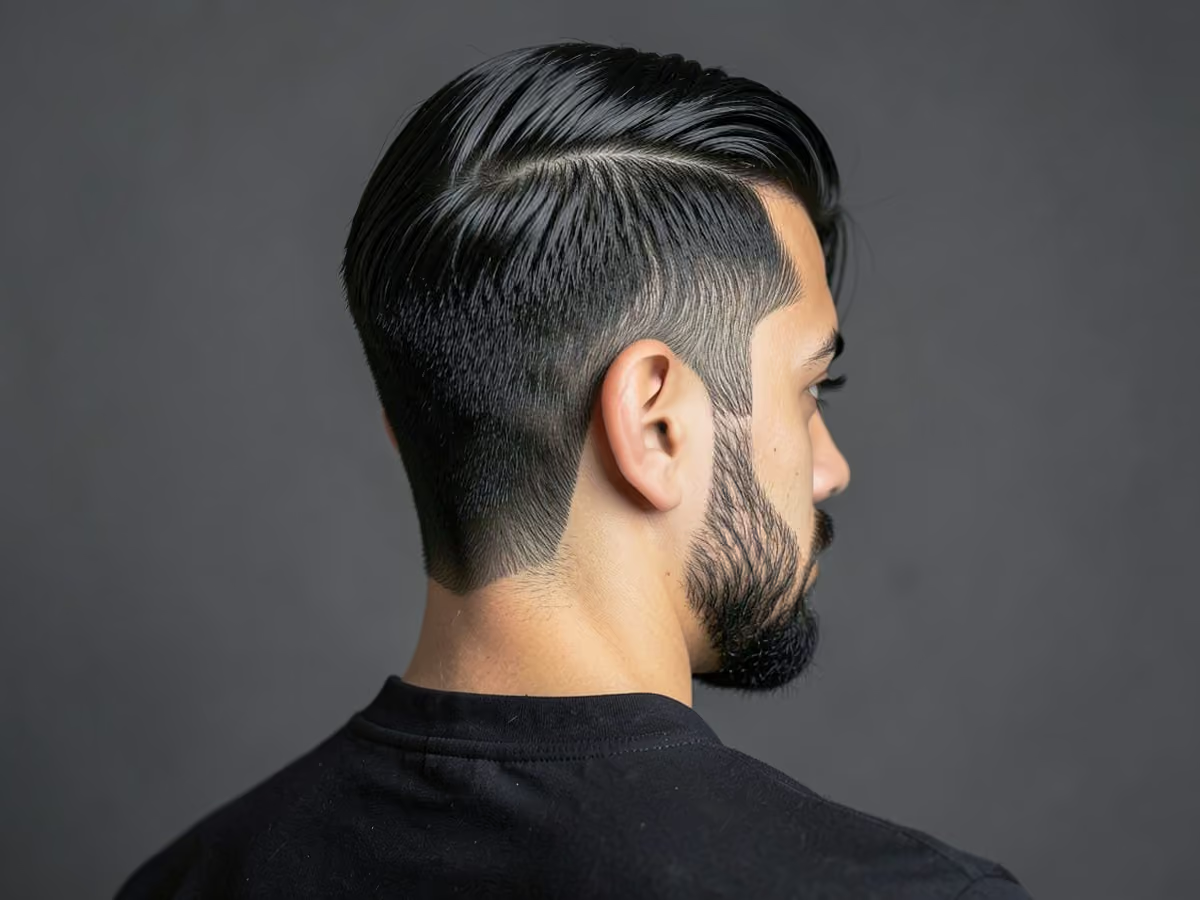
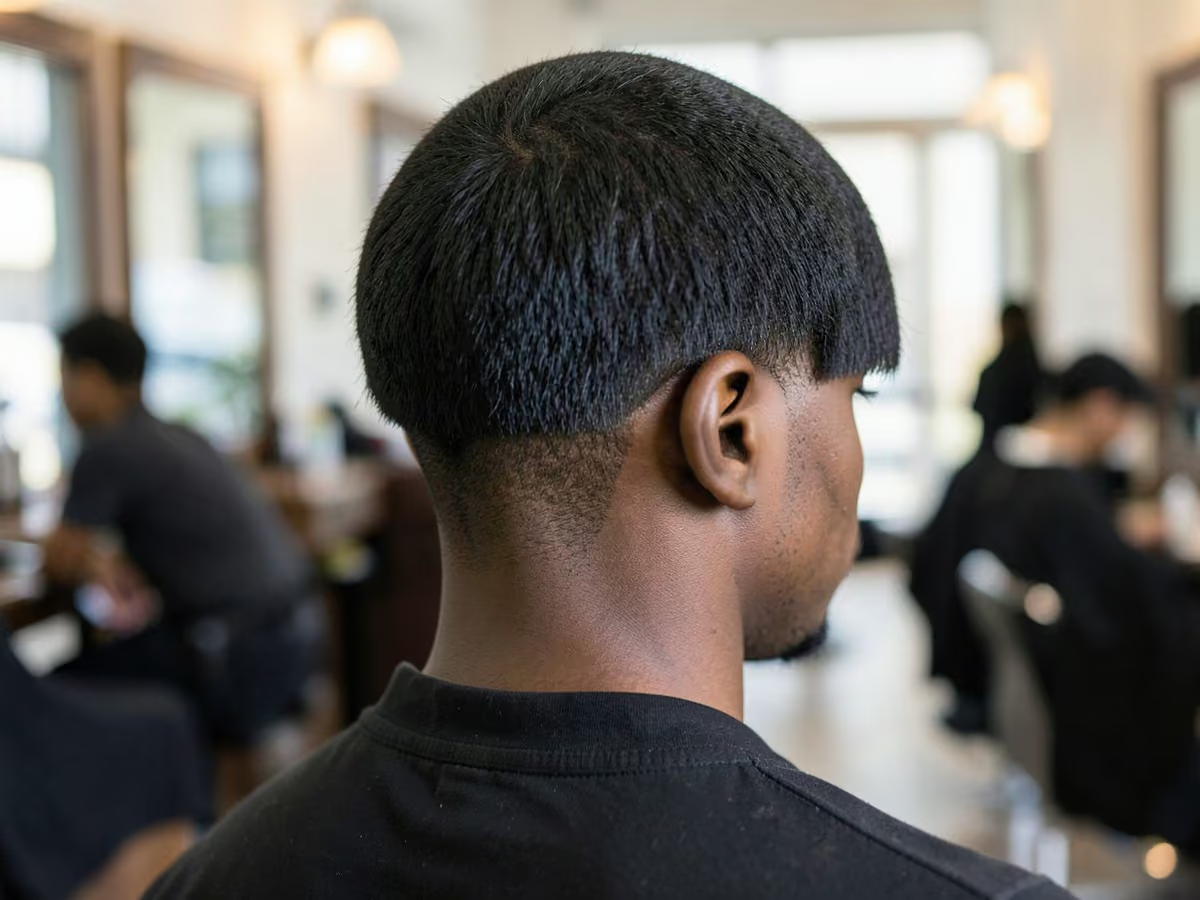
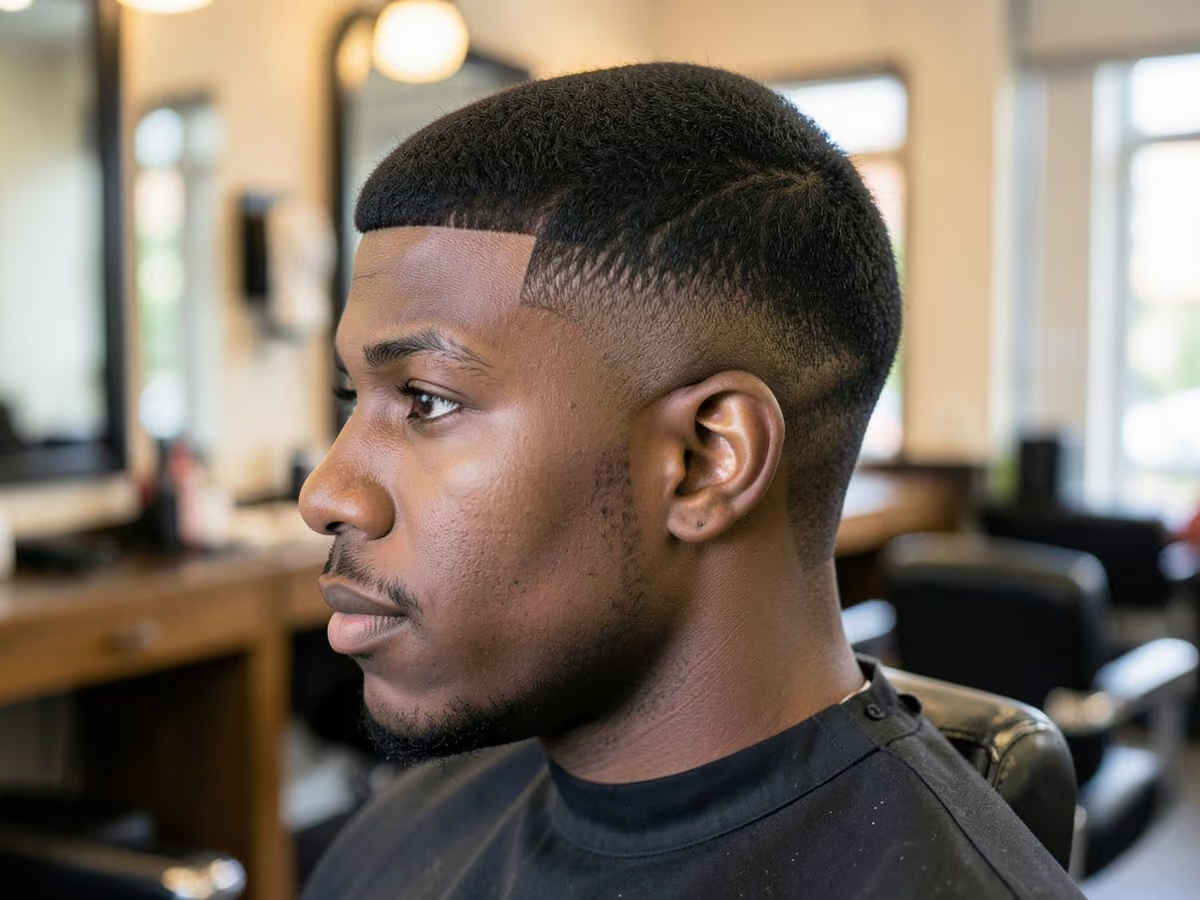
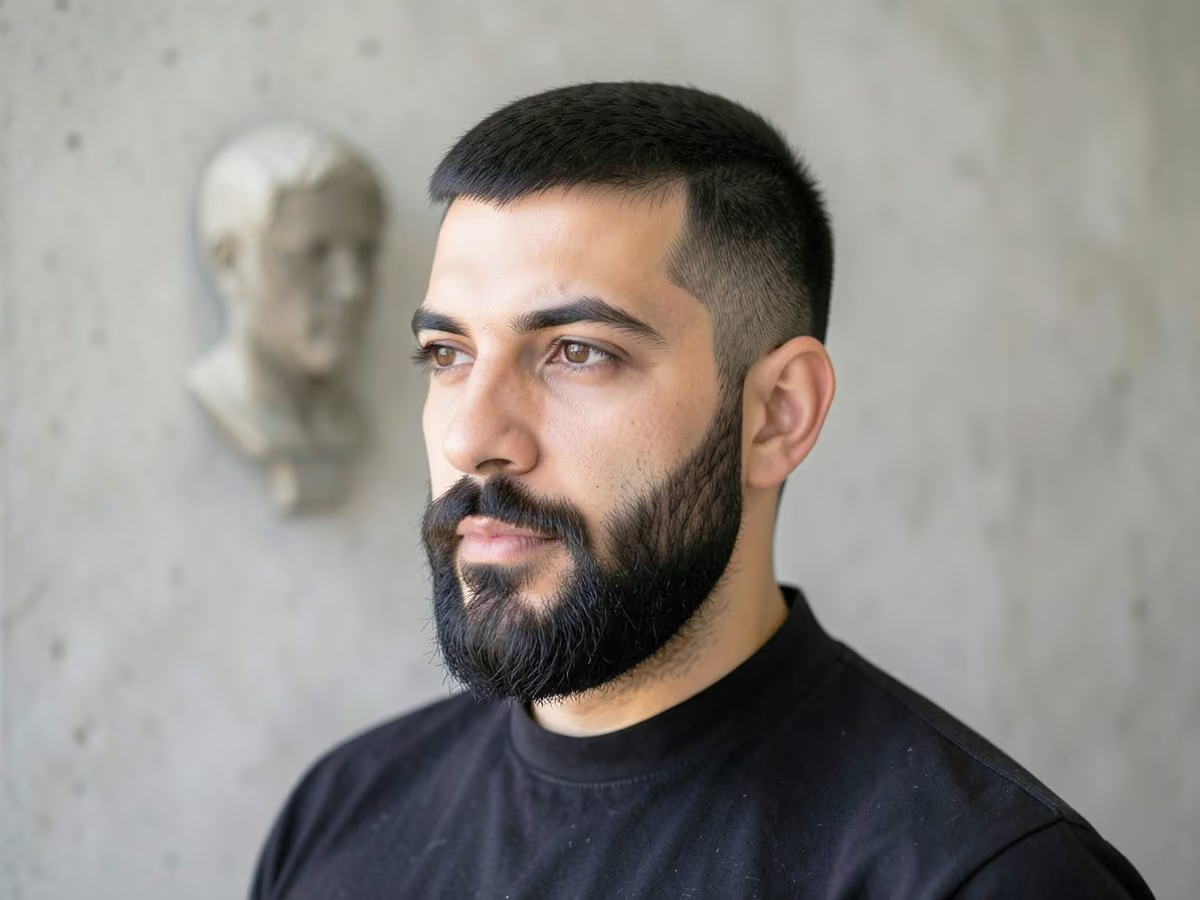
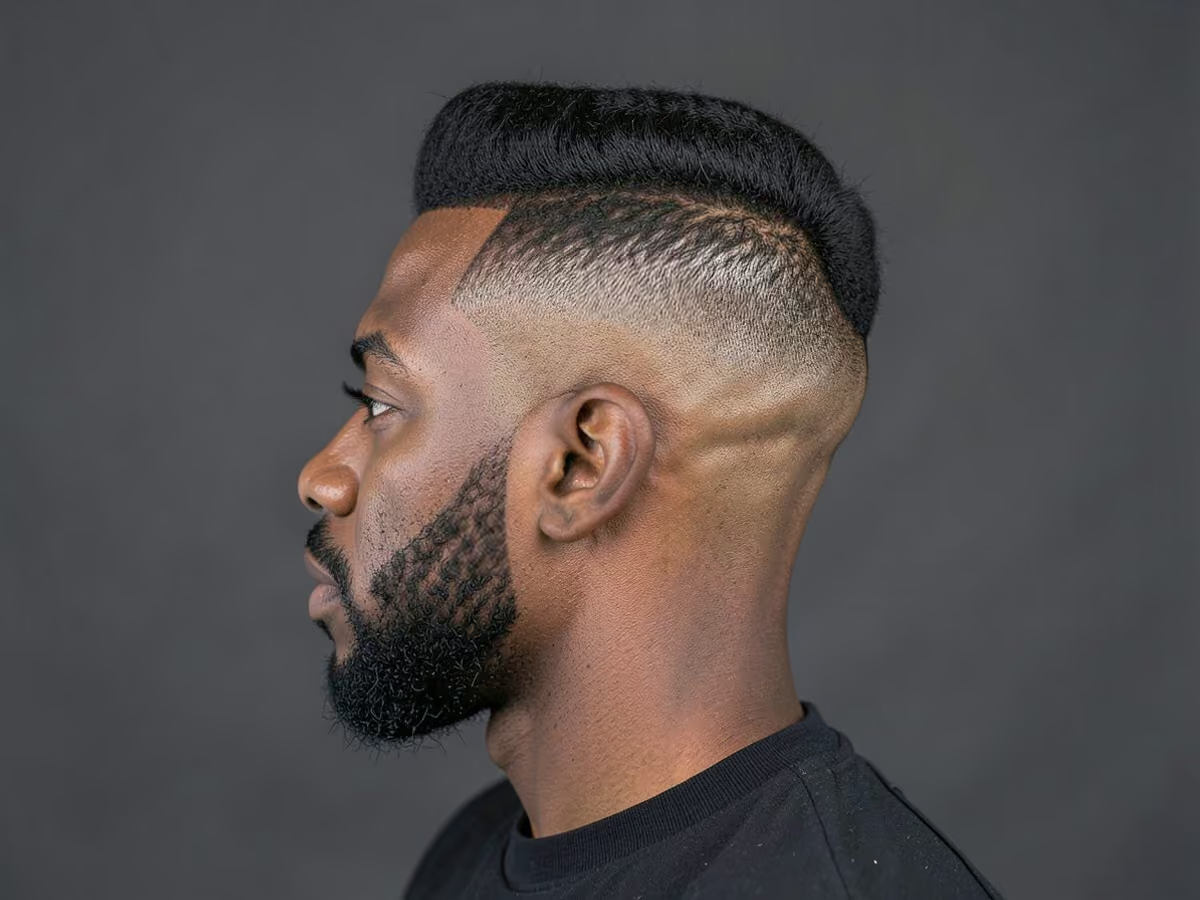
Quick answer: Hipster haircuts are vintage-inspired men's cuts with short or clipped sides and a longer top worn slicked, parted or tied, usually paired with a full beard or mustache. Common examples are the slicked-back undercut, side part, pompadour, man bun and shaggy medium cut. Most need a trim every three to five weeks.
Hipster Haircut Styles at a Glance
Every style on this page with its clipper guard, top length and trim interval. Tap a name to jump to that card.
Hipster haircuts borrow from early and mid-century barbering, the undercuts, side parts and pompadours of the 1920s to 1950s, and wear them with a softer, more personal finish and usually a beard. The style peaked in the 2010s but its cuts never left the barbershop. Below are 55 versions grouped by finish, length, era, fade, color, hair type and beard pairing, with the guard numbers and products for each.
What Is a Hipster Haircut?
A hipster haircut is less one cut than a set of them with a shared attitude: classic barbershop shapes worn by men who also care about vintage clothing, coffee and craft. In practice that means short sides, often clipped with a #1 to #3 and sometimes disconnected, and a top of three to seven inches styled back, to the side or up. Longer versions are tied into a bun or left shaggy. A beard or mustache is almost always part of the look.
The term grew out of urban creative scenes in the 2000s and became mainstream in the 2010s, when barbershops built around straight-razor shaves and pomade reopened in many cities. The cuts themselves are much older. The undercut and side part were standard men's styles before the Second World War, and the pompadour peaked in the 1950s. What changed was the finish: matte or low-shine products, slightly messier shapes and more length.
How Does a Hipster Haircut Differ From a Classic Gentleman's Cut?
Both use the same tools and shapes, so the line is about proportion and finish. A classic side part keeps the top short enough to comb neatly, blends the sides with scissors or a long taper, and uses shiny pomade. The hipster version leaves more length on top, often five inches or more, cuts the sides shorter and sometimes disconnects them, and finishes with a matte clay or light pomade so the hair looks touchable.
The beard is the other difference. A gentleman's cut is usually clean-shaven or paired with short stubble, while hipster cuts expect a full beard, a boxed beard or a waxed mustache to balance the longer top. Attitude matters too: a classic cut aims to look the same every day, while a hipster cut is allowed to look a little different each morning, with loose strands and visible texture. The table shows the main contrasts.
How Does a Hipster Haircut Differ From a Classic Gentleman's Cut?
Feature
Hipster cut
Classic gentleman's cut
Top length
4 to 7 inches, or tied up
2 to 4 inches
Sides
#1 to #3, often disconnected
Scissor or long taper, blended
Finish
Matte or low shine, slightly loose
Neat, combed, higher shine
Facial hair
Full beard, boxed beard or mustache
Clean-shaven or light stubble
Typical products
Matte clay, light pomade, styling cream
Pomade, light gel
Who Suits a Hipster Haircut?
Most hipster cuts add height on top and remove width at the sides, which lengthens round and square faces and keeps oval faces balanced. Long faces should keep the top lower, choose a side part or shag, and let the beard add width at the jaw. Thick, straight or wavy hair takes slicked and pompadour shapes easily. Curly hair suits the shaggy and curly-top versions, and fine hair does better with a shorter quiff or textured crop than with long, heavy slicks.
The style suits men who do not mind five minutes of styling and a regular beard routine. Many hipster cuts can be worn smart for an office and looser at the weekend, which is a large part of their staying power. Men with receding temples can still wear them, but an undercut shows the hairline clearly; a side part or messy crop hides it better. See haircuts for a receding hairline for options.
Filter the styles
Showing all 55 styles
Fade
Hair
Length
Slicked and Combed Hipster Haircuts
These eight cuts are the vintage core: longer tops combed back, sideways or up over short sides. They need a light pomade or cream and a comb. See the slick back undercut guide for the most popular shape.
Trim:Every 3–4 weeks. The clipped sides lose contrast after a month.
Best For:Oval, square faces + thick, straight or wavy hair.
About This Style
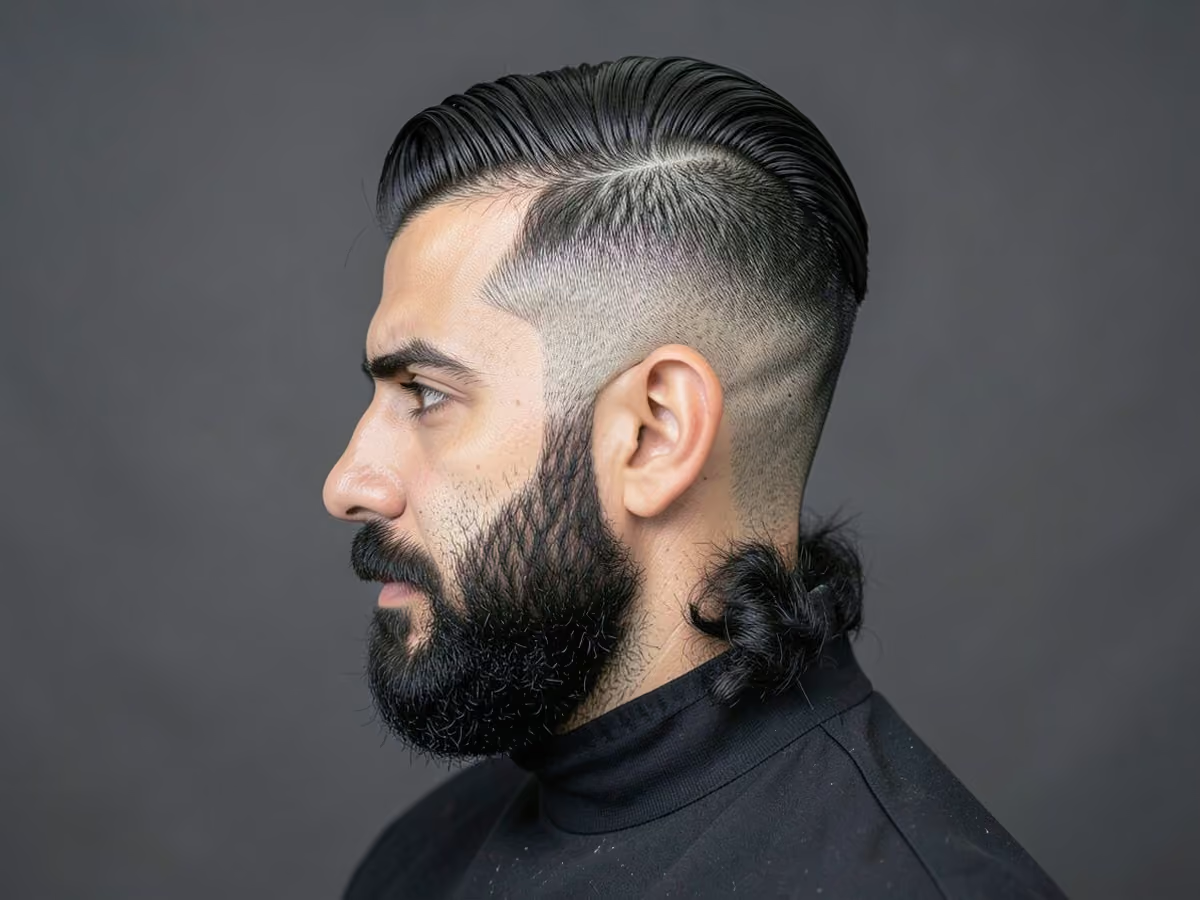
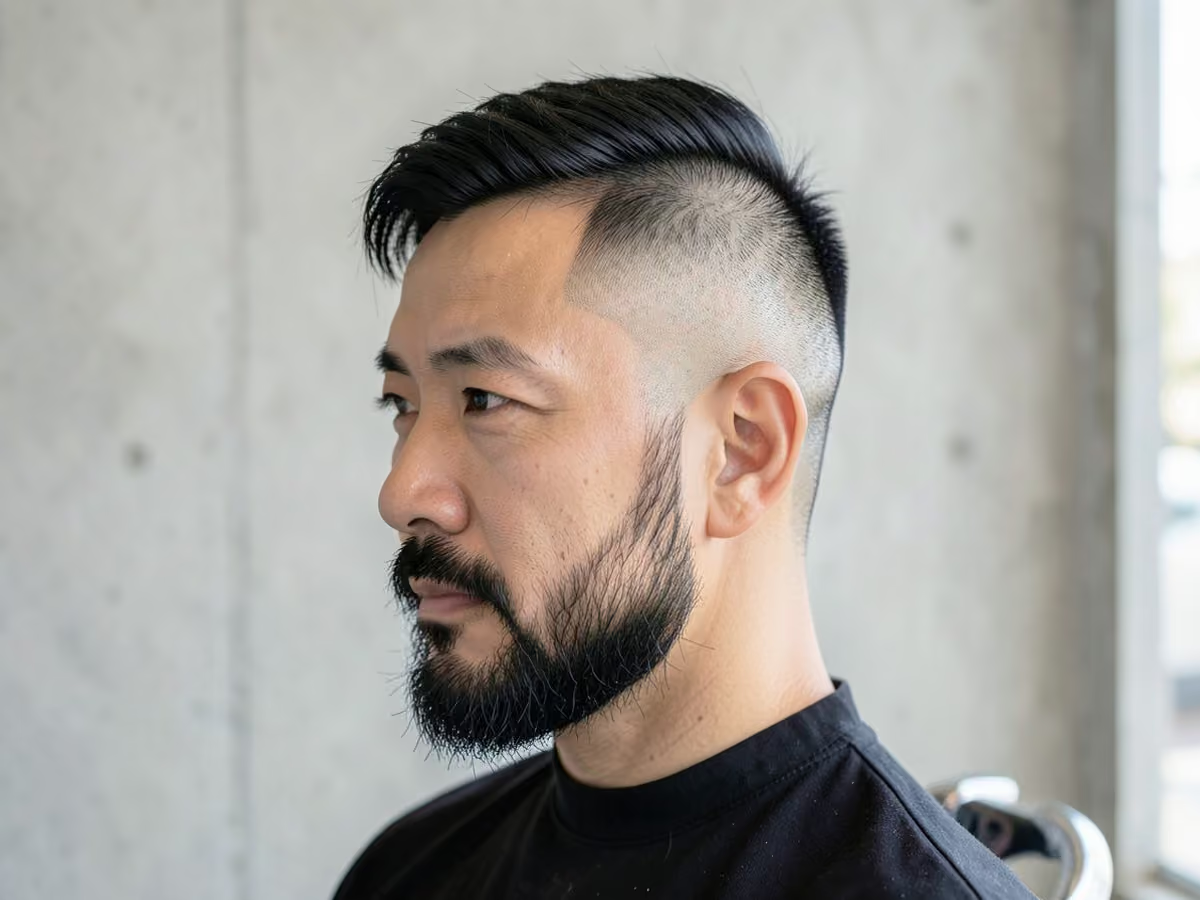
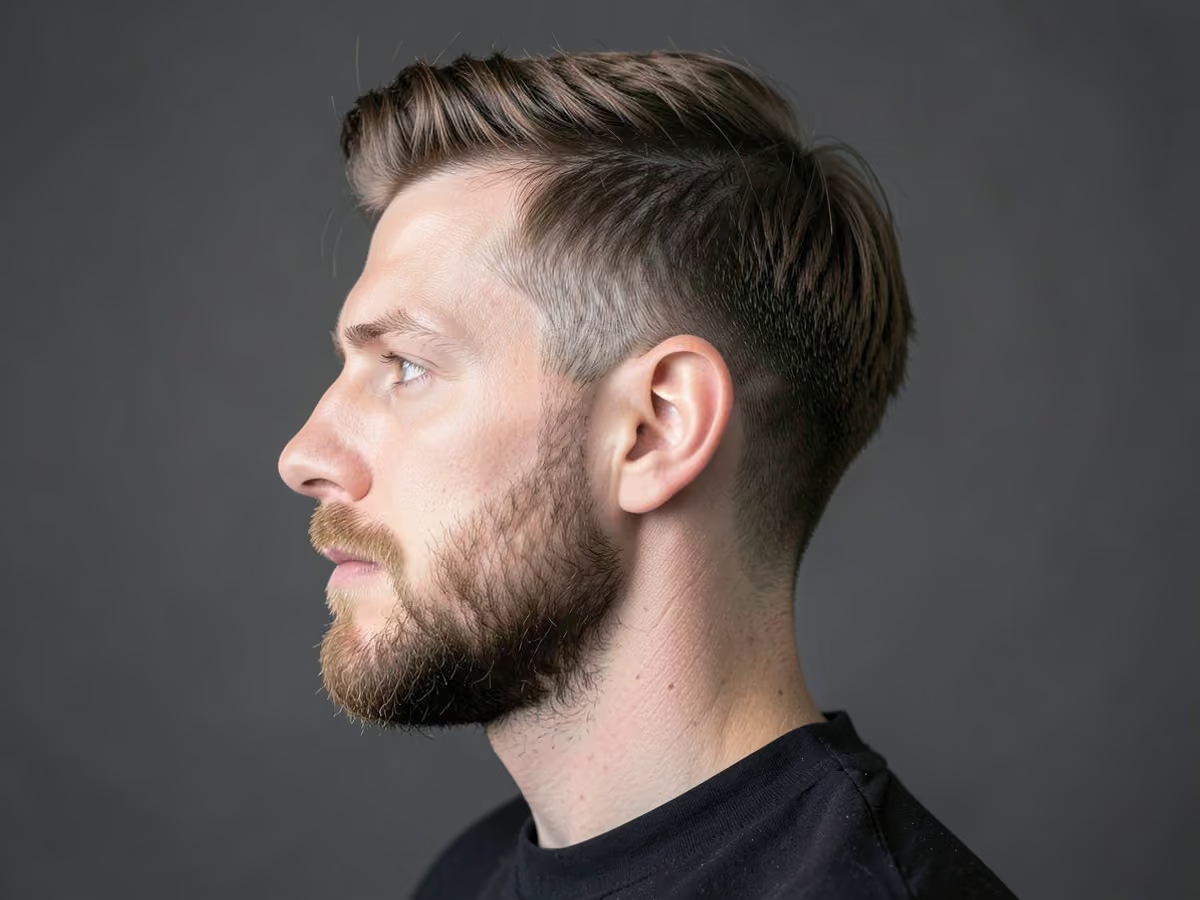
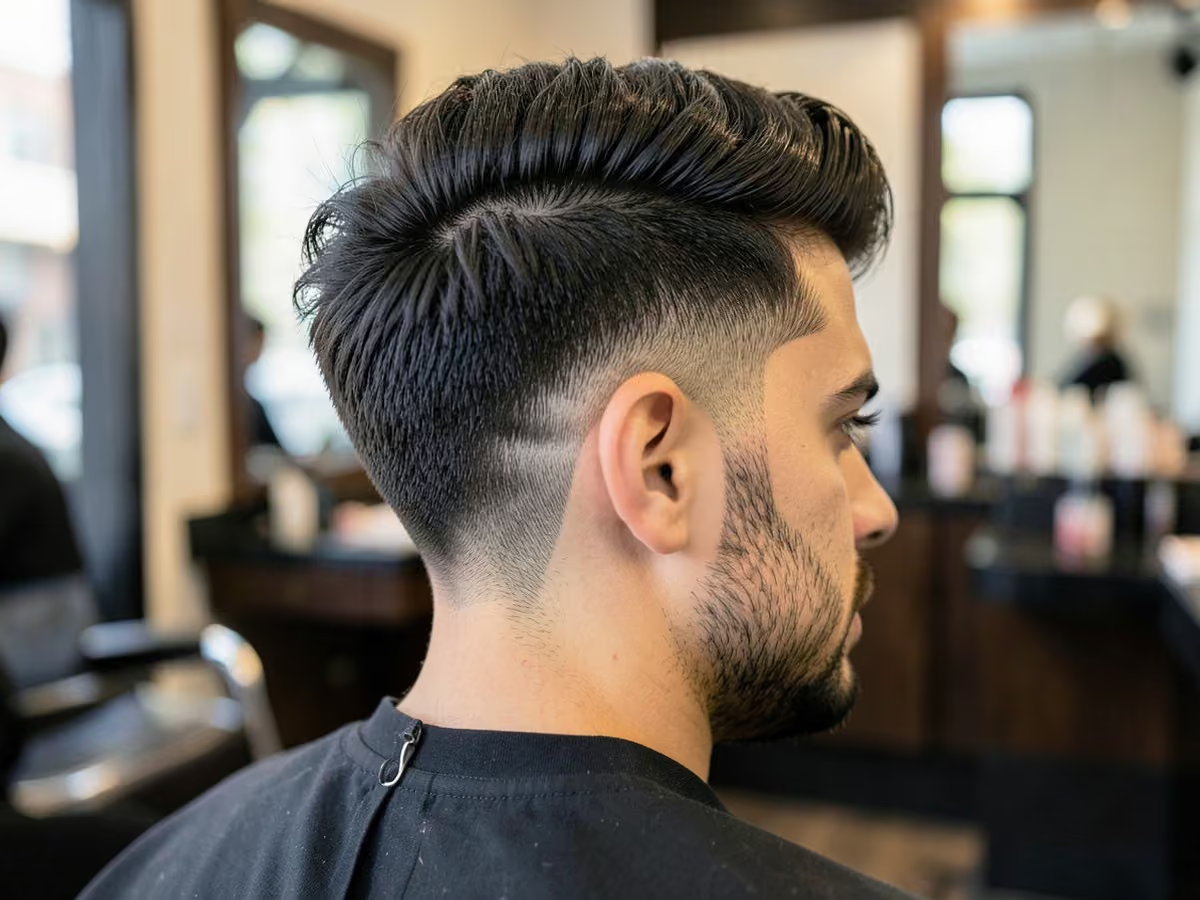
A #1 or #2 guard takes the sides and back up to a hard line just below the parietal ridge, and the top is left five to seven inches, disconnected so it falls over the line when loose. Styled back with a light pomade and a slightly loose finish, it is the cut most associated with the hipster look of the early 2010s. Thick hair gives the fullest sweep.
How to Style at Home
Apply light pomade to damp hair from roots to ends.
Blow-dry the top straight back with a brush for volume.
Rake through with your fingers so it looks combed but not stiff.
Ask Your Barber
"Disconnected undercut, #2 on the sides and back up to a hard line below the ridge, no blending. Leave six inches on top to comb back."
Trim:Every 3–4 weeks. Faded sides set the schedule.
Best For:Oval, oblong faces + straight or thick hair.
About This Style
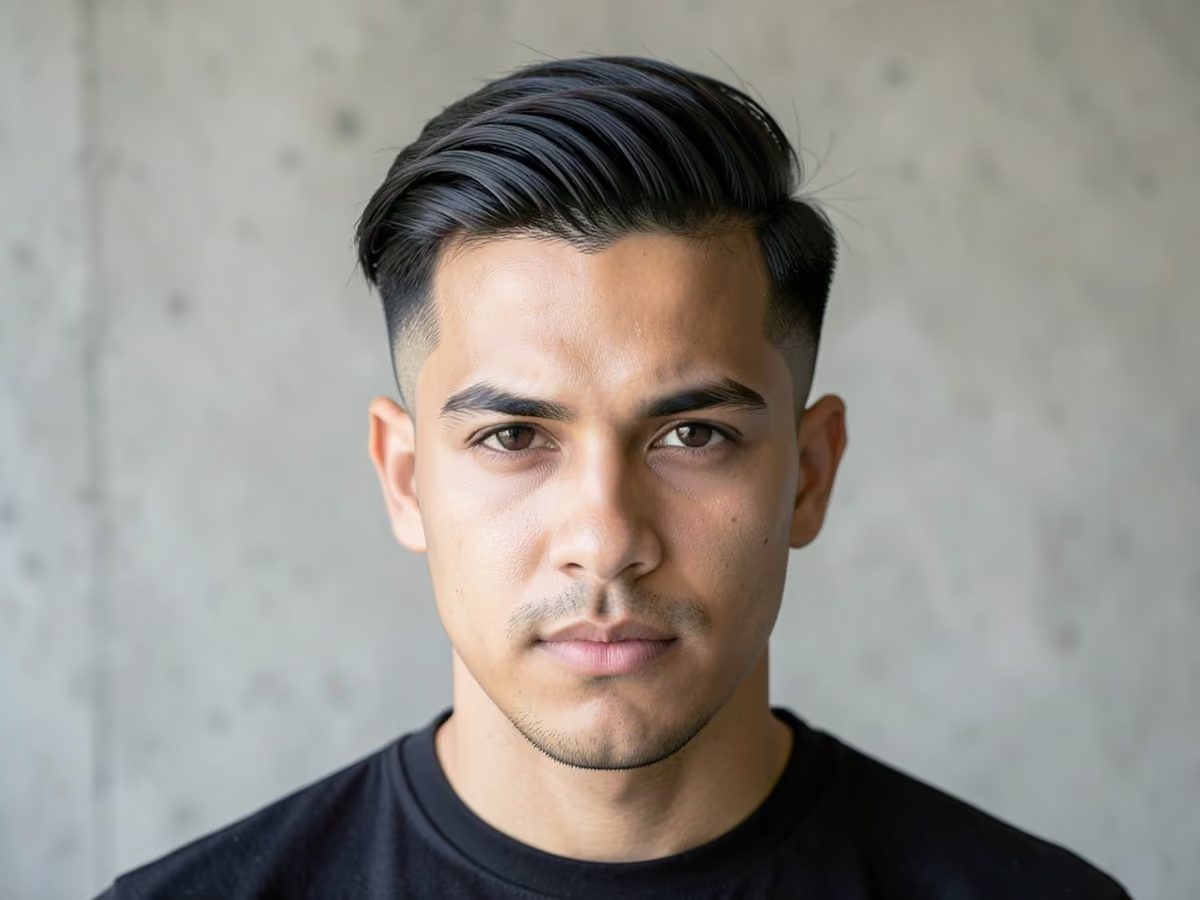
Compared with the undercut, this slick back blends the sides with a low fade from a #1 to a #3 rather than cutting a hard line, so the outline looks smoother. The top is four to five inches and combed straight back with a comb, leaving visible comb lines. A matte cream keeps it from looking wet. It works as easily at an office as at a bar.
How to Style at Home
Comb matte cream through towel-dried hair from the front to the back.
Blow-dry the hair backward, following the dryer with a fine comb.
Leave the comb lines in place and avoid touching it.
Ask Your Barber
"Hipster slick back, low fade from a #1 to a #3, blended, four to five inches on top combed straight back. Tidy the neckline square."
Trim:Every 3–4 weeks. The part line and sides blur together.
Best For:Oval, round, square faces + straight or wavy hair.
About This Style
A deep side part, usually above the outer corner of the eye, splits a three-to-five-inch top that is combed across with some lift at the front. The sides are clipped short with a #2, shorter than a classic side part, and the finish is low shine. It is the most work-friendly hipster cut and suits almost any face. Many men add a shaved hard part for definition.
How to Style at Home
Find your natural part with a comb while hair is damp.
Blow-dry the front up and over to the side.
Finish with a small amount of light pomade combed through.
Ask Your Barber
"Side part on the left above my eye, #2 on the sides tapered at the neck, three to four inches on top combed across with some lift at the front."
Trim:Every 3 weeks. Volume at the front collapses when it gets heavy.
Best For:Round, oval faces + thick, straight or wavy hair.
About This Style
Front hair of five to six inches is blow-dried up and back into a rounded wave, then held with a medium-hold pomade, while the sides drop to a #1 or a fade. The hipster pompadour is looser than the 1950s original, with some separation and a matte or satin finish. It adds a lot of height, so it suits round faces most. Daily blow-drying is needed.
How to Style at Home
Blow-dry the front up and back with a round brush.
Work pomade through, starting at the back and moving forward.
Push the front forward slightly with your palm to create the wave.
Ask Your Barber
"Pompadour, mid fade from a #1 on the sides, five to six inches at the front tapering to three at the crown. Keep it textured so it is not too smooth."
Trim:Every 3–4 weeks. Sharp sides lose shape in a month.
Best For:Square, oval faces + straight or thick hair.
About This Style
Swept across from a side part with almost no lift, the comb over keeps the top flatter and more structured than the side part card. Sides are often skin or #0 faded, giving a strong contrast. The hipster finish keeps the top slightly separated rather than plastered down. It suits square jaws and straight hair that naturally lies flat across the head.
How to Style at Home
Comb a part on one side while hair is damp.
Brush the top across with a light layer of styling cream.
Separate a few strands at the front with your fingers.
Ask Your Barber
"Comb over with a high skin fade, part on the right, three to four inches on top swept across, flat. Keep it a little textured, not too neat."
Trim:Every 4 weeks. Scissor-cut sides lose their shape slowly.
Best For:Oval, oblong faces + straight or slightly wavy hair.
About This Style
Unlike a slick back, the comb back leaves visible comb lines and a little lift at the front, held with a medium-shine cream rather than wet-look grease. The sides are scissor-cut to about an inch and tucked behind the ears, so there is no fade line at all. Four inches on top is enough. It grows out gently, which suits men who see a barber monthly.
How to Style at Home
Work styling cream through damp hair from front to back.
Comb straight back with a wide-tooth comb, lifting slightly at the hairline.
Leave the comb lines in and let the hair air-dry.
Ask Your Barber
"Scissor cut on the sides, about an inch, no clippers. Leave four inches on top so I can comb it back with lines showing."
Trim:Every 3–4 weeks. The clipped band shows growth first.
Best For:Round, square faces + thick, straight hair.
About This Style
Five inches of top hair is swept diagonally across and back from a soft part, over a disconnected #2 undercut. It sits between a comb over and a slick back, with movement toward one side rather than straight back. The angled sweep breaks up width, so it helps round faces. A blow-dryer gives the sweep its direction before any product goes in.
How to Style at Home
Blow-dry the top on medium heat, brushing it up and over to one side.
Rake a small amount of pomade through with your fingers.
Push the front corner back slightly so the sweep curves.
Ask Your Barber
"Disconnected undercut with a #2 up to just below the ridge, five inches on top, cut so it sweeps over and back to the right."
Trim:Every 2–3 weeks. The low fade blurs above the ear quickly.
Best For:Oval, long faces + thick, straight or wavy hair.
About This Style
A low skin fade that begins just over the ear keeps most of the side bulk, so the slicked top looks long without the sharp contrast of an undercut. The fade runs from skin to a #2, and the top stays four to five inches. A shine pomade finishes it. Because the fade is low, it reads conservative enough for most offices.
How to Style at Home
Apply pomade to damp hair, working it in from the roots.
Comb everything straight back with a fine-tooth comb.
Smooth the sides down with the palm of your hand.
Ask Your Barber
"Low skin fade starting just above the ear, skin to a #2, and keep about five inches on top for a slick back. Clean up the neckline."
Recommended Products
Pomade
Textured Short Hipster Haircuts
Shorter tops with a matte, messy finish. These eight cuts need clay or paste rather than pomade, and they suit men who want the look with less styling time. See the quiff styles guide for more.
Trim:Every 3–4 weeks. Quiff height needs shaped length at the front.
Best For:Round, oval faces + straight or wavy hair.
About This Style
Three to four inches at the front is lifted up and slightly back into a loose, textured wave, smaller and messier than a pompadour. Below it, the sides sit at a #2 or a scissor taper. Matte clay gives the hold without shine. It is quicker to style than a pompadour and holds up better in wind and rain, which made it a common everyday hipster cut.
How to Style at Home
Blow-dry the front upward with a round brush.
Work matte clay through dry hair from roots to tips.
Push the front up and back with your fingers, keeping it loose.
Ask Your Barber
"Quiff, #2 on the sides tapered at the neck, three to four inches at the front tapering shorter to the crown. Textured so it lifts easily."
Trim:Every 4 weeks. The choppy top hides early growth.
Best For:Oblong, oval faces + thick or fine hair.
About This Style
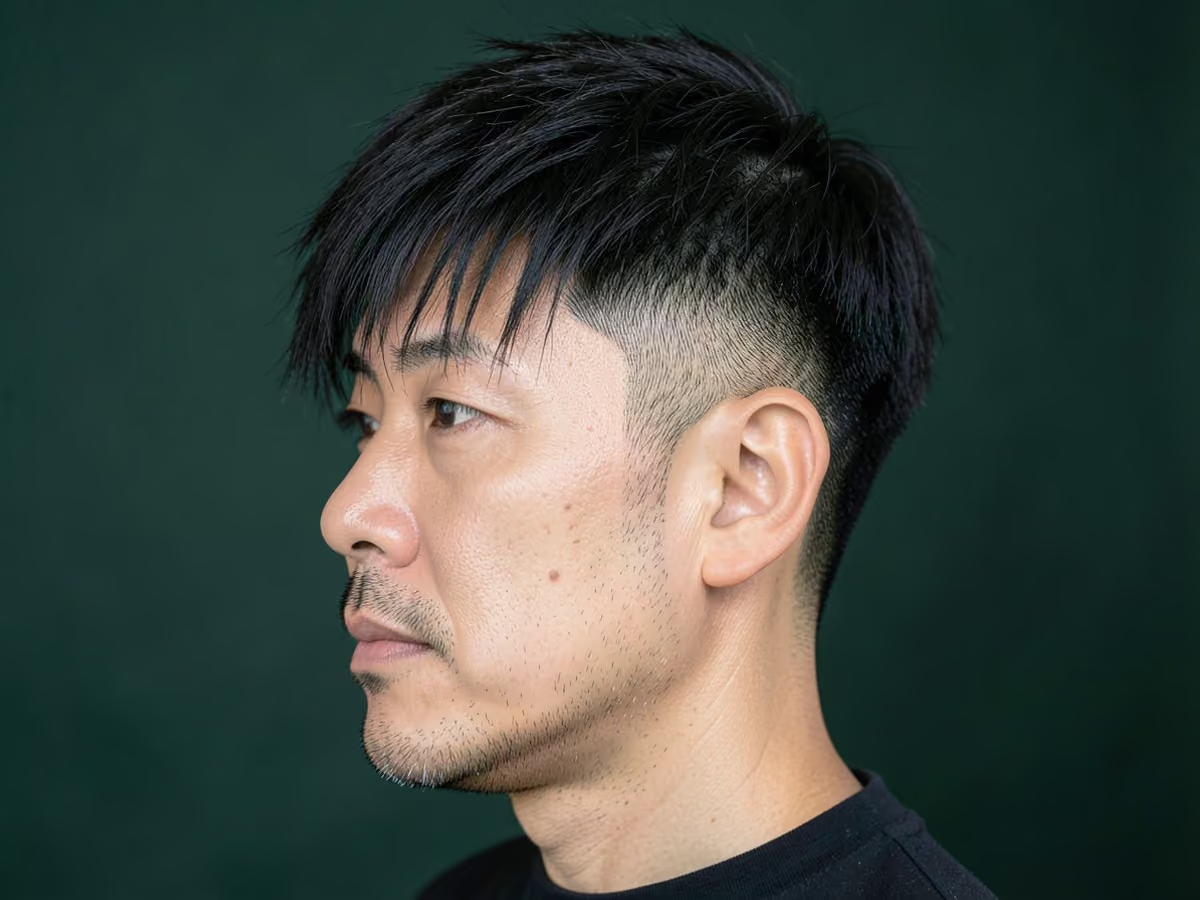
Around two inches of choppy, point-cut hair is pushed forward into a short fringe, with a mid fade below. It is one of the lowest-effort hipster styles and suits men with fine hair, since short texture looks fuller than long slicks. With a beard of any fullness, it keeps the vintage feel without daily blow-drying. A little matte paste is all it needs.
How to Style at Home
Towel-dry and rub matte paste between your fingers.
Work it through the top and push it forward.
Pinch the fringe into a few rough points.
Ask Your Barber
"Textured crop, mid fade from a #0.5 to a #2, two inches on top point cut and pushed forward. Short choppy fringe, not straight across."
Trim:Every 3 weeks. The center ridge flattens as sides grow.
Best For:Round, square faces + thick or coarse hair.
About This Style
Hair through the middle of the top is pushed up toward a low ridge, while short faded sides frame it. The hipster version is softer and wider than a punk faux hawk, and the ridge is styled loosely rather than spiked. It adds height and narrows round faces. Three to four inches in the center strip is enough to shape it.
How to Style at Home
Apply matte clay to dry hair, focusing on the center.
Push the sides of the top inward toward the middle.
Lift the ridge with your fingertips and leave it loose.
Ask Your Barber
"Faux hawk, mid fade with a #1 on the sides, three to four inches through the center strip, shorter toward the edges of the top. Keep the ridge soft."
Trim:Every 3–4 weeks. Short tops lose lift as they lengthen.
Best For:Oval, round faces + straight or thick hair.
About This Style
Hair is brushed straight up from the forehead into an even, textured height of roughly 2.5 inches, over faded sides. It is shorter and more vertical than a quiff, with no backward wave. A blow-dryer and brush set the direction, and texture powder holds it. It lengthens round faces and works on thick, straight hair that resists falling flat.
How to Style at Home
Blow-dry the top straight upward with a vent brush.
Dust texture powder into the roots across the whole top.
Ruffle the ends with your fingers so they separate.
Ask Your Barber
"Brush up, low fade from a #1 to a #3, two to three inches on top cut so it stands up evenly. Textured, not flat on top."
Trim:Every 4 weeks. Scissor-cut sides grow out softly.
Best For:Oval, oblong faces + straight or wavy hair.
About This Style
Inspired by the mid-century college cut, the Ivy League keeps the top long enough to part, about two to three inches, with scissor-tapered sides around a #3. The hipster version is worn slightly messier with a matte finish and a beard. It is conservative enough for formal offices and needs only a minute of styling. Our Ivy League guide has the full cut.
How to Style at Home
Part the hair on one side with a comb while damp.
Push the front up and over with a little styling cream.
Let it air-dry for a softer, natural finish.
Ask Your Barber
"Ivy League, scissor taper on the sides around a #3, two to three inches on top with a side part. Keep it a little messy and matte."
Trim:Every 3–4 weeks. Short tops keep shape for about a month.
Best For:Square, oval faces + coarse, thick or straight hair.
About This Style
The crew cut gets a hipster twist when the front is left a little longer, around 1.5 inches, and pushed up with matte paste, while the sides are a #3 taper instead of a tight military fade. Worn with a full beard, the short top keeps attention on the facial hair. It needs almost no styling, which makes it a good choice for men who want the look in under a minute.
How to Style at Home
Rub a small dab of matte paste between your palms until warm.
Push the front up with your fingertips, leaving the back flat.
Leave it slightly messy and avoid running a comb through it.
Ask Your Barber
"Crew cut with a #3 taper on the sides, an inch on the crown going to an inch and a half at the front, textured with scissors."
Trim:Every 3–4 weeks. The scissor taper loses its line slowly.
Best For:Oval, heart faces + fine or medium straight hair.
About This Style
Taken straight from interwar British barbering, the short back and sides tapers the sides with scissors over comb to about half an inch and leaves two to three inches on top, combed loosely to one side. There is no clipper line, so the outline looks soft. It is a low-effort version of the look that suits men who dislike visible fades or work in conservative jobs.
How to Style at Home
Towel-dry and work a little styling cream through the top.
Comb loosely to the side without making a hard part.
Run your fingers through once to break up the comb lines.
Ask Your Barber
"Short back and sides done with scissors over comb, half an inch at the sides, three inches on top for a loose side comb."
Trim:Every 4 weeks. The fringe reaches the eyebrows by week four.
Best For:Long, heart-shaped faces + wavy or fine hair.
About This Style
Choppy, point-cut hair of three to four inches falls forward onto the forehead in a ragged fringe, over sides tapered at a #3. It shortens a long face and covers a high hairline. Sea salt spray and fingers, not a comb, give it the undone shape. It was a common indie-music look in the late 2000s and still pairs well with stubble.
How to Style at Home
Spray sea salt spray evenly onto damp hair from roots to ends.
Rough-dry it forward with your fingers on low heat.
Twist a few strands of the fringe with texture powder for separation.
Ask Your Barber
"Leave three to four inches on top, point cut so it falls forward into a choppy fringe, and taper the sides with a #3."
Recommended Products
Sea Salt Spray
Texture Powder
Medium and Long Hipster Hairstyles
Grown-out tops and buns are the other half of the hipster look. These eight styles need four inches or more and fewer barber visits. See man bun and grown-out shag for more detail.
Trim:Every 6–8 weeks. Only the sides and ends need trims.
Best For:Oval, square faces + long, straight or wavy hair.
About This Style
All the hair is gathered into a loose bun at the crown or back of the head, with the sides left long and pulled up. The hipster bun is slightly messy, with a few strands loose around the face, and nearly always paired with facial hair. It needs about six to eight inches of length. Avoid wearing it tight every day, since tension can thin the hairline.
How to Style at Home
Brush the hair back and gather it at the crown.
Twist it into a loose coil and wrap it around itself.
Secure with a soft elastic and pull a few strands free.
Ask Your Barber
"Keep the length for a bun, at least six inches all over, long layers, no clippers on the sides. Trim split ends and clean the neckline."
Trim:Every 3–4 weeks. The shaved sides grow out first.
Best For:Round, oval faces + thick or straight hair.
About This Style
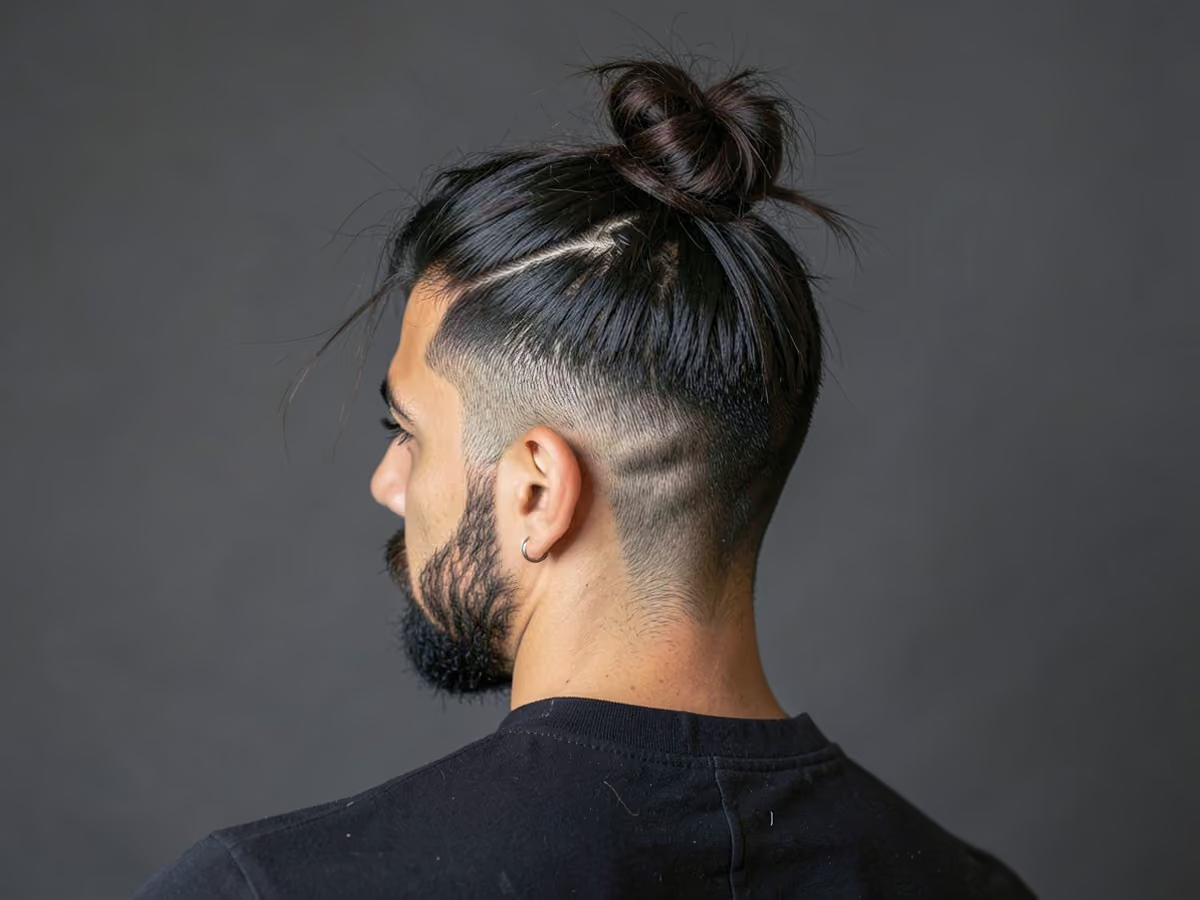
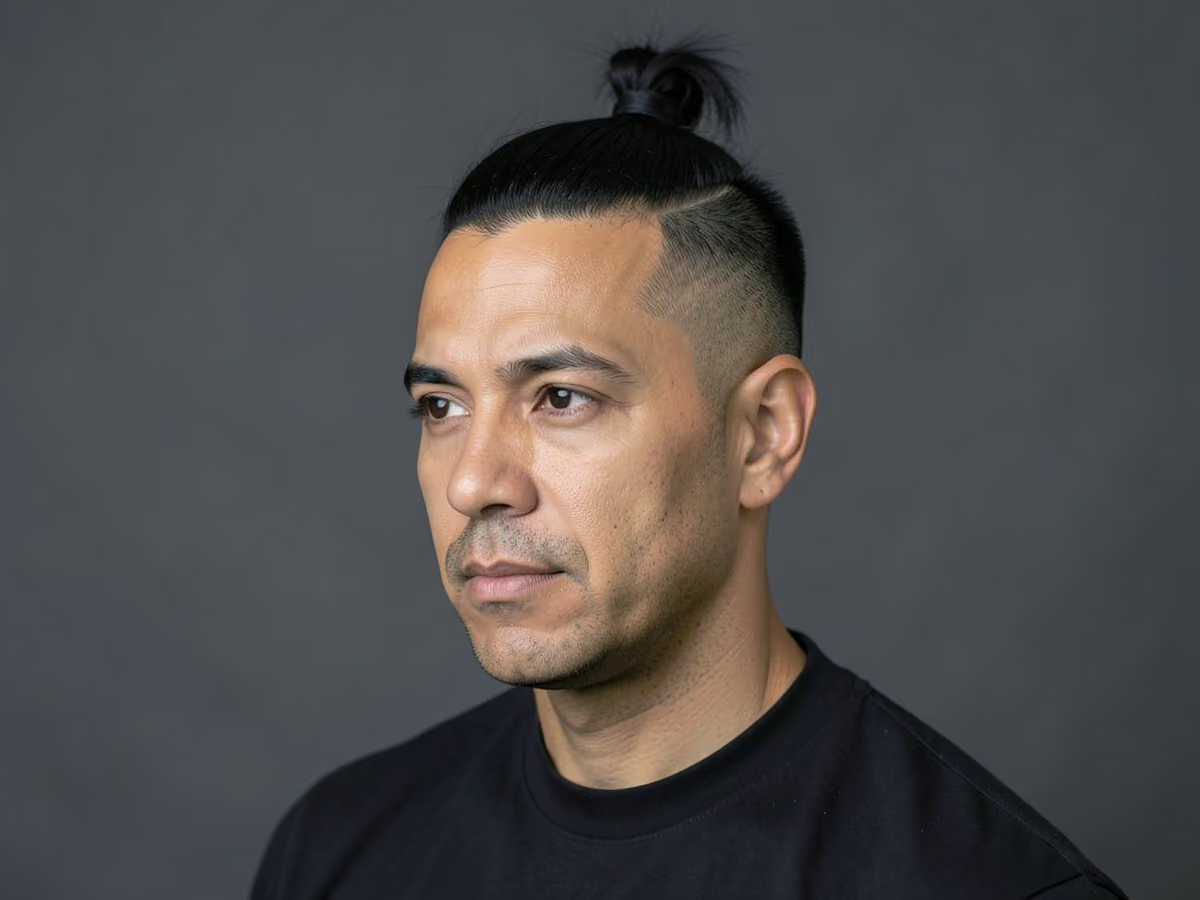
Only the top section is left long and tied high on the crown in a small knot, while everything below the ridge is clipped very short. It is tidier than a full bun and shows a strong contrast between short and long hair. The height elongates round faces. When untied, the top hangs as a disconnected undercut, so you get two looks from one cut.
How to Style at Home
Gather only the top section and brush it up to the crown.
Twist and loop it into a small knot.
Smooth stray hairs with a touch of light gel.
Ask Your Barber
"Top knot undercut, #1 on the sides and back up to the ridge, disconnected. Leave the top long enough to tie, at least six inches."
Trim:Every 6–8 weeks. Shag layers grow out loosely.
Best For:Oval, heart faces + wavy or thick hair.
About This Style
Layered all over at around four to six inches, with a soft fringe and ears partly covered, the shag gives a 1970s feel that many hipsters wore alongside vintage clothes. It is styled with sea salt spray and fingers. Wavy hair makes the layers move without effort. The beard is usually kept shorter so the head does not look too heavy overall.
How to Style at Home
Spray sea salt spray into damp hair and scrunch.
Let it air-dry, pushing the fringe to one side.
Shake out the roots and leave the layers loose.
Ask Your Barber
"Shaggy cut, layers all over around five inches, soft fringe to my eyebrows, sides covering half my ears. Razor or point cut ends."
Trim:Every 4–5 weeks. The sides and back drift out of balance.
Best For:Oblong, oval faces + wavy or curly hair.
About This Style
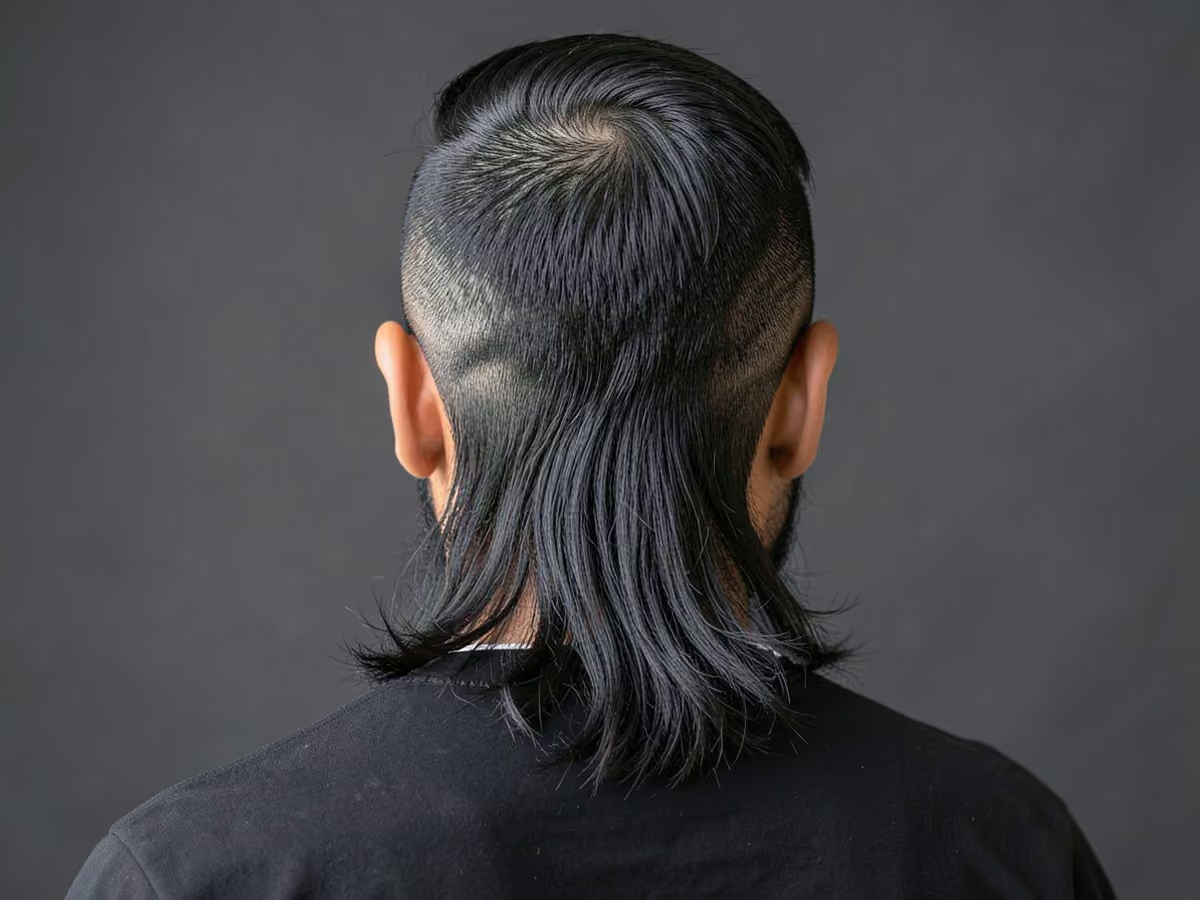
Short to medium on top, clipped or tapered above the ears and long at the back, the hipster mullet came into fashion in the late 2010s as an ironic, then sincere, choice. The back falls two to four inches past the nape. It reads more relaxed than a burst-fade mullet because the sides are scissor tapered or left at a #3. Wavy and curly hair make the back flick out.
How to Style at Home
Scrunch curl cream or sea salt spray through damp hair.
Push the top forward or to the side with your fingers.
Let the back air-dry so it curls outward.
Ask Your Barber
"Mullet with a #3 tapered above the ears, about three inches on top, back left two to three inches past the nape. No fade, keep it soft."
Trim:Every 8–10 weeks. Only the ends need regular dusting.
Best For:Oval, square faces + straight or wavy long hair.
About This Style
Chin length or longer, usually tucked behind the ears or pushed back with fingers, with a beard filling out the jaw. It is the grown-out phase of a hipster undercut or the long-haired creative look on its own. Long layers stop it from hanging flat. Leave-in conditioner and a few drops of argan oil keep the ends healthy between trims.
How to Style at Home
Comb leave-in conditioner through the lengths after washing.
Air-dry and push the hair back with your fingers.
Smooth the ends with a drop of argan oil.
Ask Your Barber
"Keep my length past the chin, add long layers so it falls well, center or natural part. Just dust the ends and tidy the neckline."
Trim:Every 5–6 weeks. Middle-parted hair grows out evenly.
Best For:Oval, square faces + straight or wavy hair, 4 to 6 in.
About This Style
Parted in the center, the front five inches falls in two curtains that sweep toward the temples, with layered sides covering the tops of the ears. It looks back to 1990s indie bands. Little product is needed, and the length means the cut can go six weeks between trims. Strong cowlicks at the front can fight the center part, so check your growth pattern first.
How to Style at Home
Part the hair down the middle while it is wet.
Blow-dry each side down and outward with a round brush.
Finish with a small amount of light pomade on the ends.
Ask Your Barber
"Center part with about five inches at the front, layered so the curtains sweep out to the temples, and the sides cut to cover half the ear."
Trim:Every 6–8 weeks. Only split ends need trimming.
Best For:Oval, oblong faces + long, straight or wavy hair.
About This Style
Only the top half of shoulder-length hair is tied back into a small bun, while the rest hangs loose around the neck. It keeps hair off the face without the full man bun shape. The sides are left long, so there is no fade to maintain. A loose elastic and a different tie spot each day protect the hairline from tension.
How to Style at Home
Gather the hair from the temples upward with your fingers.
Twist it into a small bun at the crown and secure loosely.
Leave the lower half loose and finger-comb it with leave-in.
Ask Your Barber
"Just a dusting to take off split ends, keep the length at the shoulders, and layer the top lightly so a half bun holds."
Trim:Every 6–8 weeks. Flow length is kept with light trims.
Best For:Square, oval faces + thick, wavy hair.
About This Style
Grown to around five to seven inches all over and pushed back with the fingers, the flow curls out behind the ears and at the nape. The hipster version usually carries a full beard and some grease or cream for shine instead of the dry, surfer finish. Getting through the awkward grow-out stage takes patience and a few shaping trims.
How to Style at Home
Work styling cream through damp hair from roots to ends.
Push everything back with your fingers and tuck behind the ears.
Let it dry without touching so the ends flip up.
Ask Your Barber
"Keep my length, five to seven inches, and only shape the back so it flips at the nape. Thin out the bulk over the ears."
Recommended Products
Styling Cream
Hipster Haircuts by Hair Type and Age
These eight cuts adapt the look to curly, wavy, thick, thin, Asian and coily hair, receding hairlines and gray hair. Each changes the length and product to suit the texture. See curly hairstyles for curl care.
Trim:Every 4 weeks. Curls hide length but the sides do not.
Best For:Oval, oblong faces + loose or medium curls.
About This Style
Curly hair is left around 3.5 inches on top, cut dry and shaped round, with the sides tapered with a #2. Instead of slicking the curls, the hipster version lets them fall forward or to one side, defined with curl cream. A full beard balances the volume on top. Thinning shears are avoided because they break up the curl pattern.
How to Style at Home
Apply curl cream to soaking wet hair and scrunch.
Diffuse on low heat or let it air-dry.
Break up any stiffness with your fingers once dry.
Ask Your Barber
"Curly top cut dry, three to four inches, rounded shape, #2 taper on the sides. No thinning shears, blend the sideburns into my beard."
Trim:Every 4–5 weeks. Waves forgive a little extra length.
Best For:Oval, heart, square faces + wavy or loose hair.
About This Style
Four to five inches of wavy hair is pushed back loosely with the fingers, not a comb, so the waves stay visible. Sides are clipped with a #3 or scissor tapered. The result sits between a slick back and a shag. Sea salt spray before drying brings out the wave, and a light cream keeps frizz down in humid weather.
How to Style at Home
Spray sea salt spray evenly into damp hair before drying.
Rough-dry it back with your fingers on low heat.
Smooth frizz with a small amount of styling cream.
Ask Your Barber
"Wavy cut, #3 on the sides scissor tapered, four to five inches on top to push back with my fingers. Light layers to keep the wave."
Best For:Oval, square faces + fine or thinning hair.
About This Style
Long slicked tops show scalp on thin hair, so this version keeps the top near 2.5 inches with blunt ends and a messy, forward finish. Sides are faded with a #1 to #3 to make the top look denser by comparison. A beard draws attention downward. Thickening spray before drying and matte paste after give it body without weight.
How to Style at Home
Mist thickening spray onto the damp roots across the top.
Blow-dry the top forward and slightly up on medium heat.
Work a small amount of matte paste through for texture.
Ask Your Barber
"Short textured top for thin hair, two to three inches with blunt ends, mid fade from a #1 to a #3. Forward and messy, keep my beard full."
Trim:Every 2–3 weeks. Tapers and edges need regular cleaning.
Best For:Oval, oblong faces + coily or tightly curly hair.
About This Style
Coily hair is grown to two or three inches on top, shaped round or into a short high top, and finished with a low taper and a natural edge-up. A full, groomed beard connected through the sideburns gives the vintage hipster balance. A side part shaved into the taper is a common detail. Moisture first, then a pick or sponge for shape.
How to Style at Home
Apply leave-in and curl cream to damp hair.
Shape the top with an afro pick or curl sponge.
Brush the beard with beard oil to keep it soft.
Ask Your Barber
"Low taper with a #1 at the nape and sideburns, two to three inches on top shaped round, shaved side part, natural edge-up connected to my beard."
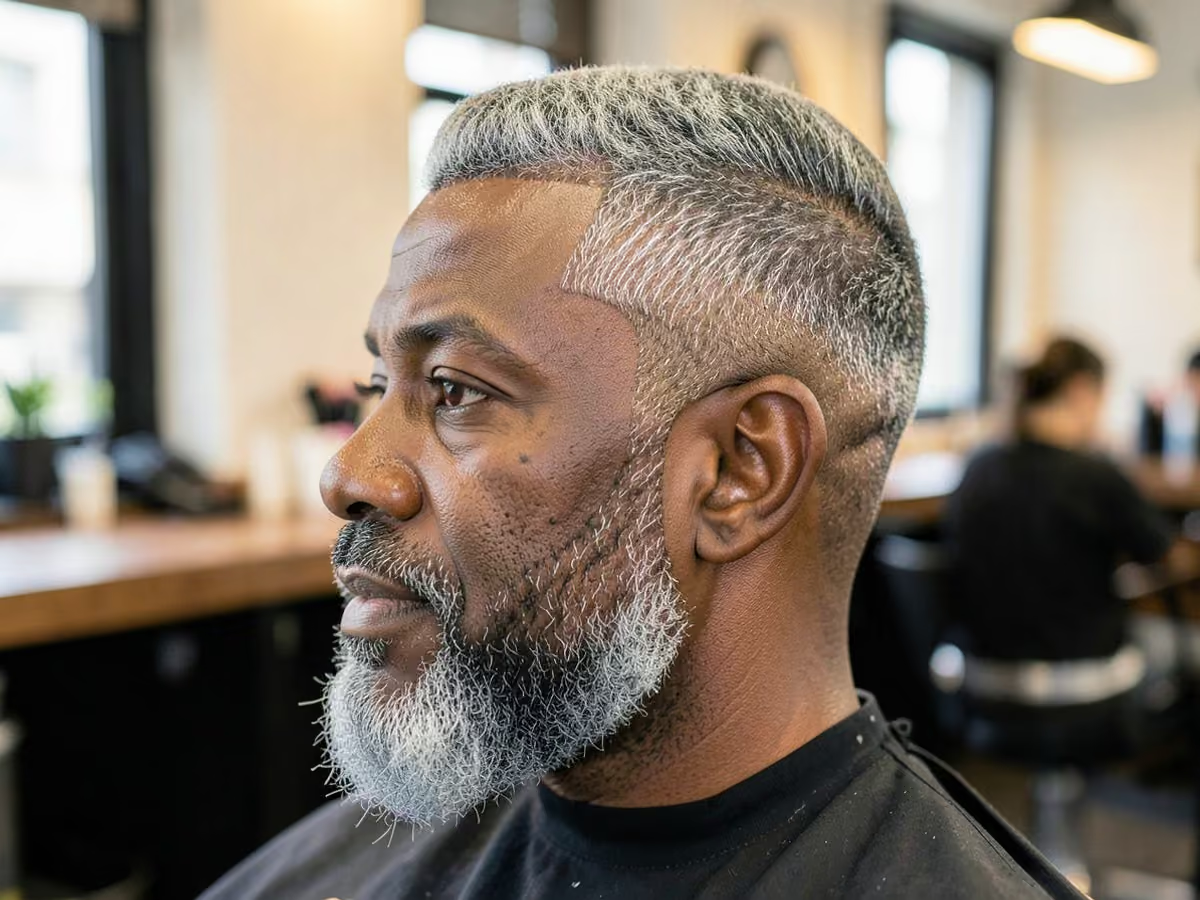
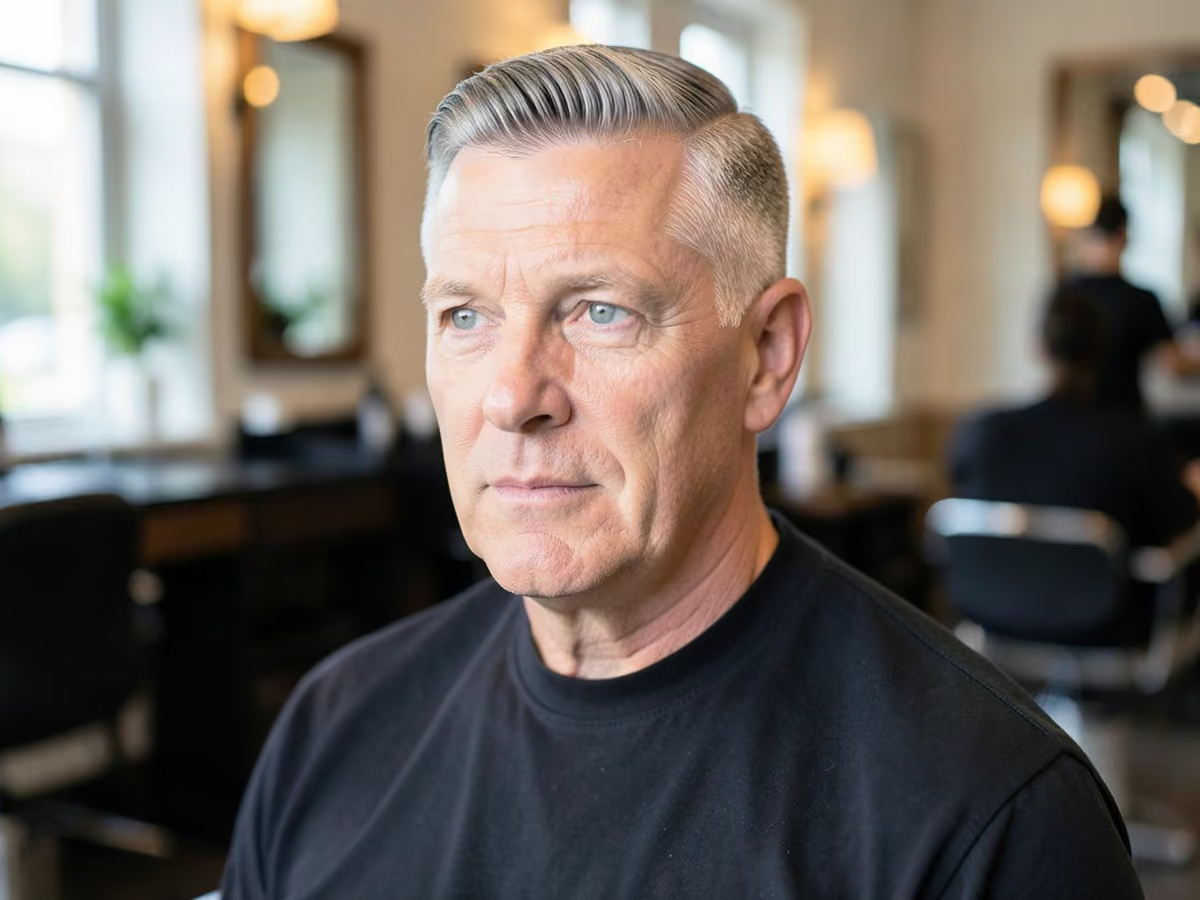
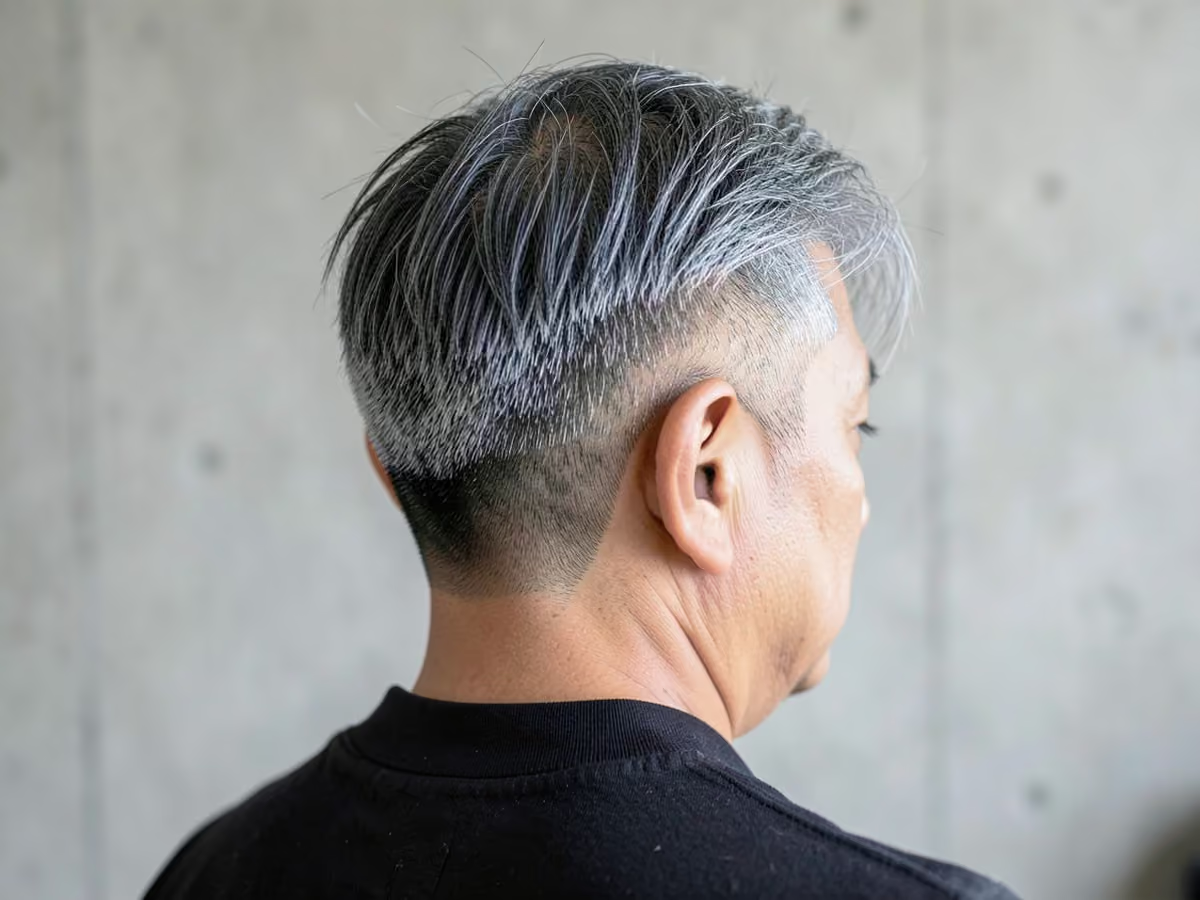
Best For:Oval, square faces + gray, silver or thinning hair.
About This Style
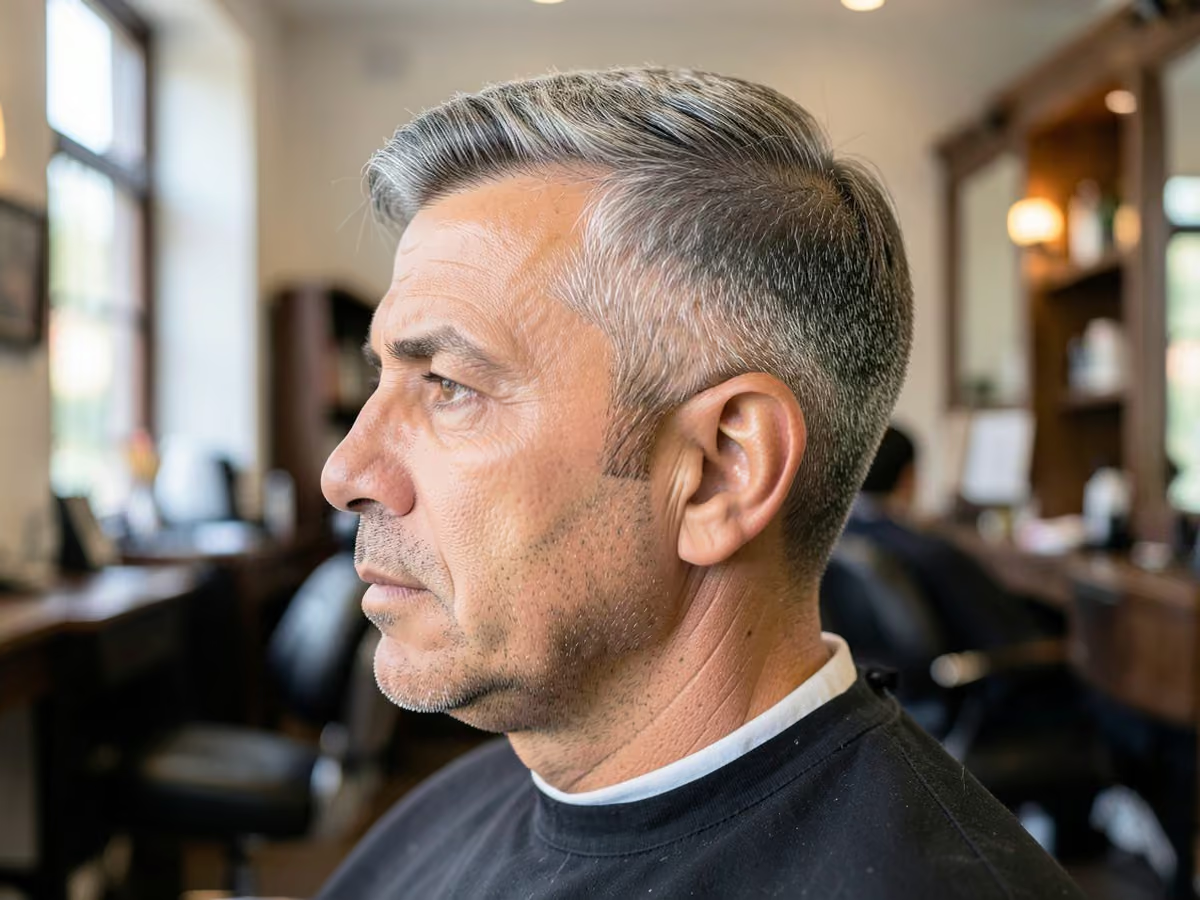
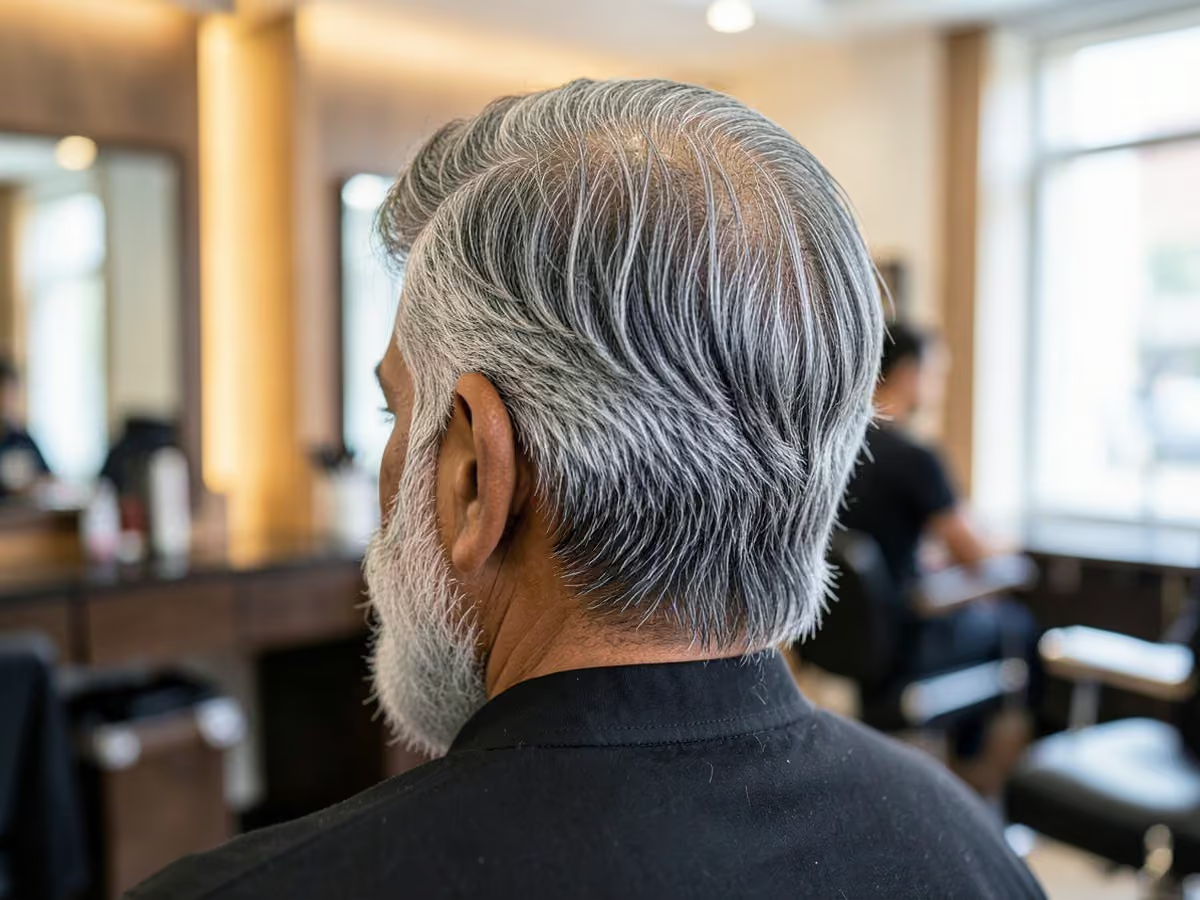
A shorter slick back or side part, three to four inches on top with a #2 or #3 on the sides, suits gray and silver hair, which tends to be coarser and less dense. A matte finish avoids highlighting thinning areas. Paired with a trimmed gray beard, it looks deliberate and current. The silver fox guide has more gray hair styling.
How to Style at Home
Comb matte cream through damp hair to the side or back.
Blow-dry with a brush for light lift at the front.
Trim the beard outline every week to keep it neat.
Ask Your Barber
"Short slick back, three to four inches on top, #2 on the sides tapered at the neck. Shape my gray beard short and tidy, about half an inch."
Trim:Every 3–4 weeks. Thick hair puffs out when it grows.
Best For:Square, round faces + very thick, coarse hair.
About This Style
Very dense hair puffs out if left heavy, so the barber thins the top with texturizing shears and takes the sides down to a #1 or #2 undercut. That lets four inches on top lie in a slick back or quiff without forming a helmet. A strong pomade or clay is needed to hold the weight. Expect to come back every three to four weeks.
How to Style at Home
Blow-dry the top in the direction you want it to sit.
Work strong pomade or clay through from root to tip.
Comb into shape, then press down the sides with your palms.
Ask Your Barber
"Thin out the bulk on top with texturizing shears, keep four inches, and do an undercut with a #2 on the sides so it lies flat."
Trim:Every 3–4 weeks. Straight, thick hair sticks out at the sides.
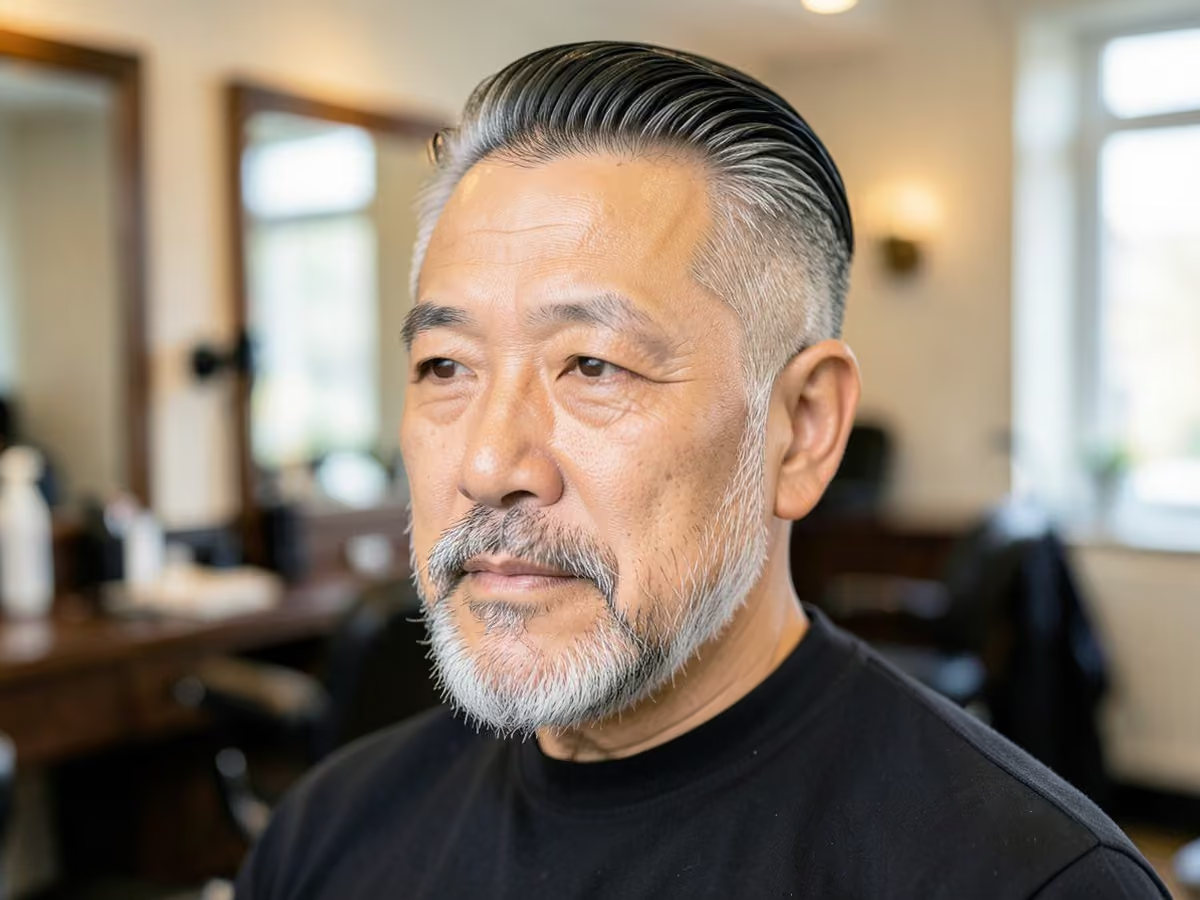
Best For:Round, oval faces + straight, thick Asian hair.
About This Style
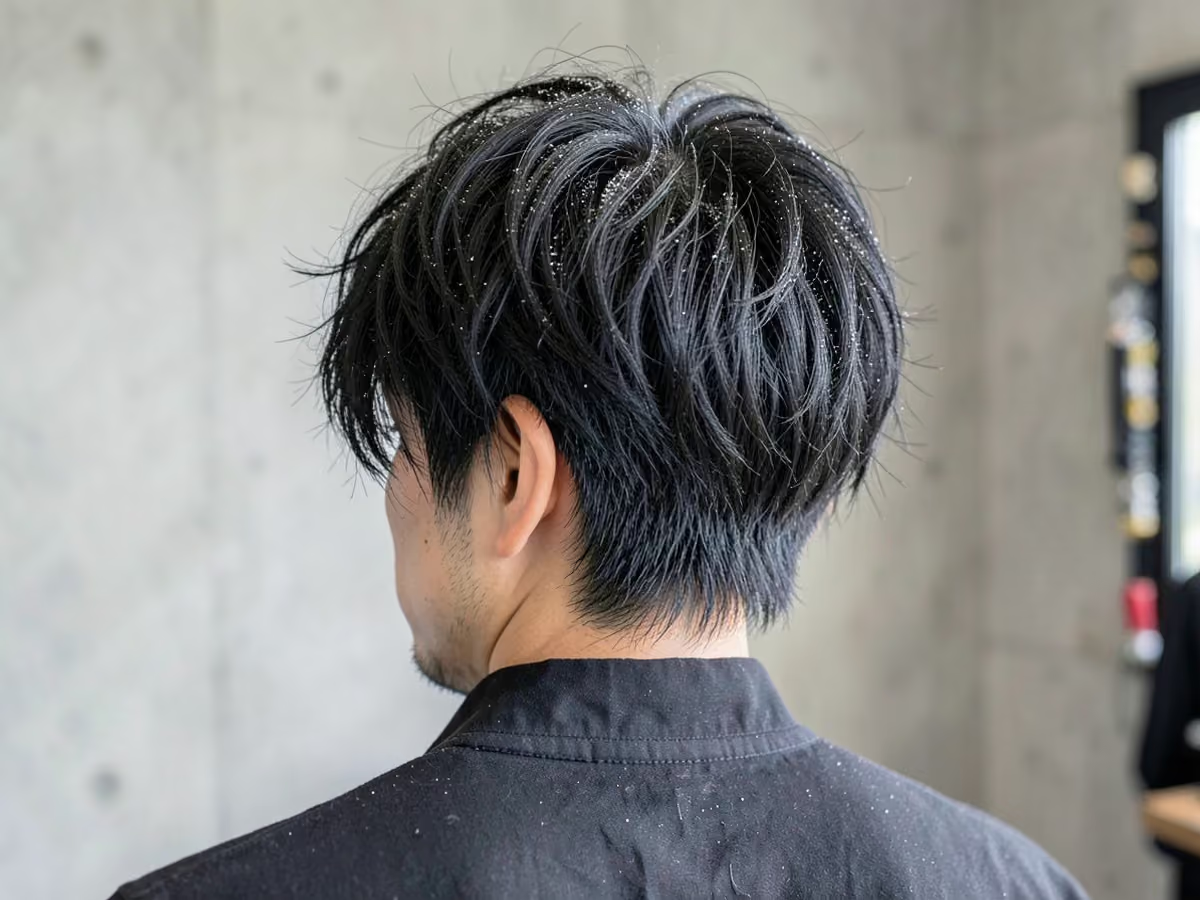
Straight East Asian hair tends to stick out on the sides and lie flat on top, so this version uses a two-block undercut at a #2 and leaves four inches on top. Light texturizing lets the hair move into a side-swept or slick back shape. A blow-dry is needed for any lift. It pairs well with thin-framed glasses, a common part of the hipster look.
How to Style at Home
Blow-dry the roots upward with a round brush to break the flat fall.
Apply a matte clay and sweep the hair to one side.
Set it with a light mist of hairspray or a second pass of clay.
Ask Your Barber
"Two-block undercut with a #2 on the sides, four inches on top with texture so it sweeps to the side, and keep the sideburns short."
Trim:Every 3–4 weeks. Short sides stop the temples looking deep.
Best For:Oval, oblong faces + receding temples, any texture.
About This Style
Deep temples show more under a slicked-back top, so this cut keeps the top short, around 2.5 inches, and pushes it forward or slightly to the side to cover the recession. A #2 on the sides keeps everything in proportion. Paired with a full beard, the focus shifts to the jaw. Matte products avoid the shine that makes thin areas easier to see.
How to Style at Home
Towel-dry and apply thickening spray at the roots.
Brush the hair forward and slightly to one side.
Finish with a little matte paste to separate the ends.
Ask Your Barber
"Keep it about two to three inches on top and textured so I can push it forward, with a #2 on the sides and a soft hairline."
Recommended Products
Thickening Spray
Matte Paste
Hipster Haircuts with Beards and Mustaches
Facial hair finishes most hipster looks. These eight pairings match a cut with a full beard, stubble, a boxed beard, a ducktail, a Van Dyke or a handlebar mustache. See beard shapes for jawlines to choose a shape.
Trim:Every 3 weeks. Both the sides and the beard need shaping.
Best For:Oval, round faces + thick hair and dense beards.
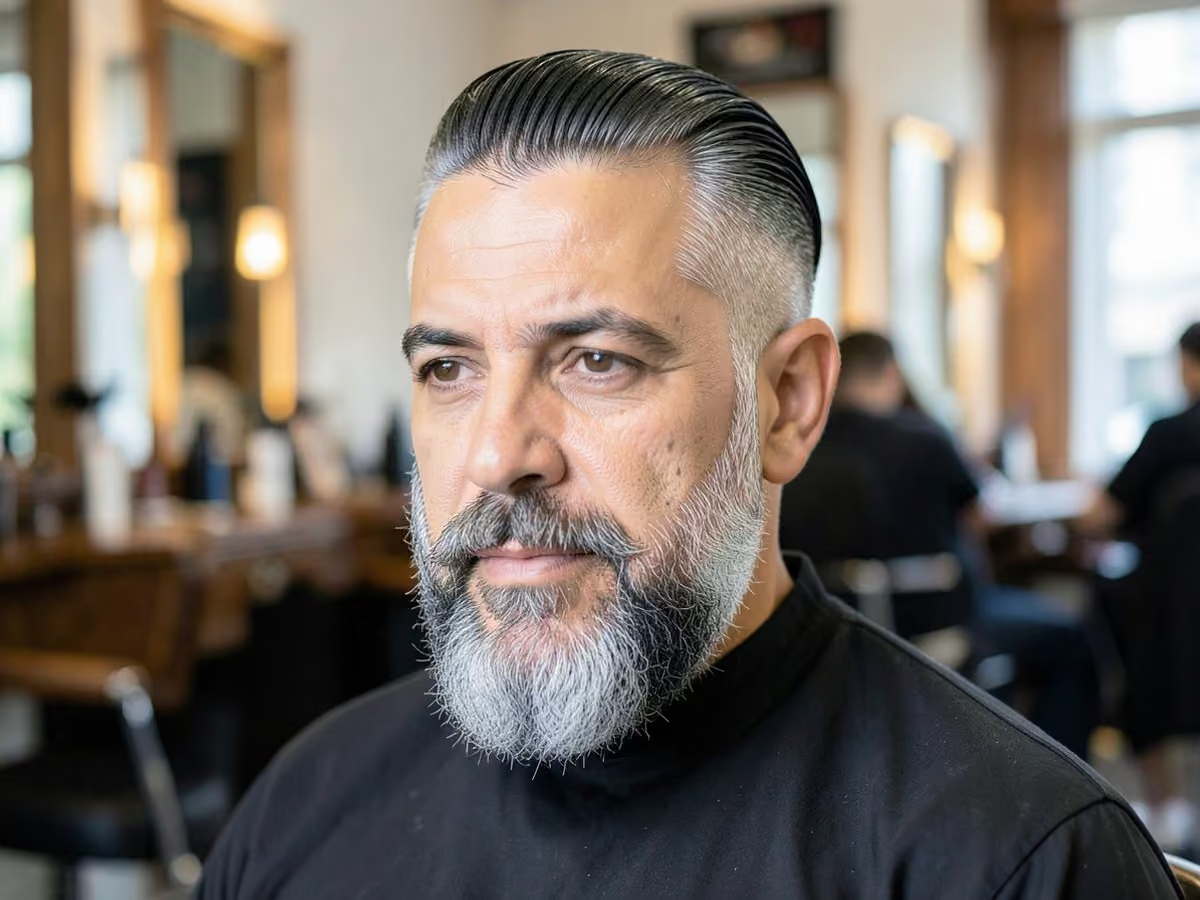
About This Style
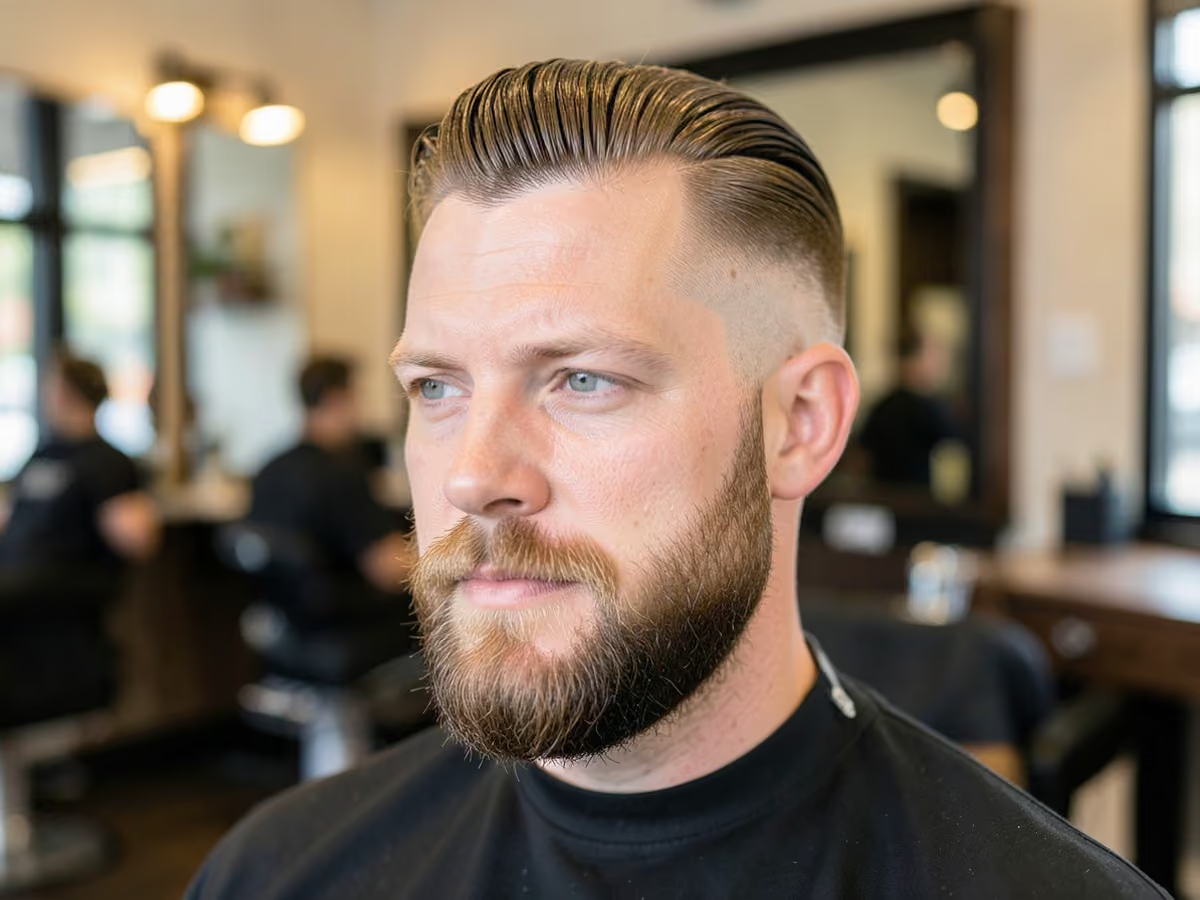
Six inches on top are combed back over a #1 undercut, paired with a full beard around 2.5 inches long that is kept rounded at the chin. The barber leaves a small gap between the clipped sides and the beard or blends the sideburns into it. Beard oil daily and a balm for shape keep the beard from looking unkempt next to the neat hair.
How to Style at Home
Comb light pomade through the top and blow-dry it back.
Apply beard oil and brush the beard downward.
Shape the beard edges with a little beard balm.
Ask Your Barber
"Slick back undercut, #1 on the sides, six inches on top. Shape my full beard to two to three inches, rounded at the chin, sideburns blended in."
Trim:Every 3–4 weeks. Trim stubble every few days at home.
Best For:Oval, square faces + straight hair and light beards.
About This Style
Men who cannot or prefer not to grow a full beard take the lighter route: a textured quiff of roughly 3.5 inches at the front, over a #2 fade, with even stubble of around 3 to 5 mm. The stubble keeps the jawline visible, which suits square faces. Trimming it every two or three days with a guard keeps it from looking accidental.
How to Style at Home
Blow-dry the front up and push it back with matte clay.
Trim stubble with a 4 mm guard every two or three days.
Clean the neckline above the Adam's apple weekly.
Ask Your Barber
"Textured quiff, #2 fade on the sides, three to four inches at the front. Tidy my stubble to an even 4 mm and clean the neckline."
Trim:Every 2–3 weeks. Buzz at home; shape the beard monthly.
Best For:Oval, square faces + thinning hair and full beards.
About This Style
An even #2 or #3 buzz all over with a long, full beard of three inches or more shifts the focus to the face. It is the easiest hipster look for men with receding or thinning hair, and it needs no styling. Keeping the beard full at the chin and narrower at the cheeks lengthens the face. A boar bristle brush trains the beard to lie flat.
How to Style at Home
Buzz the head with a #2 or #3 guard every two weeks.
Wash the beard with a gentle cleanser and apply beard oil.
Brush and shape the beard with a little beard balm.
Ask Your Barber
"Even #3 buzz cut all over with a squared neckline. Shape my beard full at the chin, about three inches, and narrower at the cheeks."
Trim:Every 3 weeks. Wax and trim the mustache every few days.
Best For:Oval, oblong faces + straight hair and thick mustaches.
About This Style
Victorian and early 20th-century barbering is the reference here: a neat side part with clipped sides, a waxed handlebar mustache and a clean-shaven or lightly stubbled chin. The mustache needs about two to three months of growth before the ends can be curled. Mustache wax holds the curl. The haircut stays simple so the mustache is the focus.
How to Style at Home
Comb the hair to the side with light pomade.
Comb the mustache outward from the center toward each corner.
Twist the ends upward with a small amount of beard balm.
Ask Your Barber
"Side part with a #2 on the sides, three inches on top combed across. Trim my mustache along the lip and leave the ends long for curling."
Trim:Every 2–3 weeks. The shaved part and beard lines blur quickly.
Best For:Round, oval faces + thick hair and full beards.
About This Style
Between a combed-over top of medium length and a skin fade runs a shaved hard part, and a boxed beard of about one inch with sharp cheek and neck lines matches the crisp part. Everything has a defined edge, so the look is tidier than most hipster cuts. The boxed shape lengthens round faces. Lines need a barber touch-up every two to three weeks.
How to Style at Home
Comb the top across from the hard part with styling cream.
Brush the beard with beard oil to keep it flat.
Check the cheek lines and trim stray hairs above them.
Ask Your Barber
"Hard part on the left, mid skin fade, three to four inches on top combed across. Box my beard at about an inch with sharp cheek and neck lines."
Trim:Every 3–4 weeks. Beard shaping matters more than the hair.
Best For:Oval, square faces + long hair and a dense beard.
About This Style
Probably the most recognized hipster pairing: long hair tied into a crown bun and a full beard of two to four inches. The beard needs regular shaping at the cheeks and neck so the whole look does not drift into unkempt. Bun placement matters; set high at the crown it adds height, while low at the nape it softens the outline.
How to Style at Home
Brush beard oil through the beard every morning.
Gather the hair at the crown and loop it into a bun.
Trim the beard neckline once a week with a guard.
Ask Your Barber
"Shape the beard to about three inches and round the bottom. Clean the cheek line and leave my hair long; just dust the ends."
Trim:Every 2–3 weeks. Both the pompadour and beard point need upkeep.
Best For:Round, square faces + thick hair and full beards.
About This Style
Height above and a point below stretch the face lengthwise: a pompadour of five inches is blown up at the front, and the beard is cut short at the cheeks and longer at the chin into a ducktail point. That vertical balance helps round and wide faces. Both ends need product: pomade on top, beard balm to hold the tail.
How to Style at Home
Lift the front with a round brush as you dry it up and back.
Shape the pompadour with pomade and a comb.
Work beard balm into the chin and twist the tip into a point.
Ask Your Barber
"Pompadour with five inches at the front, a #2 fade on the sides, and shape my beard into a ducktail, shorter on the cheeks and pointed at the chin."
Trim:Every 3 weeks. The Van Dyke edges need weekly tidying.
Best For:Oval, heart-shaped faces + straight hair, light beards.
About This Style
Short textured hair, about two inches with a short fringe, keeps the top simple so the facial hair carries the vintage feel. A Van Dyke is a separate mustache and pointed chin beard, with the cheeks shaved clean. It suits men whose cheeks grow patchy but whose chin and lip grow full. The disconnected shape needs a trimmer and razor most days.
How to Style at Home
Push the crop forward with a little texture powder.
Shave the cheeks and the gap between mustache and chin beard.
Wax or balm the mustache ends into a slight curl.
Ask Your Barber
"Textured crop with a short fringe and a mid fade at a #1. Shape my beard into a Van Dyke with a pointed chin and clean cheeks."
Recommended Products
Texture Powder
Beard Balm
Vintage-Inspired Hipster Cuts by Era
Many hipster cuts copy a specific decade. These five trace the look back to 1920s gangster films, 1950s rockabilly, 1960s mod bands and Roman-style crops; see the Peaky Blinders haircut guide for more on the 1920s shape.
Trim:Every 2–3 weeks. The very short sides show regrowth fast.
Best For:Oval, long faces + thick, straight hair.
About This Style
Inspired by 1920s Birmingham and its TV revival, this cut shaves or clips the sides very high, often to a #0 or #1, and leaves a top of three or four inches, either combed back with oil or worn loose and slightly messy. The disconnection is sharp, with no blend. A flat cap and a mustache finish the period look.
How to Style at Home
Comb the top back with a little pomade for a period finish.
Or rough it up with matte clay for a looser, modern take.
Keep the shaved sides oiled so the skin does not flake.
Ask Your Barber
"Clip the sides and back high with a #1, right up to the ridge, no blend, and leave three to four inches on top to comb back."
Trim:Every 3 weeks. The quiff front and long sideburns need shaping.
Best For:Oval, square faces + thick hair, wavy or straight.
About This Style
Fifties rock and roll is the reference: a tall, greased front of five to six inches, sides combed back into a ducktail at the nape, and long sideburns down to mid-ear or lower. The hipster version often uses a fade on the lower sides to cut down on grease. Holding the front needs a strong pomade and a blow-dryer, and wet weather can flatten it.
How to Style at Home
Blow-dry the front up and forward into a curl with a round brush.
Comb pomade through the sides and back toward the nape.
Push the front curl forward and set it with your fingers.
Ask Your Barber
"Rockabilly shape: six inches at the front, sides long enough to comb back with a #2 fade at the bottom, and keep the sideburns long."
Trim:Every 4–5 weeks. The fringe line drifts into the eyes.
Best For:Oval, heart-shaped faces + straight or fine hair.
About This Style
Rounded and full, the 1960s mod cut covers the ears and drops into a heavy fringe that reaches the eyebrows. The back is tapered close to the neck so it does not look like a bowl. Hipsters wear it a bit messier, with texture in the fringe. Straight hair holds the round outline best; curly hair tends to puff out.
How to Style at Home
Blow-dry the hair down and forward with a round brush.
Smooth the outline with a little styling cream.
Separate the fringe with texture powder so it is not a solid line.
Ask Your Barber
"Mod cut with a rounded shape that covers half my ears, a full fringe to the eyebrows, and taper the back close at the neck."
Trim:Every 3–4 weeks. The edge of the bowl blurs as it grows.
Best For:Oval, long faces + straight, thick hair.
About This Style
Today's hipster bowl is not the home-cut kind. It pairs a blunt, round top falling to just above the eyebrows with a disconnected undercut at a #1 or #2 underneath. The hard line where the bowl ends is the main feature. Thick, straight hair that falls flat suits it best; wavy hair can be blow-dried straight for it.
How to Style at Home
Blow-dry the top down and forward until straight.
Smooth the outer edge with a little light pomade.
Point-cut a few strands at home with scissors only if needed.
Ask Your Barber
"Disconnected undercut with a #2 underneath, and a blunt bowl shape on top falling just above my eyebrows, slightly texturized."
Trim:Every 3–4 weeks. The short fringe grows past the line quickly.
Best For:Oval, square faces + thinning or receding hair.
About This Style
Roman portrait busts show the original: an even top of one to 1.5 inches brushed forward into a short, straight fringe. Paired with a full beard and a #2 taper, it is one of the easiest hipster looks to wear and covers early recession at the temples. A small amount of matte product adds texture, but it can also be left dry.
How to Style at Home
Brush the hair forward from the crown while damp.
Rub a pea-size amount of matte cream through the top.
Press the fringe flat and straight with your fingertips.
Ask Your Barber
"Caesar cut with an inch and a half on top brushed forward into a short, straight fringe, and a #2 taper on the sides."
Recommended Products
Matte Cream
Hipster Haircuts with Fades and Designs
A fade sharpens the vintage shapes and makes them read as current. These five pair hipster tops with skin, taper, burst and mid fades plus a shaved design; the skin fade guide explains the blend heights.
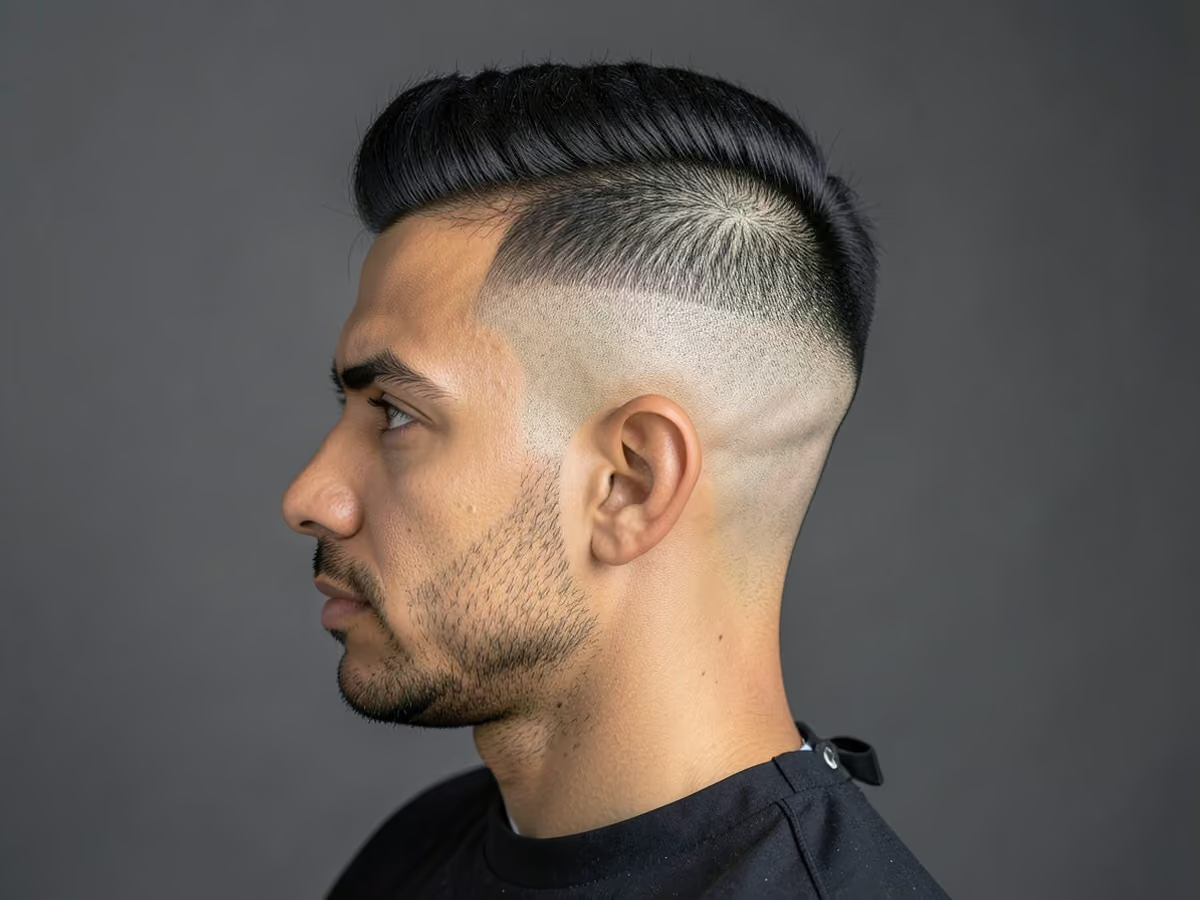
Trim:Every 2 weeks. Bare skin shows stubble within a week.
Best For:Oval, square faces + thick, straight or wavy hair.
About This Style
Bare skin at the temple blends into a #2 a little below the ridge, while the top stays four inches for a quiff or side sweep. It is the barbershop-modern take on the hipster undercut, with a blend in place of a hard line. With a full beard, the skin fade usually stops at the sideburn and is blended into the beard so the two connect.
How to Style at Home
Blow-dry the top up and to the side.
Use a matte clay to shape the front into a loose quiff.
Moisturize the faded sides with scalp oil after washing.
Ask Your Barber
"Mid skin fade, skin at the temple up to a #2, blended into the beard at the sideburns. Leave four inches on top for a quiff."
Trim:Every 4 weeks. A taper only touches the sideburns and nape.
Best For:Oval, oblong faces + medium to thick straight hair.
About This Style
Only the sideburns and nape are shortened, with a #2 or #3 at the edges and longer scissor-cut hair everywhere else. That keeps the outline natural and lets four inches on top fall into a side part or messy push-back. It grows out well, which matters for men who want a hipster cut on a monthly barber budget.
How to Style at Home
Finger-dry the hair with a little styling cream.
Push the top back or to the side with your hands.
Smooth the sides down; they need no product.
Ask Your Barber
"Classic taper, just at the sideburns and neckline with a #2, scissors on the sides, four inches on top for a loose side part."
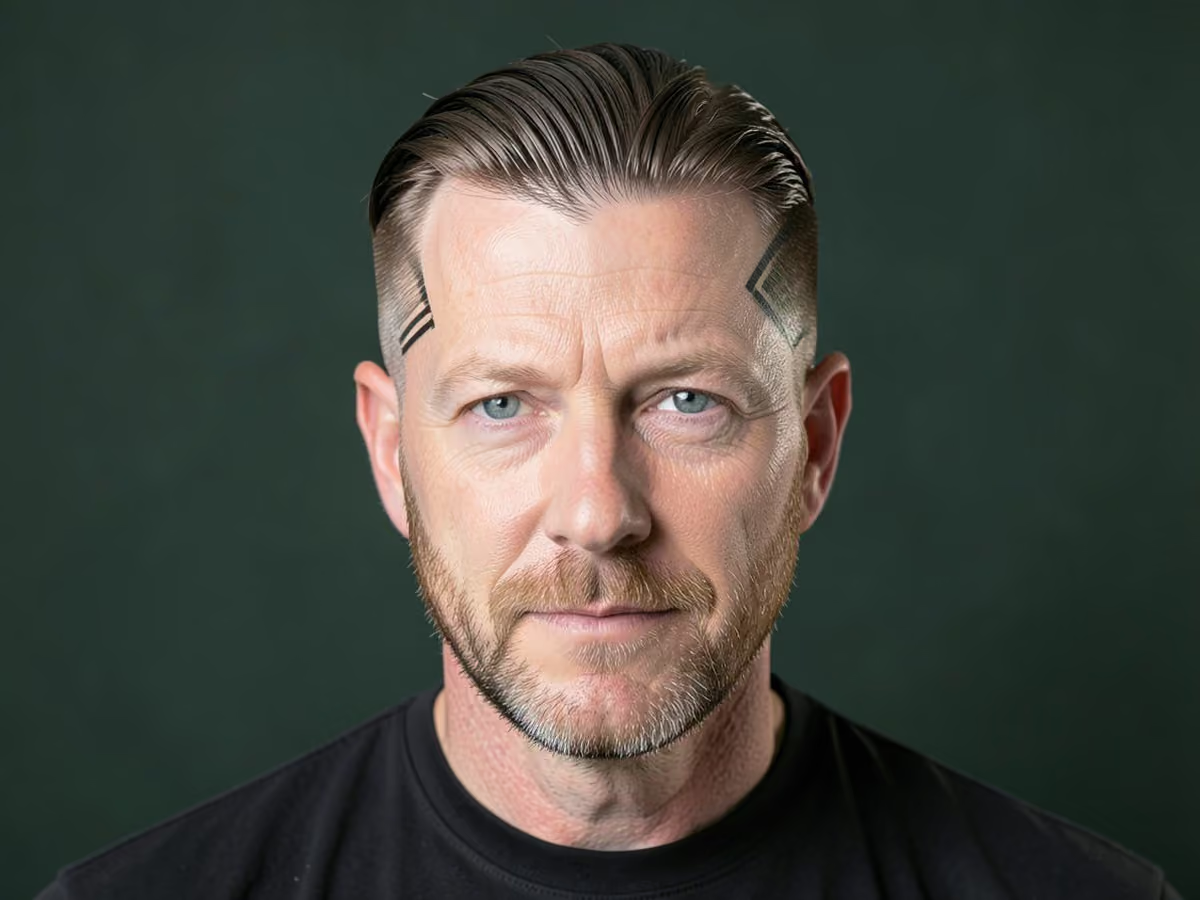
Trim:Every 1–2 weeks. Shaved lines fill in within ten days.
Best For:Oval, square faces + thick hair with a #1 undercut.
About This Style
Simple lines, a single stripe, a few parallel slashes or a geometric shape, are razored into the clipped sides of an undercut. The top is left long and slicked or swept, so the design sits under it like a detail. Lines on light skin and dark hair show most. A design needs a touch-up within two weeks, so it suits men who visit the shop often.
How to Style at Home
Comb the top away from the design side.
Brush the undercut flat so the lines stay sharp.
Book a line refresh every ten to fourteen days.
Ask Your Barber
"Undercut with a #1 on the sides, five inches on top, and two straight razor lines on the left side about two inches long."
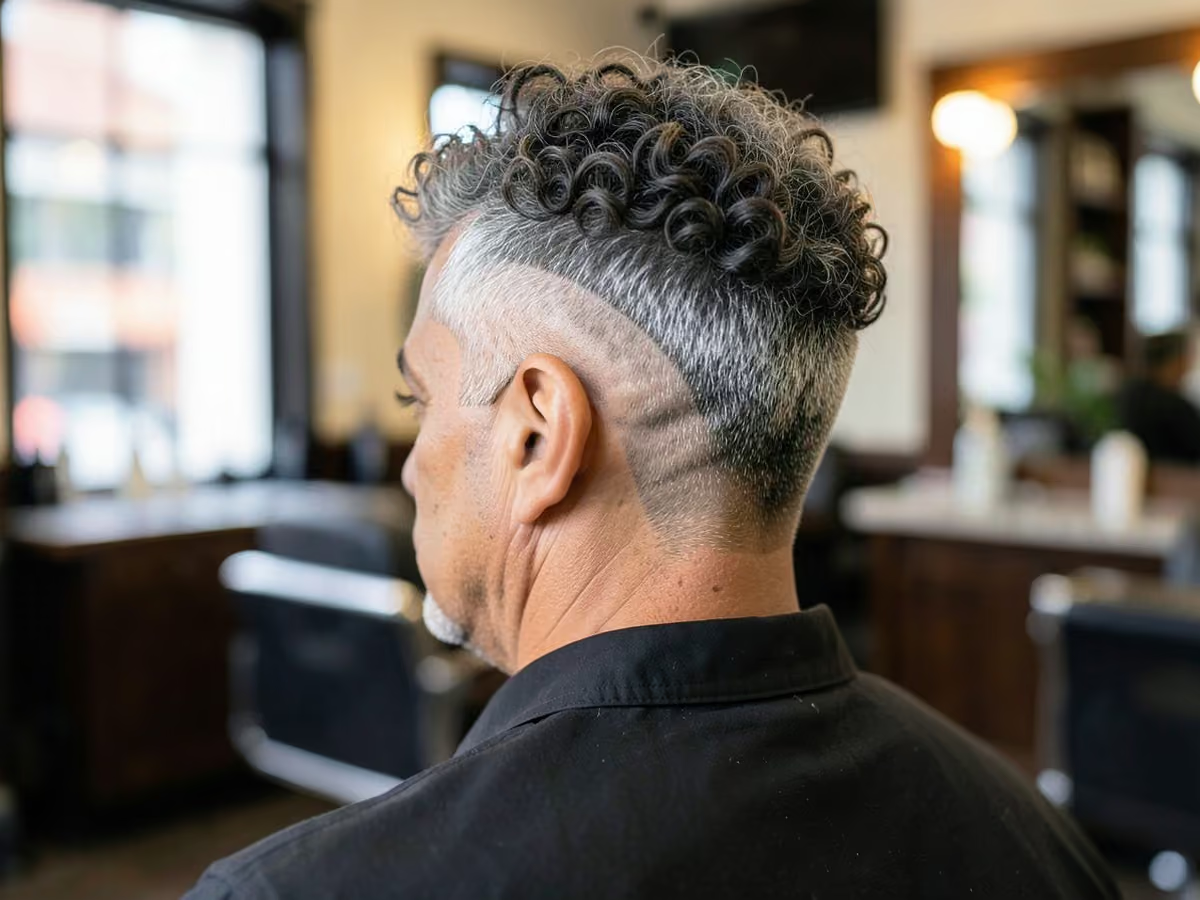
Trim:Every 2–3 weeks. The curve around the ear loses shape fast.
Best For:Oval, heart-shaped faces + curly or wavy hair.
About This Style
Curving around the ear in a half circle, the burst fade drops to skin at the ear and leaves the back long, so it suits a mullet-adjacent or curly hipster top. The top stays three to five inches of loose curls. Because the back keeps length, the outline looks softer than a full fade. Curl cream defines the top without stiffness.
How to Style at Home
Rake curl cream through soaking wet hair with your fingers.
Scrunch the curls upward and let them air-dry without touching.
Leave the back untouched so it keeps its length.
Ask Your Barber
"Burst fade around the ears, skin to a #2, keep the back long, and leave four inches of curls on top."
Trim:Every 2–3 weeks. The mid fade softens at the temple first.
Best For:Round, oval faces + thick, straight hair.
About This Style
Beginning at the temple, the mid fade blends a #1 into a #3 and leaves five inches on top for a pompadour. The rounded front gives height and the fade trims the width, so round faces look longer. It is a cleaner take on the greased pompadour, styled with a medium-shine pomade. Fine hair struggles to hold the shape without a blow-dry.
How to Style at Home
Dry the front over a round brush, pulling it up and back.
Comb pomade through and push the front forward slightly.
Shape the curve with your hand and set it with cool air.
Ask Your Barber
"Mid fade from a #1 at the temple up to a #3, five inches on top for a pompadour, and a clean line at the neck."
Recommended Products
Pomade
Round Brush
Hipster Hair Color, Perms and Messy Finishes
Color and texture change a hipster cut more than length does. These five cover blonde, highlights, a messy bedhead finish, a perm and silver; see the bleached haircuts guide before lightening.
Trim:Every 3–4 weeks. Dark roots show at the part.
Best For:Oval, square faces + healthy, straight or wavy hair.
About This Style
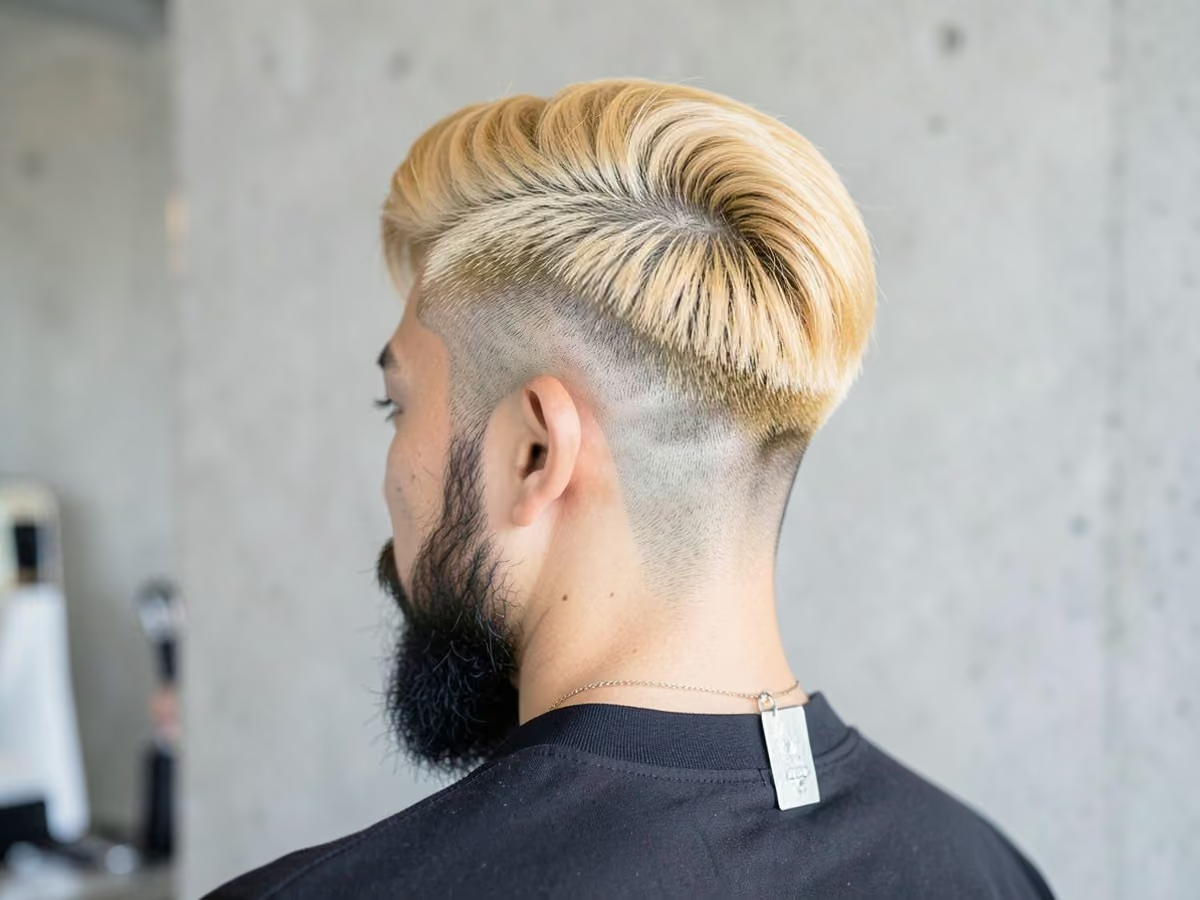
Bleaching the top of an undercut or quiff to a warm blonde while the faded sides stay natural is a common hipster color move. The contrast makes the cut look sharper. Bleach dries the hair, so the top needs leave-in and less heat. Roots show within a month, which means a toner or root touch-up every four to six weeks.
How to Style at Home
Use purple shampoo once a week to cut brassiness.
Apply leave-in to the bleached lengths after washing.
Style with matte clay to avoid the shine that shows damage.
Ask Your Barber
"Bleach just the top to a warm blonde, keep the sides natural with a #2 fade, and leave four inches for a quiff."
Trim:Every 4–6 weeks. Fine streaks grow out softly.
Best For:Oval, heart faces + brown hair, 3 in or longer.
About This Style
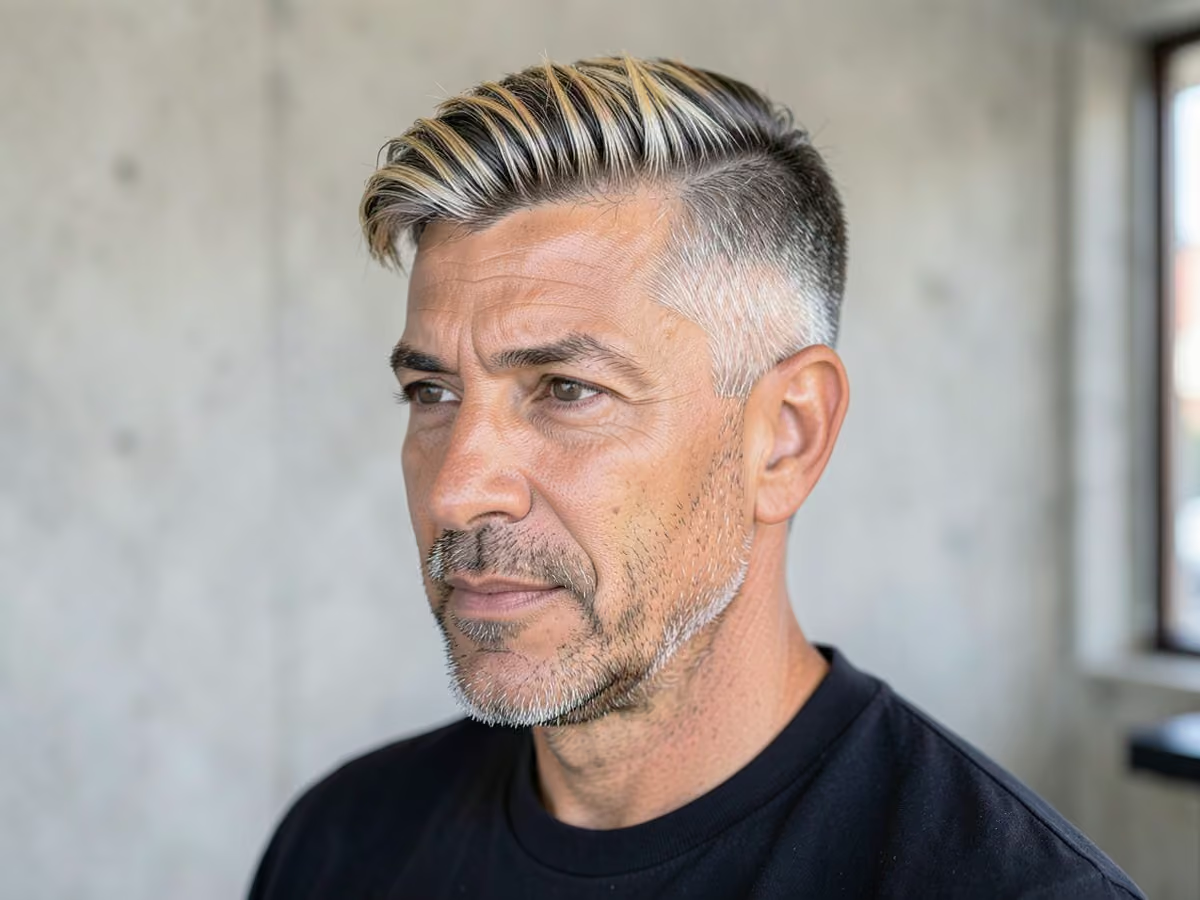
Fine streaks, two or three shades lighter than the base, are painted or foiled through the top, often in a sun-kissed pattern near the front. They add depth to a side-swept or textured top without a full bleach. Growing out is gentle because there is no solid root line. Highlights show best on medium to long hair with movement.
How to Style at Home
Wash with color-safe shampoo two or three times a week.
Rough-dry with sea salt spray to show the streaks.
Push the top to one side with your fingers.
Ask Your Barber
"Fine highlights on the top, two shades lighter, mostly near the front. Taper the sides with a #3 and keep four inches on top."
Layers cut at three to five inches, with no part and no set direction, let the hair look as if you just got up. The skill is in the cut: point-cut ends and removed bulk let the pieces separate on their own. Texture powder at the roots keeps it from falling flat by afternoon. It suits creative workplaces and casual lives more than formal offices.
How to Style at Home
Shake a little texture powder into dry roots across the top.
Rub and scrunch the hair with your fingertips.
Pull a few pieces in different directions and leave it.
Ask Your Barber
"Layer the top at three to five inches with point-cut ends, remove some bulk, and taper the sides at a #3. No part or line."
Trim:Every 6–8 weeks. Perms relax over three to four months.
Best For:Oval, oblong faces + straight hair, 3 in or longer.
About This Style
A loose body perm on the top gives straight hair the soft, tousled waves the look calls for, while the sides stay short with a #2 or #3. Larger rods make looser waves. The perm lasts three to four months and needs sulfate-free shampoo to avoid frizz. Results vary on bleached or damaged hair, so a stylist should check the condition first.
How to Style at Home
Wait two days after the perm before washing.
Apply curl cream to damp hair and scrunch.
Air-dry or use a diffuser on low heat.
Ask Your Barber
"Loose perm on the top only, large rods for soft waves, with four inches of length and a #2 taper on the sides."
Trim:Every 3–4 weeks. Toner fades and roots appear quickly.
Best For:Oval, square faces + healthy hair lifted to pale blonde.
About This Style
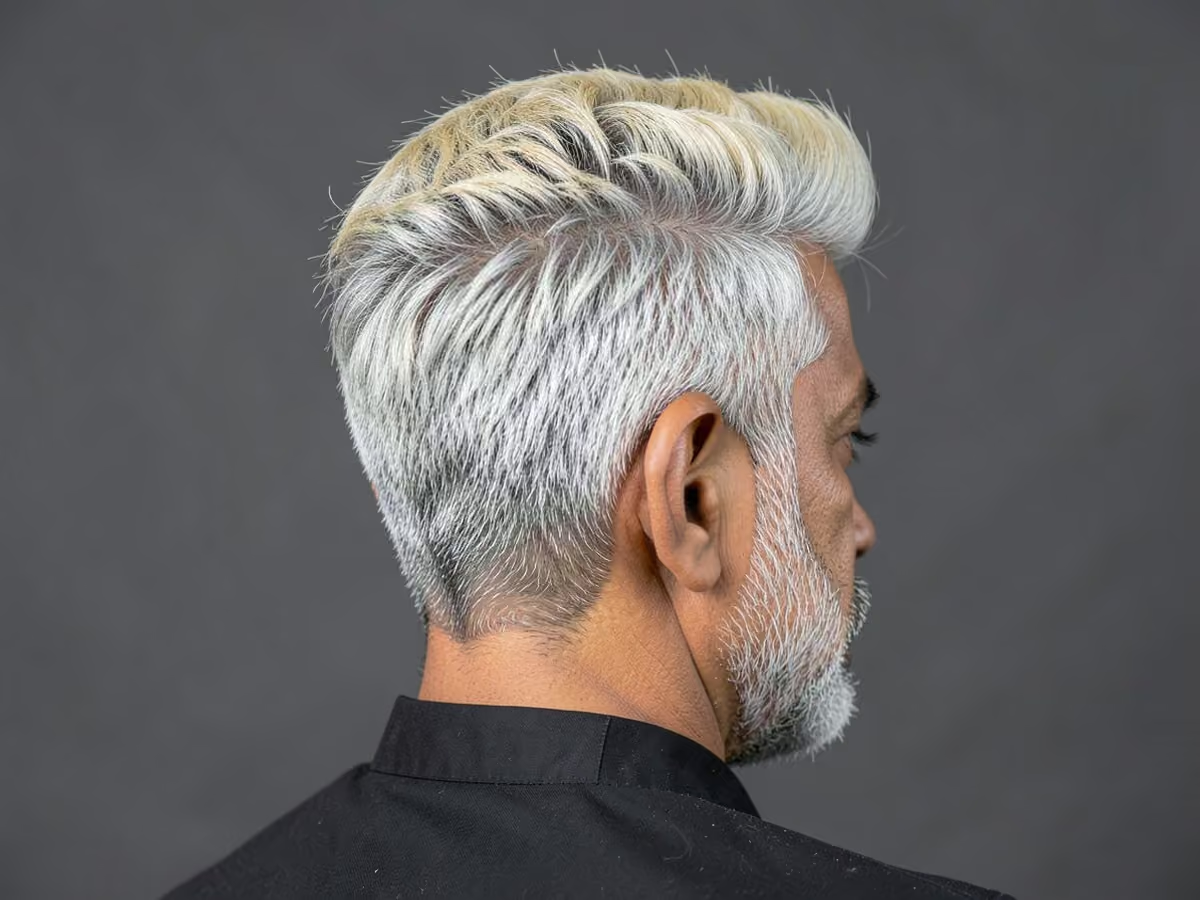
Silver or ash gray is reached by bleaching to a pale blonde and toning, then styling the top into a textured quiff. Men with natural gray sometimes get a similar finish with only a toner. It needs purple shampoo and regular toning every few weeks. The quiff keeps the top short enough, around three inches, that damaged ends can be trimmed away.
How to Style at Home
Wash with purple shampoo twice a week to keep the silver cool.
Blow-dry the front up with a round brush.
Set the quiff in place with a small amount of matte clay.
Ask Your Barber
"Quiff with three inches on top and a #2 fade. I am toning the top silver, so keep the ends clean and trim any damaged tips."
Recommended Products
Matte Clay
Round Brush
How Do You Ask Your Barber for a Hipster Haircut?
Skip the word hipster and describe the parts. Say how short the sides go (for example a #2 all around, or a disconnected undercut at a #1), whether the line between sides and top is blended or hard, how much length stays on top, and which way you style it: back, to the side, up or tied. If you want a hard part shaved in, ask for it. Mention your beard so the barber can blend the sideburns into it or keep a gap.
Bring a photo with a similar hair type and beard, ideally from the front and side, so the barber can judge the length on top. Barbers who specialise in classic cuts and straight-razor shaves are usually most comfortable with these styles, and many will suggest a product to match. If you are unsure of guard numbers, the clipper guard numbers chart shows how much each guard leaves, from a #0 at 1/16 inch to a #4 at 1/2 inch.
Clipper Guards Used in Hipster Haircut Styles
A clipper guard is the plastic comb that clips onto the blade and sets how much hair is left: a #1 leaves 3 mm (1/8 inch), each step up adds about 3 mm. The right column lists the cards on this page that call for each guard. See the full clipper guard numbers guide for the complete chart.
Product choice matches the finish. Slicked-back and side-part styles use a water-based light pomade for medium shine that washes out easily, or matte cream for a more natural look. Quiffs, pompadours and textured crops need more hold with less shine, so a matte clay or matte paste worked into dry hair after a blow-dry. Shaggy cuts and buns need only sea salt spray or a little styling cream. The pomade vs clay vs wax guide compares hold and shine levels.
Use less product than you think, starting with a fingertip amount and adding more if needed; too much makes hair look greasy and heavy, and it builds up on the scalp. Warm it between your palms first so it spreads evenly. For beards, beard oil each day keeps the skin underneath from itching, and a beard balm adds light hold for shaping. A boar bristle brush helps both hair and beard sit in place and spreads natural oils.
How Often Should You Trim a Hipster Haircut?
Short-sided cuts like undercuts, pompadours and side parts need a barber every three to four weeks, as the clipped sides grow out first and the contrast fades. Longer styles like shags, man buns and long hipster hair can go six to eight weeks, with only the ends and neckline tidied. Beards should be trimmed at the outline every week or two, with a barber shape-up roughly once a month.
Common mistakes include letting the beard grow wider than the haircut, which makes the head look bottom-heavy, and using shiny products on a style meant to look matte. Pulling a bun tight every day can also thin the hairline over time, so vary its position. Skipping the neckline between visits makes even a fresh top look untidy. Our how often you should get a haircut guide helps plan a schedule around each cut.
Which Hipster Haircut Is Right for You?
Pick your hair type and how much upkeep you will put in. The matches below come from the Best For and Maintenance notes on each card. Upkeep follows the Maintenance badge: low means a cut every 3 to 6 weeks and almost no daily styling, high means weekly line-ups or daily product.
The slicked-back undercut is the best-known example: sides clipped short with a #1 or #2, a disconnected top of five to seven inches combed straight back with pomade, and a full beard. The man bun with clipped sides and the pompadour are close behind. All three remain common requests in classic barbershops.
Q2: Do hipster haircuts need a beard?+
No, but most are designed with one in mind. A beard balances the longer top and short sides, especially on round or long faces. If you are clean-shaven, choose a cut with less contrast, such as a side part or textured crop with a #3 on the sides, so the head shape does not look top-heavy.
Q3: How long does hair need to be for a hipster undercut?+
About five inches on top is the minimum to slick it back past the crown, and six to seven inches gives a fuller sweep. The sides can be clipped right away, so you only need to grow the top. If you are starting from a short cut, expect three to five months of growth.
Q4: Are hipster haircuts still in style?+
The hipster label has faded, but the cuts have not. Undercuts, side parts, pompadours and man buns are still regular barbershop requests, usually worn with a softer, more textured finish than in the early 2010s. Pairing them with matte products and a natural beard shape keeps them looking current.
Q5: What is the difference between a hipster haircut and an undercut?+
An undercut is one specific cut: short or shaved sides with a longer, disconnected top. A hipster haircut is a broader style group that includes the undercut along with side parts, pompadours, man buns and shaggy cuts, usually worn with a beard and a vintage-inspired finish. Every hipster undercut is an undercut, but not every hipster cut is.
Q6: Can you get a hipster haircut with curly hair?+
Yes. Curly hair suits a curly top with clipped sides, a curly shag or a loose bun. Ask the barber to cut the top dry and leave extra length for shrinkage, and use curl cream rather than pomade. Slicked-back styles are harder on curls, since they need heat and heavy product to stay flat.