
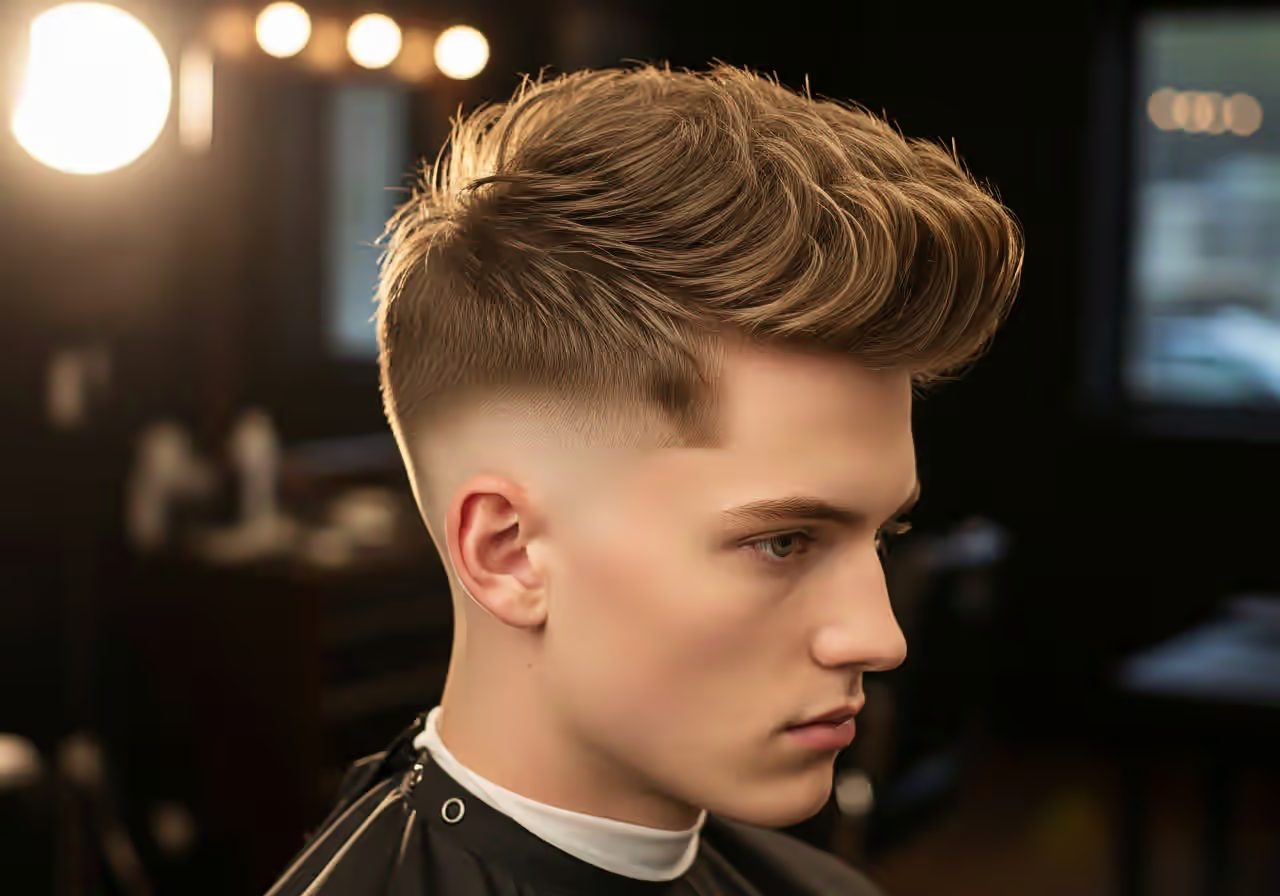
How to Ask for "Texture"
Without Getting Thinning Shears
"Texture" means different things to different barbers, and the wrong interpretation leaves your hair thin and fluffy. Here's how to be precise.
By Jessica Hamilton, Editor · Updated
Quick answer: Asking for 'texture' is ambiguous. Some barbers will point-cut the ends at an angle for movement, while others will reach for thinning shears to remove bulk, which can leave fine, thin or curly hair frizzy. Say 'point-cut the ends, no thinning shears.' If your hair is too bulky, ask them to 'take some weight out underneath.'
Style images are AI-generated illustrations.
📚 Part of our Barbering Basics guide hub, which links the full set of related guides.
"Give it some texture" is one of the most commonly misunderstood requests in the barbershop. To one barber it means point-cutting (creating movement and separation); to another it means thinning shears (removing bulk). Those produce very different results, and thinning shears on the wrong hair leaves it fluffy, frizzy, and hard to style.
What Do Barbers Mean by Adding Texture?
When barbers say texture, they mean one of four techniques: point cutting, thinning shears, razor cutting or bulk removal. To get movement without fluff, ask for point cutting and say no thinning shears, especially on fine, thin or curly hair. Thinning shears suit only genuinely thick, heavy hair that puffs out.
For full cut ideas built around blunt ends and matte finishes, browse our haircuts for thin hair with guard numbers for each style.
| Technique | What it does | Best for |
|---|---|---|
| Point cutting | Scissors cut into the ends at an angle, creating separation and movement without removing bulk | Almost everyone; the safe default |
| Thinning / texturizing shears | Notched blades remove a percentage of hair to reduce bulk | Genuinely thick, heavy hair only |
| Razor texturizing | Razor slices the ends for soft, piecey movement | Straight to wavy hair; can frizz curly hair |
| Bulk removal | Scissor-over-comb or thinning to reduce weight underneath | Very dense hair that puffs out |
Why Do Thinning Shears Get a Bad Reputation?
Used correctly on thick hair, thinning shears are a great tool. Used on fine, thin, or curly hair (or used too close to the roots), they create short broken hairs that stick up, frizz, and never sit right. That's the "my hair is fluffy and won't behave" outcome, and it takes months to grow out.
What Should You Say to Get Texture Without Thinning Shears?
- For movement and separation: "Point-cut the ends for some texture, please don't use thinning shears."
- If your hair is genuinely too heavy: "It's too bulky, can you take some weight out underneath?"
- If you have fine or curly hair: say so explicitly: "my hair's fine, please no thinning shears."
- If you liked a previous cut: "last time it was point-cut and it sat great, same again."
What to say in the chair
“Point-cut the ends for movement, take weight out underneath only if it is bulky, and please do not use thinning shears on the top.”
What Mistakes Should You Avoid When Asking for Texture?
- Saying "thin it out" when you mean "make it lighter". To many barbers that is a direct request for thinning shears.
- Asking for texture for the first time right before an event. If it goes wrong, it needs months, not days.
- Not mentioning past over-thinning. Tell the barber, so they cut toward the short pieces instead of adding more.
- Letting curly hair be texturized wet. Curls shrink as they dry, so dry cutting shows where each curl really sits.
- Staying quiet when you see the notched blades come out. It is fine to ask for regular scissors instead.
For more ways to phrase requests, see how to talk to your barber.
Which Texturizing Method Suits Your Hair Type?
The right texturizing method depends more on your hair than on the style you want.
- Fine or thin straight hair: point-cutting only, kept shallow. Removing bulk makes fine hair look thinner and see-through.
- Thick straight hair: point-cutting for separation plus some weight removal underneath or at the back so it does not puff out.
- Wavy hair: point-cutting or careful scissor-over-comb work; a razor can suit it, but it can also create frizz if the hair is dry.
- Curly or coily hair: ideally cut curl by curl, often dry, so the barber can see where each curl sits. Thinning shears tend to cause frizz here.
How Can You Tell If Your Hair Was Over-Thinned?
Over-thinned hair often looks fine in the chair because it has just been blow-dried and styled. The signs show over the following days.
- Short, spiky hairs standing up through the top layer, especially near the crown.
- A fluffy, hollow look where the ends are full but the mid-lengths look weak.
- Hair that will not lie flat even with product, because short pieces push the longer ones up.
- Frizz that was not there before, common on wavy and curly hair after thinning.
How Do You Fix Over-Thinned Hair?
There is no way to put bulk back, but you can make over-thinned hair behave while it grows. Ask your next barber to cut the length down toward the short broken pieces, so the difference between them is smaller, and to use point-cutting only. A heavier cream or paste can help weigh the short hairs down in the meantime.
Avoid rough towel-drying and high heat, which make the broken ends stand up more. Expect it to take a few months to recover fully, depending on how close to the roots the thinning was done.
How Long Does Over-Thinned Hair Take to Grow Out?
Hair grows about half an inch a month, so recovery depends on how close to the root the shears went. Thinning done near the ends blends in within a month or two; thinning near the scalp can take half a year on medium-length hair.
| Time | What you see | What to do |
|---|---|---|
| Week 2 | Short pieces still stick up through the top | Use a cream or paste to weigh them down |
| Month 1 | Short pieces about 1/2 inch longer | Ask the barber to bring the length down toward them, point cutting only |
| Month 2 | Spikes shorter relative to the rest | Keep the same length on top; trim only the sides |
| Month 3 | Blended on short styles | Short crops look normal again |
| 6 months | Blended on medium styles | Texture can be added again, with scissors |
If too much length came off as well, read my barber cut too much off and how to fix a bad haircut.
Which Products Add Texture Without Thinning?
Product can do much of what people hope thinning shears will do. Our pomade vs clay vs wax guide compares the main types.
- Matte clay: separates hair into pieces and adds hold, the closest thing to texture in a jar.
- Paste: softer separation that you can restyle by hand during the day.
- Sea salt spray: grip and a gritty finish on damp hair, good for fine straight hair.
- Styling cream: weighs down short broken pieces on over-thinned hair while it grows.
- Curl cream: groups curls into defined pieces without cutting any bulk.
Texture work is part of the scissor cut, so it does not usually change the price of a standard $25 to $45 visit; see our haircut cost guide.
Textured tops hold their shape for about 4 to 6 weeks, the medium-style interval in how often you should get a haircut. If the sides are clipped, a guard is the plastic comb that sets their length; note the number with our clipper guard numbers chart. The textured crop gallery shows point-cut tops, and our men's hair product statistics show which products men buy.
Frequently Asked Questions
Q1: What does 'texture' mean in a haircut?+
Q2: Should I let my barber use thinning shears?+
Q3: What's the difference between point cutting and thinning shears?+
Q4: How do I ask for texture safely?+
Q5: Why is my hair fluffy and frizzy after a haircut?+
Q6: Can a razor be used to texturize curly hair?+
Related Haircut Guides
Make us a Preferred Source on Google
See our latest articles first in your Google Search & AI Overviews.