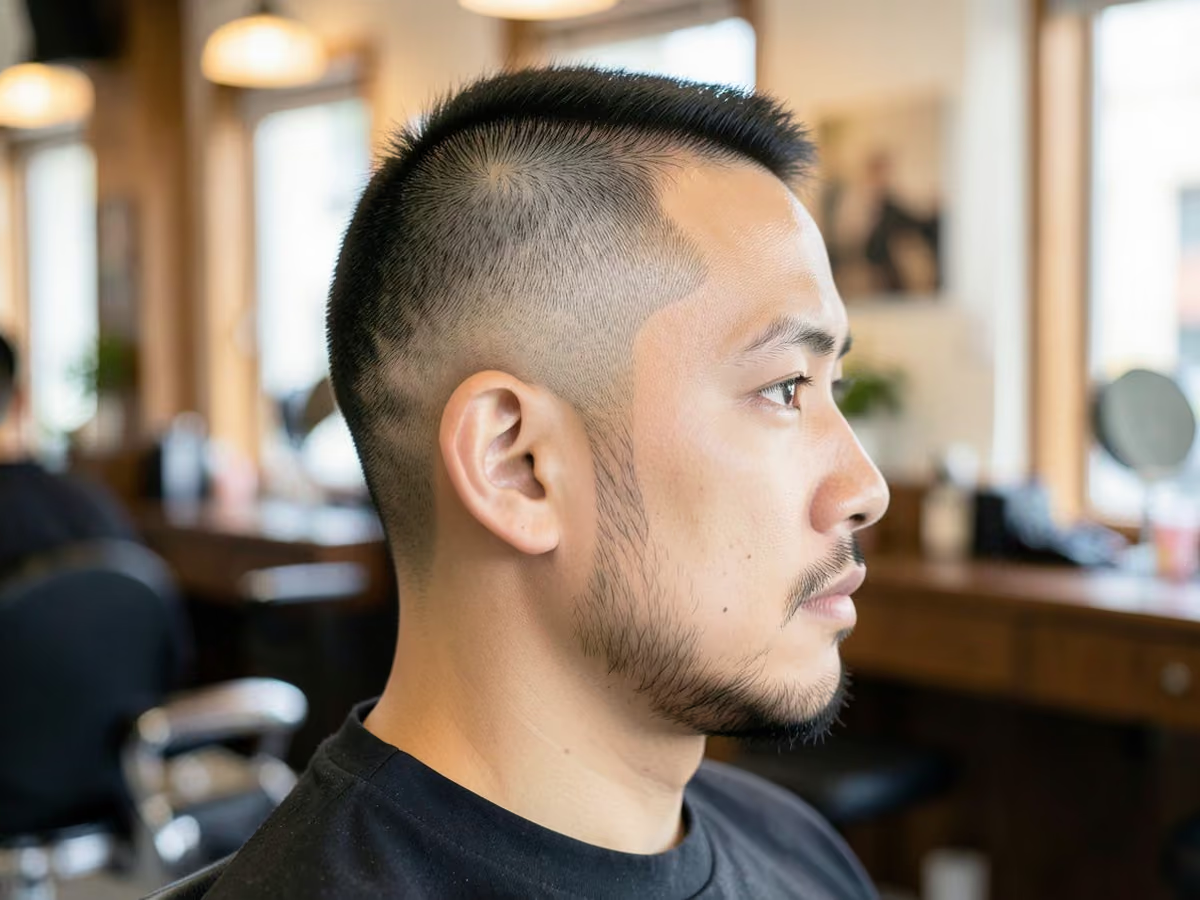
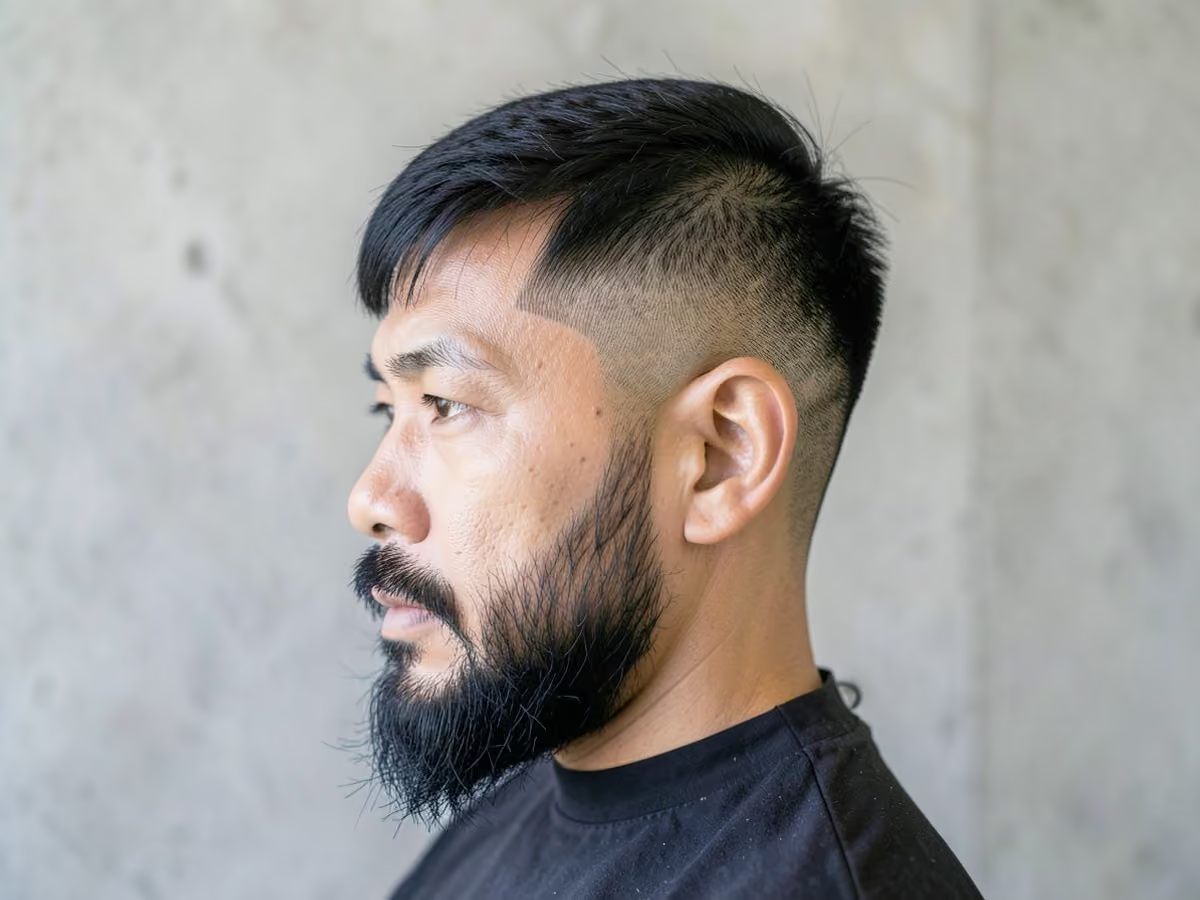
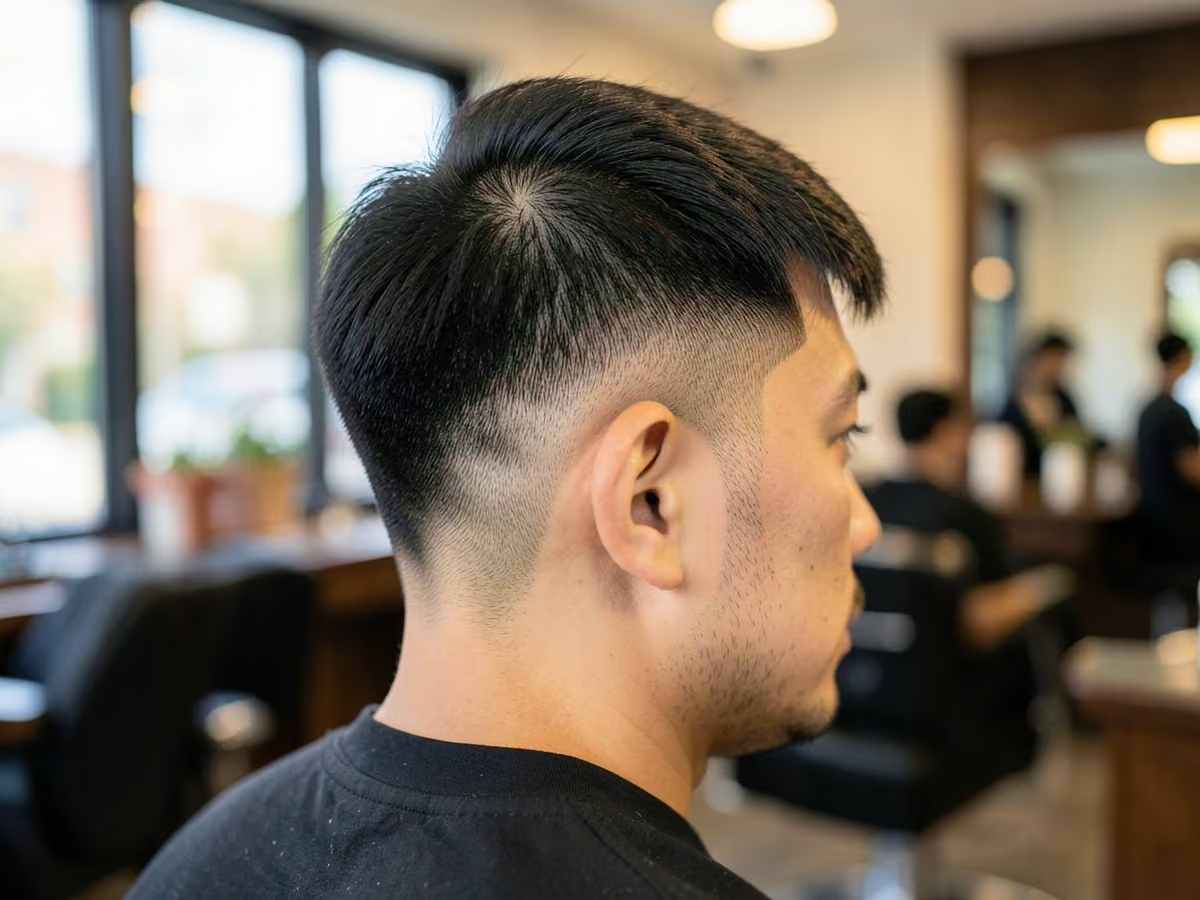
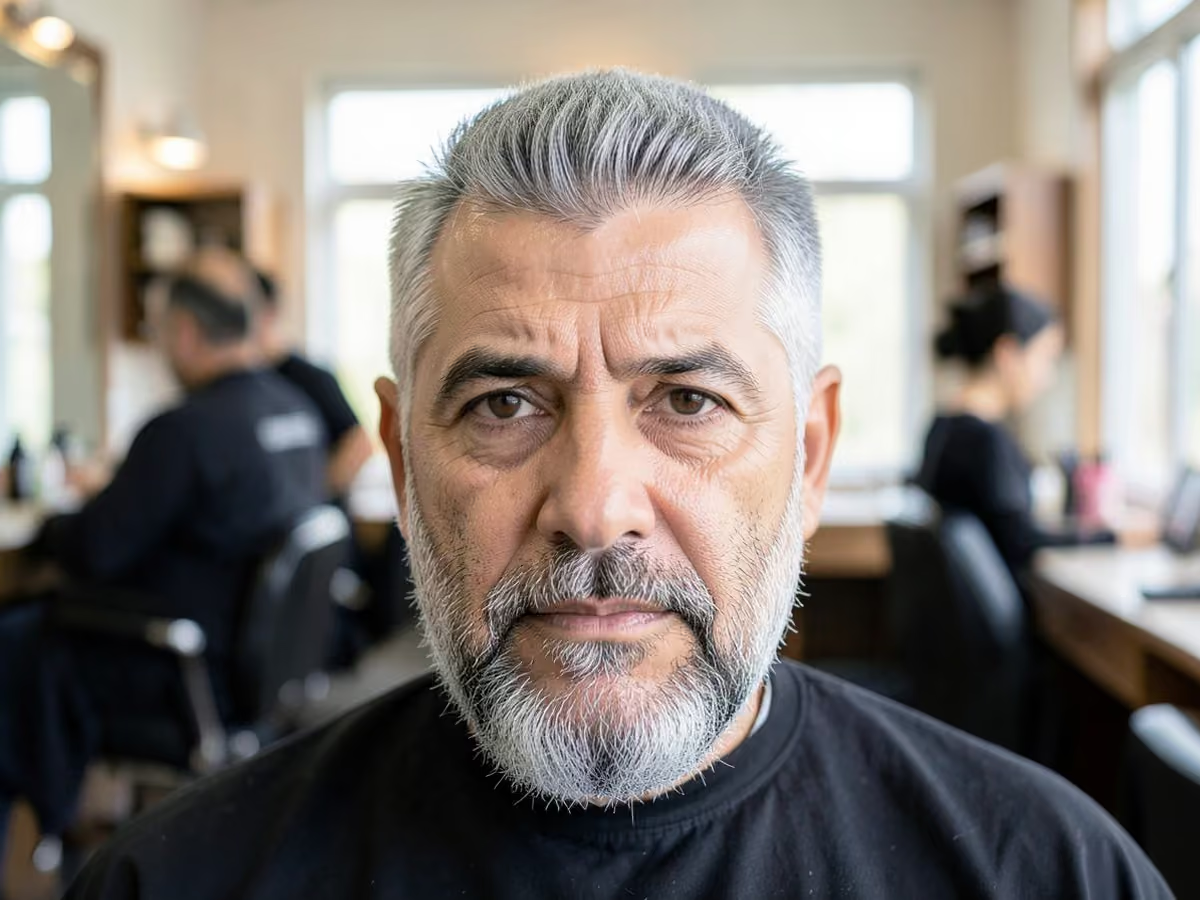
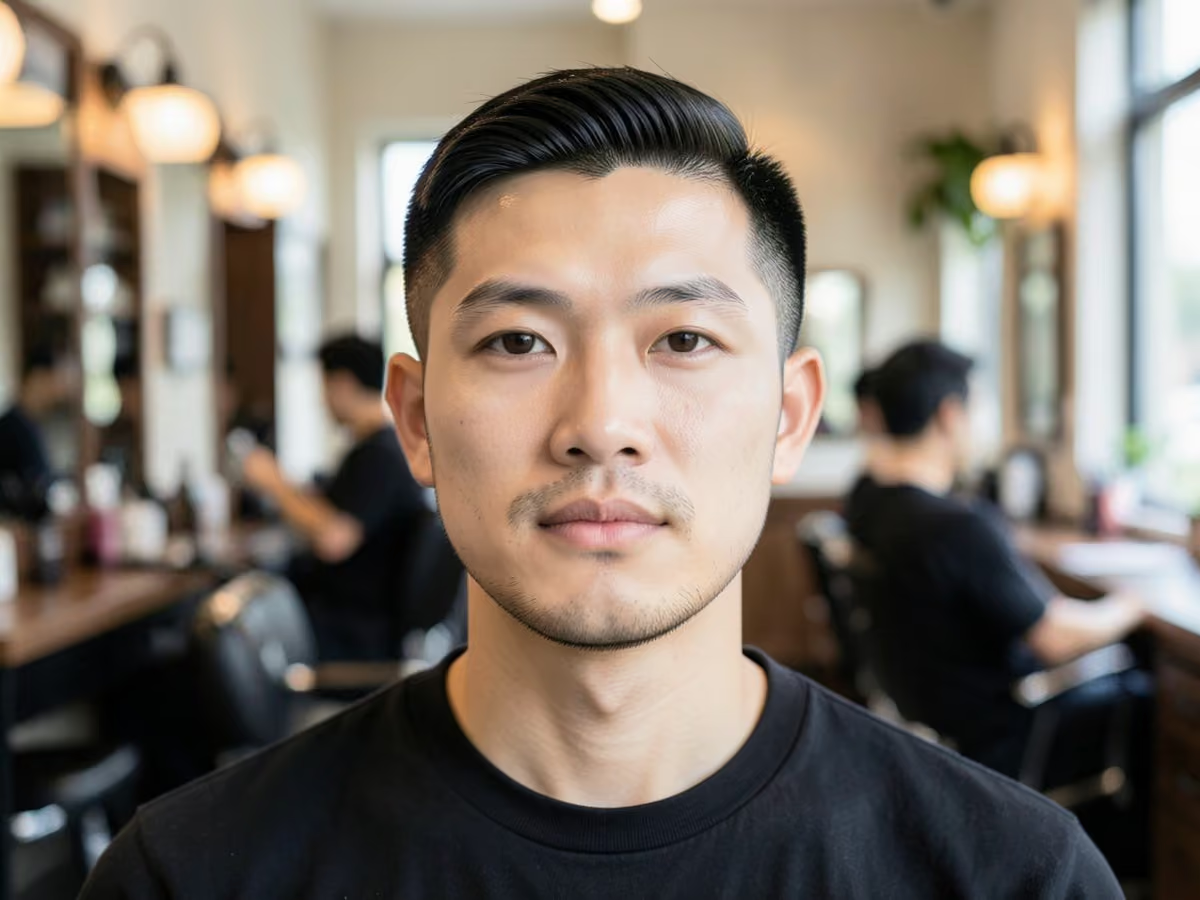
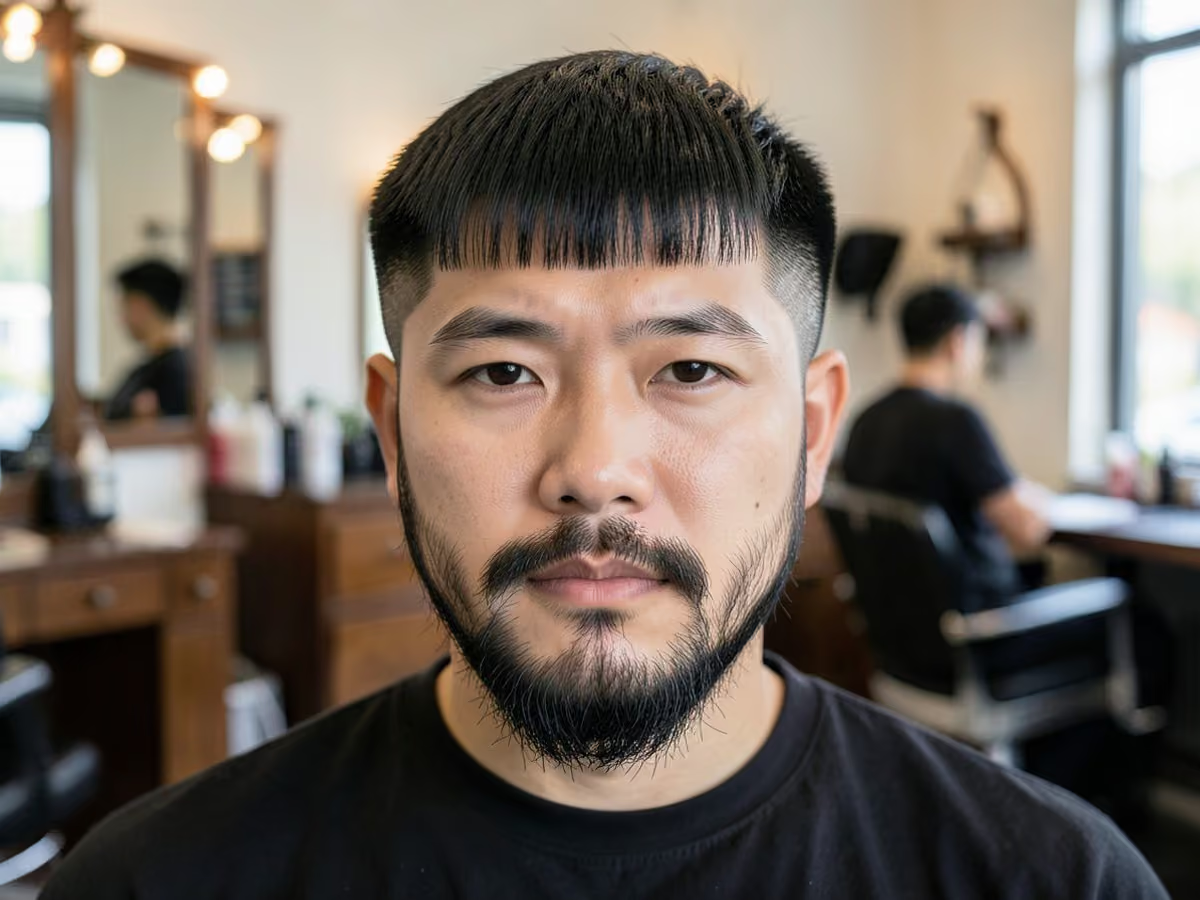
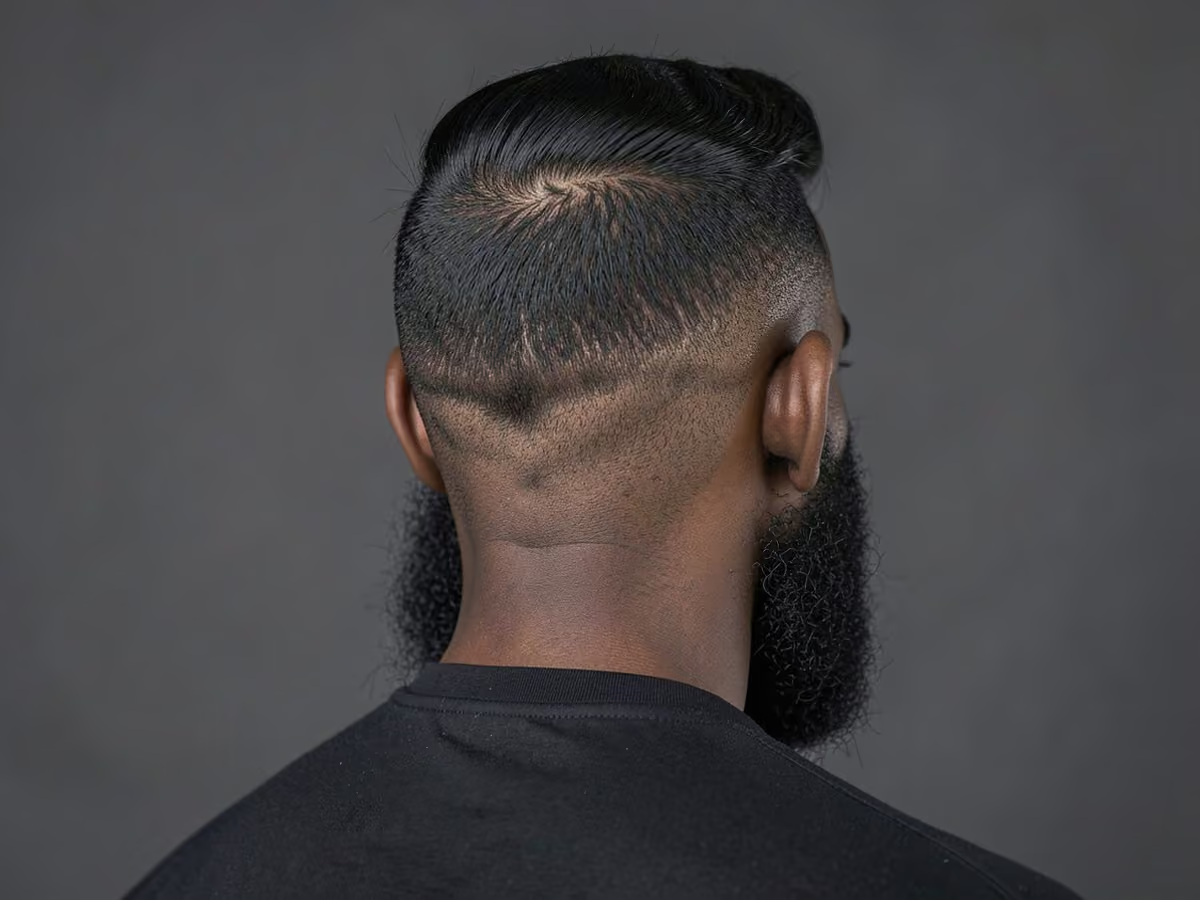
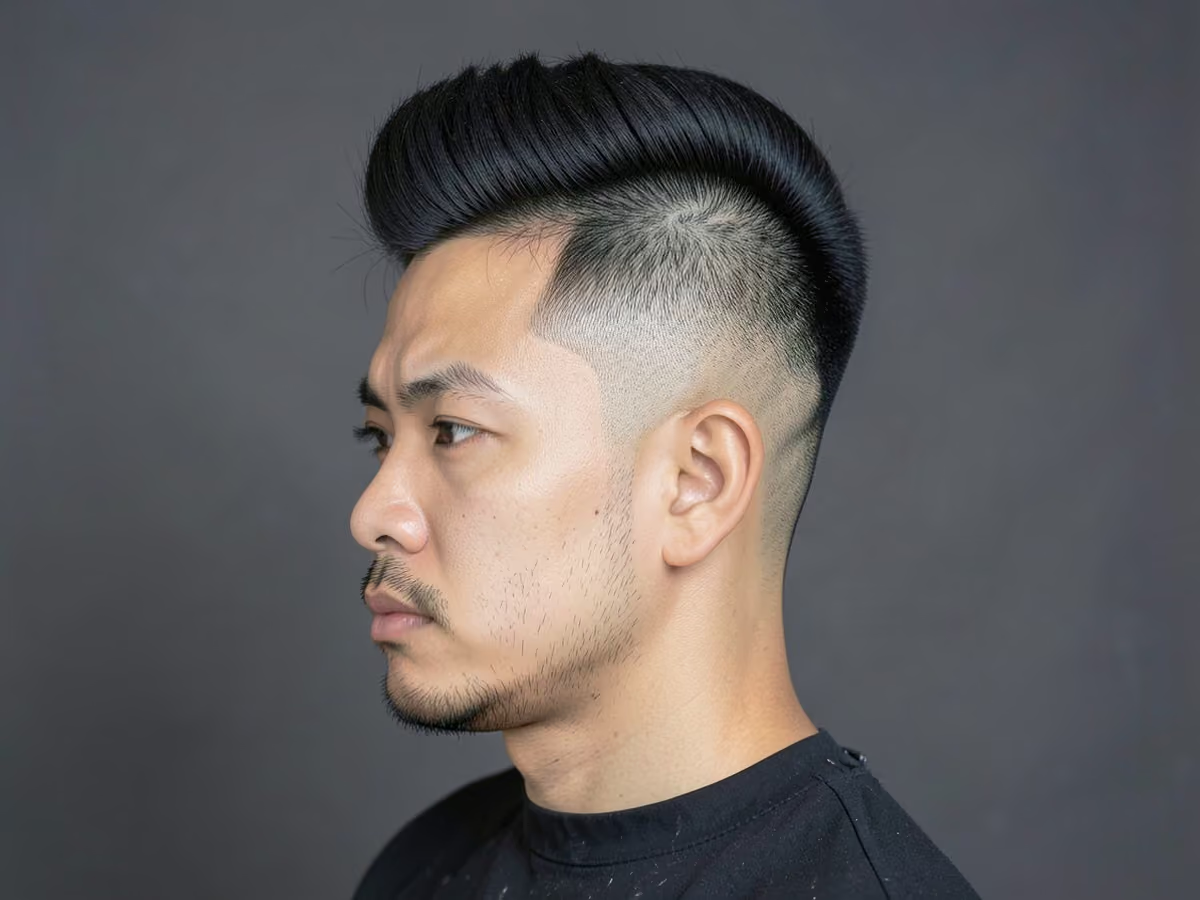
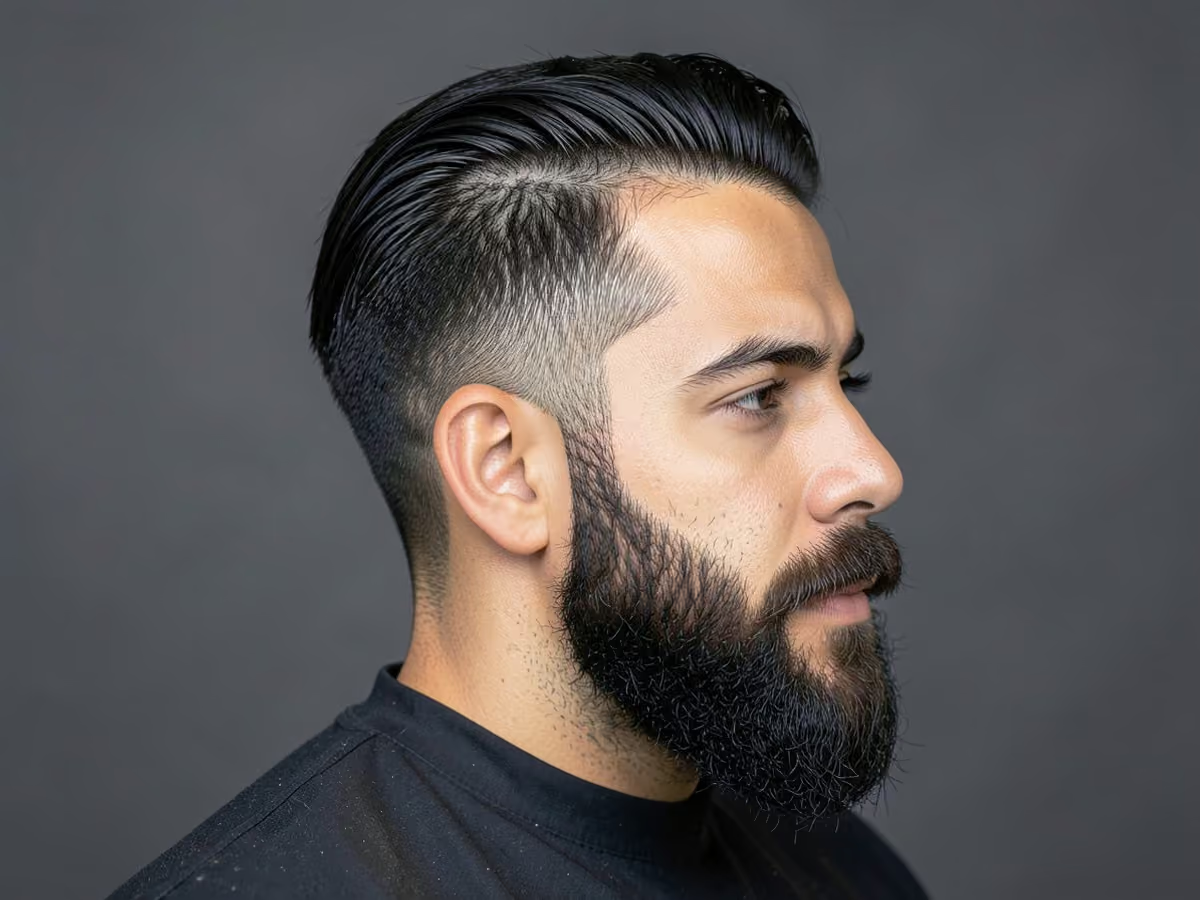
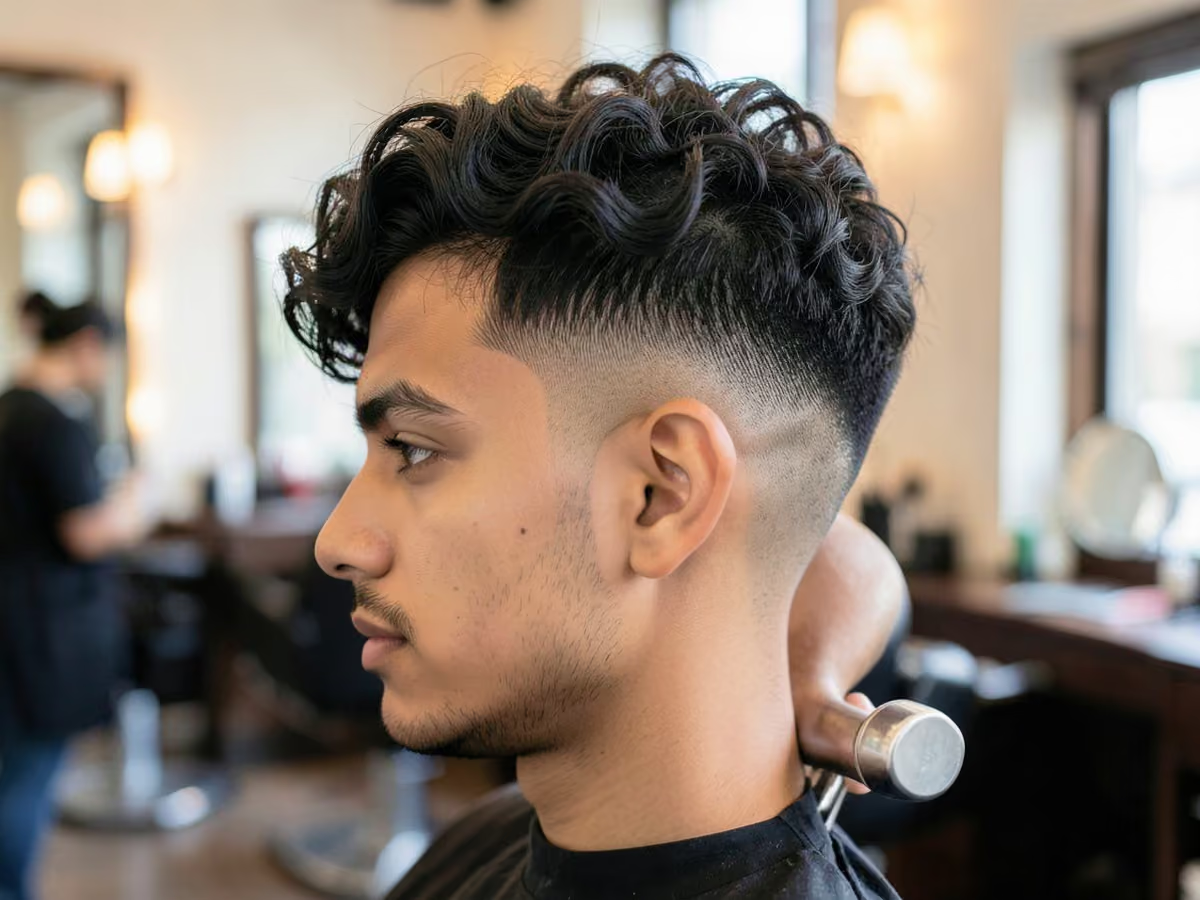
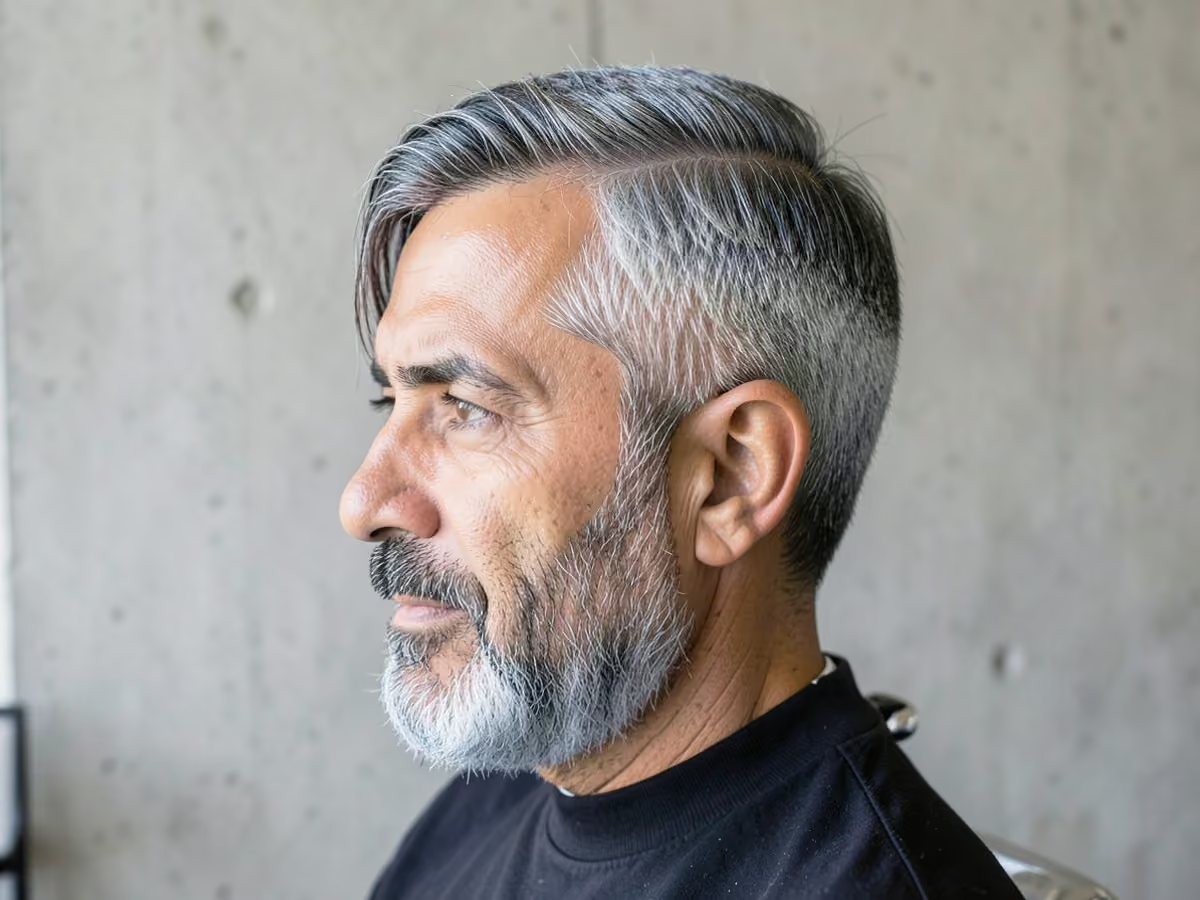
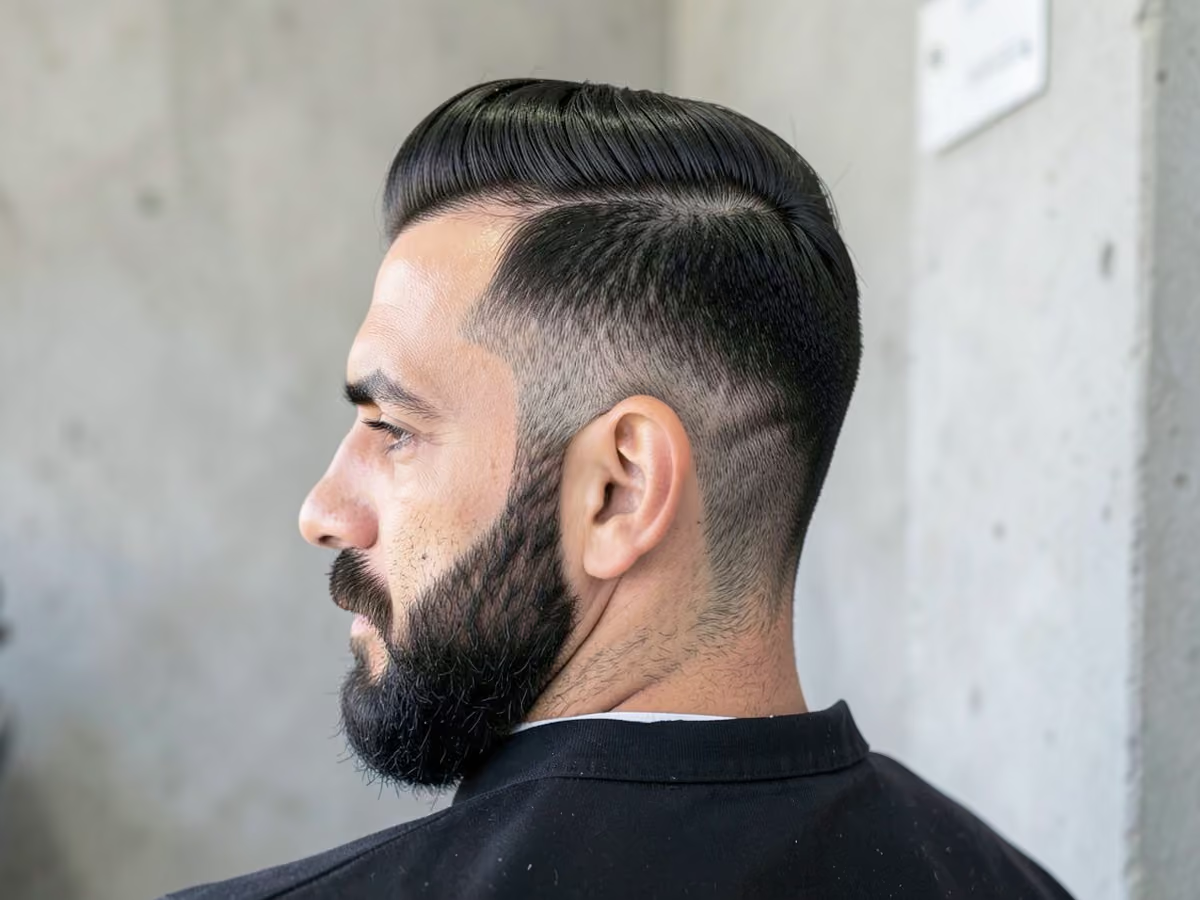
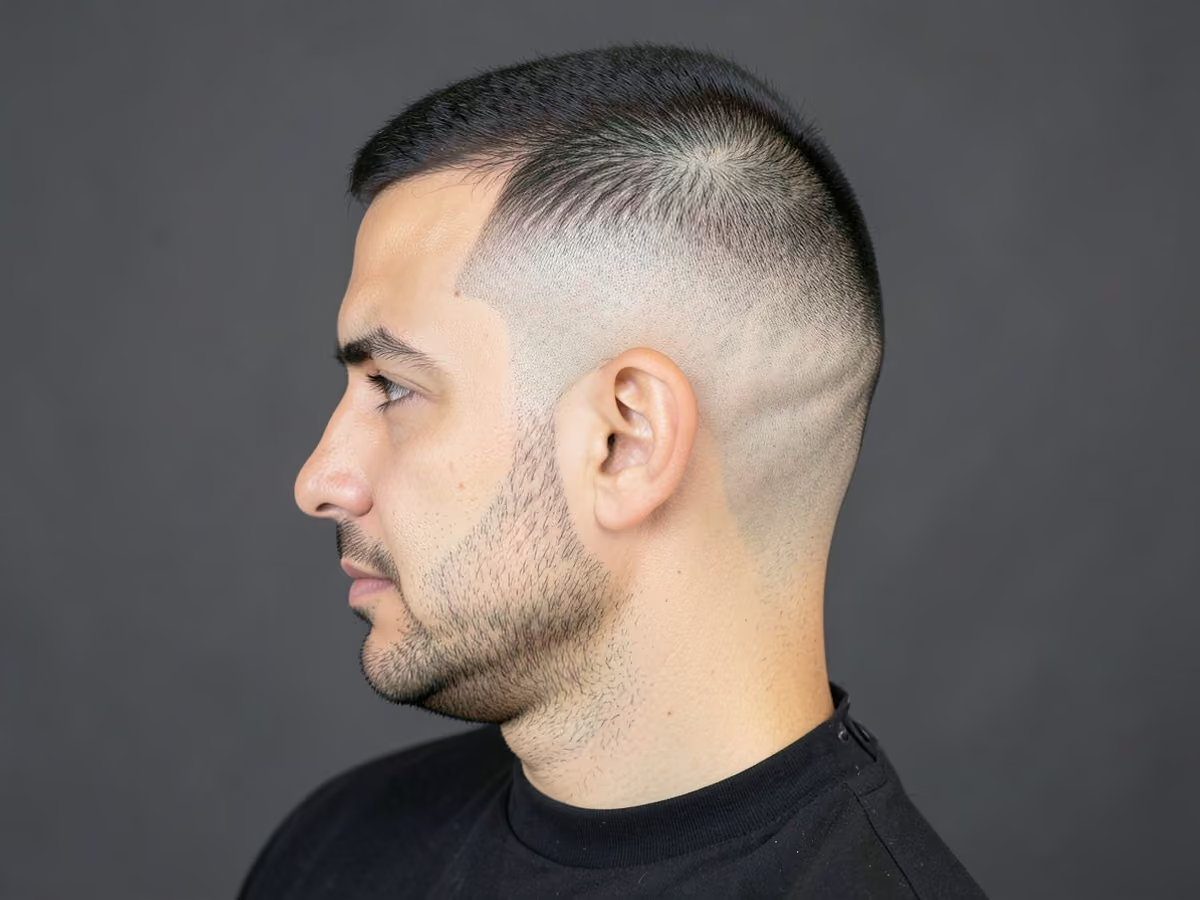
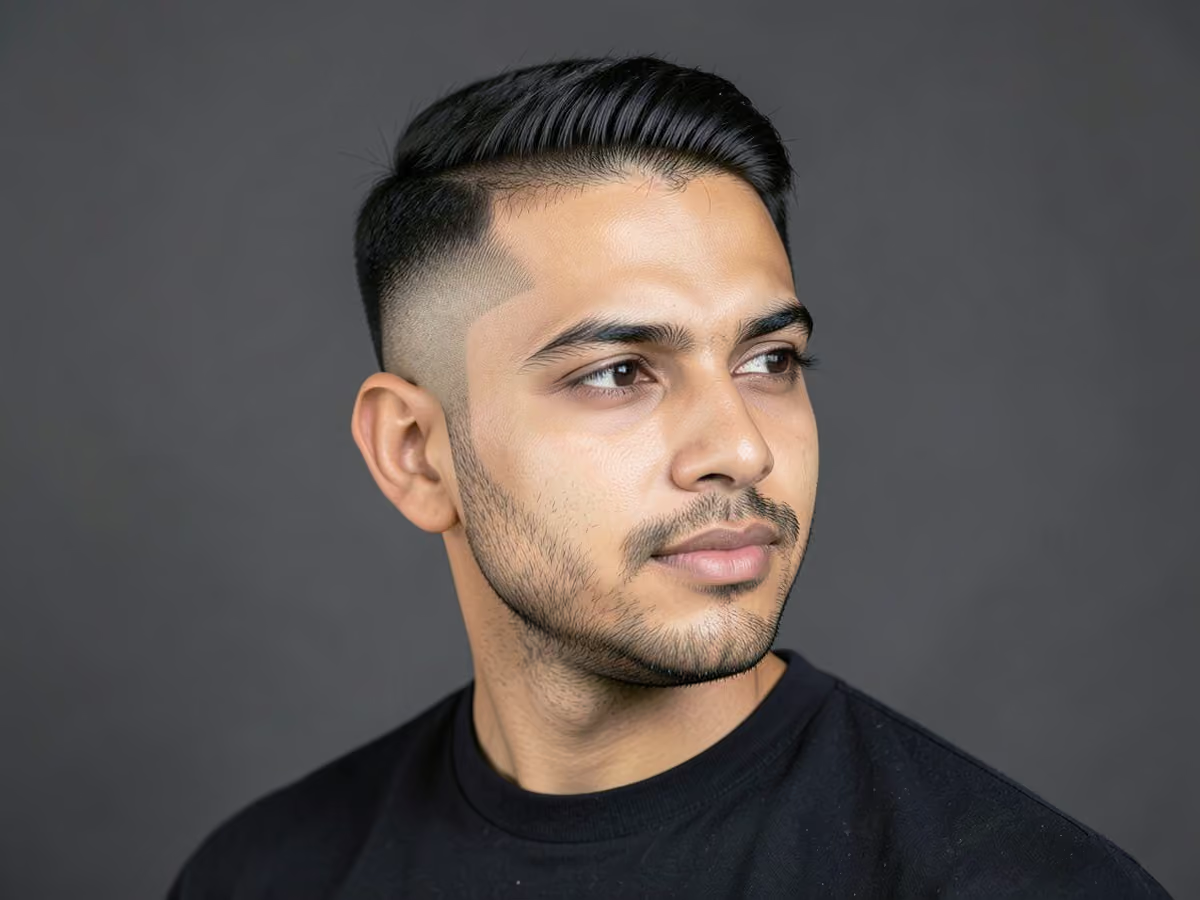
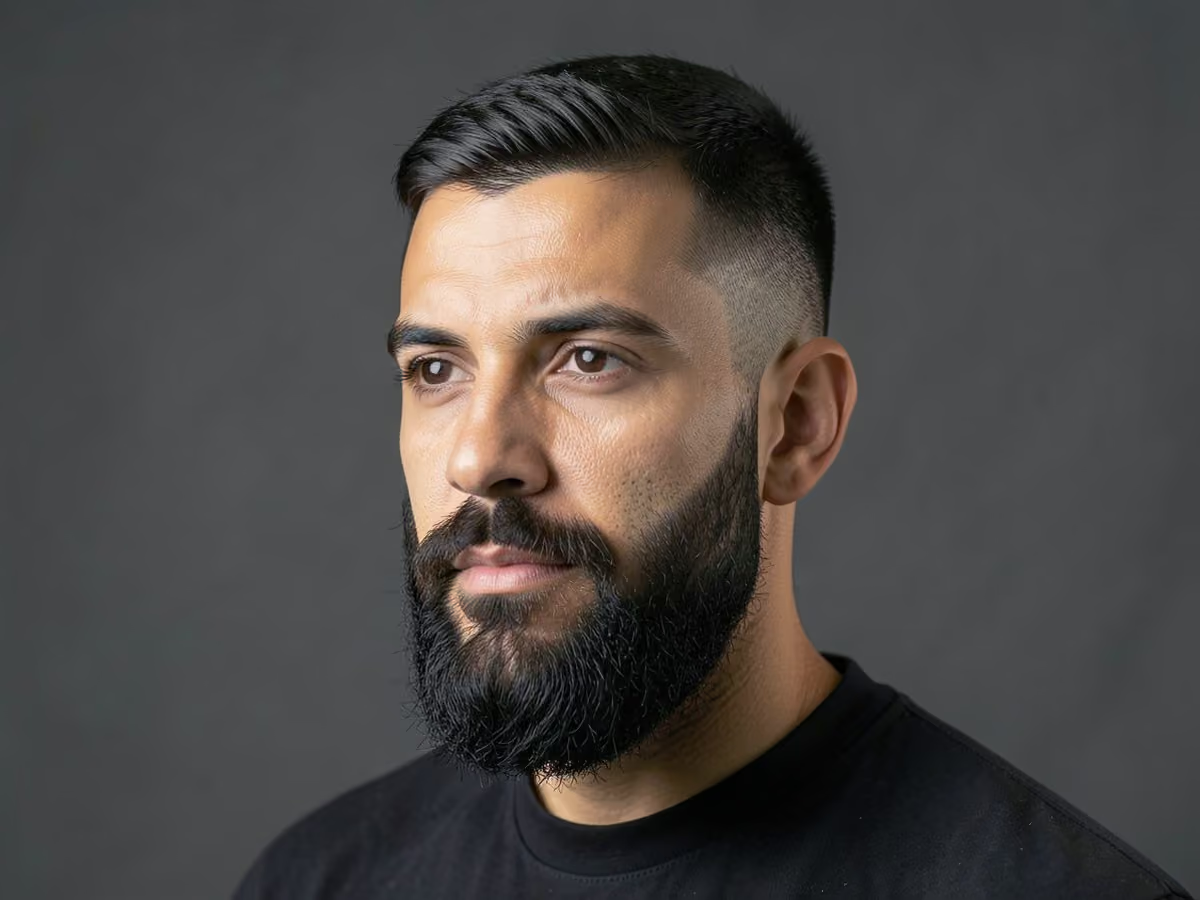
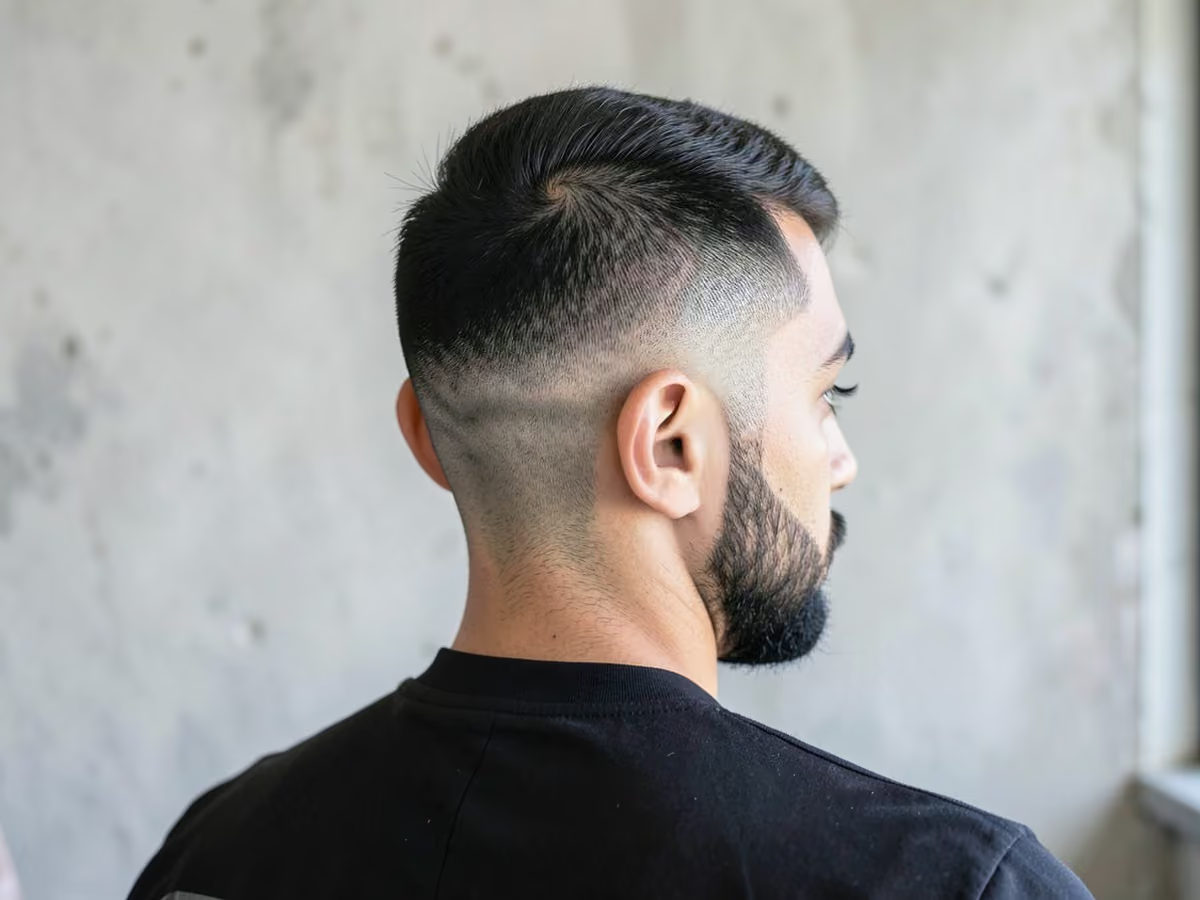
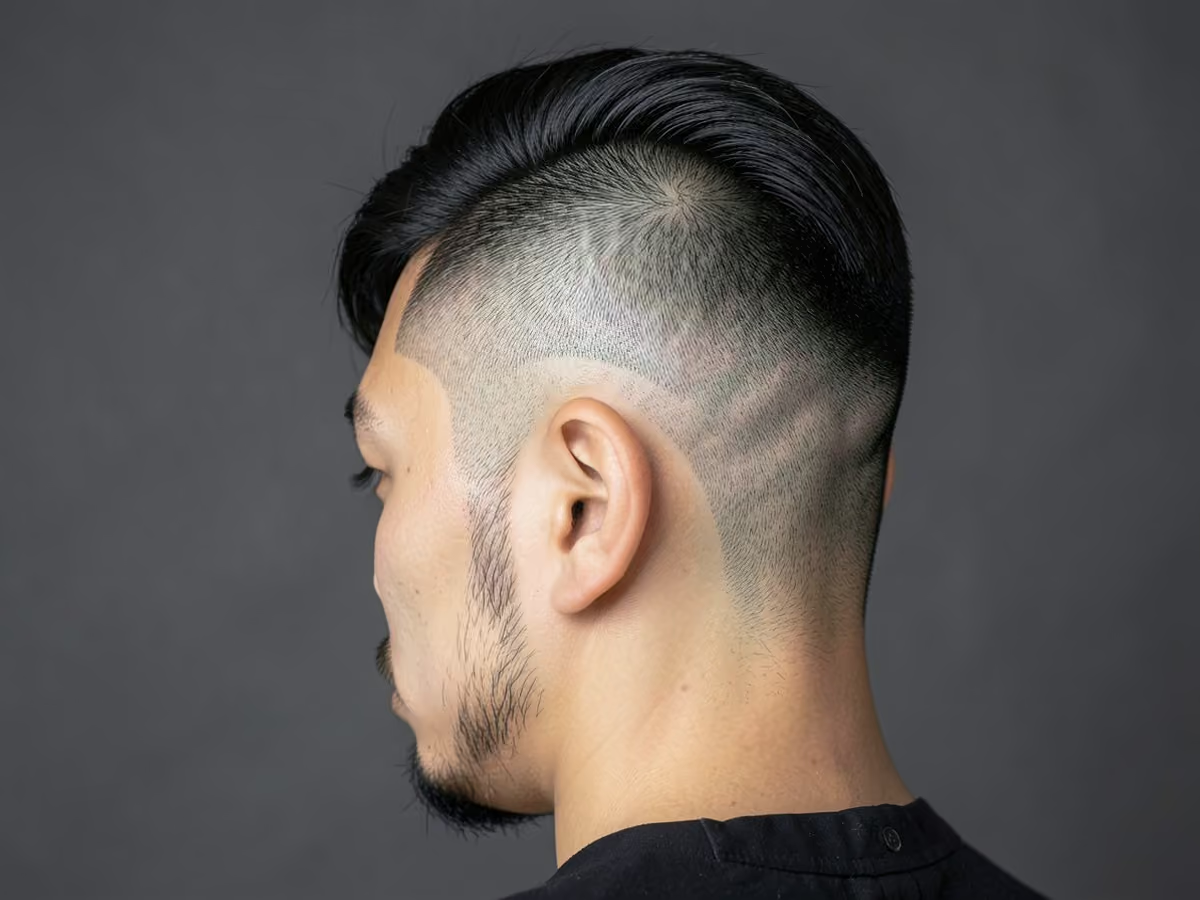
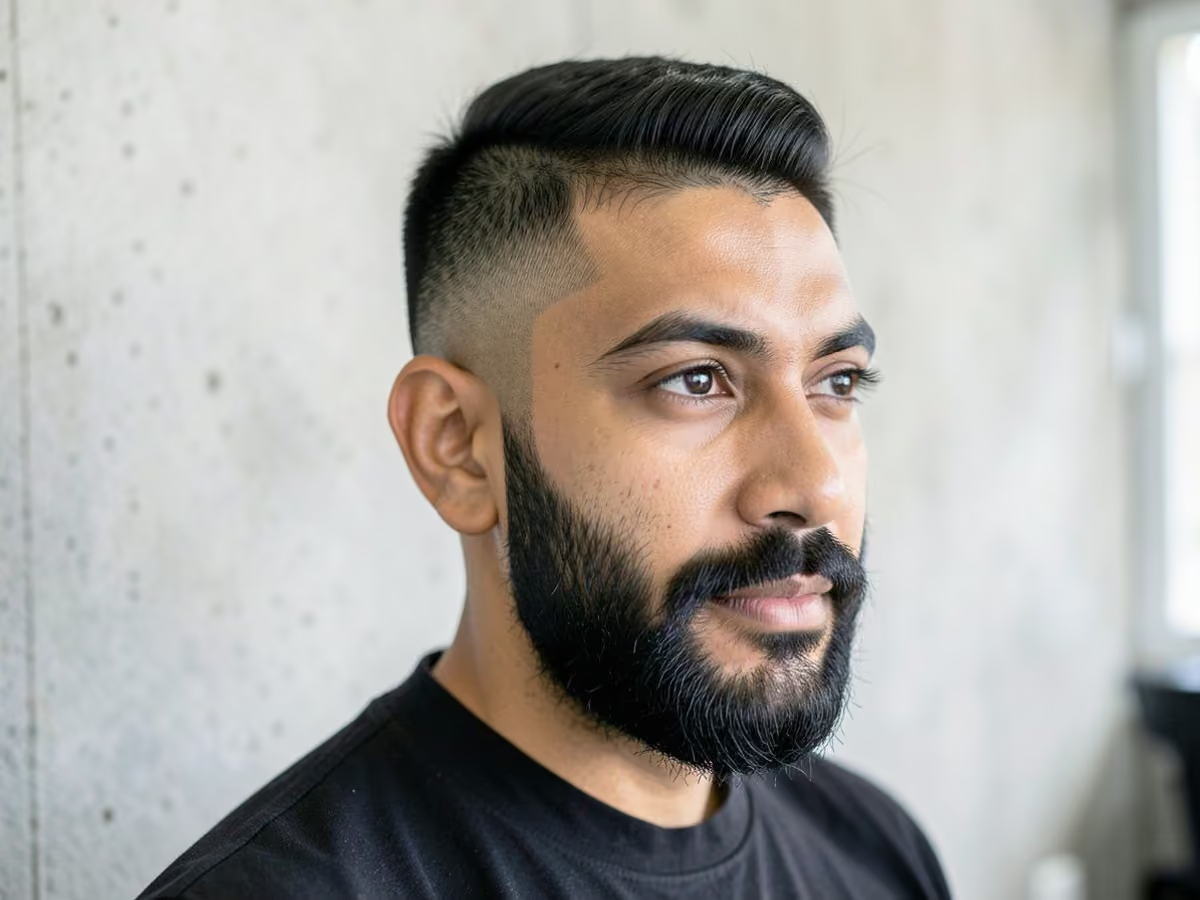
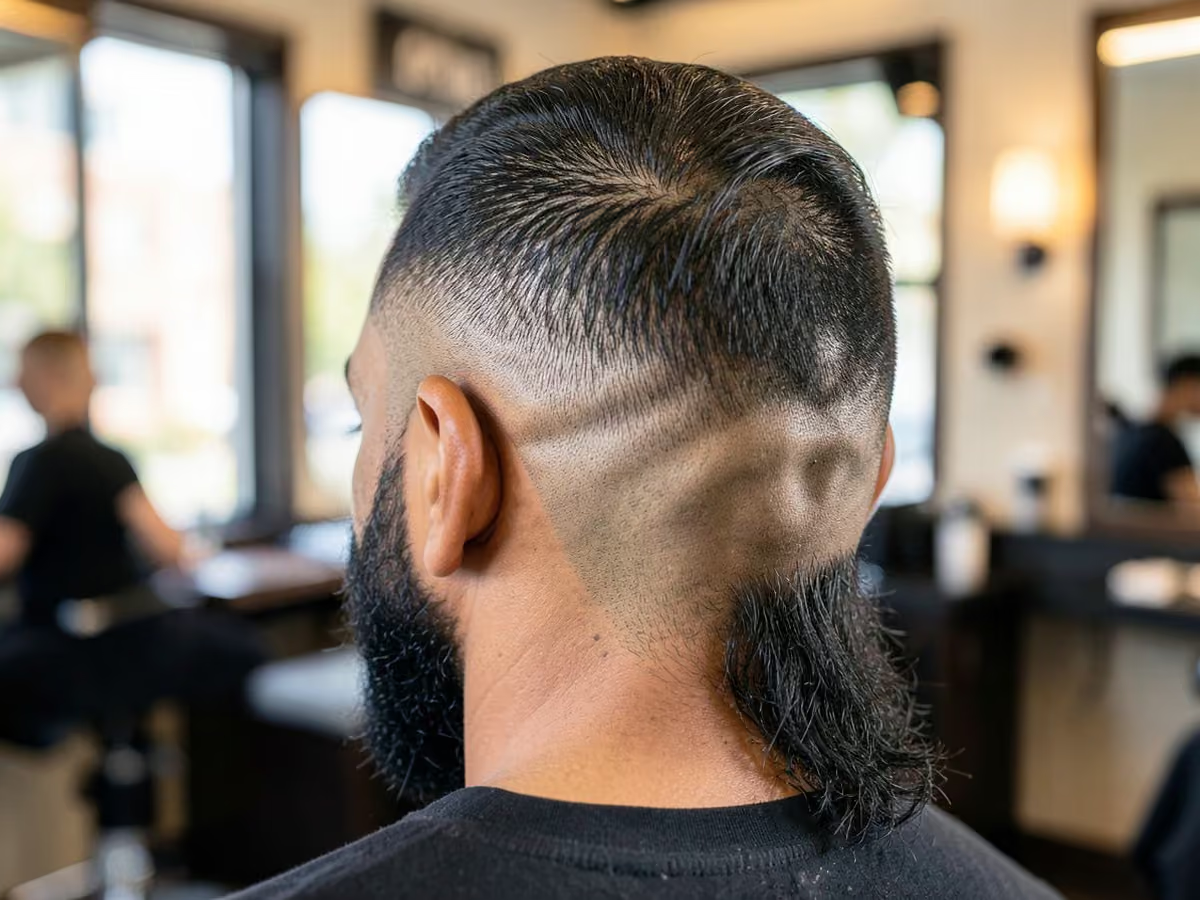
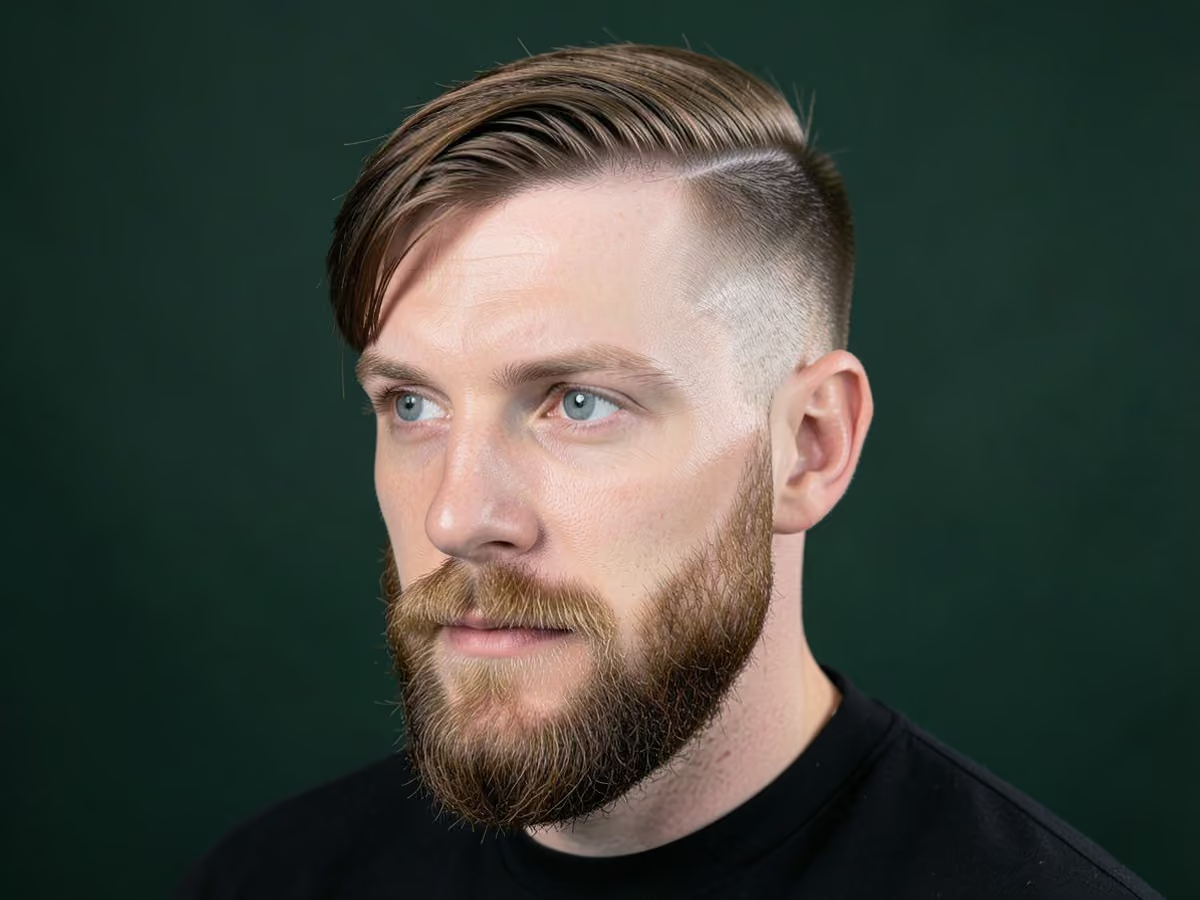
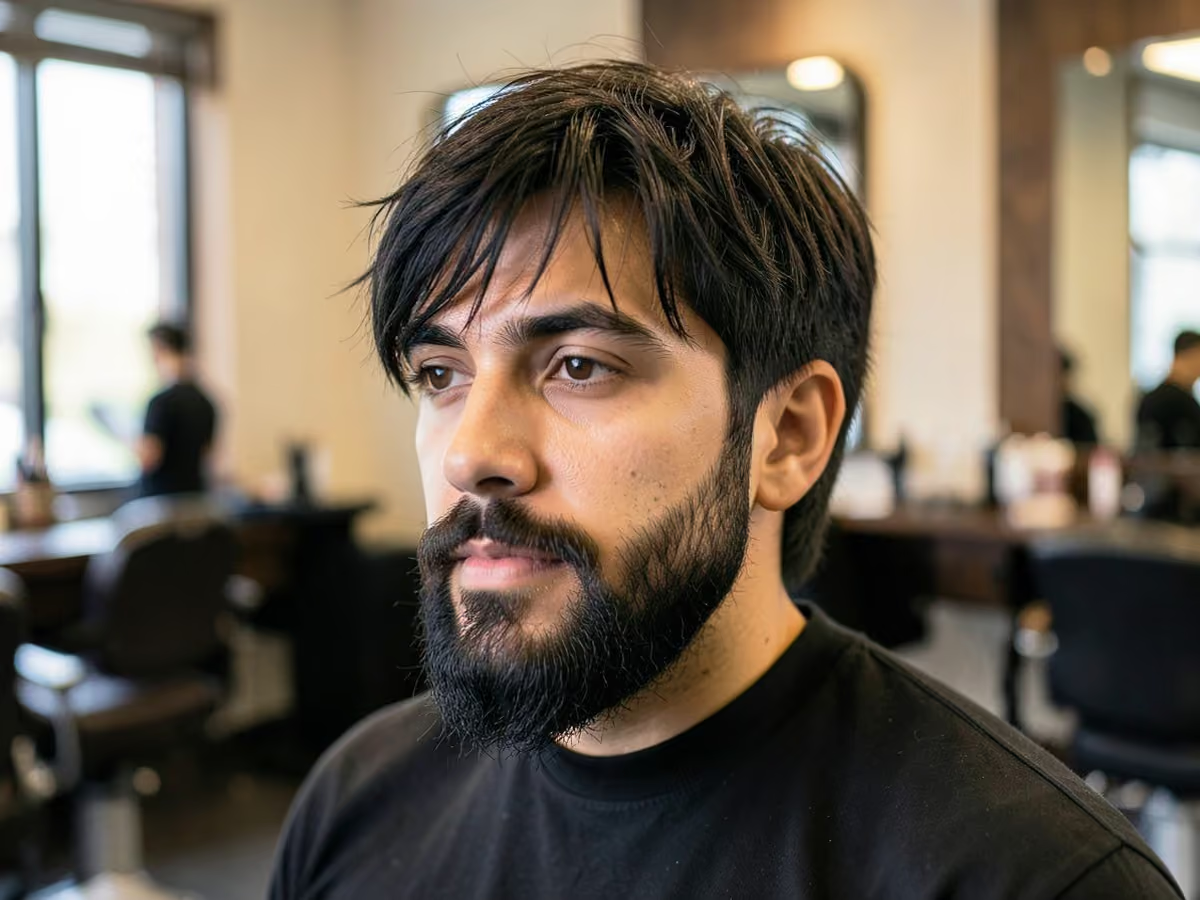
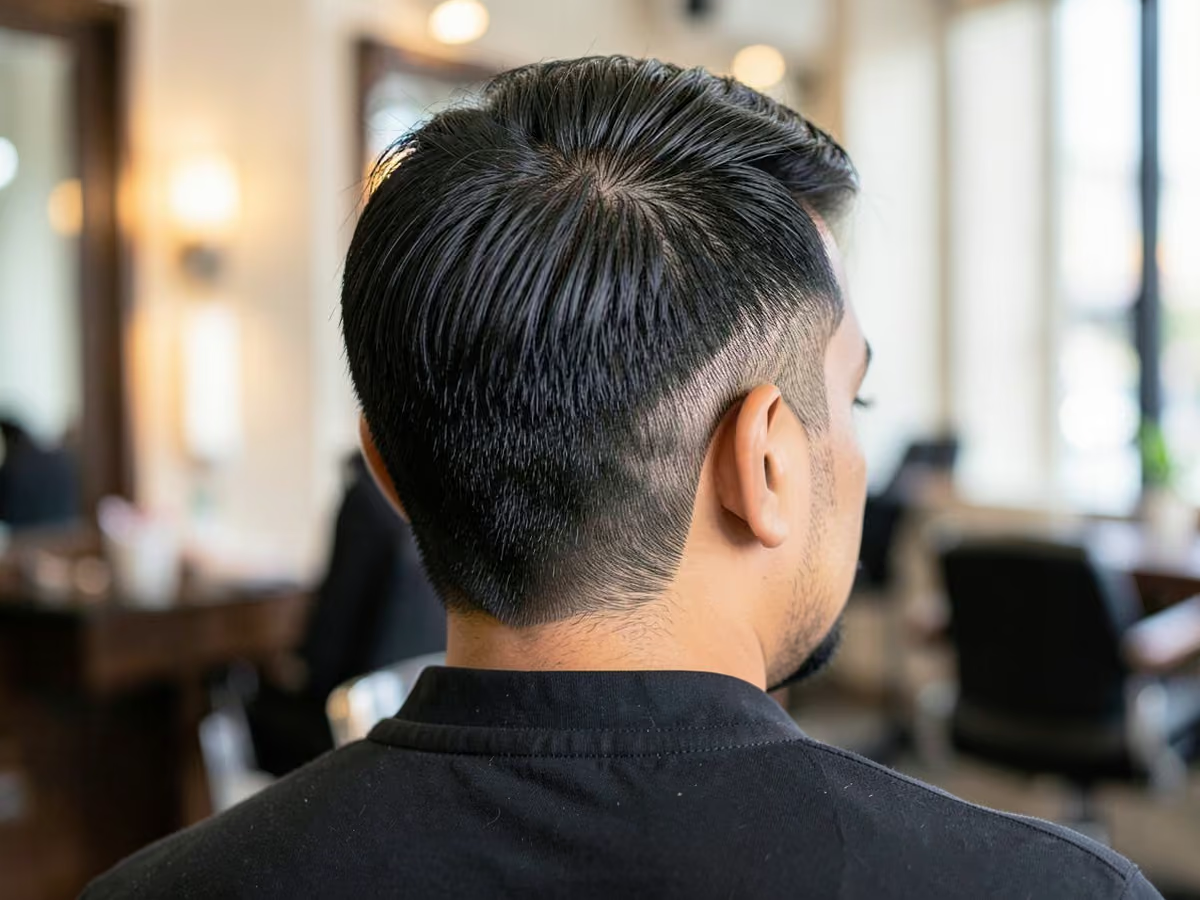
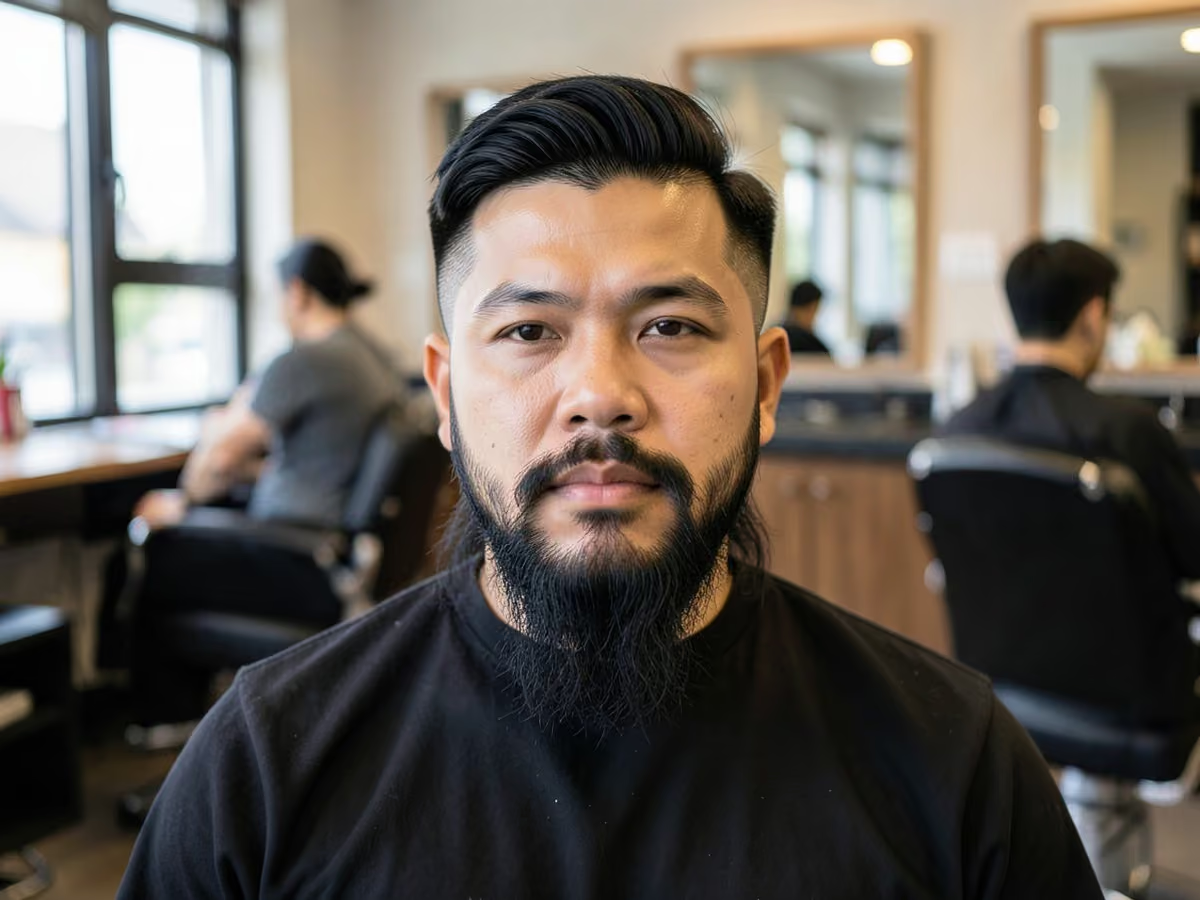
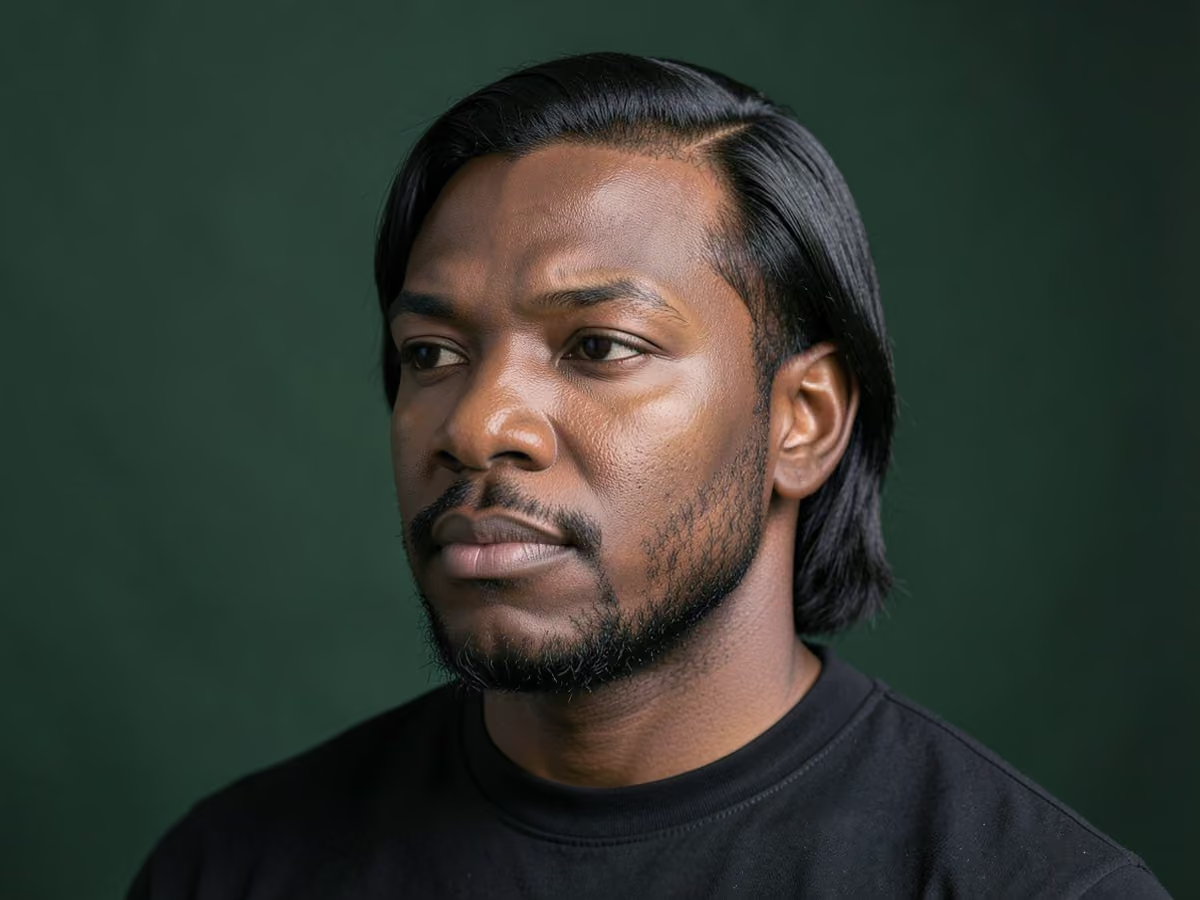
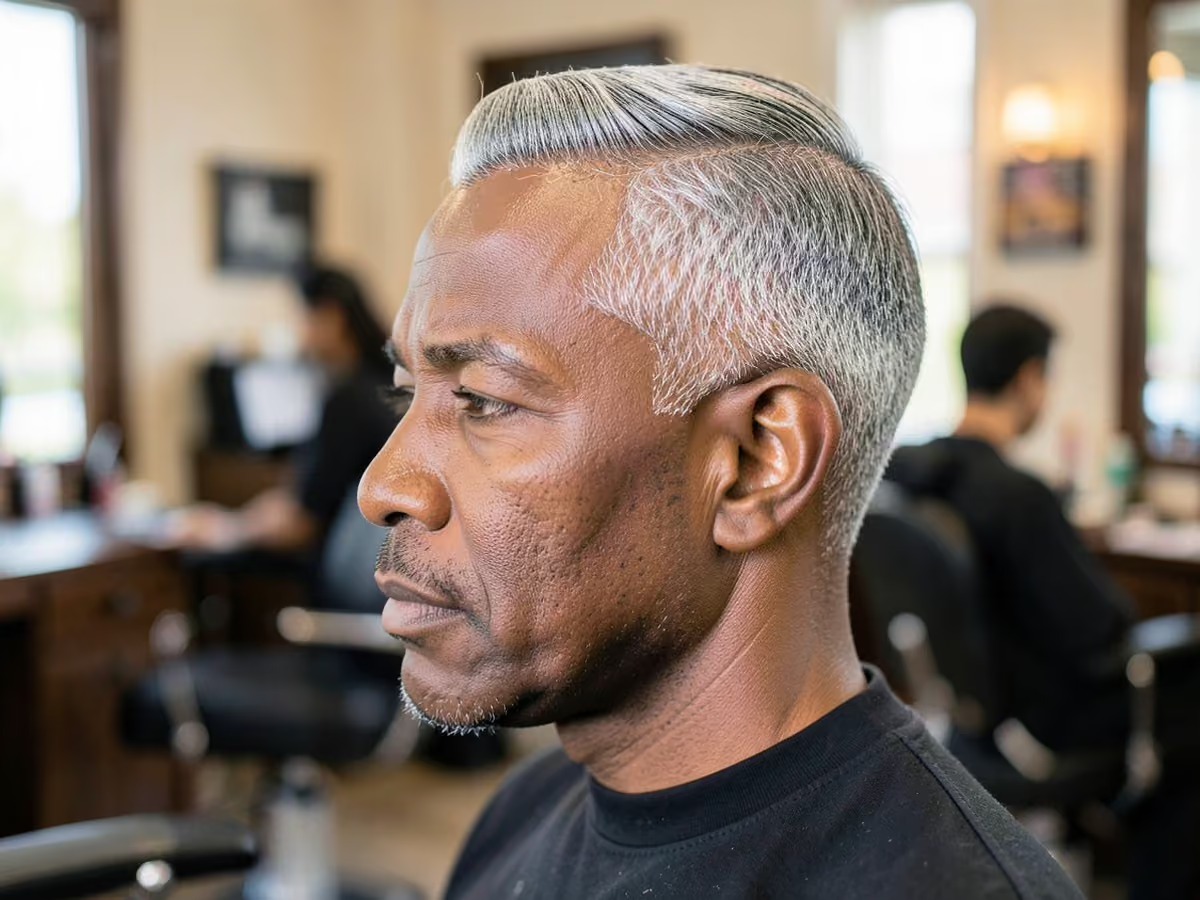
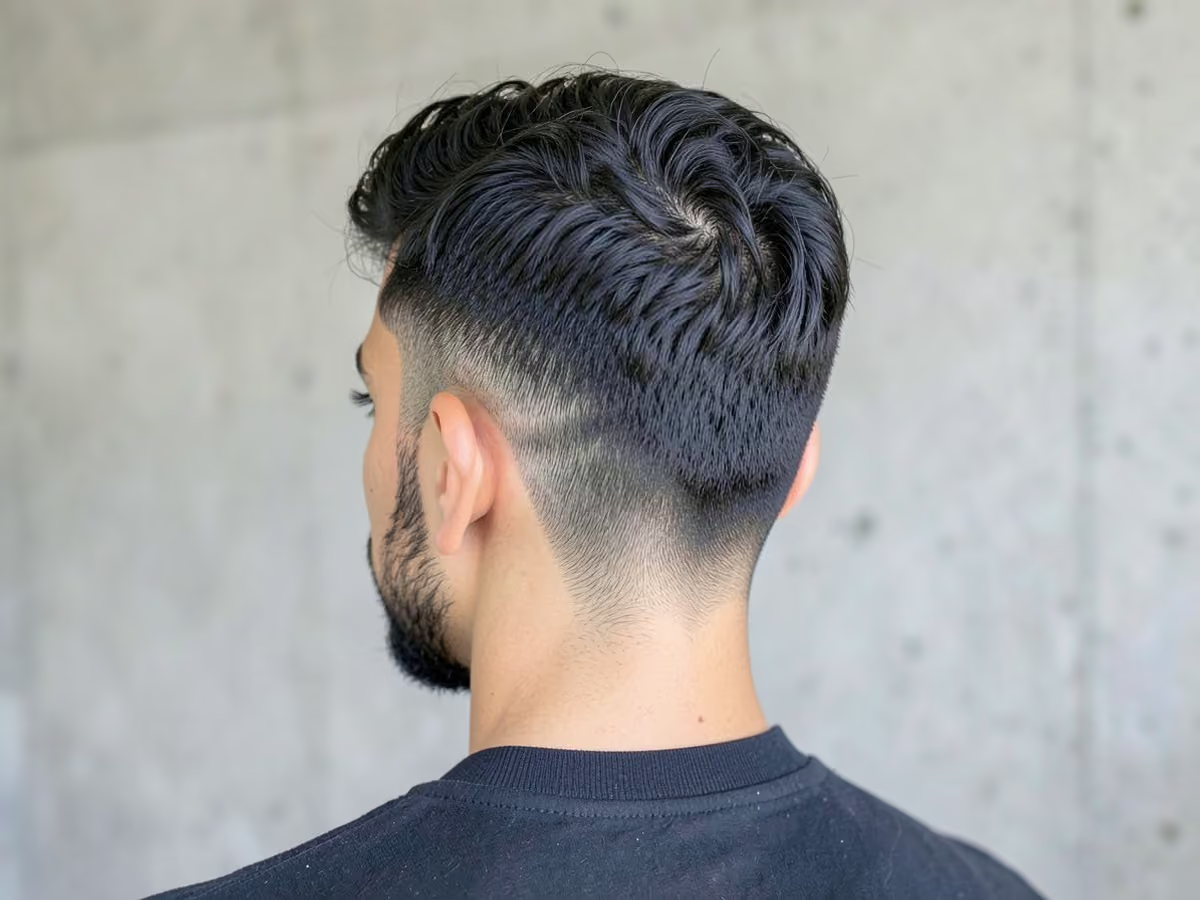
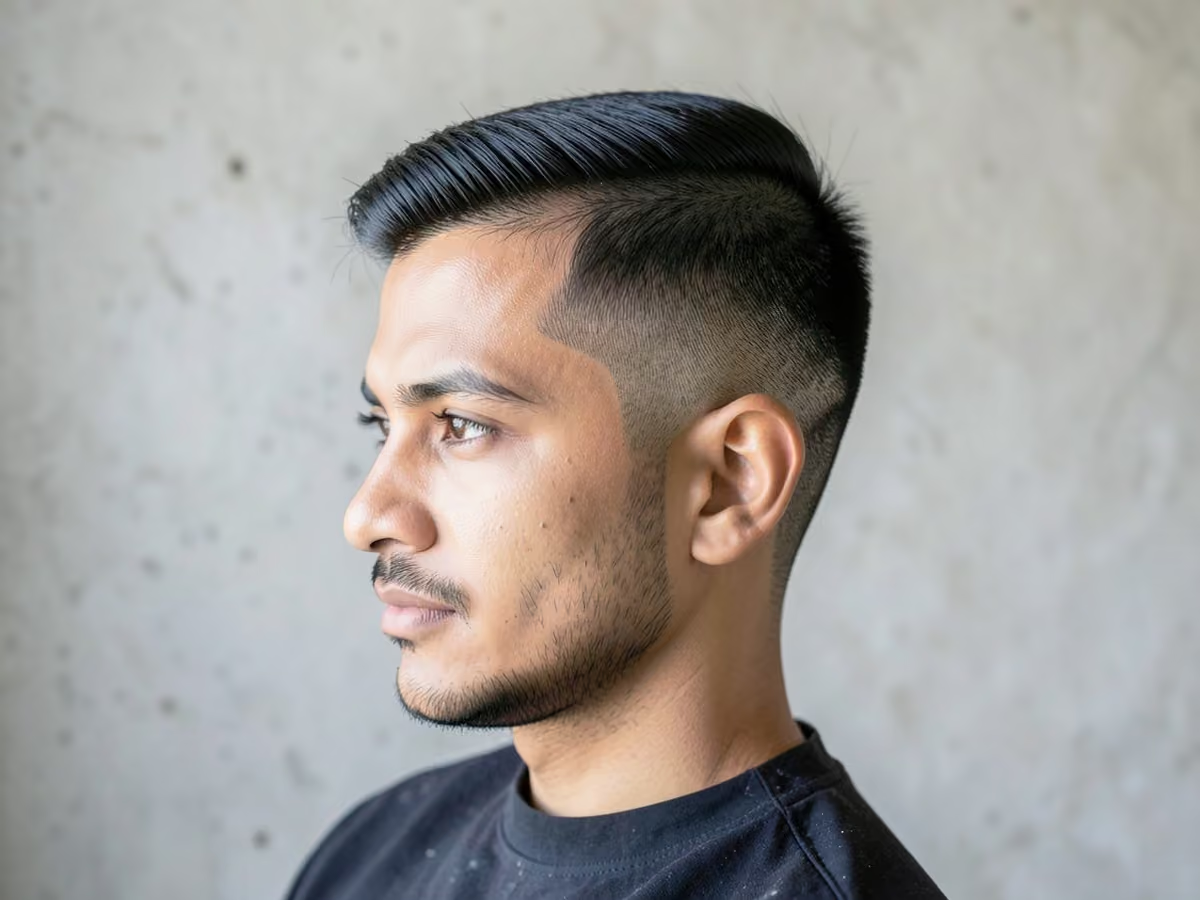
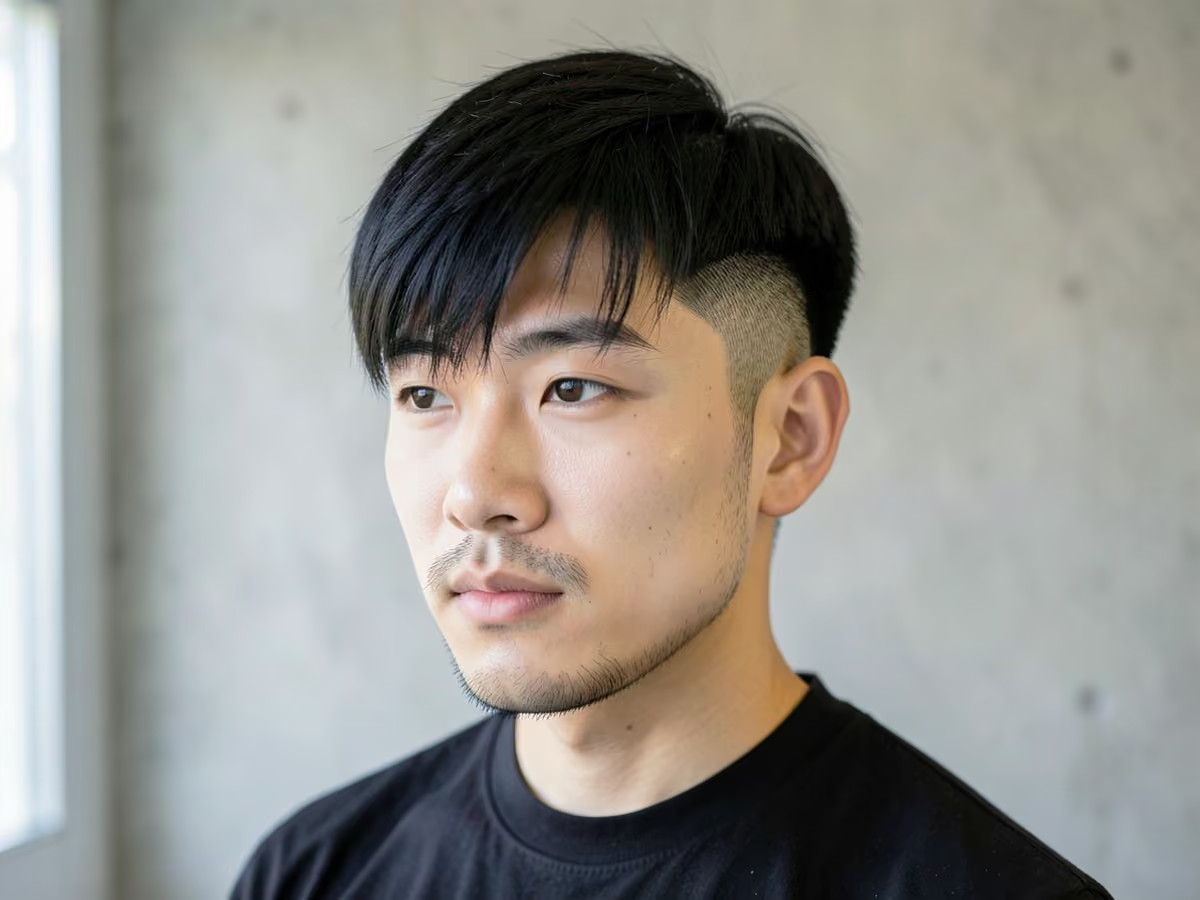
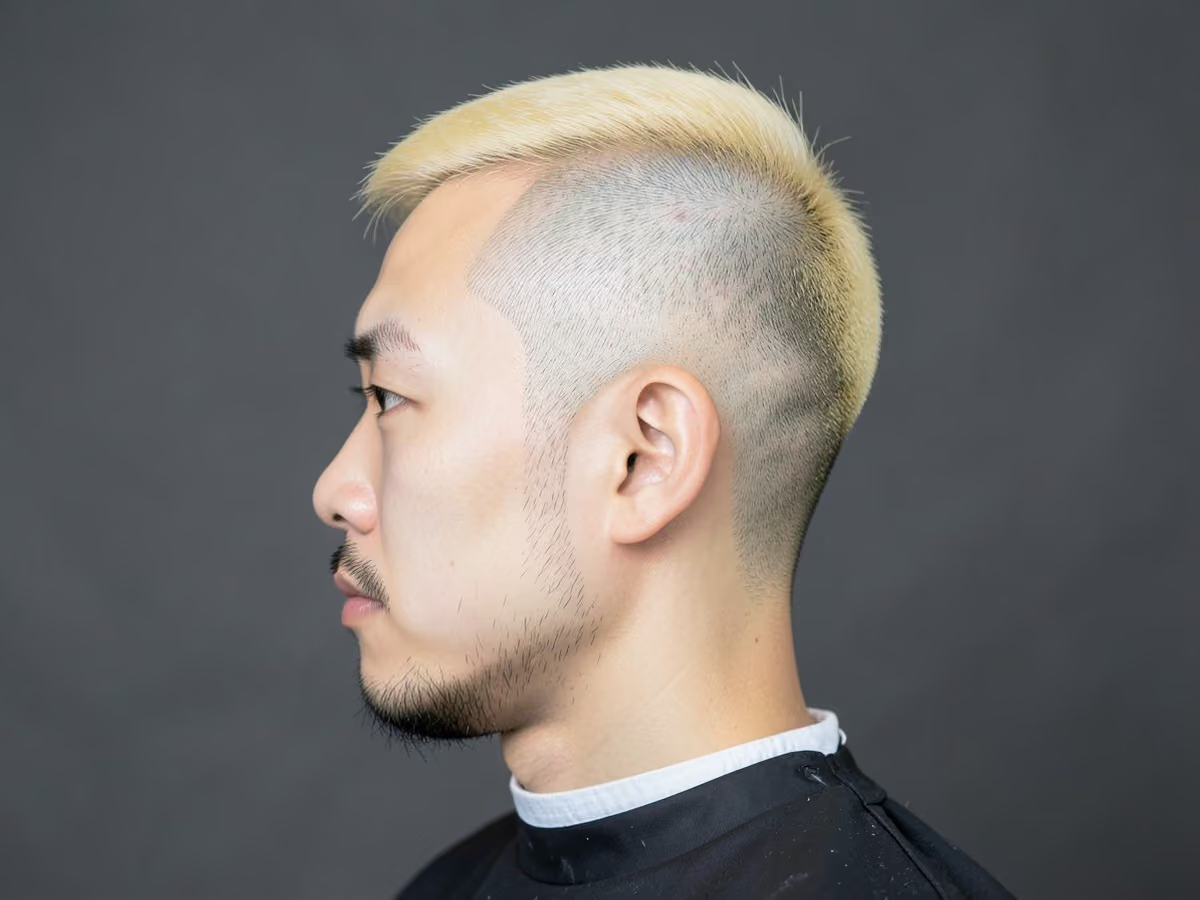
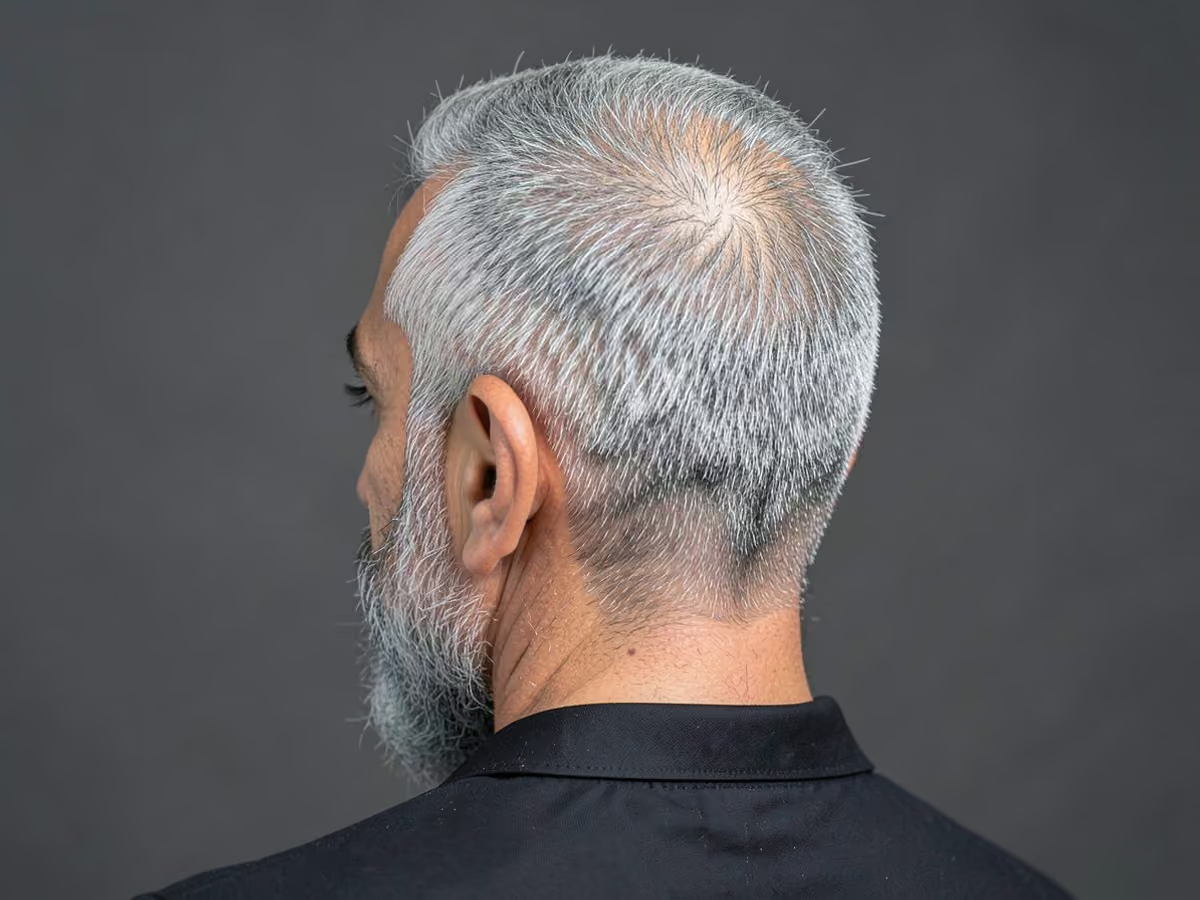
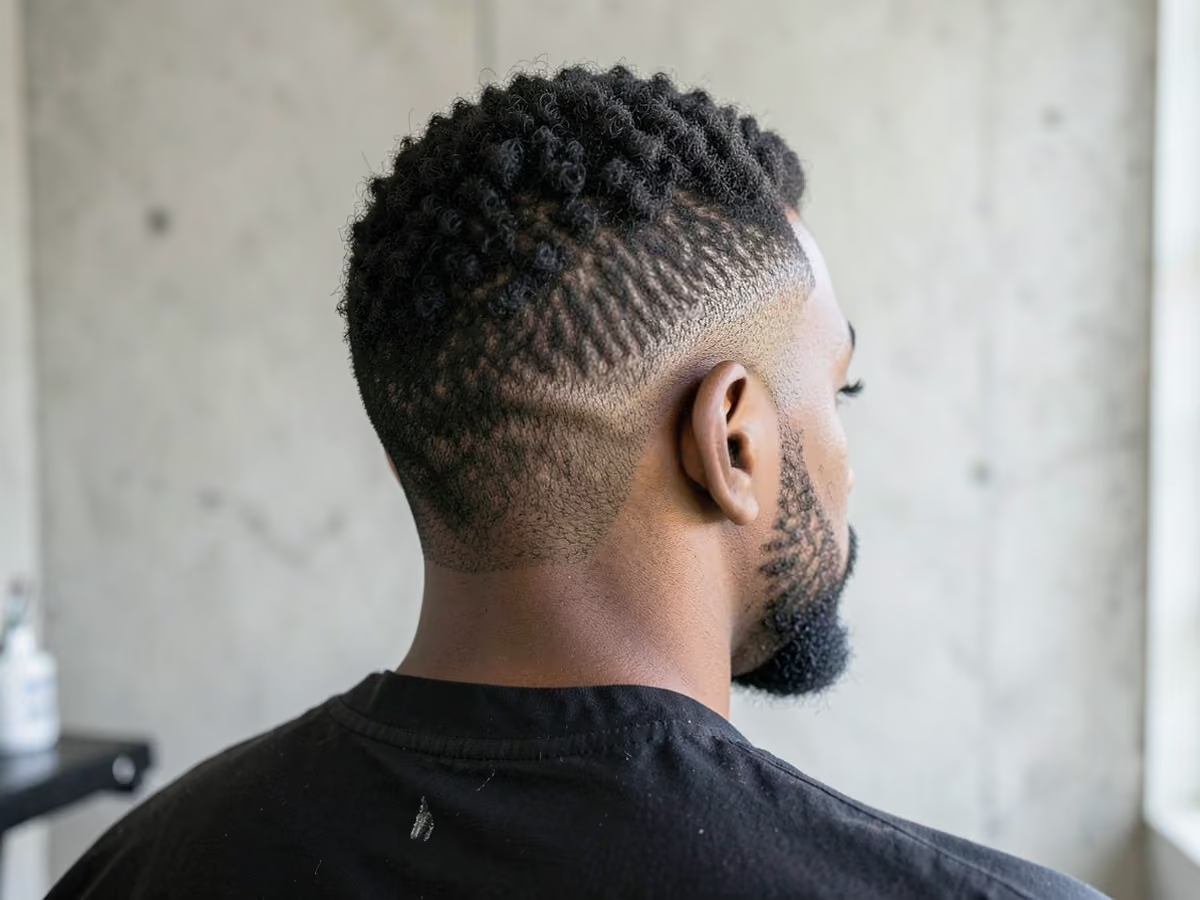
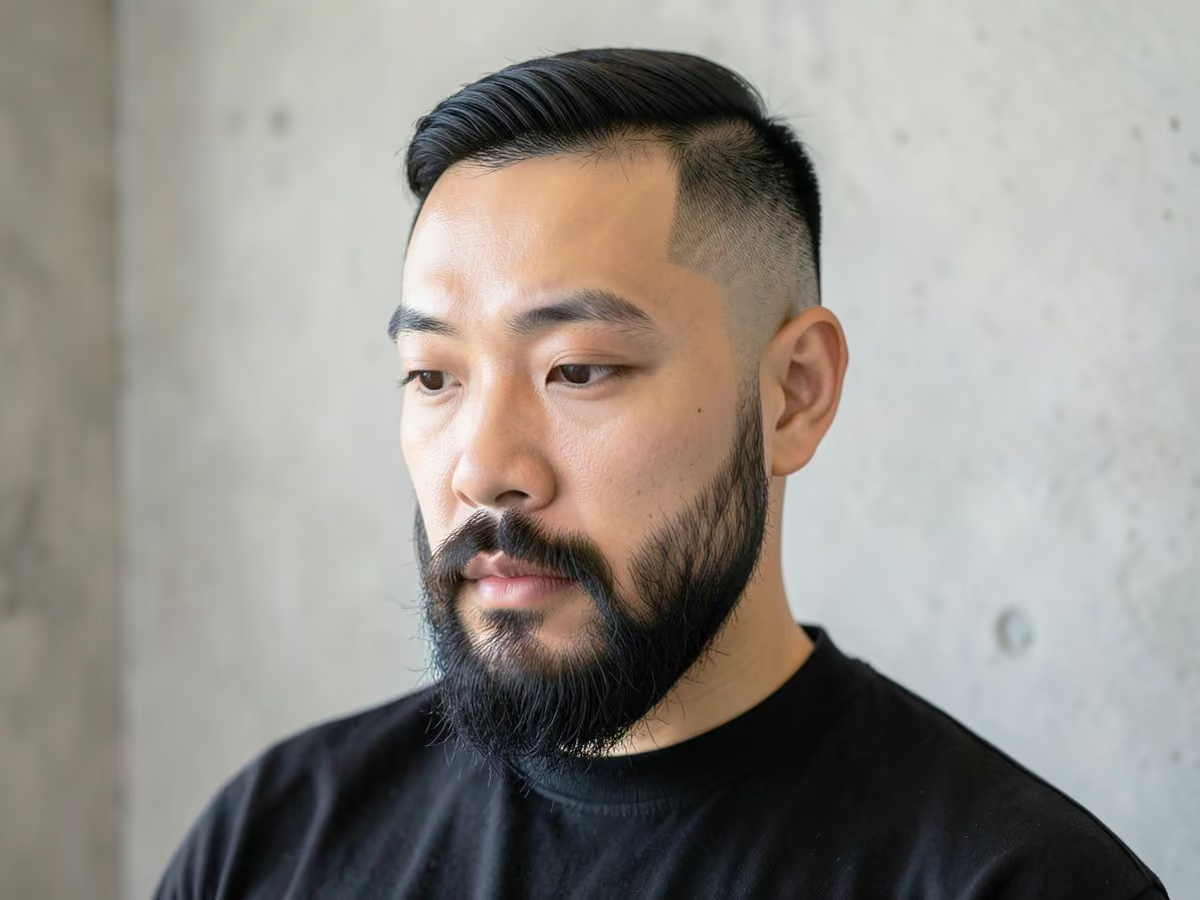
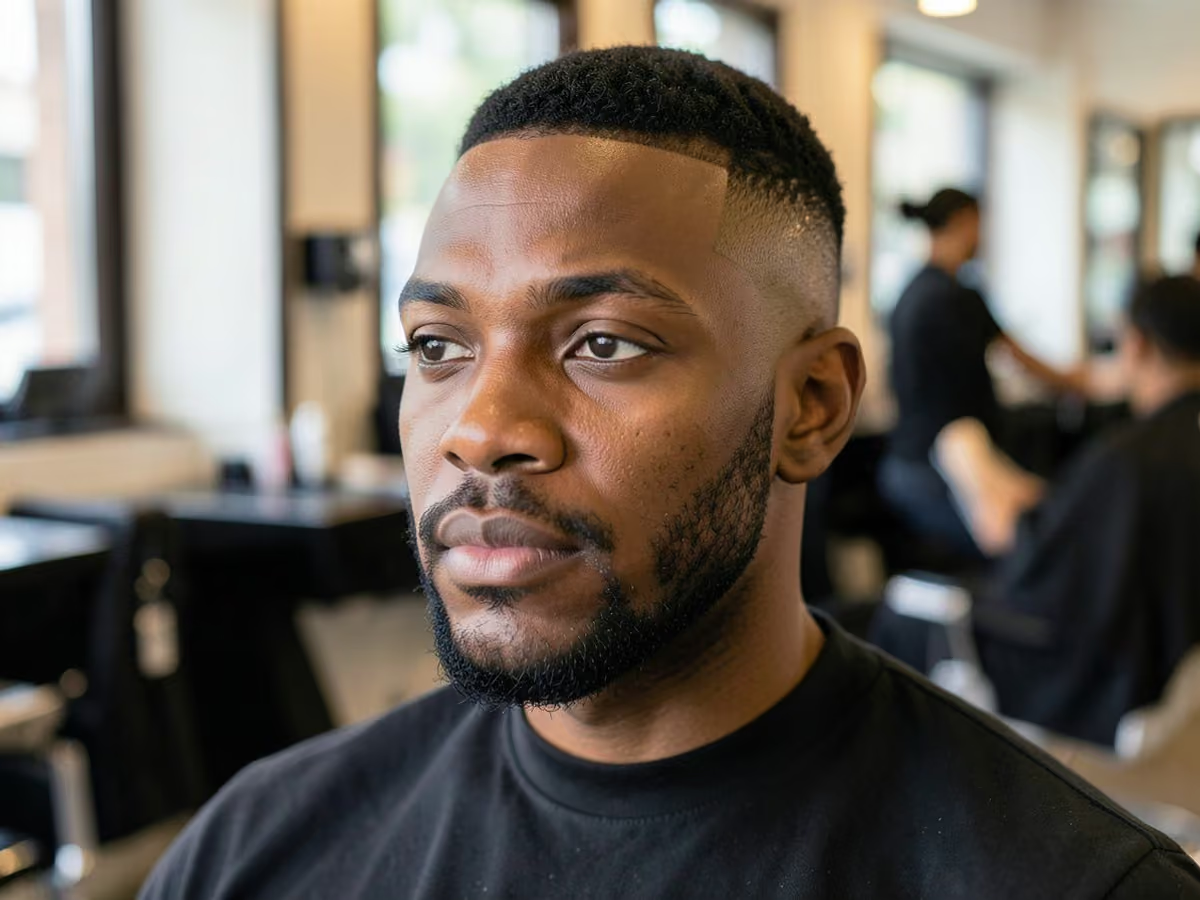
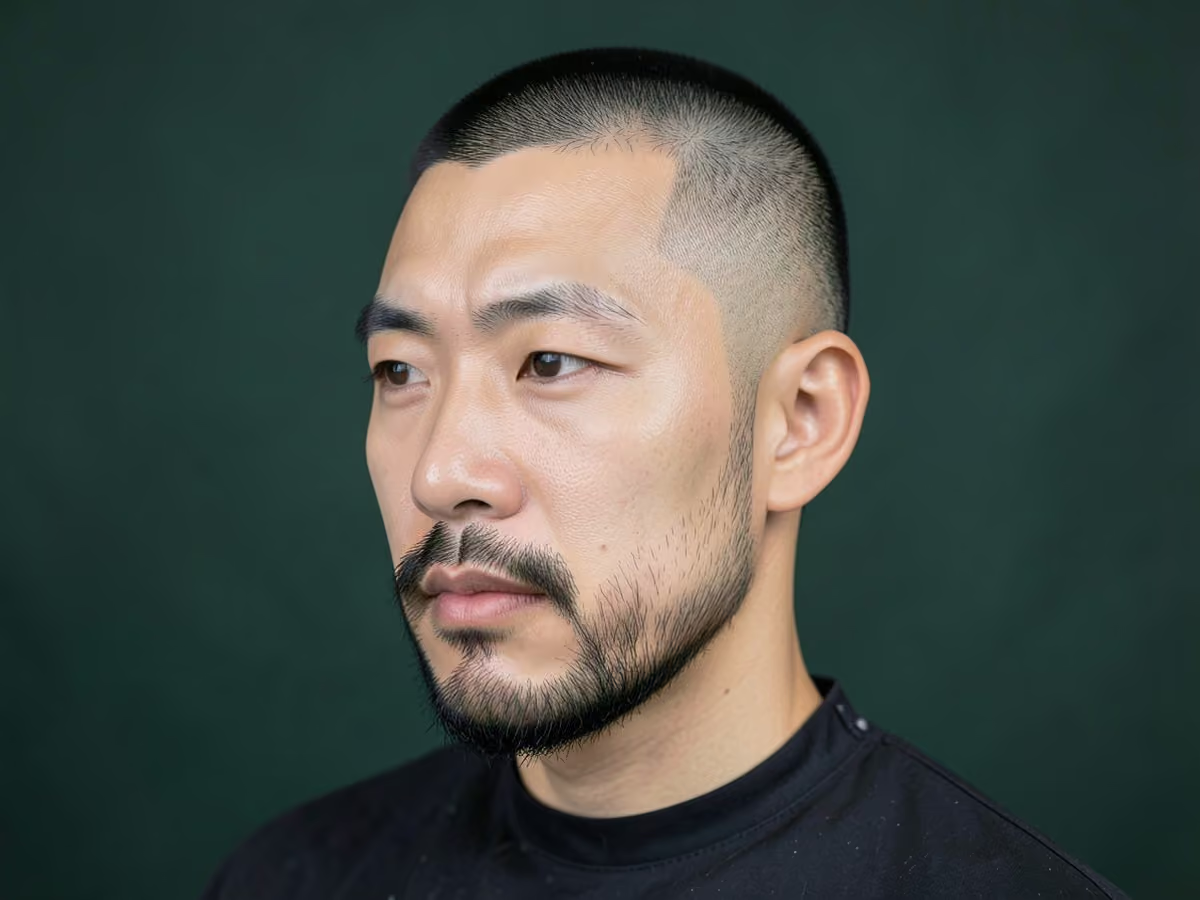
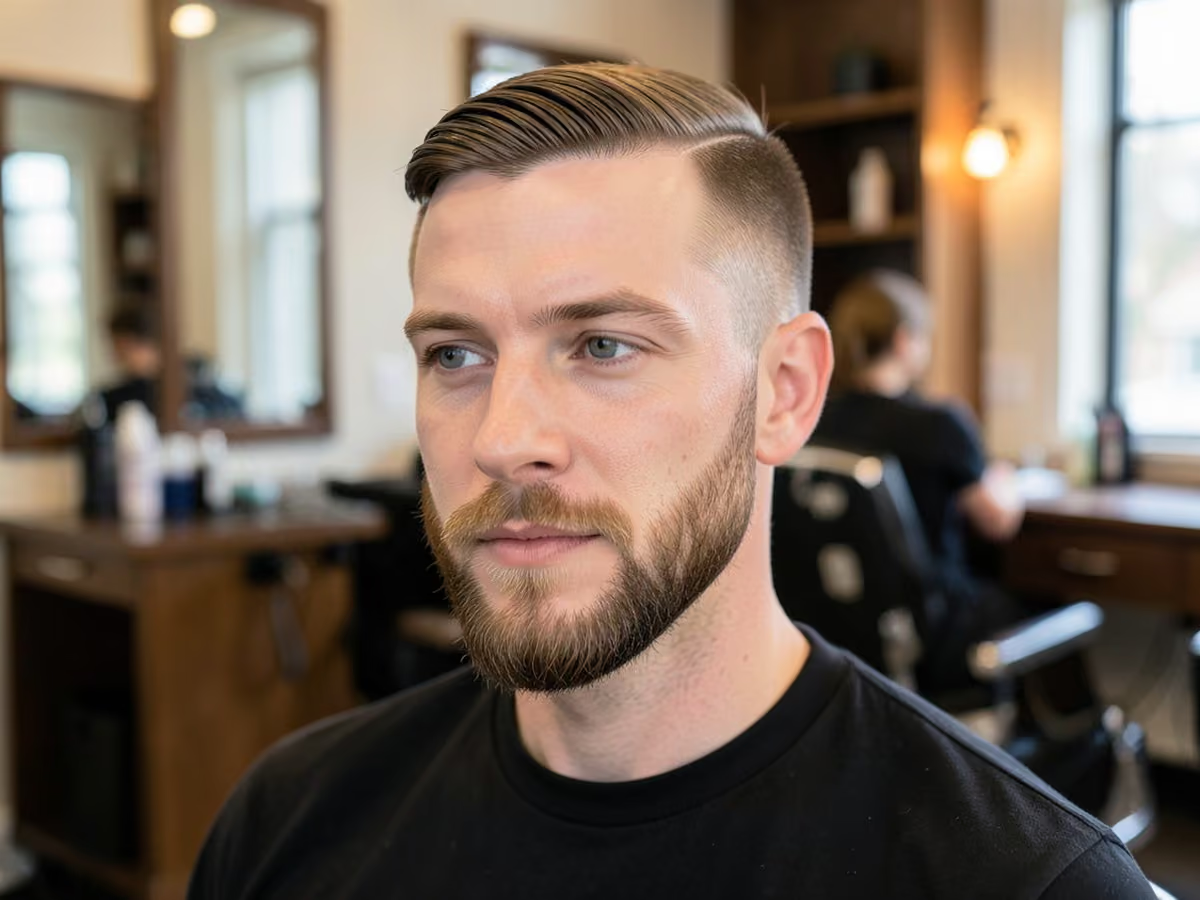
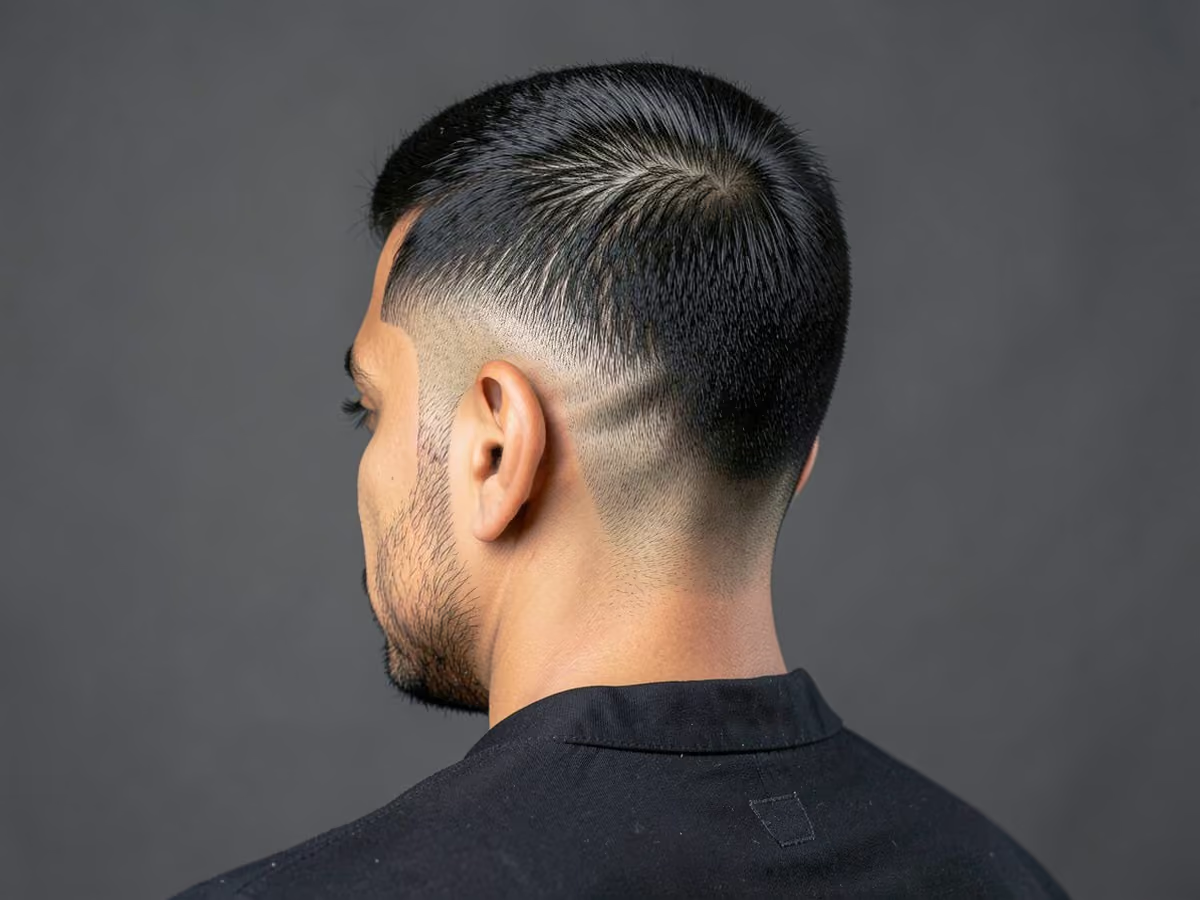
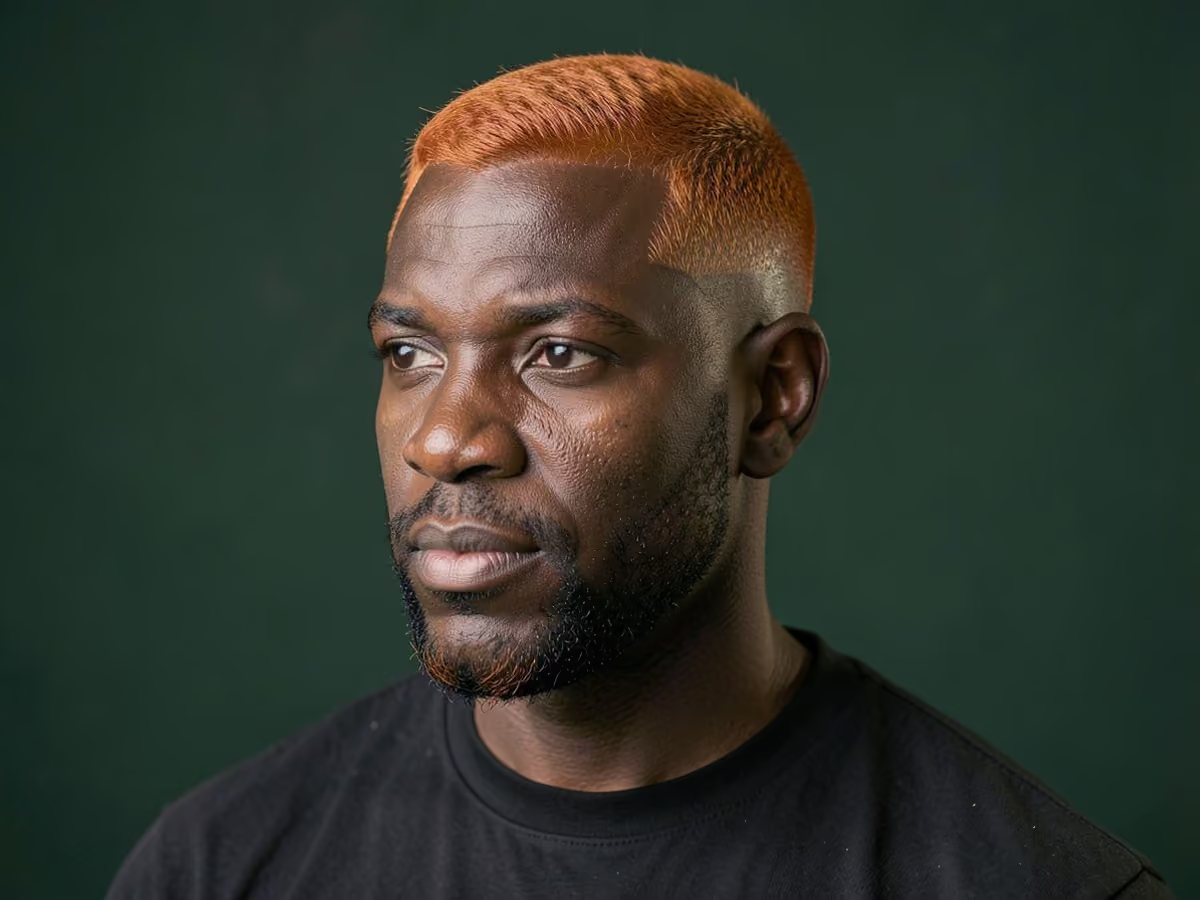
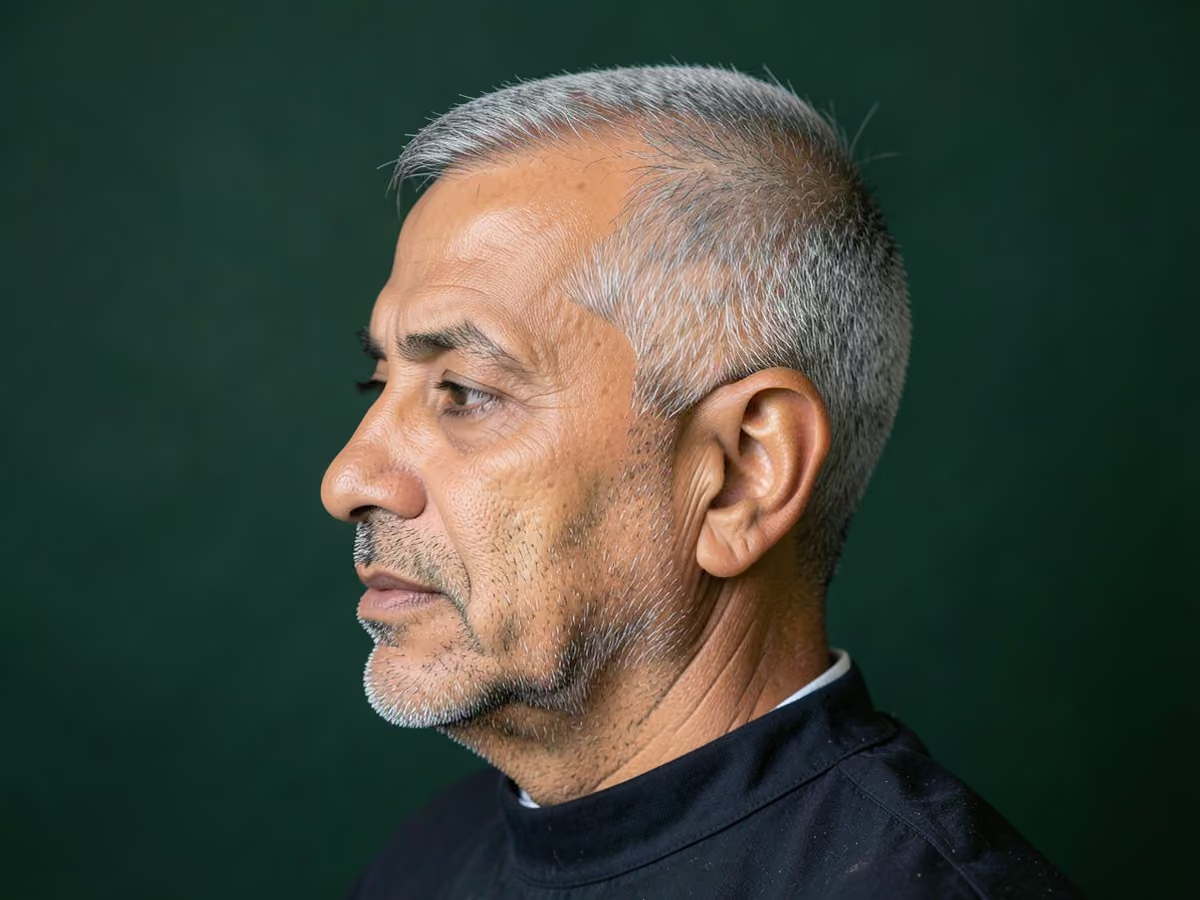
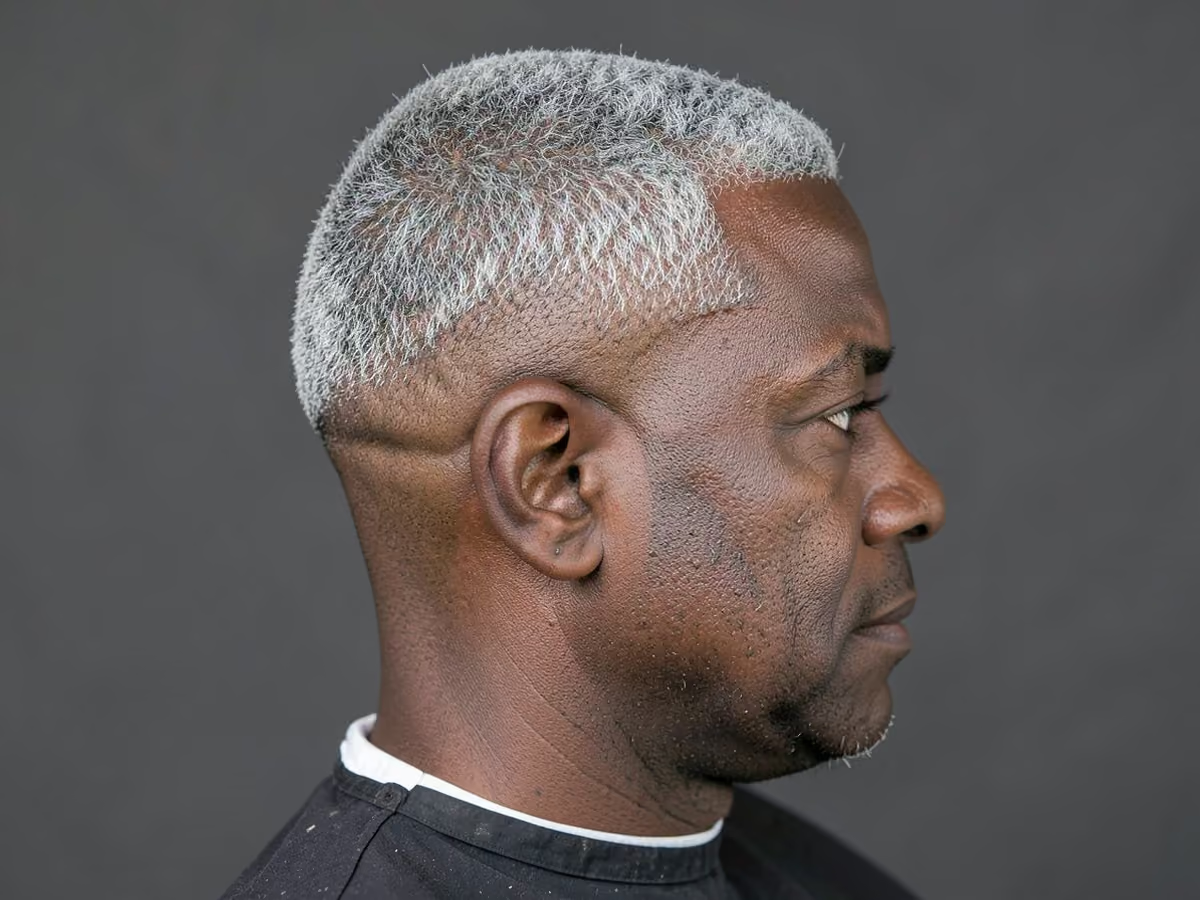
Quick answer: Thin hair haircuts for men work best when the sides sit shorter than the top, the top is cut blunt instead of thinned out, and the length stays between one and four inches. Textured crops, crew cuts, short quiffs and side parts suit fine hair, and a matte product adds grip without flattening the strands.
Thin Hair Haircut Styles at a Glance
Every style on this page with its clipper guard, top length and trim interval. Tap a name to jump to that card.
Thin hair haircuts for men solve a different problem from hair loss. Fine hair has narrow strands and low-density hair has fewer of them per square inch, yet the hairline and crown can be fully intact. The 55 cuts below are grouped by length, fade, texture and beard, each with guard numbers, a trim schedule and the words to use in the chair.
What Counts as Thin Hair?
Barbers use thin hair to describe two separate traits. Fine hair means each strand has a small diameter, so it feels soft, falls flat and struggles to hold a shape. Low-density hair means there are fewer strands growing from each patch of scalp, so the scalp shows through when the hair is wet or parted. Many men have one trait without the other: thick strands spread far apart, or a dense head of very fine strands. Both respond to the same tactics, which are shorter sides, blunt ends and a matte finish.
A quick test helps. Pull a single strand between your fingers next to a sewing thread. If you can barely feel it, the hair is fine. Then part the top under bright light. If you see a wide stripe of scalp along the part, density is low. Neither result means you are losing hair; they describe the hair you were born with, and they tend to stay the same for years.
How Is Thin Hair Different From Thinning Hair?
Thinning hair is a change over time: the hairline recedes, the crown opens up or the part widens compared with photos from a few years ago. Thin hair is a fixed texture. The cut advice overlaps, yet the goals differ. With fine hair you are building body across the whole head. With thinning you are hiding or embracing a specific area. If your hair is changing, read best haircuts for thinning hair on top and best haircuts for balding men, and see a doctor or dermatologist about the cause.
How Is Thin Hair Different From Thinning Hair?
Trait
Thin or fine hair
Thinning hair
What it is
Narrow strands or fewer strands, present since adulthood
The cuts that work share three features. The sides are kept a guard or two shorter than the top, so the top looks denser by comparison. The ends are cut blunt with scissors or clippers instead of chipped with thinning shears, because blunt ends hold more weight and look thicker. The top stays between one and four inches: shorter and the scalp shows through, longer and the hair splits into strands that cling together.
Face shape still matters. Round and square faces suit a little height from a quiff or brush up. Long faces suit a forward crop or fringe that keeps the top low. Oval faces can wear any cut on this page. If your hair is fine and light in color, avoid taking the sides to bare skin high up the head, since pale scalp next to pale hair can make the top look sparse.
Filter the styles
Showing all 55 styles
Fade
Hair
Length
Short Haircuts for Thin Hair
Short tops between one and two inches hide scalp best on fine hair because the strands stand up instead of lying flat. Each cut below pairs a short top with sides a guard or two shorter.
Trim:Every 3–4 weeks. Sides lose contrast once they pass 1/2 inch.
Best For:Oval, square, round faces + fine straight hair.
About This Style
A crew cut keeps the front slightly longer than the crown, about one and a half inches at the hairline tapering to an inch at the back. On fine hair, that extra length at the front lets you push it up so it covers the scalp behind it. Clippers take the sides to a #2 or #3, tapering to a #1 at the nape. Grown out, it still reads as a neat short cut for six weeks.
How to Style at Home
Mist thickening spray at the roots of the front section while hair is damp.
Blow-dry the front upward with your fingers for about a minute.
Rub a small dab of matte paste through the front only and leave the crown alone.
Ask Your Barber
"Crew cut for fine hair, #3 on the sides tapering to a #1 at the nape, inch and a half at the front, an inch at the crown, blunt ends, no thinning shears."
Trim:Every 3–4 weeks. The fringe drops into the eyes after a month.
Best For:Long, oval, diamond faces + fine or low-density hair.
About This Style
Brushing everything forward is the main trick here. The French crop sends the top toward the forehead and ends in a short, blunt fringe about half an inch above the brows, so the hair lies over itself in layers and the scalp stays covered. Sides sit at a #2 with a low fade. It suits long faces because the fringe shortens the forehead, and it needs only a minute of styling.
How to Style at Home
Comb the top forward while damp so every strand points at the forehead.
Dry it on low heat, pushing the fringe down with your palm.
Pinch a little texture powder into the fringe to break it into chunky pieces.
Ask Your Barber
"French crop for thin hair, low fade from a #2, top two inches pushed forward, blunt fringe cut straight across just above the brows, textured with point cutting, no razor."
Trim:Every 3–5 weeks. The short fringe stays tidy for weeks.
Best For:Square, oval faces + fine straight or wavy hair.
About This Style
Only about an inch of hair stays on top, all combed forward to a straight, short fringe. Because every strand is the same short length, fine hair stands slightly away from the scalp and looks denser than it is. Barbers usually pair it with a #2 taper on the sides. Low density at the front hairline is the one weak spot, since the fringe line can look sparse, so leave it a little longer there.
How to Style at Home
Towel-dry and comb the top forward from the crown.
Press a rice-grain amount of matte cream into the fringe line.
Leave the rest alone so the texture stays natural and light.
Ask Your Barber
"Caesar cut on fine hair, #2 taper on the sides, an inch on top cut blunt and combed forward, fringe straight across, keep it slightly longer at the front hairline."
Trim:Every 2–3 weeks. Even clipper length grows out evenly.
Best For:Oval, square faces + fine dark hair, active lifestyles.
About This Style
Clippers take the whole head to a single length, usually a #4 or #5 (1/2 to 5/8 inch), slightly longer than a standard buzz. That extra length is what makes it work on fine hair: shorter guards show scalp through the stubble, while a #4 still looks like a full head of hair from a normal distance. Dark hair gives the best result. No styling is needed beyond a towel dry.
How to Style at Home
Wash with a light shampoo and towel-dry briskly against the grain.
Rub one drop of scalp oil across the crown if the skin feels tight.
Skip product entirely; the even length holds its own shape.
Ask Your Barber
"Butch cut with a #4 all over, rounded at the corners, natural neckline, and clean up around the ears. Do not go shorter than a #4 on top."
Trim:Every 2 weeks. Buzz lengths lose their line quickly.
Best For:Round, square faces + low-density dark hair.
About This Style
A buzz with a fade at the sides is the low-effort option for low-density hair. The top takes a #3 so it reads as a solid layer, and the sides drop to a #1 with a short blend, which makes the top look darker and fuller by comparison. Avoid a #1 or #2 all over on fine hair, because the scalp shows through. Men who want zero styling time get the most from it.
How to Style at Home
Run a damp towel over the head each morning to settle loose hairs.
Apply a light leave-in once or twice a week to soften the stubble.
Check the neckline every ten days and tidy it with a trimmer.
Ask Your Barber
"Buzz cut with a #3 on top and a low fade on the sides from a #1 up to the #3, natural neckline, square the corners a little."
Trim:Every 3–4 weeks. Texture fades once the layers grow out.
Best For:Oval, round, heart faces + fine straight hair.
About This Style
Choppy, point-cut ends in different directions create the illusion of more hair than there is. The top stays about two inches, the barber chips into the ends with the tips of the scissors rather than thinning shears, and the sides get a #2 blended at mid height. Styled messy, the uneven pieces overlap and fill gaps. It looks better slightly grown out, which suits men who stretch visits.
How to Style at Home
Spray sea salt spray through damp hair from the roots up.
Rough-dry with your fingers moving in small circles for a minute.
Finish with a pinch of texture clay pinched into separate pieces.
Ask Your Barber
"Messy textured crop, mid fade from a #2, about two inches on top, point cut for texture with regular scissors, no thinning shears, slightly uneven fringe."
Trim:Every 4–5 weeks. Short sides keep the top looking denser.
Best For:Oval, square faces + fine or low-density straight hair.
About This Style
Scissor-over-comb sides at roughly a #2 length, with the top left at one and a half to two inches, give fine hair a neat, traditional shape. Because the sides sit only a little shorter than the top, there is no sharp contrast that exposes a sparse crown. Ask for blunt ends on top and no thinning shears. It suits men who want a classic office cut that needs only a little cream.
How to Style at Home
Towel-dry gently, since rubbing hard roughs up fine strands.
Comb the top to one side with a little styling cream.
Smooth the sides down flat with the palms of your hands.
Ask Your Barber
"Scissor-over-comb sides around a #2 length, top at one and a half to two inches, blunt ends and no thinning shears. Neat, tapered neckline."
Trim:Every 3–4 weeks. A blunt fringe loses its line after a month.
Best For:Oval, long, heart faces + fine straight hair.
About This Style
Cutting the fringe straight across, without point cutting, puts the thickest possible edge at the front of the head. The top is about two inches and brushed forward; the sides are tapered from a #1 to a #3. Straight fine hair looks densest this way because every strand ends at the same line. Keep the fringe at mid-forehead so it does not separate into strands.
How to Style at Home
Blow-dry the hair forward with your fingers on low heat.
Dust thickening powder at the roots behind the fringe.
Avoid touching the fringe once it is dry and set.
Ask Your Barber
"Two inch crop brushed forward with a blunt fringe at mid-forehead, cut straight across with no texturizing. Taper the sides from a #1 to a #3."
Recommended Products
Thickening Powder
Volume Styles for Fine Hair
These cuts leave two to four inches on top so you can blow-dry height into fine hair. They take a few minutes in the morning; for hair that is getting sparser, see how to style thinning hair without looking bald.
Trim:Every 3–4 weeks. Weight at the front pulls the quiff flat.
Best For:Round, square, oval faces + fine straight hair.
About This Style
Lift at the hairline is what defines a quiff, so the front is left about three inches and the length shortens toward the crown to around an inch and a half. Graduating it this way means fine hair at the back does not pull the front down. A low taper from a #2 cleans up the sides. Blow-drying is required, since fine hair will not stand up from product alone.
How to Style at Home
Spray thickening spray at the roots of the front three inches.
Blow-dry the front up and back with a round brush until fully dry.
Work a pea-size amount of matte clay in from behind the front.
Ask Your Barber
"Short quiff for fine hair, low taper from a #2, three inches at the front graded down to an inch and a half at the crown, blunt ends, no razor."
Trim:Every 3 weeks. Length past three inches loses its roll.
Best For:Round, square faces + fine straight or slightly wavy hair.
About This Style
Full pompadours need dense hair, but a short version with two and a half inches on top works on fine strands. The hair is swept up and back in one rounded shape, with a mid fade starting at a #1 underneath. Use a matte or low-shine product; a high-gloss pomade separates fine hair into lines that show scalp. Expect five minutes of blow-drying and a light hairspray-free finish.
How to Style at Home
Blow-dry the top straight back while lifting the front with a round brush.
Warm a small amount of light pomade and smooth it over the surface only.
Shape the front into a rounded roll with your palm.
Ask Your Barber
"Short pompadour for fine hair, mid fade from a #1, two and a half inches at the front, shorter toward the crown so it lies back easily, blunt ends."
Best For:Oval, heart, round faces + fine straight hair.
About This Style
Unlike a slick back, nothing here is flattened or glued. The top is about three inches, blow-dried back with volume at the roots and left a little loose, so light passes through the hair instead of bouncing off a shiny surface. Sides sit at a #3 with a scissor-blended taper. Offices accept it easily, and it grows out softly over a month.
How to Style at Home
Apply thickening spray to damp roots across the whole top.
Blow-dry back with your fingers spread like a comb.
Brush a tiny amount of styling cream through the ends only.
Ask Your Barber
"Brush back for fine hair, scissor taper from a #3, about three inches on top, blunt ends, keep weight at the crown so it does not split."
Trim:Every 3–4 weeks. The fringe gets heavy and falls flat.
Best For:Long, oval, heart faces + fine or low-density hair.
About This Style
Swept slightly to one side, a choppy fringe covers the front hairline and makes the forehead look shorter. The top is two to three inches, longest at the fringe, with a low fade from a #2 below. For low-density hair this cut hides the area where scalp usually shows first, right behind the hairline. It needs only a quick rough-dry and a little powder.
How to Style at Home
Rough-dry the fringe forward and slightly to one side.
Dust texture powder into the roots and massage it with fingertips.
Pull a few pieces of fringe down to break up the line.
Ask Your Barber
"Textured fringe for fine hair, low fade from a #2, two to three inches on top, longest at the front, point cut to break up the fringe, no thinning shears."
Trim:Every 4–6 weeks. Perm ends need trimming as they loosen.
Best For:Oval, round faces + very fine straight hair.
About This Style
Loose waves set chemically add bulk that fine straight hair cannot hold on its own. A stylist rolls the top three inches on large rods for a soft bend, not a tight curl, and the sides are cut to a #2 taper afterward. The wave lasts two to three months. Fine hair takes a perm quickly, so ask for a gentle solution and a strand test first.
How to Style at Home
Scrunch a small amount of curl cream into damp hair.
Let it air-dry or use a diffuser on low heat.
Avoid brushing once dry, which pulls the wave out.
Ask Your Barber
"Loose texture perm on the top three inches with large rods, gentle solution for fine hair, then a #2 taper on the sides and a light trim to shape."
Trim:Every 4–5 weeks. Curtains get stringy once they pass the cheekbone.
Best For:Oval, long, diamond faces + fine wavy or straight hair.
About This Style
Curtains split the fringe down the center, but on fine hair a strict part shows a line of scalp. The fix is a soft, zigzag middle part and layers cut so the two sides overlap slightly at the root. Length runs about four inches at the front, ending near the cheekbone, with a #3 taper on the sides. Blow-drying each side outward gives the root lift that hides the part.
How to Style at Home
Part the hair with your fingers in a loose zigzag, not a comb.
Blow-dry each side up and outward away from the part.
Mist sea salt spray on the ends and scrunch lightly.
Ask Your Barber
"Curtain haircut for fine hair, four inches at the front ending near the cheekbone, soft layers, #3 taper on the sides, blunt ends so the fringe does not look stringy."
Trim:Every 4–5 weeks. The sweep loses direction past three inches.
Best For:Oval, round faces + fine or wavy low-density hair.
About This Style
Brushing the top forward and slightly to one side covers more scalp than lifting it upward. About two and a half inches on top is blow-dried diagonally toward one temple, so the hair overlaps itself and the crown looks fuller. A low taper on the sides keeps width down. This works well for men whose fine hair splits into a visible part when it is lifted.
How to Style at Home
Blow-dry the top diagonally toward one temple on medium heat.
Rub a small amount of matte cream between your palms and press it in.
Leave the sweep slightly uneven rather than combing it.
Ask Your Barber
"Two and a half inches on top so it can sweep forward and to the side, low taper from a #2, blunt ends and no thinning out."
Trim:Every 3–4 weeks. Lift fades once the top passes two inches.
Best For:Oval, round faces + fine or thin straight hair.
About This Style
Short hair stands up more easily than long hair, so a brush up keeps the top at about one and a half inches and blow-dries every strand upward and slightly back. Thickening spray at the roots before drying adds grip. Sides are a mid fade or tight taper, which makes the top look taller and fuller. It suits fine hair that collapses in longer quiffs by the afternoon.
How to Style at Home
Spray thickening spray at the roots of damp hair.
Blow-dry the top straight up with a round brush.
Set the shape with a little matte clay at the tips.
Ask Your Barber
"One and a half inches on top, cut so it can brush straight up, mid fade from a #1 to a #3. Blunt cut on top, no texturizing."
Recommended Products
Thickening Spray
Matte Clay
Round Brush
Fades and Tapers for Thin Hair
A fade makes the top look fuller by contrast. On fine hair, keep the blend low or mid and the top guard at a #2 or #3; the taper fade and low fade guides cover the basics.
Trim:Every 3 weeks. The low line blurs after about three weeks.
Best For:Oval, round, square faces + fine straight or wavy hair.
About This Style
Starting just above the ear, the blend runs from a #1 at the bottom to a #3 at the temple, so most of the side still carries hair. This keeps the head from looking narrow under a fine top, a problem high fades can cause. A textured crop or short quiff of two inches sits on top. The low line is also the most forgiving if the sides grow out between visits.
How to Style at Home
Push the top in your chosen direction with damp fingers.
Blow-dry upward at the front hairline to lift the roots off the scalp.
Finish with a light layer of matte clay worked through from the back of the head to the front.
Ask Your Barber
"Low fade starting just above the ear, #1 to #3, keep the temples full, two inches on top cut blunt with texture, natural neckline."
Trim:Every 2–3 weeks. The temple line shows growth quickly.
Best For:Round, square faces + fine dark hair.
About This Style
Set at the temple, this fade removes more weight from the sides than a low one and draws attention up to the top. Fine dark hair suits it best because the contrast between a #0.5 at the bottom and a two-inch dark top is sharp. On fine blond hair, keep the bottom at a #1 so the scalp does not dominate. Pair it with a crop, quiff or side part.
How to Style at Home
Mist thickening spray over the whole top section while the hair is still damp.
Dry it up and slightly forward with a blow dryer on medium heat.
Shape the top with a fingertip of matte paste.
Ask Your Barber
"Mid fade at the temple, #0.5 or #1 at the bottom blending to a #3, two inches on top with blunt ends and light texture."
Trim:Every 4–5 weeks. Only the sideburns and nape need cleanup.
Best For:Oval, long faces + low-density straight hair, offices.
About This Style
Here only the sideburns and nape are shortened, and the rest of the sides stay at a #3 or #4. For low-density hair, that extra side length hides the scalp around the ears and keeps the outline full. It works under a side part, crew cut or longer brush back. The taper grows out slowly, so it suits men who visit the barber once a month or less.
How to Style at Home
Comb the top into place while it is still damp from the towel.
Dry with a blow dryer for a minute to set the direction.
Smooth a little styling cream over the surface for control.
Ask Your Barber
"Low taper at the sideburns and nape only, #4 on the sides tapering to a #1 at the edges, top left two and a half inches, blunt ends."
Trim:Every 3–4 weeks. No skin means regrowth shows slowly.
Best For:Oval, square faces + fine light-colored hair.
About This Style
No skin is shown. Nothing goes below a #1, which leaves a dark layer of hair across the lowest part of the sides. Fine hair in light shades benefits most, because pale scalp beside pale hair can make a skin fade look patchy. The blend climbs to a #3 at the temple, and the top can be any short style. It grows out evenly, which keeps it tidy for a month.
How to Style at Home
Towel-dry the top and comb it forward or to the side.
Work a small amount of texture clay through the ends.
Tidy the edges with a trimmer every two weeks if needed.
Ask Your Barber
"Shadow fade, no skin, #1 at the bottom blending up to a #3, mid height, top two inches with texture, blunt ends."
Trim:Every 2–3 weeks. The curve behind the ear loses shape fast.
Best For:Oval, round faces + fine wavy or straight hair.
About This Style
Curving downward behind the ear, a drop fade leaves more hair over the occipital bone than a straight fade line. For fine hair, that extra weight at the back helps the head look fuller where thinning shows when you check it with a hand mirror. Guards run #0.5 to #3, and the top is a two-inch crop or messy fringe.
How to Style at Home
Spray sea salt spray through the top and back of the crown.
Rough-dry everything forward with your fingers to build loose texture.
Pinch a little matte clay into the crown to fill it out.
Ask Your Barber
"Drop fade curving down behind the ear, #0.5 to a #3, keep weight at the back of the head, two inches on top with a textured fringe."
Trim:Every 1–2 weeks. Bare skin up high shows stubble within days.
Best For:Round, square faces + fine dark or coarse hair.
About This Style
Choose this only if your hair is dark or your skin tone is close to your hair color. The fade climbs to the parietal ridge, so the top patch is small and looks dense by comparison. A short crop or flat-ish brush up of an inch and a half works best; longer tops on a high fade can look disconnected on fine hair. Expect weekly or fortnightly visits.
How to Style at Home
Dry the short top straight up with a blow dryer.
Rub texture powder into the roots for grip.
Moisturize the bare sides with a drop of scalp oil.
Ask Your Barber
"High fade to the parietal ridge, #0 at the bottom to a #2, inch and a half on top cut blunt and pushed up, sharp but not shaved line."
Trim:Every 2–3 weeks. Skin around the ear regrows quickly.
Best For:Oval, round faces + fine, curly or wavy hair.
About This Style
Curving around the ear and leaving full length at the nape, a burst fade removes bulk only where the side profile widens. On fine hair the extra length at the back hides a thin crown better than a full skin fade. The top is two to three inches, often pushed into a short lift through the center. Curly and wavy fine hair suit it because the texture adds visible density.
How to Style at Home
Apply curl cream to damp hair on top only.
Push the center of the top up and forward with your fingers.
Let it air-dry without touching for the most volume.
Ask Your Barber
"Burst fade from a #0 around the ear, full length at the nape, two to three inches on top pushed toward the center."
Trim:Every 3 weeks. Only the temple and nape grow out.
Best For:Oval, square faces + fine or thin straight hair.
About This Style
Fading only at the temples and nape keeps most of the side hair at a #3, which matters for men whose fine hair looks patchy when clipped close all round. The cleaner edges sharpen the outline without exposing much scalp. Two inches on top is pushed forward or to the side. It is one of the gentlest fades for low-density hair and grows out without a visible line.
How to Style at Home
Towel-dry and push the top forward or to the side.
Add a small amount of matte paste for light hold.
Brush the sides down flat to keep them close to the head.
Ask Your Barber
"Fade only the temples and the nape, from a #0.5 into a #3 on the sides. Two inches on top with blunt ends."
Recommended Products
Matte Paste
Medium and Longer Cuts for Fine Hair
Fine hair can wear length if the ends stay blunt and the layers stay few. These cuts run three to six inches and suit straight or wavy fine hair; low-density hair often looks fuller in the shorter cuts above.
Trim:Every 3–4 weeks. The part loses its line once sides grow.
Best For:Oval, square, long faces + fine straight hair, offices.
About This Style
Placing the part over the outer corner of the eyebrow, rather than higher on the head, lets more hair fall across the top and cover the scalp. The top is three inches, the sides a #3 with a scissor taper. A soft, combed part works better than a shaved hard part, which leaves a bare line on fine hair. It reads as conservative and suits interviews and offices.
How to Style at Home
Find your natural part and comb it while hair is damp.
Blow-dry the larger side up and over with a brush.
Smooth a small amount of light pomade over the top.
Ask Your Barber
"Side part for fine hair, low part over the outer eyebrow, #3 taper on the sides, three inches on top, no shaved part line, blunt ends."
Trim:Every 4–6 weeks. Longer ends start to separate and cling.
Best For:Oval, heart, diamond faces + fine wavy hair.
About This Style
Wavy fine hair suits a center part better than straight fine hair, because the bend in each strand hides the line of scalp. Length is about four to five inches all over the top, falling to the ear, with sides kept at a #4 or scissor cut. Slightly offset the part rather than splitting it dead center. It grows out into a medium style without an awkward stage.
How to Style at Home
Part the hair just off-center with your fingertips.
Scrunch sea salt spray into the lengths while damp.
Air-dry, then lift the roots at the part with a little powder.
Ask Your Barber
"Middle part for fine wavy hair, four to five inches on top falling to the ear, sides scissor cut or a #4, minimal layers, blunt ends."
Trim:Every 5–6 weeks. Layers lose their shape as they grow.
Best For:Oval, long faces + fine wavy or straight hair.
About This Style
Most shags rely on heavy layering, which strips fine hair. This version uses only two or three long layers, with the shortest pieces at the crown for lift and the longest around the collar at about five inches. The ends are cut blunt and then lightly point cut. Sea salt spray and air-drying give the messy finish. It suits men who want length without a flat look.
How to Style at Home
Spray sea salt spray from roots to ends on damp hair.
Scrunch upward with your hands and let it air-dry.
Lift the crown with a pinch of texture powder.
Ask Your Barber
"Shag for fine hair, only two or three long layers, shortest at the crown for lift, five inches at the collar, blunt ends lightly point cut, no razor."
Trim:Every 4–5 weeks. The back needs shaping to stay solid.
Best For:Oval, square faces + fine straight or wavy hair.
About This Style
Keeping the back blunt and solid is what makes a mullet work on fine hair. Two to three inches stay on top with texture, a #2 taper handles the sides, and the back is left four inches and cut straight across rather than feathered. Feathering removes too much weight and leaves a wispy tail. A short version reads more modern than the long eighties style.
How to Style at Home
Scrunch sea salt spray into the top and back.
Rough-dry the top forward and let the back fall naturally.
Pinch the top into pieces with a little texture clay.
Ask Your Barber
"Short mullet for fine hair, #2 taper on the sides, two to three inches on top with texture, four inches at the back cut blunt, no feathering."
Trim:Every 4–5 weeks. Crown layers lose lift as they lengthen.
Best For:Oval, heart faces + fine wavy hair.
About This Style
Sitting between a shag and a mullet, the wolf cut stacks short layers at the crown and leaves length around the neck. On fine hair, ask for fewer and longer layers than usual, so the crown has lift without turning sparse. Sides are scissor cut close to the ear. A diffuser or quick rough-dry brings out any natural wave, which adds visible body.
How to Style at Home
Apply curl cream or sea salt spray to damp hair.
Diffuse on low heat while scrunching the lengths upward toward the roots.
Pull the crown pieces up with fingertips once dry.
Ask Your Barber
"Wolf cut for fine hair, fewer and longer layers than usual, lift at the crown, length to the neck, sides scissor cut close to the ear, blunt ends."
Trim:Every 6–8 weeks. Split ends make fine hair look thinner.
Best For:Oval, long faces + fine straight or wavy hair.
About This Style
Growing fine hair to the shoulders works only with a one-length, blunt cut. Every strand ends at the same line, so the bottom edge looks thick even when the scalp is visible higher up. Regular dusting of the ends keeps splits from making the hem see-through. Tuck it behind the ears or tie it half up. Low-density hair rarely suits this length, but fine dense hair can.
How to Style at Home
Use a light leave-in on the lower half after washing.
Comb through with a wide-tooth comb and air-dry.
Tuck behind the ears or tie half up with a soft band.
Ask Your Barber
"One-length cut at the shoulder for fine hair, blunt ends, no layers or thinning, dust a quarter inch off to remove splits, clean neckline."
Trim:Every 6–8 weeks. Blunt ends thin out before the shape fails.
Best For:Oval, long faces + fine, straight or wavy hair.
About This Style
Growing fine hair to the chin works when the ends are cut blunt and kept at one length, or with only long layers around the face. Short layers make long fine hair look sparse. Tucking the sides behind the ears shows the jaw, and a center or side part keeps it simple. Trim the ends every two months so they stay solid; split ends make fine hair look thinner.
How to Style at Home
Wash with a light shampoo and keep conditioner off the roots.
Blow-dry the roots up, then let the lengths fall.
Tuck the sides behind the ears or leave them forward.
Ask Your Barber
"Chin length all round, blunt ends, only long face-framing layers. No short layers or thinning shears, and keep the ends solid."
Trim:Every 5–6 weeks. The sweep flattens once the top gets heavy.
Best For:Oval, square faces + fine or wavy hair.
About This Style
With three to four inches on top swept back from the forehead and sides cut just above the ears, this cut gives fine hair a relaxed, medium shape. Blow-drying back with a round brush lifts the front, and a light cream keeps it from looking slicked. Because it pulls hair away from the face, it suits men whose hairline is intact but whose strands are fine.
How to Style at Home
Mist thickening spray onto damp roots before drying.
Blow-dry back with a round brush, lifting at the front.
Rake a little styling cream through with your fingers.
Ask Your Barber
"Three to four inches on top that I can sweep back, sides scissor cut just above the ears, blunt ends on top."
Recommended Products
Thickening Spray
Styling Cream
Round Brush
Thin Hair Cuts by Texture and Color
Fine hair behaves differently when it is wavy, curly, straight, blond or gray. These eight cuts adjust length and guard numbers to the texture; the straight hair guide has more on flat hair.
Trim:Every 4 weeks. Waves turn shapeless once they get heavy.
Best For:Oval, round, long faces + fine wavy hair.
About This Style
A slight wave is a gift for fine hair because it lifts strands apart. Keep the top around three inches so the wave has room to bend, with a #3 on the sides fading down to a #1 at the edges. Cut dry if possible, so the barber sees where each wave falls. Brushing the hair straight flattens it, so scrunch it and let it dry on its own instead.
How to Style at Home
Scrunch a little sea salt spray into damp hair.
Let it air-dry without touching it for ten minutes.
Break up any clumps with fingertips once fully dry.
Ask Your Barber
"Cut for fine wavy hair, ideally dry, three inches on top, #3 on the sides tapering to a #1, blunt ends so the wave has weight."
Trim:Every 4–6 weeks. Curls drop and separate when they get long.
Best For:Oval, heart faces + fine curly or low-density curls.
About This Style
Fine curls clump into separate ringlets, which can show the scalp between them. Keeping them shorter, about two to three inches stretched, makes the curls pack together and look denser. A low taper at a #2 keeps the outline round. Use a light curl cream, not heavy butter, since rich products drag fine curls flat. The curly hairstyles guide has more options.
How to Style at Home
Apply light curl cream to soaking wet hair.
Scrunch upward and diffuse on low heat for lift.
Fluff the roots gently with fingertips, not a brush.
Ask Your Barber
"Cut for fine curly hair, cut dry, two to three inches on top stretched, low taper from a #2, round shape, no thinning shears."
Trim:Every 3–4 weeks. Straight fine hair shows uneven growth fast.
Best For:Oval, square, round faces + fine straight hair.
About This Style
Straight fine hair is the flattest type, so it needs a short, structured top with lots of point cutting. Two inches on top, pushed forward or up, with a #2 mid fade on the sides gives a dense outline. Avoid long sweeping fringes, which split into lines. Thickening spray and a quick blow-dry each morning give the lift that straight strands lack on their own.
How to Style at Home
Work a thickening spray into the roots while the hair is damp.
Blow-dry everything straight up with your fingers until it is fully dry.
Push the top forward with a small dab of matte clay.
Ask Your Barber
"Short structured cut for fine straight hair, mid fade from a #2, two inches on top, heavy point cutting for texture, no long fringe."
Trim:Every 3–4 weeks. The undercut grows into the top layer.
Best For:Oval, long faces + straight Asian hair, low density.
About This Style
Asian hair is often thick in strand but can be low in density, and the two-block suits it well. The sides and back are clipped to a #2 or #3 underneath, and the top falls over them like a curtain, hiding both the undercut and any thin spots. Ask for the top to be four inches and cut blunt. A light perm on top adds even more body if wanted.
How to Style at Home
Blow-dry the top forward and slightly down over the sides.
Use a round brush to curve the fringe inward.
Finish with a little matte cream through the ends.
Ask Your Barber
"Two-block cut, #3 underneath on the sides and back, four inches on top cut blunt and falling over the undercut, soft fringe, no thinning."
Trim:Every 3–4 weeks. Light hair shows a grown-out fade clearly.
Best For:Oval, round faces + fine blond or light brown hair.
About This Style
Blond hair and pale scalp blend together, so thin blond hair looks sparser than it is under bright light. Keep the sides at a #3 or #4 with a low taper rather than a skin fade, and leave two and a half inches on top. A textured crop with plenty of movement throws small shadows that make the hair look fuller. Matte products help more here than on dark hair.
How to Style at Home
Spray thickening spray across the top while damp.
Rough-dry the top in different directions to build movement and small shadows.
Rub texture powder into the roots for a matte finish.
Ask Your Barber
"Textured crop for fine blond hair, low taper with a #3 or #4 on the sides, no skin, two and a half inches on top with movement."
Trim:Every 4 weeks. Gray hair yellows and frizzes at the ends.
Best For:Oval, square faces + fine gray or salt-and-pepper hair.
About This Style
Gray strands lose pigment and often turn wiry, and on a head of fine hair they can make the top look patchy and see-through. A short, neat cut with a #3 on the sides and two inches on top keeps it tidy. Brush it back or to the side for a classic finish. A purple shampoo once a week stops yellowing, and a matte cream controls stray wiry hairs.
How to Style at Home
Comb the top back or to the side while damp.
Smooth a small amount of matte cream over the surface.
Use a purple shampoo once a week to keep the tone even.
Ask Your Barber
"Short classic cut for fine gray hair, #3 on the sides with a scissor taper, two inches on top, neat natural neckline, light texture only."
Trim:Every 2–3 weeks. Short coily hair shows shape changes fast.
Best For:Oval, round faces + fine coily or 4C hair.
About This Style
Fine coily hair can look sparse when grown out because the coils shrink and the scalp shows between them. Keeping the top at about an inch with a low taper gives an even, dense look. A sponge rubbed in the same direction each day packs the coils closer together. Moisture matters more than product: fine coils break easily, so leave-in and a durag at night help.
How to Style at Home
Mist the hair with leave-in conditioner after washing.
Rub a curl sponge in one direction to pack the coils closer.
Cover the hair with a durag or satin cap at night.
Ask Your Barber
"Even inch on top, low taper on the sides and nape, soft line-up. Keep it all one length so the top looks full."
Trim:Every 2 weeks. Waves need a short, even top to show.
Best For:Oval, square faces + fine or low-density coily hair.
About This Style
Wave patterns look densest on hair cut to about half an inch, so fine or low-density coily hair can still carry 360 waves. Daily brushing from the crown outward and a durag at night train the pattern over several weeks. A low taper or Caesar outline keeps the edges clean. Use a medium-soft brush rather than a hard one, since fine strands snap under heavy brushing.
How to Style at Home
Apply wave pomade to damp hair in a thin layer.
Brush from the crown outward in all directions for ten minutes.
Tie a durag on snugly before bed to hold the pattern.
Ask Your Barber
"Half an inch on top, all even for waves, low taper on the sides and a clean line-up. Cut with the grain, not against it."
Recommended Products
Wave Pomade
Thin Hair Cuts with a Beard
A beard adds weight to the lower face, which balances a light, fine top. These seven pairings match the beard length to the cut so the head does not look top-heavy or bare.
Trim:Every 3–4 weeks. Beard and fade need trimming together.
Best For:Oval, round, long faces + fine straight hair, thick beard.
About This Style
Many men with fine head hair grow a dense beard, and leaning into it shifts the eye downward. A short crop of an inch and a half on top and a #2 low fade that connects into a full beard of about one inch keep the proportions even. The sideburns are blended into the beard with no break. Shape the cheek line low and natural.
How to Style at Home
Brush beard oil through the beard every morning.
Push the short top forward with a little matte clay.
Trim stray beard hairs at the neckline every week.
Ask Your Barber
"Short crop with a #2 low fade connecting into a full beard about one inch long, blend the sideburns into the beard, low natural cheek line."
Trim:Every 3 weeks. Stubble needs a trimmer every two or three days.
Best For:Square, oval faces + fine hair, light beard growth.
About This Style
Stubble trimmed short gives the jaw a defined edge without the upkeep of a full beard. Paired with a textured crop of two inches and a mid fade from a #1, the head and face look evenly balanced. This suits men whose beard is patchy as well as their head hair, since stubble length hides gaps in both. Clean the neck below a line just over the Adam's apple.
How to Style at Home
Trim the stubble to the same guard every two or three days.
Rough-dry the top with sea salt spray for texture.
Clean the neckline with the trimmer's bare blade weekly.
Ask Your Barber
"Textured crop, two inches on top, mid fade from a #1, and line up my stubble with the neckline one finger above the Adam's apple."
Trim:Every 2–3 weeks. Sharp beard lines blur within a week.
Best For:Round, oval faces + fine dark hair, dense beard.
About This Style
Sharp lines at the cheek and jaw make a short boxed beard look deliberate, which draws attention away from a fine top. The hair is kept short, a #3 on top with a #1 skin-free fade, so the head and beard read as one clean shape. A boxed beard about half an inch long works with round faces because the squared corners add structure to the jaw.
How to Style at Home
Comb the beard down and apply beard balm for shape.
Rub a drop of scalp oil over the short top.
Touch up the cheek line with a trimmer twice a week.
Ask Your Barber
"#3 on top, fade from a #1 on the sides with no skin, short boxed beard about half an inch with crisp cheek and neck lines."
Trim:Every 2 weeks. The buzz and goatee edges grow out together.
Best For:Round, square faces + fine hair, patchy cheek growth.
About This Style
Men whose cheeks grow little beard often have a full chin and moustache, so a goatee uses the hair that grows best. A #3 buzz on top with a #2 taper at the sides keeps the head simple and even. The goatee is trimmed to about a quarter inch and shaped round. The combination needs only a trimmer at home and a barber visit every two weeks.
How to Style at Home
Shave the cheeks clean every two or three days.
Trim the goatee to a quarter inch with a guard.
Rub a drop of beard oil into the goatee after showering.
Ask Your Barber
"Buzz with a #3 on top and a #2 taper on the sides, clean neckline, and shape my goatee round at about a quarter inch."
Trim:Every 3–4 weeks. The part and beard line both need care.
Best For:Oval, long faces + fine straight hair, offices.
About This Style
Office settings suit a combed side part over a trimmed short beard. The top is two and a half inches with a low part over the outer eyebrow, sides at a #3 taper, and the beard kept at a #4 guard length, roughly half an inch, with a natural cheek line. The short beard adds weight below while the low part spreads fine hair across the scalp above.
How to Style at Home
Comb the part in while the hair is damp.
Blow-dry the top over with a brush for lift.
Brush beard balm through the beard to keep it neat.
Ask Your Barber
"Side part for fine hair, low part over the outer eyebrow, #3 taper, two and a half inches on top, beard trimmed with a #4 with a natural cheek line."
Trim:Every 4 weeks. Short hair and mustache trims line up monthly.
Best For:Oval, long faces + fine hair, dark facial hair.
About This Style
Some men with fine hair on the head grow a thick mustache, and putting the weight on the face draws attention away from the top. The hair is kept short, a crew cut with a #2 on the sides and an inch and a half on top, while the mustache is grown to the corners of the mouth. A chevron or straight mustache shape both work. Trim the lip line weekly.
How to Style at Home
Comb the mustache down and trim hairs over the lip.
Push the short top forward with a little matte cream.
Brush beard oil into the mustache in the morning.
Ask Your Barber
"Crew cut with a #2 on the sides and an inch and a half on top, blunt. Tidy my mustache along the lip line and at the corners."
Trim:Every 3–4 weeks. Beard edges and the short top both need shaping.
Best For:Round, oval faces + fine or thin straight hair.
About This Style
Pairing a Van Dyke beard with a short textured crop shifts focus to the chin, where the pointed beard adds length and structure. The top stays at about two inches with a blunt fringe, and the sides are tapered with a #2. Cheeks are shaved, so the beard and the crop are the only areas with hair. It suits round faces that want more definition at the jaw.
How to Style at Home
Shave the cheeks and the gap below the mustache.
Trim the chin point with a guard every few days.
Push the crop forward with thickening powder at the roots.
Ask Your Barber
"Two inch crop with a blunt fringe, sides tapered with a #2. Shape my Van Dyke with a pointed chin and clean cheeks."
Recommended Products
Thickening Powder
Beard Balm
Thin Hair Cuts with Parts, Lines and Color
Small details change how full fine hair looks. A shaved part, a straight front line or the right color can hide scalp or add contrast, and these cuts show how to use each one.
Trim:Every 2–3 weeks. The line blurs as the sides regrow.
Best For:Oval, square faces + fine straight hair, intact hairline.
About This Style
On fine hair a shaved part does a job a comb part cannot: it creates a clean edge, so the eye reads the line instead of the scalp showing through the hair. The line should be thin, about 1/16 inch, and set on the natural part. Sides are a mid fade and the top two inches combed across with matte paste. Skip this cut if the part already looks wide.
How to Style at Home
Comb the top across from the line with matte paste.
Dust thickening powder along the long side for grip.
Keep the comb strokes light to avoid separating strands.
Ask Your Barber
"Thin 1/16 inch hard part on my natural line, mid fade from a #1, two inches on top that I comb across. Blunt ends please."
Trim:Every 2–3 weeks. The straight front line needs regular resetting.
Best For:Oval, round faces + fine, straight Latino hair.
About This Style
Edgar cuts brush the top forward to a blunt, straight line across the forehead, which suits fine straight hair because the solid fringe hides how few strands sit behind it. The sides are a high skin or taper fade. Keep the top at about one and a half inches; longer fine hair separates and loses the straight line. A light gel or paste holds the front in place.
How to Style at Home
Comb the top straight forward while it is still damp.
Apply light gel and press the fringe flat.
Let it dry before touching the front line.
Ask Your Barber
"Edgar with an inch and a half on top, straight blunt line across the forehead, high taper fade from a #0.5. No texturizing on top."
Trim:Every 4–5 weeks. Red tones show split ends clearly.
Best For:Oval, heart faces + fine red or ginger hair.
About This Style
Red hair usually has fewer strands per square inch than darker colors, though each strand tends to be thicker, so the scalp can show despite healthy hair. A textured crop at two inches with a #2 taper keeps the color dense and shows off its warmth. Avoid buzzing very short, which lets pale skin show through. Light matte products keep the color from looking greasy.
How to Style at Home
Wash with cool water to keep red tones from fading.
Work matte clay through the top in small amounts.
Push the crop forward and break up the fringe.
Ask Your Barber
"Two inch textured crop, blunt underneath with light texture on the fringe, #2 taper on the sides. Nothing shorter than a #2 anywhere."
Trim:Every 6–8 weeks. Color and cut can share one appointment.
Best For:Oval, square faces + fine light brown or blonde hair.
About This Style
Adding a few darker strands, a shade or two below the natural color, creates depth so light fine hair looks thicker. The contrast fills in the gaps where scalp would show through. A colorist places the lowlights at the roots and crown, while the cut stays a short crop or side part. Light brown and blonde hair benefit most, since pale strands otherwise blend with the scalp.
How to Style at Home
Use a color-safe shampoo to keep the lowlights from fading.
Blow-dry the roots up to show the darker strands.
Finish with a small amount of matte cream.
Ask Your Barber
"Short side part, two inches on top, taper on the sides. I am adding lowlights, so keep the crown slightly longer to show the color."
Recommended Products
Matte Cream
Thickening Spray
Thin Hair Haircuts by Age, Work and Face Shape
Fine hair at forty looks different from fine hair at twenty, and a round face needs a different outline from a long one. These cuts match the same blunt, matte approach to age, job and face shape.
Trim:Every 4–5 weeks. A tidy outline matters more than length.
Best For:Oval, square faces + fine straight or wavy hair.
About This Style
Office dress codes favor a side part, which can expose fine hair, so this version keeps the part soft and the top short at two inches. Sides are scissor cut or tapered with a #3, and the top is combed loosely rather than flat. Light matte cream gives a neat look without the shine that makes the scalp more visible. It lasts five weeks without looking overdue.
How to Style at Home
Comb the top loosely to one side while damp.
Press in a small amount of matte cream with your palms.
Run your fingers through so the comb lines soften.
Ask Your Barber
"Office cut for fine hair: soft side part, two inches on top, sides tapered with a #3, blunt ends and nothing slicked flat."
Trim:Every 4–6 weeks. Short tops stay neat with little effort.
Best For:Oval, long faces + fine gray or white hair.
About This Style
With age, strands often become finer even without balding. Shorter is usually better: a crew cut or short Ivy League with an inch and a half on top and a #2 to #3 on the sides. Gray and white strands reflect light, which makes the scalp more visible when hair is long and flat. A matte product and a little height at the front keep the top looking fuller.
How to Style at Home
Towel-dry and push the front up slightly with your fingers.
Apply a small amount of matte paste for hold without shine.
Comb the sides down neatly with a fine comb.
Ask Your Barber
"Short Ivy League, an inch and a half on top, a little longer at the front, #2 to #3 on the sides. Matte finish, no shine."
Trim:Every 3–4 weeks. Height is lost as the sides grow out.
Best For:Round faces + fine or thin straight hair.
About This Style
Round faces need height on top and tight sides, but fine hair struggles to hold height. The answer is short height: a textured top of about two inches blow-dried up and slightly back, with a mid fade from a #1. Thickening spray before drying adds grip. Avoid fringes and center parts, which widen the face and show the scalp along the part line.
How to Style at Home
Apply thickening spray at the roots, then dry.
Blow-dry up and slightly back with a round brush.
Fix the shape with a small amount of matte clay.
Ask Your Barber
"Round face and fine hair, so mid fade from a #1 and two inches on top I can blow-dry up. Blunt ends and no fringe."
Trim:Every 4–5 weeks. A grown-out fringe still suits a long face.
Best For:Long, oblong faces + fine or thin hair.
About This Style
Long faces look shorter with a fringe and fuller sides, and both help fine hair too. The top is about two and a half inches brushed forward into a soft fringe, the sides are scissor cut to around a #4 length, and there is no fade. Keeping width at the sides balances the face, and the forward fringe covers the hairline where fine hair often looks sparse.
How to Style at Home
Blow-dry the top forward with your fingers on low heat.
Dust texture powder at the roots for separation.
Leave the sides full and let them dry naturally.
Ask Your Barber
"Long face and fine hair, so a soft forward fringe at two and a half inches, sides scissor cut to about a #4 length, no fade."
Recommended Products
Texture Powder
How Do You Ask Your Barber to Cut Thin Hair?
Start by naming your hair type out loud: say your hair is fine or low density and that you want it to look fuller. Then give the side guard, the top length and the finish. Ask for blunt or point-cut ends and say no thinning shears and no razor on the top, because both remove bulk you need. Our guide on how to ask for texture without thinning shears has the exact wording.
Guard numbers keep the conversation precise. A #2 leaves 1/4 inch, a #3 leaves 3/8 inch and a #4 leaves 1/2 inch on the sides. For most fine hair a #2 or #3 at the sides with a low or mid fade line looks cleanest. The clipper guard numbers chart lists every size if you want to go shorter or longer.
Clipper Guards Used in Thin Hair Haircut Styles
A clipper guard is the plastic comb that clips onto the blade and sets how much hair is left: a #1 leaves 3 mm (1/8 inch), each step up adds about 3 mm. The right column lists the cards on this page that call for each guard. See the full clipper guard numbers guide for the complete chart.
Styling fine hair is mostly about grip and lift at the root. Heavy, shiny products soak into narrow strands and make them clump, which shows scalp between the clumps. Light, matte products coat each strand and push them apart. Heat from a blow dryer sets the direction while the hair is damp, so it holds better than product alone. Work in small amounts and add more only if needed.
Prep on damp hair
Spray thickening spray or sea salt spray at the roots while the hair is towel-dry, about four or five pumps across the top.
Blow-dry against the direction you will wear it
Dry the roots in the opposite direction first, then flip them back. This lifts the base of each strand away from the scalp.
Finish with a small amount of matte product
Use a pea-size amount of matte clay, matte paste or texture powder. Rub it warm, work it in from the back, and stop before the hair feels heavy.
What Mistakes Make Thin Hair Look Thinner?
The most common mistake is growing the top too long. Past four or five inches, fine hair separates into strings and the scalp shows along every gap. The second is thinning shears, which shorten random strands and leave the ends wispy. The third is product overload: gel, wax and oil-based pomade weigh the hair down and turn it shiny, and shine reflects light off the scalp. Wet hair also looks thinner, so dry it fully before judging the cut.
Long gaps between trims cause trouble too. When the sides grow out, the top no longer looks thicker by contrast, so book every three to five weeks. Finally, a deep side part or a strict middle part on low-density hair can open a visible line of scalp; a messy or soft part hides it better. See hair parting shows too much scalp for fixes.
Which Thin Hair Haircut Is Right for You?
Pick your hair type and how much upkeep you will put in. The matches below come from the Best For and Maintenance notes on each card. Upkeep follows the Maintenance badge: low means a cut every 3 to 6 weeks and almost no daily styling, high means weekly line-ups or daily product.
Q1: What is the best haircut for thin hair for men?+
A short textured crop or a crew cut with a low or mid fade suits most men with thin hair. The sides sit a #2 or #3, the top stays one to three inches and is cut blunt, and a matte clay or texture powder adds grip. Both cuts hide scalp well and take little styling time each morning.
Q2: Is thin hair the same as thinning hair?+
No. Thin hair describes fine strands or low density that you have had since adulthood. Thinning hair is hair that is getting sparser over time, often at the temples, crown or part. If your hair has changed in the last few years, speak to a doctor or dermatologist and read our thinning and balding guides for cut options.
Q3: Should men with thin hair keep it short or long?+
Short to medium works best. Between one and four inches on top, fine hair holds a shape and covers the scalp. Very short cuts like a #1 buzz can show scalp through the stubble, and long hair separates into strands that cling together. Medium-length cuts can work on straight fine hair if the ends are kept blunt.
Q4: Do thinning shears help thin hair?+
Usually not. Thinning shears cut a share of strands short at random, which removes bulk. On thick hair that is the goal, but on fine or low-density hair it leaves the ends wispy and see-through. Ask for blunt ends, point cutting with regular scissors, or a clipper-over-comb finish instead.
Q5: What products make thin hair look thicker?+
Thickening spray and sea salt spray applied at the roots before blow-drying add the most body. To finish, use a small amount of matte clay, matte paste or texture powder. Avoid gel, heavy wax and oil-based pomade, because they clump fine strands and add shine that reflects light off the scalp.
Q6: Can a fade make thin hair look thicker?+
Yes. A fade or taper keeps the sides shorter than the top, so the top looks fuller by contrast. Low and mid fades with a #2 or #3 at the top of the blend suit fine hair best. Very high skin fades can backfire on light-colored fine hair because so much bare scalp shows on the sides.