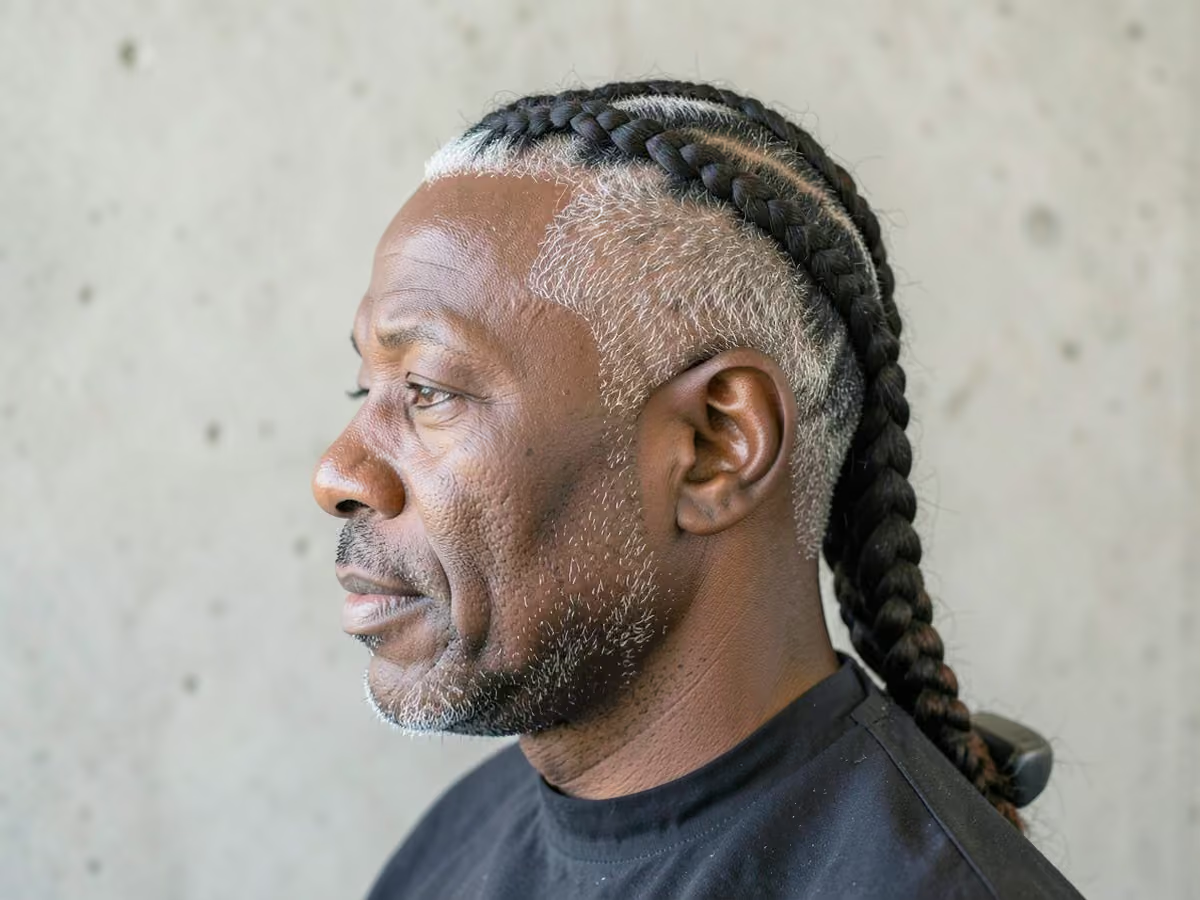
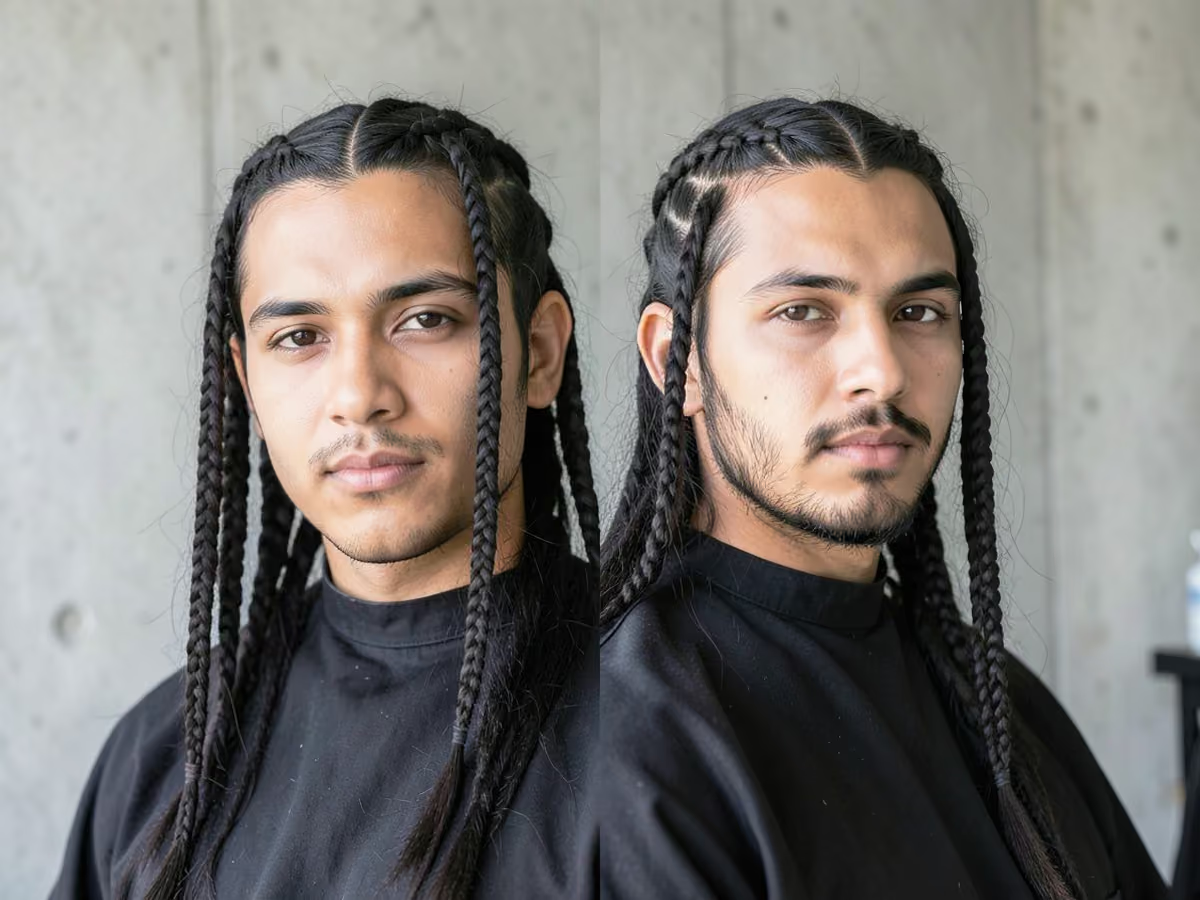
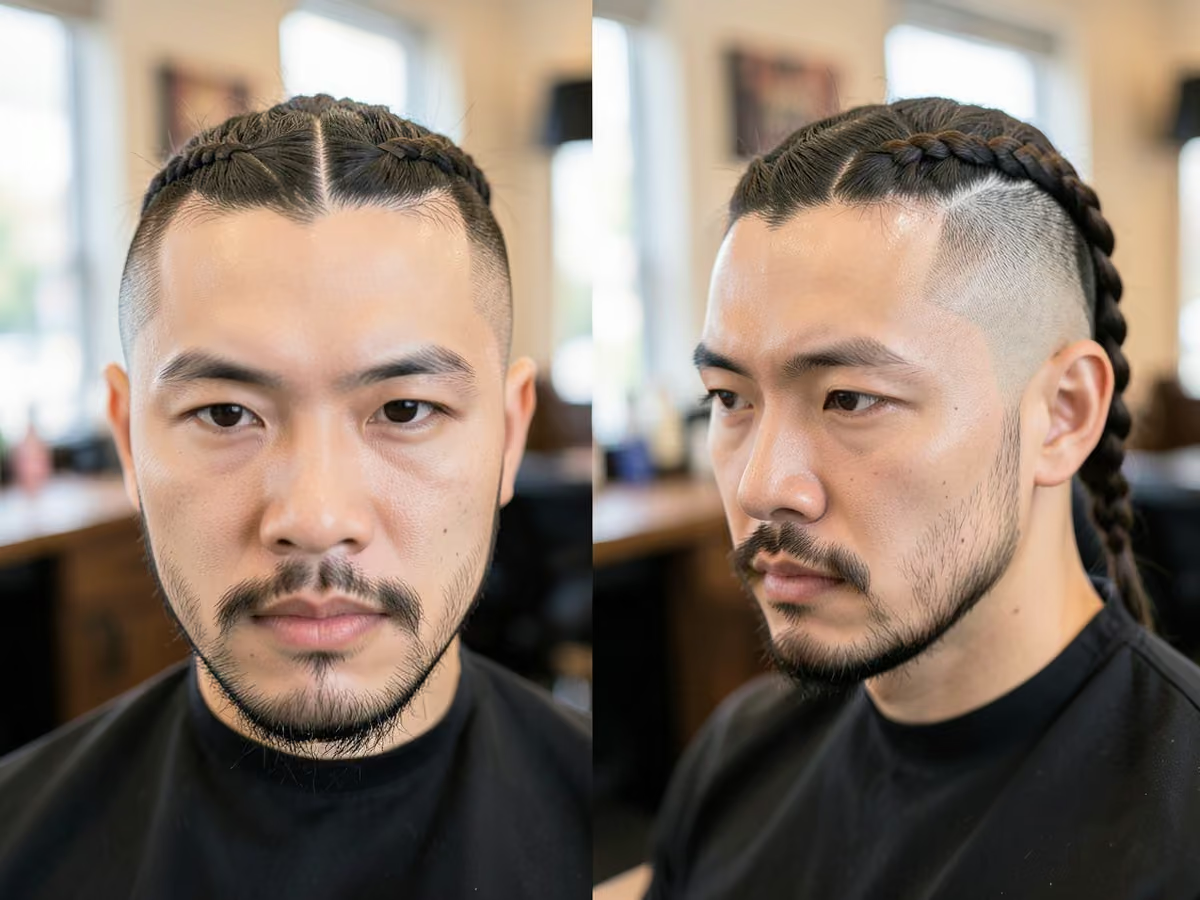
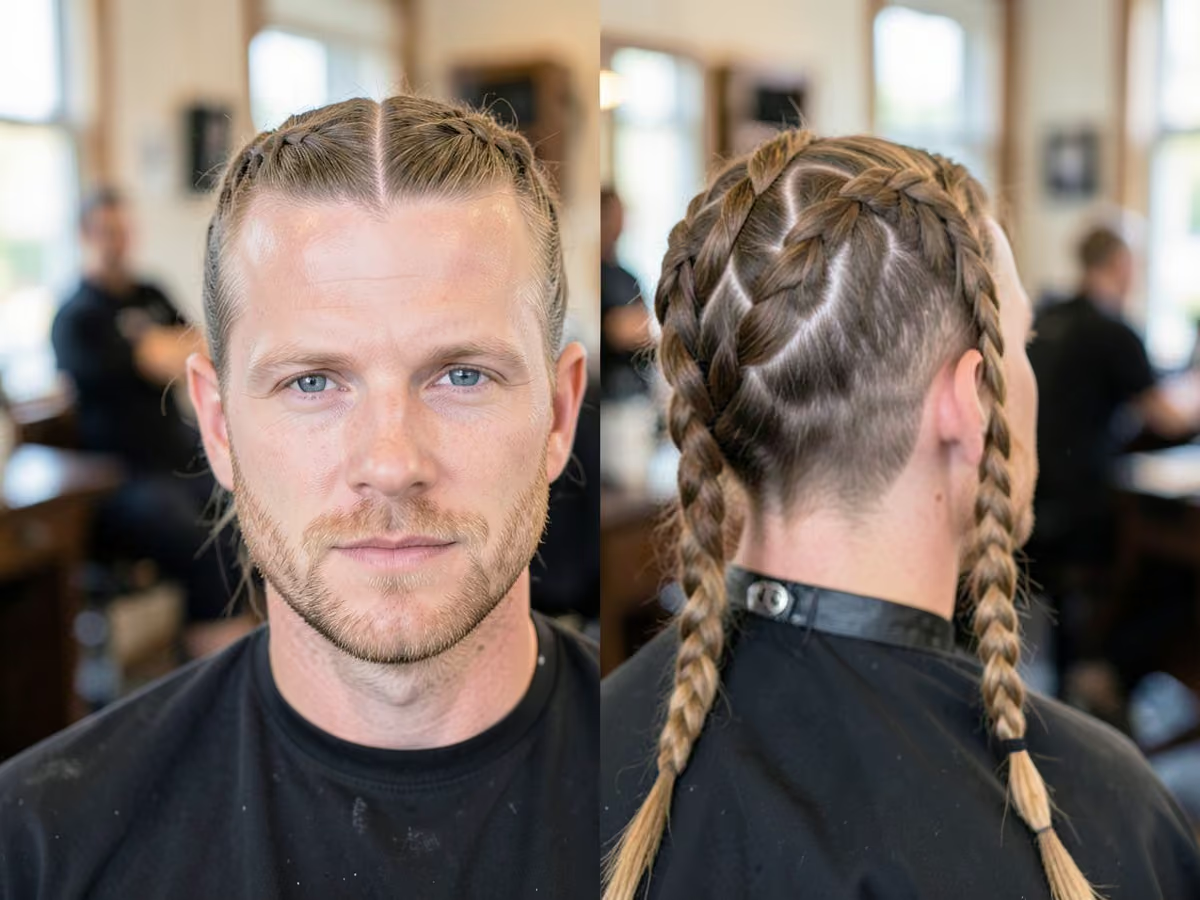
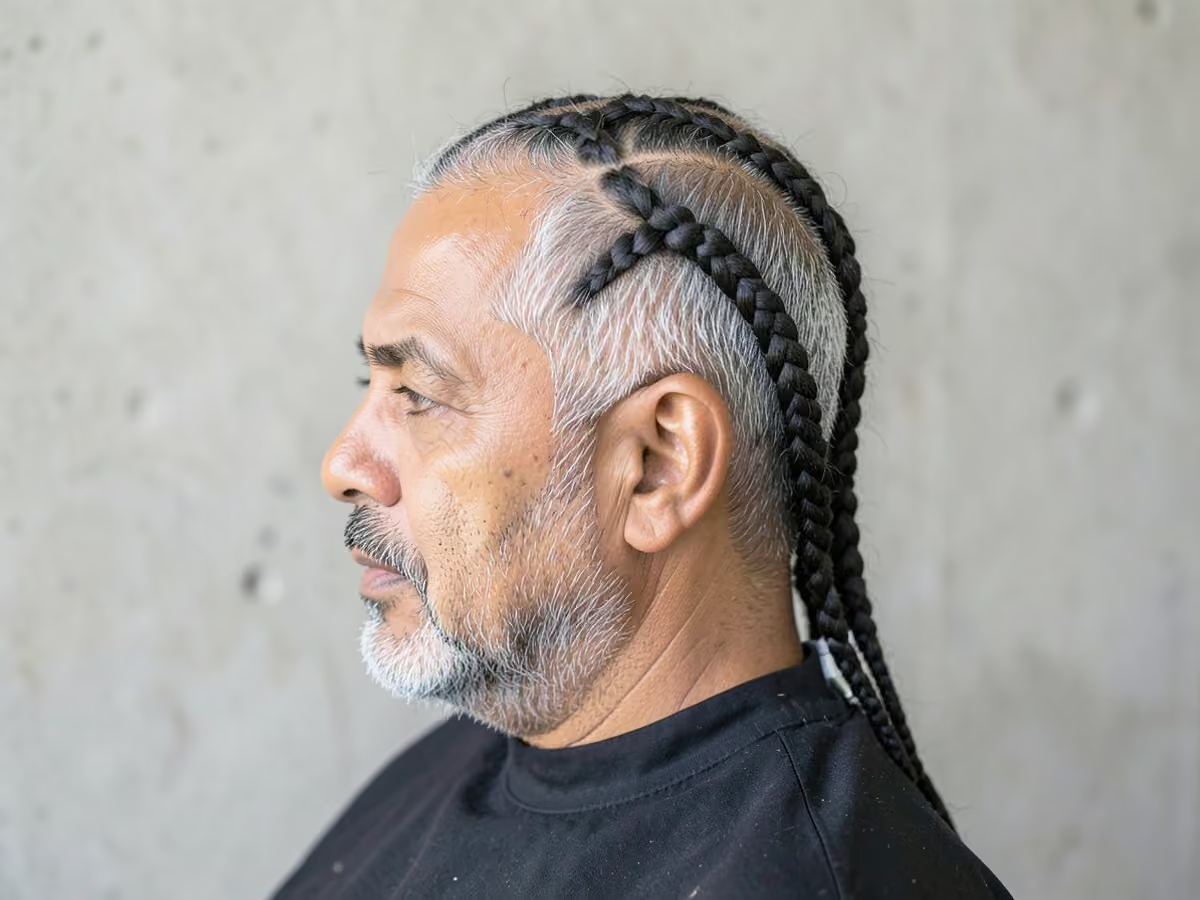
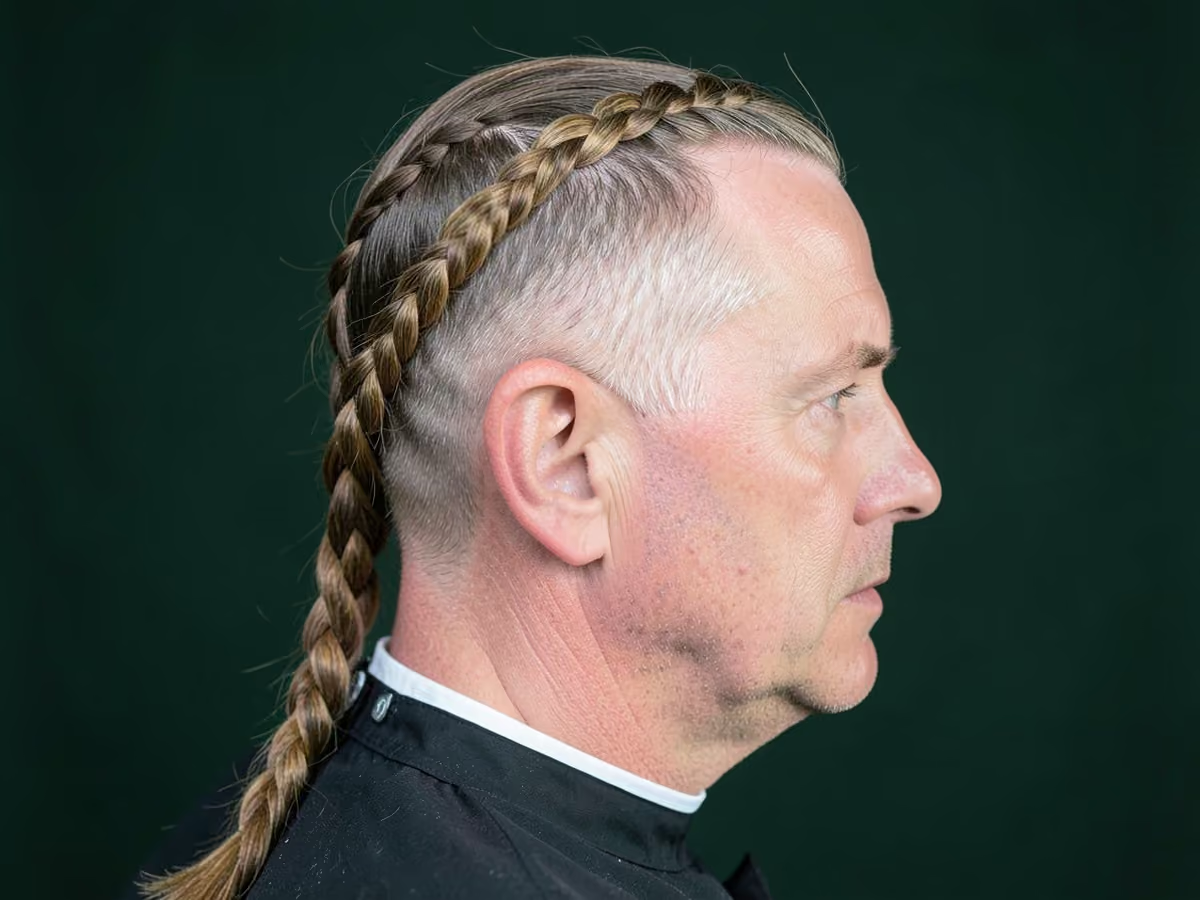
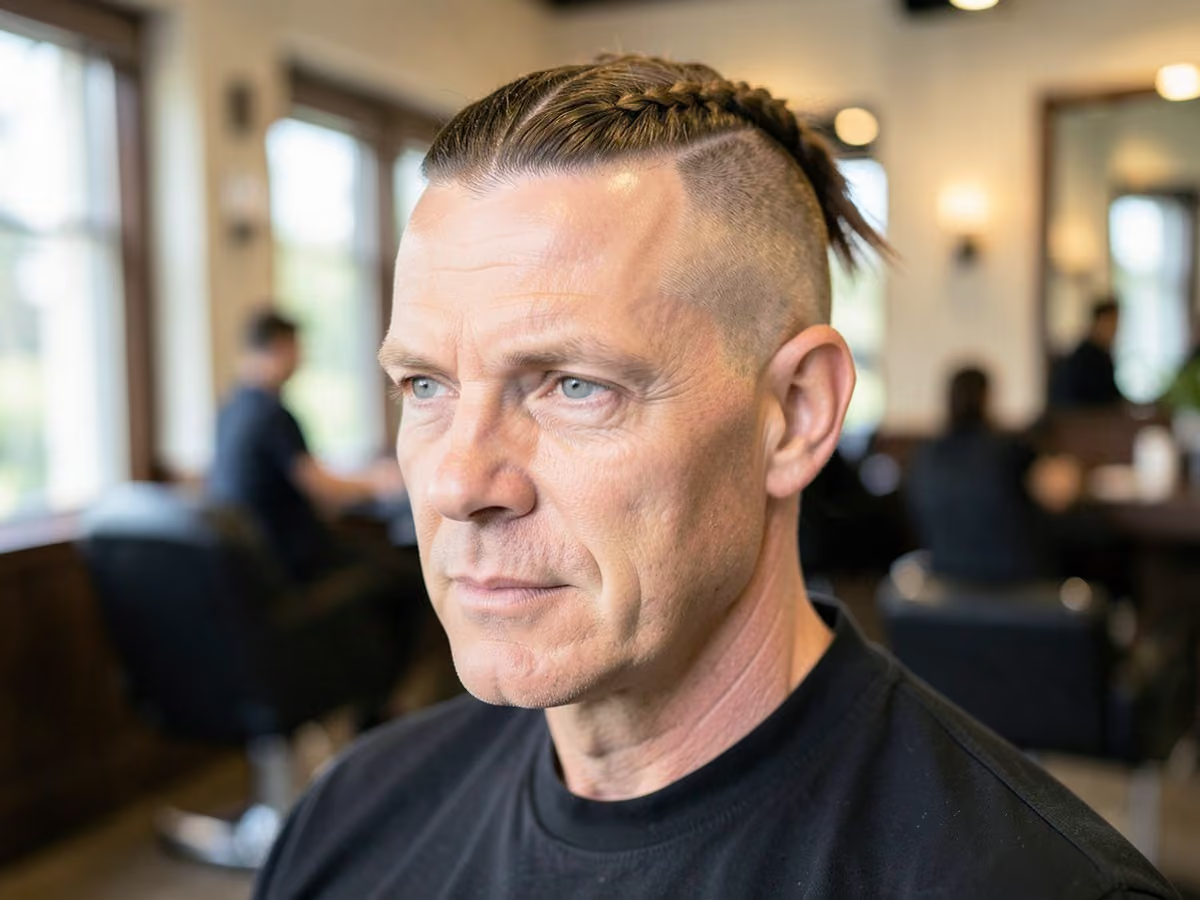
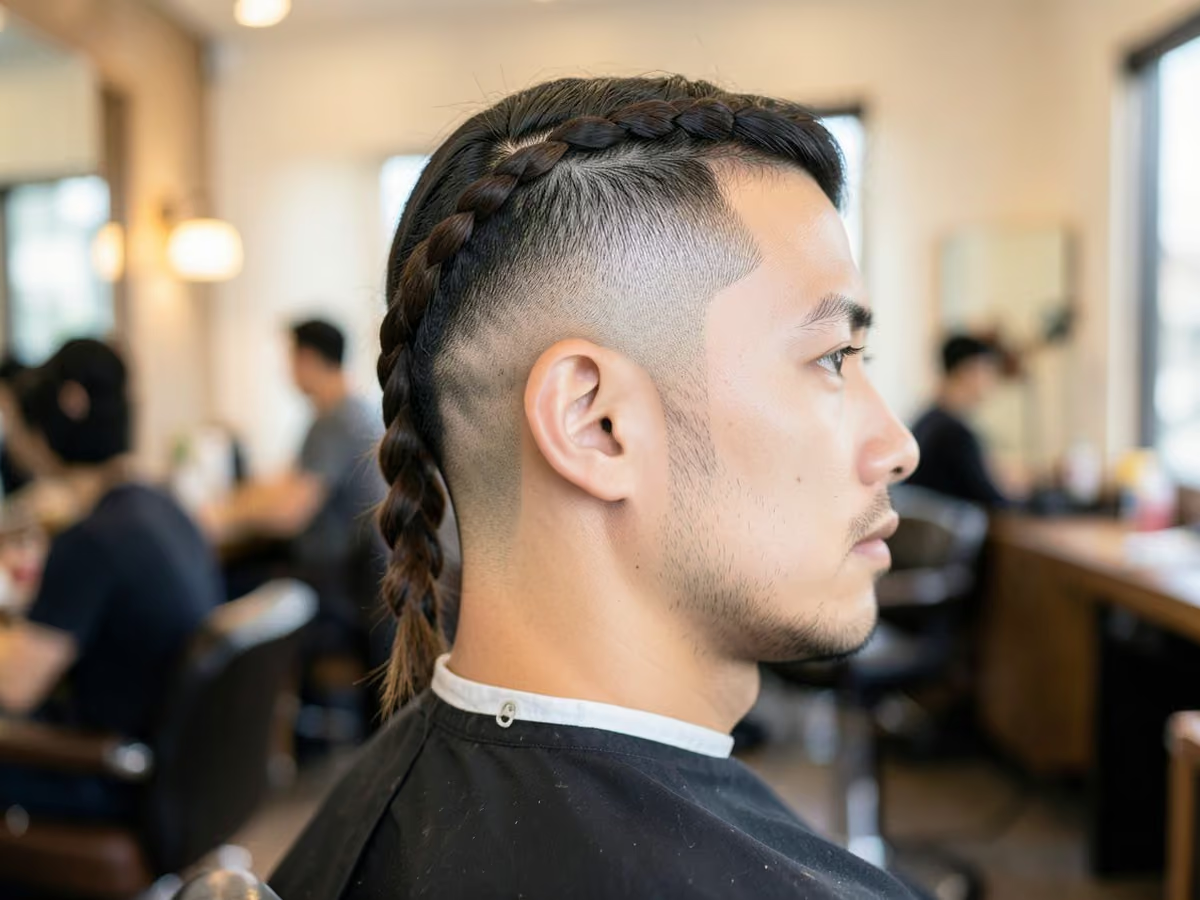
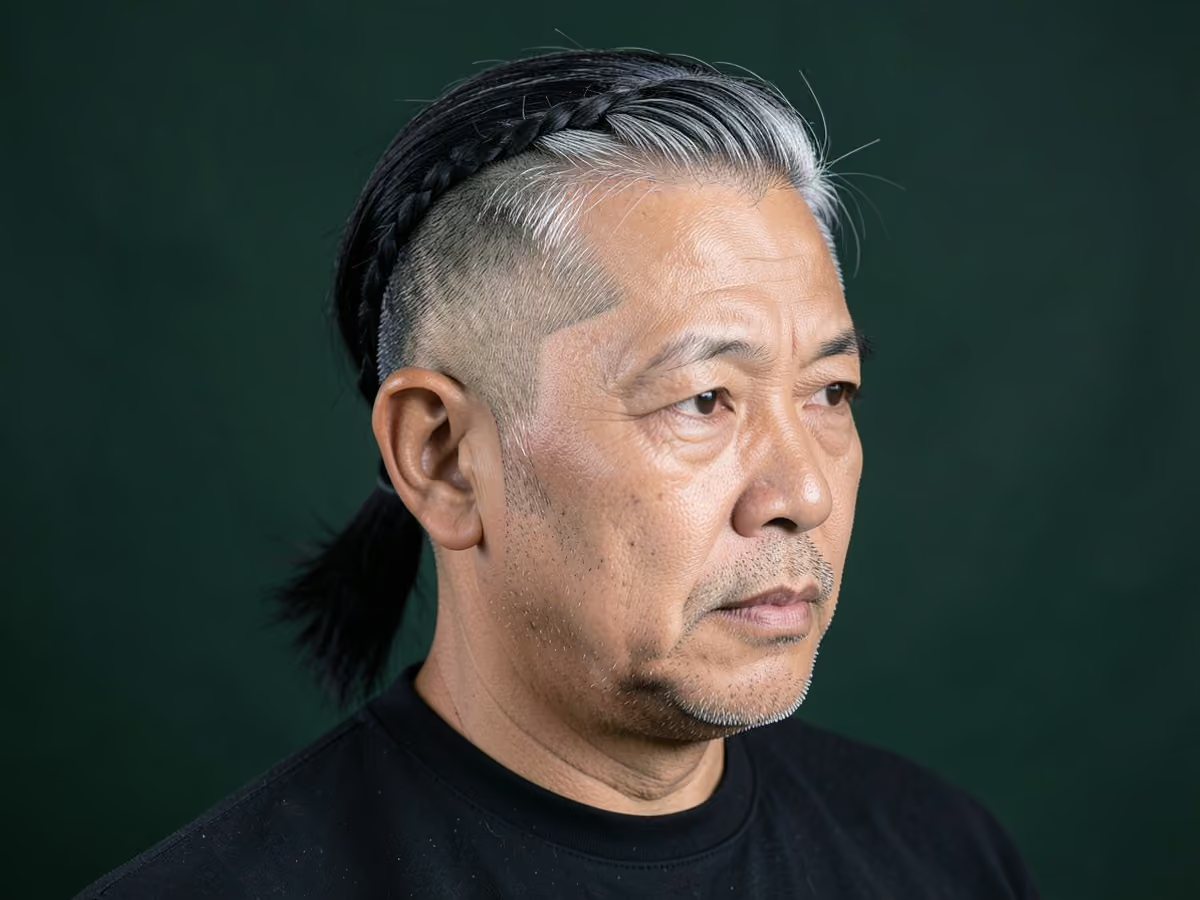
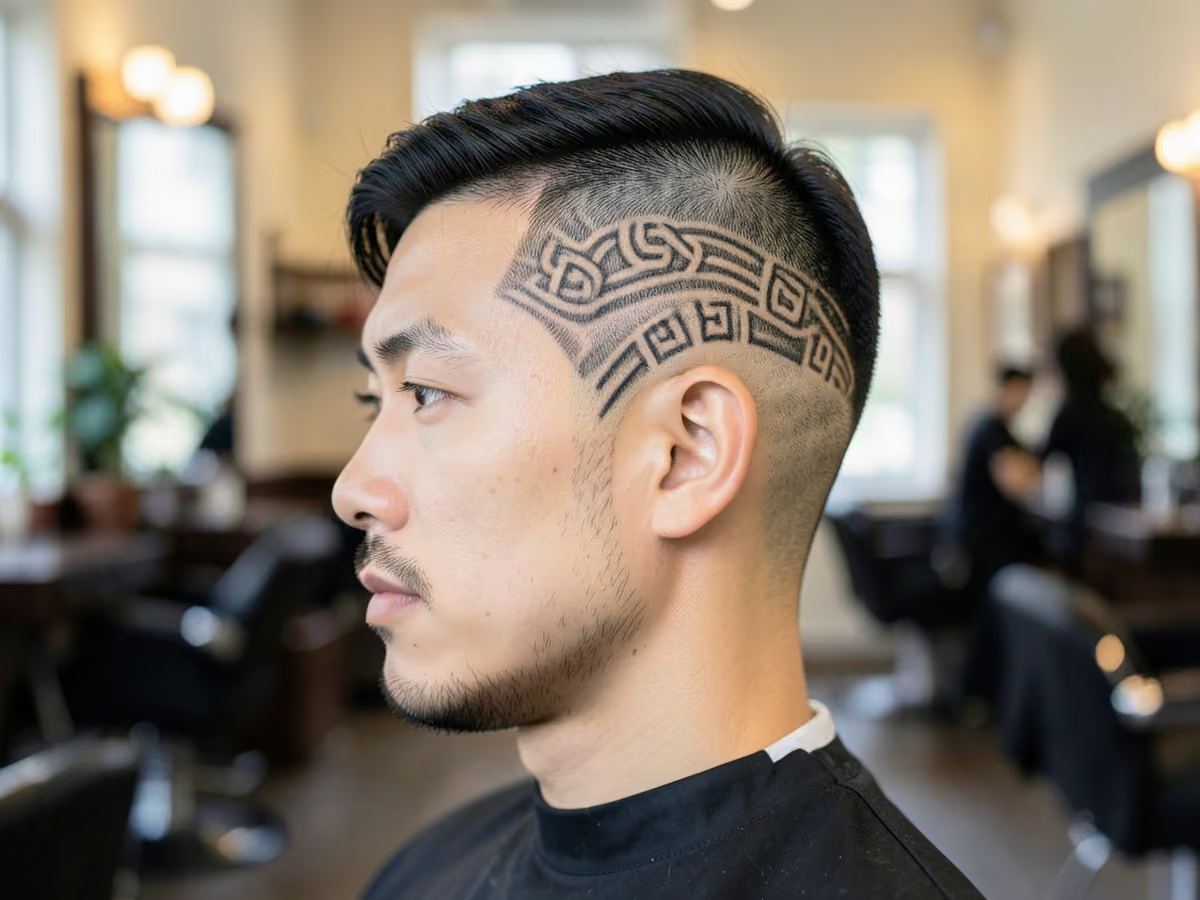
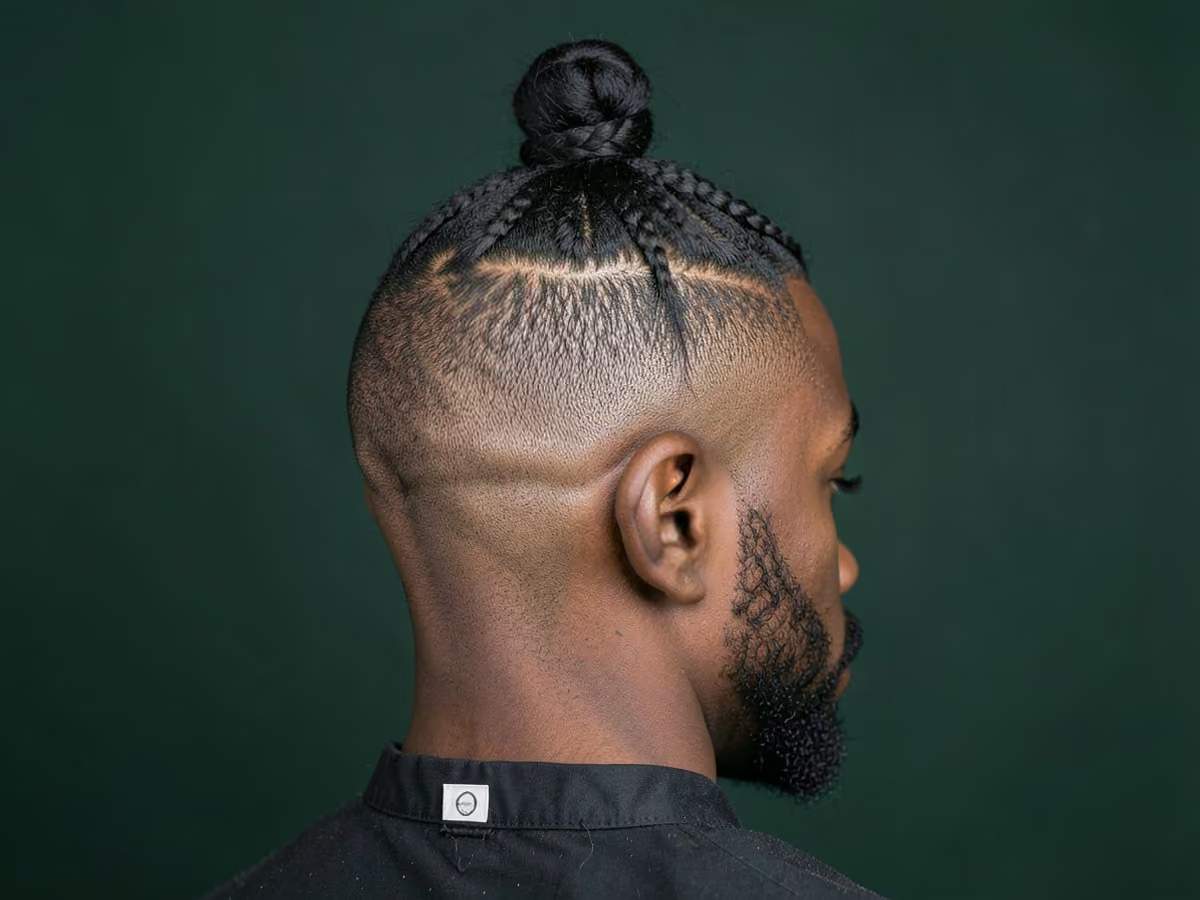
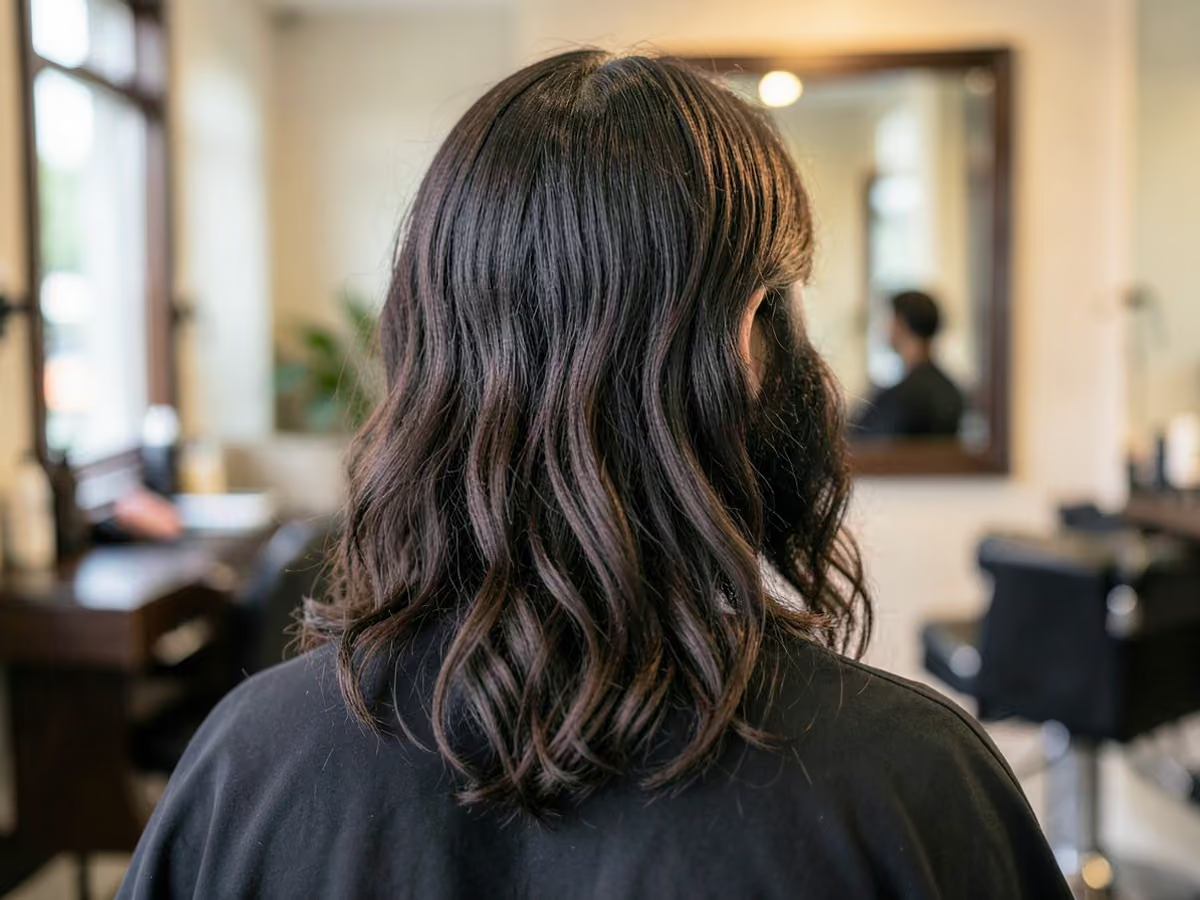
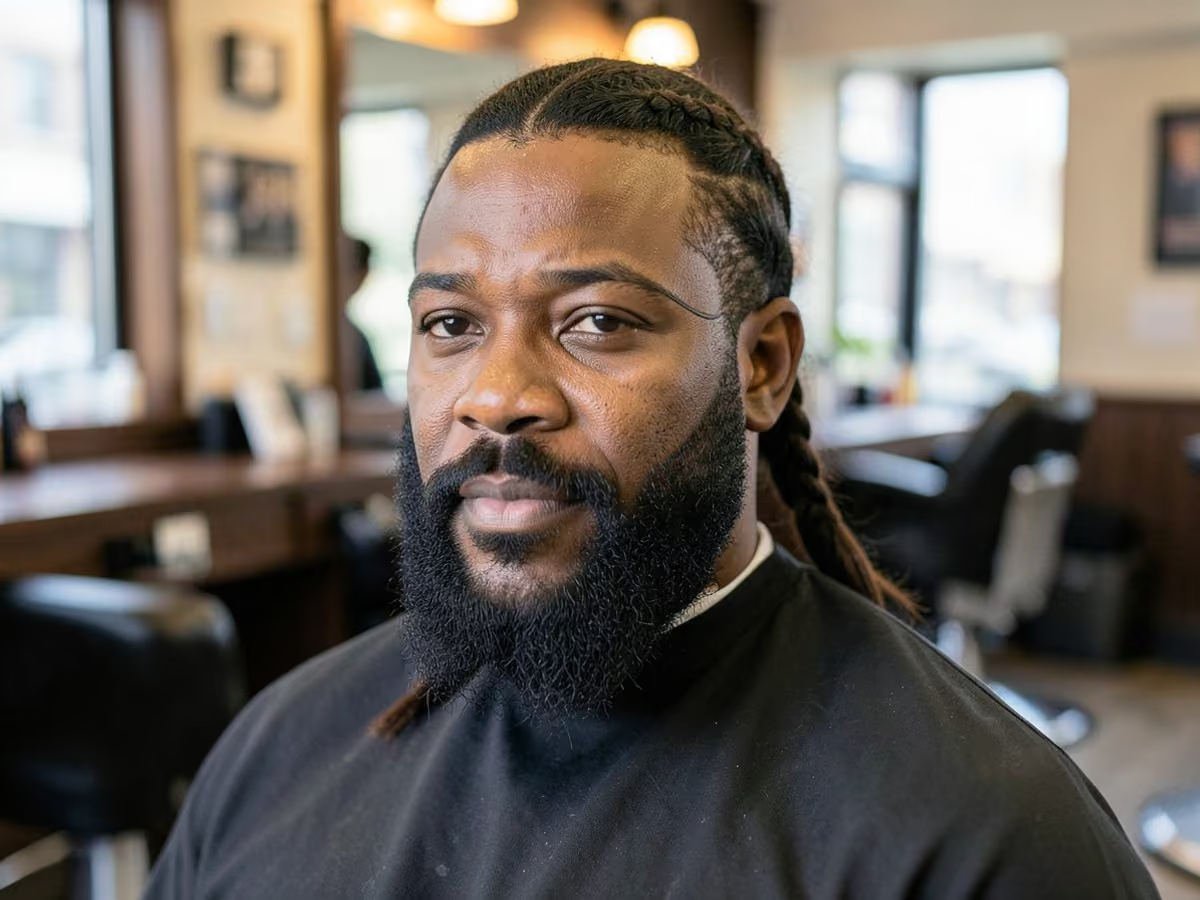
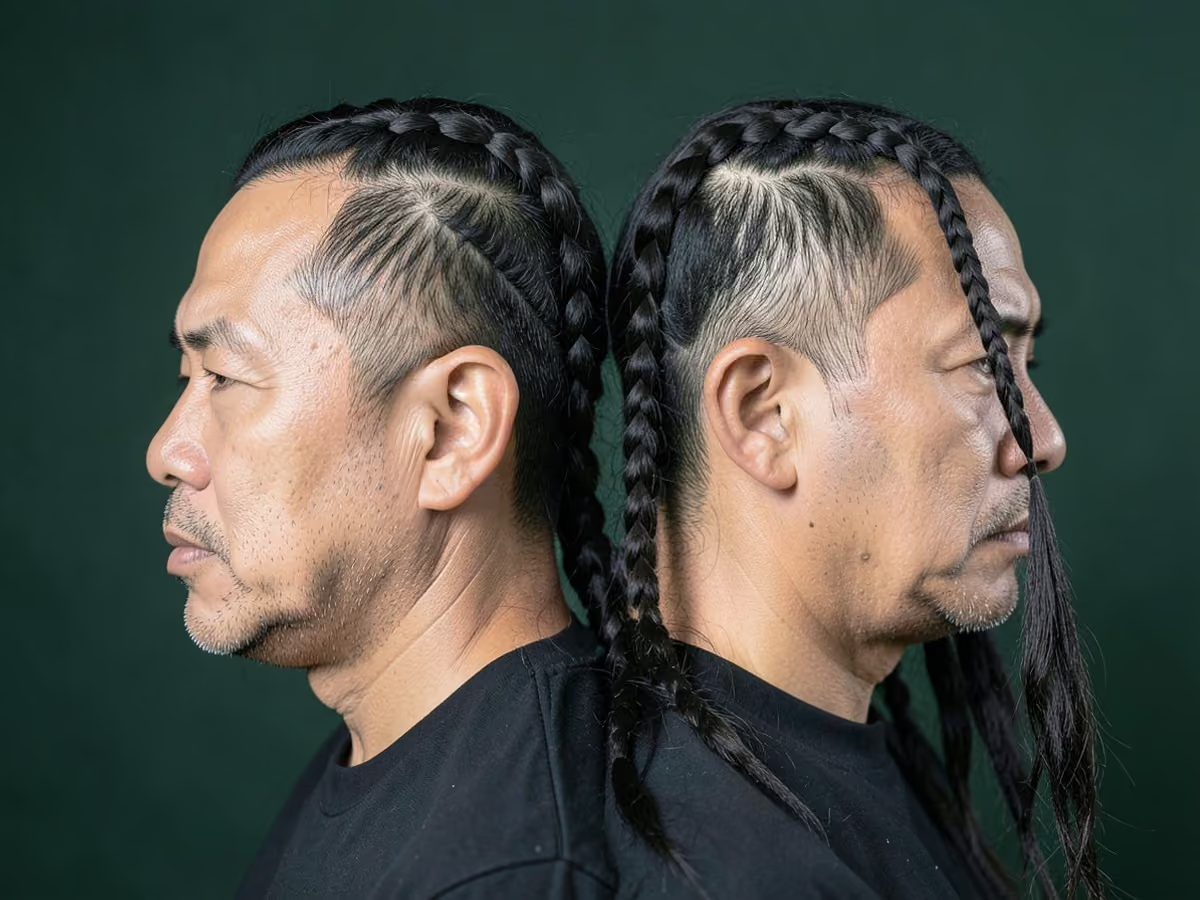
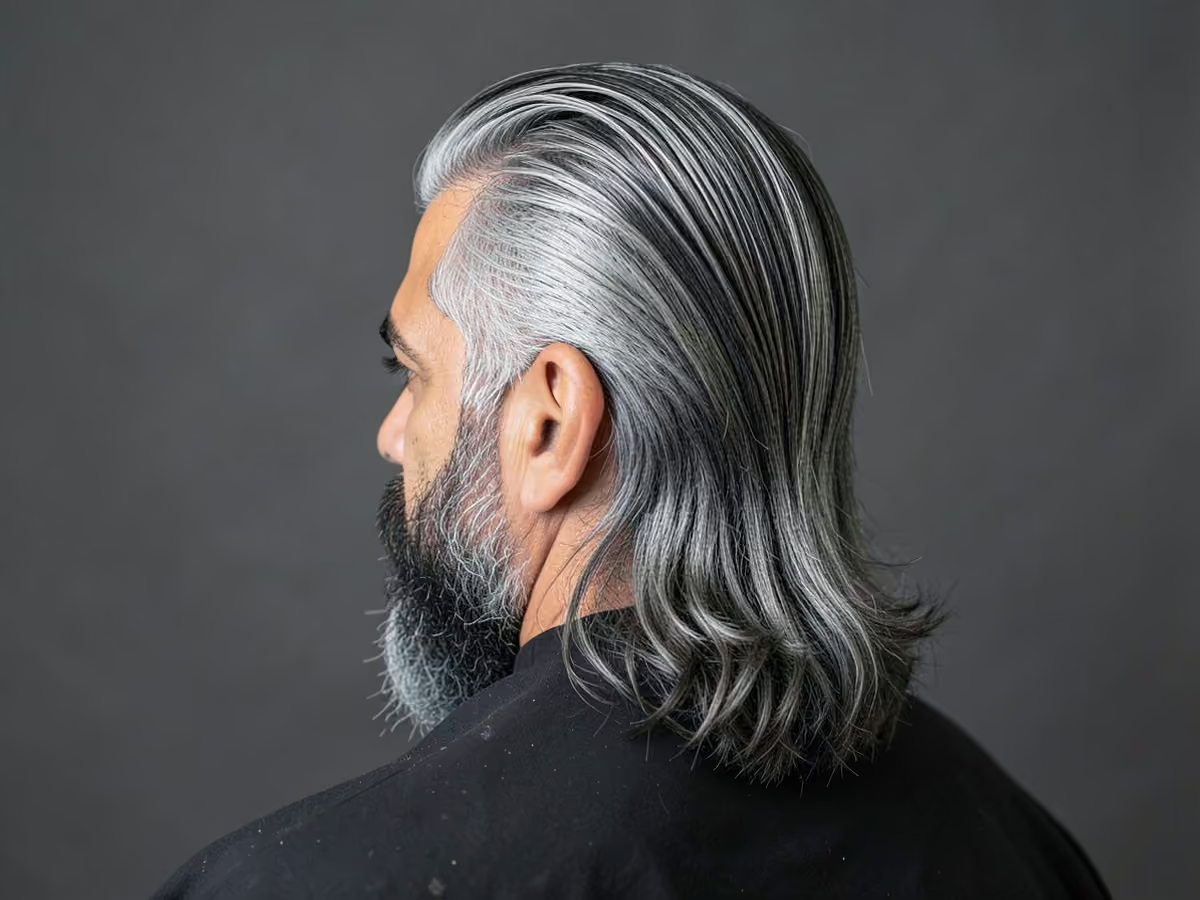
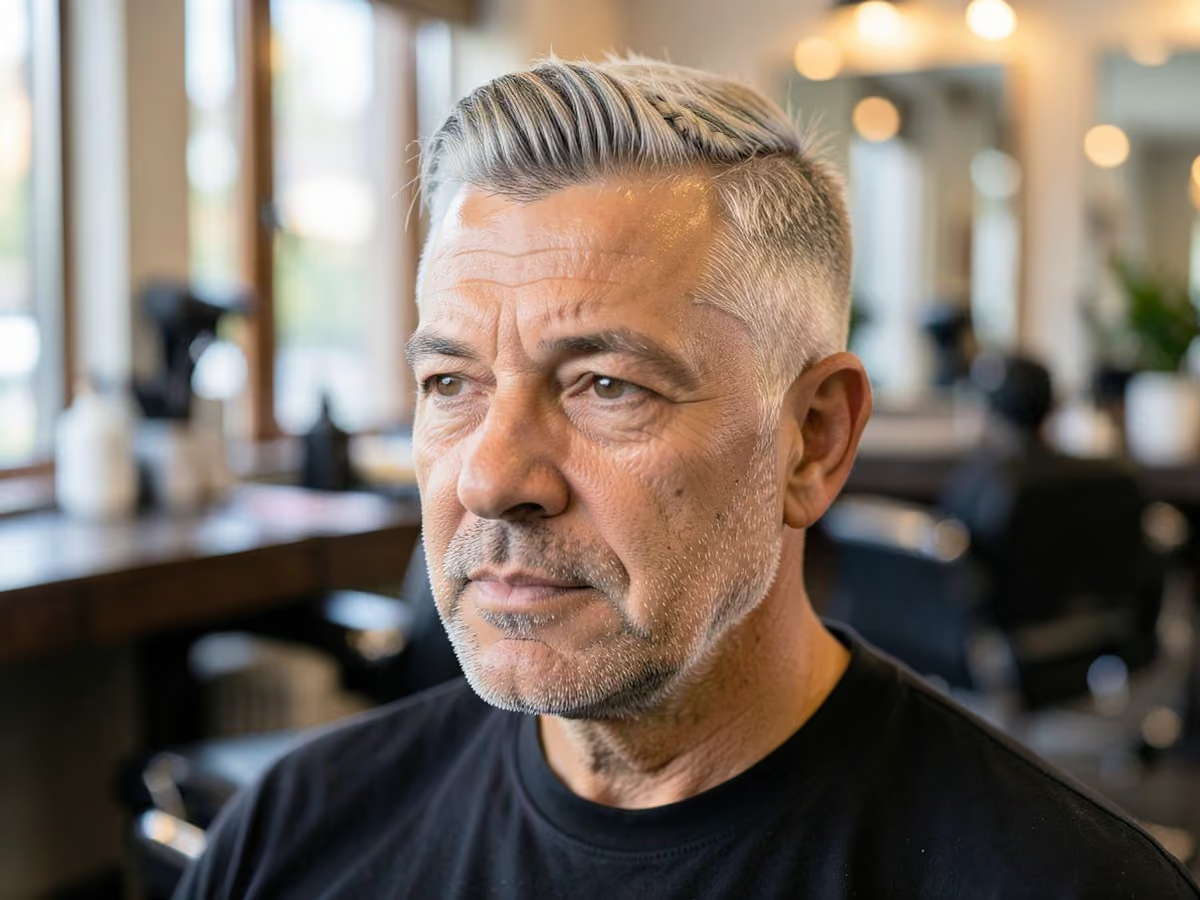
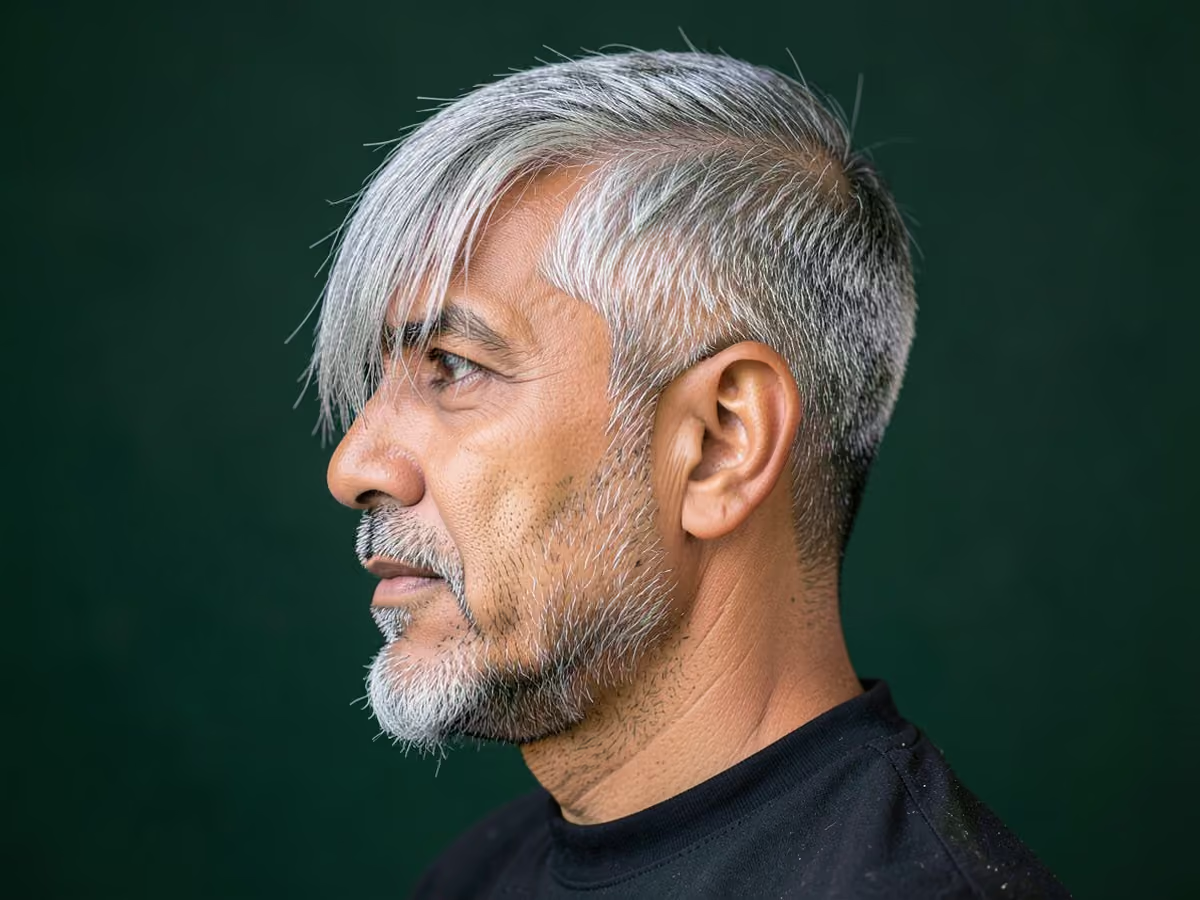
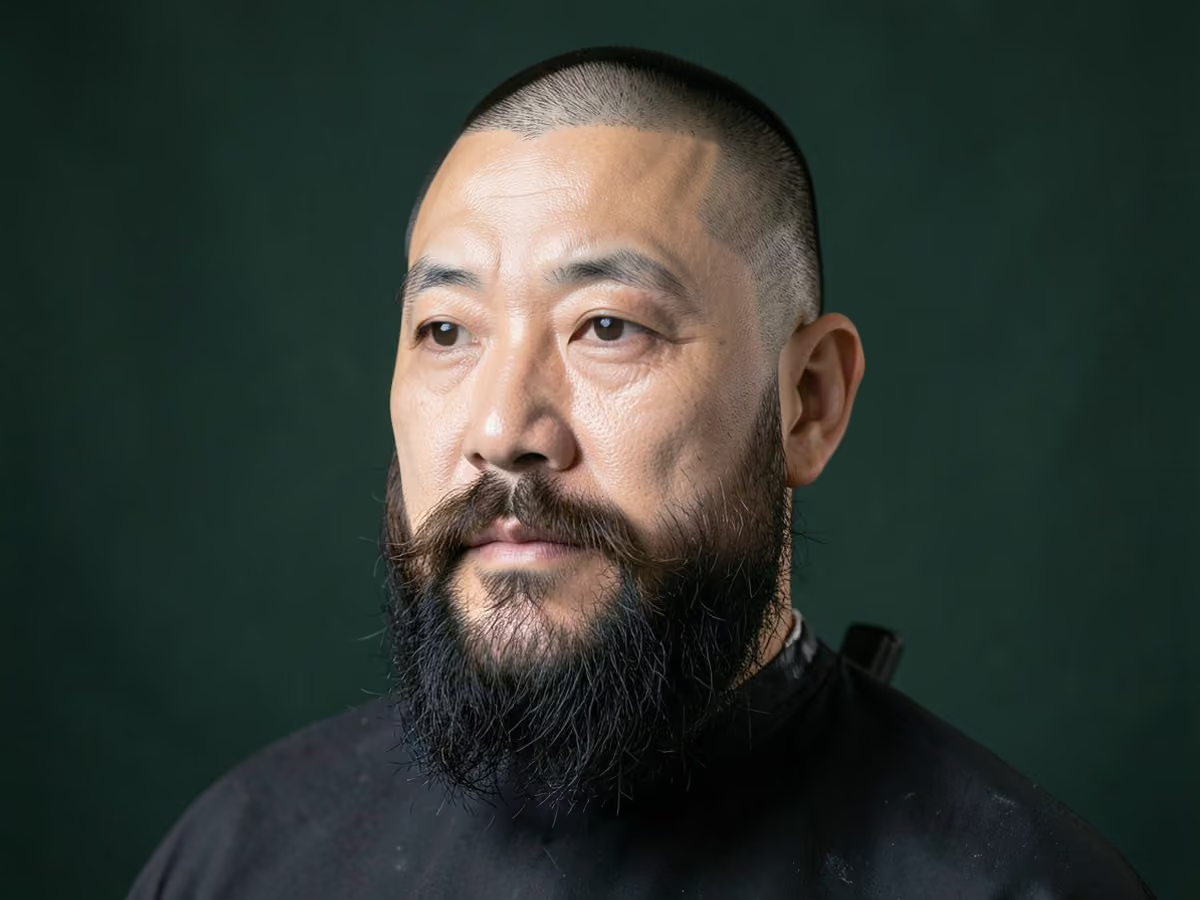
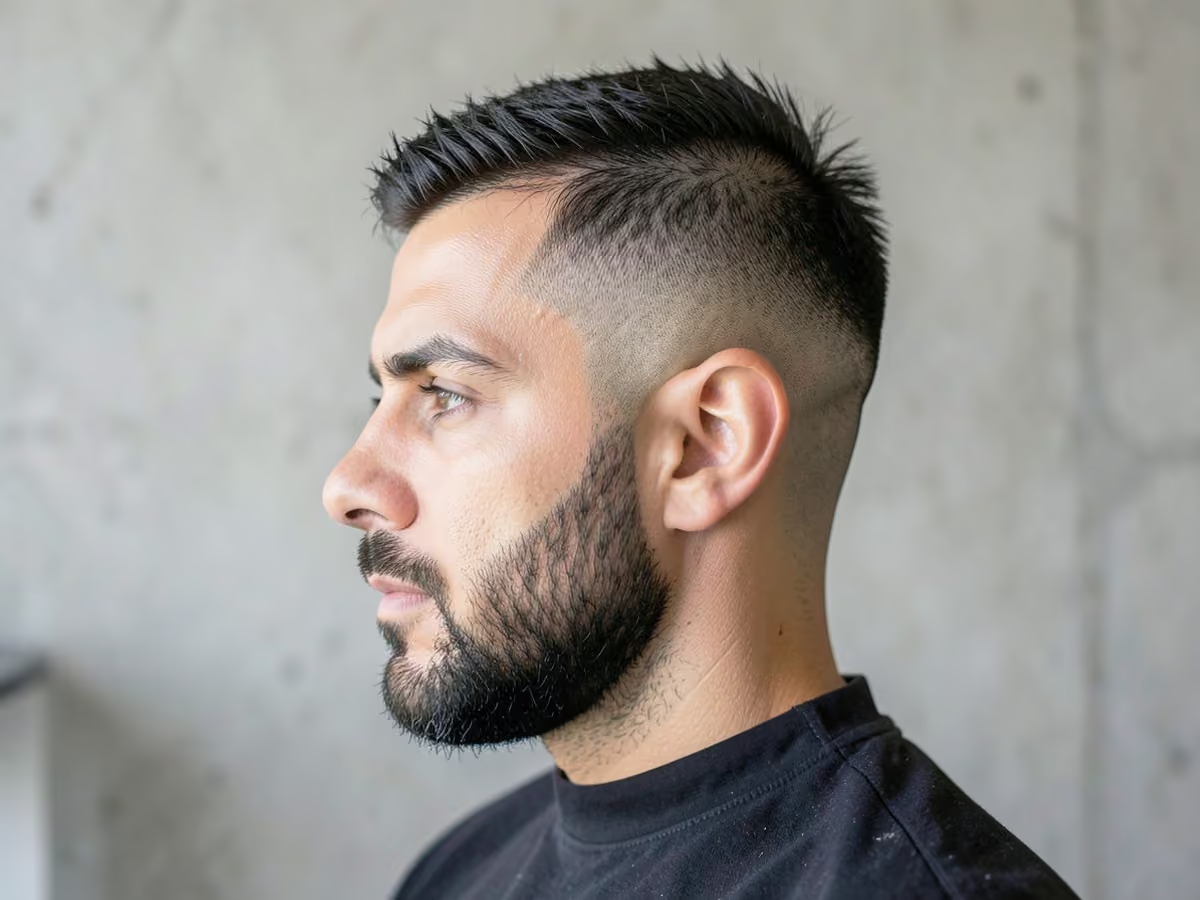
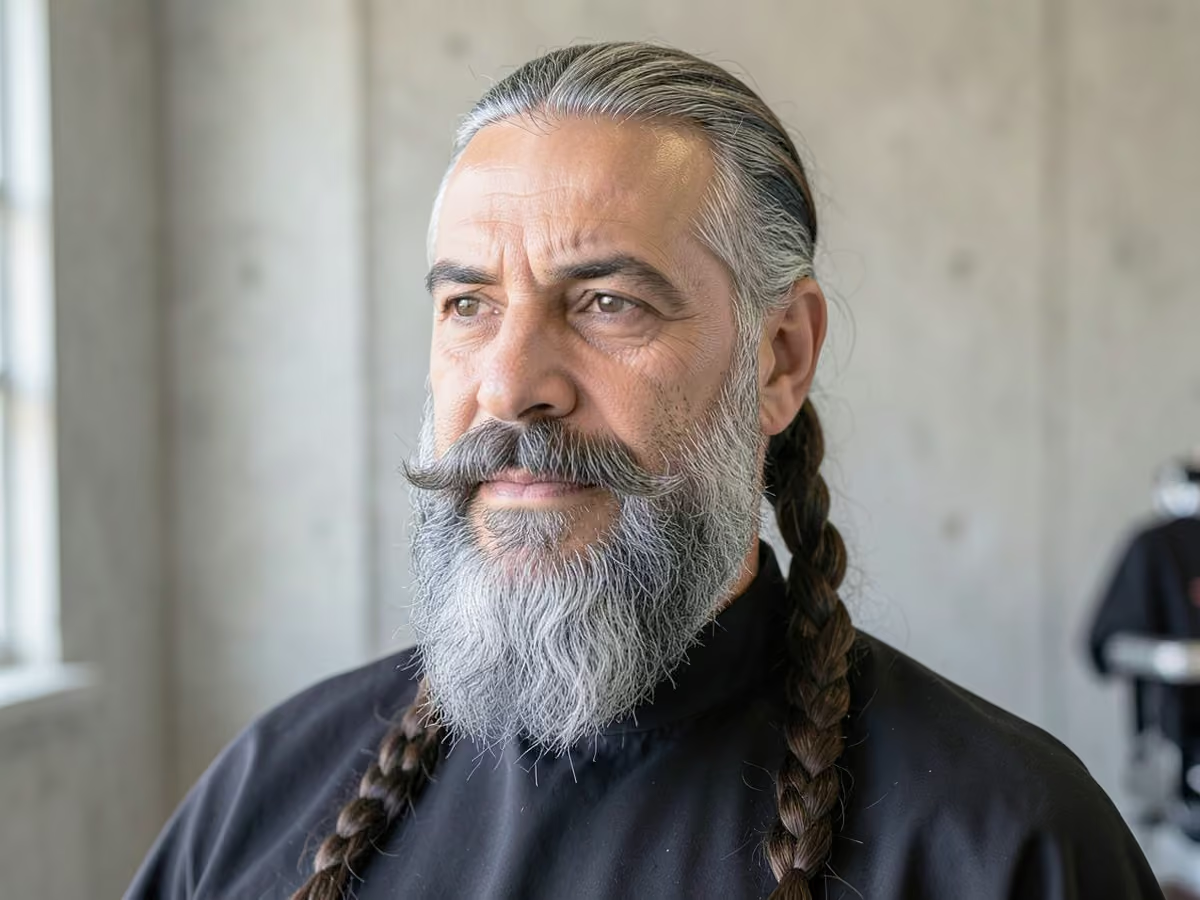
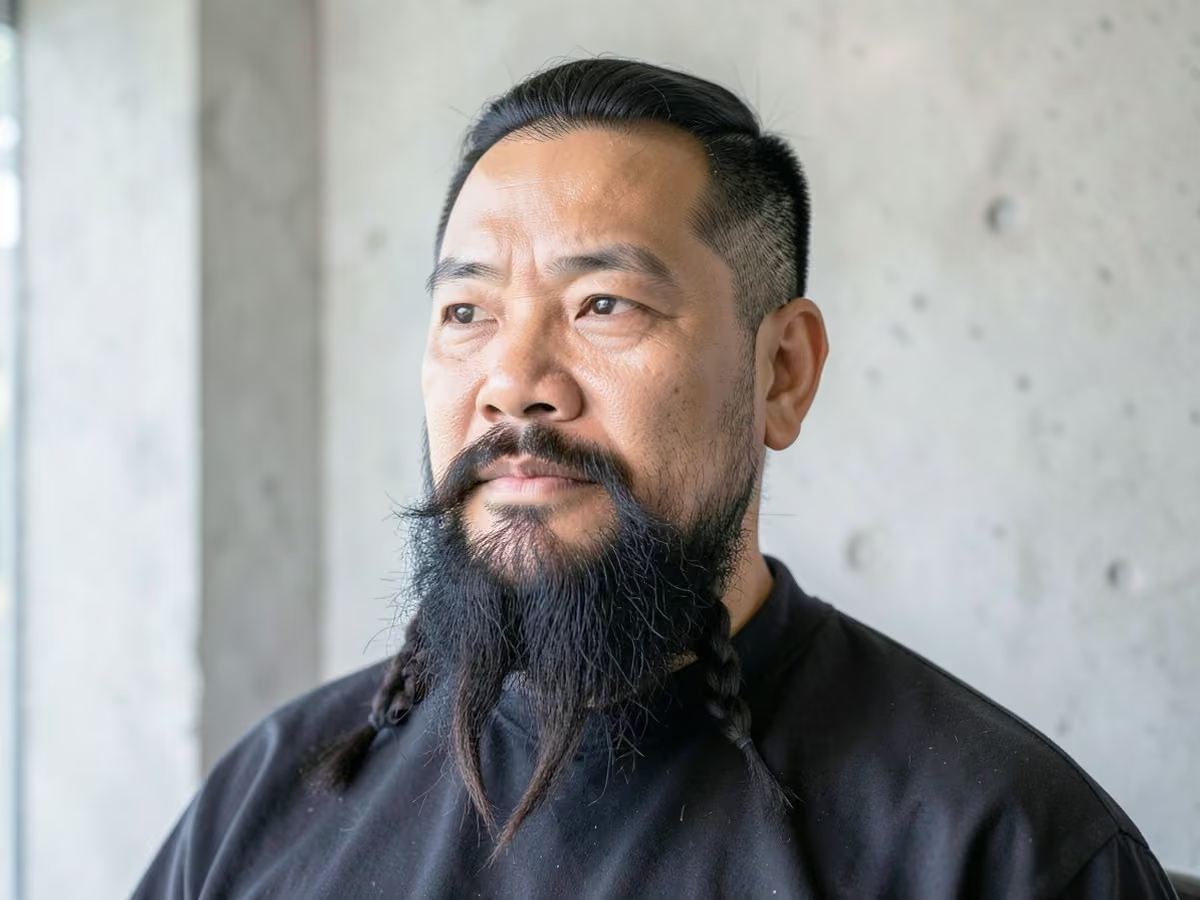
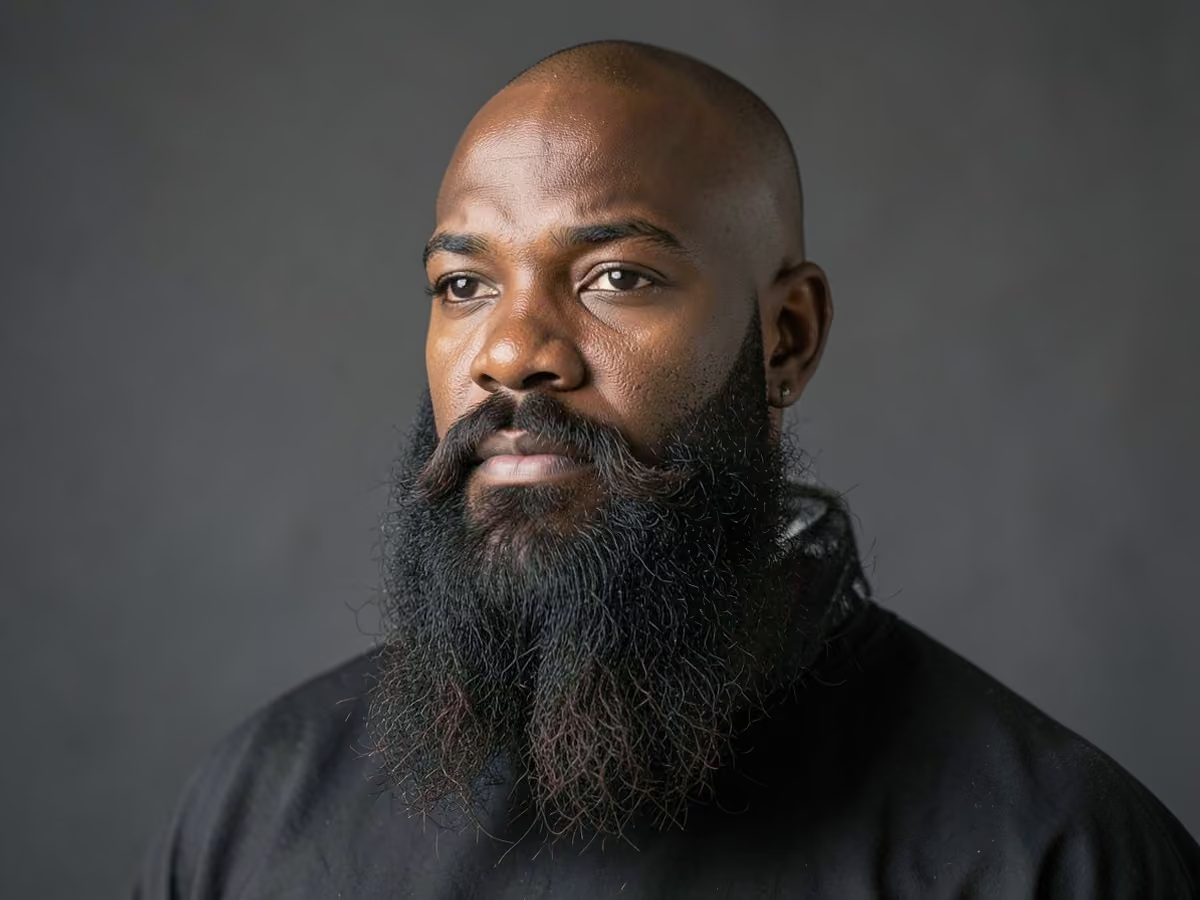
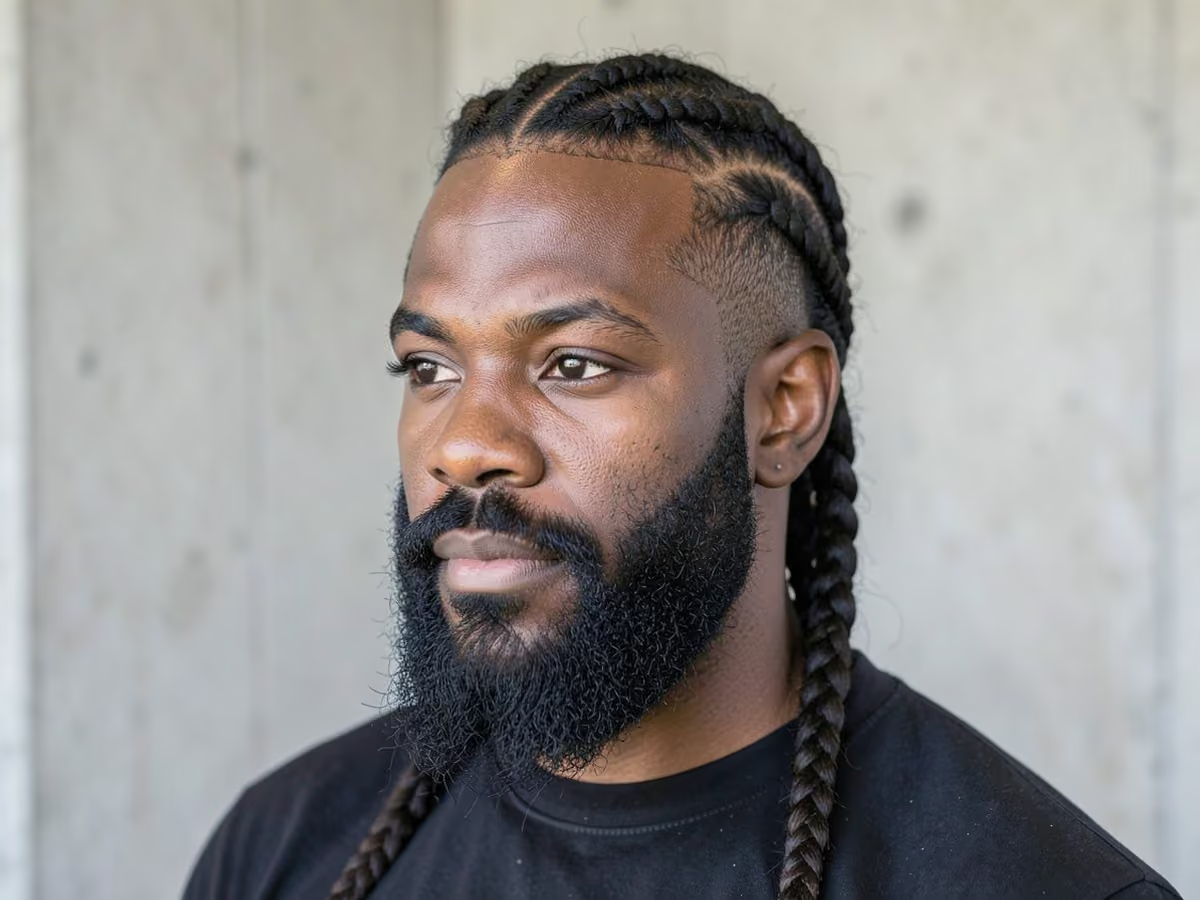
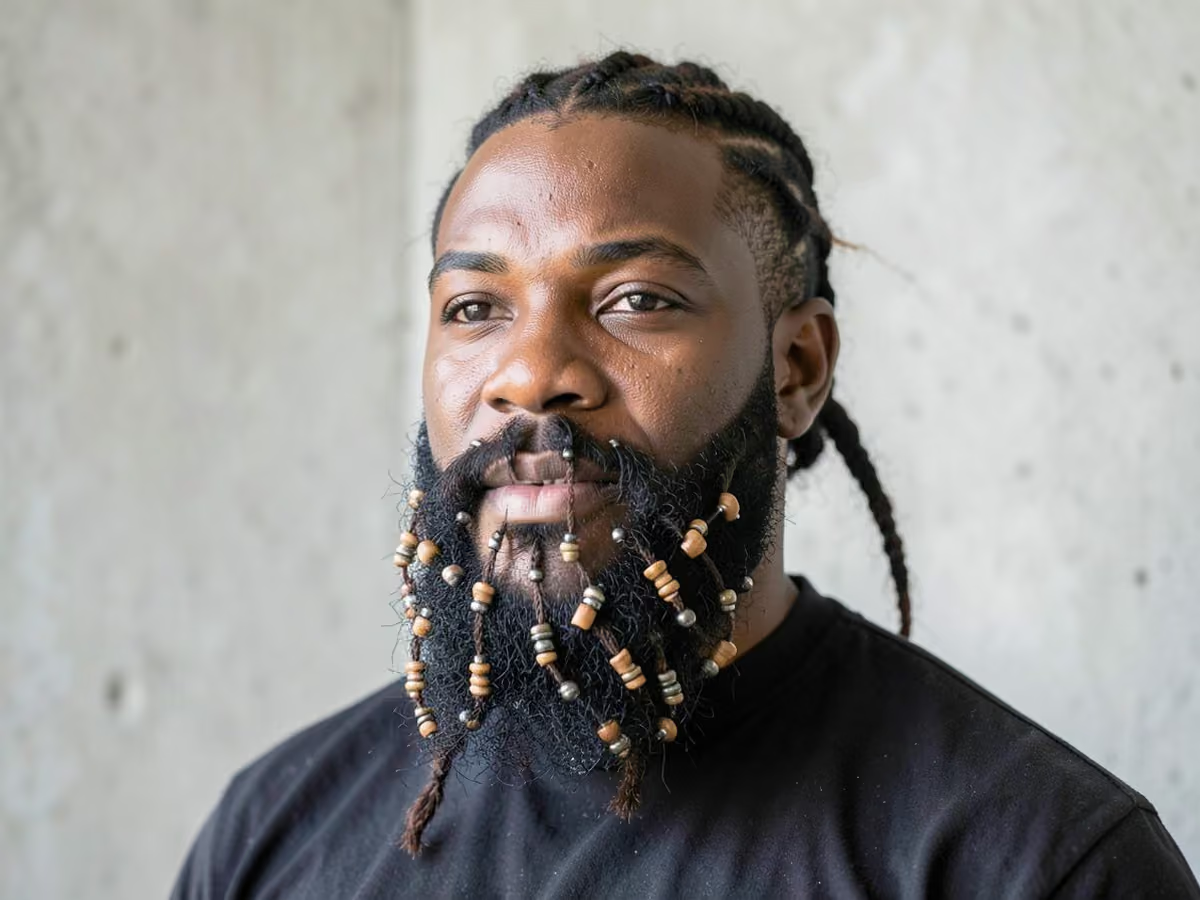
Quick answer: Viking hairstyles for men are long-hair looks built around braids, often with the sides shaved or faded short and a full beard. Common versions are a single braid along the top, side braids over an undercut, a top knot or long loose hair. Most need at least four to six inches on top to braid.
Viking Hairstyles for Men Styles at a Glance
Every style on this page with its clipper guard, top length and trim interval. Tap a name to jump to that card.
Viking hairstyles combine long hair on top, braids of different kinds and, in most modern versions, shaved or faded sides. They borrow loosely from Norse history and heavily from TV dramas and reenactment, so think of them as a style family rather than historical recreations. Below are 25 cuts and braids grouped by braid type, shaved sides, long hair, short options and beard pairings.
What Are Viking Hairstyles?
Today the name covers any men's style that pairs long hair with braids and a rugged finish. The most requested version has the sides clipped or faded short and the top grown to six inches or more, then braided from the hairline to the crown. Others keep all the hair long and add one or two small braids, tie the top into a knot, or slick it back. A full beard, sometimes braided too, usually completes the look.
How Viking-age Scandinavians actually wore their hair is less certain than the modern style suggests. Combs are common finds at Viking-age sites, which points to regular grooming, and a few carvings show long hair and beards. A late Anglo-Saxon letter is often quoted as criticising English men for copying a Danish fashion of bared necks and hair over the eyes, though historians debate how literally to read it. Shaved-side braids owe more to recent TV dramas than to archaeology.
How Do Viking Hairstyles Differ From Regular Braids and Undercuts?
The pieces are familiar: a braids for men style on top and an undercut or fade on the sides. What makes a style read as Viking is the combination and the finish. The braid is usually thicker and looser than cornrows or box braids, often a single Dutch or French braid running back over the crown. Sides tend to be shaved or clipped close rather than blended, and the whole look stays matte and slightly rough.
Length is also different. Many undercuts are styled at four to five inches, but most Viking braids need six to ten inches on top to reach the crown and tie off. That means a growing-out period of several months, during which the sides can be kept short and the top worn slicked back or in a short knot. The table compares the main options so you can see which fits the hair you have now and which to grow toward.
How Do Viking Hairstyles Differ From Regular Braids and Undercuts?
Style
Hair needed on top
Sides
Upkeep
Single top braid
6 to 10 inches
Shaved or #1 to #2
Re-braid every 3 to 7 days
Side braids, long hair
8 inches or more
Long, braided at temples
Re-braid every few days
Top knot with shaved sides
6 inches or more
Shaved or skin fade
Sides every 2 to 3 weeks
Long loose hair
Shoulder length
Long
Trim ends every 8 to 10 weeks
Short Viking cut
2 to 4 inches
Short fade or clipped
Every 3 to 4 weeks
Who Suits a Viking Hairstyle?
Oval, square and oblong faces carry the shaved-side versions best, since the short sides and tall braid add length and the beard adds width at the jaw. Round faces benefit from a high braid or knot that lifts the crown, plus a beard that lengthens the chin. Thick, wavy and coarse hair grips a braid well. Very straight, silky hair slips out of braids more easily, so a little texture powder or matte paste before braiding helps.
The style suits men with time to grow hair and someone, or some practice, to braid it. Shaved sides make the look stronger but also less office-friendly; leaving the sides long lets you wear the hair down for work and braid it for weekends. Men with thinning crowns may find a top braid shows more scalp, so a short Viking cut with a full beard can be the better option. See long hairstyles for growing tips.
Filter the styles
Showing all 25 styles
Fade
Hair
Length
Viking Braid Styles
These six braids are the core of the look. They differ in where the braid sits and how it is woven, from a single Dutch braid to rope twists. See the braids for men gallery for tighter styles.
Trim:Every 2–3 weeks. Sides grow out long before the braid needs work.
Best For:Oval, oblong faces + thick, wavy or coarse hair.
About This Style
A single thick braid runs from the front hairline straight back over the crown, while the sides are clipped short with a #1 or #2. It is the most recognizable modern Viking look. The long strip measures roughly three inches across, so the barber leaves only that section long. You need around seven inches at the front for the braid to reach the crown and look full.
How to Style at Home
Dust texture powder through dry hair to give the strands grip.
Braid from the hairline back, adding hair from each side as you go.
Tie off at the crown and gently pull the edges wider.
Ask Your Barber
"Clip the sides with a #2 up to just below the ridge, disconnected. Leave a strip about three inches wide on top at full length for a braid, only trim split ends."
Trim:Every 8–10 weeks. Long hair only needs its ends trimmed.
Best For:Oval, square faces + long, straight or wavy hair.
About This Style
Here the hair is long all over, often past the shoulders, and two thin braids are taken from the temples and pulled back, either left hanging or tied together behind the head. The rest falls loose. It keeps the face clear without a full updo and reads more historical than the shaved-side looks. Straight hair is easy to braid but may need texture to stop slipping.
How to Style at Home
Brush long hair smooth and part it in the center or to one side.
Braid a thin section at each temple down to the ends.
Tie the two braids together at the back of the head.
Ask Your Barber
"Keep my length past the shoulders, just trim the ends and add long layers so it falls well. No clippers on the sides; I braid the temples myself."
Trim:Every 2–3 weeks. Short sides frame the braid only when fresh.
Best For:Oval, heart faces + thick, straight or wavy hair.
About This Style
Two sections are crossed with thin strands pulled from the outside, creating a herringbone pattern that looks finer and more detailed than a standard braid. Placed along the middle of the head, it pairs with shaved or faded sides. It takes longer to braid and is harder to do on yourself, so many men ask a partner or braider. Thick hair shows the pattern most clearly.
How to Style at Home
Split the top section into two equal halves.
Cross thin strands from the outer edge of each half to the opposite side.
Secure the end and loosen the pattern slightly with your fingers.
Ask Your Barber
"High skin fade on the sides, disconnected, with a strip about three inches wide left long on top for a fishtail braid. Only dust the ends."
Trim:Every 2–3 weeks. Faded sides grow out under the braid.
Best For:Round, oval faces + thick or coarse hair.
About This Style
Strands are crossed under the middle instead of over, so the braid sits raised on the scalp like a ridge. That lift adds height, which helps round faces look longer. It holds better through sport or a helmet than a flat French braid. A mid or high fade on the sides gives the raised braid more contrast. Expect it to last about five days with a satin pillowcase.
How to Style at Home
Section a strip down the center of the top and brush it smooth.
Cross each outer strand under the middle, adding hair each time.
Tie off at the nape or crown and pancake the braid wider.
Ask Your Barber
"Mid skin fade on the sides with a #1 and #2 blend up to the ridge. Leave the top long, about eight inches, for a raised Dutch braid down the center."
Trim:Every 2–3 weeks. The shaved center line needs regular cleaning.
Best For:Oval, oblong faces + thick, wavy or coarse hair.
About This Style
Two parallel plaits travel from hairline to crown, separated by a parting or a thin shaved line down the middle. They frame the head more evenly than one braid and suit wider heads. The sides are usually faded or shaved, and each braid needs about two inches of width. Some men join the braids into a single tail or knot at the crown.
How to Style at Home
Part the top down the center with the tail of a comb.
Braid each half straight back, keeping tension even on both.
Join the ends with one elastic at the crown or leave them separate.
Ask Your Barber
"Skin fade on the sides to just below the ridge. Leave the top long and about four inches wide for two braids, and shave a thin center line between them."
Trim:Every 3–4 weeks. Clipped sides at a #2 grow out slowly.
Best For:Oval, square faces + fine or straight hair.
About This Style
Instead of three strands, two sections are twisted in the same direction and then wrapped around each other in the opposite direction, forming a cord-like rope. It is quicker than braiding and holds better on fine or slippery hair. Used as a single central rope or to finish a ponytail, it suits men learning to style long hair. Clipped sides at a #2 keep upkeep low.
How to Style at Home
Split the top into two sections and twist each one clockwise.
Wrap the two twists around each other counterclockwise.
Secure the end with a small elastic and smooth flyaways.
Ask Your Barber
"Clip the sides with a #2, no skin, up to just below the ridge. Leave the top long for a rope braid, about seven inches, only trim split ends."
Recommended Products
Light Gel
Leave-In
Viking Hair with Shaved Sides
These five cuts focus on what happens below the braid: skin, a disconnected line, a shaved design or a knot. They need a barber every few weeks. The warrior cut guide shows related long-top styles.
Trim:Every 1–2 weeks. Bare sides show stubble within days.
Best For:Oval, square faces + thick, coarse or wavy hair.
About This Style
Both sides are shaved to the skin with a foil shaver or razor up to the temples, leaving a long, wide strip on top that can be braided, tied or worn loose. The contrast is as strong as the look gets. Because the sides are bare, the shape of the head shows clearly, so check for scars or bumps first. Scalp oil and sunscreen protect the shaved skin.
How to Style at Home
Moisturize the shaved sides with scalp oil after showering.
Pull the top back into a braid, knot or low tail.
Apply sunscreen to the bare sides before spending time outdoors.
Ask Your Barber
"Shave both sides to skin up to the temples, no blend, with a clean line where the top starts. Keep the top fully long and about four inches wide."
Trim:Every 2 weeks. The blend softens quickly around the ears.
Best For:Round, oval faces + thick or curly hair.
About This Style
Unlike fully shaved sides, a skin fade blends from bare skin at the bottom through a #1 and #2 up to the braid, so the transition looks gradual. It is the more modern, barbershop version of the look and suits men who prefer a cleaner outline. A high fade lifts the face for round shapes. The top is braided in a single center braid or tied back.
How to Style at Home
Braid the top while it is dry and lightly textured.
Brush the faded sides with a soft brush to settle loose hairs.
Rub a drop of scalp oil into the skin at the bottom of the fade.
Ask Your Barber
"High skin fade blending through a #1 and #2 up to the ridge. Leave the top long, about seven inches, for a center braid. Clean the neckline."
Trim:Every 2–3 weeks. The clipped sides grow toward the top.
Best For:Oval, oblong faces + straight or wavy thick hair.
About This Style
Clipped with a #1 to #3 all around, the sides stop at a hard horizontal line where the long top begins, with no blending at all. When worn down, the top hangs over the line; when tied back or braided, the line shows sharply. It lets men switch between a loose long look and a braided Viking style. Straight and wavy hair both drape well over the clipped section.
How to Style at Home
Wear the top down over the sides for a softer look.
Gather it into a low tail or braid to show the line.
Add matte paste to the top to control flyaways.
Ask Your Barber
"Disconnected undercut, #2 on the sides and back up to a hard line just below the ridge, no blending. Keep the top fully long for braiding."
Trim:Every 1–2 weeks. Designs blur as the hair regrows.
Best For:Oval, square faces + dark, thick hair.
About This Style
Patterns inspired by Norse knotwork, runes or simple parallel lines are shaved into one or both sides with a trimmer. They show best on dark hair against a skin or #0 base. Designs last about a week before regrowth softens them. Keep the shapes simple if you want a barber other than the original to maintain them, and avoid symbols you have not researched, since some carry modern meanings.
How to Style at Home
Keep the design area moisturized with a little scalp oil.
Style the top away from the design so it stays visible.
Book a quick design touch-up every seven to ten days.
Ask Your Barber
"Skin on the sides up to the ridge with a simple knotwork line design above my right ear. Leave the top long for a braid, no blend into the top."
Trim:Every 2–3 weeks. The sides set the schedule, not the knot.
Best For:Round, oval faces + thick, straight or wavy hair.
About This Style
The long top section is gathered and twisted into a small knot high on the crown, with the sides shaved or faded. Sometimes a braid runs from the hairline into the knot. The height elongates round faces and clears hair away for work or training. You need about six inches on top to tie a secure knot; less and it pulls apart during the day.
How to Style at Home
Brush the top section back and up toward the crown.
Twist it into a coil and wrap it into a small knot.
Secure with an elastic and smooth the sides of the knot.
Ask Your Barber
"Skin fade on the sides up to the ridge, top left long, at least six inches, for a top knot. Clean the line between the fade and the knot area."
Recommended Products
Light Gel
Scalp Oil
Long Viking Hair Without Shaved Sides
Not every Viking look needs clippers. These five styles keep the hair long all over and change how it is worn: loose, half-up, wrapped in a braid, slicked or in locs. See long hairstyles for growing tips.
Best For:Oval, square, oblong faces + wavy or thick hair.
About This Style
Shoulder length or longer, worn loose with a center or natural part and a few long layers to keep it from looking heavy. Paired with a full beard, it is the closest to the long-haired Norse figure seen in paintings and films. Wavy hair gives the most natural movement. Little cutting is needed, but regular trims of the ends keep it healthy.
How to Style at Home
Apply leave-in conditioner to the lengths after washing.
Let it air-dry, then rake it back with your fingers.
Smooth the ends with a few drops of argan oil.
Ask Your Barber
"Keep my length at or past the shoulders, long layers so it does not look heavy, center part. Just dust the ends, no clippers."
Trim:Every 8–10 weeks. Only the long ends need trims.
Best For:Oval, heart faces + long, straight or wavy hair.
About This Style
The top and crown are pulled back into a small tail or knot while the lower hair stays loose over the shoulders. Adding a short braid from each temple into the tail gives the Viking feel. It keeps hair out of the face while showing off the length. It works from chin length upward, which makes it a good option during the growing-out stage.
How to Style at Home
Gather hair from the temples to the crown into one section.
Braid two small temple pieces back and join them to the section.
Tie everything at the back of the crown and leave the rest loose.
Ask Your Barber
"Long layers, keep the length past my chin, no clippers on the sides. Remove some weight at the back so the half-up section sits flat."
Trim:Every 8–10 weeks. Long hair needs only its ends trimmed.
Best For:Oval, square faces + long, thick or wavy hair.
About This Style
Starting at one temple, a braid wraps around the back of the head to the other temple, holding the long hair off the face like a band. The hair below the braid hangs loose to the shoulders. It suits work or sport where hair must stay out of the eyes without being tied up. Thick, slightly textured hair holds the wrap best, and pins keep the ends hidden.
How to Style at Home
Take a two-inch section at one temple and start a French braid.
Braid around the back of the head, adding hair from above only.
Pin the end behind the opposite ear and hide it under loose hair.
Ask Your Barber
"Keep my hair at shoulder length with long layers, no clippers on the sides. Trim the ends evenly and remove some bulk at the back so a crown braid sits flat."
Trim:Every 6–8 weeks. Shaped ends keep the slick back neat.
Best For:Oval, oblong faces + straight or wavy medium-long hair.
About This Style
Medium-long hair, around six to eight inches, is combed straight back from the forehead and held with a light hold product, falling behind the ears to the nape. A full beard keeps it in the Viking family rather than reading as a corporate slick back. It suits the stage when hair is too long for a fade style but not yet long enough to braid properly.
How to Style at Home
Comb pomade through damp hair from front to back.
Blow-dry backward with a brush for a smoother finish.
Tuck the side hair behind the ears and let the back fall.
Ask Your Barber
"Medium-long cut, about seven inches on top, to be slicked straight back. Keep the sides long enough to tuck behind my ears, light layers at the back."
Trim:Every 4–6 weeks. Retwist roots and clean the sides.
Best For:Oval, square faces + coily, curly or thick hair.
About This Style
Locs worn long and gathered into a high bun or half-up tail, often with one or two braided locs and metal beads, give a Norse-inspired look on hair that naturally holds locs. The sides can be faded or left long. Historical claims about Vikings wearing locs are not well supported, so this is a modern style. Roots need retwisting about once a month.
How to Style at Home
Retwist new growth at the roots with a little loc gel.
Gather the locs into a high bun or half-up tail.
Oil the scalp between locs once or twice a week.
Ask Your Barber
"Low skin fade around the sides and nape to clean up under my locs, keep all length on top. Line up the front hairline lightly."
Recommended Products
Loc Gel
Scalp Oil
Short Viking Haircuts
These four cuts give a Norse feel without long hair to braid. They rely on clipped sides, a rugged textured top and usually a beard. The crew cut and textured crop guides cover the base cuts.
Trim:Every 3–4 weeks. A messy top hides early growth.
Best For:Square, oval faces + thick, straight or wavy hair.
About This Style
Roughly three or four inches on top is swept back and roughed up with matte paste, with the sides clipped to a #2 and left unblended. A short braid of two or three inches at the front hairline is optional. The look depends on a matte, slightly untidy finish and usually a full beard. It is a good starting point for men planning to grow into a braid.
How to Style at Home
Rub matte paste between your palms and work it through dry hair.
Push the top back with your fingers, leaving it rough.
Braid a small front section if it is long enough.
Ask Your Barber
"Sides clipped with a #2, disconnected, three to four inches on top textured and pushed back. Leave the top uneven so it looks rugged."
Trim:Every 3–4 weeks. The fringe reaches the eyes within a month.
Best For:Oblong, oval faces + straight or thick hair.
About This Style
Inspired by the much-debated description of Danish fashion as bared necks and hair over the eyes, this cut clips the back and nape short and keeps a long, heavy fringe at the front. It is one of the few Viking-themed styles with a written source behind it, though the source is open to interpretation. Today it reads like a long crop with a high nape.
How to Style at Home
Brush the fringe forward while blow-drying on medium heat.
Work a little matte clay into the fringe ends for separation.
Keep the back clipped short and clean at the neck.
Ask Your Barber
"Clip the back and nape short with a #1 up to the occipital bone, sides with a #3, and leave a long, heavy fringe at the front reaching my eyebrows."
Trim:Every 2–3 weeks. Buzz at home; shape the beard weekly.
Best For:Oval, square faces + thinning hair and full beards.
About This Style
The head is buzzed evenly with a #2 or #3 and the beard is grown long and full, at least three or four inches, so the face is defined by the beard rather than the hair. It is a strong option for men with receding hairlines who still want the Viking look. Keeping the beard full at the chin and trimmed at the cheeks lengthens the face.
How to Style at Home
Buzz the head with a #2 or #3 guard every two weeks.
Wash and condition the beard, then apply beard oil.
Brush the beard down and trim stray hairs at the cheek line.
Ask Your Barber
"Even #3 buzz all over, square neckline. Shape my beard to keep length at the chin, about four inches, and clean up the cheek line."
Trim:Every 2–3 weeks. The fade softens after two weeks.
Best For:Round, square faces + thick or coarse hair.
About This Style
A short textured crop of two to three inches sits over a mid fade from a #0.5 to a #2, giving a rough, choppy top that pairs with a beard for a modern Norse look. It is practical for gym, work and helmets. The top is left heavier at the front and slightly uneven. Thick hair gives the best texture without much product.
How to Style at Home
Towel-dry and work matte clay through the top.
Push the front forward and break it into rough pieces.
Oil the beard and brush it to match the haircut shape.
Ask Your Barber
"Mid fade from a #0.5 to a #2, two to three inches on top, choppy and textured with a heavier front. Blend the sideburns into my beard."
Recommended Products
Matte Clay
Beard Oil
Viking Hairstyles with Beards
The beard is half of most Viking looks. These five pairings cover braided, forked and beaded beards, plus a shaved head. The beard shapes for jawlines guide helps choose length and outline.
Trim:Every 2–3 weeks. Shape the outline while the beard grows.
Best For:Oval, oblong faces + long, thick beards.
About This Style
The chin section of a long beard, at least four to five inches, is gathered into a single braid, while the cheeks are kept fuller and brushed down. Paired with a top braid or long hair, it completes the classic Viking image. Coarse beard hair braids more easily than fine hair. Detangle carefully before braiding, since pulling through knots breaks beard hair.
How to Style at Home
Spray detangling spray and comb the beard through gently.
Braid the chin section and secure it with a small elastic.
Smooth the cheek hair down with a little beard balm.
Ask Your Barber
"Shape my beard to keep full length at the chin, at least four inches, tidy the cheek line and neck. Clip the sides of my head with a #2 and leave the top long."
Trim:Every 2 weeks. The split at the chin needs regular shaping.
Best For:Round, square faces + long, dense beards.
About This Style
A long beard is split at the chin into two points, either trimmed into a fork or worn as two small braids. The vertical points lengthen round and square faces. It needs four inches or more at the chin and a dense beard so the two halves look full. A shaved-side top braid or top knot keeps the overall look balanced rather than beard-heavy.
How to Style at Home
Comb the chin hair straight down and part it in the middle.
Twist or braid each half and tie the ends.
Apply beard balm to hold the shape of each point.
Ask Your Barber
"Shape my beard into a fork at the chin with two even points, cheeks kept shorter. Skin fade on the sides of my head, top left long for a knot."
Trim:Every week. Shave the head often; shape the beard biweekly.
Best For:Oval, square faces + balding or thinning hair.
About This Style
A fully shaved or razor-bald head with a long, full beard is a practical Viking look for men who have lost hair on top. All the character comes from the beard, which is grown long, rounded at the chin and slightly rough. Shaving the head every few days keeps the contrast sharp. Sunscreen and moisturizer protect the scalp in all weather.
How to Style at Home
Shave the head every two to three days with a fresh blade.
Moisturize the scalp and apply sunscreen when outdoors.
Oil and brush the beard daily to keep it full.
Ask Your Barber
"Razor shave my head clean. Shape the beard long, about four inches at the chin, natural cheek line, and clean the neck an inch above the Adam's apple."
Trim:Every 2–3 weeks. Both the sides and the beard need shaping.
Best For:Oval, oblong faces + thick hair and full beards.
About This Style
Two or three braids sweep back across the head, the sides are faded or clipped, and a full beard about three inches long connects to the sideburns. The combination is a common modern Viking image. Matching the beard length to the fade height matters: a high fade suits a shorter beard, while long side hair suits a longer one.
How to Style at Home
Braid the top in two or three rows straight back.
Brush the beard with beard oil, following the growth direction.
Trim stray hairs at the beard and fade connection.
Ask Your Barber
"Mid fade on the sides blending into my beard at the sideburns, top left long for braids. Keep the beard about three inches, full and rounded at the chin."
Trim:Every 3–4 weeks. Beads hide some growth; outline still needs work.
Best For:Oval, oblong faces + long beards and long hair.
About This Style
Metal or wooden beads are slid onto small braids in the beard, usually one or two at the chin, and sometimes onto braids in the hair. They add weight and help braids stay in place. Choose beads with a wide enough hole for the braid and remove them before sleeping to avoid snagging. Avoid tight beads near the skin, which can pull.
How to Style at Home
Braid a thin section of beard hair at the chin.
Slide a bead onto the braid and tie off below it.
Remove the beads at night to protect the hair.
Ask Your Barber
"Keep my beard long at the chin for braiding with beads, about five inches, and tidy the cheeks and neck. Long hair on top, just trim the ends."
Recommended Products
Beard Oil
Beard Balm
How Do You Ask Your Barber for a Viking Haircut?
Barbers cut the sides; the braid is usually done by you, a partner or a braider. Tell the barber three things: how short the sides go (shaved, skin fade or a #1 or #2 guard), where the line between sides and top sits (usually just below the parietal ridge), and that the top must not be shortened. Ask for the line to be disconnected, not blended, if you want the classic look, and for the top to stay wide enough to braid.
If your hair is still growing, ask for the sides to be cut now and the top only dusted to remove split ends. Bring a photo of the braid you plan to wear, because a single center braid needs a narrower top strip than two side braids. For beard shaping, the beard shapes for jawlines guide helps choose a length.
Clipper Guards Used in Viking Hairstyles for Men Styles
A clipper guard is the plastic comb that clips onto the blade and sets how much hair is left: a #1 leaves 3 mm (1/8 inch), each step up adds about 3 mm. The right column lists the cards on this page that call for each guard. See the full clipper guard numbers guide for the complete chart.
Clipper guard sizes for viking hairstyles for men styles
Start with clean, fully dry hair that has a little grip; second-day hair or a dusting of texture powder works better than freshly conditioned hair. Brush out tangles, then section the top. For a Dutch braid, cross strands under the middle rather than over, which raises the braid off the scalp. Keep tension even and tie off at the crown with a small elastic. Pull the edges gently to widen it.
Most braids last three to seven days if you sleep on a silk or satin pillowcase. Spray a little leave-in on the braid between washes to stop frizz. Rinse shaved sides with the rest of your hair, and moisturize them with scalp oil, since bare skin on the sides dries out. Learning to braid takes a few attempts; practising on a ponytail first is easier than working on your own head.
What Upkeep Do Viking Hairstyles Need?
Shaved or faded sides need a barber every two to three weeks, or a home clipper session weekly if you keep them at skin. Long hair on top only needs its ends trimmed every eight to ten weeks. Tight braids worn every day can pull at the hairline, a risk called traction alopecia, so change the braid position and give the hair a rest day each week. If you notice thinning at the temples, see a doctor or dermatologist.
Beards need similar care: wash, oil and brush daily, and trim the outline every week or two so the neckline and cheeks stay tidy while the length grows. Braided beards need at least four inches of length and tangle more easily, so detangling spray and a wide-tooth comb are worth having. Remove beads and elastics before sleeping. Our beard growth stages guide shows how long each length typically takes to grow in.
Which Viking Hairstyles for Men Is Right for You?
Pick your hair type and how much upkeep you will put in. The matches below come from the Best For and Maintenance notes on each card. Upkeep follows the Maintenance badge: low means a cut every 3 to 6 weeks and almost no daily styling, high means weekly line-ups or daily product.
The evidence is limited. Combs are common finds at Viking-age sites, and some carvings show long hair and beards, but there is little direct proof of specific braided styles. Written sources were mostly produced by outsiders or centuries later. Modern Viking braids draw mainly on TV dramas, reenactors and fantasy art, so treat them as inspired by history rather than copied from it.
Q2: How long does hair need to be for a Viking braid?+
A single braid along the top needs about six inches at the front to reach the crown and tie off, and eight to ten inches looks fuller. Side braids on fully long hair need eight inches or more. If your hair is shorter, keep the sides shaved and grow the top for three to six months first.
Q3: What is the Viking haircut with shaved sides called?+
Most barbers call it a disconnected undercut or shaved sides with a braid. Ask for the sides shaved or faded to skin up to just below the parietal ridge, with no blending into the top, and leave the top at full length. The braid on top is styled separately, usually by you or a braider.
Q4: Can you do Viking braids with short hair?+
Only small braids. With three to four inches on top, a short braid can run from the front hairline a few inches back, or two tiny braids can sit at the temples. For very short hair, a short Viking cut with clipped sides, textured top and full beard gives the look without braiding.
Q5: How do you keep a Viking braid in overnight?+
Sleep on a silk or satin pillowcase or wear a durag or silk scarf to reduce friction. Tie the end with a small elastic that does not snag, and avoid braiding wet hair, which can stretch and frizz as it dries. Most braids look neat for three to seven days before they need redoing.
Q6: Are Viking hairstyles allowed at work?+
It depends on the employer. Long hair tied back is accepted in many workplaces, while fully shaved sides and beads are less common in formal settings. Check your dress code first. Keeping the sides at a #2 and the braid low and neat reads more conservative, and the hair can be worn down or in a bun when needed.