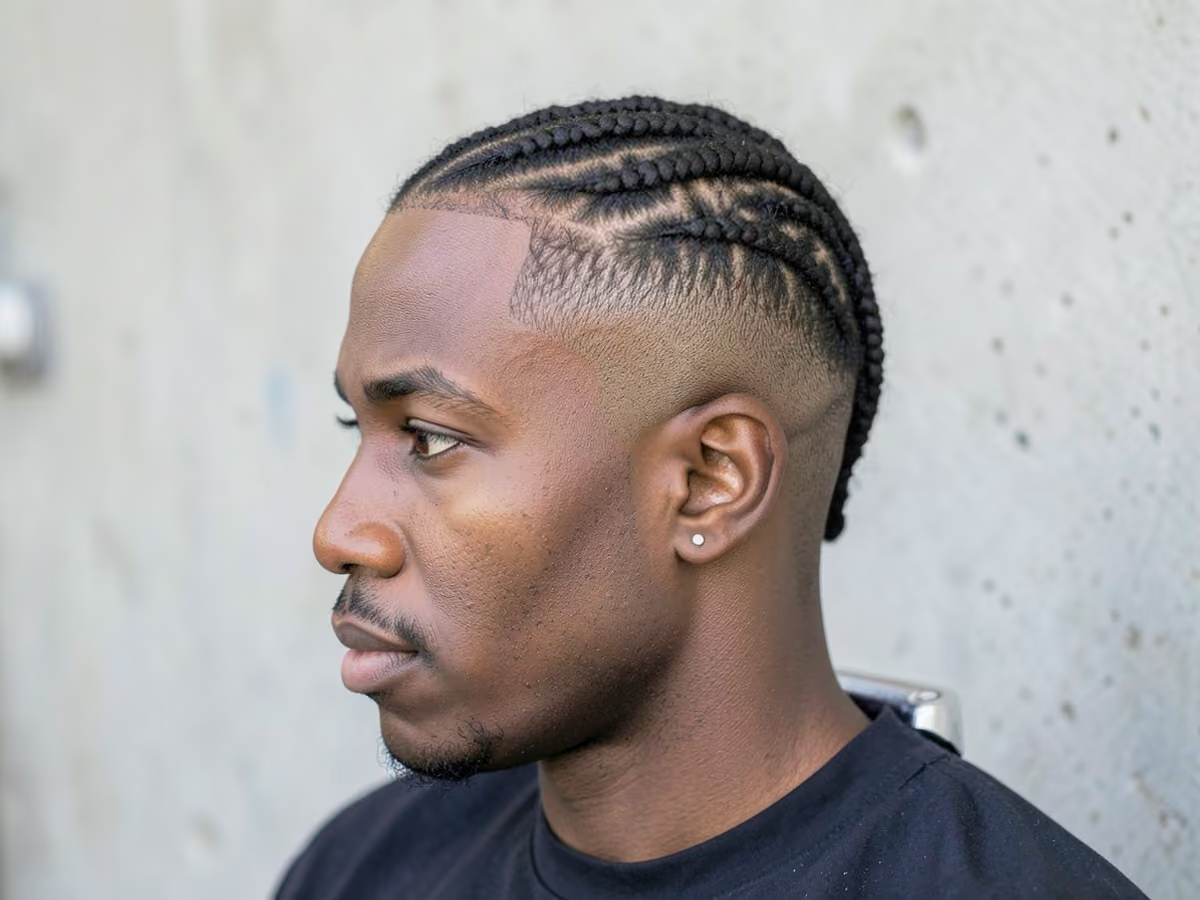
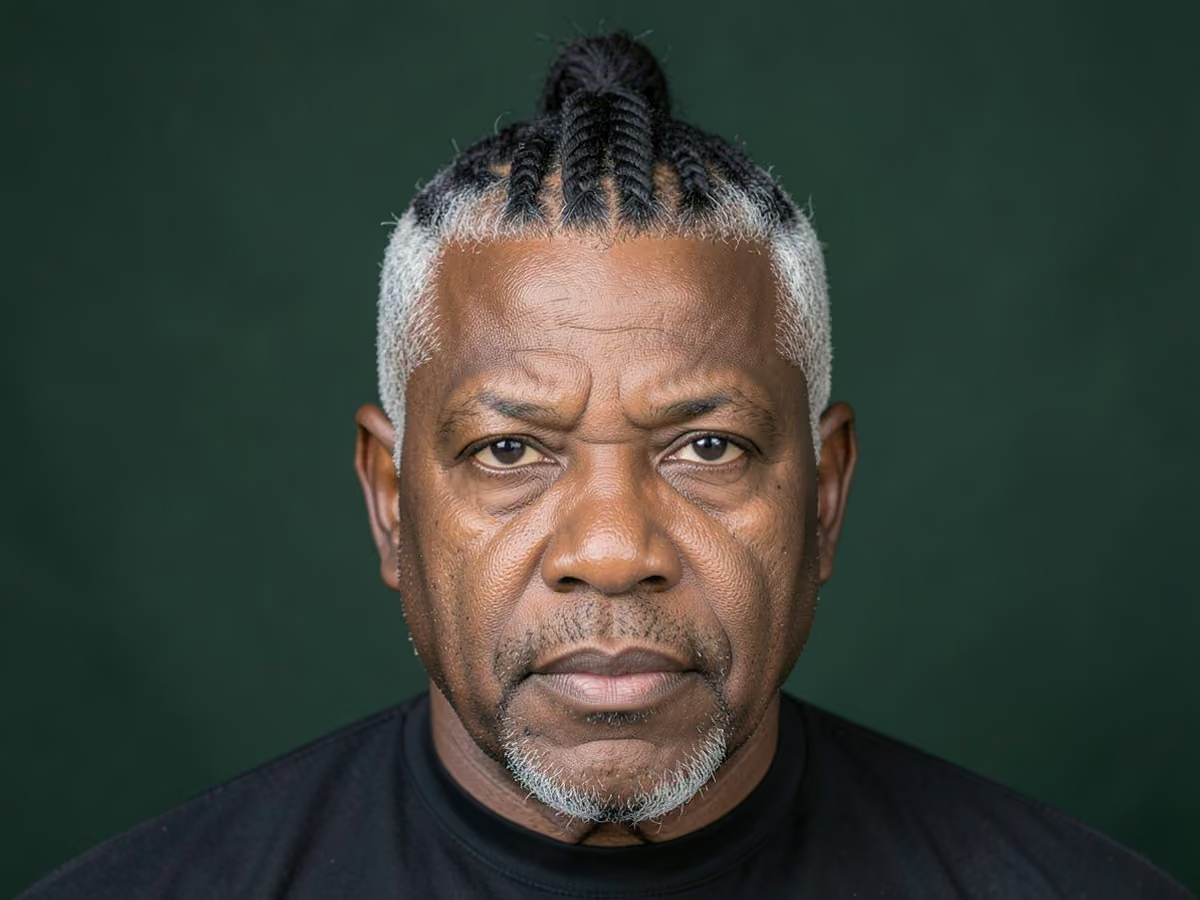
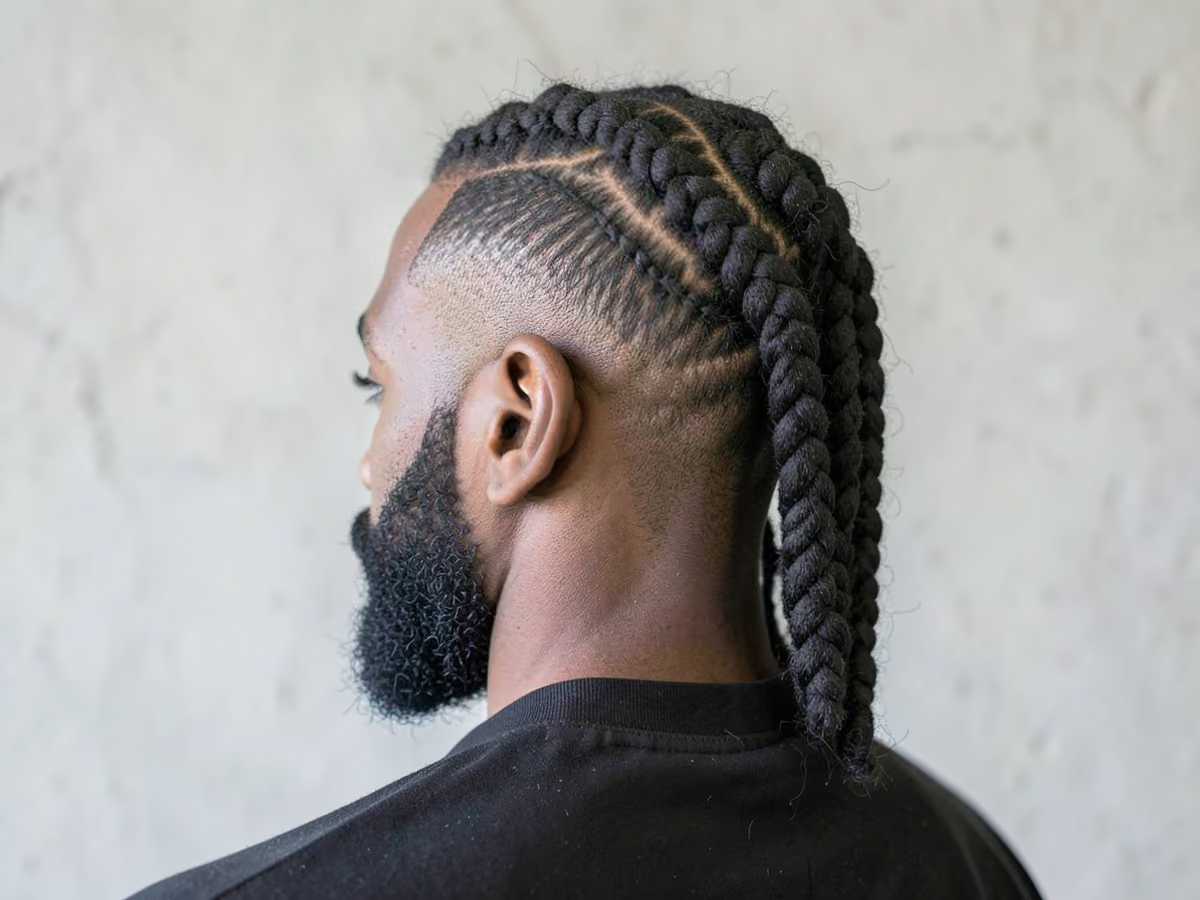
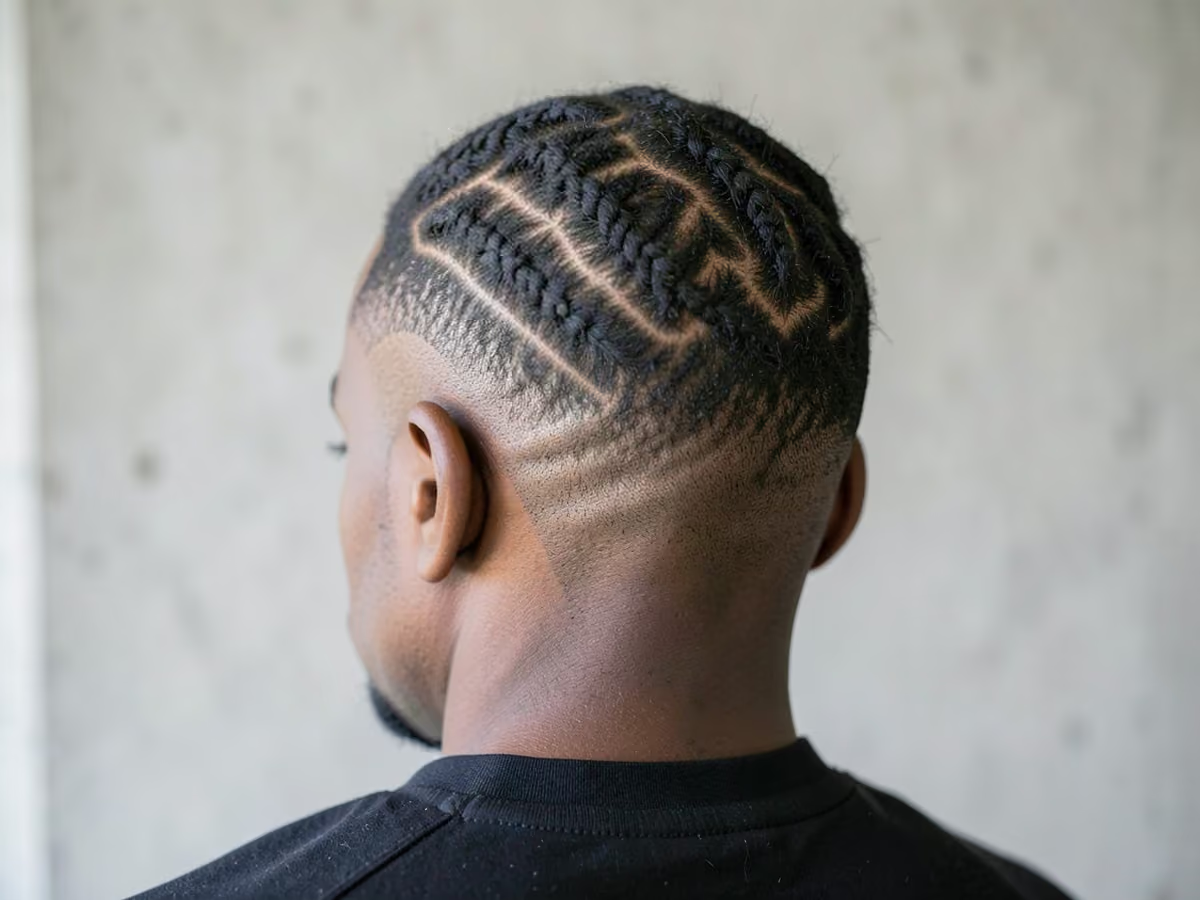
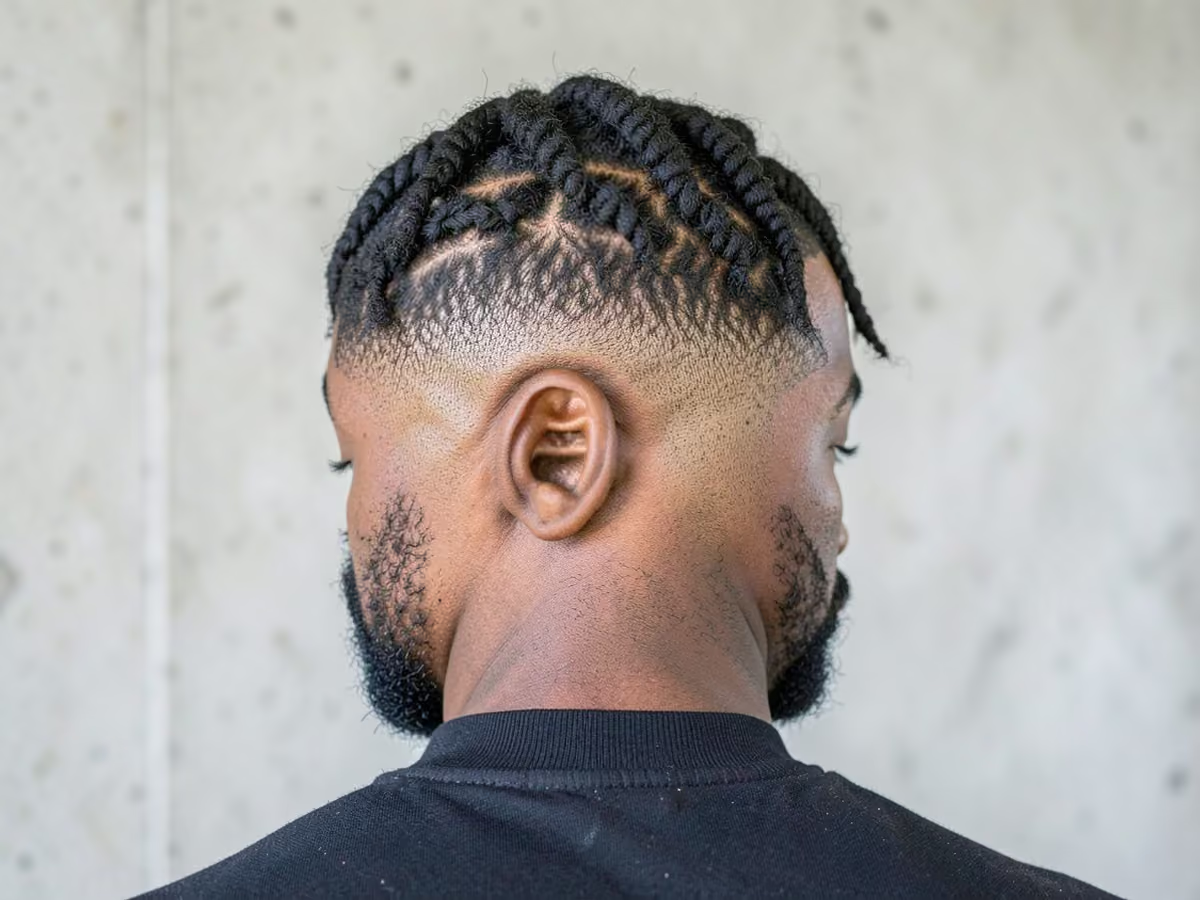
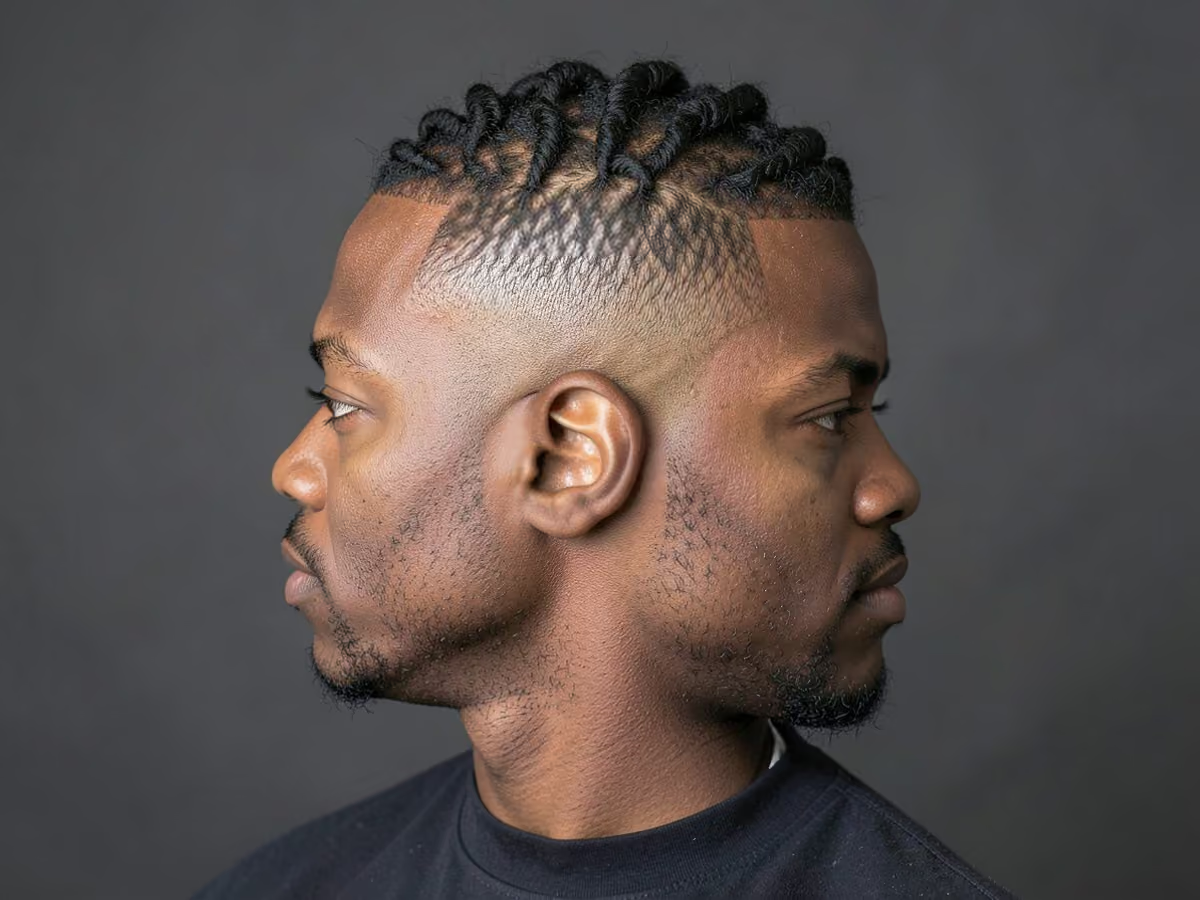
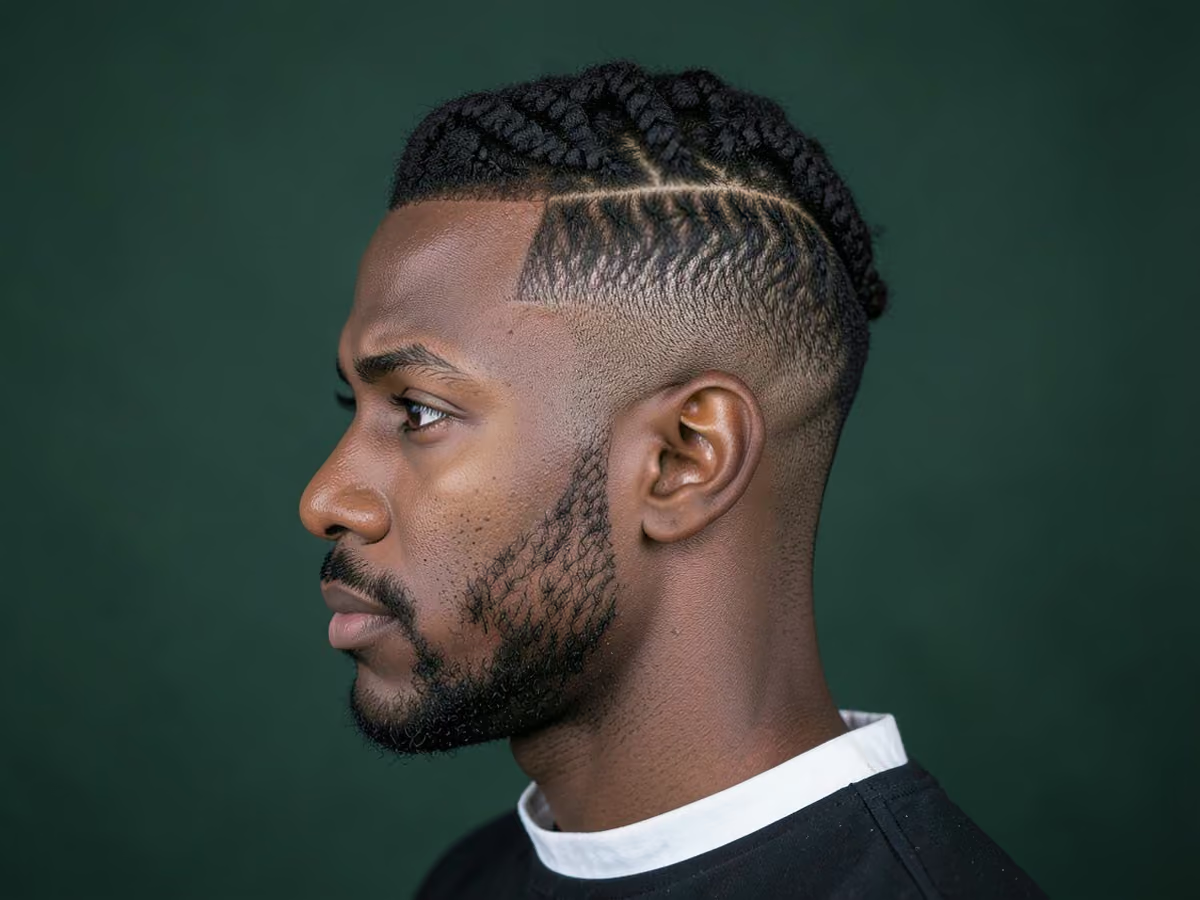
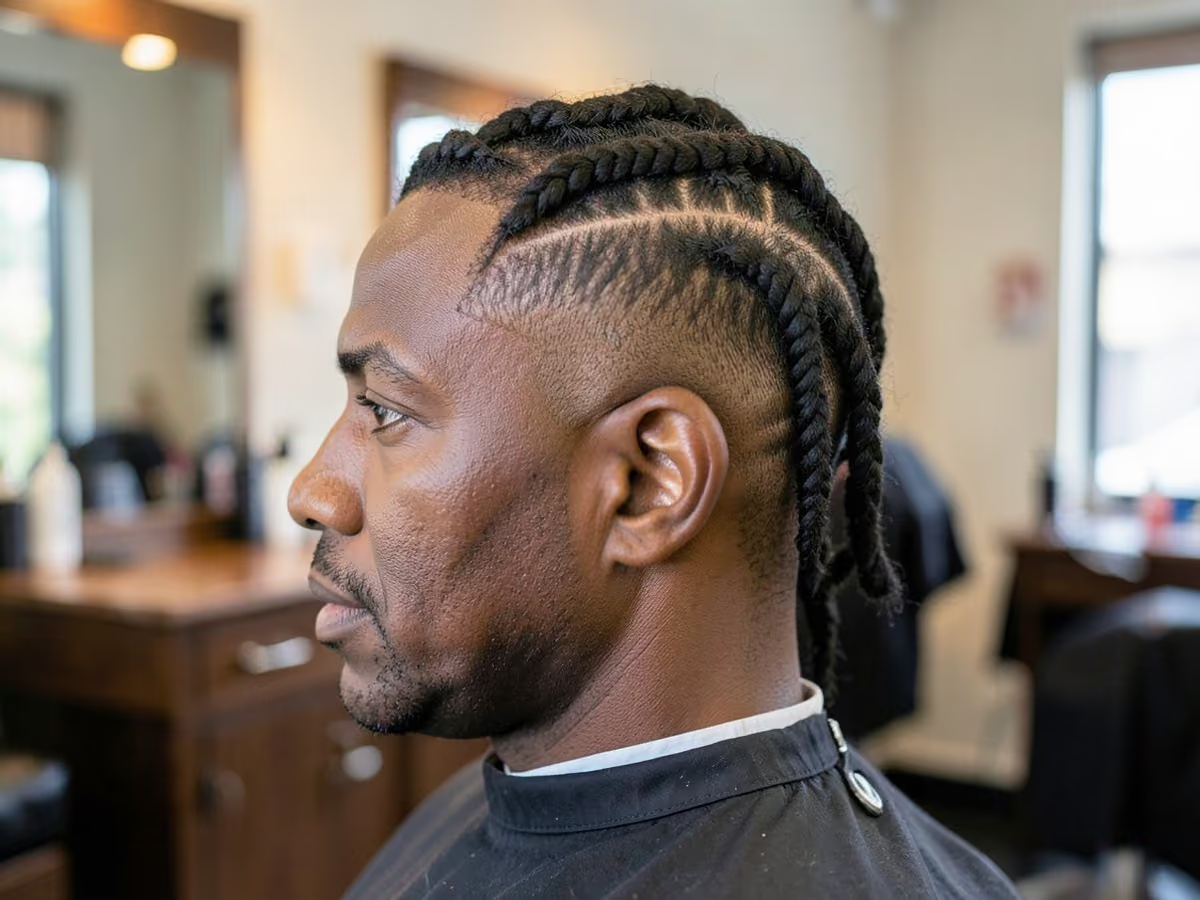
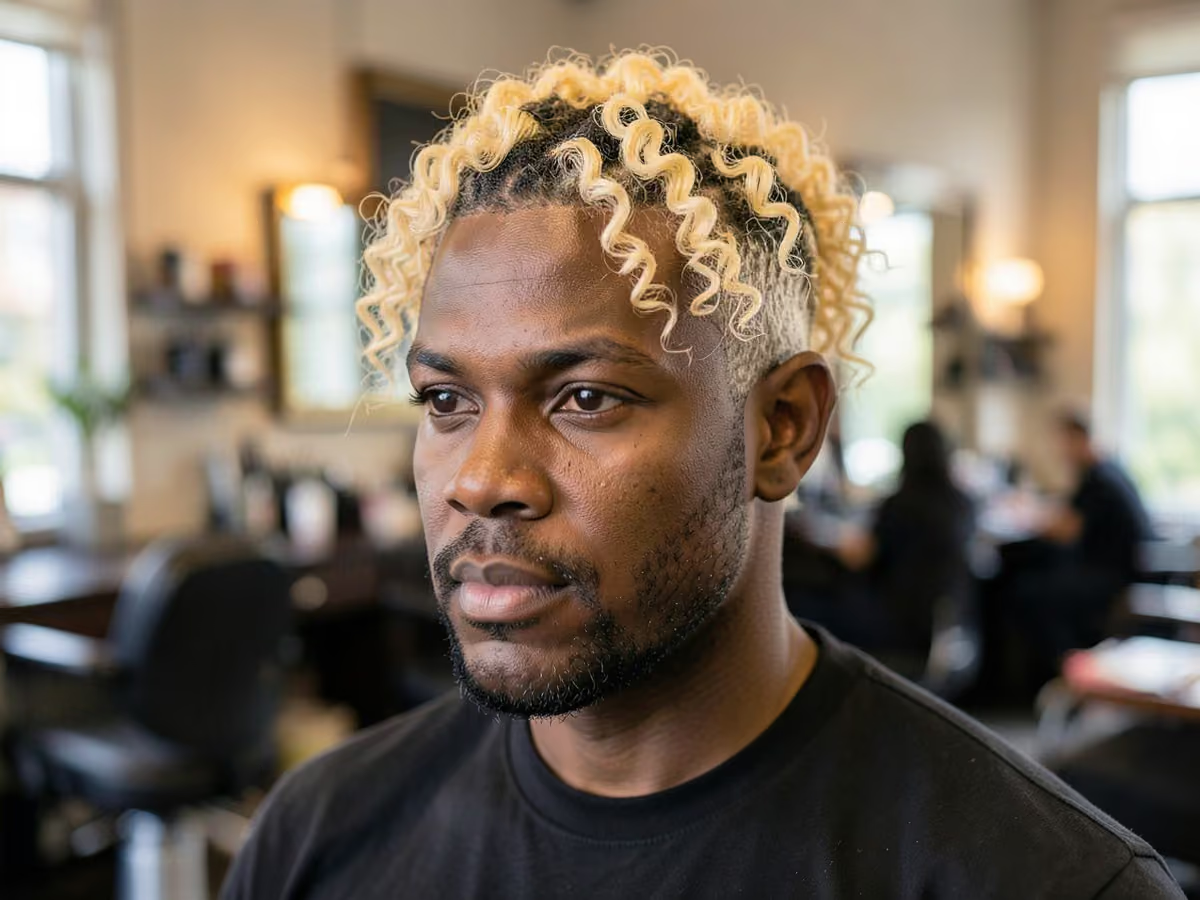
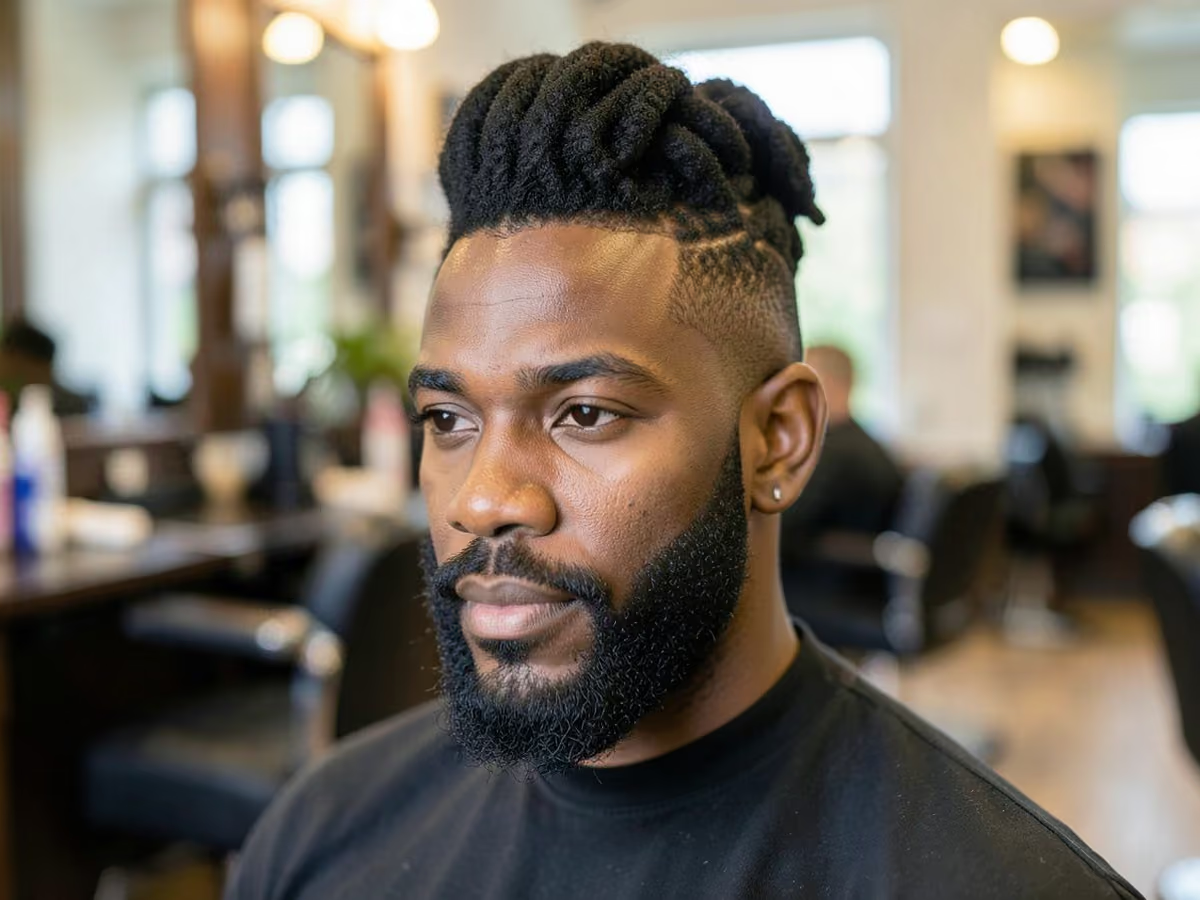
Quick answer: Twist hairstyles for men are styles where sections of hair are twisted into coils or ropes, most often two-strand twists, sponge twists, single-strand coils, flat twists or barrel twists. They suit coily and tight curly hair, last from a few days to about three weeks, and are usually paired with a taper or fade.
Twist Hairstyles for Men Styles at a Glance
Every style on this page with its clipper guard, top length and trim interval. Tap a name to jump to that card.
Twist hairstyles for men range from one-inch sponge twists that take five minutes to long two-strand twists that take an afternoon. Below are 30 styles grouped by twist type, sponge and coil styles, flat and barrel twists, fades, and beards, color and updos, each with how long it lasts, the products to use and the words to say in the barber chair.
What Are Twist Hairstyles?
A twist is a section of hair wound around itself or around a second section so it holds a rope or coil shape. Two-strand twists split each section in two and wrap the halves around each other. Single-strand twists, also called coils, wind one section around a finger or comb. Sponge twists are formed by rubbing a twist sponge in circles over short hair. Flat twists lie against the scalp like cornrows, and barrel twists group several twists into thick rows.
Unlike locs, twists are temporary. They can be taken down, washed and redone, and many men wear them as a protective style that keeps the ends tucked away while hair grows. Once unraveled, the hair keeps a wavy, defined pattern called a twist-out, which is a second style from the same work. That makes twists a practical way to test a textured look before cutting it short again or starting locs.
How Do Twists Differ from Locs and Braids?
Twists use two sections, braids use three, and locs are hair that has matted permanently. That difference changes how long each lasts and how easy it is to undo. Twists are faster to install than braids and gentler on the edges, but they loosen sooner, especially after washing. Two-strand twists left in for months can start to lock at the roots, which is one way people start dreadlocks on purpose.
If you want a style you can change every few weeks, twists are the lowest commitment of the three. The table below compares them on the points that matter in daily life: how long the style lasts, how long it takes to put in, and how easily you can go back to loose hair. Times are typical ranges and vary with hair length, density and the size of each section.
Twists hold best on coily and kinky hair in the 4A to 4C range, because the coils grip each other and keep the twist from slipping. Tight 3C curls can hold twists too, though they loosen faster. Looser curls and straight hair usually unravel within a day unless set with a strong gel. Length decides which twists you can wear: sponge twists need about one to three inches, two-strand twists about two inches or more, and flat twists need enough length to reach along the scalp.
Face shape matters less than with short cuts, since the twists can be cut, angled or tied to balance any face. Tall twists on top with faded sides lengthen a round face. Longer twists falling forward shorten a long face. For an overview of other textured styles for different face shapes, see our haircuts for Black men by face shape guide.
Filter the styles
Showing all 30 styles
Fade
Hair
Length
Two-Strand Twist Styles
Two-strand twists are the most worn twist style and the base for a twist-out. These six vary the size, length and edge, from mini twists to chunky ones that take under an hour.
Trim:Every 2–3 weeks. Edges and taper soften as the twists loosen.
Best For:Round, oval faces + 4A to 4C hair at 2–3 inches.
About This Style
At two to three inches, two-strand twists stand up and slightly out, forming a compact, textured top. They are often the first twist style men try once their hair grows past sponge-twist length. Finger-width sections suit this length best; smaller ones look sparse. Expect them to last one to two weeks, since short twists loosen faster than long ones.
How to Style at Home
Twist damp hair in finger-width sections with curl cream from root to tip.
Coil each end around your finger so it stays closed.
Sleep in a satin durag and mist with water each morning.
Ask Your Barber
"Short two-strand twists on top at about two and a half inches, finger-width sections, and a low taper at the sides from a #1."
Trim:Every 3–4 weeks. Long twists hold, but ends need sealing.
Best For:Square, long faces + 4A to 4C hair past 6 inches.
About This Style
When twists reach the chin or shoulders, their weight makes them hang and swing instead of standing up. Long twists last the longest of any two-strand style, often two to three weeks, and can be tied back for work. Installation takes several hours for a full head. Sealing the ends with a little oil prevents the tips from fraying and unraveling.
How to Style at Home
Stretch the hair with a blow dryer on low before twisting.
Twist medium sections from root to tip, then seal the ends with a drop of oil.
Tie the twists loosely at the nape when they get in the way.
Ask Your Barber
"Long two-strand twists, medium sections in a brick pattern, and a low taper only at the nape and sideburns so the length stays full."
Trim:Every 2–3 weeks. Big twists frizz and loosen sooner.
Best For:Oval, long faces + thick 4B to 4C hair.
About This Style
Thumb-width or larger sections make thick, rope-like twists that take under an hour to install. The result is full and loose with visible parts between twists. Chunky twists unravel sooner than small ones, usually within one to two weeks, but they give a large, defined twist-out once taken down. They are a quick option for weekends or a style test before committing to smaller twists.
How to Style at Home
Section damp hair into large squares, about eight across the top.
Apply twisting butter or curl cream generously and twist to the ends.
Untwist after a week for a big, defined twist-out.
Ask Your Barber
"Big chunky two-strand twists, about thumb width with eight across the top, plus a mid taper and a soft line-up at the front."
Trim:Every 3–4 weeks. Small twists last weeks with care.
Best For:Oval, heart-shaped faces + 4B to 4C coily hair.
About This Style
Mini twists use very small sections, often less than pencil width, so a full head can hold over a hundred twists. They take the longest to install, sometimes four or more hours, but last three to four weeks and look neat throughout. They move like loose hair and can be parted or tied. Because each twist is thin, gentle takedown with conditioner matters.
How to Style at Home
Section hair into tiny squares and twist with a light curl cream.
Wash only the scalp with diluted shampoo once a week.
Take down with conditioner, working from the ends up.
Ask Your Barber
"Mini two-strand twists all over, pencil width or smaller, and just a light taper at the sideburns and nape, nothing higher."
Trim:Every 2–3 weeks. The taper shows growth before the twists loosen.
Best For:Round, square faces + 4A to 4C hair.
About This Style
Over the sideburns and nape, a low taper blends from a #0.5 to a #2. Hair above the ears stays long enough to twist, so the shape is full from the front. This is the go-to office version of twists, since the clean neckline keeps it looking groomed even as the twists age. Pair it with a soft line-up.
How to Style at Home
Twist the top in finger-width sections with curl cream.
Brush the tapered edges down with an edge brush after each barber visit.
Refresh the twists midweek with a water and leave-in mist.
Ask Your Barber
"Low taper at the sideburns and nape from a #0.5 to a #2, two-strand twists on top at three inches, and a soft line-up."
Trim:Every 4–6 weeks. Only the shape and edges need a barber.
Best For:Oval, round faces + 4A to 4C hair at 3+ inches.
About This Style
Untwisting dry two-strand twists leaves a defined, wavy pattern with more volume than the twists themselves. Twist-outs usually last three to five days and look best when the twists were fully dry before takedown. Oil on your fingertips while separating stops frizz. Separating each piece into two or three gives a fuller result. It is a free second style after a week in twists.
How to Style at Home
Wait until the twists are completely dry, ideally overnight.
Rub a drop of oil on your fingertips and unravel each twist gently.
Lift the roots with an afro pick, leaving the ends defined.
Ask Your Barber
"Shape my twist-out into a rounded outline, taper the sides from a #1, and clean up the front with a soft line-up."
Recommended Products
Argan Oil
Afro Pick
Sponge Twists and Coil Twists
Sponge and coil twists work on short hair and take minutes, not hours. These six cover sponge looks with different shapes, single-strand coils, and twists on curly hair; the afro guide covers the base length.
Trim:Every 2–3 weeks. The short top and edges grow out together.
Best For:Round, oval faces + 4B to 4C hair at 1–2 inches.
About This Style
On one to two inches of coily hair, a twist sponge rubbed in small circles forms tight, nub-like coils across the top. The process takes five to ten minutes and lasts a day or two. Shorter hair gives smaller, denser coils that look almost like starter locs. Pairing them with a taper keeps the whole cut short and easy.
How to Style at Home
Mist the hair with water and apply a little curl cream.
Rub the curl sponge in small clockwise circles over the top.
Shape the edges with your fingers and leave to dry.
Ask Your Barber
"Keep about an inch and a half on top for sponge twists, low taper on the sides from a #1, and line up the front."
Trim:Every 1–2 weeks. The high top shape and faded sides need regular work.
Best For:Round, oval faces + 4B to 4C dense hair.
About This Style
Here the top is kept at three to five inches and shaped into a flat-sided high top, then sponged into twists across the surface. The sides are faded high to skin. The result has the tall outline of a classic high top with a coiled texture on top. Keeping the sponged coils upright needs a durag at night and a quick re-sponge each morning.
How to Style at Home
Pick the top out to full height before sponging.
Rub the sponge in circles across the top and sides of the high top.
Pat the corners square with your palms to hold the shape.
Ask Your Barber
"High top on the top at about four inches with square corners, skin fade on the sides, and leave it long enough to sponge."
Trim:Every 2–3 weeks. The shaved part fills in after two weeks.
Best For:Oval, square faces + 4A to 4C hair at 2 inches.
About This Style
A shaved side part, cut with a trimmer on one side of the top, splits sponged twists into two areas. The line adds a sharp, groomed detail to an otherwise textured style and works with any fade height. It is easy to restore between visits by keeping the part clean. Placement usually follows the natural part line above the outer eyebrow.
How to Style at Home
Sponge the top as usual, working away from the part line.
Brush the hair on each side of the part in opposite directions.
Keep the part area moisturized with a little scalp oil.
Ask Your Barber
"Shave a side part above my left eyebrow, keep two inches on top for sponge twists, and give me a mid fade with a line-up."
Trim:Every 2–3 weeks. Coils loosen and need redoing.
Best For:Oval, heart-shaped faces + 4A to 4C hair at 2–4 inches.
About This Style
Each small section is twisted around itself, using a finger or the end of a comb, to make a separate coil rather than a two-part rope. Single-strand twists look more uniform and rounded than two-strand twists at short lengths. Coily textures grip these coils best, and they usually stay neat for one to two weeks. Many people use the same method to start comb coil locs.
How to Style at Home
Apply leave-in and a light gel to a small damp section.
Wind the section around your finger from root to tip.
Slide your finger out and repeat across the head, then let it dry.
Ask Your Barber
"Single-strand coils on top at about three inches, small sections, and taper the sides and nape from a #0.5 up to a #2."
Trim:Every 3–4 weeks. Looser curls need regular reshaping.
Best For:Oval, long faces + 3B to 3C curls at 3+ inches.
About This Style
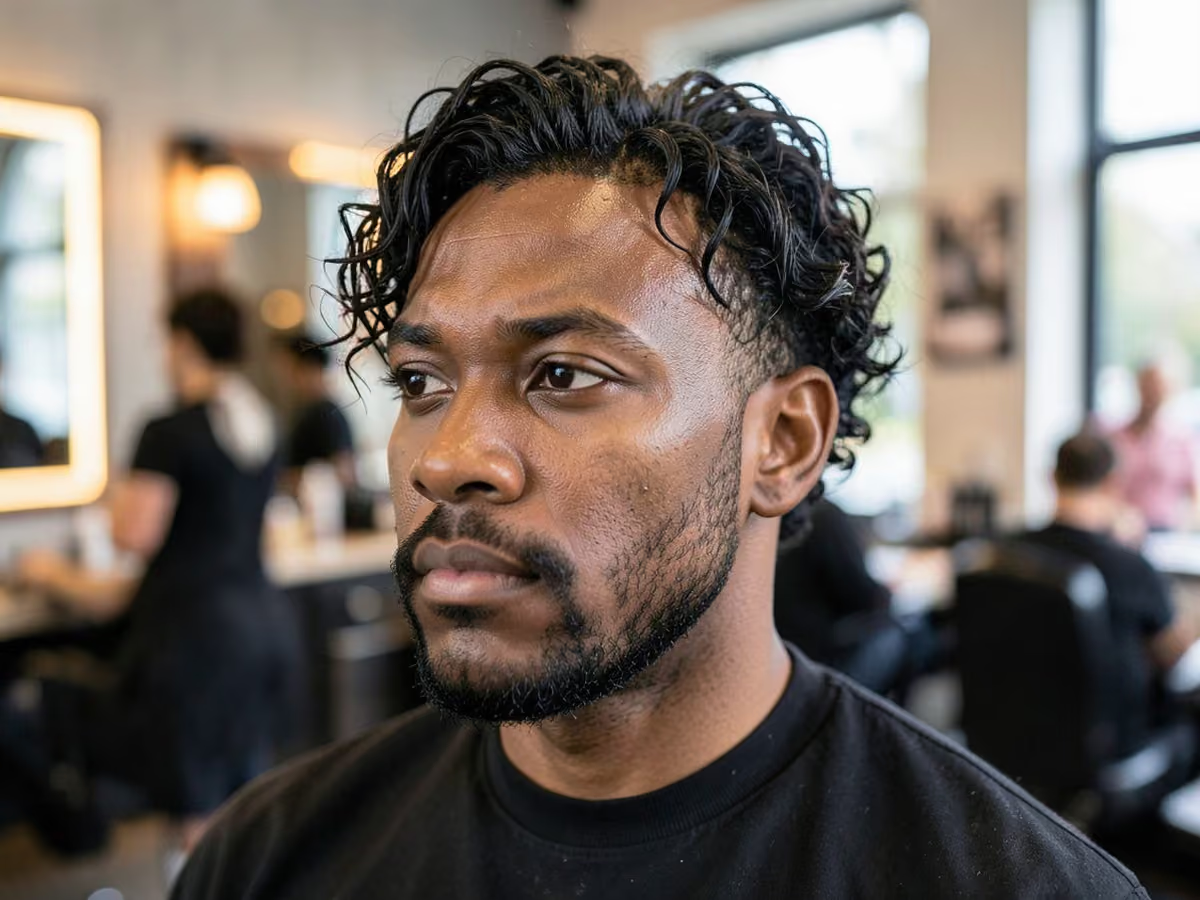
Two-strand twists on looser, springy curls give a softer, shinier twist than on coily hair, and they unravel sooner, usually within a few days. A stronger hold product helps them last. Many men with biracial or 3C curls use them for a few days, then wear the twist-out for the rest of the week. Medium sections suit this texture best.
How to Style at Home
Apply a light gel over leave-in on damp curls.
Twist medium sections firmly from the root to the ends.
Untwist after three days for a defined, wavy finish.
Ask Your Barber
"Keep three inches of curls on top for medium twists, low taper at the sides and nape, and remove bulk above the ears."
Trim:Every 3–4 weeks. Wavy twists need daily resetting.
Best For:Oval, square faces + 2C to 3A wavy or loose curly hair.
About This Style
Wavy and loose curly hair does not grip like coily hair, so twists on it slip apart within a day or two. Twisting on damp hair with a strong gel, and keeping sections small, gives the best hold. Many men with this texture twist overnight and unravel in the morning for waves rather than wearing the twists out. Sea salt spray can add grip.
How to Style at Home
Spray sea salt spray into damp hair for extra grip.
Twist small sections tightly with light gel and leave overnight.
Unravel in the morning and scrunch for loose waves.
Ask Your Barber
"Leave about four inches on top so I can twist it, scissor cut the sides short, and keep the shape loose rather than blunt."
Recommended Products
Sea Salt Spray
Light Gel
Flat Twists, Barrel Twists and Rope Twists
These six twists lie along the scalp in rows or twist larger groups into ropes. They take longer to install than loose twists but keep the hair flatter and neater, which suits helmets and hats.
Trim:Every 2 weeks. The fade grows out before the flat twists loosen.
Best For:Oval, long faces + 4A to 4C hair at 4+ inches.
About This Style
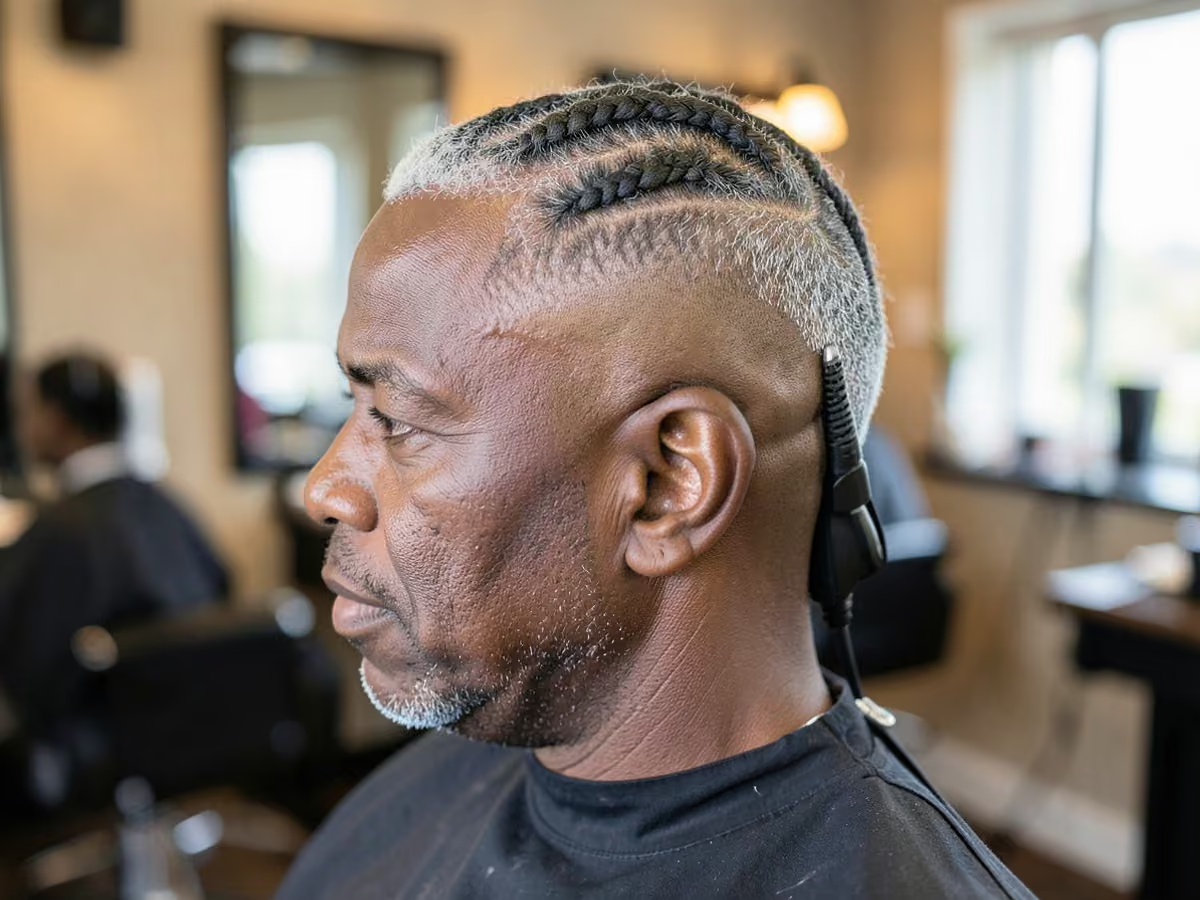
Flat twists run from the front hairline back toward the crown, lying flat on the scalp in rows, while the sides are faded from a #0 to a #2. They are formed like cornrows but with two strands instead of three, so they install faster and look softer. The rows last one to two weeks and work under helmets.
How to Style at Home
Part rows from front to back with a rat-tail comb.
Twist each row flat against the scalp, adding hair as you move back.
Seal the ends with a small coil and sleep in a durag.
Ask Your Barber
"Mid fade on the sides from a #0 to a #2, keep the top long enough for five flat twists running front to back, and line up."
Trim:Every 3–4 weeks. Untouched sides make this low upkeep.
Best For:Square, round faces + medium to long coily hair.
About This Style
Without a fade, every row starts at the forehead and travels all the way down to the neck, and the ends are left loose or tucked under. The whole head is twisted, so it suits men growing their hair out who want a neat, protective style. Six to ten rows is typical. They keep hair out of the face for sport and sleep.
How to Style at Home
Detangle and stretch the hair before parting rows.
Flat twist each row back to the nape, keeping tension light at the hairline.
Twist the loose ends and tuck them under at the neck.
Ask Your Barber
"No fade, just flat twists from the front hairline straight back to the nape, eight rows, with gentle tension at the edges."
Trim:Every 2 weeks. The shaved sides need regular cleaning up.
Best For:Round, oval faces + 4A to 4C hair at 4+ inches on top.
About This Style
Rows of twists lie along a central strip of hair from the forehead to the nape, with the sides shaved or faded low. The twisted strip gives height down the middle and narrows the face from the front. Three or four rows usually fill the strip. It is a tidy alternative to a loose twist mohawk and stays in place for a week or two.
How to Style at Home
Twist three rows flat along the center strip from front to back.
Apply scalp oil to the faded sides after each barber visit.
Wrap the hair in a durag at night to keep the rows flat.
Ask Your Barber
"Skin fade on both sides, leave a strip about three inches wide on top from front to back, and flat twist it in three rows."
Trim:Every 2–3 weeks. Taper and barrel rows age at the same rate.
Best For:Oval, long faces + long twists or locs.
About This Style
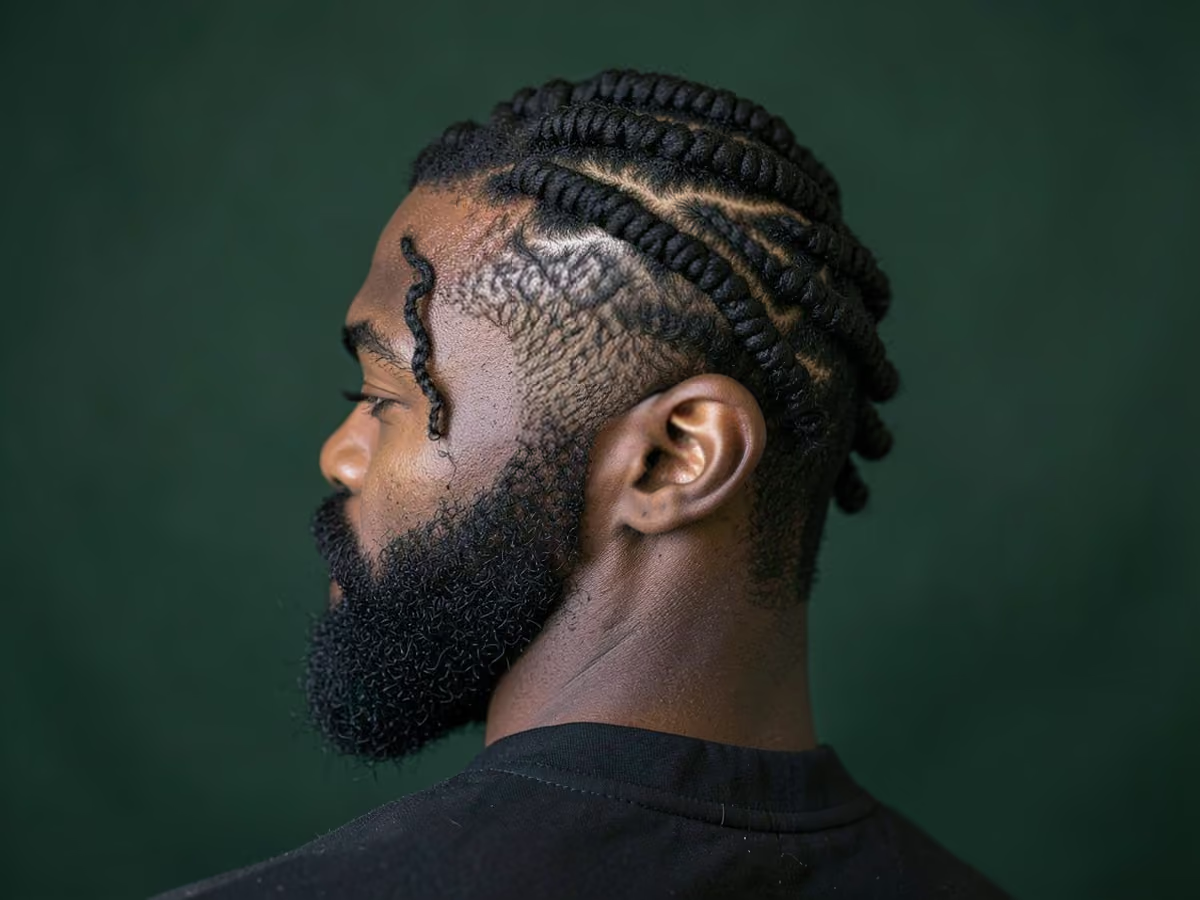
Barrel twists group two or three existing twists or locs and wrap them around each other in thick rows running from front to back. With the sideburns and neckline tapered short underneath, the result looks orderly and keeps long hair off the face. The style lasts two to three weeks. It works best on hair that already holds twists well.
How to Style at Home
Twist the hair into individual two-strand twists first.
Group neighboring twists in pairs and wrap them along each row.
Secure the ends at the back with a small tie or by tucking them under.
Ask Your Barber
"Low taper at the sideburns and nape from a #1, then barrel twist the top in four rows running front to back."
Trim:Every 4–6 weeks. Rope twists hold for several weeks.
Best For:Square, oval faces + 4A to 4C hair past 4 inches.
About This Style
Each strand of a section is twisted on its own first, then the two are wrapped around each other in the opposite direction, which locks them into a tight, smooth rope. The counter-twist makes rope twists hold longer and look neater than a basic two-strand twist. They can be done on natural hair or with added extension hair for extra length.
How to Style at Home
Twist each half of the section clockwise on its own.
Wrap the two halves counter-clockwise around each other to the tips.
Seal the ends with a dab of gel and leave to set.
Ask Your Barber
"Rope twists on my natural hair, medium sections, twisted to the tips, and a low taper at the nape with a soft line-up."
Trim:Every 4–8 weeks. Extensions hold until the roots grow out.
Best For:Oval, long faces + 4A to 4C hair of any length.
About This Style
Marley twists add coarse, kinky extension hair, called Marley hair, into each two-strand twist. The added hair makes thick, textured twists that look natural on coily hair and last four to eight weeks. They are a protective style for men who want length immediately. Installation takes several hours, and too much extension weight on short hair can strain the roots.
How to Style at Home
Wash only the scalp with diluted shampoo every two weeks.
Oil the parts lightly with scalp oil after washing.
Take them down with conditioner, cutting above the natural hair.
Ask Your Barber
"Medium Marley twists to shoulder length, light tension at the roots and edges, and a low taper at the sides and nape."
Recommended Products
Scalp Oil
Edge Brush
Twists with Fades and Parts
The fade under twists changes the whole outline. These six pair twists with a drop, burst, bald and shadow fade, a high taper and a side part; see the high fade and taper fade guides for heights.
Trim:Every 2 weeks. The curve behind the ear softens quickly.
Best For:Oval, square faces + 4A to 4C hair at 2–4 inches.
About This Style
Starting at the temple, a drop fade dips down behind the ear toward the nape, framing medium twists on top with a curved outline. The dip leaves more hair at the back of the head, so the twists flow into the nape rather than ending at a straight line. It gives twists more depth from the side than a straight fade.
How to Style at Home
Twist the top in medium sections with curl cream.
Keep the twists pointed slightly back so the curve of the fade shows.
Massage scalp oil into the faded area to prevent flakes.
Ask Your Barber
"Drop fade from skin starting at the temple and curving behind the ear, two-strand twists on top at three inches, and a line-up."
Trim:Every 2 weeks. The half circle around the ear blurs fast.
Best For:Round, oval faces + 4B to 4C coily hair.
About This Style
Rounded around the ear in a half circle, the burst fade leaves the nape longer, so twists on top run down into a fuller back. Only the area around the ears shows skin. The longer back gives the twists a slight mohawk shape. It is common with sponge twists and short two-strand twists, and keeps more length than a full fade.
How to Style at Home
Twist the top and leave the twists at the nape slightly longer.
Brush the edges down with an edge brush after each burst fade touch-up.
Re-sponge or re-twist the front pieces each morning before leaving.
Ask Your Barber
"Burst fade around the ears to skin, keep the back long, twists on top at about two inches, and a sharp line-up."
Trim:Every 1–2 weeks. Bald skin shows stubble within days.
Best For:Round, oval faces + thick 4B to 4C hair.
About This Style
A razor or foil shaver takes the sides and back to bare skin before blending up through a #0.5, #1 and #2 into twists on top. The contrast is the sharpest of any twist style. Because the scalp is fully visible at the bottom, head shape and any scars will show. Mid to high bald fades suit the shape of medium twists best.
How to Style at Home
Twist the top with curl cream and leave to dry.
Rub a light scalp oil on the bald area every evening.
Wear sunscreen or a hat on the faded sides outdoors.
Ask Your Barber
"Mid bald fade, razor finish at the bottom, blended through a #1 and #2, and two-strand twists on top at three inches."
Trim:Every 2–3 weeks. The high sideburn line needs regular cleanup.
Best For:Square, long faces + 4A to 4C hair.
About This Style
A high taper clips the sideburns and nape short up to around the temple and leaves the rest of the sides at a longer guard, so it removes less hair than a high fade. Under twists it gives a clean outline from the front while keeping the sides fuller than a fade. It grows out softly and suits men who stretch visits to three weeks.
How to Style at Home
Twist the top in finger-width sections with a small amount of curl cream.
Brush the tapered sideburns flat with an edge brush.
Mist the twists with water and leave-in midweek.
Ask Your Barber
"High taper at the sideburns and nape up to the temple, from a #0.5 to a #3, with twists on top left untouched."
Trim:Every 3 weeks. No skin, so regrowth is subtle.
Best For:Oval, heart-shaped faces + 4A to 4C hair.
About This Style
A shadow fade stops at a #0.5 or #1 at the bottom instead of skin, so the sides look dark and soft rather than bare. With twists on top it gives a quieter contrast that works in conservative offices. Because no skin is exposed, it grows out without a stubble line. Men with sensitive scalps or razor bumps often prefer it.
How to Style at Home
Twist the top with curl cream and let it dry fully.
Brush the faded sides with a soft brush to lay the hair down.
Refresh the front twists with a damp finger as needed.
Ask Your Barber
"Shadow fade from a #0.5 at the bottom, no skin, blended to a #3, with twists on top at about three inches."
Trim:Every 2–3 weeks. The part line fills in within two weeks.
Best For:Square, oval faces + 4A to 4C hair at 3 inches.
About This Style
A defined side part, either shaved with a trimmer or just set with a comb, divides two-strand twists into a larger and smaller side. The twists on the heavy side can be angled across the top. The part adds structure for interviews and events. A shaved part needs touching up every couple of weeks, while a combed part can be reset each time you re-twist.
How to Style at Home
Set the part with a rat-tail comb before twisting.
Twist each side in sections, angling them away from the part.
Keep the part clean with a trimmer between barber visits.
Ask Your Barber
"Shave a side part above my right eyebrow, low taper on the sides, and twists on top at about three inches angled away from the part."
Recommended Products
Curl Cream
Edge Brush
Twists with Beards, Color and Updos
These six cover beard pairings, dyed and gray twists, and ways to tie longer twists up. They suit men who already wear twists and want a change without cutting or restarting.
Trim:Every 3 weeks. Beard shaping needed every 2–3 weeks.
Best For:Round, oval faces + 4A to 4C hair and a dense beard.
About This Style
Twists of medium size on top connect to a full beard of one to two inches through a tapered sideburn. The beard adds weight at the jaw, which balances height from the twists. Shaping it narrower at the chin keeps the face from looking wide. A sharp cheek line and neckline help the beard look as groomed as the twists.
How to Style at Home
Wash the beard with a gentle cleanser on twist wash days.
Work beard oil through the beard and shape it with a beard brush.
Mist the twists separately so the beard stays soft.
Ask Your Barber
"Twists on top at three inches, taper the sideburns into the beard, beard at about an inch and a half with a clean cheek line."
Trim:Every 2–3 weeks. Goatee edges need weekly tidying.
Best For:Round, square faces + 4B to 4C short hair.
About This Style
Short sponge or two-strand twists pair with a goatee or circle beard and clean-shaven cheeks, a combination that keeps attention on the chin. The pointed beard lengthens a round face, while the short twists keep the top compact. A low taper and line-up tie the look together. Keep the goatee short so the twists and the beard read as one balanced shape.
How to Style at Home
Shave the cheeks and neck, keeping the goatee outline.
Comb beard balm through the goatee to hold its shape.
Sponge or twist the top and brush the edges down.
Ask Your Barber
"Short twists on top at about two inches, low taper on the sides, line up the front, and shape my goatee short with clean cheeks."
Trim:Every 3–4 weeks. Dark roots show as the twists grow.
Best For:Oval, square faces + healthy 4A to 4C hair.
About This Style
Bleaching coily hair to honey or platinum blonde before twisting shows off the twist pattern, because light hair catches shadows between each coil. Bleach dries coily hair, so deep conditioning and gentler twisting tension help prevent breakage. Many men color only the tips. A colorist who works with textured hair is worth seeing for the first lift.
How to Style at Home
Deep condition every week after bleaching to put moisture back into the hair.
Twist with a rich curl cream to soften the bleached ends.
Wear a hat in strong sun to slow brassiness.
Ask Your Barber
"Twists on my bleached hair with light tension, low taper on the sides from a #1, and a soft line-up."
Trim:Every 3–4 weeks. Wiry gray ends unravel and need sealing.
Best For:Oval, long faces + gray or salt and pepper coily hair.
About This Style
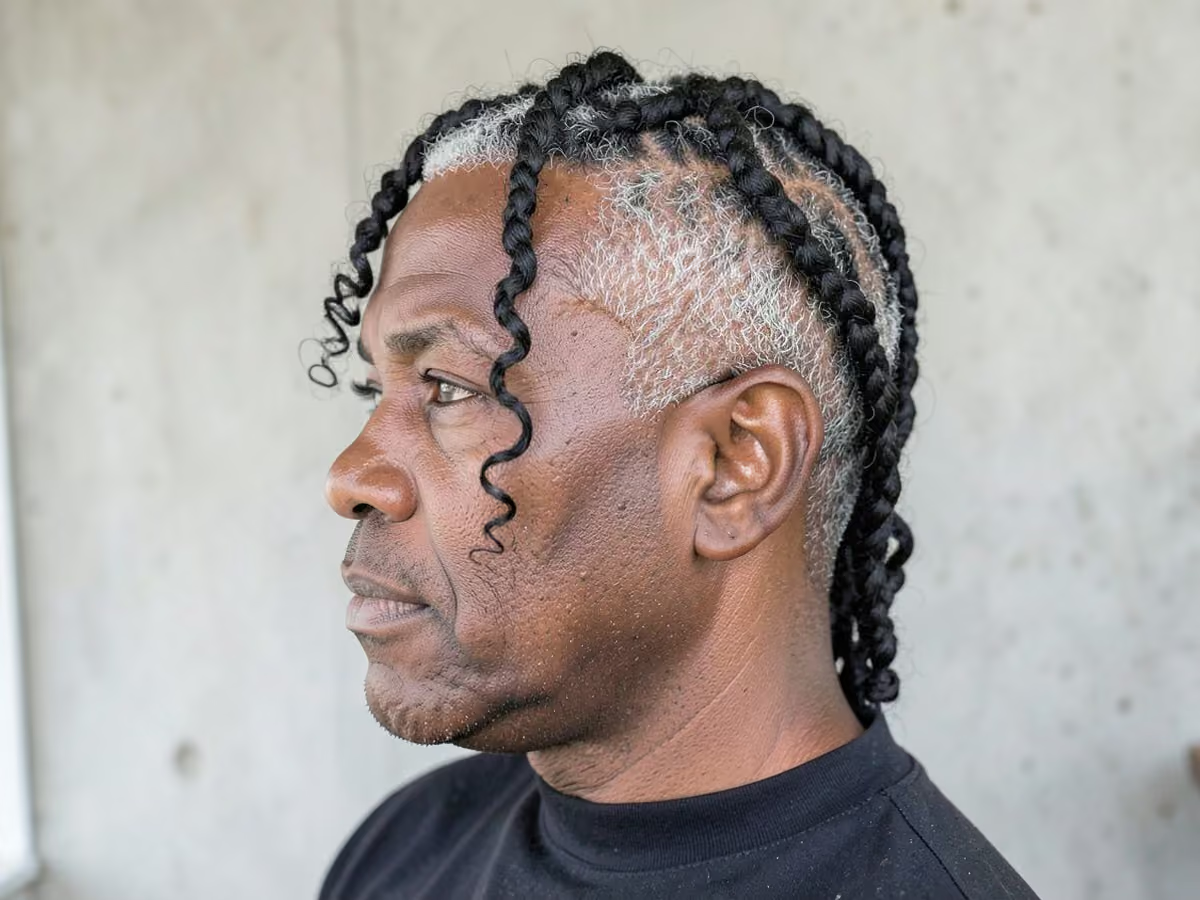
Gray coily hair is drier and wirier than pigmented hair, so any twist frizzes faster unless well moisturized. Medium twists with a rich cream hold better than mini twists. The salt and pepper mix shows clearly in each twist. A purple shampoo once a month keeps gray hair from turning yellow, and a low taper keeps the look tidy.
How to Style at Home
Apply leave-in and a rich curl cream before twisting.
Seal the ends with a drop of argan oil.
Use a purple shampoo once a month to keep the gray bright.
Ask Your Barber
"Medium twists on my gray hair, gentle tension, low taper at the sides and nape, and clean the edges with a soft line."
Best For:Round, heart-shaped faces + twists past the chin.
About This Style
Long twists from the temples back are gathered into a knot or tie at the crown, and the lower twists hang loose. It clears the face for work or the gym while showing the length. The lift on top adds height for round faces. Use a soft fabric tie, since twists can loosen or break under thin elastics.
How to Style at Home
Gather the twists above the ears with your fingers.
Twist them once at the crown and fix with a fabric tie.
Smooth the hairline with an edge brush and light gel.
Ask Your Barber
"Keep my twists past the chin so the top section reaches a half-up knot, and taper the nape and sideburns."
Best For:Oval, long faces + 4A to 4C hair at 4+ inches.
About This Style
All the twists are gathered into a high, rounded puff at the crown, with the sides and back smoothed up. The twist texture shows on top while the edges stay neat. It works when twists are a week or two old and starting to frizz, since the puff hides loose ends. A wide stretchy band avoids snapping coils.
How to Style at Home
Smooth the sides upward with a little light gel.
Gather all twists at the crown and secure with a wide band.
Brush the edges down with an edge brush.
Ask Your Barber
"Keep the twists long enough to reach the crown, about four inches all over, and taper only the sideburns and nape."
Recommended Products
Light Gel
Edge Brush
How Do You Ask Your Barber for Twists?
Many barbers do sponge twists and the fade, but two-strand, flat and barrel twists are often done by a braider or natural hair stylist. Ask before booking. Tell them the twist type, the size of each twist (pencil, finger or thumb width), the length you want on top and how high the fade or taper goes. If you want a part or a design, say where it sits.
For the fade itself, use the same language as any other cut: where it starts, the shortest guard and if you want a line-up. Our taper fades for coily hair guide explains which heights sit best under twists. Arrive with clean, detangled hair unless the stylist says otherwise, since many charge extra for washing and blow-drying before the install. Booking the fade a day or two after the twists keeps both sharp at once.
Clipper Guards Used in Twist Hairstyles for Men Styles
A clipper guard is the plastic comb that clips onto the blade and sets how much hair is left: a #1 leaves 3 mm (1/8 inch), each step up adds about 3 mm. The right column lists the cards on this page that call for each guard. See the full clipper guard numbers guide for the complete chart.
Clipper guard sizes for twist hairstyles for men styles
Start with clean, damp hair that has been detangled and stretched slightly with a blow dryer on low or by banding. Work in small sections using clips to hold the rest out of the way. The steps below give the basic method; expect the first full head to take a few hours, and much less once your hands learn the motion.
Prepare the hair
Wash with a moisturizing shampoo, condition, and apply a leave-in conditioner while the hair is still damp. Detangle with a wide-tooth comb or your fingers.
Section and moisturize
Part a square section about the size you want each twist to be. Apply a small amount of curl cream or twisting butter from root to tip.
Twist
Split the section into two equal strands. Cross one over the other, all the way to the ends, keeping even tension without pulling at the root.
Seal and set
Coil the ends around your finger so they do not unravel. Let the twists dry fully, by air or under a hooded dryer, before sleeping on them.
How Do You Make Twists Last Longer?
Sleep in a satin durag, bonnet or on a satin pillowcase. Cotton pulls moisture out of the hair and roughs up the twists, so they frizz in a few nights. Between washes, mist the twists with water and a light leave-in instead of heavy oils, which attract lint and weigh the twists down. Wash with diluted shampoo focused on the scalp and squeeze rather than rub the twists.
Avoid twisting too tightly at the root, especially along the hairline. Tight twists can cause soreness, bumps and, over time, traction hair loss at the temples. Re-twist only the front row and edges after a week instead of redoing the full head. When the twists look fuzzy and the roots have grown out about half an inch, take them down, deep condition, and start again.
Which Twist Hairstyles for Men Is Right for You?
Pick your hair type and how much upkeep you will put in. The matches below come from the Best For and Maintenance notes on each card. Upkeep follows the Maintenance badge: low means a cut every 3 to 6 weeks and almost no daily styling, high means weekly line-ups or daily product.
Two-strand twists usually last one to three weeks, depending on size and how well they are protected at night. Smaller twists last longer than chunky ones. Sponge twists last a day or two before they need redoing. Flat twists hold about one to two weeks, and twists with added extension hair can last four to eight weeks.
Q2: How long does hair need to be for twists?+
Sponge twists work on about one to three inches of coily hair. Two-strand twists need roughly two inches to grip, and look fuller from three inches up. Flat twists need enough length to lie along the scalp from the hairline to the crown, usually four inches or more.
Q3: Do twists turn into dreads?+
They can. Two-strand twists left in for several months without being taken down will often start to lock at the roots, especially on coily hair. If you want to keep twists as a temporary style, take them down and redo them every two to four weeks and detangle gently between installs.
Q4: Can men with straight or wavy hair get twists?+
Wavy and loose curly hair can hold twists for a day or two with a strong gel, but they loosen quickly. Straight hair usually slips apart. Some men with straighter textures use extension hair, which grips better, or try a texturizing product. Expect much less hold than on coily hair.
Q5: Should you twist hair wet or dry?+
Twisting on damp hair gives smoother, more defined twists, but they take longer to dry and shrink more. Twisting on stretched, dry hair gives longer, fluffier twists with less shrinkage. Most men twist on damp hair with a leave-in and curl cream, then let it dry completely before sleeping.
Q6: Do twists damage your hair?+
Twists are among the gentler protective styles, because they use no heat or chemicals. Damage usually comes from twisting too tightly at the roots, leaving twists in for months without washing, or ripping them out dry. Take them down with conditioner, detangle gently, and give the edges a rest between styles.