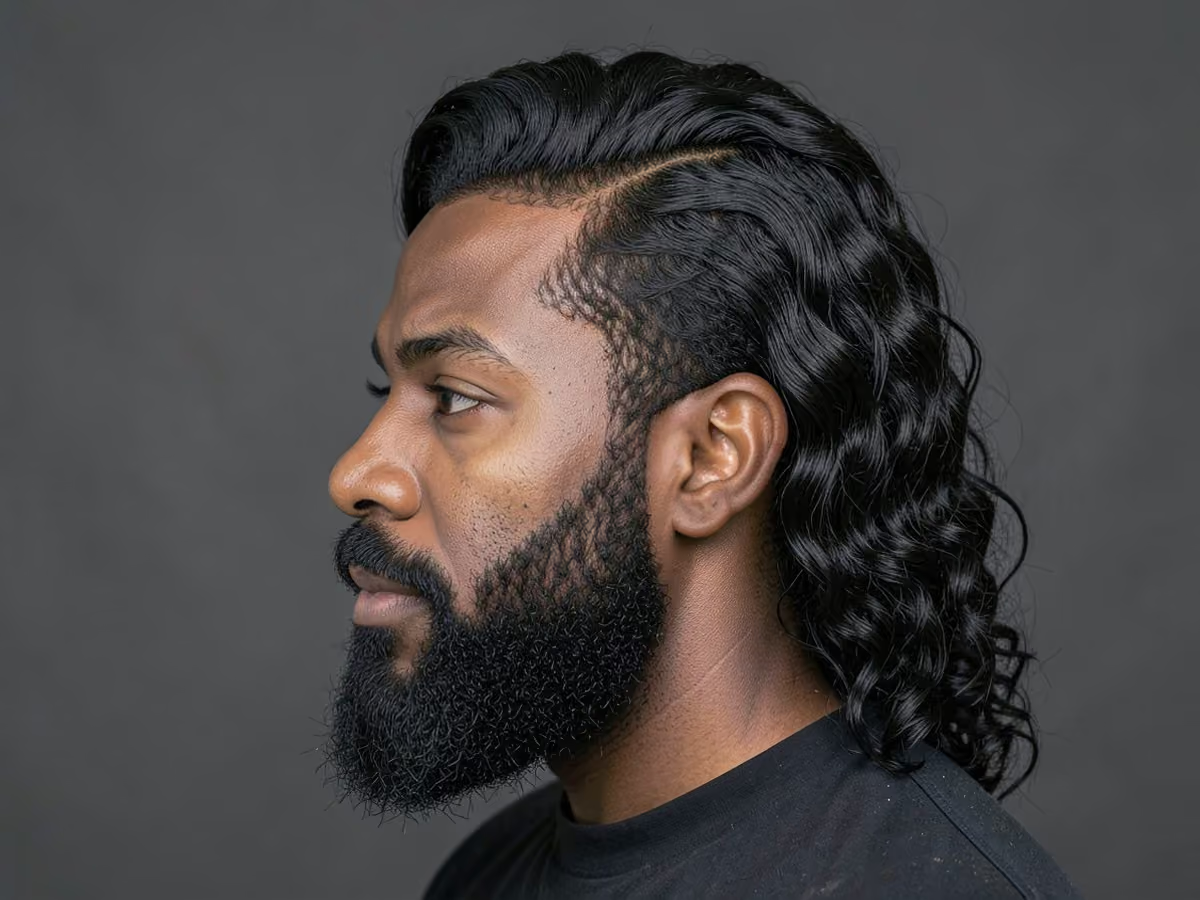
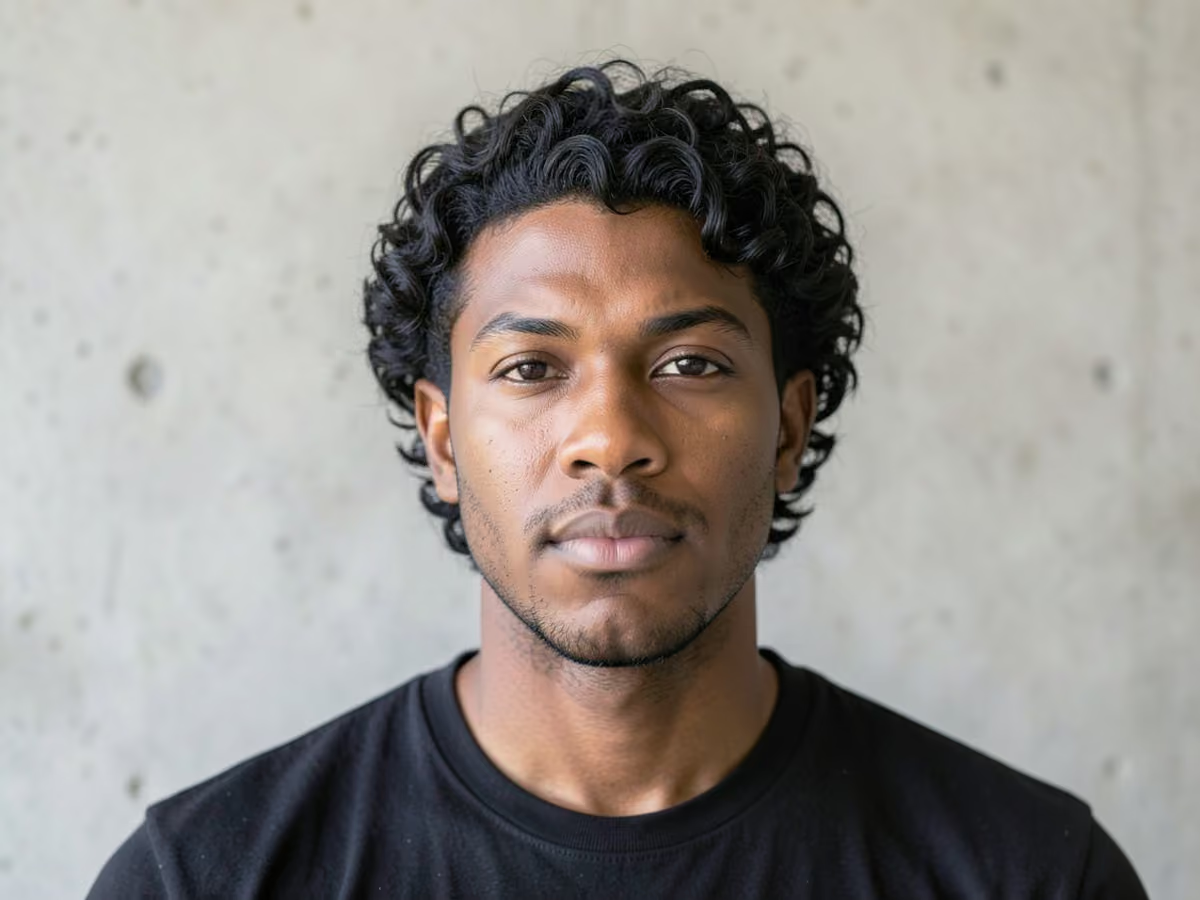
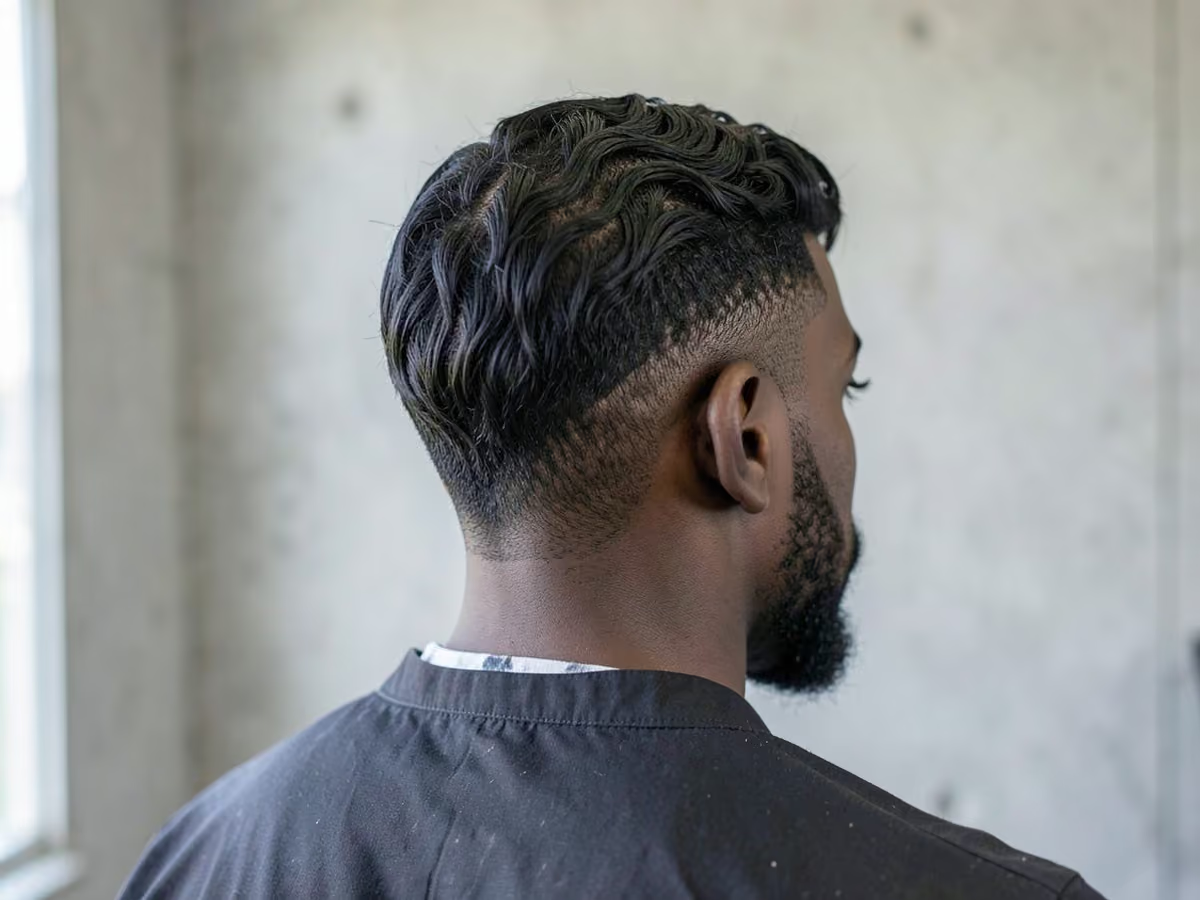
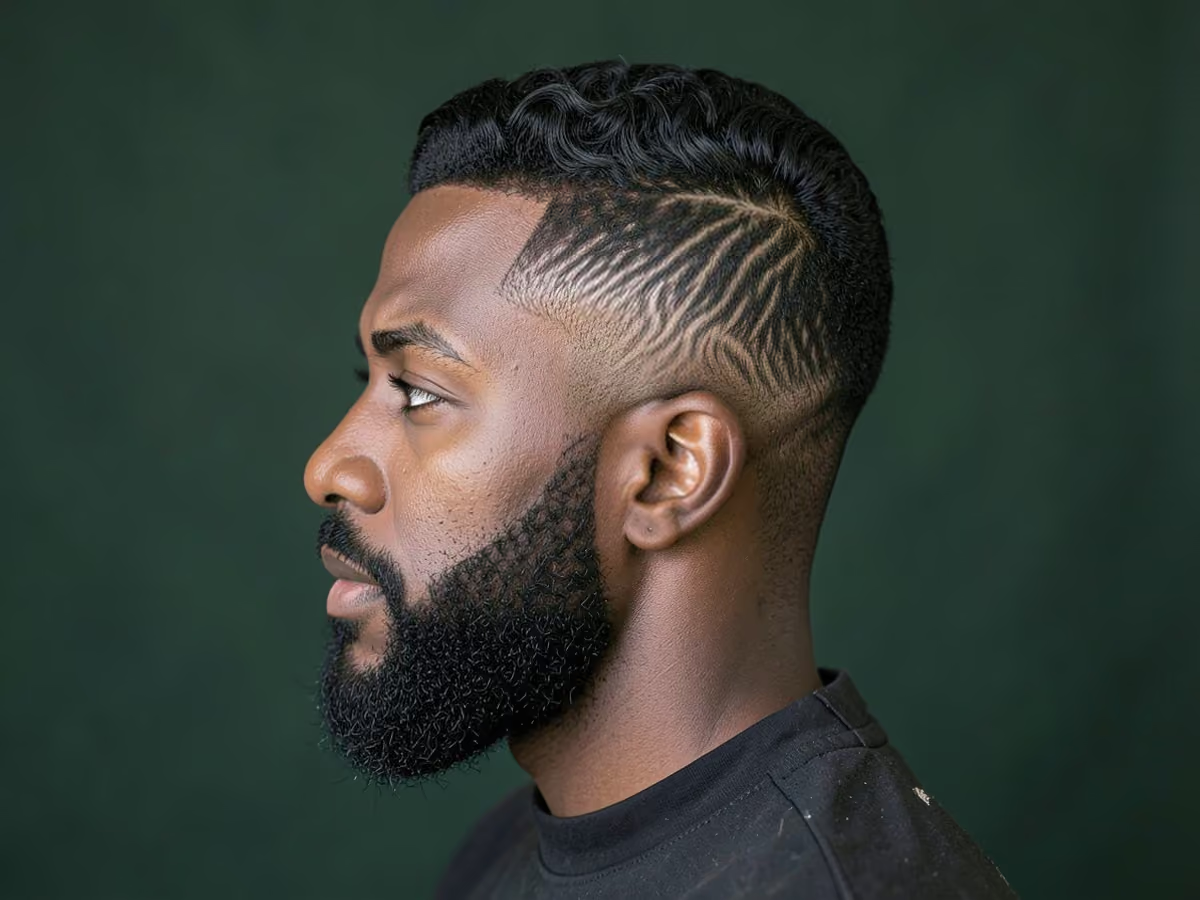
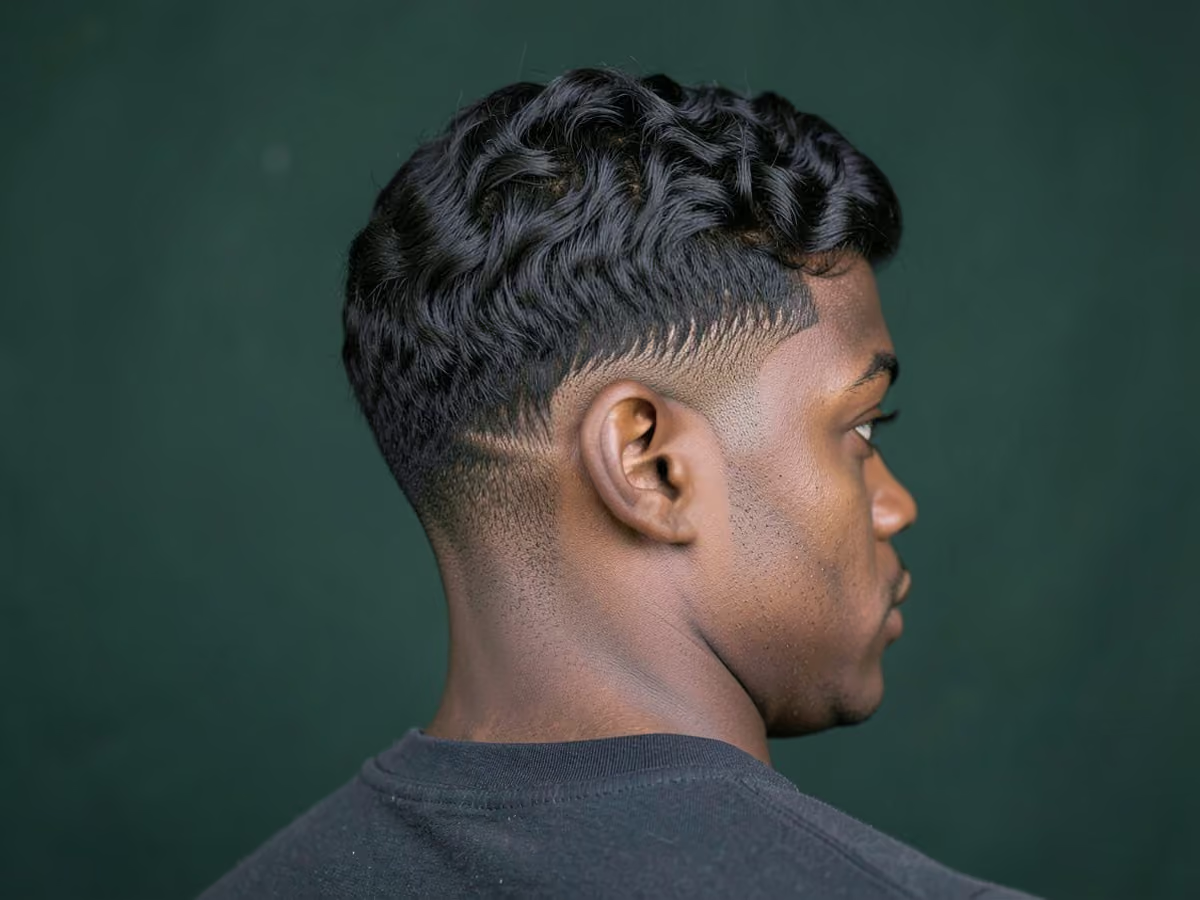
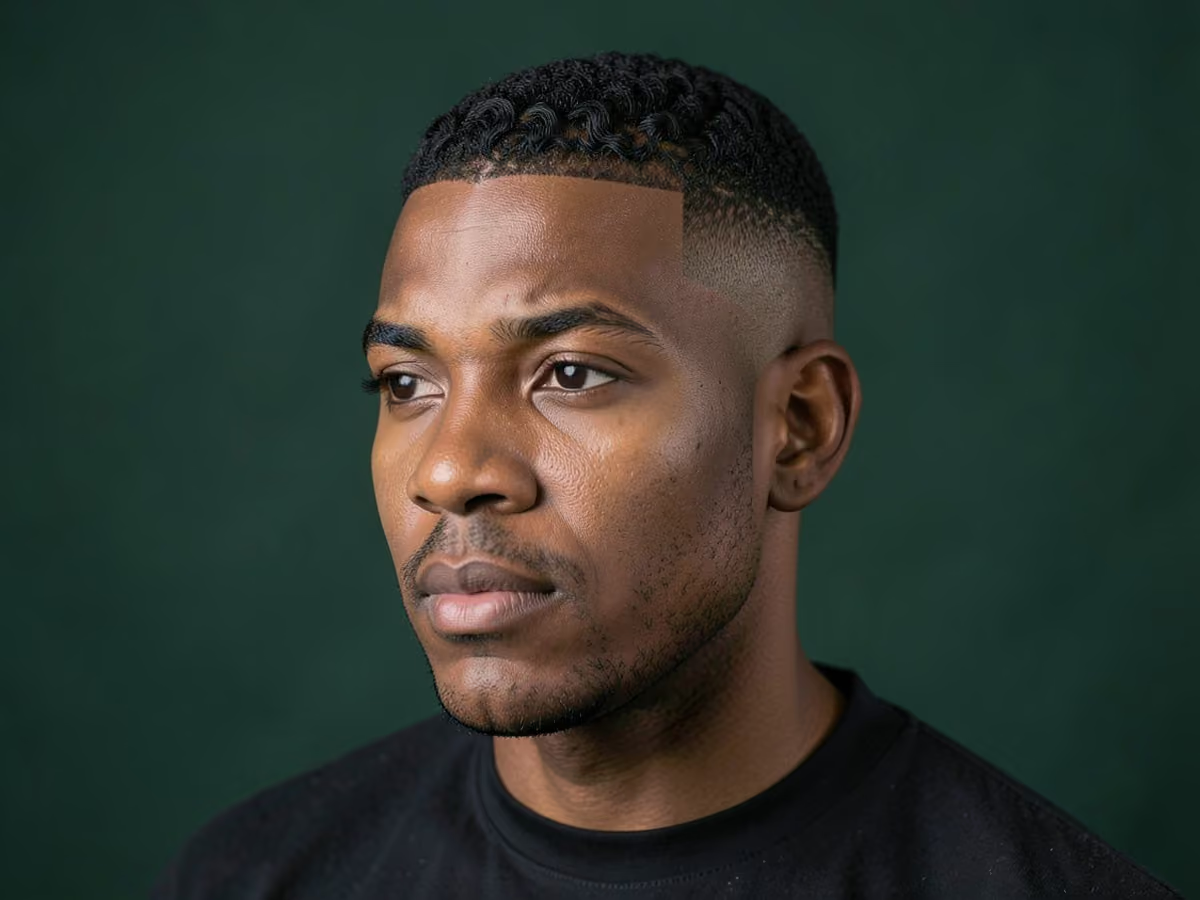
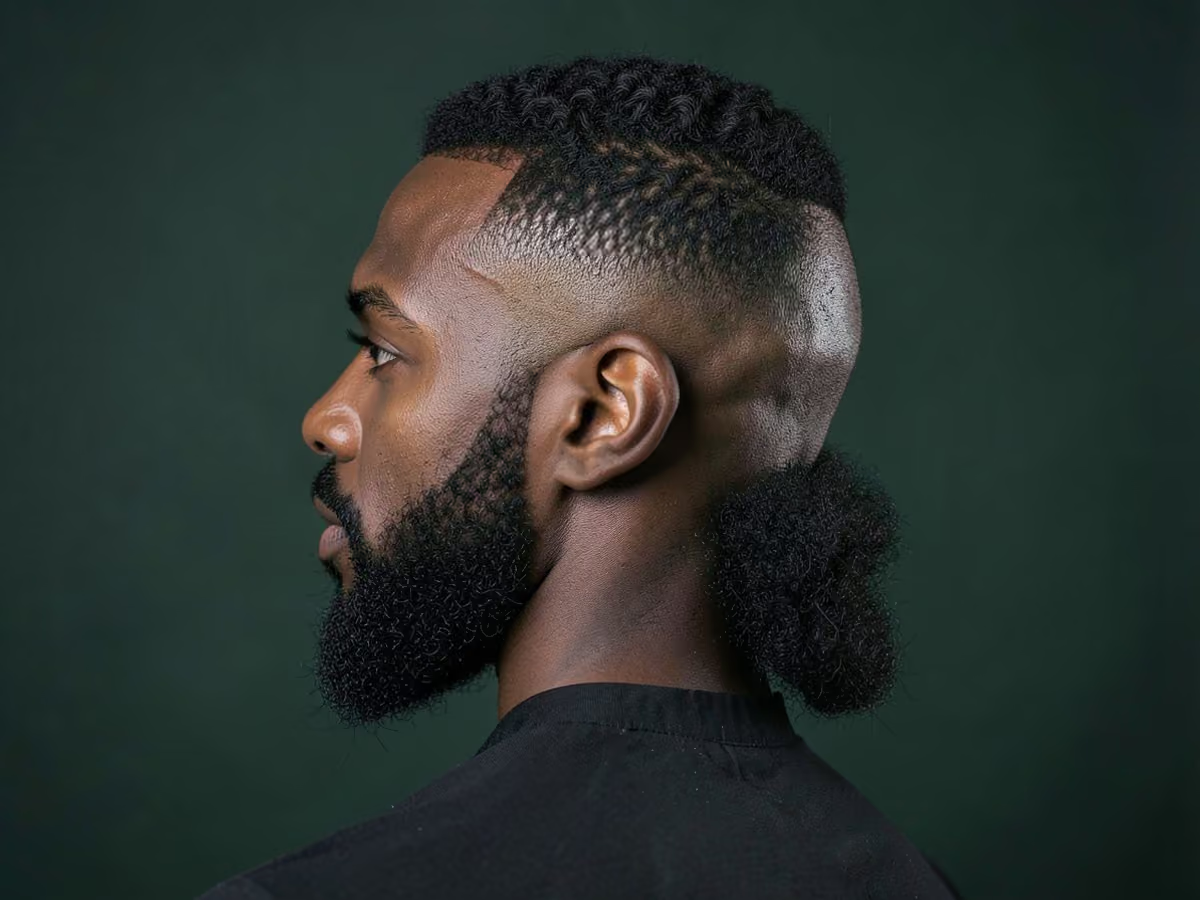
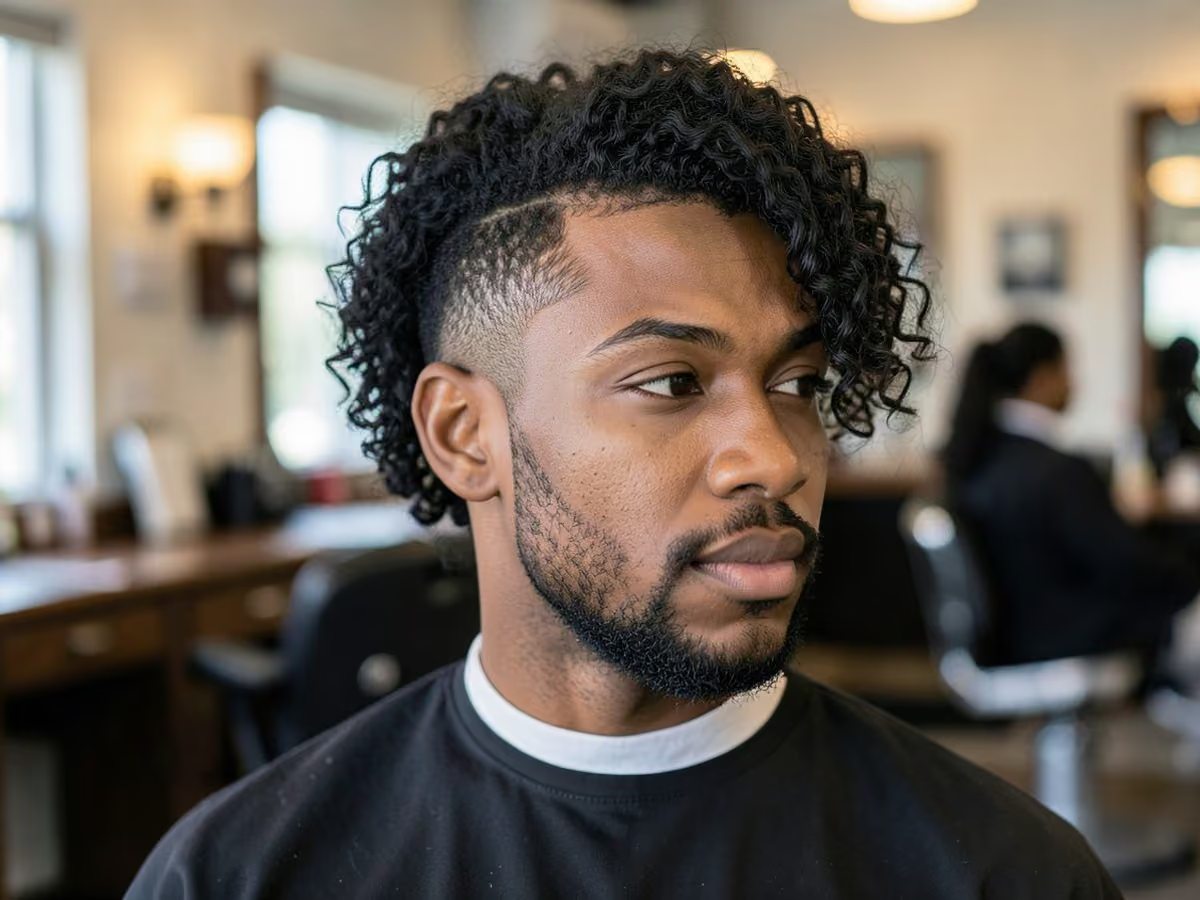
Quick answer: 360 waves are a ripple pattern brushed into short, coarse curly hair so it circles the head from the crown. Get a short, even cut with the grain, about a #1 to #2, brush in the direction of growth every day and wear a durag. Wolfing, skipping cuts for weeks while brushing, makes them deeper.
360 Waves Styles at a Glance
Every style on this page with its clipper guard, top length and trim interval. Tap a name to jump to that card.
360 waves take more patience than any other short haircut. The cut only sets the length; the pattern comes from weeks of brushing, compression and well-timed cut-downs. This guide covers how waves form, how wolfing works and 25 wave styles grouped by pattern, cut length, fade, hair type and beard, with what to tell your barber for each.
What Are 360 Waves?
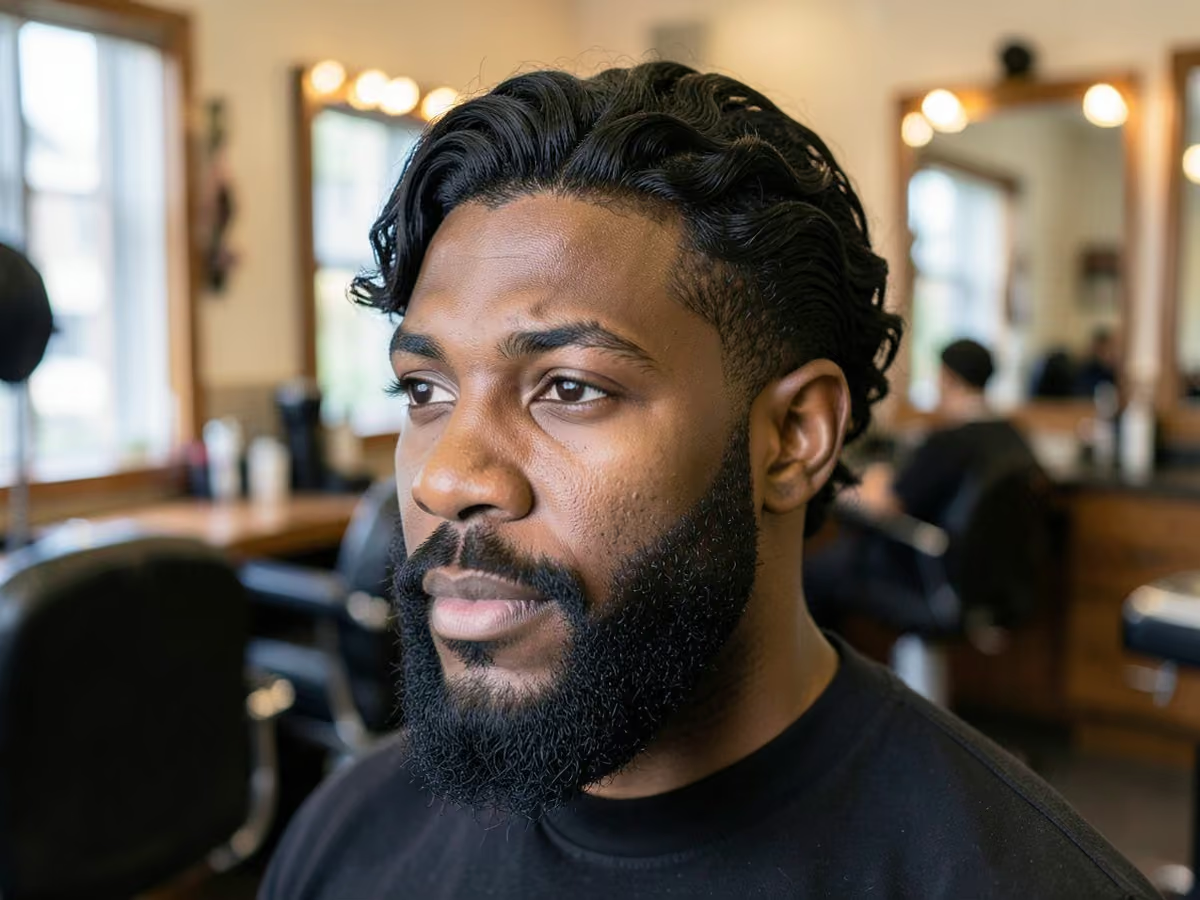
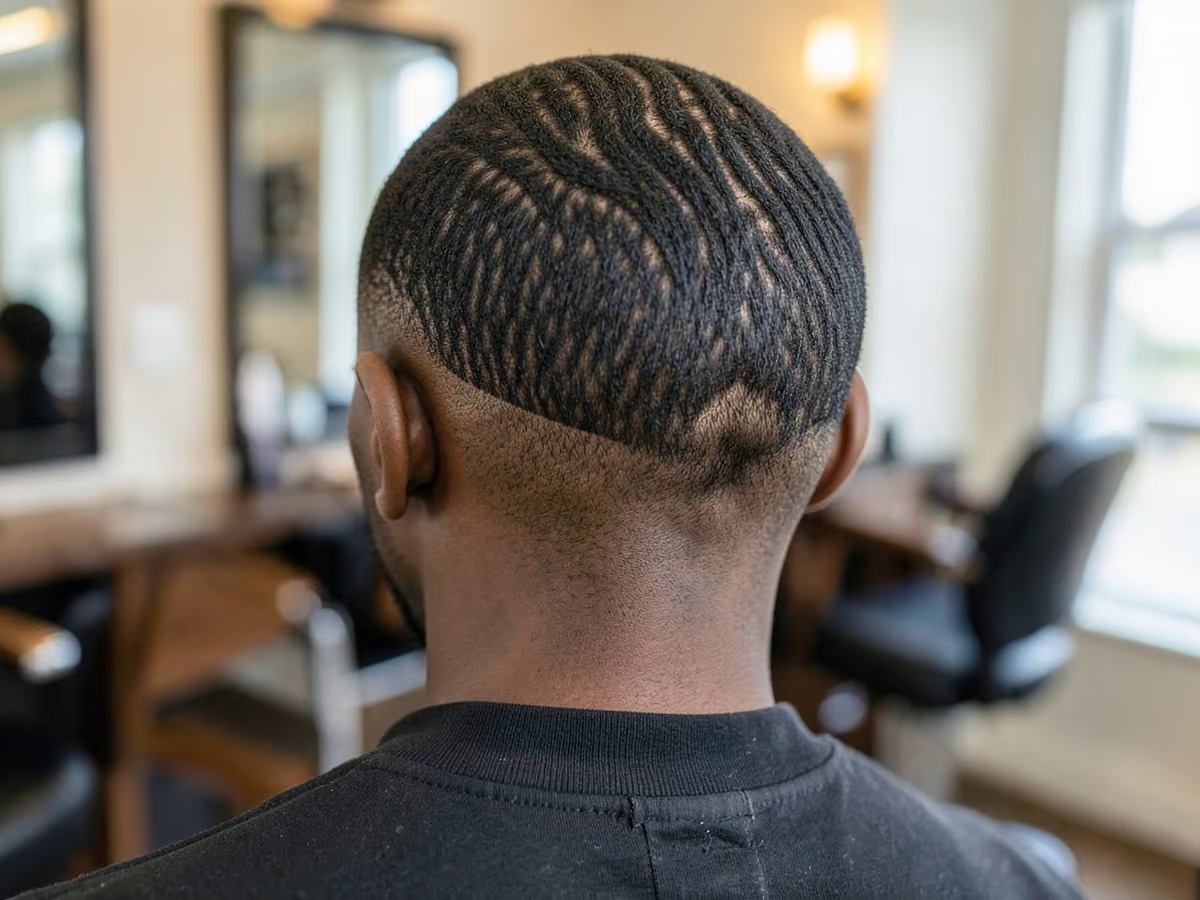
360 waves are ridges that ripple outward from the crown in every direction, so the hair looks like rings on water when seen from above. They are not a haircut on their own. The barber cuts the hair short and even, and the waver builds the pattern by brushing in the direction the hair grows and compressing it under a durag. Coarse, tightly curled hair forms ripples most readily, because each curl bends into the shape of the wave.
The number describes coverage. A 180 has waves on the front and sides, a 360 has them all around, and 540 and 720 are informal names for extra pattern around the crown or two spin points. The same basic cut and routine apply to all of them. The table shows how a wave cut differs from the short cuts it is most often confused with.
Three things work together: an even cut, brushing and compression. Each curl in a short head of coarse hair wants to bend, and brushing trains neighboring curls to bend the same way, following the direction the hair grows. When they line up, their bends stack into a ridge, and the gaps between them form the dark valleys. A durag or wave cap holds that shape overnight so the curls do not spring back.
Get a short, even cut with the grain
Ask for about a #1 to #2 all over, cut in the direction the hair grows. Cutting against the grain takes the hair shorter than the guard suggests and can remove the curl that forms the ripple. Many wavers start at a #1.5.
Brush in the direction of growth
Find your crown, then brush the front forward from it, the sides down and slightly forward, and the back down toward the nape. Several short sessions a day beat one long one. Start with a medium brush and move to a harder one as the pattern sets.
Compress with a durag
Tie a durag or wave cap after brushing and wear it overnight. The flat pressure holds the curls in place. Tie it snug, not tight enough to mark the forehead, and keep the seam in line with how you brush.
Moisturize, then hold
A leave-in or water spray before brushing keeps coarse hair from snapping, and a little wave pomade afterward holds the shape. Too much product leaves residue and flakes in the valleys.
Wolf, then cut down
Wolfing means letting the hair grow for several weeks while you keep brushing, so the ripples get taller. When the pattern shows all around, the barber cuts back down with the grain to reveal sharper, deeper waves.
Who Can Get 360 Waves?
Men with coarse, tightly curled hair, roughly 4a to 4c, get waves the fastest and hold them best. Looser 3b and 3c curls can wave with shorter length and firmer brushing, though the ripples come out wider. Very straight hair rarely makes a true pattern without first adding curl through a perm. Face shape matters less than with most cuts, because the hair sits close to the head; a low taper fade or line up does most of the framing.
Expect to wait. Many wavers see a first pattern on the front within a few weeks of daily brushing, and full coverage can take a few months, depending on hair type and how consistent the routine is. A thin crown, a double crown or uneven growth changes the timeline. A barber who cuts waves every day can look at your growth pattern and tell you what your head is likely to do.
Filter the styles
Showing all 25 styles
Fade
Hair
Length
Wave Patterns from 180 to 720
Wave names count how far the pattern travels around the head. Barbers and wavers do not all define them the same way, so treat these as common usage and bring a photo when you ask.
Trim:Every 2–3 weeks. Keeps the length even without cutting the ripples off.
Best For:Oval, round faces + coarse 4a to 4c hair.
About This Style
The pattern runs all the way around the head: front ripples move toward the forehead, side ripples toward the ears and back ripples toward the nape, all radiating from the crown whorl. Getting there takes weeks of steady brushing, a durag at night and a cut that keeps the hair even. Coarse, tightly curled hair forms the ridges most easily. The barber's job is to keep the length level and cut with the grain.
How to Style at Home
Brush from the crown outward in all directions, following how each zone grows.
Mist with water or leave-in before brushing so the hair bends without snapping.
Tie a durag right after the evening session and sleep in it.
Ask Your Barber
"Even cut with the grain at a #1.5 all over, no fade, taper the sideburns and nape lightly, line up that follows my natural hairline."
Trim:Every 2–3 weeks. Front ripples blur first as the hair grows.
Best For:Oval, round faces + coarse curly hair under one inch.
About This Style
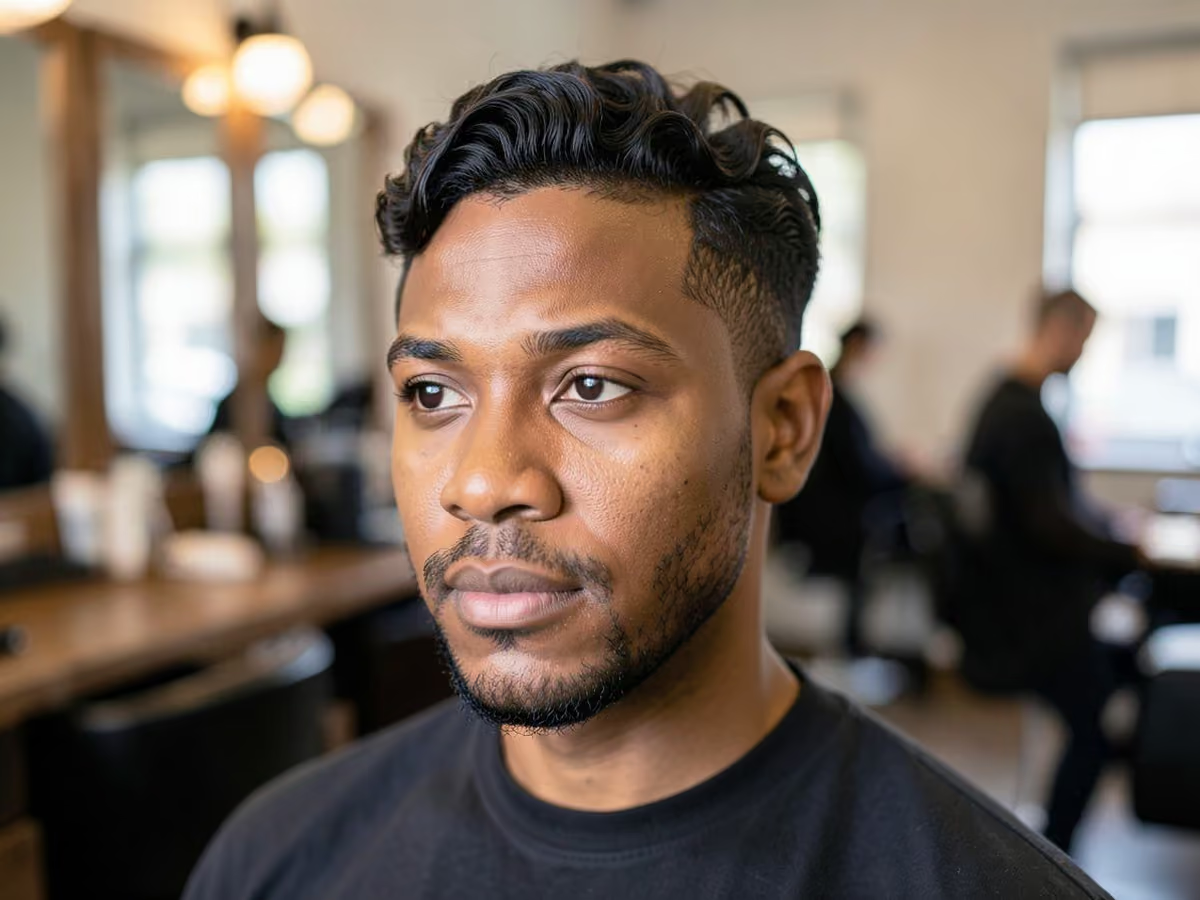
Ripples form only on the front and sides, usually from the crown forward, while the back stays flat or blurry. Most wavers reach this stage first, since the front gets the most brushing. Some people also use the name for waves that cover half the head from front to back. It is a milestone rather than a separate cut; the same even cut is used, and back brushing fills in the rest over time.
How to Style at Home
Brush the front from the crown toward the forehead in short, firm strokes.
Spend extra minutes on the back, brushing down toward the nape.
Wear a durag for at least an hour after each brushing session.
Ask Your Barber
"Short even cut with the grain at about a #1.5, no fade so I can keep brushing the sides, crisp line up and a rounded nape."
Trim:Every 3–4 weeks. Extra length helps the crown pattern hold.
Best For:Oval, square faces + coarse coily hair with a centered crown.
About This Style
Beyond full coverage, the back and crown carry ripples that wrap around the swirl, so the crown itself shows pattern instead of a flat spot. Many wavers call that 540. It usually appears only after the hair has been wolfed for a while and brushed from many angles. Definitions vary from one waver to the next, so a photo explains it better than the number. It needs more length than a basic 360.
How to Style at Home
Brush in small circles around the crown to train the spiral.
Use a hard brush on the back once the hair is long enough to lay flat.
Compress with a durag and a wave cap layered for extra hold.
Ask Your Barber
"I'd like an even cut with the grain at a #2, leave the crown length alone, light taper at the nape, line up only, I am working on a 540."
Trim:Every 3–4 weeks. Two growth zones need even length to connect.
Best For:Oval, long faces + coarse curly hair with a double crown.
About This Style
Some wavers use the name when the head carries two full spin patterns, often around a double crown or with front and back circling separate points, so the ripples look like they turn twice. It is rare and depends heavily on natural growth direction; not every head can do it. If you have two whorls, a barber who knows waves can cut each zone with its own grain so both patterns connect.
How to Style at Home
Map both crowns in a mirror and brush outward from each one.
Brush the area between the two crowns last so the patterns meet.
Keep the durag on overnight and for an hour after brushing.
Ask Your Barber
"Can you do an even #2 all over, cut each crown zone with its own grain, no fade, natural line up, keep the length between the two crowns equal."
Trim:Every 3–4 weeks. Longer length between cuts gives the ripples height.
Best For:Round, oval faces + coarse 4b or 4c hair.
About This Style
Deep waves have tall ridges and dark valleys you can see from across a room, the result of longer hair, usually a #2 or more, plus long daily brushing and steady compression. More length gives each ripple more height. Many wavers chase depth by wolfing, then cut down to reveal sharp ridges. Avoid washing too often with harsh shampoo, since stripped hair frizzes and the valleys lose definition.
How to Style at Home
Wash with a moisturizing shampoo no more than a couple of times a week.
Brush for longer sessions while the hair is damp after washing.
Press a thin layer of wave pomade in before tying the durag.
Ask Your Barber
"Cut down with the grain to a #2, keep it even, taper only the sideburns and nape, line up at my natural hairline, nothing against the grain on top."
Recommended Products
Wave Pomade
Leave-In
Wave Cuts and Wolfing Stages
Waves depend on length. A fresh cut shows crisp but shallow ripples, while wolfing lets hair grow for weeks as you keep brushing. These cards run from the shortest wave cut to a full wolf.
Trim:Every 1–2 weeks. Short ripples lose shape once growth is uneven.
Best For:Oval, square faces + coarse curly hair under half an inch.
About This Style
A #1 or #1.5 all over with the grain gives the shallowest workable waves: tight, close ripples that read as texture more than ridges. It is how many men start, because brushing short hair trains the pattern without frizz. The cut is very easy to keep up, and the edges stay sharp with a line up. Going shorter than a #1 usually removes the curl that forms the wave.
How to Style at Home
Brush lightly but often, five or six short sessions through the day.
Use only a small dab of pomade, since short hair shows residue.
Wear a wave cap at night instead of a heavy durag if it marks the forehead.
Ask Your Barber
"Low cut with the grain at a #1.5 all over, no fade, sharp line up and a squared nape, keep it even so my waves stay connected."
Trim:Every 2 weeks. The front line and ripples blur after two weeks.
Best For:Oval, long faces + coarse curly hair with even growth.
About This Style
A Caesar cut with waves keeps the top short and even, around a #1.5 to #2, with a straight fringe line at the forehead, and the front ripples run toward that line. The blunt edge frames the pattern like a border. It is a classic barbershop shape that suits men with an even hairline. Ask for the front line squared or slightly arched, and keep it at your natural hairline rather than pushed back.
How to Style at Home
Brush the front forward toward the Caesar line every morning.
Smooth the line with a damp edge brush if it frizzes.
Tie the durag low on the forehead so the front ripples stay pressed.
Ask Your Barber
"Caesar cut with the grain at a #2, short straight front line at my natural hairline, light taper at the sideburns and nape, keep my waves intact."
Trim:Every 2 weeks. Only the edges get cut while the top grows.
Best For:Oval, round faces + coarse 4a to 4c hair.
About This Style
Wolfing means skipping full cuts for several weeks, often two to six or more, while brushing and wearing a durag daily. The hair grows longer and the ripples get deeper as long as the brushing keeps up. To avoid a grown-out hairline, many wavers get edge-only visits: the barber cleans the line up, sideburns and neck and leaves the top untouched. Wolfing without brushing turns waves back into plain curls.
How to Style at Home
Brush longer sessions as the hair grows so it keeps lying flat.
Layer a wave cap over the durag at night for more compression.
Book edge-only appointments and tell the barber to skip the top.
Ask Your Barber
"I am wolfing, so do not touch the top. Line up at my natural hairline, clean the sideburns and the neck with a trimmer, no fade."
Trim:Every 2 weeks. Fresh ridges hold their sharpest shape for about a week.
Best For:Square, oval faces + coarse curly hair after a wolf.
About This Style
After a wolf, the barber cuts the hair back to an even #1 or #1.5 with the grain, exposing the pattern that formed underneath. Ripples look sharpest in the first days after this cut-down, with clean ridges and a fresh line up. Going against the grain or too short makes them vanish. Plan the cut-down for when the waves show from every angle, not just the front.
How to Style at Home
Brush gently for the first day so the freshly cut ripples settle.
Apply a thin layer of wave pomade to keep the cut hair from drying.
Start the next wolf right away by brushing on the same schedule.
Ask Your Barber
"Cut down from my wolf to a #1.5 with the grain, follow the pattern, no going against the grain on top, fresh line up and a light taper."
Recommended Products
Wave Pomade
Scalp Oil
360 Waves with a Fade or Taper
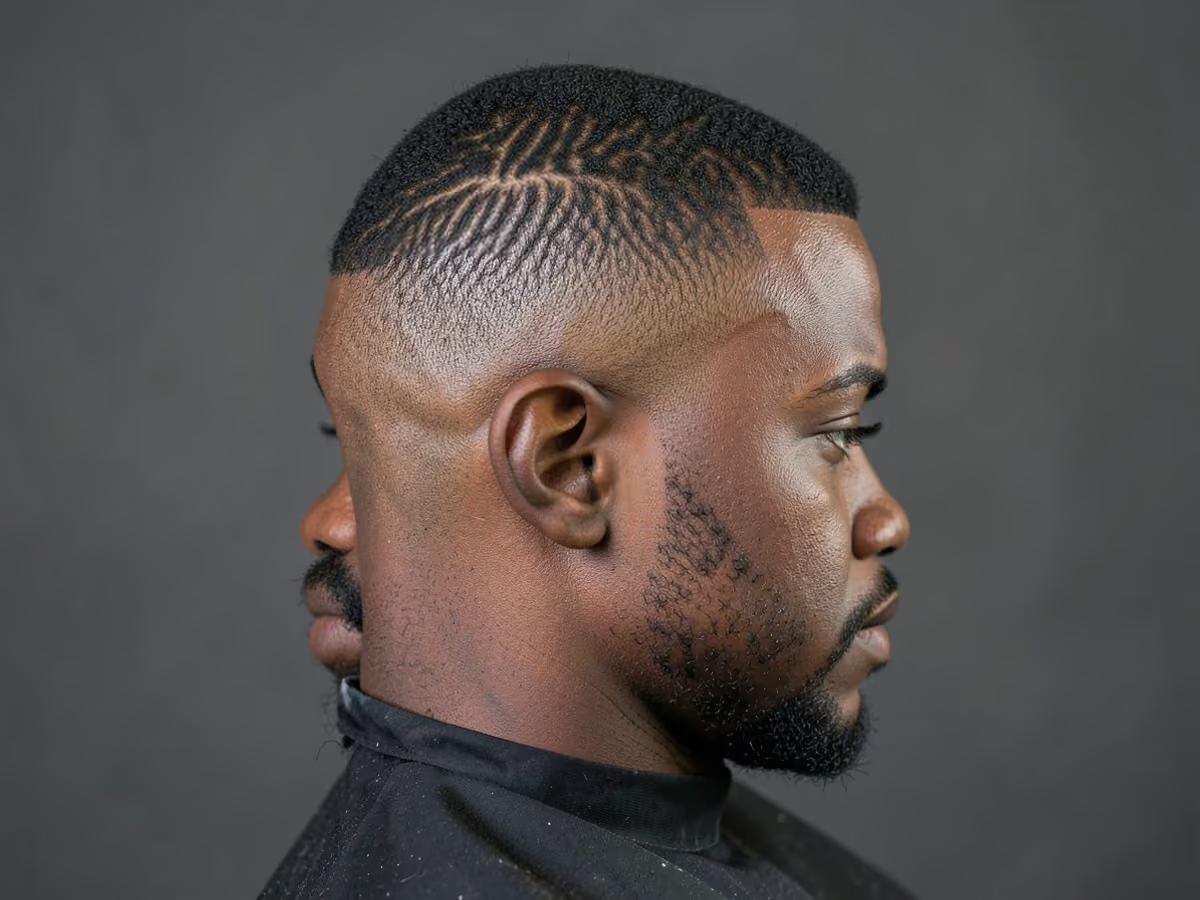
A fade under waves frames the pattern but removes the side ripples, so keep it low if you want side waves to show. A taper only at the sideburns and nape keeps nearly the whole pattern.
Trim:Every 2–3 weeks. Taper and line up blur before the waves do.
Best For:Oval, square faces + coarse curly or coily hair.
About This Style
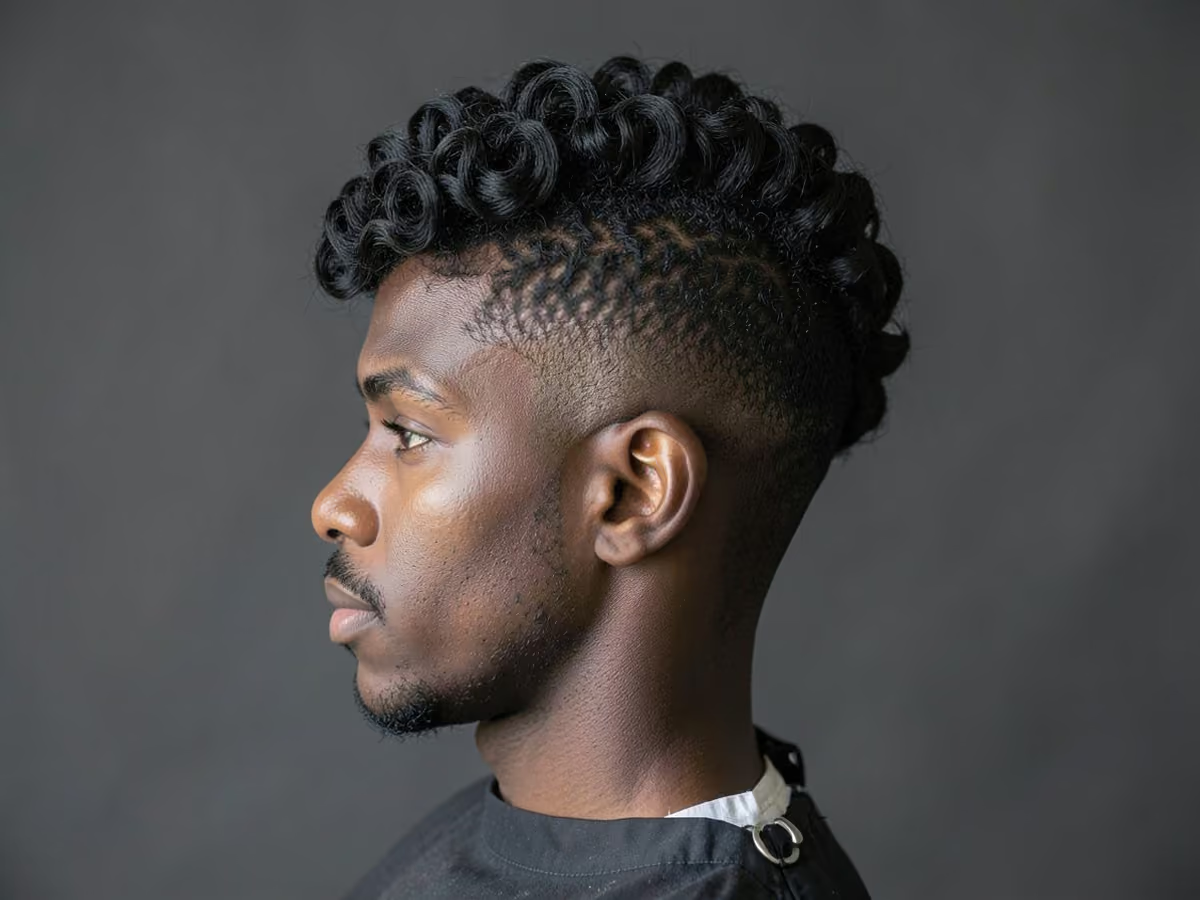
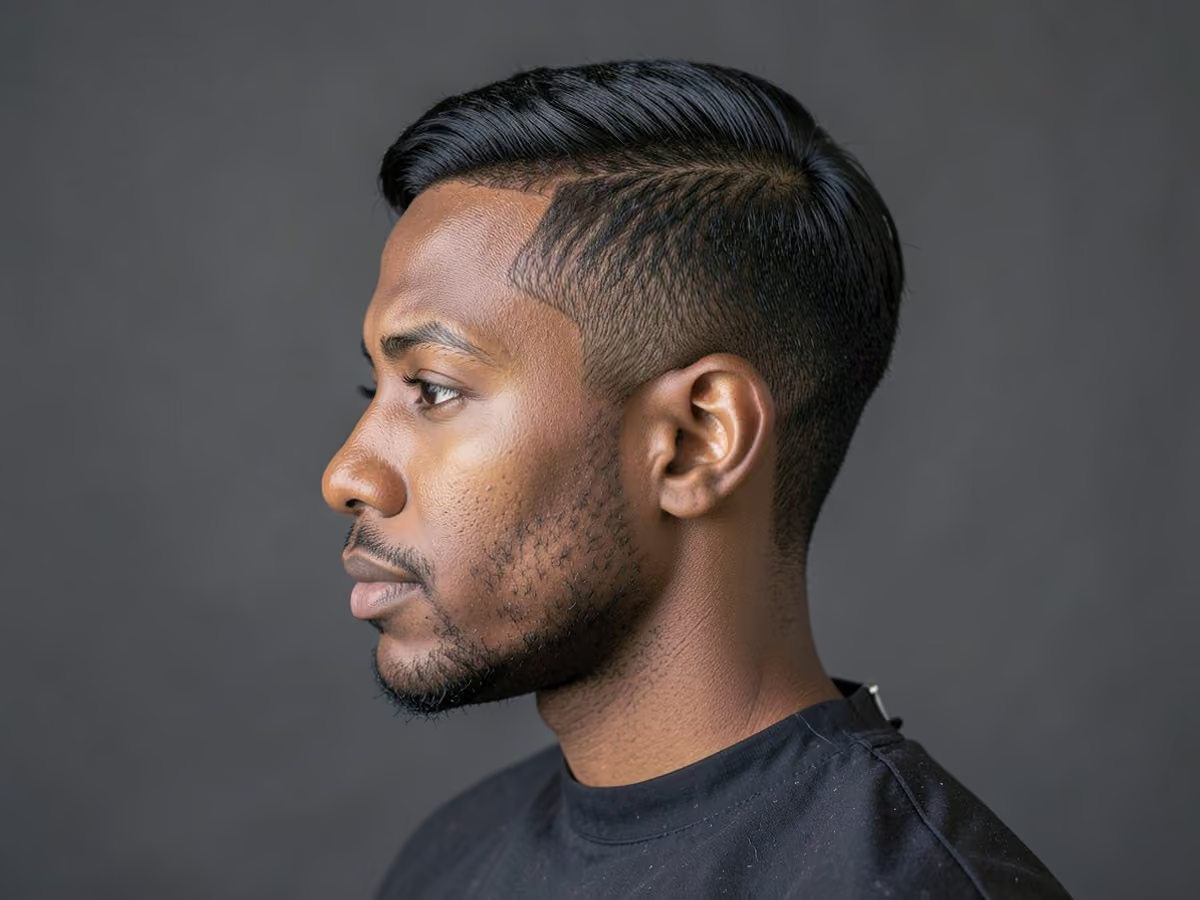
Only the sideburns and nape are tapered from a #0.5 or #1 into the length on top, so the side and back ripples stay intact. This is a common way to clean up waves without losing any pattern you brushed for. It grows out softly, and the line up can be refreshed on its own. It suits men in offices or schools who want neat edges without a visible fade line.
How to Style at Home
Brush the sides down over the taper so the ripples blend into it.
Rub a drop of scalp oil on the tapered nape if it feels dry.
Book a taper-only clean-up at week two to stretch the full cut.
Ask Your Barber
"Low taper at the sideburns and nape from a #0.5 into my #1.5 waves, keep all the side waves, line up at my natural hairline."
Trim:Every 1–2 weeks. Skin on the sides shows regrowth within days.
Best For:Round, oval faces + coarse coily hair on top.
About This Style
Skin at the bottom blends up to the wave length around the temple, so the side ripples are cut away and the pattern sits only on top and at the crown. The contrast makes the top ripples look darker and deeper. Because the fade climbs high, ask the barber to finish the blend with the grain so the lowest ripples on top are not chopped. Men with razor bumps should use a #0.5 instead of skin.
How to Style at Home
Moisturize the shaved sides daily so the skin does not flake.
Focus brushing time on the top and crown, where the pattern now lives.
Wear sunscreen on the bare sides if you spend the day outside.
Ask Your Barber
"Mid skin fade to the temples, blend into a #1.5 on top with the grain, do not cut into the waves, sharp line up, rounded nape."
Trim:Every 2–3 weeks. A guard finish hides early regrowth.
Best For:Oval, long faces + coarse curly hair and sensitive skin.
About This Style
The shortest section stops at a #0.5 or #1 instead of skin, so the sides keep a dark shadow and faint side ripples can still show. It is kinder to skin that gets irritated and grows out more slowly than a bald finish. The softer gradient fits men who want a fade but not a stark pale band on the sides in photos or at work.
How to Style at Home
Brush the faded sides down along with the waves above them.
Keep pomade light on the sides so the shadow does not look greasy.
Retie the durag so its edge sits above the fade line.
Ask Your Barber
"Shadow fade from a #0.5 at the bottom, low to mid height, blending into a #1.5 with the grain on top, no skin, natural line up."
Trim:Every 1–2 weeks. Bare skin at the nape needs frequent clean-ups.
Best For:Oval, square faces + coarse 4b or 4c hair.
About This Style
The sideburns and nape go down to skin, but the fade stops there, so the side and rear pattern is untouched. It gives a sharper frame than a guard taper and a clean neckline from behind. Since skin is exposed at the nape, ingrown hairs can appear there, so brush that area lightly and keep it moisturized. Most men touch up the taper every one to two weeks.
How to Style at Home
Use a soft brush on the nape to avoid scraping freshly shaved skin.
Apply scalp oil to the bare taper after showering.
Check the neckline weekly and book a quick clean-up when it blurs.
Ask Your Barber
"Bald taper at the sideburns and nape only, foil shaved, blended into my #1.5 waves, leave the side waves alone, squared line up."
Recommended Products
Wave Pomade
Scalp Oil
Waves by Hair Type
Wave patterns form most easily in coarse, tightly curled hair, but looser curls can wave with more product and compression. Straight hair rarely holds true waves without adding curl first.
Trim:Every 2–3 weeks. Coily hair needs even length to keep the stretch.
Best For:Round, oval faces + 4c coily hair half an inch or longer.
About This Style
Tightly coiled 4c hair shrinks a lot, so it often needs more brushing and a longer wolf to stretch into visible ripples, but once trained it holds a strong pattern. Moisture matters, because dry 4c hair snaps under a hard brush. Start with a medium brush and move to a hard one as the hair trains. A leave-in before brushing and pomade afterward help hold the stretch.
How to Style at Home
Spray leave-in through the hair before every brushing session.
Brush with firm, short strokes and hold the brush flat against the scalp.
Compress with a durag for at least an hour after each session.
Ask Your Barber
"Even cut with the grain at a #2 so my 4c hair has room to stretch, no fade, light taper at the nape, soft line up."
Trim:Every 2 weeks. Pattern on straight hair fades quickly with growth.
Best For:Oval, square faces + straight or 2b wavy hair.
About This Style
Straight hair lacks the curl that bends into ripples, so brushing alone rarely makes 360 waves. Men with slightly wavy hair can get a faint pattern with very short length, compression and a firm pomade. Others get a short perm first to add curl, which can dry or weaken hair and should be done by a stylist. A short textured crop with a fade is often the more honest goal.
How to Style at Home
Keep the hair very short and brush it flat while slightly damp.
Use a firm pomade or light gel to hold the faint ripple.
Tie a durag right after styling and leave it on for an hour.
Ask Your Barber
"Even cut at a #2 all over with the grain, light taper at the nape, natural line up, I am trying to train a wave pattern into straight hair."
Trim:Every 2–3 weeks. Loose curls spring up once they pass an inch.
Best For:Oval, heart faces + 3b or 3c curly hair.
About This Style
Loose 3b and 3c curls can form waves if the hair is kept under about an inch and brushed hard enough to flatten each curl into a ripple. The ridges tend to be wider and softer than on 4c hair. Wash with a moisturizing shampoo and brush while damp so the curl takes the shape. Extra length lets the curls spring back up, so cut-downs come sooner than for coarser hair.
How to Style at Home
Brush right after showering, while the curls are still damp.
Seal the shape with a small amount of curl cream and pomade.
Avoid wolfing past an inch, since looser curls stop lying flat.
Ask Your Barber
"Even cut with the grain at a #2 on my curly hair, keep it under an inch, low taper at the sideburns and nape, natural line up."
Trim:Every 2–3 weeks. Mixed textures need even length to wave evenly.
Best For:Oval, round faces + mixed 3c to 4a curly hair.
About This Style
Mixed-race hair often carries more than one curl pattern, looser at the crown and tighter at the nape or the reverse, so ripples form unevenly at first. Brushing each zone in its own growth direction and using firmer pomade on looser areas helps the pattern line up. The front may wave weeks before the back. The biracial curly hair guide covers other cuts for mixed textures.
How to Style at Home
Use more pomade on the looser zones and less on the tighter ones.
Brush the slowest zone first in each session so it gets the most work.
Ask your barber to adjust the guard where the texture changes.
Ask Your Barber
"I'm after an even cut with the grain at a #1.5, adjust where my hair is looser so the length looks the same, light taper, natural line up."
Recommended Products
Wave Pomade
Leave-In
360 Waves with Beard
A beard frames waves from below. Keep the beard edge matched to the line up and the sideburn faded into the beard so the pattern on top has a clean border all the way around.
Trim:Every 2–3 weeks. Cheek lines and wave length need trims together.
Best For:Round, long faces + coarse curly hair and a dense beard.
About This Style
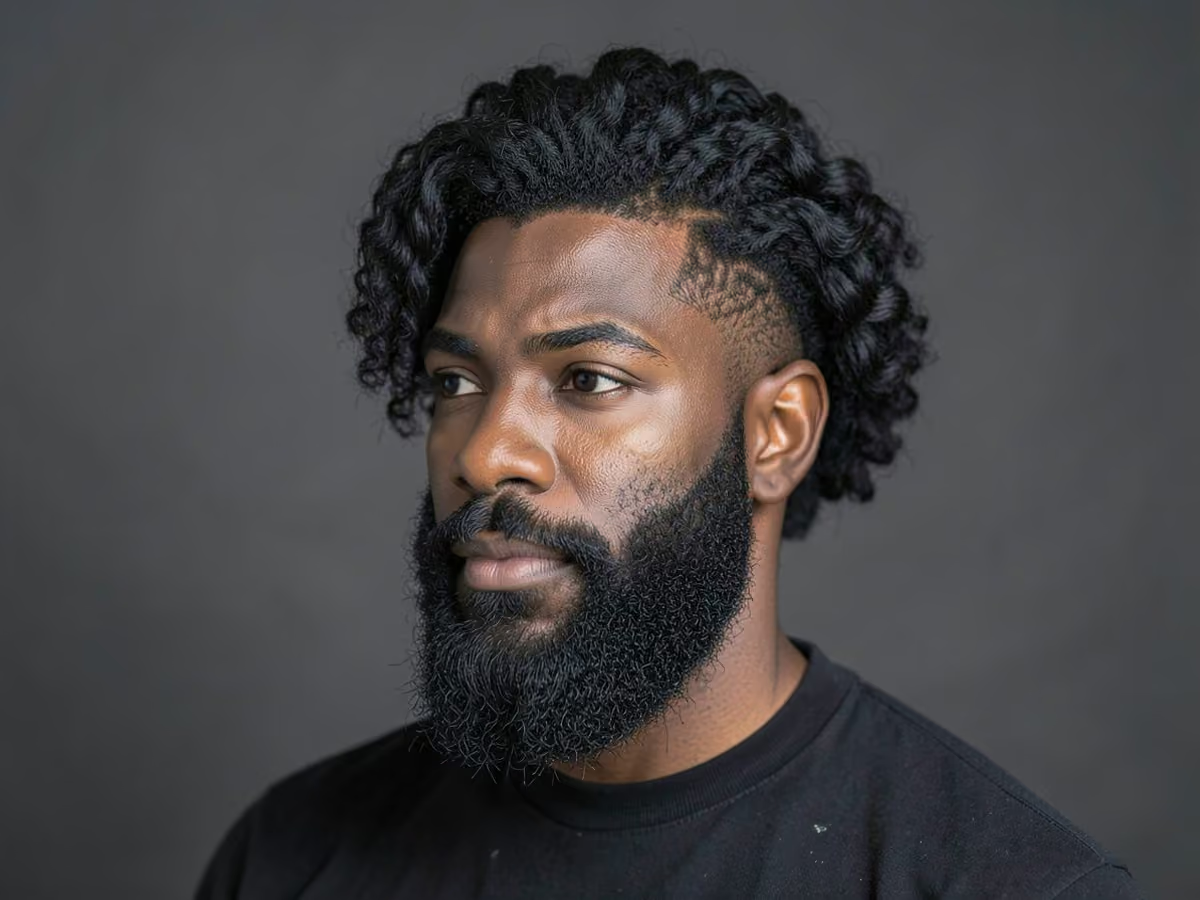
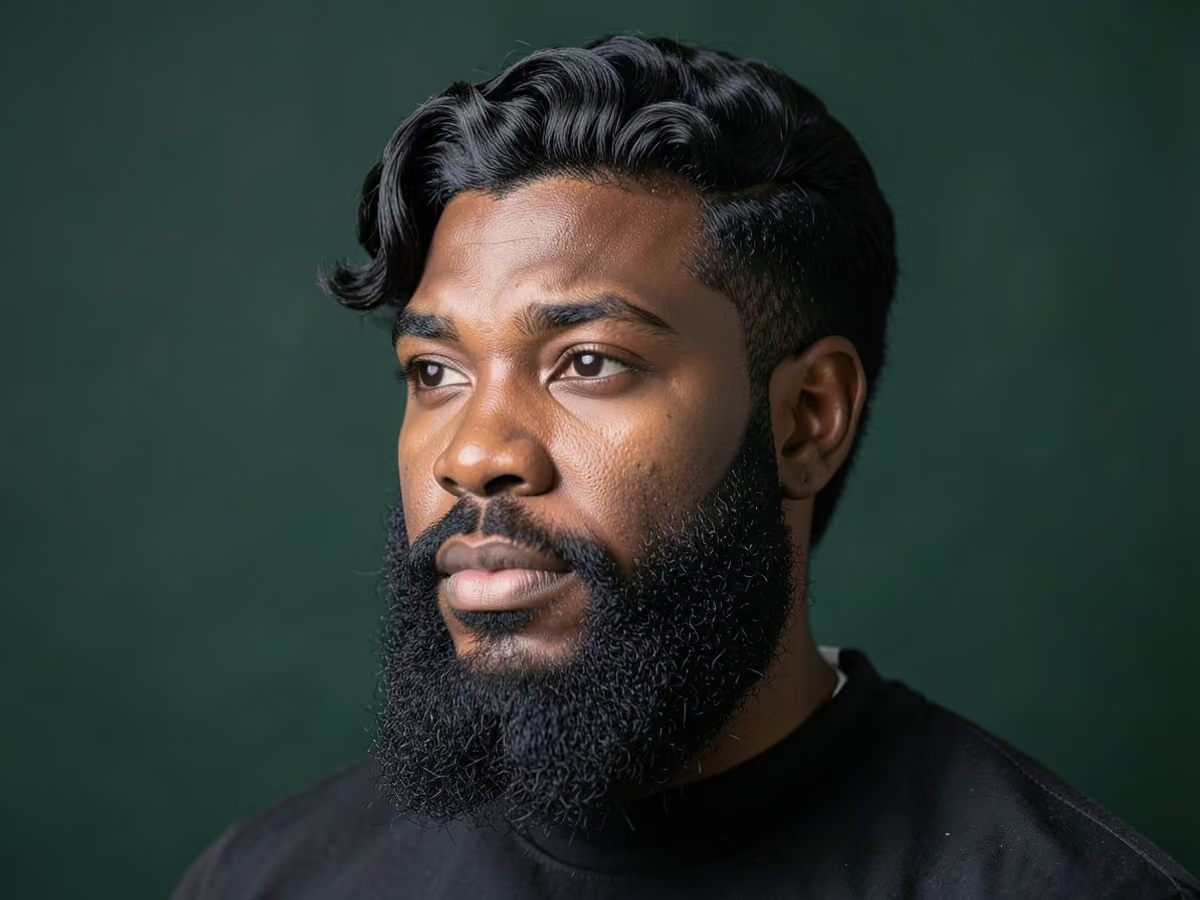
Full ripples on top meet a beard an inch long or more, with the sideburn blended into the beard at a #1 or #2. The beard adds width and weight to the lower face, which balances a rounded head of waves. Brush the beard the same direction each day so its texture looks as groomed as the ripples. Line up the cheek and neckline on the same visit as the cut.
How to Style at Home
Work beard oil into the beard right after brushing your waves.
Brush the beard downward with a boar bristle brush to match the ripples.
Keep beard oil away from the top so it does not weigh down the waves.
Ask Your Barber
"Could I get an even #1.5 waves on top, sideburns faded from a #1 into my full beard, beard about an inch, line up the cheeks and neckline."
A goatee keeps hair only on the chin and around the mouth, leaving the cheeks clean, so the jawline shows under the wave pattern. It suits men whose cheek growth is thin. The small beard matches a short low cut and does not compete with the ripples. Keep the goatee squared to strengthen a soft chin or rounded to soften a sharp one.
How to Style at Home
Trim the goatee edges with a detailer twice a week.
Rub a little beard balm into the chin hair to keep it soft.
Shave the cheeks with the grain to reduce bumps.
Ask Your Barber
"Even #1.5 waves with the grain, low taper at the sideburns, shave my cheeks, line up a squared goatee about half an inch long."
Trim:Every 2–3 weeks. Waves need cutting long before stubble shows wear.
Best For:Square, oval faces + coarse coily hair and light growth.
About This Style
Short stubble, kept at a #1 or #2 trimmer setting, sits under waves with no lines to maintain. Its dark texture echoes the shade of the ripples and skips the sharp border between beard and bare skin that a lined beard creates. Men prone to razor bumps often prefer stubble because the hair is never shaved below the skin surface, which keeps the neck calmer.
How to Style at Home
Run the trimmer over the stubble every few days at the same guard.
Rub a drop of beard oil into the stubble to soften the skin.
Leave the cheek line natural instead of shaving it sharp.
Ask Your Barber
"I'd like an even #1.5 waves on top, light taper, keep my stubble at a #1 guard, no razor anywhere, natural line up."
Trim:Every 1–2 weeks. Thin jaw lines lose shape after a week.
Best For:Round, oval faces + coarse curly hair and even jaw growth.
About This Style
A narrow strap of beard runs along the jawline from one sideburn to the other, connecting with a faded sideburn at the ear. The strap traces the jaw the way a line up traces the forehead, so the face has a clear frame top and bottom. It needs a steady hand or a barber visit every week or two to stay even. Width is usually a quarter to half an inch.
How to Style at Home
Trace the top and bottom of the strap with a detailer each week.
Smooth the strap with a little beard balm so stray hairs lie down.
Use a mirror at eye level so both sides stay the same width.
Ask Your Barber
"Can you do an even #1.5 waves, sideburns faded into a chin strap about a quarter inch wide along my jaw, sharp line up, tapered nape."
Recommended Products
Wave Pomade
Beard Balm
Waves for Hairlines, Crowns and Color
Waves can work around a receding line, a thin crown or bleached hair with a few changes. These cards cover what a barber adjusts when the hairline or texture is not the textbook case.
Trim:Every 2–3 weeks. Even length keeps the color and ripples aligned.
Best For:Oval, square faces + healthy coarse 4b or 4c hair.
About This Style
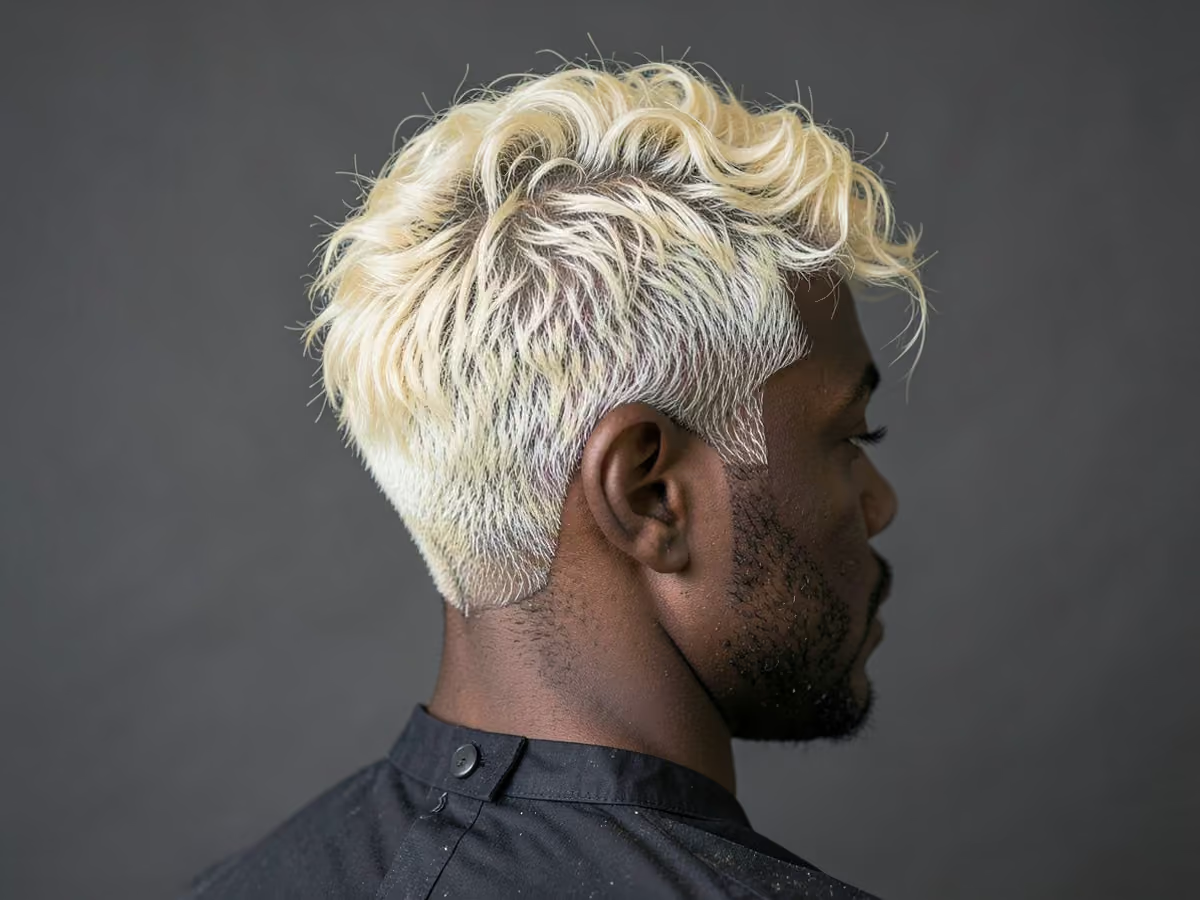
Bleaching coarse hair to blonde or platinum makes the ridges catch light, so the pattern shows clearly from a distance. Bleach weakens the hair shaft, and hard daily brushing on lightened hair causes breakage, so switch to a medium brush and add a leave-in before each session. Have the color done by a stylist, ideally after the waves are trained. Roots need a touch-up every four to six weeks.
How to Style at Home
Use a medium brush on bleached hair and never brush it dry.
Apply leave-in after every wash to replace lost moisture.
Wear the durag every night to cut friction on the weaker hair.
Ask Your Barber
"Even cut with the grain at a #2 on my bleached waves, avoid going any shorter, light taper at the nape, natural line up."
Trim:Every 2–3 weeks. A soft hairline needs only light clean-ups.
Best For:Oval, long faces + coarse curly hair with thin temples.
About This Style
When the temples have receded, ask for a line up that follows your real hairline instead of a razor edge pushed forward or back. Front ripples brushed straight toward the forehead fill the visual gap better than a hard Caesar line. Avoid painting in a line with dye or cutting sharp corners into thin areas; both draw attention to the recession. The receding hairline guide has more options.
How to Style at Home
Brush the front ripples forward and slightly toward each temple.
Skip razor edges at the temples and use a trimmer only.
Keep the top short so thin areas do not contrast with dense ones.
Ask Your Barber
"I'm after an even #1.5 waves with the grain, soft line up that follows my natural hairline, no razor at the temples, round the corners, light taper."
Trim:Every 3–4 weeks. Nothing sharp needs keeping at the front.
Best For:Oval, round faces + coarse coily hair and sensitive skin.
About This Style
Here the barber skips the razor line up and only cleans stray hairs below the hairline with a trimmer, leaving the front edge as it grows. This avoids the irritation and ingrown hairs that frequent razor edges cause on sensitive skin, and it never grows out into a fuzzy outline. The front looks softer and more relaxed, and it avoids the slow creep that repeated aggressive line ups can cause.
How to Style at Home
Brush the front ripples down to the hairline so the edge looks full.
Clean stray neck hairs with a trimmer between visits.
Keep the durag band soft so it does not crease the front edge.
Ask Your Barber
"Let's go with an even #1.5 waves with the grain, no line up at the front, just clean the strays below my hairline with a trimmer, light taper at the nape."
Trim:Every 1–2 weeks. Short even length hides scalp at the crown.
Best For:Oval, round faces + coarse curly hair thinning at the crown.
About This Style
The crown is where every wave pattern starts, and thinning there leaves a flat spot that breaks the spin. Keeping the hair very short, around a #1, reduces the contrast between scalp and hair, and brushing outward from the crown keeps the surrounding ripples pointed the right way. Dense ripples on the sides and front draw the eye away from the top. A dermatologist can explain treatment options if the thinning is progressing.
How to Style at Home
Brush gently around the crown rather than pressing hard on thin hair.
Apply sunscreen to the crown when you will be in the sun for hours.
Keep the length even with frequent short cuts.
Ask Your Barber
"Even #1 with the grain all over so my crown blends in, no fade, natural line up, follow the growth pattern around the crown."
Recommended Products
Wave Pomade
Scalp Oil
How Do You Ask Your Barber for a Wave Cut?
Say you are growing waves and want an even cut with the grain. Name the guard, usually a #1 to #2, and say if you want a taper, a low fade or no fade at all, since higher fades remove the side waves you have been brushing. Ask for a line up that follows your natural hairline, and say how you want the nape finished: squared, rounded or tapered. If you are in the middle of a wolf, say so, and the barber should only clean the edges.
Pick a barber who cuts waves often. They will check your crown and growth direction before clipping, follow the pattern with the guard instead of cutting across it, and avoid going against the grain on top. The line-up vs edge-up guide explains the edge options, and taper fades for coily hair covers the lightest ways to clean up the sides.
Clipper Guards Used in 360 Waves Styles
A clipper guard is the plastic comb that clips onto the blade and sets how much hair is left: a #1 leaves 3 mm (1/8 inch), each step up adds about 3 mm. The right column lists the cards on this page that call for each guard. See the full clipper guard numbers guide for the complete chart.
There is no fixed number. Many wavers wolf for two to six weeks for a short wolf and longer when chasing depth, then cut down when the pattern shows on the front, sides and back. The hair should be long enough that brushing still lays it flat and the ripples connect around the head. Wolfing without daily brushing and a durag only grows curls, and the pattern can be lost.
Hair grows roughly half an inch a month, so a six-week wolf adds about three quarters of an inch. During that time, edge-only clean-ups keep the hairline and neck tidy for work or school without touching the length on top. Book the cut-down with a barber you trust and tell them how long you have been wolfing, because one pass against the grain can undo weeks of brushing and send you back to the start.
What Mistakes Ruin 360 Waves?
Most lost patterns come from a handful of habits rather than bad hair or the wrong products. Barbers who cut waves every day see the same few mistakes again and again, and each one is easy to fix once you know it. These are the ones that come up most.
Cutting against the grain
Going against the direction of growth on top takes the hair shorter than the guard and cuts off the curl that forms each ripple.
Brushing in the wrong direction
Brushing straight back or in random strokes fights the growth pattern. Follow the direction the hair grows away from the crown.
Skipping the durag
Without compression, curls spring back overnight and the morning's brushing starts from zero. A loose cap is better than none.
Brushing dry hair hard
Dry coarse hair snaps under a hard brush. Mist it with water or leave-in first, especially on 4c or bleached hair.
Fading too high too early
A mid or high fade removes the side and back waves. Keep a taper or low fade until the full pattern is trained.
Which 360 Waves Is Right for You?
Pick your hair type and how much upkeep you will put in. The matches below come from the Best For and Maintenance notes on each card. Upkeep follows the Maintenance badge: low means a cut every 3 to 6 weeks and almost no daily styling, high means weekly line-ups or daily product.
It varies by hair type and routine. Many wavers see some front pattern within a few weeks of daily brushing and a durag, and full coverage around the head can take a few months. Coarse 4b and 4c hair usually waves faster than looser curls. Brushing consistently every day matters more than brushing harder.
Q2: What guard number is best for 360 waves?+
Most wavers ask for a #1 to #2 all over, cut with the grain. A #1.5 is a common starting point: short enough to brush flat and long enough to keep the curl that forms the ripple. Go longer for deeper waves, and go shorter only if your barber says your hair can hold it.
Q3: Can you get waves with straight hair?+
Rarely. Waves form from curl, and straight hair has little curl to bend into a ripple. Slightly wavy hair kept very short may show a faint pattern with firm pomade and a durag. Some men get a perm first to add curl. A textured crop or Caesar cut is often the more realistic choice.
Q4: Do you need a durag for 360 waves?+
It helps a lot. A durag or wave cap compresses the hair after brushing and stops pillow friction from frizzing it overnight, so the pattern sets instead of springing back. Tie it snug but not tight enough to leave marks on the forehead, and wear it at least while you sleep.
Q5: What does wolfing mean for waves?+
Wolfing means going several weeks without a haircut while you keep brushing and wearing a durag. The longer hair lets the ripples get taller and connect around the head. When the pattern is set, the barber cuts back down with the grain to show deeper, sharper waves.
Q6: Should you get a fade with 360 waves?+
You can, but a fade removes the waves on the part of the head it covers. A taper at the sideburns and nape, or a low fade, keeps most of the pattern, while mid and high fades leave waves only on top. Many wavers skip the fade until the full pattern is trained.