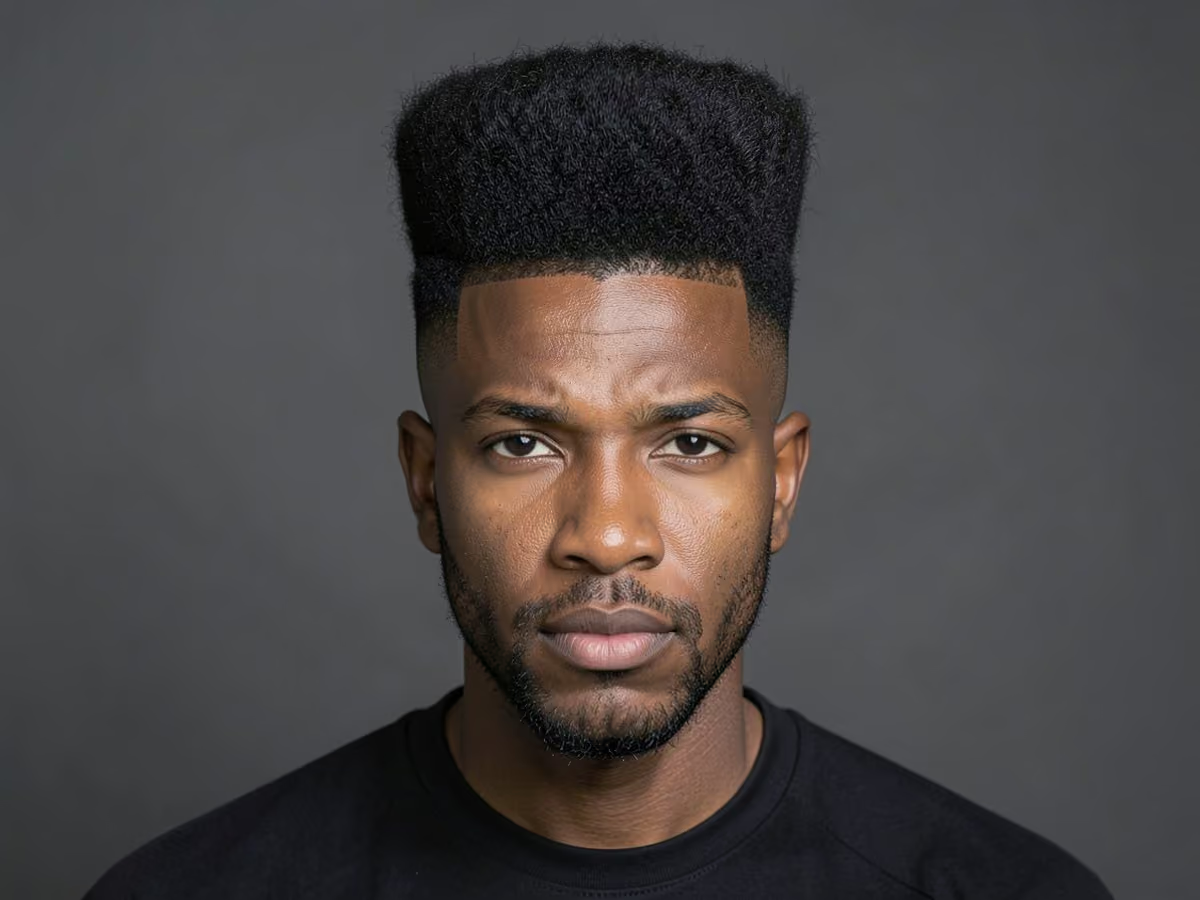
Quick answer: Hip-hop haircuts are the styles that grew up alongside the music and its barbershops: high top fades and Caesars in the 1980s and 1990s, cornrows and braids around 2000, then waves, twists, locs, dyed tips and shaved designs. Most are built on a clean fade or taper and a sharp line-up.
Hip-Hop Haircut Styles at a Glance
Every style on this page with its clipper guard, top length and trim interval. Tap a name to jump to that card.
Hip-hop haircuts trace the culture's history through the barbershop, from the tall high tops of the late 1980s to the cornrows of the early 2000s and the locs, twists and color of today. Most of these cuts were refined in Black barbershops and are now worn far beyond them. Below are 20 styles grouped by era and finish, with guard numbers and what to say in the chair.
What Makes a Haircut a Hip-Hop Haircut?
No single cut defines the category. What links these styles is where they became popular: artists, dancers and fans wore them in videos, on album covers and on stage, and barbers in the neighborhoods where hip-hop grew turned them into requests. Many depend on precise clipper and trimmer work, a fade that blends from skin, a line-up that squares the hairline, or a shaved design, which is why the barbershop sits close to the center of the culture.
Most of the styles were developed on coily and curly hair, and a few, such as cornrows and locs, are much older than hip-hop itself; the music made them more visible rather than inventing them. Several, including the Caesar, buzz cuts and fades with a line-up, work on straight and wavy hair too. This page groups them by era and finish rather than by who wears them.
How Have Hip-Hop Haircuts Changed Over the Decades?
In the late 1980s and early 1990s, tall high tops, box fades and shaved hairline parts were everywhere in videos. Through the 1990s, shorter Caesars and waves became the clean everyday choice. Around 2000, cornrows and long braids were widely worn by artists and athletes. From the 2010s onward, the field opened up: dreads and locs, sponge twists, frohawks, bleached buzz cuts and dyed tips all became common, often over a burst or taper fade.
Older styles keep coming back with modern finishes, such as a high top over a skin fade or a Caesar with a burst. Barbers also mix eras freely, adding a shaved part from the 1980s to a sponge-curl top or dyed tips to a classic taper. The table summarises the main eras, the styles most often seen in each and the finish that tends to define them.
How Have Hip-Hop Haircuts Changed Over the Decades?
Era
Common styles
Typical finish
Late 1980s to early 1990s
High top, box fade, hairline part
Tall flat top, sharp corners
Mid to late 1990s
Caesar, waves, low cut
Short even top, line-up
Around 2000
Cornrows, long braids
Straight-back rows, taper
2010s onward
Locs, twists, frohawk, dyed tips, designs
Burst or taper fade, color
Who Can Wear Hip-Hop Haircuts?
Anyone can wear most of these cuts, but hair texture decides which ones work without extra effort. High tops, box fades, waves, sponge curls, twists and locs rely on coily or tightly curled hair, which holds height and pattern naturally. Cornrows and braids need enough length and grip to hold, which coily hair offers more easily than fine straight hair. Caesars, buzz cuts, line-ups and shaved designs suit almost every texture.
Face shape matters too. Tall styles such as high tops add length, which suits round and square faces; long faces look better with shorter, flatter cuts like a Caesar or low cut. If you are borrowing a style from a different hair culture, find a barber or braider experienced with it, and see our guide to haircuts by hair texture for Black men for more on matching cuts to texture.
Filter the styles
Showing all 20 styles
Fade
Hair
Length
Old-School Hip-Hop Haircuts
These five cuts were common in videos and on album covers from the late 1980s through the 1990s and still get requested today with modern fades. The high top fade and Caesar cut guides cover two of them in depth.
Trim:Every 2 weeks. The flat top loses its level edge quickly.
Best For:Round, square faces + coily, kinky or 4C hair.
About This Style
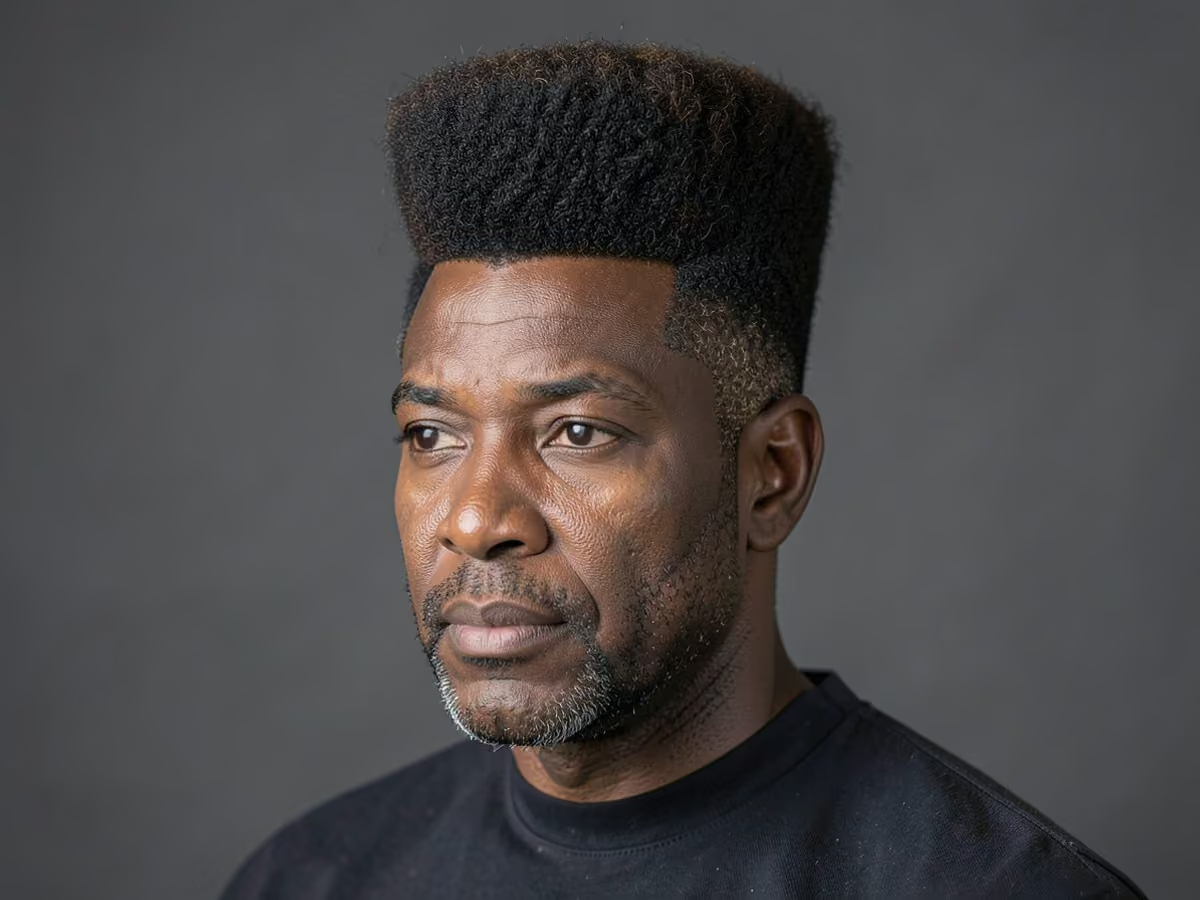
Coily hair on top is grown three to five inches and cut dead flat across, with straight vertical sides running down to a faded or tapered base. The shape was everywhere in late 1980s videos. It takes a skilled barber with clippers and a comb to keep the top level. Round faces gain length from the height. Picking the top out daily keeps it full.
How to Style at Home
Pick the top straight up from the roots with an afro pick.
Pat the sides of the top with your palms to keep them vertical.
Sleep on a satin pillowcase so the top does not flatten.
Ask Your Barber
"Classic high top, about four inches on top cut flat and level, straight vertical sides, low fade from a #1 at the bottom with a line-up."
Trim:Every 1–2 weeks. Extra height needs frequent leveling.
Best For:Round, oval faces + dense coily or 4C hair.
About This Style
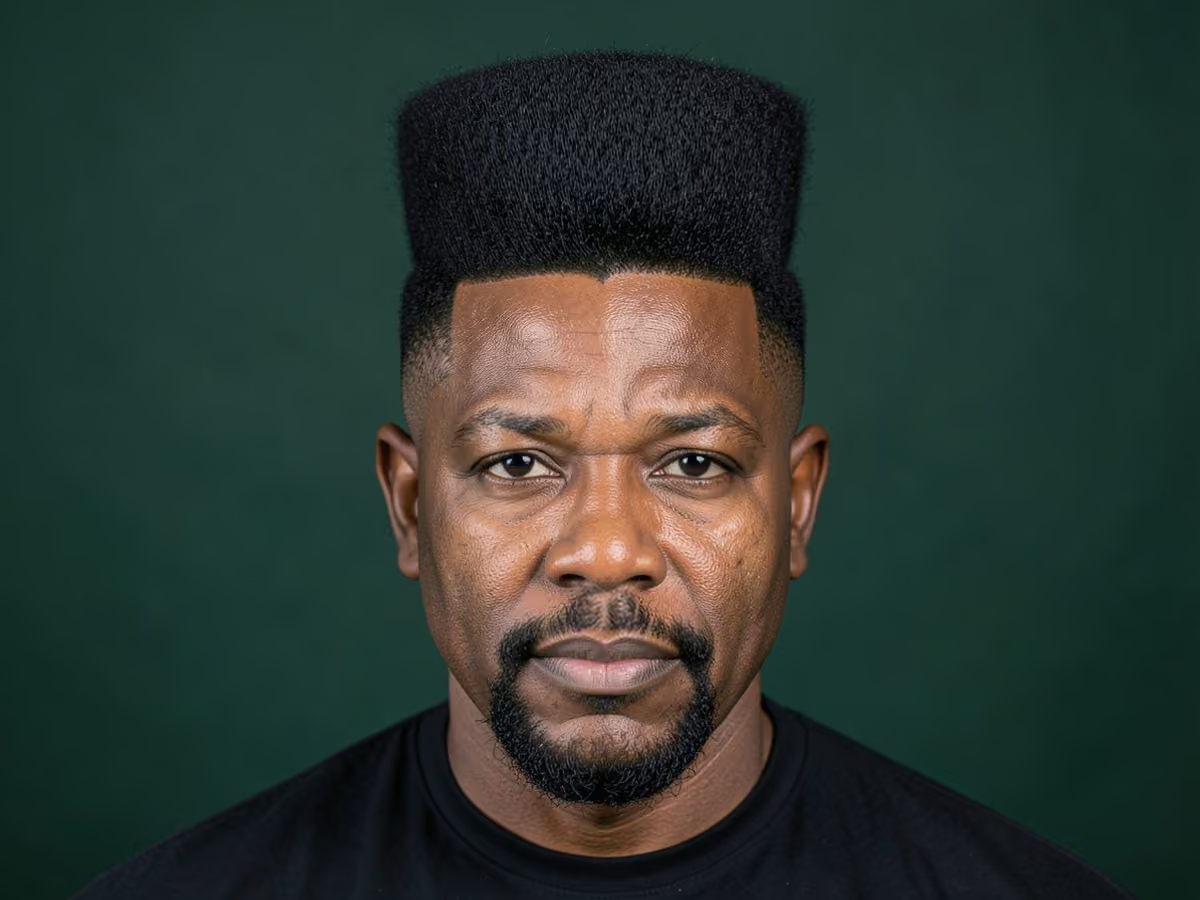
Named after the duo Kid 'n Play, whose member Christopher Reid wore an especially tall high top around the turn of the 1990s, this version pushes the top to five inches or more. The sides are faded very short so the column looks taller still. It needs dense coily hair and daily picking. Long faces should choose a shorter high top instead, since this height stretches the face.
How to Style at Home
Pick the hair upward from the roots every morning.
Spritz leave-in through the top to stop it drying out.
Shape the corners with your palms after picking.
Ask Your Barber
"Very tall high top, about five to six inches cut flat and level, sides faded very short from skin, sharp corners and a line-up."
Trim:Every 2–3 weeks. The square corners round off as it grows.
Best For:Oval, square faces + coily or tight curly hair.
About This Style
A shorter cousin of the high top, the box fade keeps one to two inches on top cut flat with squared corners, over a fade from a #1. It gives the same angular shape with far less height and daily work. It was a common everyday cut in the early 1990s and suits men who like the old-school outline but want something more practical.
How to Style at Home
Brush the top up lightly with a soft brush.
Apply a little leave-in to keep the coils soft.
Check the corners in a mirror and book a reshape when they round off.
Ask Your Barber
"Box fade, an inch and a half on top cut flat with square corners, fade from a #1 on the sides, line-up at the front."
Trim:Every 2–3 weeks. The line-up and edges need regular cleanup.
Best For:Oval, long faces + coily, wavy or straight hair.
About This Style
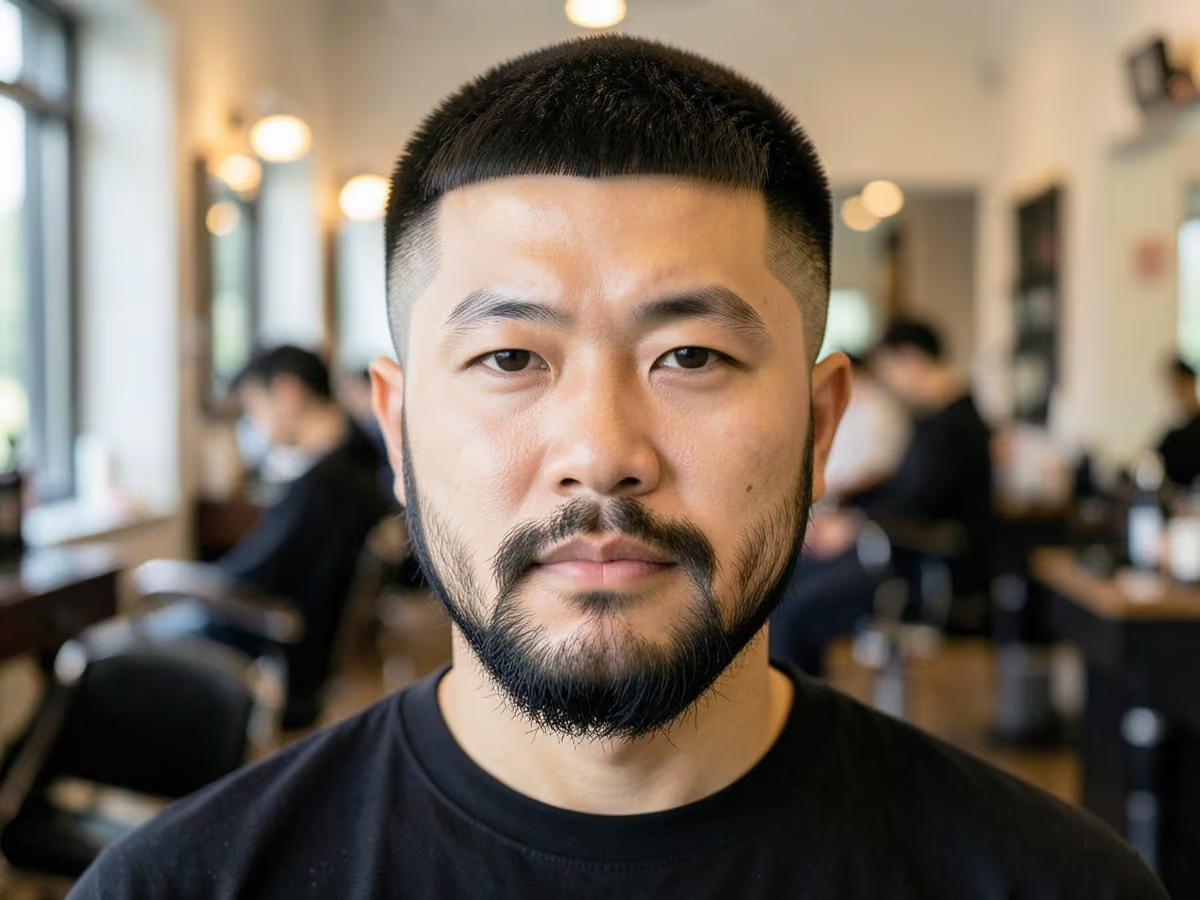
Short, even hair all over the top, about half an inch, brushed forward with a straight hairline at the front, was the clean everyday cut of many 1990s artists. A low taper or fade keeps the sides tidy. On coily hair it is often brushed for waves; on straight hair it lies flat with a short fringe. Long faces suit it because it adds no height.
How to Style at Home
Brush the top forward with a soft brush after washing.
Apply a thin layer of wave pomade or light pomade.
Keep the front line clean with a quick touch-up every two weeks.
Ask Your Barber
"Caesar cut, about half an inch on top brushed forward, straight line-up at the front, low taper on the sides from a #1."
Trim:Every 1–2 weeks. Shaved parts fill in within a week.
Best For:Oval, square faces + coily or tight curly hair.
About This Style
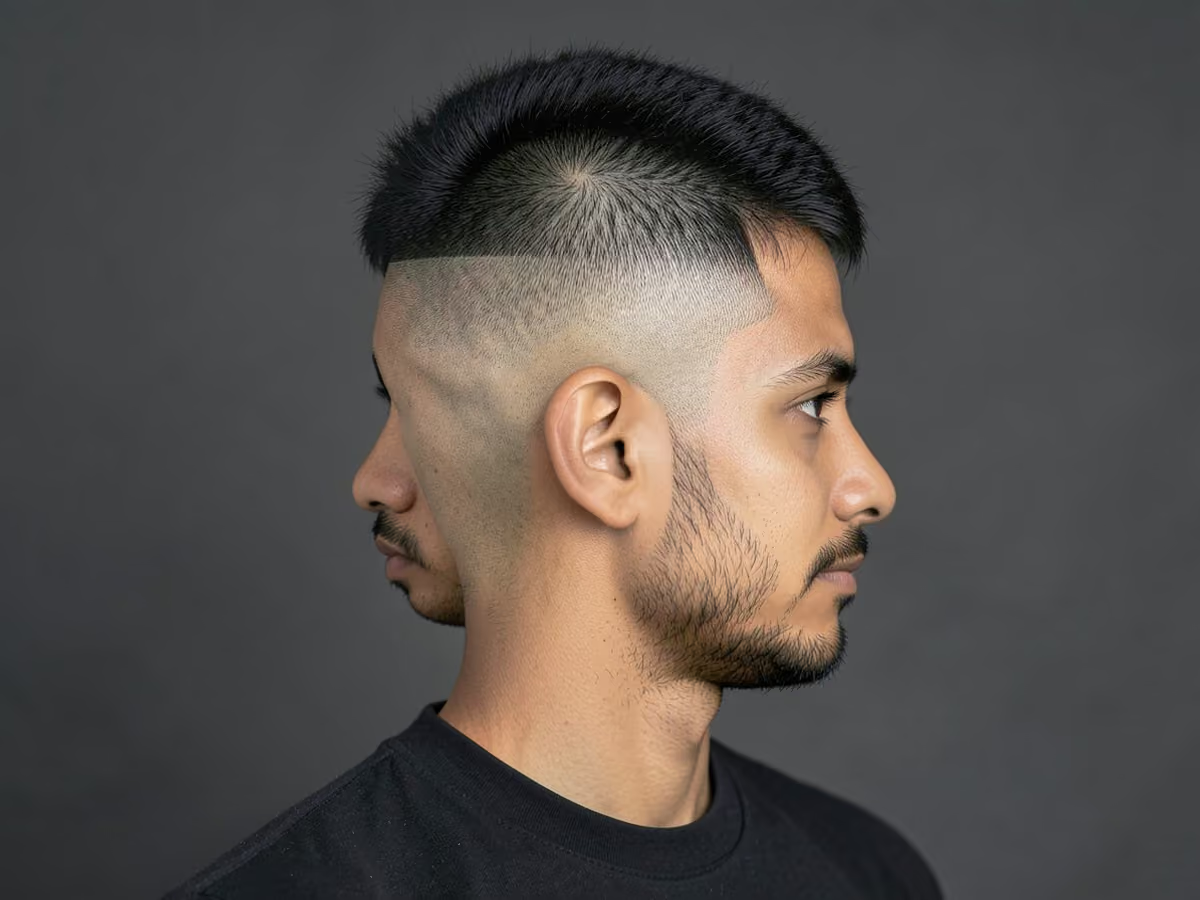
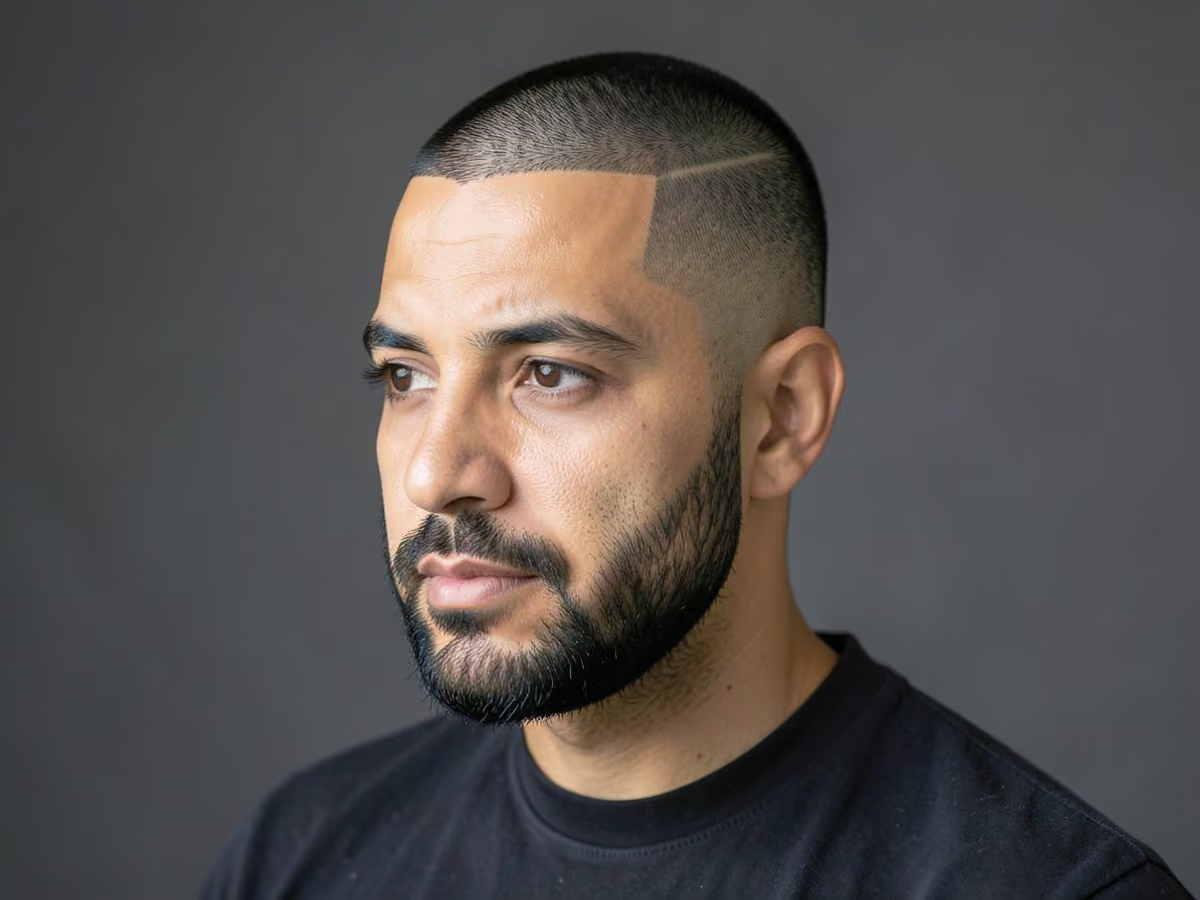
A shaved part cut into the hairline, often on one side and sometimes as two parallel lines, was a signature detail of late 1980s cuts. It sits on a high top, box fade or short even top. The line is cut with trimmers and needs refreshing weekly. Today barbers often combine it with a skin fade for a modern version of the same idea.
How to Style at Home
Brush the top away from the part so the line stays visible.
Moisturize the shaved line with a drop of scalp oil.
Book a part touch-up every week or so.
Ask Your Barber
"Short even top with a low fade, plus a shaved part on the left cut into my hairline, about two inches long. Line up the front."
Recommended Products
Scalp Oil
Edge Brush
Hip-Hop Braids, Twists and Locs
Braids, twists and locs are far older than hip-hop, but the music made them highly visible from the late 1990s onward. These five need more length and often a braider or loctician; our braids gallery covers more patterns.
Trim:Every 2–4 weeks. Rebraid before the roots get fuzzy.
Best For:Oval, long faces + coily hair, 3 inches or longer.
About This Style
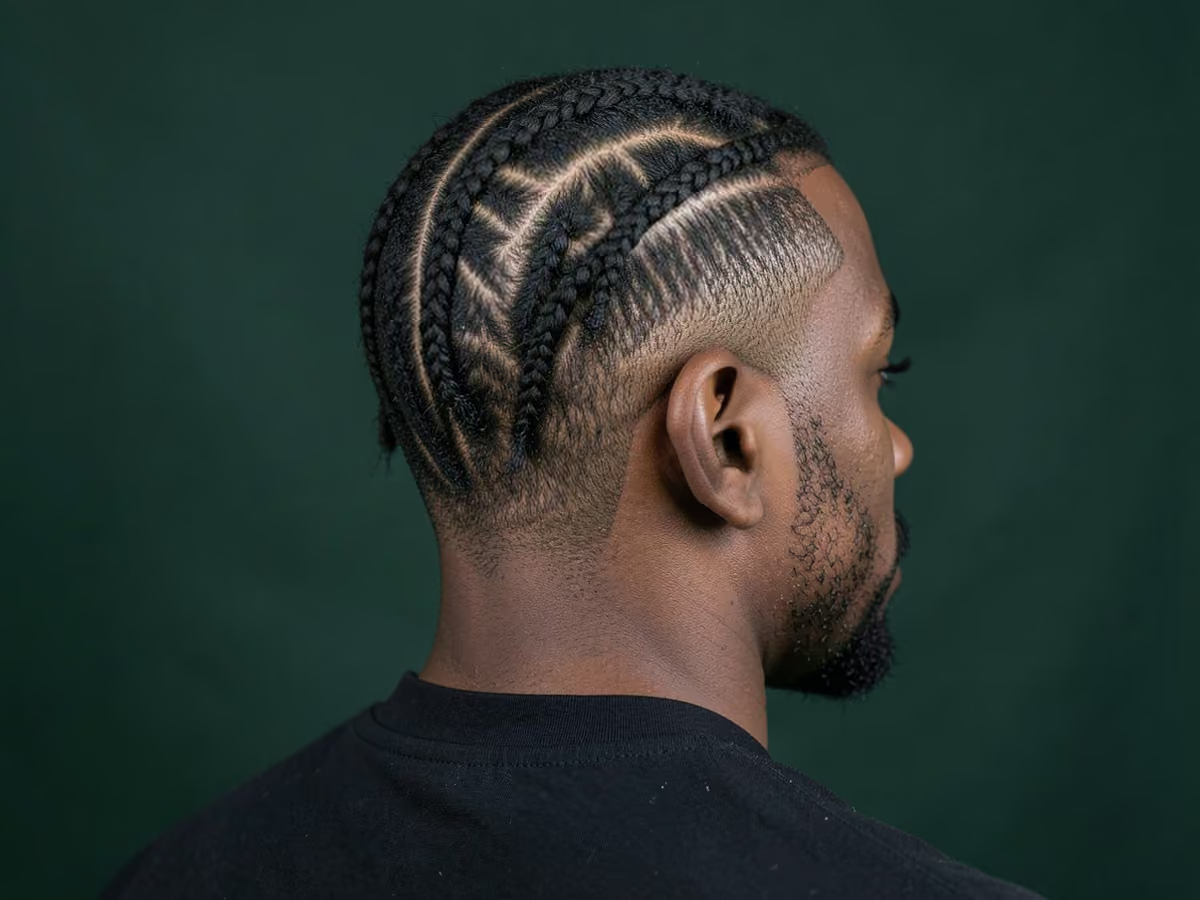
Basketball player Allen Iverson wore straight-back cornrows through the late 1990s and early 2000s, and the look became closely tied to hip-hop fashion of that time. Six to ten even rows run from the hairline to the nape, often with a low taper at the sides. Hair needs to be at least three inches to braid. Each install lasts two to four weeks.
How to Style at Home
Moisturize the scalp between the rows with a light oil.
Wear a durag or satin cap at night to keep the rows neat.
Take the braids out after four weeks and rest the hairline.
Ask Your Barber
"Straight-back cornrows, about eight even rows from the hairline to the nape, not too tight at the edges. Low taper on the sides and nape."
Trim:Every 3–4 weeks. Rebraid as the roots loosen.
Best For:Oval, long faces + long coily or curly hair.
About This Style
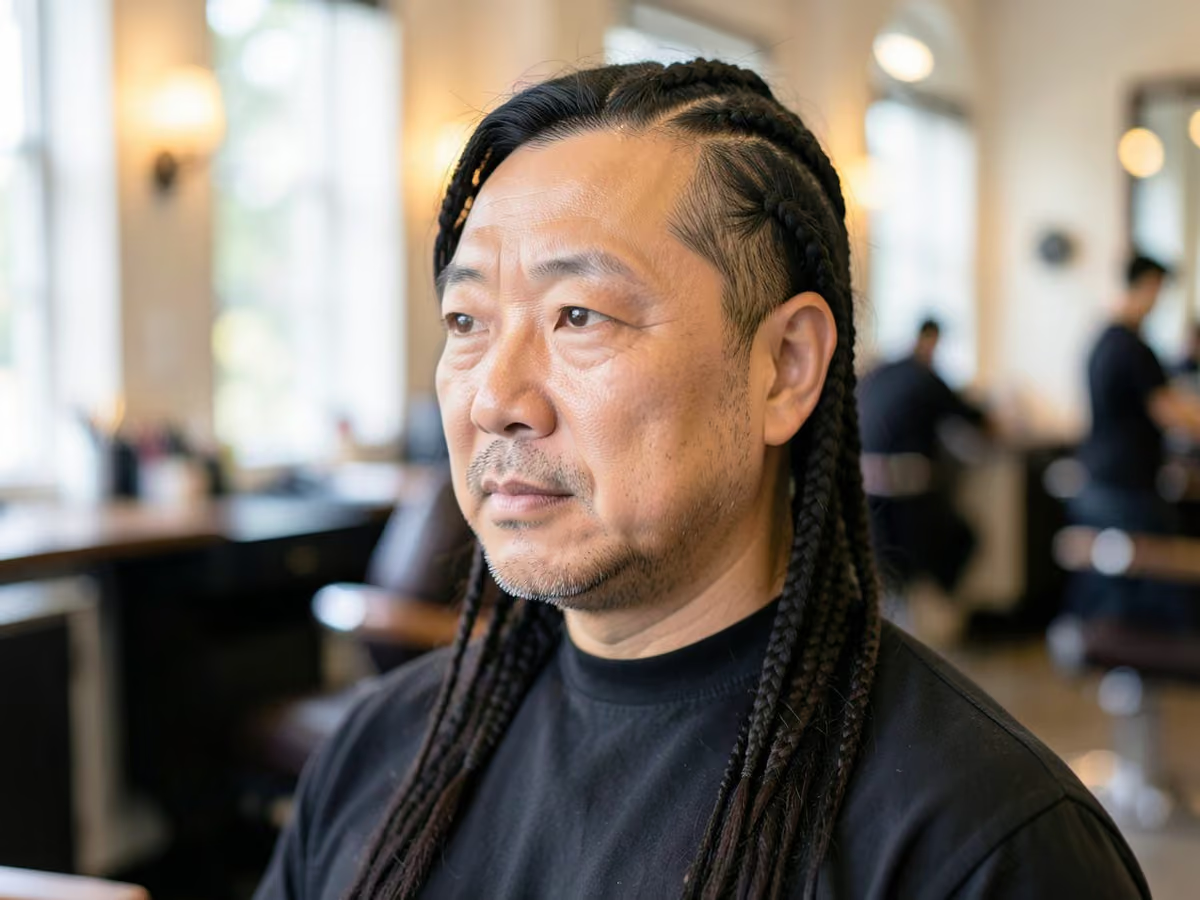
Snoop Dogg has often been photographed with long braids, from straight-back cornrows to braids worn loose at shoulder length. The look needs hair well past the shoulders, or extensions, and a braider with several hours. The braids hang straight down the back and can be tied into a ponytail. Avoid braiding too tightly at the hairline, which can cause thinning over time.
How to Style at Home
Spray a light leave-in along the braids every few days.
Tie the braids loosely back for sleep or sports.
Take them down after a month and detangle gently.
Ask Your Barber
"Long straight-back braids from the hairline, ending loose around the shoulders. Keep the tension gentle at my edges and temples, please."
Trim:Every 2–3 weeks. Retwist the top and clean the taper.
Best For:Oval, round faces + coily or 4C hair.
About This Style
Small coils made with a fine-tooth comb, one to three inches long, cover the top, while a low taper keeps the sides and nape clean. Comb twists are also a common way to start locs. The twists take an hour or two to install and last a week or two before retwisting. The taper keeps the overall look neat while the top develops.
How to Style at Home
Spritz the twists with leave-in every couple of days.
Seal the ends of each twist with a little curl cream.
Sleep in a satin cap to reduce frizz.
Ask Your Barber
"Low taper at the sides and nape from a #1, leave two inches on top for comb twists. Clean up the line at the front."
Trim:Every 4–6 weeks. Retwist the roots and refresh color.
Best For:Oval, square faces + established locs, any length.
About This Style
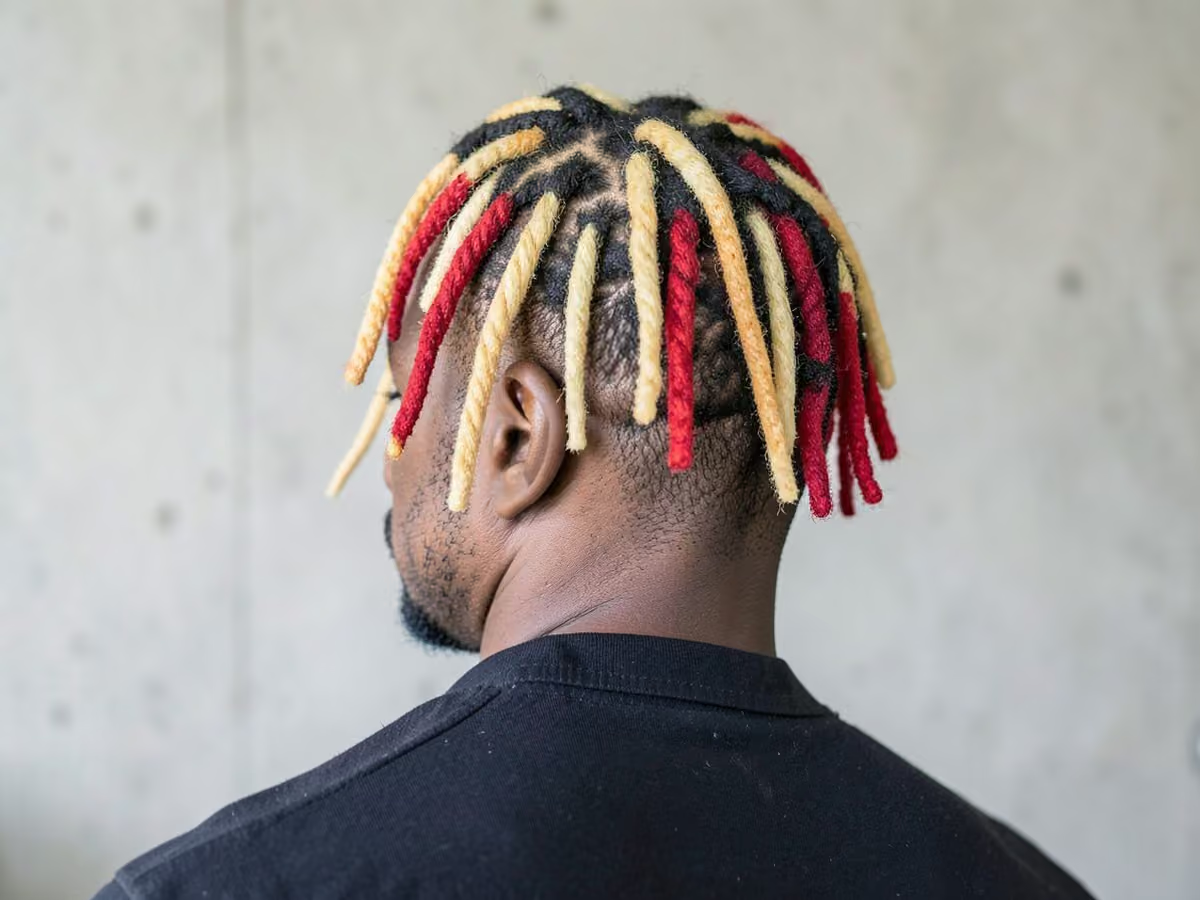
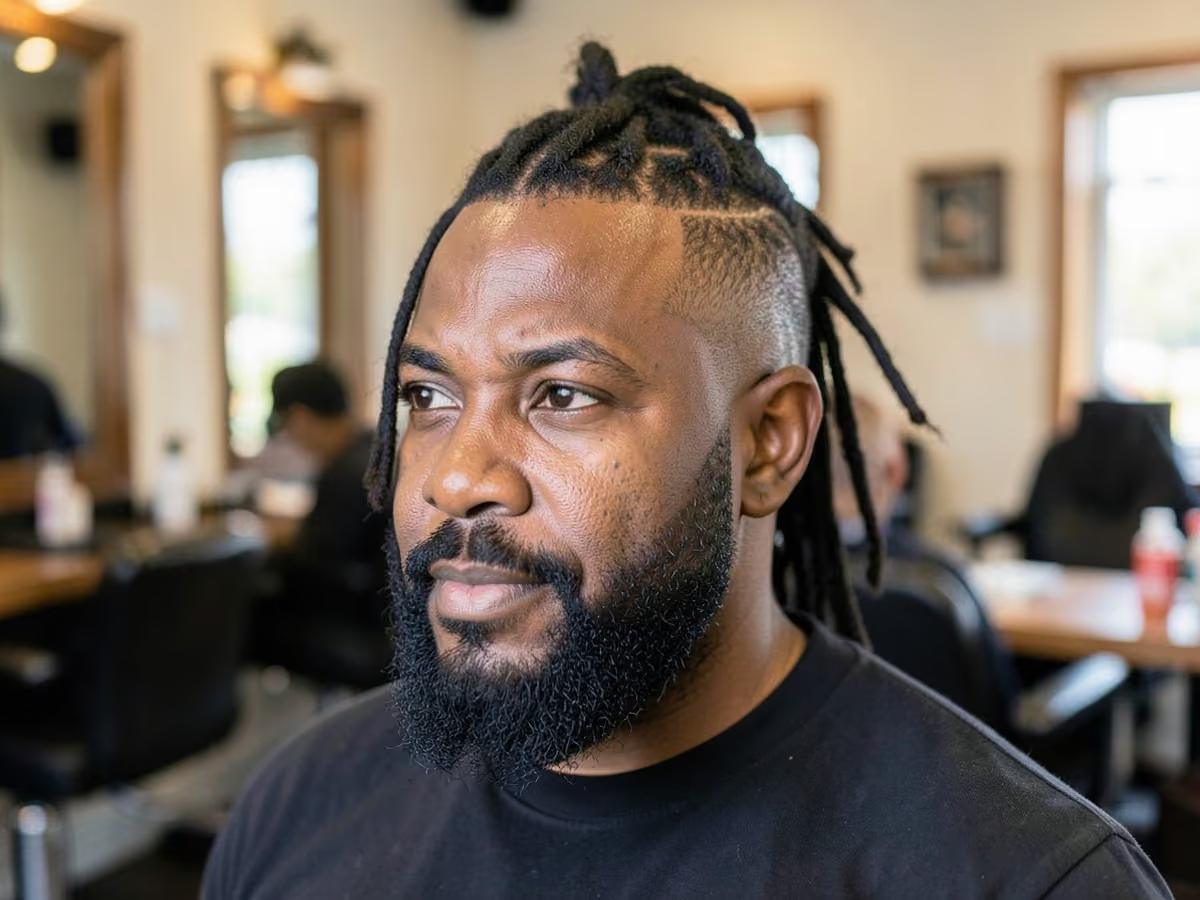
Coloring only the ends of established locs, often blonde, red or a bright shade, became common among artists from the late 2010s. The roots stay natural, so regrowth does not show as a line. The sides are often faded or tapered. Bleach dries locs, so the colored ends need conditioning. A loctician should handle the color to avoid weakening the locs.
How to Style at Home
Wash locs gently and squeeze out water instead of wringing.
Apply a light leave-in to the colored ends.
Dry the locs fully to prevent odour and mildew.
Ask Your Barber
"Tidy the taper on my sides and nape and line up the front. My loctician handles the retwist and color."
Trim:Every 3–4 weeks. Only the fade needs regular work.
Best For:Oval, long faces + coily or 4C hair.
About This Style
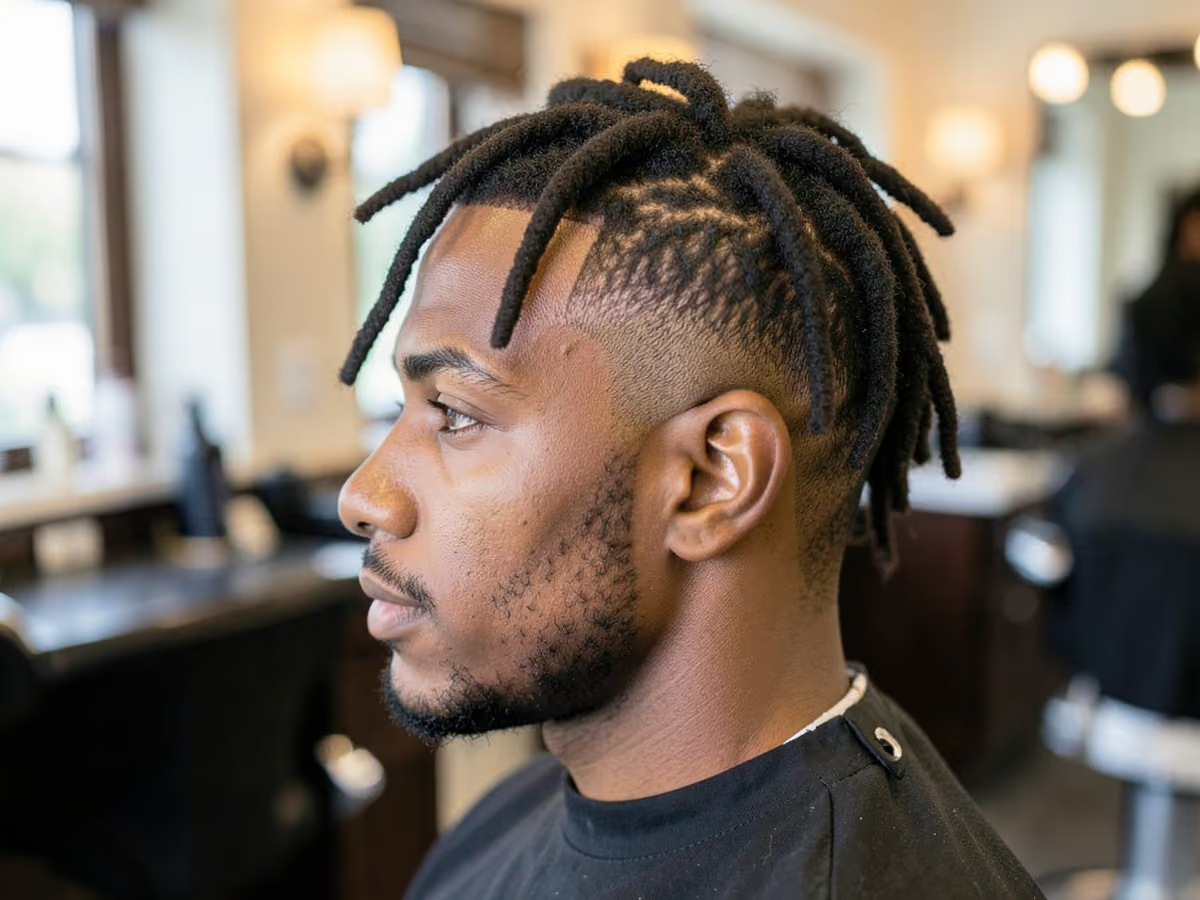
Freeform locs form naturally without regular retwisting, so each one has its own thickness and shape. Pairing them with a mid or low fade on the sides keeps the outline neat while the locs stay irregular on top. They need washing and full drying but little else. It suits men who want locs with minimal salon time and are comfortable with an uneven texture.
How to Style at Home
Wash the locs every week or two with a residue-free shampoo.
Squeeze excess water out and let the locs dry fully.
Separate any locs that start to join at the roots.
Ask Your Barber
"Mid fade from a #1 on the sides and back, keep my freeform locs on top untouched, line up the front."
Recommended Products
Scalp Oil
Modern Hip-Hop Haircuts
From the 2010s onward, color, texture and shaped fades took over. These five cover waves, a bleached buzz, frohawk, sponge curls and a loc mohawk; see our burst fade and bleached haircuts guides for related looks.
Trim:Every 1–2 weeks. Waves need the outline kept sharp.
Best For:Oval, round faces + coily or 4C hair.
About This Style
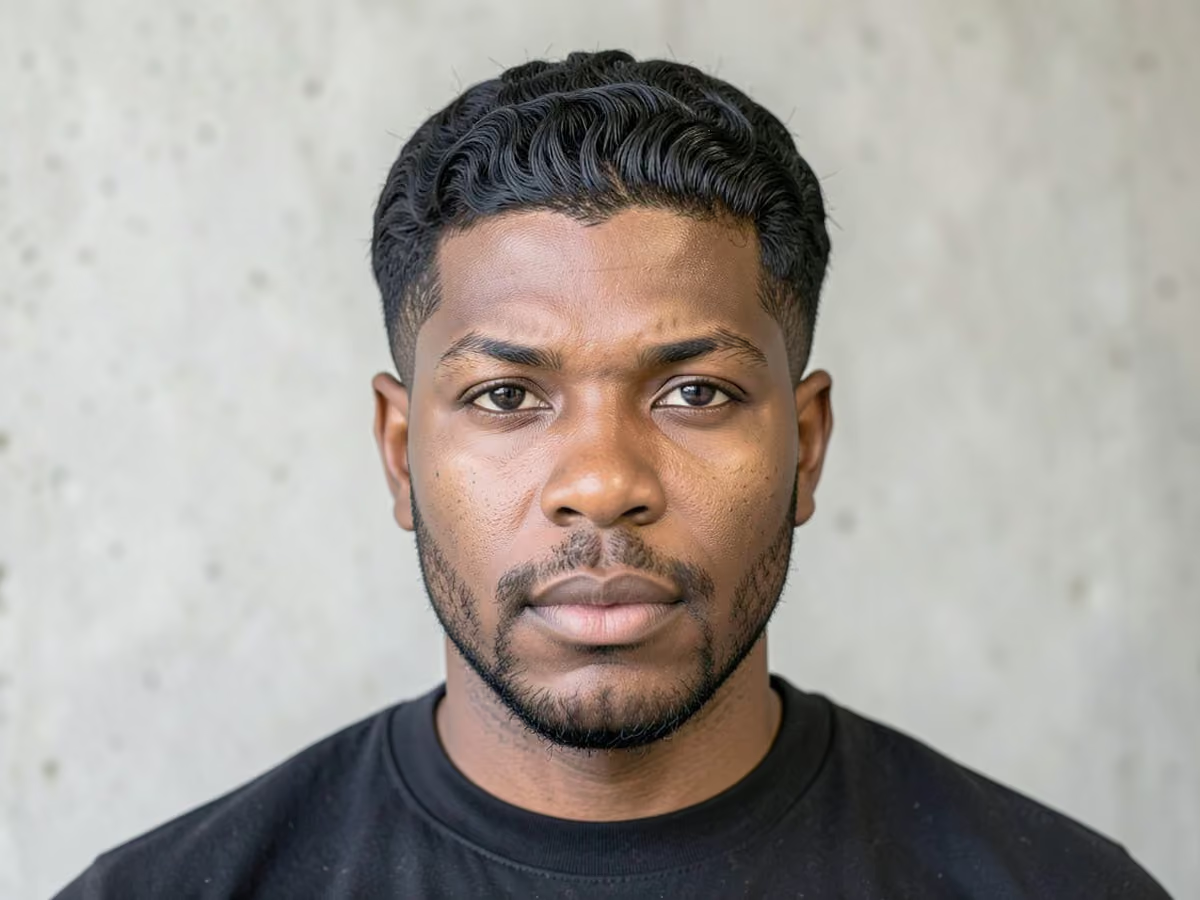
Hair cut to about half an inch all over, brushed daily into deep, tight ripples, gives the low cut its pattern. A low taper and line-up frame the waves. Training deep waves takes weeks of brushing, nightly durag use and cutting with the grain. It has stayed popular since the 1990s because it looks clean and needs no length.
How to Style at Home
Brush from the crown outward for several minutes each morning.
Apply a thin layer of wave pomade before brushing.
Wear a durag every night to set the pattern.
Ask Your Barber
"Low cut, about half an inch on top cut with the grain for waves, low taper and a sharp line-up. Do not go against the grain."
Trim:Every 2–3 weeks. Dark roots show as the hair grows.
Best For:Oval, square faces + any hair type, short length.
About This Style
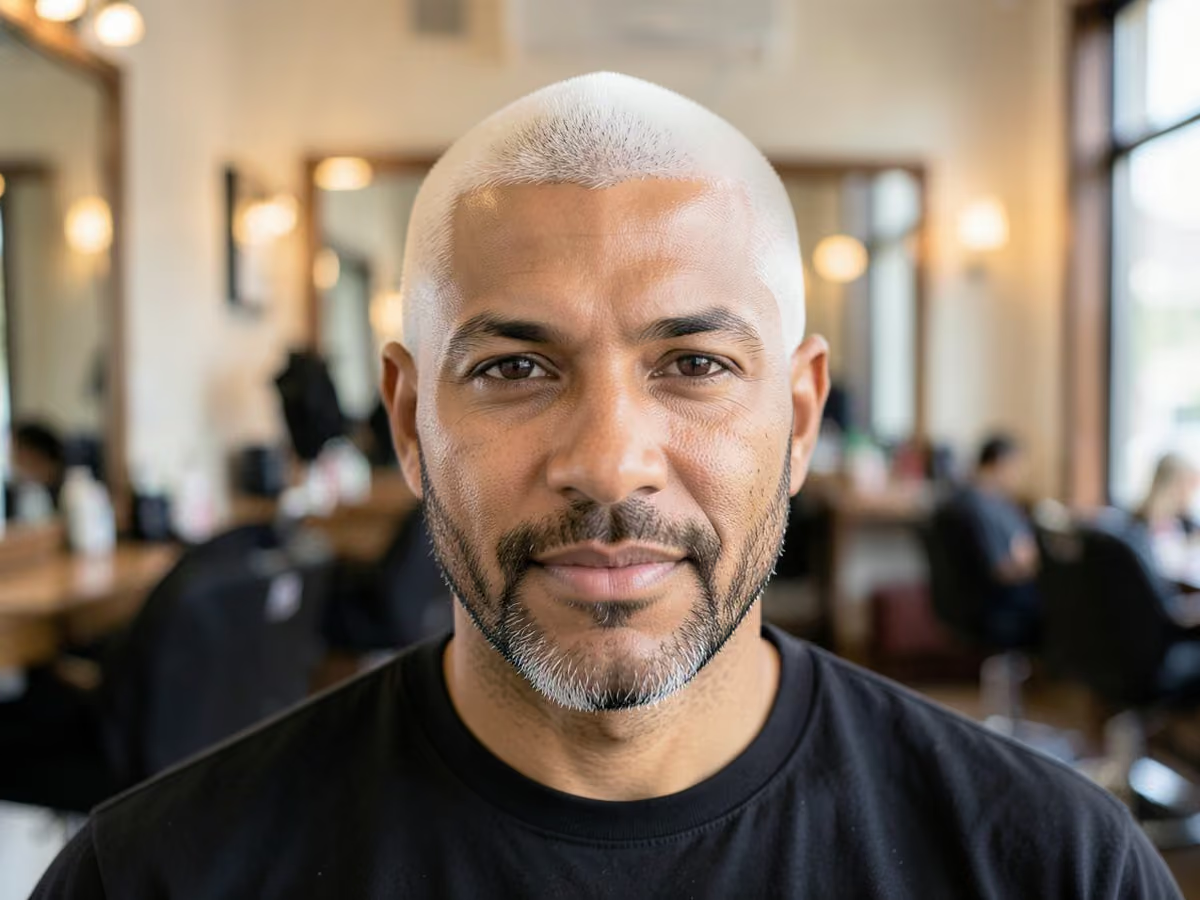
Bleaching a #2 or #3 buzz blonde, platinum or a bright color became a common look among artists in the late 2010s. Because the hair is so short, the color shows evenly, and regrowth is cut off at each visit. It works on any texture, including straight hair. Bleach can irritate the scalp, so a colorist should handle it and the scalp should be moisturized afterward.
How to Style at Home
Wash with a gentle shampoo and avoid hot water on the scalp.
Apply a few drops of scalp oil to soothe the skin.
Use a purple shampoo weekly if the blonde turns brassy.
Ask Your Barber
"Buzz cut with a #3 on top and a low fade on the sides. I am bleaching it, so keep the length even for the color."
Trim:Every 2 weeks. The curved sides blur as hair regrows.
Best For:Round, oval faces + coily or curly hair.
About This Style
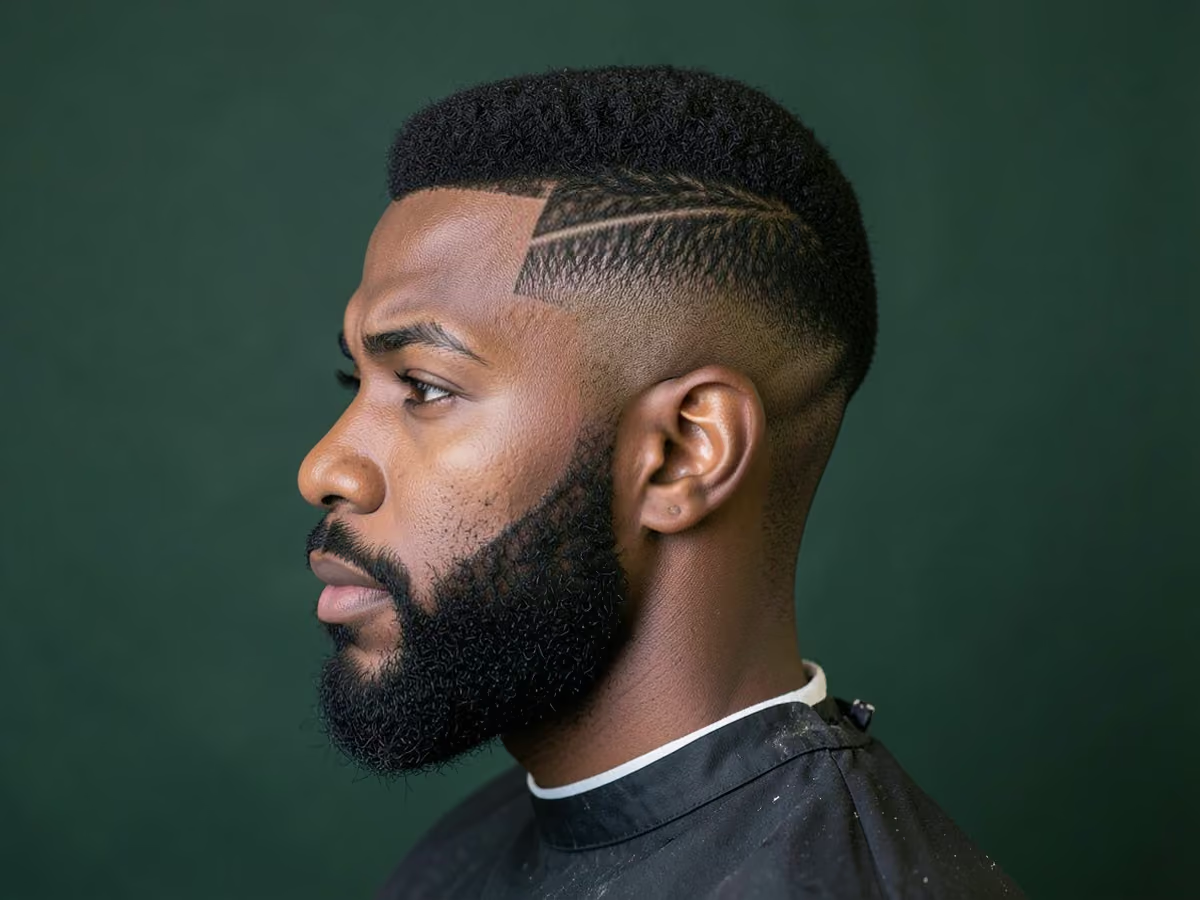
From forehead to nape runs a strip of coily hair two to four inches tall, while a burst fade curves around each ear. The curved sides make the strip look narrower and taller. Barbers describe it as a commonly requested modern styles in Black barbershops. Picking the strip upward daily keeps it full, and moisture stops the ends from drying out.
How to Style at Home
Pick the strip upward from the roots with an afro pick.
Apply curl cream to the ends to reduce frizz.
Shape the sides of the strip with your palms.
Ask Your Barber
"Frohawk with a burst fade from skin around each ear, leave a strip about three inches wide and three inches tall from the front to the nape."
Trim:Every 2–3 weeks. The taper needs cleanup; curls hide growth.
Best For:Oval, round faces + coily, kinky or 4C hair.
About This Style
One to two inches of coily hair is rubbed with a curl sponge into small, defined coils, over a low taper that keeps the edges neat. The look became widespread among younger artists in the 2010s. It takes about two minutes each morning once you learn the motion. Curl cream keeps the coils soft and defined through the day.
How to Style at Home
Spray a leave-in over the top to soften the coils.
Rub a curl sponge in small circles until coils form.
Pat a little curl cream over the finished curls.
Ask Your Barber
"Low taper from a #1 at the sides and nape, leave about an inch and a half on top for sponge curls, line up the front."
Trim:Every 2–3 weeks. Keep the shaved sides and roots tidy.
Best For:Oval, square faces + coily hair with established locs.
About This Style
Locs are kept only on a central strip from forehead to nape, while the sides are faded or shaved. The locs can hang loose, fall to one side or be tied up. It is a dramatic way to wear locs that cuts down on drying time and weight. Starting from existing locs, the barber can cut the sides in a single visit.
How to Style at Home
Wash the locs every week or two and dry them fully.
Apply a little loc gel to the roots when retwisting.
Moisturize the shaved sides with a few drops of scalp oil.
Ask Your Barber
"Keep my locs on a strip from the front to the nape, fade the sides from skin up to the strip, and line up the front."
Recommended Products
Loc Gel
Scalp Oil
Hip-Hop Cuts with Line-Up, Design or Beard
Sharp edges, shaved art and well-kept beards finish many of the cuts above. These five focus on those details; our hair designs gallery has many more patterns to show your barber.
Trim:Every 1–2 weeks. Sharp edges blur within days.
Best For:Oval, square faces + coily, coarse or dark hair.
About This Style
Crisp at the forehead, squared at the temples and clean at the nape, the line-up frames almost every cut in this gallery. Barbers cut it with trimmers and clean it with a razor or foil shaver. The best line-ups follow the natural hairline; pushing it back to make it straighter can leave it looking receded. Many men book a quick line-up weekly between full cuts.
How to Style at Home
Brush the edges lightly in the direction of growth.
Dab scalp oil along the line if the skin feels irritated.
Avoid tight hats that press on the fresh line.
Ask Your Barber
"Sharp line-up at the forehead, squared temples and a clean nape, following my natural hairline. Do not push it back at all."
Trim:Every 1–2 weeks. Designs fill in as hair grows.
Best For:Oval, round faces + dense, dark or coily hair.
About This Style
One or more small stars are shaved into the side of a fade, usually above the ear. Stars are among a frequently requested simple designs because they read clearly even when small. Dense dark hair shows them best. They last about a week before regrowth softens the edges, so most people book a design touch-up with their line-up.
How to Style at Home
Keep the design clean and dry for a day after cutting.
Brush around the stars rather than across them.
Book a design touch-up after about a week of growth.
Ask Your Barber
"Low fade from skin with two small shaved stars above my left ear. Keep the top at about an inch and line up the front."
Trim:Every 2 weeks. Fade, line-up and beard edges all need work.
Best For:Round, oblong faces + coily hair and dense beard.
About This Style
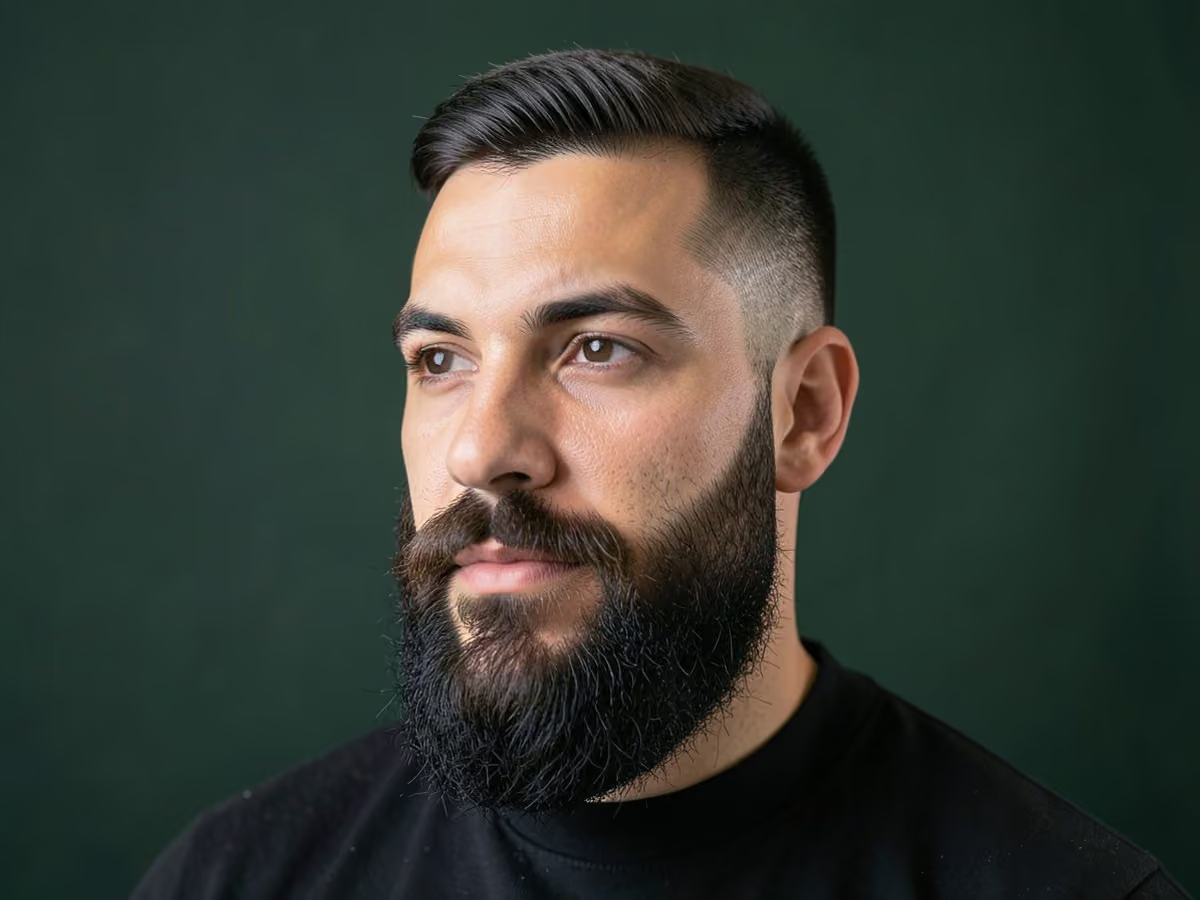
Short Caesar on top, full beard of half an inch to an inch below, connected through a faded sideburn: a balanced, grown look. The beard adds weight at the jaw, which suits oblong faces. Sharp cheek and neck lines keep it tidy. Many barbers finish it with a line-up at the forehead and a sharp beard outline in the same visit.
How to Style at Home
Rub beard oil into the beard after washing.
Brush the beard downward and the top forward.
Trim the cheek and neck lines twice a week.
Ask Your Barber
"Caesar with half an inch on top, low fade, sideburns faded into my full beard. Line up the forehead and the beard edges."
Trim:Every 2 weeks. Shave the cheeks every few days.
Best For:Round, square faces + coily or curly hair.
About This Style
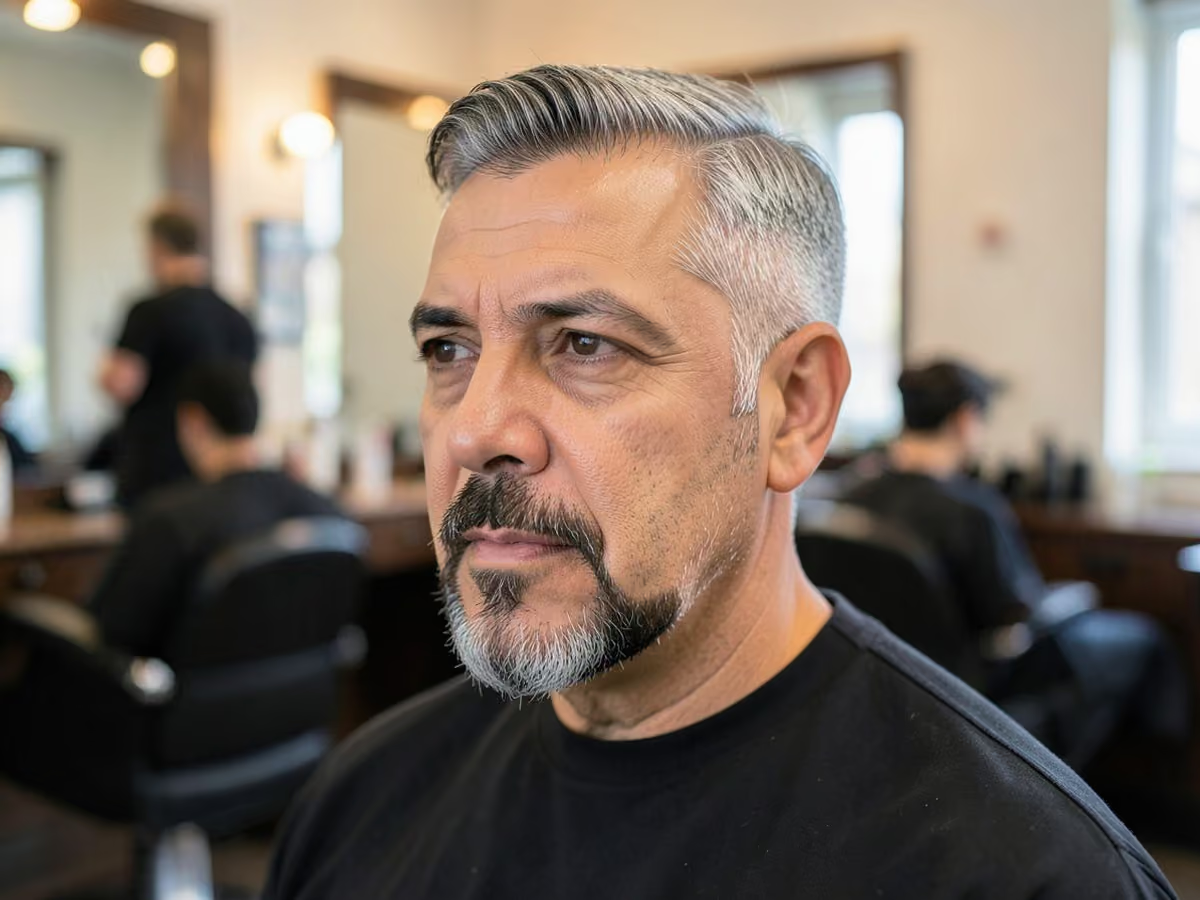
Pairing an even half inch on top and a low taper with a goatee on the chin gives a quieter look that many artists have worn through the years. The goatee draws a vertical line through the face, which slims a round or square jaw. It needs less daily care than a full beard. Keep the goatee to the width of the mouth and about half an inch long.
How to Style at Home
Shave the cheeks and neck, keeping the goatee edges even.
Rub a little beard balm into the goatee.
Brush the short top in one direction with a soft brush.
Ask Your Barber
"Low cut, about half an inch on top, low taper and line-up. I keep a goatee, so clean the sideburns short and leave the chin."
Trim:Every 1–2 weeks. The part and flat top both need upkeep.
Best For:Round, square faces + coily or 4C hair.
About This Style
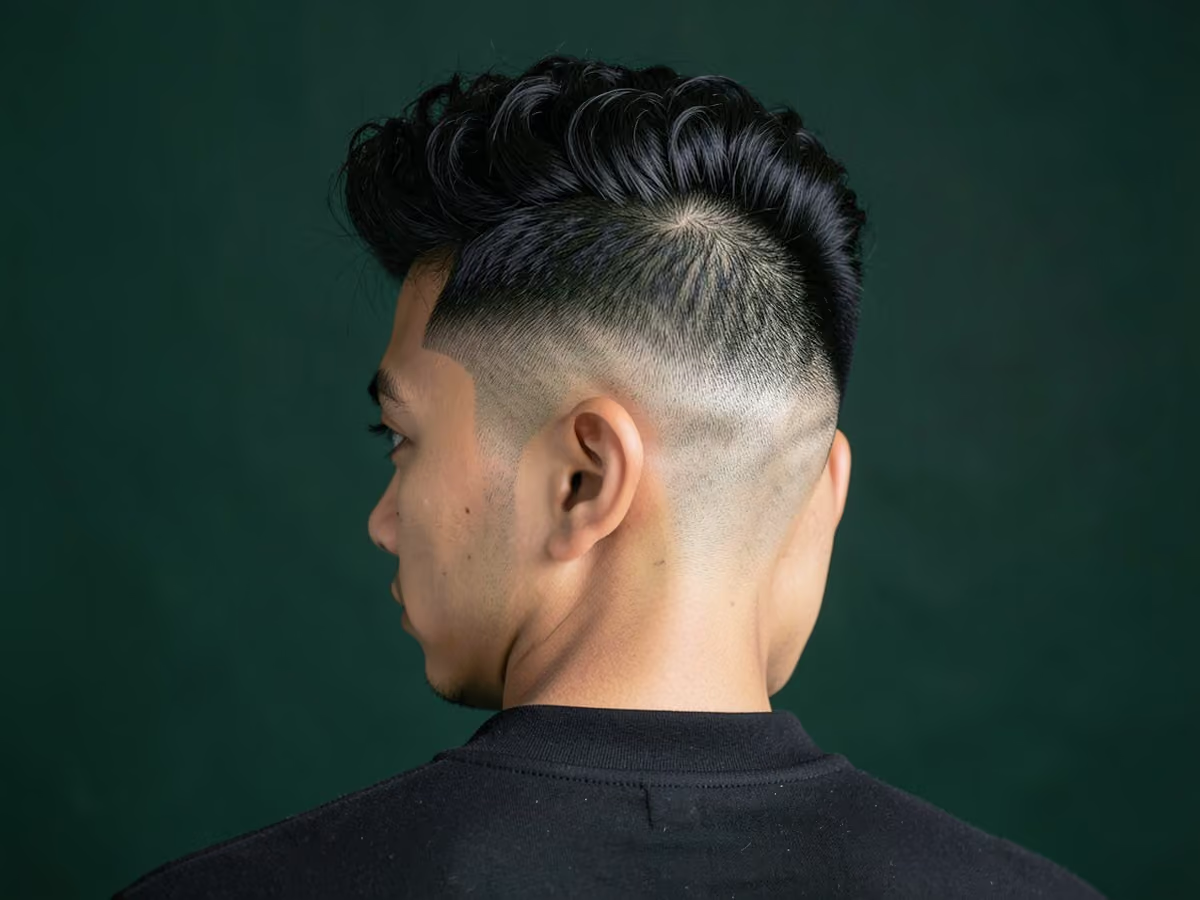
Combining two late 1980s signatures, this style adds a shaved part line on one side of a three to four inch high top. The part runs up from the hairline into the fade, framing the column of hair. Modern versions often use a skin fade underneath for sharper contrast. It needs weekly part touch-ups and regular leveling of the top.
How to Style at Home
Pick the top upward and pat the sides flat.
Moisturize the shaved part with a drop of scalp oil.
Book a quick part touch-up every week to keep the line crisp.
Ask Your Barber
"High top about four inches, cut flat, skin fade on the sides, and a shaved part on the right running from the hairline into the fade."
Recommended Products
Afro Pick
Scalp Oil
How Do You Ask for a Hip-Hop Haircut?
Bring a clear photo and describe the parts of the cut: the fade height and bottom length, the top length and shape, and the edge work. For example, a mid skin fade, three inches on top cut flat for a high top, sharp line-up with squared temples. For braids or locs, book a braider or loctician rather than a barber, and ask how long the install takes and how often it needs maintenance.
If the photo shows an artist, it is still the cut you are asking for, not the person; many barbers know these styles by the artist's name, but some do not, and describing the shape avoids confusion. Our guide to how to ask for a fade without knowing terminology covers fade vocabulary, and line-up vs edge-up explains the edge options you can request.
Clipper Guards Used in Hip-Hop Haircut Styles
A clipper guard is the plastic comb that clips onto the blade and sets how much hair is left: a #1 leaves 3 mm (1/8 inch), each step up adds about 3 mm. The right column lists the cards on this page that call for each guard. See the full clipper guard numbers guide for the complete chart.
Fades and line-ups need the most frequent visits, usually every one to three weeks. Waves need daily brushing and a durag at night. Twists and sponge curls need moisture from a leave-in and curl cream, and twists need retwisting every week or two. Cornrows usually last two to four weeks, and leaving them in longer can strain the hairline, so take them out and rest the scalp between installs.
Locs need regular washing, drying fully and occasional retwisting at the roots, but not so tight that it pulls on the scalp. Bleached and dyed hair needs conditioning to stay soft, and a break between color sessions helps. Any style that pulls on the edges should be loosened if you notice soreness or thinning. For general scalp health, our scalp care basics guide covers washing, oils and how to spot irritation early.
Which Hip-Hop Haircut Is Right for You?
Pick your hair type and how much upkeep you will put in. The matches below come from the Best For and Maintenance notes on each card. Upkeep follows the Maintenance badge: low means a cut every 3 to 6 weeks and almost no daily styling, high means weekly line-ups or daily product.
The high top fade, the Caesar with waves, cornrows, long braids and locs are among the most recognized, along with the line-up and shaved designs that finish many fades. Each became widely visible in a different era, from the late 1980s high top to the locs and twists common today.
Q2: What haircut did rappers have in the 90s?+
Short, clean cuts were common through much of the 1990s: Caesars, low cuts with waves and fades with a sharp line-up. Earlier in the decade, tall high tops and box fades were widespread, and by the late 1990s and around 2000, cornrows and braids were increasingly popular.
Q3: Can you get hip-hop haircuts with straight hair?+
Some, yes. Caesars, buzz cuts, bleached buzz cuts, fades with a line-up and shaved designs all work on straight hair. Styles that rely on coily texture, such as high tops, waves, sponge curls and twists, do not hold the same way and usually need a different approach.
Q4: How long do cornrows last?+
Most cornrows last about two to four weeks before they start to look fuzzy at the roots. Keeping them in much longer can put strain on the hairline. Protect them with a durag or satin cap at night, moisturize the scalp lightly, and give your hair a rest between installs.
Q5: What is a high top fade?+
A high top fade is a cut where the sides are faded short and the coily hair on top is grown tall and cut flat, often three to six inches high. It was especially popular in the late 1980s and early 1990s and has come back with modern skin fades and designs.
Q6: Do I need a specialist for braids or locs?+
Usually. Many barbers handle fades and line-ups but not braids or loc installs. A braider or loctician will part, braid or start locs evenly and advise on tension, which matters for the health of your hairline. Ask to see examples of their work on hair like yours.