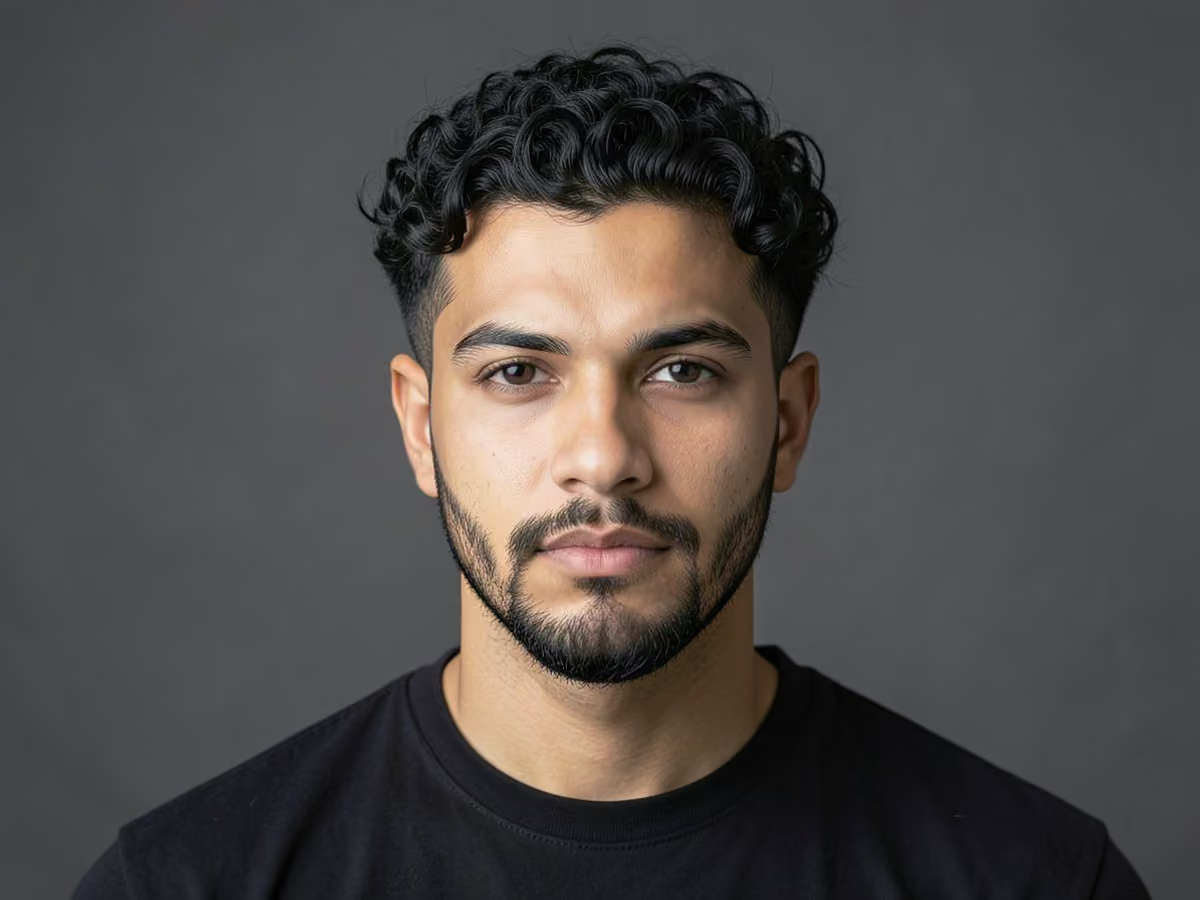
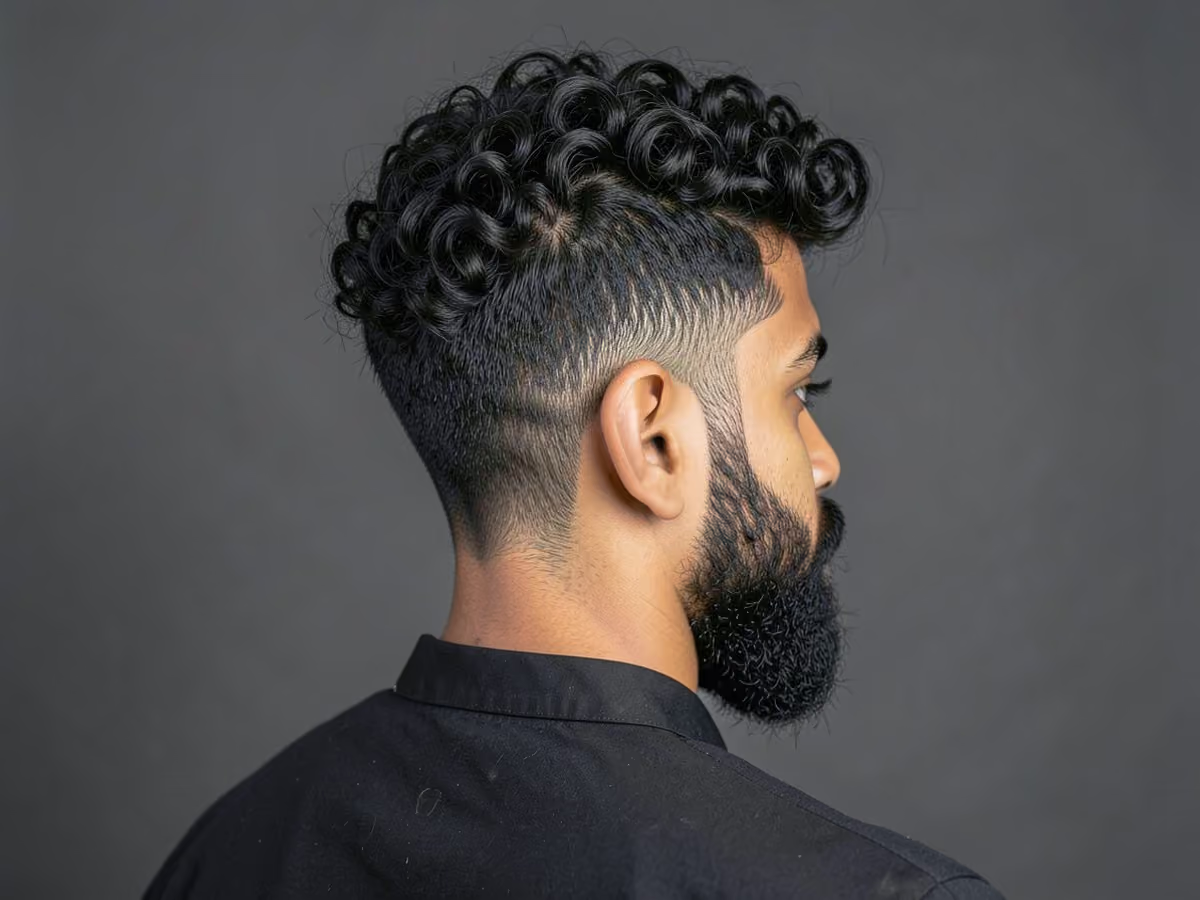
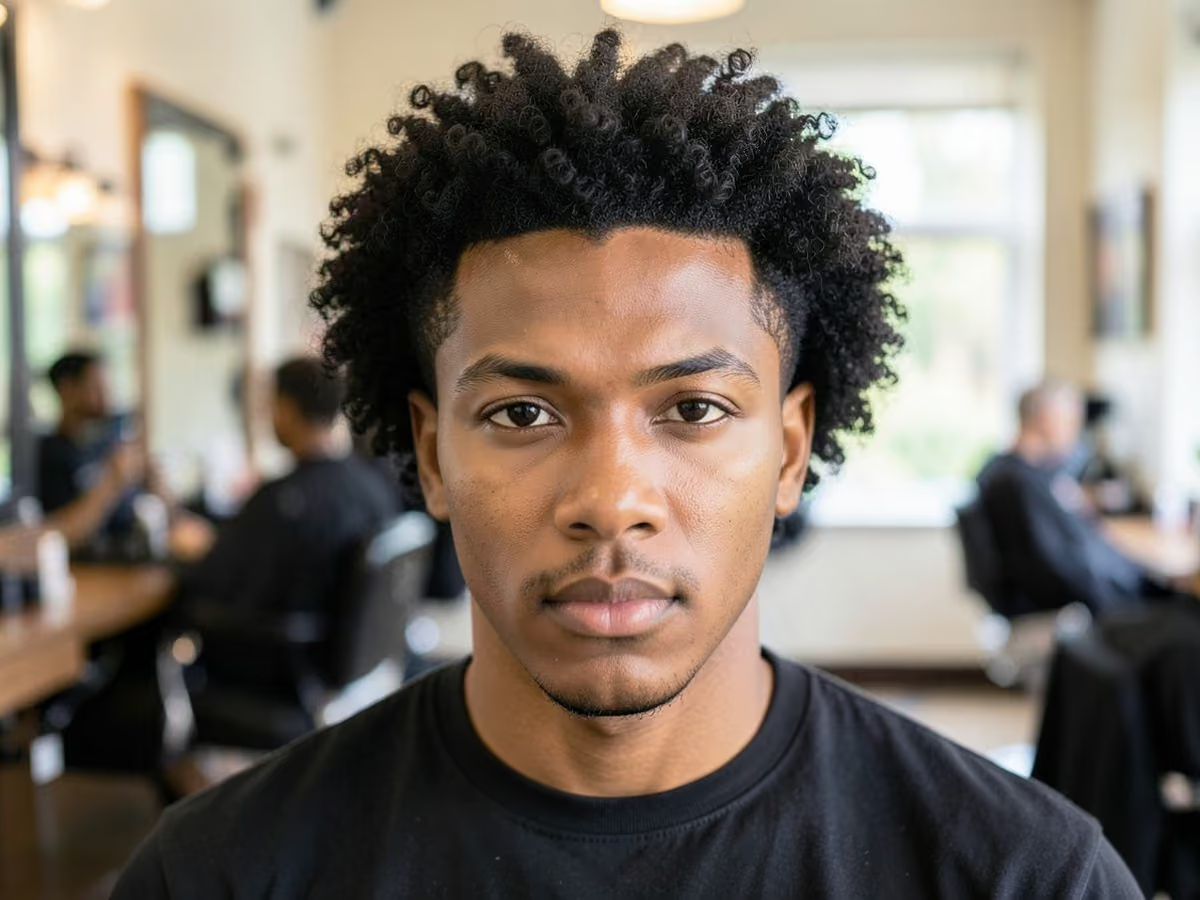
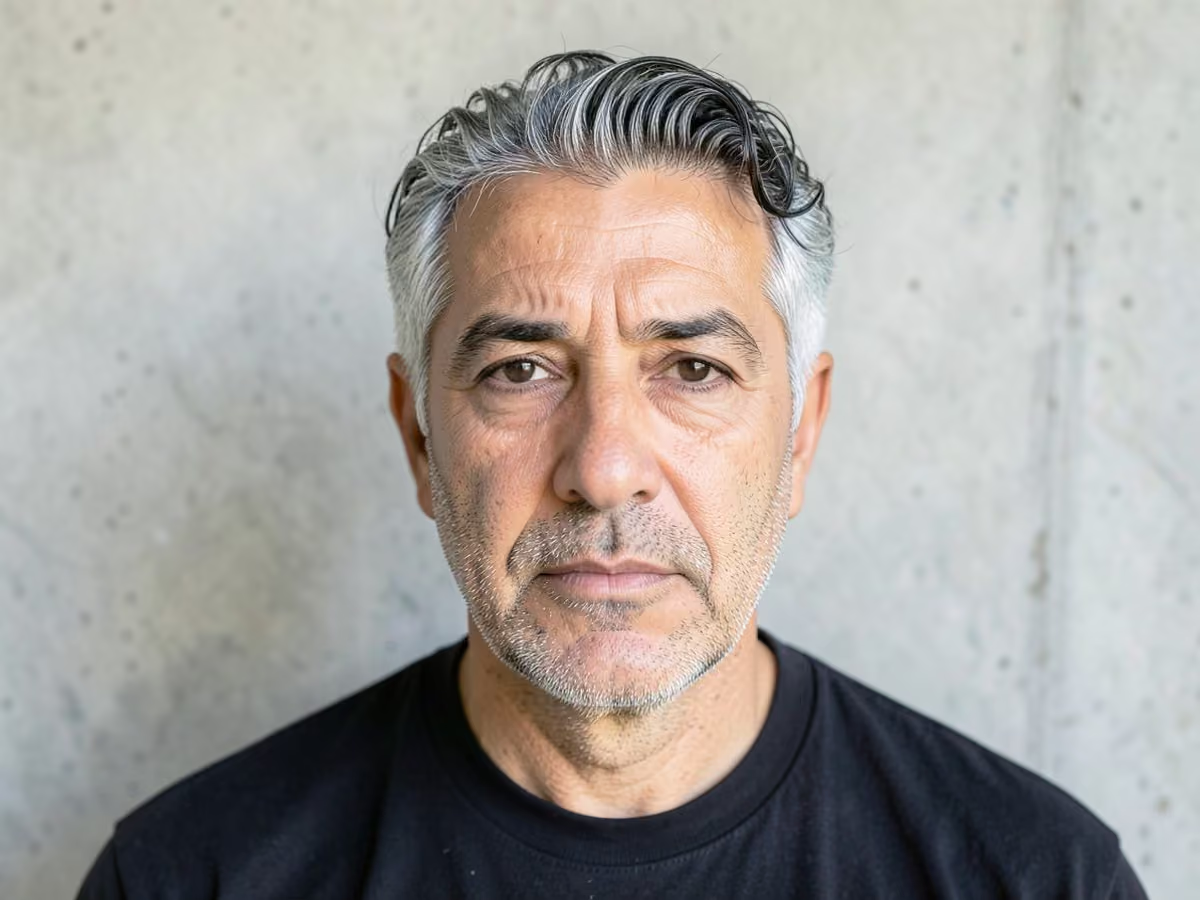
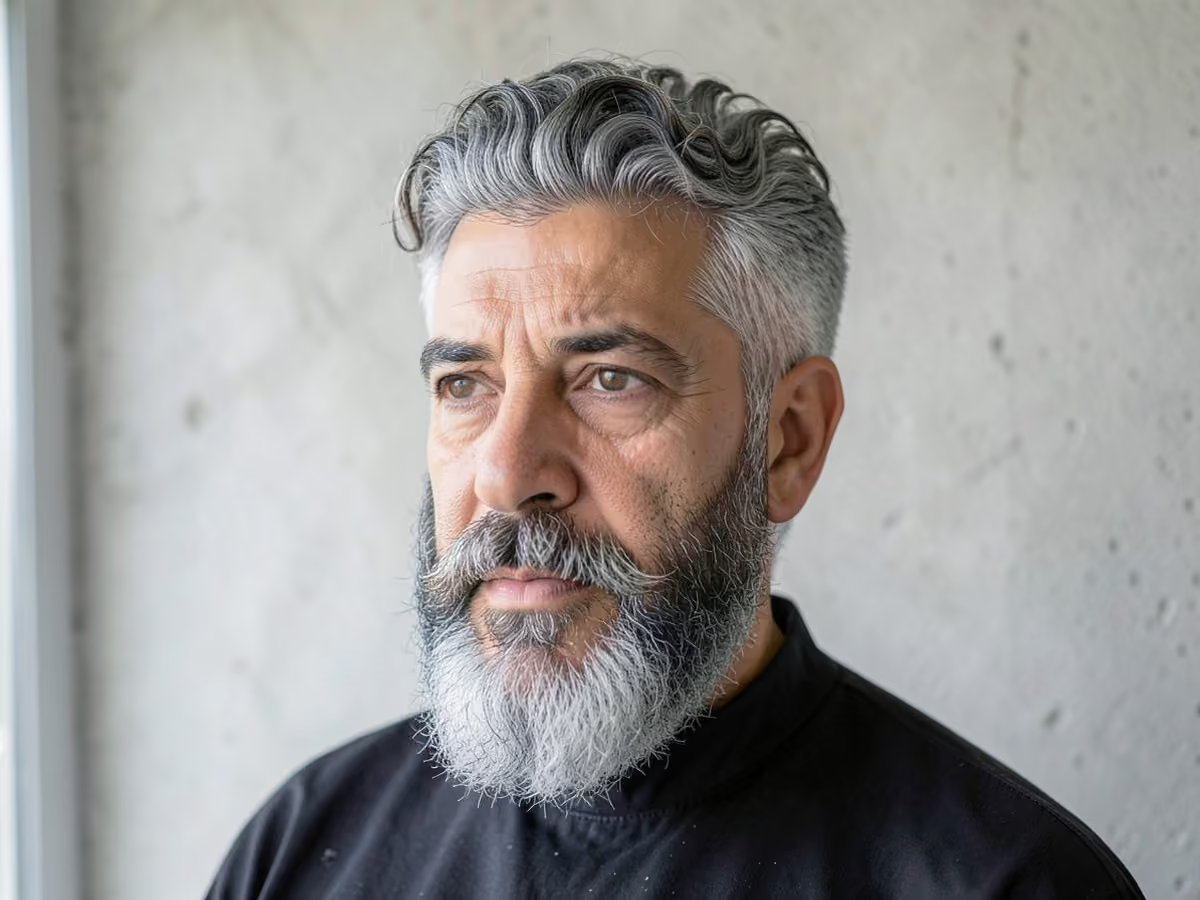
Quick answer: A perm for men is a chemical treatment that breaks and re-forms the disulfide bonds inside each hair so it keeps the shape of the rods it was wrapped on. Larger rods give loose waves and smaller rods give tight curls. Results usually last two to six months, and a patch test beforehand is a sensible precaution.
Perm for Men Styles at a Glance
Every style on this page with its clipper guard, top length and trim interval. Tap a name to jump to that card.
A perm for men turns straight or flat hair into waves or curls that last for months, and current versions look nothing like the tight sets of the 1980s. Below are 35 perm styles, from Korean C-curl and body wave perms to the broccoli perm and perm mullet, with the rod size, haircut and aftercare each one needs.
What Is a Perm and How Does It Work?
A perm, short for permanent wave, changes the shape of the hair shaft rather than coating it. Hair gets much of its shape from disulfide bonds, chemical links between the keratin chains inside each strand. A stylist wraps damp sections around rods, then applies a waving lotion that breaks some of those bonds. Most lotions use a thioglycolate as the reducing agent: alkaline perms usually contain ammonium thioglycolate, while acid perms use glyceryl monothioglycolate and work closer to neutral pH.
Once the hair has softened around the rods, the stylist rinses it and applies a neutralizer, usually a dilute hydrogen peroxide solution, which re-forms the bonds in their new curved position. The shape stays in the treated hair until it is cut off, although the pattern relaxes somewhat over the weeks. New growth comes in with your natural texture, so most men go back for a trim or a fresh perm every two to six months, depending on growth speed and how short the sides are kept.
How Do the Main Types of Perm Differ?
Perms are named by their method, the rod placement and the result. A cold perm is the standard thioglycolate service done at room temperature. A digital perm, common in Korean and Japanese salons, sets the hair on heated rods connected to a machine and tends to give a softer wave that shows best when the hair is dry. Body wave perms use large rods for movement rather than curl, while spiral and pin curl perms use thin rods or flat coils for definite ringlets.
Rod size matters more than the style name. Ask to see the rods before the stylist starts, because two salons can call very different results a wavy perm. Our wavy hair styles and curly hairstyles guides show what natural waves and curls look like once cut, which helps you choose a target, judge the rod size and explain it clearly in the chair.
How Do the Main Types of Perm Differ?
Perm type
Rods or method
Result
Typical length
Body wave
Large rods
Loose bends and volume
4 inches and longer
Korean C-curl
Medium rods on the ends, often digital
Ends curl under like a comma
3 to 5 inches
Wavy perm
Medium rods across the top
S-shaped waves
2 to 5 inches
Spiral perm
Thin rods wound vertically
Defined ringlets
4 inches and longer
Broccoli perm
Small rods on the top only
Tight curls over faded sides
2 to 4 inches on top
Spot perm
Rods on one area
Fixes a flat crown or cowlick
Any length
Who Should Get a Perm, and Who Should Wait?
Perms work best on healthy straight or slightly wavy hair with at least two to three inches of length on the part you want curled. Thick, straight hair that falls flat, common in East Asian hair, often takes a perm well and shows the biggest change. Fine hair can benefit too, because curl makes each strand take up more space, though a gentler acid perm and larger rods are usually kinder to it.
Wait if the hair is heavily bleached, recently relaxed or already breaking, since a second chemical service on weakened strands raises the risk of damage; many stylists suggest spacing perm and color services about two weeks apart. Skip it while the scalp is sunburned, irritated or broken. Perm lotions can cause irritant or allergic skin reactions in some people, so ask the salon for a patch test, ideally about 48 hours before, and read the product warnings.
Filter the styles
Showing all 35 styles
Fade
Hair
Length
Korean and Japanese Perm Styles
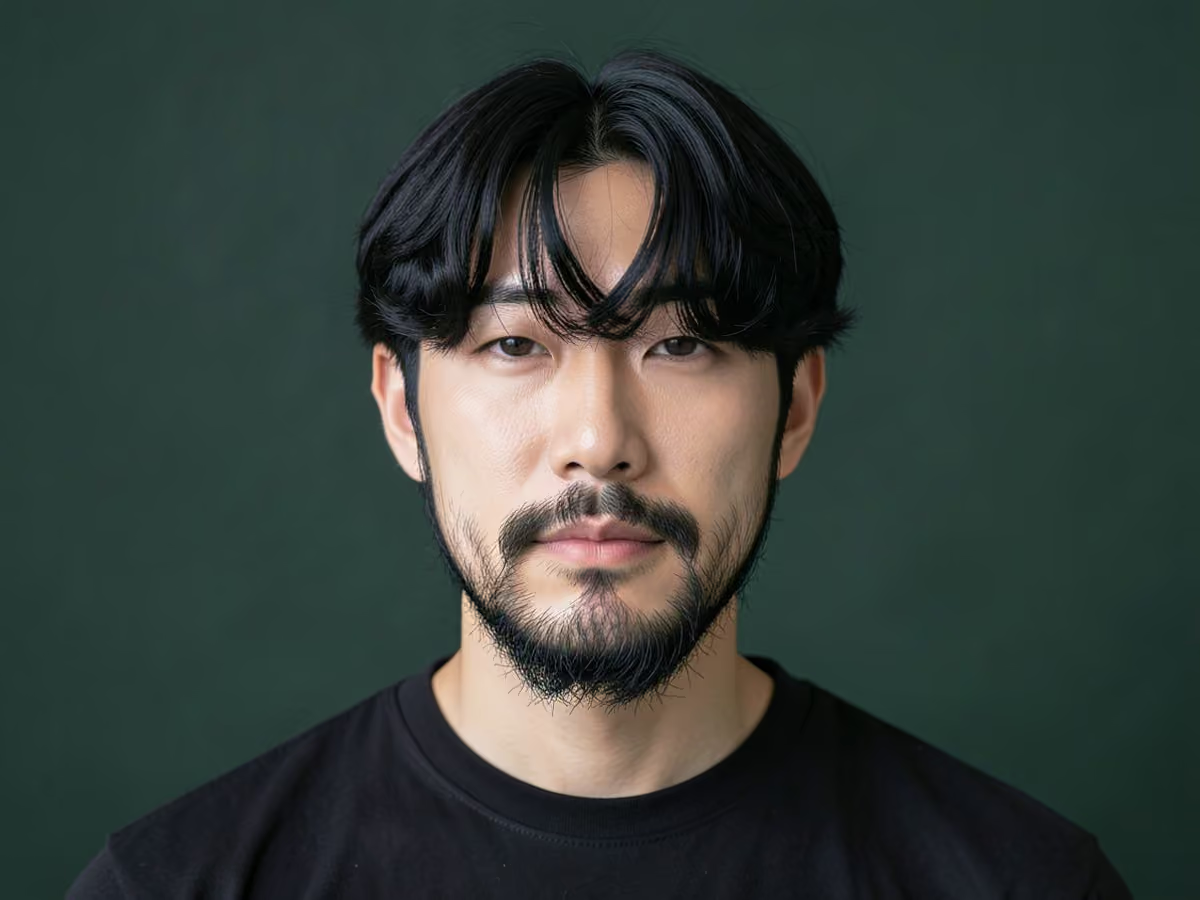
Korean salons popularized soft perms that add movement without obvious ringlets, usually paired with a two-block cut or a long fringe. Many are digital perms, where heated rods set a wave that shows most clearly once the hair is dry.
Trim:Every 6–8 weeks. Trimmed sides keep the curled fringe in proportion.
Best For:Oval, long faces + straight, thick Asian hair.
About This Style
Only the ends of the fringe and top get rods, so the hair falls straight from the root and curls under at the tips like the letter C. Salons often use a digital perm with medium heated rods for this shape. Comma hair is the best-known version, with one fringe section swooping down toward the brow. It needs three to five inches on top and usually sits on a two-block with #2 or #3 sides.
How to Style at Home
Blow-dry the fringe downward with a round brush, rolling the ends under.
Pinch a small amount of styling cream into the tips to define the curl.
Twist the front section into a comma shape and leave it to set for a minute.
Ask Your Barber
"Korean C-curl perm on the fringe and top ends only, medium rods, roots left straight. Keep the two-block sides at a #3 and about four inches on top."
Trim:Every 6–8 weeks. The swept-back front loses lift as it grows.
Best For:Round, square faces + straight, thick or coarse hair.
About This Style
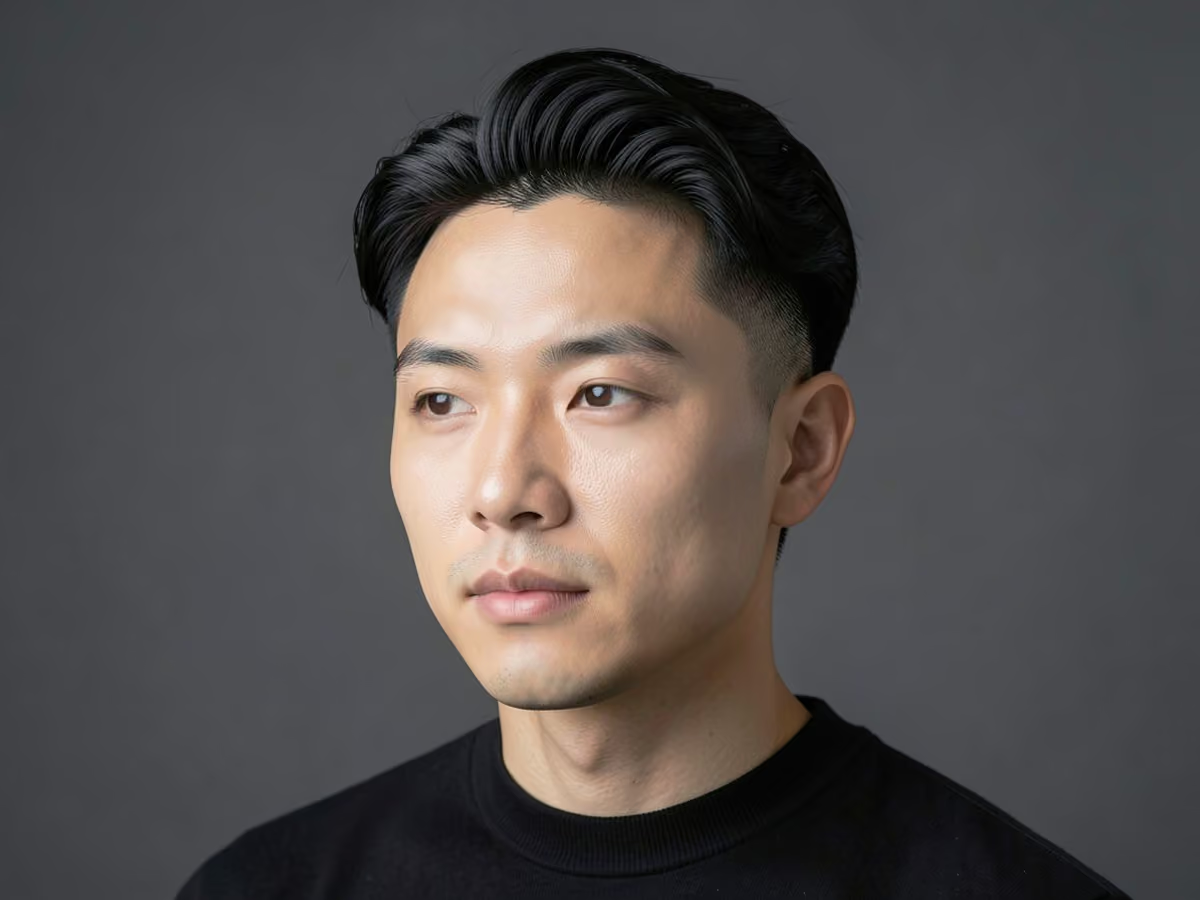
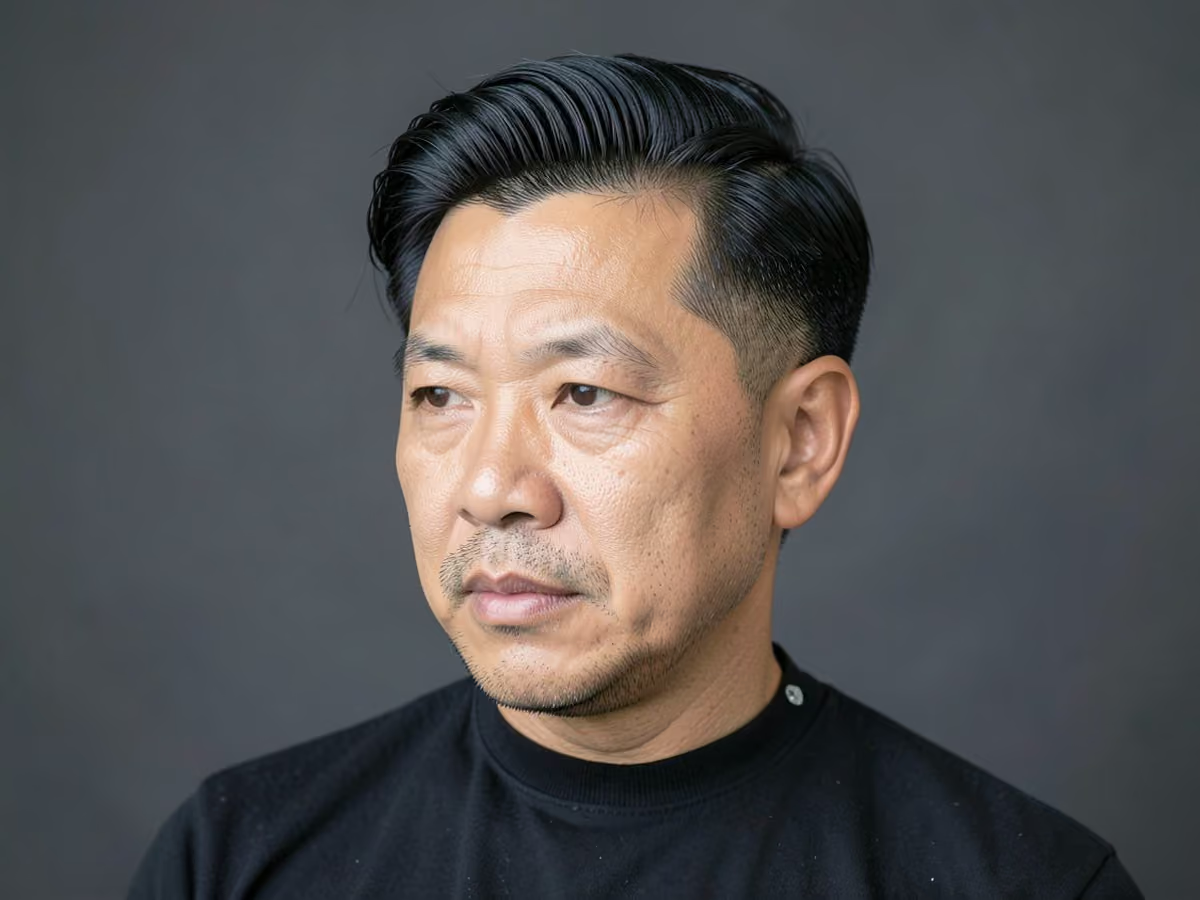
Rods placed along the front hairline curl the hair up and back, so the forehead stays open and the front never collapses onto the brow. The regent shape is a Korean take on a soft pompadour, worn with a side or off-center split near the front. Expect four to five inches at the front, shorter toward the crown, with tapered sides. Here the perm replaces the daily blow-dry that straight hair otherwise needs to stand up.
How to Style at Home
Rough-dry the front upward with your fingers while aiming the dryer from below.
Rake a little light pomade through the front to keep the curl lifted back.
Split the front slightly off-center and let the sides fall naturally.
Ask Your Barber
"Regent perm with rods along the front hairline curling up and back. Leave around five inches at the front, shorter at the crown, tapered sides at a #3."
Trim:Every 6–8 weeks. Heat-set ends dry out first and need dusting.
Best For:Oval, heart faces + straight hair, medium to long.
About This Style
Heated rods linked to a temperature-controlled machine set the shape after the waving lotion goes on, which is what separates a digital perm from a cold perm. The pattern tends to look softer and more defined when dry and slightly looser when wet. It suits hair of four inches or longer, because the rods need length to wrap around. Appointments often run two to three hours, so book a long slot.
How to Style at Home
Towel-dry gently, then twist sections loosely around a finger to remind the wave.
Dry on low heat with a diffuser for a defined S-shape.
Finish with a small amount of leave-in on the lengths, not the roots.
Ask Your Barber
"Digital perm on the top and fringe with medium heated rods for loose S-waves. About five inches on top, sides tapered to a #3."
Trim:Every 5–7 weeks. Curtain bangs need shaping before they reach the eyes.
Best For:Long, oval, heart faces + straight or wavy hair.
About This Style
The front is parted down the middle and permed with medium rods so each side of the fringe curves out toward the temples. That outward curl frames the cheekbones and keeps curtains from hanging limp, a common problem on straight Asian hair. Leave five to six inches at the front so the shape has room to show. Sides can stay at scissor length or sit on a #4 taper.
How to Style at Home
Part the damp fringe in the center with a fine comb.
Blow-dry each side away from the face with a round brush.
Scrunch a drop of leave-in into the curved ends to hold the shape.
Ask Your Barber
"Perm on the fringe and front top with medium rods so the curtains curve outward. Center part, about six inches at the front, sides tapered at a #4."
Trim:Every 6–8 weeks. The soft wave needs even lengths to hang right.
Best For:Oval, long faces + straight, medium-thick hair.
About This Style
Some Japanese salons offer an air wave, a perm method in which warm air dries the hair while it is still wrapped, before the neutralizer is applied. Stylists use it for soft, airy movement on medium to long hair rather than a set curl. On men it usually appears on a mash or mop cut with three to five inches all over, worn messy and air-dried with very little product.
How to Style at Home
Let the hair dry naturally after a wash, shaking it at the roots now and then.
Work a pea-size amount of styling cream through the mid-lengths.
Push the hair forward and break up any clumps with your fingertips.
Ask Your Barber
"Air wave perm for soft, loose movement through a mash cut. Keep three to five inches all over, sides over the ears trimmed with scissors, no clippers."
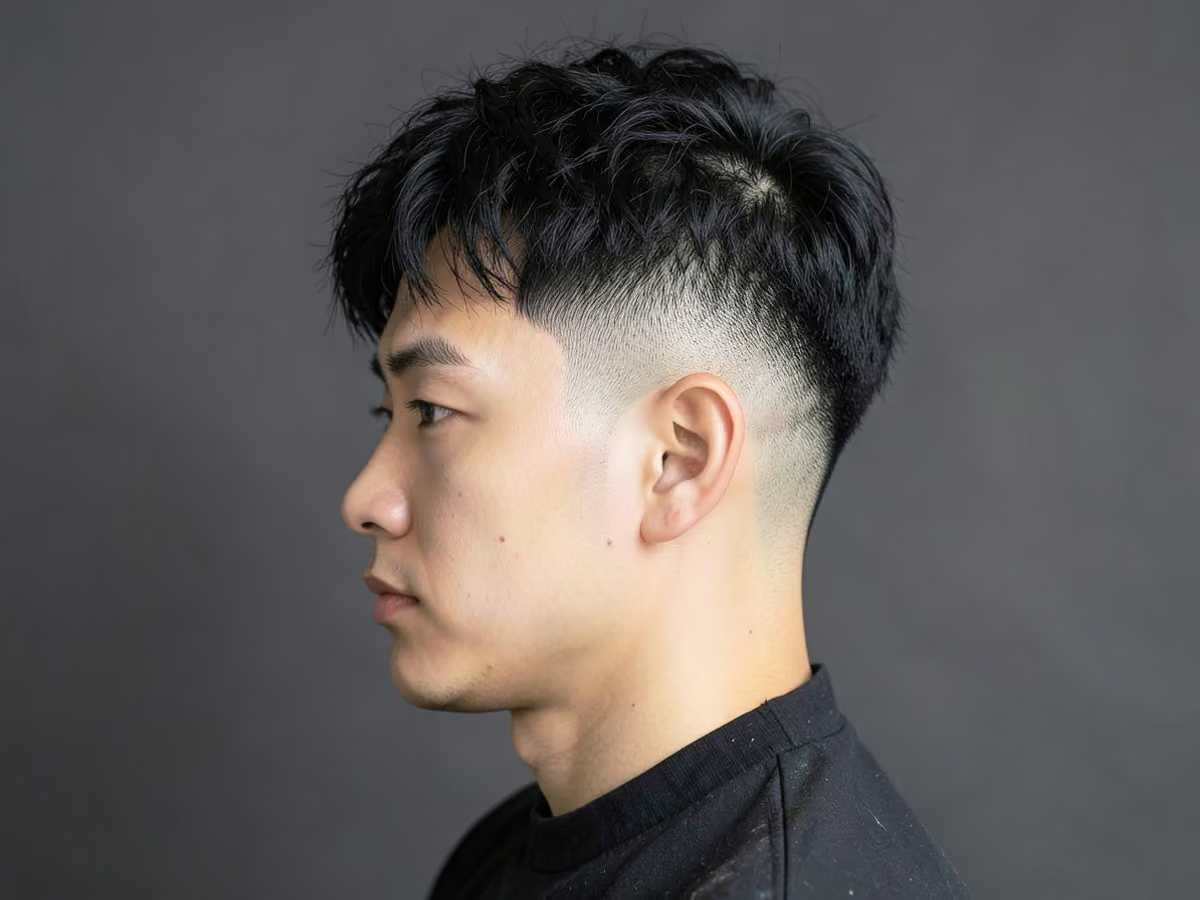
Trim:Every 4–6 weeks. Short sides grow out well before the permed top.
Best For:Round, oval faces + straight, coarse hair.
About This Style
Three inches is about the minimum for a visible Korean perm, so this version keeps the top just long enough and the sides short with a low fade from a #2. Small to medium rods give a fluffy, textured crop rather than defined curls. It is the easiest perm to live with for men who do not want hair over the ears, and it grows out without an awkward stage.
How to Style at Home
Rub a small amount of matte clay between your palms until warm.
Scrunch it into the top from the roots to separate the texture.
Push the front slightly forward and leave the curl messy.
Ask Your Barber
"Short Korean-style perm on the top only, small to medium rods. Keep about three inches on top and a low fade starting at a #2 on the sides."
Recommended Products
Matte Clay
Texture Powder
Wavy Perm and Body Wave Styles
Wave perms use larger rods for bends rather than curls. They suit men who want the movement of naturally wavy hair without daily heat styling, and they grow out softly because the treated and natural textures differ only a little.
Trim:Every 6–8 weeks. A trim keeps the wave from turning shapeless.
Best For:Oval, square faces + straight hair, three inches plus.
About This Style
Medium rods wrapped across the top create an S-shaped wave that looks like natural texture rather than a salon set. Hair of three to five inches shows it best, with the sides tapered so the wave sits on top. The pattern loosens over the first few weeks and settles into a softer bend. Expect it to read as wavy, not curly, which makes it a common choice for a first perm.
How to Style at Home
Spray sea salt spray into towel-dried hair from roots to ends.
Scrunch upward with both hands to encourage the S-shape.
Air dry, then shake the roots with your fingers for extra volume.
Ask Your Barber
"Loose wavy perm on the top with medium rods, wave not curl. Keep four inches on top and taper the sides to a #3."
Trim:Every 8–10 weeks. The broad wave hides regrowth well.
Best For:Long, oval faces + fine or flat straight hair.
About This Style
The largest rods give lift and broad bends instead of a wave pattern you can trace strand by strand. A body wave mainly adds volume and makes fine hair look fuller. It needs four inches or more and suits medium-length cuts such as a flow or a grown-out side part. Because the change is subtle, the line where new growth starts is hard to see, so many men redo it only a few times a year.
How to Style at Home
Spray thickening spray into the roots while the hair is damp.
Blow-dry with your head tipped forward to lift the roots.
Finish by raking the hair back loosely with your fingers.
Ask Your Barber
"Body wave perm with large rods for volume, not curl. About five inches on top and four at the sides, scissor cut, no fade."
Trim:Every 6–8 weeks. Sun-dried ends need regular trimming.
Best For:Oval, square faces + straight or slightly wavy hair.
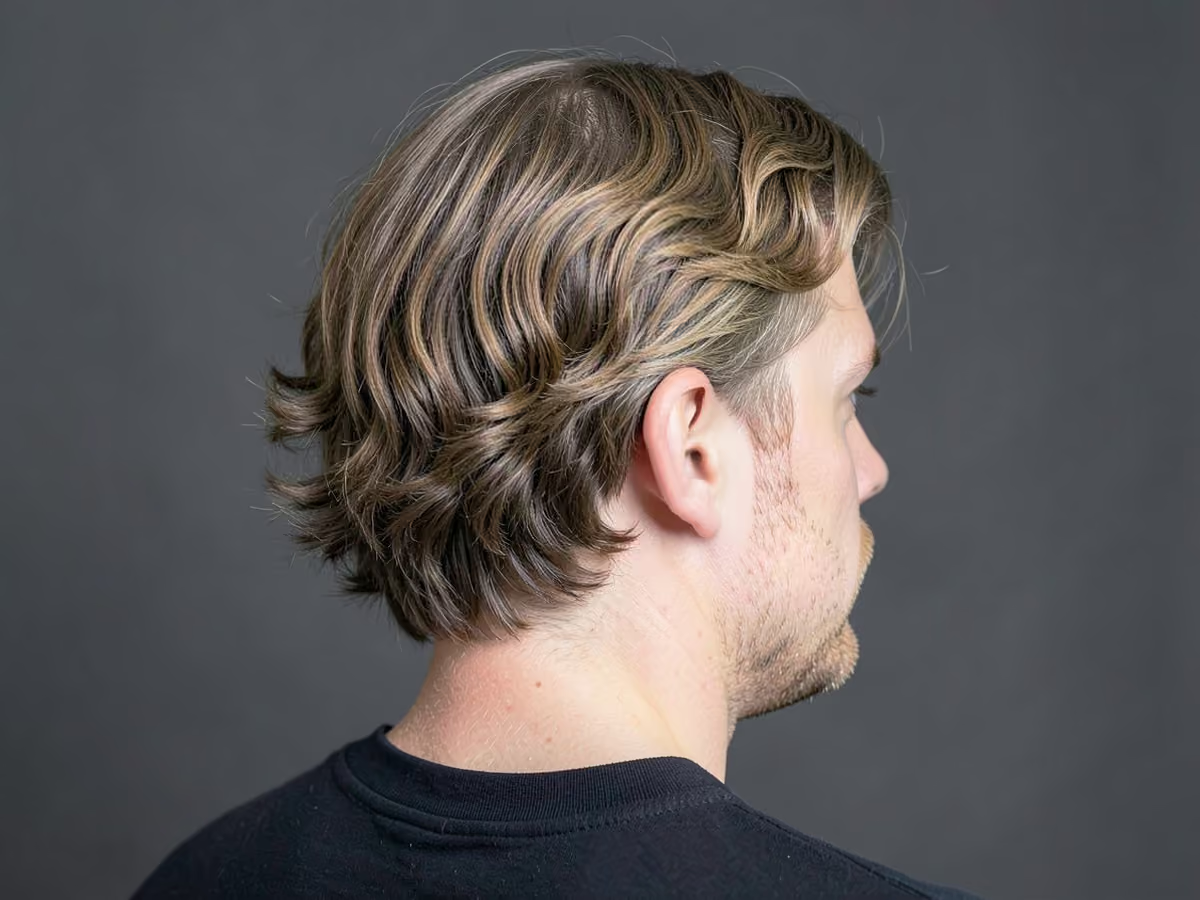
About This Style
Mixed rod sizes, sometimes wrapped in a twisted pattern, produce uneven waves that look like hair left to dry after a swim. The irregular pattern is intentional and hides grow-out well. It works on five to eight inches of hair, so it fits a bro flow or an ear-length surfer cut. Salt water and sun dry out permed hair quickly, so a leave-in before swimming helps protect it.
How to Style at Home
Mist damp hair with sea salt spray and scrunch it in sections.
Twist a few random pieces around your finger for uneven texture.
Let it dry in the air with no brushing or combing.
Ask Your Barber
"Beach wave perm with mixed rod sizes for uneven waves. Five to six inches all over, ends texturized, sides covering the top of the ears."
Trim:Every 3–4 weeks. The taper needs cleaning between perm sessions.
Best For:Round, oval faces + straight, thick hair.
About This Style
A low taper cleans up only the sideburns and nape, so the waved top keeps most of its width while the cut looks tidy from behind. The perm covers three to four inches on top with medium rods, and the taper runs from a #1 at the edges into a #3. Barbers usually touch up the taper every few weeks and leave the perm alone for months.
How to Style at Home
Comb a small amount of styling cream through the wet top.
Scrunch the waves into place and let them dry without touching.
Brush the tapered edges down with a soft edge brush if they lift.
Ask Your Barber
"Wavy perm on the top with medium rods, low taper at the sideburns and nape from a #1 into a #3. Leave four inches on top."
Trim:Every 6–8 weeks. A center part needs even lengths on both sides.
Best For:Long, heart faces + straight hair, medium length.
About This Style
Waves on both sides of a center part give the 1990s curtain look more weight at the cheekbones than straight hair can hold. The stylist parts the hair before wrapping and keeps the rods off the part line, so the part stays flat and clean. Five to seven inches at the front lets the waves fall to the ears. Body wave rod sizes keep the result soft.
How to Style at Home
Part the wet hair down the middle with a comb.
Scrunch leave-in into each side and let the waves fall outward.
Diffuse on low heat or air dry for the softest finish.
Ask Your Barber
"Wavy perm with a center part, rods kept off the part line. Six inches at the front, layered to the ears, no clippers on the sides."
Trim:Every 5–6 weeks. A waved fringe reaches the eyes quickly.
Best For:High forehead, oval faces + straight or fine hair.
About This Style
The stylist wraps just the front and top on medium rods, angled forward so the fringe falls in loose pieces instead of a heavy straight bang. That softens a high forehead. Sides usually sit on a mid taper. The fringe should land at the brow when dry, so cut it about half an inch longer before the perm, since waved hair looks shorter than it measures.
How to Style at Home
Push the damp fringe forward with your fingers.
Scrunch a little matte cream into the front pieces.
Separate the fringe into uneven strands once it is dry.
Ask Your Barber
"Wavy perm on the top and fringe, rods wrapped forward. Leave the fringe slightly long so it lands at the brow once waved, mid taper on the sides."
Recommended Products
Matte Cream
Sea Salt Spray
Spiral and Curly Perm Styles
Smaller rods and vertical wraps give definite curls that hold their shape through the day. These perms make the biggest visible change to straight hair, so they also show the clearest line once natural roots grow in.
Trim:Every 3–4 weeks. The fade needs cleaning long before the spirals relax.
Best For:Oval, long faces + straight hair, four inches plus.
About This Style
Rods wound vertically from root to tip twist each section into a ringlet, so the curls hang rather than stack. A low fade from a #1 just above the ear keeps the weight on top and stops the spirals from looking wide. Leave four to six inches on top before the perm; ringlets pull the visible length up noticeably, which is worth planning into the cut.
How to Style at Home
Rake curl cream through soaking-wet hair with your fingers.
Scrunch gently and avoid separating the spirals while they are wet.
Diffuse on low heat, then leave the curls alone until fully dry.
Ask Your Barber
"Spiral perm on the top, rods wound vertically. Low fade from a #1 above the ear blending to a #3, five inches left on top."
Trim:Every 6–8 weeks. Trims keep the curl clumps evenly sized.
Best For:Square, oval faces + straight or wavy hair.
About This Style
Medium-small rods give open curls about the width of a finger, a step tighter than a wave but far from a ringlet. The finish suits three to five inches of hair and sits well over a taper or scissor-cut sides. Most people read it as natural curly hair, which is why stylists often suggest it to men who want curls without an obvious perm.
How to Style at Home
Apply curl cream to wet hair and scrunch it upward.
Wrap the hair in a cotton T-shirt for ten minutes to absorb water.
Release and air dry, then shake loose at the roots.
Ask Your Barber
"Loose curl perm with finger-width curls on the top and crown. About four inches on top and a #3 taper on the sides."
Trim:Every 3–5 weeks. Short sides and nape show regrowth fast.
Best For:Round, oval faces + straight hair, short sides.
About This Style
Tight curls are set only on the top while the sides stay at a #2 or #3, so the shape is a curly block on a short frame. It is common among young men who want the curly top fade without natural curls. Two to three inches on top is enough with small rods. The perm can be refreshed on its own without changing the sides.
How to Style at Home
Wet the top and apply a small amount of curl cream.
Rub a curl sponge in small circles to tighten the curls.
Leave the curls untouched until dry to prevent frizz.
Ask Your Barber
"Curly top perm with small rods, top only. Three inches on top, sides at a #2 tapered into the neckline."
Trim:Every 4–6 weeks. Tight permed curls tangle and need shaping often.
Best For:Oval, long faces + thick straight or wavy hair.
About This Style
Very small rods across the whole head give tight, dense curls that can be picked out into a rounded afro shape. On straight hair this is the most intensive perm, with the longest processing and the biggest change. Plan on at least four inches all over. The pattern differs from natural coily hair, so expect a softer, more uniform curl. Daily moisture prevents dryness and tangles.
How to Style at Home
Spray detangling spray on damp hair and finger-detangle in sections.
Apply leave-in, then lift and shape the roots with an afro pick.
Pat the outline round with your palms once the hair is dry.
Ask Your Barber
"Afro perm with small rods over the whole head. Four to five inches all over, shaped round after the perm, no fade."
Trim:Every 6–8 weeks. Pin curls relax unevenly without trims.
Best For:Heart, oval faces + fine straight hair.
About This Style
Instead of rods, small sections are wound flat into coils and pinned before processing, which gives bouncy curls without the bulk rods add near the root. The method works on short and fine hair that is too thin for rods to grip. Expect smaller, softer curls that lie close to the head, a good match for two to four inches on top.
How to Style at Home
Mist damp hair with leave-in and scrunch gently.
Twist any loose pieces around a finger to reset them.
Air dry and finish with a light shake at the roots.
Ask Your Barber
"Pin curl perm on the top, no rods, for small soft curls. Three inches on top and a scissor-cut taper on the sides."
Trim:Every 6–8 weeks. Keeps curled lengths balanced with the straight crown.
Best For:Long, oval faces + straight hair, five inches plus.
About This Style
Rods go on the mid-lengths and ends while hair near the crown is left straight, so curl and volume build toward the bottom of the shape. On men it suits a shag or long layered cut, where a flat crown and curled ends give a lived-in outline. Stack perms need five inches or more and usually some layering so the curls sit at different heights.
How to Style at Home
Dry the crown flat with your hands while the ends dry naturally.
Scrunch curl cream into the lower half of the hair only.
Pull a few curled pieces forward around the face.
Ask Your Barber
"Stack perm with rods on the mid-lengths and ends only, crown left straight. Six inches all over with layers, scissor cut to the ears."
Recommended Products
Curl Cream
Styling Cream
Broccoli Perm, Perm Mullet and Faded Perms
A permed top over short sides is the men's perm barbers are asked for most. The broccoli cut and the modern mullet both depend on curl that many men can only get from a perm.
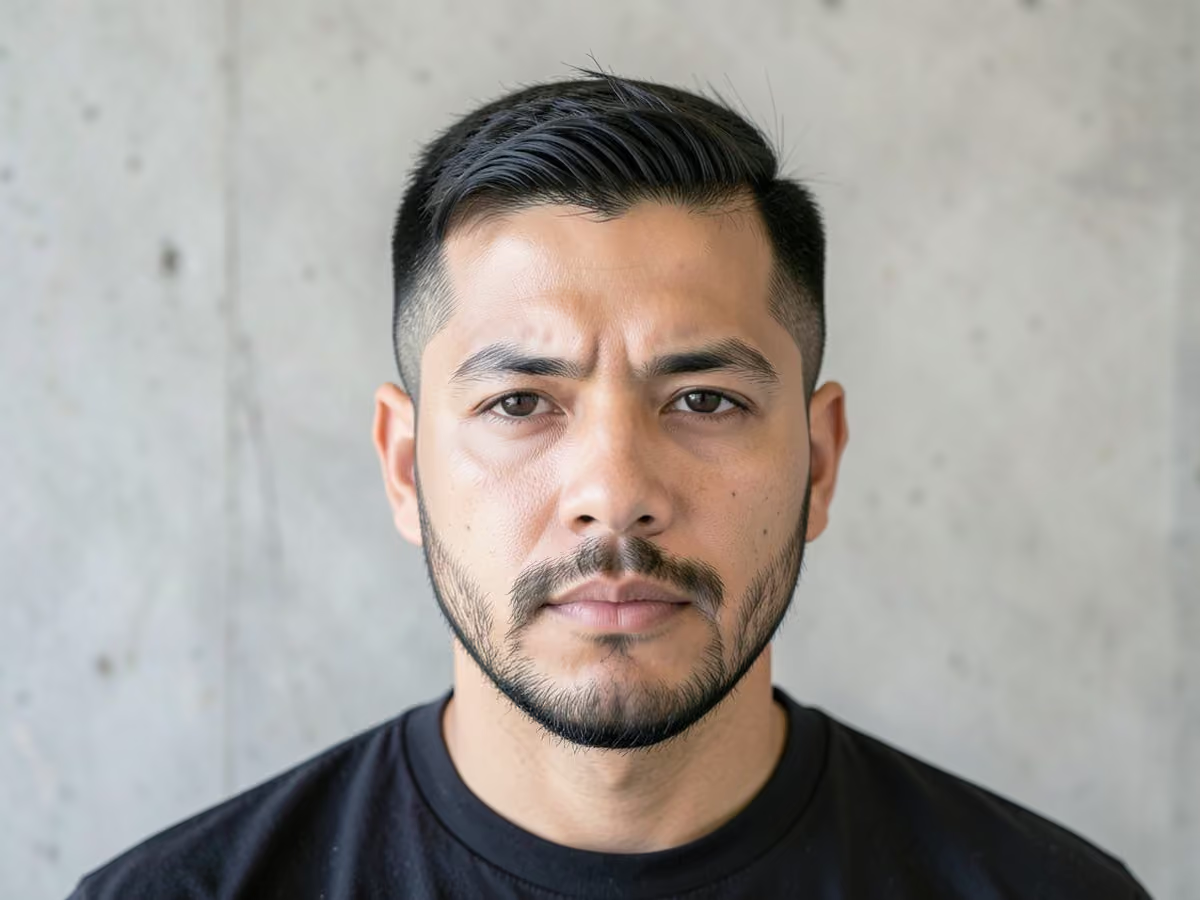
Trim:Every 2–3 weeks. Skin sides grow out far faster than the curls.
Best For:Oval, round faces + straight hair, teens and twenties.
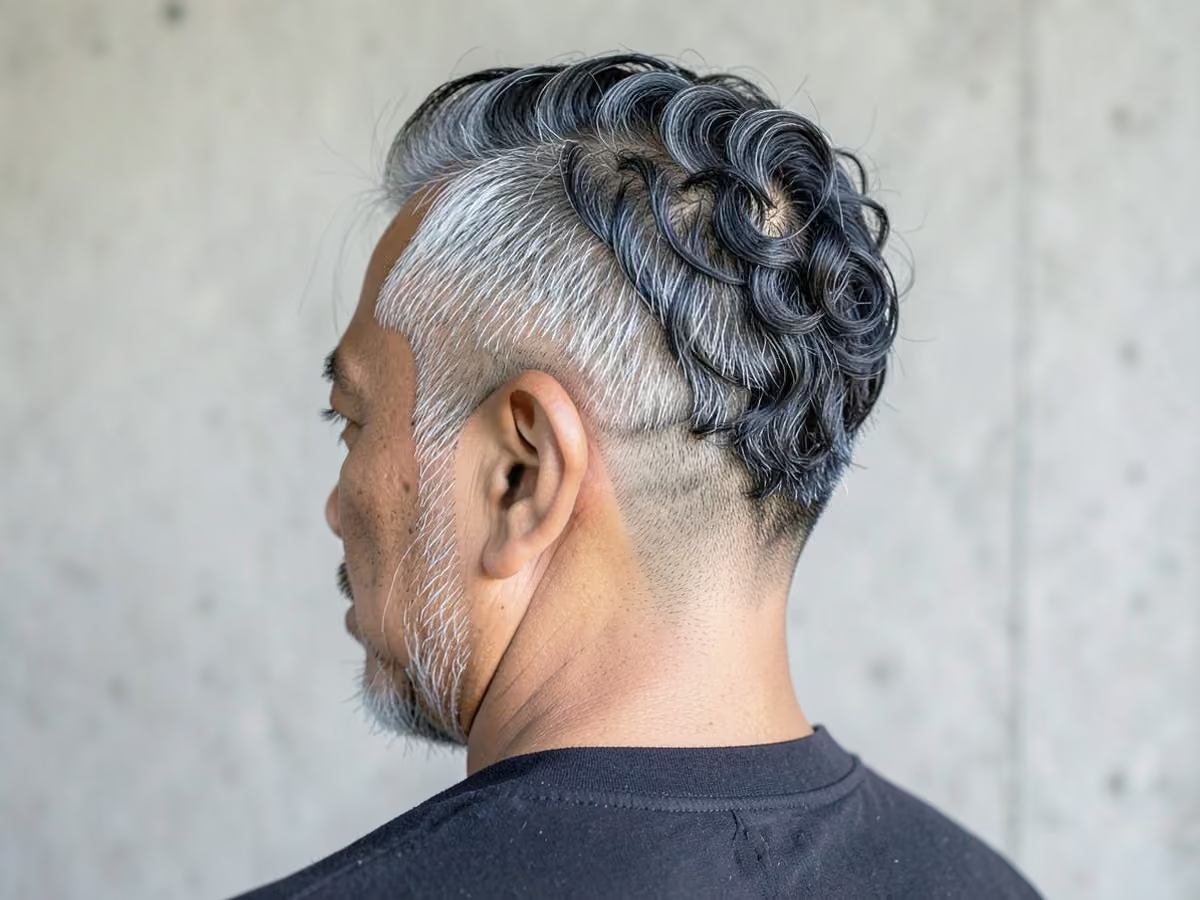
About This Style
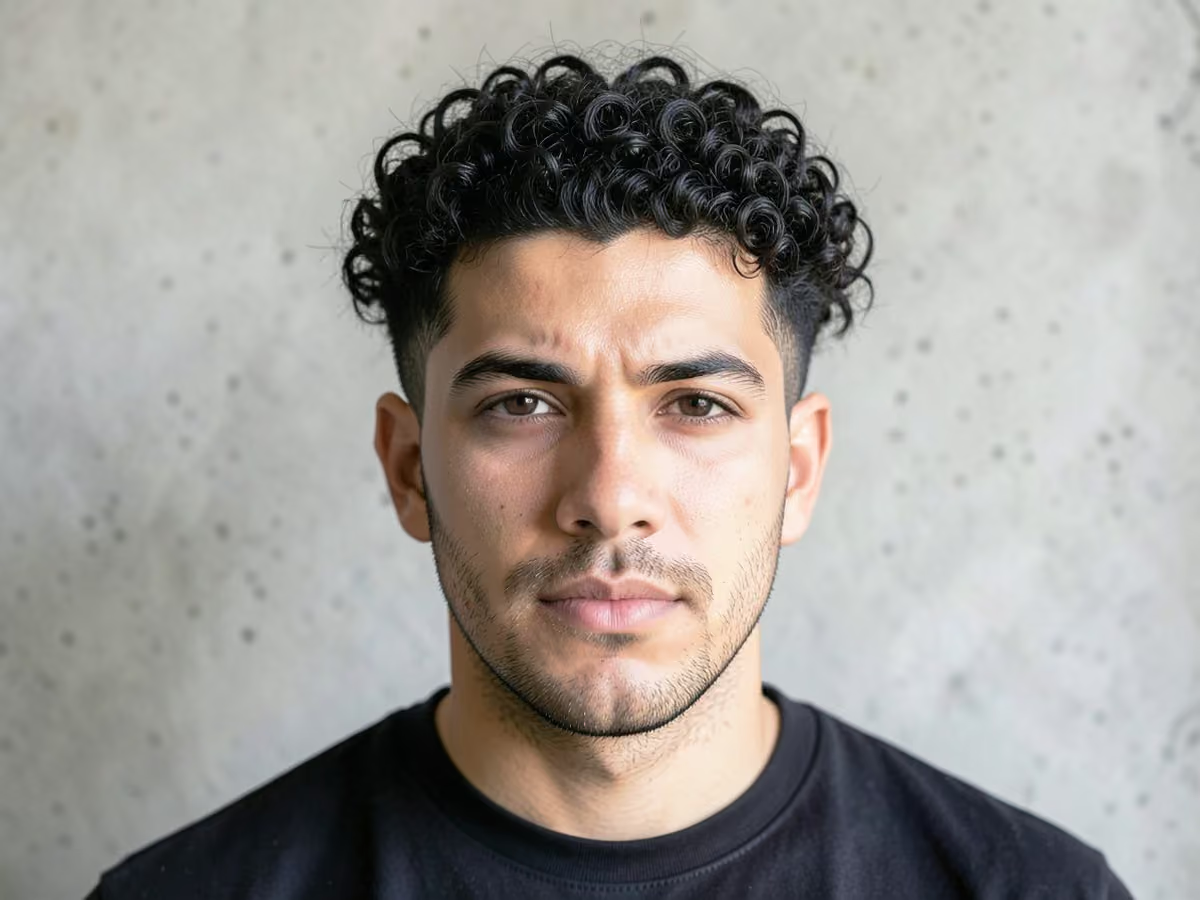
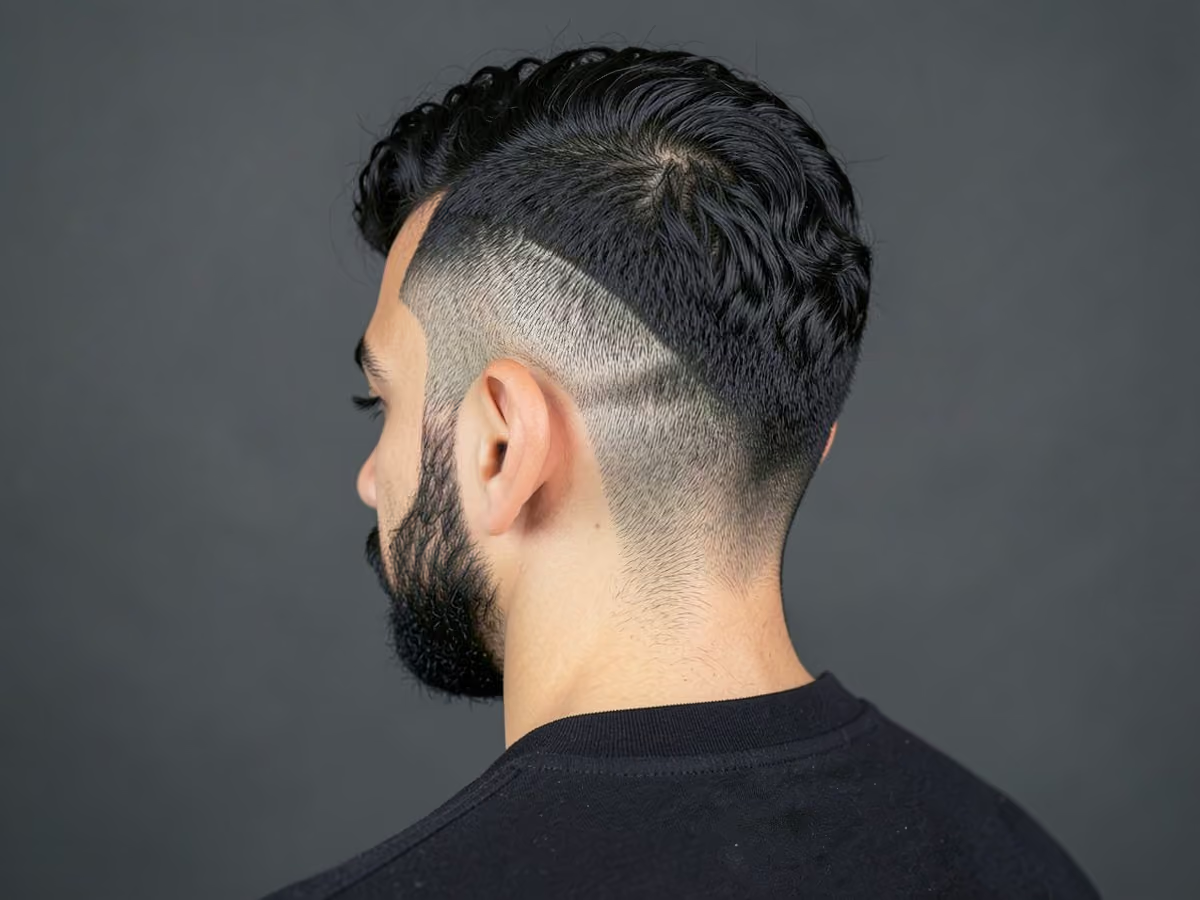
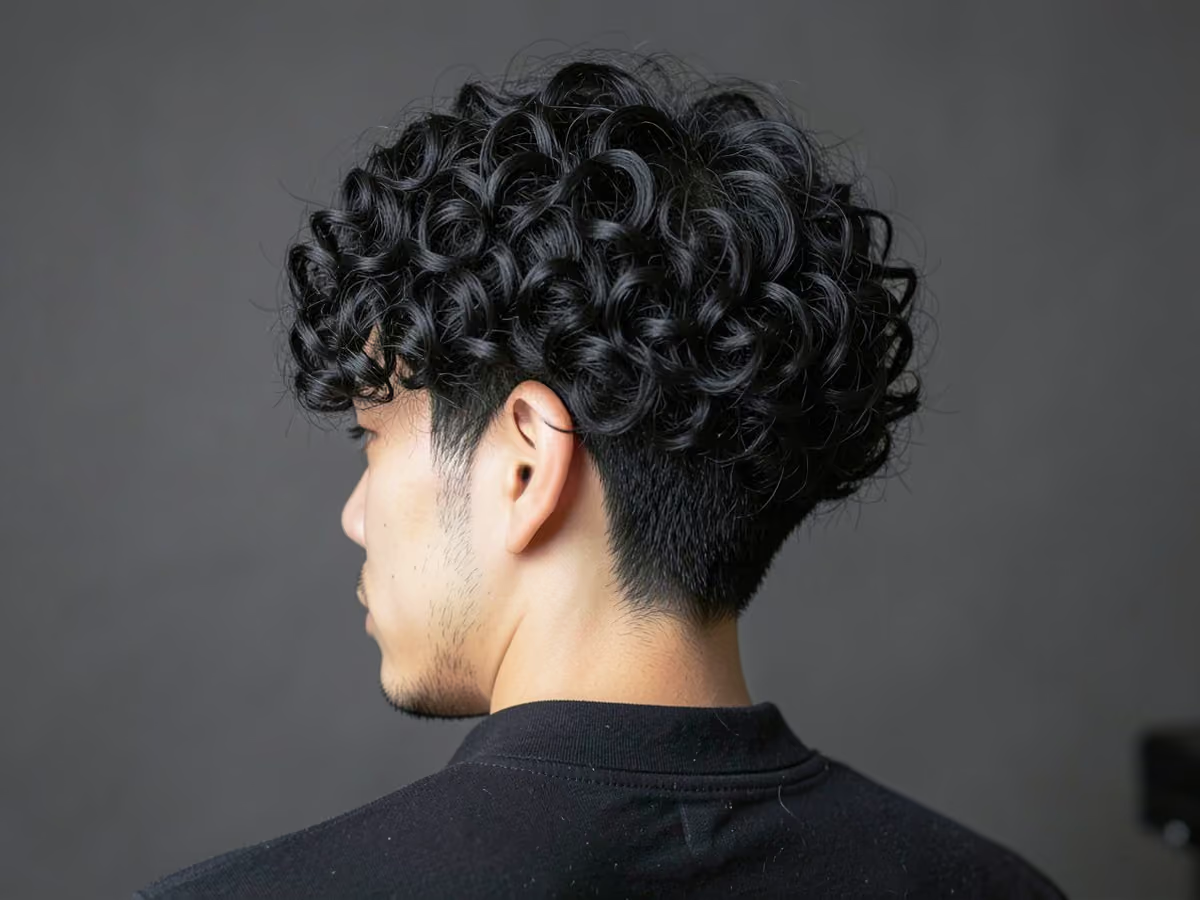
Small rods across the top create a tight, rounded mass of curls, and the sides come down with a mid or high skin fade so the outline looks like a broccoli floret. Leave three to four inches on top before the perm. The curls last; the fade is what needs frequent visits. Ask for the perm first and the fade a few days later so clippers do not meet a freshly processed scalp.
How to Style at Home
Wet the top and work a dollop of curl cream through it.
Scrunch the curls upward into a round shape.
Diffuse on low heat to keep the height and definition.
Ask Your Barber
"Broccoli perm on the top with small rods, three to four inches long. Mid skin fade on the sides and back, blended through a #1 and #2."
Trim:Every 4–6 weeks. Short sides and a long back need separate care.
Best For:Oval, long faces + straight hair, five inches at back.
About This Style
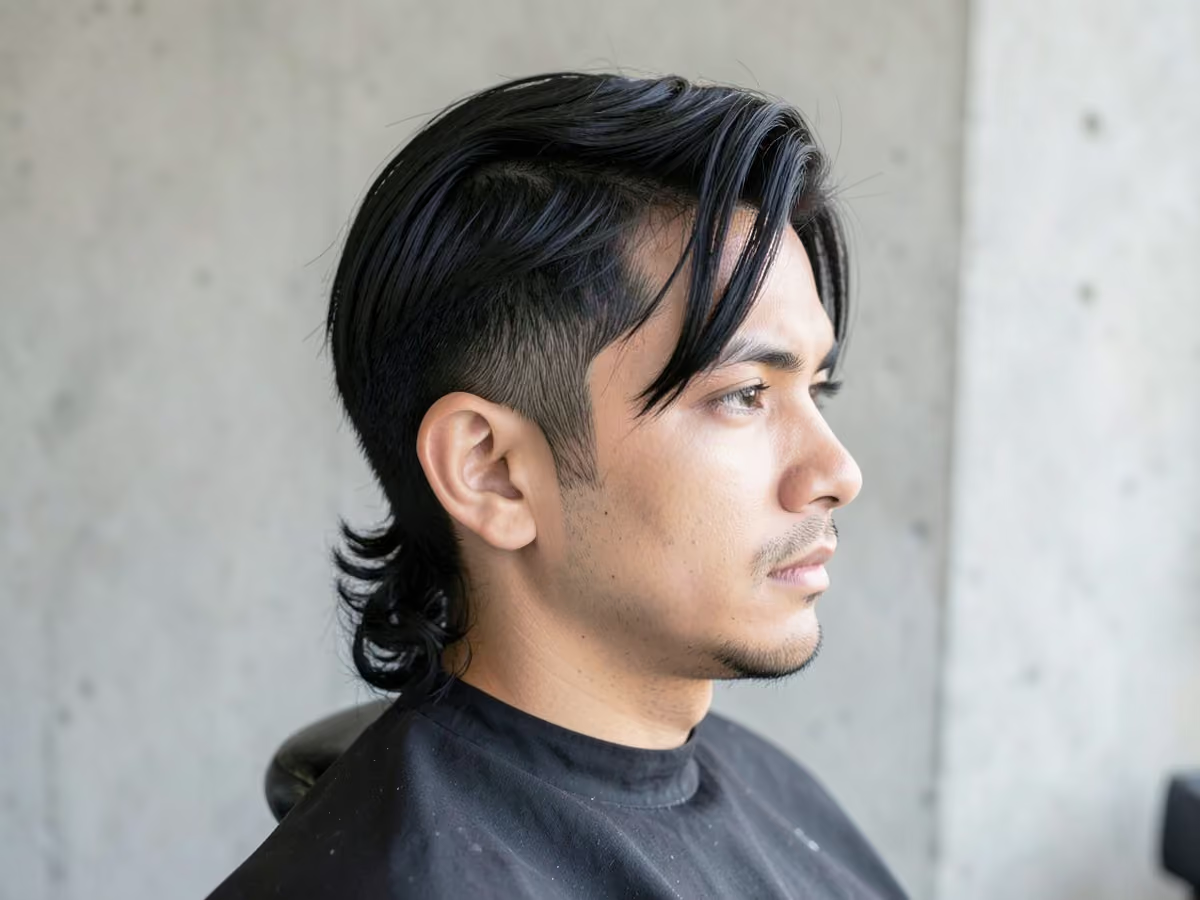
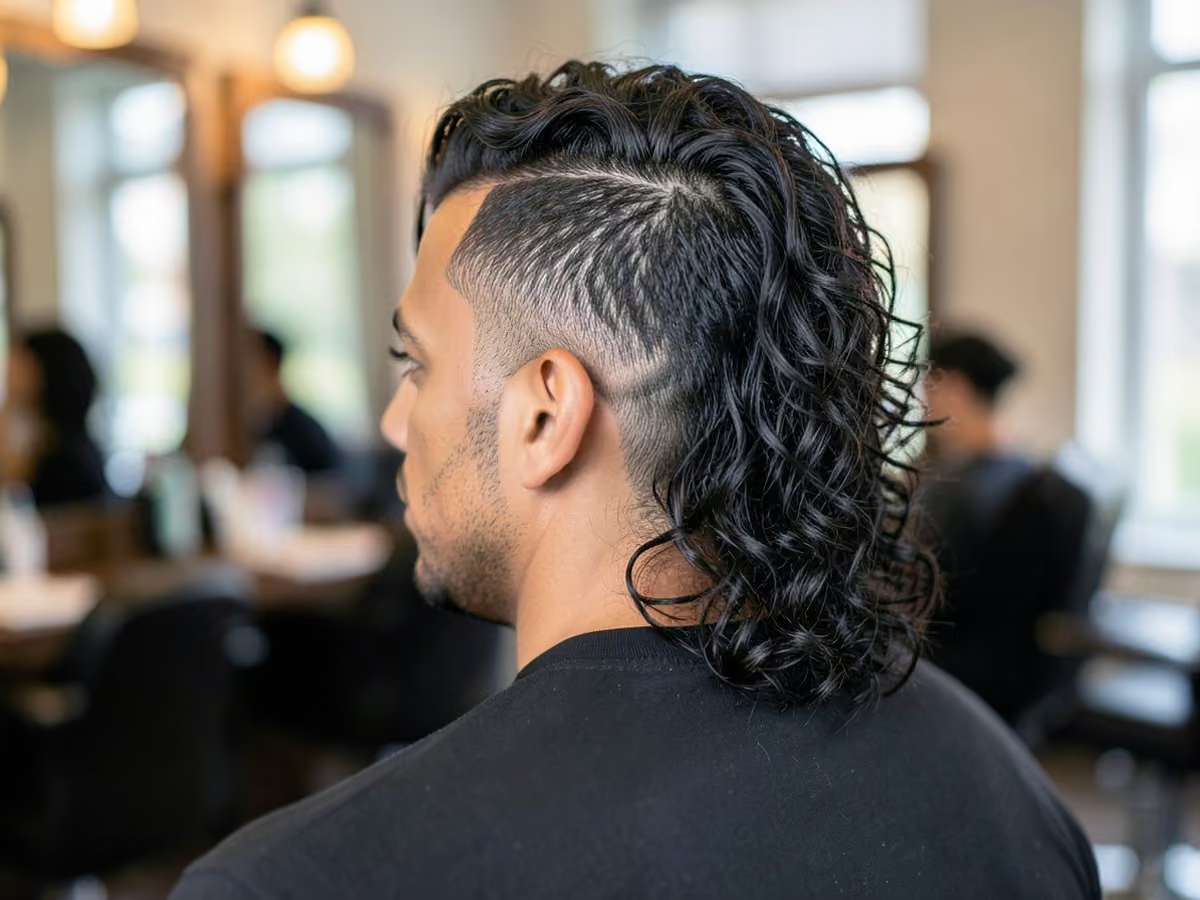
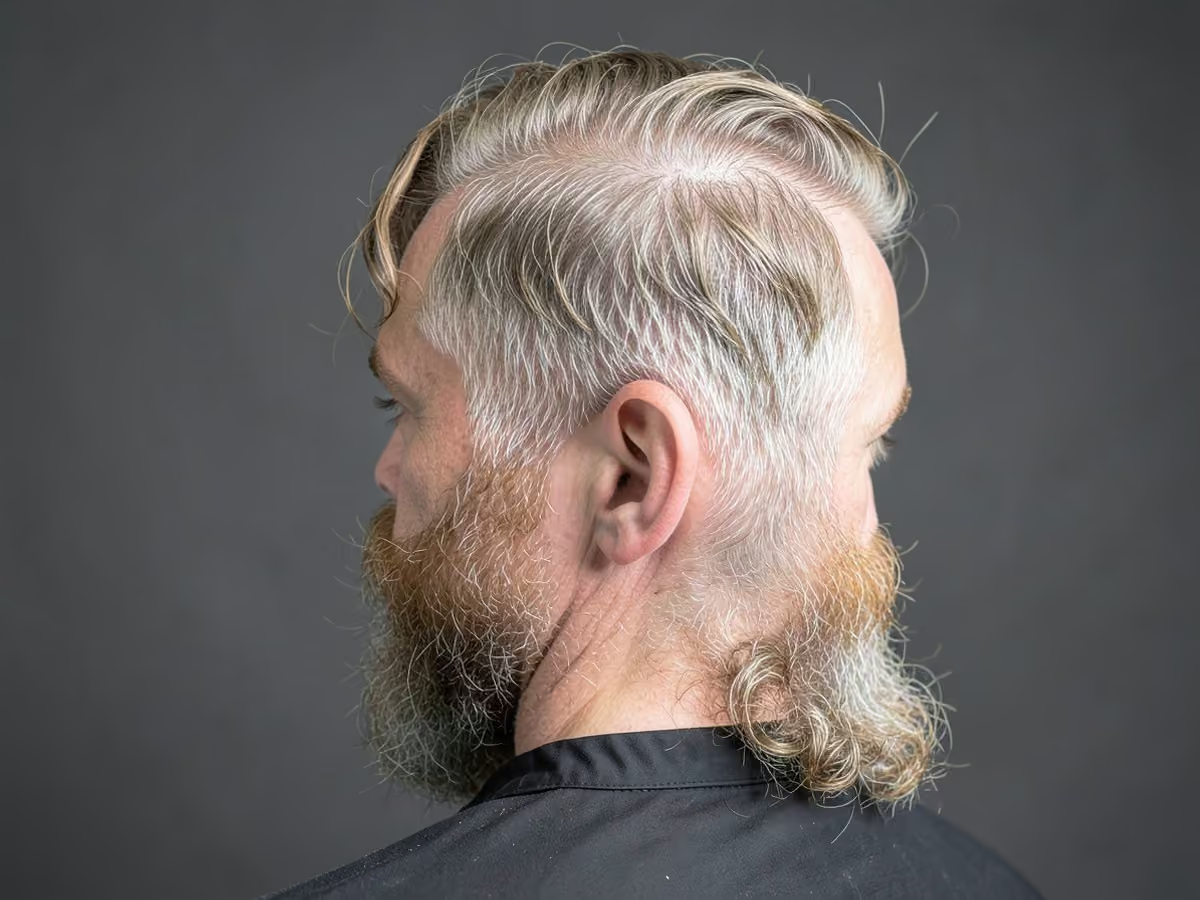
Curls on the top and the longer back, with short or tapered sides, give a mullet the volume straight hair cannot hold. Rods usually go on the top and on the section from the crown to the nape, often in medium sizes for loose curls. The back needs five or more inches. A burst or low taper around the ears keeps the side profile clean.
How to Style at Home
Apply curl cream to the top and back while damp.
Scrunch the back upward and twist a few pieces at the nape.
Air dry, keeping the sides flat with your palm.
Ask Your Barber
"Perm mullet with medium rods on the top and back. Keep five inches at the back, three on top, burst taper around the ears."
Trim:Every 2–3 weeks. A mid fade shows grow-out at the temples.
Best For:Round, square faces + straight, thick hair.
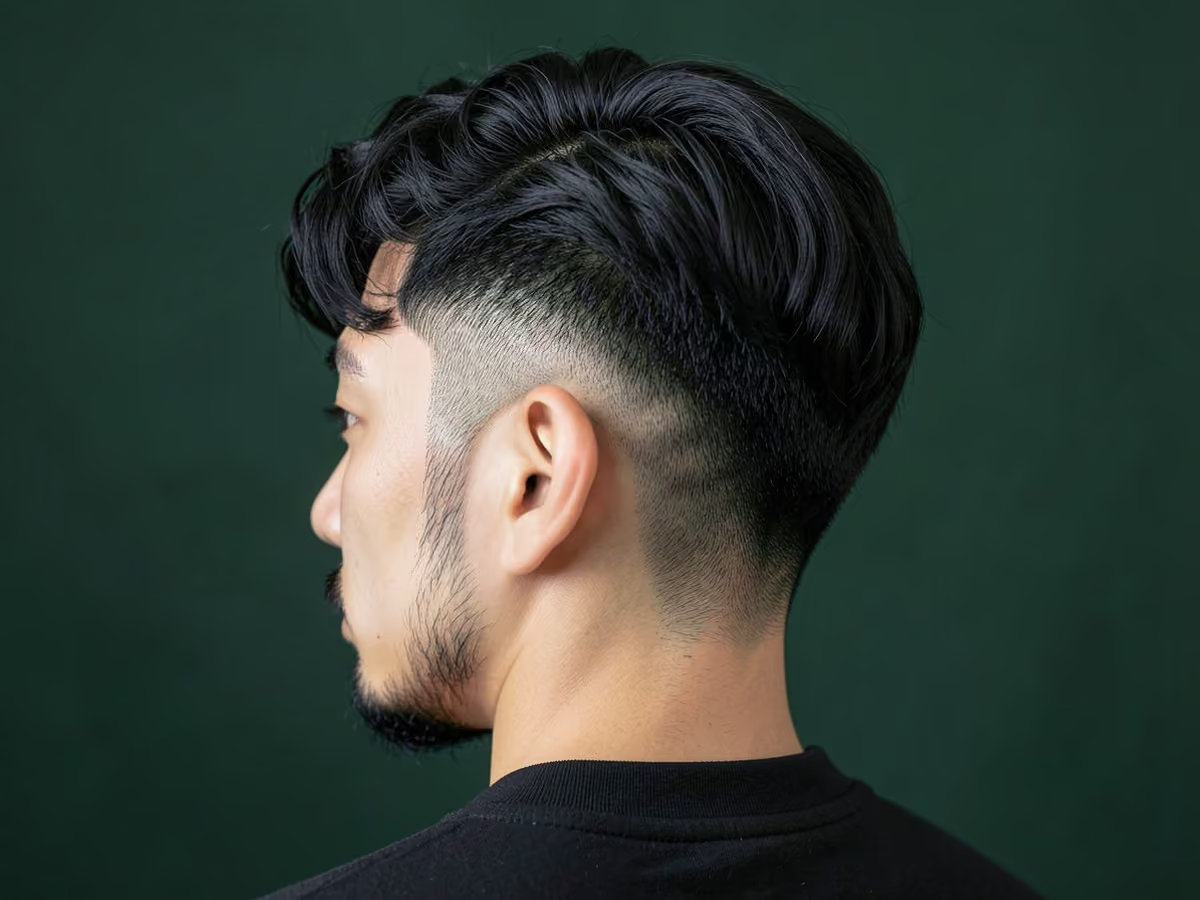
About This Style
A fade starting at the temple sharpens the line between permed top and short sides without going as bare as a high skin fade. Medium rods on two to four inches of top hair give a textured, curly crop rather than a tall broccoli outline. It is a balanced option for men who want contrast but plan to see the barber every two to three weeks.
How to Style at Home
Rub matte cream between your palms and scrunch it into the top.
Push the curls forward and slightly to one side.
Tidy the neckline with a trimmer between barber visits.
Ask Your Barber
"Perm on the top with medium rods for a curly crop, three inches long. Mid fade starting at the temple from a #0.5 into a #2."
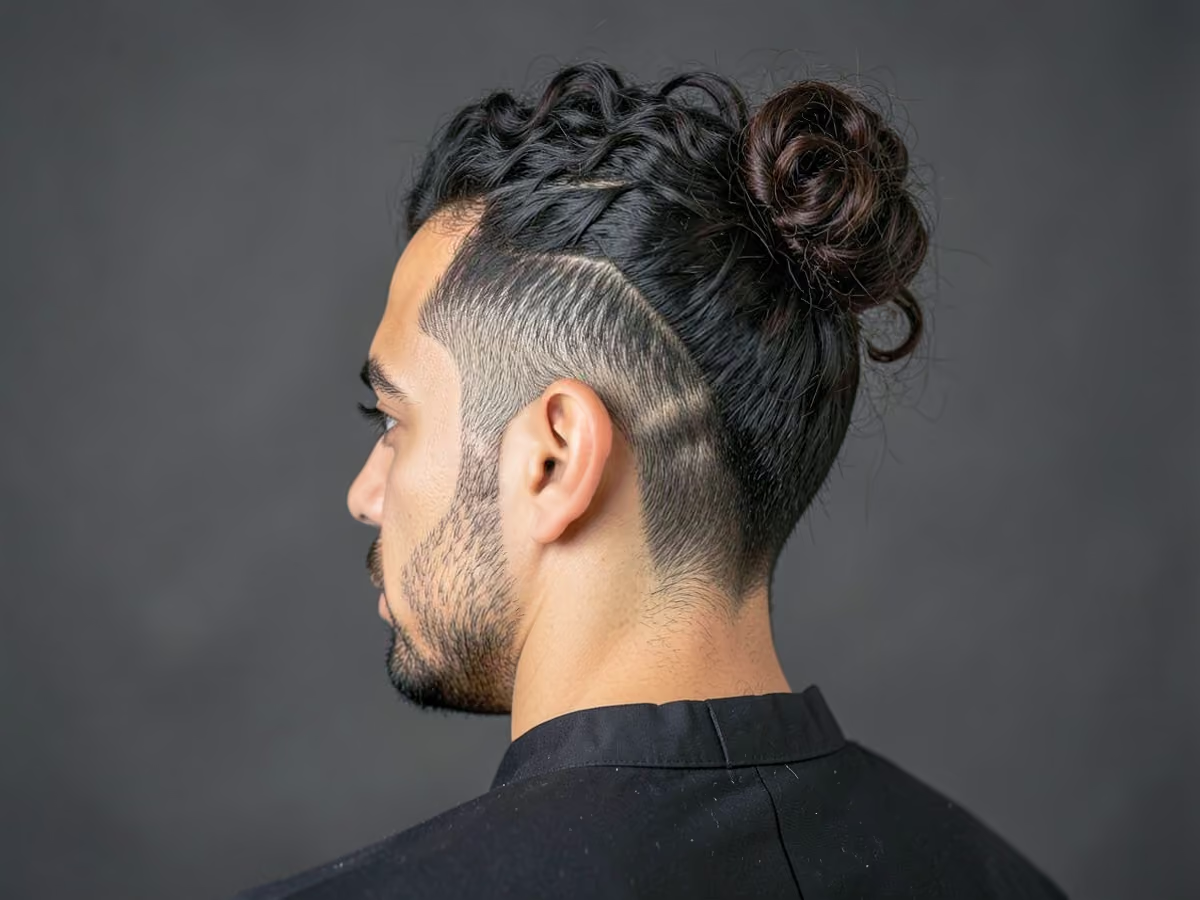
Trim:Every 2–3 weeks. The curved fade around the ear needs reshaping.
Best For:Oval, heart faces + straight or wavy hair.
About This Style
Burst fades curve around the ear and leave length at the nape, so the permed top flows into a longer back. The pairing is popular with curly fringes and short mullets. Small to medium rods on the top and nape keep the curl consistent from front to back. Four inches on top and two to three at the nape are typical starting lengths.
How to Style at Home
Scrunch curl cream through the top and the hair at the nape.
Push the front curls forward into a loose fringe.
Leave the back to dry naturally so it keeps its own curl.
Ask Your Barber
"Perm on the top and nape with small to medium rods. Burst fade around the ears from skin into a #2, length kept at the back."
Trim:Every 3–4 weeks. Undercut sides blur quickly as they grow.
Best For:Square, oval faces + straight, thick hair.
About This Style
Disconnected sides clipped at one length, often a #1 or #2, sit under a permed top of four to six inches with no blend between them. The heavy curl on top can fall to either side or be pushed back, and the shelf where the length changes stays visible. This cut gives thick straight hair, which would otherwise lie flat over the undercut line, a rounder shape.
How to Style at Home
Apply styling cream to wet curls and scrunch them into place.
Push the curls back or to one side while drying.
Let some curls fall over the shelf on one side for a softer outline.
Ask Your Barber
"Disconnected undercut at a #2 with no blend into the top. Perm the top with medium rods and keep about five inches there."
Trim:Every 4–5 weeks. The front loses height once the curl lengthens.
Best For:Round, square faces + straight, fine or flat hair.
About This Style
Rods are angled upward at the front so the curl pushes the quiff up instead of forward. Fine, flat hair that drops by midday benefits most, since the curl holds height without strong product. Leave four inches at the front tapering to two at the crown, with a low or mid taper on the sides. A light clay keeps the shape textured.
How to Style at Home
Blow-dry the front upward and back with a round brush.
Work a small amount of texture clay through the front.
Shape the peak with your fingertips, keeping it loose.
Ask Your Barber
"Perm on the front and top with rods angled up for a quiff. Four inches at the front, two at the crown, mid taper on the sides."
Trim:Every 4–6 weeks. The fringe drops into the eyes when left long.
Best For:Oval, long faces + straight, thick hair.
About This Style
A choppy fringe cut into a permed top gives a crop with curl broken into short pieces at the brow. Medium-small rods on two to four inches of hair, followed by point cutting, create the uneven edge. It pairs with a low or mid fade. The fringe hides a high forehead, and the curl keeps it from looking heavy.
How to Style at Home
Scrunch a small amount of matte clay into the damp top.
Push the fringe forward and pinch it into pieces.
Leave the curls messy and avoid combing them.
Ask Your Barber
"Perm on the top with medium-small rods, then a choppy textured fringe cut in afterward. Three inches on top, low fade at a #1."
Recommended Products
Matte Clay
Texture Powder
Perms for Thin, Thick, Coily and Receding Hair
Hair thickness, existing texture and hairline shape all change which perm works. Ask the stylist to assess your hair before choosing rods, and request a patch test if you have never had a chemical service or have reacted to hair dye.
Trim:Every 6–8 weeks. Fine permed ends break easily without trims.
Best For:Oval, round faces + fine or thinning straight hair.
About This Style
Curl and wave make fine strands spread apart, so the hair covers more scalp and looks fuller. Stylists often pick a gentler acid perm and larger rods for fine hair to limit damage. Keep the cut short to medium, around two to three inches, because long fine hair weighs the curl down. Avoid it if the hair is already breaking or heavily colored.
How to Style at Home
Spray thickening spray at the roots while the hair is damp.
Rough-dry with your fingers, lifting at the crown.
Finish with a tiny amount of matte paste on the ends.
Ask Your Barber
"Gentle perm on the top for volume, larger rods. About three inches on top, sides at a #3 with no skin."
Trim:Every 6–8 weeks. Thick curls need weight removed to keep shape.
Best For:Square, oval faces + thick, coarse straight hair.
About This Style
Dense straight hair can take a perm well but may need longer processing, which the stylist judges by checking a test curl. Thick hair also bulks up once curled, so the barber removes weight from inside the shape, often by point cutting, before or after the perm. Tapered sides at a #3 keep the head from looking wide.
How to Style at Home
Apply leave-in to wet hair and comb it through with your fingers.
Scrunch styling cream into the curls in sections.
Air dry fully before touching the hair to limit frizz.
Ask Your Barber
"Perm for thick straight hair with medium rods, weight taken out of the top first. Four inches on top, tapered sides at a #3."
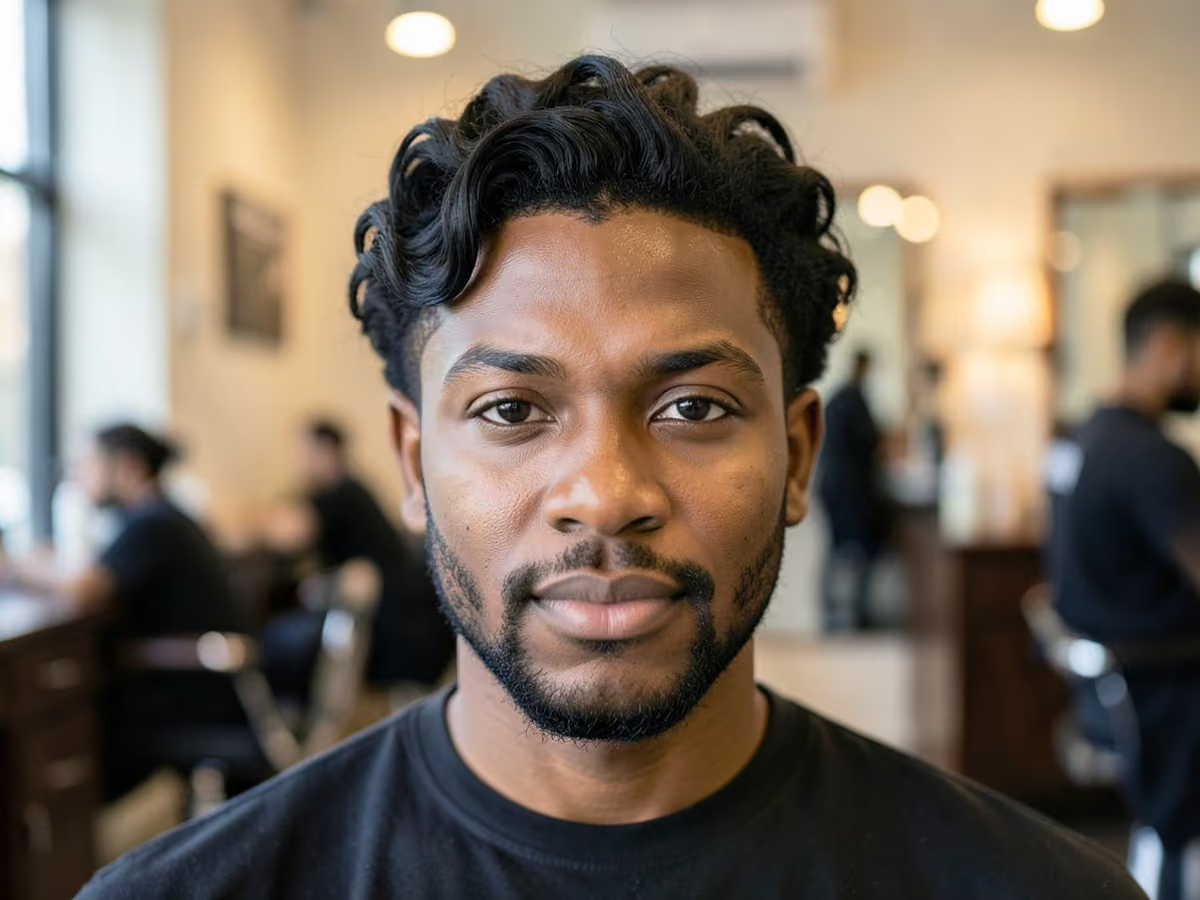
Trim:Every 2–4 weeks. Coily regrowth shows quickly at the roots.
Best For:Oval, long faces + coily or tightly curled hair.
About This Style
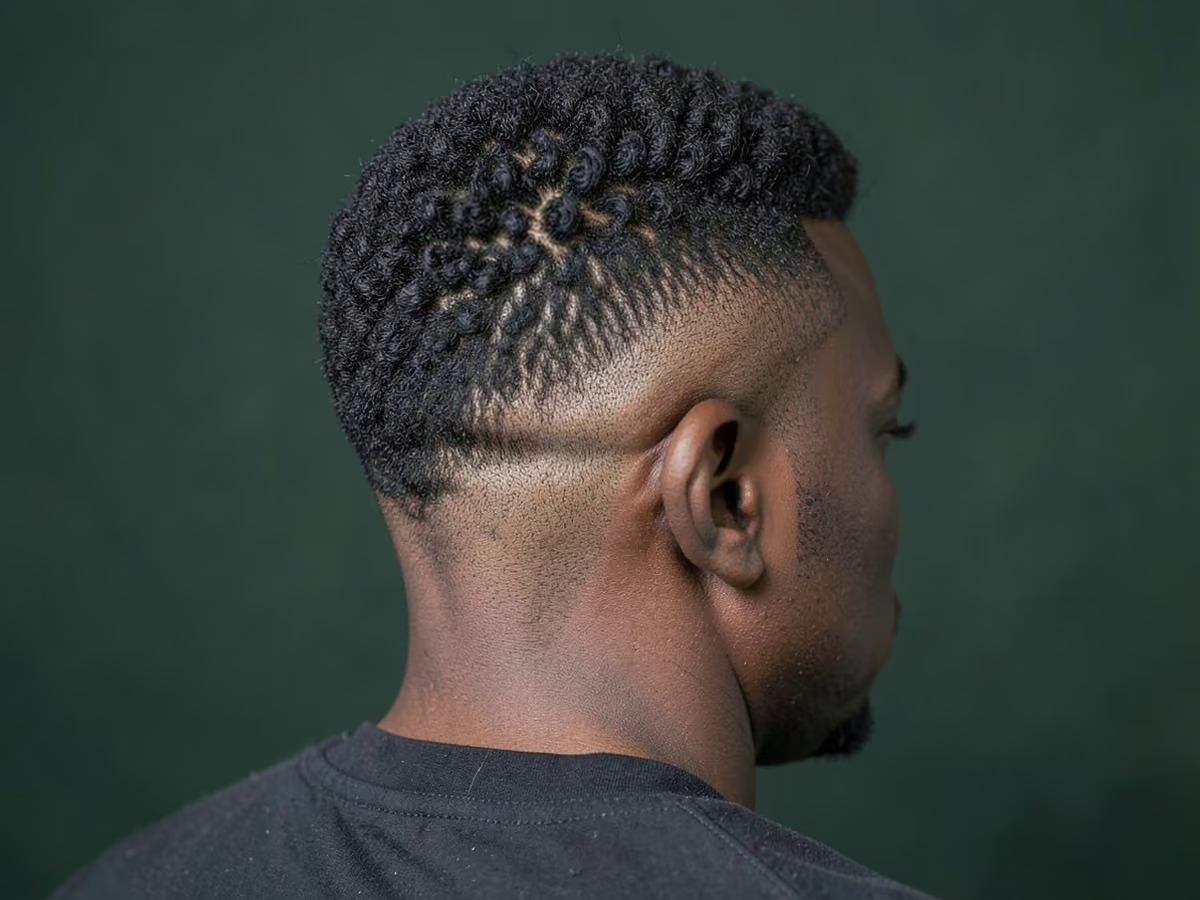
On coily hair, a soft curl perm loosens the natural pattern into larger, glossier curls; it is the modern relative of the 1980s Jheri curl. It is a two-step service: a rearranger softens the coils, then the hair is set on rods and neutralized. Daily moisture and regular root touch-ups are part of the deal. A texturizer is a milder, relaxer-based option for looser waves.
How to Style at Home
Spray leave-in on the curls each morning to keep them soft.
Shape the curls with your fingers, avoiding dry brushing.
Cover the hair with a satin cap or durag at night.
Ask Your Barber
"Soft curl perm on my coily hair for looser curls, medium rods, about three inches on top. Low taper on the sides with a natural edge-up."
Trim:Every 4–6 weeks. The front must stay short enough to cover temples.
Best For:Receding or M-shaped hairlines + straight hair.
About This Style
Curls dropped forward over the temples soften the corners where an M-shaped hairline recedes. The perm only needs to cover the front and top, with two to three inches cut into a forward-falling crop. Flat hair pulled back exposes the temples, while a curly fringe hides them. Sides at a #2 balance the shape. See a doctor first if hair loss is recent or rapid.
How to Style at Home
Push the damp front forward and slightly toward the temples.
Scrunch a small amount of matte clay through the curls.
Leave the front piecey rather than combing it flat.
Ask Your Barber
"Perm on the front and top with medium rods, cut into a forward crop. Three inches on top falling over the temples, sides at a #2."
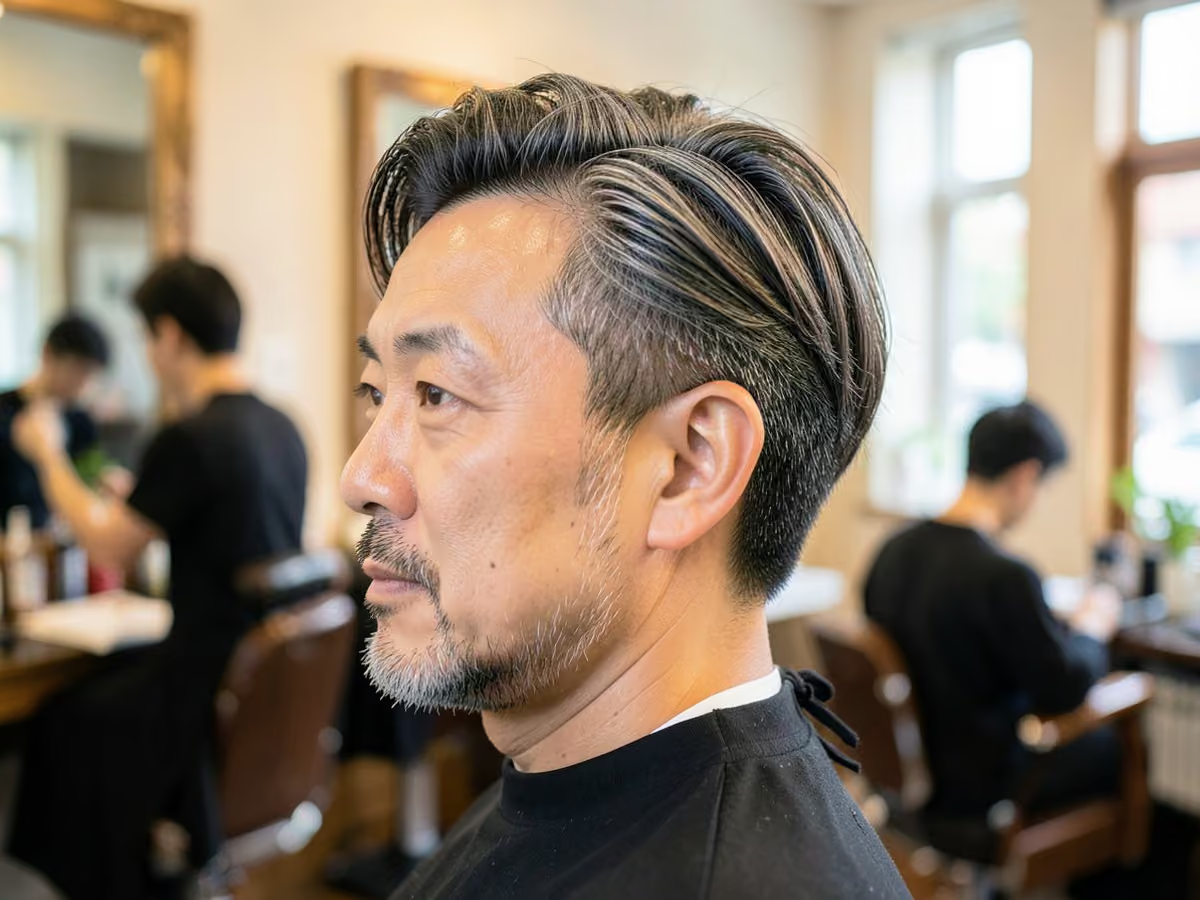
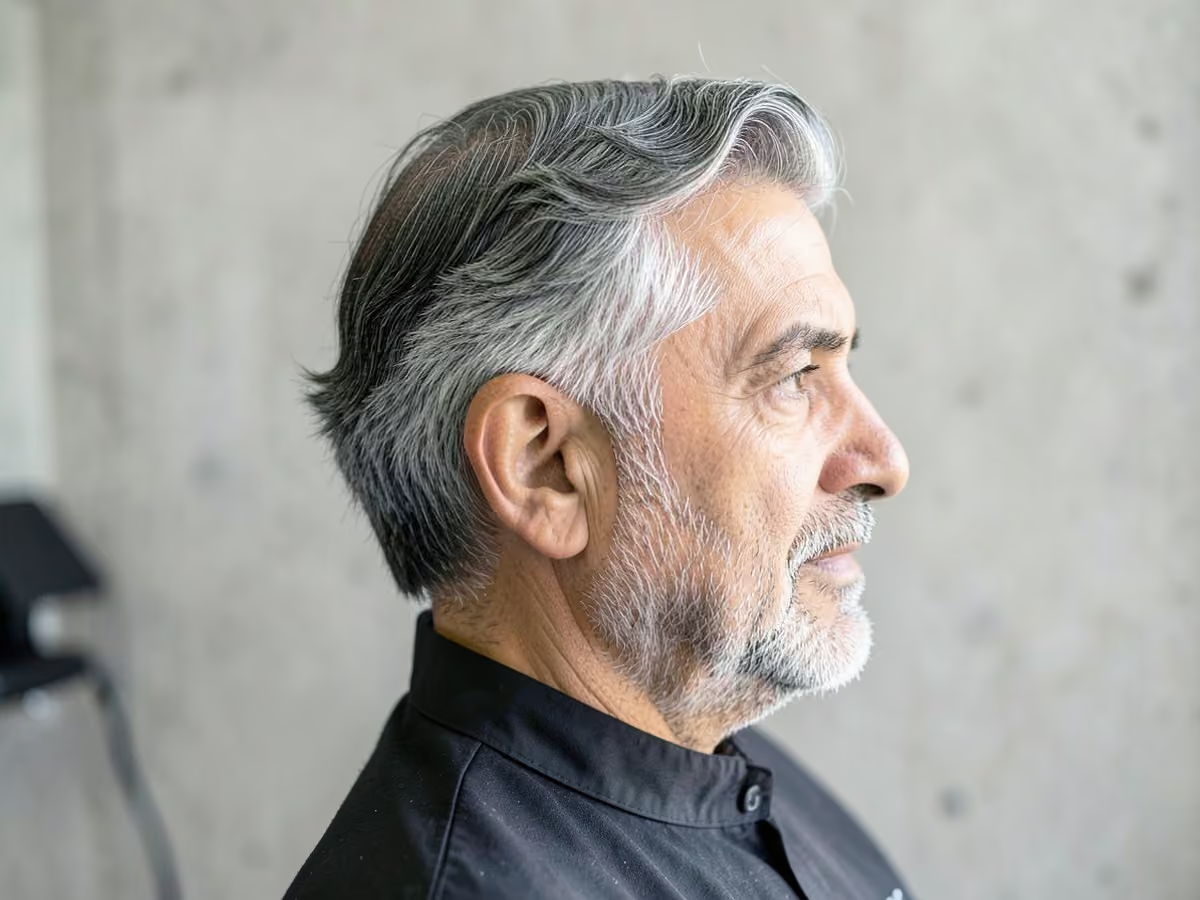
Trim:Every 6–8 weeks. Keeps the soft wave tidy around the ears.
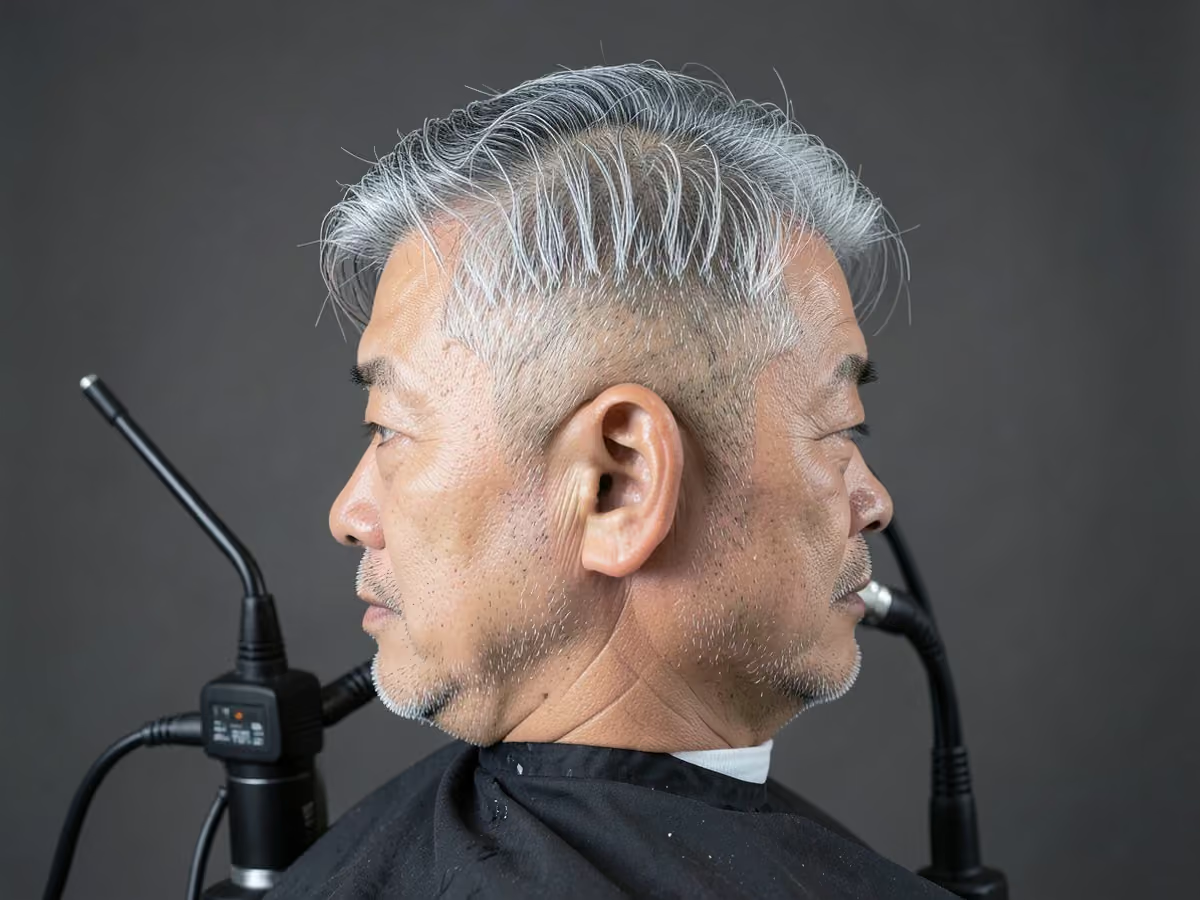
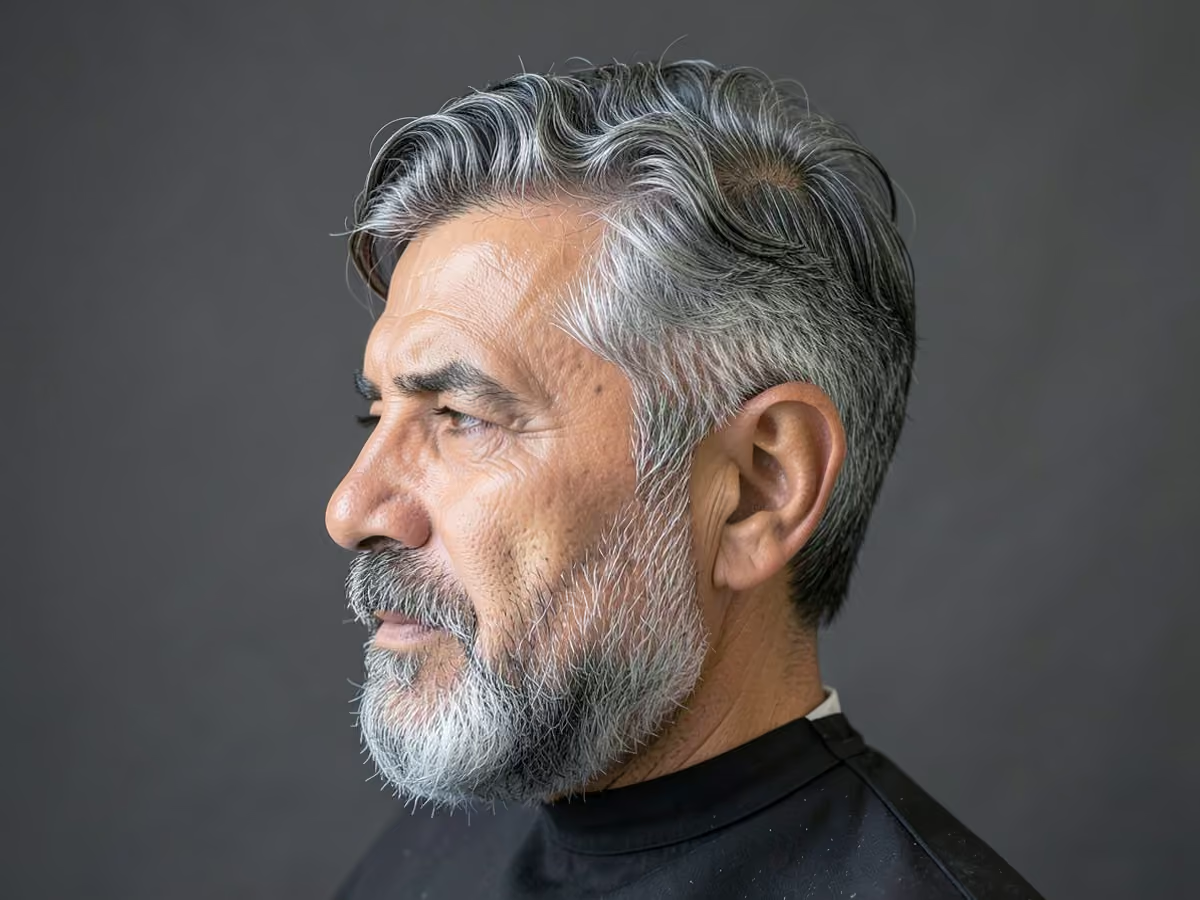
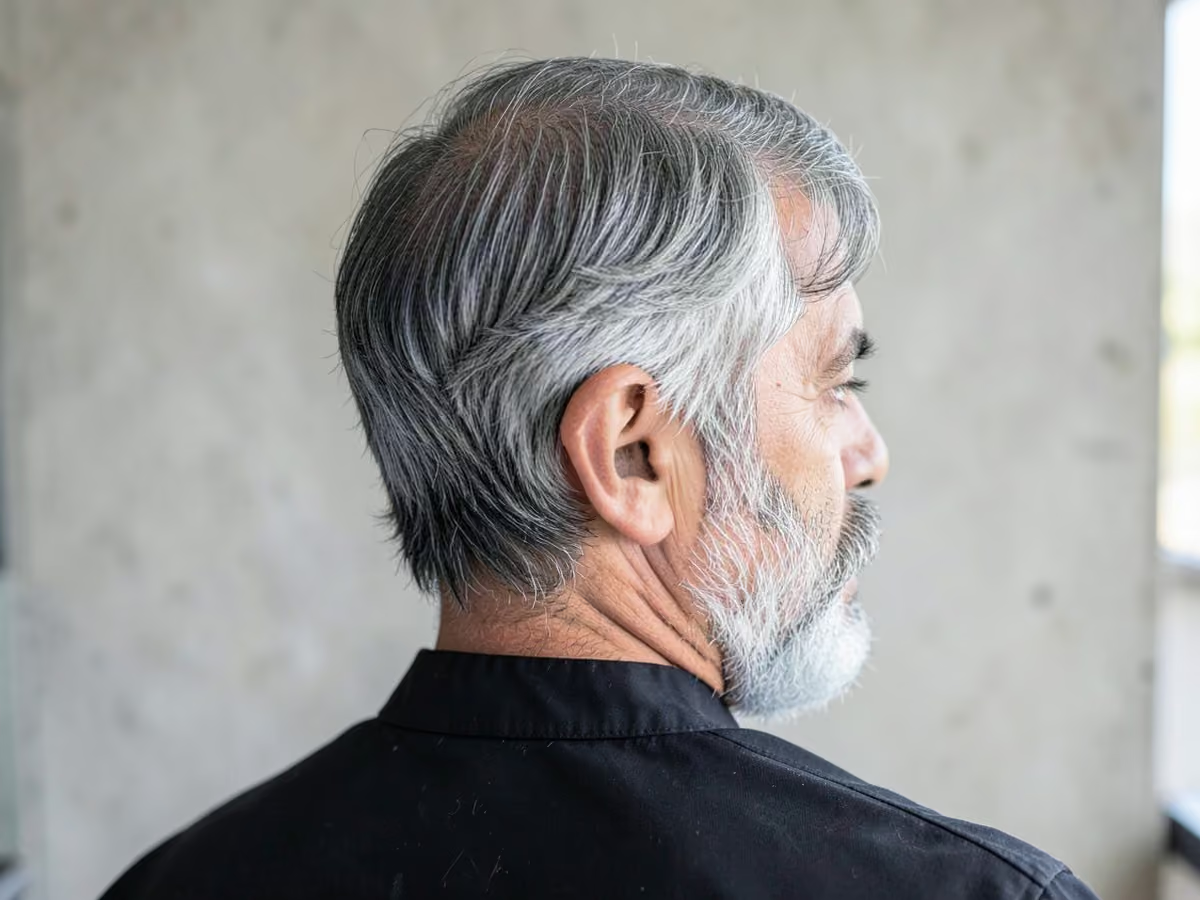
Best For:Oval, square faces + gray or thinning straight hair.
About This Style
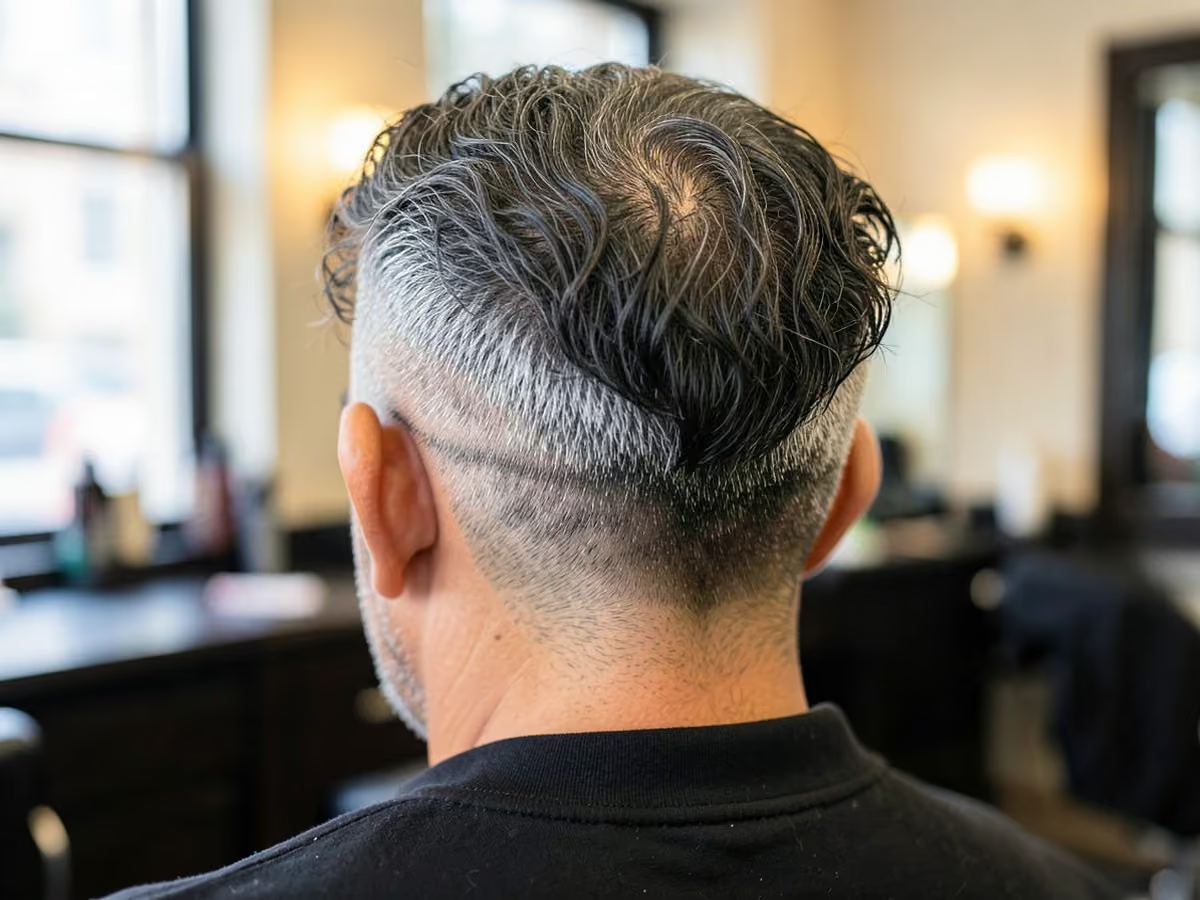
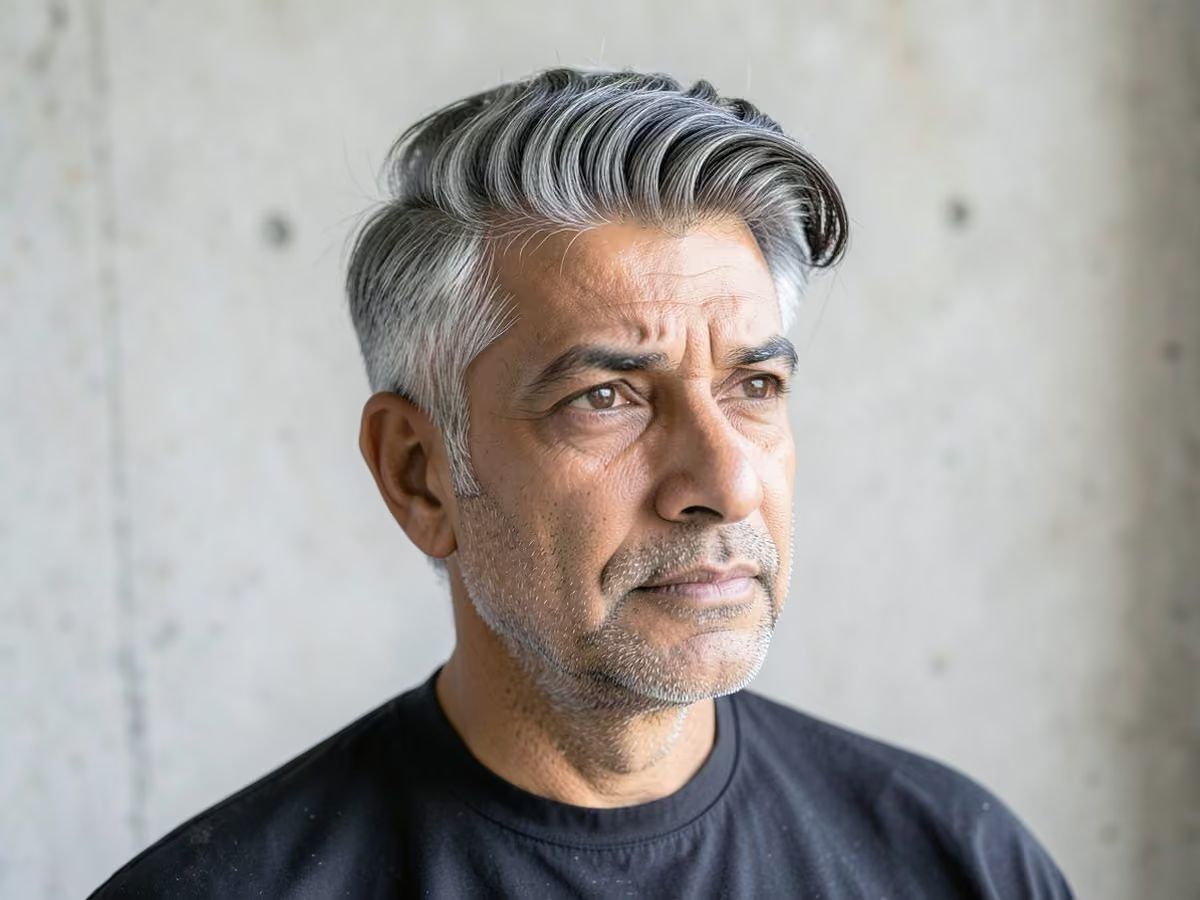
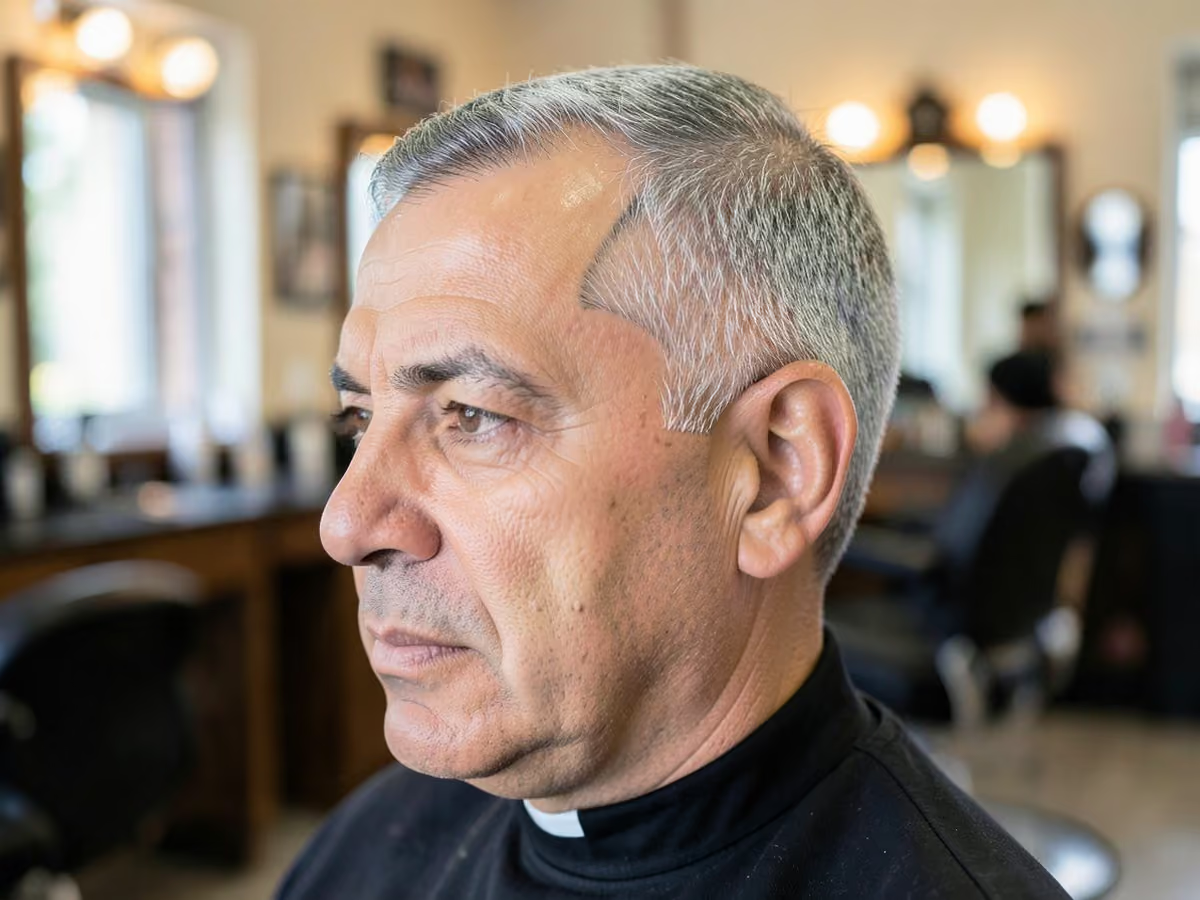
A loose body wave on gray or thinning hair adds volume without obvious curls, which suits a classic side part or brushed-back cut. Gray hair can be coarser or more resistant to processing, so the stylist may test a strand before choosing the lotion. Keep three to four inches on top and scissor-cut sides. The added movement also shortens morning styling.
How to Style at Home
Blow-dry the hair back and to the side with a brush.
Apply a small amount of styling cream for a soft hold.
Comb the side part loosely, leaving the wave visible.
Ask Your Barber
"Soft body wave on the top for volume, large rods. Three to four inches on top, side part, scissor-cut sides over the ears."
Trim:Every 6–8 weeks. Only the treated area needs refreshing.
Best For:Any face shape + straight hair with cowlicks.
About This Style
Just one problem area gets rods, such as a flat crown, a front cowlick or sides that stick out. It is a targeted fix rather than a style, often offered in Korean salons alongside the down perm that presses sides flat. The rest of the hair stays untreated, so processing is short and the result blends into the natural texture.
How to Style at Home
Dry the treated area first so it sets in its new direction.
Style the rest of the hair as usual with light product.
Check the crown in a mirror and smooth any lifted pieces.
Ask Your Barber
"Spot perm on the flat crown only, small section with medium rods. Rest of the hair untouched and the usual cut kept the same."
Recommended Products
Light Pomade
Long Permed Hair and Perms with Beards
Long hair shows a perm pattern most clearly and lets the curl hang. A beard frames permed hair and balances volume on top, so think about beard length and density when choosing rod size.
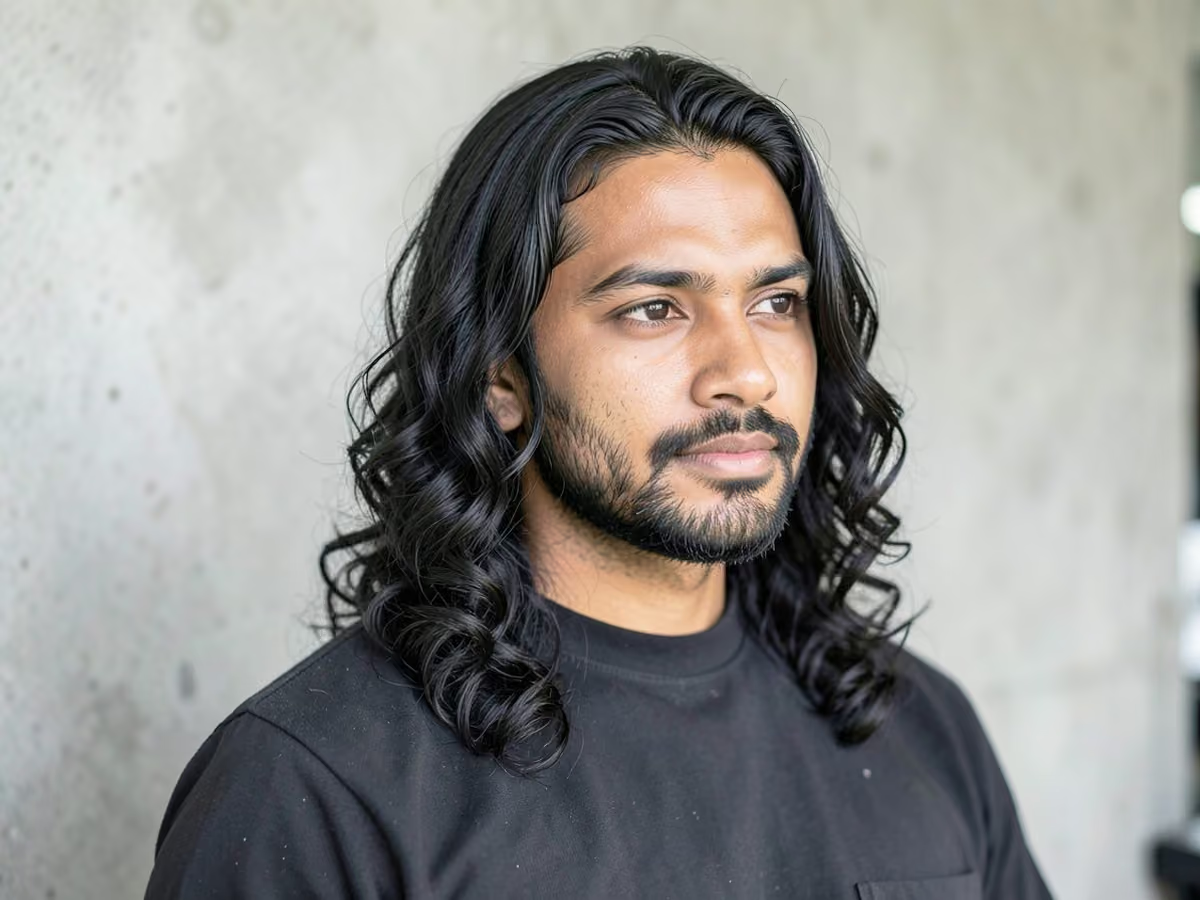
Trim:Every 8–10 weeks. Long permed ends split and need dusting.
Best For:Long, oval faces + straight hair, shoulder length.
About This Style
Shoulder-length hair takes a loose wave or spiral down its full length, which needs more lotion, more rods and a longer appointment. Weight pulls the curl looser at the roots, so most long perms look wavier near the scalp and curlier at the ends. Layers cut before the perm help curls form evenly. Tie the hair loosely, never tight, for the first couple of days.
How to Style at Home
Detangle in the shower with conditioner and a wide comb.
Apply leave-in from the mid-lengths to the ends.
Scrunch, then let the hair dry without twisting it in a towel.
Ask Your Barber
"Long hair perm with medium rods, layered first so the curls sit evenly. Keep it at the shoulders, ends trimmed half an inch."
Trim:Every 8–10 weeks. A dusting keeps curly ends from tangling.
Best For:Oval, square faces + straight hair, six inches plus.
About This Style
Curly hair gathered at the crown gives a looser, textured knot with curled strands left free around the face. Loose waves or medium curls keep the bun from looking like a tight ball. The hair must reach the crown when pulled back, so at least six inches. Avoid tight elastics while the perm is fresh, and move the bun position daily to spread the tension.
How to Style at Home
Scrunch curl cream through the hair and let it dry first.
Gather it loosely at the crown with a fabric hair tie.
Pull a few curls loose at the temples and nape.
Ask Your Barber
"Medium perm through all the length so I can tie it up. Keep about seven inches, with light layers so the bun holds."
Trim:Every 4–6 weeks. Hair and beard need trimming to stay in proportion.
Best For:Round, oval faces + straight hair and dense beards.
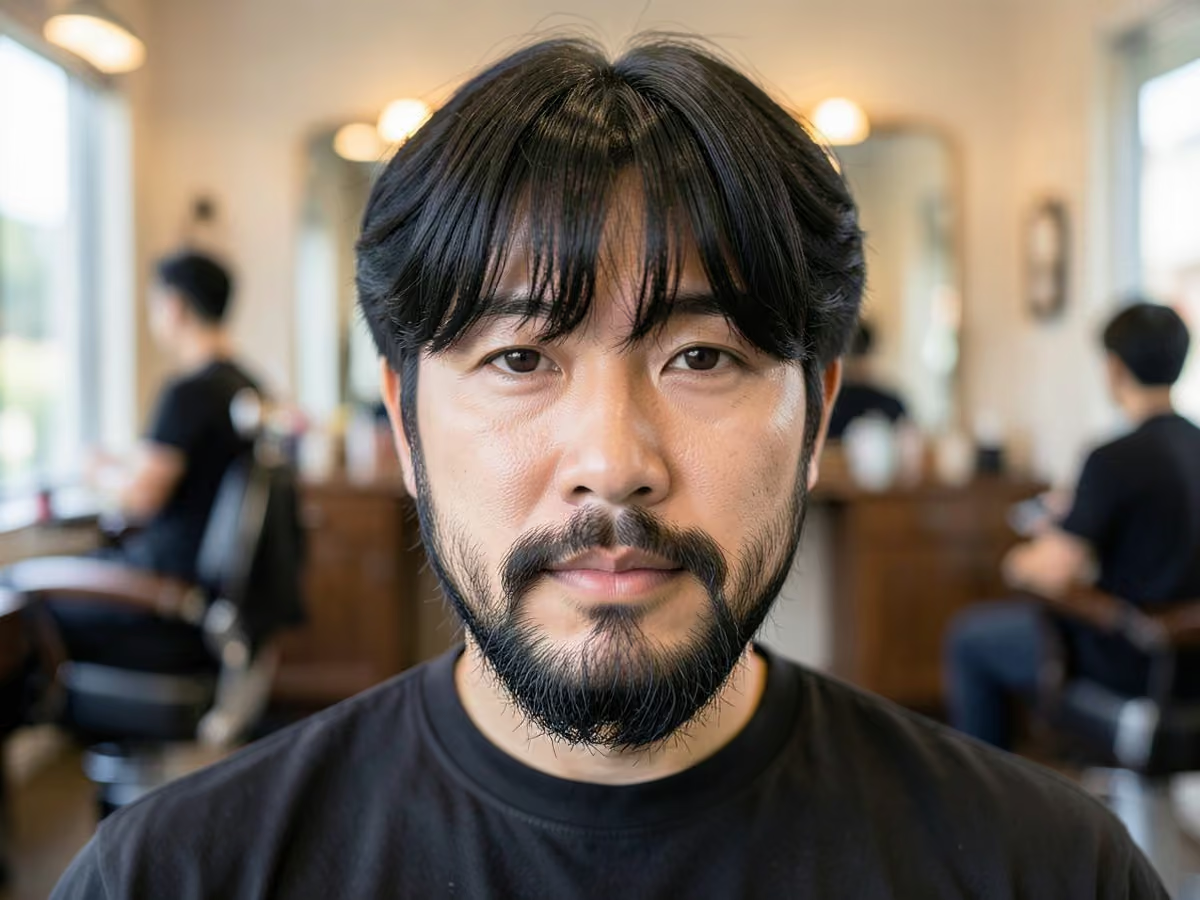
About This Style
A full beard adds weight at the jaw that balances a curly, voluminous top. The perm stays on the head; beard hair should not go through the same process, and the lotion needs to be kept off facial skin. A taper at the sideburns connects hair and beard. Keep the beard rounded at the jaw so its outline echoes the curl above.
How to Style at Home
Style the permed top with curl cream while it is damp.
Work beard oil through the beard from the roots out.
Shape the beard with a beard brush along the jaw.
Ask Your Barber
"Perm on the top with medium rods, four inches long. Taper the sideburns into a full beard, beard trimmed rounded at the jaw."
Trim:Every 4–6 weeks. Sides need a clean-up before the perm relaxes.
Best For:Square, oval faces + straight hair, light beard growth.
About This Style
Short stubble kept at a few millimeters contrasts with a soft perm without competing for attention. It suits Korean-style waves and loose curls where a full beard would feel heavy. Trim the stubble every few days on a short guard. The sideburns can taper into the stubble line so the cut and facial hair read as one shape.
How to Style at Home
Scrunch sea salt spray into the waved top and air dry.
Trim the stubble with a beard trimmer on a short guard.
Clean up the neckline below the jaw with the trimmer.
Ask Your Barber
"Loose perm on the top, medium rods, four inches. Taper the sideburns down into short stubble, low taper on the sides."
Recommended Products
Sea Salt Spray
Beard Oil
How Do You Ask a Stylist for a Perm?
Book the perm with someone who does them regularly; many barbers cut the shape but send chemical work to a salon. Bring photos of the result you want when the hair is dry, then agree on three things: rod size, which areas get rods, and the haircut underneath. Saying wavy perm on the top only, medium rods, sides left out for a taper is far clearer than simply asking for a perm.
Plan the cut before the perm. Some stylists cut the shape first and refine it afterward, while others perm longer hair and cut into the curl later. Clipped or faded sides are usually done after the perm, and some barbers prefer to wait a few days if the scalp feels tender. Mention any medication, recent color or scalp condition, and ask for the patch test result before the full service is booked.
Clipper Guards Used in Perm for Men Styles
A clipper guard is the plastic comb that clips onto the blade and sets how much hair is left: a #1 leaves 3 mm (1/8 inch), each step up adds about 3 mm. The right column lists the cards on this page that call for each guard. See the full clipper guard numbers guide for the complete chart.
Most perm instructions say to keep the hair dry and unwashed for about 48 hours so the new shape can settle, and to avoid tight hats or hair ties during that time; follow what your stylist and the product label say. After that, wash with a sulfate-free shampoo two or three times a week and condition at every wash, because permed hair loses moisture faster than untreated hair.
To style, scrunch curl cream or leave-in through damp hair, then let it air dry or use a diffuser on low heat. Avoid brushing dry curls, which turns them into frizz; use fingers or a wide comb while the hair is wet. Sea salt spray gives a body wave more grip. A satin pillowcase and a light mist of water in the morning keep the pattern from flattening overnight.
How Long Does a Men's Perm Last, and What Goes Wrong?
Expect roughly two to six months before the perm looks grown out, with short faded cuts at the shorter end because the permed hair is cut away sooner. The curl does not wash out of treated hair, but it loosens, and the roots grow in with your natural texture. Many men return for a trim at six to eight weeks and redo the perm on the top every three to four months.
Common problems are frizz from over-processing, curls tighter than planned from rods that were too small, and a flat crown when the rods stop short of the roots. A result that is too loose can sometimes be redone after a few weeks, but a second perm on damaged hair raises the risk of breakage, so ask the stylist to check the hair first. For lasting dryness, the dry and damaged hair guide lists cuts that remove the worst ends.
Which Perm for Men Is Right for You?
Pick your hair type and how much upkeep you will put in. The matches below come from the Best For and Maintenance notes on each card. Upkeep follows the Maintenance badge: low means a cut every 3 to 6 weeks and almost no daily styling, high means weekly line-ups or daily product.
A men's perm usually looks good for two to six months. The treated hair keeps its shape until it is cut, but the pattern loosens and straight roots grow in. Short cuts with faded sides lose the perm sooner because more hair is trimmed away, while longer cuts carry it further. Most men redo the top every three to four months.
Q2: Does a perm damage your hair?+
A perm changes the internal structure of the hair, so some dryness and weakening are normal, especially on fine or colored hair. Damage is more likely with over-processing, perming over bleach or repeating the service too soon. A skilled stylist, a strand test, conditioner after every wash and regular trims keep the hair in better condition.
Q3: What is the difference between a Korean perm and a regular perm?+
A Korean perm is usually a soft wave or C-curl on the fringe and top, often done as a digital perm with heated rods, and paired with a two-block or curtain cut. A regular cold perm uses room-temperature lotion and rods of any size. The chemistry is similar; the rod placement, heat and target shape differ.
Q4: Can you perm short hair?+
Yes, as long as there are about two to three inches to wrap. Short hair suits small or medium rods for a textured crop or curly top, while hair under two inches is hard to wrap and may need a pin curl technique instead. The sides are usually left out of the perm and clipped afterward.
Q5: Do you need a patch test before a perm?+
It is a sensible precaution. Perm lotions and neutralizers contain chemicals that can irritate the skin or cause allergic reactions in some people. Many salons apply a small amount behind the ear or inside the elbow about 48 hours before the service. Follow the product instructions and tell the stylist about any past reactions to hair dye or other hair products.
Q6: Can you get a perm on Black or coily hair?+
Yes, though the goal is different. On coily hair the service is usually a curl rearranger or soft curl perm, which loosens the natural pattern into larger curls, or a texturizer for a looser wave. Both are chemical treatments that need a stylist experienced with textured hair, daily moisture and careful spacing from relaxers or color.