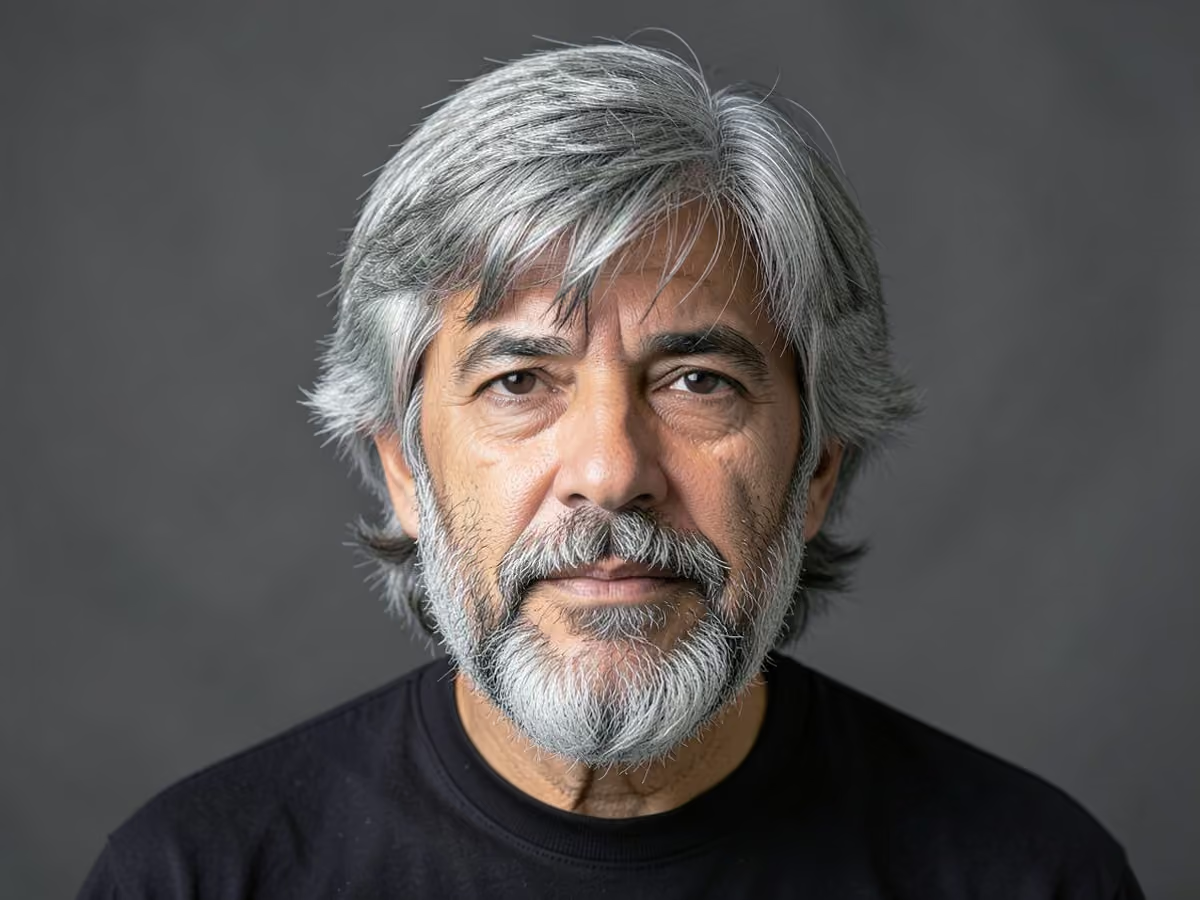
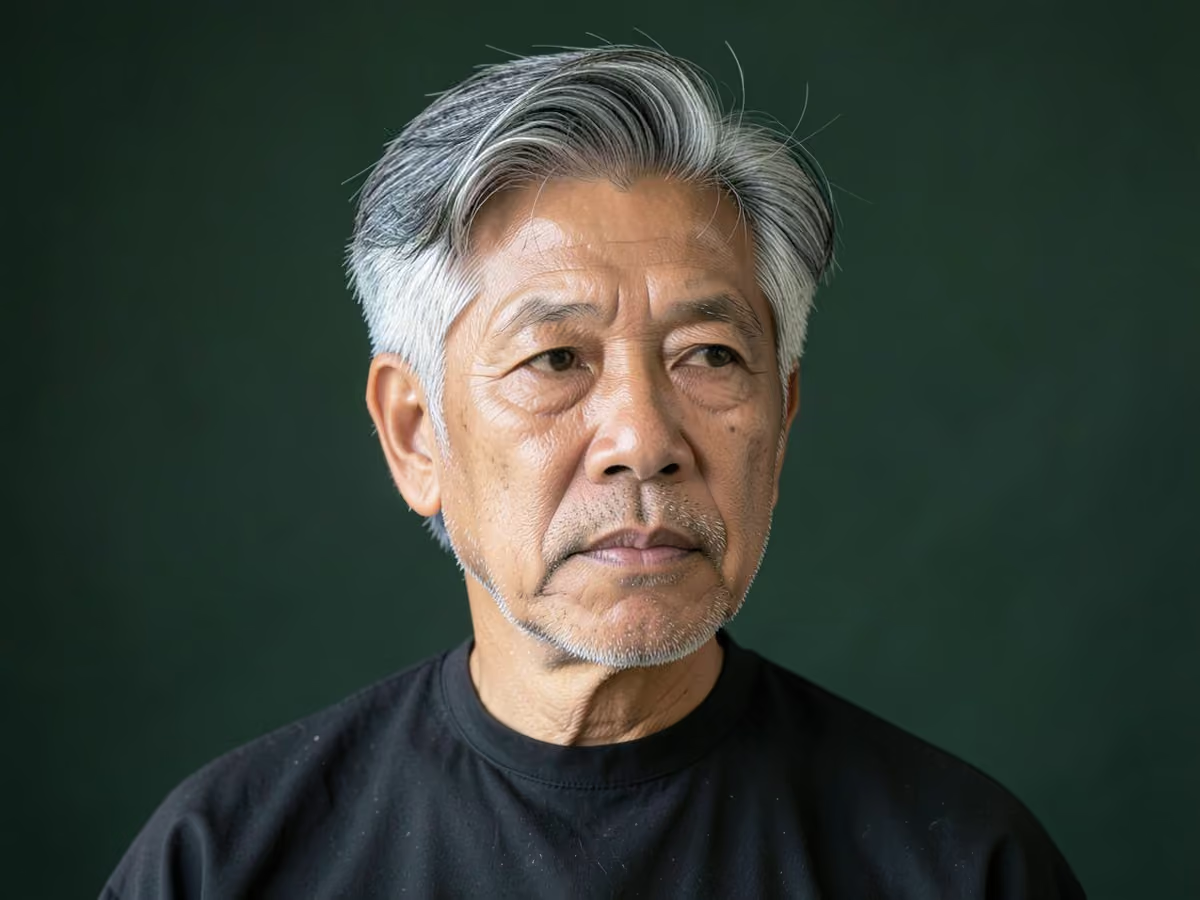
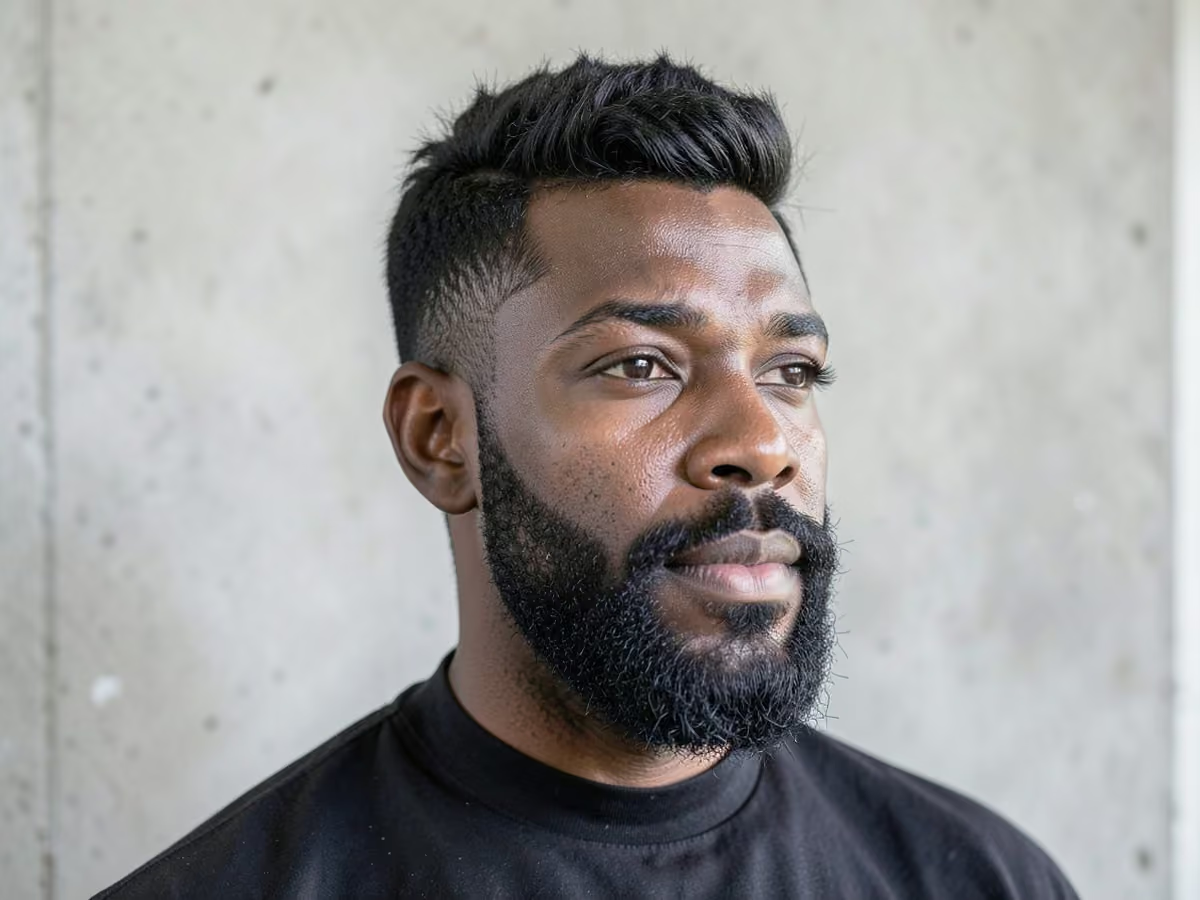
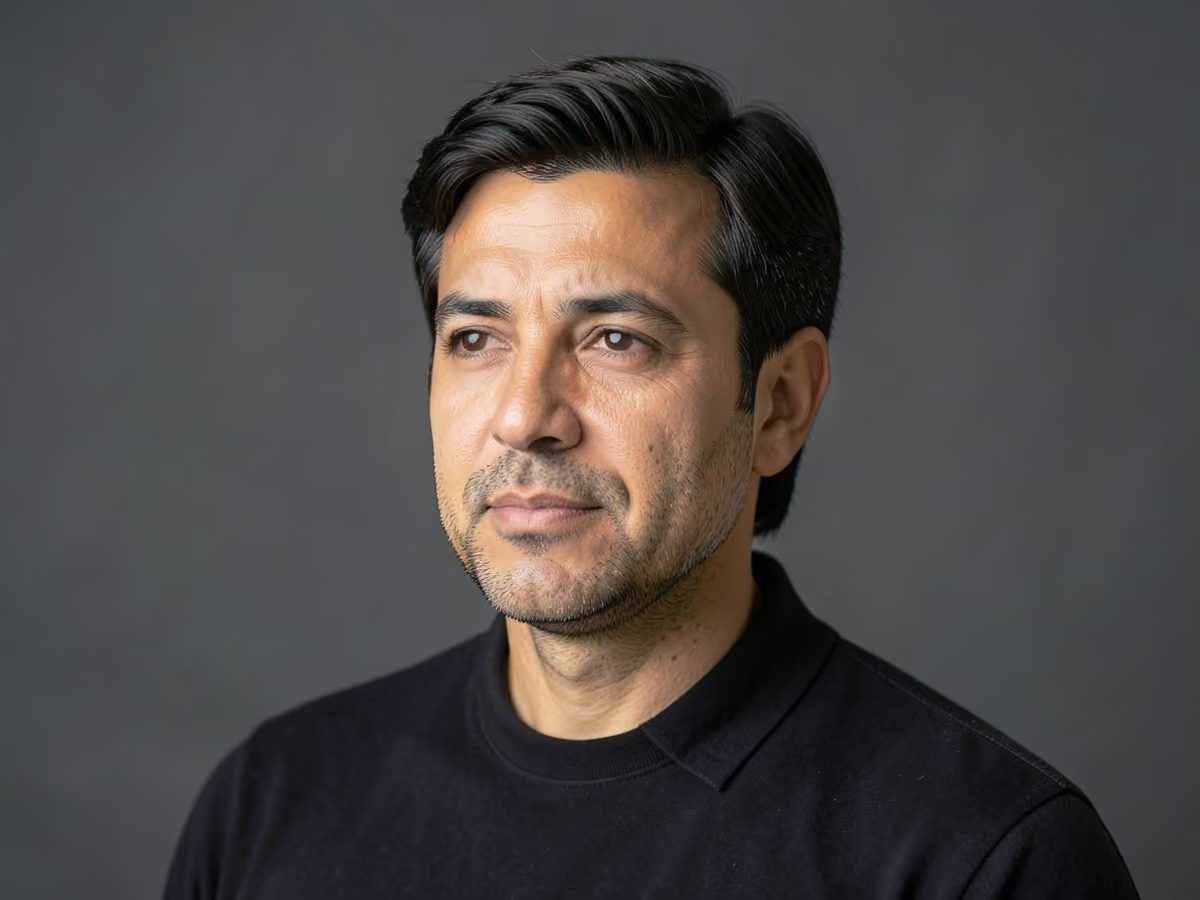
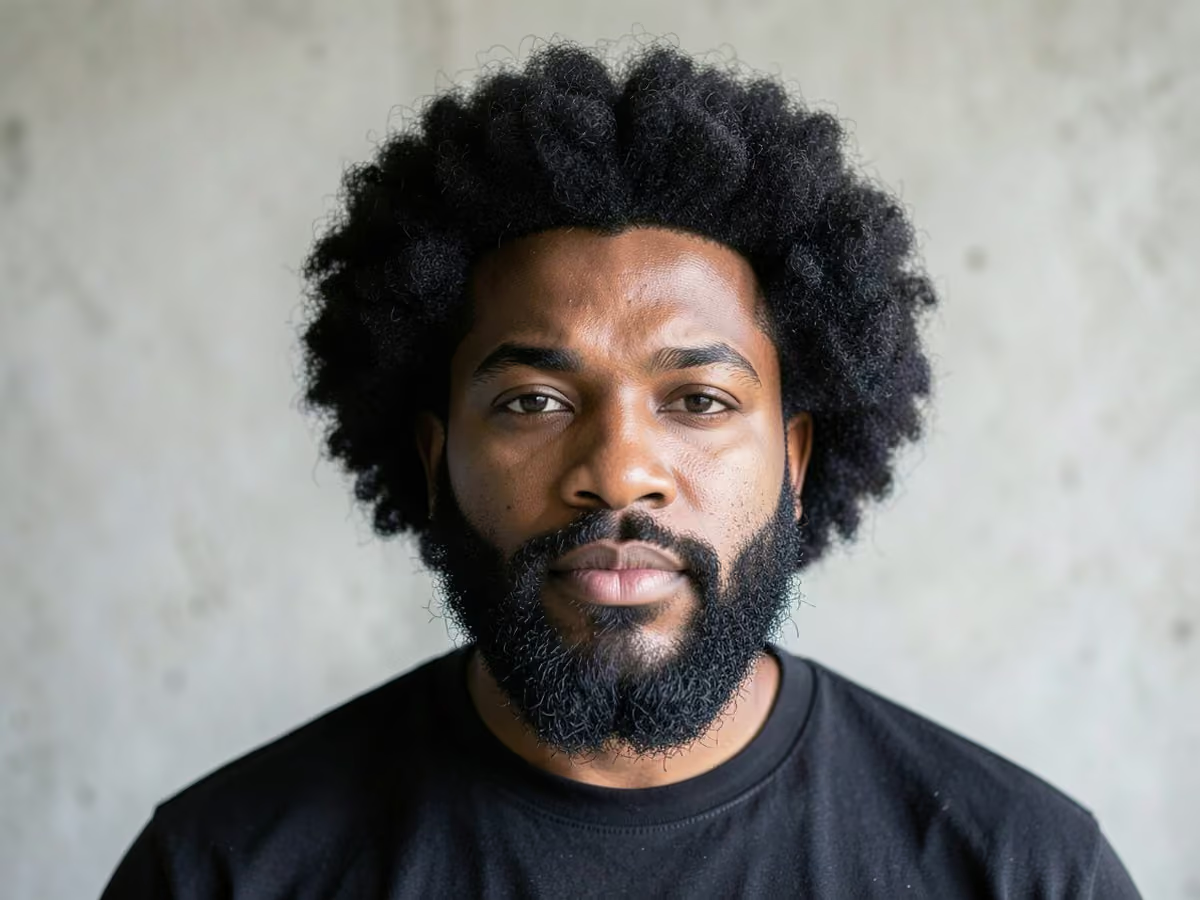
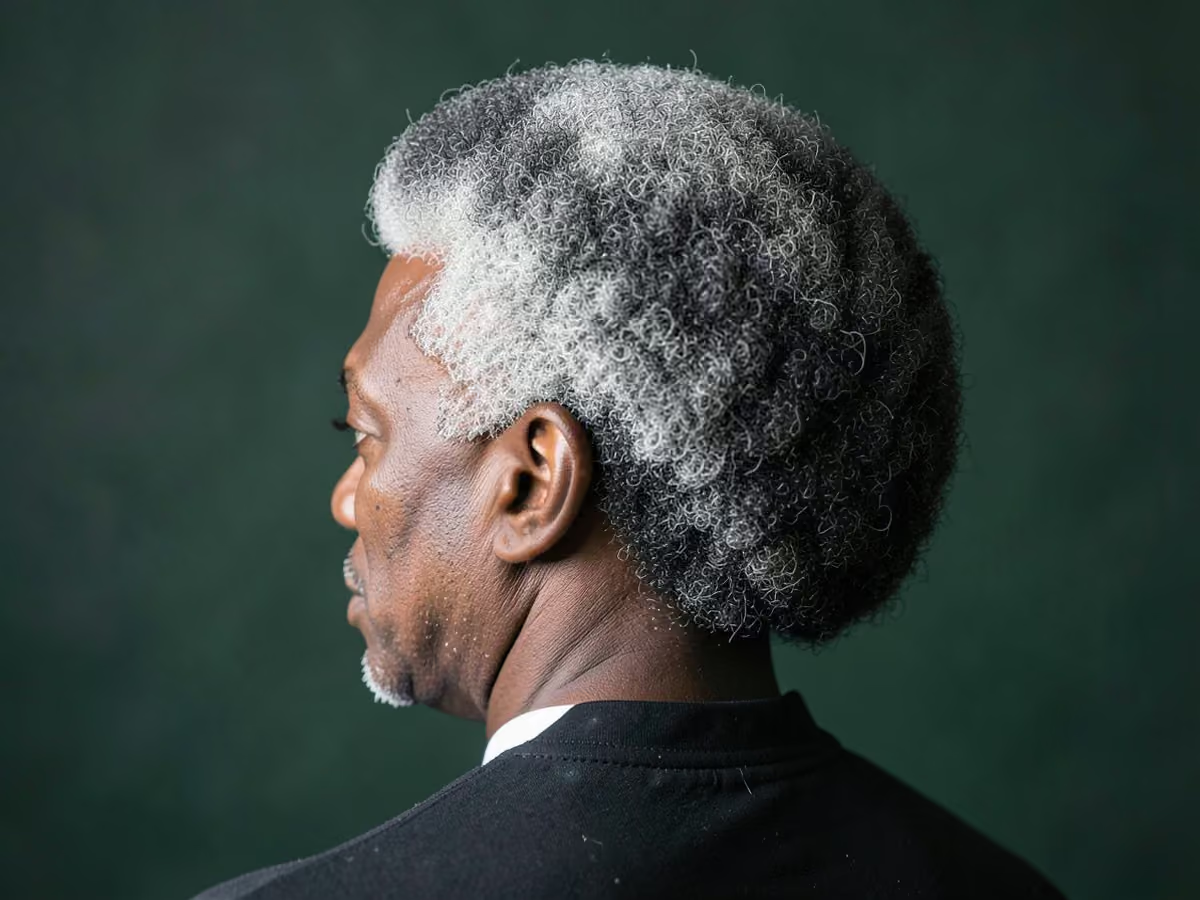
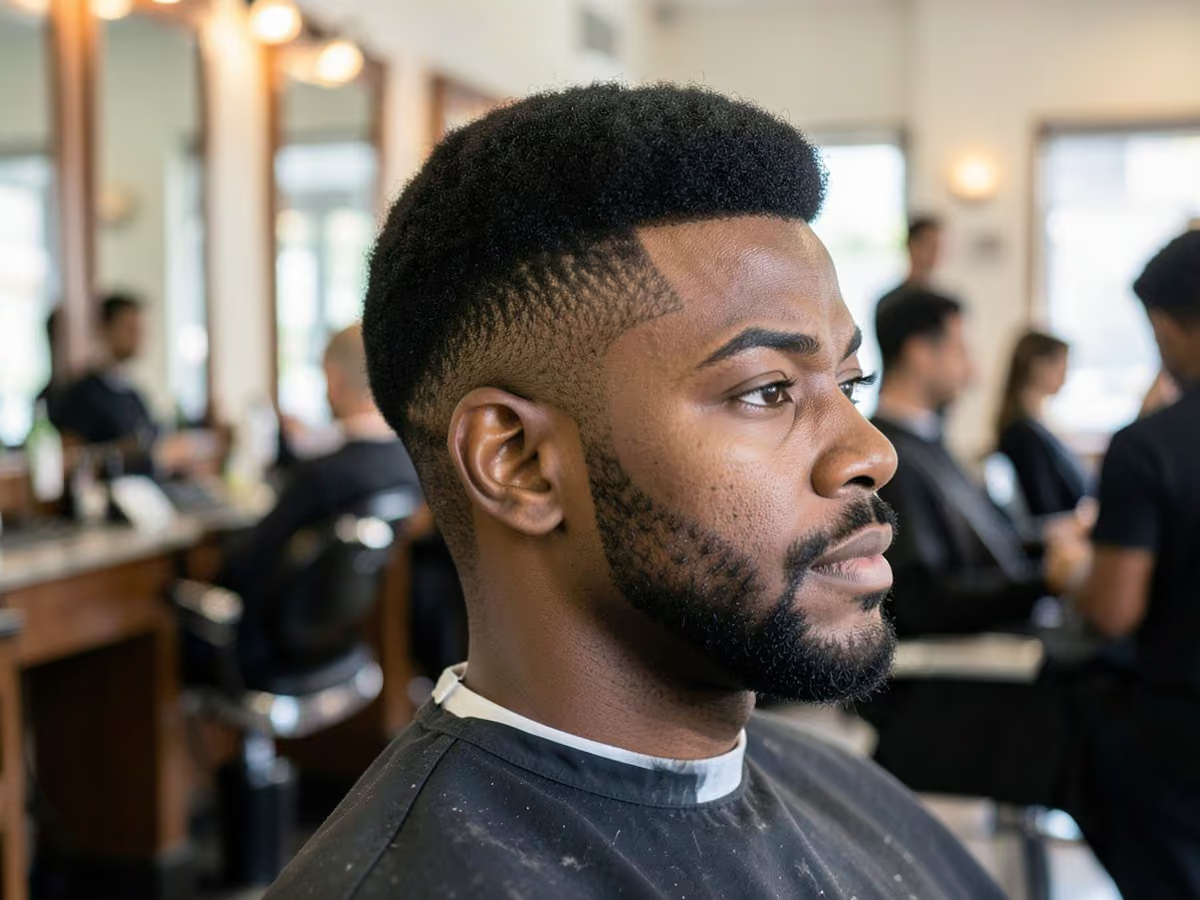
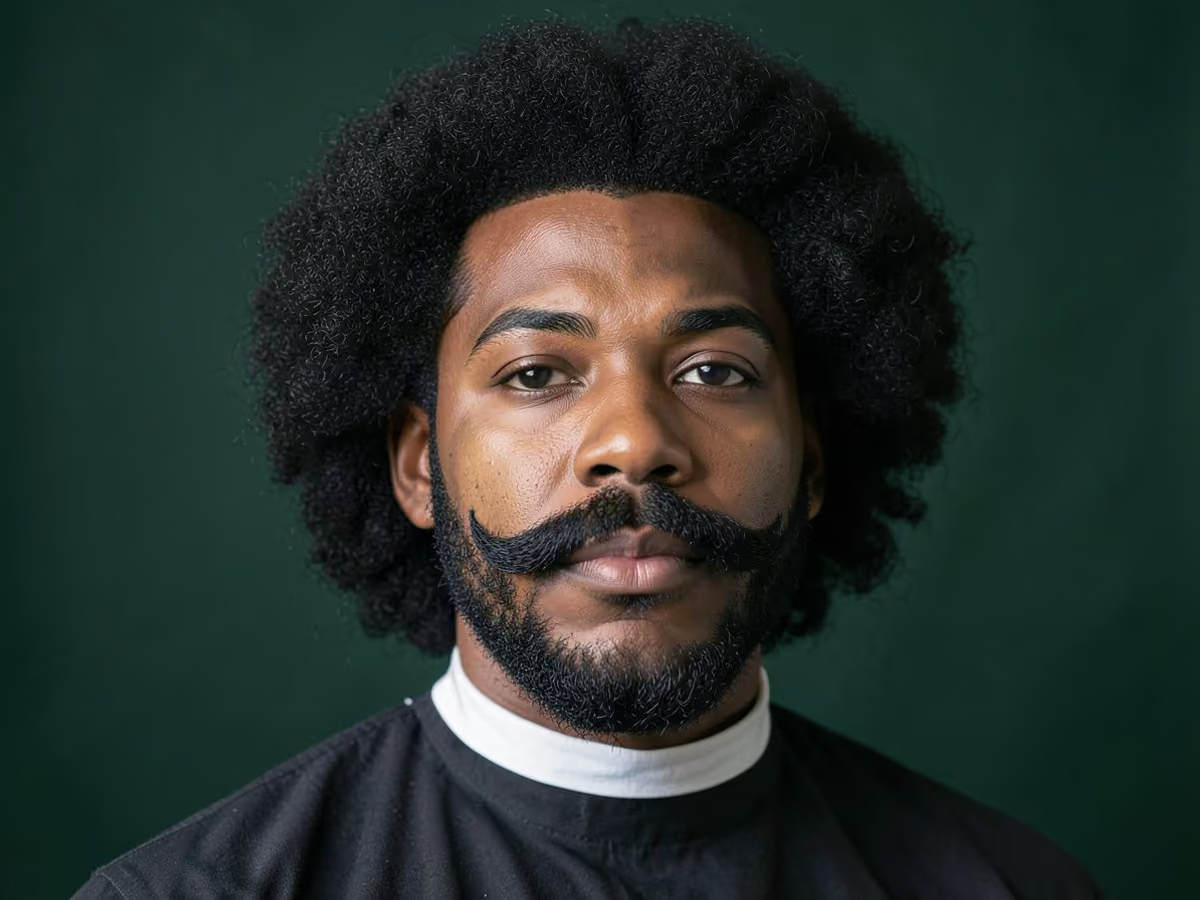
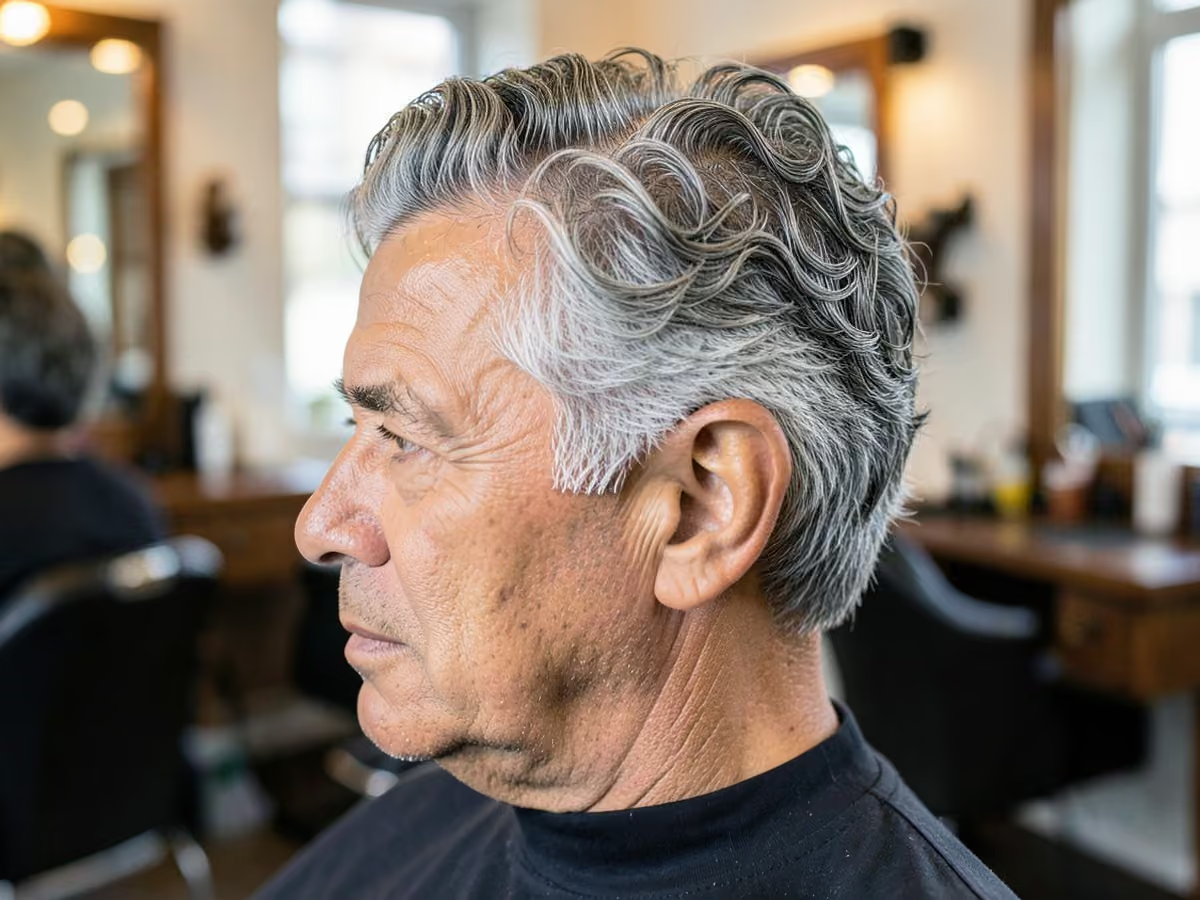
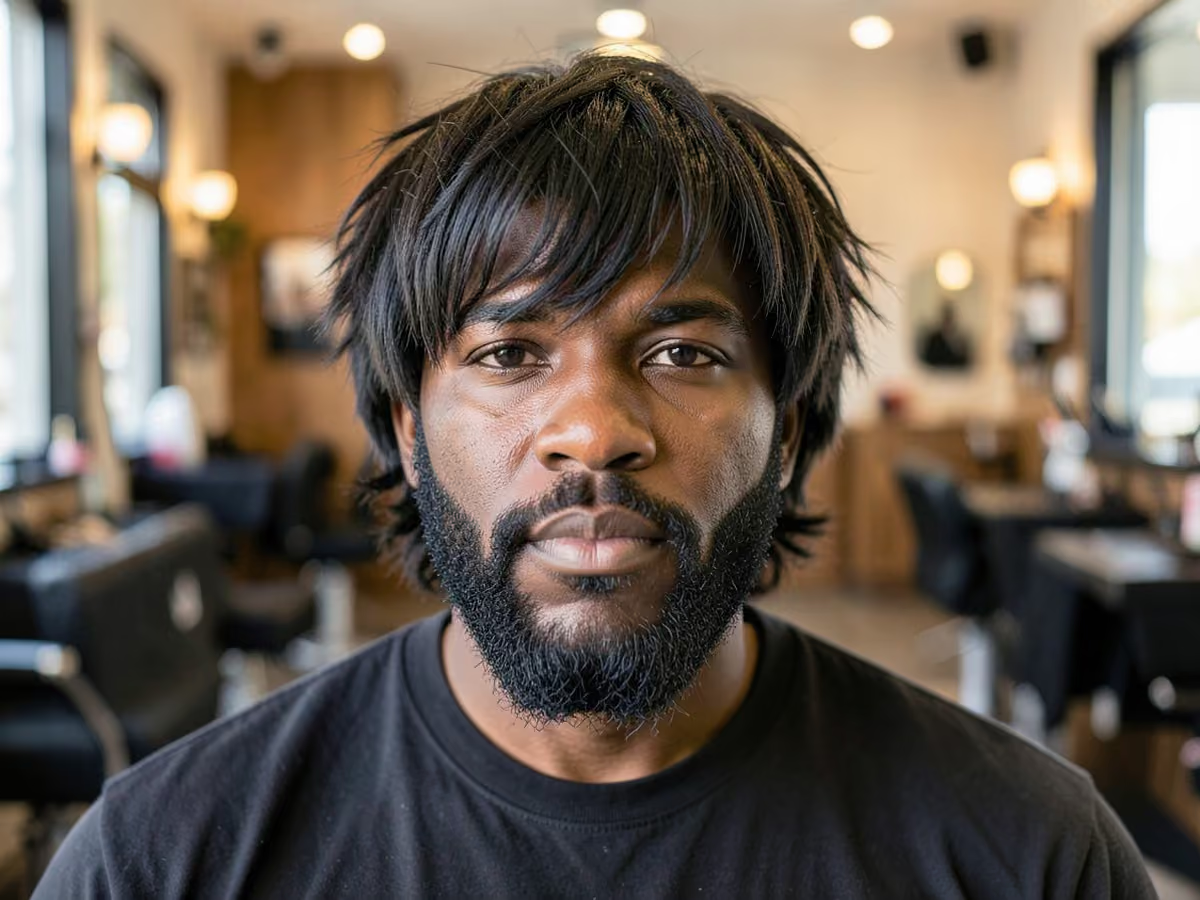
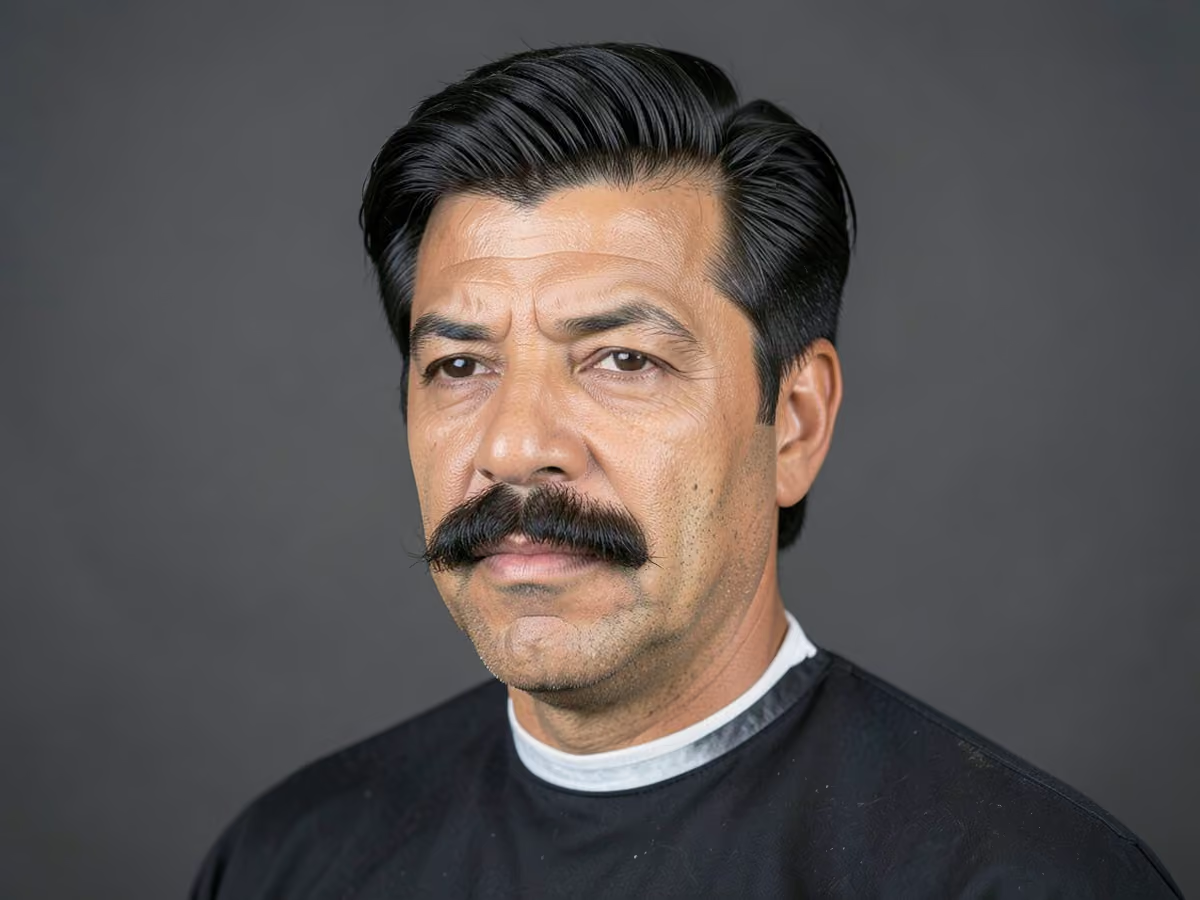
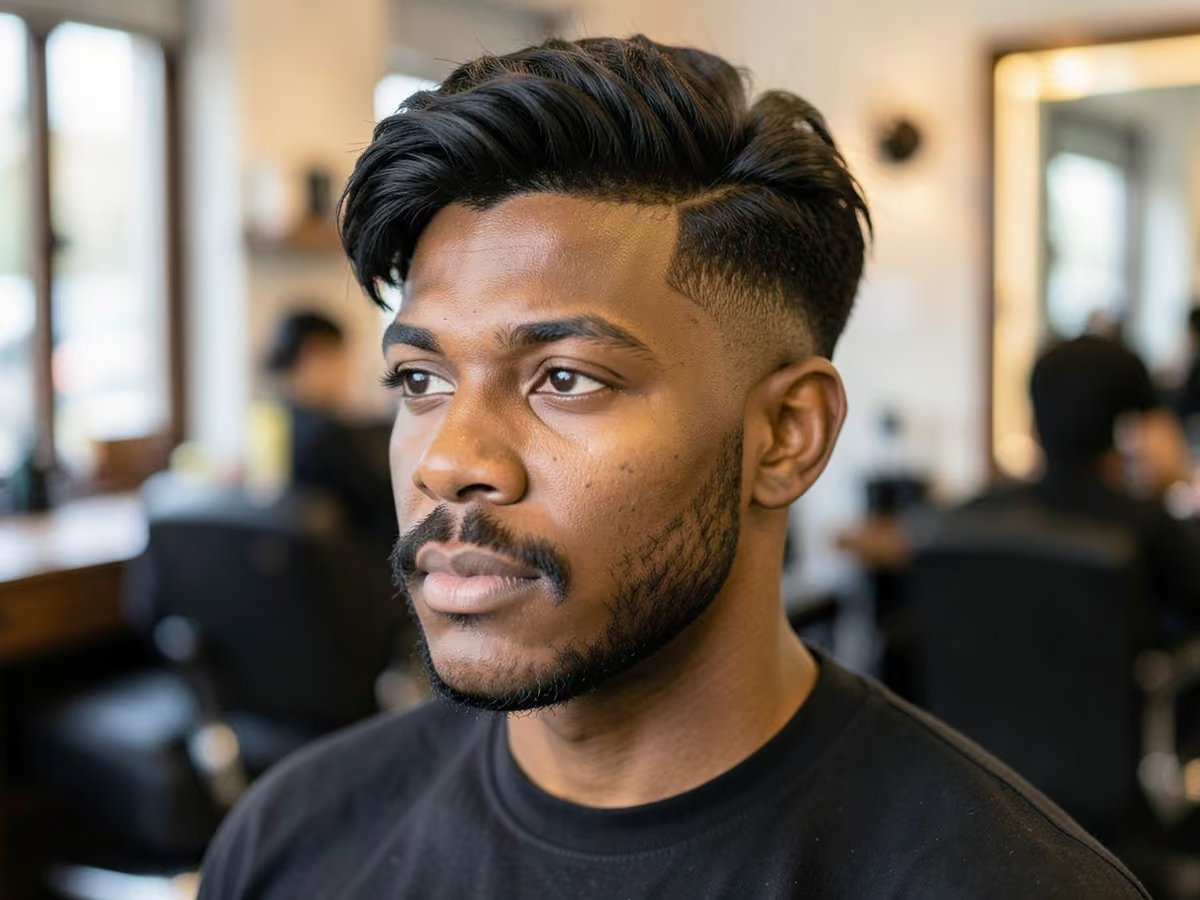
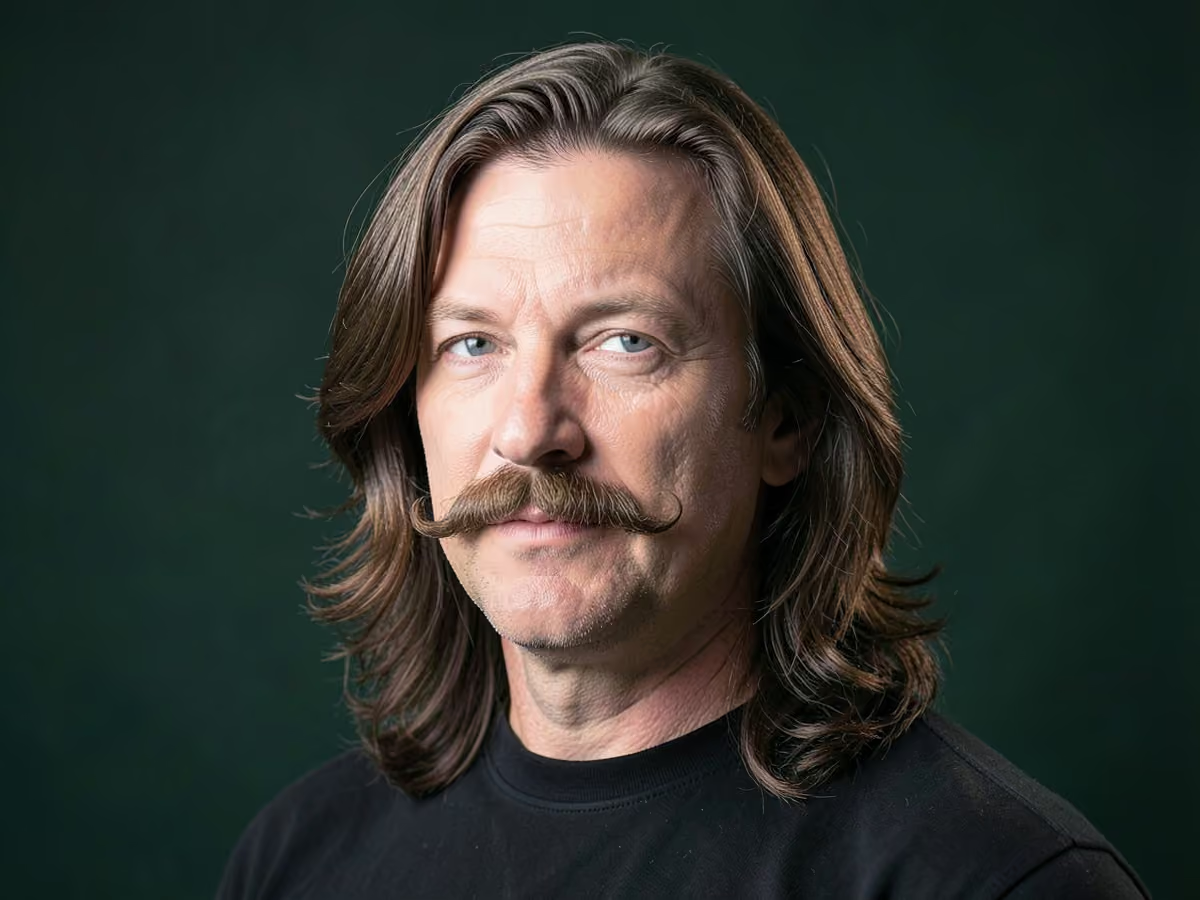
Quick answer: 70s hairstyles for men center on length and layers: shags, feathered hair blow-dried back from the face, center-parted long hair, large rounded afros and early perms, usually worn with long sideburns or a mustache. To wear one today, ask for collar-length layers and keep the ends cut regularly so the shape stays deliberate.
70s Hairstyles for Men Styles at a Glance
Every style on this page with its clipper guard, top length and trim interval. Tap a name to jump to that card.
70s hairstyles for men grew out of the longer hair of the late 1960s and became, for many men, the first decade of covering the ears and collar as an everyday choice. Shags, feathered sides, big afros and blow-dried volume all became common. The 20 cuts below show each look with lengths, products and modern adjustments, plus what to say to your barber.
What Defined Men's Hair in the 1970s?
Length is the main thread. After the short, tidy cuts of the 1950s and early 1960s, many men let their hair reach the collar or shoulders by the early 1970s. Barbers adapted with layering, razor cutting and the blow-dryer, which became a common men's tool during the decade. The result was hair with movement: layered shags, sides feathered back from the face, and center parts that let the hair fall naturally.
Natural texture mattered too. The afro, worn large and rounded, became one of the most recognized men's styles of the era, and many straight-haired men tried perms later in the decade for curl and volume. Facial hair was part of the look, especially long sideburns and full mustaches. If you want the modern version of the shag, our grown-out shag guide covers today's cut in detail.
How Are 70s Haircuts Different From Today's Versions?
The shapes are similar, but modern cuts are usually shorter at the sides and lighter in weight. A 1970s shag often covered the ears completely, while a current tapered shag keeps the layers on top and tapers the sides and nape. Products have changed as well: hairspray and blow-drying carried most of the old styles, while today men use sea salt spray, texture products and curl creams for a softer hold.
The table compares the main looks with their modern equivalents, which helps if you want a nod to the decade rather than a full costume. Most men find that keeping the layering and dropping some bulk at the sides gives the 70s feel without looking like a period piece. Another simple route is to keep a modern cut and borrow one detail, such as a feathered front, a center part or longer sideburns, and leave the rest current.
How Are 70s Haircuts Different From Today's Versions?
Oval and long faces carry most of these cuts easily, because volume at the sides adds width where a long face needs it. Round faces do better with layers that are longer than the chin and a center or side part, which draw the eye down rather than out. Square faces suit feathered and shag cuts, since soft layers break up a strong jawline. Thick, wavy hair is the easiest texture to work with, as it builds natural volume.
Fine hair can wear the shorter versions, such as a collar-length layered cut or a blow-dried side part, with a thickening spray for lift. Curly and coily hair suits the afros and curly shags, which rely on natural shape rather than heat. If your workplace prefers short hair, a single nod such as longer sideburns or a feathered front keeps the reference without the full length.
Filter the styles
Showing all 20 styles
Fade
Hair
Length
70s Shags and Feathered Haircuts
Layering defined the decade. These four cuts all use layers to create movement, from a full shag to sides blow-dried back like wings. For today's take, see the grown-out shag gallery.
Trim:Every 6 weeks. Layers flatten once the ends grow heavy.
Best For:Oval, square faces + thick straight or wavy hair.
About This Style
Choppy layers cut all over the head give this shag its rough, rounded outline, with the shortest pieces at the crown and the longest reaching the collar. Both ears disappear under the layers. Razor cutting creates the uneven ends that make it look lived-in. Thick hair builds the classic volume without help, while fine hair needs a texture spray. It is the full period cut rather than a modern taper.
How to Style at Home
Spray sea salt spray through damp hair from roots to ends.
Rough-dry with your fingers, tipping your head forward for volume.
Twist a few front pieces with a little cream once dry.
Ask Your Barber
"Full shag with layers all over, shortest at the crown, longest at the collar, covering the ears. Razor cut for choppy ends, no clippers anywhere."
Trim:Every 5–6 weeks. Feathered ends need exact lengths to flip back.
Best For:Oval, round faces + straight or slightly wavy hair.
About This Style
Feathering means layers cut around the face so they can be blow-dried back in soft flicks, and this version adds a center part and a glossy, full finish. The hair covers the ears and reaches the collar. Each side is brushed back with a round brush, so the face is framed by curved wings of hair. Straight hair holds the flip best. Expect ten minutes with a blow-dryer each morning.
How to Style at Home
Part the hair in the center while damp.
Blow-dry each side back and away from the face over a round brush.
Finish with a light mist of hairspray or a small amount of cream.
Ask Your Barber
"Feathered cut with a center part, face-framing layers that I can blow-dry back, hair covering the ears and touching the collar. Scissor or razor cut only."
Trim:Every 5 weeks. The wings droop once the side layers lengthen.
Best For:Long, oval faces + thick straight hair.
About This Style
Sides swept back so far they stand slightly away from the head, like folded wings, give this cut its name; the look is linked to the late 1970s. The top is shorter and parted to one side or the center. With thick straight hair, the wings stay up without spray. The swept sides add width at the temples, which balances a long face. Heat styling is essential every day.
How to Style at Home
Blow-dry the sides back with a round brush, rolling the brush outward.
Hold each wing with a cool blast to set the shape.
Comb the top lightly into a side part.
Ask Your Barber
"Feathered wings: layered sides long enough to sweep back over the ears, shorter top with a side part, back at the collar. I blow-dry it, so cut it to flip."
Trim:Every 6–8 weeks. Grows out evenly without a sharp outline.
Best For:Most face shapes + straight, wavy or fine hair.
About This Style
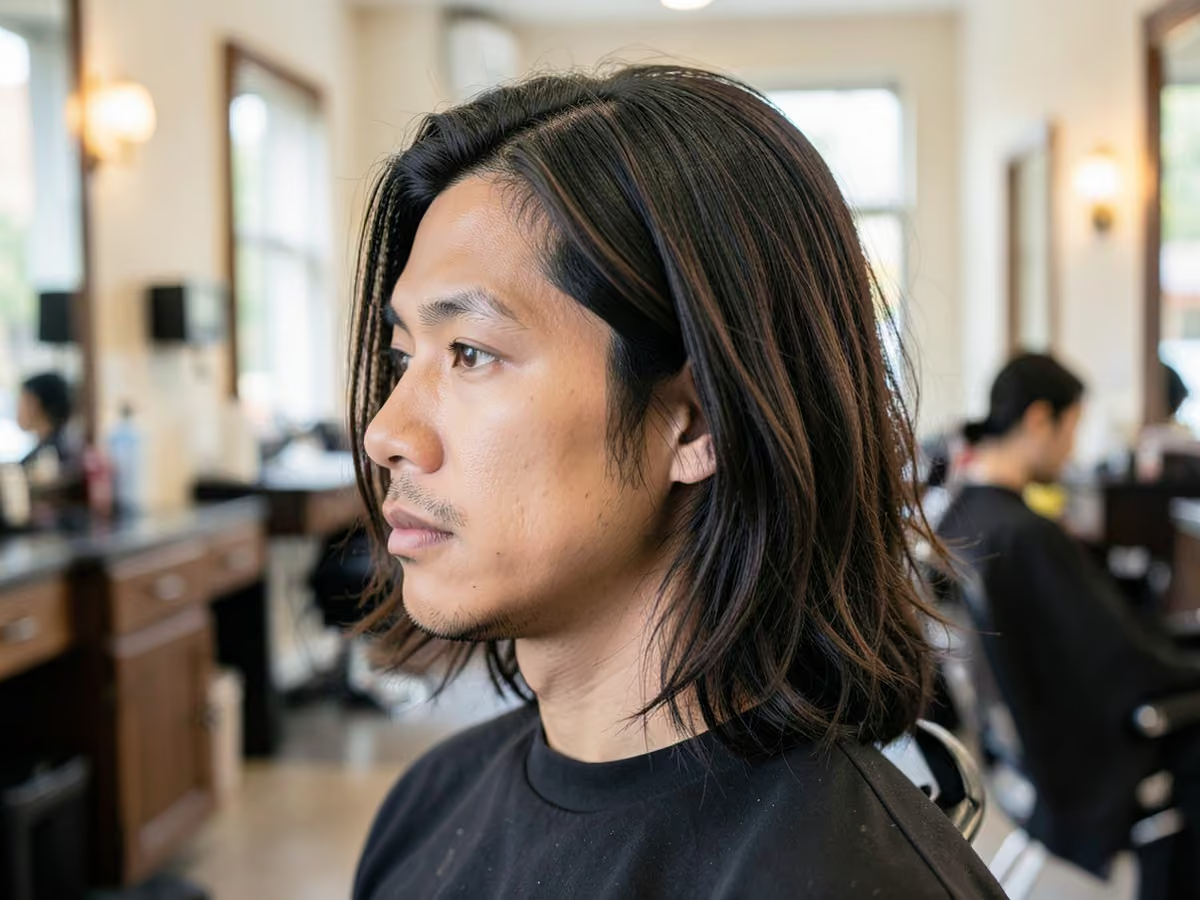
Soft layers over the whole head, with the back just touching the collar and the sides half covering the ears, make this the easiest way to wear the decade at work. There is no feathering and no shag texture; the hair simply falls in place. Long layers keep fine hair from looking wispy at the ends. A side part keeps it neat.
How to Style at Home
Comb a small amount of styling cream through towel-dried hair.
Set a side part with a comb and let the hair air-dry.
Tuck the sides behind the ears on hot days.
Ask Your Barber
"Layered cut with the back touching the collar, sides half over the ears, long soft layers and a side part. Keep it tidy and avoid heavy texturizing."
Recommended Products
Styling Cream
Long Hippie Hairstyles
The longest looks of the decade carried over from late-1960s counterculture. These four run from straight shoulder-length hair to loose curls, and suit men who want length without a lot of shaping.
Trim:Every 8–10 weeks. Only the ends need a dusting.
Best For:Oval, long faces + straight or wavy hair.
About This Style
Past the shoulders and cut almost all one length, this style lets natural texture do the work. A few long layers at the front keep it from looking heavy. Daily styling is minimal, but growing it takes patience, often a year or more from a short cut. Long faces suit it best because the hair adds width at the sides. Wash it two or three times a week.
How to Style at Home
Apply a few drops of argan oil to the ends after washing.
Let it air-dry without brushing to keep the natural wave.
Finger-comb any tangles gently, working from the ends up toward the roots.
Ask Your Barber
"Long hair past the shoulders, mostly one length with a few long layers at the front. Just dust the ends, I want to keep all the length."
Trim:Every 8 weeks. Ends tangle under a headband if they split.
Best For:Oval, square faces + straight or wavy long hair.
About This Style
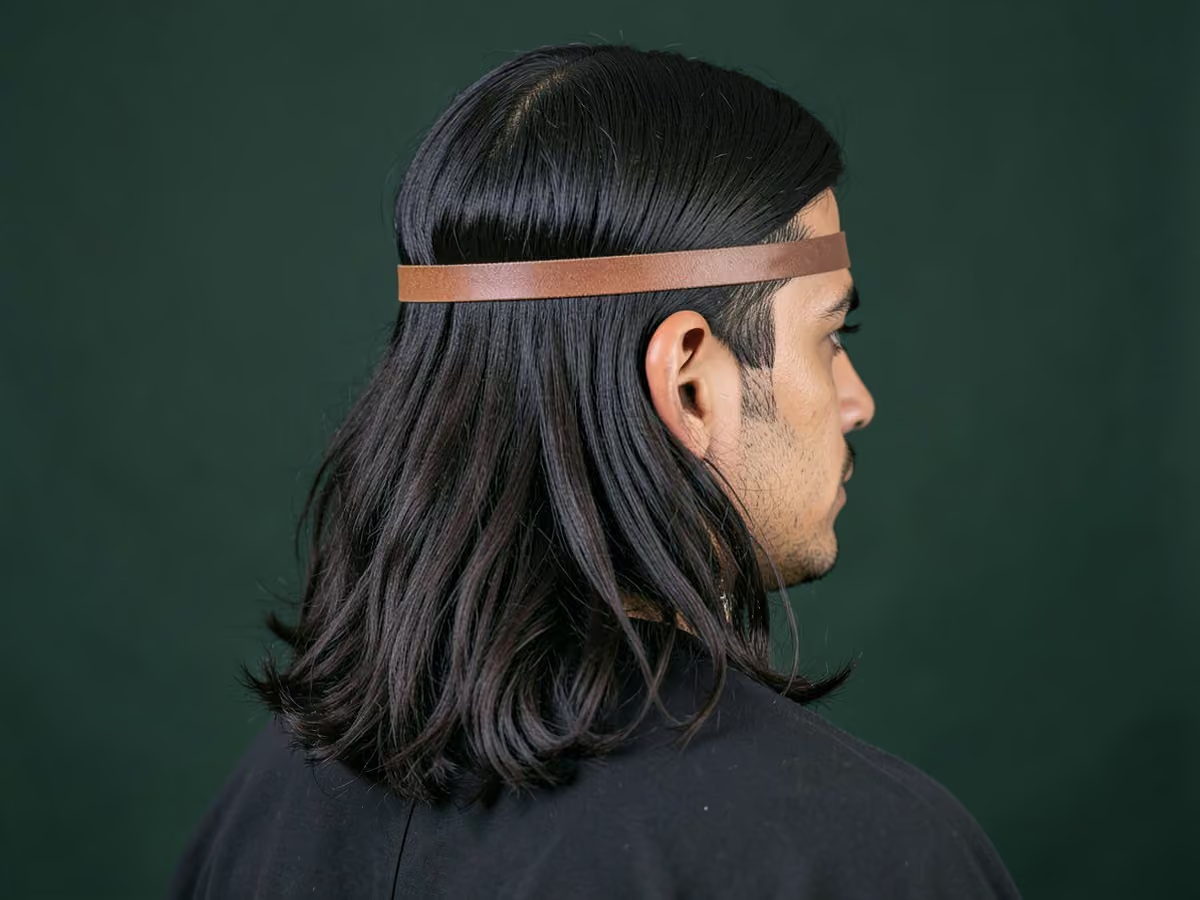
A thin cloth or leather band across the forehead keeps long hair off the face, a look tied to early-1970s music festivals and athletes. The hair runs to the shoulders or longer and is usually center parted. The band also hides a growing fringe during the awkward stage. On a square face, the band draws a horizontal line that balances a strong jaw.
How to Style at Home
Brush the hair back from the face and part it in the center.
Slide the headband over the forehead and settle it behind the ears.
Pull a few strands loose around the temples for a softer look.
Ask Your Barber
"Shoulder-length cut with long layers and a center part, ends trimmed, front left long enough to sit under a headband. No short pieces around the face."
Trim:Every 6–8 weeks. Split ends show on straight hair.
Best For:Oval, heart faces + fine or straight hair.
About This Style
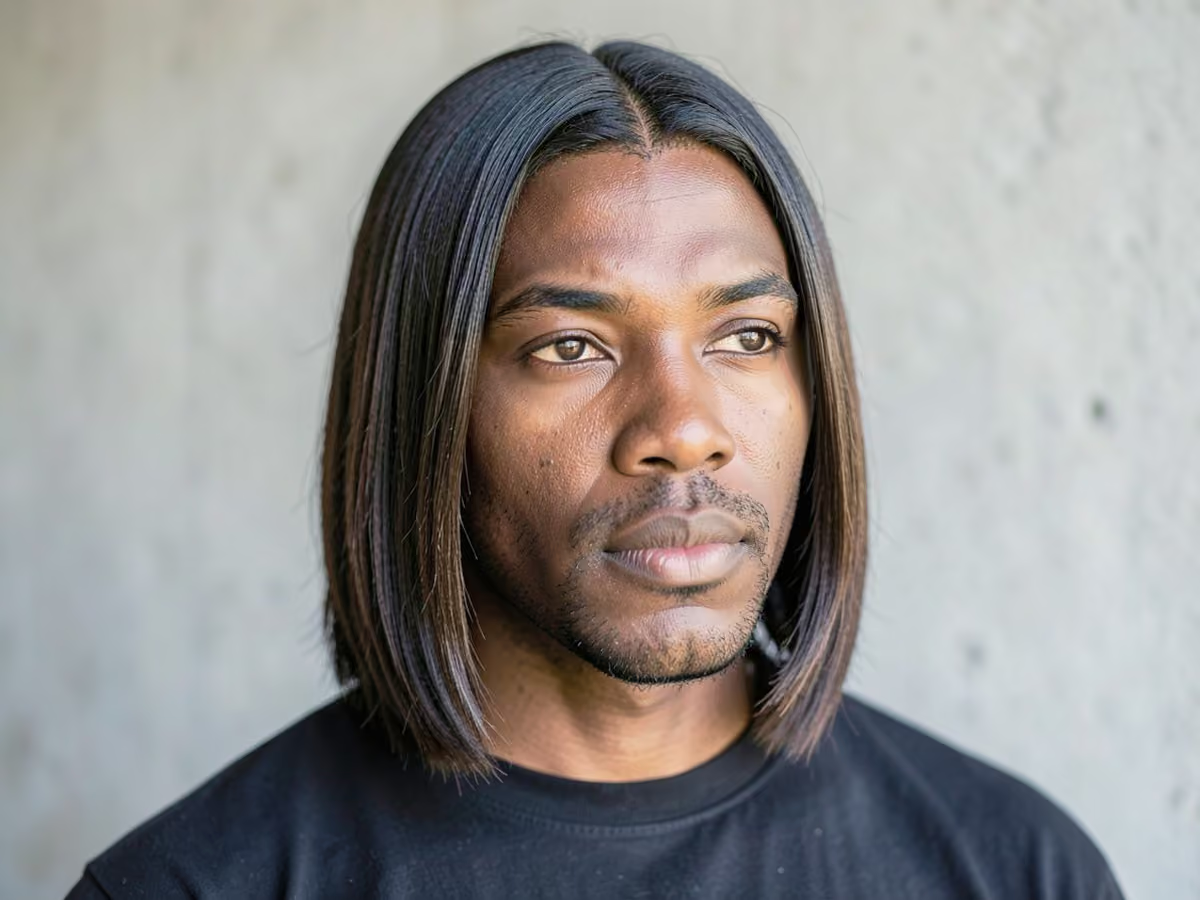
Straight hair parted down the middle and falling flat to the shoulders was a commonly common early-1970s looks. The ends are cut blunt or with very light layers, so the hair hangs cleanly on each side of the face. Fine straight hair suits it because it lies flat naturally. Length at the jaw also widens a narrow chin. Round faces usually do better with longer layers.
How to Style at Home
Part the hair in the center with a fine-tooth comb while wet.
Blow-dry straight down on a low setting, or let it air-dry.
Smooth a drop of argan oil over the ends.
Ask Your Barber
"Shoulder-length hair with a center part, ends cut blunt or with very light layers so it falls straight on both sides. Keep the part line even."
Trim:Every 8 weeks. Curls hide growth but ends still split.
Best For:Oval, long faces + loose or medium curly hair.
About This Style
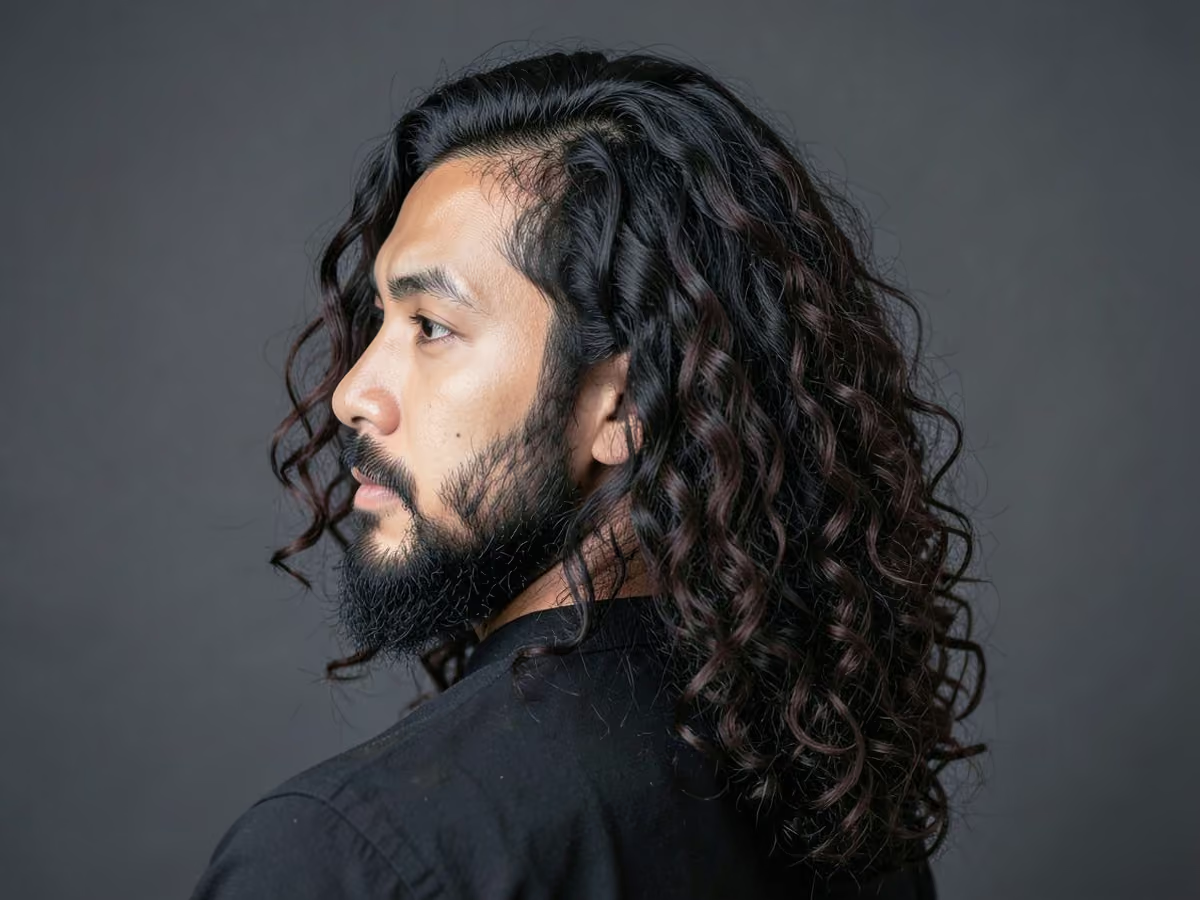
Long natural curls left to grow outward and down form a wide, loose shape around the face, often reaching the shoulders. There is little cutting beyond rounding the outline. The look depends on moisture rather than heat. It suits long faces because the curls spread at the sides. Brushing dry curls creates frizz, so they are shaped with fingers or a wide-tooth comb.
How to Style at Home
Apply curl cream to soaking-wet hair and scrunch upward.
Let the curls air-dry fully without touching or towel rubbing them.
Lift the roots gently with a pick once fully dry.
Ask Your Barber
"Long curly cut to shoulder length, rounded outline, dry cut so the curls stay even. Just shape the edges and remove split ends."
Recommended Products
Curl Cream
Afro Pick
70s Afro Hairstyles
The afro was one of the most recognized men's looks of the decade. These four range from a picked-out round shape to a barber-sculpted outline, with tips for keeping coily hair healthy at length. See our afro gallery for modern cuts.
Trim:Every 4–6 weeks. The round outline goes lopsided as it grows.
Best For:Oval, long faces + coily or tightly curled hair.
About This Style
Lifting every section from the root with a pick creates the full, airy volume this afro is known for. The hair is three inches or more all over and rounded into a sphere. Picking out stretches the coils, so the afro looks larger than the same hair left alone. Moisture before picking prevents breakage. Width like this shortens a long face.
How to Style at Home
Spray leave-in conditioner over the hair and work it in.
Lift from the roots outward with an afro pick, section by section.
Pat the outline with your palms to round the shape.
Ask Your Barber
"Rounded afro, three inches or more all over, shaped evenly so it forms a sphere when picked out. Shape with scissors and keep the neckline natural."
Trim:Every 4 weeks. A large shape needs frequent outline trims.
Best For:Oval, square faces + thick coily hair.
About This Style
Bigger and wider than an everyday afro, this version reaches four to six inches from the scalp and was common in late-1970s dance and music culture. The outline is kept very round, sometimes slightly wider at the sides than on top. It takes years of growth and steady moisture. Square faces suit the extra width. Sleeping on satin helps keep the shape overnight.
How to Style at Home
Detangle damp hair in sections with detangling spray and a wide comb.
Blow-dry on low heat with a pick attachment to stretch the coils.
Pick out and pat the outline into a large round shape.
Ask Your Barber
"Large afro, four to six inches out from the scalp, rounded with scissors and slightly wider at the sides. Just shape the outline, please keep the length."
Trim:Every 3–4 weeks. Crisp edges are what make this one.
Best For:Round, oval faces + coily or 4C hair.
About This Style
Barbers in the 1970s often sculpted afros with scissors and clippers into exact shapes, and this version follows that approach with a firm, even outline. The hair is two to three inches all over, and the edges at the temples and nape are cut clean. It is smaller and neater than a picked-out afro, which suits round faces and workplaces.
How to Style at Home
Moisturize with leave-in and pick the hair out gently.
Pat the surface flat with your palms to keep the outline even.
Brush the edges at the temples with a soft brush.
Ask Your Barber
"Shaped afro at two to three inches all over, rounded and even, with clean edges at the temples and a tapered nape. No skin fade, just sharp lines."
Trim:Every 4 weeks. Trim the mustache weekly along the lip.
Best For:Oval, long faces + coily hair and full upper lip growth.
About This Style
A thick chevron mustache, wide and covering the top lip, paired with a medium round afro gives one of the most recognizable looks from the era. The afro sits at about three inches so the mustache is not lost. The mustache is trimmed straight along the lip line. Long faces gain balance from the horizontal line across the face. Our chevron mustache guide covers shaping.
How to Style at Home
Moisturize and pick out the afro into an even round shape.
Comb the mustache down and trim along the lip with small scissors.
Rub a drop of beard oil into the mustache to soften it.
Ask Your Barber
"Medium round afro at about three inches, shaped evenly with a natural neckline. Trim my chevron mustache straight along the top lip, full width."
Recommended Products
Afro Pick
Beard Oil
Perms, Blow-Dries and Glam Rock Cuts
Heat styling and chemical curl arrived in many men's routines during the 1970s. These four cover the perm, the sprayed blow-dry, the rounded helmet cut and the glam rock mullet that came out of early-decade music.
Trim:Every 6 weeks. Permed ends dry out and need regular trims.
Best For:Oval, square faces + straight or fine hair.
About This Style
Medium perm rods are wound through straight hair and set with a perm solution, creating tight, bouncy curls all over. The late-1970s version was full and rounded, often to the collar. A perm lasts roughly three to six months as the hair grows. Fine straight hair gains the most volume. Moisture matters afterwards, since the process dries the hair. A stylist should check your hair's condition first.
How to Style at Home
Wait 48 hours after the perm before washing your hair.
Apply curl cream to damp hair and scrunch it upward.
Let it air-dry or use a diffuser on low heat.
Ask Your Barber
"I want a disco-style perm with medium rods all over for full curls, hair to the collar, and a round outline. Please check my hair before starting."
Trim:Every 4–5 weeks. The ears start to disappear under the sides.
Best For:Oval, round faces + straight hair, office settings.
About This Style
Linked to TV presenters and businessmen of the decade, this side part sits on hair that covers half the ear, blow-dried smooth and full with a slight lift at the front. Hairspray held the shape in the original. A modern version uses a light cream instead. It is the most conservative 1970s look and suits office settings. Round faces benefit from the side-swept lift.
How to Style at Home
Part the hair on one side while damp.
Blow-dry the front up and over with a round brush.
Smooth the sides down and finish with light hairspray or cream.
Ask Your Barber
"Side part with the top at three to four inches, sides covering half the ear, back to the collar, layered so I can blow-dry it smooth with lift."
Trim:Every 4–5 weeks. The rounded shape loses its curve over time.
Best For:Long, oval faces + thick straight hair.
About This Style
Thick hair blow-dried into a smooth, rounded dome that covers the ears and forehead gives this mid-decade look its nickname. The outline is even all the way around, like a cap. A slightly heavier fringe sits over the brow. The fullness makes a long face look shorter. It needs thick hair and daily blow-drying, or it lies flat.
How to Style at Home
Blow-dry the hair down and slightly under all around with a round brush.
Curve the fringe under over the brush for a smooth edge.
Set with a light mist of spray or a small amount of cream.
Ask Your Barber
"Rounded cut covering the ears and forehead, even all around like a cap, heavy fringe at the brow, back to the collar. Layered inside for volume."
Trim:Every 4–6 weeks. The spiky top loses height as it lengthens.
Best For:Oval, heart faces + straight or fine hair.
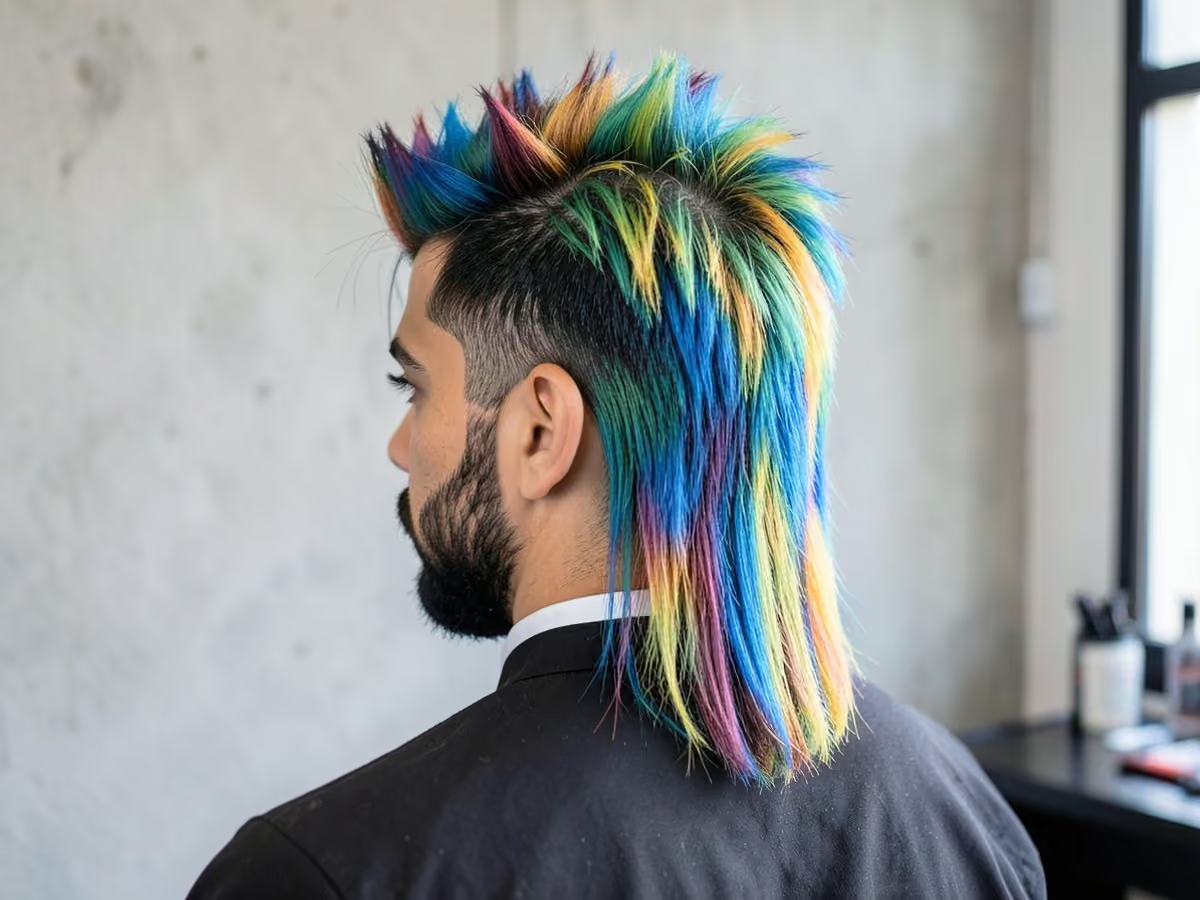
About This Style
The early-1970s glam rock scene gave this cut a choppy, spiked crown, short layered sides and a long back past the collar. It is often dyed a bright color in costume versions. The top is two to three inches and razor cut for spikes. It is the forerunner of the 1980s mullet, with more texture on top. A modern take softens the color and spike.
How to Style at Home
Apply texture powder to dry roots at the crown.
Lift the top pieces with your fingers into short spikes.
Comb the back down straight and leave it smooth.
Ask Your Barber
"Glam rock mullet: two to three inches on top razor cut for spikes, short layered sides, long back past the collar. Keep the back straight and thin at the ends."
Recommended Products
Texture Powder
Matte Paste
70s Hair with Sideburns and Mustaches
Facial hair finished most 70s looks. These four pair layered or long hair with long sideburns, a full mustache, mutton chops or a handlebar, and explain how to keep the hair and face hair in balance.
Trim:Every 5 weeks. Sideburns need squaring every one to two weeks.
Best For:Oval, long faces + thick hair and full sideburns.
About This Style
Sideburns grown down to the jaw angle, wide and squared at the bottom, frame a layered shag of collar length. Both the hair and the sideburns are thick, so the overall look is heavy at the sides. Long faces gain width from it. The sideburns are trimmed to about a #3 so they look full but tidy, and the shag is kept choppy on top for lift.
How to Style at Home
Rough-dry the shag with sea salt spray for texture.
Comb the sideburns down and trim them to a #3 guard.
Square the bottom edge of each sideburn with a trimmer.
Ask Your Barber
"Collar-length shag with choppy layers on top, sides over the ears, and my sideburns left long to the jaw angle, trimmed to a #3 and squared off."
Trim:Every 5 weeks. Both the feathers and mustache need shaping.
Best For:Oval, square faces + straight hair and thick mustache.
About This Style
Feathered hair blow-dried back from the face, paired with a full mustache that covers the top lip, is the look most people picture from 1970s detective shows. Soft flicks at the sides sit over the ears. The mustache is kept thick but trimmed straight. Square faces suit it, since the soft hair and mustache break up a strong jaw.
How to Style at Home
Blow-dry each side back from the face over a round brush.
Comb the mustache straight down and trim the lip line.
Apply a drop of beard oil to the mustache.
Ask Your Barber
"Feathered cut covering the ears, layers around the face so I can blow-dry them back, back to the collar. Trim my mustache full but straight along the lip."
Trim:Every 4–5 weeks. Chops grow into a full beard without trims.
Best For:Long, oval faces + thick hair and strong cheek growth.
About This Style
Wide sideburns that run along the jaw and stop before the chin pair here with layered hair over the ears and to the collar. The chin is shaved clean, which keeps the chops distinct from a full beard. Width along the jaw helps a long face. The look needs dense cheek growth, so patchy beards struggle. Trim the chops to an even length each week.
How to Style at Home
Style the layered hair with a little cream and a side part.
Trim the chops to an even length with a #3 guard.
Shave the chin and lip so the chops end sharply.
Ask Your Barber
"Layered cut over the ears and to the collar, with a side part. Shape my mutton chops wide along the jaw at a #3 and shave the chin clean."
Trim:Every 8 weeks. The mustache needs daily waxing and weekly trims.
Best For:Oval, long faces + straight long hair.
About This Style
Shoulder-length hair and a handlebar mustache curled up at the tips create a look linked to 1970s rock and biker culture. Length is kept mostly even, with a center or side part. The mustache needs at least two inches of growth past the lip corners to curl. It suits long faces, since the mustache adds a horizontal line. Daily mustache wax keeps the tips curved.
How to Style at Home
Comb argan oil through the ends of the hair and let it air-dry.
Warm a small amount of mustache wax between your fingers.
Twist each mustache tip upward and hold for a few seconds.
Ask Your Barber
"Shoulder-length hair, mostly one length, trim the ends only. Leave my mustache long at the sides for a handlebar and trim only the lip line."
Recommended Products
Argan Oil
Beard Balm
How Do You Ask Your Barber for a 70s Haircut?
Describe the length at three points: the top, the sides over the ears and the back at the collar. Then say how the layers should fall, whether they should feather back from the face or fall forward, and where you part your hair. Ask for scissor or razor cutting rather than clippers on the sides, since clipper lines look out of place in most 70s shapes. If you want a modern version, request a light taper at the nape only.
Photos help more than words with these cuts, because terms like shag and feathered mean different things to different barbers. Bring one from the front and one from the side, ideally of someone with a similar hair texture to yours. If you are growing out from a short cut, ask for shape-up trims every six weeks so the layers develop evenly instead of growing into a mushroom, and leave the sides alone until they cover the ears.
Clipper Guards Used in 70s Hairstyles for Men Styles
A clipper guard is the plastic comb that clips onto the blade and sets how much hair is left: a #1 leaves 3 mm (1/8 inch), each step up adds about 3 mm. The right column lists the cards on this page that call for each guard. See the full clipper guard numbers guide for the complete chart.
Clipper guard sizes for 70s hairstyles for men styles
How Do You Style 70s Hair Without It Looking Like a Costume?
Keep the finish soft. A light mist of sea salt spray and a quick blow-dry with your fingers gives movement without the stiff, sprayed shape of the original. Feathered styles need the blow-dryer aimed back and away from the face, with a round brush at the sides, but finish with a light cream rather than hairspray so the hair still moves.
Pair the hair with modern clothes and a trimmed beard or clean shave rather than a full period outfit. Large afros and curly shags need moisture first, using leave-in conditioner or curl cream, then a pick to lift the roots. Mustaches and sideburns read as 70s quickly, so keep them neat if you want the hair to be the focus.
How Much Upkeep Do 70s Hairstyles Need?
Longer cuts need fewer visits than short fades, usually every six to eight weeks, but they need more daily care. Layers lose their shape as the ends split and thin, so a regular dusting of the ends matters more than taking off length. Blow-dried styles take five to ten minutes each morning, and afros need regular moisture and detangling to avoid breakage.
Wash long hair two or three times a week rather than daily so natural oils protect the ends, and use conditioner every time. Sleep on a satin pillowcase or tie long hair back loosely at night to cut down on tangles and breakage. Sideburns and mustaches need a weekly trim to stay sharp, especially if they are a key part of the look you are copying, and a small pair of grooming scissors makes that quick.
Which 70s Hairstyles for Men Is Right for You?
Pick your hair type and how much upkeep you will put in. The matches below come from the Best For and Maintenance notes on each card. Upkeep follows the Maintenance badge: low means a cut every 3 to 6 weeks and almost no daily styling, high means weekly line-ups or daily product.
Q1: What was the most popular men's hairstyle in the 1970s?+
There was no single cut, but longer layered hair was the common thread. Shags, feathered hair blow-dried back from the face and long center-parted hair were widely worn, and the afro was one of the most recognized styles of the decade. Long sideburns and mustaches often went with all of them.
Q2: How do you get feathered hair like the 70s?+
Ask for layers around the face that are longest at the back and shortest near the temples, with the hair covering the top of the ears. Blow-dry each side back and away from the face with a round brush, then finish with a light cream or spray. Straight and wavy hair feather most easily.
Q3: Is the 70s shag back in style?+
Yes. Layered shag cuts have been a common barbershop request in recent years, usually in a shorter and lighter form than the original. Today's versions tend to keep the sides tapered and the layers textured, while the 1970s cut was heavier and often covered the ears completely.
Q4: How long does hair need to be for a 70s hairstyle?+
Most styles need hair that covers the ears and reaches the collar, which is roughly four to six inches on top and at the back. Long hippie styles need shoulder length. Starting from a short cut, plan on six months to a year depending on the style you want.
Q5: Did men get perms in the 1970s?+
Yes. Perms became popular with men in the later 1970s and into the early 1980s, giving straight hair the curly volume seen in the era's music and film. Modern perms use gentler solutions and looser rods, so the curl is softer. Always ask the stylist about your hair's condition before a perm.
Q6: What facial hair goes with a 70s hairstyle?+
Long sideburns, full chevron mustaches, horseshoe and handlebar mustaches and mutton chops are the most closely linked to the decade. A short full beard also fits longer hairstyles. Keep the edges trimmed so the facial hair looks chosen rather than overgrown.