
How to Style Thinning Hair
Without Looking Bald
You don't need a full head of hair to look like you have a great head of hair. These habits show how to style thinning hair without looking bald, making the most of every strand you've got.
By Jessica Hamilton, Editor · Updated
Quick answer: To style thinning hair without looking bald, do the opposite of what makes it look thinnest: flat, shiny and separated. Keep the cut short and textured and use only matte clay, paste or texture powder. Dry it with lift at the roots and style it with your fingers, not a comb, so it holds together as one fuller mass.
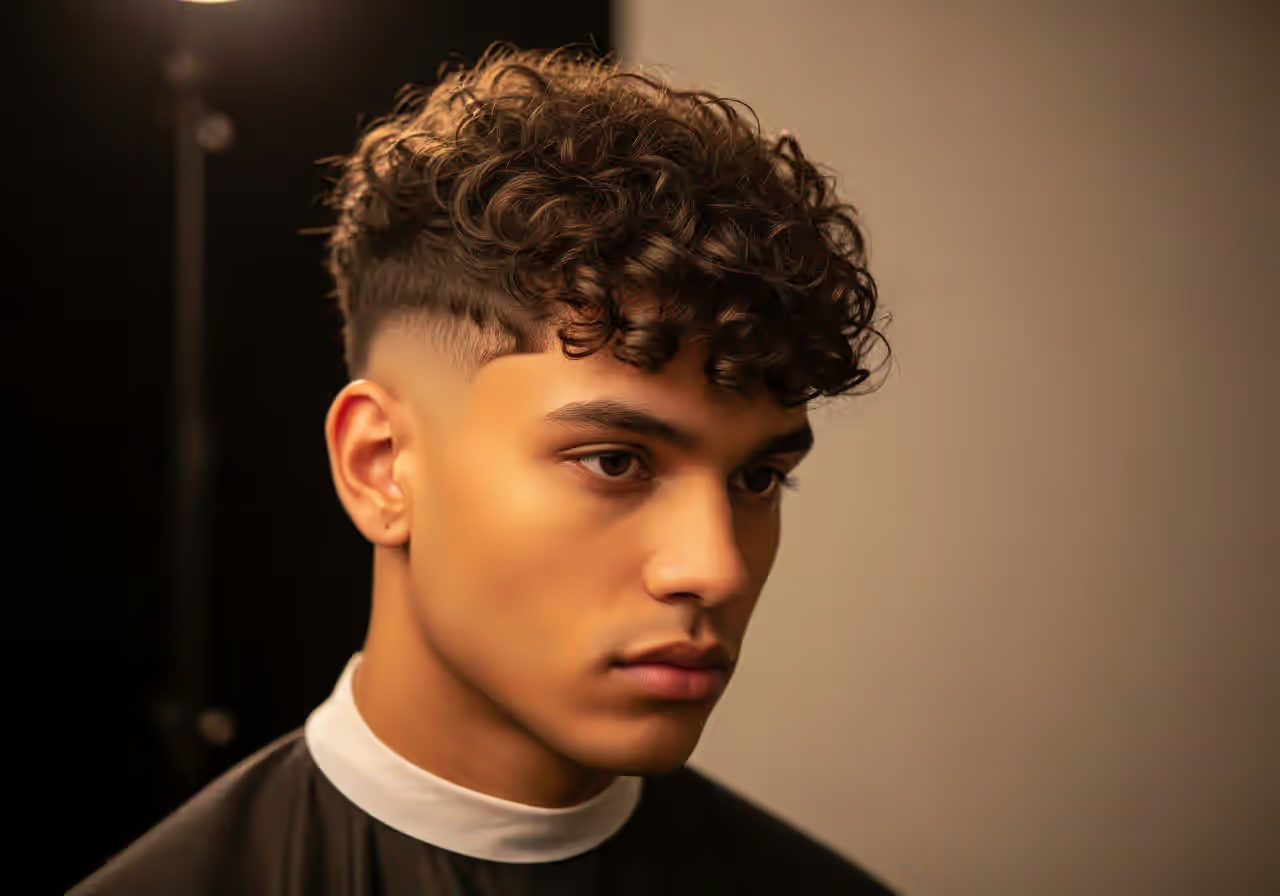
Style images are AI-generated illustrations.
📚 Part of our Thinning & Balding guide hub, where the related guides are grouped together.
For men, styling thinning hair well is a skill, and it's mostly about working with the light instead of against it. Thin hair looks baldest when it's flat, shiny, and separated, so every good habit here does the reverse: adds texture, kills shine, and keeps hair looking like a single fuller mass. None of it requires more hair than you have.
Which Haircut Makes Thinning Hair Look Fuller?
Styling can only do so much on the wrong cut. Keep the top short and textured (a textured crop or French crop) and the sides shorter still. Short, choppy hair casts micro-shadows that read as density; long, flat hair separates and shows scalp.
Powder is one of the lightest ways to add lift; our guide to the best hair powder for men compares six options.
Where you are thinning changes the best plan:
| Where it's thinning | Cut that helps | Styling |
|---|---|---|
| Temples | Short textured crop with a forward fringe | Push the front forward, not back |
| Crown | Shorter top, no long layers at the back | Matte product; avoid a swirl at the crown |
| All over on top | Short crop or buzz with tight sides | Minimal product, finger-styled |
| Along the part | Messy, part-free style | Move or drop the part |
How Short Should You Go?
Shorter is usually better with thinning hair, but there is a point where going shorter shows more scalp, not less. These ranges work for most men:
| Area | Usual length | Why |
|---|---|---|
| Sides | #2 or #3 guard | Less contrast with a thinner top than a skin fade |
| Top, textured crop | 1 to 2 inches | Short enough to stand up, long enough to cover |
| Buzz all over | #3 or #4 guard | Keeps a shadow of hair over the scalp |
| Very advanced thinning | #1 or shaved | Removes the contrast entirely |
If you are unsure, start one guard longer than you think, and go down at the next visit. See should you shave your head if balding if you are near the last row.
How Should You Style Thinning Hair?
- Matte only. Clay, paste, or matte cream: never shine, which reflects scalp.
- Dry it with lift. If you have any length, rough-dry with fingers and lift at the roots; flat roots are the enemy.
- Style with fingers, not a comb. Combing separates hair into scalp-revealing rows; finger-styling keeps it clumped and fuller-looking.
- Go easy on product. Too much weighs fine hair down flat. A pea-sized amount worked through is plenty.
- Consider a matte finishing powder at the roots for instant lift on very fine hair.
Which products work best on thinning hair?
Light and matte is the rule. These product types do the most for thin hair (more in pomade vs clay vs wax):
- Matte clay: grip and texture with no shine. Use a pea-sized amount.
- Texture powder: almost no weight; a little at the roots adds lift that lasts.
- Sea salt spray: applied to damp hair before drying, it adds body and separation.
- Light mousse: root lift for fine, straight hair without a stiff finish.
- Volumizing shampoo: leaves fewer heavy residues than rich, smoothing formulas.
Which Daily Habits Help Thinning Hair Look Better?
- Don't over-wash. Daily stripping can make fine hair look limp.
- Be gentle: aggressive towel-drying and tight styling stress fragile hair.
- Keep the scalp healthy with gentle cleansing.
- If thinning is progressing fast, that's a separate question worth raising with a professional. Styling is for managing the look, not treating the cause.
Do hair fibers and scalp concealers help?
They can, for a day. Color-matched fibers cling to existing hairs and make them look thicker, and a tinted scalp spray reduces the contrast between hair and skin. Both work best on mild, spread-out thinning and short hair. Apply a little, check in daylight, and wash it out each night. Rain, sweat and pillows all move them, so treat them as an event fix, not a daily plan.
What Mistakes Draw Attention to Thinning?
- Combing thin hair straight back off the face. This exposes the whole scalp at once instead of letting remaining density do its job at the front.
- Growing hair long specifically to comb it over a bare patch. A comb-over shifts with wind and humidity and tends to look more noticeable than short, even coverage.
- Using shine-heavy styling products on a thinning scalp, since shine on the scalp itself, rather than on the hair, makes thin areas more visible under light.
- Sticking with the same part and direction for years even as density changes. Switching the part to a spot with more coverage can help before considering more drastic changes.
What Should You Tell Your Barber About Thinning Hair?
Barbers see thinning every day, so you do not need to explain much. Show them where it is and ask for a cut that suits it, not one that hides it with length.
What to say in the chair
"I'm thinning at the crown and a bit at the temples. Can you keep the top short and textured, with the sides at a #2 so there's less contrast, and no long layers I'd have to comb over?"
Short cuts on thinning hair look best when kept fresh, which usually means a trim every three to four weeks at about $25 to $45 a visit. Our haircut cost guide covers prices by shop type.
Does Styling Change by Hair Type?
Fine, straight hair needs the most help holding volume, so a matte, fiber-based product applied to damp roots and dried with the head tipped forward gives the best lift. Wavy or curly hair naturally sits with more volume even when thinning, so a lighter touch with product avoids weighing it back down; a light curl cream rather than a heavy pomade usually keeps more apparent fullness. Whatever the texture, avoid brushing thinning hair flat right after applying product, since brushing collapses the lift you just created at the root.
When Should You See a Doctor Instead of a Barber?
A barber can only work with the hair currently on your head. If thinning is progressing month to month rather than staying stable, or if you notice sudden patchy loss rather than a gradual overall softening, that is worth discussing with a doctor or dermatologist rather than trying to style around it indefinitely. Styling adjustments help with the everyday appearance of thinning hair, but they are not a substitute for medical advice when the underlying pattern is changing quickly.
Frequently Asked Questions
Q1: How do I make thinning hair look fuller when styling?+
Q2: What product makes thinning hair look thicker?+
Q3: Should I comb or finger-style thinning hair?+
Q4: Does washing hair less help thinning hair?+
Q5: Can styling really hide thinning hair?+
Q6: Should I use a blow-dryer on thinning hair?+
Medical & Dermatology Sources
Styling can disguise thinning, but treating hair loss is a medical question. These sources explain causes, diagnosis and treatment options, and a dermatologist can look at your own scalp.
- Male pattern hair loss treatment options, American Academy of Dermatology
- Hair loss: Tips for managing, American Academy of Dermatology
- Hair loss, NHS
Related Haircut Guides
Make us a Preferred Source on Google
See our latest articles first in your Google Search & AI Overviews.