Quick answer: Hair transplant haircuts change with each stage. Before and just after surgery, a uniform short cut or longer sides hide the donor area. During the patchy grow-in months, a textured crop or forward fringe blurs uneven density. Once the result settles, most cuts are open to you. Your surgeon sets when clippers and scissors may touch the grafts.
Hair Transplant Haircut Styles at a Glance
Every style on this page with its clipper guard, top length and trim interval. Tap a name to jump to that card.
Hair transplant haircuts are less about fashion than timing. The first weeks call for cuts that hide a shaved or scarred donor area, the middle months need shapes that disguise thin, uneven regrowth, and only the settled result opens up a free choice. The 12 styles below follow that order, with trim schedules and words to use, while the timeline itself belongs to your surgeon.
Why Does Your Haircut Matter After a Hair Transplant?
A transplant moves follicles from a donor zone, usually the back and sides, to thinning areas at the front or crown. Both zones look different for months. The donor area may be shaved short for FUE extraction, which leaves small dot scars, or it may carry a single line scar from a strip (FUT) procedure. The recipient area often looks red and crusted at first, then many of the moved hairs shed before new growth appears. A good haircut hides each of those stages instead of fighting them.
Clinics give their own aftercare rules, and they differ. Many advise keeping clippers and tight hats away from the grafted area for the first weeks and waiting longer before any close clipper work on top. Treat every timing on this page as general background. The instructions from the clinic that did your procedure come first, and a barber should follow them too.
How Do Haircuts Change at Each Transplant Stage?
The table below shows the broad stages that clinics commonly describe, with the haircut goal for each. Exact timings vary by person, technique and number of grafts, so read it as a rough order of events rather than a schedule. If your clinic gives different weeks, use theirs. A barber who knows which stage you are in can pick guards and scissor work that suit it, which is why it helps to say so before the cape goes on.
How Do Haircuts Change at Each Transplant Stage?
Stage
What the scalp looks like
Haircut goal
Before surgery
Normal hair; donor area may be shaved on the day
Cut the sides and back to a length that matches a shaved donor or will cover it
First weeks
Redness, scabs, short donor stubble
Leave the grafts alone; clinic-approved cleanup on the sides only
Shedding phase
Many transplanted hairs fall out
Keep the rest of the hair short and even so the front does not look gappy
Grow-in months
Thin, uneven new hairs of mixed length
Textured or forward styles that blur density, as in a textured crop
Settled result
Full density for that transplant
Most cuts are possible; protect the donor scar with enough side length
Which Hair Transplant Haircut Suits You?
Your technique decides the side length. After FUE, the dot scars are usually hard to see with a #2 or longer, though some men show them even at that length, so a #3 is a safer floor until you know. After a strip procedure, the line scar across the back normally needs scissor length or a #4 and up to stay hidden. Skin fades are the riskiest choice for either technique, so ask your surgeon before booking one.
On top, the goal shifts with time. Short, textured shapes suit the shedding and grow-in months because they make density look even. Once the result settles, the cut can follow your face shape and hairline as with anyone else; the receding hairline guide covers shapes that flatter a higher front if you chose a conservative hairline. Face shape still matters as much as density, so a round face may want height on top while a long face is better served by a fringe or side part.
Filter the styles
Showing all 12 styles
Fade
Hair
Length
Haircuts Before Surgery and in the First Weeks
These cuts deal with the donor area, which is often shaved or scarred, and leave the grafts alone. Book them before the procedure or once your clinic clears a tidy of the sides and back.
Trim:Every 3–4 weeks. Keeps the donor regrowth level with the rest.
Best For:Men having FUE + straight, wavy or coarse hair.
About This Style
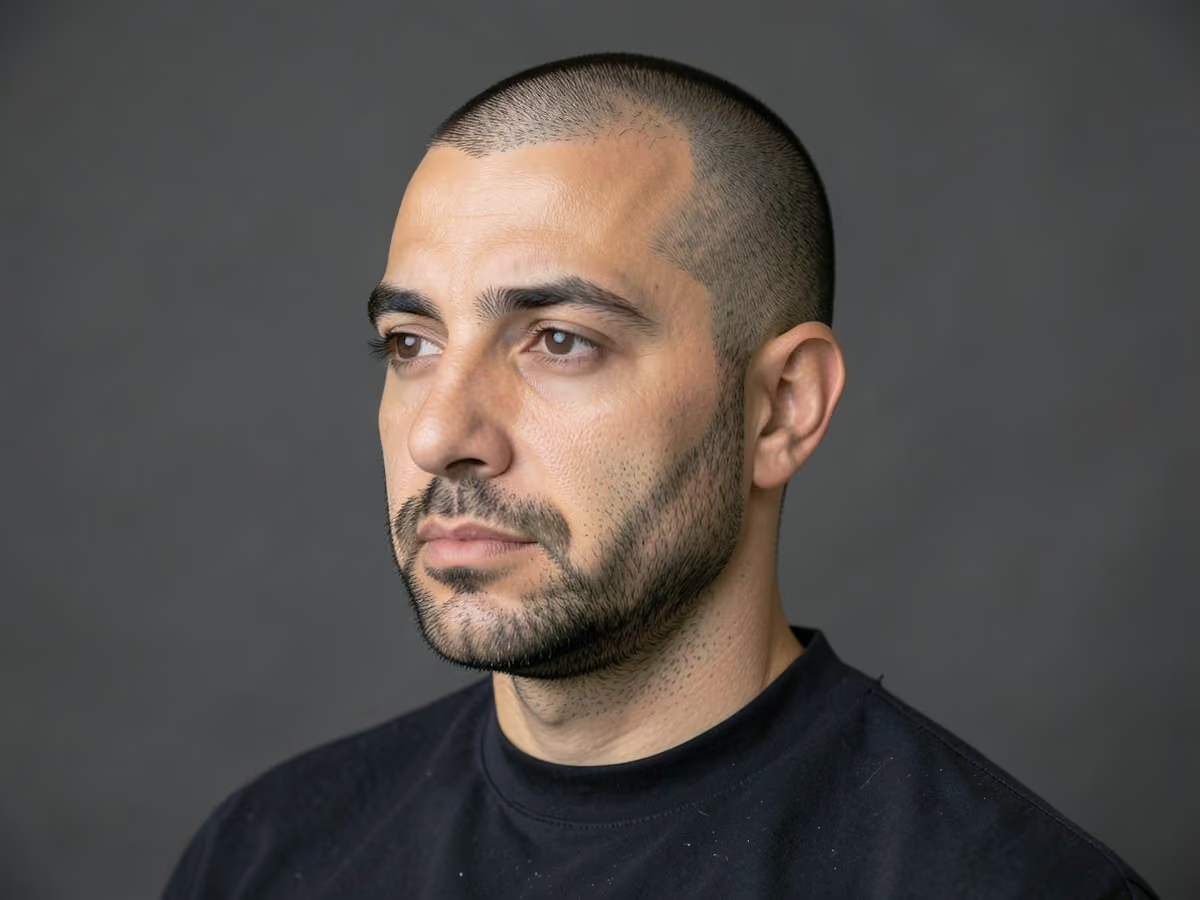
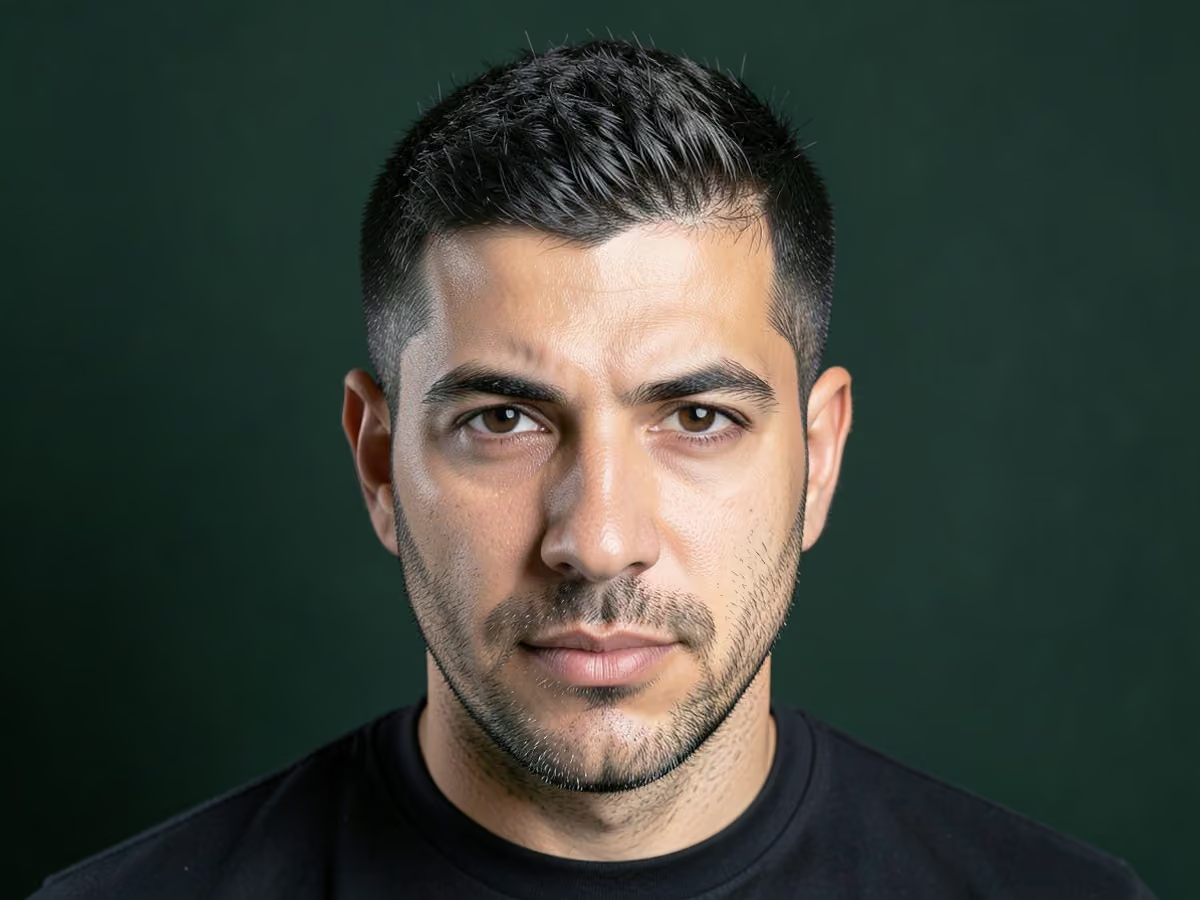
Clipped to a #2 or #3 all over a week or so before the procedure, this cut means the shaved donor area at the back looks like part of a plan rather than a patch. Afterward the donor stubble catches up within weeks while the rest of the head stays at the same short length. It also makes aftercare easier, since there is little hair to wash around the grafts. Confirm the length with your clinic first.
How to Style at Home
Wash with the shampoo your clinic recommends and pat dry instead of rubbing.
Leave the scalp free of product while the grafts are healing.
Wear a loose cap only if your clinic says it is safe.
Ask Your Barber
"I have a hair transplant next week. Please buzz everything evenly with a #3, no fade and no line-up, so the shaved donor area blends in."
Trim:Every 4–5 weeks. Side length is the point, so trims stay light.
Best For:Strip (FUT) patients + medium-thick straight or wavy hair.
About This Style
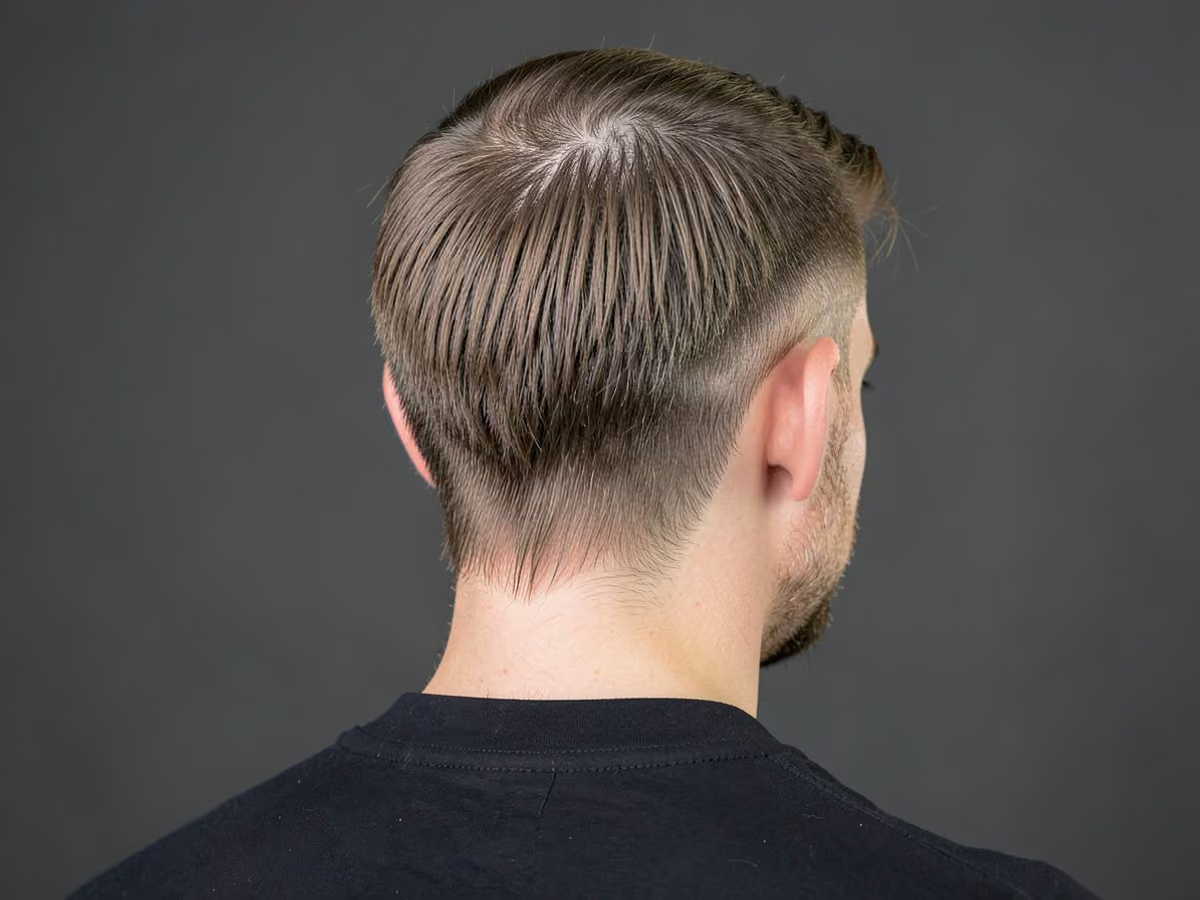
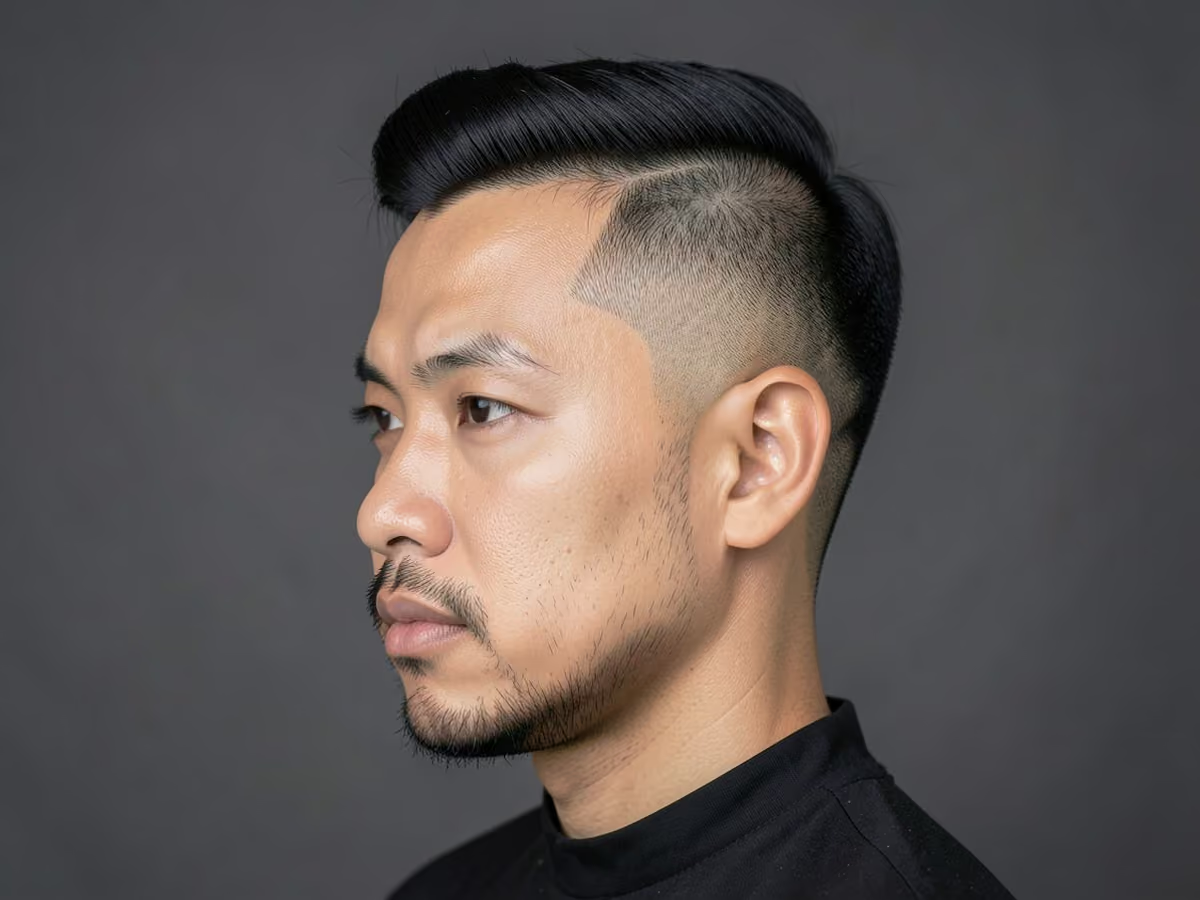
Longer sides and back are the whole idea: the barber leaves the hair at a #5 or scissor length so it falls over the line scar a strip procedure leaves across the back of the head. Growing this length before surgery gives you cover from the first day. The top stays as it was, untouched until the clinic clears it. Expect the back to look slightly fuller than usual, which reads as a classic gentleman's cut.
How to Style at Home
Comb the back hair downward while damp so it lies flat over the scar.
Let it air-dry rather than aiming a hot dryer at the healing area.
Check coverage with a hand mirror after you shower each day.
Ask Your Barber
"I had a strip transplant, so keep the back and sides long, scissor cut or nothing shorter than a #5. Do not touch the top yet and no clippers near the scar."
Trim:Every 3–4 weeks. Only the edges get cleaned up at first.
Best For:Men in early FUE recovery + any hair type.
About This Style
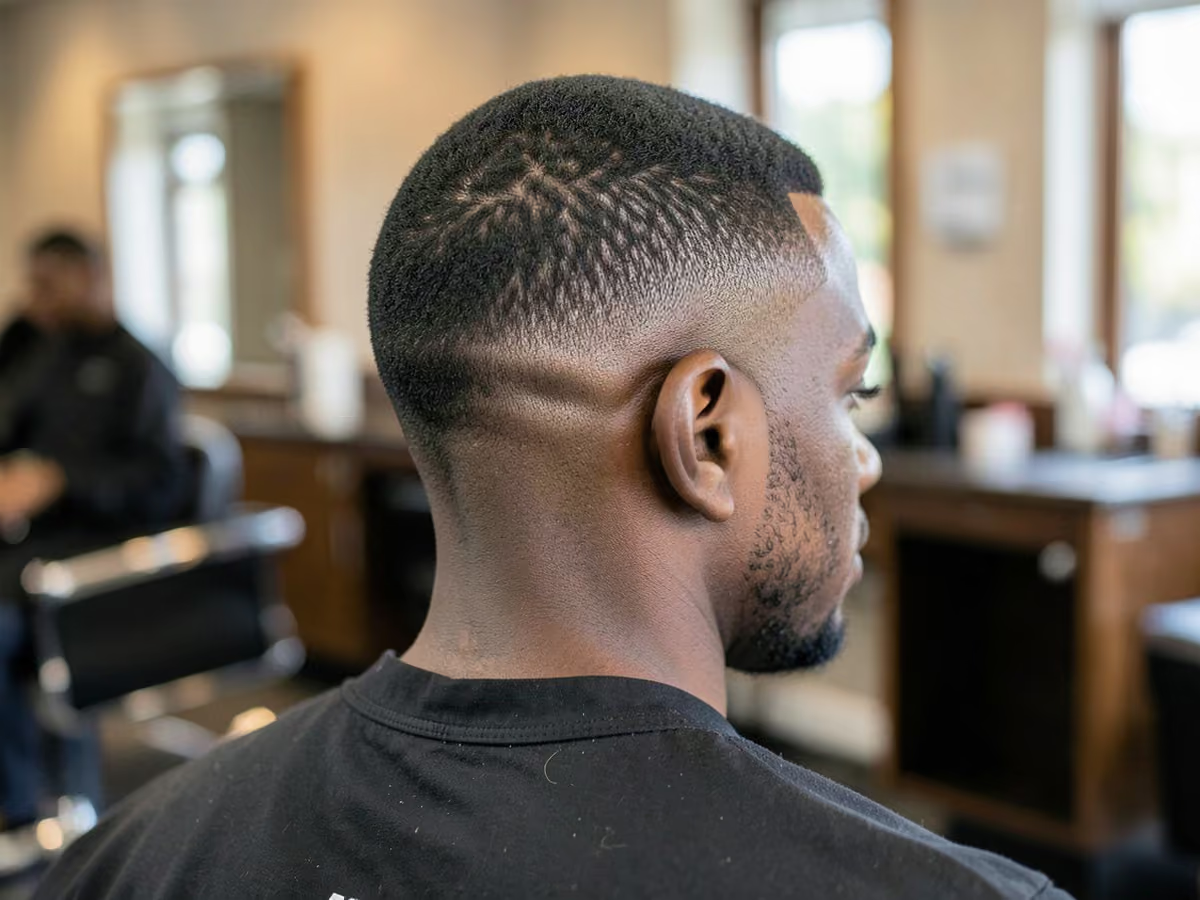
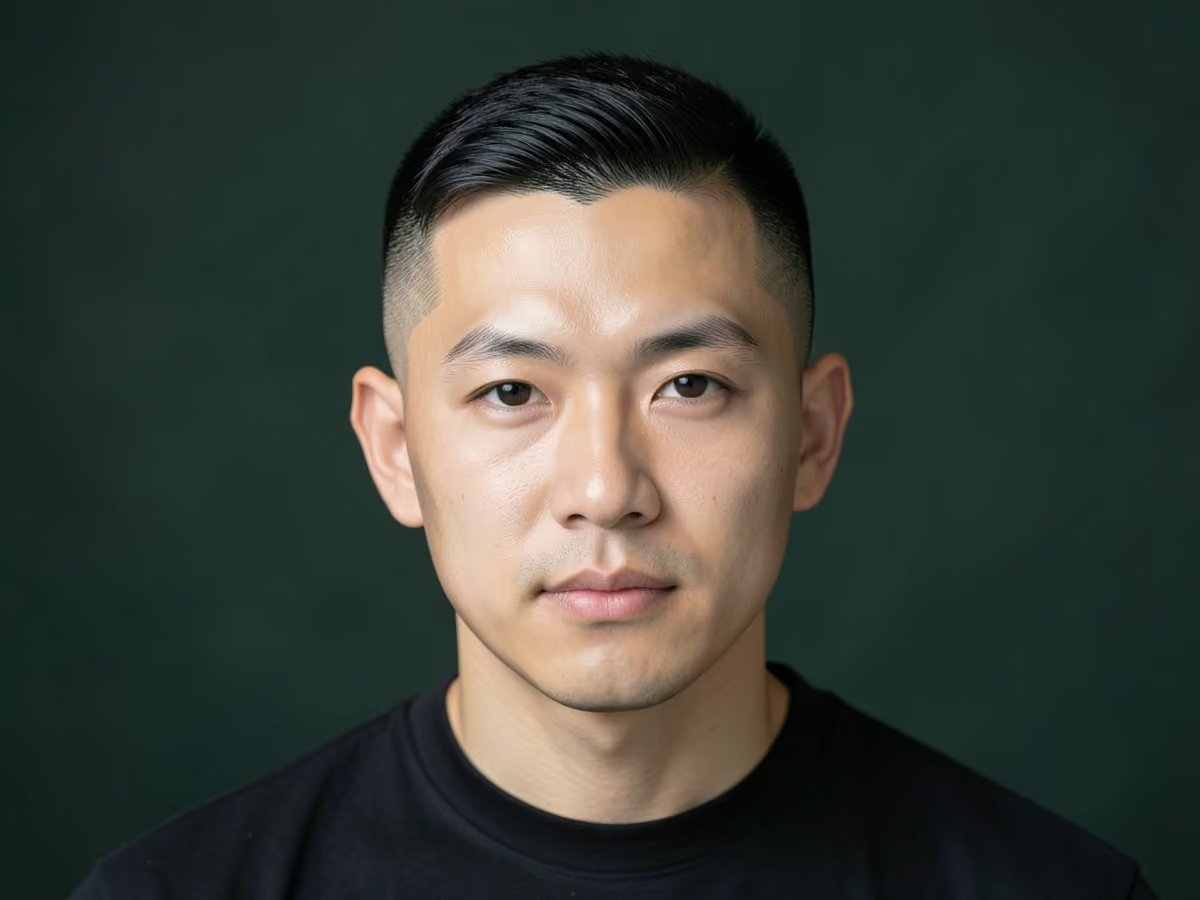
Only the sideburns and neckline are shortened, tapering from a #3 down to a #2 at the very edge, so the head looks groomed while the grafted top is left completely alone. The donor dots sit inside the longer guard, where they are hard to see. Clinics usually allow this sort of edge tidy before any work on top, though the exact week varies. It keeps you looking neat at work during the red, scabbed stage.
How to Style at Home
Keep your fingers off the grafted area and dry the hair with a soft towel.
Spray a light leave-in on the sides only if they feel dry.
Sleep with your head raised if your clinic advises it.
Ask Your Barber
"I am a few weeks out from an FUE transplant. Just taper the neckline and sideburns from a #3 to a #2, nothing on top and no pressure on the crown."
Trim:Every 4–6 weeks. Scissors take off small amounts each visit.
Best For:Oval, long faces + thick straight or wavy hair.
About This Style
Here the barber skips clippers entirely and uses scissors over a comb, leaving about an inch on the sides and two on the back. That length softens the look of a freshly shaved donor zone as it grows in and keeps the profile balanced against a thinner front. It suits men who wore longer hair before surgery and want a gentle change. Most clinics prefer scissors near healing skin because nothing presses on it.
How to Style at Home
Blow-dry the sides on a cool setting, brushing them down and back.
Work a small dab of styling cream through the sides for control.
Leave the grafted front loose and product-free until cleared.
Ask Your Barber
"Scissor cut only, please. About an inch on the sides and two inches at the back, blended softly. I had a transplant, so leave the top and front alone for now."
Recommended Products
Styling Cream
Round Brush
Haircuts for the Patchy Grow-In Months
New hairs arrive at different speeds, so the front can look thin and uneven for a while. These shapes blur density with texture and direction. Pair them with tips from the thinning hair on top guide.
Trim:Every 4–5 weeks. Evens out hairs growing at different rates.
Best For:Round, oval faces + fine or thinning straight hair.
About This Style
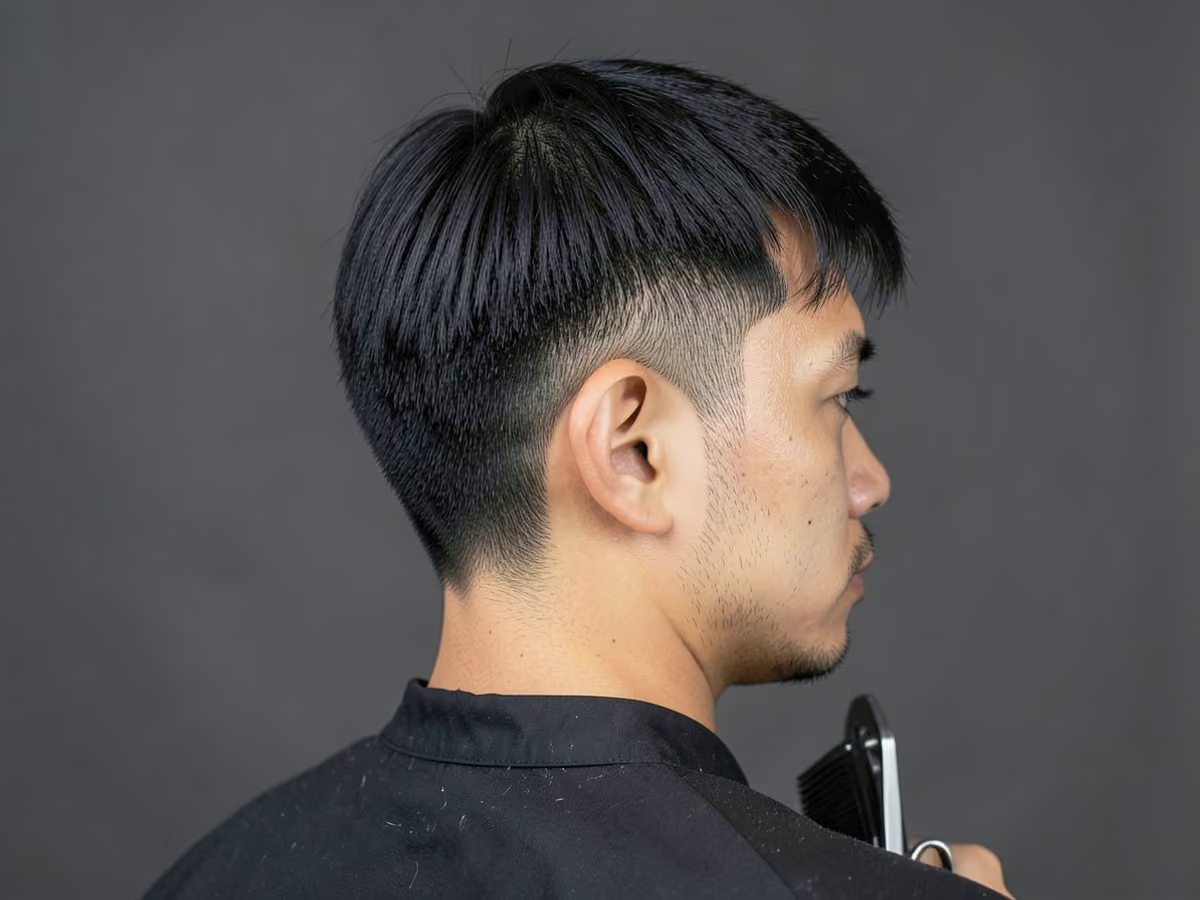
Point-cut texture on a one-inch top breaks up the gaps between new and native hairs, so the eye reads movement rather than density. The front is pushed slightly forward, which covers a hairline that is still filling in. Sides sit at a #3 to protect the donor area. As the grafts mature, the crop can grow into a longer style without a reset, which is why many men use it as a bridge cut.
How to Style at Home
Mist thickening spray on damp roots once your clinic allows products.
Rough-dry with your fingers, pushing the hair forward and to one side.
Pinch a little texture powder into the top for grip.
Ask Your Barber
"Textured crop with about an inch on top, point cut so it looks choppy, pushed forward. Keep the sides at a #3, no shorter, because of my transplant."
Trim:Every 4–6 weeks. The fringe needs length, so cut it sparingly.
Best For:High foreheads, long faces + straight or wavy hair.
About This Style
A fringe of two to three inches brushed down over the forehead hides the new hairline completely while grafts thicken behind it. Longer hair from the mid-scalp is combed forward to lend weight to the front. The sides stay at a #4 so the shape stays soft. It works well for men with a higher forehead, and the fringe can be lifted into a side part once the front has filled in.
How to Style at Home
Comb the top forward with a wide-tooth comb while it is damp.
Dry it in place with low heat, aiming the airflow down the forehead.
Separate the fringe ends with a small amount of matte paste.
Ask Your Barber
"I am growing in a hairline transplant. Leave two to three inches on top and bring it all forward into a soft fringe, with a #4 on the sides, scissor blended."
Trim:Every 5–6 weeks. Untidy texture forgives a few extra weeks.
Best For:Square, oval faces + wavy or curly hair.
About This Style
Wavy and curly hair hides patchy regrowth well when it is cut to about two inches and left to fall in random directions. Because no part or clean line exists, an area that has not filled in yet just looks like another curl. The sides are cut at a #4 with scissors over the ears. Upkeep is minimal, and the shape suits men who cannot style much while their clinic restricts products.
How to Style at Home
Scrunch a little curl cream into damp hair when products are allowed.
Leave it to air-dry without touching it so curls hold together.
Shake the roots loose with your fingertips once fully dry.
Ask Your Barber
"Cut the top to about two inches and keep it messy, following my wave. Sides at a #4 with scissors over the ears. Please avoid the grafted front with clippers."
Trim:Every 3–4 weeks. A short top needs regular evening out.
Best For:Men in office jobs + straight, thick or coarse hair.
About This Style
For men who prefer a short, tidy head through the grow-in months, the top is kept at about three-quarters of an inch with scissors and the sides taper from a #3 to a #2 at the neckline. Keeping everything short makes the difference between grafted and native hair smaller. It reads as a normal office cut. Ask the clinic when close clipper work on top is allowed before shortening it further.
How to Style at Home
Brush the short top forward and slightly to the side with a soft brush.
Smooth a fingertip of matte cream over the surface to tame flyaways.
Moisturize the sides with a drop of scalp oil if they itch.
Ask Your Barber
"Short taper with the top at three-quarters of an inch, scissors only on top. Sides from a #3 down to a #2 at the neck. I am a few months post-transplant."
Recommended Products
Matte Cream
Scalp Oil
Haircuts Once the New Hairline Settles
When your surgeon says growth is largely done, most cuts are open to you. These four make the most of a restored front while keeping enough side length over the donor area.
Trim:Every 3–4 weeks. Keeps the soft front edge looking natural.
Best For:Oval, square faces + straight or wavy hair.
About This Style
The Scandinavian hairline is a label used online and by some clinics for a front set a little higher with rounded, slightly receded temples, like the hairline many men naturally have in their thirties. A short crop of about an inch shows that soft shape off rather than hiding it. Sides sit at a #3. Whether this hairline design suits your face and donor supply is a question for your surgeon.
How to Style at Home
Towel-dry, then push the top up and slightly back with your fingers.
Rub a pea-size amount of matte clay through the ends only.
Leave the temples soft rather than combing them into sharp corners.
Ask Your Barber
"Short crop, about an inch on top, lifted slightly at the front to show the hairline. Keep the temples soft and the sides at a #3, no line-up."
Trim:Every 3–4 weeks. The part line and taper need regular cleanup.
Best For:Oval, oblong faces + straight or slightly wavy hair.
About This Style
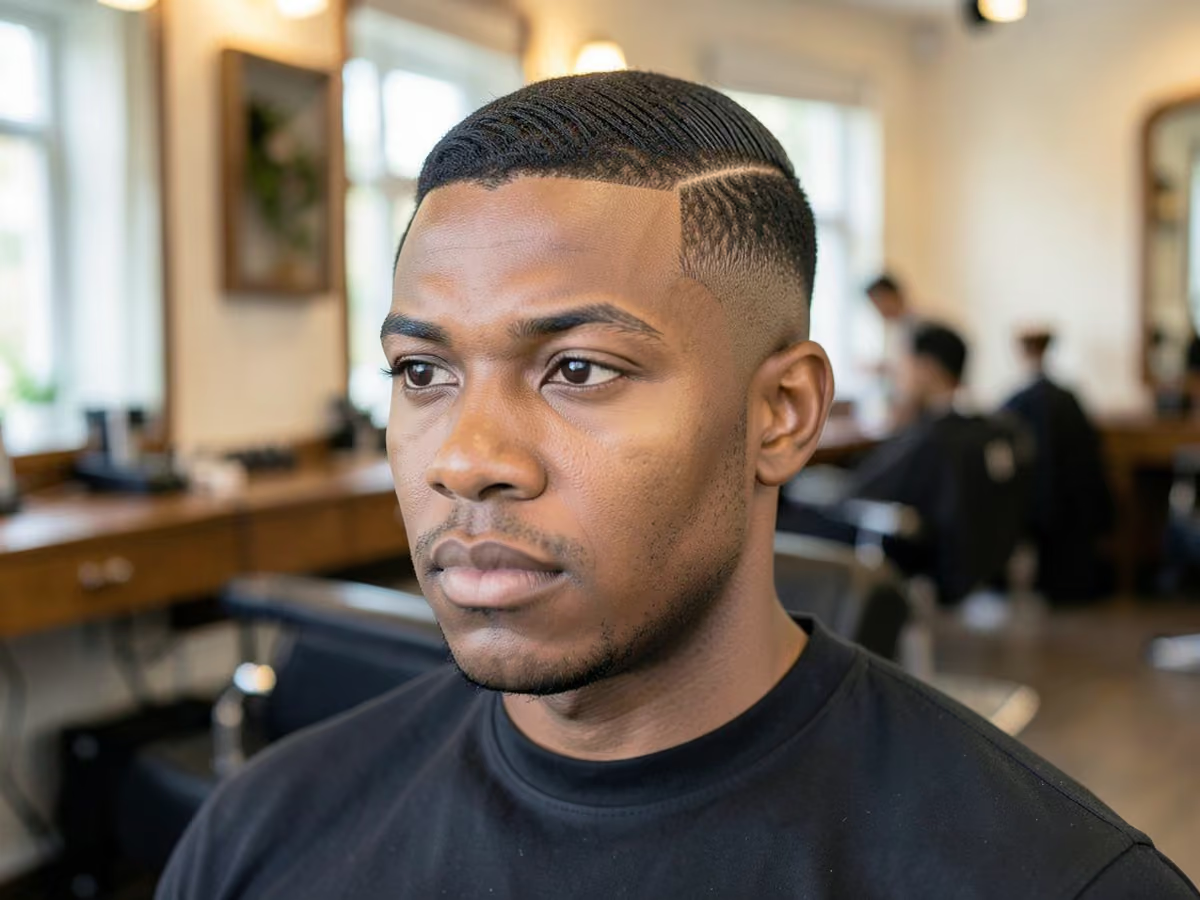
Three inches on top combed to the side shows off restored density at the front corner, often the area men had grafted. A natural part is found with a comb rather than shaved, since a razor line can draw attention to the scalp. The sides taper from a #4 to a #3, long enough to cover FUE dots. It suits office work and formal events.
How to Style at Home
Blow-dry the top to the side with a round brush for lift at the root.
Comb in a light pomade and set the part with the comb's fine teeth.
Smooth the sides down with damp palms to finish.
Ask Your Barber
"Side part with three inches on top, natural part, no shaved line. Taper the sides from a #4 to a #3 so the donor area stays covered."
Trim:Every 4 weeks. Front length must stay long enough to lift.
Best For:Round, square faces + thick straight hair.
About This Style
Once the front is full, a quiff brushed up and back puts the new hairline on display. The top is left at three to four inches at the front and two at the crown, with the sides at a #3 tapered to a #2 at the neck. It needs a dryer and product, so it suits men who enjoy styling. Wait until the grafts are mature, as daily heat and pulling stress a young hairline.
How to Style at Home
Spray thickening spray at the front roots while the hair is damp.
Blow-dry the front upward and back over a round brush.
Shape the peak with matte clay and set it with cool air.
Ask Your Barber
"Quiff with three to four inches at the front and two at the crown. Sides at a #3 tapered to a #2, no skin, since I had a transplant."
Trim:Every 4–5 weeks. Length on top is the priority between visits.
Best For:Oval, long faces + thick or wavy hair.
About This Style
Combing four inches of hair straight back is the clearest way to show a fully grown transplant, since nothing covers the front. It only works once density is even, so many men wait until their surgeon calls the result complete. Sides are scissor cut to about an inch, enough to hide a strip scar. A low-shine pomade looks more natural than a wet gel and puts less pull on the hairline.
How to Style at Home
Apply pomade to damp hair from the back of the head forward.
Comb the hair straight back with a wide-tooth comb, then a fine one.
Press the sides flat with your palms and let it set.
Ask Your Barber
"Slick back with about four inches on top. Scissor cut the sides to an inch so my strip scar stays covered. No clippers on the back."
Recommended Products
Pomade
How Do You Ask Your Barber for a Post-Transplant Haircut?
Tell the barber you have had a transplant, how long ago, and whether it was FUE or a strip procedure. Show them where the grafts and the donor area are. Then give the rules your clinic set, for example scissors only on top, no clippers below a certain guard on the back, or no product on the hairline yet. A good barber will work around tender areas, skip the hot towel and avoid pressing the clipper blade into new grafts.
Name your shortest side length in guard numbers and ask them not to go lower without checking. A #3 leaves 3/8 inch and a #4 leaves 1/2 inch; the clipper guard numbers chart lists the rest. Bring a photo of the stage you want, not the end result. A picture of a man with a full transplant years on will not help while your own front is still filling in, and it sets the wrong goal for the visit.
Clipper Guards Used in Hair Transplant Haircut Styles
A clipper guard is the plastic comb that clips onto the blade and sets how much hair is left: a #1 leaves 3 mm (1/8 inch), each step up adds about 3 mm. The right column lists the cards on this page that call for each guard. See the full clipper guard numbers guide for the complete chart.
Clipper guard sizes for hair transplant haircut styles
How Do You Style Hair While a Transplant Grows In?
Go light. Many clinics ask patients to hold off on heavy products, hair dye and hot tools for a set period, so check before using anything on the grafted area. When styling is allowed, a thickening spray or a small amount of texture powder gives thin new hair some grip without weighing it down. Push the front forward or slightly to the side with your fingers rather than a fine comb, which can drag on new hairs.
Uneven growth is normal during this phase, with some areas filling sooner than others. A haircut every four to six weeks that tidies the sides and evens the top helps, and the thinning hair styling guide has more tricks for making sparse hair look fuller in the meantime. Keep the scalp clean and moisturized too, since flakes and redness make thin hair look thinner under bright light.
What Haircut Mistakes Should You Avoid After a Transplant?
The most common mistake is going too short on the sides too soon, which shows FUE dots or a strip scar that a longer guard would have hidden. Another is letting a barber run clippers over the top before the clinic has cleared it. Combing the hair back to show off the new hairline while it is still thin also tends to backfire, because it highlights the gaps that a forward style would cover.
Patience matters too. Judging the result or booking a dramatic style change in the shedding phase leads to cuts that look wrong a month later. Keep shapes simple until your surgeon says growth is largely complete, then plan the cut you actually want, with your barber and a reference photo. Our growing your hair out guide helps if that means more length.
Which Hair Transplant Haircut Is Right for You?
Pick your hair type and how much upkeep you will put in. The matches below come from the Best For and Maintenance notes on each card. Upkeep follows the Maintenance badge: low means a cut every 3 to 6 weeks and almost no daily styling, high means weekly line-ups or daily product.
Q1: When can I get a haircut after a hair transplant?+
It depends on your clinic. Many allow a light tidy of the sides and back within a few weeks, while clippers on the grafted area usually wait longer. Scissor cuts on top tend to come before close clipper work. Ask your surgeon for exact dates and pass them on to your barber before the cut starts.
Q2: Can I get a fade after a hair transplant?+
Often yes, eventually, but the shortest guard matters. A skin fade can show FUE dot scars or a strip scar on the back of the head. Many men stay at a #2 or #3 at the bottom. Check with your surgeon first, then ask the barber to test a longer guard before going lower.
Q3: What is the Scandinavian hairline?+
It is a name used online and by some clinics for a hairline set slightly higher with soft, rounded temple corners, the shape many men naturally have in their thirties and forties. It looks less like a straight, low line. Whether it suits you depends on your face, age and donor supply, so discuss it with your surgeon.
Q4: Should I shave my head before a hair transplant?+
Some clinics shave the donor area or the whole head for FUE, and others offer unshaven options. If yours will shave the back, cutting the rest of your hair short beforehand makes the contrast less obvious. A buzz cut with a #2 or #3 all over is a common choice. Follow your clinic's pre-op instructions.
Q5: Why does my hair look worse a month after the transplant?+
Many transplanted hairs shed in the first weeks, which clinics often describe as a normal phase before the follicles start new growth. Some nearby native hair can also shed temporarily. Short, even cuts make this phase less noticeable. If shedding worries you, or it lasts longer than your surgeon described, contact the clinic.
Q6: How do I hide the donor area after a hair transplant?+
Keep the sides and back long enough to cover it. After a strip procedure, scissor length or a #4 and up usually hides the line scar. After FUE, a #3 is a safe starting point while the dots fade. A uniform buzz all over also blends a shaved donor area with the rest of the head.