
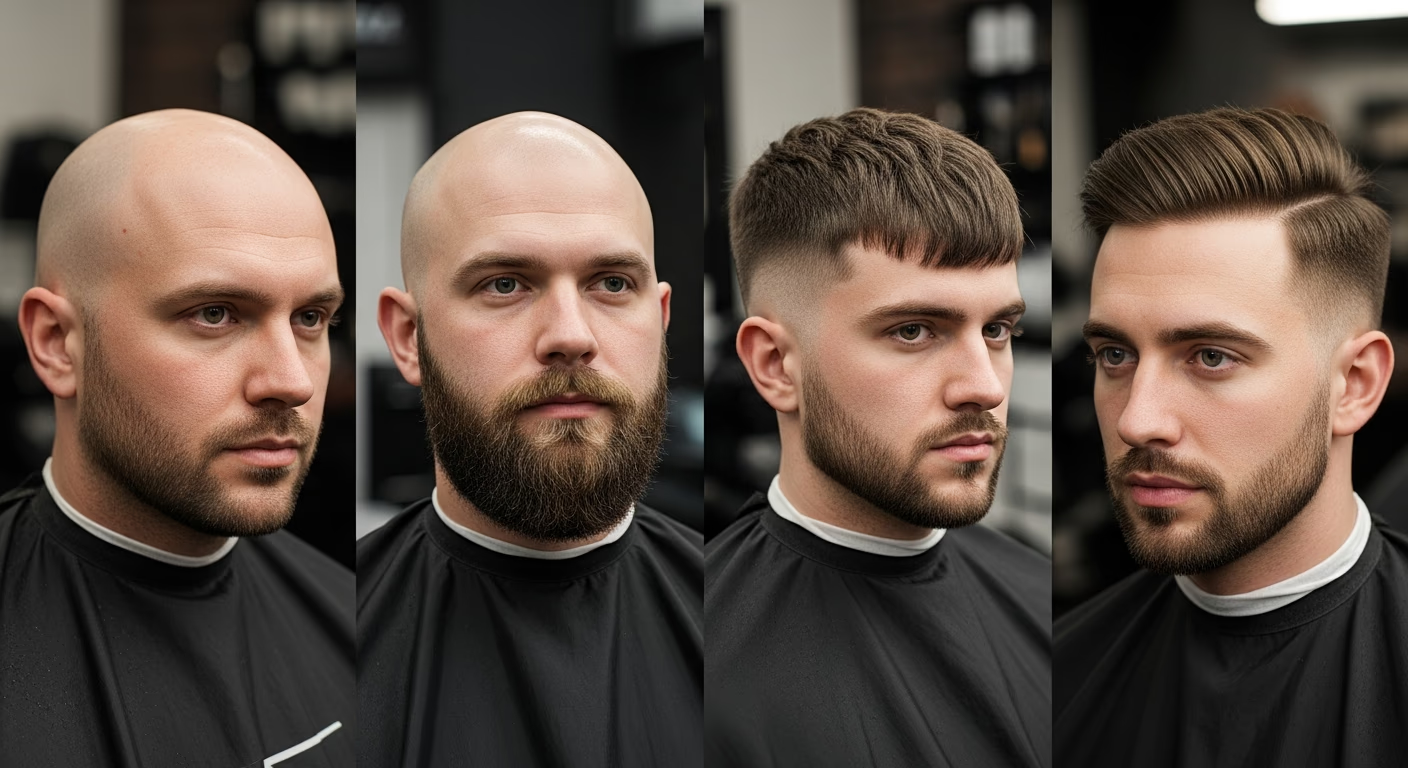
Quick answer: Thinning hair usually looks best cut shorter and more structured, not grown long to cover the thin areas. This hub links cuts for each pattern: a receding hairline, an M-shaped hairline, a widow's peak, a thinning crown or a thin top. It also covers styling for fullness and whether to buzz or shave it all off.
Style images are AI-generated illustrations.
Thinning or balding hair is one of the most common things men deal with, and one of the most style-able, with the right approach. This hub covers cuts for every stage: receding hairlines, thinning crowns and tops, widow's peaks, the shave-it-all decision, and how to style what you have to look fuller.
By Pattern

Best Haircuts for a Receding Hairline
The best men's haircuts for a receding hairline: French crops, Caesars, buzz cuts and short crops with skin fades, plus the longer styles to avoid.
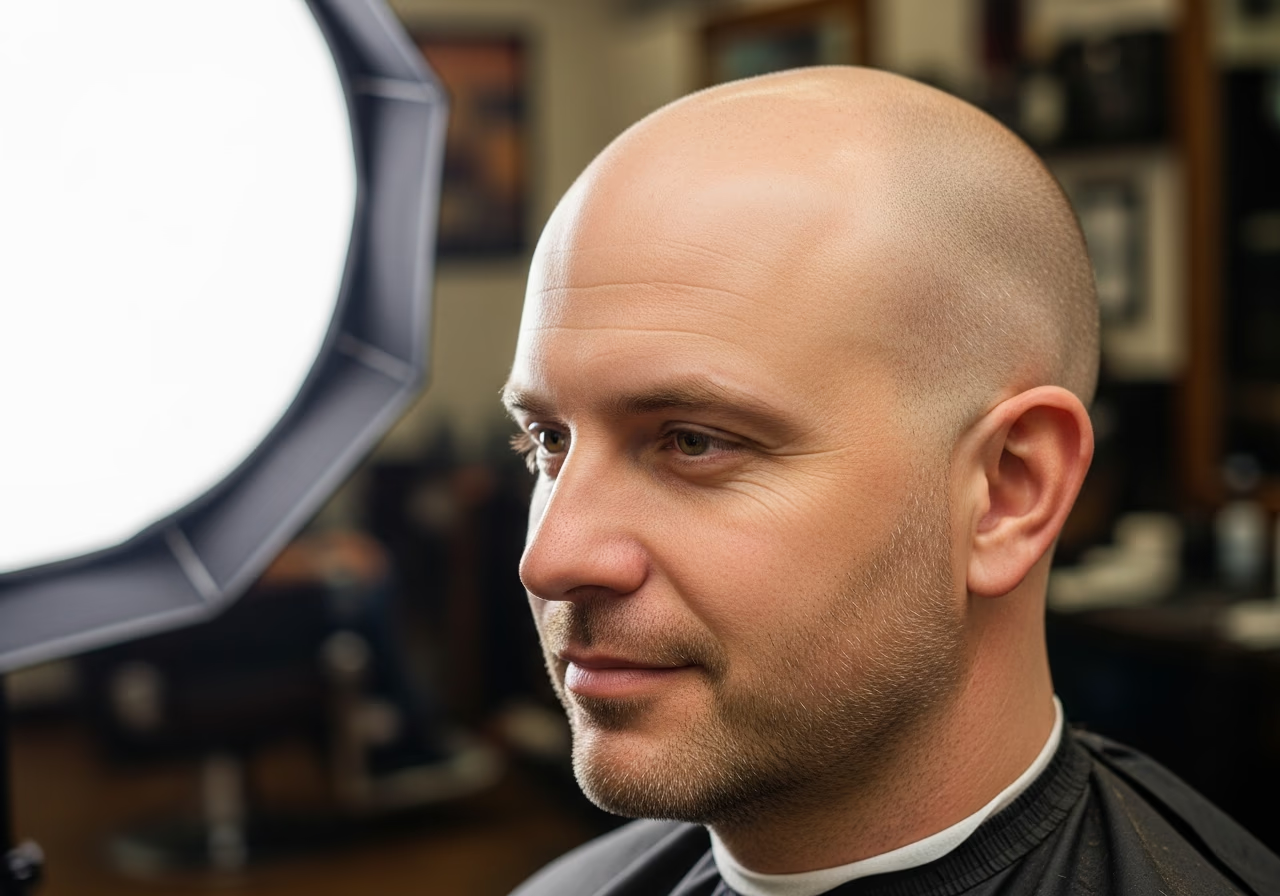
Best Haircuts for a Balding Crown
Thinning at the crown or a bald spot at the back? The best men's haircuts that minimize a balding crown: short even cuts, buzz, and fades.
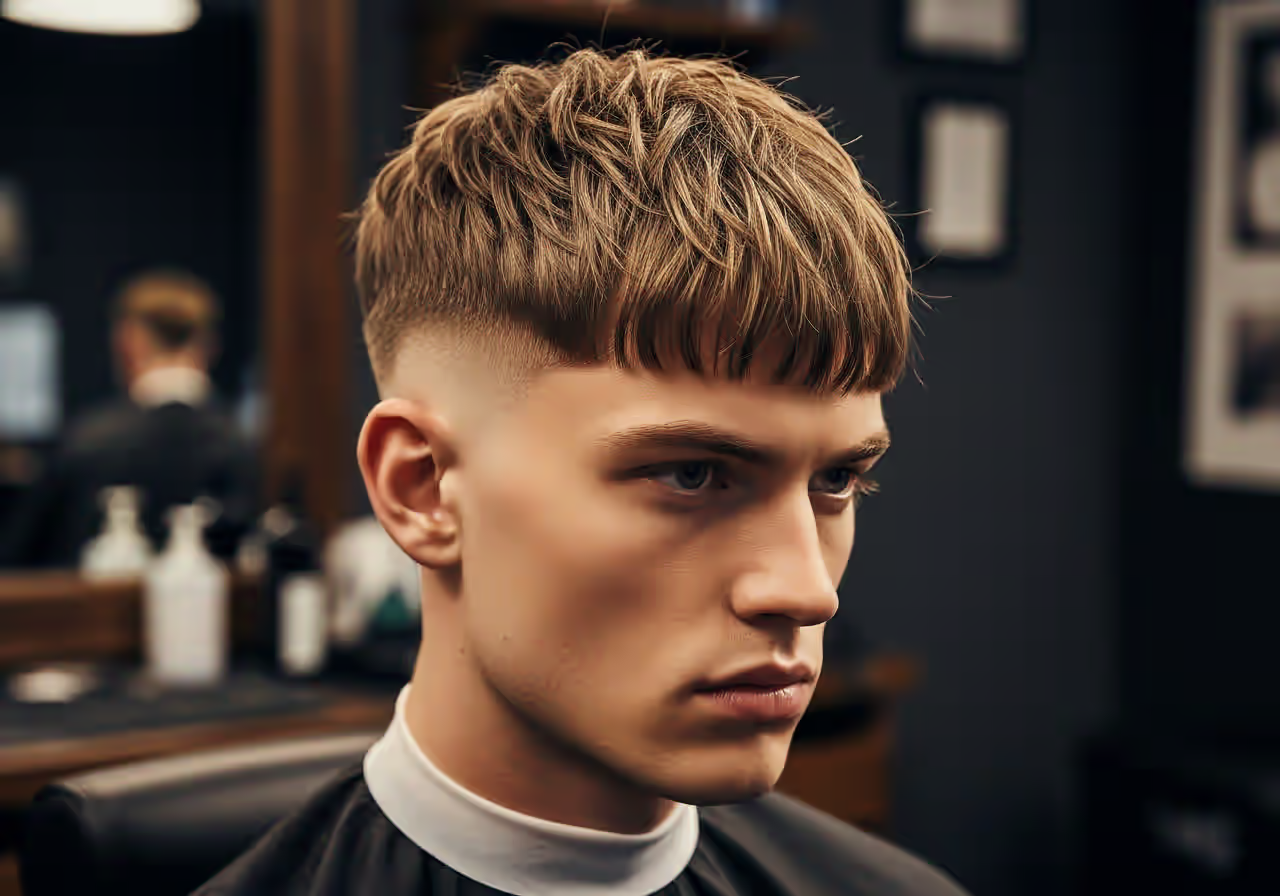
Best Haircuts for Thinning Hair on Top
Thinning on top? Why a short textured crop reads as density, when a French crop or Caesar works, and why matte clay beats glossy pomade and gel.
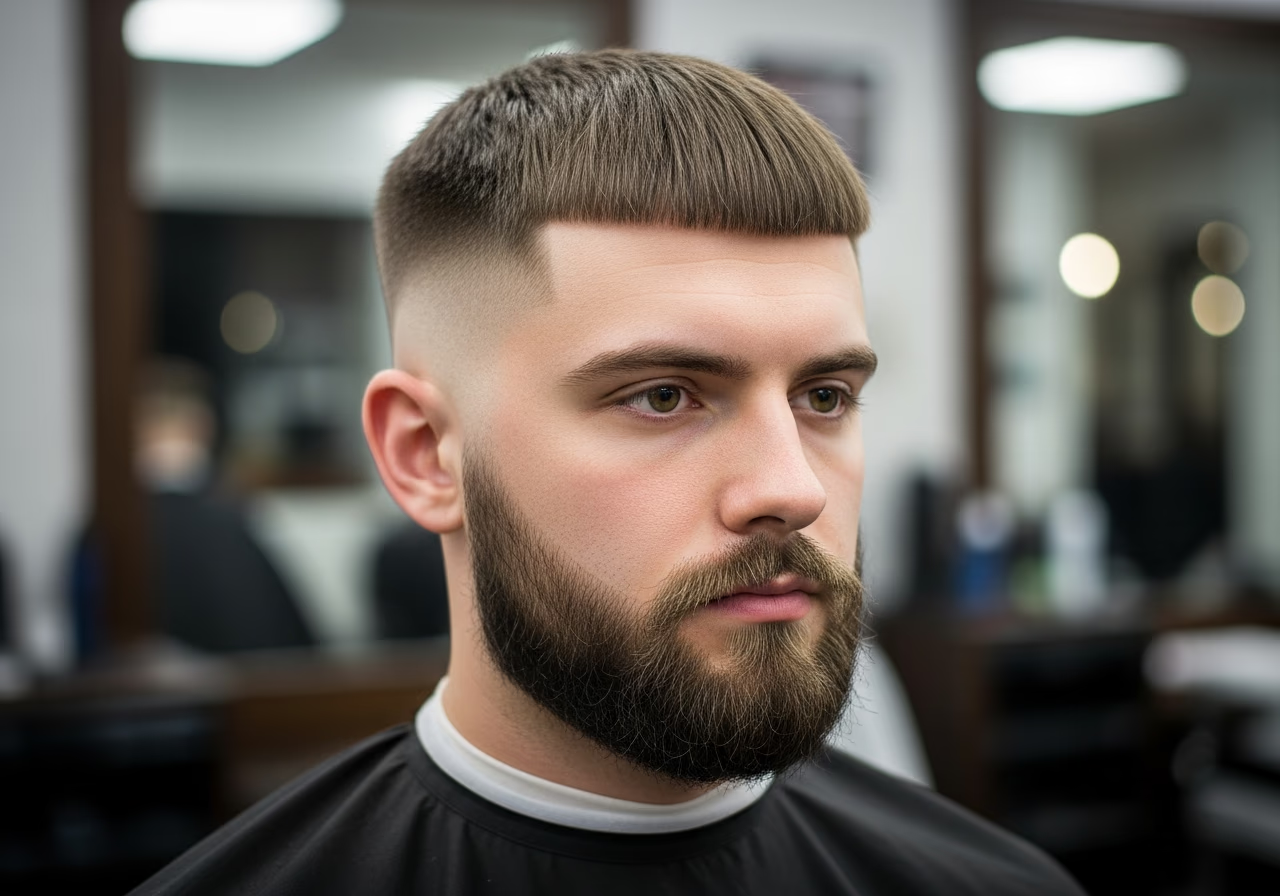
Best Hairstyles to Hide a Widow's Peak
Got a widow's peak? The men's hairstyles that soften or cover it, from a French crop's blunt fringe to textured crops and Caesars, and the styles to skip.
Best Haircuts for M-Shaped Hairlines
Got an M-shaped hairline with receding temples? The best men's haircuts that soften or work with it: forward fringes, textured crops.
Best Haircuts for Balding Men
Haircuts for balding men in 2026: 56 embrace-or-hide styles, from clean bald fades, full shaves and beard buzz cuts to crown-texture crops for early loss.
Big Decisions & Styling
Should You Shave Your Head If You're Balding? Full Guide
An honest guide to shaving your head when balding: the signs it's the right move, head-shape and maintenance realities, razor vs clipper.

Buzz Cut vs Bald Shave for Thinning Hair
Buzz cut or bald shave for thinning hair? A head-to-head on look, upkeep (a weekly clipper pass vs shaving every 1–3 days), head shape and cost.

How to Style Thinning Hair Without Looking Bald
How to style thinning hair so it looks fuller: a short textured cut, matte clay or texture powder, root lift when drying, and fingers instead of a comb.
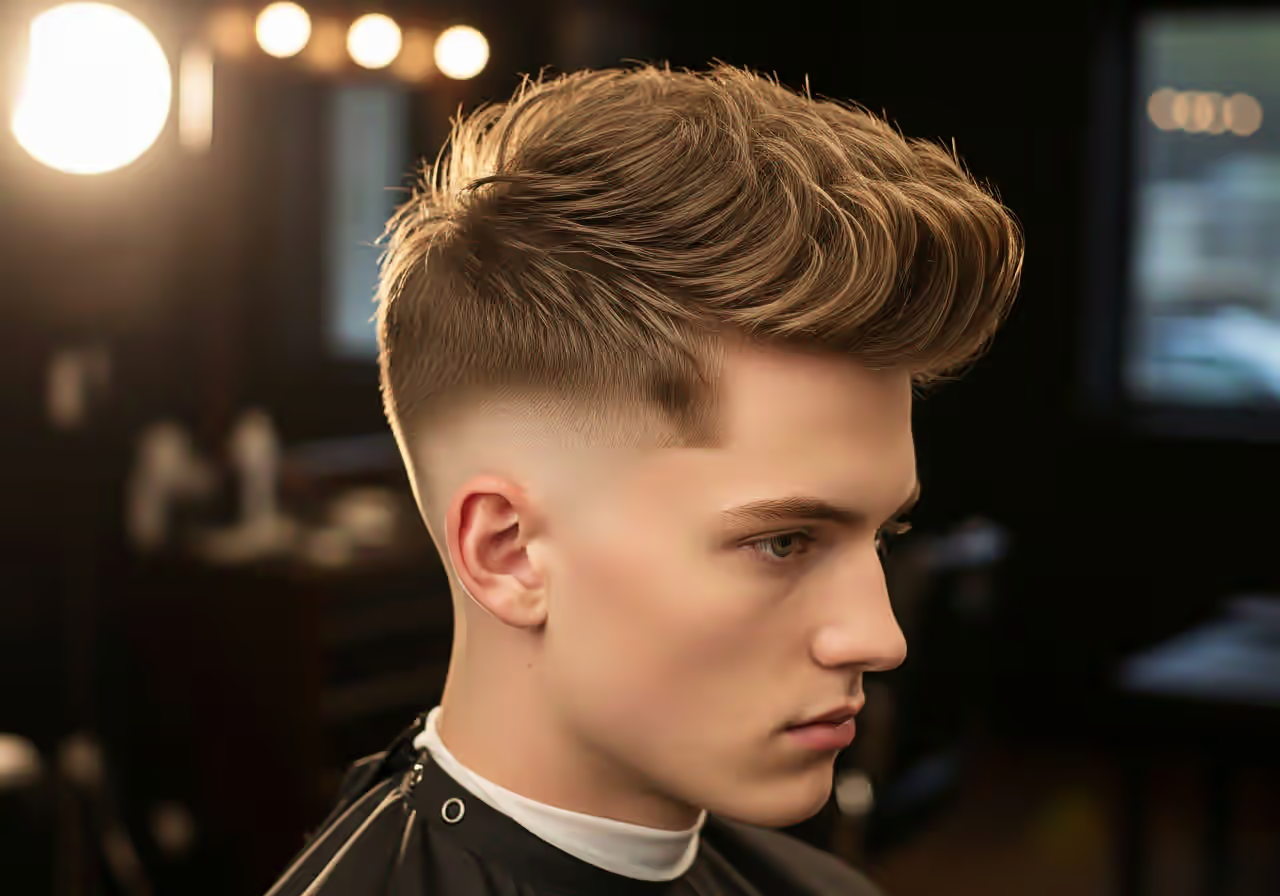
Hair Parting Shows Too Much Scalp? How to Fix It
Parting line showing too much scalp? Learn why hard parts widen the look, and how to switch, soften or ditch your part with the right cut.

How to Hide an Uneven or Asymmetrical Hairline
Uneven hairline? Learn how to style around asymmetry with texture and fringes, why razoring it 'even' backfires, and what to ask your barber instead.

Bald with Beard
Bald with beard styles: 30 shaved head and buzz cut pairings with stubble, goatees and full beards, plus head-shaving care and what to ask for.

Hair Transplant Haircuts
Hair transplant haircuts for each stage: cuts that hide the donor area, styles for the patchy grow-in months and options once the new hairline settles.

Grow Hair Faster
How to grow hair faster as a man: real growth rates, what affects speed, myths about trims and supplements, and how to keep more of the length you grow.
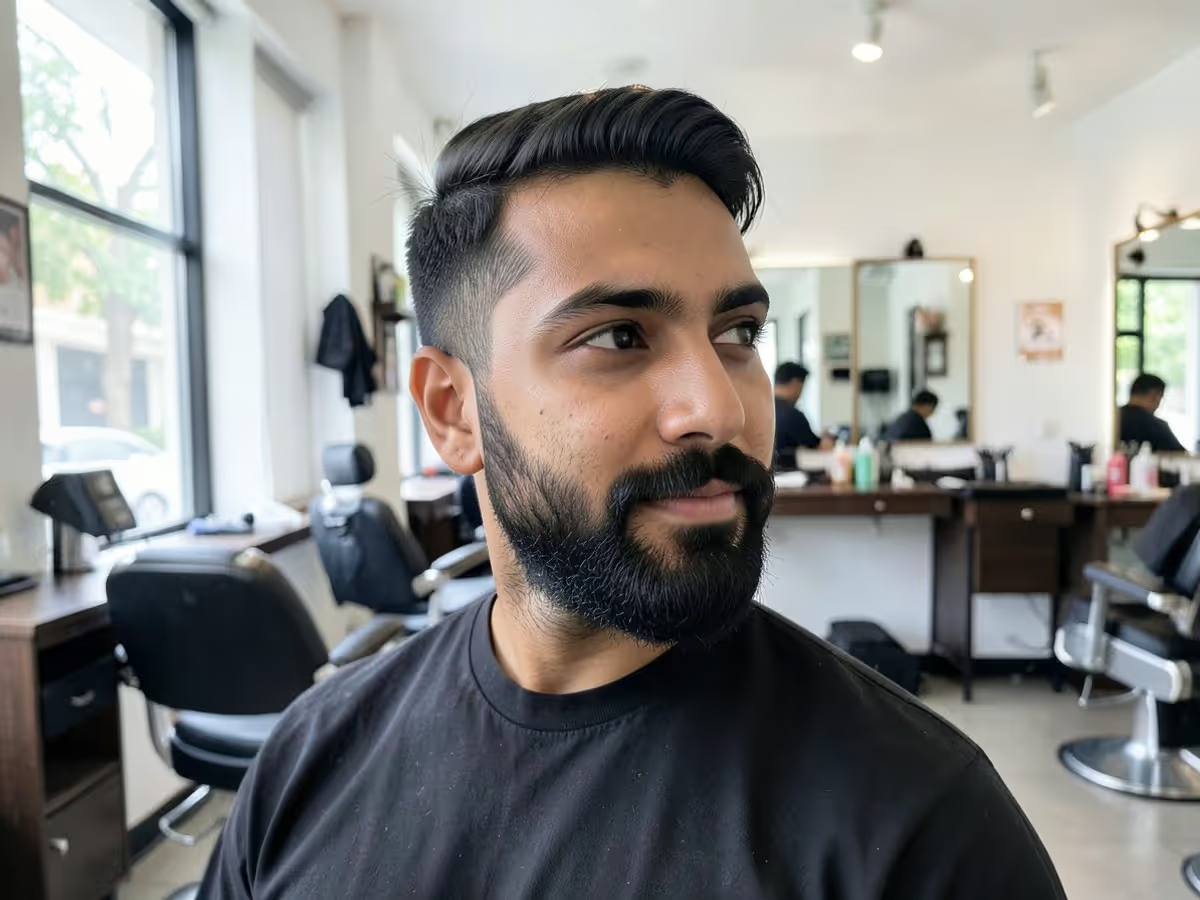
How to Shave Your Head
How to shave your head at home: clipper it short first, pick a razor or foil shaver, prep the scalp, shave in the right order and avoid bumps and burn.
Common Mistakes Men Make With Thinning Hair
The most common error is keeping hair too long for too long. Length on top only reads as thick when there is enough density underneath to hold it up; once the hair has thinned, extra length just lies flat and makes the scalp more visible, not less. A shorter cut with more texture usually photographs and looks fuller in person than a longer one combed carefully into place.
- Over-conditioning the top: heavy conditioners and rich oils weigh hair down; a lightweight, volumizing shampoo suits thinning hair better than anything marketed as "moisturizing."
- Combing wet hair flat: hair dries in whatever shape it is left in, so combing it flat while wet trains it to sit flat all day. Rough-dry with fingers first, then style.
- Keeping a hard side part: a defined part line exposes a straight strip of scalp. A softer, textured part or no part at all spreads coverage more evenly.
- Ignoring the sides and back: if the top is thin but the sides are cut long, the contrast draws more attention to the missing density than a shorter, tighter cut would.
How to Talk to Your Barber About Thinning or Balding Hair
Most barbers deal with thinning hair every week, so there is no need to over-explain the situation. Point out where the hair is thinnest (crown, temples, overall on top) and say plainly that you want a cut that works with it rather than tries to hide it with length. Bring a reference photo if you have one, but be ready for the barber to suggest a shorter length than the photo shows, since a style that works on thick hair often needs to be scaled down to translate onto thinner hair.
Useful phrases include asking for the top to be "textured, not weighed down," requesting the sides be taken shorter than usual to reduce the contrast with the top, and asking the barber to avoid leaving a hard line at the hairline if it is receding or uneven. If you are unsure if you are ready to go shorter, ask the barber for their honest opinion. Most will tell you straight whether a length is going to hold up on your hair type.
How Thinning Progresses, and When to Change Your Cut
Hair loss patterns usually move in stages rather than overnight, and the cut that suited an early receding hairline is not always the right one a couple of years later once the crown has thinned too. A good habit is to reassess the cut whenever a hair type change becomes obvious: if a style that used to hold its shape with product now falls flat within a few hours, or a part that used to close up on its own now shows a visible gap, that is a sign the hair has thinned further and the length needs to come down again.
There is no fixed timeline that applies to everyone, since the rate of thinning varies a lot between men, but many find they need to go a step shorter roughly every one to two years during active thinning, then settle once the pattern stabilizes. Going shorter sooner rather than later, before the thinning becomes obvious, tends to look more like a deliberate style choice than a reaction to hair loss.
Make us a Preferred Source on Google
See our latest articles first in your Google Search & AI Overviews.