
How to Keep Your Haircut
Looking Good Under a Hat
Cold-weather hat hair flattens everything. Here's how to choose cuts and habits that survive a beanie.
By Jessica Hamilton, Editor · Updated
Quick answer: To keep your haircut looking good under a hat, never put the hat on damp hair: compression, warmth and moisture set the hair flat. Let it dry first and choose a looser beanie. Textured crops, French crops, Caesars, buzz cuts and crew cuts survive a hat best. To reset, wet the roots and rough them up with your fingers.
Style images are AI-generated illustrations.
📚 Part of our Styling, Products & DIY guide hub; start there for more on this topic.
To keep your haircut looking good under a hat, remember that hat hair follows the same physics as helmet hair for men: compression plus warmth plus a bit of moisture sets your hair flat in the shape of the hat. The single biggest mistake is putting a hat on damp hair, which is not compressing a style, that's setting one.
Which Haircuts Survive a Beanie?
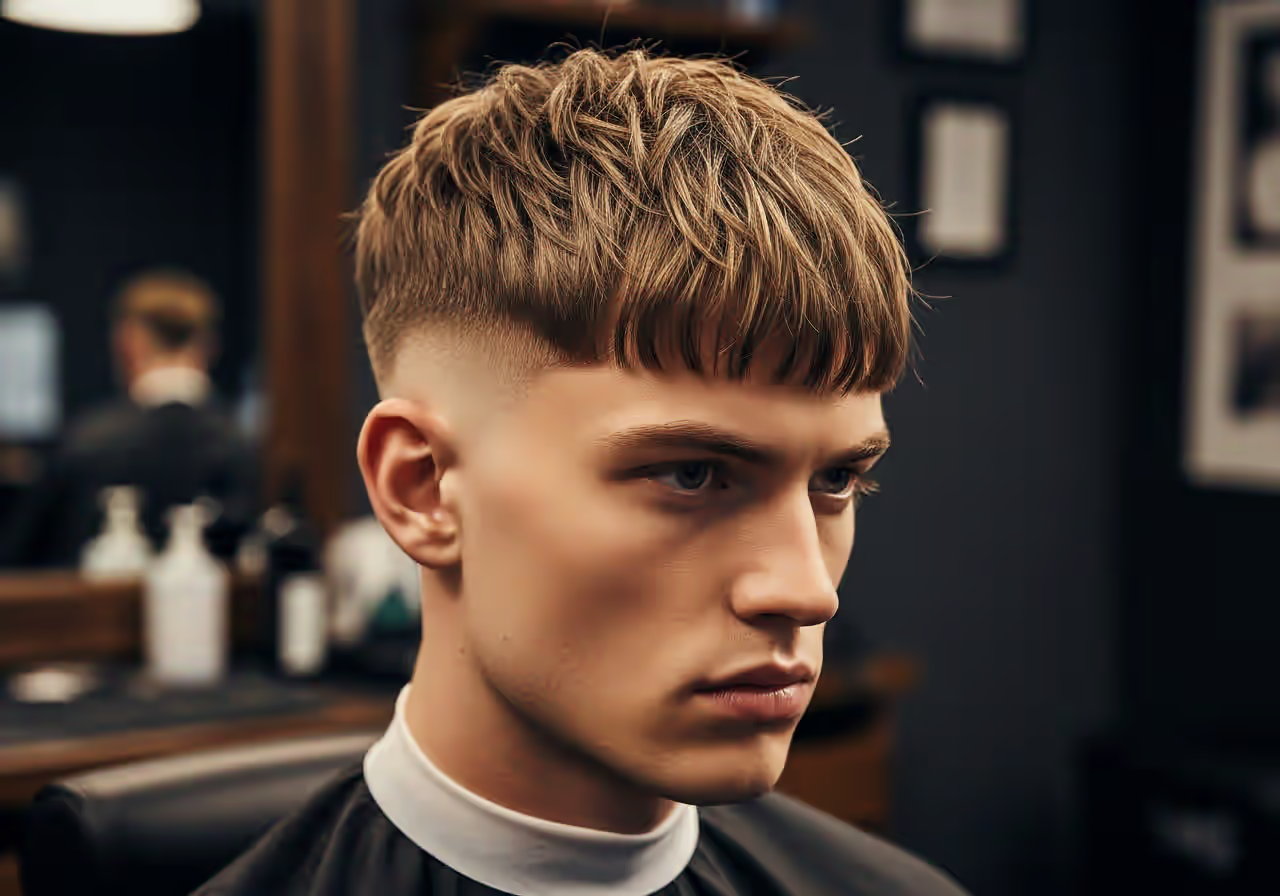
- Textured crop / French crop: already forward and textured, so flattening barely changes them.
- Caesar: worn flat and forward by design.
- Buzz and crew cuts: completely hat-proof.
- Avoid relying on pompadours and quiffs in beanie season, since their whole identity is height a hat removes.
| Cut | Under a hat | Reset needed |
|---|---|---|
| Buzz or crew cut | No change | None |
| Textured or French crop | Flattens slightly | Fingers through the top |
| Caesar | Worn flat anyway | None |
| Short side part | Part shifts | Comb and a little cream |
| Quiff or pompadour | Loses all height | Water, blow-dryer and product |
Why Should You Never Put a Hat on Damp Hair?
Damp hair is mouldable, and that's how blow-drying works. Put a beanie on damp hair and you're effectively setting your hair flat against your skull, and it will stay that way until you re-wet it. Always dry fully before the hat goes on. If you're in a rush, at least get the roots dry.
Ballplayers deal with caps every day, and our guide to baseball haircuts covers flows and short cuts that look right under one.
How Do You Fix Hat Hair Quickly?
- Fingers + a splash of water at the roots resets most compression in seconds.
- Carry a little matte clay for a 30-second restyle.
- Loosen the hat. A slouchy beanie compresses less than a tight one.
- Take the hat off a few minutes before you arrive so hair recovers naturally.
- Style after arriving rather than before, same principle as helmet hair.
Does the Type of Hat Matter?
Not every hat compresses hair the same way. A stiff, tightly woven wool beanie holds its shape and presses evenly against the head, which tends to leave a cleaner, easier-to-fix flatness than a snug synthetic cap that traps heat and sweat close to the scalp. A hat that fits too tight concentrates pressure right where a fringe or crown volume sits, which is exactly the area that takes longest to recover once the hat comes off.
Sizing up slightly, or choosing a rib-knit beanie that stretches rather than clamping down, reduces how hard the hair gets pressed and makes the reset afterward faster. If you own a few hats, save the tightest, warmest one for the coldest days and reach for a looser option the rest of the time.
| Hat | Where it presses | How to limit the damage |
|---|---|---|
| Tight knit beanie | Whole top and crown | Size up or pick a slouchy fit; dry hair fully first |
| Baseball cap | Band around the head; flattens the sides | Keep the sides tapered so there is little to push out |
| Wool flat cap | Front and crown | Wear the fringe forward so the brim line hides in it |
| Helmet or hard hat | Everything, plus sweat | See our helmet-friendly haircuts |
Which Products Hold Up Under a Hat?
Heavy styling creams and gels are more likely to transfer onto the inside of a hat and leave it feeling greasy, and they also tend to flatten harder once compressed, since a stiff, set style has nowhere to spring back from. A lighter matte paste or clay gives texture without locking the hair into one shape, so it compresses under a hat but reshapes easily with just fingers once you take it off.
If you are heading out for the whole day in a hat, apply less product than you normally would rather than more, since a lighter base is easier to restyle later and will not build up inside the hat over several hours the way a heavier product does.
A quick guide to the main product types for hat days (see pomade vs clay vs wax for more):
- Matte clay: light texture that springs back with your fingers after the hat comes off.
- Texture powder: almost weightless, so there is nothing to press flat or rub off on the lining.
- Sea salt spray: adds body before you go out; a quick re-spray revives it later.
- Water-based pomade: re-wets and restyles easily, so it suits a side part you need to reset.
Leave heavy oil-based pomade and strong gel for days without a hat. They set flat and stain linings.
What Should You Tell Your Barber About Wearing Hats?
If you wear a hat most days, tell your barber before the cut, not after you notice the style is not working. A barber who knows you spend hours under a beanie can adjust the cut itself, for example keeping less height at the crown or adding a bit more texture at the sides so the finished shape depends less on volume that a hat will remove anyway.
This is a small detail that rarely comes up unless you mention it, and it can save you from repeating the same flattening problem every visit with a style that was never suited to daily hat wear in the first place.
What to say in the chair
"I wear a beanie most days in winter. Can you keep the top textured and not too heavy at the crown, so it still looks right after I take the hat off?"
Short cuts that live under a hat need trims every three to four weeks, at about $25 to $45 a visit at most neighborhood shops. See our haircut cost guide for what each type of shop charges.
What Mistakes Make Hat Hair Worse?
- Putting the hat on right after the shower. Damp roots set in whatever shape the hat gives them.
- Pulling the hat on and off all day. Each time it drags the top in a new direction and adds static.
- Adding more product to fix flat hair. More weight makes it flatter. Use water to reset first.
- Wearing a dirty hat. Oil and old product inside the band transfer back onto clean hair.
- Choosing a cut that needs height. In a long beanie season, a style built on volume will lose every day.
When Should You Get a Haircut During Hat Season?
A fresh cut has the least give. The top is at its shortest and stiffest, and any height the barber built is the first thing a hat crushes. About a week after a cut, the hair has grown roughly 1/8 inch and starts to bend instead of fold, so it recovers faster when the hat comes off.
If you have an event, book the cut five to seven days before it rather than the day before. For a crop, ask for 2 to 3 inches on top: long enough to push around with your fingers, short enough that a beanie cannot flatten it into a helmet shape. Keep the sides tapered so the hat sits close and the band does not push hair out over the ears.
Frequently Asked Questions
Q1: How do I avoid hat hair?+
Q2: Why is hat hair worse in winter?+
Q3: What haircut is best if I wear a beanie a lot?+
Q4: How do I fix hat hair quickly?+
Q5: Should I style my hair before or after wearing a hat?+
Q6: Do hats cause hair loss?+
Make us a Preferred Source on Google
See our latest articles first in your Google Search & AI Overviews.