
How to Get More Volume:
Blow-Drying, Products and the Right Cut
Why men's hair goes flat, and the cut, blow-dry and product steps that give it lift that lasts.
By Jessica Hamilton · Updated
Quick answer: How to get more volume in men's hair: start with a cut that keeps the sides shorter and the top textured, apply a light pre-styler to damp roots, blow-dry the roots upward against their natural fall, then finish with a small amount of matte clay or texture powder instead of heavy pomade.
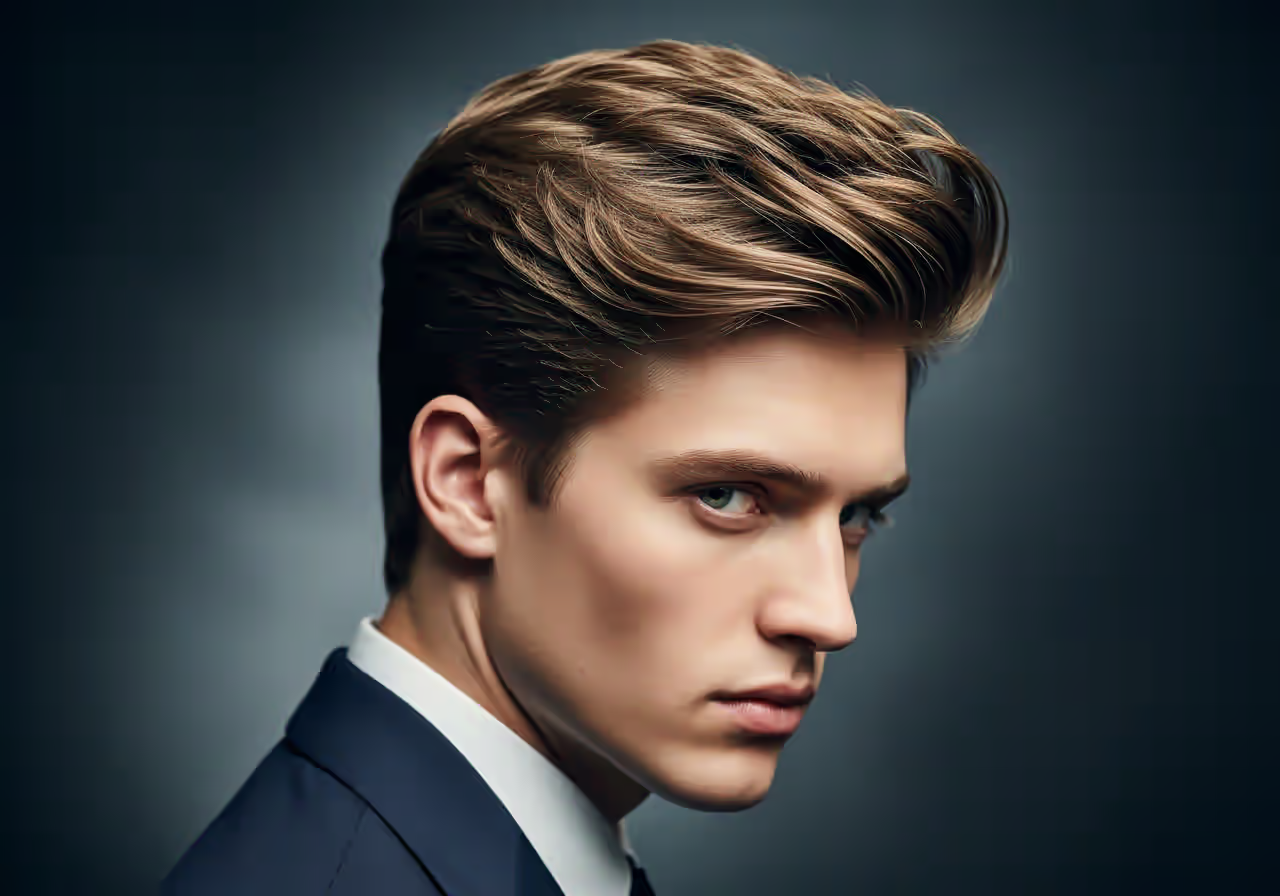
Style images are AI-generated illustrations.
📚 Part of our Styling, Products & DIY guide hub; start there for the rest of the topic.
How to get more volume in your hair comes down to three things working together: a cut that does not drag the top down, a blow-dry that sets the roots standing up, and products light enough to hold that lift without weighing it down. This guide covers each step, plus the washing habits and hair-type tweaks that decide whether the volume lasts until evening.
Why Does Your Hair Look Flat?
Flat hair is usually a combination of weight and direction. Fine strands have less body to hold themselves up, so they lie close to the scalp as soon as they get long enough to bend. Thick, straight hair has the opposite problem: there is plenty of it, but its own weight pulls it down once the top passes three or four inches. Air-drying lets the roots set in whatever direction they fall, which is usually flat against the head.
Daily habits make it worse. Heavy conditioner applied at the roots, oily scalps, and leftover pomade or wax all coat the hair and make strands cling together. Sides that are left too full also make the top look lower by comparison, even when the top has decent height. The fixes below go in order of impact: cut first, then drying, then products, then washing.
Fine or soft hair
Strands bend under their own length and separate to show the scalp. Needs shorter length on top and light, grippy products.
Heavy, thick straight hair
Plenty of hair, but the weight drags the top flat. Needs weight taken out with texturizing and a firm blow-dry.
Oily scalp or product buildup
Roots clump together by midday. Needs a different wash routine more than a new styling product.
Hair that falls the wrong way
A cowlick or double crown can push hair flat in one area. Drying against the growth direction helps; our cowlick guide covers stubborn spots.
Which Haircut Gives Men the Most Volume?
The cut does most of the work. Shorter sides, whether a taper, a fade or simply a scissor cut kept close, make the top look taller because the eye compares the two. On top, a length of about two to four inches is the range where hair can stand up without collapsing. Shorter than that and there is little to lift; much longer and the weight takes over unless the hair is very coarse.
Texture matters as much as length. Point cutting and slide cutting break up the ends so hairs support each other instead of lying in one flat sheet. Ask for texture rather than heavy thinning shears on fine hair, since thinning shears can remove the very bulk you are trying to build. Our guide on asking for texture without thinning shears has the exact wording.
| Cut | Top length | Why it adds volume |
|---|---|---|
| Textured crop | 1.5 to 3 inches | Choppy ends push up and outward, good for fine hair |
| Quiff | 2.5 to 4 inches | Front left longest so height builds at the hairline |
| Modern pompadour | 3 to 5 inches | Length swept up and back gives the tallest shape |
| Layered medium cut | 3 to 5 inches | Layers remove weight so wavy hair lifts at the root |
| Short sides with any top | Varies | Tight sides make the top look taller by contrast |
How Do You Blow-Dry Men's Hair for Volume?
A hairdryer is the single most effective volume tool, because hair holds the shape it dries in. Damp roots dried upward will keep lifting for most of the day; the same roots left to air-dry will lie flat. You do not need a professional dryer. A basic one with a cool setting and a concentrator nozzle is enough, and a round brush is optional once you get the hang of using your fingers.
Fingers or a round brush both work; the choice depends on length. On hair under about three inches, raking fingers upward through the roots while the dryer follows behind gives lift with a natural, slightly messy finish. On longer tops, a medium round brush lets you grip a section at the root, roll it upward and hold heat on it for a few seconds, which builds a smoother, taller shape such as a pompadour. Keep the dryer moving so no single spot gets too hot.
Step-by-step blow-dry
1. Towel-dry until the hair is damp, not dripping. Rough rubbing causes frizz, so press and squeeze instead.
2. Spray a pre-styler such as sea salt spray or thickening spray into the roots, five or six spritzes for short hair.
3. Use medium heat and point the nozzle at the roots, lifting the hair against its natural fall with your fingers or a round brush.
4. Dry the front first, since that is where volume shows most, then work back toward the crown.
5. Once the hair is about 90 percent dry, shape it into the direction you want to wear it.
6. Finish with ten seconds on the cool setting to set the shape before adding any finishing product.
Which Products Add Volume Without Weighing Hair Down?
Volume products fall into two groups: pre-stylers that go on damp hair before drying, and finishers that go on dry hair to hold the shape. The common mistake is skipping the pre-styler and using a heavy finisher to force height. Shiny, oil-based pomades and gels add weight and stick strands together, which reads as less hair. Matte, clay-based products grip each strand and keep them apart. For a side-by-side of the main types, see pomade vs clay vs wax.
Order matters as much as choice. Pre-styler goes on damp hair, the blow-dry sets the lift, and the finisher goes on last, on fully dry hair. Layering two finishers, such as clay over pomade, usually adds weight without adding hold. If you want a little shine on a volume style, use a light pomade on the ends only after the clay. For most short and medium cuts, one pre-styler plus one finisher is enough, and the whole routine takes five minutes once it is familiar.
Sea salt spray
Adds grit and a slightly piecey texture. Works best on straight and wavy hair; use less on dry or curly hair, since salt can feel drying.
Thickening spray or mousse
Coats each strand with a light film so it feels fuller. The first product to try for fine hair.
Texture powder
A few shakes at the roots on dry hair adds instant lift and a matte look. Rub it in with fingertips rather than piling it on, or it can look dusty.
Matte clay or paste
A fingertip amount, warmed in the palms and worked from the back of the head forward, holds the blow-dried shape with almost no shine. Read matte vs shine products if you are unsure which finish you want.
How Should You Wash Hair for More Volume?
Clean hair lifts more easily than hair coated in oil or old product, but stripping it daily can backfire by making the scalp produce more oil. Most men do well washing every one to three days, with a rinse on the days in between. Put conditioner on the lengths and ends only, never the roots, and choose a light formula rather than a rich repair conditioner unless your hair is very dry. Rinse longer than feels necessary; leftover conditioner is a common cause of limp roots.
If you use clay or wax most days, buildup collects even when you wash regularly. A clarifying shampoo every week or two removes it, and our guide to clearing product buildup explains how often to use one. Men with an oily scalp often notice that hair is fullest on the day after washing, once a little natural texture returns, so it can be worth testing your wash timing before buying new products.
How Does Volume Styling Change by Hair Type?
The same steps apply to every head of hair, but the balance shifts. Fine, straight hair needs the shortest top, the most heat at the roots and the lightest finish. Thick, coarse hair can take more length and a firmer clay, but often needs weight removed by the barber before any blow-dry will lift it. Wavy hair usually has natural body already; a little sea salt spray and a diffuser or rough-dry with fingers brings it out without frizz.
Curly and coily hair rarely lacks volume; the goal is usually shape and definition. Use a curl cream or leave-in on damp hair, then dry with a diffuser held at the roots so curls stay intact. Our diffuser guide covers the method. If your hair is thinning rather than simply fine, the priorities change again, and the advice in how to style thinning hair will suit you better.
What Volume Mistakes Flatten Hair by Midday?
Most volume that disappears by lunch was never set properly in the morning. Hair that is still slightly damp when you add product will relax as it finishes drying, so make sure the roots are fully dry and cooled before the finishing step. Touching your hair through the day transfers oil from your fingers and collapses the shape, and humid weather can undo a blow-dry fast; our humidity and frizz guide covers that problem.
Too much product
More product adds weight. Start with a fingertip amount and add only if the shape will not hold.
Product applied front first
Starting at the hairline dumps most of the product on the front, where it flattens the very area you want tallest. Start at the crown.
Drying in the wrong direction
Drying the hair in the direction it naturally falls sets it flat. Dry against the fall first, then style it back.
Waiting too long between cuts
As the top grows past its ideal length, the extra weight pulls it down. A trim every four to six weeks keeps the length in the range that lifts.
Frequently Asked Questions
Q1: How can a man get more volume in his hair without products?+
Q2: Is sea salt spray or thickening spray better for volume?+
Q3: Does blow-drying damage men's hair?+
Q4: How long should my hair be to get volume on top?+
Q5: Why does my hair lose volume during the day?+
Q6: Can a haircut make thin hair look like it has more volume?+
Related Haircut Guides
Make us a Preferred Source on Google
See our latest articles first in your Google Search & AI Overviews.